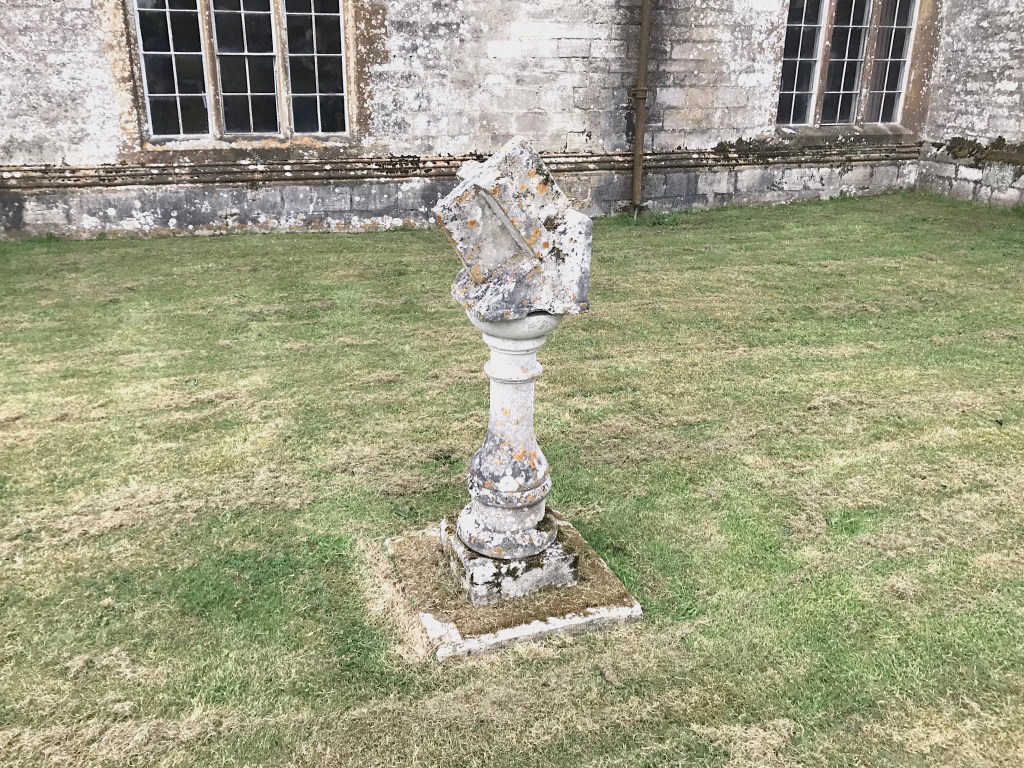
WOLFETON HOUSE . DORCHESTER . DORSET – Multiple Sundial

WOLFETON HOUSE . DORCHESTER

Wolfeton House (sometimes Wolveton) is a fine Grade 1 Elizabethan manor house with medieval origins. It stands amidst the the water meadows of the River Frome near Charminster, just N of Dorchester. Admired by Hardy. For more about the house, its history, and how to stay in the Gatehouse (dated 1534) see:

DORSETLIFE HISTORIC HOUSES LANDMARK TRUST

SUNDIAL

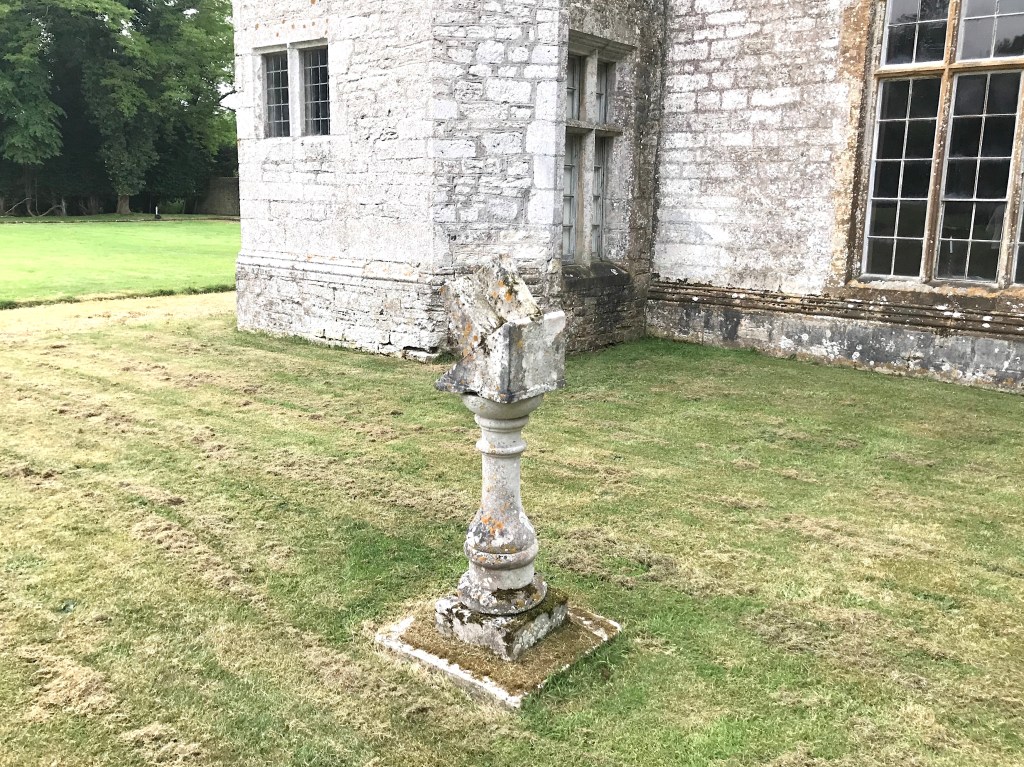
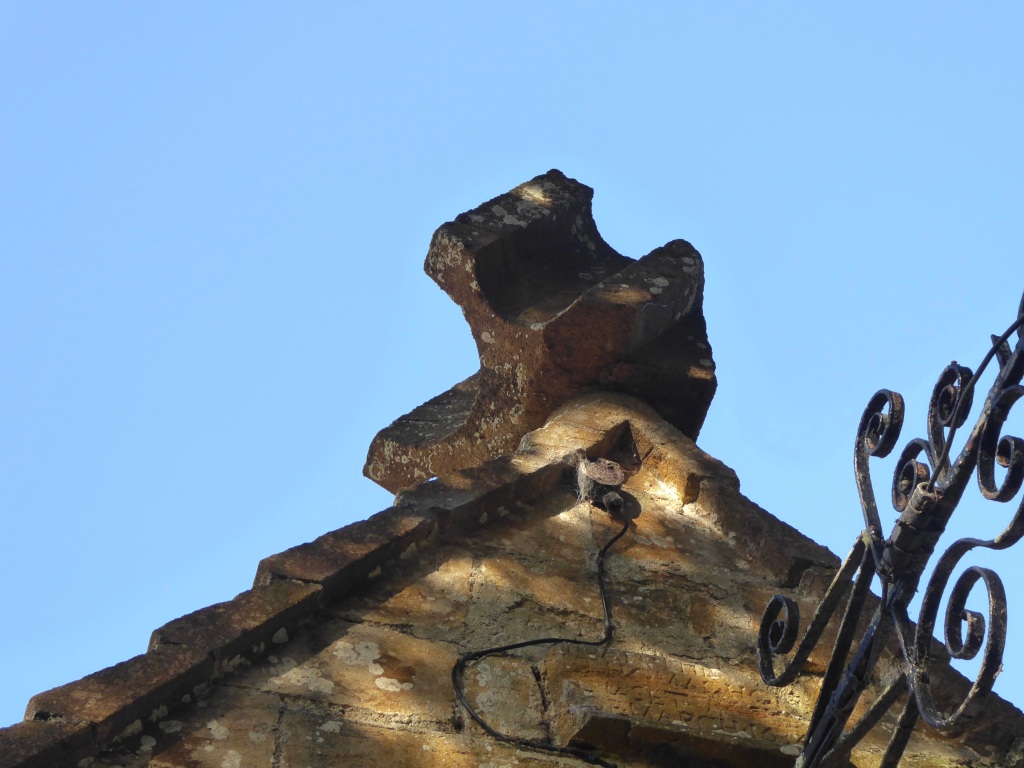
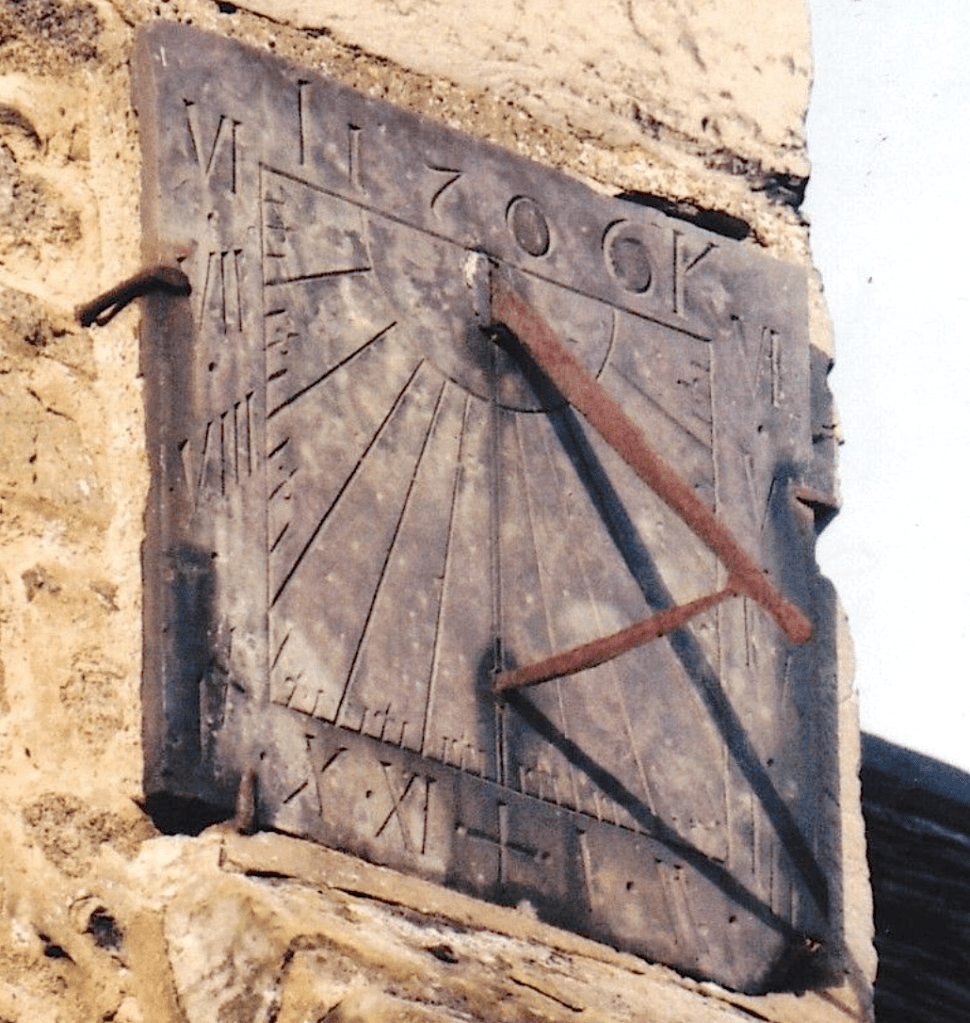
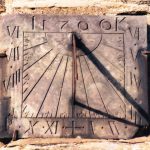
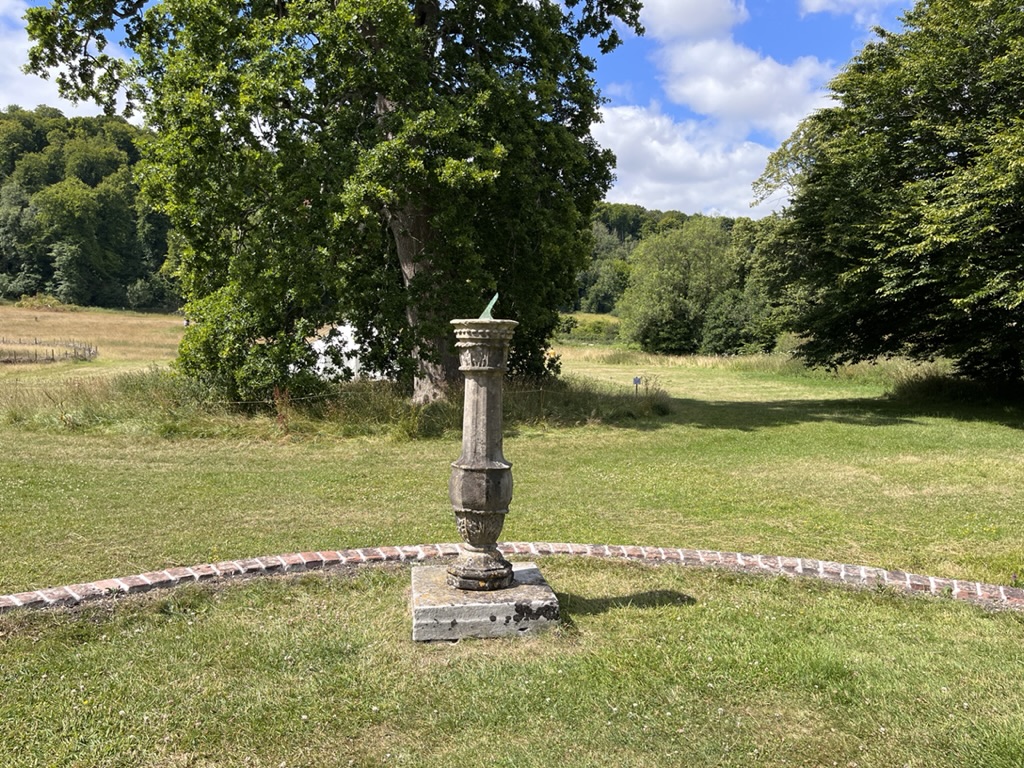
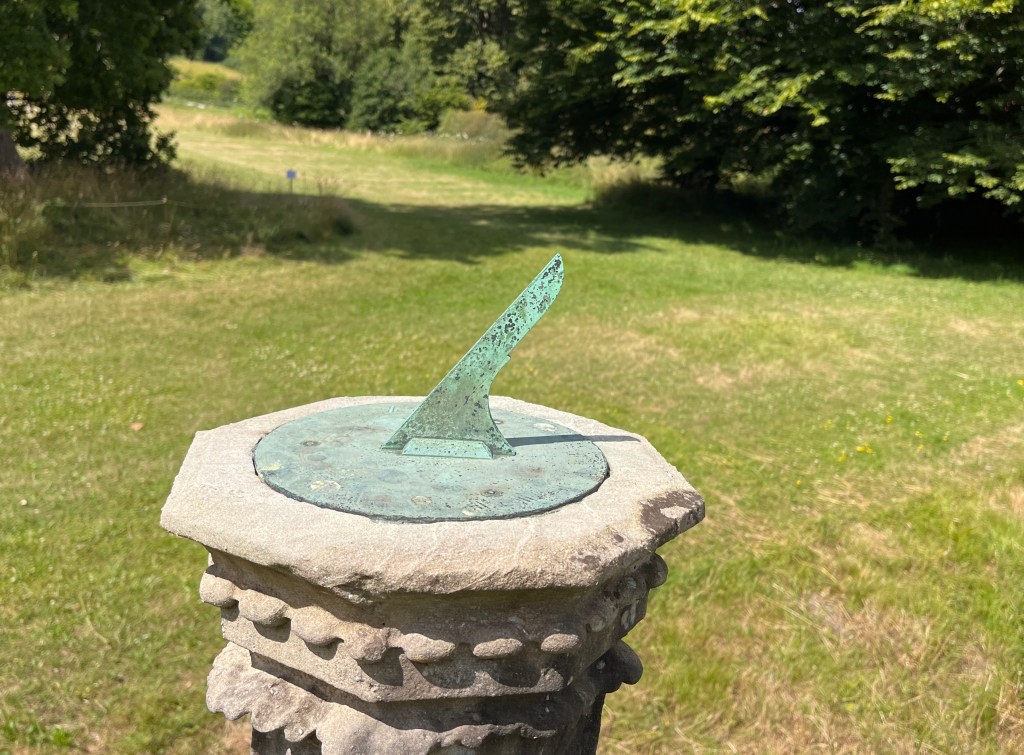
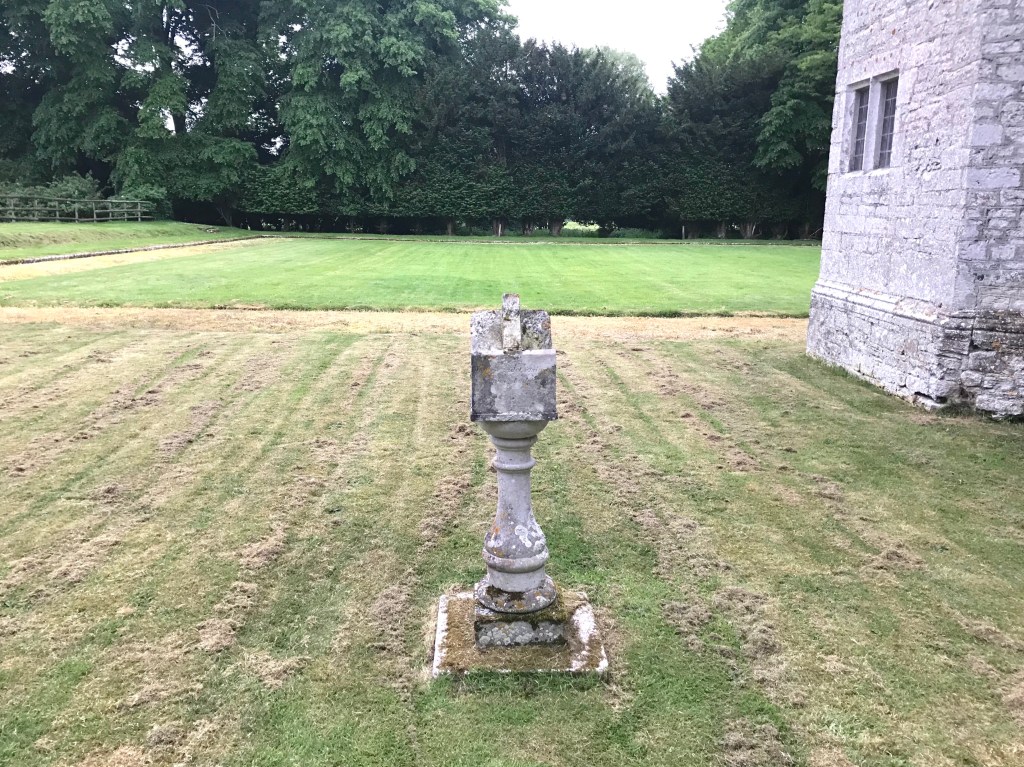
Some time ago we went to Wolfeton in connection with the the Pevsner Buildings of England series. I was able to photograph this most interesting sundial, though with a rather rustic camera and in low light. The dial is not in the optimum place for its primary purpose, but with its pleasing symmetrical design it suits where it stands.
INSCRIPTION

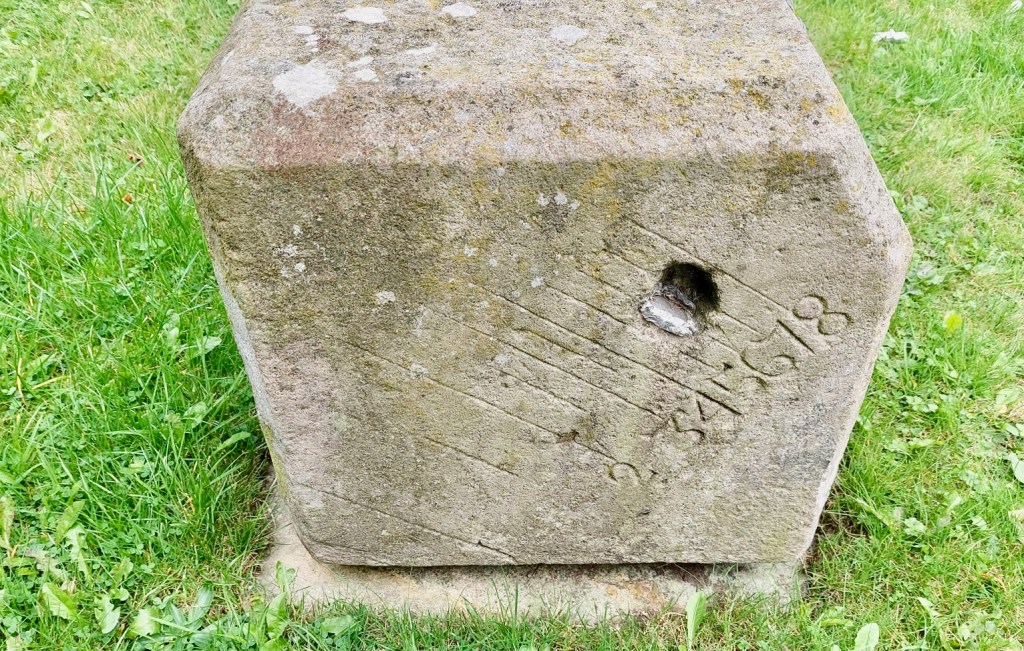
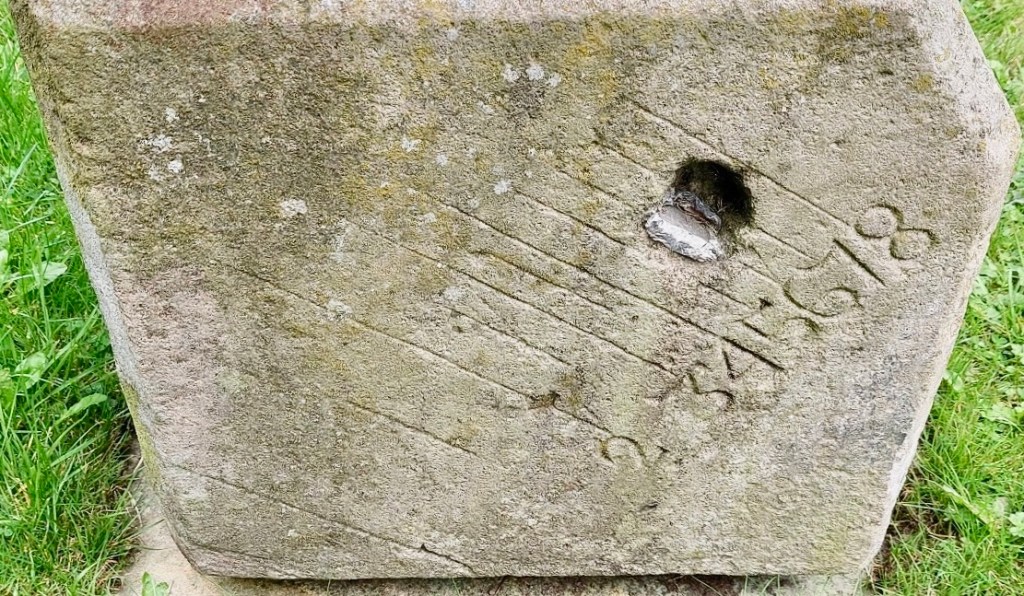
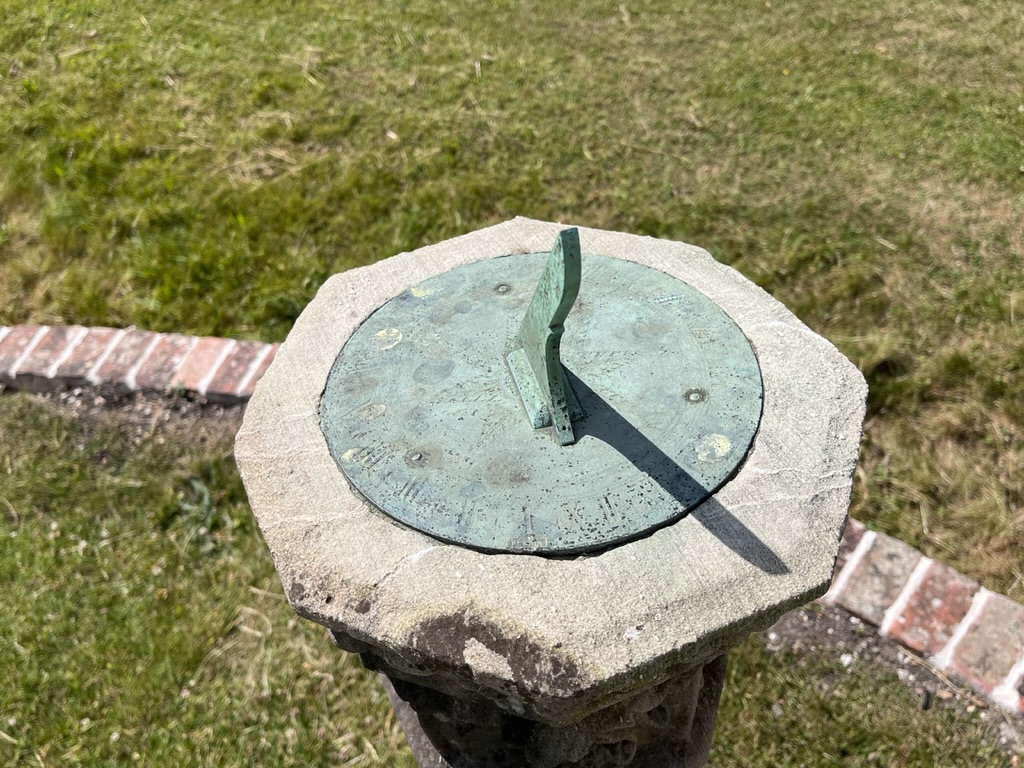
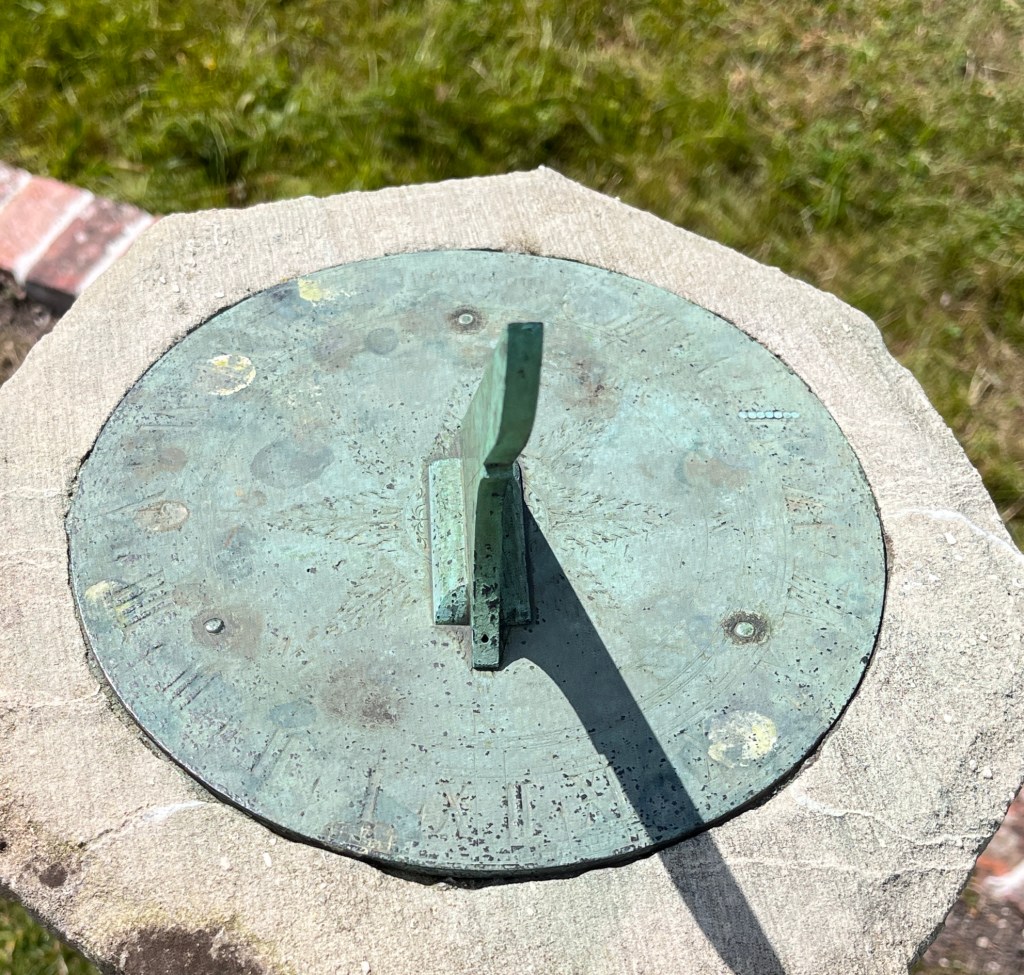
The inscription is an intriguing mystery. At the time I was less engaged with dials, or I might have made more effort to record the details and to take a decent photo. As it is, I cannot make much sense of it. The initial letter U… could perhaps be the start of Umbra? But that assumes the words are in Latin. I have checked the main motto resources including Gatty (original, and revised & expanded); and various less comprehensive sources. I will add the translation if I can make any more sense of the text. Meanwhile, any ideas would be welcome. Actual knowledge, the more so.

ADDENDUM *

UMBRA VIDET UMBRAM
VIVE HODIE.
A shadow marks the shadow.
Live to day.

As it turns out, Gatty did record this dial, attributing it to a neighbouring village Bradford Peverell rather than Charminster. She noted the inscription is somewhat defaced. The dial was possibly erected by George Purling about 1815-20, when the garden was laid out). The same motto is on the tower of Broughton-Gifford Church, near Melksham,

HOW THE DIAL WORKS

This is a polar dial, with the end edges of the cross pieces acting as gnomons (cf the polar dial at Tintinhull).  The dial should be oriented so these point north, ie with the inscription on the south face. However, it is clearly not orientated like that, so it now acts as an interesting garden ornament. John Foad (BSS) has kindly marked up a photo to show how the dial would work if correctly positioned.

DATE

The inscription might give a clue to the dial’s date. My amateur guess is that it is somewhere between mid-C18 and early C19.

GSS Category: Multiple Dial; Old Dial; Garden Dial

All photos: Keith Salvesen; *John Foad BSS for additional material / expertise (see Addendum)

TINTINHULL . SOMERSET . ST MARGARET OF ANTIOCH – Triple Polar Scaphe Dial

St Margaret of Antioch . Tintinhull . Somerset

GRADE I † C13 et seq, on early C12 site. Gradual development but (unusually) with little obvious C19 work BHO. Good C16 bench ends. S porch built c1440, originally thatched, with the cube sundial added later. The scratch dials of St Margaret will be written up separately from this unusual dial that, in fact, is not strictly cubic. 5m NW of Yeovil; just S of dread A303. 50.9746 / -2.7156 / ST498197
St Margaret of Antioch . Tintinhull . Somerset – Scaphe Sundial

ADDENDUM 4.11.22

I wrote this piece without access to the BSS dial records, temporarily unavailable online. I had originally described this dial rather broadly as a cube, aware that it wasn’t quite right. Having now got back into the archive, I am better informed (if not wiser). Some of the points I raise below are clarified. Here is the official entry:

There are 3 polar scaphe dials on the porch gable. Possibly C17 or C18. The dial probably showed all hours of sunlight when correctly installed. Now the orientation is incorrect, the polar axis points East and the dial is shaded by a yew tree. The stone is heavily lichened.

DIAL

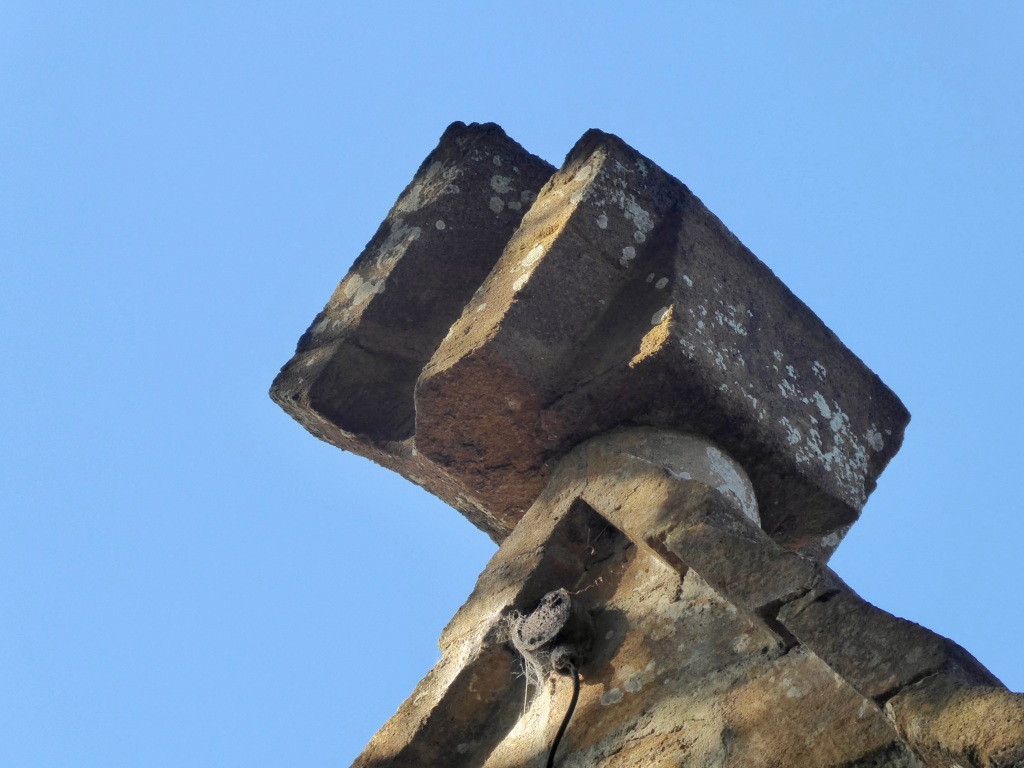
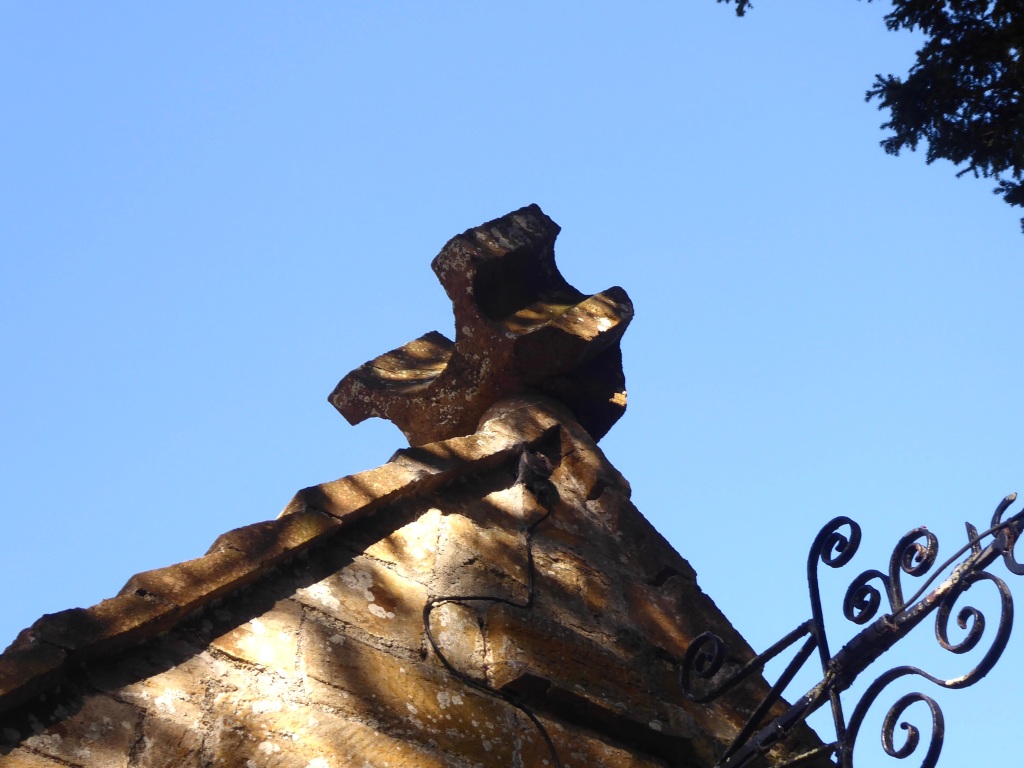
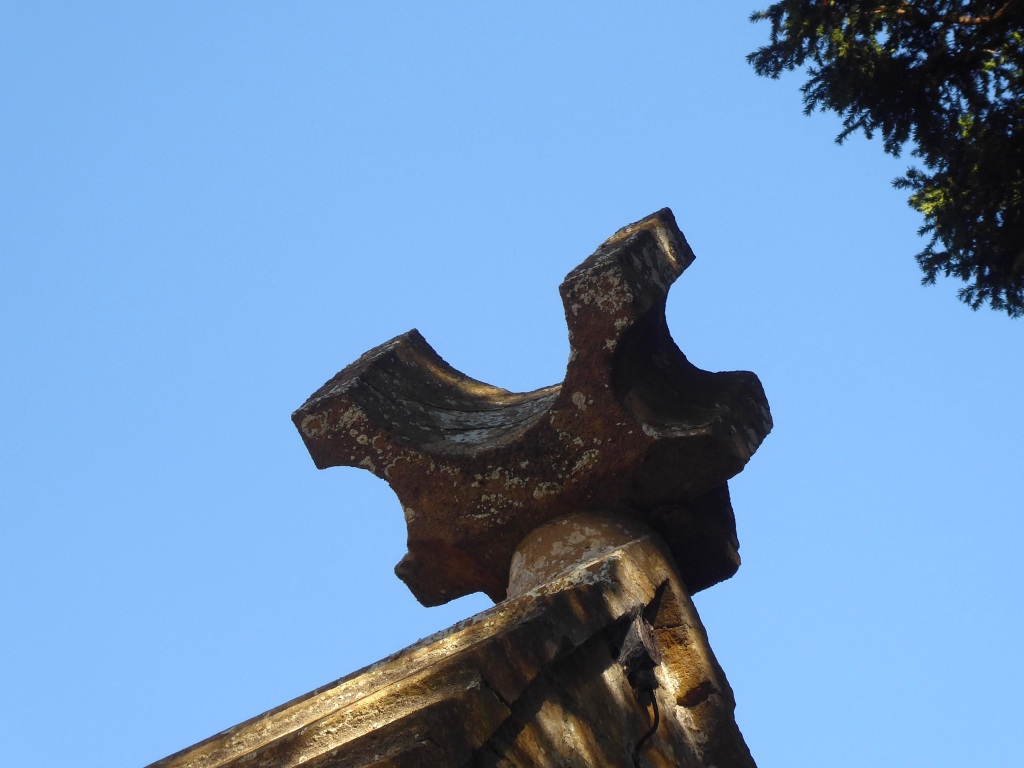
The large block of stone cut as a sundial is balanced (as it seems) on the end of the S porch roof. Its usefulness as a dial nowadays is reduced by it being partly obscured by the shadows of nearby trees. I have not seen similar dials in England but I believe there are a few in Scotland.

I originally confessed that I had no idea how this dial might have worked in practice, nor could I comment on the design, nor suggest how many dials (3?) or even ‘shadow casting edges’ there are. John Foad BSS has kindly marked up 2 images which help to understand the way the dial functioned.

St Margaret of Antioch . Tintinhull . Somerset – Scaphe Sundial

GSS Category: Polar Dial; Scaphe Dial; Scaphe Sundial; Multiple Dial

All photos: Keith Salvesen; thanks to John Foad for clarifying the design

ROTHBURY . NORTHUMBERLAND . ALL SAINTS – RARE CUBE DIAL 1714

All Saints Church . Rothbury . Northumberland – David Evans for CofE Heritage

ALL SAINTS ROTHBURY NORTHUMBERLAND

GRADE II* † On Pre-Conquest / Anglo-Saxon site. C13 / C14, rebuilding & restoration C19 (Pickering) in similar style. Located in Coquetdale with linked churches. 2 medieval scratch dials and further church details LINK. 12m SW of Alnwick, close to NT Cragside. 55.309 /  -1.9106 / NU057016

CUBE SUNDIAL

The cube (‘block’) sundial is on the ground in the churchyard, S side. Originally it was on the porch roof. Parish records show that it was once whitewashed, which cost 1s 9p in 1728. I have included 2 images of each dial face, the whole face and close-up.

BSS record: Main S face has date ‘1714’ and upright Arabic numerals 6 – 6. Hour and half-hour lines. Above is a polar dial with hours 8am to 4pm and a cross for noon. The dial, a substantial chunk of masonry, was most likely taken down from its original site aloft for safety.

FRONT FACE

EAST FACE

There is an excellent article about the THE ROTHBURY SUNDIALS in the Nov 1991 Clock Magazine (Pendulum Publications). The relevant parts relating to the cube dial are as clear and concise as anything I can devise:

  1. A cubic dial which is said to have been situated on top of the old church porch, was lost after the demolition work of 1850 but was later found among the old grave stones and is now sited near the new porch entrance. ​It measures 18in by 18in by 19in and has four dials carved on its surfaces, one each on the east and west faces and two on the south face. The south face has the date 1714 carved into it and some remains of old writing between the numerals and crossed line at 12 noon.
  2. An entry in the vestry accounts for the church in 1728 states that “For white lead and Lamb black for ye Sun Dial – 0   0   9, For Whitning and new drawing the lines and figures – 0  1  0”.

3. If, as the historians tell us, the sundial was on top of the old porch the dials would have been difficult to read, especially the upper south dial sloping as it does at an angle of 45 degrees and has the remains of what was a ½ in thick cast iron gnomon. It would be essential for the lines and figures of the south main dial to be well marked in order to be able to read it.

4. The remains of an angled style (gnomon) 1/8in thick made of cast iron and held in two places by lead filling are easily observed. The east and west styles were set into recesses, scooped out of the faces, and set at 90 degrees to the faces. ​​

WEST FACE

This dial – and its history – is a most unusual one and I am grateful, as ever, to Erika Clarkson for her dial-hunting and photography skills and the resulting coverage of the midlands and the north of England that is well beyond my own territory in the west country.

GSS Category: Cube Dial

All photos by Erika Clarkson except header image of church, David Evans / CofE Heritage Record

ABBOTSBURY . DORSET . ST NICHOLAS – Vertical Dial

St Nicholas . Abbotsbury . Dorset

ST NICHOLAS . ABBOTSBURY . DORSET

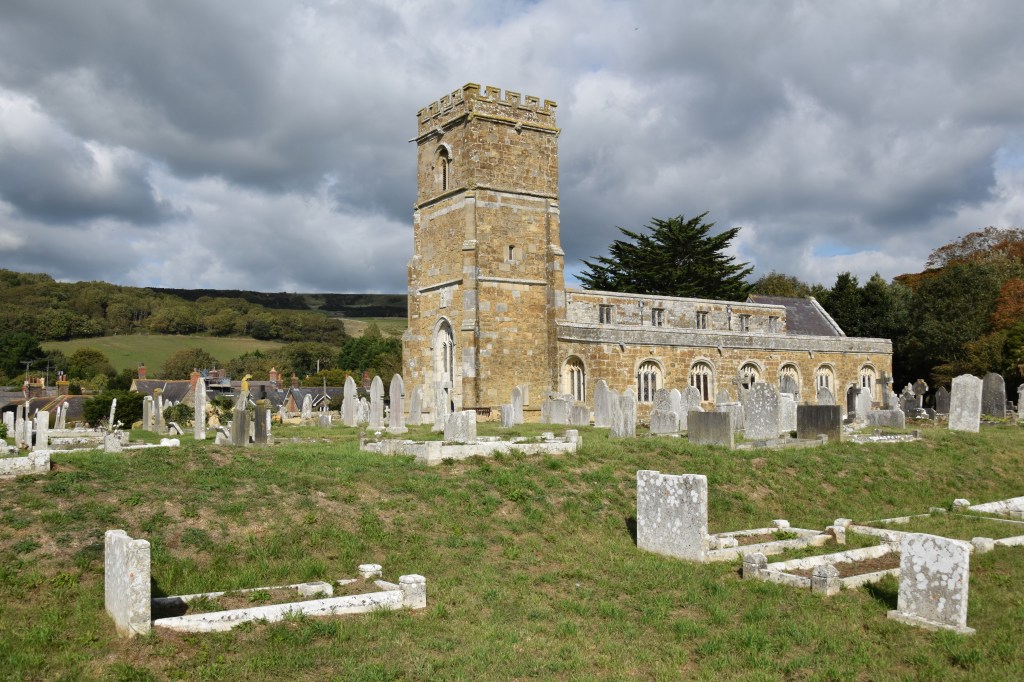
GRADE I † C14 with older origins; gradual development, rebuilding and restorations. This church represents a far wider history of the area ecclesiastically, architecturally and socially. There are a great many good online sources of information, both general and specific, accessible with a single Gxxgle search. One of the most authoritative resources for deeper delving is British History Online BHO. 50.665 / -2.5989 / SY577852

DIAL

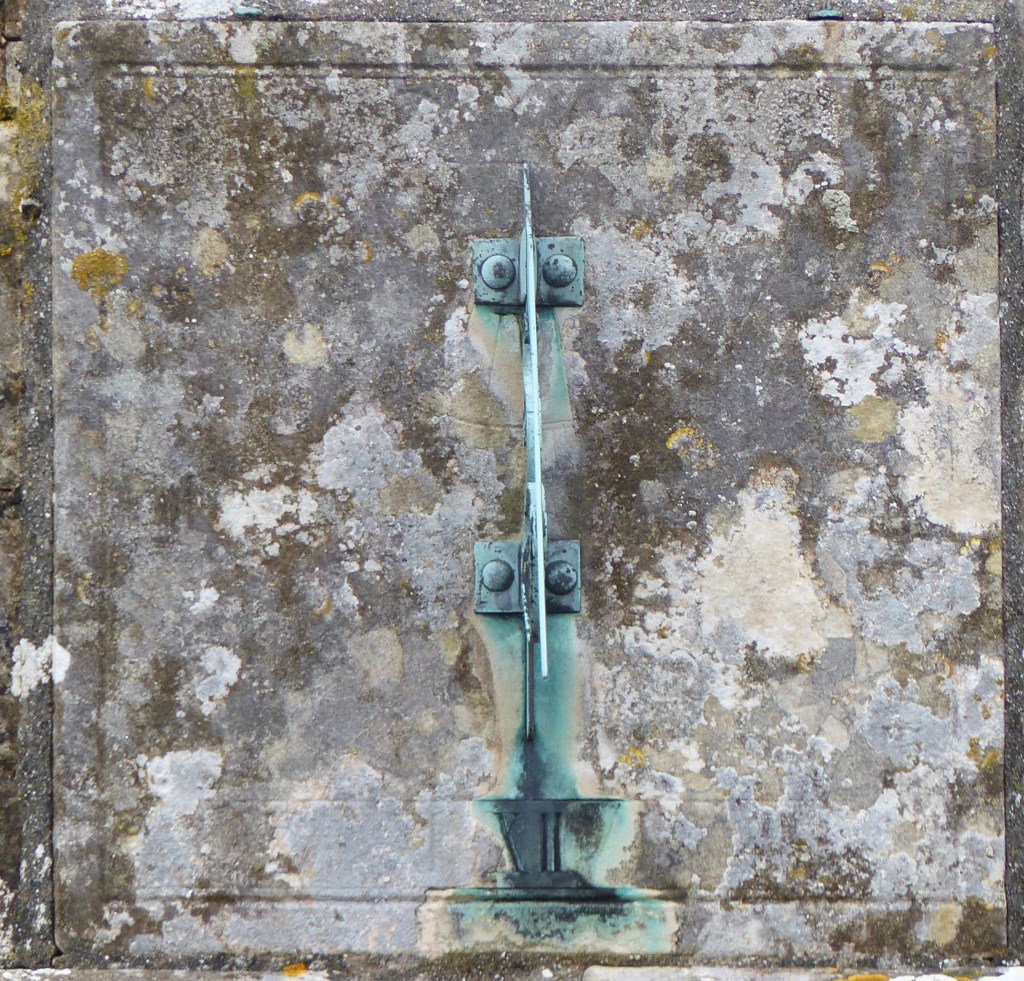
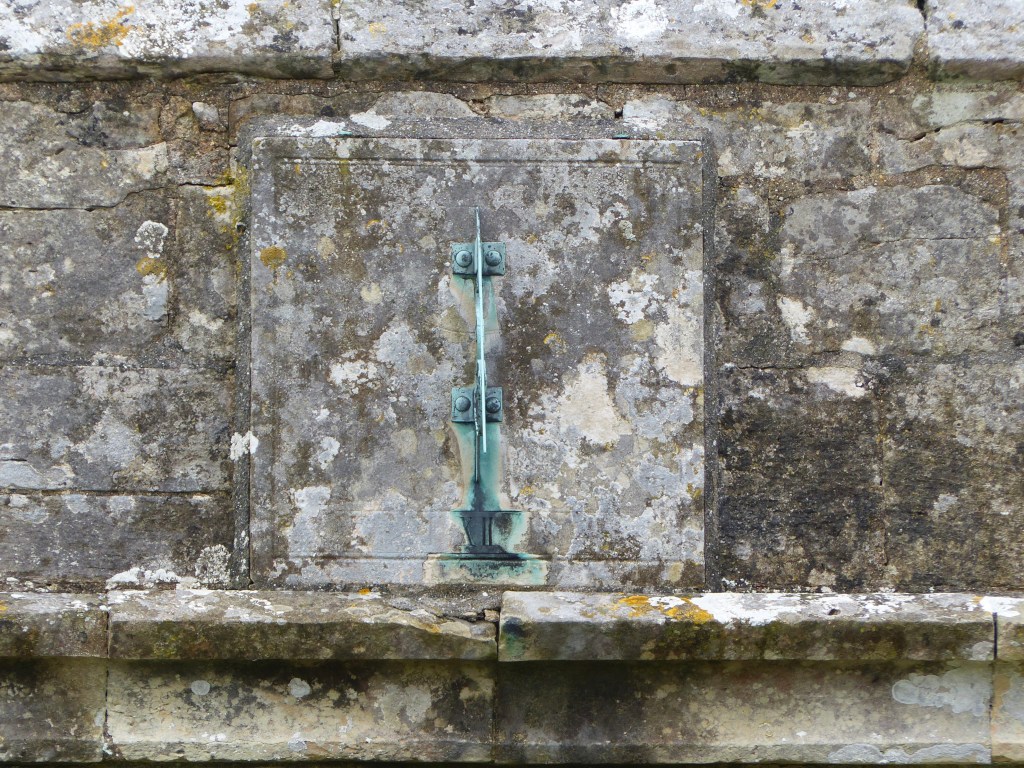
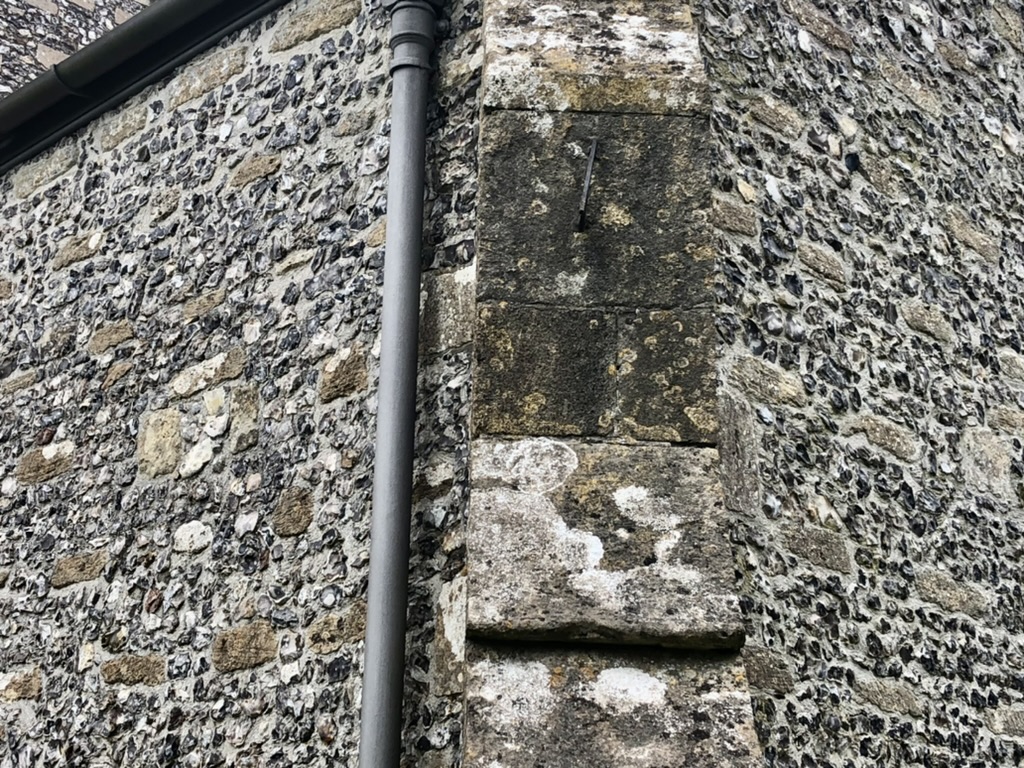
The vertical dial is set in the parapet of the south wall of the south aisle. It is weathered, like the stone around it. A survey some time ago found no visible markings; the high position, extent of weathering and prevailing light probably explains that. A long lens picks out more detail. It is hard to date the dial – ± 1800?

St Nicholas . Abbotsbury . Dorset – Vertical Sundial

The dial is cemented onto the parapet, supported by a ledge and with 2 iron supports at above it. A frame surrounds the dial. In the upper section is a semicircular dial, with the footing of the rather hefty gnomon centred within it. 2 clear lines descend either side of the noon line / gnomon blade.

St Nicholas . Abbotsbury . Dorset – Vertical Sundial

The hint of 2 converging lines above the bolts suggest they radiate down from the horizontal line of the dial. At the base of the semicircle there are traces of an outer semicircle and, significantly, of a few short lines between the two. These seem to be half hour markers. If so, there was once a more complex dial that has all but vanished.

St Nicholas . Abbotsbury . Dorset – Vertical Sundial

Beneath the lower gnomon footing, the number XII is very clear. Possibly it was recut (maybe more than once) to continue to emphasise the noon marker. Apart from that, all other numbers are completely erased except for a ghost of XI.

GNOMON

Is the rather clunky gnomon original? Initially I thought not, but some features suggest it might be. The precision of the tip of the top being exactly on the edge of the frame; the extent of the staining; and the degree to which it has protected the centre line of the dial and in particular XII. Against that, the angled view of the dial makes it seem rather incongruous.

St Nicholas . Abbotsbury . Dorset – Vertical Sundial / S. face with parapet dial above centre windows – stevekeirtsu cc

GSS Category: Vertical Dial; Church Sundial; Gnomon

All photos Keith Salvesen except the last, stevekeiretsu Geo cc

BOCONNOC PARISH CHURCH . CORNWALL – Vertical Dial (1716)

Boconnoc Parish Church

BOCONNOC PARISH CHURCH . CORNWALL

GRADE I † The Church forms part of the Boconnoc Estate and has no Dedication*. Probably C12 origins as the Manor Chapel; gradual development; restored 1873. Now in the care of the Cornwall Historic Churches Trust. 10 m SW of Liskeard. 50.4159 / -4.6099 / SX146605

DIAL

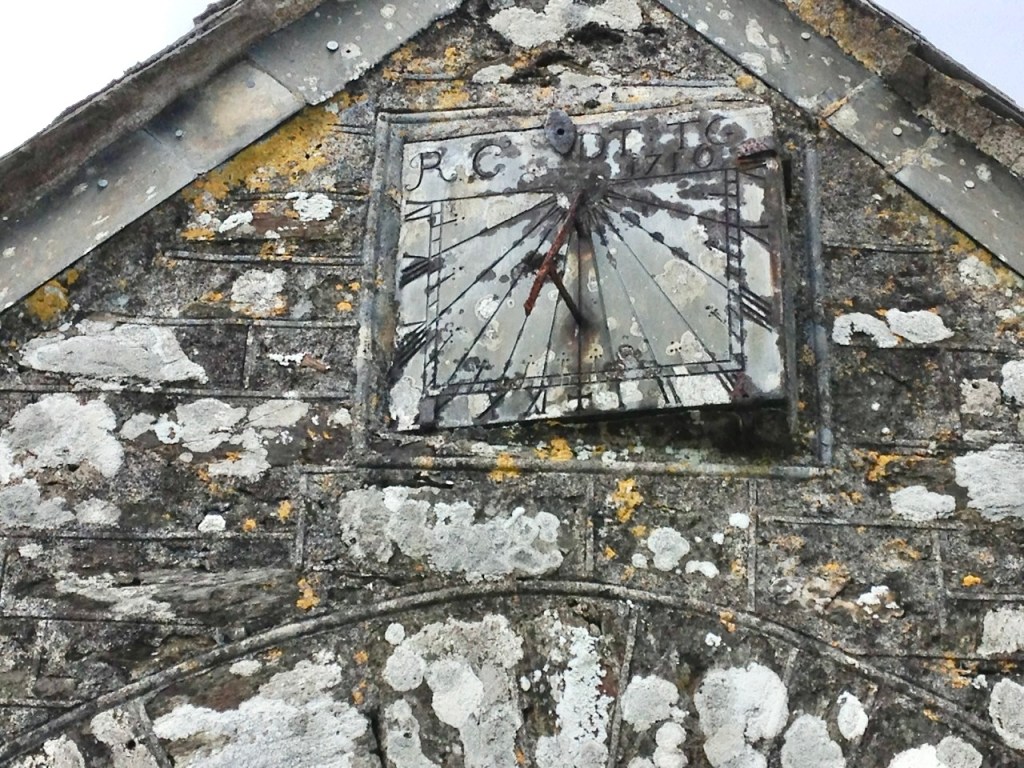
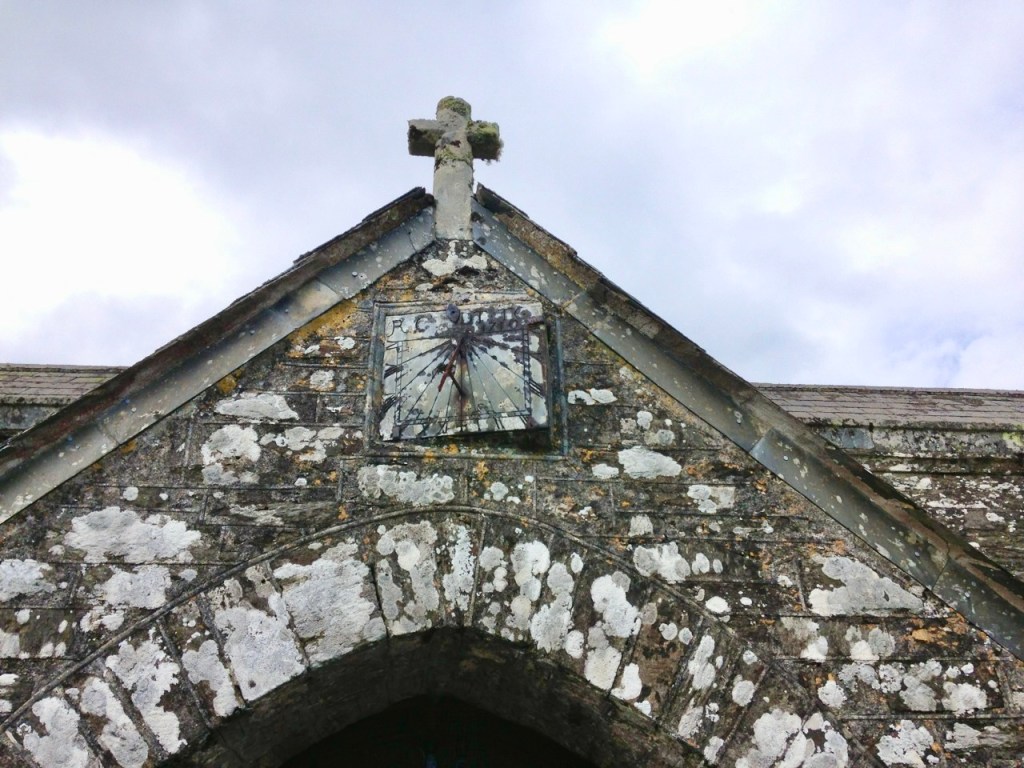
The time-worn dial is set into the apex of the porch and canted westwards. Dated 1716, it is also inscribed with a set of 3 double initials RC, DT, & TG. ‘RC’ is in a different style, and the date – perhaps significantly – is below the two other pairs of initials. Possibly the latter installed the dial in honour of the former.

The dial shows 1/4 as well as 1/2 hours. The 12 of noon is replaced by a cross. IIII is used for IV. The gnomon is presumably not original, but has clearly been in situ for a considerable time.

* Sadly no St Boconnoc is listed in the Ox. Book of Saints)

GSS Category: Vertical Dial. Old (post medieval) Dial

Photos: Keith Salvesen; Header CHCT

RIMPTON . SOM . ST MARY – Vertical Dial

St Mary . Rimpton . Som.

ST MARY . RIMPTON . SOMERSET – VERTICAL DIAL

ST MARY † Grade 1. Early C13, alterations c.1500, N transept added C19. Between Sherborne & Marston Magna, on the Som. / Dorset boundary. Scratch dials, vertical dial, porch graffiti and protection (‘witch’) marks. 50.9948 / -2.5565 / ST610218

St Mary . Rimpton . Som. – Vertical Dial

Quite a while ago I wrote (in 2 parts) about the 4 main medieval scratch dials at the church. The links are below. I recently revisited St Mary for a further look at the dials (there are a couple of others to write up) as well as some interesting church marks including a small hexfoil within the porch. A revised single post featuring all of the above will emerge in due course.

DIAL

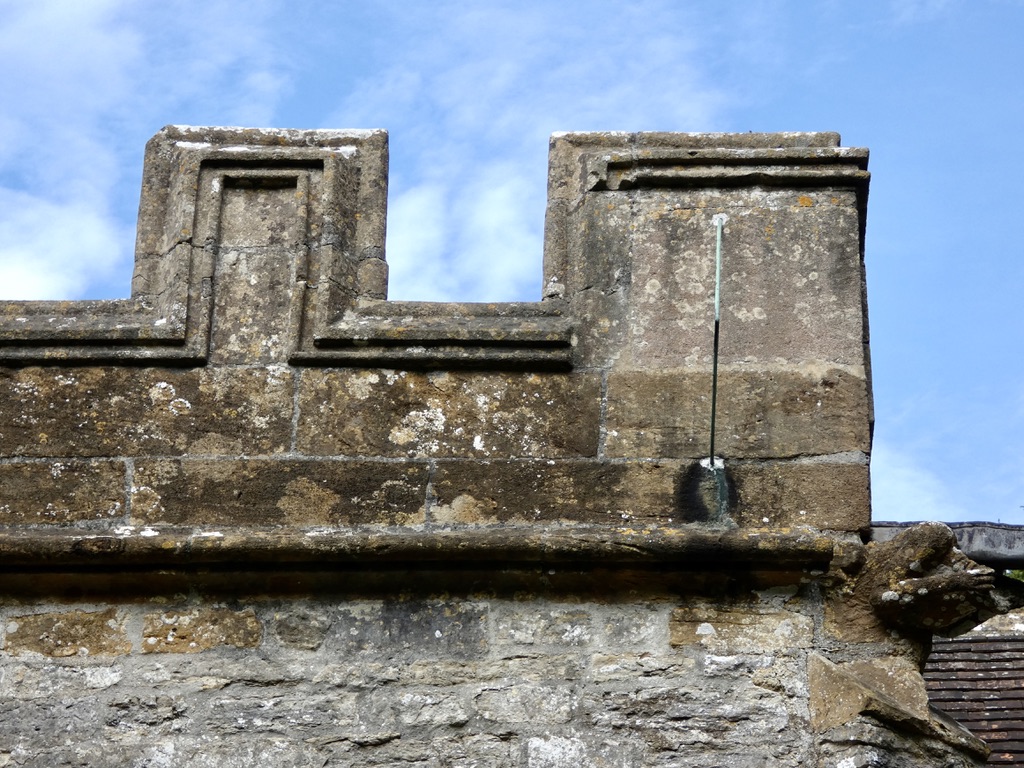
I also photographed the Vertical Dial for BSS records. It is located on the end merlon of the parapet, easily visible. It has a simple, almost square face. The plain metal gnomon is fixed into the top of the dial stone, and into the mortar line under the stone below it.

There are other unmarked (no lines, pocks, numerals) dials in the S Somerset / W Dorset region and I though this was one. However, later examining the main photograph in the gallery below, I detected 2 faint lines in U L quadrant that seem deliberately cut. There’s a ghost of a line on the opposite side. So possibly this was once a conventionally marked dial that has slowly and very evenly eroded.

It is hard to date. The dial stone differs from the ones around it. At a guess, it was added C19, perhaps when other work was carried out (eg adding the N transept). BHO notes that in 1827 the church was ‘repaired and beautified’. Perhaps adding the dial was part of that process.

RIMPTON 1 (scratch dials 1 & 2)

RIMPTON 2 (scratch dials 3 & 4)

GSS Category: Vertical Dial

All photos: Keith Salvesen

LITTLE BEDWYN . WILTS . ST MICHAEL – Vertical Dial

St Michael . Little Bedwyn . Wilts

ST MICHAEL . LITTLE BEDWYN . WILTS

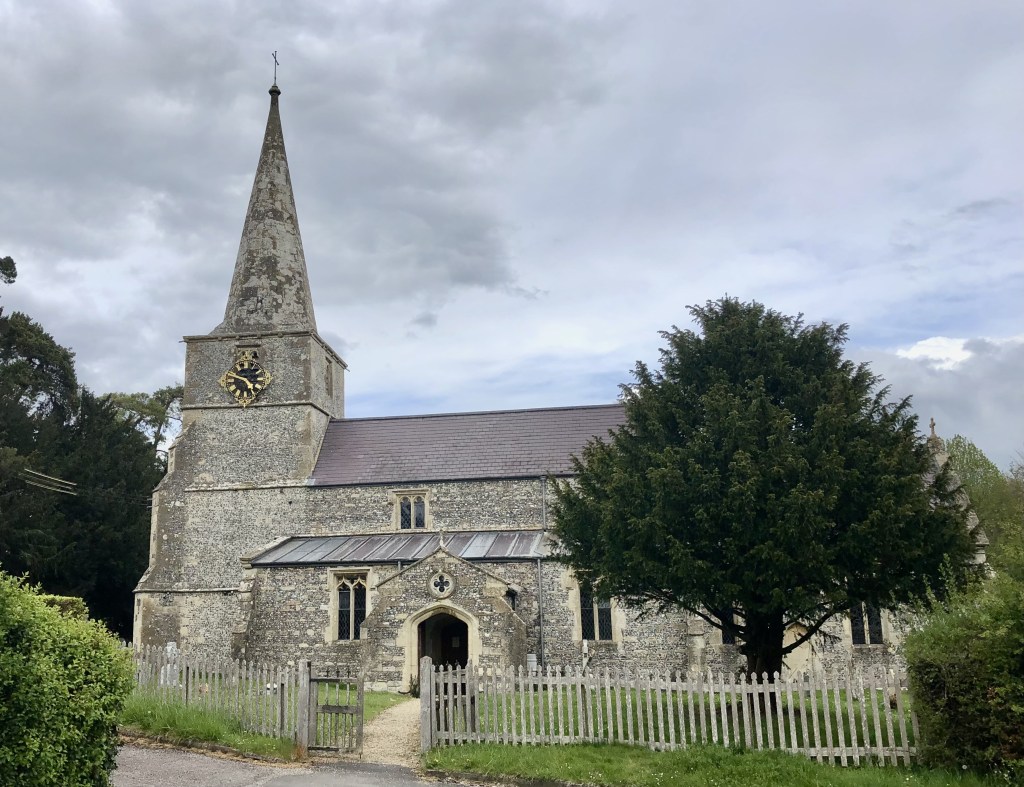
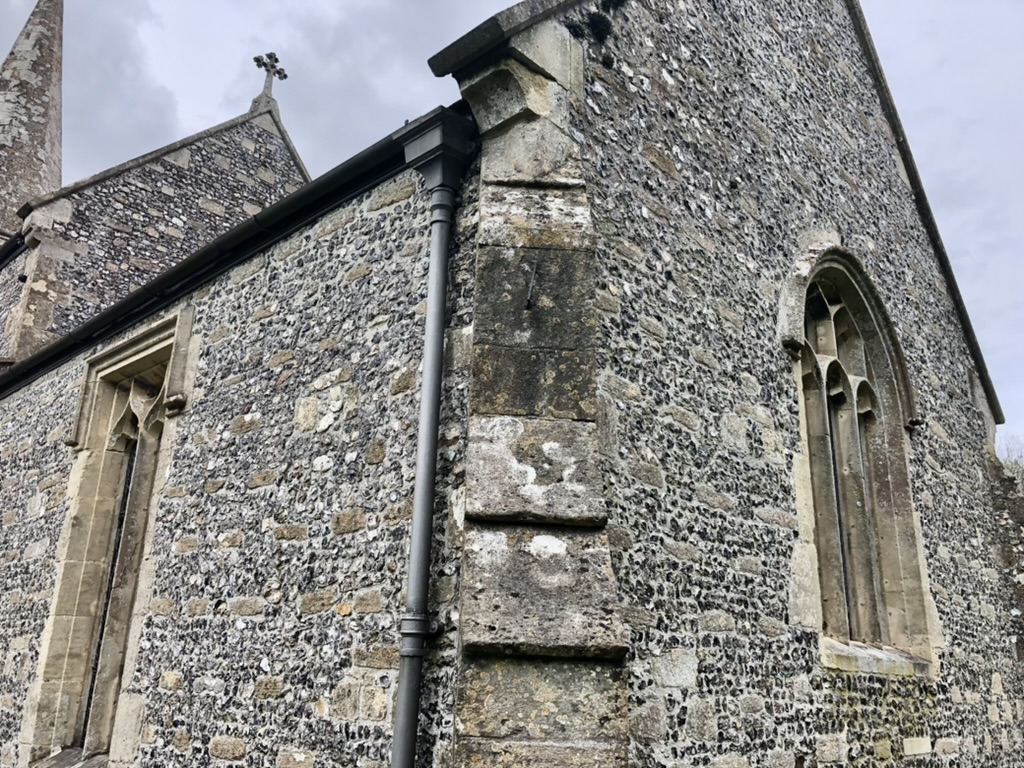
GRADE I † C12, C13, C15; C19 restoration. A pretty church with a 4-stage tower and short steeple, close by the Kennet & Avon canal. No discernible scratch dials though a likely-looking location. A single vertical dial, angled. 7 miles W of Hungerford. 51.3941 /  -1.5828 /  SU291661

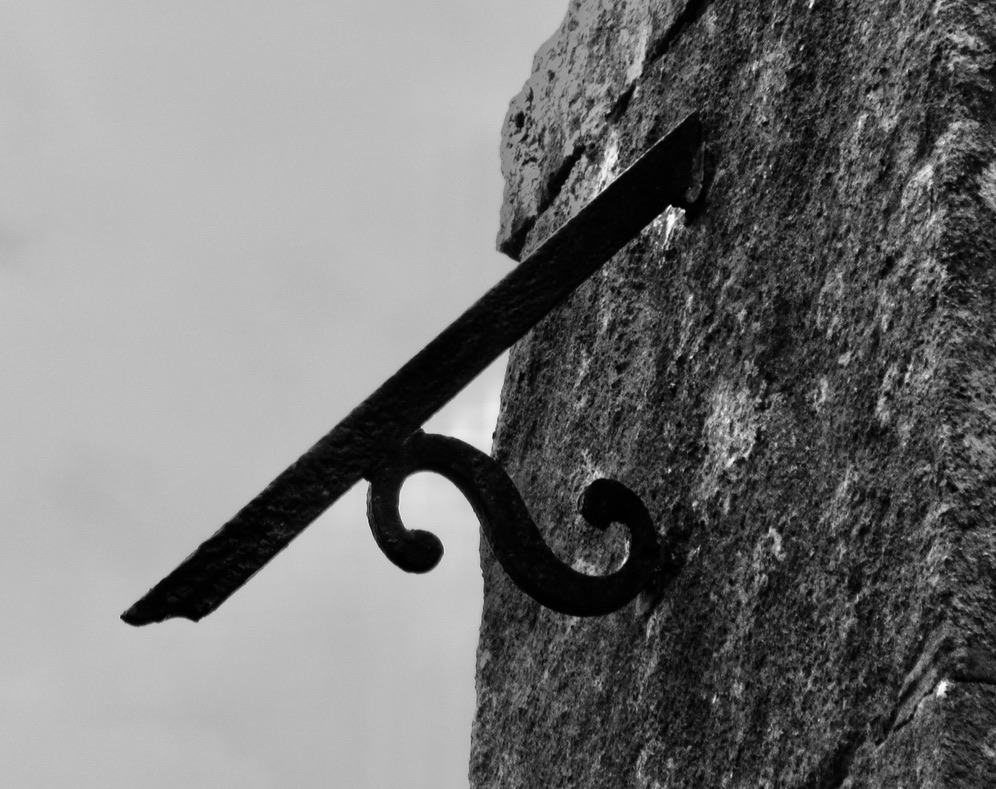
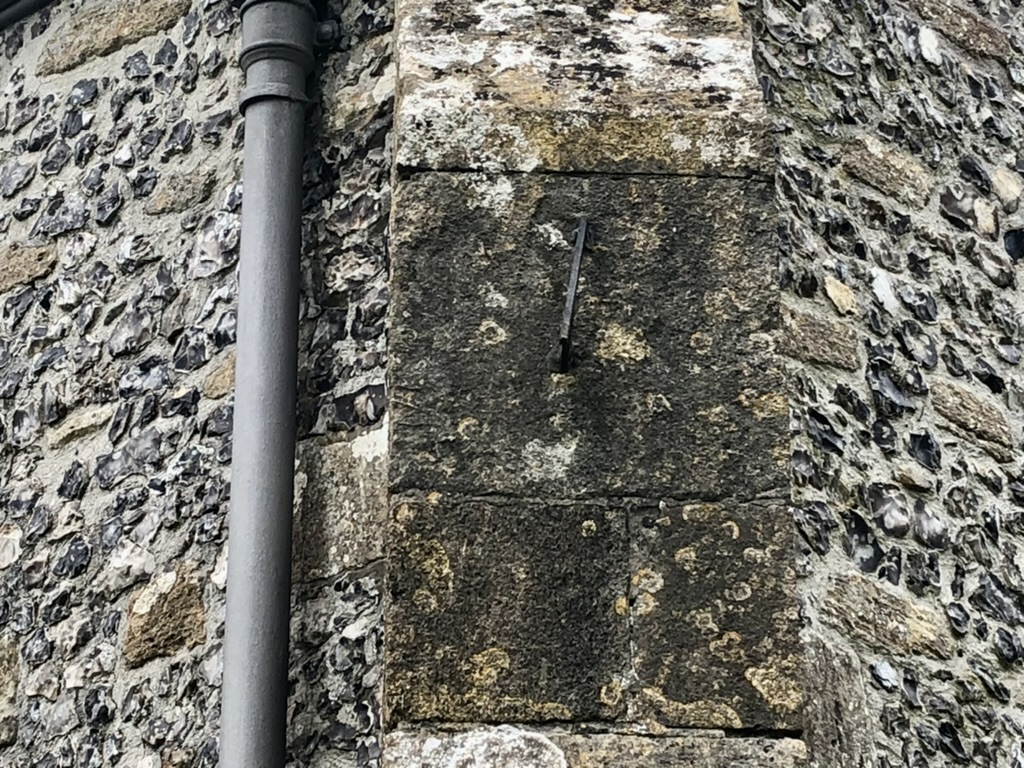
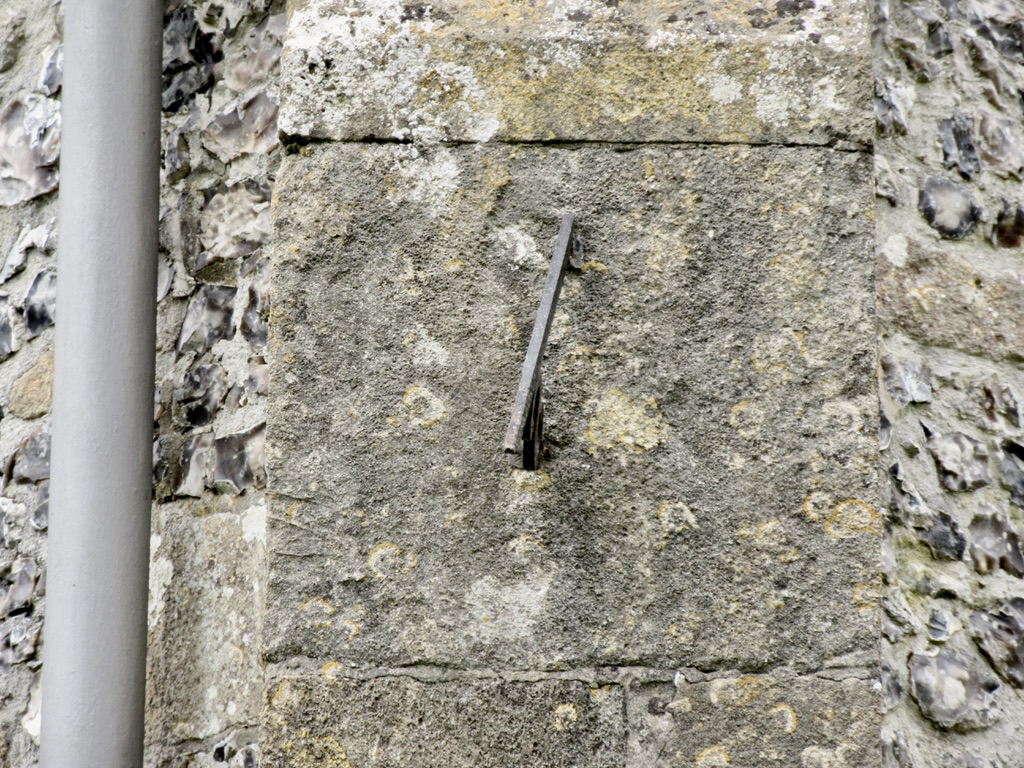
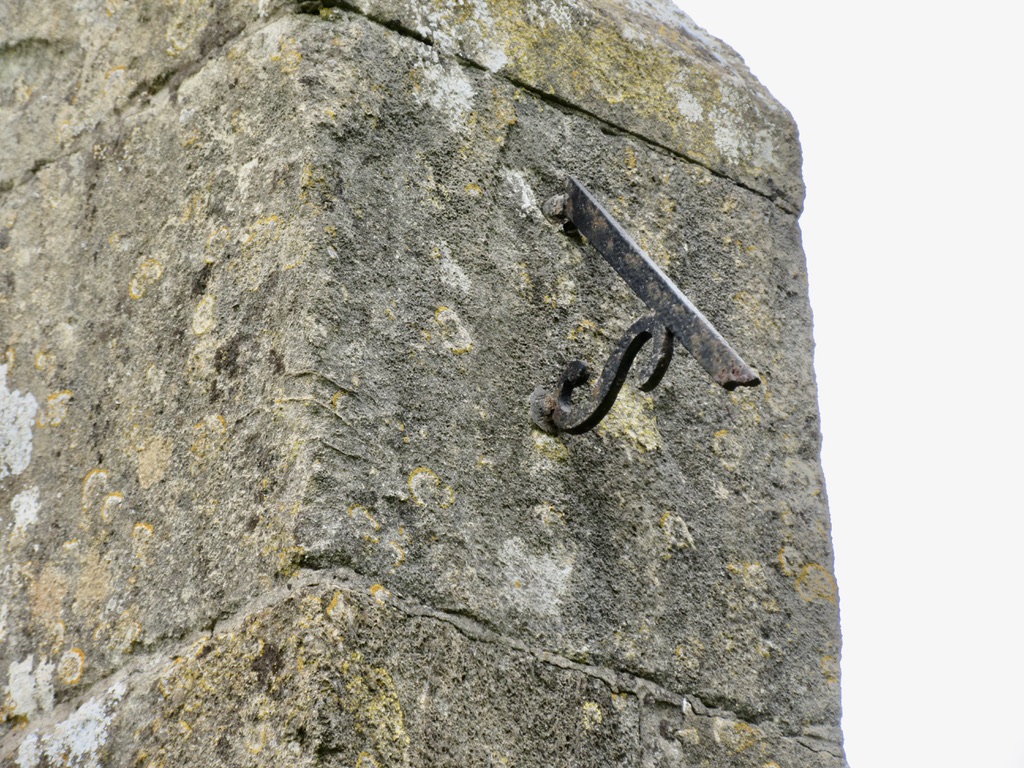
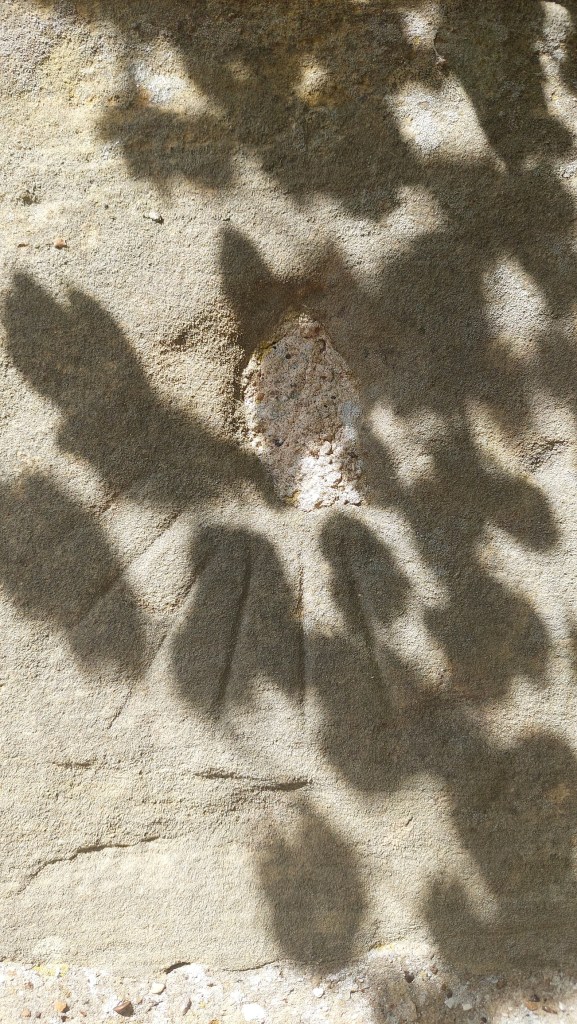
The dial is high up on a SE facing buttress, with an iron gnomon set into the stone. It has an S-shaped support. The face is completely plain, with no evidence of numbers, lines or a frame. Possibly it was originally painted. Hard to date, though the gnomon is plainly not original.

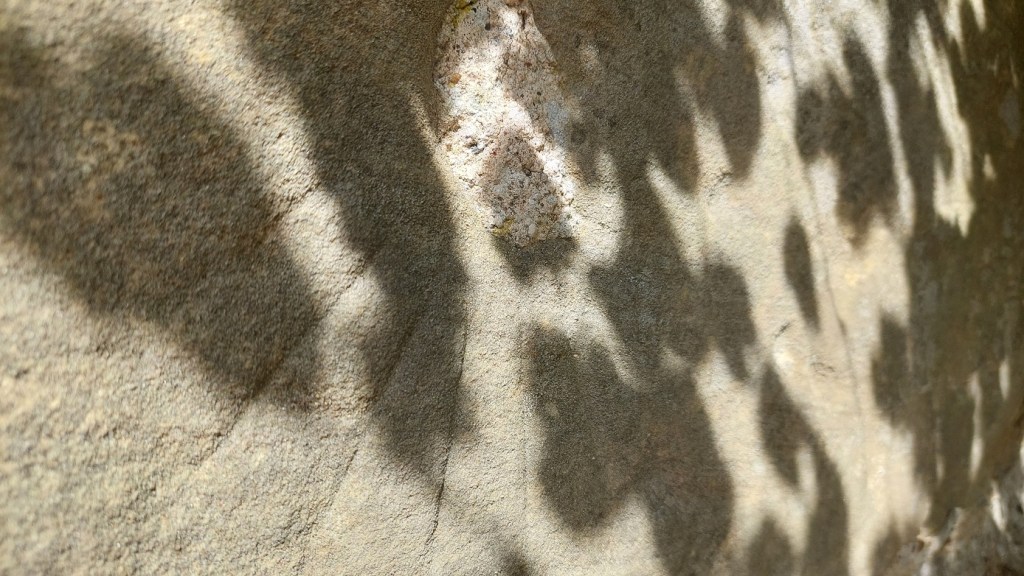
Using a different camera sheds another light on the dial* and confirms the absence of markings

*and demonstrates how 2 cameras, used at the same time, tell different stories

GSS Category: Vertical Dial; Church Sundial

All photos: Keith Salvesen

NEWTOWN LINFORD . LEICS . ALL SAINTS – 2 Scratch Dials, Vertical Dial

All Saints . Newtown Linford . Leics

ALL SAINTS . NEWTOWN LINFORD . LEICS

GRADE II* † C14 / 15 origins, with later / C19 enlargement. Besides 2 scratch dials there is a vertical dial on the tower dated 1706. 6m NW of Leicester. 52.6832 / -1.2292 / SK522097

DIALS

The scratch dials are both on the S side. One is on SW corner of the tower; the other on the lower part of the L jamb of a window (I don’t have a more precise location at the moment).

DIAL 1

All Saints . Newtown Linford . Leics – Scratch Dial 1

Dial 1 gives the impression of a spider, with legs radiating from the (blocked) gnomon hole in the centre of the dial stone. The clearest lines are at 11 and noon, the latter faintly extended. The others are rather randomly placed. There’s a line in the top L quadrant; and the hint of a line very roughly extending the noon line upwards. The 2 pocks don’t seem to be part of the design.

DIAL 2

All Saints . Newtown Linford . Leics – Scratch Dial 2

Dial 2 is more conventional ‘morning dial’, with 6 more or less evenly spaced lines descending (but not very accurately) from a large filled style hole. Only one of the lines is after noon. Simple and straightforward.

VERTICAL DIAL 1706

All Saints . Newtown Linford . Leics – Vertical Dial

Set on the SE edge of the second stage of the tower, close to the intersection with the roof of the nave. Slate, made by Thomas Woodcock in 1706. Deeply cut and in excellent condition for its age. Initials I K. Cross for 12 noon. Quarter hours marked. The angles of the Roman numerals are carefully graduated as they descend and ascend, suggesting the work of a skilled craftsman dial-maker.

BSS notes very similar dials at Breedon on the Hill and at Leicester, all three being within a few miles of each other.

This interesting dial has been analysed and recorded in some detail by BSS:

The dial is fitted with iron dog nails to the south face of the tower, at the south-east corner, adjacent to the nave junction. The date 1706 is across the top, and being of the local slate, the dial is in remarkable condition for its age. Initials ‘I K’ are on each side of the date. Upright hours VI – + – IV – VI are aligned to the hour lines, which are drawn to a large semicircle around the gnomon root. Short lines mark the half hours, with fleur de lys or arrow heads, and quarter hours. The rusty iron bar gnomon has a straight horizontal support.

GSS Category: Scratch Dial; Vertical Dial

Photos of church and scratch dials, Erika Clarkson; vertical dial from BSS archive

WINTER OBELISK & HORIZONTAL SUNDIAL . SELBORNE . HANTS

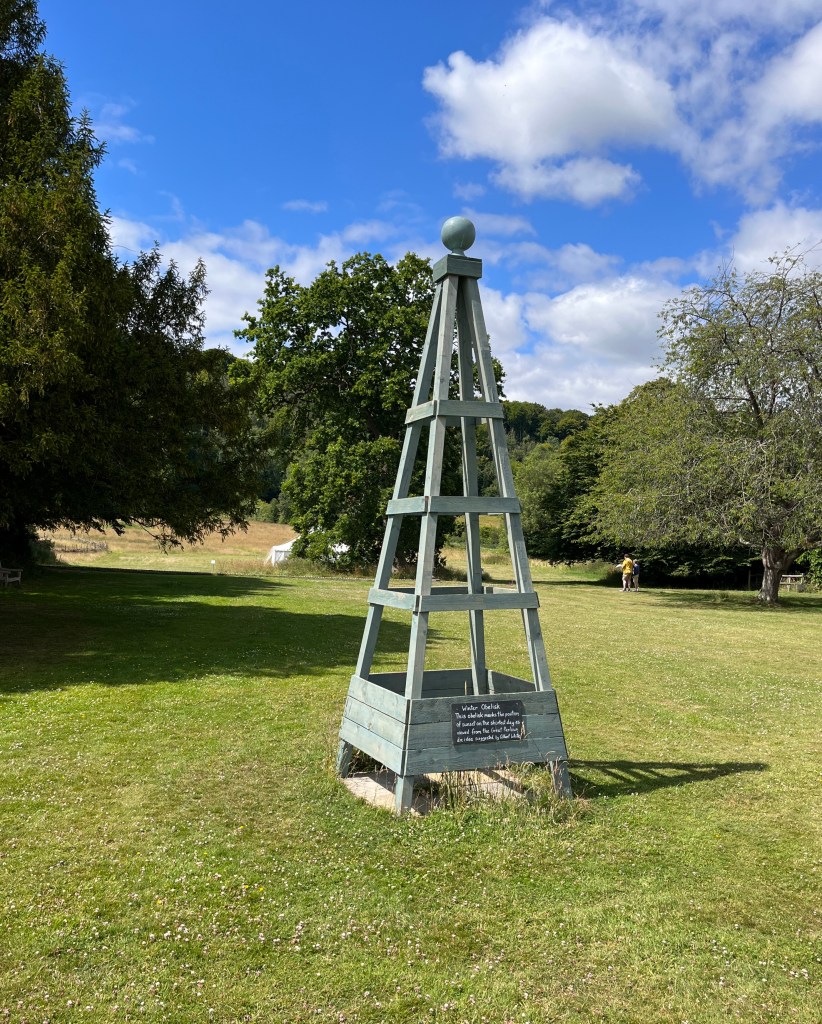
Selborne in Hampshire was home to the C18 naturalist GILBERT WHITE (1720 – 93), renowned naturalist and considered to be one of the earliest ecologists. The link above will take you to the Wiki page about him. The history of the garden can be found at SELBORNE. If you are in the area, Selborne is well worth visiting. In particular, the extensive park contains examples of White’s propagation and conservation ideas that were way ahead of their time. And two very different dials.

Gilbert White . NPG

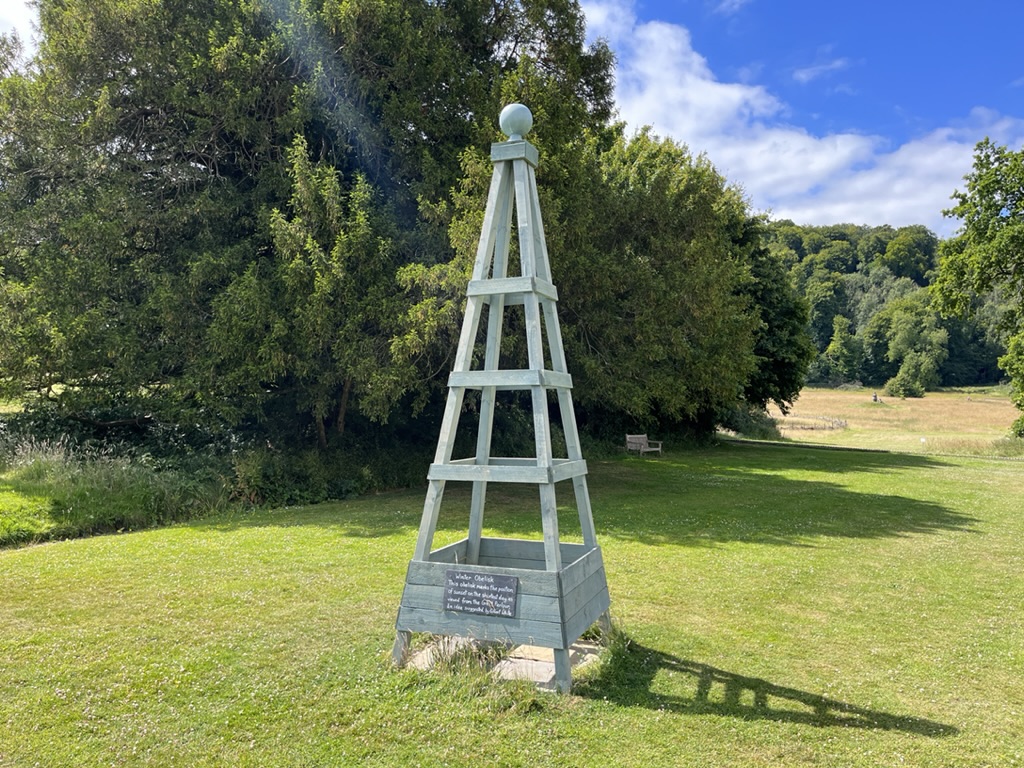
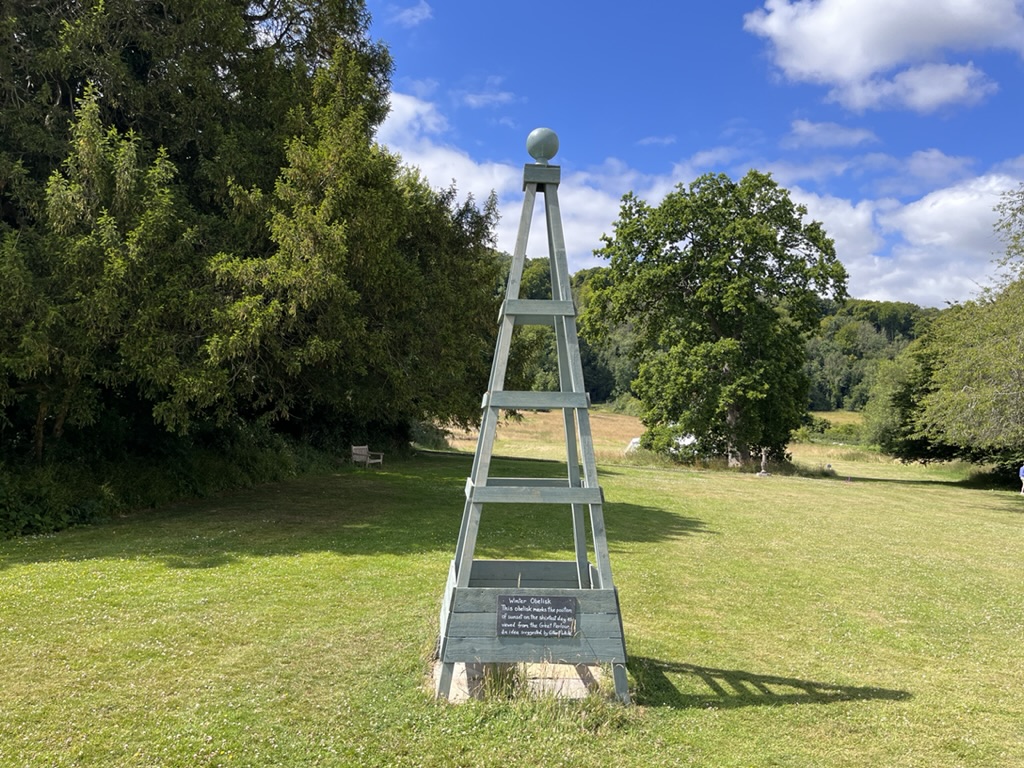
Much the most interesting feature at Selborne for present purposes is the Winter Obelisk, based on an idea by White. The structure is designed to ‘mark the position of sunset on the shortest day as viewed from the Great Parlour‘. Possibly it is a unique example of an obelisk dial having such a special – and limited – purpose. Perhaps it doesn’t count as a dial at all (cf Stonehenge / summer solstice). Seeing the shadows cast on the grass by the structure, perhaps there is scope to mark out a different kind of dial with a wider application (though not necessarily when viewed from the Great Parlour).

The second dial at Selborne is conventional and very much a park dial, standing above the Ha-ha. Is the dial contemporary in the historic sense, or in the modern sense (there are similar early C20 dials)? The former it seems: Both the ha-ha and the stone sundial standing on the lawn above it were features of White’s ‘New Gardens’. HE

GSS Category: Sundial; Horizontal Dial; Obelisk Dial

All photos: Keith Salvesen

FORDE ABBEY. DORSET – 2 Unusual Sundials

FORDE ABBEY . DORSET

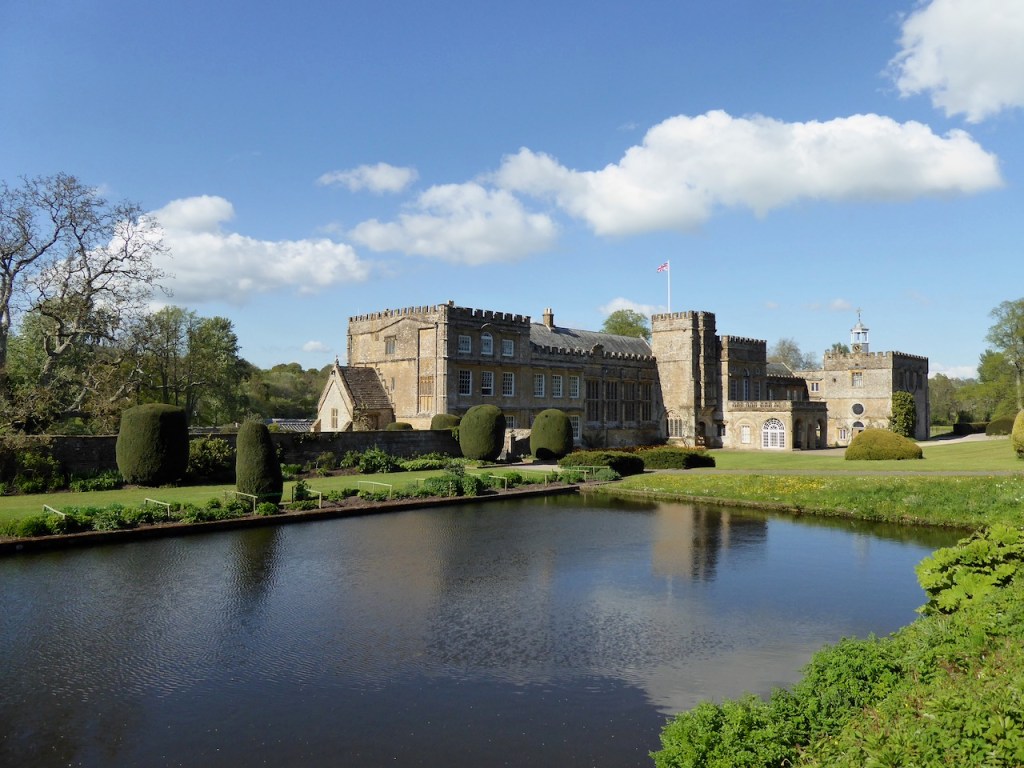
GRADE I † Cistercian Abbey dating from C12, becoming a fine stately home C17 with beautiful gardens and landscaping. Near Chard. 50.8434° N, 2.9113° W

DIAL 1

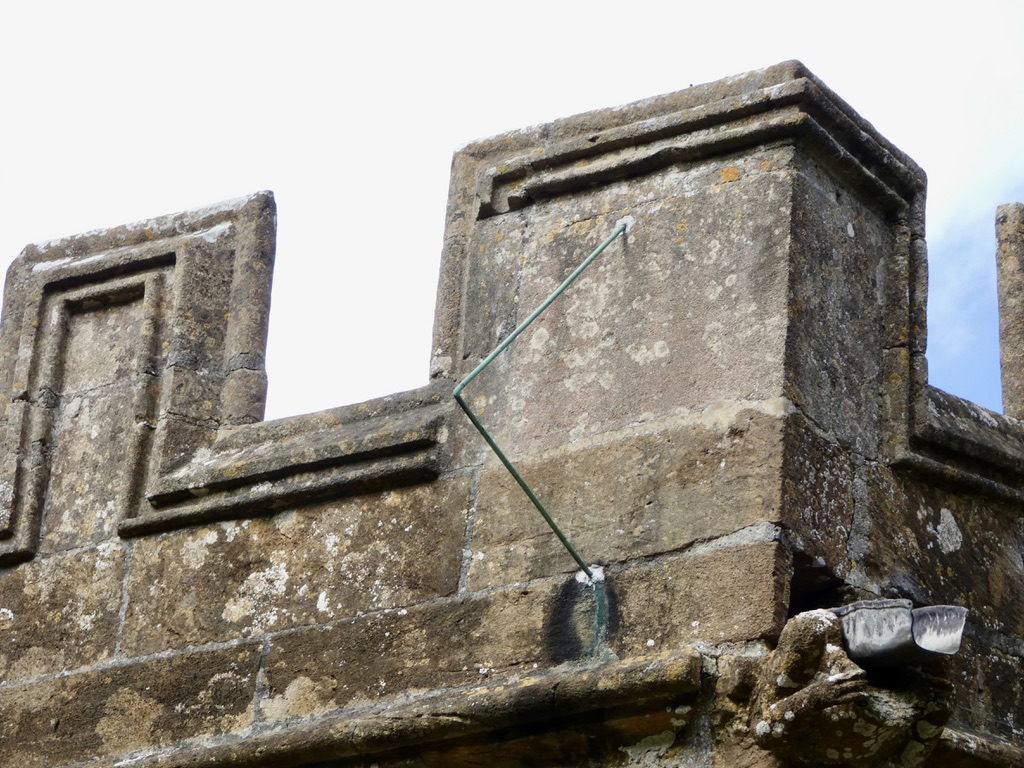
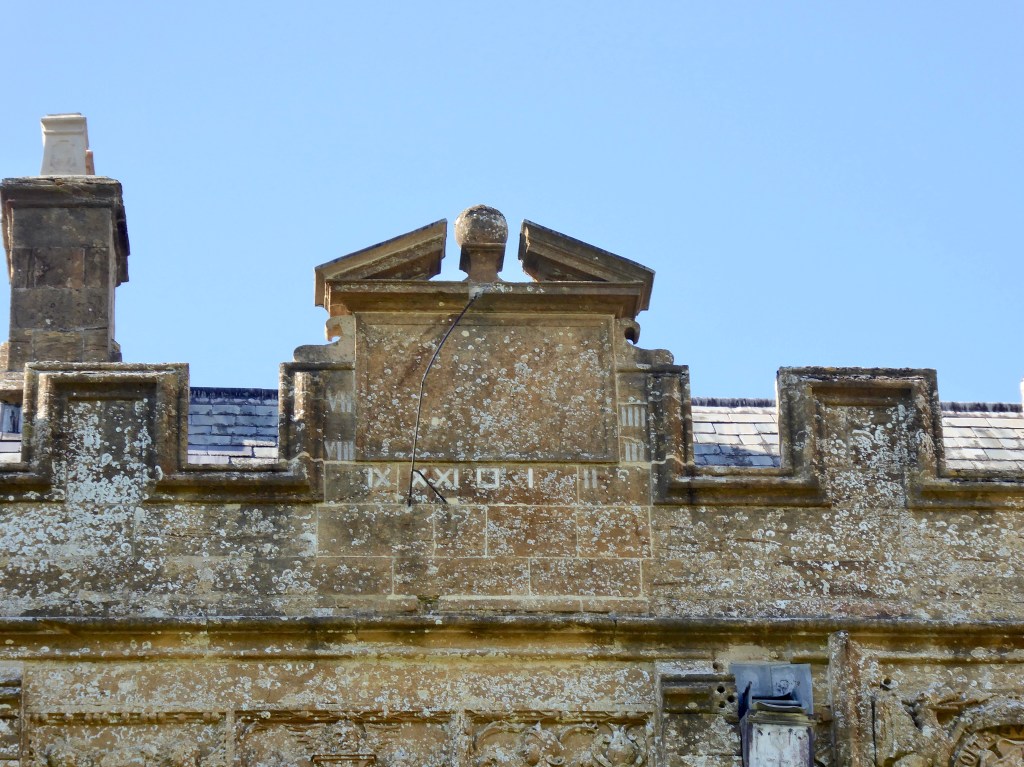
Dial 1 is prominently in the centre of the parapet, crowned with a broken pediment and ball. It has been dated late c17 or early c18. The spindly gnomon has been considerably bent to make the dial as accurate as possible (and see dial 2), given the orientation of the building. At some time, the top end has had to be re-fixed into the stone.

BSS records as Located in roof line castellations. An apparently blank dial plate with painted numbers on the stonework outside – possibly a later innovation. Upright white sans-serif hour numerals VII – IIII. Noon is marked with a square box and 4pm as IIII. Long thin rod gnomon with unusual support formed by a second rod to the tip, itself with a short stay near its foot. Declination is E.

DIAL 2

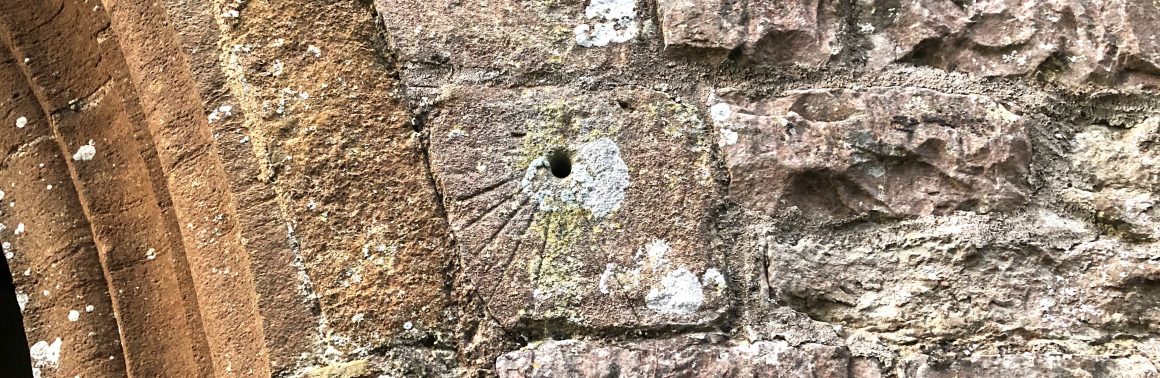
Dial 2 is located high on a tower, in effect at right-angles to dial 1. It is basically all gnomon and no actual dial face. I haven’t seen a large spindly design like this before. Although it has a rather home-made look to it, the design and positioning must have been carefully calculated, As with dial 1, the orientation of the building necessitated a corrective angle in relation to the sun’s movement. The shadow cast by this rather intriguing ‘gnomon sundial’ seems completely adequate for marking the passage of the day even without additional markings.

GSS Category: Old Dial; Gnomon Dial; C17 dial; C18 dial; Vertical Dial

All photos: Keith Salvesen