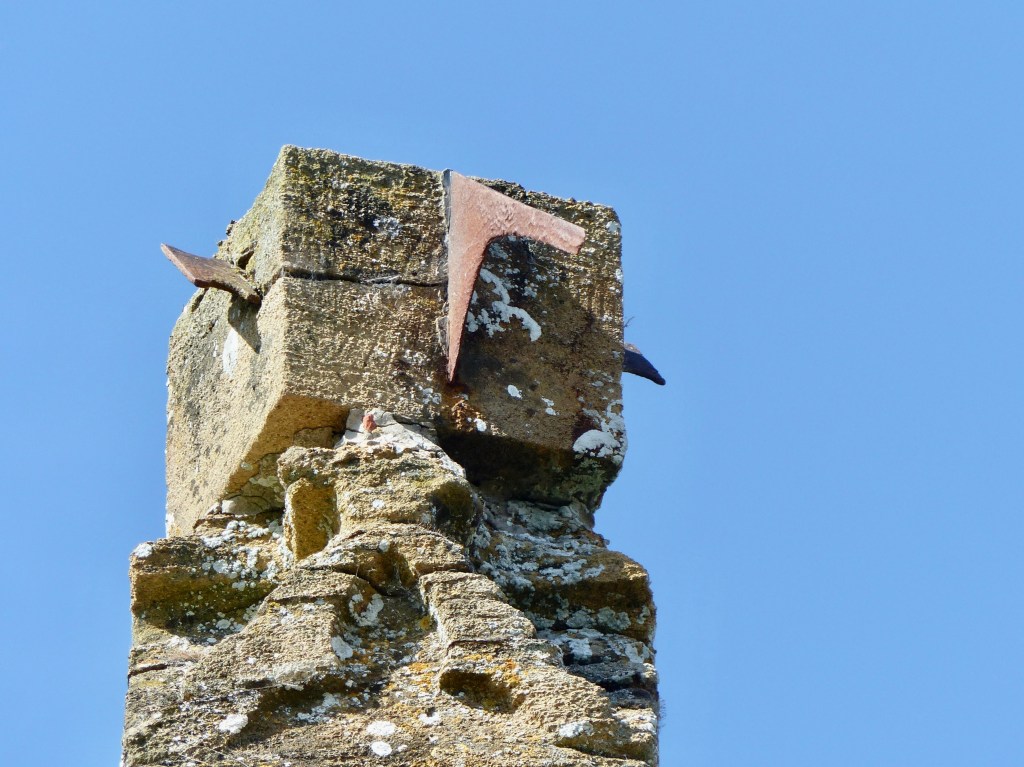
SEAVINGTON ST MARY . SOMERSET . ST MARY – Multiple Scratch Dials

St Mary . Seavington St Mary . Somerset

ST MARY . SEAVINGTON ST MARY . SOMERSET

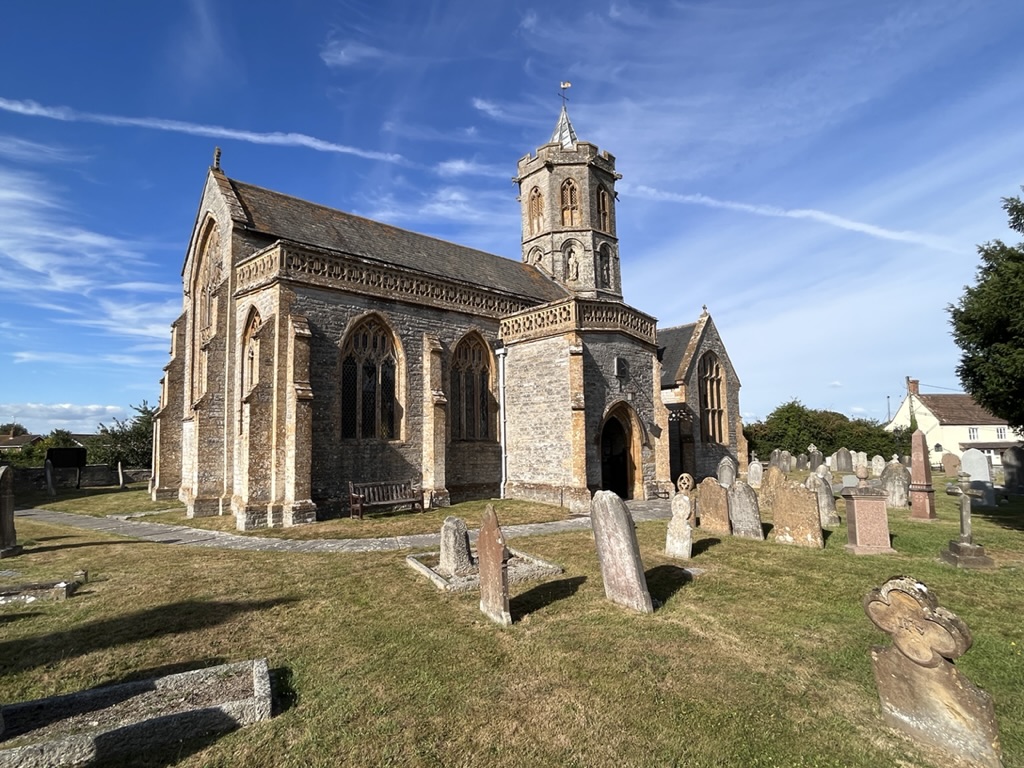
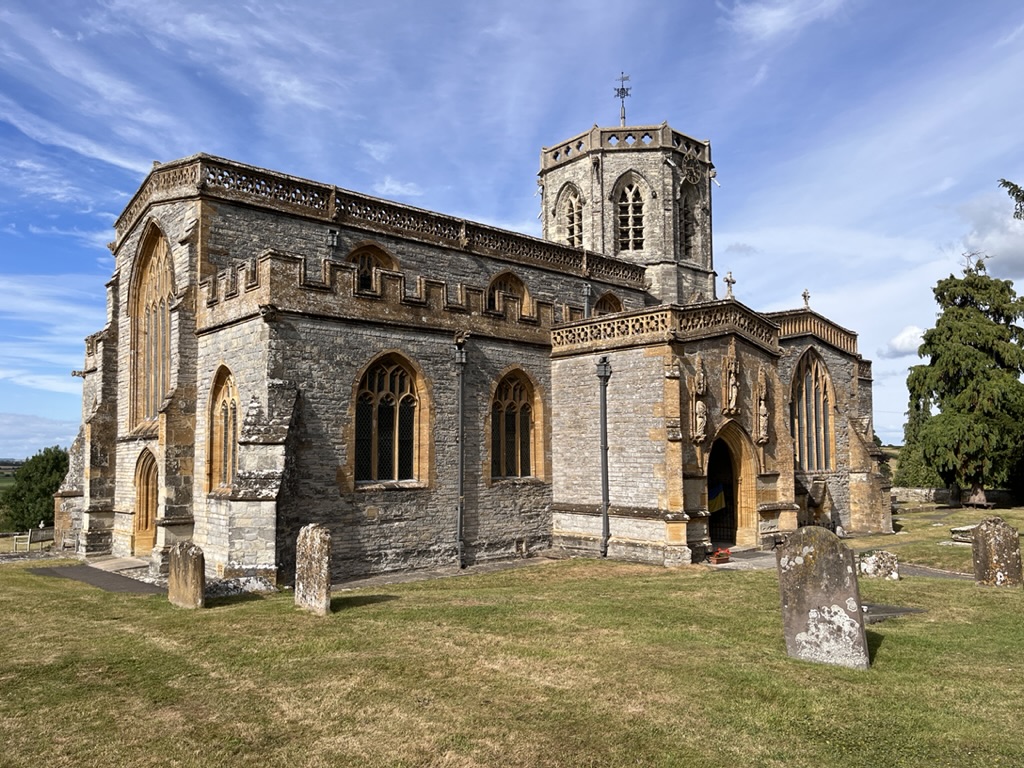
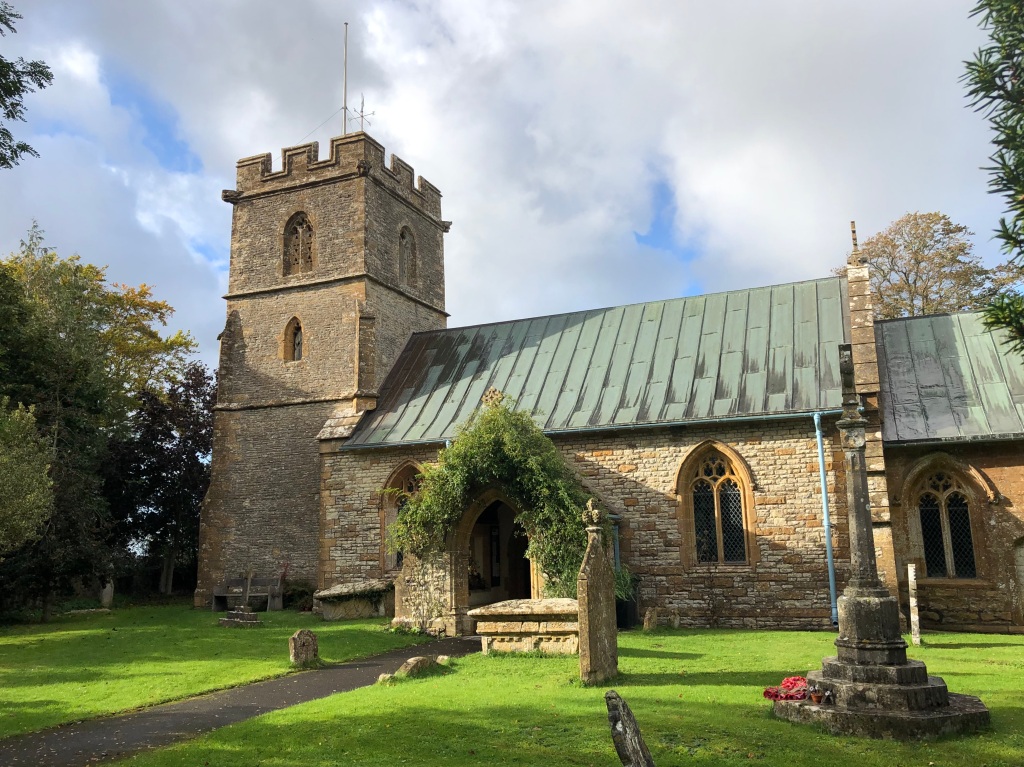
GRADE II* † C13 origins (nave, chancel), considerable enlargement late C15. Norman font, trace wall paintings. Now in the care of CCT. Adjacent to Seavington St Michael and 4m E of Ilminster.  50.9306 / -2.851 / ST402149

DIALS

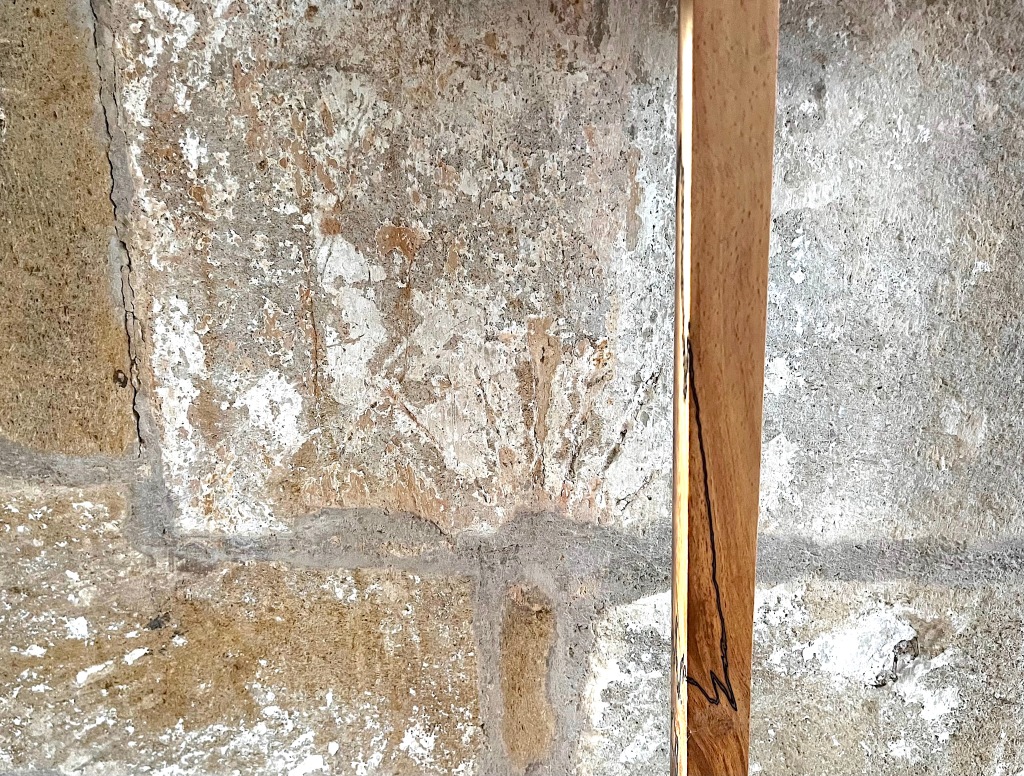
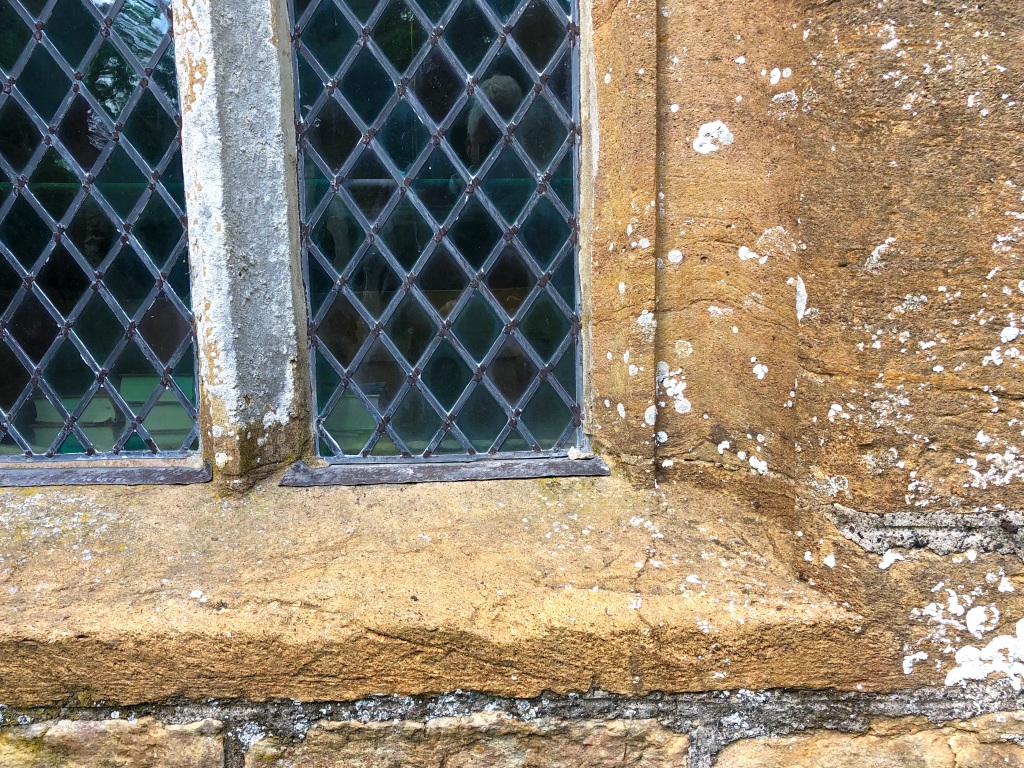
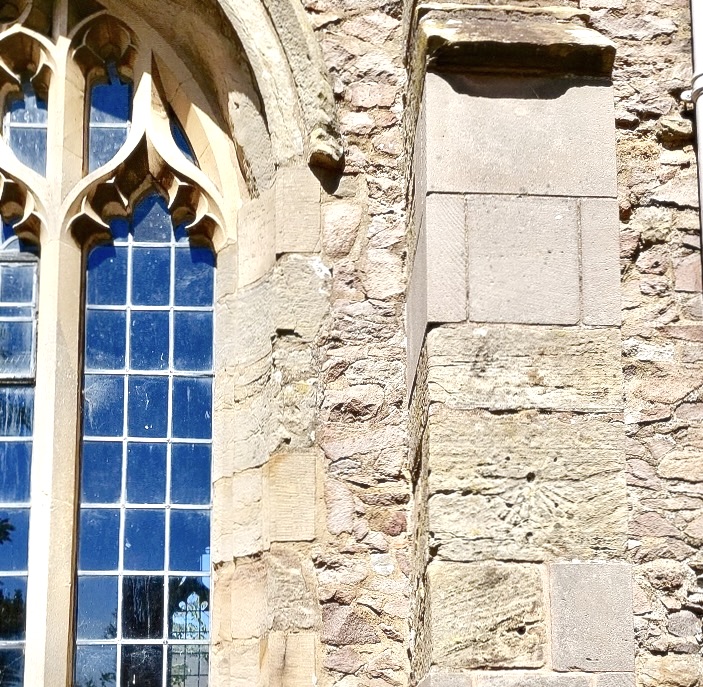
DEH visited St Mary in Sept 1912 on one of his early dial research expeditions in Somerset☩. He recorded a single dial on a buttress (Dial 1). BSS does not have a specific record for St Mary. I wasn’t prepared for the multi-dial display on either side of the porch..

DIAL 1

St Mary . Seavington St Mary . Somerset

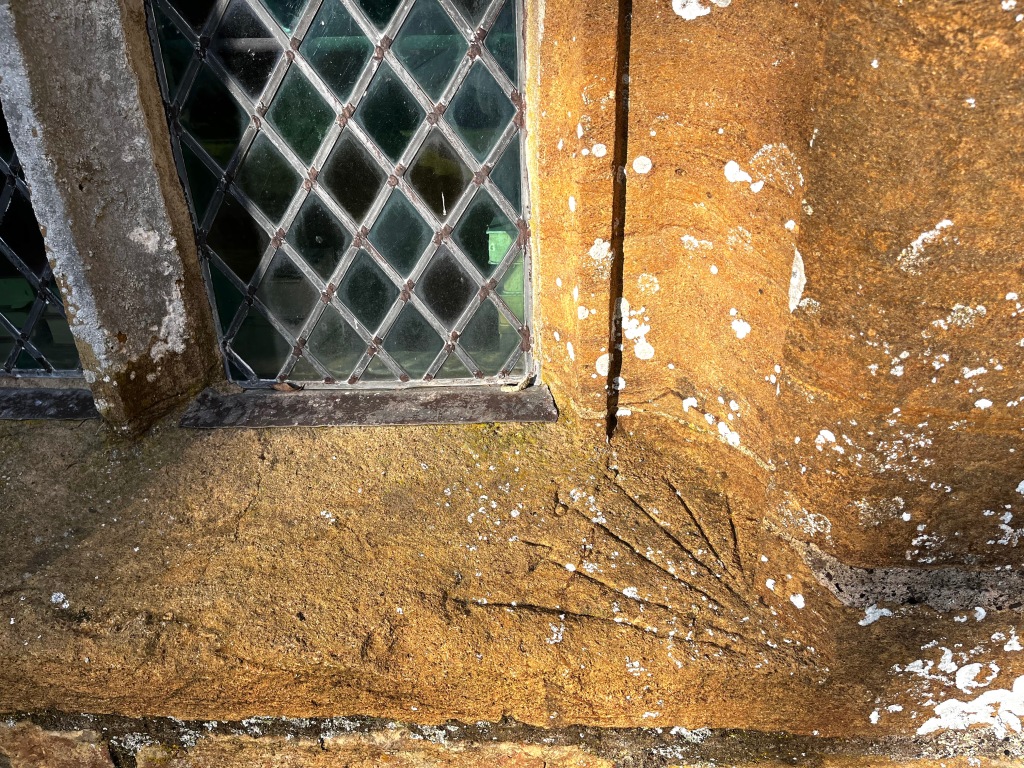
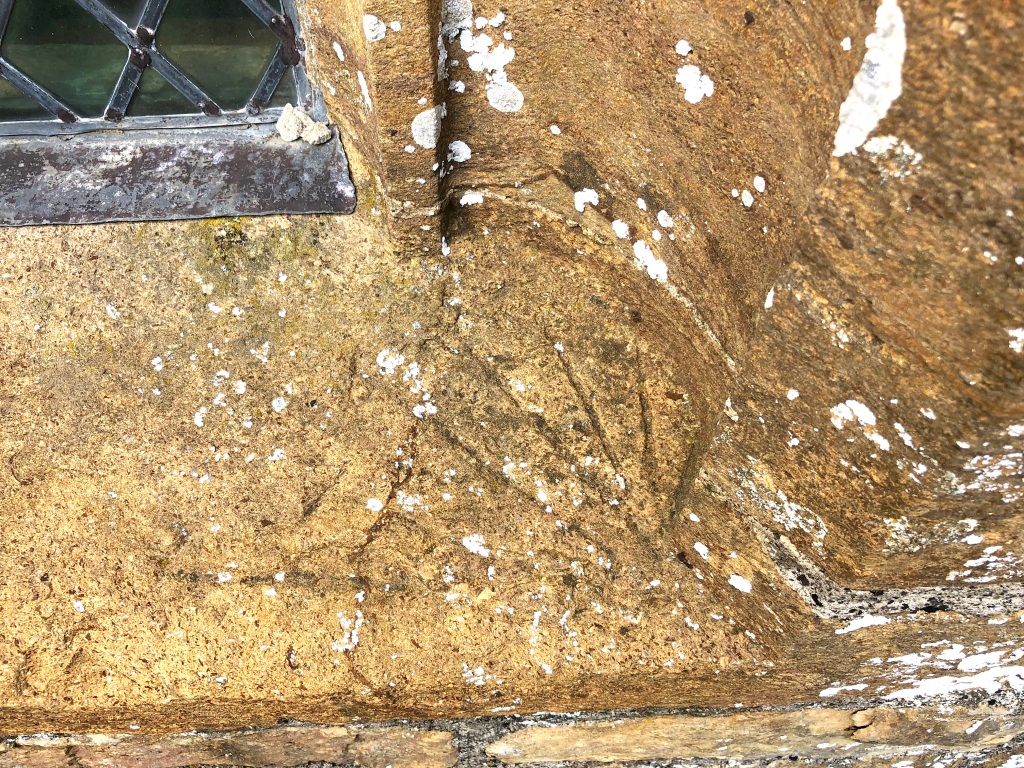
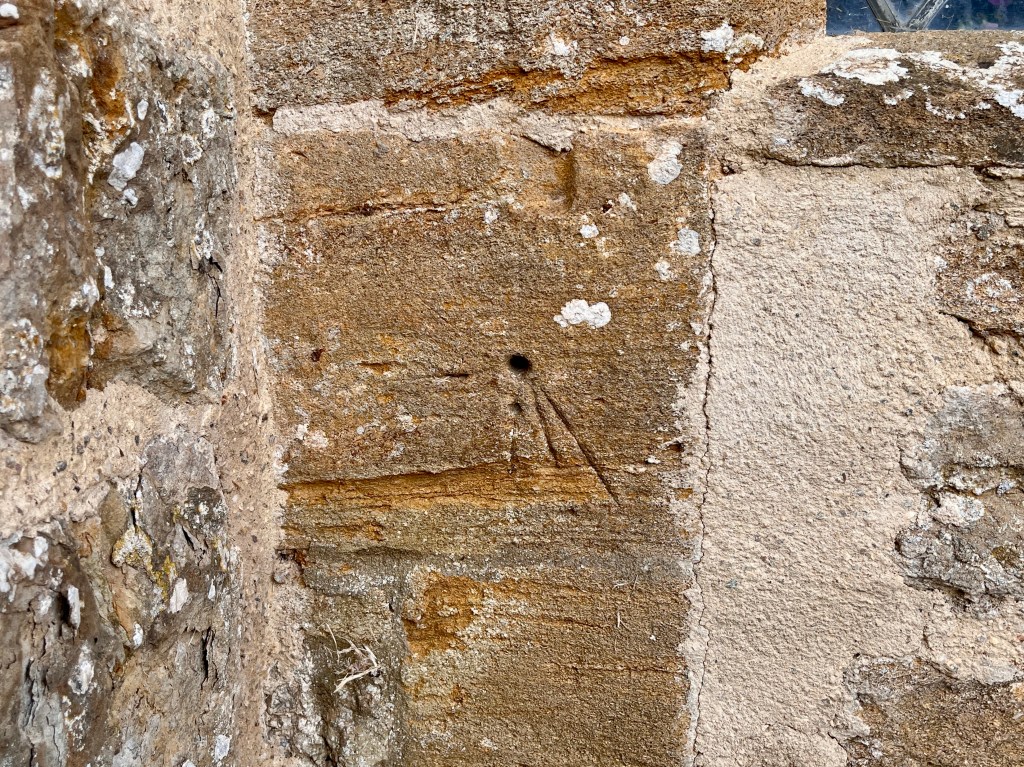
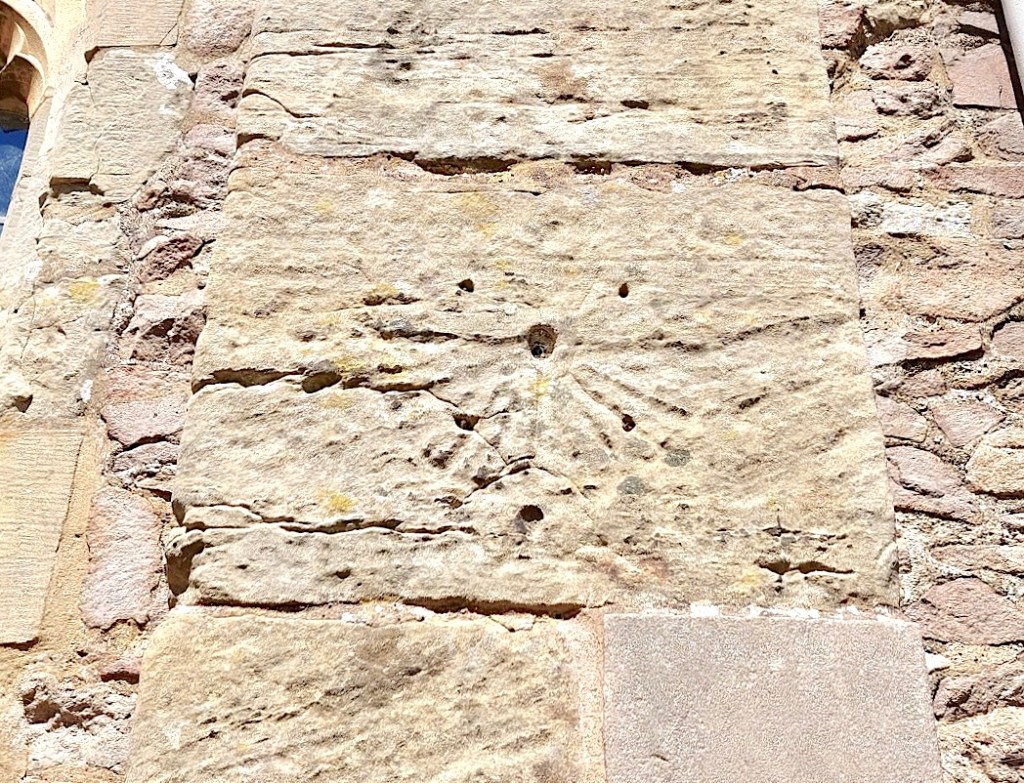
Dial 1 is described by DEH in more detail than usual:

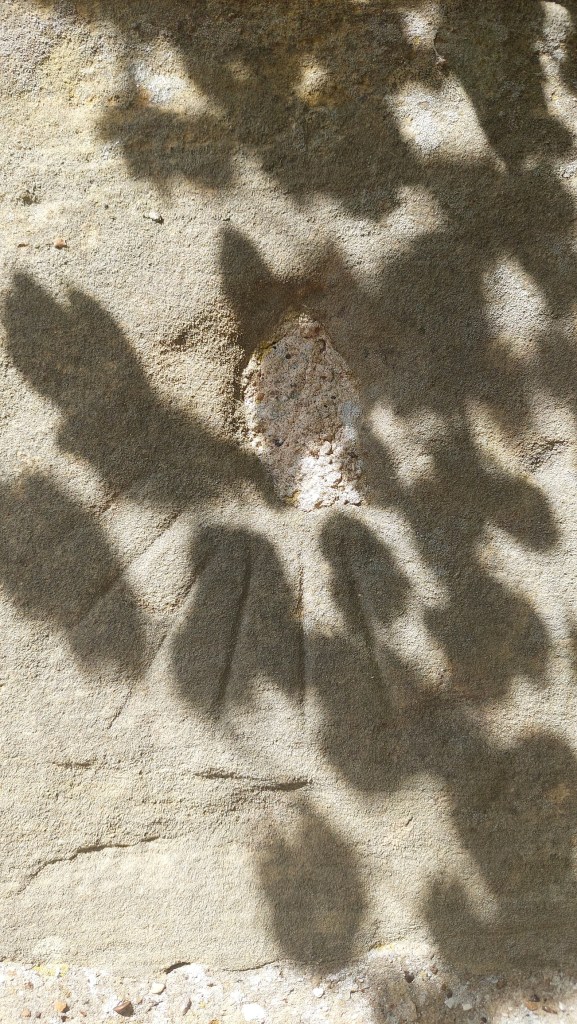
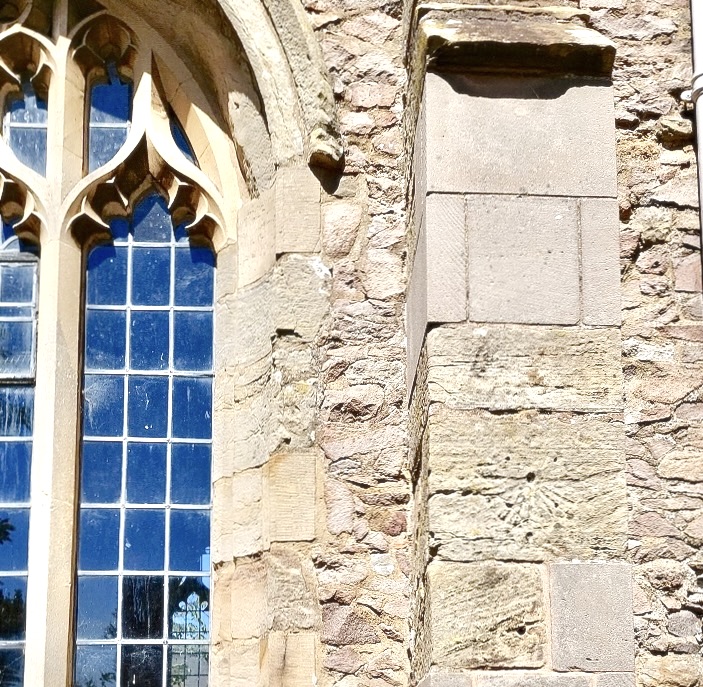
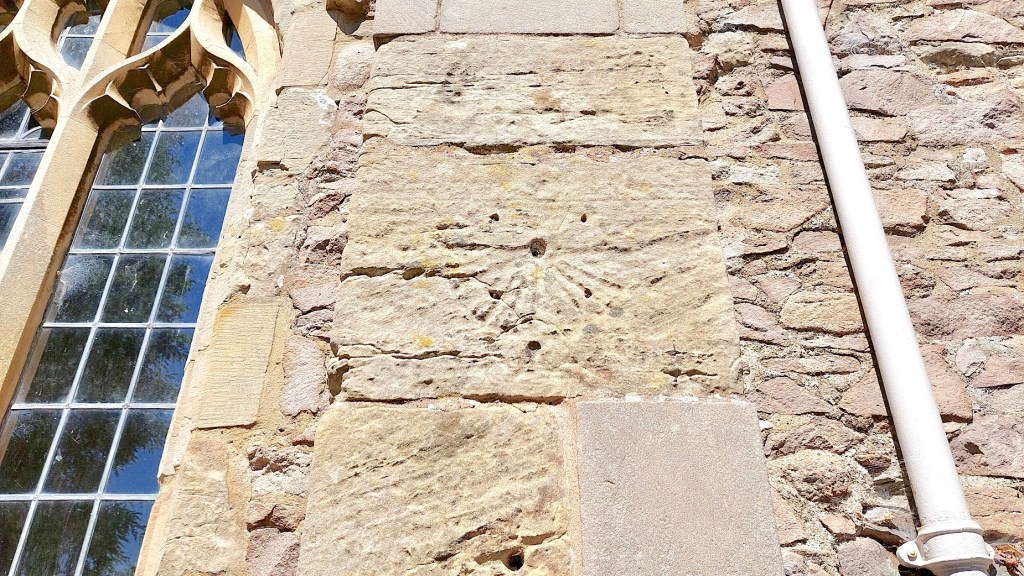
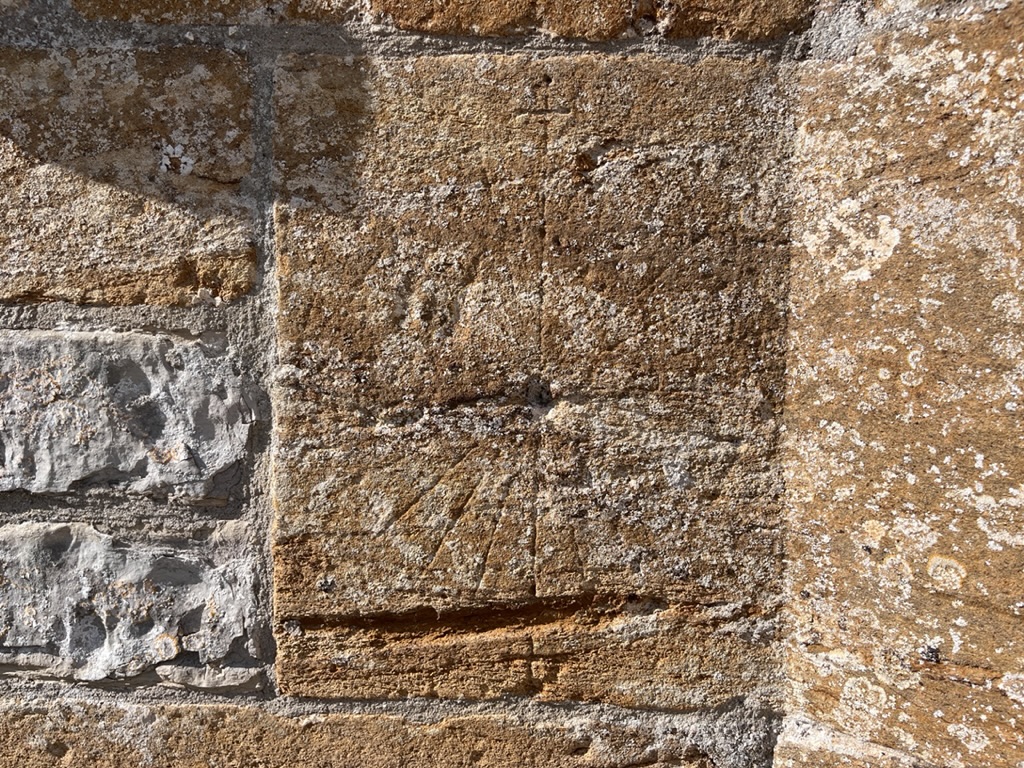
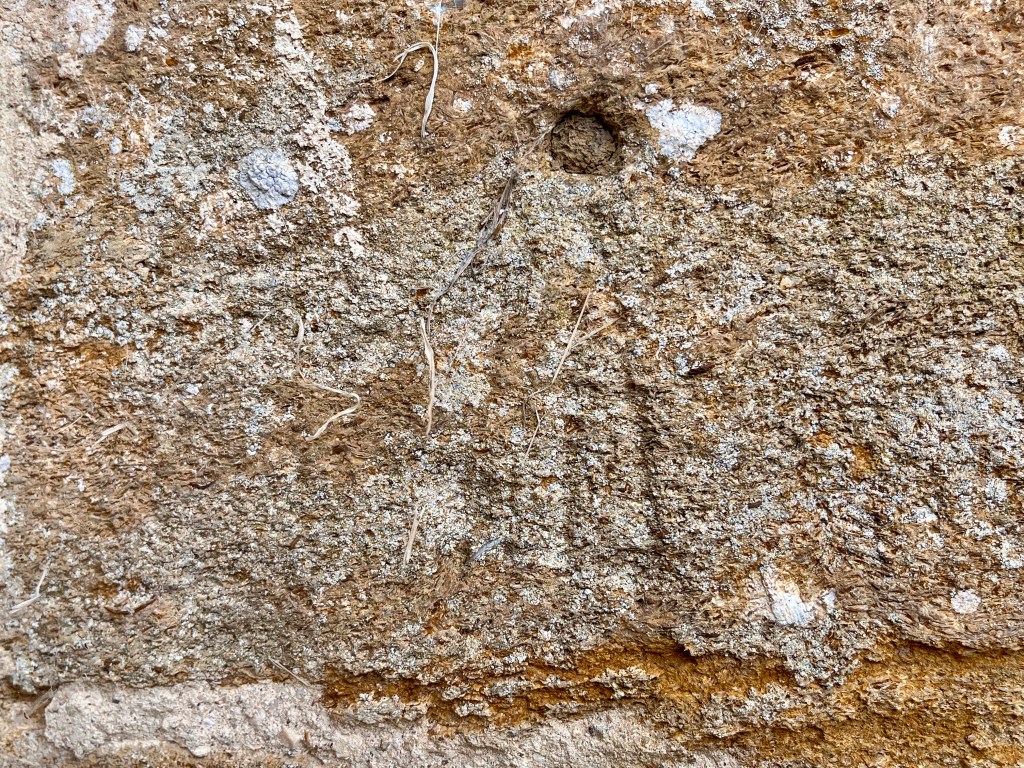
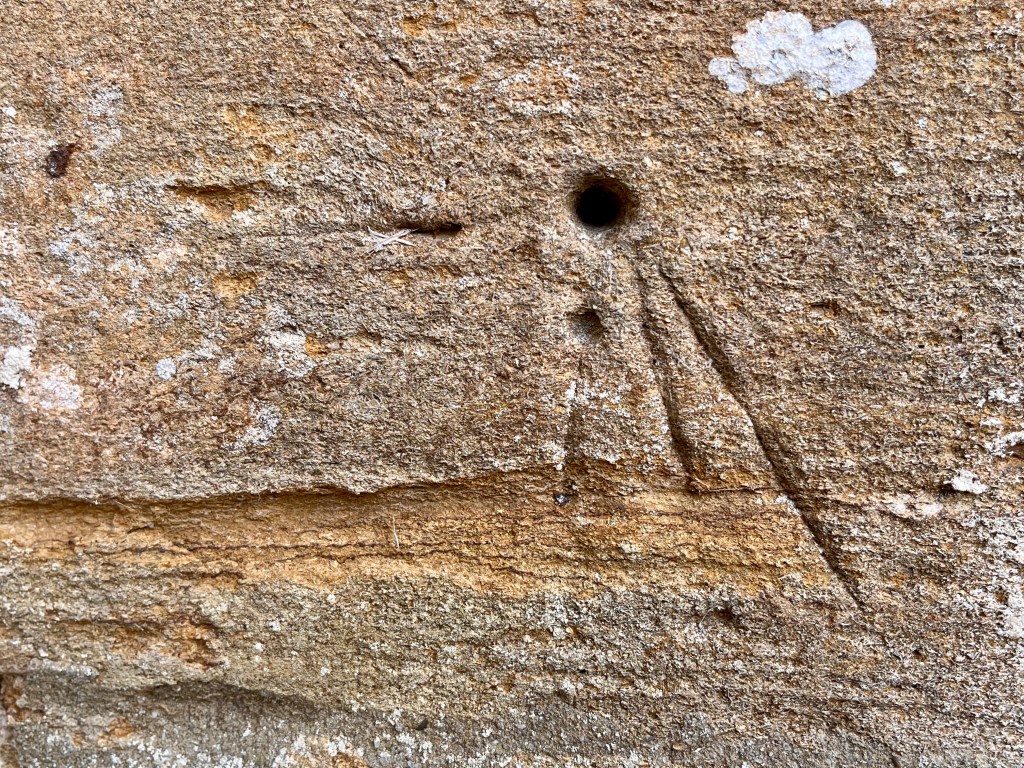
This dial is on a buttress half-way between the s. porch and chancel. It is about 5 feet 5 inches above the ground, the noonline is 3 1/2 inches in length, the style hole is 1/2 an inch deep to the top of the metal shank which is still within it, and about 1/2 an inch in diameter. On the noonline, close to the stylehole, is a hole for a peg, and there is another at the extreme end of this line in the next stone. There is also a peg-hole on the mass line.

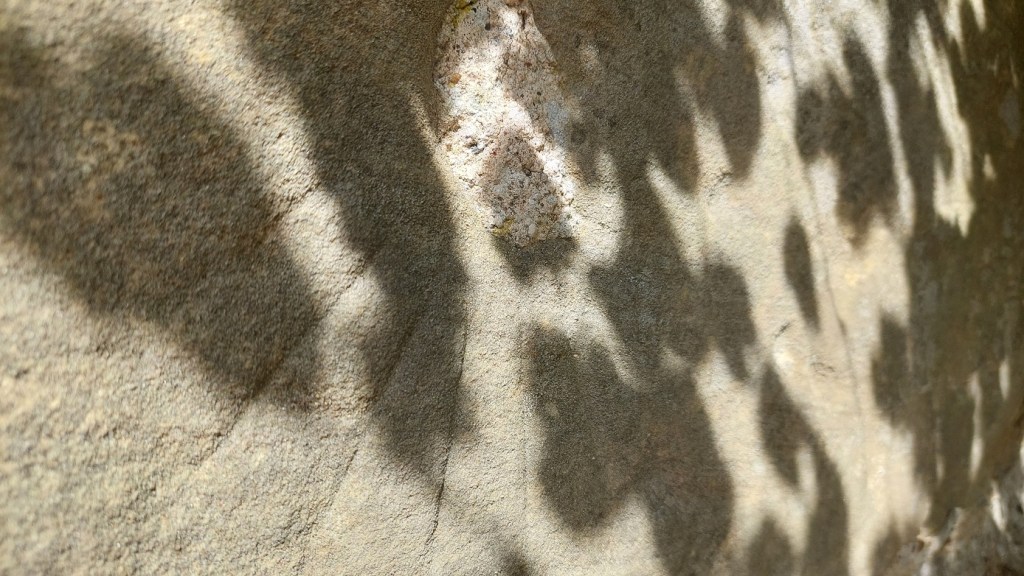
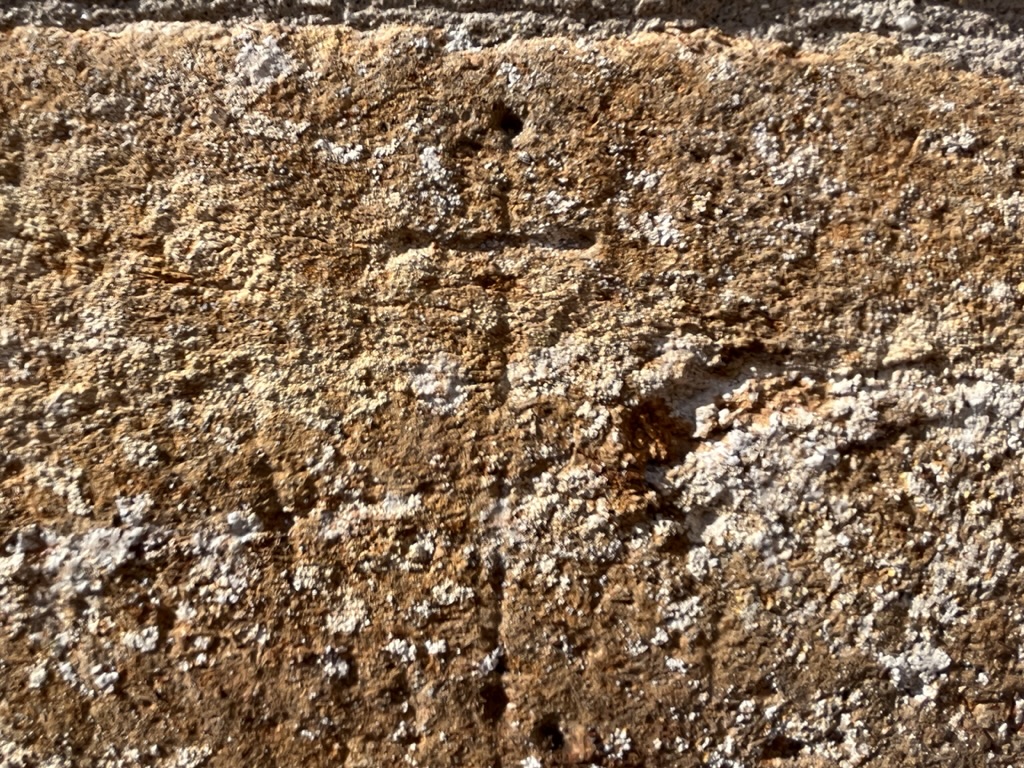
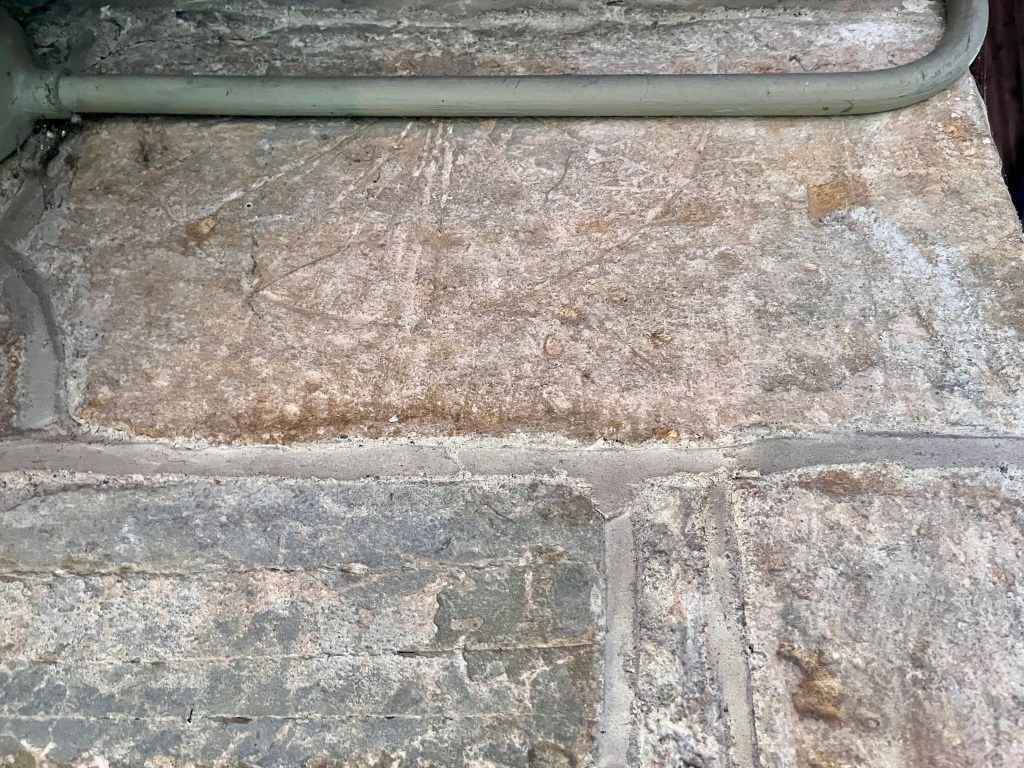
There are 7 lines, starting with the horizontal 6am. The noon line seems to be a close double line, with noon itself being between them (as other churches in the area). There’s also a hint that it extends to the stone below, with a small terminal pock. The deeper cut line in the lower right quadrant presumably marked the main Mass of the day. No metal shank was evident.
St Mary . Seavington St Mary . Somerset

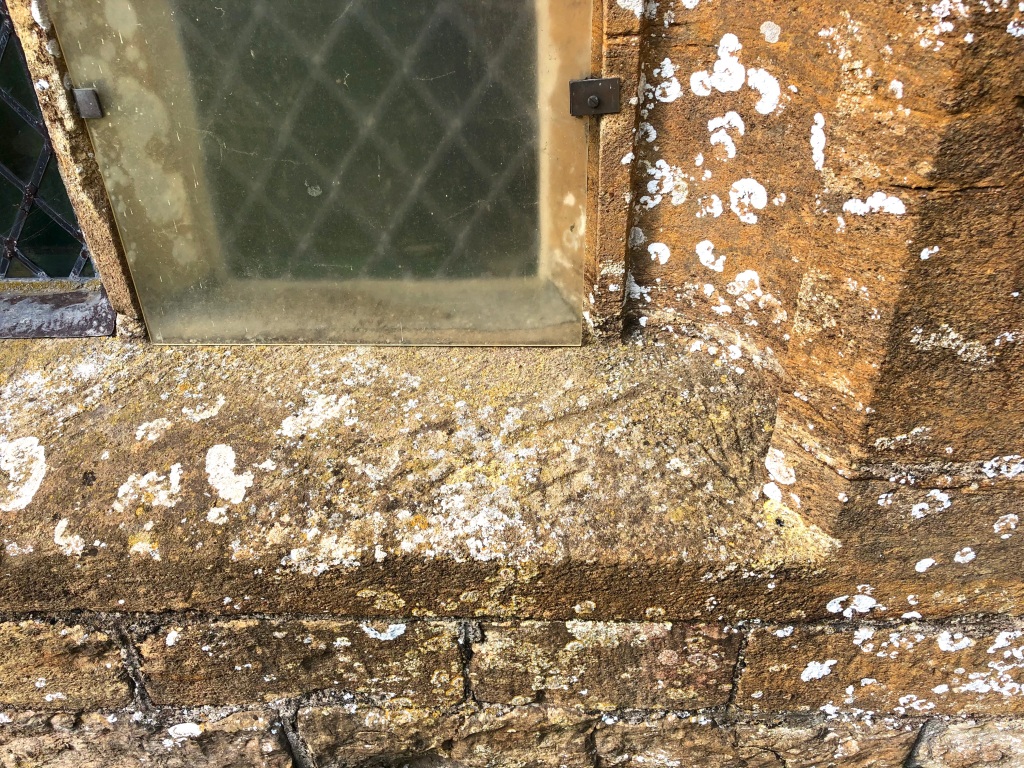
PORCH DIALS

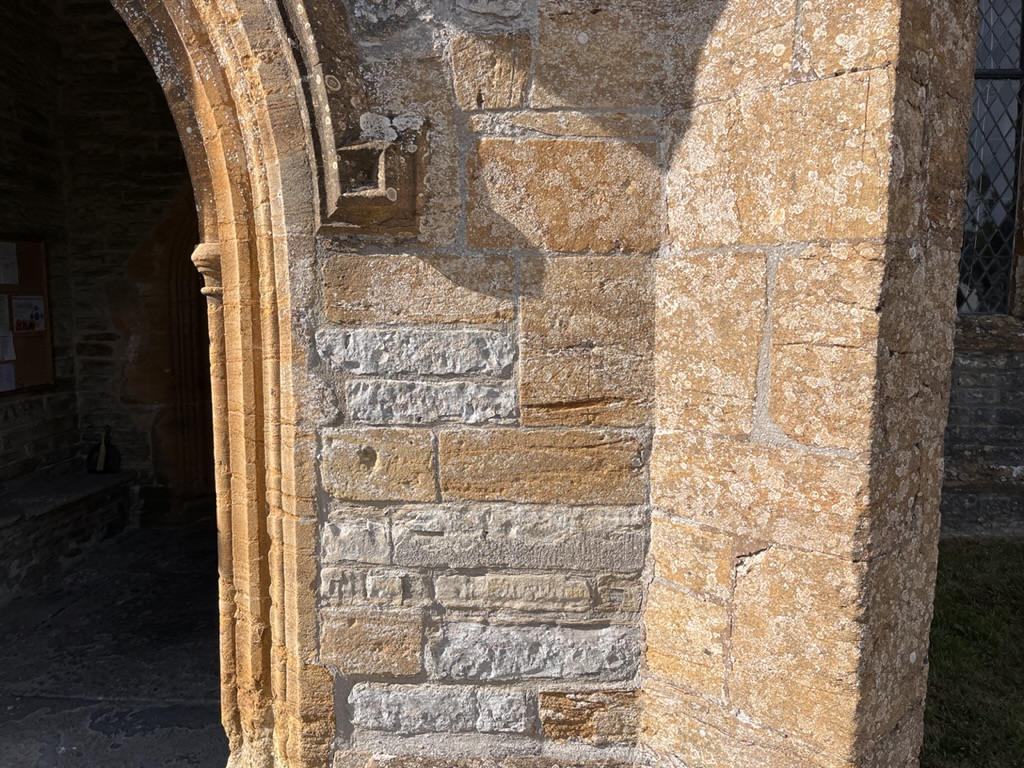
Numbering needs correction at some time… 8 & 9 should be in the same row as 4 – 7; 10 & 11 should replace 8 & 9

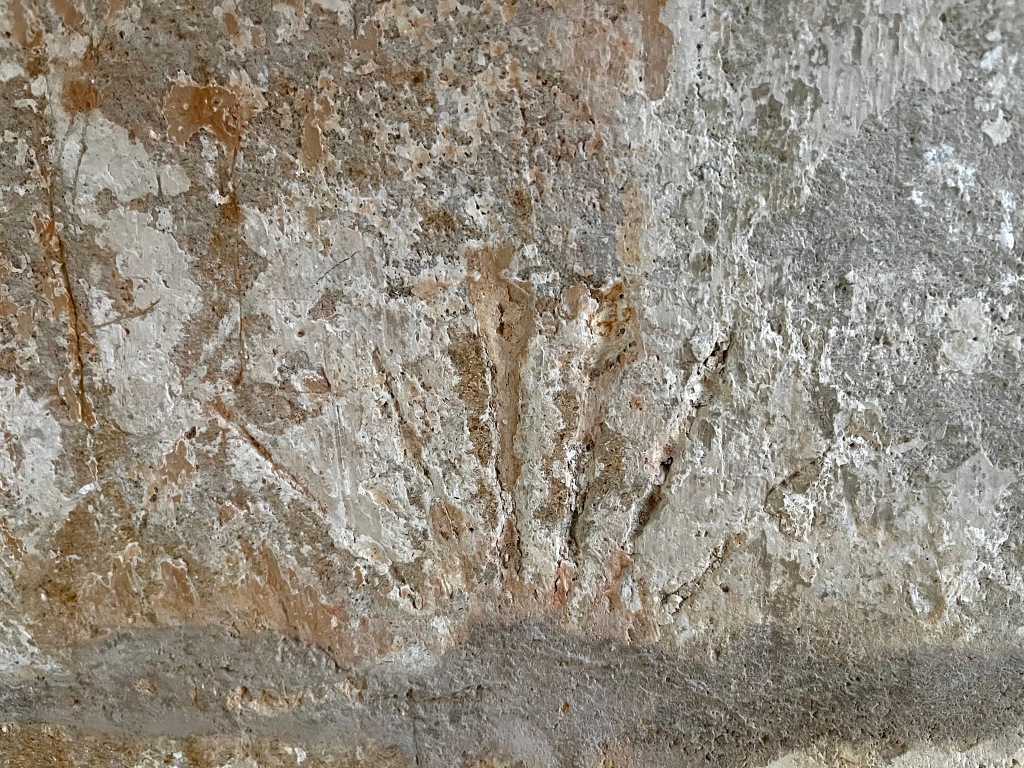
DIALS 2 & 3

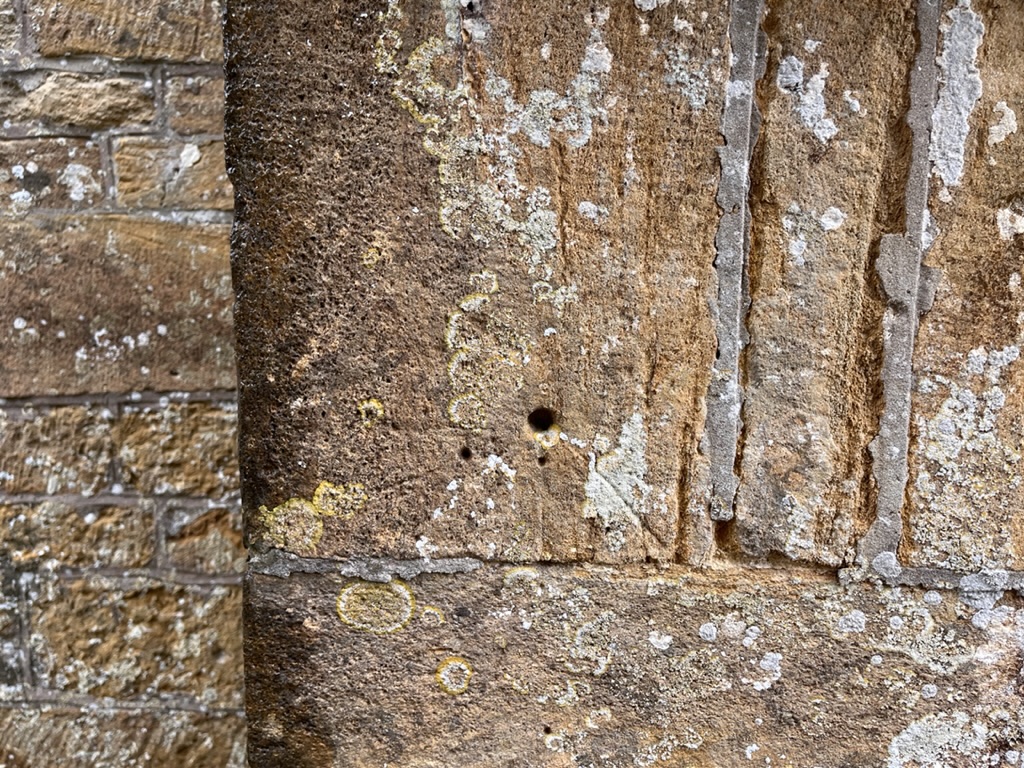
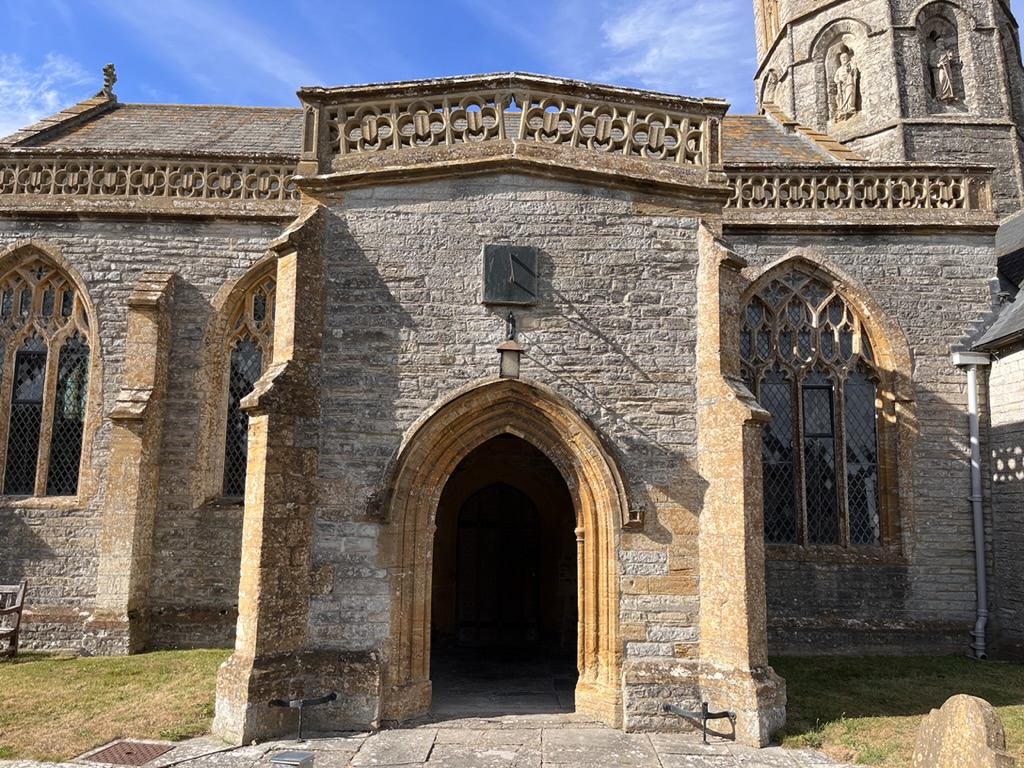
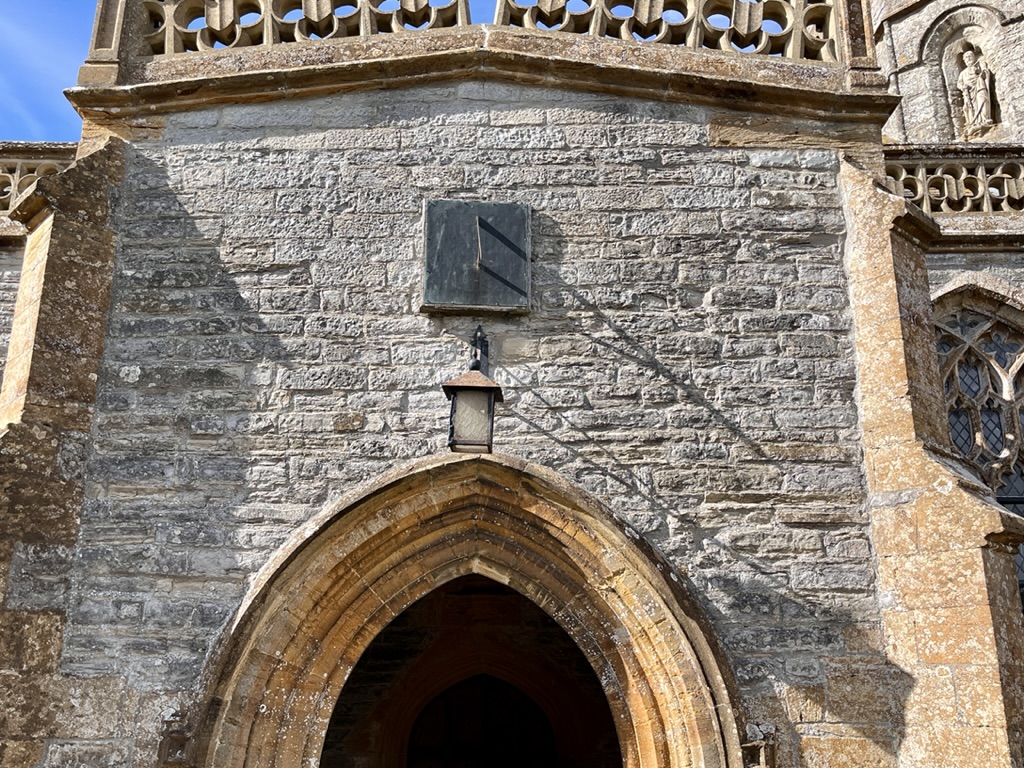
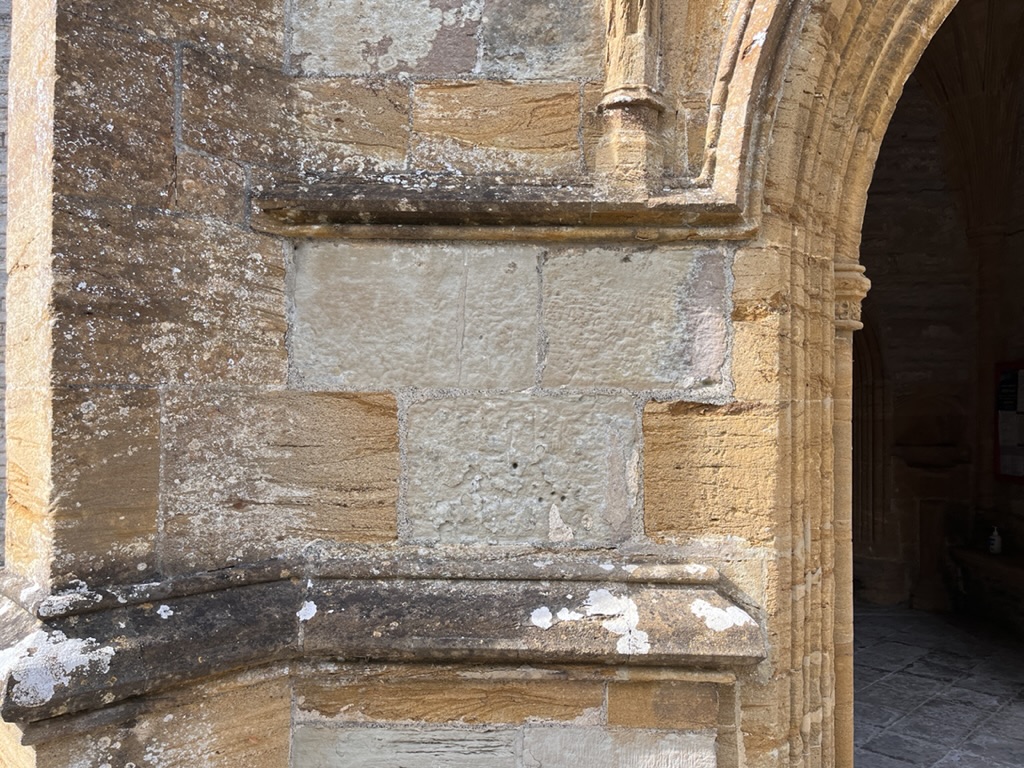
On the W side of the door are 2 adjacent dials on the same stone and of a similar design. Both seem to have been complete circles, now eroded. The larger has a very small style hole. The smaller has a couple of pocks but whether they relate to its function is not clear.
St Mary . Seavington St Mary . Somerset

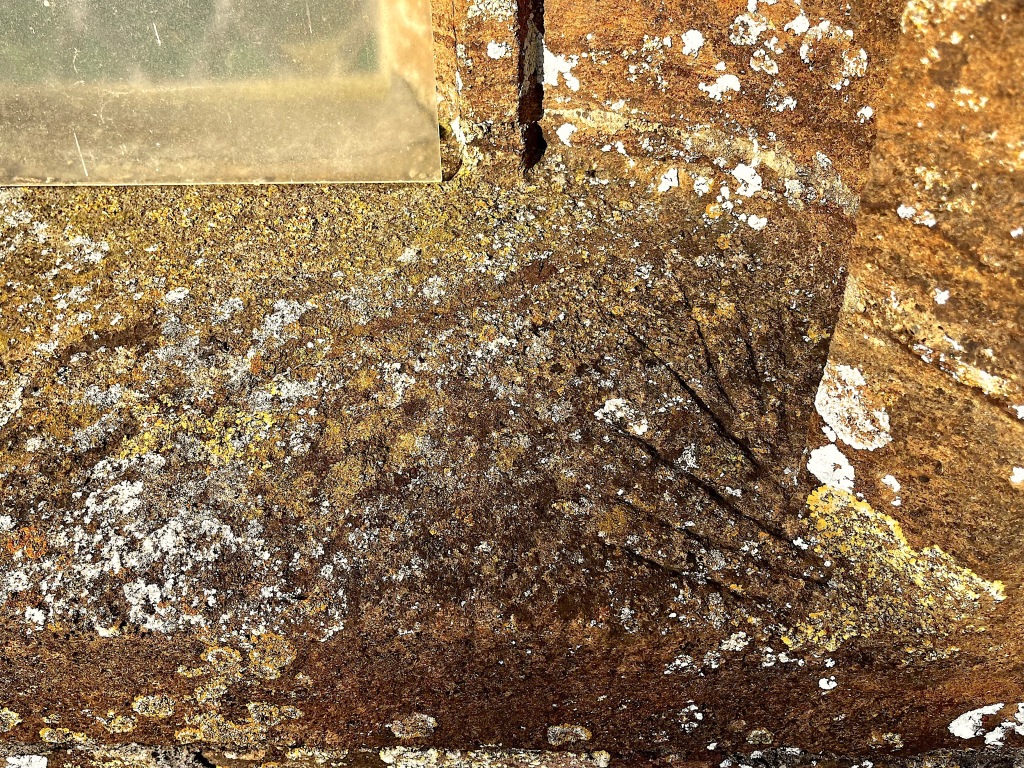
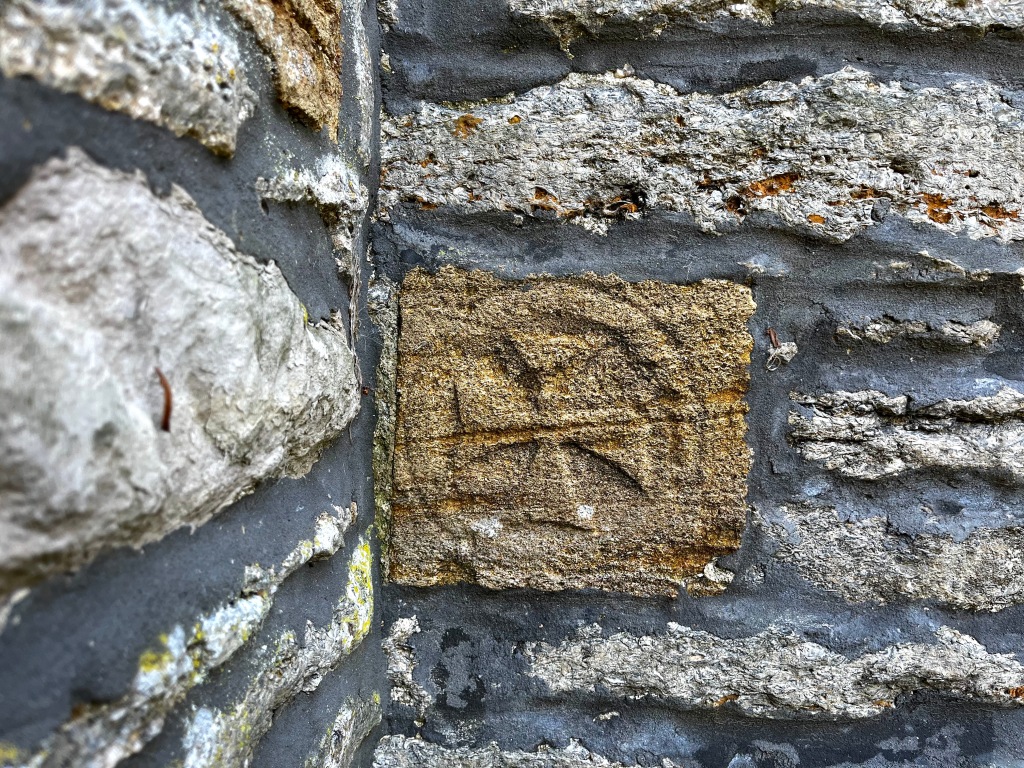
DIALS 4 – 6

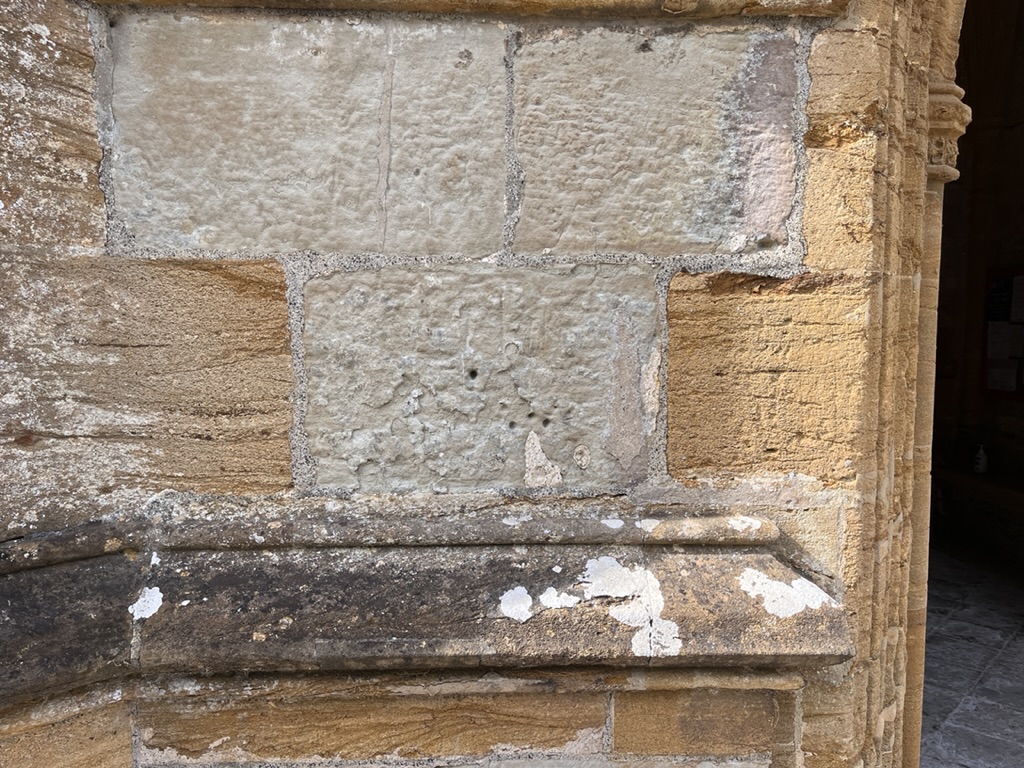
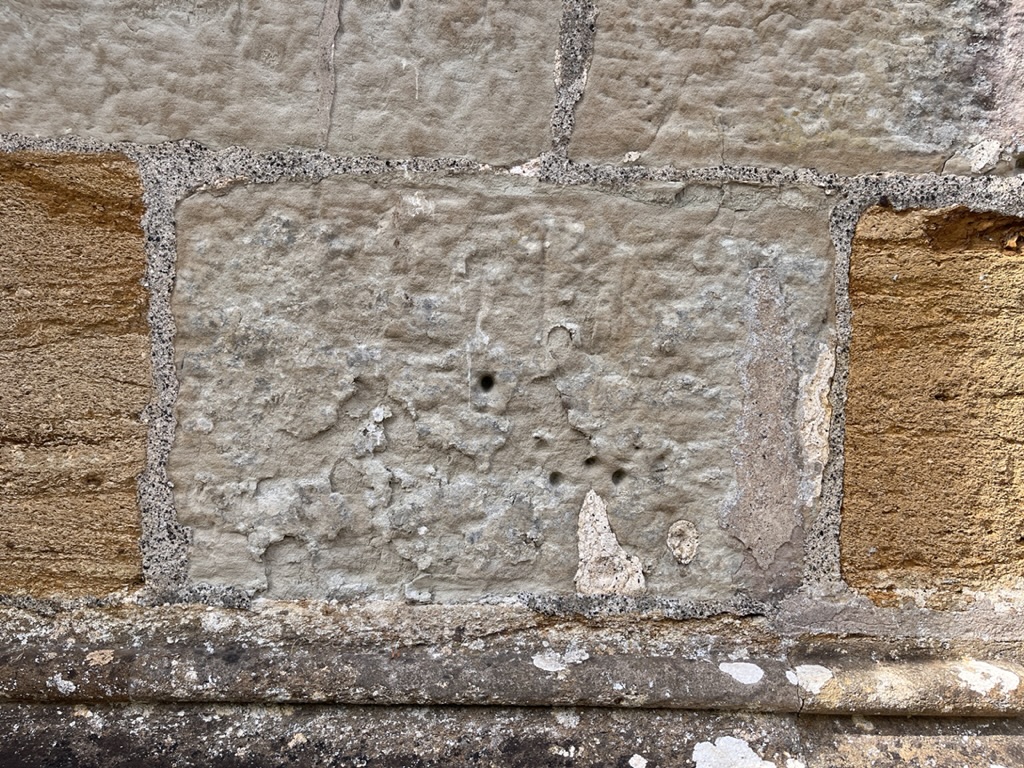
On the E side of the door are 3 dials in a row on a single large stone, one with a string of pocks. Dials are shown in order left to right.

Dial 4

Dial 5

Dial 6

Dial 7 (?)

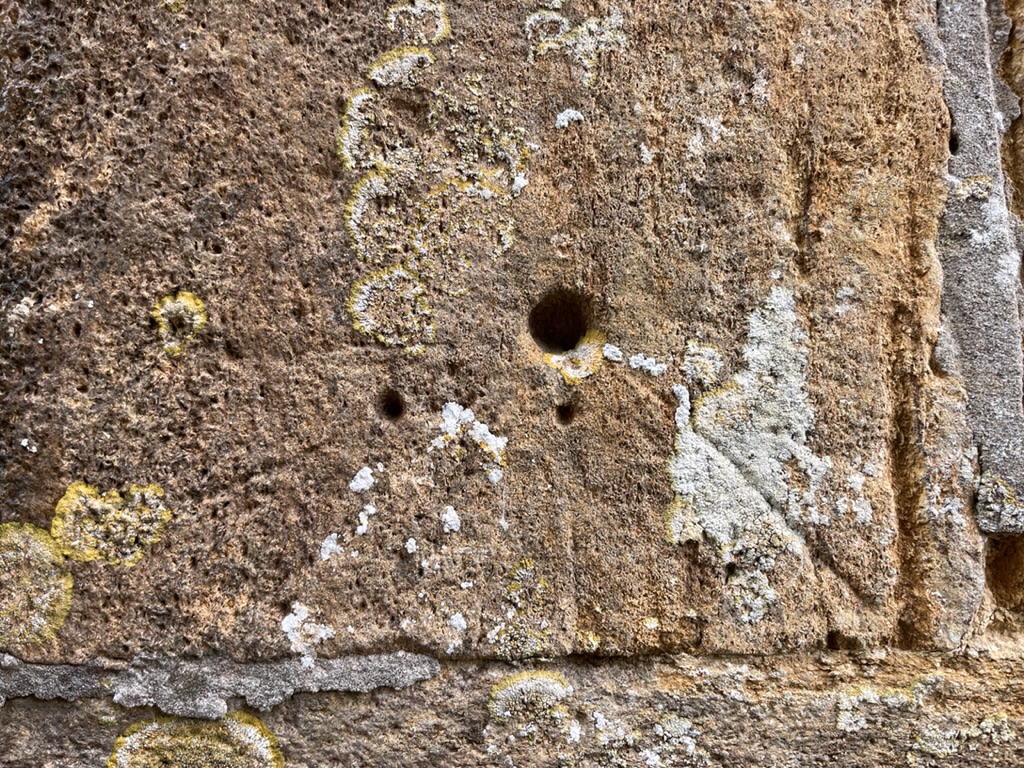
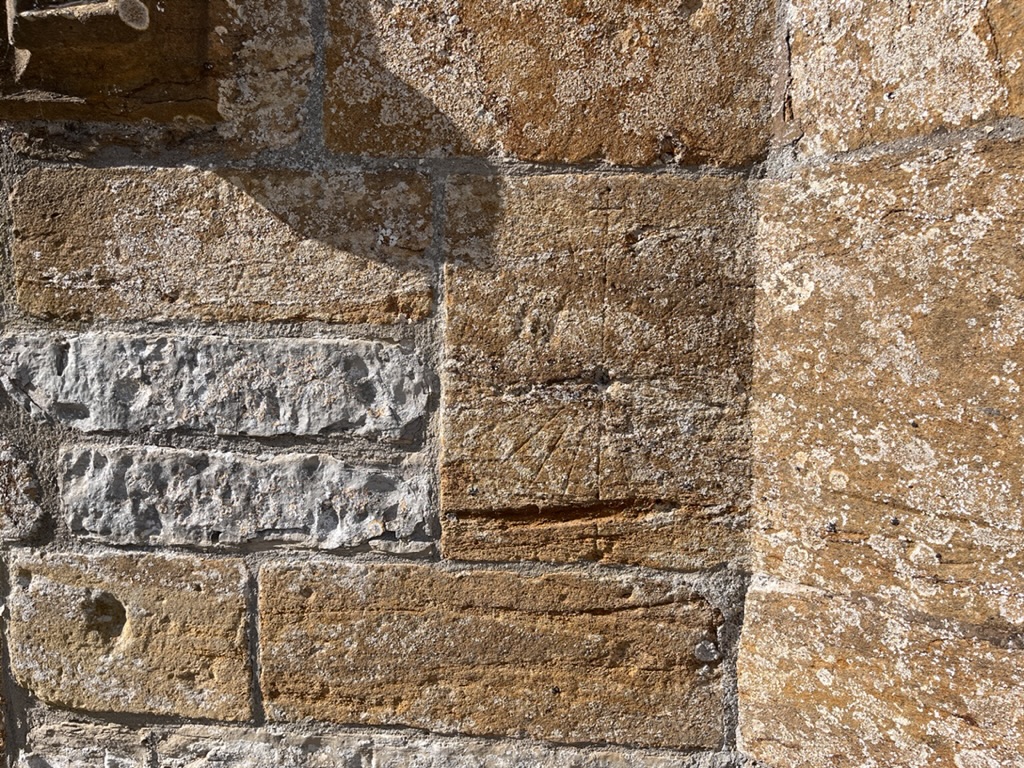
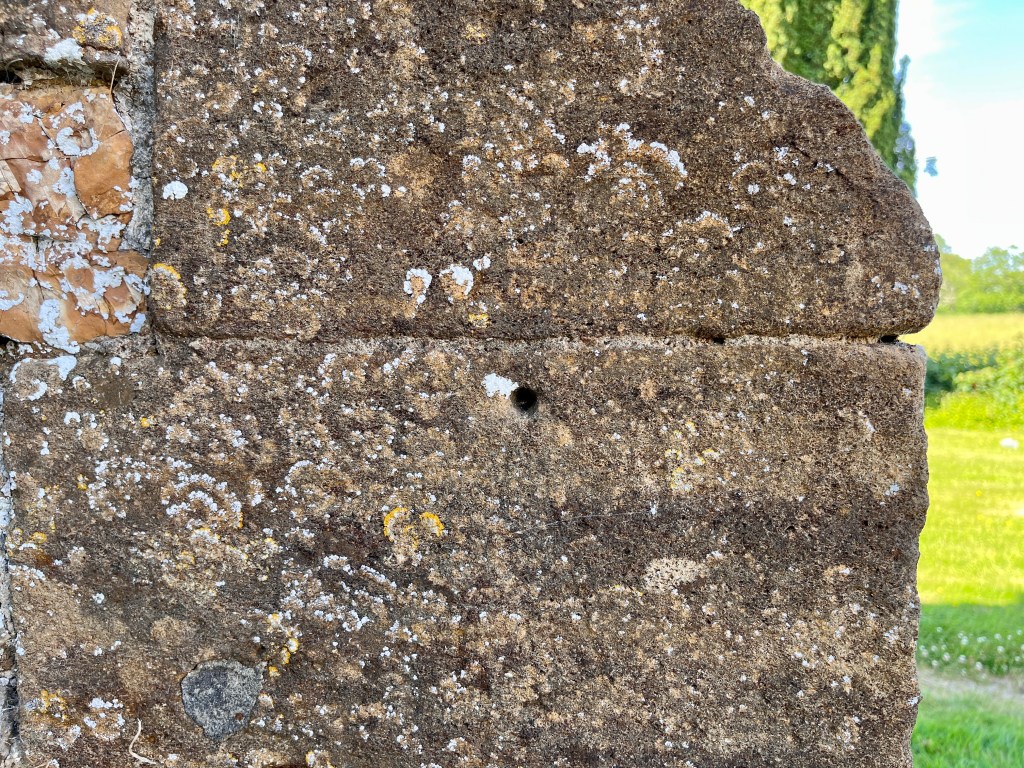
Completing the line of small circle dials on the stone is a hole lower R. No definite lines / pocks are readily discernible but a photo enlargement suggests faint lines at 11 and 1. A damaged area just above the mortar line might mark extended noon line. There’s a faint impression of a circle. Is this a dial? The hole is in a logical place on the stone and would match the other 3 dials in scale.
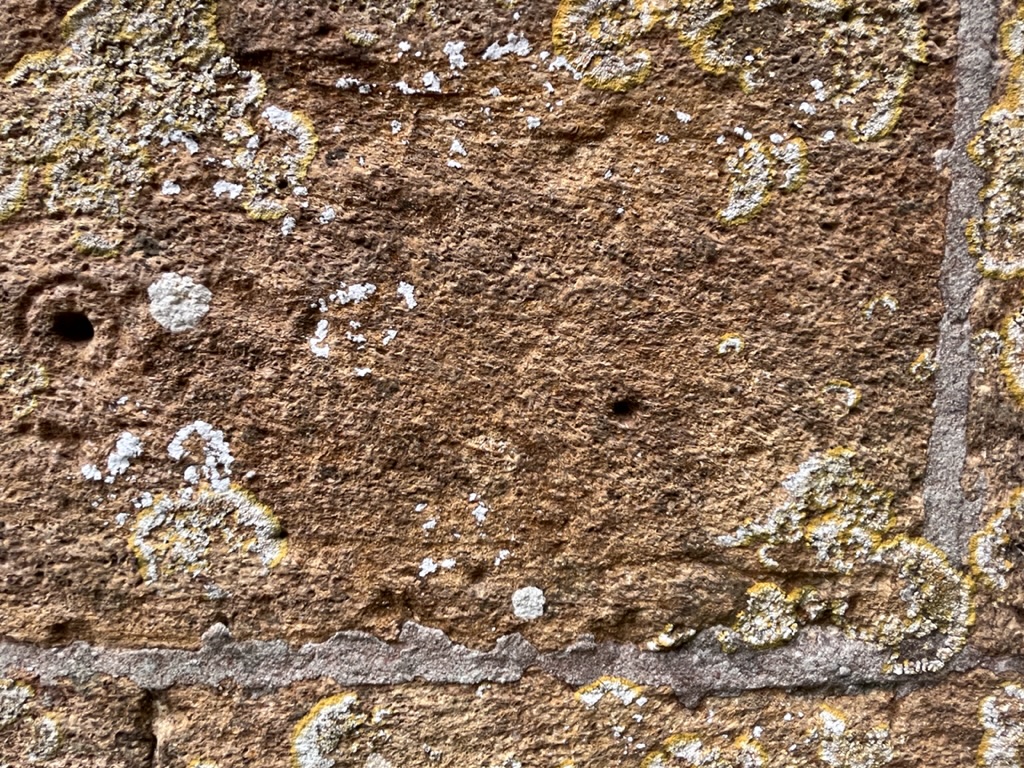
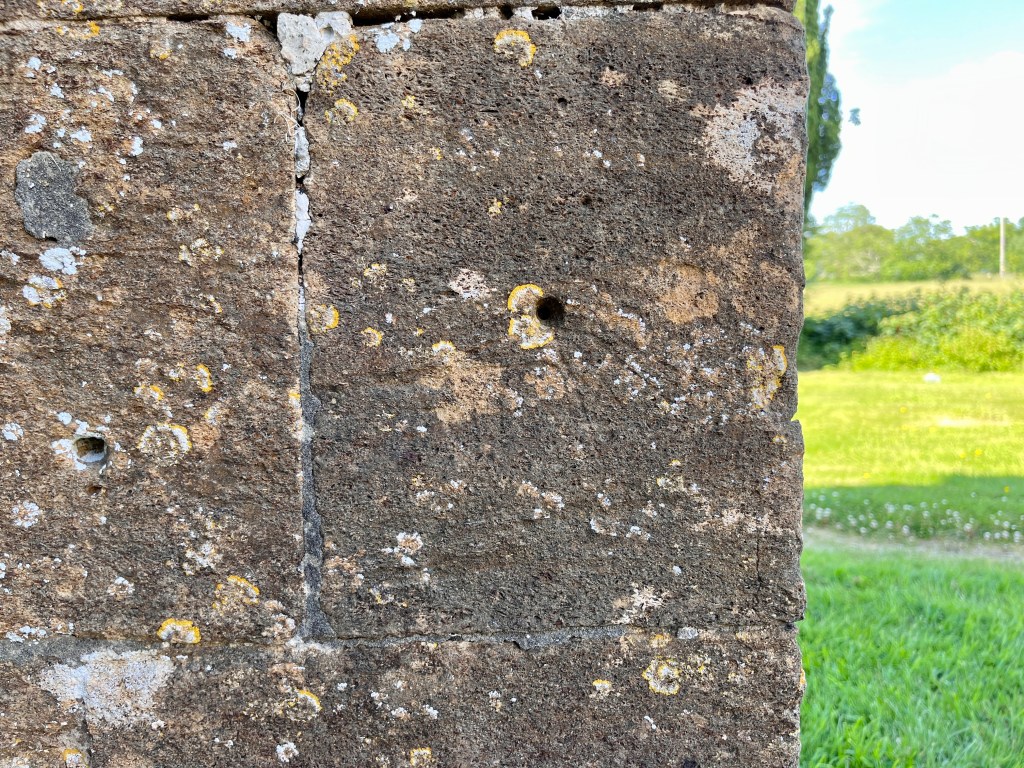
Dial 8 ?

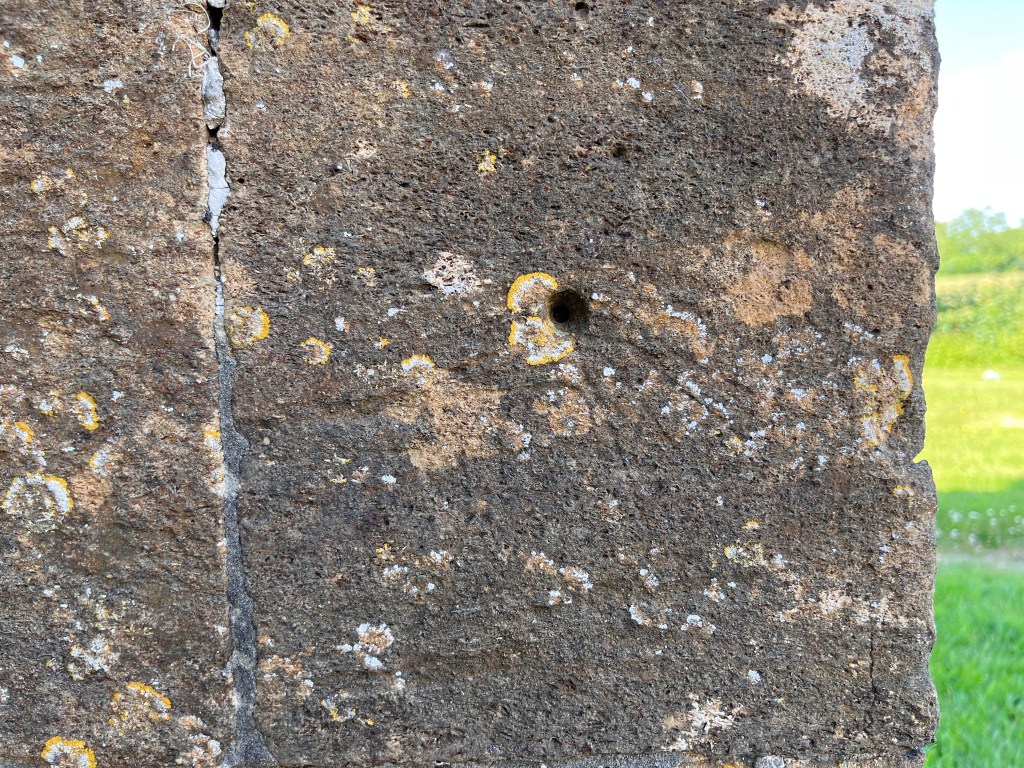
On the quoin stone next to Dial 7, another similar hole without noticeable markings. In close-up it’s hard to make much of it – faint evidence of a circle, perhaps? – except that it fits the overall picture of a line of small encircled dials.

Dial 9

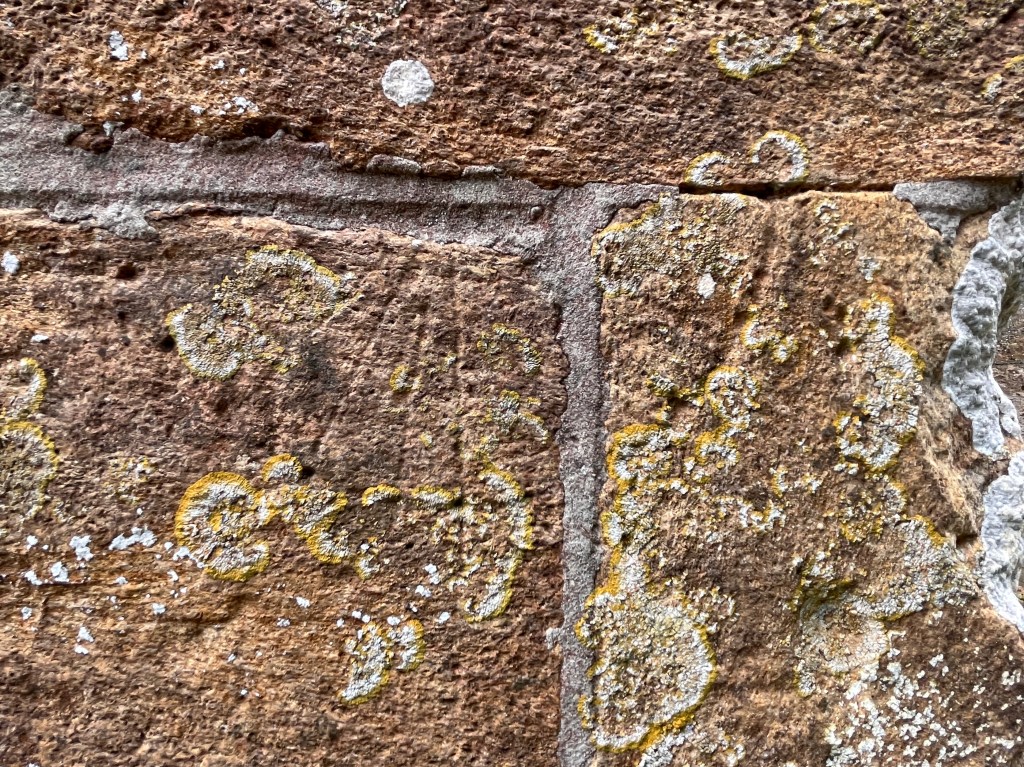
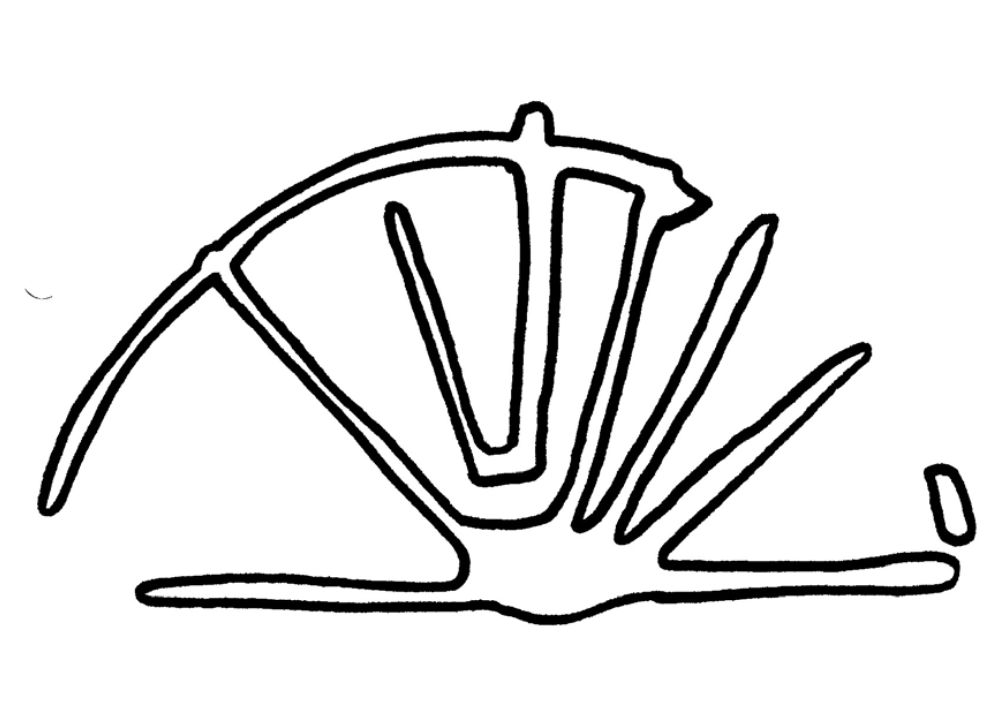
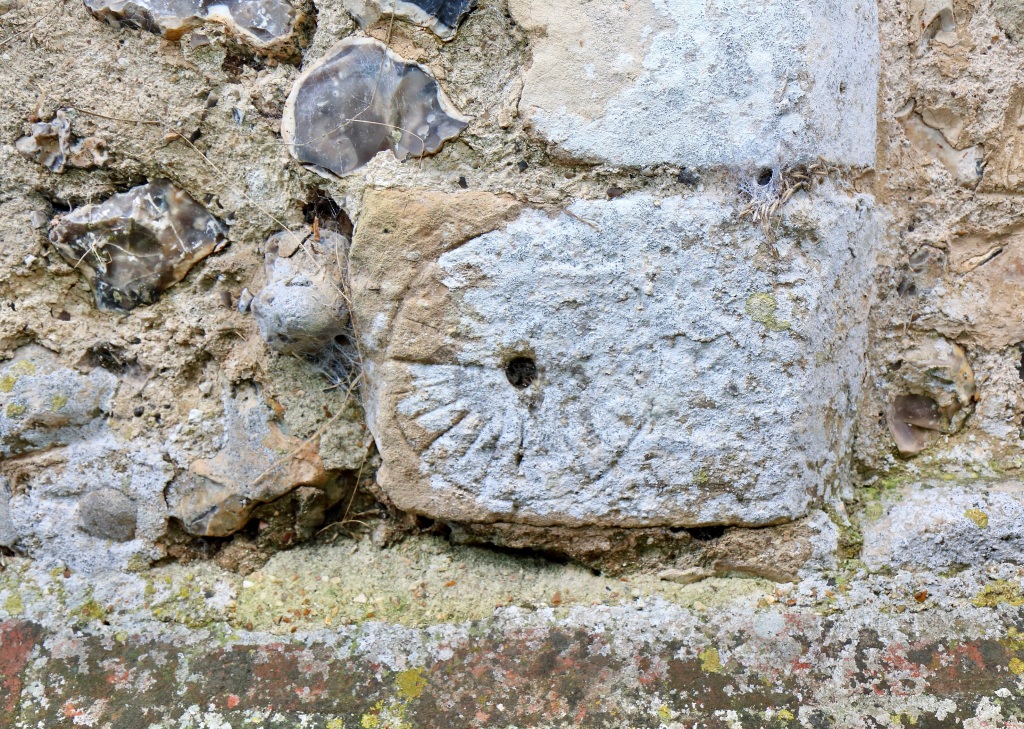
In the top R corner is a quite different type of dial, semi-circular with several lines and circumference pocks that more or less match hour line positions. It strays onto the adjacent quoin stone and there’s an impression that it might once have had a top half, with the stone later replaced.

Dials 10 & 11

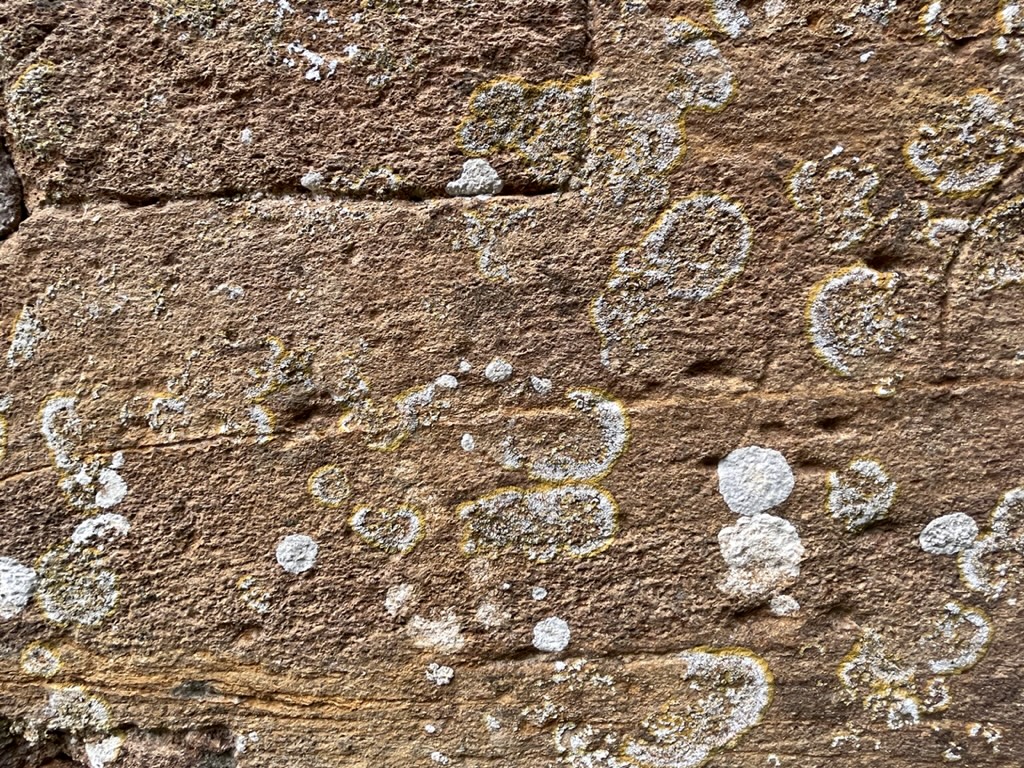
Both dials are immediately below the others, and resemble dials 2 & 3. 10 is an eroded (part) circle with no discernible style hole. 11 is a complete circle with a very small hole from which – originally or perhaps later – a single line curves downward.

GSS Category: Scratch Dials; Multiple Church Dials

All photos: Keith Salvesen
THORNFORD (2) . DORSET . ST MARY MAGDALENE Revisited – Rare Scratch Dials (interior & sill)

St Mary Magdalene Thornford Dorset (Keith Salvesen)
St Mary Magdalene, Thornford, Dorset

ST MARY MAGDALENE . THORNFORD . DORSET

GRADE II † C14 nave, chancel, 3-stage W tower; C15 nave rebuilt, N chapel added. Victorian restoration 1866. 14 Consecration Crosses (usually 12 or fewer). S. of the Sherborne – Yeovil A30 road, approx half way between the two towns 50.9175 / 50°55’3″N /  ST603132

I last wrote about St Mary at a time when churches were locked for Covid reasons. I was able to feature the 2 extraordinary and very rare external sill dials in a post HERE Recently, I returned to the church to investigate the third and most unusual dial located actually inside the church. Here is that dial, with a recap of the sill dials.

Scratch Dials located inside a porch are not especially rare, with quite a few examples within a 25 mile radius of Thornford. They are found where dials were originally cut in the stone surrounds of a medieval church doorway and a porch was subsequently added. In some cases, the new porch entrance had a new dial cut to replace its redundant predecessor.

St Mary Magdalene, Thornford, Dorset – interior scratch dial

THORNFORD DIAL 3 – INSIDE THE CHURCH

Very rarely is a dial found actually inside the church itself. This may occur when a dial stone has been relocated from the outside to repair an interior wall; or as part of wider building works, as with Stoke St Gregory Somerset. Thornford has a most interesting example.

INTERIOR DIAL

St Mary Magdalene, Thornford, Dorset – interior scratch dial

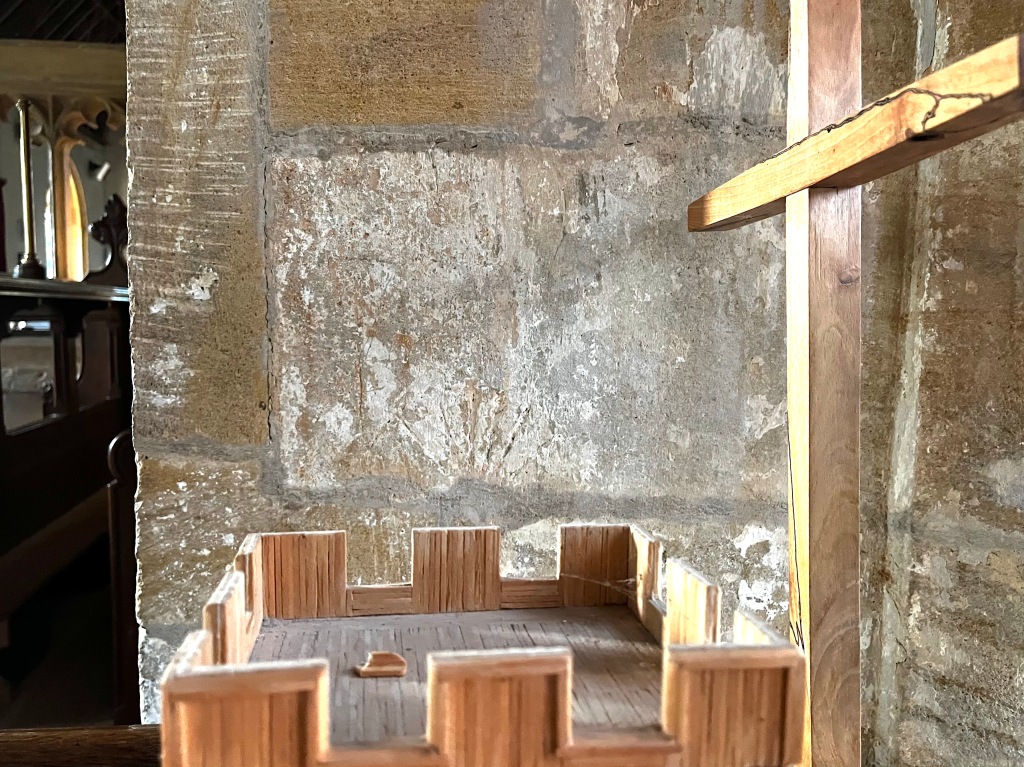
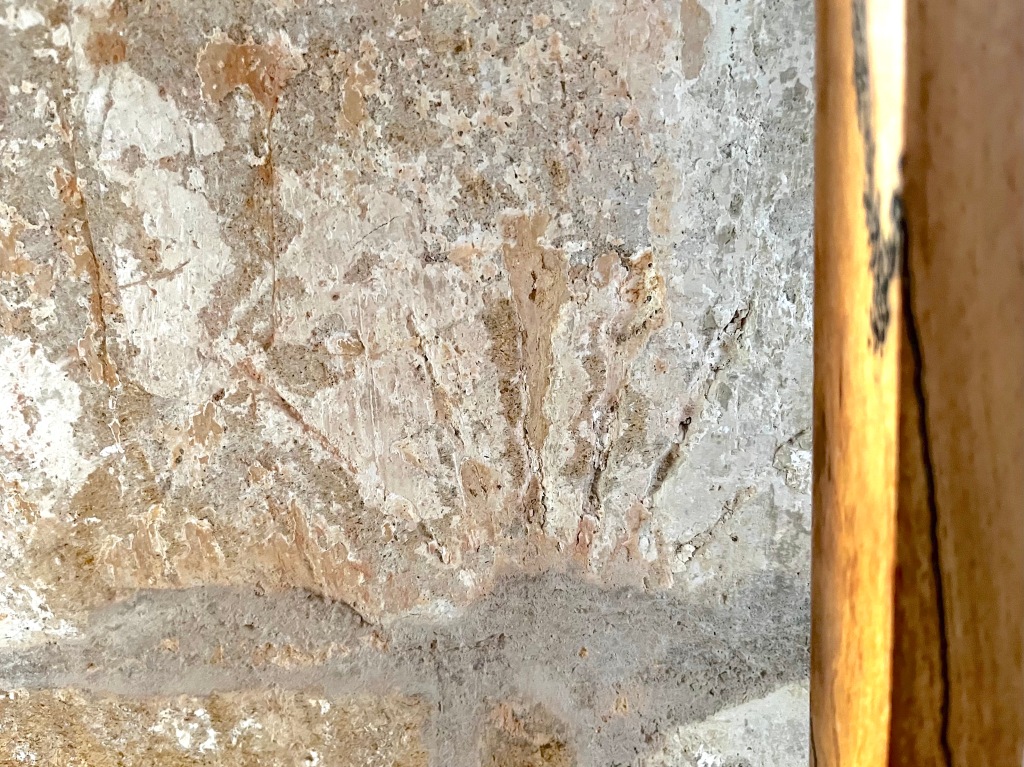
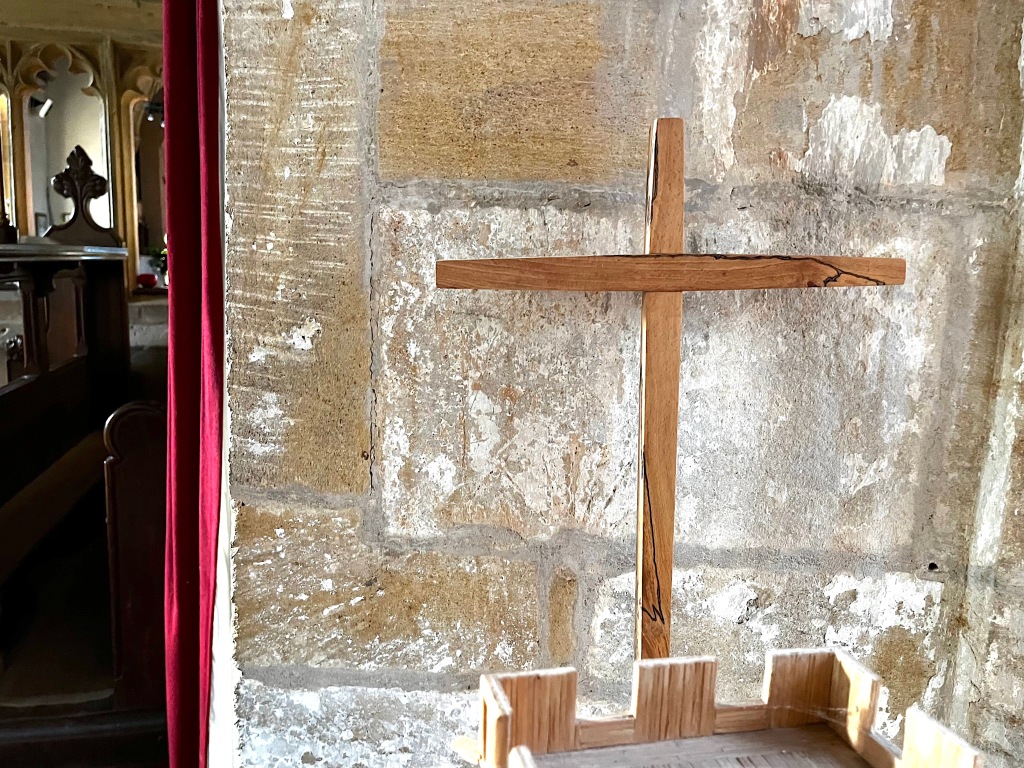
A remarkable dial – relocated, inverted, overpainted, and all but hidden in the chancel on the N side of the church on the E face of the window jamb, with a wooden toy castle for company. There are 8 lines of almost the same length, somewhat rough-hewn. 2 are barely perceptible.

Thornford – interior dial (BSS)

TWO RARE SILL DIALS

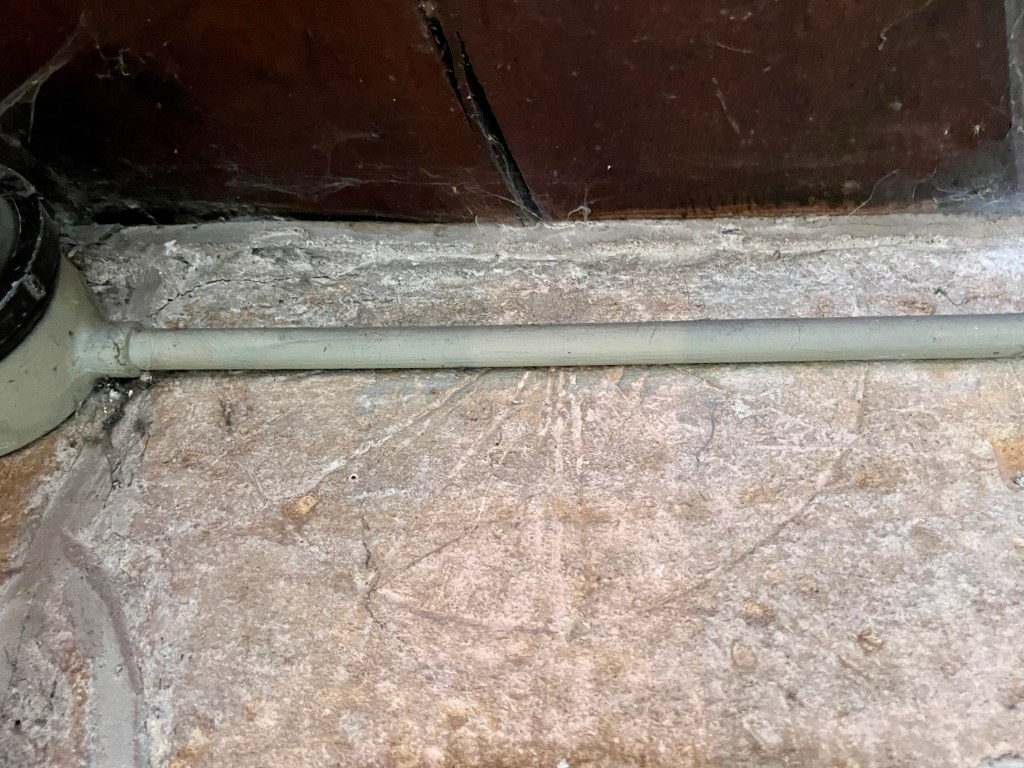
St Mary was one of the earliest churches to be covered in this project, probably because it is only 2 villages away from ours. I featured the 2 the two very rare ‘sill’ scratch dials, both on the quoins of the E. corner of the window sills either side of the blocked chancel doorway, with the window jambs acting as gnomon. These are not unique, but I believe there are fewer than 5 other examples. The link to that article is HERE.

St Mary Magdalene Thornford Dorset Scratch dial 1a
Thornford – window scratch dial 1a
St Mary Magdalene Thornford Dorset Scratch dial 1b
Thornford – window scratch dial 1b
St Mary Magdalene Thornford Dorset Scratch dial 2a
Thornford – window scratch dial 2a
St Mary Magdalene Thornford Dorset Scratch dial 2b
Thornford – window scratch dial 2b

NOTES † Stone screen, c15 font, early organ, a number of Consecration crosses (RCHM says 14), from badly eroded Hamstone to clear-cut. Tithe Tomb in the churchyard with a basin into which tenants contributed to the wealth of the Lord of the Manor by making an annual payment ‘on St Thomas’s Day’ to be allowed to keep their own hay

GSS Category – Scratch Dial; Sill Dial; Interior Dial

All photos – Keith Salvesen

WILTON . WILTS . COUNTY CROSS – Multiple Dial

St Mary and County Cross, Wilton

COUNTY CROSS . MULTIPLE SUNDIAL WILTON. WILTS

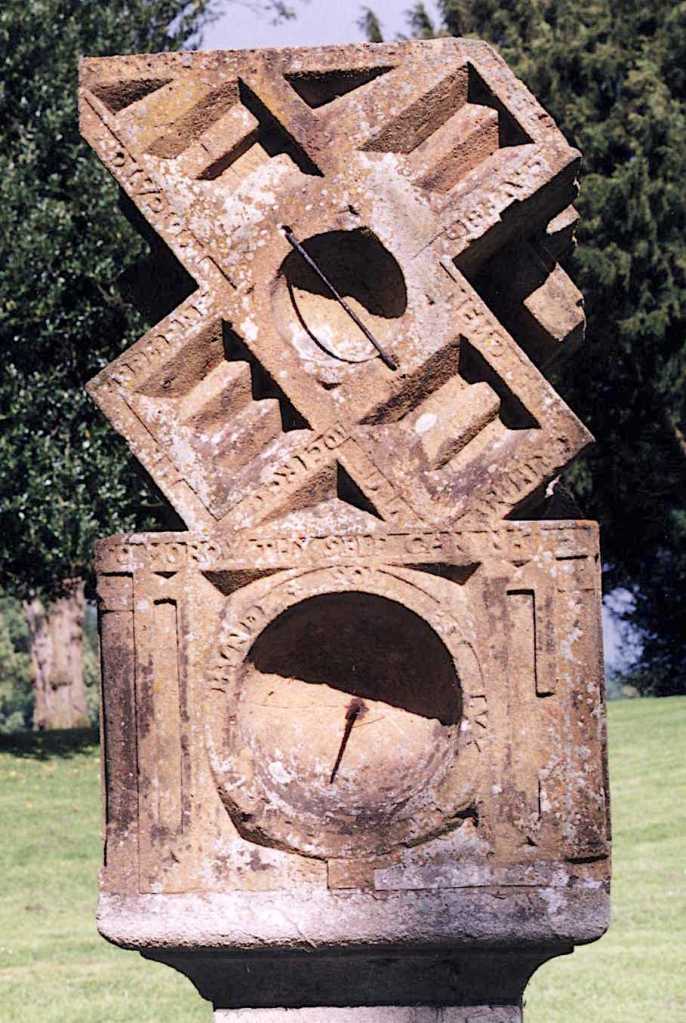
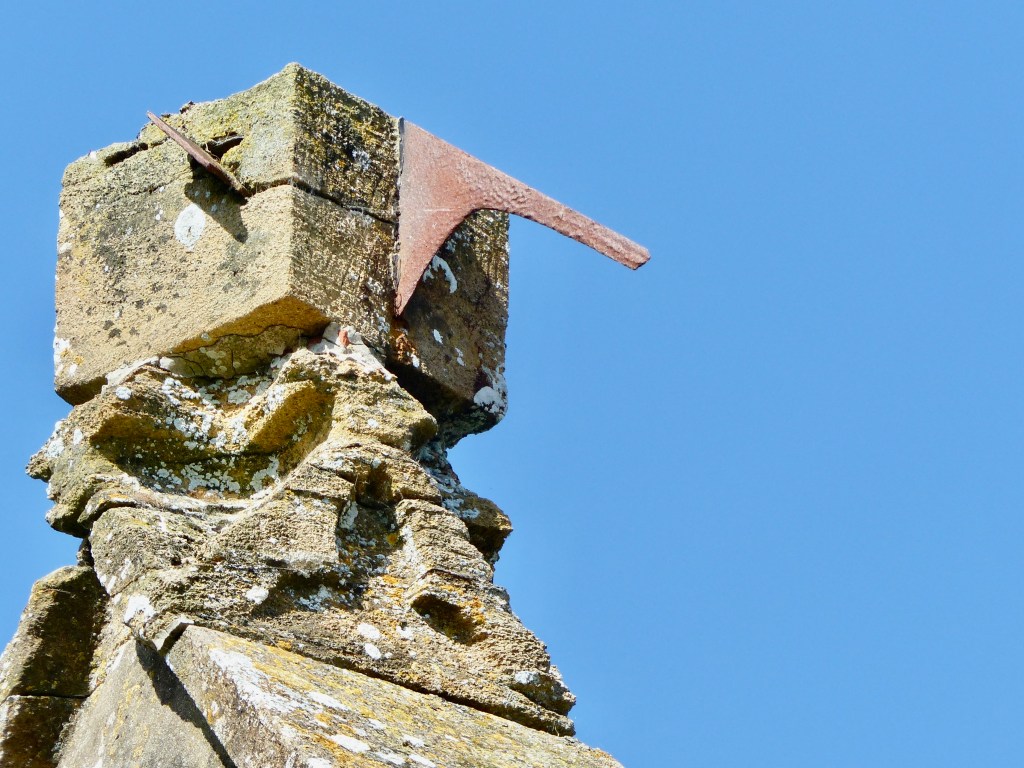
Passing through Wilton on a tedious A30 journey, I paused to visit St Mary**, a partial ruin in the historical Market Place in the centre of the town. On the E side of the churchyard was a tall monument. On closer inspection it turned out to be large multiple dial, badly eroded and damaged. And as with cube dials, it is rarely possibly to get clear shots of every side of a multiple dial. Later investigation revealed much more of interest, considered below.

BLB dates the structure pre-C18. It is hard to imagine how the dial must have looked originally, or the shape of the various elements, or the location and angles devised for the metal gnomons. There appear to be 6 scaphe dials, and plenty of angles for casting shadows. It’s hard to read much more than that. Fortunately BSS has records of the fine dial at Moccas, Herefs for comparison. It has a broadly similar design, and is in superb condition.

In a way, though, the dilapidation of the Wilton multiple dial goes rather pleasingly with the ruins of the adjacent church.

COUNTY CROSS

In due course I researched the dial in more detail, discovering that it had at times been known as County Cross. The informative BLB entry makes it clear that there is much more to the structure than its function as a sundial.

Grade II Pre-C18. An undatable jumble of forms in stone. The octagonal base with 4 seats is probably mediaeval (it is illustrated in a drawing of Wilton done circa 1568), possibly also the square pillar above this. The upper parts are probably C17 and include a heavily sculpted block, possibly a cross or more probably a sundial on corner cannon balls with above, also on corner cannon balls, a moulded base for the C17 godrooned vase which caps this structure.

A print of St Mary by Kershaw & sons (active 1850-80) offers a rather idealised version of the Cross / sundial.

St Mary and County Cross, Wilton . c1850 . Kershaw (RarePrints)

**ST MARY’S CHURCH . WILTON

St Mary and County Cross, Wilton

The remains of the C15 church of St Mary are in the historic Market Place in the centre of Wilton. Listed Grade II*, it was declared redundant in 1972 and is in the care of CCT. Only the chancel, part of the nave, and 3 arcade arches are left. It is an attractive grouping. Not to be confused with the very fine C19 ‘Italianate Church’ on the A30 to the West.   51.0801 / -1.8628 / SU097312

GSS Category: Multiple Dial; Scaphe Dial

Photos: Keith Salvesen; Moccas archive BSS; RarePrints

NEWTOWN LINFORD . LEICS . ALL SAINTS – 2 Scratch Dials, Vertical Dial

All Saints . Newtown Linford . Leics

ALL SAINTS . NEWTOWN LINFORD . LEICS

GRADE II* † C14 / 15 origins, with later / C19 enlargement. Besides 2 scratch dials there is a vertical dial on the tower dated 1706. 6m NW of Leicester. 52.6832 / -1.2292 / SK522097

DIALS

The scratch dials are both on the S side. One is on SW corner of the tower; the other on the lower part of the L jamb of a window (I don’t have a more precise location at the moment).

DIAL 1

All Saints . Newtown Linford . Leics – Scratch Dial 1

Dial 1 gives the impression of a spider, with legs radiating from the (blocked) gnomon hole in the centre of the dial stone. The clearest lines are at 11 and noon, the latter faintly extended. The others are rather randomly placed. There’s a line in the top L quadrant; and the hint of a line very roughly extending the noon line upwards. The 2 pocks don’t seem to be part of the design.

DIAL 2

All Saints . Newtown Linford . Leics – Scratch Dial 2

Dial 2 is more conventional ‘morning dial’, with 6 more or less evenly spaced lines descending (but not very accurately) from a large filled style hole. Only one of the lines is after noon. Simple and straightforward.

VERTICAL DIAL 1706

All Saints . Newtown Linford . Leics – Vertical Dial

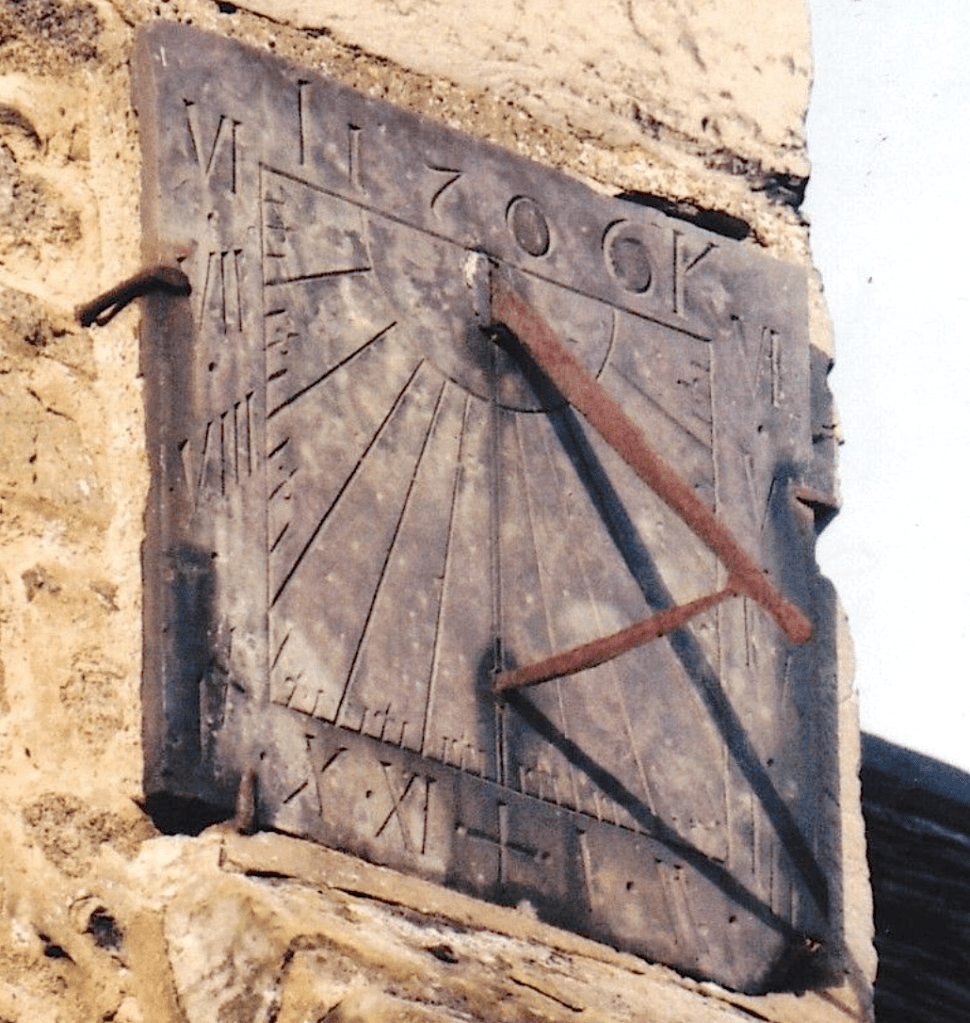
Set on the SE edge of the second stage of the tower, close to the intersection with the roof of the nave. Slate, made by Thomas Woodcock in 1706. Deeply cut and in excellent condition for its age. Initials I K. Cross for 12 noon. Quarter hours marked. The angles of the Roman numerals are carefully graduated as they descend and ascend, suggesting the work of a skilled craftsman dial-maker.

BSS notes very similar dials at Breedon on the Hill and at Leicester, all three being within a few miles of each other.

This interesting dial has been analysed and recorded in some detail by BSS:

The dial is fitted with iron dog nails to the south face of the tower, at the south-east corner, adjacent to the nave junction. The date 1706 is across the top, and being of the local slate, the dial is in remarkable condition for its age. Initials ‘I K’ are on each side of the date. Upright hours VI – + – IV – VI are aligned to the hour lines, which are drawn to a large semicircle around the gnomon root. Short lines mark the half hours, with fleur de lys or arrow heads, and quarter hours. The rusty iron bar gnomon has a straight horizontal support.

GSS Category: Scratch Dial; Vertical Dial

Photos of church and scratch dials, Erika Clarkson; vertical dial from BSS archive

SHARNFORD . LEICS . ST HELEN – Scratch Dial

ST HELEN . SHARNFORD . LEICS

GRADE II † C13, C14, C15, alterations (including removal of spire), additions, restoration C18 on. Nave reroofed following a fire in 1985. 12m SW of Leicester. 52.5228 / -1.2887 / SP483918

DIAL

St Helen . Sharnford . Leics – Scratch Dial

The dial is quite high up on a buttress by the window E of the porch. It is in poor condition, esp. the upper part if (as BSS suggests) there was a complete circle originally. It’s hard to determine how many lines radiate from the large gnomon hole. There is a clear noon line that terminates in an emphatic pock. There are ± 7 lines in the lower semicircle. See the BSS image below that seems to eroded 6-to-6 horizontal lines as well, and also a hint of a line in the upper part RHS.

The 2 smaller pocks in the lower half are inside the circle rather than on the circumference. They are level with each other and equidistant from the central hole, suggesting an intentional symmetry with (approx) hours 9 & 3. The same applies to the similar-sized upper pocks. In fact, the 4 pocks form a square and their position tends to confirm the ‘complete circle’ theory.

BSS DIAL IMAGE FOR ST HELEN’S

GSS Category: Scratch Dial

Photos: Erika Clarkson

STOKE ST GREGORY . SOMERSET – Scratch Dials; Vertical Dial

ST GREGORY . STOKE ST GREGORY . SOMERSET

GRADE I † Early C14, octagonal tower (cf neighbouring N Curry and nearby) completed C15. C19 restorations. BLB notes A very fine church, similar in design to Church of St Michael, North Curry CP but not so extensively restored in the C19.  Admired by PEV. 12m E of Taunton. 51.04 / -2.9312 / ST348271

DIALS

Two dials are recorded for St Gregory, both of which merited additional comment by DEH. He recorded the first – remarkably decorative – on his visit in 1912. He revisited in 1916 and recorded the second dial, relocated to an obscure corner inside the church. In addition there is a (probable) 3rd dial, unrecorded.

DIAL 1

Dial 1 is on the E side of the S porch. It seems likely that there was originally a simpler dial that was embellished over the years. Although not all are now visible, it is reasonable to assume that there was a full complement of 24 lines.

DEH noted: this dial has been decorated. The noon line is lengthened outside the circle and ends in a small cross. This cross is plainly an addition. The noon line is also carried upwards above the circle and also ends in a cross. This cross may be original. The line throughout its length is true and clean cut, so that it may be part of the primitive dial.

DIAL 2

Dial 2 is a rare example of a scratch dial repositioned within a church during restoration / rebuilding (cf Thornford Dorset). DEH must, I think, have been told about it: under no normal circumstances would a dial researcher think of the location without a tip-off. Even knowing the right area, I didn’t spot it straight away.

DEH gives the precise location: This dial is within the church, on the w. splay of the easternmost window in the s. wall. It is on the top stone of the splay, the noonline is about 5 inches in length, and the stylehole, which appears to be an inch in diameter, is filled with plaster. DEH

The dial is a semicircle that looks as though it may originally been a full circle cut across 2 stones. The visible lines are mostly before noon. The noon line is possibly marked as the narrow gap between 2 almost vertical lines.

DEH noted: This dial is the only one that has been found inside a church. It was obviously placed in its present position at the time the late XV century window was inserted, and must have been brought from some other part of the building.

DIAL 3

Found on a buttress W of the porch. I have little doubt that this design is a dial, previously unrecorded. It is at least partly encircled, with 2 close candidates for style hole. There are several pocks that are somewhat random now but seem to have been deliberately made (and are not seen on adjacent stones). It seems convincing to me as a somewhat age-worn remnant.

VERTICAL DIAL

As plain a dial as you could wish to find, yet casting a strong shadow. BSS view is that it dates from the 1880s restoration and it doesn’t look as if the dial has been touched since then! It’s worth pointing out that (as the photos show) the lamp bracket works as effectively as the dial itself.

GSS Category: Scratch Dial; Mass Dial; Vertical Dial

All photos: Keith Salvesen
NORTH CURRY . SOMERSET . ST PETER & ST PAUL – SCRATCH DIAL?

St Peter and St Paul . North Curry . Somerset

ST PETER & ST PAUL . NORTH CURRY . SOMERSET

GRADE I † Norman origin, gradually growing from c1300 to a substantial building for a village. C19 further expansion and rebuilding. Mostly local sandstone, some blue lias (as found on the Jurassic Coast). Octagonal tower cf neighbouring Stoke St Gregory. 8m E of Taunton. 51.0255 /  -2.9717 / ST319255

DIAL?

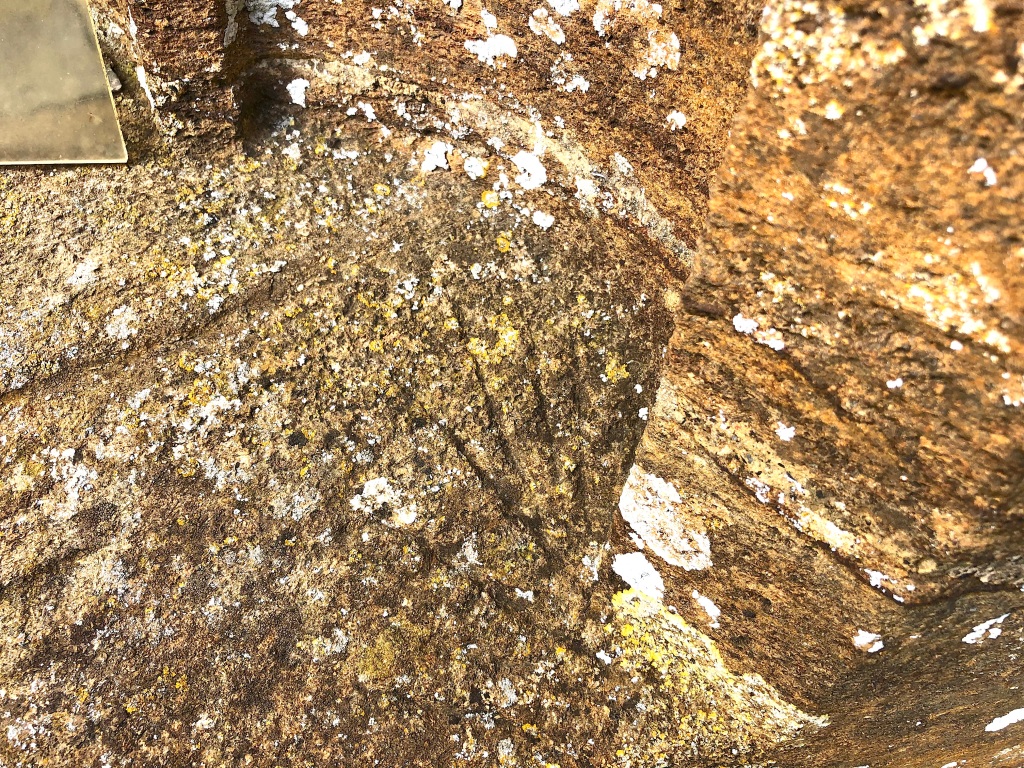
DEH visited in 1912 and somewhat hesitantly included this church in his pioneering survey of Somerset dials: There is a doubtful dial on the w. side of the s. porch. It consists of a much worn stone, with a stylehole (?) which is filled up, and some marks that might be lines. The stone is so soft and worn that it is impossible to say with certainty whether it was once a dial.

There is nothing extant in that location to match the description given. The reference to soft, worn stone suggests the blue lias component of the porch front (built c1502). If so, the obvious candidate for a dial is shown in the photos: but how might such a confiruration have worked? BBS does not mention it. The conclusion must be… not a dial.

GSS Category: Scratch Dial

Photographs: Keith Salvesen

SEAVINGTON ST MICHAEL . SOMERSET – 2 Scratch Dials, Medieval Graffiti

Seavington St Michael . Somerset


SEAVINGTON ST MICHAEL . SOMERSET

GRADE II* Late C12, porched c1291; C15 alterations, C19 restoration. Attractively simple with its welcoming footpath, porch, and modest bell turret. Adjacent to S St Mary and 4m E of Ilminster. 50.931 / -2.8407 /  ST410149

DIALS

BLB notes that the centre bay on south side has a blocked chamfered pointed-arched doorway, with diamond-leaded window inserted with cill just below springing. The dials are one above the other on W side of the doorway. Strangely, although DEH on his visit in 1915 records one dial in precisely this location, he doesn’t mention the second.

DEH noted that the buttresses either side of the recessed doorway inevitably block out the light for much of the day, as it had on the day he visited (possibly why he only found one dial?). He concluded that the buttresses were a later addition to the church (probably XVII Century), when the doorway was filled up.

DIAL 1

The uppermost, larger, less sophisticated, and the earliest of the 2 dials. 6, perhaps 7 lines. The ones either side of the noon line are slightly curved. Gnomon hole plugged though not with cement.

DIAL 2

Beneath Dial 2 and far more visible. There are 6, perhaps 7 lines, of which the the afternoon lines are much the clearest. The noon line has an unusually prominent pock. The adjacent lines LRQ are even deeper cut. One is also elongated, probably indicating the most significant Mass of the day. One of the fainter lines LHS heads ineffectively above the horizontal. The gnomon hole is surprisingly deep.

MEDIEVAL GRAFFITI

The church porch has plenty of graffiti including initials, Marian marks, ritual protection (witch) marks, and pilgrim crosses

Seavington St Michael . Somerset – medieval graffiti

GSS Category: Scratch Dial; medieval graffiti

All photos: Keith Salvesen
PRESTON CANDOVER OLD CHURCH . HANTS . ST MARY THE VIRGIN – 2 Scratch Dials

St Mary . Preston Candover Old Church

ST MARY THE VIRGIN . PRESTON CANDOVER . HANTS

GRADE II † C12 origins (c1190), mostly destroyed by a fire in 1681 and rebuilt. Dilapidation and a new Parish church built in the village centre in 1883 led to demolition of all but the Chancel. In the 1920s used as a mortuary chapel. Stones mark the outline of part of the nave. In the care of CCT. 8m S of Basingstoke. 51.1687 / -1.138 / SU603414

DIALS

Both dials are on the south wall of the Chancel, L of the blocked Priest’s door.

St Mary . Preston Candover Old Church . Dials

DIAL 1

St Mary . Preston Candover Old Church – ScraDial 1

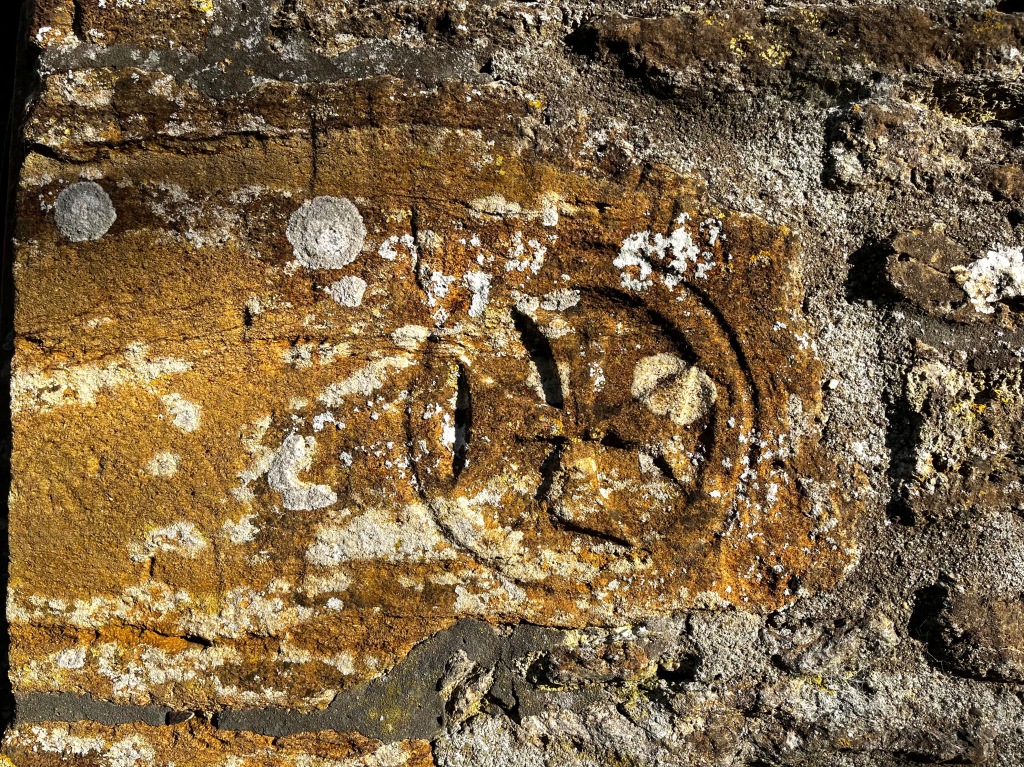
Dial 1 is small and, remarkably, on the lowest stone of the doorway where it would have been of negligible use. It was obviously repositioned during rebuilding and in the process rotated 90º clockwise so that the deeper cut noon line is horizontal rather than vertical to the ground. Encircled but not accurately – slightly elliptical. There are a dozen lines or so radiating from the gnomon in the dial stone, with the afternoon lines emphasised (ARG in 1924 found it ‘much damaged by weather’)
St Mary . Preston Candover Old Church Dial BSS
A R Green – Dial 1 1924

DIAL 2

St Mary . Preston Candover Old Church –

Dial 2 is eroded and in a poor state. Though larger than Dial 1, it is less visible, and ARG did not record it in his 1924 survey. It seems to have been cut on softer stone. Lichen makes it harder to read. The blocked gnomon hole is more or less in the centre of the dial stone. There are 7 definite lines leading from it, 2 angled into the upper half of the dial. It looks as if it might once have been encircled, but it is now hard to tell. BSS notes Crudely cut or made. Eroded. Trace of circle only. Partly hidden by rendering

St Mary . Preston Candover Old Church Dial BSS

NOTE In the churchyard is a sundial made up of a twelfth-century capital and base, both being set upside down HE

GSS Category: Scratch Dial; Mass Dial

Credits: Tina Osgood, taken during a recent visit; header image Basingstoke Gazette

MUDFORD . SOMERSET . ST MARY – Cube Dial & 2 Scratch Dials

St Mary . Mudford . Somerset

ST MARY . MUDFORD . SOMERSET

GRADE I † Mostly early C14 and C15. Built with local stone: lias and ham. A fine C17 cube dial, 2 slightly unrewarding scratch dials, impressive gargoyles. A complete set of 5 bells dated 1582, 1621, 1623, 1664 and 1666, all by Purdue family. Some pews have graffiti from C17 on. 3m N of Yeovil. 50.9773 / -2.6086 / ST573199

CUBE DIAL

St Mary . Mudford . Somerset – Cube Dial

C17 cuboid sundial as finials to gable coping HE

ASPECTS SE & SW

The SE face has a large gnomon inserted vertically into almost the whole depth of the cube. There are 4 (possibly 5) faint lines LHS that mark the morning’s progress. The SW face is (now?) plain, with an angled blade top R at roughly 45º.

ASPECTS SE & NE

The NE face has a blade gnomon at much the same angle as one the SW face. There’s plenty of lichen and no detectable marks.

ASPECTS NE & NW

The ‘back’ of the cube – the NW face – has no gnomon, but there are holes suggesting the location of one. No dial lines visible.

NOTE: It is almost impossible to get satisfactory photographs of all the faces of a cube dial. Two will always be in shade. Perhaps I need to go back at a different time of day. Or year.

MUDFORD: TWO SCRATCH DIALS

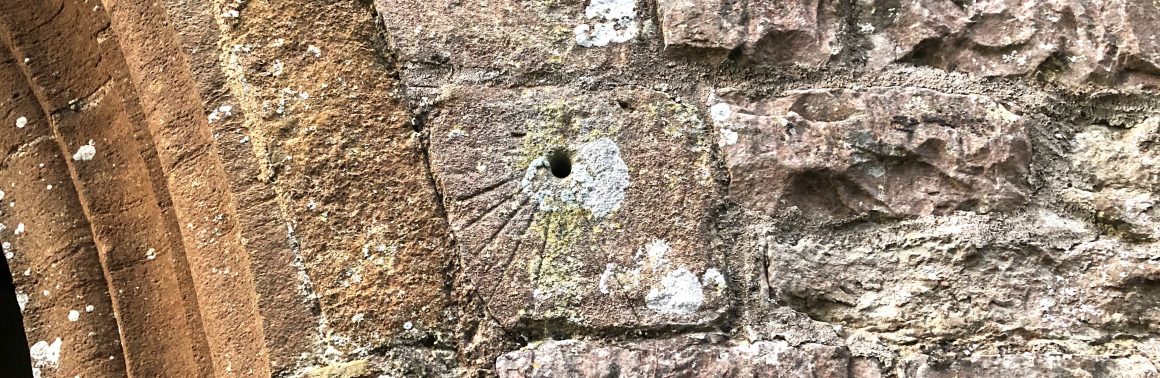
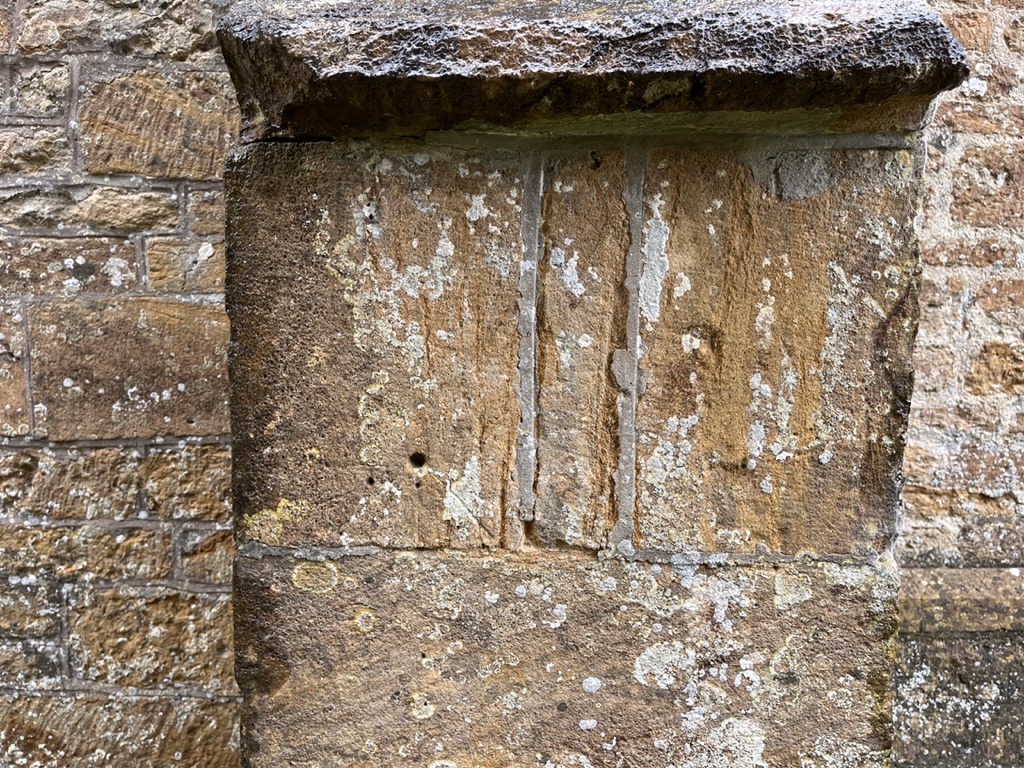
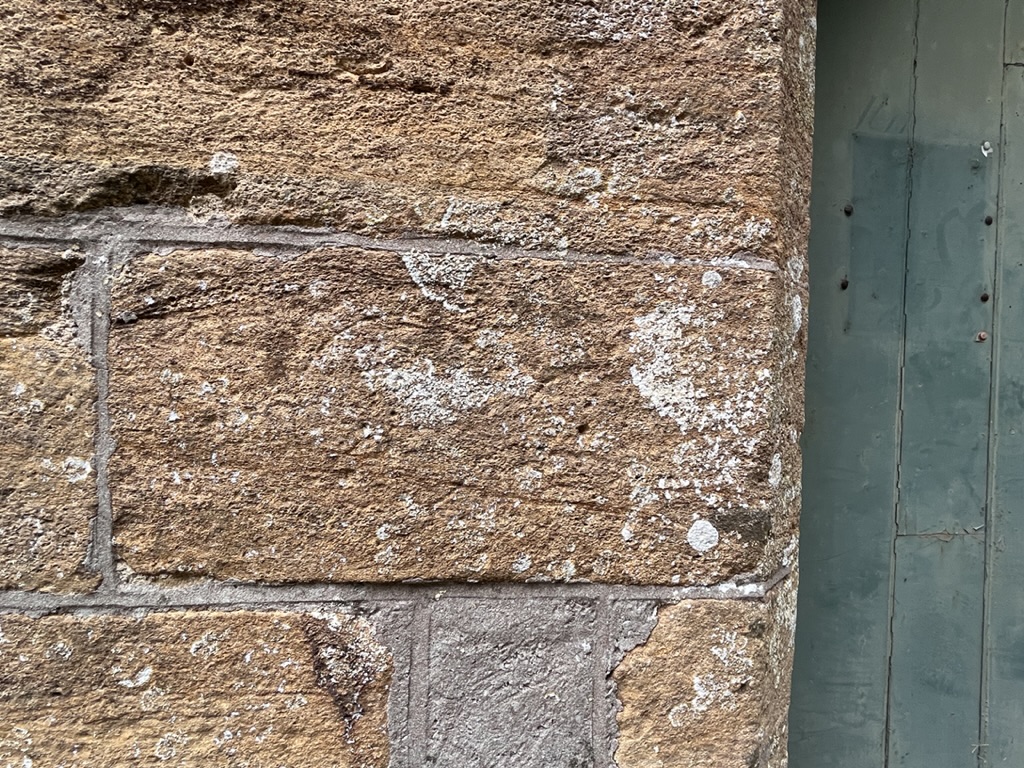
The two dials are on the inner face of the buttress at the E end of the church, one above the other – a less than optimal location. Dial 1 is very simple: a style hole with 2 lines descending either side of the vertical, in effect making the noon line the space between them. Dial 2 has 4 clear lines radiating from the style hole. These are E of the vertical, marking roughly 1 to 4 (there is no noon line). On both dials there are faint hints of other lines now eroded.

DEH recorded the Mudford dials in May 2015

GSS Category: Cube Dial; Scratch Dial

All photos: Keith Salvesen