GRADE I † The Church forms part of the Boconnoc Estate and has no Dedication*. Probably C12 origins as the Manor Chapel; gradual development; restored 1873. Now in the care of the Cornwall Historic Churches Trust. 10 m SW of Liskeard. 50.4159 / -4.6099 / SX146605
DIAL
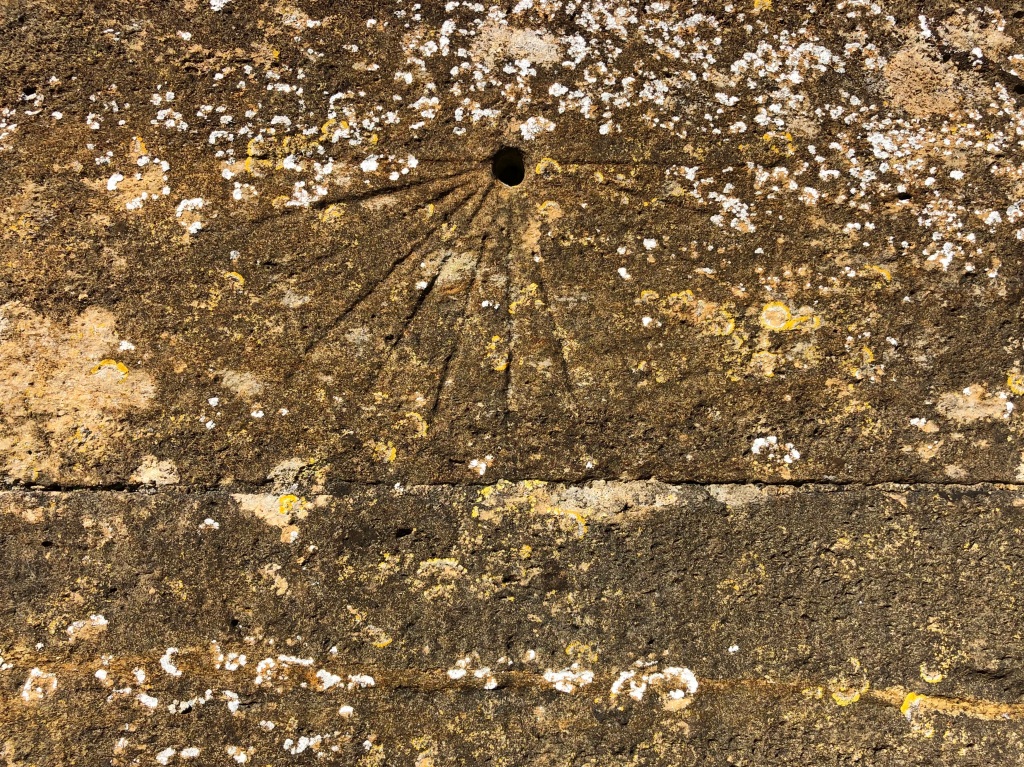
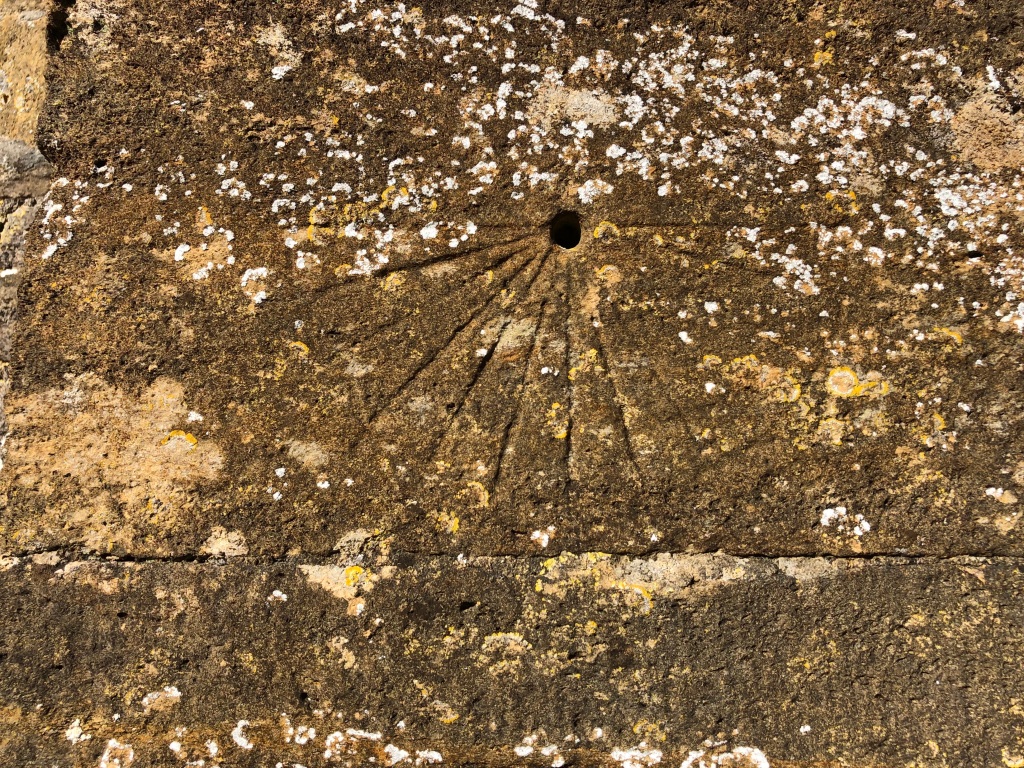
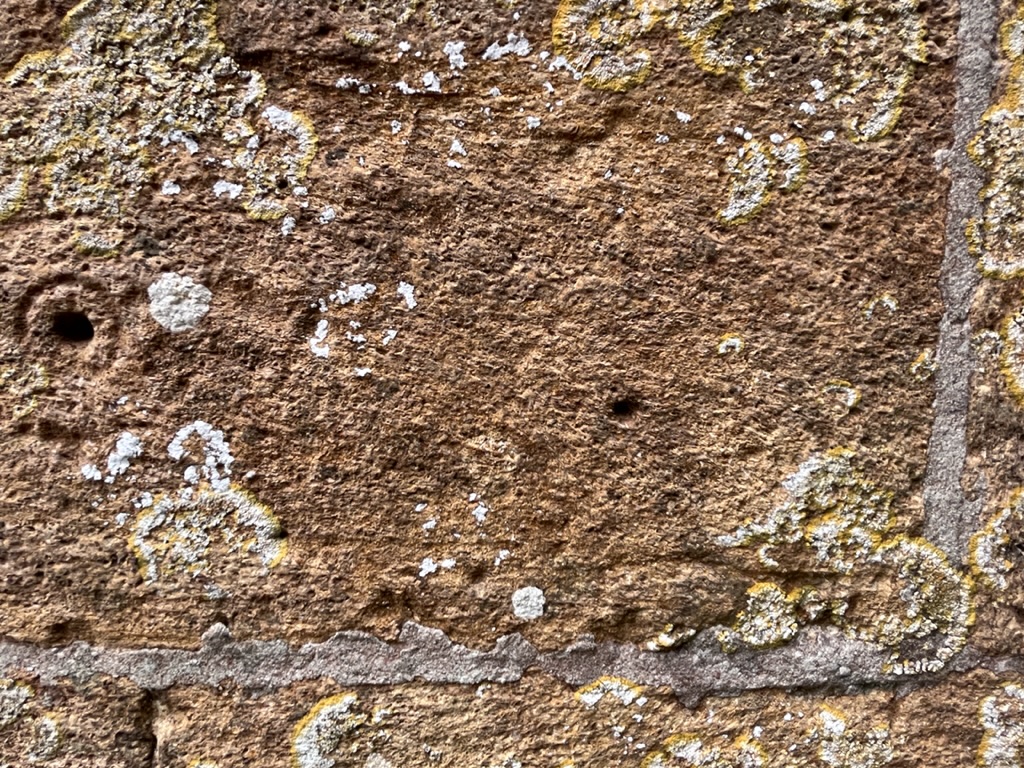
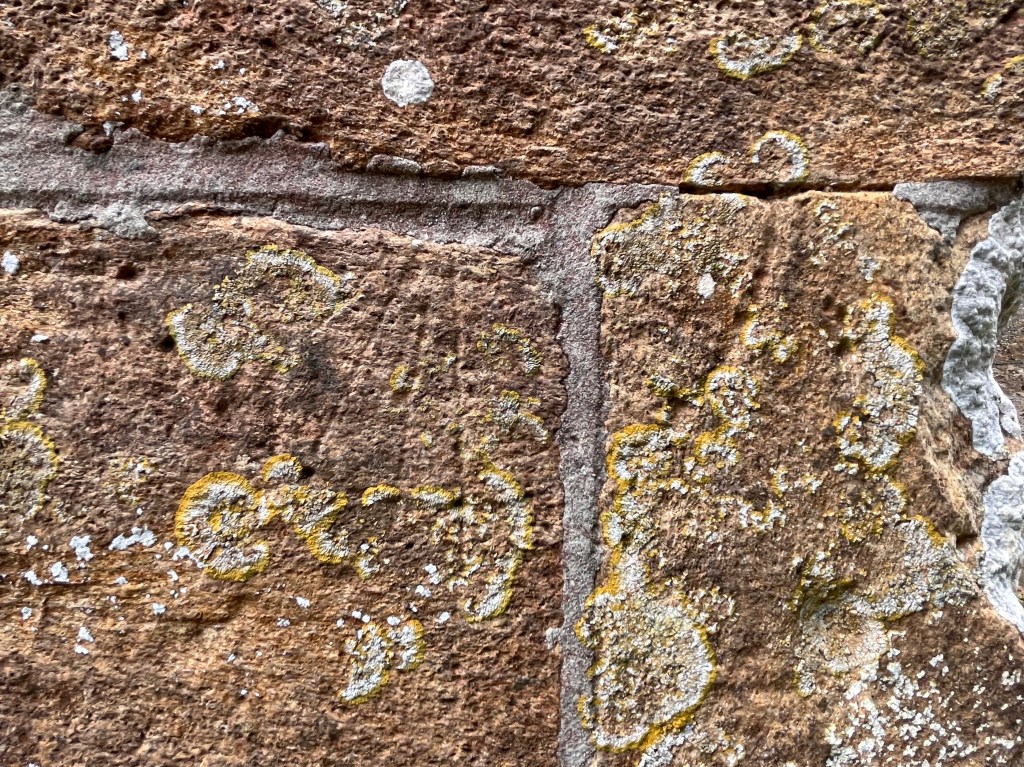
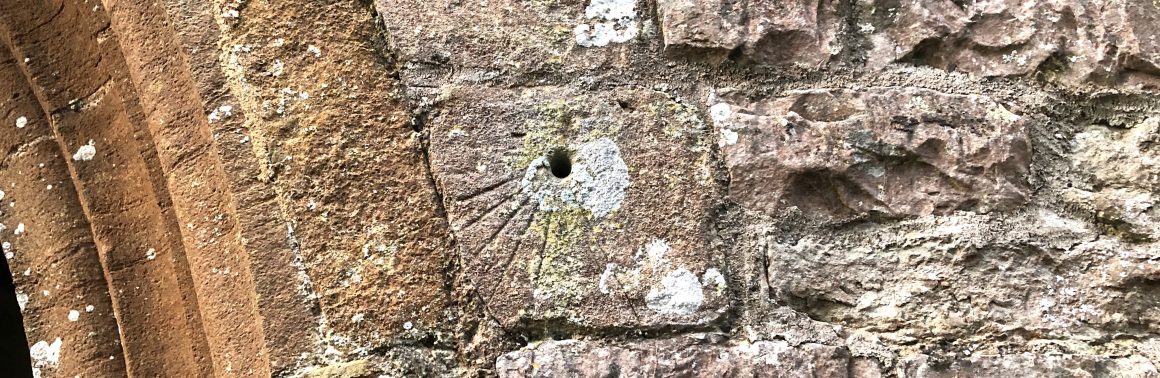
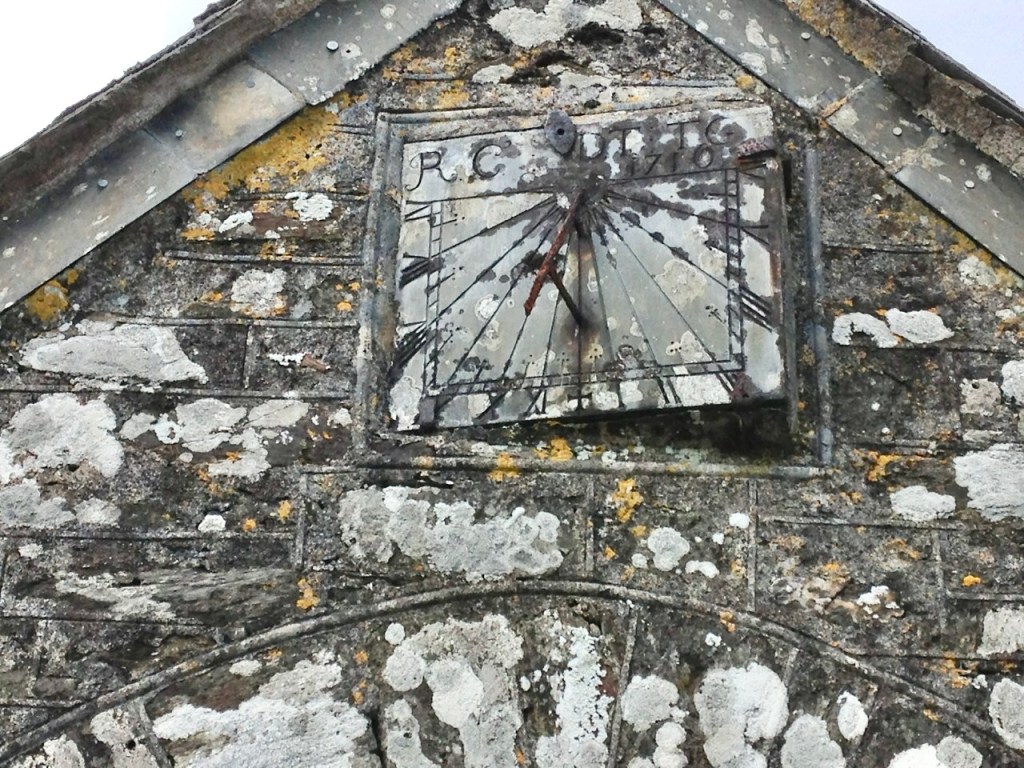
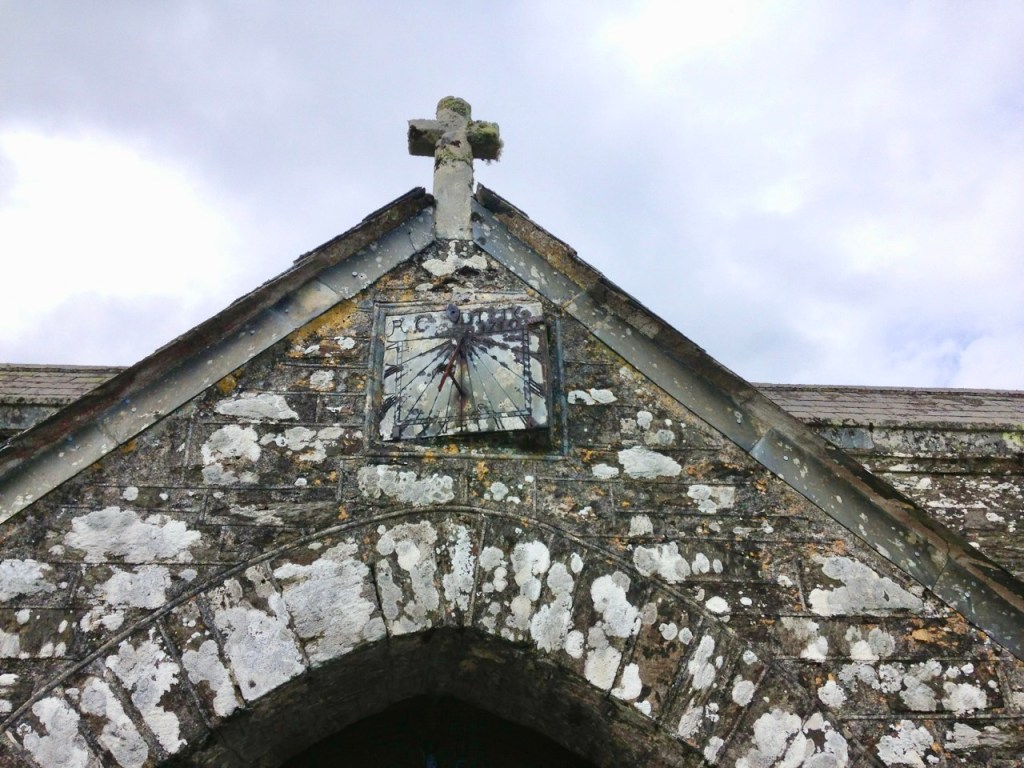
The time-worn dial is set into the apex of the porch and canted westwards. Dated 1716, it is also inscribed with a set of 3 double initials RC, DT, & TG. ‘RC’ is in a different style, and the date – perhaps significantly – is below the two other pairs of initials. Possibly the latter installed the dial in honour of the former.
The dial shows 1/4 as well as 1/2 hours. The 12 of noon is replaced by a cross. IIII is used for IV. The gnomon is presumably not original, but has clearly been in situ for a considerable time.
Boconnoc Parish Church – Sundial dated 1716
* Sadly no St Boconnoc is listed in the Ox. Book of Saints)
GSS Category: Vertical Dial. Old (post medieval) Dial
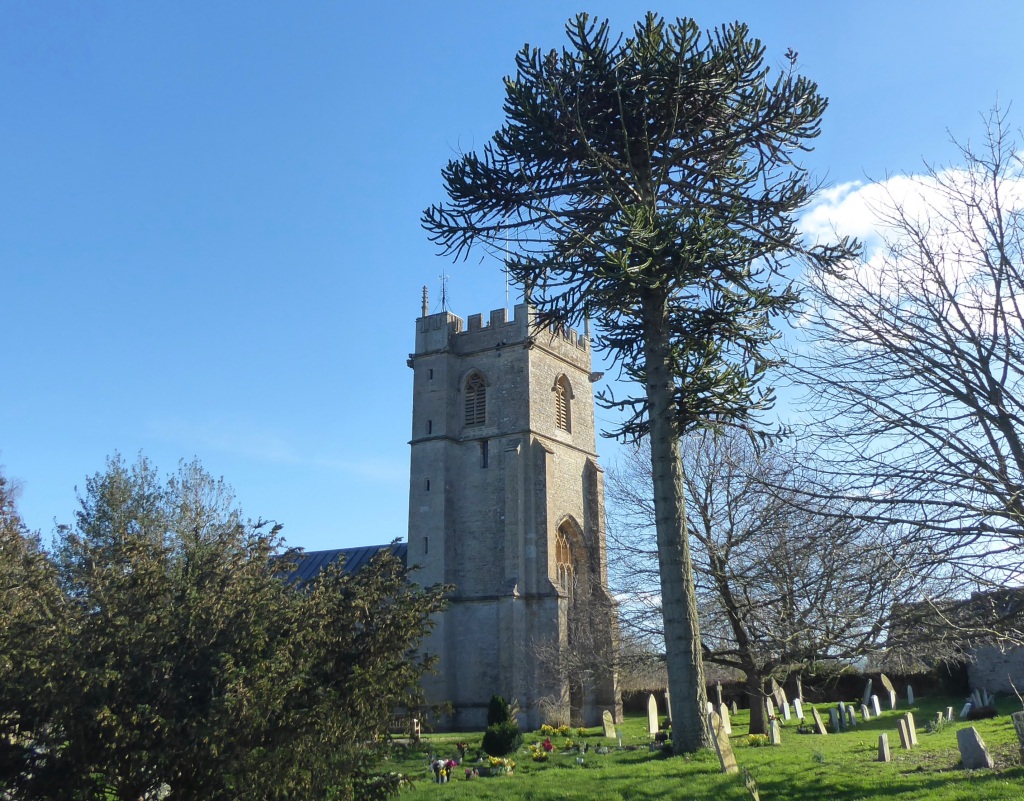
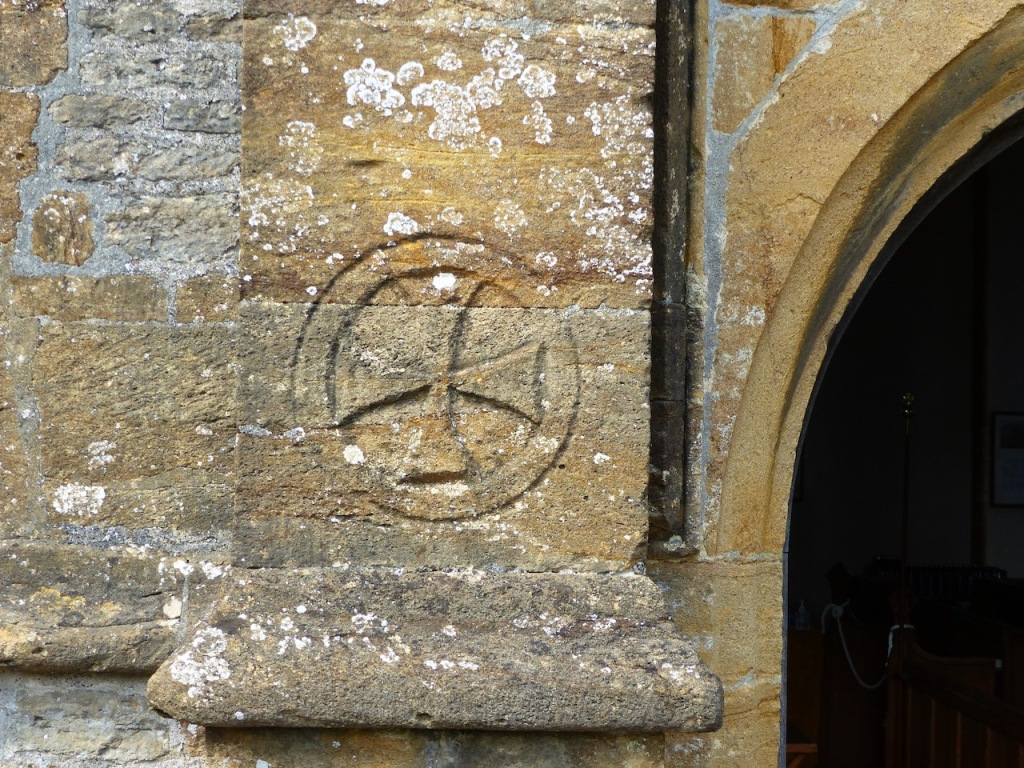
ST MARY † Grade 1. Early C13, alterations c.1500, N transept added C19. Between Sherborne & Marston Magna, on the Som. / Dorset boundary. Scratch dials, vertical dial, porch graffiti and protection (‘witch’) marks. 50.9948 / -2.5565 / ST610218
St Mary . Rimpton . Som. – Vertical Dial
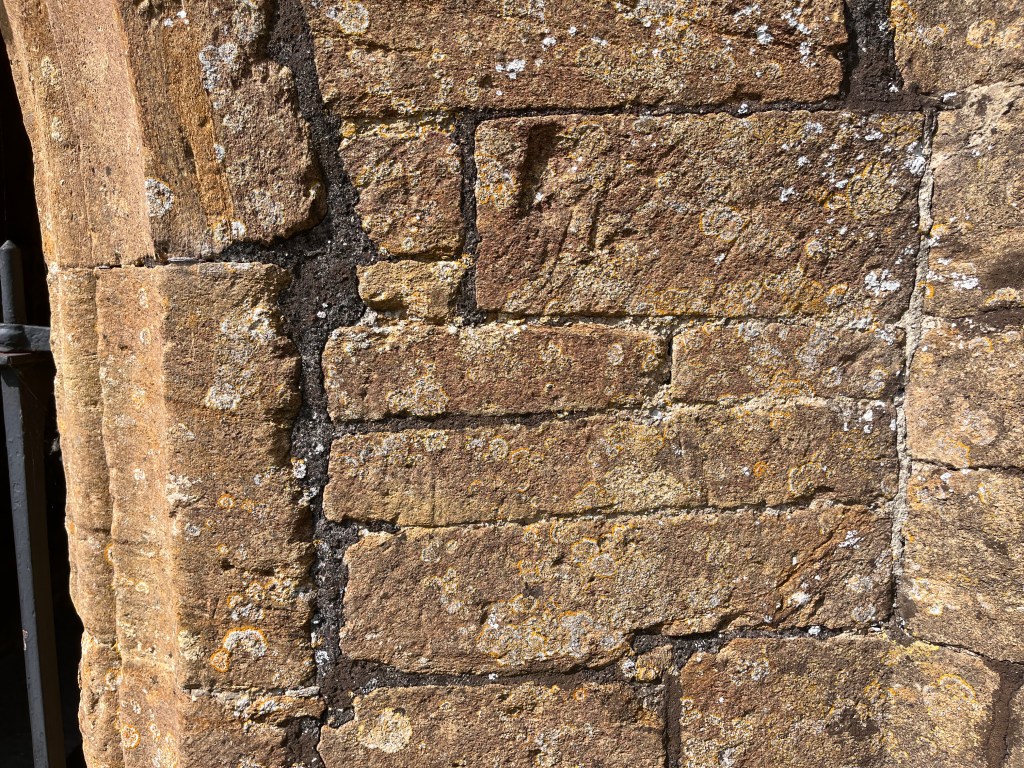
Quite a while ago I wrote (in 2 parts) about the 4 main medieval scratch dials at the church. The links are below. I recently revisited St Mary for a further look at the dials (there are a couple of others to write up) as well as some interesting church marks including a small hexfoil within the porch. A revised single post featuring all of the above will emerge in due course.
DIAL
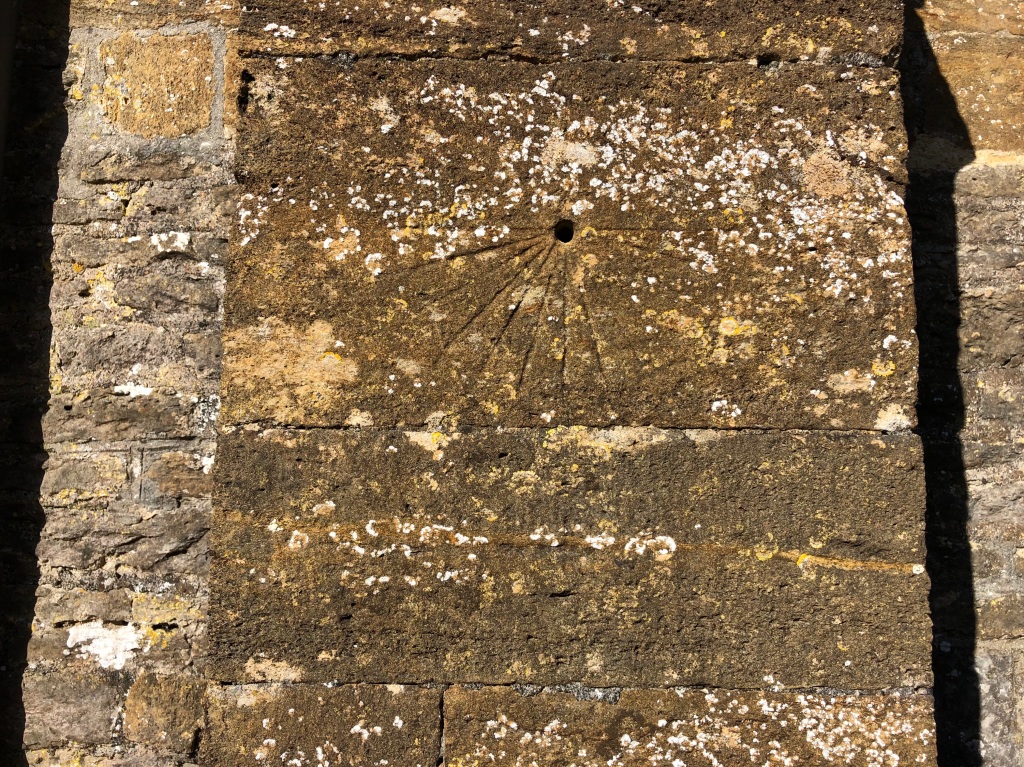
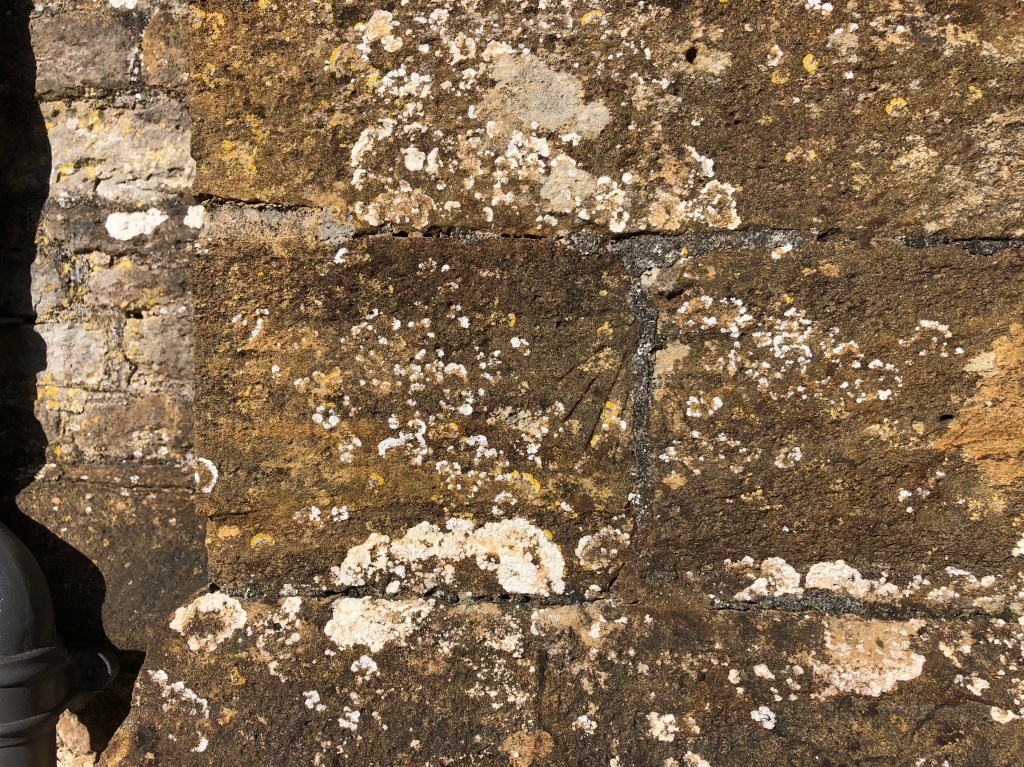
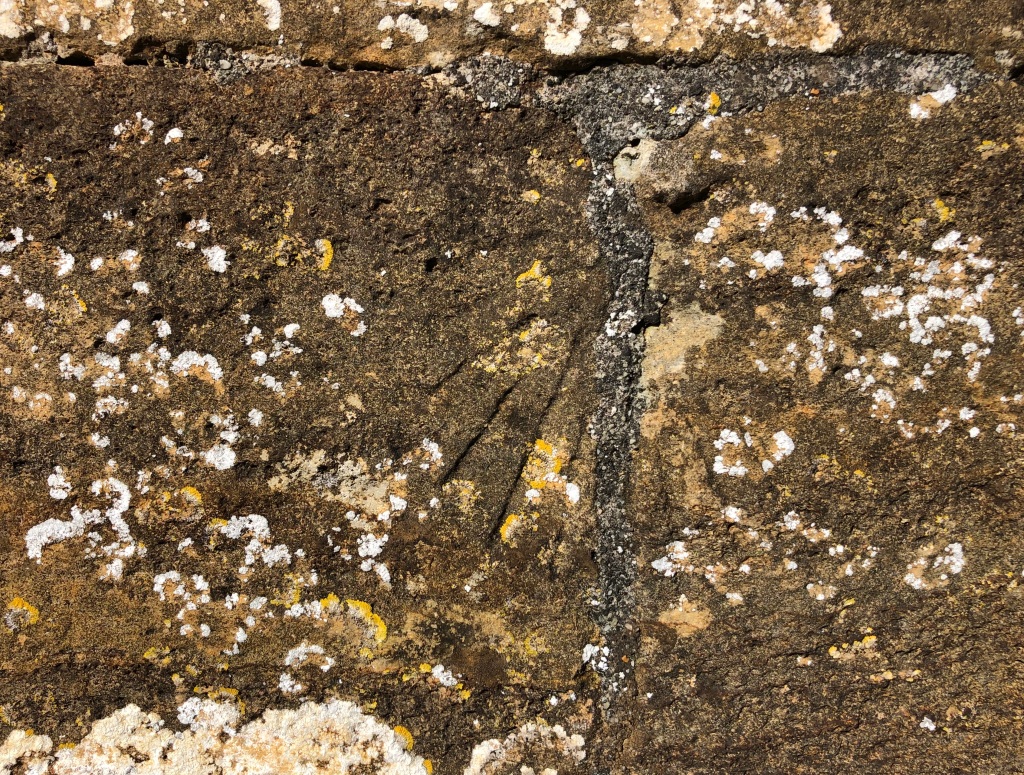
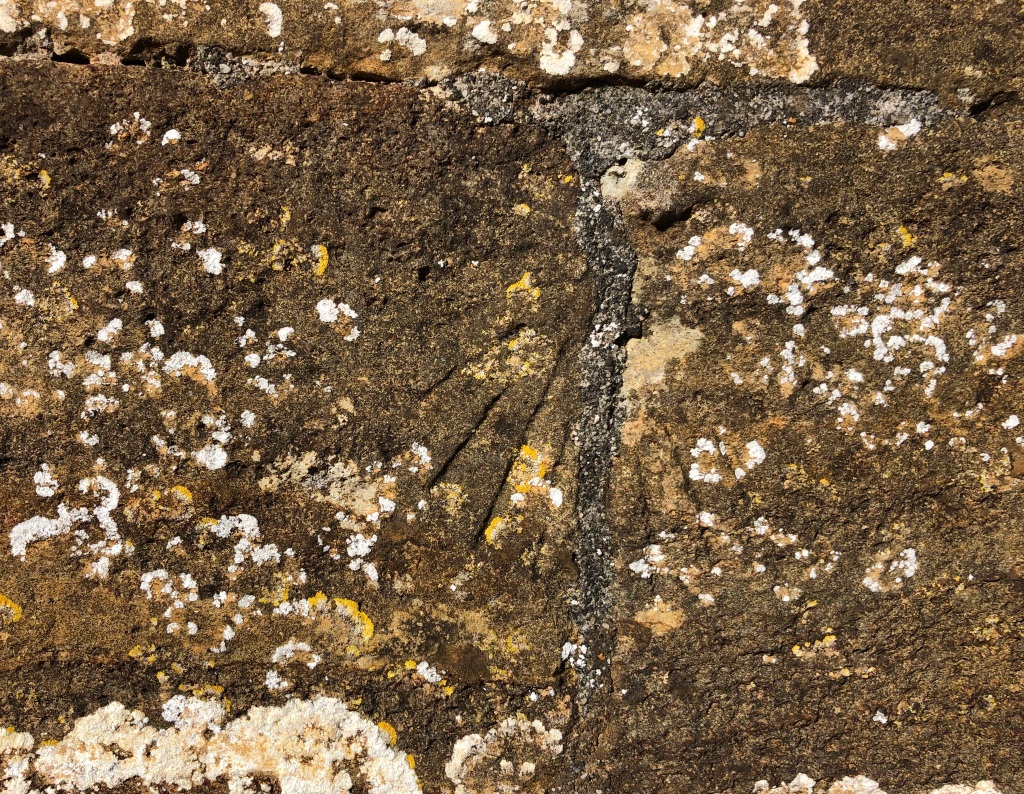
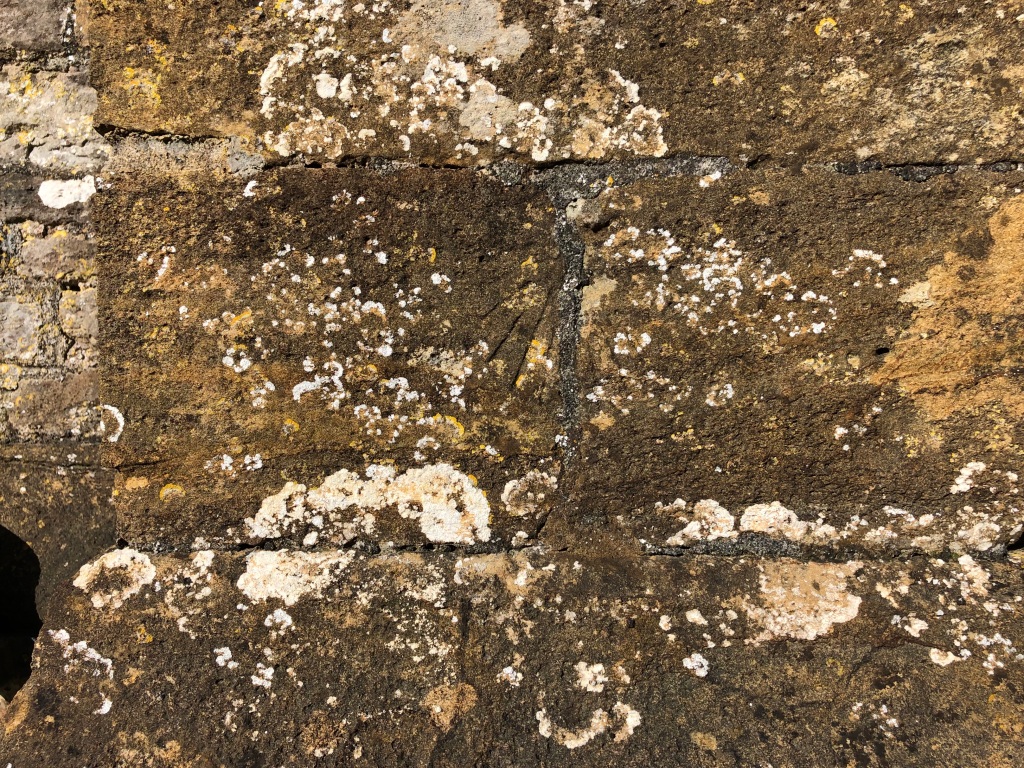
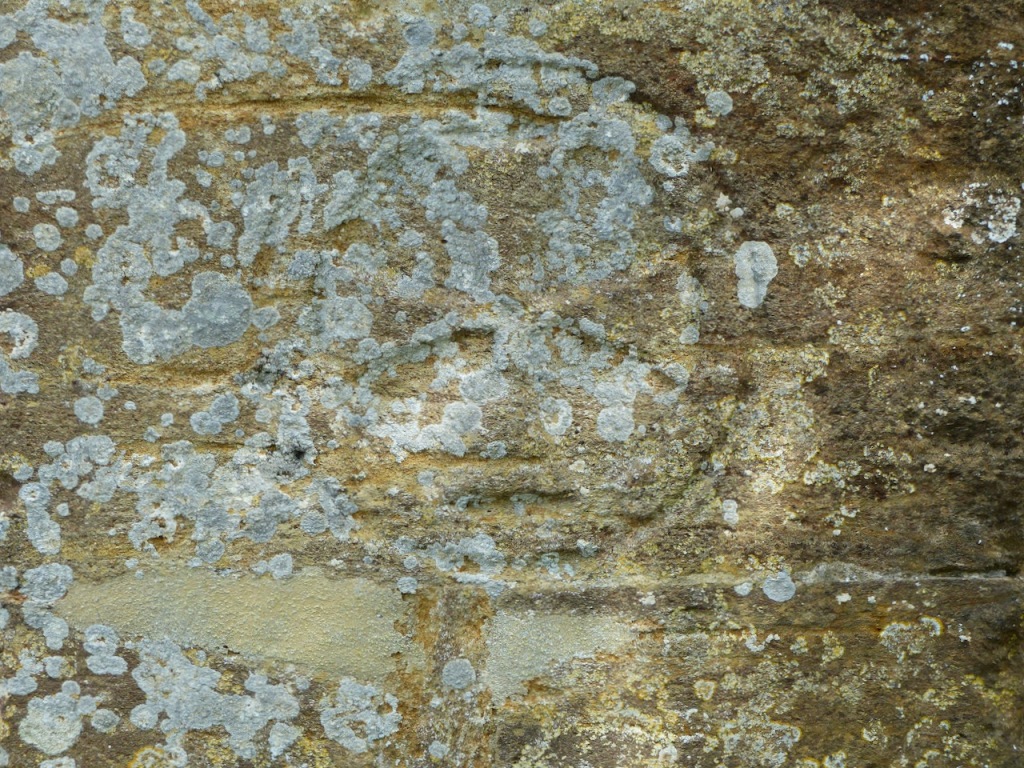
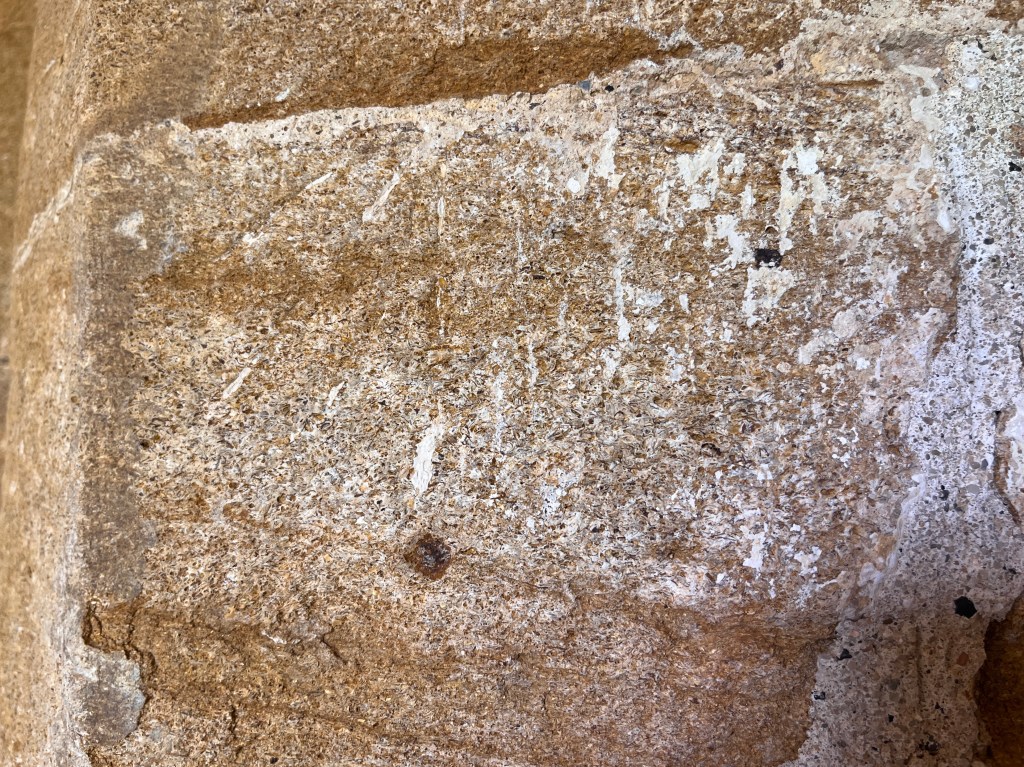
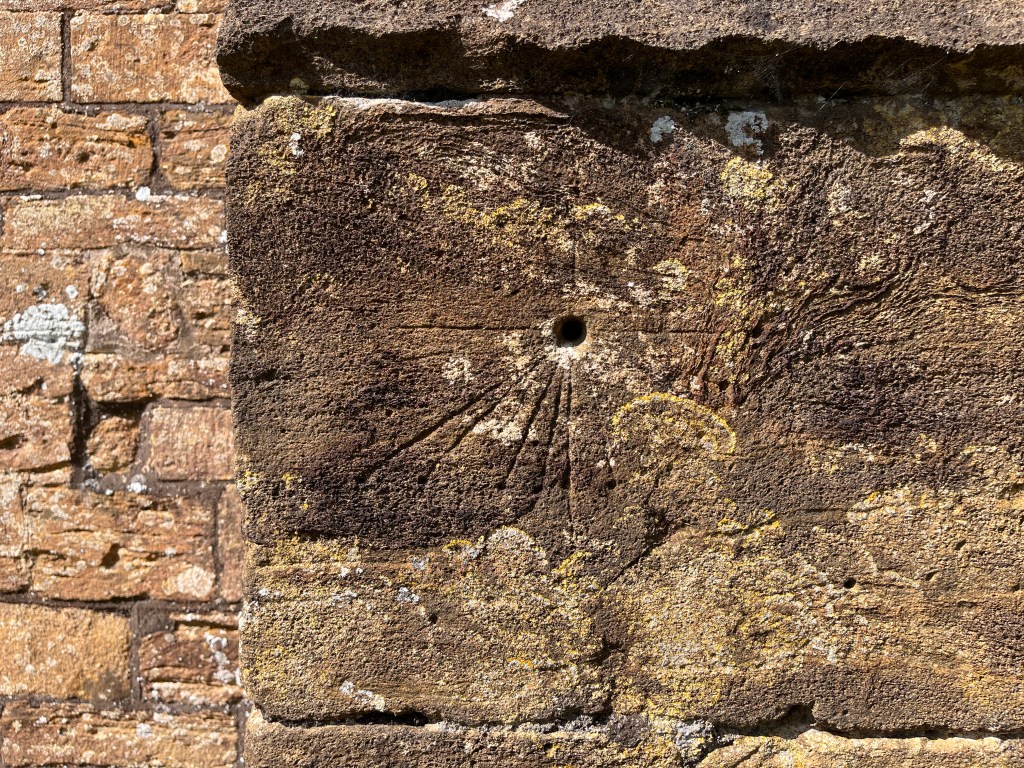
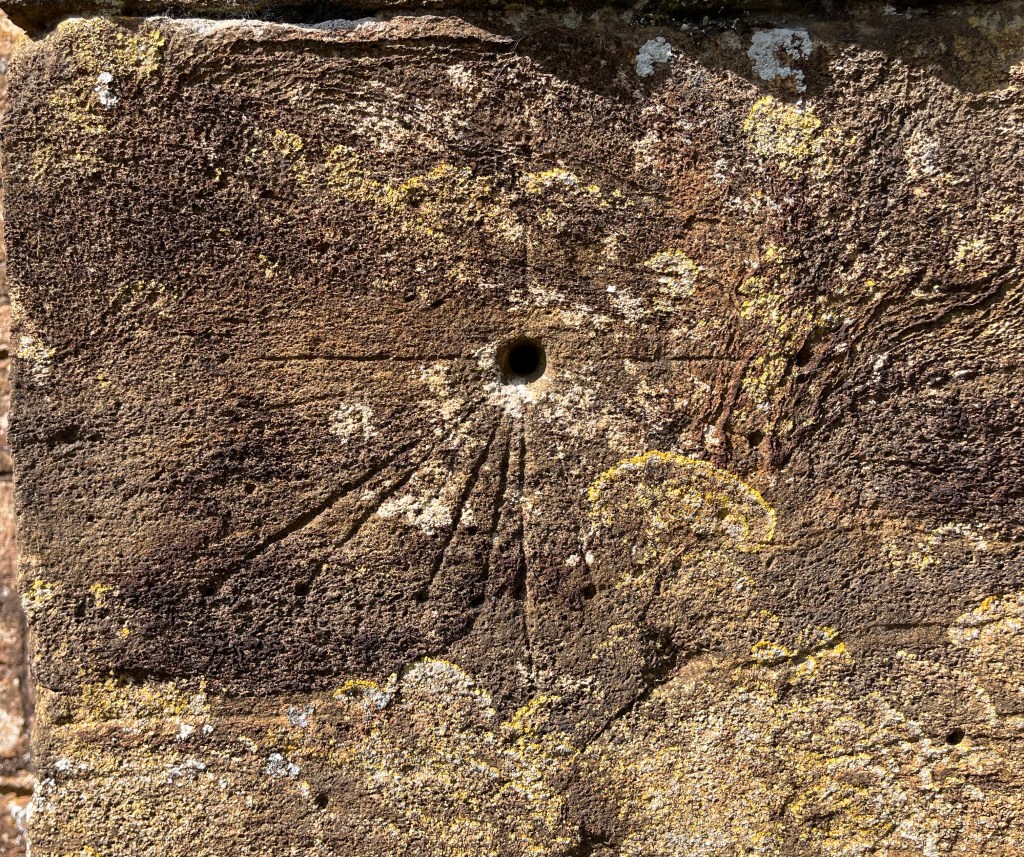
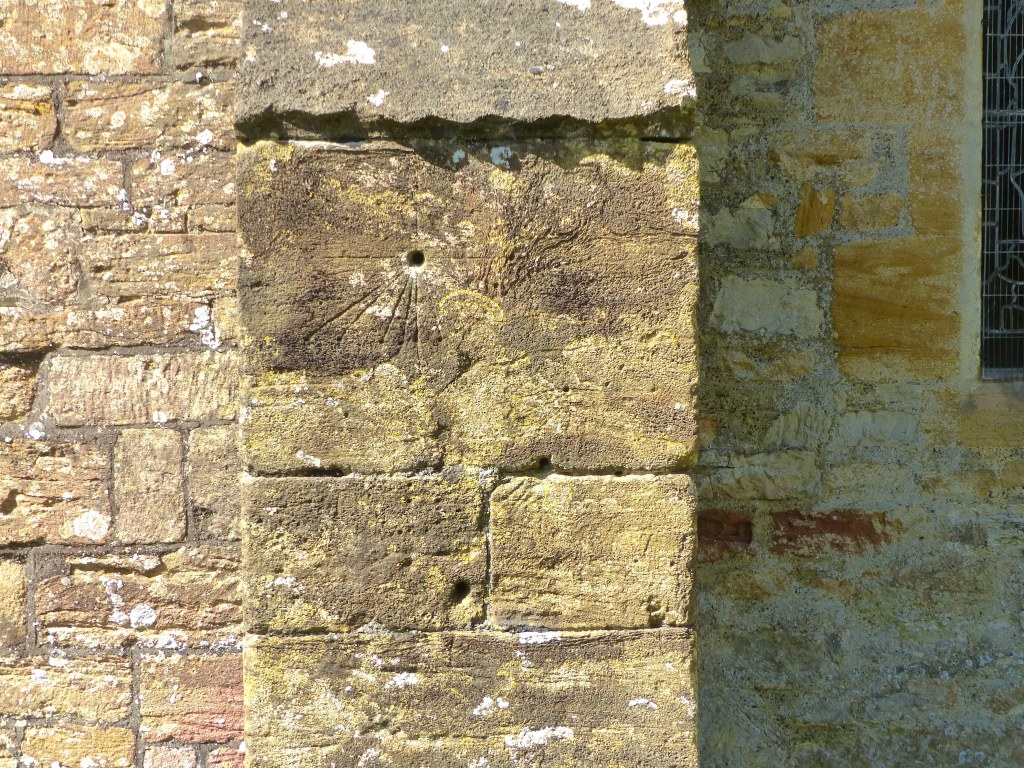
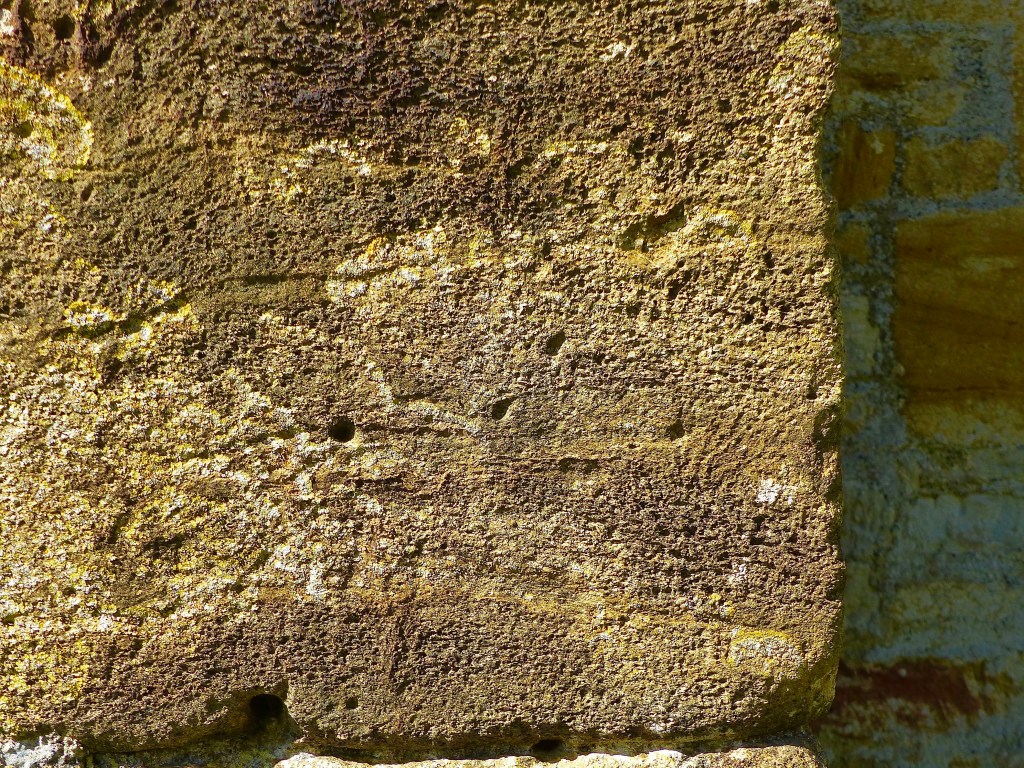
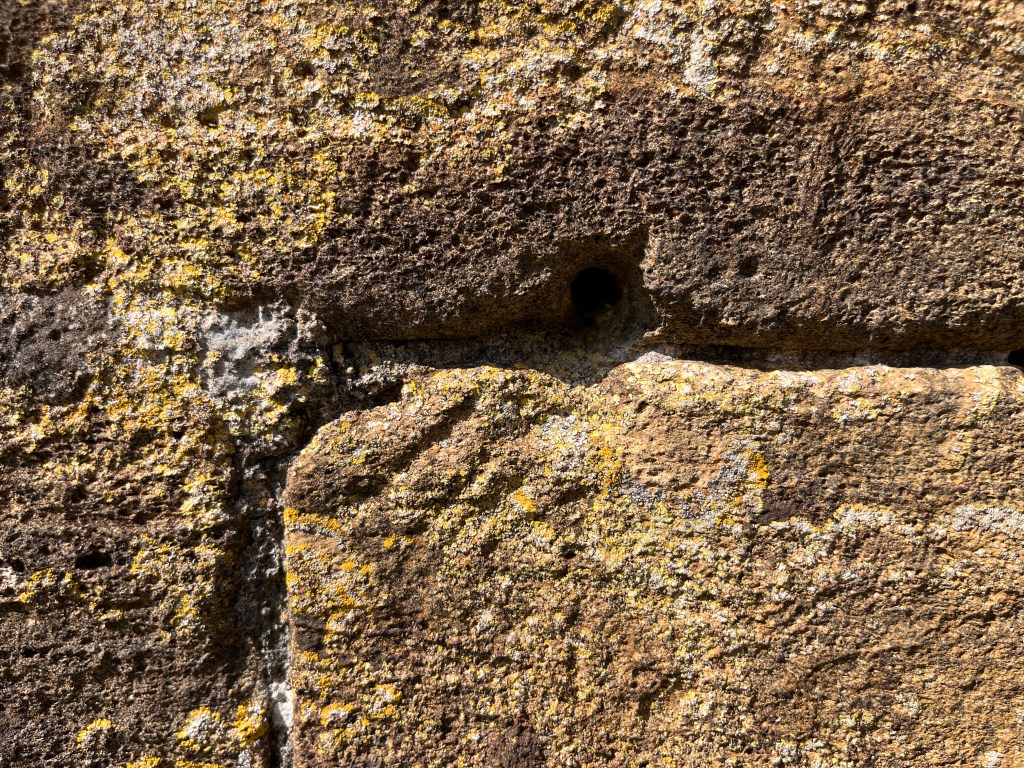
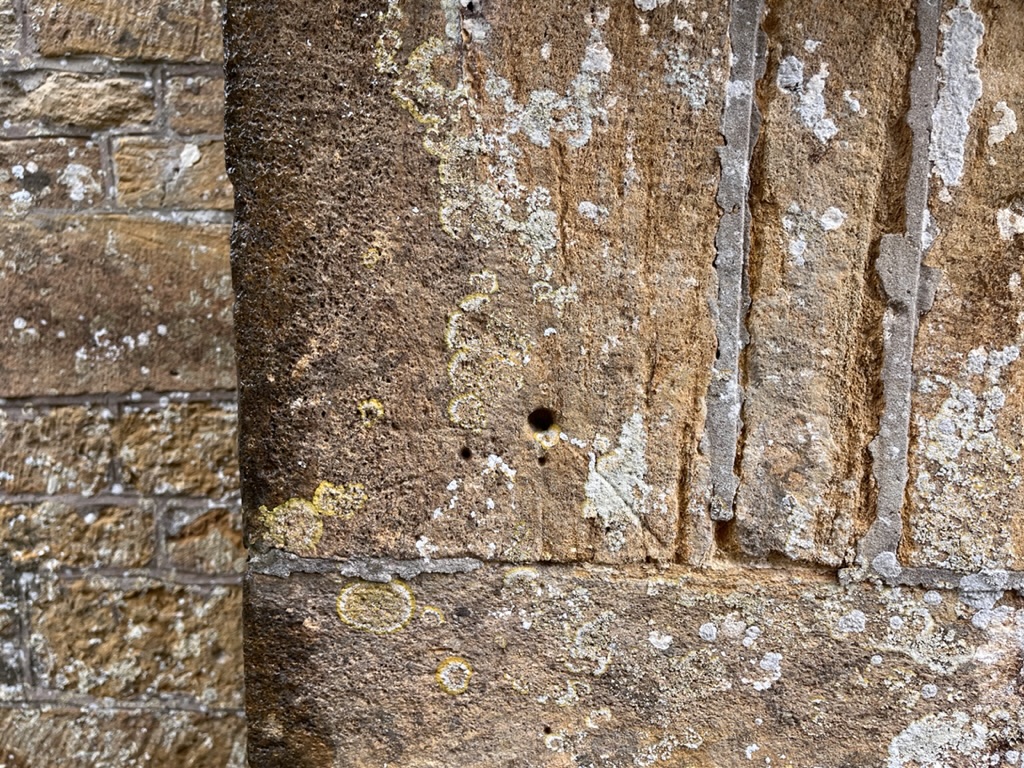
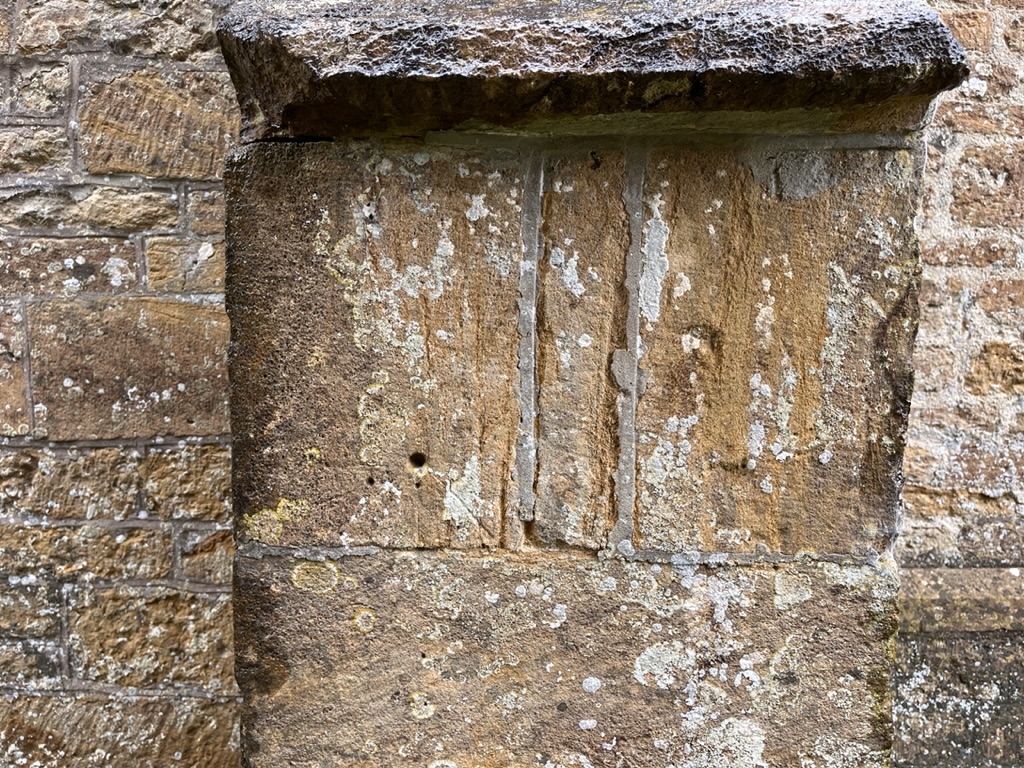
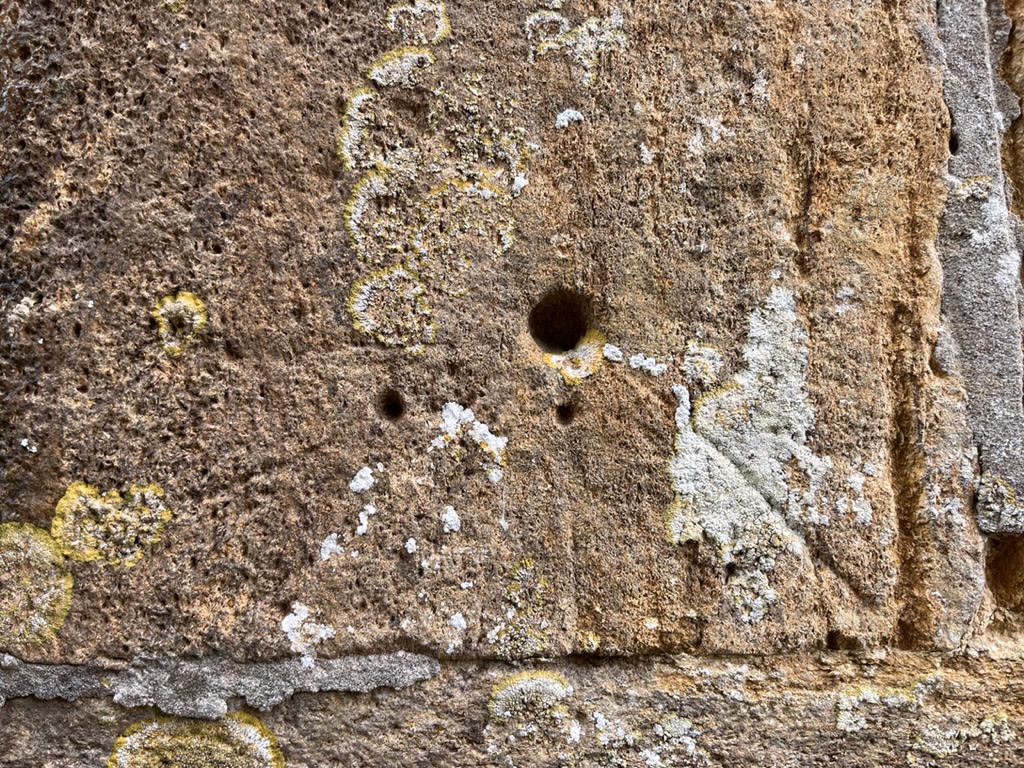
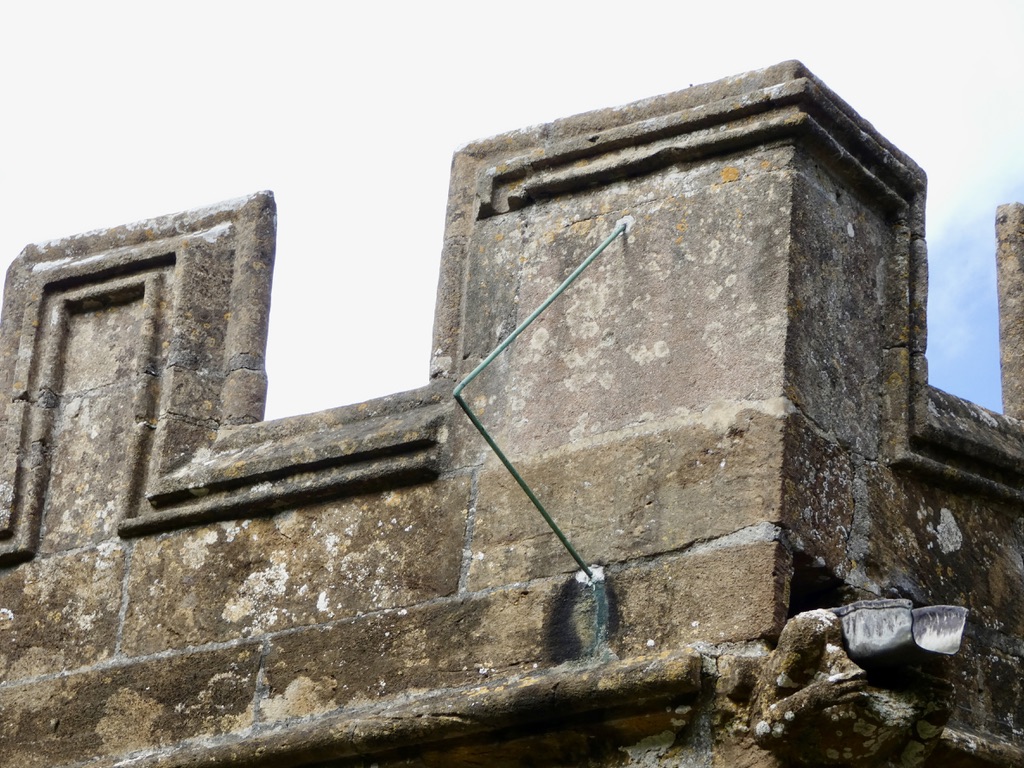
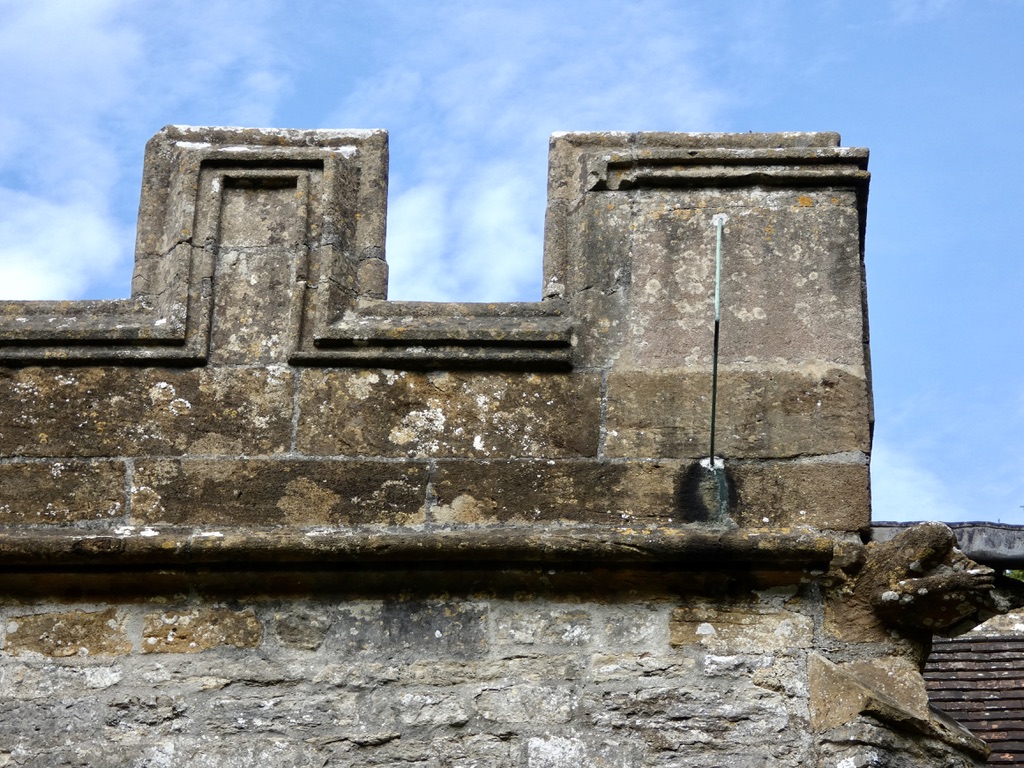
I also photographed the Vertical Dial for BSS records. It is located on the end merlon of the parapet, easily visible. It has a simple, almost square face. The plain metal gnomon is fixed into the top of the dial stone, and into the mortar line under the stone below it.
There are other unmarked (no lines, pocks, numerals) dials in the S Somerset / W Dorset region and I though this was one. However, later examining the main photograph in the gallery below, I detected 2 faint lines in U L quadrant that seem deliberately cut. There’s a ghost of a line on the opposite side. So possibly this was once a conventionally marked dial that has slowly and very evenly eroded.
It is hard to date. The dial stone differs from the ones around it. At a guess, it was added C19, perhaps when other work was carried out (eg adding the N transept). BHO notes that in 1827 the church was ‘repaired and beautified’. Perhaps adding the dial was part of that process.
St Nicholas . Dinnington . Som. (Geo / Sarah Smith )
ST NICHOLAS . DINNINGTON . SOMERSET
GRADE II † Established C12, first recorded 1207; mostly C15; restoration 1863. C13 (?) font. Originally the chapelry to nearby Seavington St Mary. Very pretty, both the building and the dial. 5m NW of Crewkerne. 50.9113 / -2.8505 / ST403127
DIAL
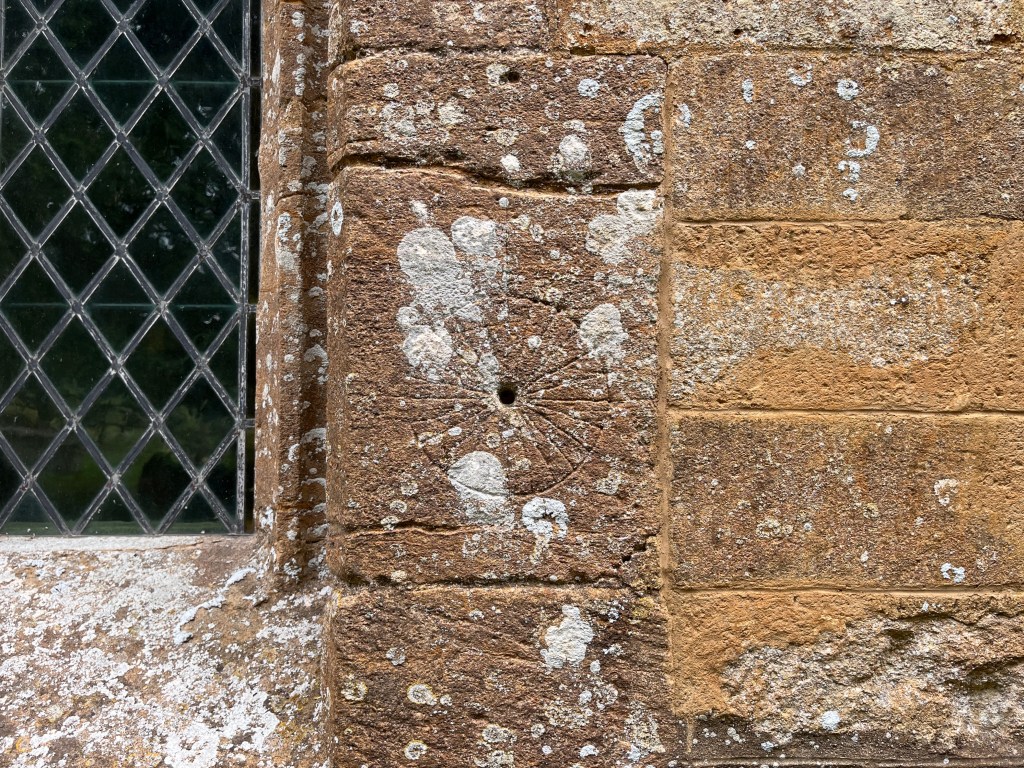
St Nicholas . Dinnington . Som. – Scratch Dial
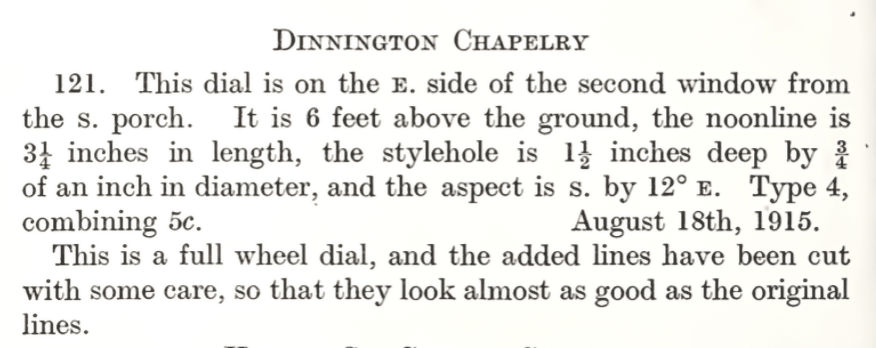
DEH visited in August 1915 and added a note to his often largely measurement-based record.
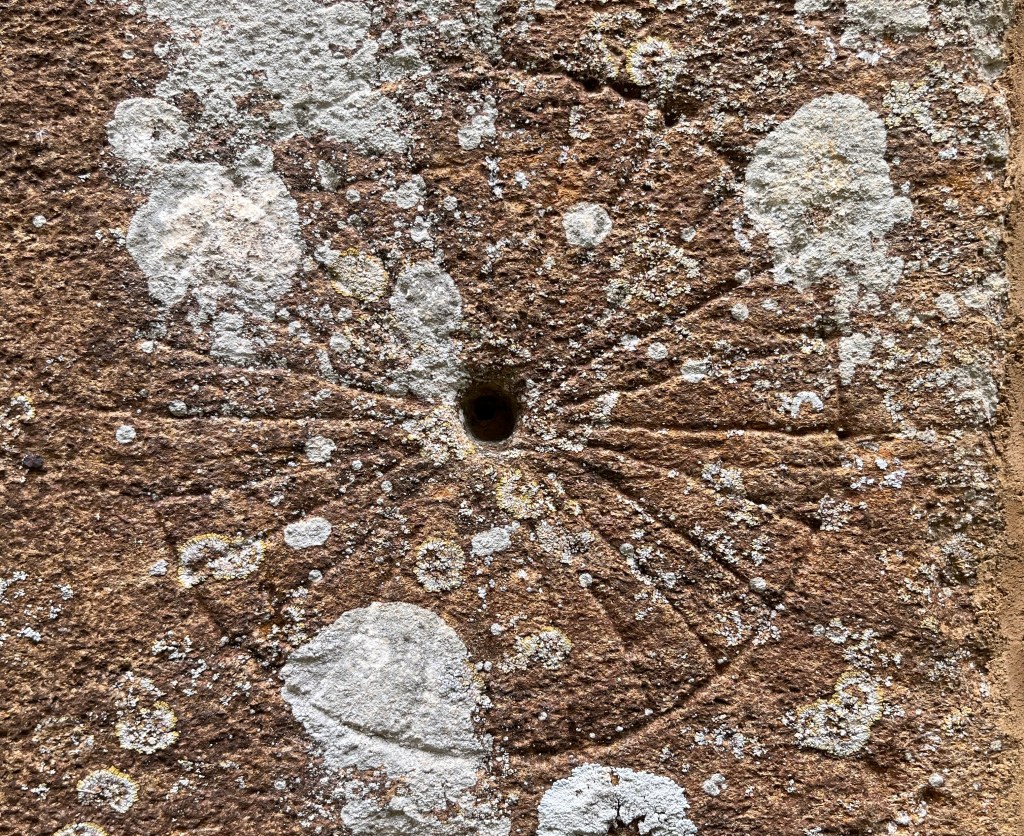
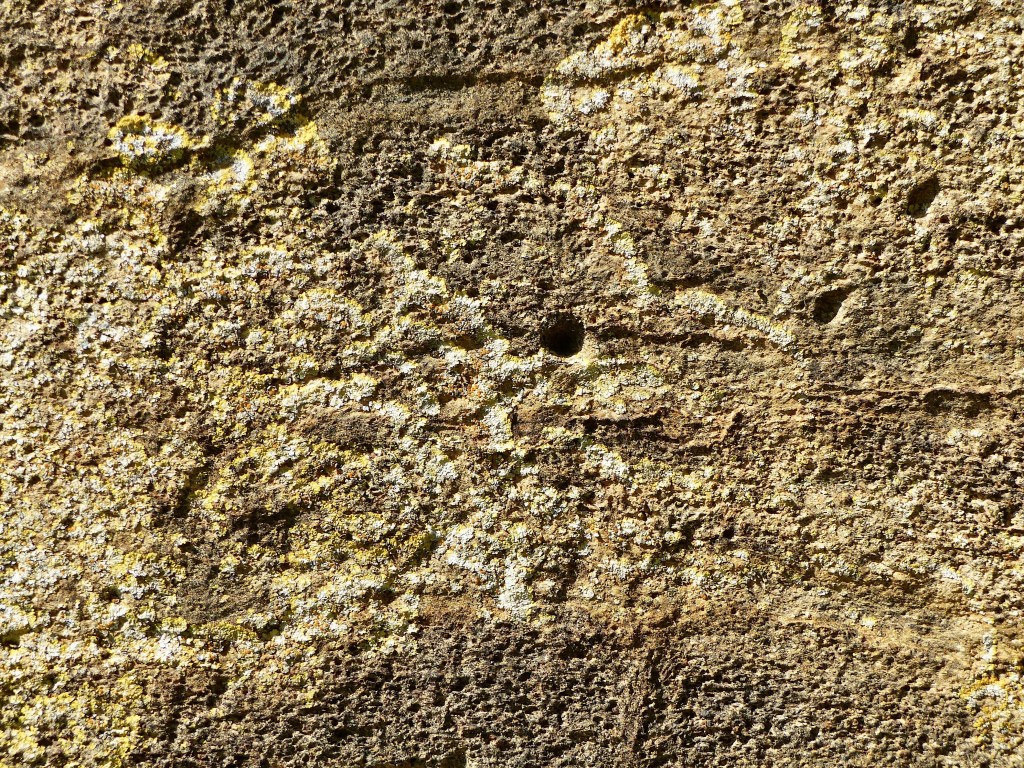
There is a full complement of 24 lines, with areas of erosion, radiating from the gnomon hole in the centre of the dial stone. I am not clear which added lines DEH refers to. I infer that the dial may have been a hemisphere marking dawn to dusk only from the horizontal 6-to-6 lines. Then perhaps for reasons of aesthetics / symmetry an upper hemisphere was cut to match it.
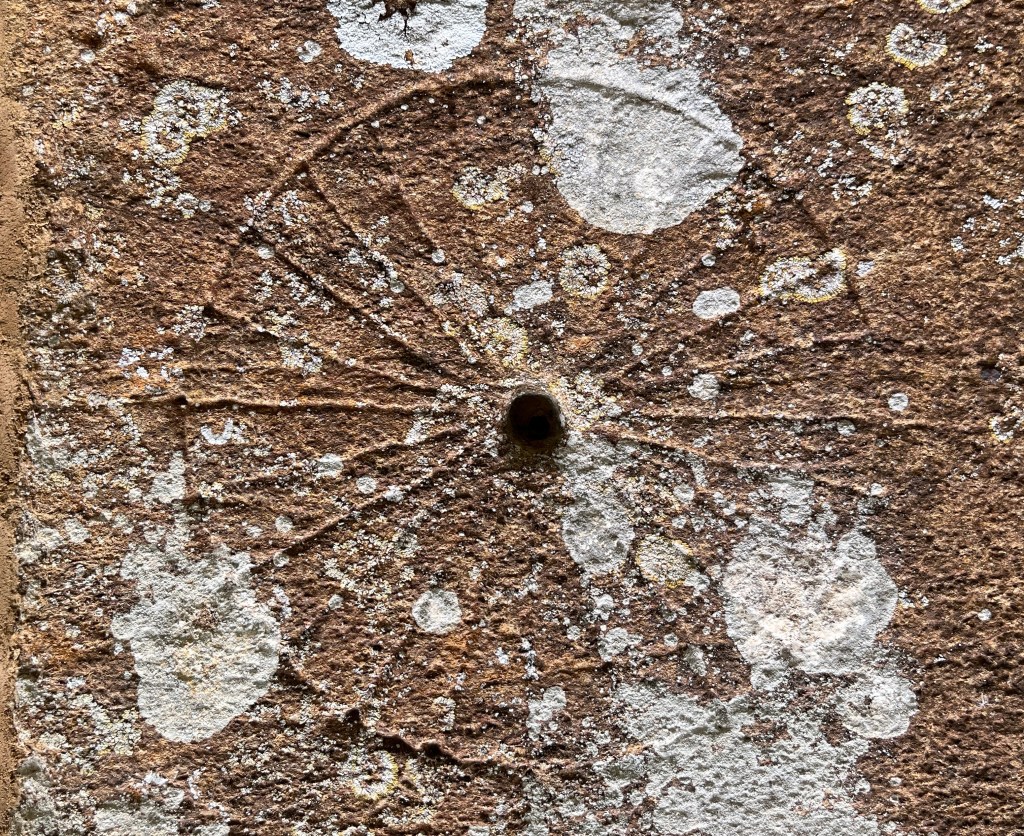
St Nicholas . Dinnington . Som. – Scratch Dial and 180º rotation
There’s another conundrum concerning the 4 terminal pocks in UR quadrant (above). If the dial is in its original position (L), they would have been useless and indeed pointless. But if the dial stone was at some stage at 90º or (more likely and convincingly) 180º from its present position, they would be effective as daytime Mass markers. In the rotated image (R), the pocks are in the right place to emphasise forenoon Mass.
GSS Category: Scratch Dial; Mass Dial
All photos: Keith Salvesen, except header image Sarah Smith / Geo /
DEDICATION † ST ANDREW . Parish church. Late C13, consecrated 1312, completed C15, restoration from C19. A ‘major church’PEV. A good place to find out more is the RCHM entry ST ANDREW YETMINSTER. Carefully compiled church and Parish Archive. 10 Consecration Crosses from medieval to (relatively) modern. An important very early (1683) clock, now in restoration (see below).
LISTING † Grade 1
LOCATION † 5 miles SW of Sherborne, / SE of Yeovil. Noteworthy village easily accessed. Fine vernacular Ham stone buildings give the feel of an earlier era. Many listed buildings. Village also highly regarded by PEV. Station in village (not, as elsewhere locally, a wayside halt). Etiminstre in DB 50.8939 / -2.578 / ST594106
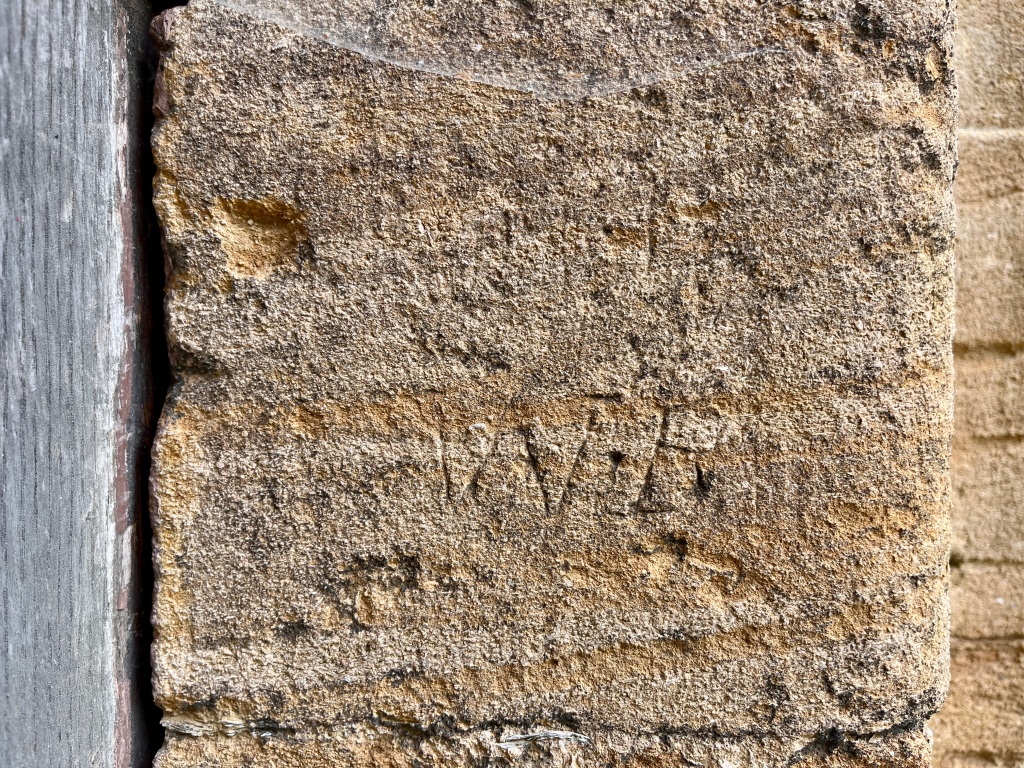
DIALS † Two dials on the buttress E. of S door, both C15
DIAL 1
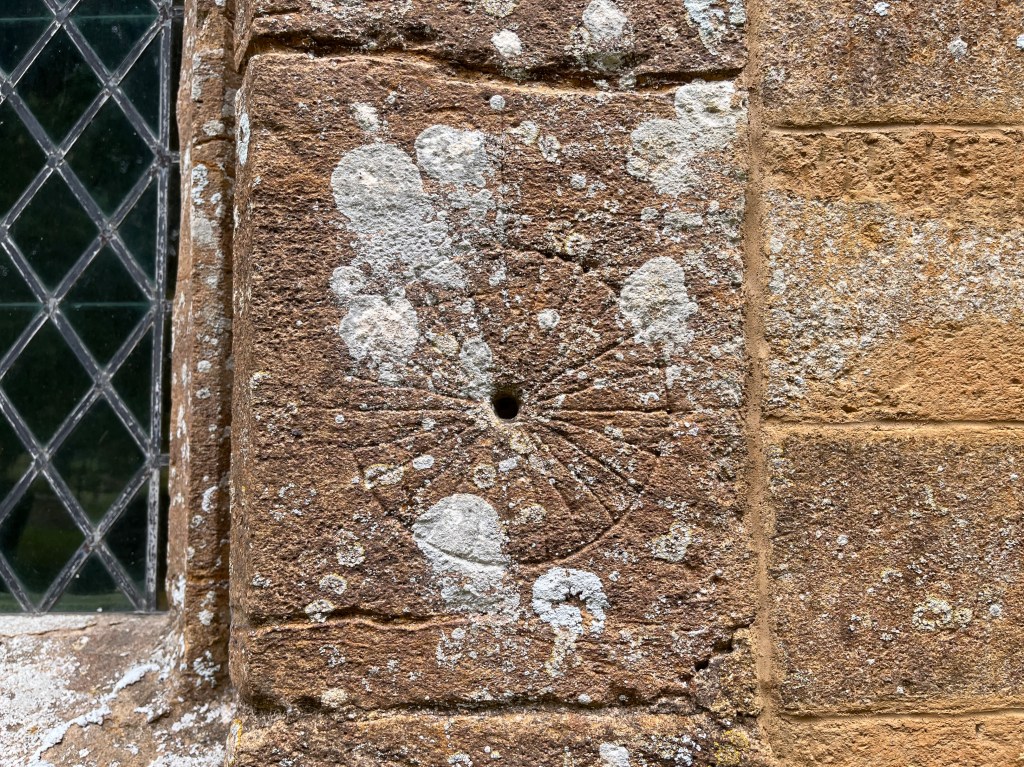
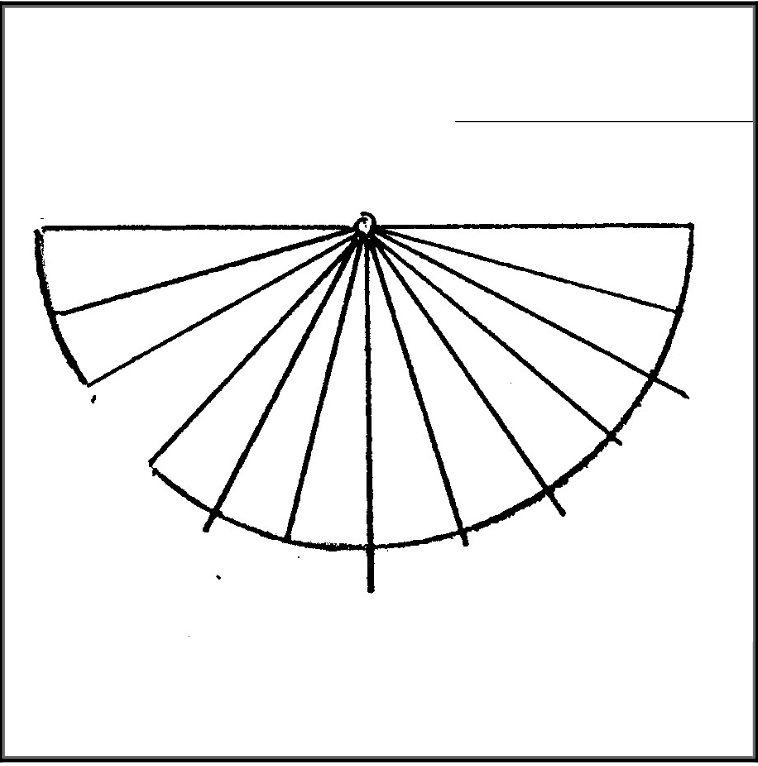
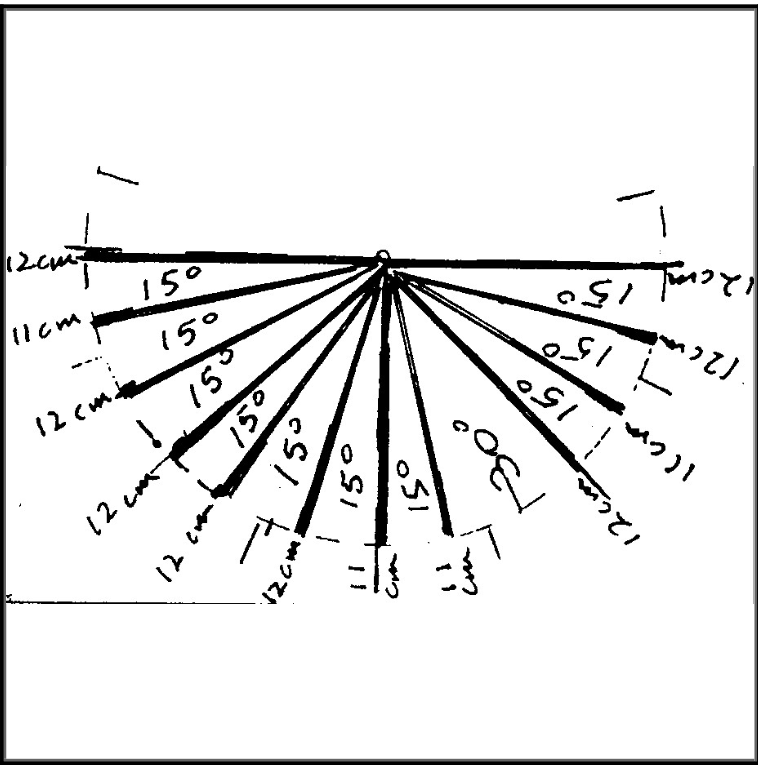
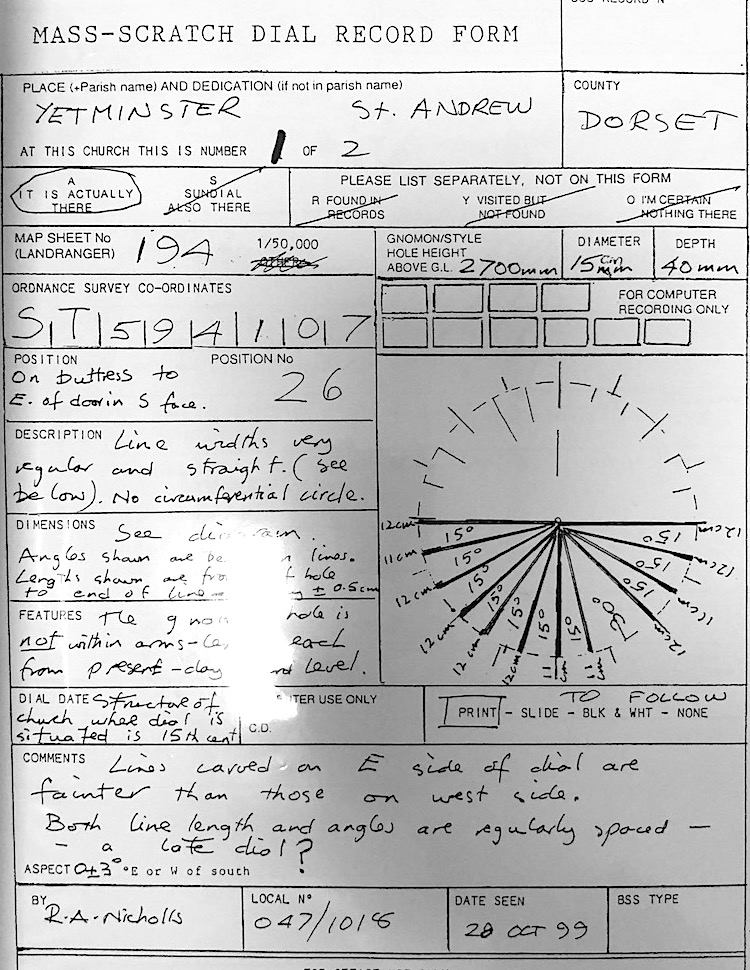
A semicircle dial with 13 lines (including the horizontal). BSS notes no circumferential circle. The noon line is extended, and 4 others end slightly beyond the circumference . GLP describes it as very neat and accurately marked. Both dials have been thoroughly examined – clips of the original records from the excellent church archive are below.
St Andrew . Yetminster . Dorset – Scratch Dial 1
St Andrew . Yetminster . Dorset – Scratch Dial 1St Andrew . Yetminster . Dorset – Scratch Dial 1
DIAL 2
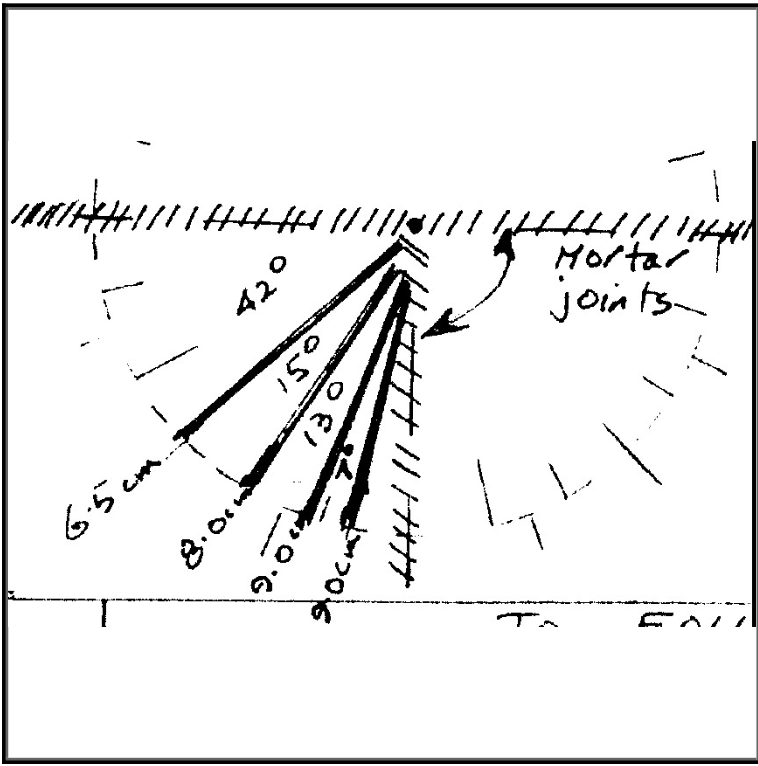
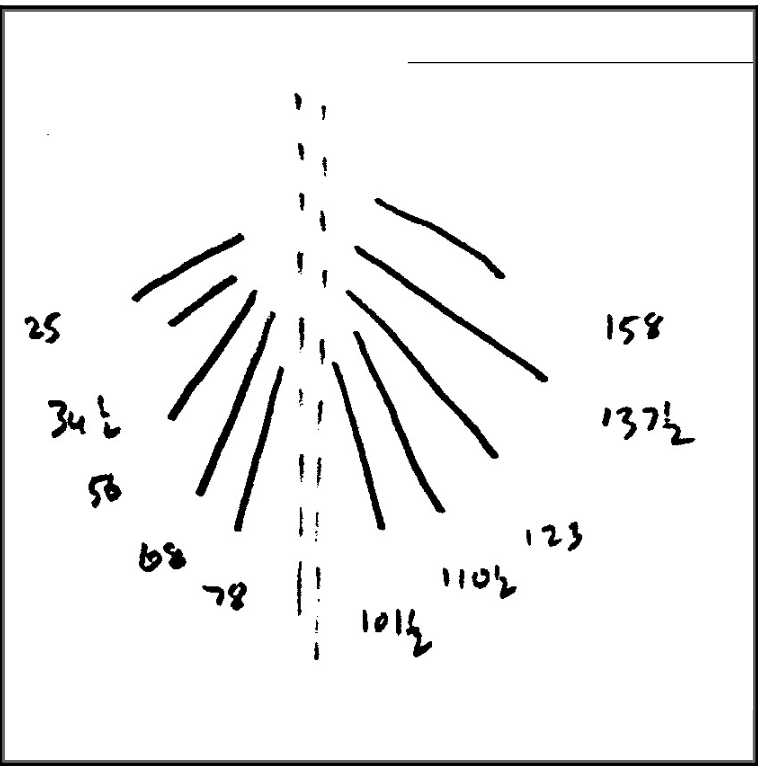
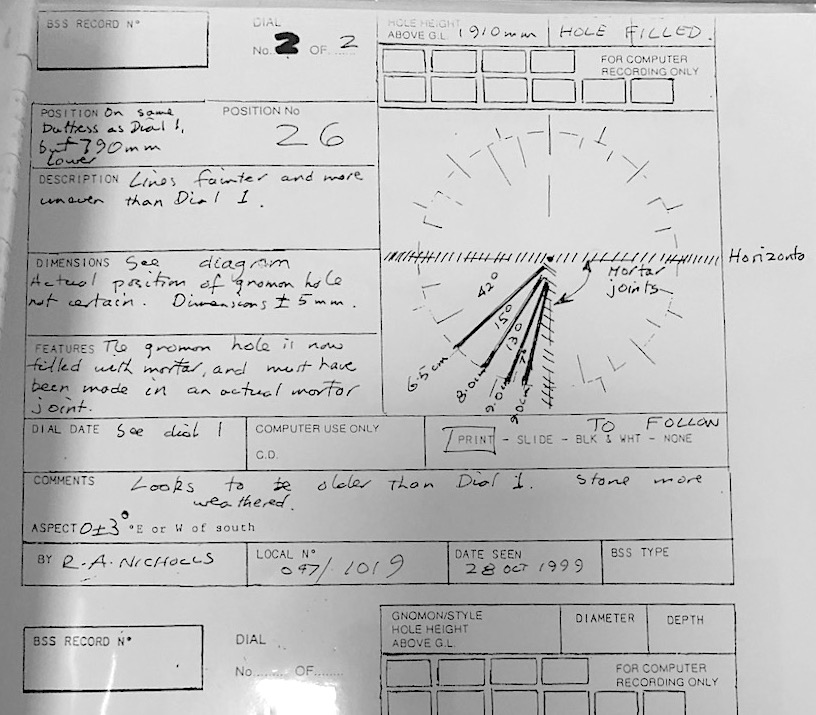
An unusual rather drooping design, explained below. Gnomon hole in the mortar line. The dial is split across 2 stones by a vertical mortar line. There are 11 lines, if one includes the mortar joint as the vertical / noon line. The lines RHS are badly eroded.
GLP noted that this dial is of particular interest as the angle of the lines suggest that it may be an early Scientific Dial. Comparing the lines with the correct angles for the latitude only one of the lines is more than 4º out. A further even more technical conclusion is that to function this dial would have needed a gnomon at an angle of 39º to the wall. This evidences an advance from earlier dials where the gnomon was simply inserted into its hole straight rather than angled.
St Andrew . Yetminster . Dorset – Scratch Dial 2St Andrew . Yetminster . Dorset – Scratch Dial 2
CLOCK † The historic faceless pendulum clock (1683) is being restored at the moment. I am writing the day after the Queen’s death, and by coincidence the clock has a specific significance: The Clock carillon plays the National Anthem at 3-hourly intervals. This dates from 1897 when it was installed by local benefactors for Queen Victoria’s Diamond Jubilee, and is very rare, and possibly unique. For the Platinum Jubilee of HM The Queen this year, the carillon was operated manually to ring out as part of our Jubilee Celebrations.
NOTES † 10 ‘formy’ Consecration Crosses in sunk round panels on external wall-facesBHO (locations specified); C10 Saxon cross shaft fragment; faceless clock of interest; good hunky punks. Links with Robert Boyle (chemistry, founder of the school) and Benjamin Jesty (smallpox); quite a lot of external graffiti – initials, dates and some Marian (‘witch’) marks
St Andrew . Yetminster . Dorset – Hunky PunksSt Andrew . Yetminster . Dorset – Consecration Crosses
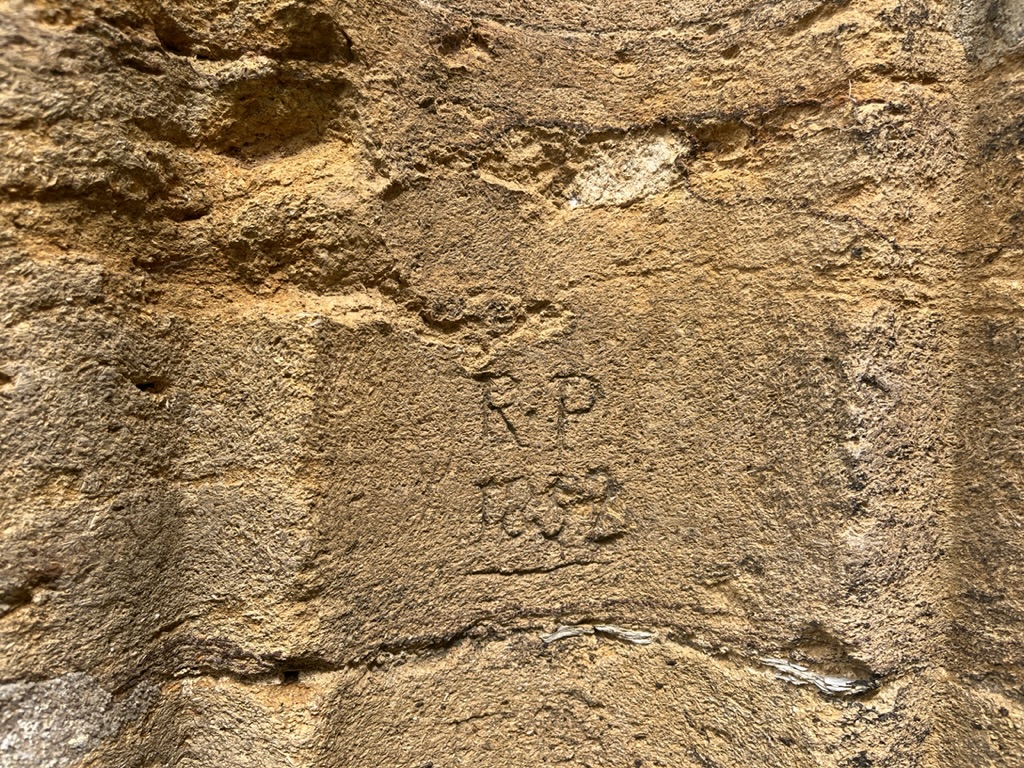
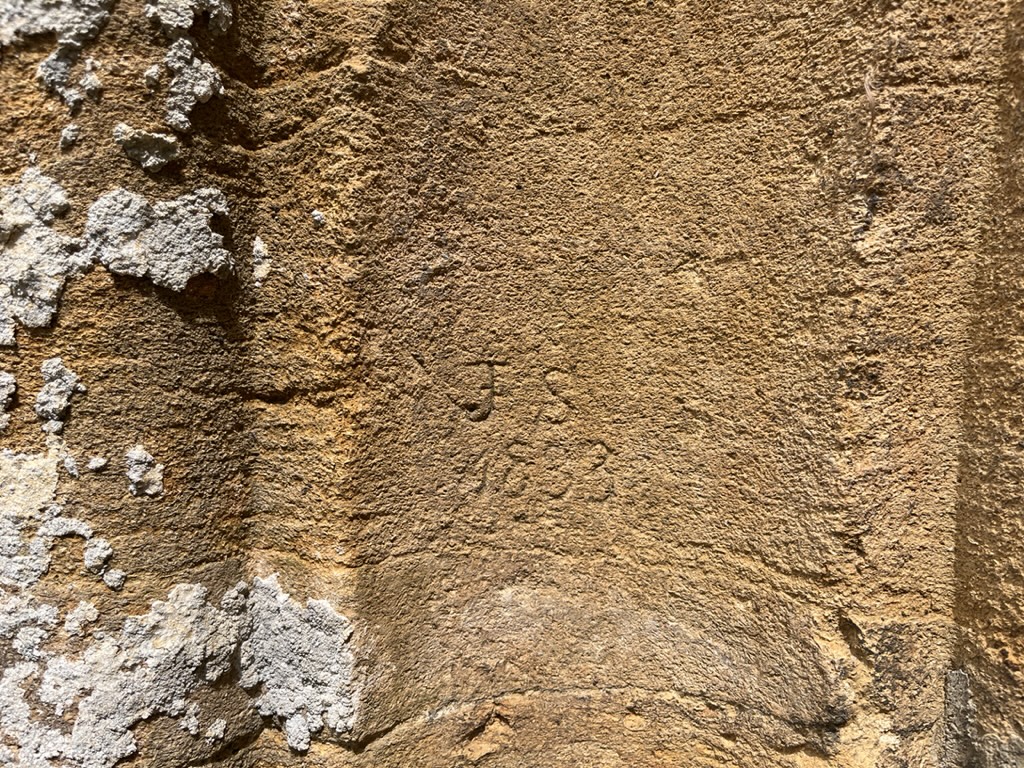
St Andrew . Yetminster . Dorset – Graffiti and a Marian (ritual protection) mark. The 3 initialled and dated marks are likely to be cut by masons who did work on the church in the 1830s (cf Melbury Osmond)
St Andrew Yetminster – the detailed BSS records for the scratch dials
GRADE II* † C13, C14, C15, some C19 restoration. A charming church, with its battlemented parapet and delightful bell turret. Several churches in the area have similar turrets eg Brympton D’Evercy. 5m NW of Yeovil. 50.9723 / -2.6781 / ST524194
DIALS
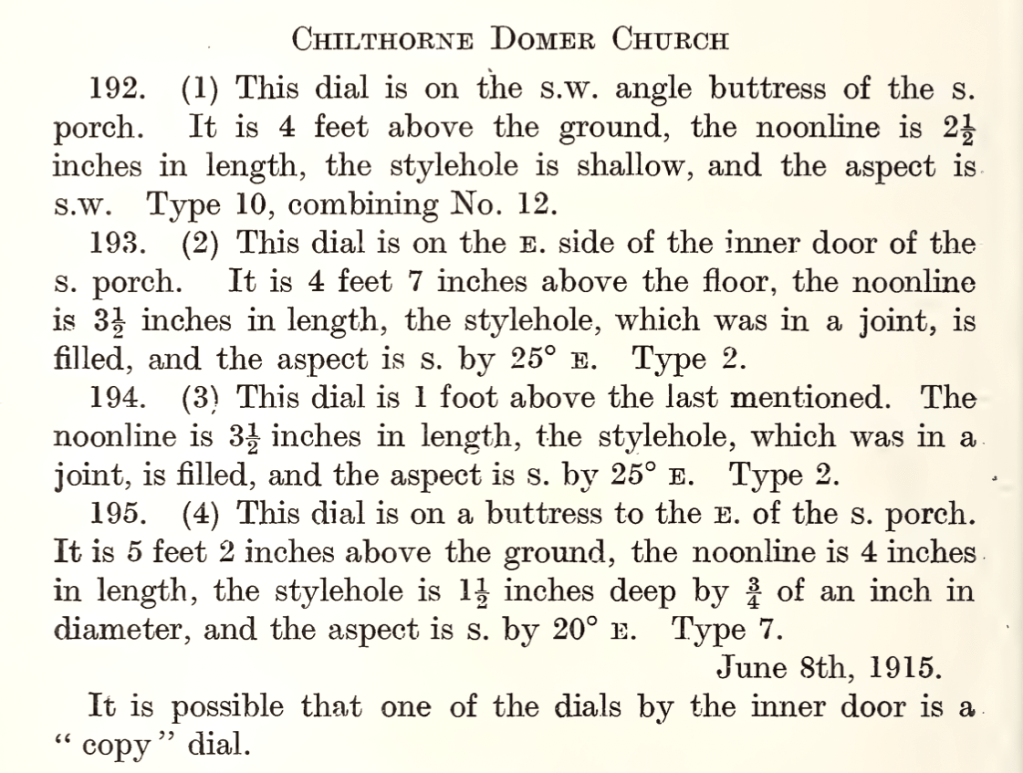
DEH visited St Mary in 1915 and recorded 4 dials (1 – 4 below). 2 of these are within the porch on the R jamb of the original doorway. There are at least 2 other certain dials and a couple of less convincing candidates
DIAL 1
St Mary . Chilthorne Domer – Dial 1
DIAL 2
St Mary . Chilthorne Domer – Dial 2(inside the porch)
DIAL 3
St Mary . Chilthorne Domer – Dial 3(inside the porch)
DIAL 4
St Mary . Chilthorne Domer – Dial 4 (Dials 6 and 7 are on the same buttress, below R)
UNRECORDED / PLAUSIBLE DIALS
DIAL 5
Located on the R jamb of the window E of the porch
St Mary . Chilthorne Domer – Dial 5
DIALS 6 & 7
Located together on the buttress E of the porch below R of Dial 4
St Mary . Chilthorne Domer – Dial 6 & 7
DIALS 8 & 9
Two very simple dials in an appropriate place on the porch? Plausible but not definite? Not?
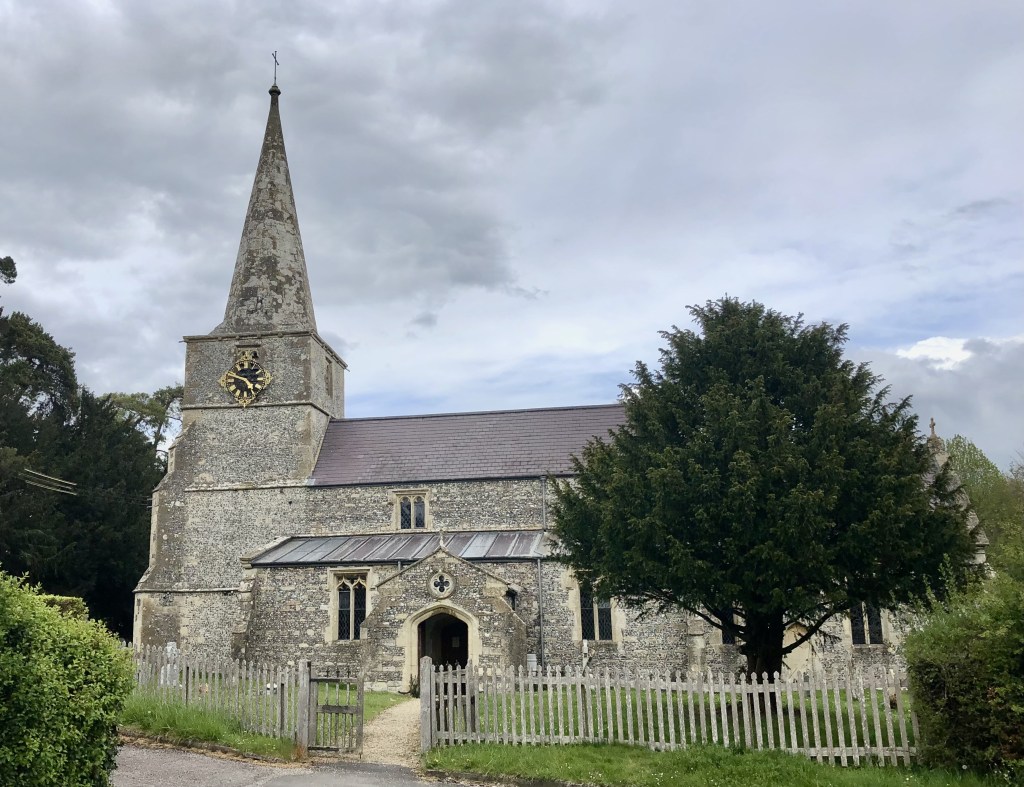
GRADE I † C12, C13, C15; C19 restoration. A pretty church with a 4-stage tower and short steeple, close by the Kennet & Avon canal. No discernible scratch dials though a likely-looking location. A single vertical dial, angled. 7 miles W of Hungerford. 51.3941 / -1.5828 / SU291661
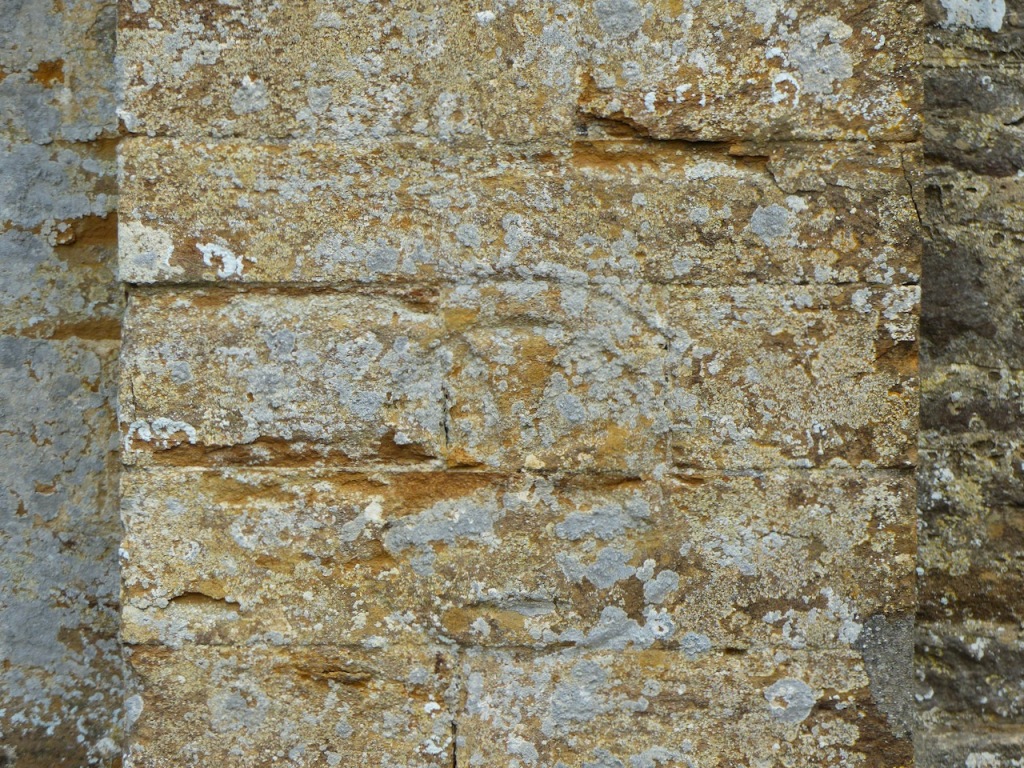
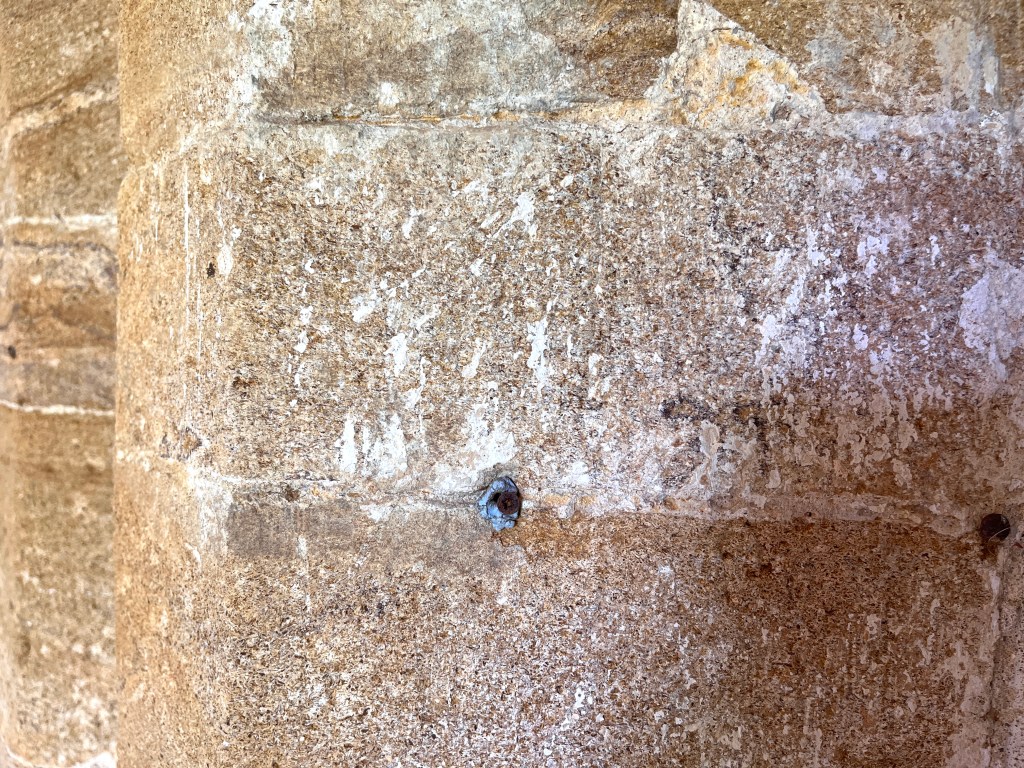
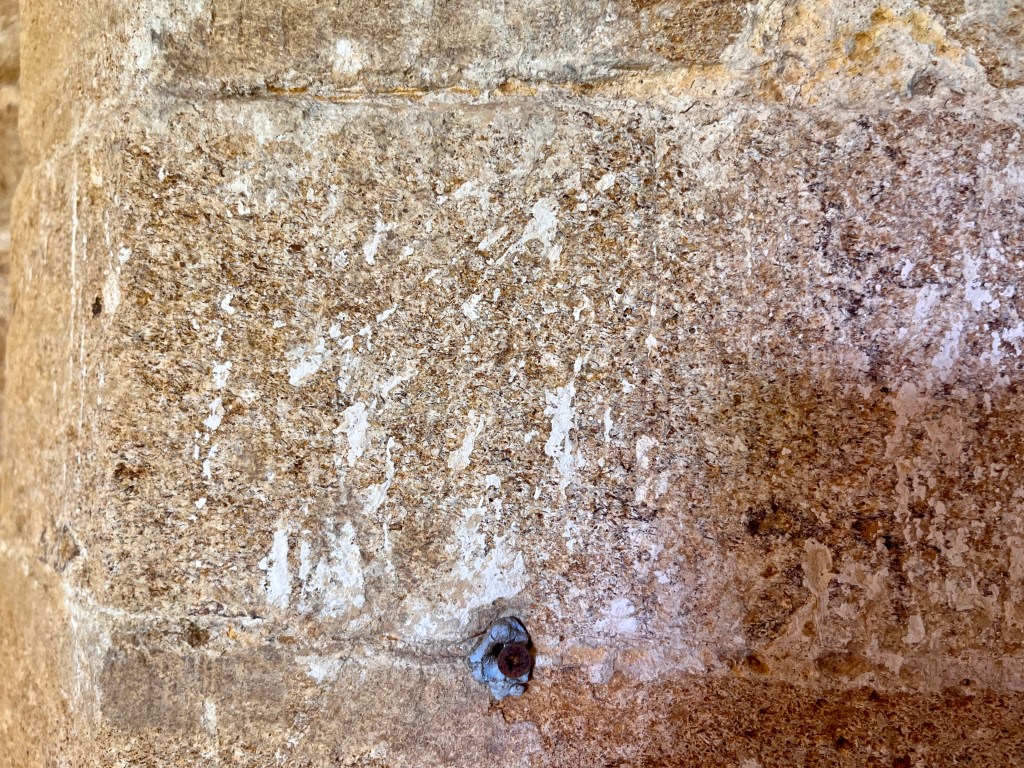
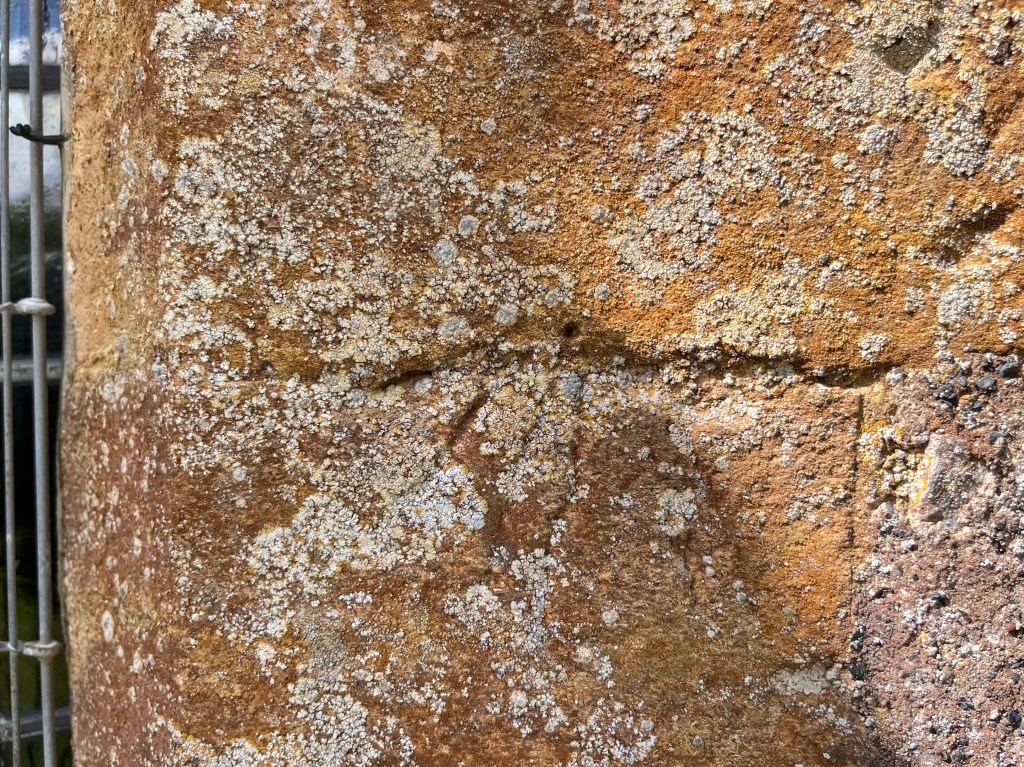
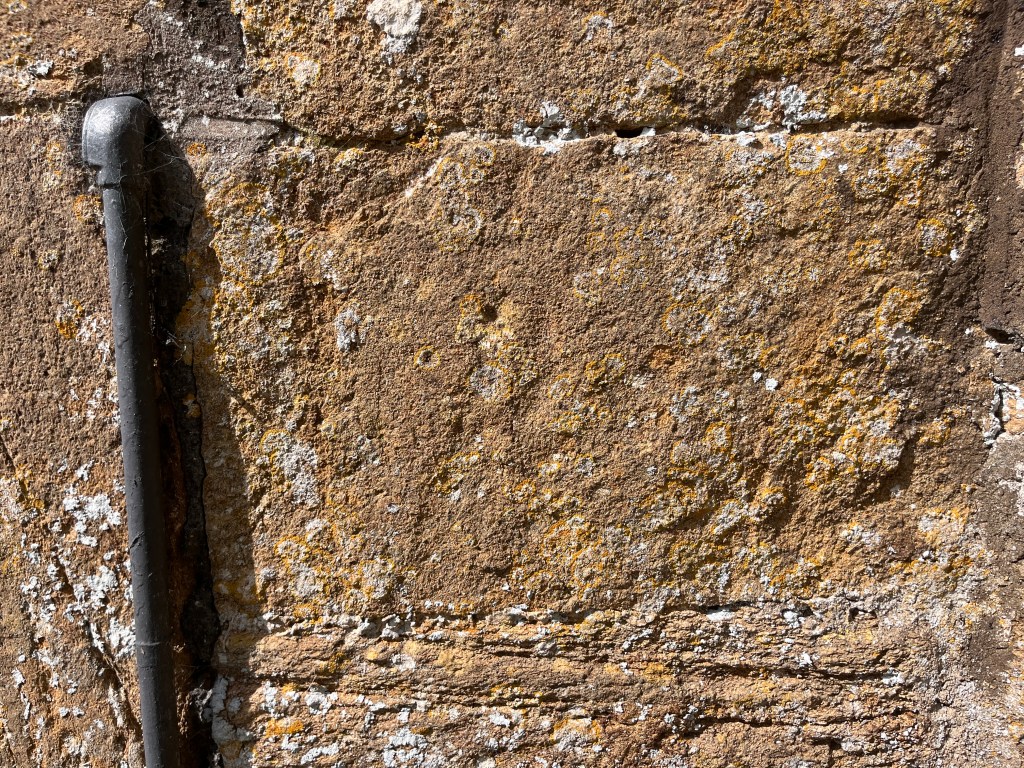
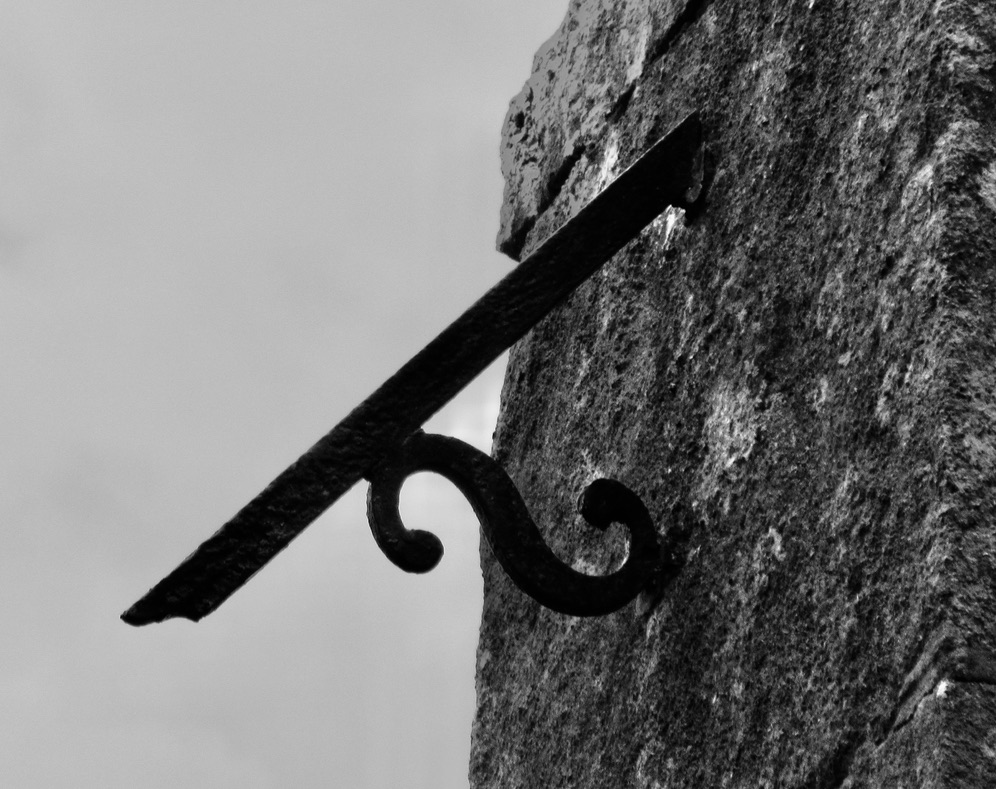
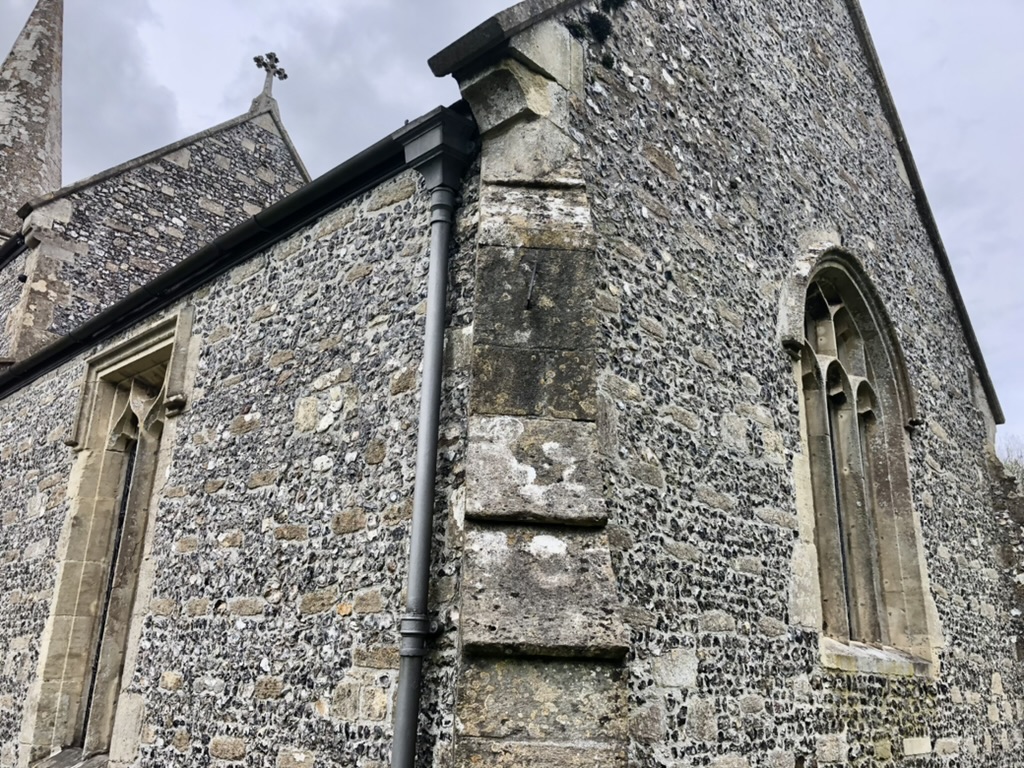
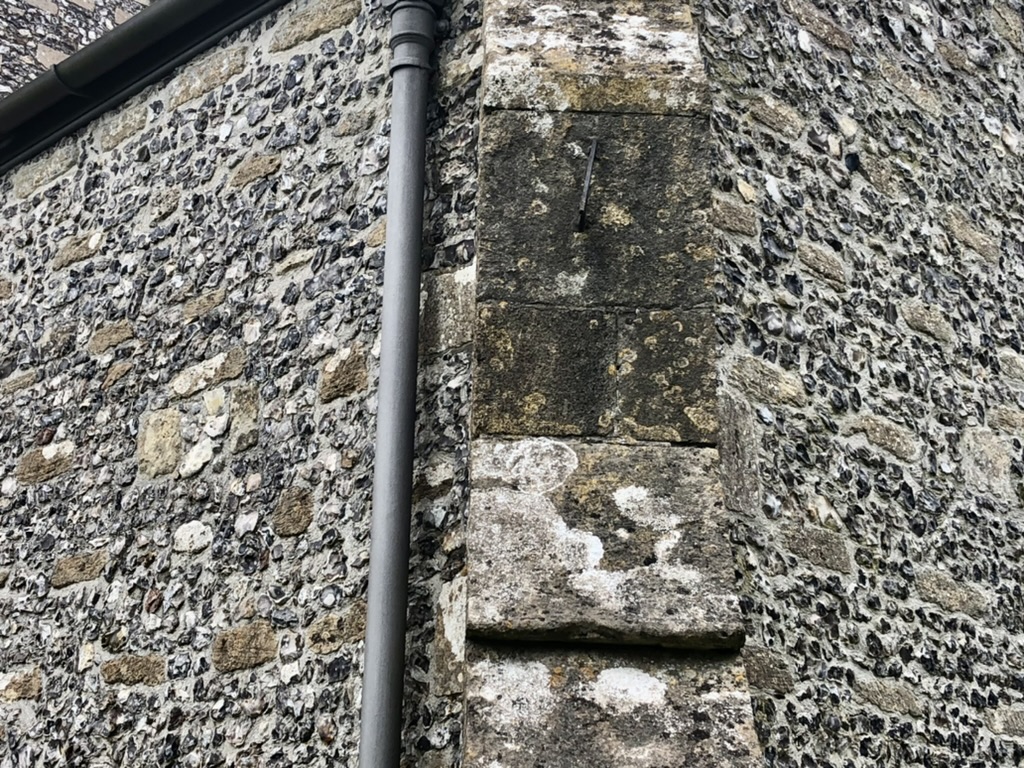
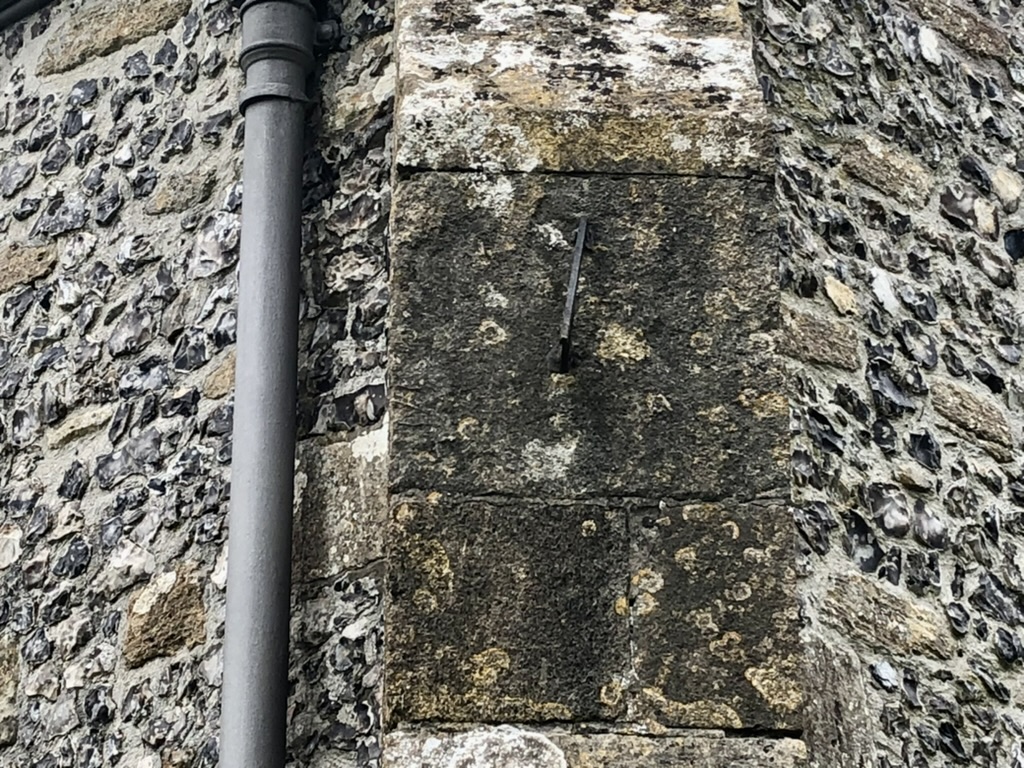
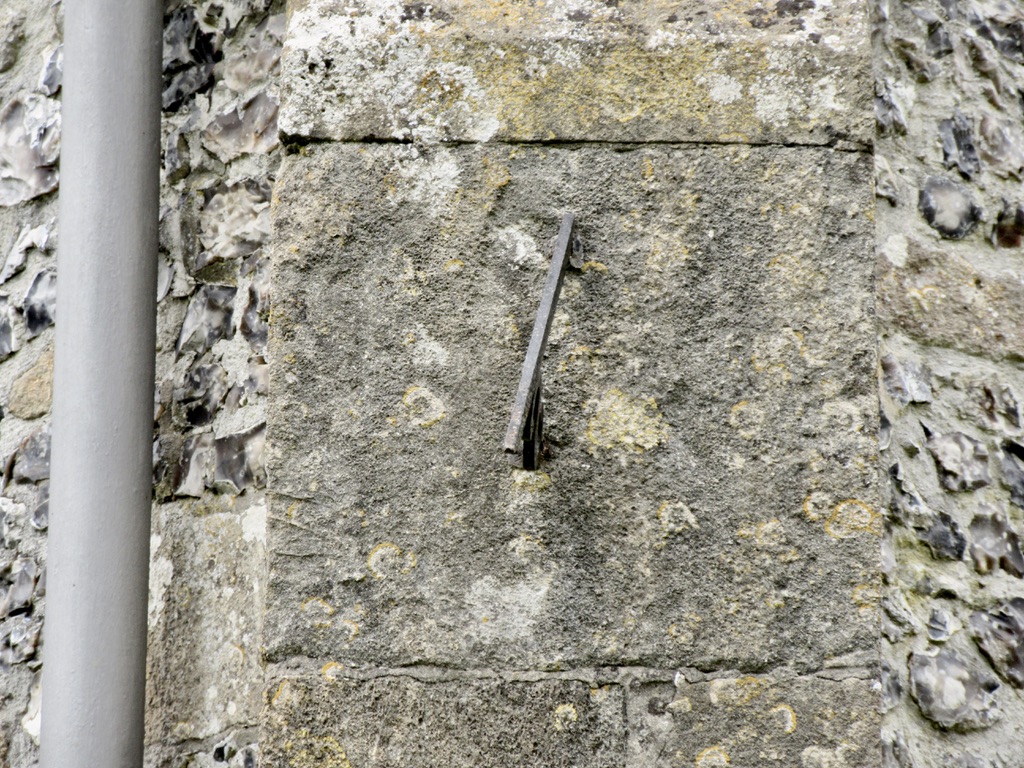
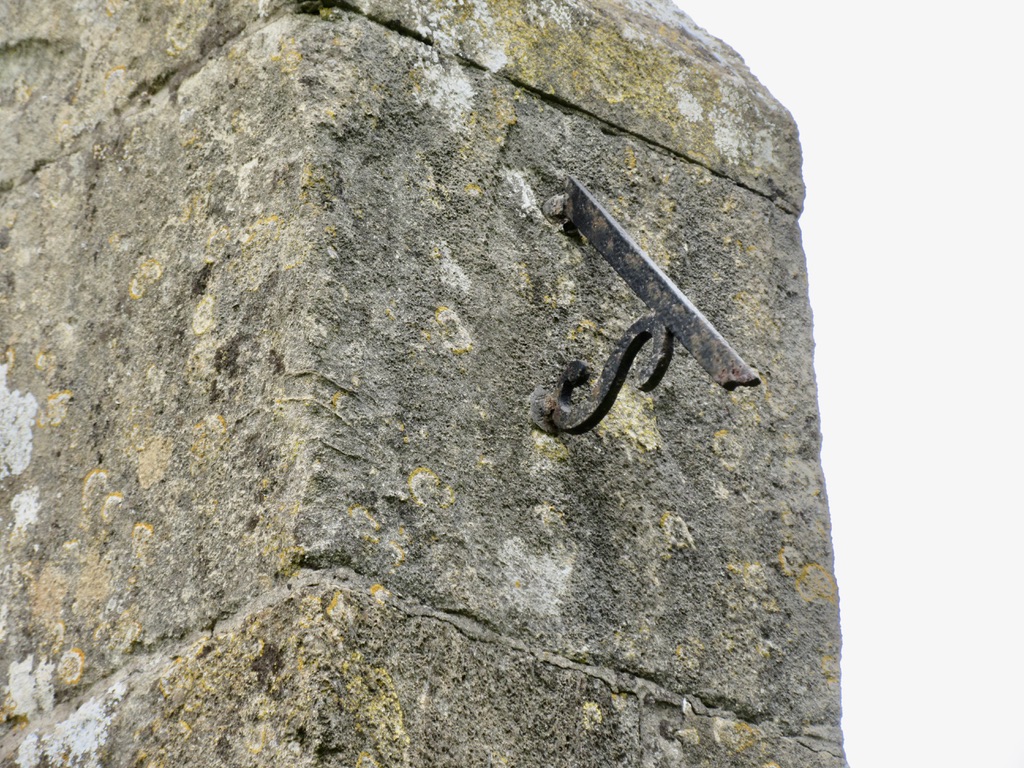
The dial is high up on a SE facing buttress, with an iron gnomon set into the stone. It has an S-shaped support. The face is completely plain, with no evidence of numbers, lines or a frame. Possibly it was originally painted. Hard to date, though the gnomon is plainly not original.
St Michael . Little Bedwyn . Wilts
Using a different camera sheds another light on the dial* and confirms the absence of markings
St Michael . Little Bedwyn . Wilts
*and demonstrates how 2 cameras, used at the same time, tell different stories
St John . Kingstone . Som. Credit: Julie Ann Workman
ST JOHN THE EVANGELIST & ALL SAINTS . KINGSTONE . SOMERSET
GRADE II* † Records from 1291; C14 chancel, porch; C15 tower, nave. A village with a long history, close to the Fosse Way, recorded in DB as Chingestone. 1m SE of Ilminster. 50.9188 / -2.8851 / ST378136
DIAL
St John . Kingstone . Som.
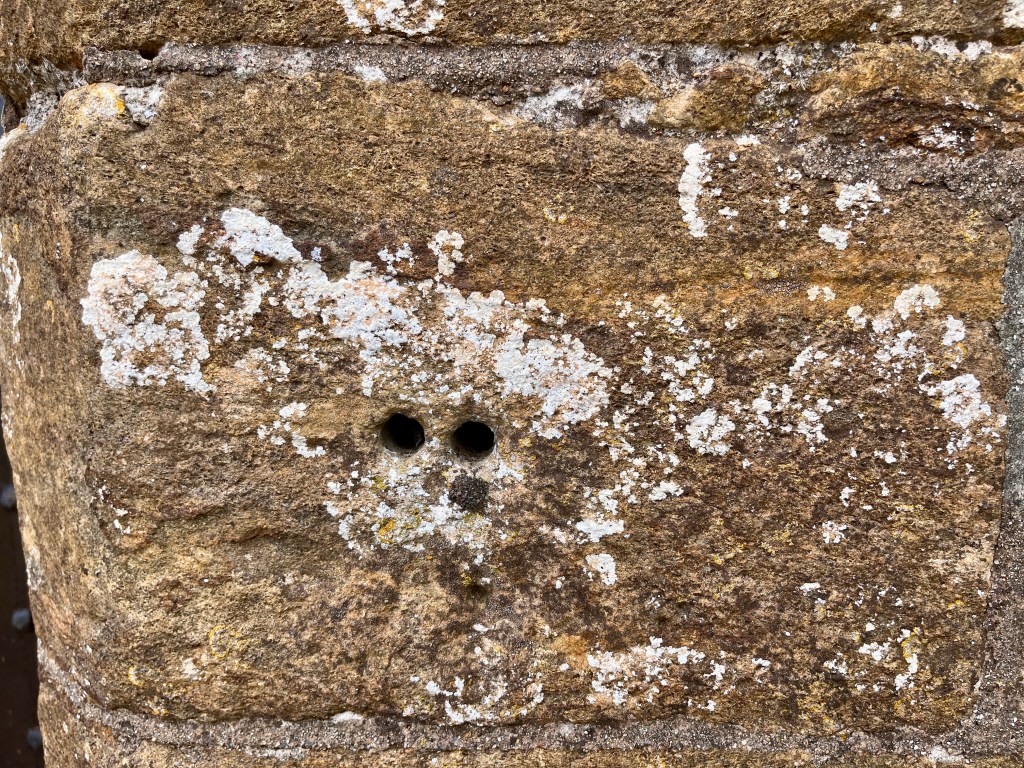
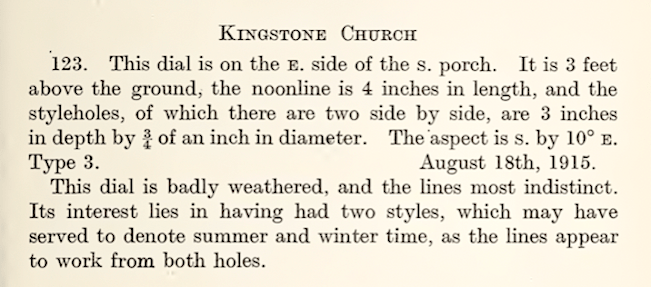
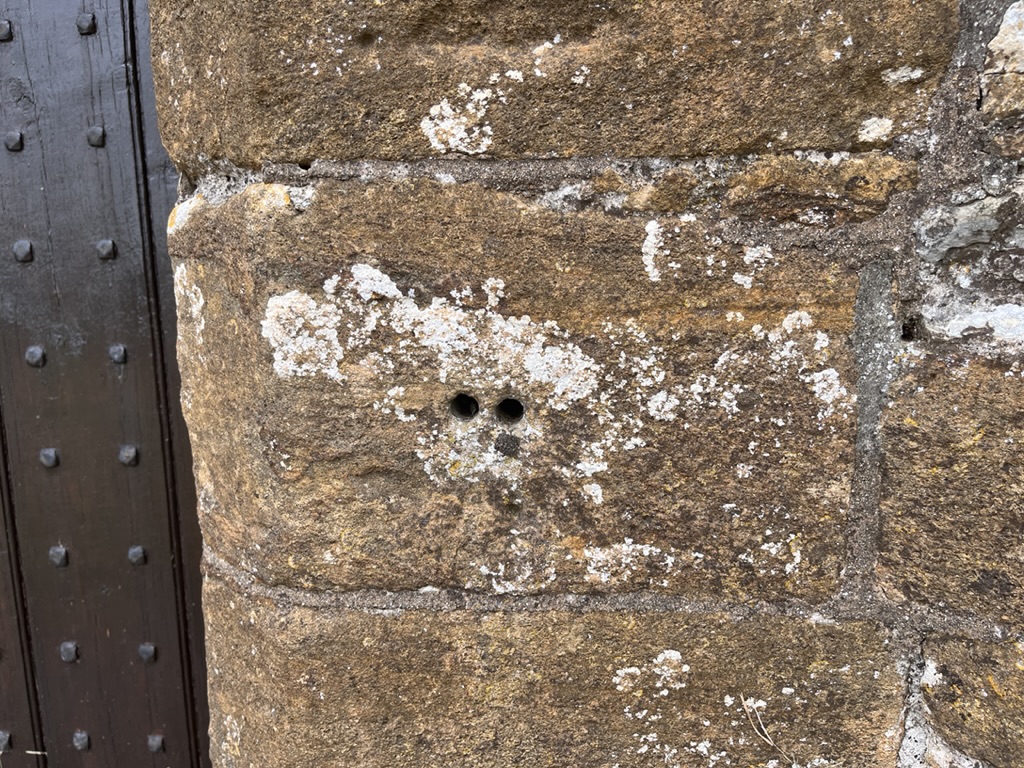
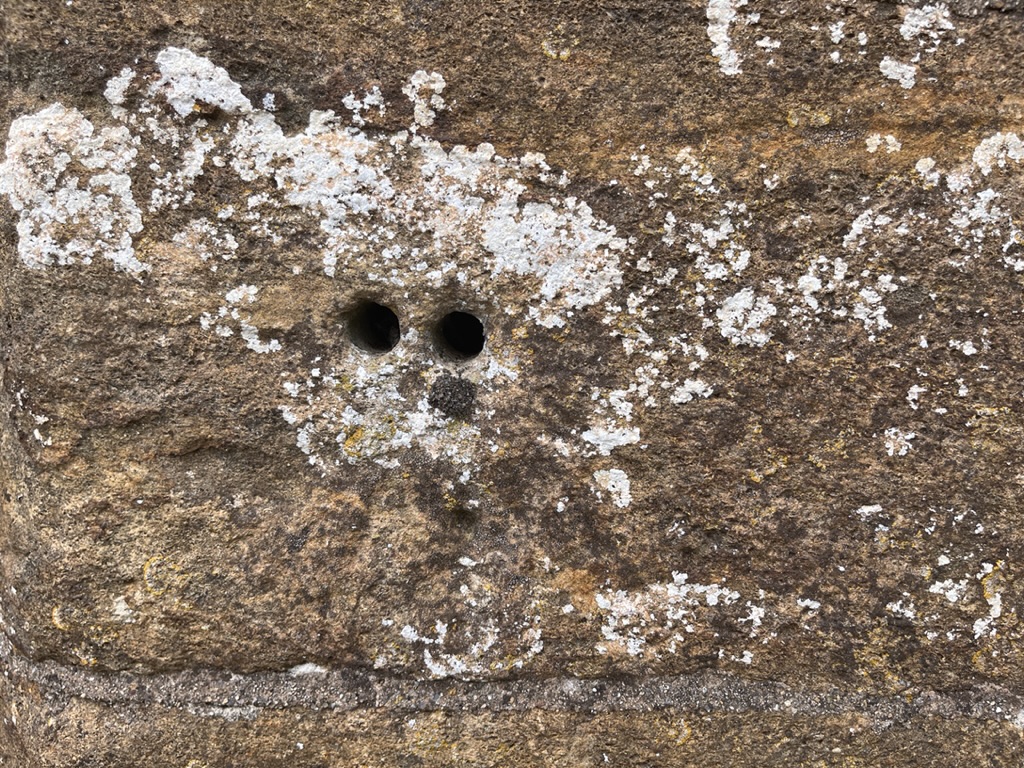
This is an unusual dial, not least because there is a pair of style holes L and R and they are both similarly large. The dial stone is quite badly damaged and it is difficult to analyse the dial. R seems to be the primary hole for the gnomon. The only discernible noon line is below R, marked by a single pock halfway to the mortar line below. On either side, at roughly 11 and 1, are the only 2 clear lines in the whole design. It’s hard to see the purpose of L at all, and perhaps it was a later addition that didn’t add much.
DEH visited in 1915 and included his own theory:
St John the Evangelist . Kingstone . Som
GSS Category: Scratch Dial
All photos: Keith Salvesen except header image as credited (a huge improvement on my own rain-affected photo).
GRADE II* † C13 origins (nave, chancel), considerable enlargement late C15. Norman font, trace wall paintings. Now in the care of CCT. Adjacent to Seavington St Michael and 4m E of Ilminster. 50.9306 / -2.851 / ST402149
DIALS
DEH visited St Mary in Sept 1912 on one of his early dial research expeditions in Somerset☩. He recorded a single dial on a buttress (Dial 1). BSS does not have a specific record for St Mary. I wasn’t prepared for the multi-dial display on either side of the porch..
☩
DIAL 1
St Mary . Seavington St Mary . Somerset
Dial 1 is described by DEH in more detail than usual:
This dial is on a buttress half-way between the s. porch and chancel. It is about 5 feet 5 inches above the ground, the noonline is 3 1/2 inches in length, the style hole is 1/2 an inch deep to the top of the metal shank which is still within it, and about 1/2 an inch in diameter. On the noonline, close to the stylehole, is a hole for a peg, and there is another at the extreme end of this line in the next stone. There is also a peg-hole on the mass line.
There are 7 lines, starting with the horizontal 6am. The noon line seems to be a close double line, with noon itself being between them (as other churches in the area). There’s also a hint that it extends to the stone below, with a small terminal pock. The deeper cut line in the lower right quadrant presumably marked the main Mass of the day. No metal shank was evident.
St Mary . Seavington St Mary . Somerset
PORCH DIALS
Numbering needs correction at some time… 8 & 9 should be in the same row as 4 – 7; 10 & 11 should replace 8 & 9
DIALS 2 & 3
On the W side of the door are 2 adjacent dials on the same stone and of a similar design. Both seem to have been complete circles, now eroded. The larger has a very small style hole. The smaller has a couple of pocks but whether they relate to its function is not clear.
St Mary . Seavington St Mary . Somerset
☩
DIALS 4 – 6
On the E side of the door are 3 dials in a row on a single large stone, one with a string of pocks. Dials are shown in order left to right.
Dial 4
Dial 5
Dial 6
☩
Dial 7 (?)
Completing the line of small circle dials on the stone is a hole lower R. No definite lines / pocks are readily discernible but a photo enlargement suggests faint lines at 11 and 1. A damaged area just above the mortar line might mark extended noon line. There’s a faint impression of a circle. Is this a dial? The hole is in a logical place on the stone and would match the other 3 dials in scale.
☩
Dial 8 ?
On the quoin stone next to Dial 7, another similar hole without noticeable markings. In close-up it’s hard to make much of it – faint evidence of a circle, perhaps? – except that it fits the overall picture of a line of small encircled dials.
☩
Dial 9
In the top R corner is a quite different type of dial, semi-circular with several lines and circumference pocks that more or less match hour line positions. It strays onto the adjacent quoin stone and there’s an impression that it might once have had a top half, with the stone later replaced.
☩
Dials 10 & 11
Both dials are immediately below the others, and resemble dials 2 & 3. 10 is an eroded (part) circle with no discernible style hole. 11 is a complete circle with a very small hole from which – originally or perhaps later – a single line curves downward.
GSS Category: Scratch Dials; Multiple Church Dials
The HORNIMAN MUSEUM in South London is a wondrous place for people of all ages. Few (or no) visitors will fail to find something of interest or inspiration. Click on the link to find out more (rather than have me give a lengthy description of the excellent collection).
Among the many innovative collections and installations is a brilliant SUNDIAL TRAIL that showcases 12 different and distinct types of sundial. These are dotted around the park (not all are outside). Some have an additional ingenious feature that makes them unique – incorporating morse code for an inscription, for example.
Roman Sundial . Horniman Museum . London
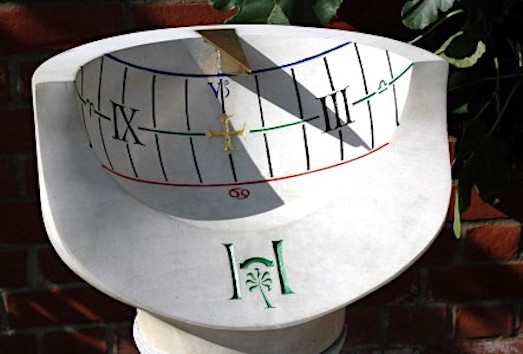
The dial was designed by John Moir and constructed by Ray Ashley. The gnomon’s shape is based upon the ‘H’ from the old Horniman Museum logo. The edge of the shadow created by the ‘H’ indicates solar time. The museum’s image below when the dial was newly made shows it in action, so to speak.
THE HORNIMAN ROMAN DIAL
Roman Sundial . Horniman Museum . London
The dial has a central cross marking the noon line. In addition, signs of the Zodiac are marked though I don’t know enough to say how they fit into the design – why, for example, pisces is below the noon line.
Roman Sundial . Horniman Museum . London
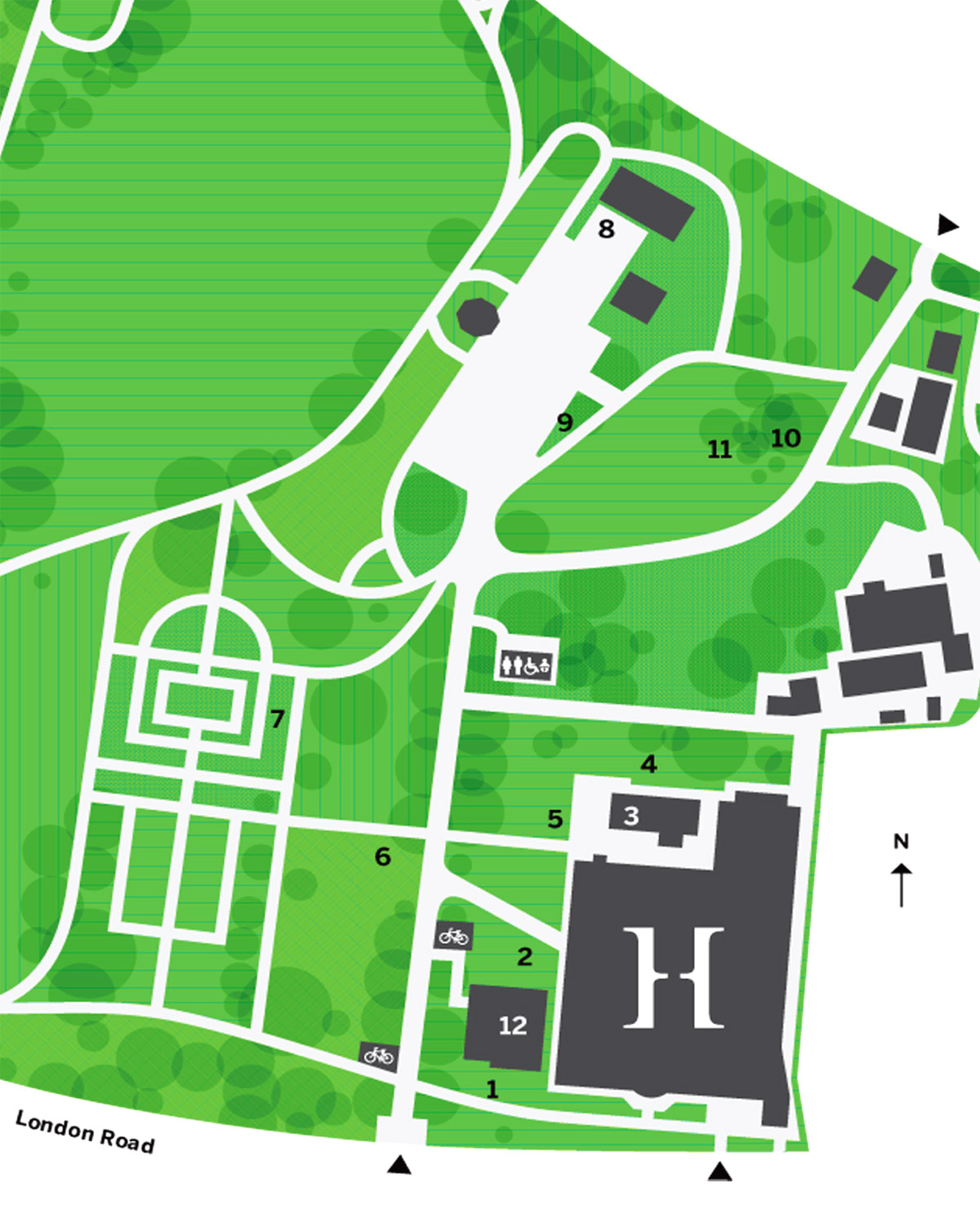
I have a second Horniman dial to write up in due course. You can find details of all the dials on the Horniman website (see link above). There is also SUNDIAL TRAIL MAP(do not open if you want to discover the dials unassisted…).
Roman Sundial . Horniman Museum . London
GSS Category: Roman Dial; Bowl Dial
All photos, Keith Salvesen; specific information / new dial image, Horniman Museum
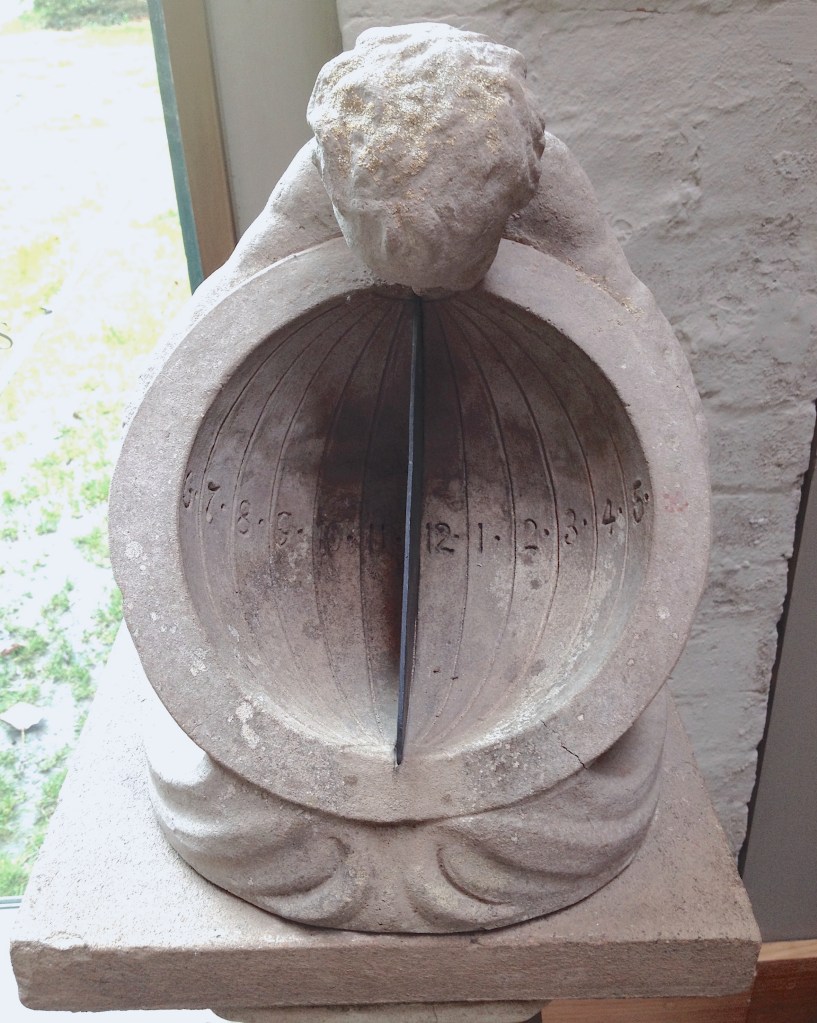
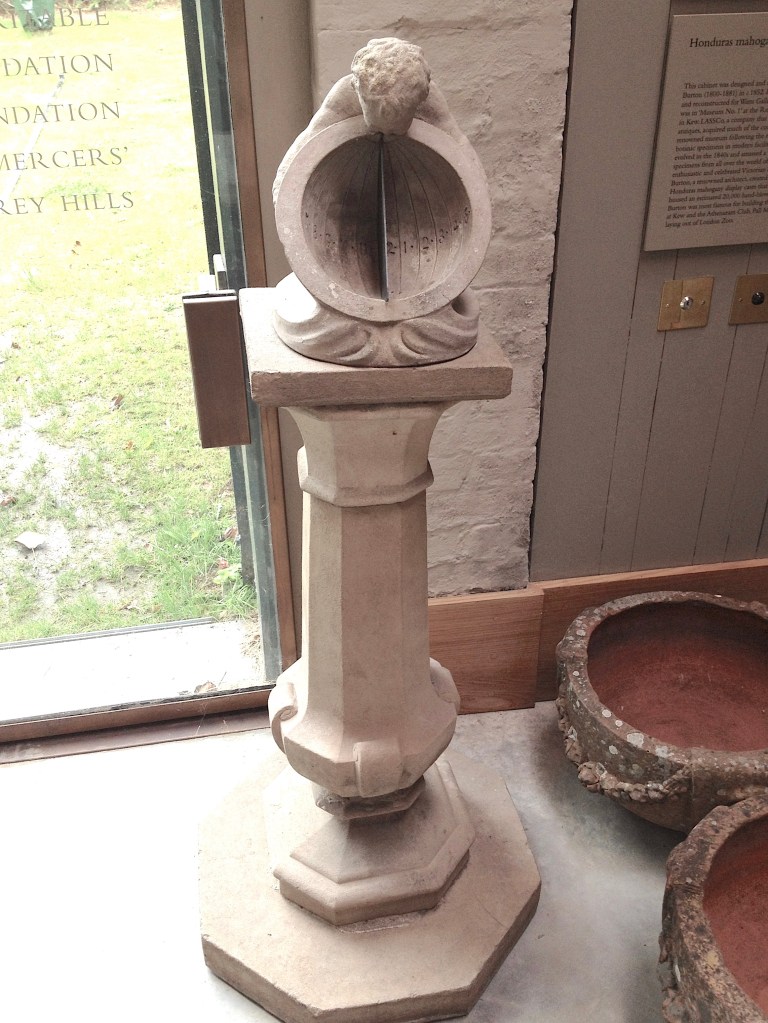
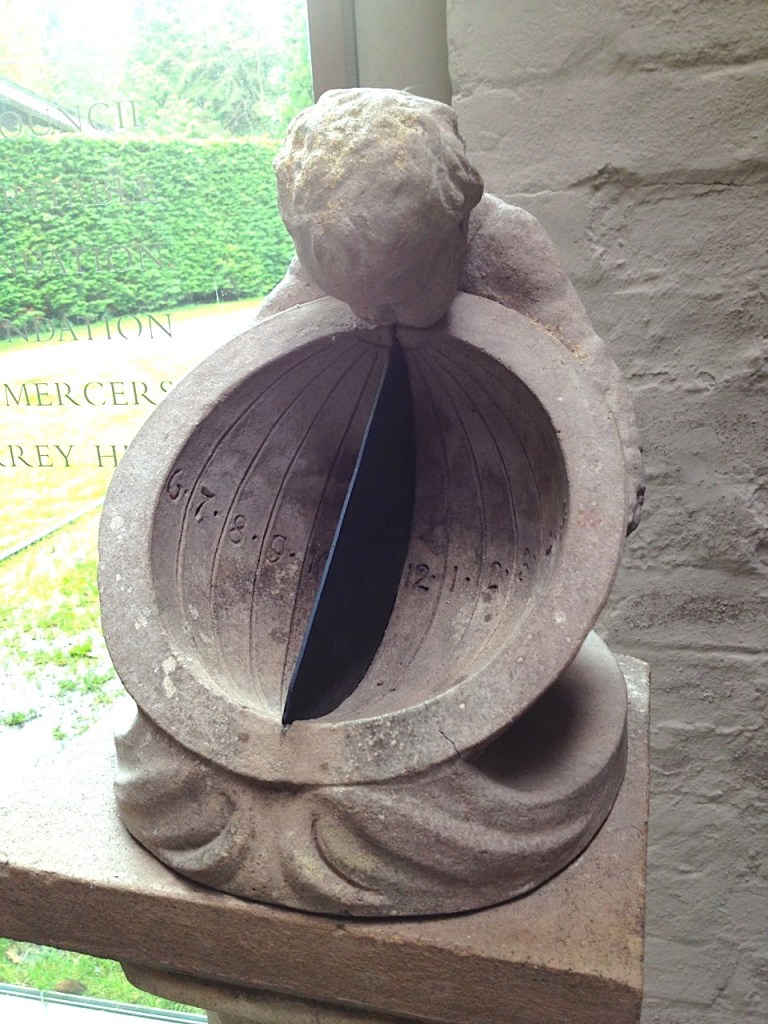
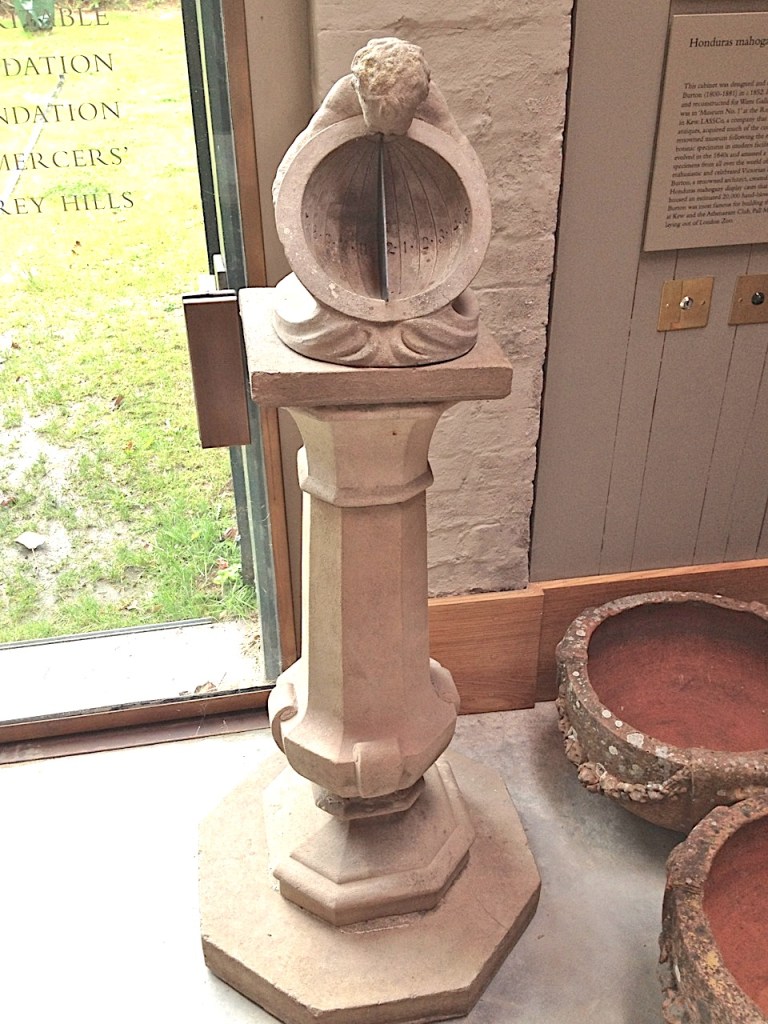
The WATTS GALLERY in Compton showcases the work of artist G. F. WATTS and his wife MARY WATTS, exemplar of the Arts and Crafts Movement. The enterprise has expanded hugely since I last visited and took photos of the sundials there. The Gallery link above will give all the current information you could wish for. This remarkable scaphe dial had been moved inside to protect it from the elements.
Scaphe Dial . Watts Gallery . Compton . Surrey
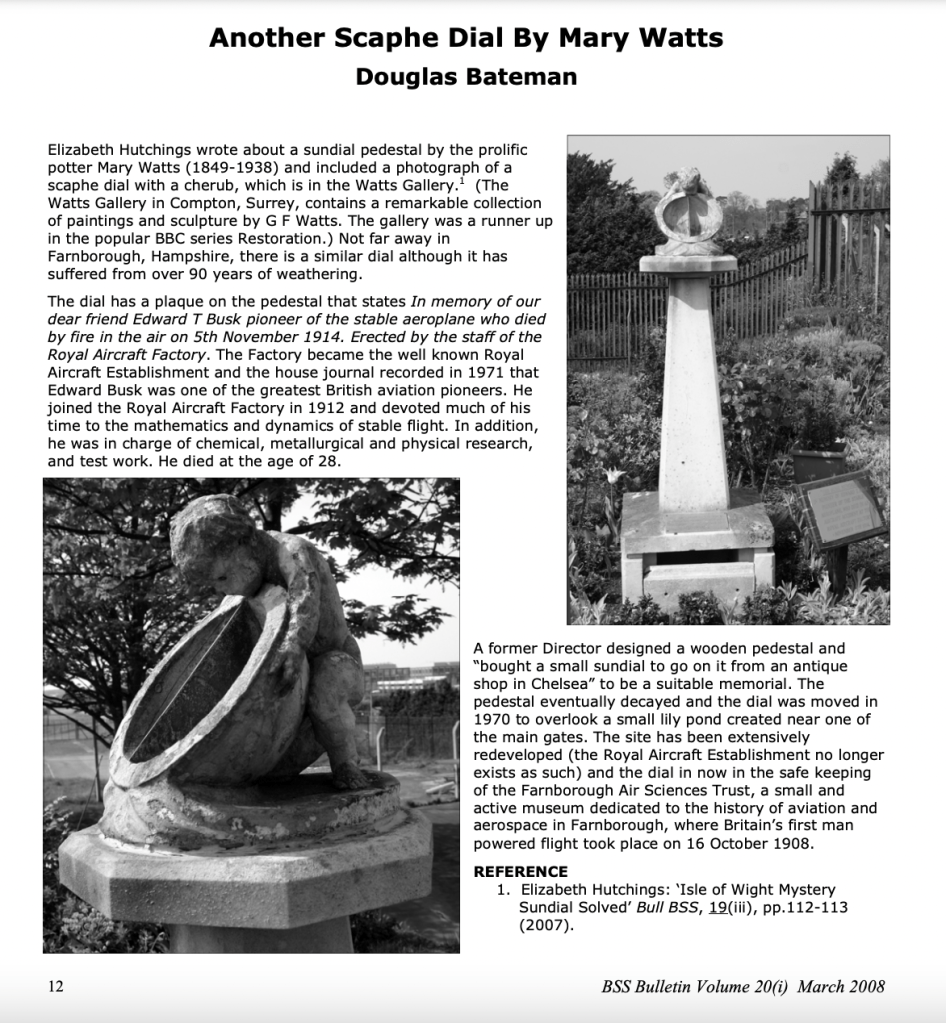
Some years ago, BSS published an article about the dial and its context. It is evident that the dial has been skilfully restored from a slightly forlorn state when the article was written. Possibly the title should be ‘Another Dial Pedestal by Mary Watts surmounted by a small Scaphe Dial from a shop in Chelsea’?




 )