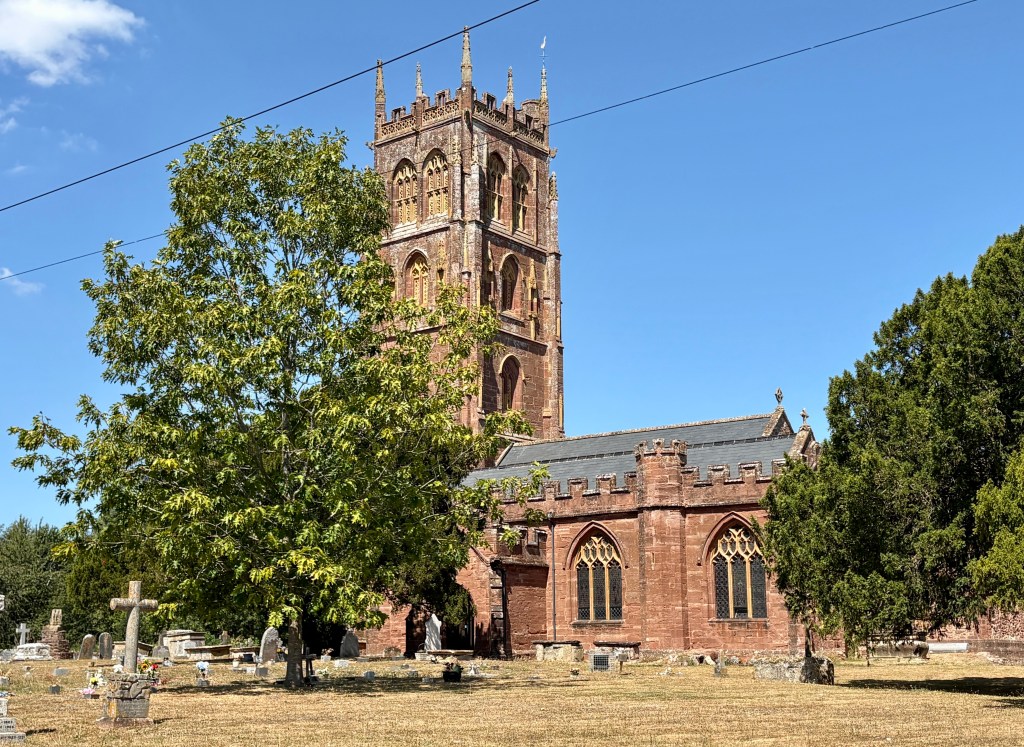
ST MARY . BISHOP’S LYDEARD . SOMERSET
GRADE I ❖ C14 / C15. Fine perp. tower (c1497) – Best of the outstanding group of (Somerset) towers built around 1500. PEV (also enthusiastic for the fine bench-ends). Well worth exploring as a whole. Helpful Church material. 5m NW of Taunton. 51.06111 -3.18861 ST16802976
DIAL
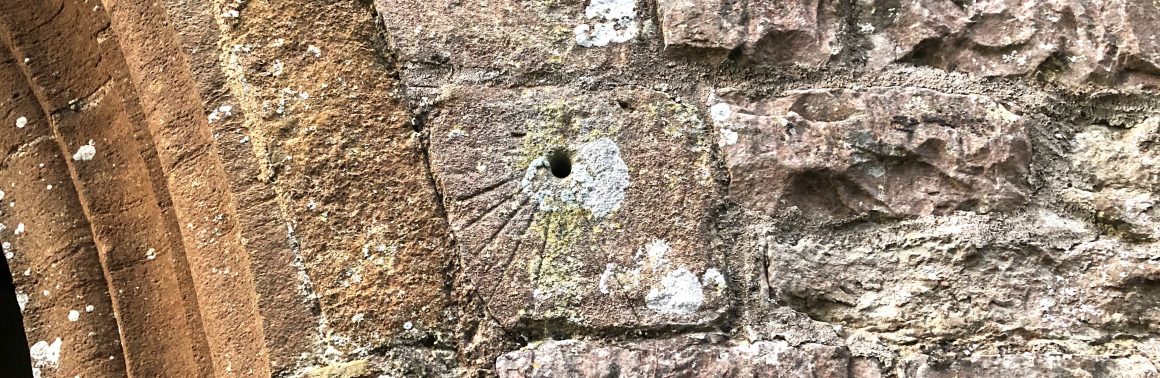
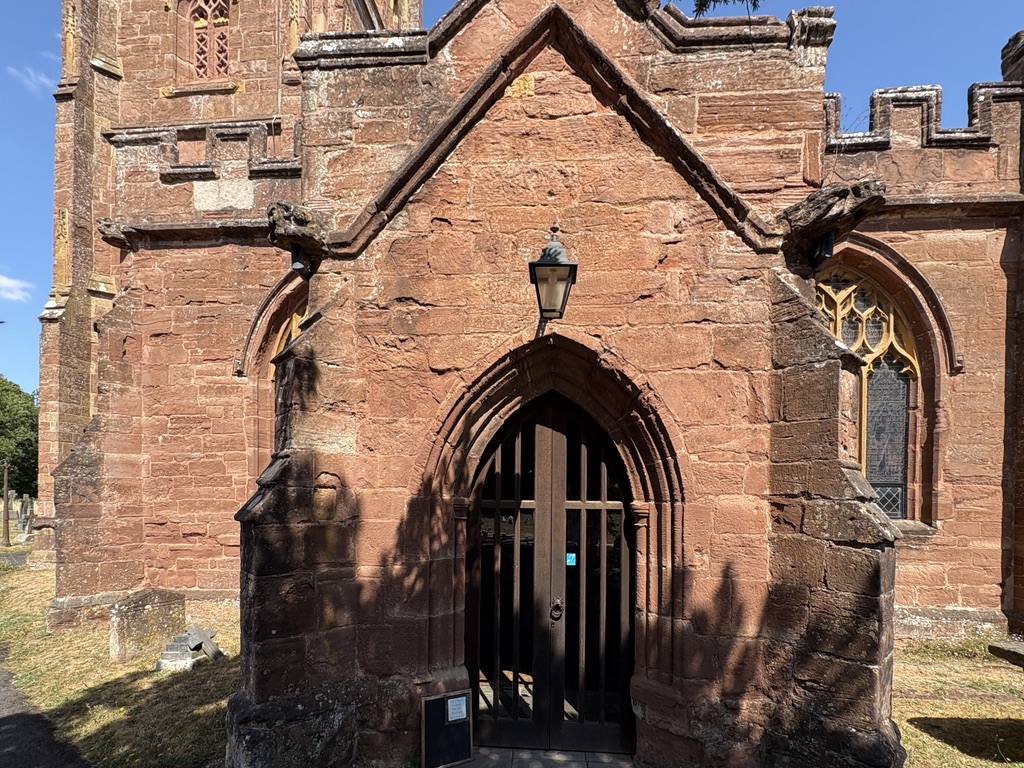
On the porch gable can be seen RHS a small sector of a large dial cut into the red sandstone. It is badly damaged and what remains is hard to make out (see BSS interpretation below). One could say that it isn’t strictly a (part) scratch dial at all, but rather a later and more sophisticated time measurer. If so, it may date to ±1600.
BSS records: On the gable of the porch. The dial was originally incised into the wall. Hour lines were marked from 7am to 5pm but only a few lines and numerals can now be seen. The hours are marked in two arcs with 7am and 5pm being at a smaller radius. The dial has been shaded by a large Yew tree for over 100 years. [Of note is that BSS classifies the dial in its records as ‘vertical dial’, rather than ‘scratch dial’ RH].
Interestingly, BLB notes that ‘a pediment over the entrance contains remains of a ‘scratch clock‘ (ie rather than ‘scratch dial’).
DEH did not include St Mary in his exhaustive Somerset church research between 1910 – 15. Possibly he missed the dial because of its unusual position (for a scratch dial) or its poor condition. If he saw the dial, he may not have considered it a scratch dial to add to his collection, but rather a later style of time-indicator.
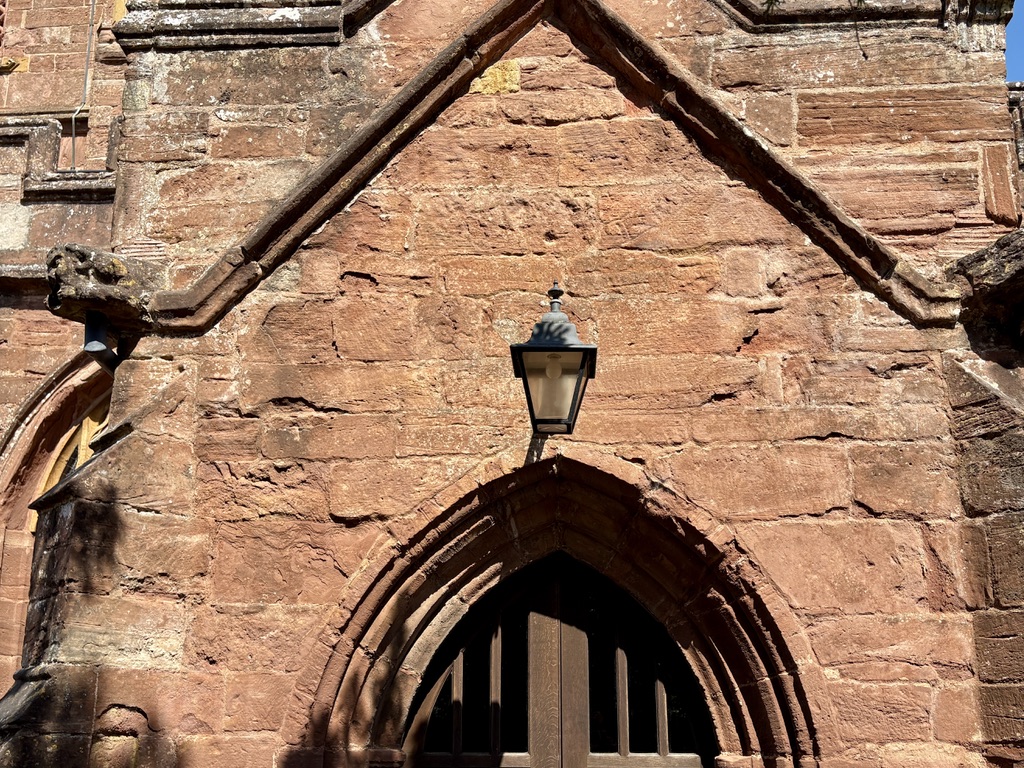
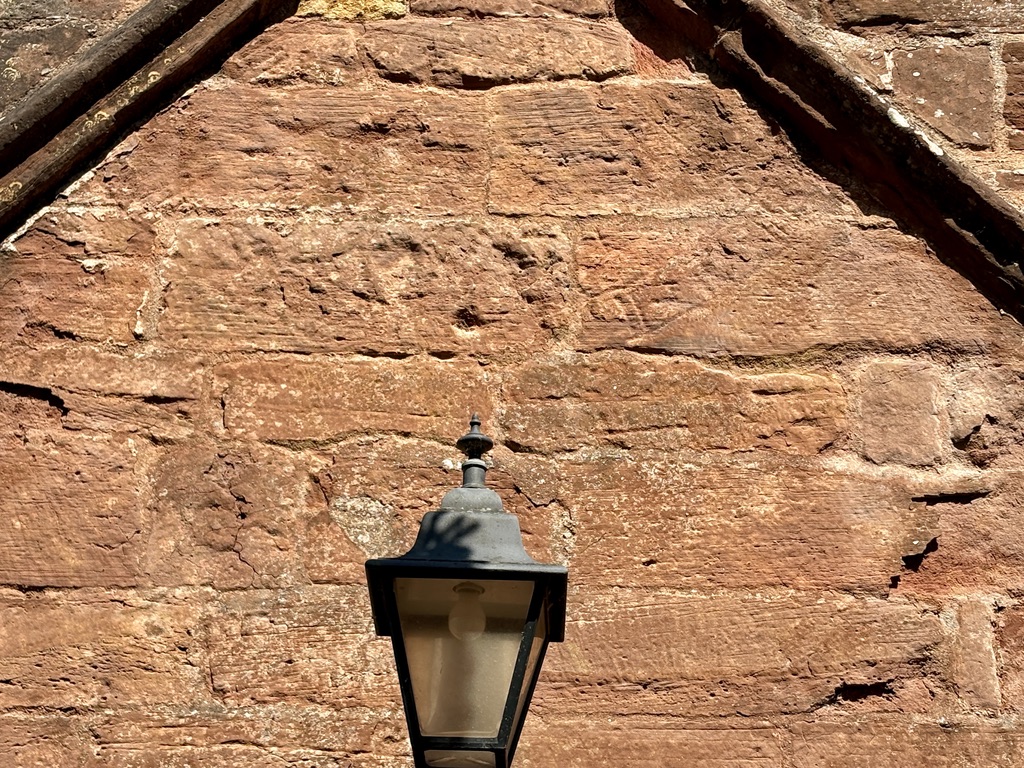
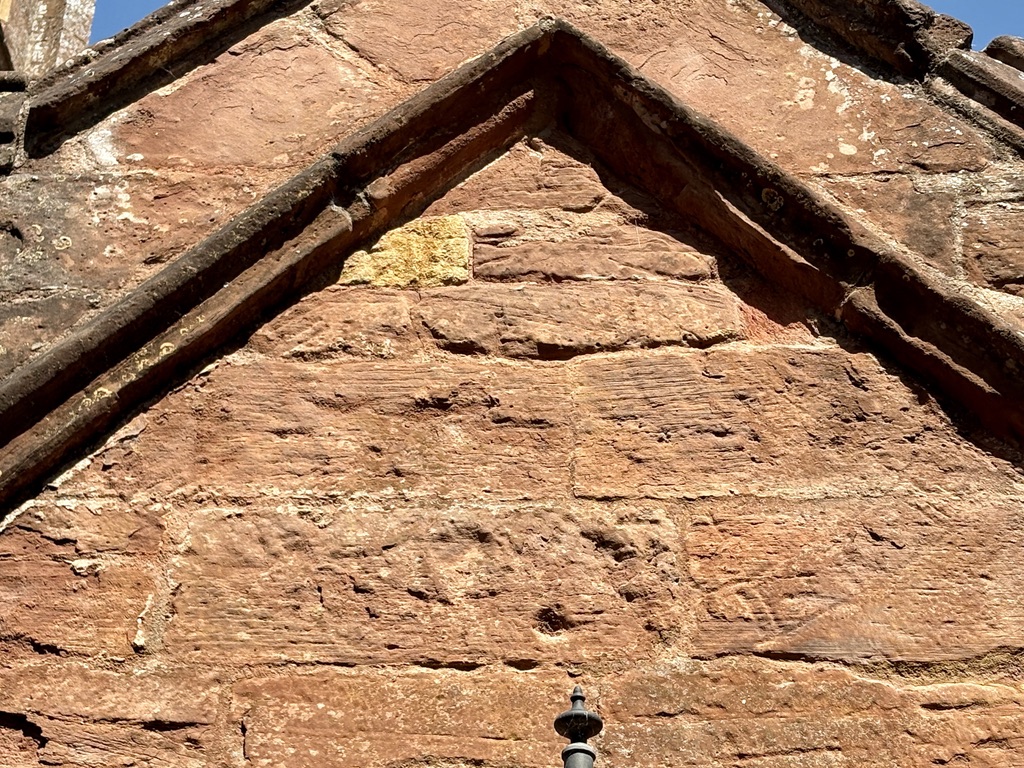
GSS Category: Scratch Dial; Mass Dial; Gable location; incised detail

