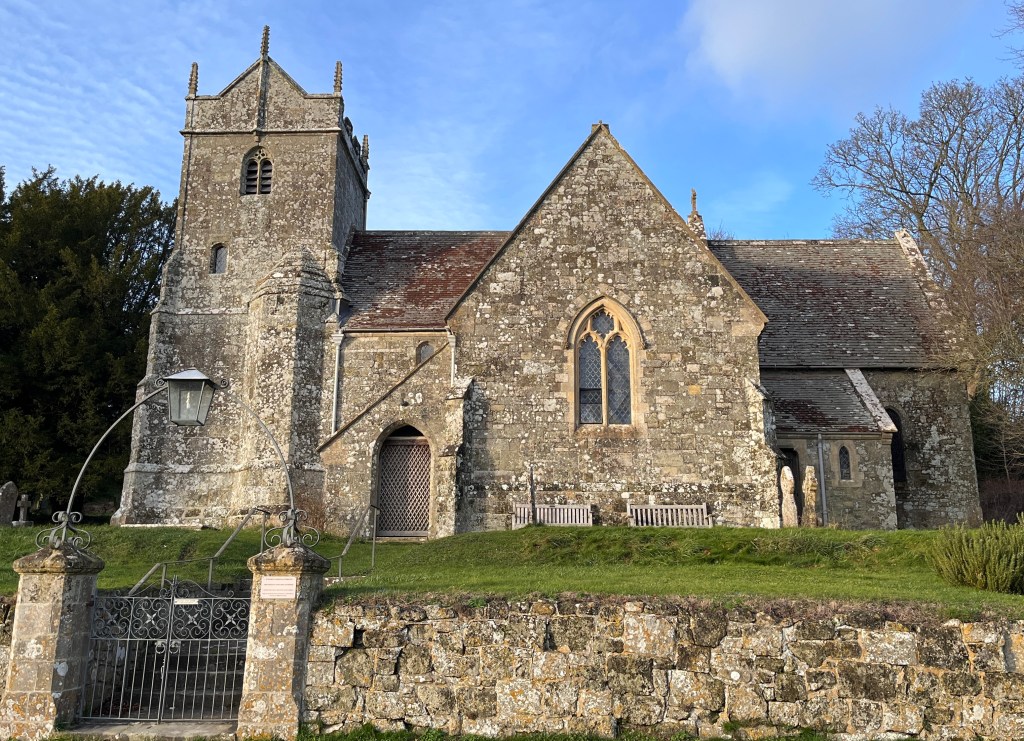
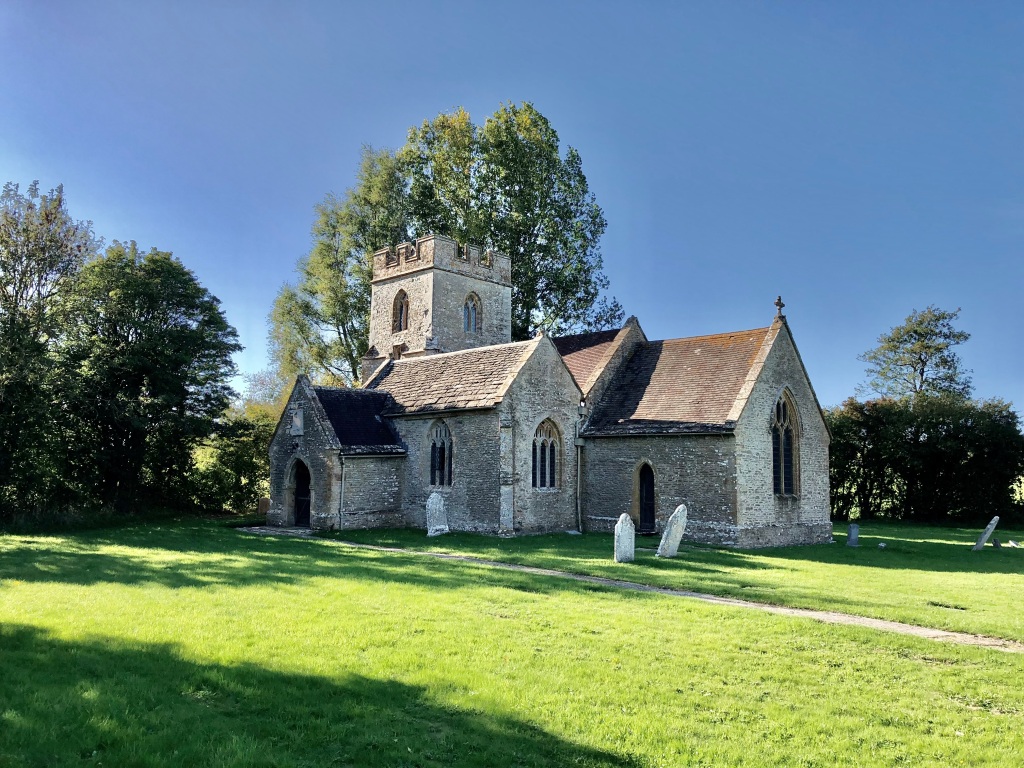
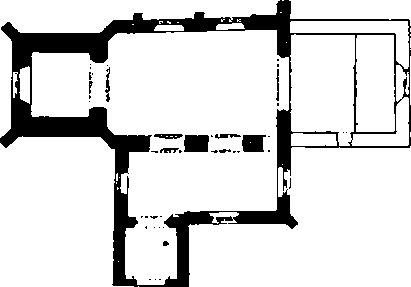
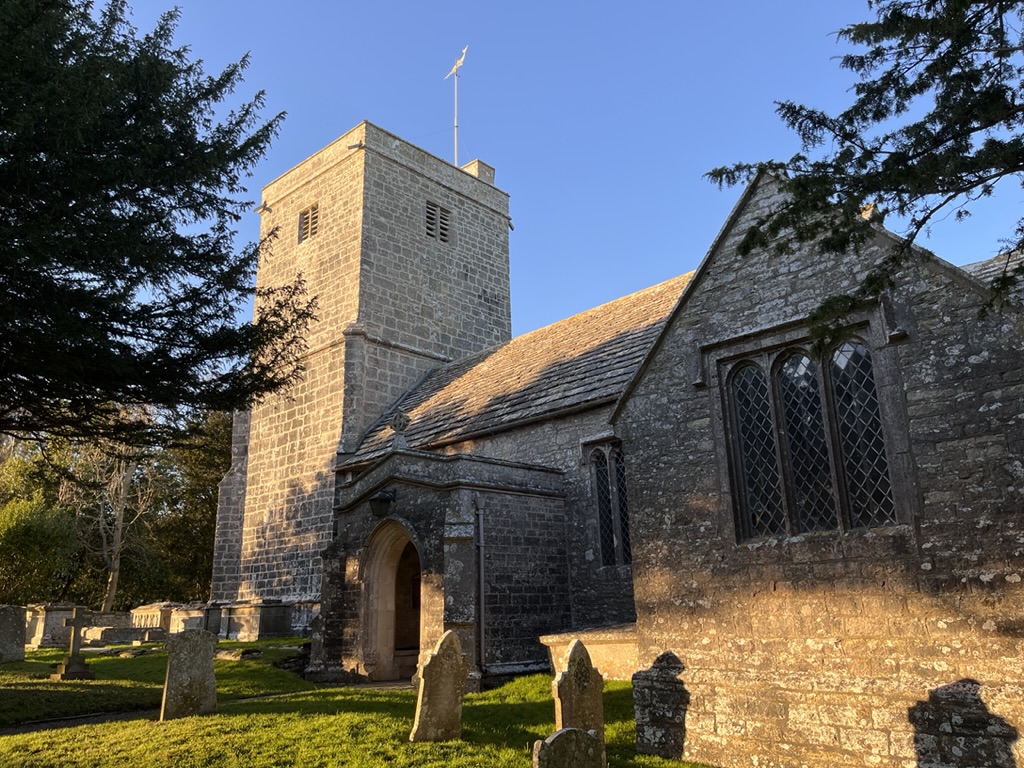
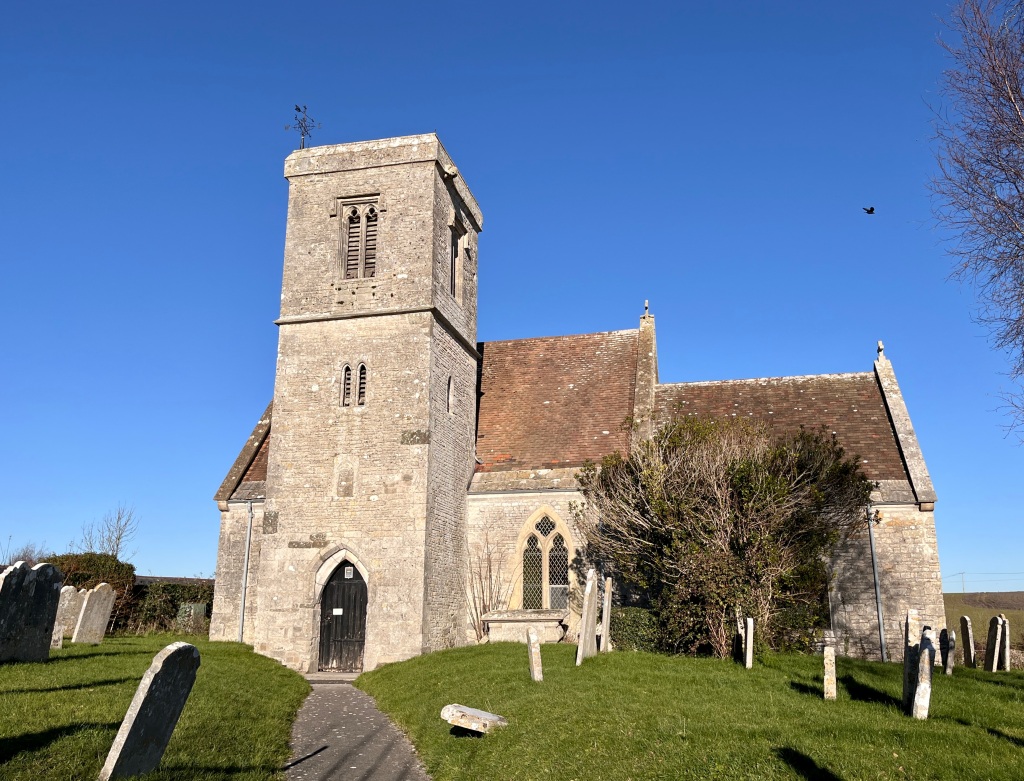
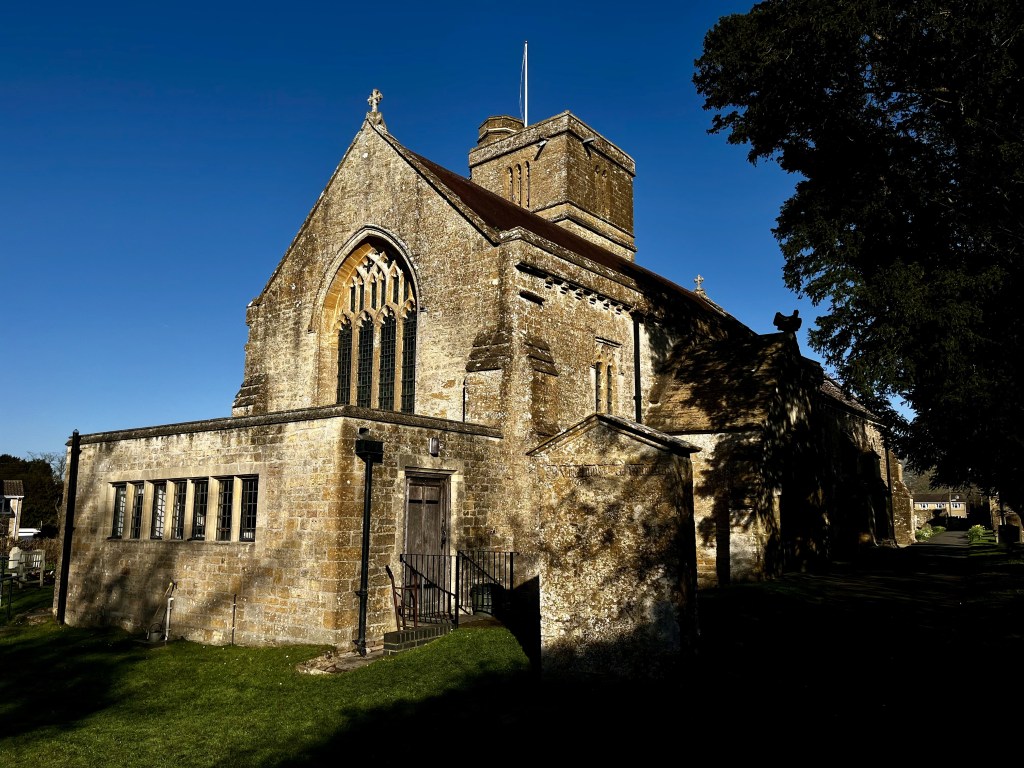
GRADE I † C13 origins (c1258 on); C14 development, Perp windows, C15 tower (BHO – sources vary on dates). C17 extensive repairs; mid-C19 restorations to Wyatt plans. Cecil Beaton is buried in the churchyard. One of several Ebble valley churches between Salisbury and Shaftsbury (cf Alvediston). 51.0275 / -1.9432 / SU040253
DIAL
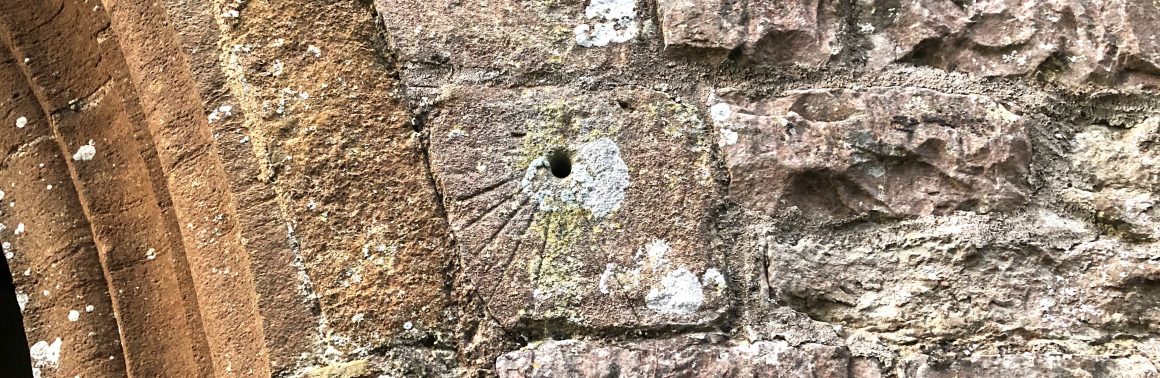
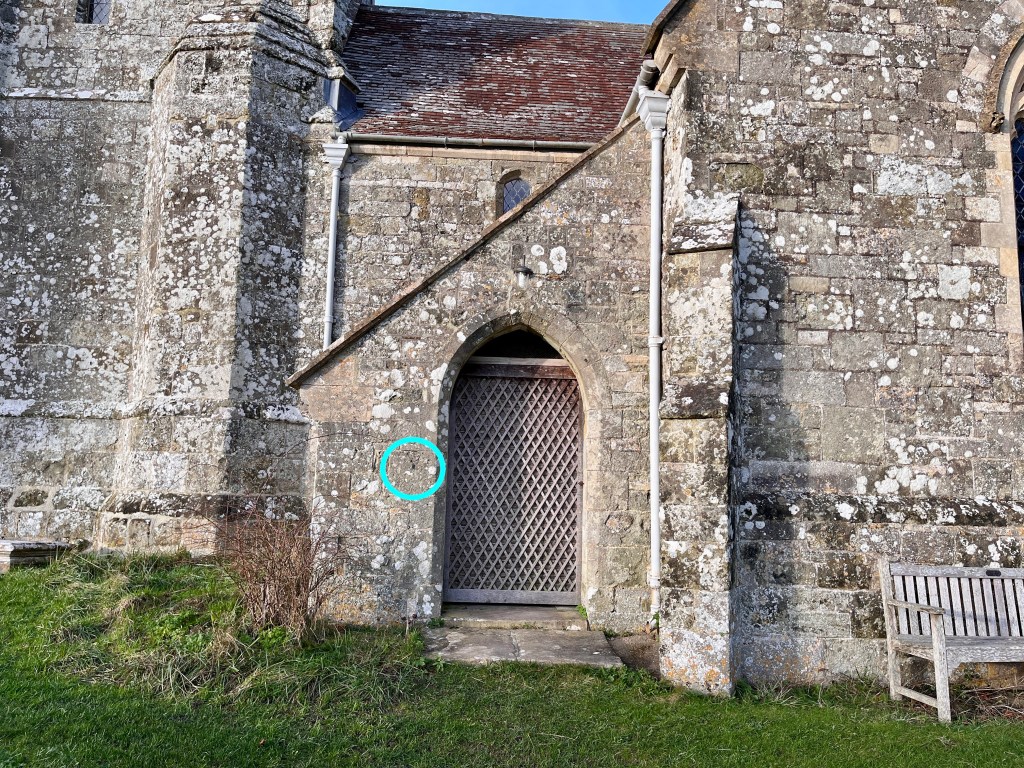
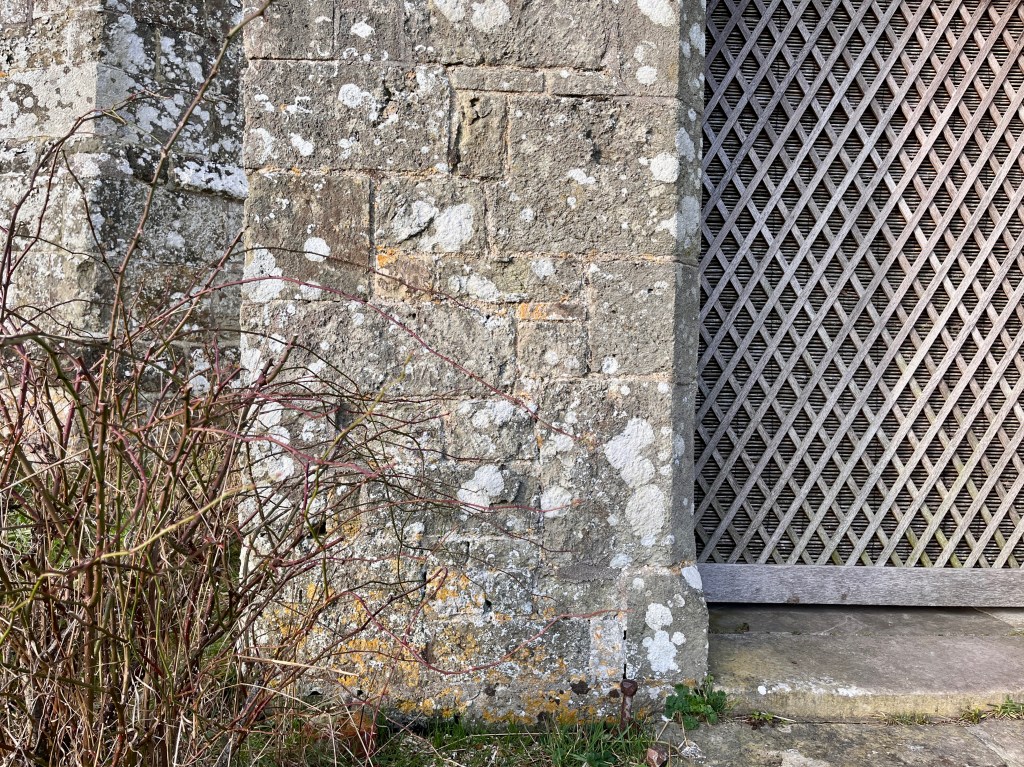
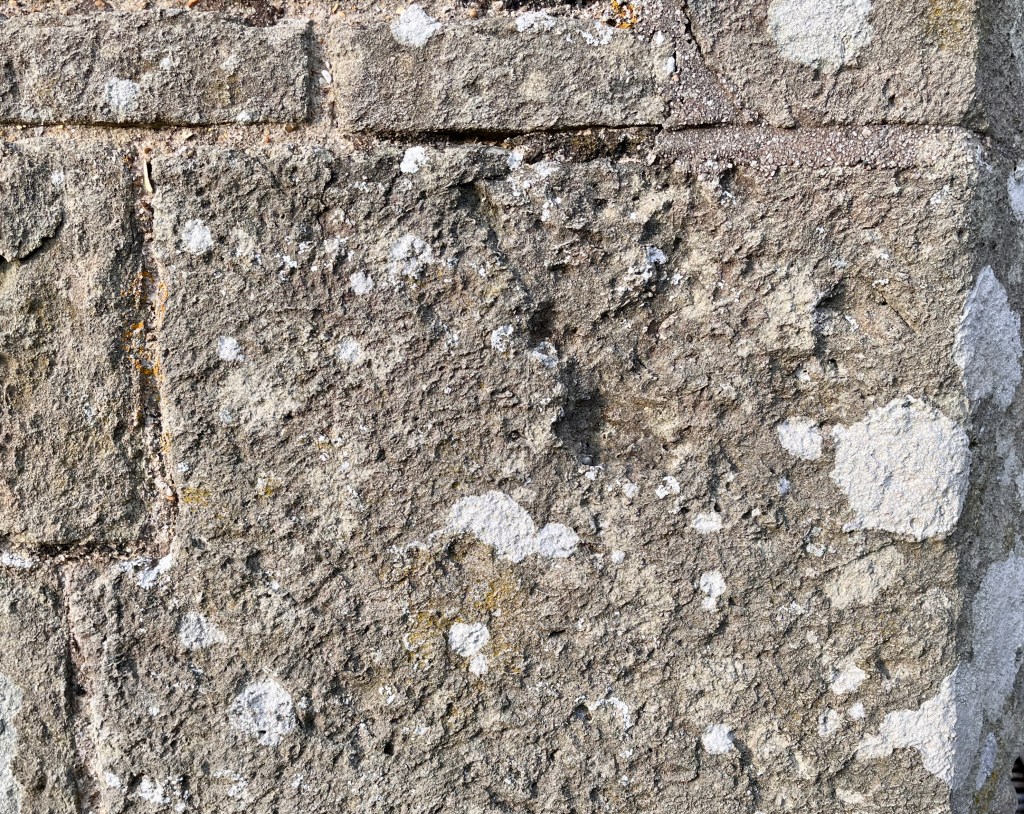
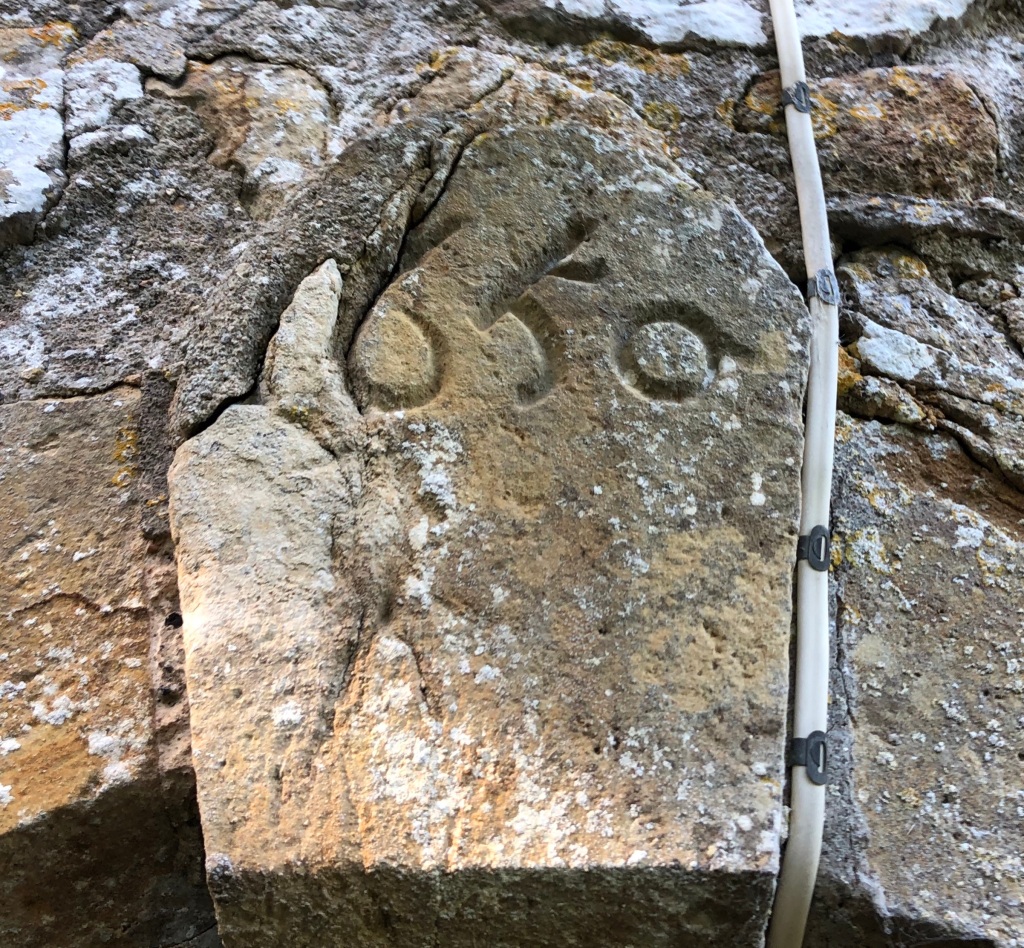
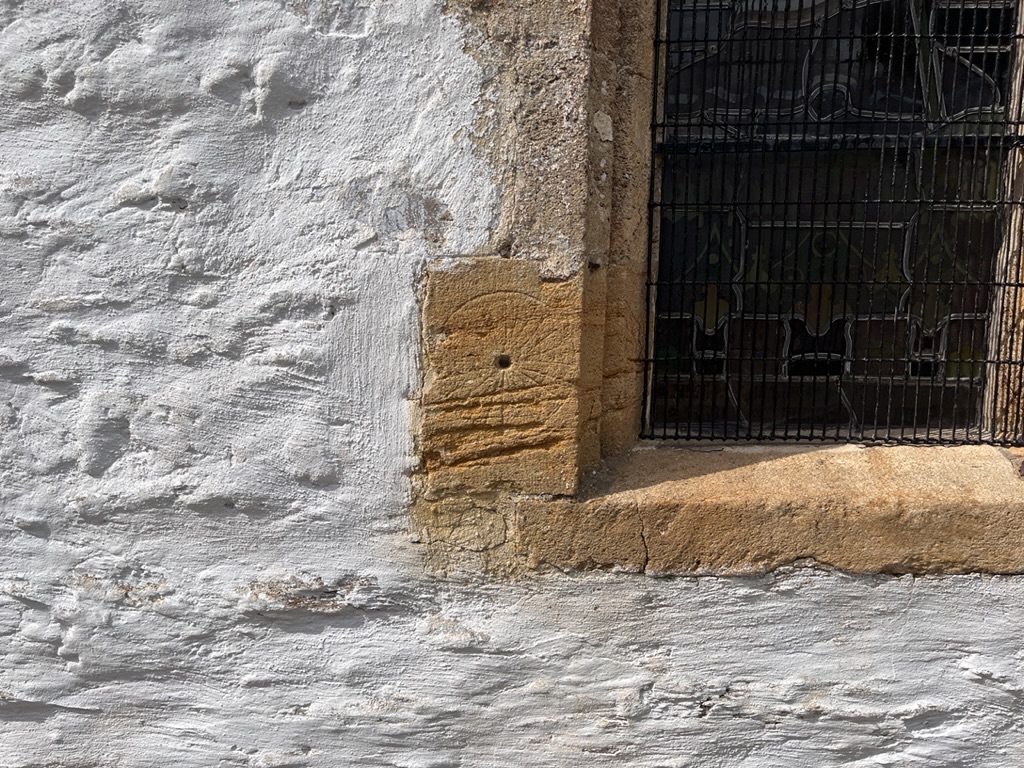
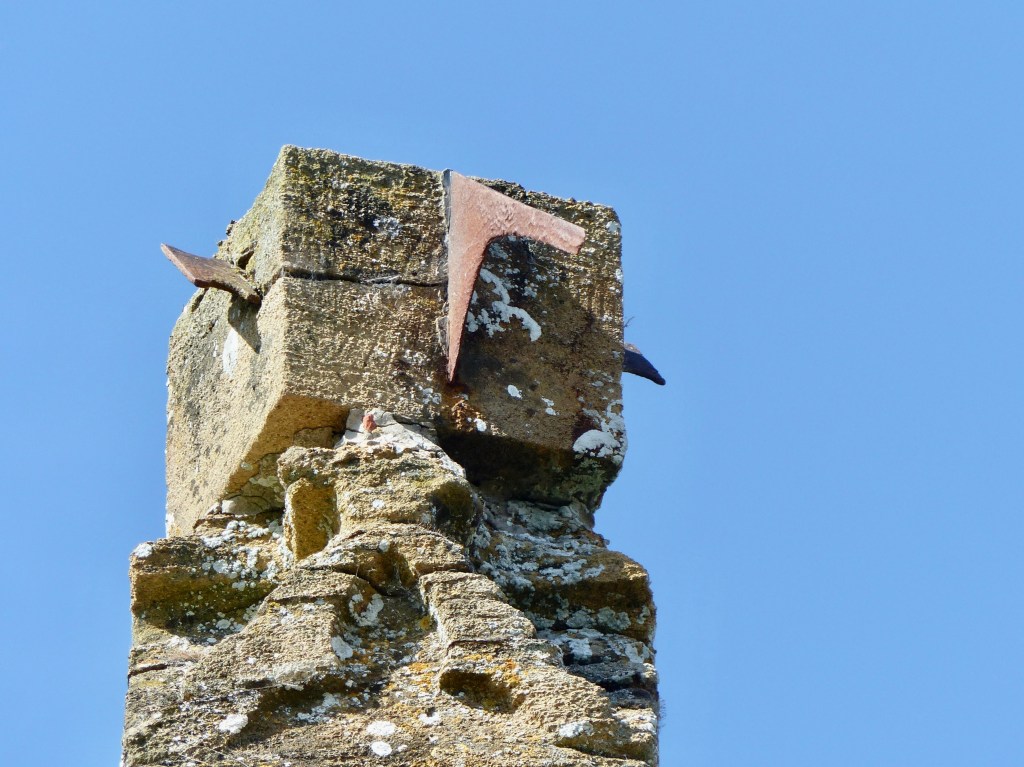
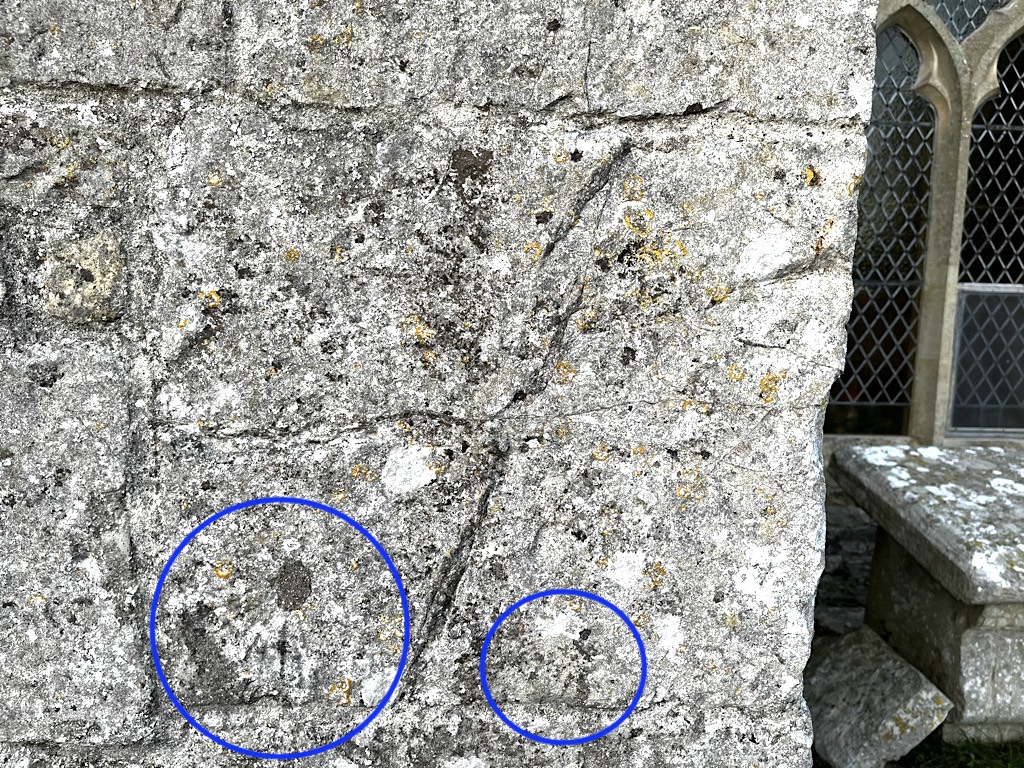
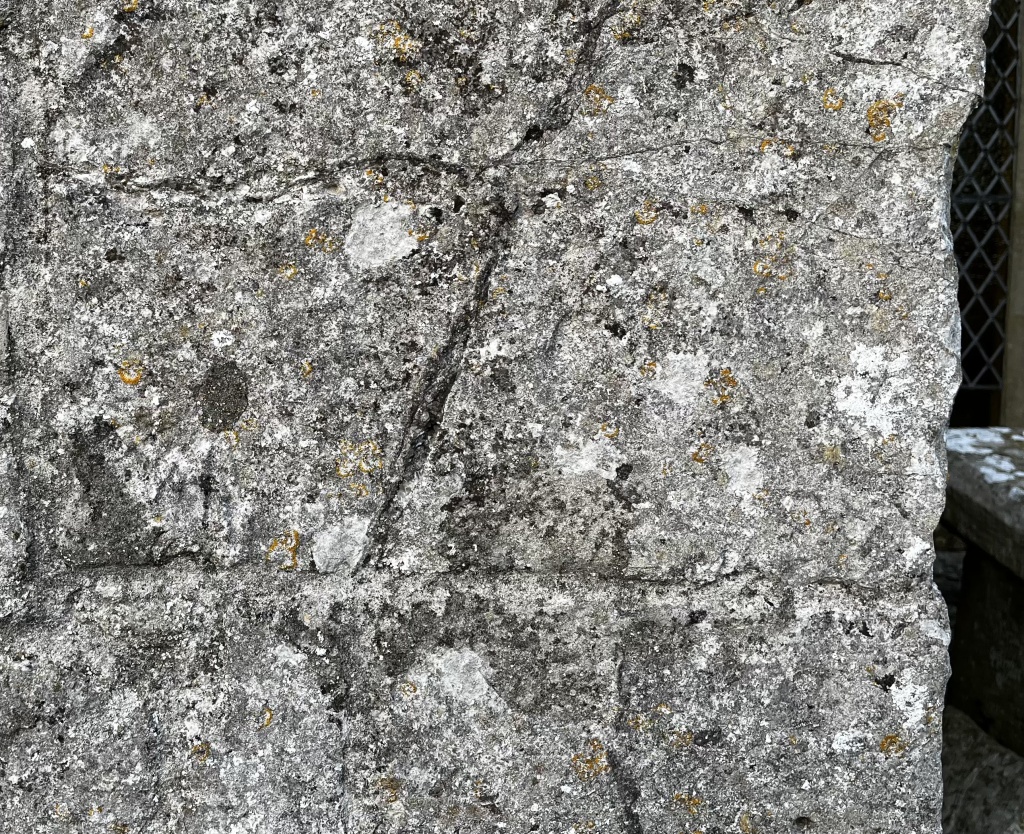
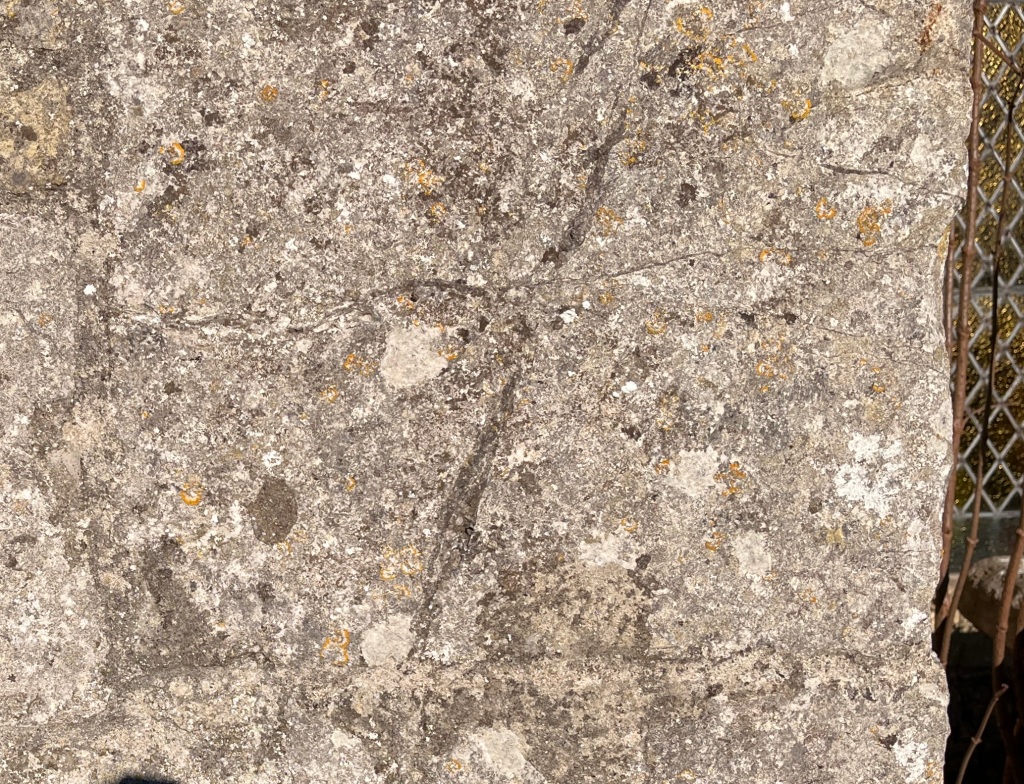
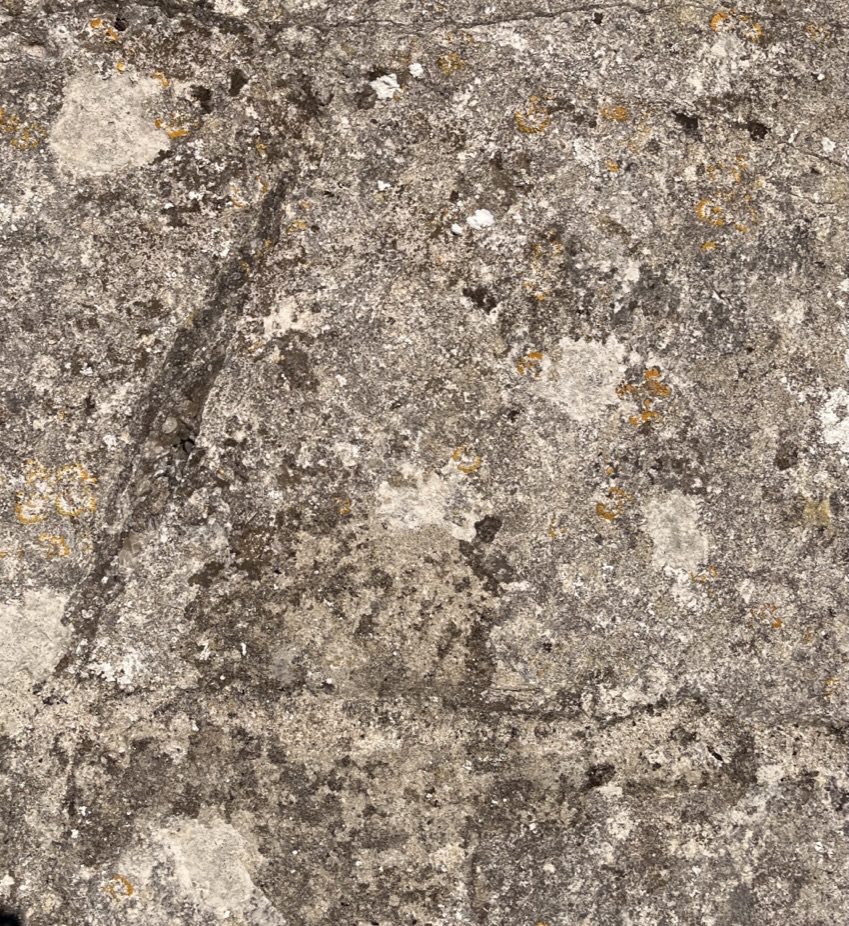
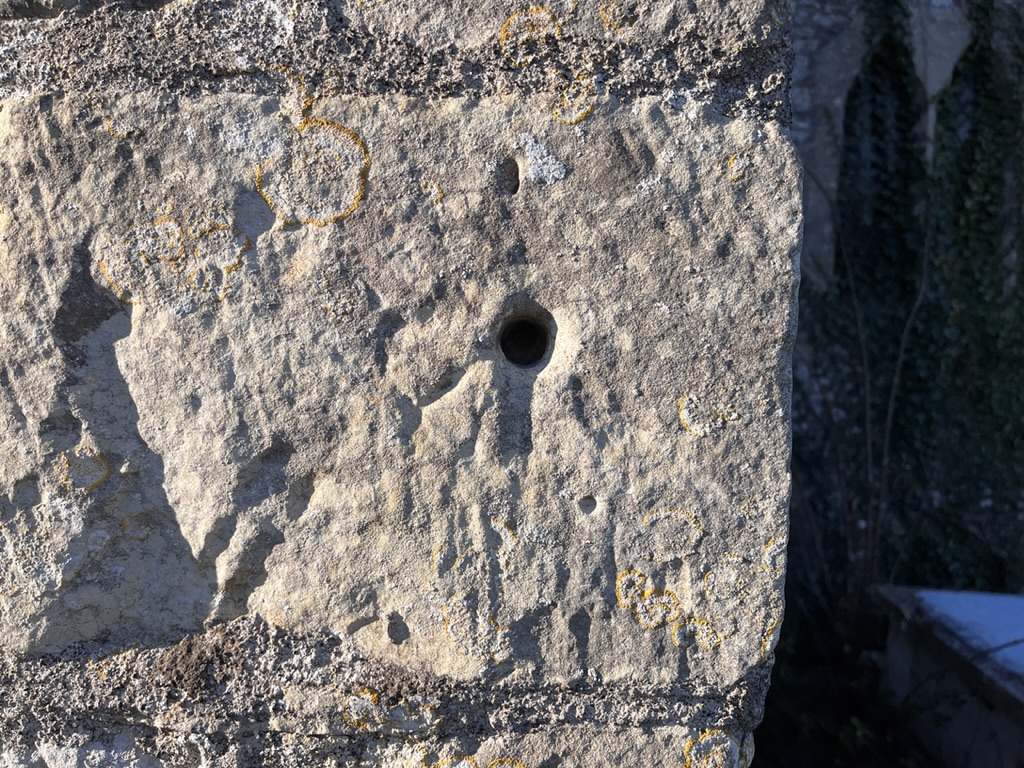
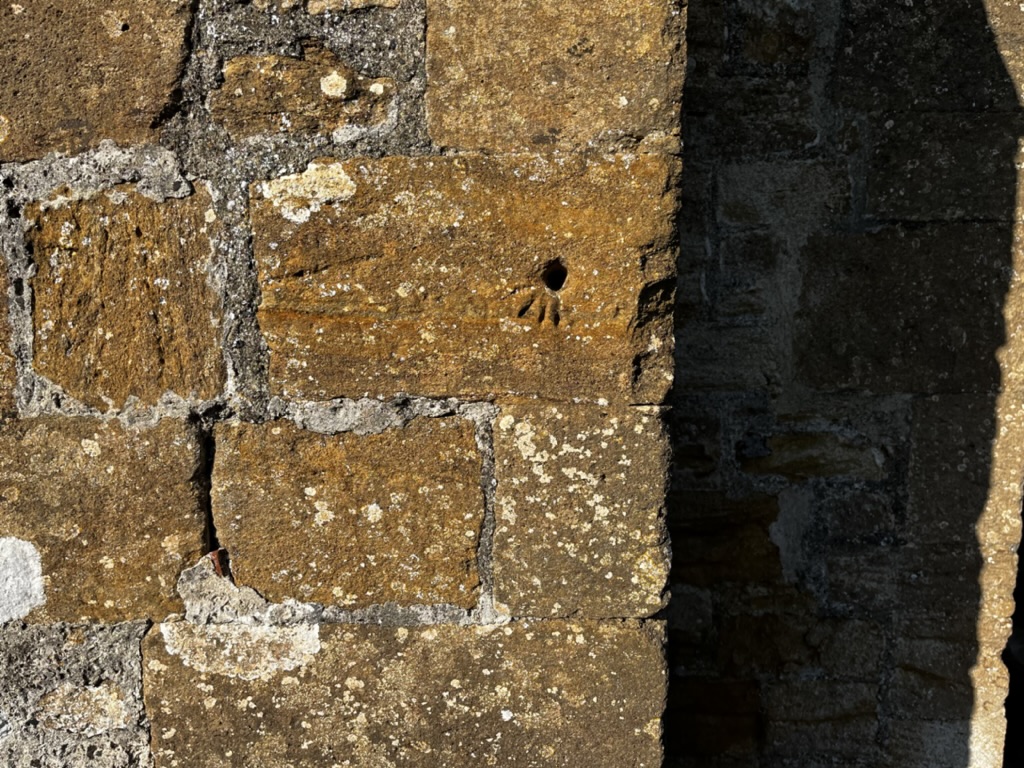
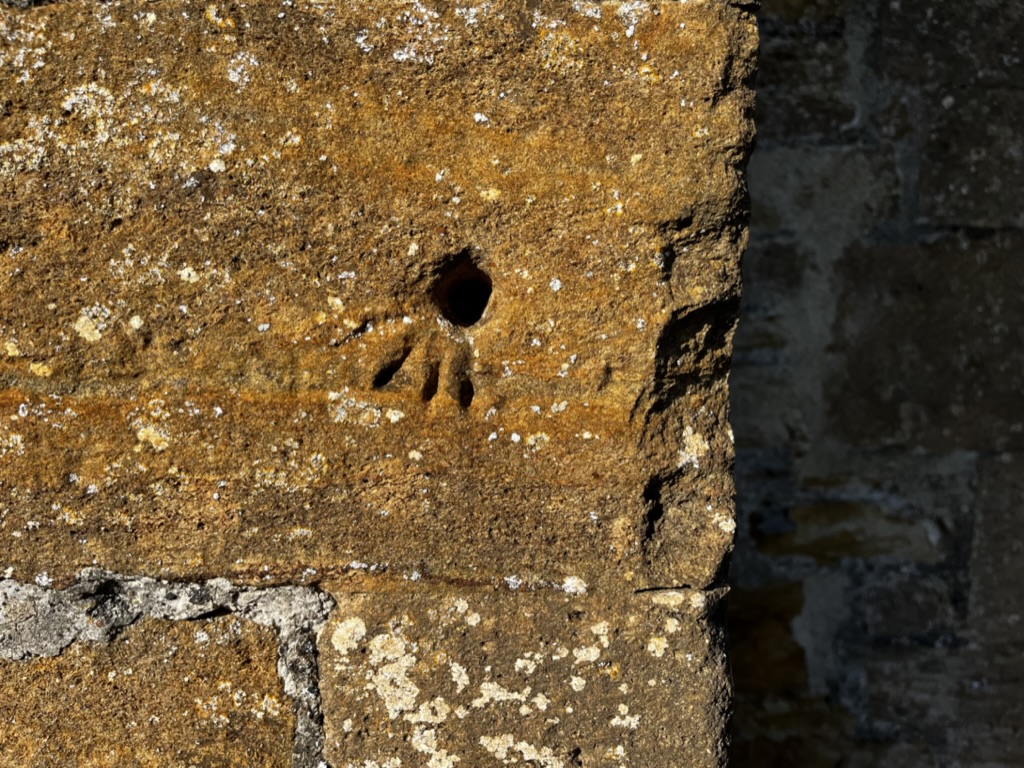
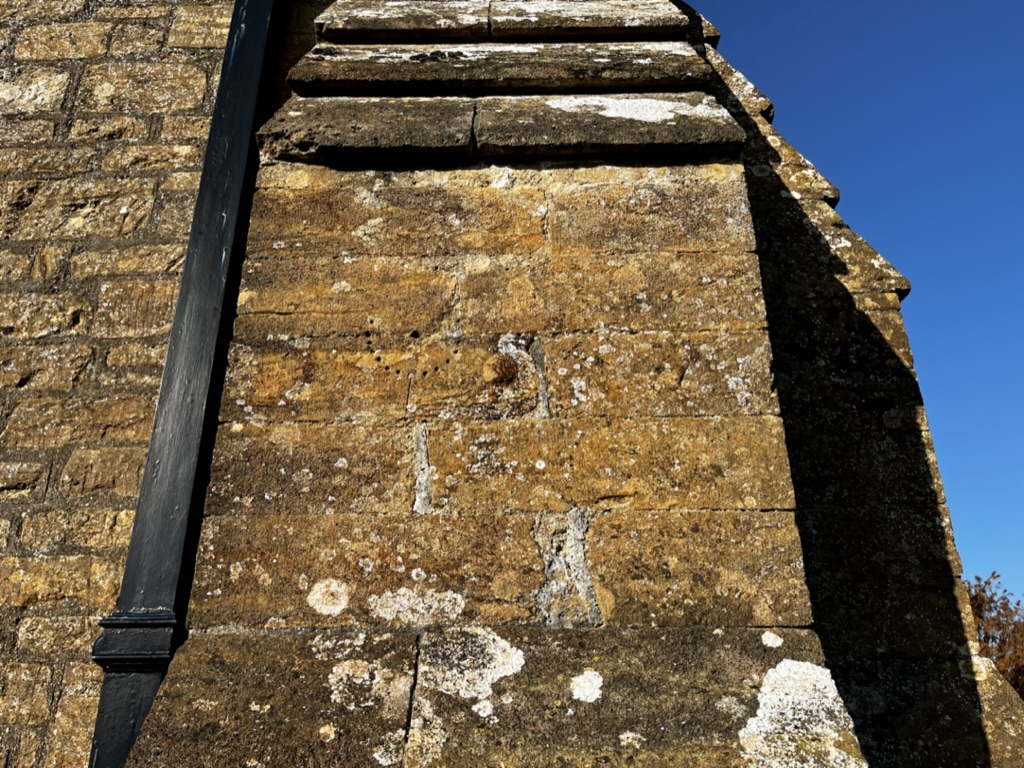
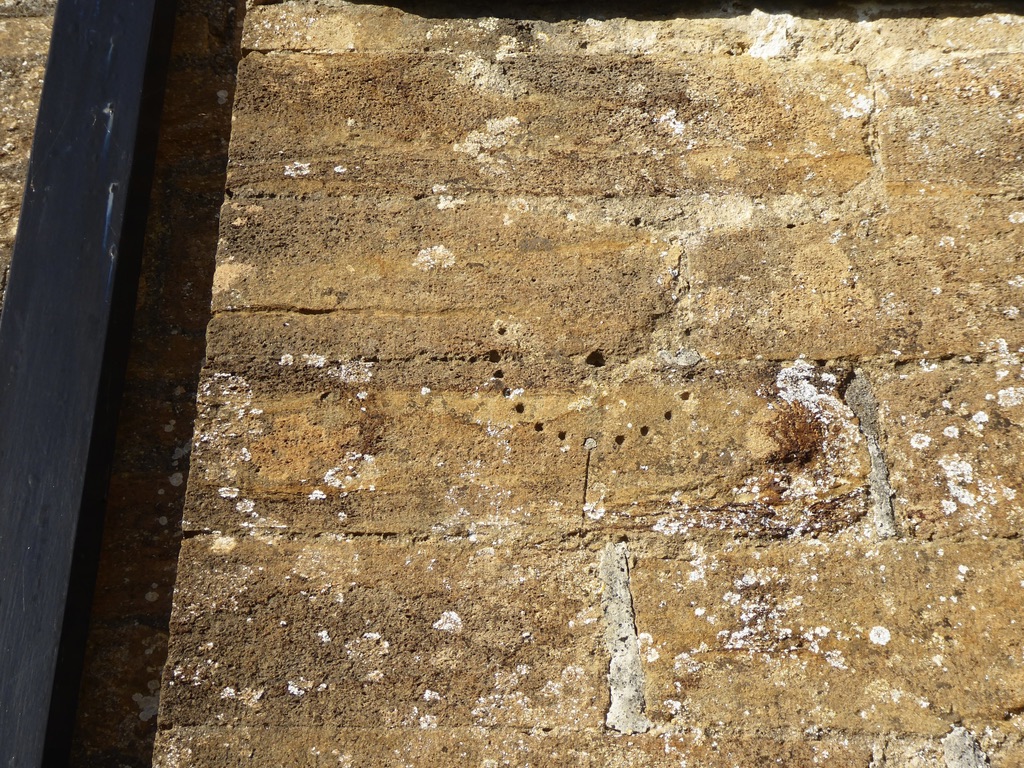
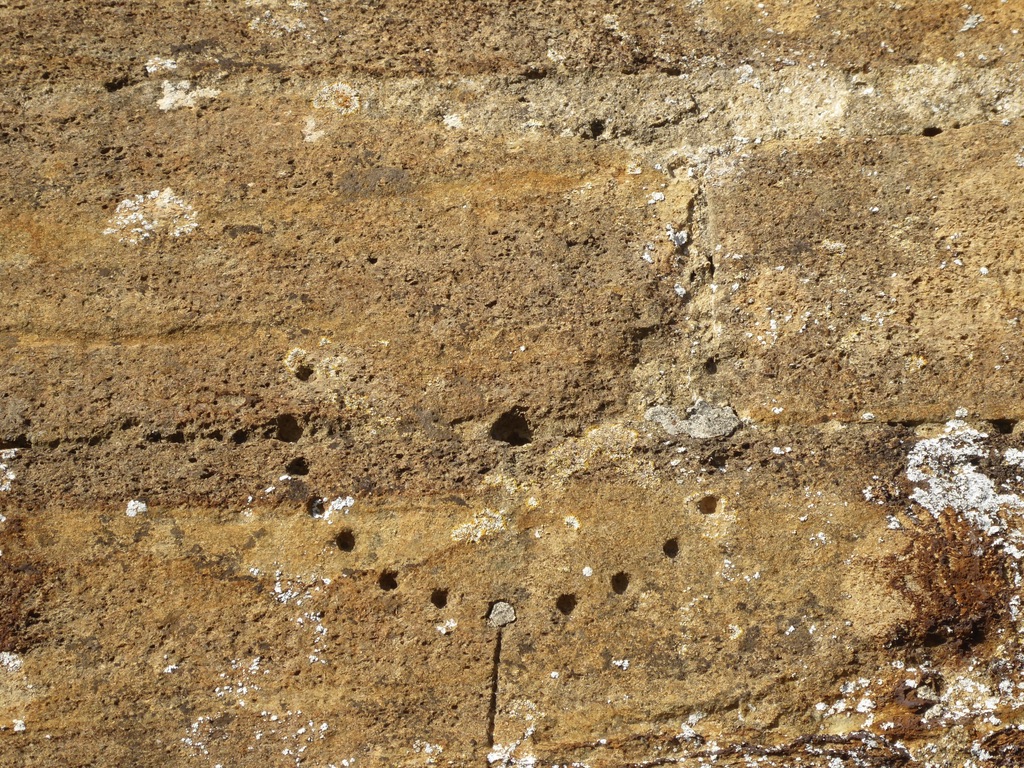
A distinctive and easily visible dial on S buttress between 2 recesses. 4 clear lines with faint traces of others. There are 5 obviously related pocks, with a couple of outliers above UL in a position corresponding to the curvature of the dial. The filled gnomon hole in the centre of the dial stone is large, perhaps enlarged over succeeding centuries (it’s not uncommon to find disproportionately large holes)
This dial is of particular interest for 2 reasons: i. the size of the pocks are graduated from small to large along the perimeter down to the noon line, which has the most emphatic hole. I can’t remember coming across such a clear example before. ii the Mass line – terce – is very clearly indicated both by being elongated, and by having pocks on either side of it, neither of which links to a line.
GRAFFITI
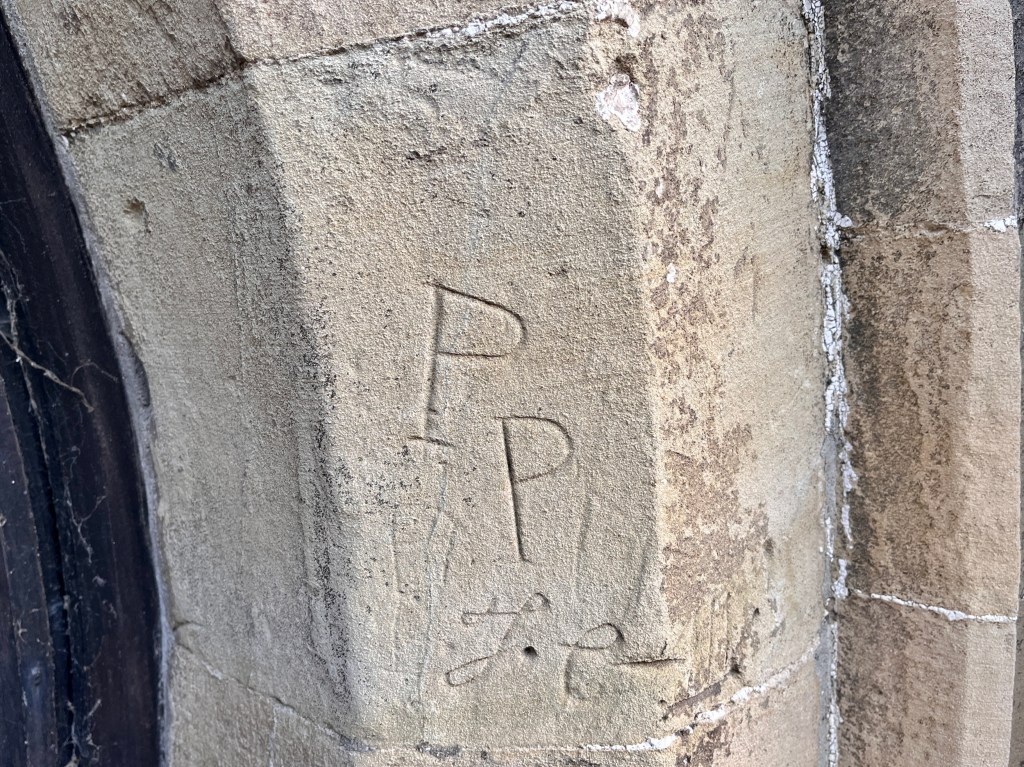
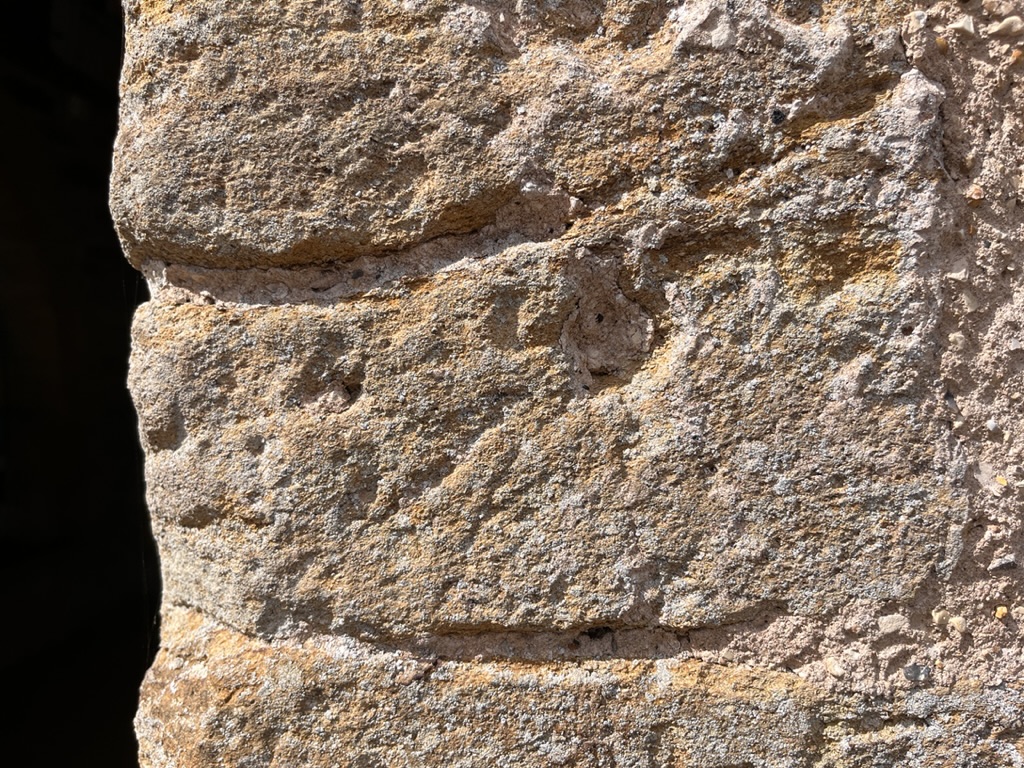
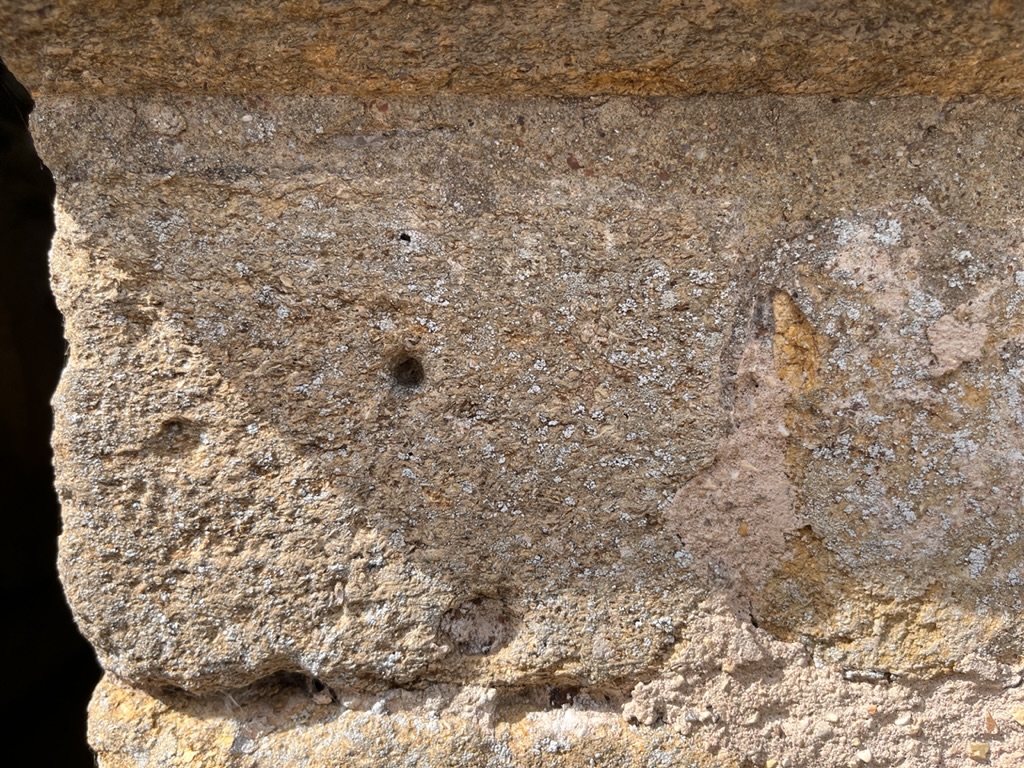
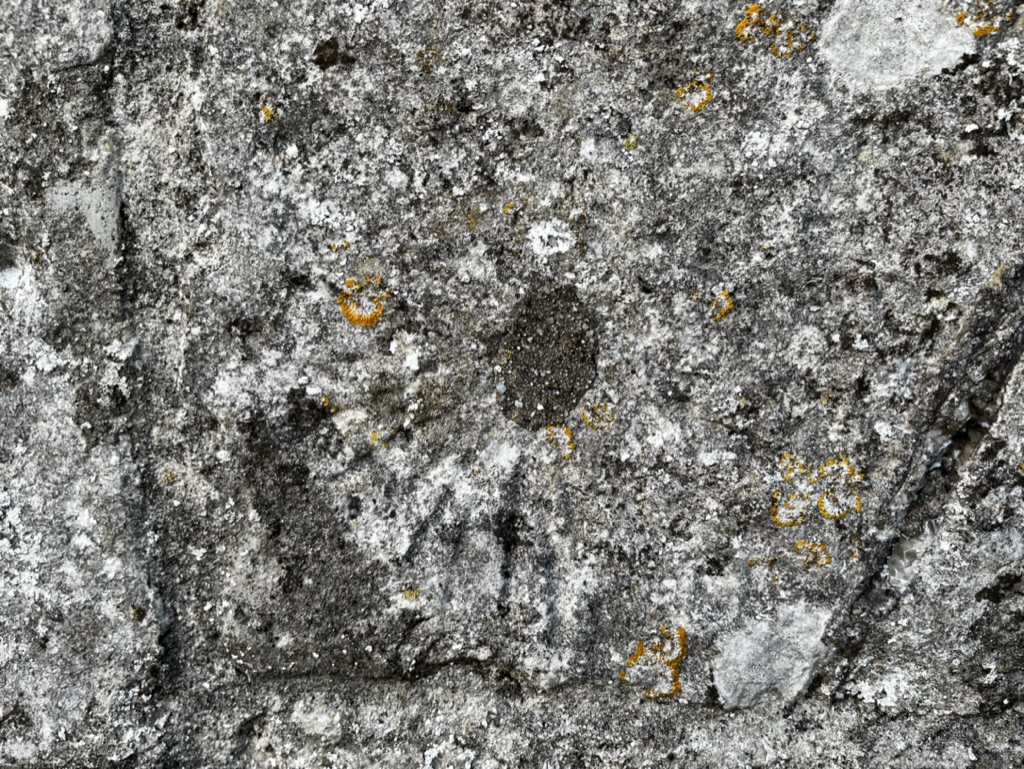
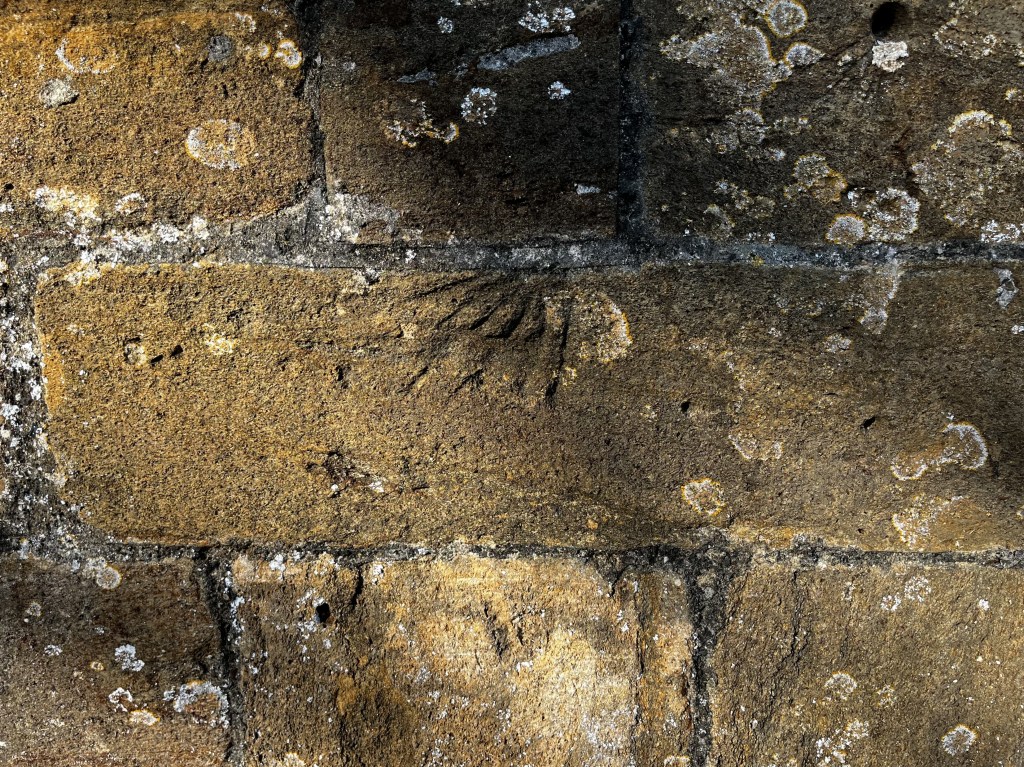
All Saints has some graffiti in the porch area. Here are 2 examples – image includes ‘witch marks’
GRADE II* † C12 origins; a chapel of Broad Chalke by 1299, from which date Vicars were recorded. From that period, C12 font bowl. Many sources only date the church to C17 with restoration by T. H. Wyatt 1866. One of several pretty villages in the secluded Ebble valley between Salisbury and Shaftsbury. 51.0149 / -2.0345 / ST976239
DIAL
The dial is on the W jamb of the porch, described elsewhere as a C19 lean-to. Restorations clearly entailed considerable relocation of stones over time. The dial is easy to overlook, being small, weathered, and upside-down.
St Mary . Alvediston . Wilts – Scratch Dial
The dial is located 1m high, W of the S doorway, inverted. BSS records it as accurately cut, upside-down, eroded and damaged. Unexpectedly it is described as a Rudimentary (Norman) dial, which dates it back to the C12 / C13 origins of St Mary. If so, the dial has survived intact for several hundred years, only to end up inverted on a C19 lean-to porch.
St Mary . Alvediston . Wilts – Scratch Dial
It is sometimes useful to revert a dial that has been rotated, so that the original design is clearer. There are 2 definite lines. There is no visible noon line but the line LRQ has both a mid-line pock and a terminal pock. Presumably this marked the most significant Mass time during the passage of the day, in this case equating roughly with the canonical Nones.
St Mary . Alvediston . Wilts – Scratch Dial
NOTES When I originally checked some usual resources for St Mary, it was intriguing to find that its history began in C17. A simple (or any?) scratch dial could not be expected. So I turned to the comprehensive BHO entry for the Parish, which explains the origins of St Mary and its medieval dial in more detail:
Of the 12th-century church, only the nave, small and with thick walls, appears to survive. The chancel was possibly replaced in the 13th century but may have survived longer. In 1585 it was said to be ‘down’ and was afterwards presumably rebuilt or repaired. The south transept or chapel was built in the 14th century; there is an effigy of a knight in armour below the south window. The north transept may also have been built in the 14th century. The tower was built in the 17th century. In 1865 the church was extensively restored to designs by T. H. Wyatt. The north transept was rebuilt, the north chapel was built, and the chancel was given 13th century features.
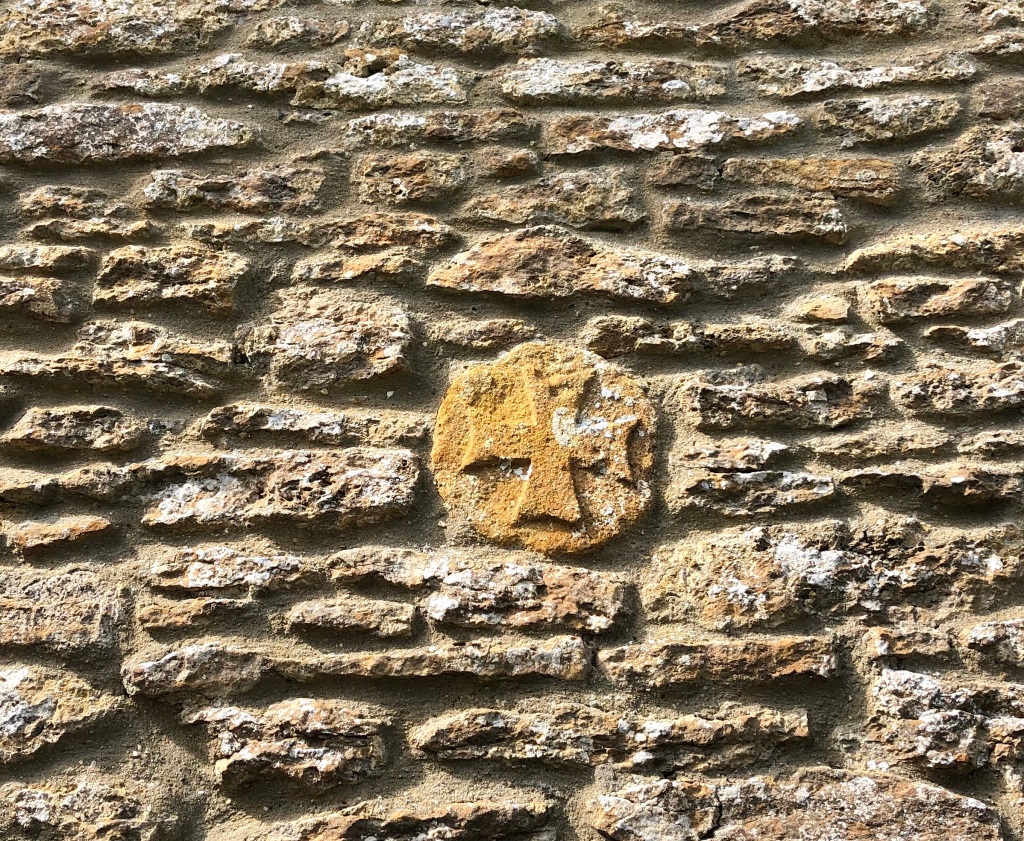
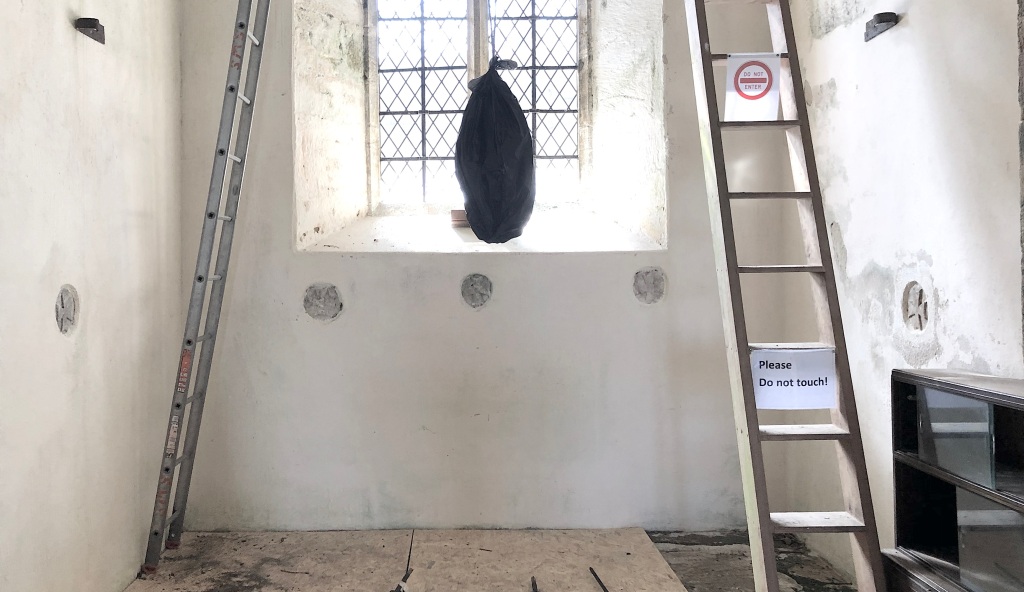
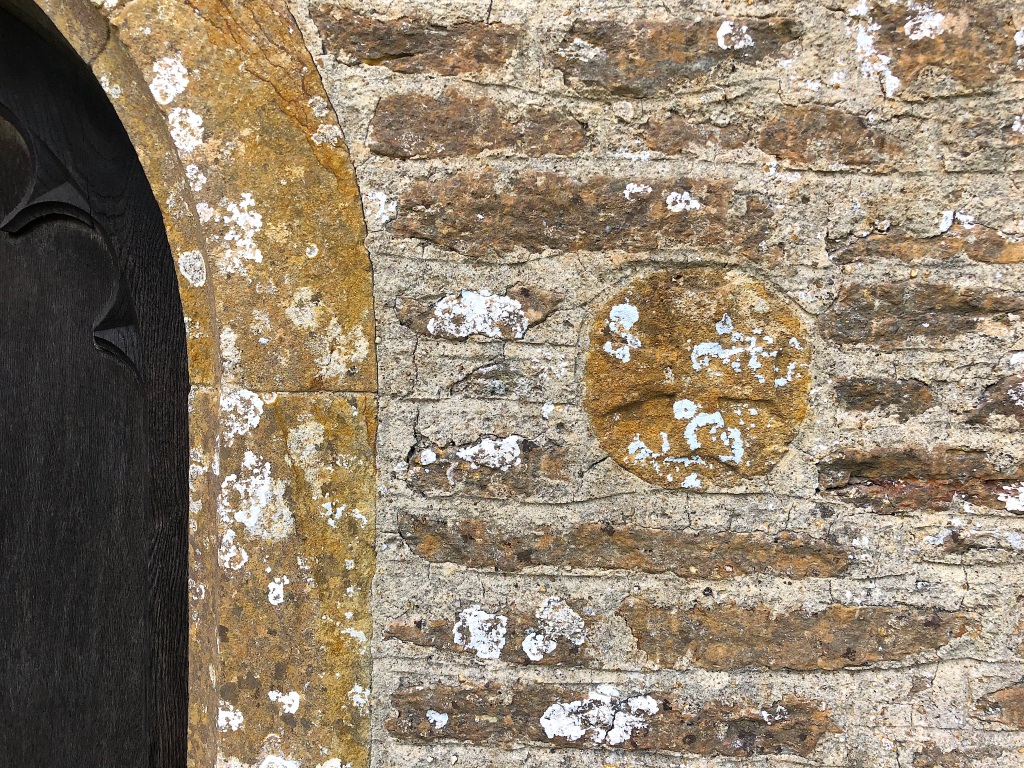
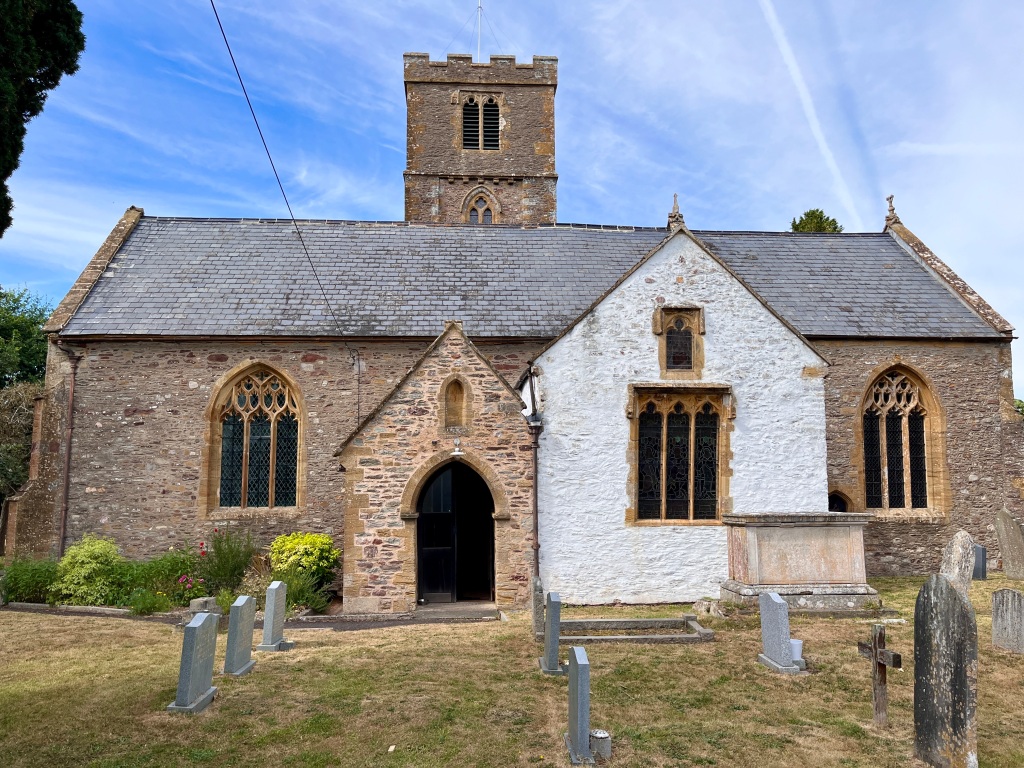
GRADE I † Late C14, C15; C17 alterations inc. porch with date 1650 on keystone. Restorations mid-C19. Very recent skilled restoration 2020. Millennial dial with date-casting gnomon (cf BUCKLAND NEWTON). C18 box pews, candlelit services, Purdue bell c1580. Graffiti and witch marks. 14 formy consecration crosses both outside and inside (see locations below). A perfect small Dorset church standing alone, remnant of a plague village. There has been a recent very skilful restoration that has not impacted on the original charm of St Mary. 6m S of Sherborne. 50.8868 / -2.4902 / ST656098
,
St Mary . Holnest . Dorset – Keystone
SCRATCH DIAL
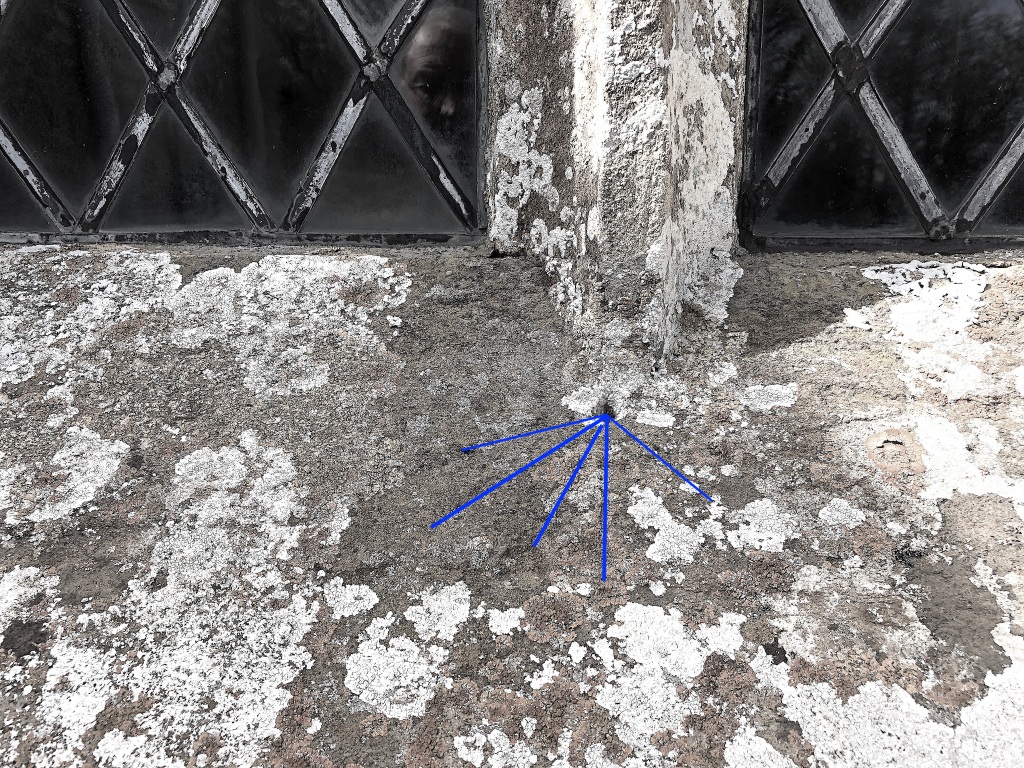
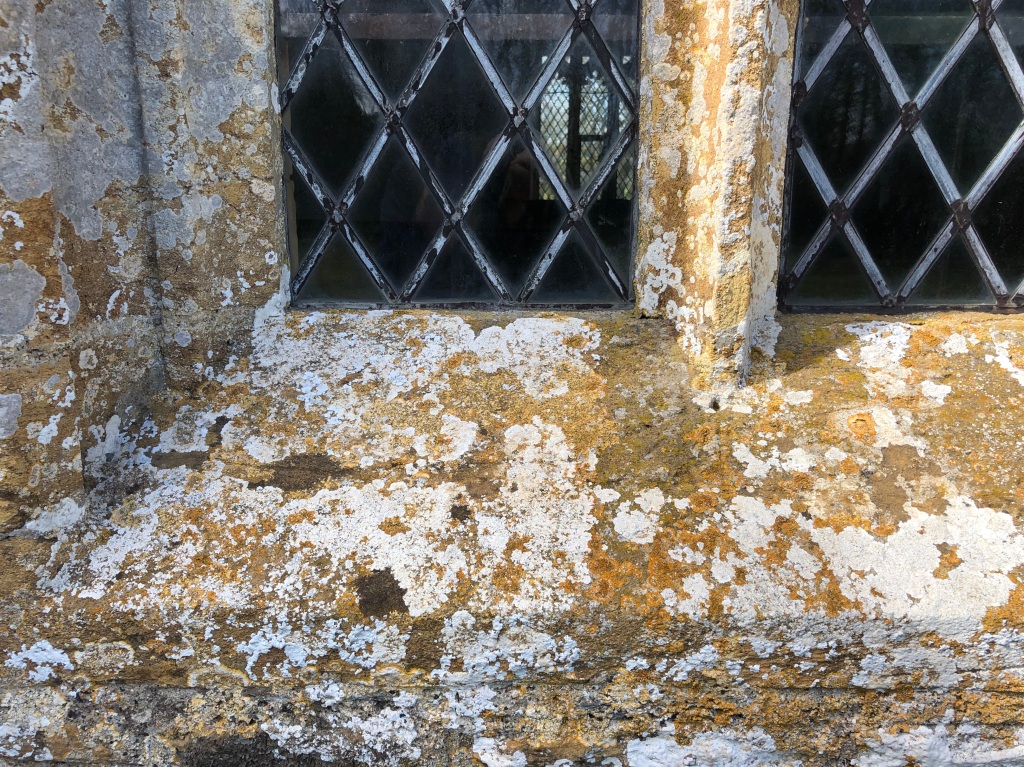
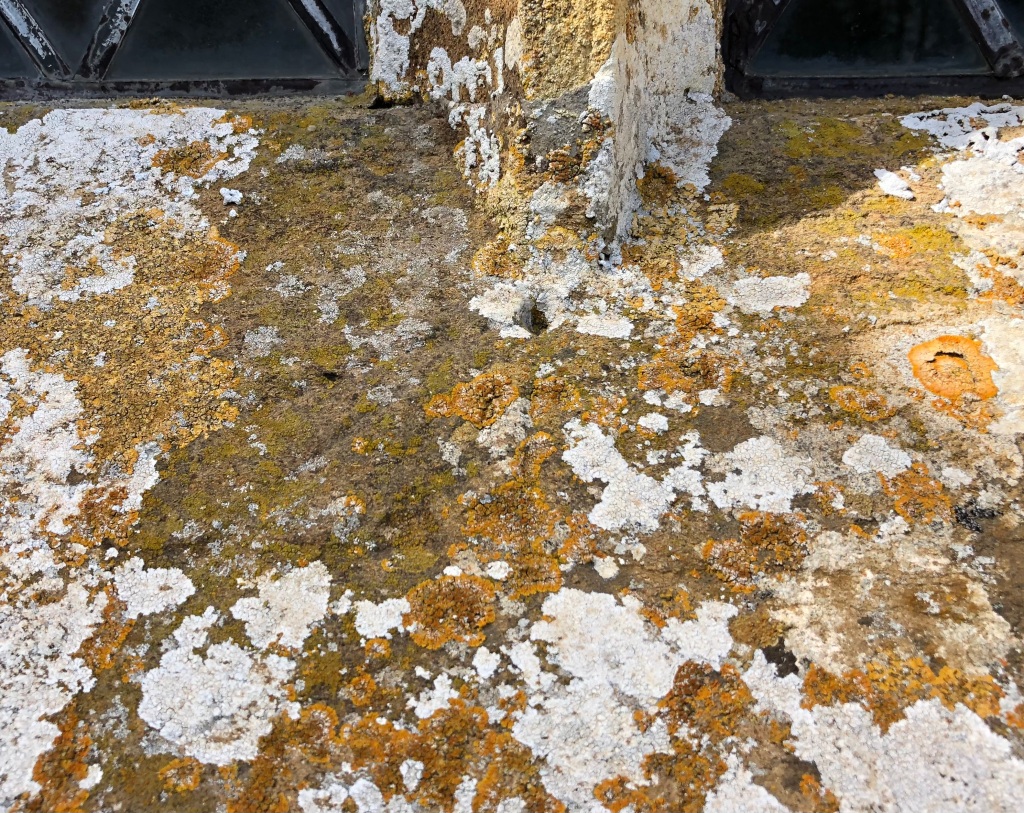
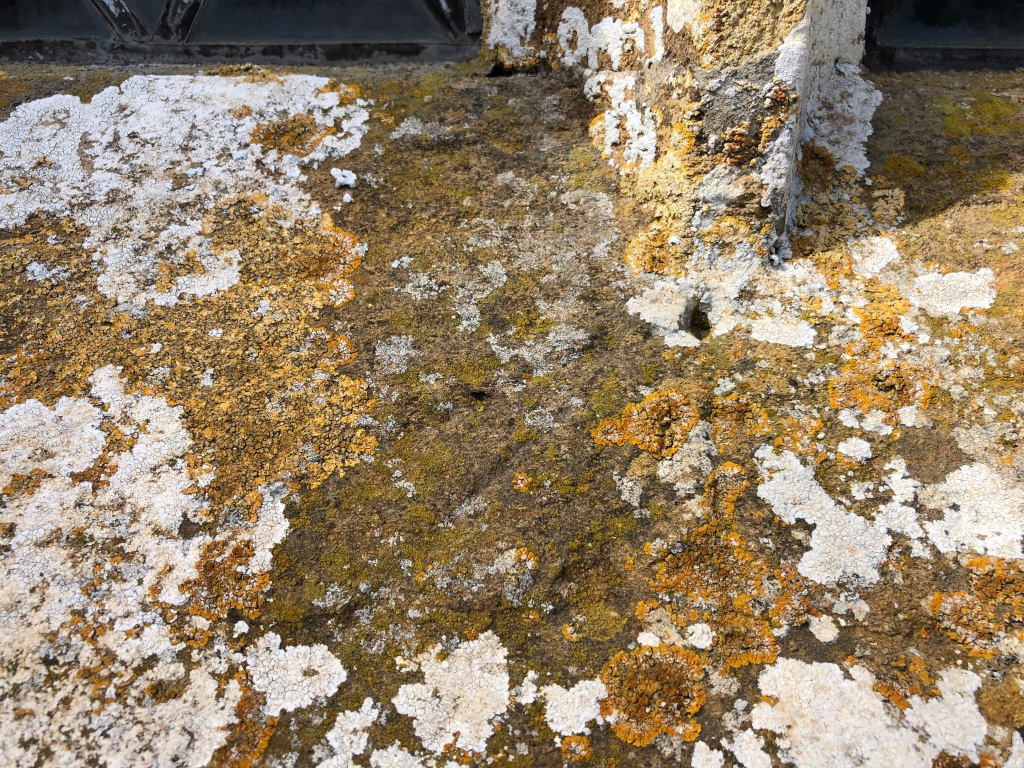
St Mary . Holnest . Dorset – rare scratch dial on window-sill
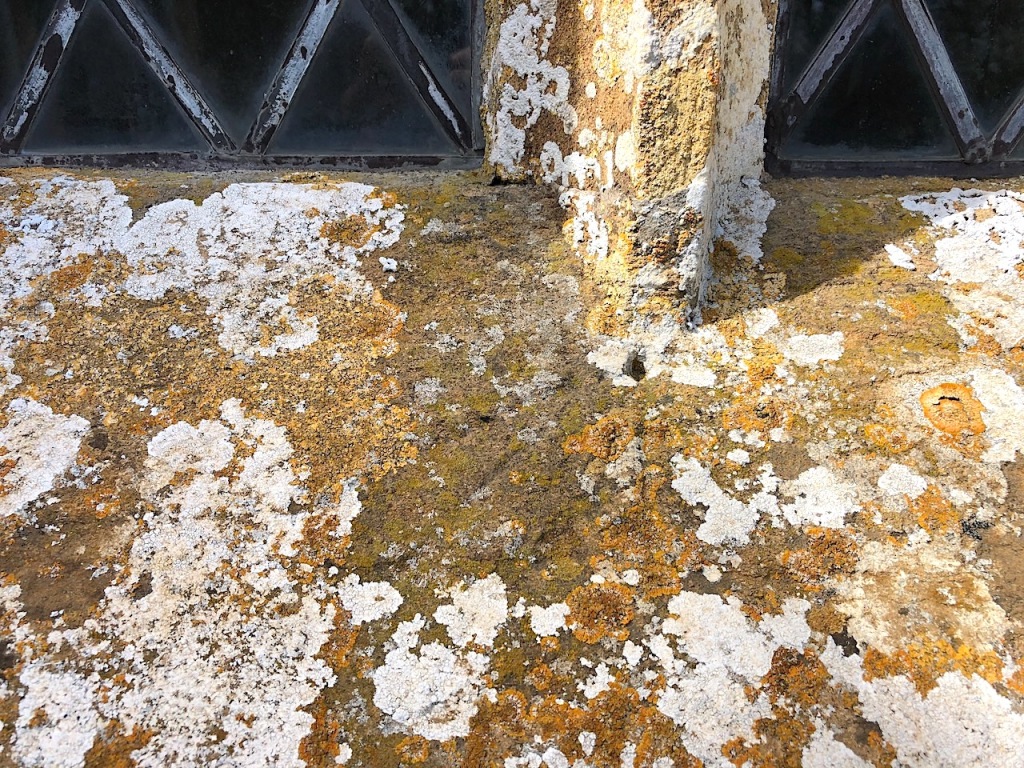
A remarkable and very rare C15 dial, possibly unique (cf nearby THORNFORD). It is located on a window sill of the S aisle, incised at an angle of 35º. It is quite difficult to examine – even close to – because of erosion and lichen. The style hole is centred on the stone divide between 2 windows. To be effective it must have been angled forwards: C15 dial deliberately positioned centrally. Gnomon must have been bent over, perhaps horizontally. Lines are quite accurately cut GLP.
There were originally 12 lines – the full complement for a semicircular dial. However, many are so weathered that they are barely visible – some not at all. The church is across the fields from us and I have spent some time with the dial, examining it and photographing it at different angles and in different light. I’ve managed to identify 8 lines including the horizontals, much as shown on the second BSS diagram below. The most visible lines are these:
St Mary . Holnest . Dorset – diagram of scratch dial on window-sill
St Mary . Holnest . Dorset – scratch dial diagrams BSS
St Mary . Holnest . Dorset – rare scratch dial on window-sill
VERTICAL DIAL
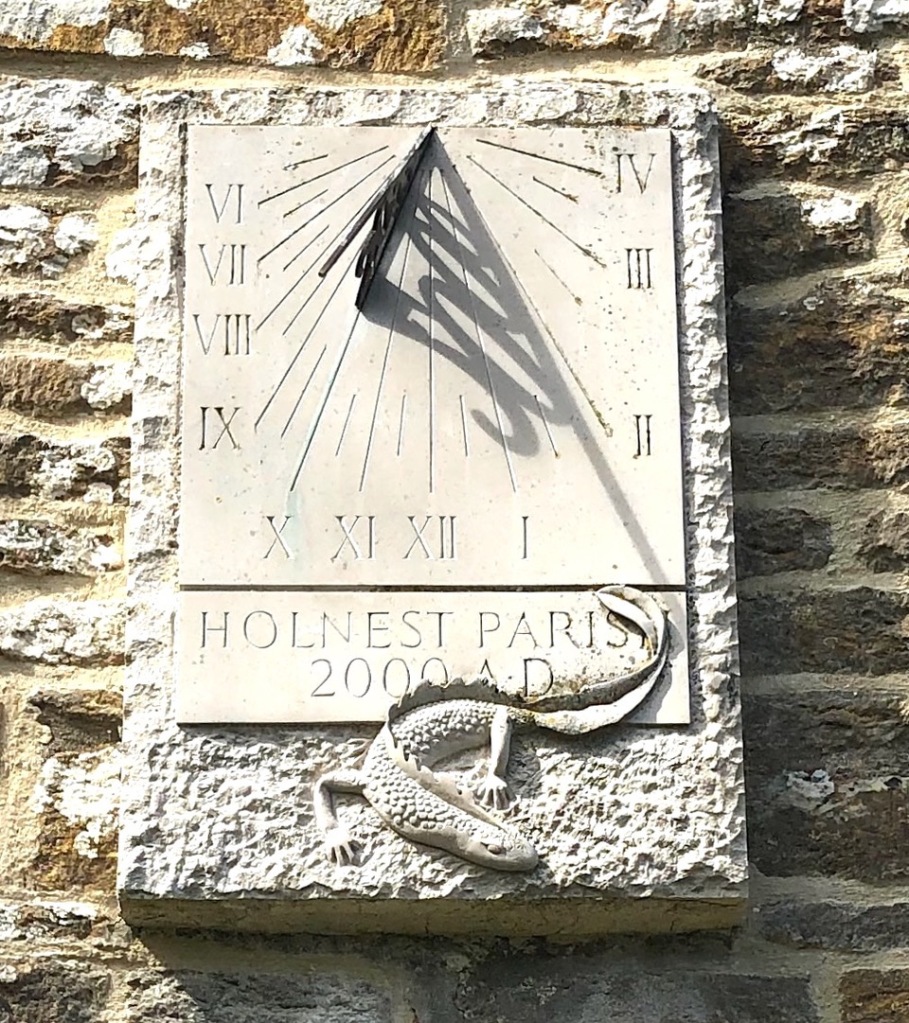
The porch has a date of 1650 and a new [millennium] sundial commemorates the Great Crested Newt that meant that a field nearby could not be developed for housing. Friends of Holnest Church.
A particularly good example of a meaningful local dial designed specifically for its location and time. The Battle of the Newt being won as the new Millennium approached, a fine dial to record both events was fully merited.
St Mary Holnest: millennial vertical dial dated 2000 with unique Newt Protection Symbol
WITCH MARKS & GRAFFITI
St Mary . Holnest . Dorset – witch marks, Marian marks, graffiti
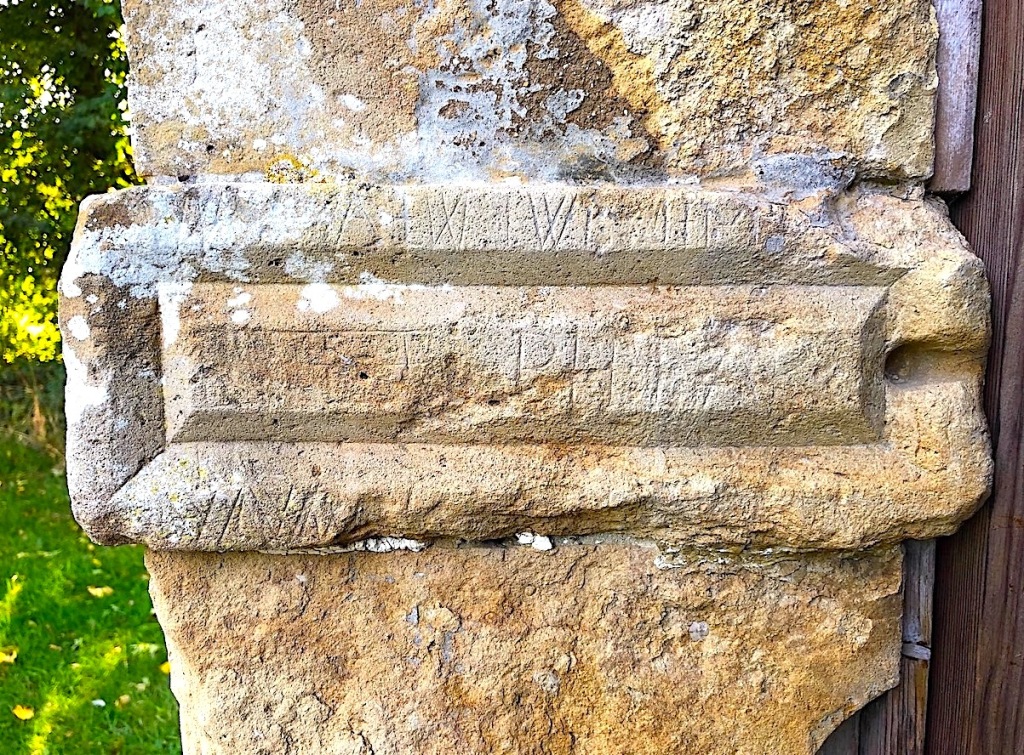
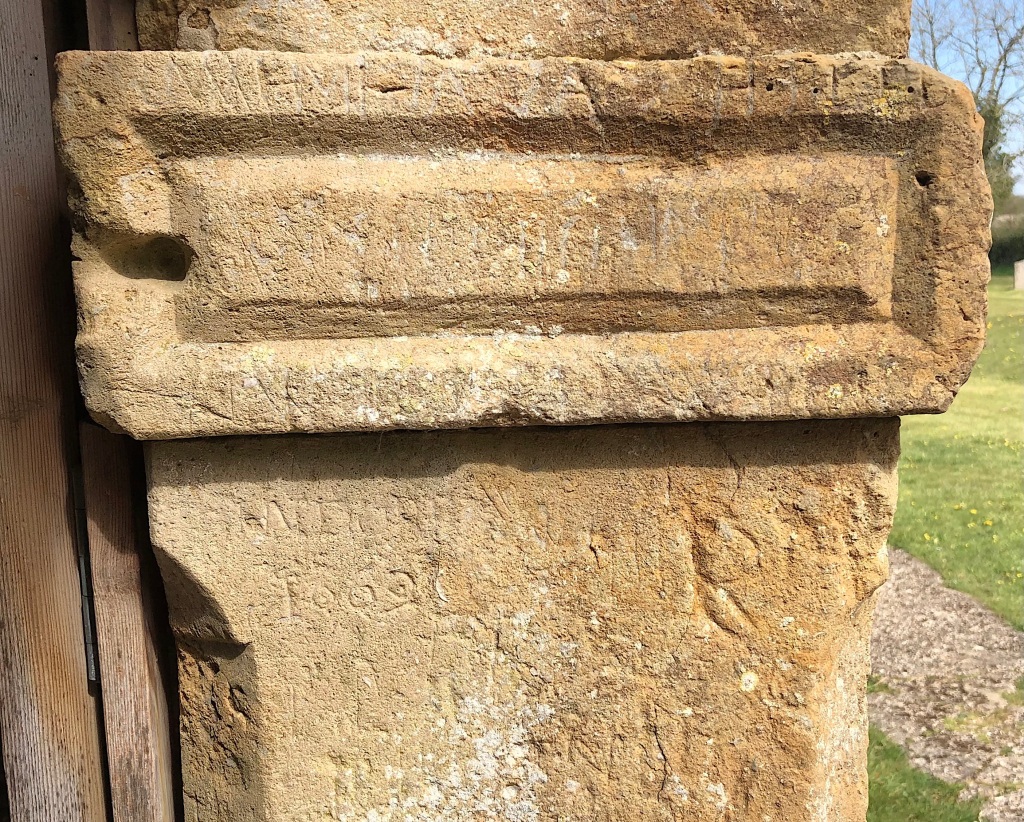
The S porch has a rich variety of medieval church marks. The example stones shown above have witch / ritual protection / apotropaic marks to ward off evil, in particular a number of Marian marks VV (Virgo Virginum / Virgin of Virgins). There are also initials and C17 dates.
CONSECRATION CROSSES
There are 14 in all, 12 being the usual maximum. 5 are inside the church on the tower walls
Consecration Crosses: On chancel— flanking E. window externally, four crosses; flanking S. doorway, two crosses. On nave—W. of heads of N. windows, two crosses. On S. aisle—over E. window and W. of S. window, two crosses. On W. tower, on N. and S. walls, one cross and below W. window, two crosses; formy crosses fourteen in all, mediæval. BHO
St Mary . Holnest . Dorset – Consecration Crosses
GSS Category: Scratch Dial, Mass Dial; Church Marks, Witch Marks, Protection Marks; Consecration Crosses
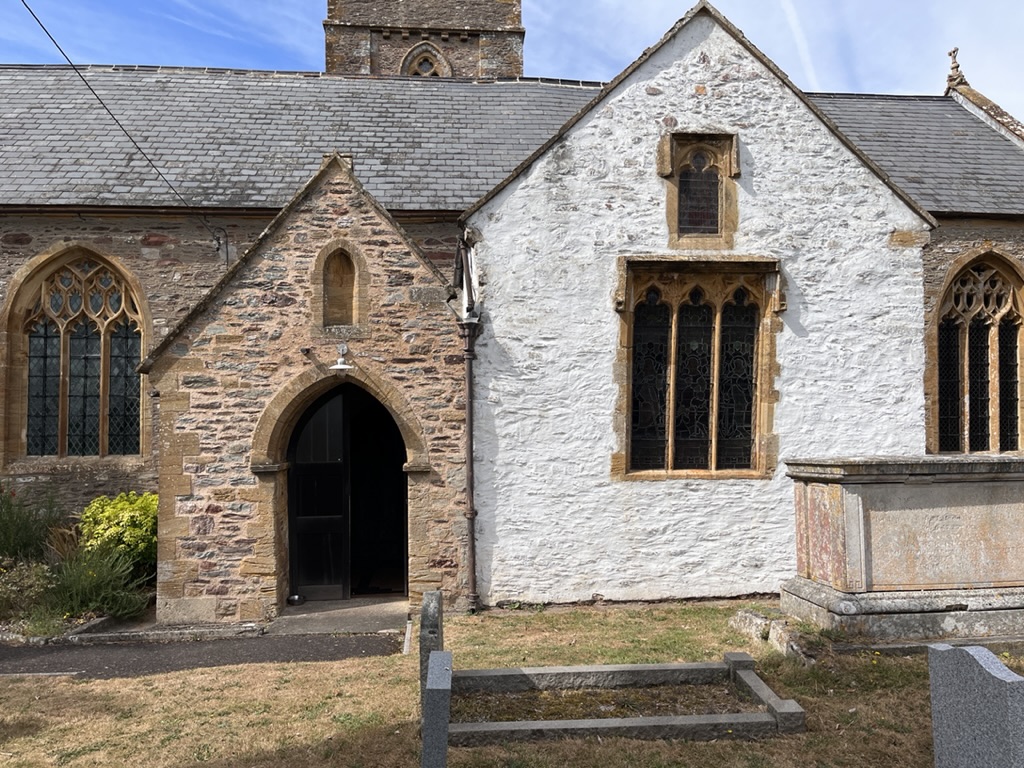
GRADE I † C12 origins, mainly C13; C15 perp additions and C19 restoration. A most attractive building, highly praised as an uncommonly interesting churchPEV. Called All Saints until C16. Traces of C17 wall paintings. 6 bells, earliest 1590. Additional dials found. 5m E of Taunton. 51.0224 / -3.0355 / ST274252
DIALS
DEH visited St Michael in Sept 1913 and noted a group of 3 dials on W side of the porch. He recorded All three of these dials are close together, very poor in construction, and one or other of them is probably only a copy dial, but the lines of all have been added to, and it is difficult to say which is the original. Dial 2 is the least explicable.
There are 3 other dials (one is debatable): 2 on E side of the porch, in much the same position as Dials 1-3; 1 on the W window jamb of the whitewashed chapel. This last is in good condition comparatively; and the more precise design suggests it was the latest and presumably superseded the others in accuracy and legibility.
DIAL 1
DEH: 152. (1) This dial is on the w. side of the s. porch, 4 feet 8 inches above the ground. The noon line is 4 inches in length, the style hole is filled, and the aspect is s. by 8° e.
A fairly conventional morning dial with 9 (10?) lines, with the lines marking (roughly) Tierce and noon cut deeper. It’s difficult to interpret the pocks, if that is what they are. Several correspond with the relevant radials; the vertical seems to have a 2nd pock lower down (Mass time marker?). Possibly they were added later.
DIAL 2
DEH: 153. (2) This dial is close by the side of No 1. The noon line is 4 inches in length, the style hole is filled, aspect as above.
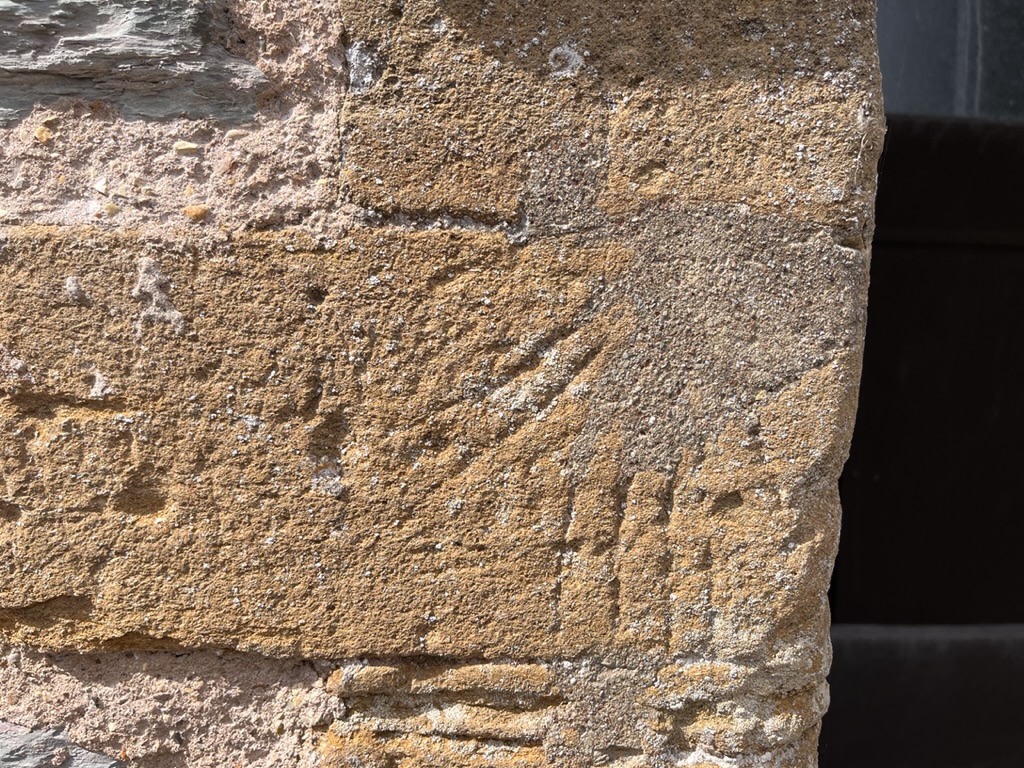
Dial 2 is confusing. How did that mish-mash of lines, hole-infilling, and extensive repair come about – and when? There’s no doubt that in the mix is a very basic dial with 2 lines curving left that appear to radiate from the mortar line above.
The 4 quite deep and almost parallel incisions just below the 2-line dial are problematic. It’s hard to see them as part of the overall dial design on that stone. And 4 verticals in a row would make a poor marker for noon. Also, it does not seem that they would converge at the same position as for the identifiable dial. In fact, seen on their own, they might be taken as an apotropaic mark of the grid and pock kind (though they are not convincing in that respect either).
DIAL 3
DEH: 154. (3) Six inches above No. 2, a dial with noon line 3 inches in length, the style hole filled, aspect as above.
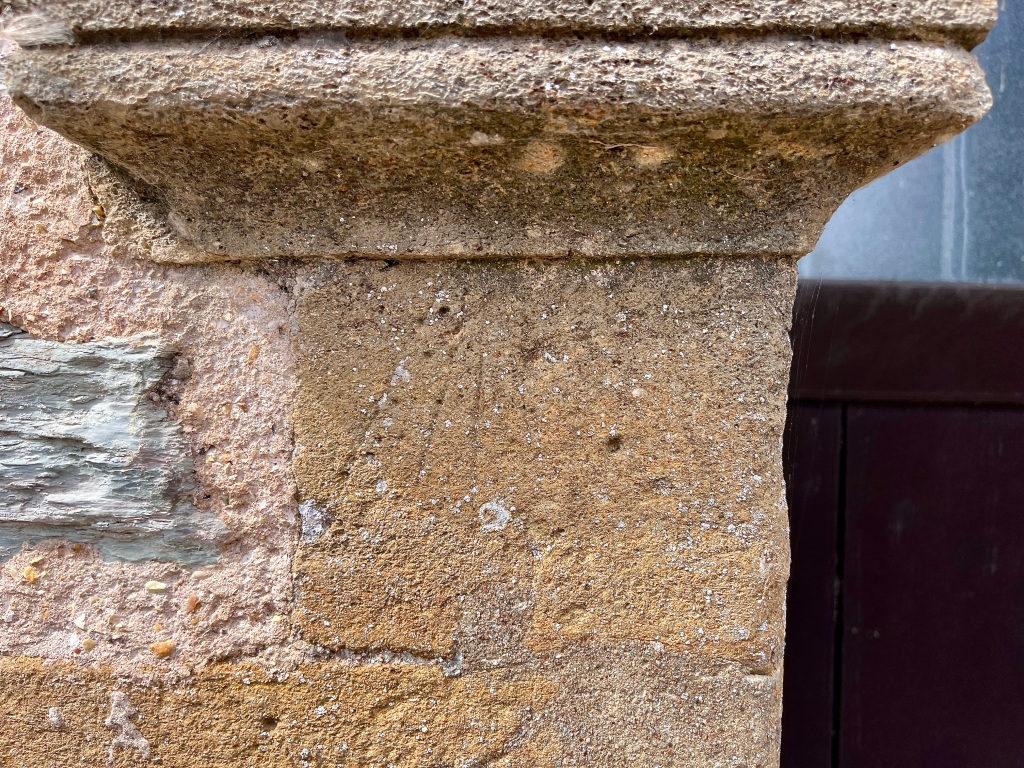
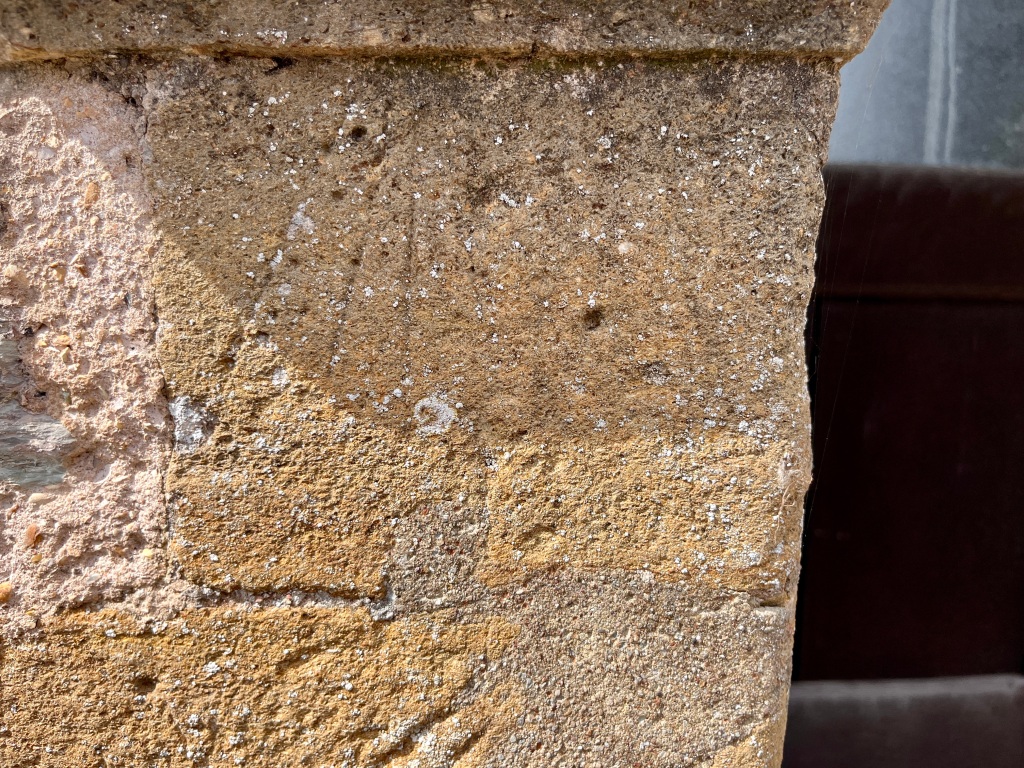
This morning dial has 3 lines that radiate from the stone overhang, There is a small hole at the apex where presumably a thin style was inserted. The upper line ends with 2 clear pocks, and must have marked the most significant Mass time of the day (in this case, Tierce)
DIAL 4
A rough, eroded, and damaged dial on E jamb of the porch, level with dials 1 – 3. There are 6 detectable lines, 2 very faint. Again, a morning dial, with Tierce marked with a pock. The filled gnomon hole is big, but that may have occurred over time.
DIAL 5
This small dial is in the corresponding position opposite dial 3. It is simpler and less well defined, with a small style hole and 3 detectable lines radiating from the hole, only one being easily visible. It might be classified as ‘doubtful’ but for its relationship to dial 3 on the other side of the entrance, which I think upgrades it to ‘plausible’.
DIAL 6
This attractive dial, originally completely encircled, has survived the passage of time rather better than the others. There are 18 lines that make up a 3/4 circle, with a deeper cut noon line and a large style hole. The angles between the lines are somewhat random but I expect that the dial was effective as a marker of the progress of the day.
The way in which the dial stone has been cut to fit the space could suggest that it was relocated. In a way it might make more sense if rotated 90º clockwise, but testing that theory using a photo didn’t look right.
GRADE 1 † C12 origins (nave), enlarged C16 & C17. Mid-C19 restorations; chancel rebuilt. Despite the village name, C16 tower. Fascinating history, with strong links to George Washington: The Lawrence family, Lords of the Manor since the C16, married into the Washington family in 1381 and their Coat of Arms incorporates the Stars and StripesBLB. Much of interest inside inc an impressive barrel organ, and good stained glass E window. Fine chest tombs in the churchyard. 6m S of Wareham, inland from the jurassic coastline at Kimmeridge. 50.6275 / -2.1265 / SY911808
DIAL
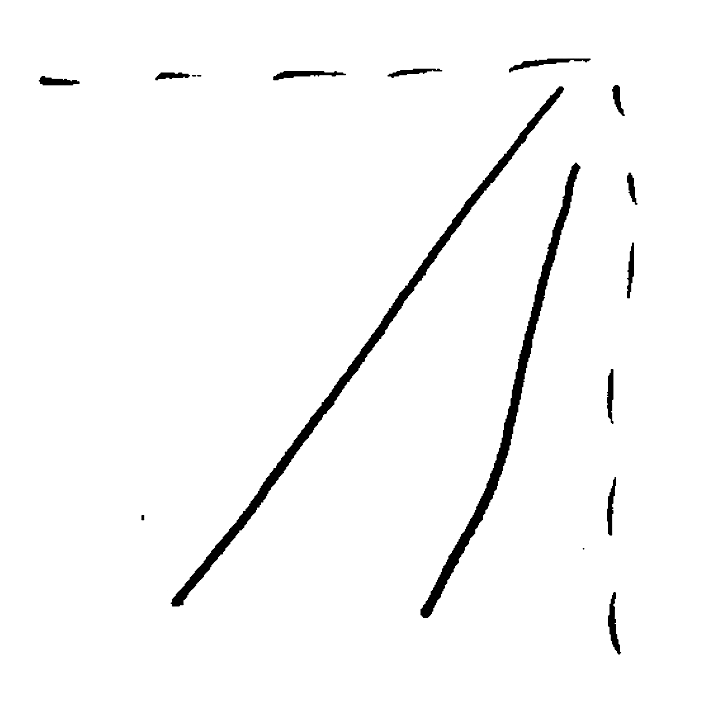
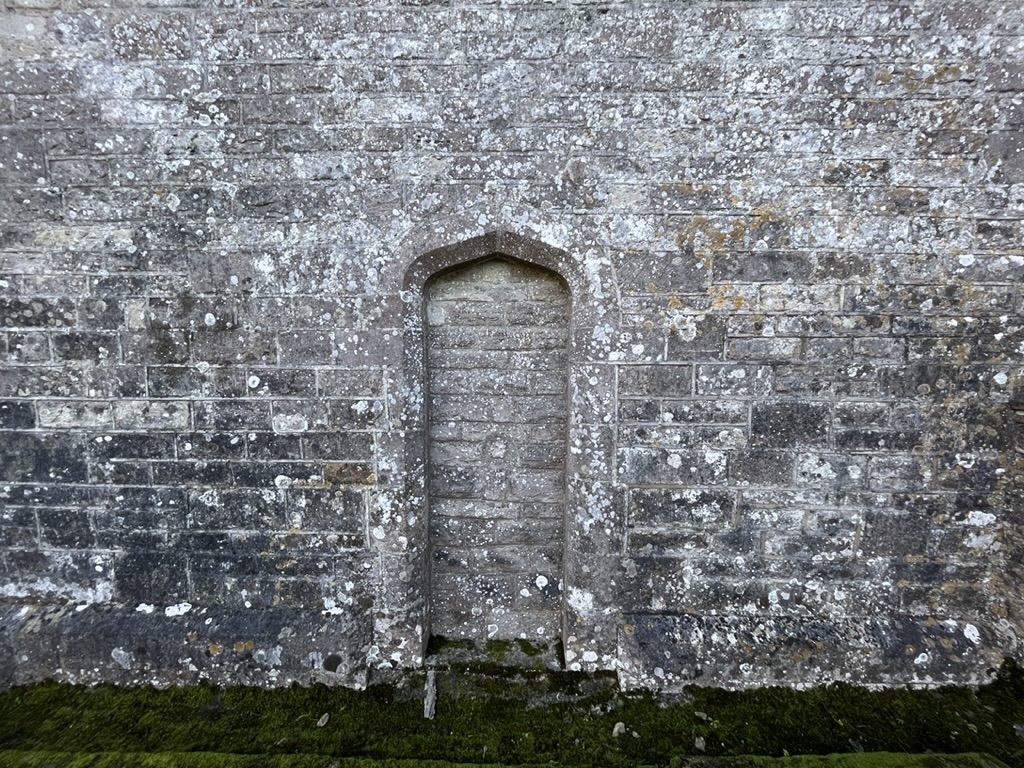
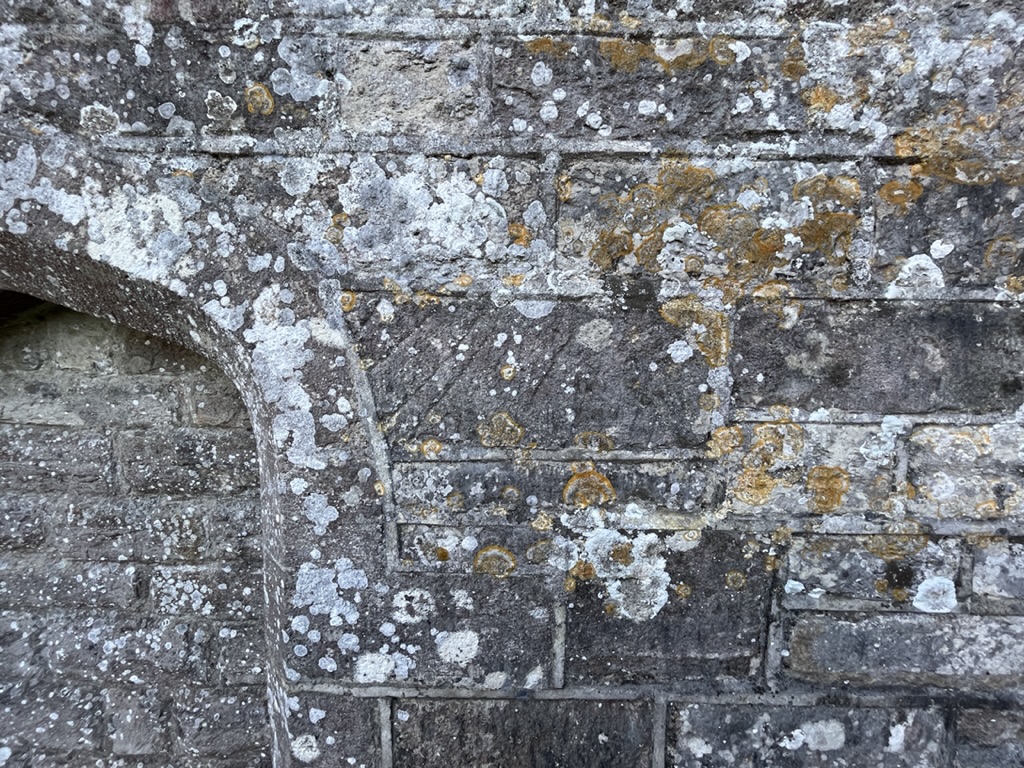
In his 1997 survey GLP noted a single dial relocated to the N wall of the Chancel, E of blocked N doorway. He described it as doubtful – superficially a poorly preserved dial… with 2 lines on a reshaped stone… no gnomon hole, probably relocated during C19 work on the chancel. He found other stones in the vicinity with similar markings – perhaps through weathering – and concluded that the ‘dial’ might not actually be a genuine one at all.
As with a couple of other Dorset churches recently, I couldn’t pinpoint a design such as GLP describes. There are obvious lines or striations on some stones eg top R of the doorway (see below), but little to report on the wall E of the door. The lack of a gnomon hole is one reason for missing eroded dials. This lack may also reinforce doubts about identifying dial-ish marks as being part of a dial. Anyway, if there is one, I missed it.
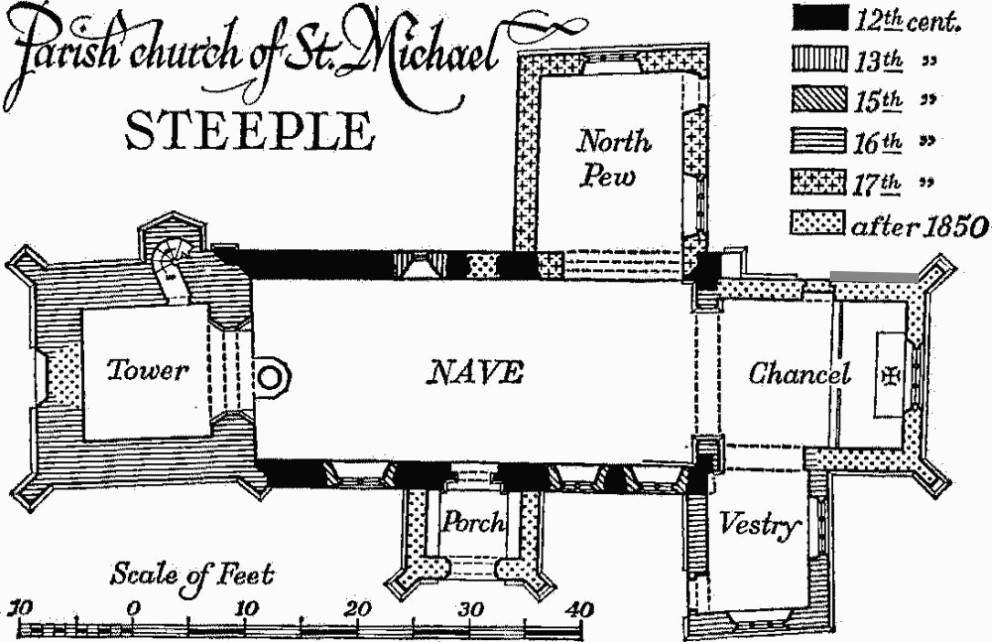
St Michael . Steeple . Dorset – BSS
The dilemma has been whether to post, rather pointlessly, a failed dial search. However this small secluded church has other merits. It earned its Grade I listing for special architectural or historic interest. I have included a few photos below to illustrate this. The Washington link is only one of the significant features.
St Michael . Steeple . Dorset – North Doorway
IMAGES OF ST MICHAEL AS COMPENSATION
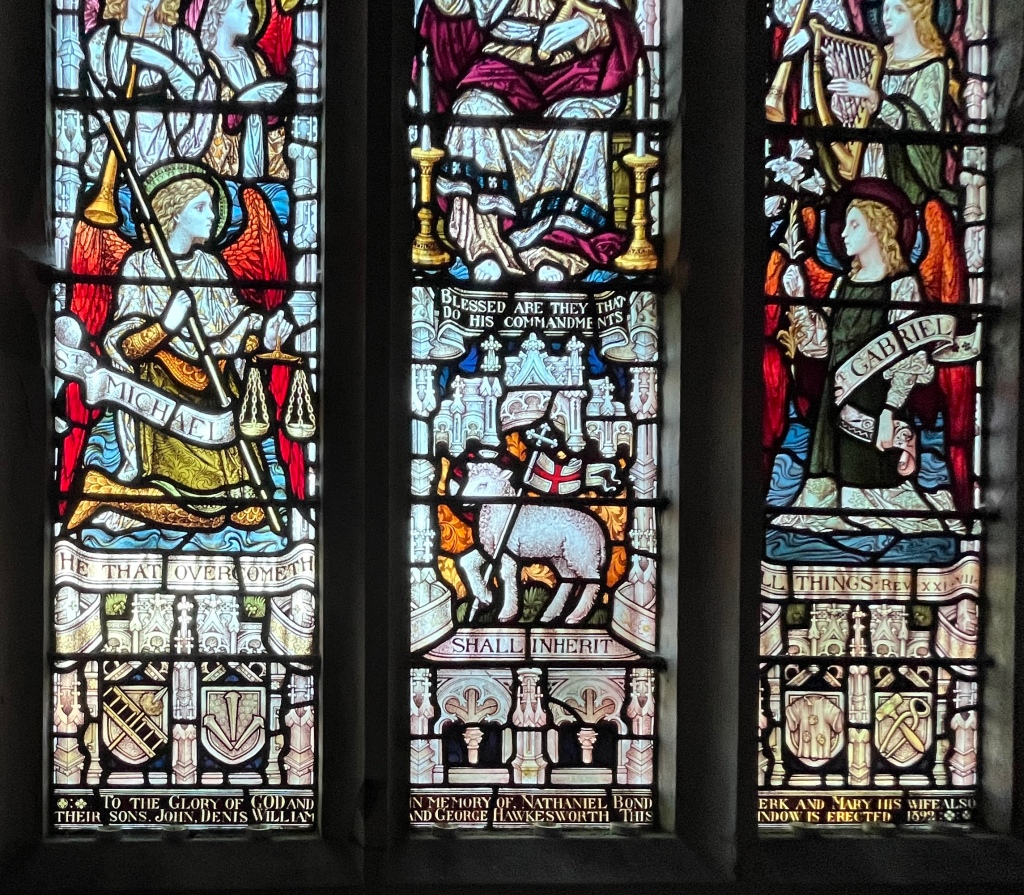
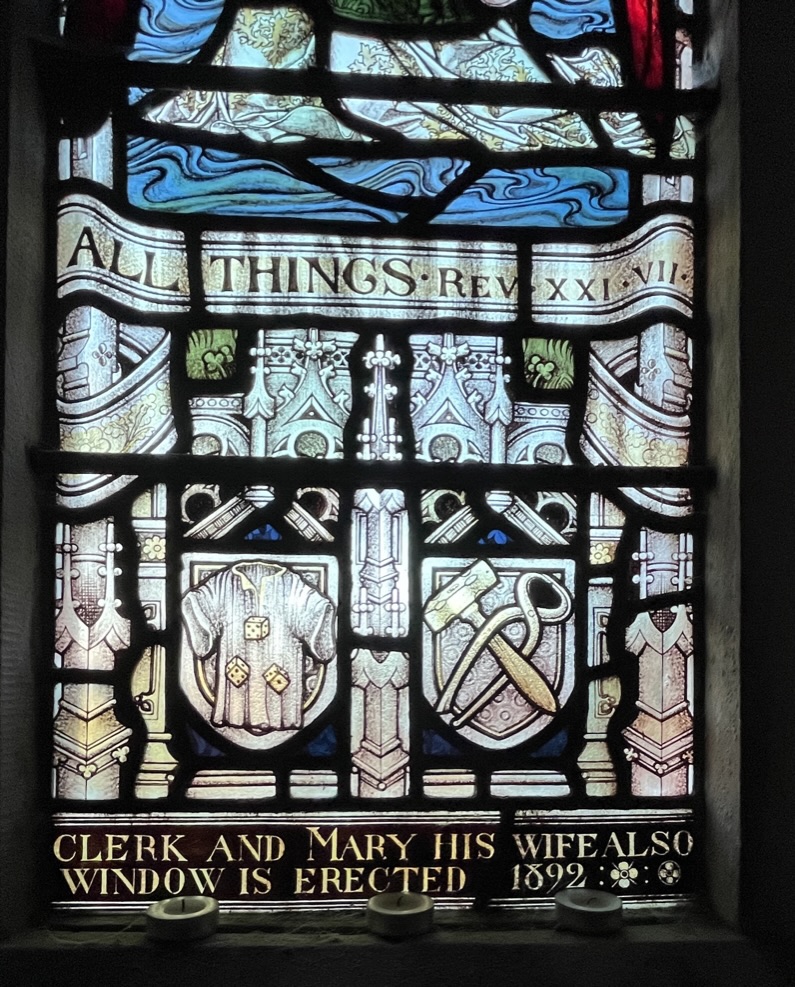
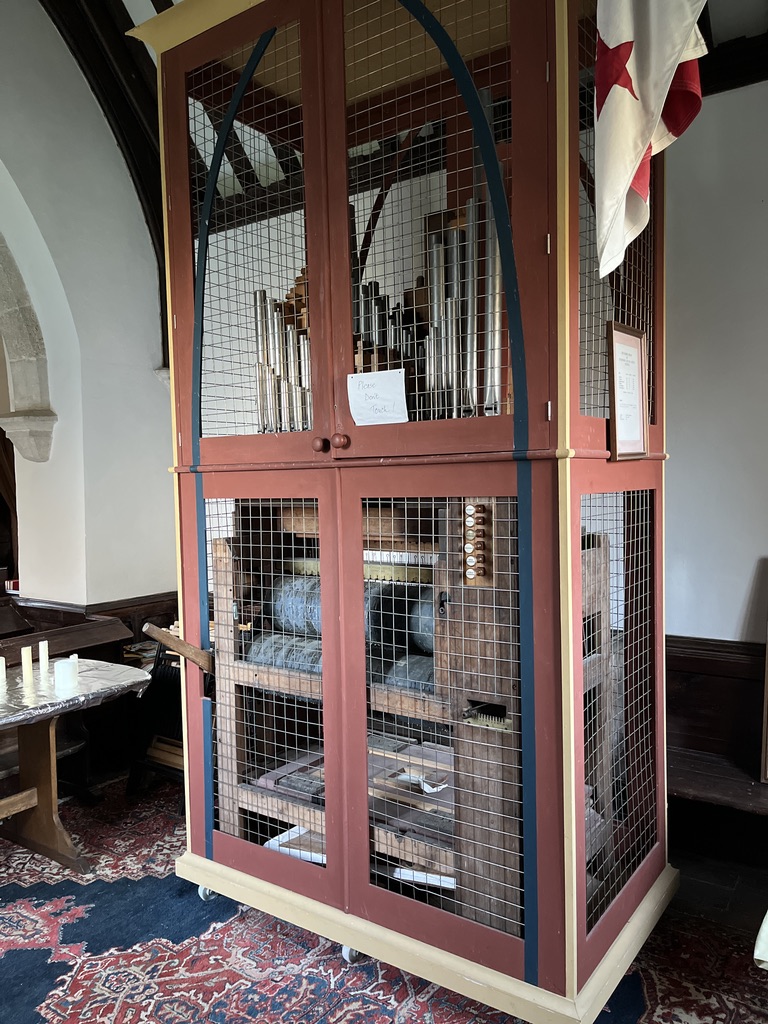
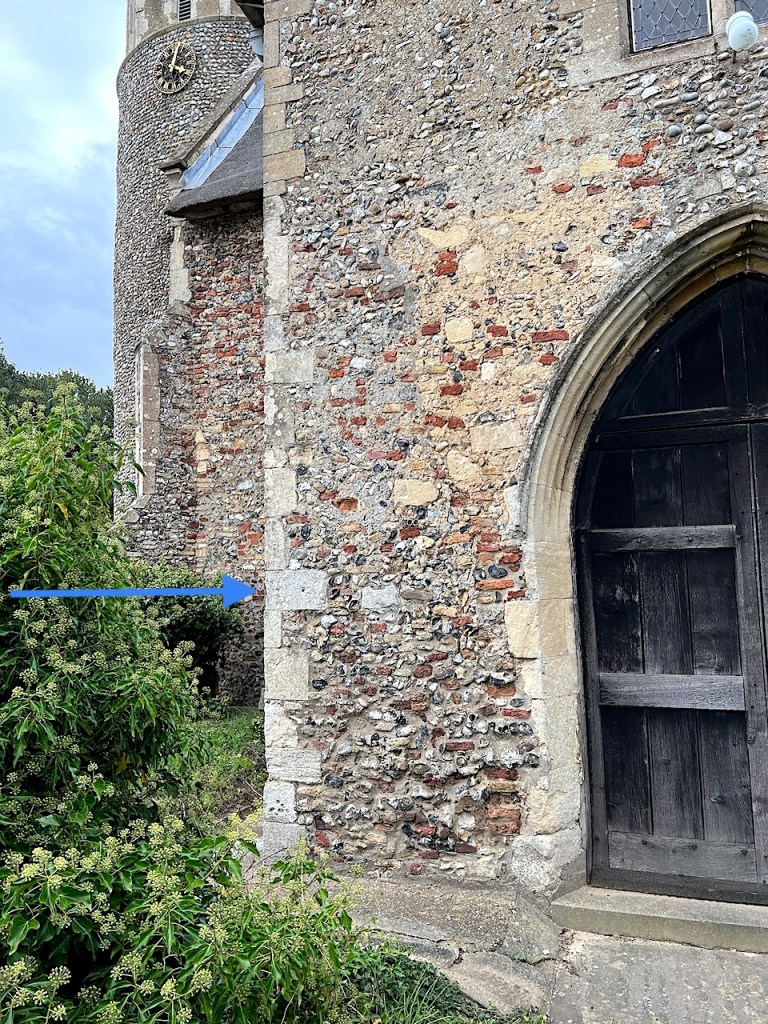
Chest Coffins in the churchyard; crude apotropaic (part-)hexfoil of uncertain age; Marian VV ‘witch’ mark inside the porch; 2 examples of the E window stained glass (image 2 shows dice used for the division of Christ’s robe); the barrel organ
St Michael . Steeple . Dorset – Chest Coffins, Hexfoil, Marian mark, Stained Glass, Barrel Organ
St Edmund . Acle . Norfolk (π ChurchCare / Keltek)
GRADE I † Norman traces; C13, C14; mid C19 restorations. Nave roof thatched; round W tower with octagonal bell stage; high porch; early font. A fascinating and most unusual building to admire, both the exterior and interior. 12m from Norwich. 52.6372 / 1.5474 / TG401102
DIAL
A fairly conventional encircled dial on a quoin stone on W side of the porch. The forenoon is well-marked, evidently the most important part of the day for religious observance. The emphatic gouge at (very roughly) Nones is presumably not contemporary, being very much at odds with the more carefully incised lines. Possibly it marks a later change of the principal Mass time to the afternoon (a new incumbent?). There are ± 8 lines but erosion and damage prevents an accurate count.
St Edmund . Acle . Norfolk – Scratch Dial (John Renner)
GSS Category: Scratch Dial; Mass Dial
PHOTOS: John Renner, with thanks; ChurchCare / Keltek (header image)
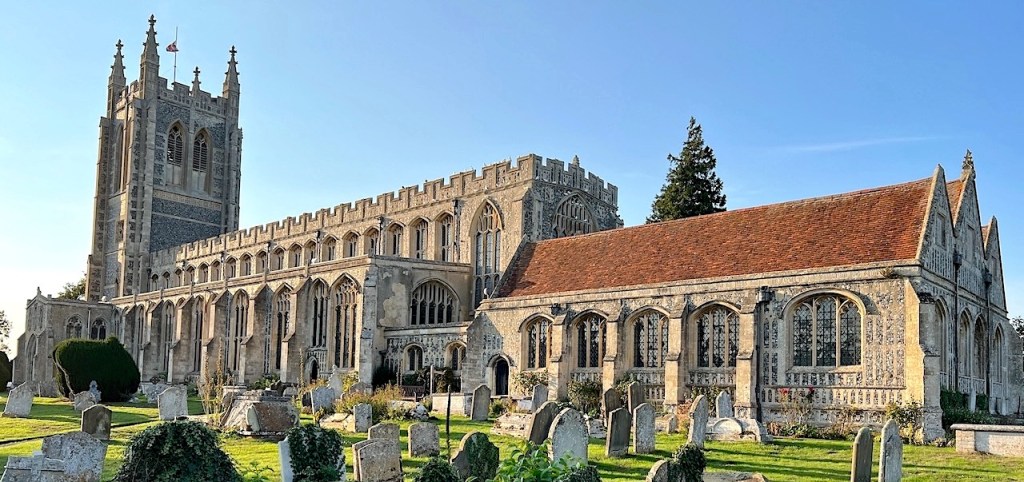
GRADE I † A magnificent church, the longest in Suffolk. Exemplar for the conversion of wool prosperity into stonework. Largely C15; W tower rebuilt 1903 (Bodley). SJ rating ***** a treasure house of English medieval art. A good overview at Great English ChurchesLONG MELFORD 4m N of Sudbury. 52.0878 / 0.7209 / TL865467
DIAL
Holy Trinity . Long Melford . Suffolk – porch
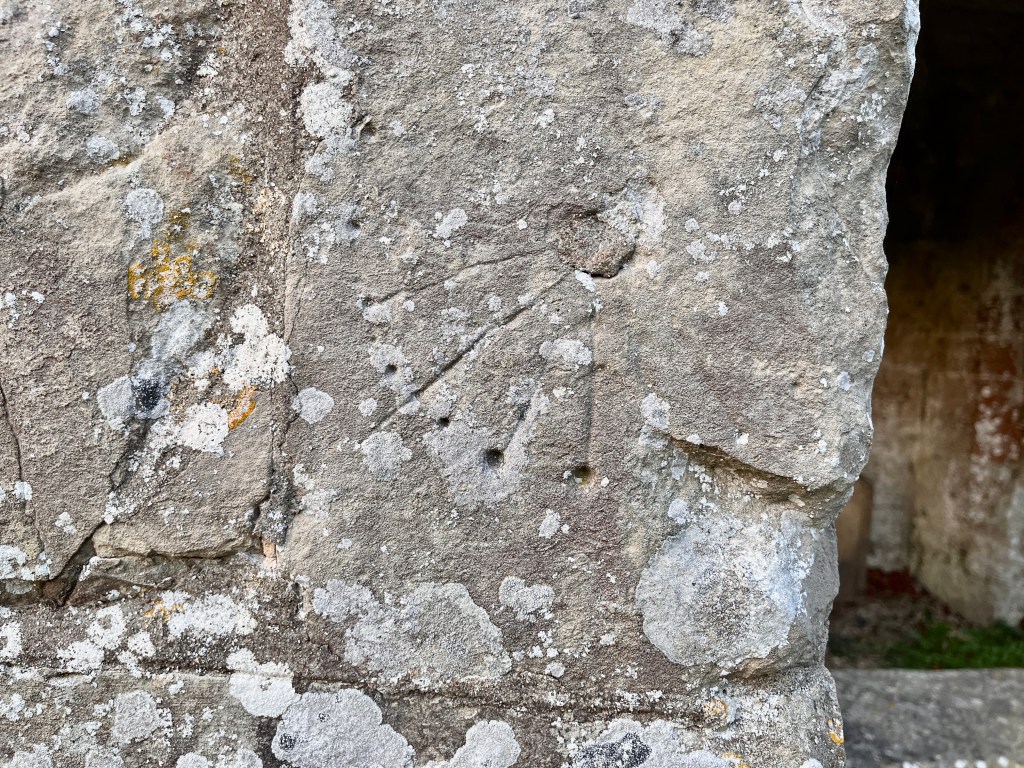
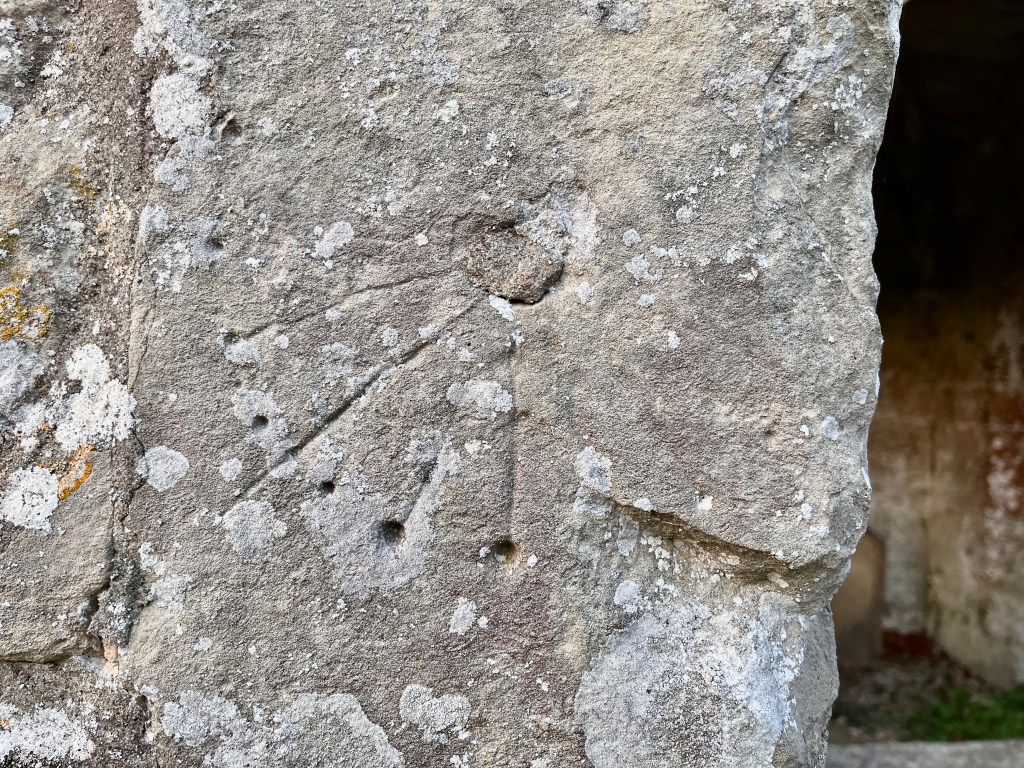
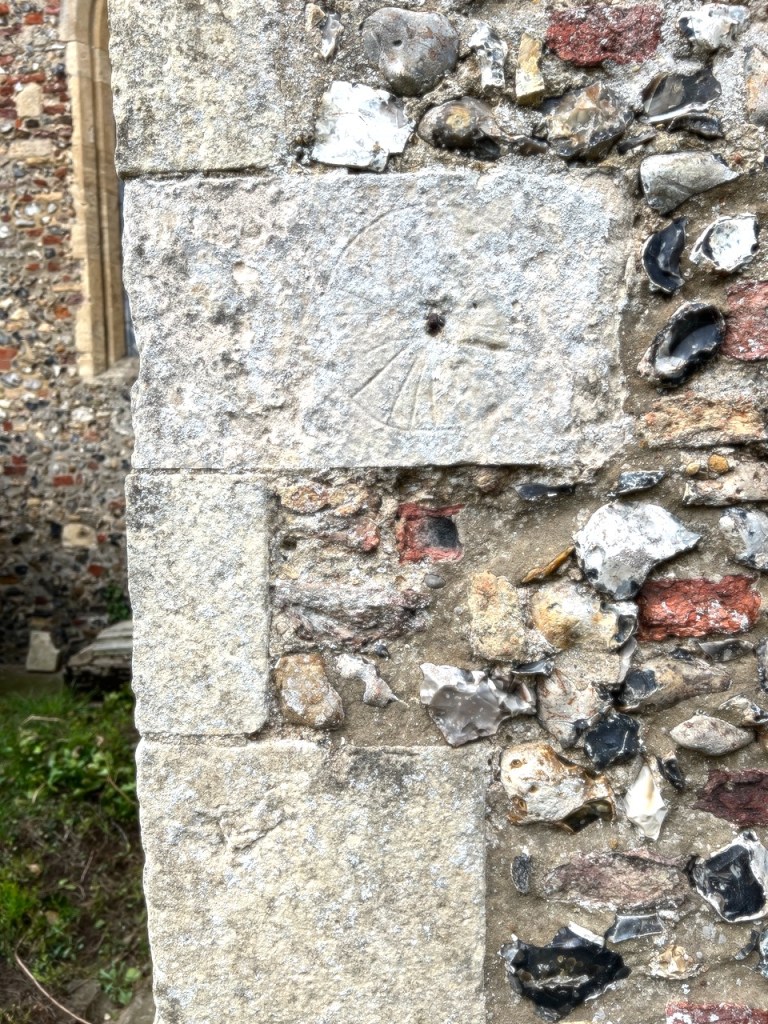
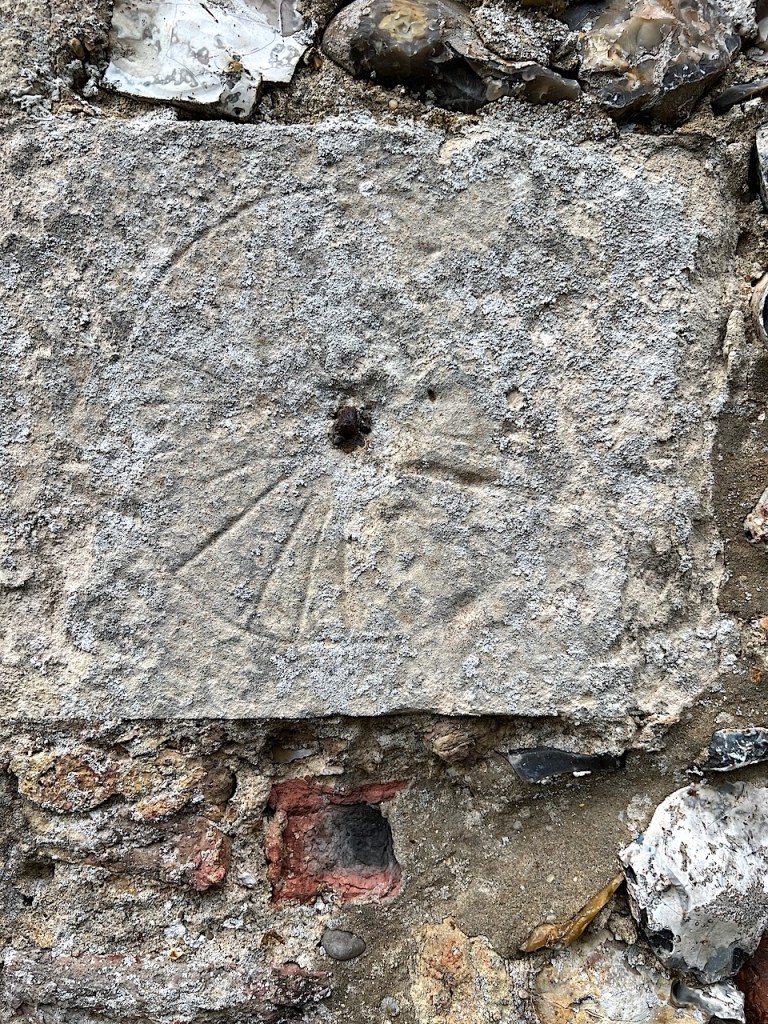
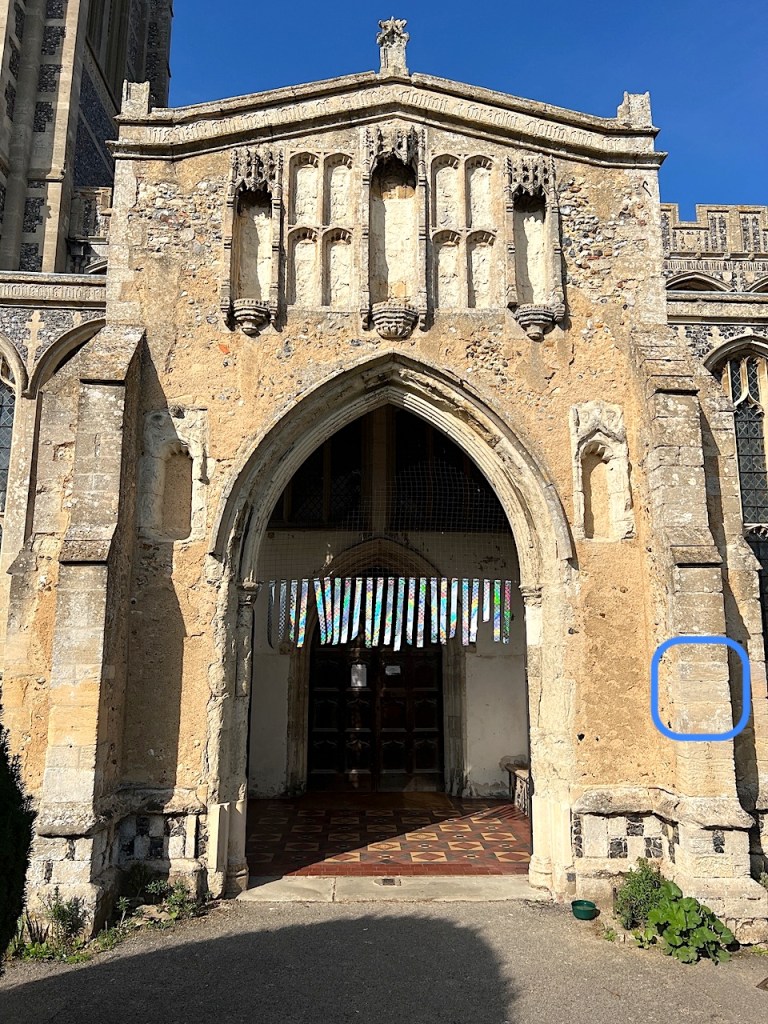
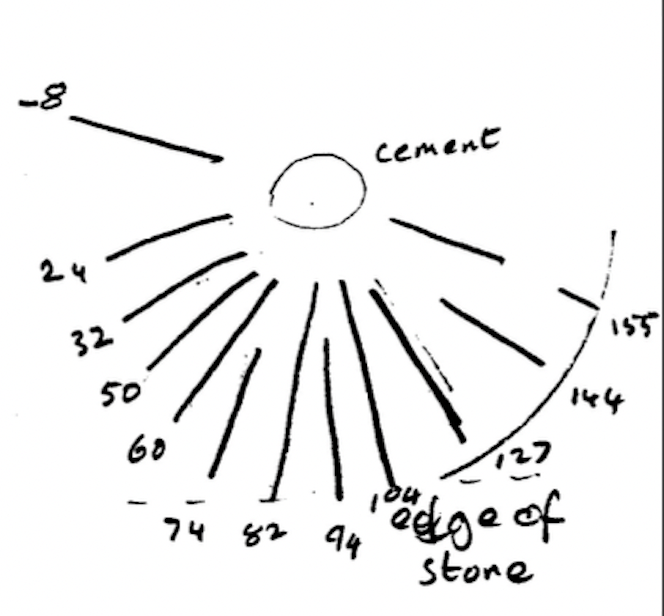
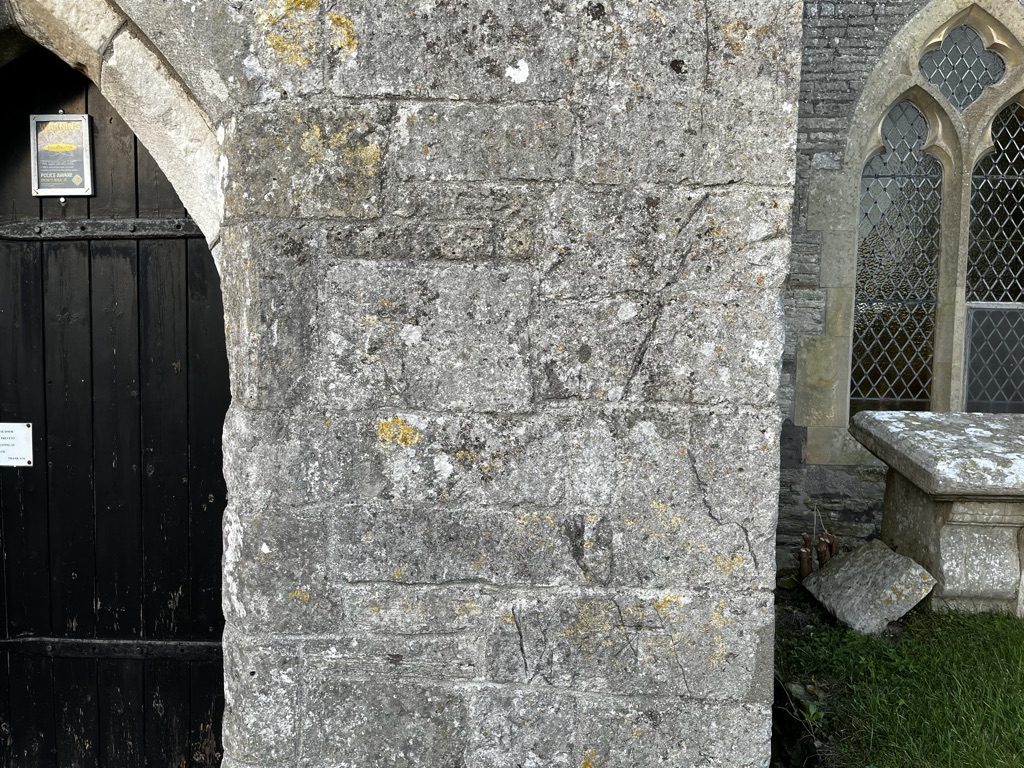
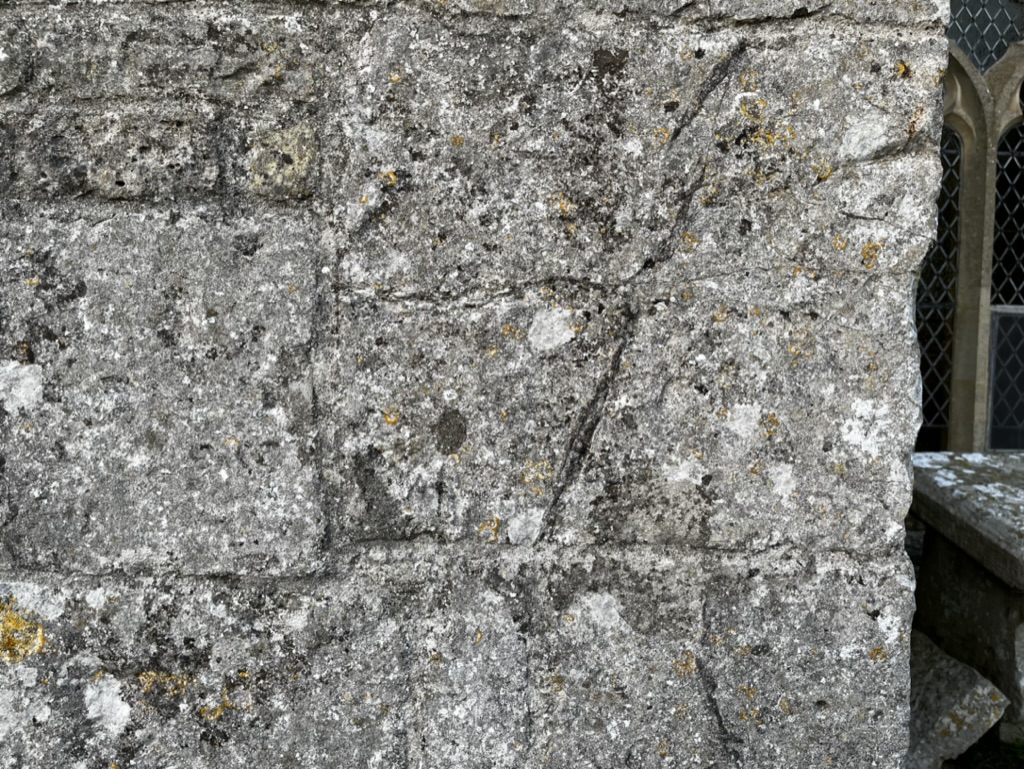
The dial is located on the buttress E of the porch, and easily visible. The style hole is in the mortar line, with 5 lines radiating downwards LHS to a perimeter arc. The presumed noon line and 1 are emphasised. There is a single, fainter afternoon line. The dial stone fits rather awkwardly into its space and the partly unfilled mortar line is strange. A possible relocation?
Holy Trinity . Long Melford . Suffolk – scratch dial
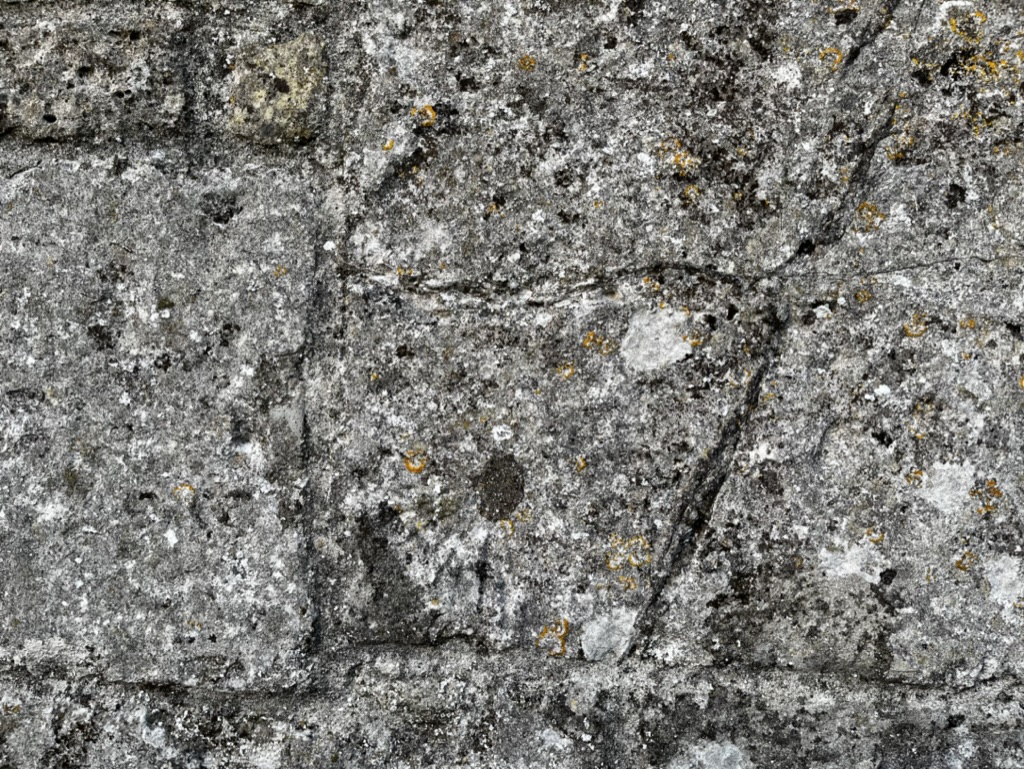
Seen in detail, there is a gap between the top end of the lines and the gnomon hole. The angles between the lines are graduated (rather than evenly spaced) as one might expect with a later dial. However, the angles widen as they approach noon rather than (as one would expect) narrowing. A left-field explanation might be that the church itself is at an angle, for which the dial is compensating. At some stage I need to investigate further but meanwhile, best to publish this and hope that someone can provide an answer.
Holy Trinity . Long Melford . Suffolk – Scratch Dial
GRADE I † Mostly early C14 and C15. Built with local stone: lias and ham. A fine C17 cube dial, 2 slightly unrewarding scratch dials, impressive gargoyles. A complete set of 5 bells dated 1582, 1621, 1623, 1664 and 1666, all by Purdue family. Some pews have graffiti from C17 on. 3m N of Yeovil. 50.9773 / -2.6086 / ST573199
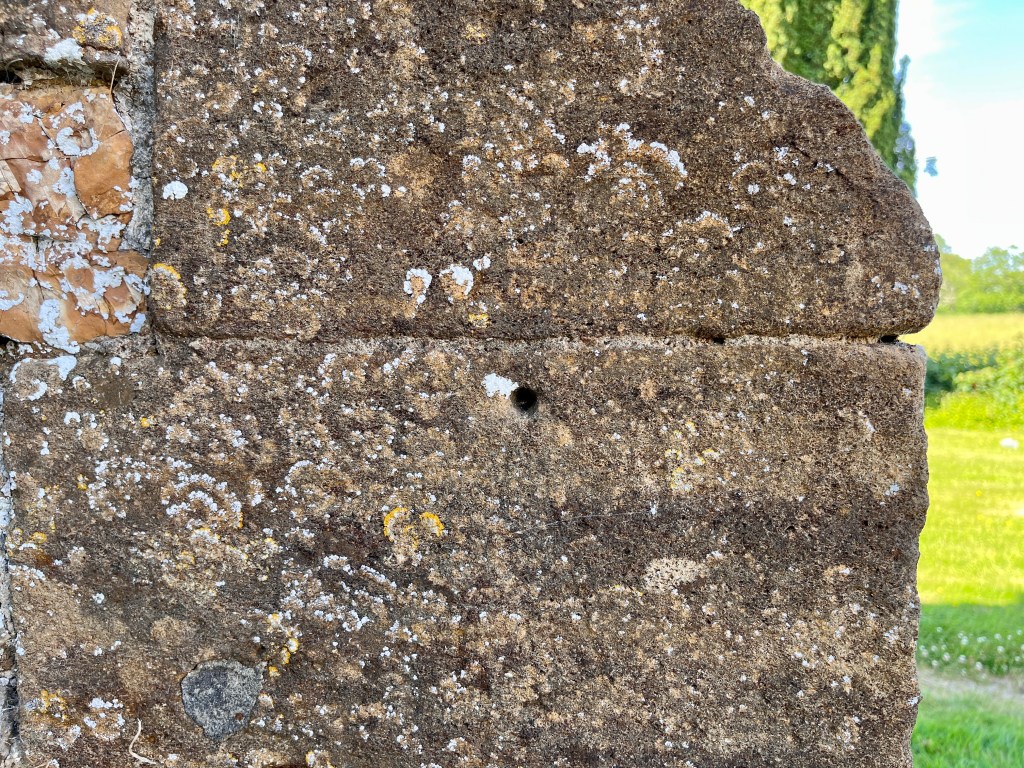
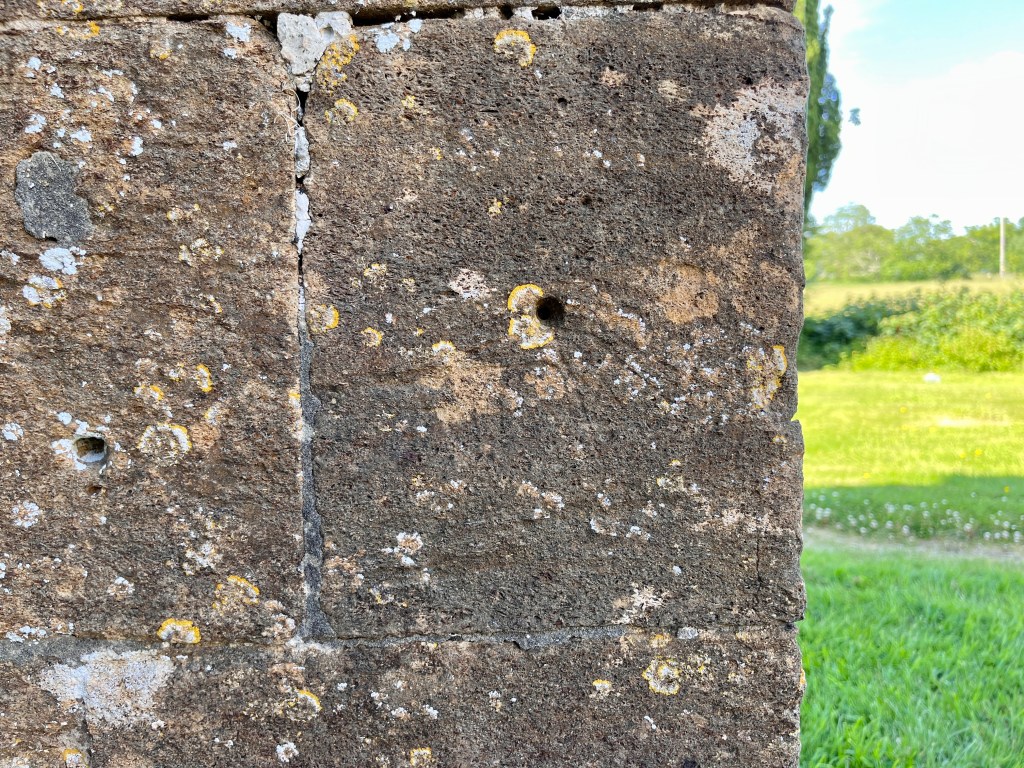
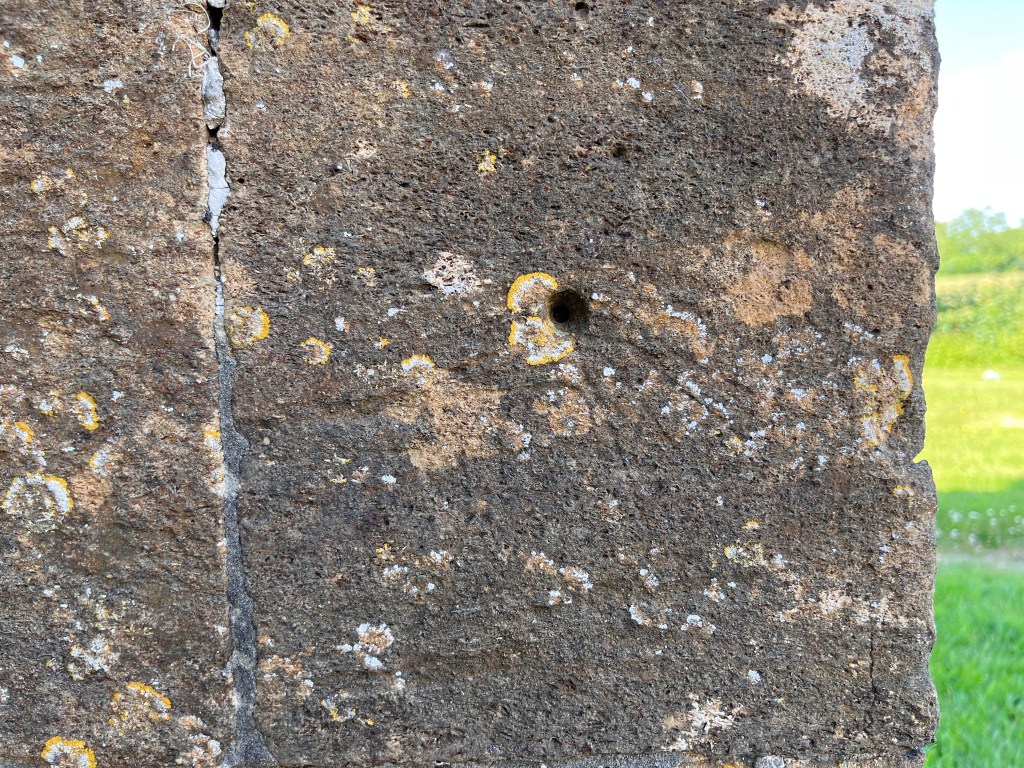
I have previously posted about St Mary with the emphasis on the splendid CUBE DIAL high on the apex of the E end. I mentioned 2 scratch dials but because they fall into the separate Medieval Dial category I am giving them some more attention here.
MUDFORD: TWO SCRATCH DIALS
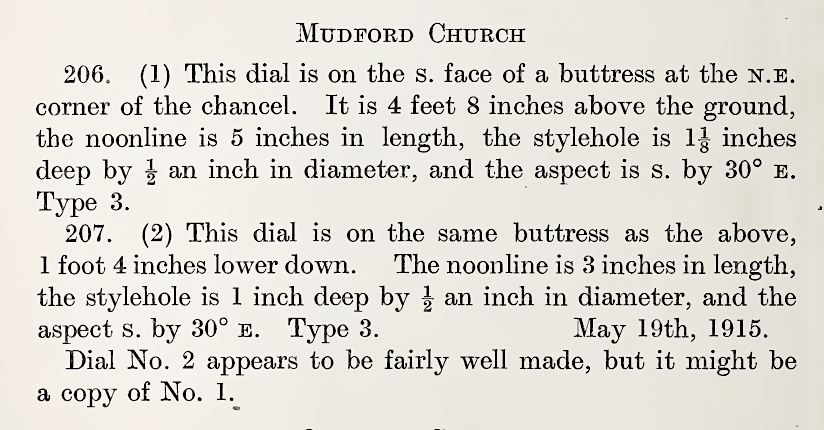
The two dials are on the inner face of the buttress at the E end of the church, one above the other – a less than optimal position.They were obviously relocated and incorporated during expansion / restoration and used as quoin stones for the buttress, though pointless as dials where they are now. The stones themselves are similar, but it seems unlikely that the 2 dials were adjacent before being moved.
Dial 1 is very simple: a style hole with 2 lines descending, the noon line and 1pm. A rod gnomon would very clearly mark the noon part of the day, perhaps indicating that Mass was not quite yet… or that it had been missed…
There is a similar 2-line dial at BROADMAYNE Dorset, where the 2 lines are at either side of the vertical (ie at 11 and 1), cut so that ‘noon’ is in effect the space between them. At COMPTON PAUNCEFOOT there is a large dial on the facade with 3 lines: noon and one each side.
Dial 2 has 4 clear lines radiating from the style hole. These are E of the vertical, marking roughly 1 to 4 (there is no noon line). On both dials there are faint hints of other lines now eroded.
DEH recorded the Mudford dials in May 2015 during a tour of several churches in the area
GRADE II* † C13 chancel; C14 nave and lower tower with porch (top stage added later); extensive mid-C19 restoration and rebuilding by J Hicks (Thomas Hardy is said to have drawn the plans while apprenticed.) Portland Stone. 5m SE of Dorchester. 50.6788 / -2.3857 / SY728866
DIALS
There are 3 dials. 2 are adjacent on E side of the porch which is (unusually) set in the tower. Dial 1 is eroded but visible. Dial 2 is vestigial and easily overlooked (eg by BHO / RCHM). Dial 3 is relocated well out of sight on the NE quoin of the church, a place it could never have been originally. It is much the clearest cut of the 3.
DIAL 1
St Martin . Broadmayne . Dorset – Scratch Dial 1
Dial 1 is visible as one walks up the path from the gate, but the details remain unclear even close to. The BSS record shows 12 lines within a partial circle, the lower part cut off at the edge of the dial stone, suggesting it may have been relocated during rebuilding. I’ve visited St Martin twice, in sunlight and in early evening, and frustratingly I haven’t been able to make out the complete dial shown below. The colour of the stone is a factor. RHS is quite eroded; or perhaps LHS was more deeply incised because it marked the most signifiant time of day for observance.
St Martin . Broadmayne . Dorset – Scratch Dial 1
DIAL 2
St Martin . Broadmayne . Dorset – Scratch Dial 2
As indicated above, dial 2 is unrewarding. Records suggest 4 lines and 2 circles, though I couldn’t see the latter. The images below have been recoloured to bring out the details, such as they are…
St Martin . Broadmayne . Dorset – Scratch Dial 2
DIAL 3
Dial 3 is a small and simple one, with 4 lines. The noon line is emphasised; and the Mass line (Tierce) has a cross.
St Martin . Broadmayne . Dorset – Scratch Dial 3
UNRECORDED DIAL?
The fact that the hole in this buttress stone is centered made me look at it more closely. In 3D rather than in the photo, it is a plausible dial with 2 quite long lines, being the noon line and ‘1.00pm’. With a stick in the hole, it would have been perfectly serviceable for marking the sun’s progress from morning to afternoon. There is a similar dial at MUDFORD Somerset, where the 2 lines are at 11 and 1, cut so that the noon line is centered between them.
GRADE I † C13 et seq, on early C12 site. Gradual development but (unusually) with little obvious C19 workBHO. Good C16 bench ends. S porch built c1440, originally thatched, with the polar scaphe sundial added later, see LINK. The multiple scratch dials of St Margaret are shown below. DEH recorded 4, but there are several more. 5m NW of Yeovil; just S of dread A303. 50.9746 / -2.7156 / ST498197
DIALS
I visited St Margaret some time ago and have mislaid my notes on the various locations. The dials are all on the S side and all but one are in predictable locations though a couple are not easy to see. Most are on buttresses. One dial (3) is quite high up and would be easy to overlook. There are enough dials for me to skip – and for you to be spared – analysis of each one individually (for the time being at least).
DIAL 1
On the buttress at E end of the church
St Margaret . Tintinhull . Som – Scratch Dial
DIAL 2
On the same buttress as dial 1
St Margaret . Tintinhull . Som – Scratch Dial
DIAL 3
High on a buttress, E end
St Margaret . Tintinhull . Som – Scratch Dial
DIAL 4
S buttress
St Margaret . Tintinhull . Som – Scratch Dial
DIAL 5
On the buttress E of the Priest’s door
St Margaret . Tintinhull . Som – Scratch Dial
DIAL 6
Close to Dial 5
St Margaret . Tintinhull . Som – Scratch Dial
DIAL 7
S buttress
St Margaret . Tintinhull . Som – Scratch Dial
DIAL 8
S buttress near doorway
St Margaret . Tintinhull . Som – Scratch Dial
DIAL 9
E of porch
St Margaret . Tintinhull . Som – Scratch Dial
DIAL 10 (?)
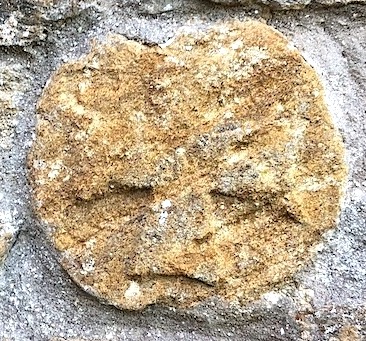
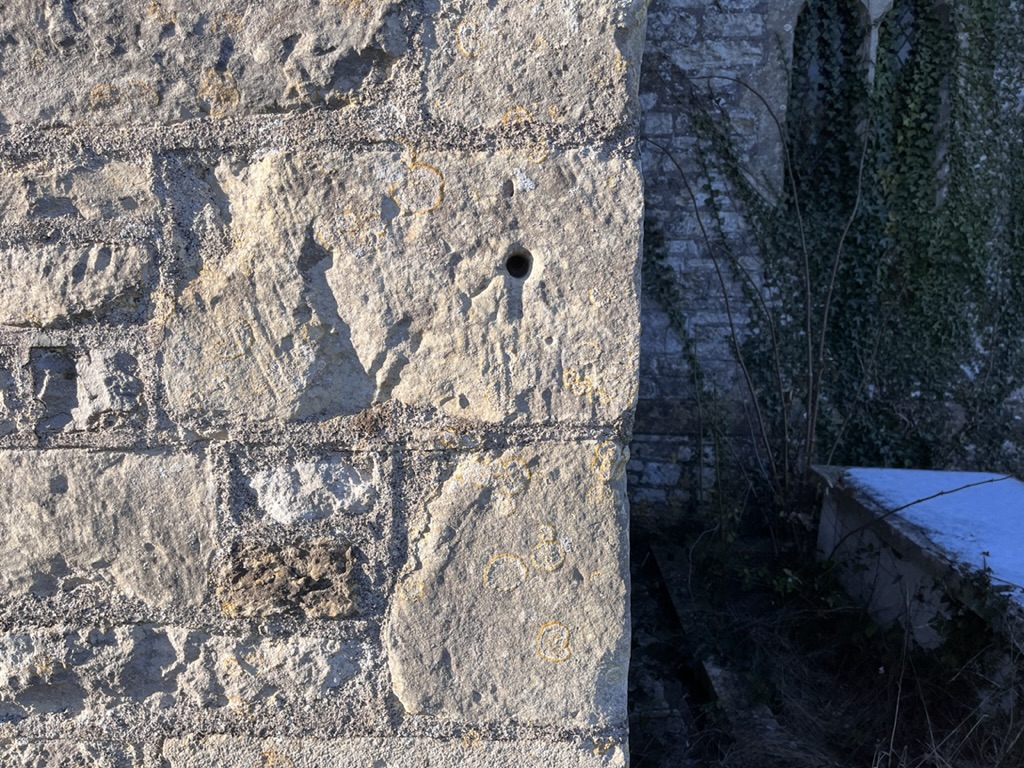
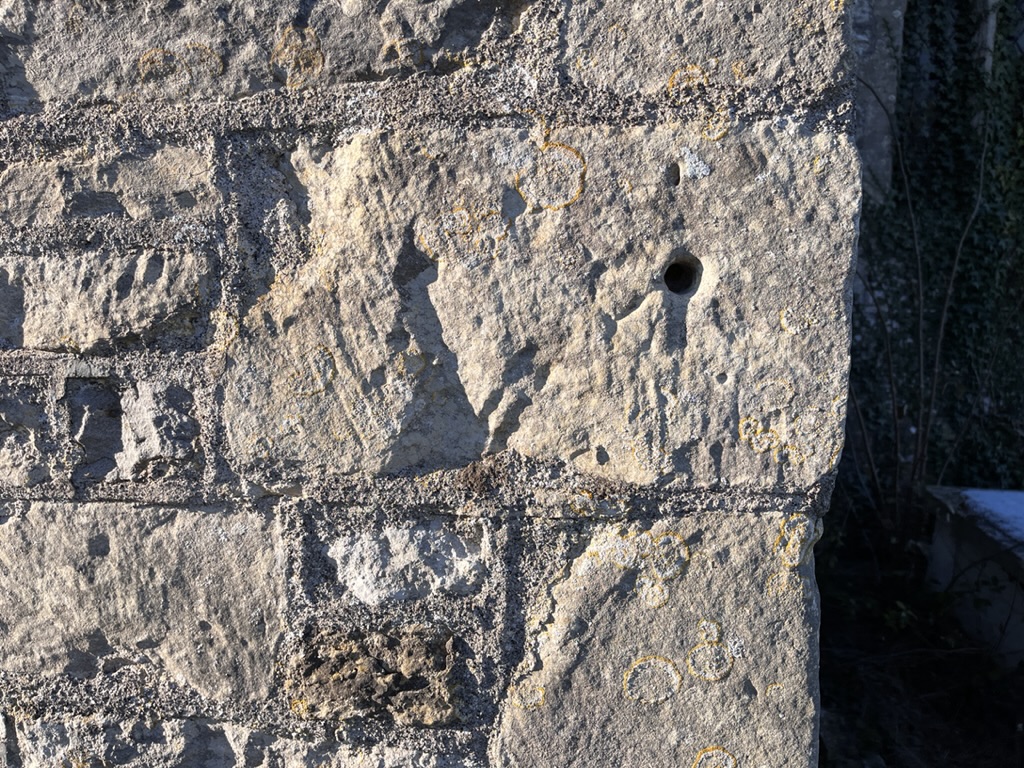
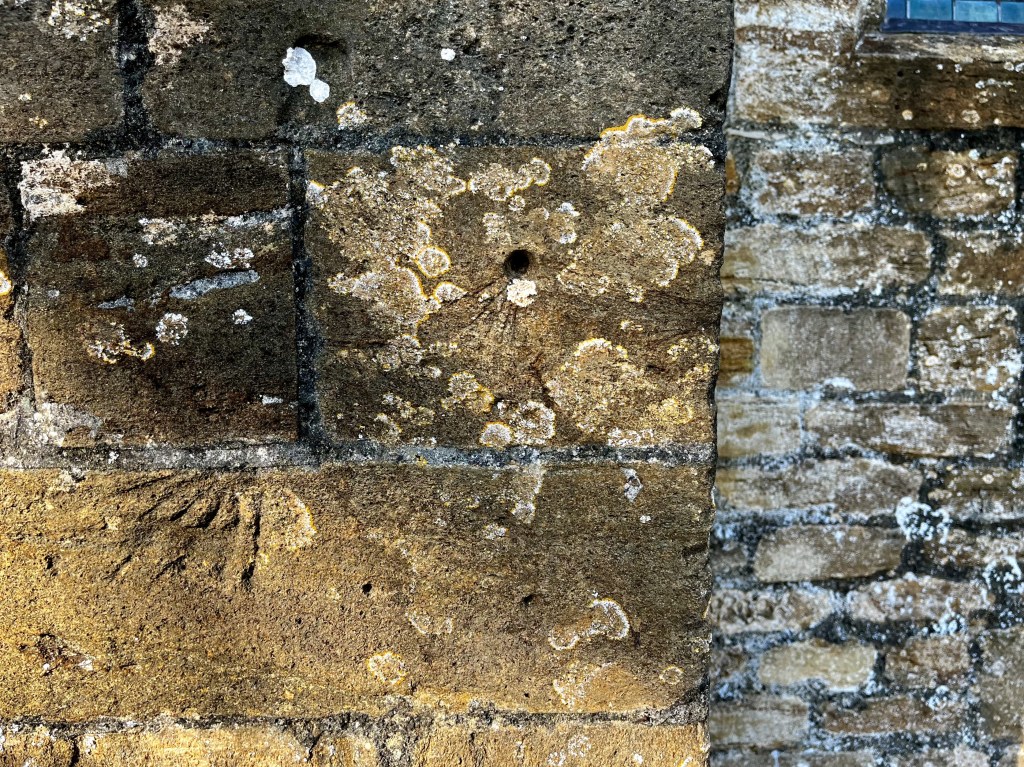
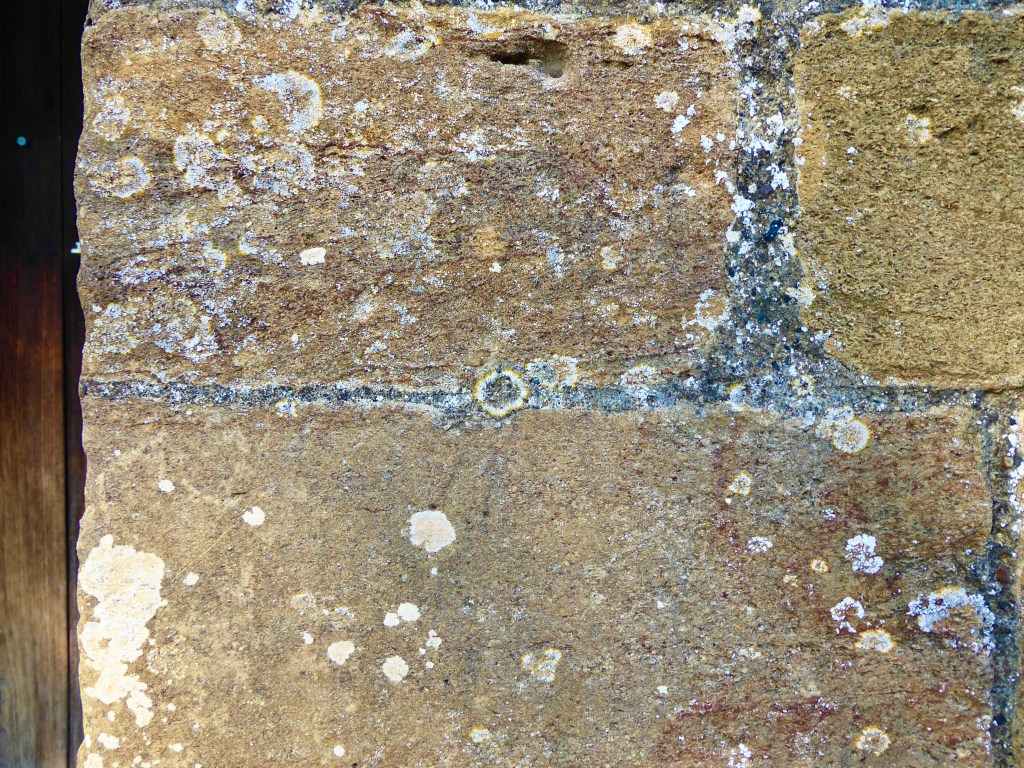
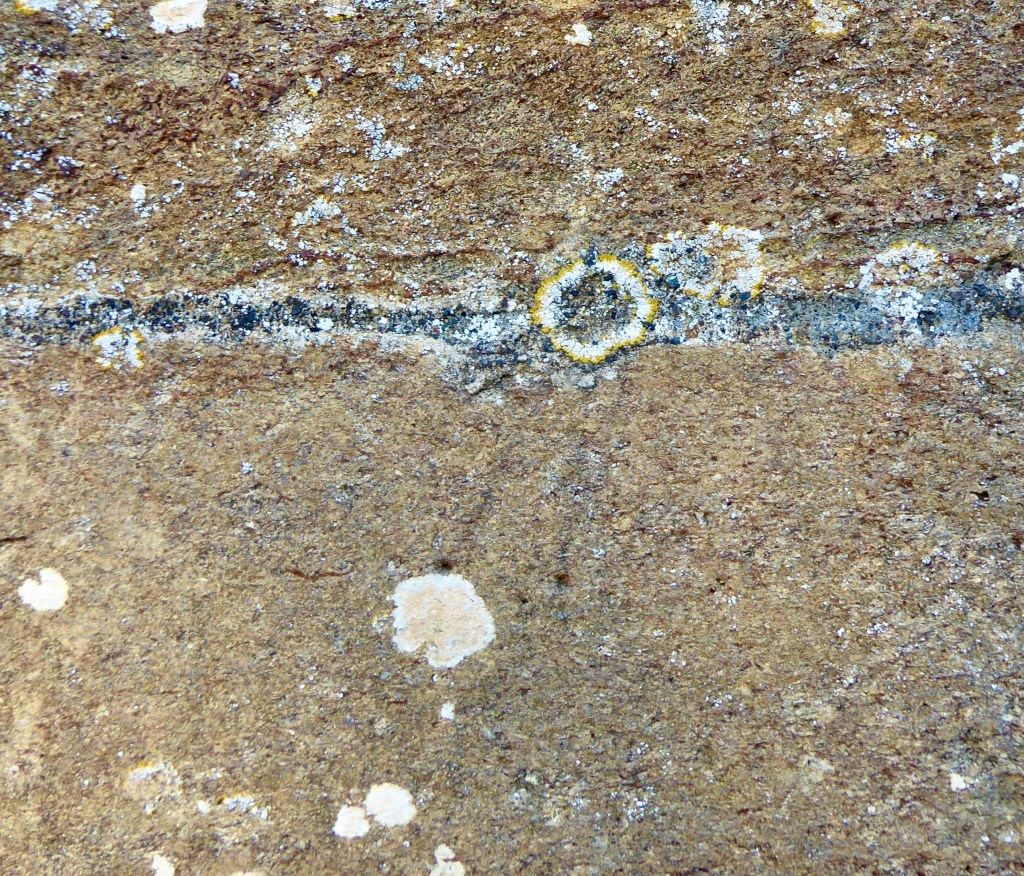
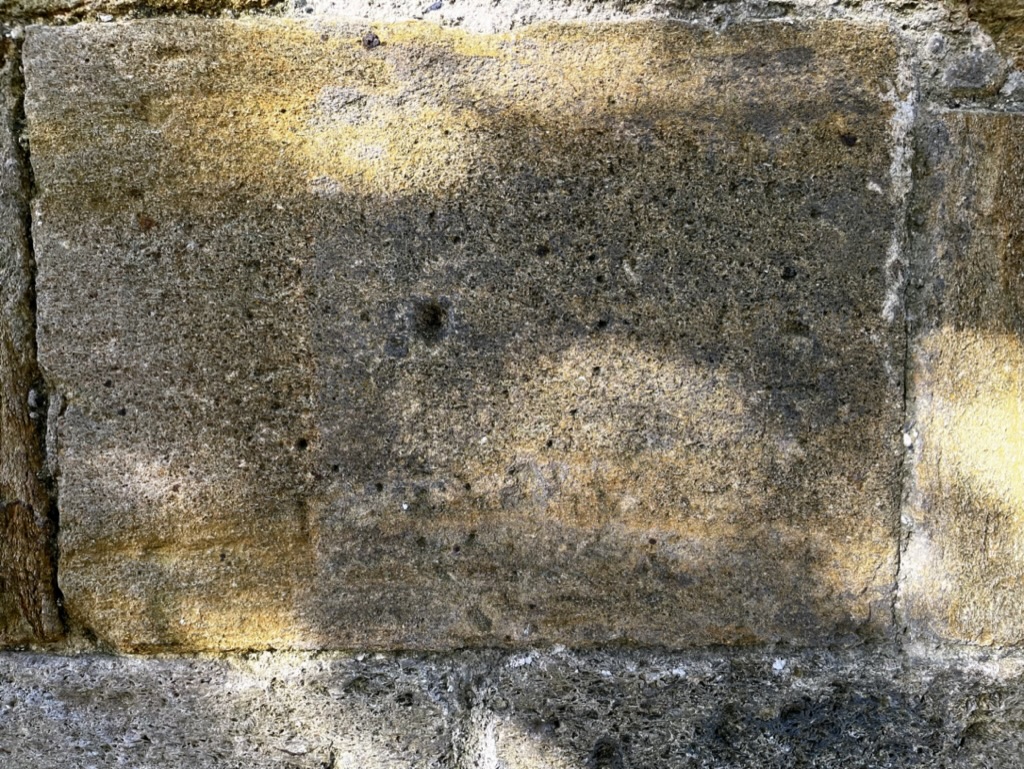
According to the very useful resource Sundials On The Internet, the smallest known scratch dial is at St Margaret’s, location unspecified. It measures a mere 2 inches in height. Possibly it is the hole below. There is a very similar one at Leintwardine Shrops that has been deemed a dial, though it’s just hole with a couple of minimal indentations around it. I saw no other candidate, and had I not known about the 2″ dial I would have passed this by without a second glance.
St Margaret . Tintinhull . Som – Scratch Dial… the smallest recorded?


































 GAUDIUM SUB SOLE . SUNDIALS . MEDIEVAL TO MODERN