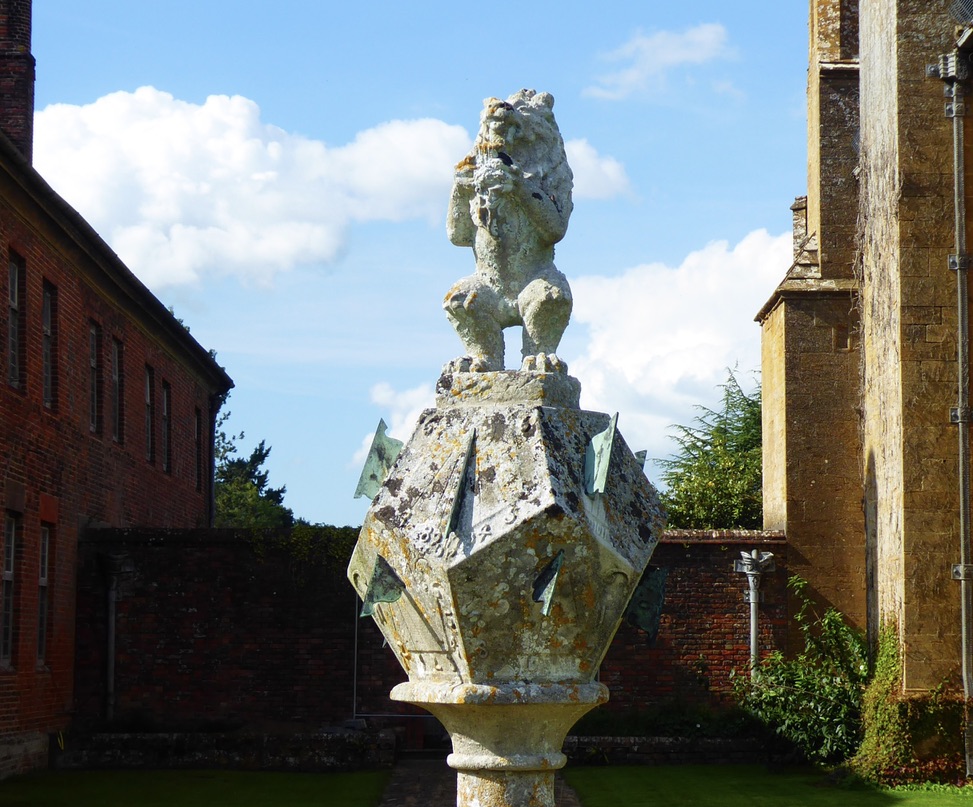
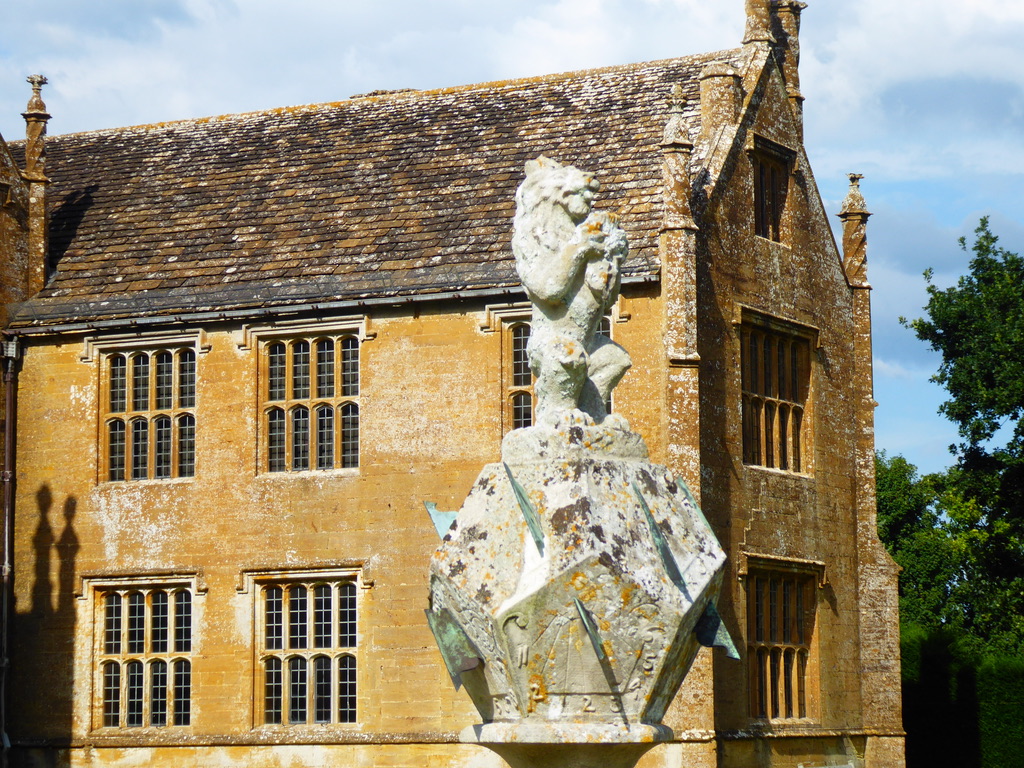
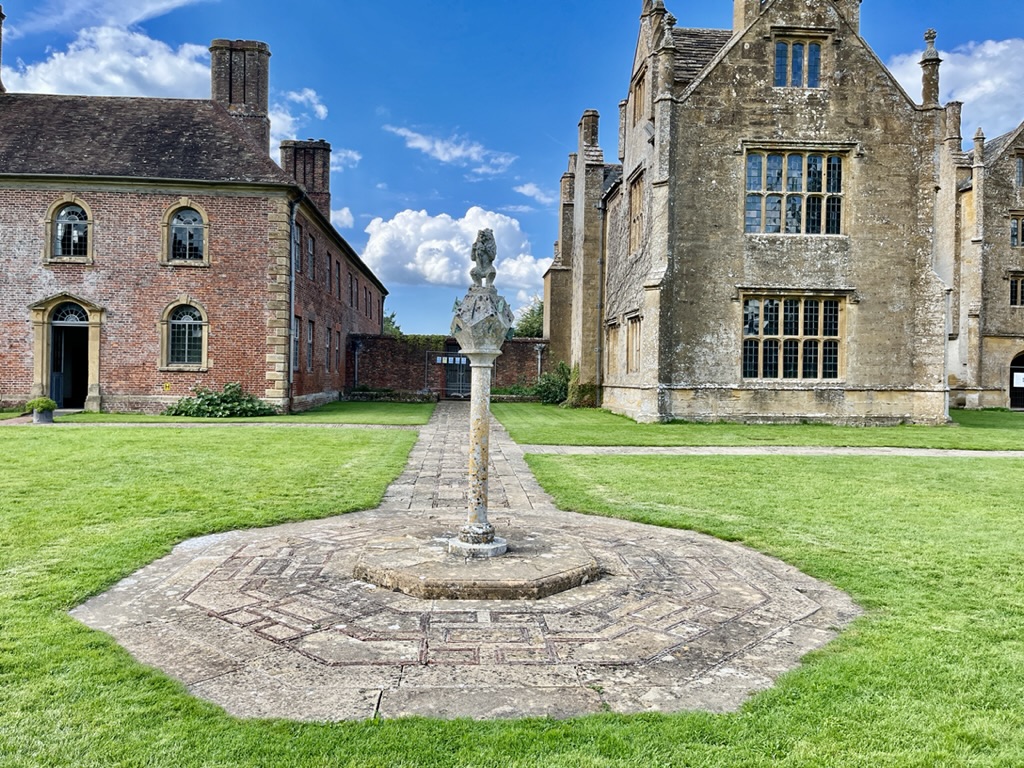
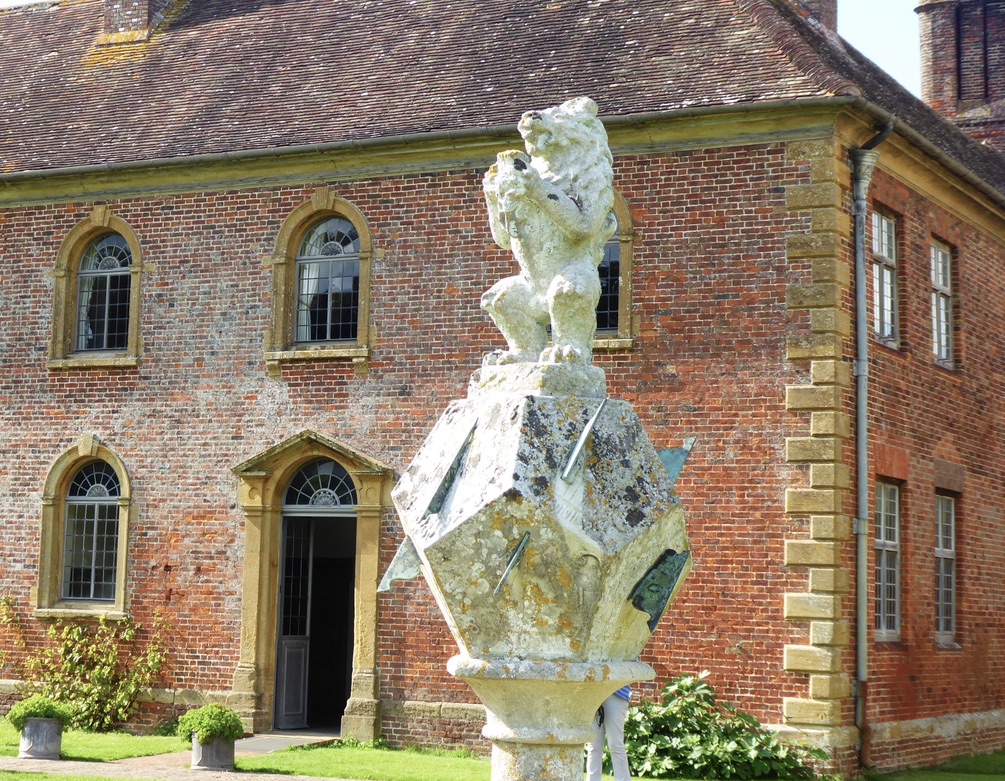
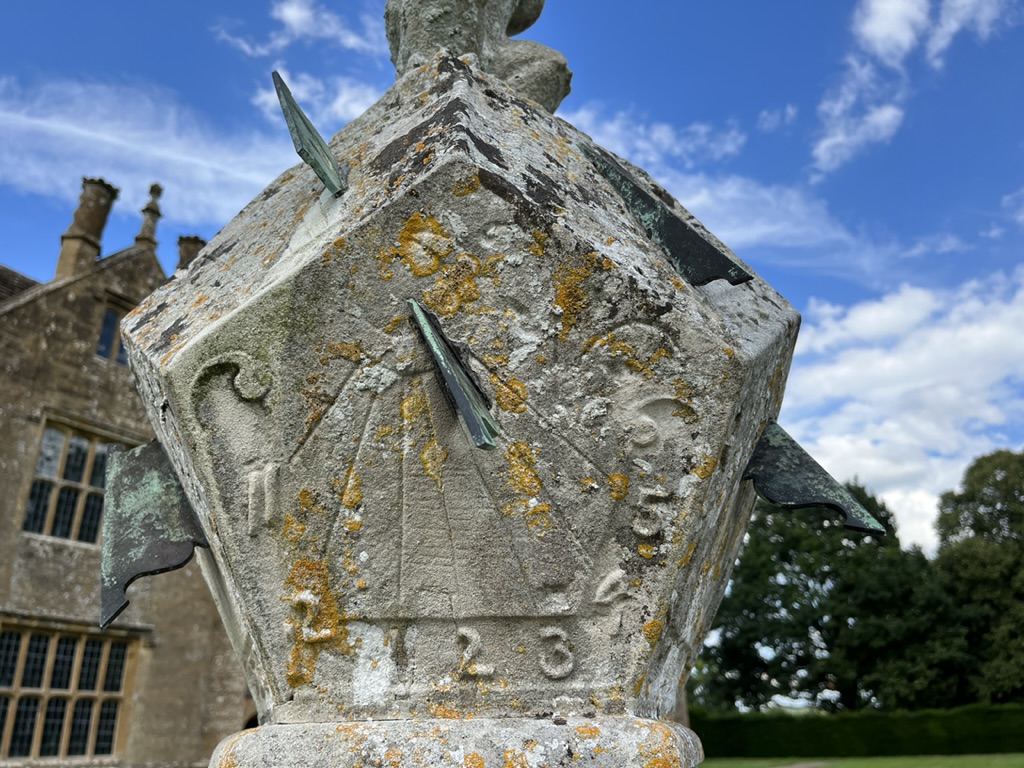
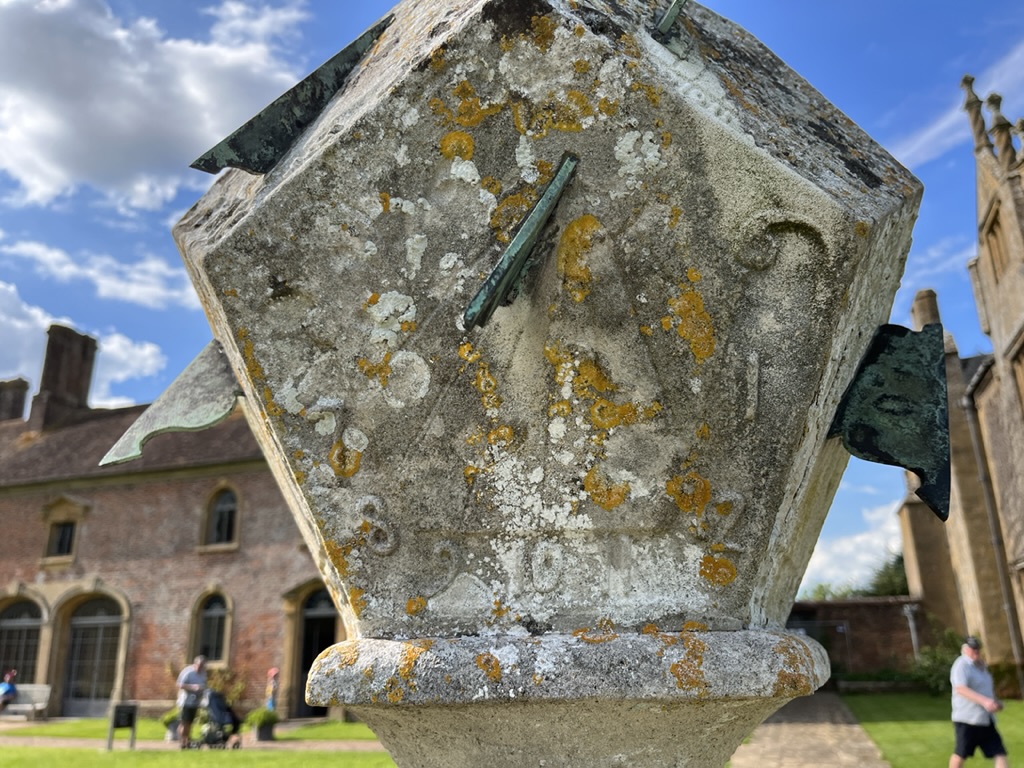
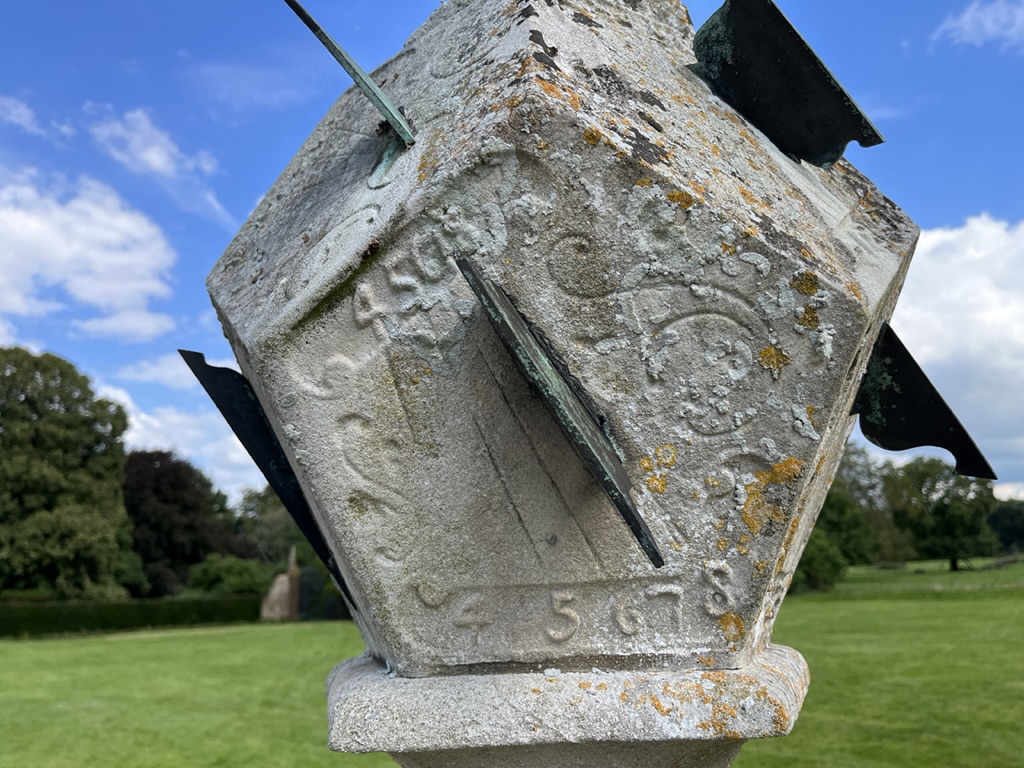
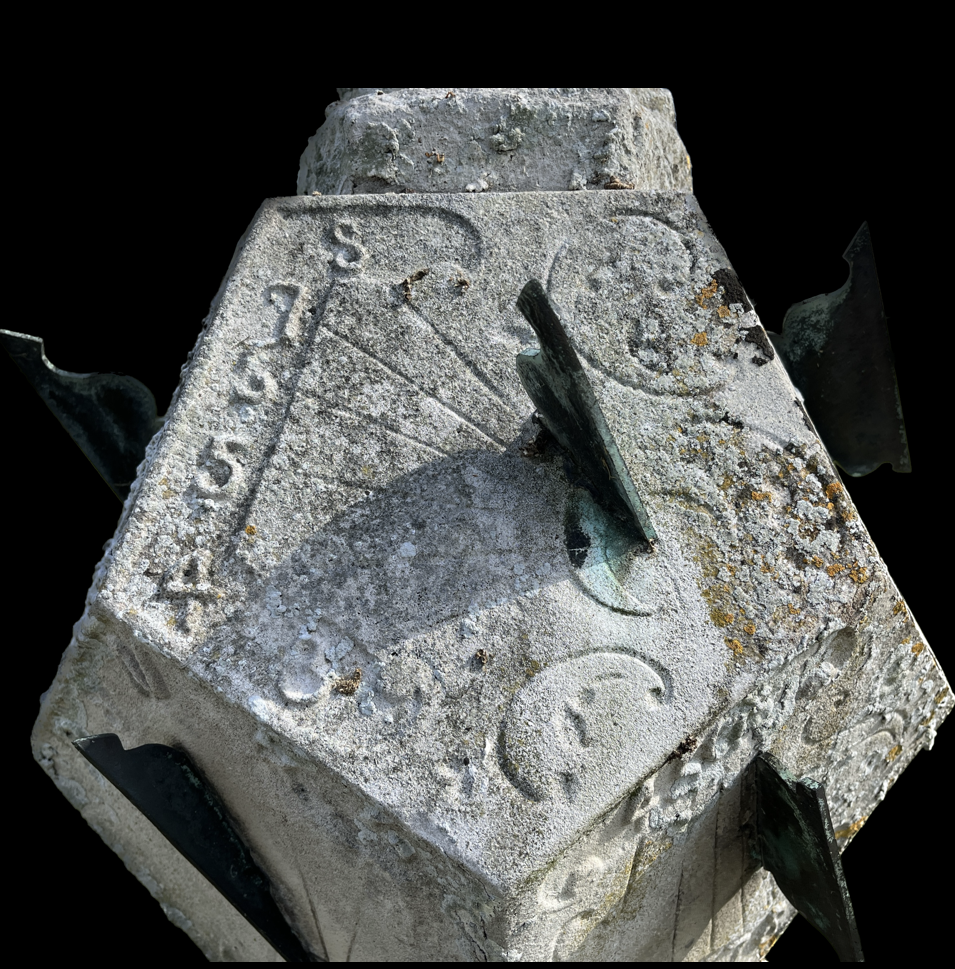
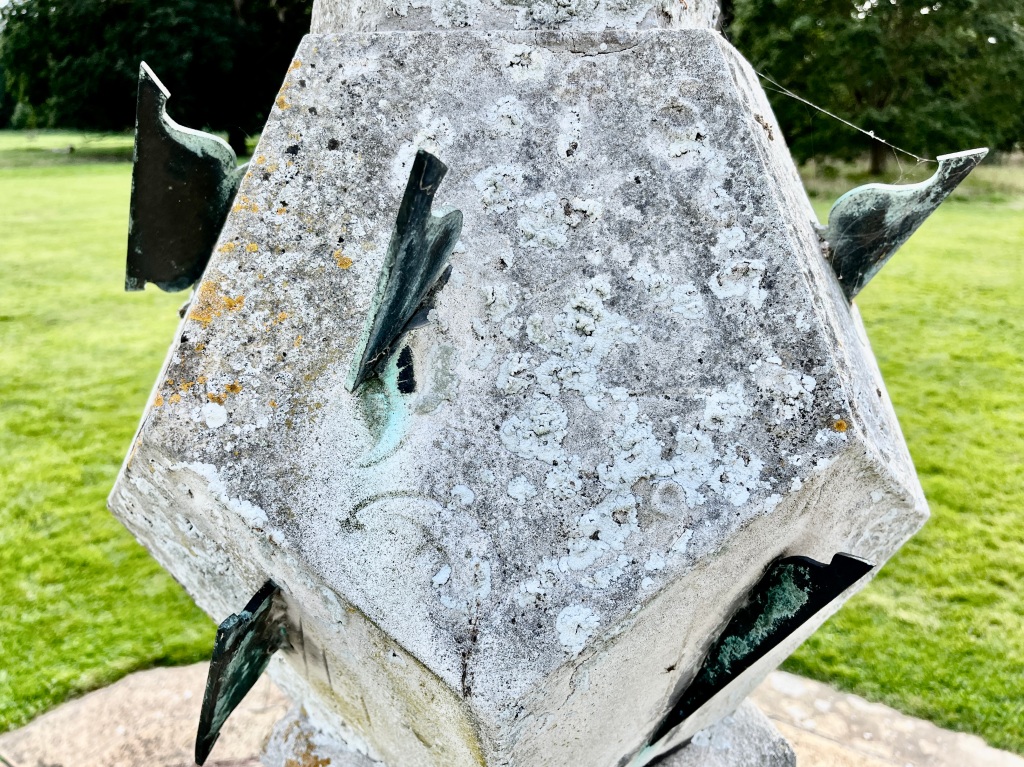
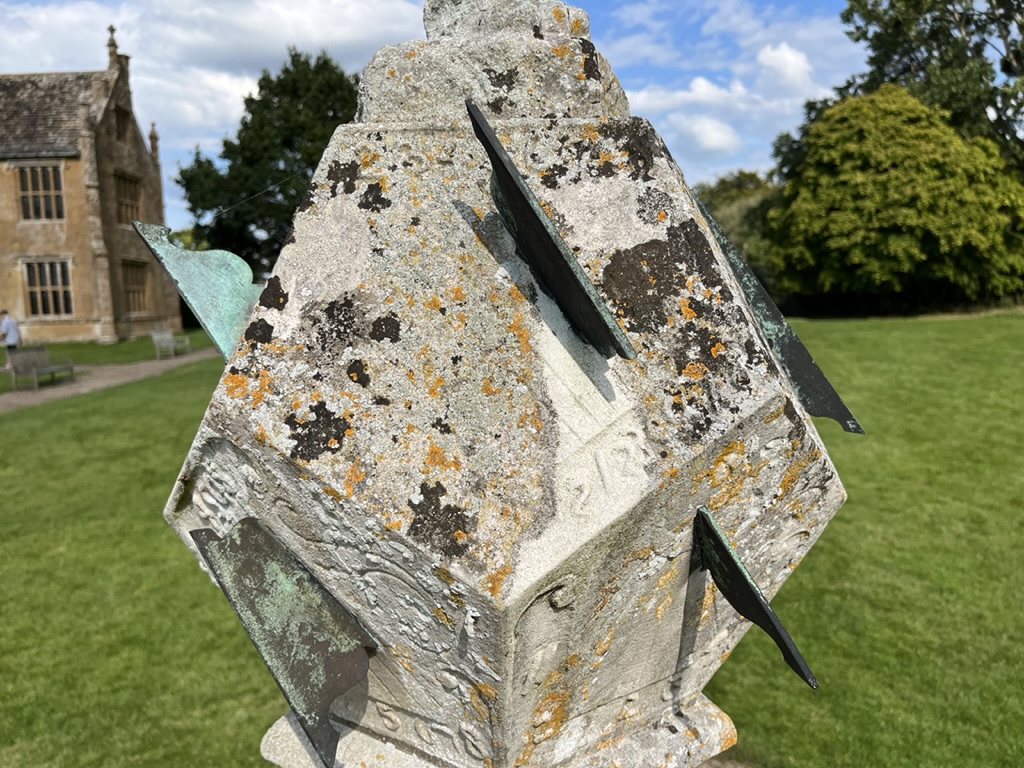
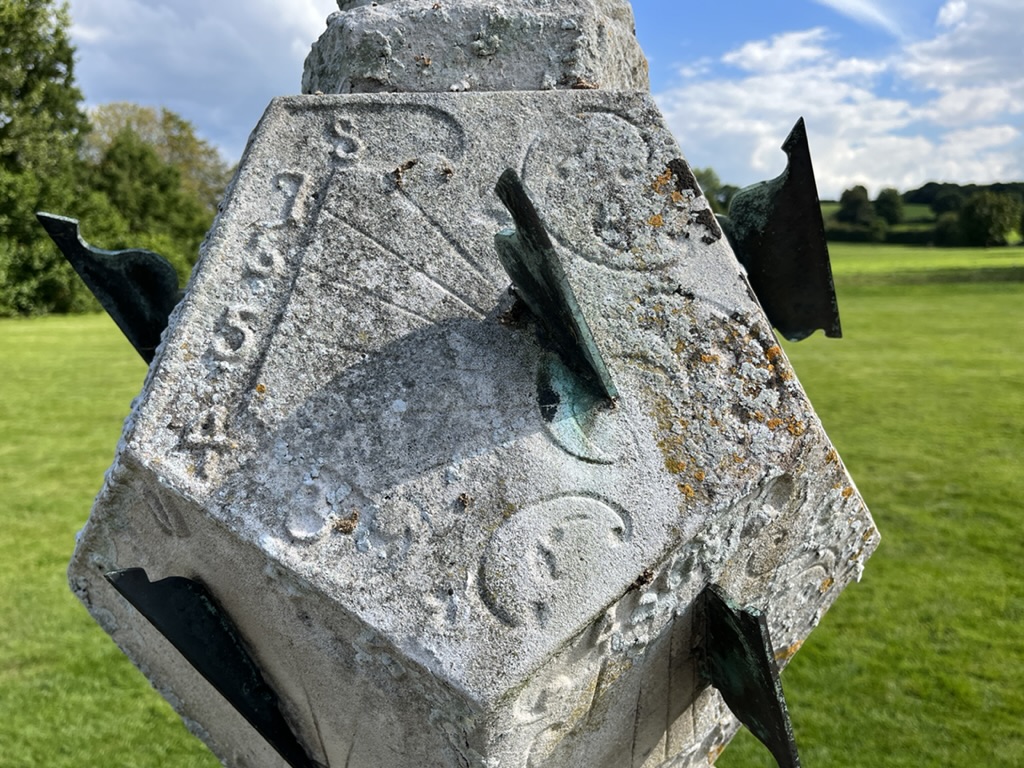
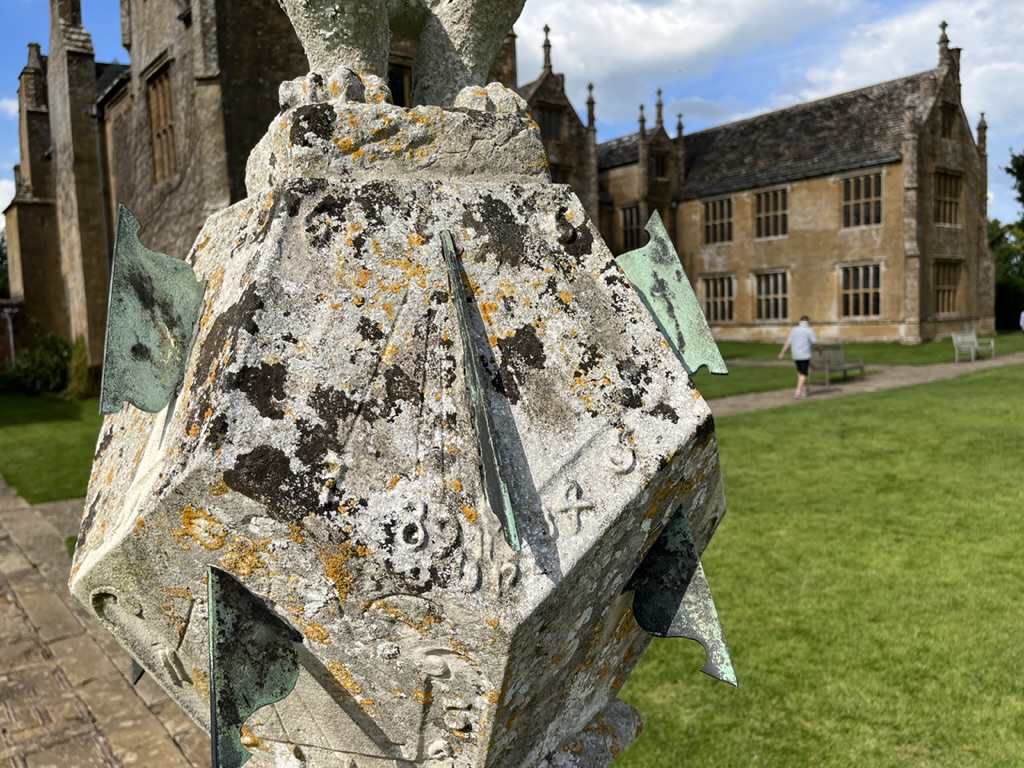
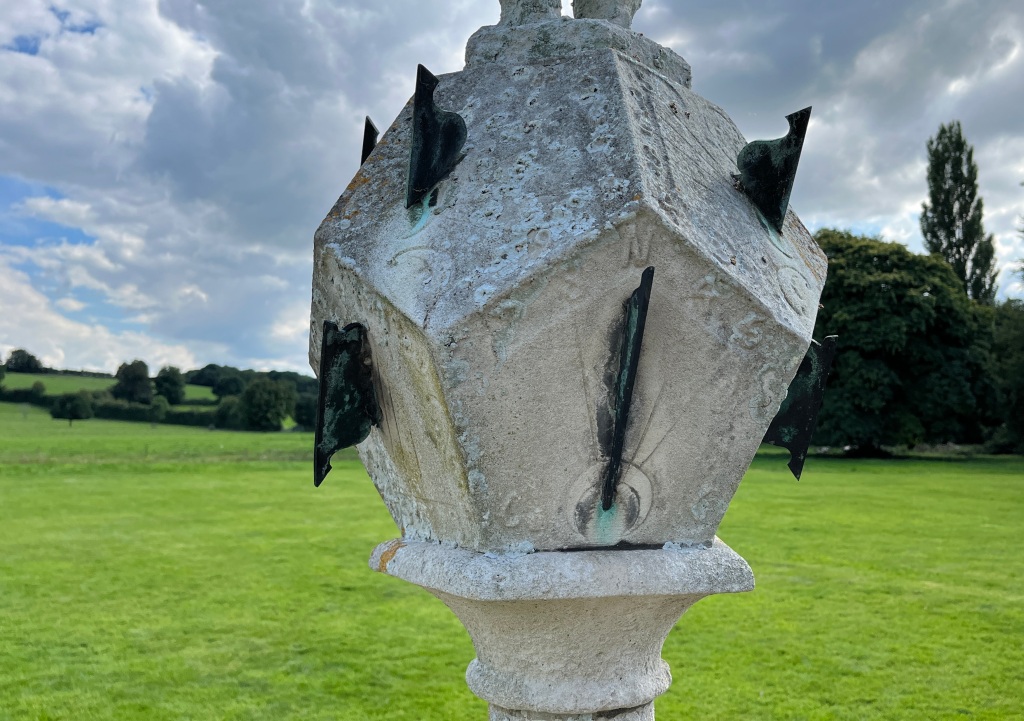
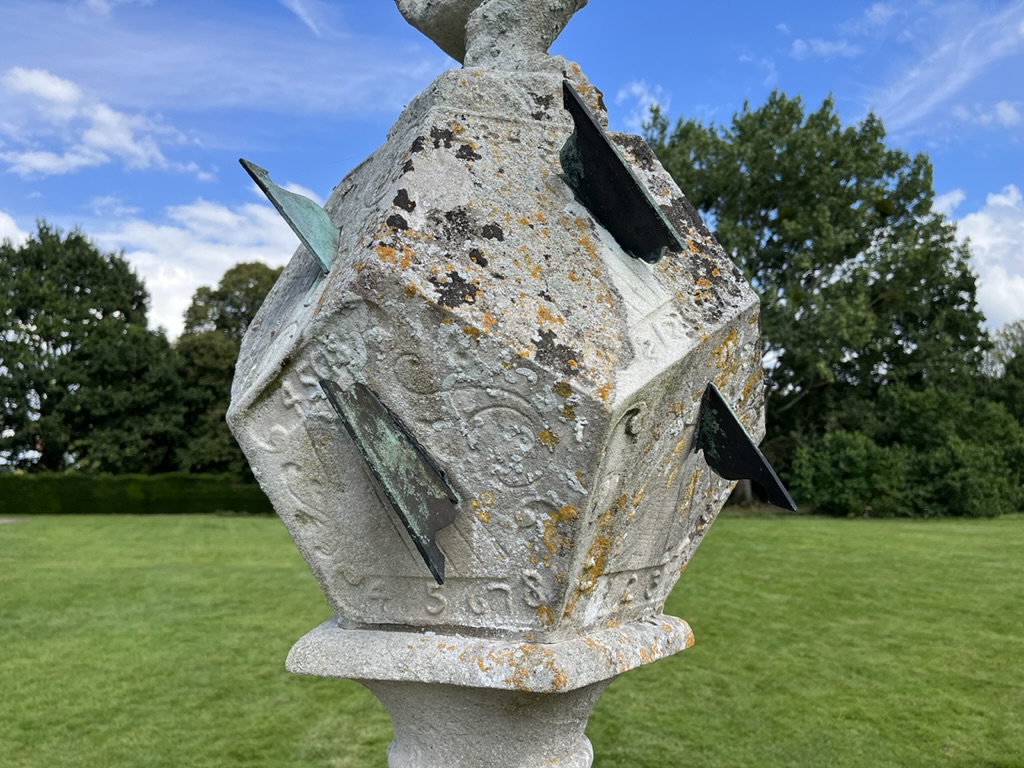
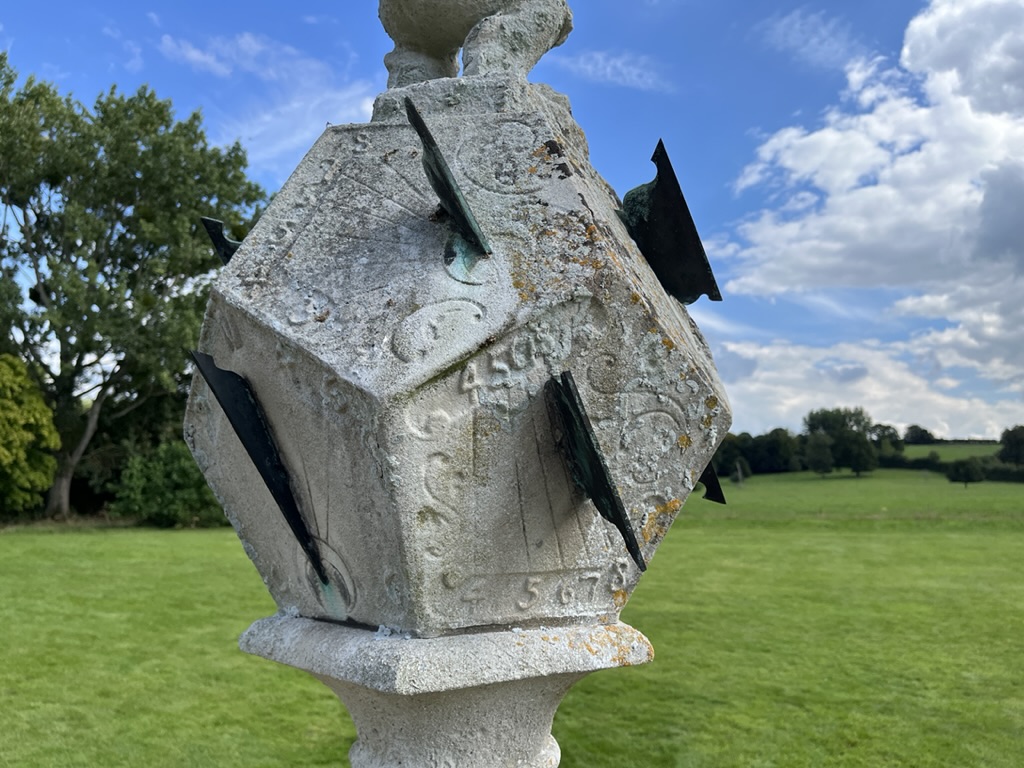
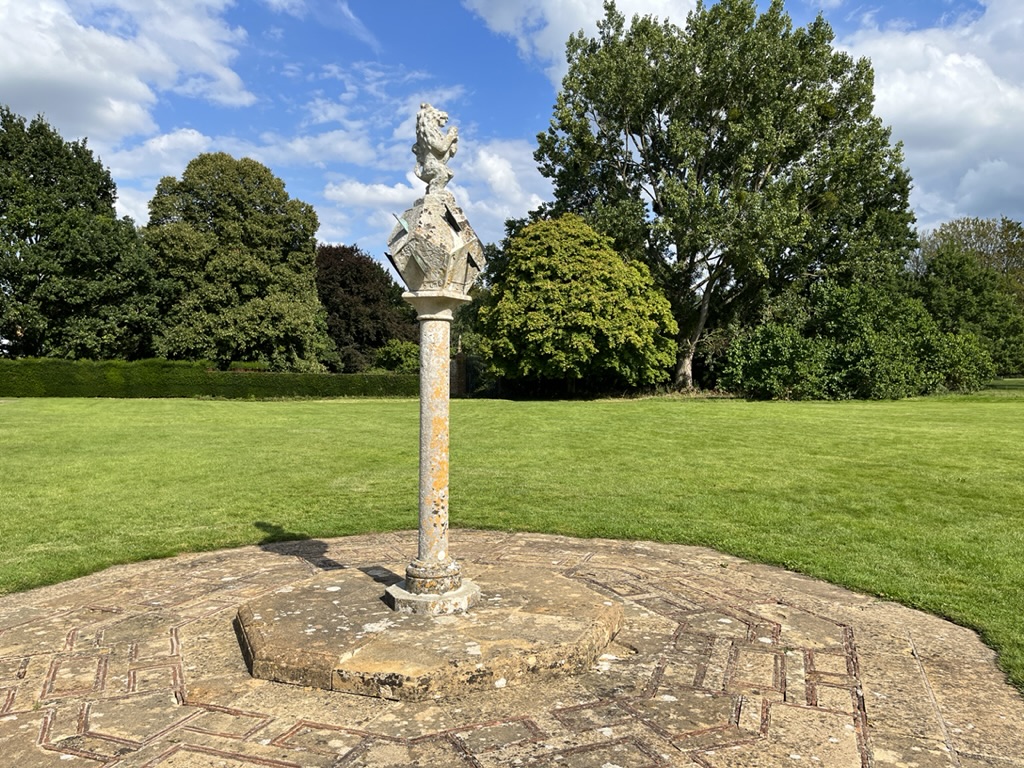
Located on the south lawn. Dodecahedron dial with pentagonal faces. Two ‘rows’ of five dials. The top row reclines, the bottom row inclines. All lines and numerals are visible, all gnomons are intact and 4mm thick. Overall the dial shows 4am to 8pm in hours. The numerals are Arabic, and are in relief, as is light scroll work on some faces. The dial is mounted 1760 mm high on a stone pedestal. It is surmounted by a weathered lion rampant 460 mm tall. The dial is said to have come from Scotland about 1910. SRN 8046 at East Ruston, Norfolk, appears to be a direct copy of this dial.
BRYMPTON d’EVERCY . SOMERSET . CUBE DIAL with BALL FINIAL
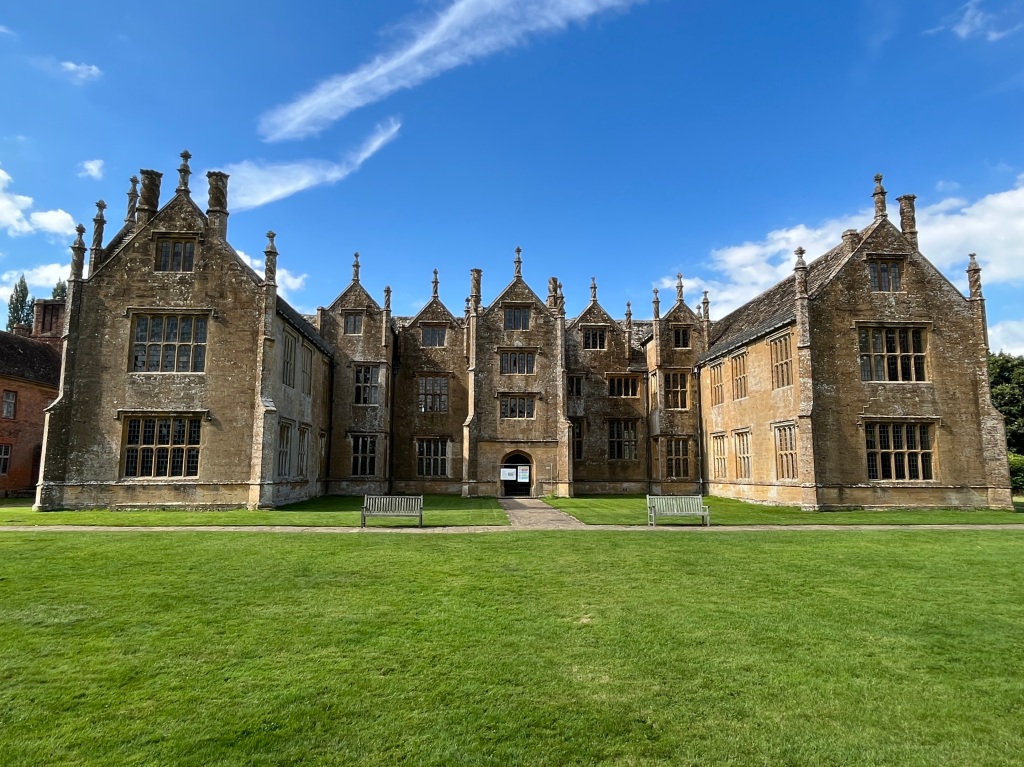
Brympton d’Evercy is a fine Somerset country house with a long history of intertwined families down the ages. For more on the house & grounds, see HERE. The chapel of St Andrew has scratch dials that are featured HERE. The estate is a mere 2m W of the clatter of Yeovil yet hidden away in its own parkland, and best reached by map reading, satnav or luck. 50.9361 / -2.6847 / ST519154
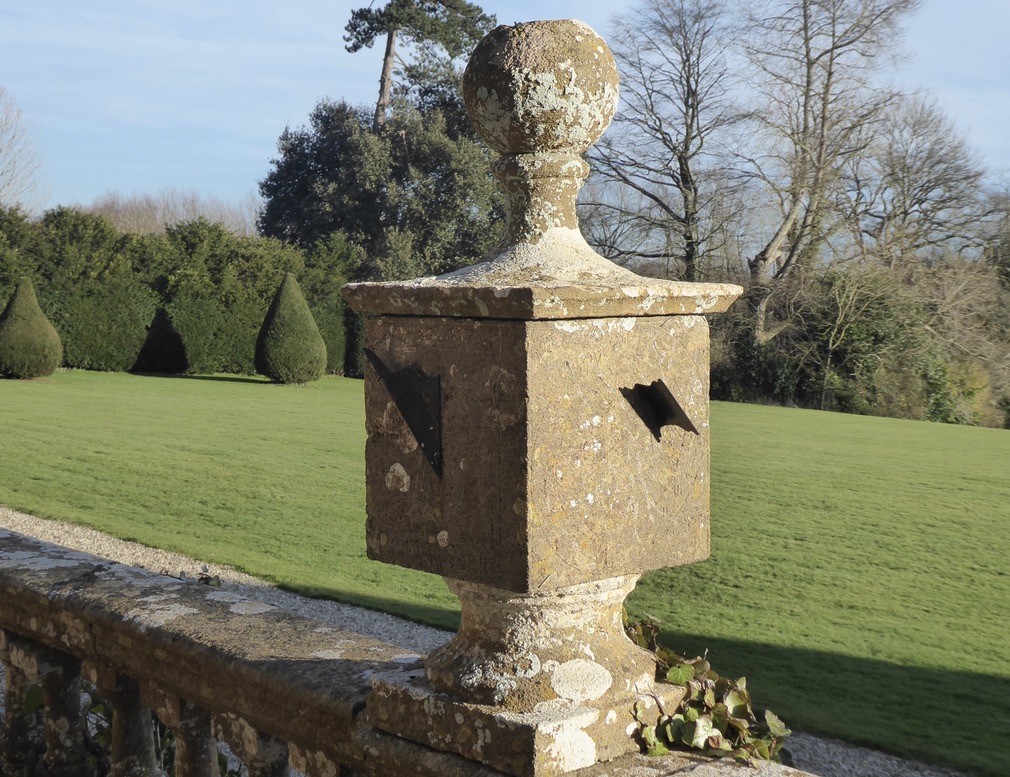
CUBE DIAL(GVII)
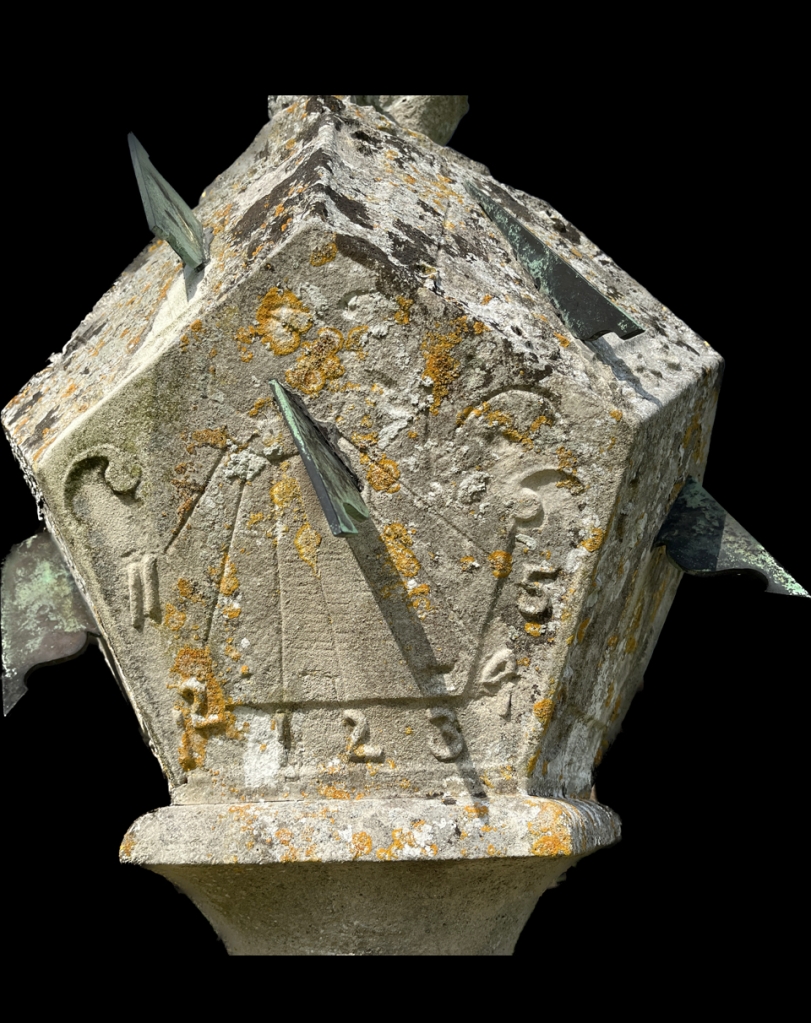
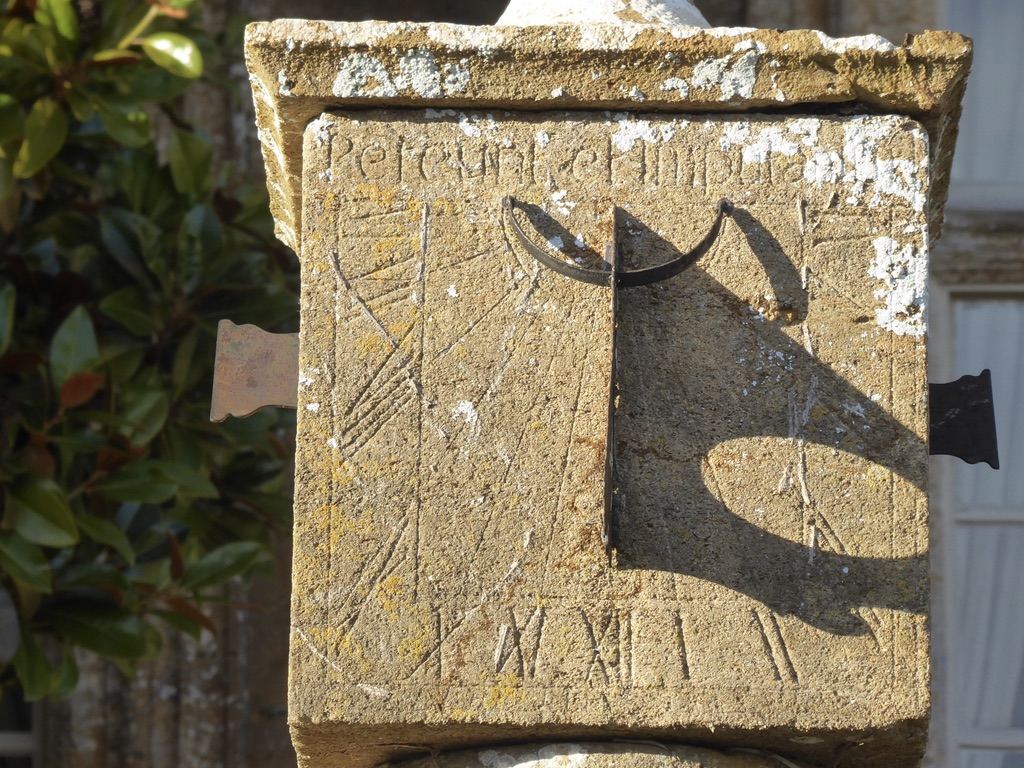
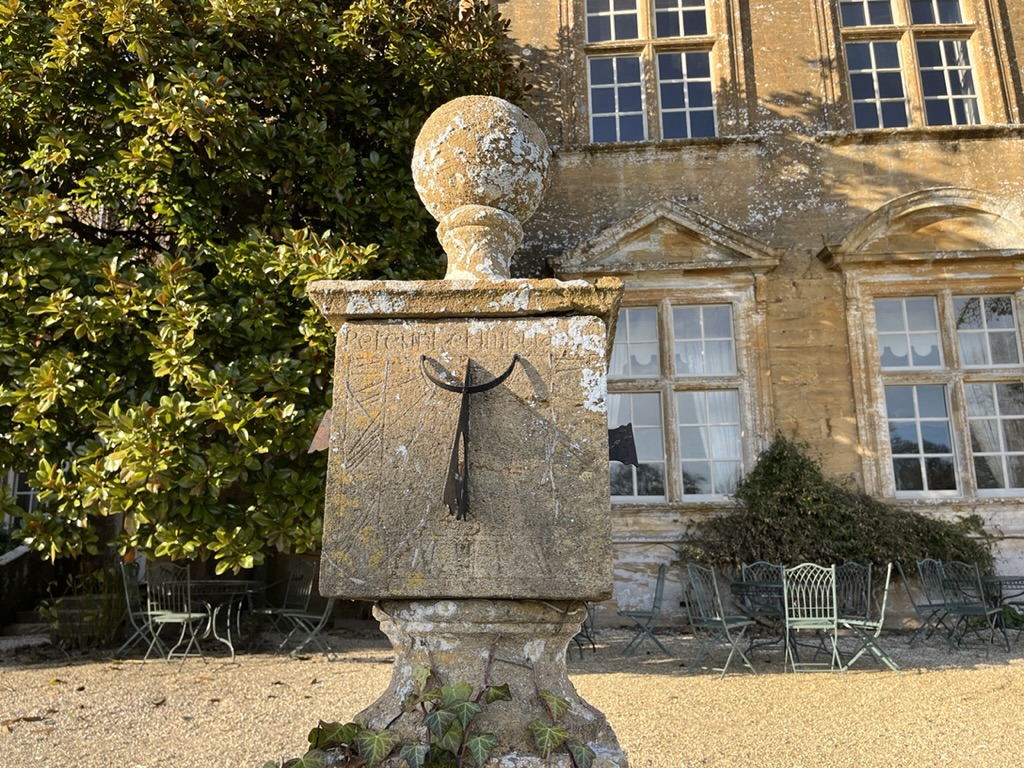
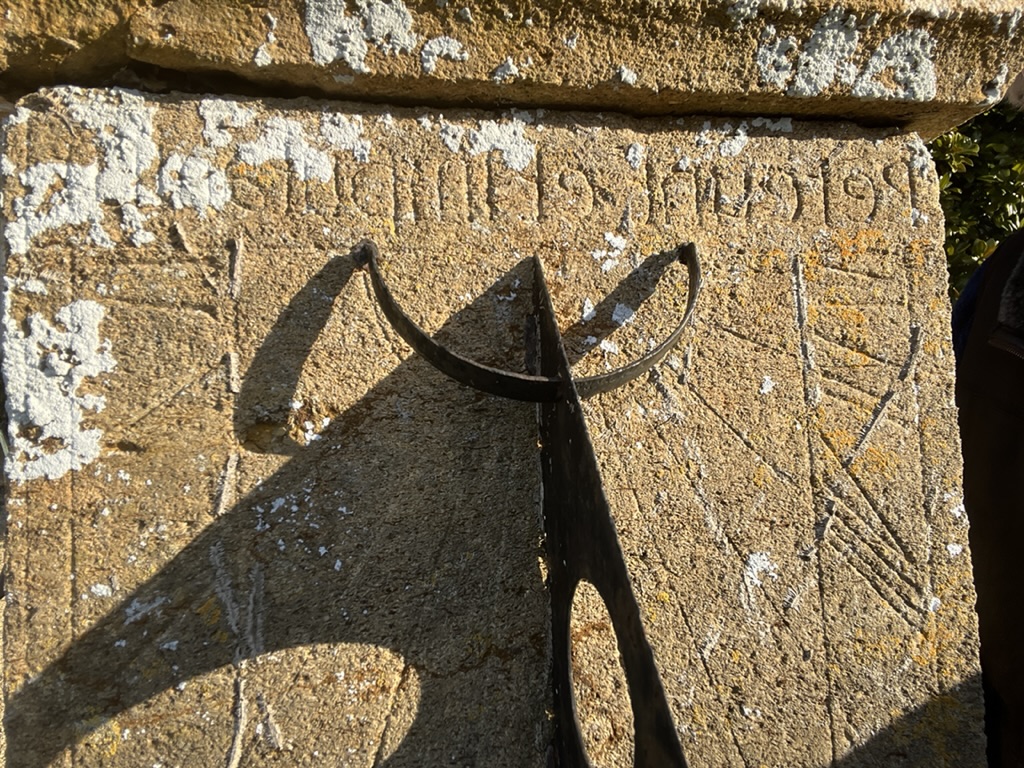
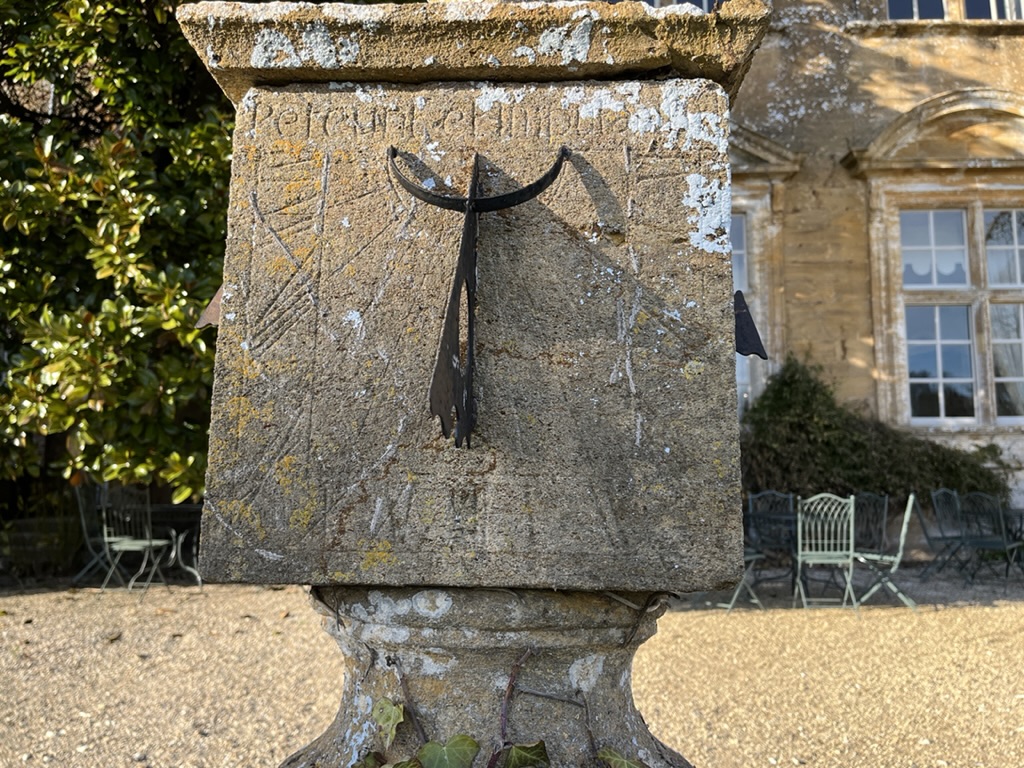
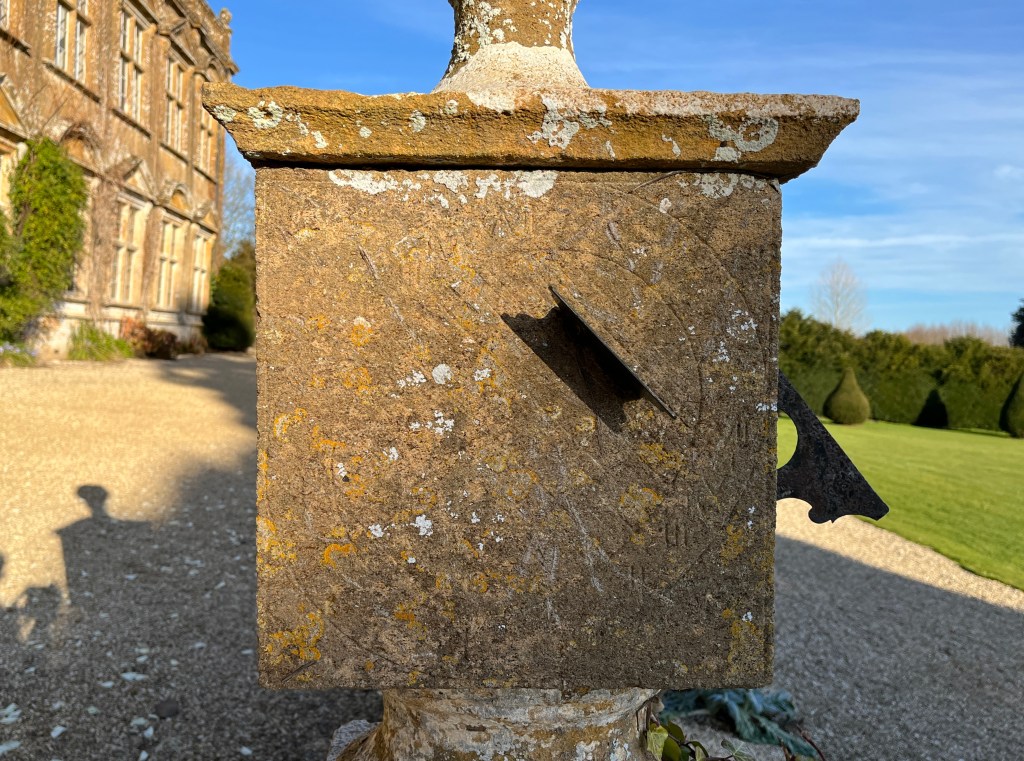
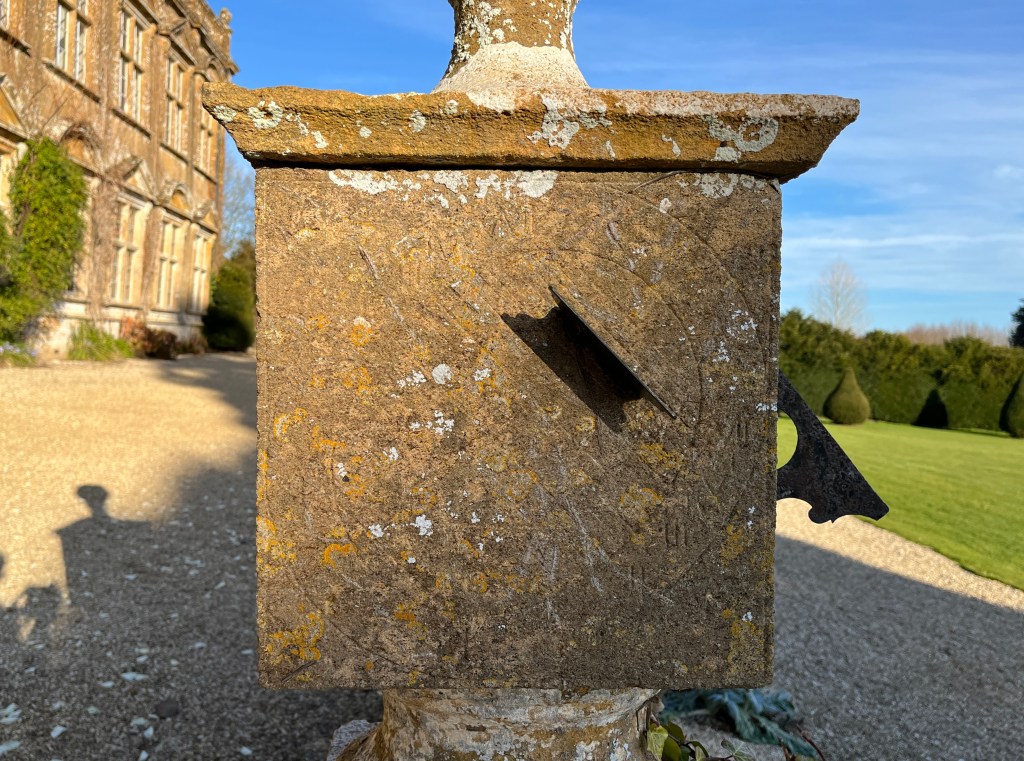
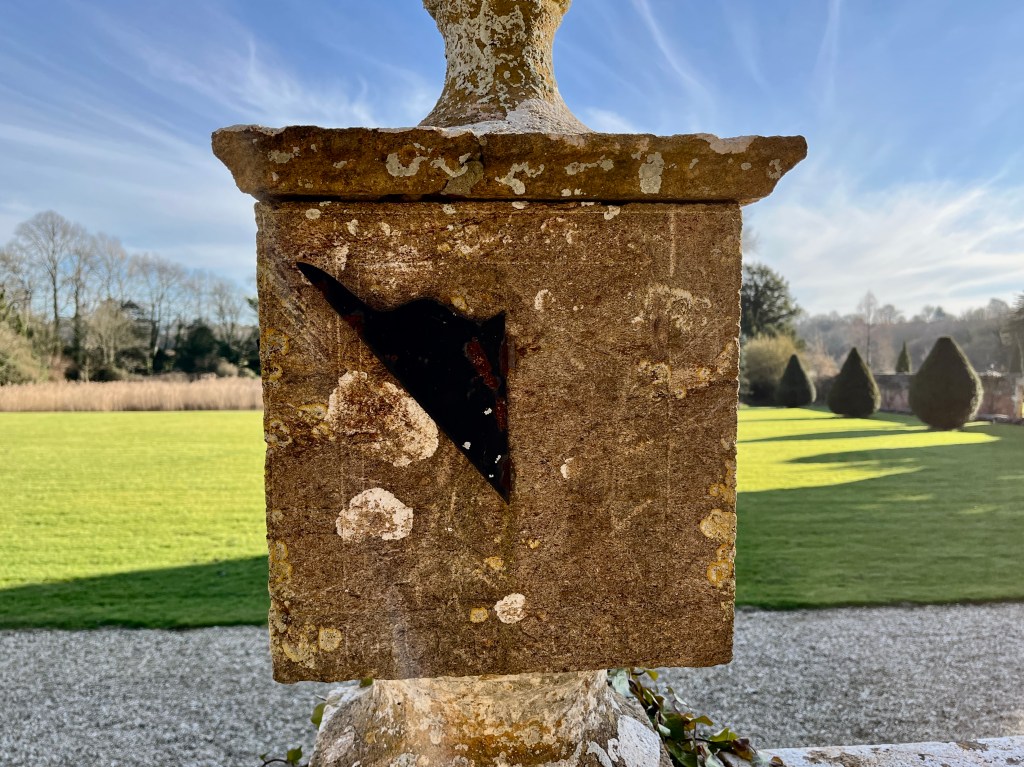
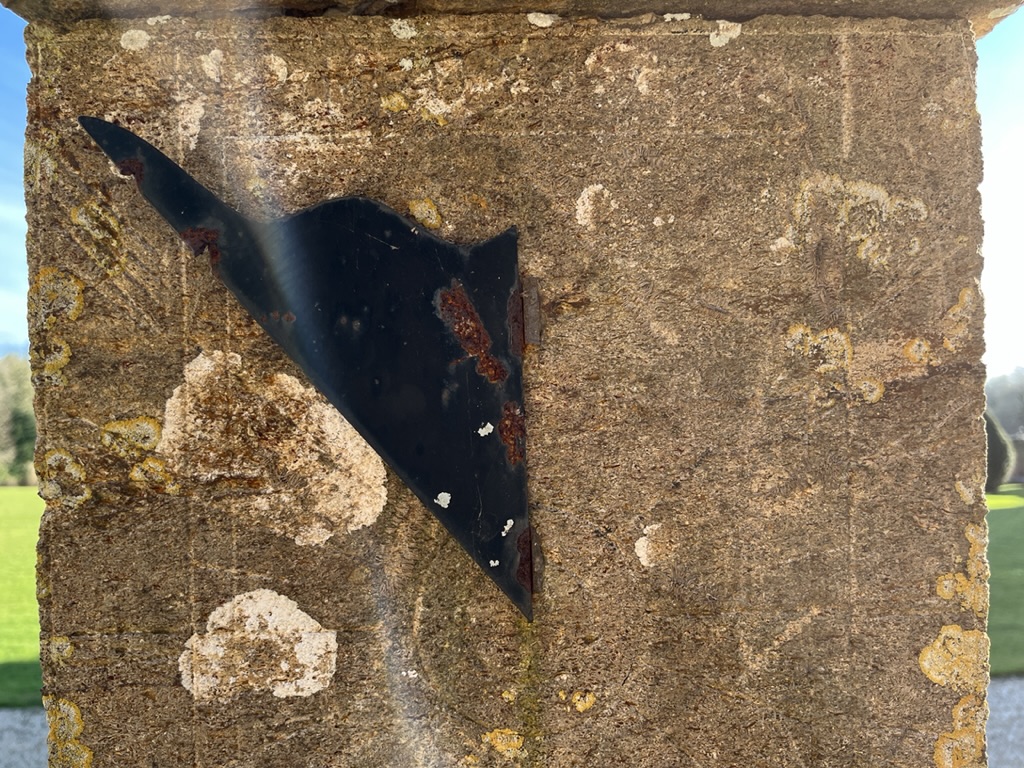
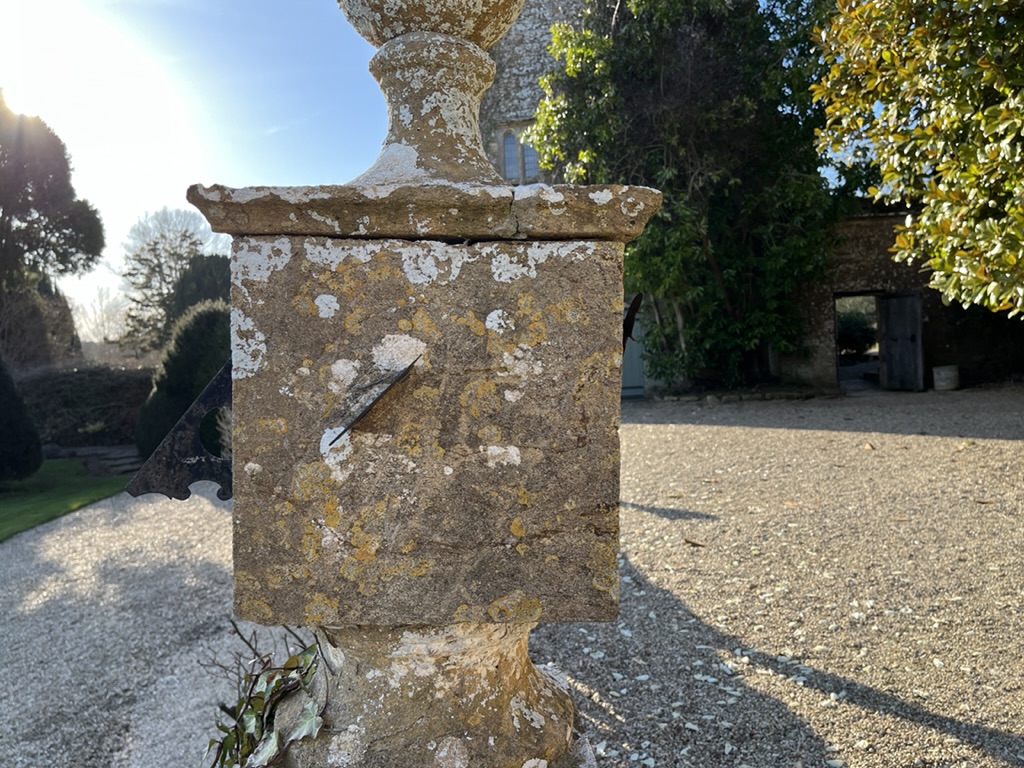
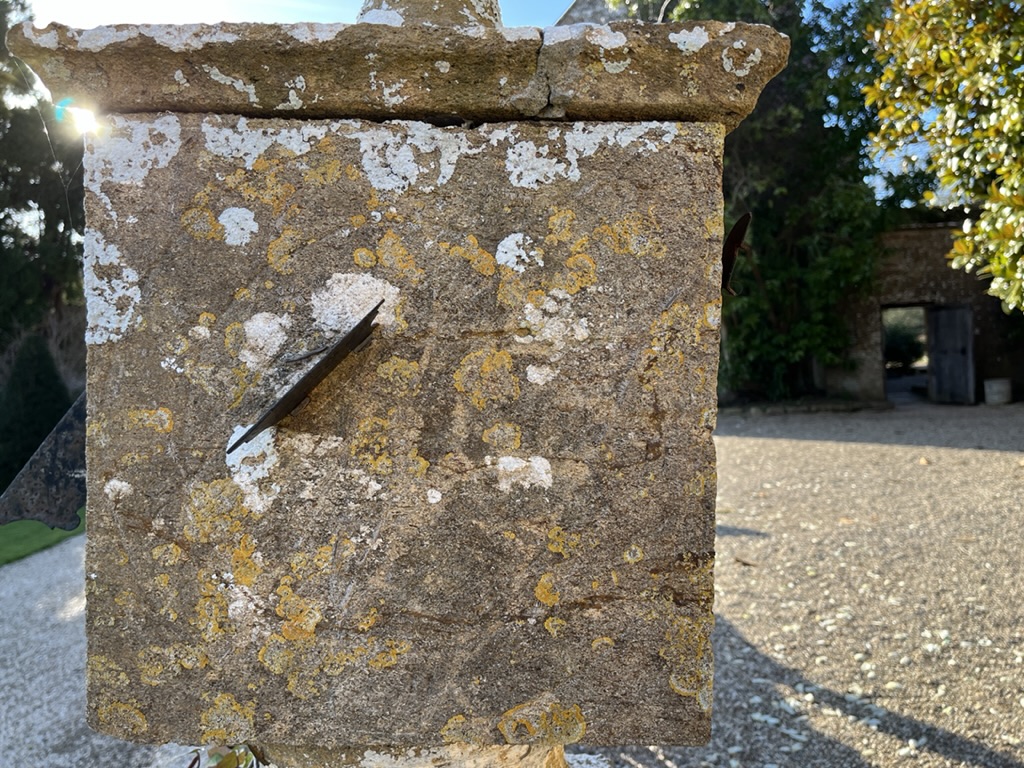
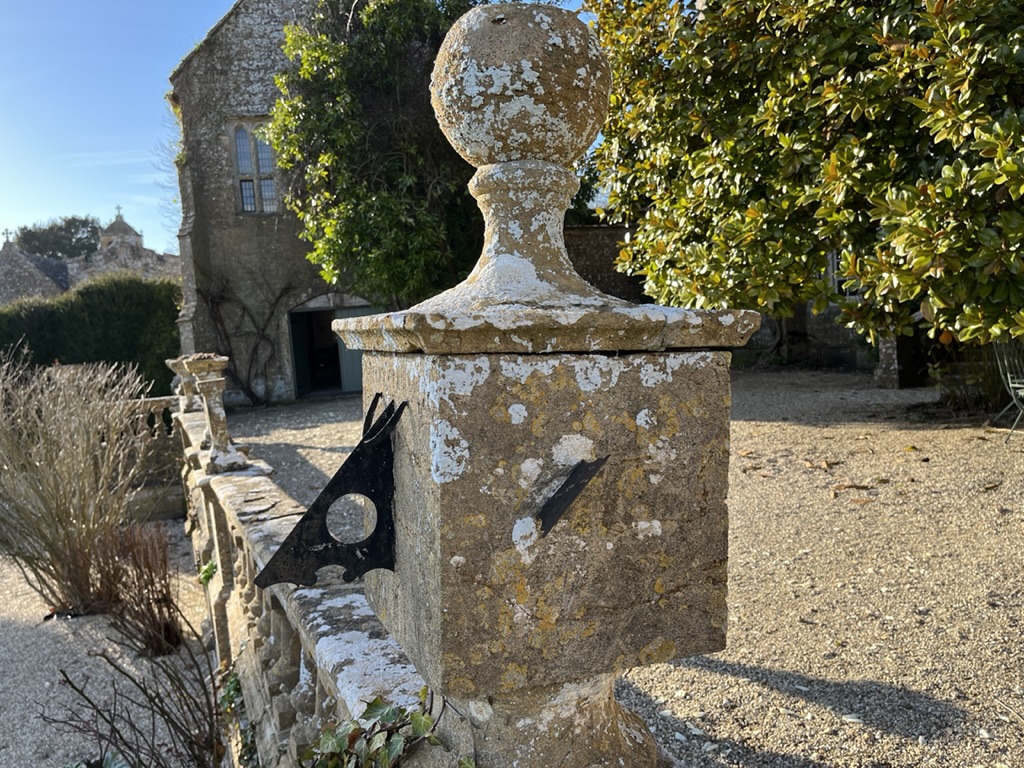
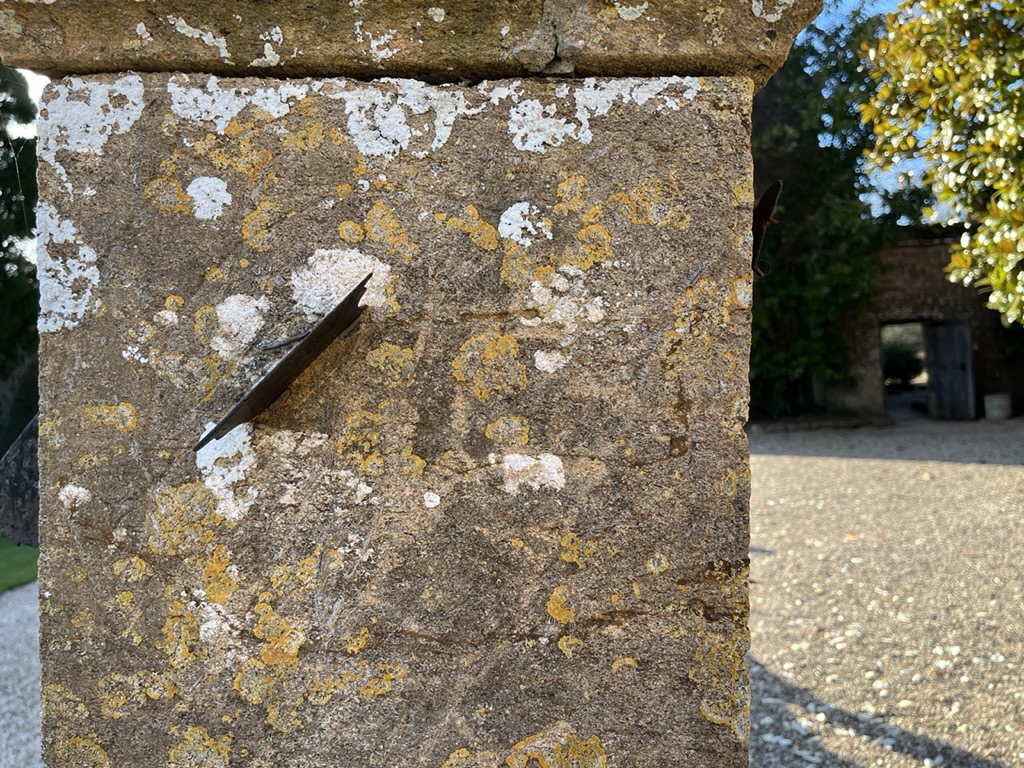
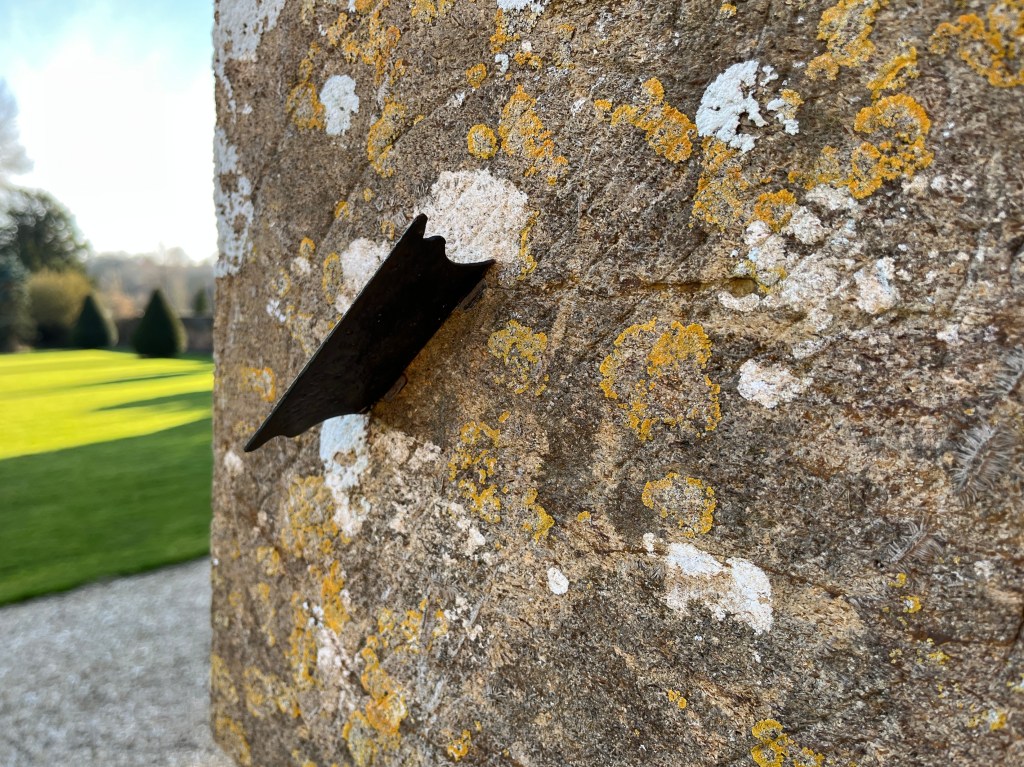
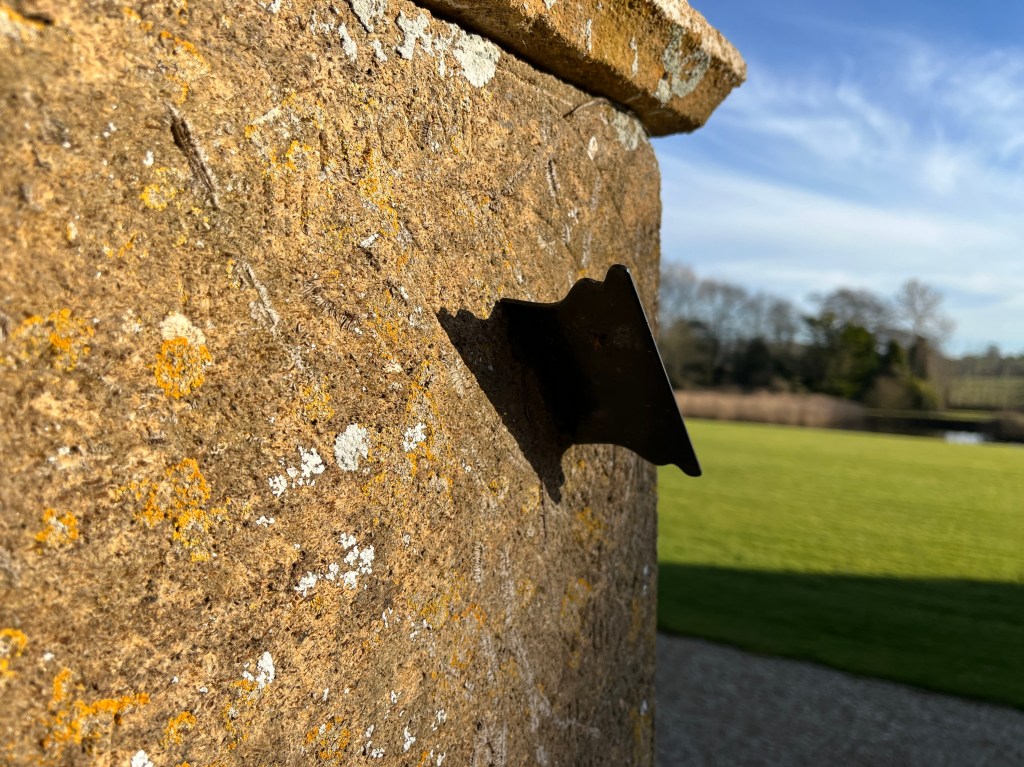
The long (75m) balustraded south terrace looks out over parkland with a small lake. The dial dates to mid-C19, probably added ± 1860 as part of the design for the terrace building project. If the dial is older, it must have been relocated. HE describes the ashlar retaining wall with chamfered plinth, capped with a stone balustrade with intermediate piers on which are set a variety of urns and other ornaments, and in the centre of the long western section a block sundial with ball finial, on which is inscribed LAT 50-56, 17.30, having sheet metal gnomons, 2 of which are broken. The 4 gnomons are shown together further down this page.
SOUTH
The motto on the S face of the dial reads PEREUNT ET IMPUTANTUR, which Gatty gives as ‘they perish and are reckoned’. Its original form as a Martial epigram directly references the sun’s involvement in this process.
Charles Cotton’s Fishing House . Beresford . Staffs – Cube Dial
CHARLES COTTON’S FISHING HOUSE . BERESFORD . STAFFS
CUBE DIAL
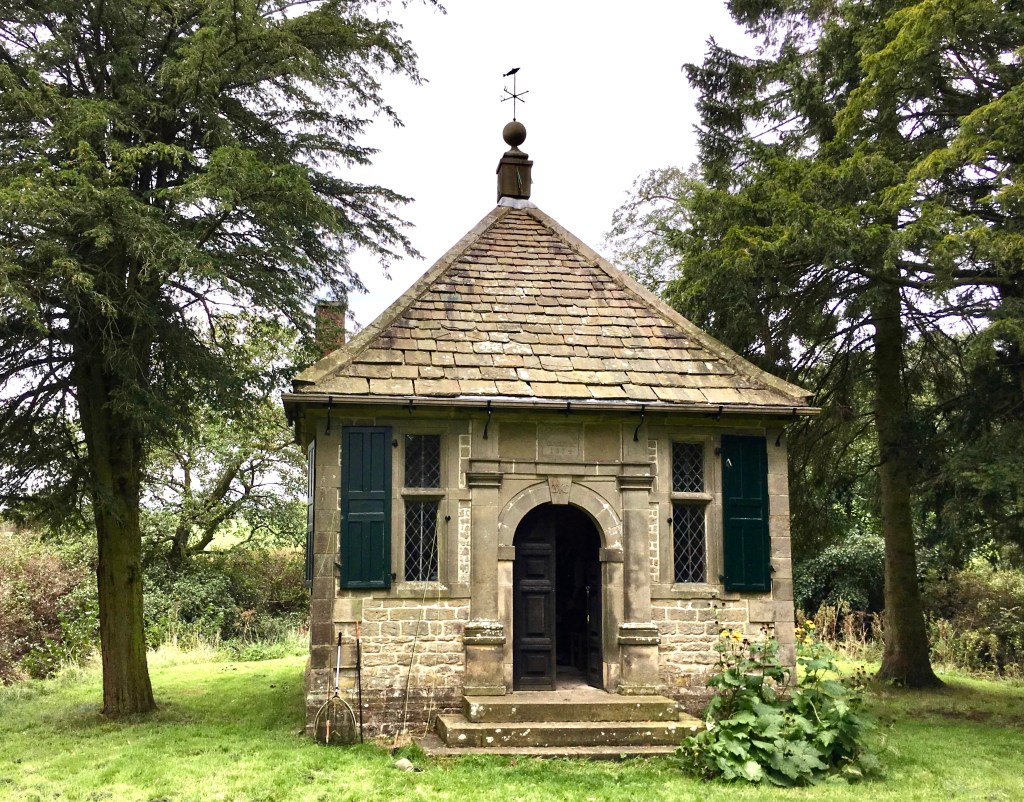
GRADE II* The most famous and piscatorially significant fishing ‘hut’ in the world, in a clearing beside the River Dove, near Hartington. By a quirk of a bend in the river, the hut is in Staffs rather than Derbyshire. Single cell square plan in an Artisan Mannerist styleBLB SK127592
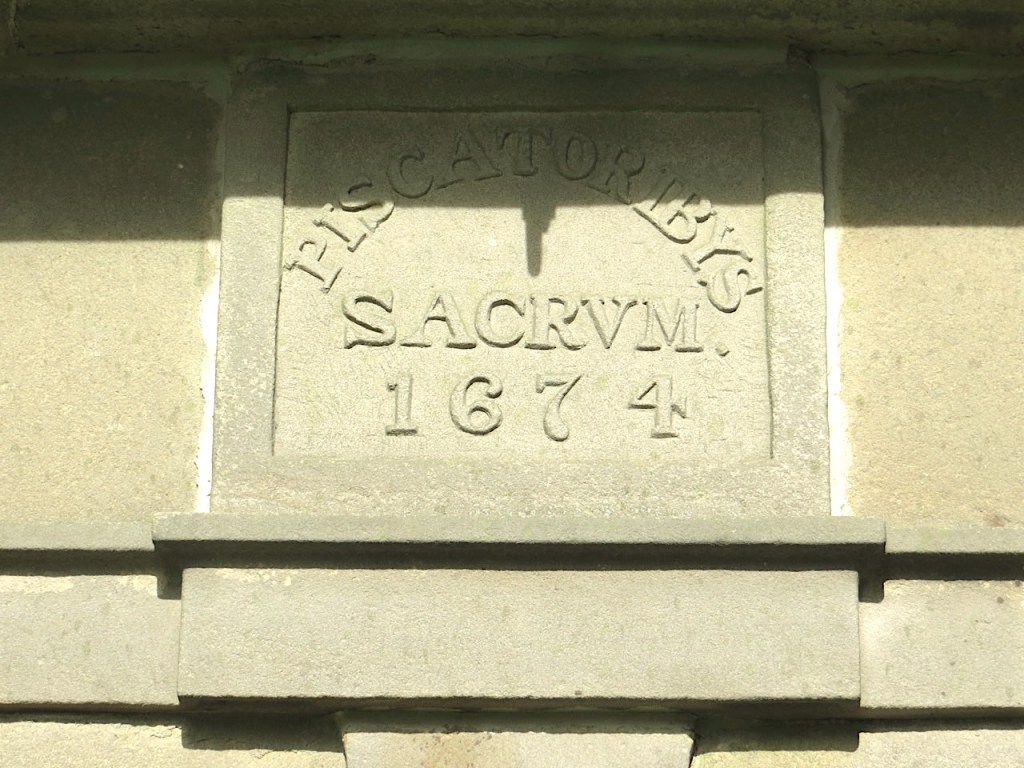
The inscription Piscatoribus Sacrum – a sacred place for anglers – gave rise to the hut’s reverential name among fishermen, The Temple. I can’t improve on this description from HE:
Charles Cotton’s fishing house is a unique building designed specifically for the sport of angling. It was an elaborate building in relation to its simple function, an expression of Cotton’s dedication to angling and to his entertainment of fellow anglers. Izaak Walton and Cotton’s The Compleat Angler was significant in the development and diversification of the sport from the 17th century. The fishing house is a fine preservation of Charles Cotton’s angling endeavours and its association with the popular work The Compleat Angler makes it of national significance.
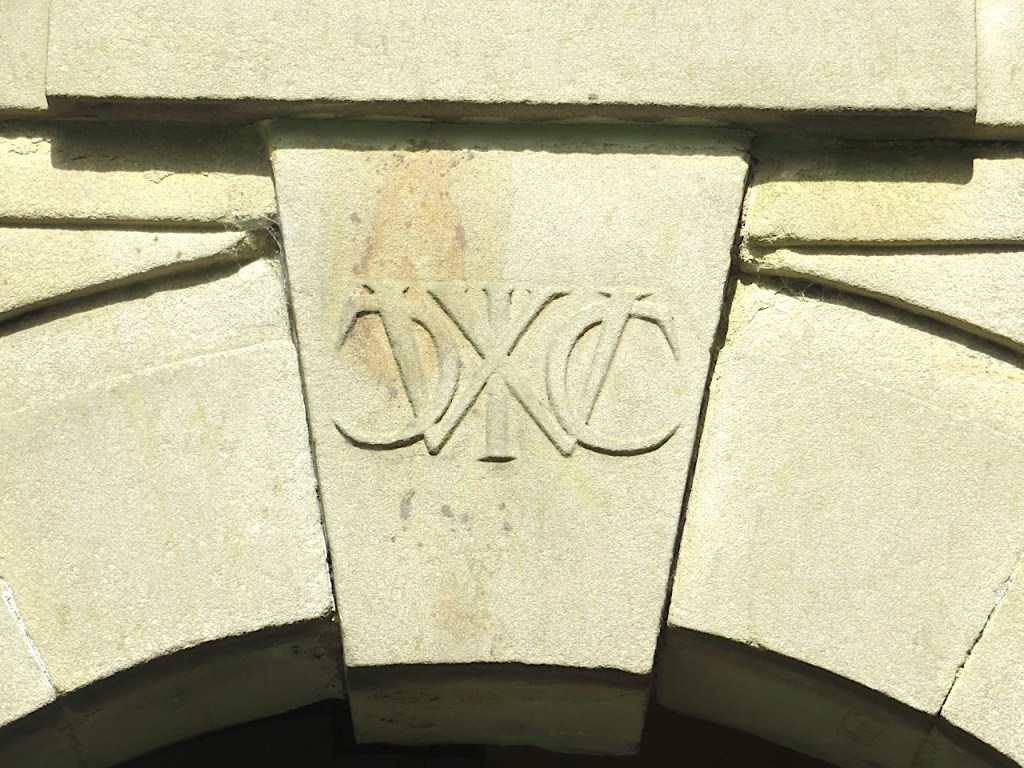
Dated inscription, and intertwined initials of Charles Cotton & Izaak Walton on the keystone
CHARLES COTTON’S CUBE DIAL
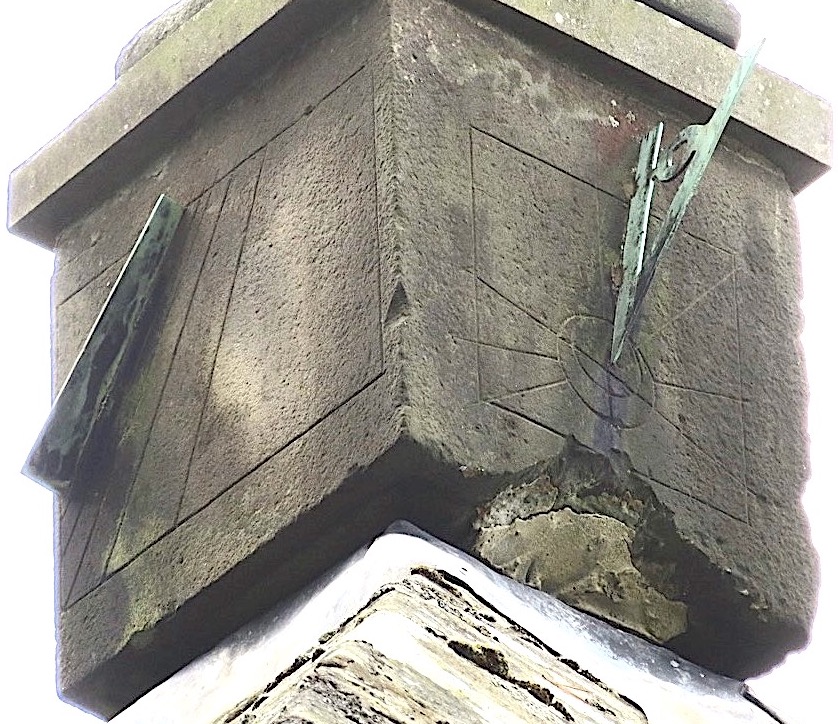
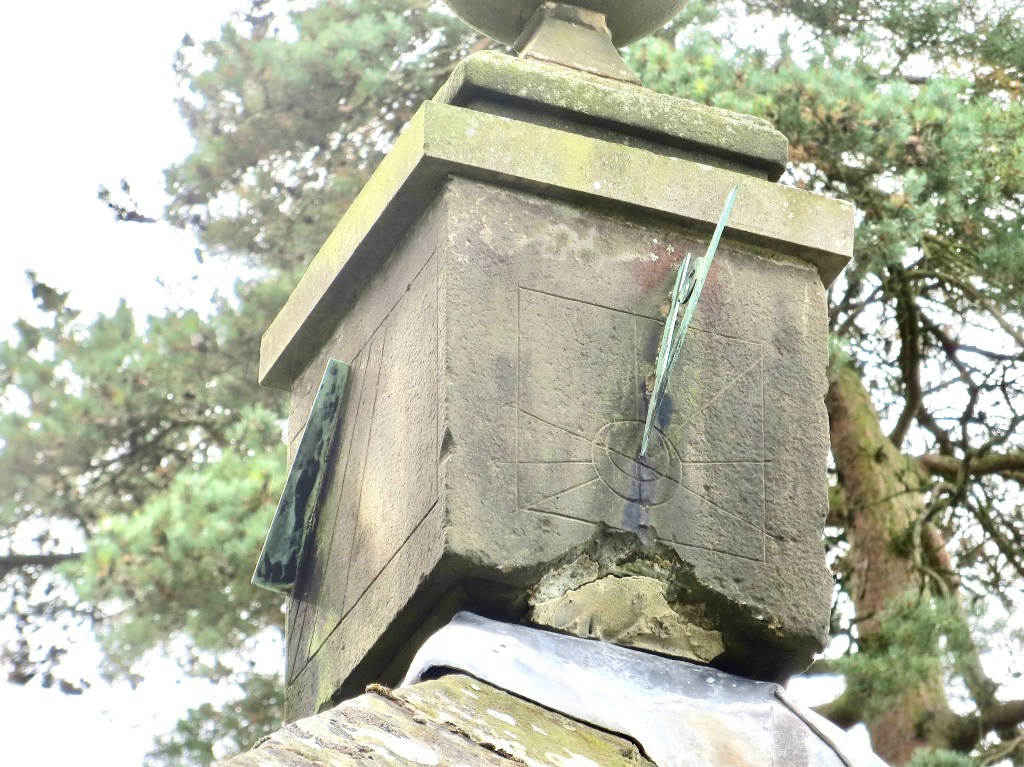
A while back I spent a couple of days fishing on the Beresford beat of the Dove (to little effect). Just seeing the hut close to – let alone actually using it for its intended purpose – was an amazing experience. The weather was quite poor; the photos (taken on a basic pocket Canon) poorer still. I’ve had to do some work on the images, which I hope are now clear enough to be informative. 3 faces are featured; images of the 4th, away from the sun, were useless.
Charles Cotton’s Fishing House . Beresford . Staffs – Cube Dial
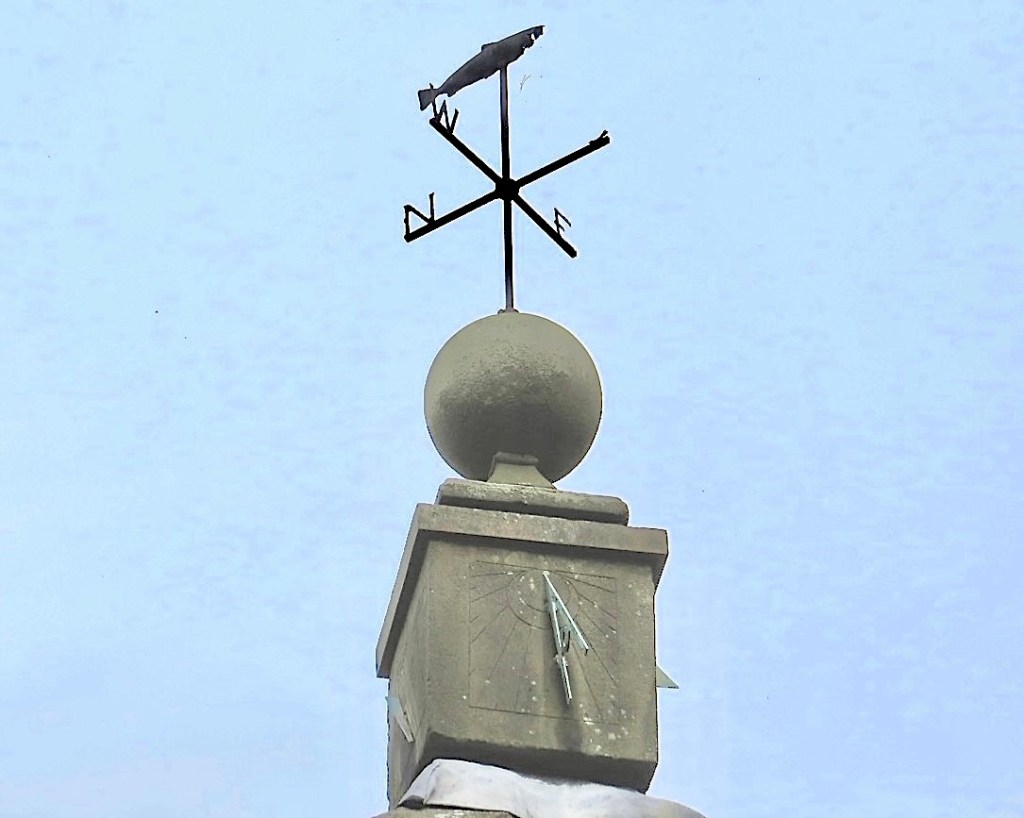
The dial is fixed to the apex of the hut’s roof. It is surmounted by a round finial, then a weather vane, and – a final flourish – a trout.
Charles Cotton’s Fishing House . Beresford . Staffs – Cube DialCharles Cotton’s Fishing House . Beresford . Staffs – Cube DialCharles Cotton’s Fishing House . Beresford . Staffs – Cube Dial
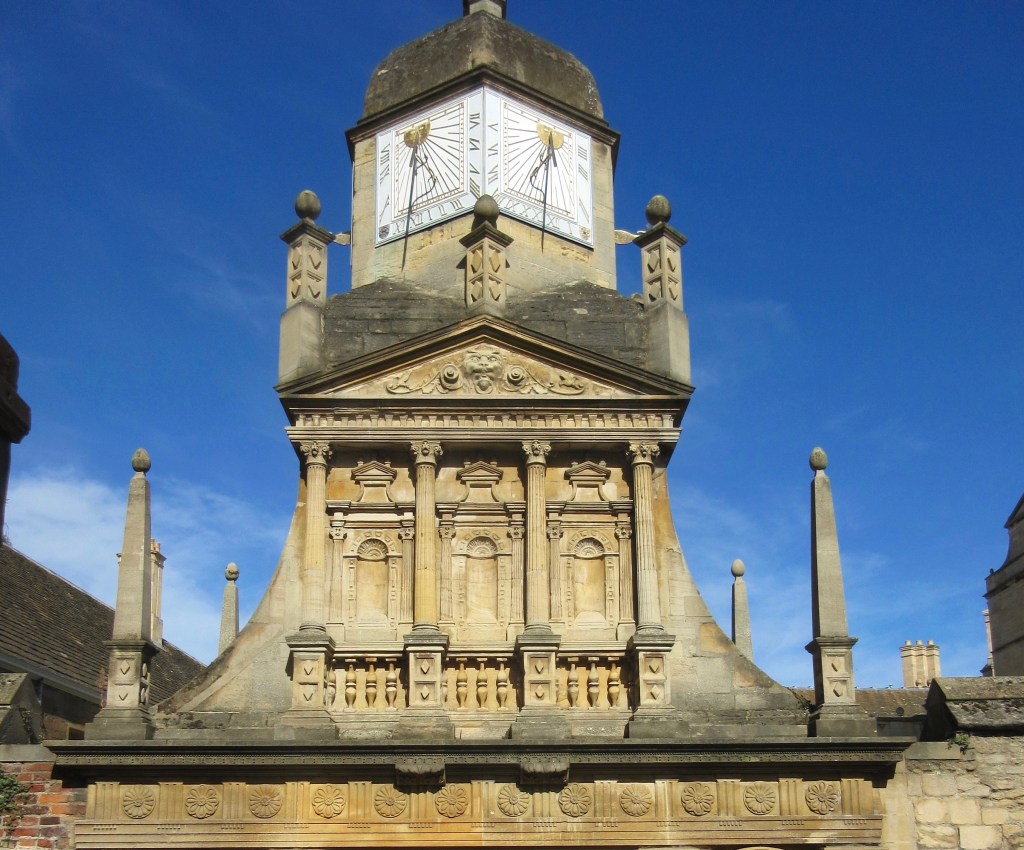
Gonville and Caius College Cambridge – Sundial over the Gate of Honour
This handsome modern set of dials was installed in 1963 as part of the 400th anniversary celebration of the college’s re-foundation by John Caius. There are 6 vertical sundials, arranged in 3 pairs placed round the hexagonal tower. They were designed by astronomer and Fellow, Dr Message, and the Junior Bursar Dr Powell. The bronze dial faces are painted with vitreous enamel. They replace the original set of sundials dating from 1557, of which only traces remained.
There is something very satisfying about this set of dials. The symmetry, the proportions, the materials, and the design all seem to work in harmony. Cambridge colleges have many sundials between them, many original and ancient (Queen’s College sundial is a perfect example). Of the modern dials, the Gate of Honour is adorned by arguably the finest.
Gonville and Caius College Cambridge – Sundial over the Gate of Honour
The college has three gates that represent the stages of academic life: matriculation, entered through the Gate of Humility; undergraduate life, with regular passage through the Gate of Virtue during a student’s career; and finally graduation, with students passing through the Gate of Honour to the Senate House to receive their degrees.
Gonville and Caius College is one of the oldest colleges of Cambridge University. It was founded in 1348 by Edmund Gonville, who has suffered the cruel fate of rarely being mentioned nowadays; the college is almost invariably referred to simply as ‘Caius’, after John Caius, the man who re-founded the college in 1557 at a time when it had fallen on hard times.
52.2057 / 0°7’1″E / TL447584
GGS Category – Modern Dial (replacing Old Dial); Multi-facet dial; University Sundial; Cambridge Sundial















 GAUDIUM SUB SOLE . SUNDIALS . MEDIEVAL TO MODERN