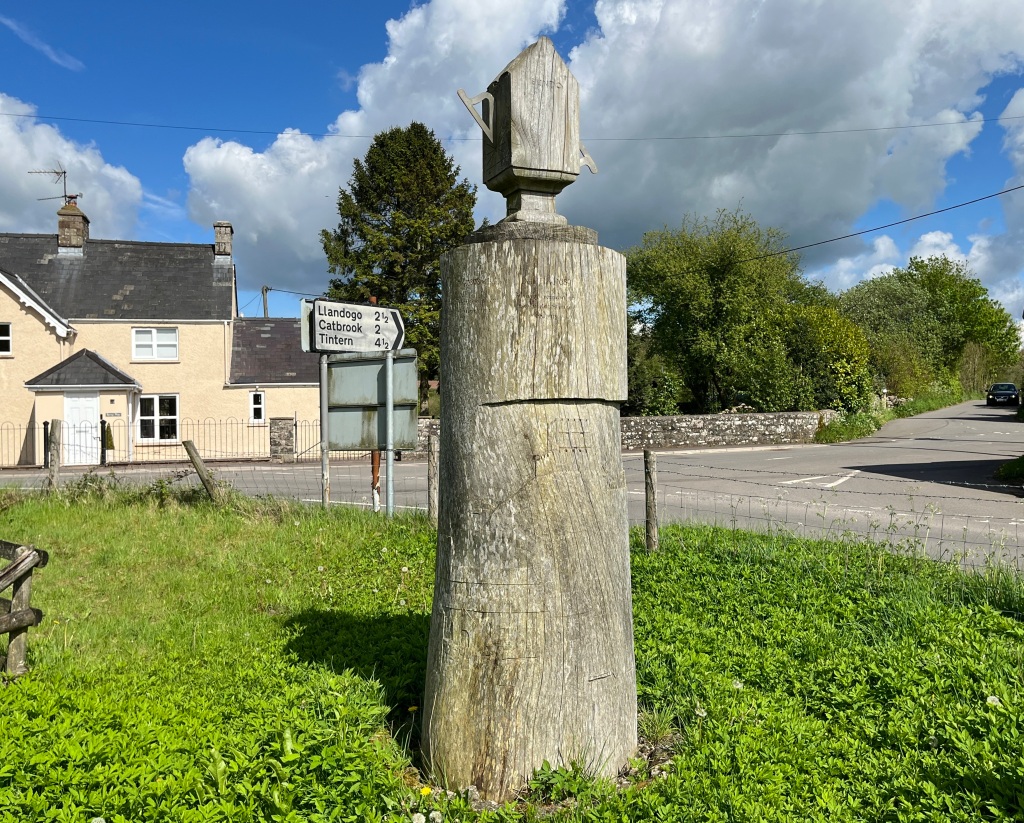
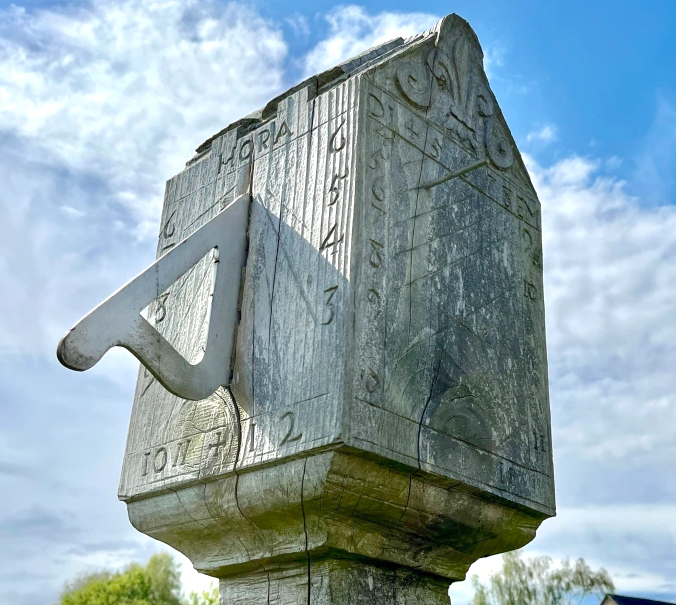
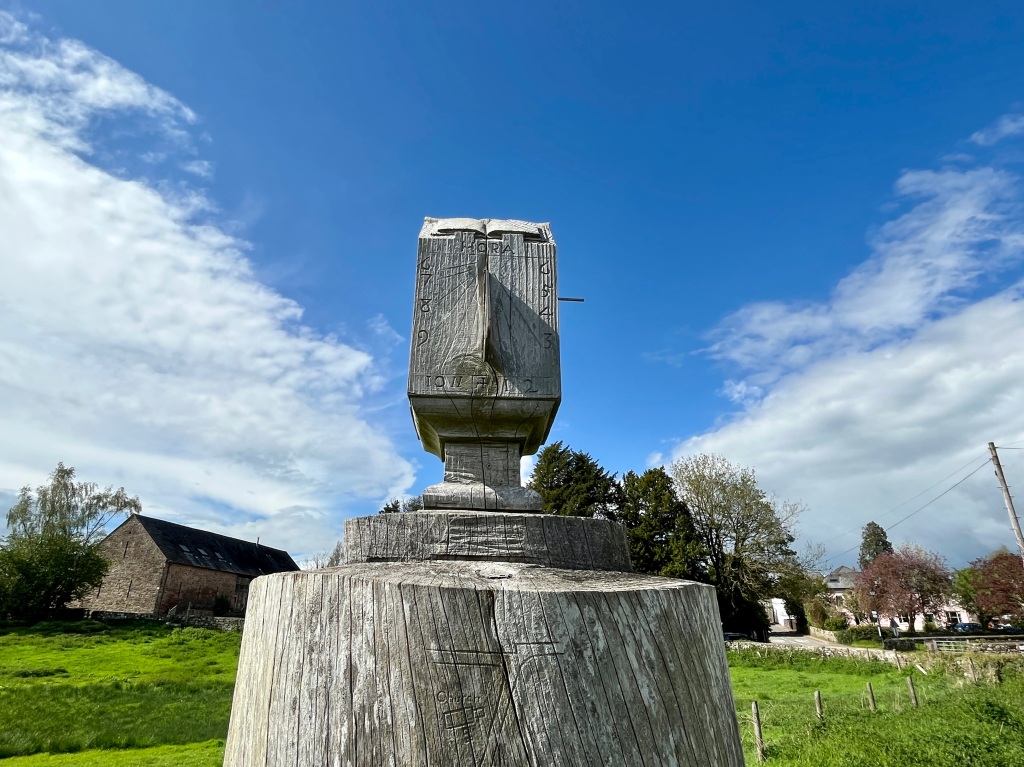
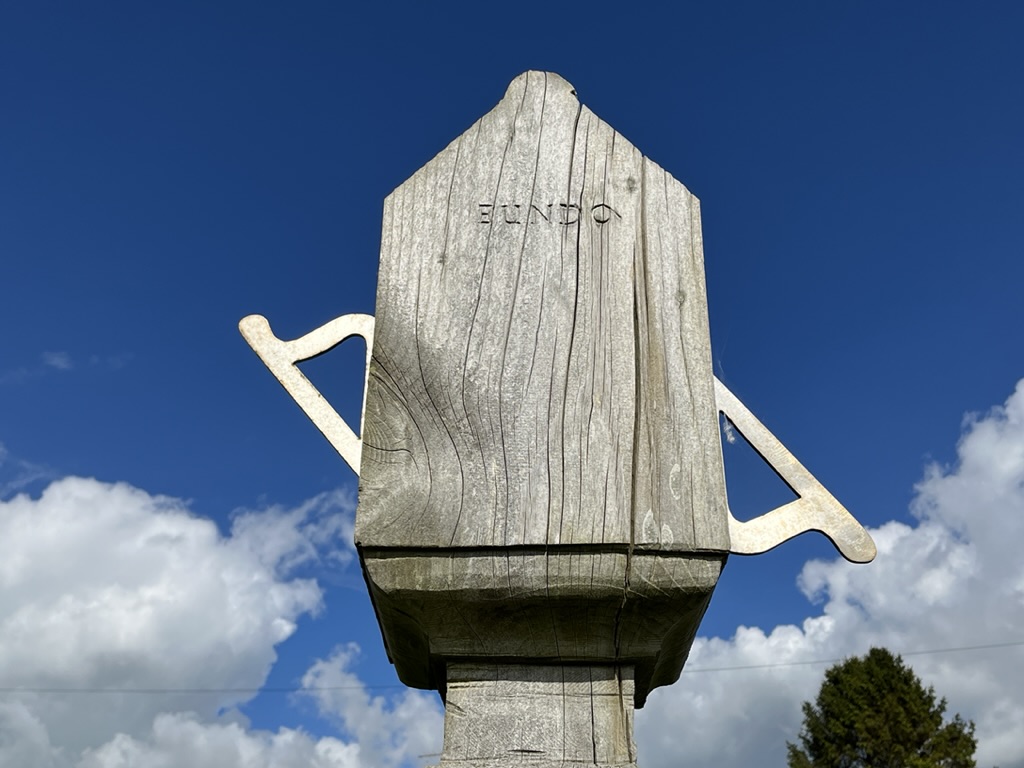
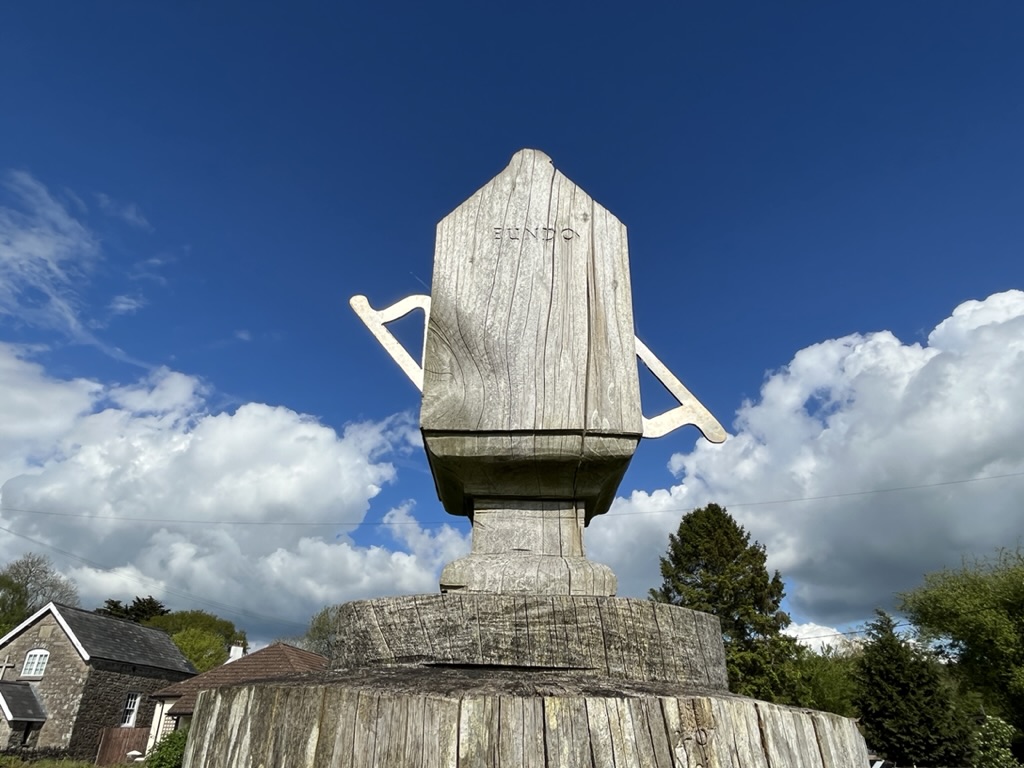
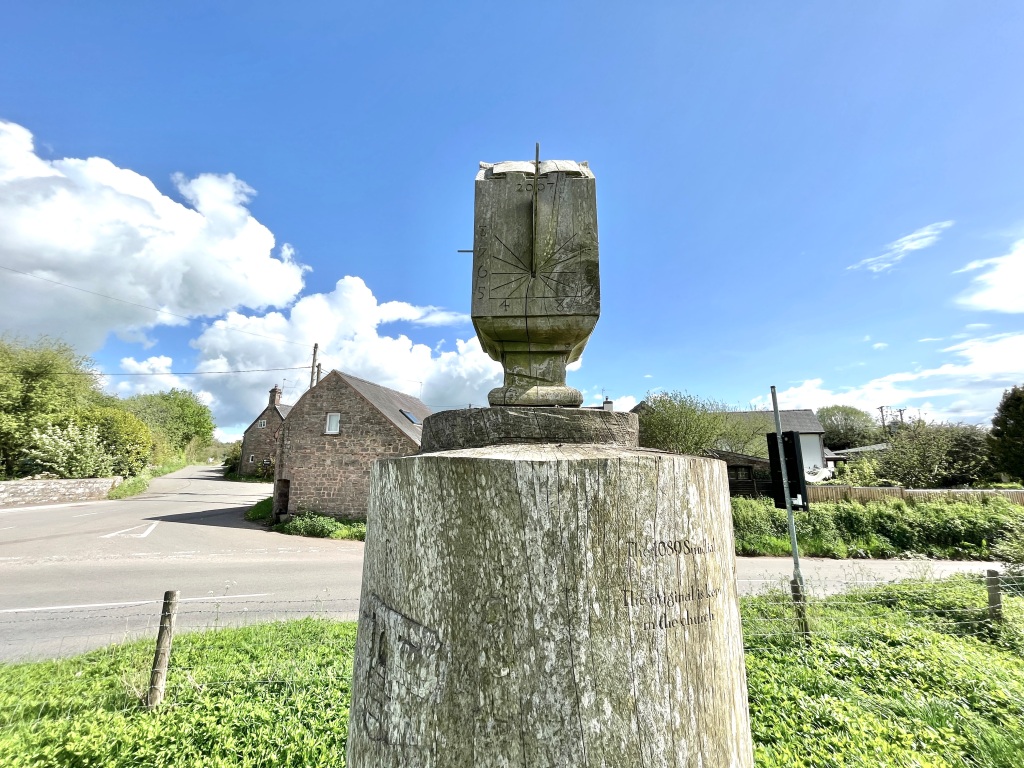
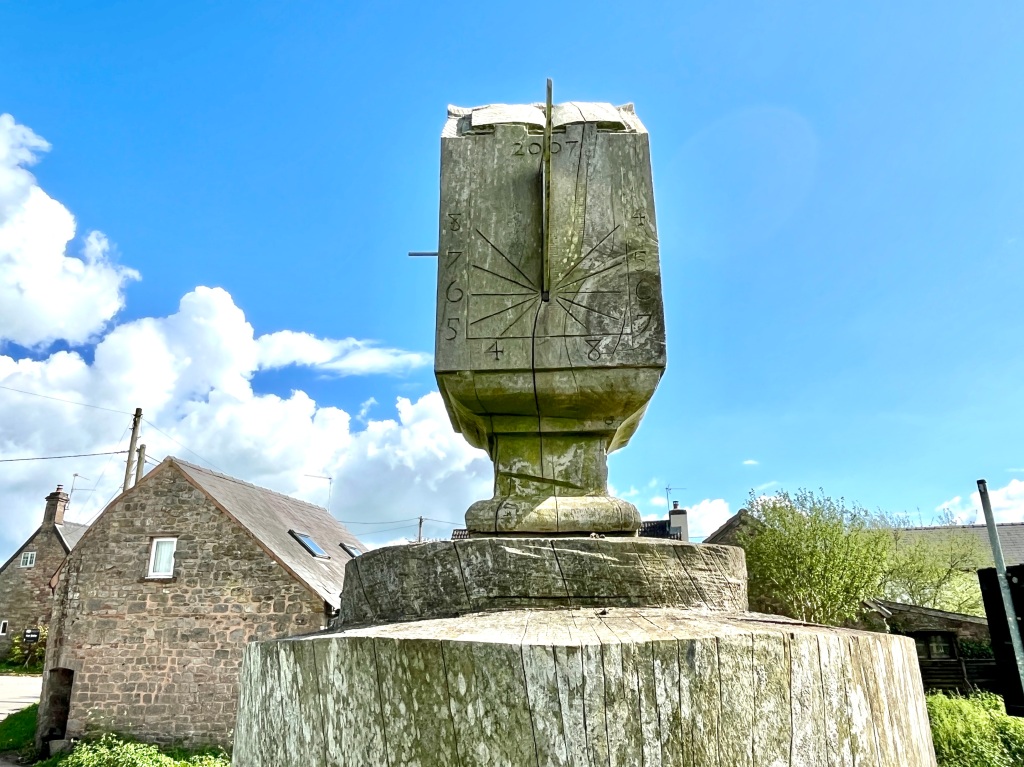
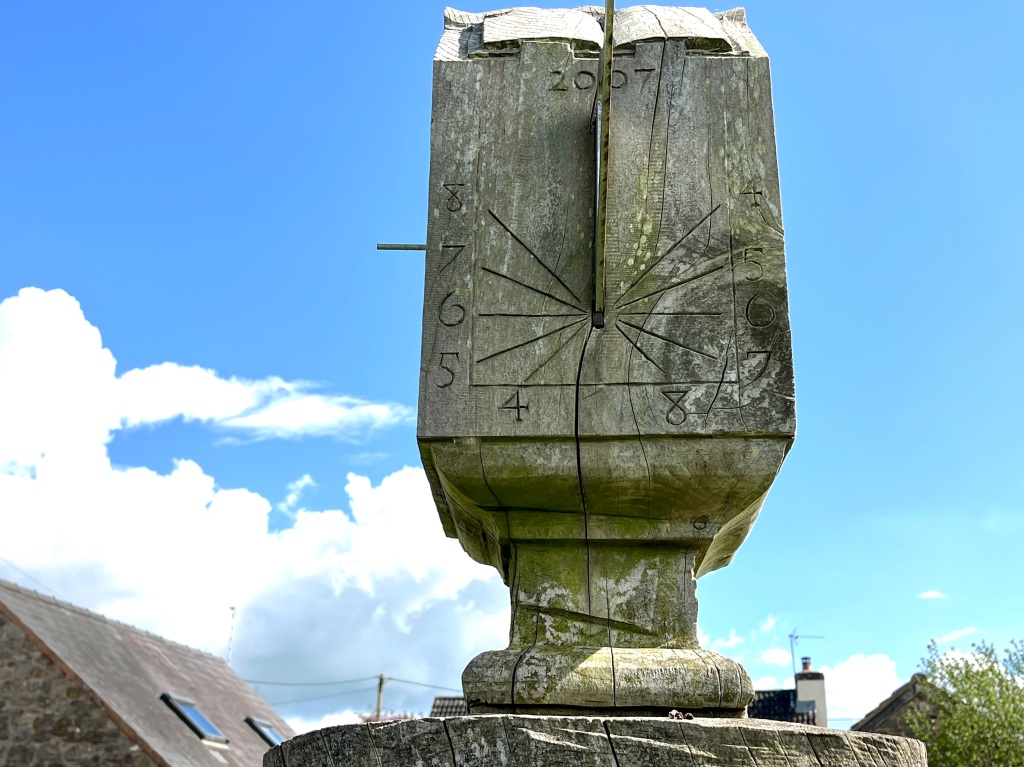
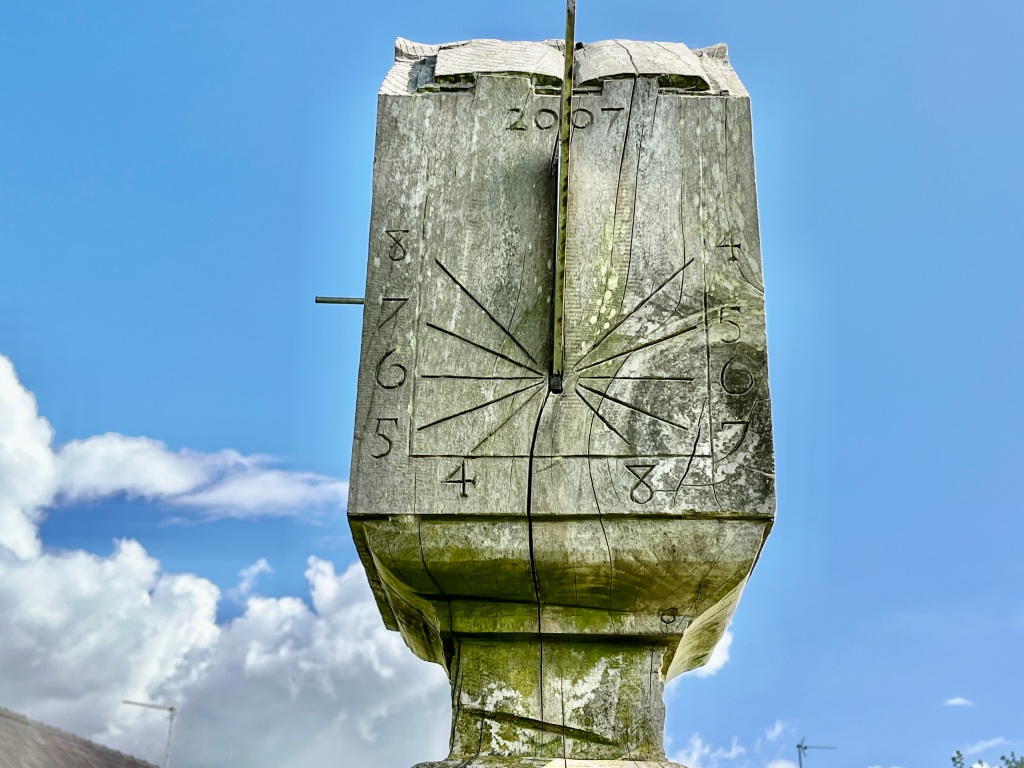
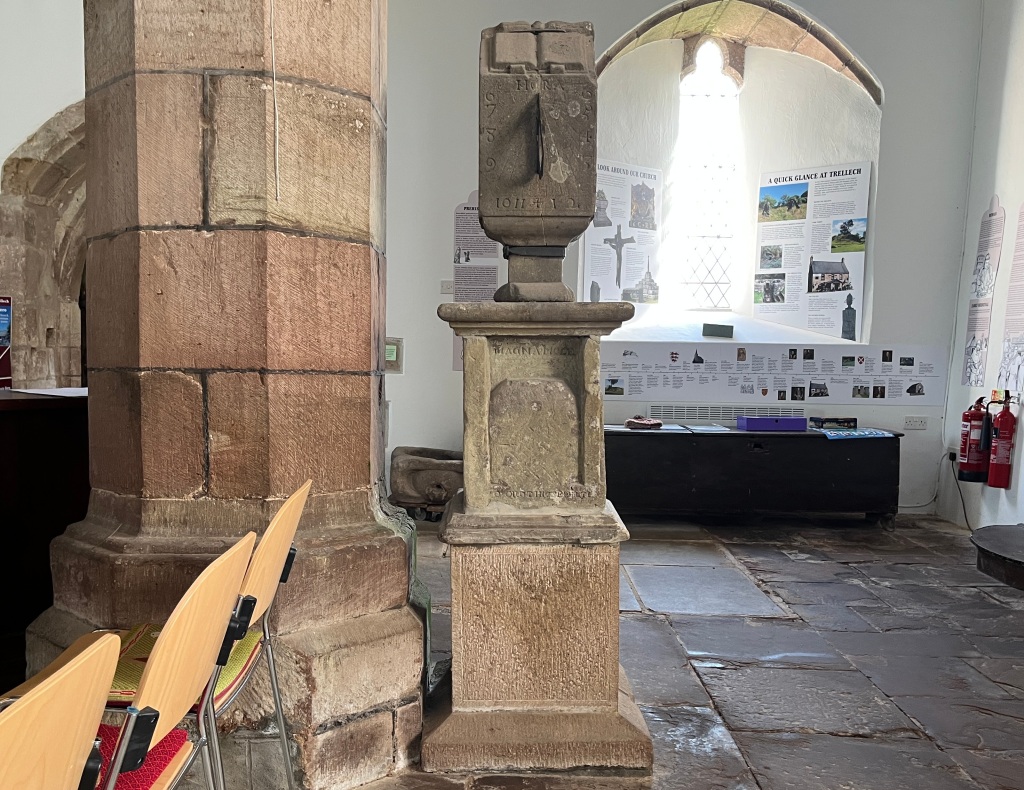
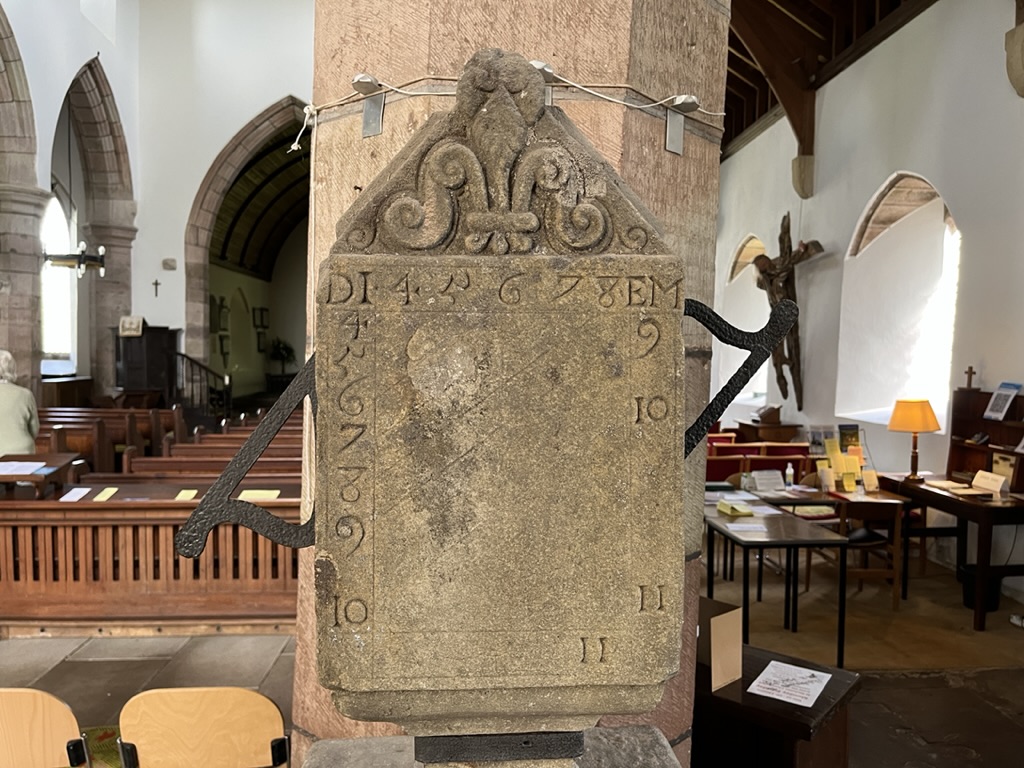
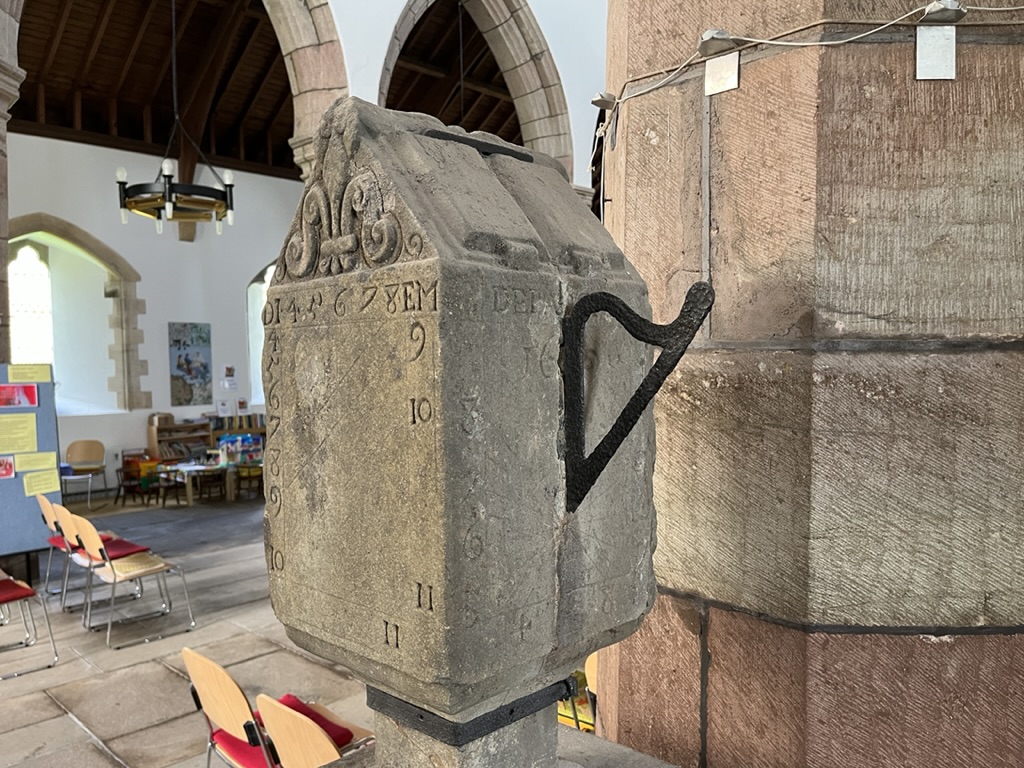
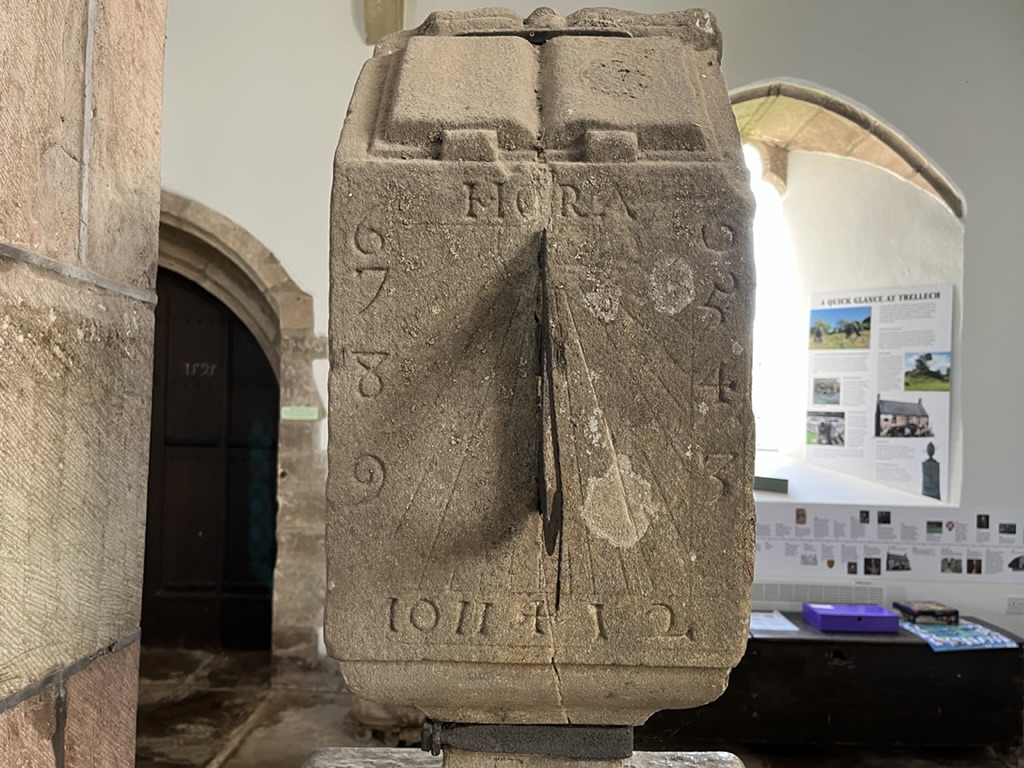
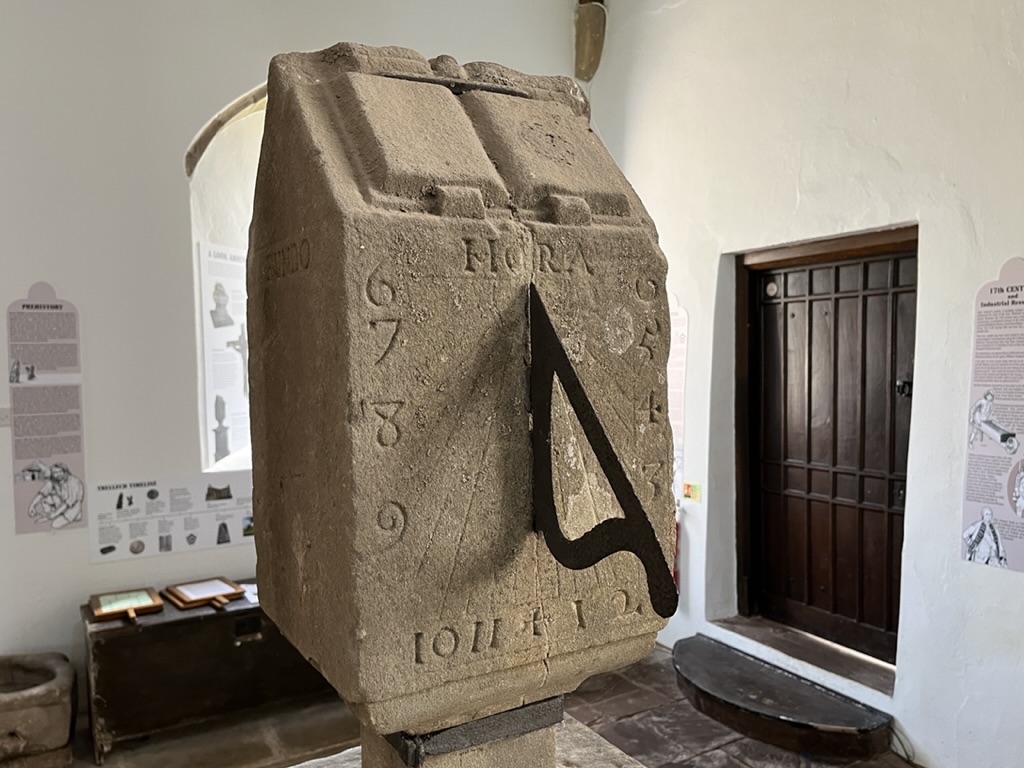
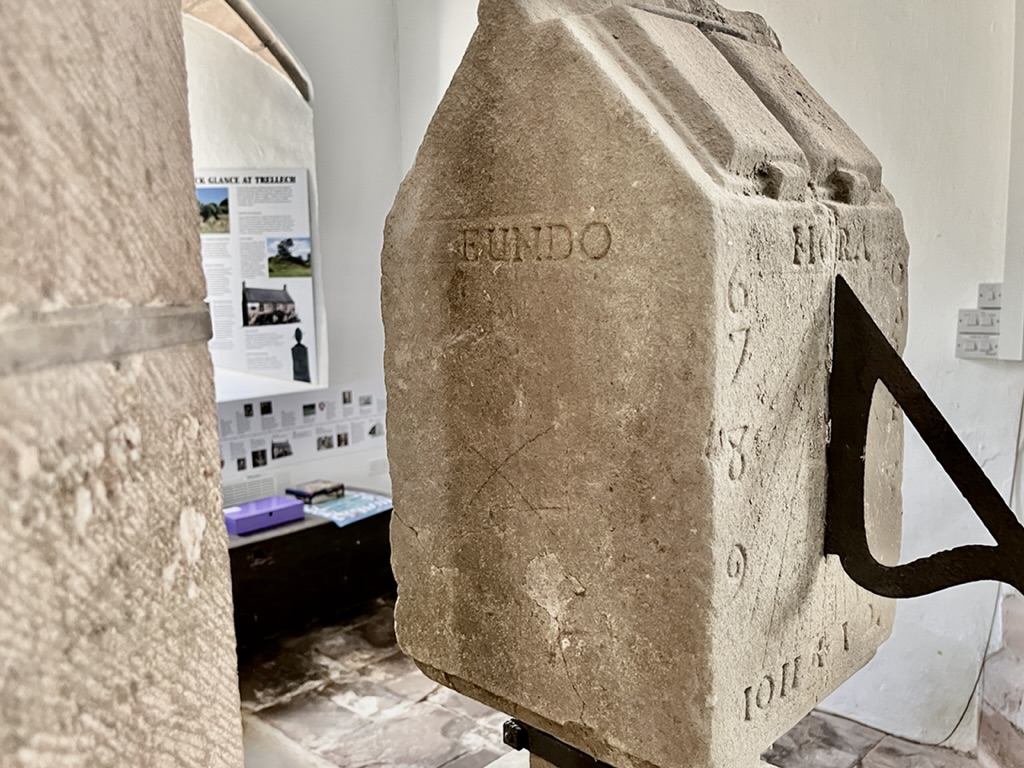
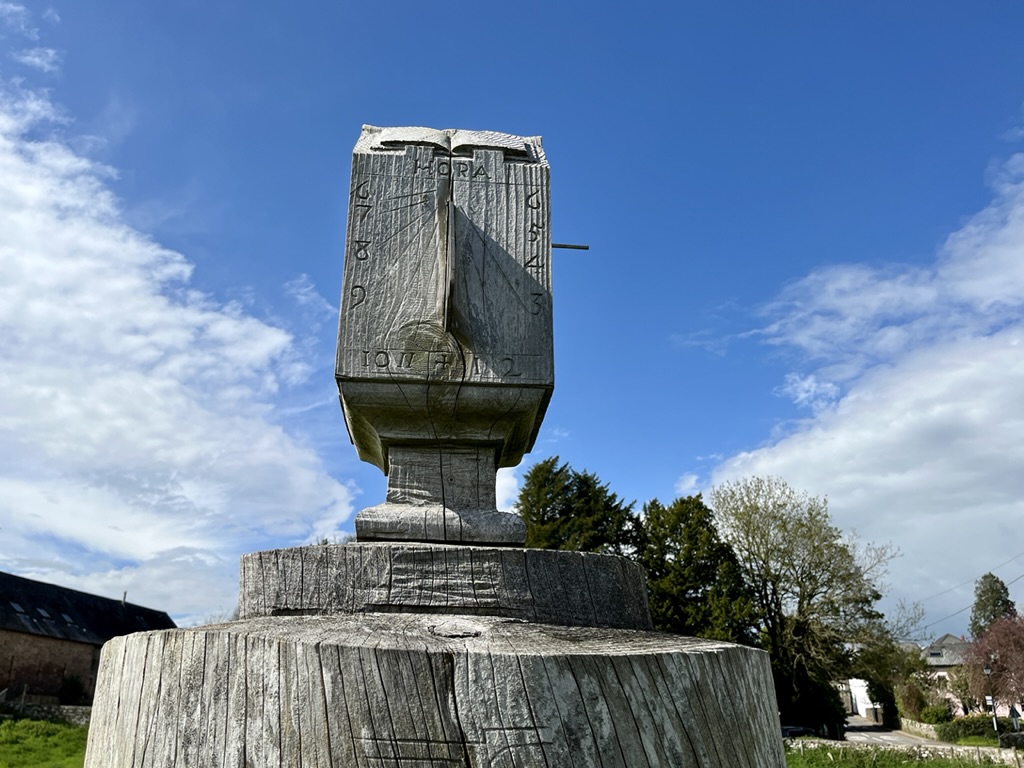
This post relates directly to its companion in Pt 1. Both articles feature the remarkable cube dial dated 1689, now preserved inside the Grade I listed church of St Nicholas, Trellech, Monmouth – the original and a fine recent (2007) wooden replica. You can find images of the original dial and each of its faces, with detailed descriptions, HERE. The location is 5m S of Monmouth 51.7459 / -2.725 / SO500054
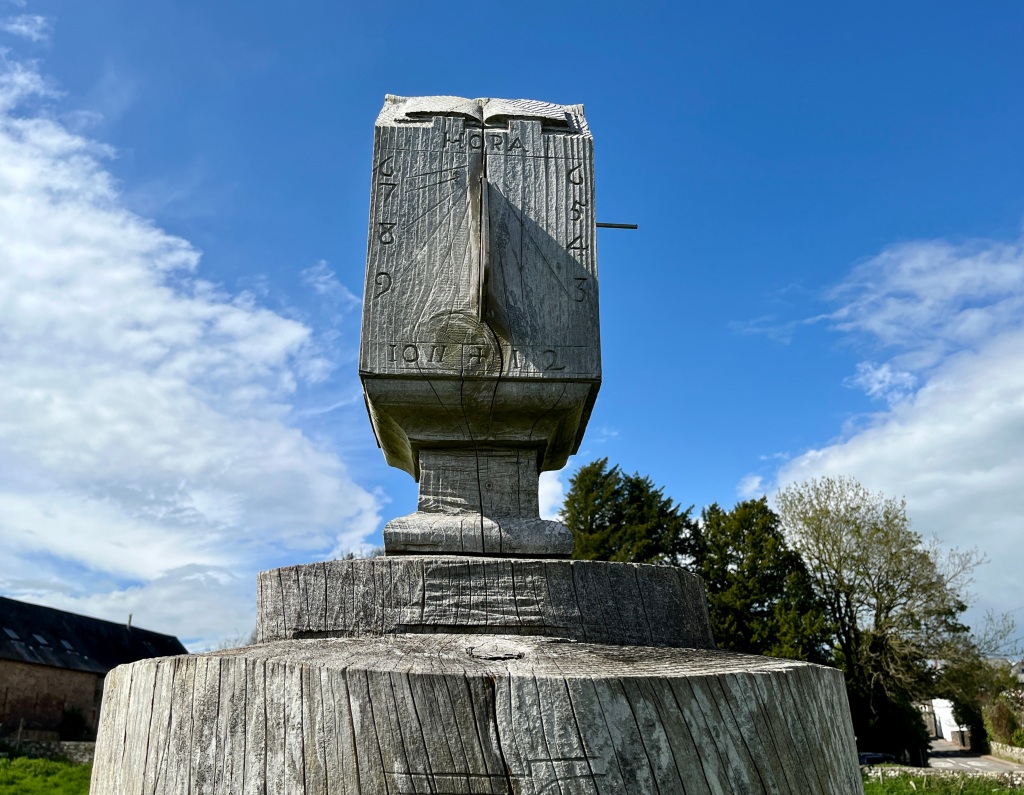
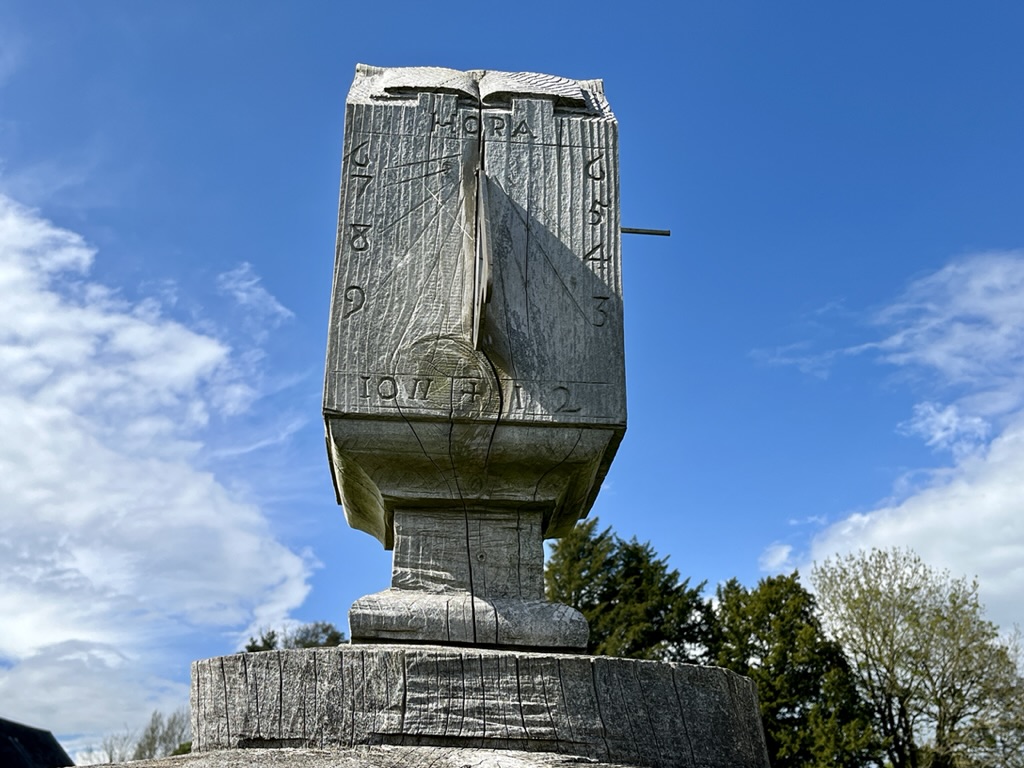
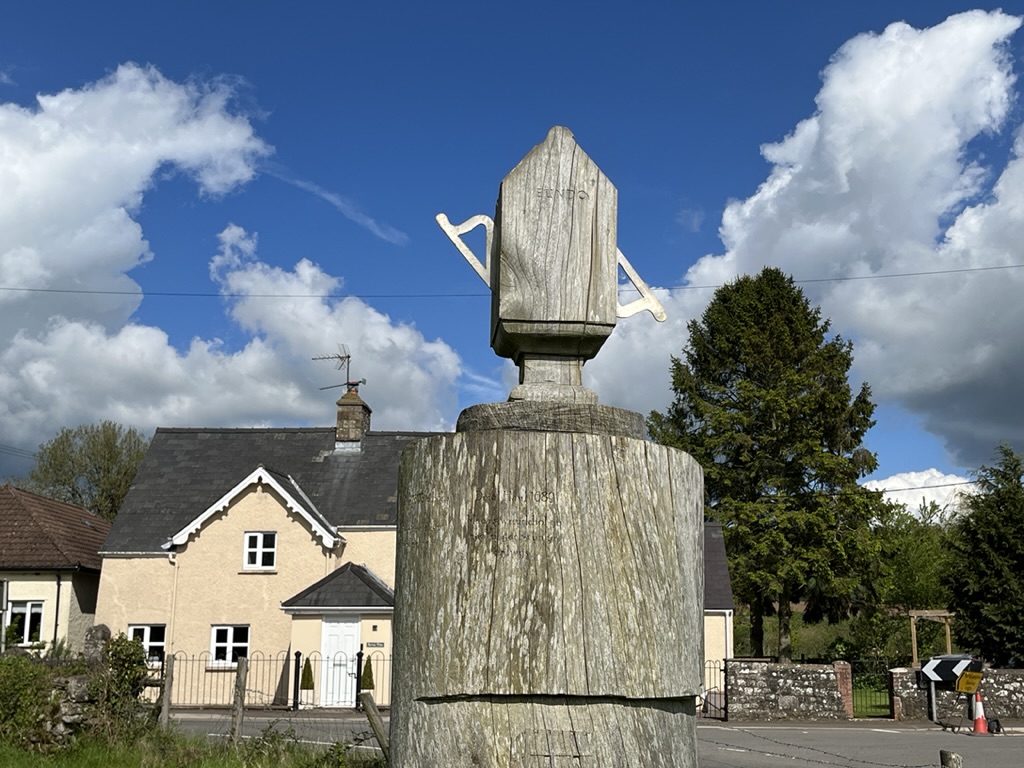
DIAL . 2007
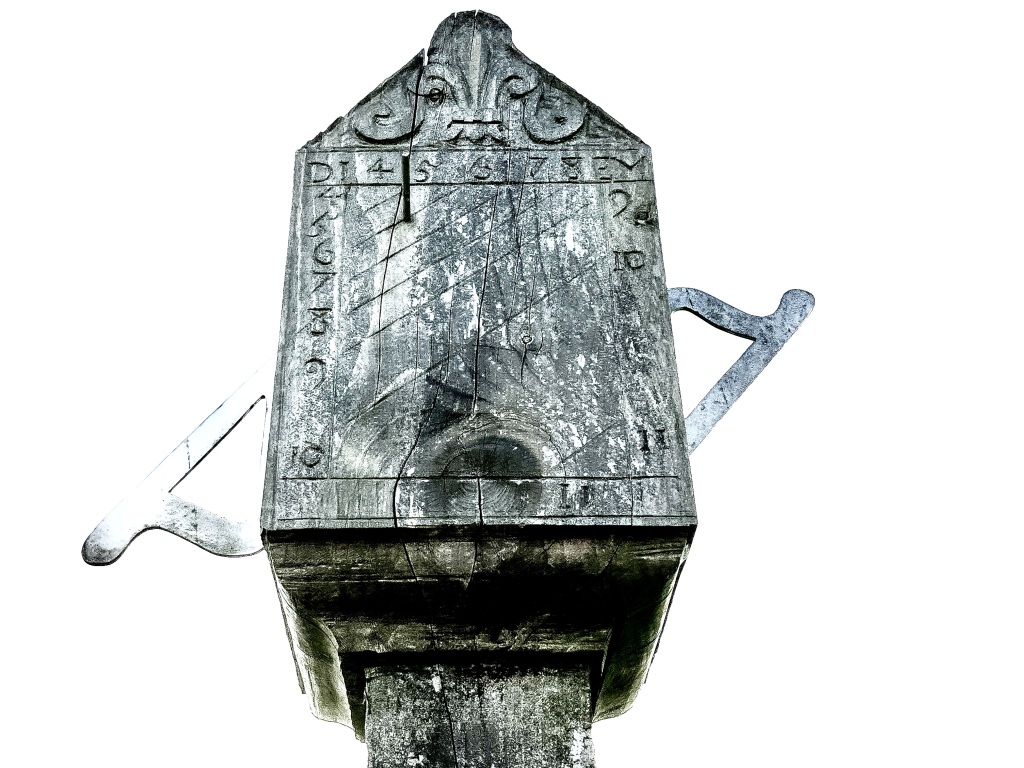
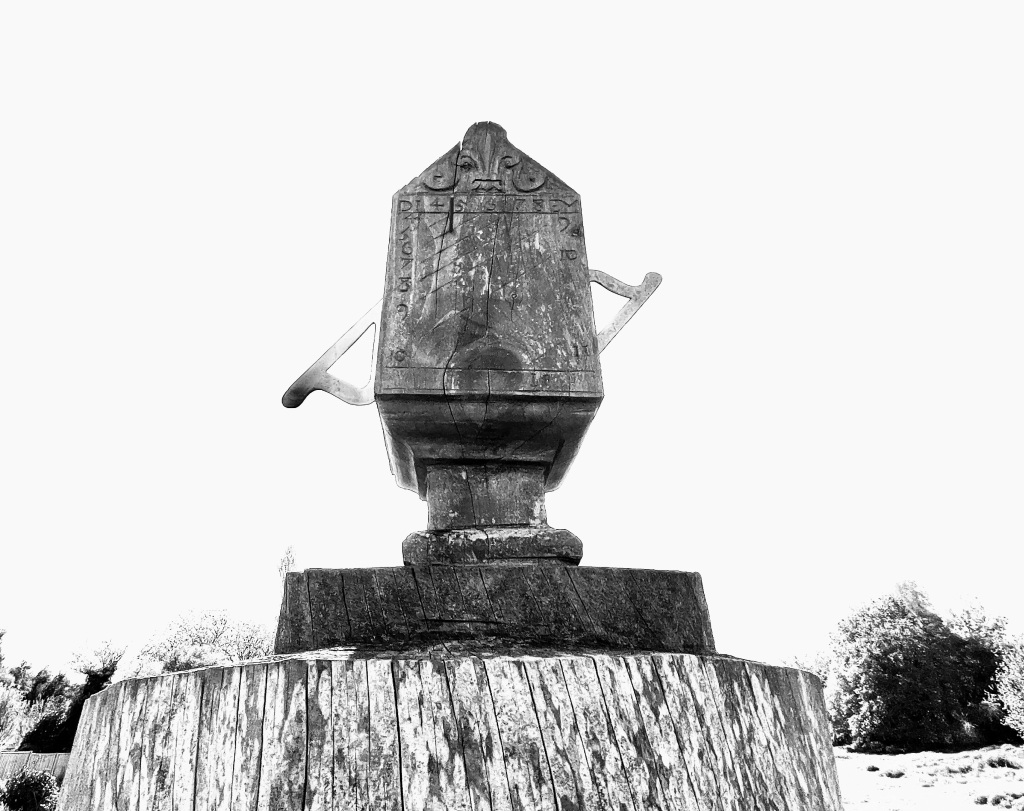
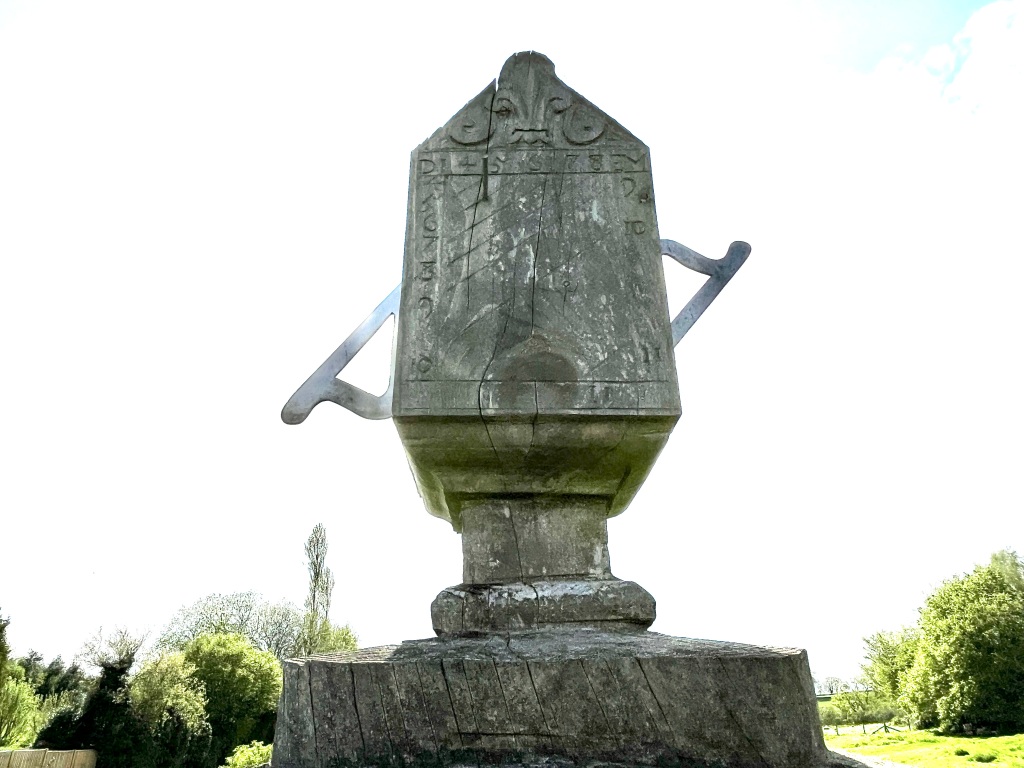
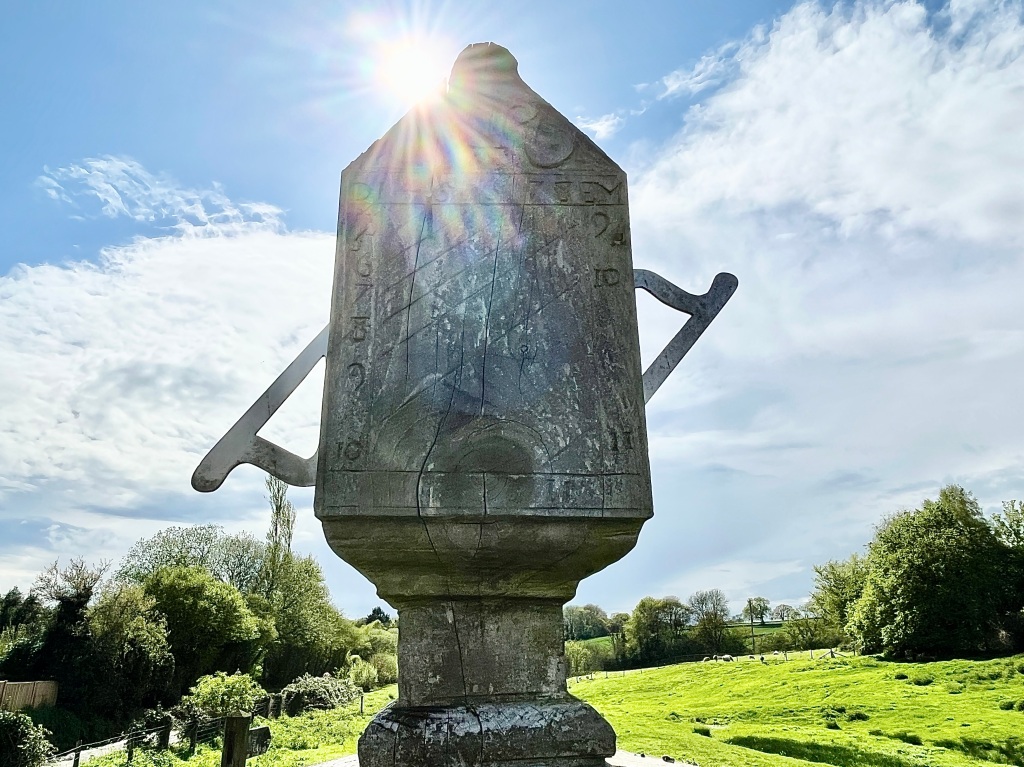
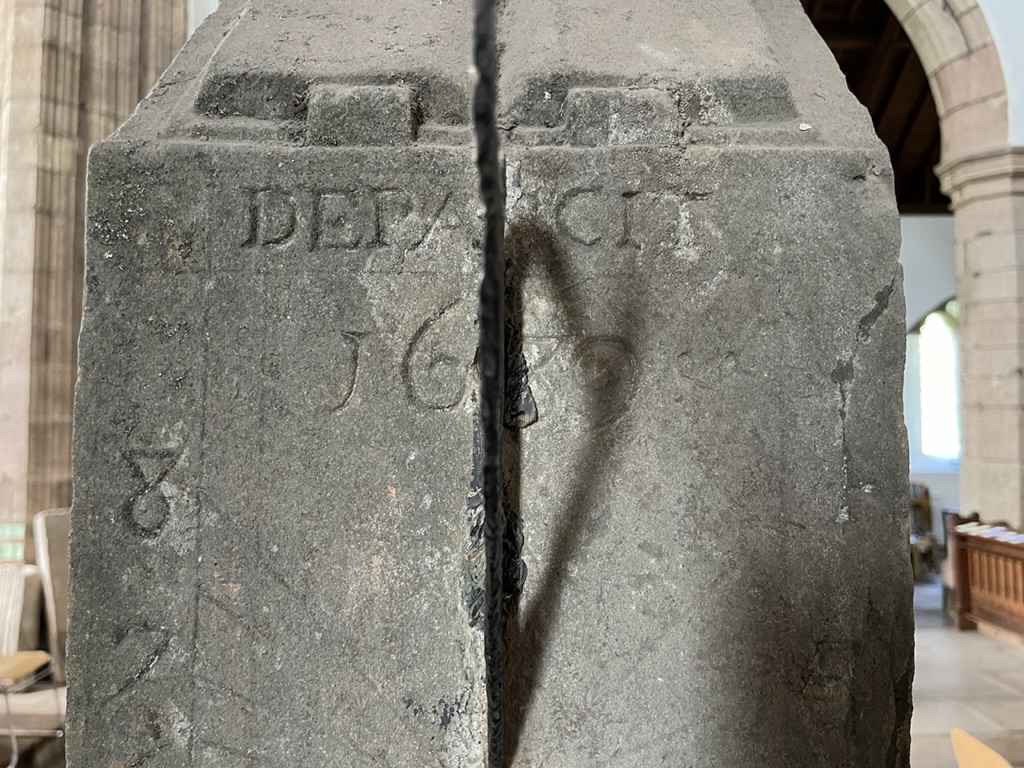
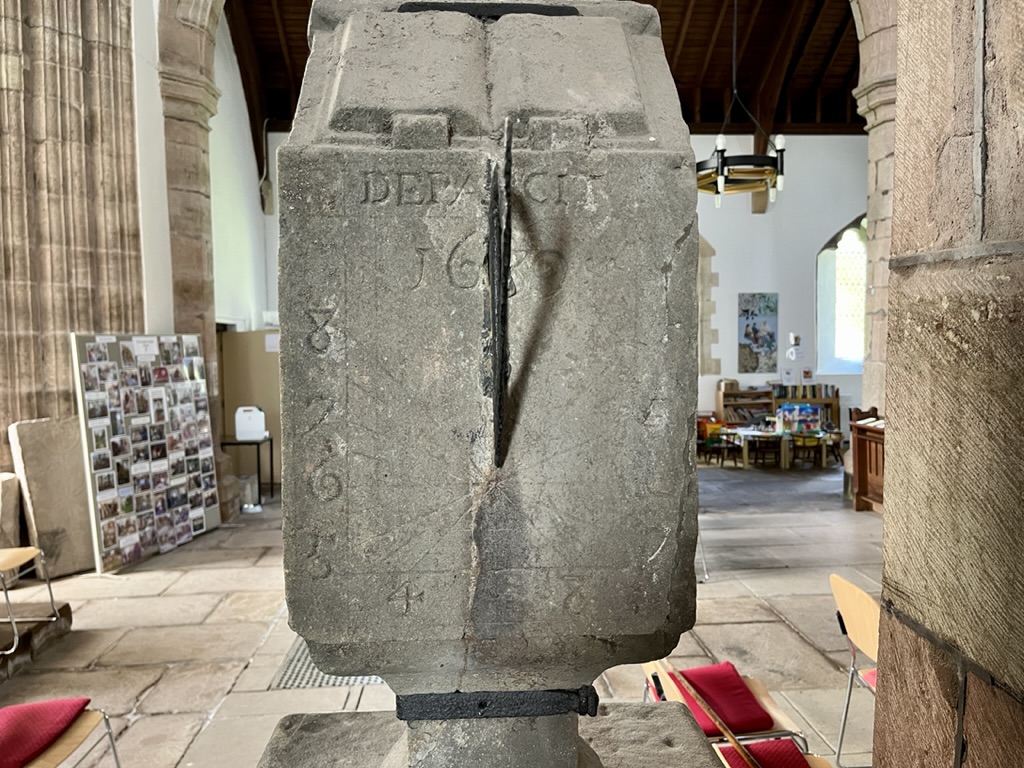
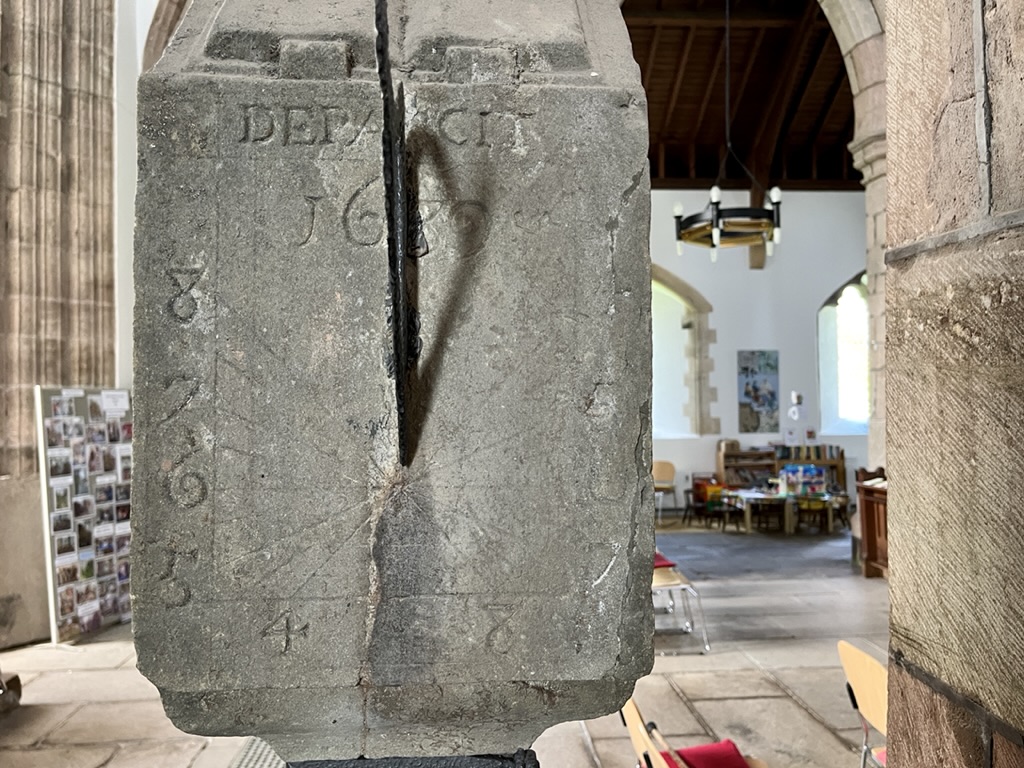
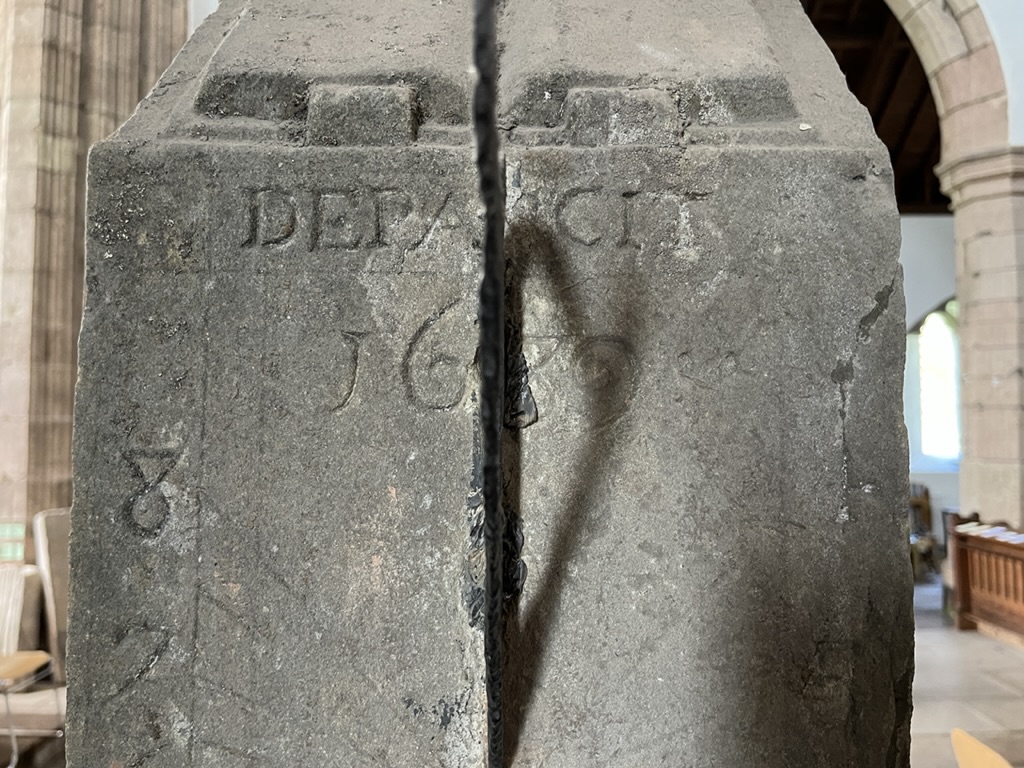
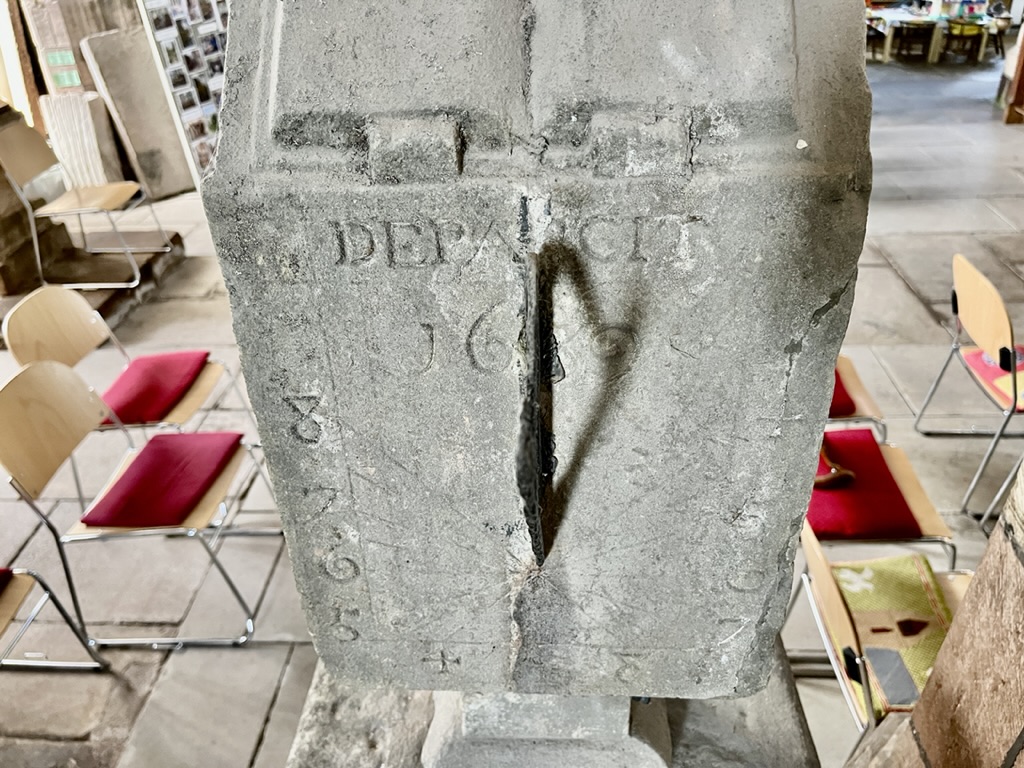
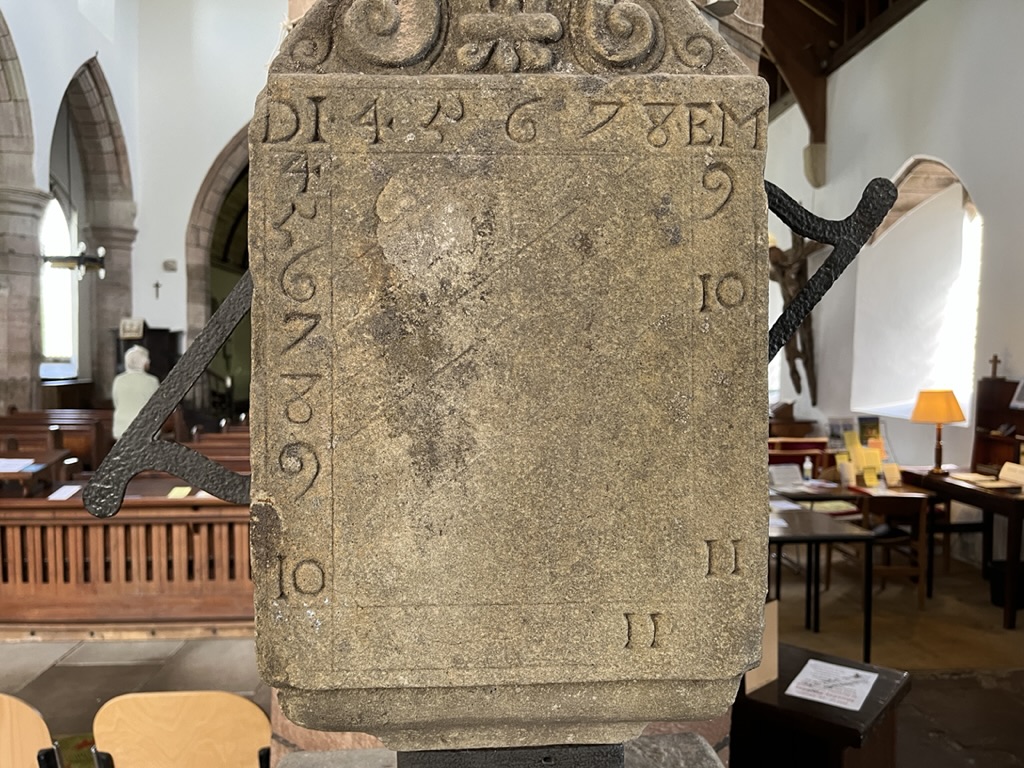
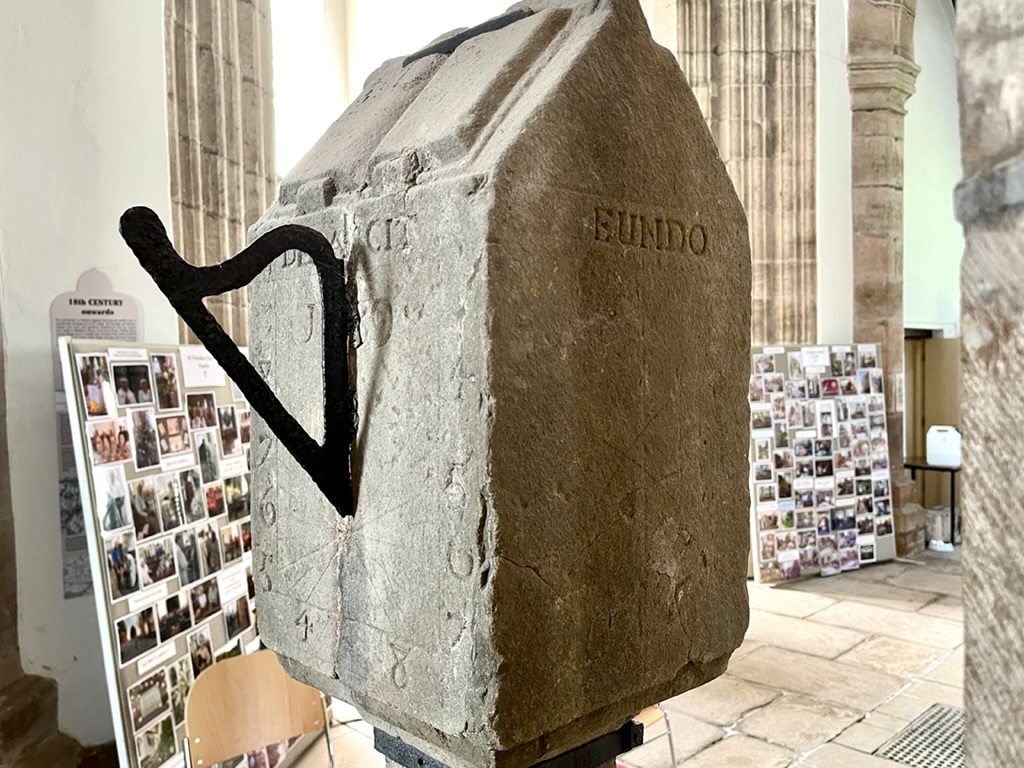
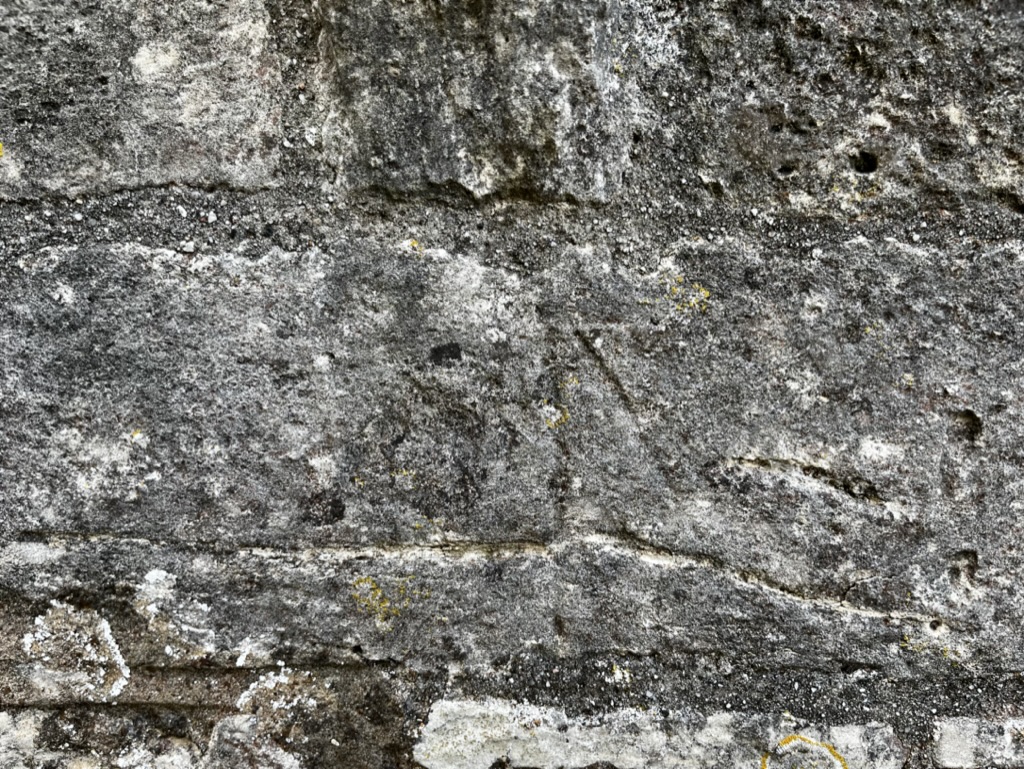
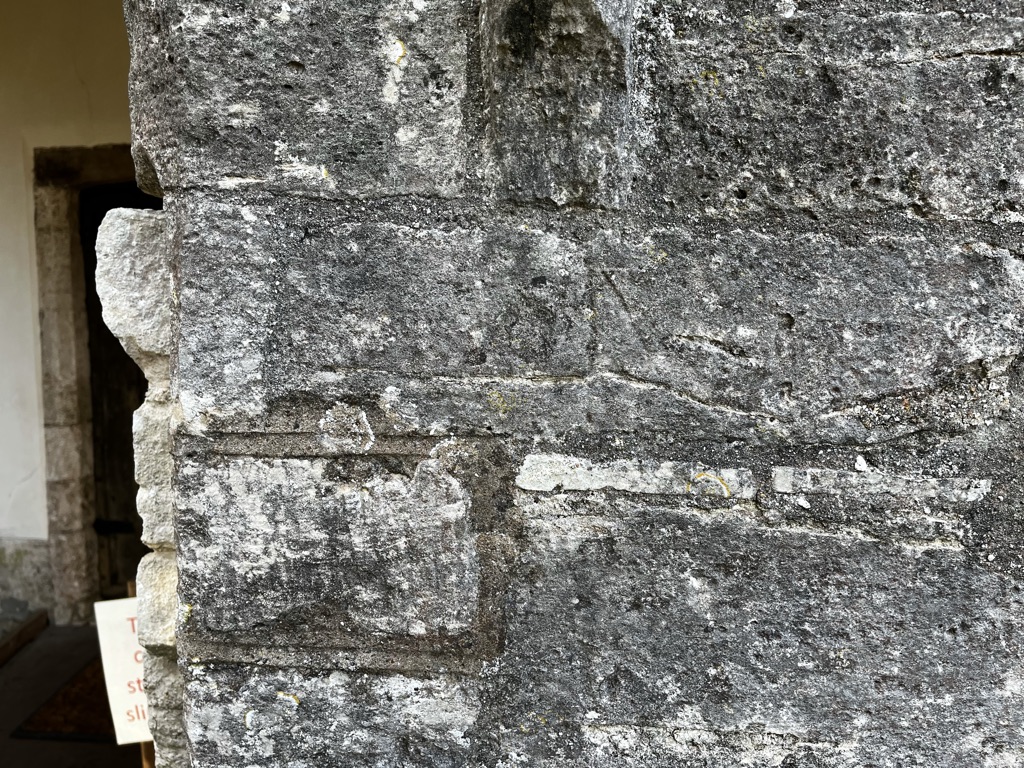
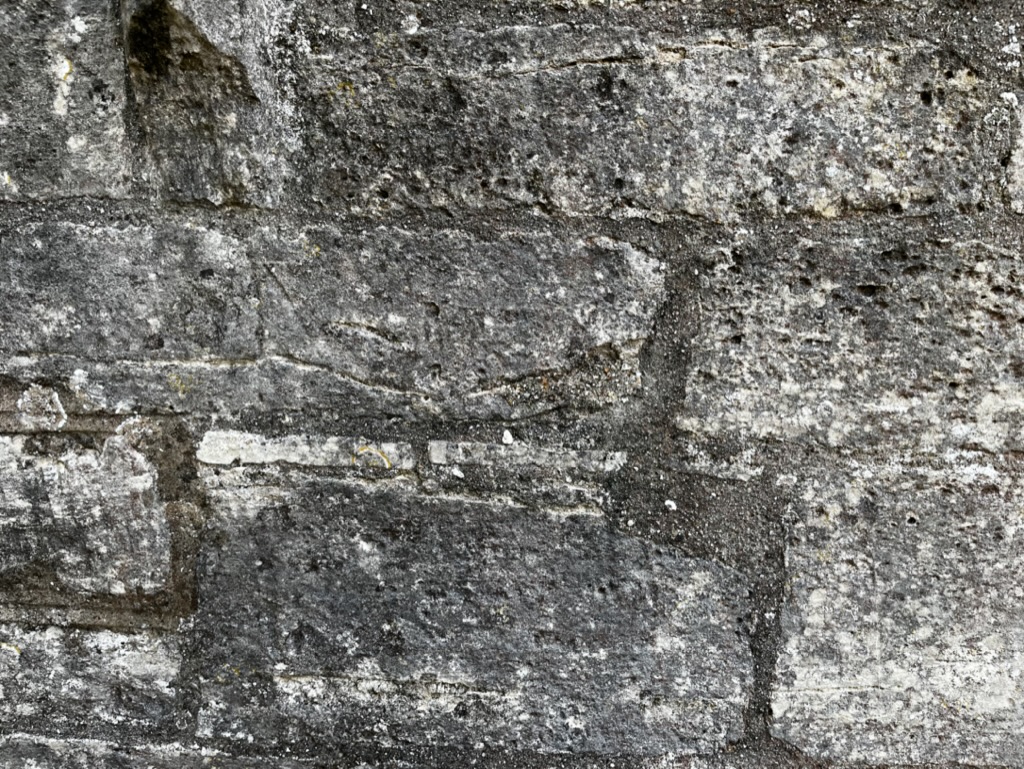
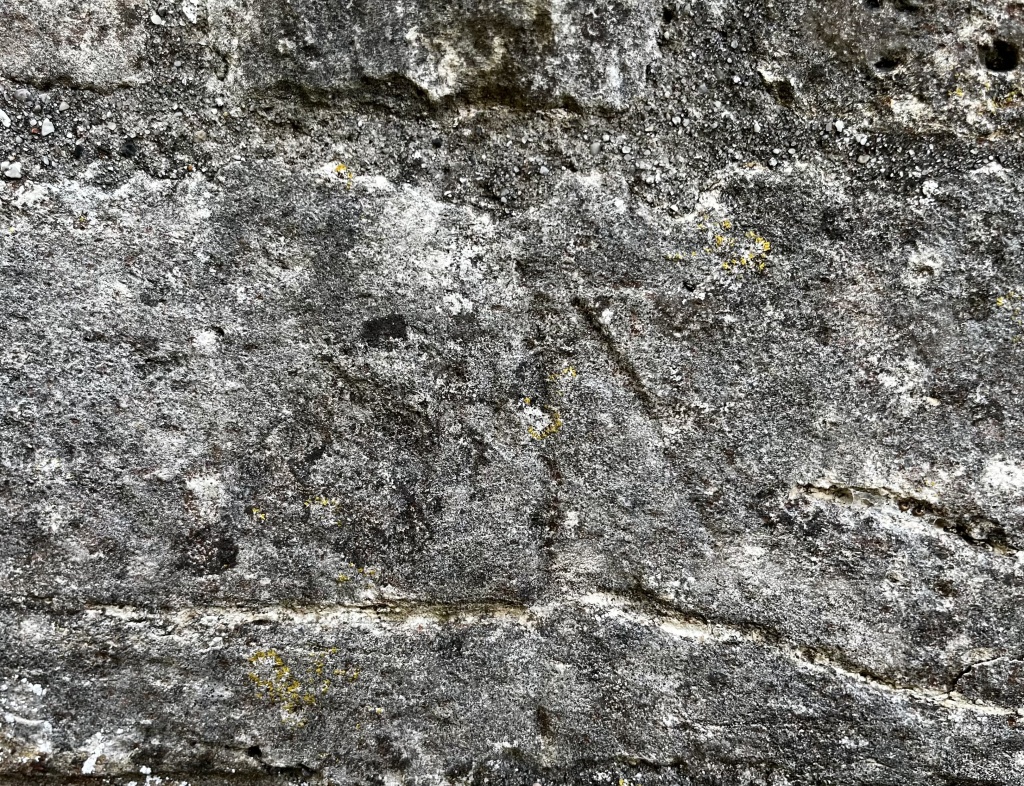
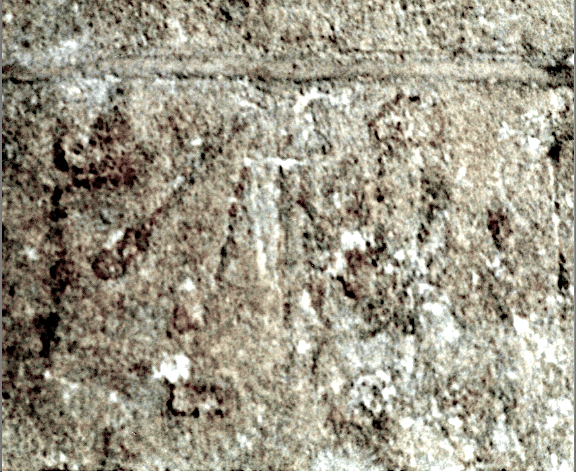
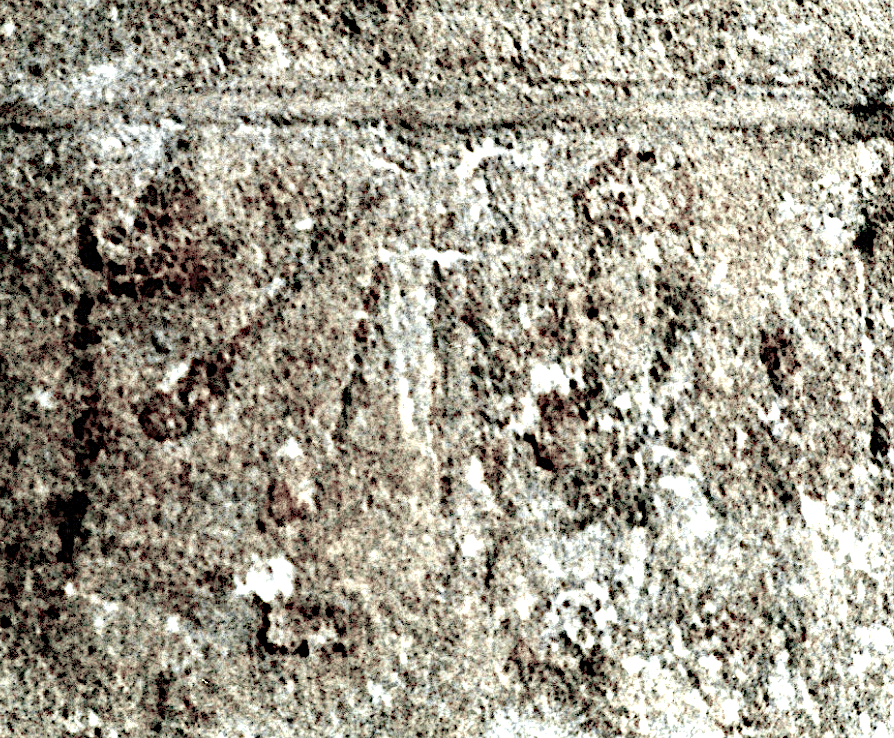
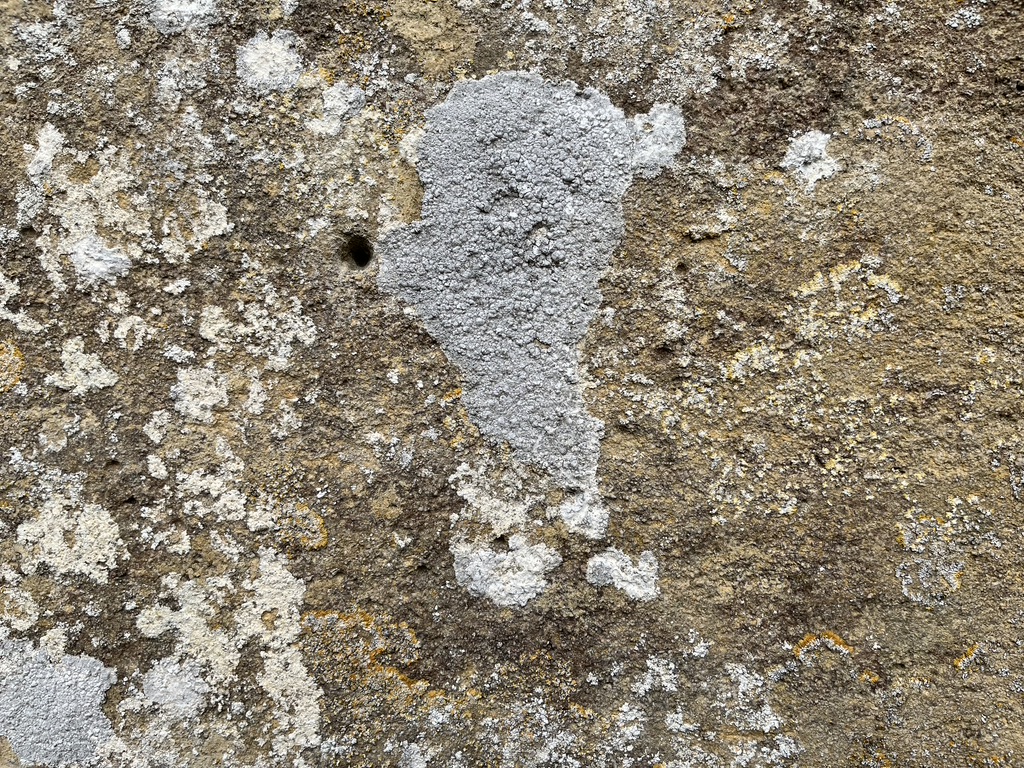
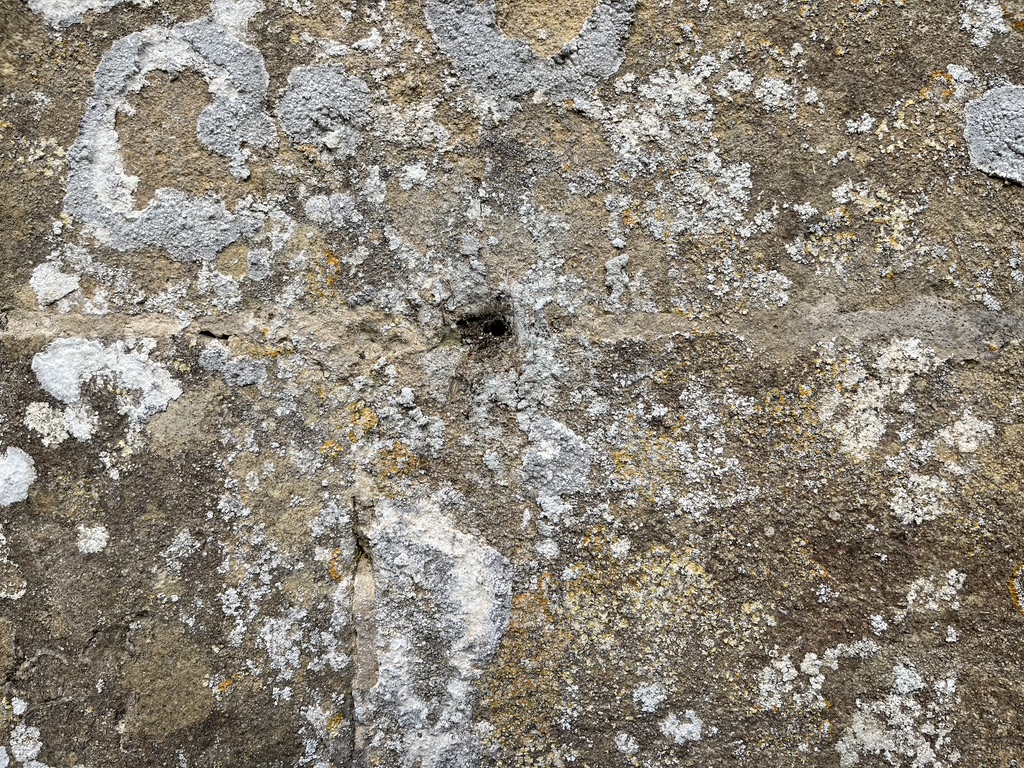
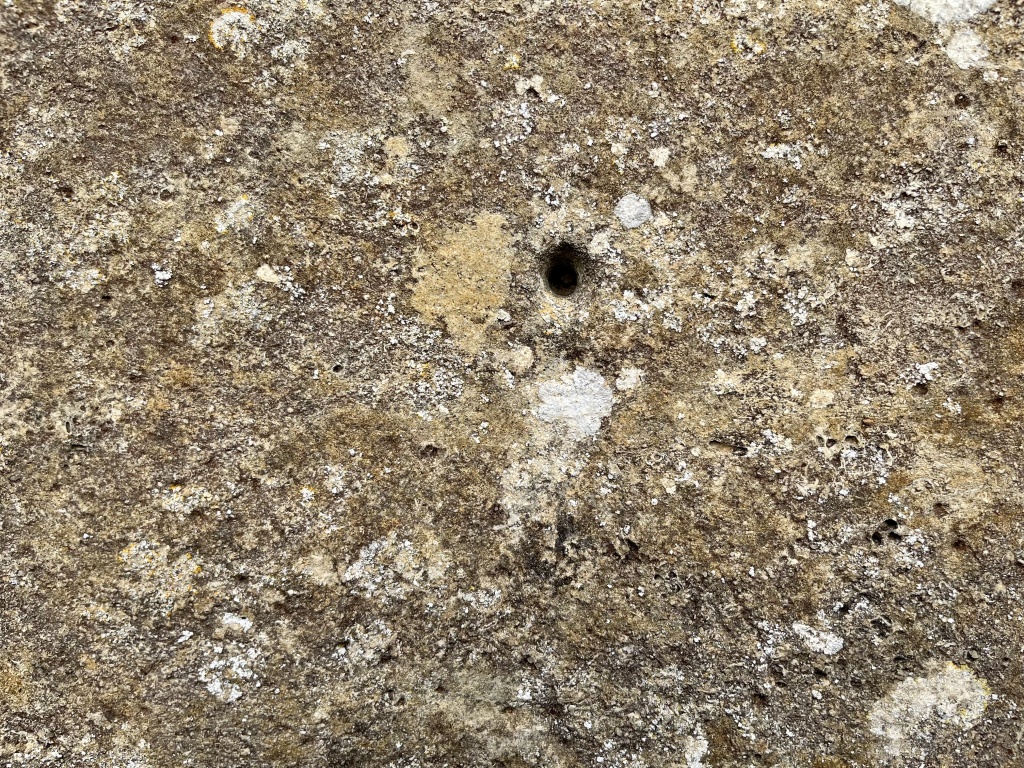
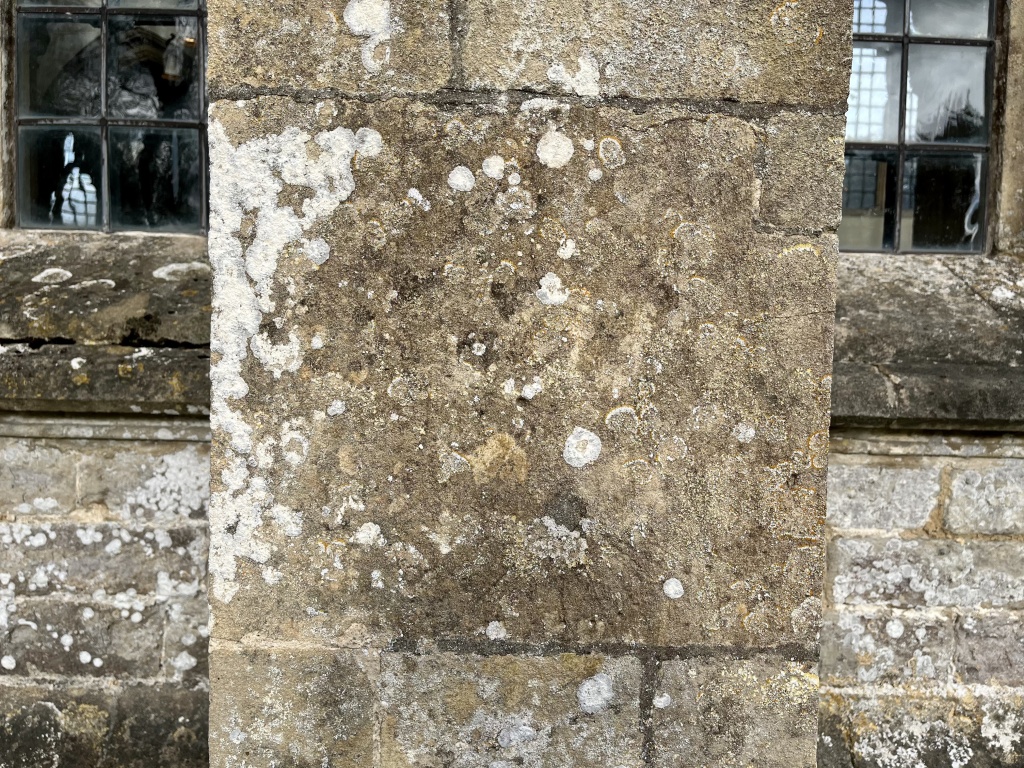
The images of Face 4 below illustrate a frequent experience with cube dials. Invariably, prevailing conditions preclude more than 3 faces being properly photographed. One face will always frustrate all attempts to get a decent photo. Furthermore, it is very difficult to improve a poor photo – it just becomes a different kind of poor. Quite often the only answer is to make the image B&W to catch detail .With apologies, this is what has emerged from the darkroom.
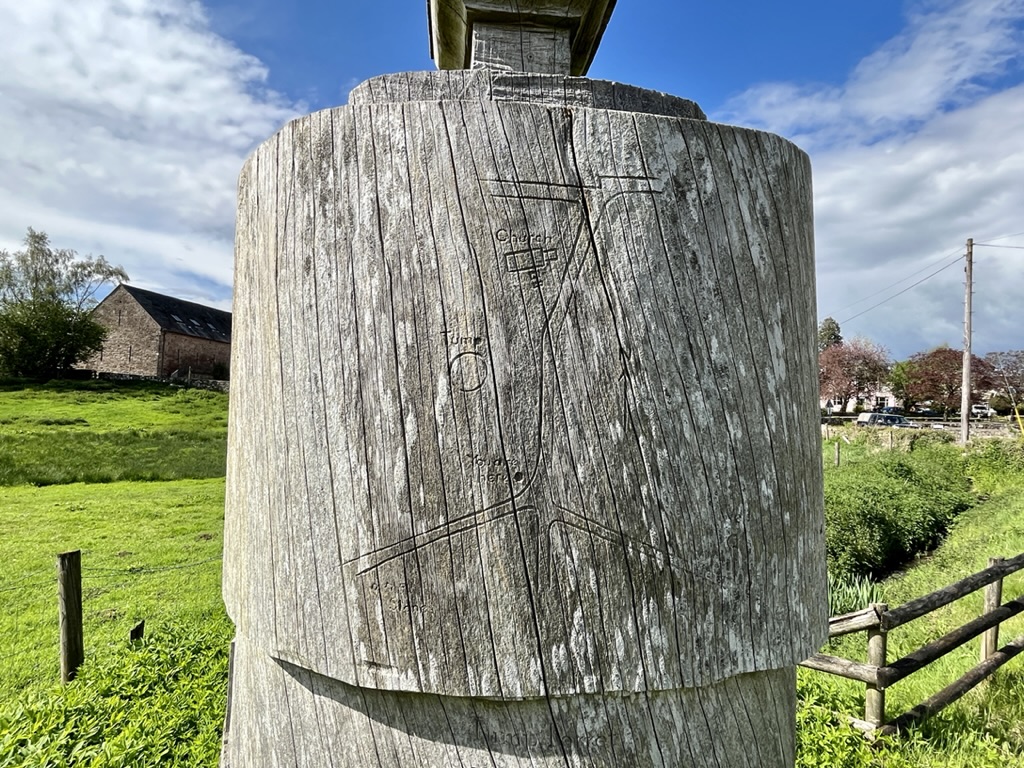
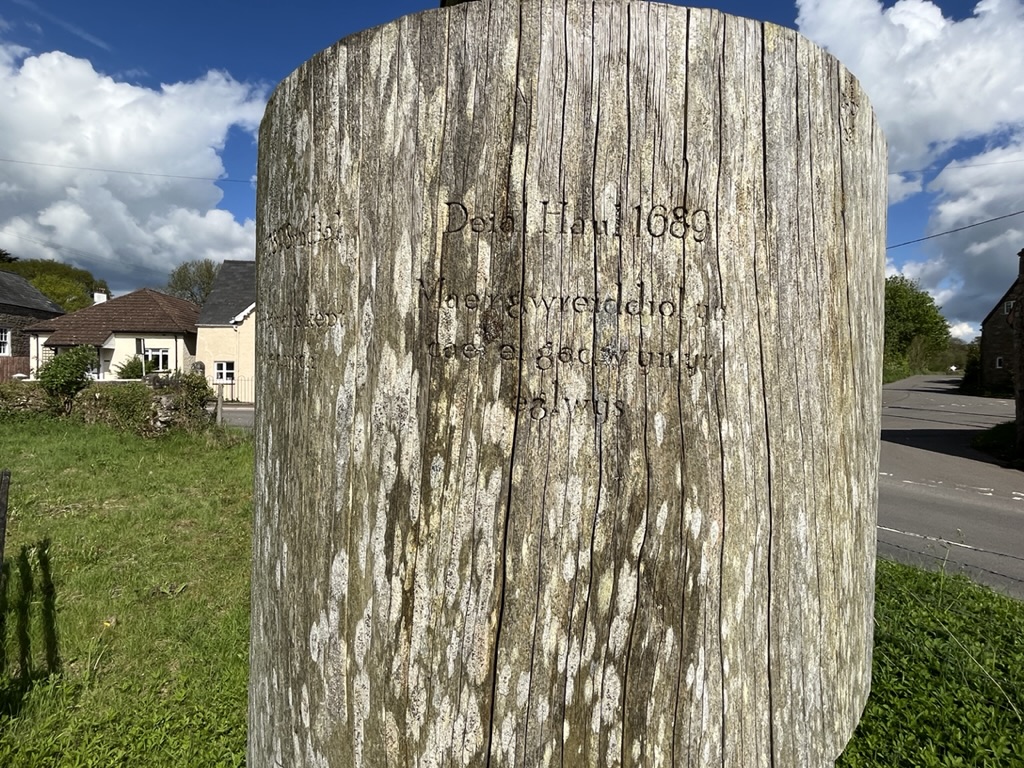
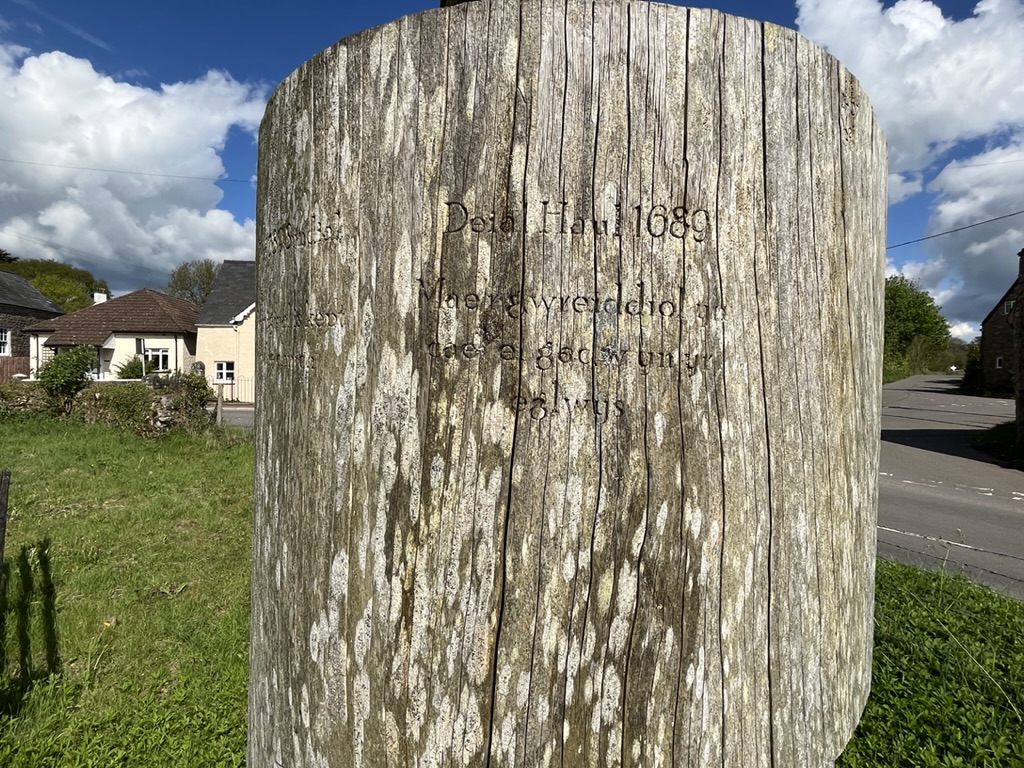
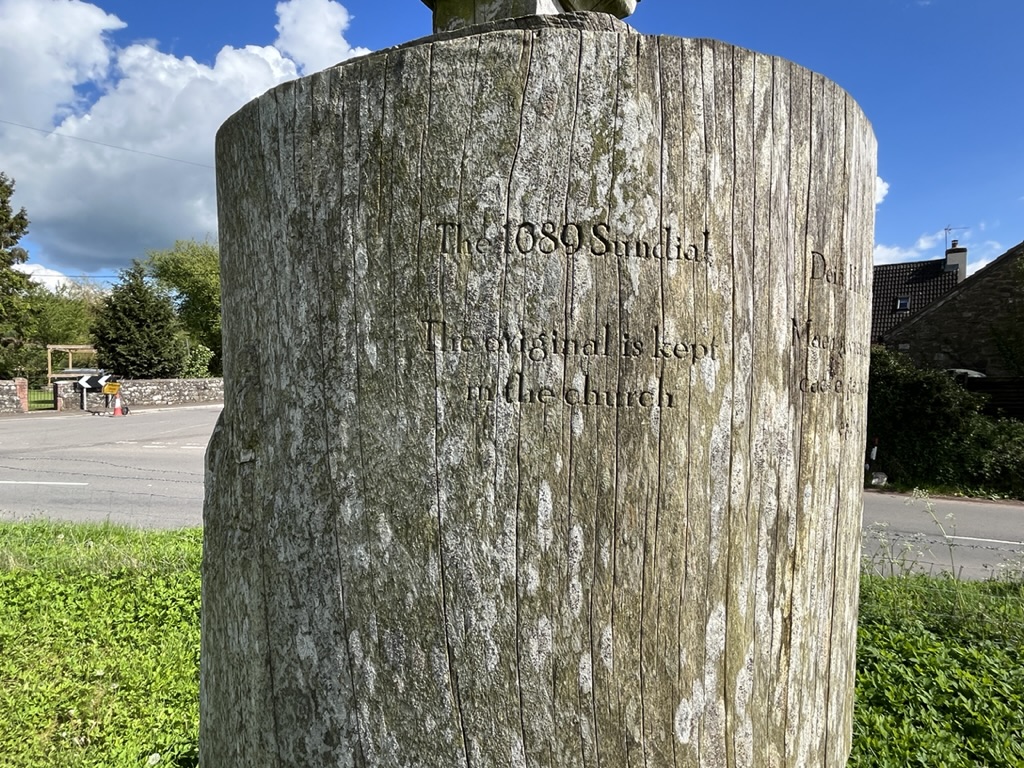
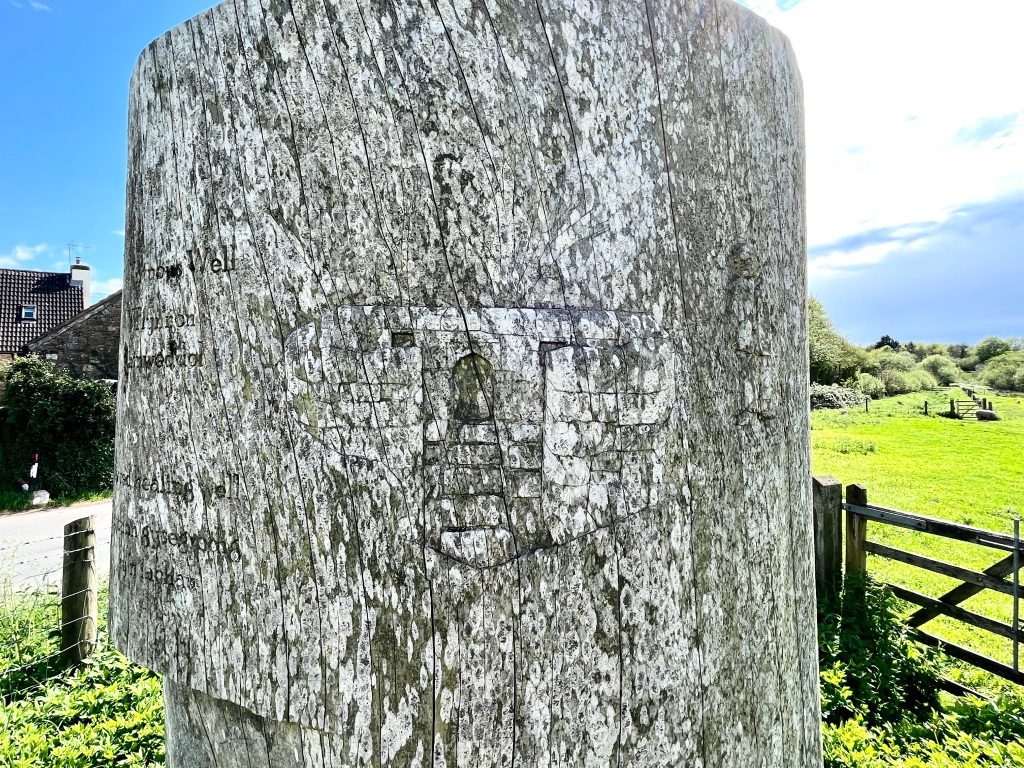
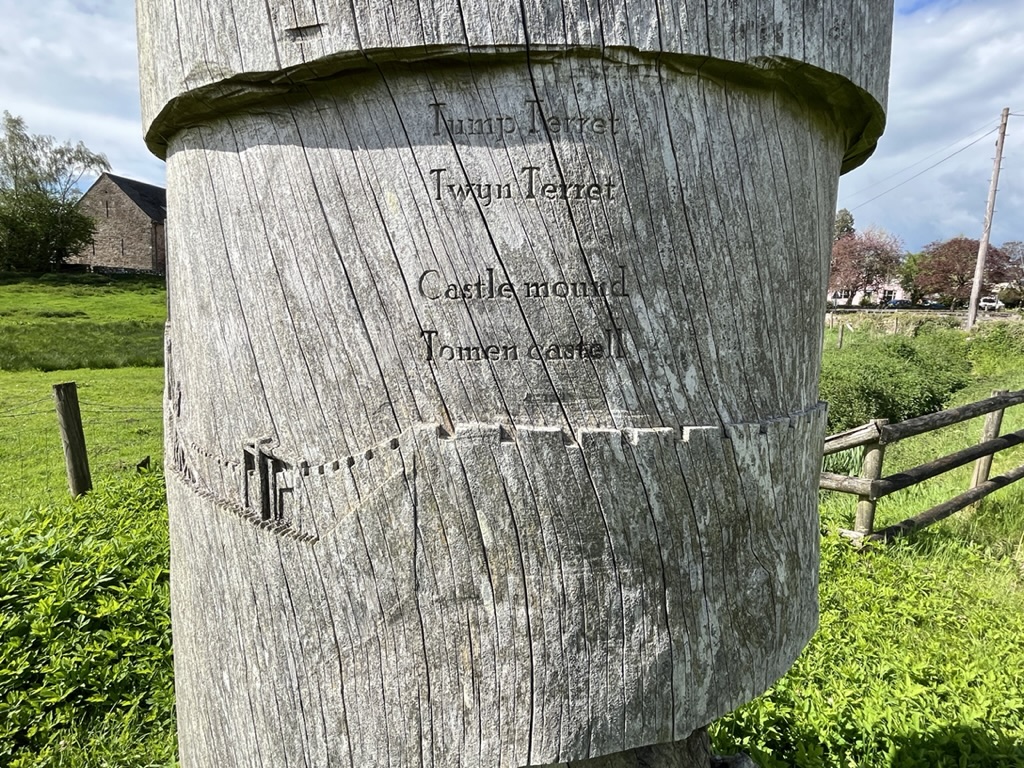
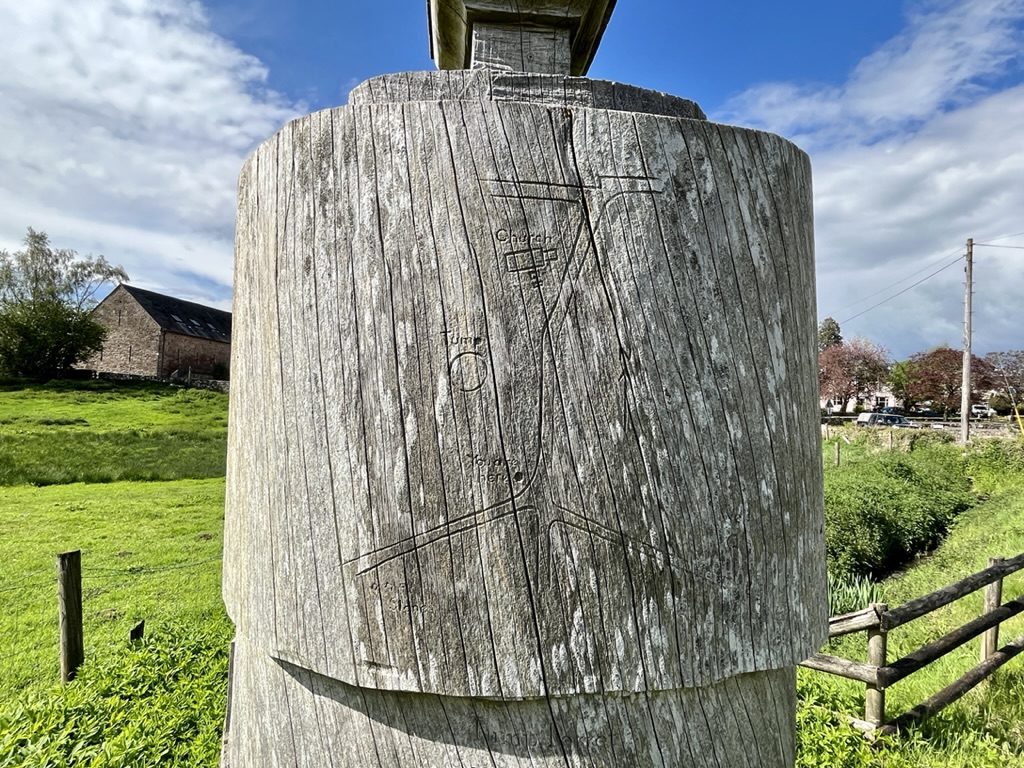
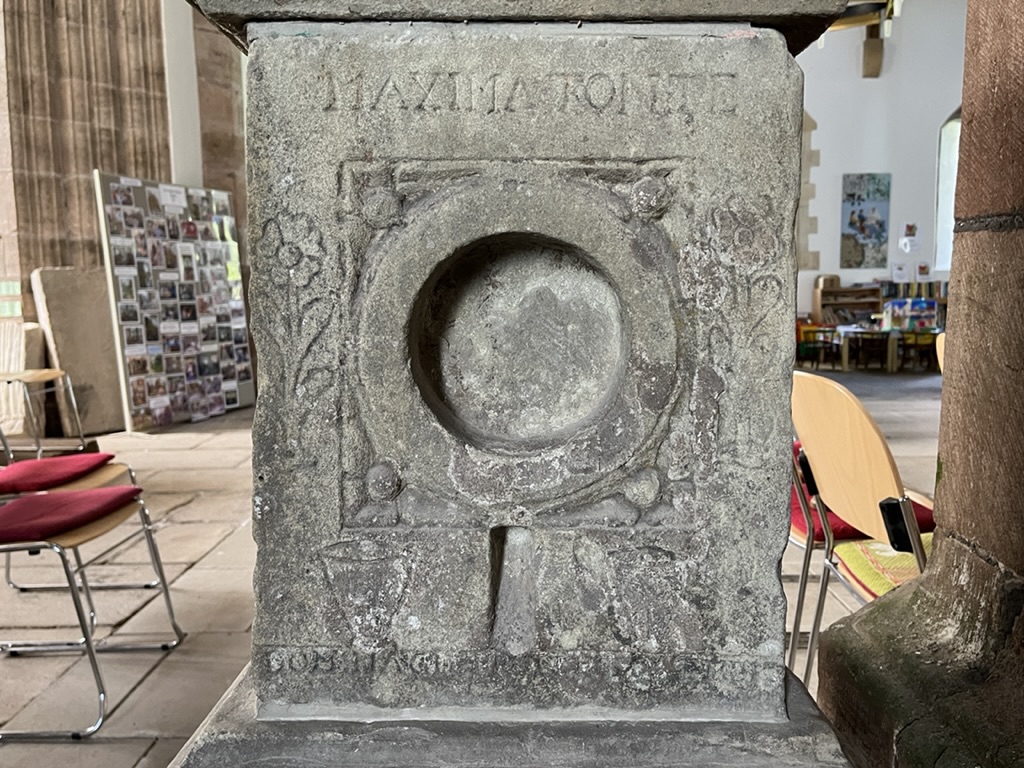
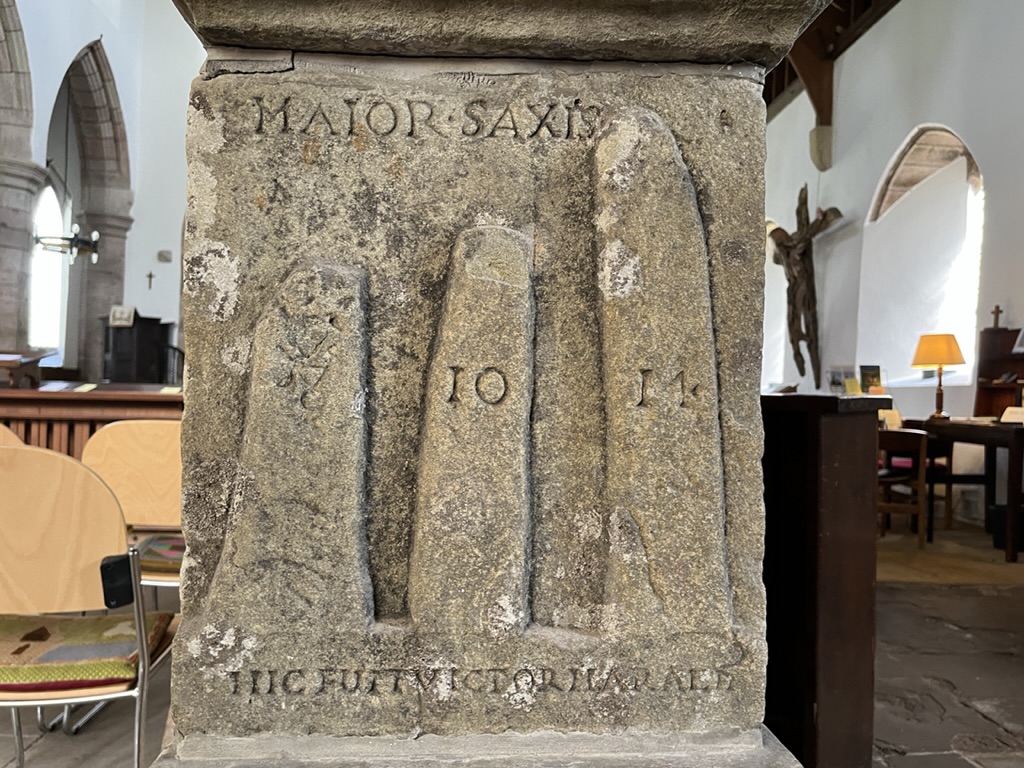
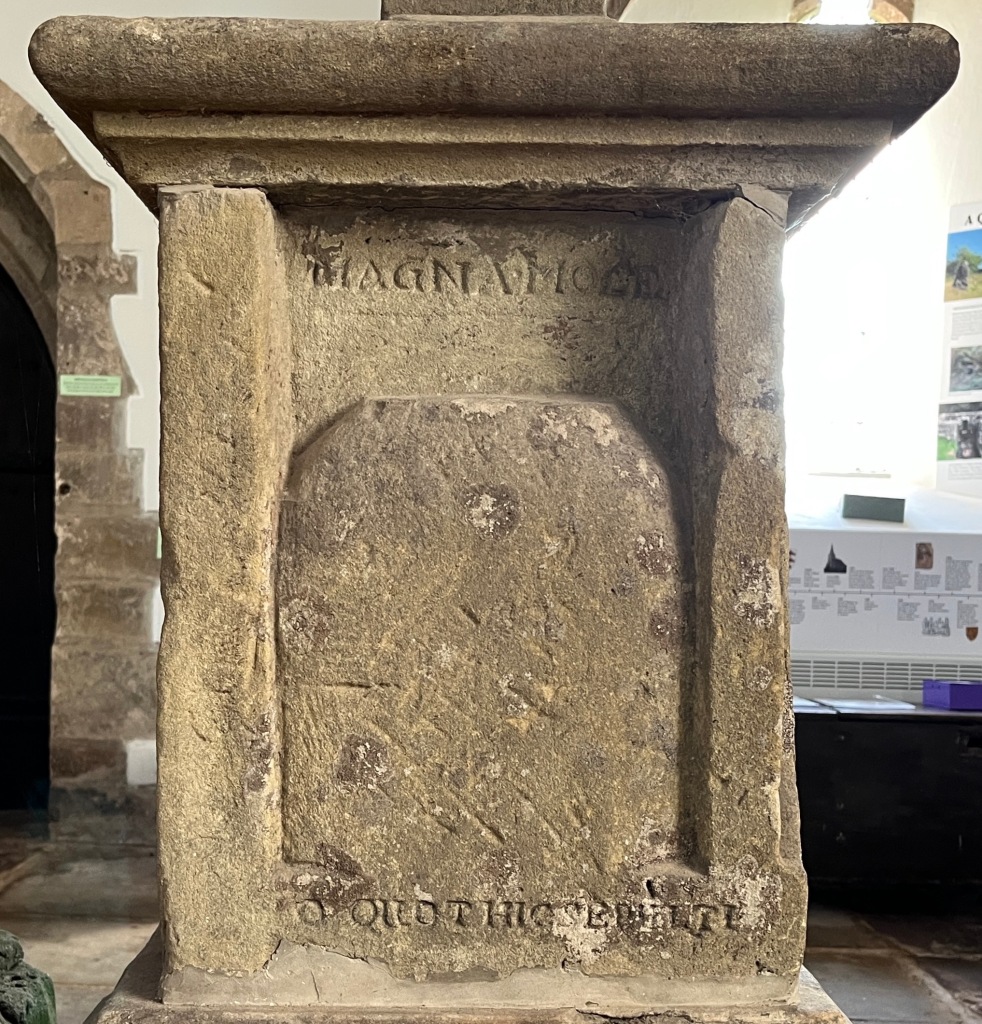
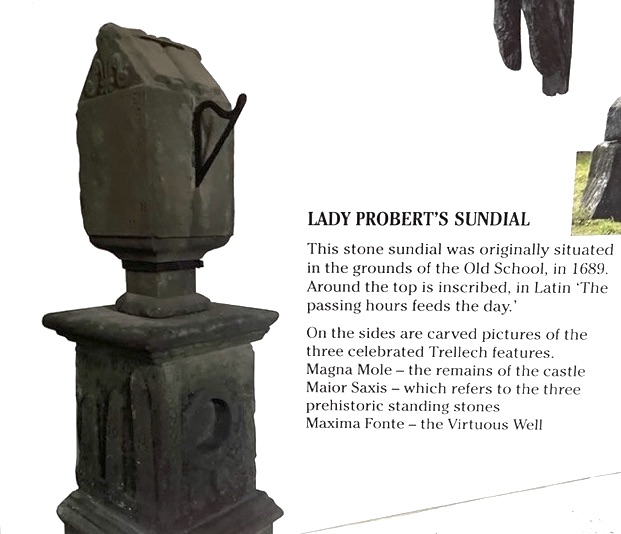
Below the dial are inscriptions on the substantial columns, with carvings that relate to the 3 features of historical importance to the village and its community: Tump Terret; Harold’s Stones; and Virtuous Well.
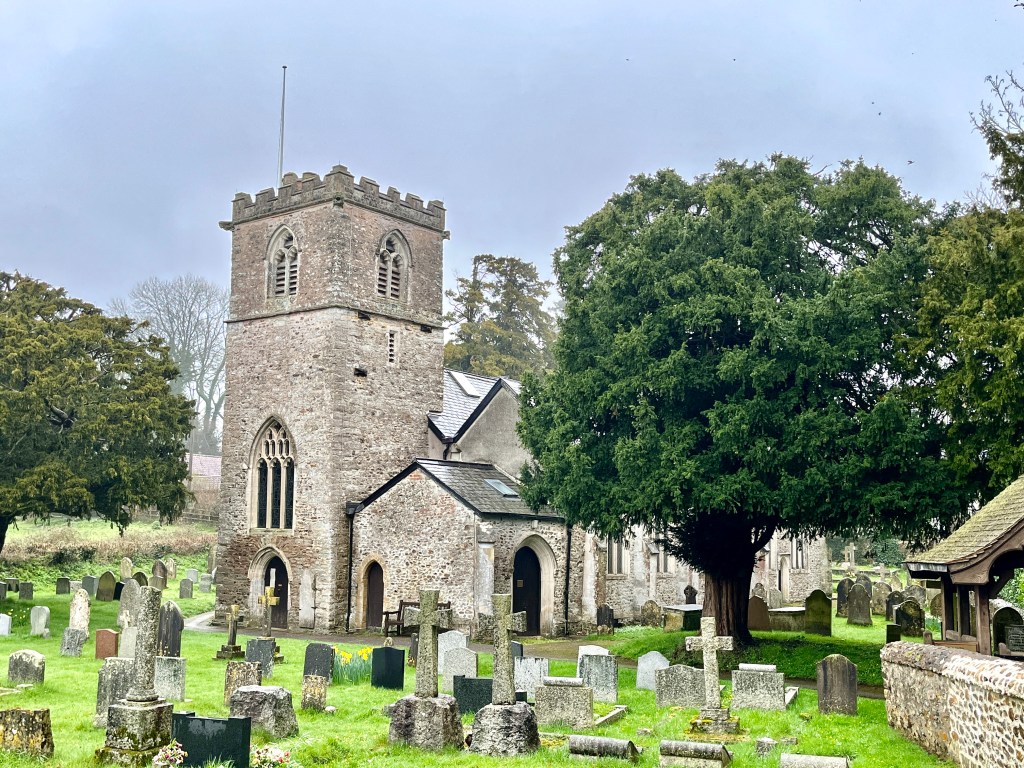
GRADE I † Early C14 with earlier origins; reconstruction & restorations 1890s. An exceptionally fine and well preserved medieval church (Cadw); One of the finest churches in the county (PEV). Coat-of-Arms of Charles II dated 1683. Weathercock of 1792. You need no further recommendation. 5m S of Monmouth. 51.7459 / -2.725 / SO500054
DIAL
St Nicholas . Trellech . Mon – Cube Multidial
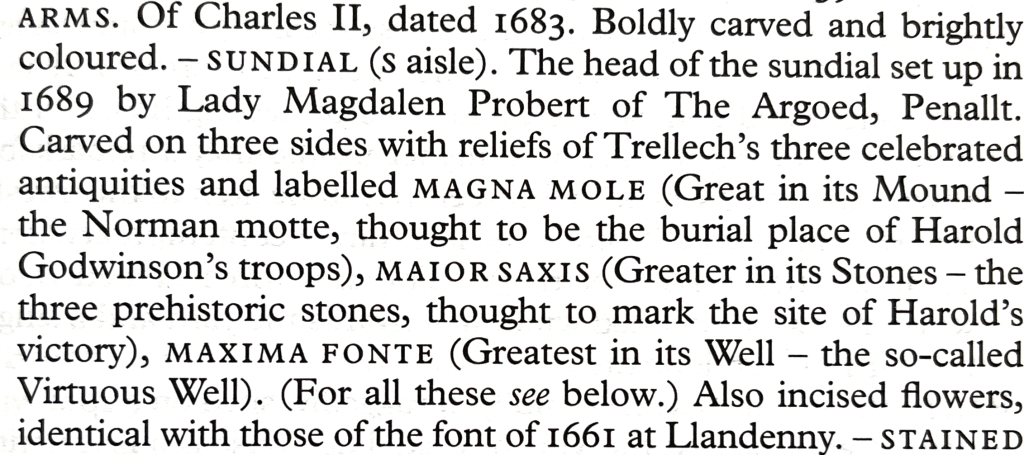
A wonderful C18 cube dial dated 1689, the gift of Lady Probert. Once, it stood in the village near the school. It was moved in 1895 and one source suggests that a concrete cast was made. The Latin inscriptions on the dial are descriptive of 3 features that are of historical importance to the village: Tump Terret; Harold’s Stones; and Virtuous Well. The details (PEV) are:
The detailed BSS record adds further details, including the full Latin motto on S, N & E faces: EUNDO HORA . DI…EM . DEPASCIT (The Hour Itself Consumes the Day).
Also included are the inscriptions on the square stone below the dial: 1. Terret Tump – O QUOT HIC SEPULTI (O How Many Buried Here); 2. Harold’s Stones – HIC FUIT VITOR HAROLD (Here was Harold Victorious); 3. DOM MAGD PROBERT OSTENDIT (Lady Maud Probert set this out to view).
DIAL DETAILS
SOUTH FACE
WEST FACE
NORTH FACE
EAST FACE
PART 2 will examine the excellent modern wooden replica (out)standing in a small field by a crossroads. It has been beautifully designed and is a dial of distinction in its own right.
GSS Category: Cube Dial; Multiple Dial
All photos Keith Salvesen; Pevsner extract Gwent & Monmouthshire; BSS records; church noticeboard
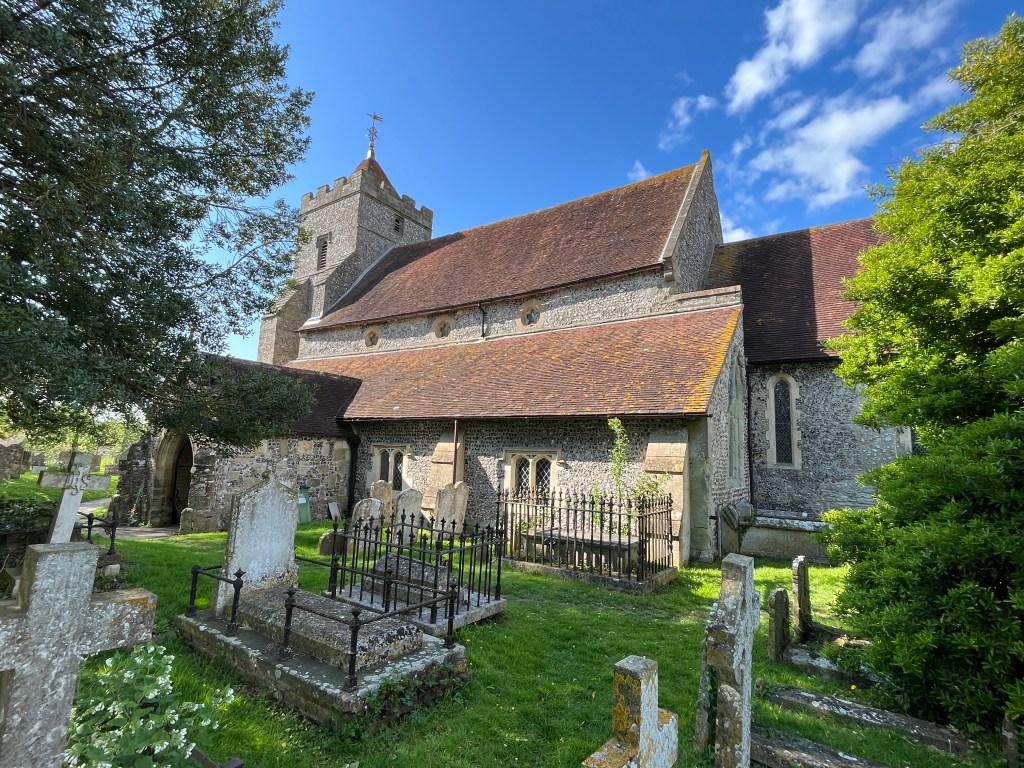
GRADE I † Saxon origins; DB as Aelfsige. Dedication unknown. Dated to C14 (BLB notes C13 chancel & porch). C19 restoration. Incumbents recorded from 1353. In a most attractive setting down a long path, and grouped with a large medieval tithe barn, dovecote &co. 8m E of Lewes, 6m W of Polegate. 50.8299 / 0.1369 / TQ505055
DIALS
All 4 dials are cut on either side of the blocked S doorway of the nave. 1 LHS and 3 RHS, of which an adjacent pair are low down, almost at ground level.
DIAL 1
On the L jamb of the blocked doorway, the most advanced and clearest of the 4 dials. Mid-C15? Encircled, with a full cross of vertical (12-12) and horizontal (6-6) lines emphasised by deeper incision. The lower half has 6 additional lines (and hints of a couple more). A single line UR quadrant divides it fairly accurately. The gnomon hole is (now) rather large for the size of the dial but that may have happened in the course of its history.
Alciston Church . E Sussex – Scratch Dial 1
DIAL 2
RHS of the doorway, the same height as Dial 1. A much simpler dial with 2 lines only. The worn circle contains just 2 lines LLQ, one faint and the other deeper cut. Possibly the faint line was originally the marker for Mass, and was superseded by a more visible line (hand-cut without a rule, it would seem).
Alciston Church . E Sussex – Scratch Dial 2
DIALS 3 & 4
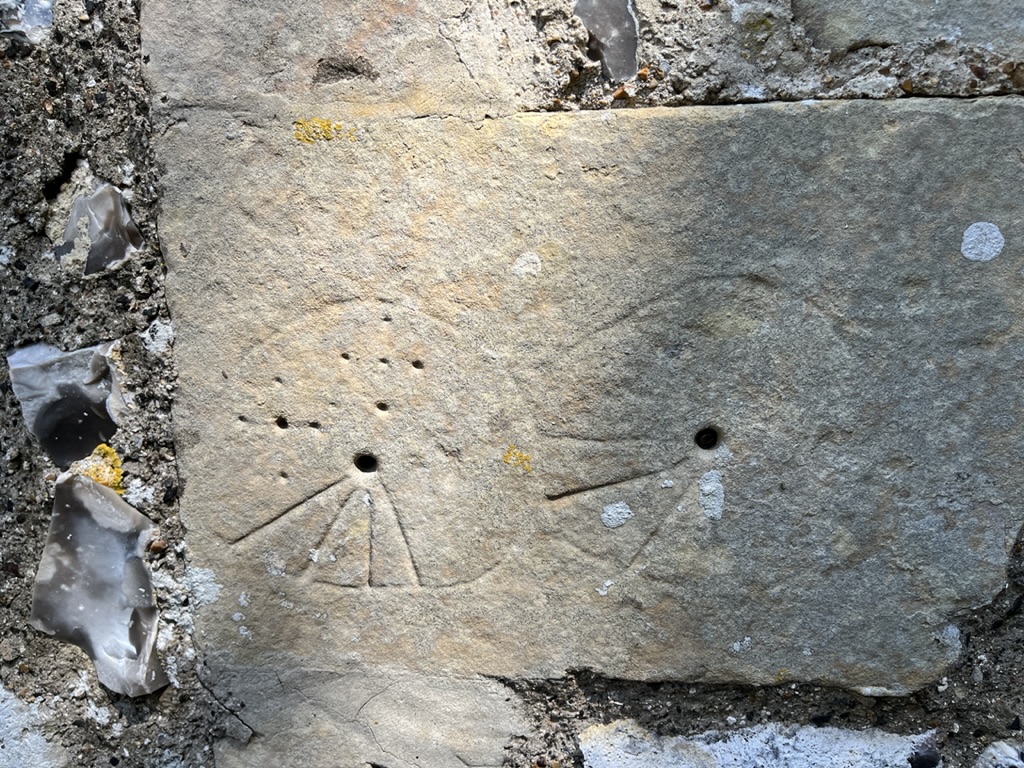
Just above ground level are 2 enjoyable dials on the same stone, presumably re-sited from a more visible position. However the stone sits comfortably with the overall design of the doorway, so I wonder whether all the dials (or those RHS) were moved to their present position when the doorway was blocked / during restoration?
The dials are adjacent – in fact, contiguous. Both circles are endearingly wonky, though the lines are cleanly cut. Dial 3 has been more carefully incised, with some attention paid to accuracy. Dial 4 probably came first and the more sophisticated Dial 3 later replaced it.
Dial 3 has 2 small dotted crosses within its circumference, also suggesting a later date than Dial 4. One cross consists of 4 separate dots; the other has the dots connected by lines (the vertical is very faint).
Alciston Church . E Sussex – Scratch Dial 3 & 4
DIALS 2, 3, and 4 as a group
Alciston is one of several rewarding churches in the area for a visit. You could combine it with climbing Firle Beacon which, at a height of 217m, counts as a Marilyn.
Frederick Barrett – Sussex Archaeological Collections 100 1962
GRADE I † C12 with earlier origins; chancel & tower C13. Spiritual home of the Gage family of Firle Place, with fine memorials to the family; also close connections with the Charleston set. Good brasses, work by modern artists. St Peter has 2 dials. 5m E of Lewes. 50.845 / 0.0884 / TQ471071
DIAL 1
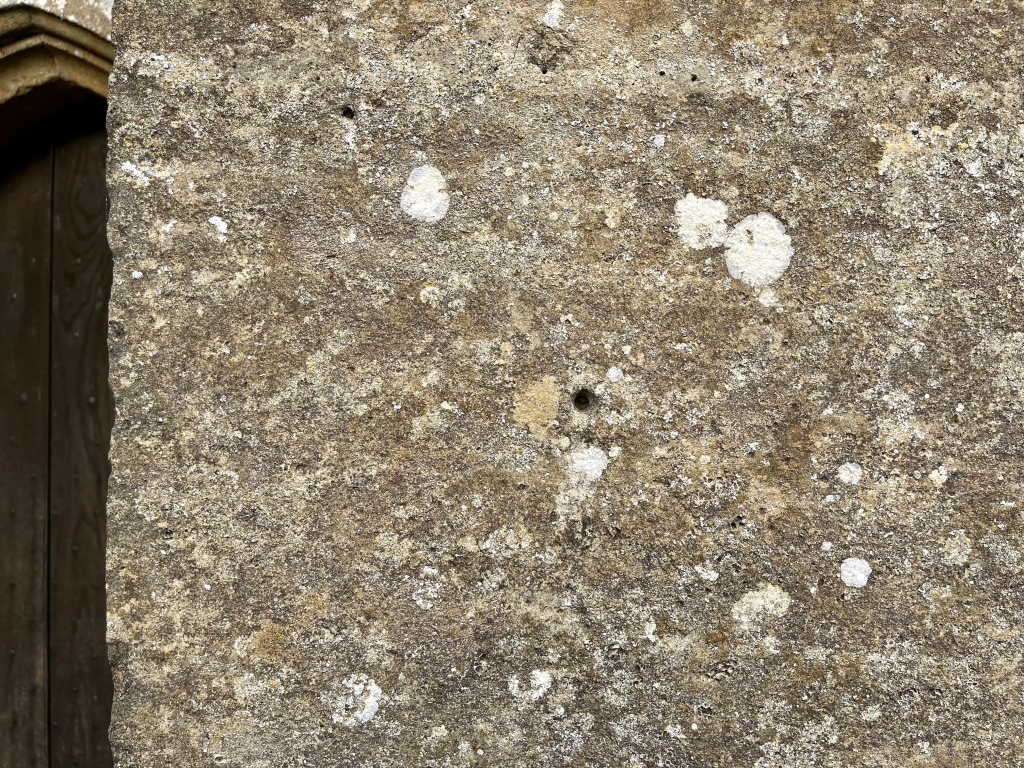
This dial was recorded (1993) as located on a quoin stone on the W side of the N porch and repositioned at some time in its history. Since then, in 2018, the N door has been incorporated in an extension for a loo and related purposes. It is very well done but from the outside there is now no access to the old doorway. The dial must be reached from inside the church, where in the new annex the dial can be seen RHS of the original N door. Commendably, the dial is behind a small perspex screen to protect it, but not directly over it – a thoughtful way to display and conserve a small piece of history.
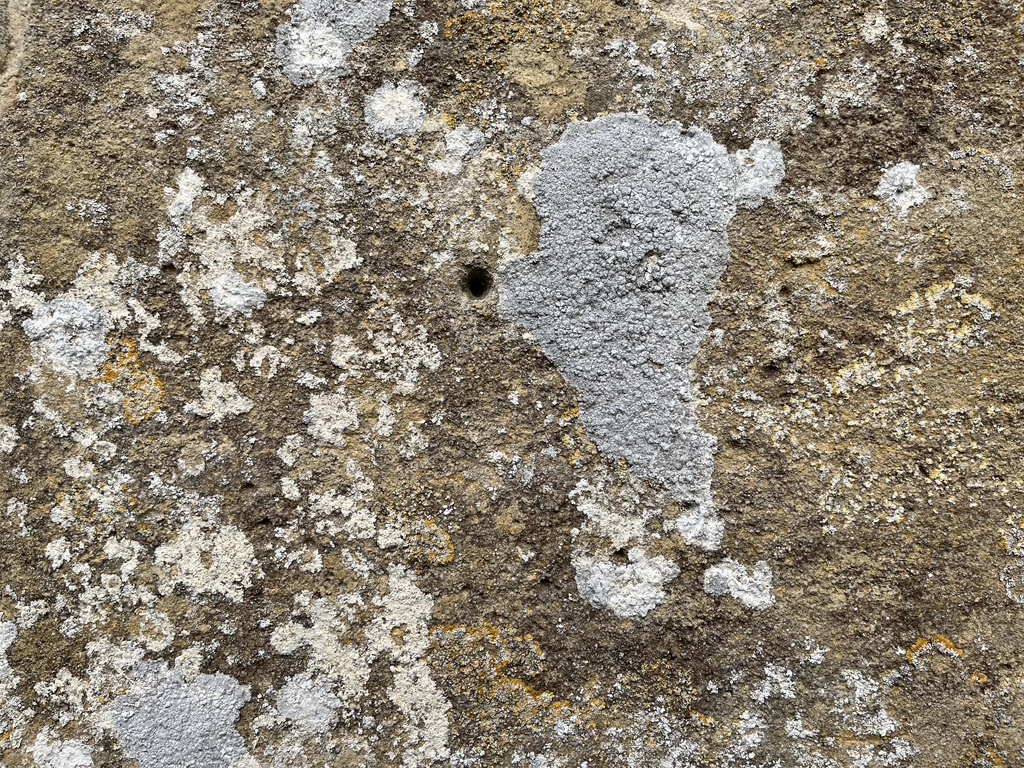
BSS notes the dial as repositioned, eroded, damaged and it was deemed a rudimentary (Norman) dial. The only marks detectable now are the faint remnants of a circle among the blotches of lichen.
St Peter . Firle . E Sussex – Scratch Dial 1
DIAL 2
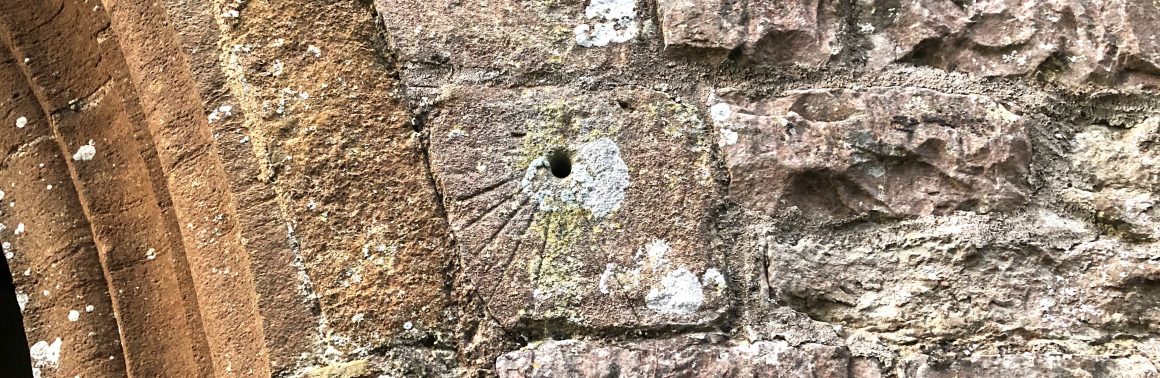
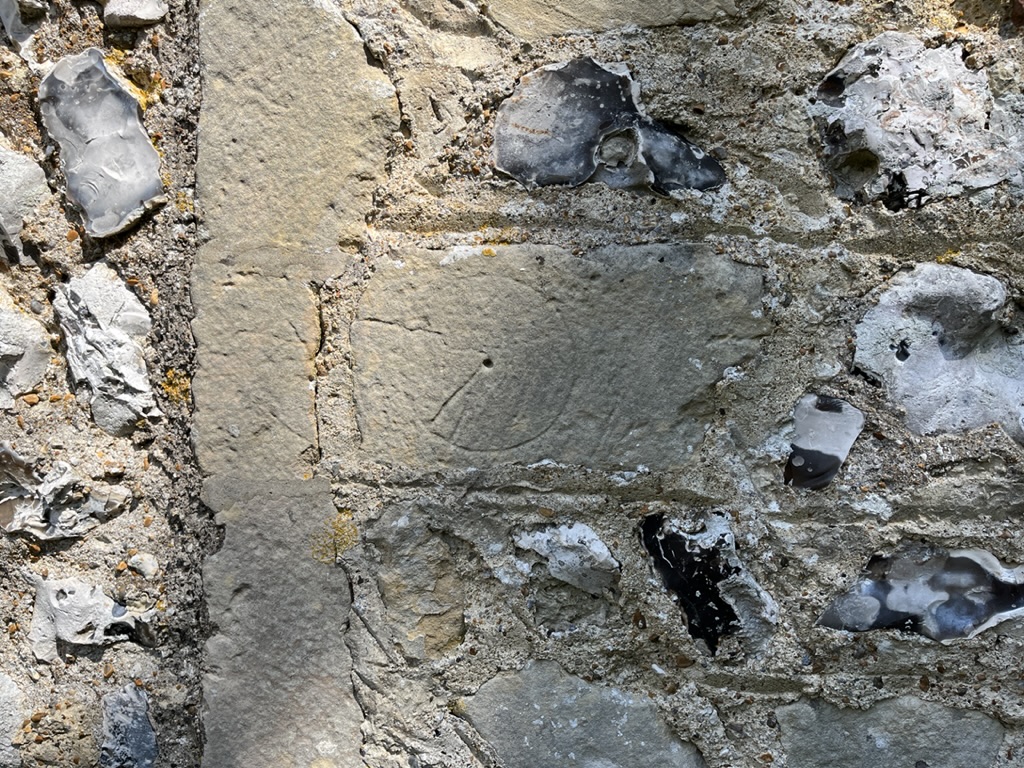
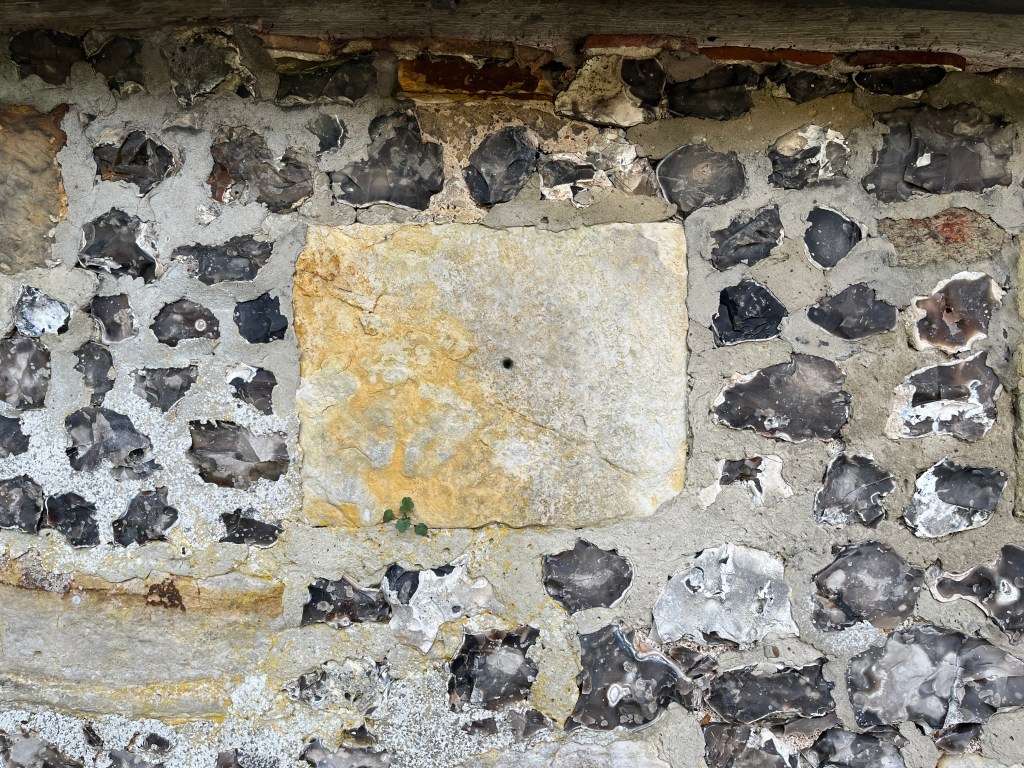
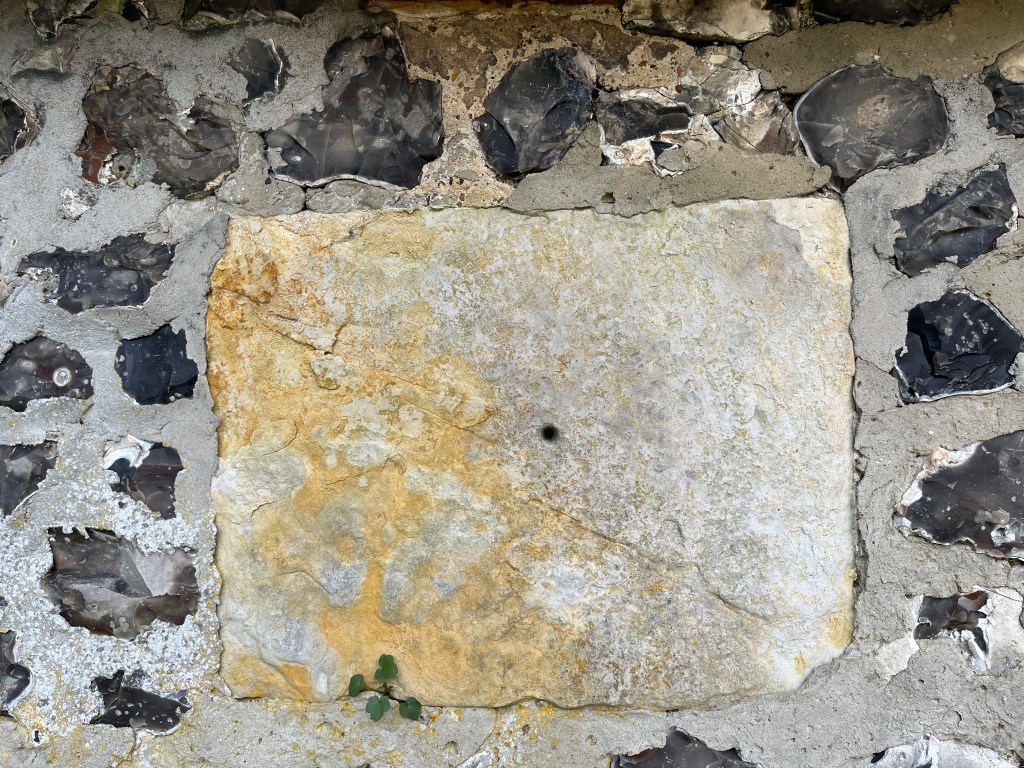
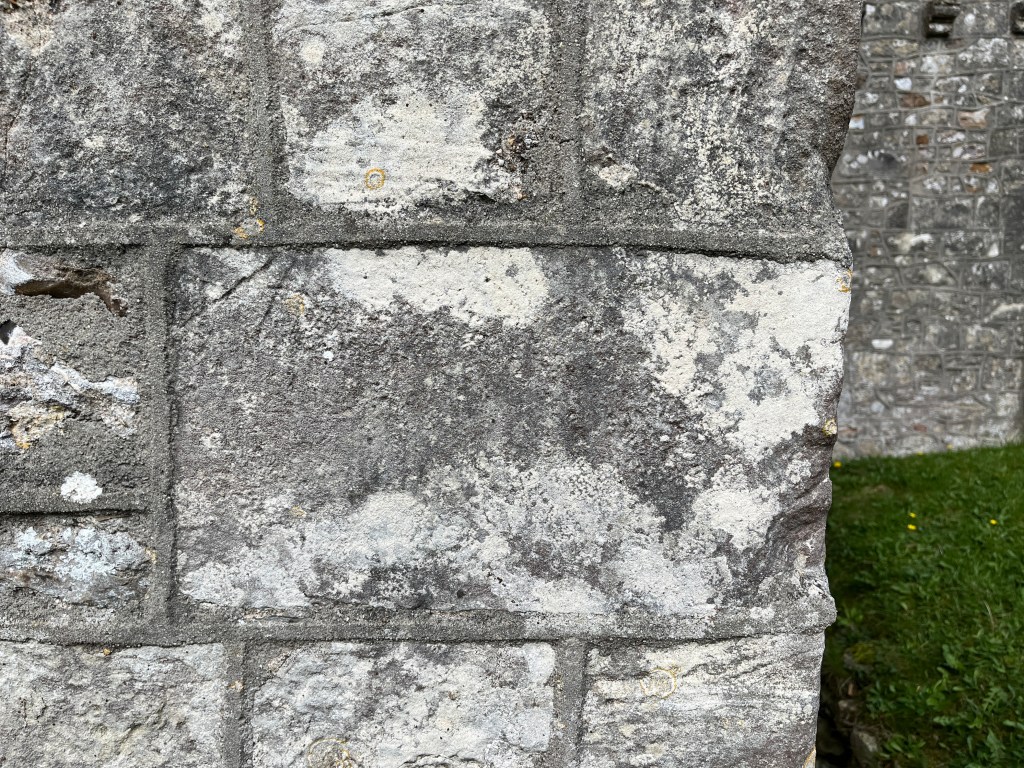
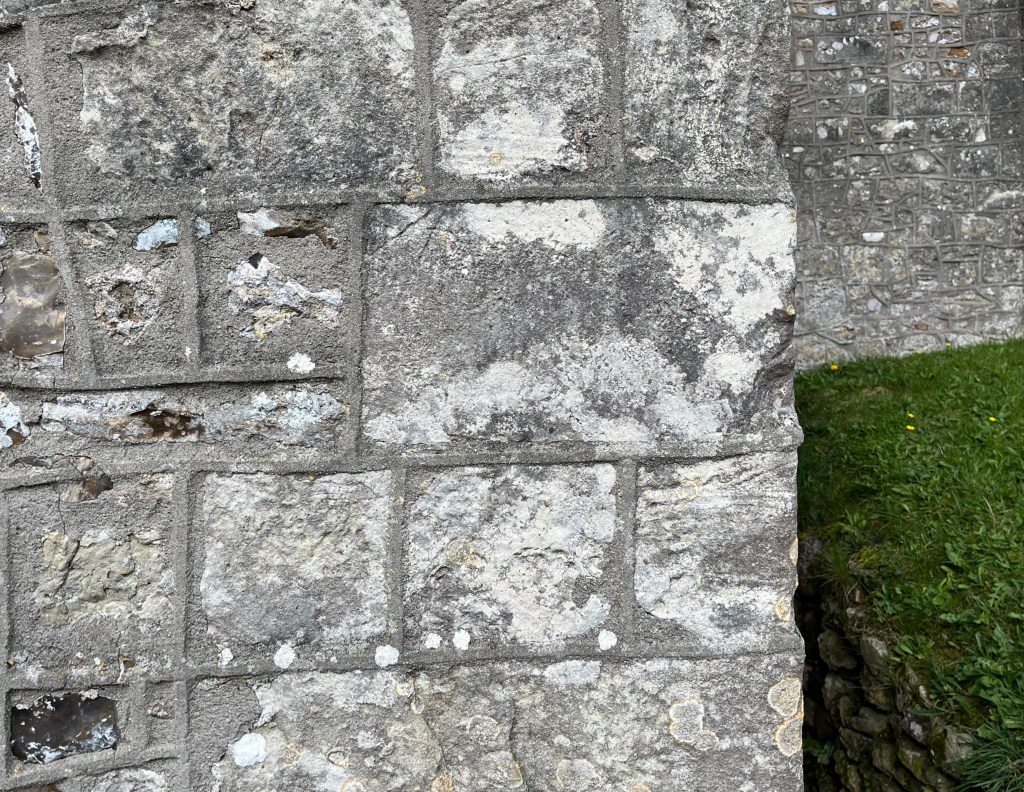
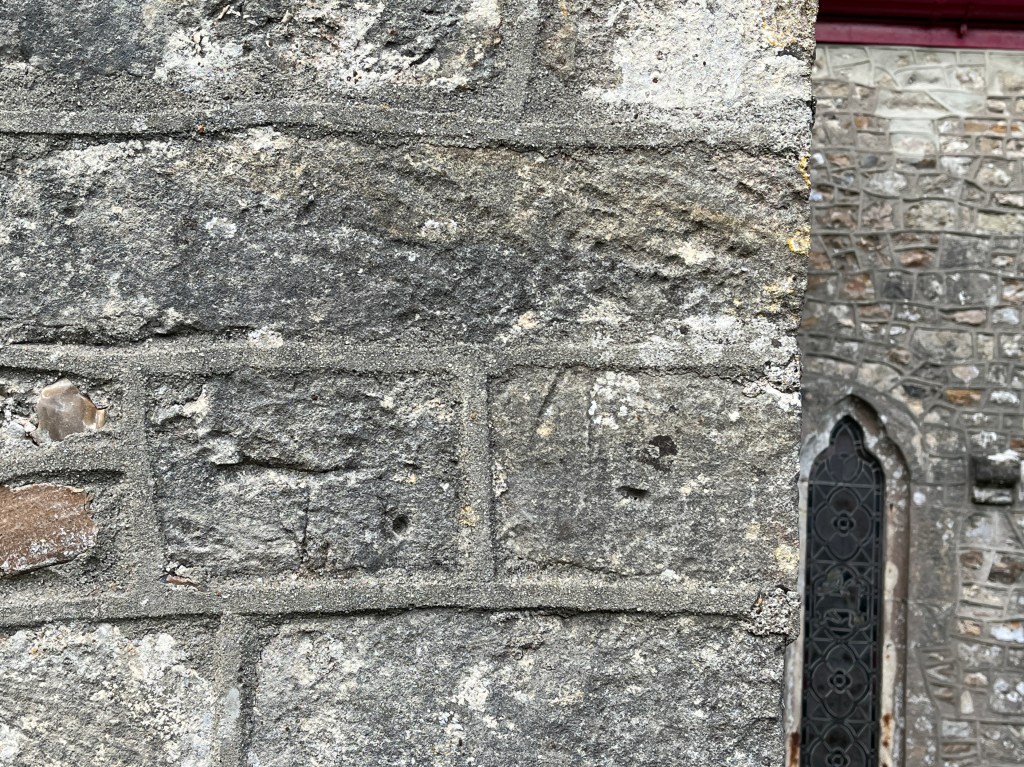
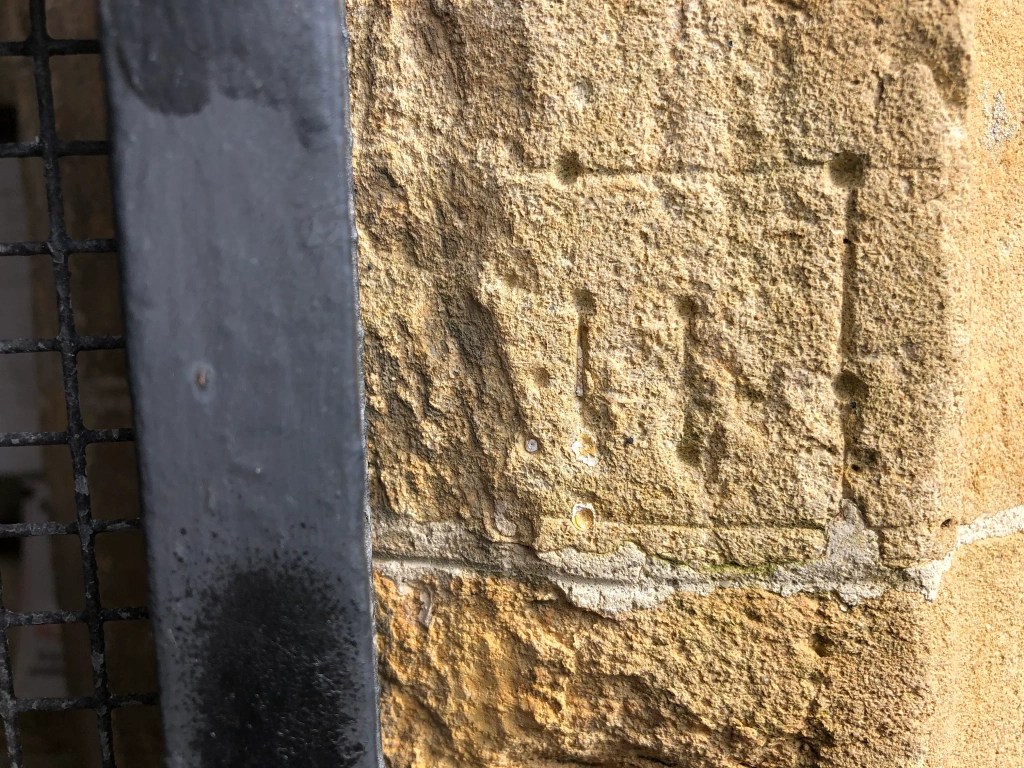
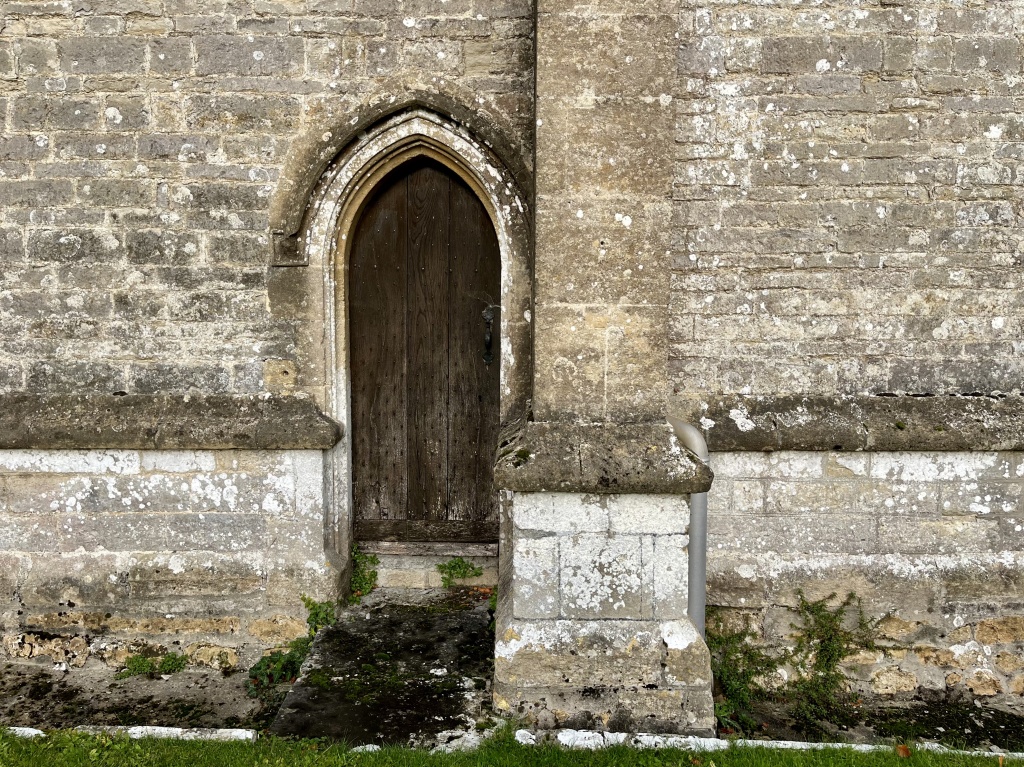
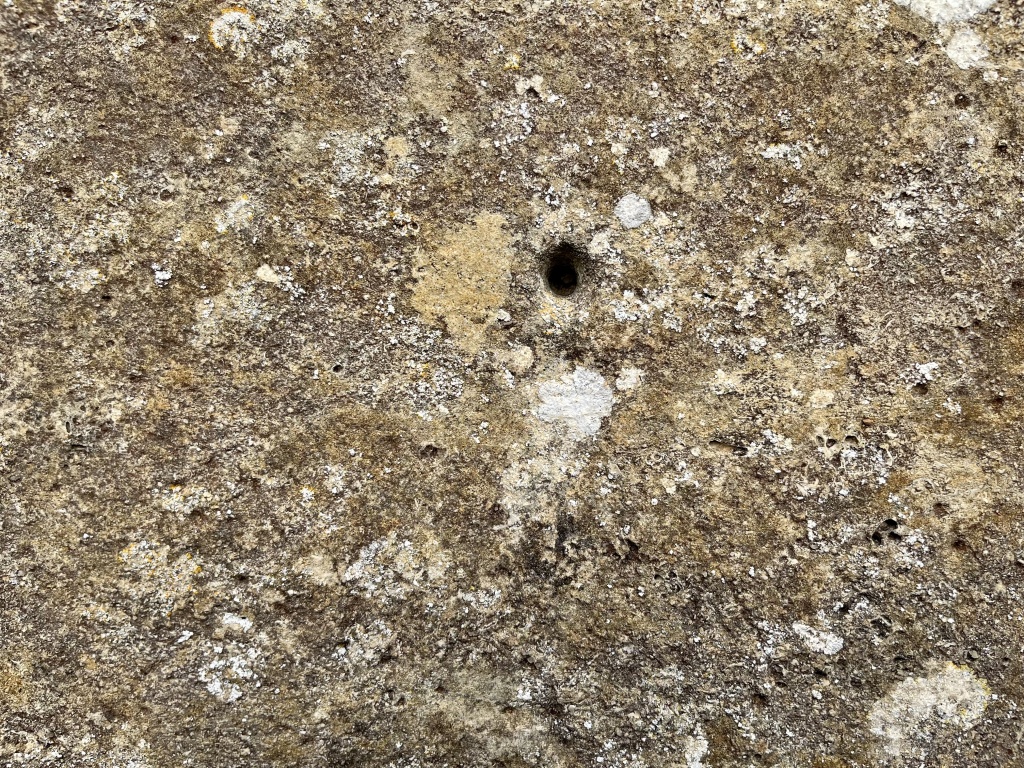
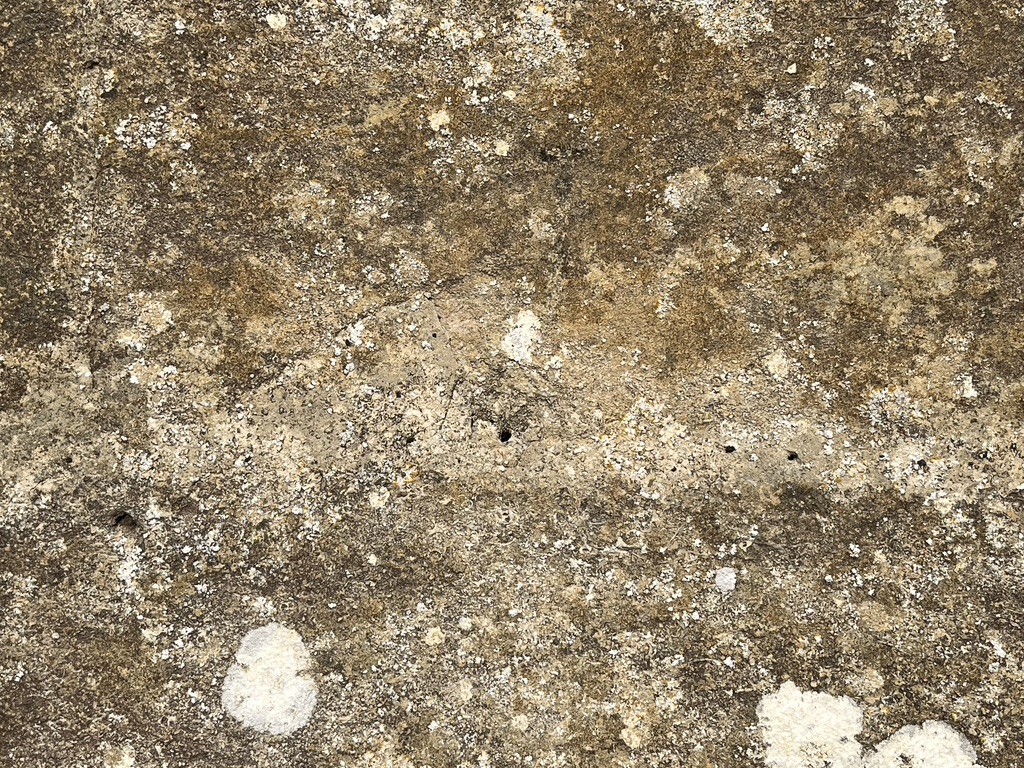
Located on the E-facing wall of the S doorway, and obviously re-sited at some stage to be of any use. A clean straight hole in the centre of the stone but even close to, no lines or dots now visible. I am pretty certain it is / was a dial, but some might call it doubtful. The stone is quite frangible amid the flint, and erosion over the centuries was perhaps inevitable.
GRADE I † C12 origins; gradual development C13 on, with later restorations C15 / C16. S porch (where the dials are) added C16, with earlier material reused. 8m SW of Dorchester. 50.6709 / -2.5638 / SY602858
DIALS
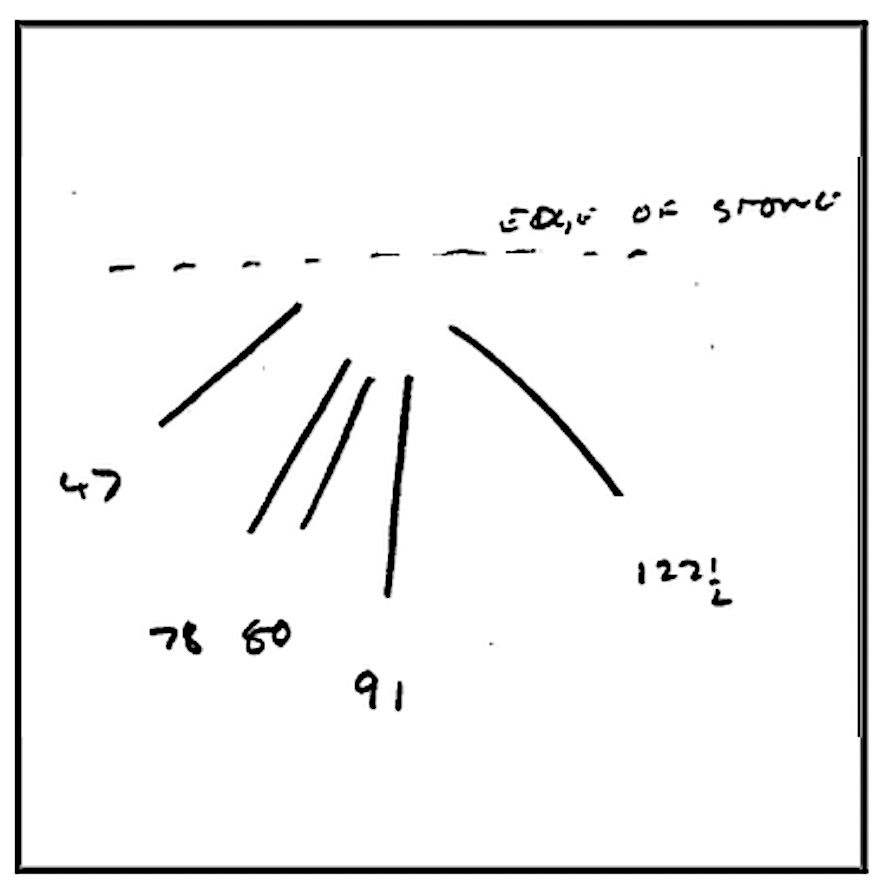
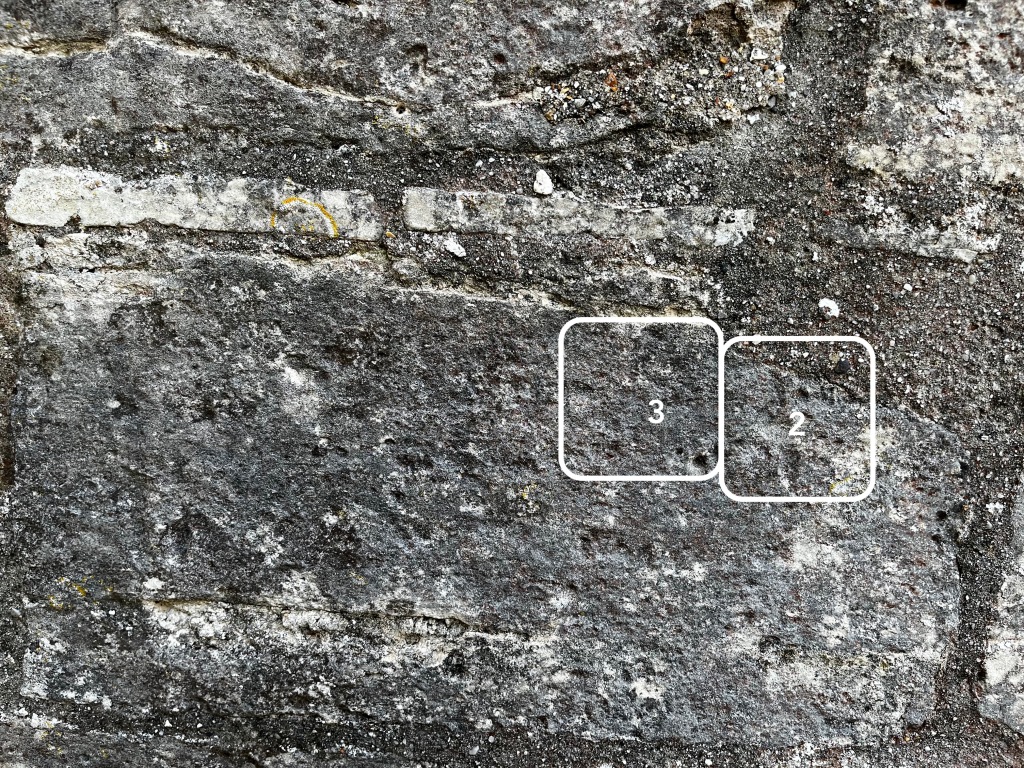
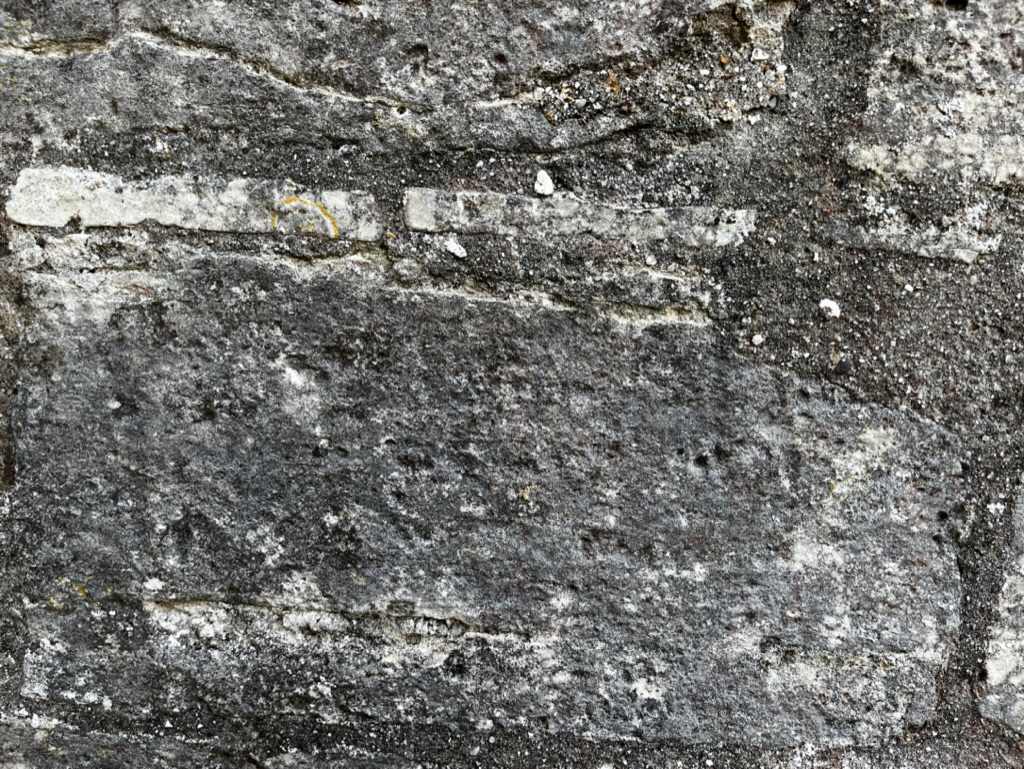
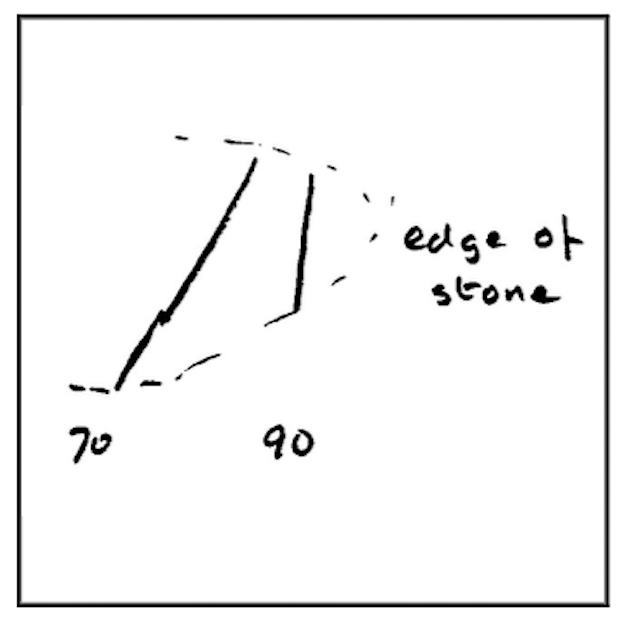
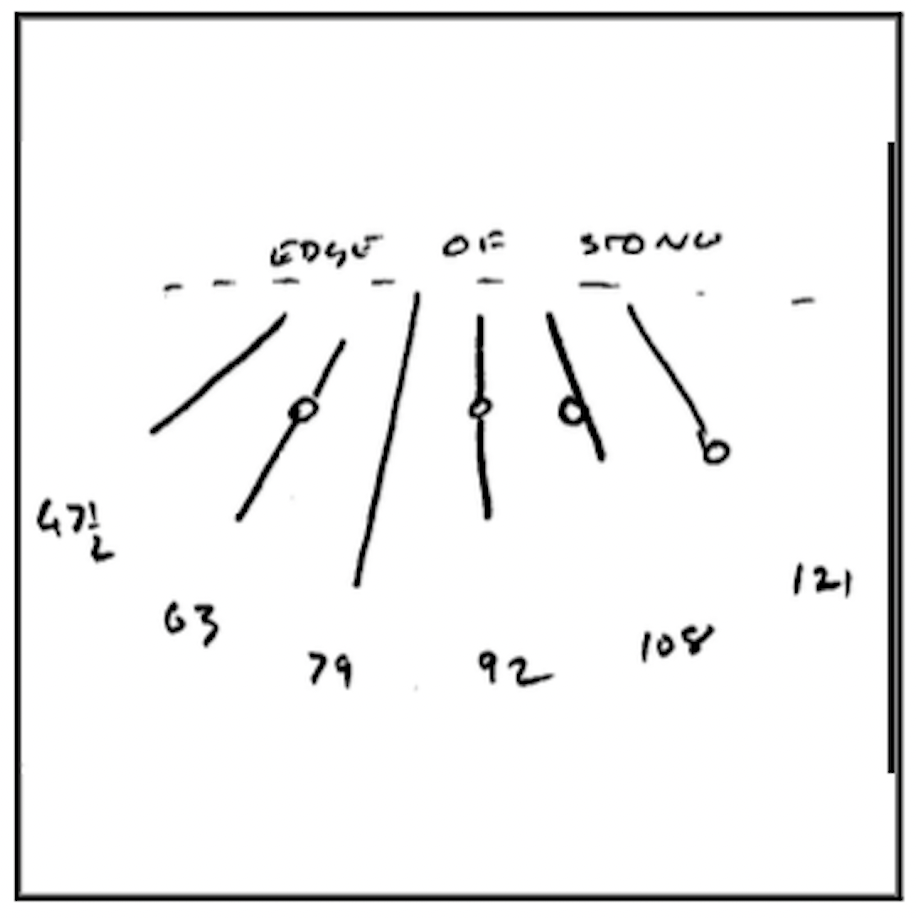
St Peter has 4 scratch dials, 3 on the E side of the S porch, 1 on the W side. One of my nemesis churches. I have visited in rain, in cloud, and in sunshine. Of the cluster of 3 on E side, I could only make out the obvious one. Eventually I managed to identify them from an enlarged photo. The BSS recorder’s diagram below gives an idea of the dials rather more clearly than my photos can.
DIAL 1
Dial 1 is located on the E side of S porch. Five lines are noted in the BSS records, of which 3 are clear and reasonably accurate. The gnomon hole is in the mortar line, where the lines converge.
DIALS 2 & 3
Dial 2 is very basic, and would be easy to overlook. There are 2 faint lines, with the top part including the gnomon hole cemented over a damaged area.
Dial 3 is even less conspicuous: a faint wishbone shape, 2 (3?) lines, one with a pock at the end.
I would doubtless have passed over this pair; and even had I noticed them I would have discounted them in my amateur way.
DIAL 4
Dial 4 is on the west side of the south porch, on an inner quoin stone. At first glance it might be taken for an area of damage. In fact it is a dial with 6 lines, 4 of which end in pocks. It was described many years ago as not very accurately laid out and the passage of time has not improved the situation.
GRADE I † C12 origins (nave, chancel), gradual expansion C13, C14 and C15; restoration 1889. Norman doorway with fine Tympanum (long predating the inscription 1698). Good C15 wall paintings.Very close to the estuary, perfect for a walk or a bird-watch. 6m W of Lyme Regis. 50.7142 / -3.0546 / SY256910
DIALS
Three dials are recorded for St Michael. They are all similar and, unlike most multi-dial churches, their design give little sense of developing methods of marking the passage of the day.
DIAL 1
Dial 1 is located on the E quoin stone of the transept, with the gnomon hole in the mortar line. There are 3 distinct radials, and a 4th that is a faint trace. BSS records include the comment Rescratched and false gnomon added.
St Michael . Axmouth . Devon – Scratch Dial 1
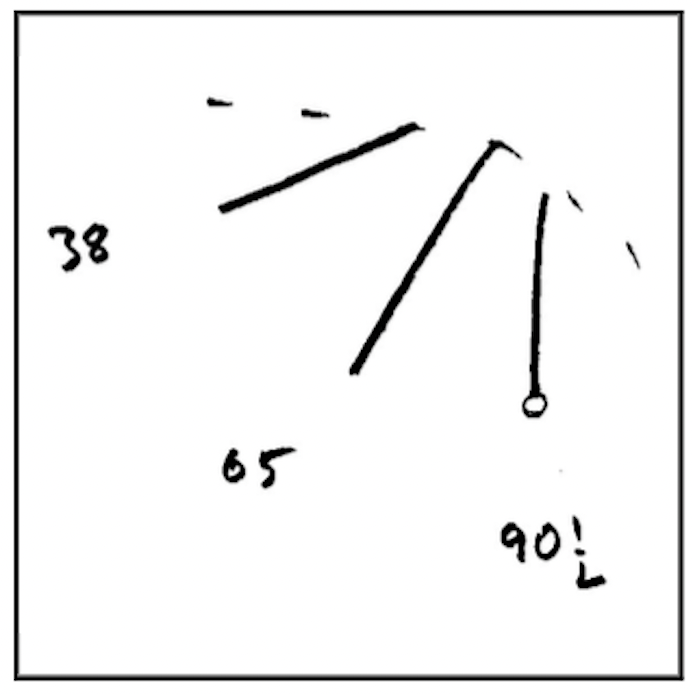
The last record is dated 1994, since when the false gnomon has been removed. I have used an image from then; the dial is less easy to see now. The diagram below has a theoretical perimeter and time marks for a complete dial. The note no noon [line] is slightly surprising. Radial 3 looks vertical and possibly bifurcated in re-scratching.
St Michael . Axmouth . Devon – Scratch Dial 1
DIAL 2
St Michael . Axmouth . Devon – Scratch Dial 2
Dial 2 is cut on the Chancel chapel, E end of the wall, on a quoin stone. There are 4 lines radiating from a filled gnomon hole in the mortar line
In close-up (below) it is just possible to see that line 3 (L to R) is longer than the others. That could suggest a noon line incised slightly off true vertical. If so, on this simple dial it might be a casual approach to the medieval daylight hours. On a later, more sophisticated dial, it might represent a way to achieve accuracy on a church that was not square on to the true SWNE footprint.
DIAL 3
St Michael . Axmouth . Devon – Scratch Dial 3
Also situated on the wall of the chancel chapel, and again radiating from the mortar line. BSS notes 4 lines, but 2 cannot now be detected. However the suggestion that noon is marked by double lines is plausible. This might be for emphasis (as with a terminal pock or cross); or because the vertical was re-scratched.
GSS Category: Scratch Dial
Photos. Keith Salvesen; diagram and other material, BSS
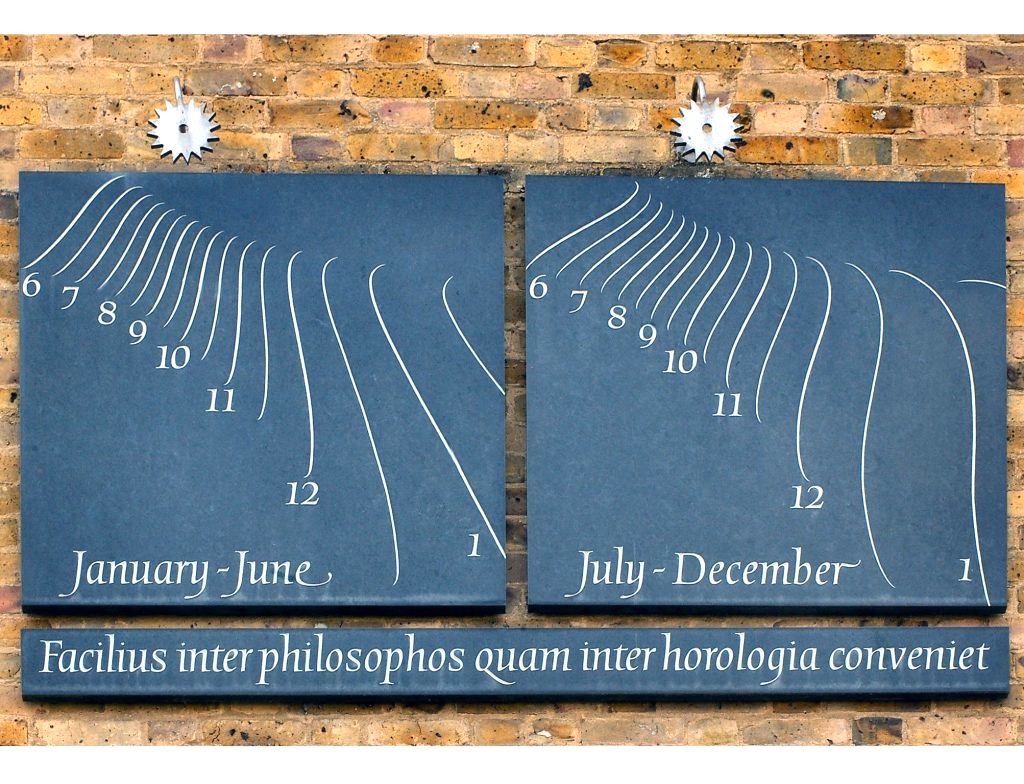
I recently came across a very bad photo I took years ago of this elegant and ingenious dial in Magdalene College. My image is too awful to be the basis of a feature. However BSS has in its records this excellent quality photograph with a short account to accompany it.
A competition among first year engineering students led to the creation of this most striking double vertical dial, mounted in 1987 on the south-facing wall of Benson Court. It was designed by Will Carter in stone and stainless steel and features the motto: ‘Facilius inter philosophos quam inter horologia conveniet.’ (It is easier to gain agreement among philosophers than among timepieces – Seneca) The prize-winning design has the Equation of Time built into the gracefully curving hour lines. A spot of light shining through a pierced stainless steel sun marks the time on each dial.
‘Facilius inter philosophos quam inter horologia conveniet.’ (It is easier to gain agreement among philosophers than among timepieces – Seneca)
GSS Category: Vertical Dial; Double Dial; Modern Dial; Competition Dial
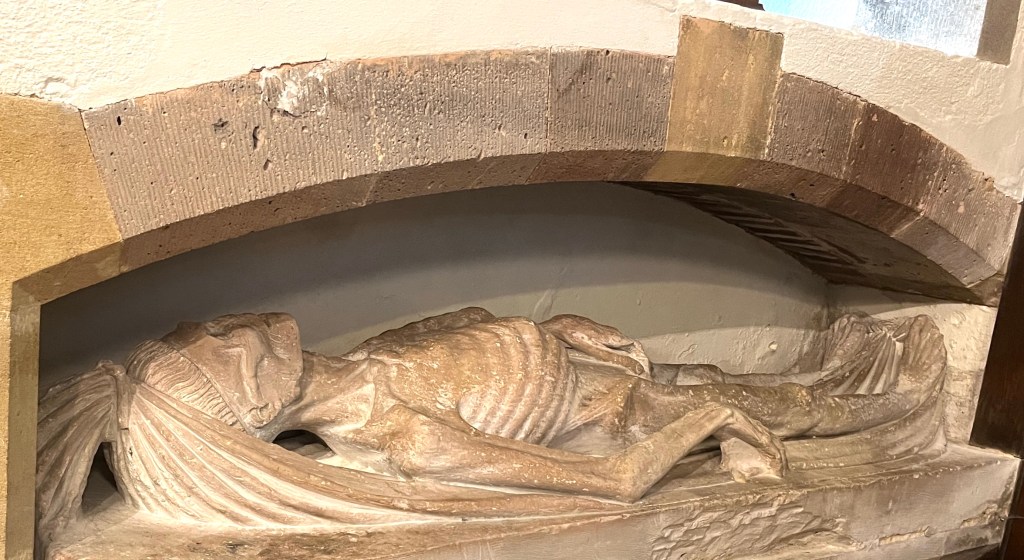
GRADE II* † Norman origins; rebuilding C15 & early C16; substantial restoration 1877. A church that repays one’s interest, with an intriguing Rood screen / reredos repositioning conundrum; and unusual chest tomb: on top lies the effigy of an emaciated cadaver partly covered by a shroudBLB. 14m E of Exeter, 5m W of Honiton. 50.7875 / -3.2659 / SY108994
DIALS
St Andrew has 3 scratch dials, the most obvious being visible from the lych gate and as one approaches S porch. The other 2 dials, very close together, are remarkable and probably unique (certainly so as a pair). Dial 3 may be doubtful. An additional basic but dial-ish scratching is shown below, as are various other church marks including a good example of a Consecration cross.
DIAL 1
St Andrew . Feniton . Devon – Scratch Dial 1
Dial 1 on the porch buttress is a straightforward design and easy to make out, but damaged and cement patched UR. There are 13 lines, some now very faint. The angles are more or less accurate at 15º. The vertical / noon line is not emphasised in any way, which is slightly unusual. The main Mass was presumably Terce, marked with a deeper cut line LHS. The gnomon hole has been filled with a rather well-chosen rounded arrow design; it is modern yet respectful of its purpose.
DIAL 2
St Andrew . Feniton . Devon – Scratch Dial 2
Dials 2 & 3 are adjacent low down on the same porch buttress as Dial 1. It is a remarkable juxtaposition. BSS suggests they are early dials – pre-1400?
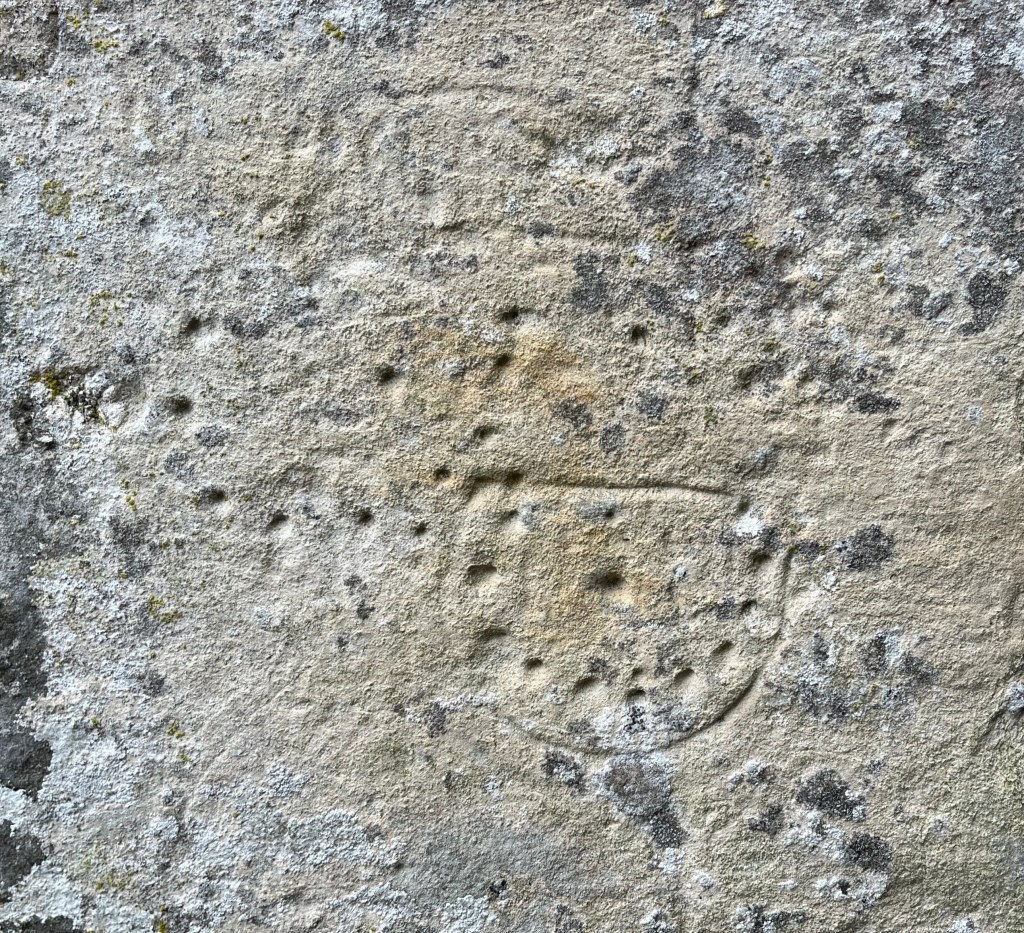
Dial 2 consists of a pattern of pocks contained within what could be termed geometrically as the major segment of a circle. The horizontal line is incised more deeply. BSS suggests that 13 pocks are identifiably associated with the dial, with a few random ones besides. The quite shallow gnomon hole in such a small design presumably contained a stud rather than a rod.
A noon line is seemingly marked by the sightly offset double pocks just R of the vertical. Theres’s also a very small pock directly above the gnomon hole, conceivably a decorative-use-only marker for midnight and symmetry.
DIAL 3
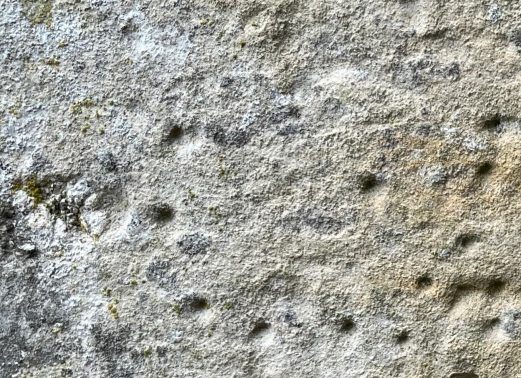
Dial 3 The BSS entry for this little configuration of dots describes a semi-circle of 8 pocks, with other associated pocks and no obvious gnomon hole. It concludes closely related to dial no. 2, possibly never used as a dial.
Perhaps it is not a dial at all. The rather untidy part-circle curves away NE after noon – pointlessly, if part of a dial. BSS notes that there is no central style hole. There is a single pock inside the perimeter that might have held a stud – but unlikely to be much use in that position. Some might suspect unserious pattern-copying efforts along the lines of Dial 2.
St Andrew . Feniton . Devon – Scratch Dial 3
My amateur reading of this buttress as a whole is firstly, that the low stone on which Dials 2 & 3 are located is not its original location. At some stage during all the rebuilding and restoration over the centuries it was re-sited. The little dial that ‘worked’ was then too low and would anyway have been an obsolete design. It was therefore superseded by a far larger, more modern (? mid C16) and very visible dial, accurately cut and ideal for marking the passage of the day for a larger, better educated community in a more modern era. Comparatively.
DIAL 4?
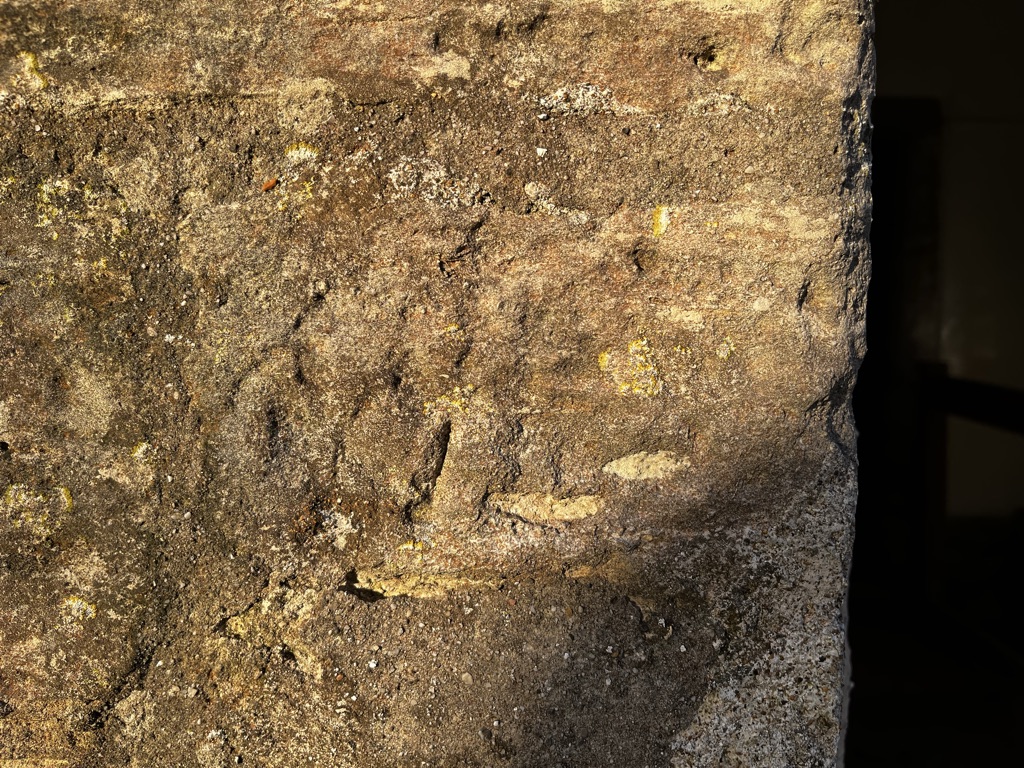
Both lines seem deliberately scratched. One is approximately vertical, the other could mark the Mass time Terce (cf Dial 1). The lines diverge from the mortar line, as do many simple dials – it means not having to drill a dial gnomon into stone. I have seen less convincing 2-line versions that have been recorded as dials. I am slightly in favour of it being a dial.
CONSECRATION CROSS
This is a good example of a rural consecration cross, incised on a buttress between 2 windows. From a distance the design might mislead and be seen as four petals, rather than a compass drawn cross. There are hints of an outer circle. This is a fairly common type of cross, but good see one that is relatively unworn. The four distinct quarters rule out ID as a protective hexfoil, although there is a similarity.
GRAFFITI
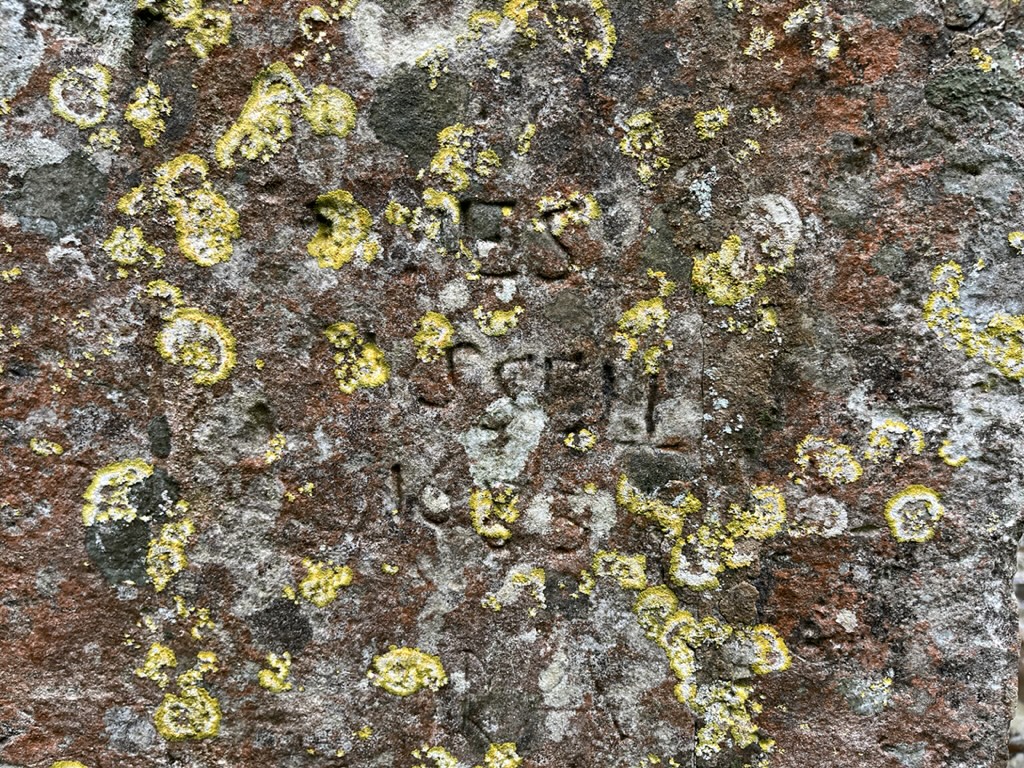
Graffiti on two adjacent stones, one example dated ?1675
PROTECTION MARK
This is very likely a ritual protection mark / apotropaic symbol designed both to prevent evil from entering the church, and to repel it. For that reason they are most often found inside or near porches. I haven’t encountered the pattern below before, but a group of dots with some joined by deep cut lines is a commonly found design – see an example from Dorset below.
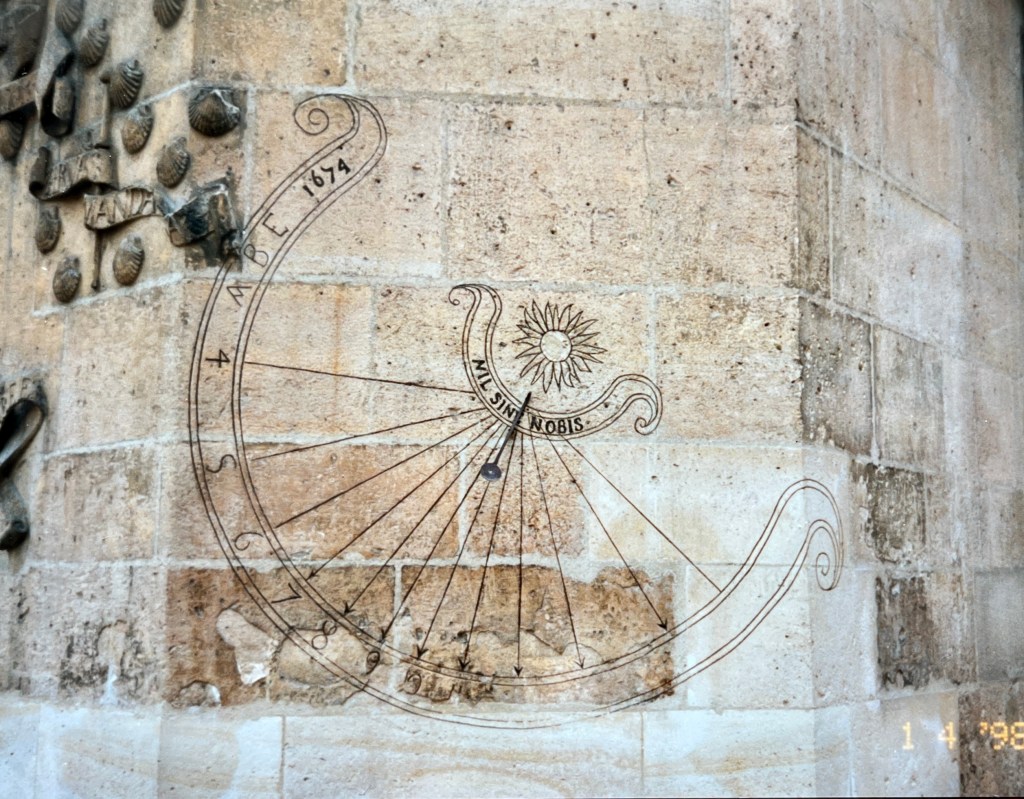
The collection of the National Museum of the Middle Ages is housed in a wonderful building, at one time an abbatiale. There is some debate about the dates of the origins and the building of the Hôtel; and of later rebuilding / restoration. The large sundial on the south wall of the courtyard is dated 1674. This was the reign of the Sun King (1643 – 1715), and a sun with its rays was an obviously fitting theme for the times.
See addendum Sep 2025 below, with thanks to Linda Roundhill
DIAL
The lines on the dial face are carefully graduated and the hours marked with Arabic numerals. Several lines terminate in arrows, suggesting a busy schedule of mainly forenoon masses.
MOTTO
NIL SINE NOBIS. A. B. F. 1674.
The inscription is usually translated as Nothing [Exists] Without Us. Margaret Gatty (1809-18730, in her comprehensive work The Book of Sun-Dials, gave the Cluny dial an unusually detailed entry:
NIL SINE NOBIS. A. B. F. 1674. Nothing exists without us.
A dial on the wall of a courtyard on the south side of the Hôtel Cluny, Paris, had this inscription. The word nobis referred to the rays of the sun which were represented on its face. The Hôtel Cluny, a very beautiful specimen of rather elaborate fourteenth century Gothic architecture, was bought in 1625 for the abbess and nuns of Port Royal, and was known as Port Royal de Paris. It was re-established by Louis XIV. in 1665, on a fresh basis, and was looked upon as schismatic by the community of Port Royal des Champs. This dial must have been erected in the time of the first abbess of the new foundation, Sœur Dorothée Perdreau, who held office till 1684.
Cluny Museum and its sundial: detailed entry by Margaret Gatty
SCALLOP SHELLS and HERALDIC MOTTOS
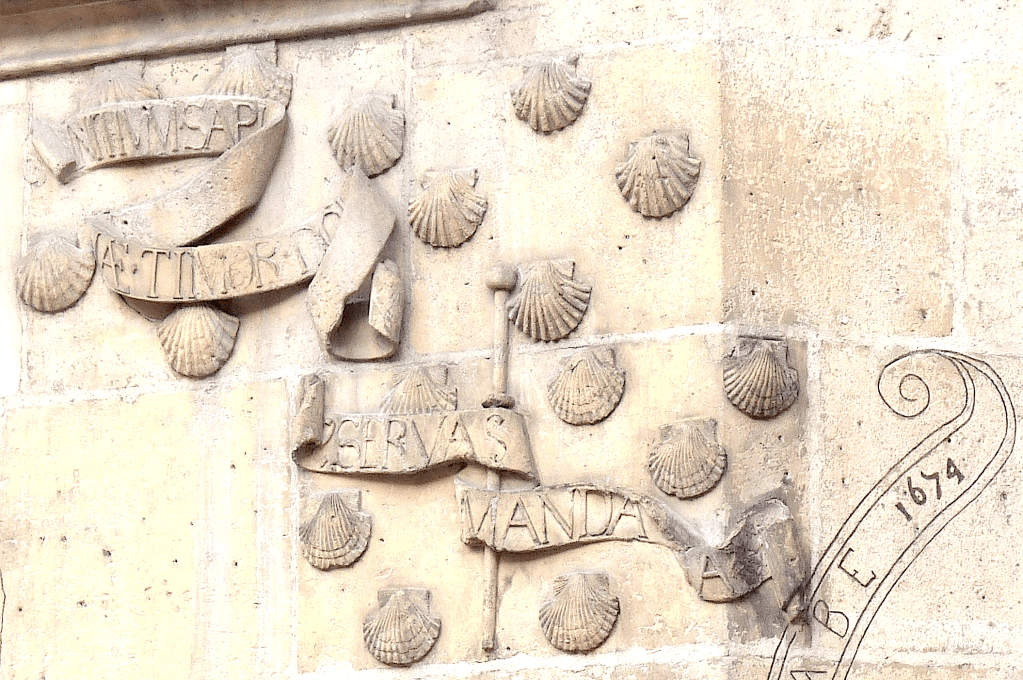
The scallop shells are interwoven with two inscriptions (or possibly a single one in two parts) which deserve a mention as part of the overall design. The shells themselves evidence an ancient Pilgrimage route that passed close by – the long Rue St Jacques is a few meters to the North.
The heraldic mottos are said to read, firstly: Servire Deo Regnare Est – To Serve God Is To Reign; MG suggests, without much conviction, that the other (or part of it) may be as shown below.
With very rusty Latin and a bit of internet work, I can’t make either interpretation fit the scrolls we can see. Possibly they relate to a different part of the Musée, and the shell one(s) are different. I’ll have to leave the reader to try to puzzle this out (all suggestions welcome).
ADDENDUM SEPTEMBER 2025
Many thanks to Linda Roundhill for solving the puzzle that I feebly left for others to interpret
The top left ribbon scroll with the scallop shells is a scripture verse “The fear of God is the beginning of wisdom”. From Proverbs 9. The lower left is a Christian catch phrase, ‘To serve God is to reign’, derived from John 12. This was hard because some of the letters are missing or hidden. The scroll on the right says “Keep My commandments” which is a short version of Matthew 19:17, and many other passages. Again, some letters are obscured.
GSS Category: Early Sundial / Vertical Dial; French Sundial; Sundial Motto
Credits: all photos Keith Salvesen – please seek use permission for these detailed ones; Musée Cluny for the Unicorn
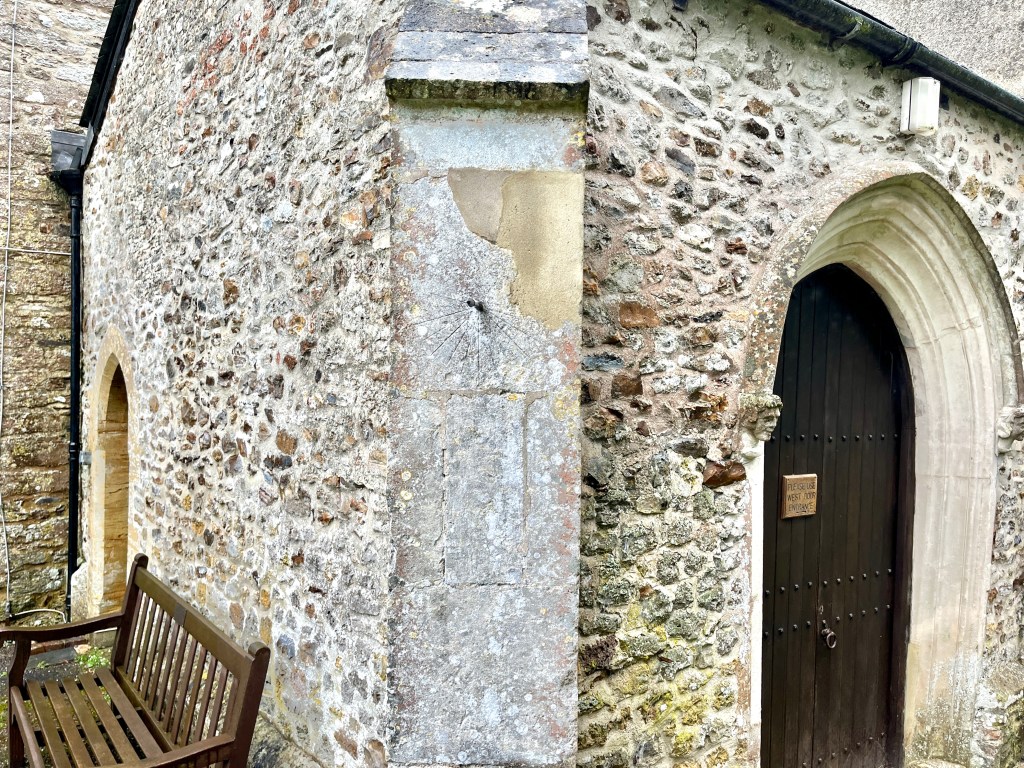
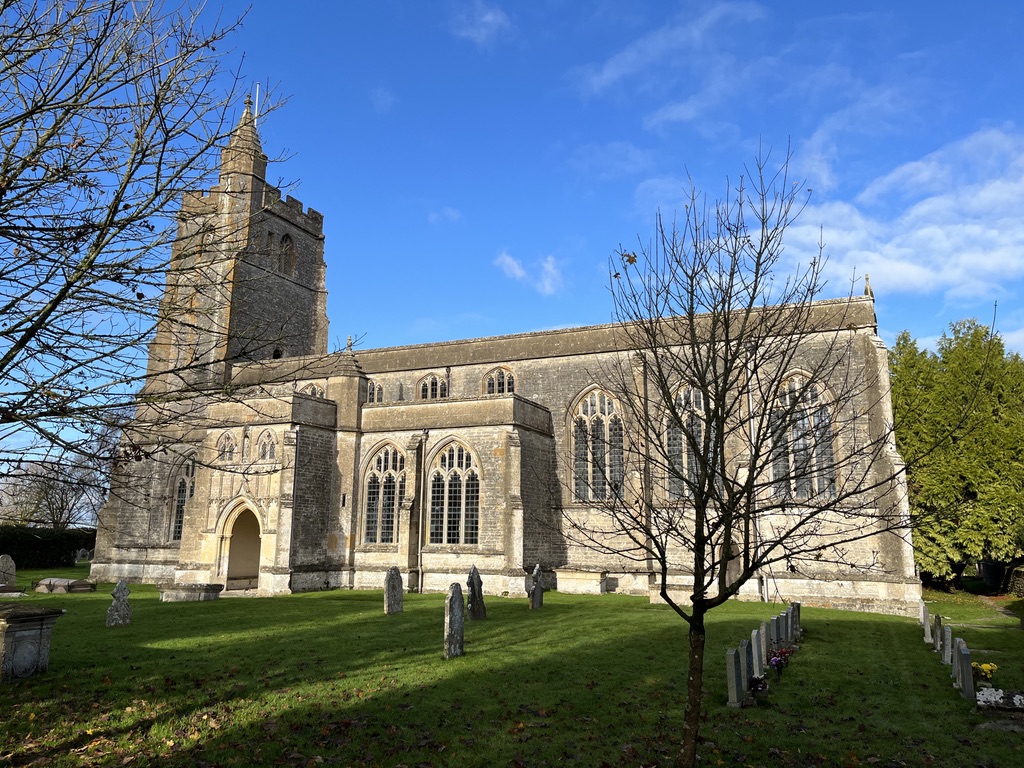
GRADE I † Mainly early C15, some older fragments; later restorations. A huge church for a small village. Simon Jenkins awards it ** and with good reason. Wonderful bench ends, not to be missed. See BLB for more. Midway between Wincanton and Ilchester. 51.0417 / -2.5214 / ST635270
DIALS
DEH visited in April 1914 and recorded 3 dials, all on S facing buttresses, one close to the priest’s door. They are very eroded. There are possible remnants of 2 further dials, mentioned below.
DIAL 1
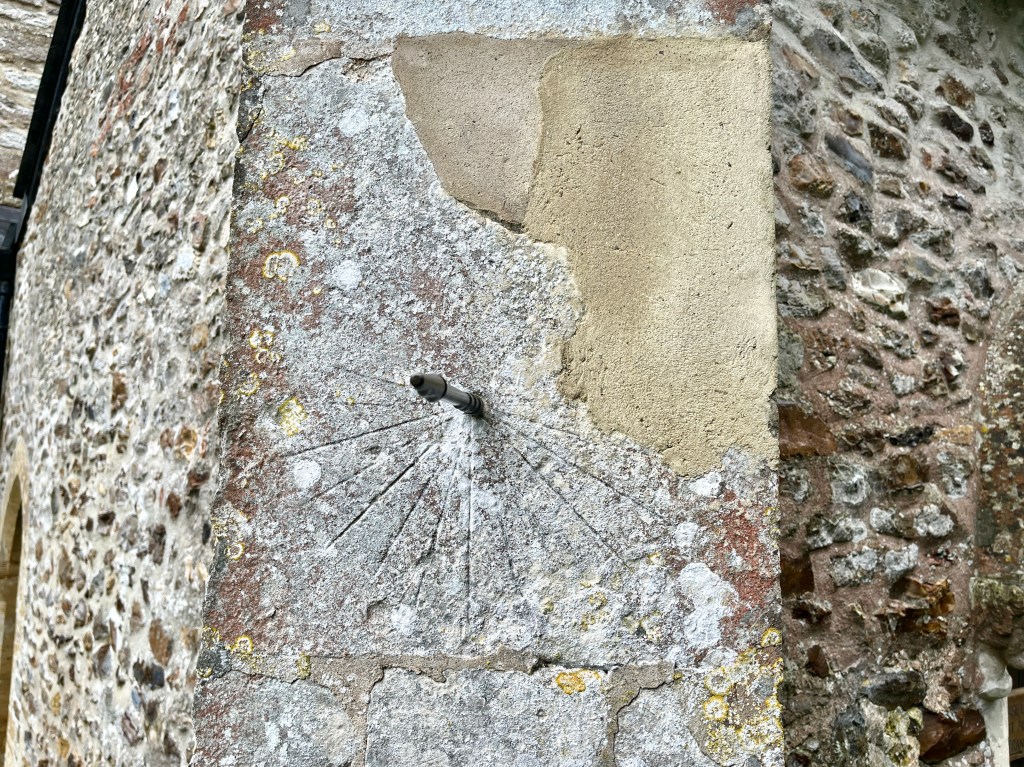
St Michael . North Cadbury . Som. – Scratch Dial
DEH169. (1) This dial is on the first buttress w. of the s. porch. It is 5 feet above the ground, the noon line is 4 inches in length, the stylehole is 5/8 of an inch in depth by 1/2 an inch in diameter, and the aspect is s. by 15° e.
Located on the buttress W of S porch. An obvious style hole with a semicircle (6 – 6) of unobtrusive small pocks. Photography has its limitations and St Michael tested them. Records mention 13 to 16 pocks. One can just make out the faintest of traces of lines at noon and 2.
BSS suggests a possible dial immediately above. Assuming a style hole in the mortar line, there are a few pocks in the immediate area, but rather disorganised. Doubtful rather than plausible.
DIAL 2
St Michael . North Cadbury . Som. – Scratch Dial
DEH170. (2) This dial is on the first buttress E. of the s. porch. It is 4 feet 10 inches above the ground, the noon line is 3 inches in length, the style hole is about 11/2 inches in depth by 3/4 of an inch in diameter. The aspect is s. by 15° e.
As with Dial 1, very eroded and with little visible detail even when one is quite close. There are 8 detectable lines with a perimeter of pocks, probably (BSS) 13 with extra pocks at 8.30 and 10.30 – presumably Mass indicators.
DIAL 3
St Michael . North Cadbury . Som. – Scratch Dial
DEH 171. (3) This dial is on a buttress e. of the priest’s door. It is 5 feet 8 inches above the ground, the noon line is 4 1/4 inches in length, the style hole is 7/8 of an inch in depth and 1/2 an inch in diameter, and the aspect is s. by 15° e.
Situated on S side of the chancel, on the buttress E of the Priests’ door. There are 13 lines and a full complement of 24 pocks. The line angles are at approx 15º intervals. BSS notes a possible ‘tiny dial’ above it.
MEDIEVAL GRAFFITI
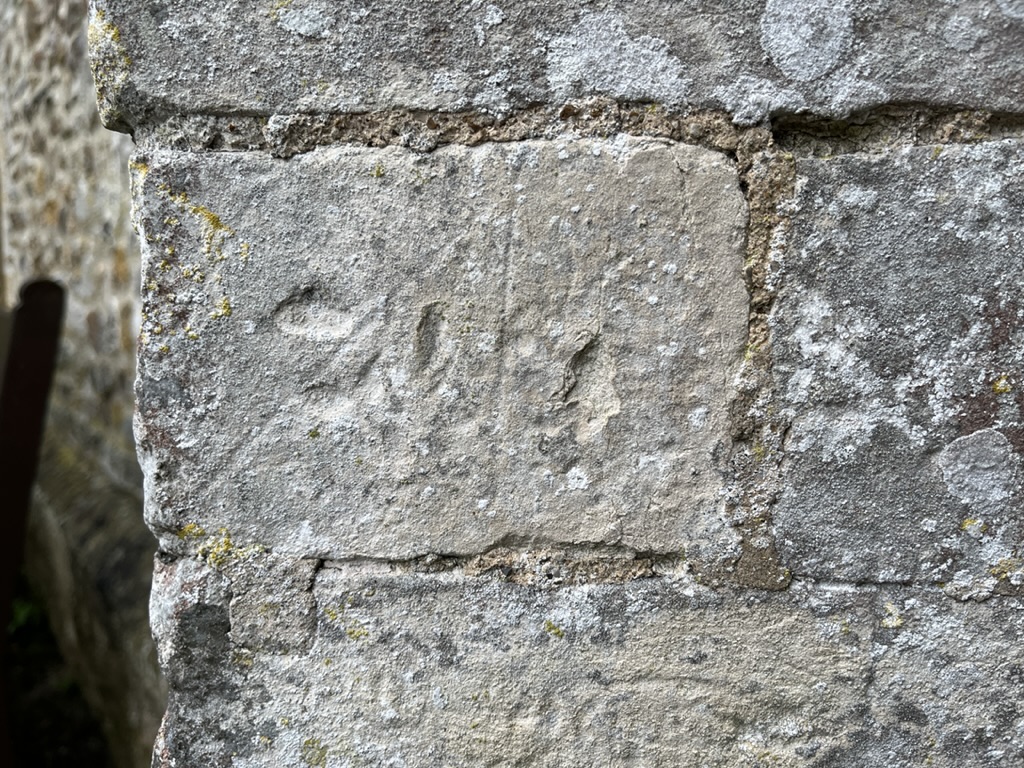
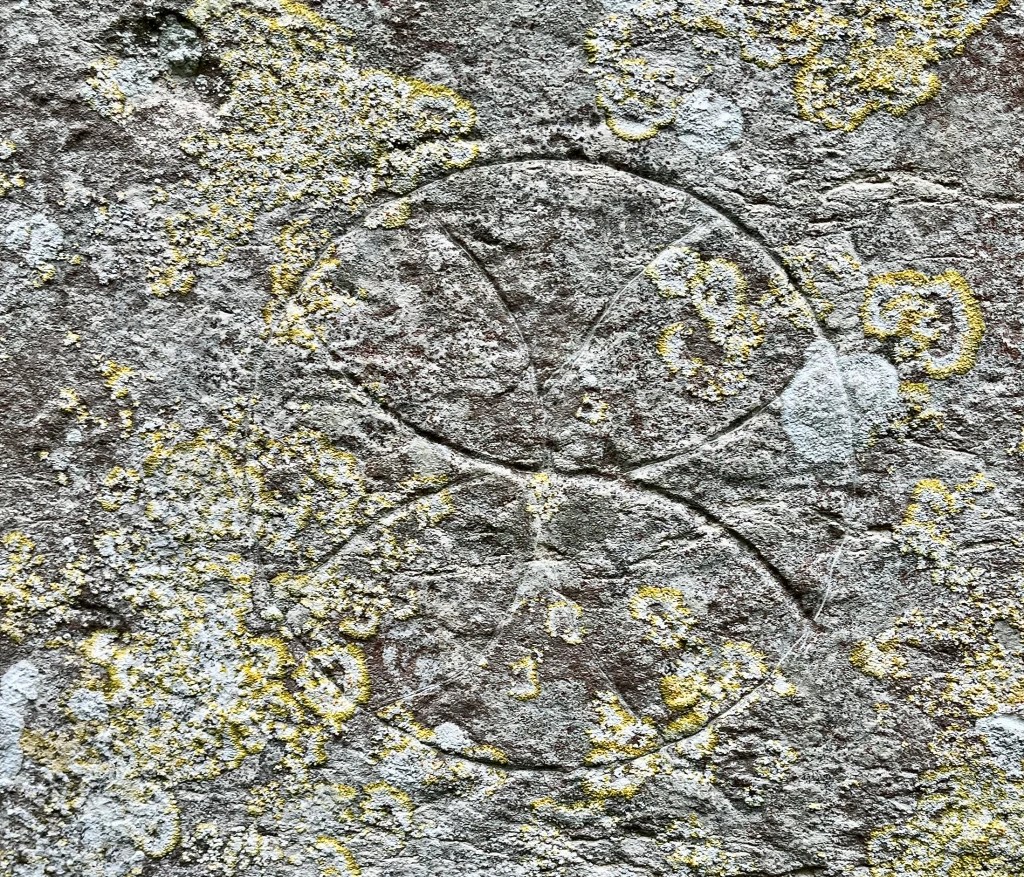
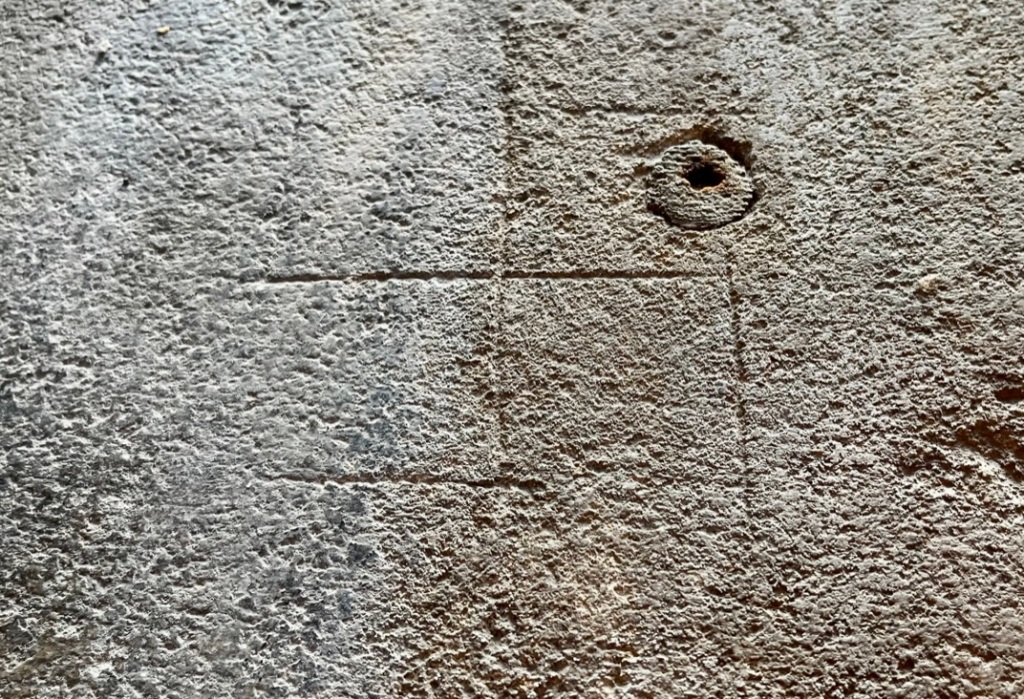
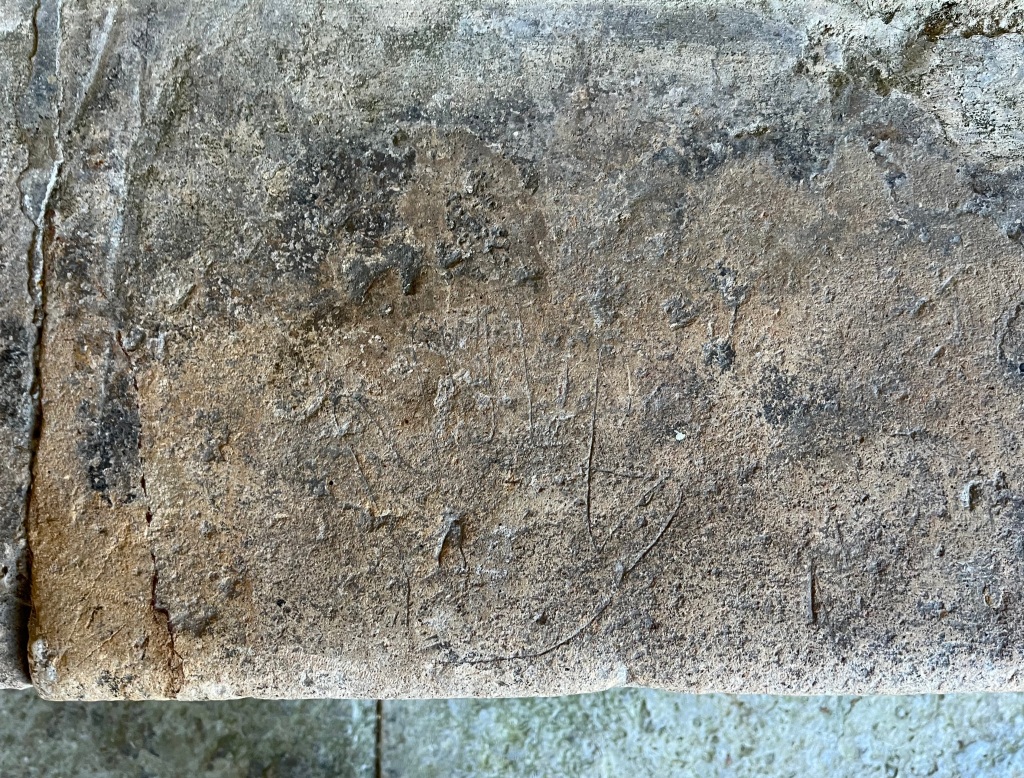
The porch contains the original stone benches on either side. These are often troves of graffiti, in particular apotropaic symbols and other ritual protection marks designed to repel evil or to prevent its entering the church. These signs are quite common to find in other locations both outside and inside a church (see HERE). However, in many churches, stone benches were replaced in succeeding centuries. St Michael has retained the benches, on which there are excellent examples of marks that are relatively rare. There are hands here, and a medieval swastika (a Sanskrit word) from several centuries before its more recent symbolic adoption. It incorporates a repelling circle mark, where evil may be captured within its continuous circumference.













































 GAUDIUM SUB SOLE . SUNDIALS . MEDIEVAL TO MODERN