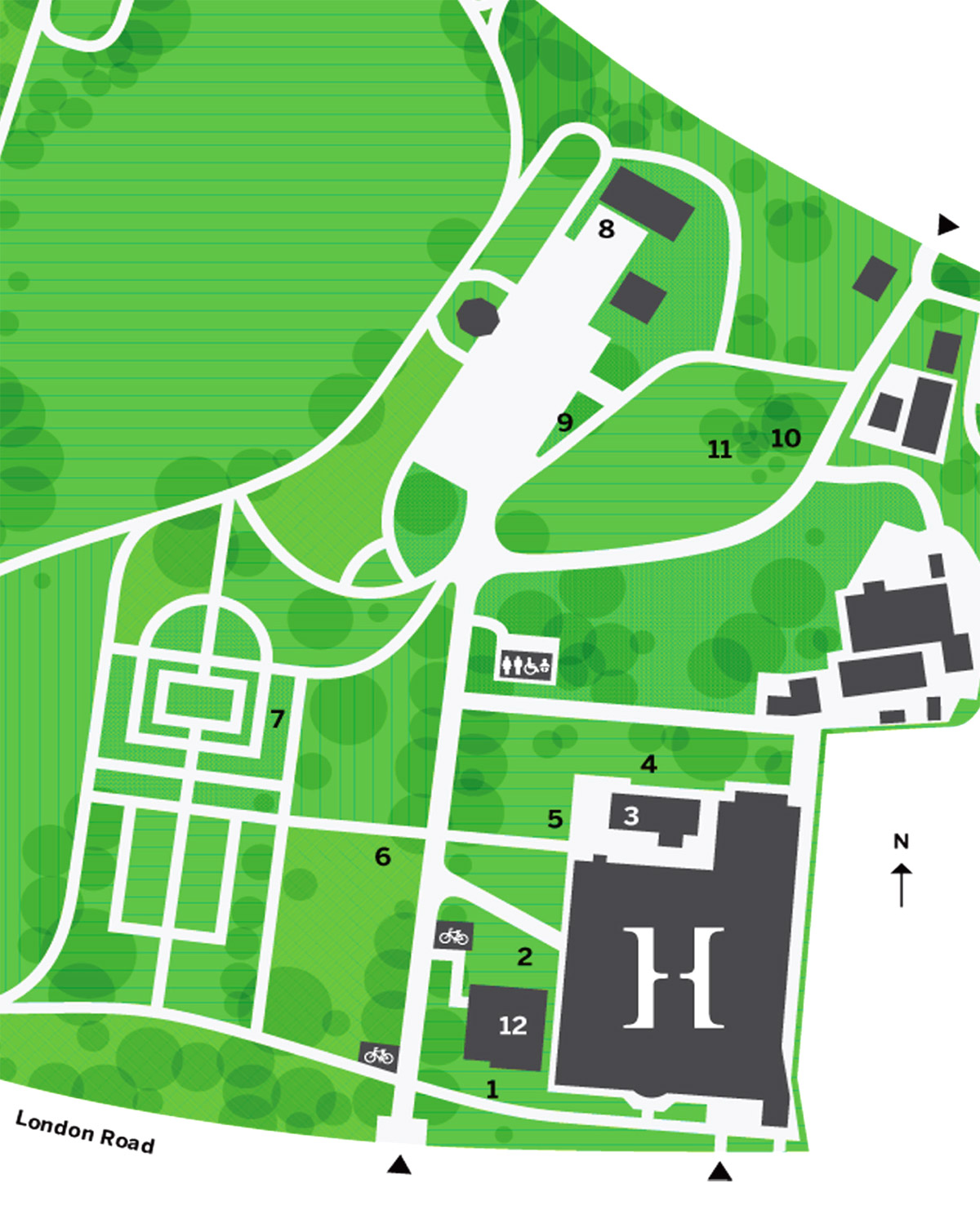
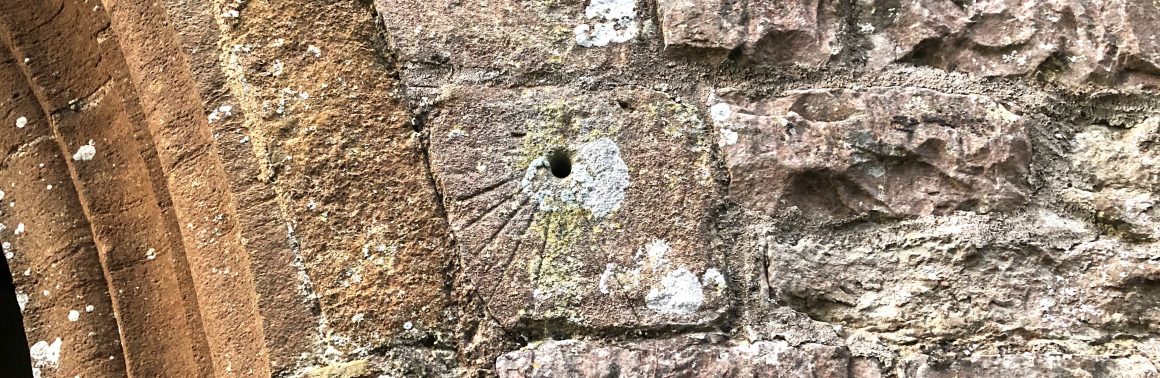
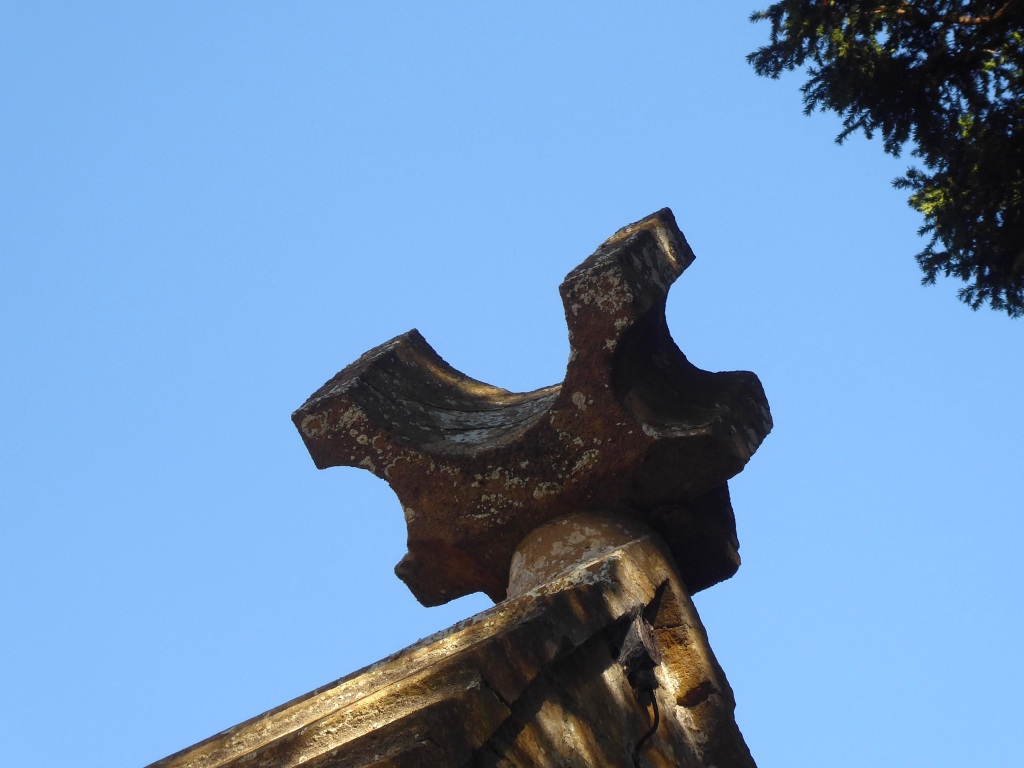
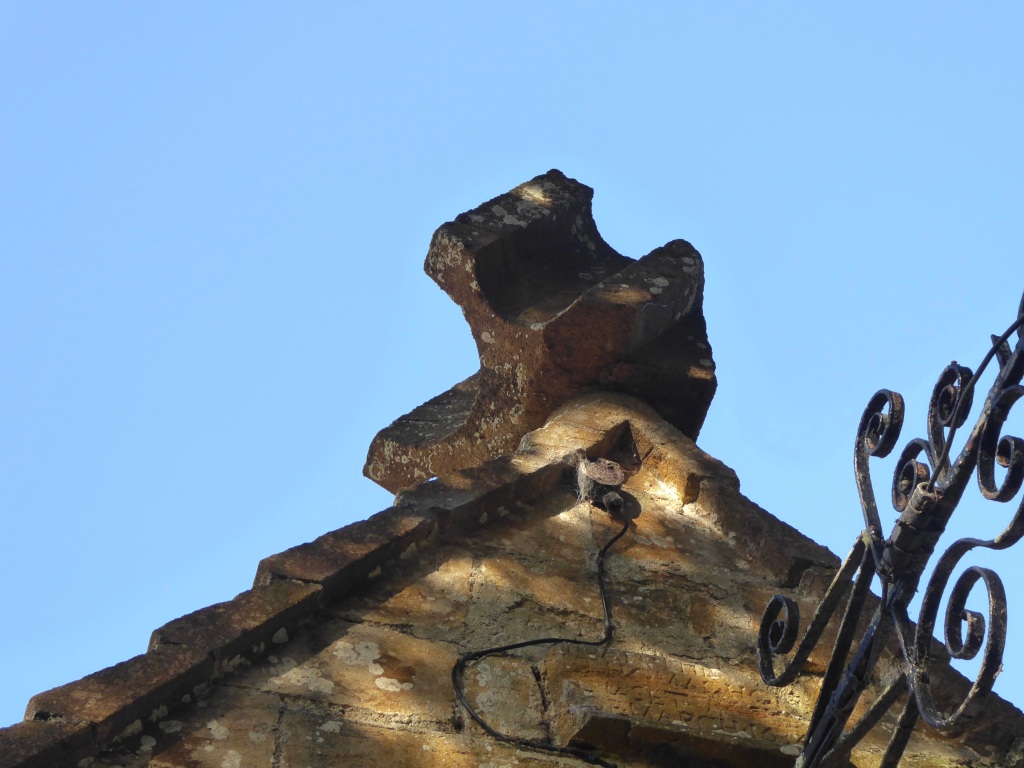
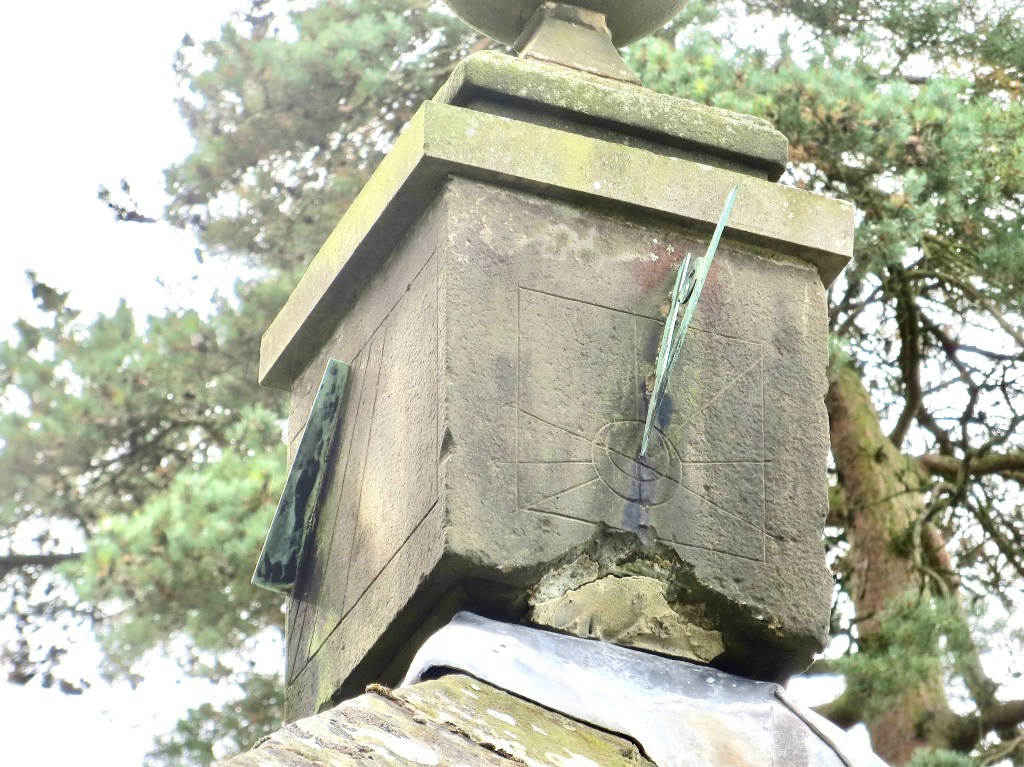
GRADE I † C13 et seq, on early C12 site. Gradual development but (unusually) with little obvious C19 workBHO. Good C16 bench ends. S porch built c1440, originally thatched, with the cube sundial added later. The scratch dials of St Margaret will be written up separately from this unusual dial that, in fact, is not strictly cubic. 5m NW of Yeovil; just S of dread A303. 50.9746 / -2.7156 / ST498197
St Margaret of Antioch . Tintinhull . Somerset – Scaphe Sundial
ADDENDUM 4.11.22
I wrote this piece without access to the BSS dial records, temporarily unavailable online. I had originally described this dial rather broadly as a cube, aware that it wasn’t quite right. Having now got back into the archive, I am better informed (if not wiser). Some of the points I raise below are clarified. Here is the official entry:
There are 3 polar scaphe dials on the porch gable. Possibly C17 or C18. The dial probably showed all hours of sunlight when correctly installed. Now the orientation is incorrect, the polar axis points East and the dial is shaded by a yew tree. The stone is heavily lichened.
DIAL
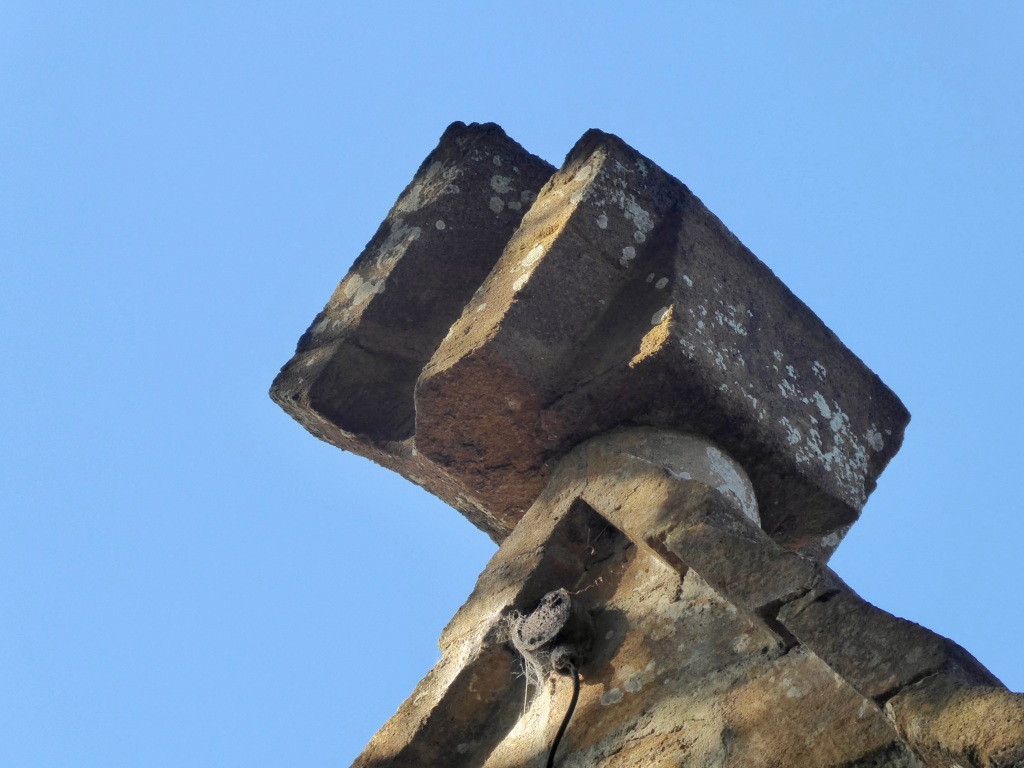
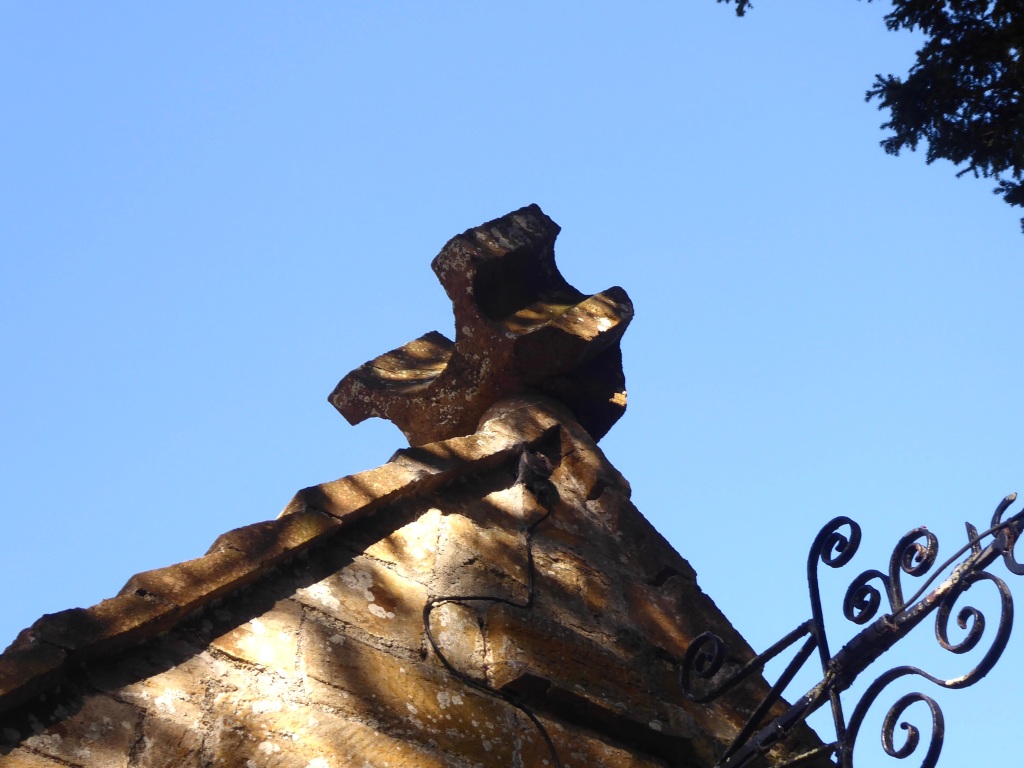
The large block of stone cut as a sundial is balanced (as it seems) on the end of the S porch roof. Its usefulness as a dial nowadays is reduced by it being partly obscured by the shadows of nearby trees. I have not seen similar dials in England but I believe there are a few in Scotland.
St Margaret of Antioch . Tintinhull . Somerset – Scaphe Sundial
I originally confessed that I had no idea how this dial might have worked in practice, nor could I comment on the design, nor suggest how many dials (3?) or even ‘shadow casting edges’ there are. John Foad BSS has kindly marked up 2 images which help to understand the way the dial functioned.
St Margaret of Antioch . Tintinhull . Somerset – Scaphe Sundial
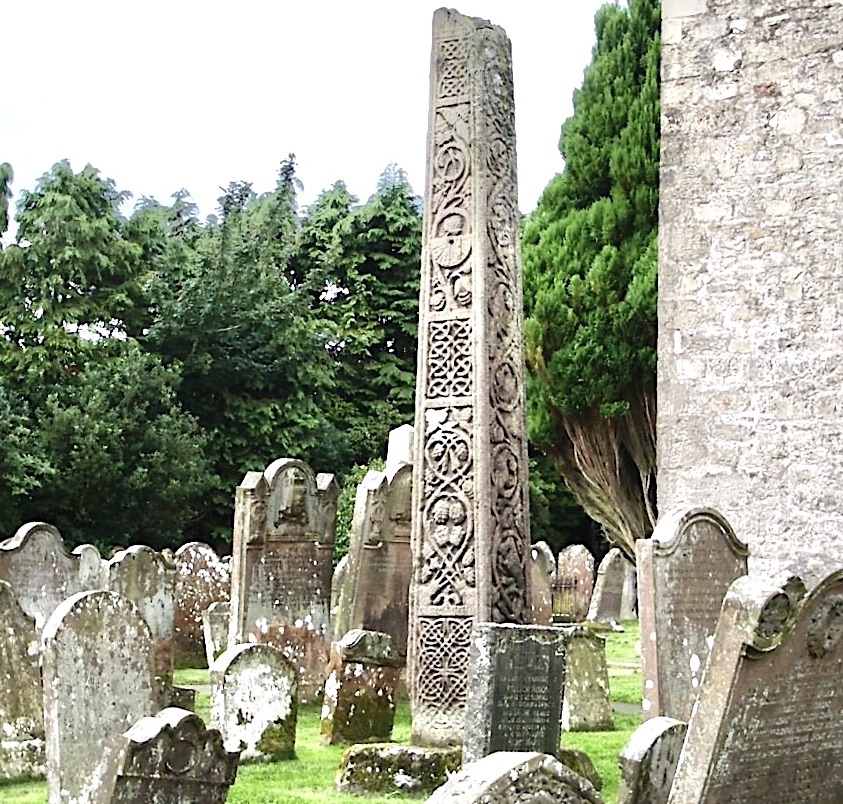
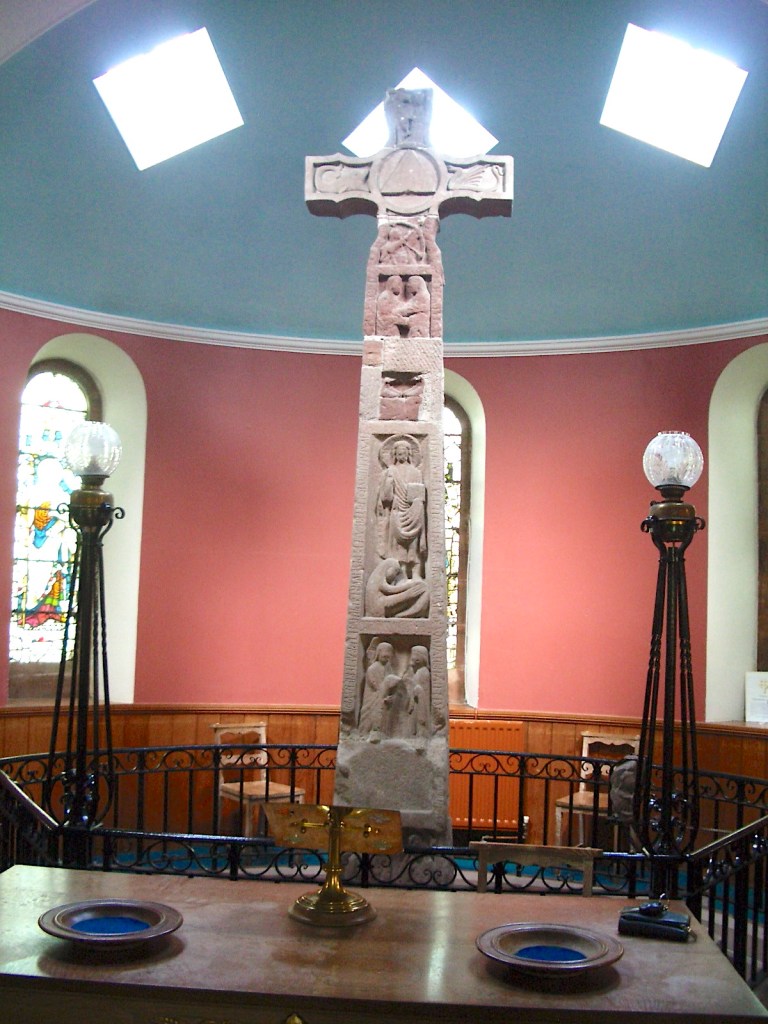
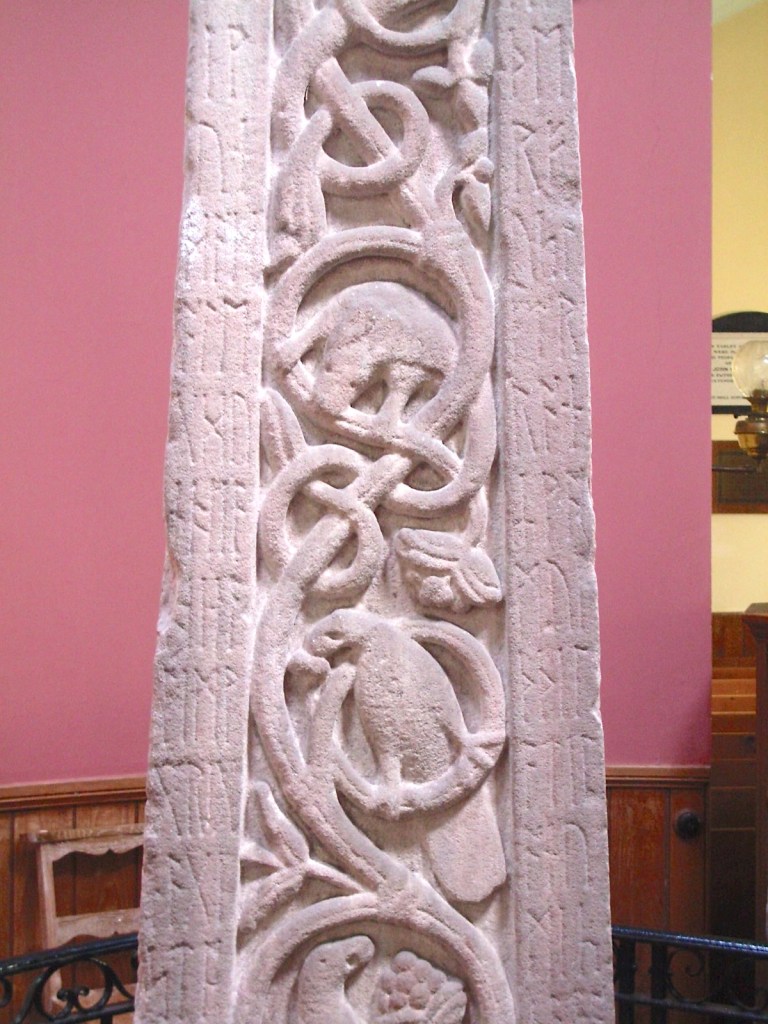
The famous Bewcastle Anglo-Saxon cross is located in St Cuthbert’s churchyard. It is dated in some sources as C8 and in others as early as C7. Whichever, it is generally believed to be the oldest British sundial. PEV praised it, with the similar Ruthwell cross, as the greatest achievement of their date in the whole of Europe. There is a replica in the British Museum.
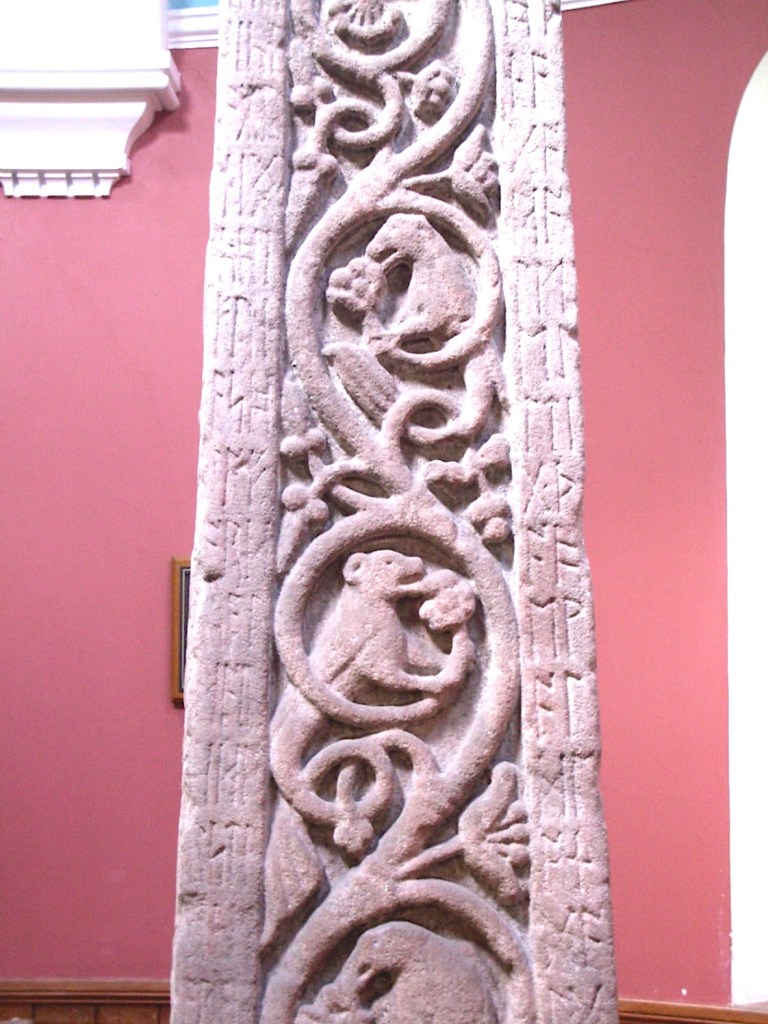
There is understandably a mass of online material analysing and explaining the cross, the wonderful carvings, and the meanings to be derived from them. I need to bypass these to focus on the astonishing early sundial incorporated into the elaborate decoration. For other aspects the Wiki entry BEWCASTLE CROSS is a good place to start.
Bewcastle Cross and Dial . Cumbria . Keith Salvesen
THE BEWCASTLE DIAL
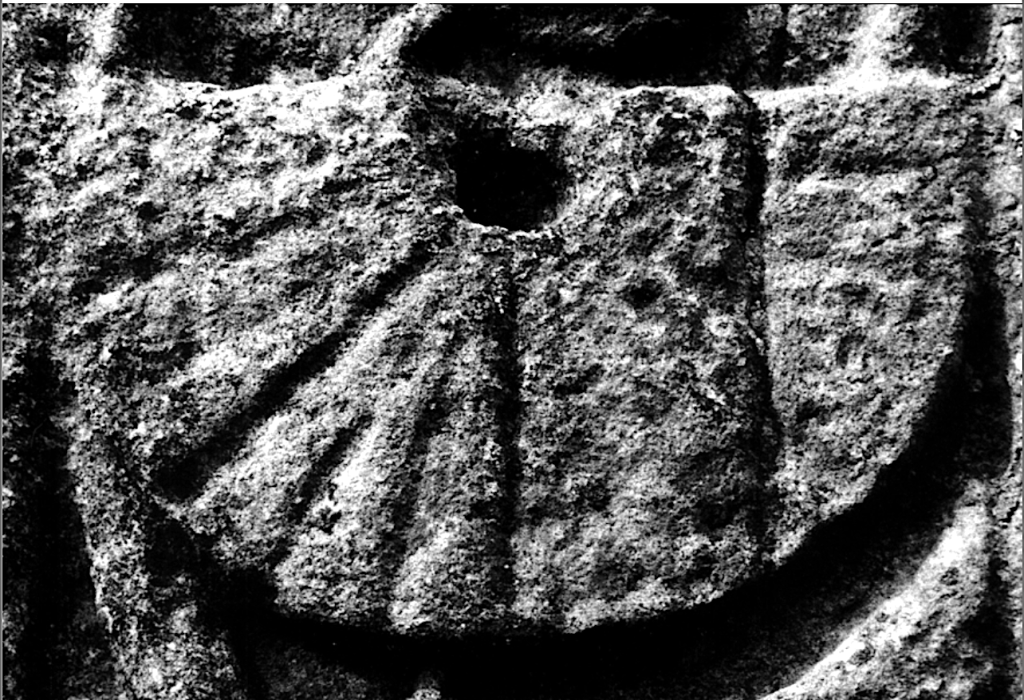
The dial is in a prominent position on the upper half of the south face. The BSS record describes the cross as Celtic, with the dial being integral to the overall design. 8 lines are noted, with the vertical line on the right side considered to be a later addition (but see below). The noon line is emphasised by being deeper cut, with 9am even more so and ending (perhaps) in a large hole. The dial must have been easy to read from afar. BSS has 3 close-up images in the archive which give a clear view of the dial and its slightly wider context.
Bewcastle Cross and Dial . Cumbria . BSS
Bewcastle Cross and Dial . Cumbria . BSS
Bewcastle is used as an example in the Wiki entry for the TIDE DIAL The article includes useful explanations and images. These lead to other related topics for those who want to investigate further. More importantly, there is a helpful analysis of the details of the sundial’s design, and how it would have worked in practice. The cross is believed to be in its original position, and one can imagine the way in which the passage of the day would have been marked for the benefit of the community.
The oldest surviving English tide dial is on the 7th- or 8th-century Bewcastle Cross… carved on the south face of a Celtic cross… and is divided by five principal lines into four tides. Two of these lines, those for 9 am and noon, are crossed at the point. The four spaces are further subdivided so as to give the twelve daylight hours of the Romans. On one side of the dial, there is a vertical line which touches the semicircular border at the second afternoon hour. This may be an accident, but the same kind of line is found on the dial in the crypt of Bamburgh Church, where it marks a later hour of the day. The sundial may have been used for calculating the date of the spring equinox and hence Easter.
Bewcastle Cross and Dial . Cumbria . Keith Salvesen
Bewcastle Cross . Diagram of each face. Eixo Wiki CC
‘Plaster Cast of an Early English Sundial’ . 1930s. (Science Museum)
Plaster cast (mounted in wooden frame) of the sundial on Bewcastle Cross, Cumberland, 670 CE. The day is divided into ‘tides’, which are cut into the stone. The gnomon is missing. Credit: A. J. Lothian
Bewcastle Cross and Dial . Cumbria . Keith Salvesen
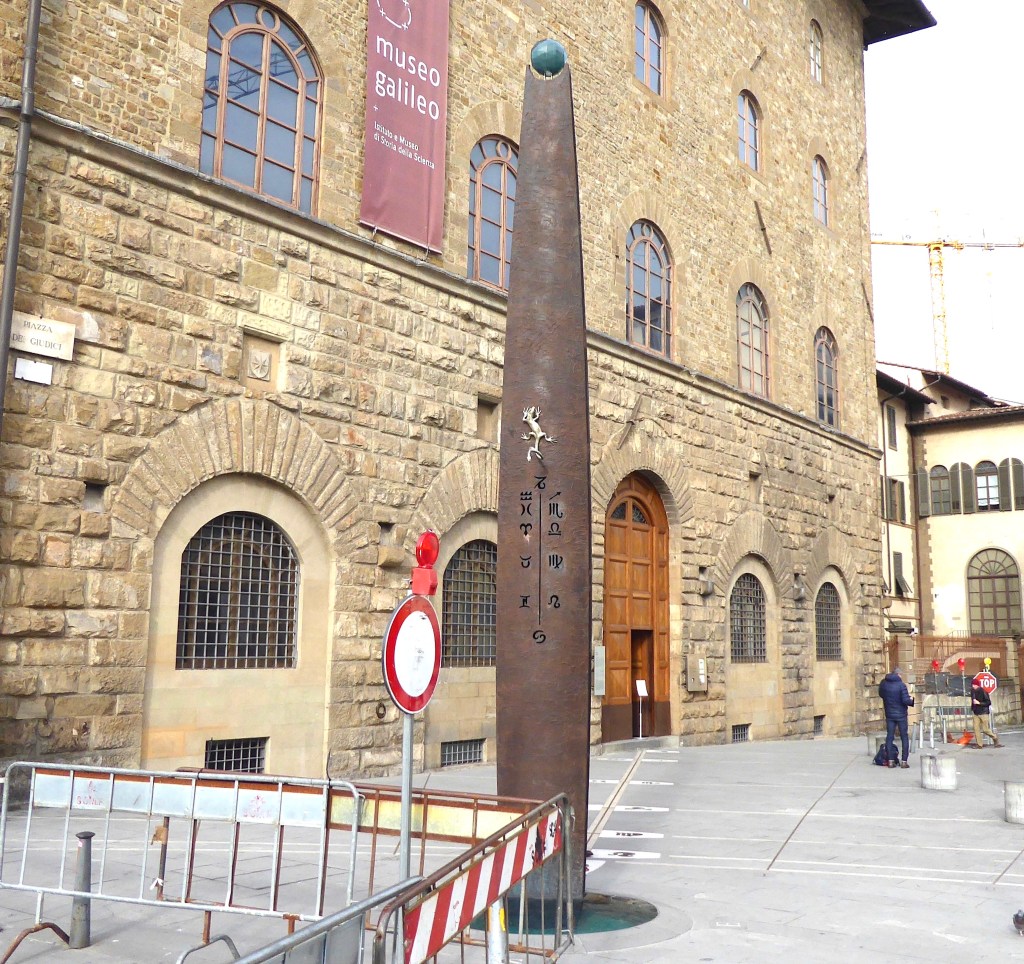
Lizard / Viper Gnomon of Monumental Dial . Museo Galileo . Florence
MONUMENTAL SUNDIAL . MUSEO GALILEO . FLORENCE
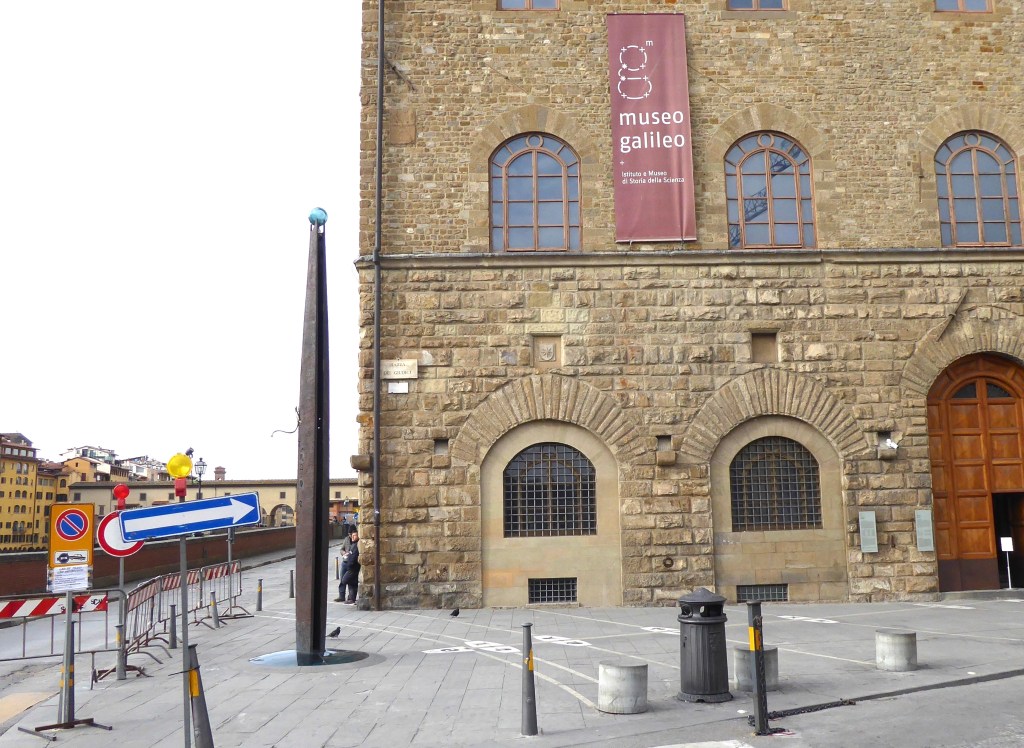
The Museo Galileo‘s Monumental Sundial was built as a mathematical ornament in 2007. The slender bronze column (stele) is in fact formed from two matching columns closely aligned, symbolising day and night. The (mid)day stele faces south, with a vertical meridian line on which the shadow is cast by a lizard’s tail (actually, an imaginary half-lizard, half-viper). The night stele faces north and signifies the constellations Ursa Major and Ursa Minor that enable the Pole Star to be identified.
Monumental Dial . Museo Galileo . Florence
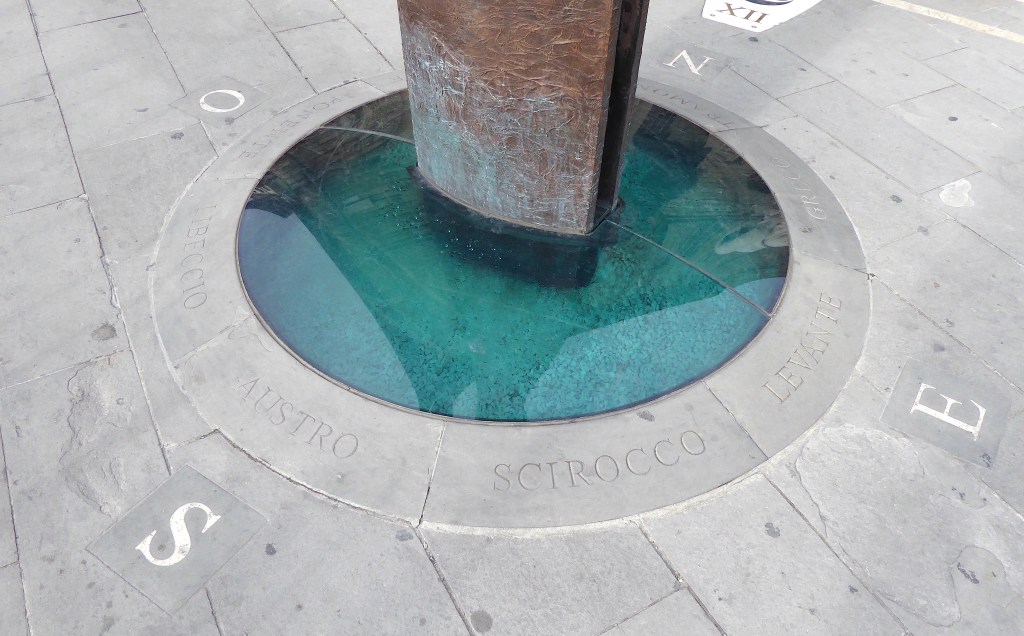
The encircled quadrant design on the pavement at the base of the bronze columns indicates the geographic orientation. This glass base of the gnomon, and also the Zodiac signs in the meridian line (below), are up-lit after dark.
Orientation dial . Monumental Dial . Museo Galileo . Florence
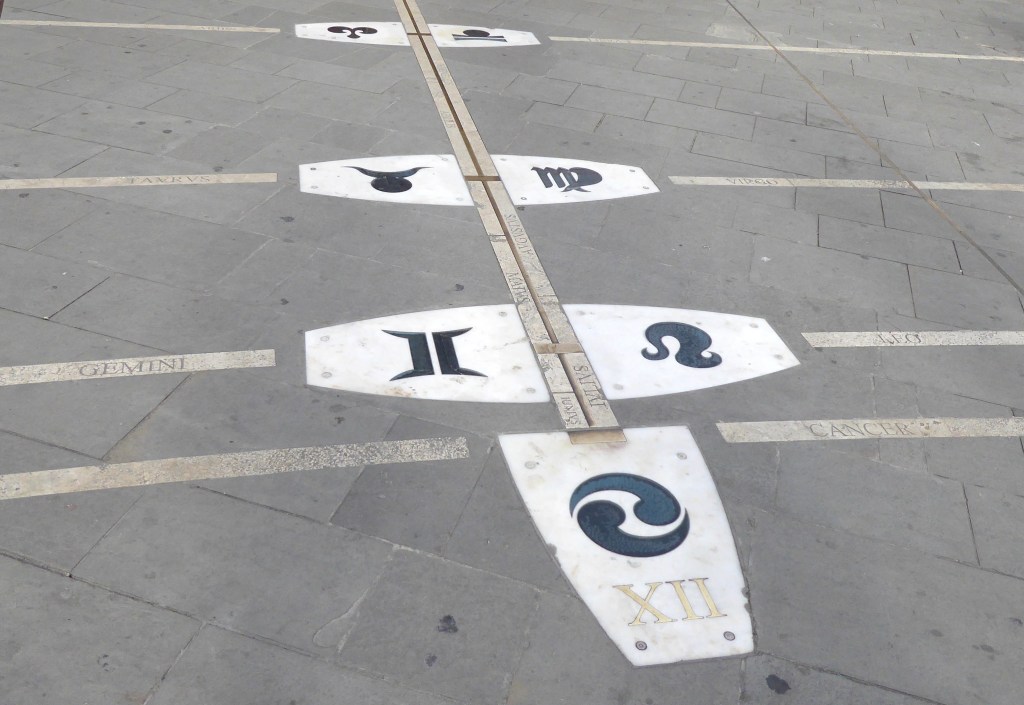
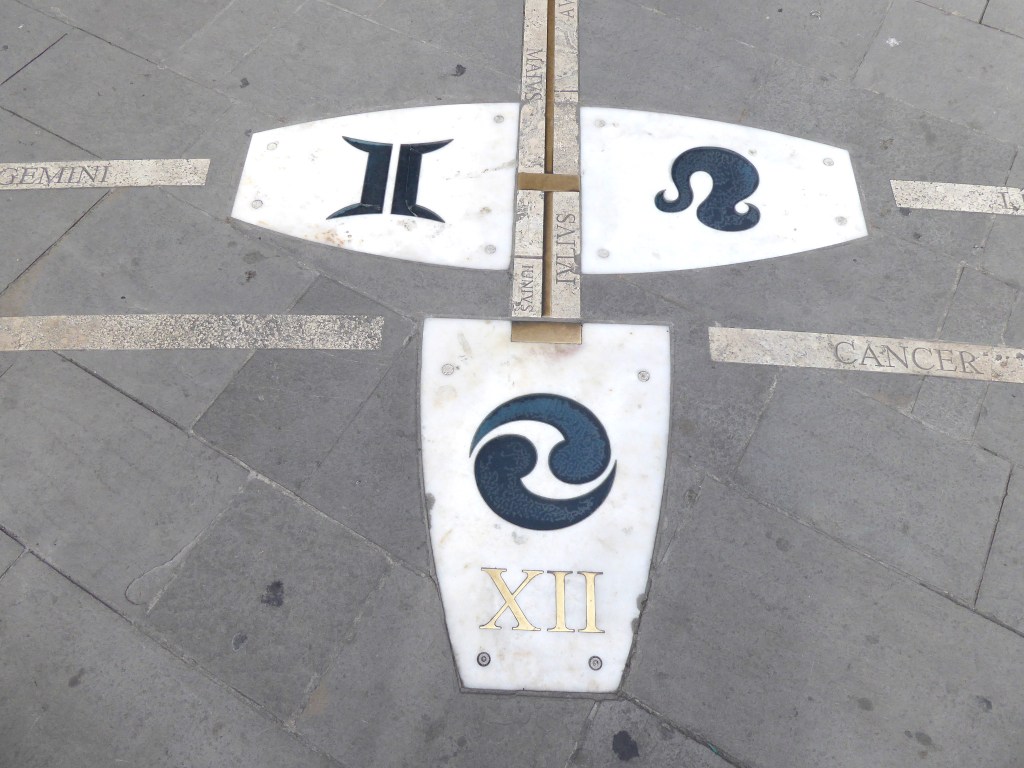
The Museo explains the meridian line in helpfully simple terms: A travertine and brass meridian line is drawn on the pavement, flanked with glass and marble signs of the Zodiac. The meridian line extends for about 15 metres from the museum entrance, where the winter solstice is marked, to the base of the gnomon, where the summer solstice is marked. The travertine curves crossing the meridian line indicate the date. The brass radial lines forming a grid with the two solstitial curves indicate the hours.
The seasons and the four elements are symbolised by the choice of materials: travertine for the earth and autumn; glass for the water and winter; grey stone for the air and spring; bronze for the fire and summer.
LIZARD / VIPER GNOMON ON THE SOUTH FACE OF THE COLUMN
This extraordinary sundial stands by the Arno with the Ponte Vecchio (which itself has a wonderful dial LINK) close by to the west. For anyone with even a minuscule interest in or curiosity about the gradual development of scientific instruments and techniques from medieval times onwards, pay a visit to the excellent online gallery LINK. Look in particular for the two astronomical telescopes made by Galileo himself.
The North American Sundial Society has very good online information about this unique dial. You can watch a short animation of how this gnomonic sundial works here LINK
For those interested in finer details of the way the dial works, the museum’s detailed account is included at the end of this article.
Museo Galileo – Istituto e Museo di Storia della Scienza
NASS (North American Sundial Society) Video: Filippo Camerota, Luise Schnabel, Giorgio Strano
How the Sundial works
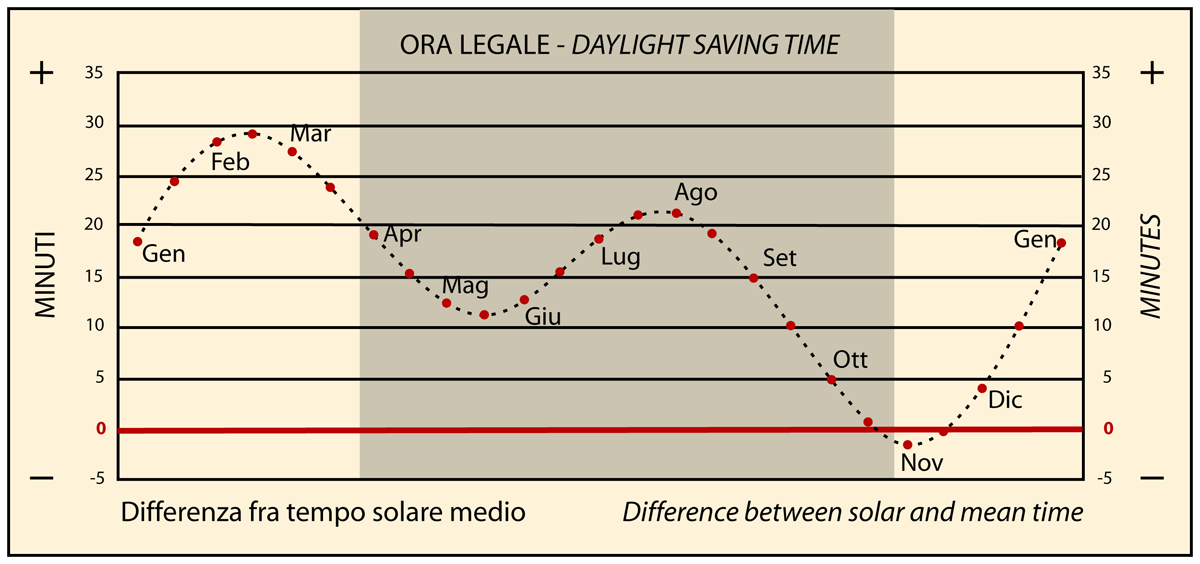
The shadow cast by the glass polyhedron atop the large bronze gnomon indicates the date and time. The hours from 9:00 AM to 2:00 PM are marked out by radial brass lines. The date is indicated by the travertine traversal lines which mark the Sun’s diurnal course for various periods of the year – precisely when the Star enters the signs of the Zodiac. The shadow cast by the gnomon changes in length during the course of the days and seasons, and indicates true solar time for the place where it is located, which is a different time than that of our wristwatches, known as mean time. In respect to mean time, true solar time has a periodic variation that can exceed a quarter of an hour.
Moreover, during daylight saving time, the hands of a clock are moved forward one hour. For example, true midday in the month of February would be indicated by the sundial around 12:28 AM while in the month of July it would be indicated around 1:20 PM daylight saving time.
To read the hour and date, you have to identify the hour lines and the calendrical lines closest to the gnomon’s shadow. When the shadow does not fall exactly on a hour line, you can read the half-hours and quarters with close approximation by ideally subdividing the space between two hour lines in two or four parts. The date can also be read by referring to the Zodiac signs and the start of the months marked out along the meridian line.
The HORNIMAN MUSEUM in South London is a wondrous place for people of all ages. Few (or no) visitors will fail to find something of interest or inspiration. Click on the link to find out more (rather than have me give a lengthy description of the excellent collection).
Among the many innovative collections and installations is a brilliant SUNDIAL TRAIL that showcases 12 different and distinct types of sundial. These are dotted around the park (not all are outside). Some have an additional ingenious feature that makes them unique – incorporating morse code for an inscription, for example.
Roman Sundial . Horniman Museum . London
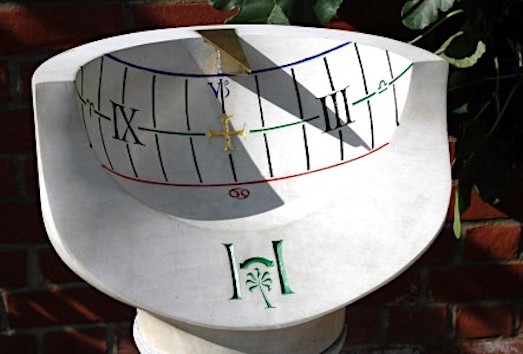
The dial was designed by John Moir and constructed by Ray Ashley. The gnomon’s shape is based upon the ‘H’ from the old Horniman Museum logo. The edge of the shadow created by the ‘H’ indicates solar time. The museum’s image below when the dial was newly made shows it in action, so to speak.
THE HORNIMAN ROMAN DIAL
Roman Sundial . Horniman Museum . London
The dial has a central cross marking the noon line. In addition, signs of the Zodiac are marked though I don’t know enough to say how they fit into the design – why, for example, pisces is below the noon line.
Roman Sundial . Horniman Museum . London
I have a second Horniman dial to write up in due course. You can find details of all the dials on the Horniman website (see link above). There is also SUNDIAL TRAIL MAP(do not open if you want to discover the dials unassisted…).
Roman Sundial . Horniman Museum . London
GSS Category: Roman Dial; Bowl Dial
All photos, Keith Salvesen; specific information / new dial image, Horniman Museum
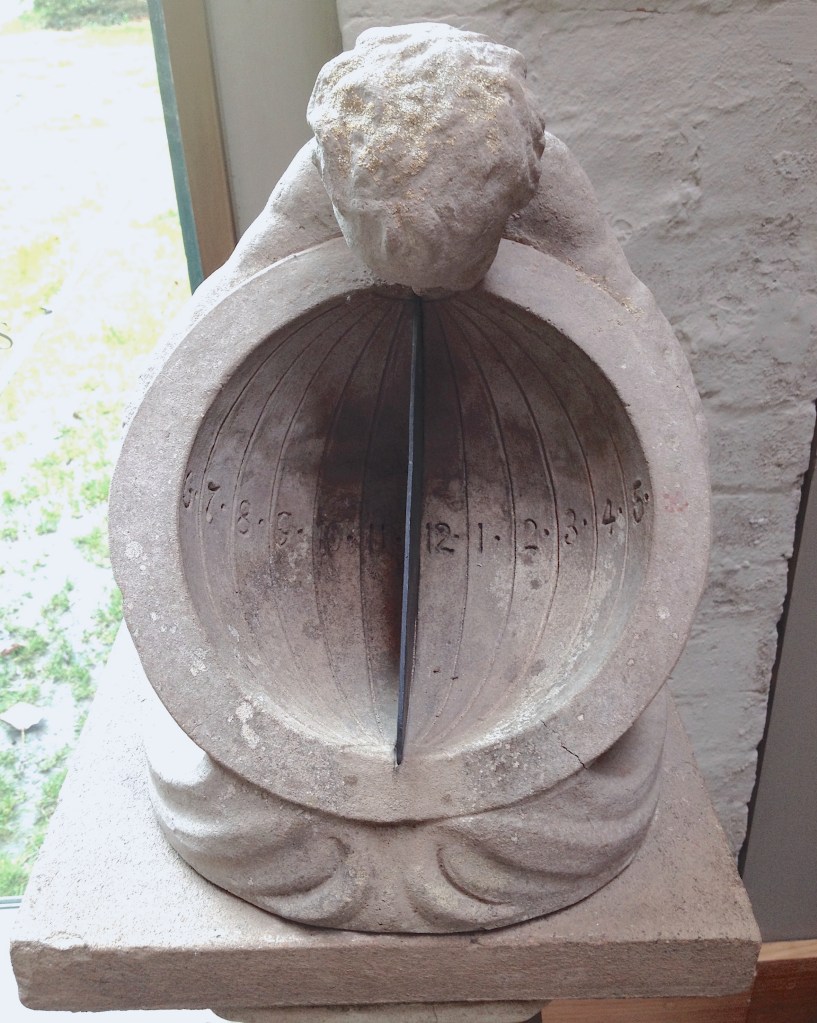
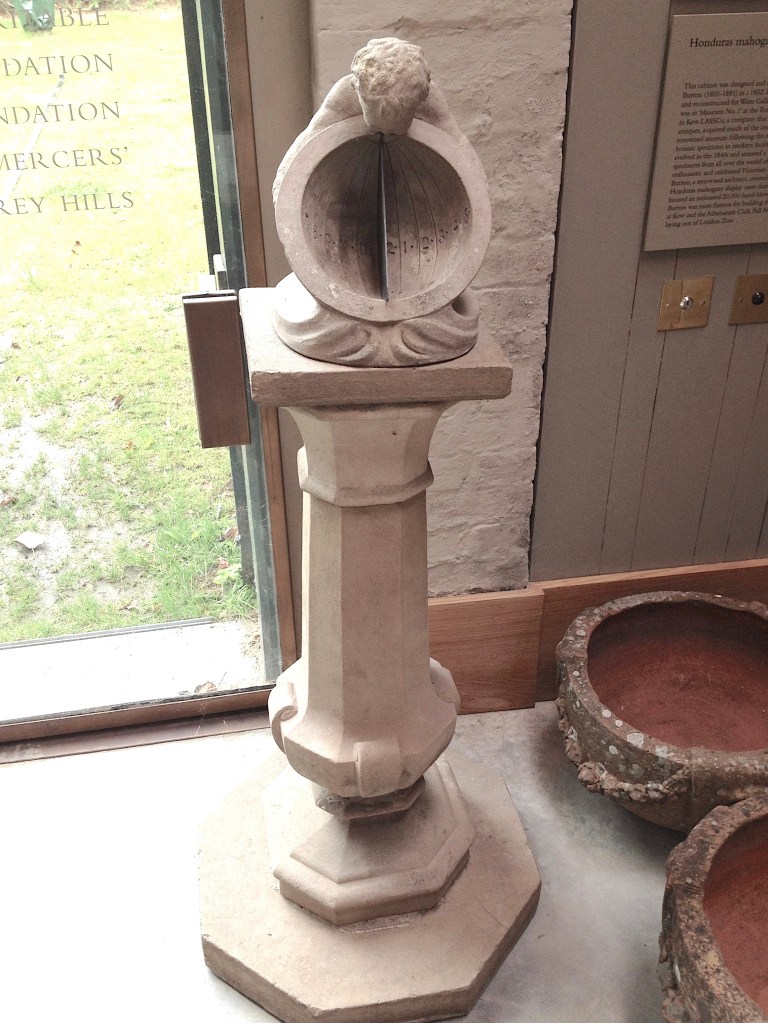
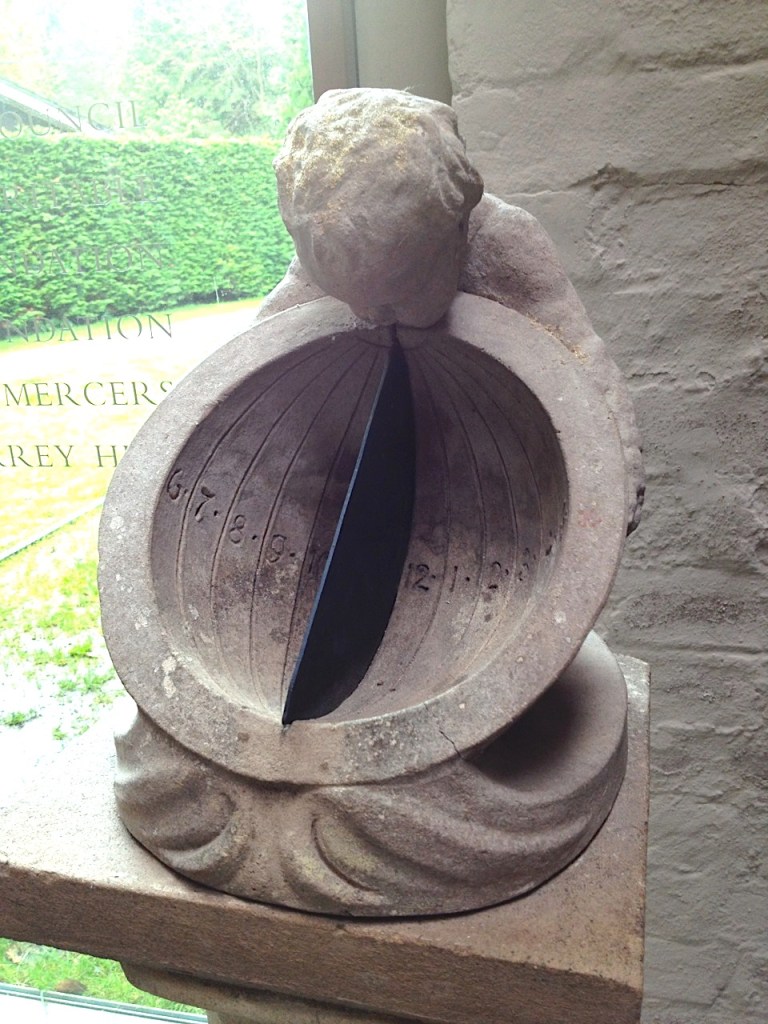
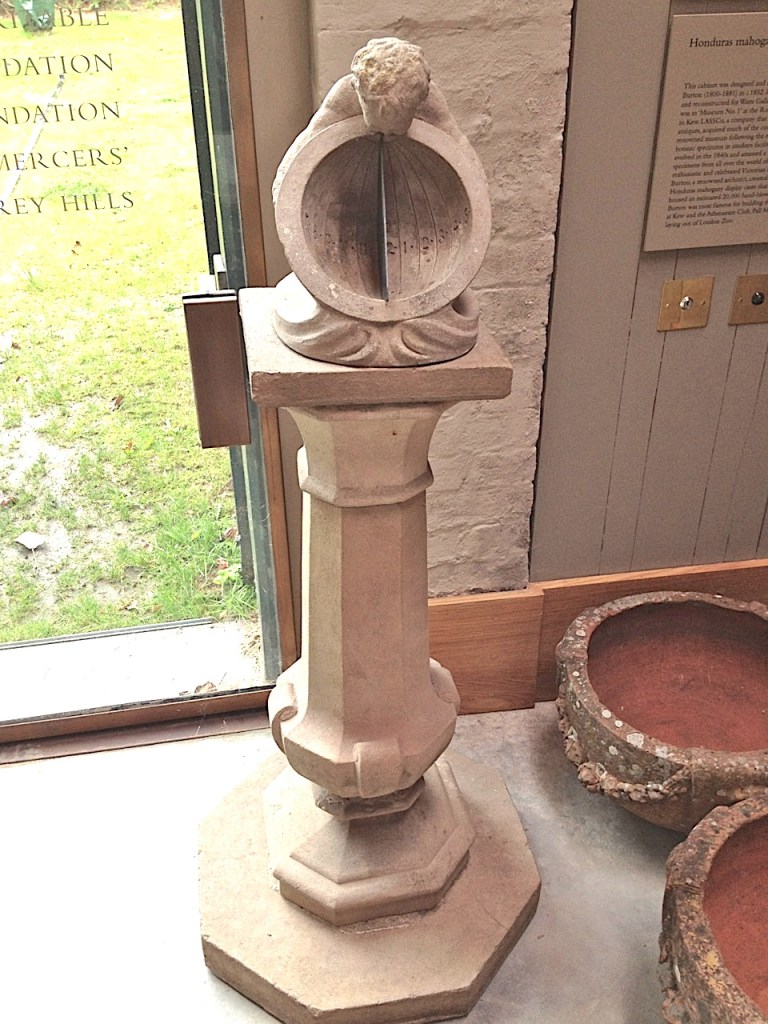
The WATTS GALLERY in Compton showcases the work of artist G. F. WATTS and his wife MARY WATTS, exemplar of the Arts and Crafts Movement. The enterprise has expanded hugely since I last visited and took photos of the sundials there. The Gallery link above will give all the current information you could wish for. This remarkable scaphe dial had been moved inside to protect it from the elements.
Scaphe Dial . Watts Gallery . Compton . Surrey
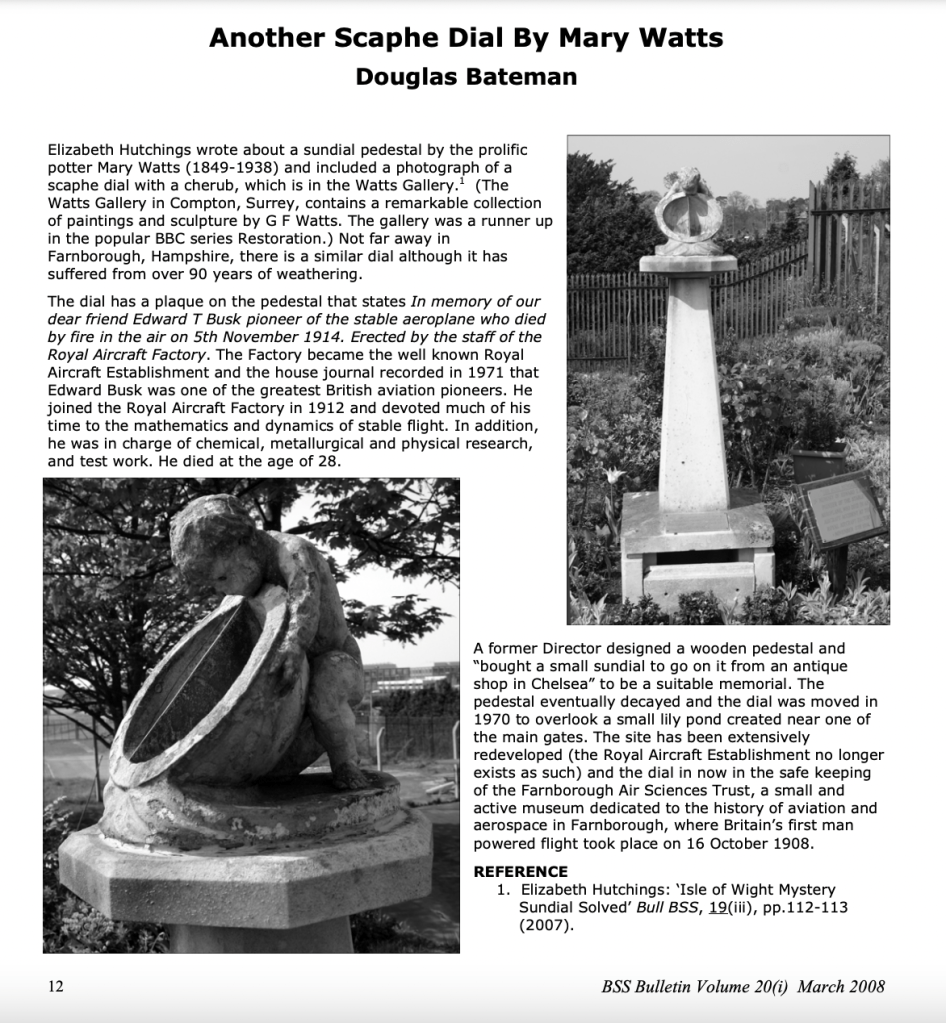
Some years ago, BSS published an article about the dial and its context. It is evident that the dial has been skilfully restored from a slightly forlorn state when the article was written. Possibly the title should be ‘Another Dial Pedestal by Mary Watts surmounted by a small Scaphe Dial from a shop in Chelsea’?
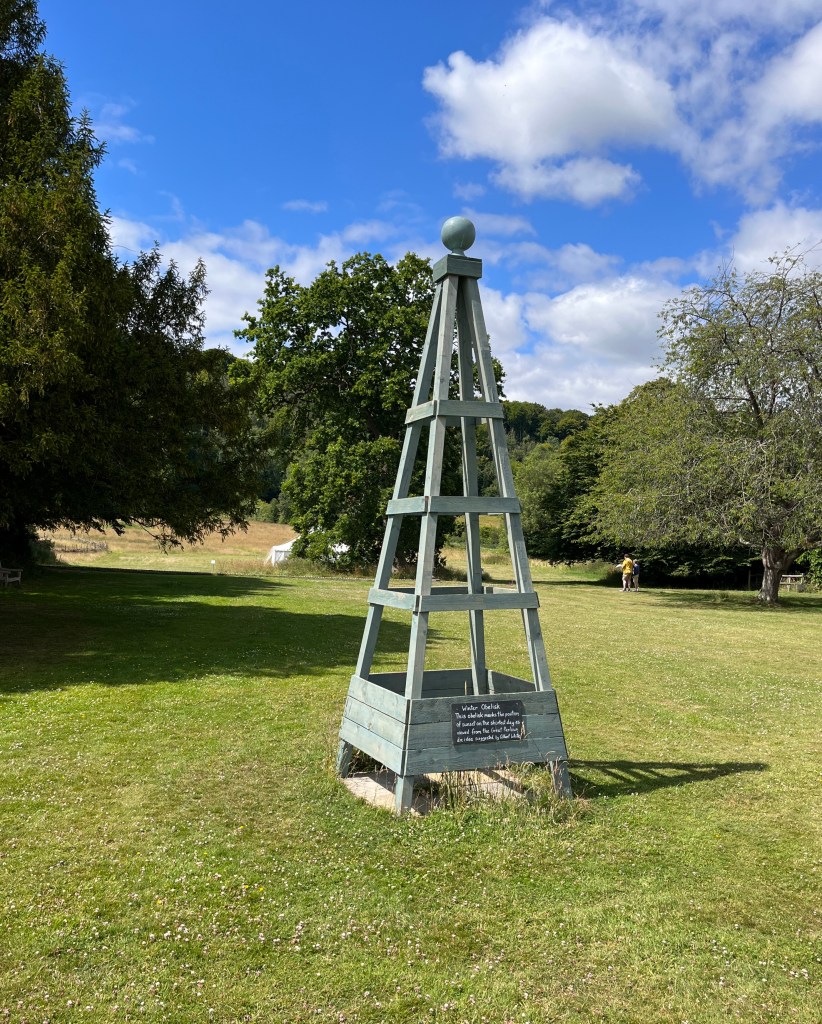
Selborne in Hampshire was home to the C18 naturalist GILBERT WHITE (1720 – 93), renowned naturalist and considered to be one of the earliest ecologists. The link above will take you to the Wiki page about him. The history of the garden can be found at SELBORNE. If you are in the area, Selborne is well worth visiting. In particular, the extensive park contains examples of White’s propagation and conservation ideas that were way ahead of their time. And two very different dials.
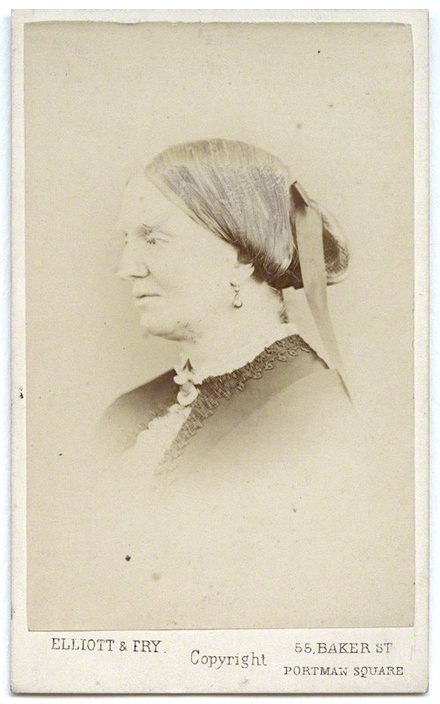
Gilbert White . NPG
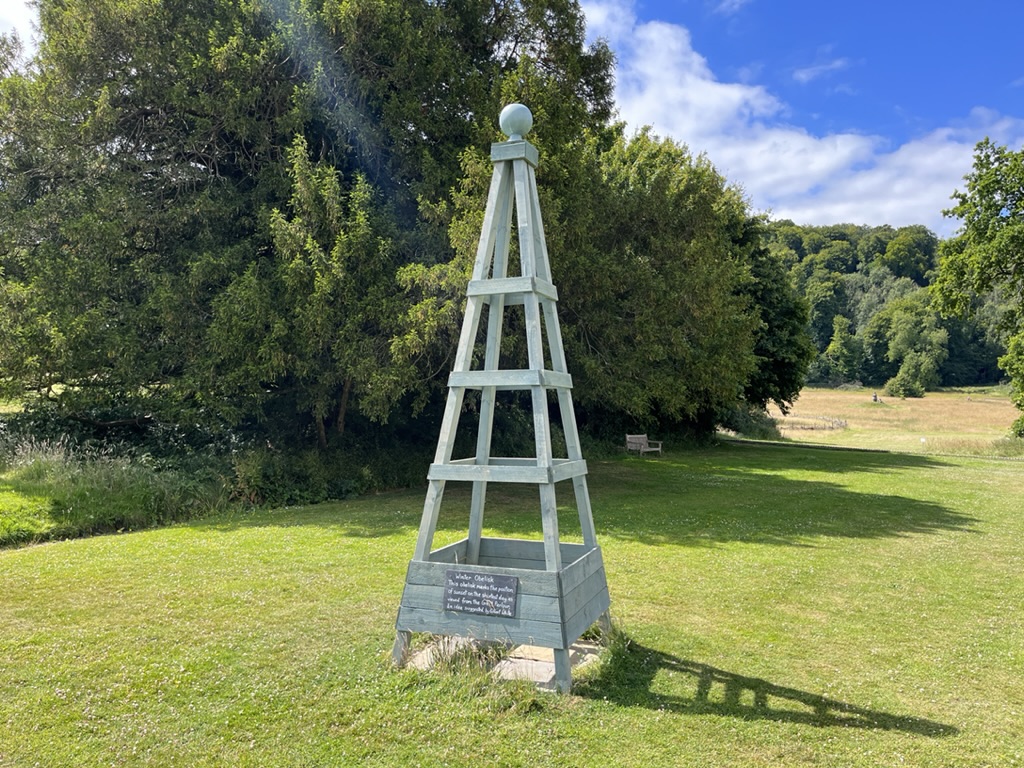
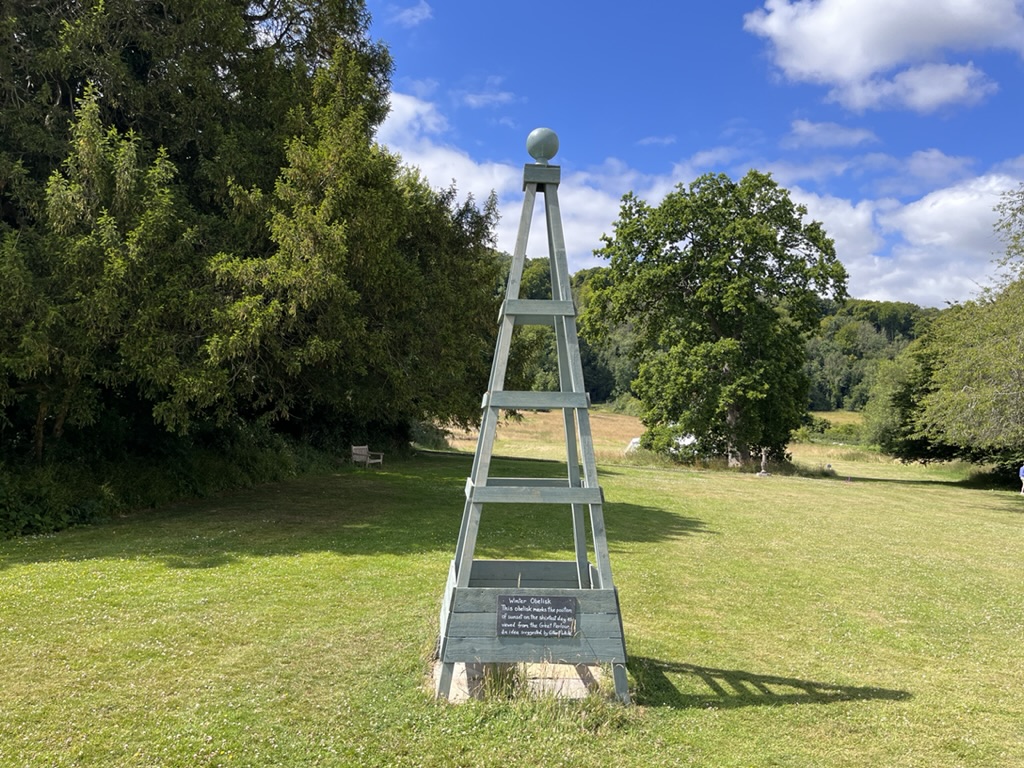
Much the most interesting feature at Selborne for present purposes is the Winter Obelisk, based on an idea by White. The structure is designed to ‘mark the position of sunset on the shortest day as viewed from the Great Parlour‘. Possibly it is a unique example of an obelisk dial having such a special – and limited – purpose. Perhaps it doesn’t count as a dial at all (cf Stonehenge / summer solstice). Seeing the shadows cast on the grass by the structure, perhaps there is scope to mark out a different kind of dial with a wider application (though not necessarily when viewed from the Great Parlour).
The second dial at Selborne is conventional and very much a park dial, standing above the Ha-ha. Is the dial contemporary in the historic sense, or in the modern sense (there are similar early C20 dials)? The former it seems: Both the ha-ha and the stone sundial standing on the lawn above it were features of White’s ‘New Gardens’. HE
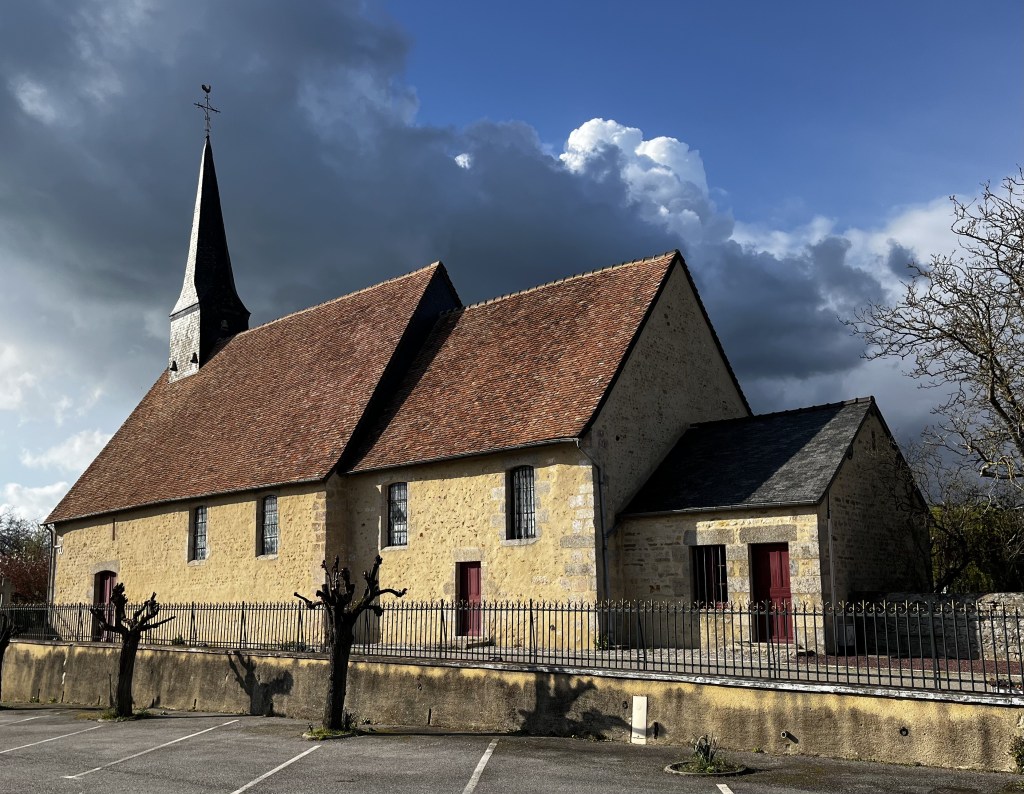
This unassuming little village is about 10 kms NE of Alençon, in the lower part of an area of Normandy south of Caen where medieval dials can be found on a number of village churches. Mostly, they are single examples but a handful of churches have a profusion of dials that are quite hard even to count let alone analyse.
DIAL
St Martin . Hautrive . Orne . Normandy – Scratch Dial
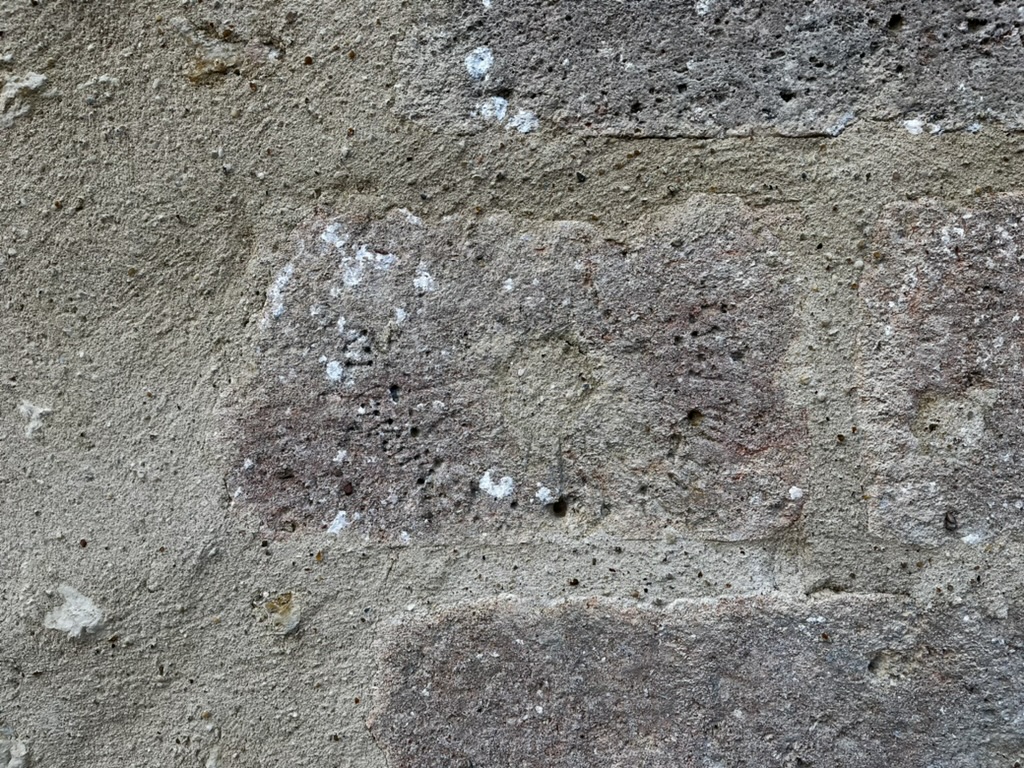
The dial is quite complex. Its position is on the quoin of the chancel, however the only reference I have found suggests it was at one time on the R side of the main doorway. The church is obviously well looked-after and its care may have involved relocation of stones when repairs were carried out.
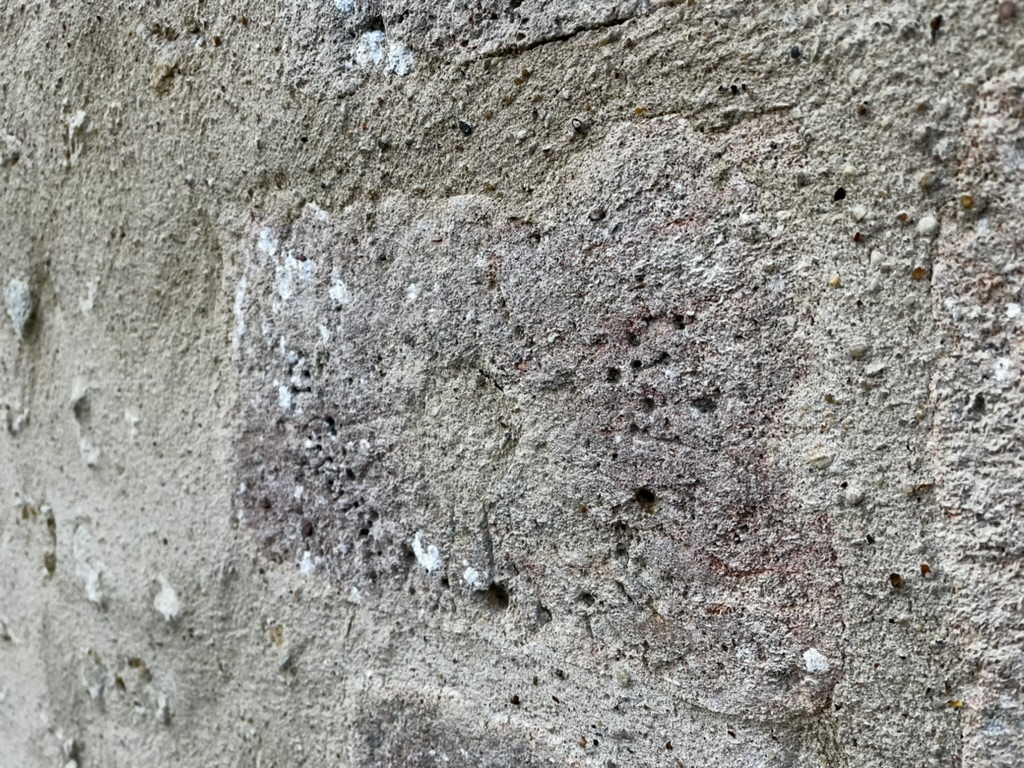
The details of the dial’s semicircular design are intricate. There is a big blocked gnomon hole that must have been enlarged over the years from something more proportionate. The noon line is emphasised by a large terminal pock. 10± visible lines radiate from the centre, though there must have been more. Most end in pocks: some single, some double, some triple. The pocks themselves have small lines around them, or 2 are joined to each other. Overall, the impression is of a perfectly serviceable traditional Mass dial that has been made enjoyably decorative.
I have included close-ups of the lower quadrants of the dial together with side shots to better show the complexity of the dial in its eroded state. I have never encountered one quite like this.
St Martin . Hautrive . Orne . Normandy – Scratch dial
GSS Category: Scratch Dial; Mass Dial; Medieval Dial France
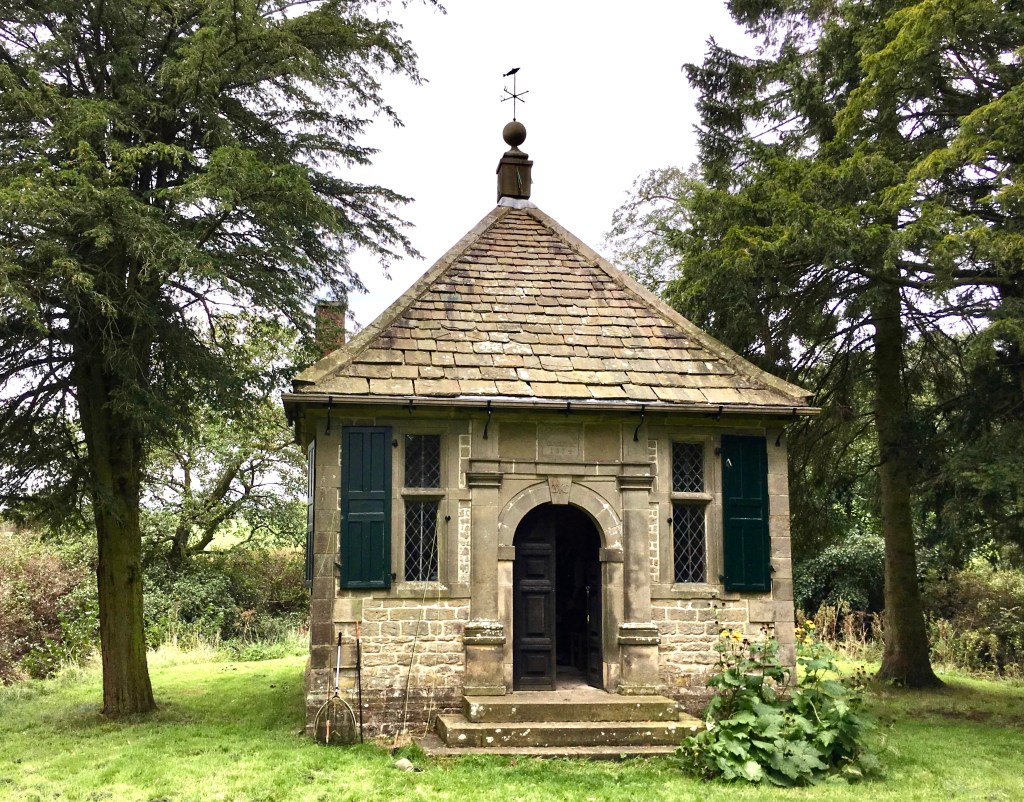
Charles Cotton’s Fishing House . Beresford . Staffs – Cube Dial
CHARLES COTTON’S FISHING HOUSE . BERESFORD . STAFFS
CUBE DIAL
GRADE II* The most famous and piscatorially significant fishing ‘hut’ in the world, in a clearing beside the River Dove, near Hartington. By a quirk of a bend in the river, the hut is in Staffs rather than Derbyshire. Single cell square plan in an Artisan Mannerist styleBLB SK127592
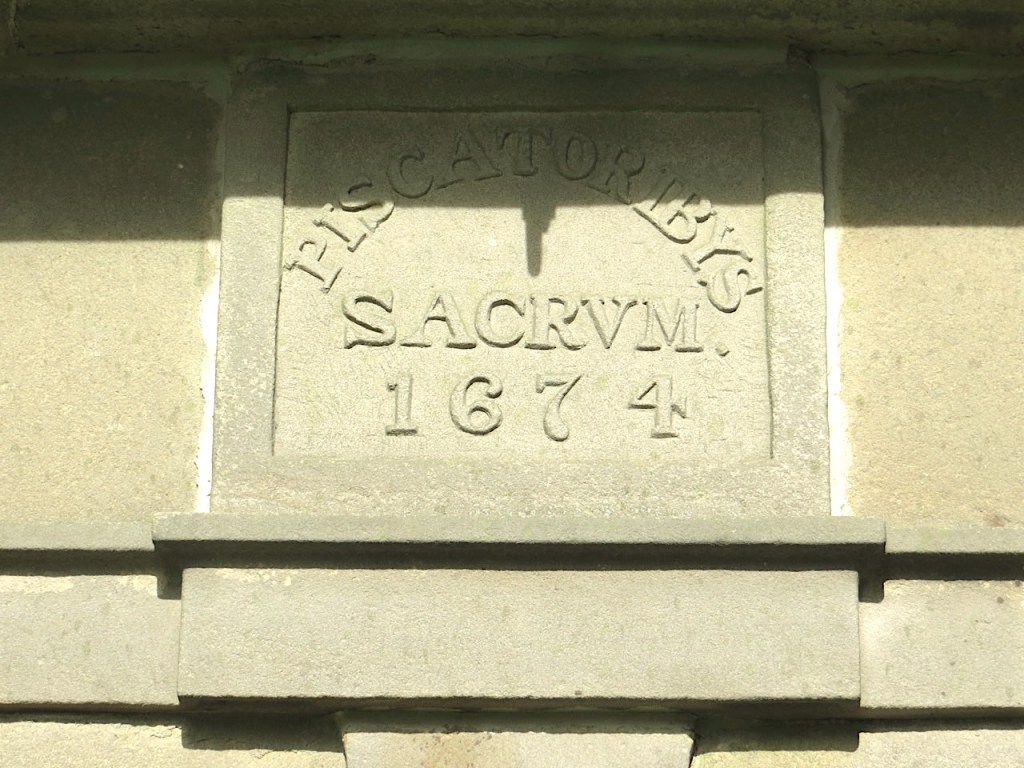
The inscription Piscatoribus Sacrum – a sacred place for anglers – gave rise to the hut’s reverential name among fishermen, The Temple. I can’t improve on this description from HE:
Charles Cotton’s fishing house is a unique building designed specifically for the sport of angling. It was an elaborate building in relation to its simple function, an expression of Cotton’s dedication to angling and to his entertainment of fellow anglers. Izaak Walton and Cotton’s The Compleat Angler was significant in the development and diversification of the sport from the 17th century. The fishing house is a fine preservation of Charles Cotton’s angling endeavours and its association with the popular work The Compleat Angler makes it of national significance.
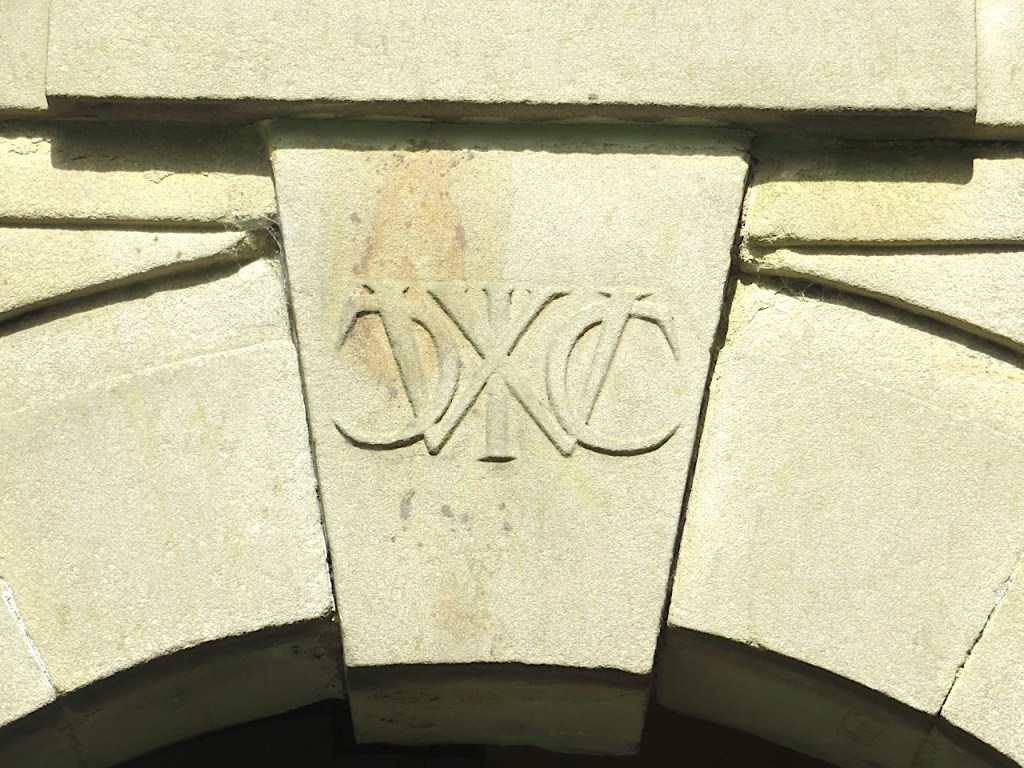
Dated inscription, and intertwined initials of Charles Cotton & Izaak Walton on the keystone
CHARLES COTTON’S CUBE DIAL
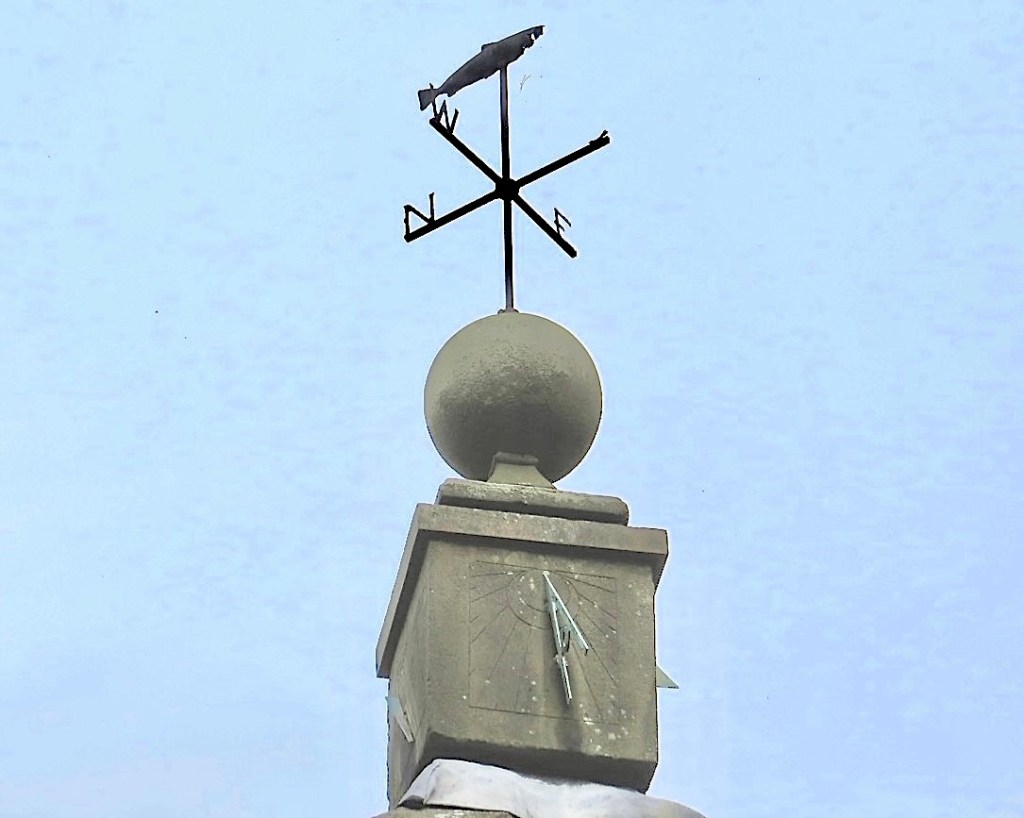
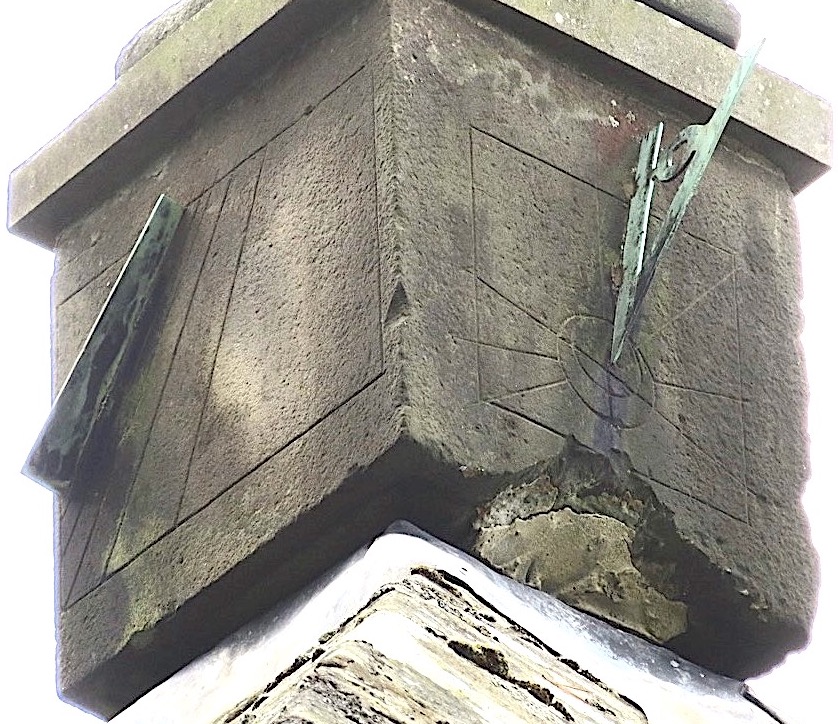
A while back I spent a couple of days fishing on the Beresford beat of the Dove (to little effect). Just seeing the hut close to – let alone actually using it for its intended purpose – was an amazing experience. The weather was quite poor; the photos (taken on a basic pocket Canon) poorer still. I’ve had to do some work on the images, which I hope are now clear enough to be informative. 3 faces are featured; images of the 4th, away from the sun, were useless.
Charles Cotton’s Fishing House . Beresford . Staffs – Cube Dial
The dial is fixed to the apex of the hut’s roof. It is surmounted by a round finial, then a weather vane, and – a final flourish – a trout.
Charles Cotton’s Fishing House . Beresford . Staffs – Cube DialCharles Cotton’s Fishing House . Beresford . Staffs – Cube DialCharles Cotton’s Fishing House . Beresford . Staffs – Cube Dial
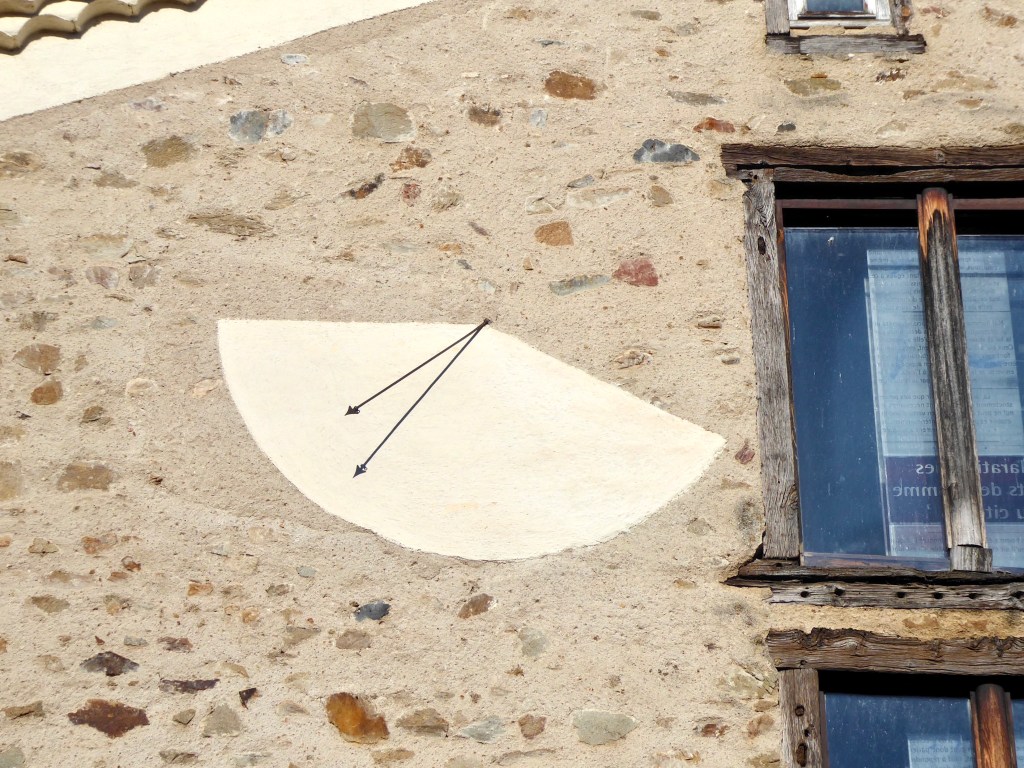
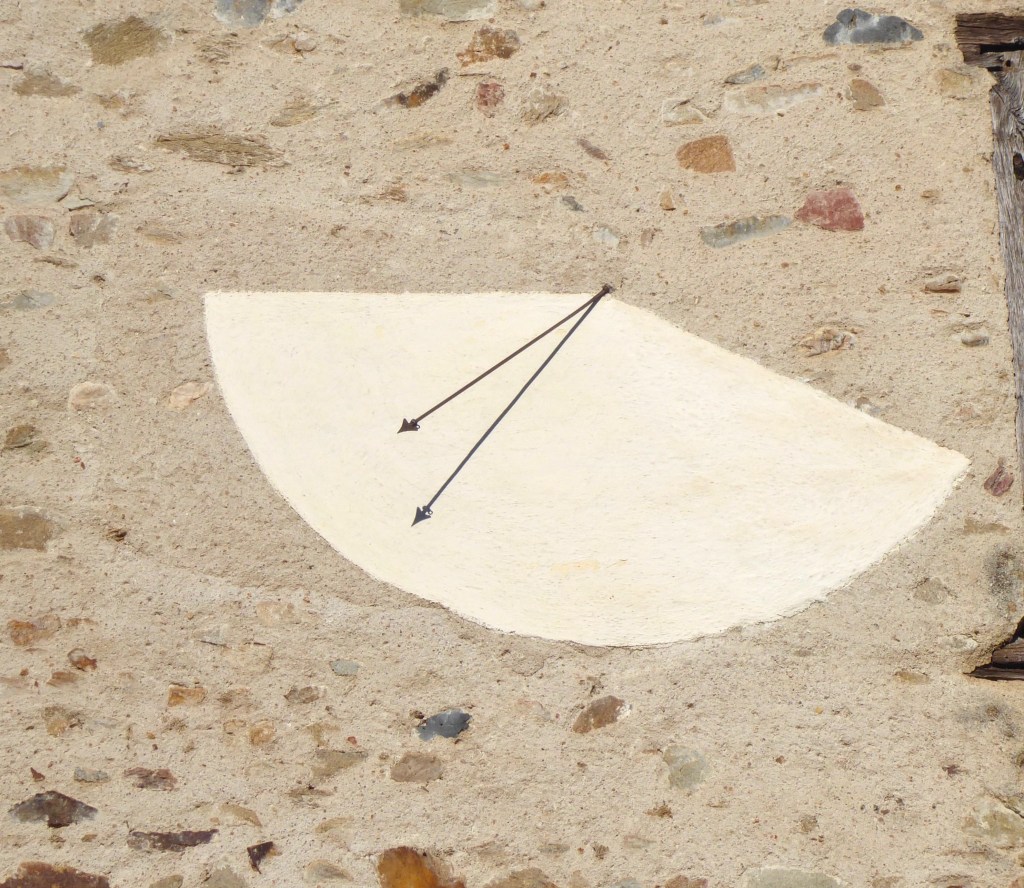
Lavaudieu is a small Auvergne town with a fine romanesque Abbey. For present purposes, the sundial on the wall of the Mairie is the attraction. On a bright sunny day, the simplicity and legibility of this civic dial is hard to beat. The ‘arrowheads’ might be considered a little too ornate for the overall design.
‘Moins est plus’ might be a good motto for the dial, as it is more generally. As soon as I saw it I knew it would be in my top 20 non-medieval dials. It still is.
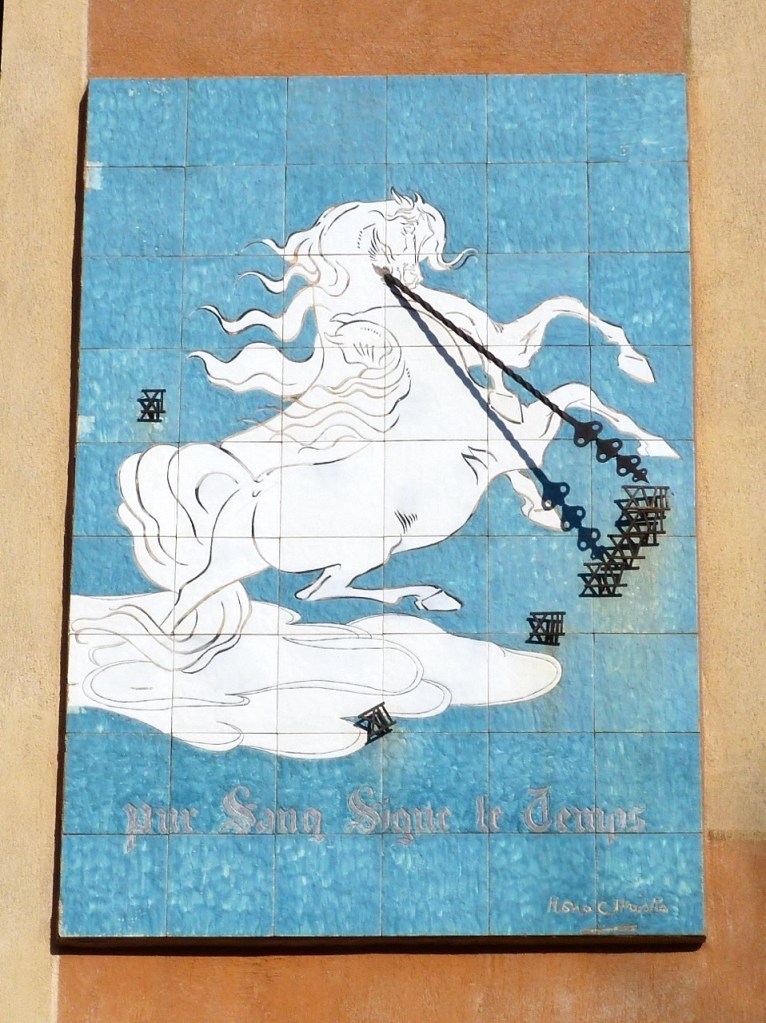
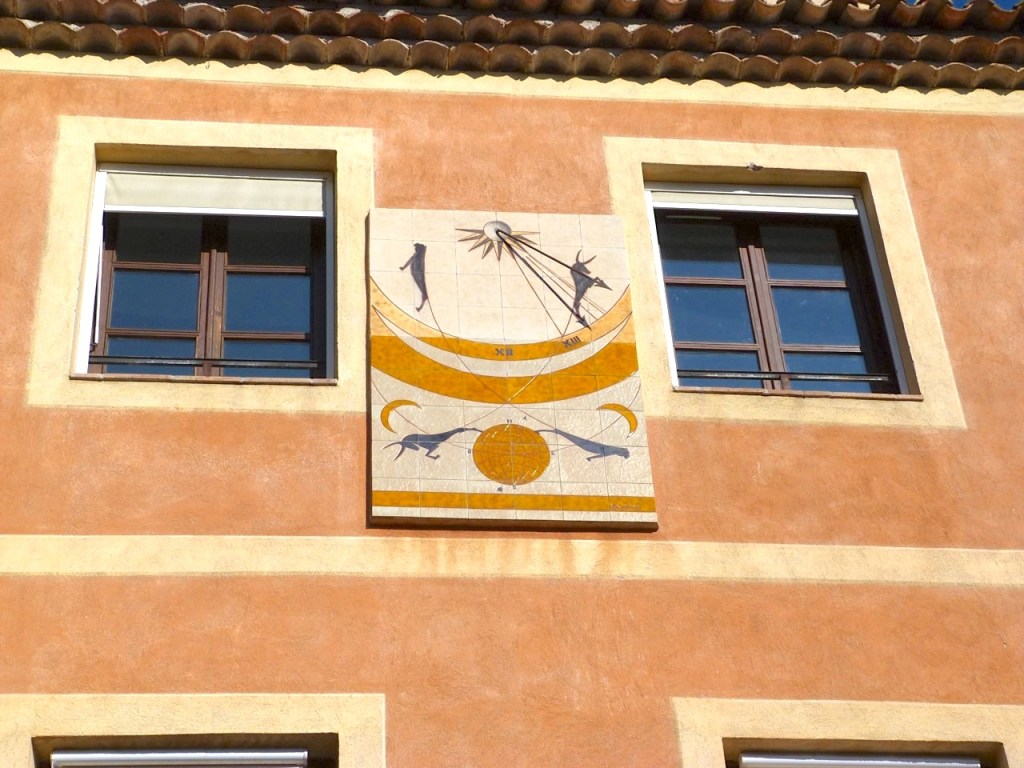
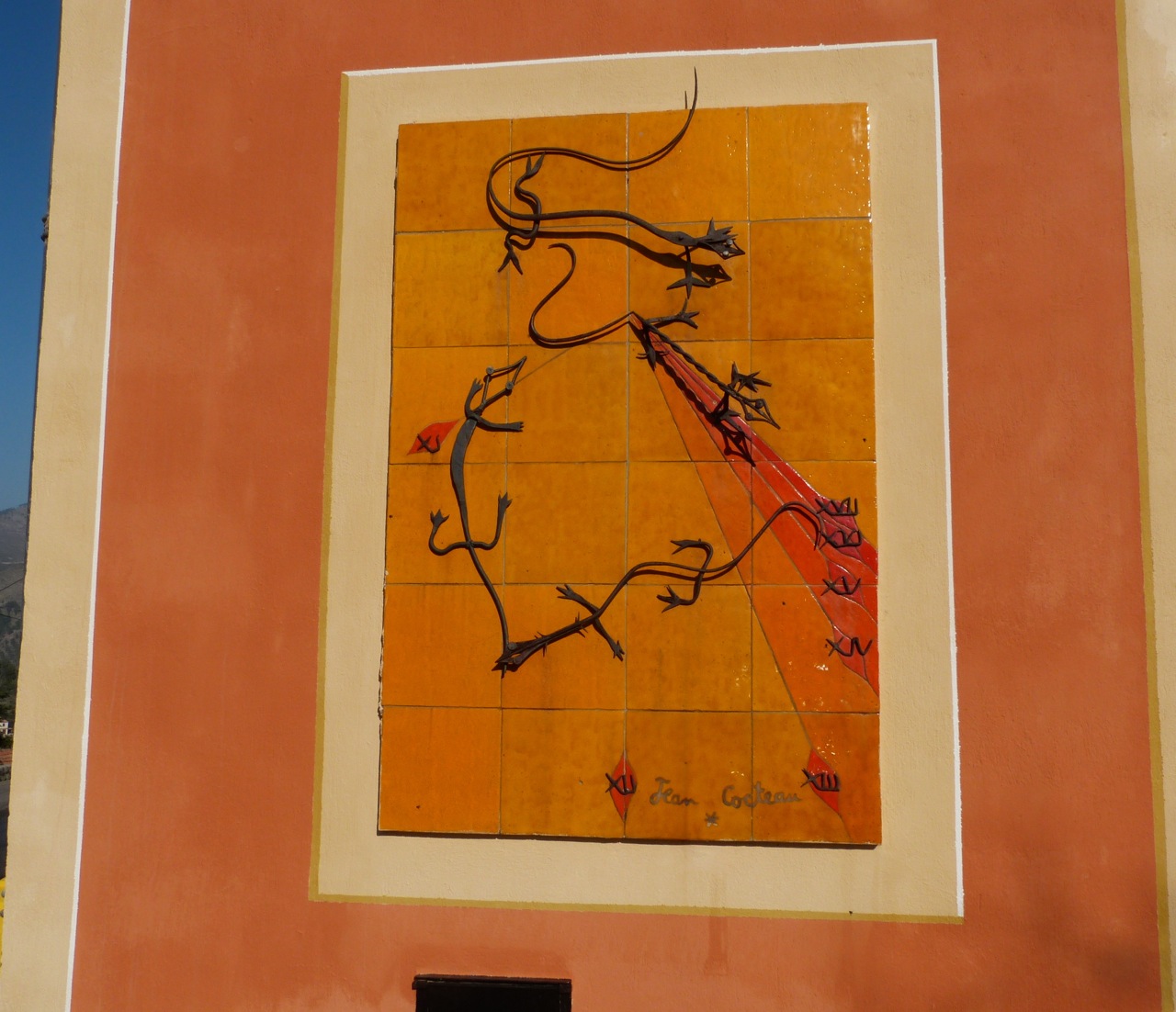
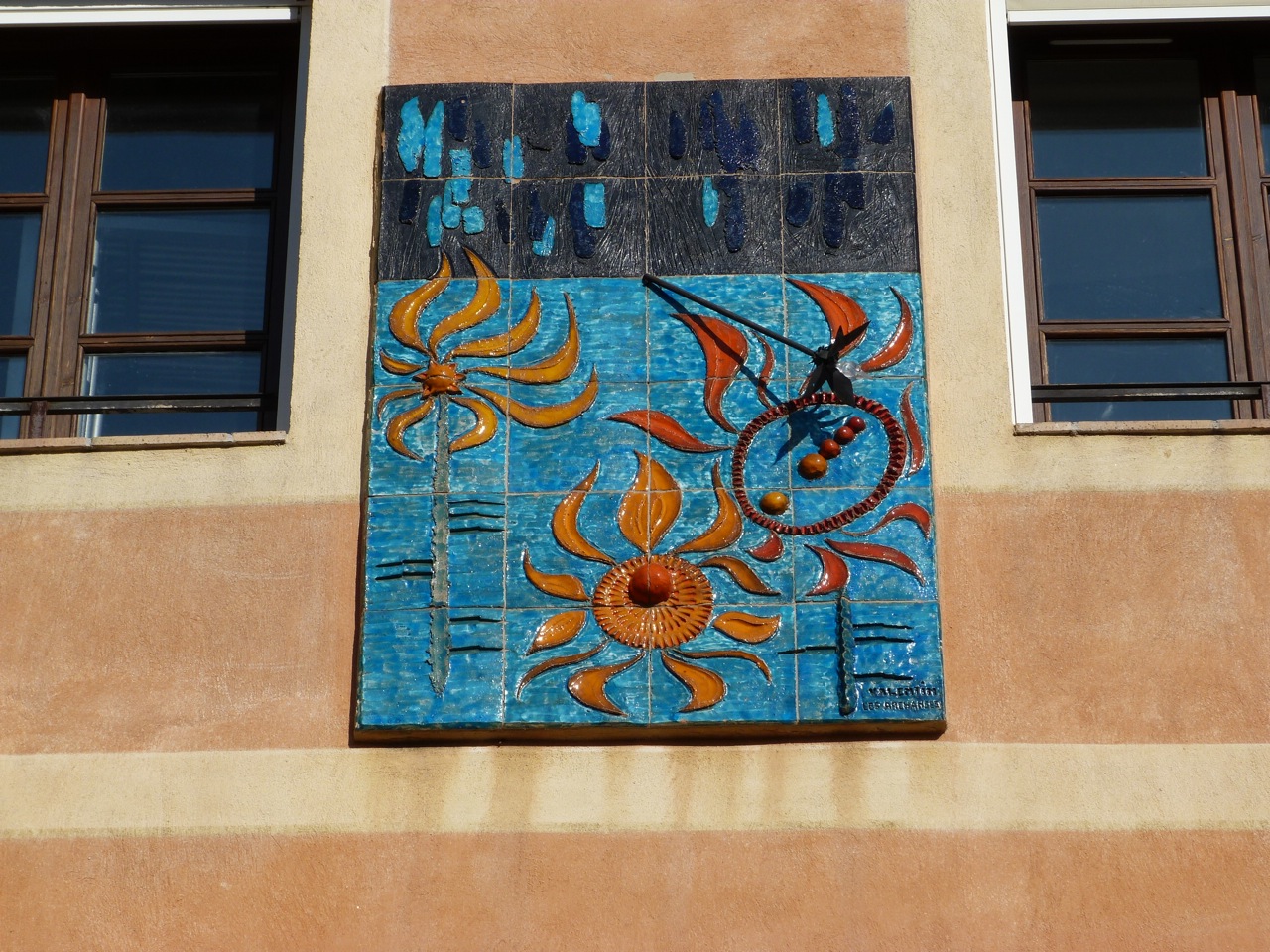
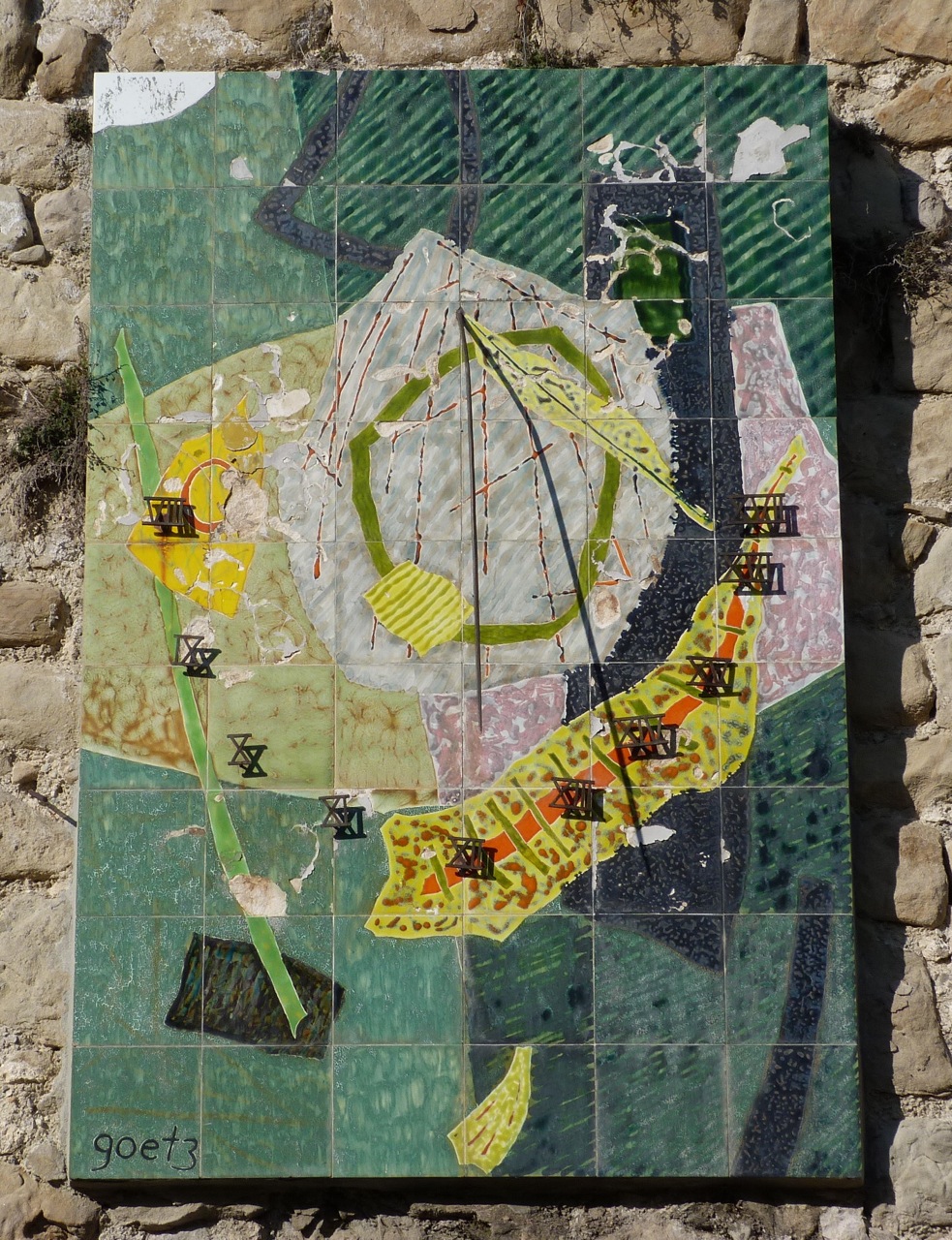
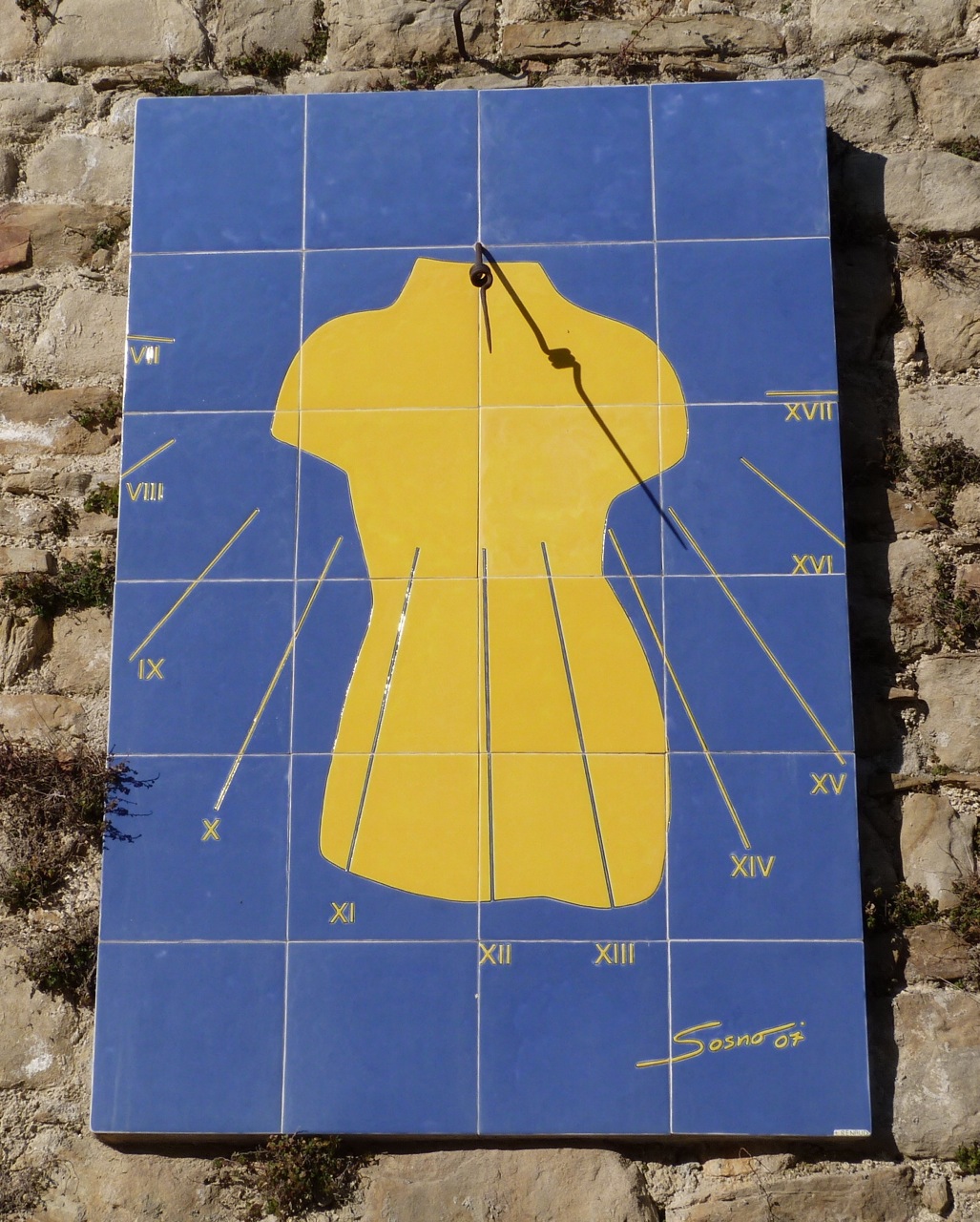
LES CADRANS SOLAIRES: THE CERAMIC TILE SUNDIALS OF COARAZE, PROVENCE
The nine sundials shown below are in Coaraze, a small medieval ‘village perché’ (650m) in the Alpes-Maritimes, Provence, north of Nice. They include sundials by artistic polymath Jean Cocteau (poet, novelist, dramatist, designer, artist and filmmaker); Ponce de Leon; and Henri Goetz, among others. They are located in two places in the village (1) on the front and side walls of the Marie (2) at the top of the village on a south-facing walls in the square in front of the church. They need no interpretation by me: everyone who views these wonderful sundials will experience their own personal response to each one.





































 GAUDIUM SUB SOLE . SUNDIALS . MEDIEVAL TO MODERN