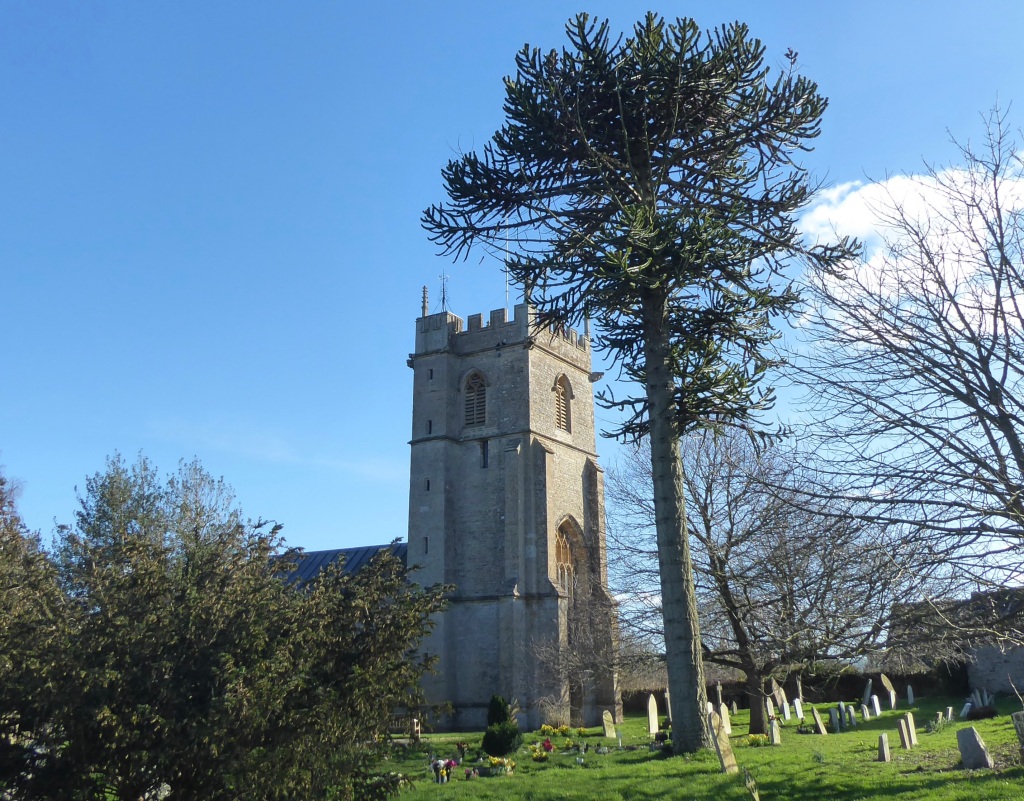
GRADE I † C11 nave; C13 transepts; C14 chancel. From C17, alterations and restorations inc by Wyatt in 1860. Large and interesting cruciform churchPEV. Marble Feversham family monuments by Scheemakers. Significant local legacy from Neolithic, Iron Age, Roman (Villa) and Saxon times. 9m S of Salisbury. 50.9937 / -1.7433 / SU181216
✣
DIALS
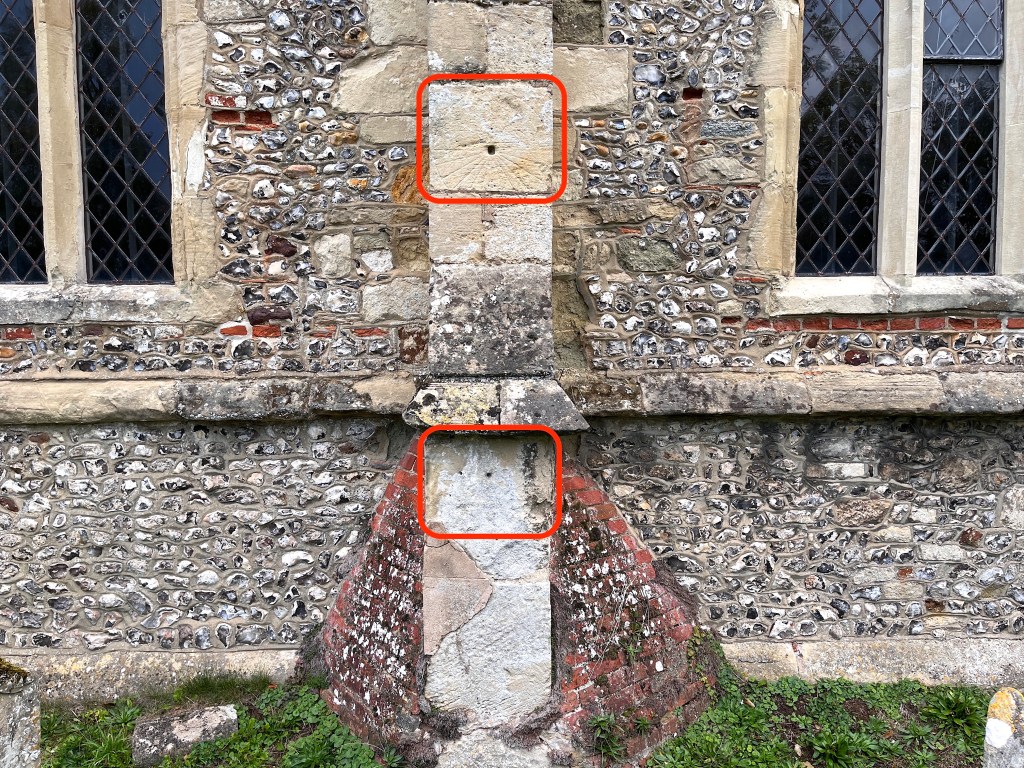
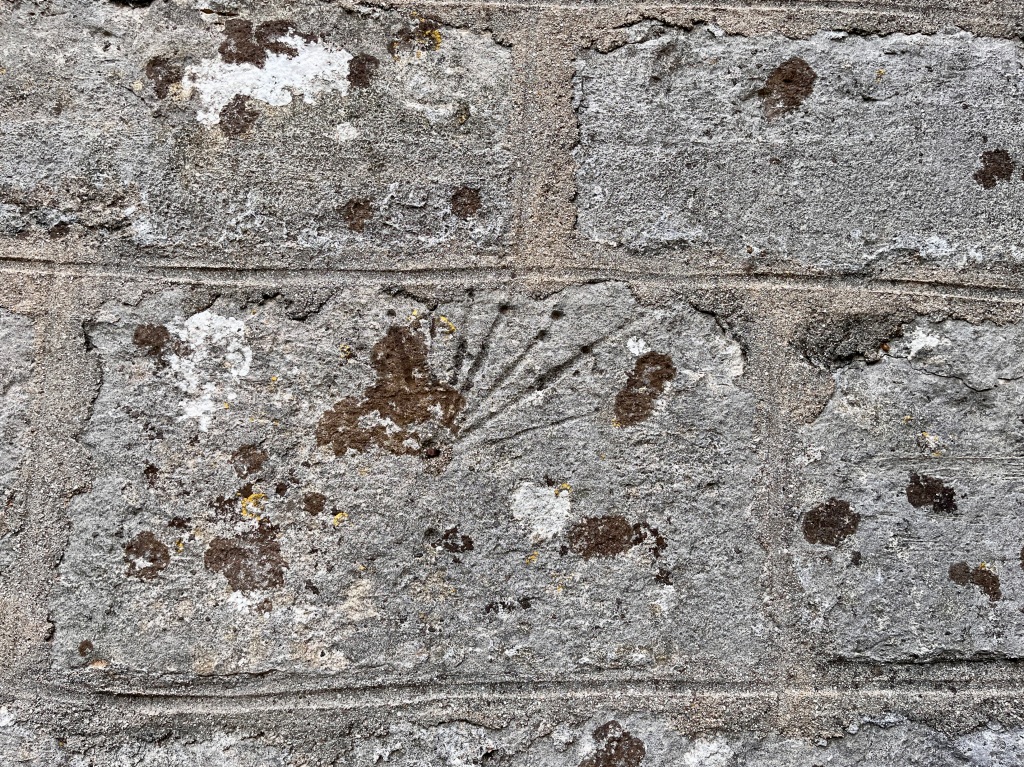
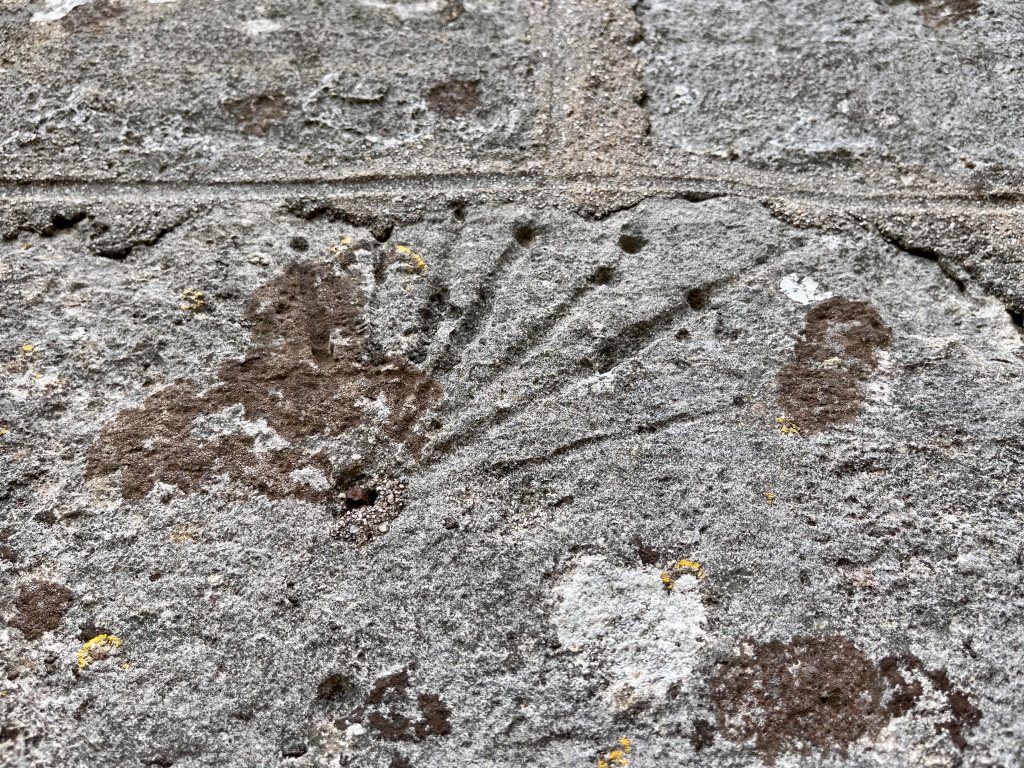
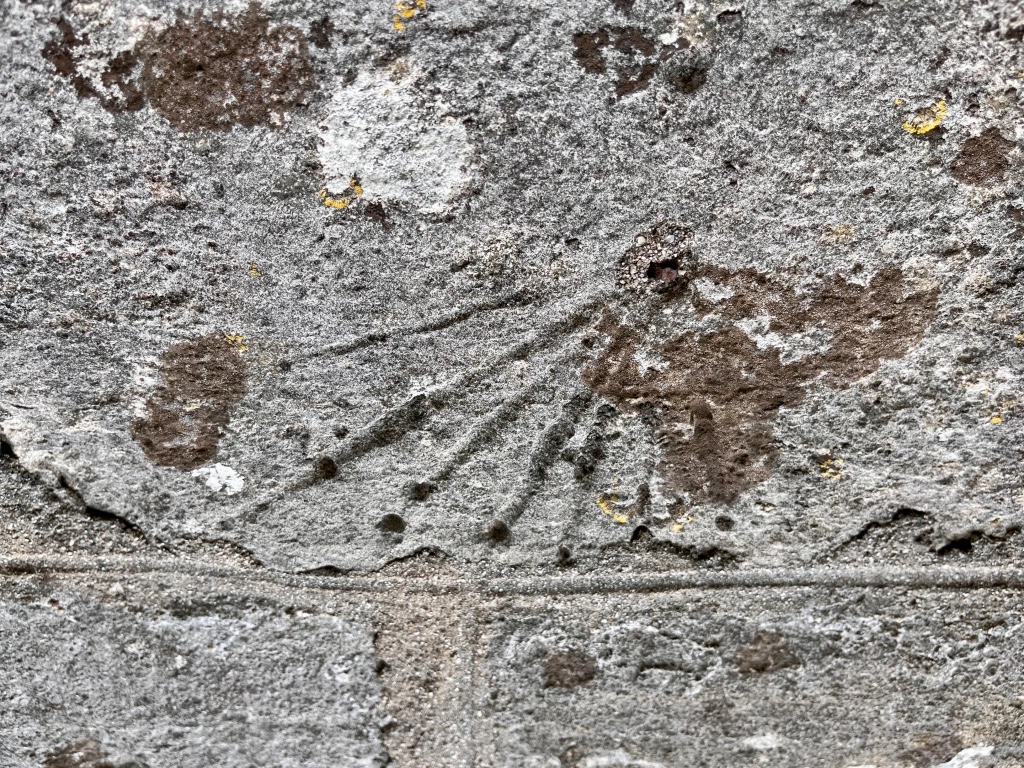
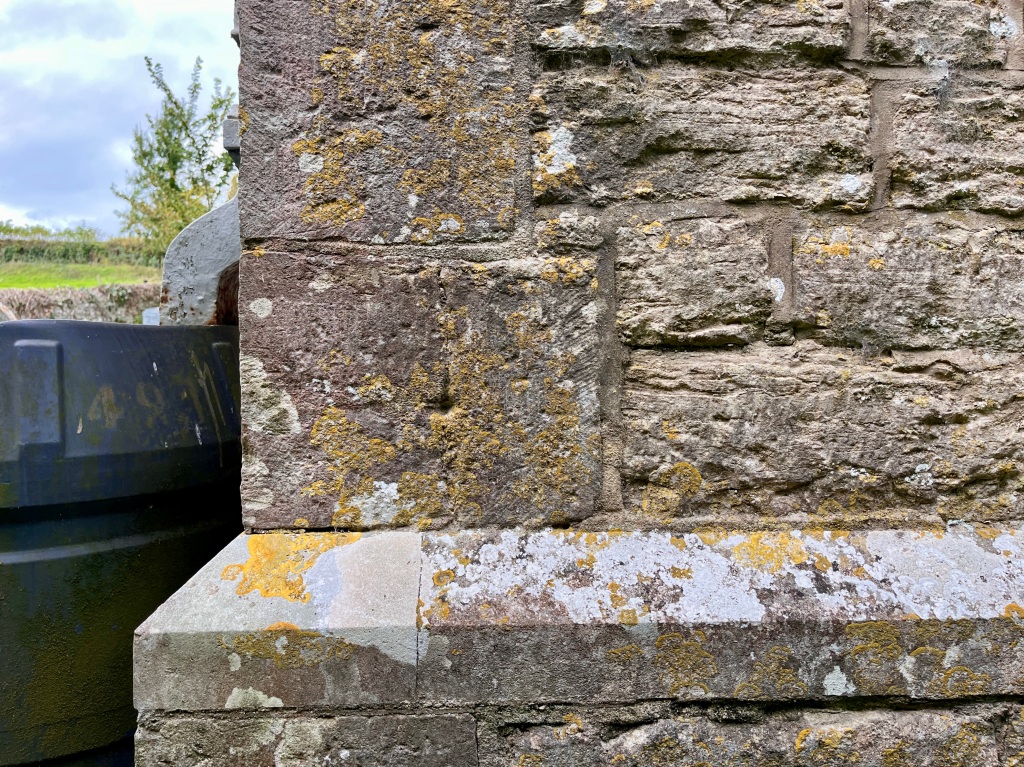
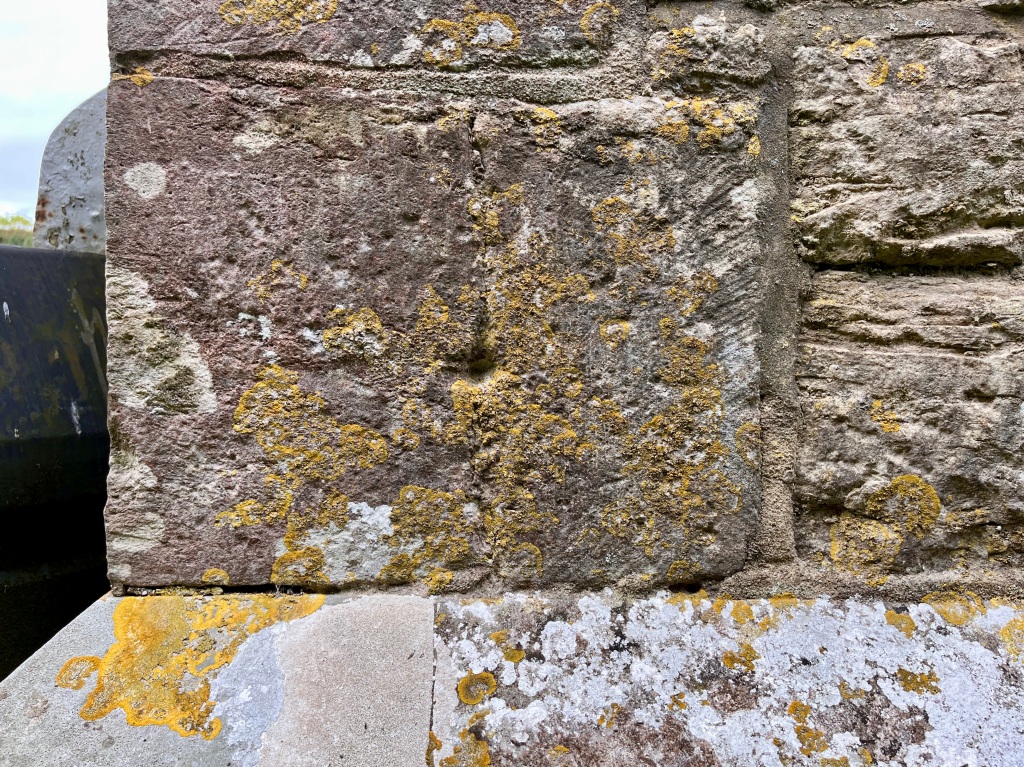
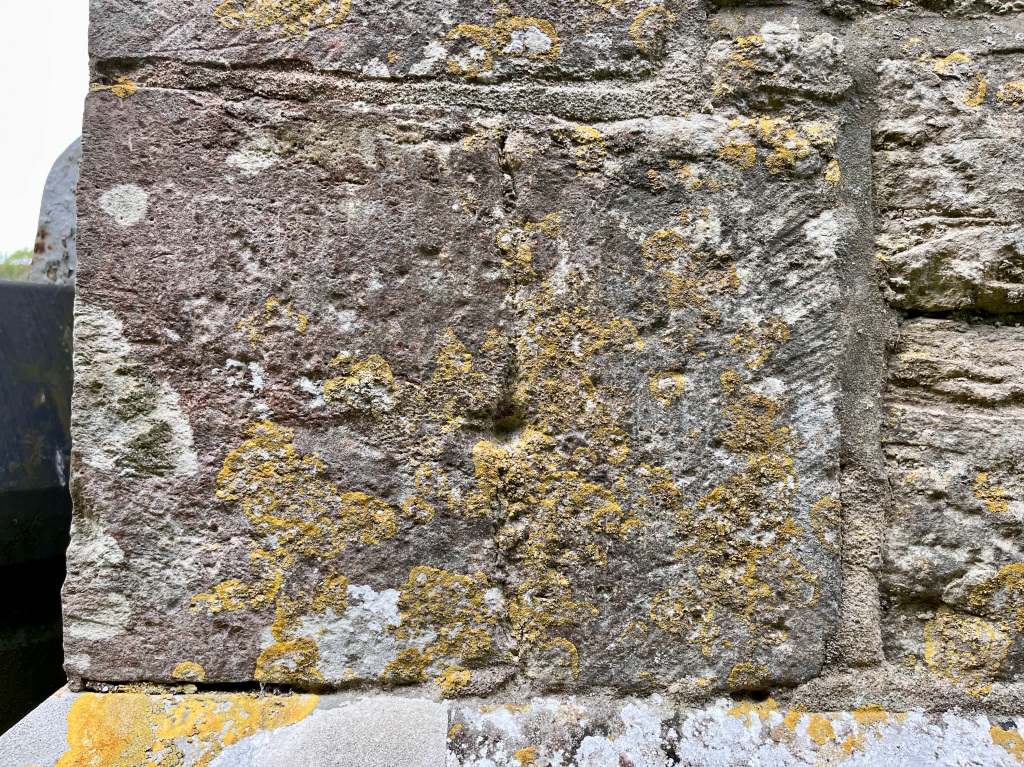
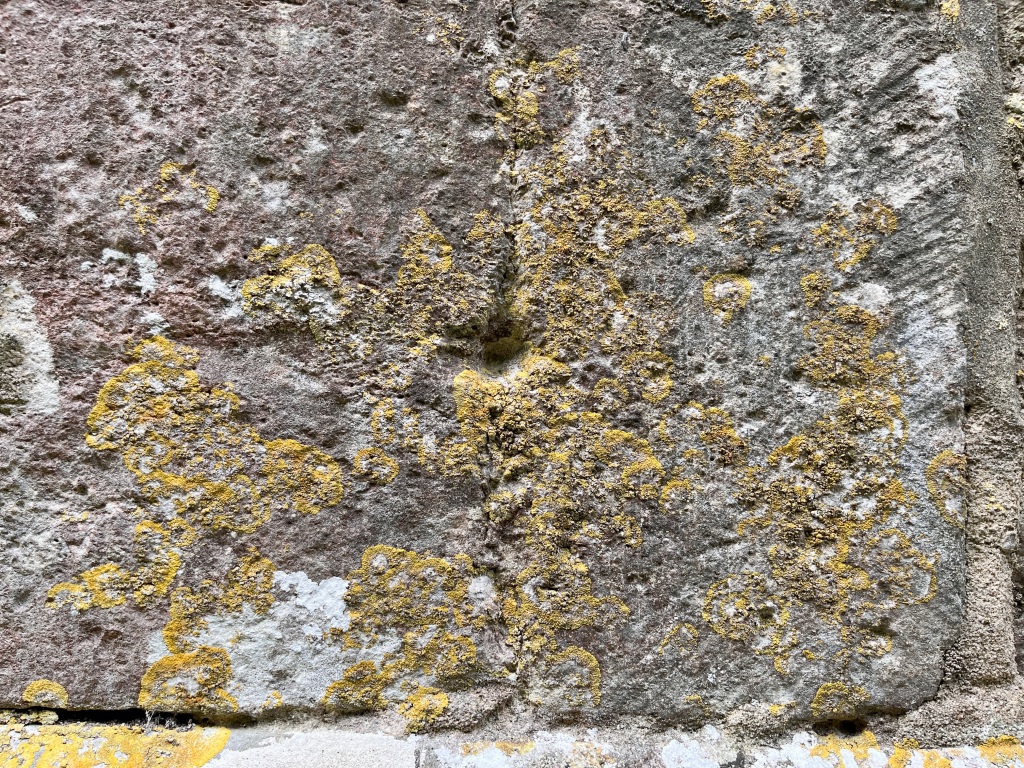
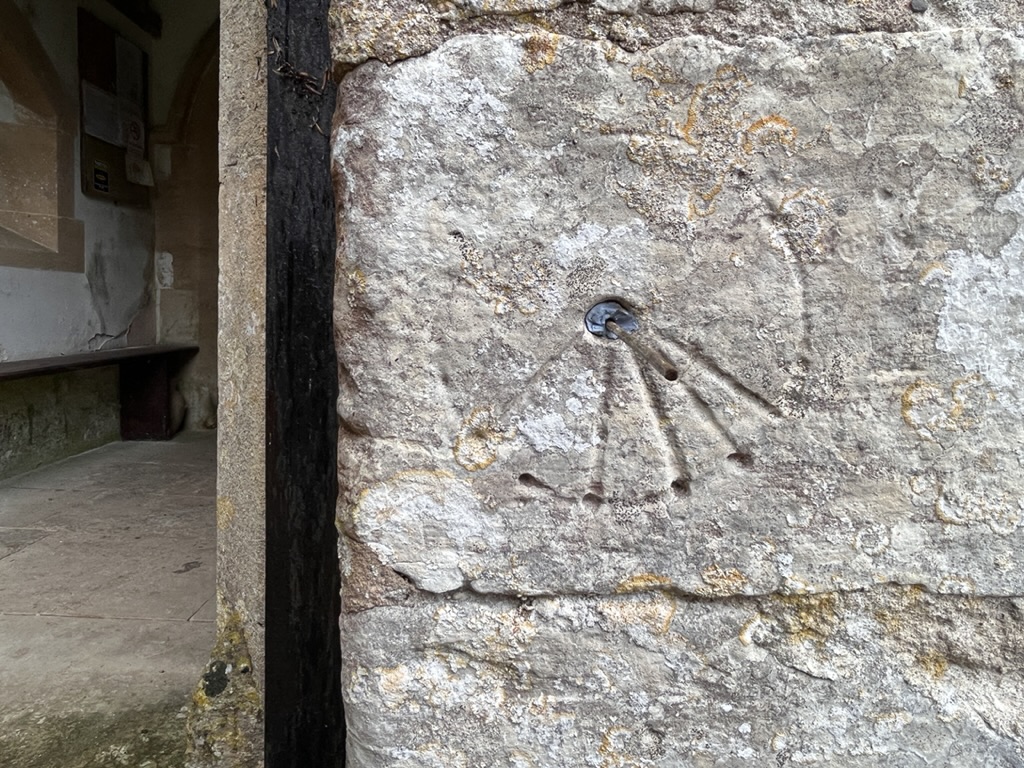
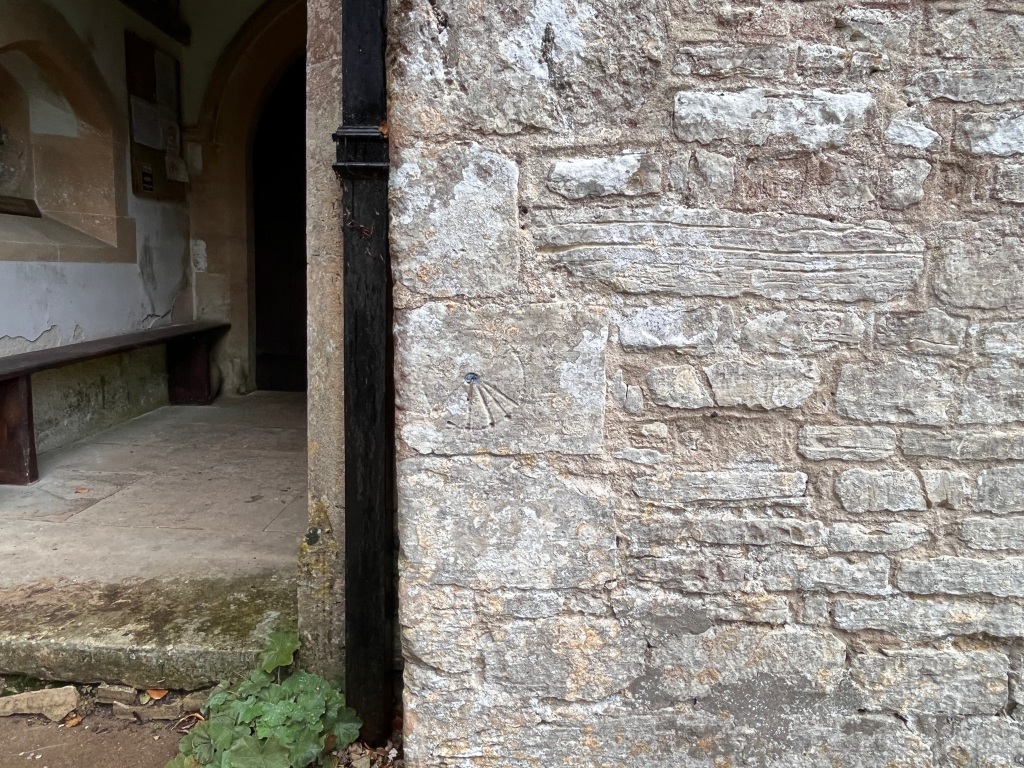
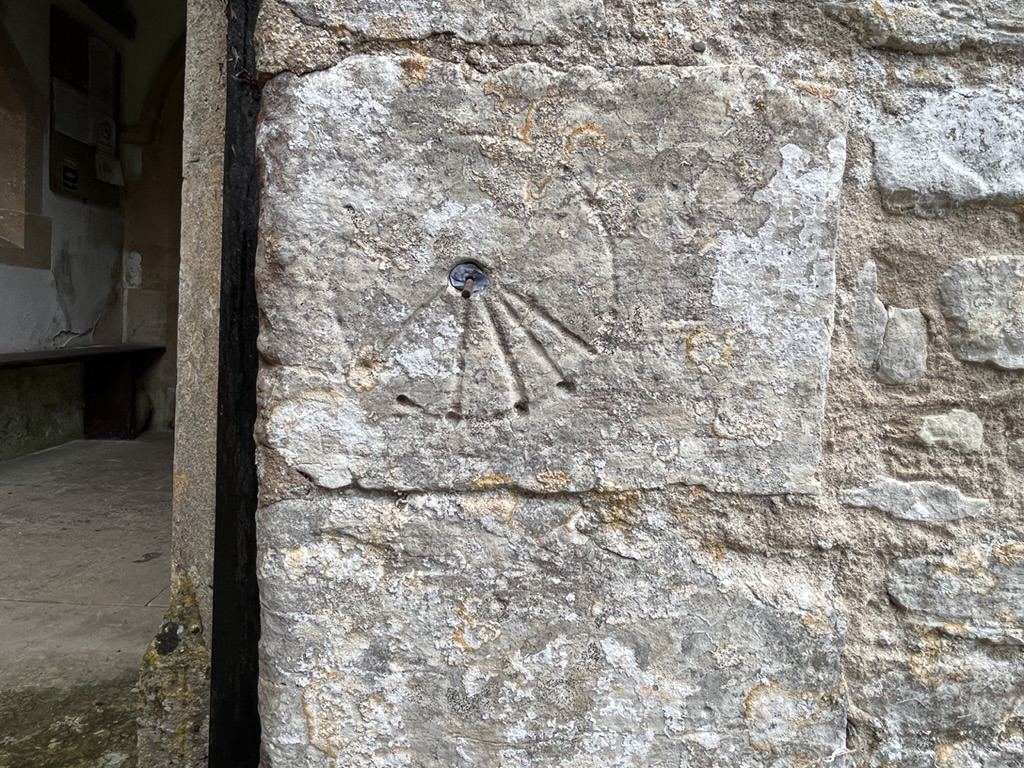
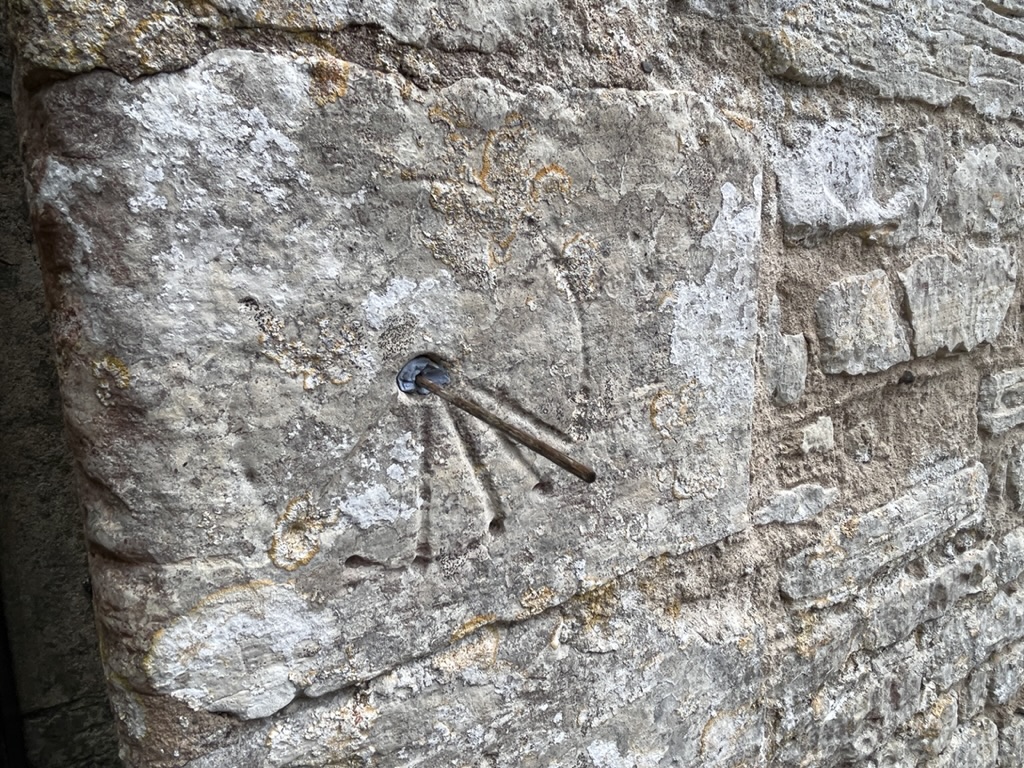
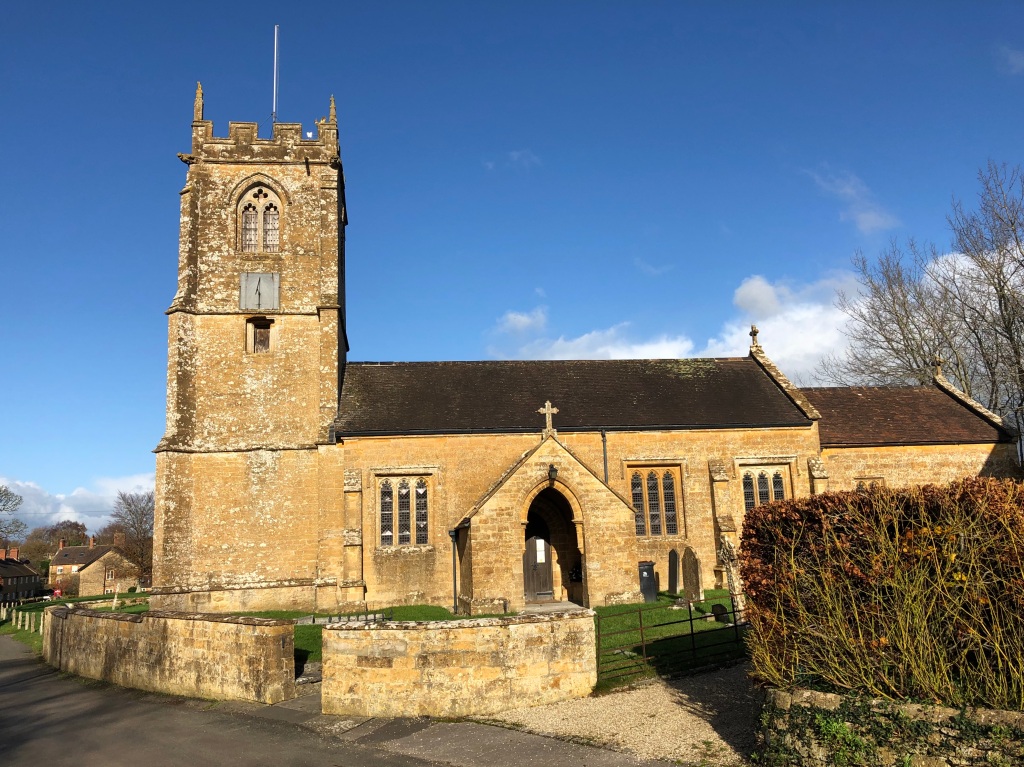
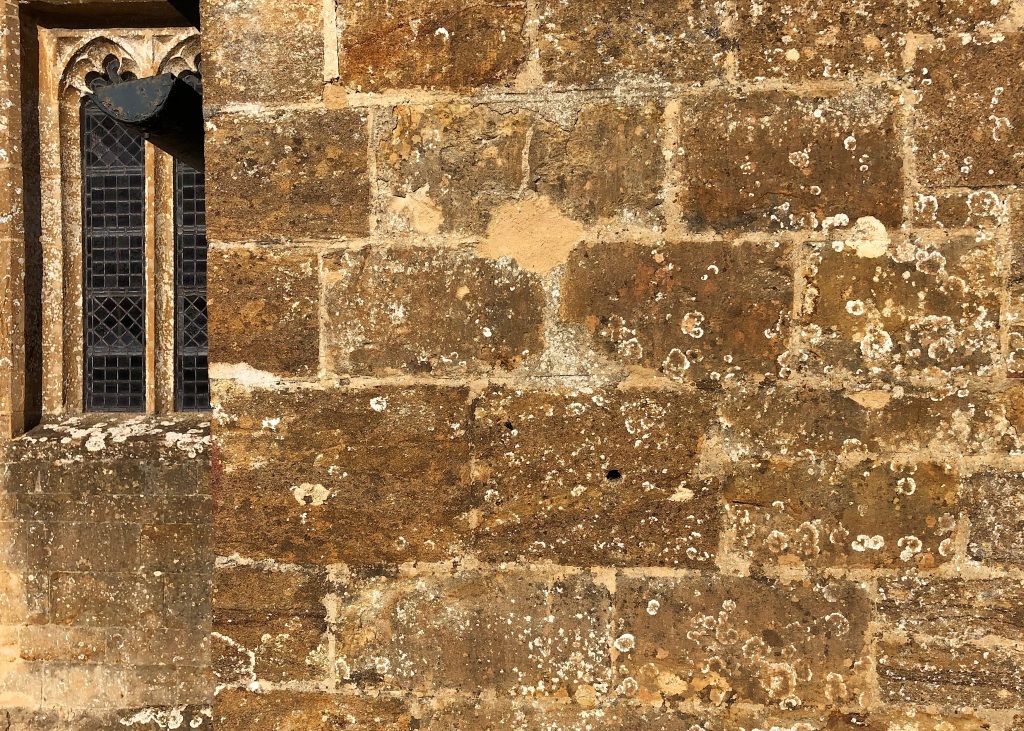
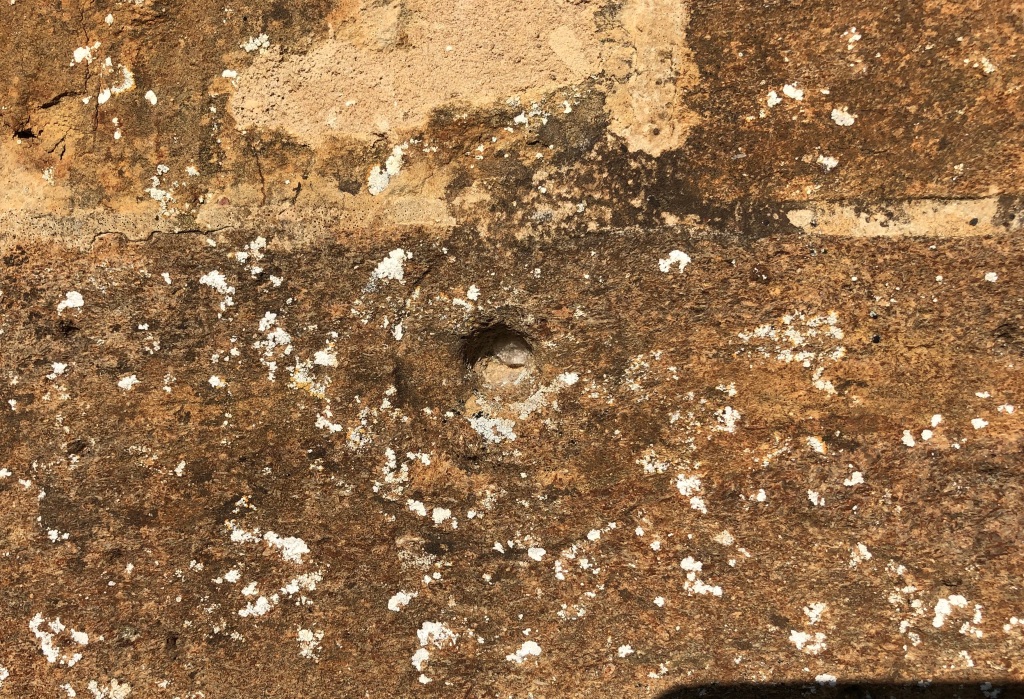
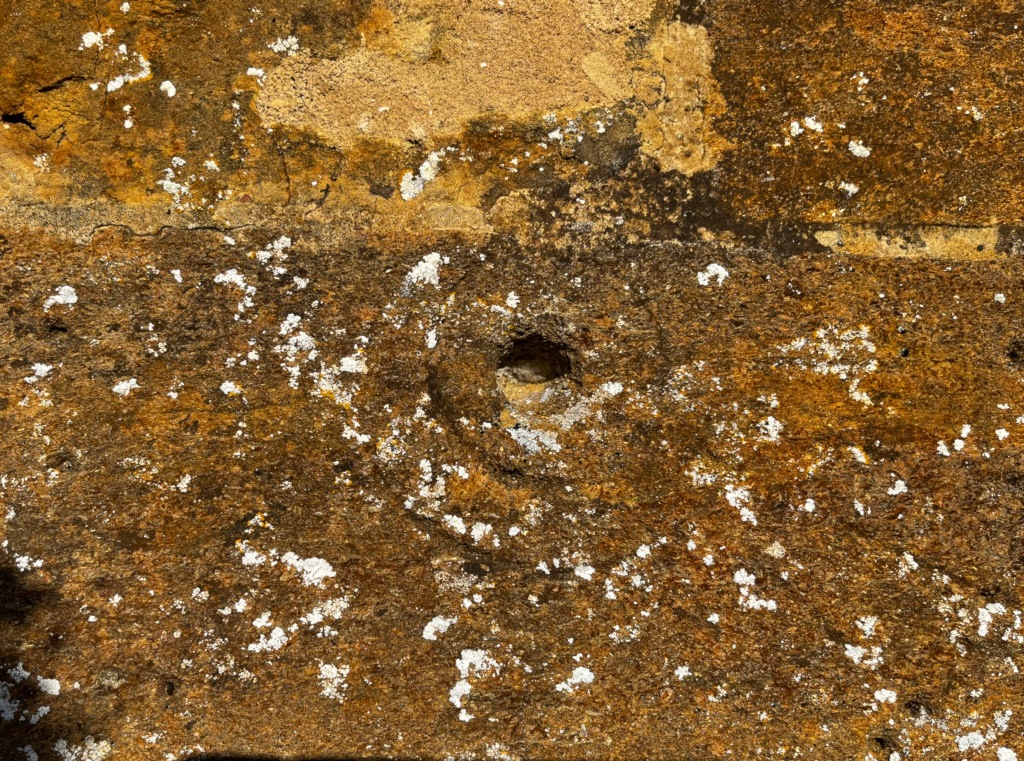
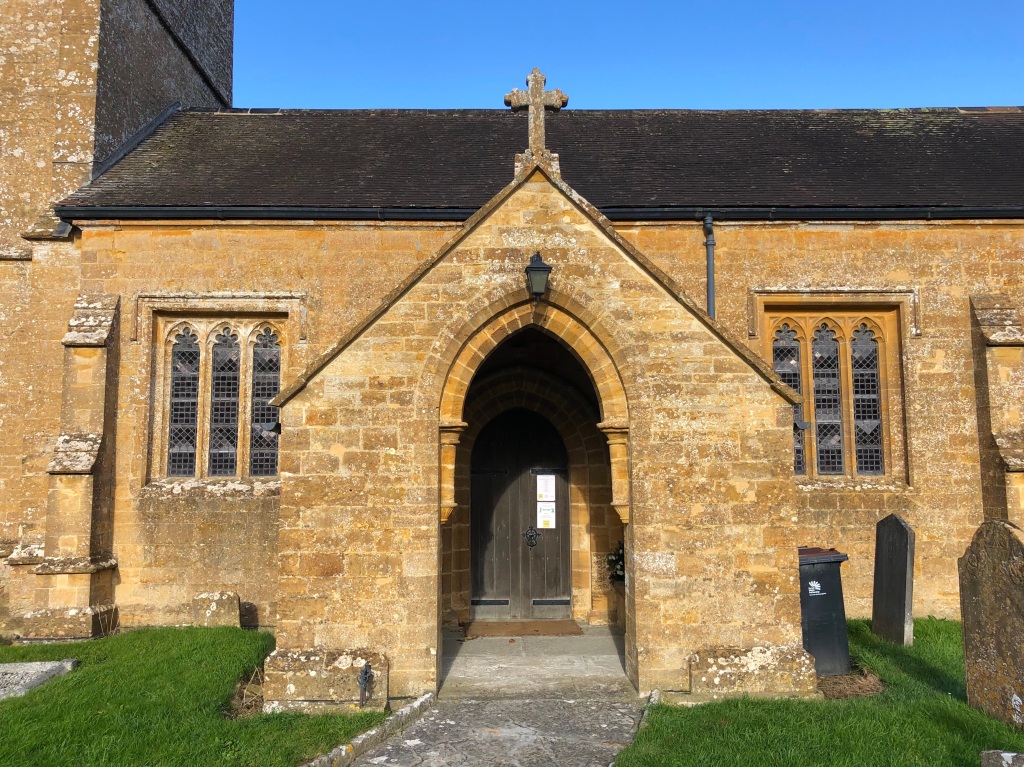
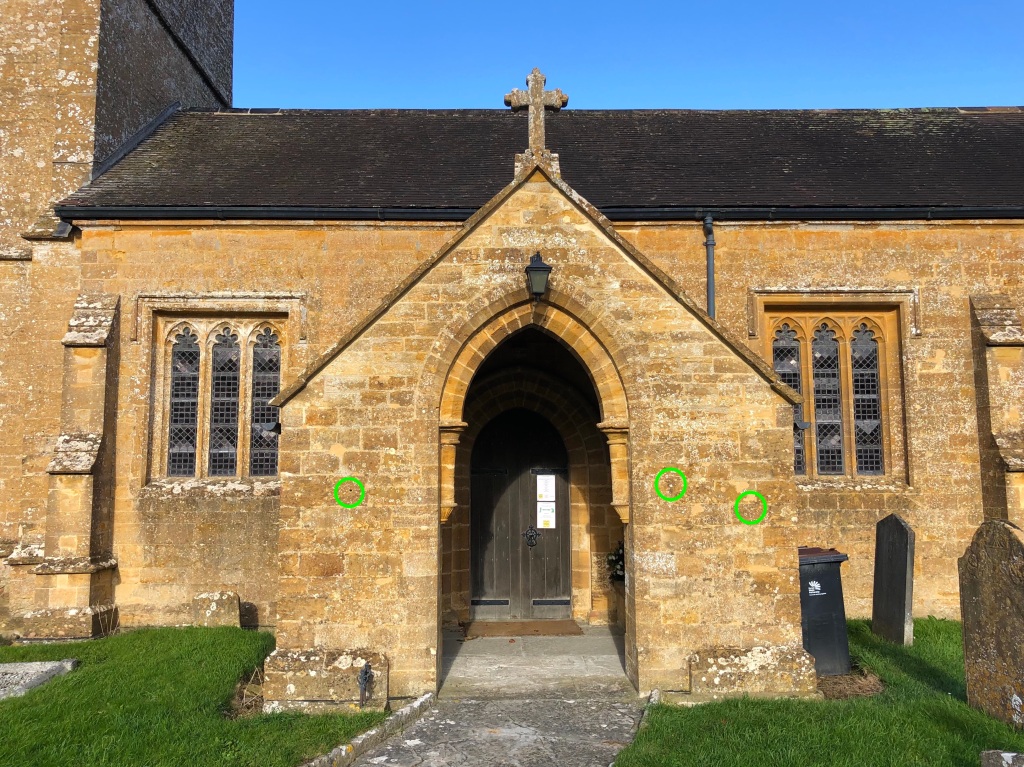
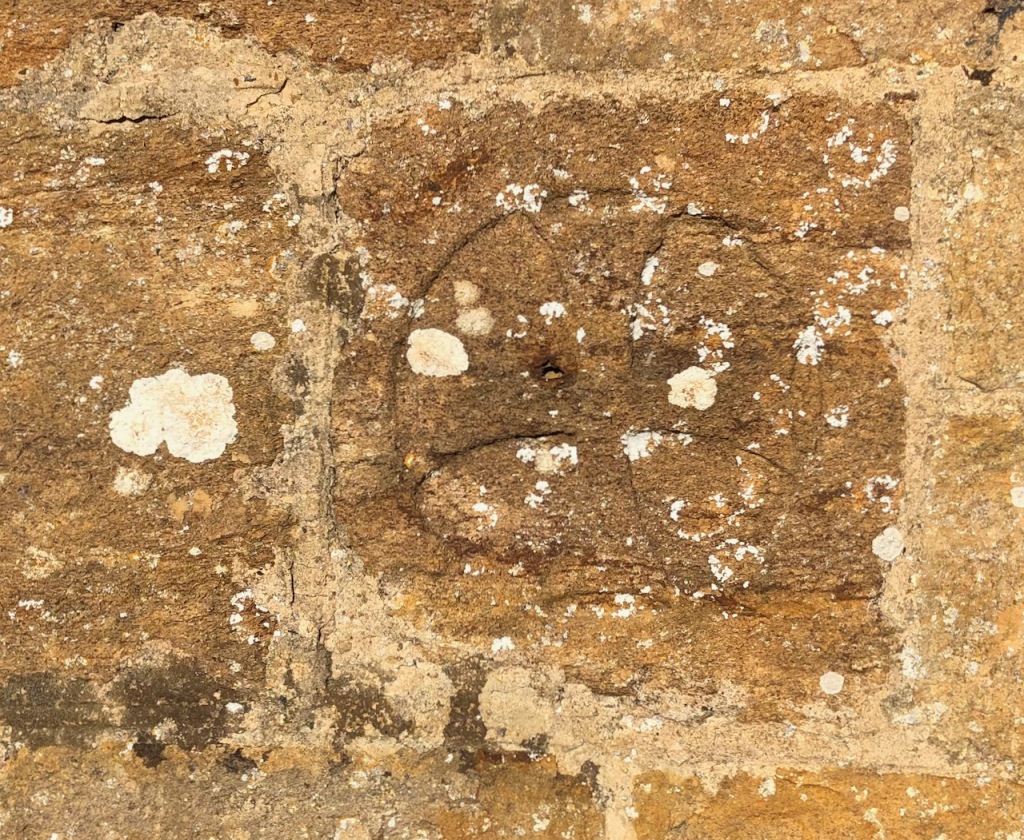
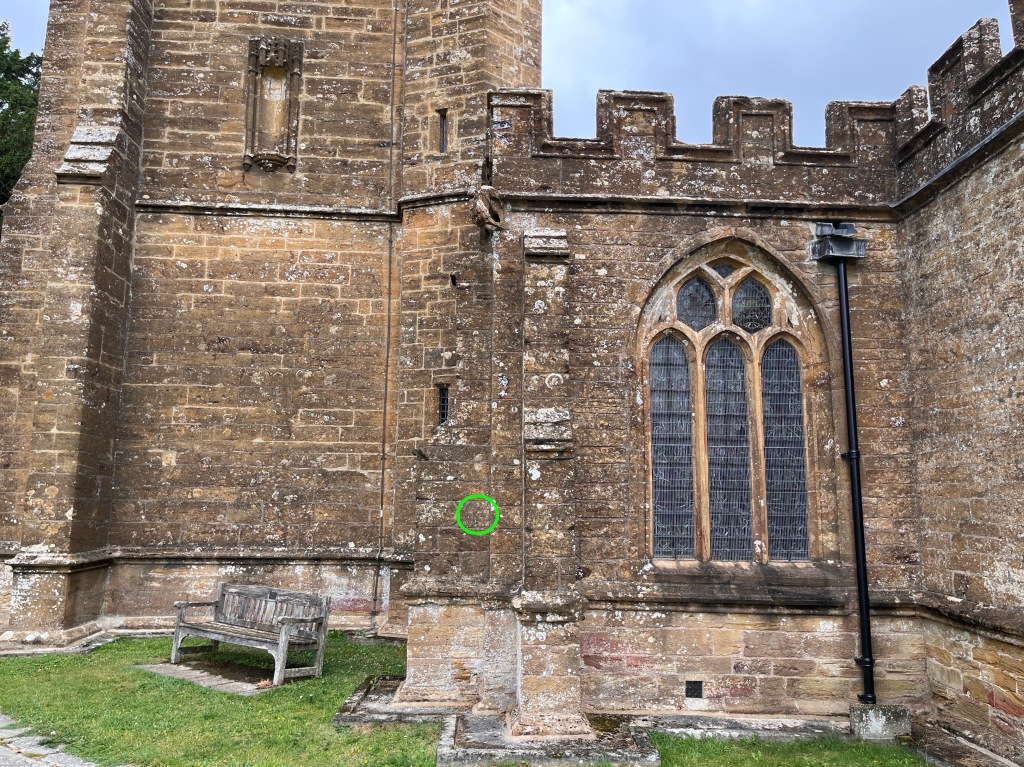
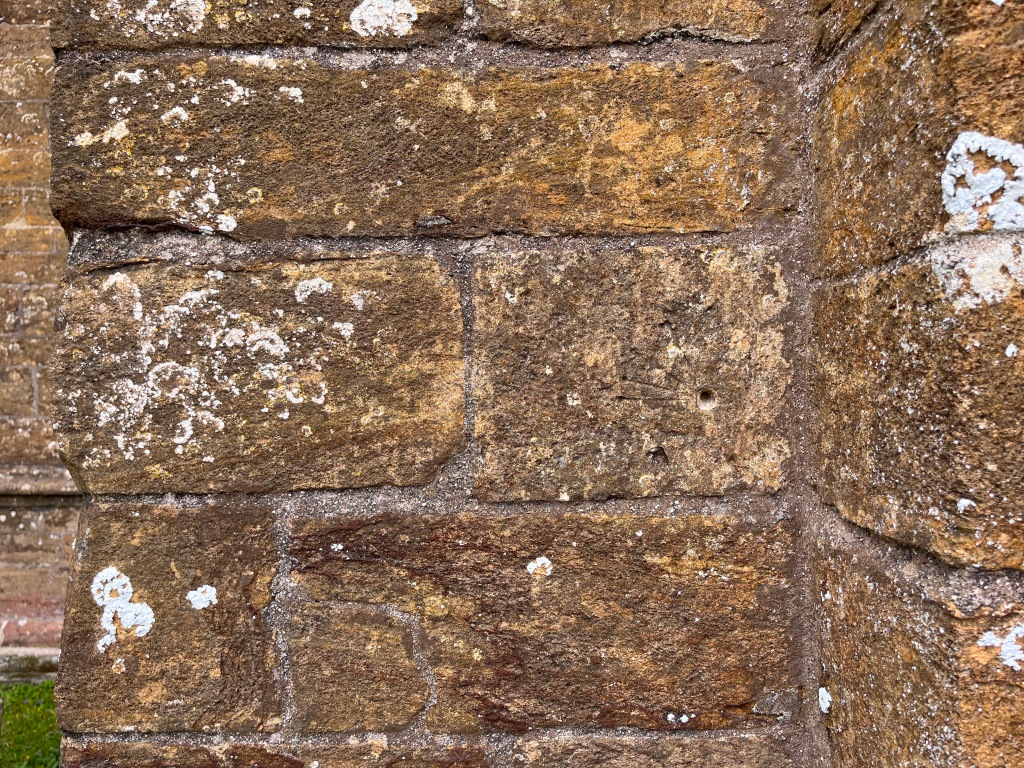
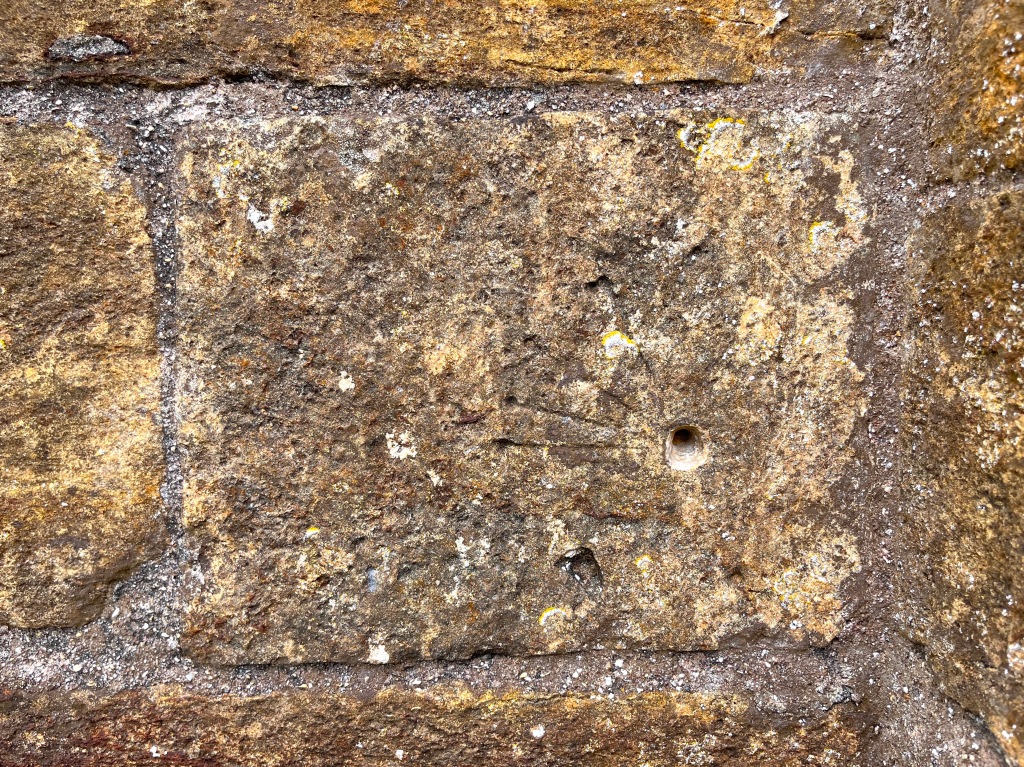
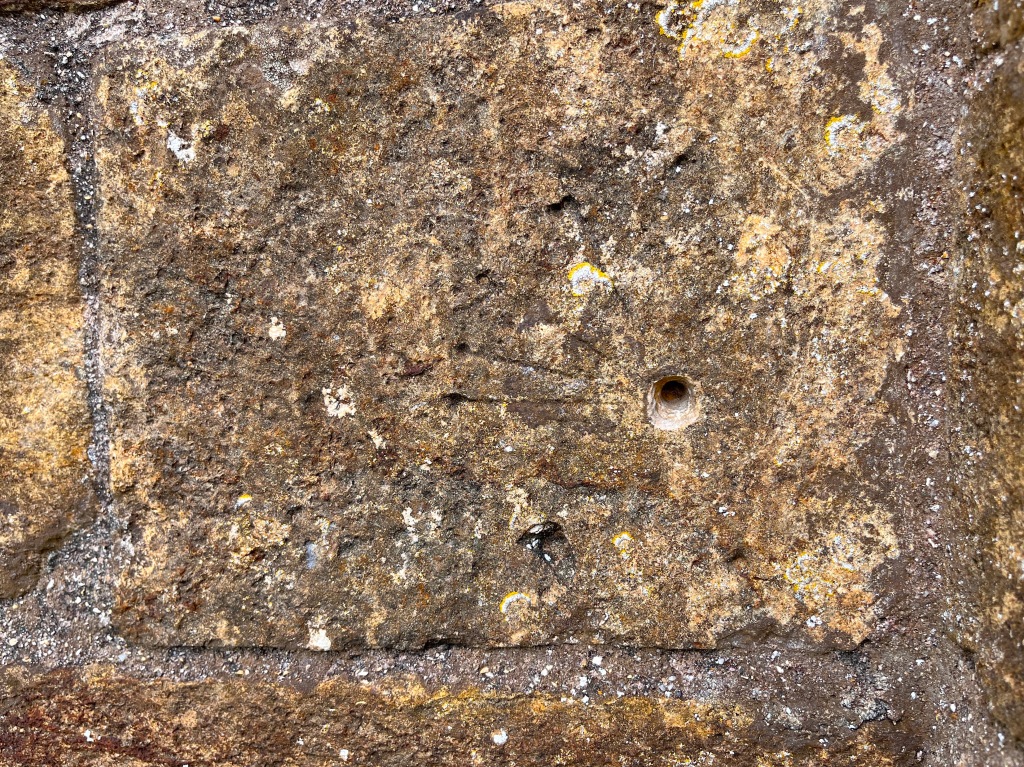
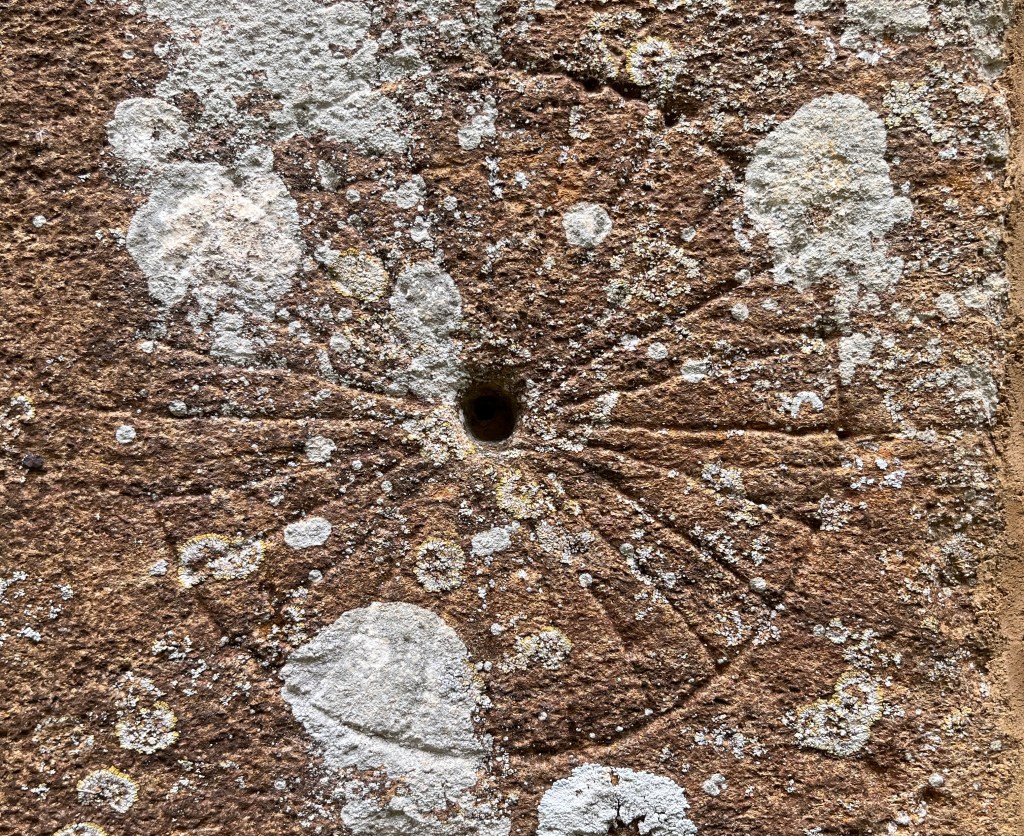
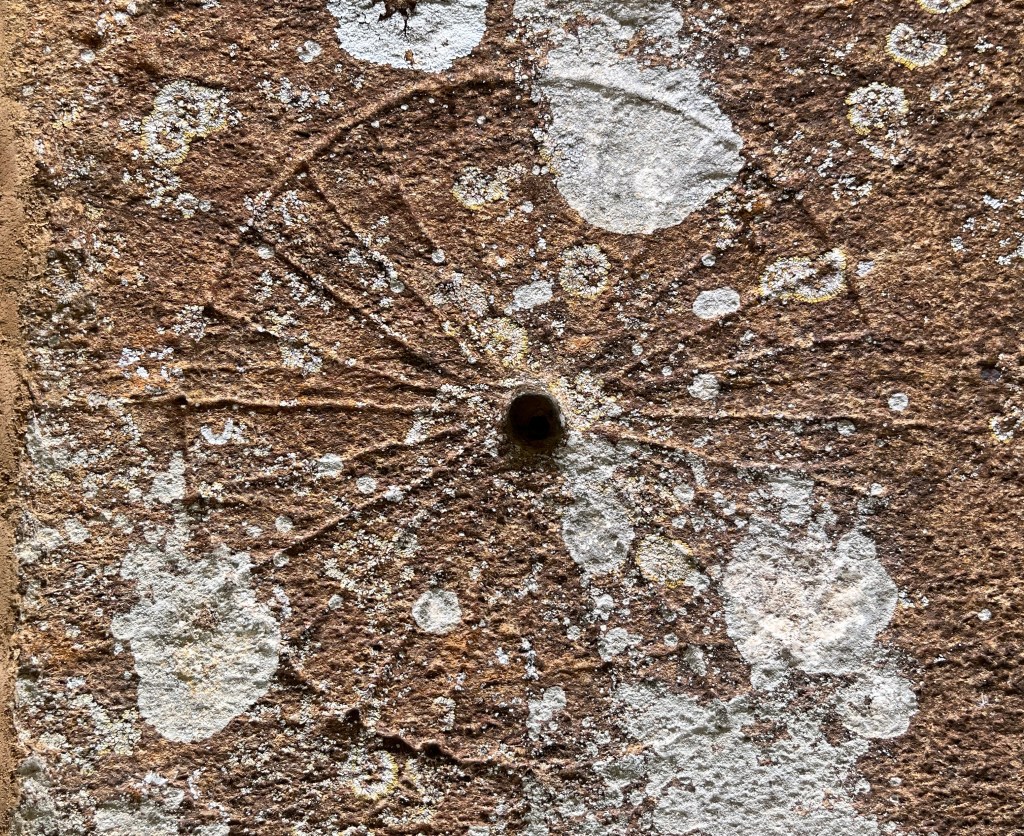
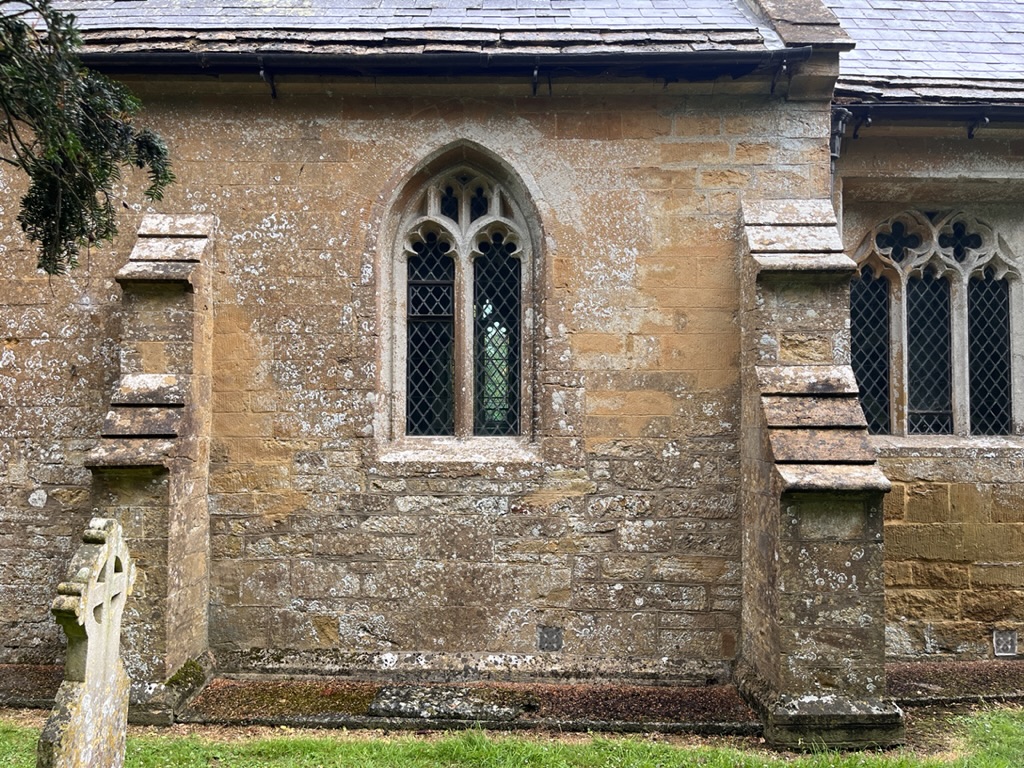
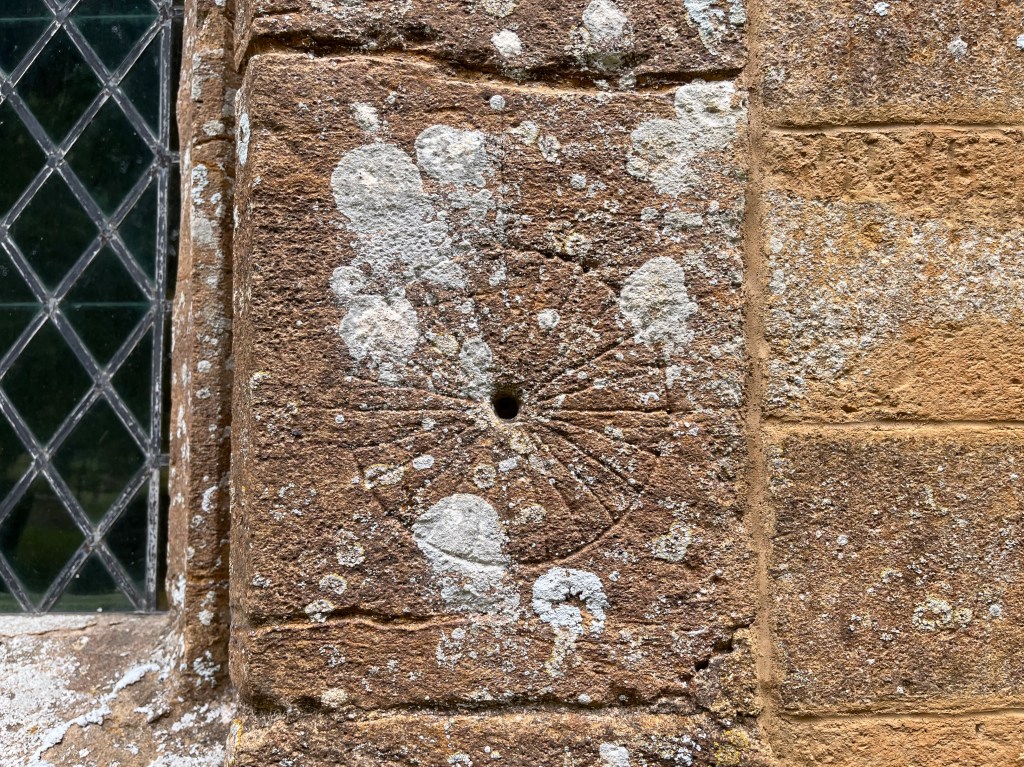
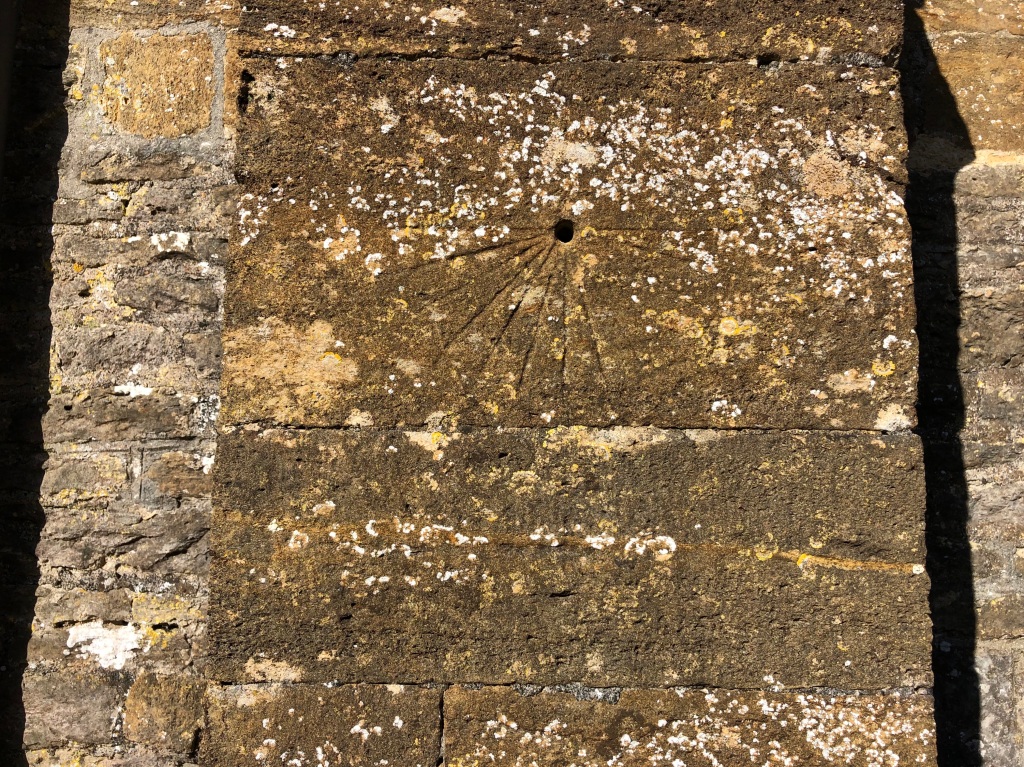
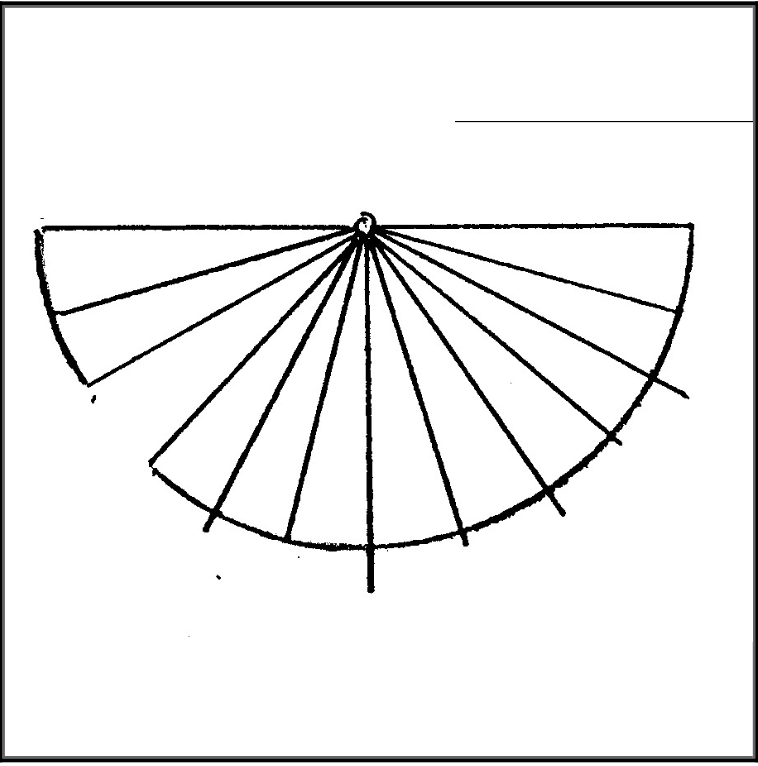
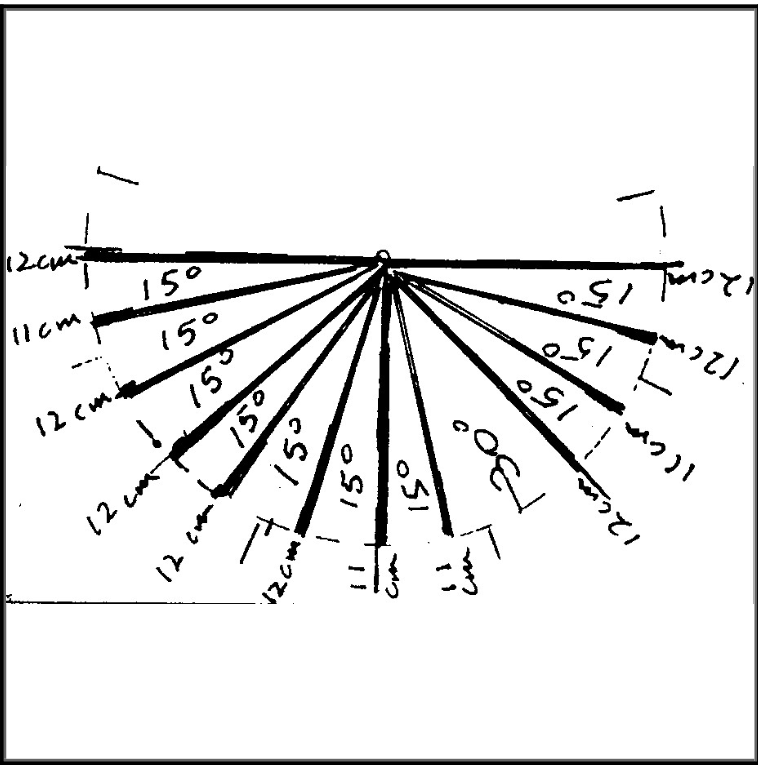
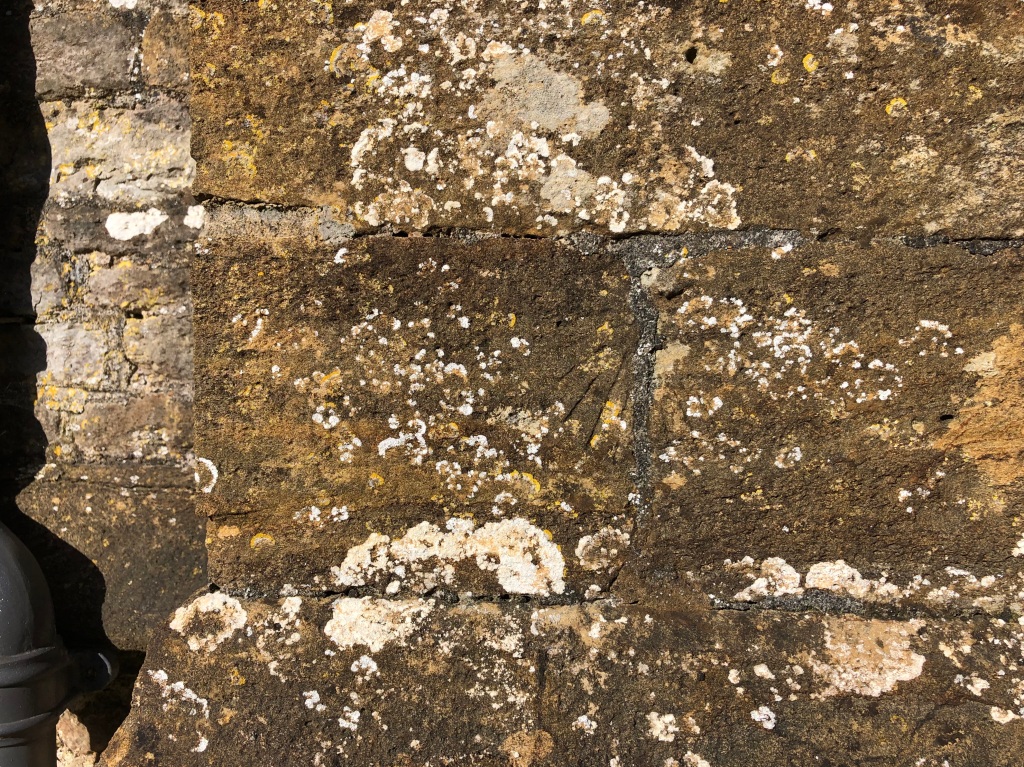
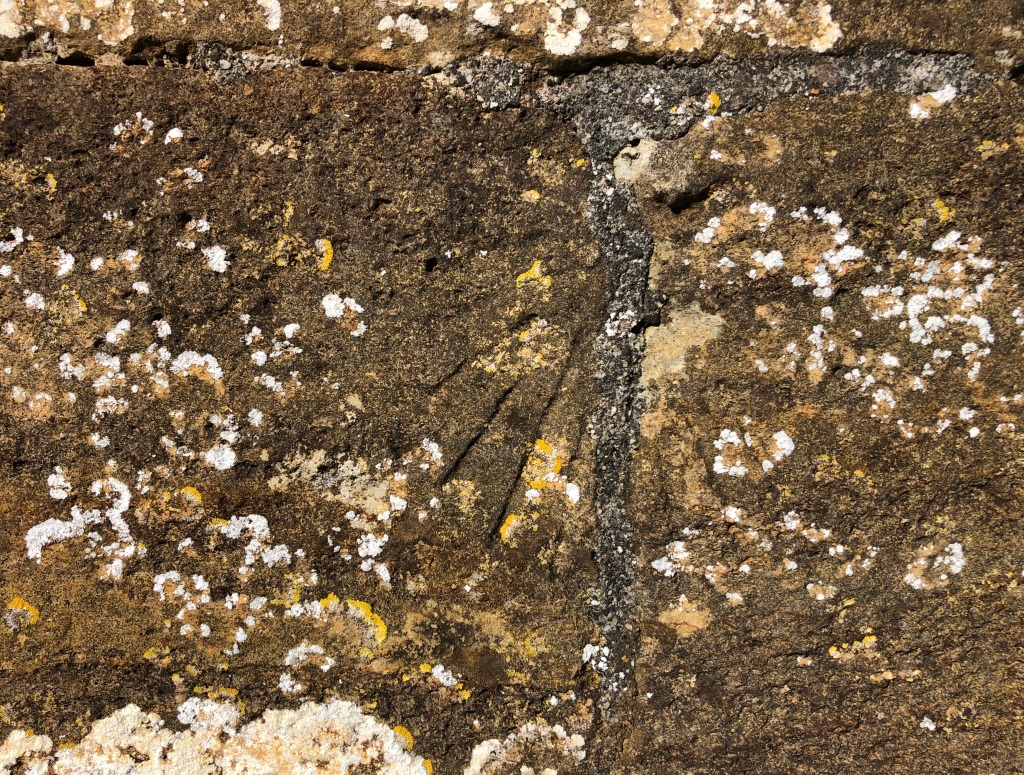
St Laurence has 2 dials on the 2nd buttress E of the porch, one above the other. The upper one is a fine example of a large dial filling the dial stone. The lower is so badly damaged / eroded that it would be easy miss; and it is quite hard to imagine what it looked like originally.
✣
DIAL 1
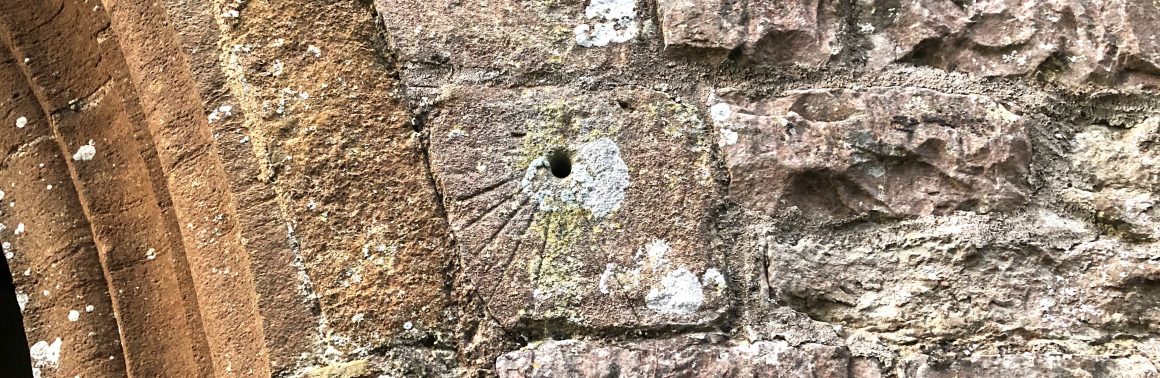
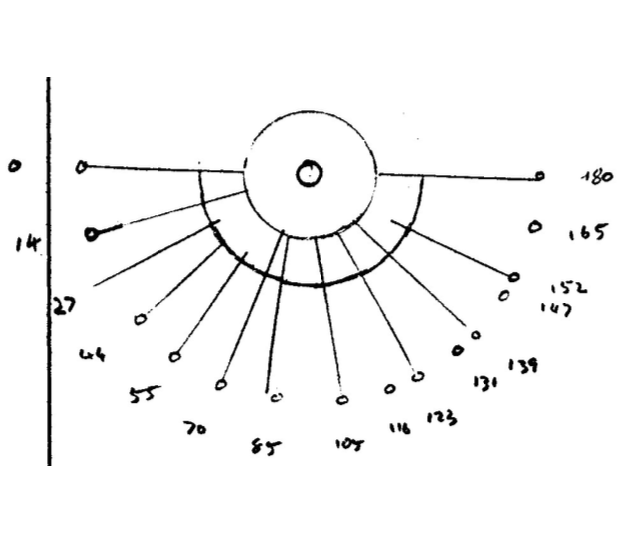
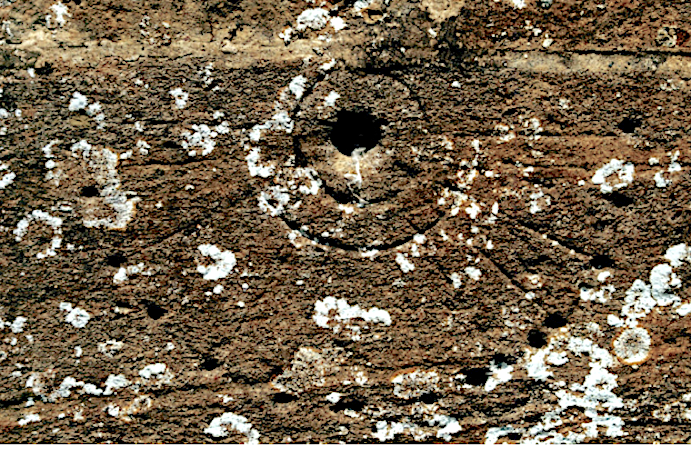
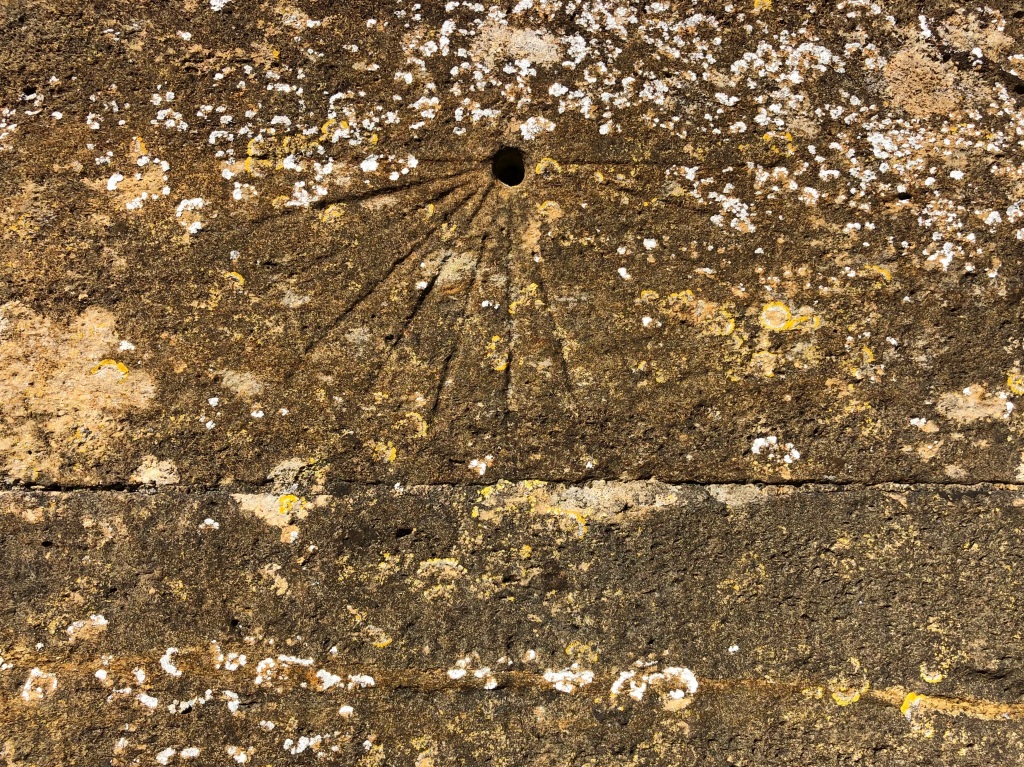
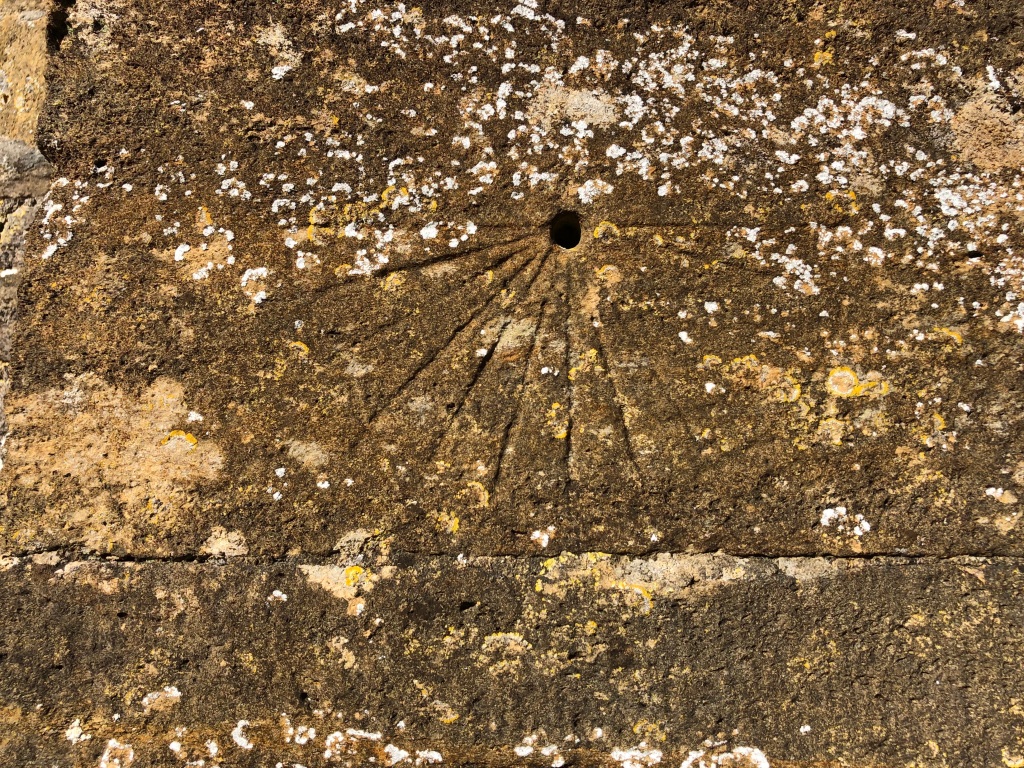
Dial 1 is encircled, with 13 lines and 24 pocks around the perimeter and forming 2 crosses . This large dial not only takes up the width of the stone, the circumference continues onto the stone below as do some lines (esp. 11am). The noon line ends in a 4-dot cross on the main stone, and the 9am line has a 5-dot cross on the lower stone.
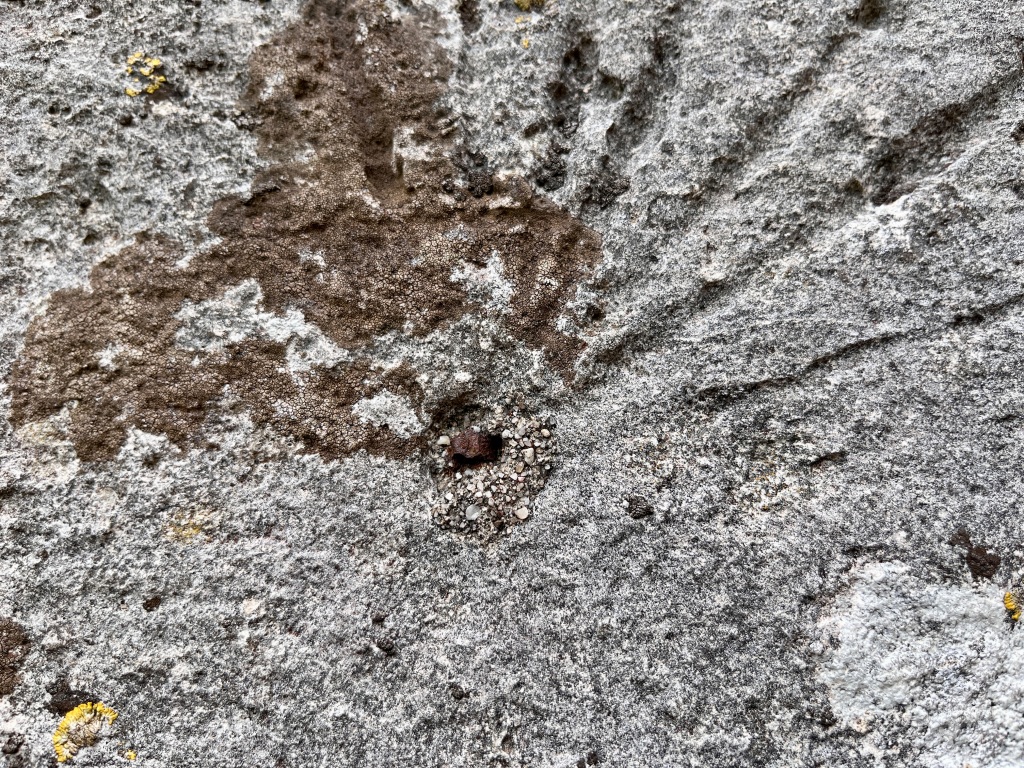
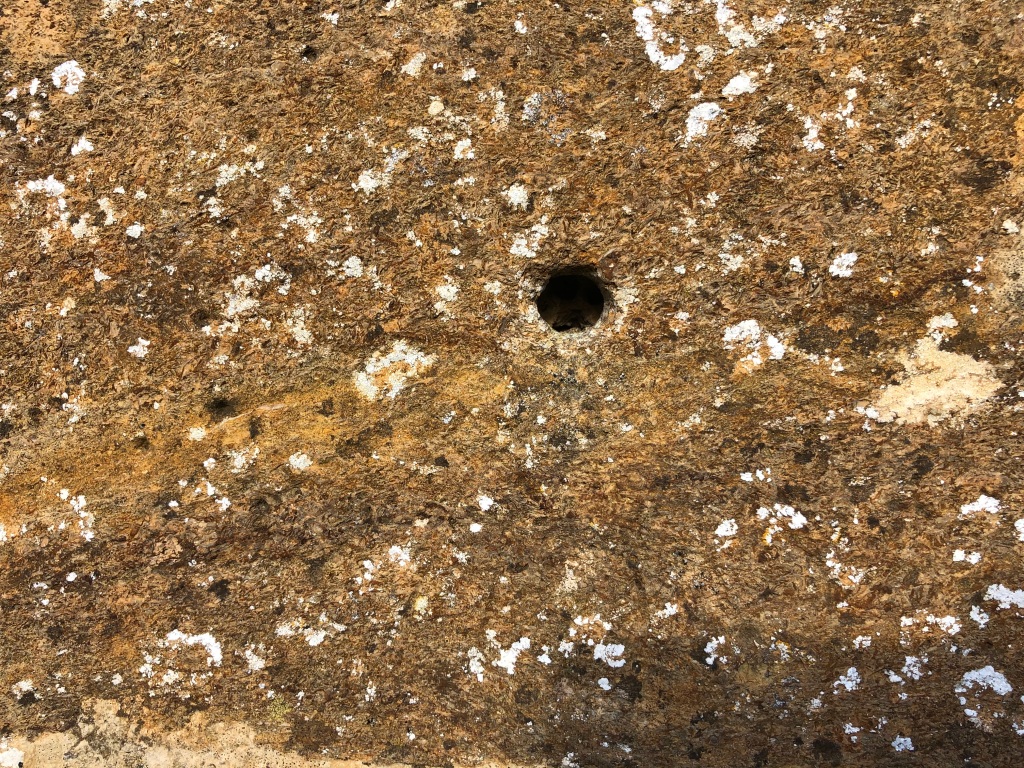
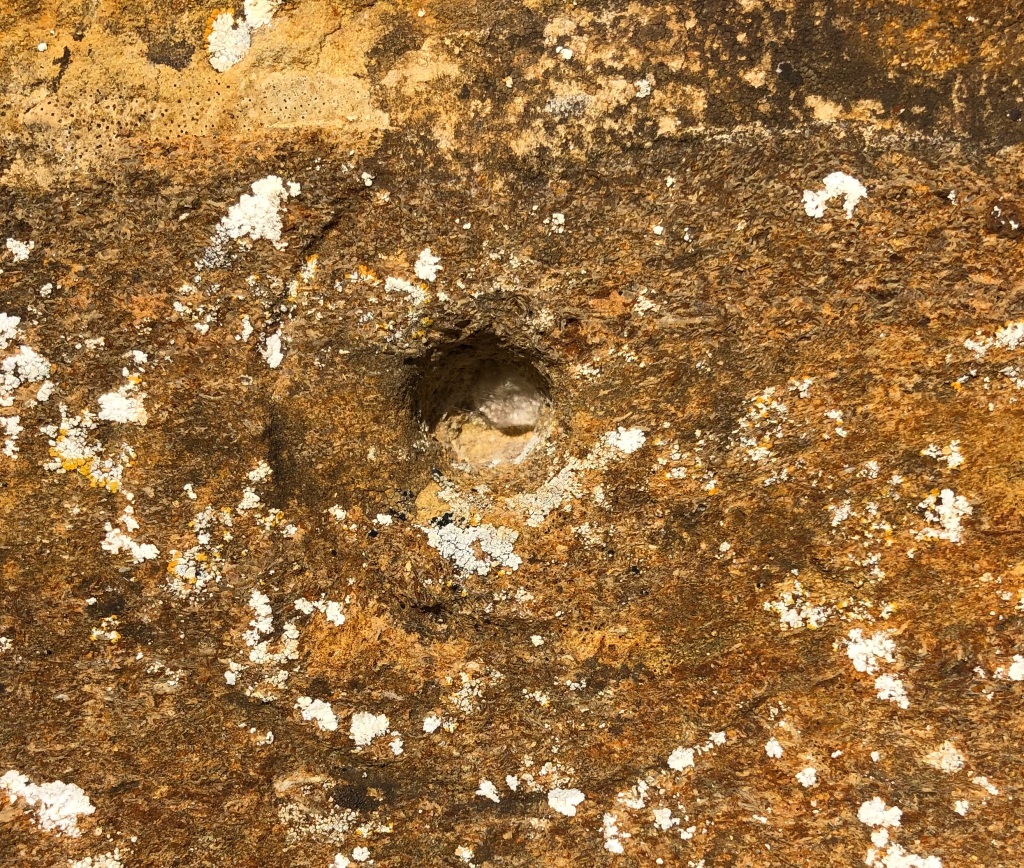
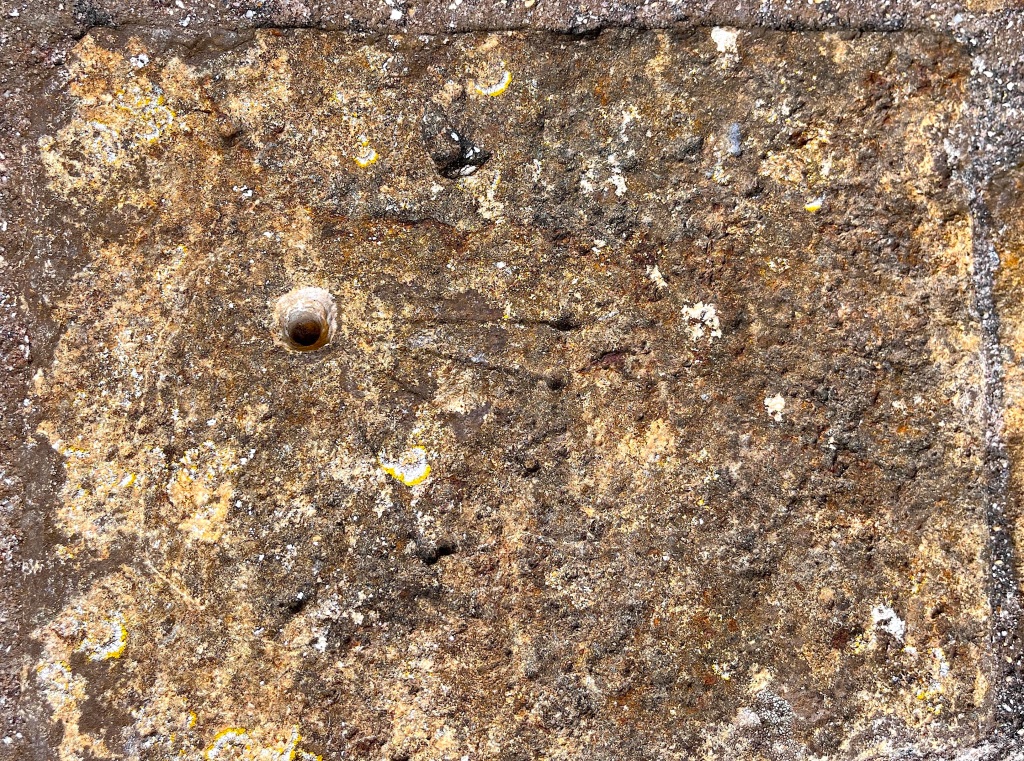
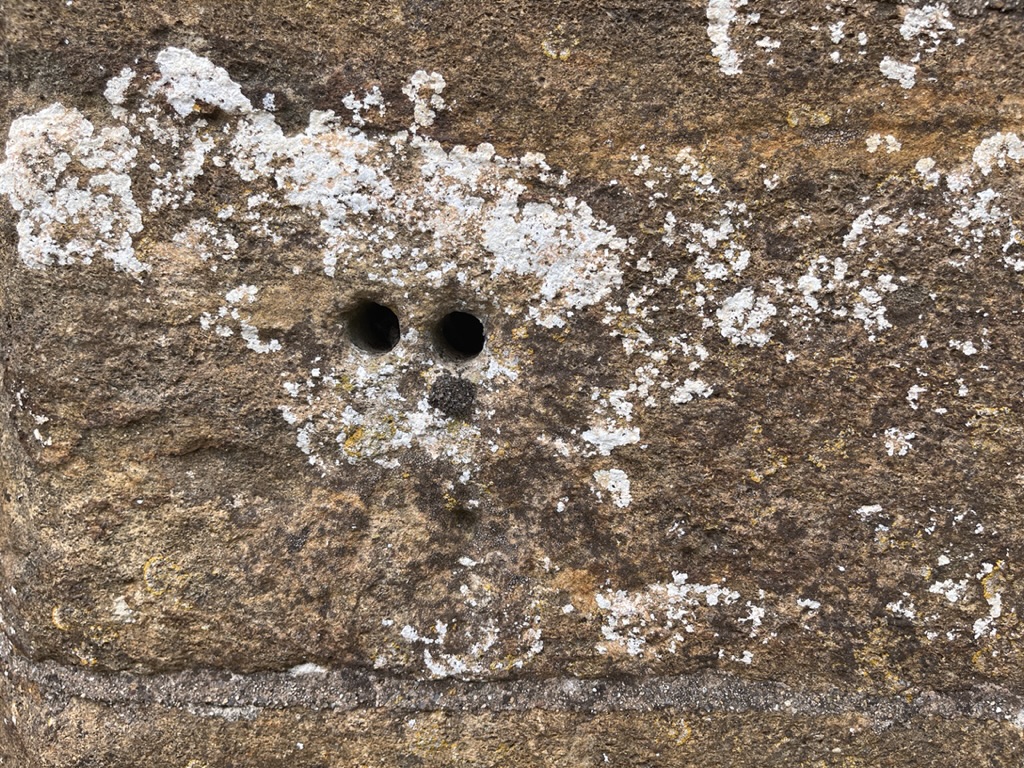
The gnomon hole is of particular interest; I haven’t come across a square hole with (apparently) a circular one inside it before. Possibly the original gnomon was a basic rod, and its round hole later enlarged to accommodate a more visible square rod.
St Laurence . Downton . Wilts – Scratch Dial 1
✣
DIAL 2
St Laurence . Downton . Wilts – Scratch Dial 2
Dials Locations
GSS Category: Scratch Dial; Mass Dial; Medieval Sundial; Church Dated Initials
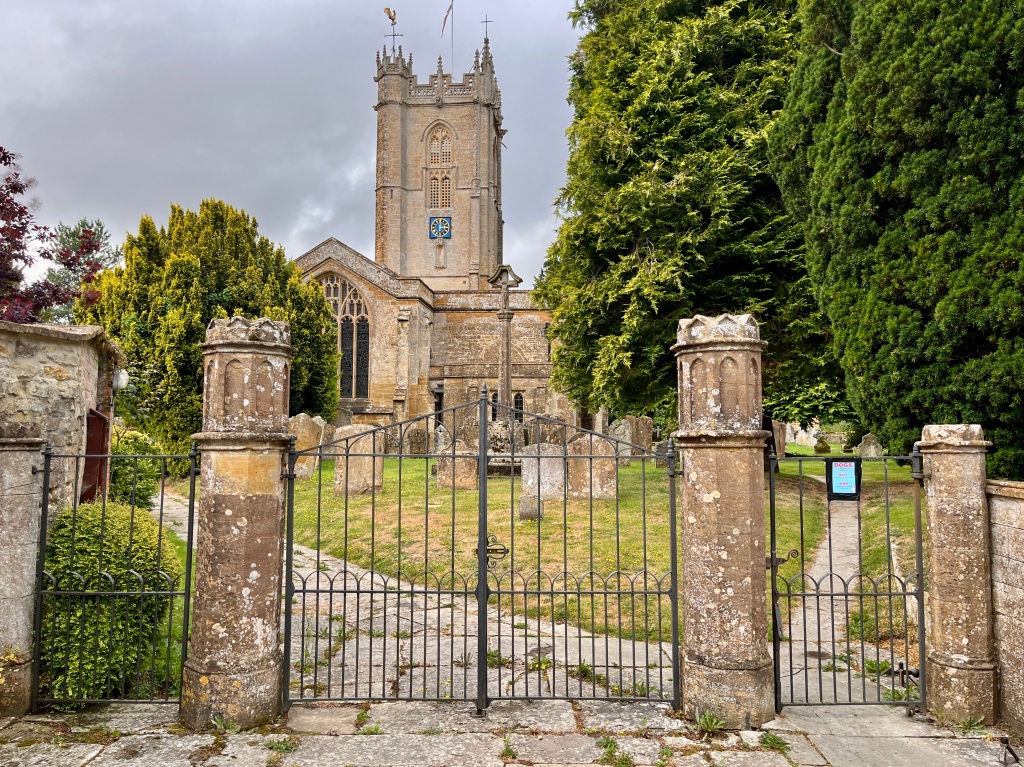
GRADE II* † Early C13 chancel, nave, N doorway; C15 N porch; c1500 W Tower; later additions; C19 restorations. A simple typically Dorset small church in an attractive location. 2m S of Dorchester (can be combined with Winterborne Steepleton nearby (2 dials). 50.6884 / -2.4604 / SY675877
✣
DIALS
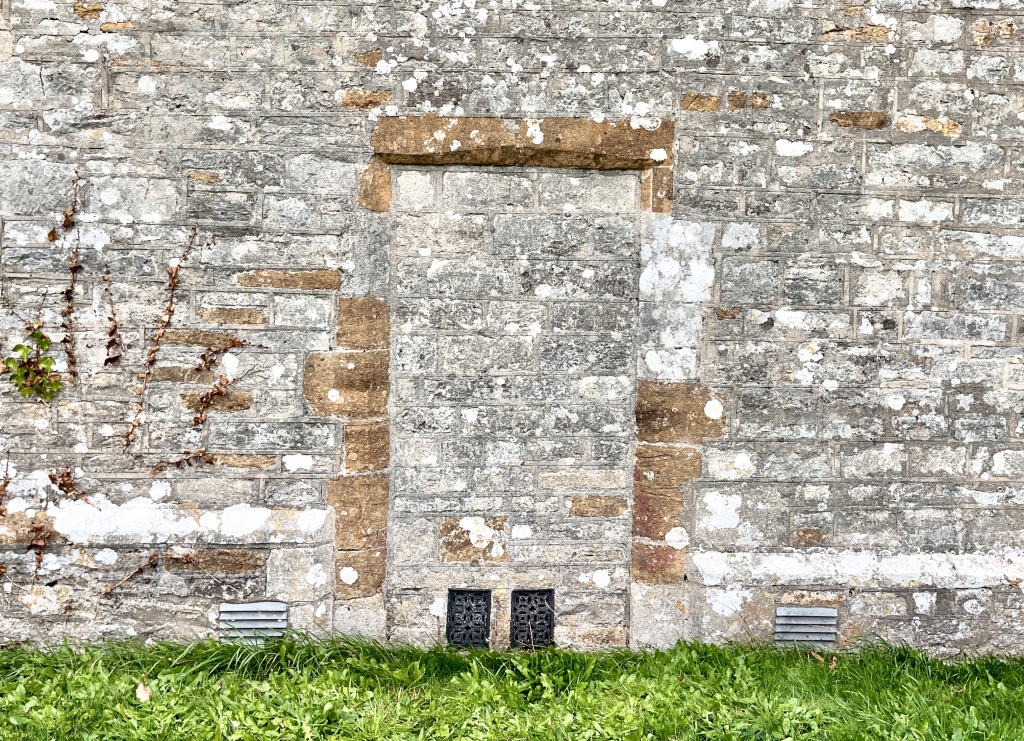
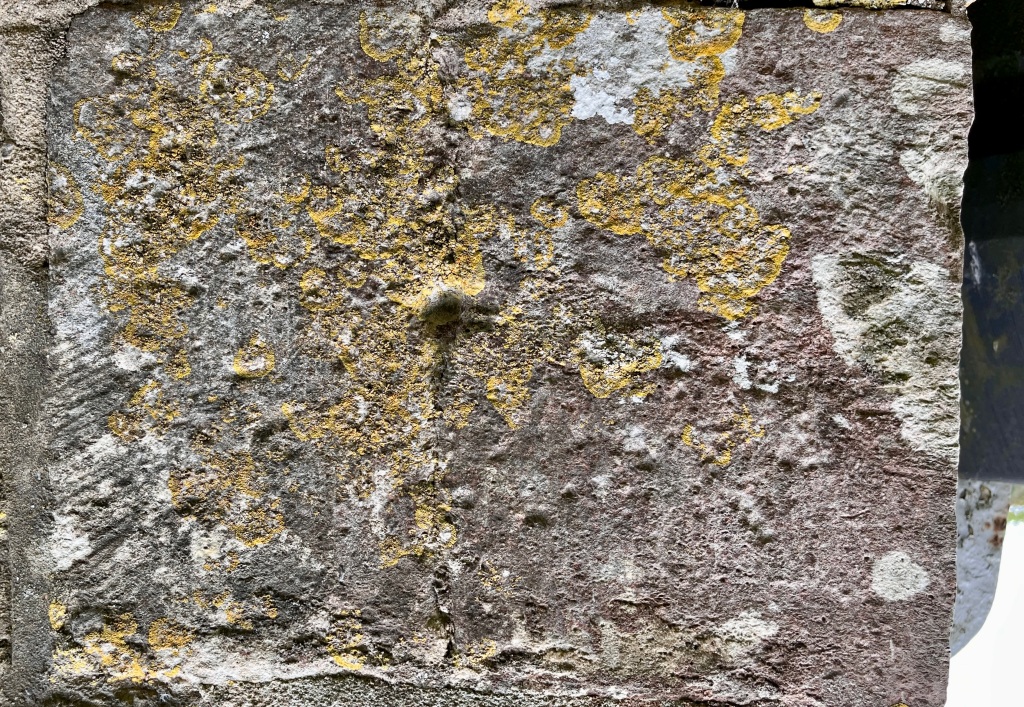
GLP notes a single doubtful dial over a blocked doorway, not included in BSS records. However there is a clear inverted dial elsewhere on S side. There is also a dial-ish quoin stone that I include. There’s not enough evidence to consider it much more than doubtful, but the location is conventional and the overall ‘jizz’ (to use a birding term) invited more than a glance.
✣
DIAL 1
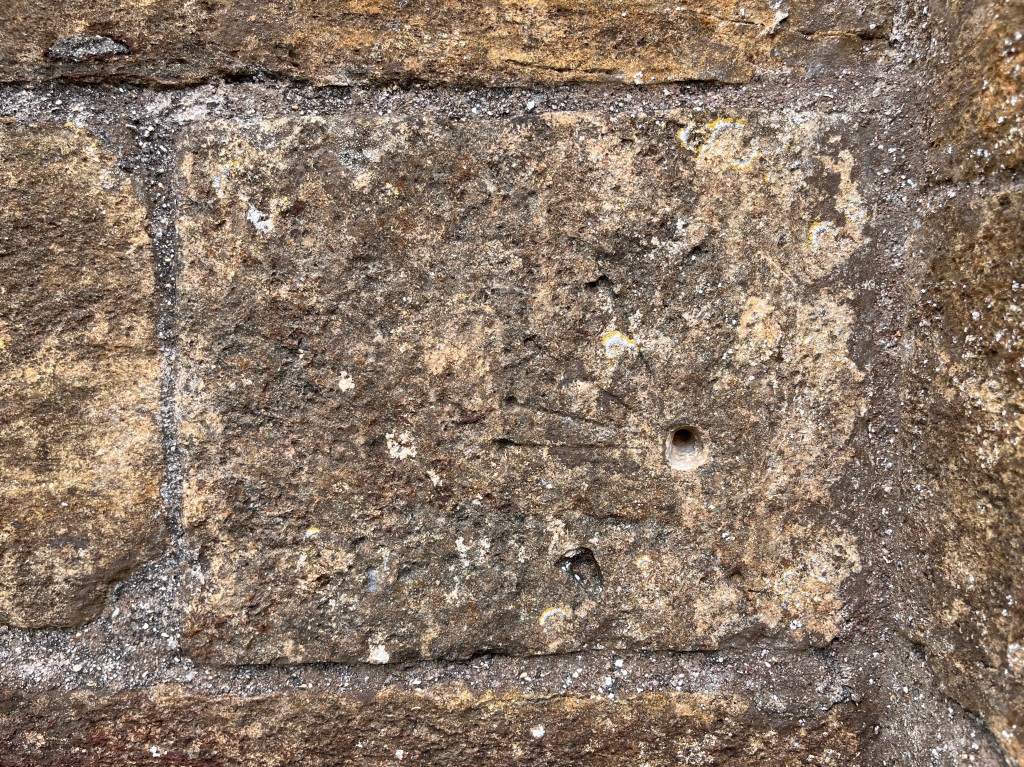
Above the blocked S aisle door, C16. GLP suggests a masons’ mark rather than a scratch dial and notes a similar ‘dial’ at Hilton, near Blandford. There are 2 faint concentric circles. The very small central hole that would be more consistent with the use of a compass inscribe the circle.
✣
DIAL 2
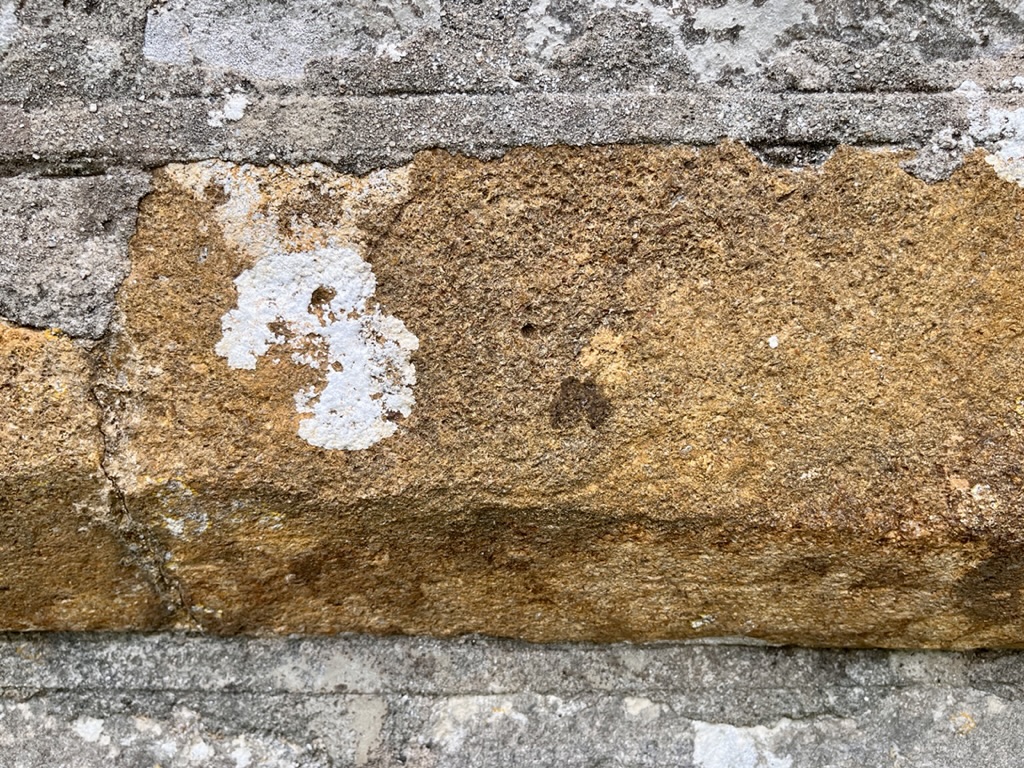
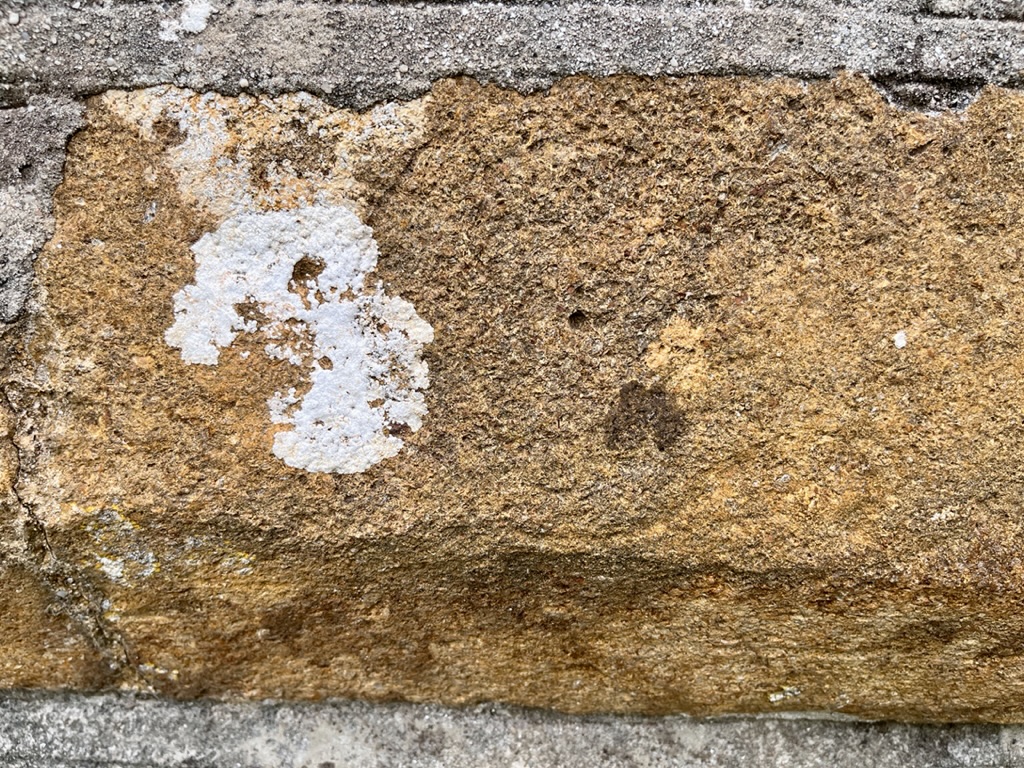
Quite high up at the W end of the S face is a very clear dial that I have not found recorded elsewhere. There are 7 lines, each ending in a pock and with the (presumed) 9-line having a second pock, doubtless the main Mass time. The reversion below shows how the design would have worked well as a morning dial.
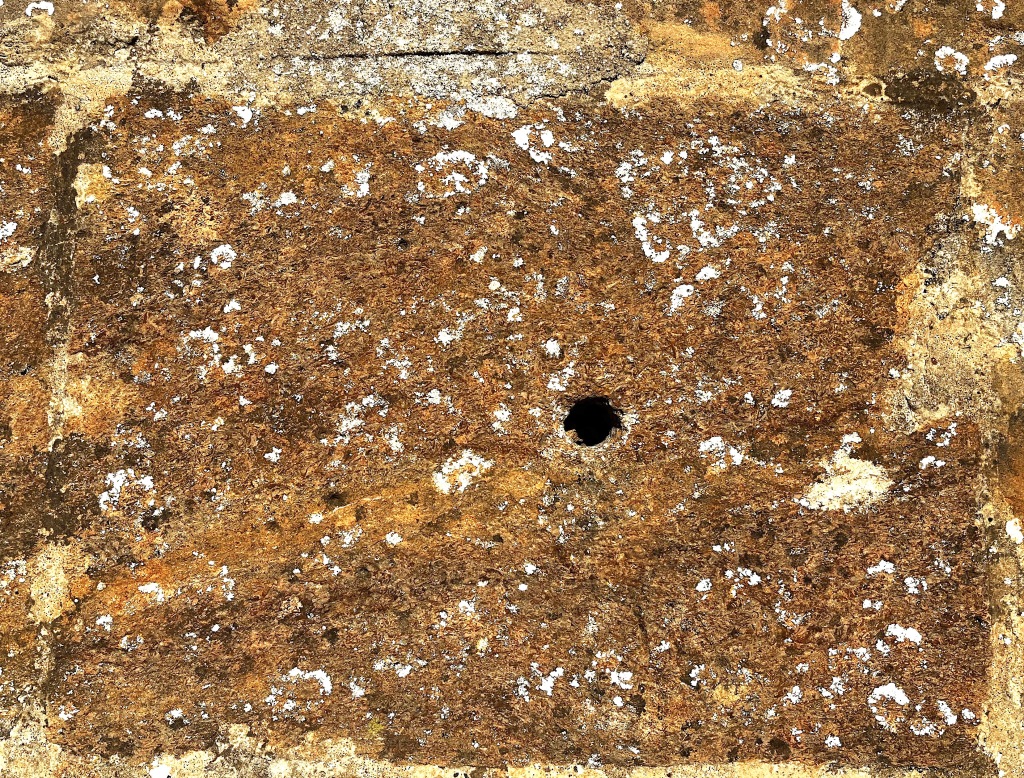
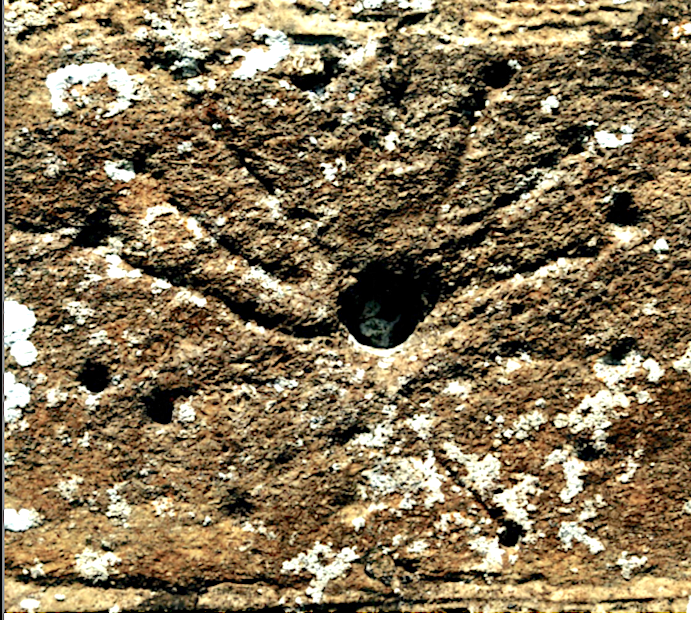
The most intriguing feature is the presence of (the remains of) a square rod in the style hole, with filler material round it. It seems highly unlikely to be original, though it may have been inserted many years ago perhaps as a replacement gnomon. A square rod in not so rare: there is one at St Mary, Glanvilles Wootton, for example.
Winterborne Monkton . St Simon & St Jude . Scratch Dial
Winterborne Monkton . St Simon & St Jude – Reverted Scratch Dial
✣
DIAL 3 ?
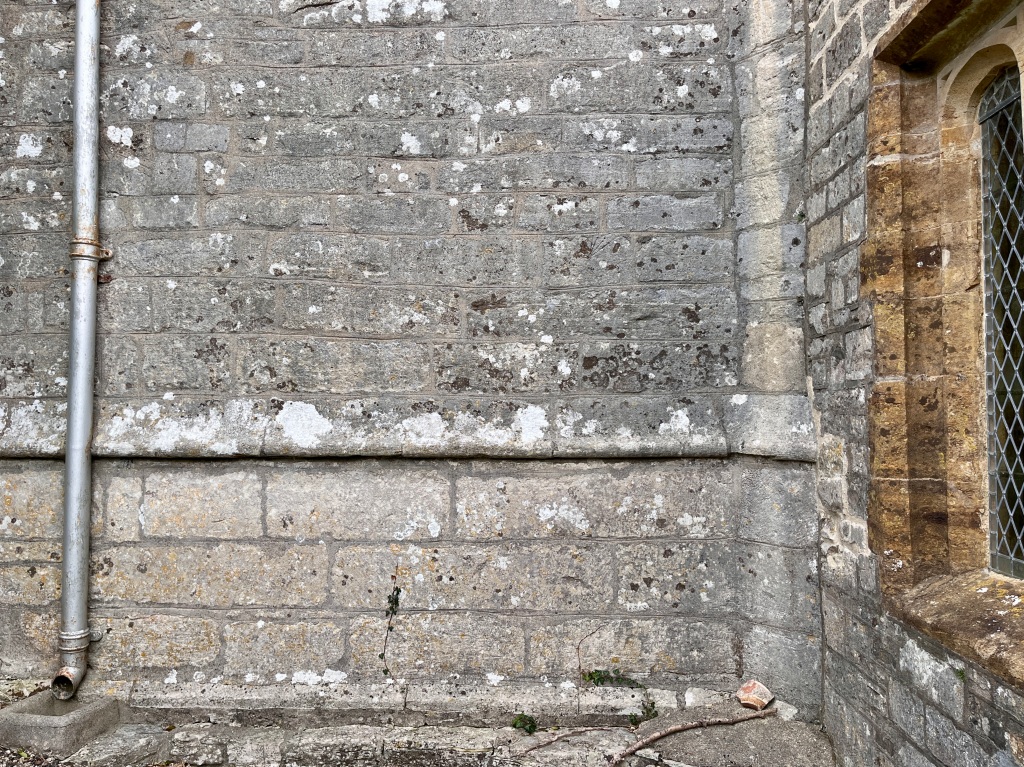
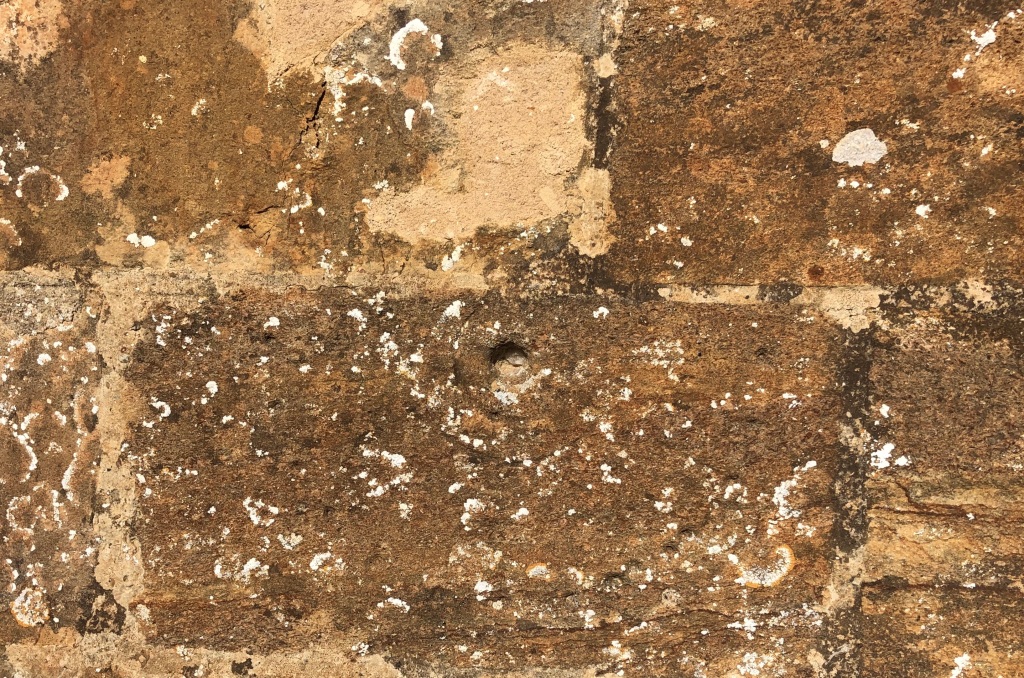
An excellent dial position, a hole almost central to the stone, and inverted (if a dial at all) as often the case where a dial has been superseded or its stone relocated. I have included a reversion that makes the upwards mark into a noon line. There are hints of perimeter pocks in LR quadrant.
Winterborne Monkton . St Simon & St Jude – Possible Scratch Dial
✣
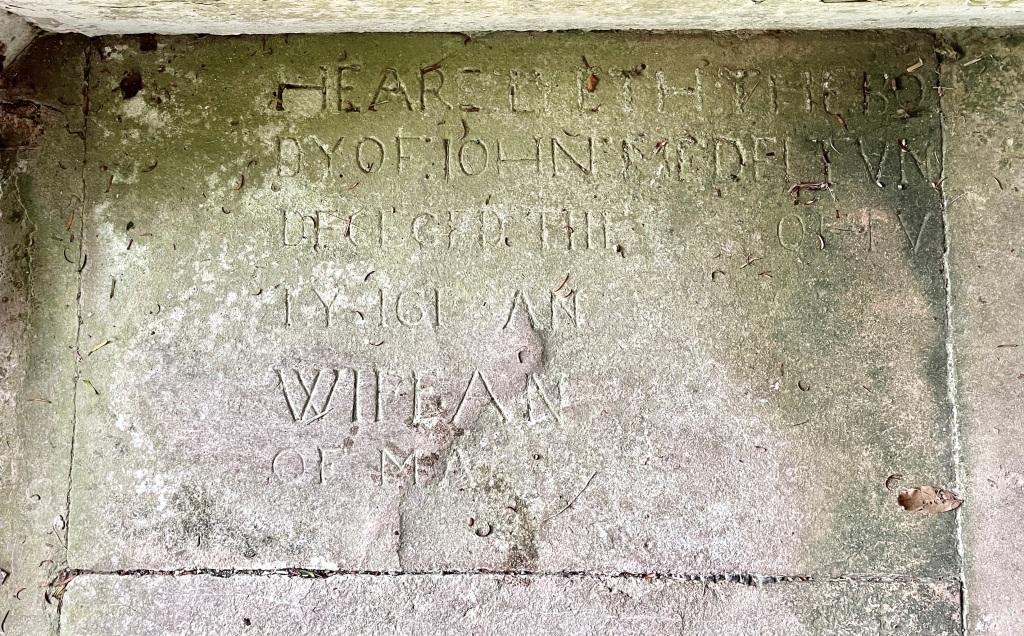
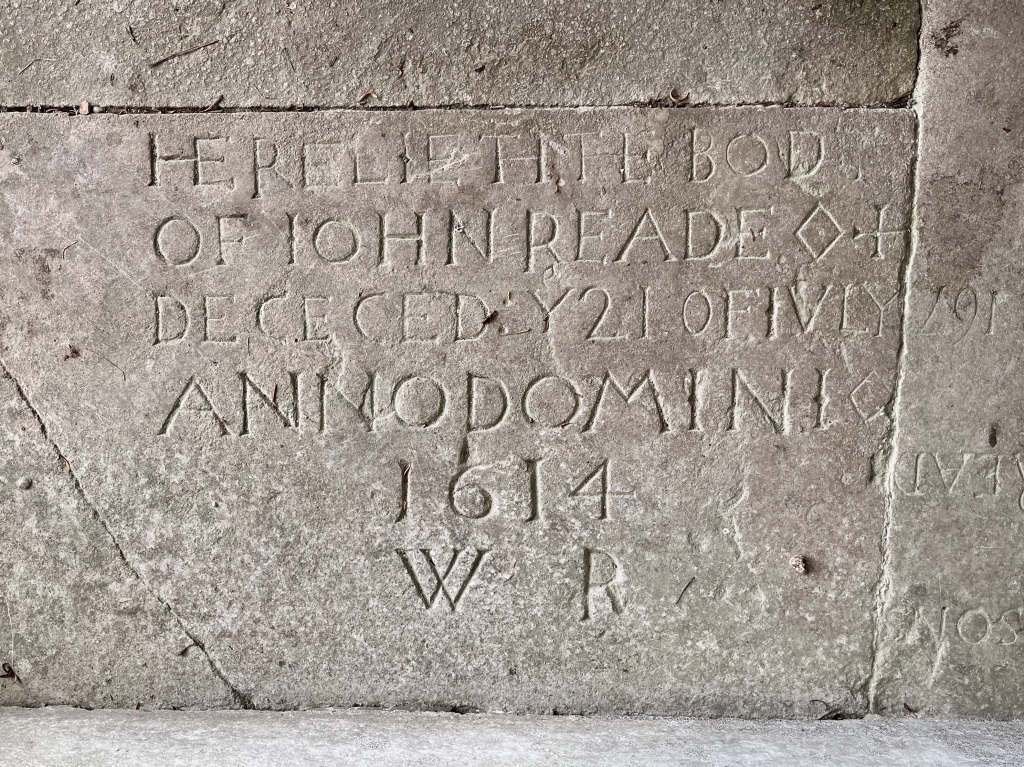
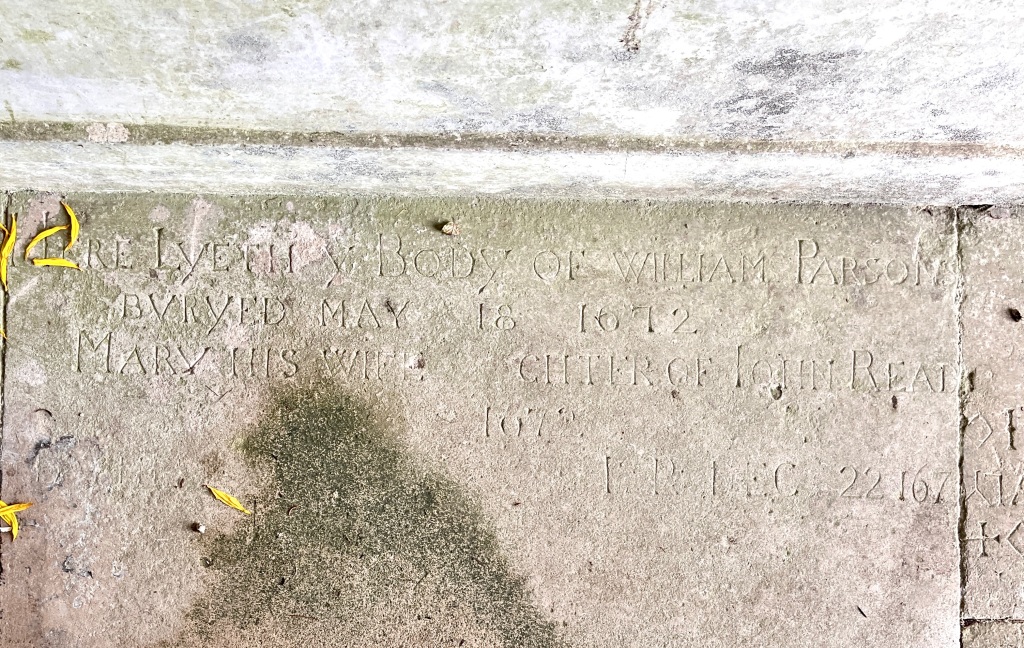
Finally, there are 3 fine C17 memorial floor slabs to admire
GSS Category: Scratch Dial; Mass Dial; Gnomon Rod; Masons’ Mark, C17 memorial floor slabs
All Saints Church . Rothbury . Northumberland – David Evans for CofE Heritage
ALL SAINTS ROTHBURY NORTHUMBERLAND
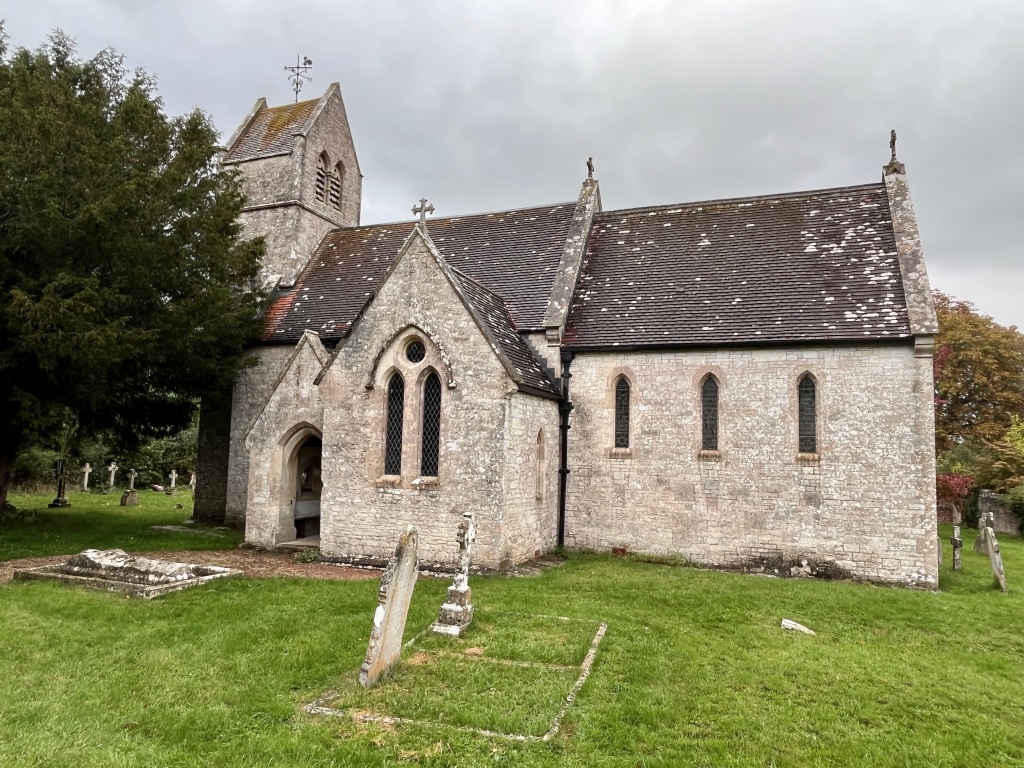
GRADE II* † On Pre-Conquest / Anglo-Saxon site. C13 / C14, rebuilding & restoration C19 (Pickering) in similar style. Located in Coquetdale with linked churches. 2 medieval scratch dials and further church details LINK. 12m SW of Alnwick, close to NT Cragside. 55.309 / -1.9106 / NU057016
CUBE SUNDIAL
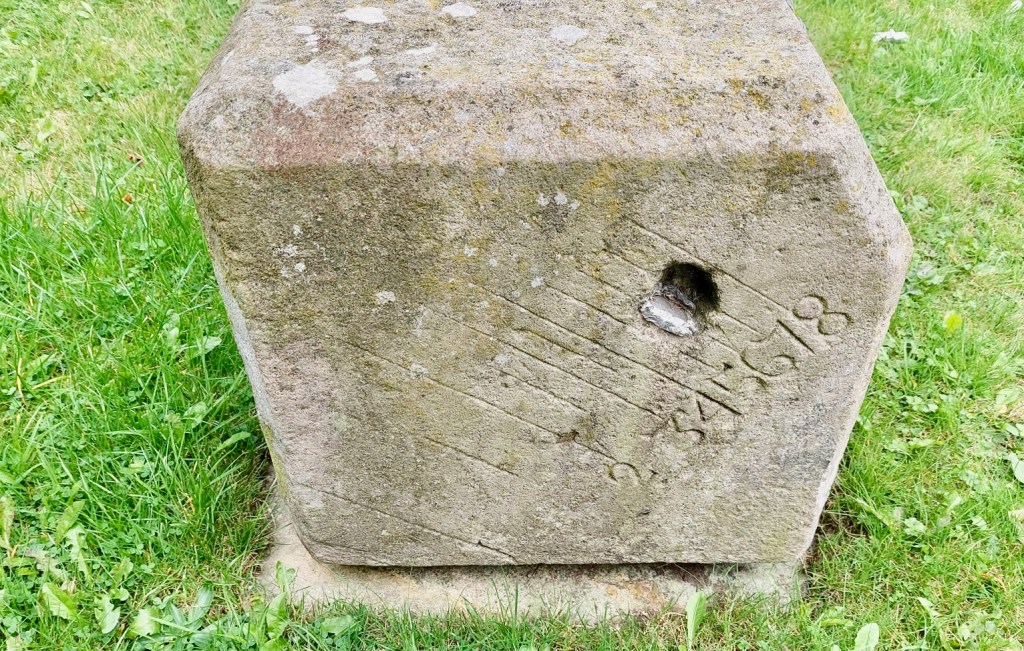
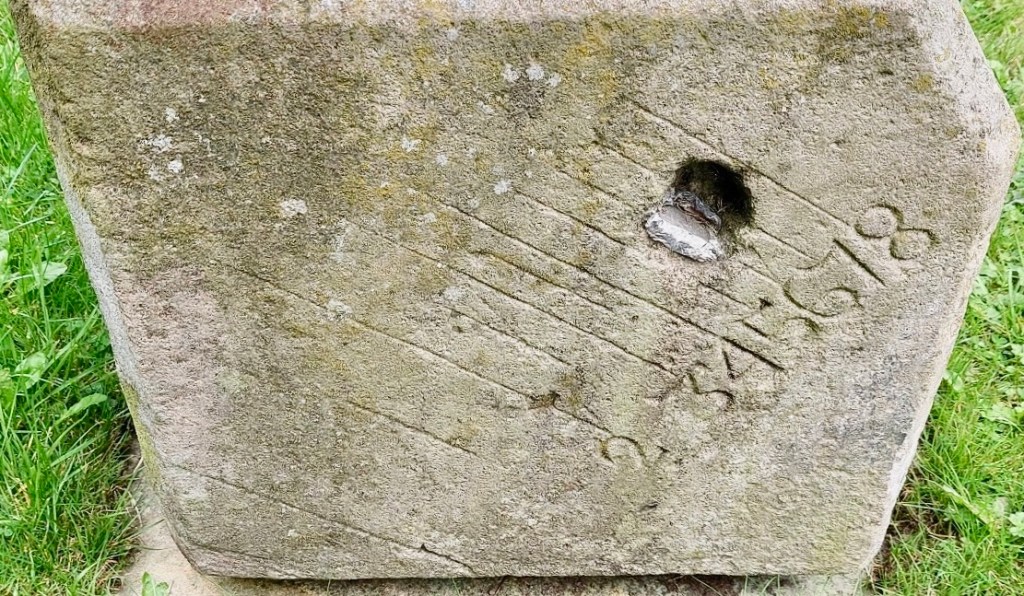
The cube (‘block’) sundial is on the ground in the churchyard, S side. Originally it was on the porch roof. Parish records show that it was once whitewashed, which cost 1s 9p in 1728. I have included 2 images of each dial face, the whole face and close-up.
BSS record: Main S face has date ‘1714’ and upright Arabic numerals 6 – 6. Hour and half-hour lines. Above is a polar dial with hours 8am to 4pm and a cross for noon. The dial, a substantial chunk of masonry, was most likely taken down from its original site aloft for safety.
FRONT FACE
EAST FACE
There is an excellent article about the THE ROTHBURY SUNDIALS in the Nov 1991 Clock Magazine (Pendulum Publications). The relevant parts relating to the cube dial are as clear and concise as anything I can devise:
A cubic dial which is said to have been situated on top of the old church porch, was lost after the demolition work of 1850 but was later found among the old grave stones and is now sited near the new porch entrance. It measures 18in by 18in by 19in and has four dials carved on its surfaces, one each on the east and west faces and two on the south face. The south face has the date 1714 carved into it and some remains of old writing between the numerals and crossed line at 12 noon.
An entry in the vestry accounts for the church in 1728 states that “For white lead and Lamb black for ye Sun Dial – 0 0 9, For Whitning and new drawing the lines and figures – 0 1 0”.
3. If, as the historians tell us, the sundial was on top of the old porch the dials would have been difficult to read, especially the upper south dial sloping as it does at an angle of 45 degrees and has the remains of what was a ½ in thick cast iron gnomon. It would be essential for the lines and figures of the south main dial to be well marked in order to be able to read it.
4. The remains of an angled style (gnomon) 1/8in thick made of cast iron and held in two places by lead filling are easily observed. The east and west styles were set into recesses, scooped out of the faces, and set at 90 degrees to the faces.
WEST FACE
This dial – and its history – is a most unusual one and I am grateful, as ever, to Erika Clarkson for her dial-hunting and photography skills and the resulting coverage of the midlands and the north of England that is well beyond my own territory in the west country.
GSS Category: Cube Dial
All photos by Erika Clarkson except header image of church, David Evans / CofE Heritage Record
GRADE II † C13th origins of which traces survive at the W end; substantial rebuilding 1860s by Wyatt. Set in peaceful countryside close to R. Frome. An excellent folder with details about the church and contents is kept in the church. Woodsford Castle / fortified house is nearby, the largest thatched building in England. 5m E of Dorchester 50.7143 / -2.3383 / SY762905
DIAL
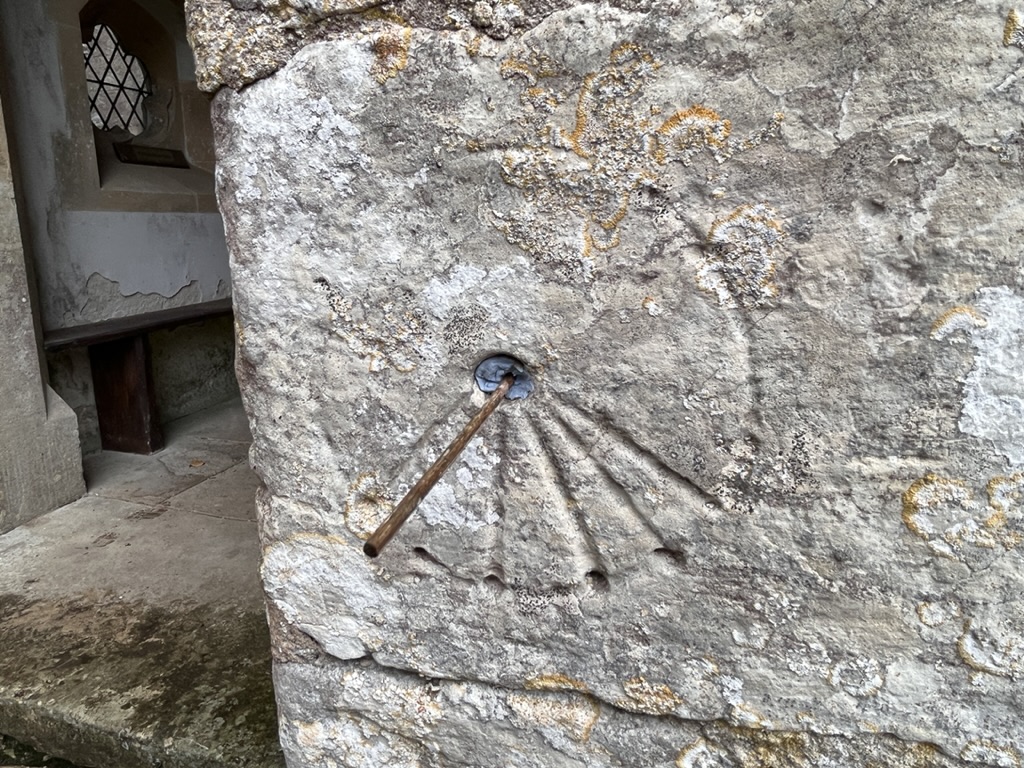
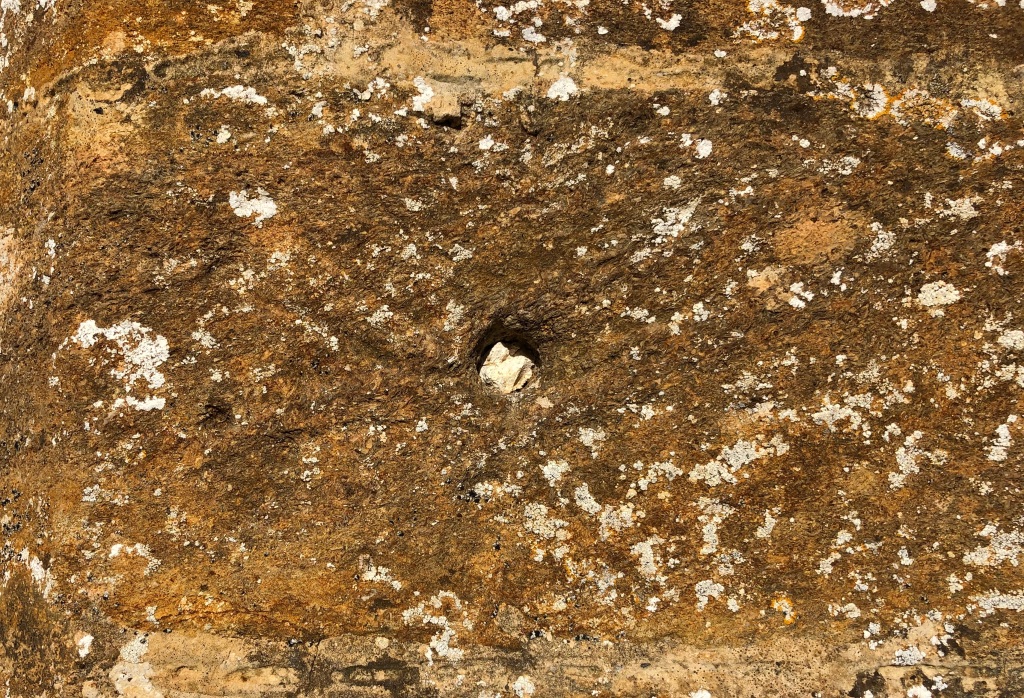
The single dial is just E of the entrance door, on the quoin of the S chapel. Plain and clearly cut. Now adorned with a slim metal rod bedded into blu-tack in the large gnomon hole (not quite as strange as the drill bit gnomon I found in Shropshire…).
St John the Baptist . Woodsford . Dorset – Scratch Dial
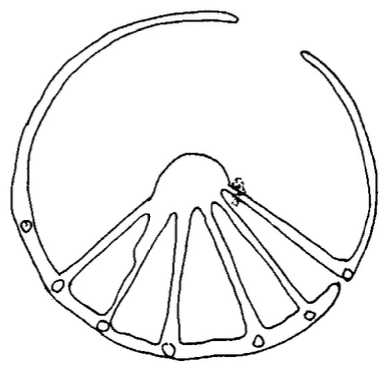
The dial has 5 clear lines descending from the gnomon hole to the lower perimeter of the complete circle. There are large terminal pocks and several other smaller pocks round the circumference that plausibly could be part of the overall design.
St John the Baptist . Woodsford . Dorset – Scratch Dial
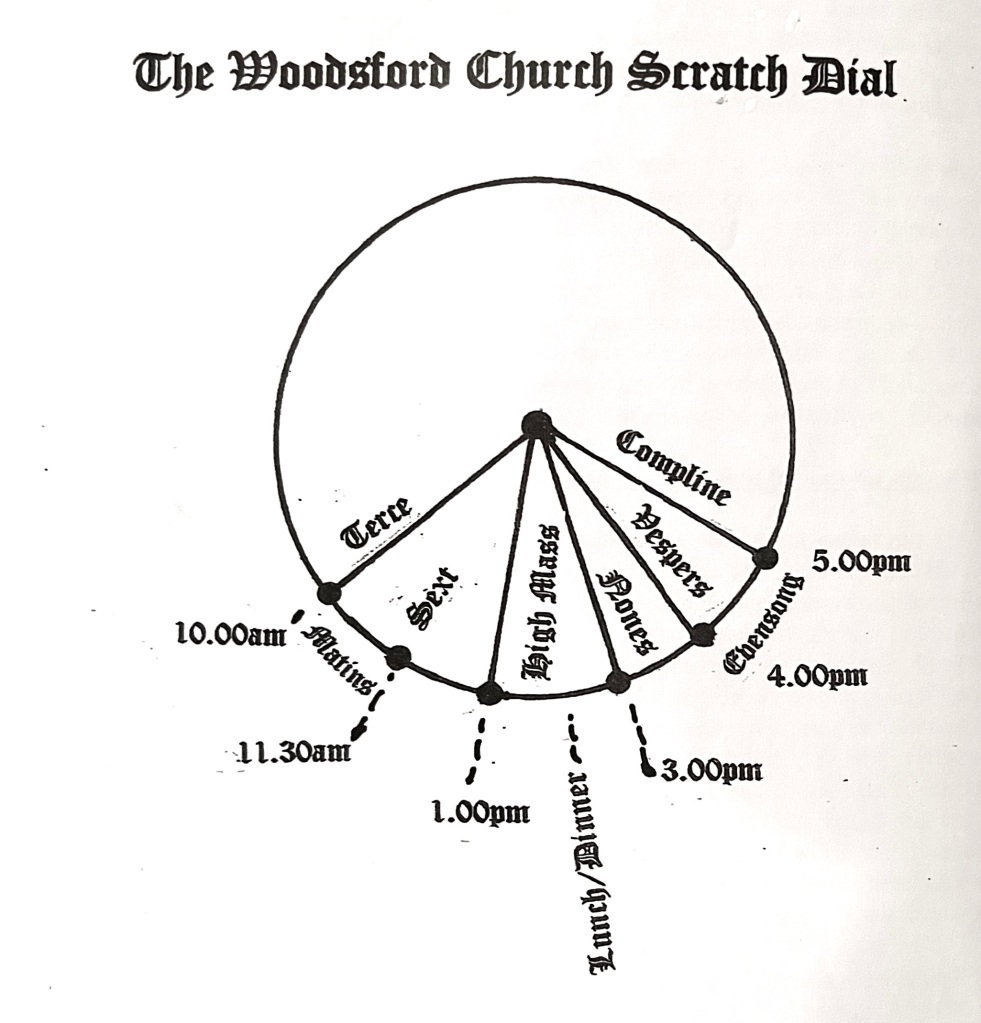
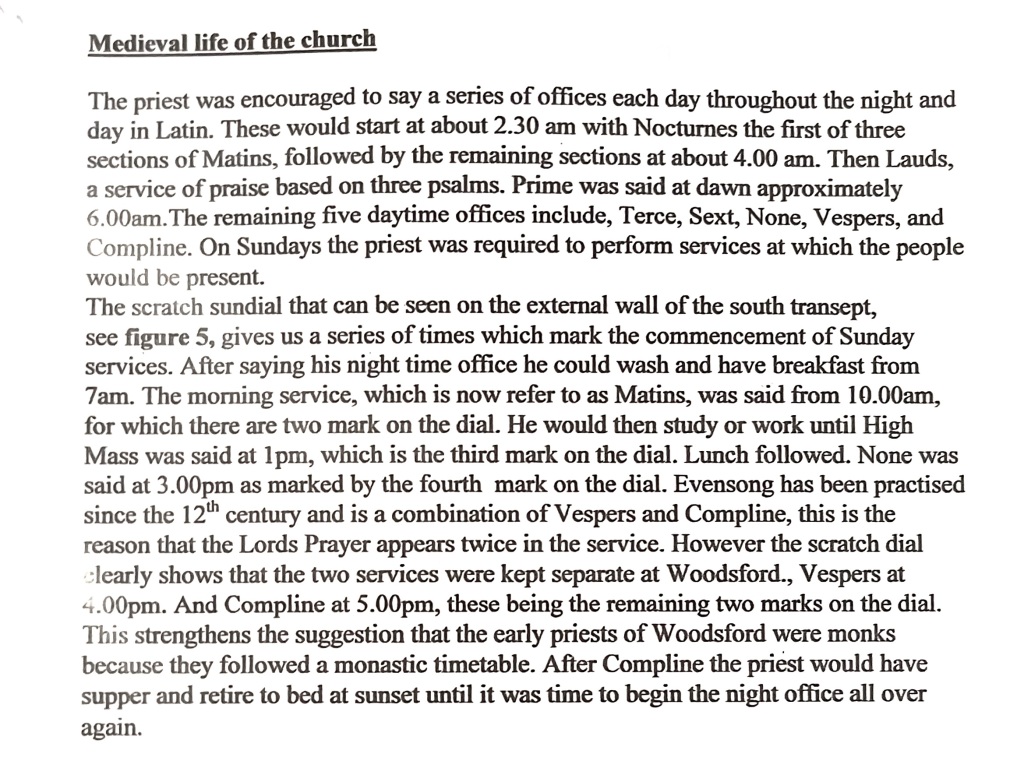
A most informative diagram with commentary explains the intricacies of the medieval day and the significance of the passing hours between dawn and dusk. You can find more on this topic HERE but the material below provides a good straightforward overview.
Woodsford . BSS Diagram
GSS Category: Scratch Dial
All photos Keith Salvesen; Dial Diagram and Explanation courtesy of the Church
GRADE I † C13 nave, chancel, S porch inc outer archway. C15 alterations & additions – chapel, tower. Restored 1885. 2 Purdue bells. 4m W of Sherborne and E of Yeovil. 50.9532 / -2.5732 / ST598172
DIALS
There are 3 dials beside the porch doorway, 1 on the left side and 2 on the right. The intricacies of the dials are clearer from the BSS archive photos and diagrams compared with my photos, taken in bright sunlight and not picking up the details.
DIAL 1
South Porch L of doorway. 13 lines, with the noon line extended, and 23 pocks. The diagram suggests 1, perhaps 2, mid-morning Mass markers. GLP points out that the lines are below the horizontal whereas almost all the pocks are above it; and that the design is accurate.
St Nicholas . Nether Compton . Dorset – Scratch Dial 1
DIAL 2
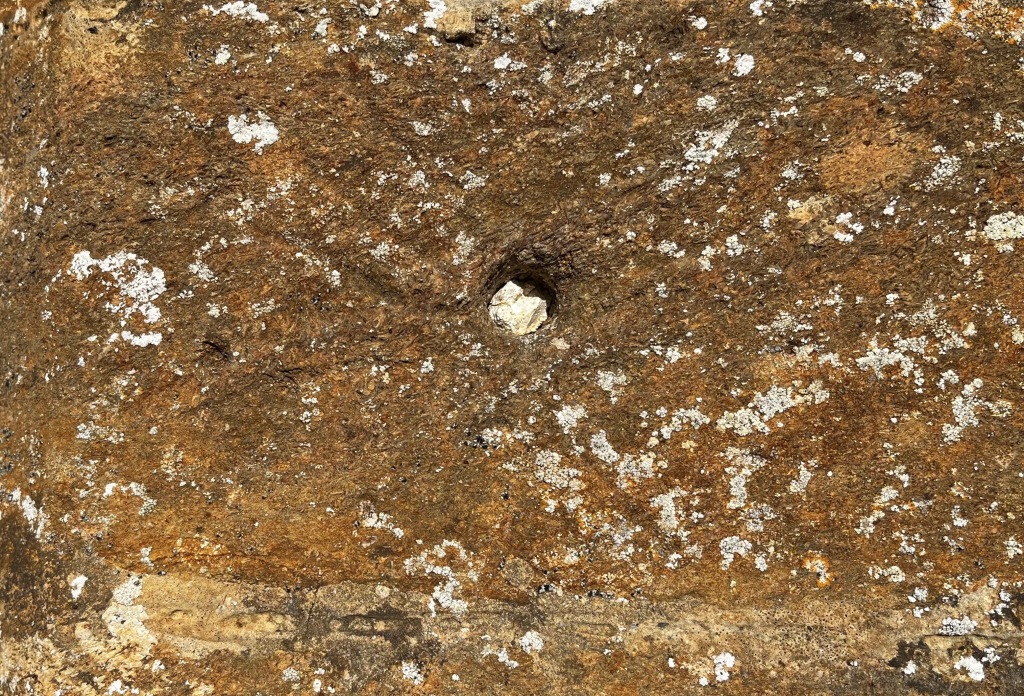
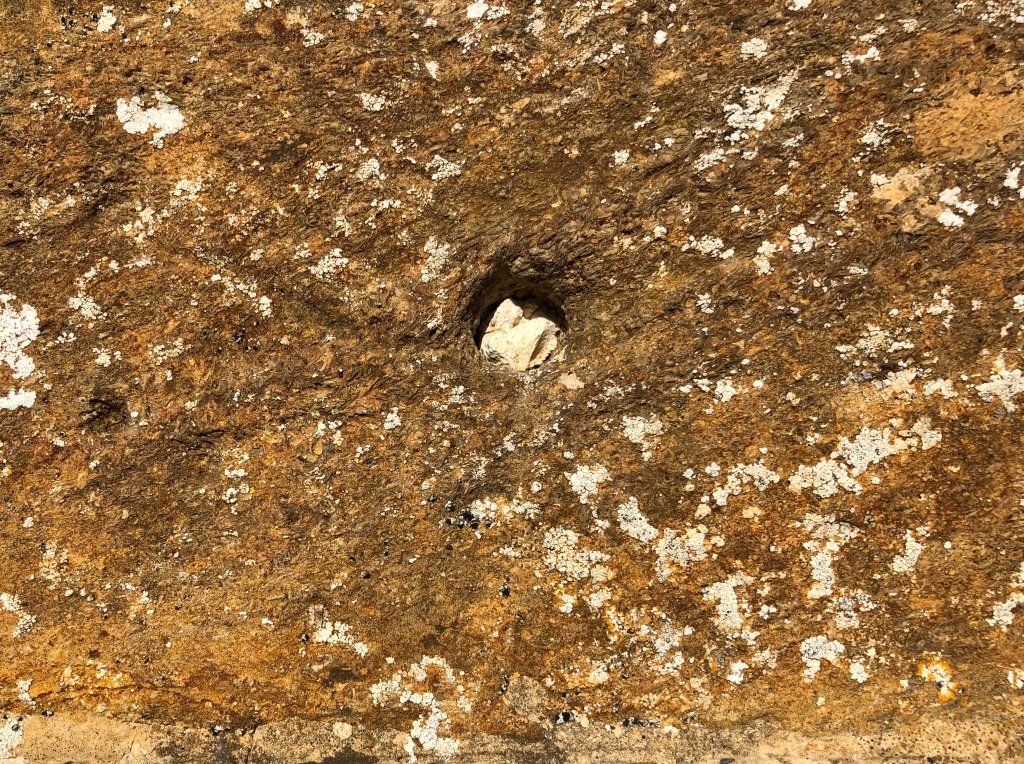
South porch R of doorway. Despite the extended ‘noon line’ (as it appears), the dial must in fact be upside down. If not, it can’t have had any practical use. 10 lines with very variable angles and 12 pocks. GLP describes it as crudely cut as a tide / octaval dial. The white item is a stone, which was in place when I originally saw the dial, and still 18m later. I left it in peace.
St Nicholas . Nether Compton . Dorset – Scratch Dial 2
DIAL 3
A semi-circular dial with 13 lines, almost all of which end pocks. There is a complete inner circle round the gnomon hole, with semi-circle outside it. GLP found the dial to be accurately cut.
St Nicholas . Nether Compton . Dorset – Scratch Dial 3
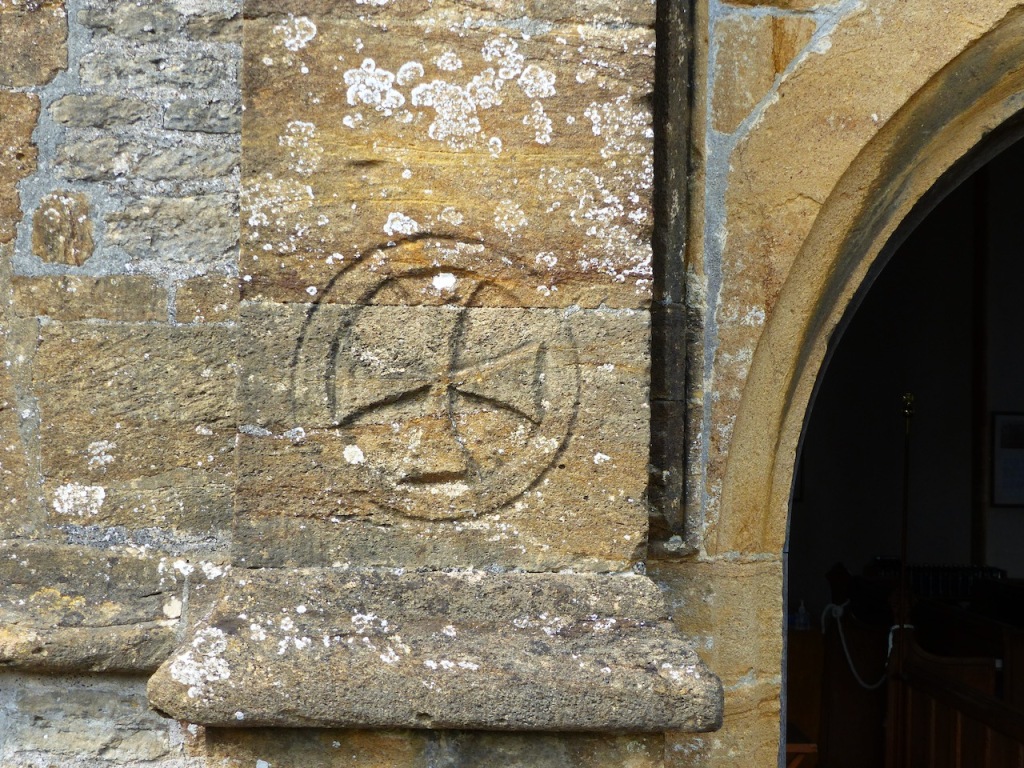
On chancel—(a) on external S. wall, W. of S. window; on N. chapel—(b) on N. external wall, W. of N.E. window, reset; on nave—(c) on external N. wall, between N.E. window and doorway; (d) on E. splay of N. doorway; (e and f) on E. jamb of S. doorway, two crosses; (g) on E. splay of S. doorway; (h) on E. splay of S.W. window; on W. face of tower— (i) against N. buttress; all formy crosses in circles except second on jamb of S. doorway, mediæval (BLB)
St Nicholas . Nether Compton . Dorset – Consecration Cross
GSS Category: Scratch Dial; Consecration Cross
All photos Keith Salvesen + BSS archive (also diagrams)
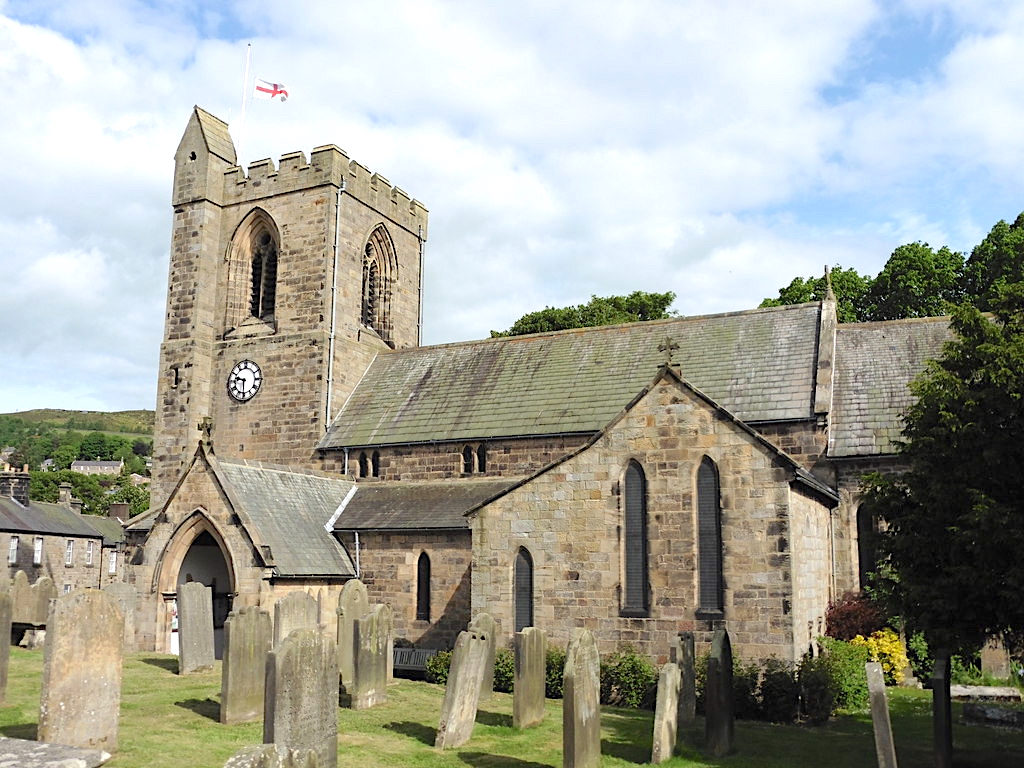
All Saints . Rothbury . Northumberland (C of E Heritage Record / Dave Evans)
ALL SAINTS . ROTHBURY . NORTHUMBERLAND
GRADE II* † On Pre-Conquest / Anglo-Saxon site. C13 / C14, rebuilding & restoration C19 in similar style. Located in Coquetdale with linked churches. 12m SW of Alnwick, close to NT Cragside. 55.309 / -1.9106 / NU057016
DIALS
There are 2 dissimilar scratch dials on the church, and an intriguing cube dial (shown below and will feature as a separate post in the Cube Dial section) on the ground in the Churchyard.
DIAL 1
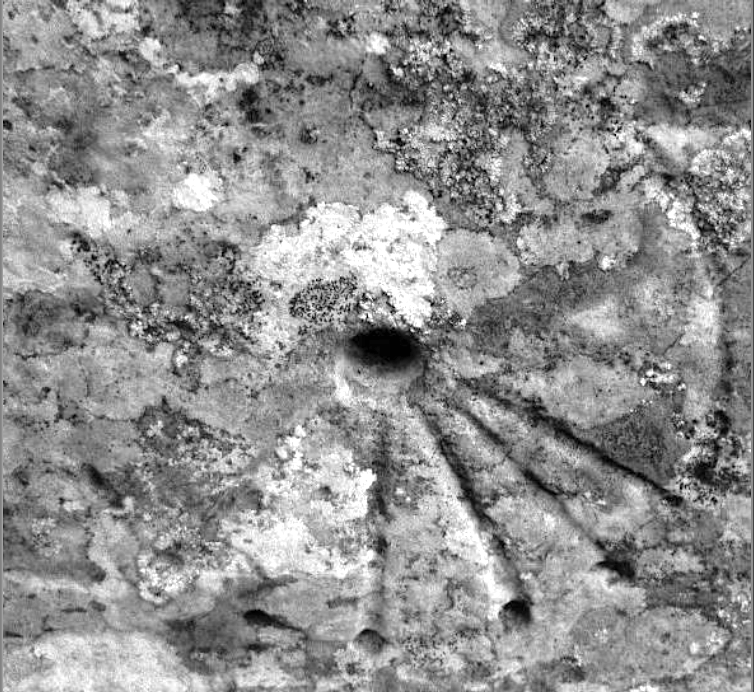
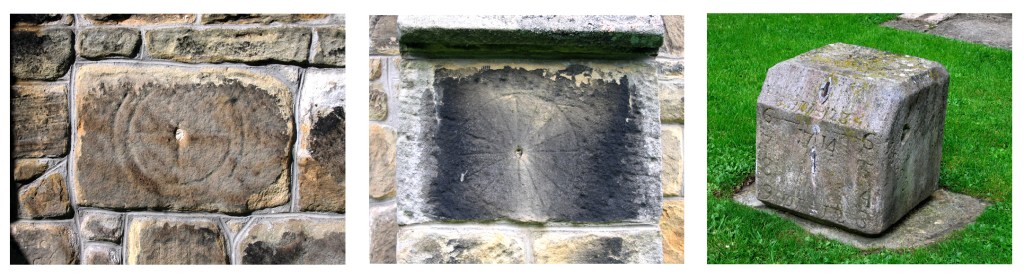
Located on the E-most buttress of the S wall of the chancel. Quite a large dial centred in its stone, with a blocked gnomon hole. There are 16 lines, encircled and fairly evenly spaced. This makes the dial out of kilter with the normal time interludes. BSS notes that instead of the 15º angles usual for this type of dial with 24 lines, they are more like 22º here.
Between the 2 E-most buttresses of the S wall of the chancel. Only 3 lines radiate from the filled gnomon hole (incomplete quadrant markings): the horizontals (6-to-6) and a shorter noon line. BSS notes that in 1903 a vertical line above the hole was recorded, and so the design once had 4 quarters / sectors. The dial is contained within a double circle.
The Parish of Upper Coquetdale has an interesting page about All Saints, its history, and its various features HERE
Pendulum Publications has an excellent and detailed article about the Rothbury Dials – including the C18 cube – HERE Highly recommended if you want to investigate this church and its dials further, and medieval ‘clocks’ generally. It was originally published in Clocks Magazine of November 1991.
All Saints . Rothbury . Northumberland – Keith Bates / Clocks Magazine 1991; Pendulum Publications
GSS Category: Scratch Dial; link to Cube Dial
Image Credits: Erika Clarkson for the photos from her visit; others as captioned
GRADE I † C13 origins: masons’ marks on the fabric date from C13 and are identical with some found at Wells cathedralBHO. Development mainly C15 (tower) and C16, with C19 work by Wyatt and later attention. Poulett family much in evidence. Good graffiti / protection marks. Fine gilded weathercock dated to 1756. 4m N of Crewkerne . 50.9107 / -2.8286 / ST418126
DIAL
Hinton St George Church . Som – Scratch Dial
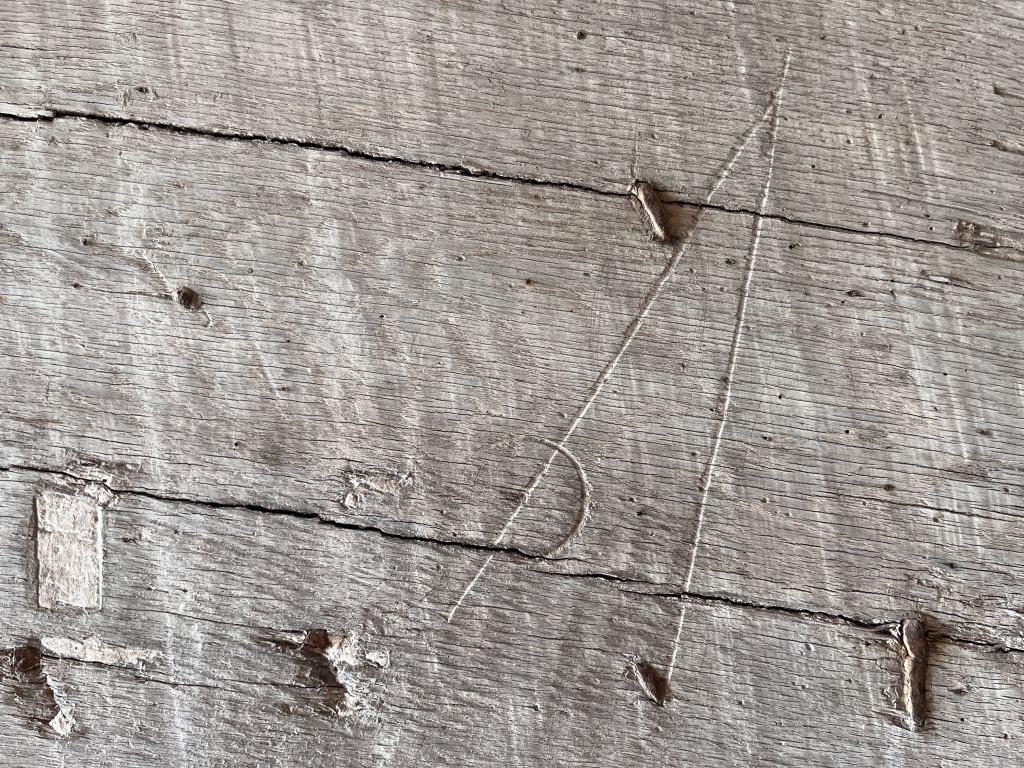
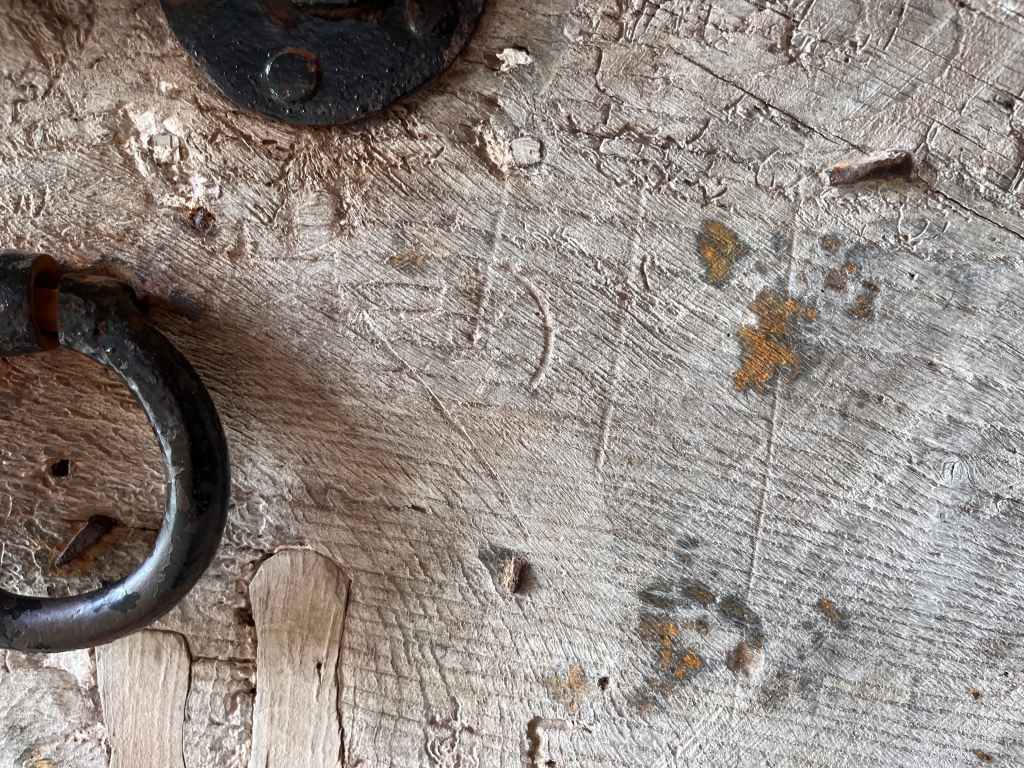
A single scratch dial tucked away on the W side of a buttress, and of doubtful value as a time marker, both for position and orientation. There are 4 lines with terminal pocks on the left side; and a single pock at the top (ie midnight). The gnomon hole, already quite big, has been crudely enlarged – and quite recently, by the look of it.
Hinton St George Church . Som – Scratch Dial
An explanation for the unpromising location and the unsatisfactory design is that the dial was relocated at some stage, perhaps when the tower was built (and the buttress added?). It is far from unusual for a dial reused in this way to be inverted, as if decommissioning it. An inversion of the image above makes far more sense, with the noon line marked by a single pock, and the radials to its right. An afternoon dial.
Hinton St George Church . Som – Scratch Dial (inverted)
GRAFFITI & APOTROPAIC SYMBOLS / PROTECTION / MARIAN MARKS
Graffiti & Apotropaic Symbols / Protection Marks / Marian VV Marks
St Nicholas . Dinnington . Som. (Geo / Sarah Smith )
ST NICHOLAS . DINNINGTON . SOMERSET
GRADE II † Established C12, first recorded 1207; mostly C15; restoration 1863. C13 (?) font. Originally the chapelry to nearby Seavington St Mary. Very pretty, both the building and the dial. 5m NW of Crewkerne. 50.9113 / -2.8505 / ST403127
DIAL
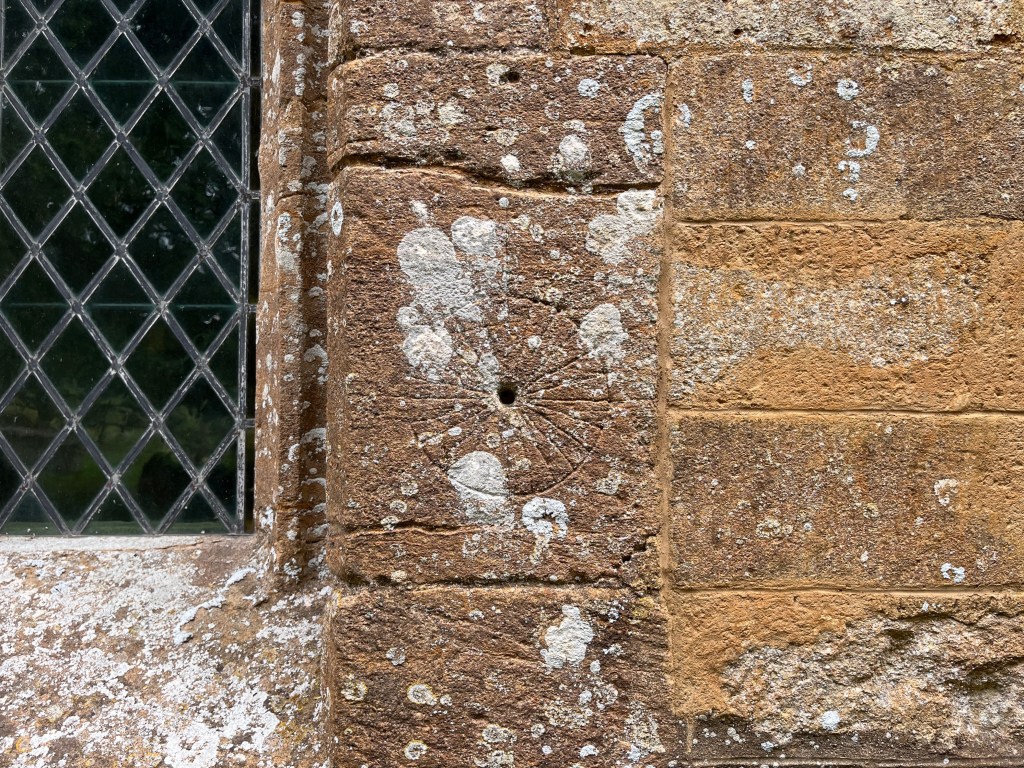
St Nicholas . Dinnington . Som. – Scratch Dial
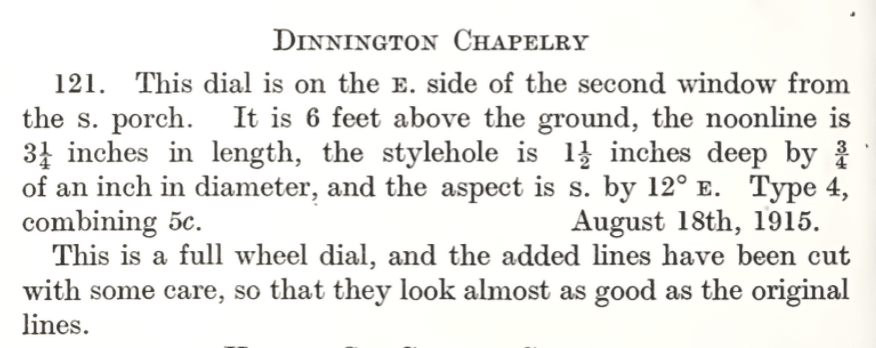
DEH visited in August 1915 and added a note to his often largely measurement-based record.
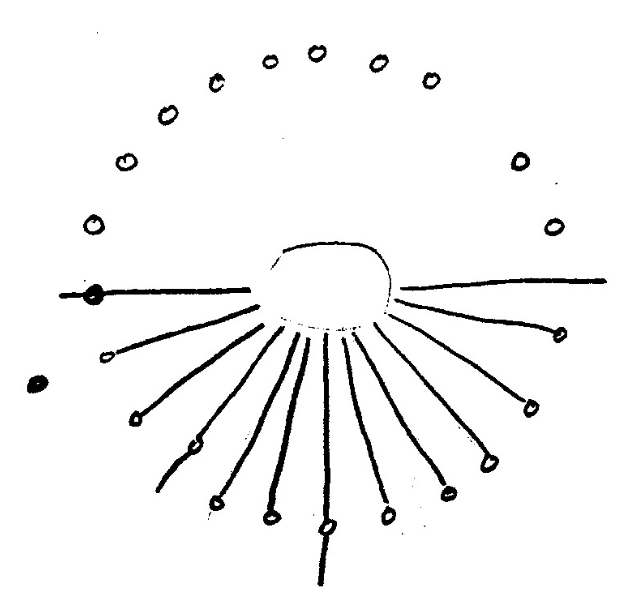
There is a full complement of 24 lines, with areas of erosion, radiating from the gnomon hole in the centre of the dial stone. I am not clear which added lines DEH refers to. I infer that the dial may have been a hemisphere marking dawn to dusk only from the horizontal 6-to-6 lines. Then perhaps for reasons of aesthetics / symmetry an upper hemisphere was cut to match it.
St Nicholas . Dinnington . Som. – Scratch Dial and 180º rotation
There’s another conundrum concerning the 4 terminal pocks in UR quadrant (above). If the dial is in its original position (L), they would have been useless and indeed pointless. But if the dial stone was at some stage at 90º or (more likely and convincingly) 180º from its present position, they would be effective as daytime Mass markers. In the rotated image (R), the pocks are in the right place to emphasise forenoon Mass.
GSS Category: Scratch Dial; Mass Dial
All photos: Keith Salvesen, except header image Sarah Smith / Geo /
DEDICATION † ST ANDREW . Parish church. Late C13, consecrated 1312, completed C15, restoration from C19. A ‘major church’PEV. A good place to find out more is the RCHM entry ST ANDREW YETMINSTER. Carefully compiled church and Parish Archive. 10 Consecration Crosses from medieval to (relatively) modern. An important very early (1683) clock, now in restoration (see below).
LISTING † Grade 1
LOCATION † 5 miles SW of Sherborne, / SE of Yeovil. Noteworthy village easily accessed. Fine vernacular Ham stone buildings give the feel of an earlier era. Many listed buildings. Village also highly regarded by PEV. Station in village (not, as elsewhere locally, a wayside halt). Etiminstre in DB 50.8939 / -2.578 / ST594106
DIALS † Two dials on the buttress E. of S door, both C15
DIAL 1
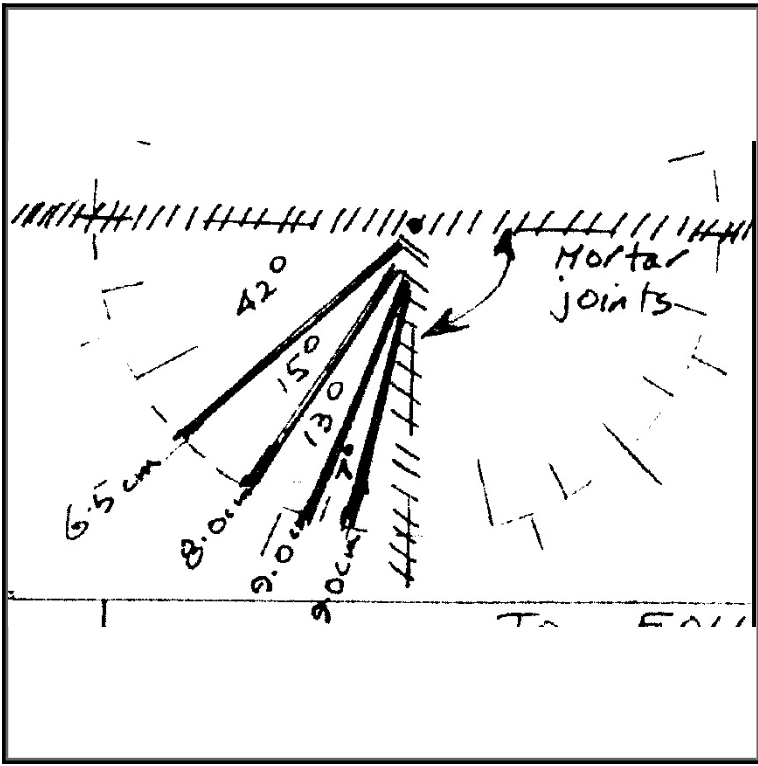
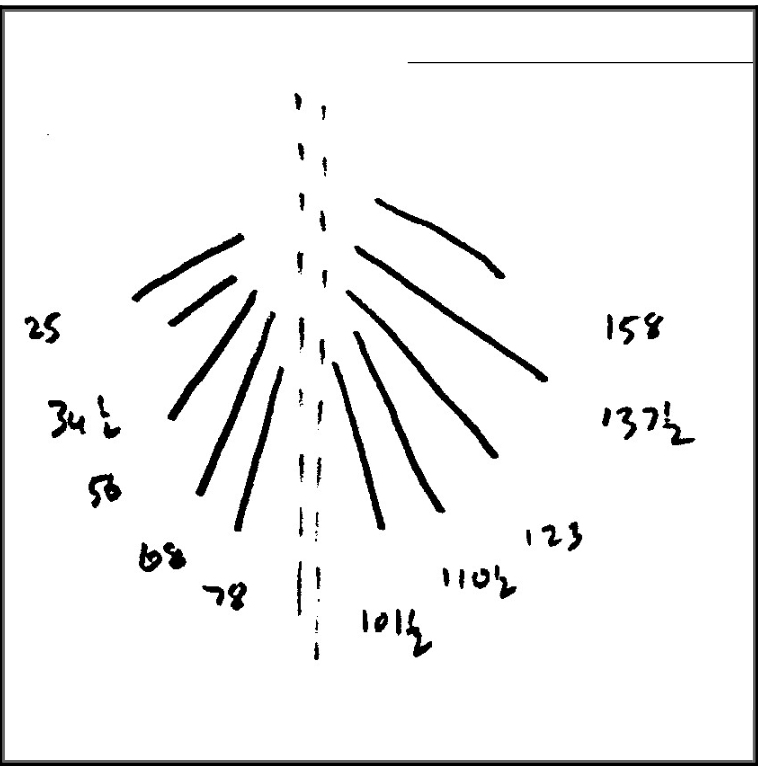
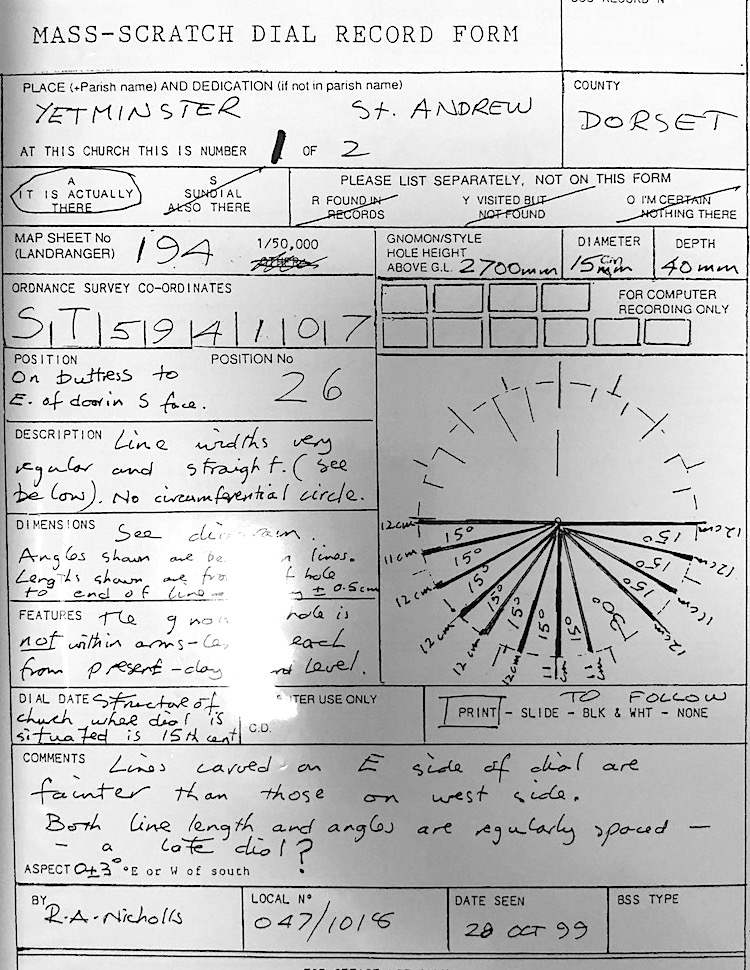
A semicircle dial with 13 lines (including the horizontal). BSS notes no circumferential circle. The noon line is extended, and 4 others end slightly beyond the circumference . GLP describes it as very neat and accurately marked. Both dials have been thoroughly examined – clips of the original records from the excellent church archive are below.
St Andrew . Yetminster . Dorset – Scratch Dial 1
St Andrew . Yetminster . Dorset – Scratch Dial 1St Andrew . Yetminster . Dorset – Scratch Dial 1
DIAL 2
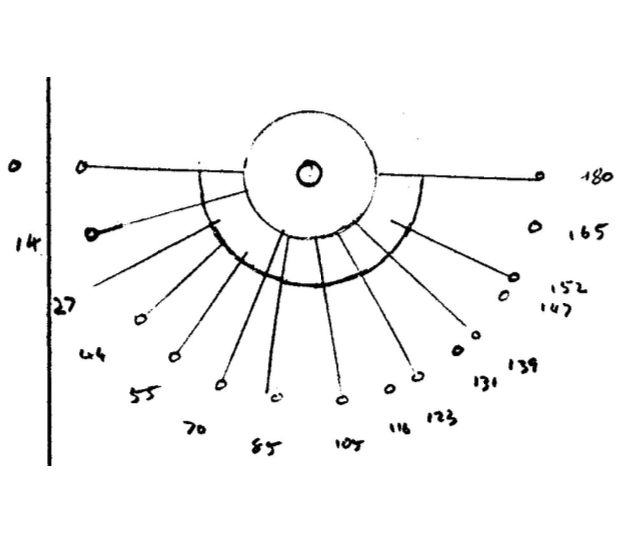
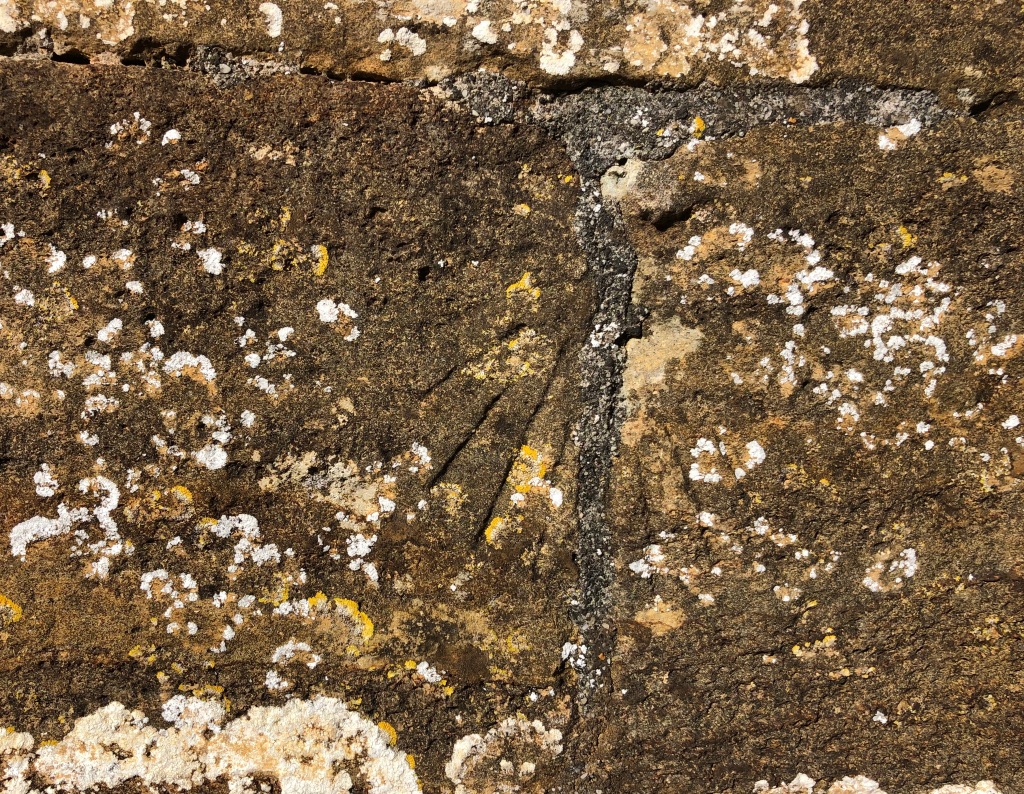
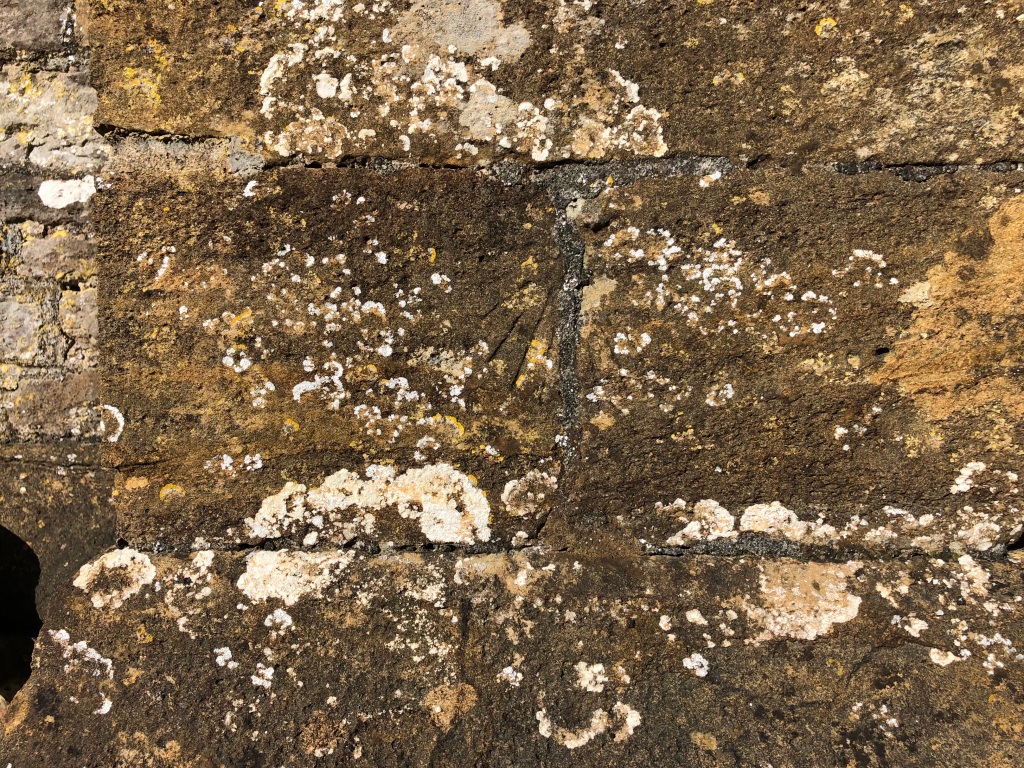
An unusual rather drooping design, explained below. Gnomon hole in the mortar line. The dial is split across 2 stones by a vertical mortar line. There are 11 lines, if one includes the mortar joint as the vertical / noon line. The lines RHS are badly eroded.
GLP noted that this dial is of particular interest as the angle of the lines suggest that it may be an early Scientific Dial. Comparing the lines with the correct angles for the latitude only one of the lines is more than 4º out. A further even more technical conclusion is that to function this dial would have needed a gnomon at an angle of 39º to the wall. This evidences an advance from earlier dials where the gnomon was simply inserted into its hole straight rather than angled.
St Andrew . Yetminster . Dorset – Scratch Dial 2St Andrew . Yetminster . Dorset – Scratch Dial 2
CLOCK † The historic faceless pendulum clock (1683) is being restored at the moment. I am writing the day after the Queen’s death, and by coincidence the clock has a specific significance: The Clock carillon plays the National Anthem at 3-hourly intervals. This dates from 1897 when it was installed by local benefactors for Queen Victoria’s Diamond Jubilee, and is very rare, and possibly unique. For the Platinum Jubilee of HM The Queen this year, the carillon was operated manually to ring out as part of our Jubilee Celebrations.
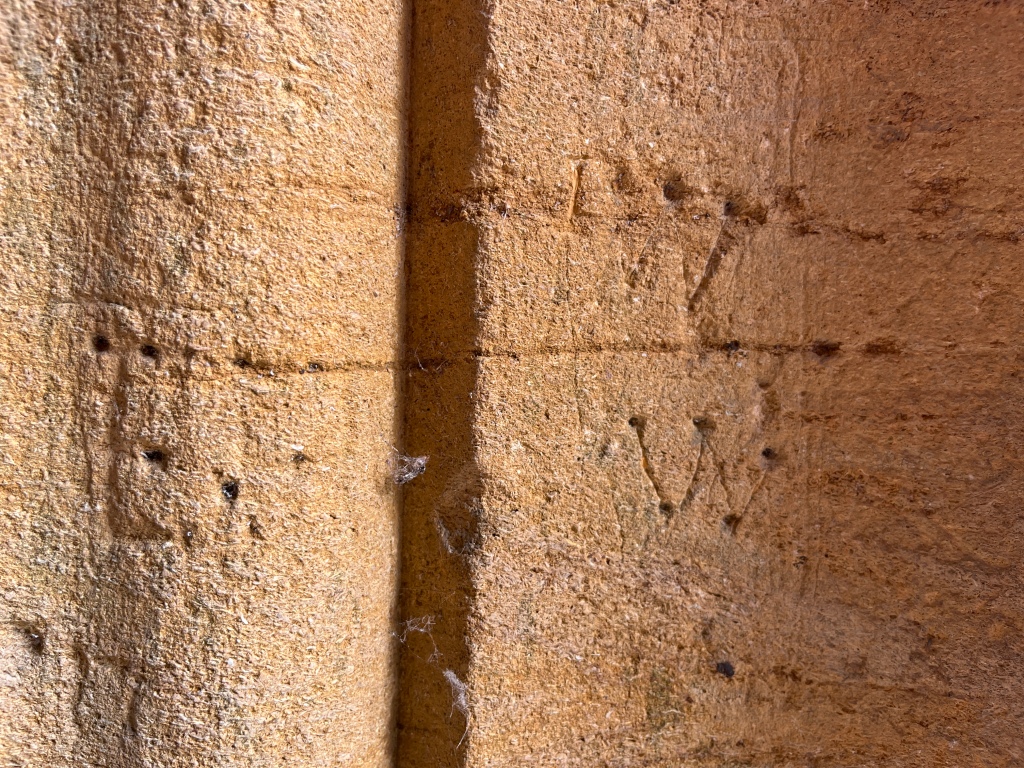
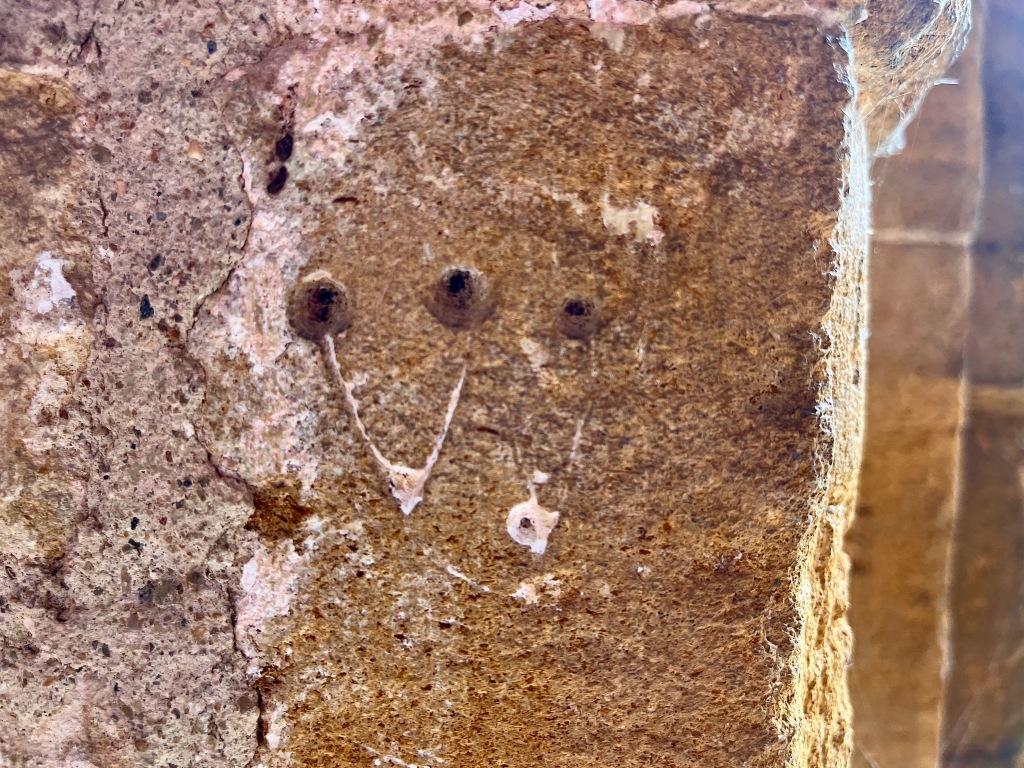
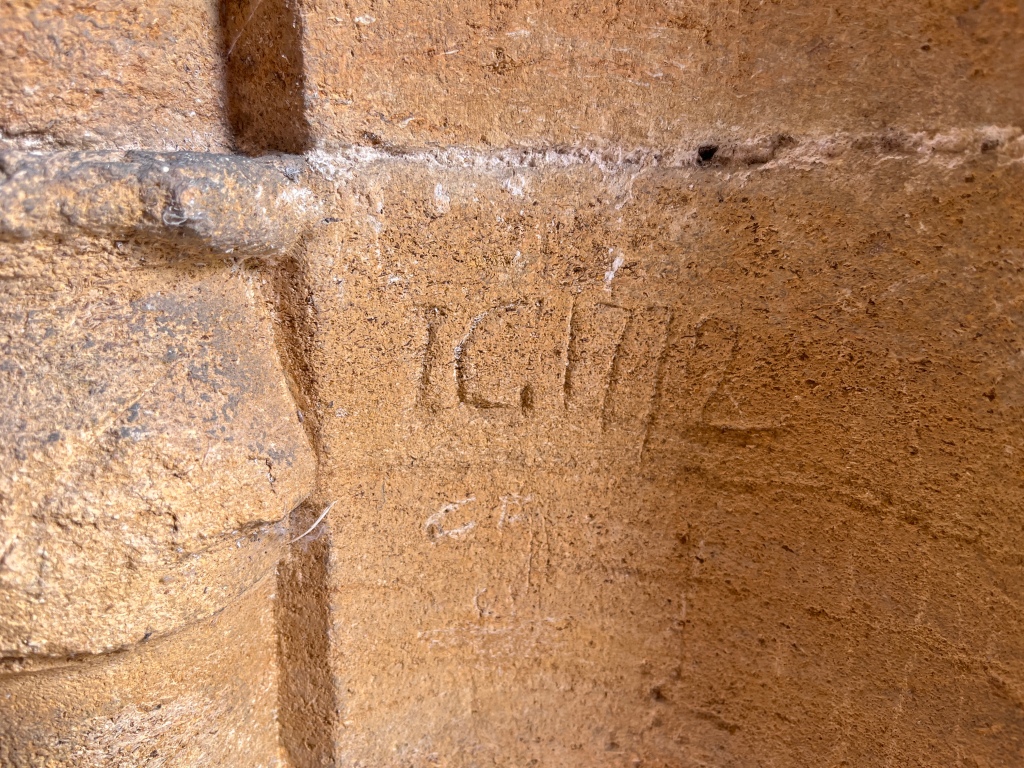
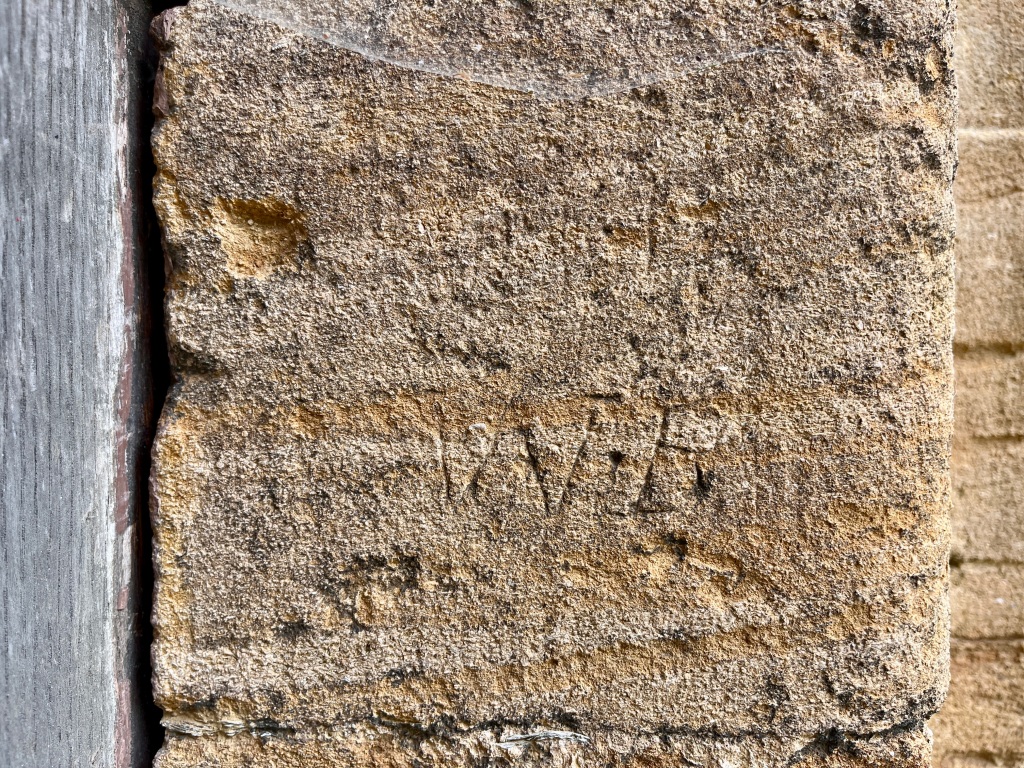
NOTES † 10 ‘formy’ Consecration Crosses in sunk round panels on external wall-facesBHO (locations specified); C10 Saxon cross shaft fragment; faceless clock of interest; good hunky punks. Links with Robert Boyle (chemistry, founder of the school) and Benjamin Jesty (smallpox); quite a lot of external graffiti – initials, dates and some Marian (‘witch’) marks
St Andrew . Yetminster . Dorset – Hunky PunksSt Andrew . Yetminster . Dorset – Consecration Crosses
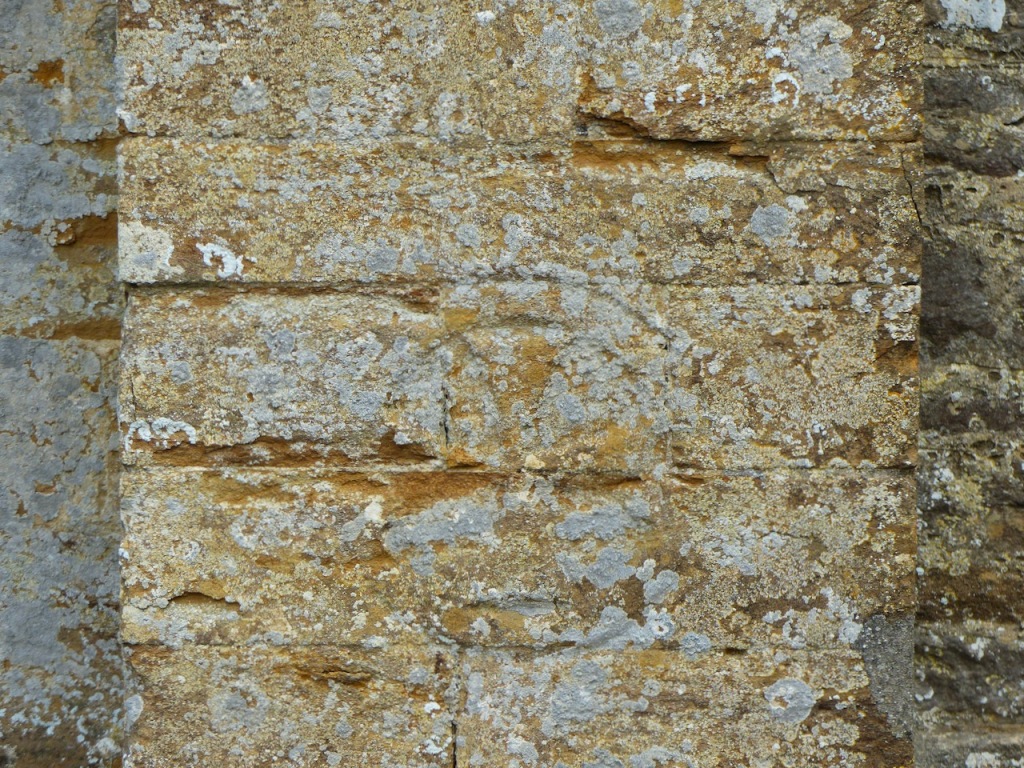
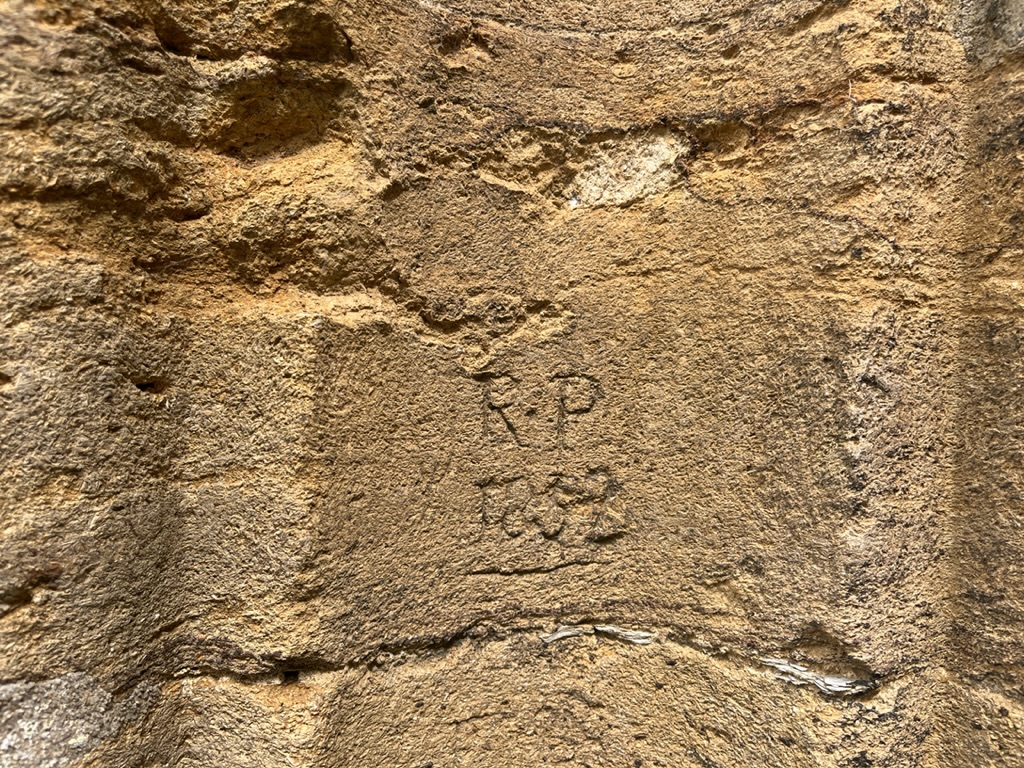
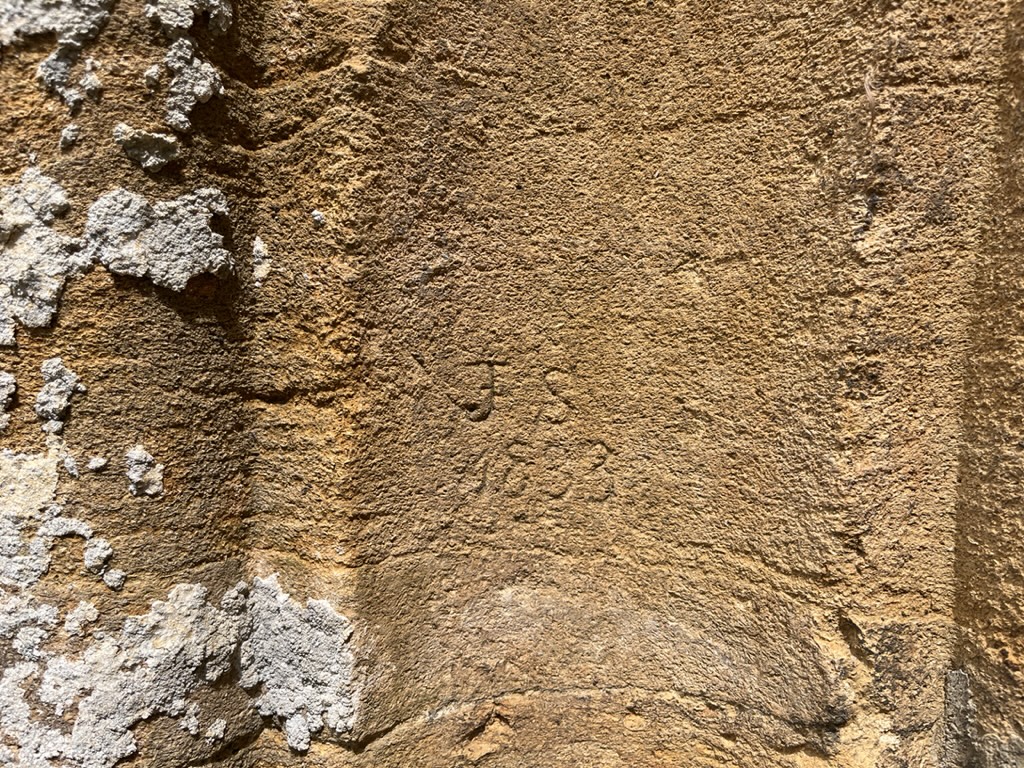
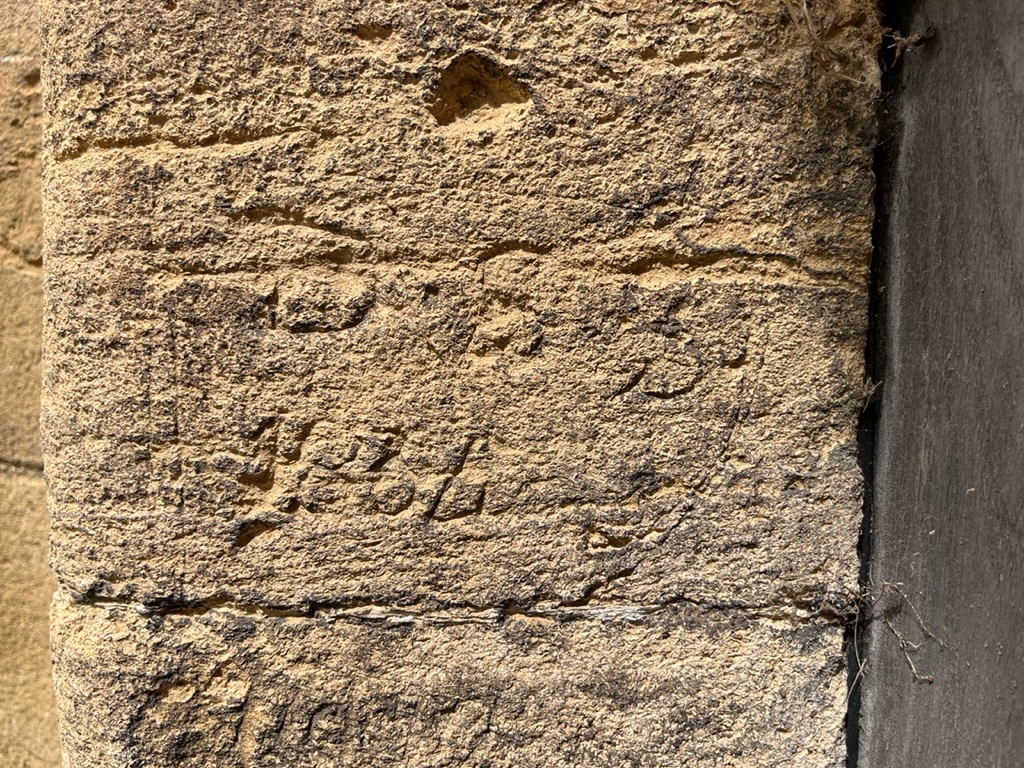
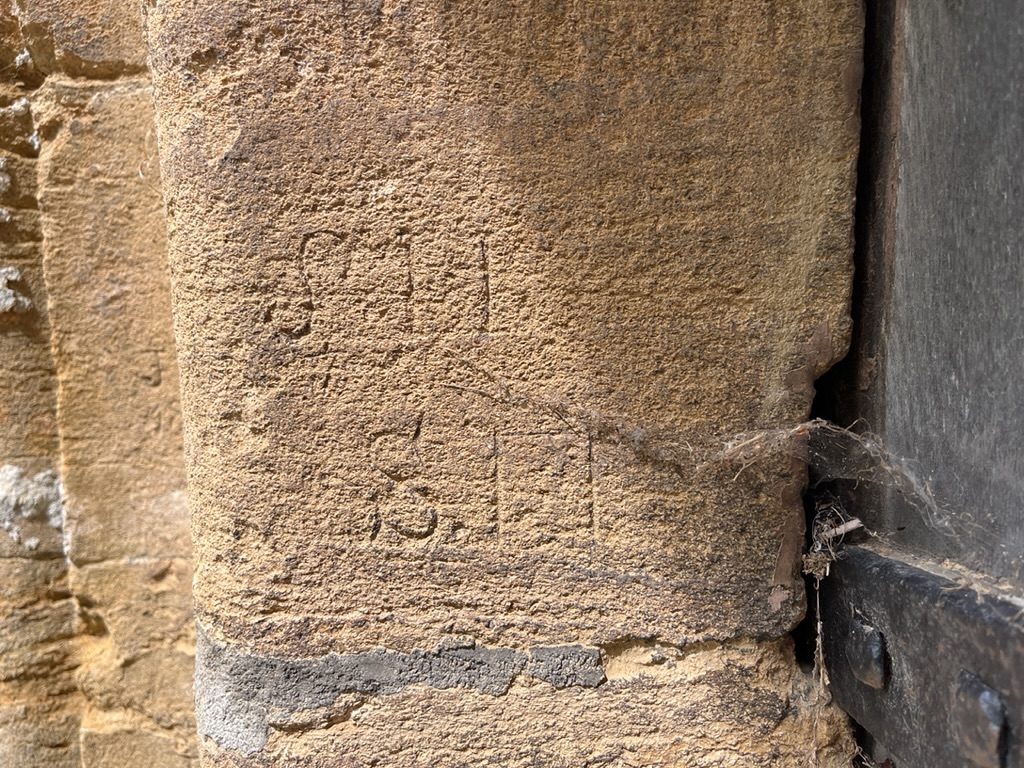
St Andrew . Yetminster . Dorset – Graffiti and a Marian (ritual protection) mark. The 3 initialled and dated marks are likely to be cut by masons who did work on the church in the 1830s (cf Melbury Osmond)
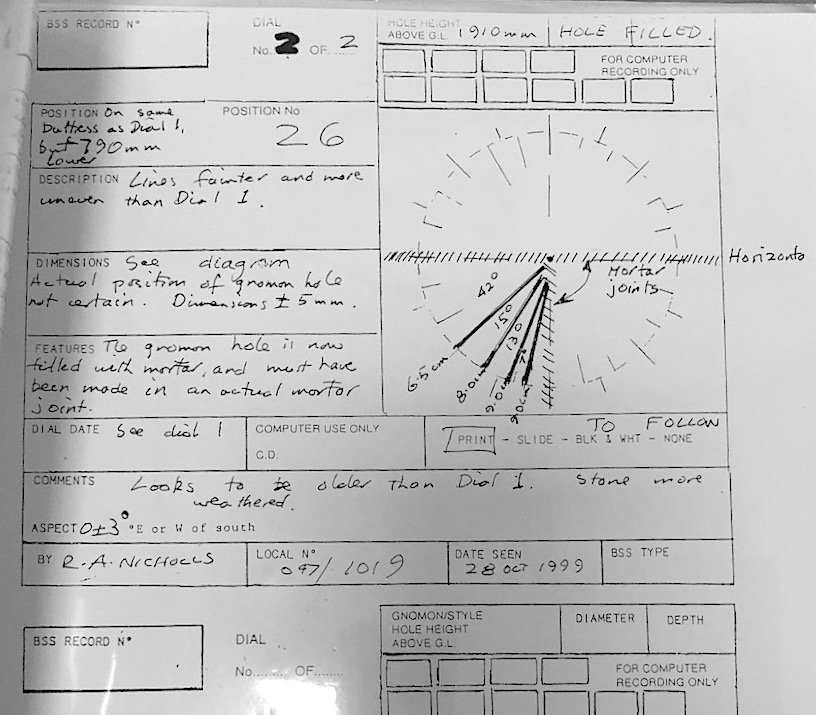
St Andrew Yetminster – the detailed BSS records for the scratch dials
St John . Kingstone . Som. Credit: Julie Ann Workman
ST JOHN THE EVANGELIST & ALL SAINTS . KINGSTONE . SOMERSET
GRADE II* † Records from 1291; C14 chancel, porch; C15 tower, nave. A village with a long history, close to the Fosse Way, recorded in DB as Chingestone. 1m SE of Ilminster. 50.9188 / -2.8851 / ST378136
DIAL
St John . Kingstone . Som.
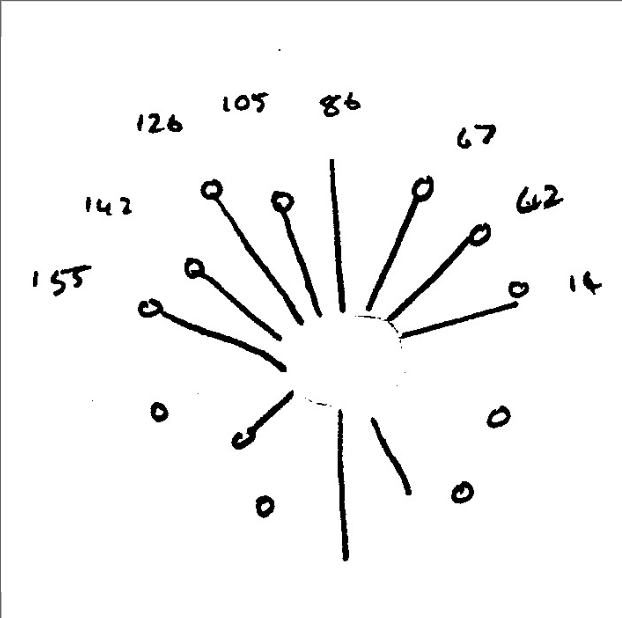
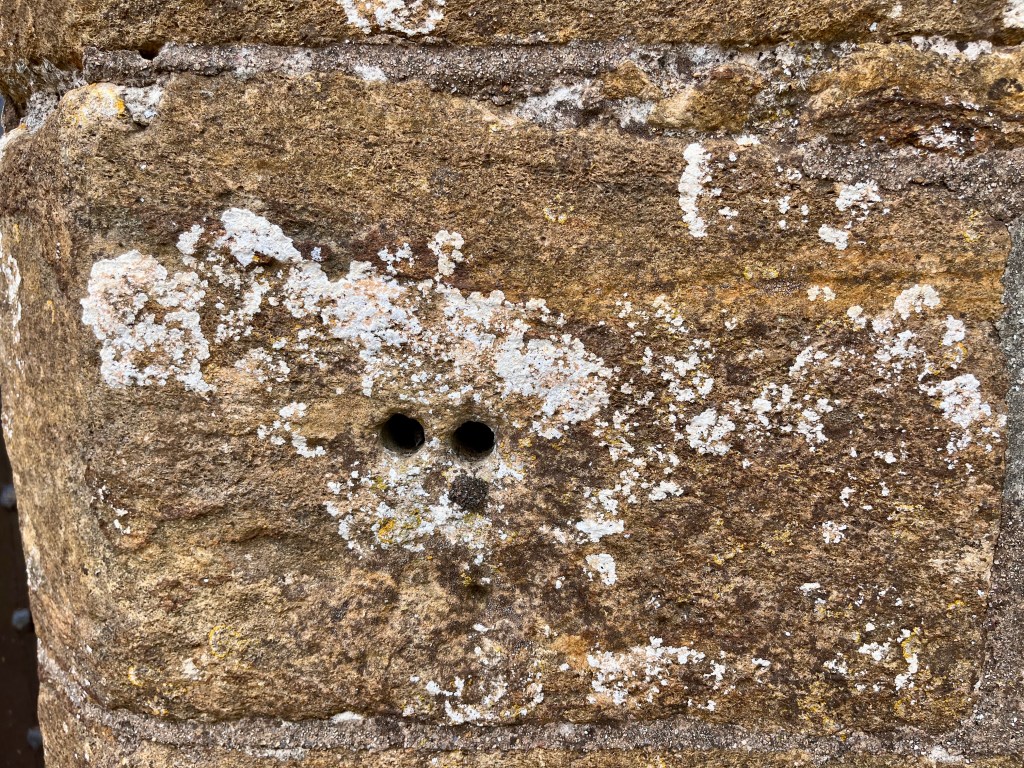
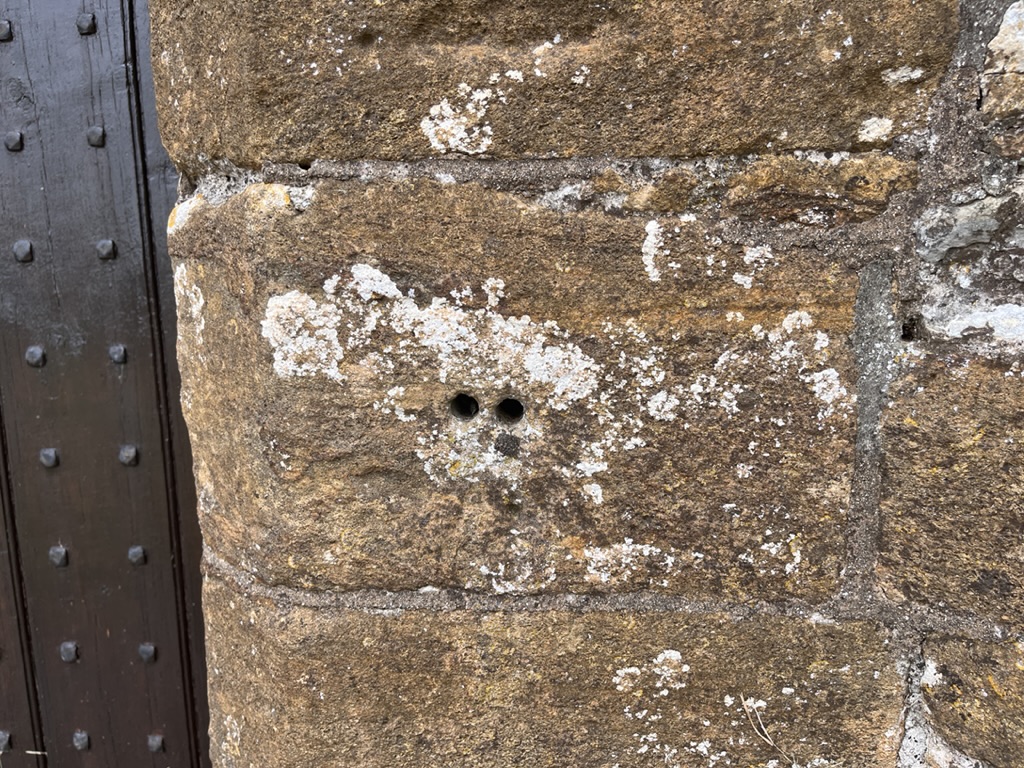
This is an unusual dial, not least because there is a pair of style holes L and R and they are both similarly large. The dial stone is quite badly damaged and it is difficult to analyse the dial. R seems to be the primary hole for the gnomon. The only discernible noon line is below R, marked by a single pock halfway to the mortar line below. On either side, at roughly 11 and 1, are the only 2 clear lines in the whole design. It’s hard to see the purpose of L at all, and perhaps it was a later addition that didn’t add much.
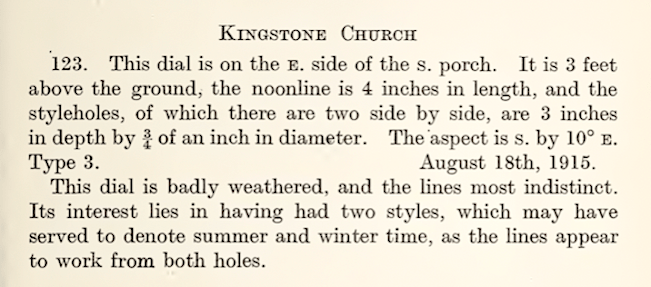
DEH visited in 1915 and included his own theory:
St John the Evangelist . Kingstone . Som
GSS Category: Scratch Dial
All photos: Keith Salvesen except header image as credited (a huge improvement on my own rain-affected photo).














 )
)




 GAUDIUM SUB SOLE . SUNDIALS . MEDIEVAL TO MODERN