SUTTON MONTIS . SOM . HOLY TRINITY – 2 Dials (one unrecorded)

Holy Trinity . Sutton Montis . Somerset

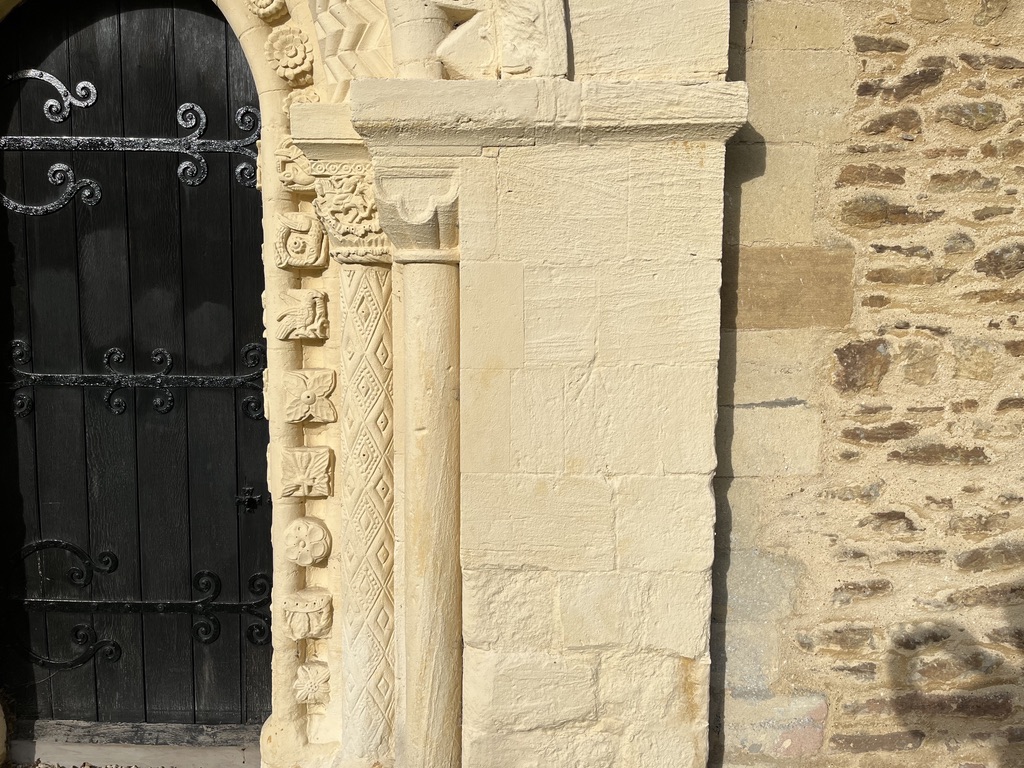
GRADE I † Saxon origins; surviving work of C12 and all subsequent periods BLB. Chancel C12 / late C13, Victorian restorations. An attractive church with its squat tower and portico; secluded and approached by narrow lanes. 6m N. of Sherborne; 7m W. of Wincanton. 51.0214 / -2.537 / ST624248

DIALS

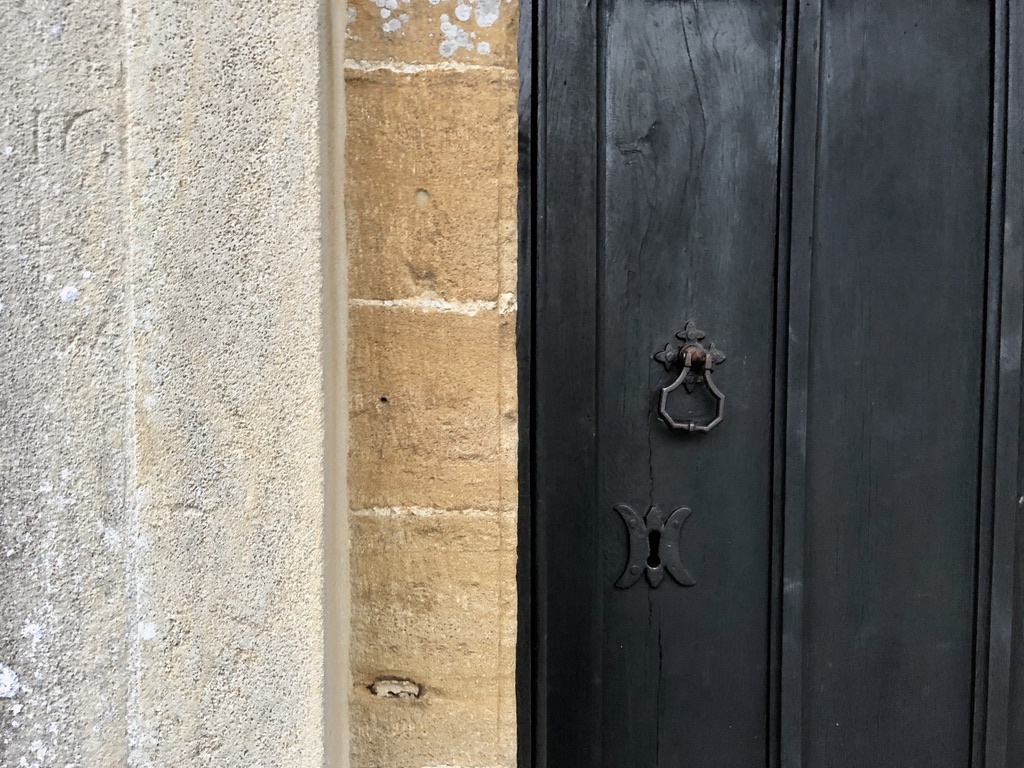
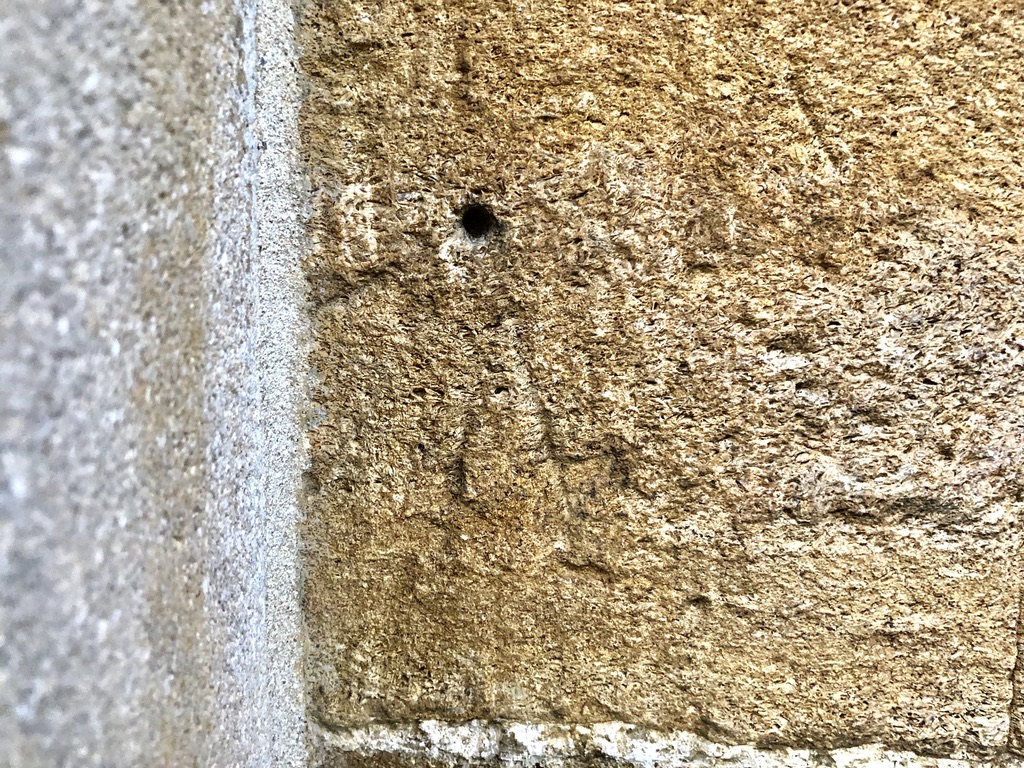
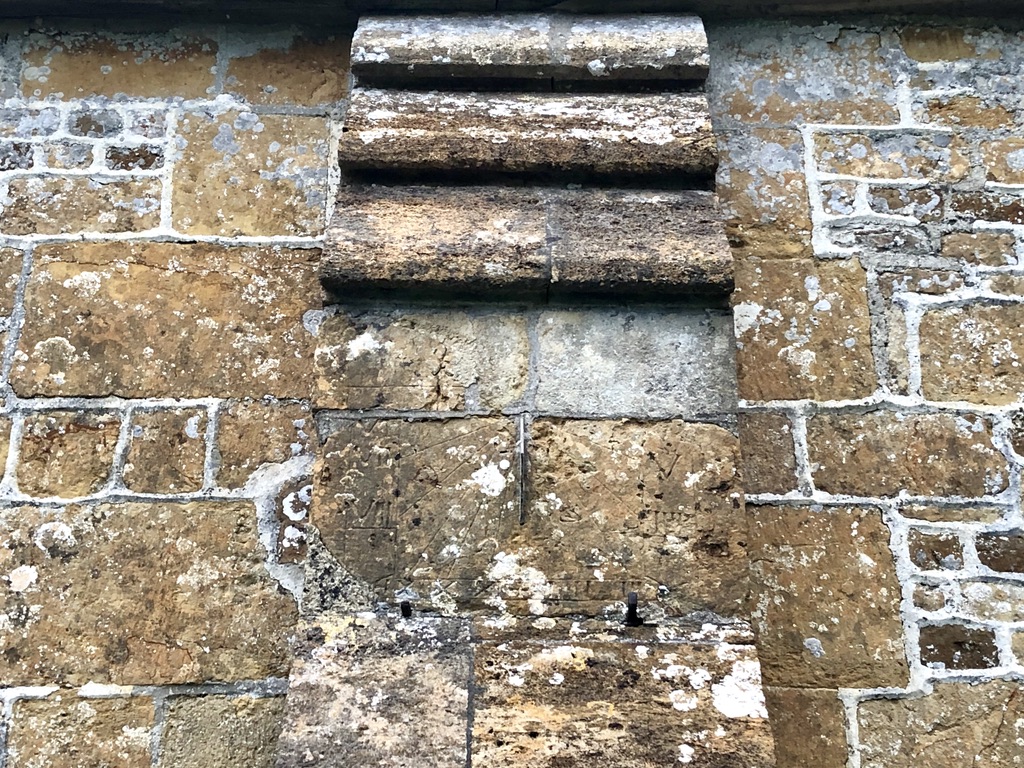
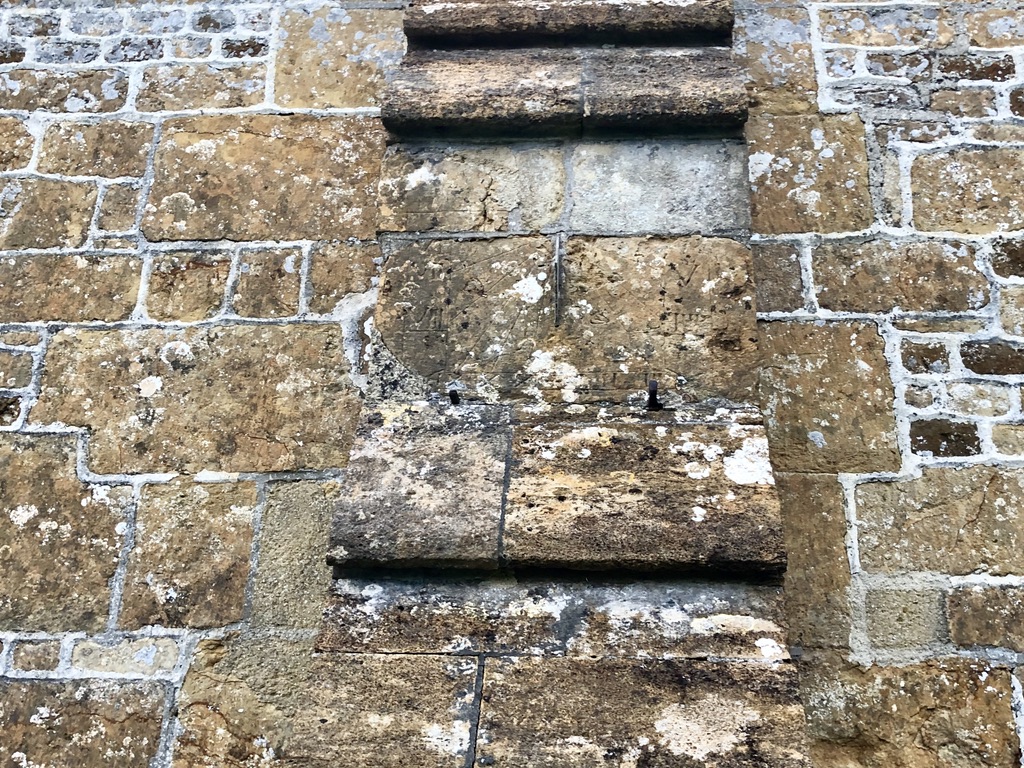
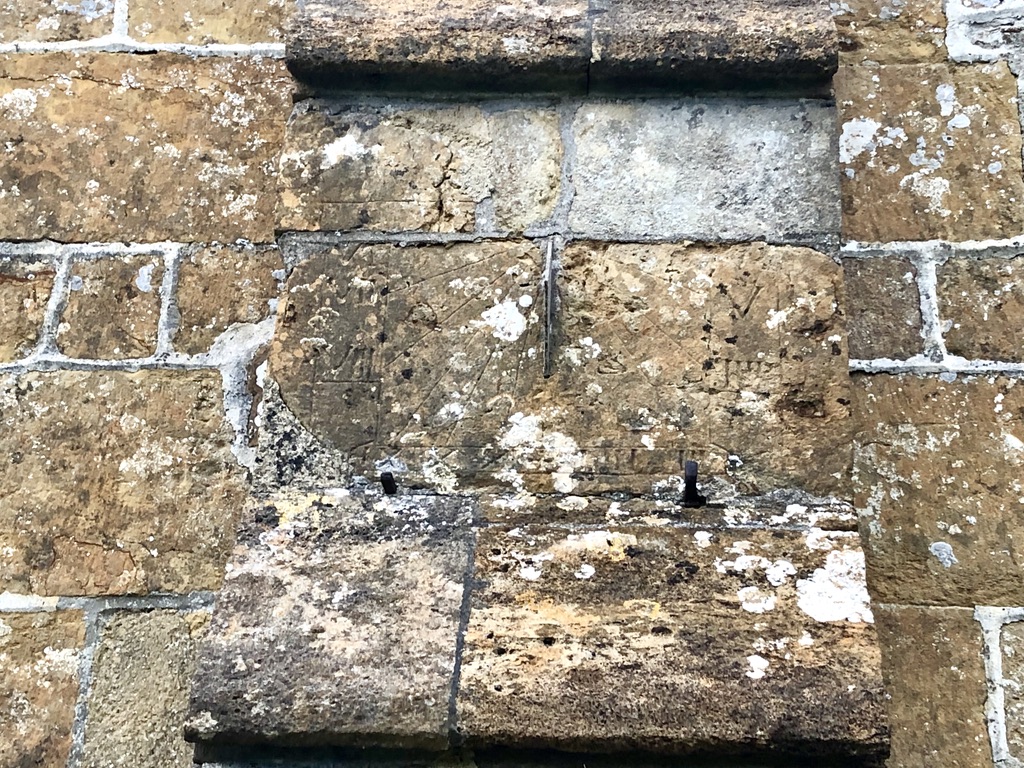
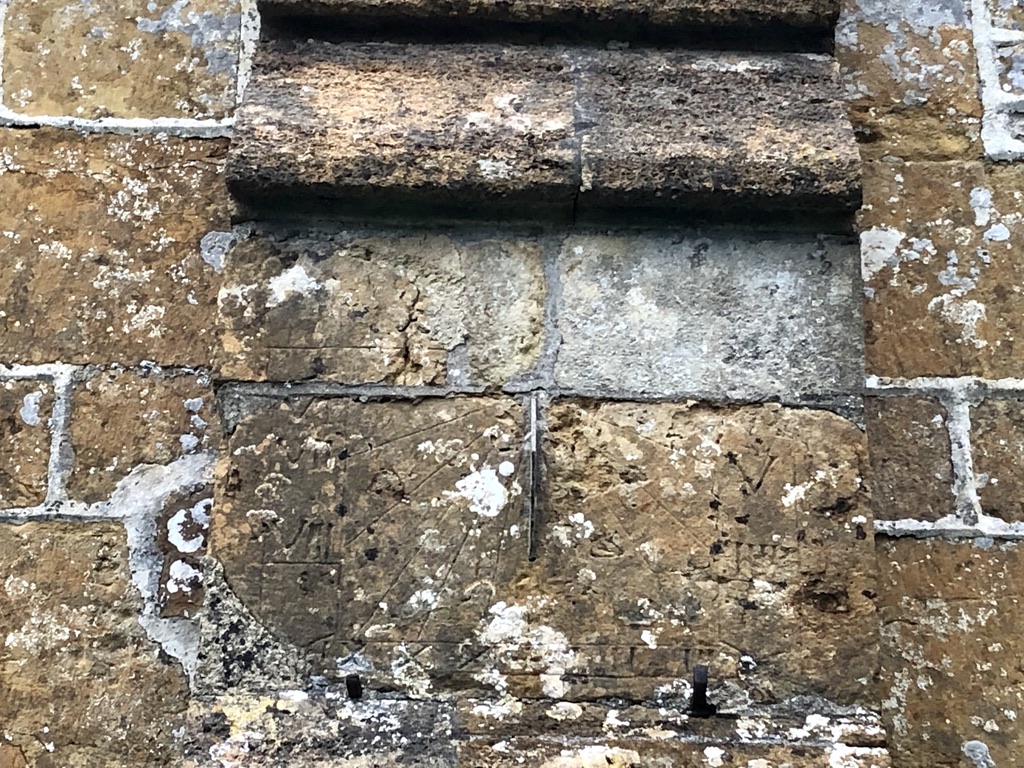
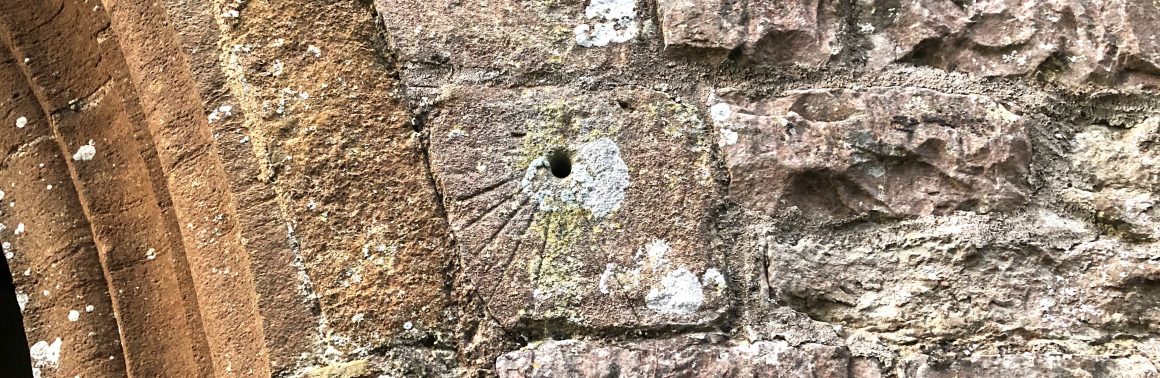
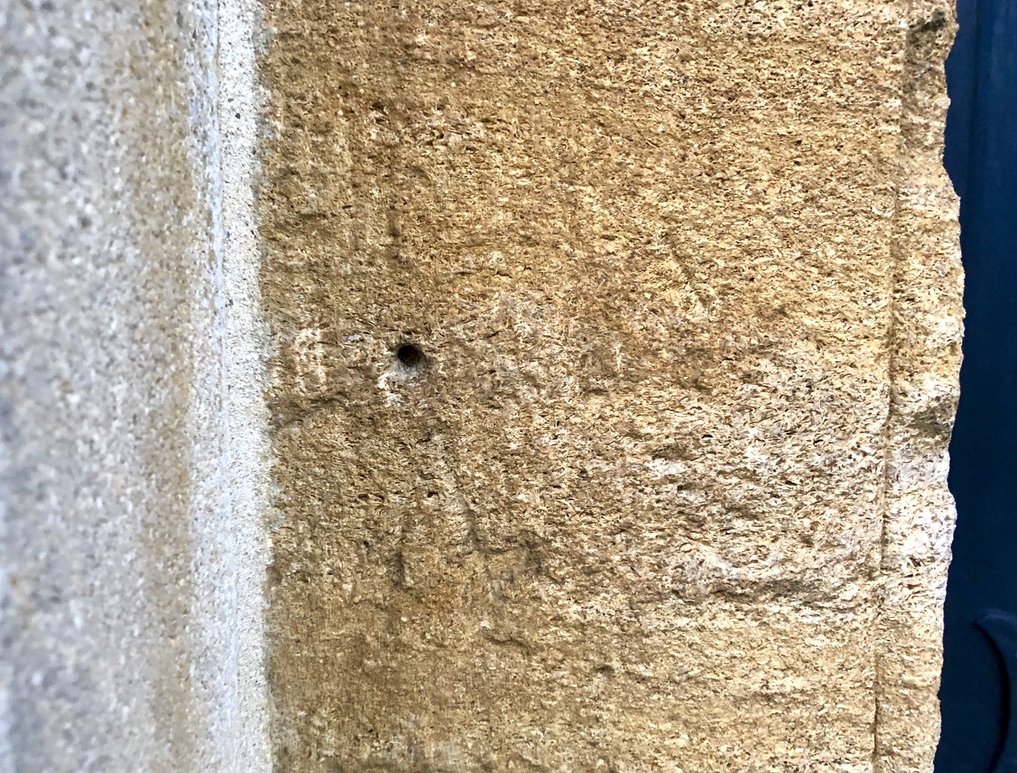
Holy Trinity has 2 dials. The first is a small unobtrusive scratch dial by the S. doorway, possibly unrecorded unless in the church archives. It was not noted by DEH during his thorough coverage of the area; and it is not in the BSS register. The second (C18?) is clearly not strictly a scratch dial but an early vertical sundial. It definitely deserves inclusion as a most intriguing dial from a later period.

DIAL 1

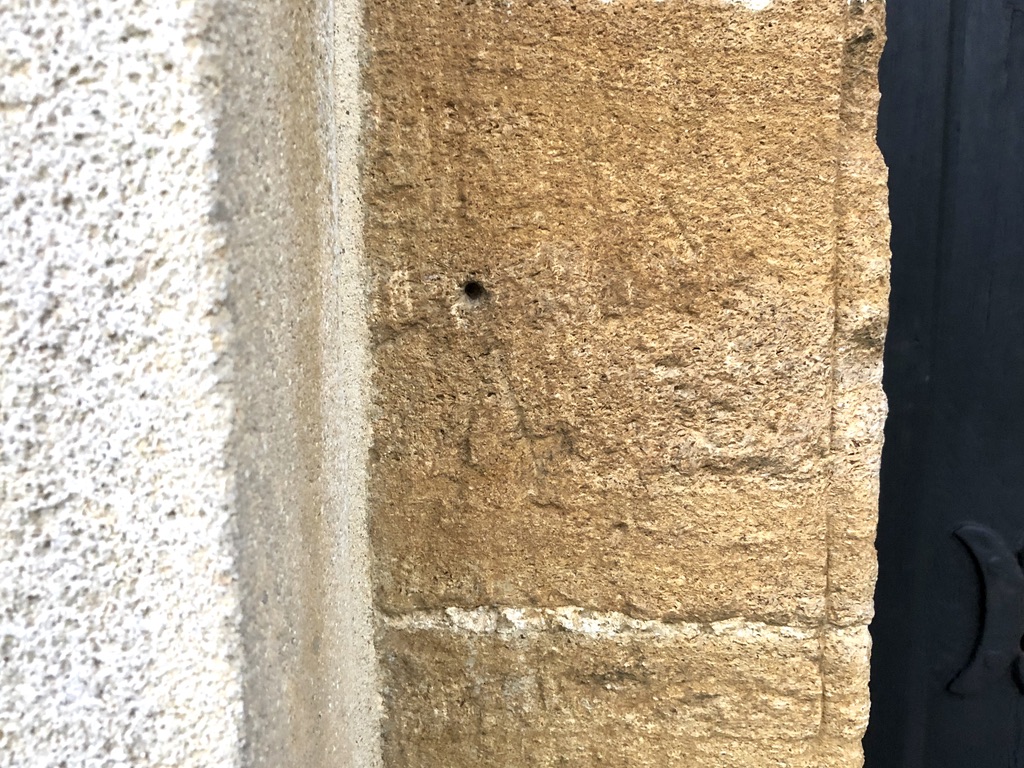
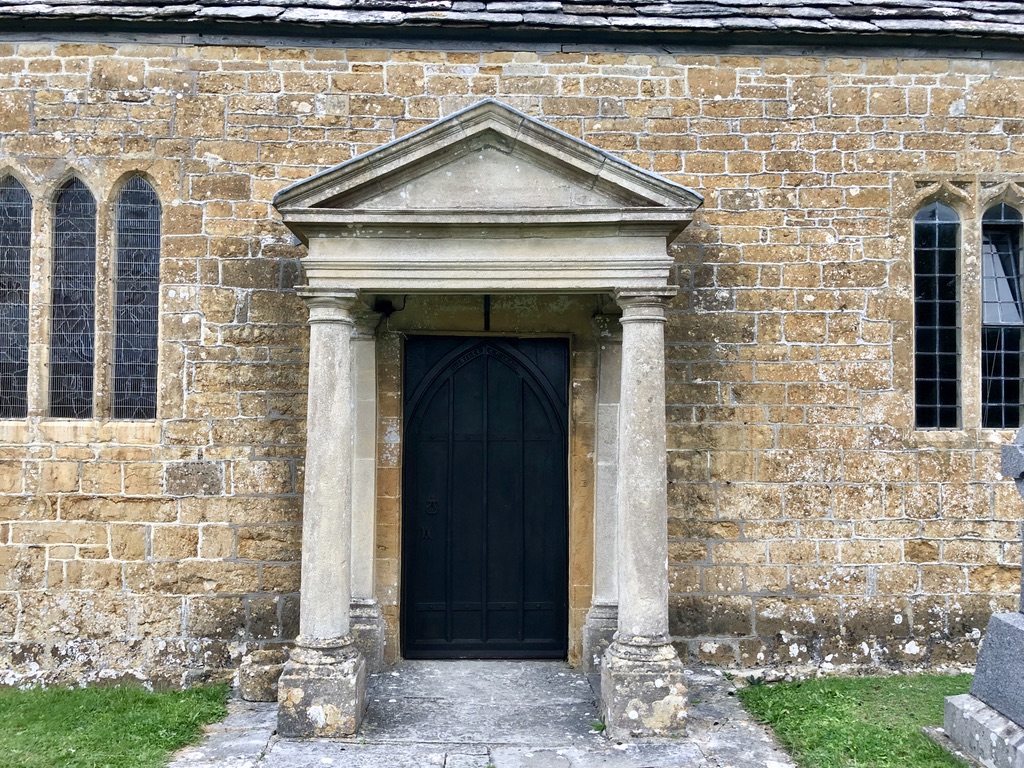
This simple conventional scratch dial is inside the portico on LHS of the door. There are 2 clear lines from the style hole, with a fainter 3rd somewhat offset between them. The deeper cut line possibly indicates a Mass time (Terce).
Holy Trinity . Sutton Montis . Somerset – Scratch Dial

DIAL 2

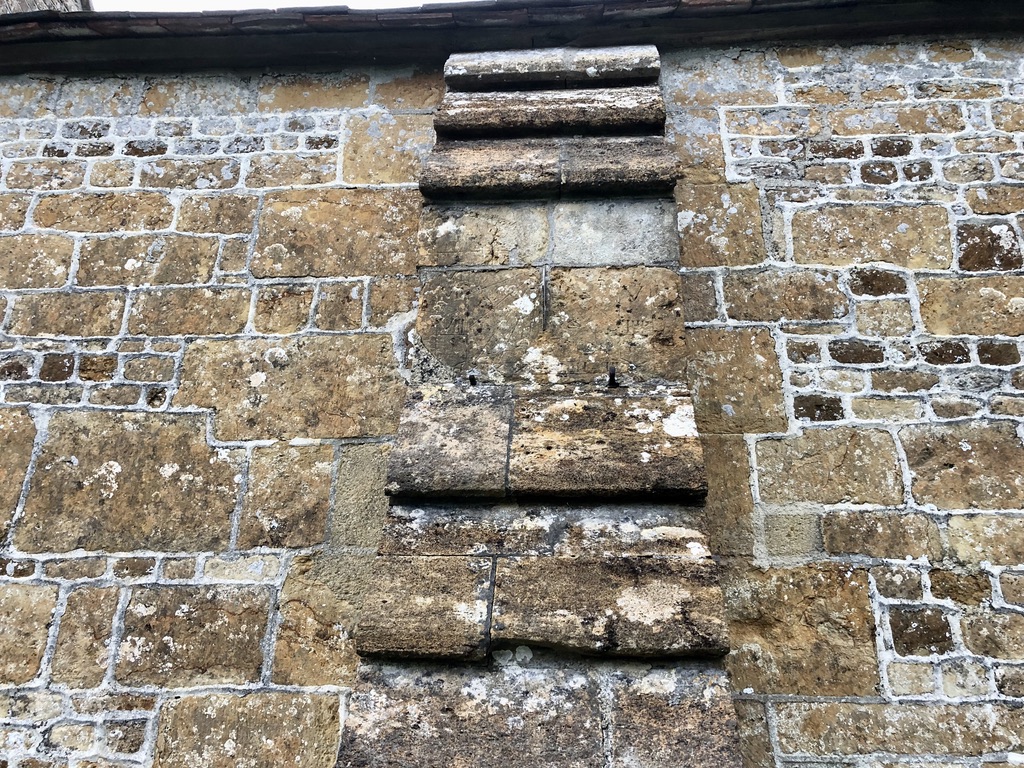
Holy Trinity . Sutton Montis . Somerset – C18? sundial

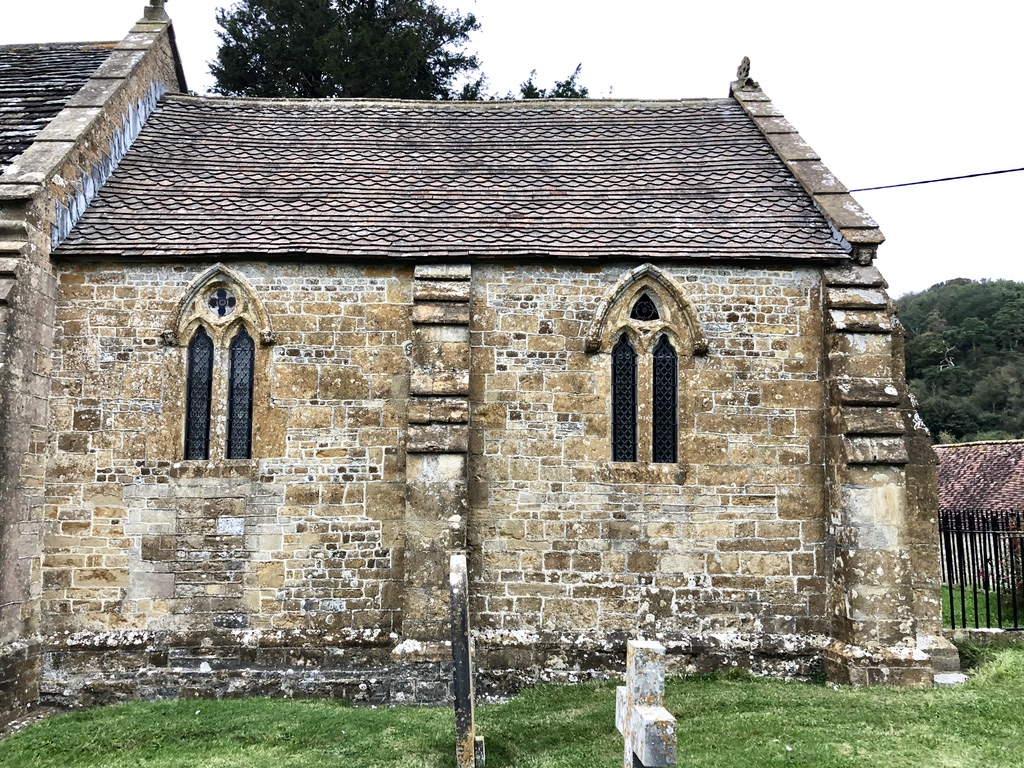
On the central buttress of the chancel. A single oblong stone slab with the mortar line as the horizontal ‘6-to-6’ and the numerals framed. The top edge of the frame is cut along the stones above; clear on the left one, faint on the right. Large Roman numerals on each side; small ones along the bottom of the dial. IIII for IV. The radials – more distinct on RHS – are graduated, with the noon line termination in a cross. The present gnomon is a simple metal triangle. It is hard to tell whether there was originally a wood or iron style or not.

It is unclear what the 2 iron pegs at the bottom are for, though they appear to be designed to hold up a stone tablet – perhaps at one time a different dial or a memorial slab was placed over the original dial.
ADDITIONAL FEATURES

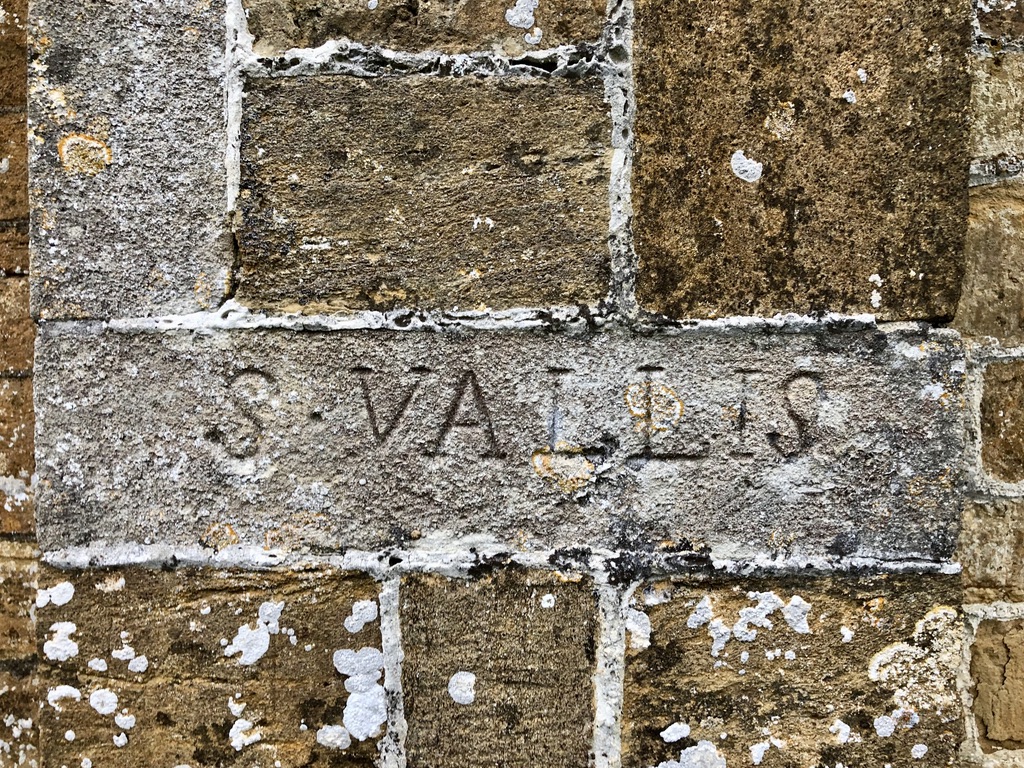
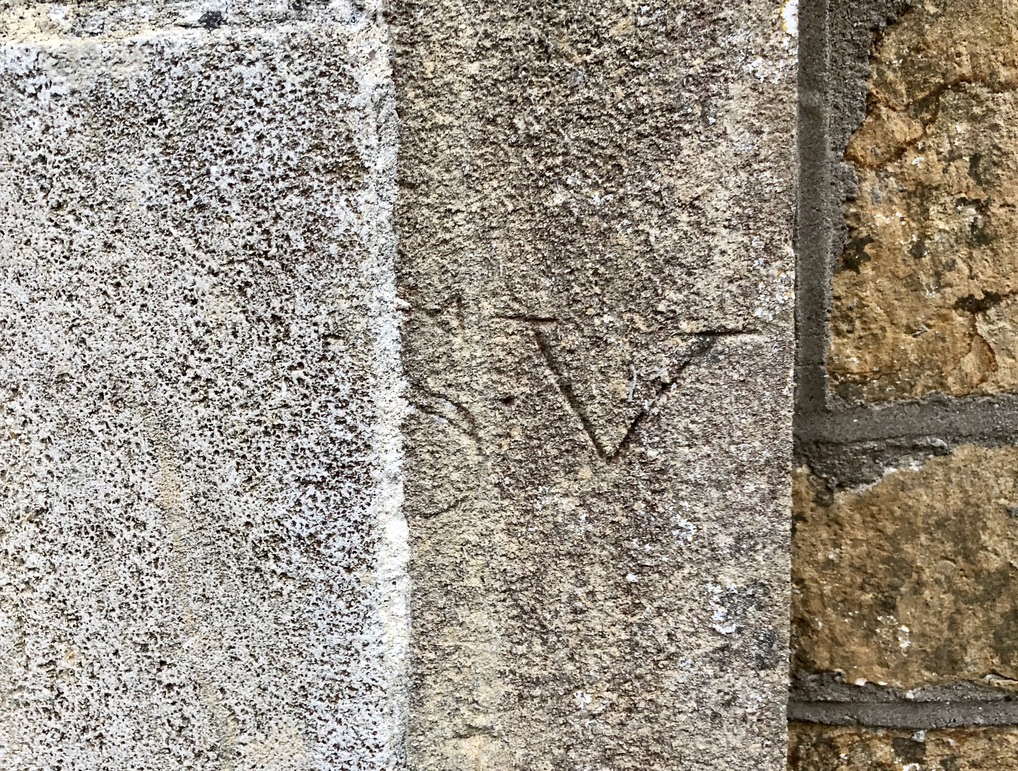
Holy Trinity has other features to note – graffiti including dates and initials; at least one Marian (witch) symbol; and a mystery inscription. Sutton Montis indicates a hill hamlet and is clearly marked on historical maps. However I can find no historical or cartographic reference to the ‘valley hamlet’ of Sutton Vallis. And yet…
GSS Categories: Scratch Dial; Old Dial

All photos: Keith Salvesen
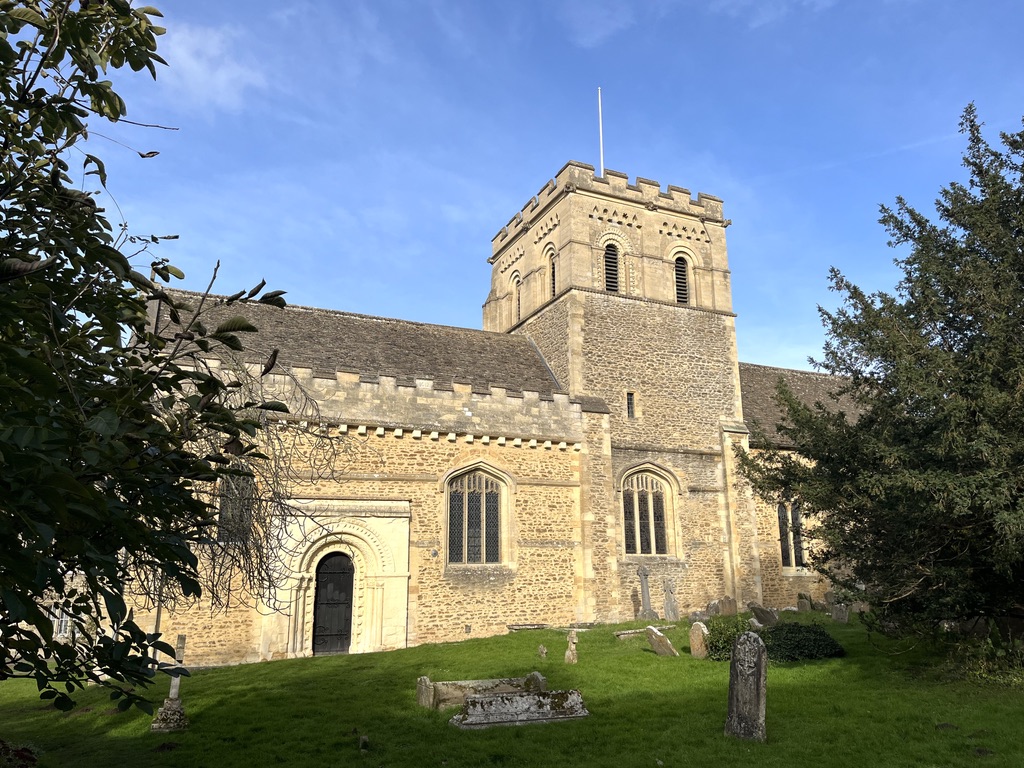
IFFLEY . OXFORD . ST MARY THE VIRGIN – 2 scratch dials

St Mary . Iffley . Oxford

IFFLEY . OXFORD . ST MARY

GRADE 1 † An exceptional Romanesque church built mid to late C12 (nave, tower, chancel) with later additions, restoration, and conservation. The Norman features dominate, especially the wonderful doorways. There’s too much history here (and in Iffley village) to distil: PEV should be the first stop, or BHO online Best of all, go there. SE. Oxford 51.7274 / -1.2382 / SP527034

DIALS

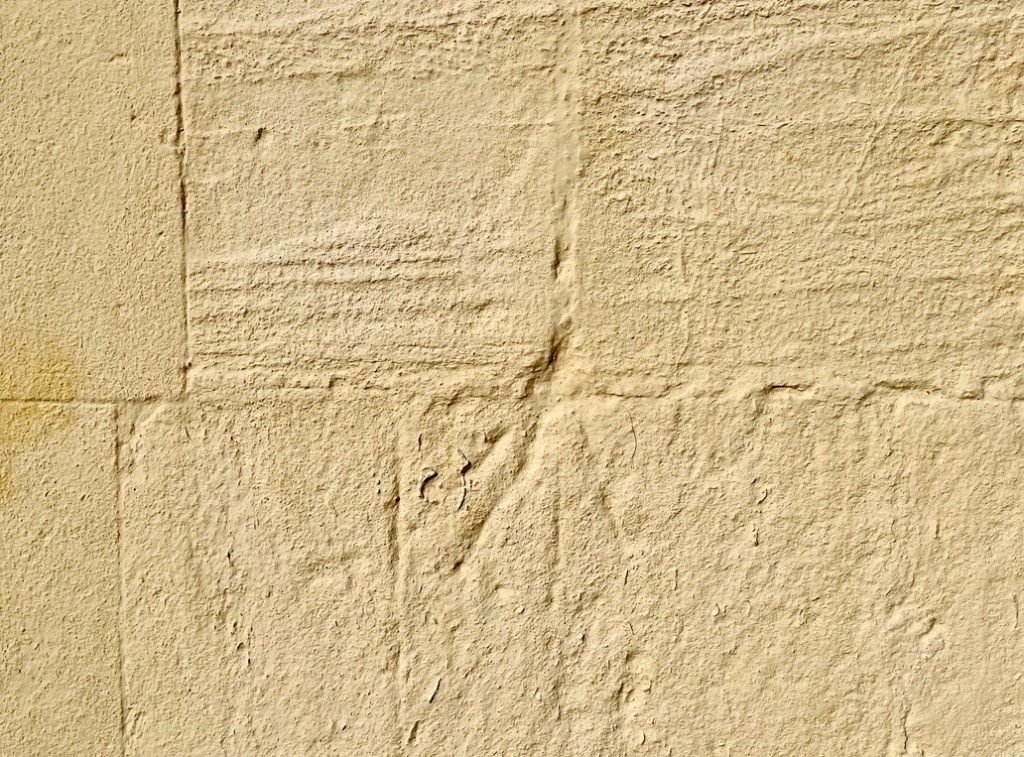
St Mary has two dials, one conventional, and one of a most unusual type that I haven’t met before. In relation to Dial 1, it’s worth mentioning that in 2017 conservation architects oversaw “a programme of conservative repair to the exuberant Romanesque masonry of the church’s west front and south door. This included the application by stone conservators of a pigmented limewash, helping to preserve the stone and improve the overall legibility of the facade”.

DIAL 1

St Mary . Iffley . Oxford – Scratch Dial 1

Dial 1 is on the right side of the lovely S. doorway. It has 4 straight radials, 3 with terminal pocks. The noon line may have a second pock above the end one; there are perhaps other dots. The style hole in the join of the stones creates the horizontal line. The careful preservation methods noted above have to an extent made the dial hard to analyse in greater detail. Fortunately BSS has an archive image that predates recent work. Much more detail is evident; for example the pocks are clearer (and there are more of them). It makes for an interesting comparison.

St Mary . Iffley . Oxford – Scratch Dial 1 (BSS archive)

DIAL 1 GALLERY

DIAL 2

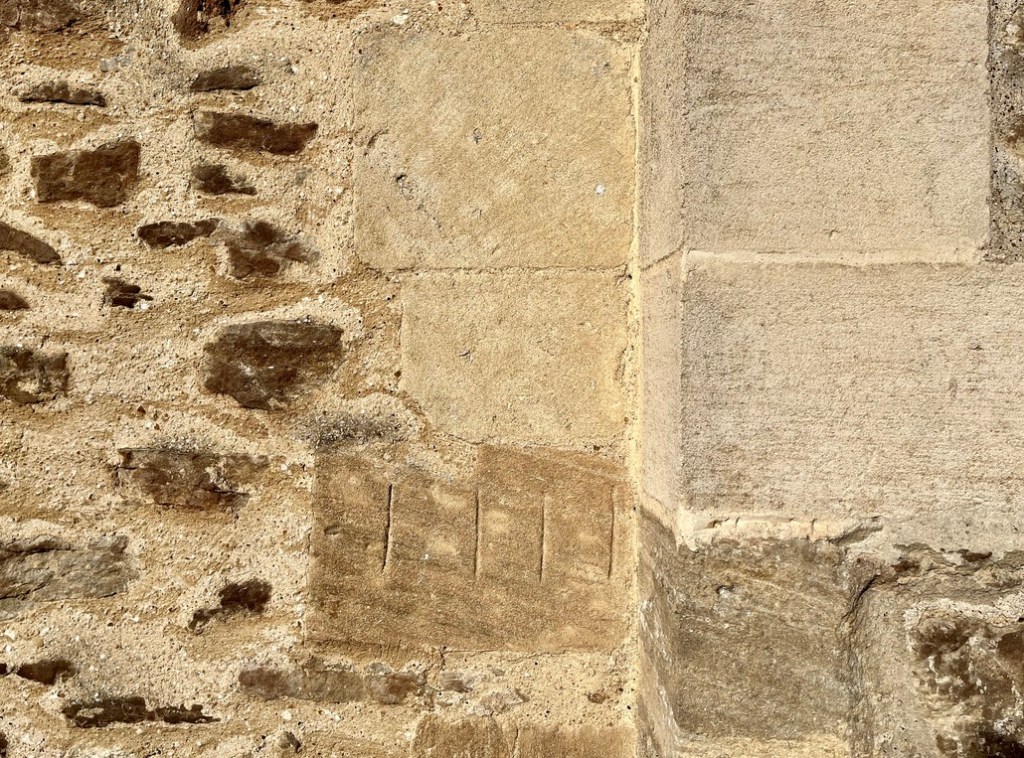
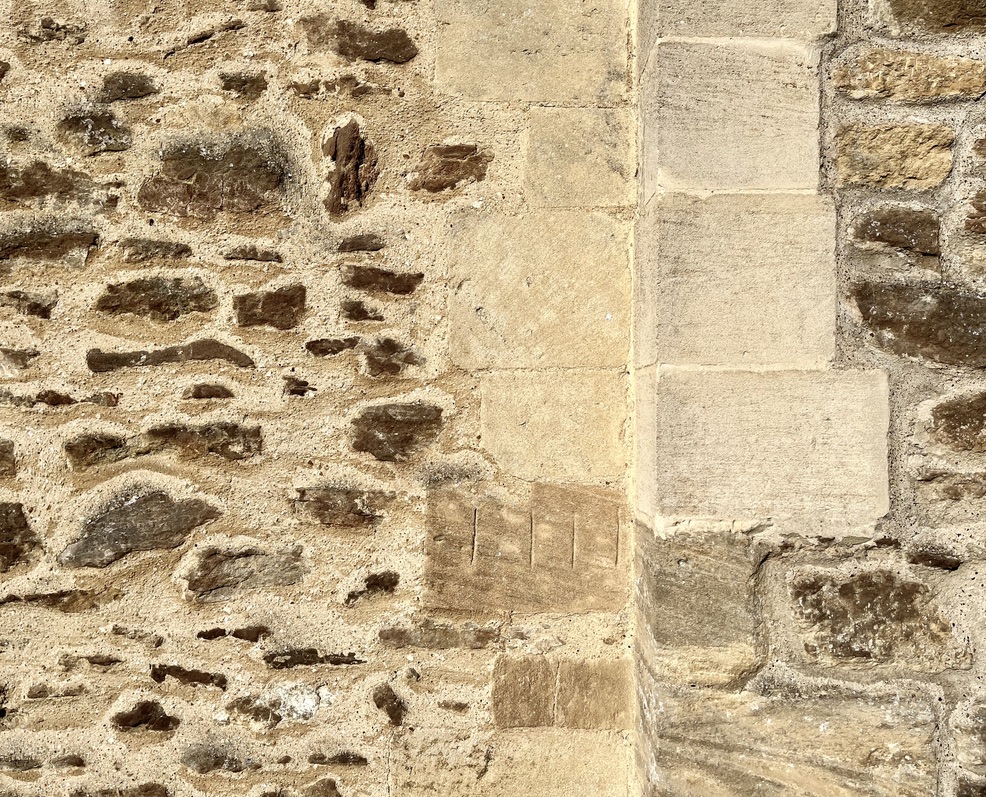
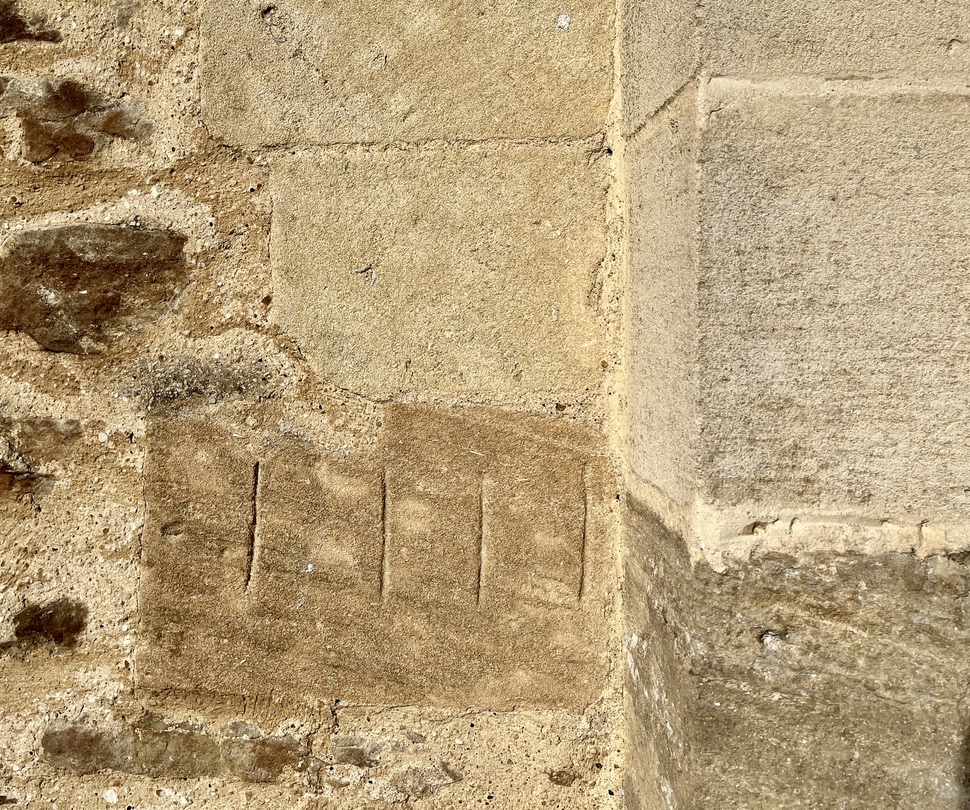
This highly unusual dial (if it is one at all) is on the S. side of the church, in the angle where the tower meets the nave. It consists of 4 incised parallel lines on a single stone. Just that. The passage of the day can be observed as the sun moves round, with the quoin acting as a vertical gnomon. The shadow cast moves gradually over the 4 lines from left to right, indicating the time of day. Its position suggests that it was primarily of use as a morning dial, perhaps signifying the Canonical hours for Mass. BSS records it as a ‘linear scale of markings from the wall shadow’.

St Mary . Iffley . Oxford – Scratch Dial 2

The photos below give an idea of how the dial works in practice. I visited on a sunny day, but unfortunately at the wrong time of day to test the shadow theory. This dial is yet another that I need to revisit to understand it.

GSS Category: Scratch Dial

All photos: Keith Salvesen