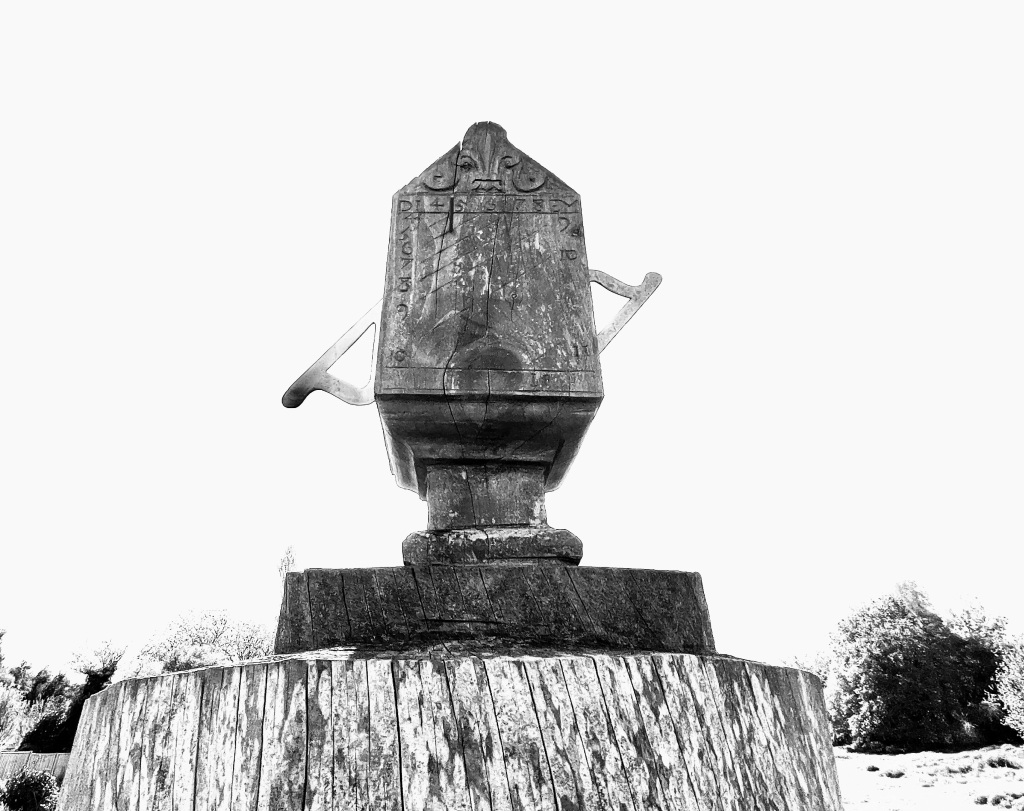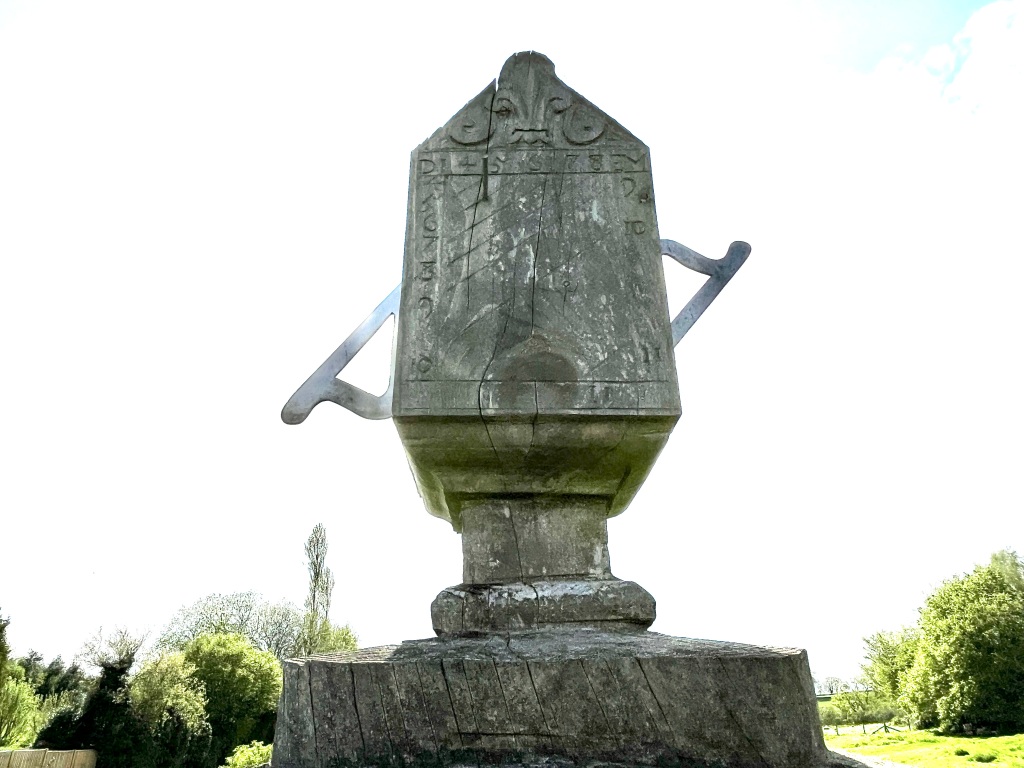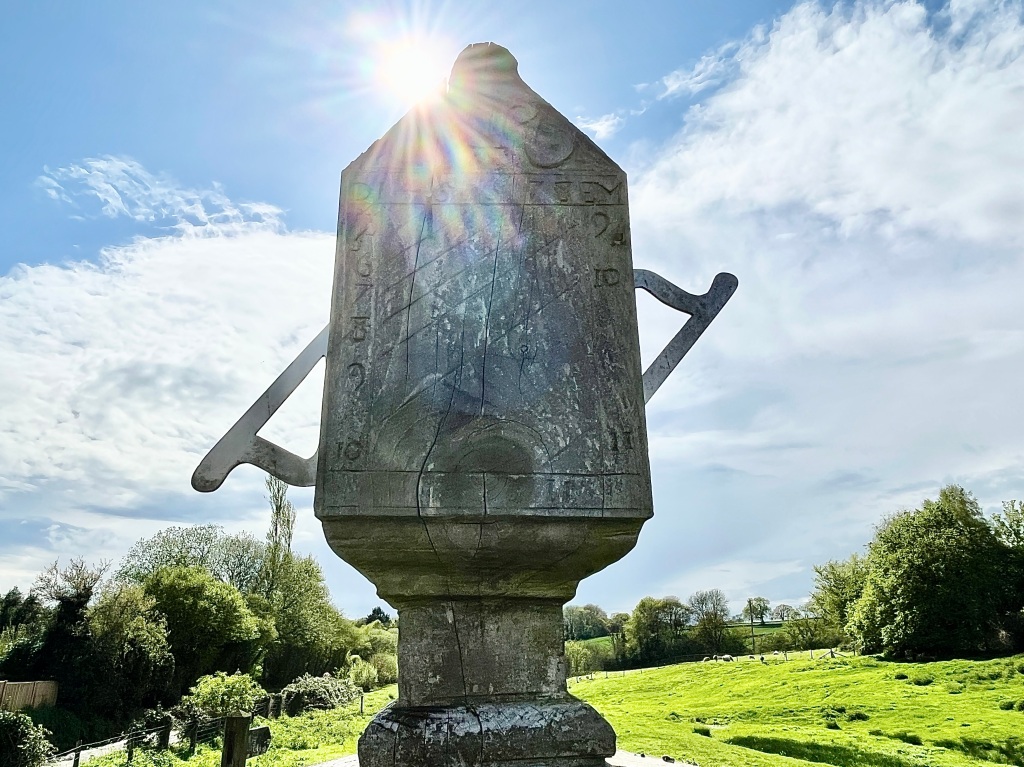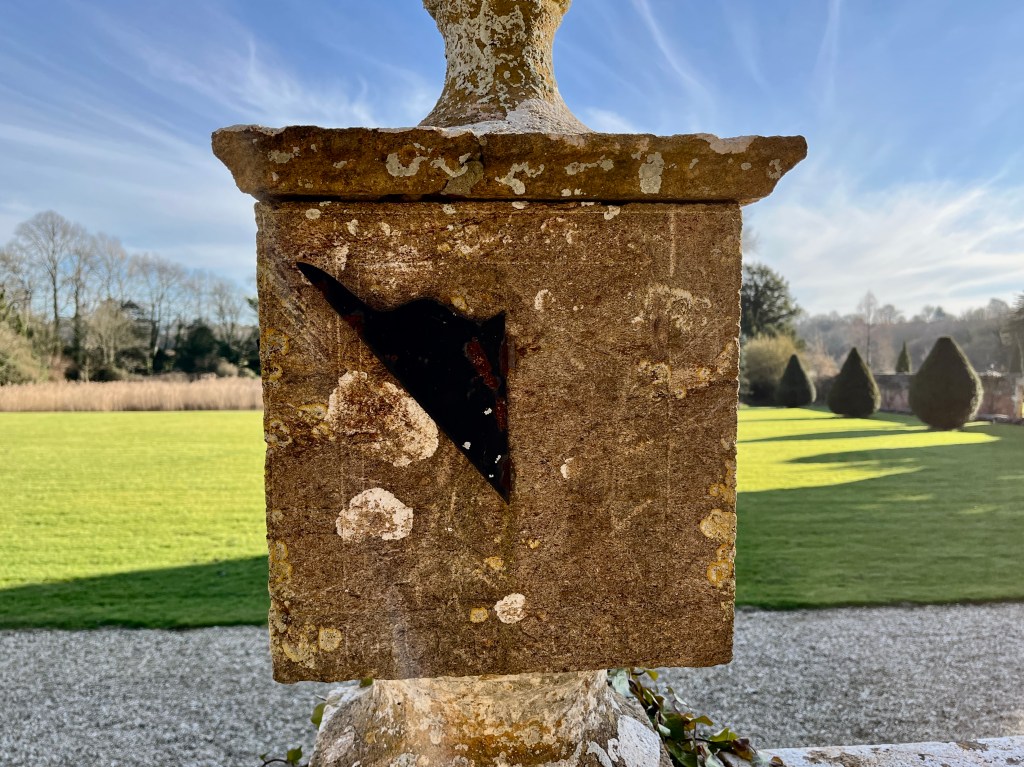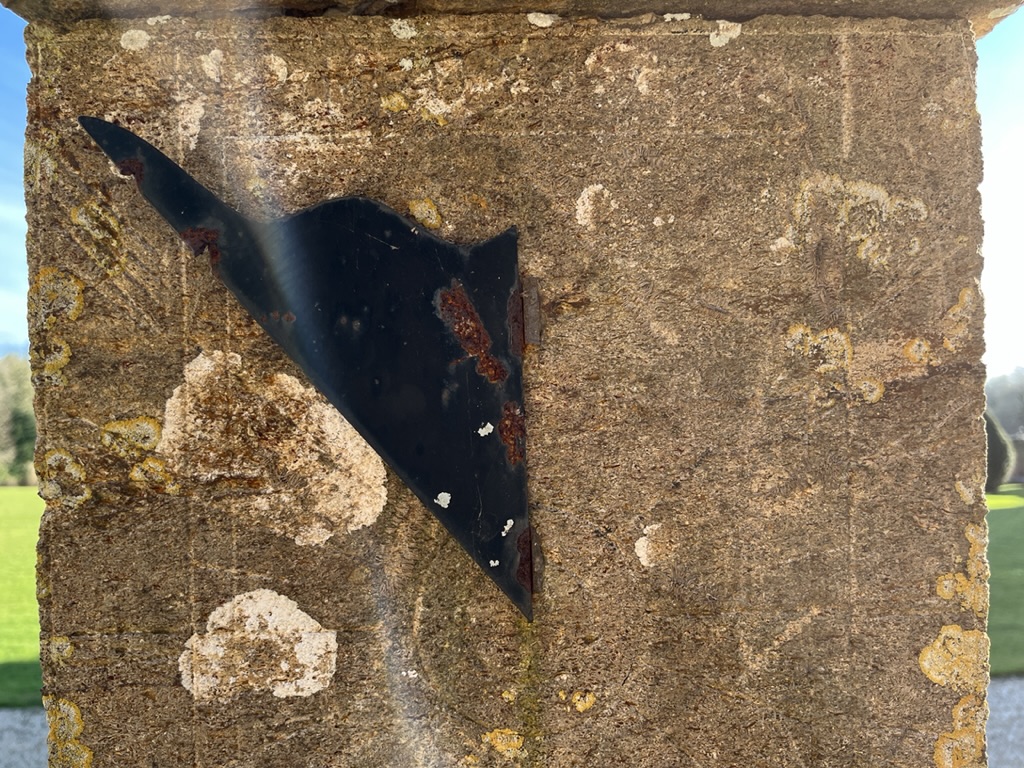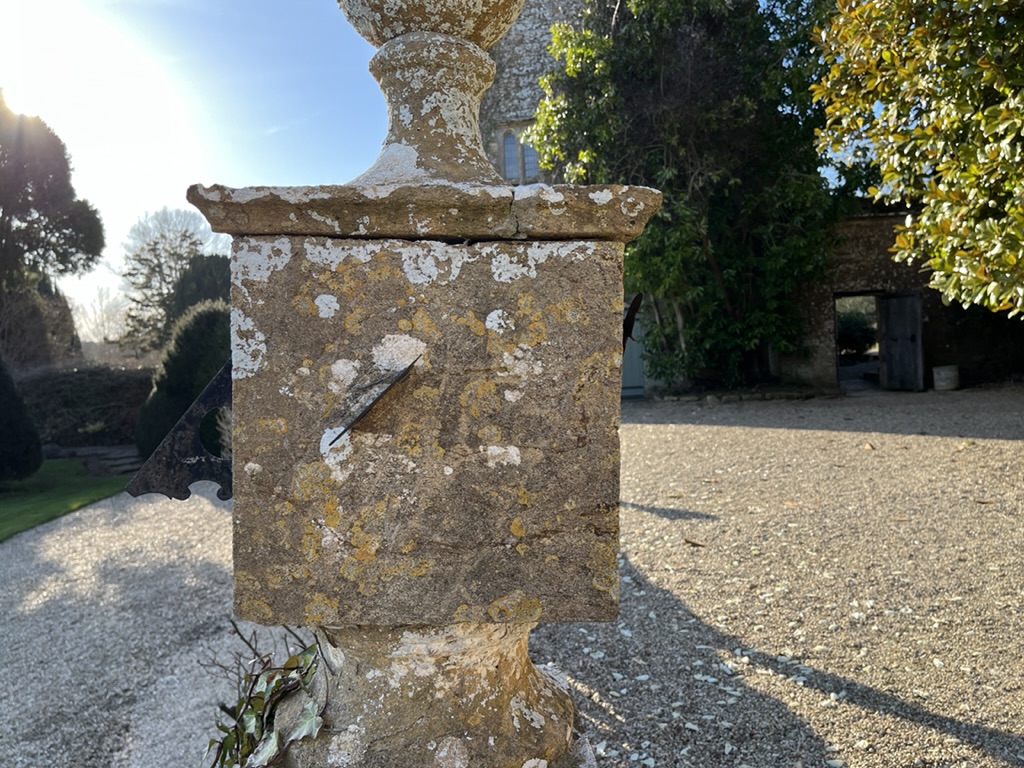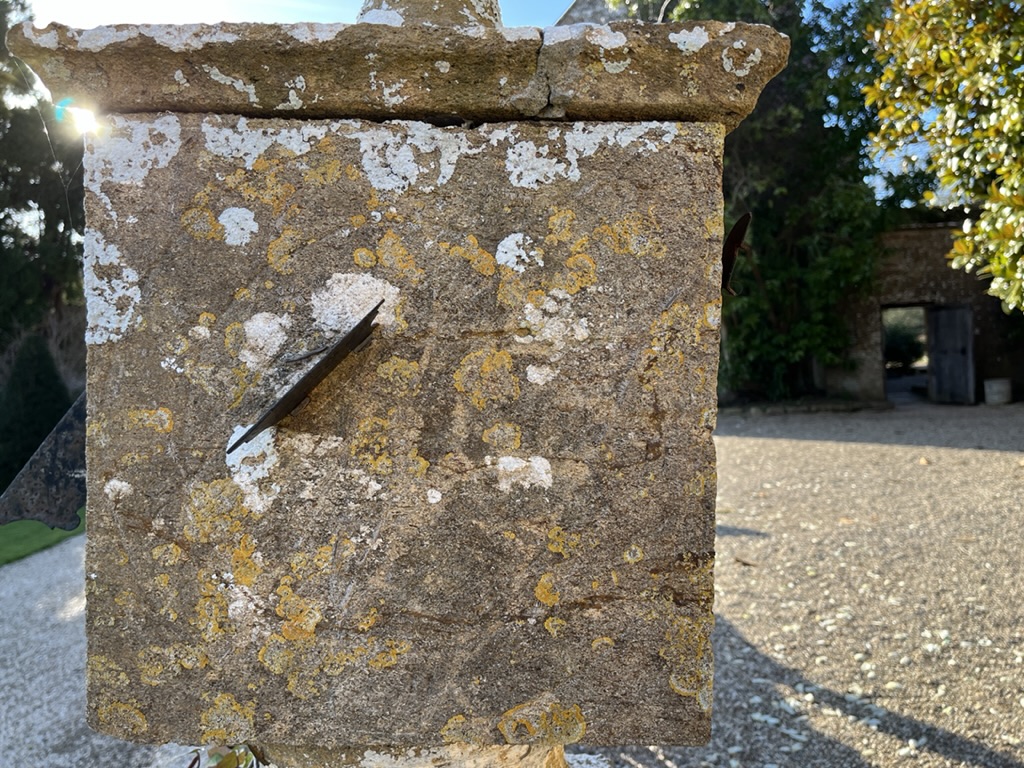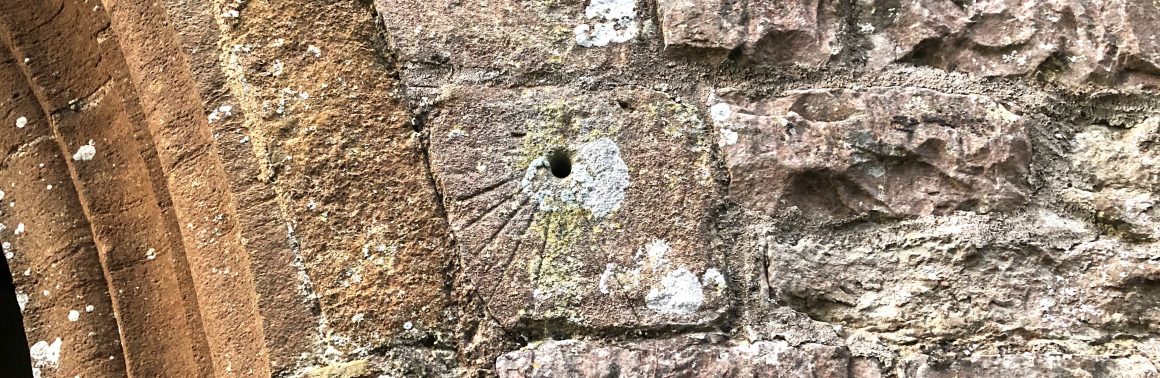
WIMBORNE MINSTER . DORSET . ST CUTHBERGA – PILLAR DIAL

Ethan Doyle White . Wiki. CC/OS

ST CUTHBERGA . WIMBORNE MINSTER . DORSET

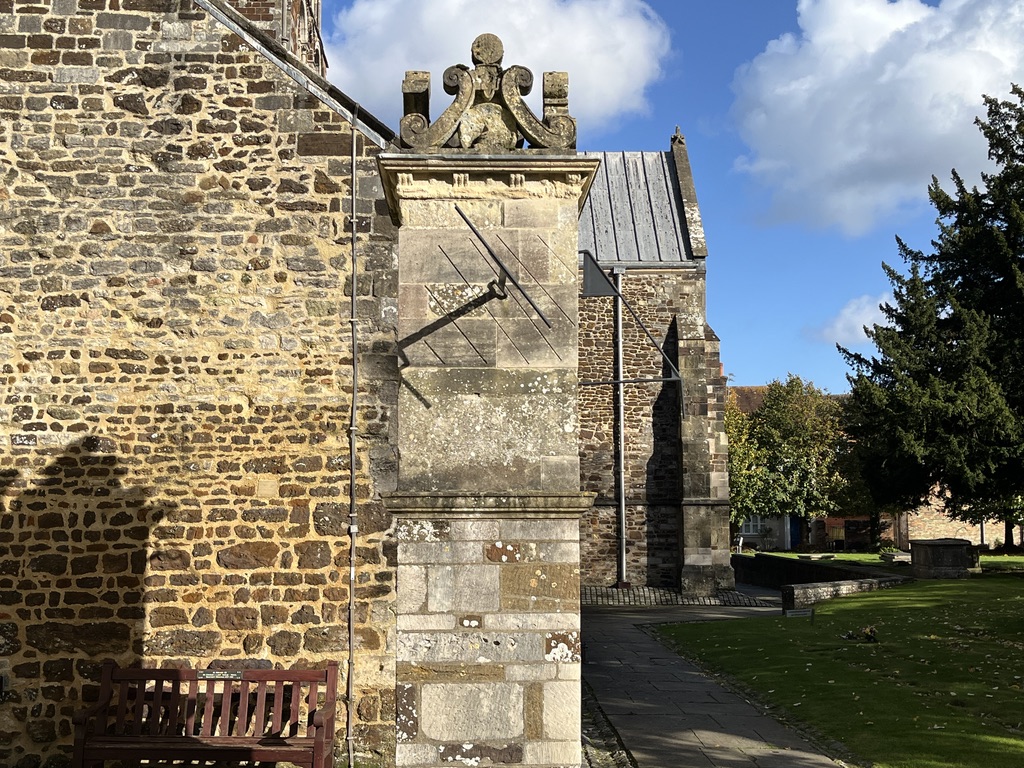
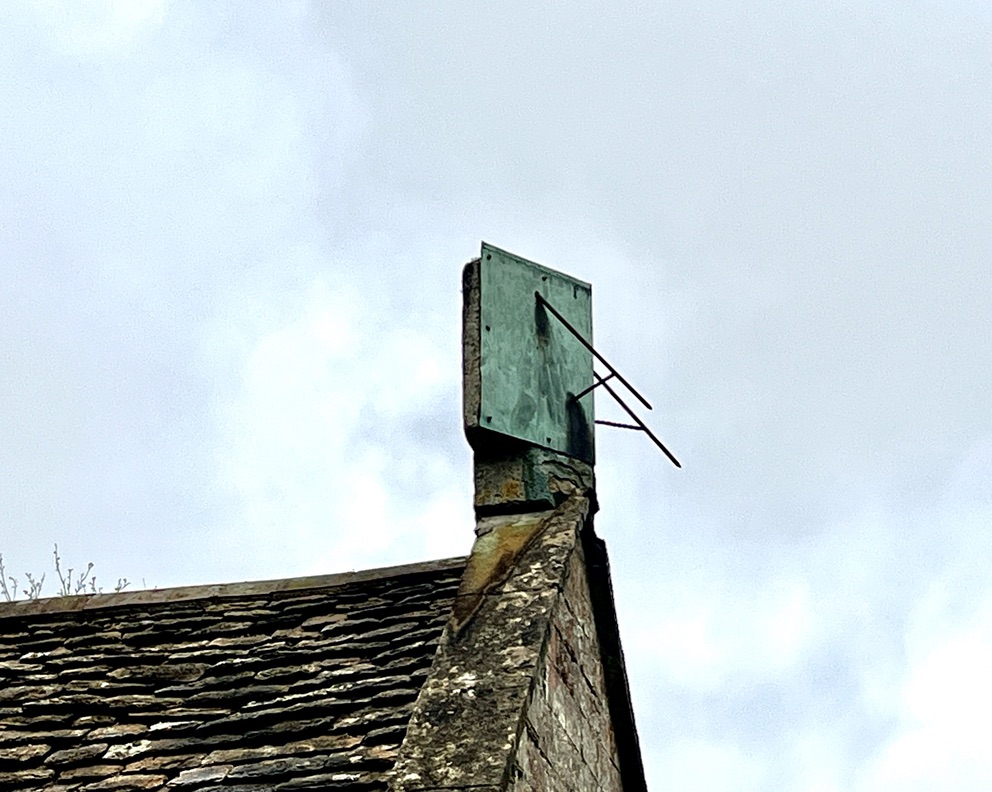
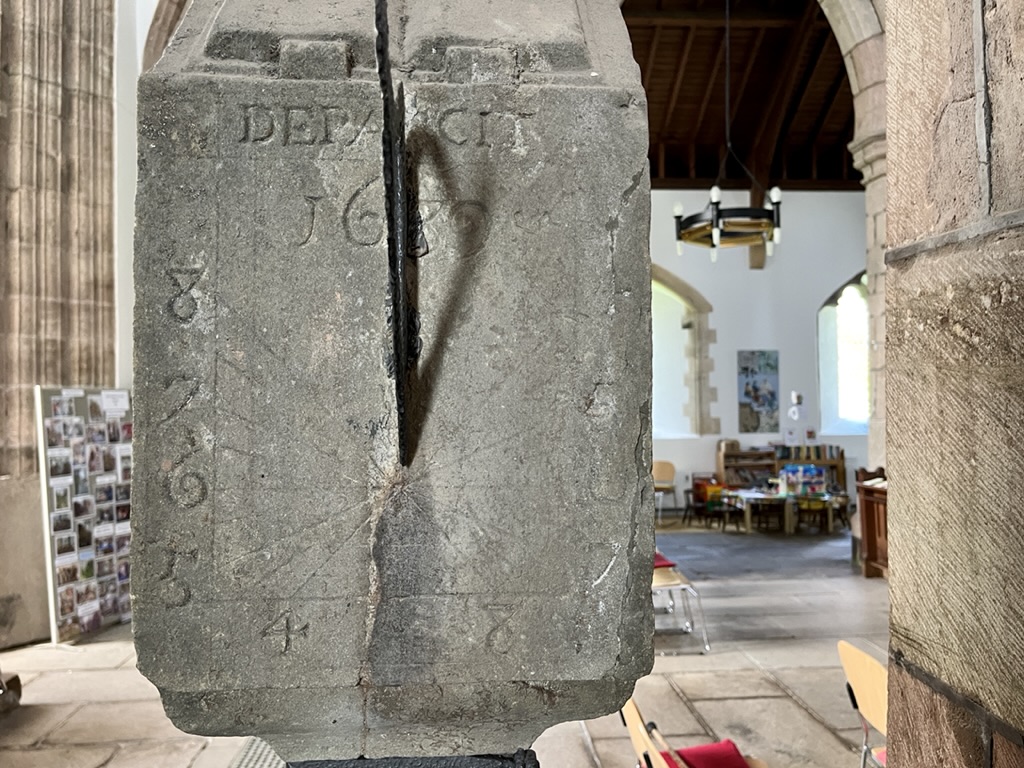
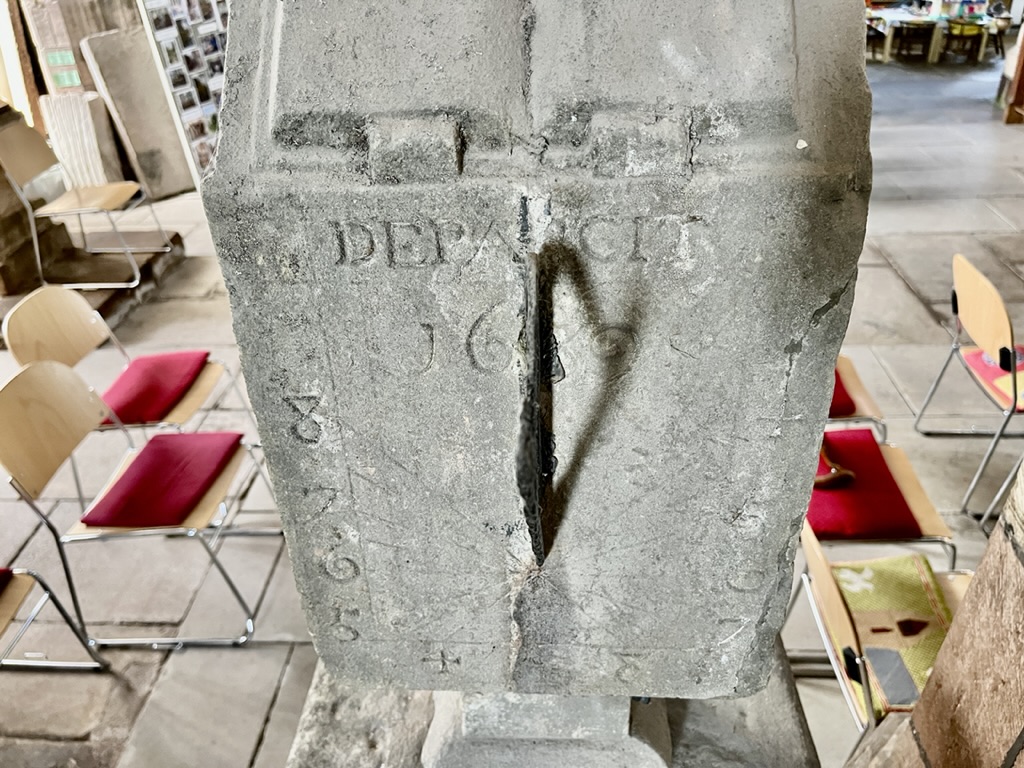
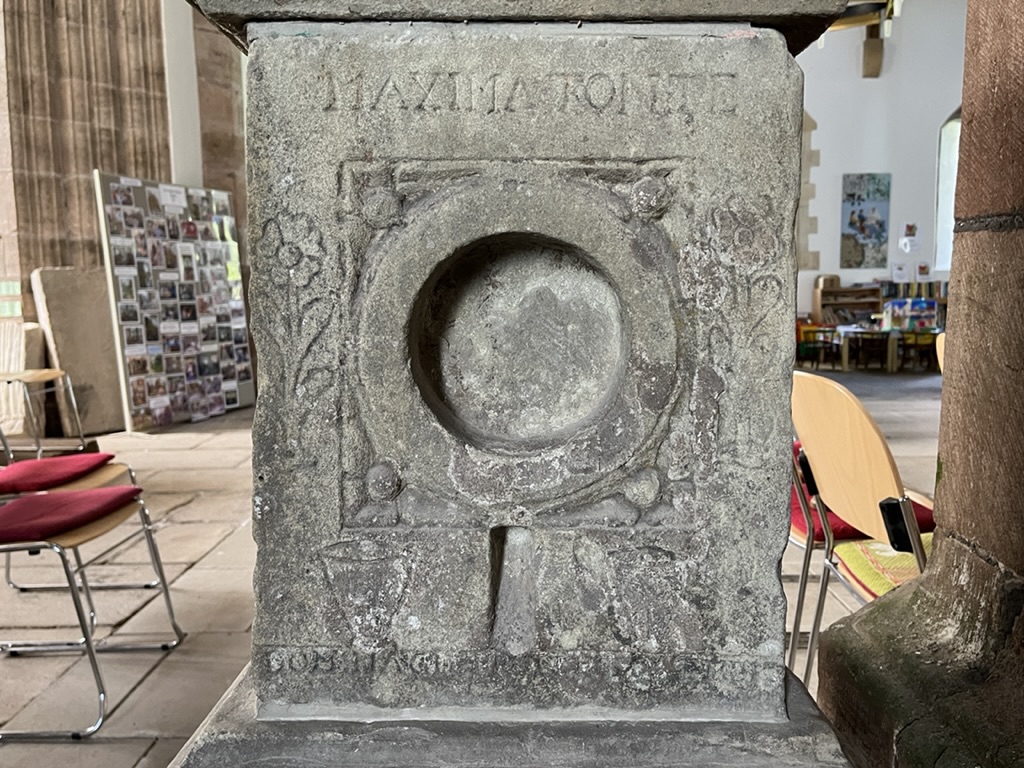
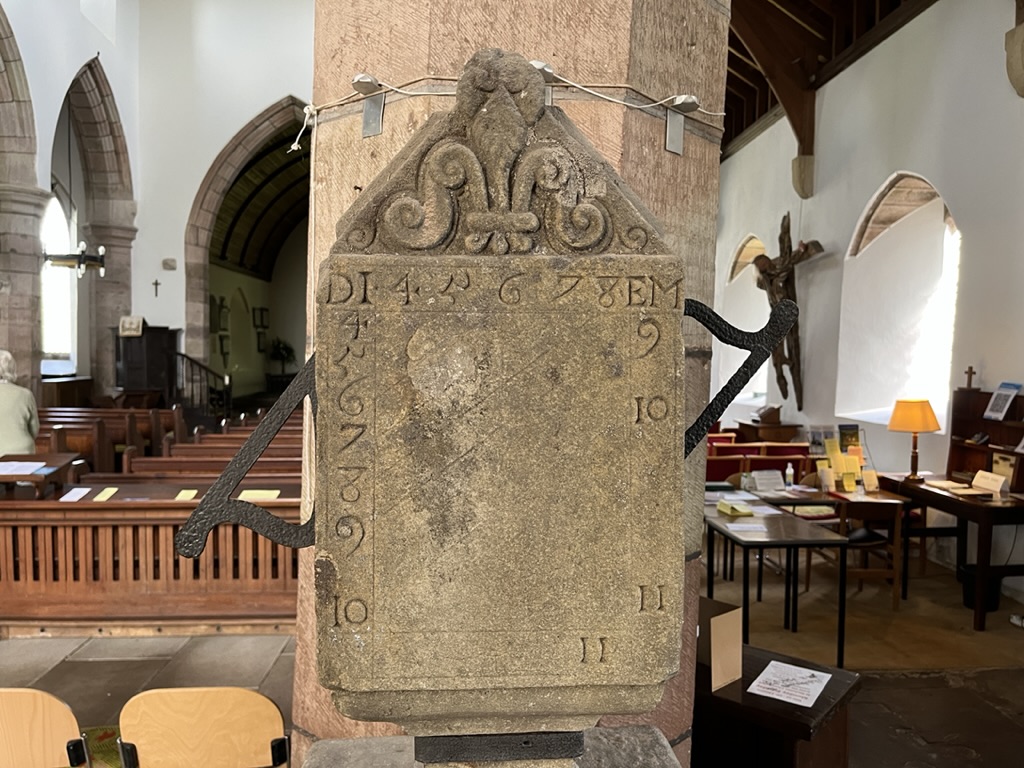
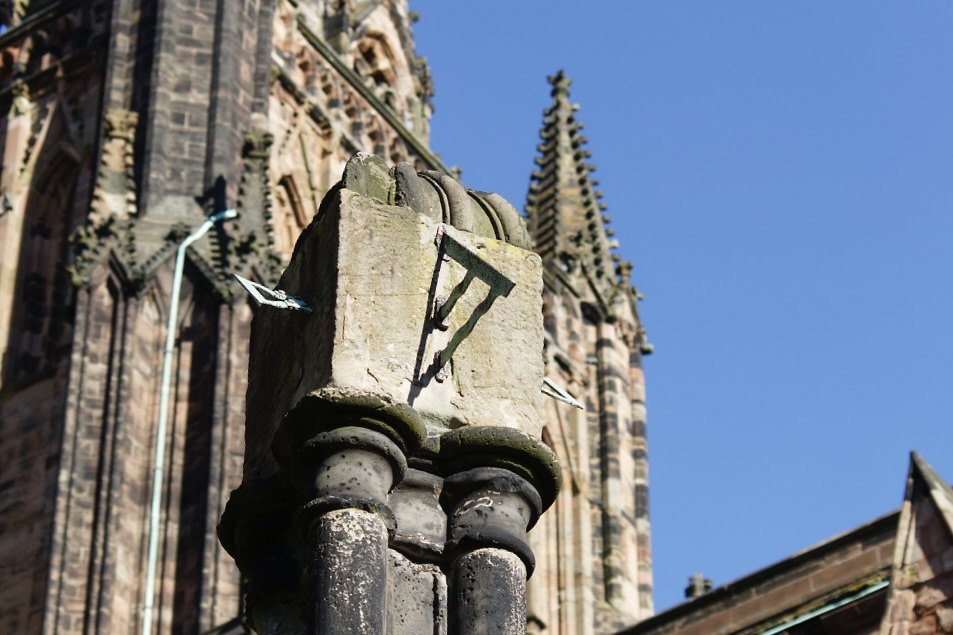
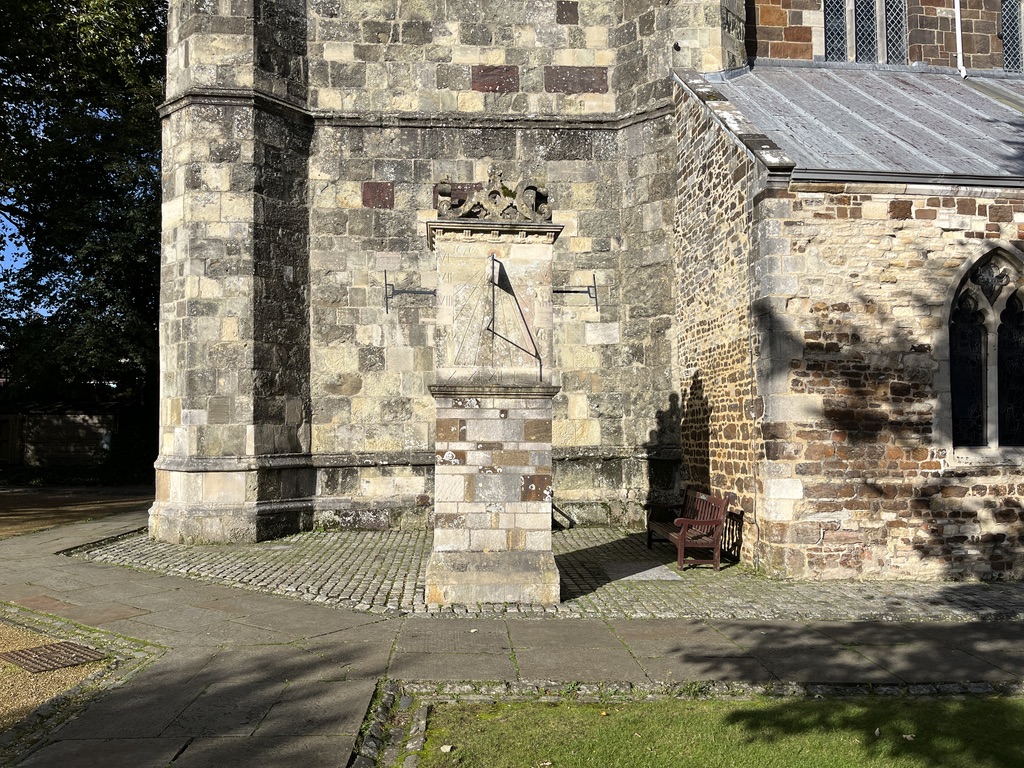
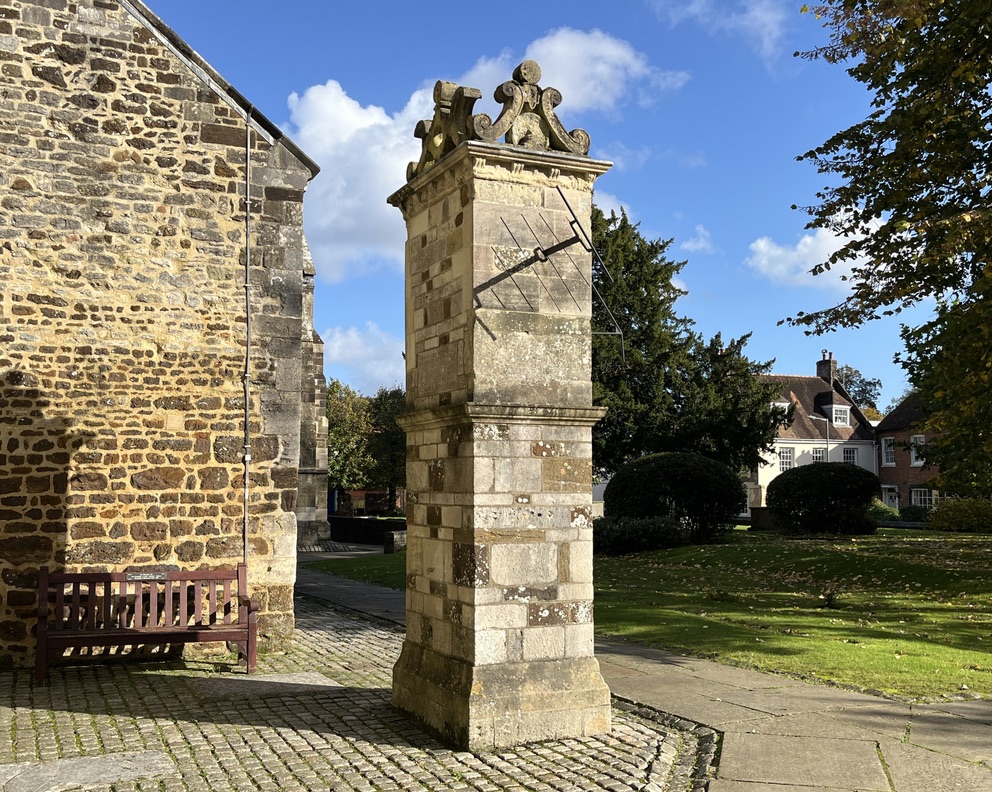
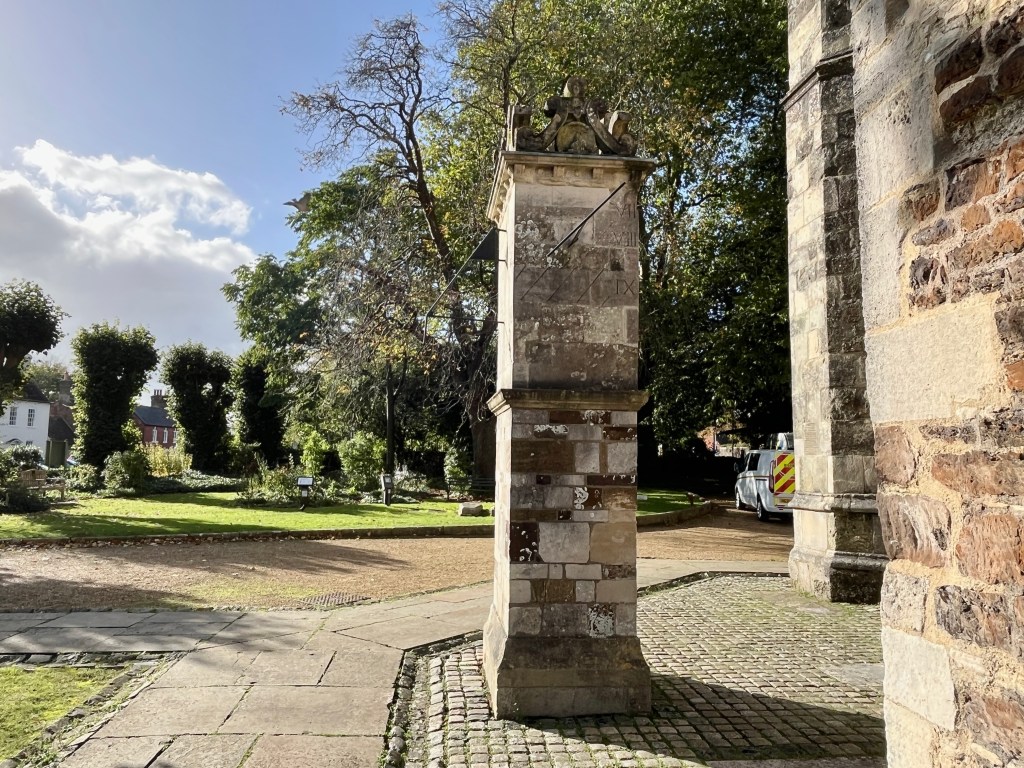
The origins of the Minster date back to the C8. The building seen today dates from early C12 with development during subsequent centuries. Leaving aside the merits of the splendid building, the impressively large stone block on the S side is unmissable. The plinth alone is 6′ high; S face is 4′ wide; E & W faces are 3′ wide. N face has an inscribed tablet only.

DIAL DATES

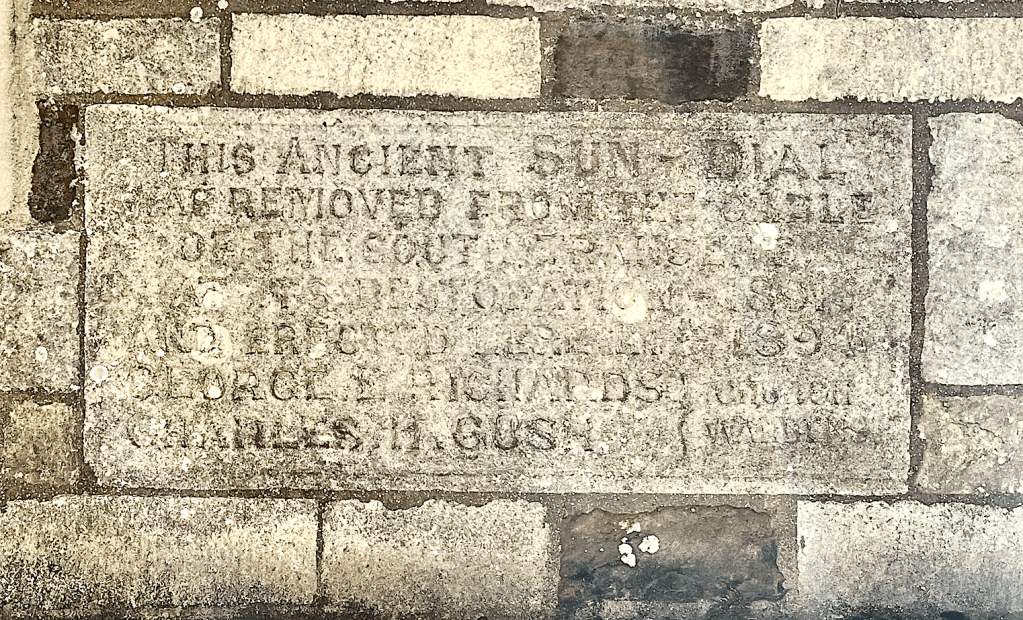
The images featured below give a good idea of each face, gnomon, and relative aspects, so I won’t go into more detail. However there is a conundrum about dates. There was at least one relocation of the dial, and areas of restoration / repair are evident. The inscription on N face is This ancient sun-dial was removed from the gable of the South transept at its restoration 1891 and was erected here 1894 George E Richards [and] Charles H Gush Churchwardens.

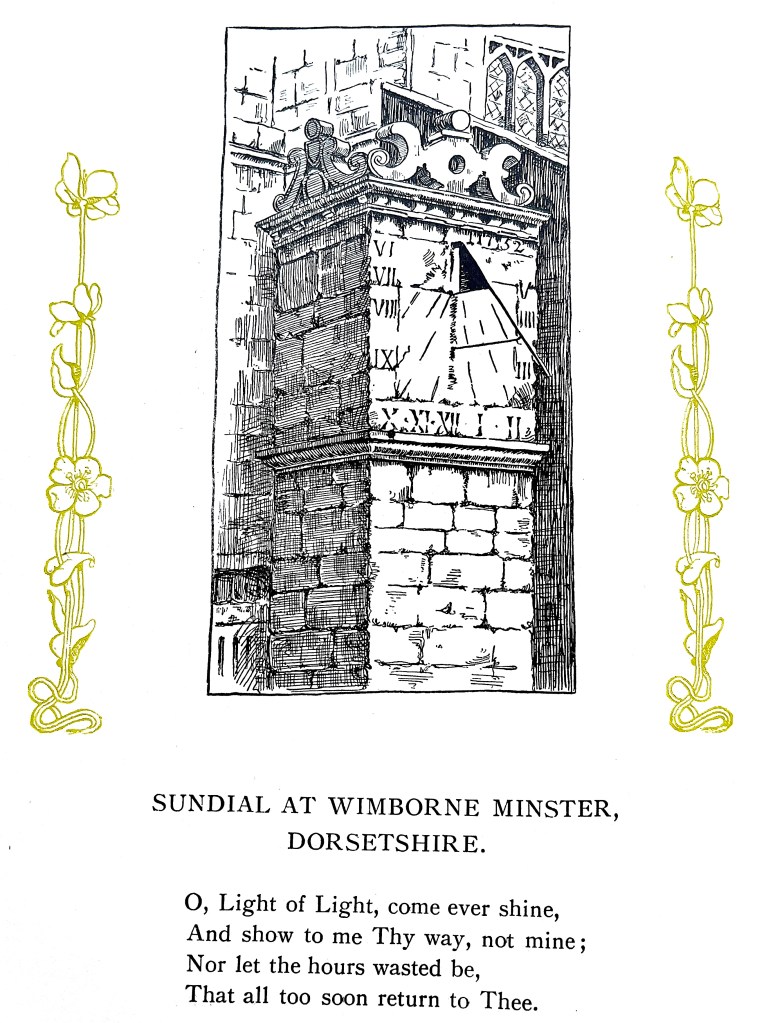
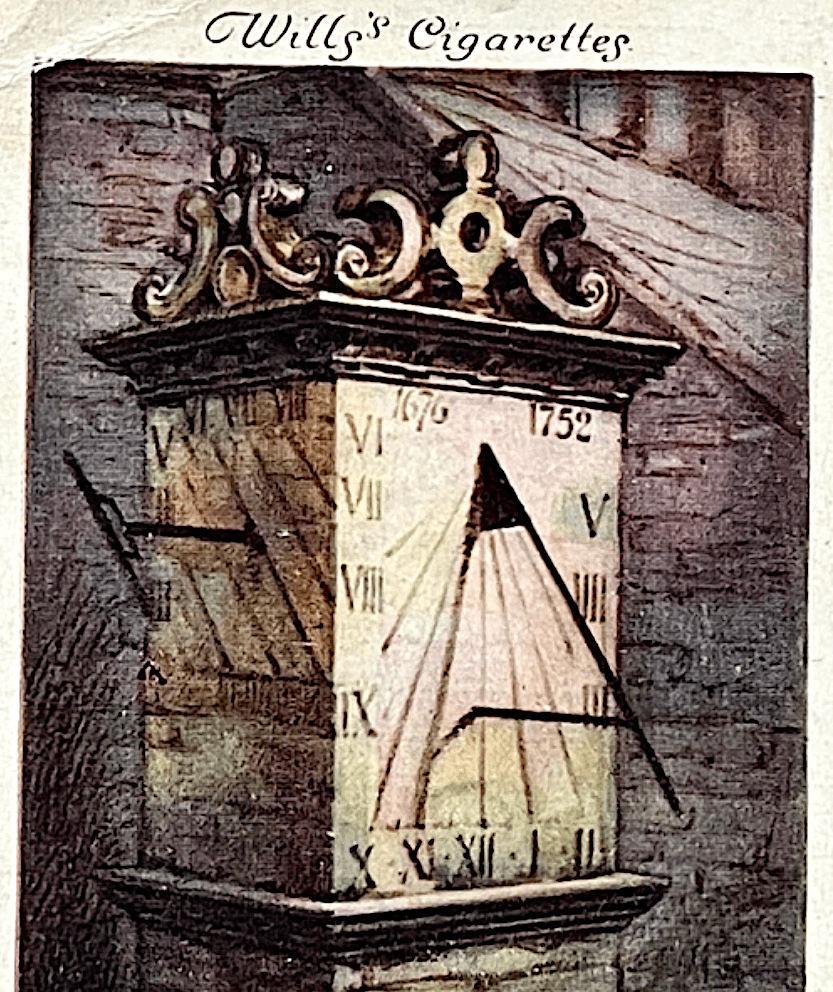
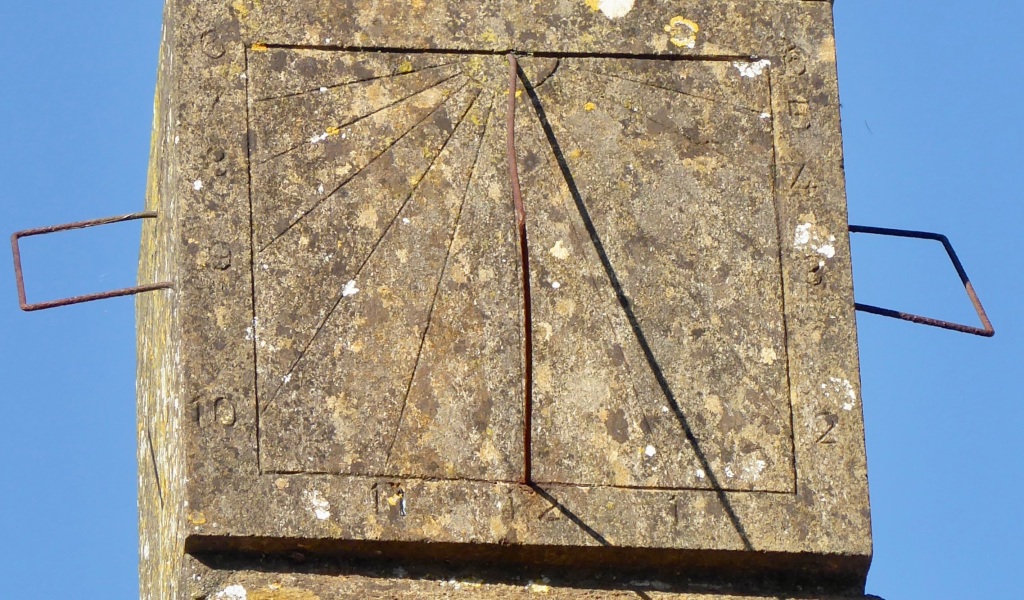
As seen today, the date 1676 is given top left of the south face on new stone. There is no date in the corresponding position on the right side. However in T G W Henslow’s delightful Ye Sundial Booke (1st ed 1914), his charming drawing shows the date 1732 in the top right of the south face with no date on the left side. And more confusingly, in the Wills’s cigarette card sundial series (1928, see below), both dates are shown.

SOUTH
SOUTH WEST

WEST

NORTH WEST
NORTH

EAST
SOUTH EAST

Ye Sundial Booke . T G W Henslow

A BRIEF HISTORY OF THE MINSTER

WILLS’S CIGARETTE CARD SUNDIAL SERIES 1928

FRY’S CHOCOLATE CARD SUNDIAL SERIES

MARTOCK . SOMERSET . MARKET CROSS – Cube Dial
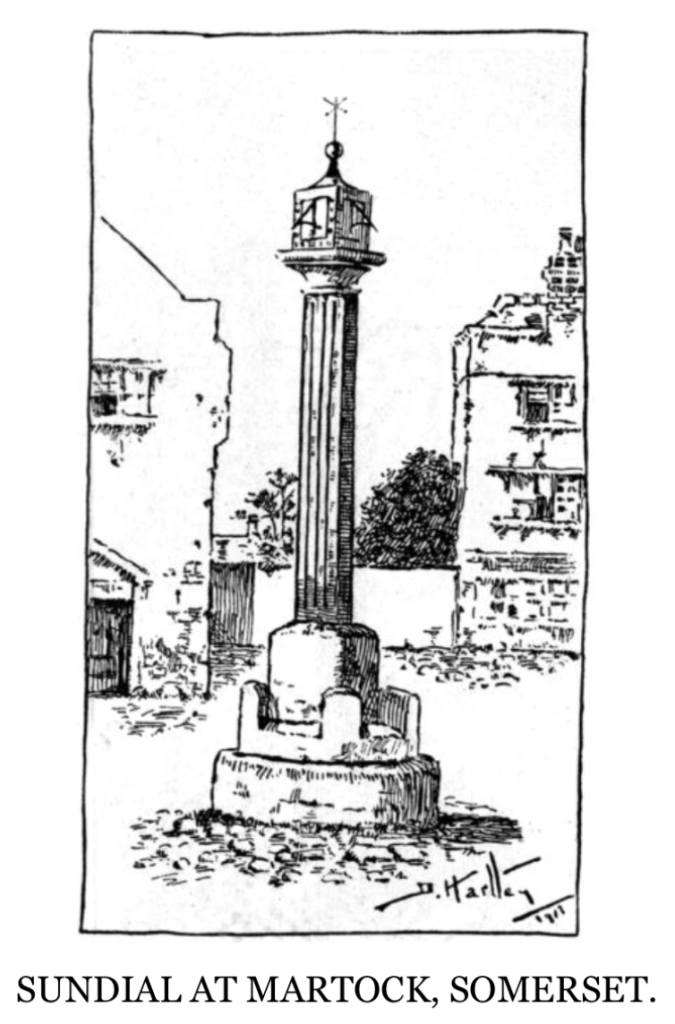
MARTOCK MARKET CROSS: ‘THE PINNACLE’

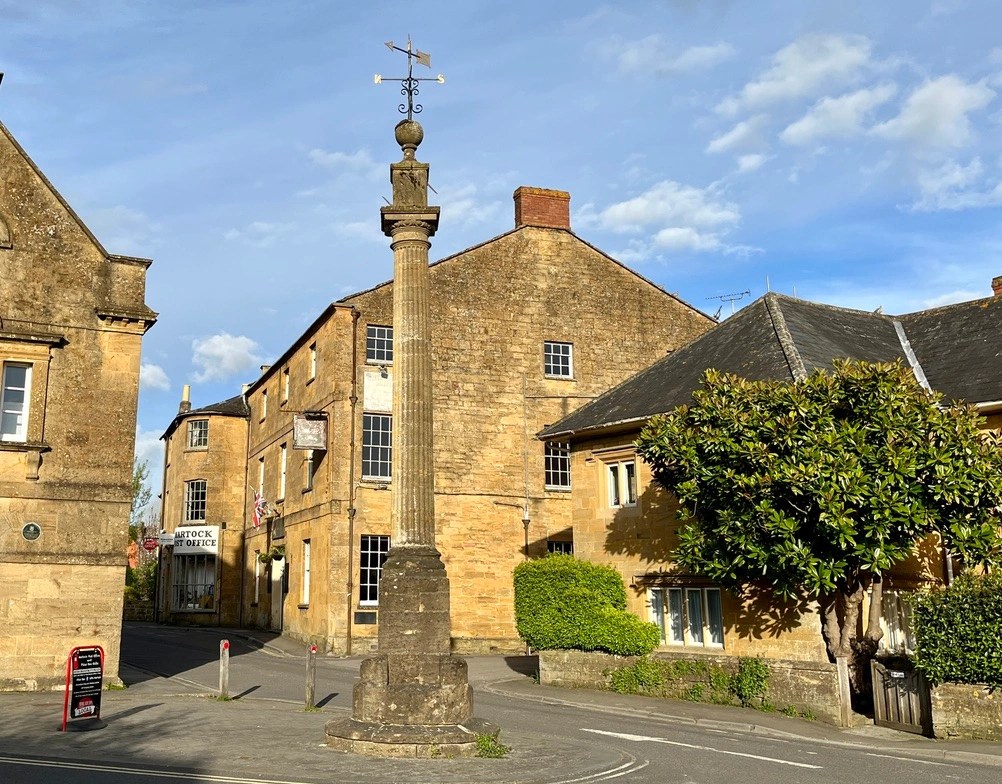
GRADE II ❖ Medieval base. 6-metre Column dated 1741. One sundial face also has that date. All but plinth block entirely rebuilt 1982. The fluted Tuscan column was perhaps copied from a similar one at Wilton. 8m NW of Yeovil. 50.970 / -2.7666 /  ST462192

DIAL

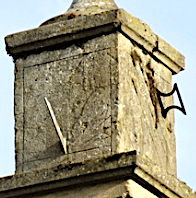
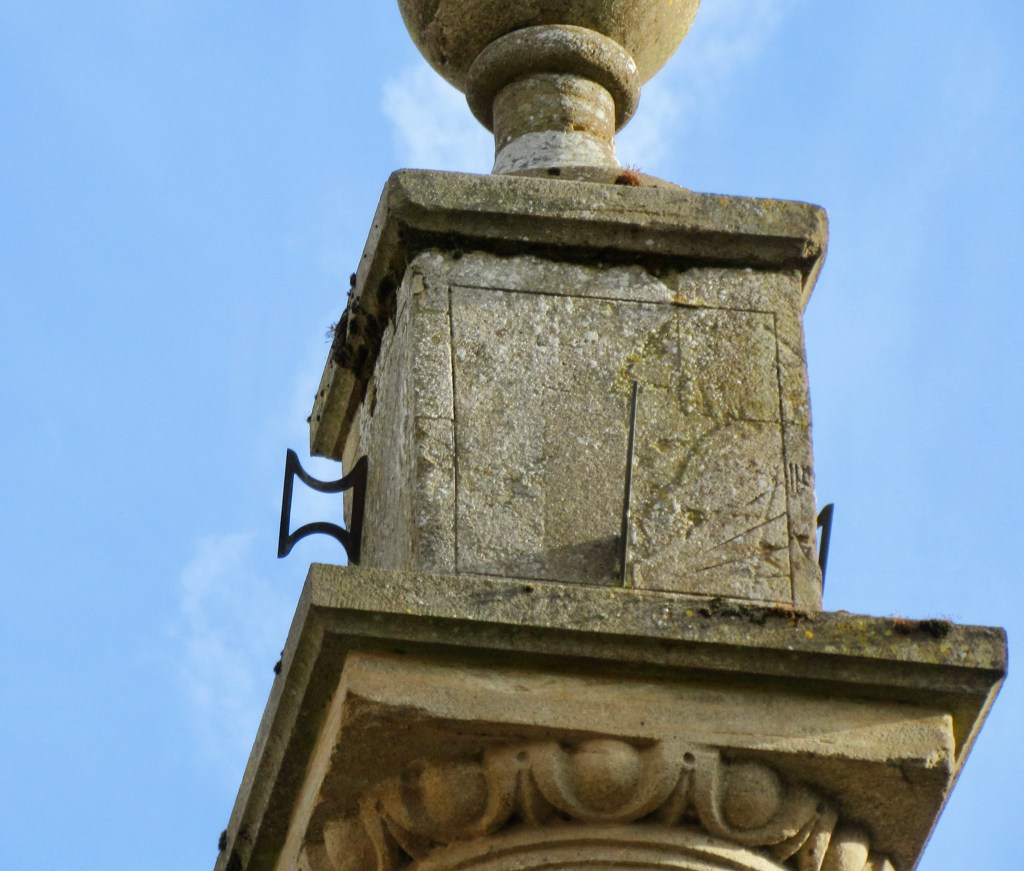
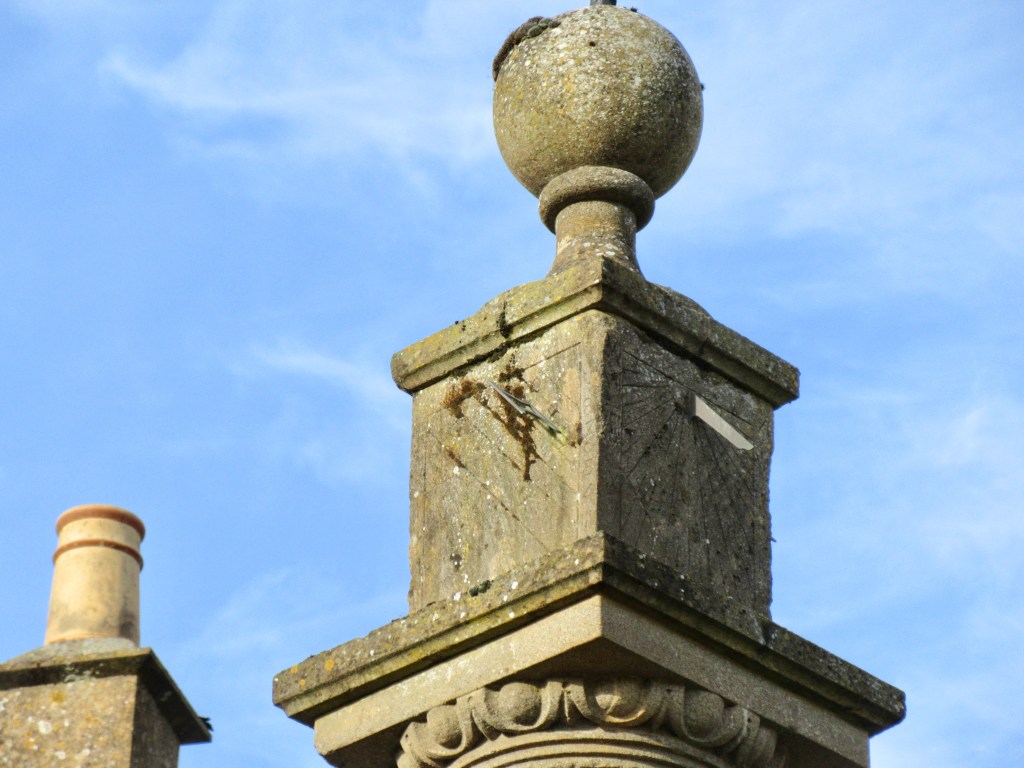
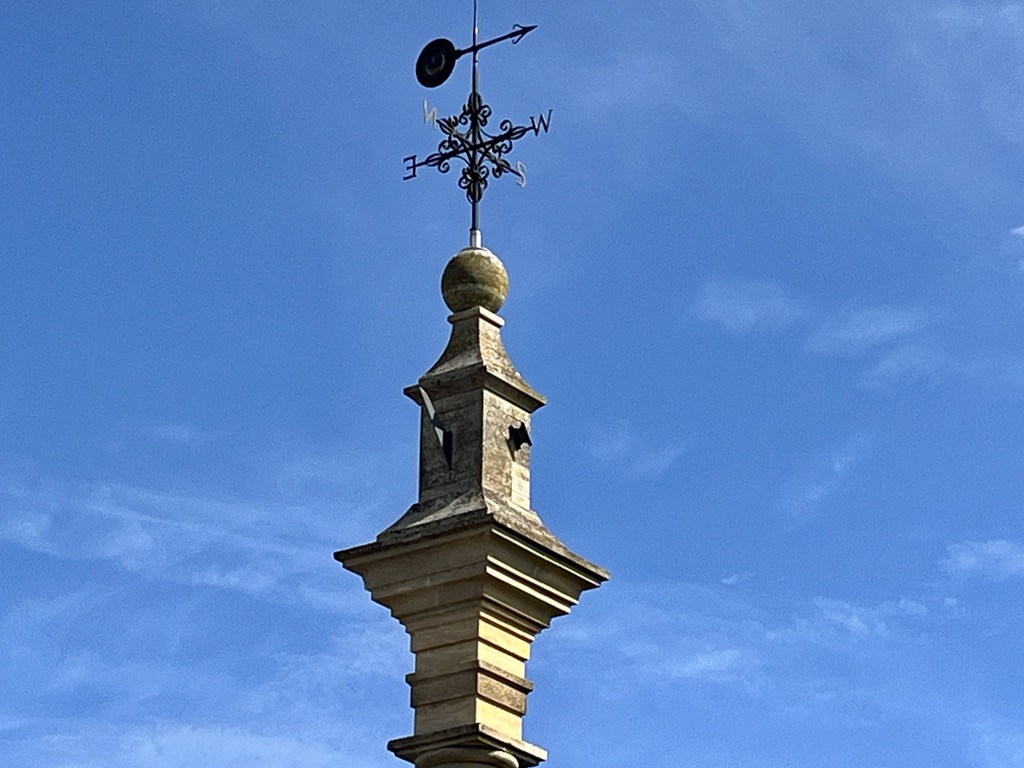
The images were taken starting from approx. NW, moving counter-clockwise. All four faces are included, some clearer than others. The various gnomon styles are shown. I have divided the photos into 2 blocks for simplicity. The dial is topped with a ball finial, which in turn supports an attractive weathervane.

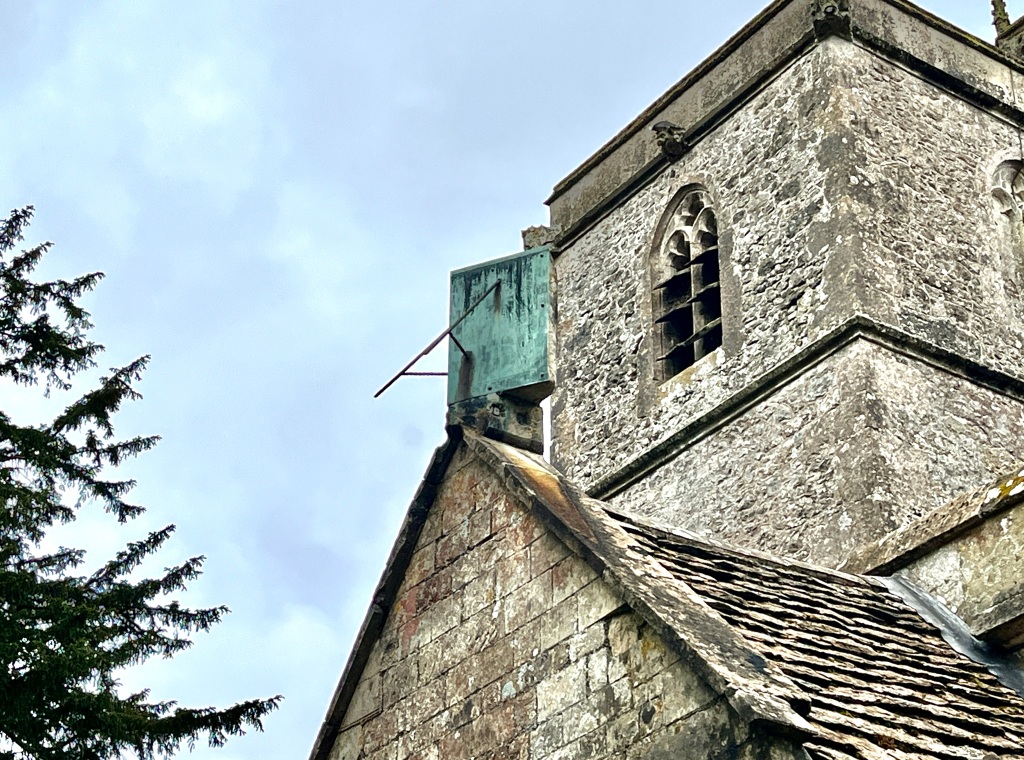
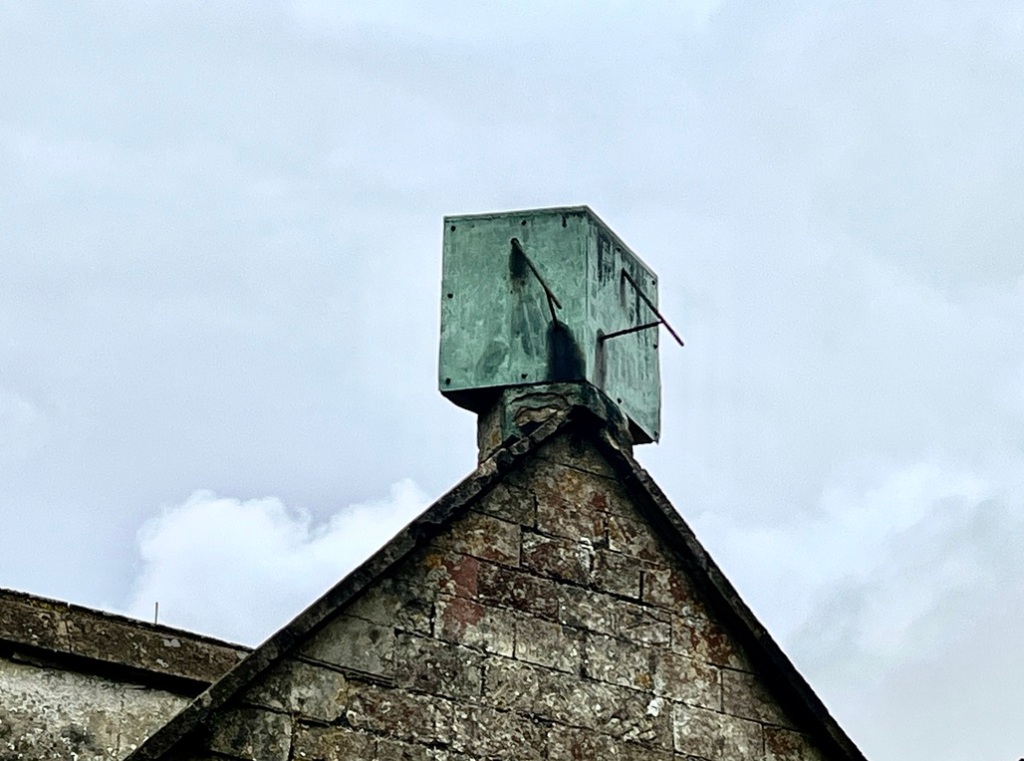
As if this sundial were not enough, Martock’s very fine All Saints church has an excellent cube dial over the gateway: ALL SAINTS . MARTOCK . CUBE DIAL
MARTOCK HISTORY CLUB has a good article about the dial and other local features of interest.

GSS Category: Market Cross; Column Dial; Pinnacle Dial; Cube Dial

All photos: Keith Salvesen

ILCHESTER . SOM . MARKET CROSS

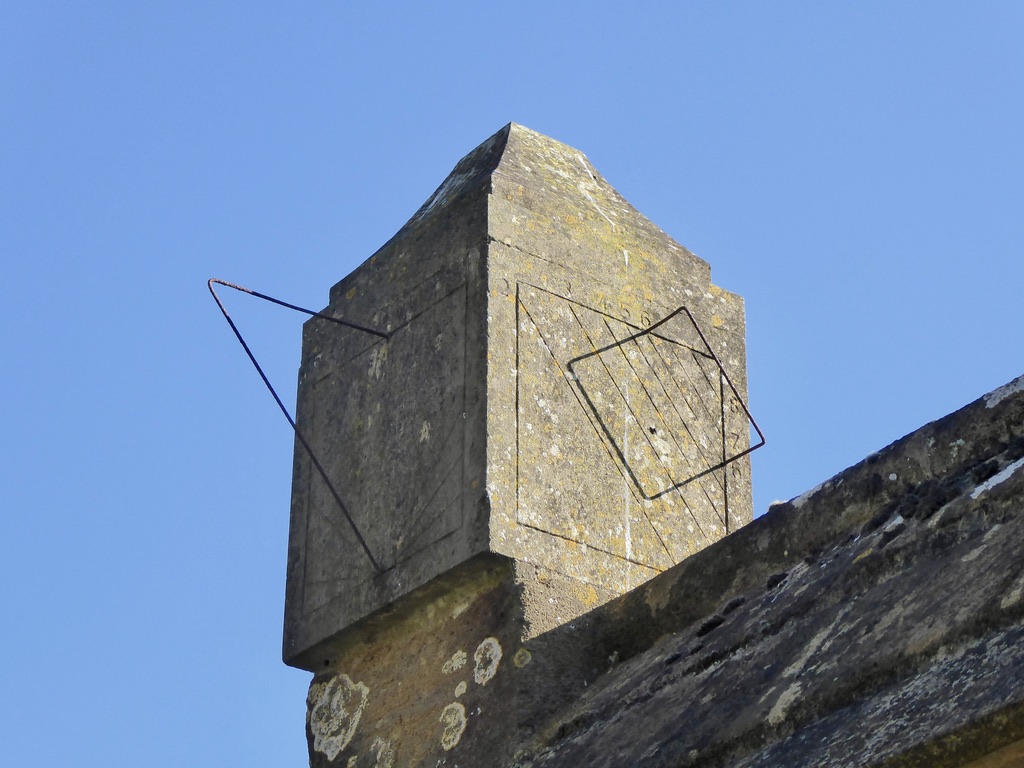
GRADE II ❖. 1795. Market Cross on site of earlier cross. Ham stone. Circular base with two chamfered offsets, set on circular step; square stepped plinth carrying simple Doric column with entablature moulding over, then square-plan block with sundials having sheet metal gnomons, and a ball finial with wrought-iron wind vane. (VCH, Vol III, 1974).

DIAL M FOR MISFORTUNE

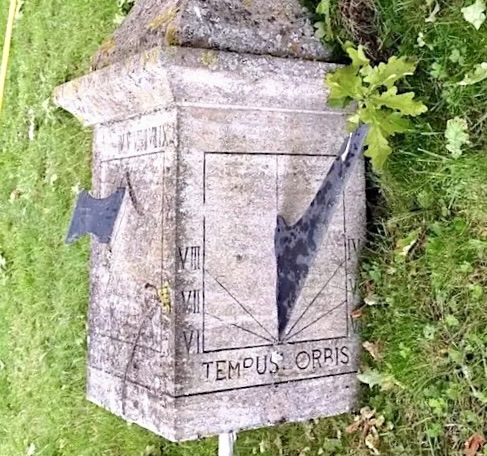
The VCH record of 1974 pre-dated 2 subsequent calamities. The original dial, erected in 1792 was significantly damaged in 1990 gales. A replacement with new column, dial, and gnomons was erected in 1991 (BSS). The original dial motto was indecipherable and was replaced by a new motto Tempus Orbis.

Then in 2017, a car drove directly into the monument, smashing the base and causing the whole edifice to collapse (see below). ST 52193 22723

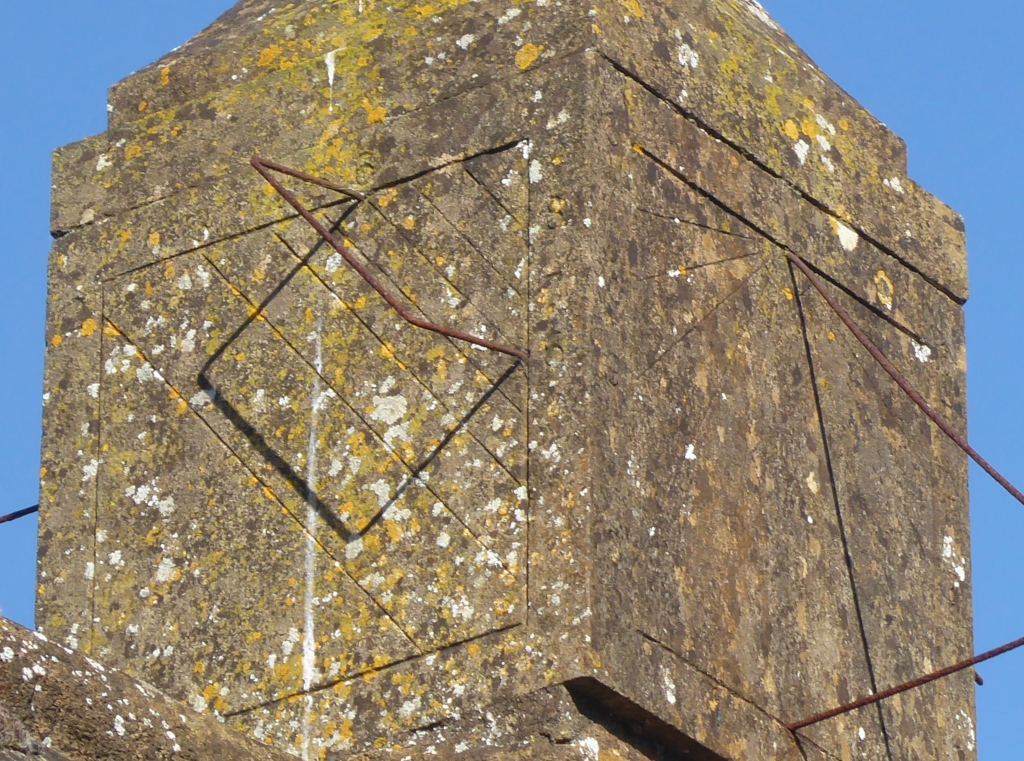
This is a fine example of a Market Cross, one of 3 or 4 in the region (eg Martock). Tall, slender, and uncomplicated, the dial is pleasingly in proportion to the overall design. My camera didn’t deal with the height well enough to show the detail. Several angles of the dial and gnomons are shown, but not the markings on each face. However, there is a close-up view of one face of the dial below.

MONUMENTAL DAMAGE 2017

Early one August morning a car drove directly into the monument. The driver seems to have been unhurt, and was arrested for drunk driving (outcome unknown). The impact smashed the base and destabilised the entire structure. The images below show the dramatic aftermath. The monument was in due course rebuilt using parts of the original structure(s) where possible. It now, unsurprisingly, in excellent condition.

The restorers BODEN & WARD earned a prestigious award for this challenging project. The link will take you to their records; the photos of some of the reconstruction work are fascinating.

TEMPUS ORBIS

A simple-seeming motto that is hard to translate. Not mentioned by Gatty. The literal ‘Time (of the) World’ doesn’t really work. Perhaps ‘the Circle of Time’, given that the quotidian day lights each face as the world orbits the sun.

GSS Category: Cube Dial; Market Cross; Market Cross Sundial; Pillar Sundial

Image Credit: Keith Salvesen; BBC / Christopher Brown; Somerset Live; Bowden & Ward

MAIDEN BRADLEY (2) . WILTS . ALL SAINTS – Unusual Diptych Dial

ALL SAINTS . MAIDEN BRADLEY (∏ Retired QA)

ALL SAINTS . MAIDEN BRADLEY . WILTS

GRADE I ♱ Saxon foundation. C12 (first record 1102) early C14, C15, 1845 restoration. C12 Purbeck marble font bowl. Jacobean box pews. Spiritual home of the Dukes of Somerset, duly commemorated. Original 14th century oak door, fittings. Scratch Dial featured HERE. 7m SW of Warminster. Longleat & Stourhead nearby. 51.1468 / -2.2821 / ST803386

DIAL

All Saints has an unusual and intriguing double-faced sundial above the porch, thought to be C18. At first sight, looking towards the porch, it could be a cube dial. The 2 sides are at right angles facing SE and SW. Between them, they cover the ‘6-to-6’ time span. There are faint markings on the dial faces – roman numerals, lines (see below).

BSS records two declining dials of similar design believed to be made from one sheet of metal folded at the centre. Between them they show 6am to 6pm in half hours.

SOUTH ASPECT

It is worth noting that the two gnomons are matched in both style, and position on each face. This is only (I think) possible with equal SE / SW angles. BSS notes SE dial may be ‘slow‘.

SOUTH EAST ASPECT

SOUTH WEST ASPECT

DIAL MARKINGS

A poor photo enlarged, showing the visible markings – lines and the reciprocal roman numerals at the edge of each face.

SCRATCH DIAL HERE

GSS Category: Scratch Dial; Mass Dial

All photos Keith Salvesen except header, Retired QA (OS CC)

MARTOCK . SOMERSET . ALL SAINTS – Cube Dial

ALL SAINTS . MARTOCK . SOMERSET

GRADE 1  Mid-C13 with earlier origins; expansion to C16; restorations by Ferrey and Scott 1860 and later. A most impressive Parish church with a 4-stage tower. Admired by PEV as one of the loveliest of Somerset churches on account of its splendid Perp. work on the nave; and for being remarkably airy and spacious. 50.9693 / -2.7687 / ST461191

NOTE: All Saints has multiple scratch dials (10+) – see MARTOCK SCRATCH DIALS

CUBE DIAL

A fine cube dial in good condition. It apparently replaced one that had been in the same position, but it is not clear when. The images largely speak for themselves. However I have noticed from the close-up photos that the dial is canted slightly west. It’s worth repeating that it is never possible to get a decent photo of the 4th side of a cube.

All Saints merits time set aside for a visit. Stocks enthusiasts will enjoy a particularly fine example. You’ll find a gallery of them HERE.

GSS Category: Cube Dial; Church Sundial; Canted Dial; Village Stocks

All photos: Keith Salvesen

BARRINGTON COURT (NT) . SOMERSET: Dodecahedral Dial

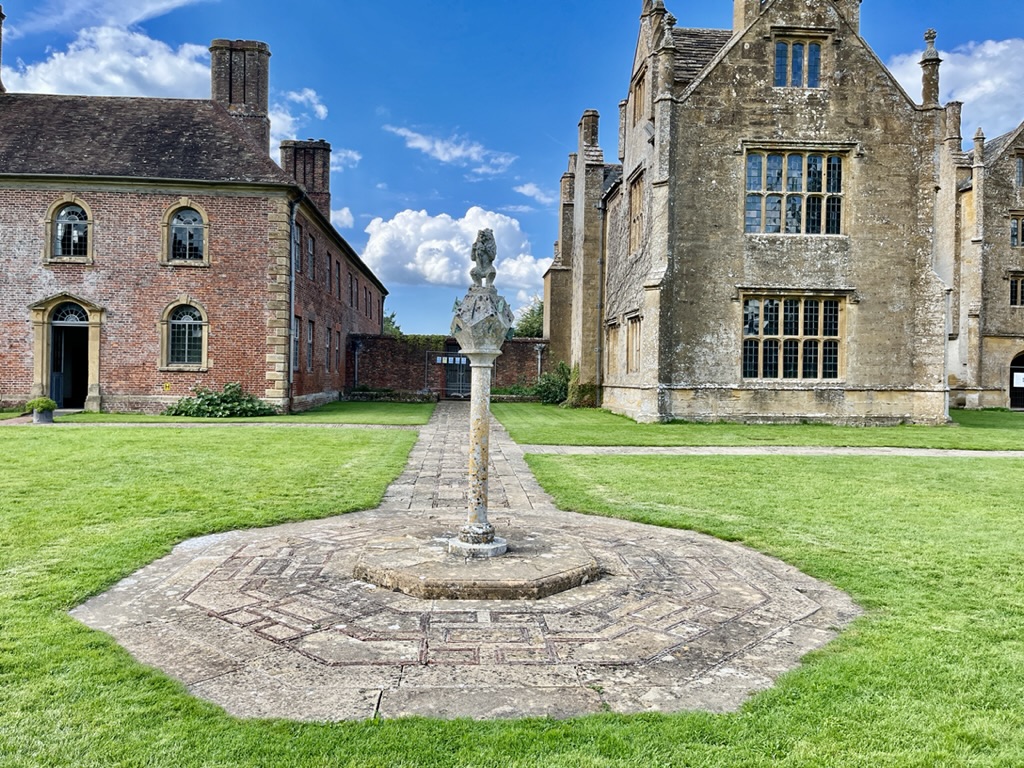
BARRINGTON COURT (NT) . ILMINSTER . SOMERSET

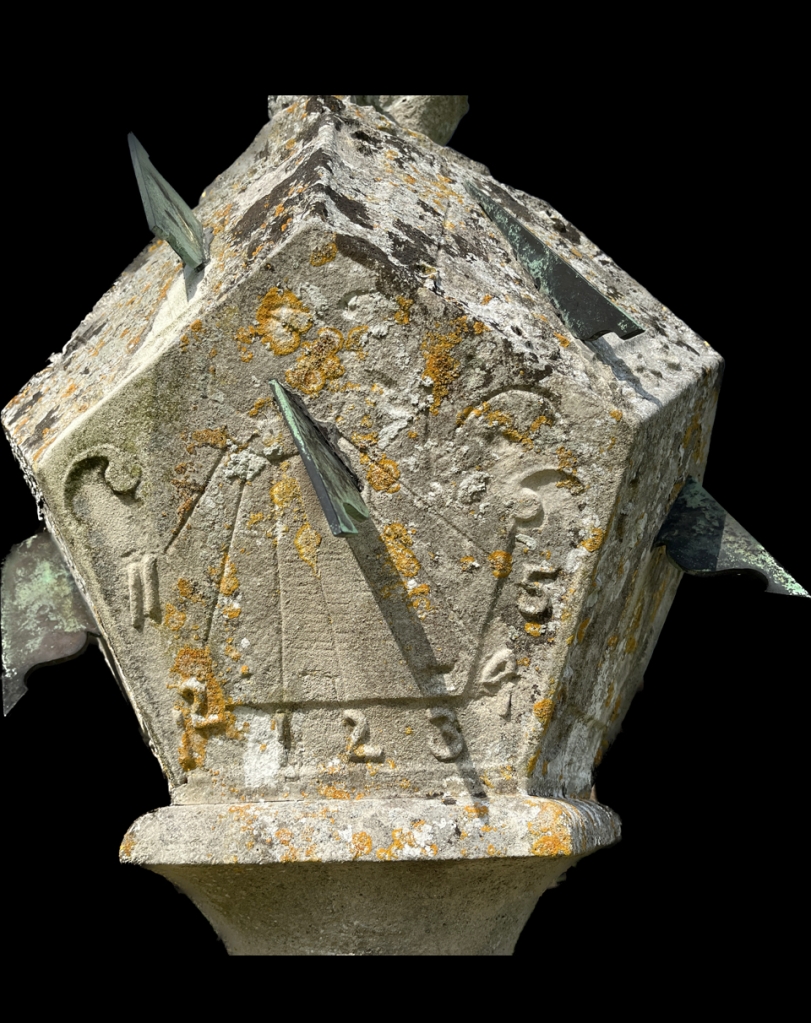
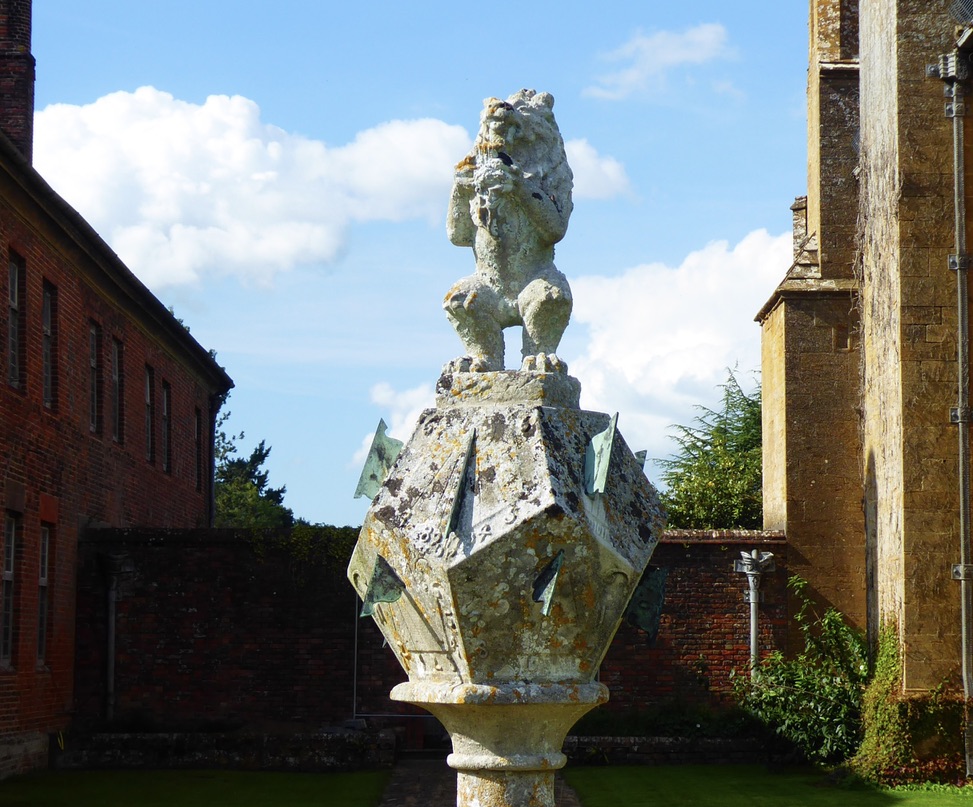
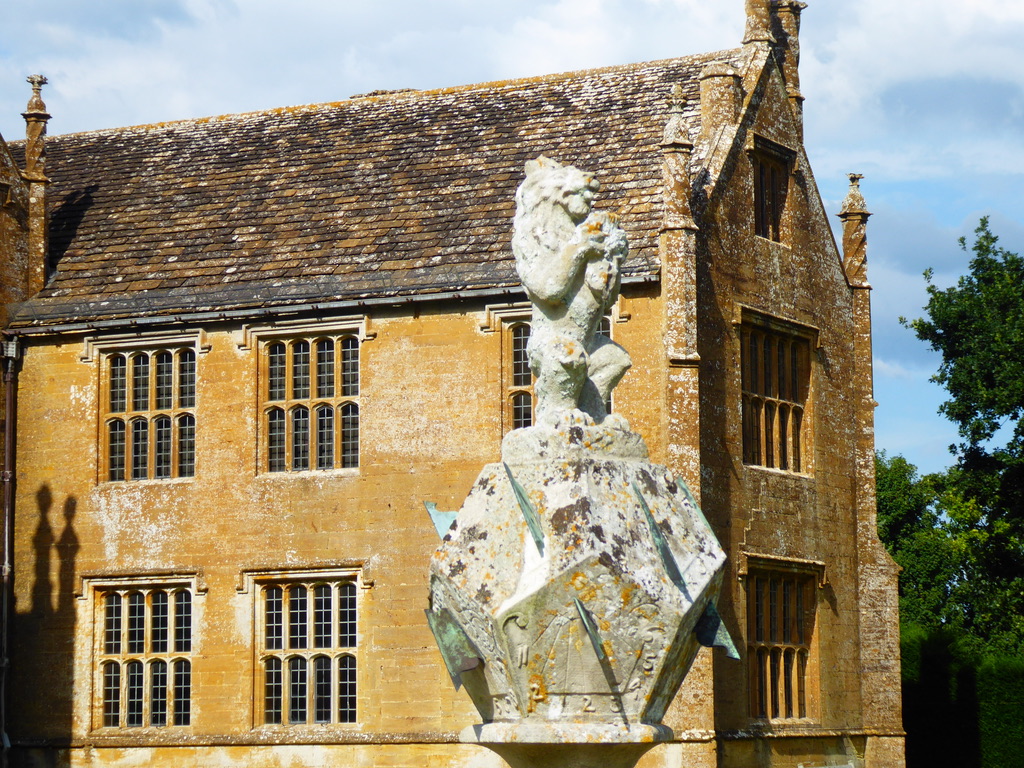
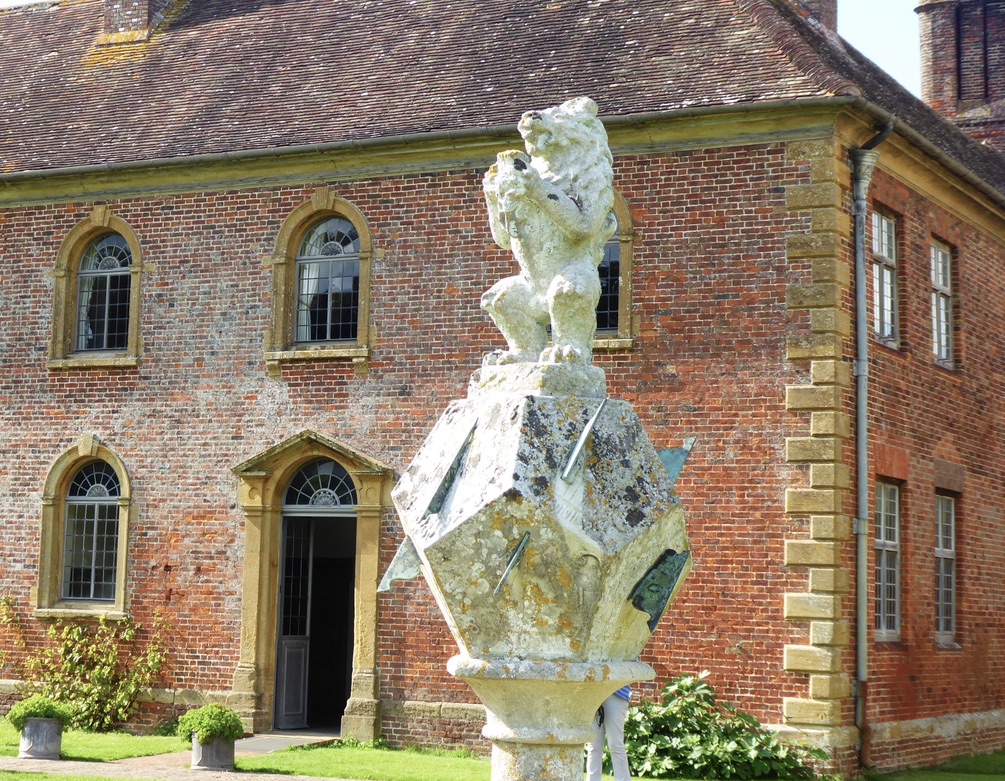
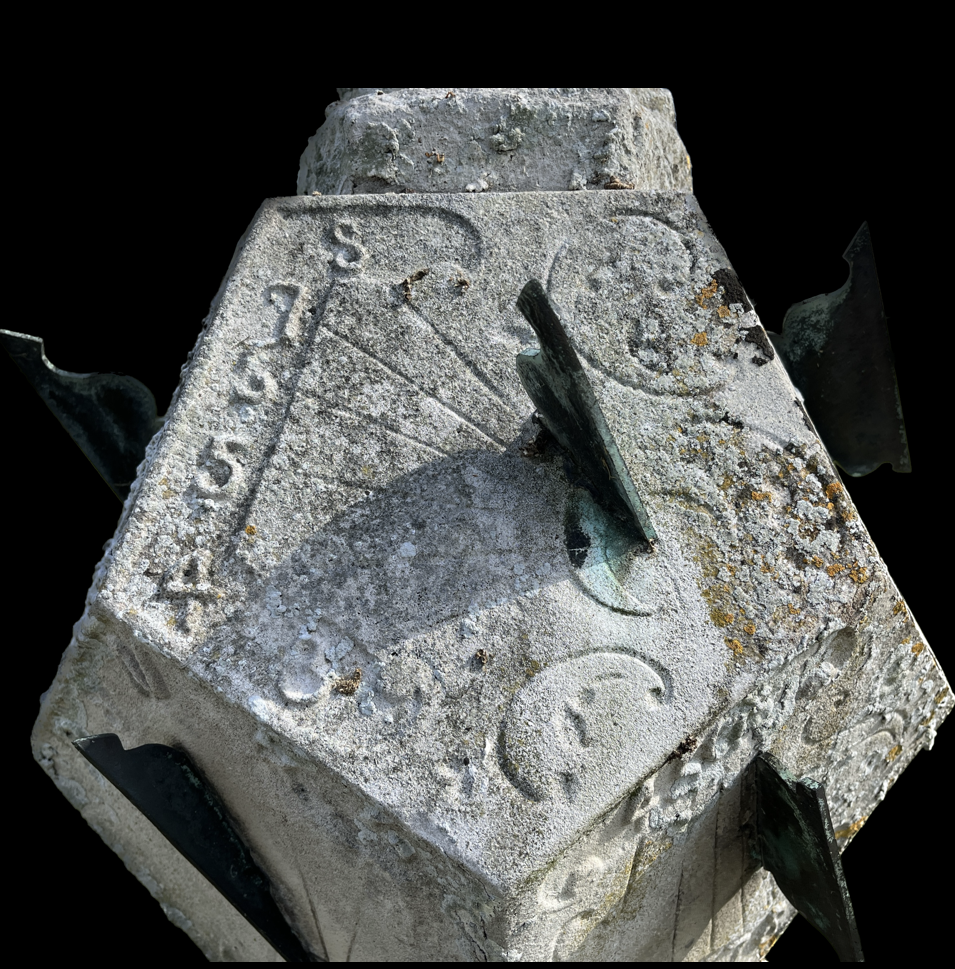
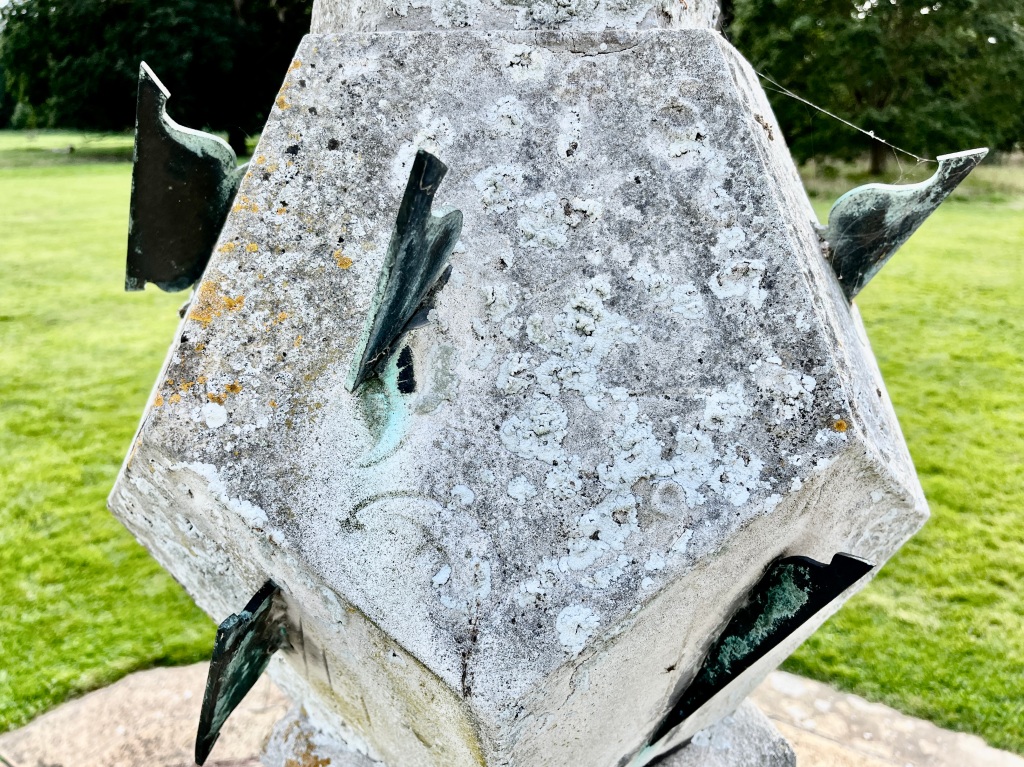
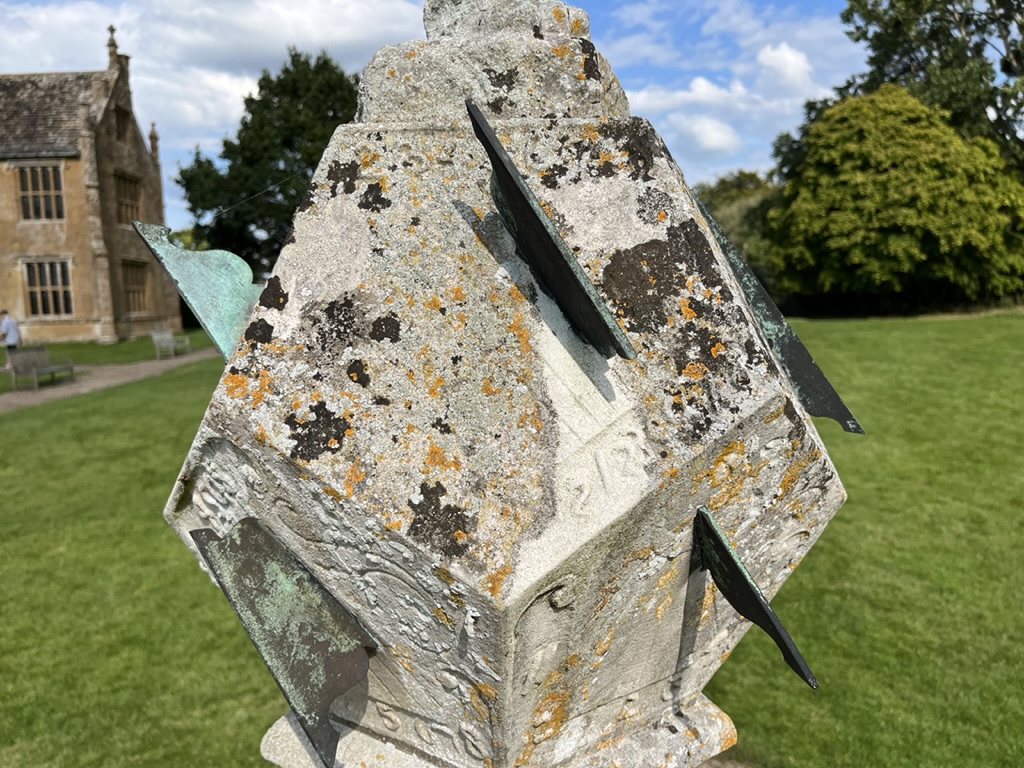
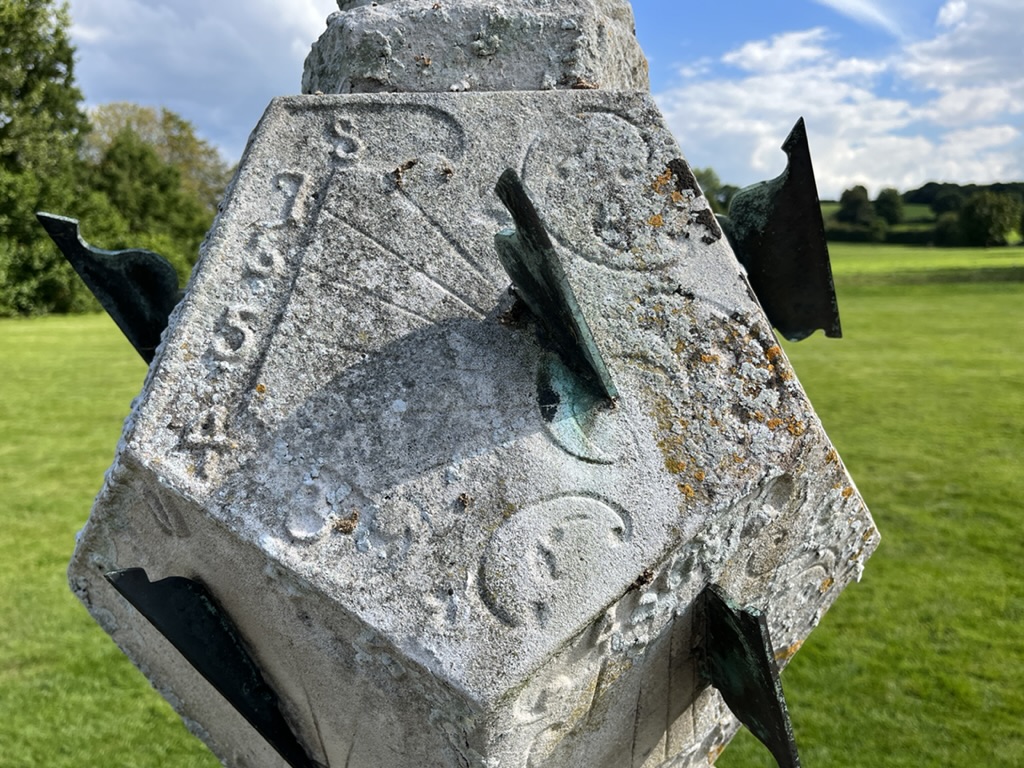
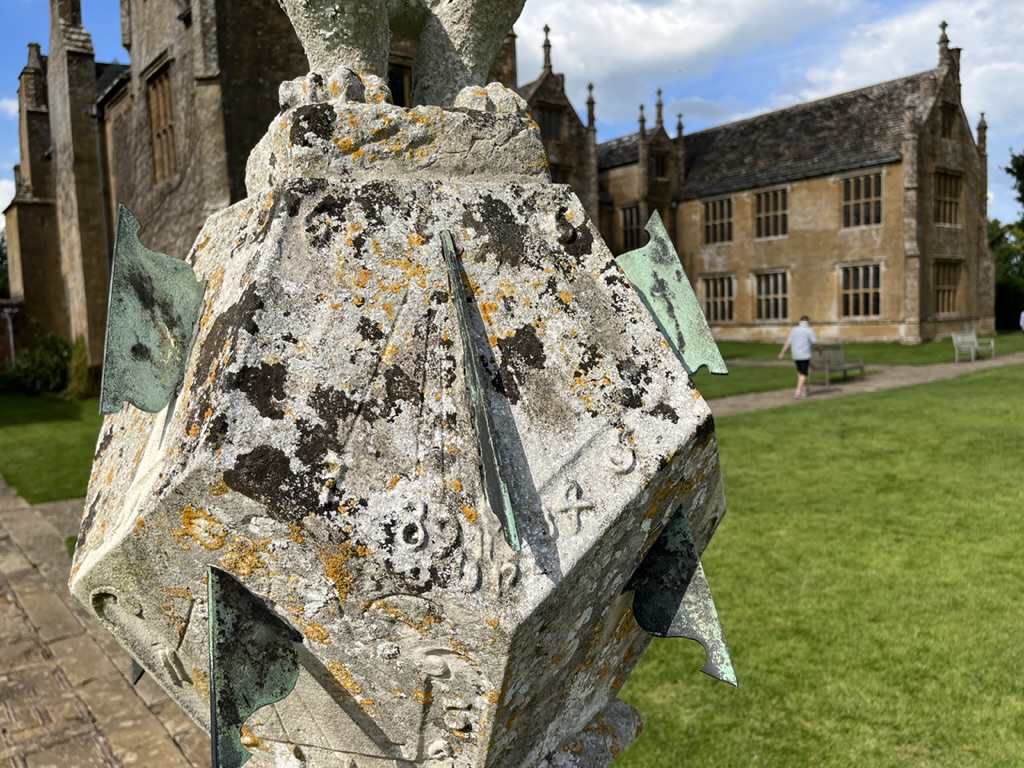
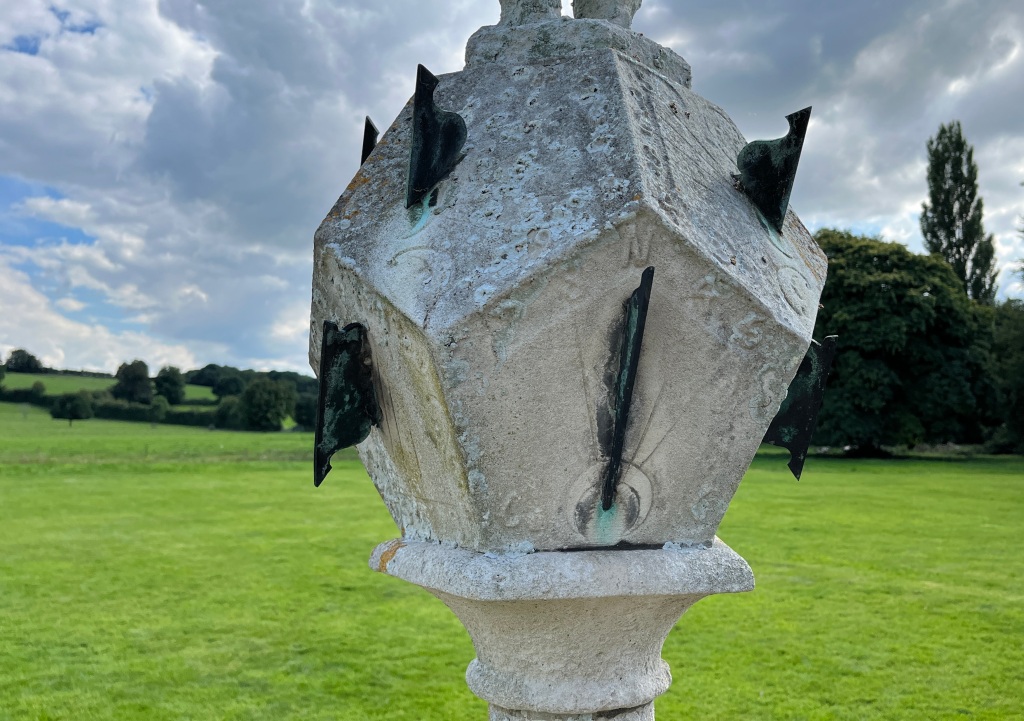
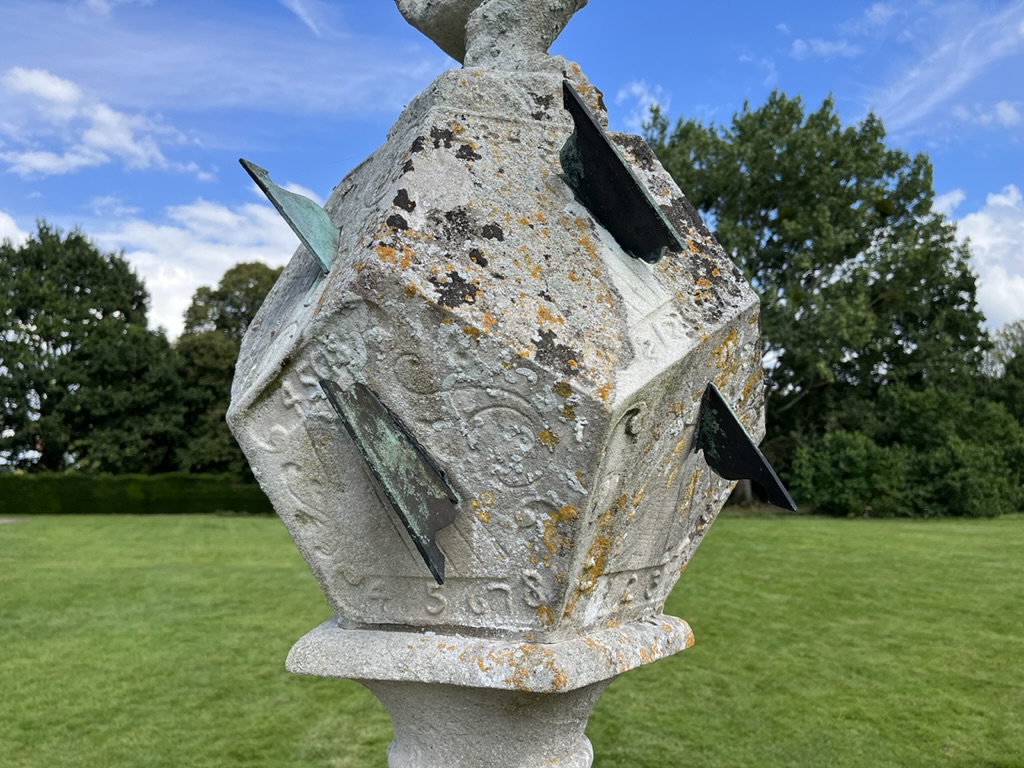
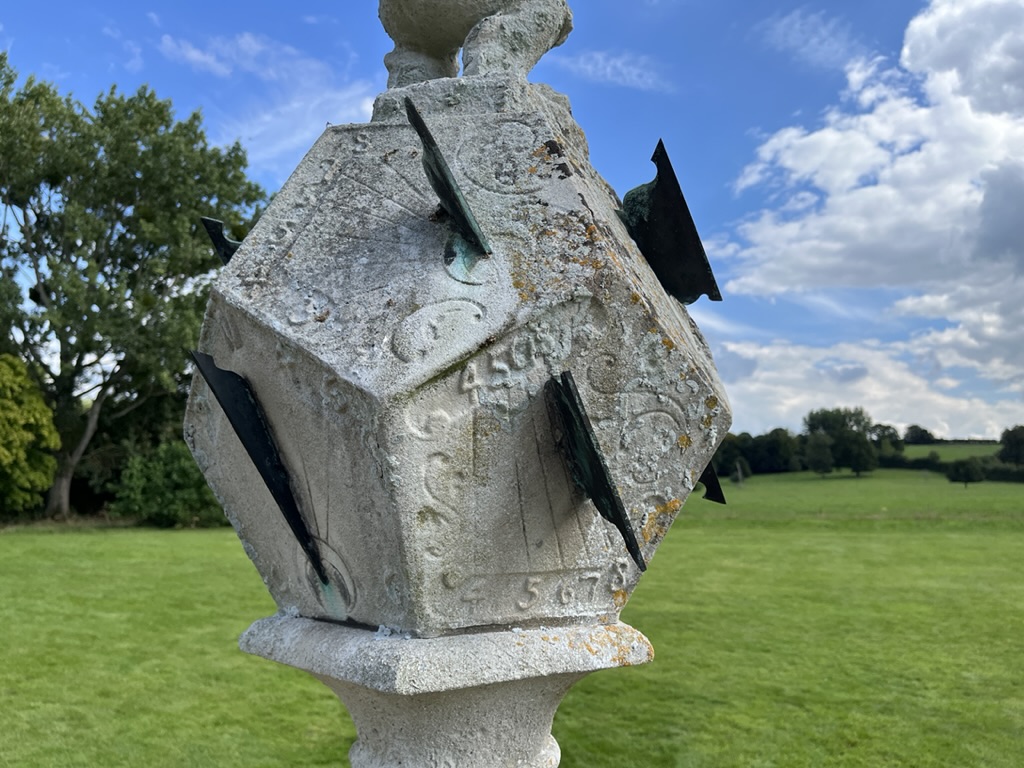
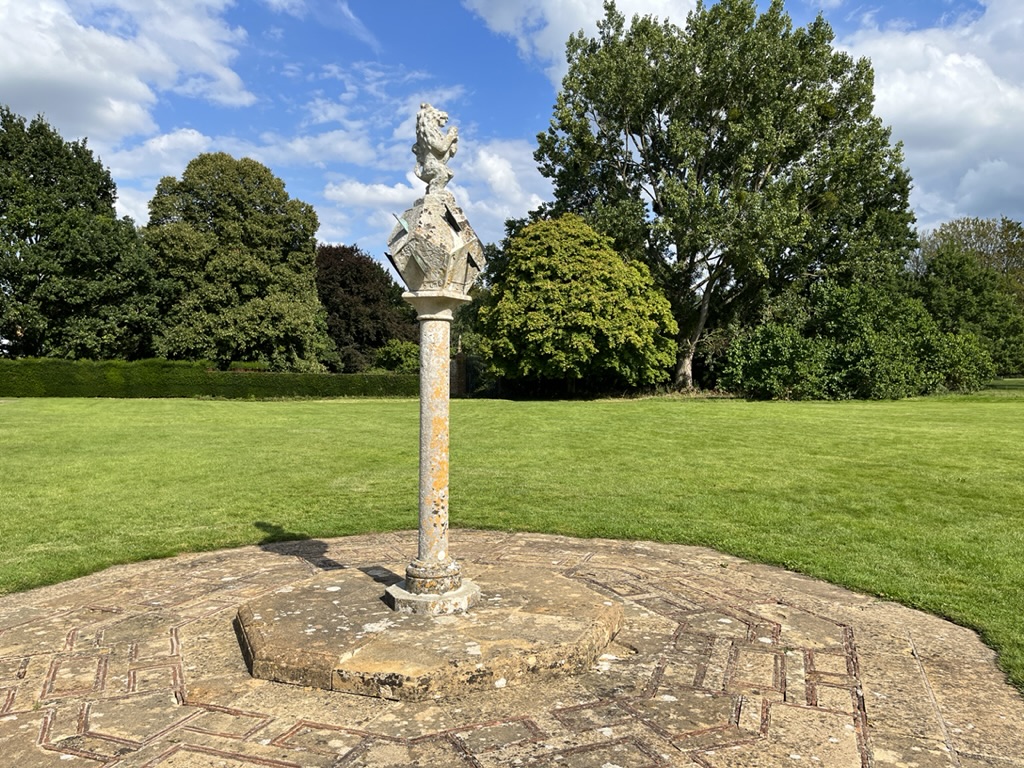
DODECAHEDRAL DIAL WITH PENTAGONAL FACETS

A SPECTACULAR DIAL IN A PERFECT SETTING

BSS RECORD

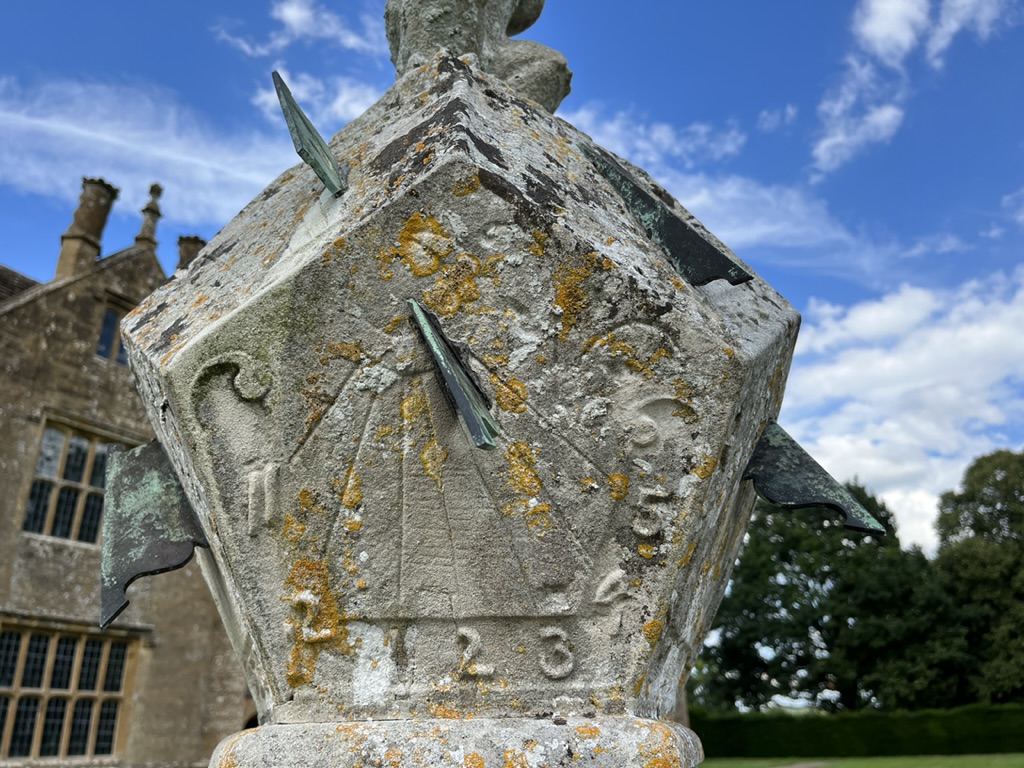
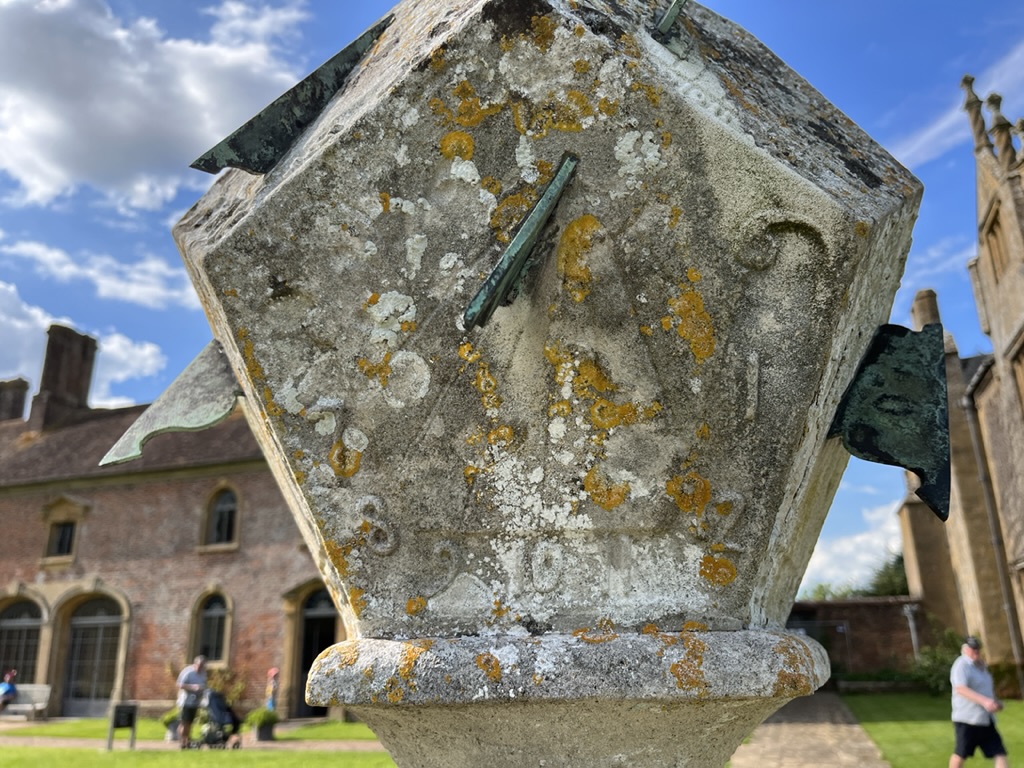
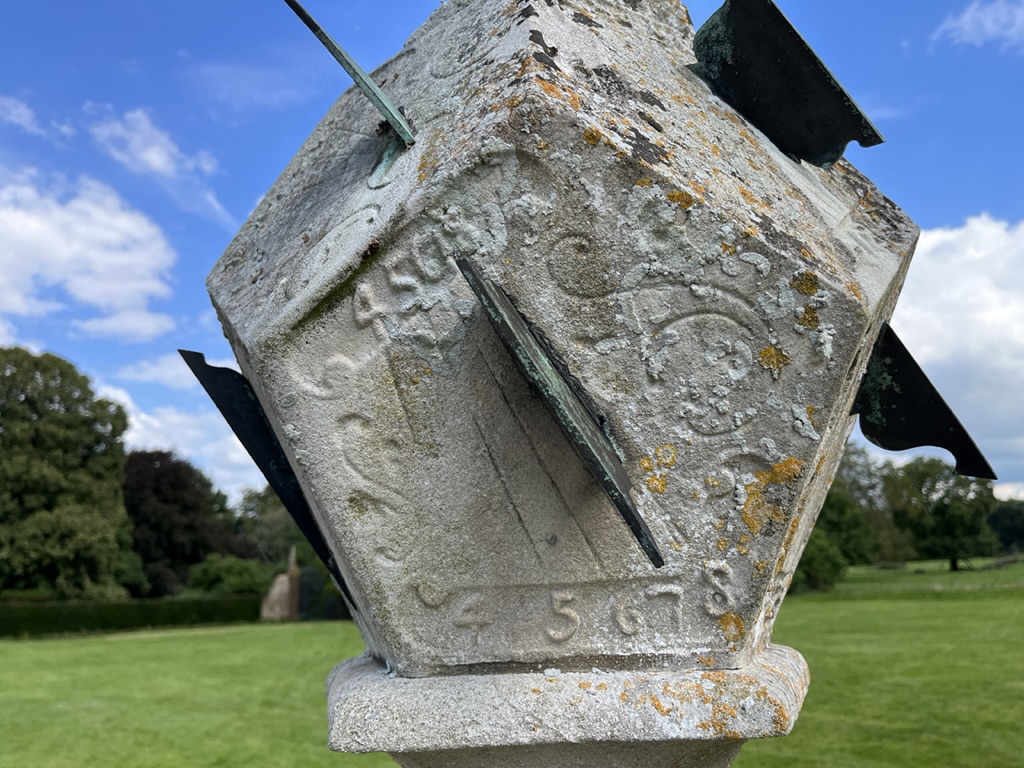
Located on the south lawn. Dodecahedron dial with pentagonal faces. Two ‘rows’ of five dials. The top row reclines, the bottom row inclines. All lines and numerals are visible, all gnomons are intact and 4mm thick. Overall the dial shows 4am to 8pm in hours. The numerals are Arabic, and are in relief, as is light scroll work on some faces. The dial is mounted 1760 mm high on a stone pedestal. It is surmounted by a weathered lion rampant 460 mm tall. The dial is said to have come from Scotland about 1910. SRN 8046 at East Ruston, Norfolk, appears to be a direct copy of this dial.

LOWER FACETS

UPPER FACETS

MIXED FACETS

GSS Category: Dodecahydron Dial; Polyhedral Dial; Multi-Dial; Cube & Similar Dials

All photos: Keith Salvesen

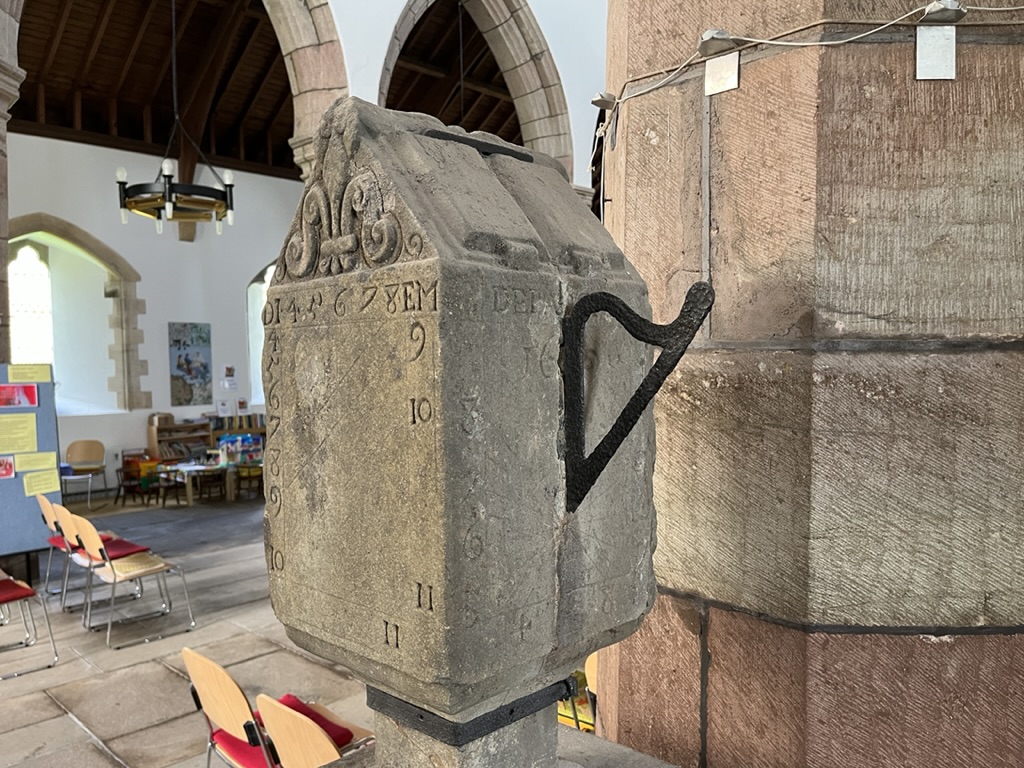
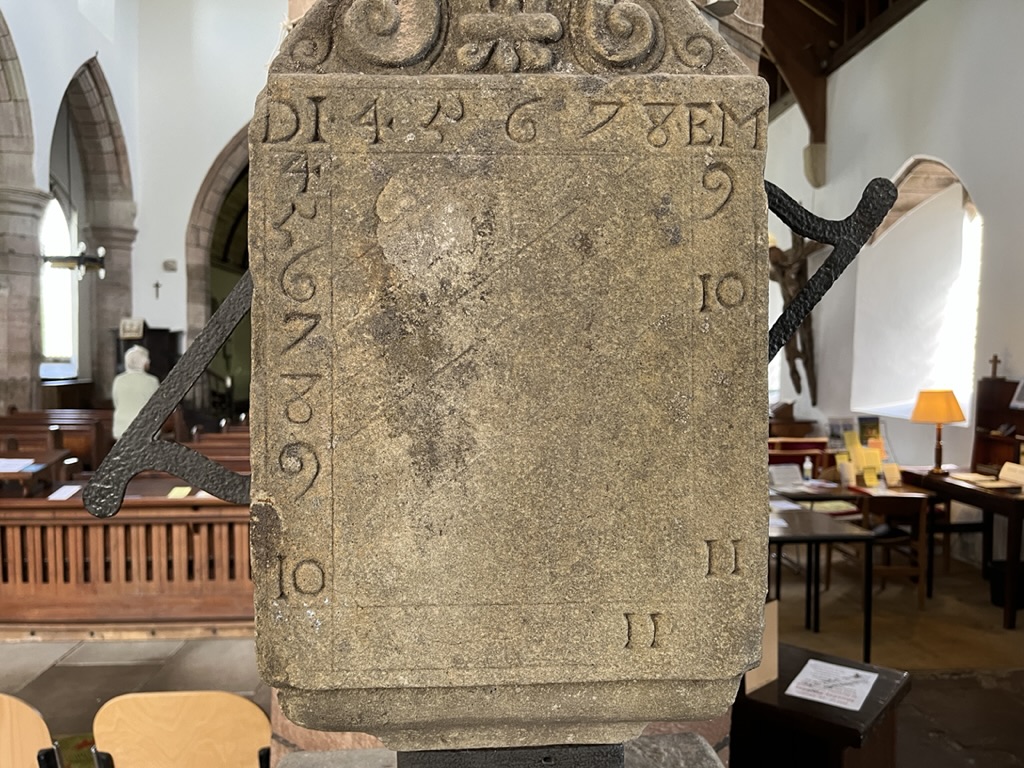
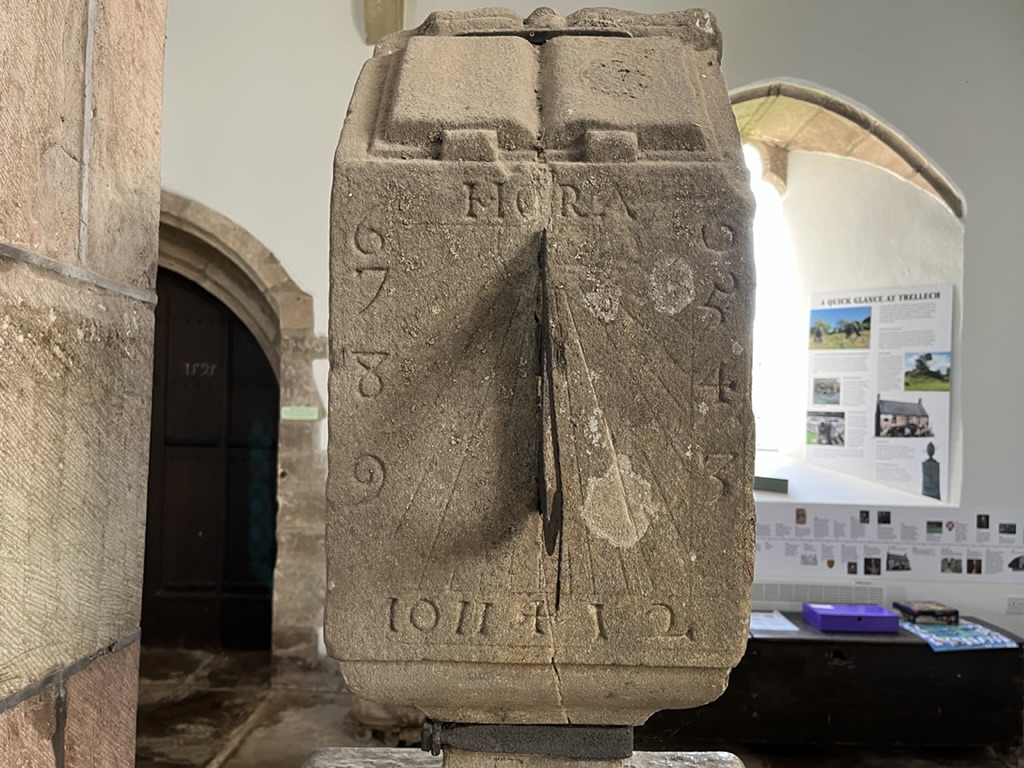
TRELLECH . MON . ST NICHOLAS – Lady Probert’s dial 1689 (pt 2): a fine wooden replica (2007)

St Nicholas . Trellech . Mon – Cube Multidial

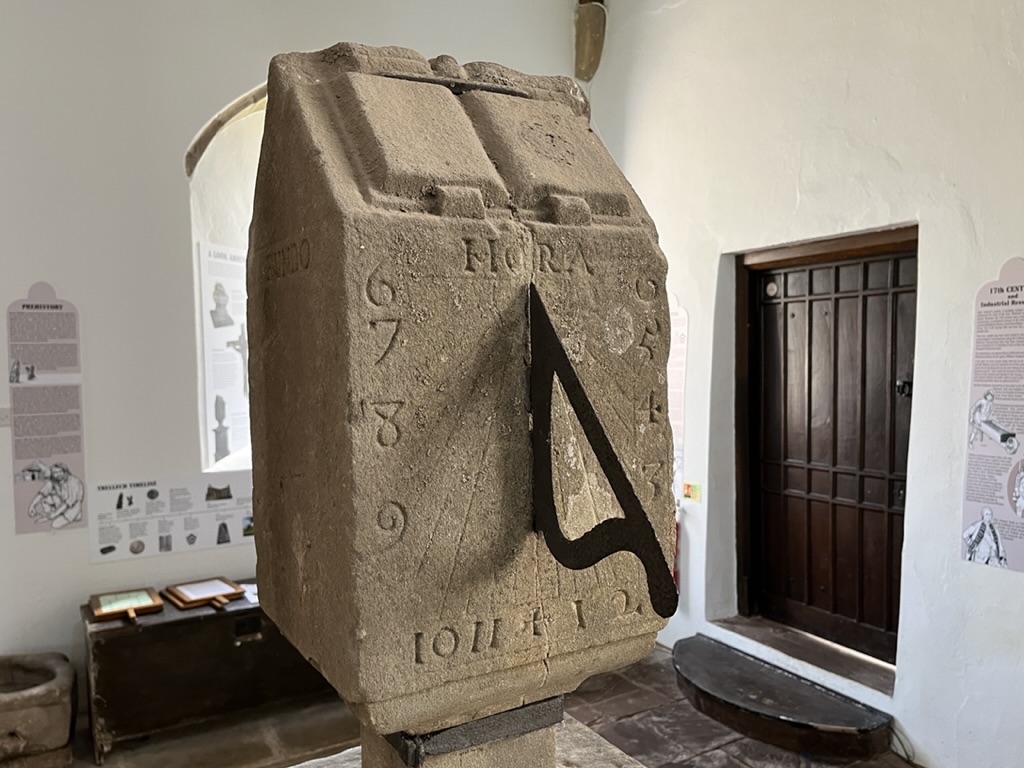
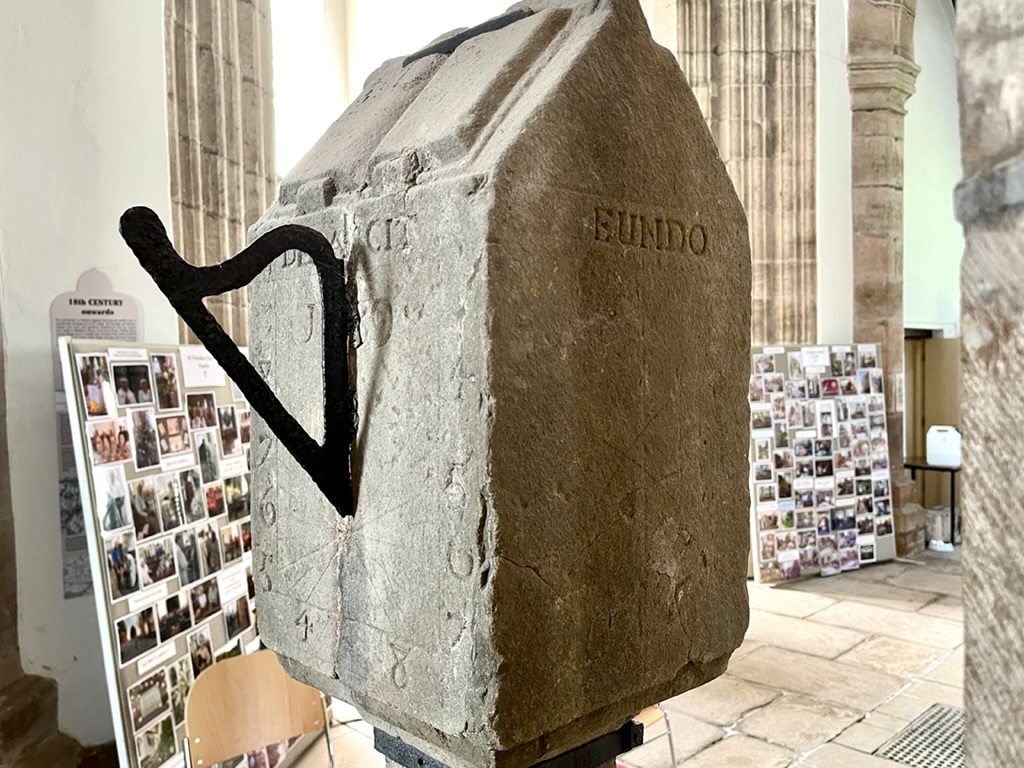
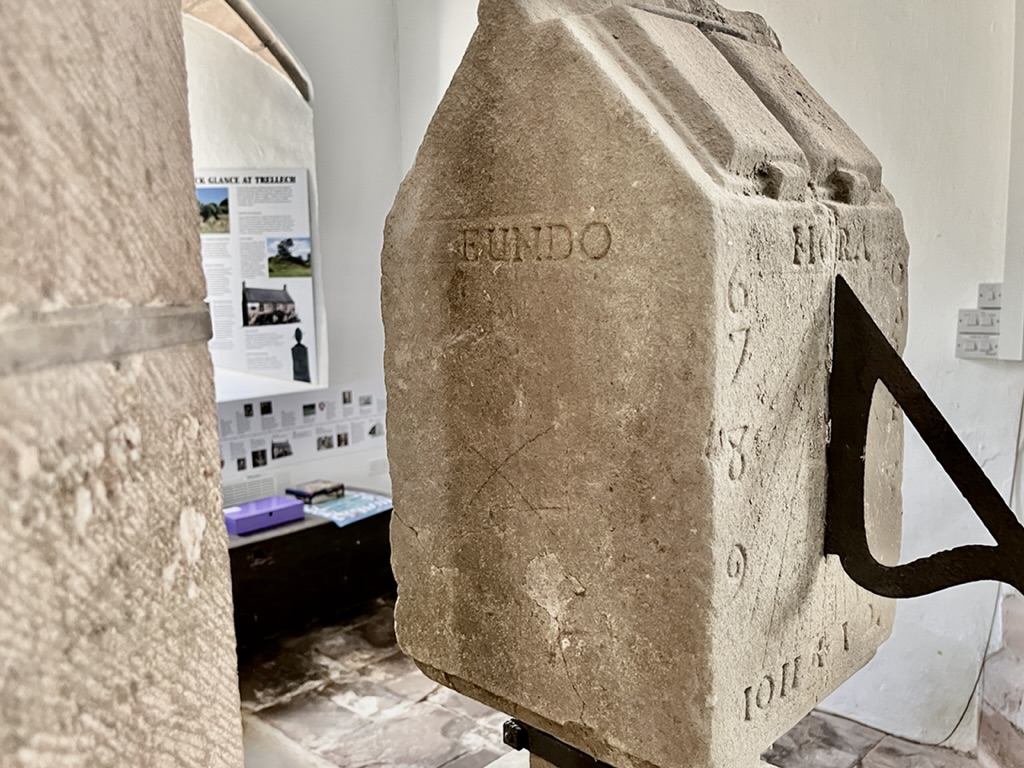
This post relates directly to its companion in Pt 1. Both articles feature the remarkable cube dial dated 1689, now preserved inside the Grade I listed church of St Nicholas, Trellech, Monmouth – the original and a fine recent (2007) wooden replica. You can find images of the original dial and each of its faces, with detailed descriptions, HERE. The location is 5m S of Monmouth 51.7459 / -2.725 / SO500054

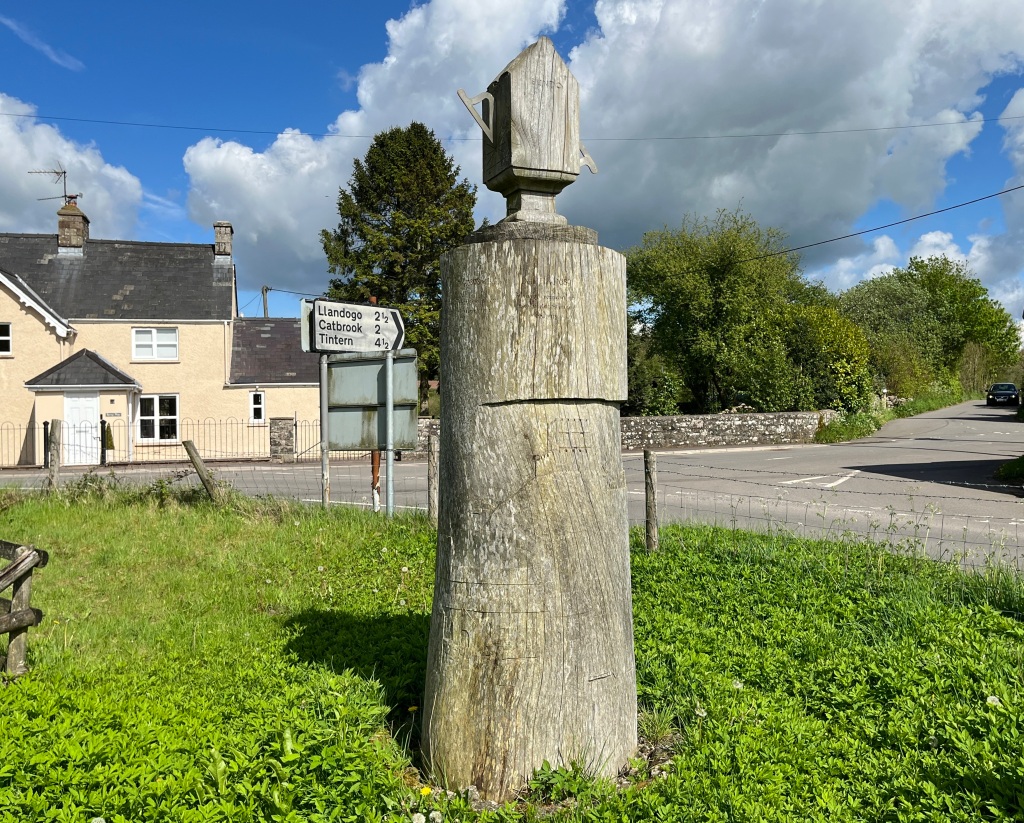
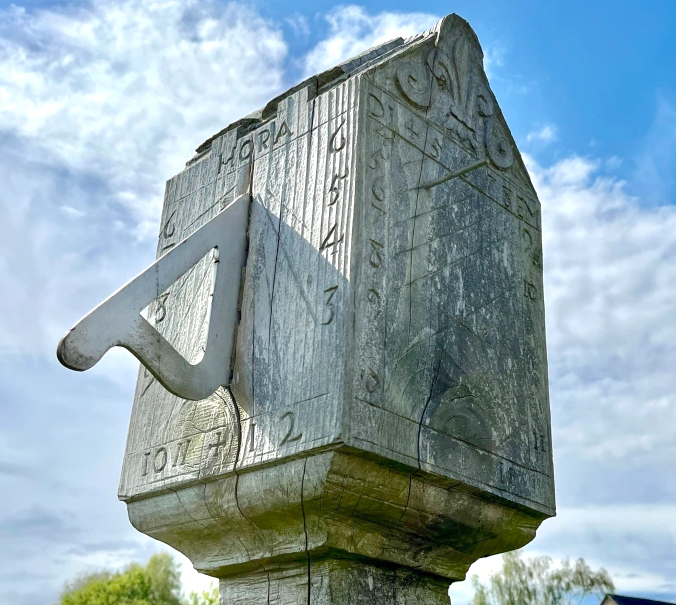
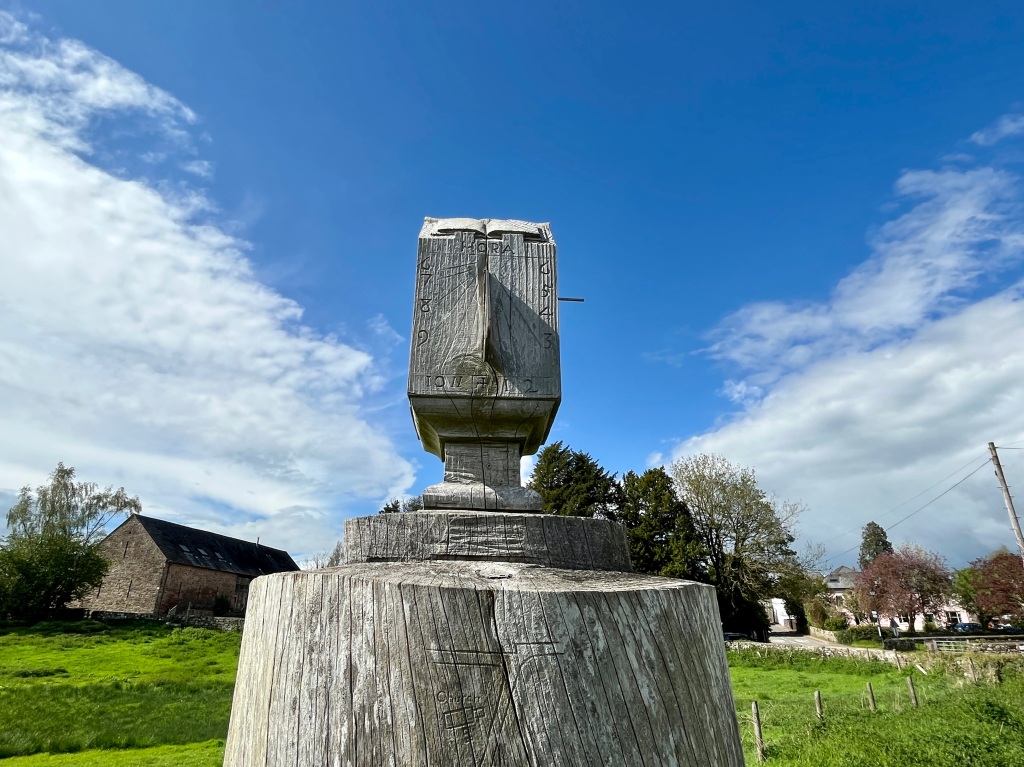
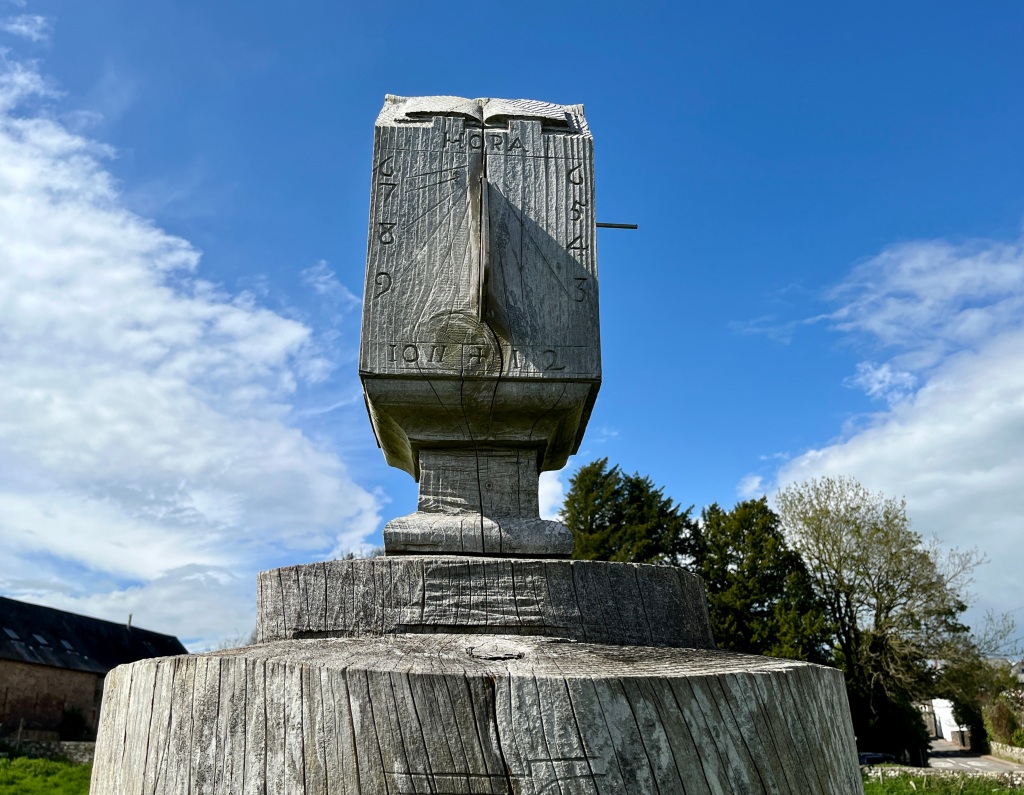
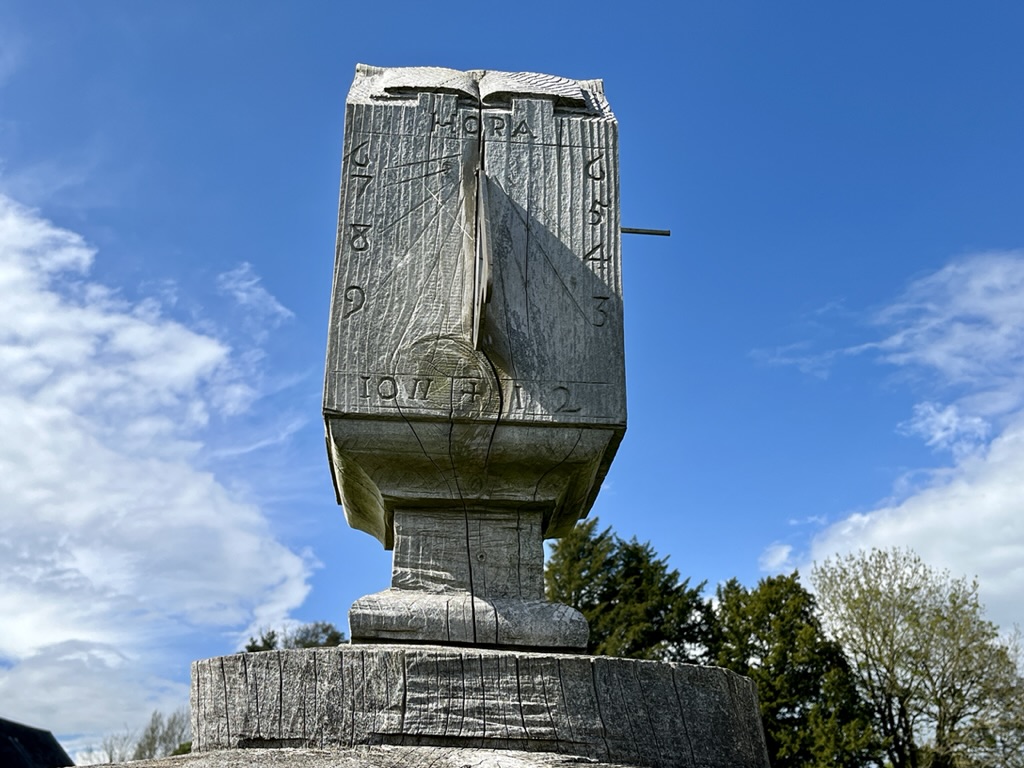
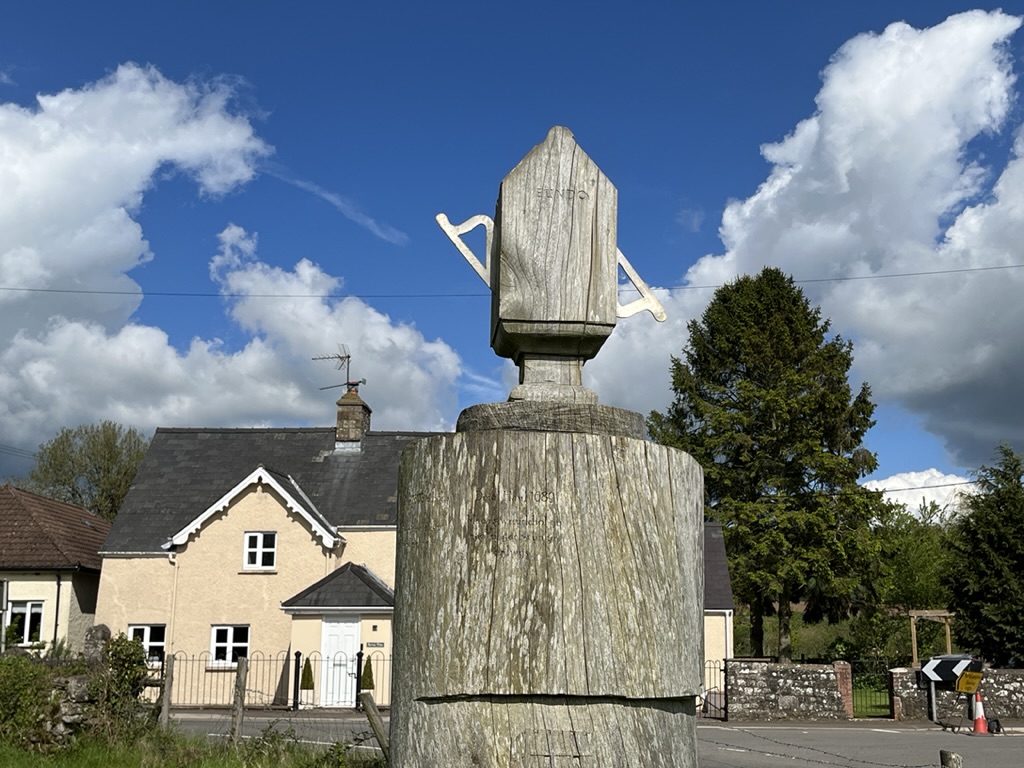
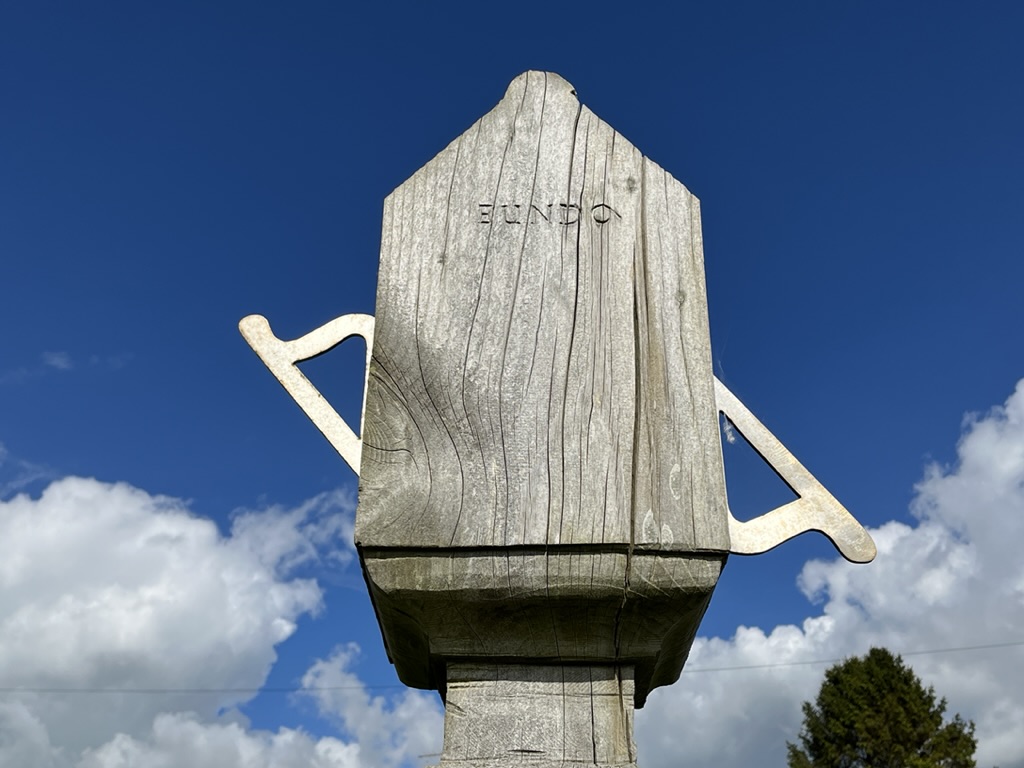
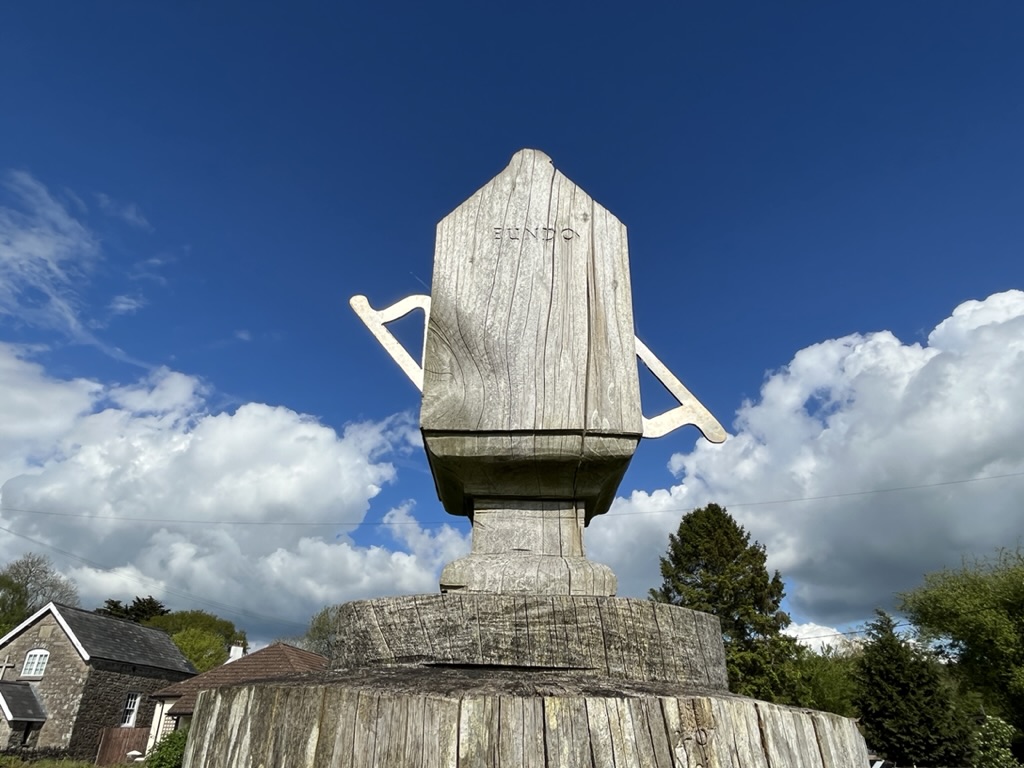
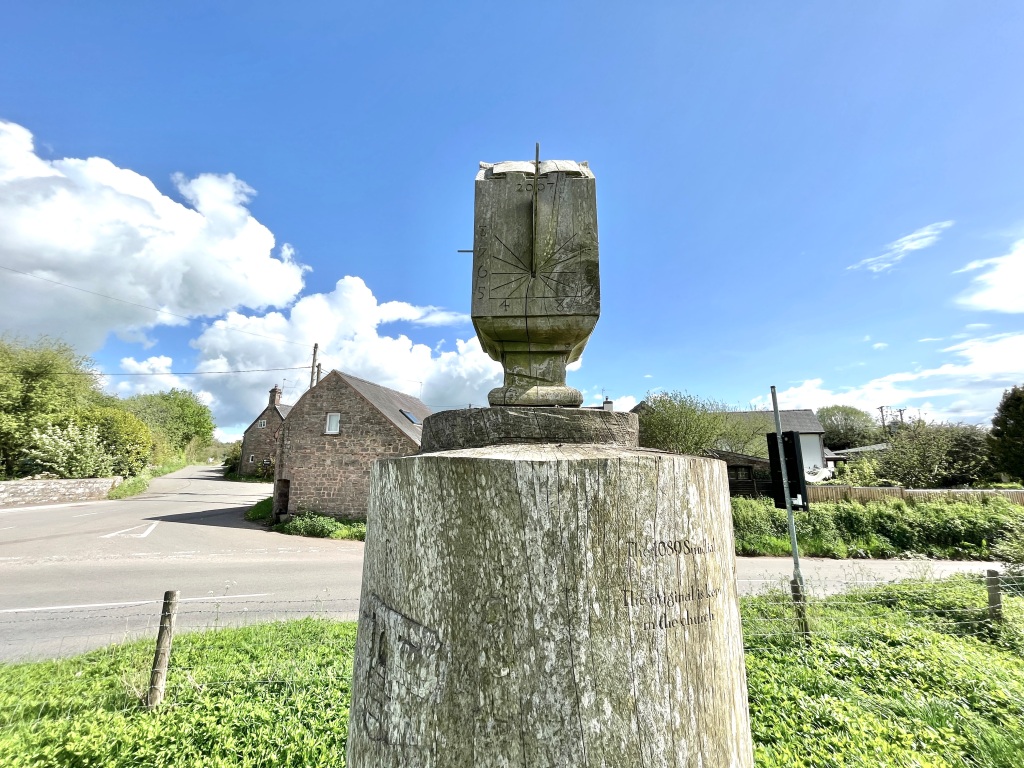
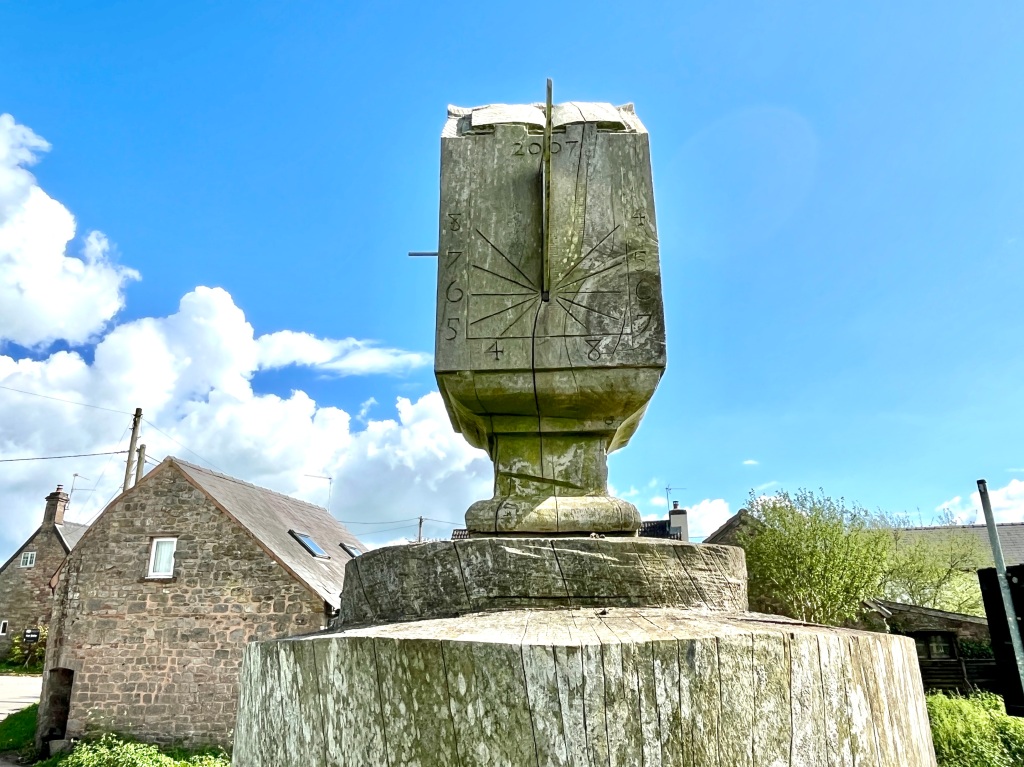
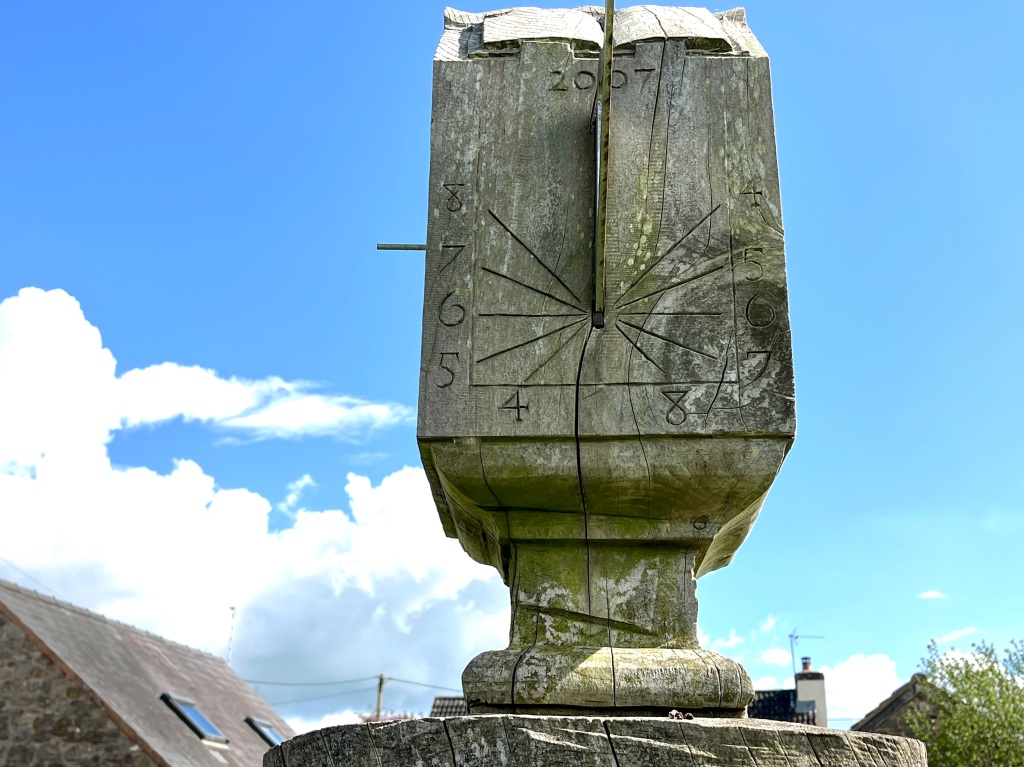
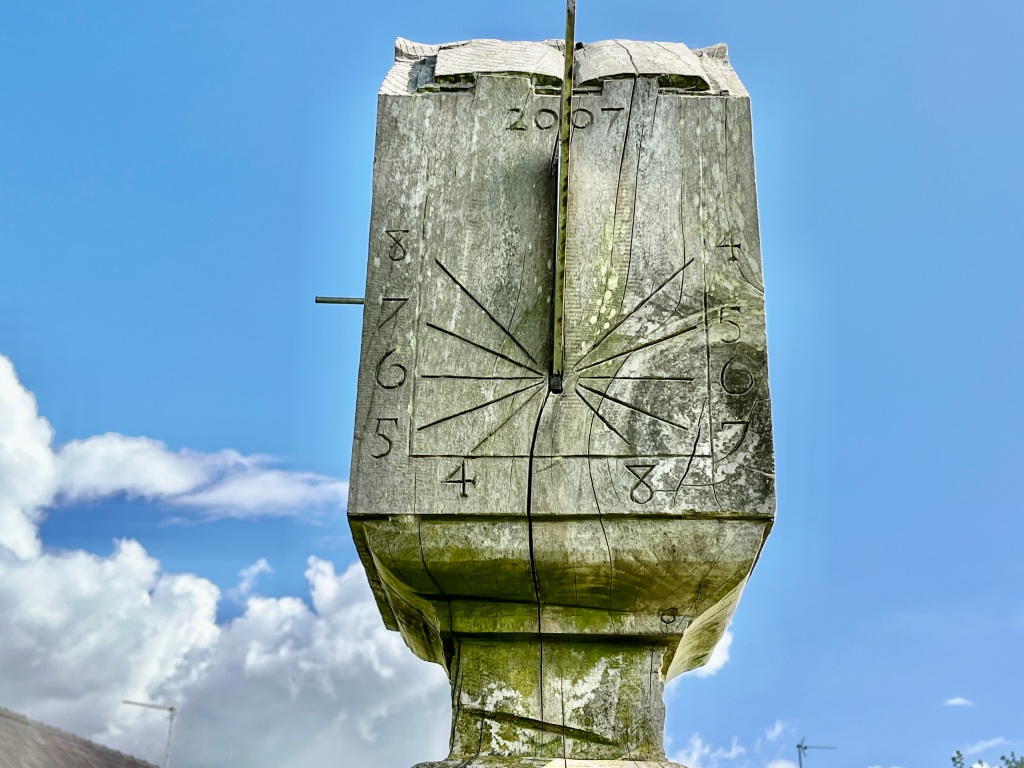
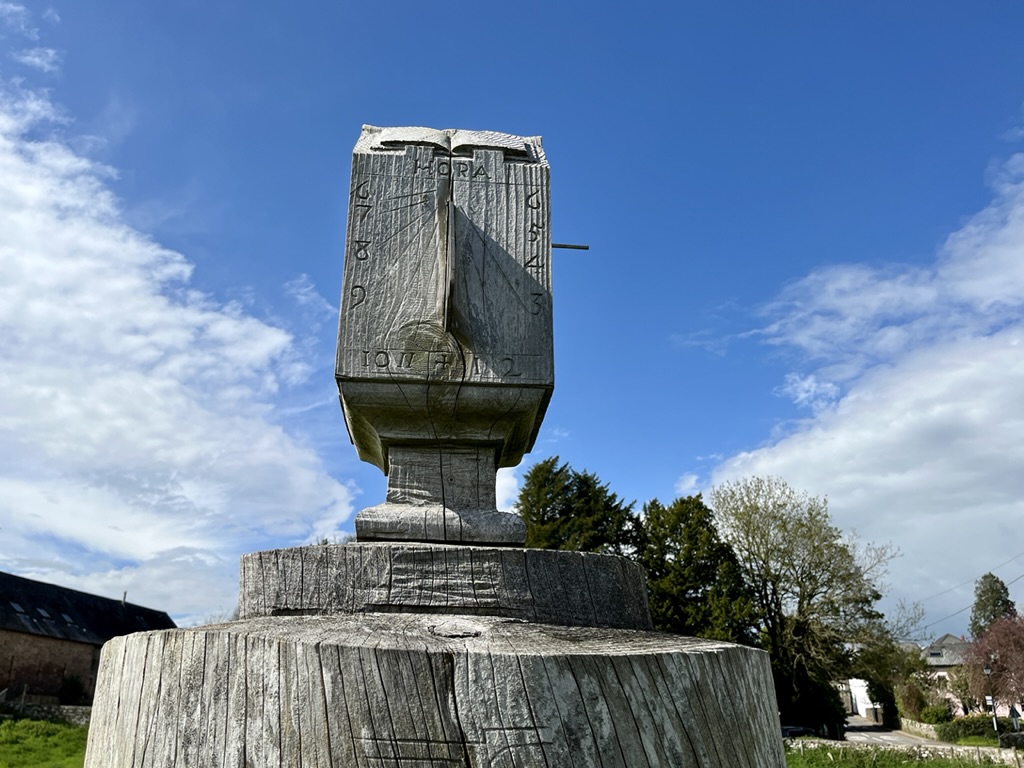
DIAL . 2007

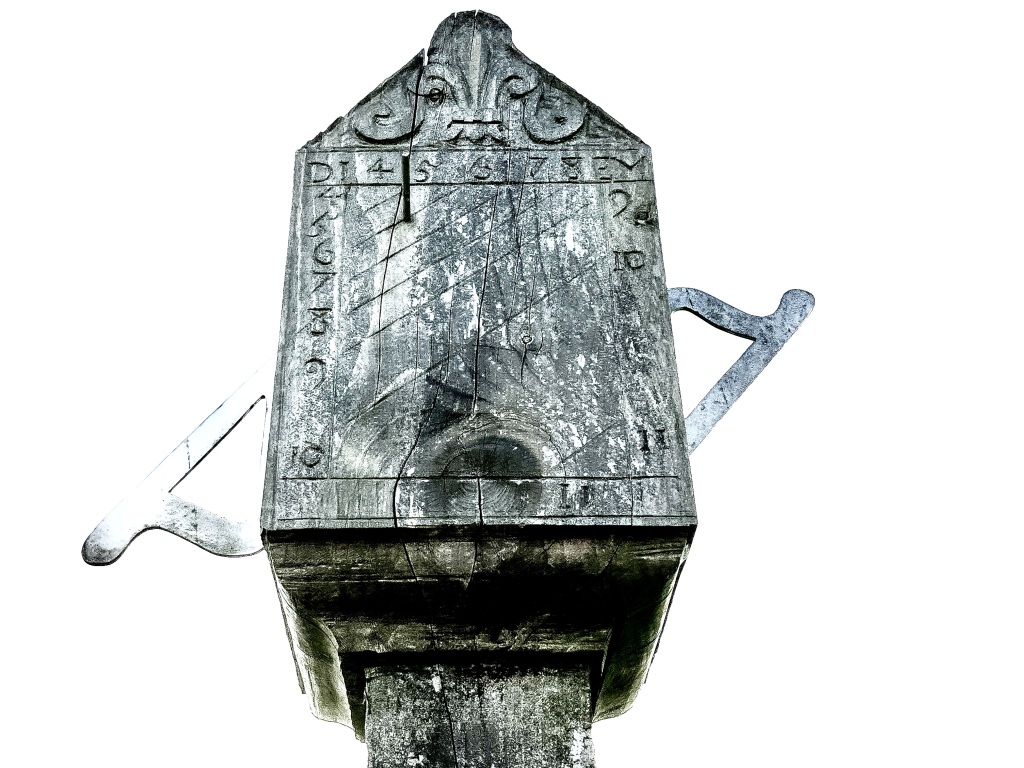
The images of Face 4 below illustrate a frequent experience with cube dials. Invariably, prevailing conditions preclude more than 3 faces being properly photographed. One face will always frustrate all attempts to get a decent photo. Furthermore, it is very difficult to improve a poor photo – it just becomes a different kind of poor. Quite often the only answer is to make the image B&W to catch detail .With apologies, this is what has emerged from the darkroom.

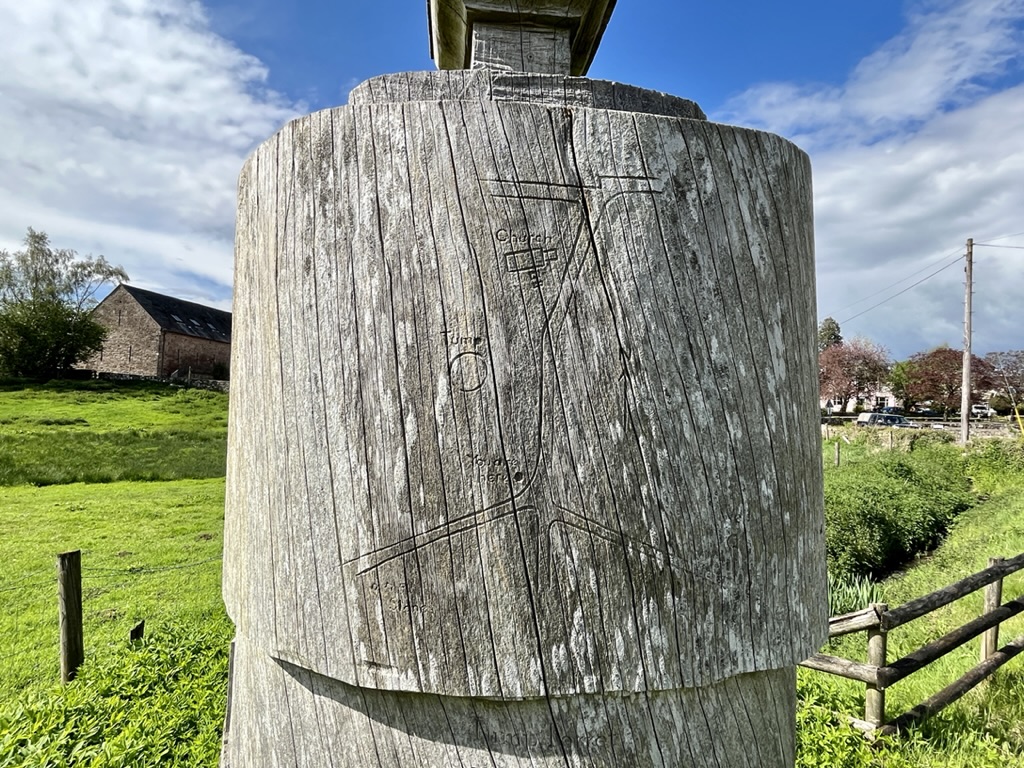
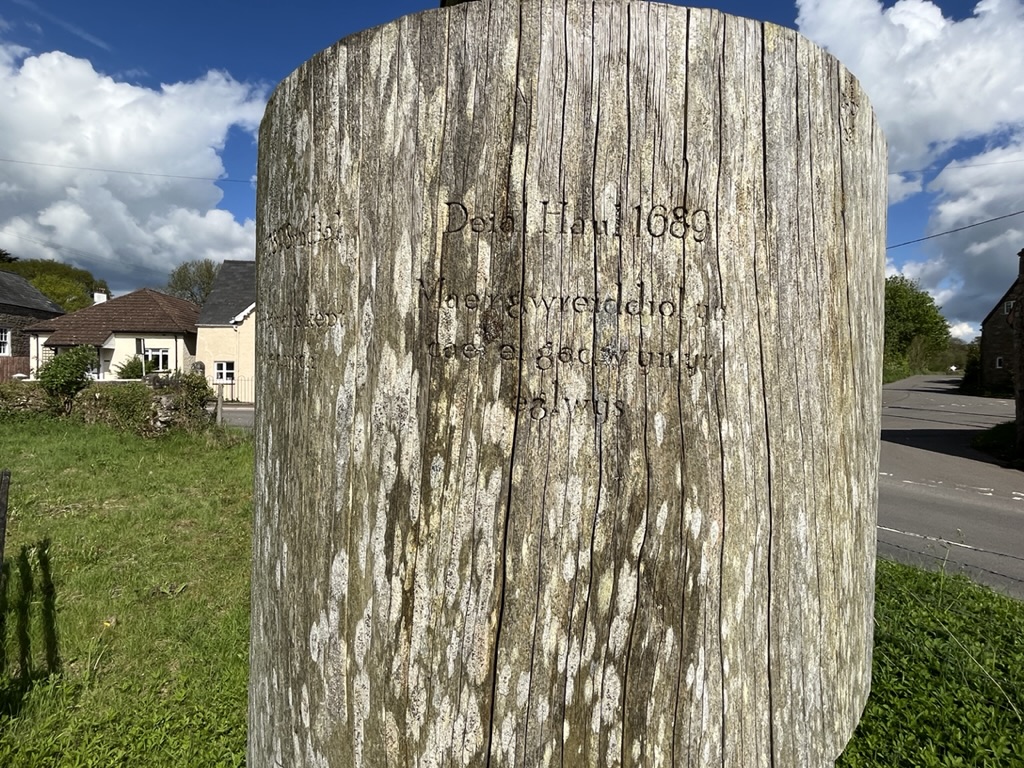
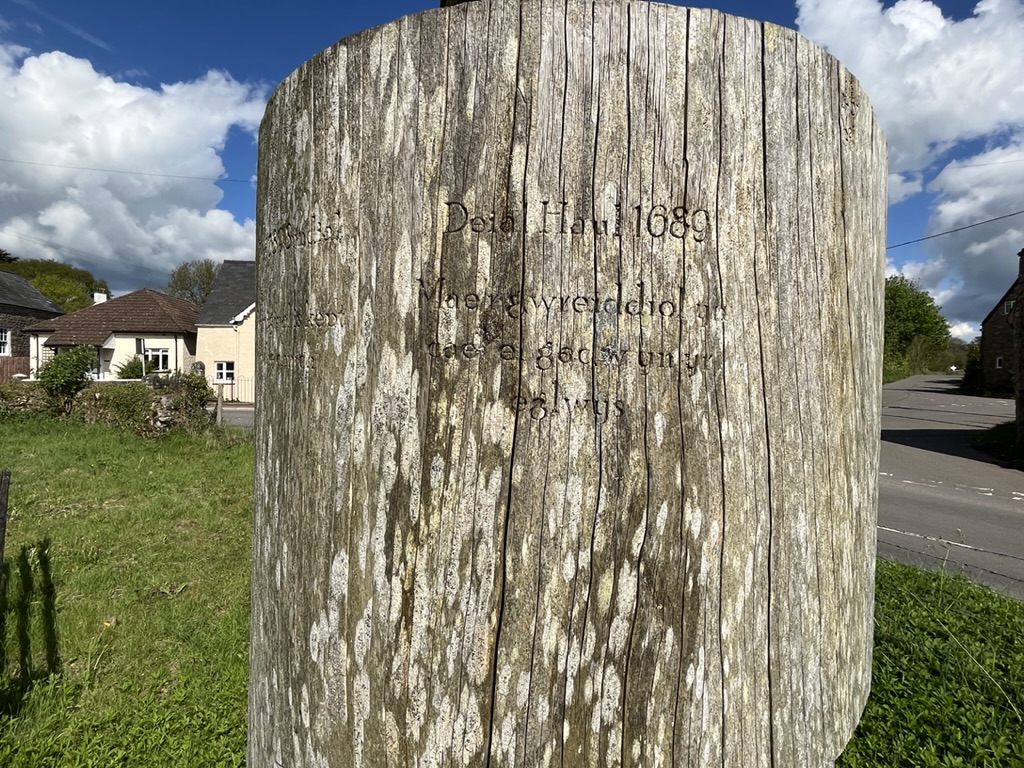
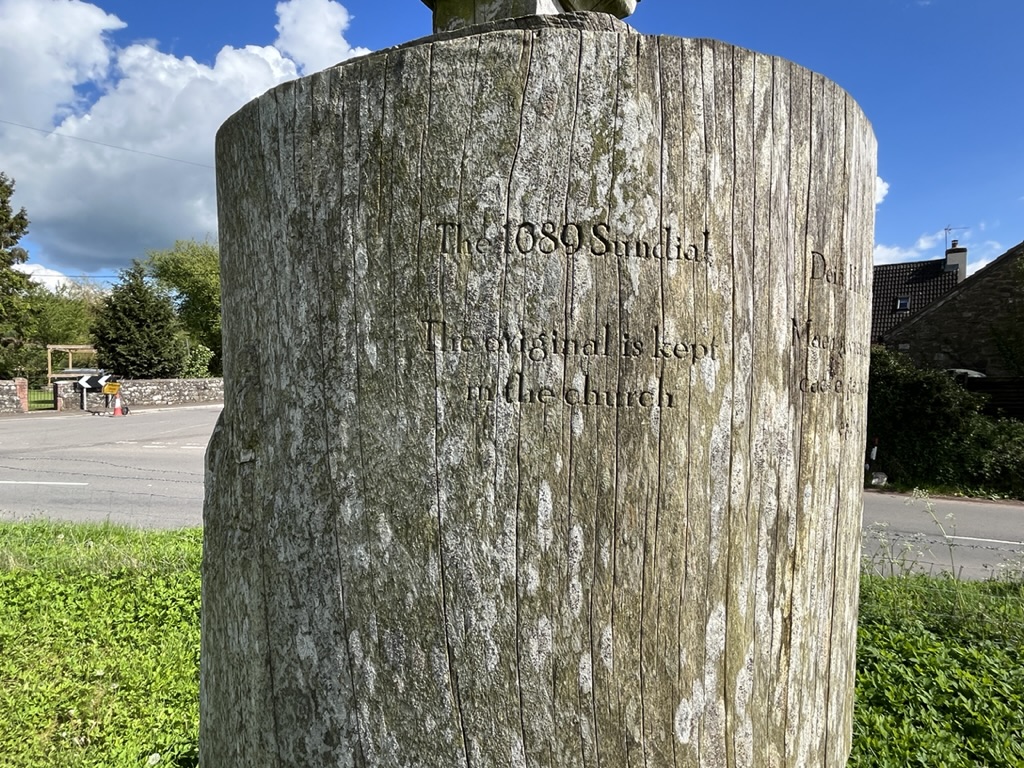
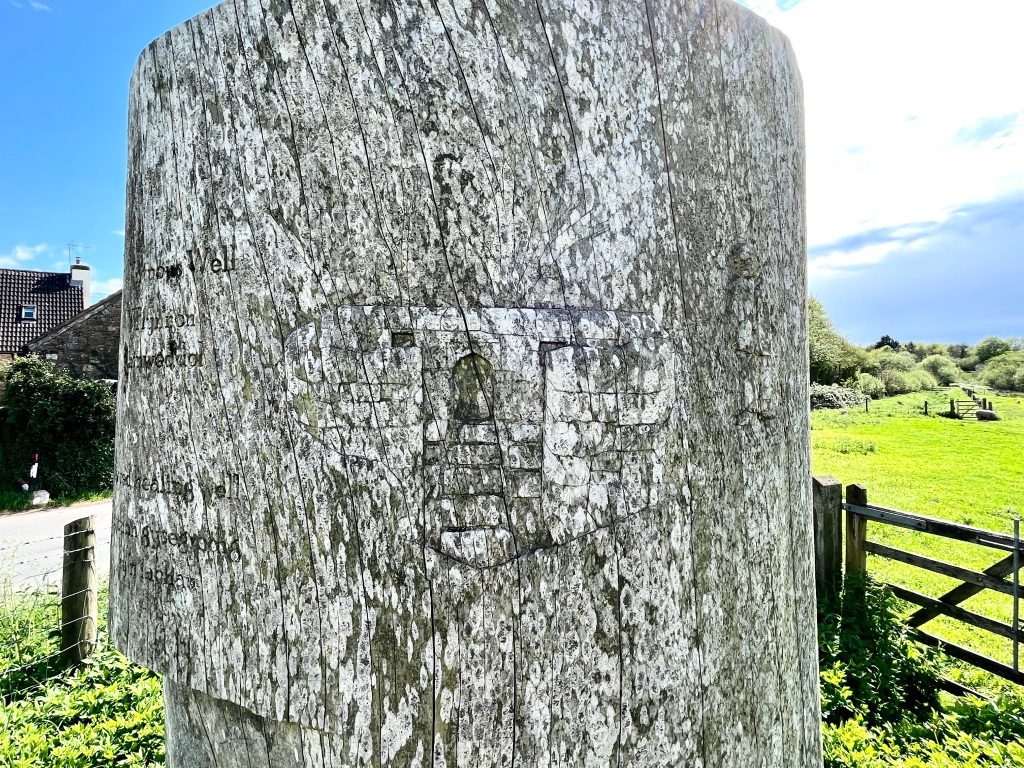
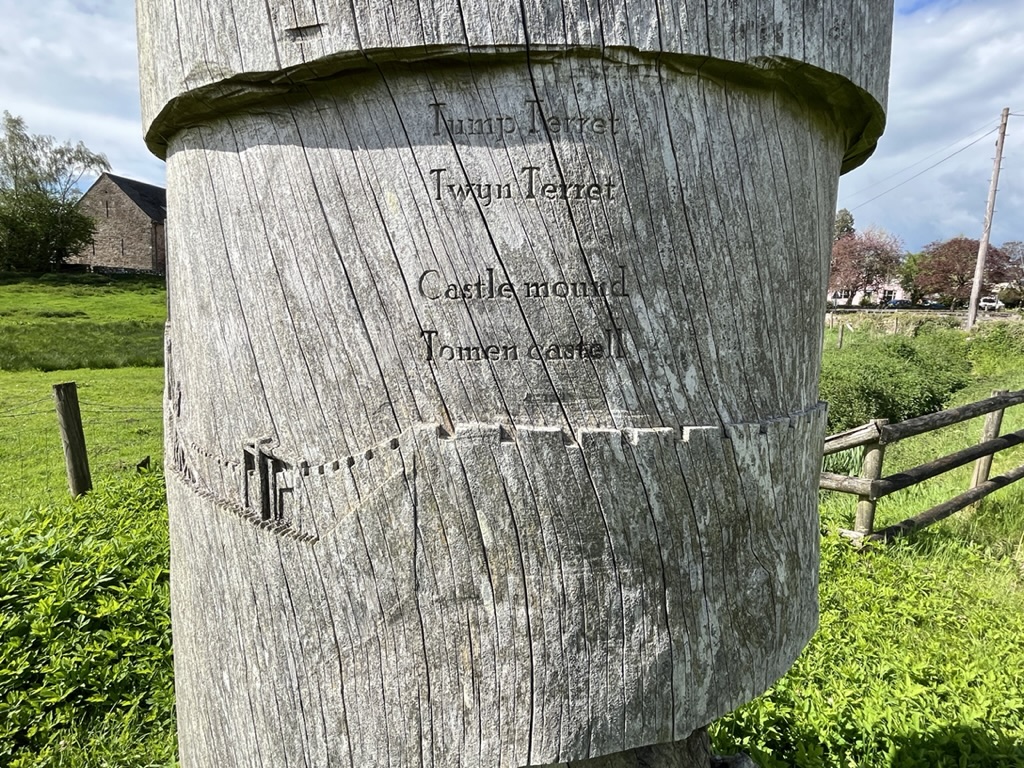
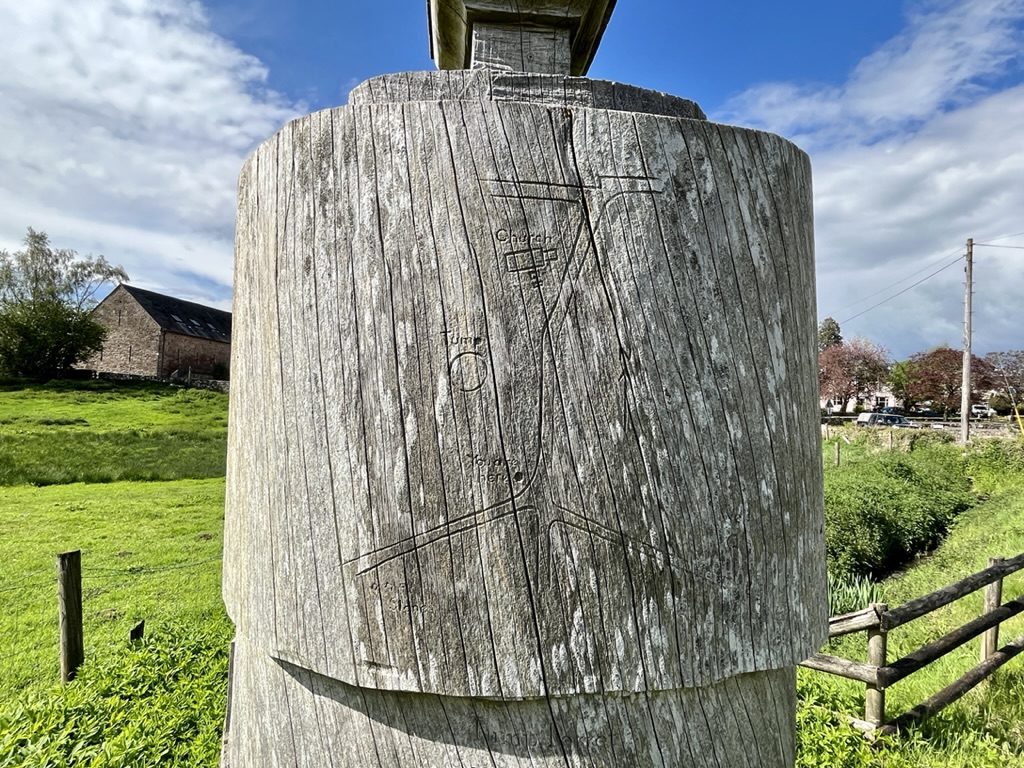
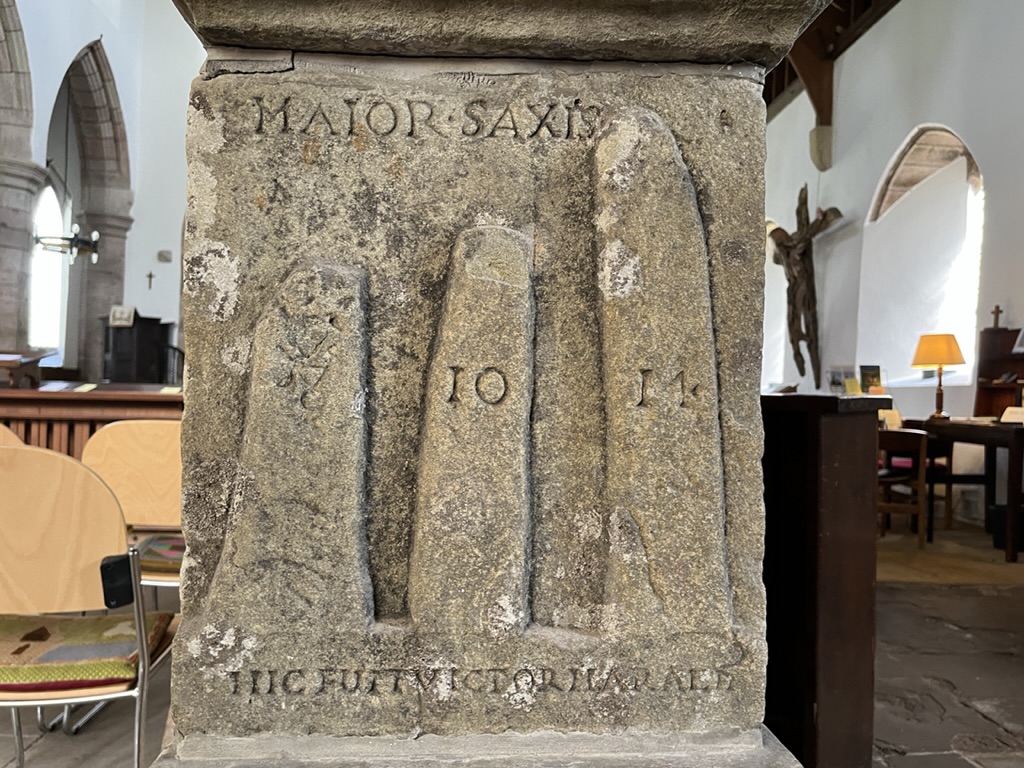
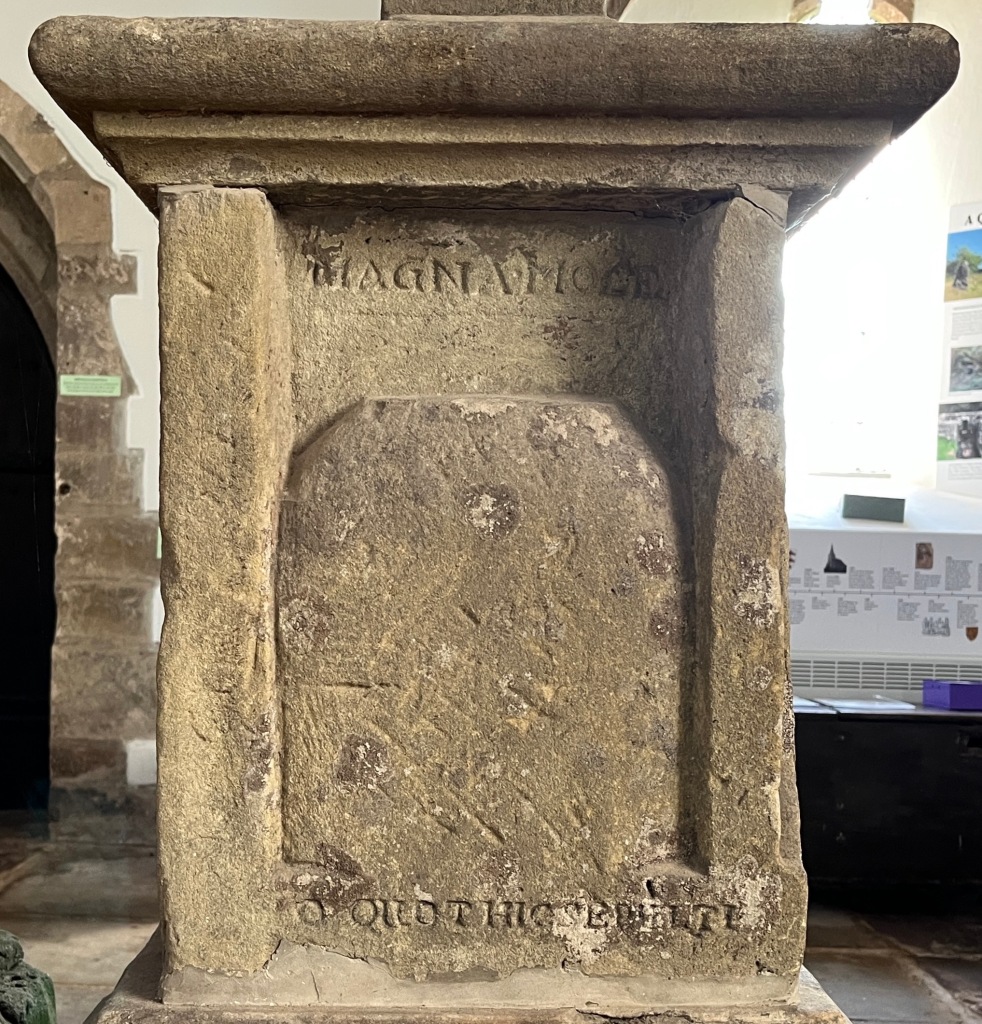
Below the dial are inscriptions on the substantial columns, with carvings that relate to the 3 features of historical importance to the village and its community: Tump Terret; Harold’s Stones; and Virtuous Well.

LINK TO PT 1 HERE.

GSS Category: Cube Dial; Multiple Dial

All photos Keith Salvesen; Pevsner extract Gwent & Monmouthshire; BSS records

TRELLECH . MON . ST NICHOLAS – Lady Probert’s dial 1689 (pt 1): Interior

St Nicholas . Trellech . Mon – Cube Multidial

GRADE I Early C14 with earlier origins; reconstruction & restorations 1890s. An exceptionally fine and well preserved medieval church (Cadw); One of the finest churches in the county (PEV).  Coat-of-Arms of Charles II dated 1683. Weathercock of 1792. You need no further recommendation. 5m S of Monmouth. 51.7459 / -2.725 / SO500054

DIAL

St Nicholas . Trellech . Mon – Cube Multidial

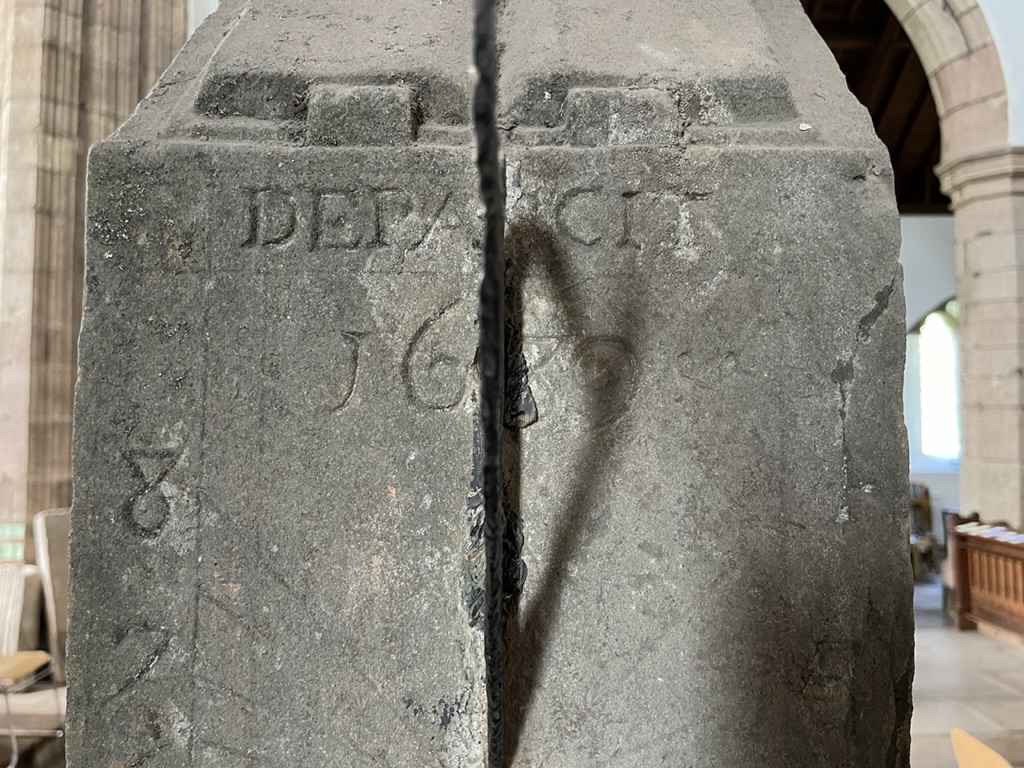
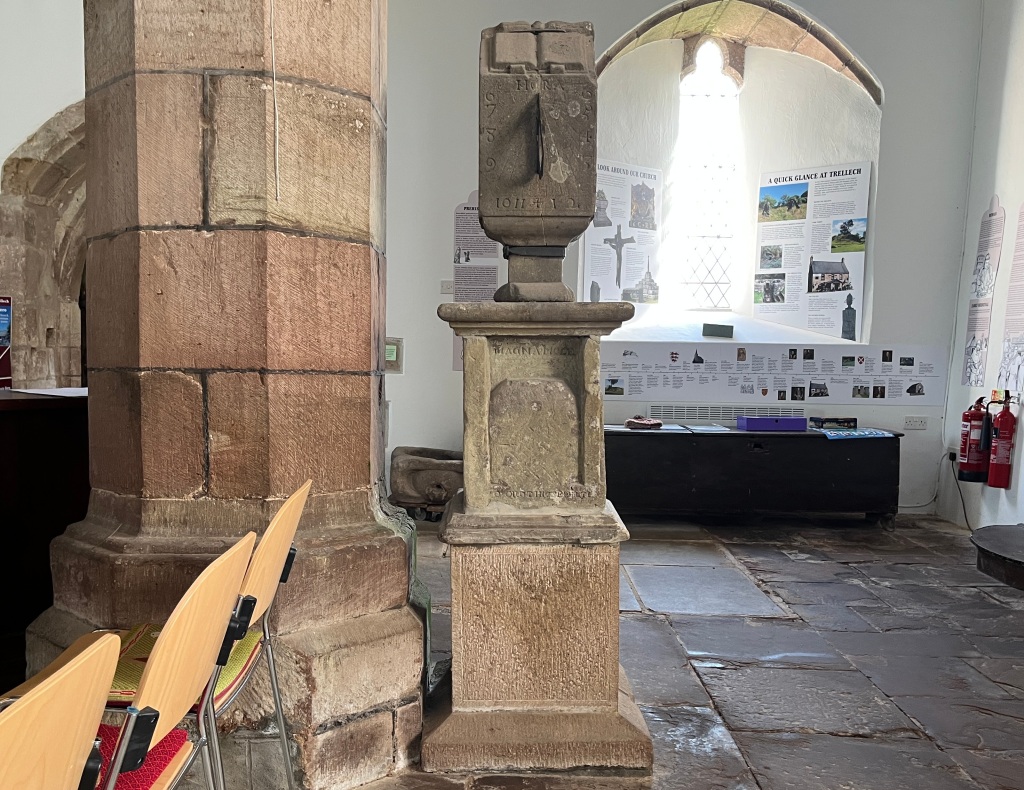
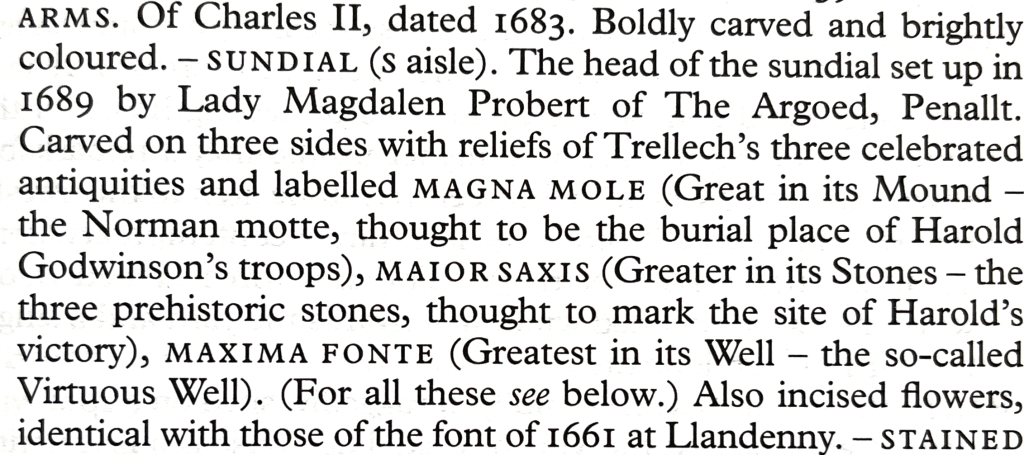
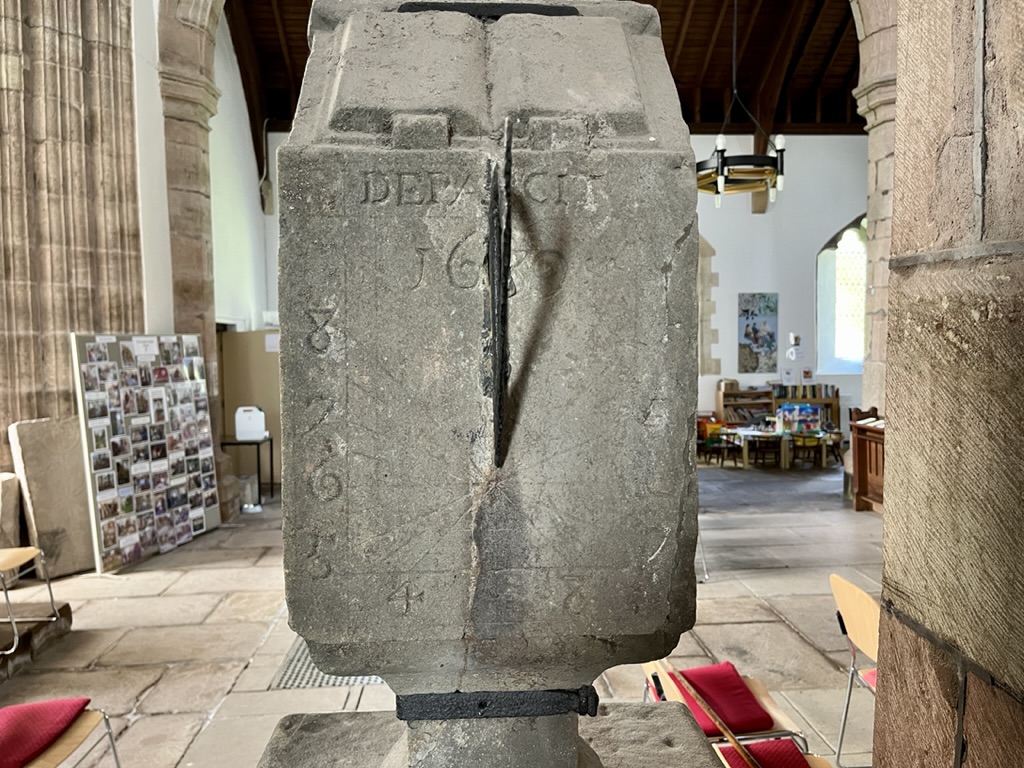
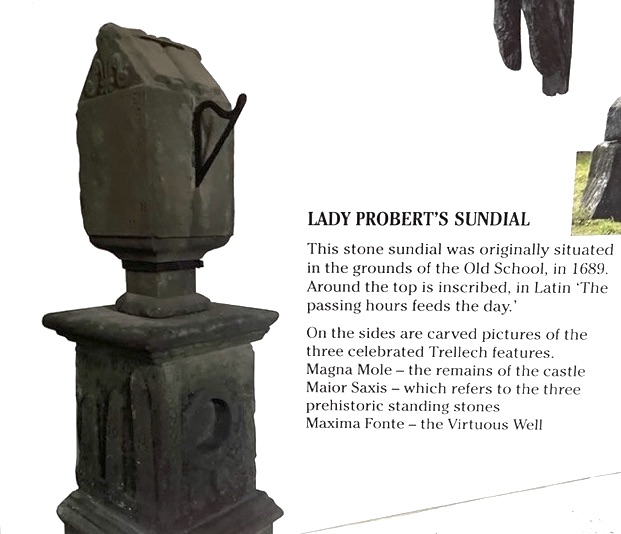
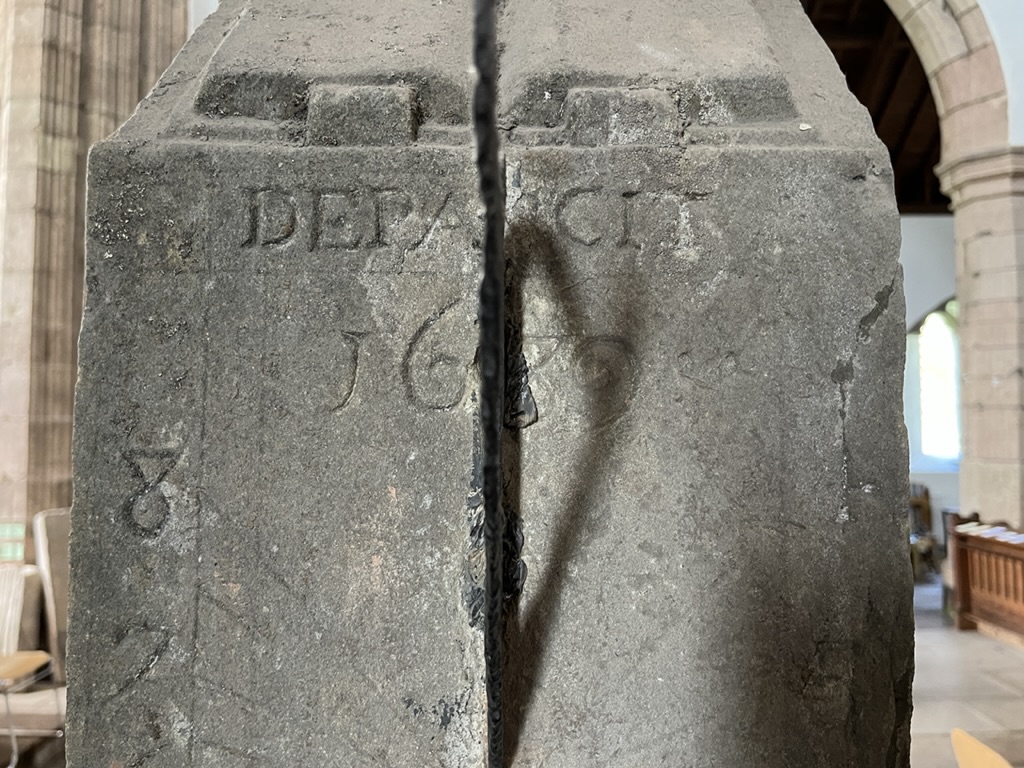
A wonderful C18 cube dial dated 1689, the gift of Lady Probert. Once, it stood in the village near the school. It was moved in 1895 and one source suggests that a concrete cast was made. The Latin inscriptions on the dial are descriptive of 3 features that are of historical importance to the village: Tump Terret; Harold’s Stones; and Virtuous Well. The details (PEV) are:

The detailed BSS record adds further details, including the full Latin motto on S, N & E faces: EUNDO HORA . DI…EM . DEPASCIT (The Hour Itself Consumes the Day).

Also included are the inscriptions on the square stone below the dial: 1. Terret Tump – O QUOT HIC SEPULTI (O How Many Buried Here); 2. Harold’s Stones – HIC FUIT VITOR HAROLD (Here was Harold Victorious); 3. DOM MAGD PROBERT OSTENDIT (Lady Maud Probert set this out to view).

DIAL DETAILS

SOUTH FACE

WEST FACE

NORTH FACE

EAST FACE

PART 2 will examine the excellent modern wooden replica (out)standing in a small field by a crossroads. It has been beautifully designed and is a dial of distinction in its own right.

GSS Category: Cube Dial; Multiple Dial

All photos Keith Salvesen; Pevsner extract Gwent & Monmouthshire; BSS records; church noticeboard

BRYMPTON d’EVERCY . SOM . Cube Dial with Ball Finial

BRYMPTON d’EVERCY . SOMERSET . CUBE DIAL with BALL FINIAL

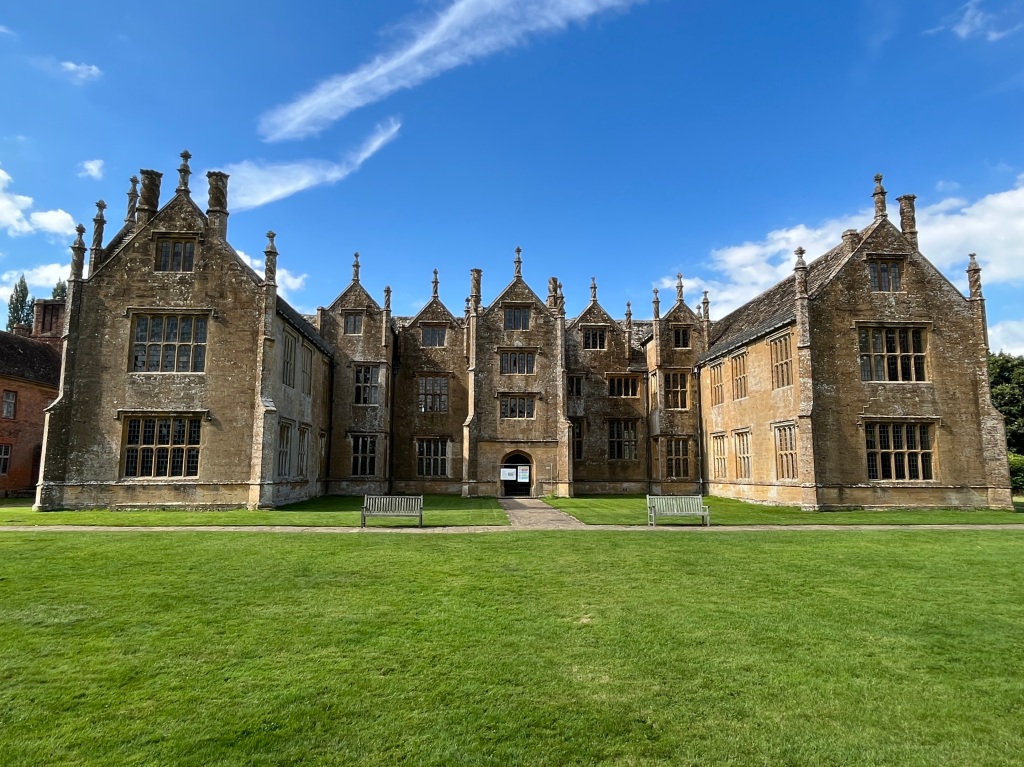
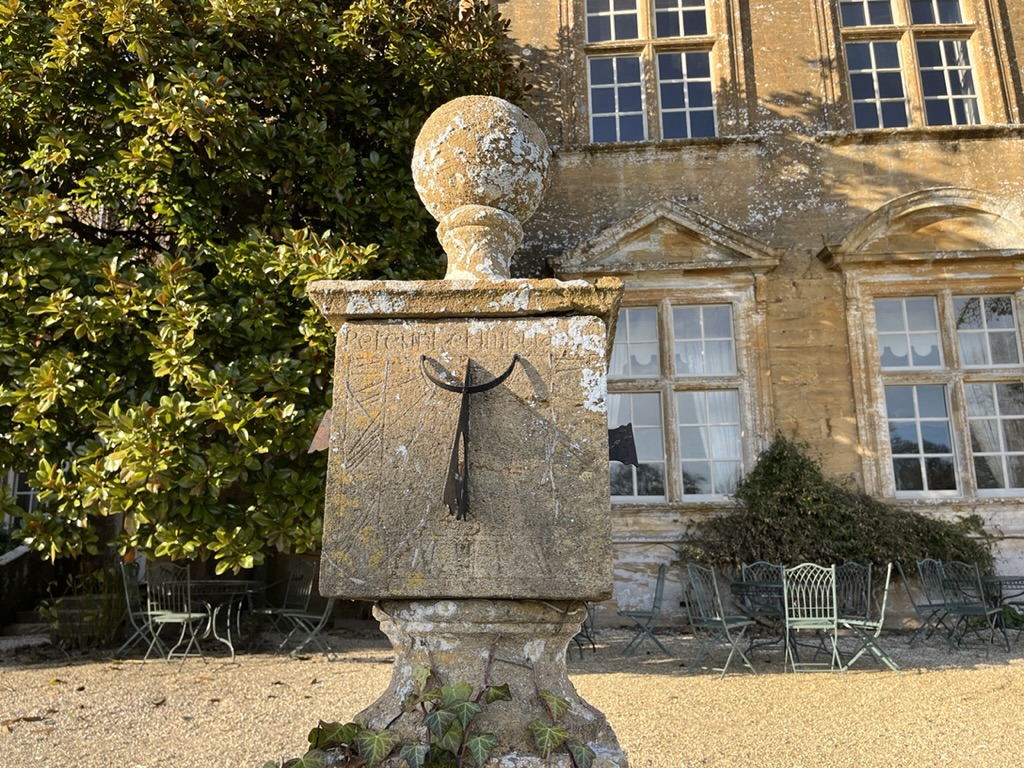
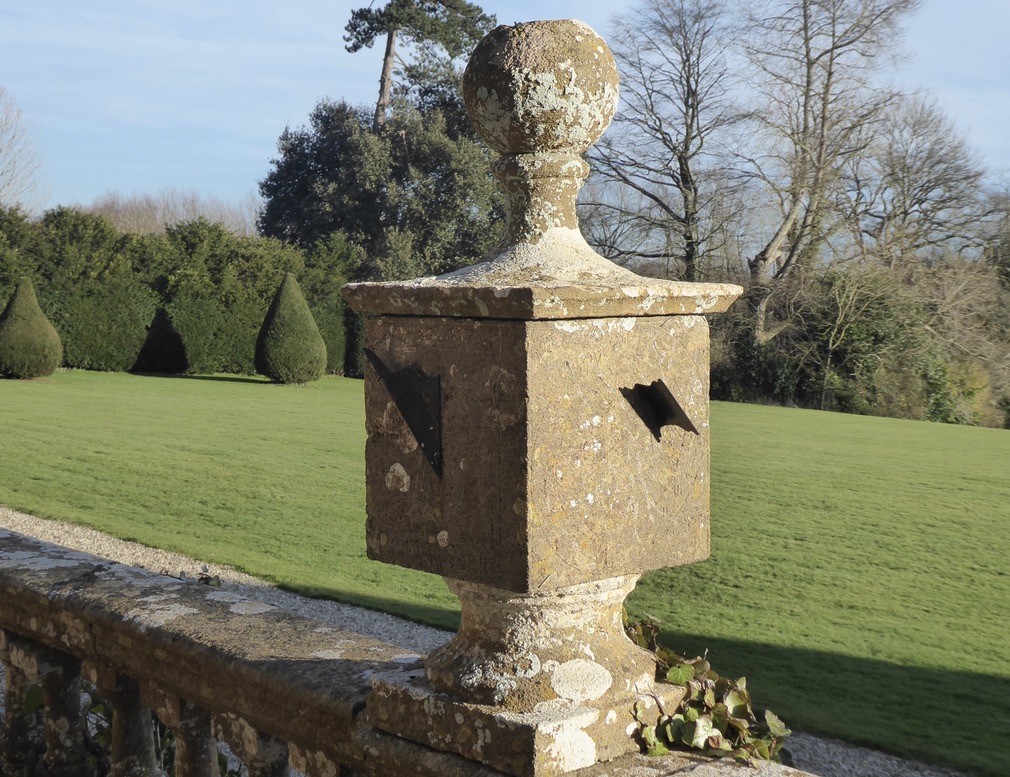
Brympton d’Evercy is a fine Somerset country house with a long history of intertwined families down the ages. For more on the house & grounds, see HERE. The chapel of St Andrew has scratch dials that are featured HERE. The estate is a mere 2m W of the clatter of Yeovil yet hidden away in its own parkland, and best reached by map reading, satnav or luck. 50.9361 / -2.6847 / ST519154

CUBE DIAL (GVII)

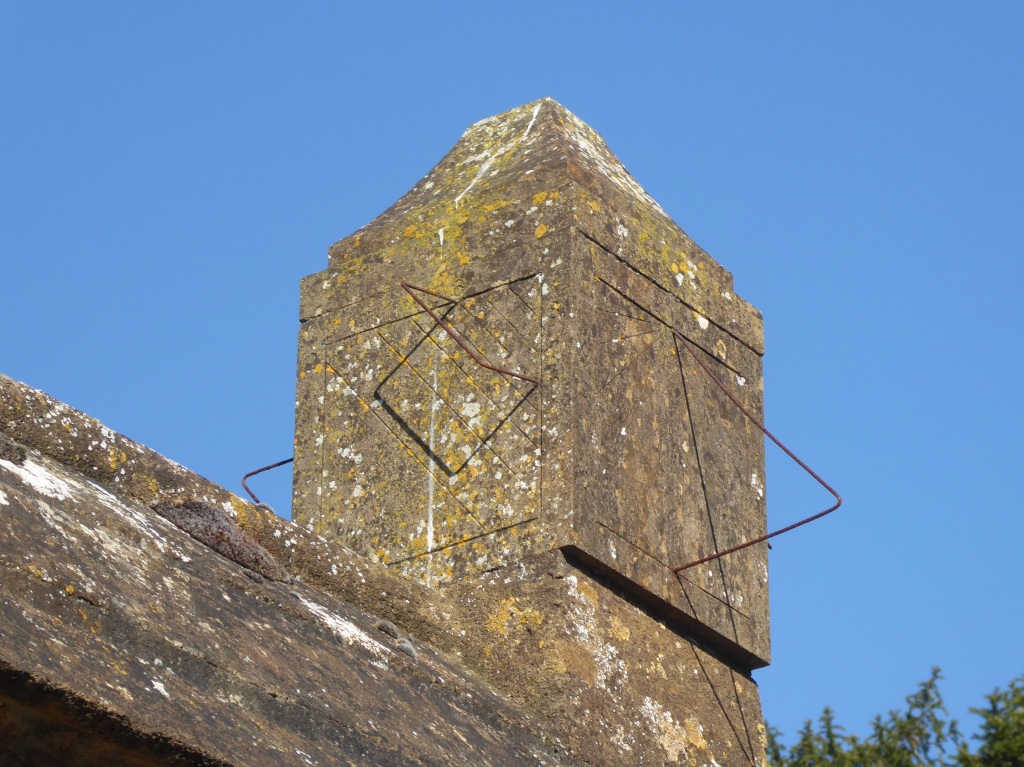
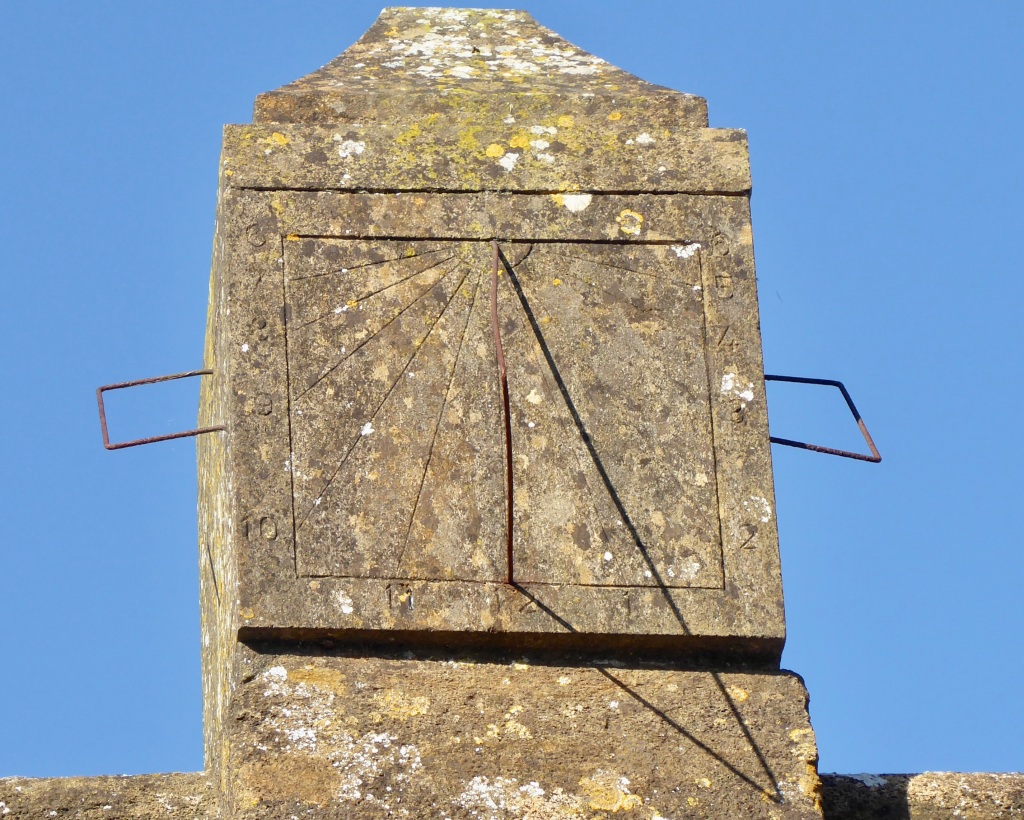
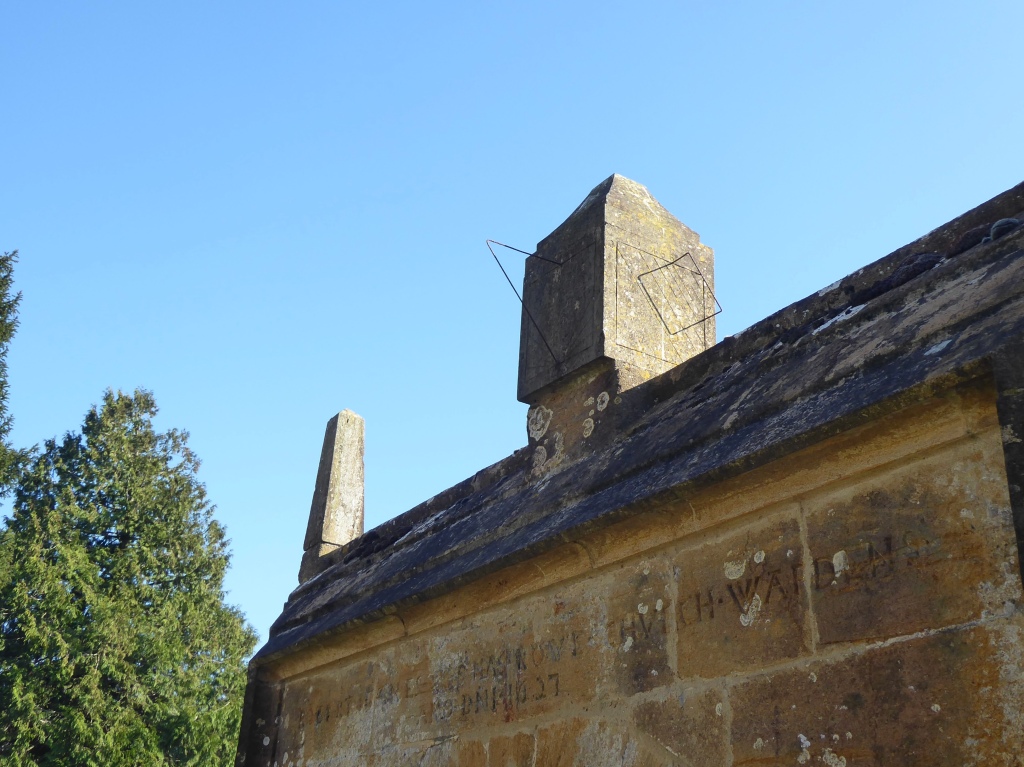
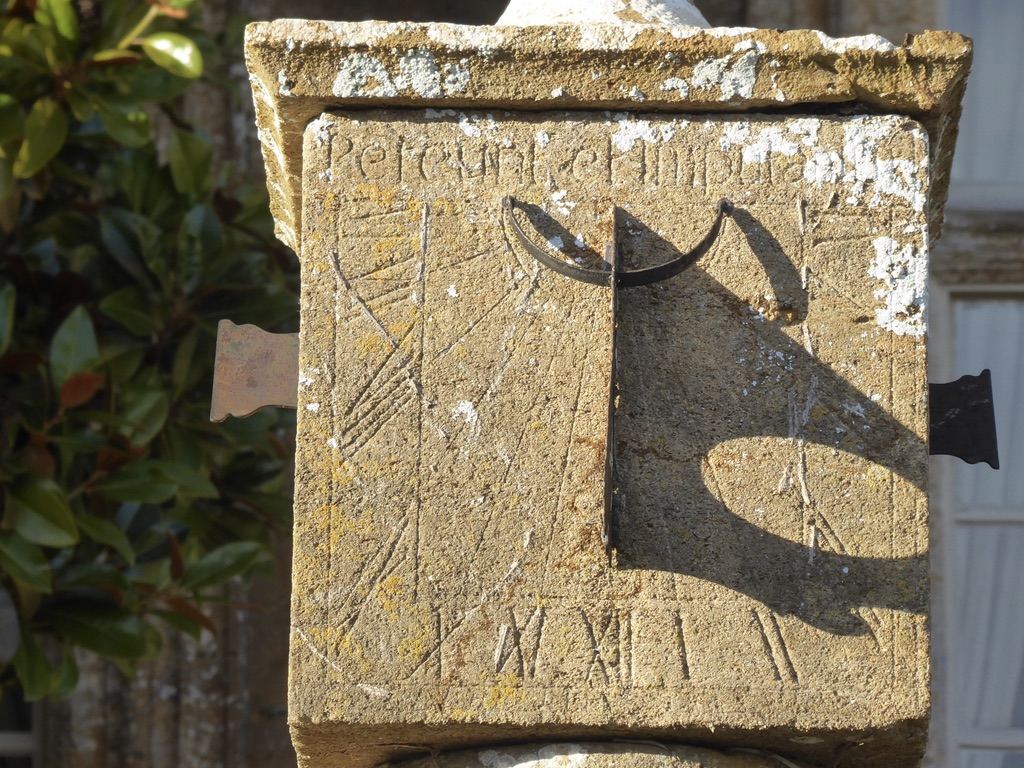
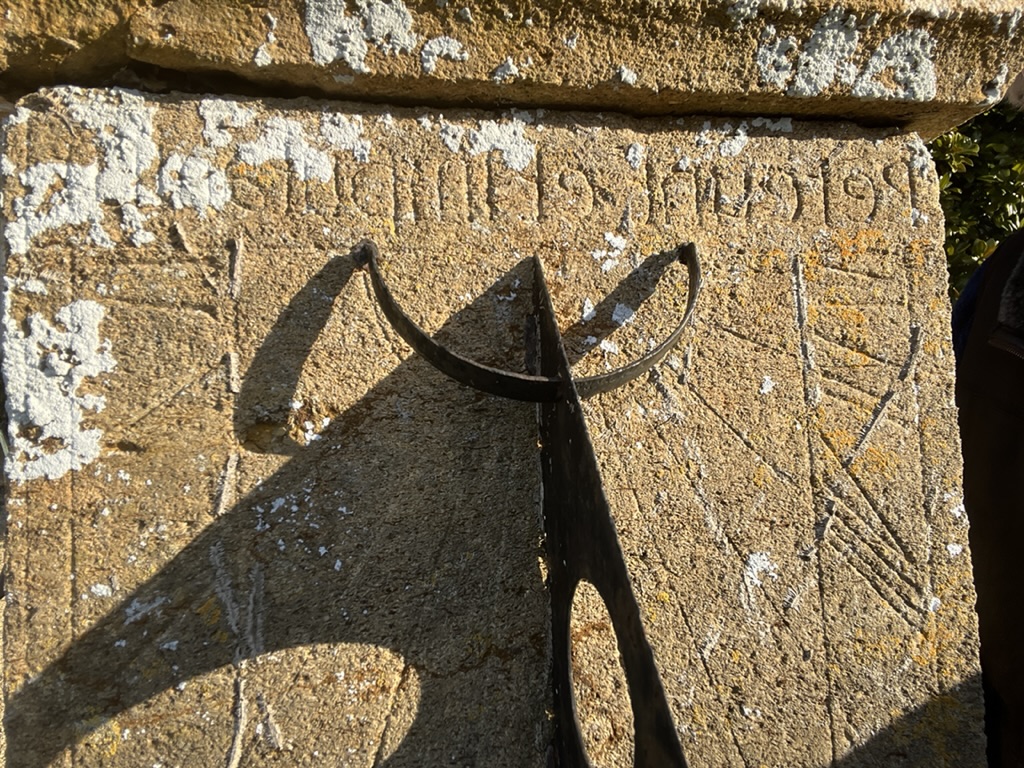
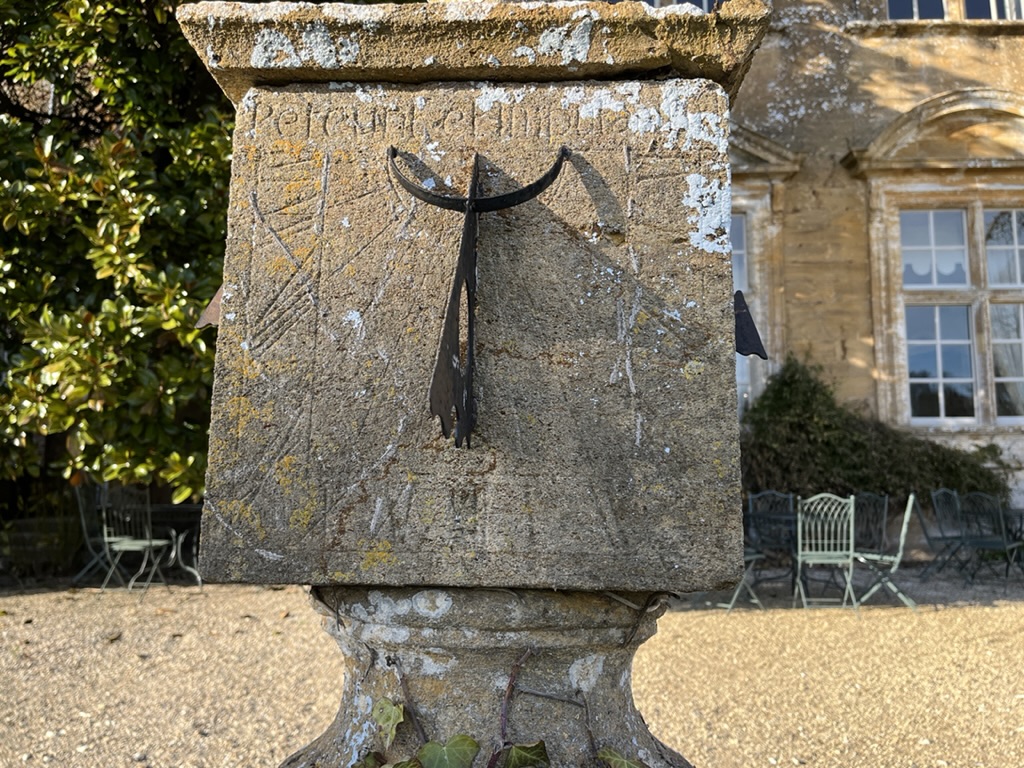
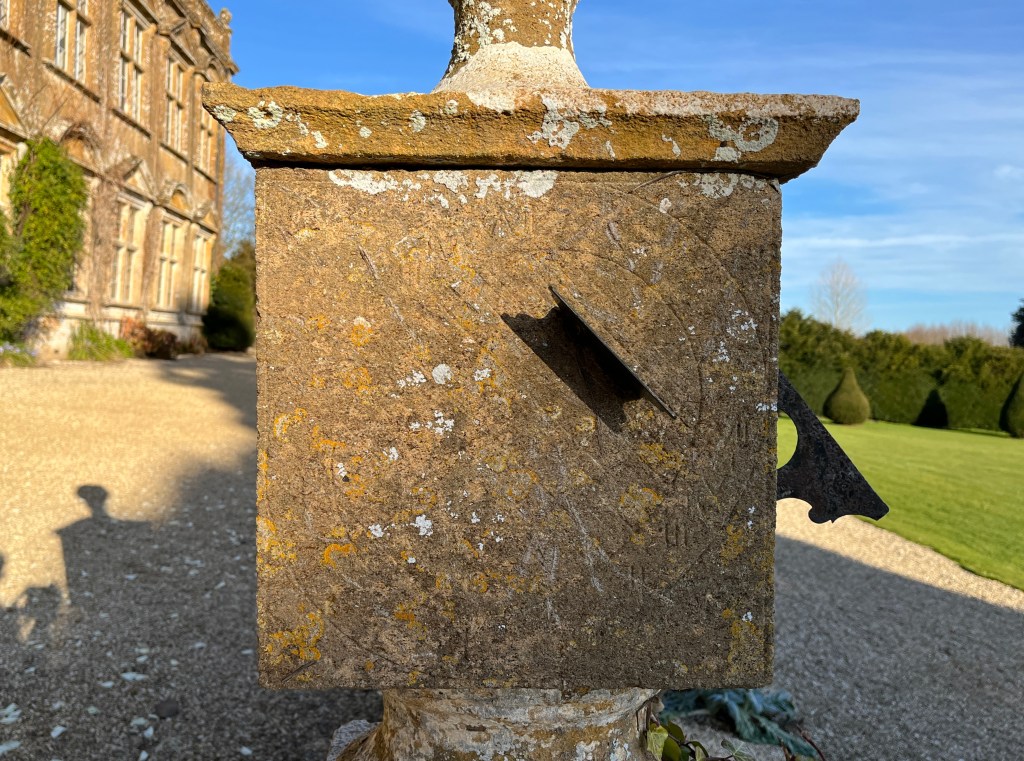
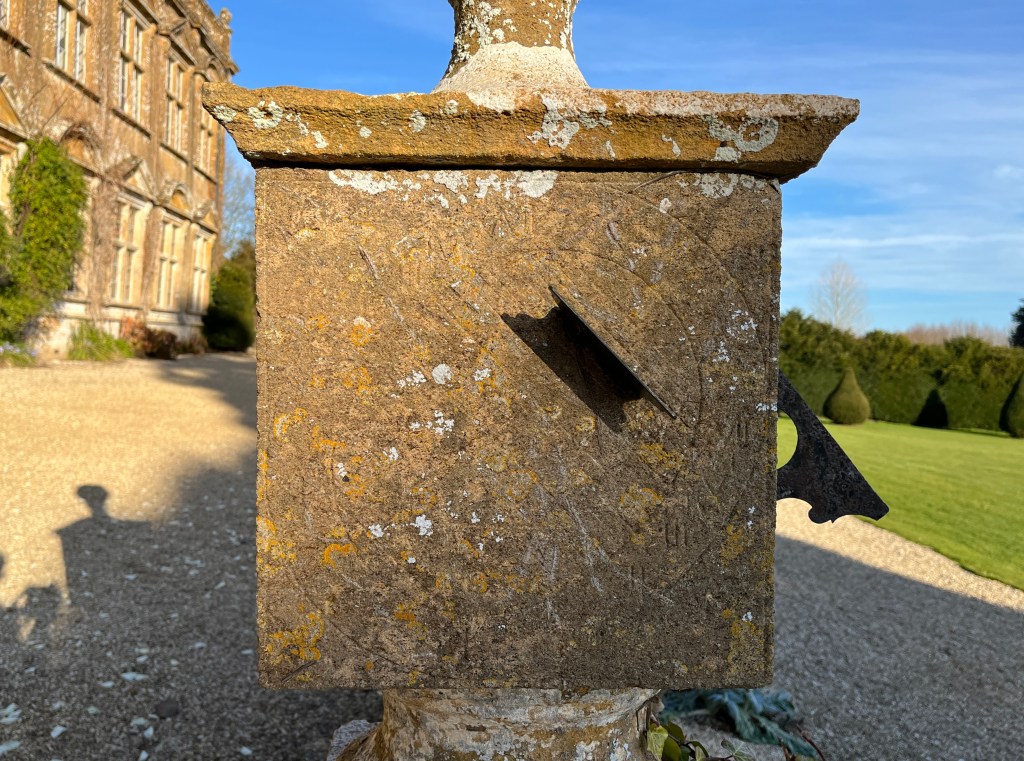
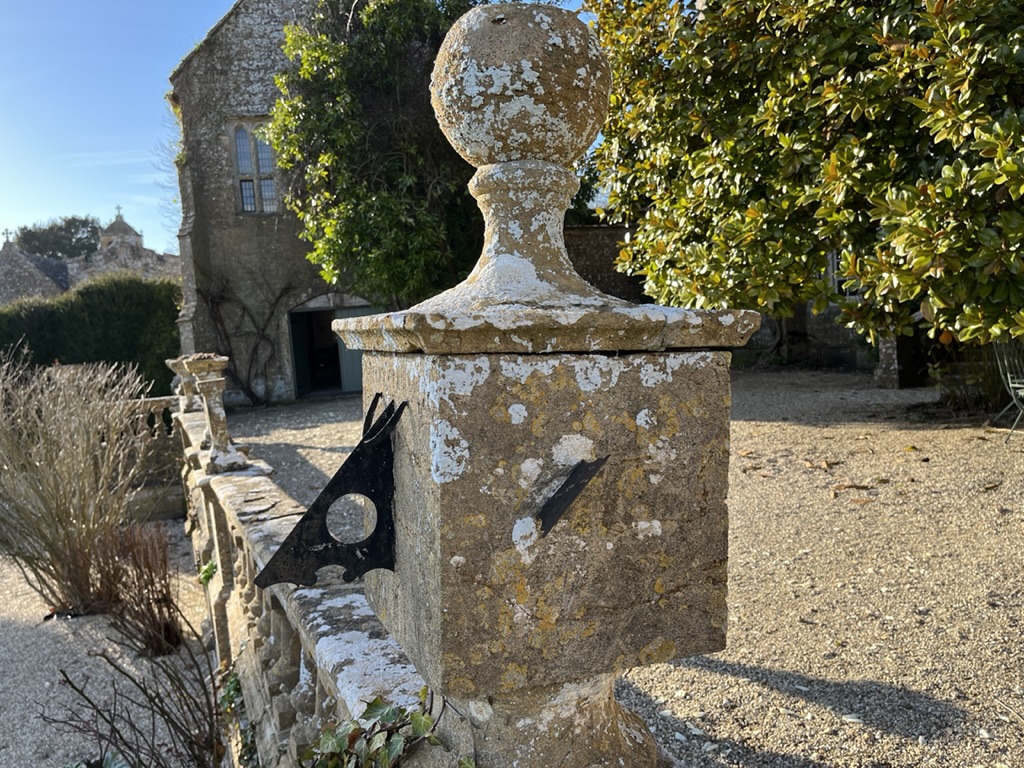
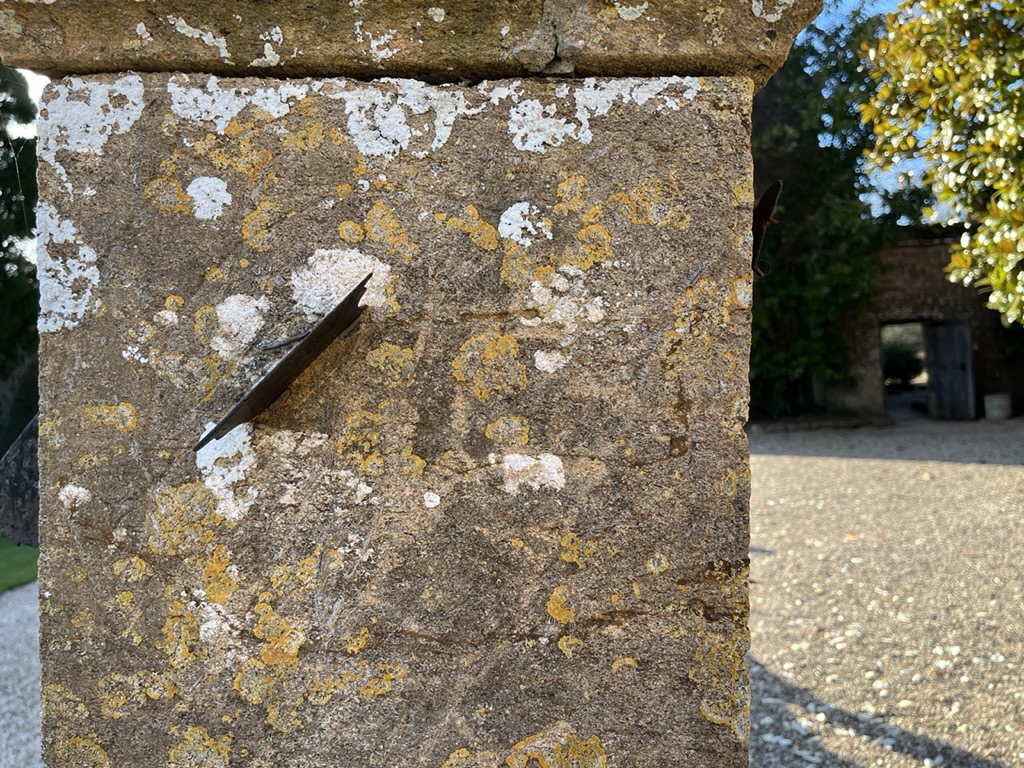
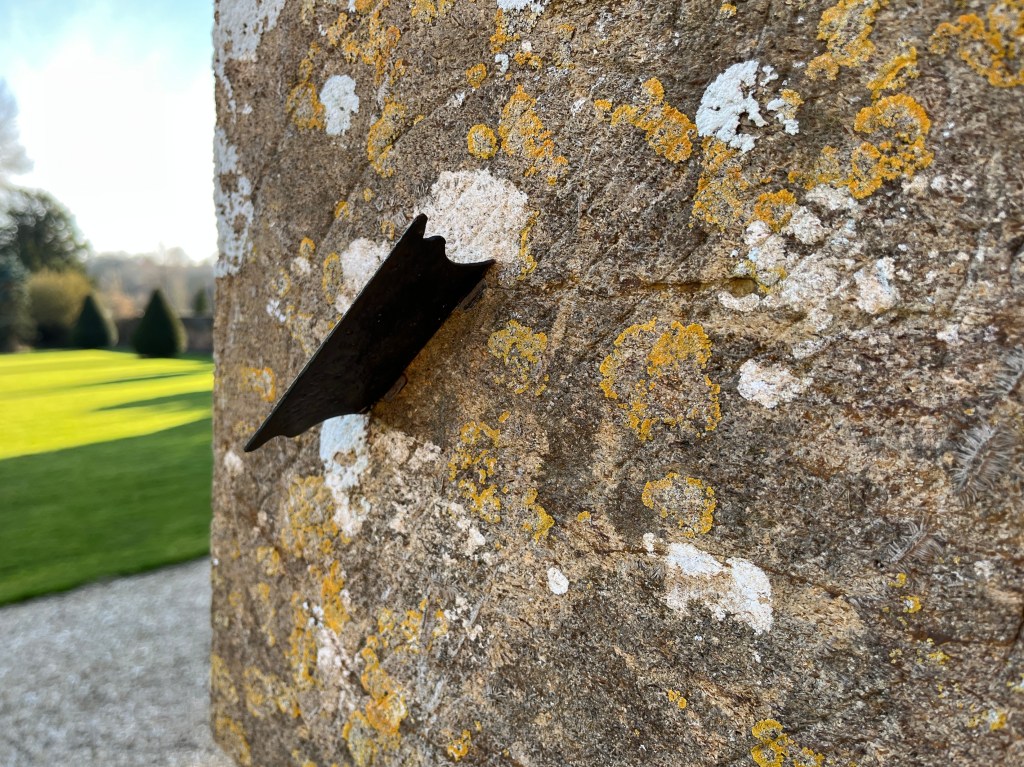
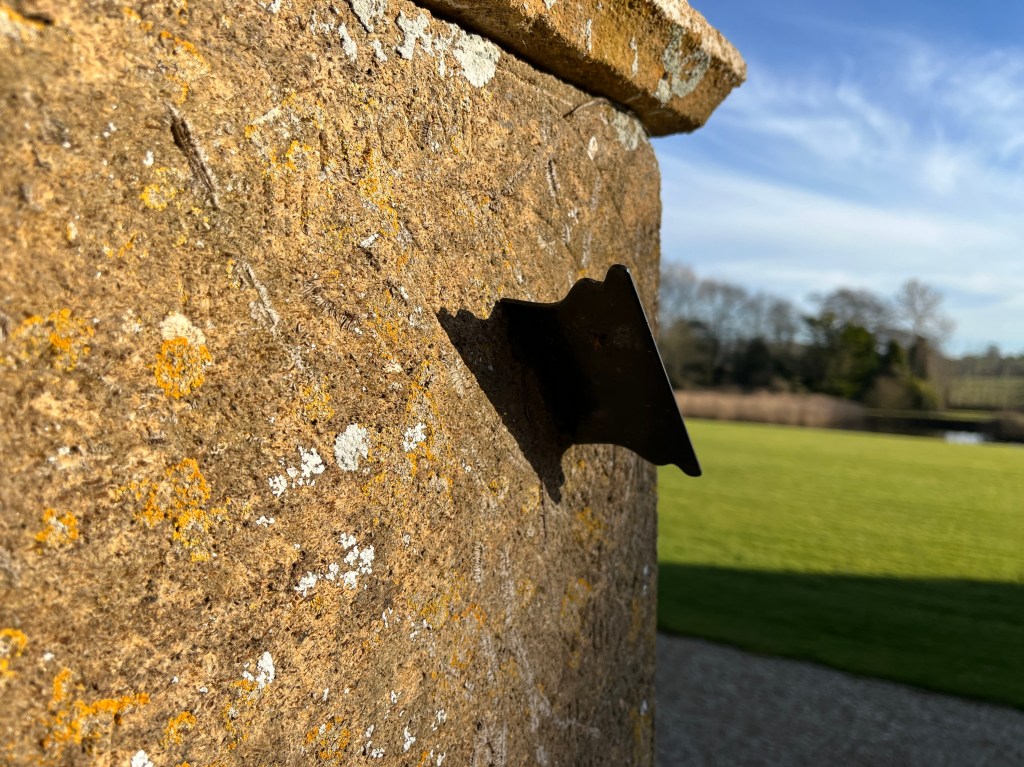
The long (75m) balustraded south terrace looks out over parkland with a small lake. The dial dates to mid-C19, probably added ± 1860 as part of the design for the terrace building project. If the dial is older, it must have been relocated. HE describes the ashlar retaining wall with chamfered plinth, capped with a stone balustrade with intermediate piers on which are set a variety of urns and other ornaments, and in the centre of the long western section a block sundial with ball finial, on which is inscribed LAT 50-56, 17.30, having sheet metal gnomons, 2 of which are broken. The 4 gnomons are shown together further down this page.

SOUTH

The motto on the S face of the dial reads PEREUNT ET IMPUTANTUR, which Gatty gives as ‘they perish and are reckoned’. Its original form as a Martial epigram directly references the sun’s involvement in this process.

WEST

NORTH

EAST

GNOMONS

THE BOOK OF SUN-DIALS . MRS ALFRED GATTY . MDCCC

GSS Category: Cube Dial; Multiple Dial

All photos: Keith Salvesen

LICHFIELD CATHEDRAL . STAFFS – C17 / C18 Cube Dial on a Column

Lichfield Cathedral – Cube Dial on Column

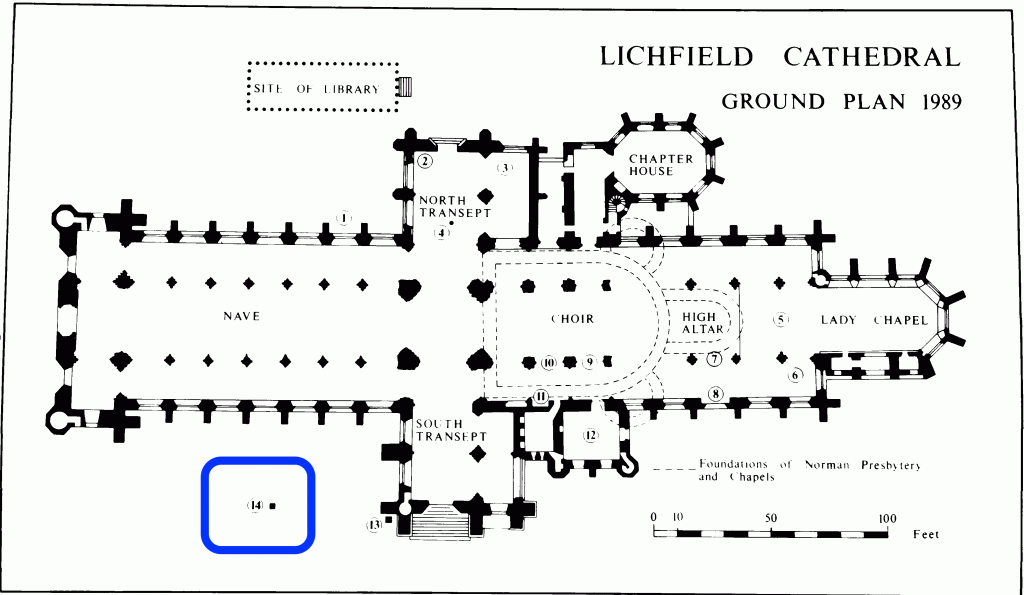
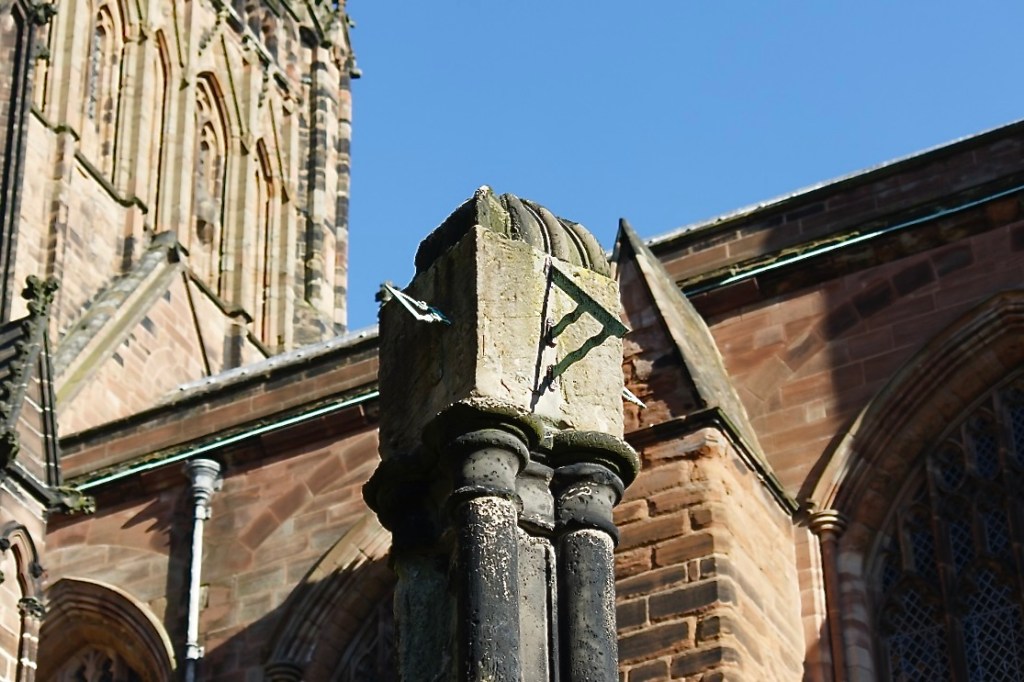
GRADE II Large Cube Dial on a tall column. BLB / HE give the most complete descriptions: Date uncertain, probably C17 or early C18; 1st recorded 1781. Ashlar. Tall quatrefoil pier on plinth, with ring and moulded capital supporting cube with dials and gnomons to each face, reeded domical (domed) cap. An unusual feature whose origin is unknown, removed in 1781 and re-erected to the west end of the cathedral in 1785, removed and sold in 1881, and returned and re-erected on its present site in 1929.

BHO notes: A sundial near the south doorway of the cathedral was removed in 1781 and re-erected in 1785 at the west end in order to regulate the clock on the tower. It was removed in 1881 and passed into private hands. It was returned to the cathedral in 1929 and placed on a pedestal in its present position south of the nave.

The clock in question was (without going into detail) probably the first Cathedral clock, which was in position by 1491. BHO suggests that the original clock was still in place in early C17 and probably not replaced or superseded by another clock until late C18. If so, the dial’s removal and re-erection in 1780s would have been to regulate the original clock.

The handsome domed dial has a single gnomon on each face. The gnomons and lines obviously differ on each side. Numerals are Arabic rather than Roman.

Assuming the Cathedral conforms to the usual church orientation, the Cube’s angle in its position on the S side of the building is some 45º out of true from what might be expected. Presumably the explanation is that the cube was originally cut for a different position, and after several relocations its present position and orientation provides optimum accuracy. Any other suggestions would be welcome.

Lichfield Cathedral – Cube Dial on Column

GSS Category: Cube Dial; Column Dial; Pillar Dial; Pedestal Dial

Credits: Erika Clarkson for amazing photos, with thanks