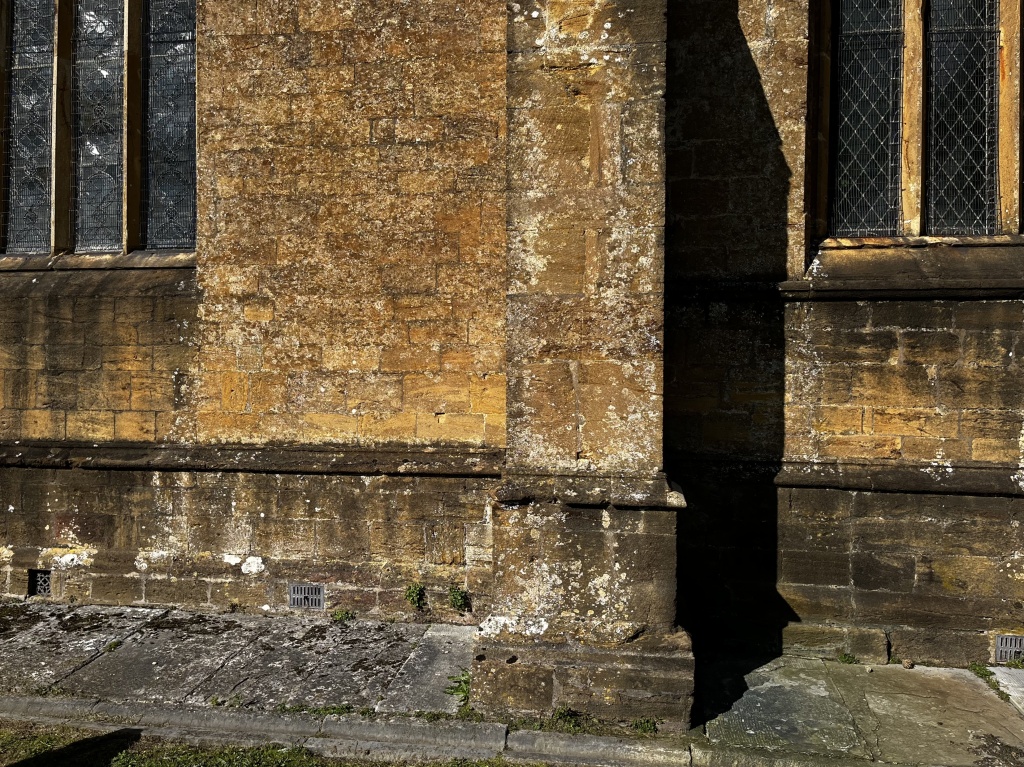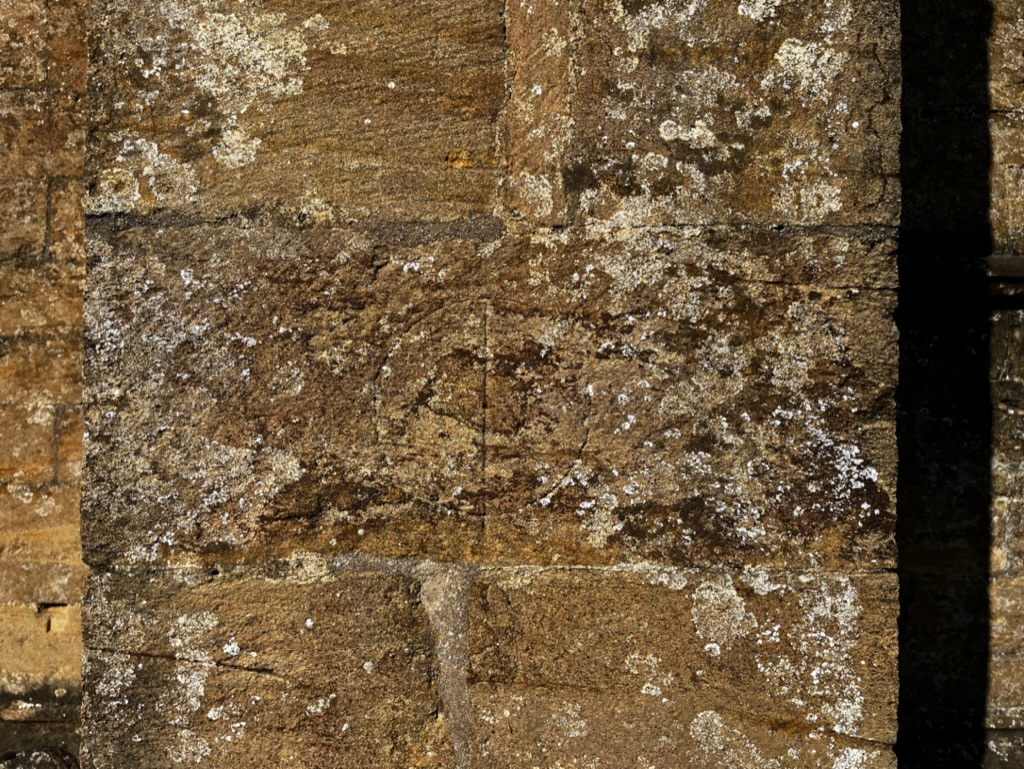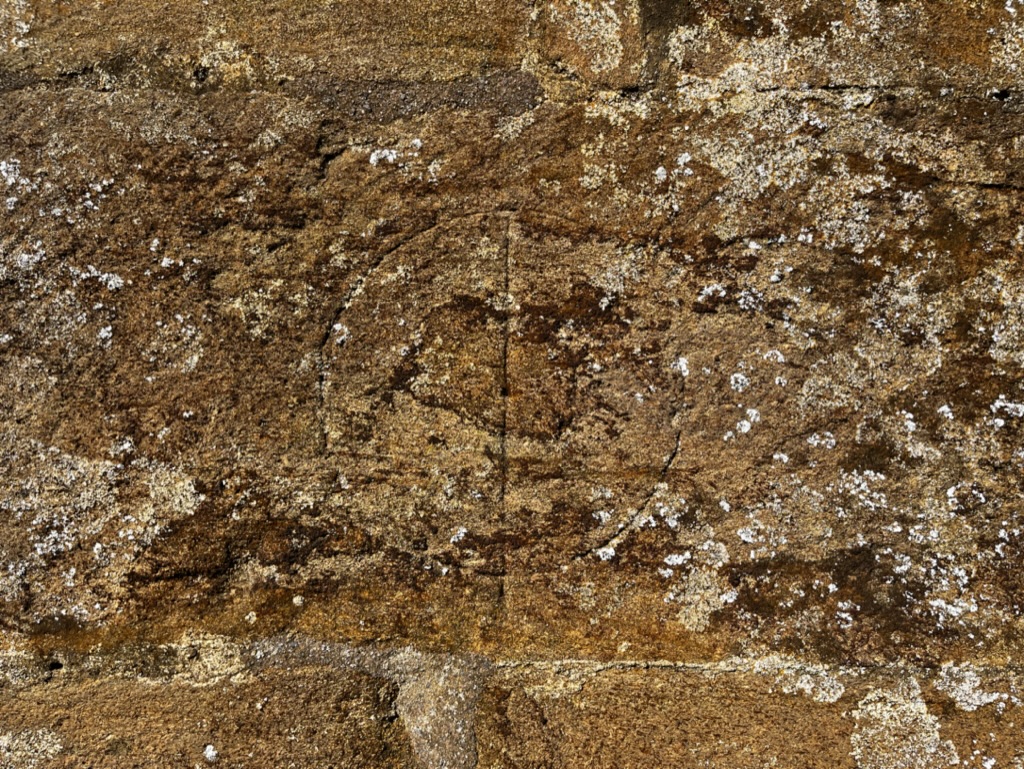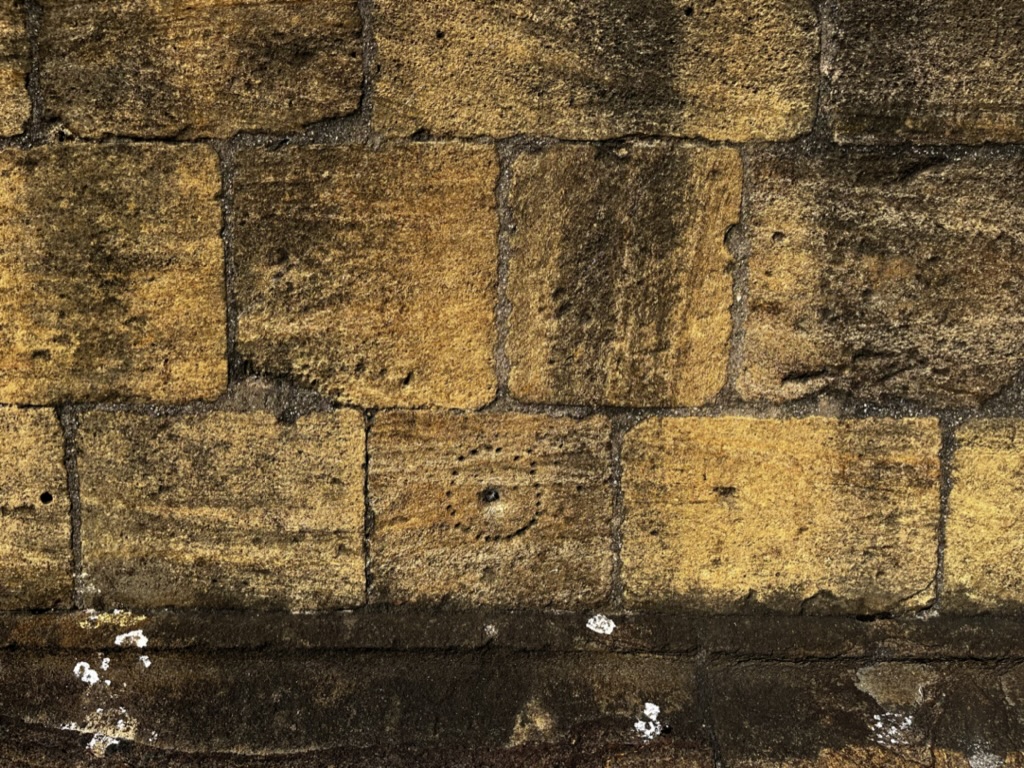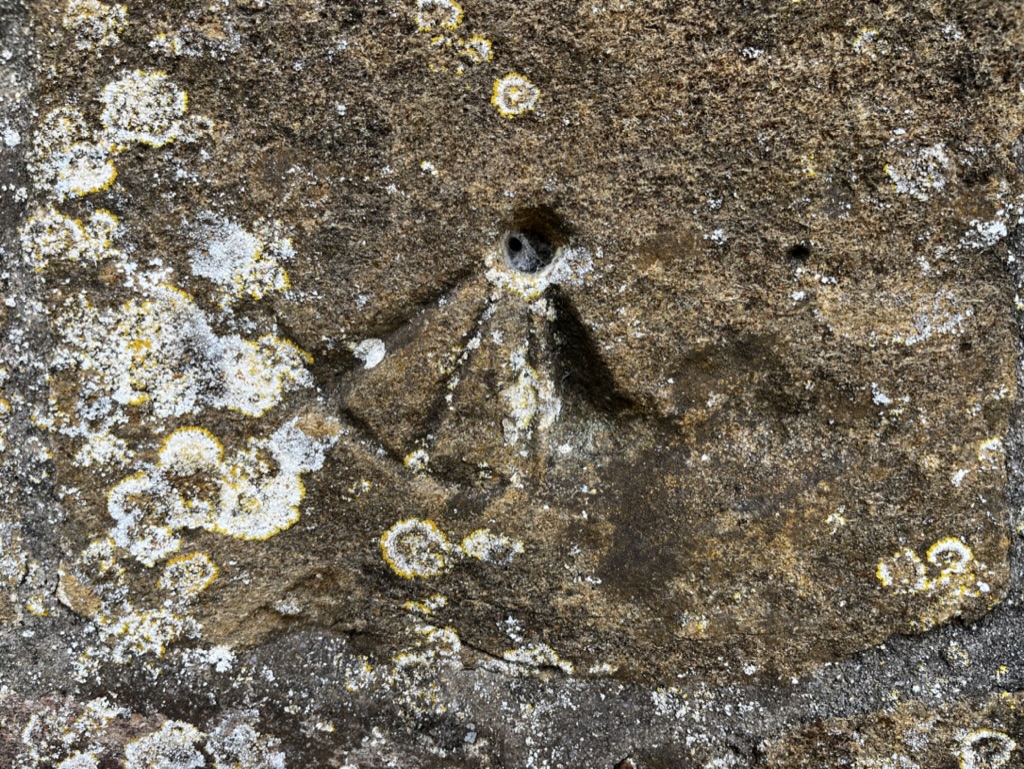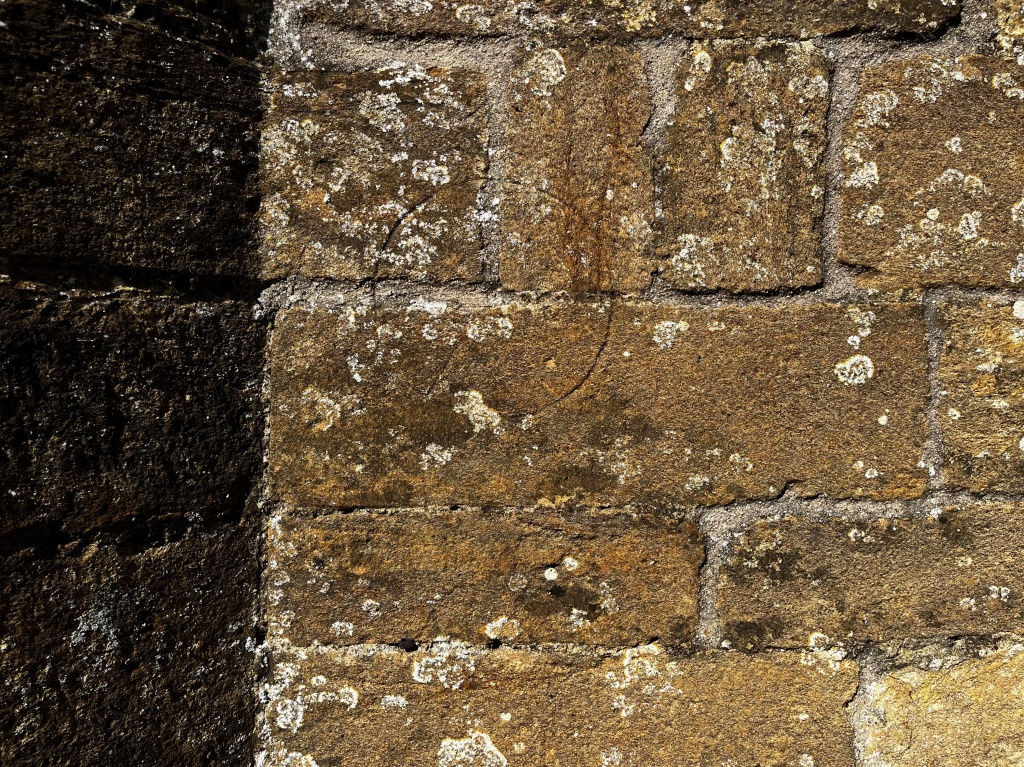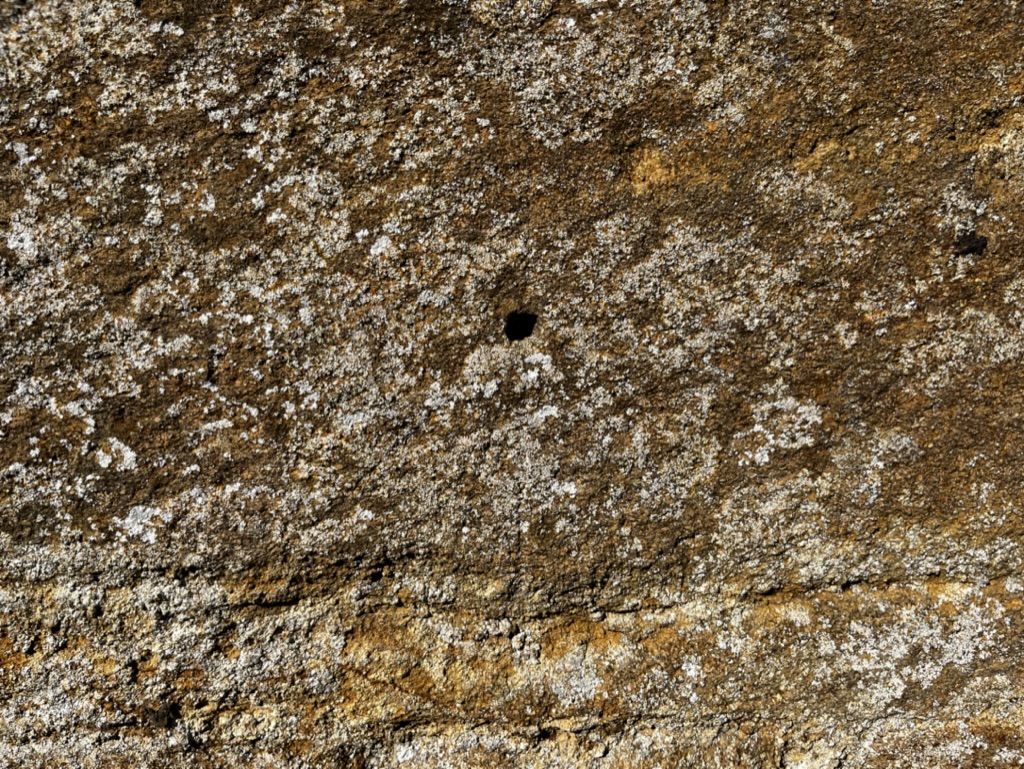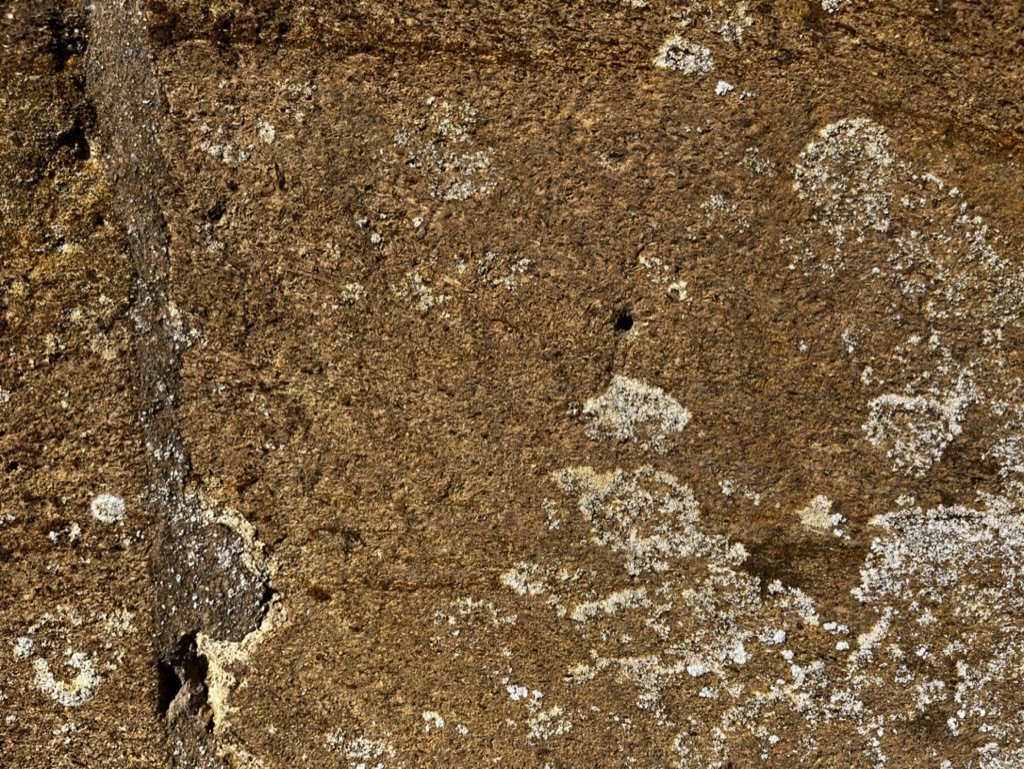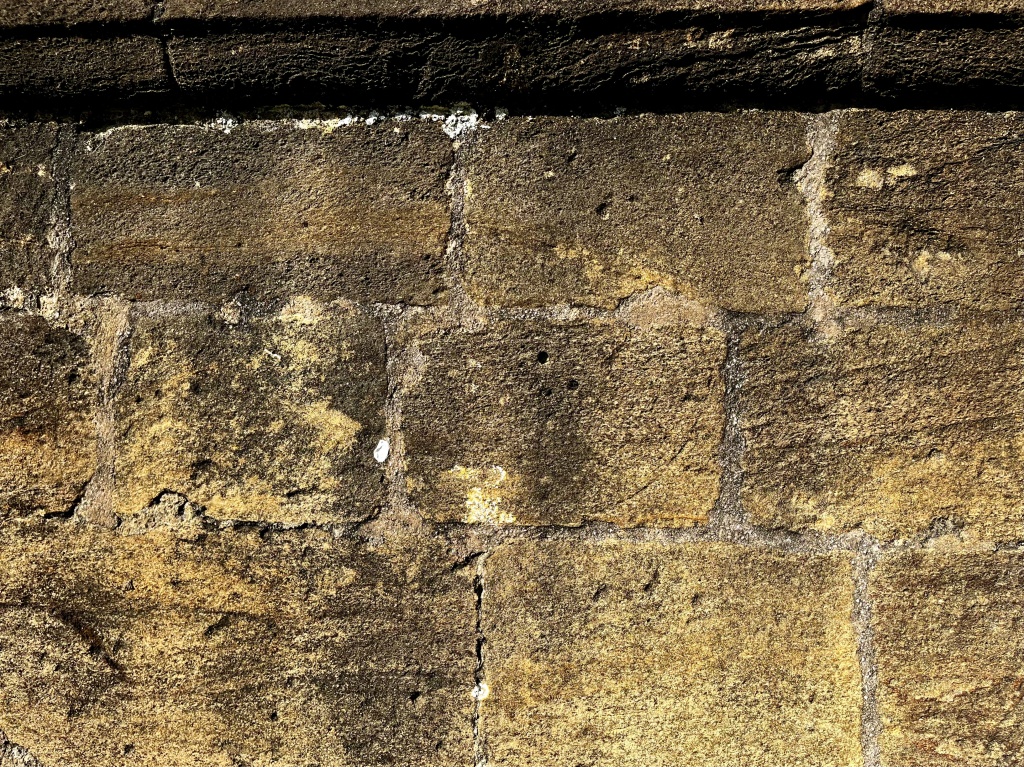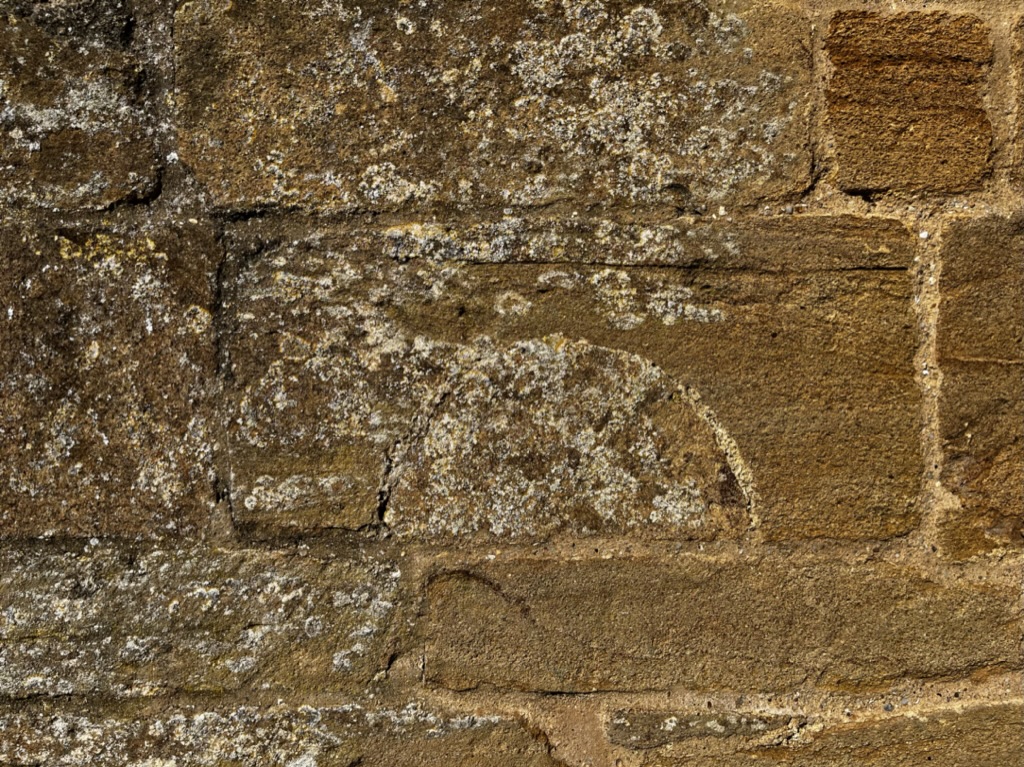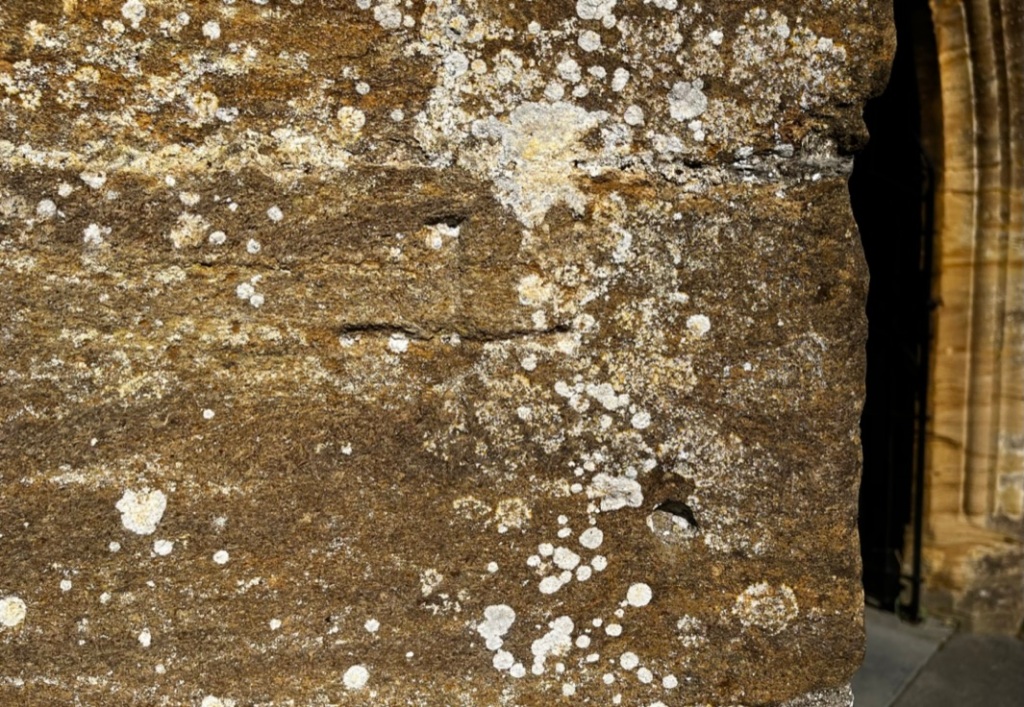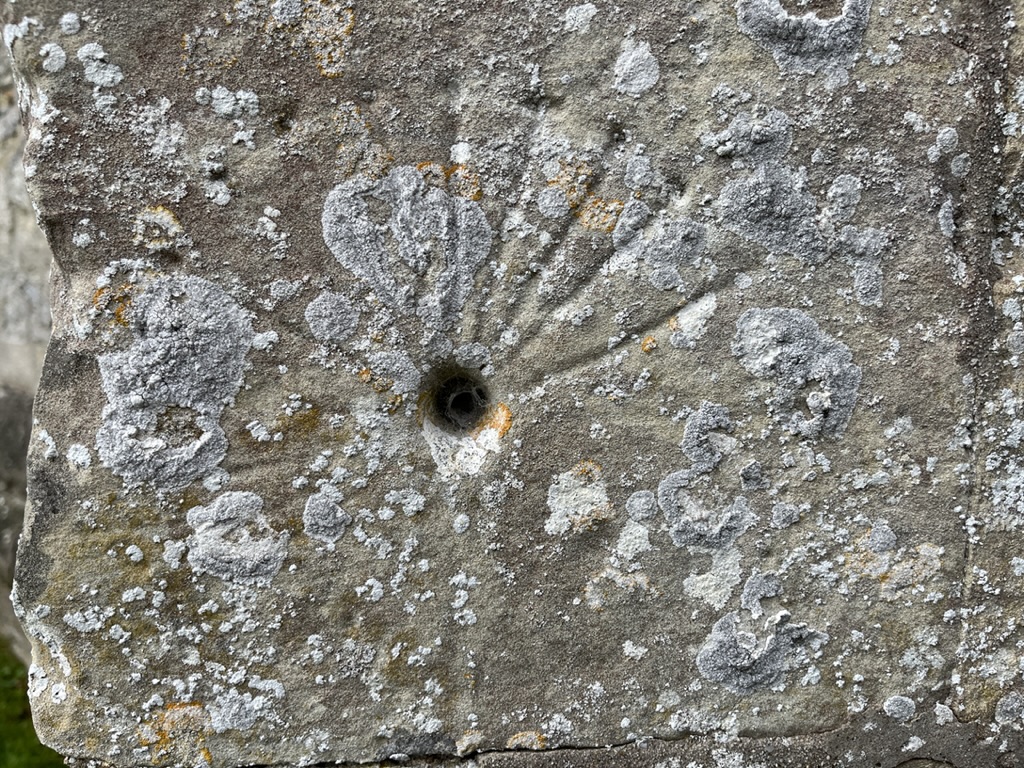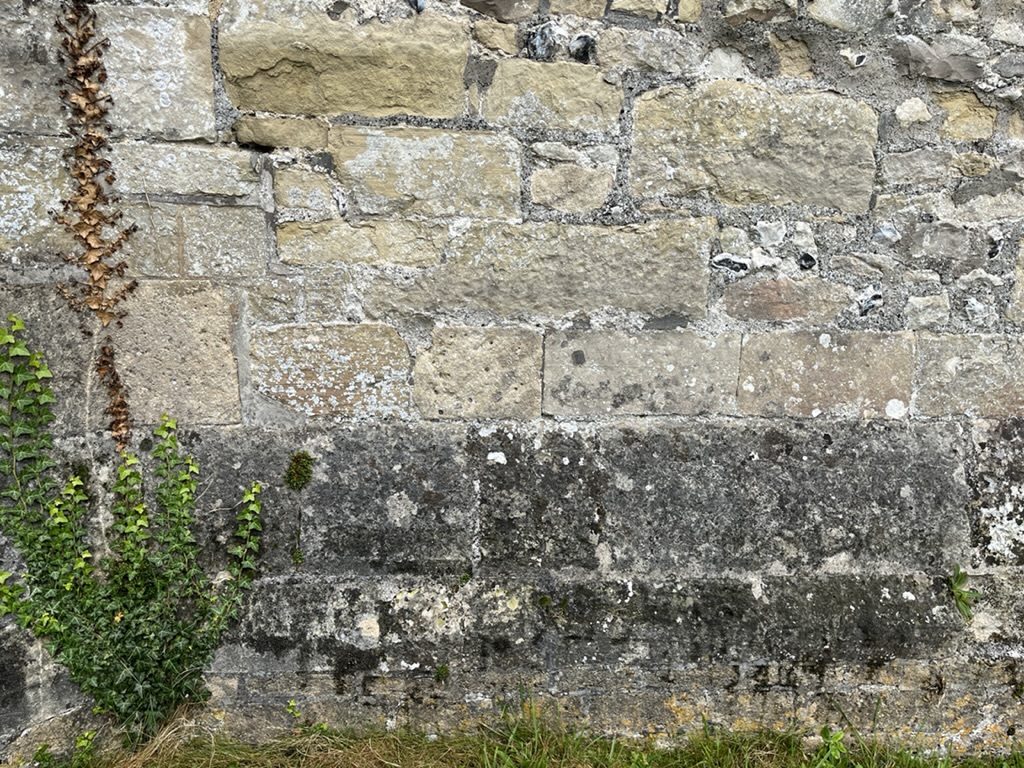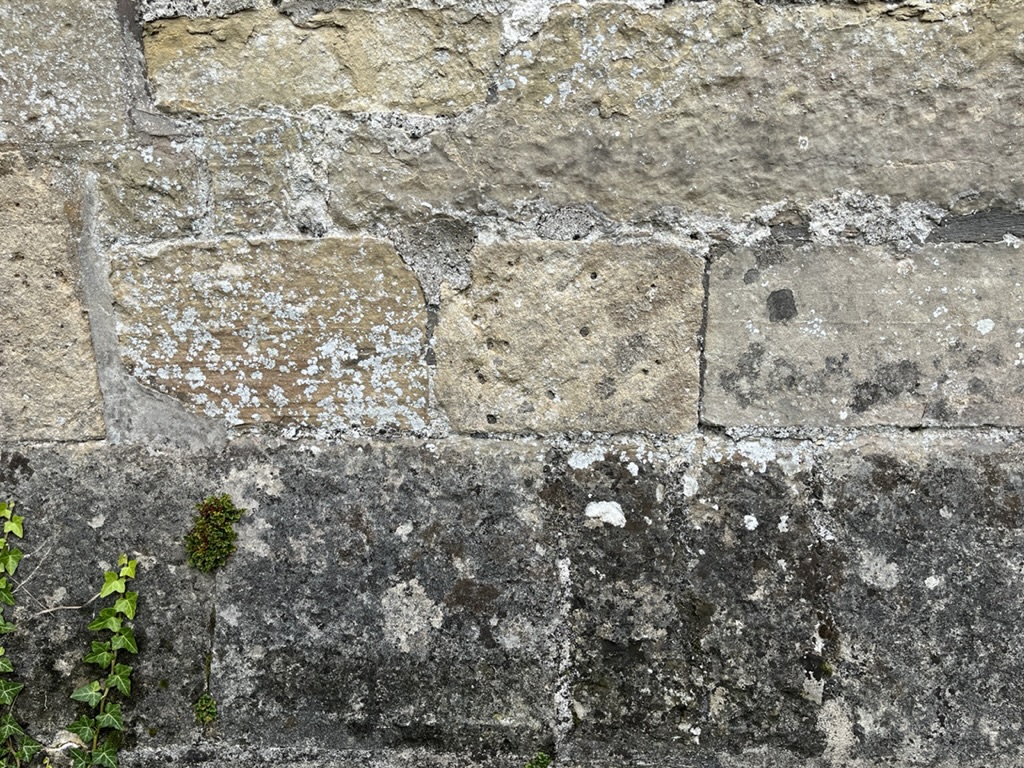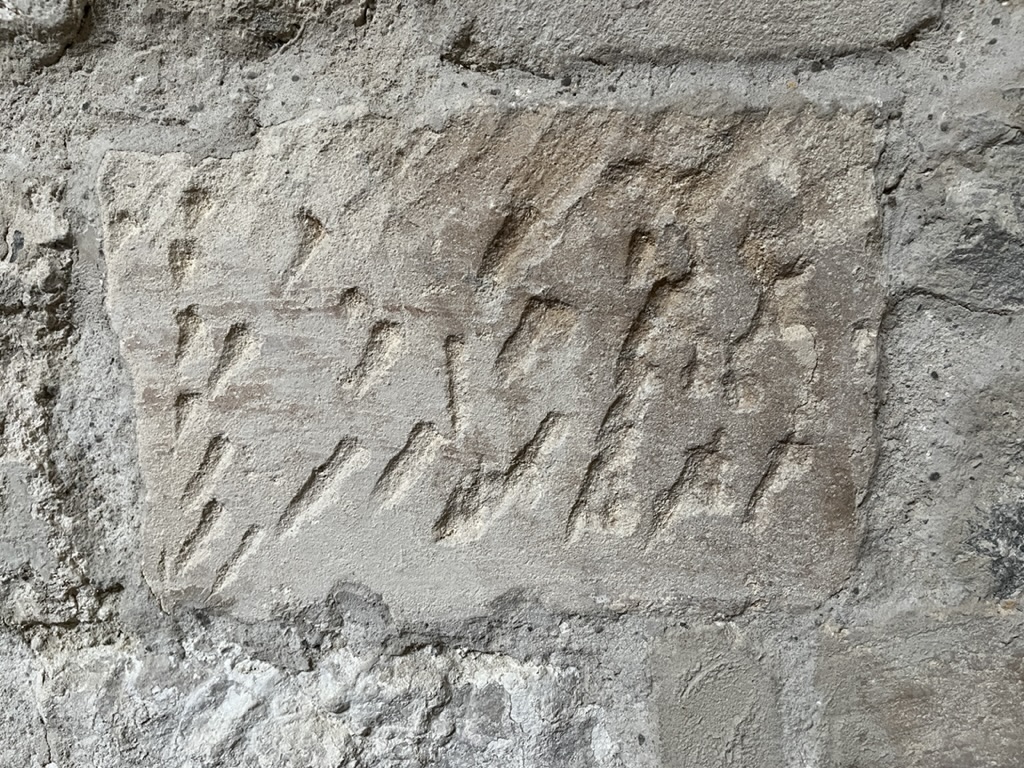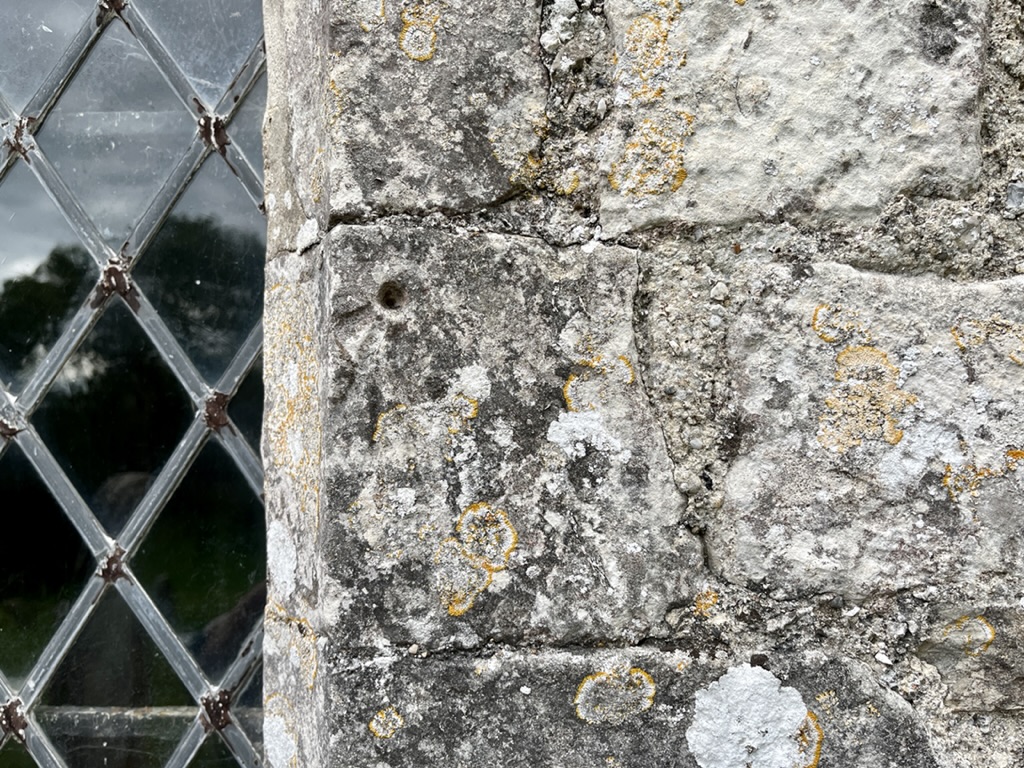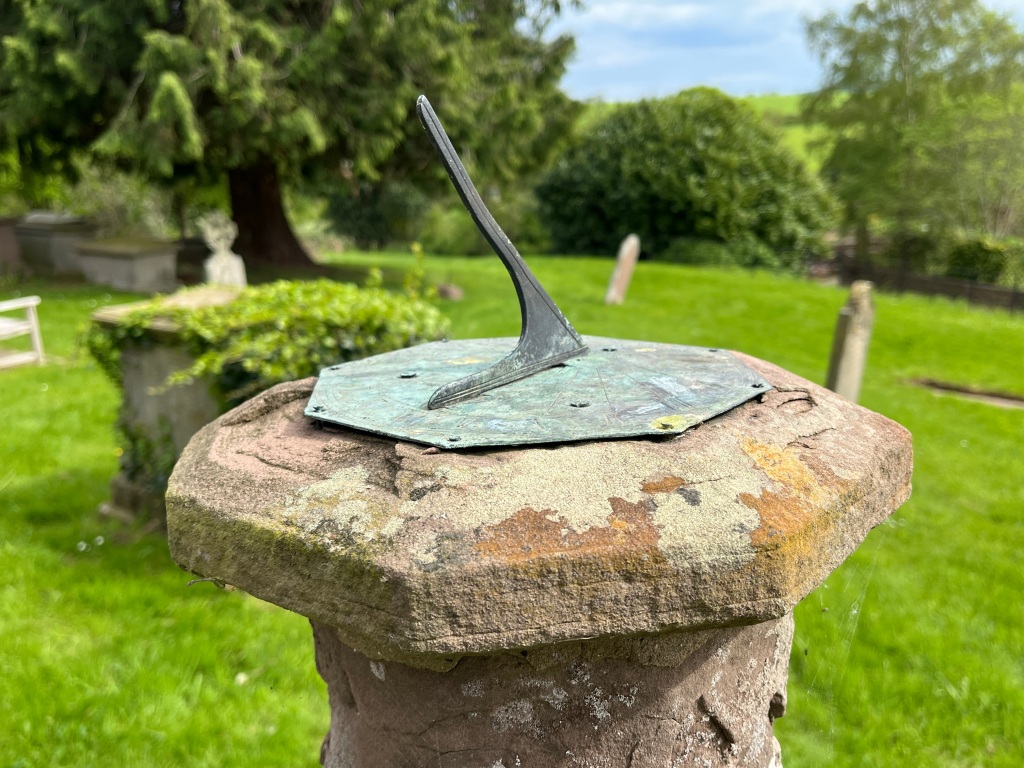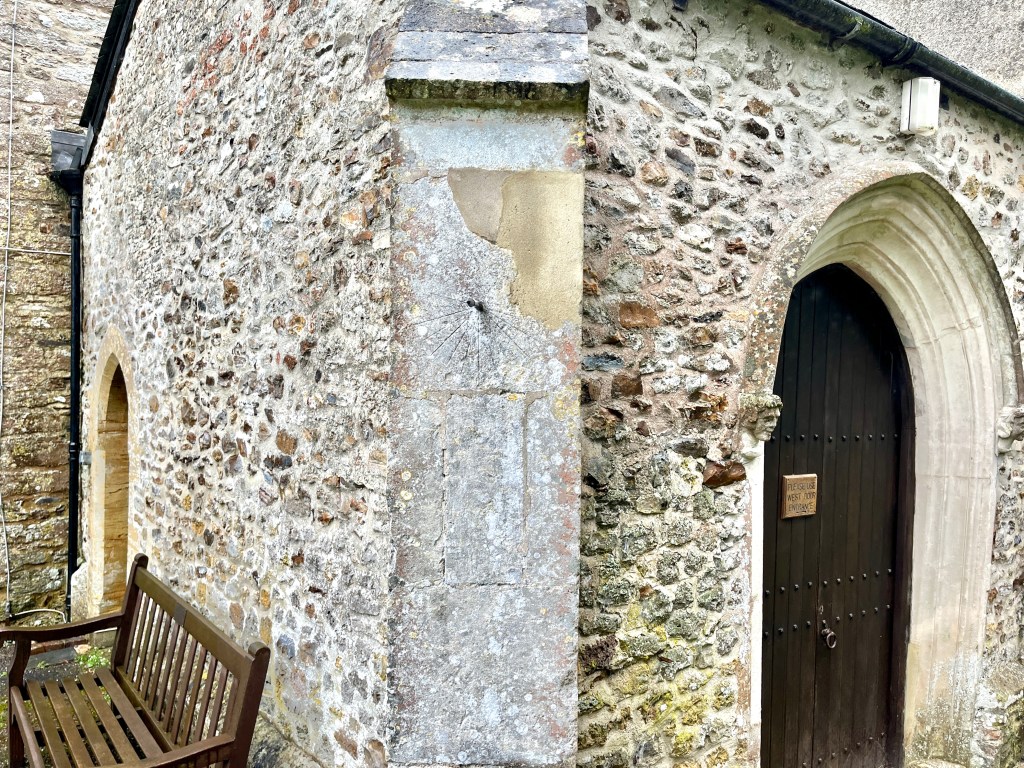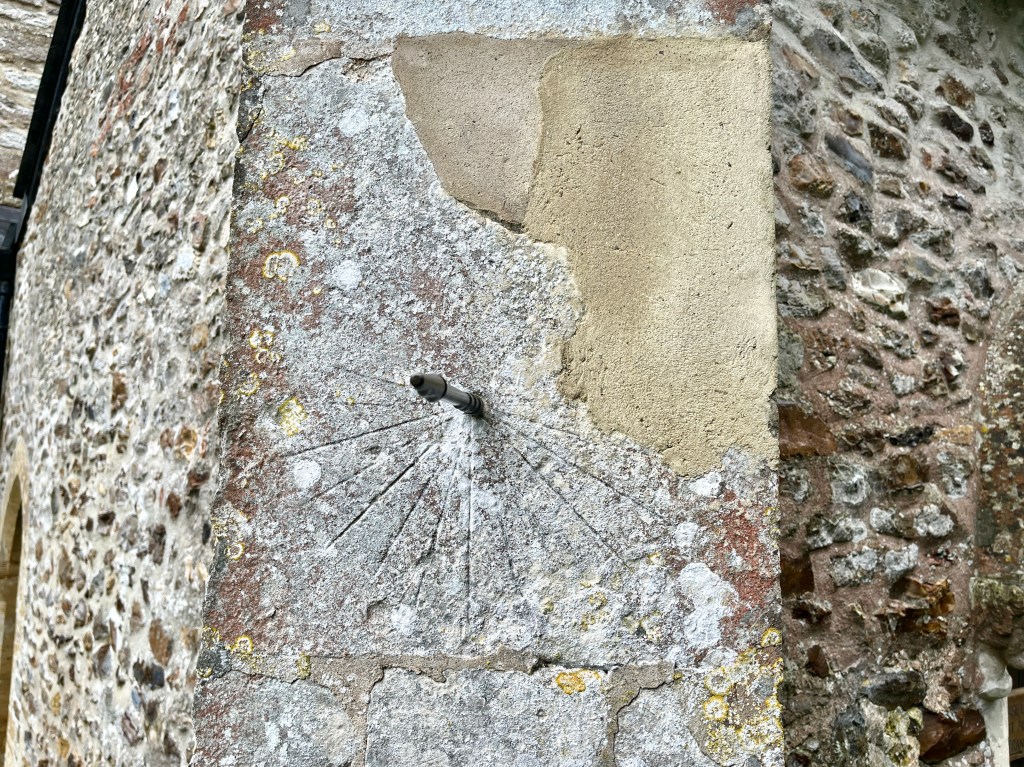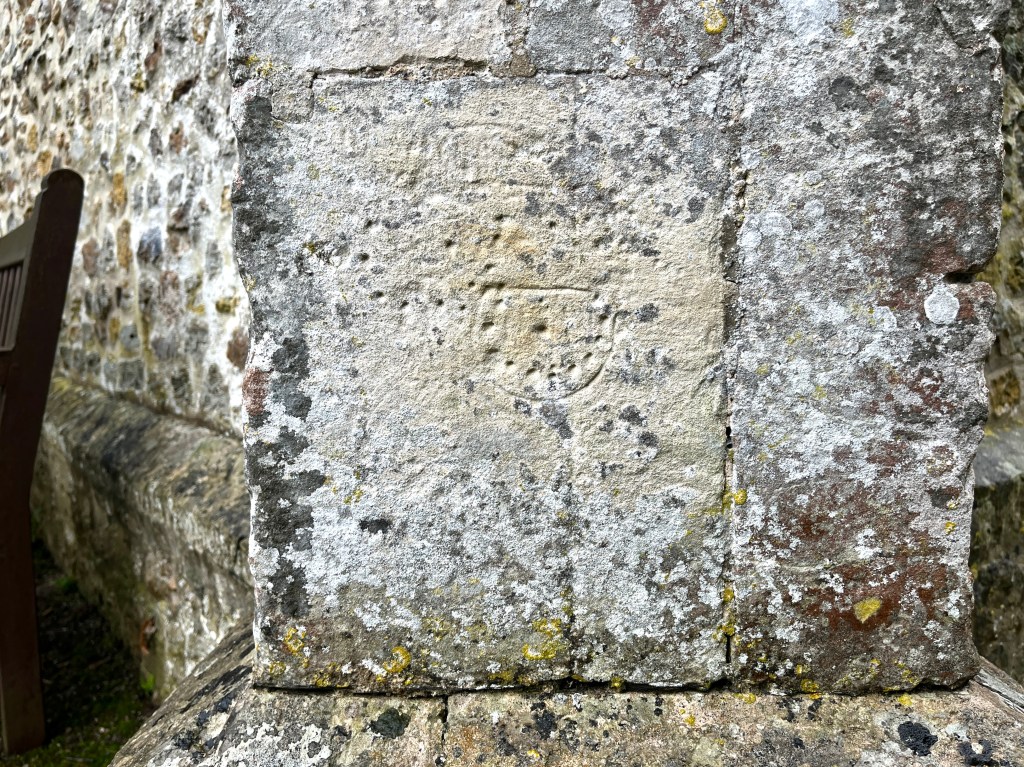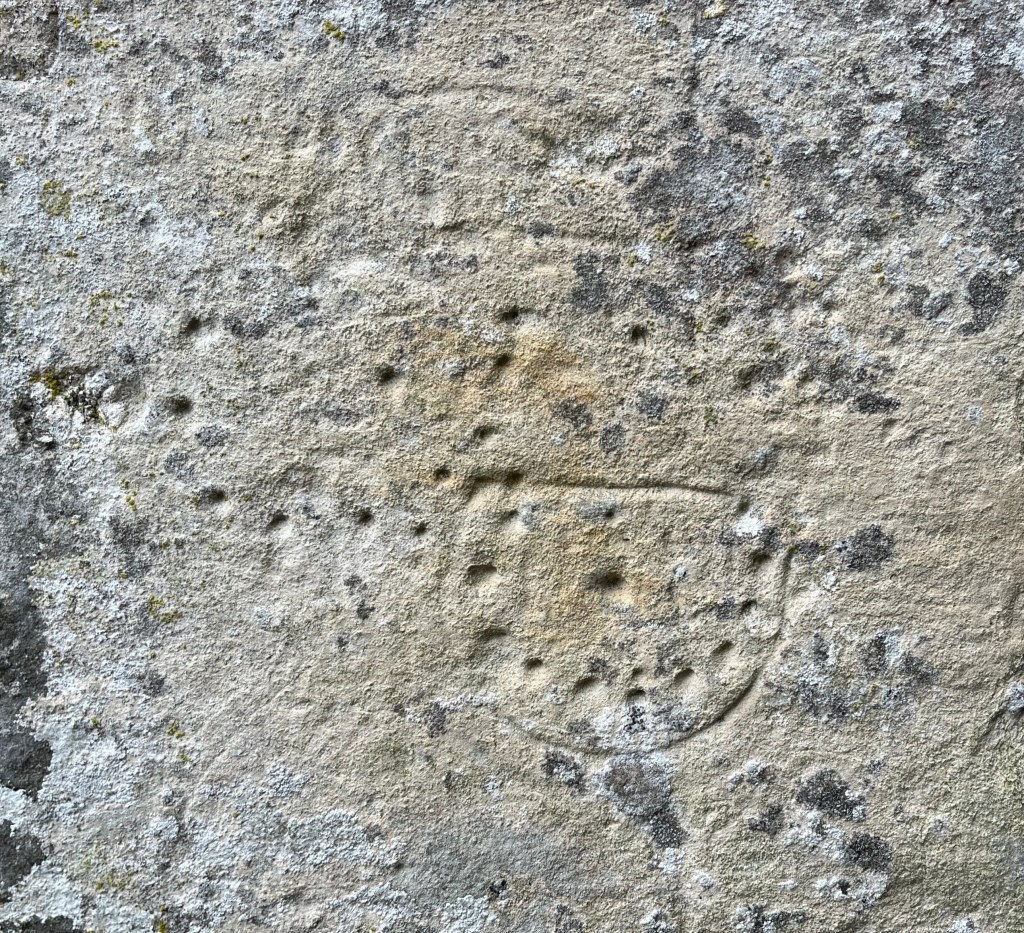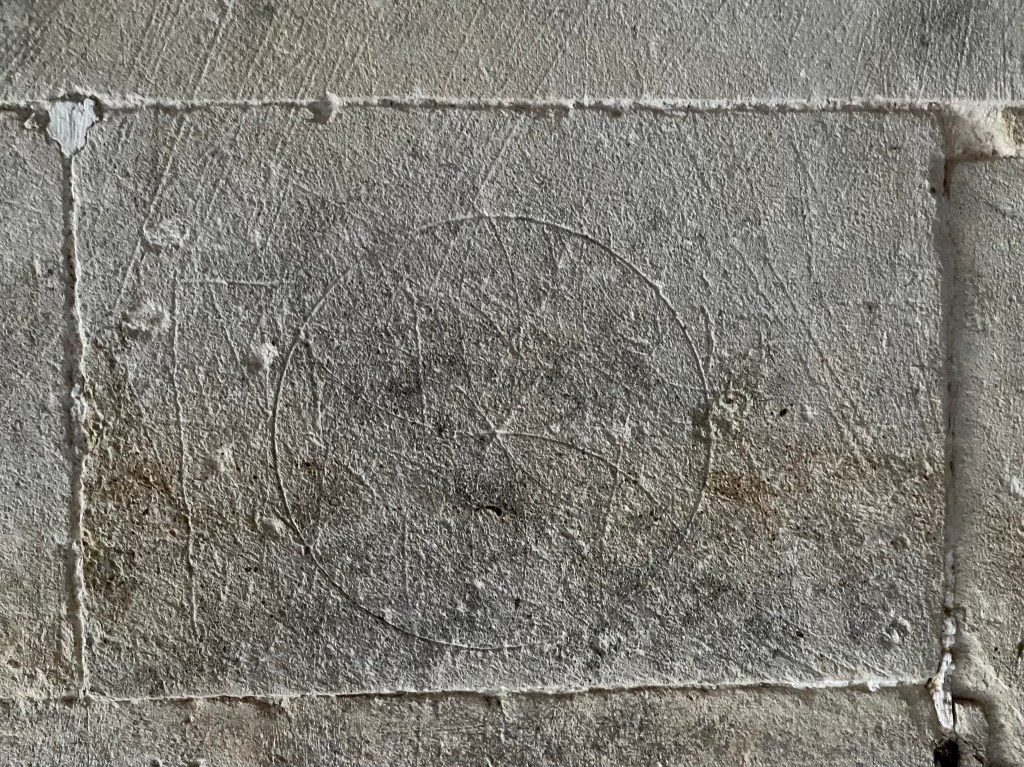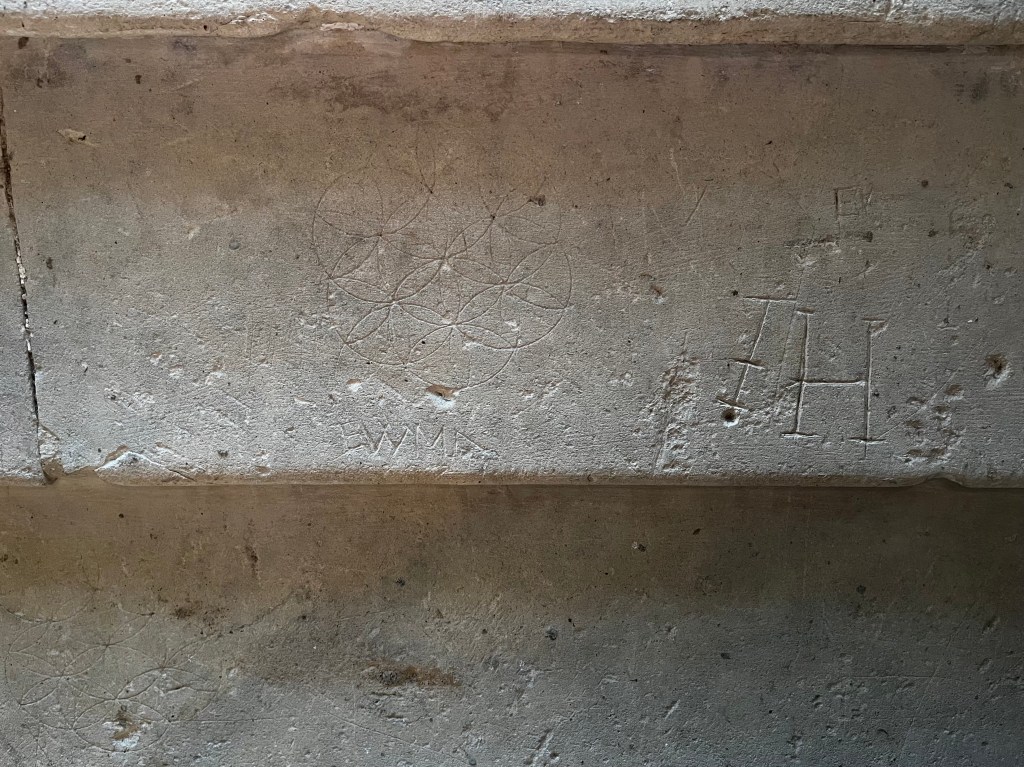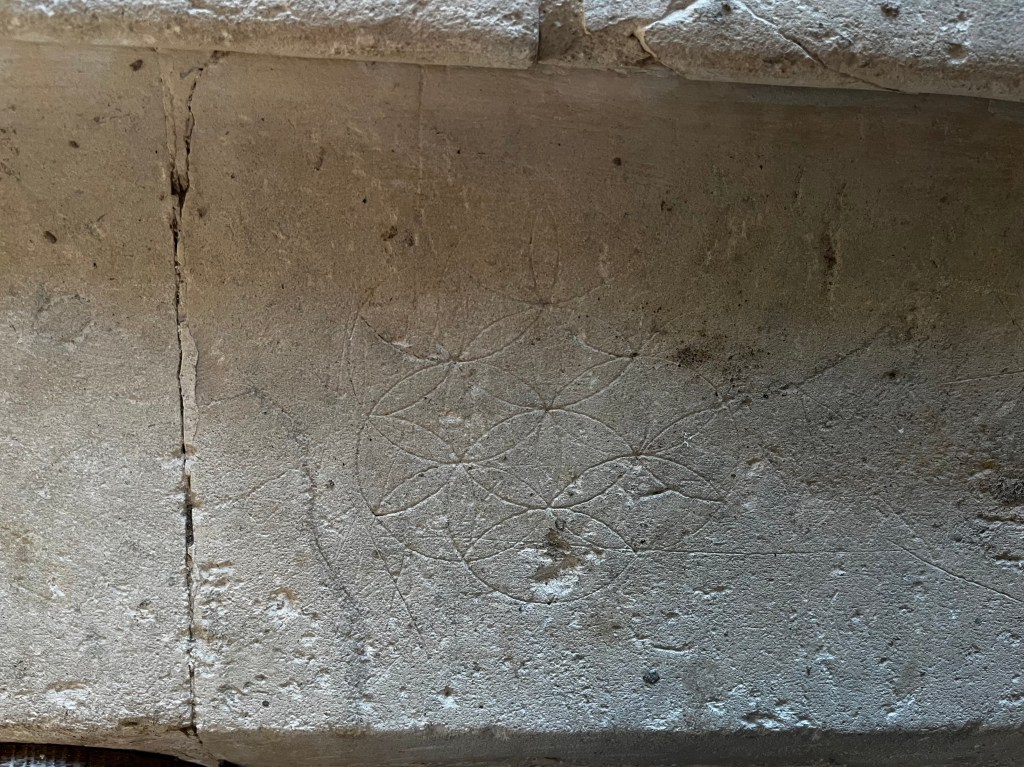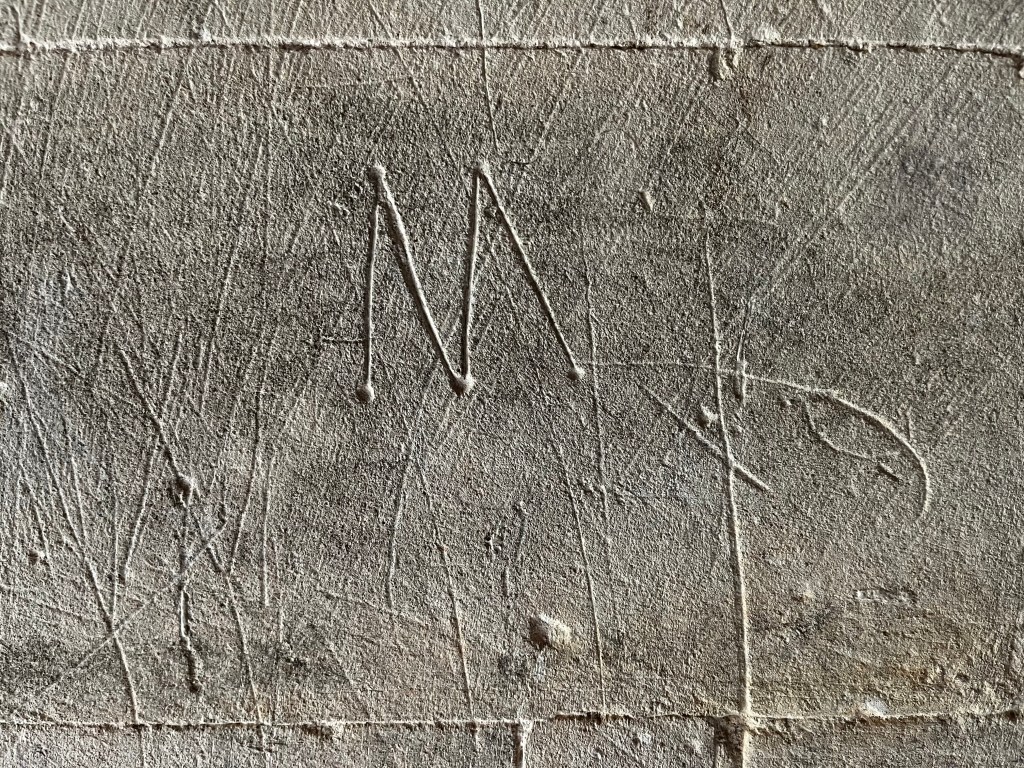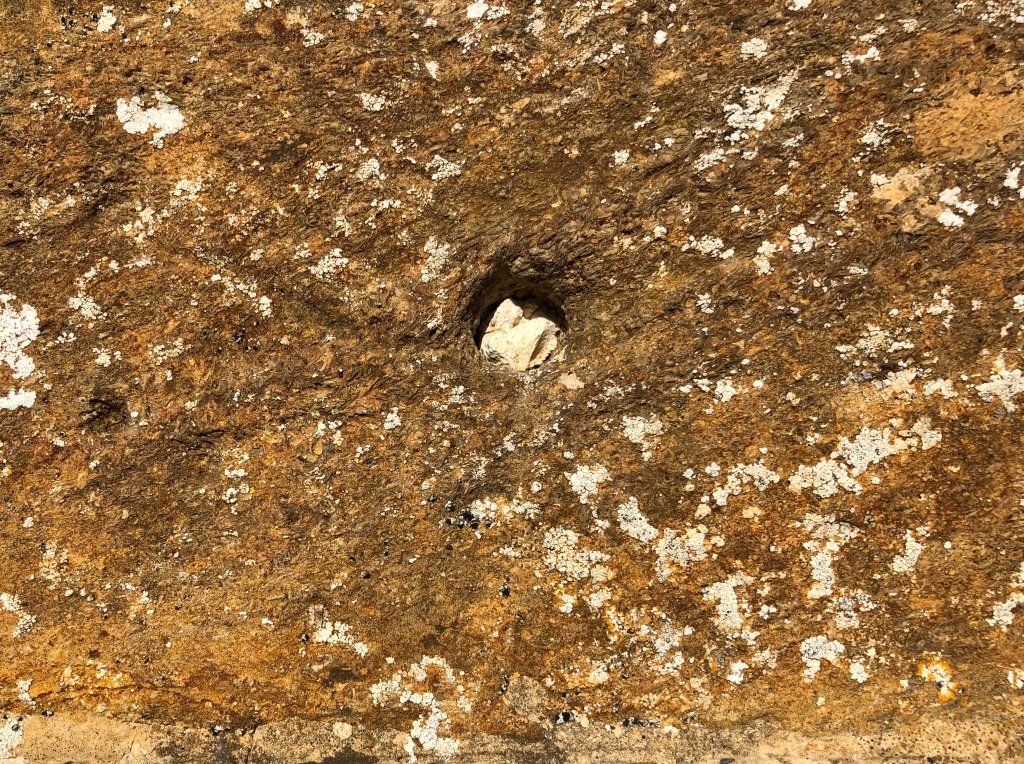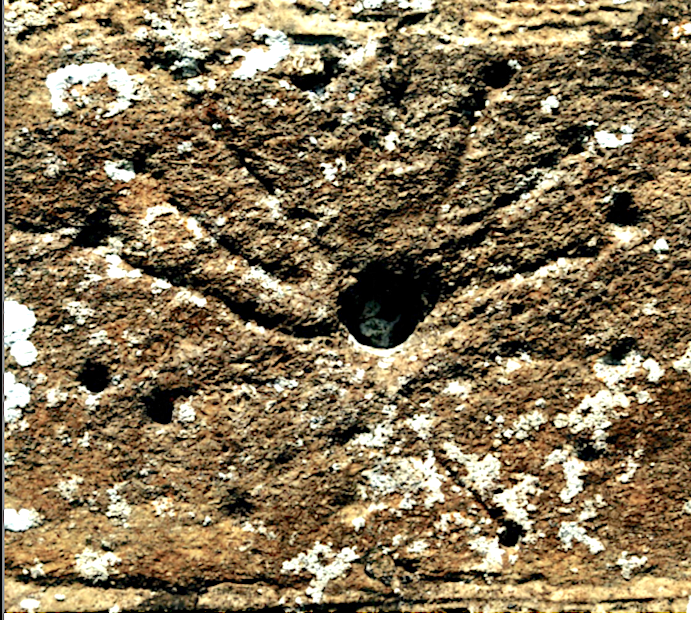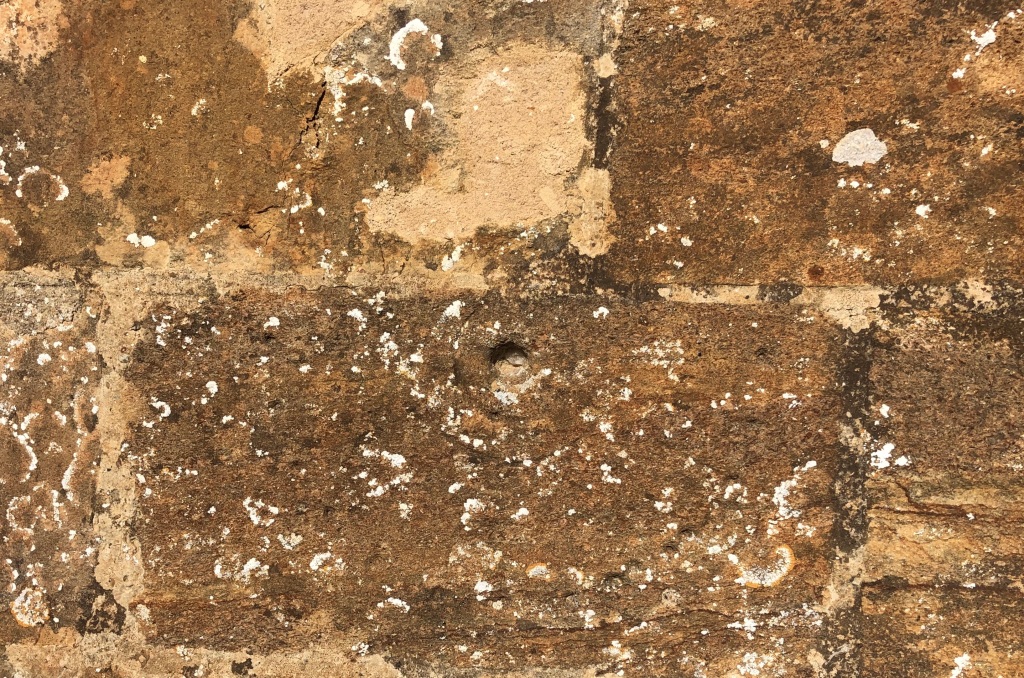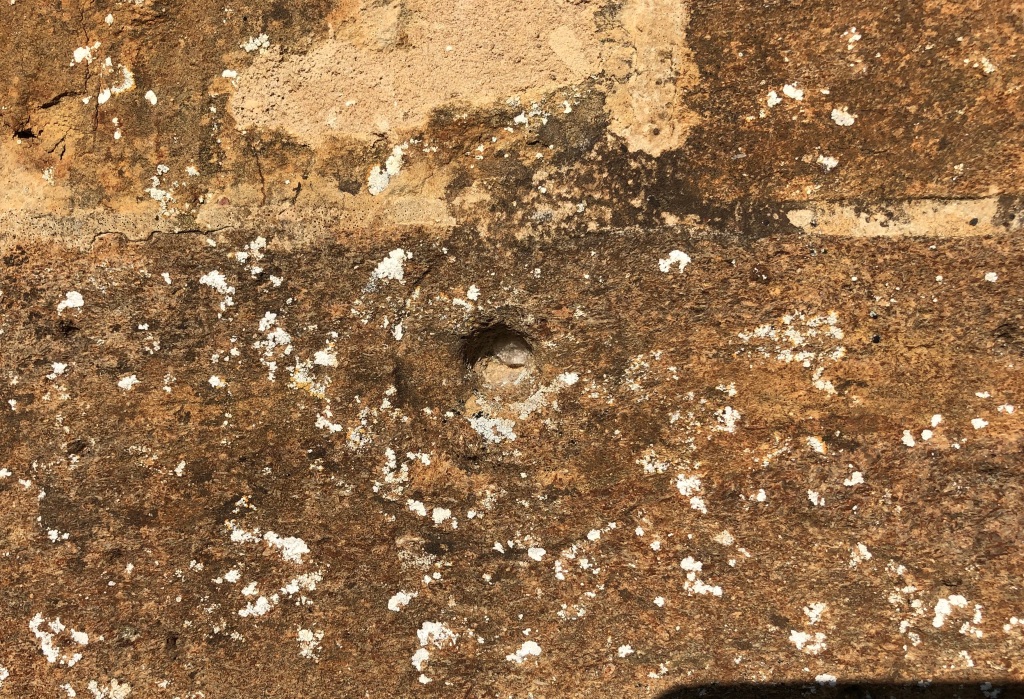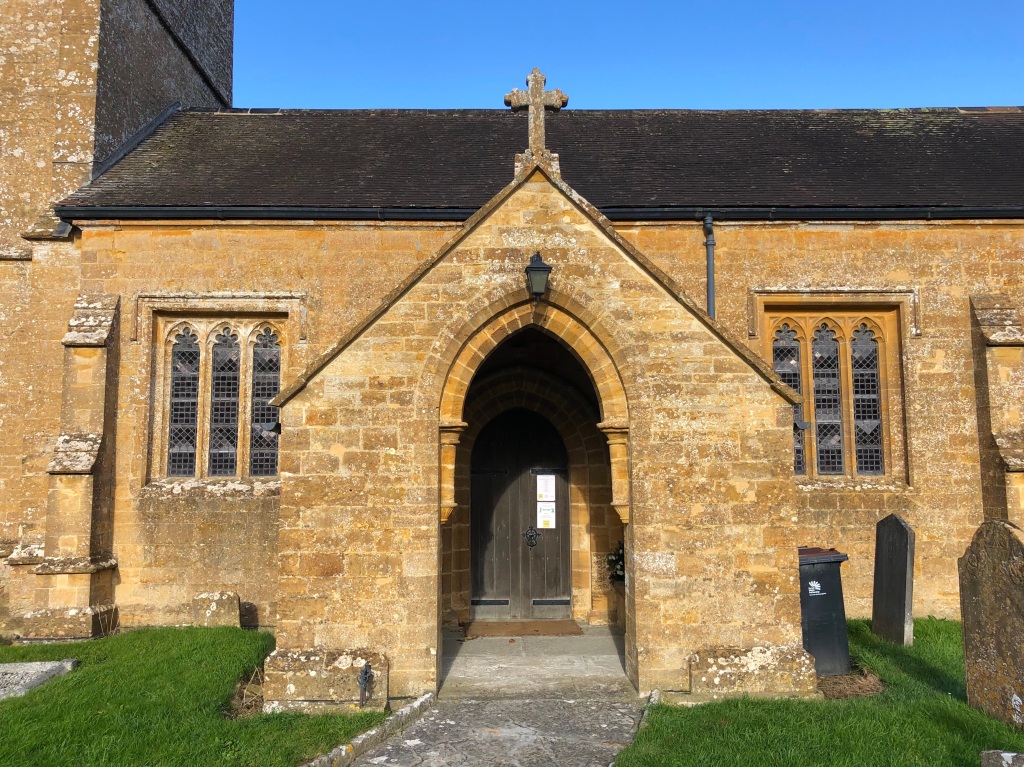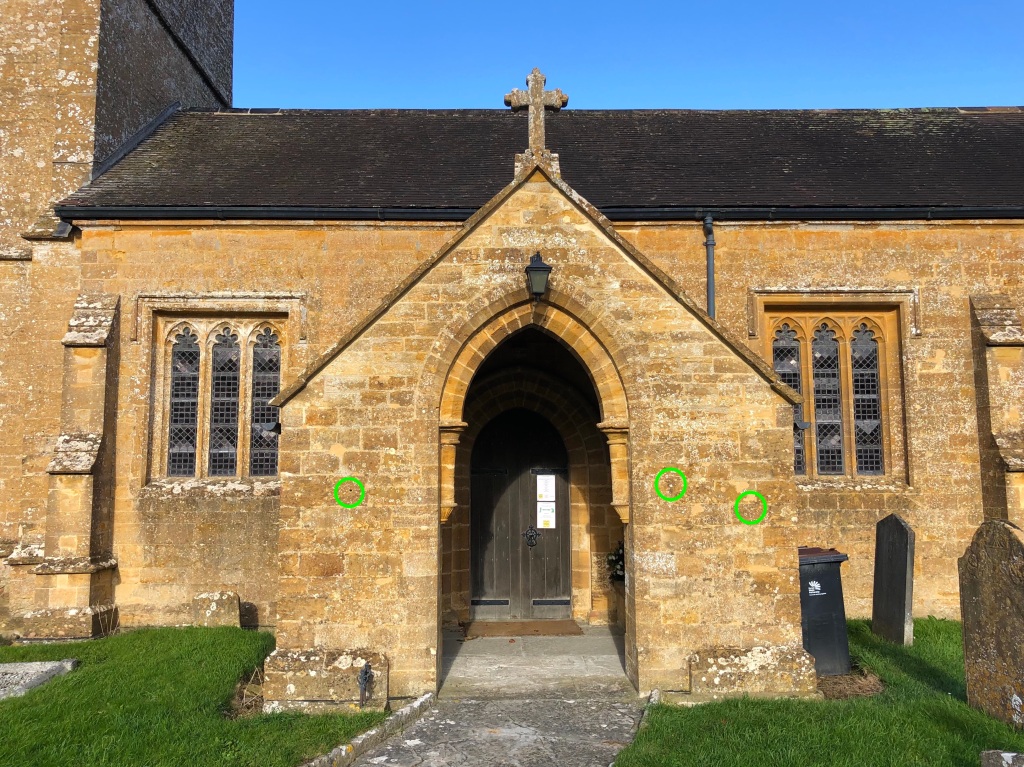
MARTOCK . SOM . ALL SAINTS – Multiple Scratch Dials

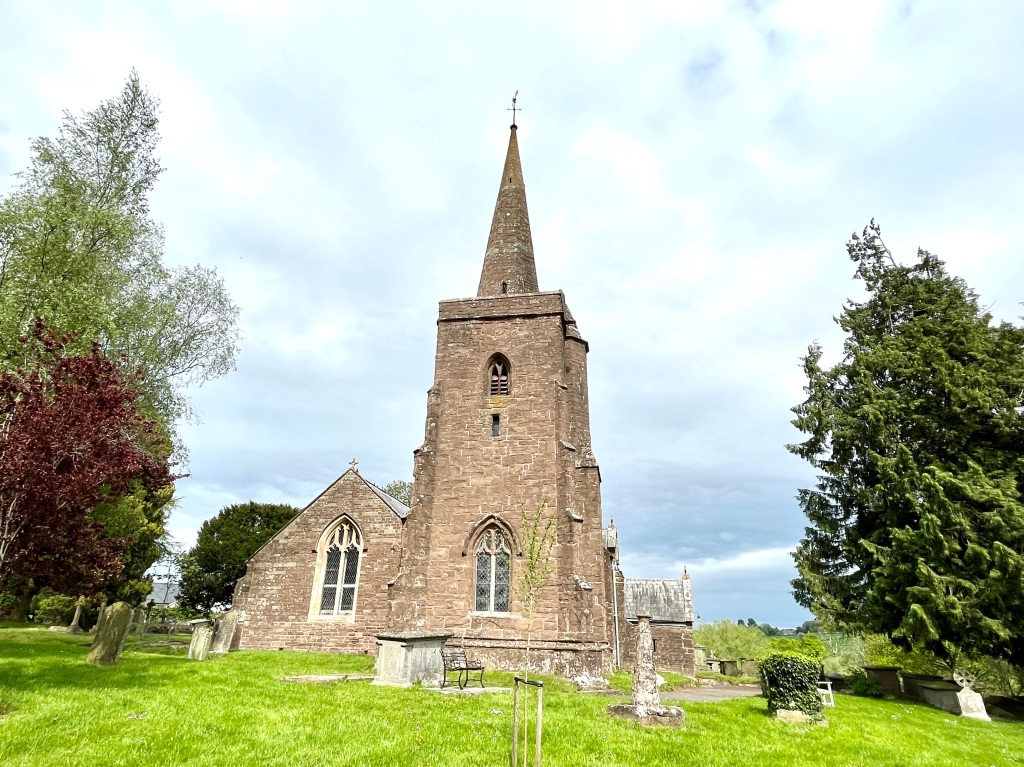
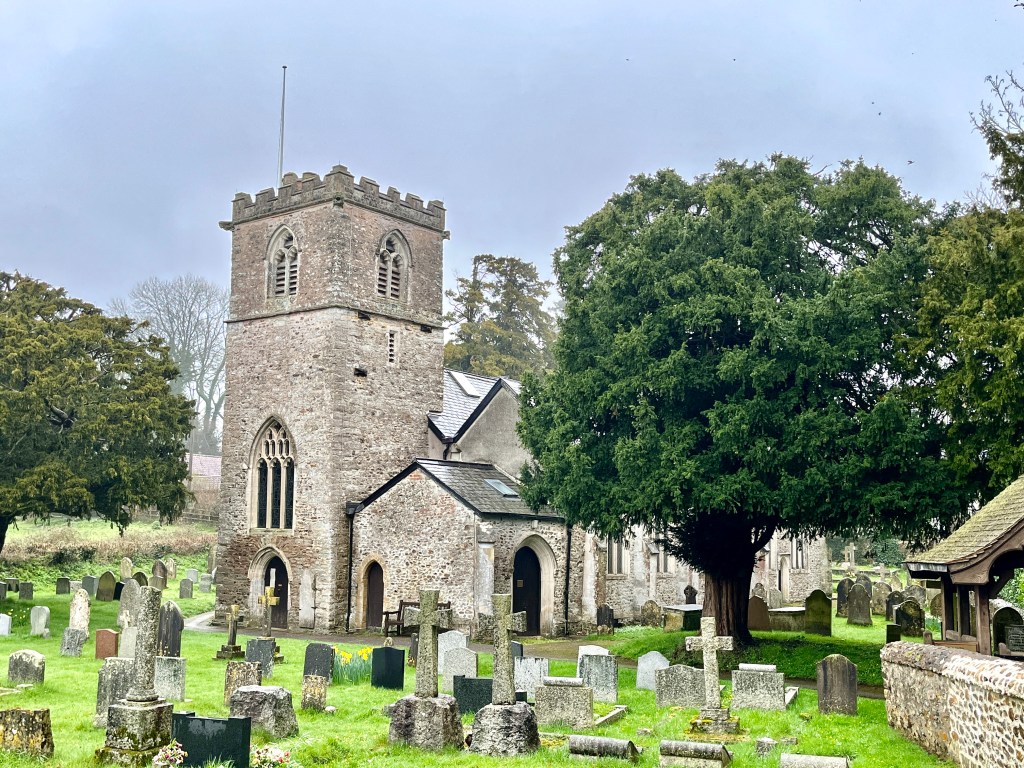
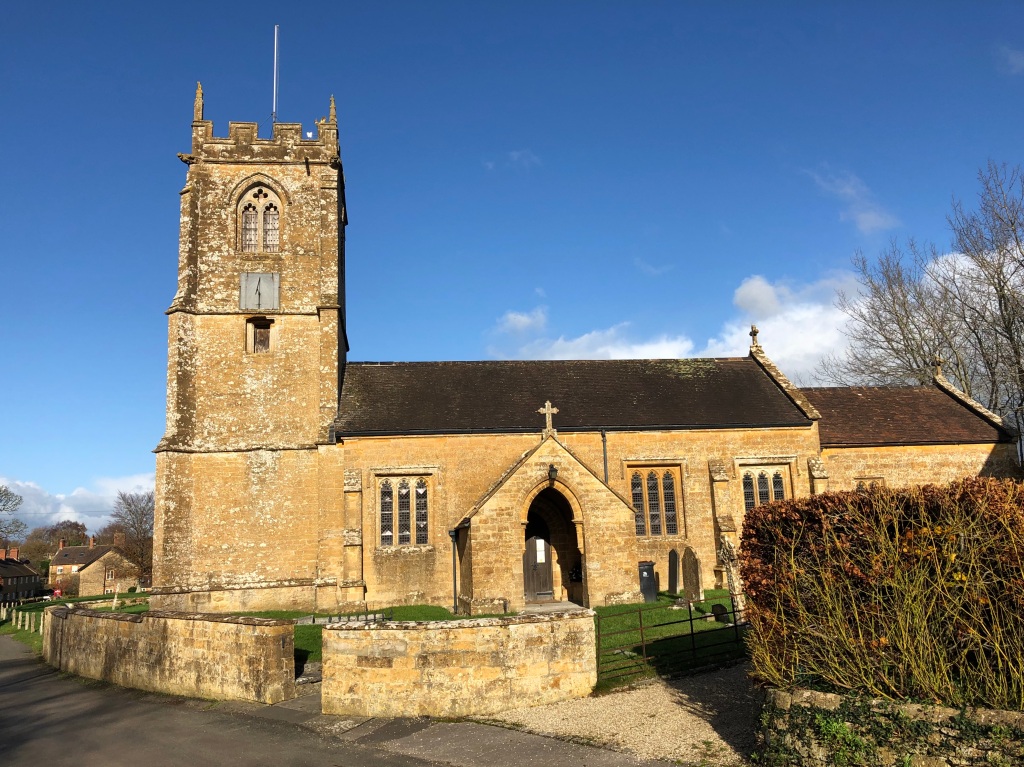
ALL SAINTS . MARTOCK . SOMERSET

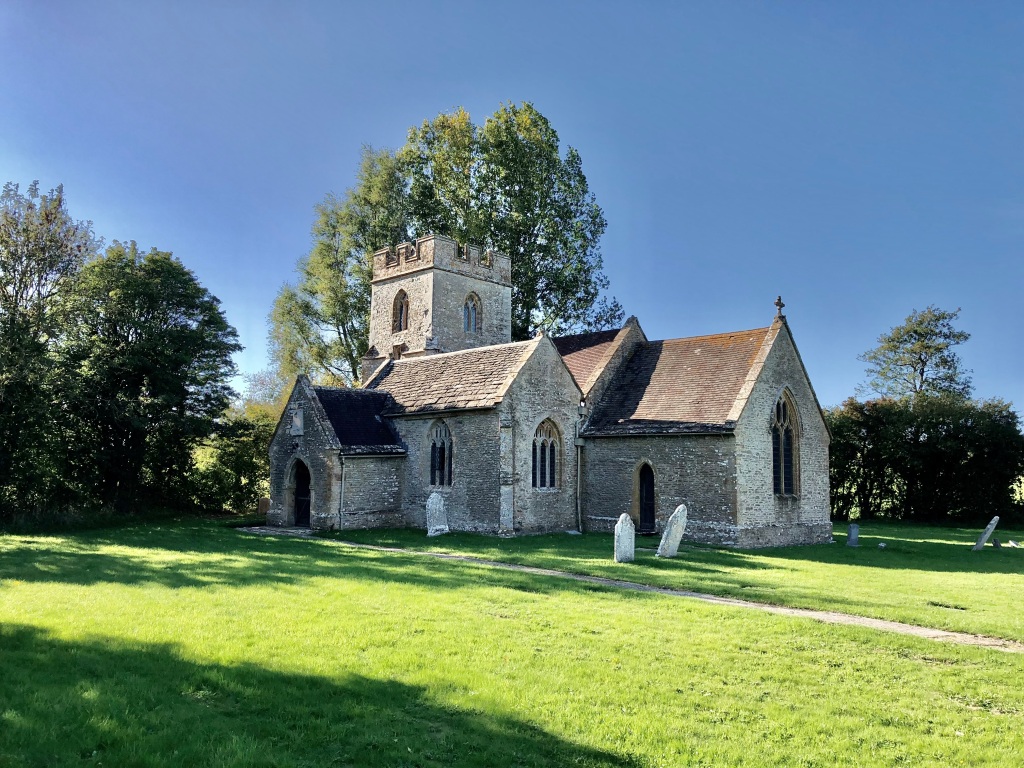
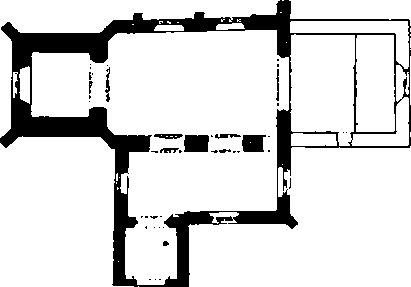
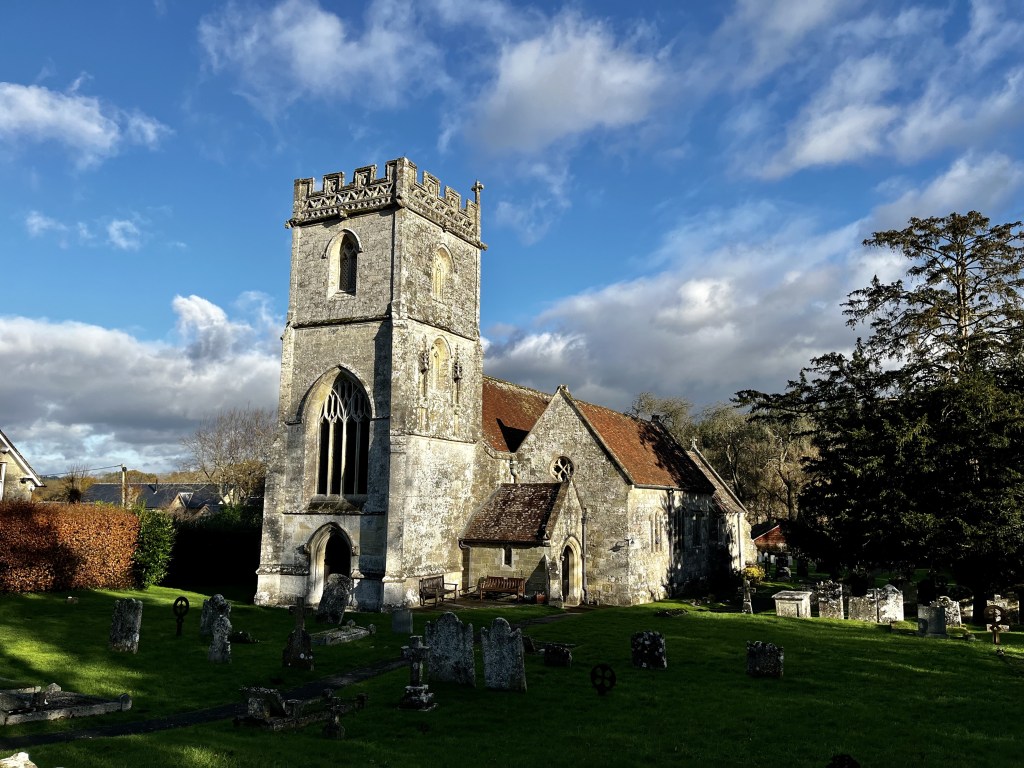
GRADE 1 Mid-C13 with earlier origins; expansion to C16; restorations by Ferrey and Scott 1860 and later. A most impressive Parish church with a 4-stage tower. Admired by PEV as one of the loveliest of Somerset churches on account of its splendid Perp. work on the nave; and for being remarkably airy and spacious. 50.9693 / -2.7687 / ST461191

DIALS

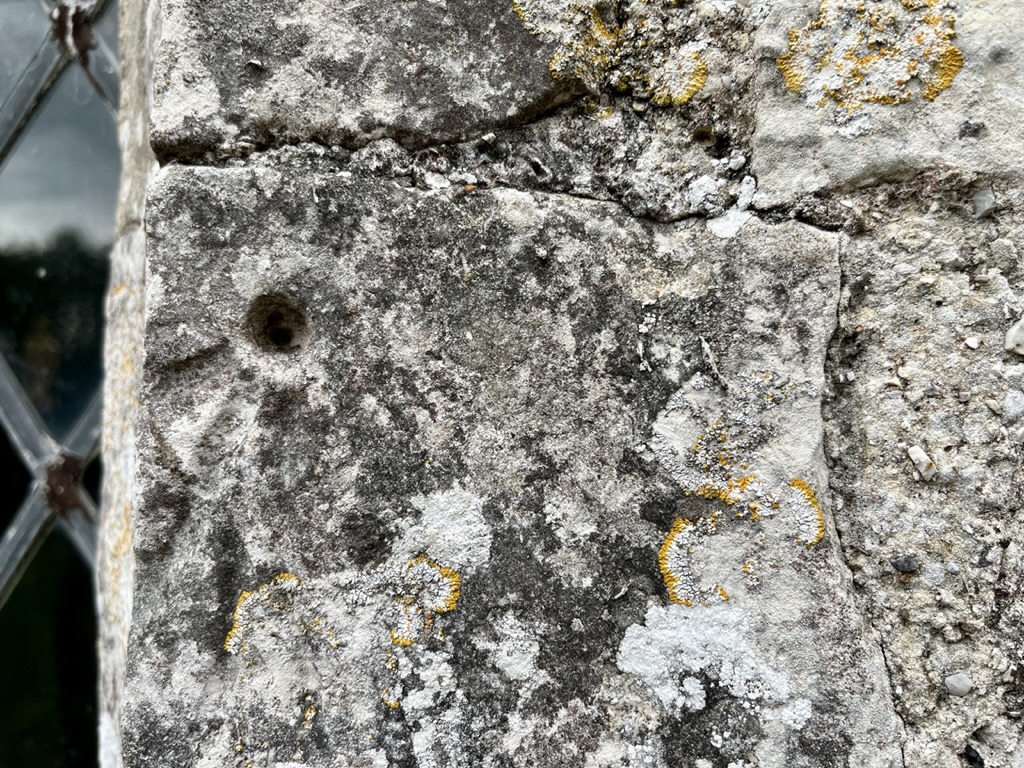
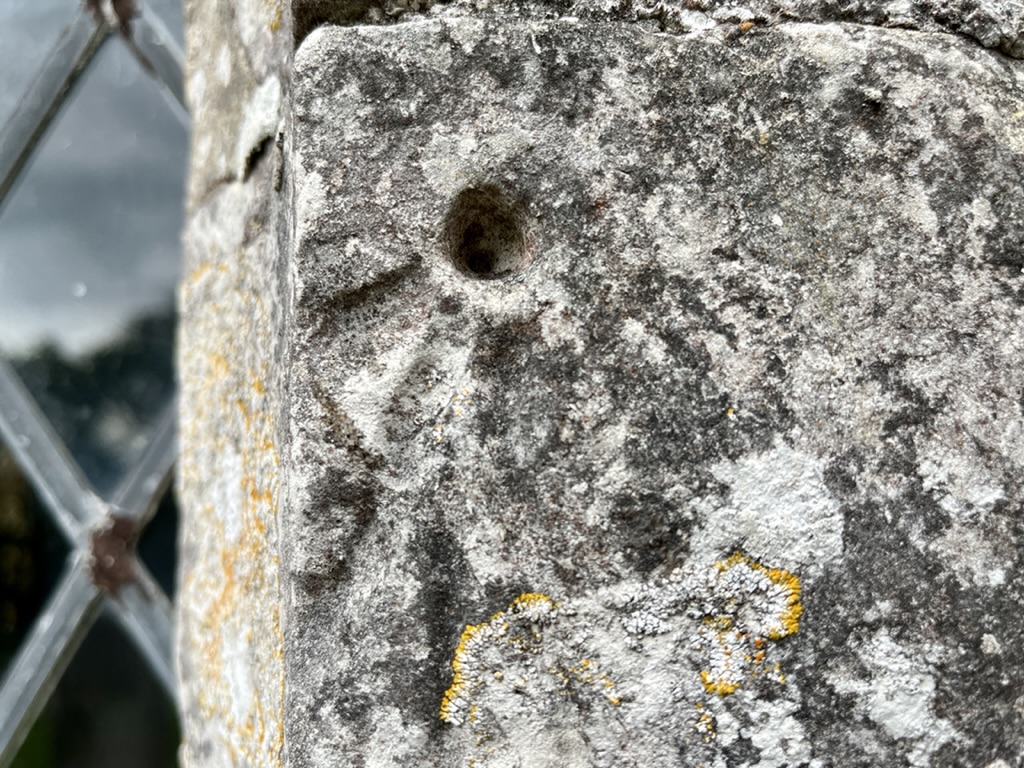
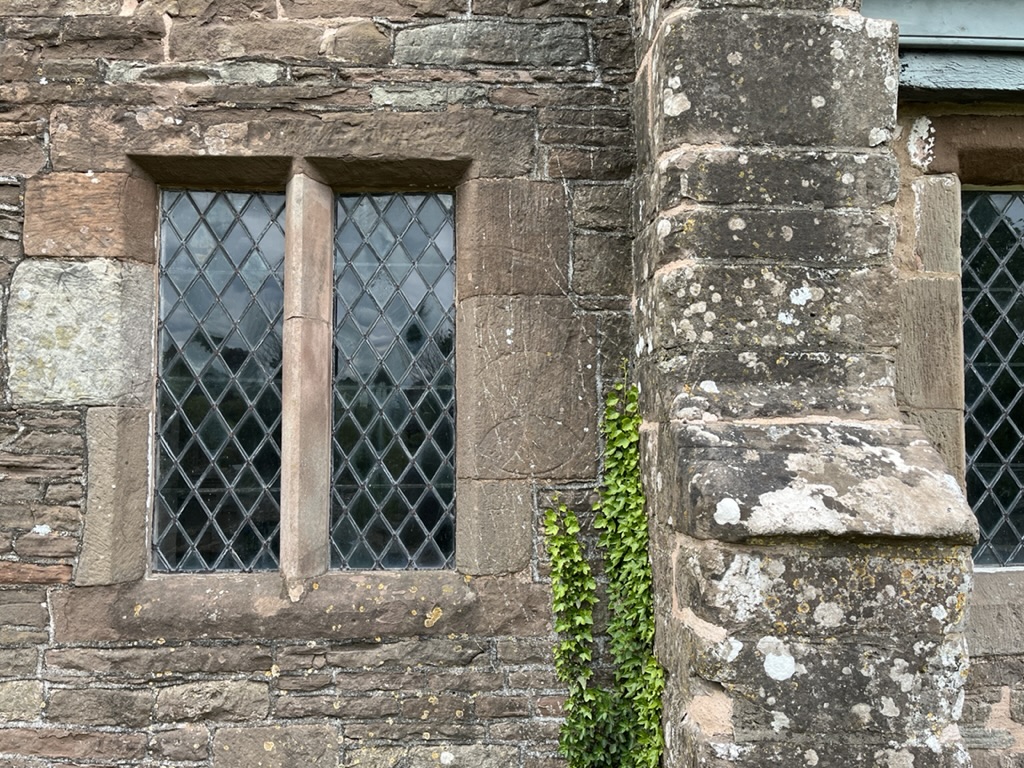
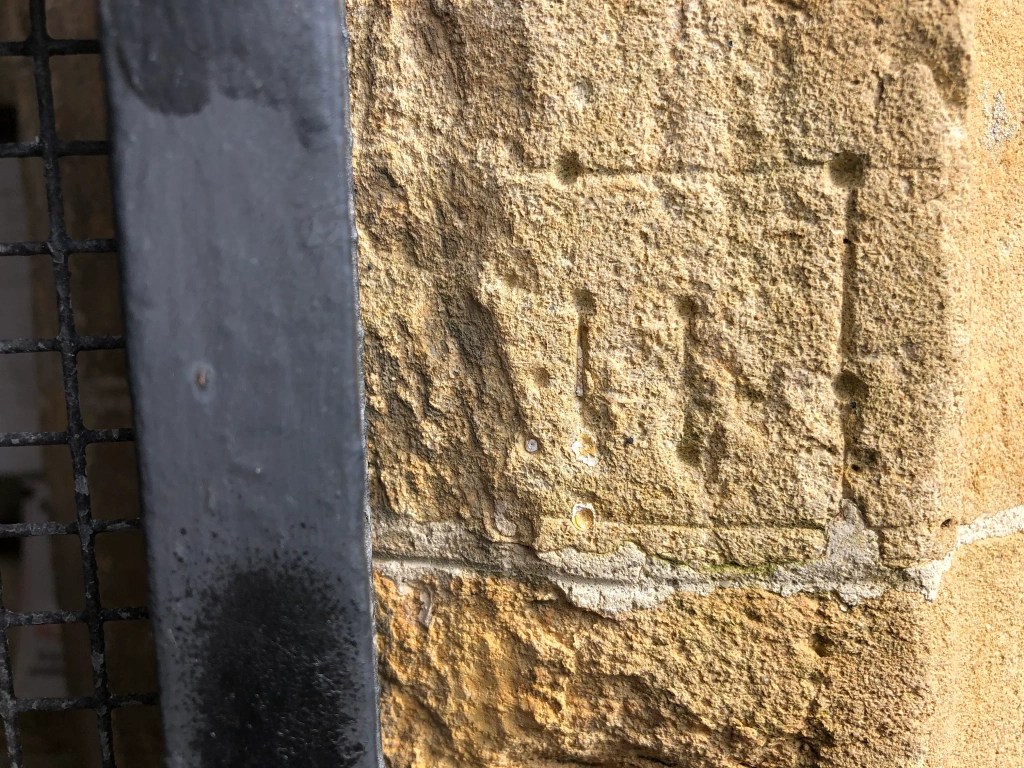
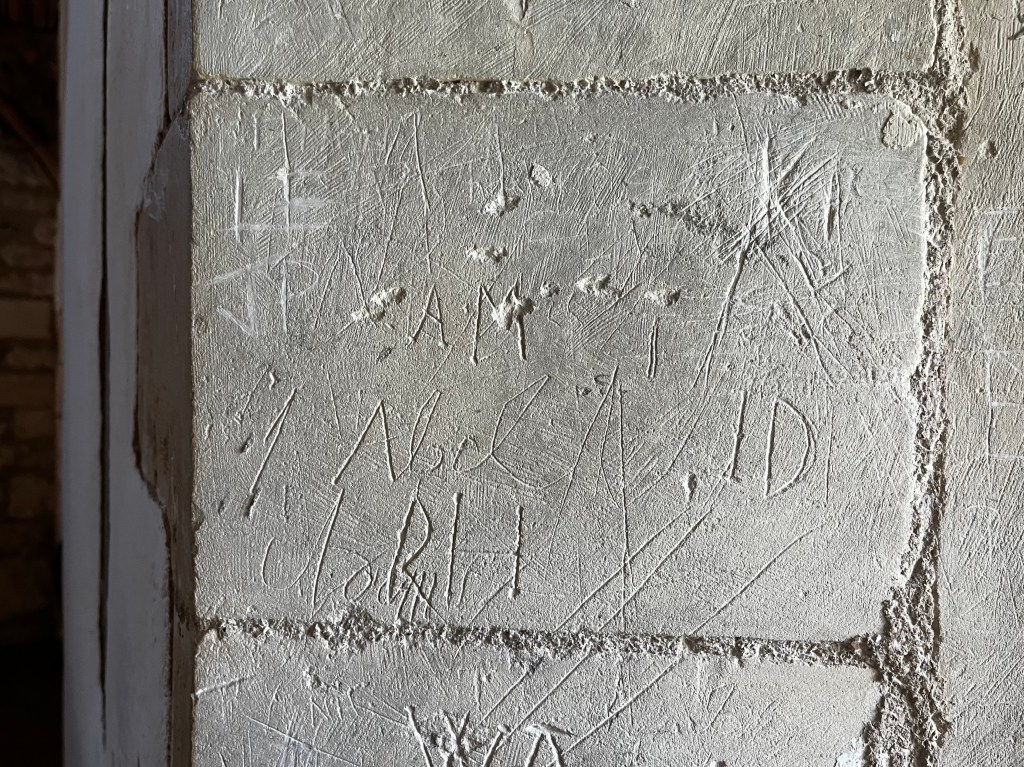
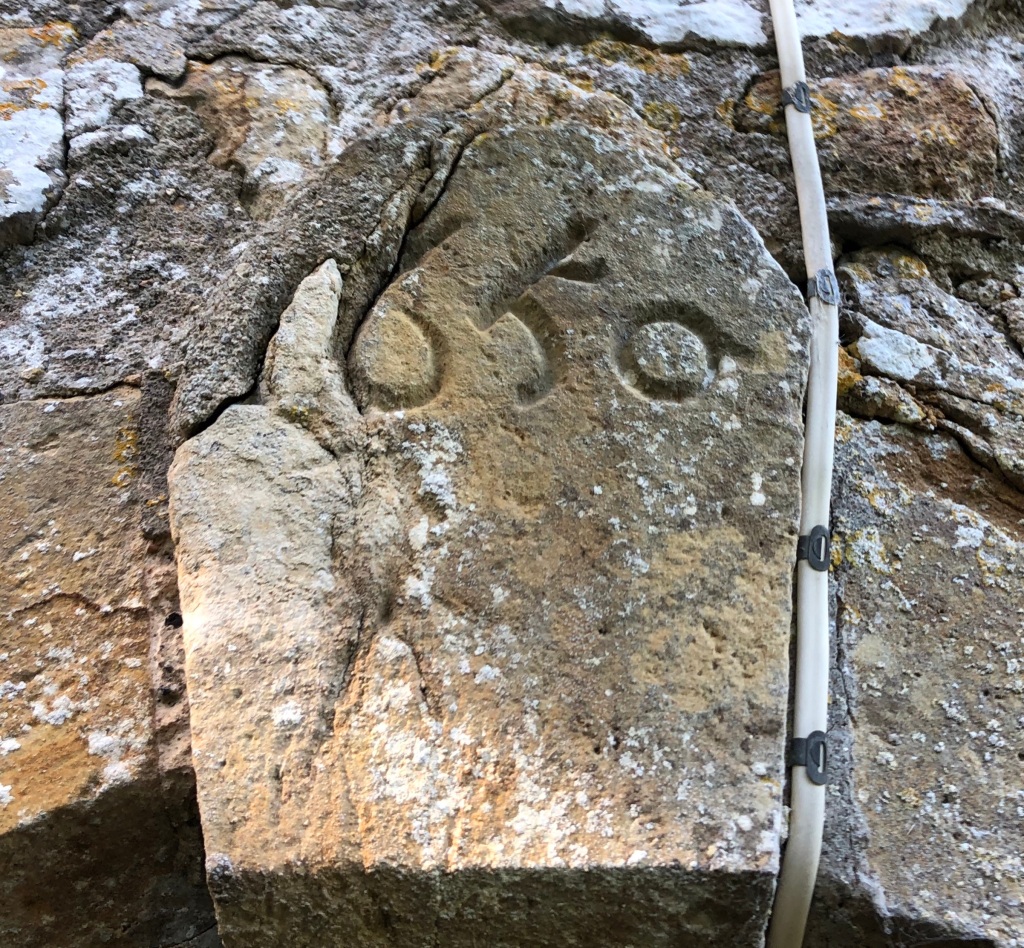
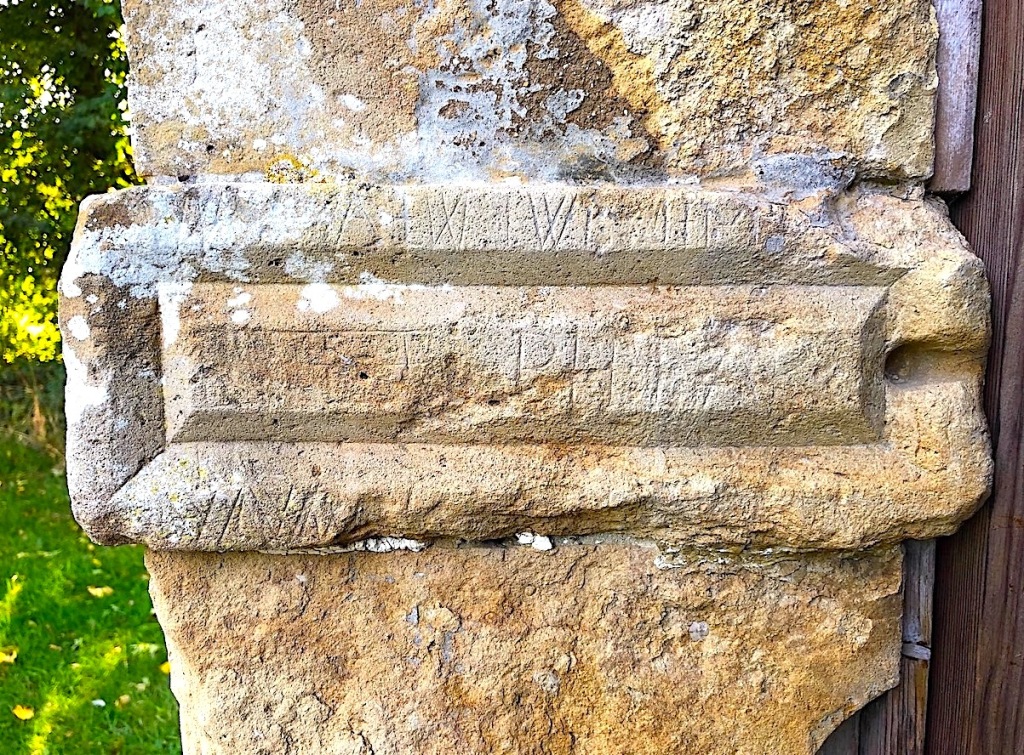
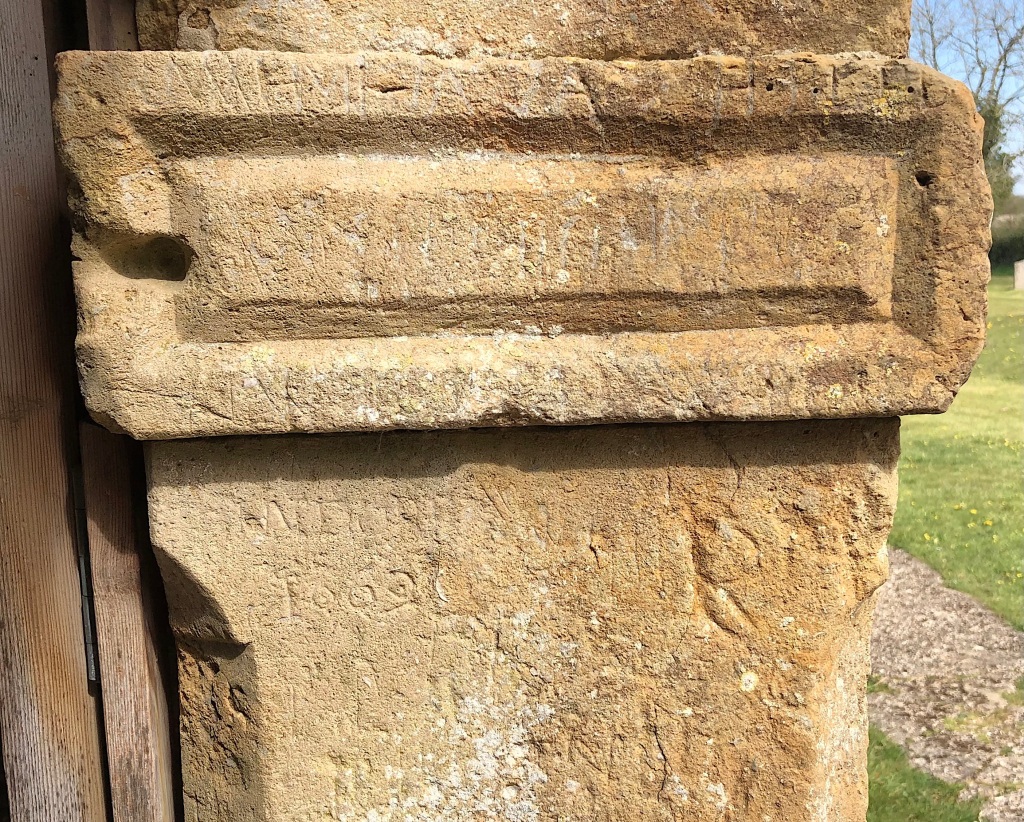
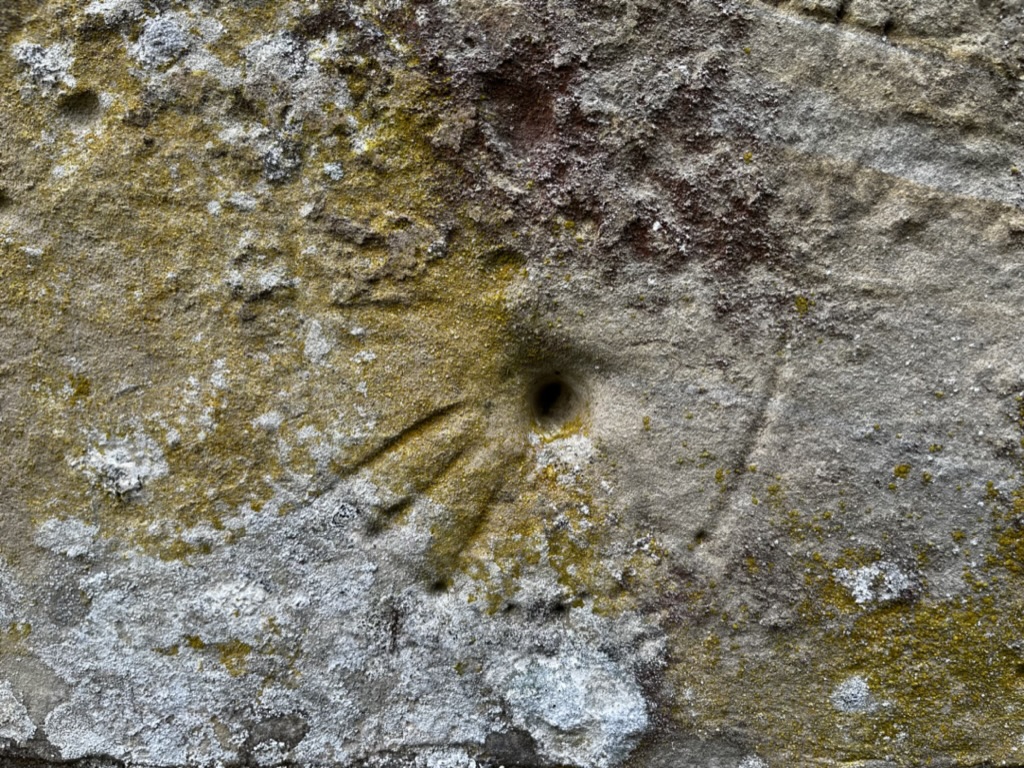
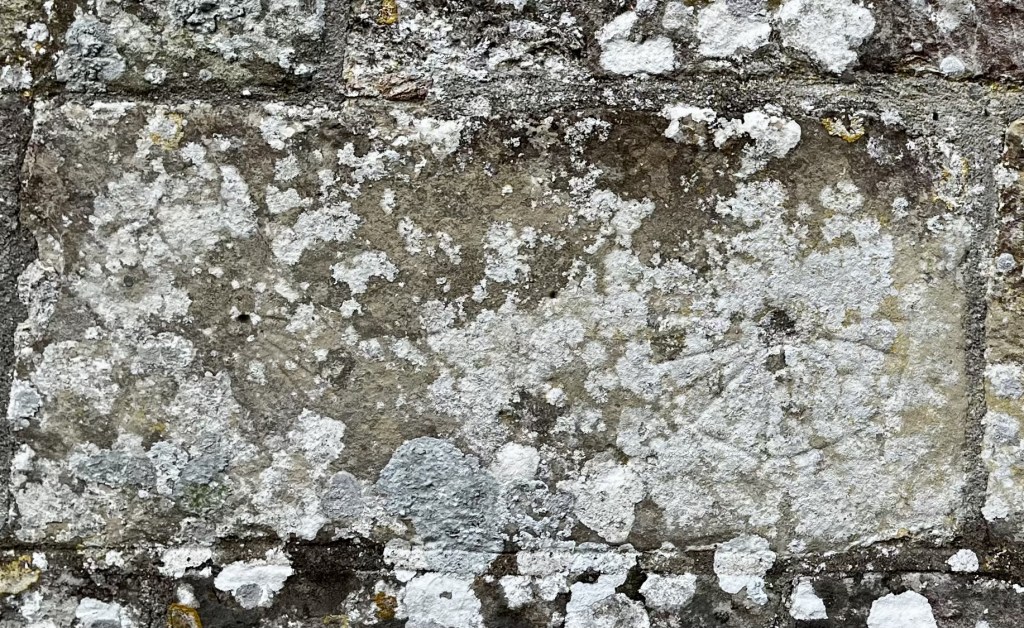
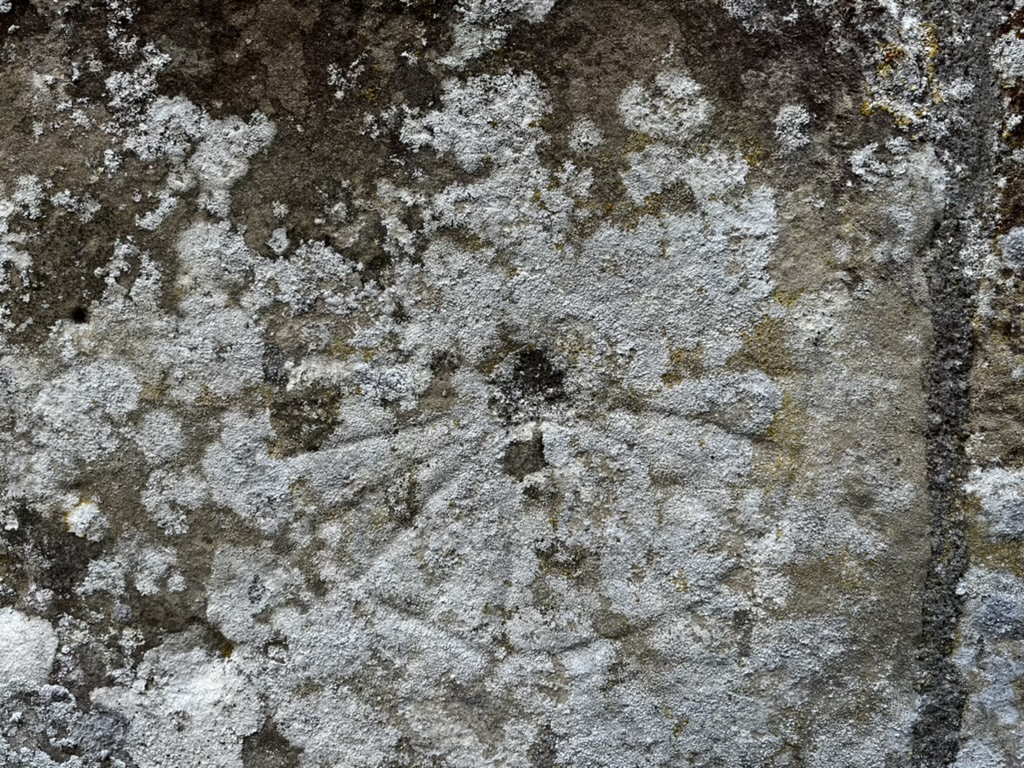
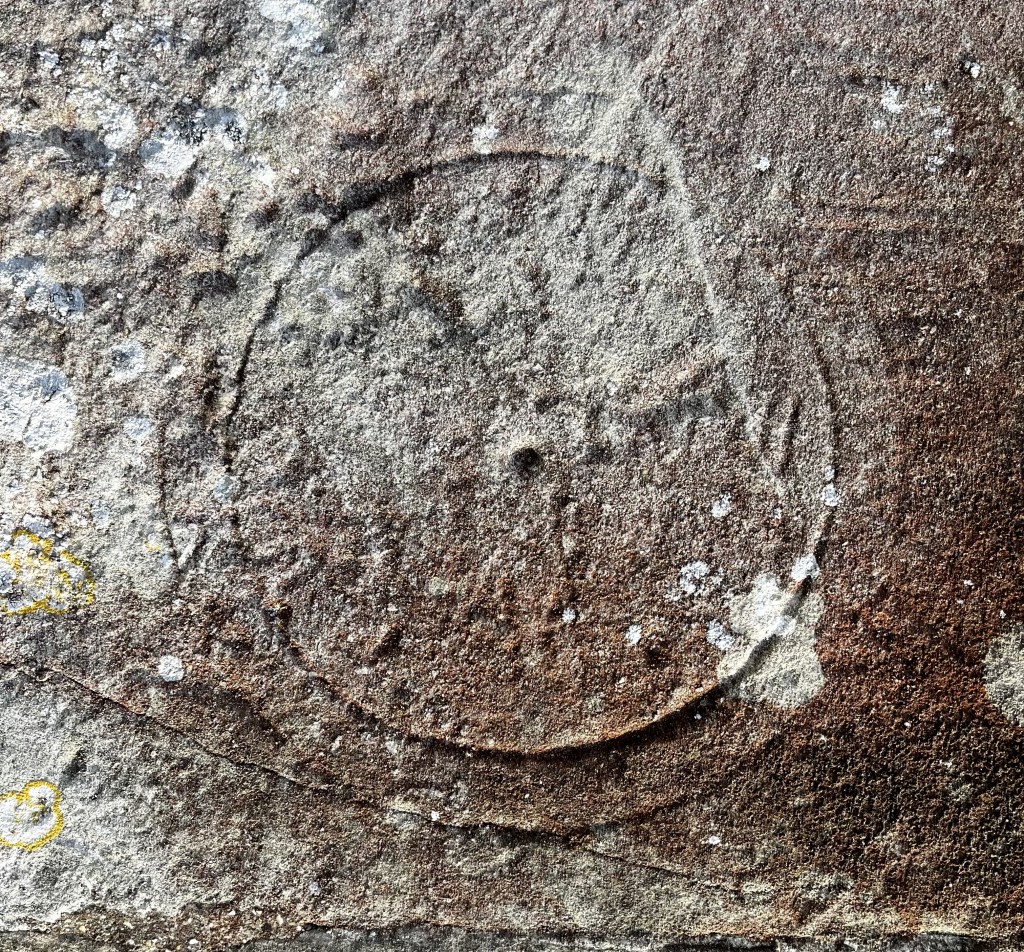
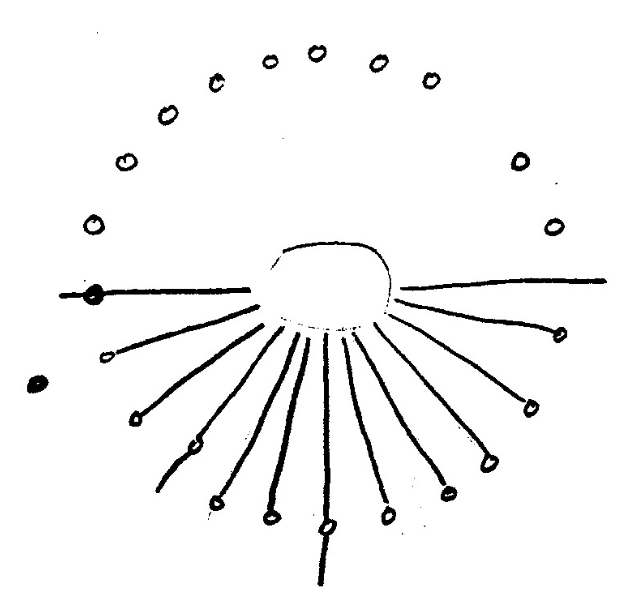
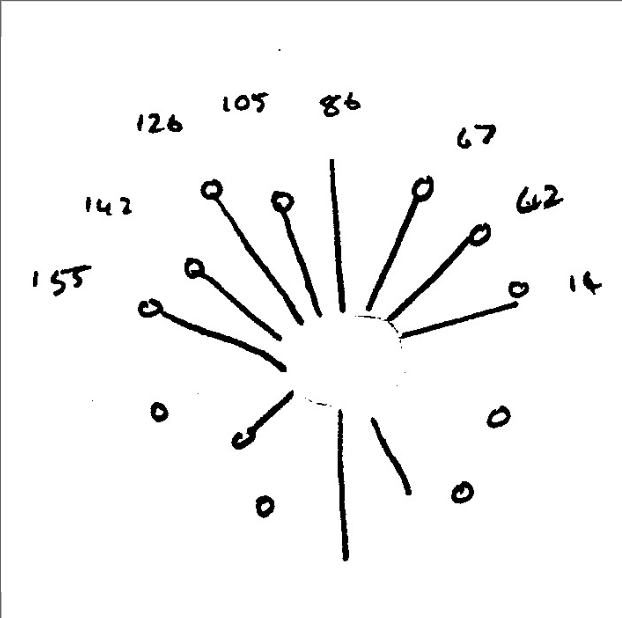
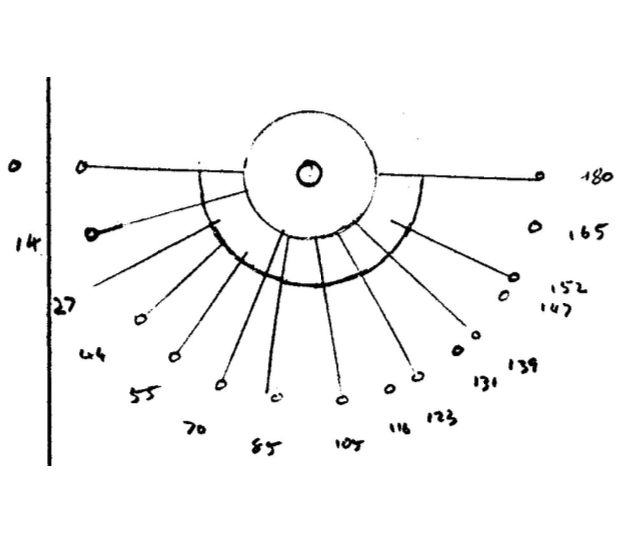
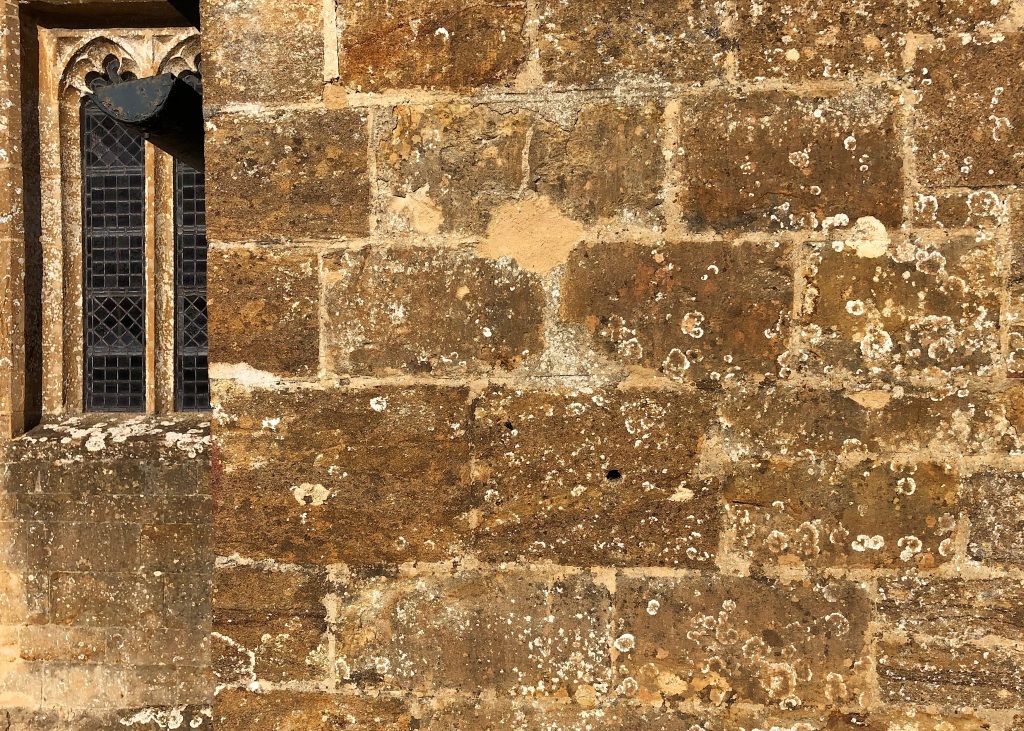
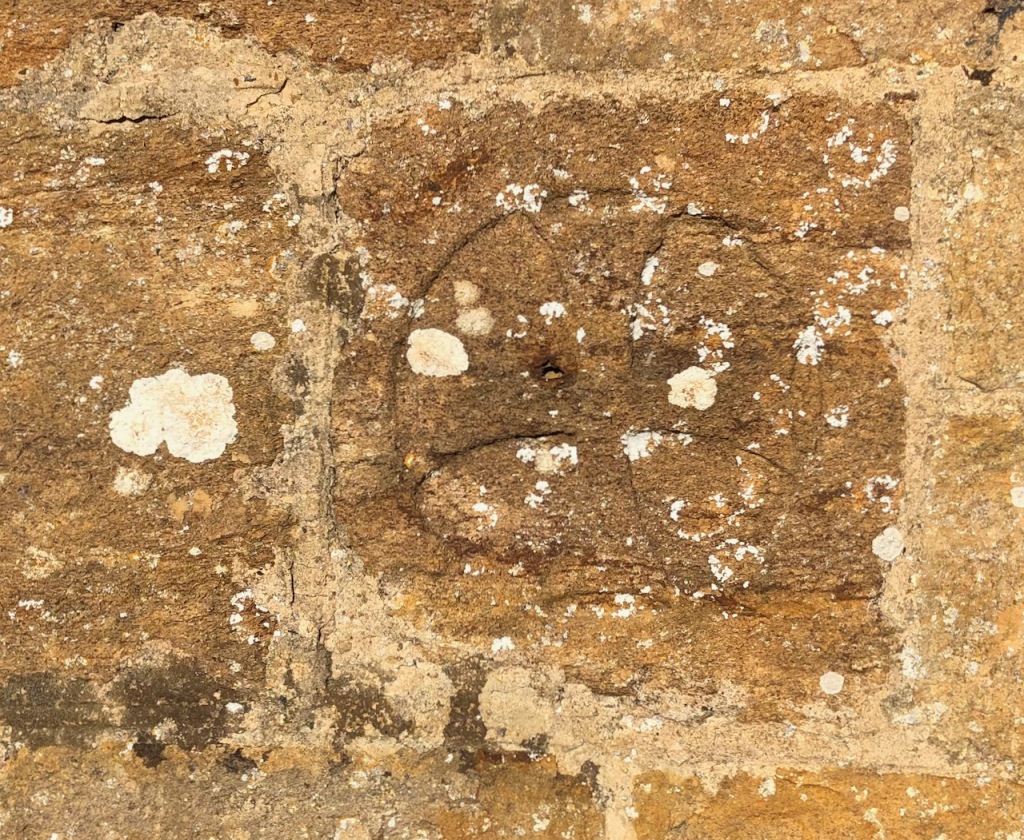
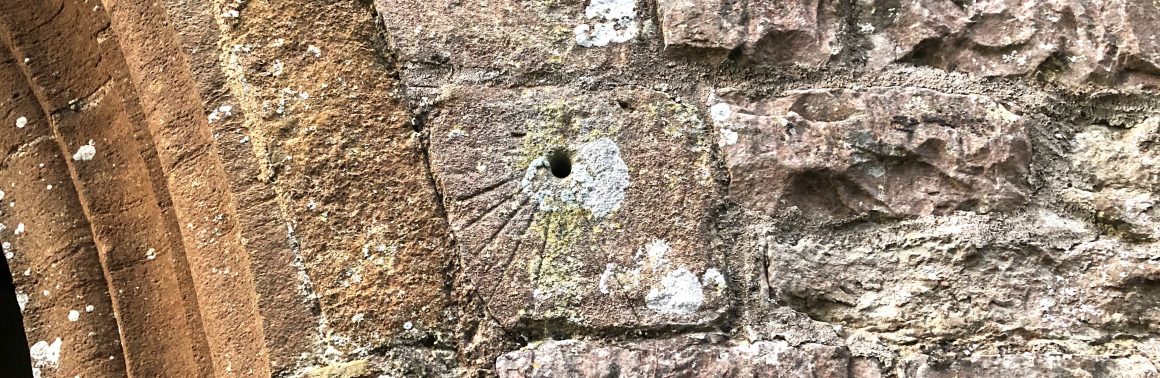
A most rewarding multi-dial church. As often, estimates of the number vary. DEH recorded 5 dials in June 1915 and included a photograph of the dial above in his book.

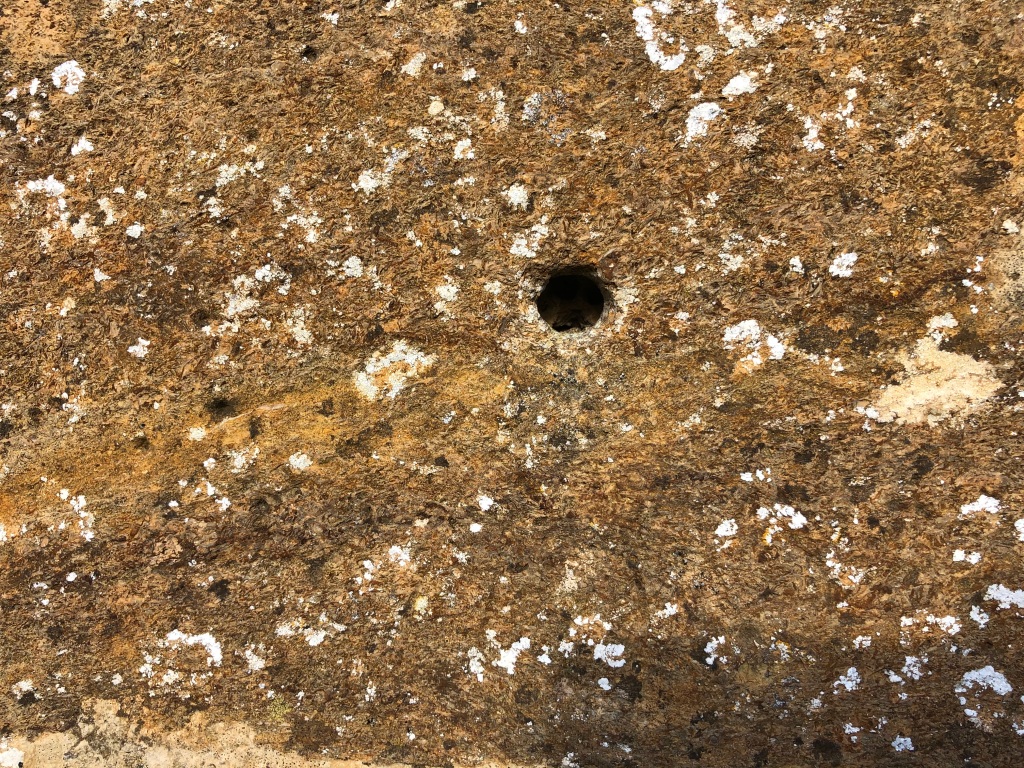
DIAL 1

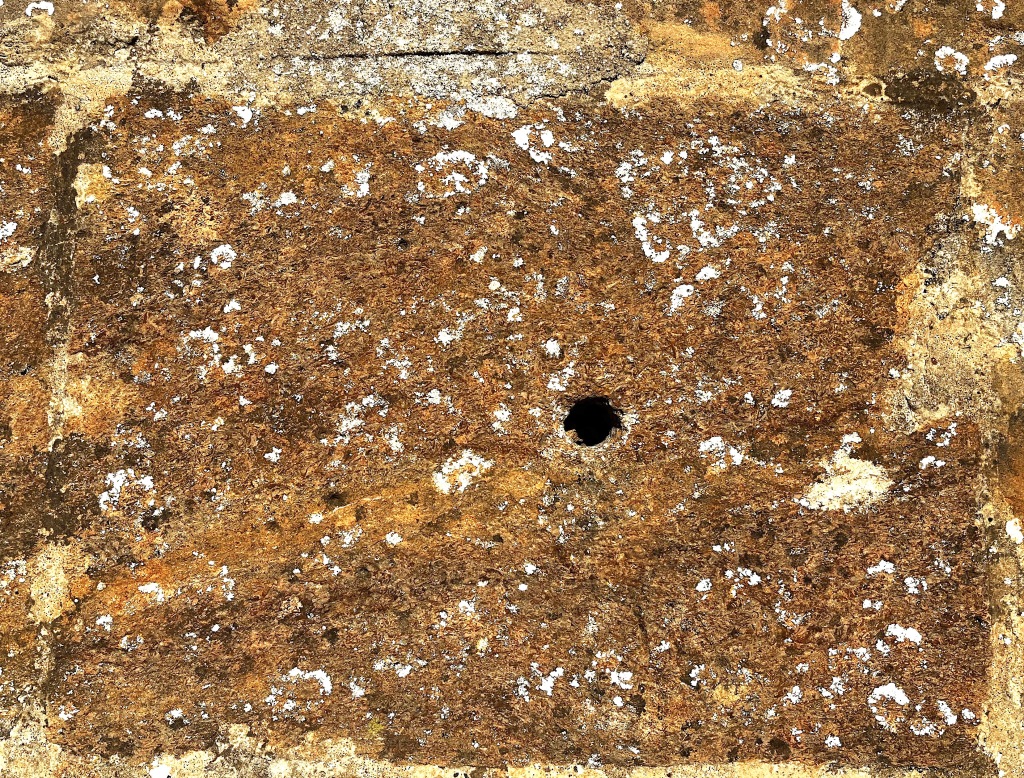
DIAL 2

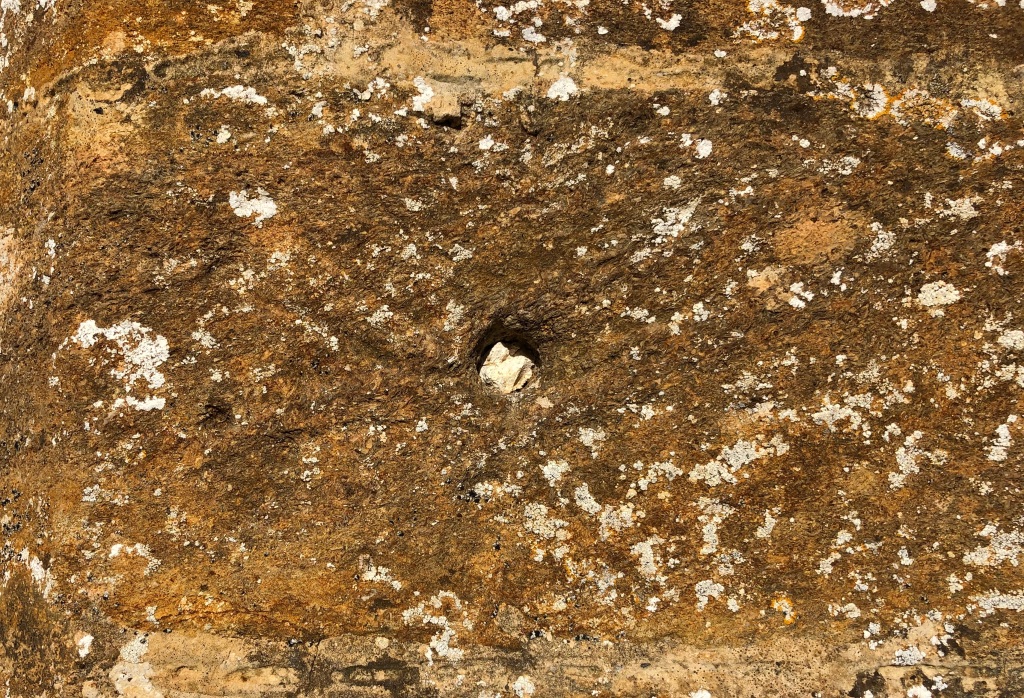
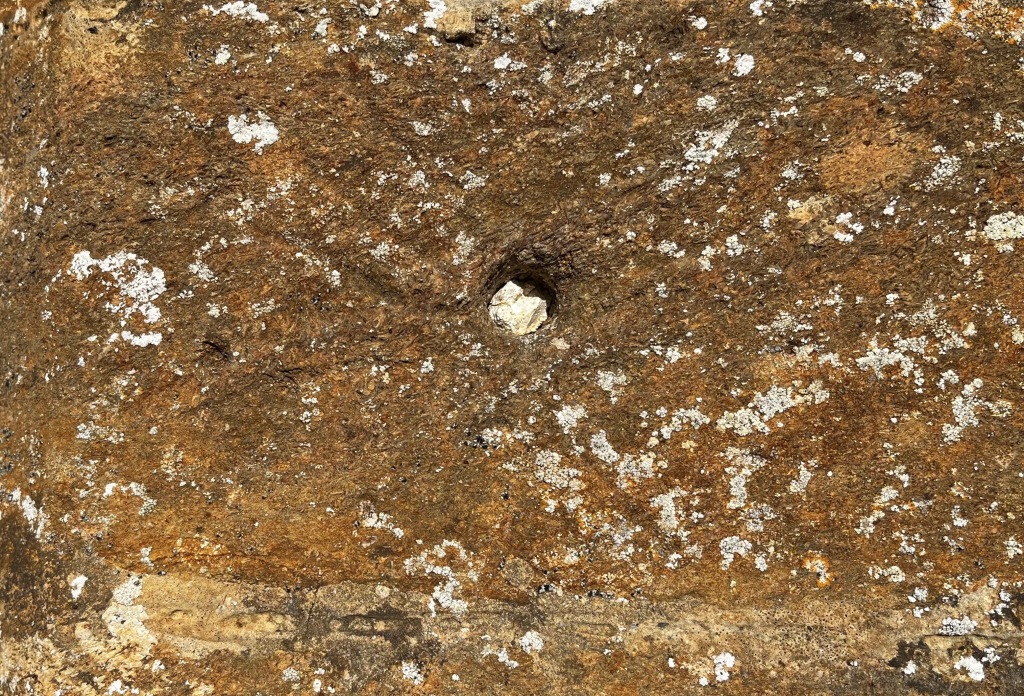
DIALS 3 & 4

DIAL 5

DIAL 6

DIAL 7

DIAL 8

DIAL 9

DIAL 10

DIAL 11

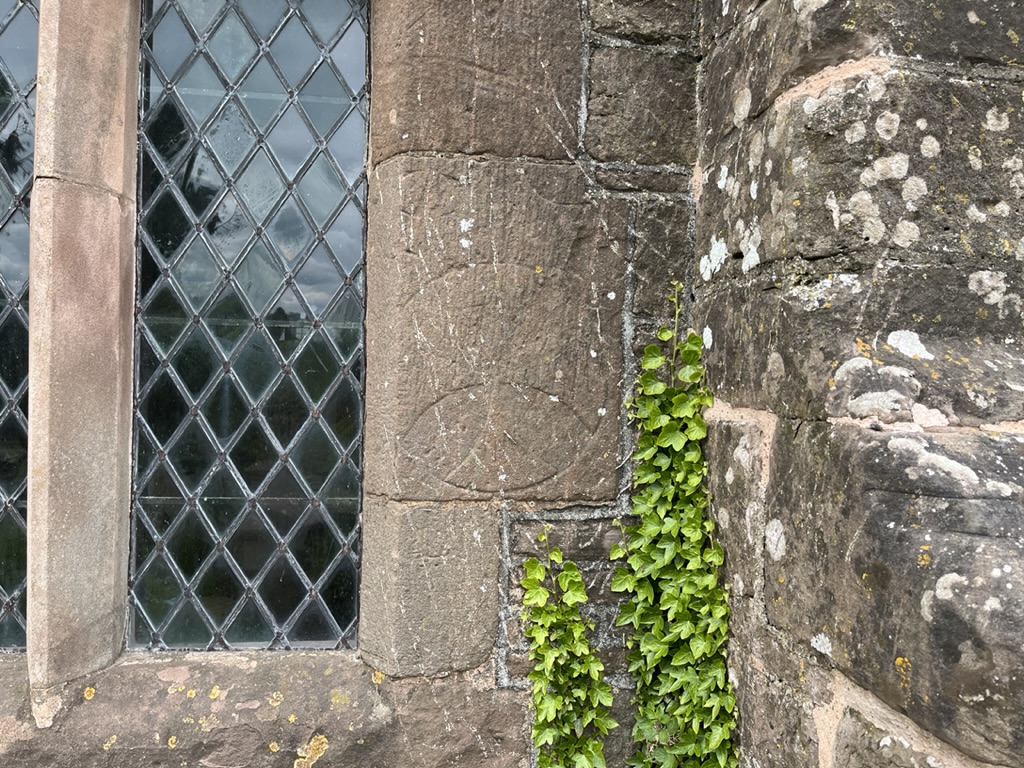
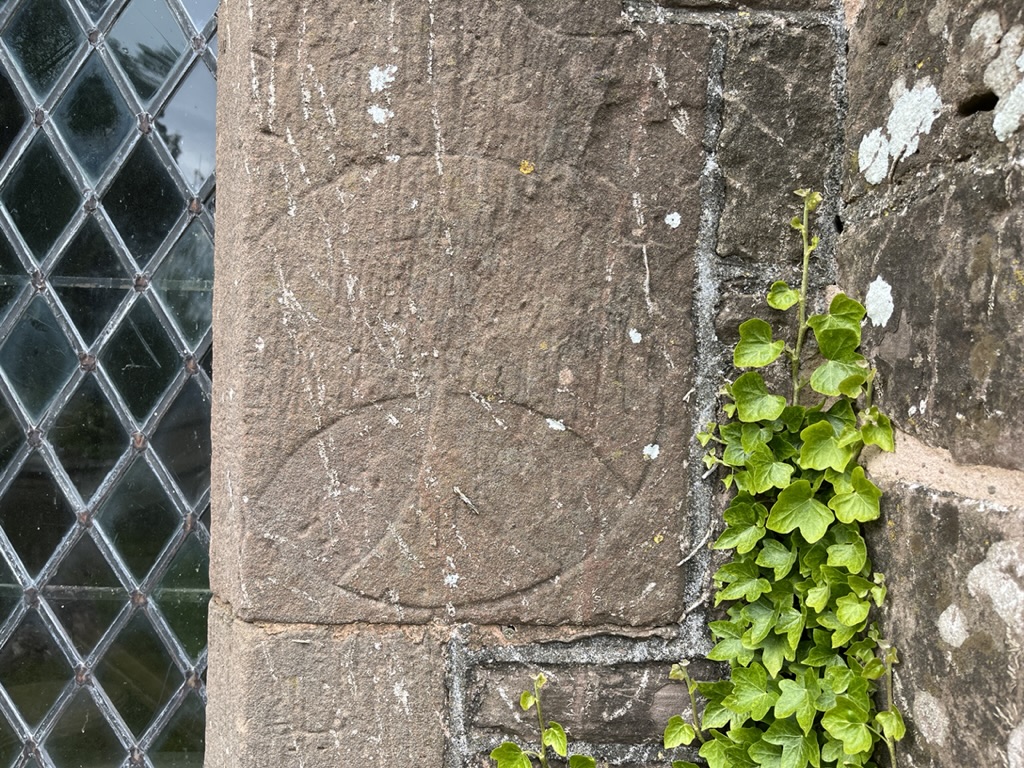
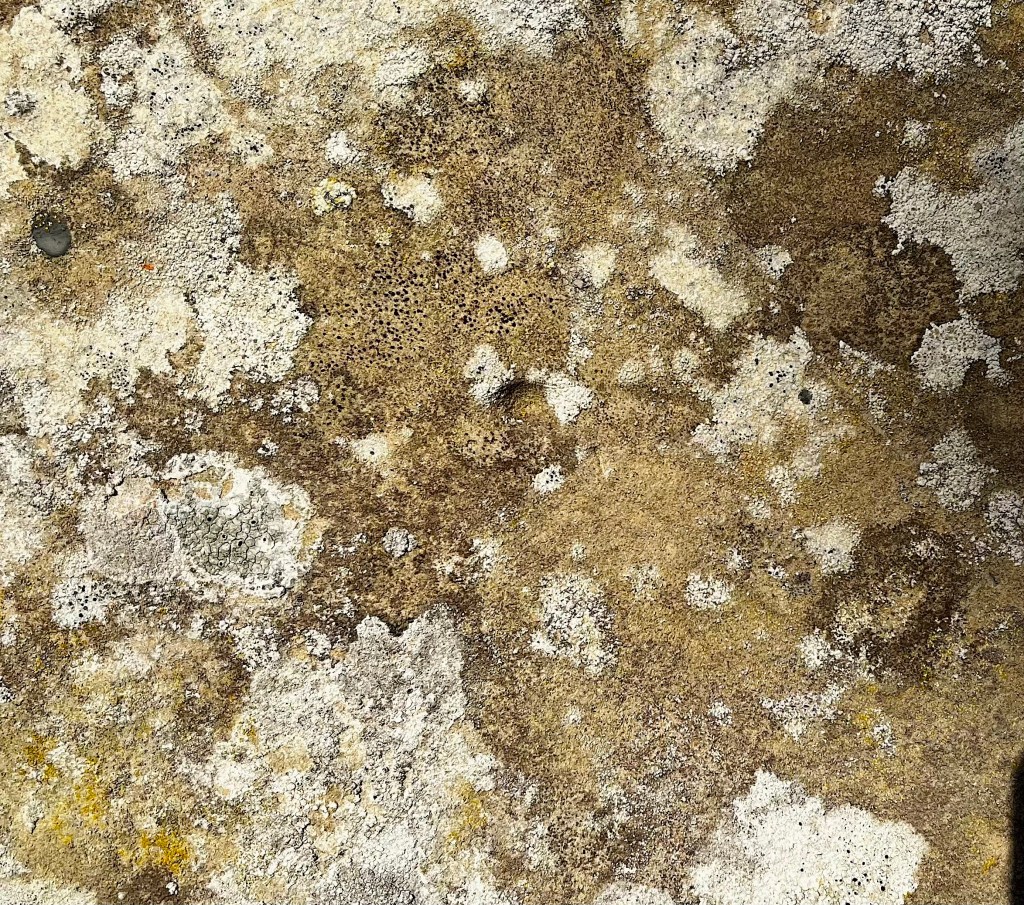
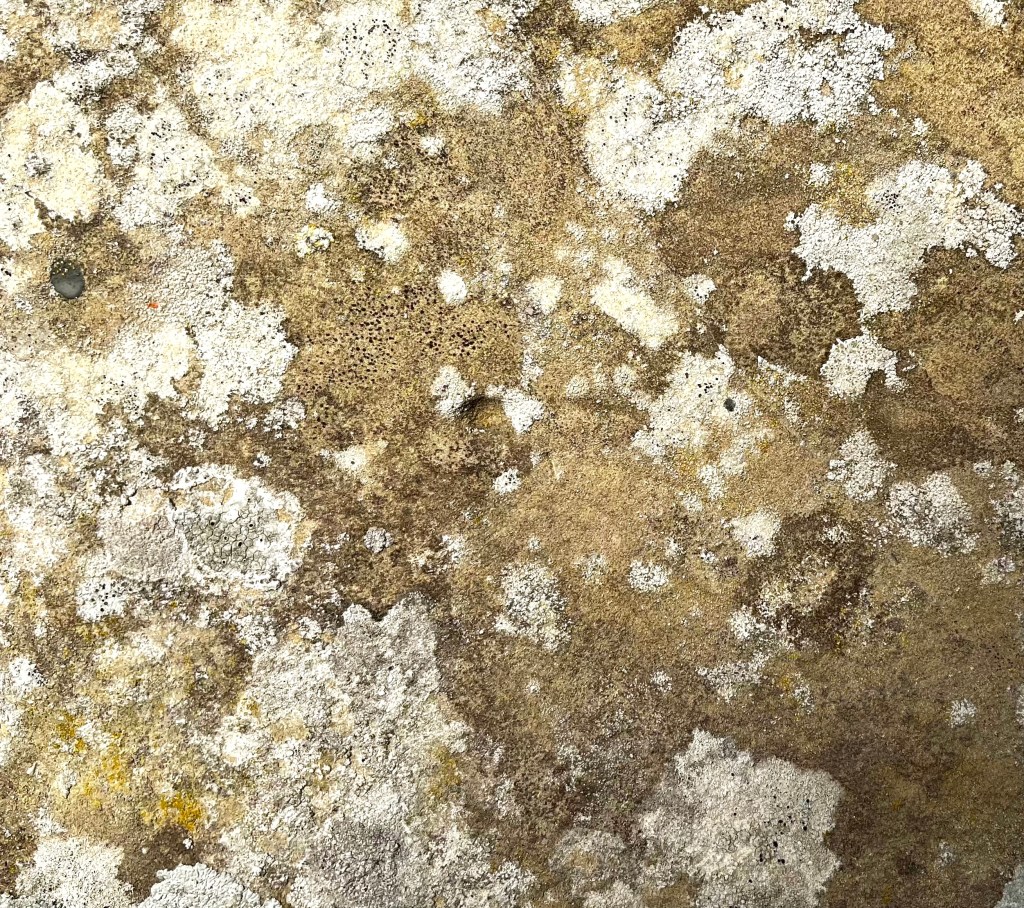
ARCS etc

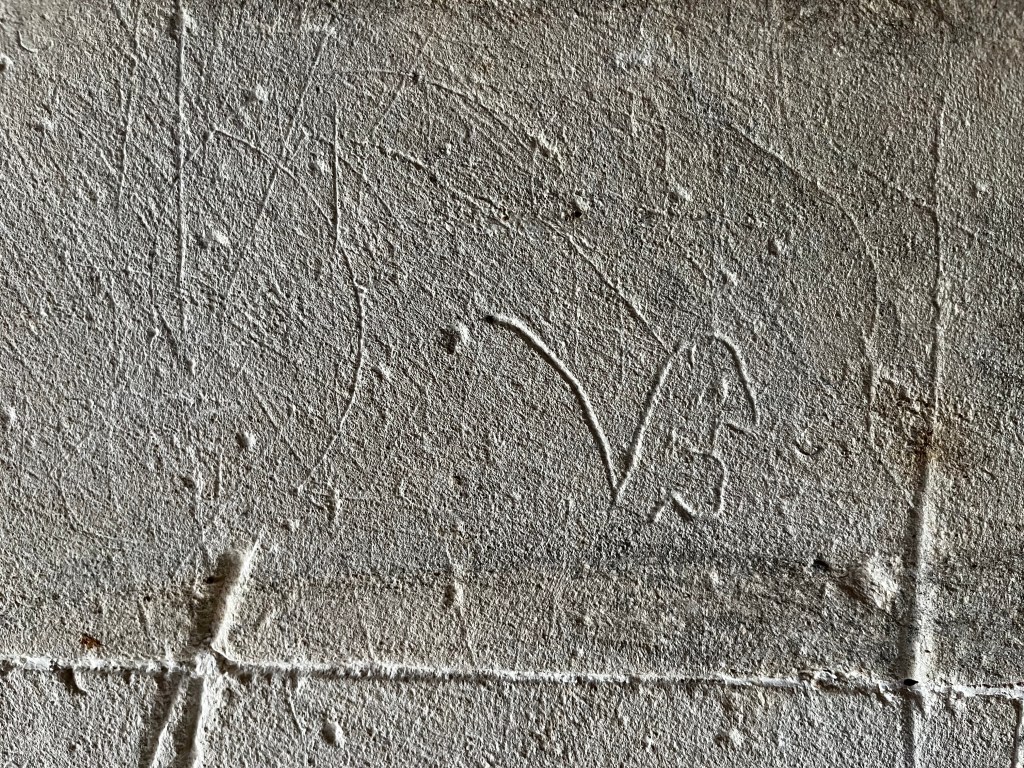
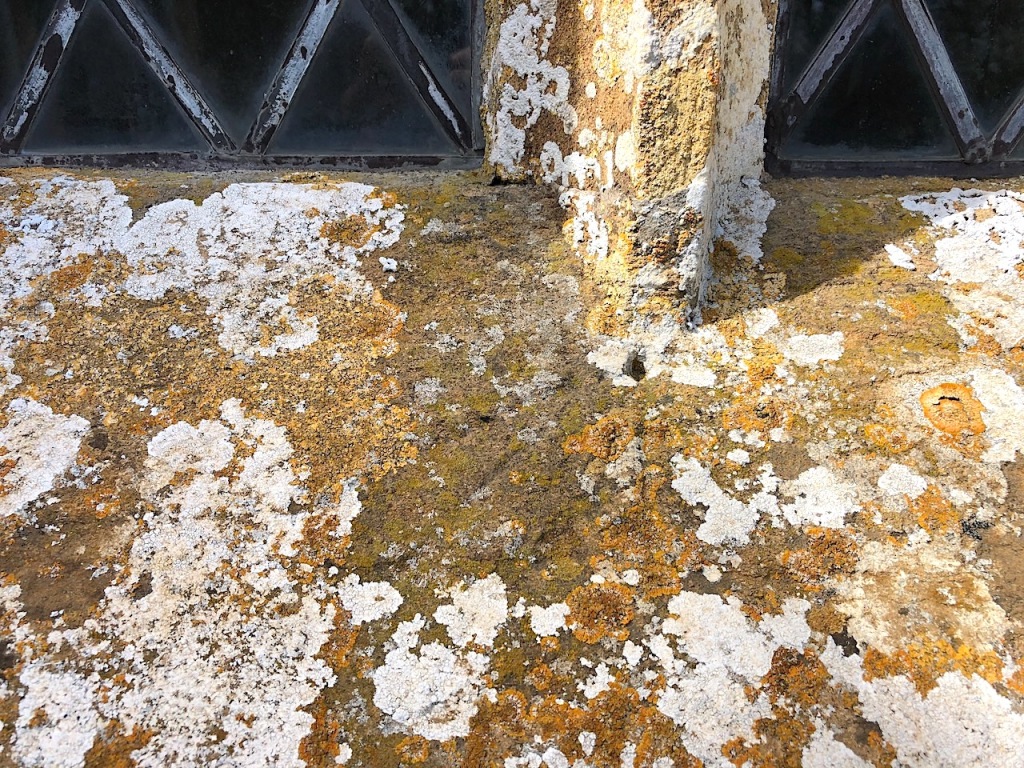
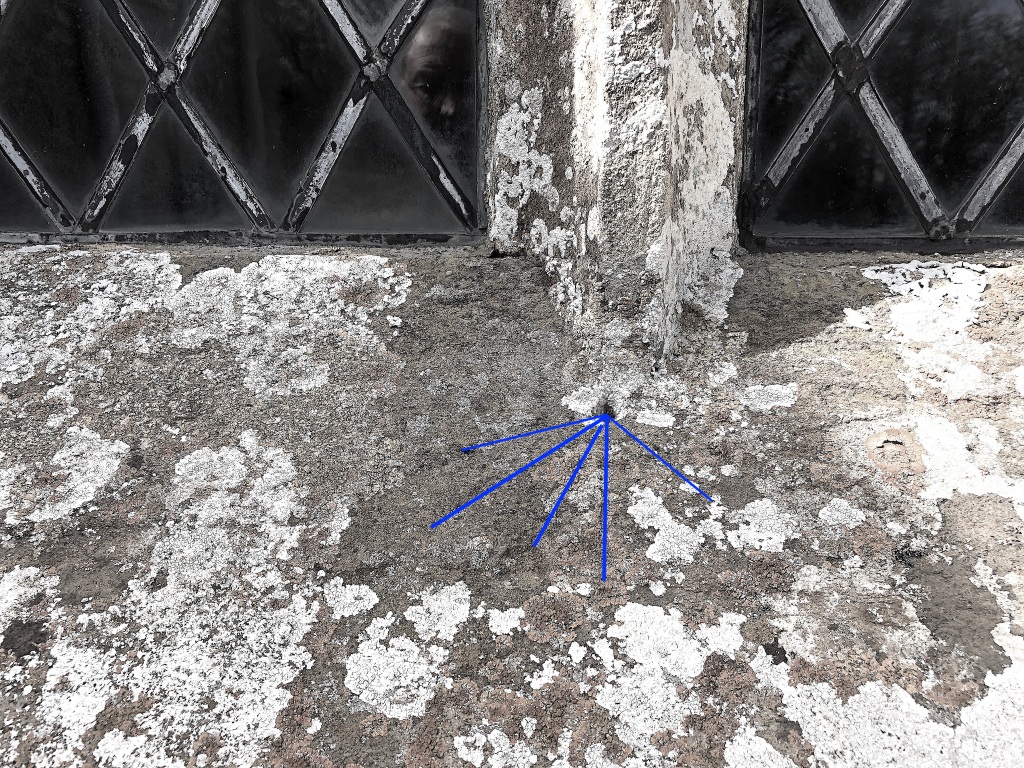
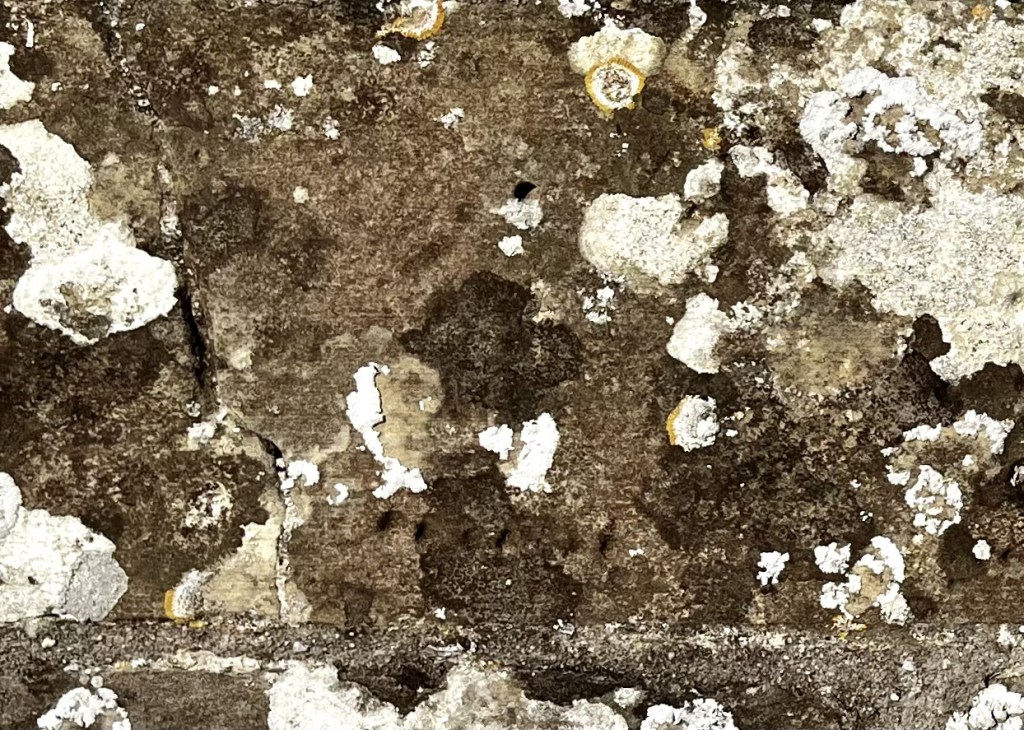
Having recently written up Winterbourne Stoke and a few other multi-dial churches, I have decided not to include a plain arc as (part of) a dial unless there’s at least one other dial-ish feature – evidence of a centered hole in the mortar line; perceptible lines; pocks; and so on. I’ll still feature them but not as part of a dial count. Unless corrected of course – please do.

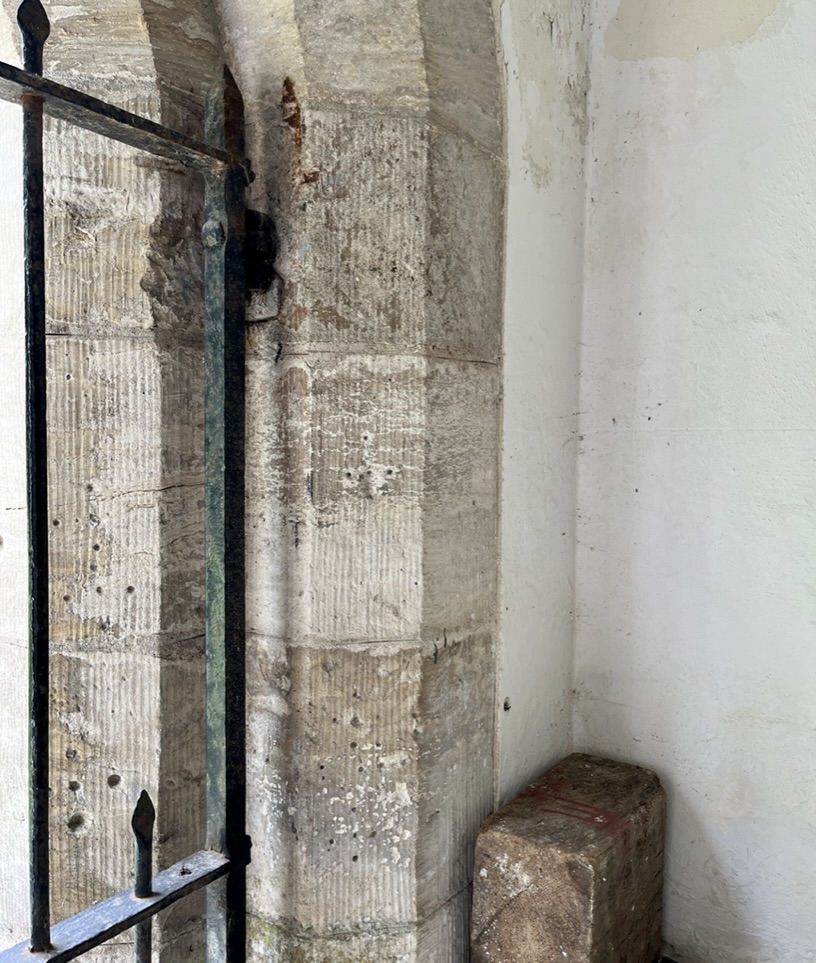
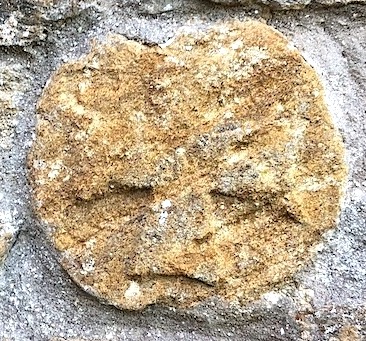
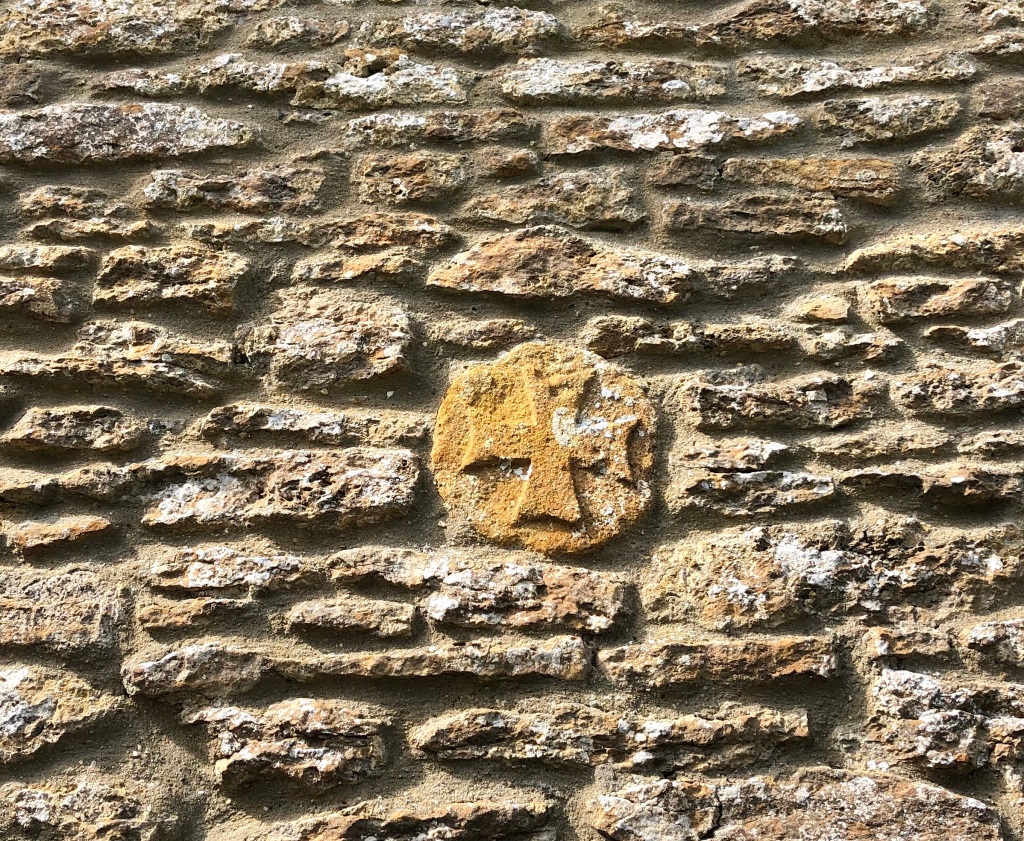
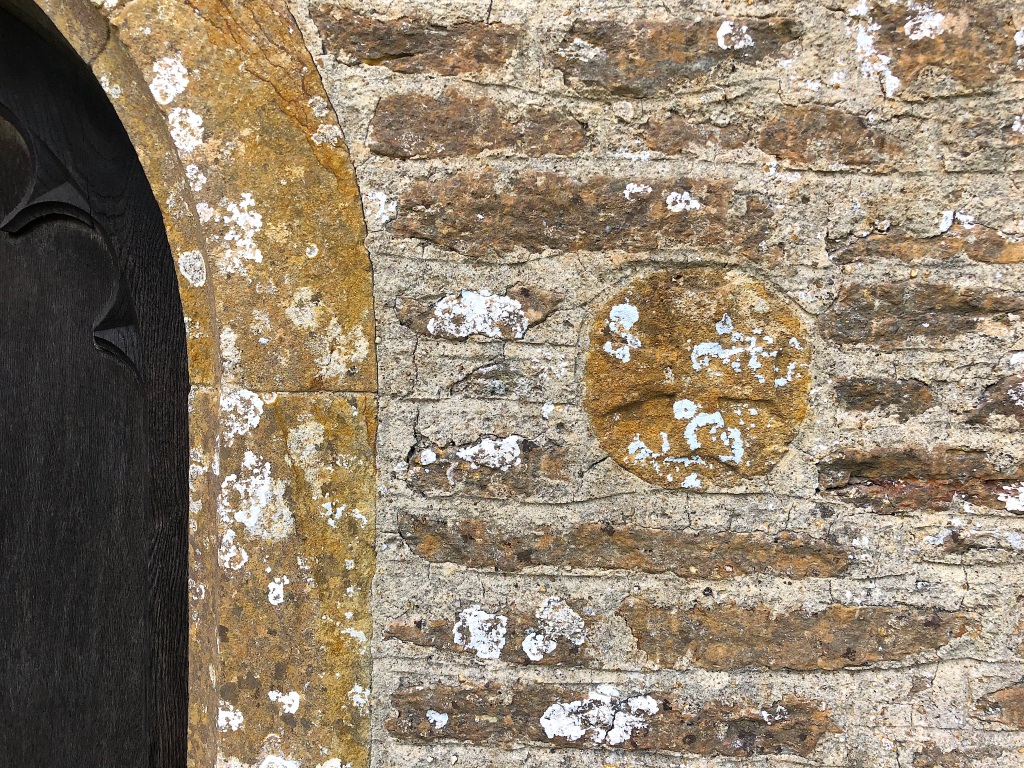
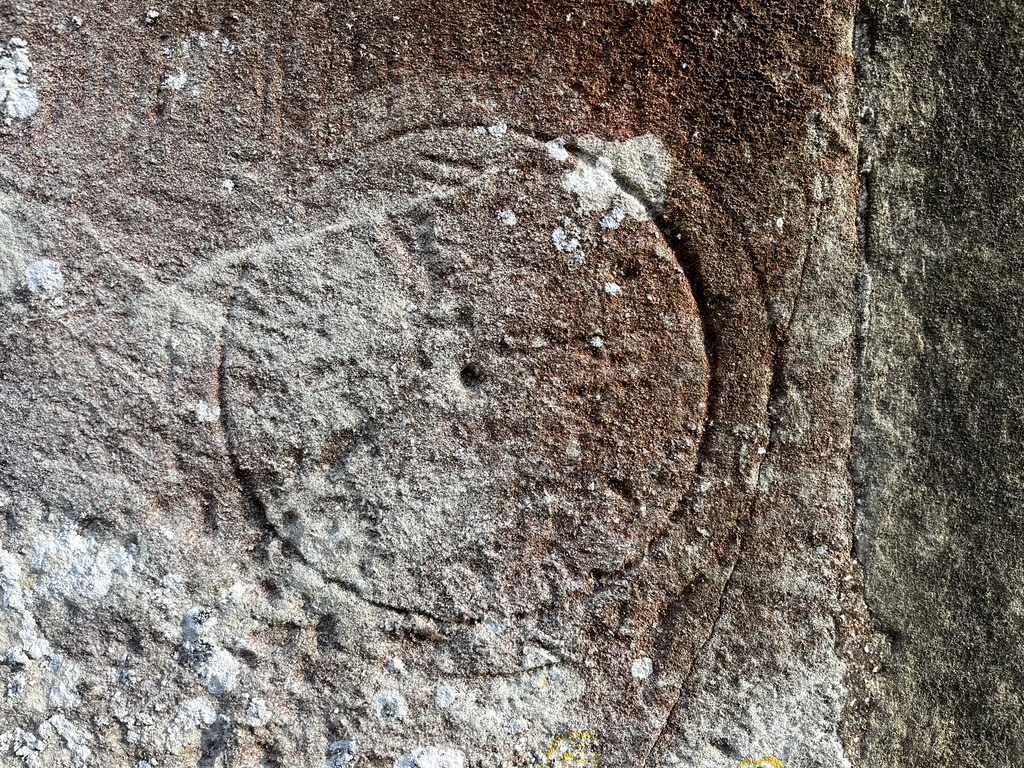
CONSECRATION CROSS OUTSIDE PORCH

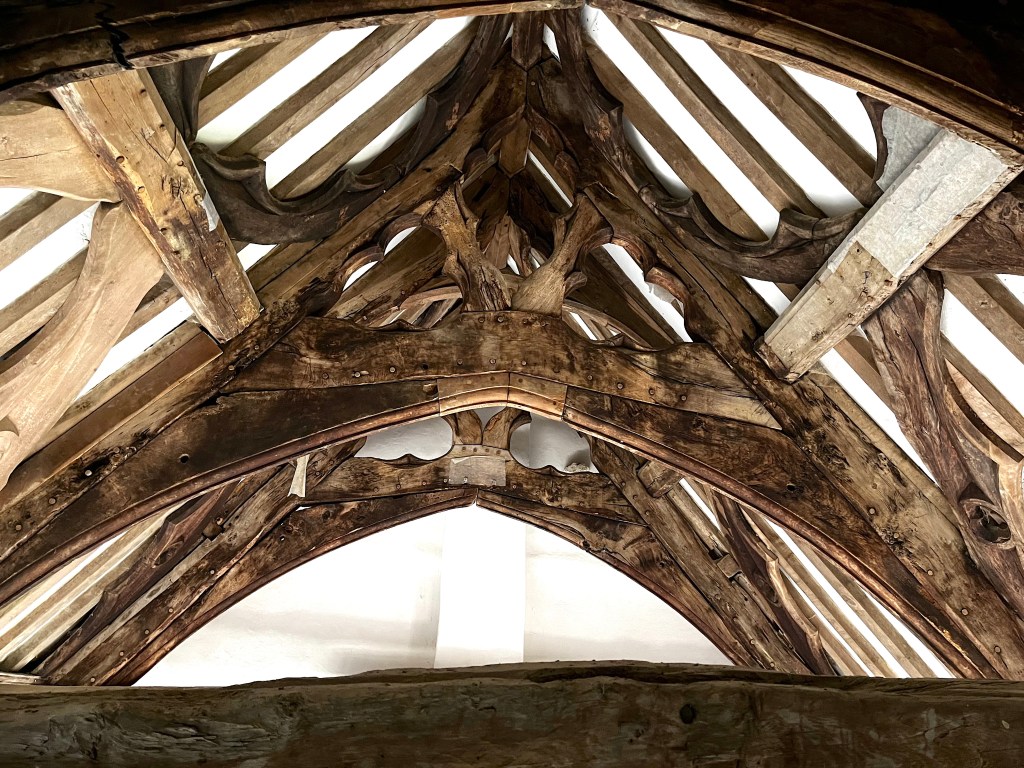
The pride of Martock Church is its superb angel roof, installed in the first decade of the 16th century and completed in 1513. The roof design is a king-post style with tracery infill between the truss beams. There are central pendants from each cross-beam, above which rise beautifully carved figures. (David Ross, Britain Express)

200. (1) This dial is on the w. side of the s. porch. It is 6 feet 1 inch above the ground. The noon line is 3 3/4 inches in length, the style hole is 1 inch deep, and is in a joint. The aspect is s. by 5° e. (See No. 12.)

201. (2) This dial is under the first window E. of the s. porch. It is 4 feet 7 inches above the ground, the noon line is 3 inches in length, the style hole is 1 3/4 inches deep, and the aspect is s. by 15° e. Type 6.

Dial No. 2 is of the unique shape that exists at Tintinhull (224) and Swainswick (25).

202. (3) This dial is on the second buttress e. of the s. porch. It is 5 feet 9 inches above the ground, the noon line is 3 1/2 inches in length, the style hole is very shallow, and the aspect is s. by 15° e. Type 3.

203. (4) This dial is under the third window e. of the s. porch. It is 3 feet 10 inches above the ground, the noon line is 2 inches in length, the style hole is If inches deep, and the aspect is s. by 15° e. Type 10.

204. (5) This dial is on the fifth buttress e. of the s. porch. It is 5 feet 1 inch above the ground, the noon line is 5 1/4 inches in length, the style hole is 1 1/4 inches deep, and the aspect is s. by 15° e. Type 5c.

GSS Category: Scratch Dial; Mass Dial; Multiple Dial Church

All photos: Keith Salvesen

HEYTESBURY . WILTS . ST PETER & ST PAUL – Scratch Dial(s?) & Church Marks

GRADE I Early Church recorded at Hestrebe DB. C12 origin as collegiate church; continuing development to C16; mid-C19 restoration (Butterfield). C13 work of particular note. One of the excellent churches to be found in the Wylye valley between Steeple Langford and Sutton Veny. 51.1821 / -2.1086 / ST925425

DIAL

The dial is on the SE face of the angled buttress at E end (by the green tank). It is a fine example of a dial on which all the lines have terminal pocks. At some time it was inverted, and I have shown it reverted below. I cannot find any record of it, BSS or elsewhere.

REVERSION

This dial is primarily a morning dial, with lines marking (in clock terms) the 5 hours from 8 to noon. The deeper lines marking 9 & 10 correspond to the morning Mass time Terce. Possibly, the fainter line LRQ indicates None, another significant time during the day’s observations. In all there are 9 visible lines with terminal pocks during daytime, and a hint of a line above the horizontal in URQ. The vertical ‘midnight’ groove above the gnomon hole can be discounted as part of the dial, I think. It is certainly out of keeping with the carefully thought overall design. Also, it doesn’t reach the gnomon hole.

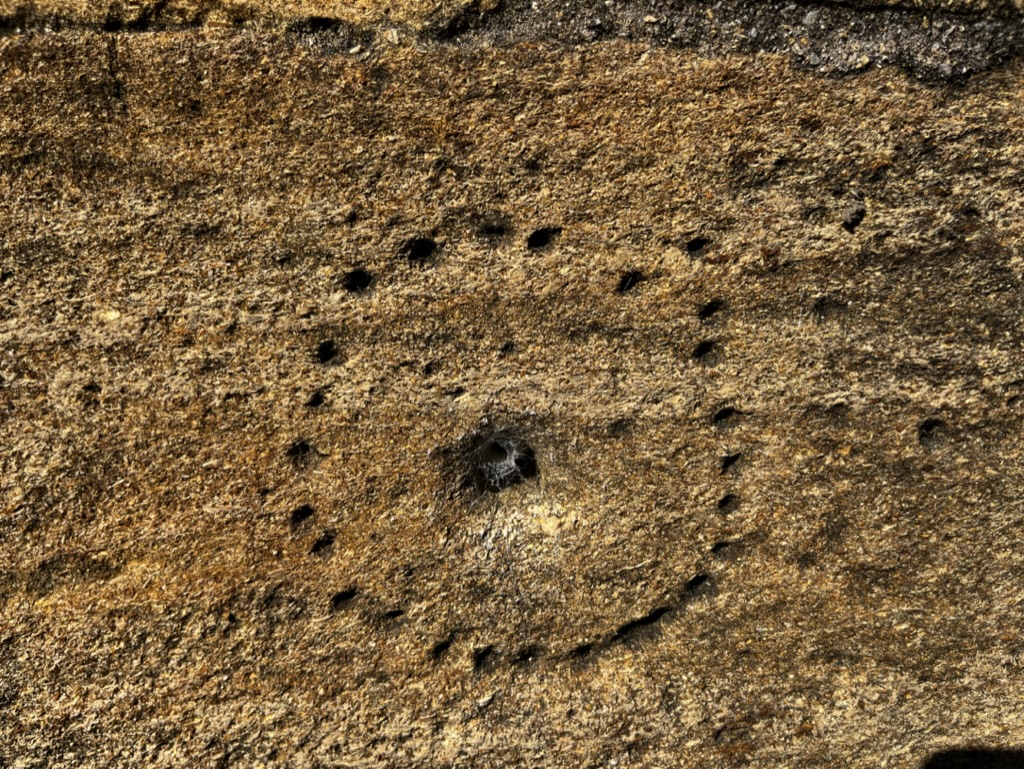
PLAUSIBLE DIAL?

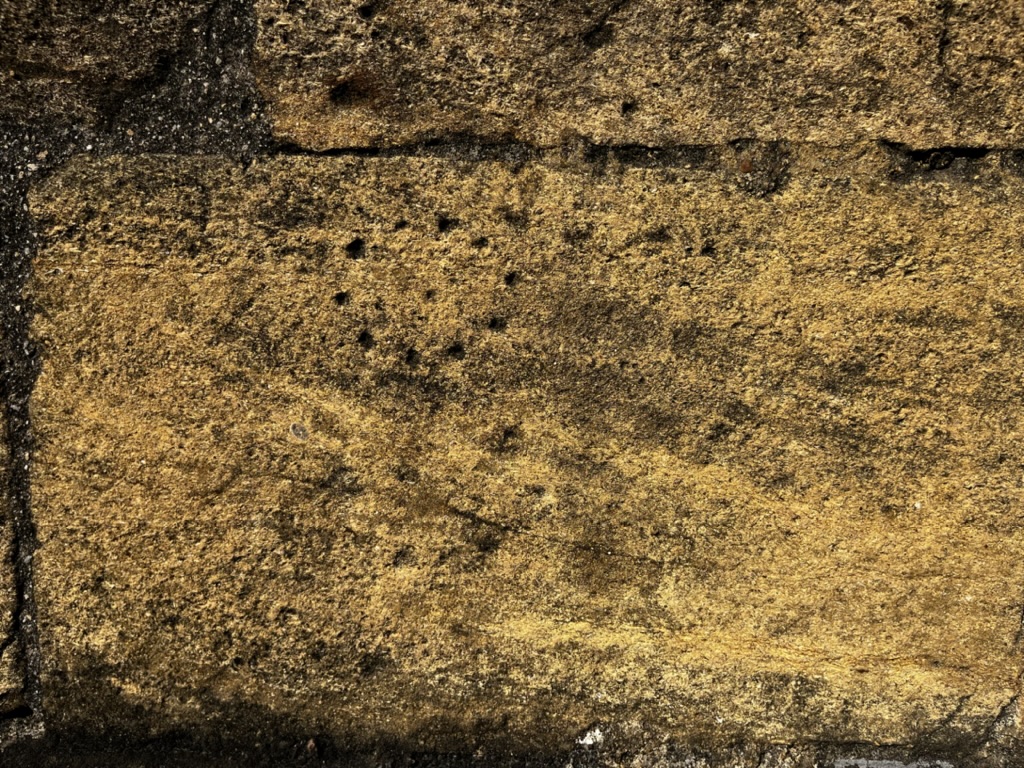
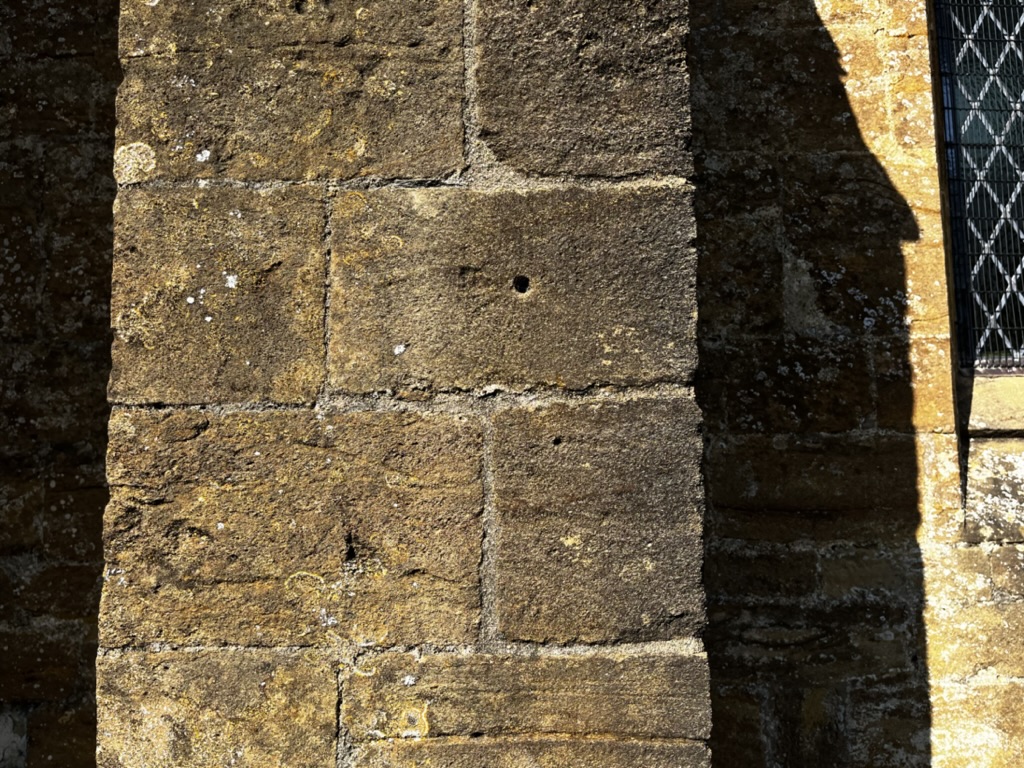
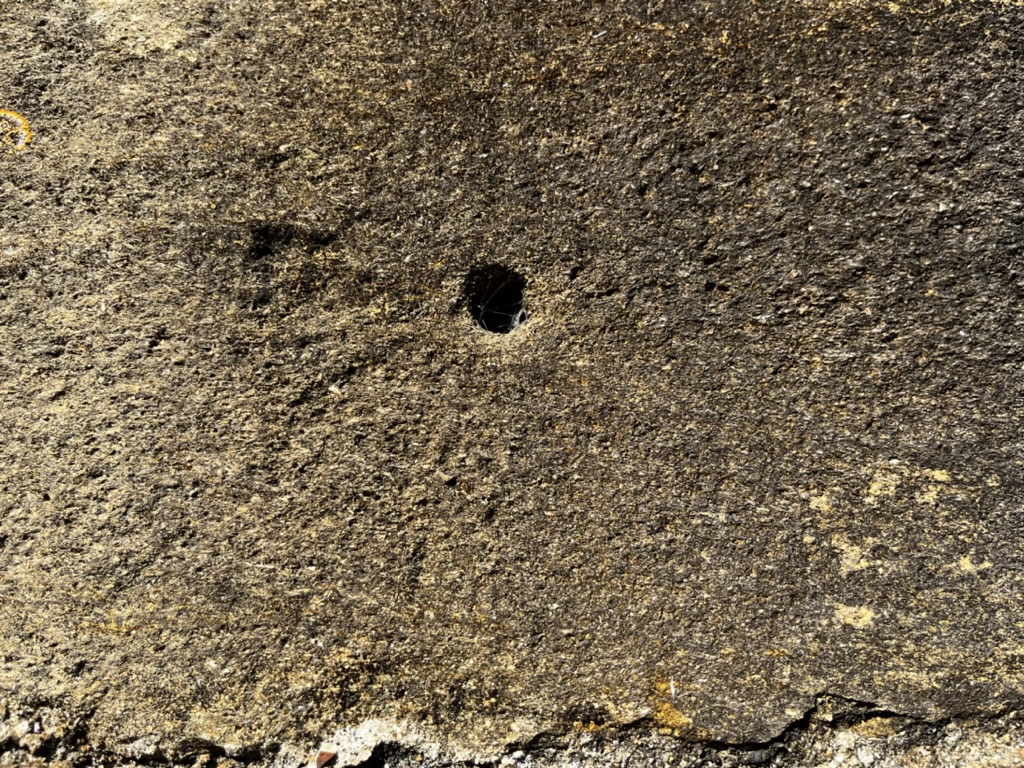
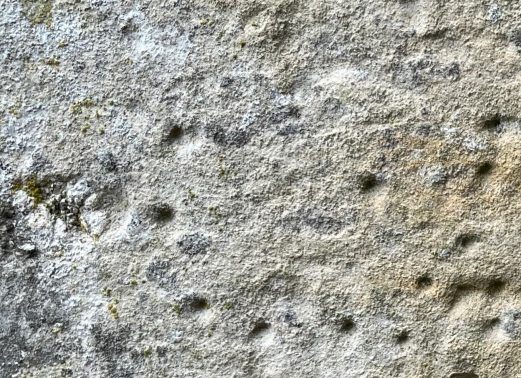
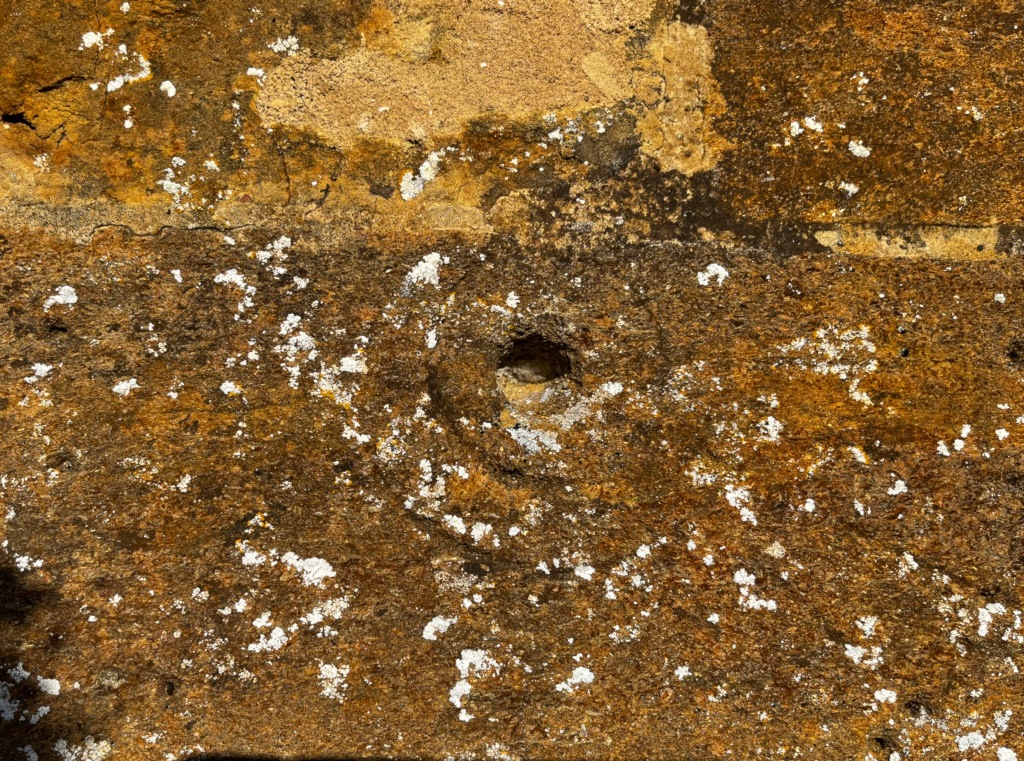
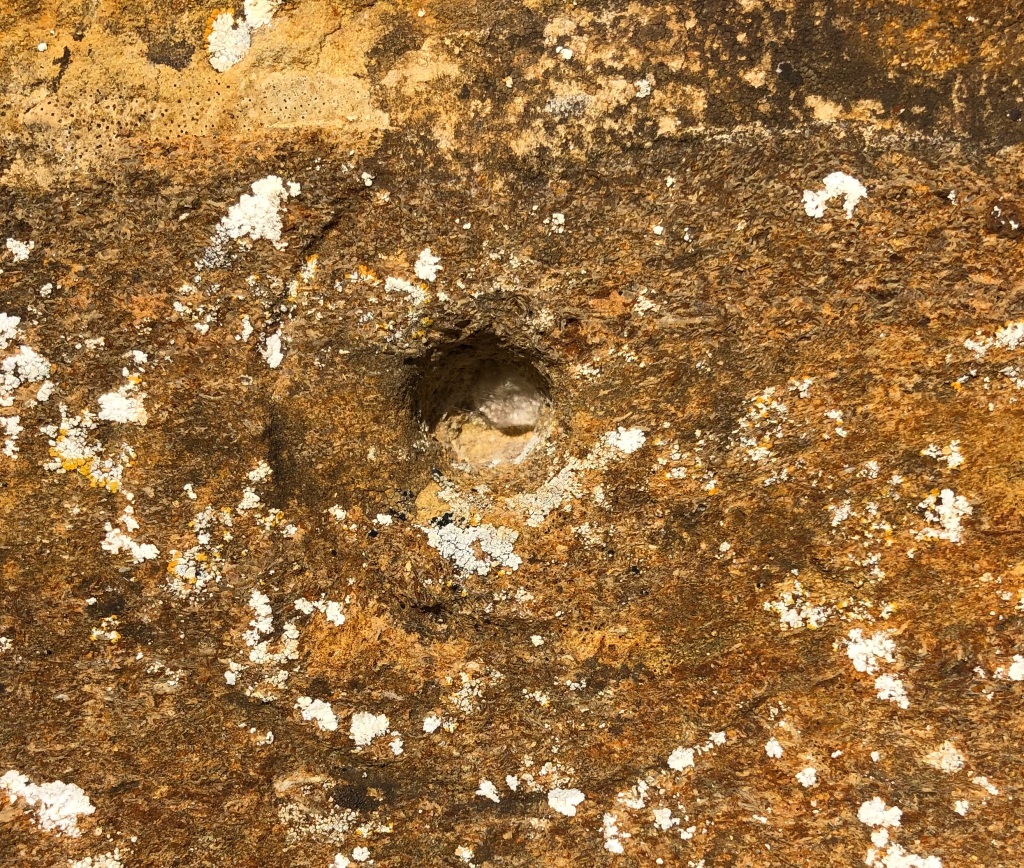
I noticed this patterned stone and photographed it as I walked past. I would very much like it to be a ‘pock-only’ dial. There is certainly a hole close to the centre of the stone, with a pattern of small holes that look crudely drilled, approximately forming a perimeter. Probably I am overthinking this.

CHURCH MARKS

Here is a selection of church marks – masons’ marks, consecration cross; ‘pilgrim’ crosses; graffiti; a small dial-like design that merits further investigation.

GRAFFITI INCLUDING RITUAL PROTECTION SYMBOLS

GSS Category: Scratch Dial; Mass Dial; Church Marks; Consecration Cross; Masons’ marks; Pilgrim Cross; Graffiti

All photos: Keith Salvesen

GORWELL BARN . DORSET – Hexfoil / Daisy Wheel & Church Marks

GORWELL BARN . DORSET

The barn is part of Gorwell Farm about 3m N of Abbotsbury, deep within the folds of steep hills, with ancient trackways, a stone circle, and strewn with sarsen stones. It has several uses, including as an excellent wedding venue; a lecture venue in particular for historical, geological, and similar types of research; and an educational centre.

The barn is C17 and has been sympathetically restored. During the process, work on the interior walls uncovered a fine hexfoil, and stones with graffiti and other marks. These are usually associated with churches, but barns were also ornamented in this way.

This is not a dial post, but it fits in with the ancillary purpose of including related matters of interest (see MENU and the various subcategories)

HEXFOIL

Hexfoils (hexafoils), also called daisy wheels or petals, are not uncommon. They are mostly found in churches; less often in secular buildings. Generally they are compass-drawn and symmetrical. There are three main theories to explain them, not mutually exclusive.

1. A form of Consecration Cross (an attribution given eg to the fine hexfoil at St Mary, Cerne Abbas, Dorset below). However, the many thousands of conventional crosses on churches all over the country suggest that there would be little need for a large daisy wheel except perhaps in a significant church. Often there are several on a church, each marking a particular event such as a Bishop’s visit or blessing. The maximum is generally 12, though a few churches (eg St Mary, Holnest, Dorset) have 14.

2. Symbols created by masons in the course of construction, a theory debunked firmly by medieval graffiti expert Matthew Champion on several irrefutable grounds.

3. Ritual protection marks (apotropaic symbols) designed to ward off / neutralise evil. To this can be added the concept of the Demon Trap whereby evil is confined within the circle – a line with no end – rendering it powerless.

Hexfoil . St Mary . Cerne Abbas . Dorset

‘4-LEAF CLOVER’ and GEOMETRIC SYMBOLS

I haven’t found such a clear example of a 4-petal style before. It is both decorative and protective: again, evil is attracted to it and then caught by the unbroken lines. Strengthening the case, the design to the left is an eroded example of a fairly common protection mark. These involve a geometric shape – usually a rectangle – with a pattern of joined dots. More complex ones look something like a square solitaire board.

SEMICIRCLE

This looks compass drawn. There is a hole on the lowest part of the circumference which – if a sundial – would be significant as marking noon.

MISCELLANEOUS GRAFFITI

GSS Category: Hexfoil; Daisy Wheel; Church Marks; Graffiti; Secular apotropaic symbols

All photos Keith Salvesen, and remembering the Sarsen Stone project

BINCOMBE . DORSET . HOLY TRINITY – Scratch Dial

Holy Trinity . Bincombe . Dorset

GRADE I Late 12th-century origins (parts of nave & chancel evident). Mainly C15 with later additions; S porch added C17 using old stonework; extensive restoration 1865. C13 font; Purdue bell 1658. Off the beaten track in a valley midway between Dorchester & Weymouth. Hardy-esque. 50.6599 / -2.445 / SY686845

Bincombe Church 1802 (Gentleman’s Magazine)

DIAL

Bincombe is a hidden village in the folds of the hills inland from the pleasures of Weymouth. It’s a mere 20m from our house yet until I visited a church nearby, it wasn’t on my radar at all. I must have passed close by it hundreds of times.

The dial is located on the E jamb of the SW chancel window, about 2m from ground level . GLP describes 4 short lines, with the noon indicator being the gap between two of them. He notes that the dial must have been moved to its position for reuse as part of the window jamb, truncating 2 lines LHS. Finally, he concludes that, the window being C15, the dial predates 1400.

Holy Trinity Bincombe – BSS Record

The dial, small and chunky, is in the top L corner of the dial stone. I haven’t seen one quite like it. The gnomon hole is surprisingly deep for such a little dial. In situ (and in the photos), there are ghosts of 2 or 3 lines LRQ angling towards the hole (but not converging?) Probably best disregarded.

CHURCH MARKS

Holy Trinity has a fine selection of crosses / protection marks drilled into the porch entrance. Here are a couple of examples.

GSS Category: Scratch Dial; Mass Dial

All photos, Keith Salvesen; engraving from Wiki

LLANGARRON . HEREFS . ST DEINST – Pillar Dial; Scratch Dial(?); Consecration Cross

St Deinst . Llangarron . Herefs

ST DEINST . LLANGARRON . HEREFS

GRADE 1 † C14 & C15; records of C11 origins; trace Norman interlace patterns. Restorations ±1900; later replacement of the top of the spire, repurposed as sundial pillar. Only 1 other church (Itton, nearby) with this Dedication.  7m N of Monmouth; 7m SW of Ross-on-Wye. 51.8871 / -2.6838 /  SO530211

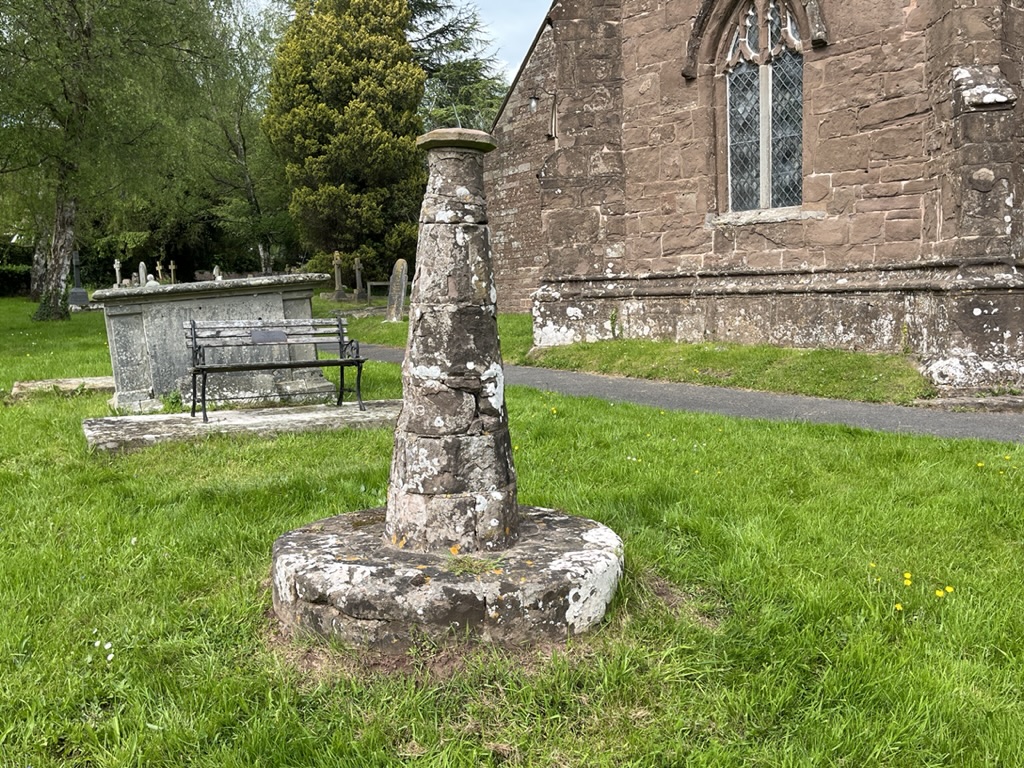
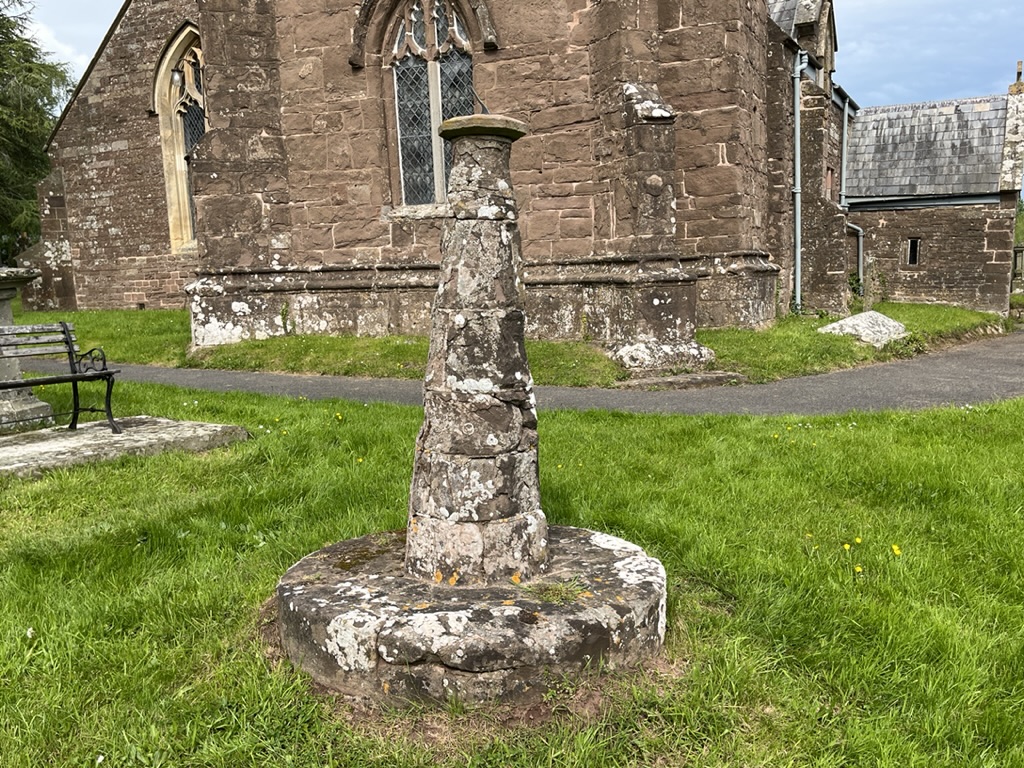
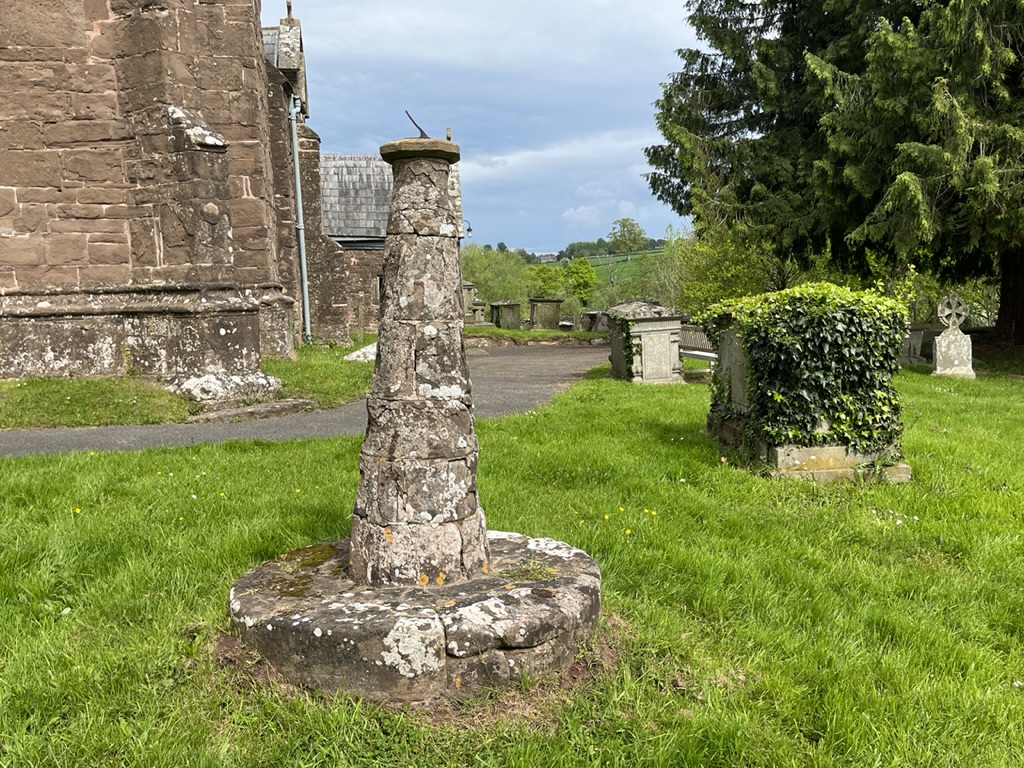
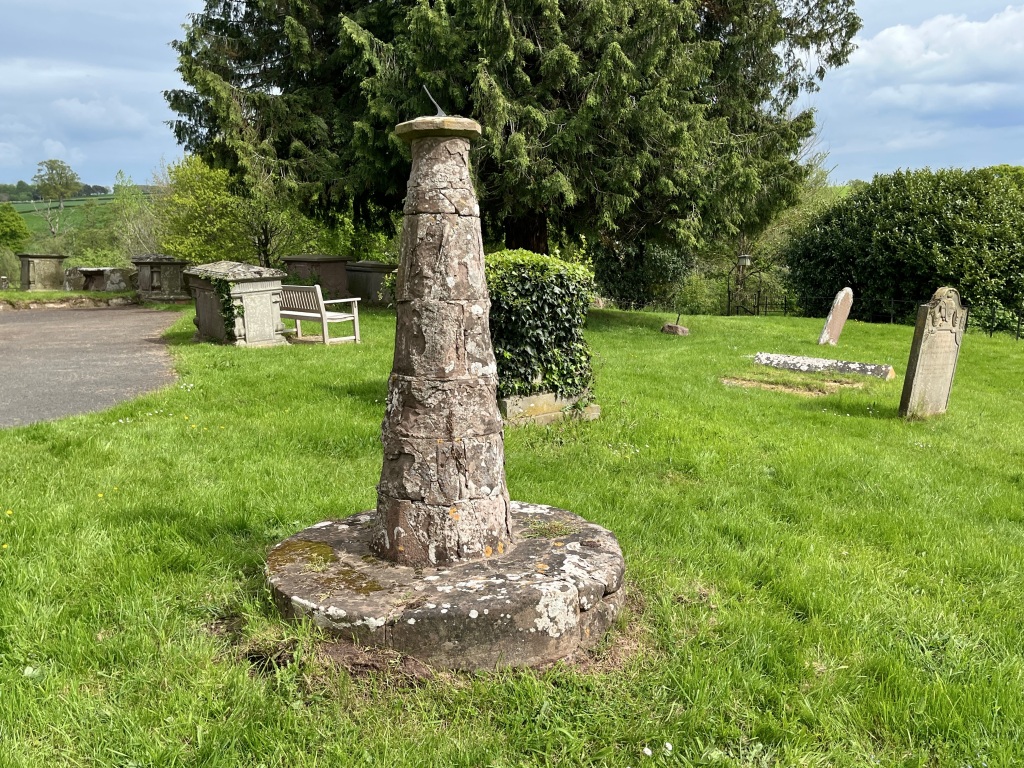
PILLAR (STEEPLE) DIAL

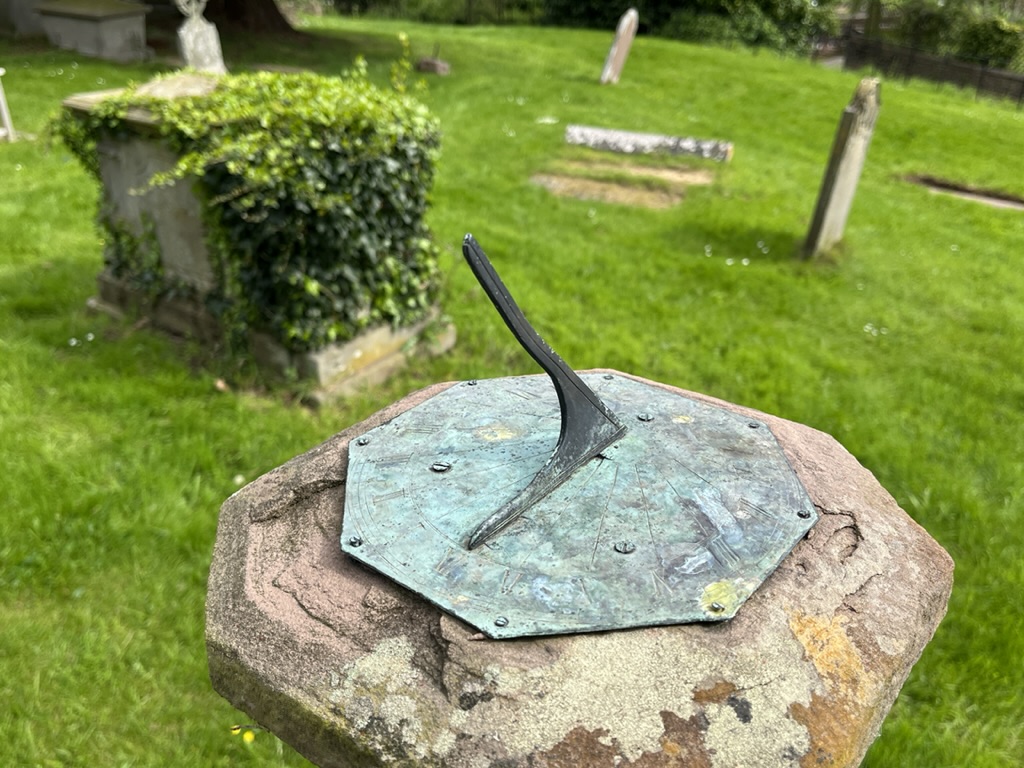
GV II Tip of spire C14 adapted as horizontal sundial pillar late C19. In churchyard SW of the tower in an ideal place for admiration. Coursed & squared sandstone rubble, circular base. C14 masonry BLB

1. CHURCHYARD VIEW

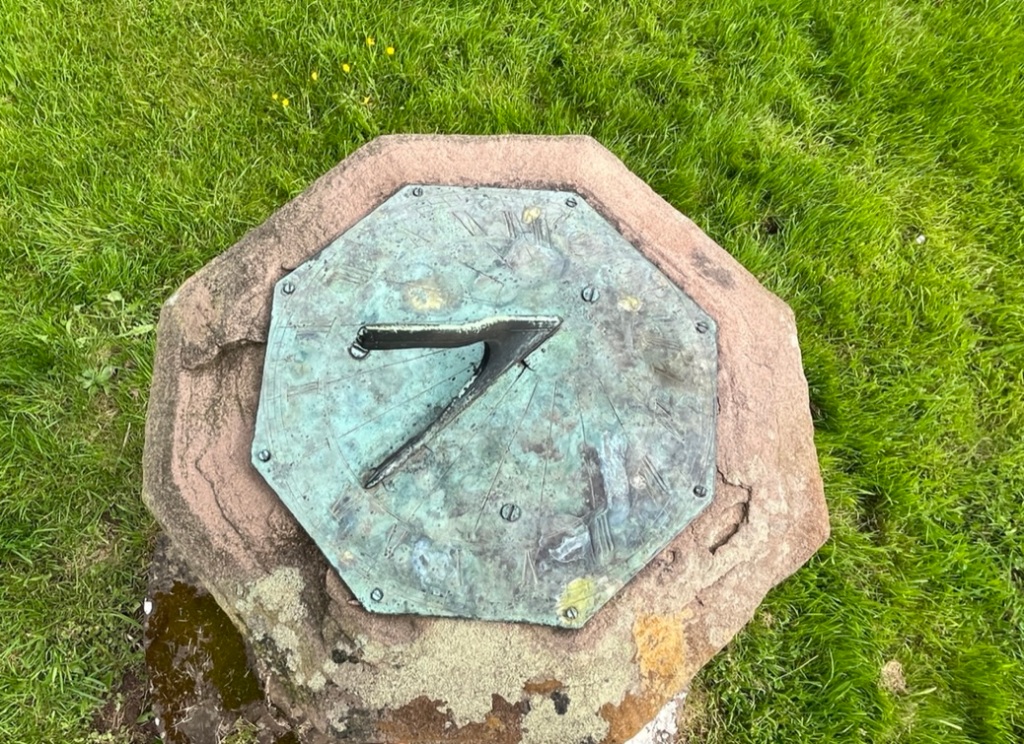
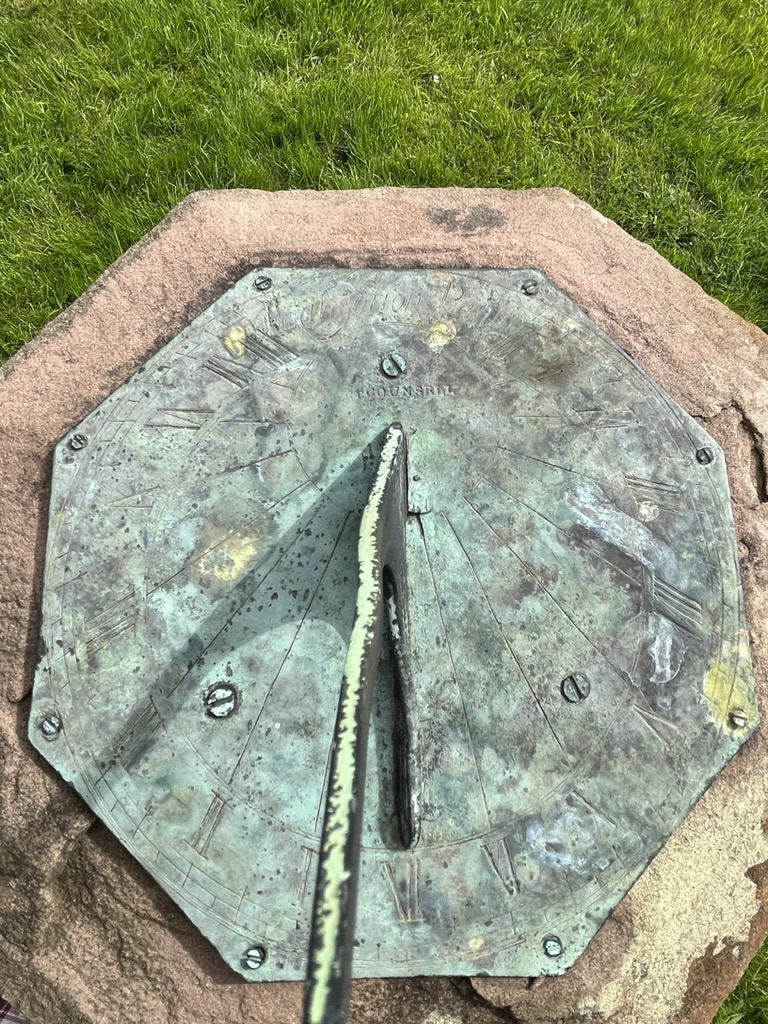
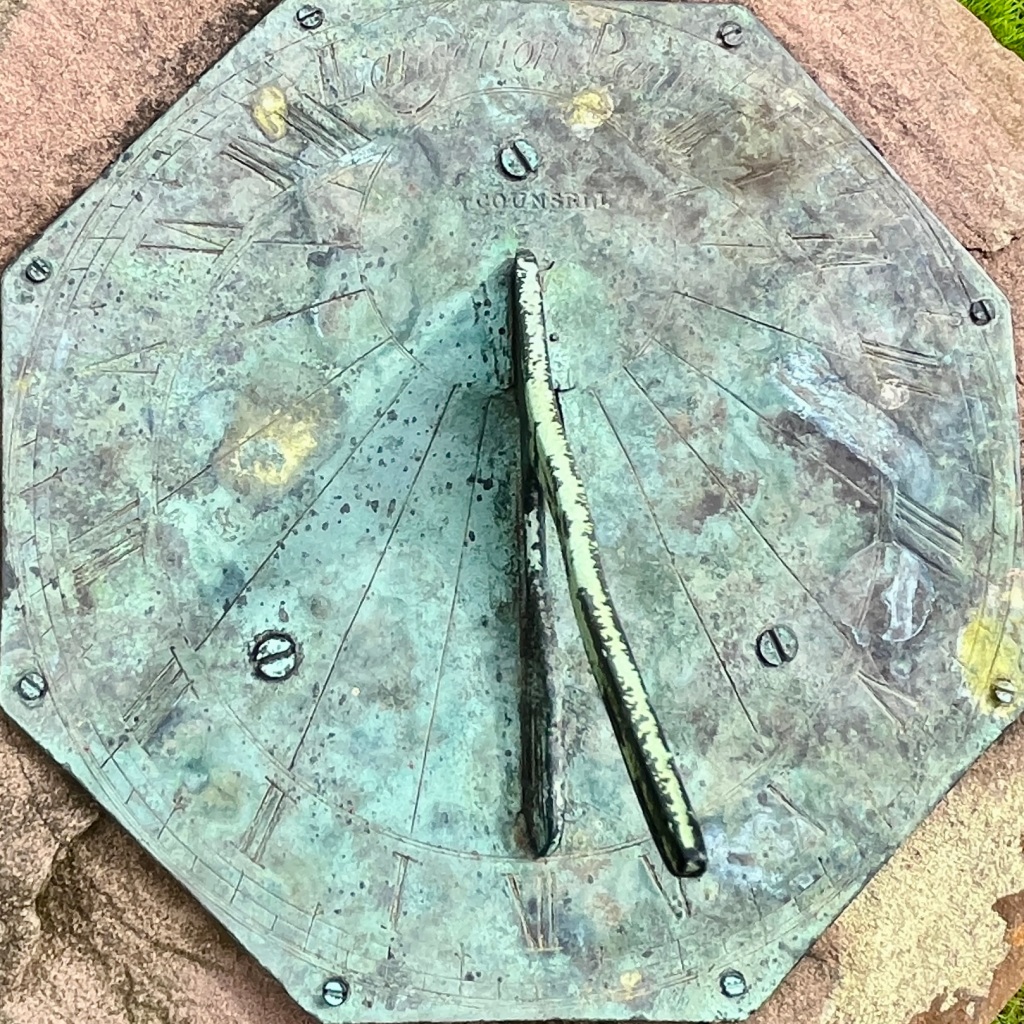
2. HORIZONTAL DIAL

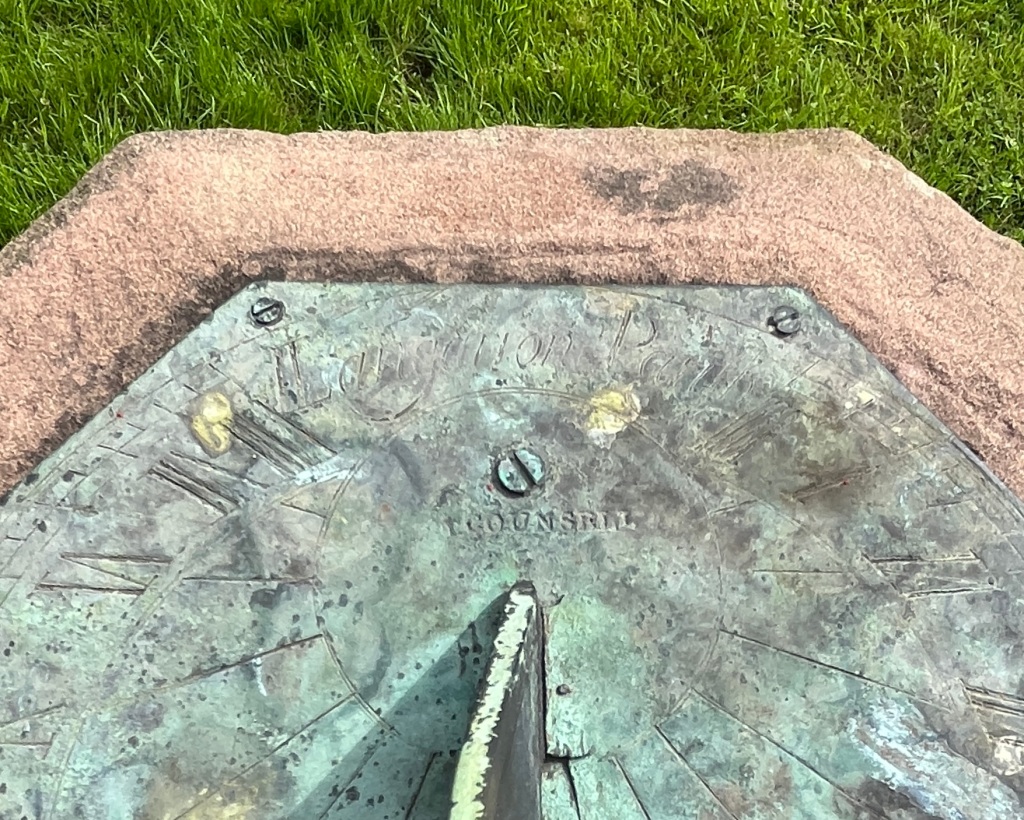
The dial is octagonal, with quarter-hours marked. IV as IIII. The inscription seems to be Llangarron Parish; and the maker’s name Counsell (though I can find no reference). The Roman numerals are conventional.

SCRATCH DIAL

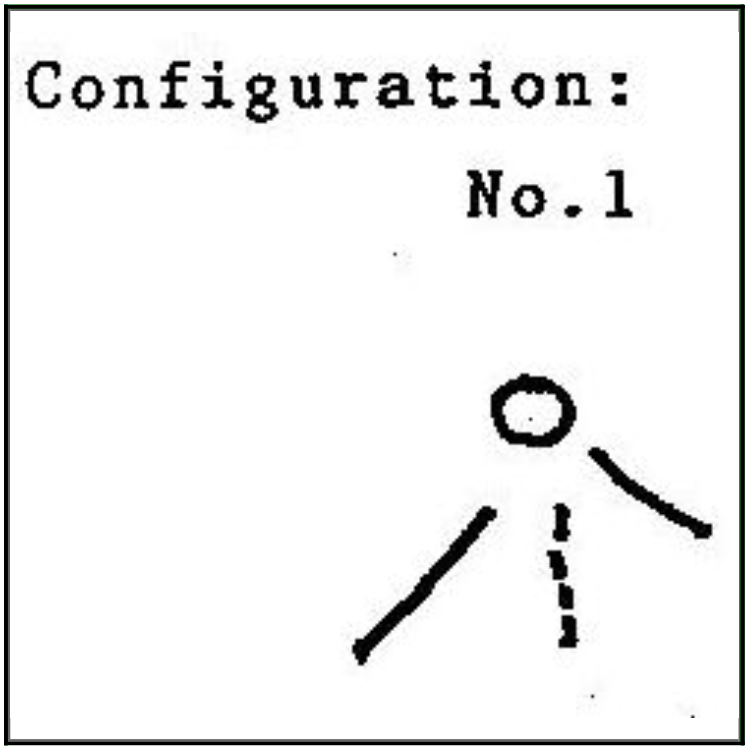
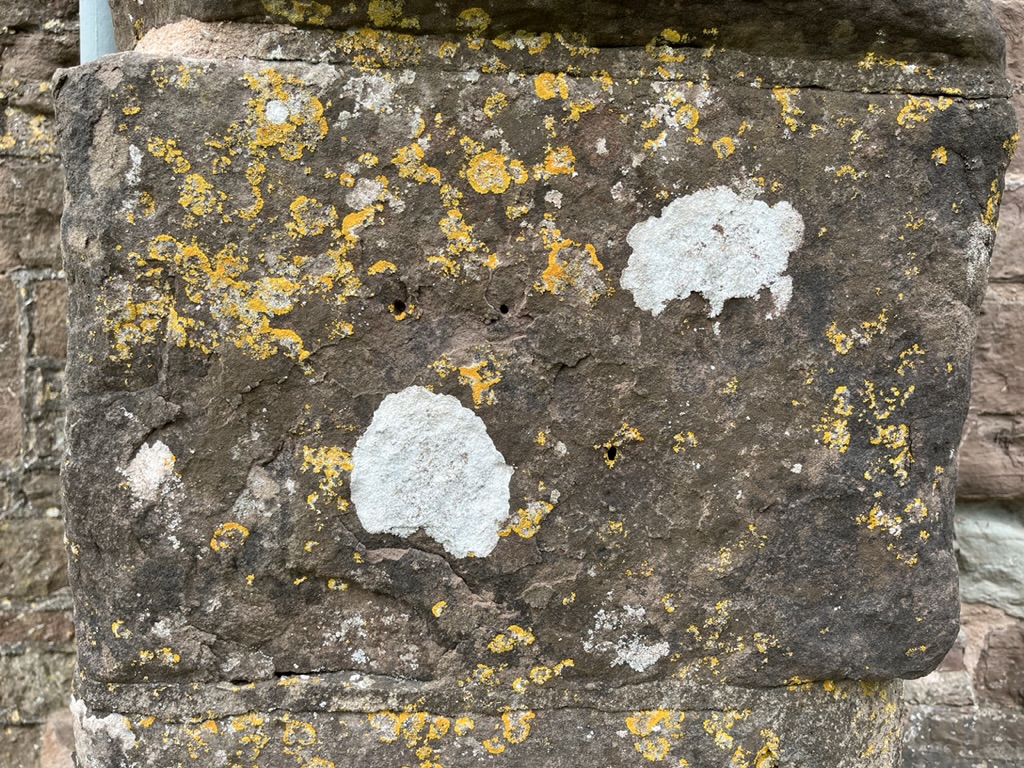
BSS records a scratch dial with 3 lines on the buttress to W of S porch, in a poor state. Notes include Max. length lines, mm 80. Hard as I looked, I couldn’t find a dial in the given location, or at any height on the buttress. Or elsewhere. Possibly the stonework has deteriorated since the original record was made. The best I can offer is the BSS sketch; and the most promising dial-like area of the buttress.

CONSECRATION CROSS

A fine consecration cross, one of the largest I have seen. One puzzle is that the cross is too large for the stone, so that LHS is cut off at the edge. It seems unlikely that the designer mis-measured to that extent. Possibly the stone was moved and trimmed to fit its present position during restoration.

St Deinst is well described in an online page LLANGARRON HISTORY

GSS Category: Horizontal Dial; Pillar Dial; Scratch Dial; Consecration Cross

All photos: Keith Salvesen

FENITON . DEVON . ST ANDREW – 3 Scratch Dials & Church Marks

St Andrew . Feniton . Devon

ST ANDREW . FENITON . DEVON

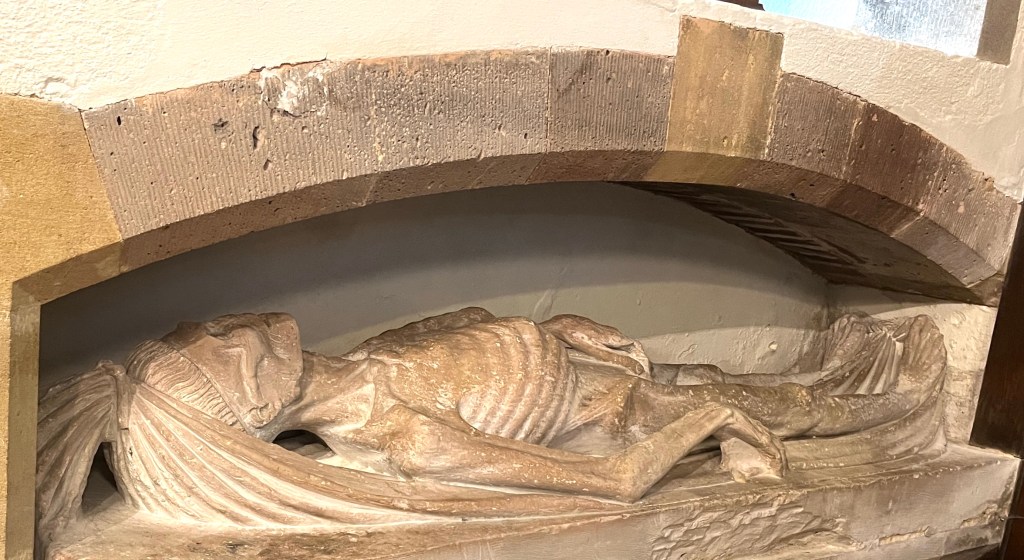
GRADE II* Norman origins; rebuilding C15 & early C16; substantial restoration 1877. A church that repays one’s interest, with an intriguing Rood screen / reredos repositioning conundrum; and unusual chest tomb: on top lies the effigy of an emaciated cadaver partly covered by a shroud BLB. 14m E of Exeter, 5m W of Honiton. 50.7875 / -3.2659 / SY108994

DIALS

St Andrew has 3 scratch dials, the most obvious being visible from the lych gate and as one approaches S porch. The other 2 dials, very close together, are remarkable and probably unique (certainly so as a pair). Dial 3 may be doubtful. An additional basic but dial-ish scratching is shown below, as are various other church marks including a good example of a Consecration cross.

DIAL 1

St Andrew . Feniton . Devon – Scratch Dial 1

Dial 1 on the porch buttress is a straightforward design and easy to make out, but damaged and cement patched UR. There are 13 lines, some now very faint. The angles are more or less accurate at 15º. The vertical / noon line is not emphasised in any way, which is slightly unusual. The main Mass was presumably Terce, marked with a deeper cut line LHS. The gnomon hole has been filled with a rather well-chosen rounded arrow design; it is modern yet respectful of its purpose.

DIAL 2

St Andrew . Feniton . Devon – Scratch Dial 2

Dials 2 & 3 are adjacent low down on the same porch buttress as Dial 1. It is a remarkable juxtaposition. BSS suggests they are early dials – pre-1400?

Dial 2 consists of a pattern of pocks contained within what could be termed geometrically as the major segment of a circle. The horizontal line is incised more deeply. BSS suggests that 13 pocks are identifiably associated with the dial, with a few random ones besides. The quite shallow gnomon hole in such a small design presumably contained a stud rather than a rod.

A noon line is seemingly marked by the sightly offset double pocks just R of the vertical. Theres’s also a very small pock directly above the gnomon hole, conceivably a decorative-use-only marker for midnight and symmetry.

DIAL 3

Dial 3 The BSS entry for this little configuration of dots describes a semi-circle of 8 pocks, with other associated pocks and no obvious gnomon hole. It concludes closely related to dial no. 2, possibly never used as a dial.

Perhaps it is not a dial at all. The rather untidy part-circle curves away NE after noon – pointlessly, if part of a dial. BSS notes that there is no central style hole. There is a single pock inside the perimeter that might have held a stud – but unlikely to be much use in that position. Some might suspect unserious pattern-copying efforts along the lines of Dial 2.

St Andrew . Feniton . Devon – Scratch Dial 3

My amateur reading of this buttress as a whole is firstly, that the low stone on which Dials 2 & 3 are located is not its original location. At some stage during all the rebuilding and restoration over the centuries it was re-sited. The little dial that ‘worked’ was then too low and would anyway have been an obsolete design. It was therefore superseded by a far larger, more modern (? mid C16) and very visible dial, accurately cut and ideal for marking the passage of the day for a larger, better educated community in a more modern era. Comparatively.

DIAL 4?

Both lines seem deliberately scratched. One is approximately vertical, the other could mark the Mass time Terce (cf Dial 1). The lines diverge from the mortar line, as do many simple dials – it means not having to drill a dial gnomon into stone. I have seen less convincing 2-line versions that have been recorded as dials. I am slightly in favour of it being a dial.

CONSECRATION CROSS

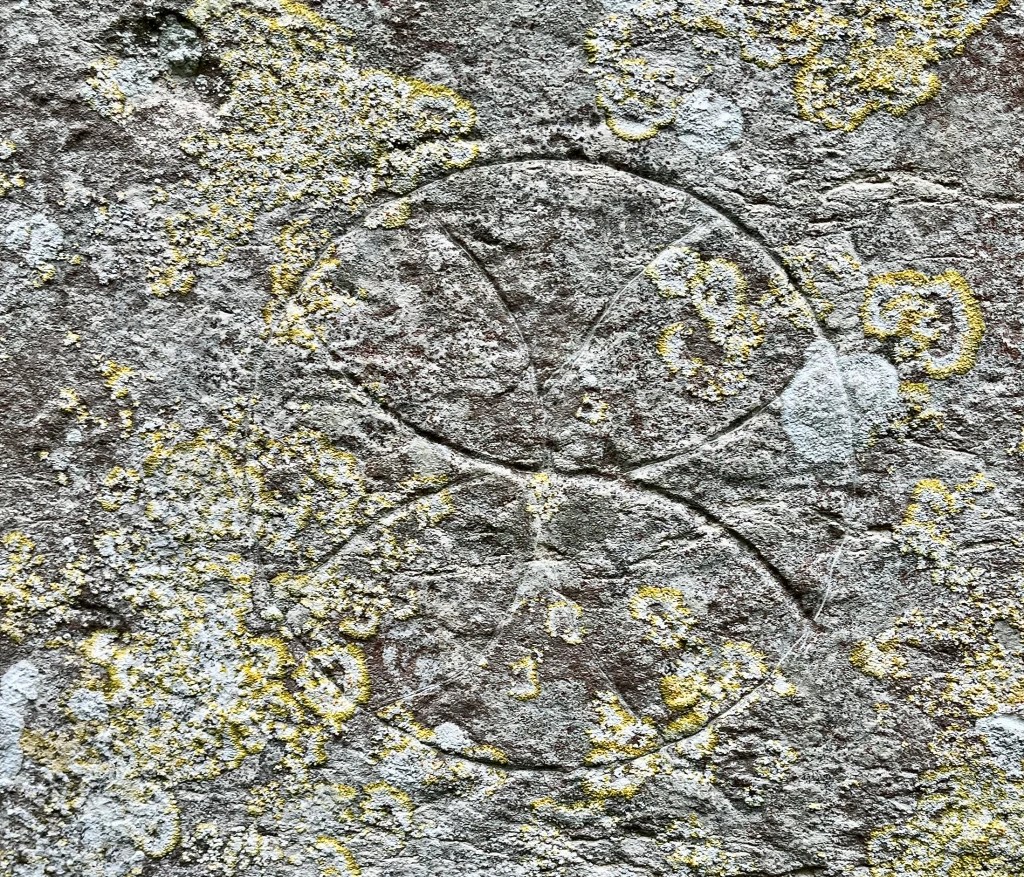
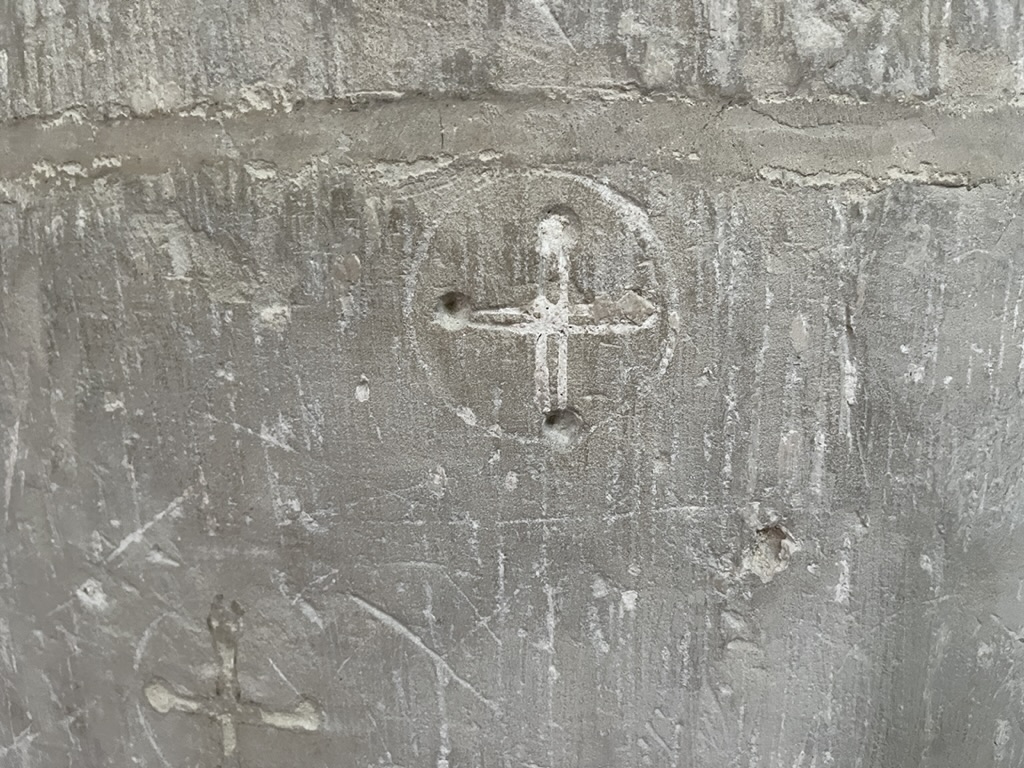
This is a good example of a rural consecration cross, incised on a buttress between 2 windows. From a distance the design might mislead and be seen as four petals, rather than a compass drawn cross. There are hints of an outer circle. This is a fairly common type of cross, but good see one that is relatively unworn. The four distinct quarters rule out ID as a protective hexfoil, although there is a similarity.

GRAFFITI

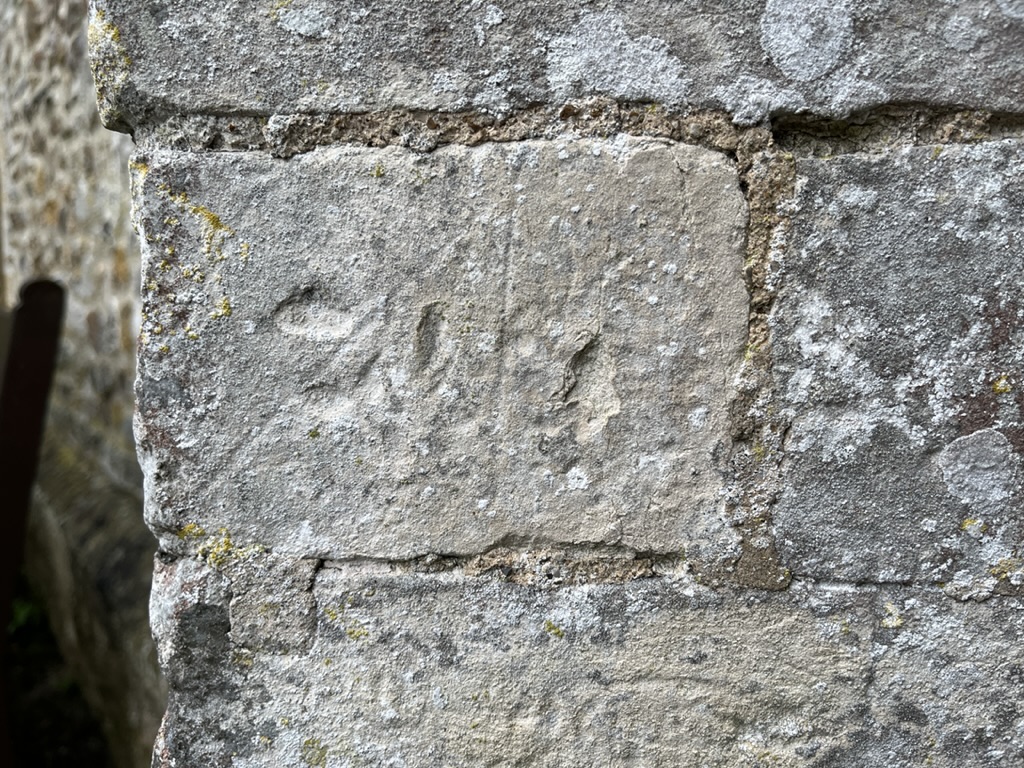
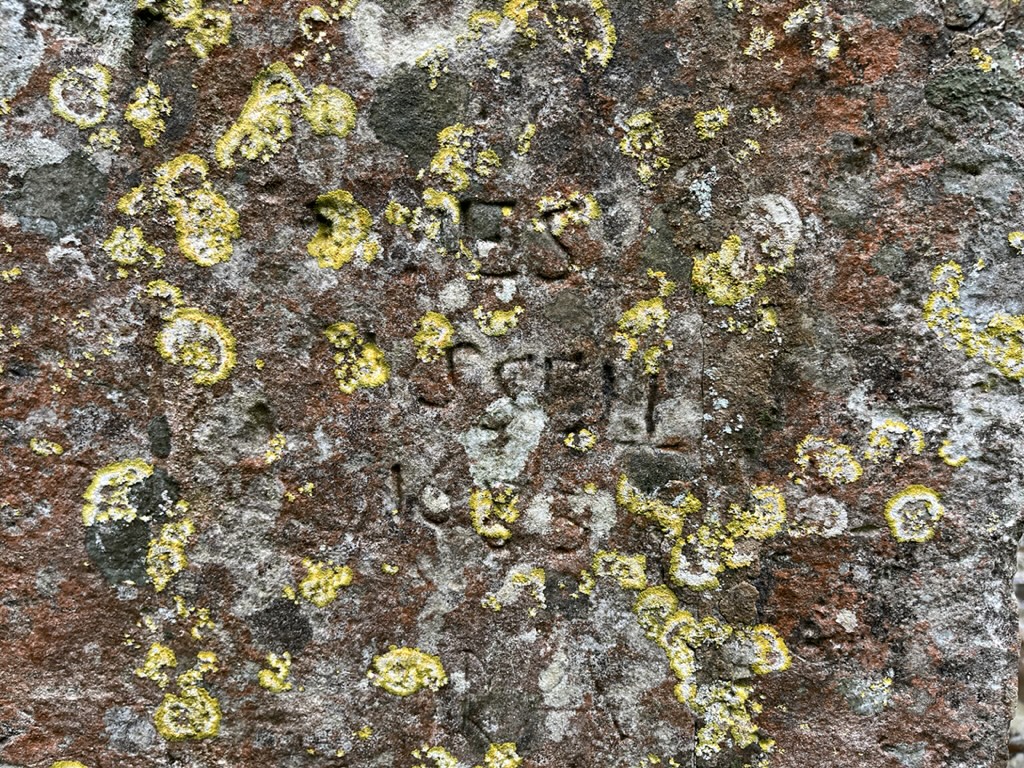
Graffiti on two adjacent stones, one example dated ?1675

PROTECTION MARK

This is very likely a ritual protection mark / apotropaic symbol designed both to prevent evil from entering the church, and to repel it. For that reason they are most often found inside or near porches. I haven’t encountered the pattern below before, but a group of dots with some joined by deep cut lines is a commonly found design – see an example from Dorset below.

Ritual Protection Mark . Stouton Caundle . Dorset

GSS Categories: Scratch Dial, Mass Dial, Consecration Cross, Ritual Protection Mark, Medieval Graffiti

All photos: Keith Salvesen
EMACIATED CADAVER

FIDDLEFORD MANOR . DORSET – Hexfoils, Graffiti, Ritual Protection Marks

Fiddleford Manor Dorset - Medieval Graffiti
Fiddleford Manor . Sturminster Newton . Dorset

FIDDLEFORD MANOR . STURMINSTER NEWTON . DORSET

GRADE I † C14 The principal parts of a small stone manor house, built c1370 for the Sheriff of Somerset & Dorset. It has undergone many changes since, but the splendid timber roofs over the great hall and solar… (remain intact). Scheduled as an Ancient Monument. Under the care of English Heritage Two miles E of Sturminster Newton. 50.9213 /  -2.2847 / ST800135

Fiddleford Manor . Sturminster Newton . Dorset – a wall of various types of church mark including a hexfoil

The most spectacular medieval manor house interior in Dorset PEV, an authoritative opinion that will never be challenged. There is no dial here, but the amazing graffiti could equally be found in a church, though generally not in such profusion. Besides dials of all kinds, this site includes medieval building marks – symbols, initials, dates, other graffiti. These categories can be found in the Menus on the front page. However, Fiddleford manor is so special that it deserves its own main entry rather than being relegated to a sub-menu.

HEXFOILS

MARIAN MARKS

GRAFFITI

GSS Category: Church Marks; Marian Marks; Ritual Protection; Hexfoils; Medieval Graffiti

All photos: Keith Salvesen

HOLNEST . DORSET . ST MARY – Rare windowsill scratch dial; protection marks & graffiti

St Mary . Holnest . Dorset

GRADE I † Late C14, C15; C17 alterations inc. porch with date 1650 on keystone. Restorations mid-C19. Very recent skilled restoration 2020. Millennial dial with date-casting gnomon (cf BUCKLAND NEWTON). C18 box pews, candlelit services, Purdue bell c1580. Graffiti and witch marks. 14 formy consecration crosses both outside and inside (see locations below). A perfect small Dorset church standing alone, remnant of a plague village. There has been a recent very skilful restoration that has not impacted on the original charm of St Mary. 6m S of Sherborne. 50.8868 / -2.4902 / ST656098

,

St Mary . Holnest . Dorset – Keystone

SCRATCH DIAL

St Mary . Holnest . Dorset – rare scratch dial on window-sill

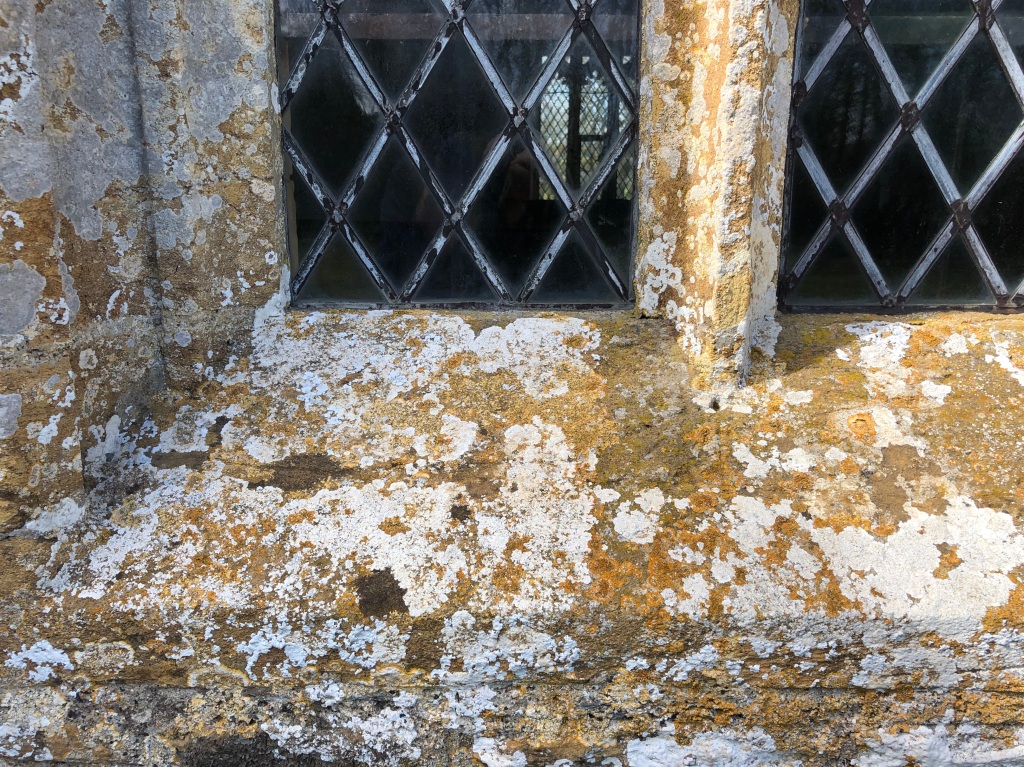
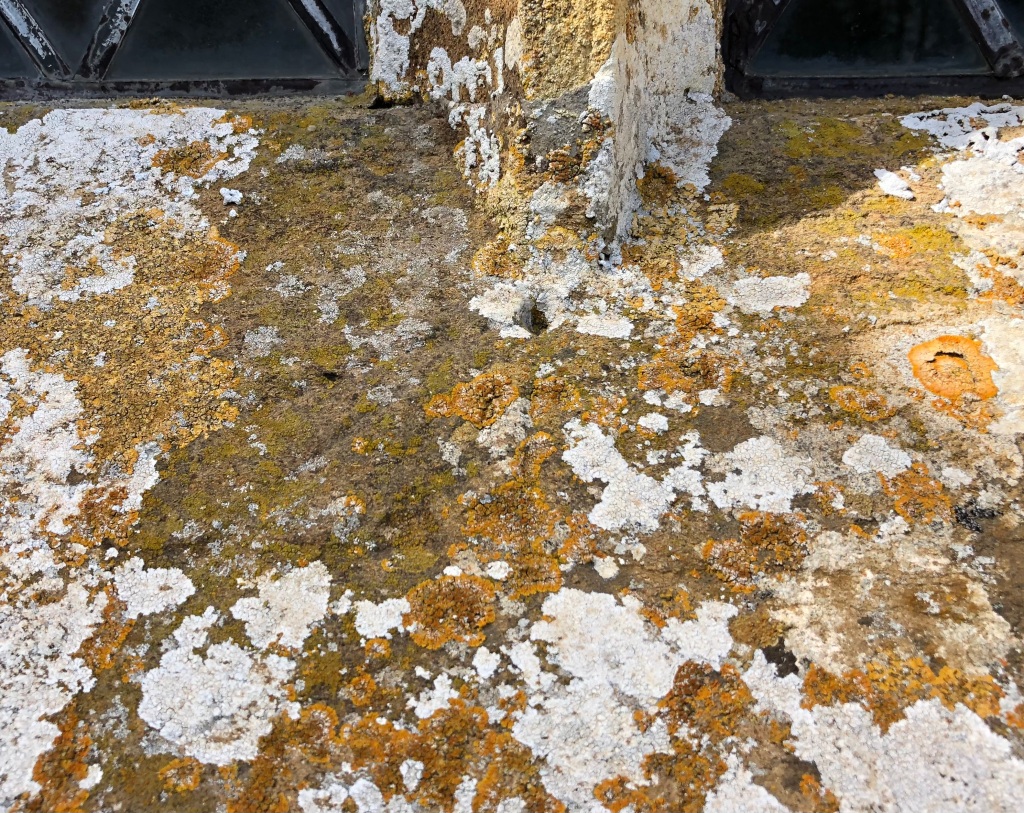
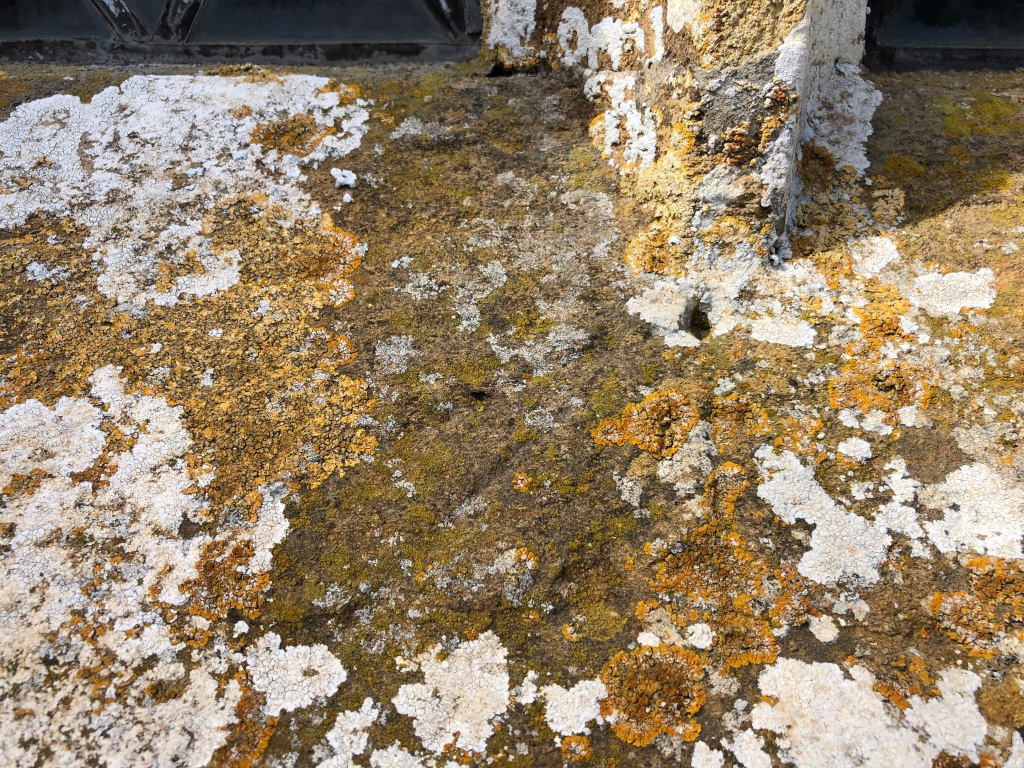
A remarkable and very rare C15 dial, possibly unique (cf nearby THORNFORD). It is located on a window sill of the S aisle, incised at an angle of 35º. It is quite difficult to examine – even close to – because of erosion and lichen. The style hole is centred on the stone divide between 2 windows. To be effective it must have been angled forwards: C15 dial deliberately positioned centrally. Gnomon must have been bent over, perhaps horizontally. Lines are quite accurately cut GLP.

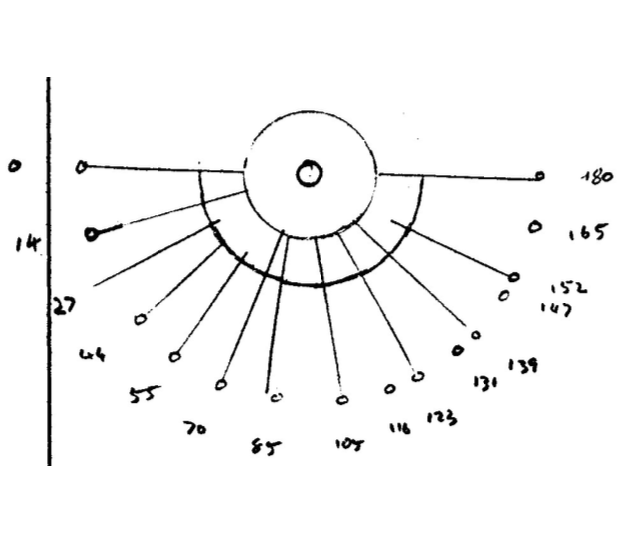
There were originally 12 lines – the full complement for a semicircular dial. However, many are so weathered that they are barely visible – some not at all. The church is across the fields from us and I have spent some time with the dial, examining it and photographing it at different angles and in different light. I’ve managed to identify 8 lines including the horizontals, much as shown on the second BSS diagram below. The most visible lines are these:

St Mary . Holnest . Dorset – diagram of scratch dial on window-sill

St Mary . Holnest . Dorset – scratch dial diagrams BSS

VERTICAL DIAL

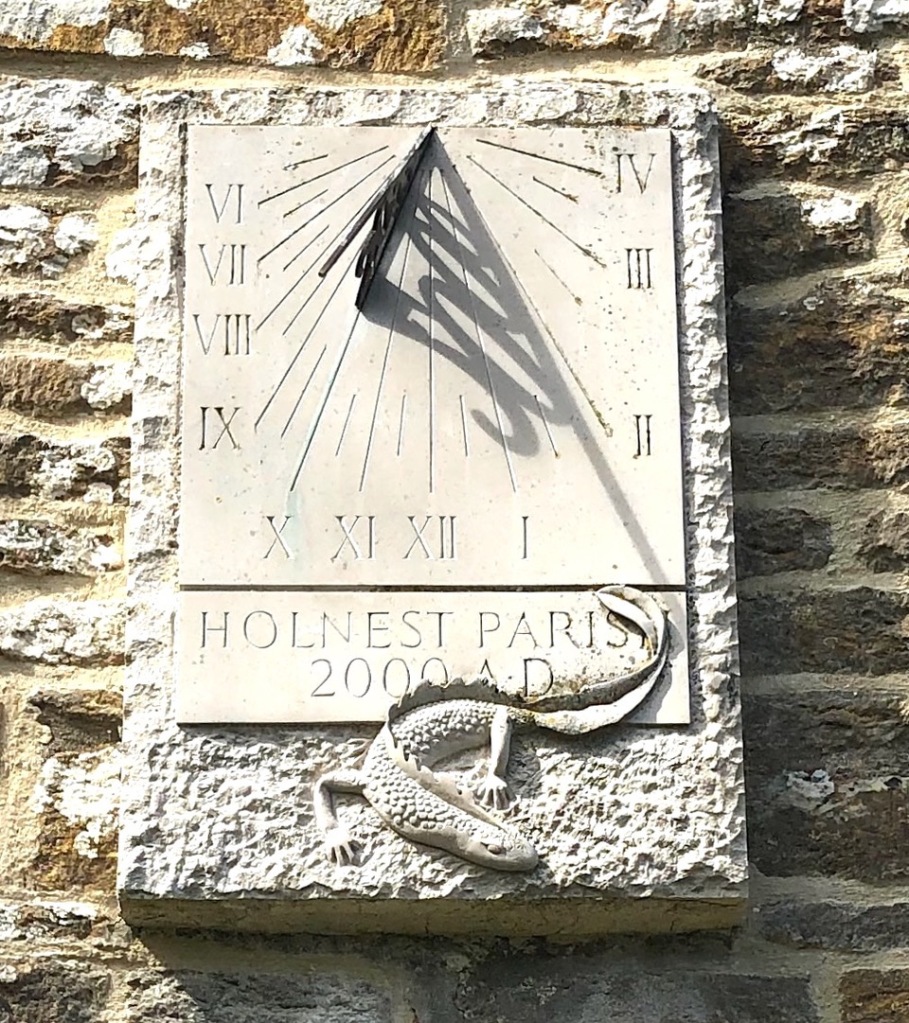
The porch has a date of 1650 and a new [millennium] sundial commemorates the Great Crested Newt that meant that a field nearby could not be developed for housing. Friends of Holnest Church.

A particularly good example of a meaningful local dial designed specifically for its location and time. The Battle of the Newt being won as the new Millennium approached, a fine dial to record both events was fully merited.

St Mary Holnest: millennial vertical dial dated 2000 with unique Newt Protection Symbol

WITCH MARKS & GRAFFITI

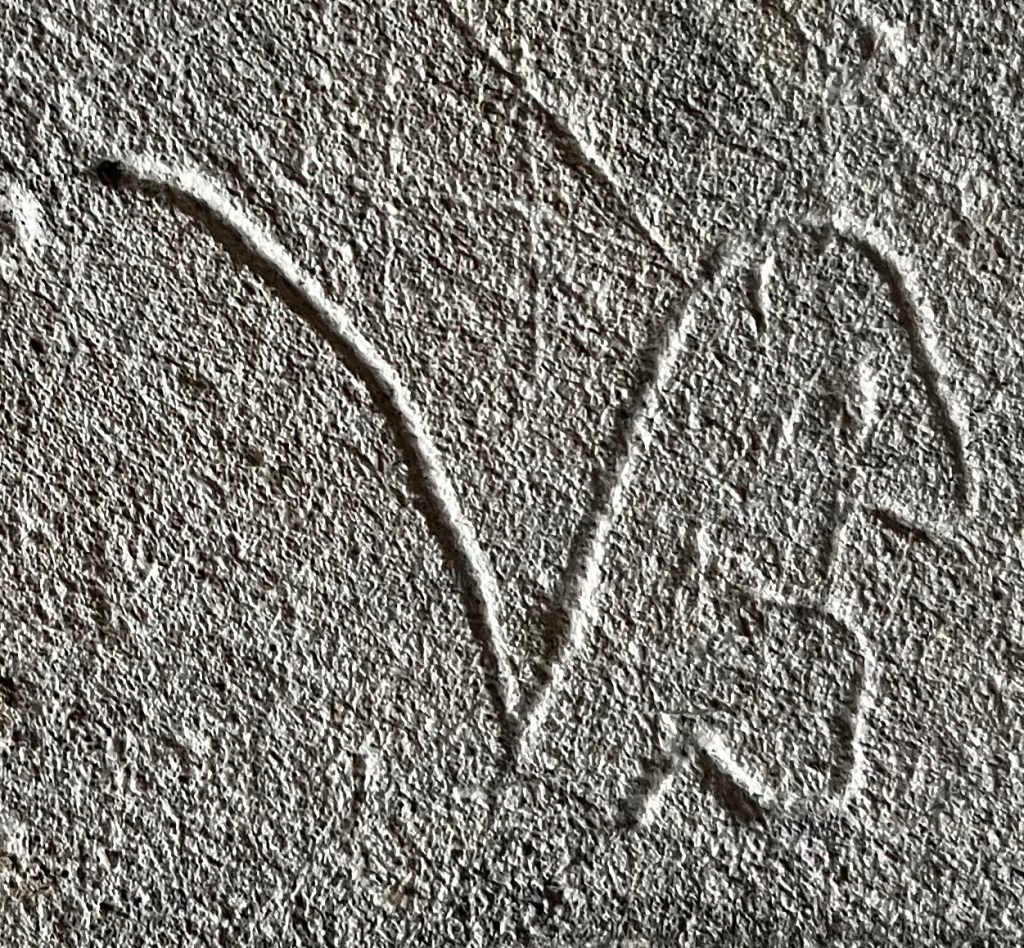
The S porch has a rich variety of medieval church marks. The example stones shown above have witch / ritual protection / apotropaic marks to ward off evil, in particular a number of Marian marks VV (Virgo Virginum / Virgin of Virgins). There are also initials and C17 dates.

CONSECRATION CROSSES

There are 14 in all, 12 being the usual maximum. 5 are inside the church on the tower walls

Consecration Crosses: On chancel— flanking E. window externally, four crosses; flanking S. doorway, two crosses. On nave—W. of heads of N. windows, two crosses. On S. aisle—over E. window and W. of S. window, two crosses. On W. tower, on N. and S. walls, one cross and below W. window, two crosses; formy crosses fourteen in all, mediæval. BHO

GSS Category: Scratch Dial, Mass Dial; Church Marks, Witch Marks, Protection Marks; Consecration Crosses

All photos: Keith Salvesen

FOVANT . WILTS . ST GEORGE – Multiple Scratch Dials

St George . Fovant . Wilts

GRADE II † C13, C14, C15, restored 1863 (T.H.Wyatt); tower restored 1988. A sad history of disrepair (C15, C17), but nowadays a most attractive and surprisingly secluded church. One bell (of 6) is C15. A cluster of votive / pilgrim crosses externally. Midway between Salisbury and Shaftesbury, N of A30. Note: the church is some way past the centre of the village – persevere. 51.0654 / -2.0068 /  ST996295

DIALS

St George is a multi-dial church. There are certainly 6, plus one candidate that is debatable and may have a different function entirely. I have a note of an 8th dial, and seen a passing reference to one. Unusually, there are 5 dials spread over 2 adjacent stones, a rare proximity of so many.

DIALS 1 – 3

St George . Fovant . Wilts – Scratch Dials 1 -3

This group of dials are all cut on a single stone. It looks as if the simplest dial (3) was superseded by a similar more detailed one (2) ; and that both were eventually made redundant for practical purposes by a relatively sophisticated replacement (1).

DIAL 1

Dial 1 has 10 lines (including the horizontals) that radiate from the filled gnomon hole, within a semicircle. The spacing of the lines is rather haphazard and it is quite hard to relate their positions to specific hours. One line in LRQ has a cross, presumably to emphasise the afternoon Mass time Nones. In LLQ there are 4 (perhaps 5) holes denoting an important part of the day for observance. The positions of the radials on the 2 earlier dials beneath Dial 1 rather confirm this theory. Is the horizontal line above the semicircle part of the dial? There is a short vertical line from its centre – a short ‘midnight’ line? – that suggests some connection but not one that would assist marking the passage of the day. Probably a later addition, purpose unknown.

DIAL 2

Dial 2 is simple dial with a homespun attempt at incising a perimeter. It has 3 strong lines LLQ, each ending in a pock. The noon area is a confusion of trace / eroded lines with pocks that extend further round the approximate circumference, signifying the early afternoon hours

DIAL 3

Dial 3 is a rustic-looking little dial, presumably the earliest of the group. Although from a distance it seems to be just a pair of stubby lines descending from the style hole, close inspection suggests shallow pocks on a curve beyond the noon line – others perhaps hidden by the lichen. If so, it is more sophisticated that it looks at first sight. But for the size of the style hole, it is a candidate for the ‘smallest dial’ category, of which Tintinhull is supposedly the leader

DIALS 4 – 5

Both dials are together on the same stone, immediately W of the dial stone of dials 1 – 3.

DIAL 4

Dial 4 is hard to analyse in detail because of lichen. The style hole is filled. There is a semicircle – again with an inexact curve – and a hint that there was once a full (misshapen) circle. It is just about possible to make out 12 lines, of which only 6 or 7 are distinct. There are no visible pocks.

DIAL 5

Dial 5 is the only dial with all lines in LRQ: an afternoon dial (but see also dial 8). There are 6 lines, of which 5 radiate directly from the style hole. The line at (roughly) 1pm, if part of the dial, passes to L of the hole.

DIALS 1 – 5

DIAL 6

Dial 6 is different from the other dials, and relatively uncomplicated. The style hole is quite high on the dial stone. There are no radials, simply a gentle curve of several pocks either side of noon. There are 7 in all, and presumably the central one marked noon. There’s a significantly clearer image than mine via the first link below!

DIAL 7 -v- NOT A DIAL

There is debate as to whether this design is a dial, or was incised for some other purpose. Two concentric circles with a hole at the centre are not rare for a dial but one would expect to see lines – even just a noon line – and / or dots around the perimeter of the inner circle. Being sited at the W end, it would only be effective late in the day. Again, this is not particularly unusual where a church has been rebuilt stones relocated – Rimpton, Lillington and Stockbridge are examples.

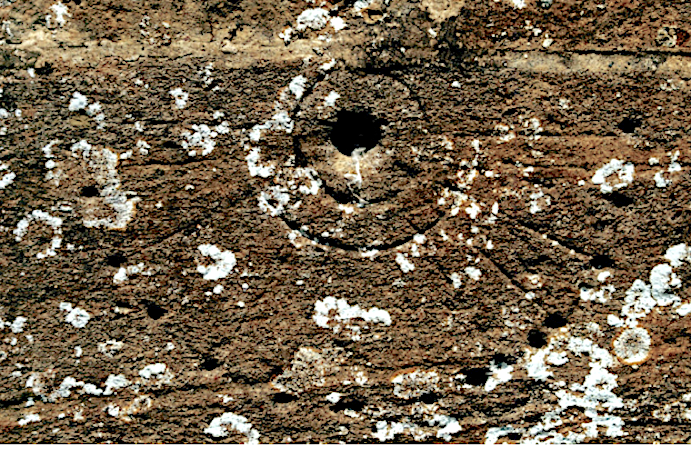
Sometimes it helps to interpret a possible dial – one that may have been re-sited – by rotating the image. It could be argued that the two small pocks equidistant either side of a notional the noon line indicate a simple rather elegant double-ringed marker of the passage of time in the later part of the day. Alternatively it could be a straightforward dial with two pocks that was moved from the S side to W end. Anyway, it looks more dial-ish with this orientation.

DEH noted that this line-less, pock-less design – a hole at the centre of one or two circles – is not uncommon. He suggests that such configurations may have been dials with the details painted within the circles or on the circumference. This was a common practice and can still be seen in a few churches where there is a dial within the porch, cut next to the pre-porch main doorway. West Camel is one example; Chilthorne Domer nearby even has 2.

Local research (see below), originally in conjunction with Tony Woods / BBS, suggests this may in fact be a form of Consecration Cross or ‘event’ mark. That may well be so. However while these often have double circles, crosses generally (always?) do actually feature a cross or at least some form of incised device.

CONSECRATION CROSS

DIAL 8?

As mentioned earlier, I have a note of – and seen a reference to – an 8th dial. It may have been this faint spidery design with its shallow style hole, the lines all LRQ. If it is a dial at all – on balance I am 66% in favour.

These links will take you to two excellent analyses of the dials by Fovant village online resources. Both are interesting in their own right; the second link provides a good overview of the whole community.

FOVANT HISTORY INTEREST GROUP

FOVANT VILLAGE

GSS Category: Scratch Dial; Mass Dial; Consecration Cross

Credits: all photos Keith Salvesen; thanks to the Fovant church research groups

NETHER COMPTON . DORSET . ST NICHOLAS – 3 Scratch Dials

St Nicholas . Nether Compton . Dorset

ST NICHOLAS . NETHER COMPTON . DORSET

GRADE I † C13 nave, chancel, S porch inc outer archway. C15 alterations & additions – chapel, tower. Restored 1885. 2 Purdue bells. 4m W of Sherborne and E of Yeovil.  50.9532 /  -2.5732 / ST598172

DIALS

There are 3 dials beside the porch doorway, 1 on the left side and 2 on the right. The intricacies of the dials are clearer from the BSS archive photos and diagrams compared with my photos, taken in bright sunlight and not picking up the details.

DIAL 1

South Porch L of doorway. 13 lines, with the noon line extended, and 23 pocks. The diagram suggests 1, perhaps 2, mid-morning Mass markers. GLP points out that the lines are below the horizontal whereas almost all the pocks are above it; and that the design is accurate.

DIAL 2

South porch R of doorway. Despite the extended ‘noon line’ (as it appears), the dial must in fact be upside down. If not, it can’t have had any practical use. 10 lines with very variable angles and 12 pocks. GLP describes it as crudely cut as a tide / octaval dial. The white item is a stone, which was in place when I originally saw the dial, and still 18m later. I left it in peace.

DIAL 3

A semi-circular dial with 13 lines, almost all of which end pocks. There is a complete inner circle round the gnomon hole, with semi-circle outside it. GLP found the dial to be accurately cut.

CONSECRATION CROSSES

On chancel—(a) on external S. wall, W. of S. window; on N. chapel—(b) on N. external wall, W. of N.E. window, reset; on nave—(c) on external N. wall, between N.E. window and doorway; (d) on E. splay of N. doorway; (e and f) on E. jamb of S. doorway, two crosses; (g) on E. splay of S. doorway; (h) on E. splay of S.W. window; on W. face of tower— (i) against N. buttress; all formy crosses in circles except second on jamb of S. doorway, mediæval (BLB)

St Nicholas . Nether Compton . Dorset – Consecration Cross

GSS Category: Scratch Dial; Consecration Cross

All photos Keith Salvesen + BSS archive (also diagrams)