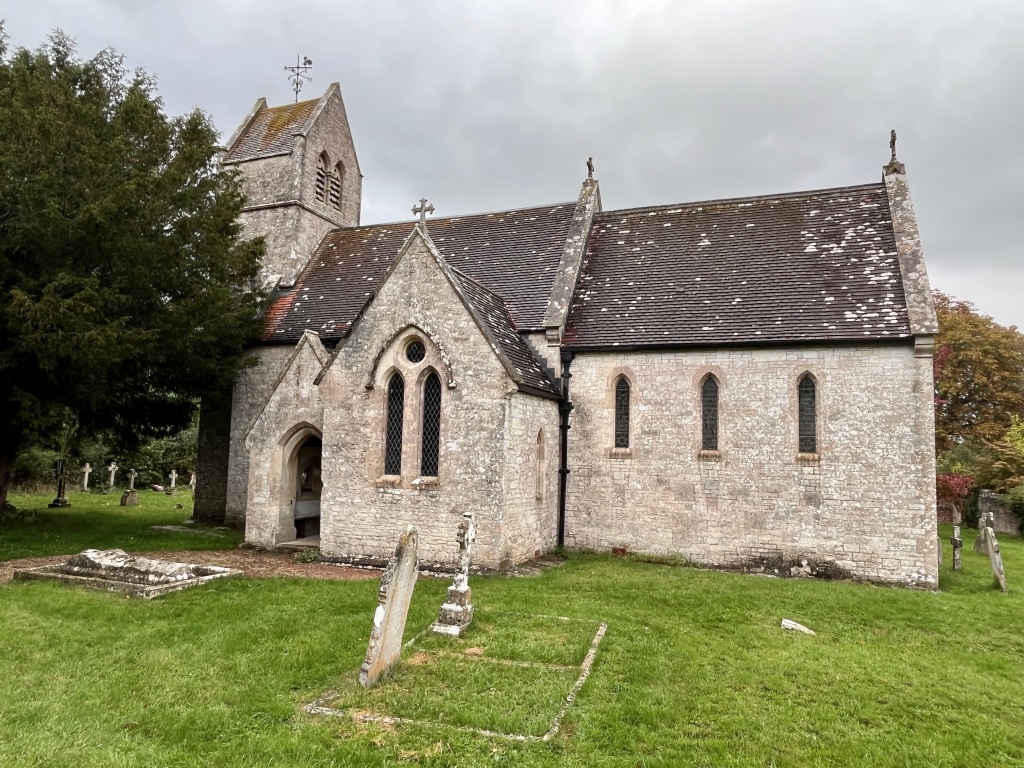
GRADE I † C11 nave; C13 transepts; C14 chancel. From C17, alterations and restorations inc by Wyatt in 1860. Large and interesting cruciform churchPEV. Marble Feversham family monuments by Scheemakers. Significant local legacy from Neolithic, Iron Age, Roman (Villa) and Saxon times. 9m S of Salisbury. 50.9937 / -1.7433 / SU181216
✣
DIALS
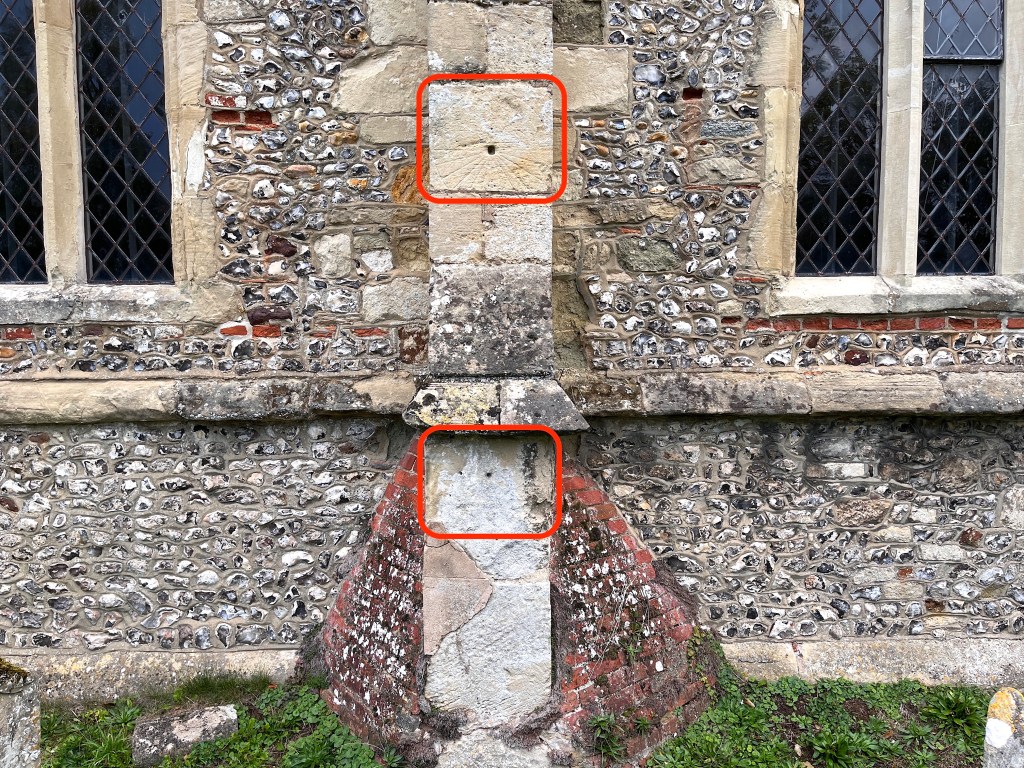
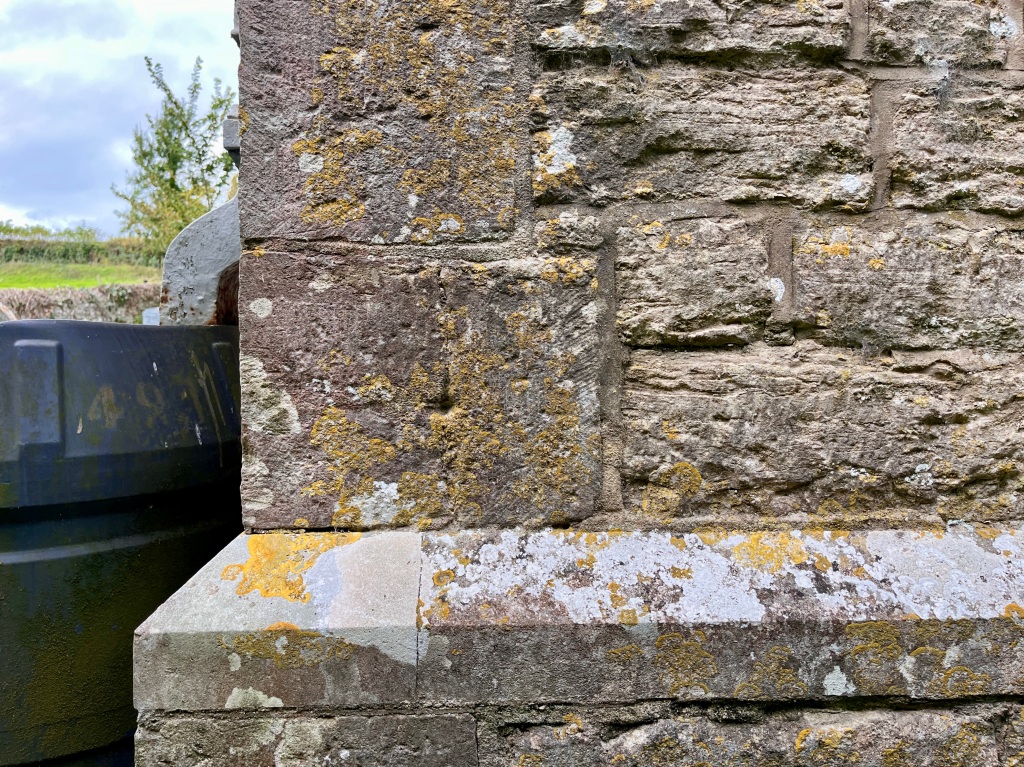
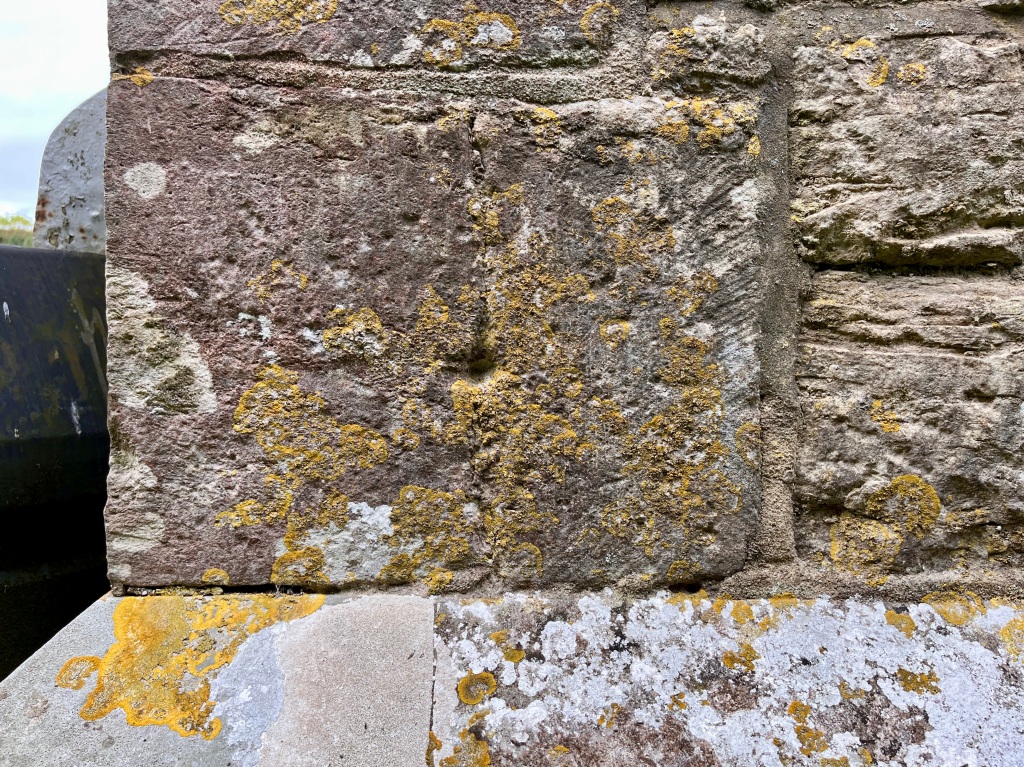
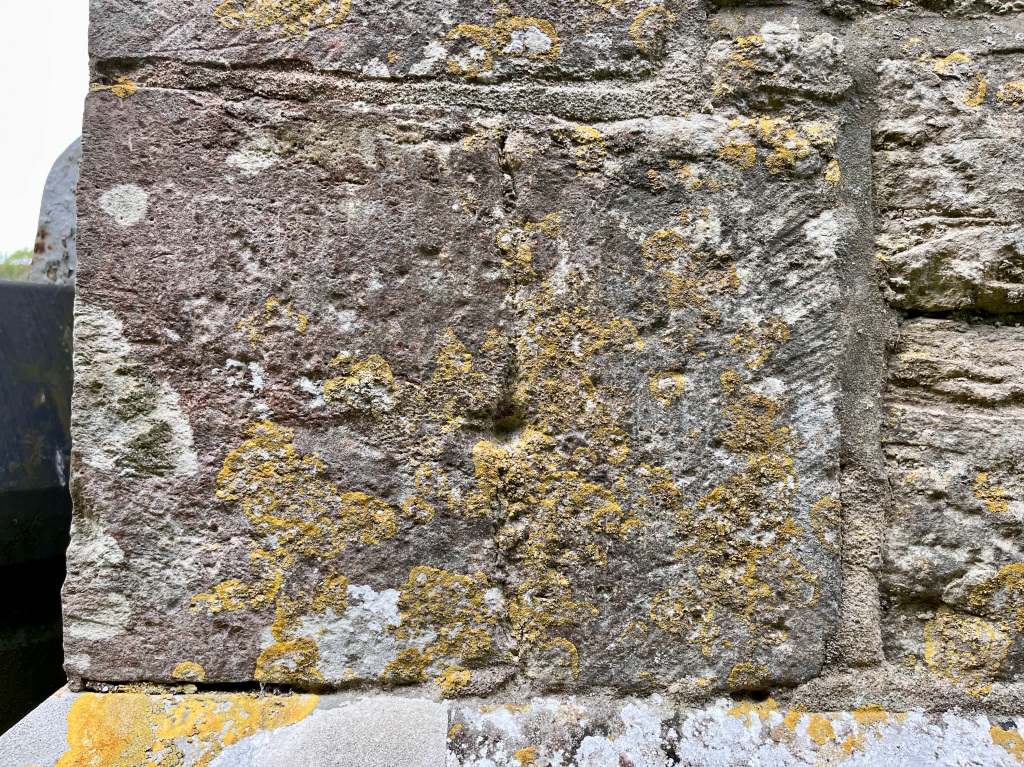
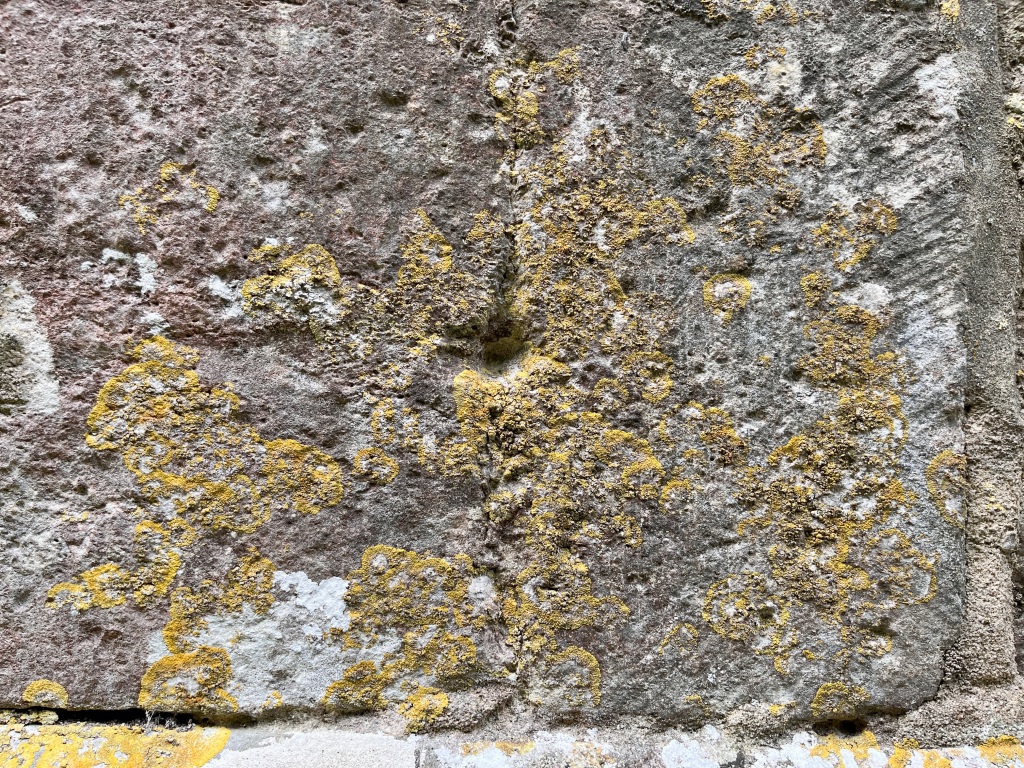
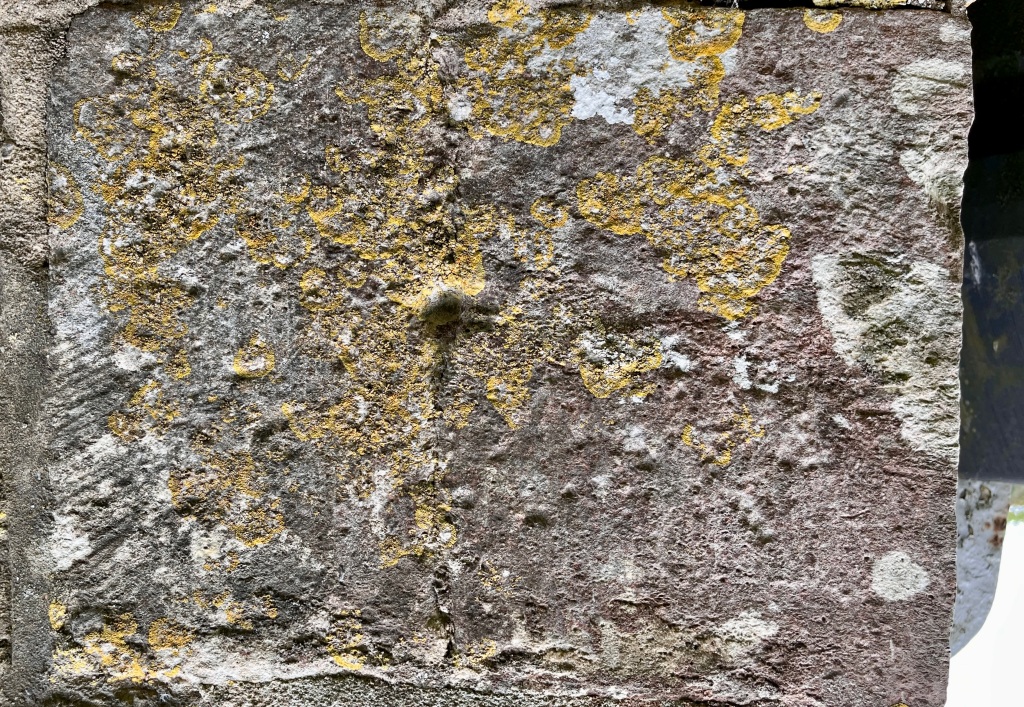
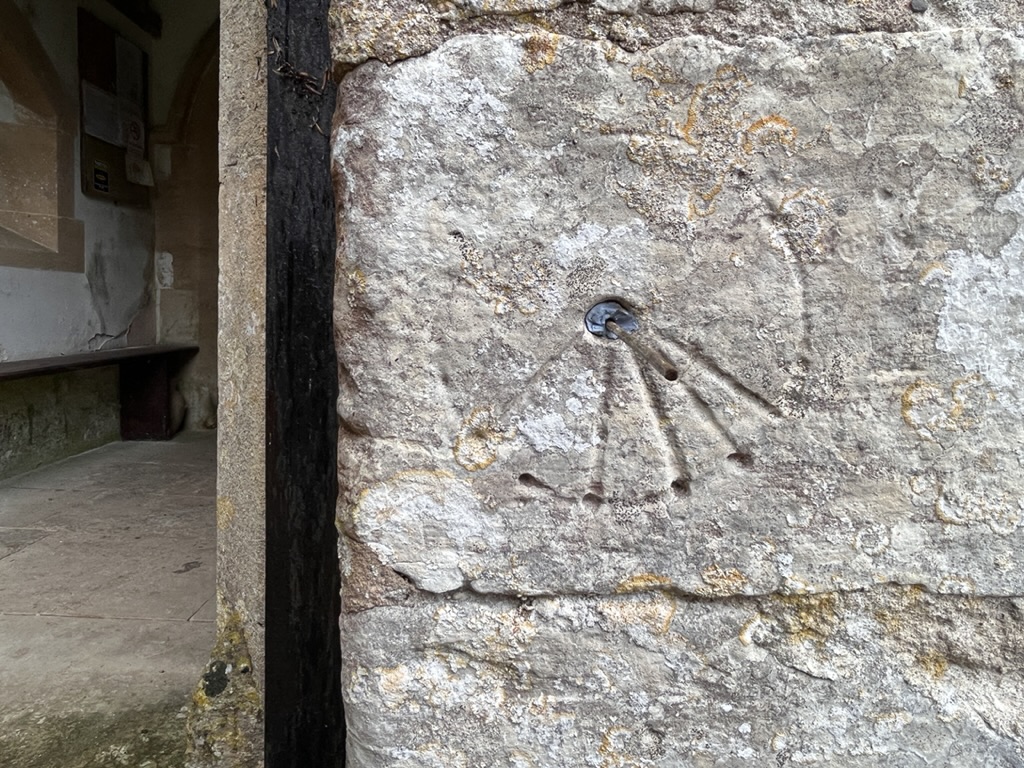
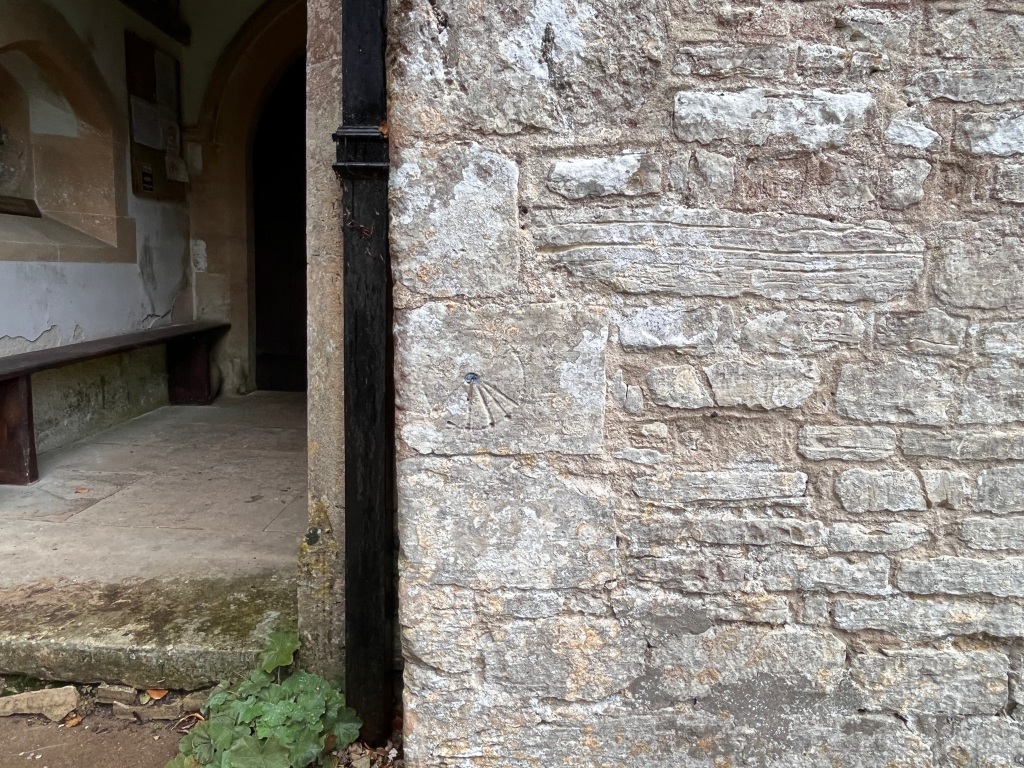
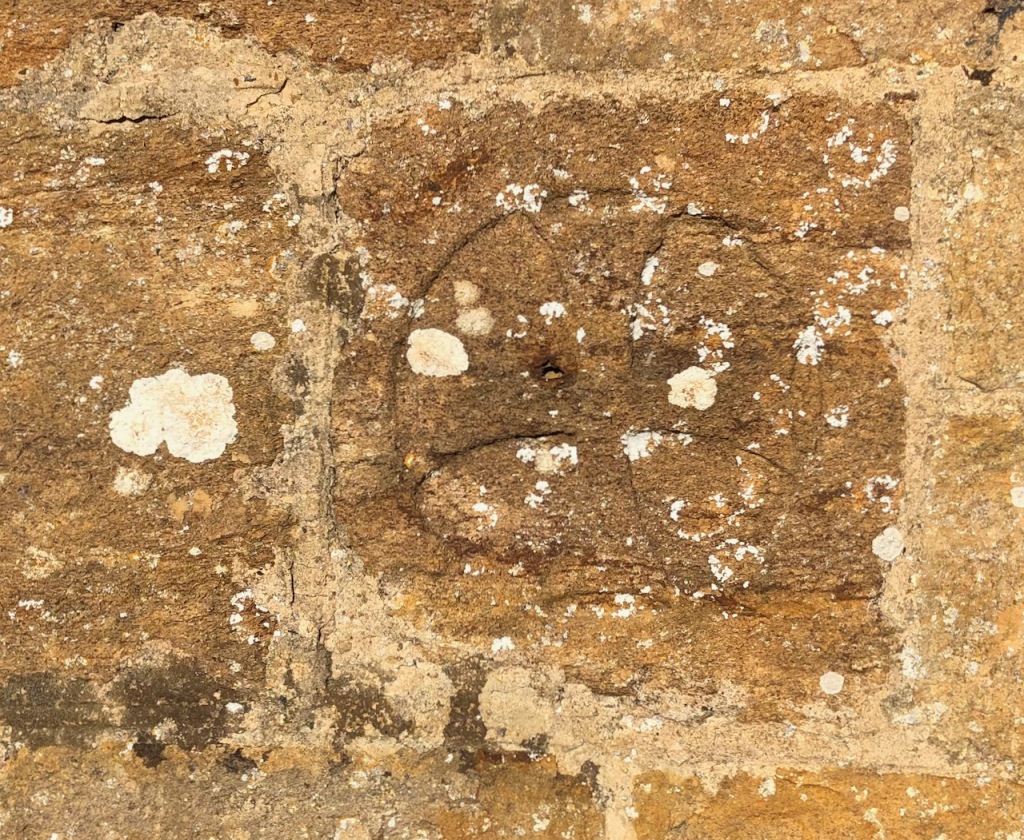
St Laurence has 2 dials on the 2nd buttress E of the porch, one above the other. The upper one is a fine example of a large dial filling the dial stone. The lower is so badly damaged / eroded that it would be easy miss; and it is quite hard to imagine what it looked like originally.
✣
DIAL 1
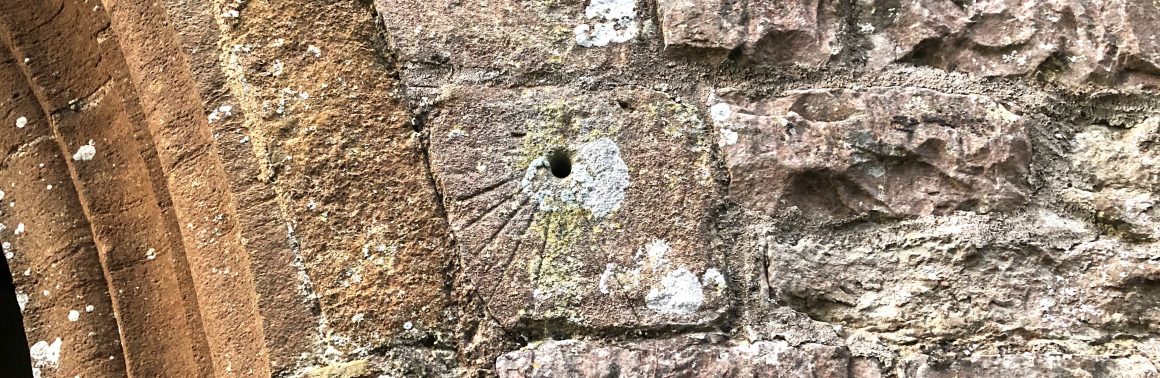
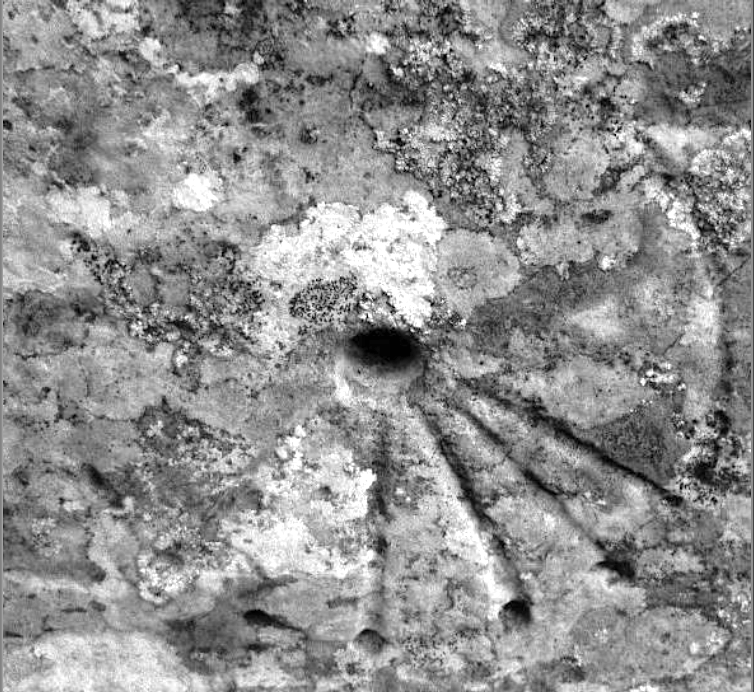
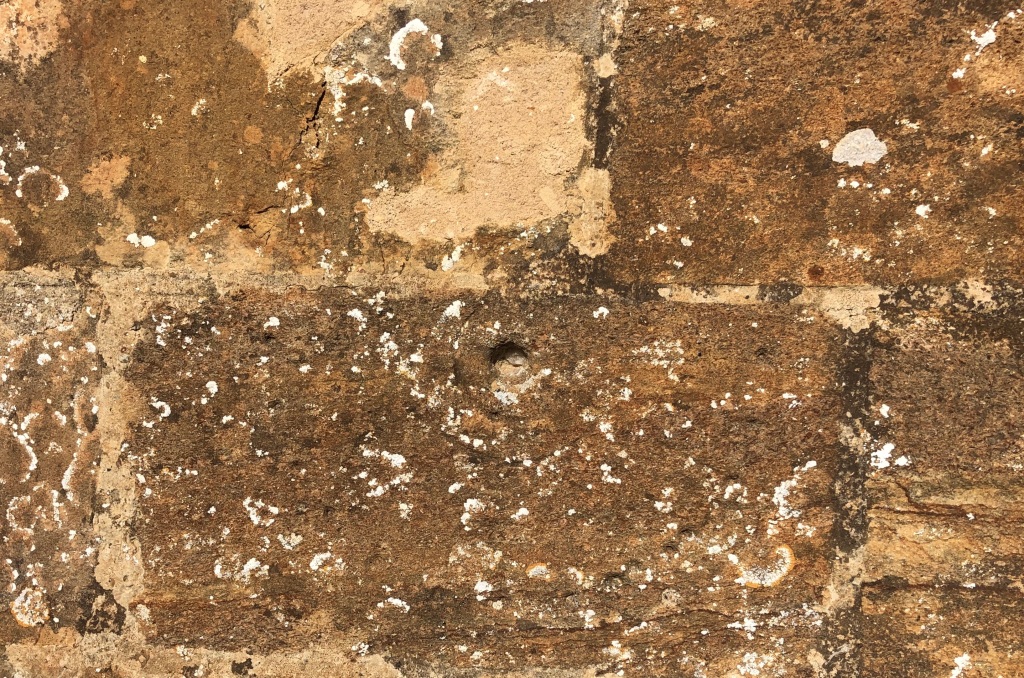
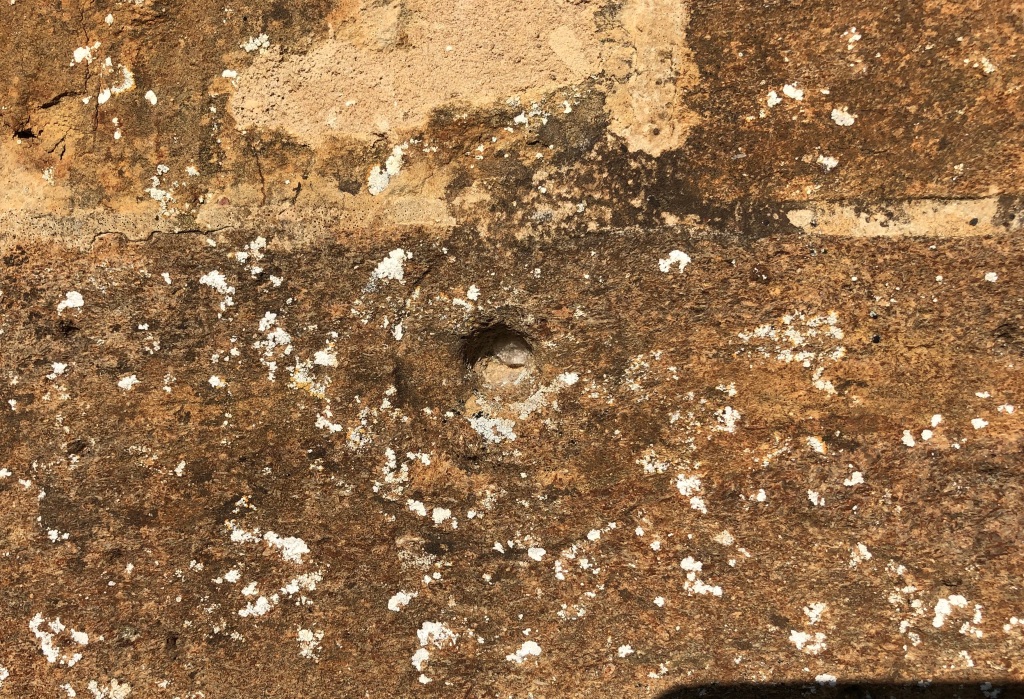
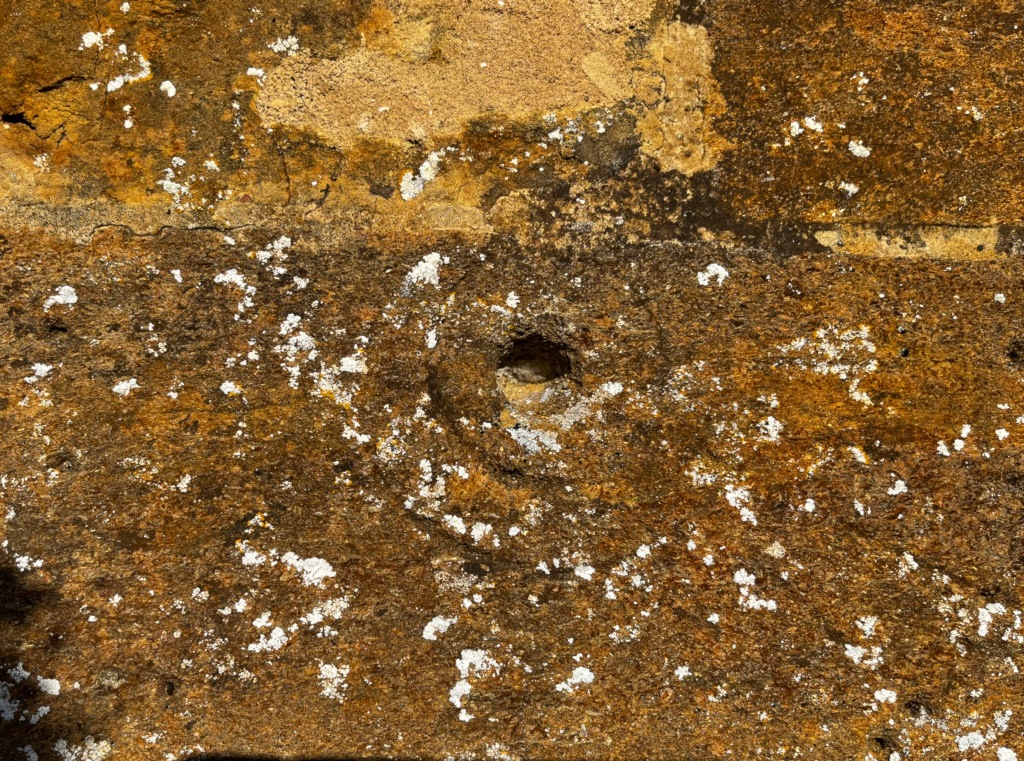
Dial 1 is encircled, with 13 lines and 24 pocks around the perimeter and forming 2 crosses . This large dial not only takes up the width of the stone, the circumference continues onto the stone below as do some lines (esp. 11am). The noon line ends in a 4-dot cross on the main stone, and the 9am line has a 5-dot cross on the lower stone.
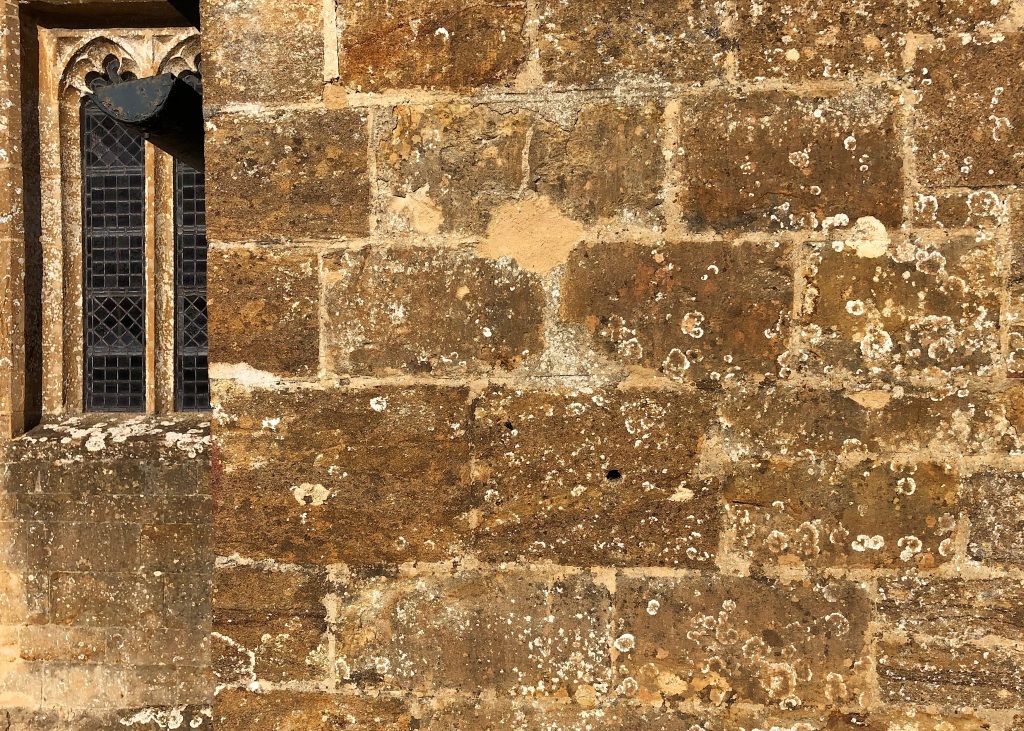
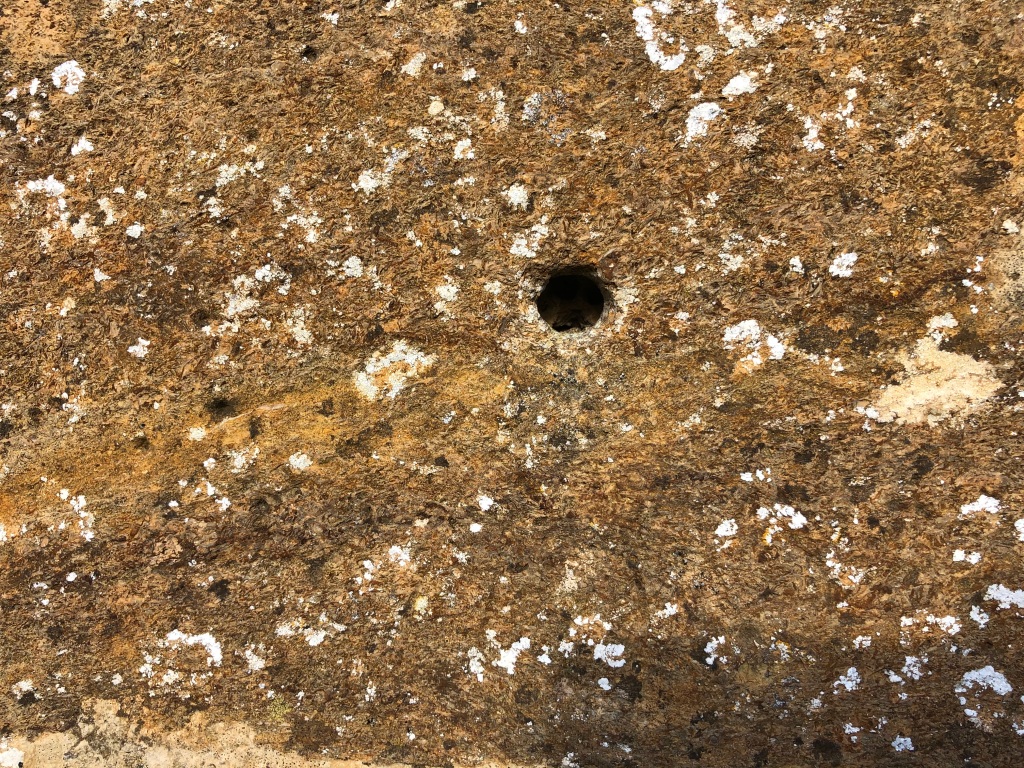
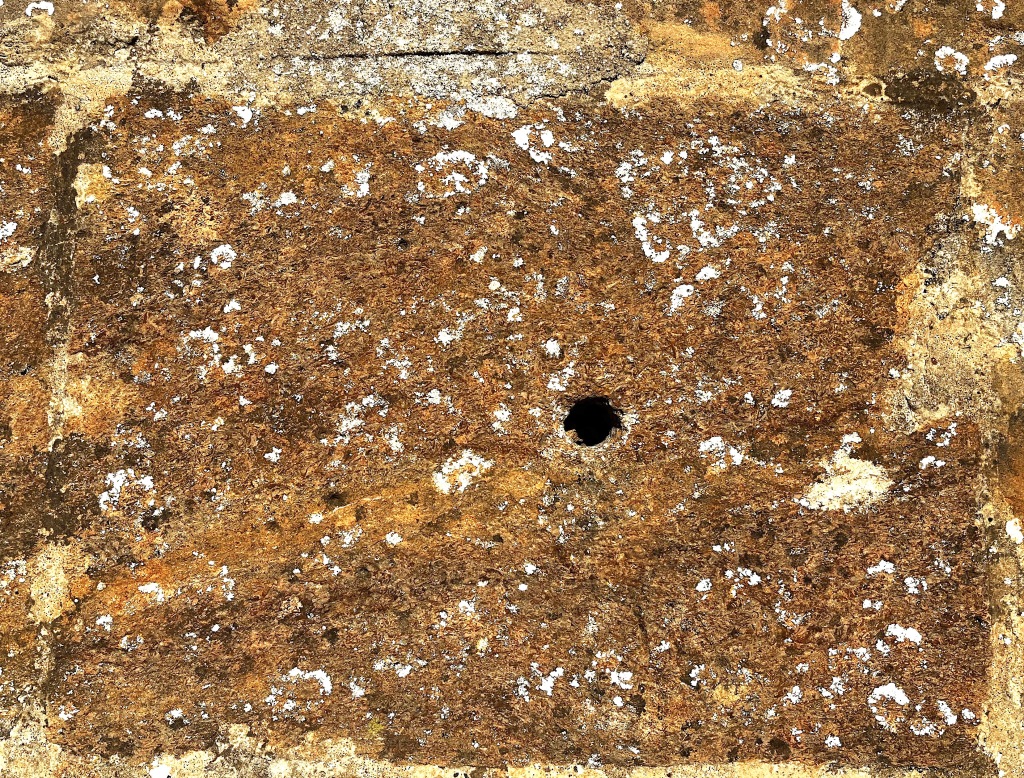
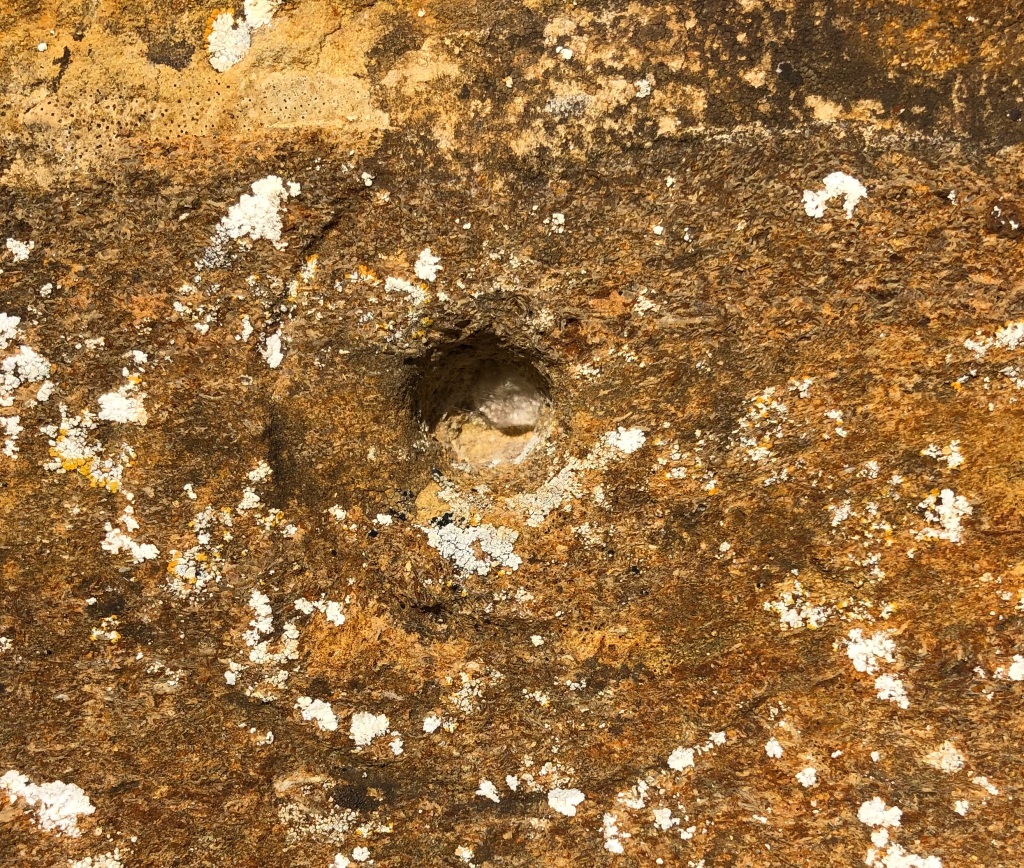
The gnomon hole is of particular interest; I haven’t come across a square hole with (apparently) a circular one inside it before. Possibly the original gnomon was a basic rod, and its round hole later enlarged to accommodate a more visible square rod.
St Laurence . Downton . Wilts – Scratch Dial 1
✣
DIAL 2
St Laurence . Downton . Wilts – Scratch Dial 2
Dials Locations
GSS Category: Scratch Dial; Mass Dial; Medieval Sundial; Church Dated Initials
GRADE II* † Early C13 chancel, nave, N doorway; C15 N porch; c1500 W Tower; later additions; C19 restorations. A simple typically Dorset small church in an attractive location. 2m S of Dorchester (can be combined with Winterborne Steepleton nearby (2 dials). 50.6884 / -2.4604 / SY675877
✣
DIALS
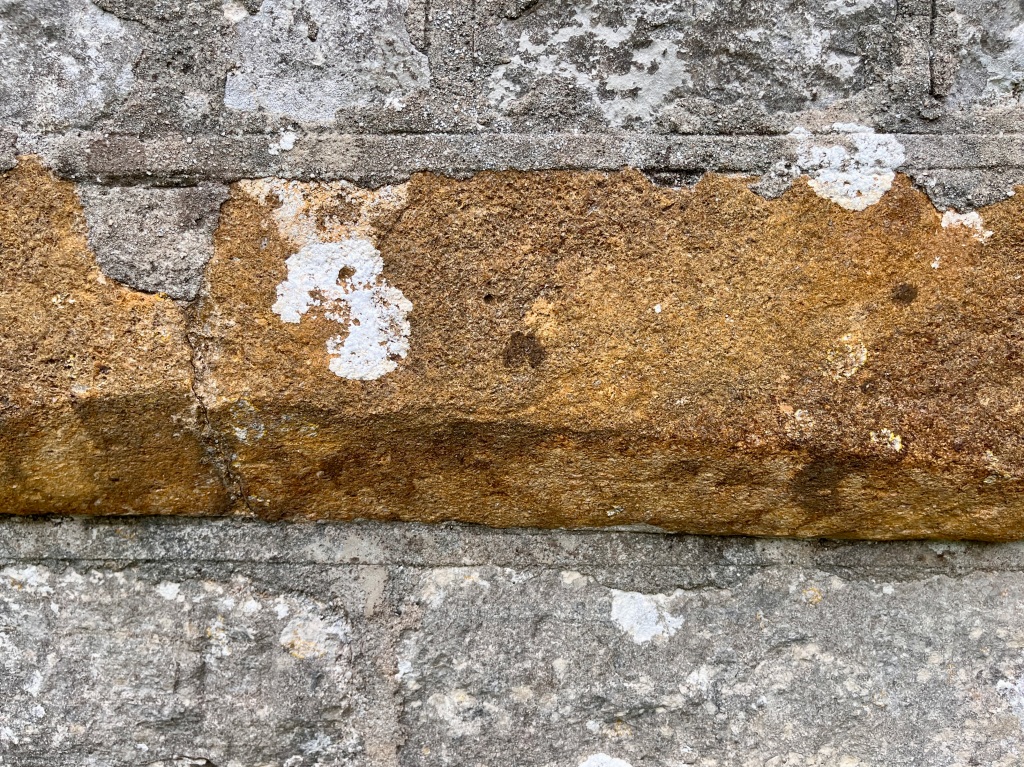
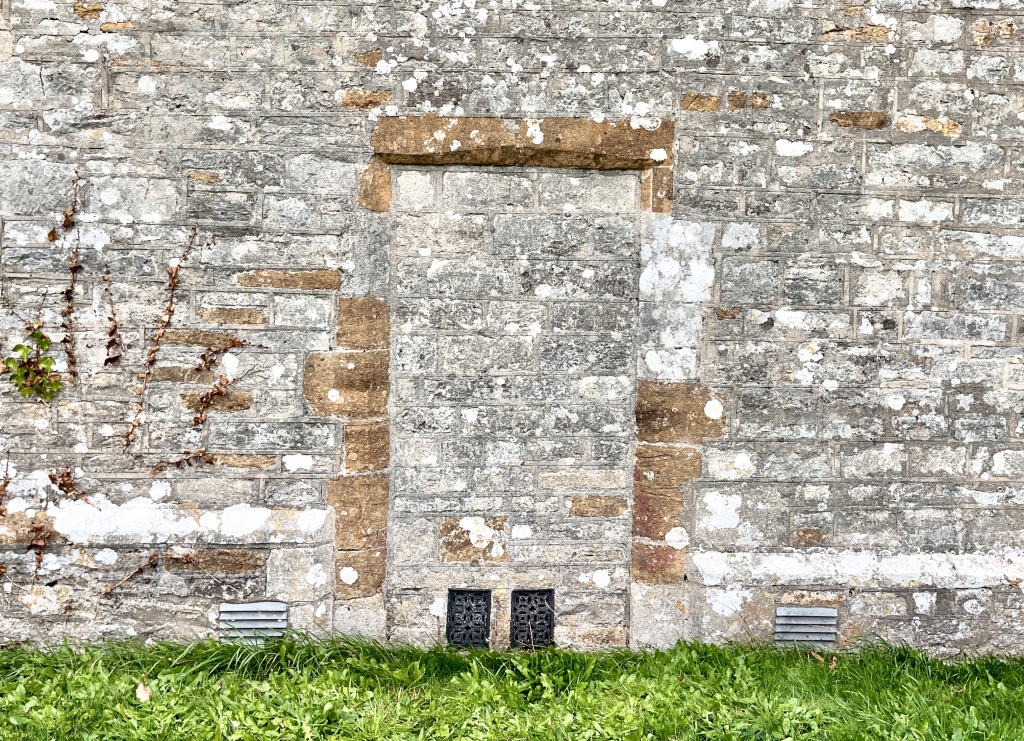
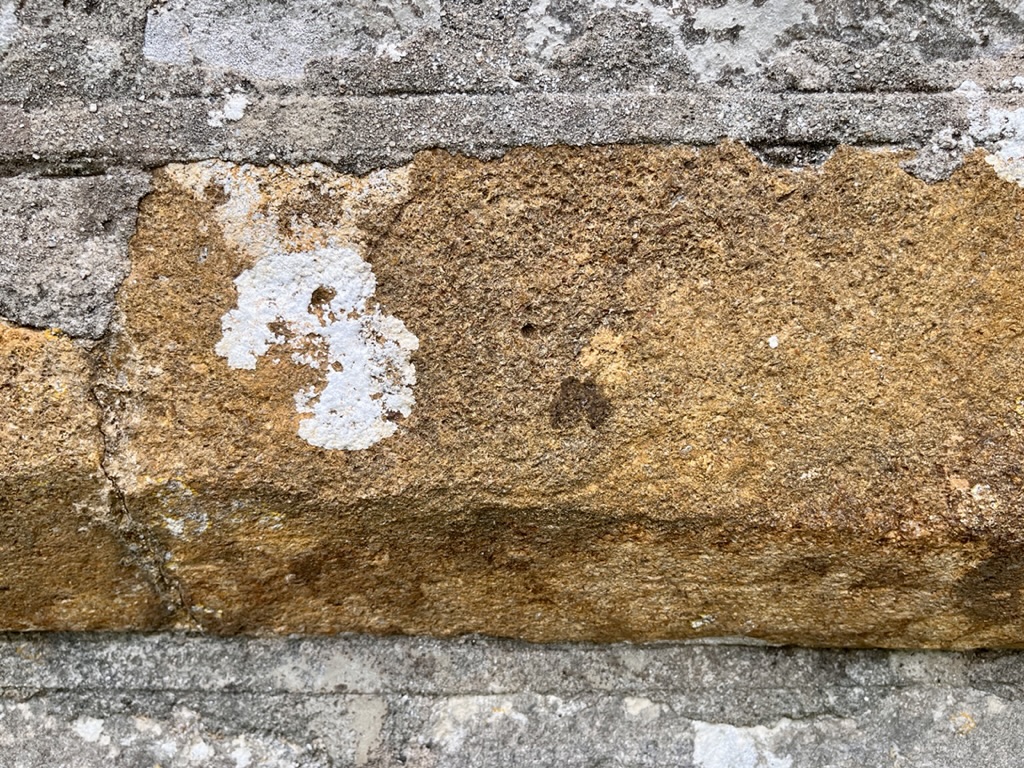
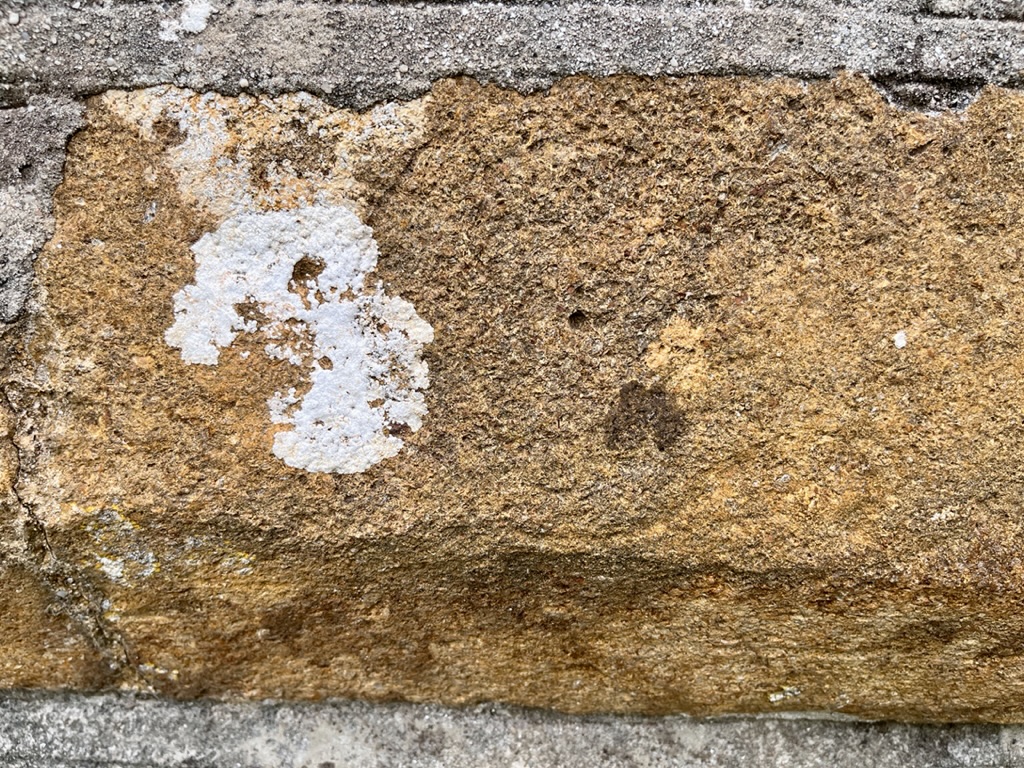
GLP notes a single doubtful dial over a blocked doorway, not included in BSS records. However there is a clear inverted dial elsewhere on S side. There is also a dial-ish quoin stone that I include. There’s not enough evidence to consider it much more than doubtful, but the location is conventional and the overall ‘jizz’ (to use a birding term) invited more than a glance.
✣
DIAL 1
Above the blocked S aisle door, C16. GLP suggests a masons’ mark rather than a scratch dial and notes a similar ‘dial’ at Hilton, near Blandford. There are 2 faint concentric circles. The very small central hole that would be more consistent with the use of a compass inscribe the circle.
✣
DIAL 2
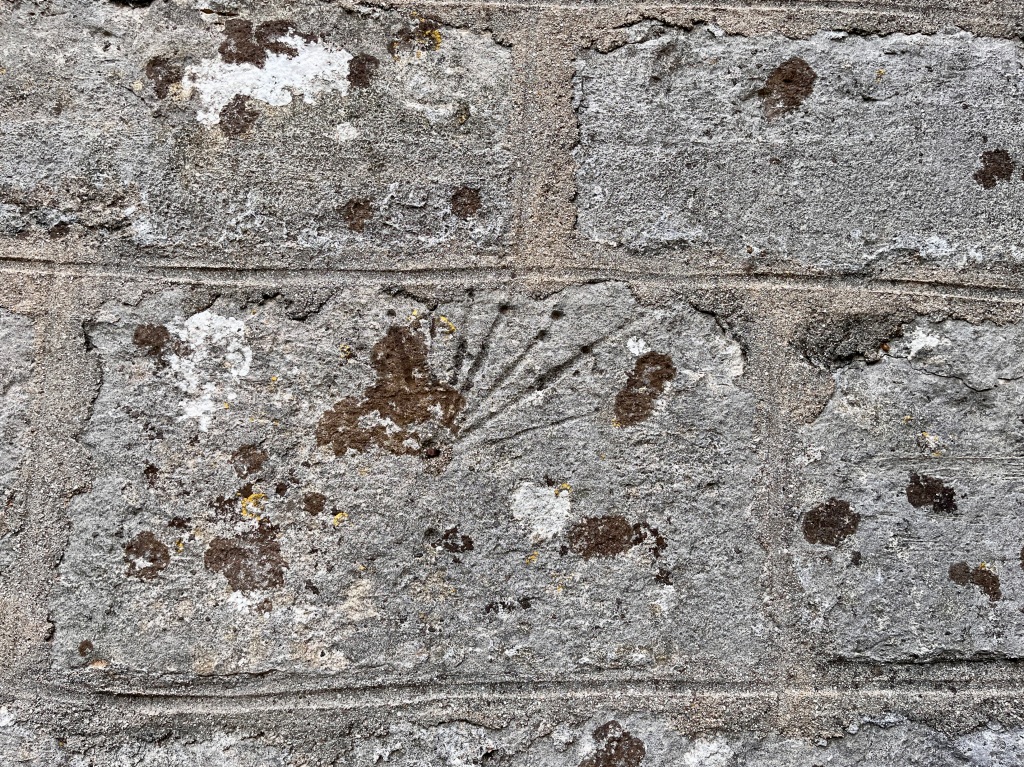
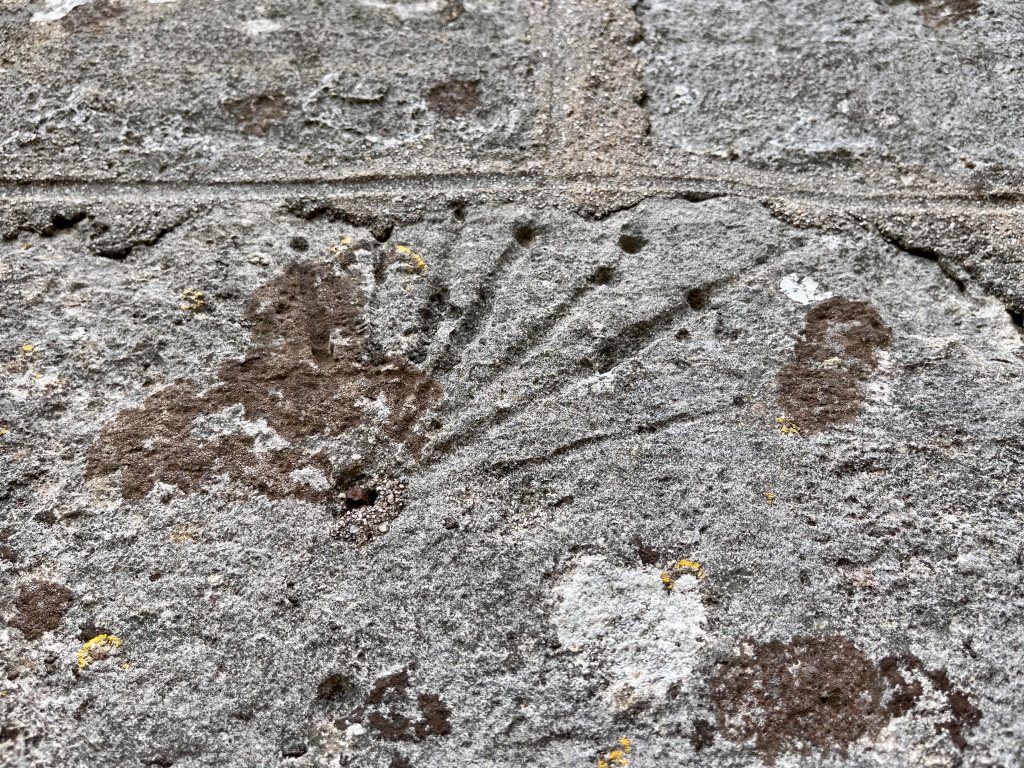
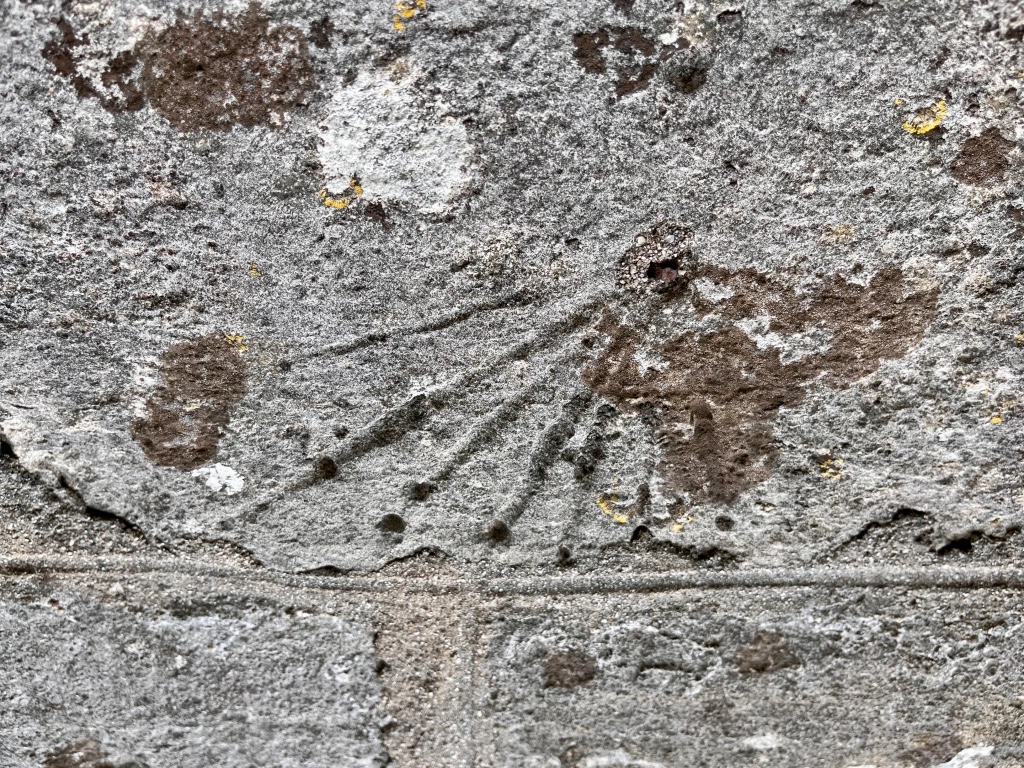
Quite high up at the W end of the S face is a very clear dial that I have not found recorded elsewhere. There are 7 lines, each ending in a pock and with the (presumed) 9-line having a second pock, doubtless the main Mass time. The reversion below shows how the design would have worked well as a morning dial.
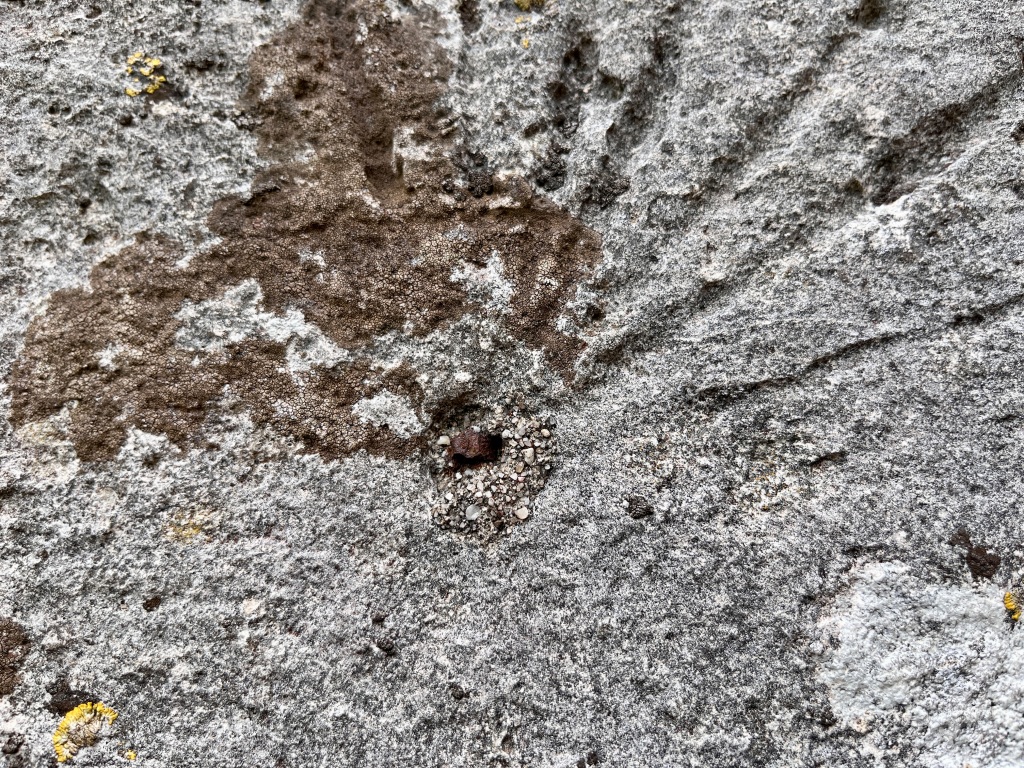
The most intriguing feature is the presence of (the remains of) a square rod in the style hole, with filler material round it. It seems highly unlikely to be original, though it may have been inserted many years ago perhaps as a replacement gnomon. A square rod in not so rare: there is one at St Mary, Glanvilles Wootton, for example.
Winterborne Monkton . St Simon & St Jude . Scratch Dial
Winterborne Monkton . St Simon & St Jude – Reverted Scratch Dial
✣
DIAL 3 ?
An excellent dial position, a hole almost central to the stone, and inverted (if a dial at all) as often the case where a dial has been superseded or its stone relocated. I have included a reversion that makes the upwards mark into a noon line. There are hints of perimeter pocks in LR quadrant.
Winterborne Monkton . St Simon & St Jude – Possible Scratch Dial
✣
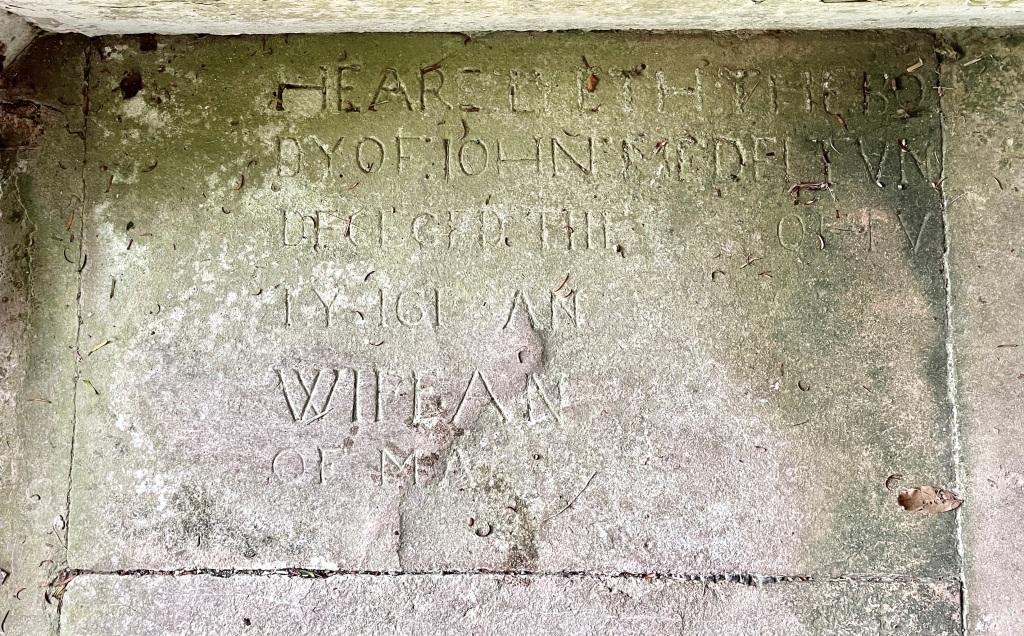
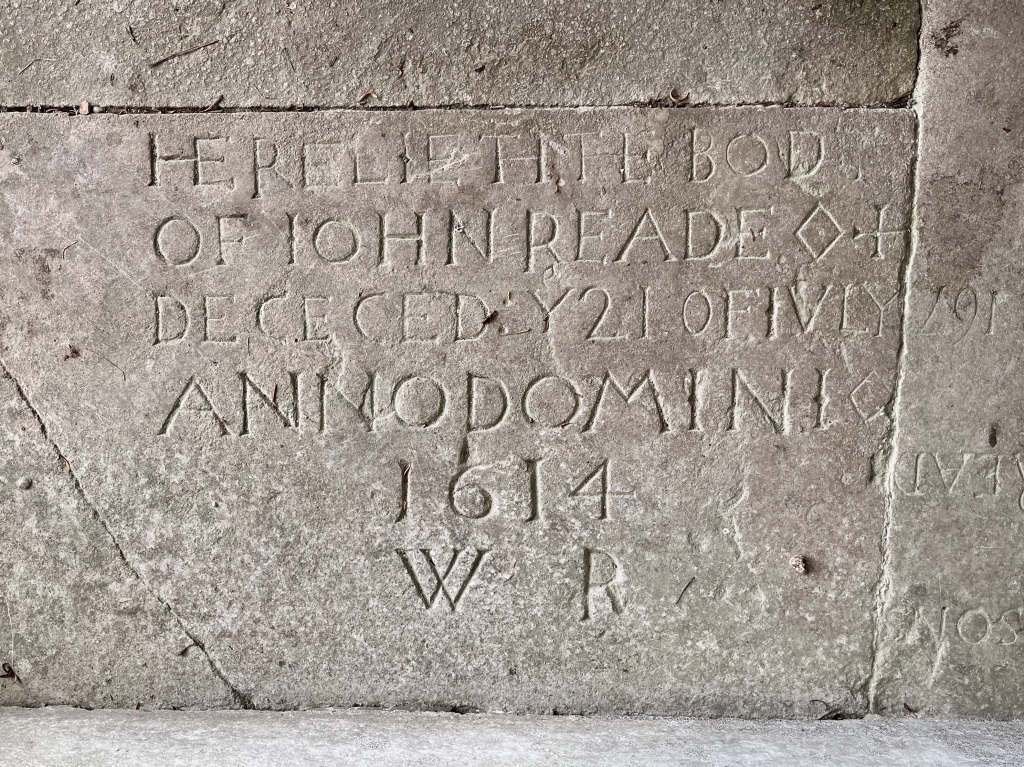
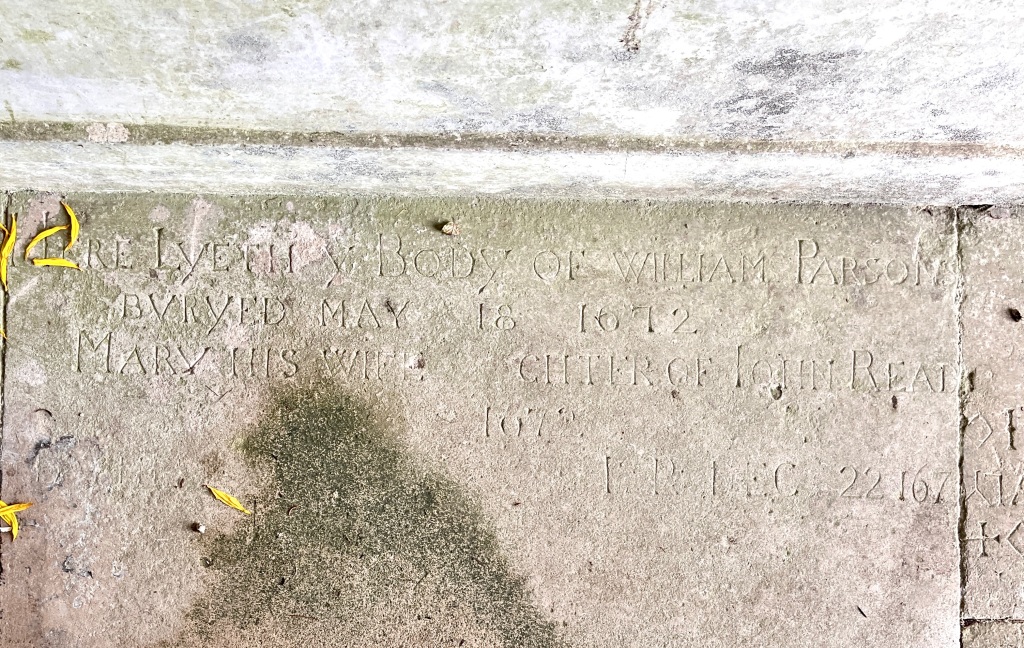
Finally, there are 3 fine C17 memorial floor slabs to admire
GSS Category: Scratch Dial; Mass Dial; Gnomon Rod; Masons’ Mark, C17 memorial floor slabs
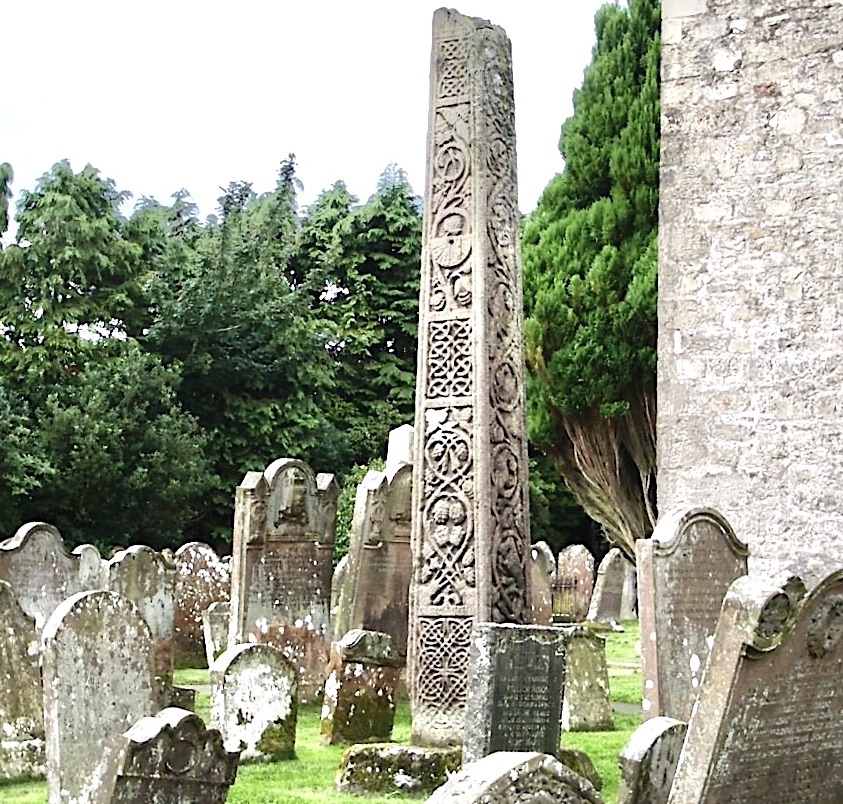
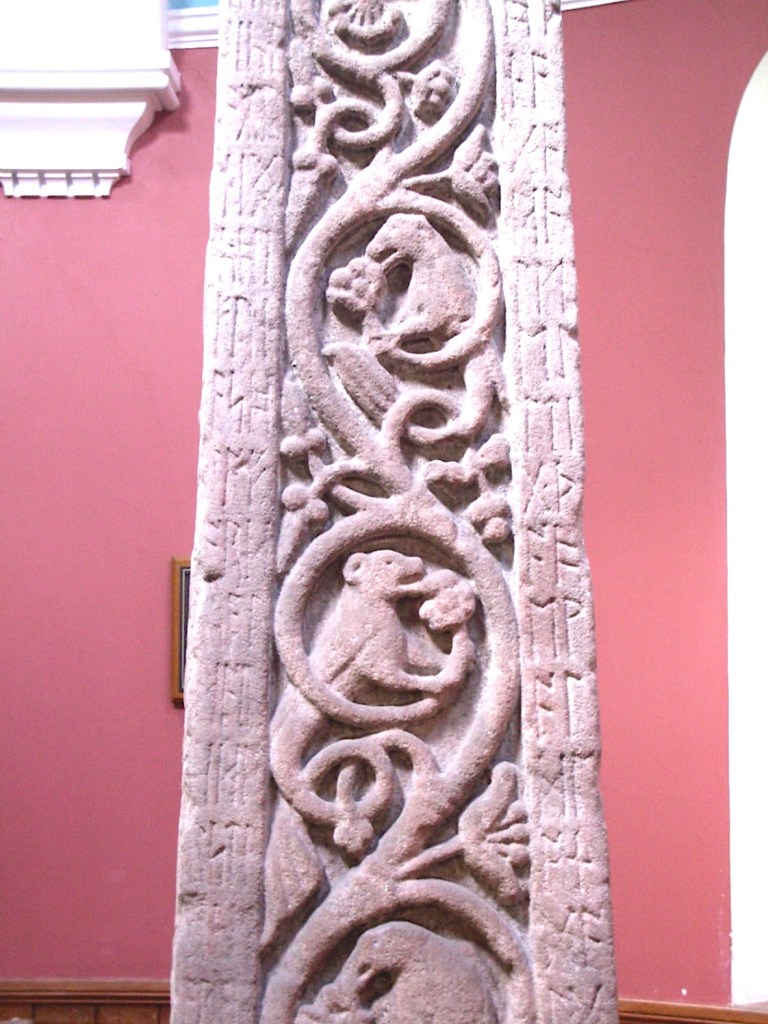
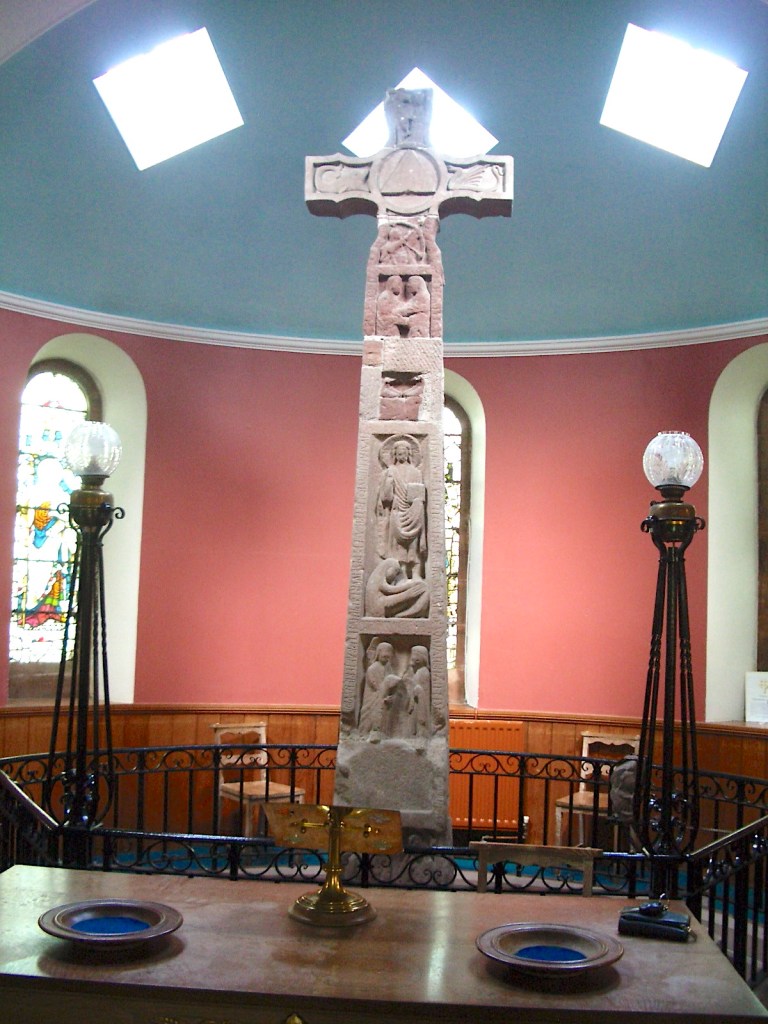
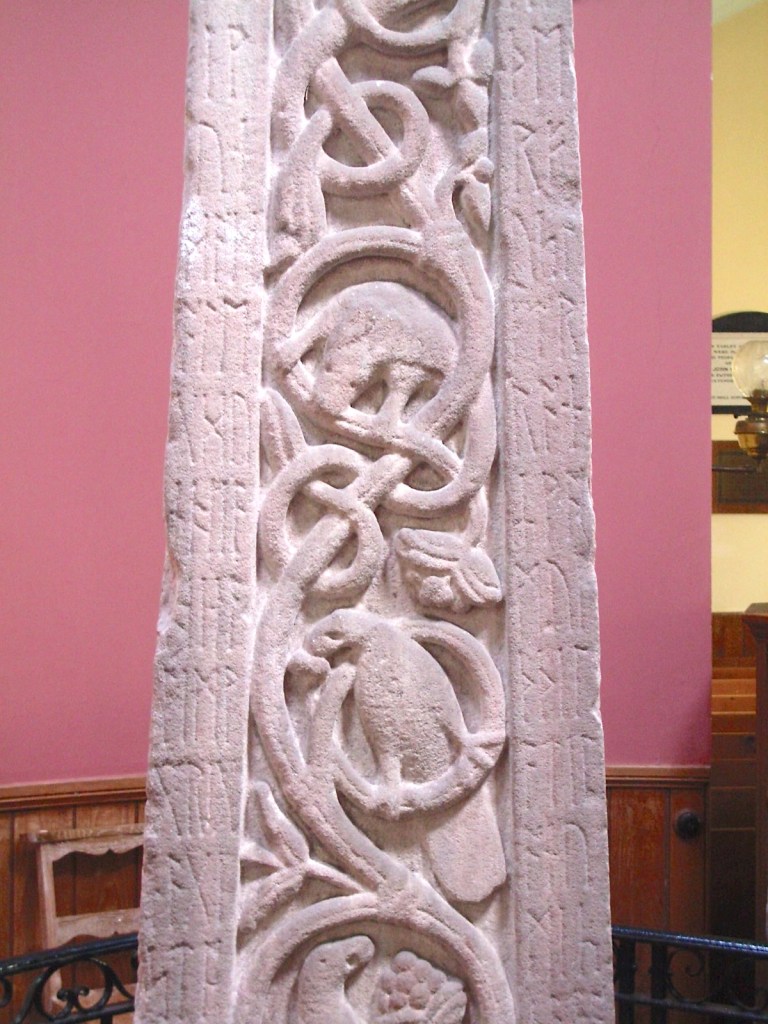
The famous Bewcastle Anglo-Saxon cross is located in St Cuthbert’s churchyard. It is dated in some sources as C8 and in others as early as C7. Whichever, it is generally believed to be the oldest British sundial. PEV praised it, with the similar Ruthwell cross, as the greatest achievement of their date in the whole of Europe. There is a replica in the British Museum.
There is understandably a mass of online material analysing and explaining the cross, the wonderful carvings, and the meanings to be derived from them. I need to bypass these to focus on the astonishing early sundial incorporated into the elaborate decoration. For other aspects the Wiki entry BEWCASTLE CROSS is a good place to start.
Bewcastle Cross and Dial . Cumbria . Keith Salvesen
THE BEWCASTLE DIAL
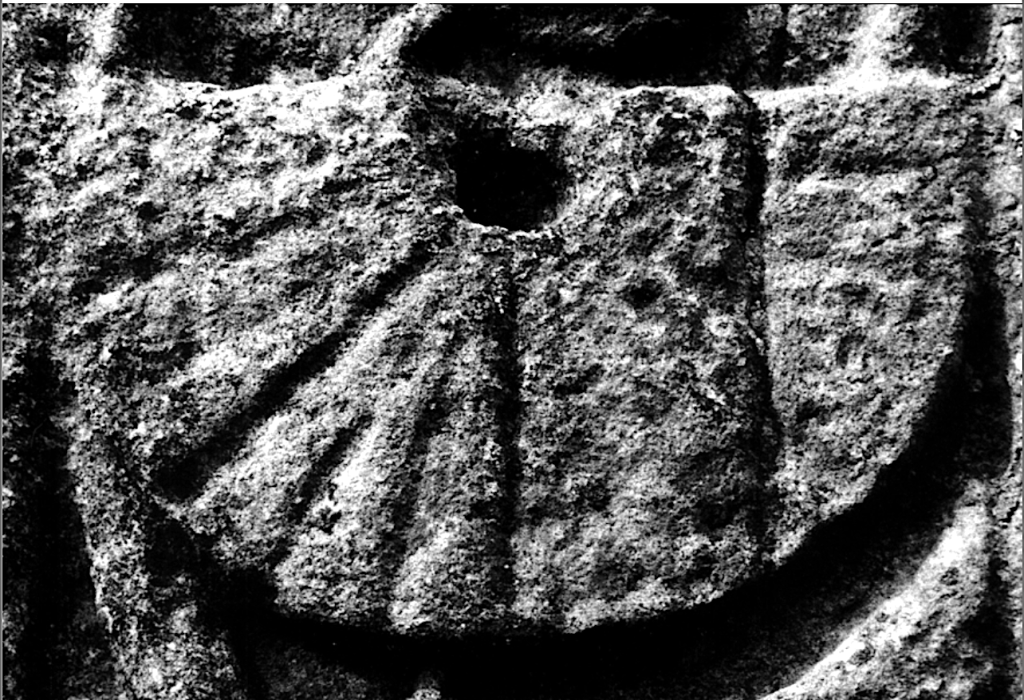
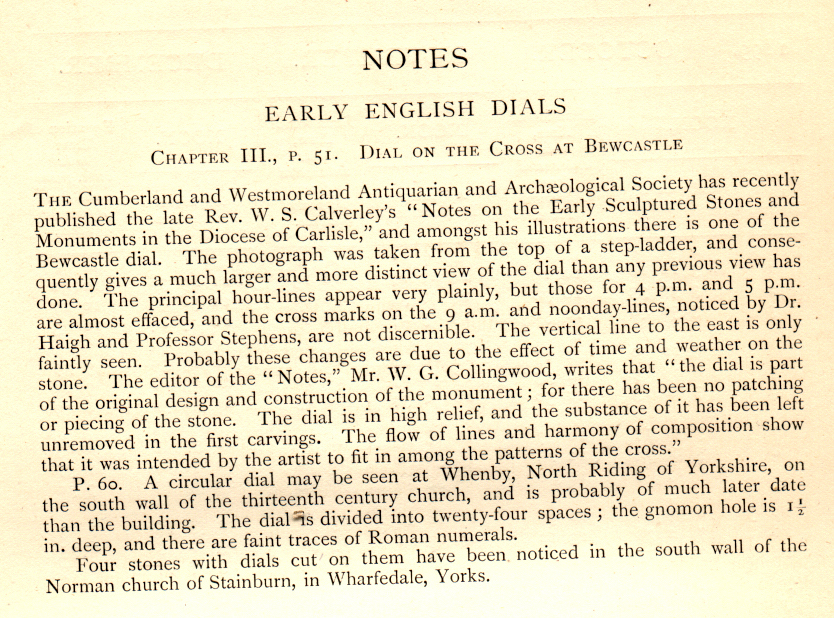
The dial is in a prominent position on the upper half of the south face. The BSS record describes the cross as Celtic, with the dial being integral to the overall design. 8 lines are noted, with the vertical line on the right side considered to be a later addition (but see below). The noon line is emphasised by being deeper cut, with 9am even more so and ending (perhaps) in a large hole. The dial must have been easy to read from afar. BSS has 3 close-up images in the archive which give a clear view of the dial and its slightly wider context.
Bewcastle Cross and Dial . Cumbria . BSS
Bewcastle Cross and Dial . Cumbria . BSS
Bewcastle is used as an example in the Wiki entry for the TIDE DIAL The article includes useful explanations and images. These lead to other related topics for those who want to investigate further. More importantly, there is a helpful analysis of the details of the sundial’s design, and how it would have worked in practice. The cross is believed to be in its original position, and one can imagine the way in which the passage of the day would have been marked for the benefit of the community.
The oldest surviving English tide dial is on the 7th- or 8th-century Bewcastle Cross… carved on the south face of a Celtic cross… and is divided by five principal lines into four tides. Two of these lines, those for 9 am and noon, are crossed at the point. The four spaces are further subdivided so as to give the twelve daylight hours of the Romans. On one side of the dial, there is a vertical line which touches the semicircular border at the second afternoon hour. This may be an accident, but the same kind of line is found on the dial in the crypt of Bamburgh Church, where it marks a later hour of the day. The sundial may have been used for calculating the date of the spring equinox and hence Easter.
Bewcastle Cross and Dial . Cumbria . Keith Salvesen
Bewcastle Cross . Diagram of each face. Eixo Wiki CC
‘Plaster Cast of an Early English Sundial’ . 1930s. (Science Museum)
Plaster cast (mounted in wooden frame) of the sundial on Bewcastle Cross, Cumberland, 670 CE. The day is divided into ‘tides’, which are cut into the stone. The gnomon is missing. Credit: A. J. Lothian
Bewcastle Cross and Dial . Cumbria . Keith Salvesen
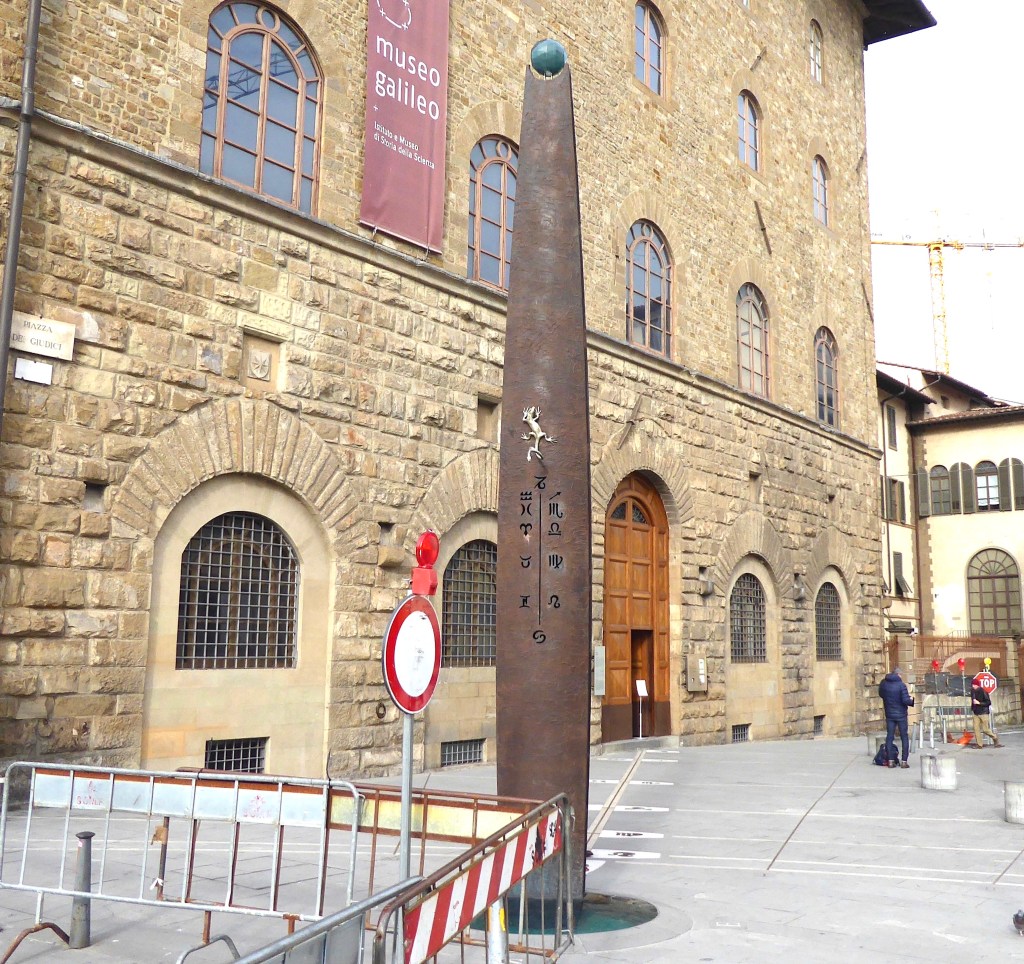
Lizard / Viper Gnomon of Monumental Dial . Museo Galileo . Florence
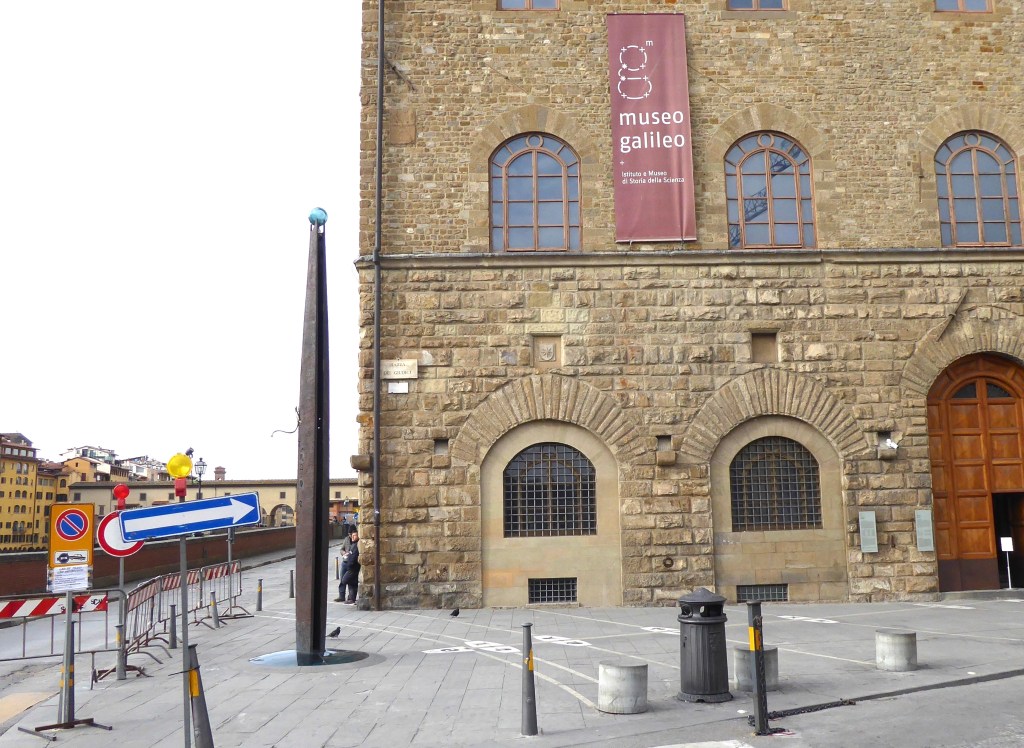
MONUMENTAL SUNDIAL . MUSEO GALILEO . FLORENCE
The Museo Galileo‘s Monumental Sundial was built as a mathematical ornament in 2007. The slender bronze column (stele) is in fact formed from two matching columns closely aligned, symbolising day and night. The (mid)day stele faces south, with a vertical meridian line on which the shadow is cast by a lizard’s tail (actually, an imaginary half-lizard, half-viper). The night stele faces north and signifies the constellations Ursa Major and Ursa Minor that enable the Pole Star to be identified.
Monumental Dial . Museo Galileo . Florence
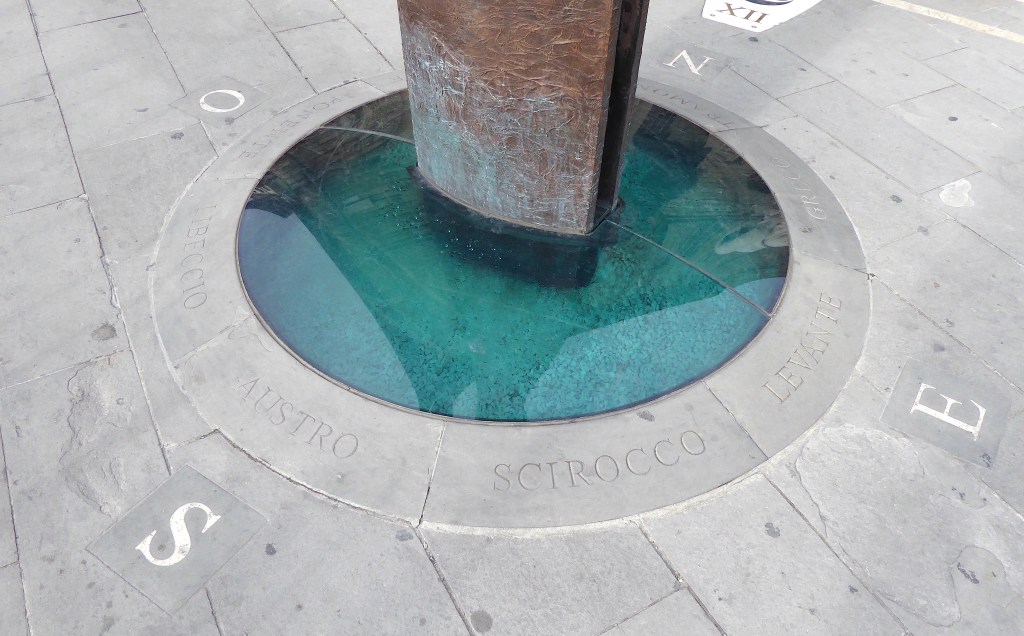
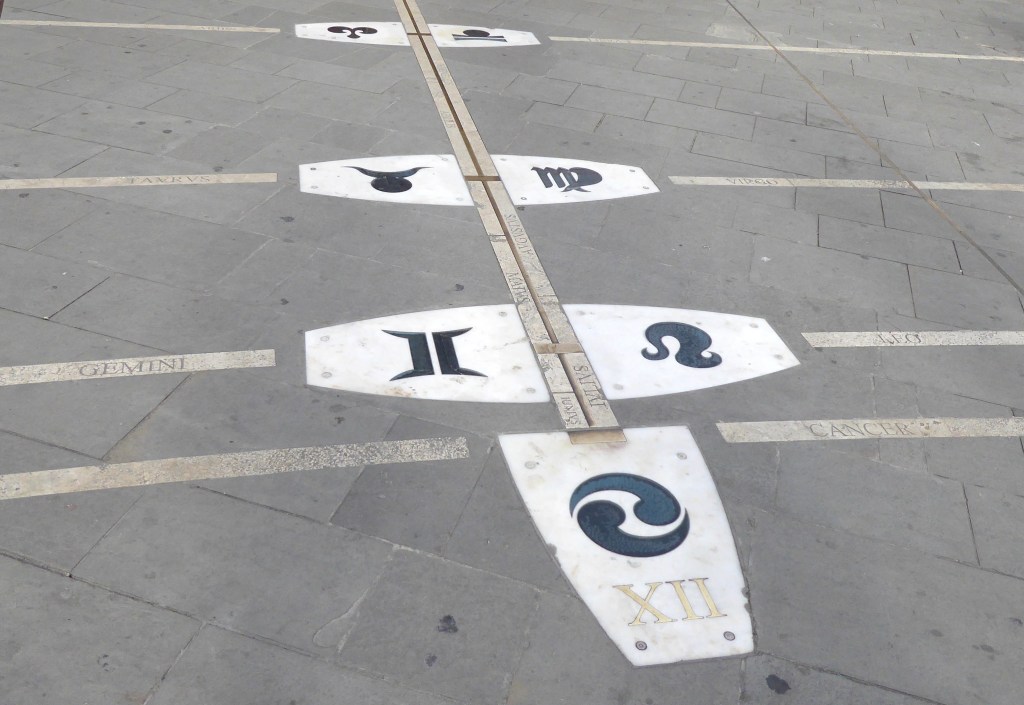
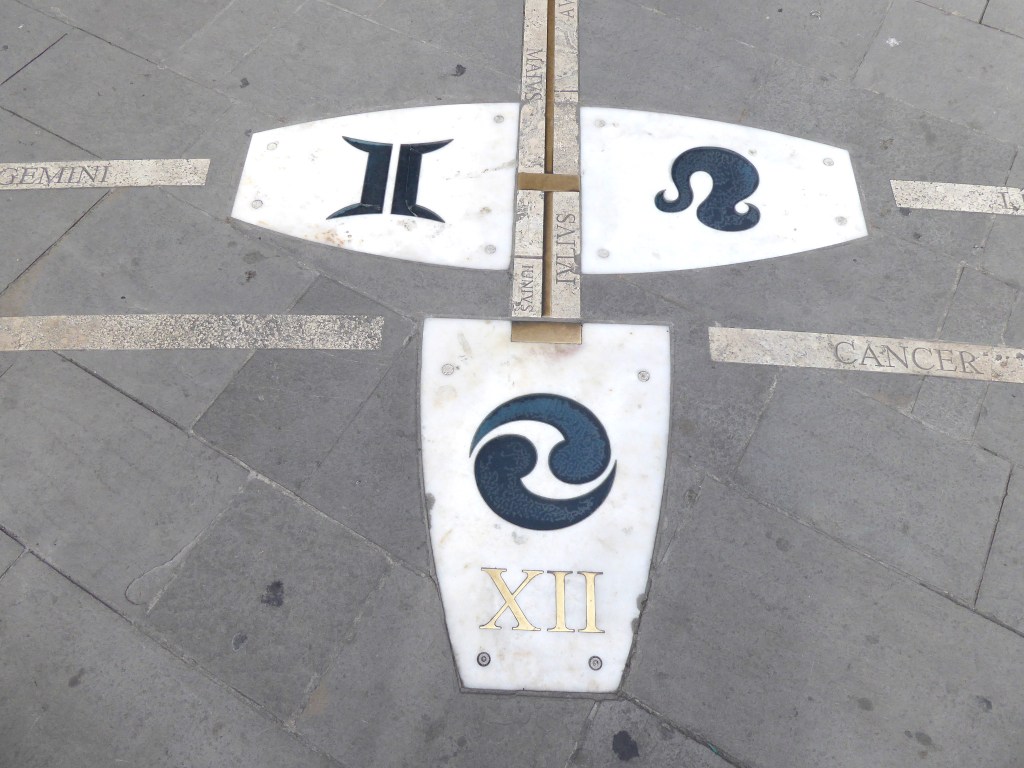
The encircled quadrant design on the pavement at the base of the bronze columns indicates the geographic orientation. This glass base of the gnomon, and also the Zodiac signs in the meridian line (below), are up-lit after dark.
Orientation dial . Monumental Dial . Museo Galileo . Florence
The Museo explains the meridian line in helpfully simple terms: A travertine and brass meridian line is drawn on the pavement, flanked with glass and marble signs of the Zodiac. The meridian line extends for about 15 metres from the museum entrance, where the winter solstice is marked, to the base of the gnomon, where the summer solstice is marked. The travertine curves crossing the meridian line indicate the date. The brass radial lines forming a grid with the two solstitial curves indicate the hours.
The seasons and the four elements are symbolised by the choice of materials: travertine for the earth and autumn; glass for the water and winter; grey stone for the air and spring; bronze for the fire and summer.
LIZARD / VIPER GNOMON ON THE SOUTH FACE OF THE COLUMN
This extraordinary sundial stands by the Arno with the Ponte Vecchio (which itself has a wonderful dial LINK) close by to the west. For anyone with even a minuscule interest in or curiosity about the gradual development of scientific instruments and techniques from medieval times onwards, pay a visit to the excellent online gallery LINK. Look in particular for the two astronomical telescopes made by Galileo himself.
The North American Sundial Society has very good online information about this unique dial. You can watch a short animation of how this gnomonic sundial works here LINK
For those interested in finer details of the way the dial works, the museum’s detailed account is included at the end of this article.
Museo Galileo – Istituto e Museo di Storia della Scienza
NASS (North American Sundial Society) Video: Filippo Camerota, Luise Schnabel, Giorgio Strano
How the Sundial works
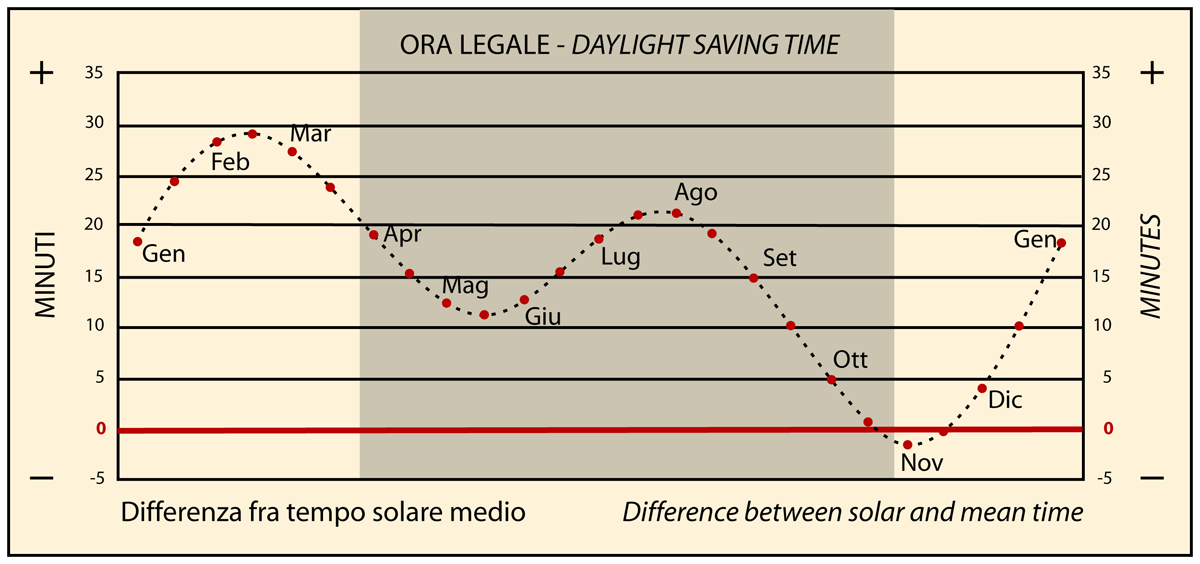
The shadow cast by the glass polyhedron atop the large bronze gnomon indicates the date and time. The hours from 9:00 AM to 2:00 PM are marked out by radial brass lines. The date is indicated by the travertine traversal lines which mark the Sun’s diurnal course for various periods of the year – precisely when the Star enters the signs of the Zodiac. The shadow cast by the gnomon changes in length during the course of the days and seasons, and indicates true solar time for the place where it is located, which is a different time than that of our wristwatches, known as mean time. In respect to mean time, true solar time has a periodic variation that can exceed a quarter of an hour.
Moreover, during daylight saving time, the hands of a clock are moved forward one hour. For example, true midday in the month of February would be indicated by the sundial around 12:28 AM while in the month of July it would be indicated around 1:20 PM daylight saving time.
To read the hour and date, you have to identify the hour lines and the calendrical lines closest to the gnomon’s shadow. When the shadow does not fall exactly on a hour line, you can read the half-hours and quarters with close approximation by ideally subdividing the space between two hour lines in two or four parts. The date can also be read by referring to the Zodiac signs and the start of the months marked out along the meridian line.
All Saints Church . Rothbury . Northumberland – David Evans for CofE Heritage
ALL SAINTS ROTHBURY NORTHUMBERLAND
GRADE II* † On Pre-Conquest / Anglo-Saxon site. C13 / C14, rebuilding & restoration C19 (Pickering) in similar style. Located in Coquetdale with linked churches. 2 medieval scratch dials and further church details LINK. 12m SW of Alnwick, close to NT Cragside. 55.309 / -1.9106 / NU057016
CUBE SUNDIAL
The cube (‘block’) sundial is on the ground in the churchyard, S side. Originally it was on the porch roof. Parish records show that it was once whitewashed, which cost 1s 9p in 1728. I have included 2 images of each dial face, the whole face and close-up.
BSS record: Main S face has date ‘1714’ and upright Arabic numerals 6 – 6. Hour and half-hour lines. Above is a polar dial with hours 8am to 4pm and a cross for noon. The dial, a substantial chunk of masonry, was most likely taken down from its original site aloft for safety.
FRONT FACE
EAST FACE
There is an excellent article about the THE ROTHBURY SUNDIALS in the Nov 1991 Clock Magazine (Pendulum Publications). The relevant parts relating to the cube dial are as clear and concise as anything I can devise:
A cubic dial which is said to have been situated on top of the old church porch, was lost after the demolition work of 1850 but was later found among the old grave stones and is now sited near the new porch entrance. It measures 18in by 18in by 19in and has four dials carved on its surfaces, one each on the east and west faces and two on the south face. The south face has the date 1714 carved into it and some remains of old writing between the numerals and crossed line at 12 noon.
An entry in the vestry accounts for the church in 1728 states that “For white lead and Lamb black for ye Sun Dial – 0 0 9, For Whitning and new drawing the lines and figures – 0 1 0”.
3. If, as the historians tell us, the sundial was on top of the old porch the dials would have been difficult to read, especially the upper south dial sloping as it does at an angle of 45 degrees and has the remains of what was a ½ in thick cast iron gnomon. It would be essential for the lines and figures of the south main dial to be well marked in order to be able to read it.
4. The remains of an angled style (gnomon) 1/8in thick made of cast iron and held in two places by lead filling are easily observed. The east and west styles were set into recesses, scooped out of the faces, and set at 90 degrees to the faces.
WEST FACE
This dial – and its history – is a most unusual one and I am grateful, as ever, to Erika Clarkson for her dial-hunting and photography skills and the resulting coverage of the midlands and the north of England that is well beyond my own territory in the west country.
GSS Category: Cube Dial
All photos by Erika Clarkson except header image of church, David Evans / CofE Heritage Record
The WATTS GALLERY in Compton, Surrey showcases the work of artist G. F. WATTS and his wife MARY WATTS, exemplar of the Arts and Crafts Movement. The enterprise has expanded hugely since I last visited and took photos of the sundials there. The Gallery link above will give all the current information you could wish for.
You can find out about the remarkable Scaphe Dial at the gallery HERE
GRADE I † C14 with older origins; gradual development, rebuilding and restorations. This church represents a far wider history of the area ecclesiastically, architecturally and socially. There are a great many good online sources of information, both general and specific, accessible with a single Gxxgle search. One of the most authoritative resources for deeper delving is British History Online BHO. 50.665 / -2.5989 / SY577852
DIAL
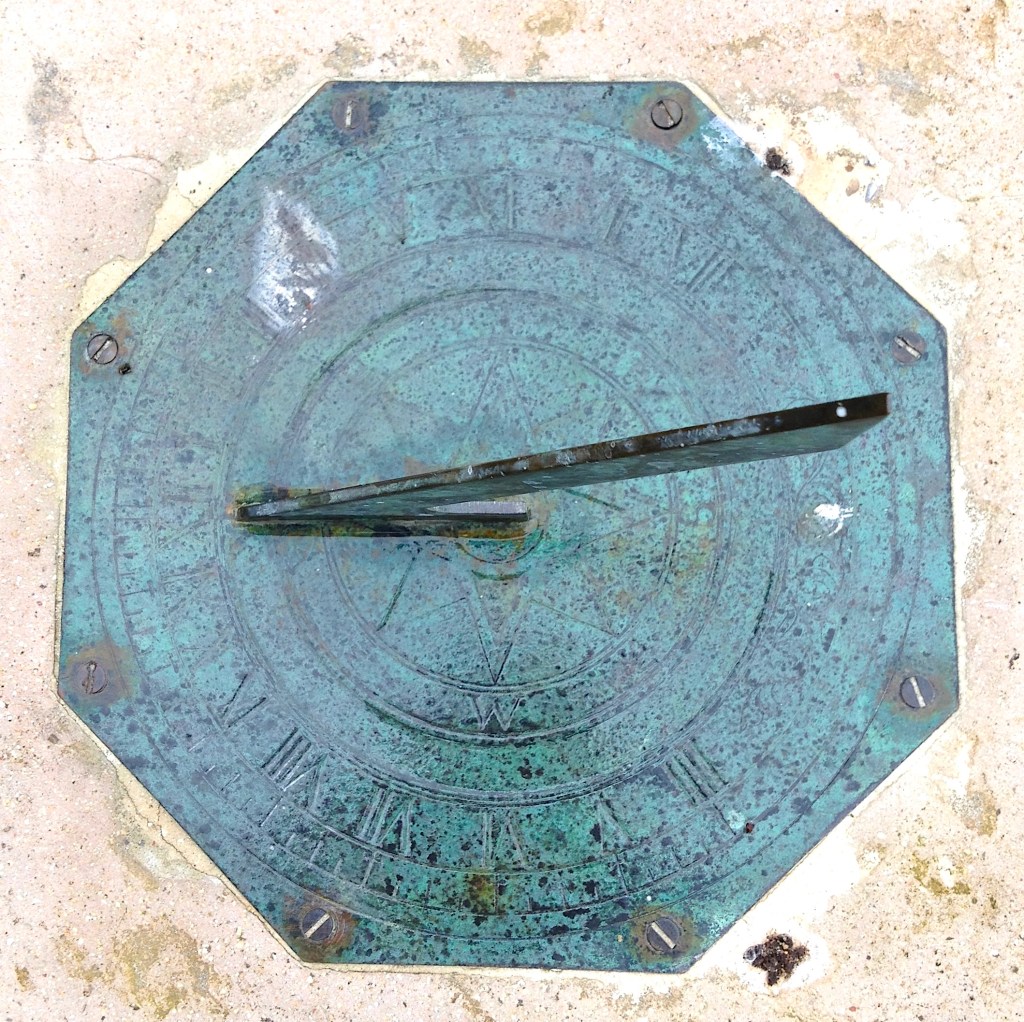
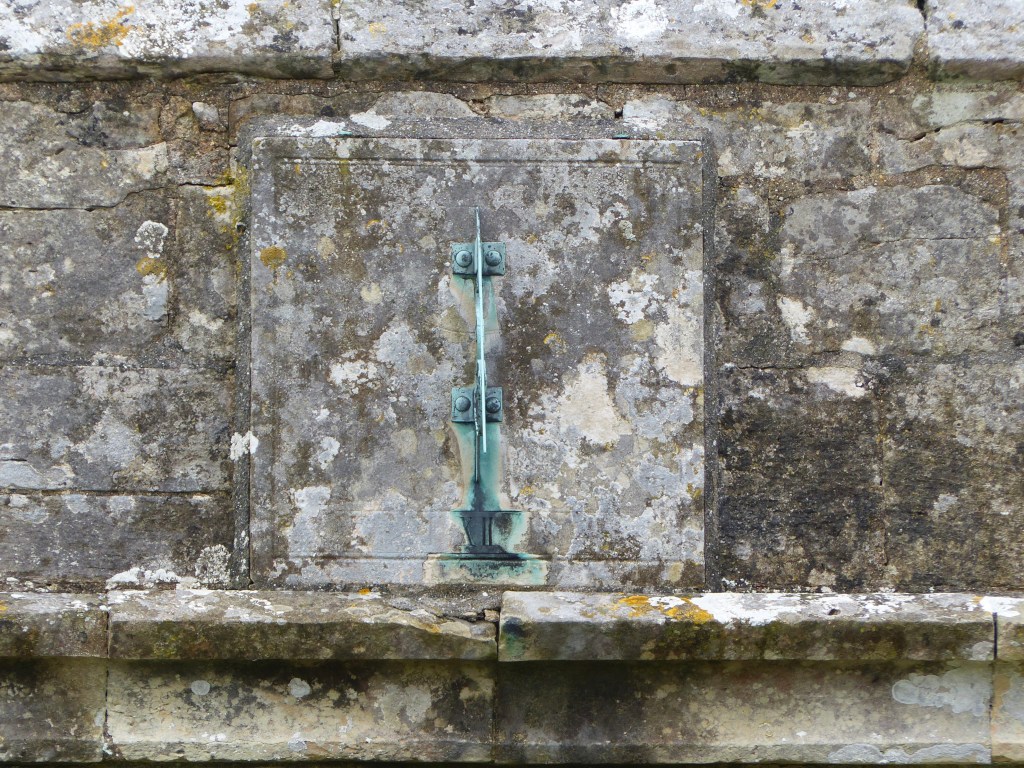
The vertical dial is set in the parapet of the south wall of the south aisle. It is weathered, like the stone around it. A survey some time ago found no visible markings; the high position, extent of weathering and prevailing light probably explains that. A long lens picks out more detail. It is hard to date the dial – ± 1800?
St Nicholas . Abbotsbury . Dorset – Vertical Sundial
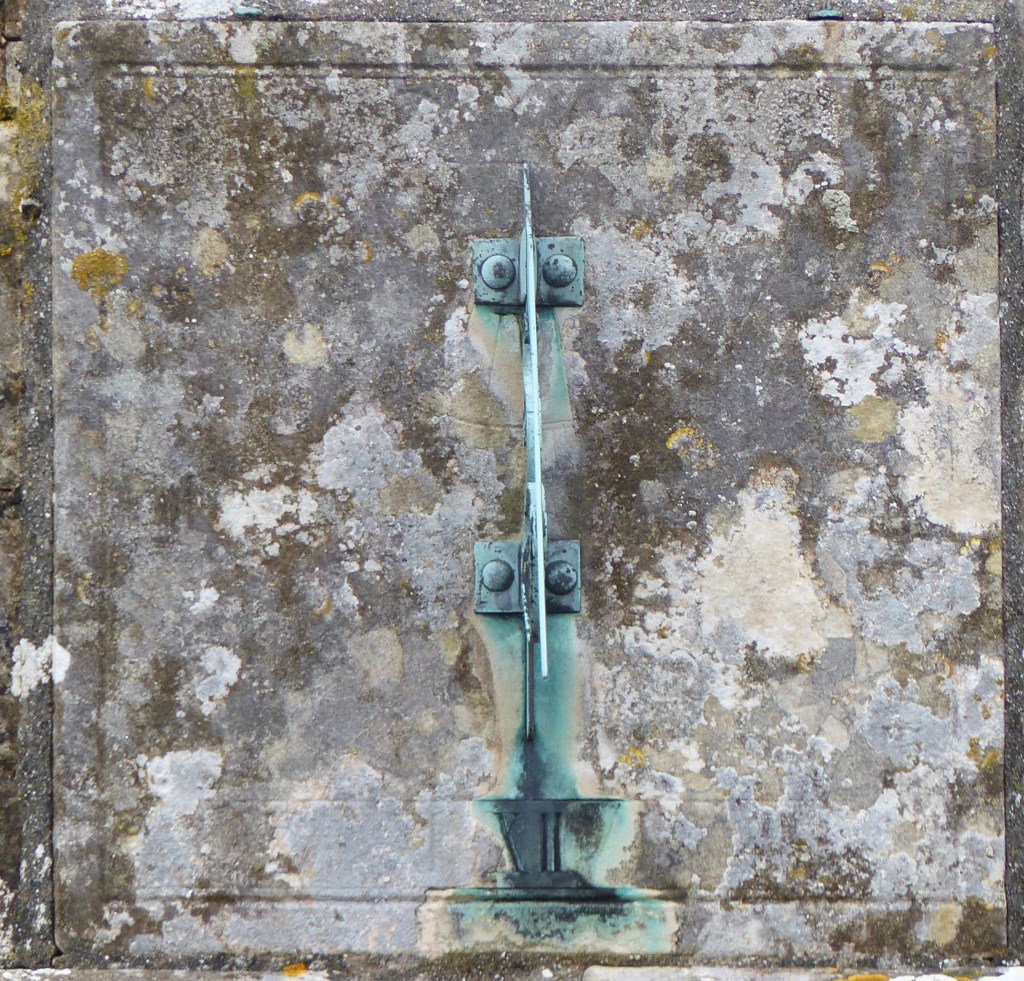
The dial is cemented onto the parapet, supported by a ledge and with 2 iron supports at above it. A frame surrounds the dial. In the upper section is a semicircular dial, with the footing of the rather hefty gnomon centred within it. 2 clear lines descend either side of the noon line / gnomon blade.
St Nicholas . Abbotsbury . Dorset – Vertical Sundial
The hint of 2 converging lines above the bolts suggest they radiate down from the horizontal line of the dial. At the base of the semicircle there are traces of an outer semicircle and, significantly, of a few short lines between the two. These seem to be half hour markers. If so, there was once a more complex dial that has all but vanished.
St Nicholas . Abbotsbury . Dorset – Vertical Sundial
Beneath the lower gnomon footing, the number XII is very clear. Possibly it was recut (maybe more than once) to continue to emphasise the noon marker. Apart from that, all other numbers are completely erased except for a ghost of XI.
GNOMON
Is the rather clunky gnomon original? Initially I thought not, but some features suggest it might be. The precision of the tip of the top being exactly on the edge of the frame; the extent of the staining; and the degree to which it has protected the centre line of the dial and in particular XII. Against that, the angled view of the dial makes it seem rather incongruous.
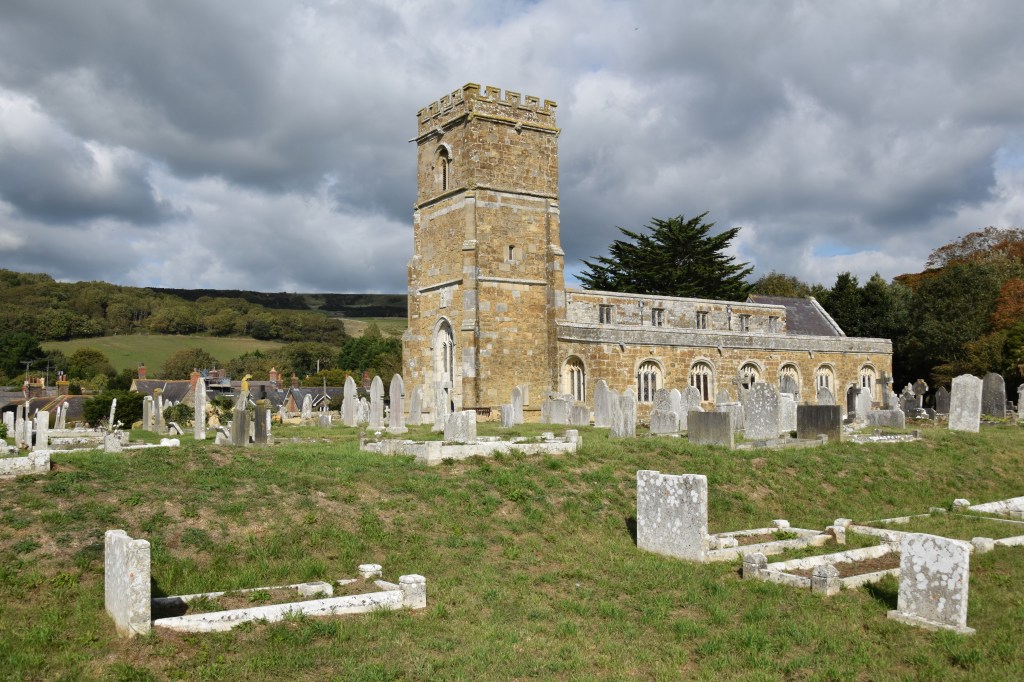
St Nicholas . Abbotsbury . Dorset – Vertical Sundial GallerySt Nicholas . Abbotsbury . Dorset – Vertical Sundial / S. face with parapet dial above centre windows – stevekeirtsu cc
GSS Category: Vertical Dial; Church Sundial; Gnomon
All photos Keith Salvesen except the last, stevekeiretsu Geo cc
GRADE II † C13th origins of which traces survive at the W end; substantial rebuilding 1860s by Wyatt. Set in peaceful countryside close to R. Frome. An excellent folder with details about the church and contents is kept in the church. Woodsford Castle / fortified house is nearby, the largest thatched building in England. 5m E of Dorchester 50.7143 / -2.3383 / SY762905
DIAL
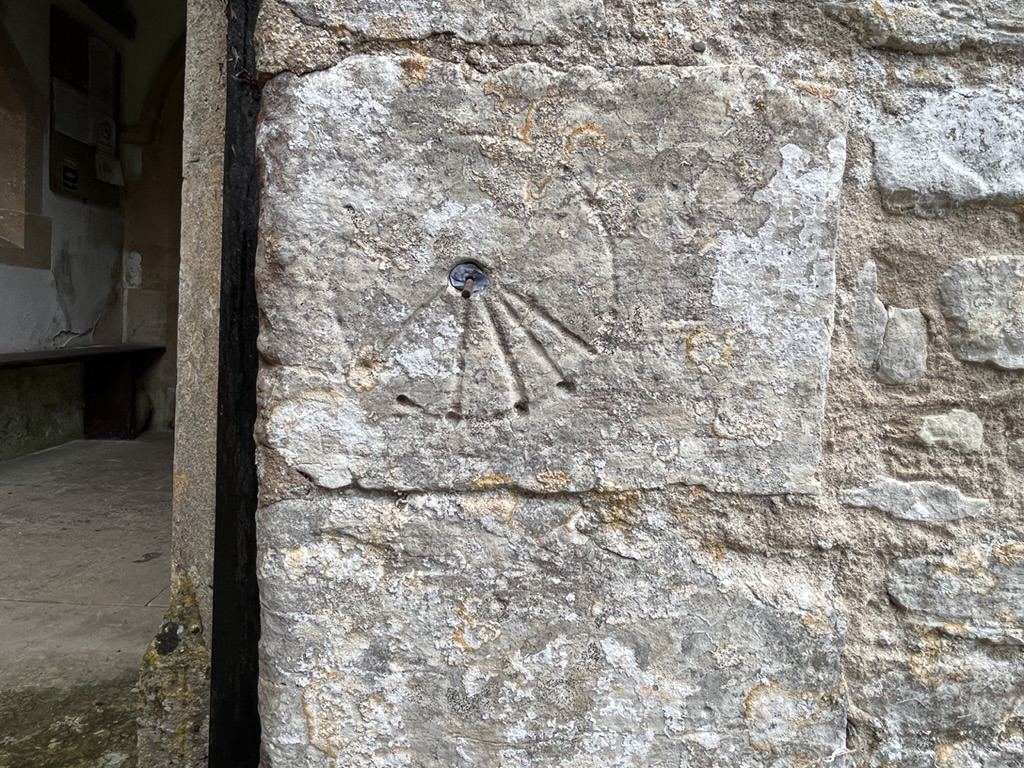
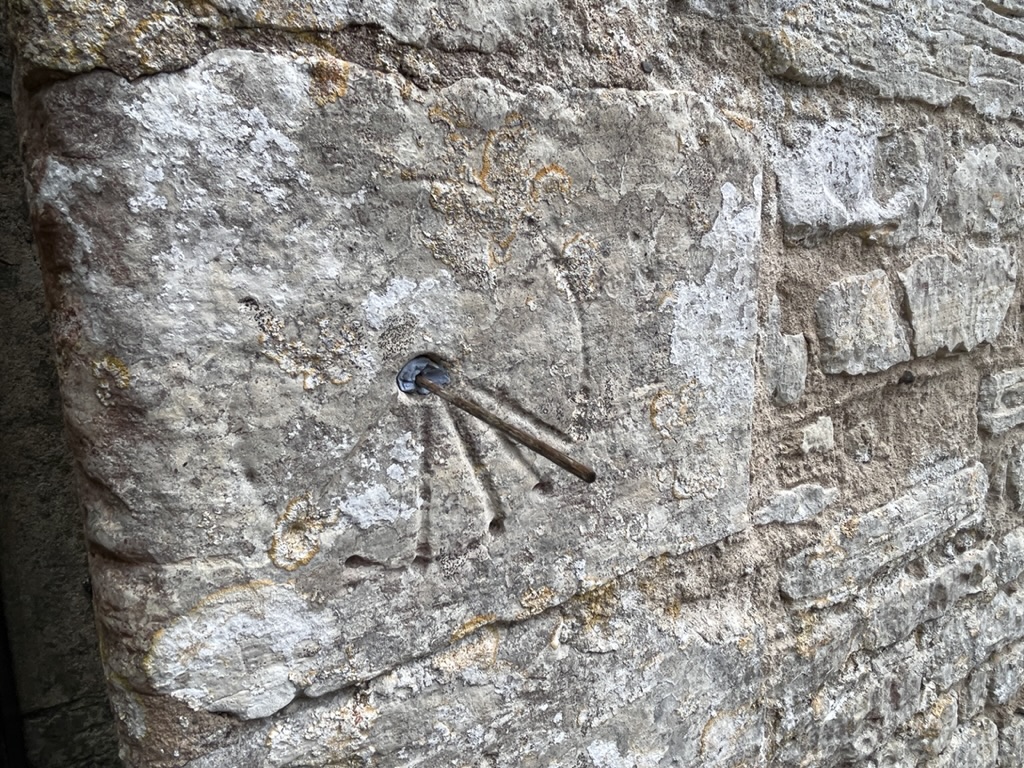
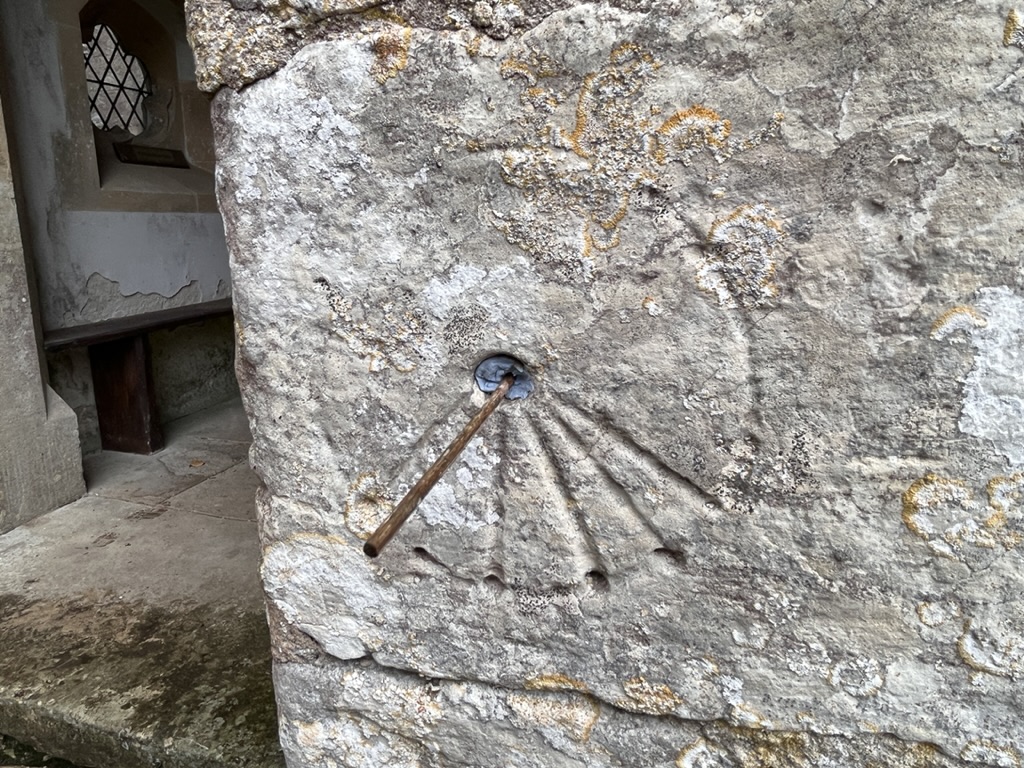
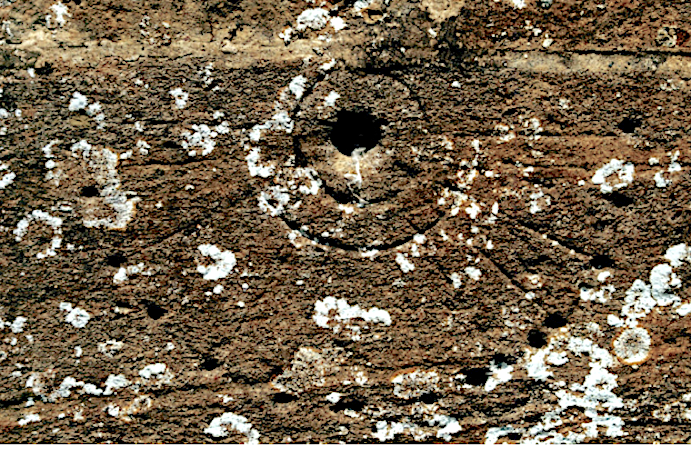
The single dial is just E of the entrance door, on the quoin of the S chapel. Plain and clearly cut. Now adorned with a slim metal rod bedded into blu-tack in the large gnomon hole (not quite as strange as the drill bit gnomon I found in Shropshire…).
St John the Baptist . Woodsford . Dorset – Scratch Dial
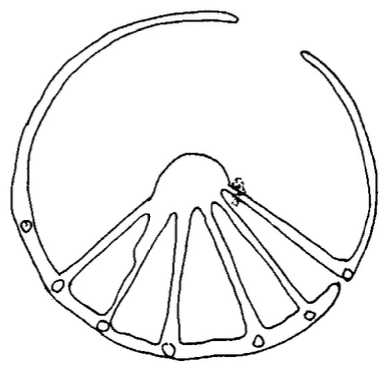
The dial has 5 clear lines descending from the gnomon hole to the lower perimeter of the complete circle. There are large terminal pocks and several other smaller pocks round the circumference that plausibly could be part of the overall design.
St John the Baptist . Woodsford . Dorset – Scratch Dial
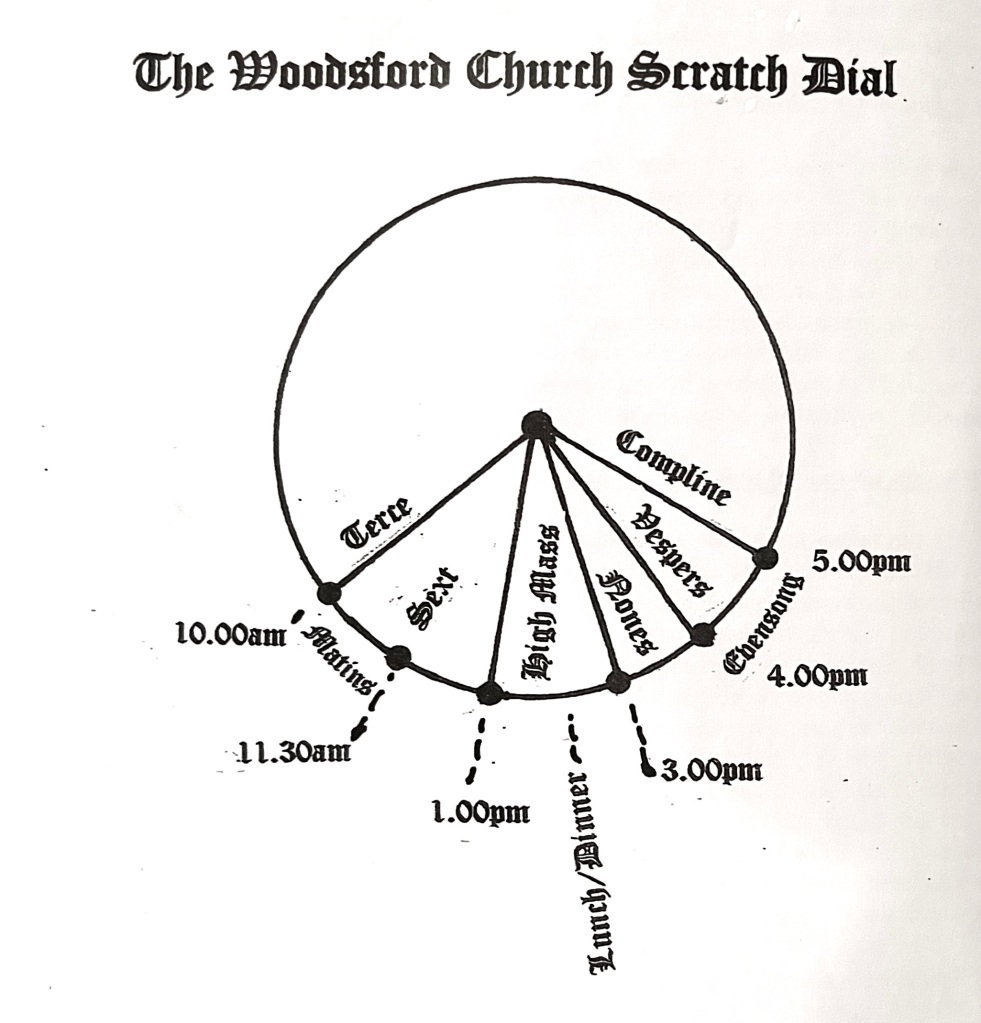
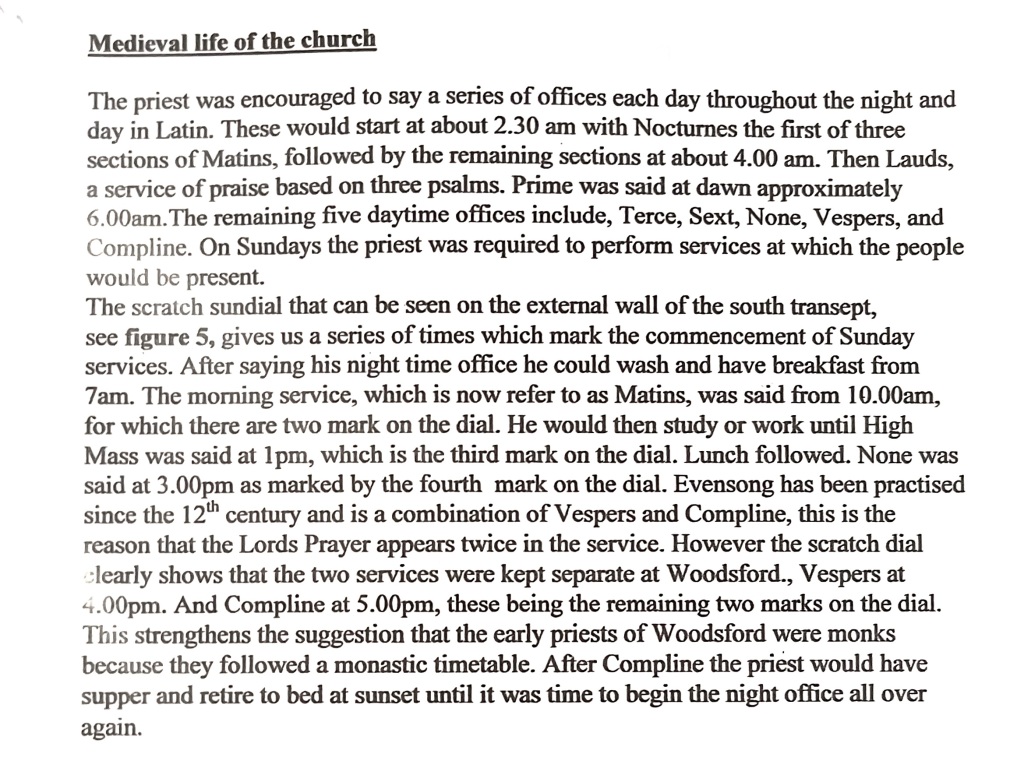
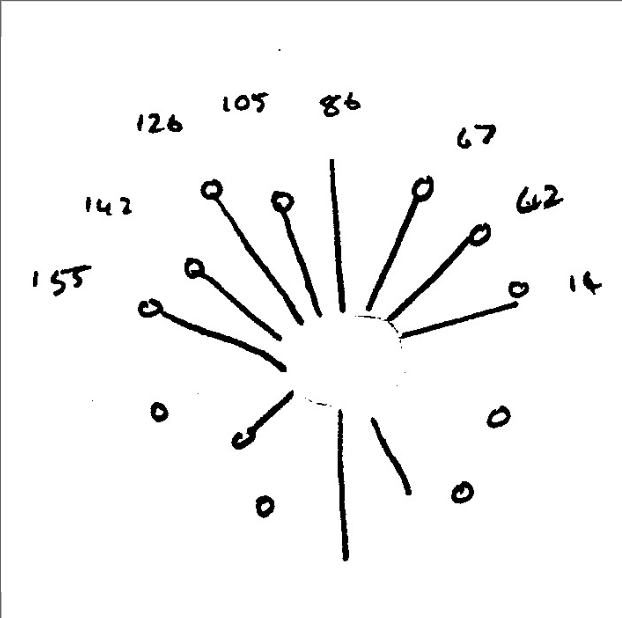
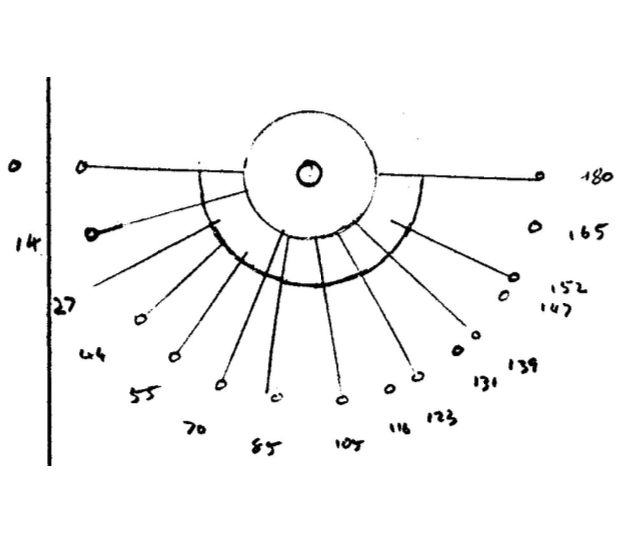
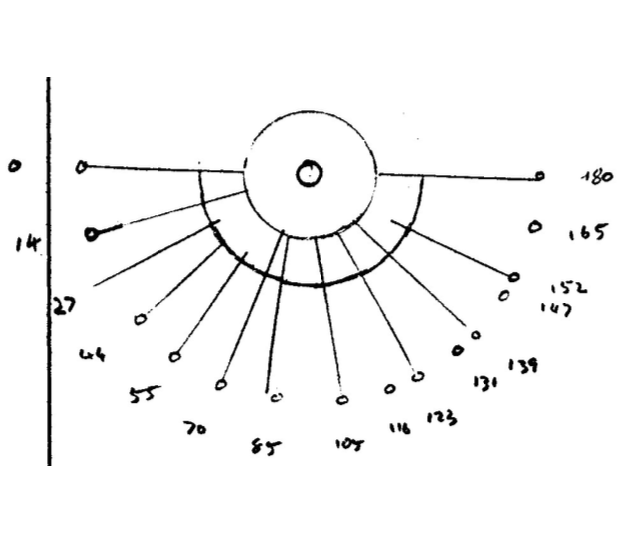
A most informative diagram with commentary explains the intricacies of the medieval day and the significance of the passing hours between dawn and dusk. You can find more on this topic HERE but the material below provides a good straightforward overview.
Woodsford . BSS Diagram
GSS Category: Scratch Dial
All photos Keith Salvesen; Dial Diagram and Explanation courtesy of the Church
Vertical Dial on Village House . Marnhull . Dorset
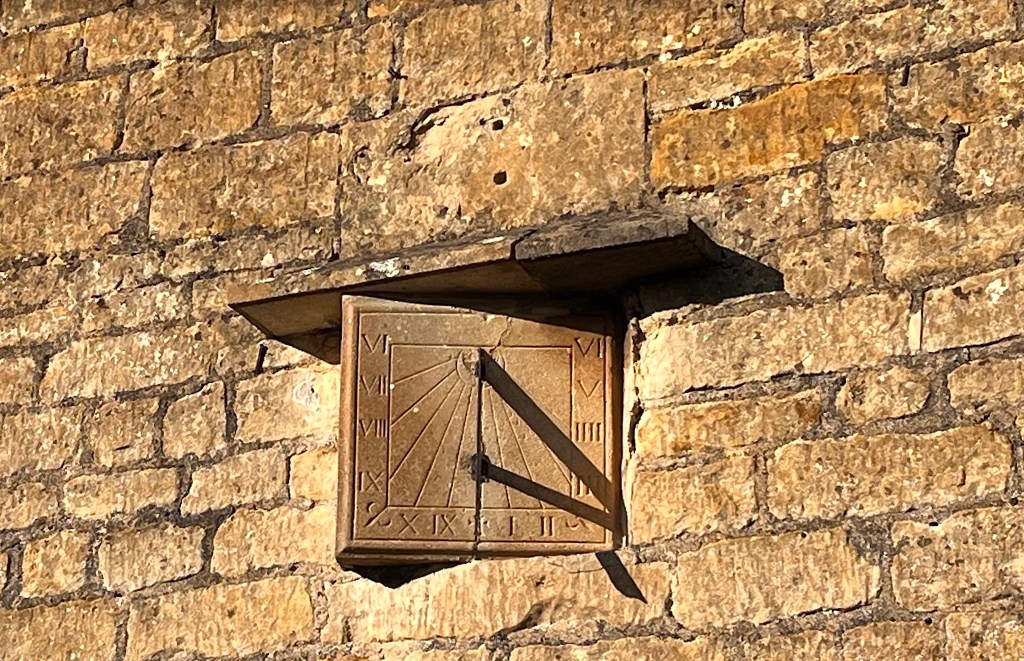
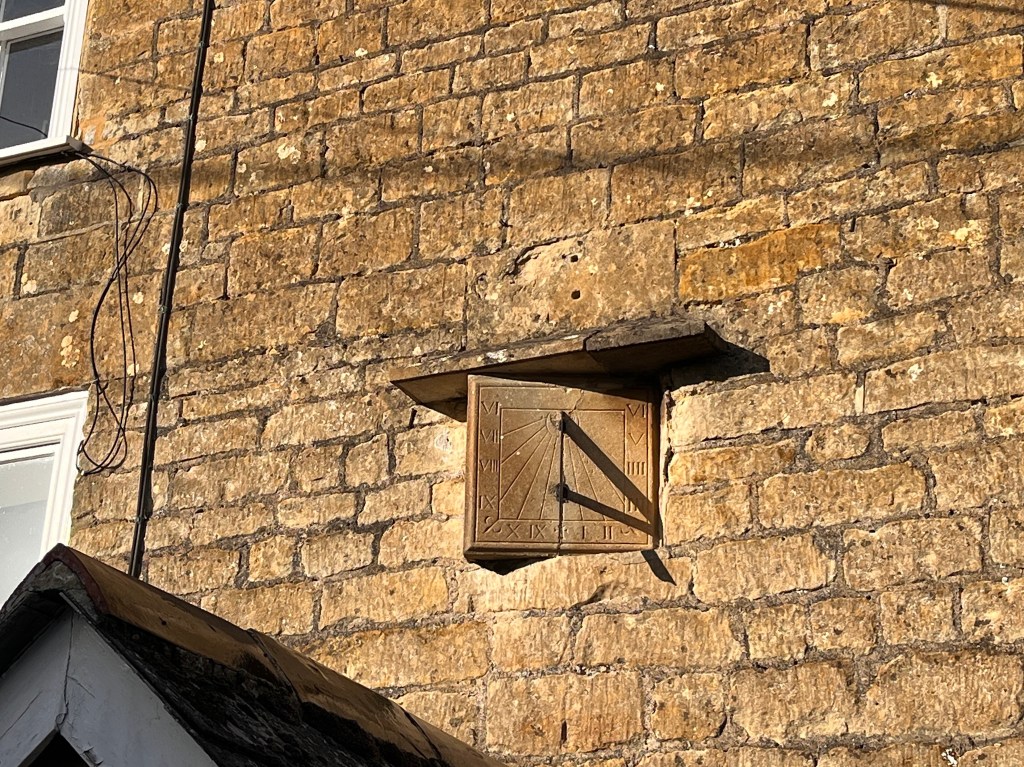
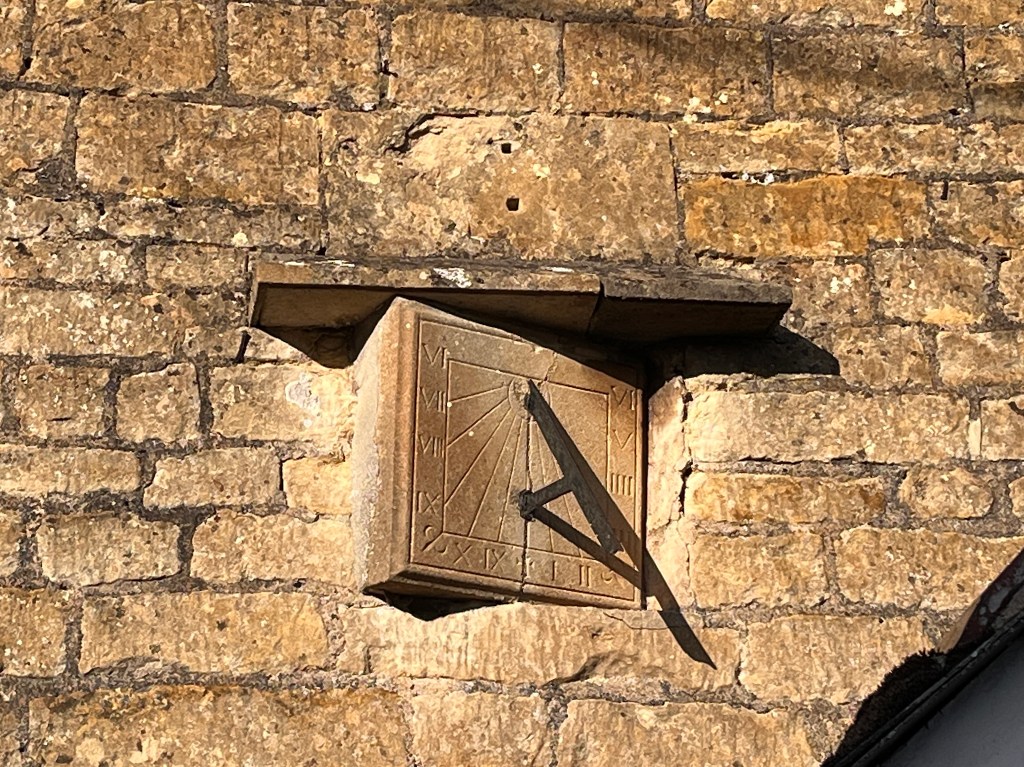
The dial is above the front door of a house in the village, with a stone ledge above it. It doesn’t give the impression of being old. There is little sign of weathering or erosion and the incisions are all equally clean. BSS gives it as C18?? and suggests it may be a replacement for an earlier dial. Given the design, I wonder if it is actually a modern C20 direct copy of the original?
The dial is canted to face south and provide an accurate reading. Noon is marked, as often, by a cross. The archaic use of IIII for IV might also suggest a careful copy of an old dial, as may the flourishes in the lower corners.
Vertical Dial on Village House . Marnhull . Dorset
GSS Category: Vertical Dial; Canted Dial; Dial on house
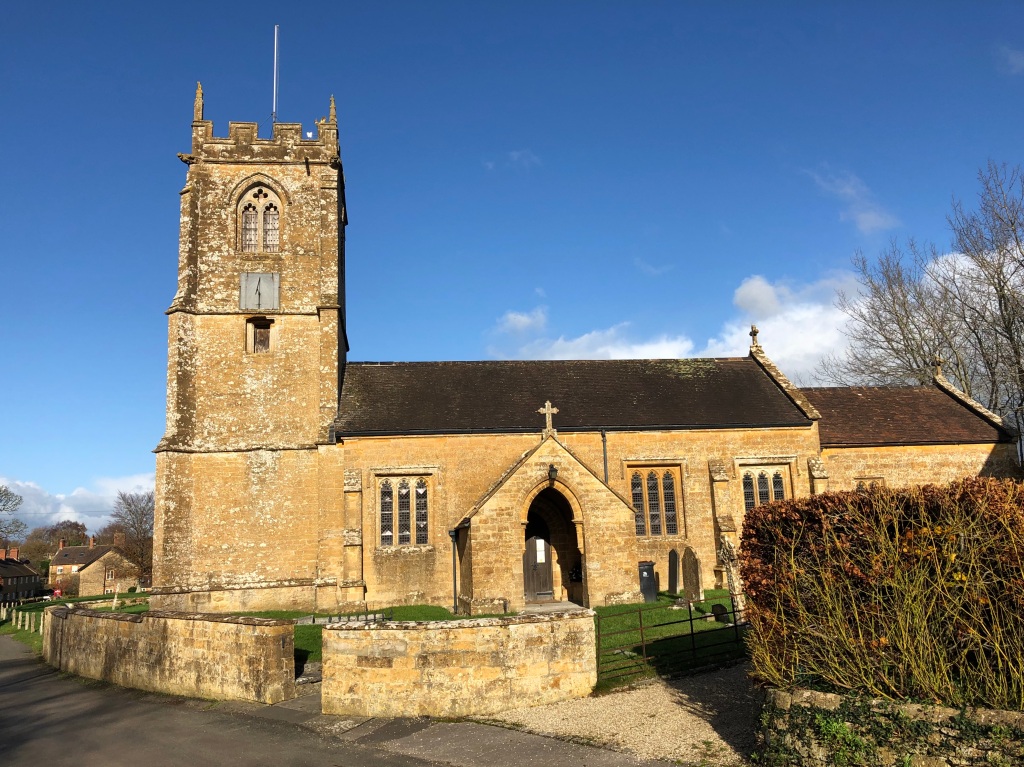
GRADE I † C13 nave, chancel, S porch inc outer archway. C15 alterations & additions – chapel, tower. Restored 1885. 2 Purdue bells. 4m W of Sherborne and E of Yeovil. 50.9532 / -2.5732 / ST598172
DIALS
There are 3 dials beside the porch doorway, 1 on the left side and 2 on the right. The intricacies of the dials are clearer from the BSS archive photos and diagrams compared with my photos, taken in bright sunlight and not picking up the details.
DIAL 1
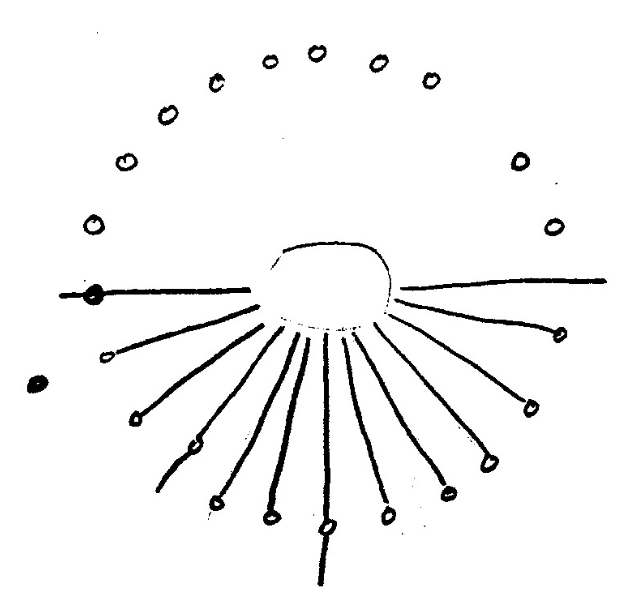
South Porch L of doorway. 13 lines, with the noon line extended, and 23 pocks. The diagram suggests 1, perhaps 2, mid-morning Mass markers. GLP points out that the lines are below the horizontal whereas almost all the pocks are above it; and that the design is accurate.
St Nicholas . Nether Compton . Dorset – Scratch Dial 1
DIAL 2
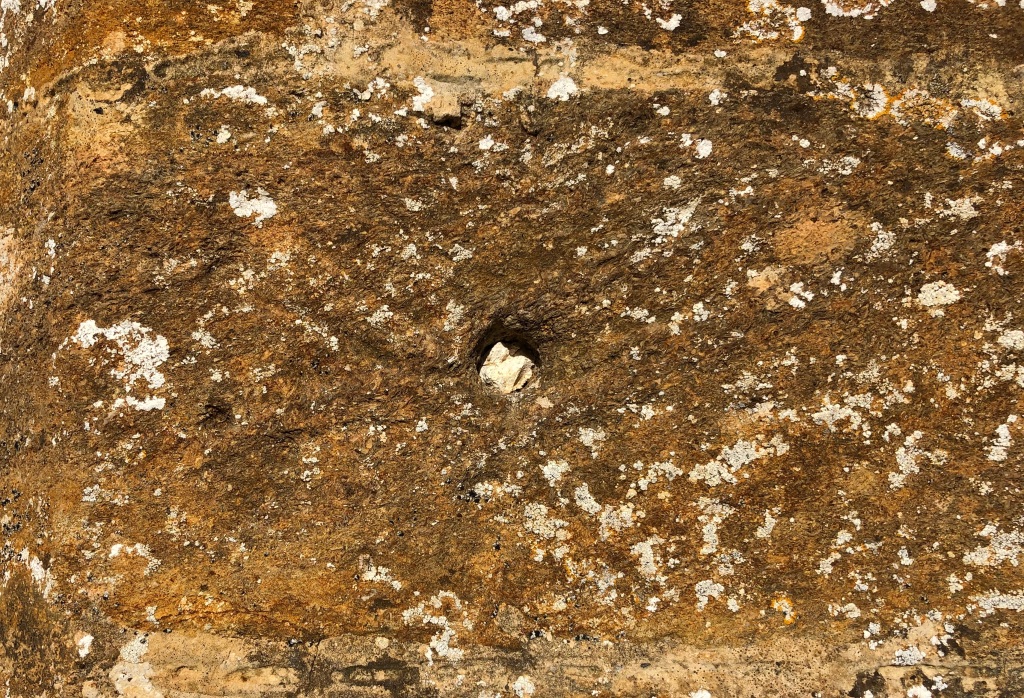
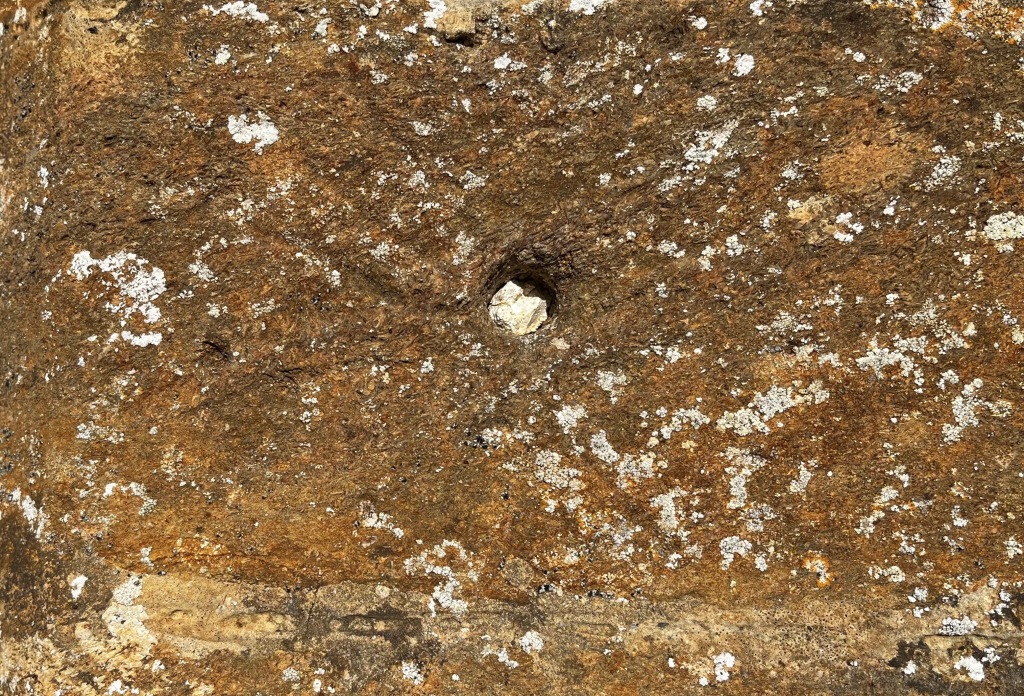
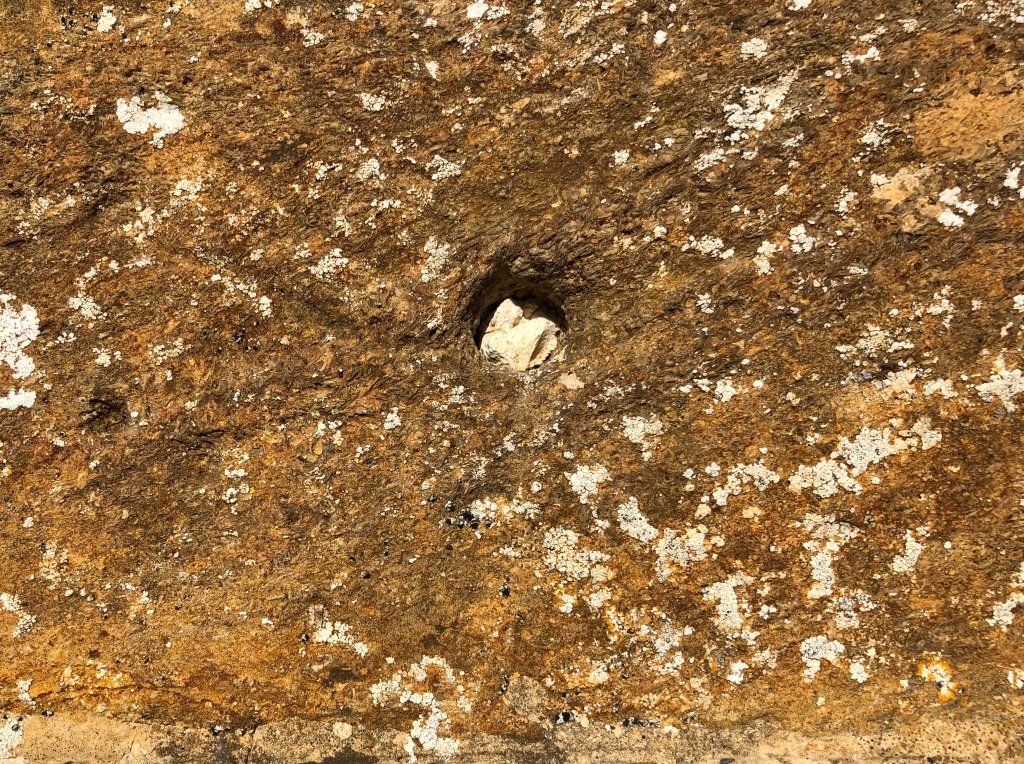
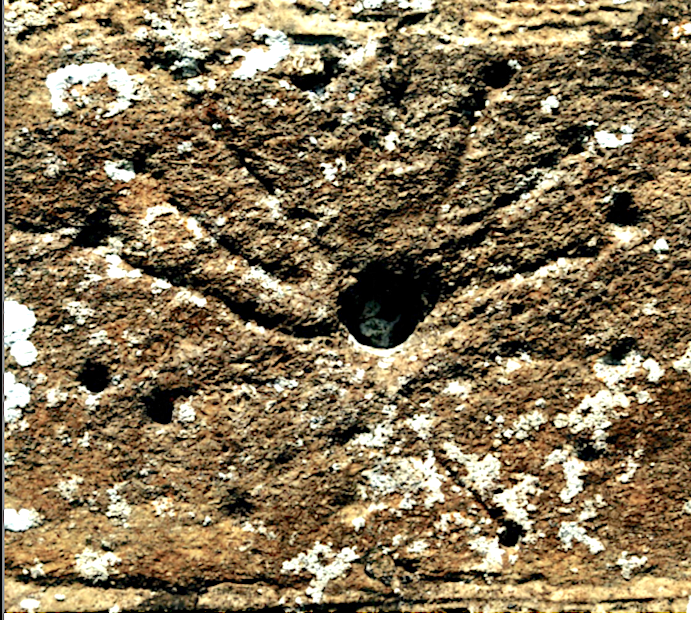
South porch R of doorway. Despite the extended ‘noon line’ (as it appears), the dial must in fact be upside down. If not, it can’t have had any practical use. 10 lines with very variable angles and 12 pocks. GLP describes it as crudely cut as a tide / octaval dial. The white item is a stone, which was in place when I originally saw the dial, and still 18m later. I left it in peace.
St Nicholas . Nether Compton . Dorset – Scratch Dial 2
DIAL 3
A semi-circular dial with 13 lines, almost all of which end pocks. There is a complete inner circle round the gnomon hole, with semi-circle outside it. GLP found the dial to be accurately cut.
St Nicholas . Nether Compton . Dorset – Scratch Dial 3
On chancel—(a) on external S. wall, W. of S. window; on N. chapel—(b) on N. external wall, W. of N.E. window, reset; on nave—(c) on external N. wall, between N.E. window and doorway; (d) on E. splay of N. doorway; (e and f) on E. jamb of S. doorway, two crosses; (g) on E. splay of S. doorway; (h) on E. splay of S.W. window; on W. face of tower— (i) against N. buttress; all formy crosses in circles except second on jamb of S. doorway, mediæval (BLB)
St Nicholas . Nether Compton . Dorset – Consecration Cross
GSS Category: Scratch Dial; Consecration Cross
All photos Keith Salvesen + BSS archive (also diagrams)




























 GAUDIUM SUB SOLE: Scratch Dials & Sundials Medieval to Modern