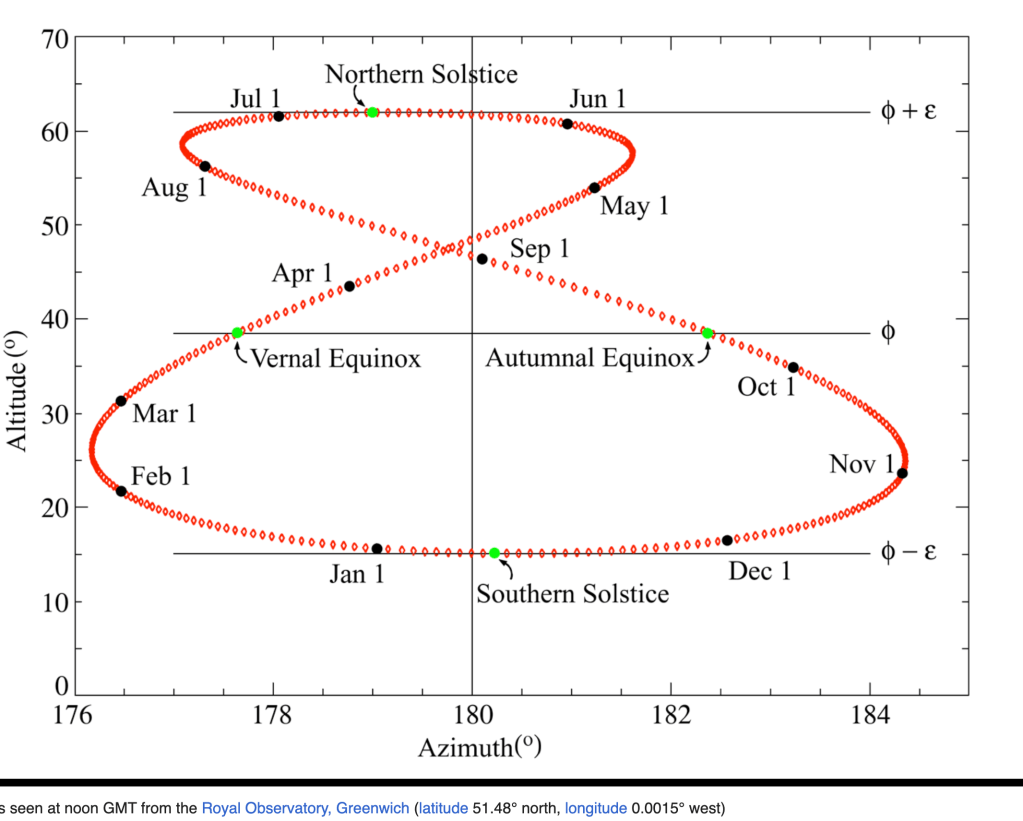
A noon dial / noon mark serves as a method of pinpointing midday, when the sun is at its highest and due south. The origins are ancient. Here, the relevant area is in the centre, flanked by Roman numerals. My maths / science skills are few and I will spare you a rudimentary explanation. The key words are Equation of Time,Analemma, and (my non-technical choice) figure of eight.
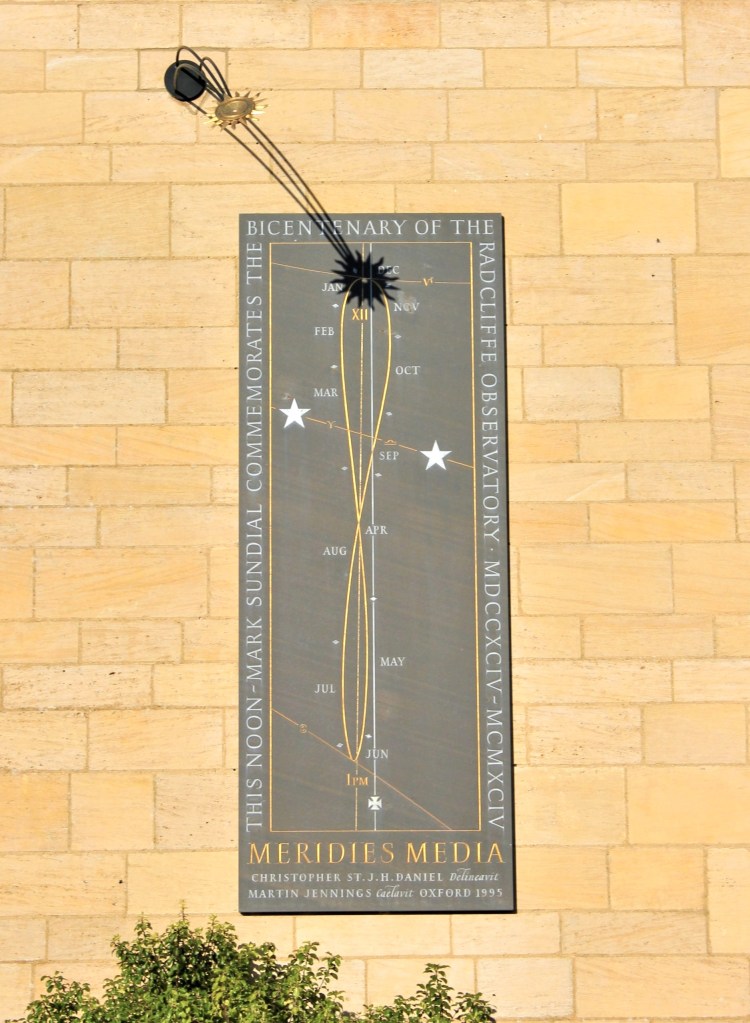
In the centre of the dial is a narrow figure of eight bounded by the numerals. You can just make out the raised bracket that supports a slender gnomon. You can see a small ring through which, at the perfect moment, the sun’s rays strike the face of the dial:
If you want to know more, there is a concise entry at ANALEMMA (Wiki)
A modern (1995) noon-dial commemorating the Bicentenary of the Radcliffe Observatory, designed by the renowned Christopher Daniel, founder of the British Sundial Society. The critical alignment of the sun’s rays are projected onto the surface of the dial at noon (MERIDIES MEDIA), focused by the small ring.
THE COLLEGE’S NOTES
It works by using a spot of light cast by the nodus (the gilded sun with a hole in the middle), falling upon the slate dial-plate and tracking from left to right across it.
It is declining because the wall it is attached to does not face due south but ‘declines’ away from the compass point
Noon-mark means it gives the point at which the sun at its zenith crosses the Greenwich meridian and the Oxford meridian (the vertical white line down the centre of the dial)
Mean-time means you can read clock-time from the dial by following the progress of the year along the figure-of-eight marking, known as an analemma or equation of time correction curve. This makes allowances for the effect of variations in the apparent motion of the sun at different times of year.
Screenshot
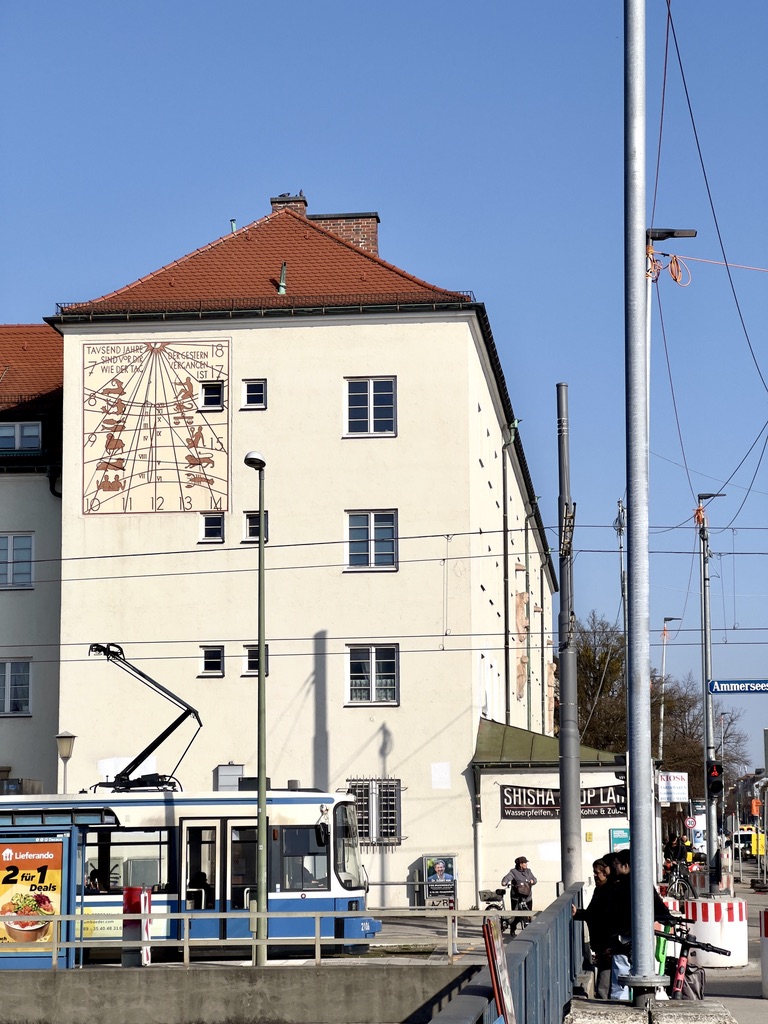
GSS Category: Analemma; Equation of Time; Munich Sundial; Nodus; University Sundial
CREDIT: John Renner, for another great find from his travels
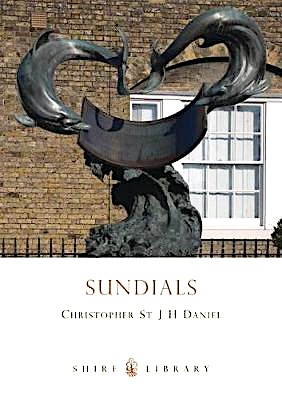
Christopher St.J.H. Daniel MBE, the maker of this dial, was the pre-eminent and most prolific sundial designer of the modern era. With 3 others, he was a founder member of the British Sundial Society BSS. He died in 2022, leaving a rich legacy of erudition and skill within his specialised sphere and beyond. His sundial book, published by Shire, is an excellent place to learn about sundials and their continuing relevance in a somewhat esoteric field.
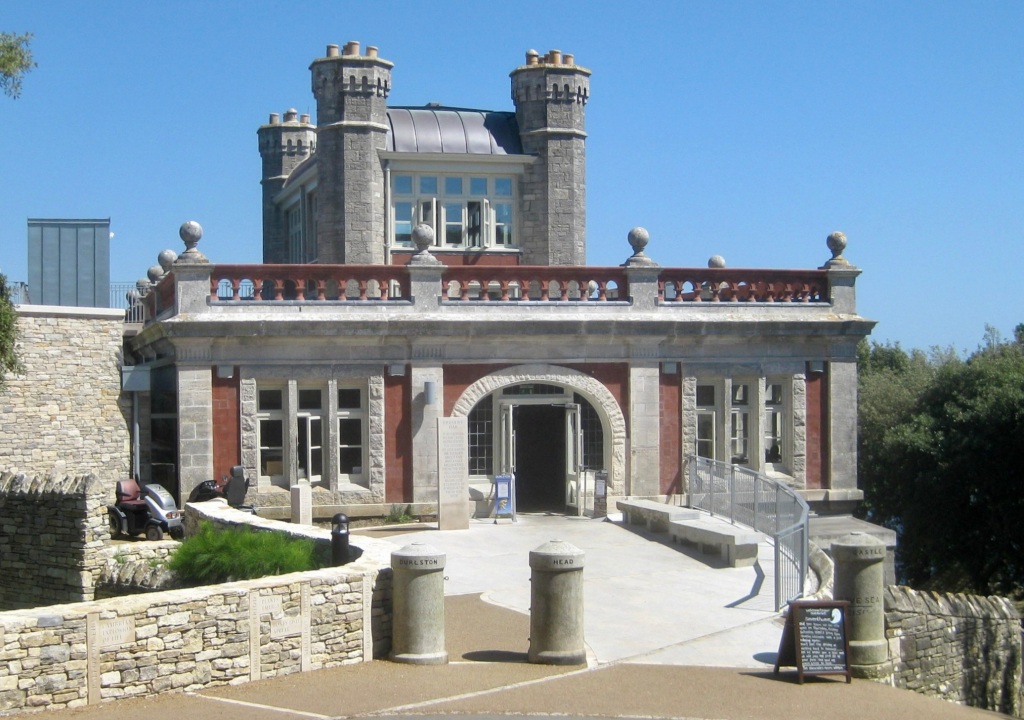
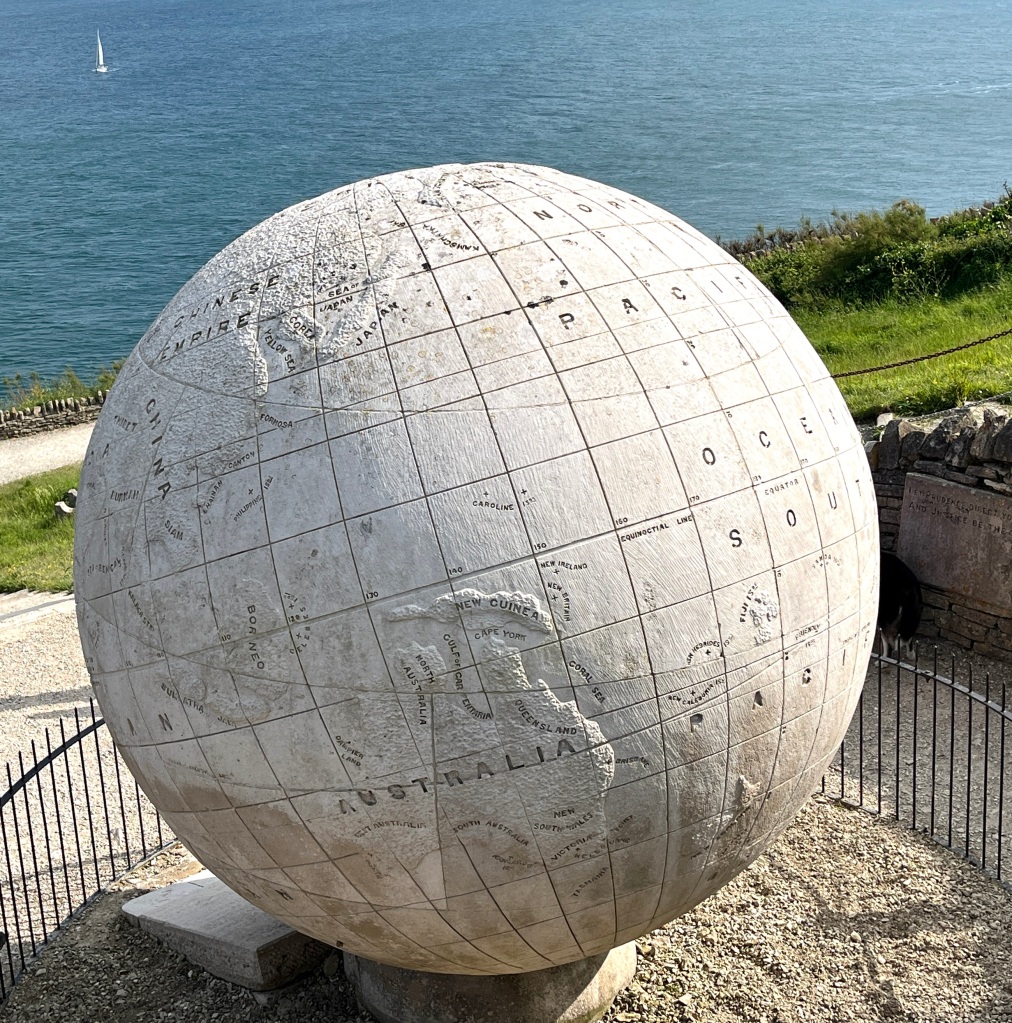
Durlston Country Park is close to Swanage and has much to offer. The ‘modern’ Castle was completed in 1891. There are extensive grounds, 5 walking / nature trails, sculptures, epochal details chiseled into stone tablets, Art Gallery, tea room, views across to IoW, a huge C19 stone globe, significant jurassic finds.
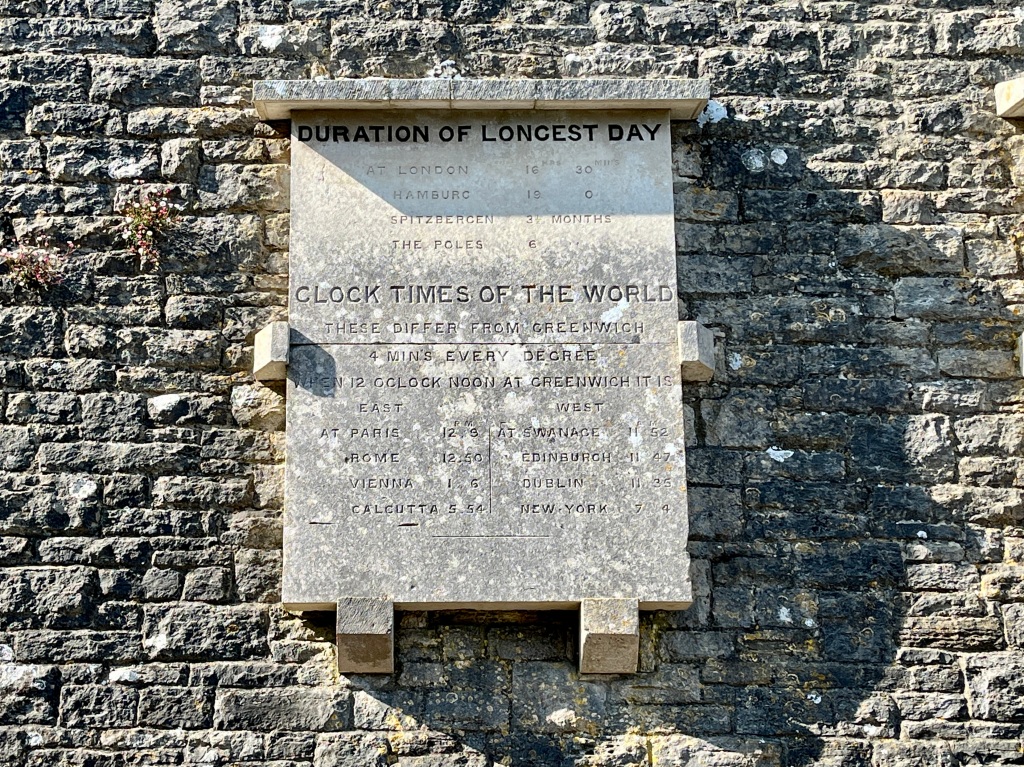
More germane here, high on S face is a fine vertical sundial (1887). Below it are two stone tablets inscribed with times and tides worldwide.
❖
DIAL
The dial is inset in the South wall about 5 m above the ground. It shows 6am to 6pm in half and quarter hours. Uses XII & IIII. White lines and chapter ring on a beige rectangular dial-plate all within a four piece chamfered stone frame. The Roman numerals arranged vertically. BSS
❖
An angled view reveals that the gnomon incorporates the initial B, standing for (George) Burt, the Victorian entrepreneur owner who conceived the idea of what we can still see today. It was (oddly?) described at the time as the most magnificently conceived restaurant.
❖
Two large incised tablets: essentially they deal with Time & Tides respectively
❖
GREAT GLOBE
Great Globe (1887), a vast perfectly formed stone ball inscribed with an eclectic selection of places. Many will be little known or unknown to random visitors such as me. The Society Isles (Pacific) sound pleasant.
❖
COMPASS POINTS
Stone Benches Surrounding the globe, at various heights and angles on a steep stope, are stone benches, each clearly marked with a compass point. In an ideal world there would be an equally fine analemmatic sundial.
GSS Category:
All photos by Keith Salvesen except header image Huligano0 OS CC
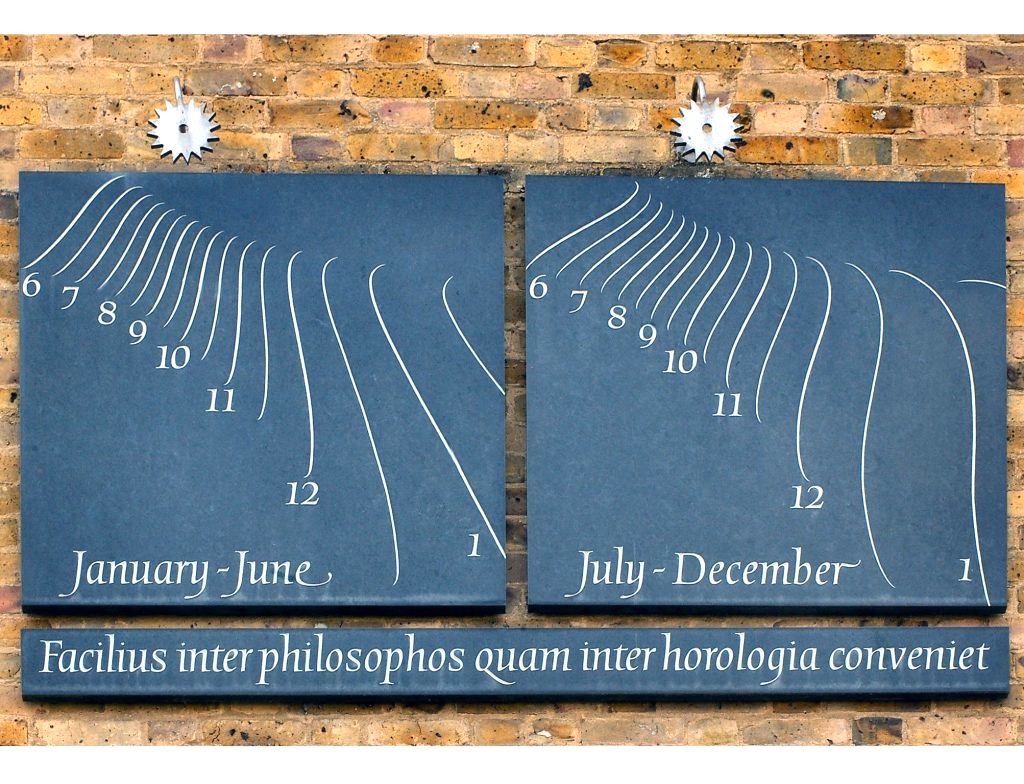
I recently came across a very bad photo I took years ago of this elegant and ingenious dial in Magdalene College. My image is too awful to be the basis of a feature. However BSS has in its records this excellent quality photograph with a short account to accompany it.
A competition among first year engineering students led to the creation of this most striking double vertical dial, mounted in 1987 on the south-facing wall of Benson Court. It was designed by Will Carter in stone and stainless steel and features the motto: ‘Facilius inter philosophos quam inter horologia conveniet.’ (It is easier to gain agreement among philosophers than among timepieces – Seneca) The prize-winning design has the Equation of Time built into the gracefully curving hour lines. A spot of light shining through a pierced stainless steel sun marks the time on each dial.
‘Facilius inter philosophos quam inter horologia conveniet.’ (It is easier to gain agreement among philosophers than among timepieces – Seneca)
GSS Category: Vertical Dial; Double Dial; Modern Dial; Competition Dial
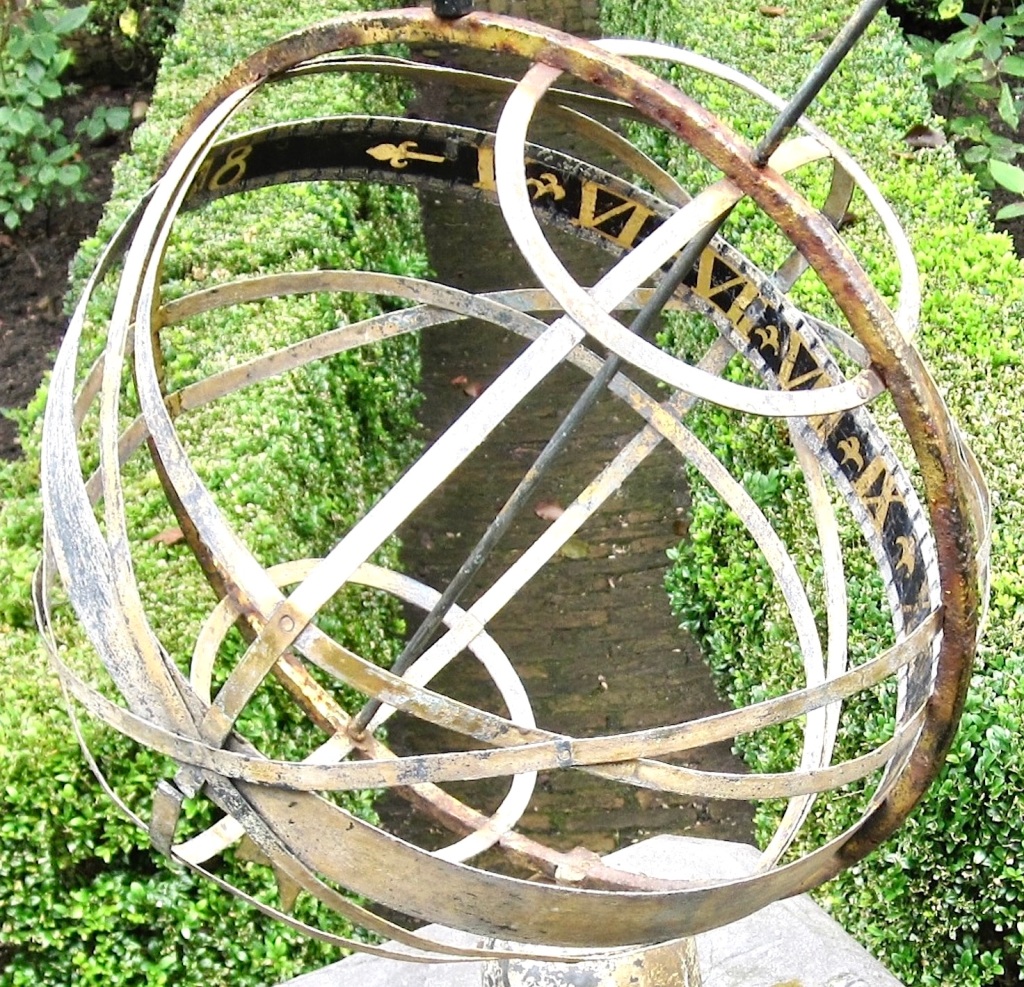
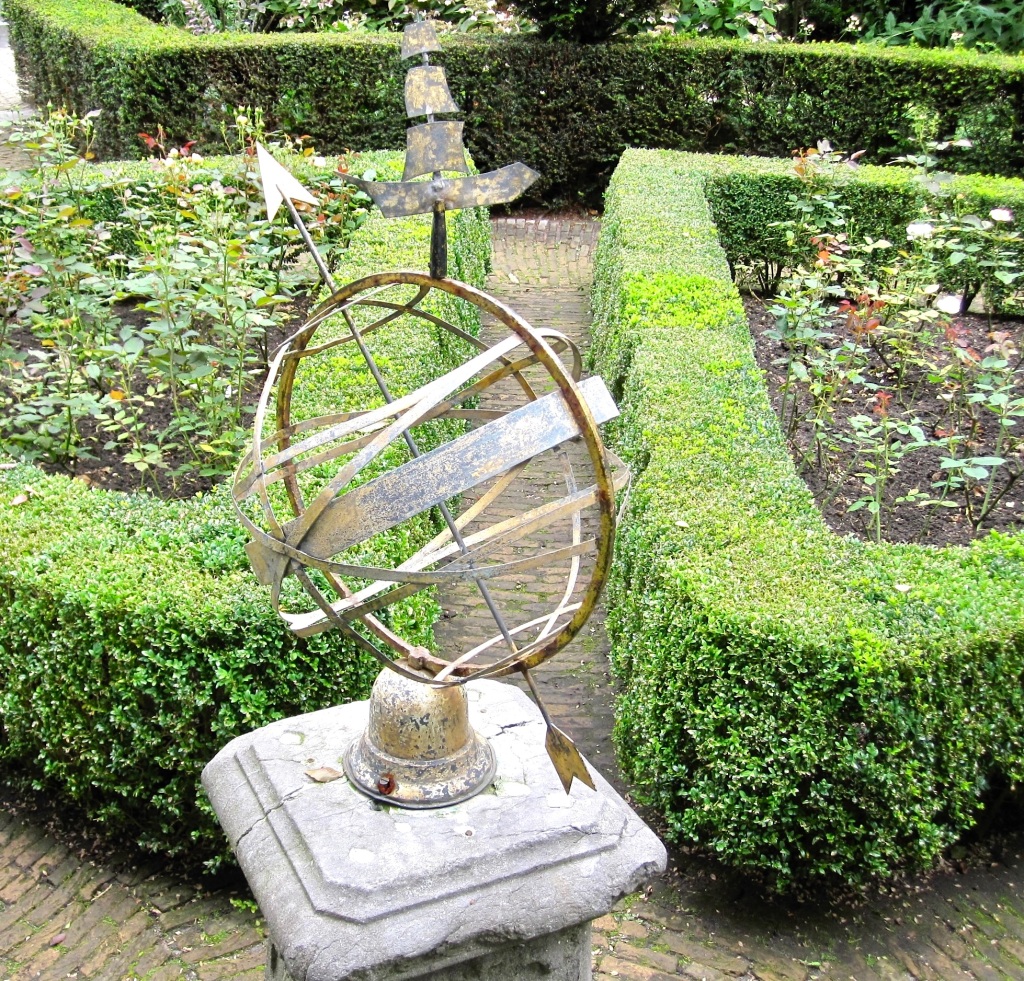
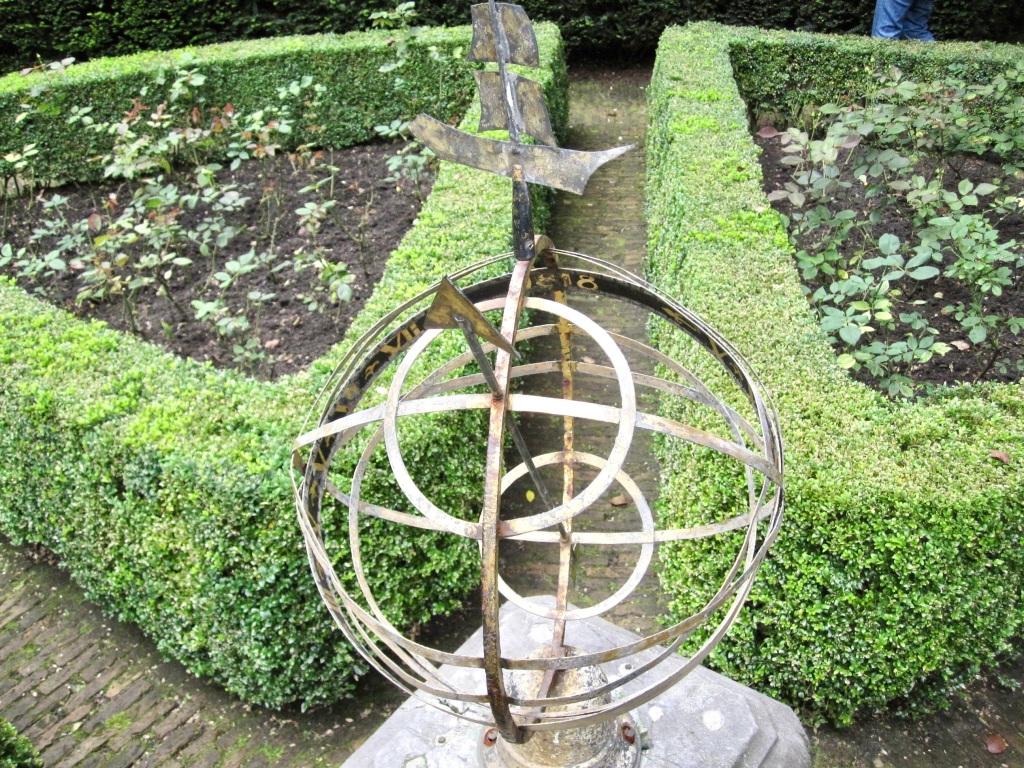
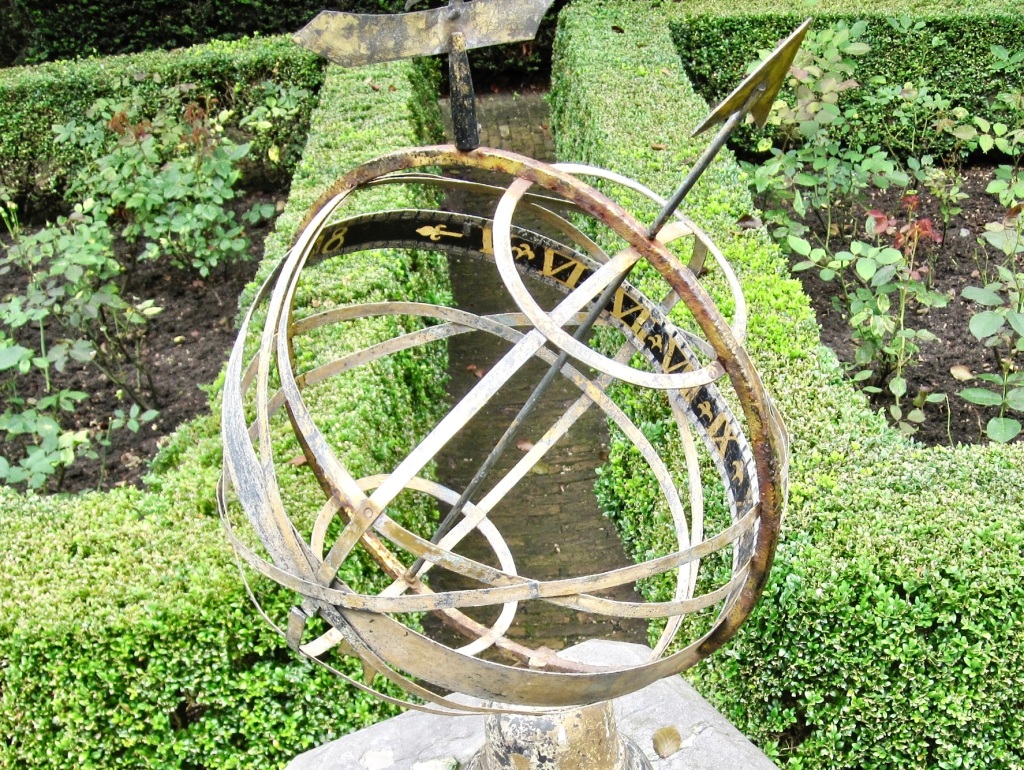
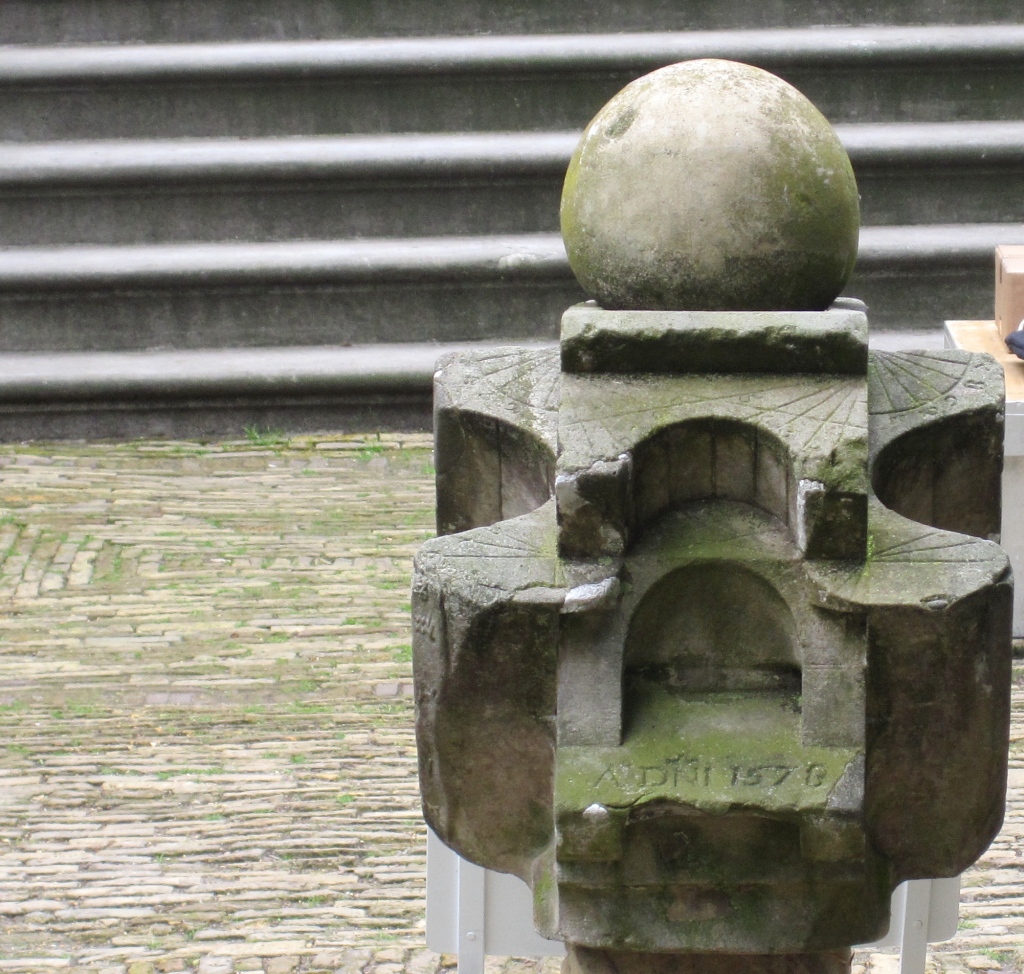
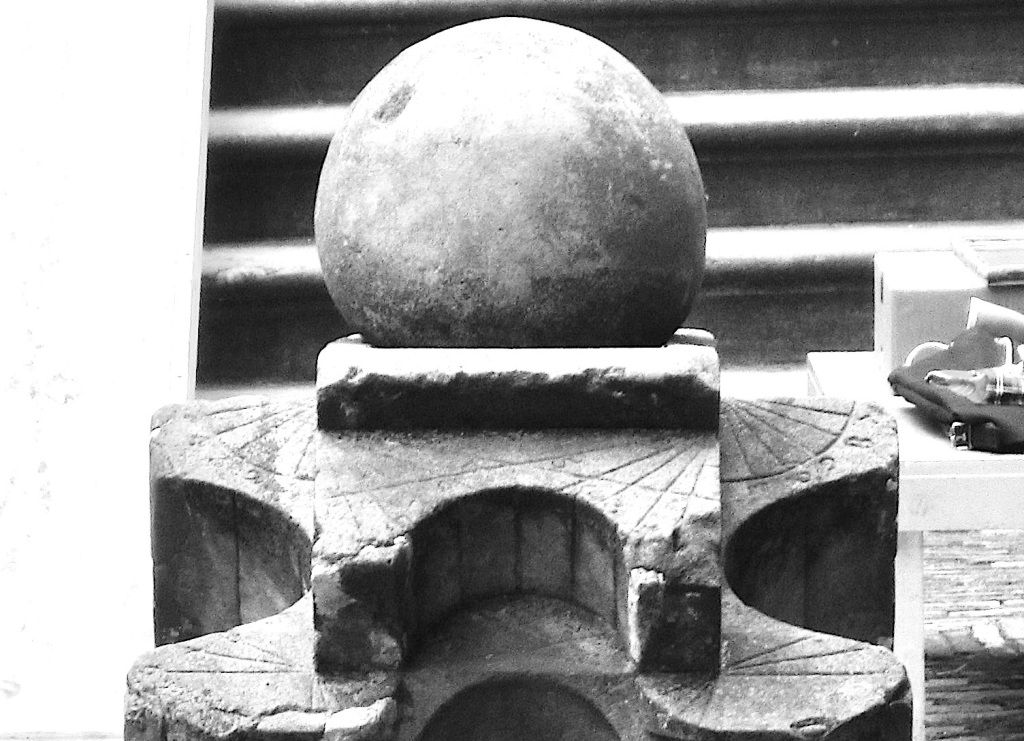
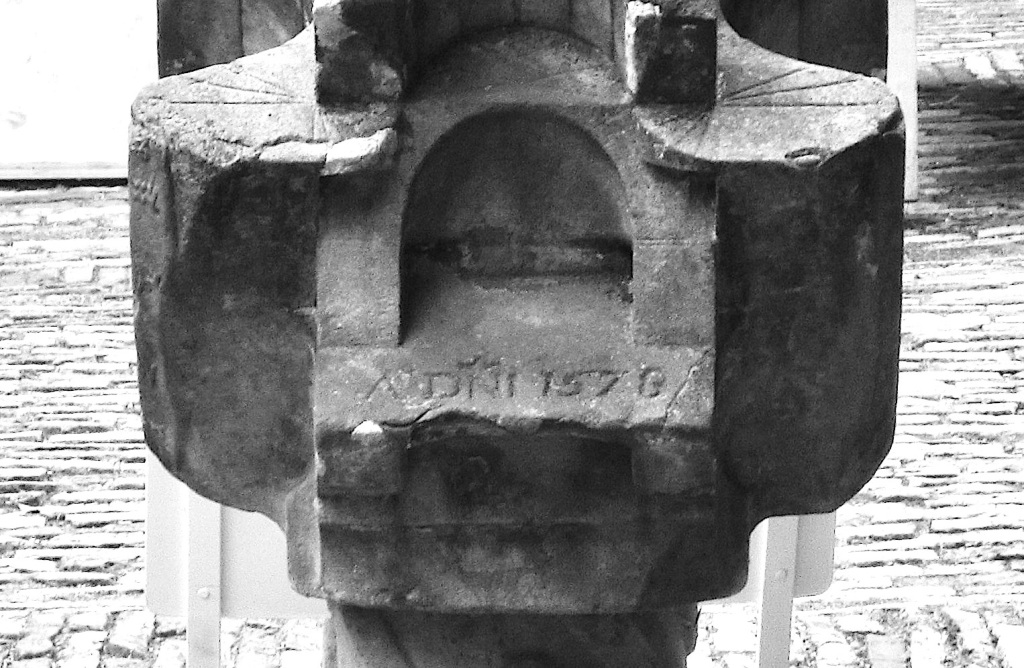
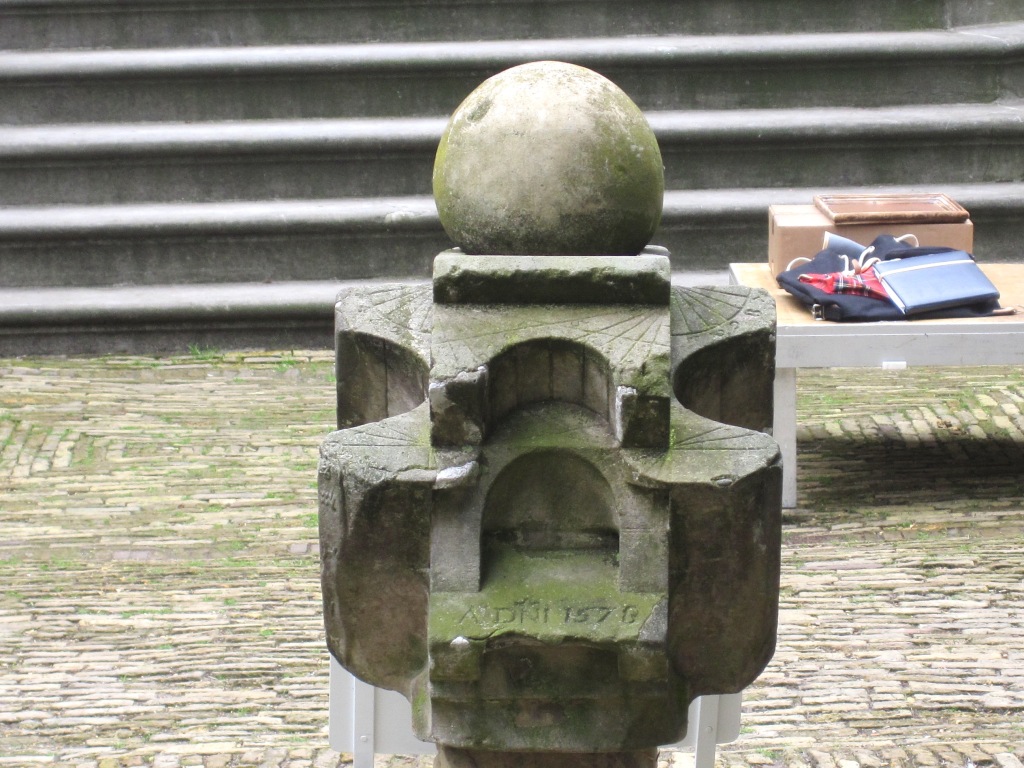
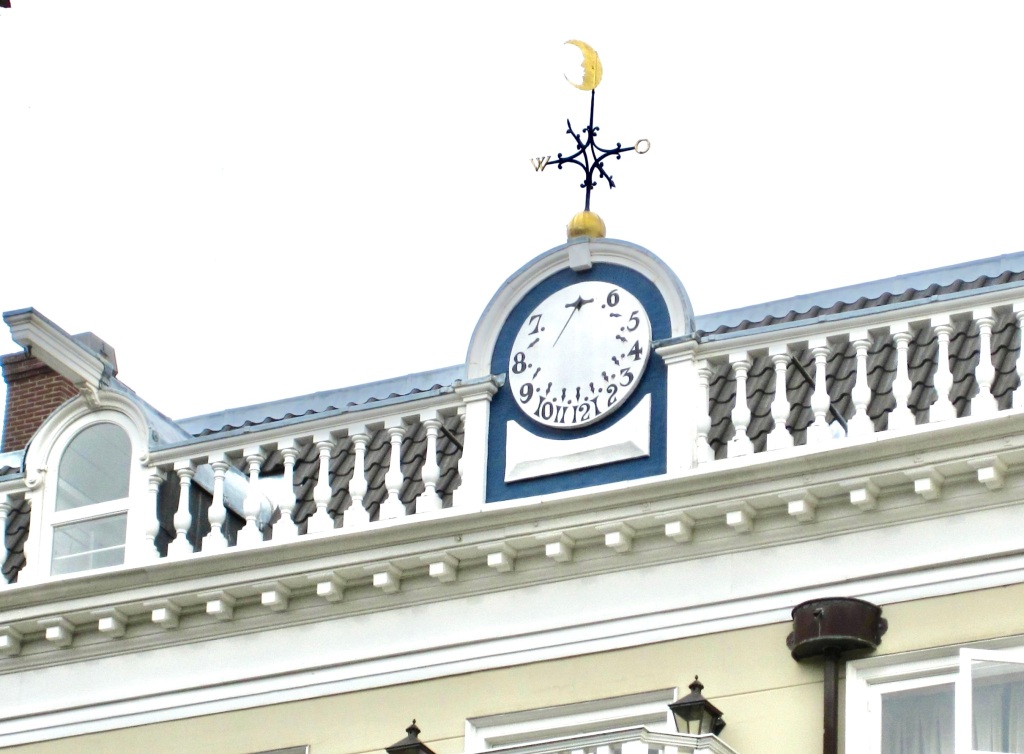
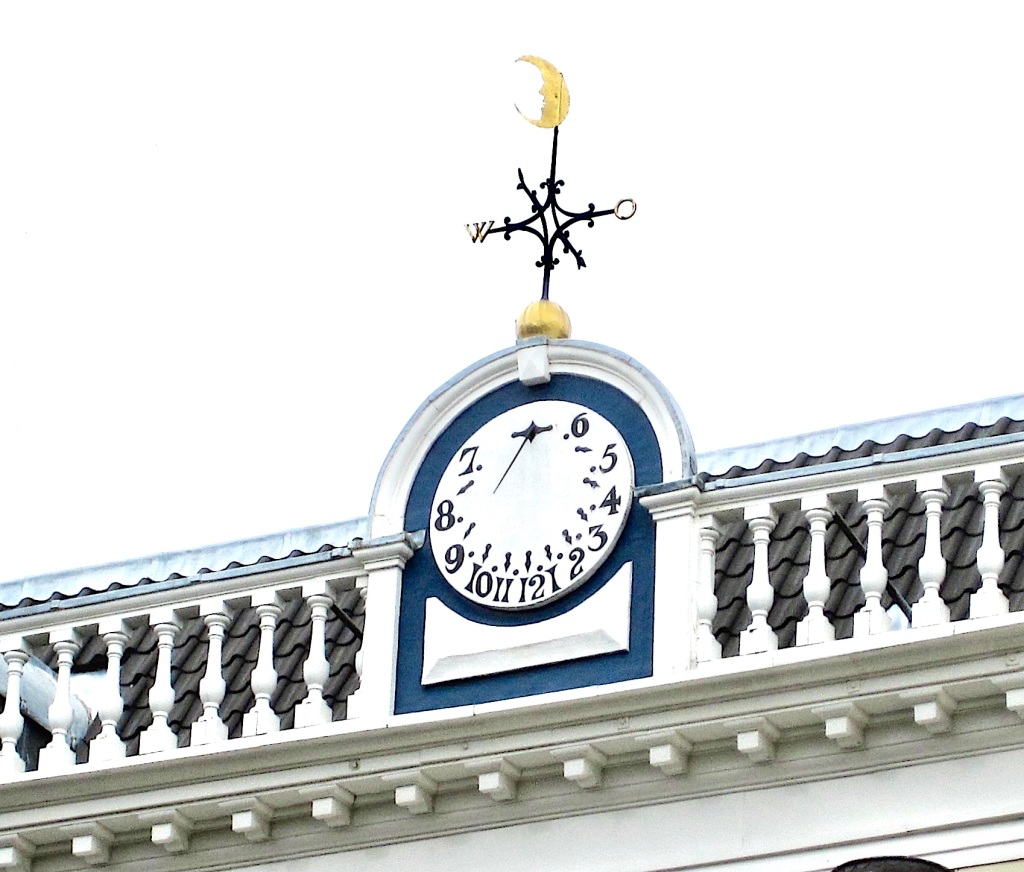
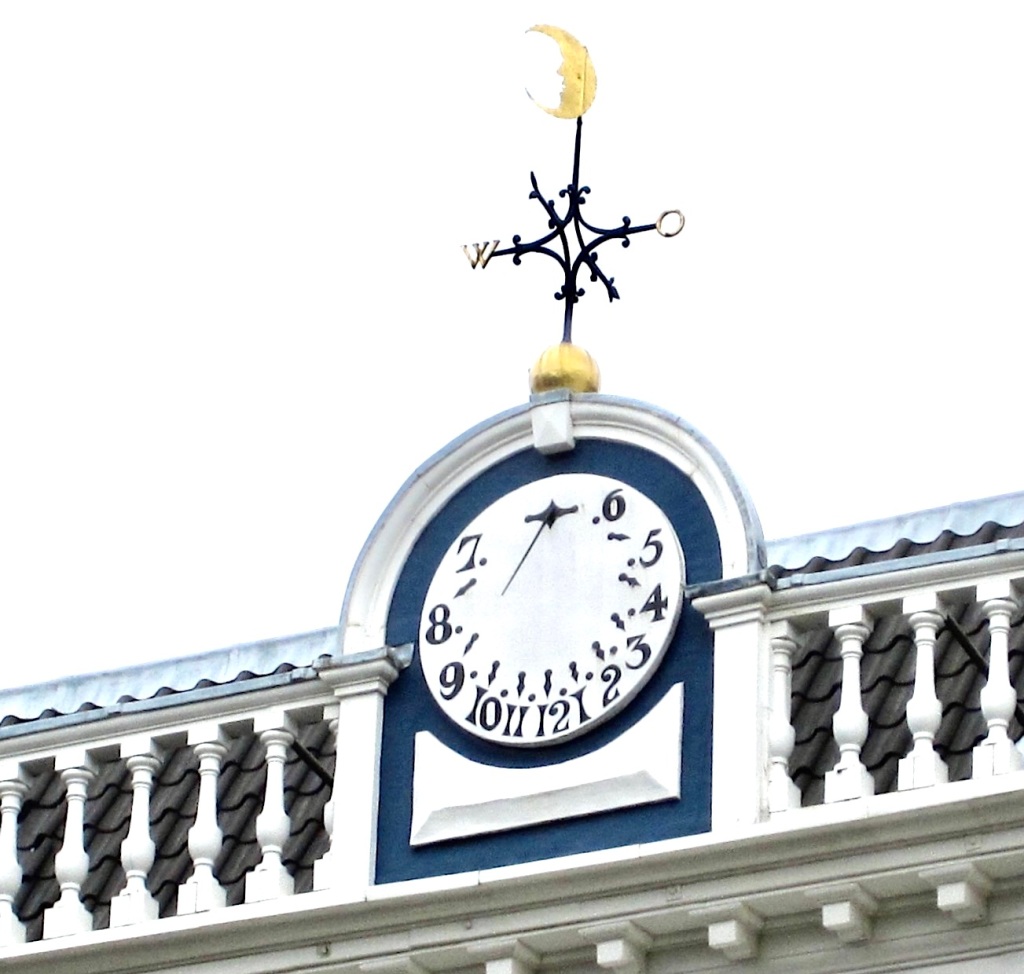
The attractive gardens of the Van Loon Museum contains 3 very different dials. In the centre is an armillary sphere (C19?). By the steps is a complicated early scaphe dial dated 1582. I have included B&W images, which can sometimes be useful for seeing details on multiple dials. The third dial with a weather vane is high up in the centre of the upper gallery overlooking the garden. I am trying to find out a date for it.
ARMILLARY SPHERE
SCAPHE / LECTERN DIAL 1578
Correctly know as a lectern dial because of its angle. Scotland in particular has many of these (eg Culzean), as it also has with obelisk dials (eg Kelburn Castle).
VERTICAL DIAL AND WEATHER VANE
GSS Categories: Armillary Sphere; Cube Dial; Multi Dial; Scaphe Dial; Modern Dial; Amsterdam Dial
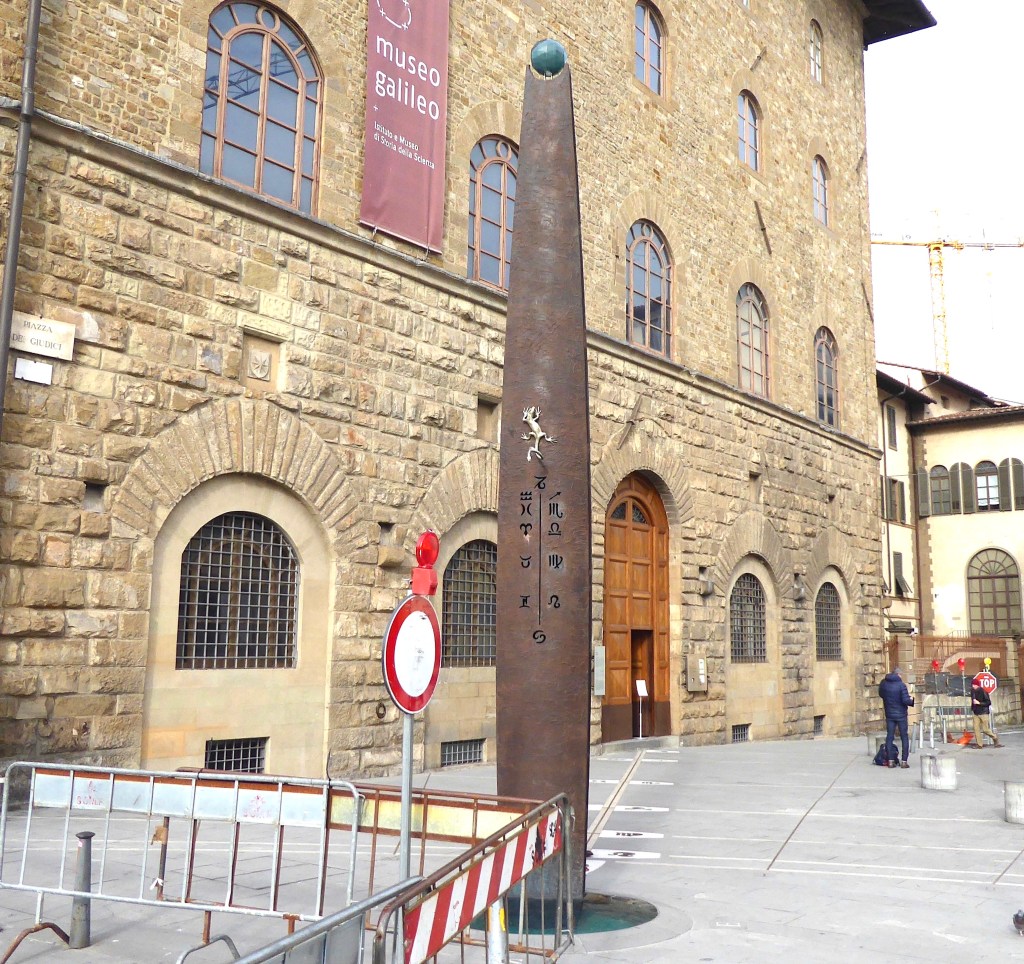
Lizard / Viper Gnomon of Monumental Dial . Museo Galileo . Florence
MONUMENTAL SUNDIAL . MUSEO GALILEO . FLORENCE
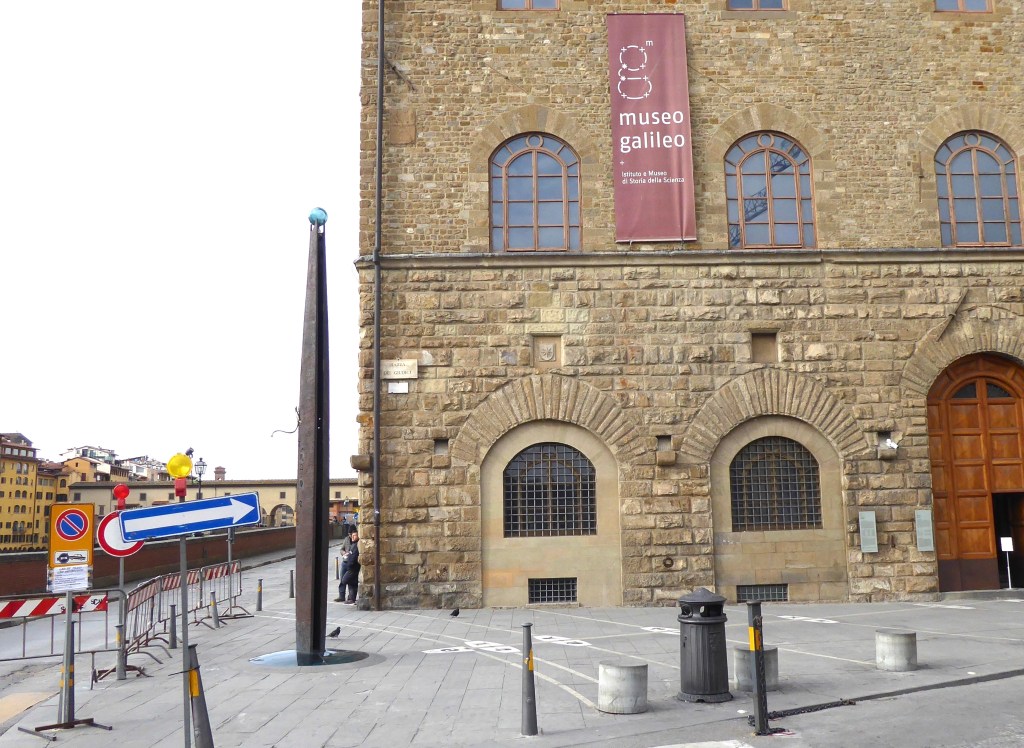
The Museo Galileo‘s Monumental Sundial was built as a mathematical ornament in 2007. The slender bronze column (stele) is in fact formed from two matching columns closely aligned, symbolising day and night. The (mid)day stele faces south, with a vertical meridian line on which the shadow is cast by a lizard’s tail (actually, an imaginary half-lizard, half-viper). The night stele faces north and signifies the constellations Ursa Major and Ursa Minor that enable the Pole Star to be identified.
Monumental Dial . Museo Galileo . Florence
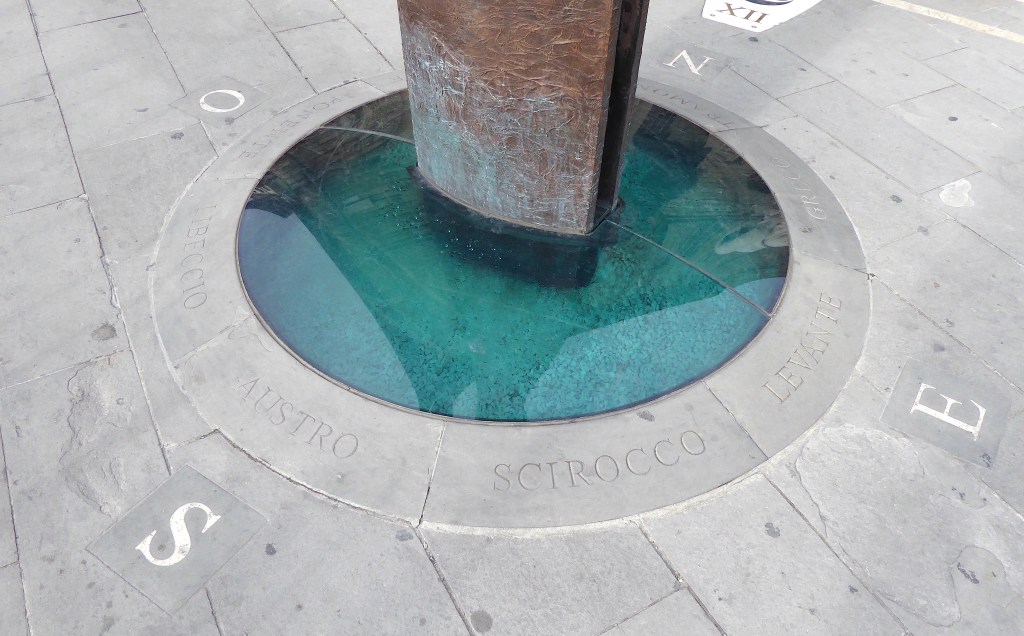
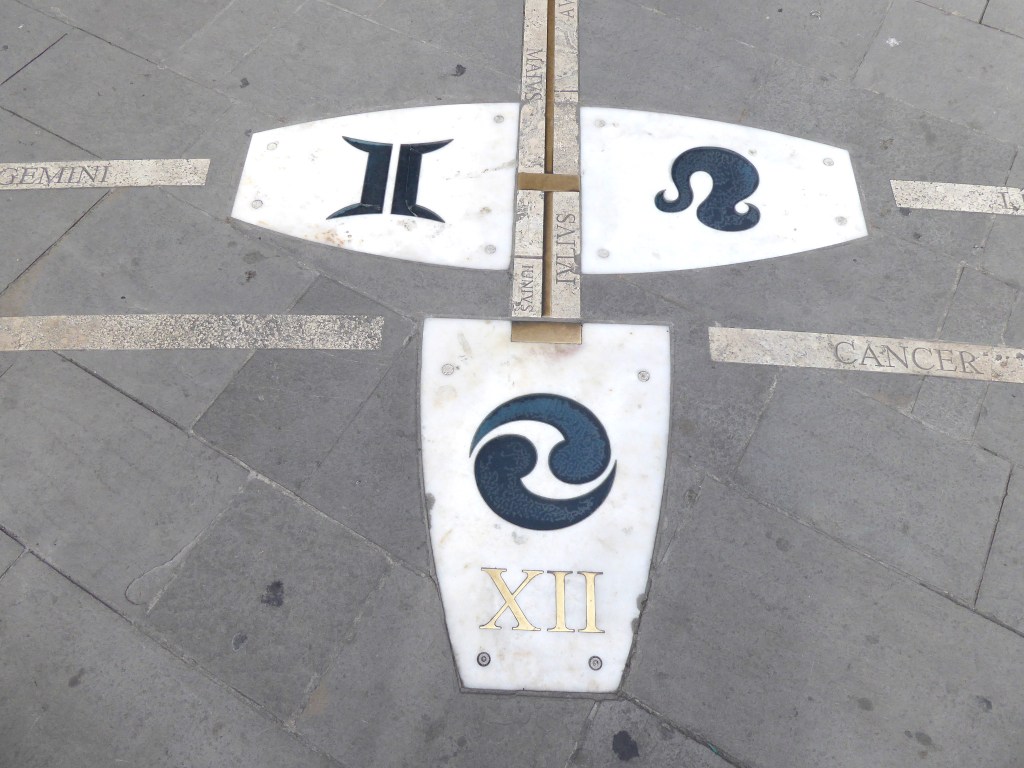
The encircled quadrant design on the pavement at the base of the bronze columns indicates the geographic orientation. This glass base of the gnomon, and also the Zodiac signs in the meridian line (below), are up-lit after dark.
Orientation dial . Monumental Dial . Museo Galileo . Florence
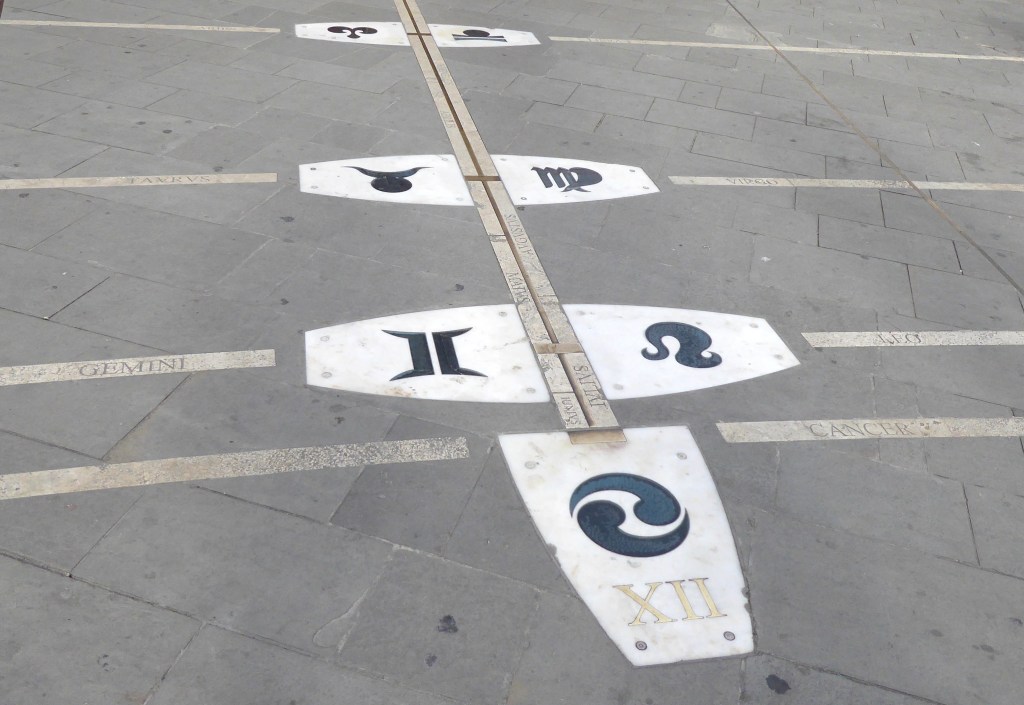
The Museo explains the meridian line in helpfully simple terms: A travertine and brass meridian line is drawn on the pavement, flanked with glass and marble signs of the Zodiac. The meridian line extends for about 15 metres from the museum entrance, where the winter solstice is marked, to the base of the gnomon, where the summer solstice is marked. The travertine curves crossing the meridian line indicate the date. The brass radial lines forming a grid with the two solstitial curves indicate the hours.
The seasons and the four elements are symbolised by the choice of materials: travertine for the earth and autumn; glass for the water and winter; grey stone for the air and spring; bronze for the fire and summer.
LIZARD / VIPER GNOMON ON THE SOUTH FACE OF THE COLUMN
This extraordinary sundial stands by the Arno with the Ponte Vecchio (which itself has a wonderful dial LINK) close by to the west. For anyone with even a minuscule interest in or curiosity about the gradual development of scientific instruments and techniques from medieval times onwards, pay a visit to the excellent online gallery LINK. Look in particular for the two astronomical telescopes made by Galileo himself.
The North American Sundial Society has very good online information about this unique dial. You can watch a short animation of how this gnomonic sundial works here LINK
For those interested in finer details of the way the dial works, the museum’s detailed account is included at the end of this article.
Museo Galileo – Istituto e Museo di Storia della Scienza
NASS (North American Sundial Society) Video: Filippo Camerota, Luise Schnabel, Giorgio Strano
How the Sundial works
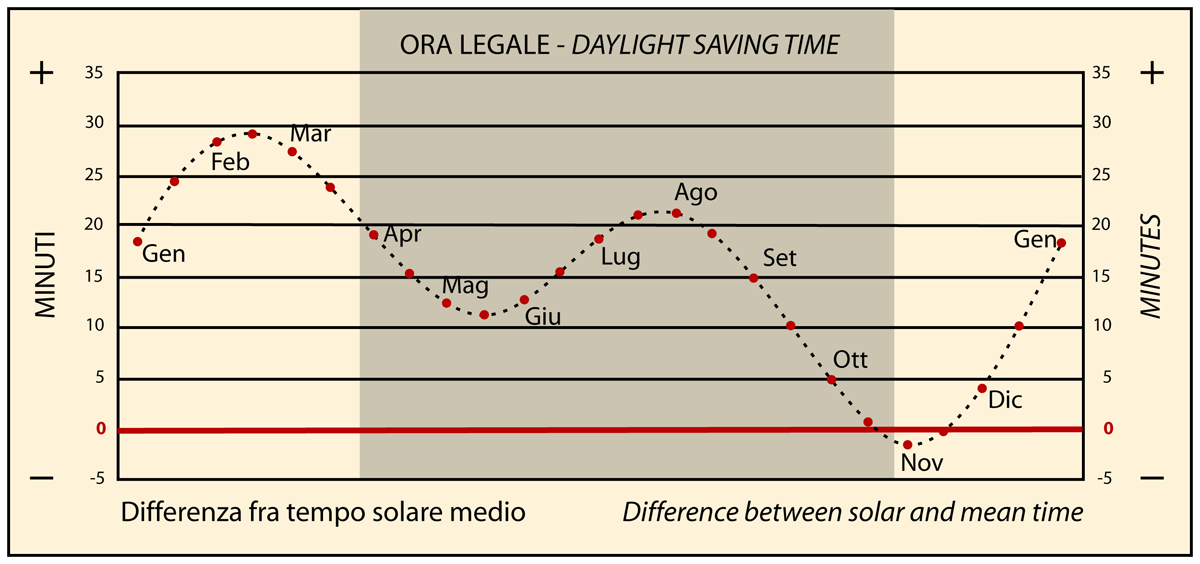
The shadow cast by the glass polyhedron atop the large bronze gnomon indicates the date and time. The hours from 9:00 AM to 2:00 PM are marked out by radial brass lines. The date is indicated by the travertine traversal lines which mark the Sun’s diurnal course for various periods of the year – precisely when the Star enters the signs of the Zodiac. The shadow cast by the gnomon changes in length during the course of the days and seasons, and indicates true solar time for the place where it is located, which is a different time than that of our wristwatches, known as mean time. In respect to mean time, true solar time has a periodic variation that can exceed a quarter of an hour.
Moreover, during daylight saving time, the hands of a clock are moved forward one hour. For example, true midday in the month of February would be indicated by the sundial around 12:28 AM while in the month of July it would be indicated around 1:20 PM daylight saving time.
To read the hour and date, you have to identify the hour lines and the calendrical lines closest to the gnomon’s shadow. When the shadow does not fall exactly on a hour line, you can read the half-hours and quarters with close approximation by ideally subdividing the space between two hour lines in two or four parts. The date can also be read by referring to the Zodiac signs and the start of the months marked out along the meridian line.
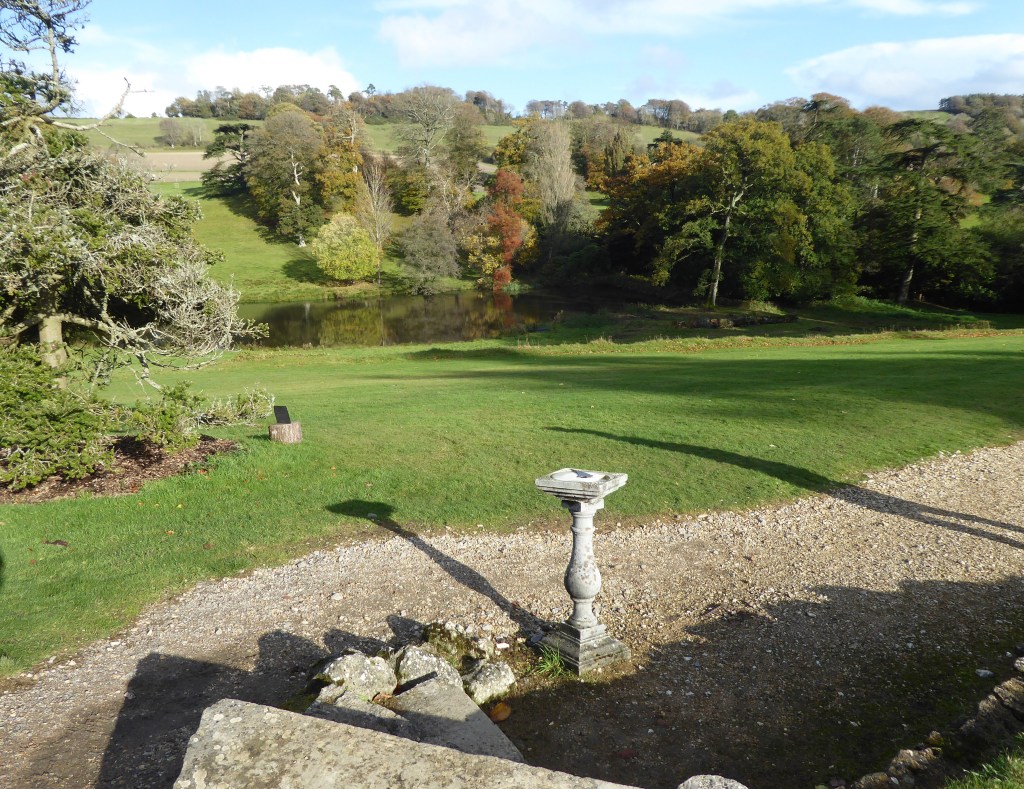
A sundial on the terrace of this fine house, with its C17 origins and unbroken line of Digbys. The renowned gardens are especially worth visiting in Spring. It features a collapsible gnomon, an unusual feature not conducive to enhancing its primary purpose.
The HORNIMAN MUSEUM in South London is a wondrous place for people of all ages. Few (or no) visitors will fail to find something of interest or inspiration. Click on the link to find out more (rather than have me give a lengthy description of the excellent collection).
Among the many innovative collections and installations is a brilliant SUNDIAL TRAIL that showcases 12 different and distinct types of sundial. These are dotted around the park (not all are outside). Some have an additional ingenious feature that makes them unique – incorporating morse code for an inscription, for example.
Roman Sundial . Horniman Museum . London
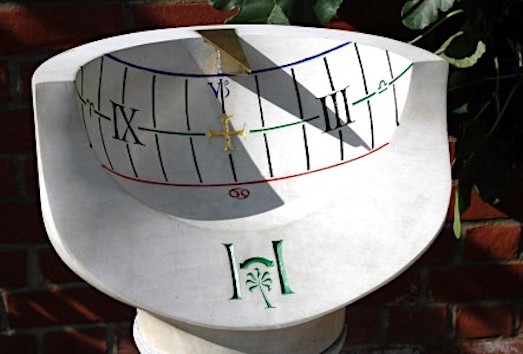
The dial was designed by John Moir and constructed by Ray Ashley. The gnomon’s shape is based upon the ‘H’ from the old Horniman Museum logo. The edge of the shadow created by the ‘H’ indicates solar time. The museum’s image below when the dial was newly made shows it in action, so to speak.
THE HORNIMAN ROMAN DIAL
Roman Sundial . Horniman Museum . London
The dial has a central cross marking the noon line. In addition, signs of the Zodiac are marked though I don’t know enough to say how they fit into the design – why, for example, pisces is below the noon line.
Roman Sundial . Horniman Museum . London
I have a second Horniman dial to write up in due course. You can find details of all the dials on the Horniman website (see link above). There is also SUNDIAL TRAIL MAP(do not open if you want to discover the dials unassisted…).
Roman Sundial . Horniman Museum . London
GSS Category: Roman Dial; Bowl Dial
All photos, Keith Salvesen; specific information / new dial image, Horniman Museum
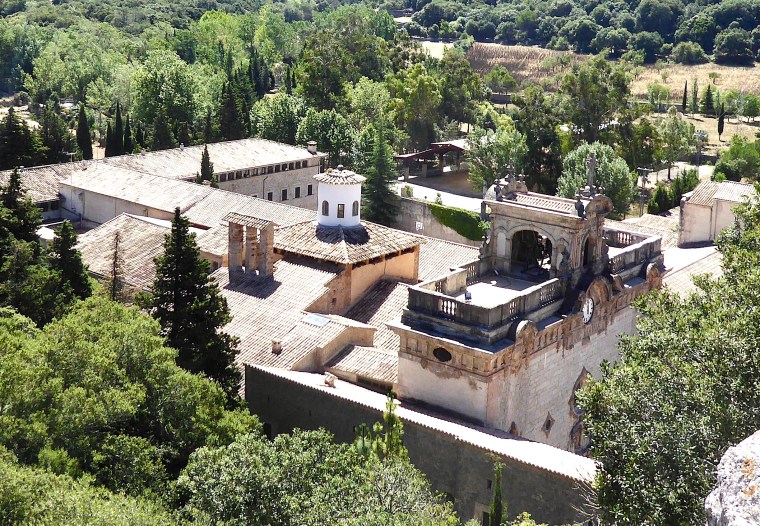
The secluded Monastery of Lluc is situated near Escorca in the Tramuntana mountains of Mallorca. It dates from the c13, and is famous for its Black Madonna, the discovery of which is said to have led to the monastery’s foundation . It is a place of pilgrimage. The location is remote and peaceful, though inevitably the monastery has become an essential stop on the tourist and coach party trail. We returned there recently, not having visited Mallorca for more than 20 years. The buildings were much as we remembered, but the parking and visitor arrangements were more regimented and complex. Before, one just drove down the narrow road from the main mountain road and parked in the forecourt area close to the buildings. Now, everything is (unsurprisingly) geared to a daily mass influx of people and their needs for sustenance and souvenirs. We were pleased to see that it is still possible to stay at Lluc in one of small rooms under a long covered walk where the monks once slept. You can even book a room for the night.
Lluc Monastery . Mallorca – Sundial
A short walk from the monastery, there is a path that leads up to a calvary and some great views. Along the way is an amazing multiple vertical sundial. It was designed by Rafael Soler, and carved in 1991. It displays with some style the evolution of sundials from medieval to modern. There are two historical dials, one solar dial, and two seasonal dials.
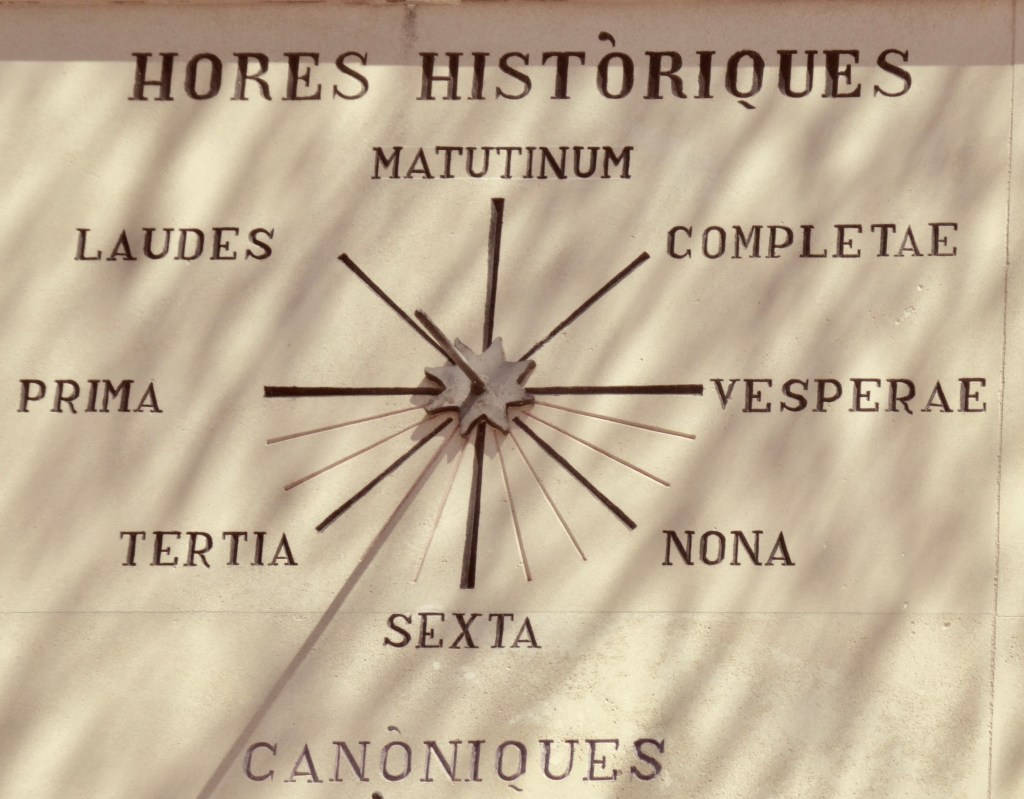
CANONICAL HOURS – LATINATE
This dial simply records the 3-hourly canonical divisions of the liturgical day (as with the early medieval mass / scratch dials), starting with midnight (top) and working counterclockwise round a central gnomon.
Lluc Monastery . Mallorca – Sundial (Canonical)
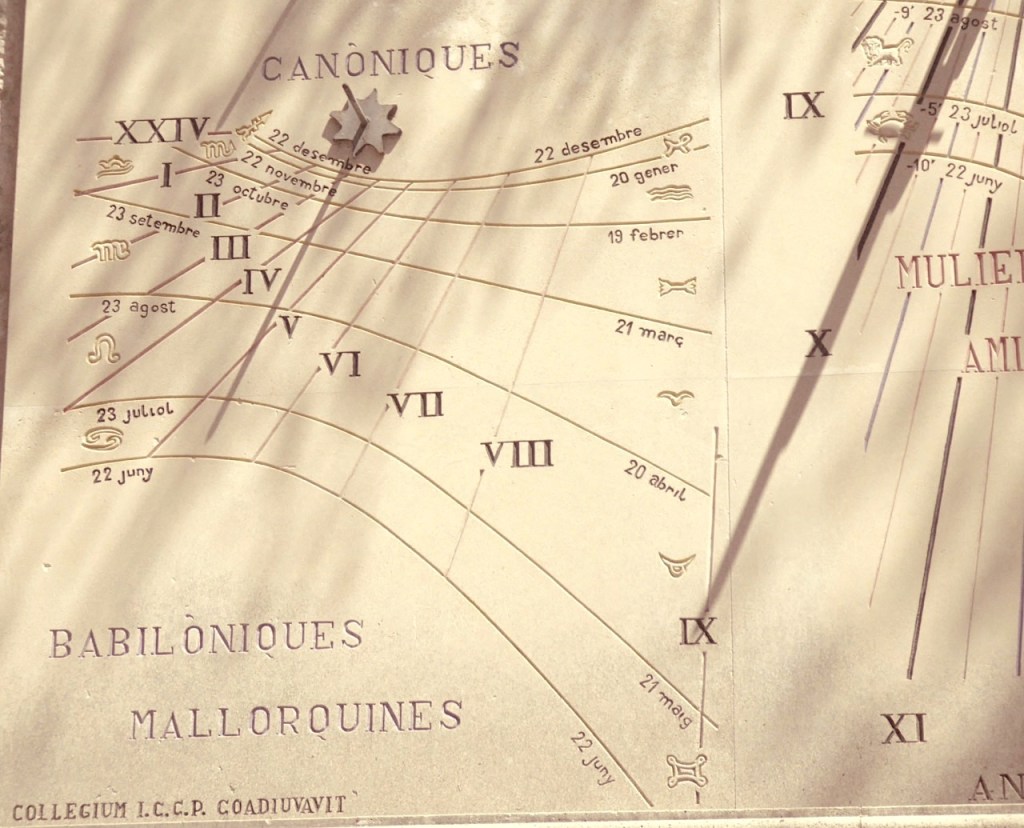
CANONICAL HOURS – BABYLONIAN / MALLORQUIN
A more complex dial, starting at noon shown as XXIV (I’m not clear why not XII) through to 21.00. The dial includes months and the signs of the Zodiac.
The centre dial shows true solar time. The polar gnomon (triangular) shows the hours, the pointer shows the date with the declination lines. The inscription MULIER AMICTER SOLE (Woman Clothed by the Sun) references an account in the Book of Revelations. You can find out more HERE
Lluc Monastery . Mallorca – Sundial
MEAN TIME DIAL (SUMMER /AUTUMN)
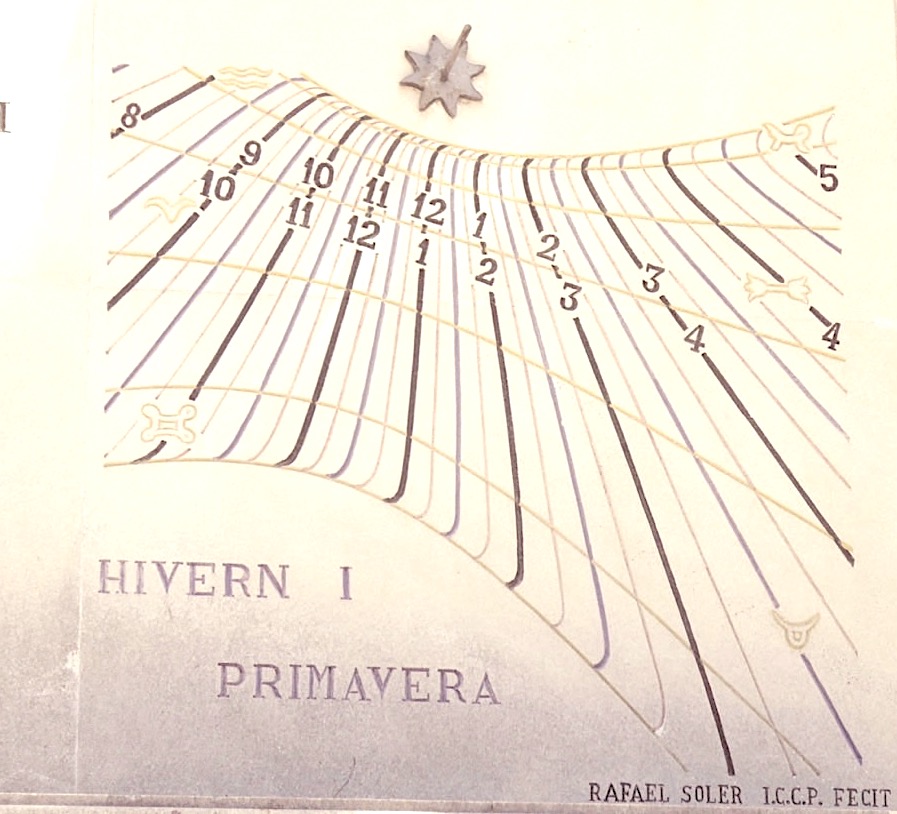
The two right-hand sundials are complementary and each covers two seasons. Presumably for a particular month, one dial will be reliable as to time and the ‘off-season’ one will not. The words are Catalan eg Hores Mitjanes = Mean Time; Estiu I Tardor = Summer and Autumn.
Lluc Monastery . Mallorca – Sundial
MEAN TIME DIAL (WINTER / SPRING)
Lluc Monastery . Mallorca – Sundial
BBS Record
The creation of these dials was obviously a labour of love and skill combined. There’s doubtless plenty more to be said about these sundials and the splendid ensemble but I decided not to get too technical – indeed, as an amateur I don’t understand enough to do so. The rather washed out appearance of the images was operator error – I had the camera on the wrong settings and didn’t realise until too late…
Lluc Monastery . Mallorca
GSS Category: canonical to modern multi-dial; sundial Lluc Mallorca
All photos: Keith Salvesen; snippet from BSS record
Original Credits: ‘Props to arby101ca and lumbricus, members of a geocaching & waymarking website called Groundspeak. They hiked to Lluc (respect!) and wrote informatively about these dials. I found relatively little elsewhere.
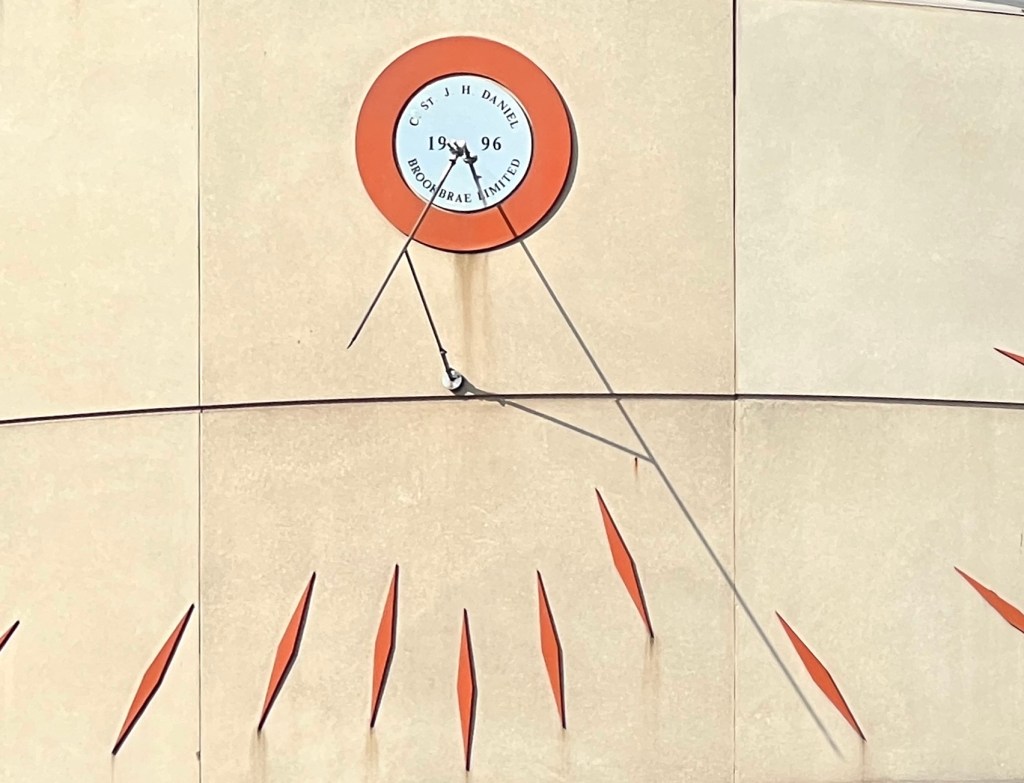
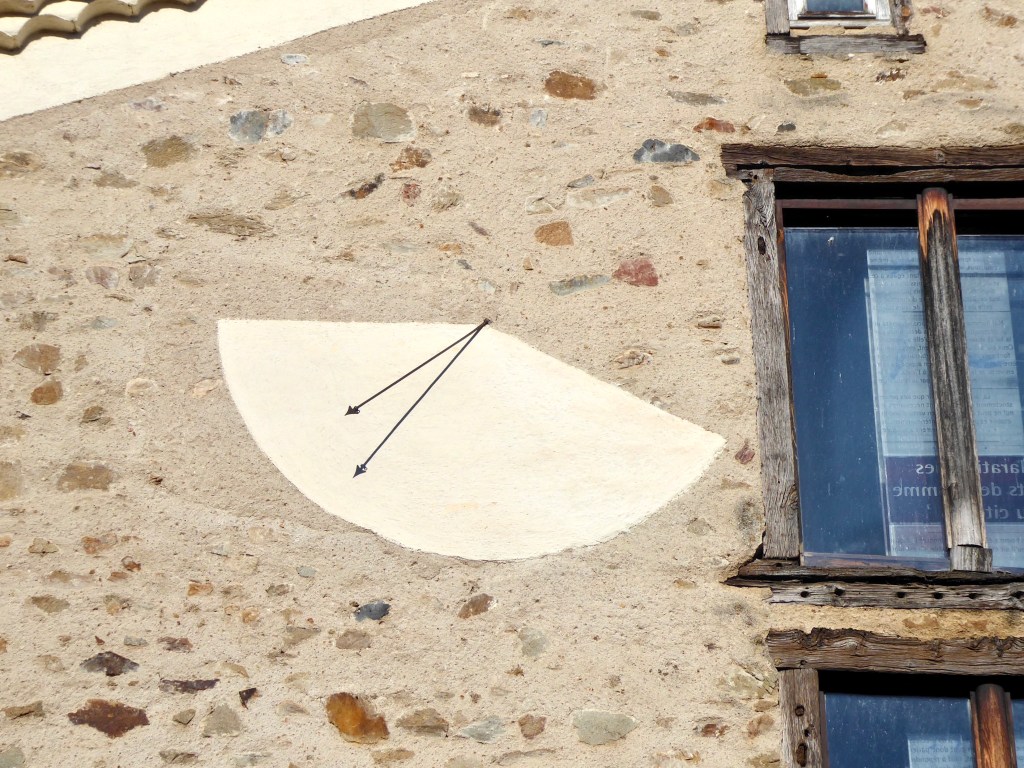
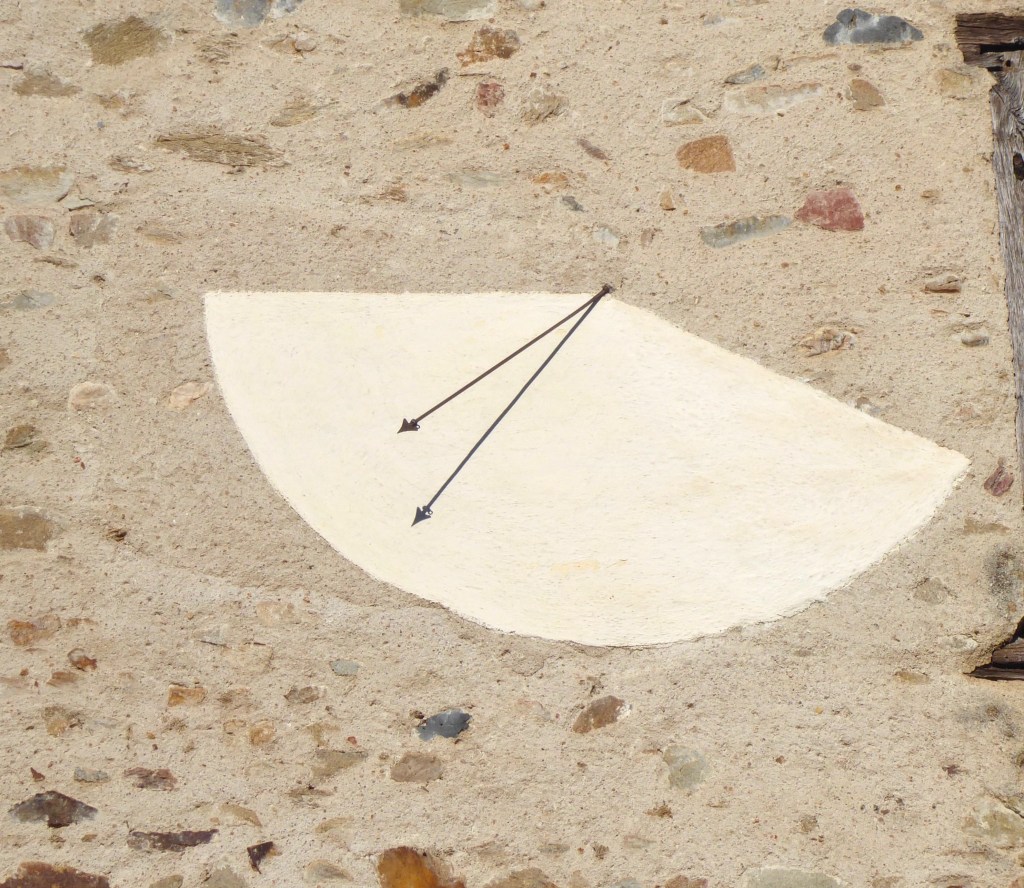
Lavaudieu is a small Auvergne town with a fine romanesque Abbey. For present purposes, the sundial on the wall of the Mairie is the attraction. On a bright sunny day, the simplicity and legibility of this civic dial is hard to beat. The ‘arrowheads’ might be considered a little too ornate for the overall design.
‘Moins est plus’ might be a good motto for the dial, as it is more generally. As soon as I saw it I knew it would be in my top 20 non-medieval dials. It still is.































 GAUDIUM SUB SOLE . SUNDIALS . MEDIEVAL TO MODERN