KELBURN CASTLE . LARGS . AYRSHIRE

KELBURN CASTLE . AYRSHIRE

The image above is enhanced to show this renowned castle in all its dramatic glory. The ancient seat of the Earls of Glasgow dates from C13 – one of the oldest castles in Scotland and the longest continuous family line of descent. This article is adapted from an earlier one published elsewhere. You will find further information about this magnificently daring blend of ancient and modern at the end.

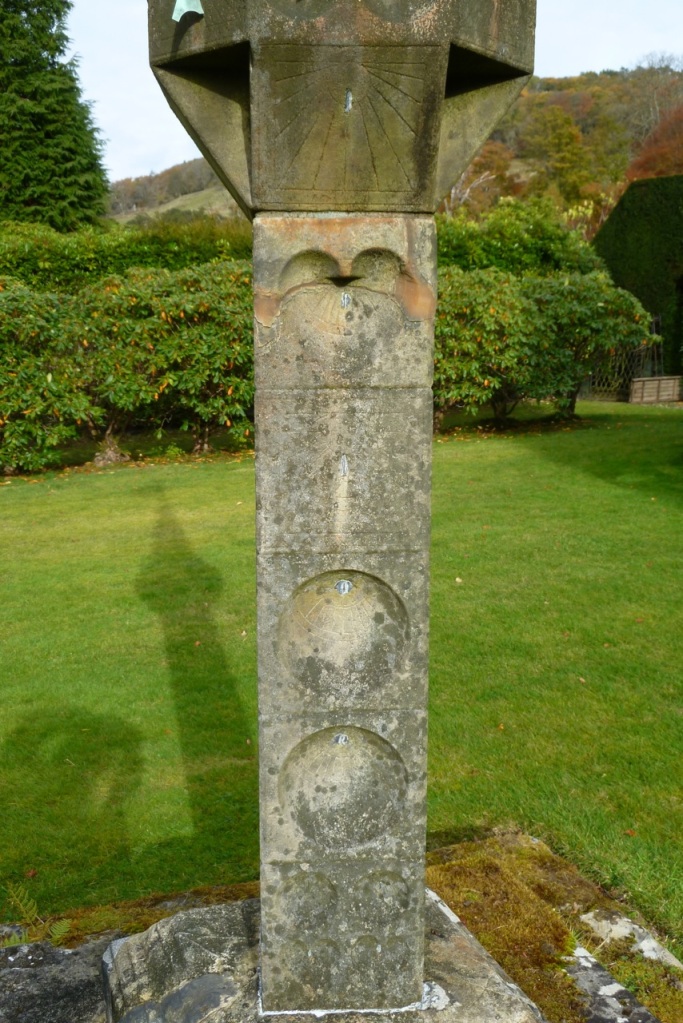
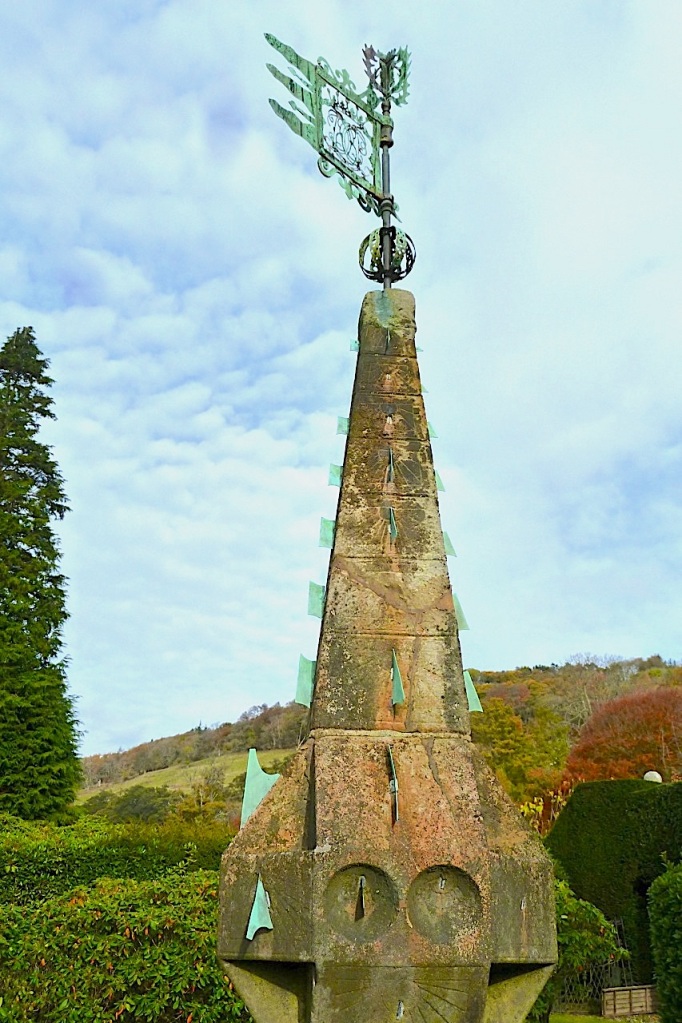
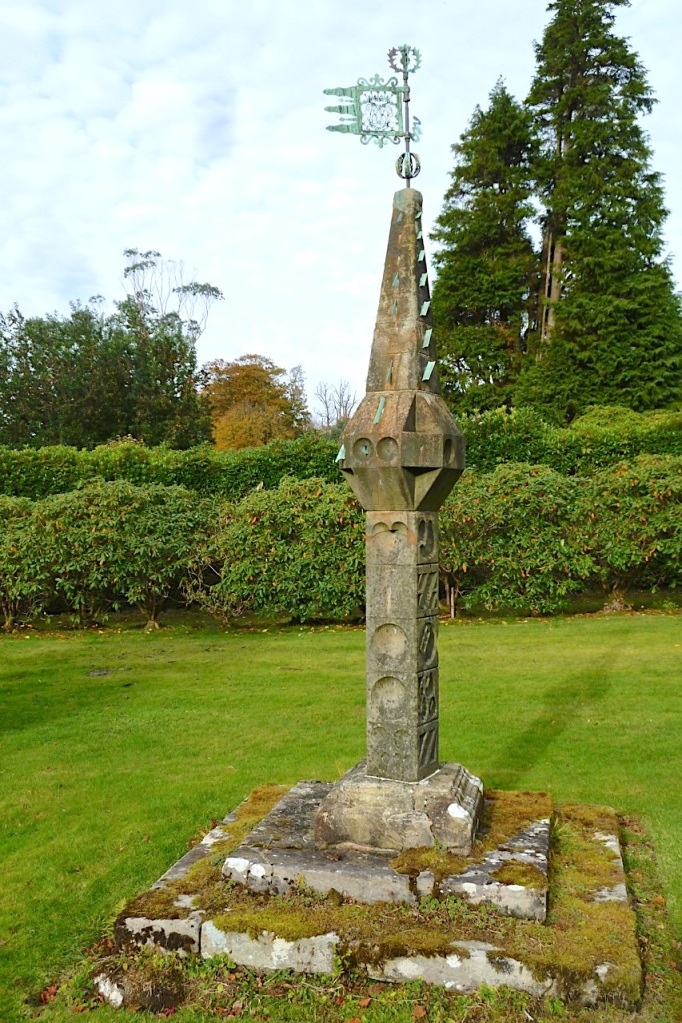
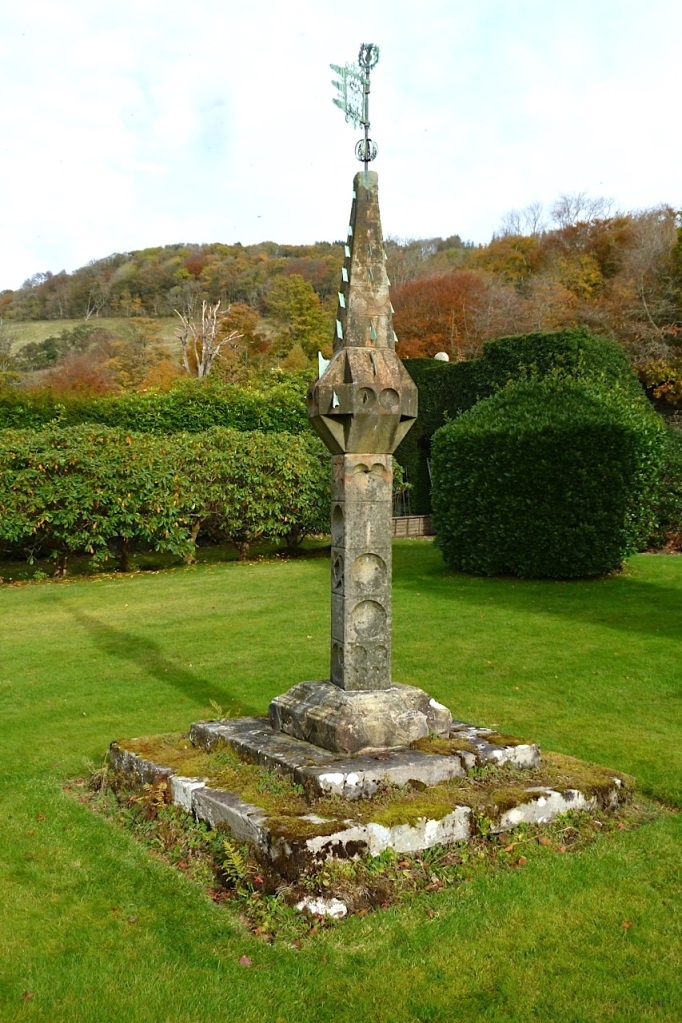
A FINE MULTI-FACETED SCOTTISH SUNDIAL AT KELBURN CASTLE, AYRSHIRE
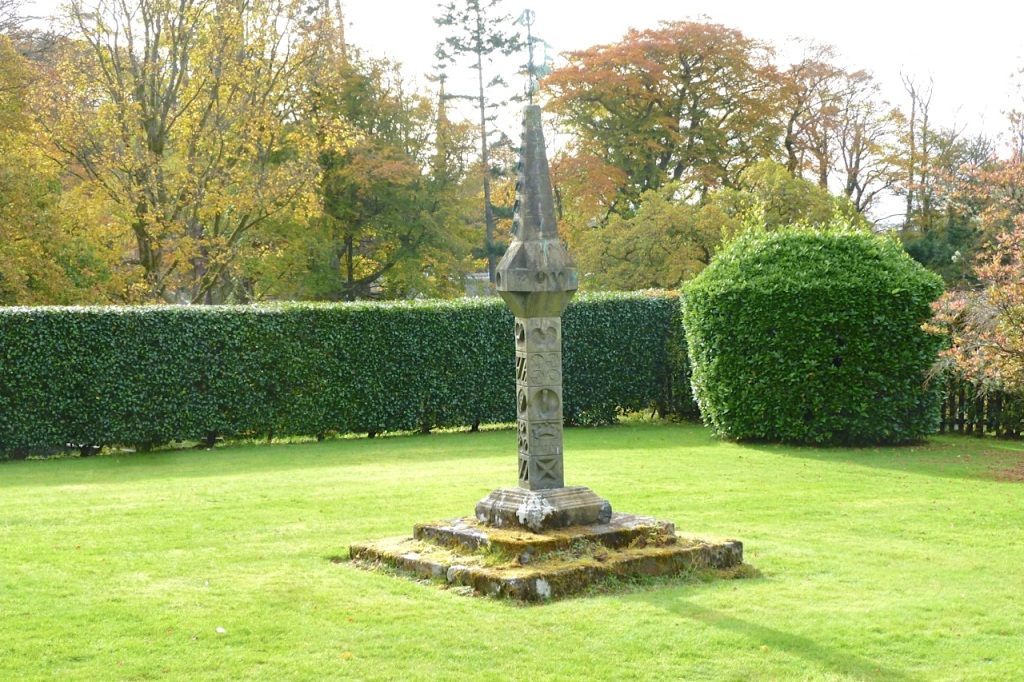
If you want to find a good choice of multi-faceted sundials, Scotland is the place to go. A considerable number may be found at country houses and castles, or elsewhere having originated from a large estate. Many, perhaps most, are 200-300 years old. Some are relatively simple; others are so complex that their purpose is clearly as much ornamental as horological. Good examples can be found at Glamis, Haddo House, Castle Fraser and Culzean Castle.

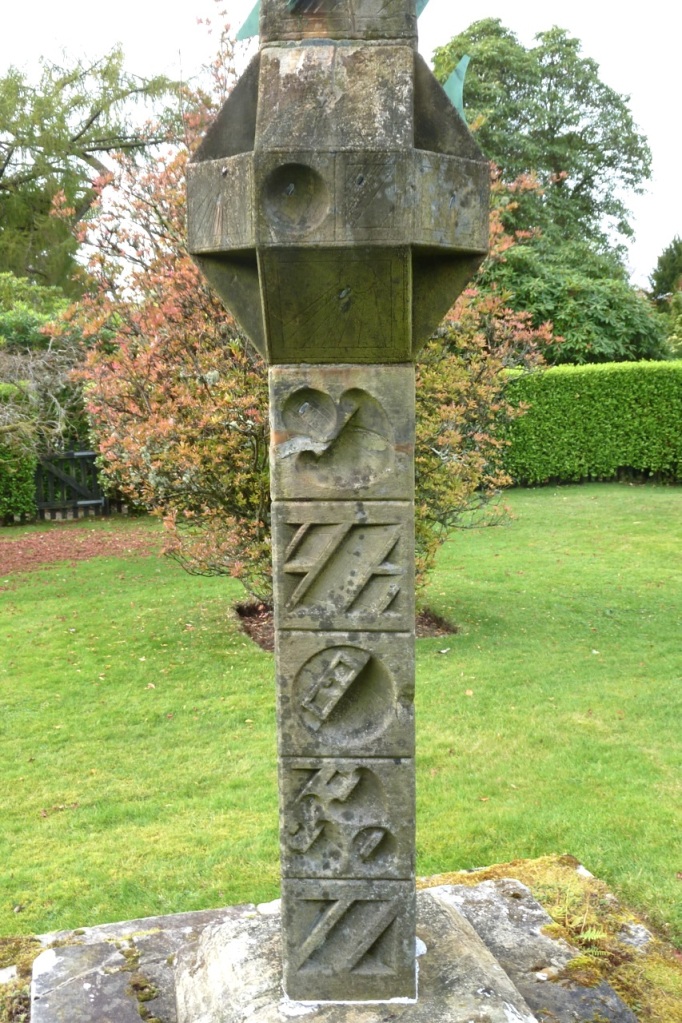
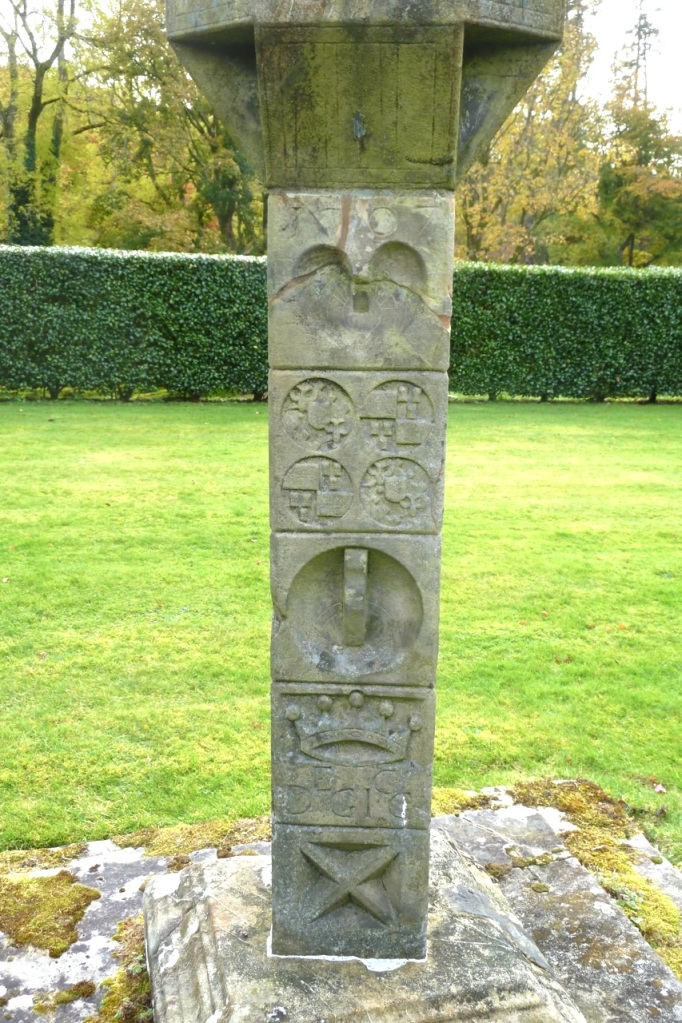
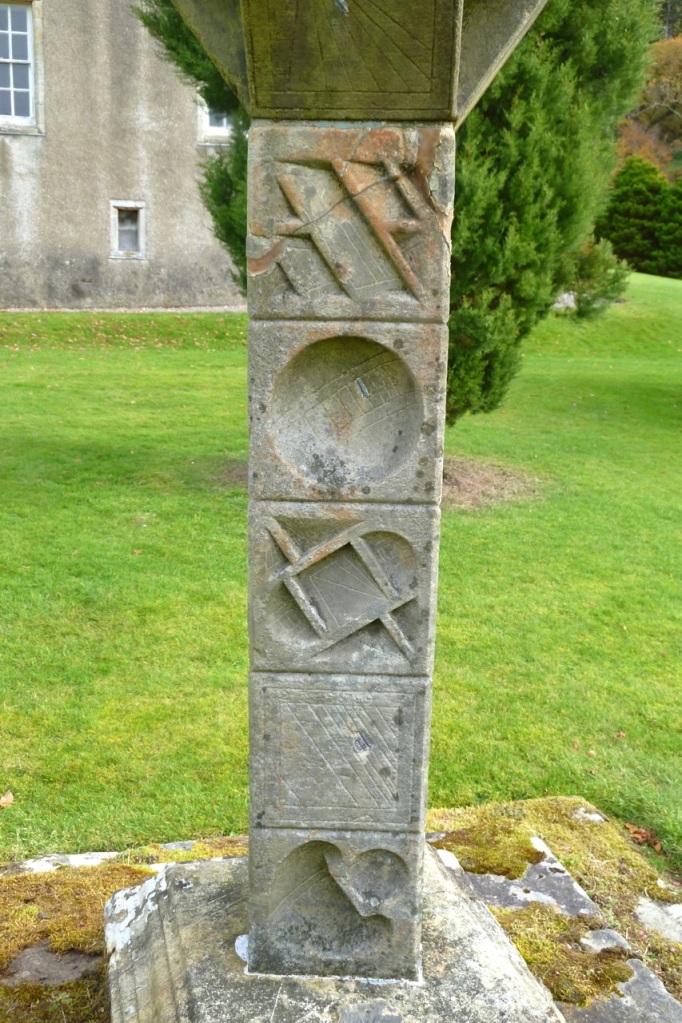
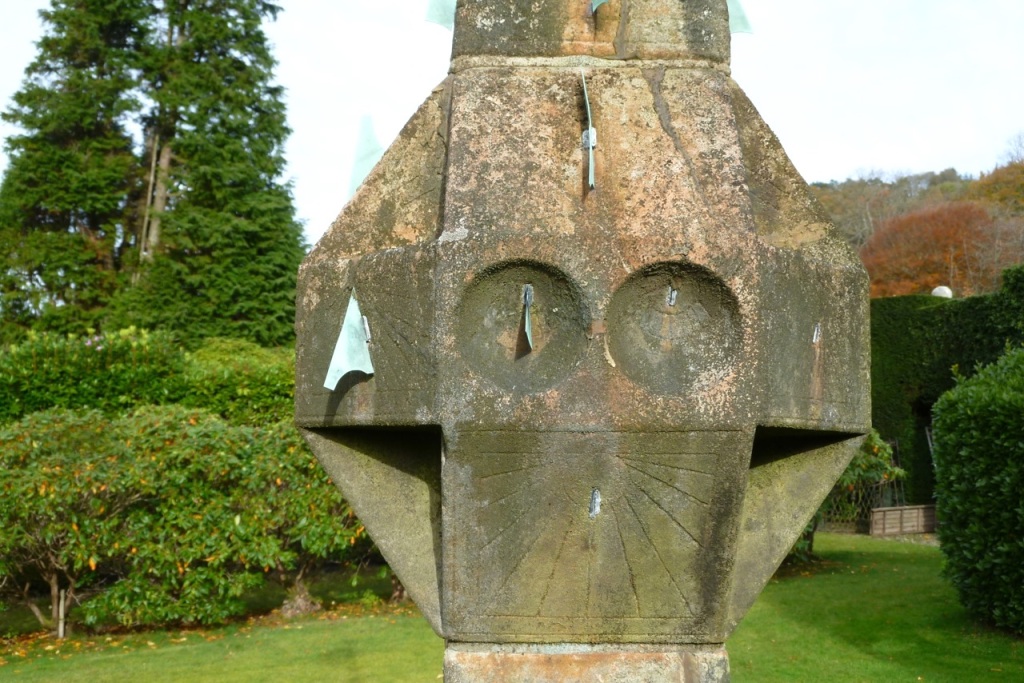
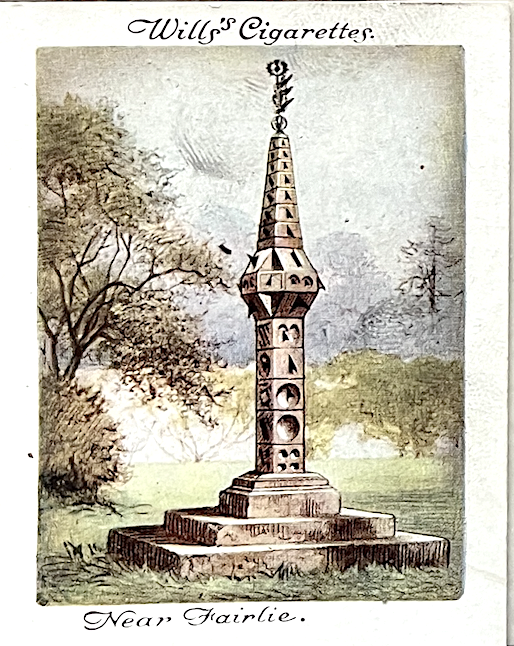
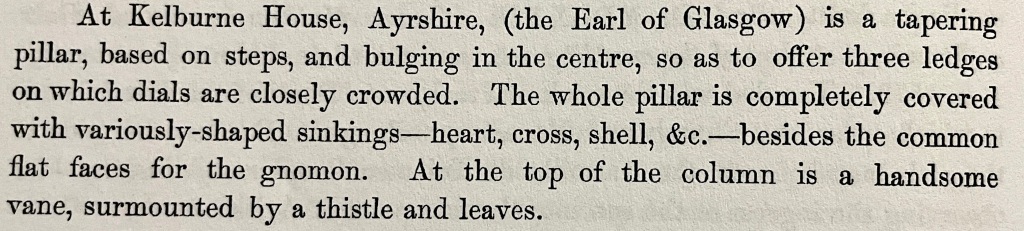
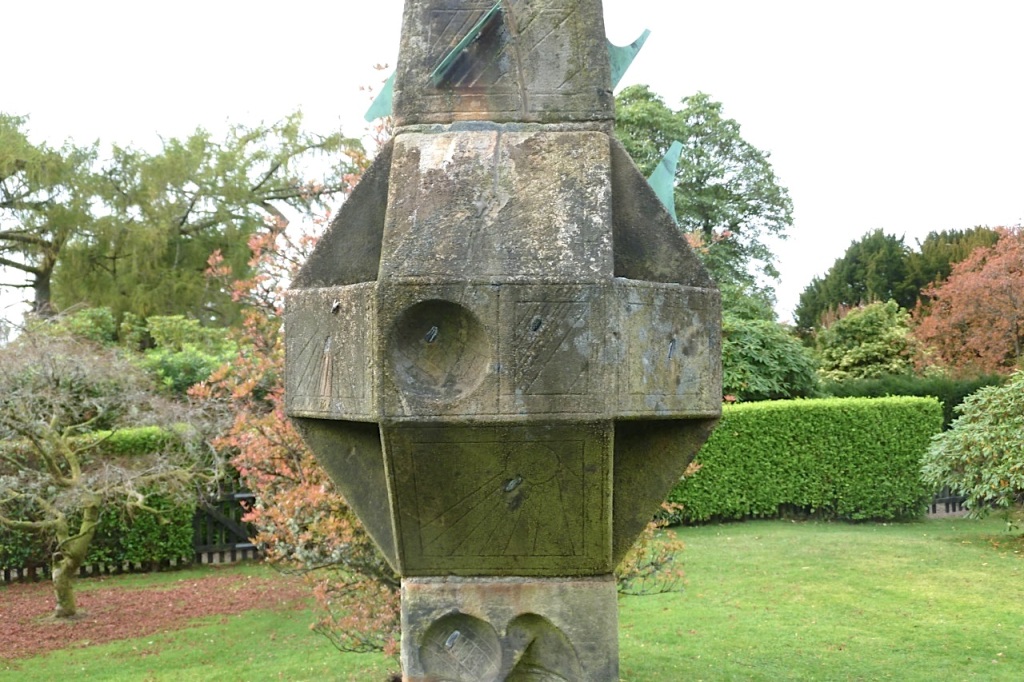
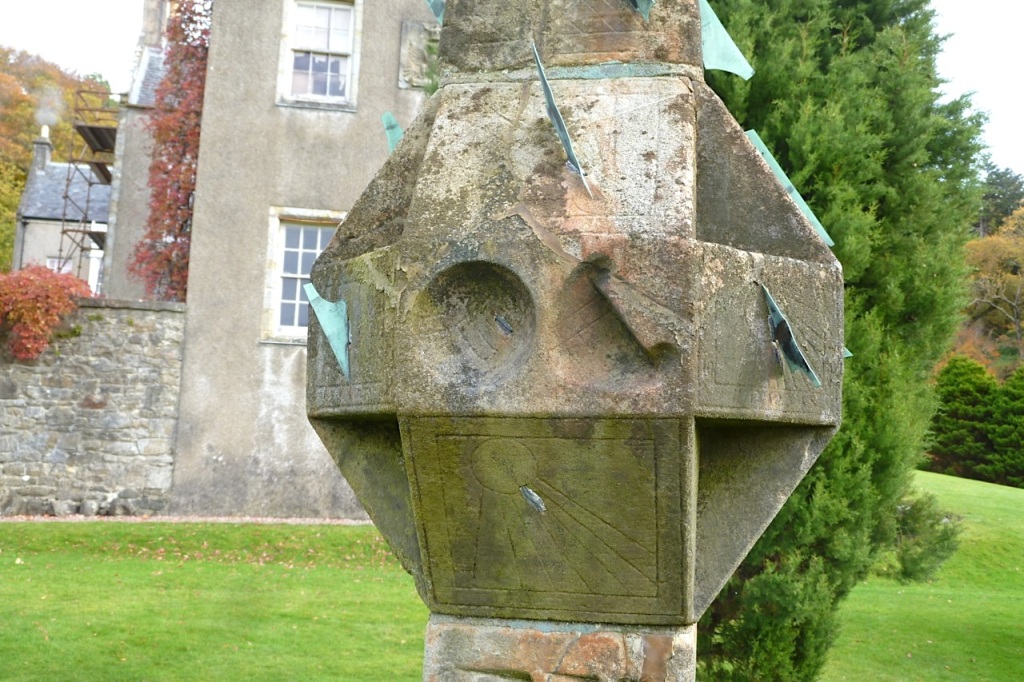
The 1707 multi-faceted oblelisk sundial at Kelburn is one of the most important sundials in Scotland. Some restoration has been carried out, and it now appears to be in overall good condition. While there seems to be no agreed figure for the exact number of individual dials, the count starts at 70.

I’ve made no attempt to describe the dials for obvious reasons, but there are links at the end that will be helpful for those who want to investigate further than looking at the photos.

THE SUNDIAL FROM EACH ORIENTATION

EAST SIDE
NORTH SIDE

WEST SIDE
SOUTH SIDE

SPIRE

NOTES

Kelburn’s astonishing transformation from early medieval stronghold into an outrageous post-psychedelic House of Fun began in 2007. The building’s concrete cladding needed to be replaced, following which (and with official approval) four Brazilian graffiti artists were invited to let their imaginations run loose. And did.

There is plenty of material online about this remarkable building – see link to its website below. Enterprises on offer include weddings; yurts; summer music festival; a reputedly scary Halloween. Summed up in the estate material: It’s a cultural safari for the mind, body and soul.

GATTY (p 140)
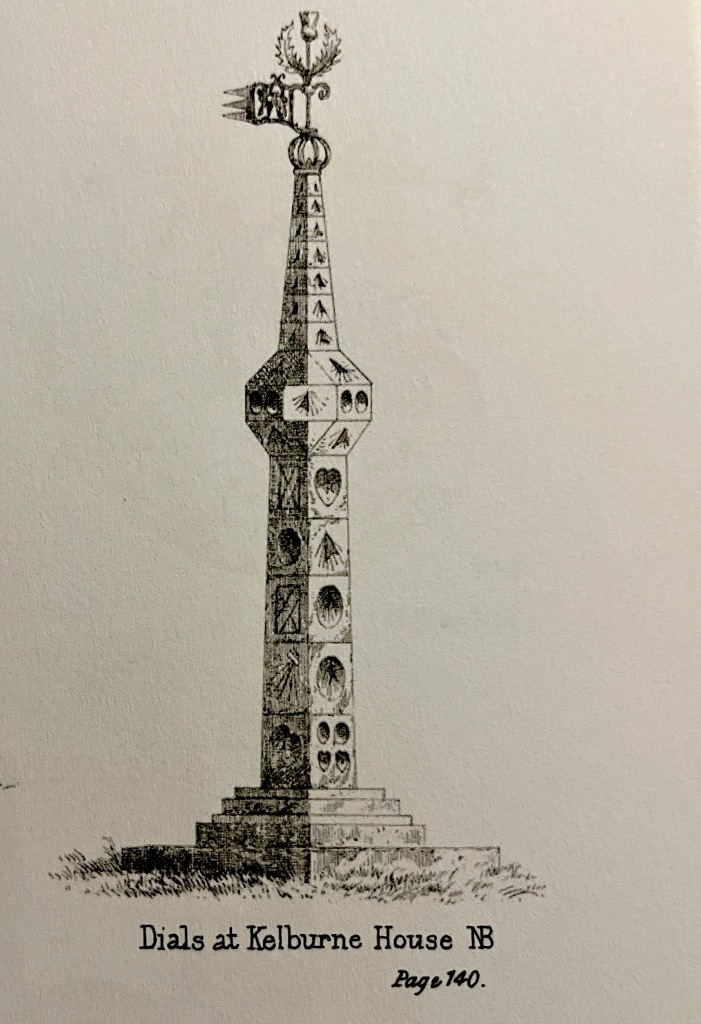
BSS

The Kelburn Dial featured in Bulletin 1996 in connection with a later dial based on it
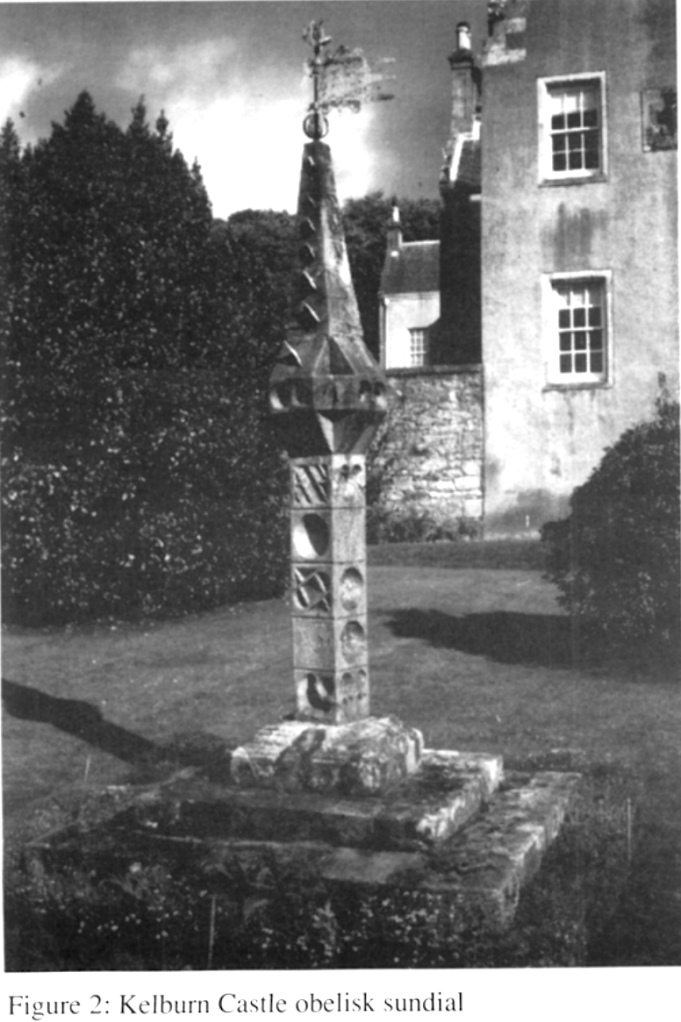
DESCRIPTIVE NOTE
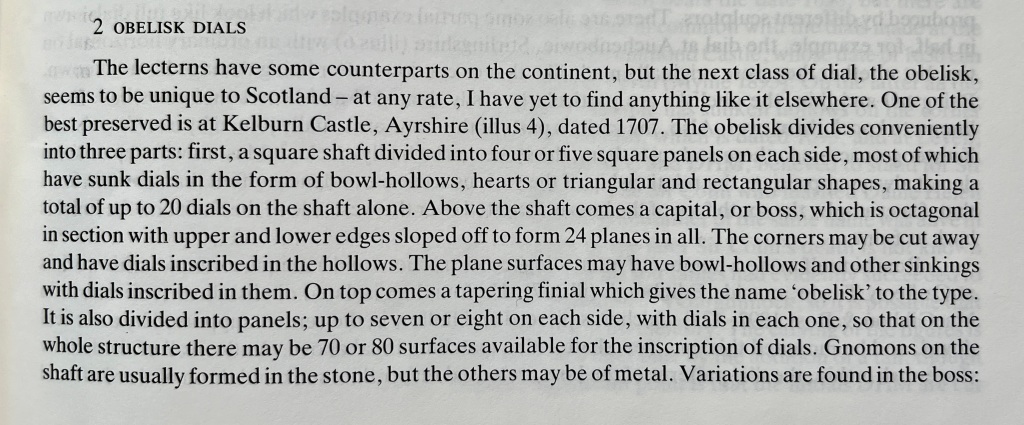
LINKS

KELBURN CASTLE & ESTATE Castle website

ANCIENT SUNDIALS OF SCOTLAND (Somerville)

HISTORIC ENVIRONMENT SCOTLAND Listing details

CANMORE NATIONAL RECORDS

There is a second, smaller obelisk sundial NW of the castle that receives rather less attention: Sundial to west of Kelburn Castle, Kelburn Castle Estate, Fairlie (LB7298). Listing details can be found HERE
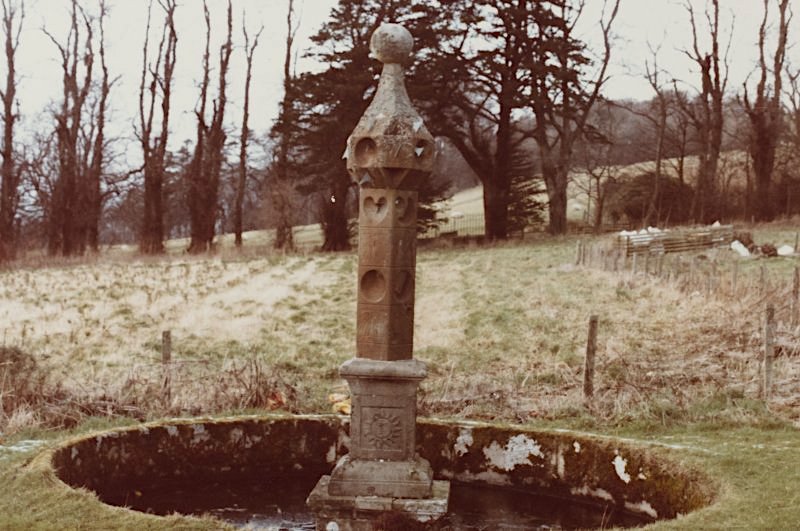
Image from the Canmore photographic records for Kelburn

GSS Category: Obelisk Dial; Multiple Dial; Scottish Sundial

All photos and material: Keith Salvesen except as indicated

BASILICA di SANTA MARIA NOVELLA . FLORENCE – Danti’s Armillary Sphere

SANTA MARIA NOVELLA . FLORENCE . ARMILLARY SPHERE

EGNAZIO DANTI* 1536 – 1586 (also, Ignazio), Dominican monk and polymath, became renowned for his wide learning and intellectual precision. He was a mathematician, cartographer, astronomer (some say ‘cosmographer’) to Cosimo I, and much more. There’s plenty about him – and indeed about his 3 very different dials at SMN – online.

Recommended sites for an informed overview of the dial include that of the Basilica itself SMN.IT; also ARTELEONARDO and ACCADEMIAGALLERY

For those wishing to dig deep into the complex analysis and the historical context of the dial, you can do no better than study the lead article by Simone Bartolini & Marco Pierozzi in the BULLETIN OF THE BRITISH SUNDIAL SOCIETY VOLUME 22(iv) – December 2010. You can download it.

Egnazio Danti

ARMILLARY SPHERE

The armillary sphere consists of two perpendicular bronze circles with a diameter of 1.30 cm. The vertical one represents the meridian and indicates the exact moment when the sun is at its highest point, noon. On the equinox day, these two circles create a cross-shaped shadow, while elongated circle shadows are formed on other days. (AG)

REFORMATION OF THE CALENDAR

Danti’s sphere was installed on the S facade of the SMN in 1572. This device enabled him to determine the equinox precisely, and thus the true length of the year. Measurements the following spring confirmed the conjecture that the equinox was earlier than indicated by the Julian calendar, in fact by 11 days. As Wiki (always good on this sort of topic) puts it: The reforms of Julius Caesar in 45 BC put the Roman world on a solar calendar. This Julian calendar was faulty in that its intercalation still allowed the astronomical solstices and equinoxes to advance against it by about 11 minutes per year. Pope Gregory XIII introduced a correction in 1582; the Gregorian calendar was only slowly adopted by different nations over a period of centuries, but it is now by far the most commonly used calendar around the world.

MERIDIAN DIAL SMN Link to the article on Danti’s marvellous dial inside the Basilica

INSCRIBED TABLETS BELOW THE DIAL

GSS Category: Armillary Sphere; Spherical Dial; Astronomical Dial; Sundial Italy

All photos: Keith Salvesen except header (Wiki)

Ignazio Danti by Bartolomeo Passarotti (c1576-86). Source: Musée des beaux-arts de Brest

accademia gallery florence

MAIDEN NEWTON . DORSET . ST MARY (3) . SCRATCH DIAL 2? (unrecorded)

St Mary . Maiden Newton . Dorset

DEDICATION † St Mary. Mid C12 / earlier foundation; main development C15; C19 restoration

LISTING † Grade I

LOCATION † 8 miles NE. of Dorchester, 12 miles SE. of Yeovil, in the valley below the A37 racetrack. Hardy’s ‘Chalknewton’. More of a small town than a village, with a few shops, a garage and a station rather than (as elsewhere locally) a single shop and a halt. 50.7775 2.5727 SY597977

DIAL 1

See detailed post for the recorded dial in the chancel doorway (RHS) HERE

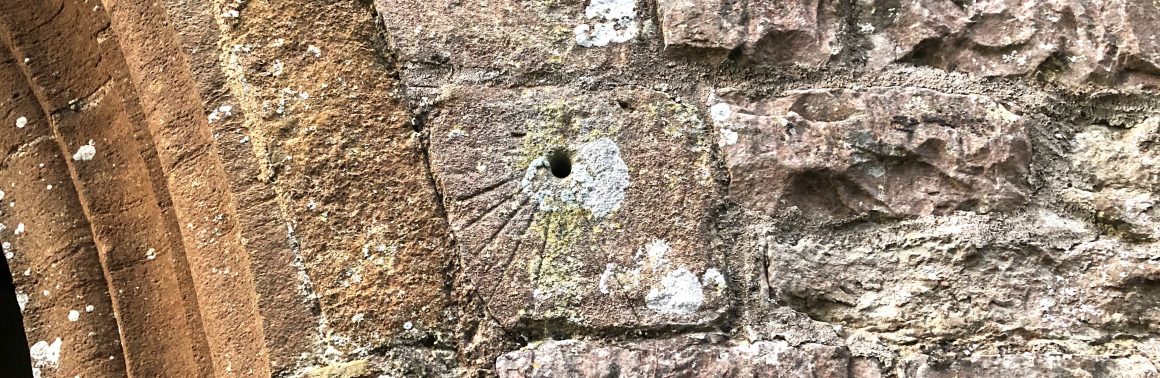
St Mary . Maiden Newton . Dorset . Scratch Dial on Chancel doorway

DIAL 2 (?)

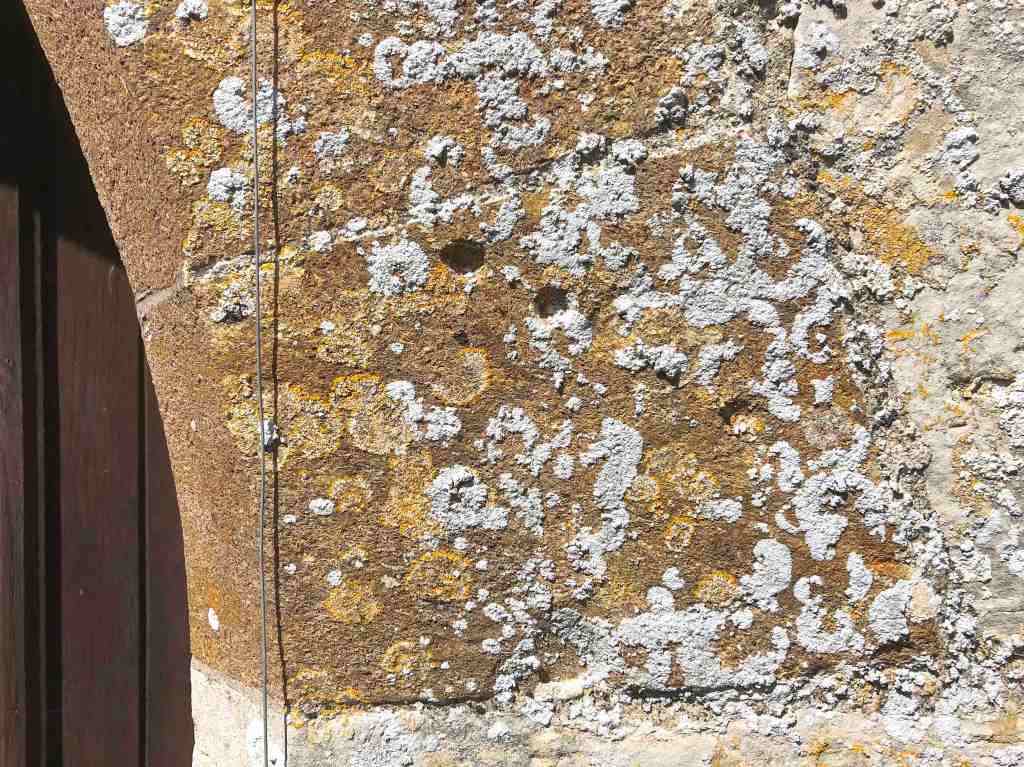
The dial is at eye-level on the quoin of the buttress between the porch and the Chancel door. It is not recorded, and I can see why (a) it may have been overlooked and or (b) why, if noticed, it may have discounted as a definite dial. So I’ll argue the case.

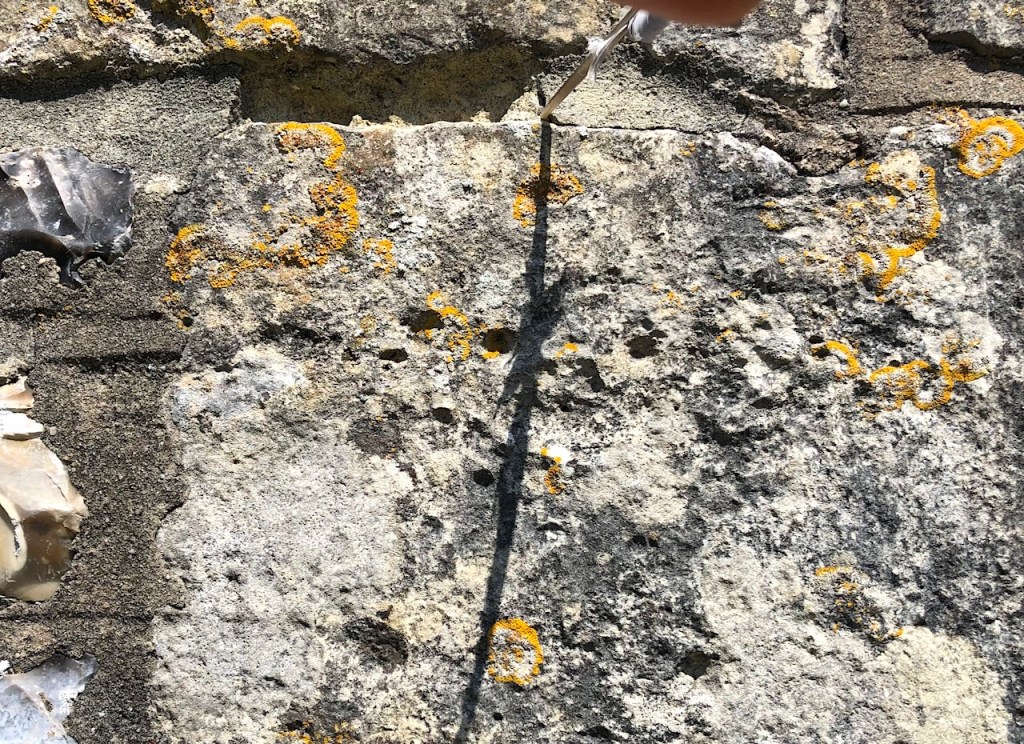
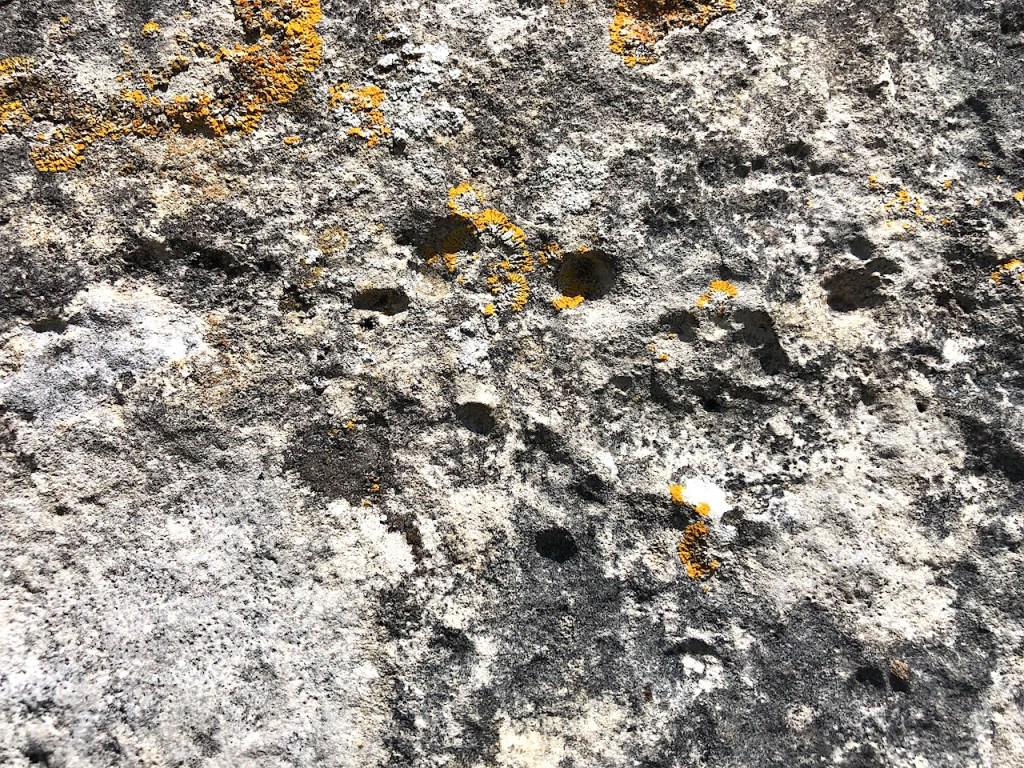
This is a pock dial with no radials. There are 3 large pocks on a slight curve, and a couple of small ones slightly out of line. There are other pocks lower down, two of which (presuming a gnomon in the mortar immediately above) seem to relate to the large pocks – one might even be a noon indicator.

Using a crow’s feather as a style centred in the mortar above the large pocks, the shadow cast was photographed at about 11.30

St Mary . Maiden Newton . Dorset . Scratch Dial 2? (unrecorded)

St Mary . Maiden Newton . Dorset . Scratch Dial 2? (unrecorded) . ‘Timed’ with a crow’s feather
St Mary . Maiden Newton . Dorset . Scratch Dial 2? (unrecorded) . Details of the pocks
St Mary . Maiden Newton . Dorset . Scratch Dial 2? (unrecorded) . Location c/w Dial 1 beside the Chancel door

NOTES † There is a fine sundial ‘on S. face of tower, square slab with simple capping, iron gnomon and date 1630BHO. See OLD DIAL menu LINK

GSS Category: Scratch Dial

All photos : Keith Salvesen

CHARLTON HORETHORNE . SOM – ST PETER AND ST PAUL . TWO SCRATCH DIALS

DEDICATION † St Peter and St Paul. C12 onwards on probable Saxon site; later work C15 and especially C19

LISTING † Grade II* BLB LINK

LOCATION † 5 miles NE. of Sherborne, 5 miles SW. of Wincanton. A fine early church situated next to the Manor House, overlooking a pleasant village and with fine views. 51.0061 / -2.4785 / ST665230

DIALS † There are two dials. Dial 1, easily found, is on a quoin W. of the porch. Dial 2 is located where the foundations are well below present ground level, and is difficult to reach. The dial is E. of the window E. of the porch and only visible from a narrow trench behind a screen of laurels. Access with care.

Dom Ethelbert Horne – DEH visited the church of May 25th 1915. His observations follow below in italics.

DIAL 1

173. (1) This dial is on a quoin at the s.w. corner of the s. aisle. It is 8 feet 3 inches above the foundations, the noon- line is 4 inches in length, the stylehole is 1 3/4 inches in depth by 1/2 an inch in diameter, and the aspect is s. by 10° e. Type3.

Comment:

1. A faint trace of a circle rhs

2. The noon-line below the style hole has a considerable gap before the start of the line, which is longer and deeper cut than the other radials

3. Above the style hole there is a roughly incised and skewed line from the top of the stone towards the side of the style hole, with (possibly) some form of emphasis at the top end. It seems unlikely to be an upper noon-line, being squint and at odds with the neatly cut lower radials. Possibly it is just a random unrelated mark, from a different century even.

4. However the hint of a further short incision to the left of the crude one makes me wonder if it and the longer line are part of an earlier dial that radiated from a hole in the mortar line above. Perhaps it was superseded by the later more sophisticated dial we now see. DEH clearly did not consider these upper markings to be part of the main dial

DIAL 2

174. (2) This dial is on a quoin on the e. side of the first window e. of the s.porch. It is 8 feet above the foundations, the noonline is 4 inches in length, the stylehole is filled up, and the aspect is s. by 10° e. Type 5b. May 20th, 1915.

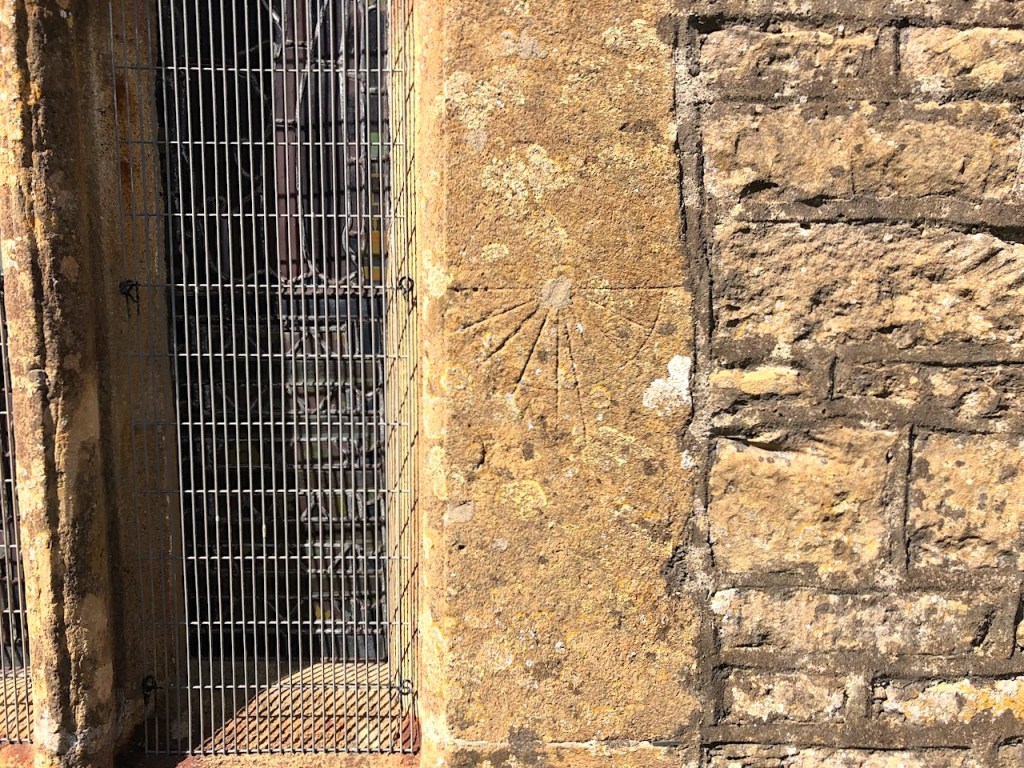
Comment: an encircled dial with the upper half left blank. Elongated mid-line with the Prime line emphasised with 3 pocks. Hints of other pocks. The radials have rather random spacing, with the lower significantly elongated below the circle

NOTES † Interesting to see 2 quite different types of dial like these, and on different types of stone. I can’t date them but I suspect Dial 1 is earlier than Dial 2

GSS Category: Scratch Dial

All photos: Keith Salvesen

MAIDEN NEWTON . DORSET . ST MARY . SCRATCH DIAL

St Mary . Maiden Newton . Dorset

DEDICATION † St Mary. Mid C12 / earlier foundation; main development C15; C19 restoration

LISTING † Grade I

LOCATION † 8 miles NE. of Dorchester, 12 miles SE. of Yeovil, in the valley below the A37 racetrack. Hardy’s ‘Chalknewton’. More of a small town than a village, with a few shops, a garage and a station rather than (as elsewhere locally) a single shop and a halt. 50.7775 2.5727 SY597977

St Mary . Maiden Newton . Dorset . Scratch Dial on Chancel doorway

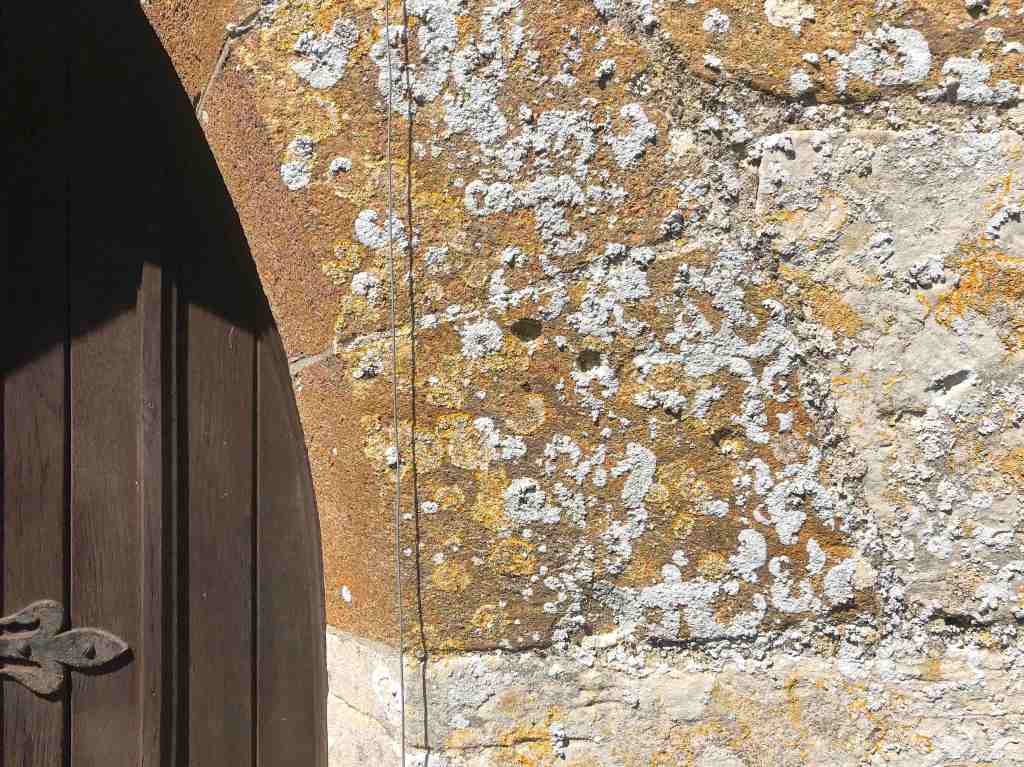
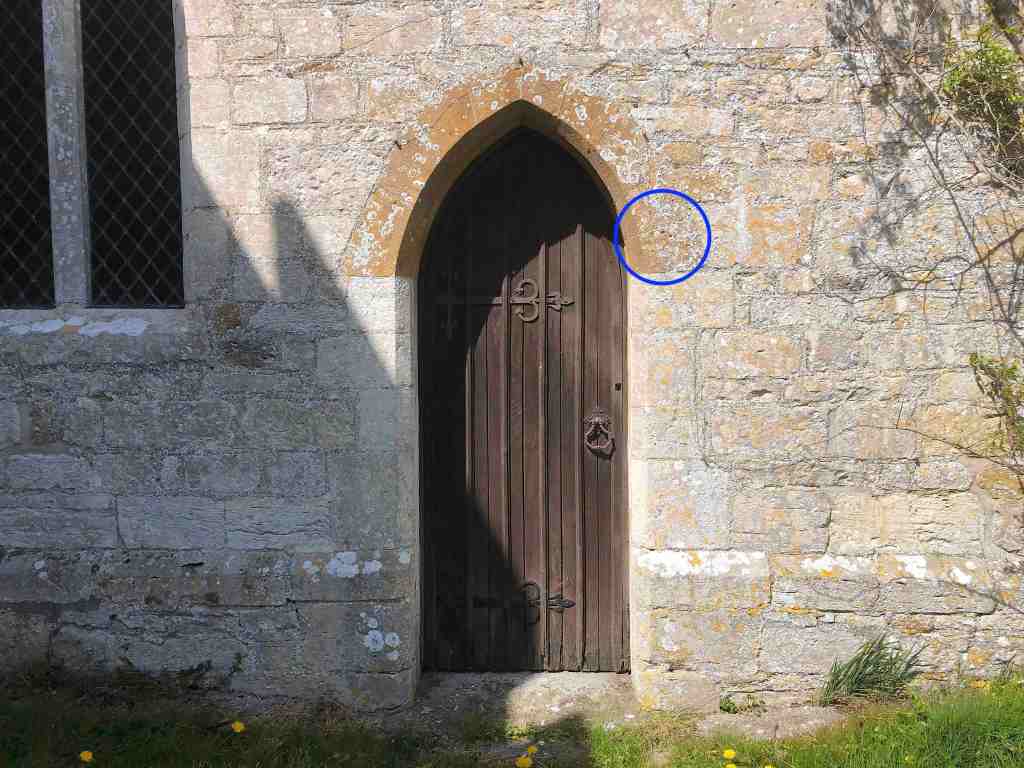
DIAL † On arch stone, E. side of chancel door. GLP dates as early C15, with a ‘rough arc of 5 holes across 2 stones’. I was at a loss to see how this dial could have worked with such a shallow arc and without a style hole. However GLP points out that the arc’s approximate centre lies in a joint between 2 stones, so subsequent repointing presumably covered up the hole

NOTES † There is a fine sundial on S. face of tower, square slab with simple capping, iron gnomon and date 1630 BHO. See OLD DIAL menu LINK

GSS Category: Scratch Dial

All photos : Keith Salvesen