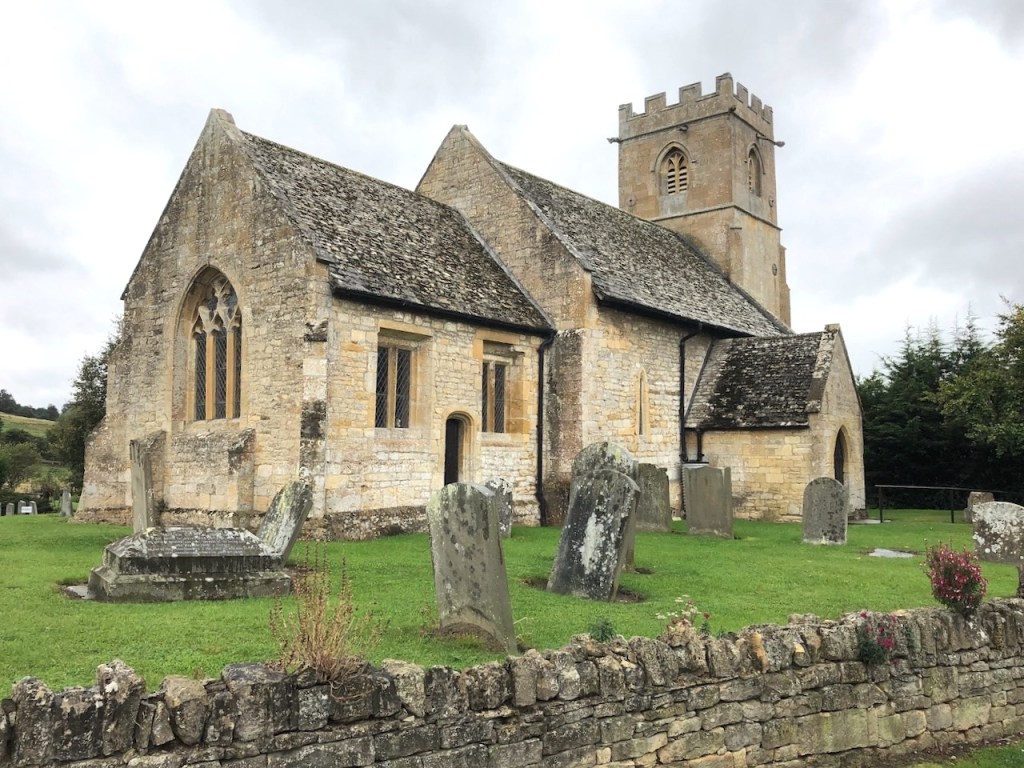
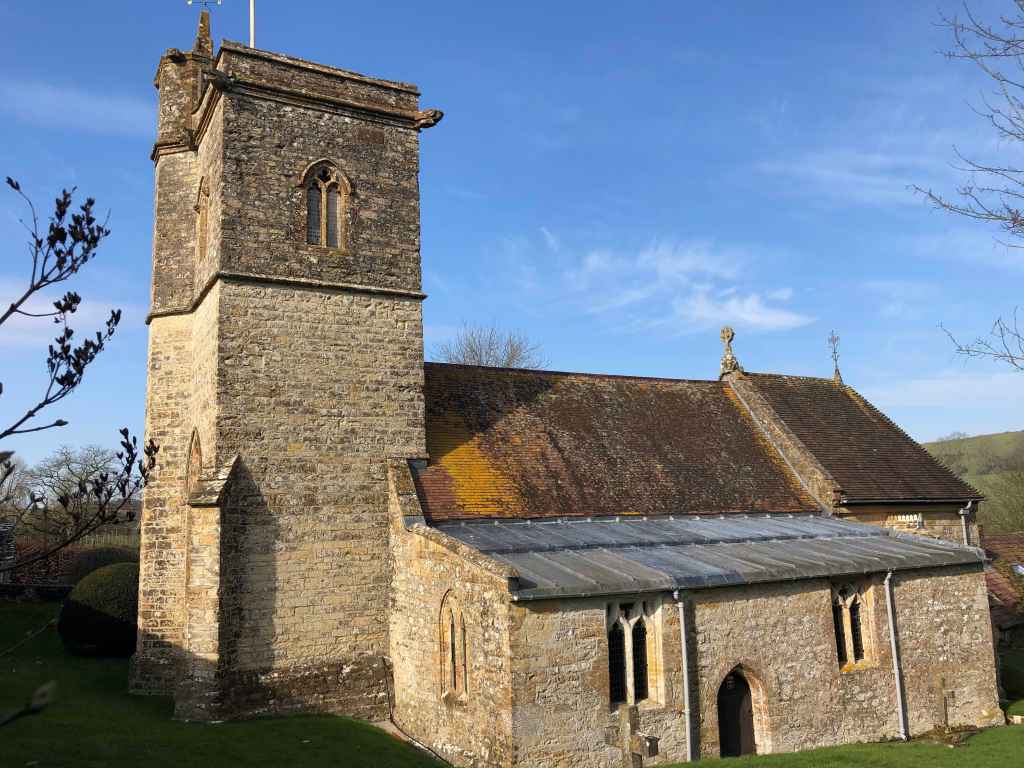
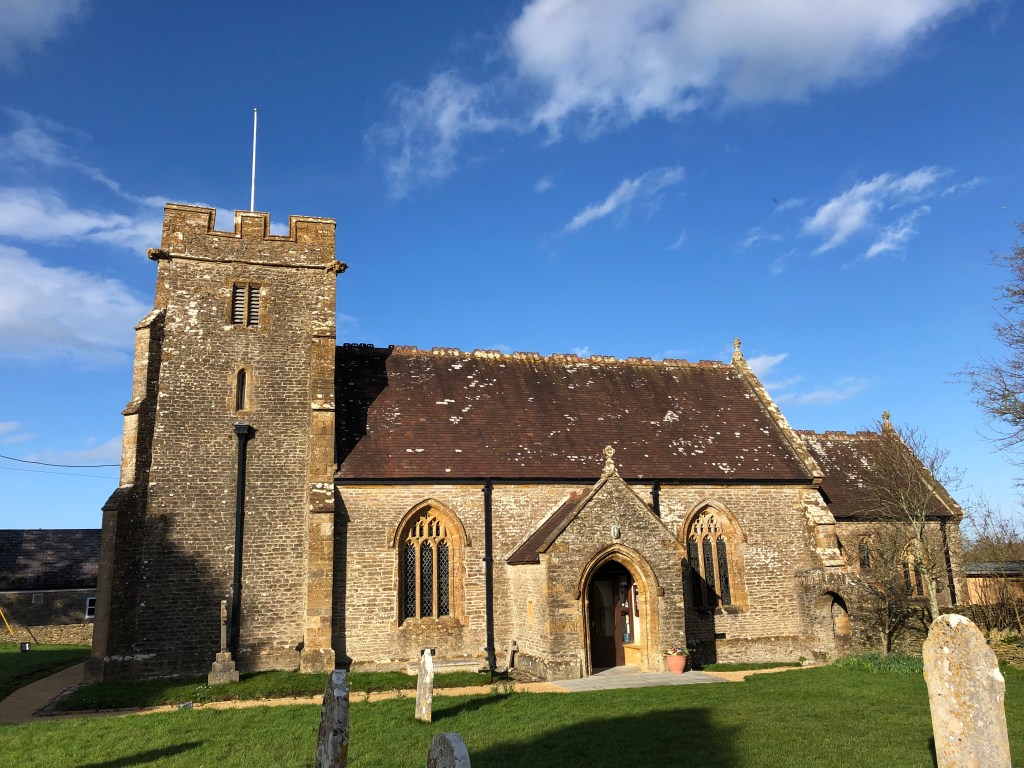
DEDICATION † ST NICHOLAS – late C11 or early C12 origin, mainly C13 / C14; tower added late C15
LISTING † GRADE I
LOCATION † 6 miles E. of Tewkesbury; S. of Bredon. One of a small group of appealing hamlets in the Parish of Overbury BHOLINKand beyond. Take in nearby C12 Little Washbourne with its splended hexfoil. A rewarding area for church visits and in particular scratch dials. 51.9951 / -2.0533 / SO964329
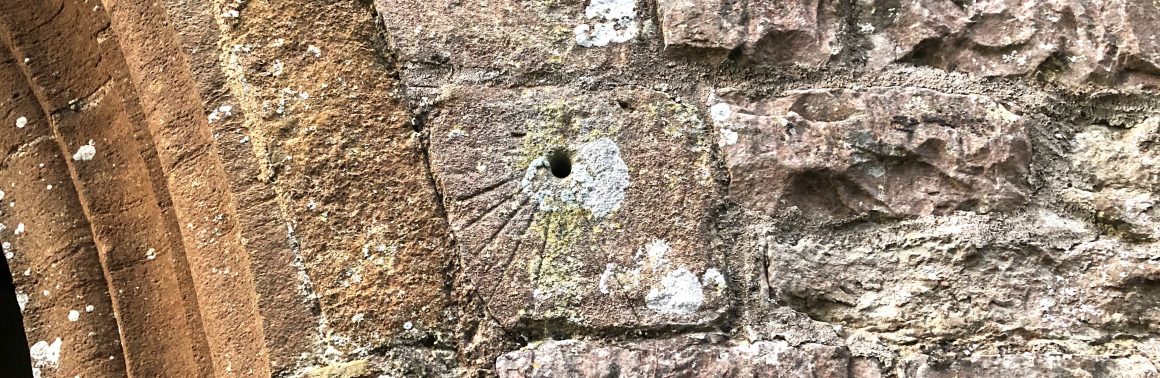
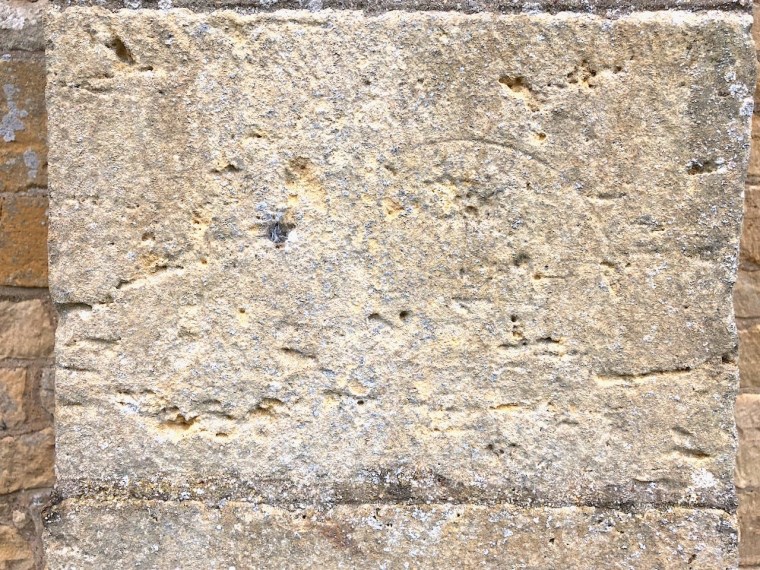
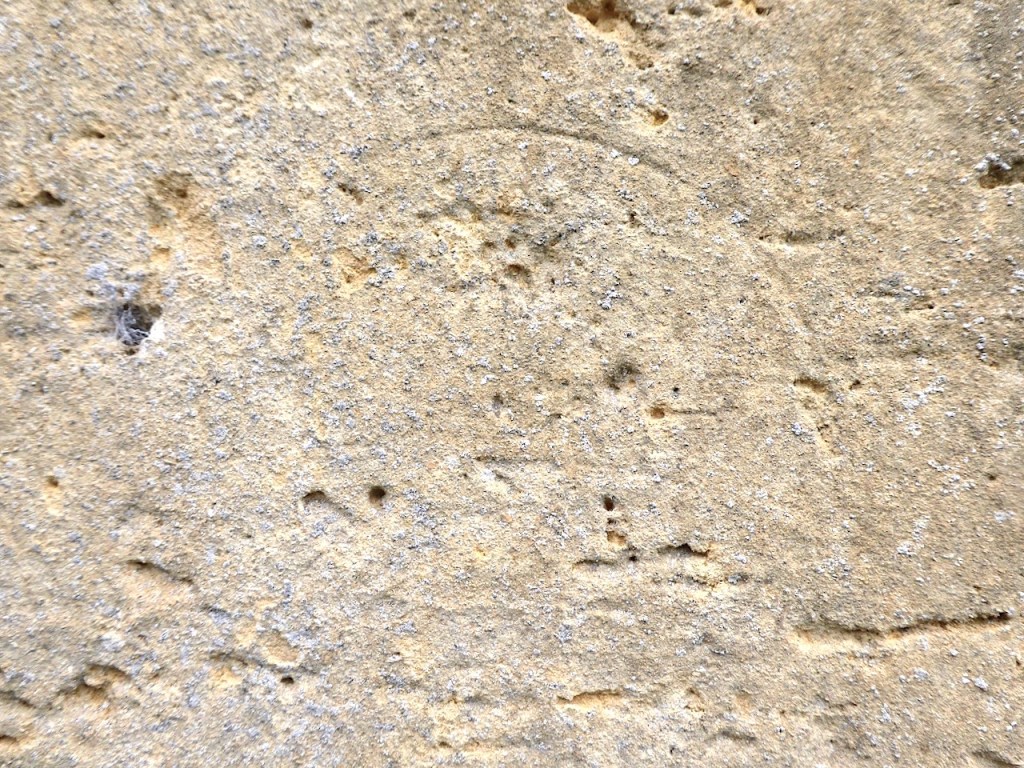
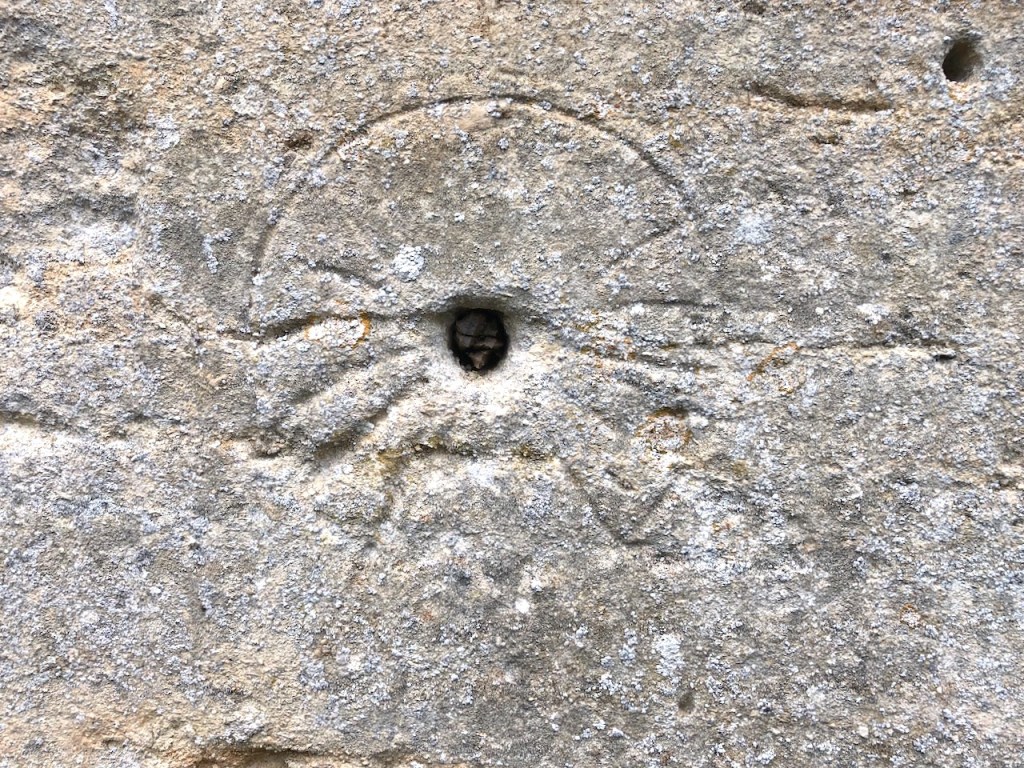
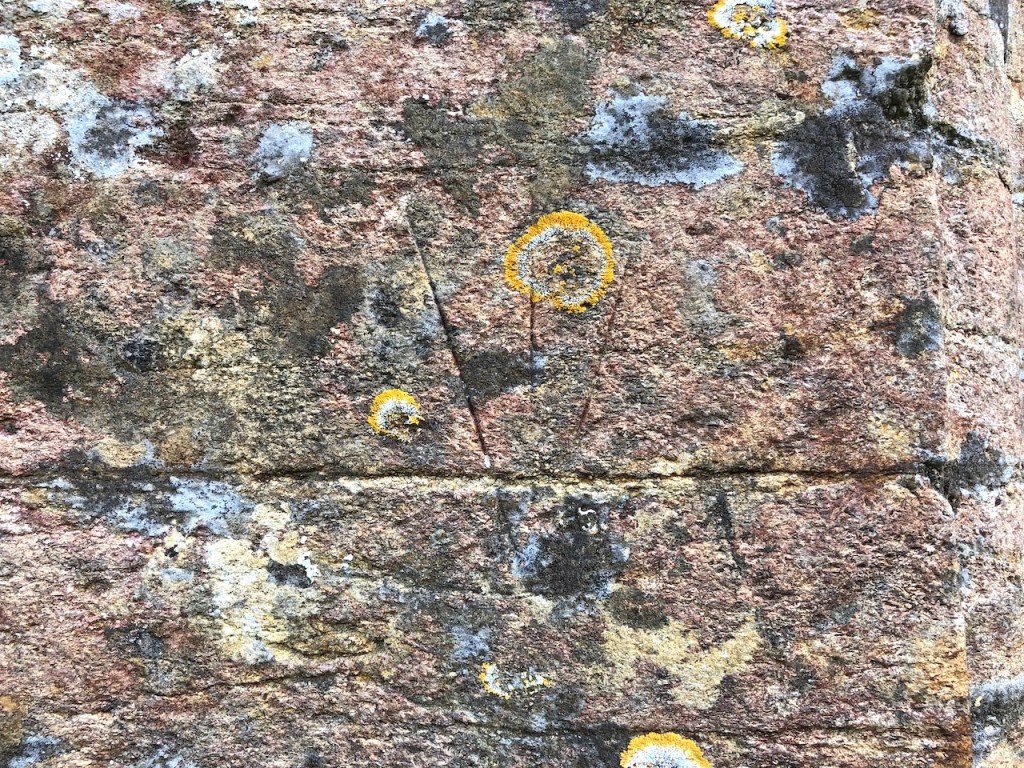
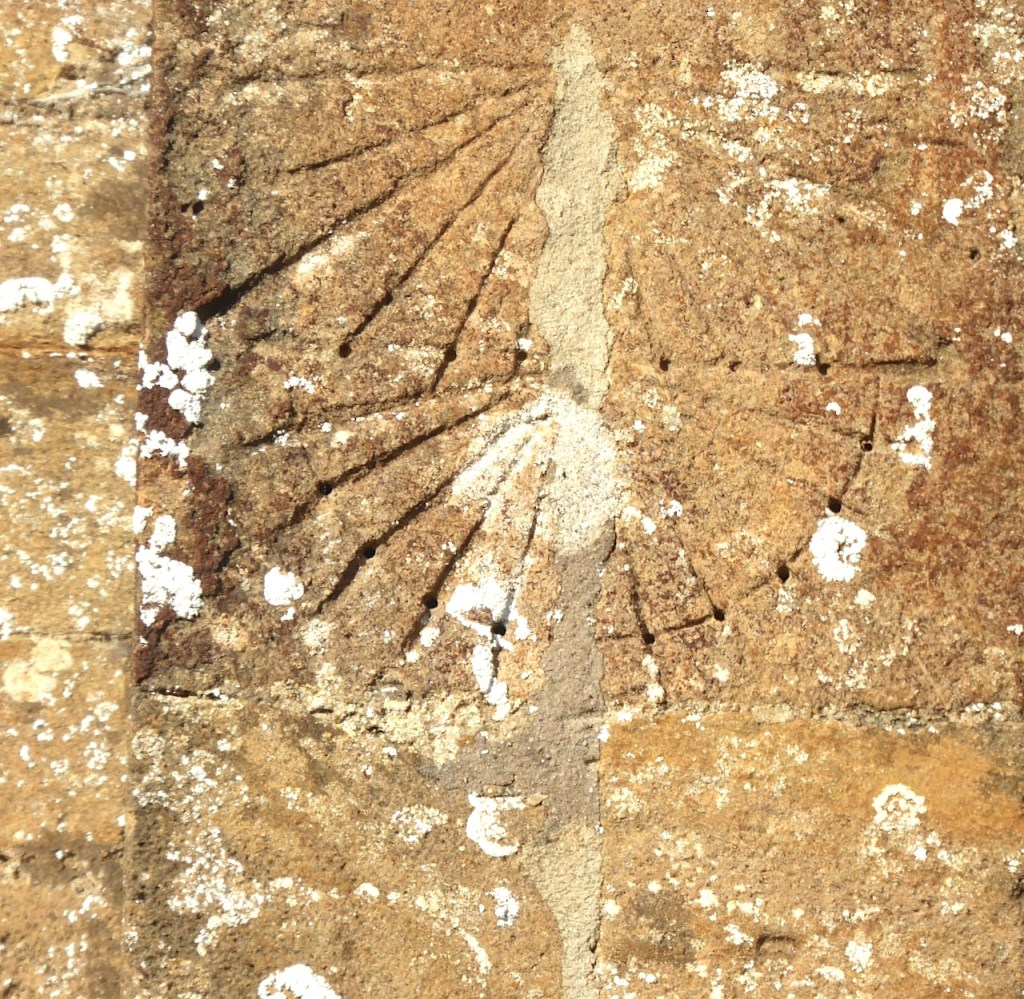
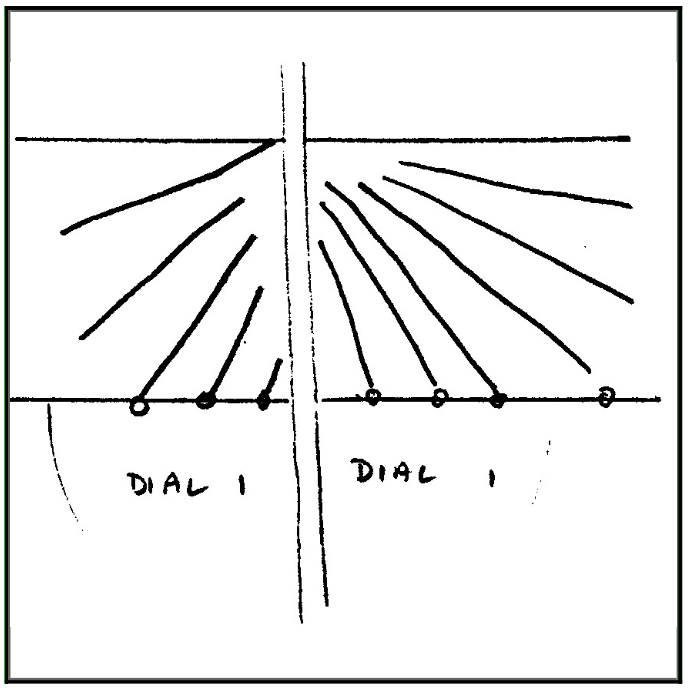
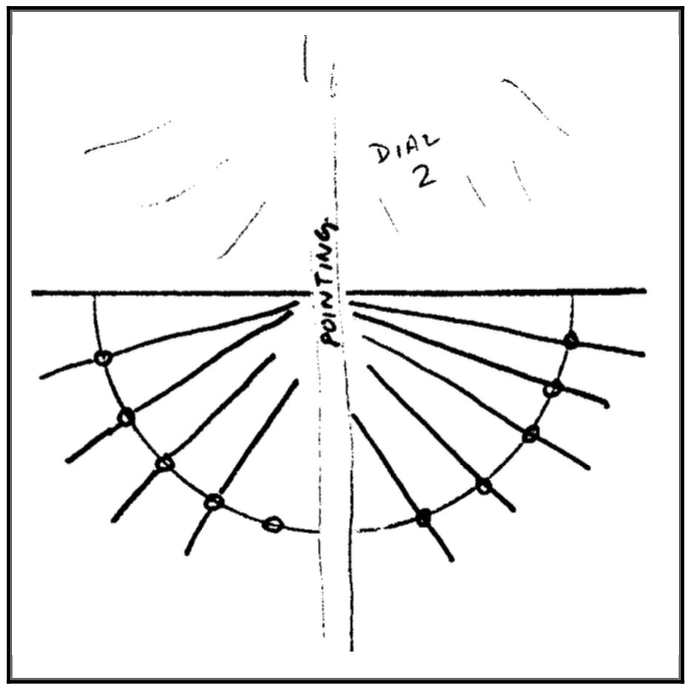
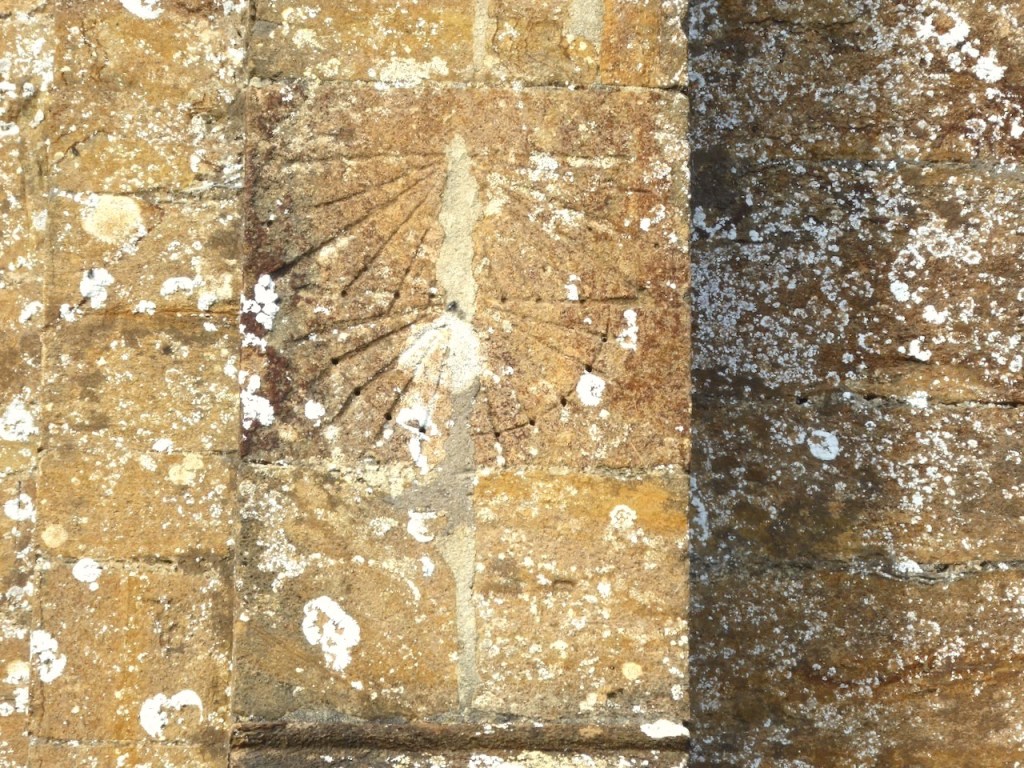
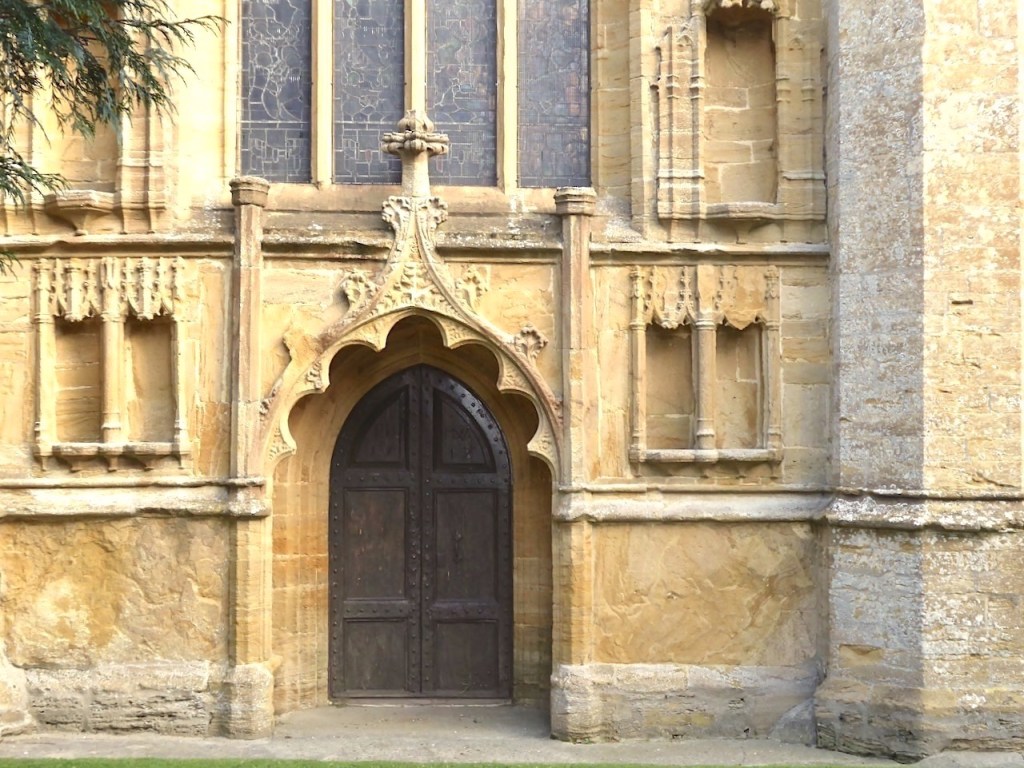
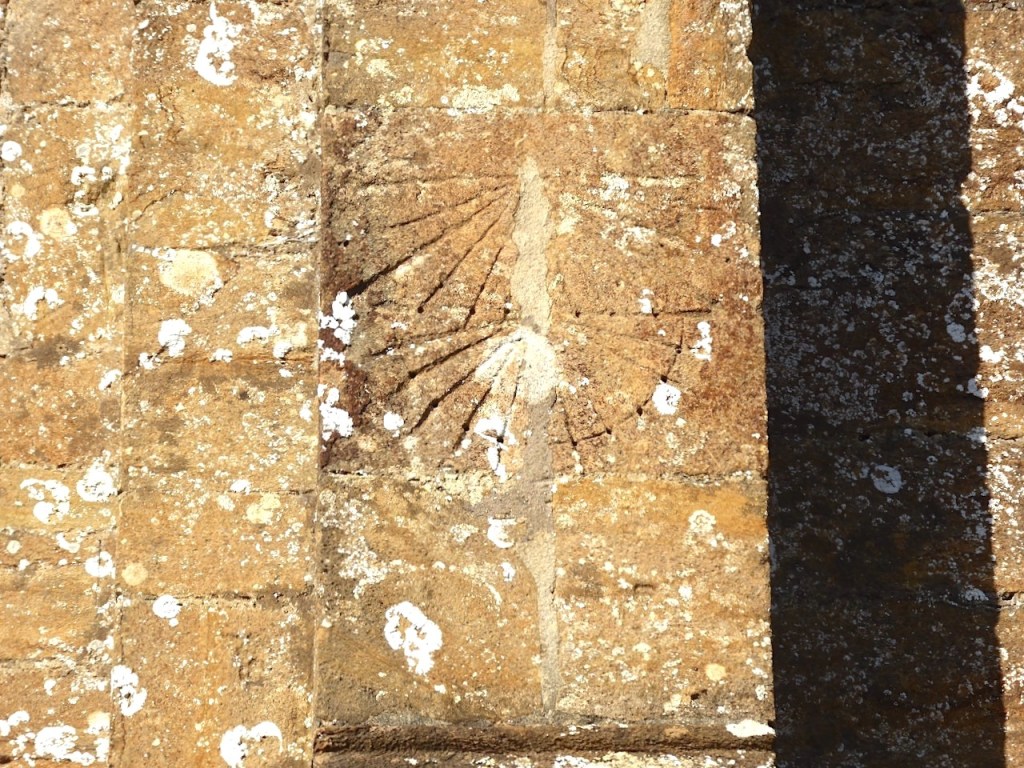
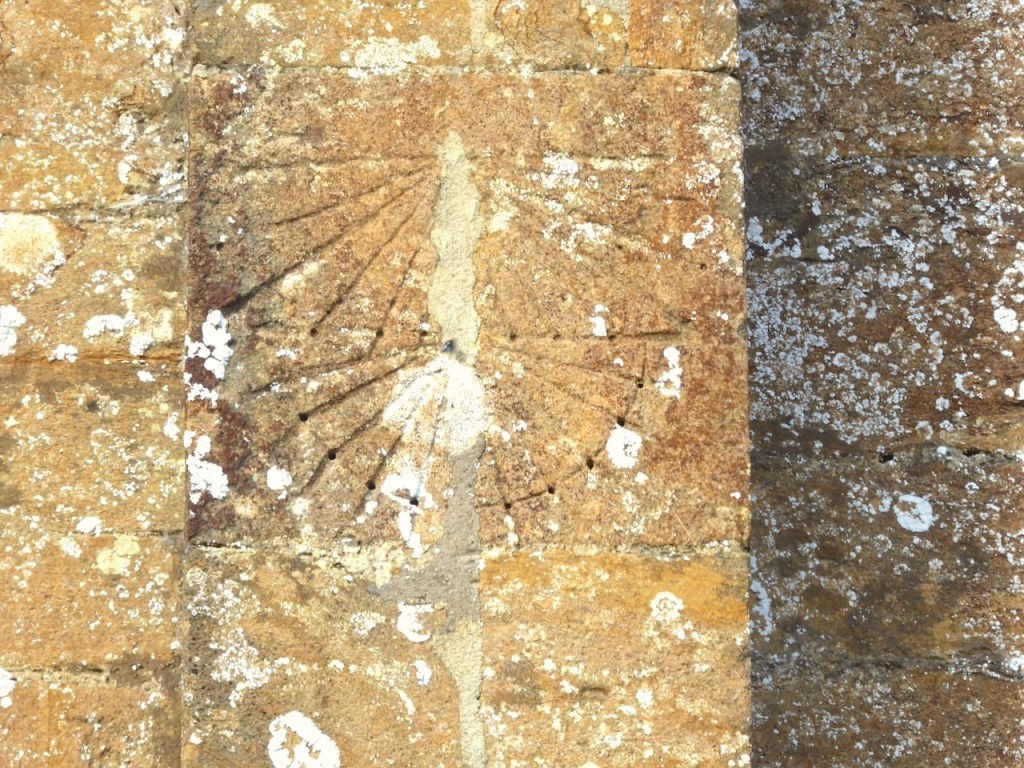
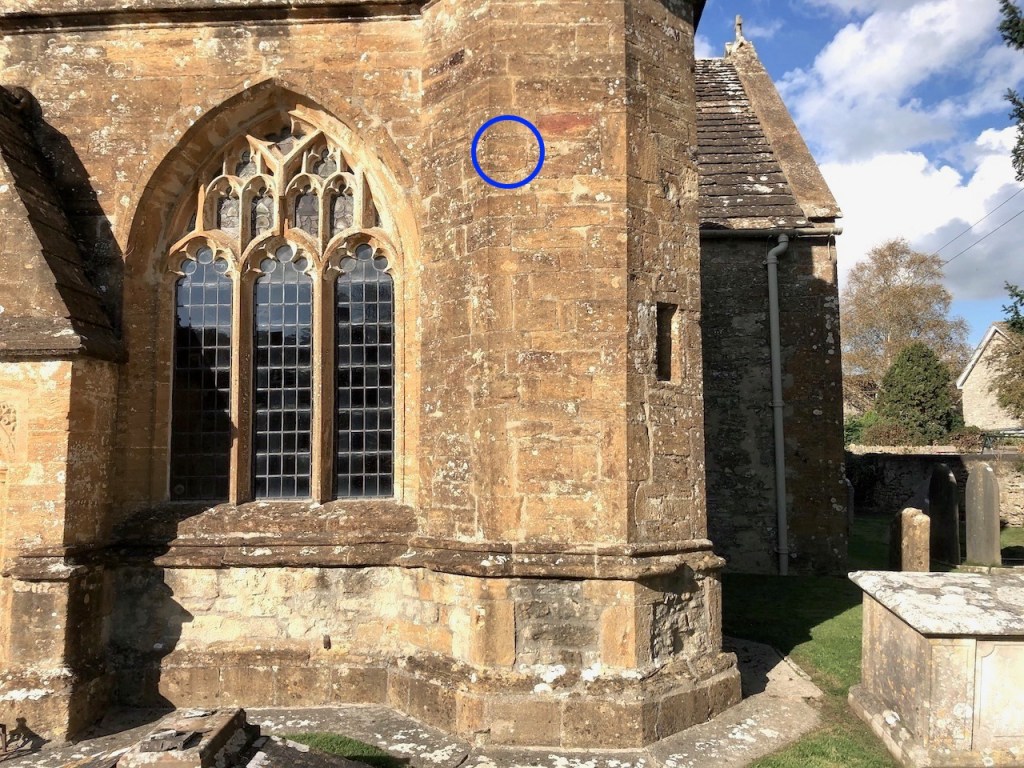
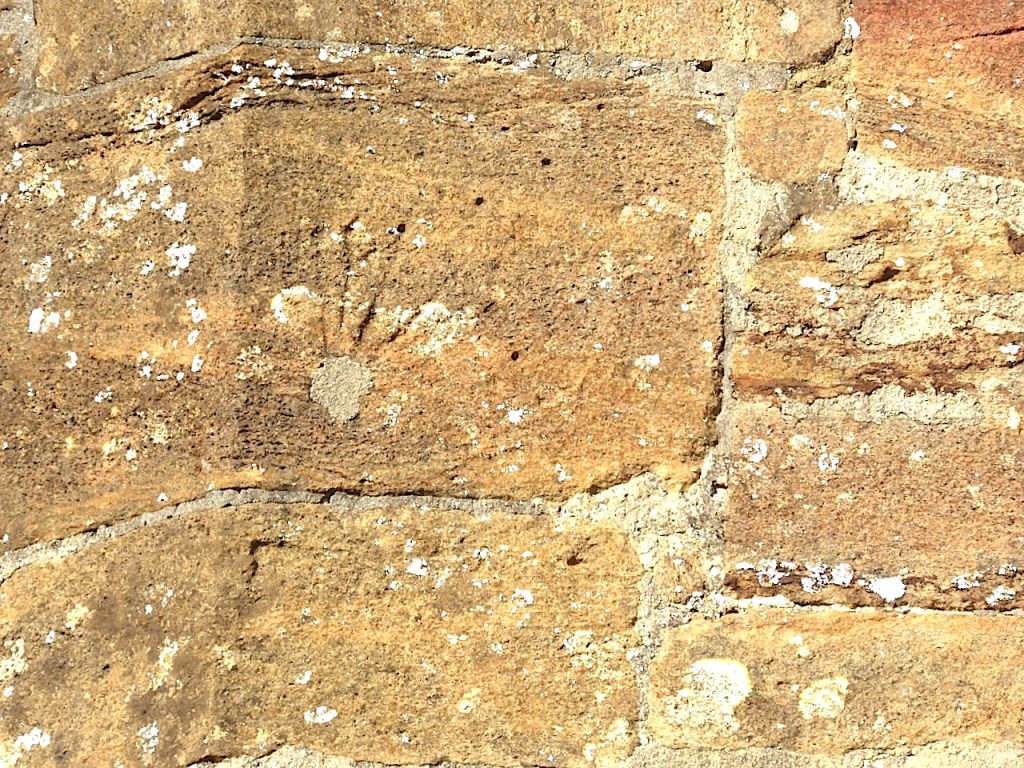
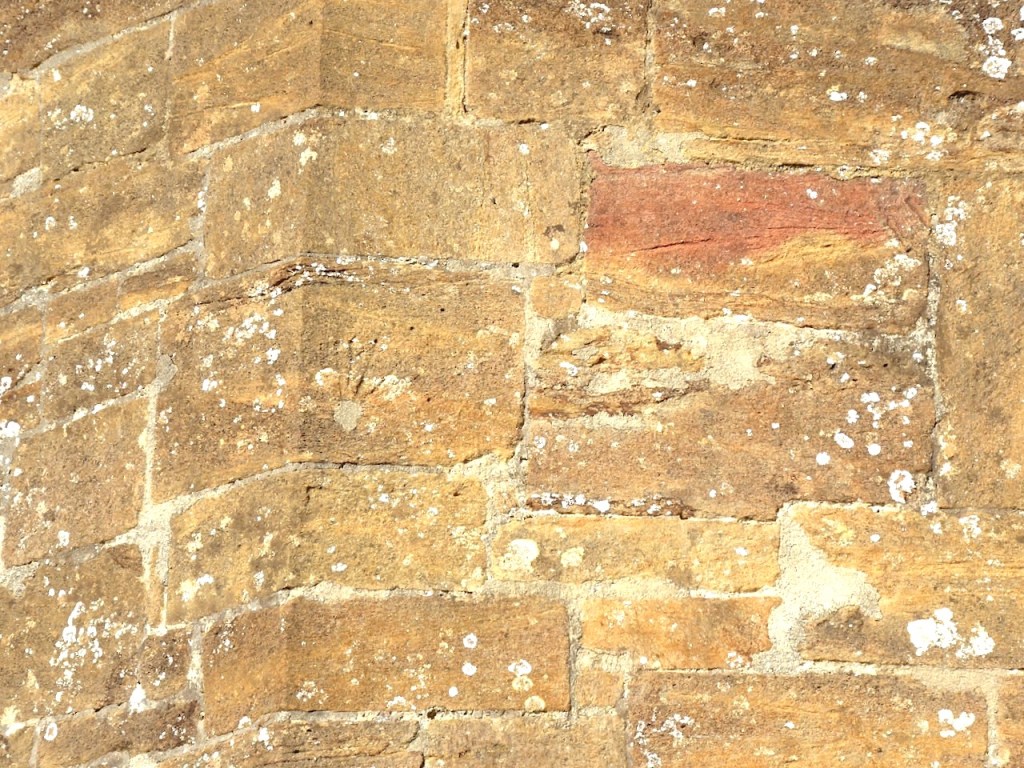
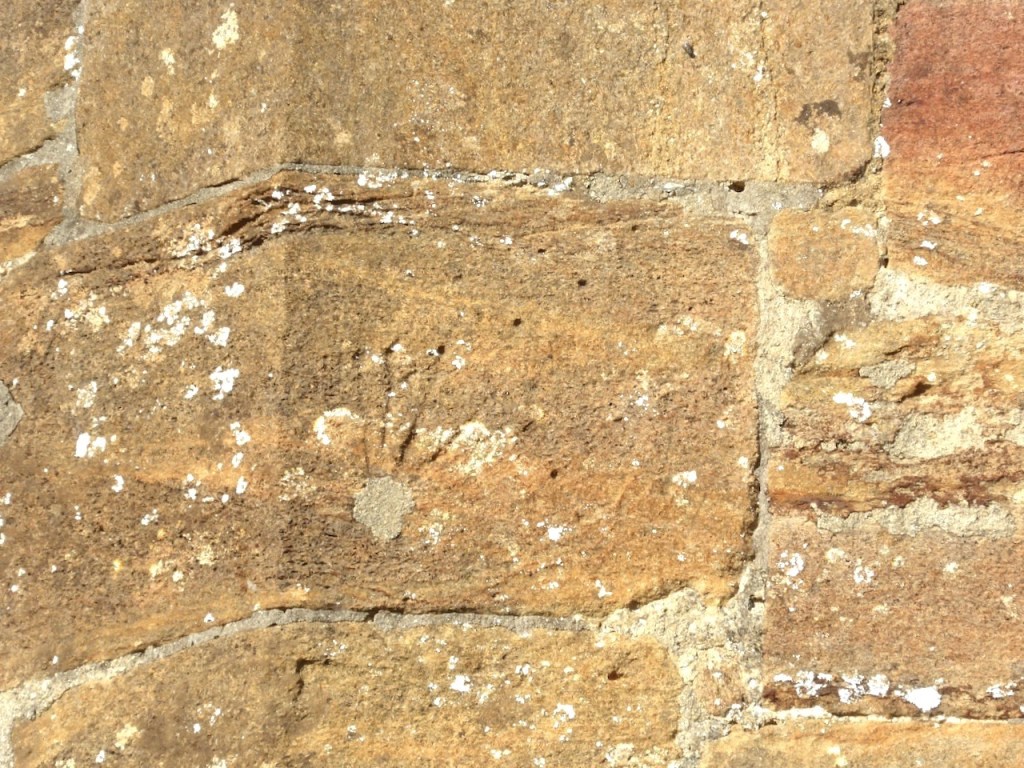
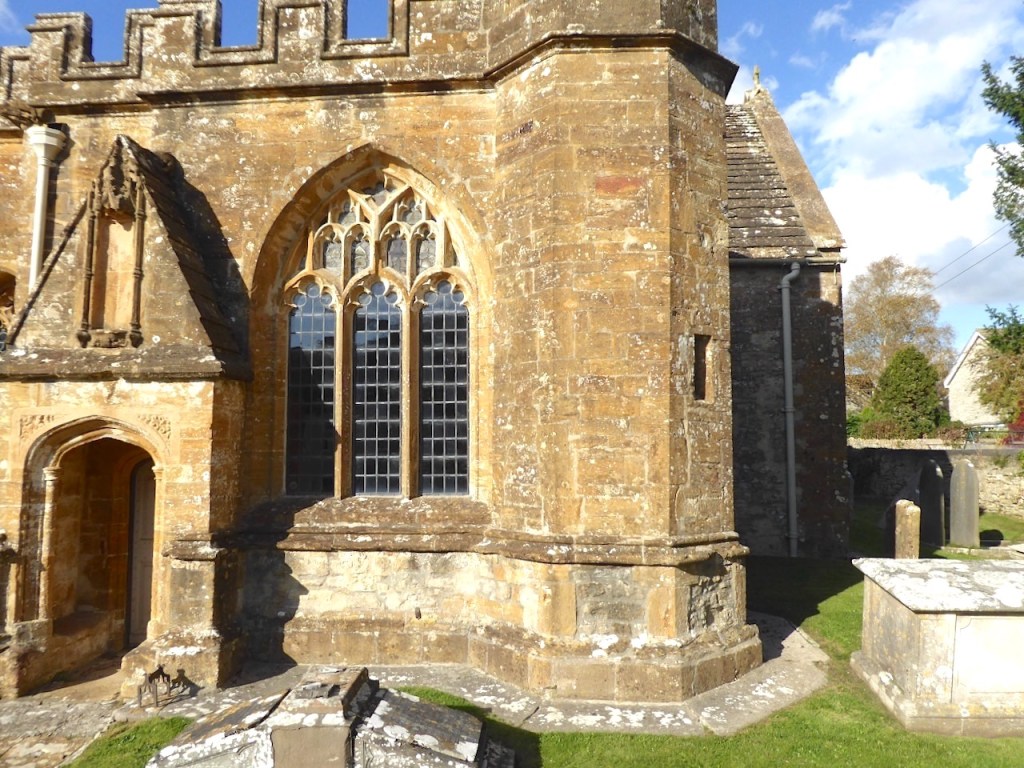
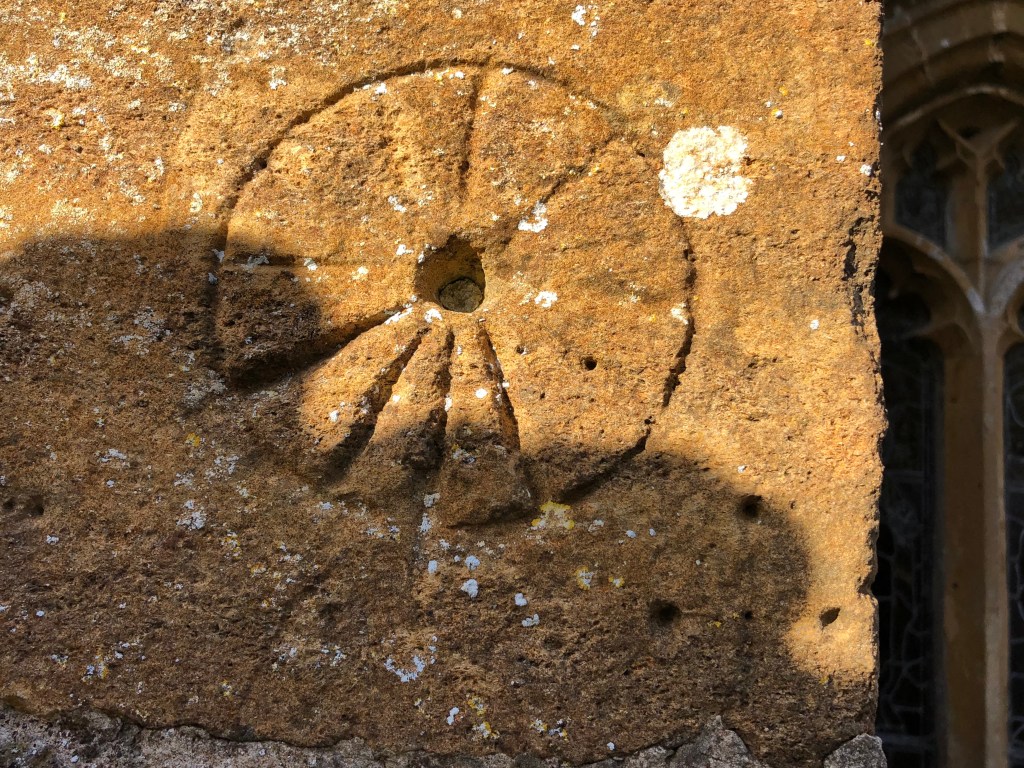
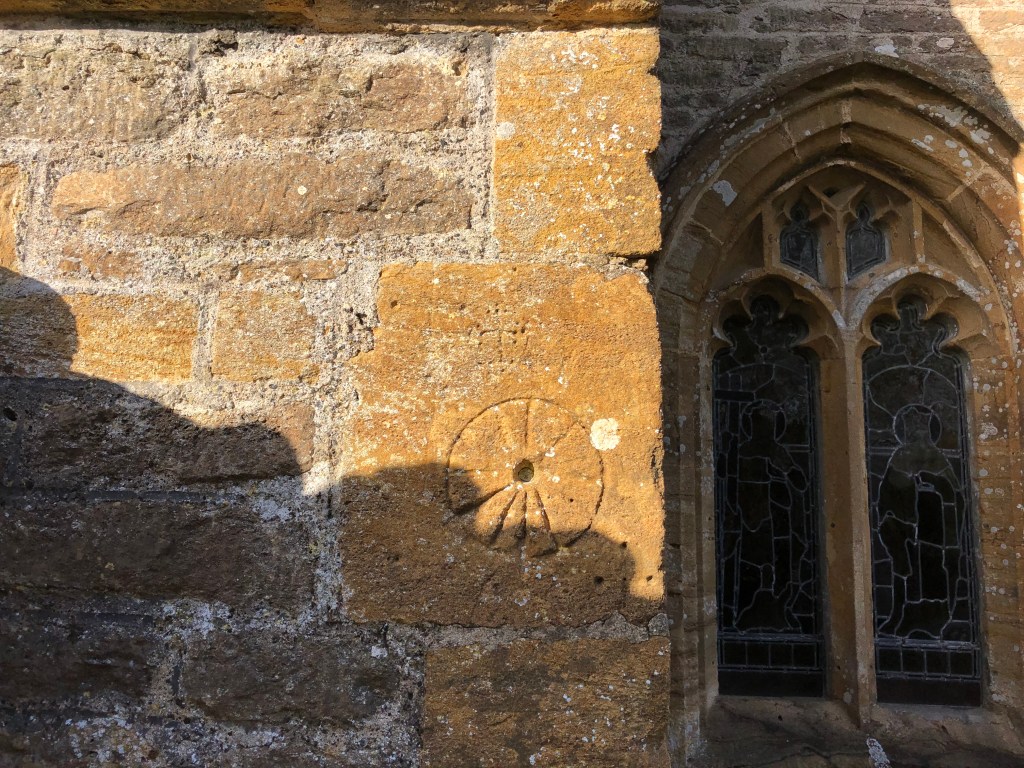
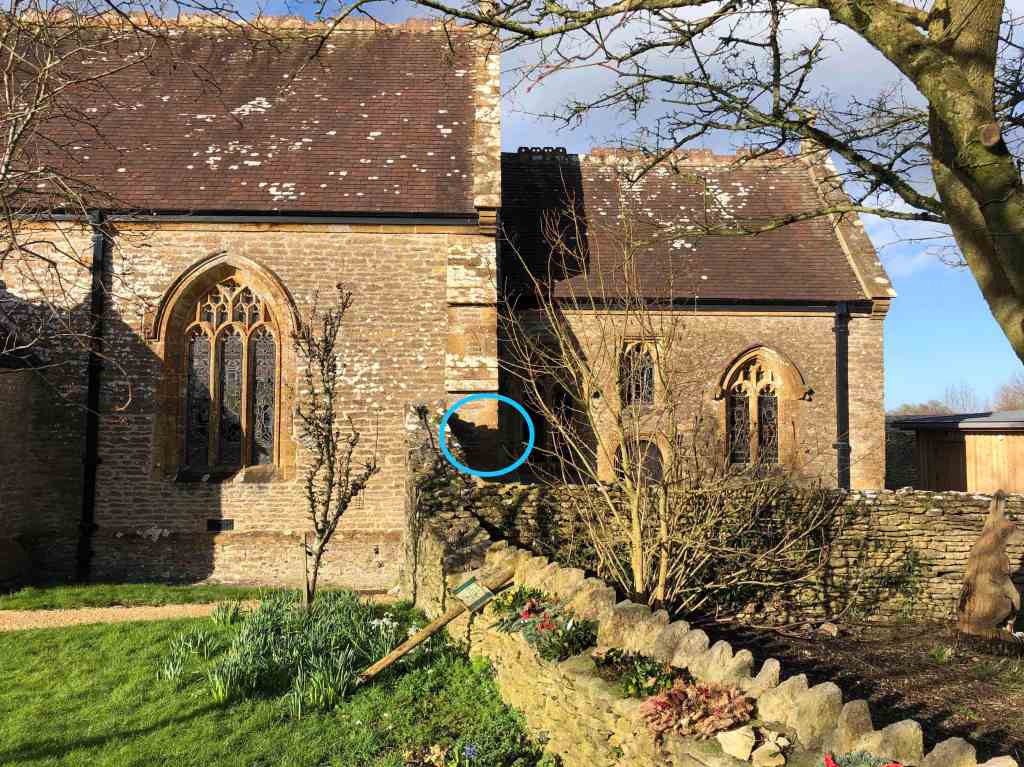
DIALS † Two dials on the S. side: one (A) on the R. jamb of the blocked doorway, one (B) on an adjacent buttress. A is clear, with varied line lengths and divisions, and the hint of an outer circle. B is badly eroded with only a partial circle clear. There is a possible ill-defined circle top left of it.
St Nicholas . Teddington . Glos . Dial ASt Nicholas . Teddington . Glos . Dial B
St Nicholas . Teddington . Glos . Scratch Dials A & B
NOTES † If you are investigating scratch dials, this area of Glos. / Worcs. is prolific for them. Advisable to check TWC ‘counties list’. It’s not infallible and some counties are slight, but it is the most comprehensive county-by-county list for general guidance. His entire short pamphlet can be found online HERE and downloaded. You can sometimes find the 1935 original online, but then you will find his 2 other (rarer) sundial pamphlets and the costs begin to mount…
DEDICATION † ALL SAINTS – C12 nave, C14 main church, C19 restoration / modern chancel
LISTING † GRADE I
LOCATION † 2 miles N. of Sherborne in a secluded valley beyond Oborne. Fine lynchet systems on the hillsides. A real feel of history here, with a magnificent manor house, tithe barn, former court house, and the church on a slope above the village. 50.9781 / -2.4996 / ST650199
NOTES † Unrecorded dial, relocated and inverted N. porch.
Poyntington Dorset . All Saints. Scratch Dial .
DIAL † No known record of a dial at this church. Checked because local & ‘early’. Approached by path from N., dial visible upper L side of N. porch. Clearly relocated and inverted in the process. 3 clean-cut radials across 2 stones, evenly spaced but differing lengths. Filled style hole. The image of the porch shows the disproportion of this uniform block of relocated stone to the rest of the porch.
DEDICATION † ST PETER & ST PAUL – c14 origins, c15 tower & additions, enlargement & ‘well done’ (OM) restoration c19
LISTING † GRADE I
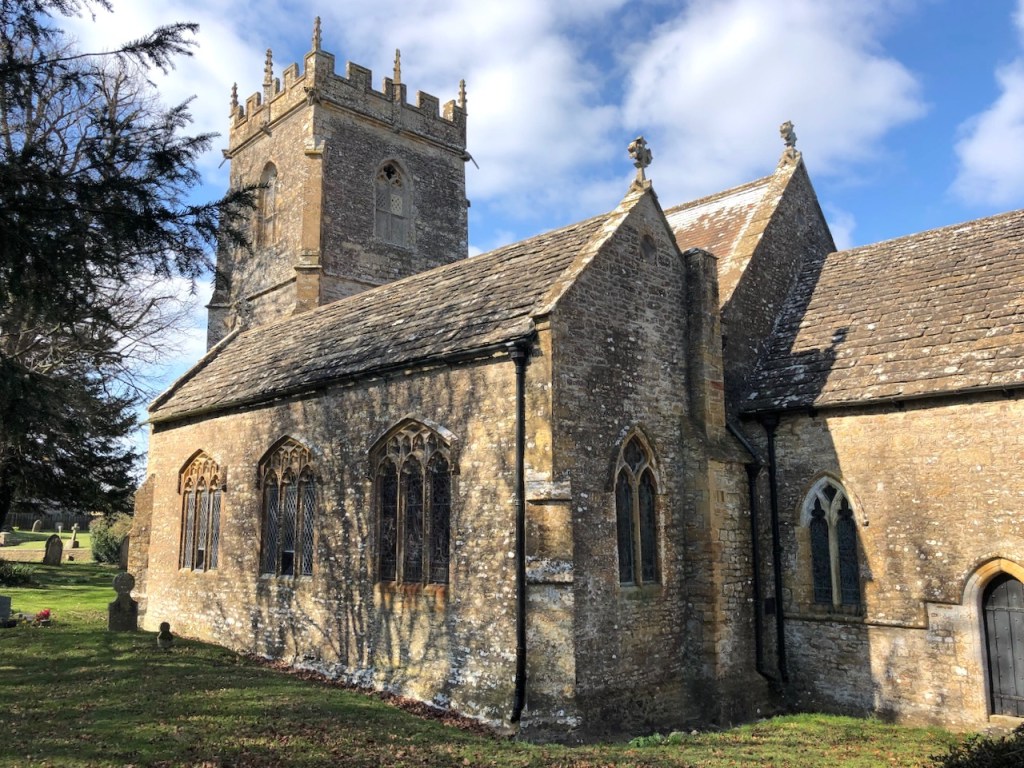
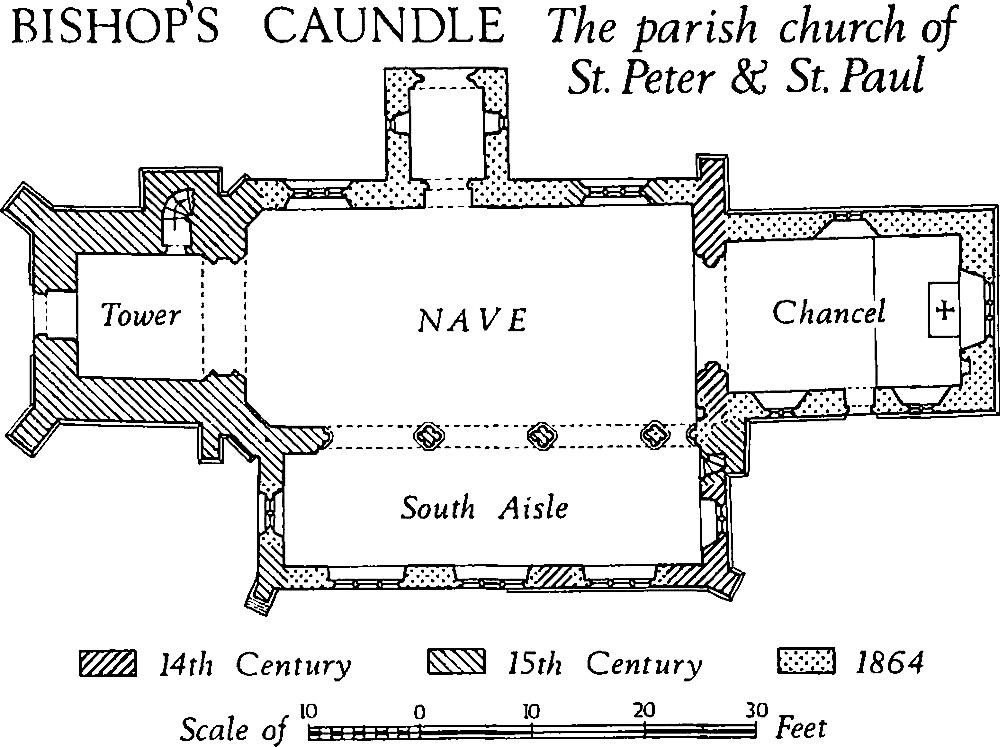
LOCATION † One of 3 ‘Caundle’ churches in the area, and well worth visiting as trio linked by meandering lanes and puzzling signposts. Bishop’s is about 4 miles S.E. Sherborne on a road leading E. to Sturminster Newton. An elongated village with a typically attractive Dorset church. 50.9171 / -2.4336 / ST696131
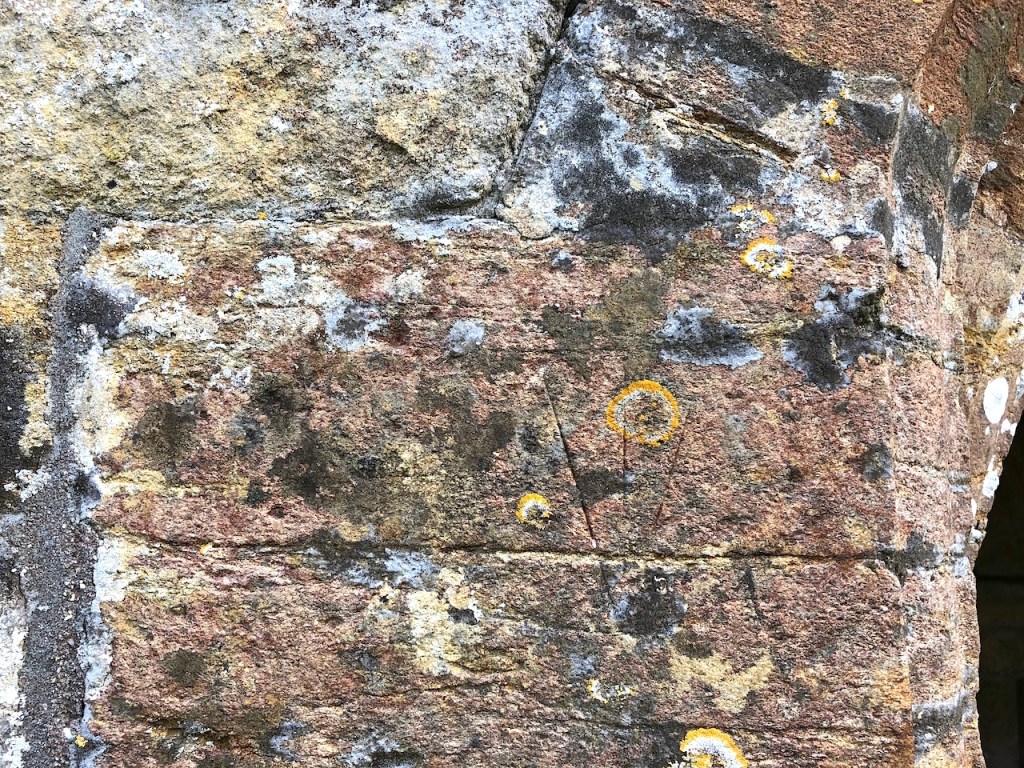
St Peter & St Paul . Bishop’s Caundle . Dorset . Scratch Dial
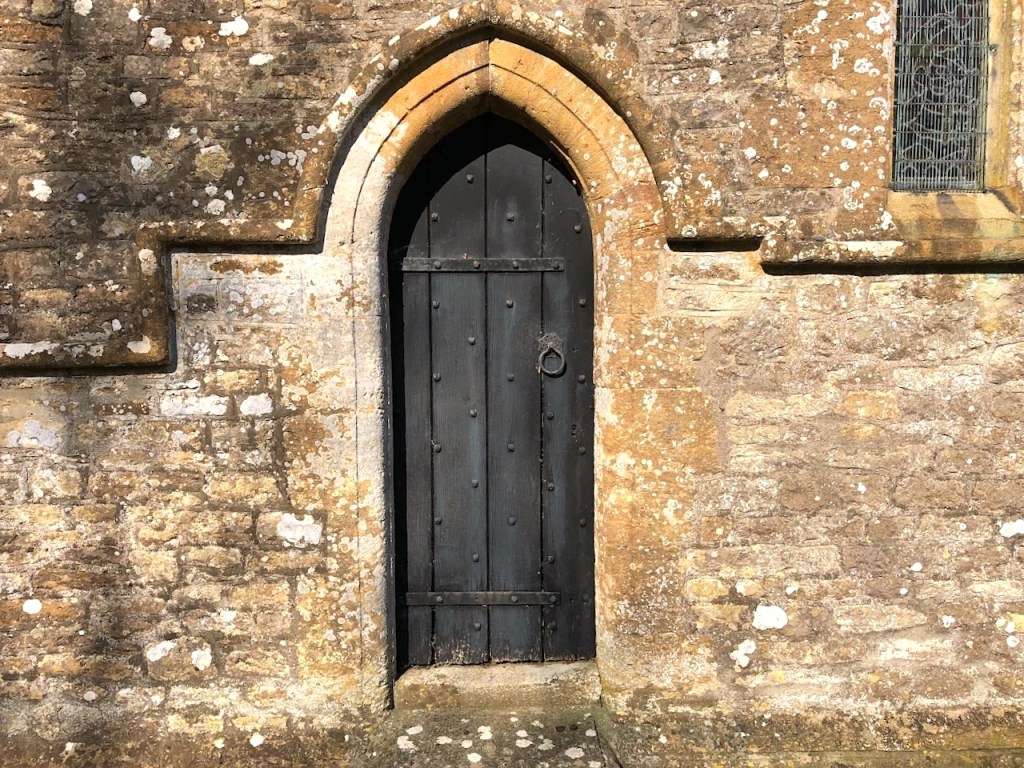
DIAL † The dial, in poor condition, is on the E. jamb of the Chancel door. Filled style hole. Faint & poorly preserved (GLP). He noted 6 lines and 7 pocks, with a cross on the mass line.
St Peter & St Paul . Bishop’s Caundle . Dorset . Scratch Dial
NOTES † There’s more to this dial than meets the eye, once one gets over slight disappointment on seeing it…
St Peter & St Paul . Bishop’s Caundle . Dorset . Scratch Dial
DEDICATION † ST MARY THE VIRGIN – C12 origins, mainly C15 perpendicular, later additions & restoration
LISTING † GRADE I
LOCATION † 4 miles SW. Sherborne, 3 miles SE. Yeovil. ‘Abbot’s Broad Ford’. A significant settlement from Roman times. Associated with Saxon King Athelstan. One of the larger villages in the area, attractive and with an inviting pub close to the church. 50.9265 / -2.5884 / ST587142
FEATURE † New dial recorded (see Dial 3)
St Mary the Virgin . Bradford Abbas . Dorset . Scratch dials 1 & 2
DIALS † High on SW. buttress of porch, two scratch dials, one on top of the other. Well-documented. The top dial seems less sophisticated and more eroded, so perhaps is the oldest (AOW drew it as dial 1). Rather obtrusive vertical repairs to both. I found a 3rd dial high up on the tower, clearly relocated and inverted (see below). I have found no mention of it anywhere: a new find perhaps.
DIALS 1 & 2
St Mary the Virgin . Bradford Abbas . Dorset . Scratch dials 1 & 2
The top dial. 13 radial, 7 dots. Deeper & longer 8-line. Style hole filled. AOW notes Square outline. Transitional
Lower dial. Semicircle, 11 radials, 10 dots. Style hole filled. Morning radial notably extend beyond the circle line.
St Mary the Virgin . Bradford Abbas . Scratch Dials (Keith Salvesen)
DIAL 3
St Mary the Virgin . Bradford Abbas . Scratch Dial 3 (unrecorded)St Mary the Virgin . Bradford Abbas . Scratch Dial 3 (unrecorded)
NOTES † Dials 1 & 2 recorded and drawn by AOW, mentioned BSS / GLP , BHO; Dial 3 unrecorded
DEDICATION † ST ANDREW – C15, mid-C19 restoration; C13 font
LISTING † GRADE II*
LOCATION † 5 miles SW of Sherborne, a sprawling village set deep in farming country. Some fine old buildings dating from C16, now mixed in with modern housing. A fine village cross with C15 shaft. A friendly rural place. 50.8762 / -2.5445 / ST617086
St Andrew . Leigh . Dorset . Scratch Dial
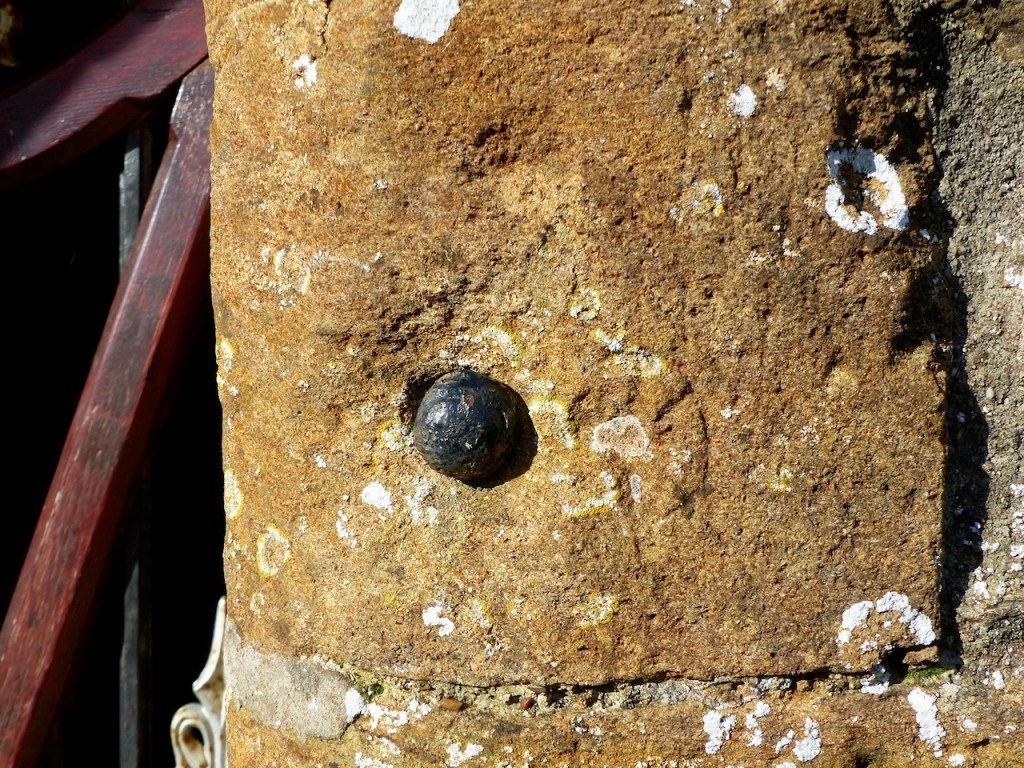
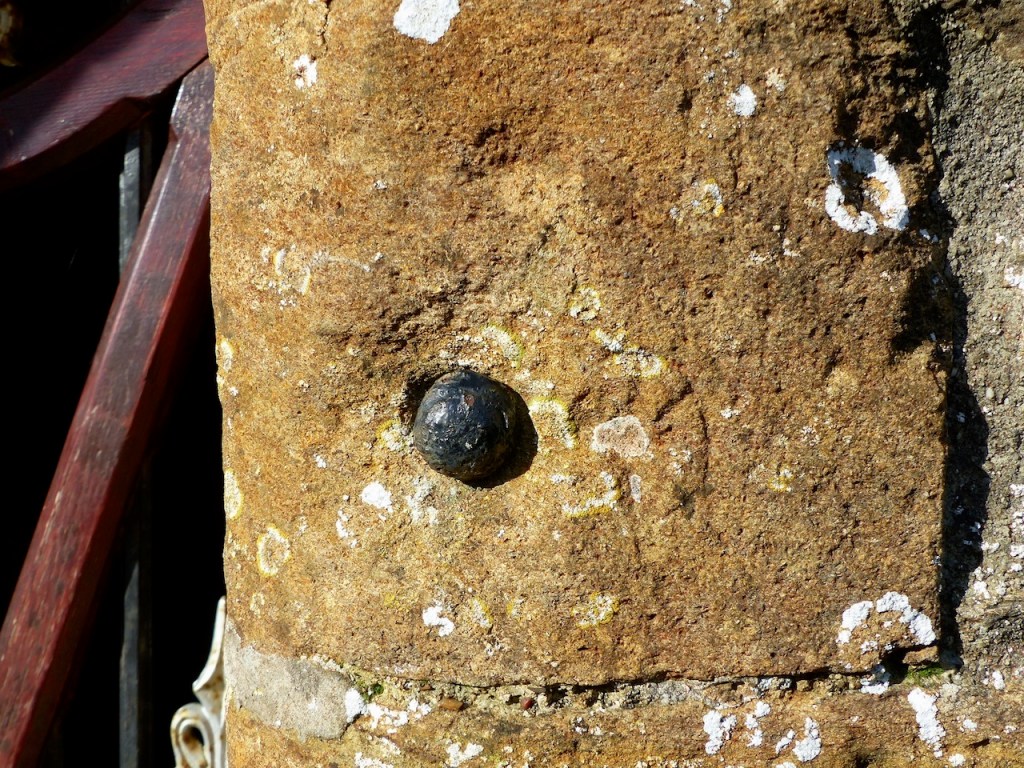
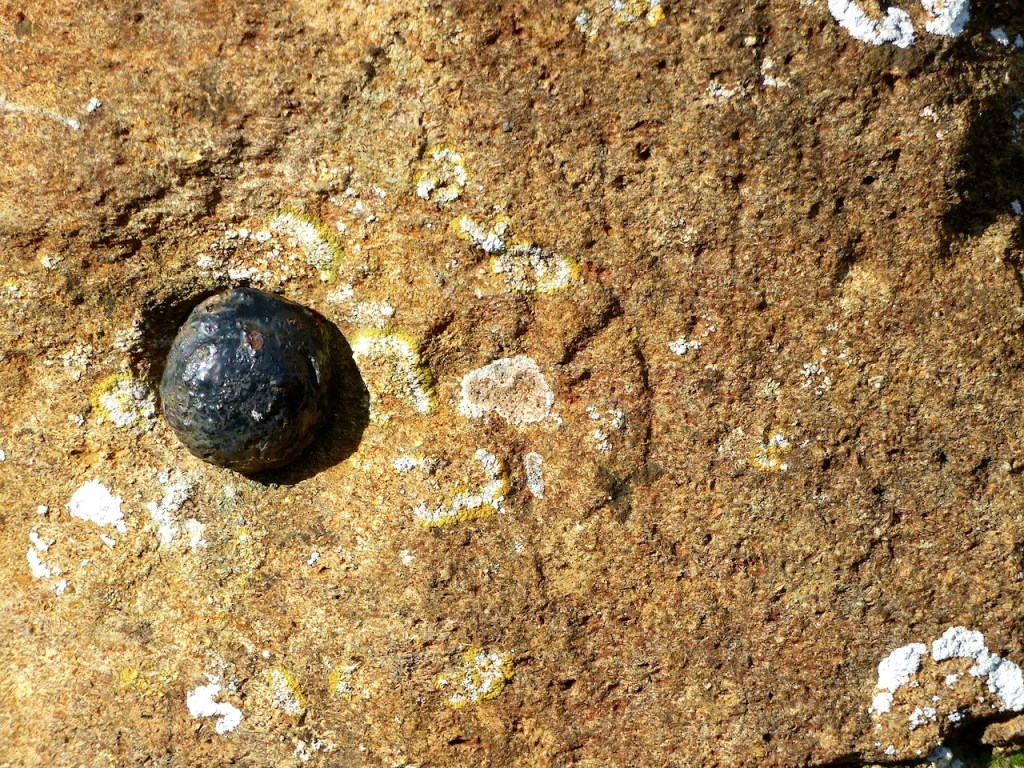
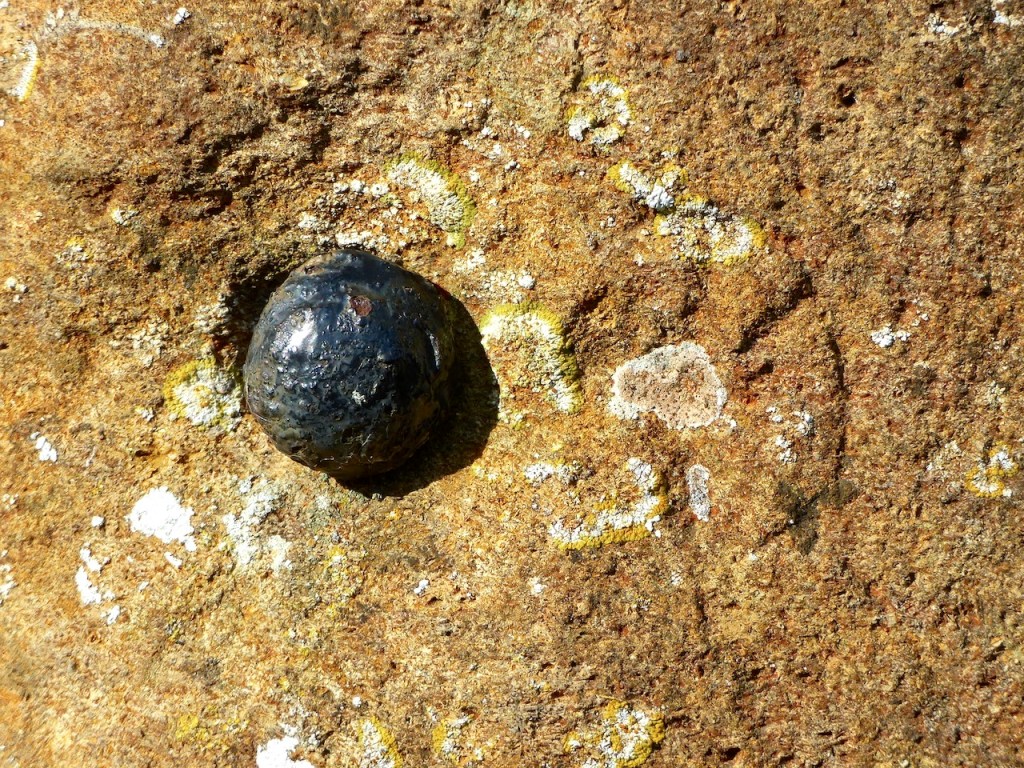
DIAL † On W. side jamb of porch, a very small rustic dial, eroded / damaged LHS, mid to late C15. Full circle with 4 detectable radials, the (presumed) noon line being extended outside the circumference at a slight angle. Probably originally divided into eight equal segments GLP, who dates the dial to the second half of C15
Seen close to, there are hints that the adjacent area with the large bolt may once have been a dial, with the hole for a small style (originally centred) overwhelmed by its replacement and erosion. A nearby hole, slightly lower, on the inside of the jamb, looks promising as a dial but on inspection, disappoints.
St Andrew . Leigh . Dorset . Scratch Dial
NOTES † Recorded in BSS register as researched by GLP. Not mentioned elsewhere. C13 font; interesting West Door with shields in the spandrels, one bearing three hanks of cord and the other a merchant’s markBHO; also graffiti with date, initials, witch and other marks; enjoyable gargoyles. Elsewhere, a few incised crosses, presumably apotropaic in purpose.
Graffiti and marks . West Porch . St Andrew . Leigh . Dorset
DEDICATION † ST JAMES the GREAT C12 origins, C13 tower, C15 rebuilding, later additions
LISTING † GRADE I
LOCATION † 3 miles S of Sherborne, a long narrow village on the main road to Dorchester – rather a traffic bottleneck. ‘A linear village slowly descending to marshy land…’(PEV) Church slightly set back in its peaceful-seeming churchyard. Besides the excellent scratch dial, there is a fine vertical sundial high on the S. buttress of the tower (merits a separate post in due course) 50.9132 / -2.5008 / ST648127
ADDENDUM: link to subsequent post featuring a hitherto unrecorded scratch dial and the vertical dial on the tower HERE
St James . Longburton . Dorset – Scratch Dial
DIAL † Sundial: On S.E. buttress of nave—stone cut with scratch-dial and two crosses (BHO). Reached through a small stone gateway, not a location easily guessed. Dial in good condition, additional marks shown in images. 4 emphasised radials.
St James . Longburton . Dorset – Scratch Dial with crossesSt James . Longburton . Dorset – Scratch Dial location
NOTES † As mentioned, there is a fine vertical sundial with an interesting split gnomon on the tower S. buttress, to be posted soon. Also, excellent gargoyles and head stops. Below are the 2 crosses on the dial stone, one with dot decoration.
St James . Longburton . Dorset – 2 crosses adjacent to the dial
DEDICATION † ST MICHAEL & ALL ANGELS First recorded 1266, later work & repairs from C18. Significantly, the porch was added in 1602: Wulfric Benefice archive (C17 BHO; C18 HE, BLB)
LISTING † GRADE II*
LOCATION † 3 miles S. of Crewkerne as the crow flies, yet a journey into the past. A small rural community down a lane with an ancient church, its appearance slightly spoiled by being ‘pebbledashed’ yet an interior with ‘a barn-like charm’ PEV. Adjacent to a wonderful Grade 1 Manor likened in certain resects to Montacute. Friendly Kuni Kuni pigs nearby. 50.8563 / -2.847 / ST404066
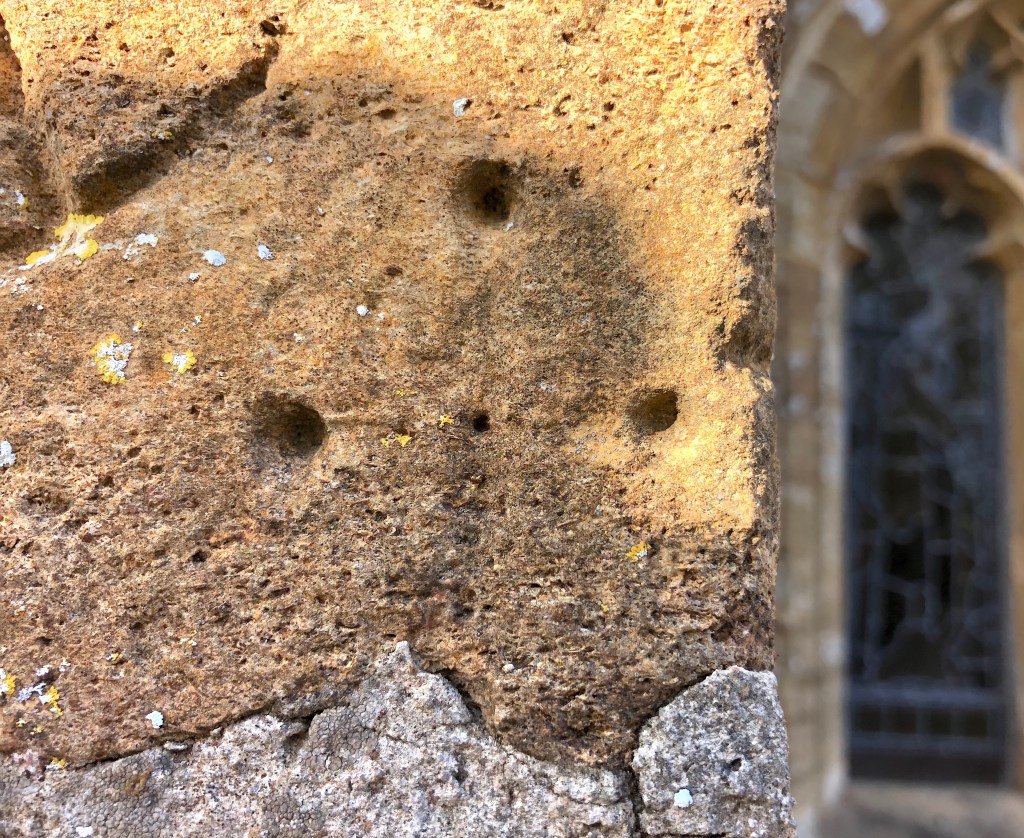
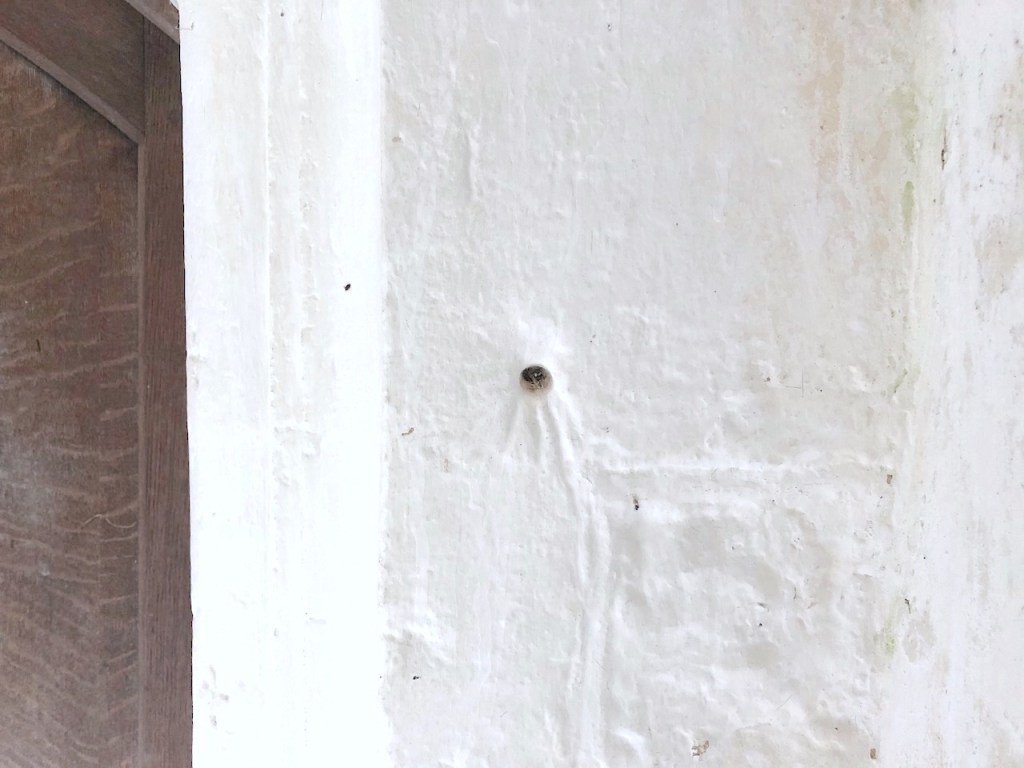
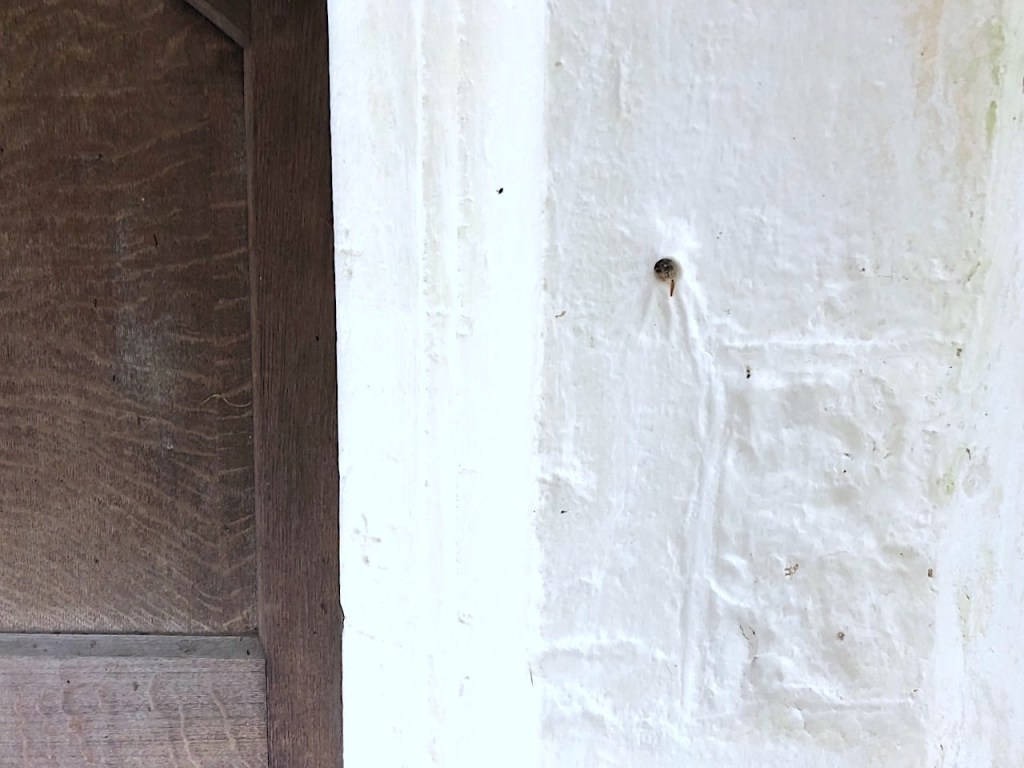
DIAL
DH 127. This dial is on the e. side of the inner door of the s. porch. It is 4 feet 11 inches above the floor, the noon-line is only 1 1/4 inches in length, the style-hole is 1 inch deep by 5/8 of an inch in diameter, and the aspect is due s. Type 3.August 19th, 1915
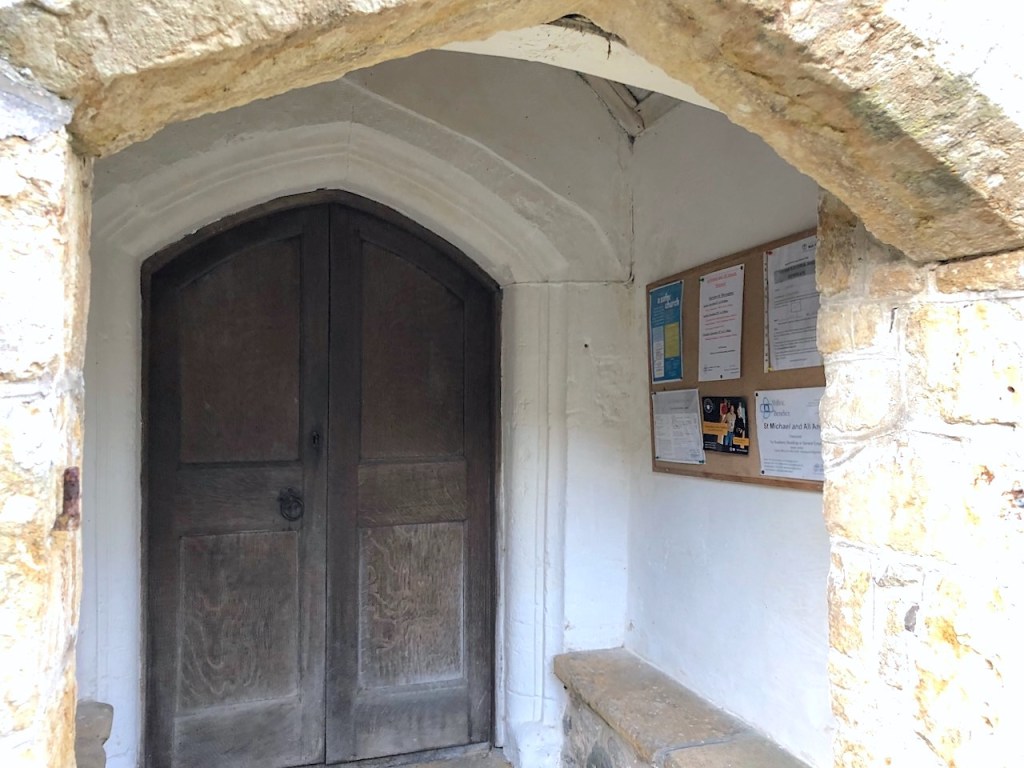
DH NOTEThis is a quaint and probably very ancient little dial. The a.m. lines are longer than the noon line, which is cut off by the edge of the stone. The porch over this dial looks extremely old. The head of the outer door is cut from one huge piece of stone in the form of a rough debased arch, and is of the most primitive kind of workmanship.
The dial clearly precedes the later addition of the porch. It would be good to know what DH considered to be ‘very ancient’. C14 or even C13? See first image for the whole porch and ‘huge’ head stone. Perhaps it was a relic from a much earlier building – maybe a medieval part of the original Manor – repurposed for the new porch.
St Michael & All Angels . Wayford . Som. – Scratch Dial
NOTES † Dials inside a porch are not as rare as one might expect. A porch was often a much later addition to a church. DH identified 12 in Somerset alone. This dial is listed by TWC; not found in other usual sources
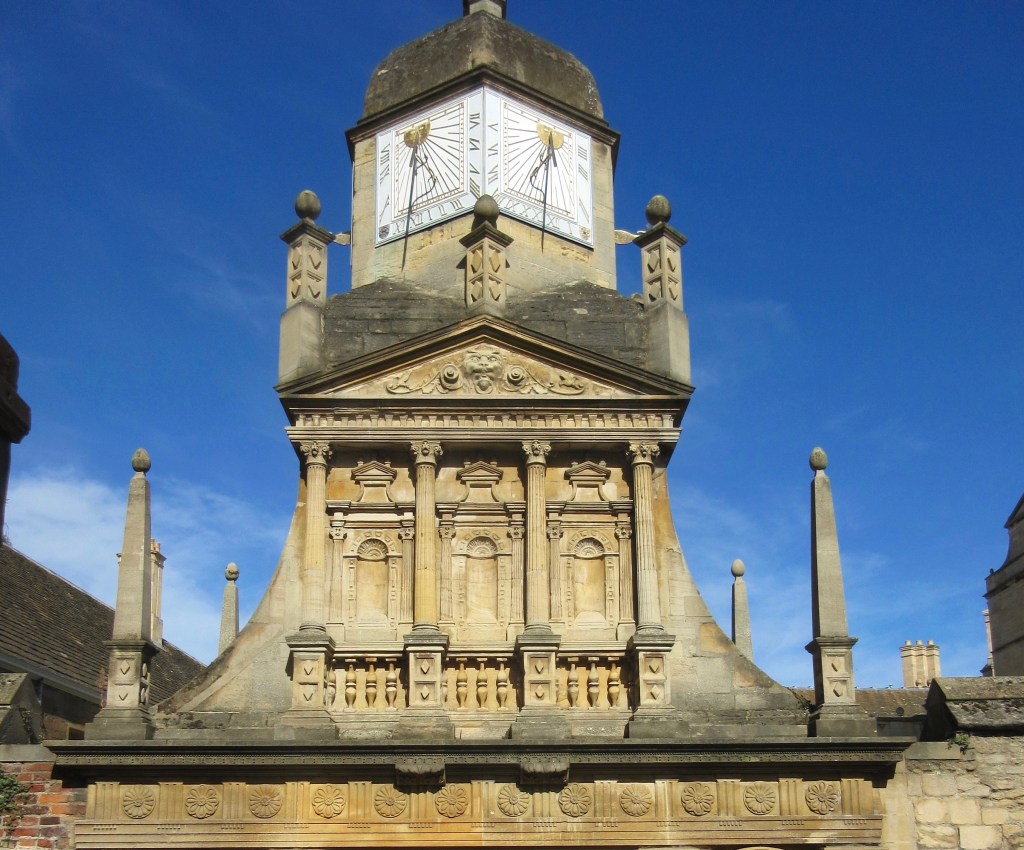
Gonville and Caius College Cambridge – Sundial over the Gate of Honour
This handsome modern set of dials was installed in 1963 as part of the 400th anniversary celebration of the college’s re-foundation by John Caius. There are 6 vertical sundials, arranged in 3 pairs placed round the hexagonal tower. They were designed by astronomer and Fellow, Dr Message, and the Junior Bursar Dr Powell. The bronze dial faces are painted with vitreous enamel. They replace the original set of sundials dating from 1557, of which only traces remained.
There is something very satisfying about this set of dials. The symmetry, the proportions, the materials, and the design all seem to work in harmony. Cambridge colleges have many sundials between them, many original and ancient (Queen’s College sundial is a perfect example). Of the modern dials, the Gate of Honour is adorned by arguably the finest.
Gonville and Caius College Cambridge – Sundial over the Gate of Honour
The college has three gates that represent the stages of academic life: matriculation, entered through the Gate of Humility; undergraduate life, with regular passage through the Gate of Virtue during a student’s career; and finally graduation, with students passing through the Gate of Honour to the Senate House to receive their degrees.
Gonville and Caius College is one of the oldest colleges of Cambridge University. It was founded in 1348 by Edmund Gonville, who has suffered the cruel fate of rarely being mentioned nowadays; the college is almost invariably referred to simply as ‘Caius’, after John Caius, the man who re-founded the college in 1557 at a time when it had fallen on hard times.
52.2057 / 0°7’1″E / TL447584
GGS Category – Modern Dial (replacing Old Dial); Multi-facet dial; University Sundial; Cambridge Sundial
PART 1LINKfeatured Dials 1 & 2 on Rimpton church – two of the four dials identified and recorded by Dom Ethelbert Horne (DH) of Downside Abbey, the Father of modern dialling so to speak. In 1913 – 15 he made several trips around Somerset collecting dials, measuring and recording them in great detail. He went on to produce his pioneering book about dials, published in 1917.
LOCATION † Between Sherborne & Marston Magna, on the Som. / Dorset boundary. S 50.9948 / -2.5565 / ST610218
DOM ETHELBERT HORNE
DH (1852 – 1952) was a Benedictine monk at Downside Abbey. The Archives state that he was “a noted archaeologist, antiquary and folklorist… and published works on subjects as diverse as holy wells, mistletoe, scratch dials and St Aldhelm”. Between 1913 – 15 he made several tours around Somerset in search of scratch dials. In 1917, he published his delightfully written book ‘Primitive Sun Dials or Scratch Dials’ containing several chapters about dials, their construction and their purpose. These were followed by a detailed analysis, by district, of 224 dials that he located. He divided these into 12 main types, for each of which there are photographs, including a Rimpton dial (see Part 1). DH’s 4 Rimpton dials are numbers 212 – 215 in the Yeovil District list.
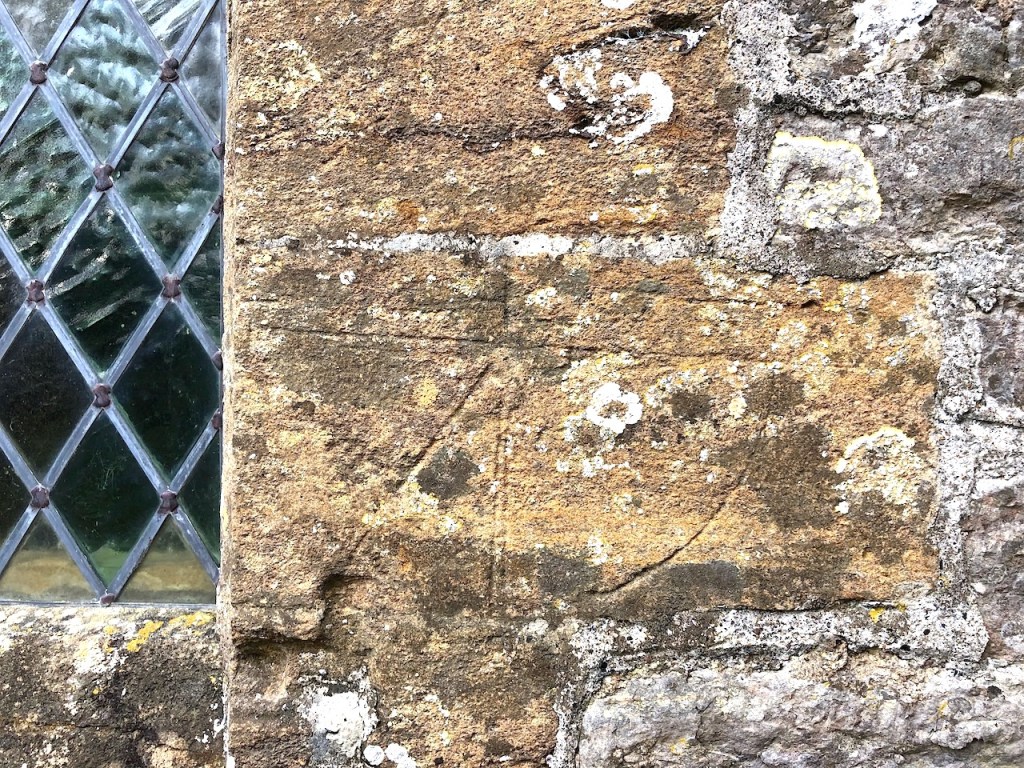
DIALS † This article covers DH dials 3 & 4 of the multiple dials on this church. I have visited the church twice and found other dials & less convincing candidates. These will be written up separately in Part 3.
DH DIAL 3
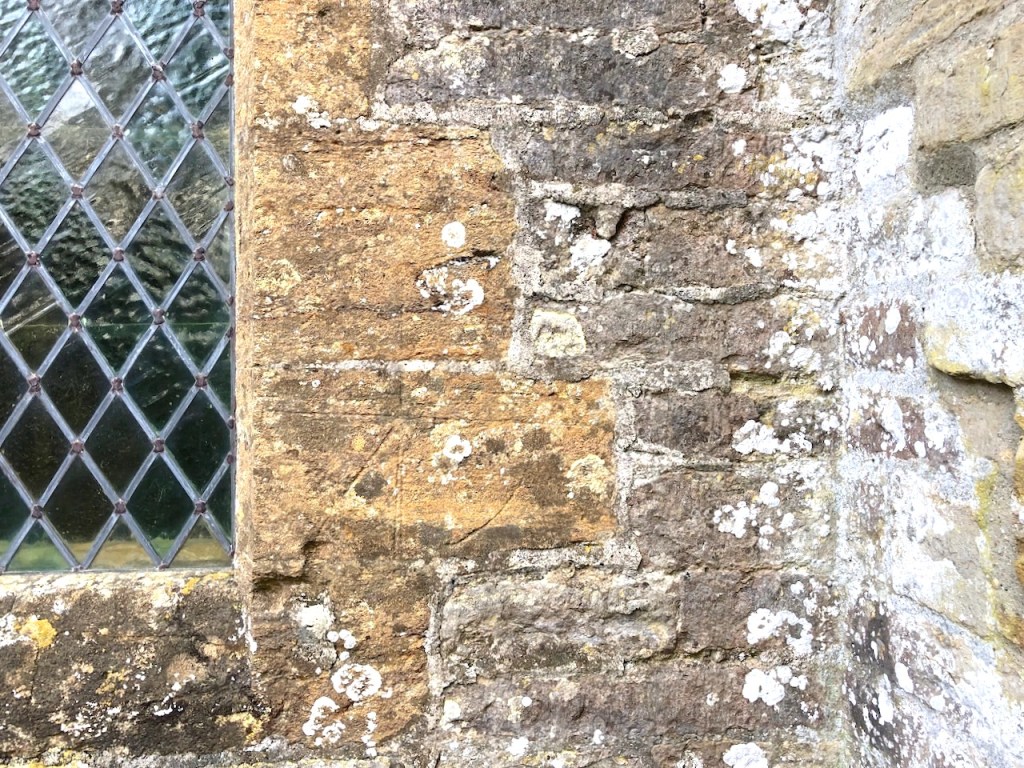
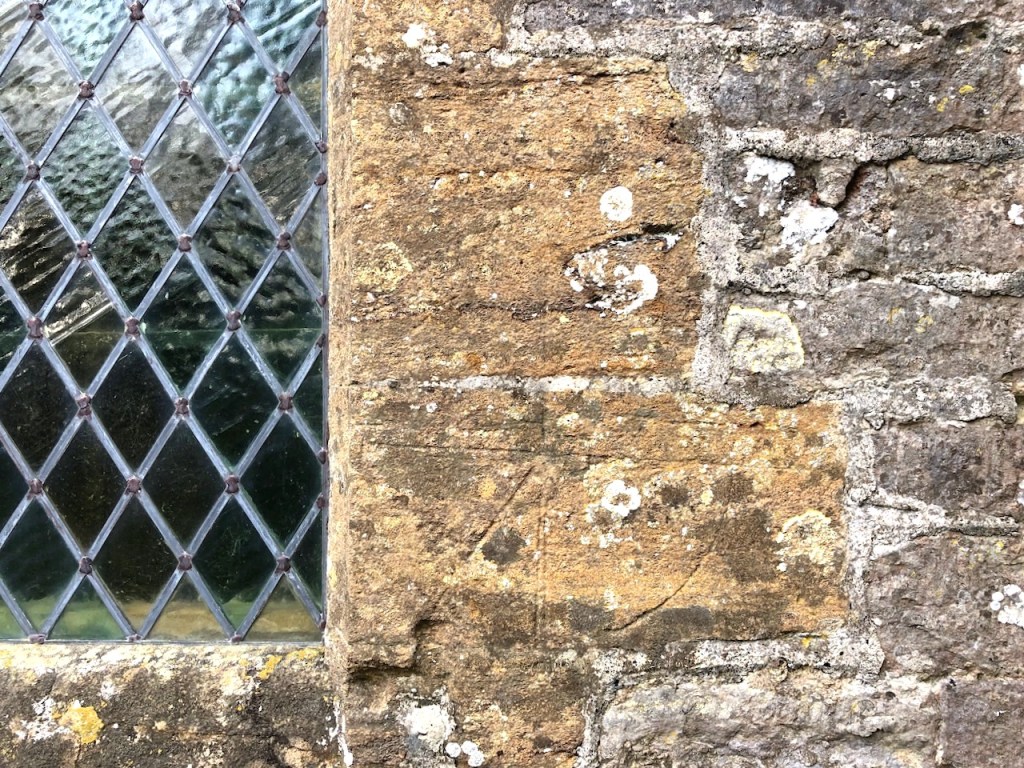
214. (3) This dial is on the w. side of the window to w. of priest’s door. It is 5 feet above the ground, the noon line is 5 1/4 inches in length, the style hole 5/8 of an inch in depth by 3/4 of an inch in diameter, and the aspect is s. by 15°e. Type 3.
NOTE † a. the trace of a circle, upper left and b. the small dial hanging down from the mortar line above. More on the additional dials on Rimpton church in Part 3.
LOCATION CONUNDRUM
The dial location given above presents a puzzle. Put simply, an error may have crept at some stage between DH finding and noting the dial shown here; transcribing his notes to a more formal record; preparing a draft for publication; or in the printing.
There are 4 prominent and obvious dials. Dials 1, 2 and 4 are unproblematic. However in 2 visits, I haven’t been able to locate Dial 3 (or any dial) as described and in that location. The remaining ‘obvious’ dial is on the W. side of the window to W. of the porch – the dial shown here (although it is plainly not ‘5 feet above the ground’). The converse is that the dial shown here, on the W. side of the window from dial 2 (see marked image) was missed by DH.
DH DIAL 4
St Mary . Rimpton . Som. DH Dial 4
215. (4) This dial is w. of the priest’s door. It is 4 feet 9 inches above the ground, the noon-line is 4 inches in length, the style hole is filled up, and the aspect is s.by15°e. Type5b.
St Mary . Rimpton . Som. DH Dial 4
NOTES † Comments on the question of Dial 3 would be welcome. There an interesting and informative Parish website that is well-worth visiting LINK.
DEDICATION † ST MARY – early C13, alterations c.1500, N transept added C19.
LISTING † Grade 1
LOCATION † Between Sherborne & Marston Magna, on the Som. / Dorset boundary. Secluded, approached by narrow roads. Historical significance. A small village with plenty of listed buildings to enjoy. Church opposite Manor House at the end of a lane (a good walk starts from there) 50.9948 / -2.5565 / ST610218
DOM ETHELBERT HORNE
DH (1852 – 1952) was a Benedictine monk at Downside Abbey. The Archives state that he was “a noted archaeologist, antiquary and folklorist… and published works on subjects as diverse as holy wells, mistletoe, scratch dials and St Aldhelm”. Between 1913 – 15 he made several tours around Somerset in search of scratch dials. In 1917, he published his delightfully written book ‘Primitive Sun Dials or Scratch Dials’ containing several chapters about dials, their construction and their purpose. These were followed by a detailed analysis, by district, of 224 dials that he located. He divided these into 12 main types, for each of which there are photographs. The Rimpton dials are numbers 212 – 215 in Yeovil District.
MULTIPLE DIALS
DIALS † Part 1 concerns two of the four dials recorded in detail by Dom Ethelbert Horne (DH) during his dial tour of Som. in May 1915. He devised a method of categorising dials by appearance, and ascribed a ‘Type’ to each, as shown in the entries below. Part 2 covers DH dials 3 & 4. Having visited the church twice recently I have found 3 or 4 more dials and a couple of less convincing candidates. These will be written up separately in Part 3.
DH DIAL 1
St Mary . Rimpton . Som. Scratch Dial DH1 . West end
212. (1) This dial is at the w. end of the church on s. quoin of the window under the tower. It is 4 feet 6 1/2 inches above the ground, the noon-line is about 2 inches in length, the style-hole, which is very shallow, is 3/4 of an inch in diameter, and the aspect is due w. Type 3. [DH further notes: Dial No. 1 has been moved from its original place and used as a quoin for the w. window. The mortar round the stone is of different date from that of the adjoining stones.
St Mary . Rimpton . Som. Scratch Dial DH1 . West end
DH DIAL 2
St Mary . Rimpton . Som. Scratch Dial DH2 . W. of S. Porch
213. (2) This dial is on the e. side of the first window from the w.end. It is 3 feet 8 1/4 inches above the ground, the noon- line is 6 1/2 inches in length, the style hole is 1 inch deep by 3/4 of an inch in diameter, and the aspect is s. by 15° e. Type 8.
St Mary . Rimpton . Som. Scratch Dial DH2 . W. of S. Porch
St Mary . Rimpton . Som. Dial DH2 . Illustration from Dom Horne’s book 1917
NOTES † Strangely, no dials – let alone a collection of them – are referenced in BLB BHO or HE. There is however an interesting and informative Parish website LINK.
St Mary . Rimpton . Som. Locations of Scratch Dial DH2 and (see next post) DH4
OTHER MARKS
St Mary . Rimpton . Probable Apotropaic / Ritual Protection Marks . 1. Above Priest’s Door 2. S. Porch





























 GAUDIUM SUB SOLE . SUNDIALS . MEDIEVAL TO MODERN