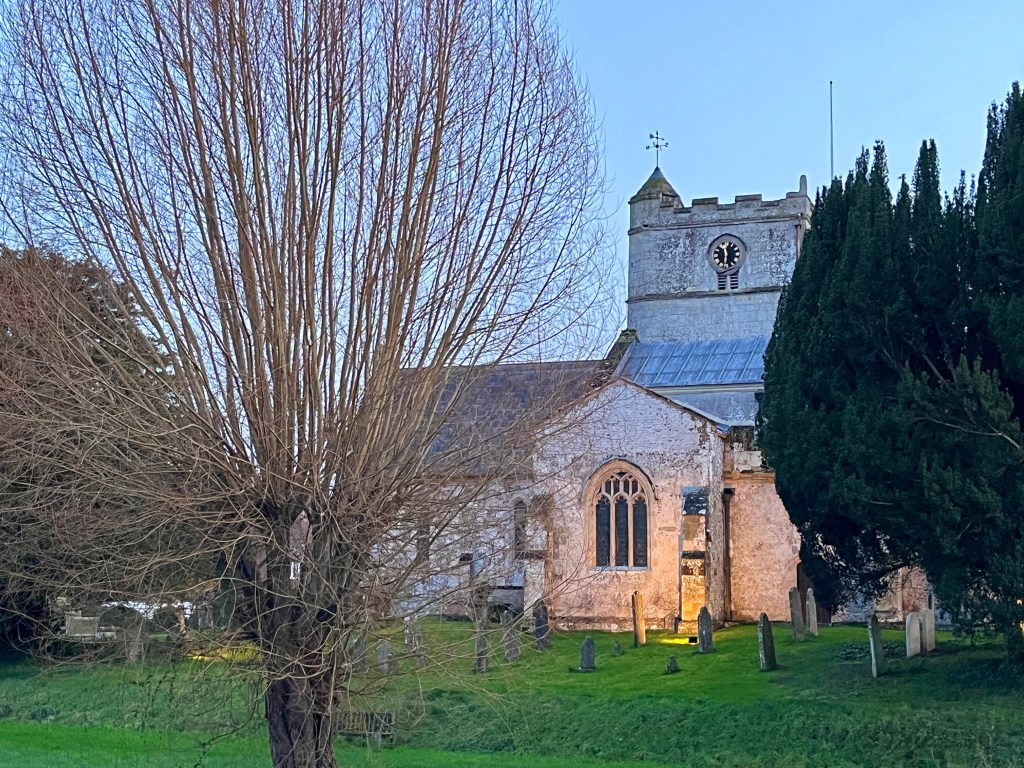
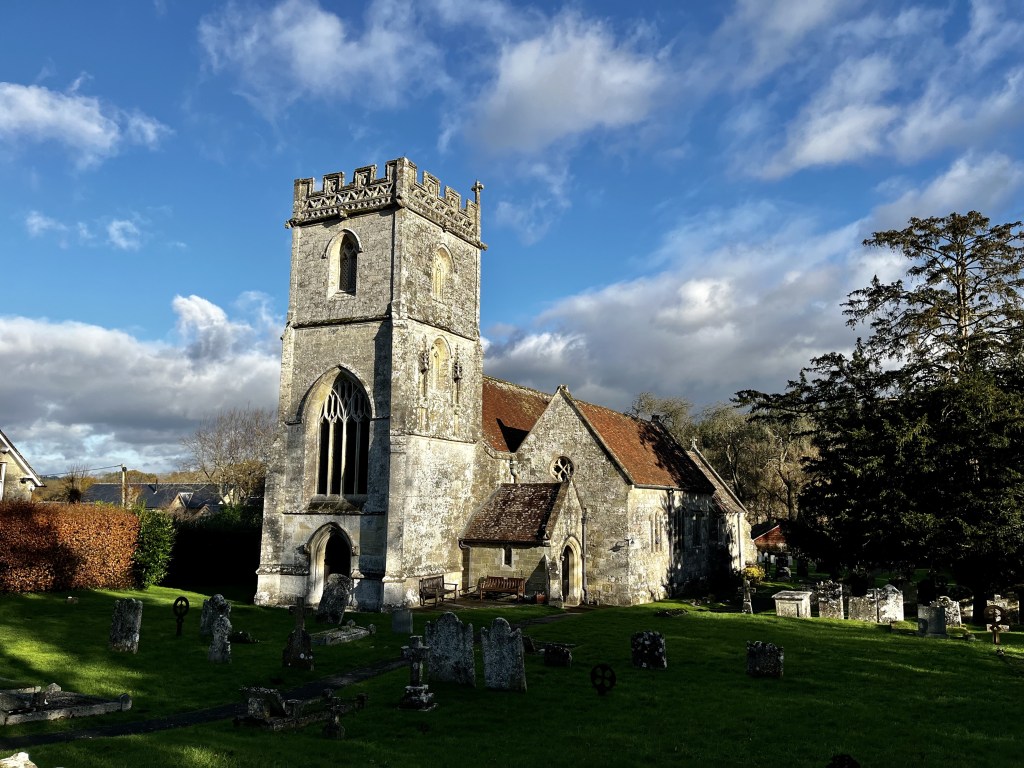
GRADE II* † St Mary recorded by at least 1319, date of the first known vicar. Chancel built c.1450; survived demolition of the rest of the church; used as a mortuary chapel. NB this is not Wyatt’s fine flint and limestone church of 1863, All Saints, in the centre of the village. You will have to seek out this tiny single cell churchlet – with its impressively large churchyard – via a narrow path behind a dejected-looking pub. 51.1943 / -2.0163 / ST989438-
DIAL
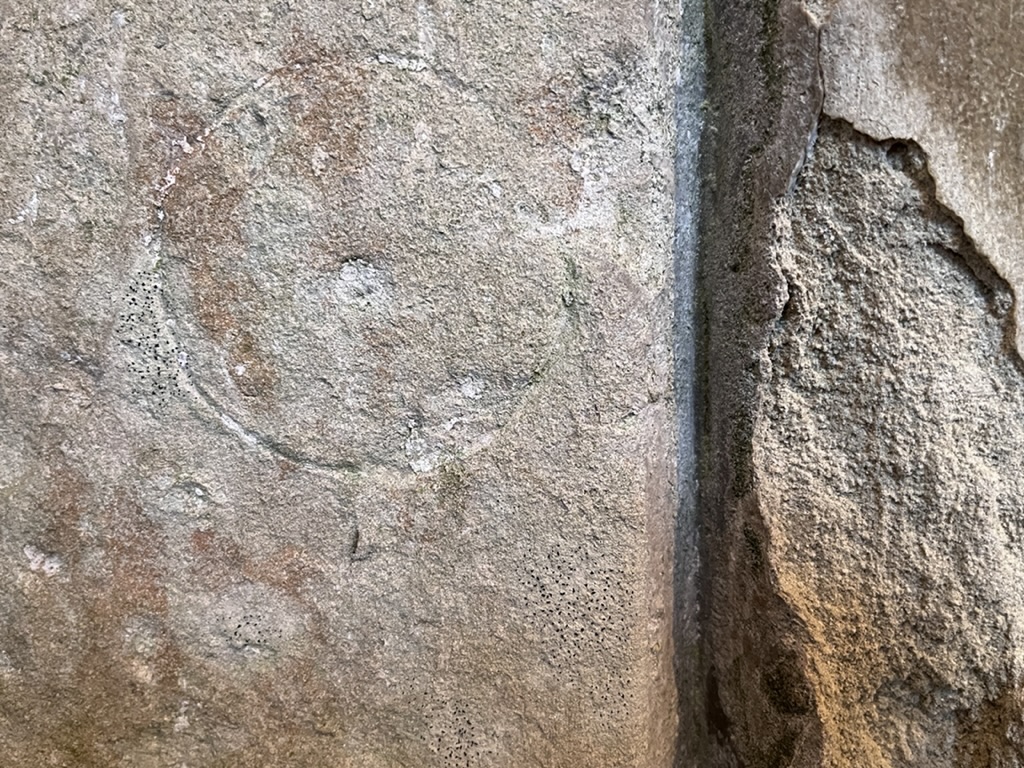
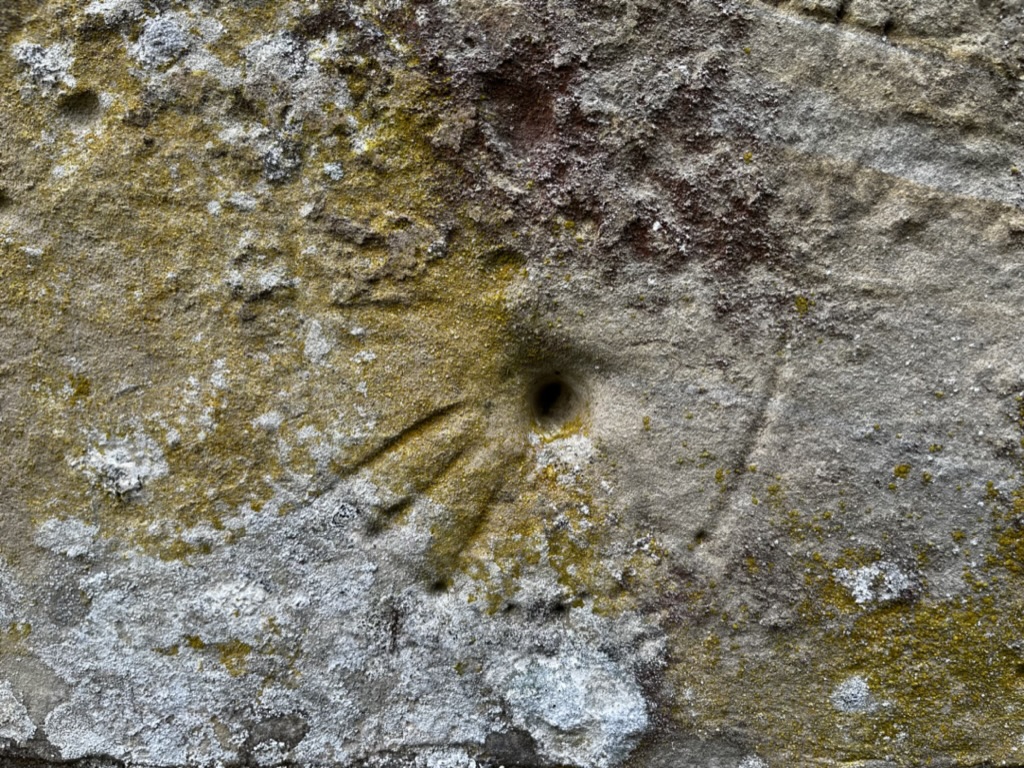
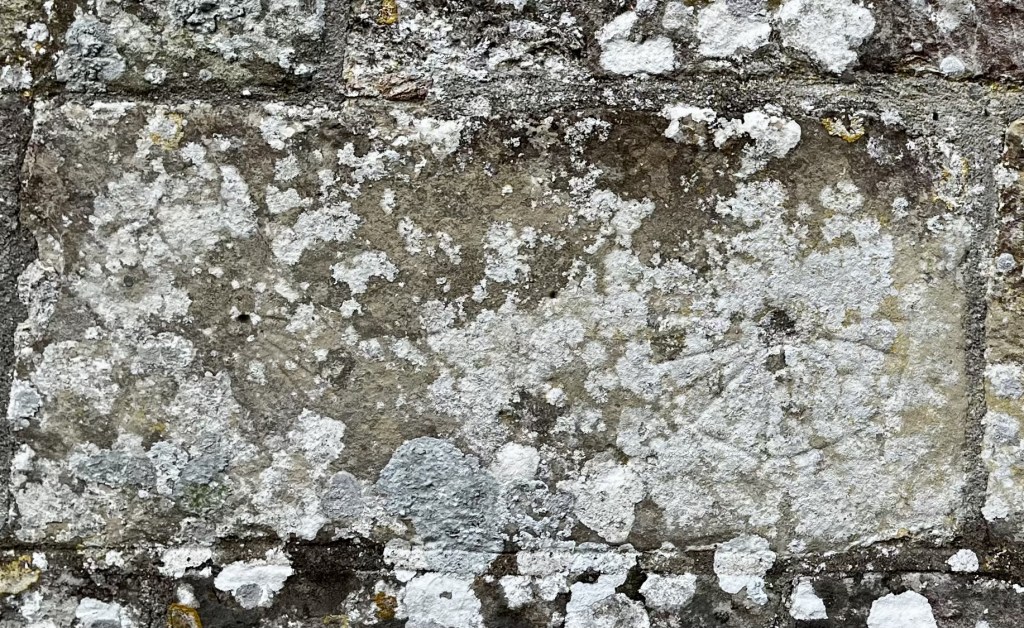
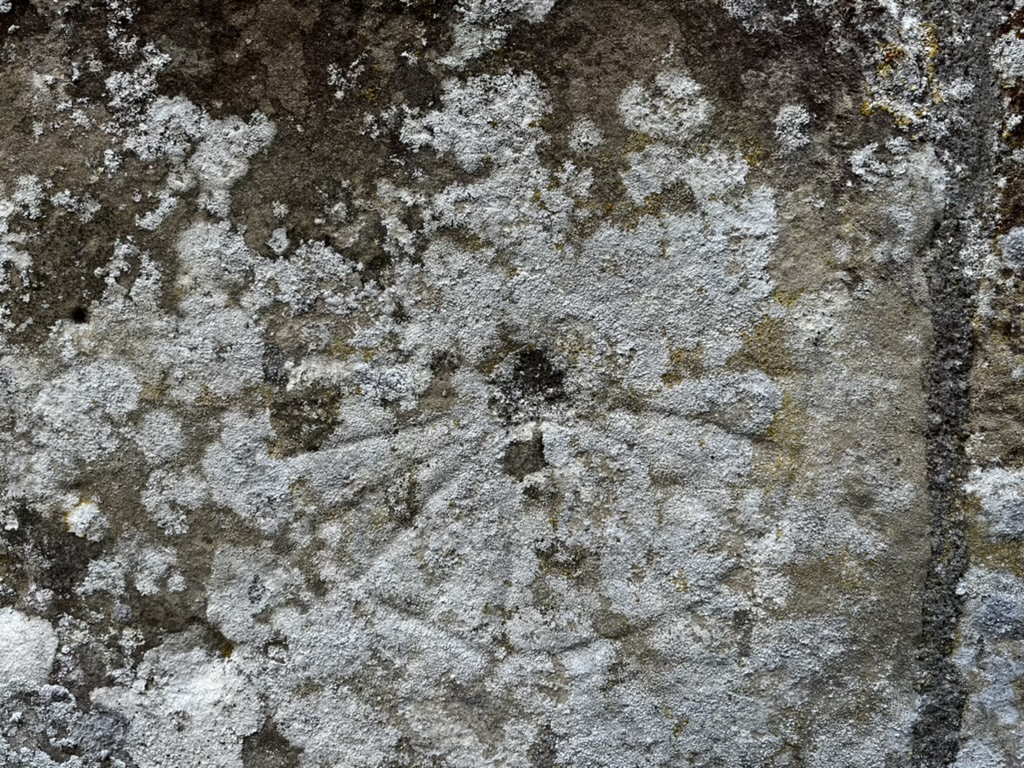
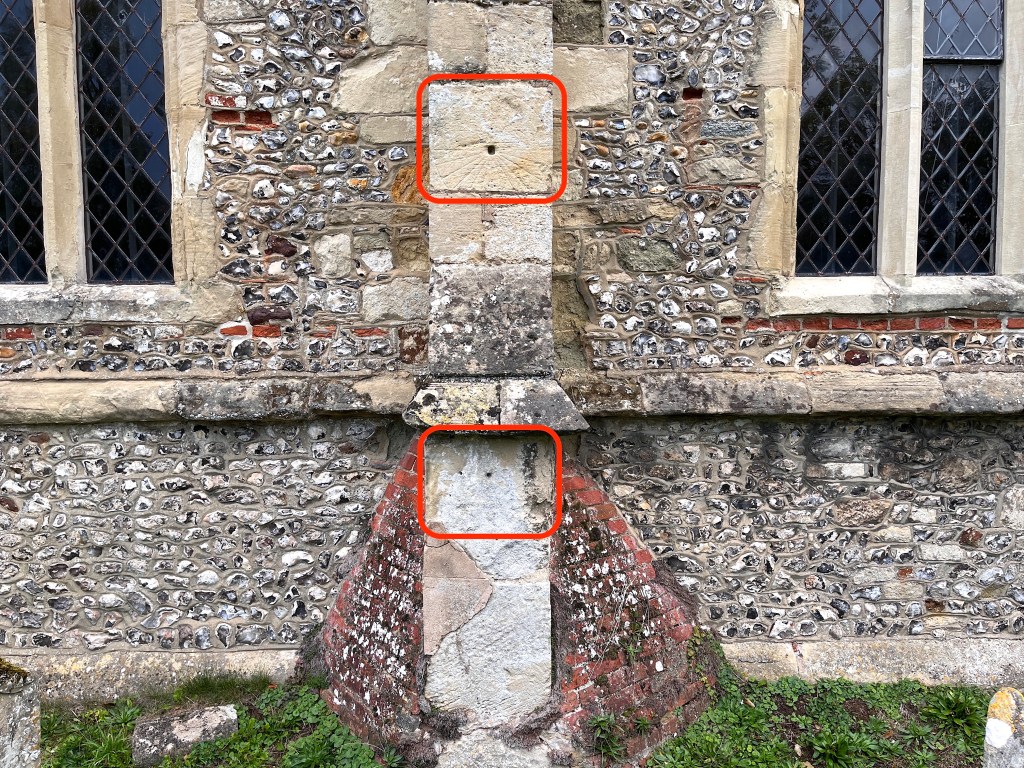
St Mary has a single dial R of first window. It would be easy to overlook – unusually for a scratch dial it is 2.5m high. Centred in dial stone, with 9 lines encircled in a double ring.
GRADE I † C13 (recorded 1273), C15 nave & tower. C19 restorations (Butterfield). In a lovely position below a wooded stretch of the cliff PEV. Pevsner & his wife Lola are buried together in the churchyard**. Interior has much of interest: pulpit 1629; excellent monuments C13 on, medieval stained glass. 7m SW of Swindon. 51.4917 / -1.8939 / SU074769
Sir Nicolaus Pevsner
DIALS
As one approaches the porch from the lych-gate, there are two very visible dials, one on either side of the entrance. A third dial in that area is noted (eg BLB / HE). In fact there are more dials, but when I visited, finding them involved negotiating overgrown bushes and parting tree branches in light drizzle. There are also some dial-ish designs – eroded or incomplete – that are doubtful, but are included below for consideration.
DIALS 1 & 2
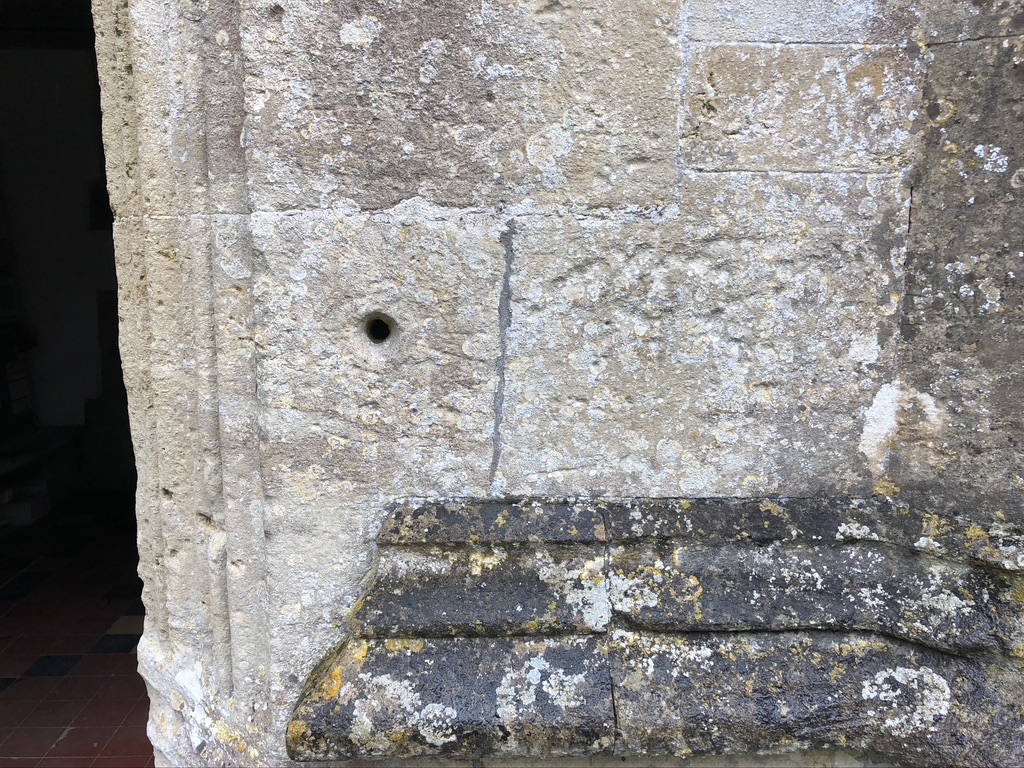
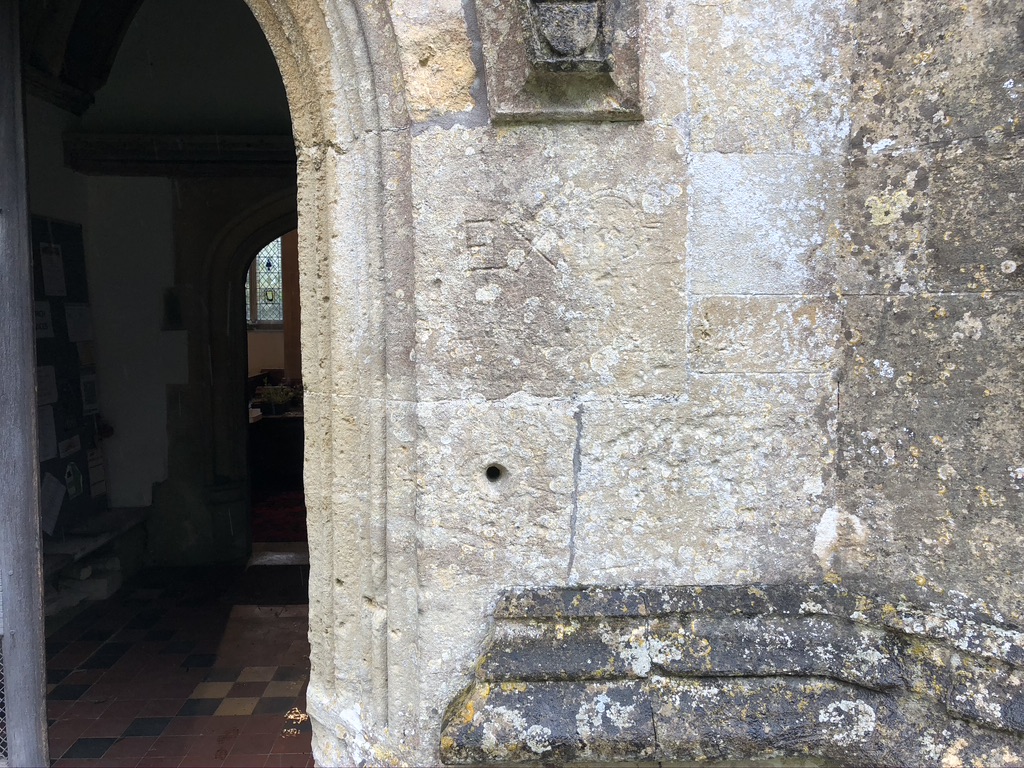
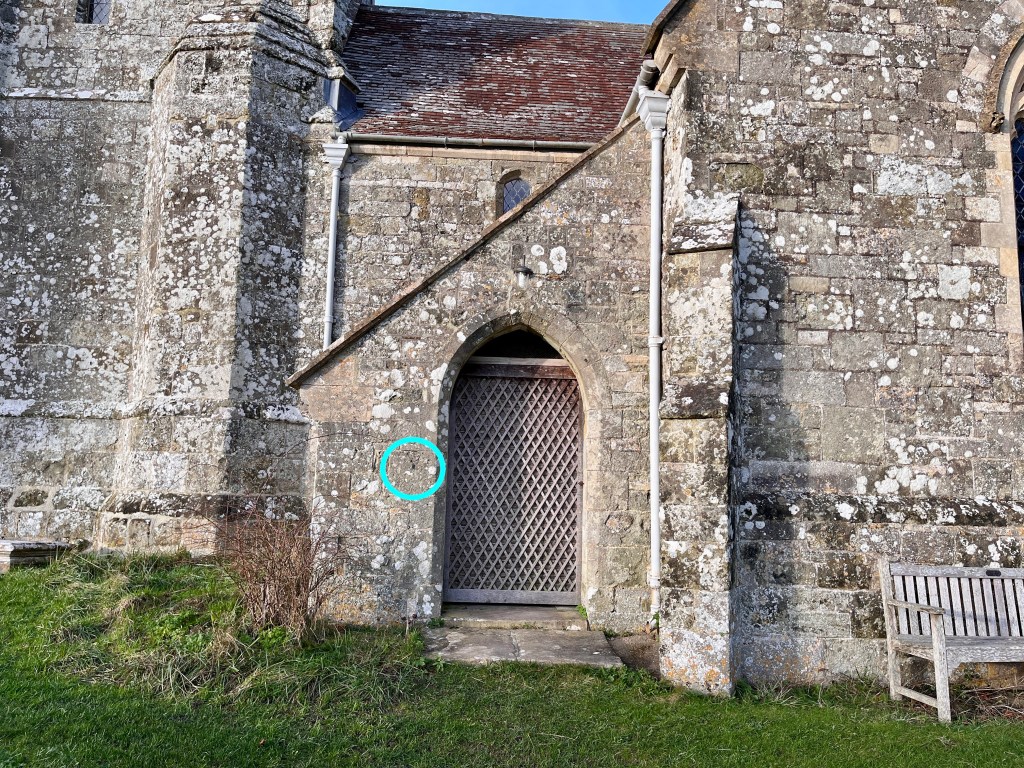
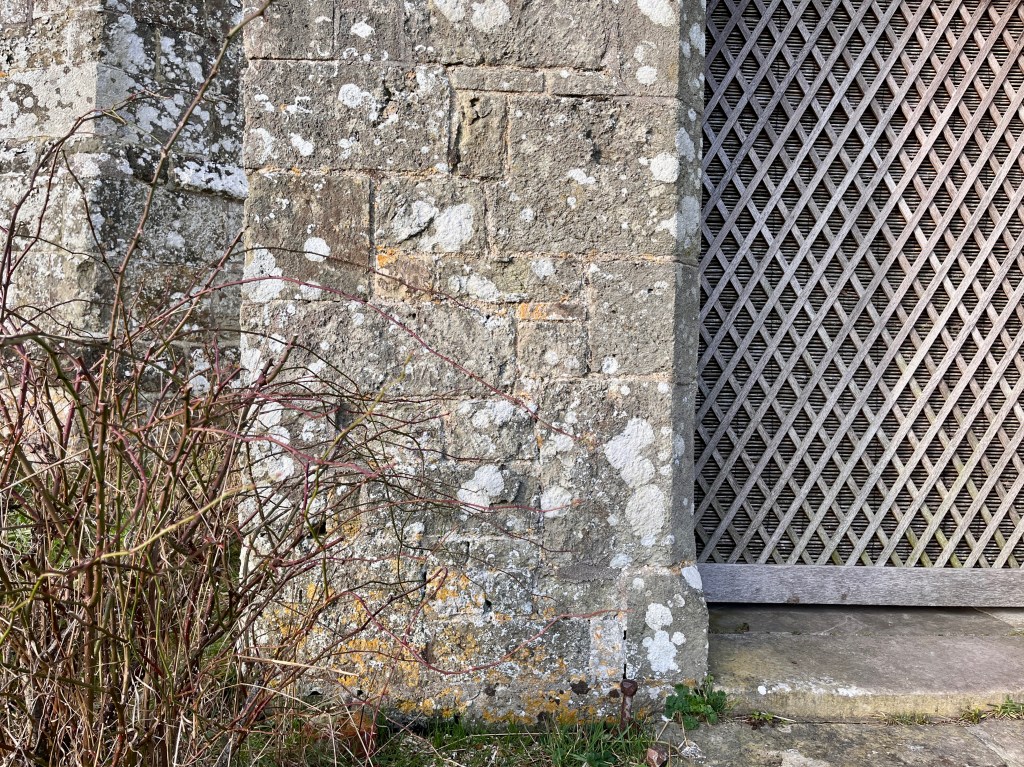
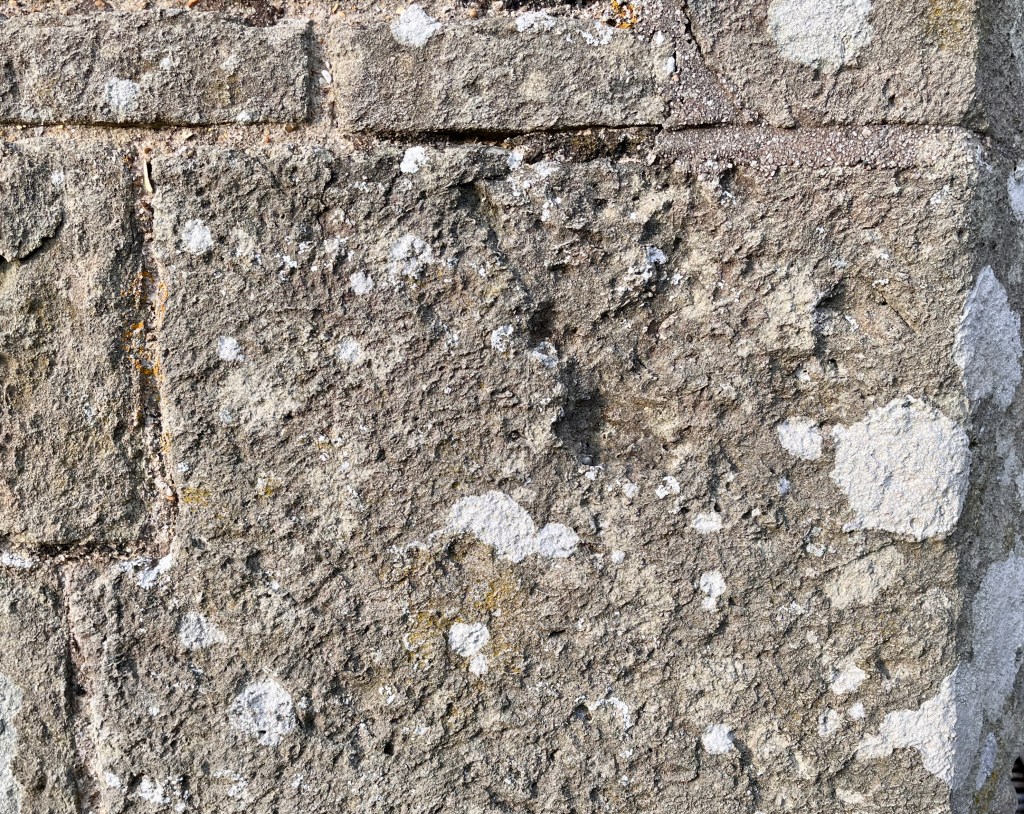
Dial 1 is LHS of the porch. This large dial is encircled, with the upper segment encroaching on the stone above. There are 7 / 8 lines, two of which are ULQ (so, not useful). The noon line extends well below the circumference and through a partial double circle. I think this is the BLB / HE third dial, though I think it is more a doodle than a dial. The emphasised line LLQ may mark Terce. The oddly inaccurately cut lines R of the noon line seem surprisingly casual for such a prominent dial.
Dial 2 is the counterpart of Dial 1, and far simpler. The overall design suggests that it is on its side, 90º anti-clockwise, perhaps re-sited.
DIAL 3
Obscured by foliage, Dial 3 is unconventional. The clear-cut circumference surrounds a single line with a dot at each end, slightly tilted from the horizontal. On the curve RHQ is a dot roughly corresponding to the Mass-time None. In the centre is a blocked gnomon hole. There are no lines or other markers of the passage of the day. In a sense , there is no necessity for lines to mark the hours – a stick’s shadow is almost as helpful.
DIAL 4
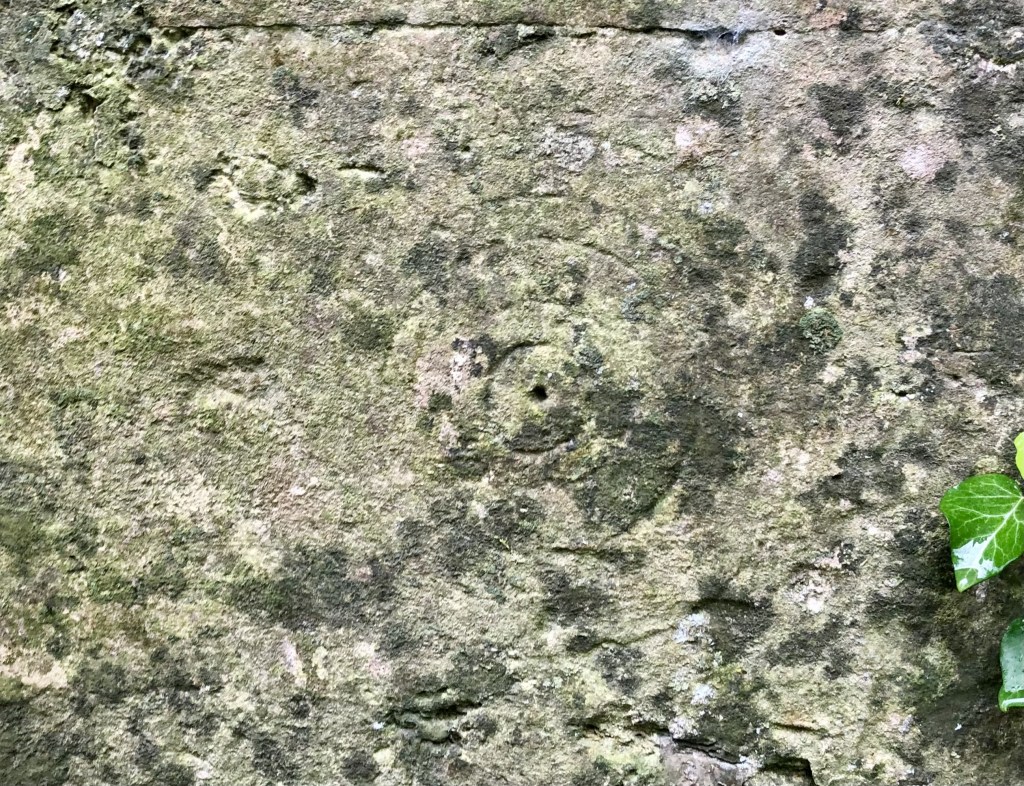
Dial 4 is largely hidden by foliage. Unusually, it consists of 4 concentric circles. These are now badly eroded; one is a trace only. Apart from the central gnomon hole, there are no other visible dial attributes: no lines, no pocks.
This type of dial is not unusual. Here is a similar dial in FOVANT Wilts, with 2 concentric circles and no other marks than the gnomon hole. However, I ought to mention that some consider that such designs are not dials, but may have a decorative and possibly an apotropaic function.
DIAL 5
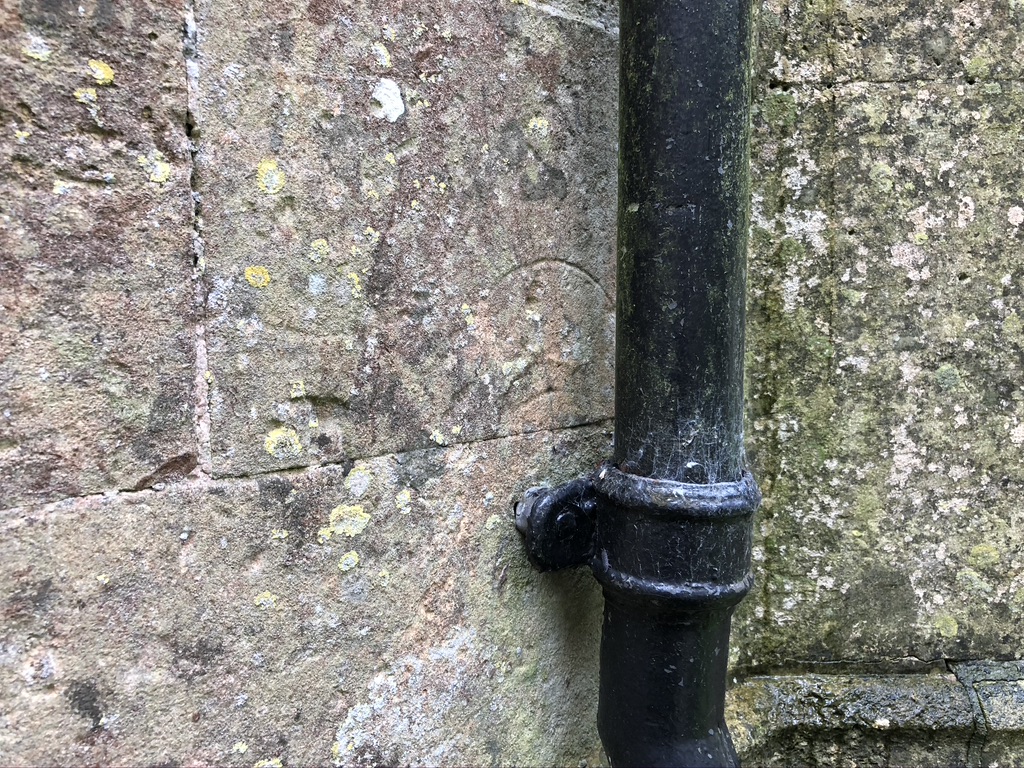
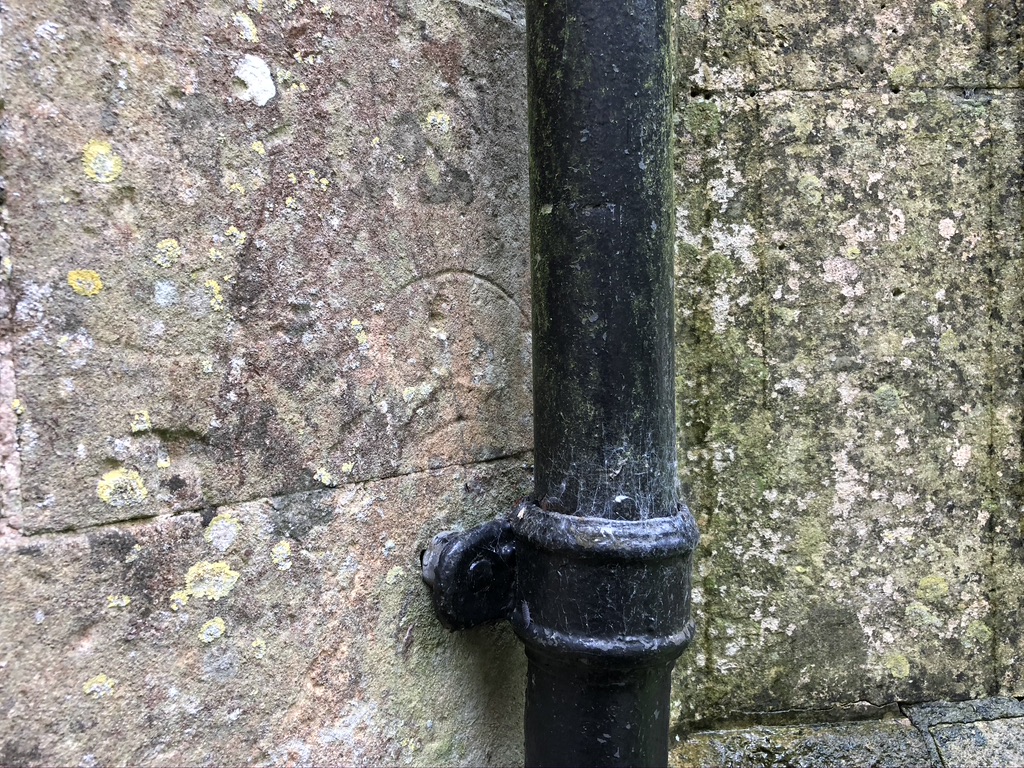
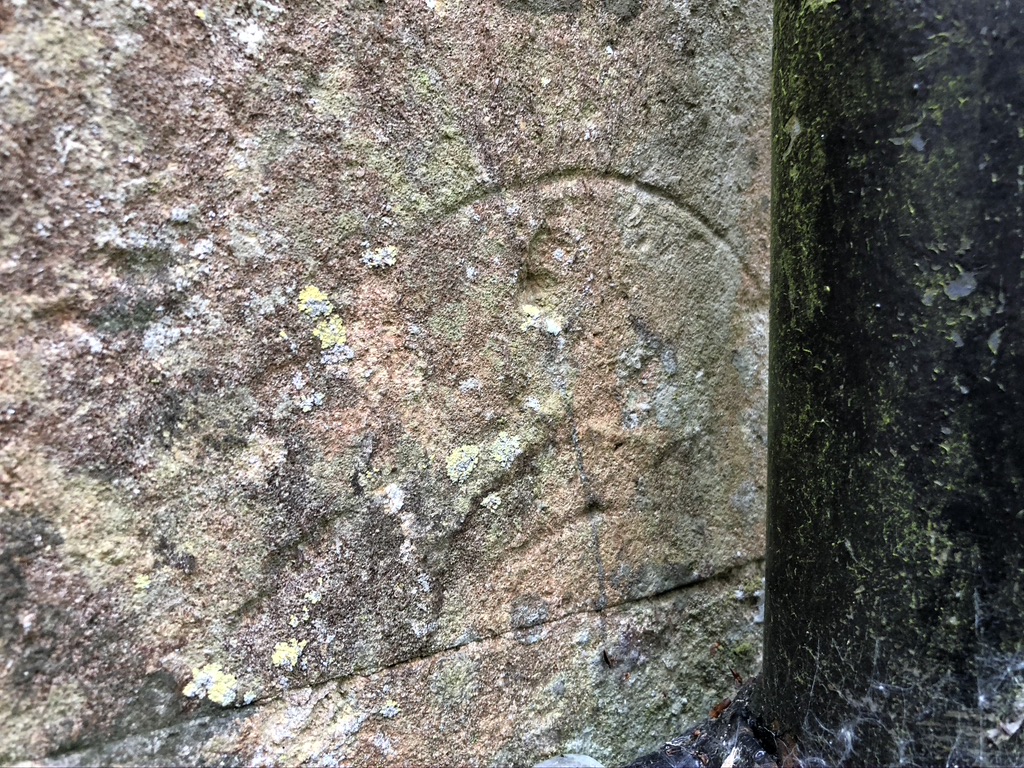
Dial 5 (?) – if a dial – is a classic ‘drainpipe’ example, in part concealed by a more modern addition to the church wall. There must be some doubt here because it is hard to see how it – with the arc of a circle below – would have worked.
DIAL 6?
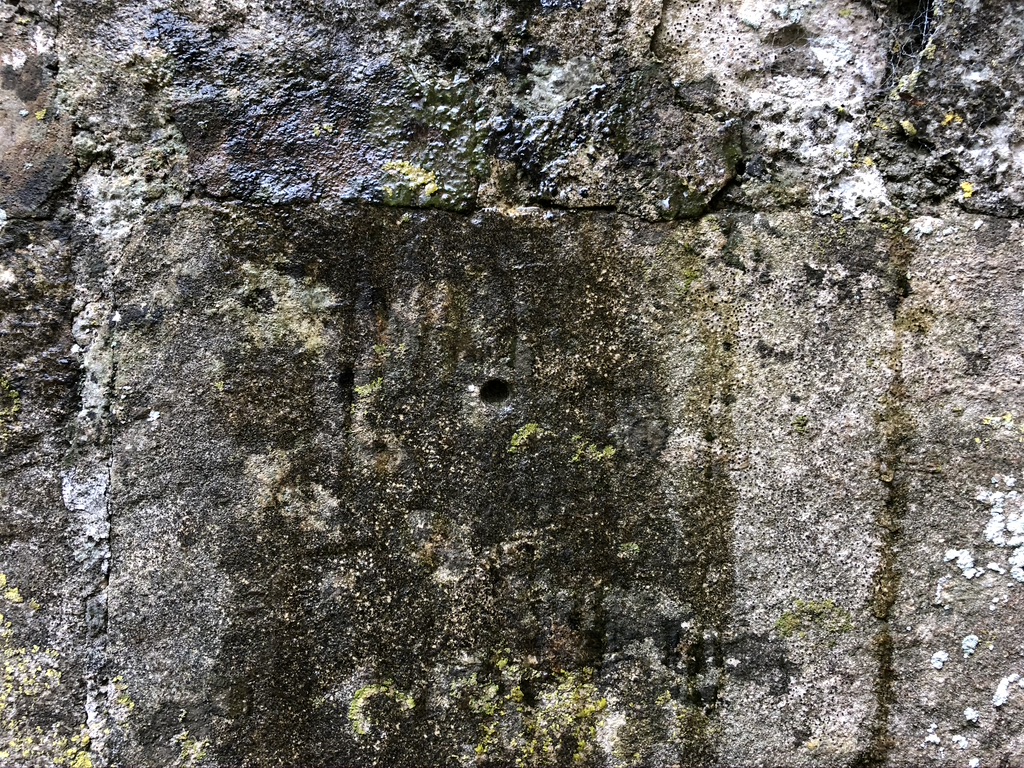
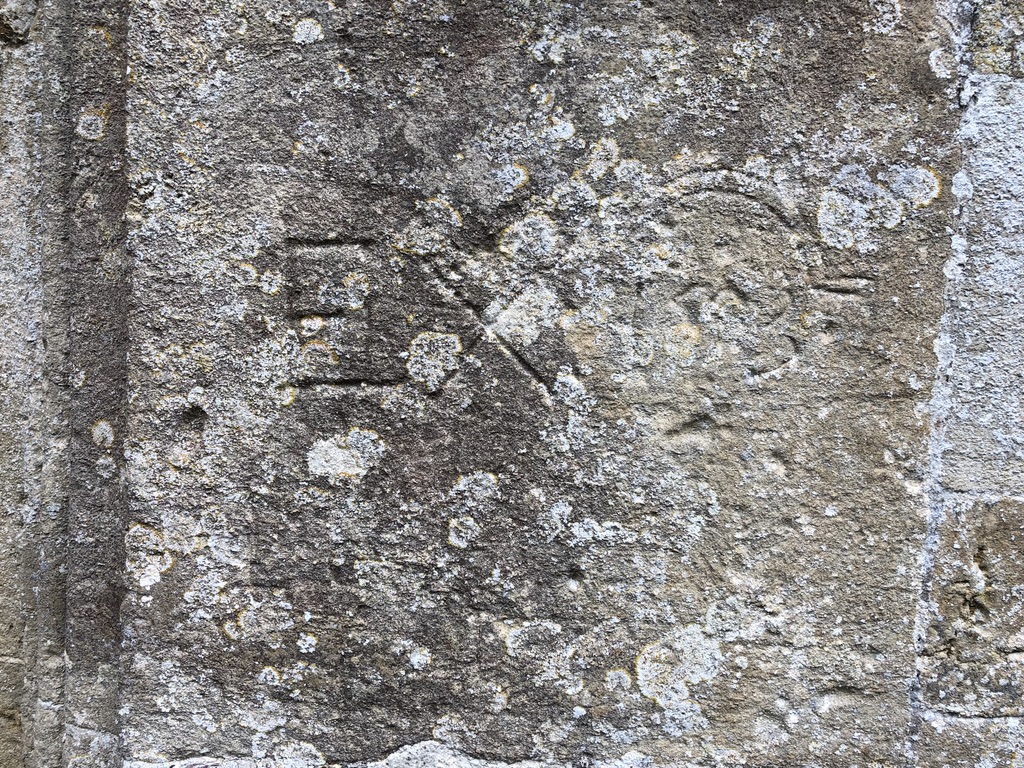
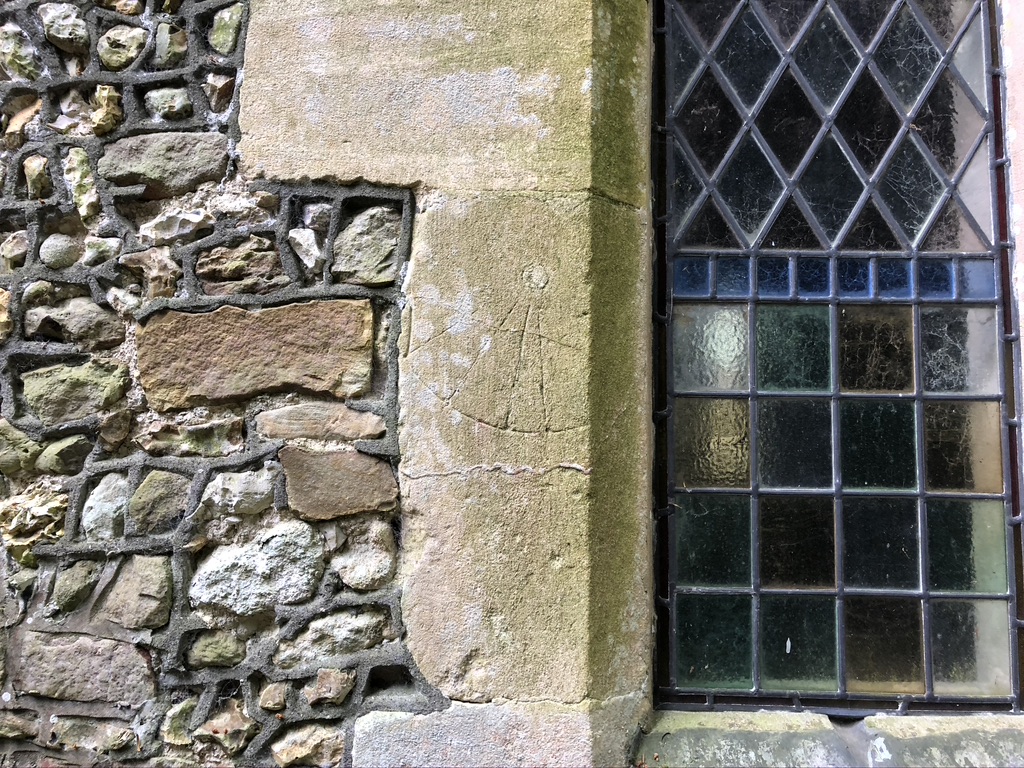
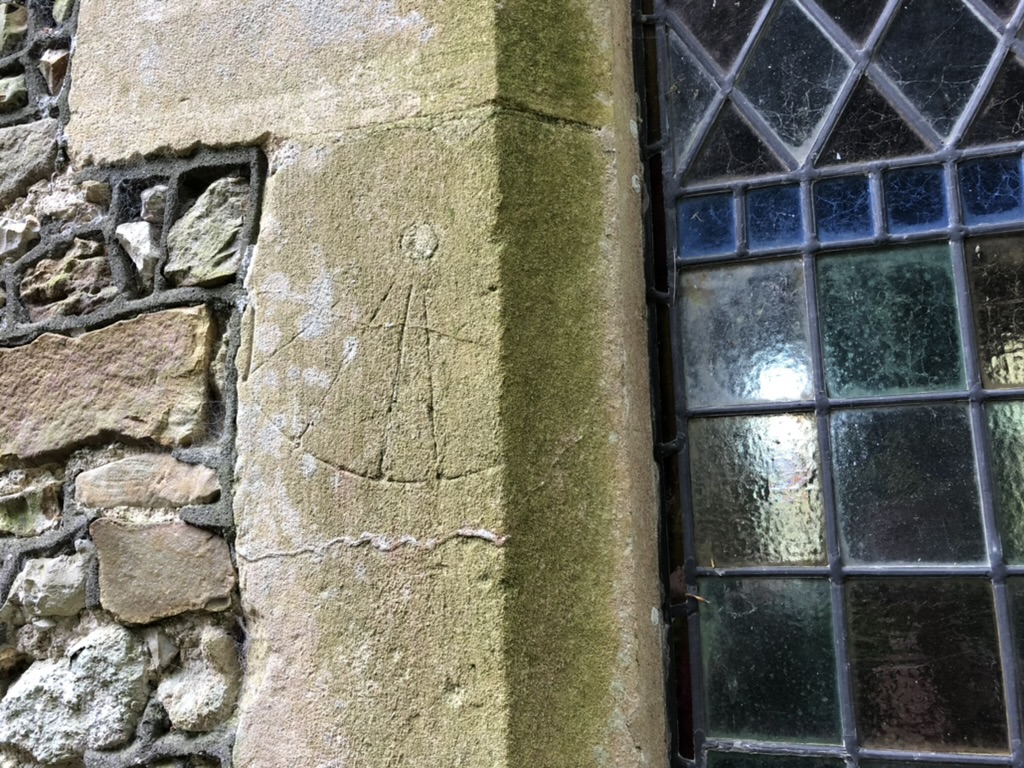
Dark and damp, this stone was difficult to read. If a dial, it is contained within a square with the top side being the mortar line. In favour of dial status is the location of the dial stone beside a window and the position of the dial; traces of a circle; a pock directly on the circumference LHS roughly corresponding with Terce; and the fact that the design is quite accurately framed as if to display it better. Equally, there are reasons to discount it.
OTHER DIAL CANDIDATES and CHURCH MARKS
Another interesting part double circle, endearingly wonky. Very doubtful as a dial. Most interesting for the graffito UR, which may be a simple form of a type of ritual protection symbol that consists of rectangles with line and dot patterns.
The two marks on this stone – with variations – are quite often used as protection marks.
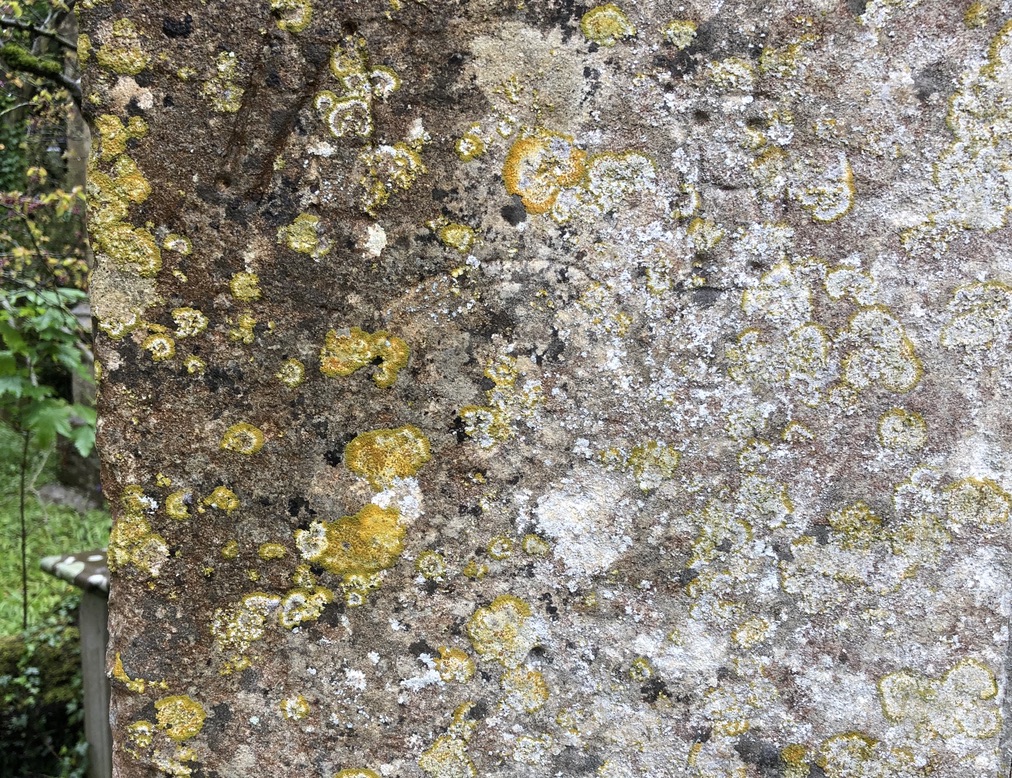
Note again the the double curves RHS. Most probably an incised design, rather than a dial.
Further evidencing the incidence of protection symbols is this Marian VV mark close to Dial 2.
The handsome bier kept in the church, and in excellent condition.
**In 1951 Pevsner published the first volumes of his magnum opus, The Buildings of England, an enterprise that took nearly 25 years to complete. The substantial Wiltshire volume was recently revised, expanded, and published in 2021
GSS Category: Scratch Dials; Mass Dials ; Multiple Dials
GRADE II* † Saxon origins (vestiges still visible); C13, C15; rebuilt tower 1667 (unusually, lower than the nave roof-line); restorations (Wyatt). Split from Burcombe village (S Burcombe) by A30 and hard to find. St John is the sole remnant of N Burcombe. Declared redundant 2005. I could not gain entry. 5m W of Salisbury. 51.0798 / 1.8971 / SU073311
DIAL
St John . Burcombe . Wilts – Scratch Dial
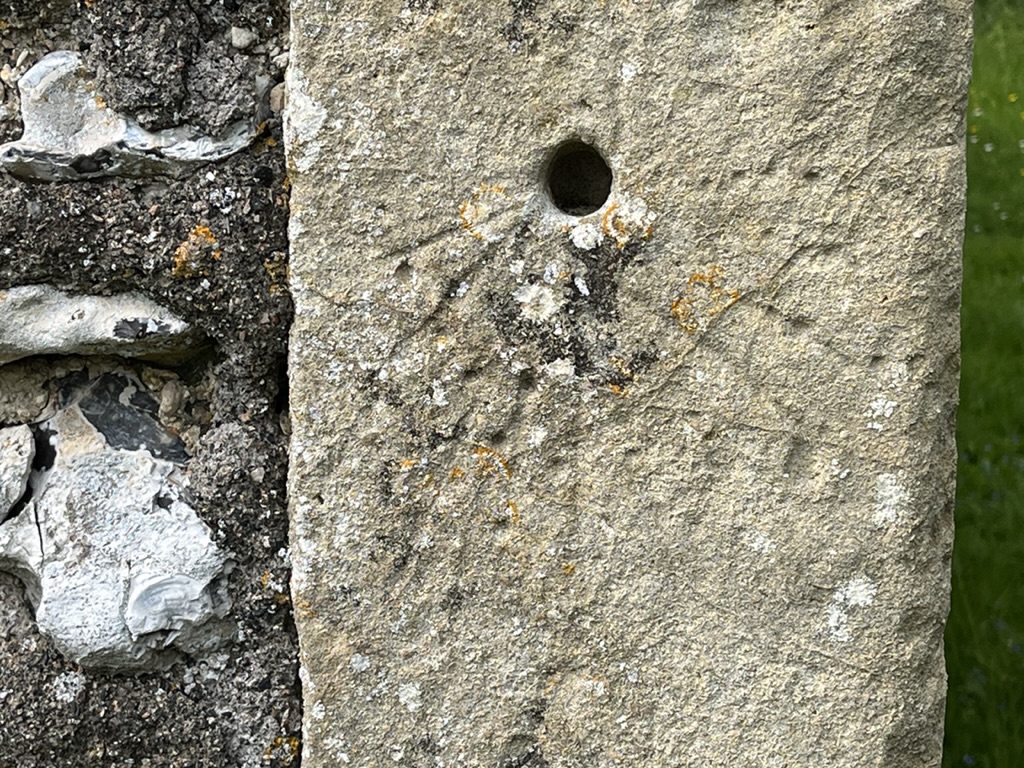
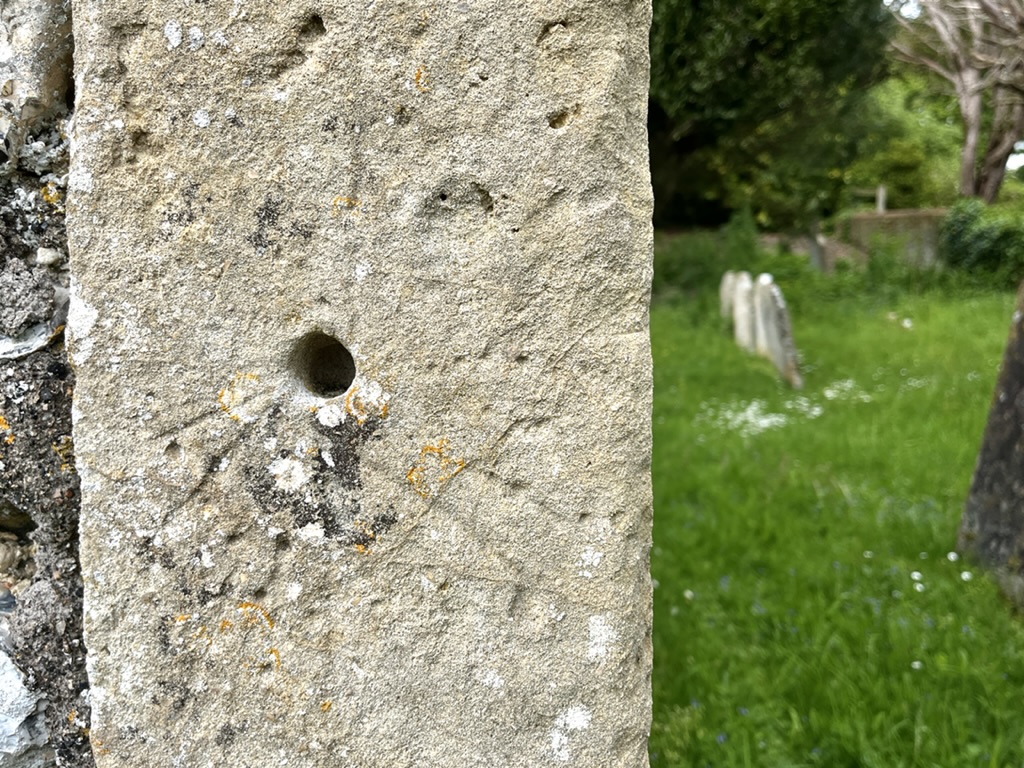
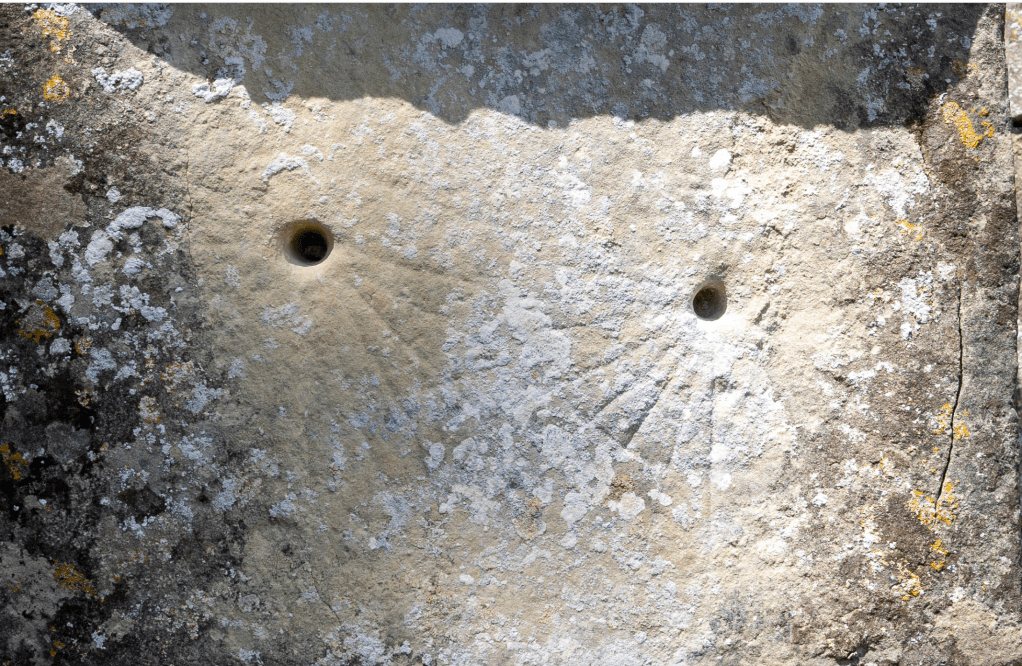
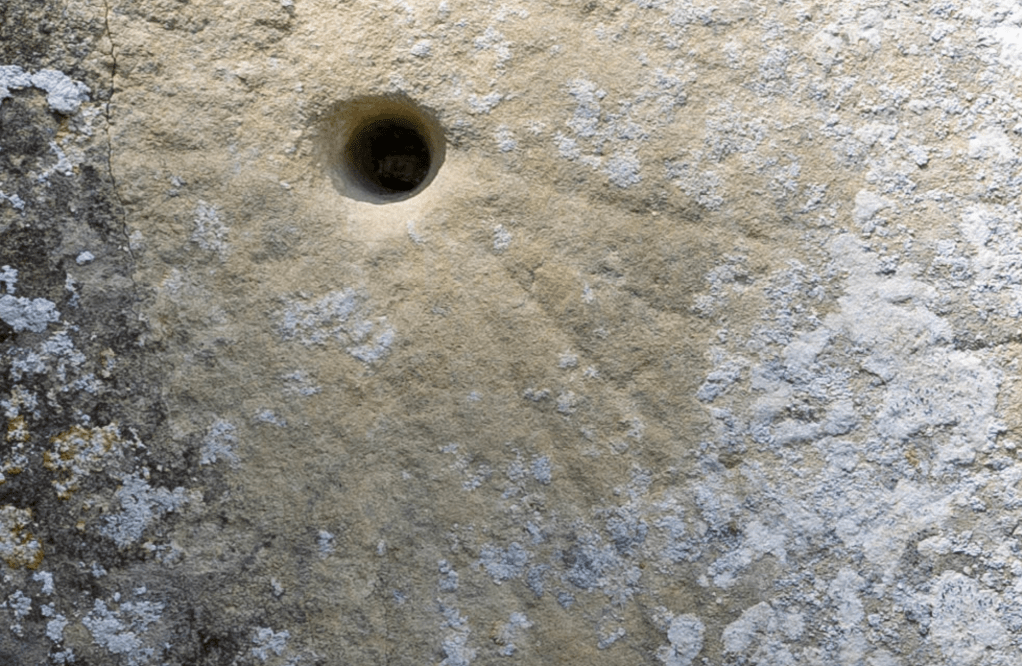
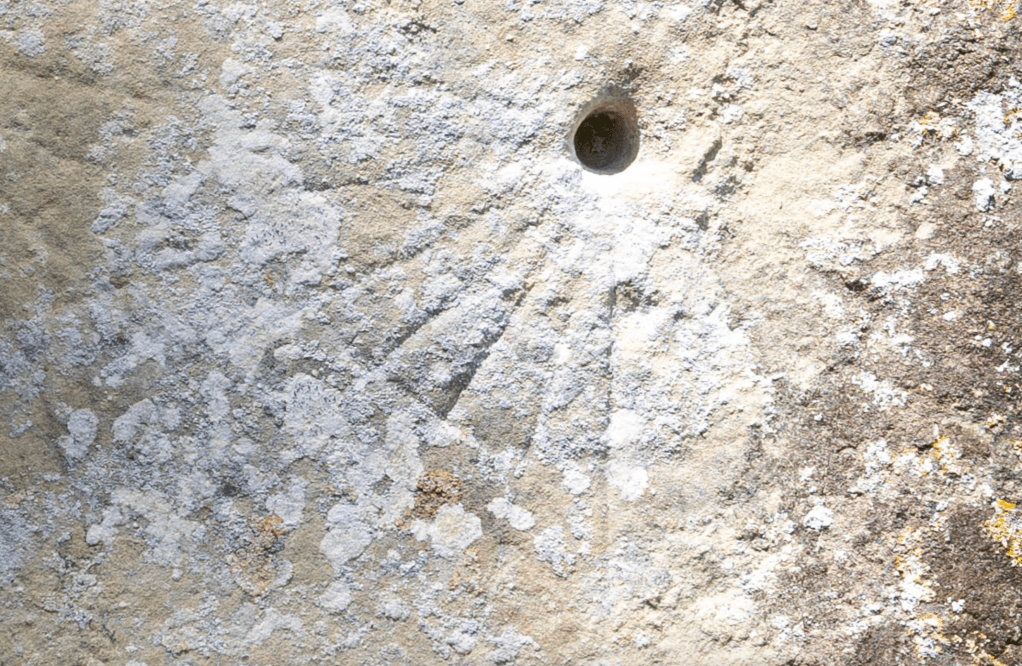
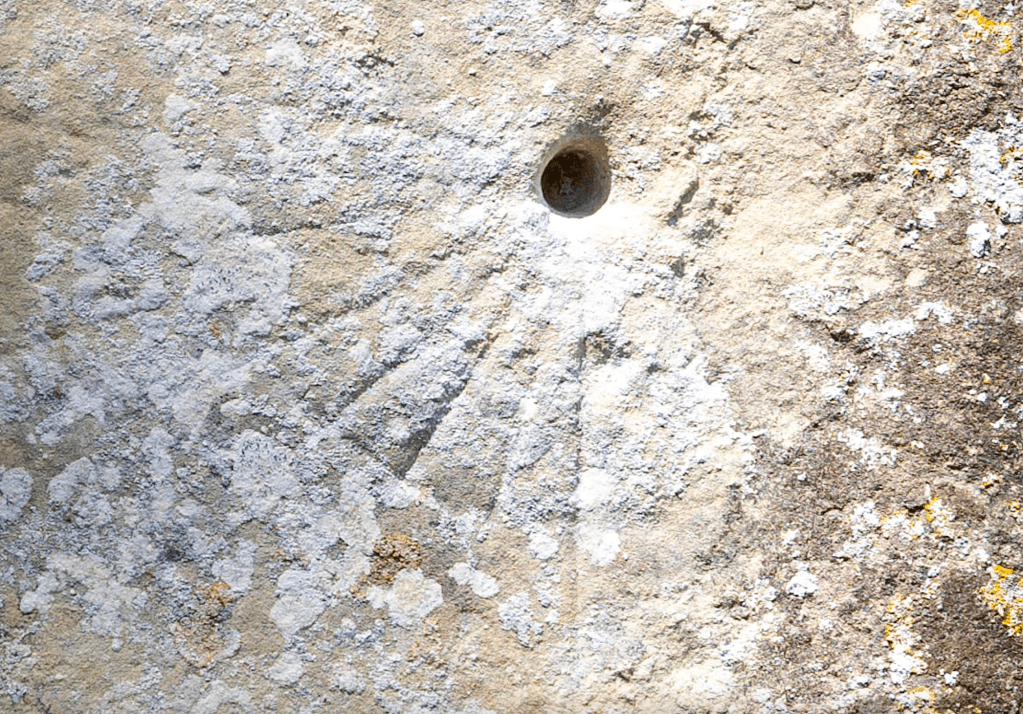
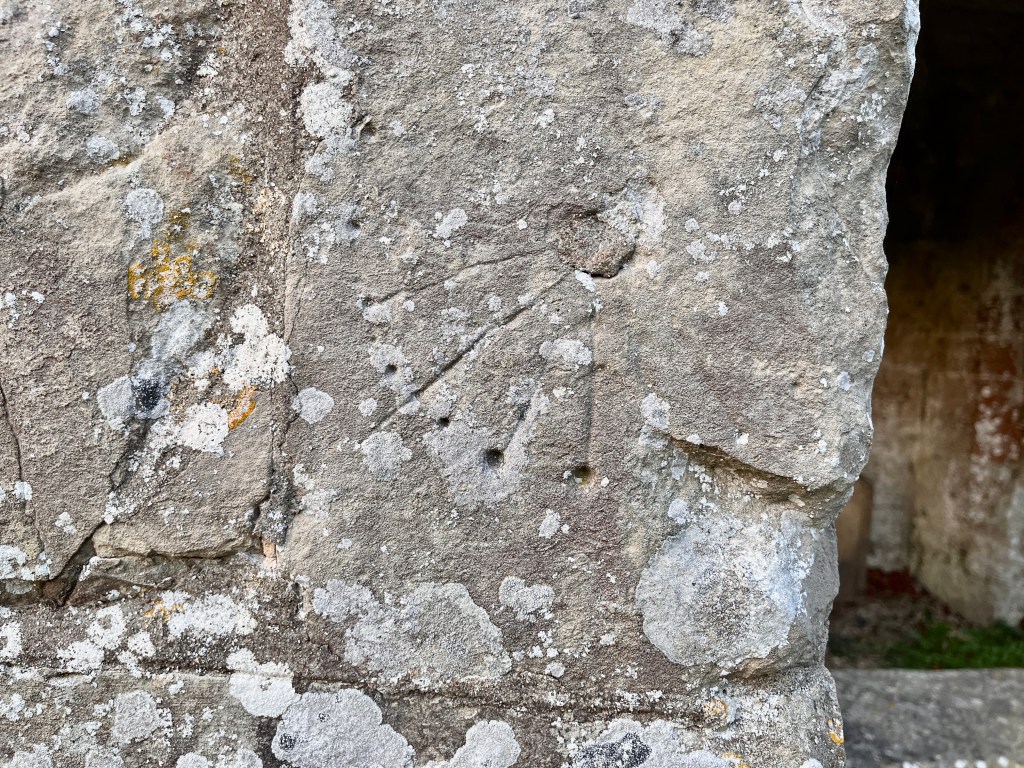
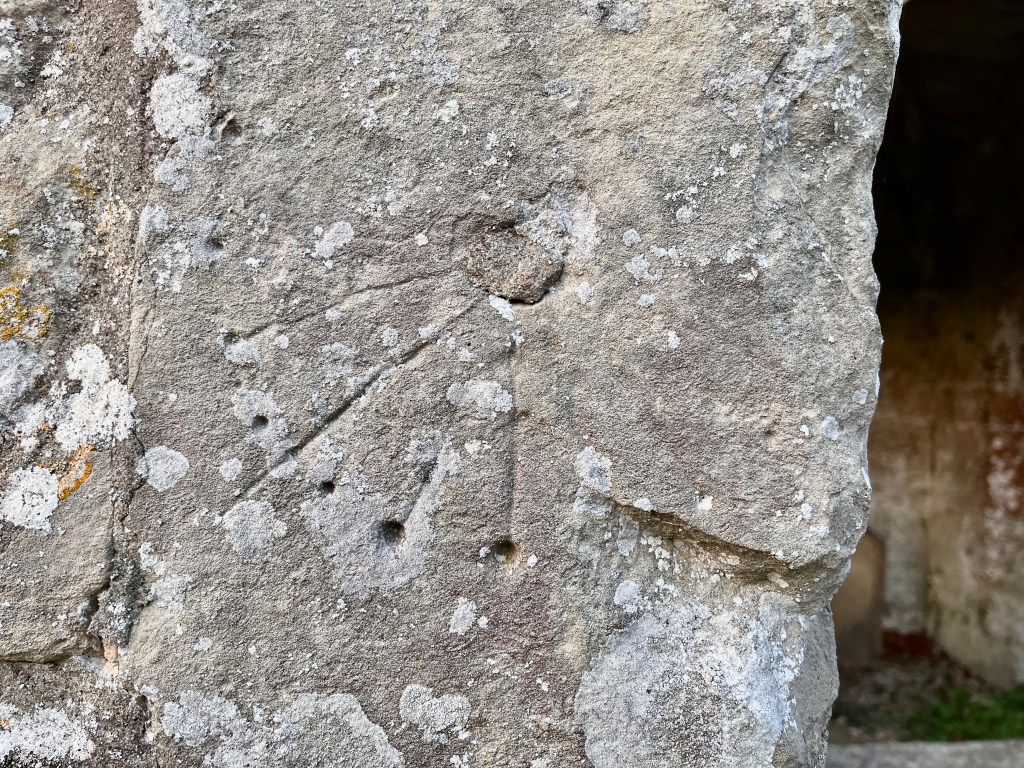
The Burcombe dial is a slight secret, mentioned in TWC‘s Wiltshire dial list but not elsewhere that I can see. St John is also hard to find: check the location carefully before you try. This is a pretty dial, a messy mix of lines and pocks below the horizontal. The noon line – usually an eye-catcher – is upstaged by lines with varying degrees of curve and pocking. It’s hard to interpret, but the two ‘raking light’ photos add a bit of perspective.
St John . Burcombe . Wilts – Scratch Dial
VERTICAL DIAL
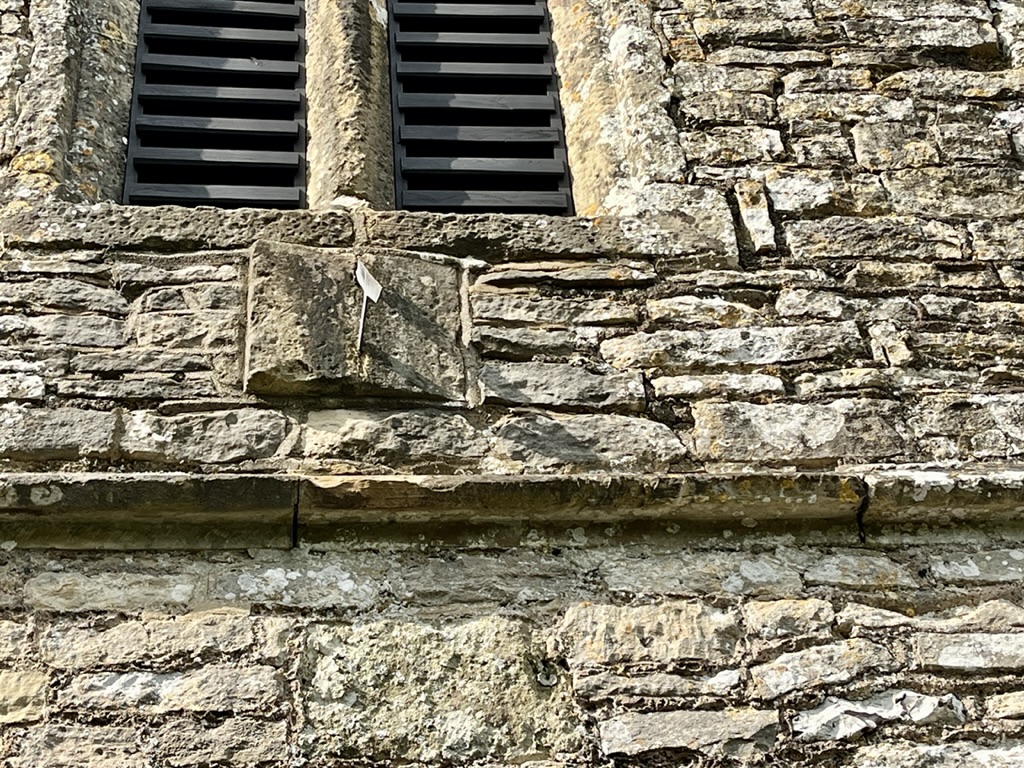
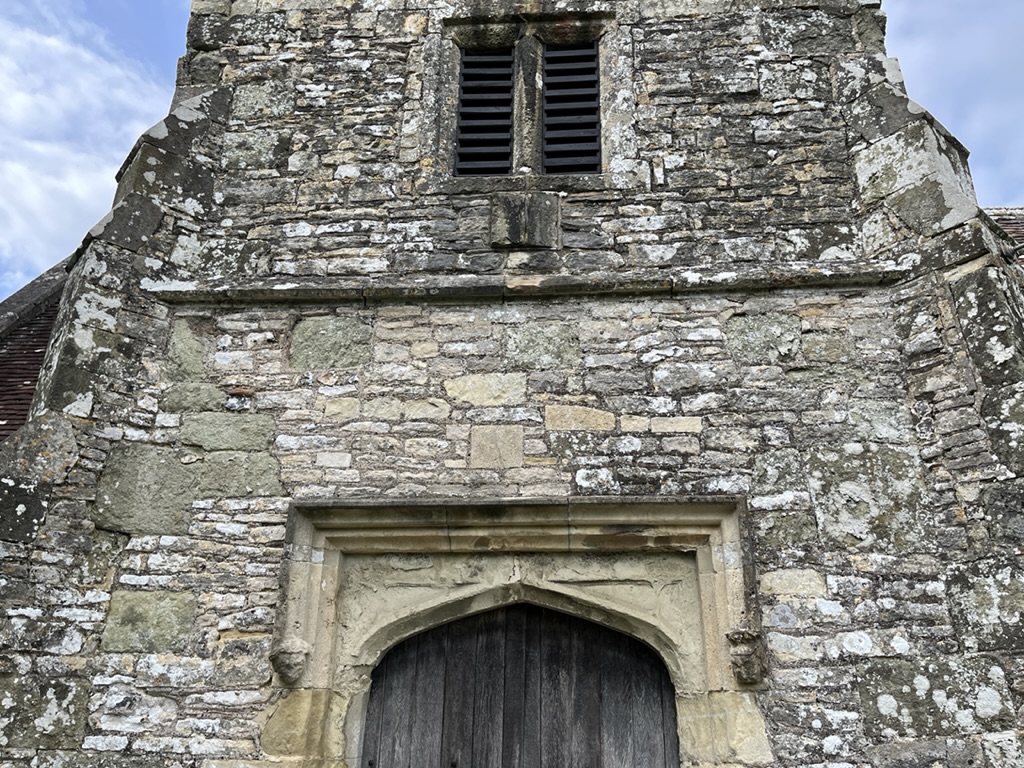
St John . Burcombe . Wilts – Vertical Dial
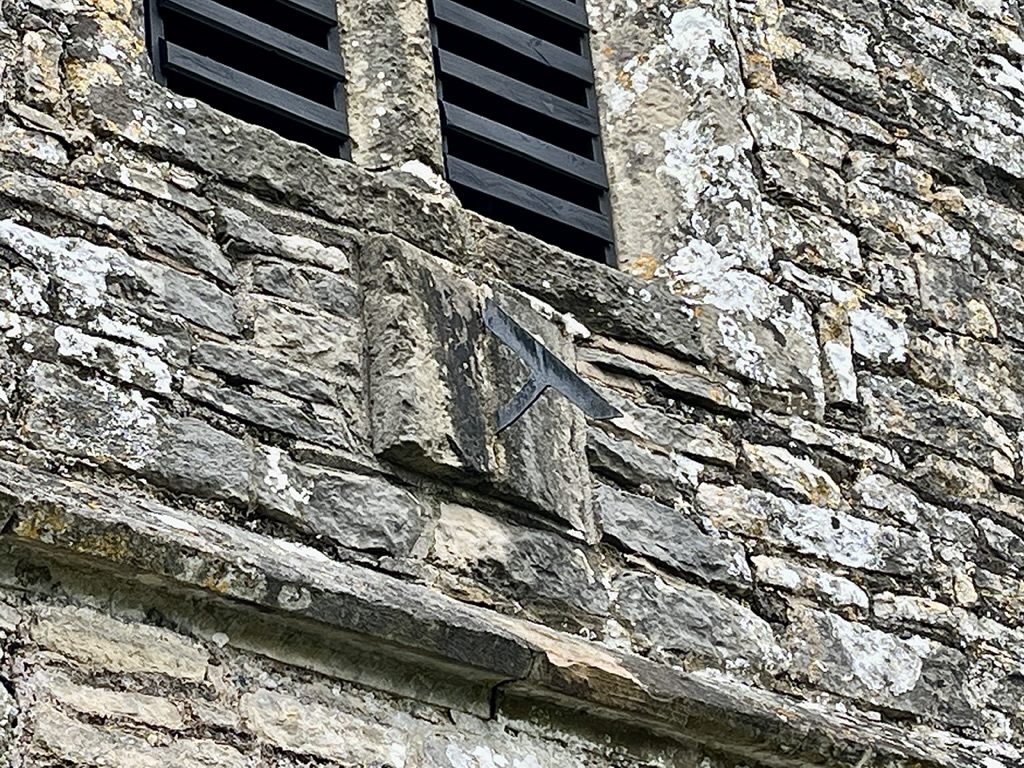
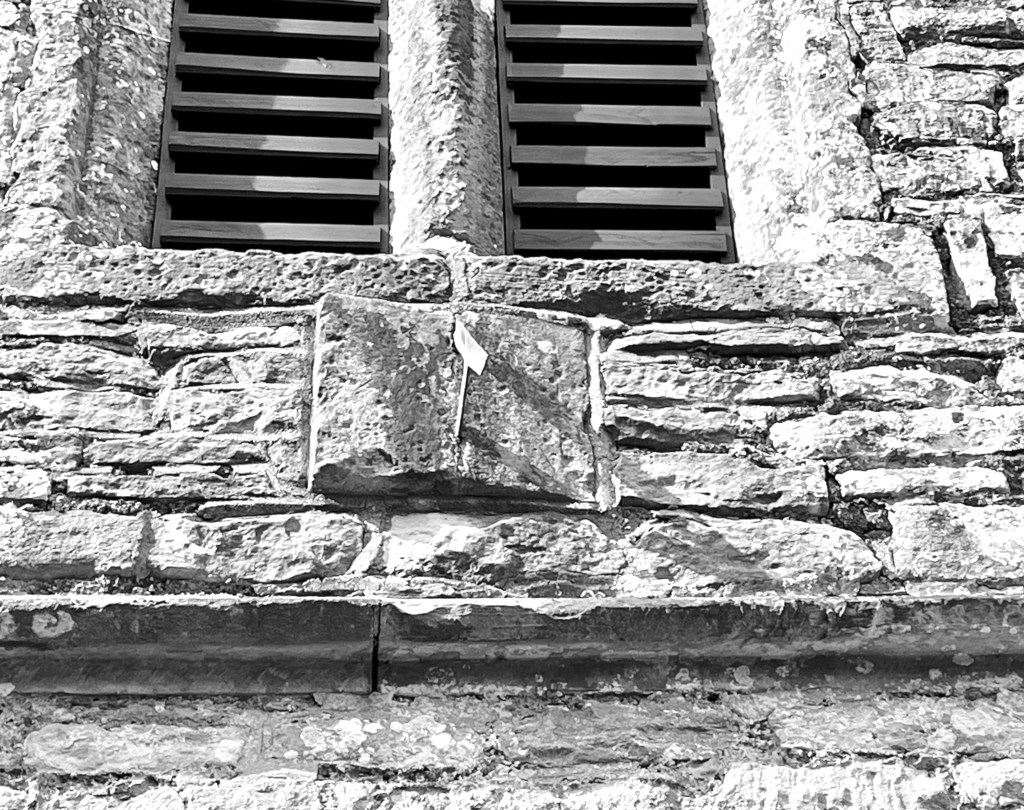
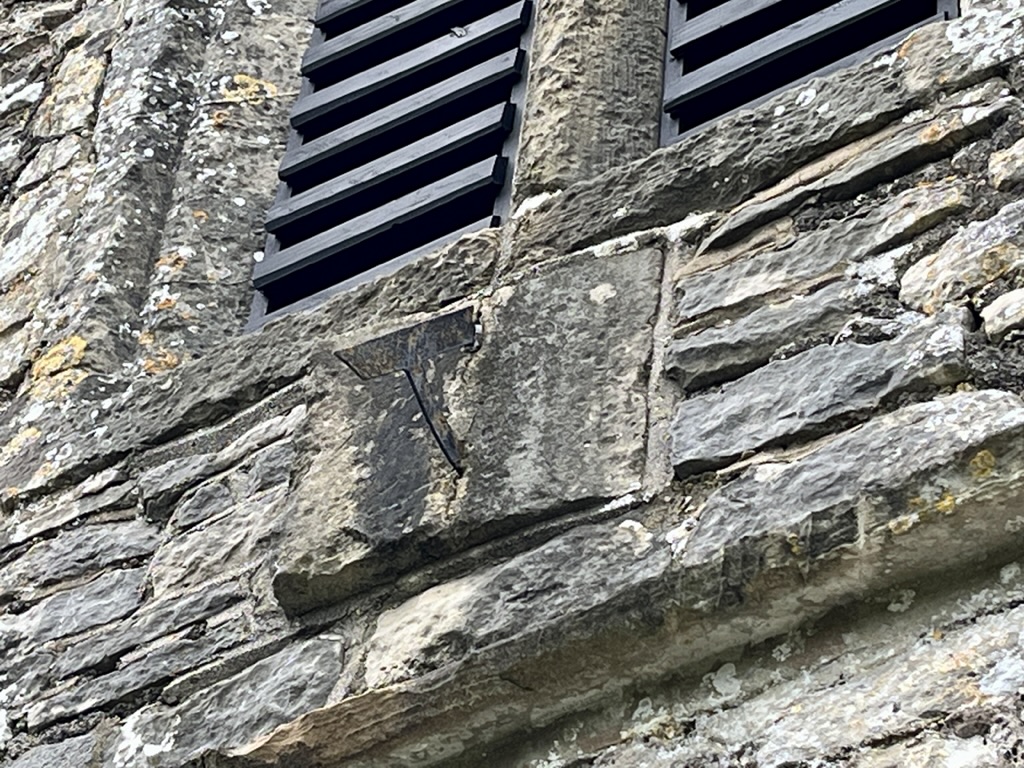
St John also has a canted vertical dial above the porch, with a pleasingly robust gnomon. It fits in with the stonework around it and looks old. However any details on the dial face have been eroded. Unfortunately I didn’t have a proper camera with me to check closely for lines etc. but I wouldn’t expect revelations.
Quaere placename – a mapping mistake
In the early 17th century, when John Speed prepared a map of Wiltshire he copied a version by Christopher Saxton, which showed but did not name North Burcombe. On his own map, Speed labelled the village Quaere (Latin for query), presumably because he intended to check the name later, but never did, and his engraver copied the annotation as if it were the village’s name. Later map printers in turn copied Speed’s map and ‘Quaere’ appeared on maps of Wiltshire for 145 years until Emanuel Bowen corrected the mistake in his 1755 map of the county. (WIKI)
GRADE 1 † C12 south aisle, 2 Norman arches; C13 chancel; C14 tower; C15 nave & north transept. Restoration 1845 by T. H. Wyatt. Early (C12?) font carved from a single piece of Jurassic limestone. One of several fine Chalke Valley churches situated south of the A30 between Shaftesbury and Salisbury. It’s an attractive long cut between the two. 51.0361 / -1.8473 / SU108263
DIALS
On the S-facing central buttress of the tower there are two adjacent scratch dials on the same stone that merge. It isn’t immediately clear (to me) which came first. Whichever, presumably the time came as the church developed when more accuracy in marking the day’s passage was required.
BSS references a 3rd dial on S wall. Other records mention two scratch dials and one sundial on south side. See below for an attempt to ID the sundial.
DIALS 1 (L) & 2 (R)
Coombe Bissett . Wilts . St Michael – Scratch Dials
Dial 1 is recorded as: Irregular dial with 15° lines in both quadrants.
Dial 2 is noted as: Cannot be classified. Eroded, damaged. Mass or line deeply cut.
My visit was early evening, and the quality of the detail in my photos is unimpressive (see above). For example, there is only the hint of the part-circle of Dial 2. Fortunately, this is a church that another dial collector has visited and later he uploaded his photos to BHO / Disqus. Mark Wolstenholme’s excellent images give a much clearer and sharper view of the details of both dials and their intersection.
DIAL 3 (?)
Another dial is recorded as being on the tower, S wall, a short distance W of the ‘dial buttress’ above. The description states Early Christian ‘Tombstone’ dial. Accurately cut or made. Modern replacement. I found this baffling, and the only conceivable candidate I could find in the area may or may not fit the bill. Somehow I doubt it. Suggestions of its purpose would be welcome…
Coombe Bissett . Wilts . St Michael
GSS Category: Scratch Dial; Mass Dial
Photos: Keith Salvesen; special thanks to Mark Wolstonholme who uploaded his detailed photos to the BHO site os and to Disqus os
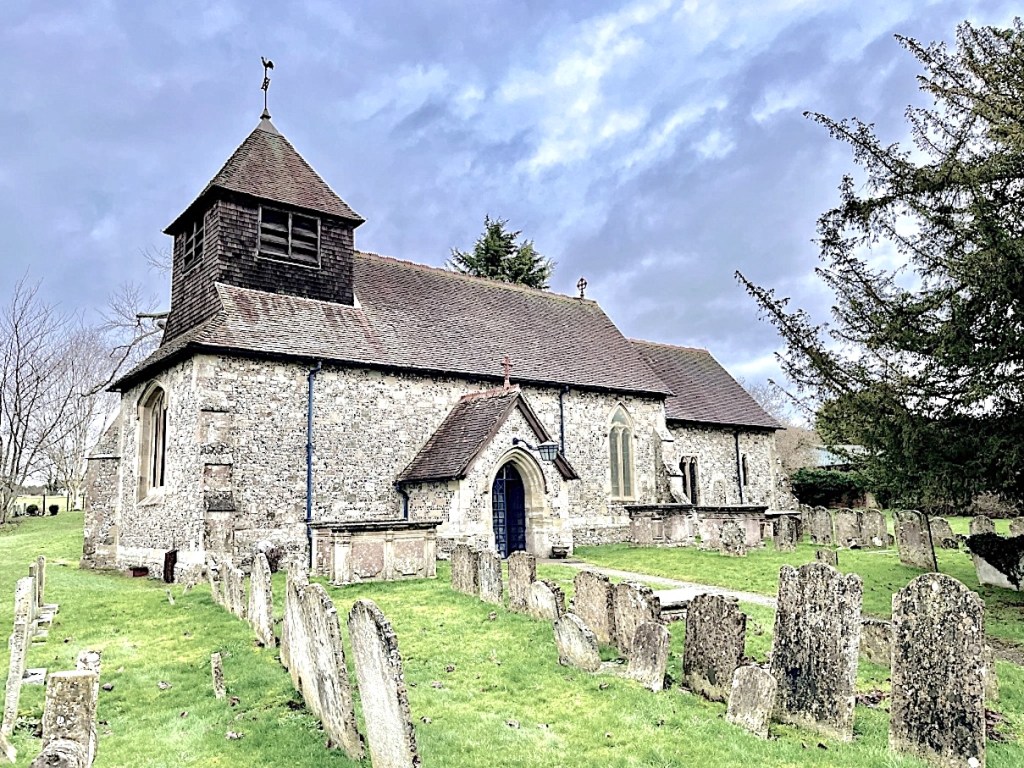
GRADE II † C14 origins; very little remains of the original church. Almost all refaced, restored (Withers 1879) or rebuilt. Registers date from mid-C16. Attractive with its squat wooden bell turret. Just N of A303 between Andover and Amesbury. 51.2076 / -1.6678 / SU233454
DIALS
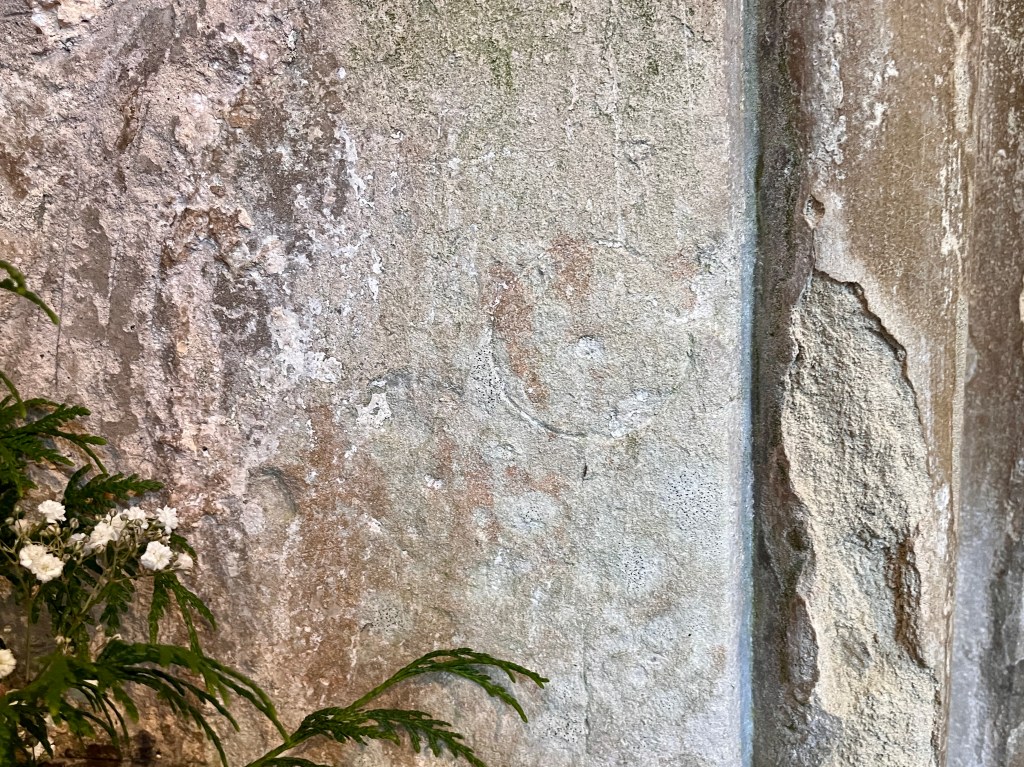
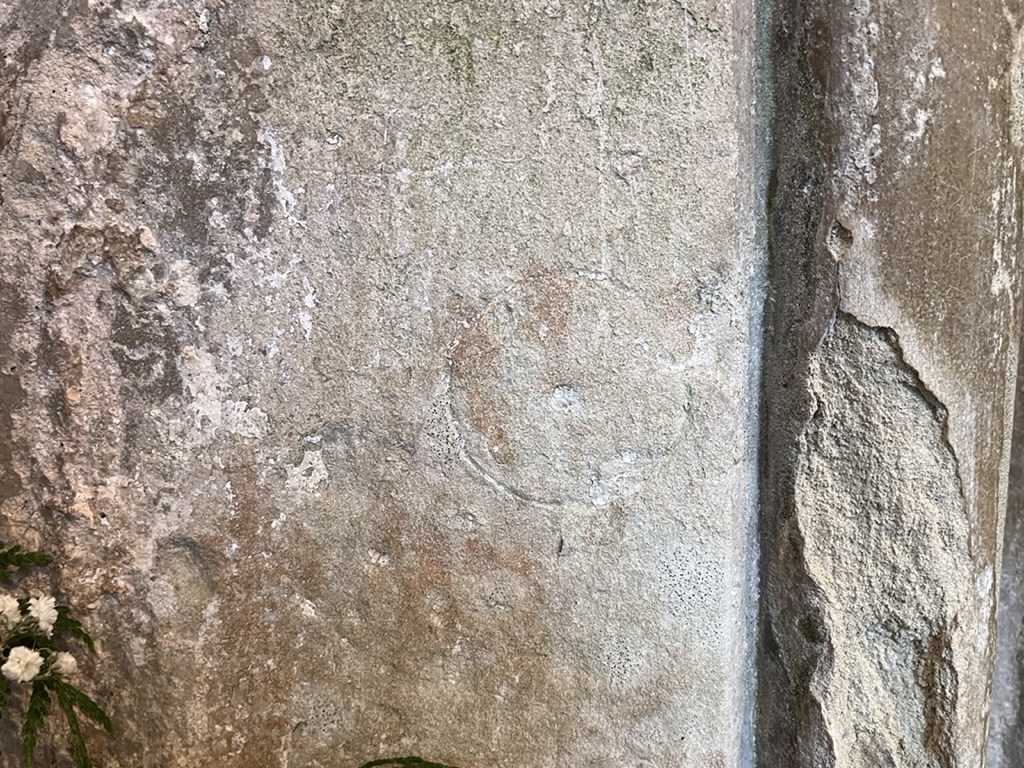
There are 2 dials recorded for St Peter, of quite different types. Dial 1 is a simple filled hole in the centre of a circle, without additional markings. Dial 2 is a sector of a fairly large dial that must have covered 2 or more stones.
DIAL 1
St Peter . Shipton Bellinger . Hants – Scratch Dial 1
Dial 1 is inside the porch L of the doorway, quite low down. It consists of a filled central hole within a circle, with a pock (possibly unrelated) ULQ. With a rod as a gnomon, it would work as a basic marker of the the passing day, though at an inconvenient level if in its original position. The unusual shape of the large dial stone also suggests a significant relocation somewhere in the time-line of the various building works. One record dates the dial to C11, which seems unrealistic – it predates the known origins of the church. Also noted were faint traces of a similar circle LLQ, but I could not detect anything significant. There is a further possibility that, rather than a dial, this design is one of the many forms of ritual protection mark. However the size and the filled hole suggest not.
St Peter . Shipton Bellinger . Hants – Scratch Dial 1
DIAL 2
Located on S wall of the Nave, E of door, W of E Nave buttress, and about 2m high. All that can be seen is the LLQ part-perimeter of a quite large dial (if it is one) cut in the upper R corner of a large stone with no discernible dial-ish markings. Basically it is a plain quarter-circle using the mortar lines for the straights, and with a gnomon hole (not now obvious) in upper R corner. To work as a dial in that (or in any different) position, it would have required one additional stone if a semicircle; or at least 2 more if a complete circle. The absence of any lines or pocks on this fragment militates against it being part of a scratch dial. It would have been hard to resist using such a large blank area as a creative area for a proper dial design. Quite plausibly, this curved incision was part of some decorative feature displaced during rebuilding, with companion stones used elsewhere where needed.
St Peter . Shipton Bellinger . Hants – Scratch Dial 2
BBS PHOTOGRAPHIC RECORD
St Peter . Shipton Bellinger . Hants- Scratch Dial 1 BSSSt Peter . Shipton Bellinger . Hants – Scratch Dial 2 BSS
GRADE I † C13 origins (c1258 on); C14 development, Perp windows, C15 tower (BHO – sources vary on dates). C17 extensive repairs; mid-C19 restorations to Wyatt plans. Cecil Beaton is buried in the churchyard. One of several Ebble valley churches between Salisbury and Shaftsbury (cf Alvediston). 51.0275 / -1.9432 / SU040253
DIAL
A distinctive and easily visible dial on S buttress between 2 recesses. 4 clear lines with faint traces of others. There are 5 obviously related pocks, with a couple of outliers above UL in a position corresponding to the curvature of the dial. The filled gnomon hole in the centre of the dial stone is large, perhaps enlarged over succeeding centuries (it’s not uncommon to find disproportionately large holes)
This dial is of particular interest for 2 reasons: i. the size of the pocks are graduated from small to large along the perimeter down to the noon line, which has the most emphatic hole. I can’t remember coming across such a clear example before. ii the Mass line – terce – is very clearly indicated both by being elongated, and by having pocks on either side of it, neither of which links to a line.
GRAFFITI
All Saints has some graffiti in the porch area. Here are 2 examples – image includes ‘witch marks’
GRADE II* † C12 origins; a chapel of Broad Chalke by 1299, from which date Vicars were recorded. From that period, C12 font bowl. Many sources only date the church to C17 with restoration by T. H. Wyatt 1866. One of several pretty villages in the secluded Ebble valley between Salisbury and Shaftsbury. 51.0149 / -2.0345 / ST976239
DIAL
The dial is on the W jamb of the porch, described elsewhere as a C19 lean-to. Restorations clearly entailed considerable relocation of stones over time. The dial is easy to overlook, being small, weathered, and upside-down.
St Mary . Alvediston . Wilts – Scratch Dial
The dial is located 1m high, W of the S doorway, inverted. BSS records it as accurately cut, upside-down, eroded and damaged. Unexpectedly it is described as a Rudimentary (Norman) dial, which dates it back to the C12 / C13 origins of St Mary. If so, the dial has survived intact for several hundred years, only to end up inverted on a C19 lean-to porch.
St Mary . Alvediston . Wilts – Scratch Dial
It is sometimes useful to revert a dial that has been rotated, so that the original design is clearer. There are 2 definite lines. There is no visible noon line but the line LRQ has both a mid-line pock and a terminal pock. Presumably this marked the most significant Mass time during the passage of the day, in this case equating roughly with the canonical Nones.
St Mary . Alvediston . Wilts – Scratch Dial
NOTES When I originally checked some usual resources for St Mary, it was intriguing to find that its history began in C17. A simple (or any?) scratch dial could not be expected. So I turned to the comprehensive BHO entry for the Parish, which explains the origins of St Mary and its medieval dial in more detail:
Of the 12th-century church, only the nave, small and with thick walls, appears to survive. The chancel was possibly replaced in the 13th century but may have survived longer. In 1585 it was said to be ‘down’ and was afterwards presumably rebuilt or repaired. The south transept or chapel was built in the 14th century; there is an effigy of a knight in armour below the south window. The north transept may also have been built in the 14th century. The tower was built in the 17th century. In 1865 the church was extensively restored to designs by T. H. Wyatt. The north transept was rebuilt, the north chapel was built, and the chancel was given 13th century features.
GRADE II † C13, C14, C15, restored 1863 (T.H.Wyatt); tower restored 1988. A sad history of disrepair (C15, C17), but nowadays a most attractive and surprisingly secluded church. One bell (of 6) is C15. A cluster of votive / pilgrim crosses externally. Midway between Salisbury and Shaftesbury, N of A30. Note: the church is some way past the centre of the village – persevere. 51.0654 / -2.0068 / ST996295
DIALS
St George is a multi-dial church. There are certainly 6, plus one candidate that is debatable and may have a different function entirely. I have a note of an 8th dial, and seen a passing reference to one. Unusually, there are 5 dials spread over 2 adjacent stones, a rare proximity of so many.
DIALS 1 – 3
St George . Fovant . Wilts – Scratch Dials 1 -3
This group of dials are all cut on a single stone. It looks as if the simplest dial (3) was superseded by a similar more detailed one (2) ; and that both were eventually made redundant for practical purposes by a relatively sophisticated replacement (1).
DIAL 1
Dial 1 has 10 lines (including the horizontals) that radiate from the filled gnomon hole, within a semicircle. The spacing of the lines is rather haphazard and it is quite hard to relate their positions to specific hours. One line in LRQ has a cross, presumably to emphasise the afternoon Mass time Nones. In LLQ there are 4 (perhaps 5) holes denoting an important part of the day for observance. The positions of the radials on the 2 earlier dials beneath Dial 1 rather confirm this theory. Is the horizontal line above the semicircle part of the dial? There is a short vertical line from its centre – a short ‘midnight’ line? – that suggests some connection but not one that would assist marking the passage of the day. Probably a later addition, purpose unknown.
DIAL 2
Dial 2 is simple dial with a homespun attempt at incising a perimeter. It has 3 strong lines LLQ, each ending in a pock. The noon area is a confusion of trace / eroded lines with pocks that extend further round the approximate circumference, signifying the early afternoon hours
DIAL 3
Dial 3 is a rustic-looking little dial, presumably the earliest of the group. Although from a distance it seems to be just a pair of stubby lines descending from the style hole, close inspection suggests shallow pocks on a curve beyond the noon line – others perhaps hidden by the lichen. If so, it is more sophisticated that it looks at first sight. But for the size of the style hole, it is a candidate for the ‘smallest dial’ category, of which Tintinhull is supposedly the leader
DIALS 4 – 5
Both dials are together on the same stone, immediately W of the dial stone of dials 1 – 3.
DIAL 4
Dial 4 is hard to analyse in detail because of lichen. The style hole is filled. There is a semicircle – again with an inexact curve – and a hint that there was once a full (misshapen) circle. It is just about possible to make out 12 lines, of which only 6 or 7 are distinct. There are no visible pocks.
DIAL 5
Dial 5 is the only dial with all lines in LRQ: an afternoon dial (but see also dial 8). There are 6 lines, of which 5 radiate directly from the style hole. The line at (roughly) 1pm, if part of the dial, passes to L of the hole.
DIALS 1 – 5
DIAL 6
Dial 6 is different from the other dials, and relatively uncomplicated. The style hole is quite high on the dial stone. There are no radials, simply a gentle curve of several pocks either side of noon. There are 7 in all, and presumably the central one marked noon. There’s a significantly clearer image than mine via the first link below!
DIAL 7 -v- NOT A DIAL
There is debate as to whether this design is a dial, or was incised for some other purpose. Two concentric circles with a hole at the centre are not rare for a dial but one would expect to see lines – even just a noon line – and / or dots around the perimeter of the inner circle. Being sited at the W end, it would only be effective late in the day. Again, this is not particularly unusual where a church has been rebuilt stones relocated – Rimpton, Lillington and Stockbridge are examples.
Sometimes it helps to interpret a possible dial – one that may have been re-sited – by rotating the image. It could be argued that the two small pocks equidistant either side of a notional the noon line indicate a simple rather elegant double-ringed marker of the passage of time in the later part of the day. Alternatively it could be a straightforward dial with two pocks that was moved from the S side to W end. Anyway, it looks more dial-ish with this orientation.
DEH noted that this line-less, pock-less design – a hole at the centre of one or two circles – is not uncommon. He suggests that such configurations may have been dials with the details painted within the circles or on the circumference. This was a common practice and can still be seen in a few churches where there is a dial within the porch, cut next to the pre-porch main doorway. West Camel is one example; Chilthorne Domer nearby even has 2.
Local research (see below), originally in conjunction with Tony Woods / BBS, suggests this may in fact be a form of Consecration Cross or ‘event’ mark. That may well be so. However while these often have double circles, crosses generally (always?) do actually feature a cross or at least some form of incised device.
Consecration Crosses within concentric circles – St Andrew . Yetminster . Dorset
DIAL 8?
As mentioned earlier, I have a note of – and seen a reference to – an 8th dial. It may have been this faint spidery design with its shallow style hole, the lines all LRQ. If it is a dial at all – on balance I am 66% in favour.
These links will take you to two excellent analyses of the dials by Fovant village online resources. Both are interesting in their own right; the second link provides a good overview of the whole community.
GRADE I † C11 nave; C13 transepts; C14 chancel. From C17, alterations and restorations inc by Wyatt in 1860. Large and interesting cruciform churchPEV. Marble Feversham family monuments by Scheemakers. Significant local legacy from Neolithic, Iron Age, Roman (Villa) and Saxon times. 9m S of Salisbury. 50.9937 / -1.7433 / SU181216
✣
DIALS
St Laurence has 2 dials on the 2nd buttress E of the porch, one above the other. The upper one is a fine example of a large dial filling the dial stone. The lower is so badly damaged / eroded that it would be easy miss; and it is quite hard to imagine what it looked like originally.
✣
DIAL 1
Dial 1 is encircled, with 13 lines and 24 pocks around the perimeter and forming 2 crosses . This large dial not only takes up the width of the stone, the circumference continues onto the stone below as do some lines (esp. 11am). The noon line ends in a 4-dot cross on the main stone, and the 9am line has a 5-dot cross on the lower stone.
The gnomon hole is of particular interest; I haven’t come across a square hole with (apparently) a circular one inside it before. Possibly the original gnomon was a basic rod, and its round hole later enlarged to accommodate a more visible square rod.
St Laurence . Downton . Wilts – Scratch Dial 1
✣
DIAL 2
St Laurence . Downton . Wilts – Scratch Dial 2
Dials Locations
GSS Category: Scratch Dial; Mass Dial; Medieval Sundial; Church Dated Initials
GRADE 1 † C13 origins (possibly back to Saxon); developed C15, C17; late Victorian restoration. Use of local sarsen stone. Hammerbeam roof. Merits a long entry in PEV, especially for the monuments. 5m N of Avebury, 7m NW of Marlborough 51.4858 / -1.8497 / SU105763
DIALS
St Peter has 2 dials in very different styles, and a couple of ‘not-a-dial’s. There is also a modern-ish sundial on the porch, probably from the late C19 restoration, with a rather gloomy motto that fits in with Victorian mores.
DIAL 1
St Peter ad Vincula . Broad Hinton . Wilts – scratch dial 1
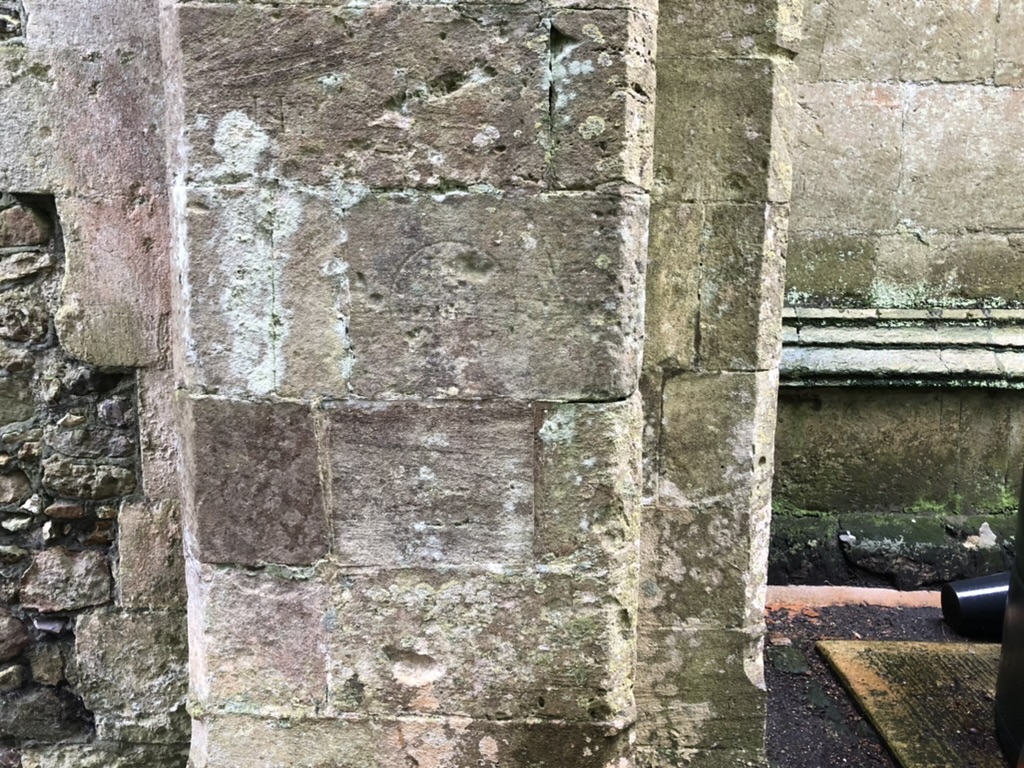
Dial 1 is a fairly large and pleasingly simple dial on L side of a window jamb. 4 lines drop down from the style hole into the lower L quadrant, bounded by a sector of a circle. It looks rather uncomfortable. The puzzle is whether this was the original location (in which case it seems too large for the available space); or whether it is a relocation.
St Peter ad Vincula . Broad Hinton . Wilts– Scratch Dial 1
DIAL 2
St Peter ad Vincula . Broad Hinton . Wilts – Scratch Dial 2
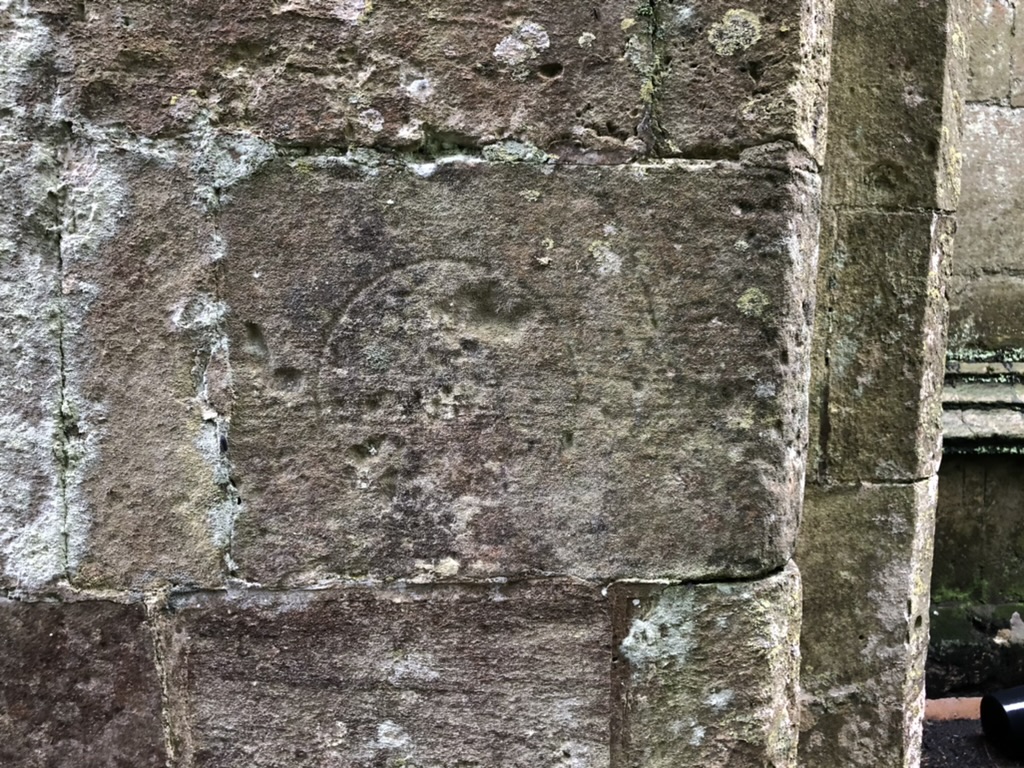
Dial 2 is an encircled dial, the lower half eroded. There is a shallow style hole and various pocks, not all necessarily relevant to dial functions. The significant ones are on the L side, with 3 pocks in a row between the style hole and the perimeter. Below them are less organised pocks. The dial would make more sense if rotated 90º, with the horizontal line becoming the noon line and the less defined line perhaps marking a Mass time (None?). This suggests that the stone was relocated, and certainly the size and colour of the stones around it vary significantly (image 1 below).
St Peter ad Vincula . Broad Hinton . Wilts – Scratch Dial 2
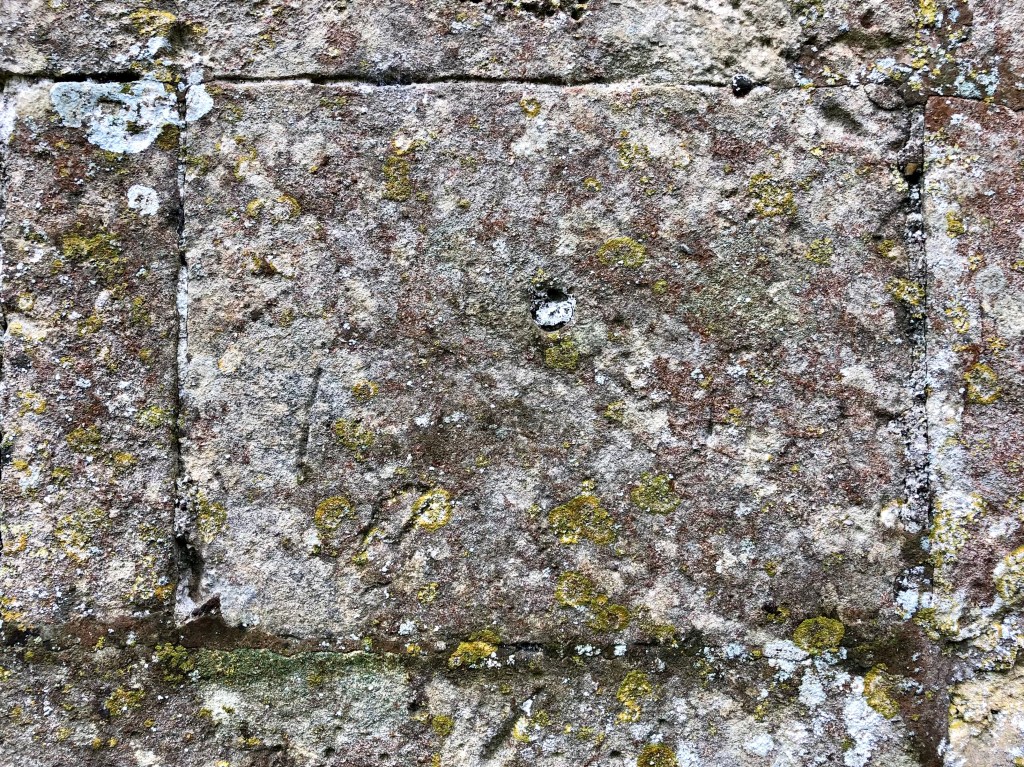
Promising but on closer inspection unlikely dials
Promising but on closer inspection unlikely dials
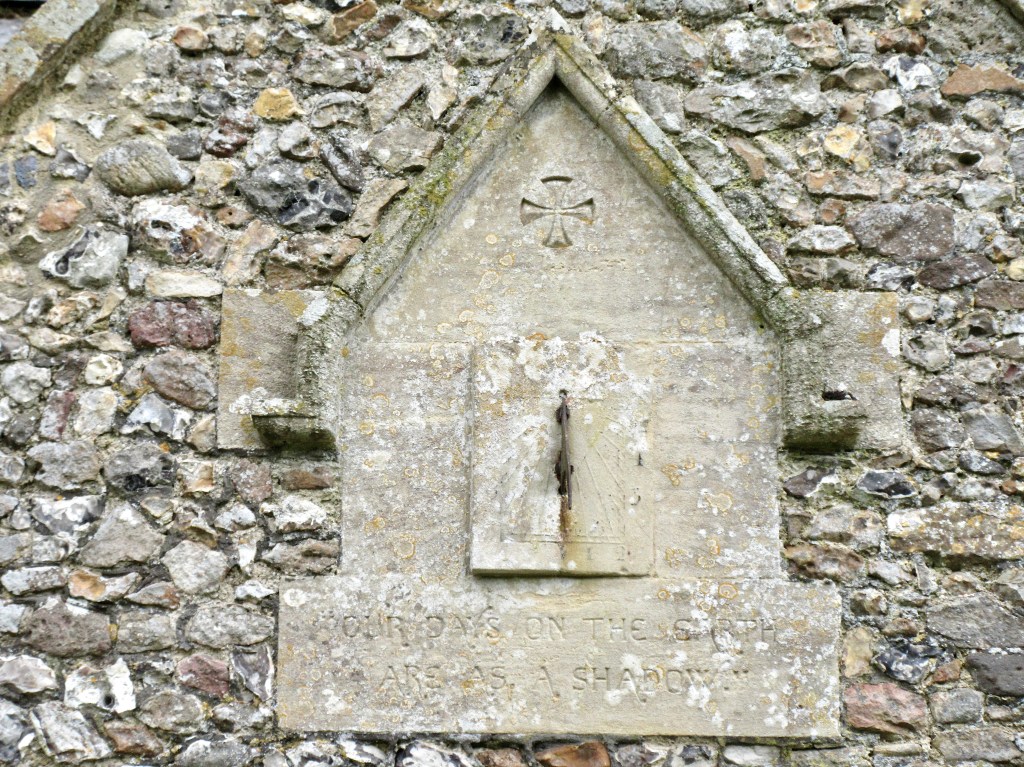
OUR DAYS ON THE EARTH ARE AS A SHADOW
The C17 porch was restored C19 and then (or later?) this dial was added over the door, with its discouraging message (no hint of the ‘sunny hours’ etc found elsewhere). The dial is slightly angled to face due S for greater accuracy.
St Peter ad Vincula . Broad Hinton . Wilts – angled sundial above S porch























































 GAUDIUM SUB SOLE . SUNDIALS . MEDIEVAL TO MODERN