TOTNES . DEVON . ST MARY – Vertical Dial

wigulf . wiki . cc / os

TOTNES . DEVON . ST MARY

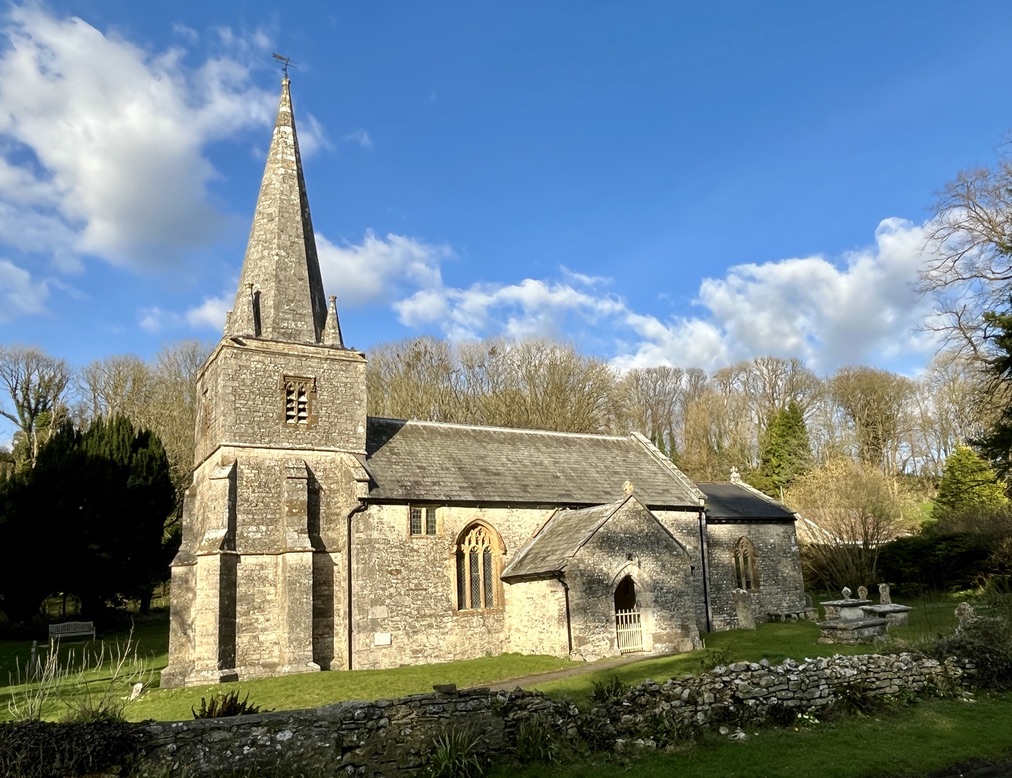
GRADE 1 ✣ A fine Perpendicular church on the site of Benedictine Priory, standing proudly near the centre of the town and visible from some distance away. Mainly built mid-C15 using much red sandstone. The Grade denotes the importance of the building, and the interior offers much for the visitor. Also, see the splendid Norman motte and bailey castle nearby. 50.4319 / -3.6878 / SX802604

VERTICAL DIAL

St Mary online

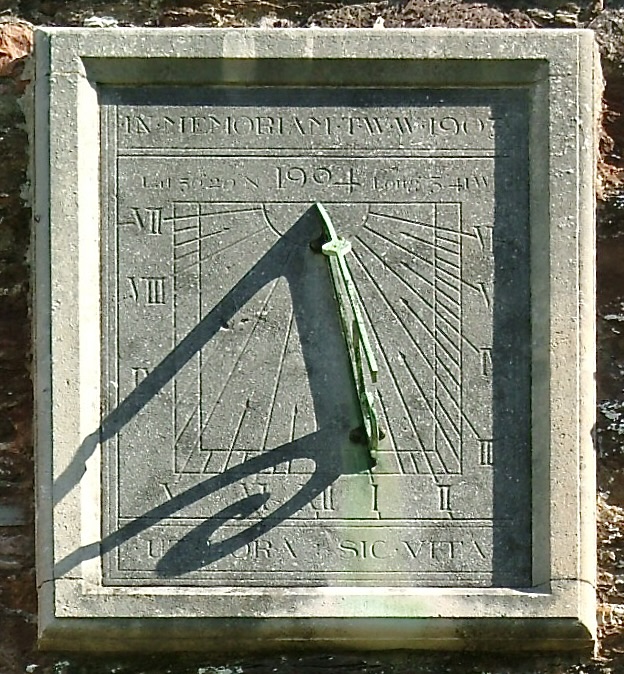
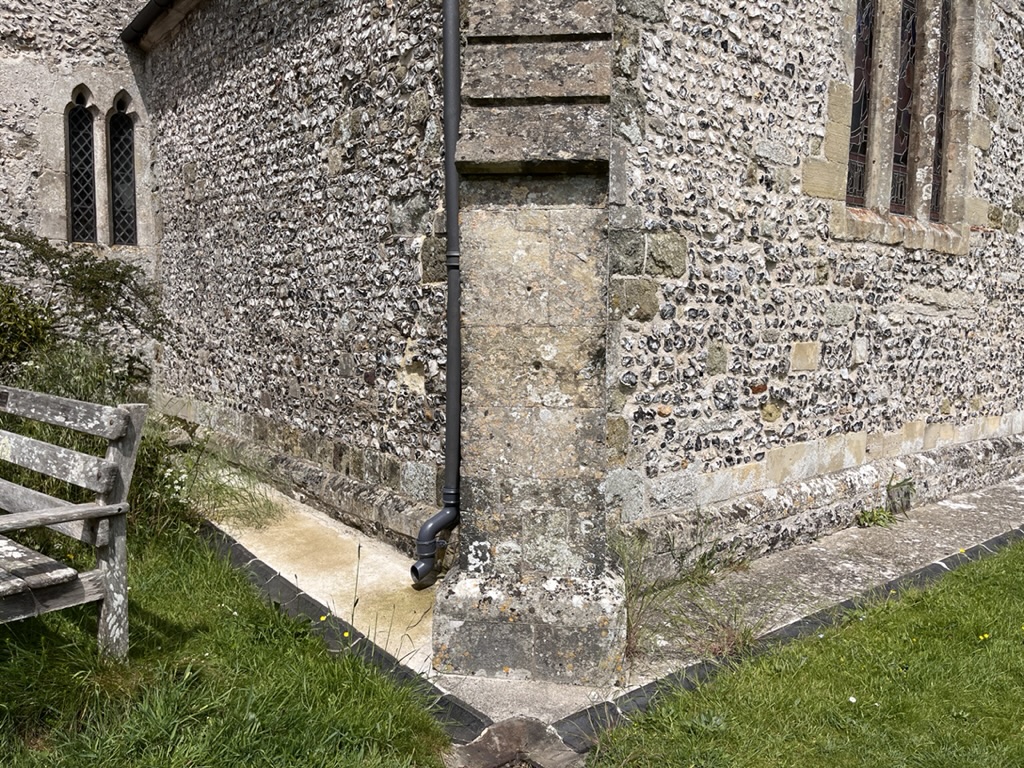
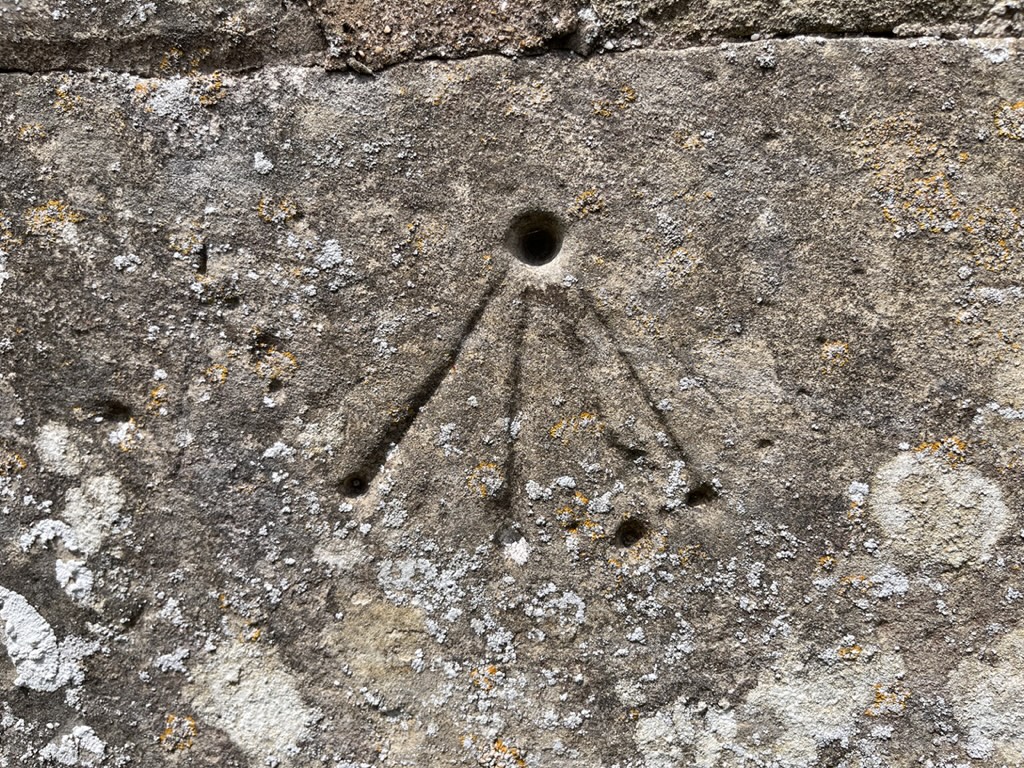
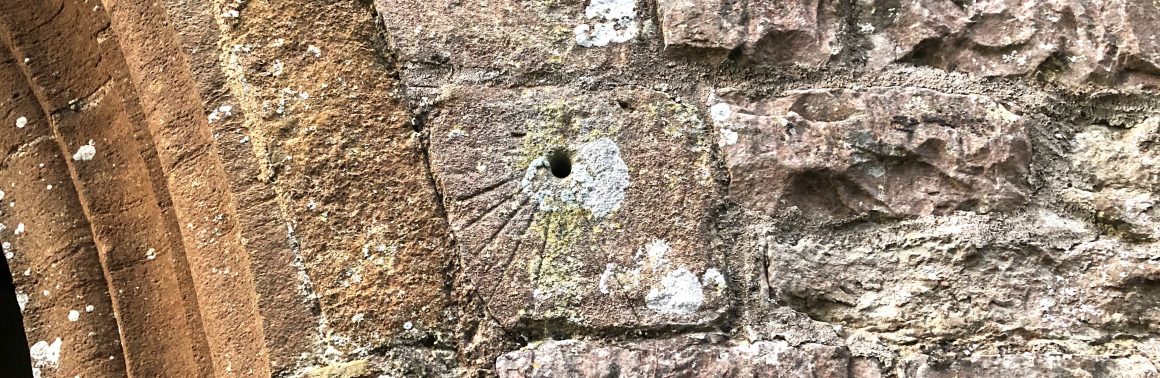
On the south wall of the church near the porch is a slate dial set in a stone frame. It declines west and shows the hours VII – VI divided into halves and quarters. Across the top is an inscription which reads In memoriam TWW 1903. Below it are the coordinates Lat 5020 ; Long 0340 W. Across the bottom of the dial is the quite common motto Ut Hora Sic Vita (Life is as an Hour).

The gnomon has a pierced nodus which causes a spot of light to appear on the dial plate. In my amateur experience, this is a relatively uncommon addition to a sundial’s capabilities.

GSS Category: Vertical Dial; Sundial with Nodus; Vertical Sundial Motto; Memorial Vertical Sundial

Photos: header, wigulf . wiki . cc / os; dial location, St Mary’s online; dial close-ups, BSS Bridol

Thanks to Erika Clarkson for giving me the details from a visit to St Mary’s, where she had found a scratch dial. I have written it up separately, being completely different in type and time.

MARTIN . HANTS . ALL SAINTS

ALL SAINTS . MARTIN . WILTS

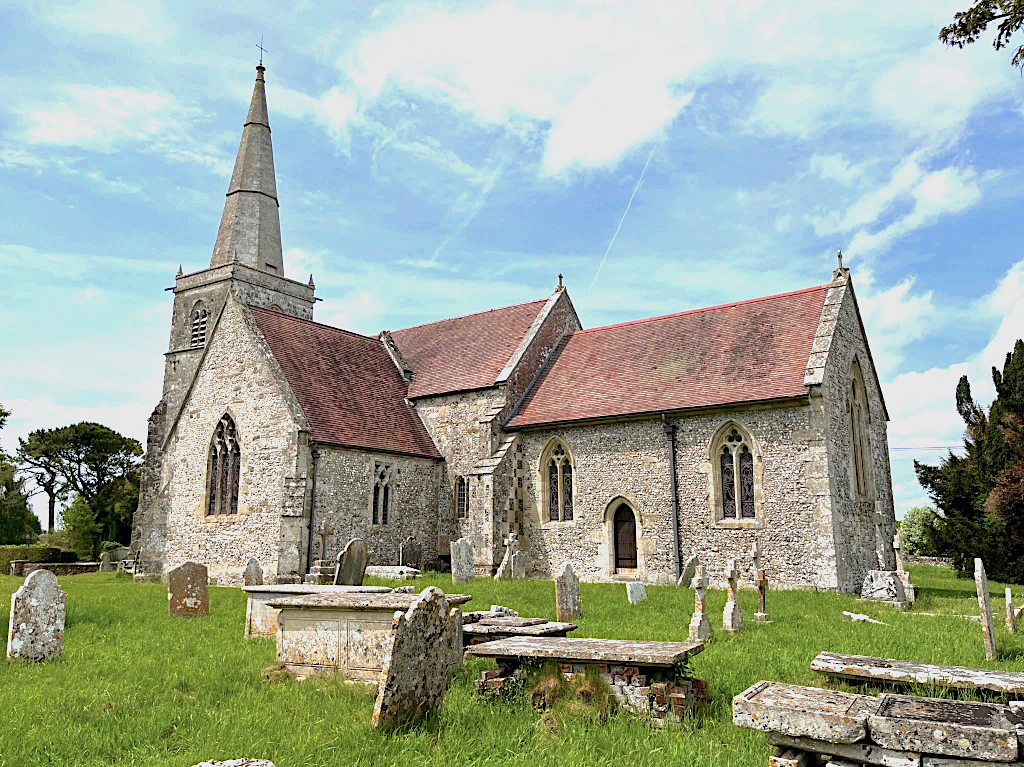
GRADE I † Early C12 origins; C13 chancel, tower; C14 / C15 transepts; other works then & later inc C18 spire, C19 restorations. A striking building in a small village just off the A354 Salisbury – Blandford Forum. Clock installed in honour of Winston Churchill 50.9754 / -1.9009 /  SU070195

DIALS

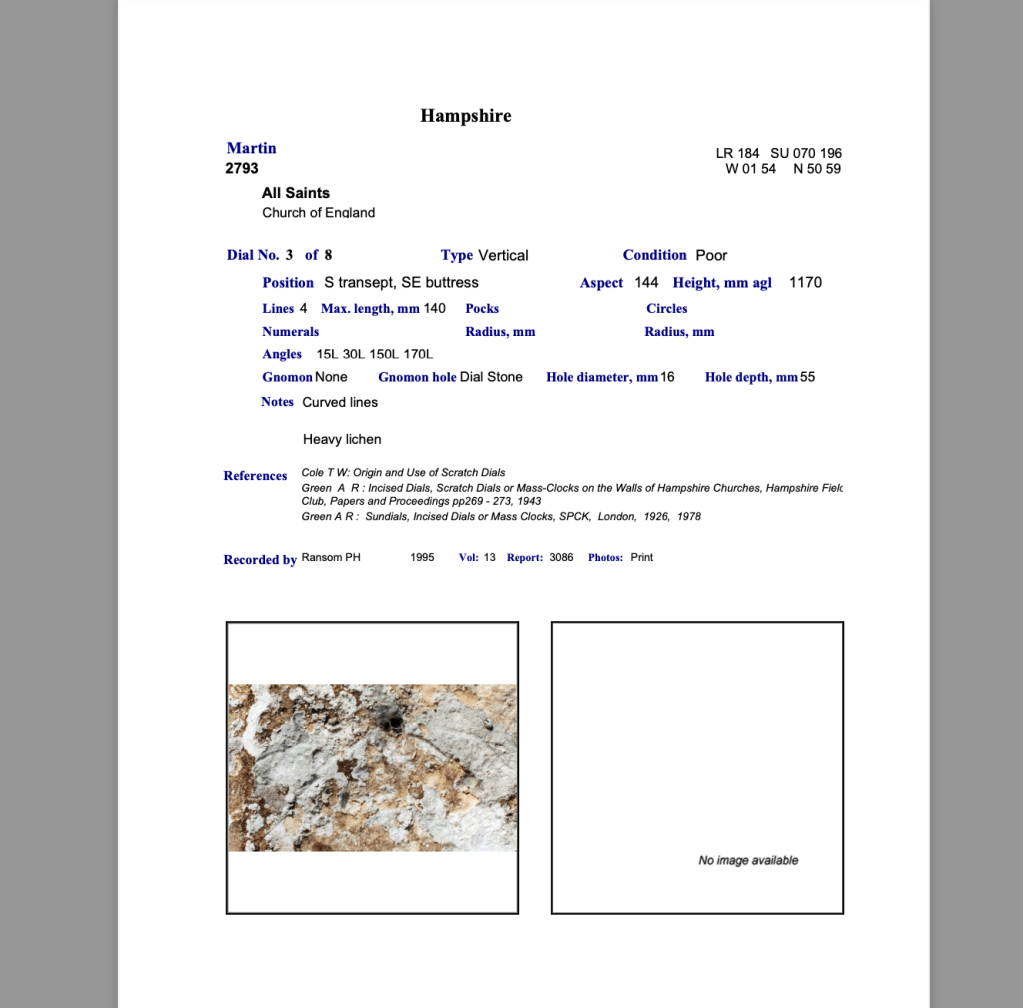
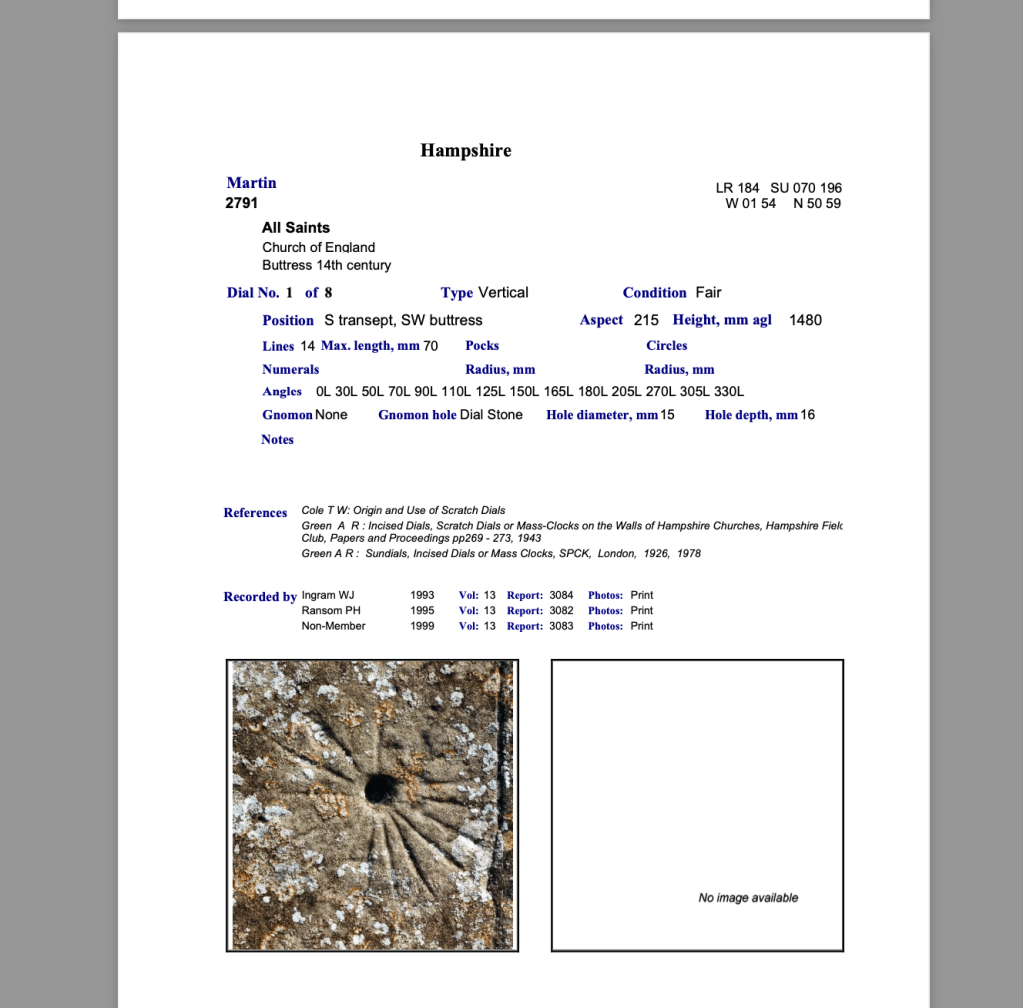
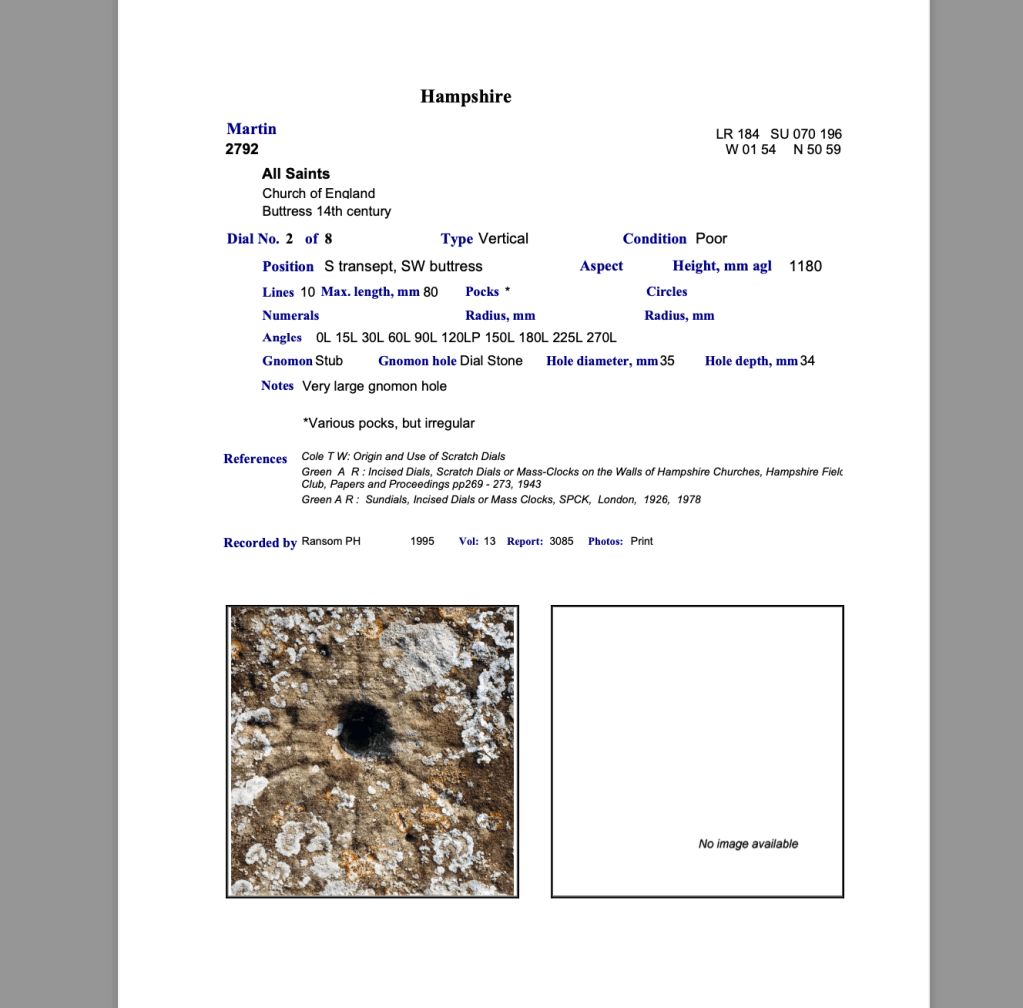
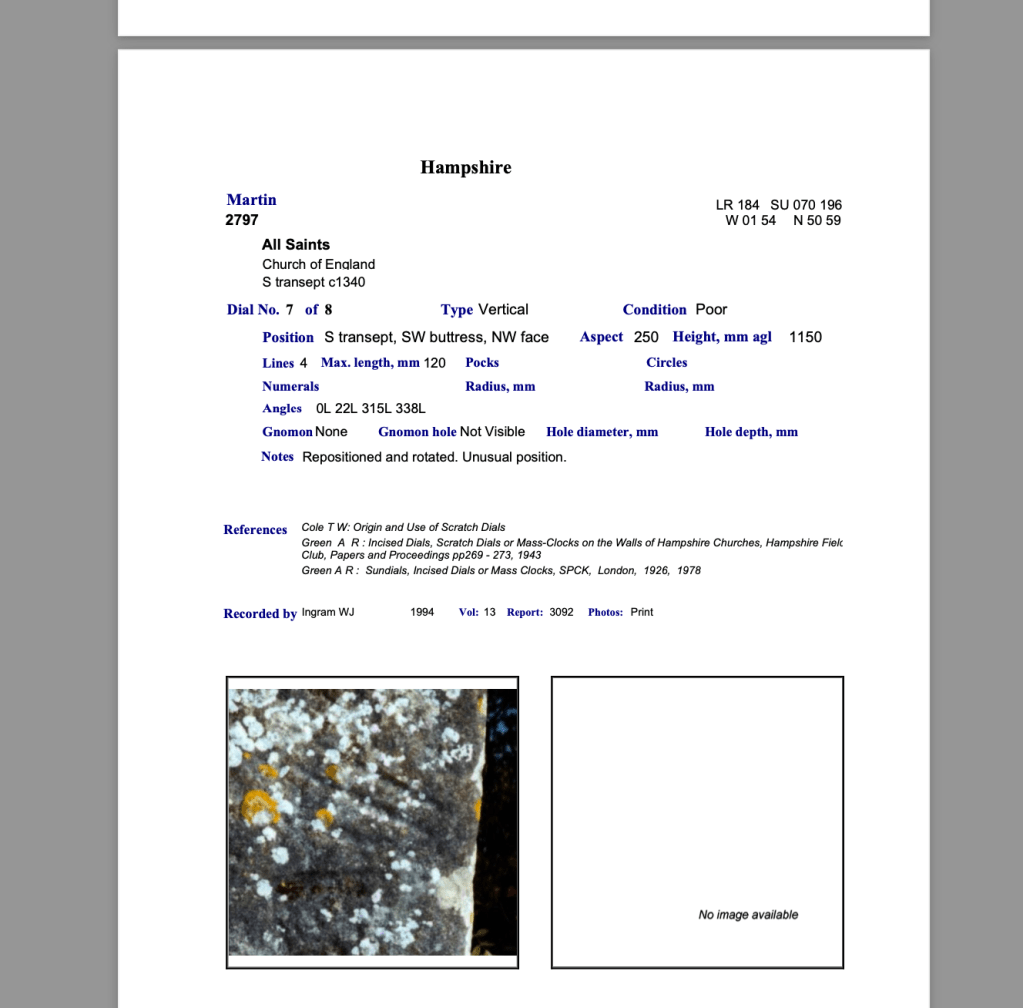
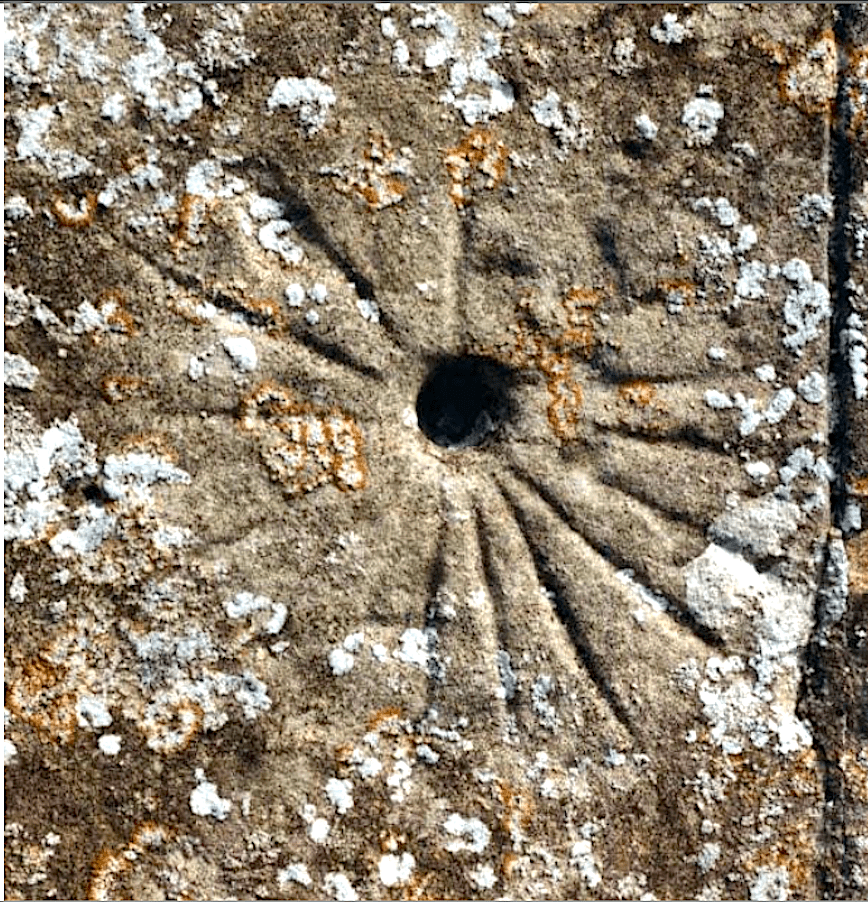
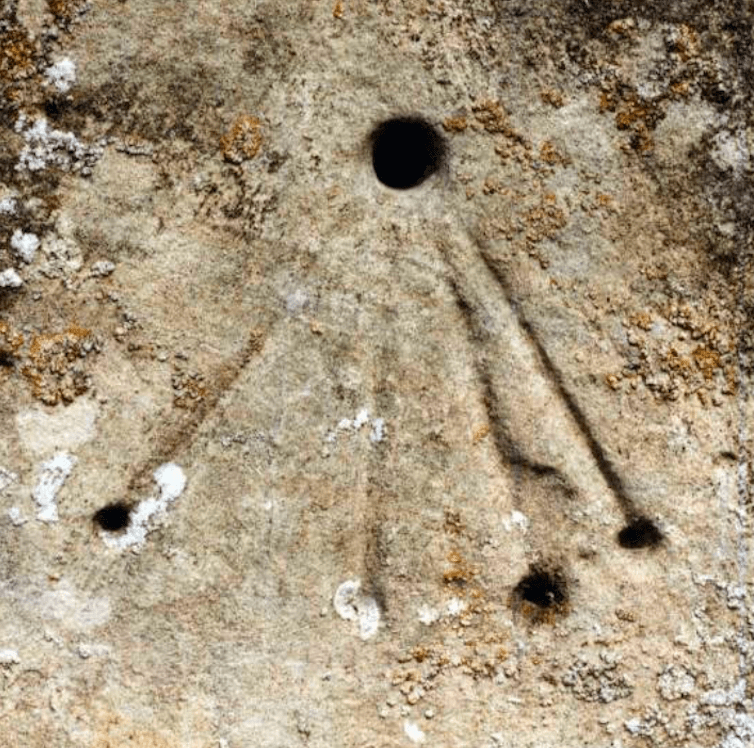
All Saints is a multiple dial church, with 8 listed in the BSS records. My dial count is 9. It’s a fine church, and dial-hunting was an easy pleasure. I have decided to let the dials speak for themselves without undue commentary on individual characteristics unless called for. Below the dials is an excellent article by the Hampshire Field Club that analyses all you need to know about each dial, and in particular the locations (for which I lost my notes).

BSS RECORDS

GALLERY OF 8 + 1 DIALS

DETAILED IMAGES

DIAL 1

DIAL 2

DIAL 3

DIAL 4

DIAL 5

DIAL 6

DIAL 7

DIAL 8

DIAL 9

This dial is included in the BSS records (bottom row LHS)

Volume VII Part I.pdf

Proceedings of the Hampshire Field Club, XV , Pt. 3, p. 27a.

GSS Category: Scratch Dial; Multiple Scratch Dial Church

WIMBORNE MINSTER . DORSET . ST CUTHBERGA – PILLAR DIAL

Ethan Doyle White . Wiki. CC/OS

ST CUTHBERGA . WIMBORNE MINSTER . DORSET

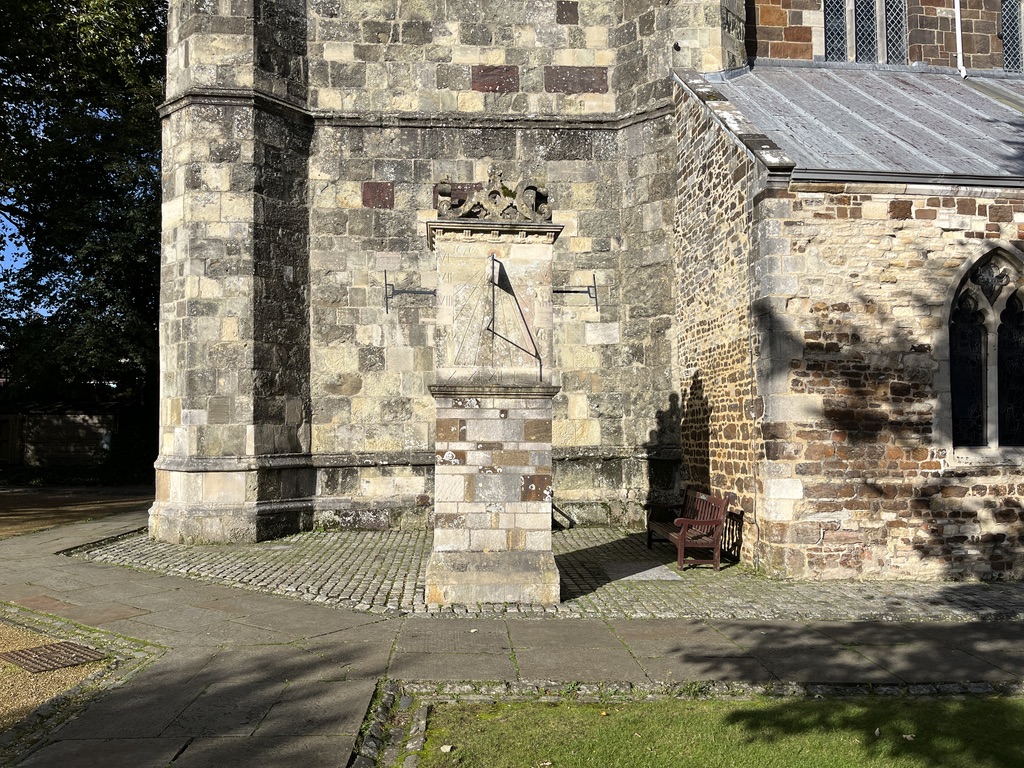
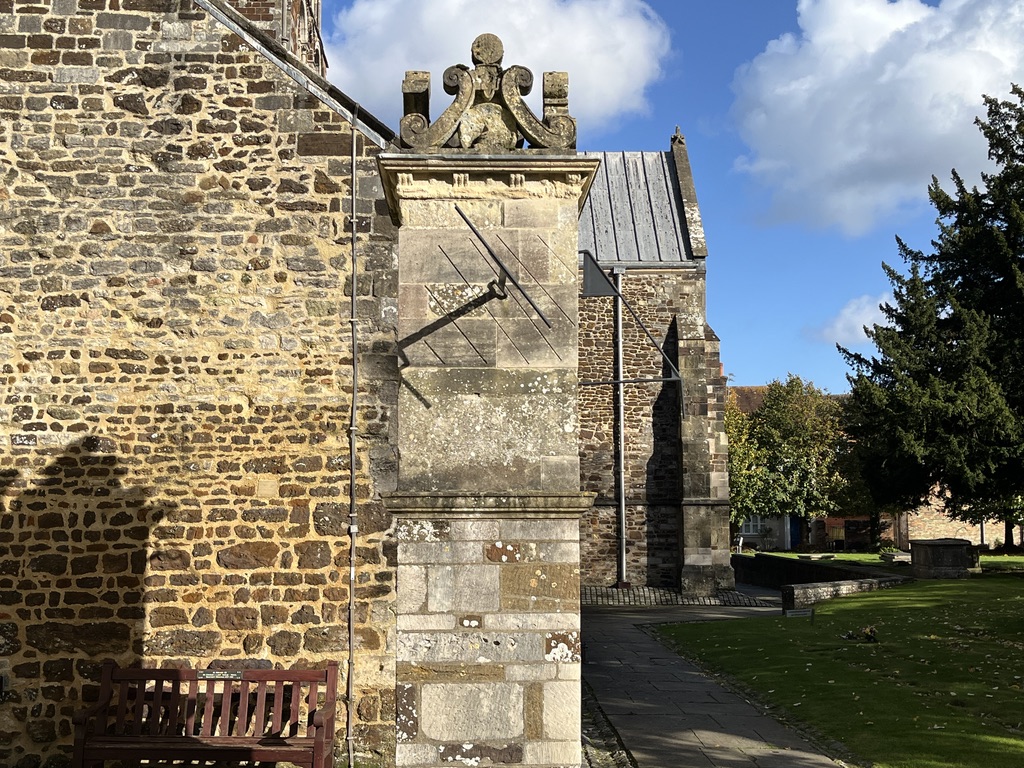
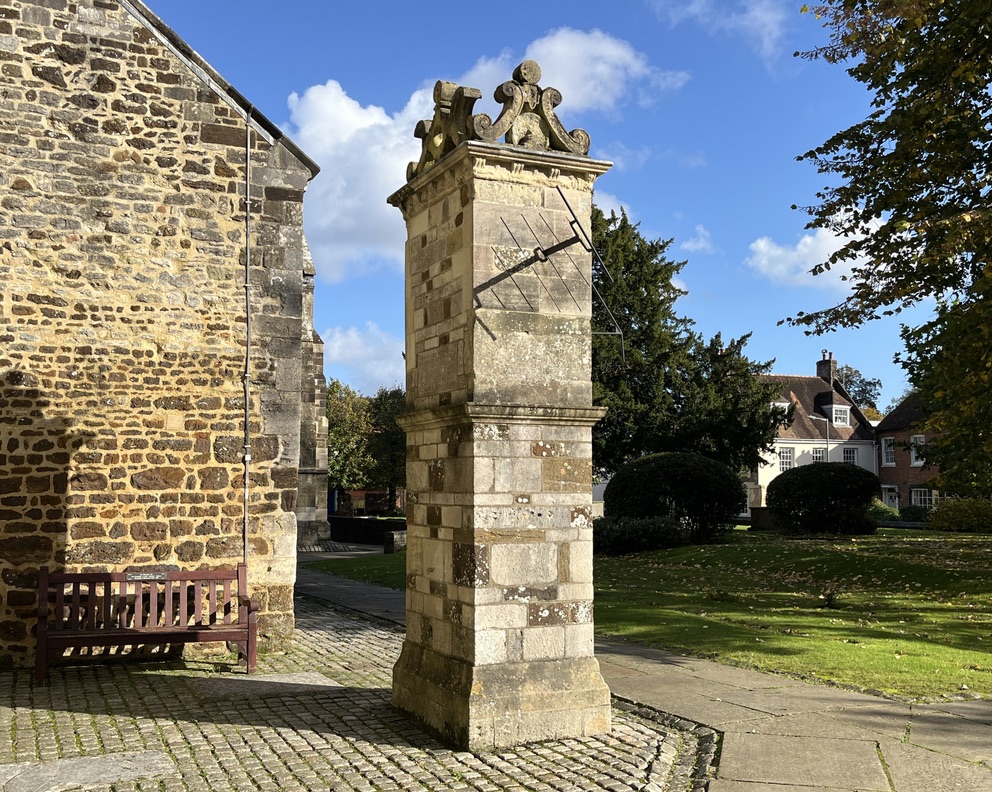
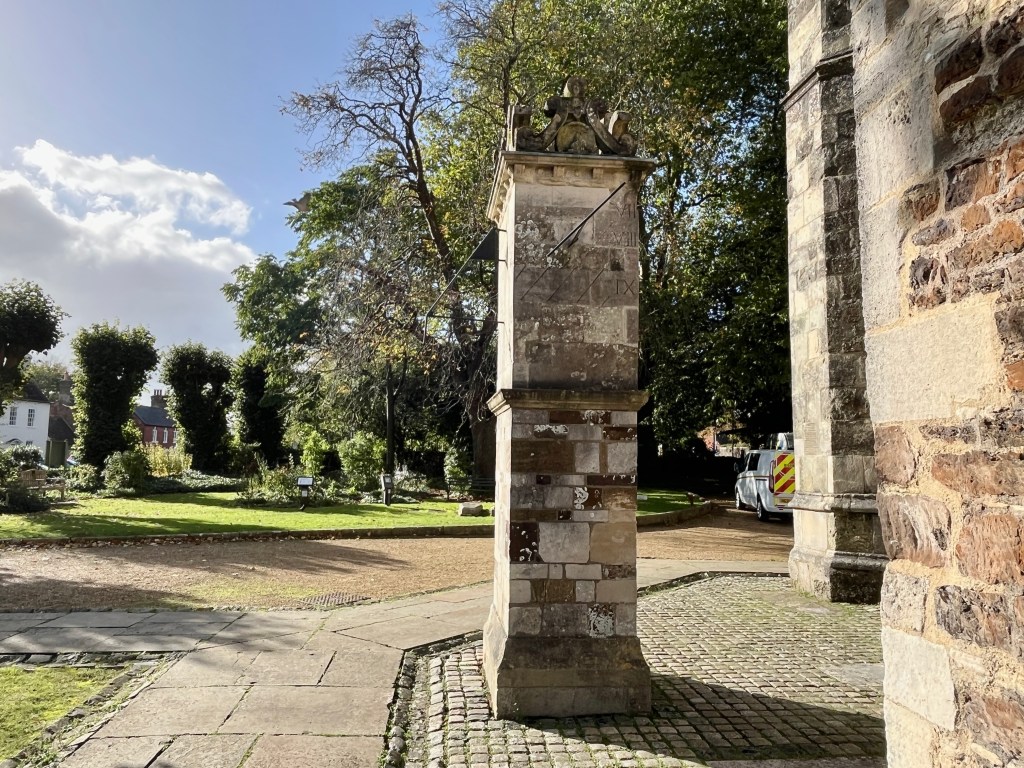
The origins of the Minster date back to the C8. The building seen today dates from early C12 with development during subsequent centuries. Leaving aside the merits of the splendid building, the impressively large stone block on the S side is unmissable. The plinth alone is 6′ high; S face is 4′ wide; E & W faces are 3′ wide. N face has an inscribed tablet only.

DIAL DATES

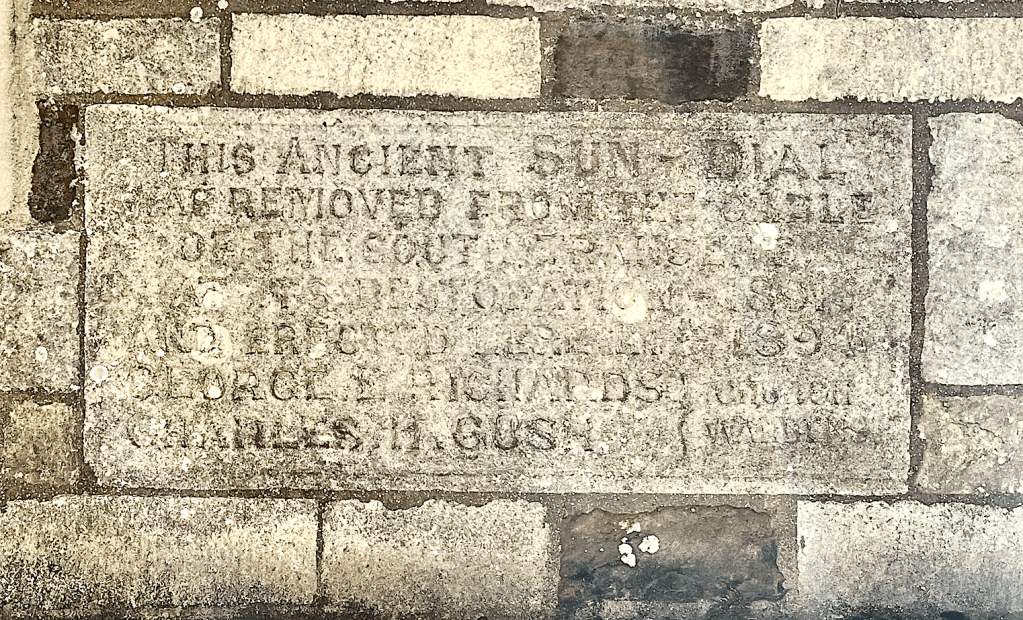
The images featured below give a good idea of each face, gnomon, and relative aspects, so I won’t go into more detail. However there is a conundrum about dates. There was at least one relocation of the dial, and areas of restoration / repair are evident. The inscription on N face is This ancient sun-dial was removed from the gable of the South transept at its restoration 1891 and was erected here 1894 George E Richards [and] Charles H Gush Churchwardens.

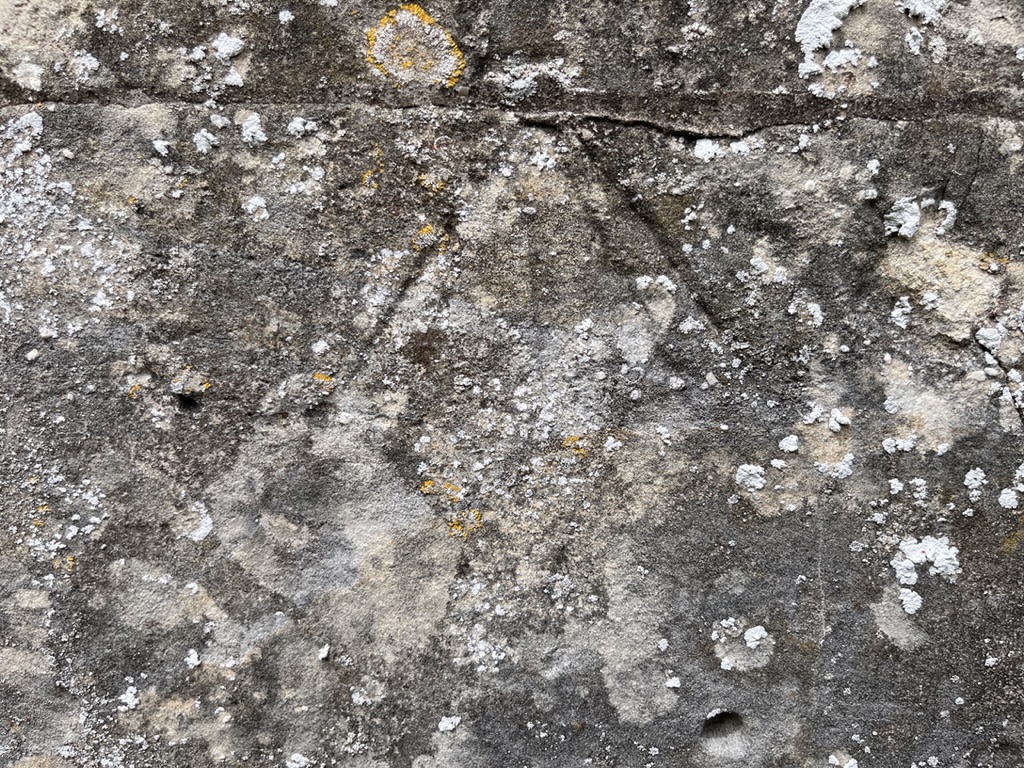
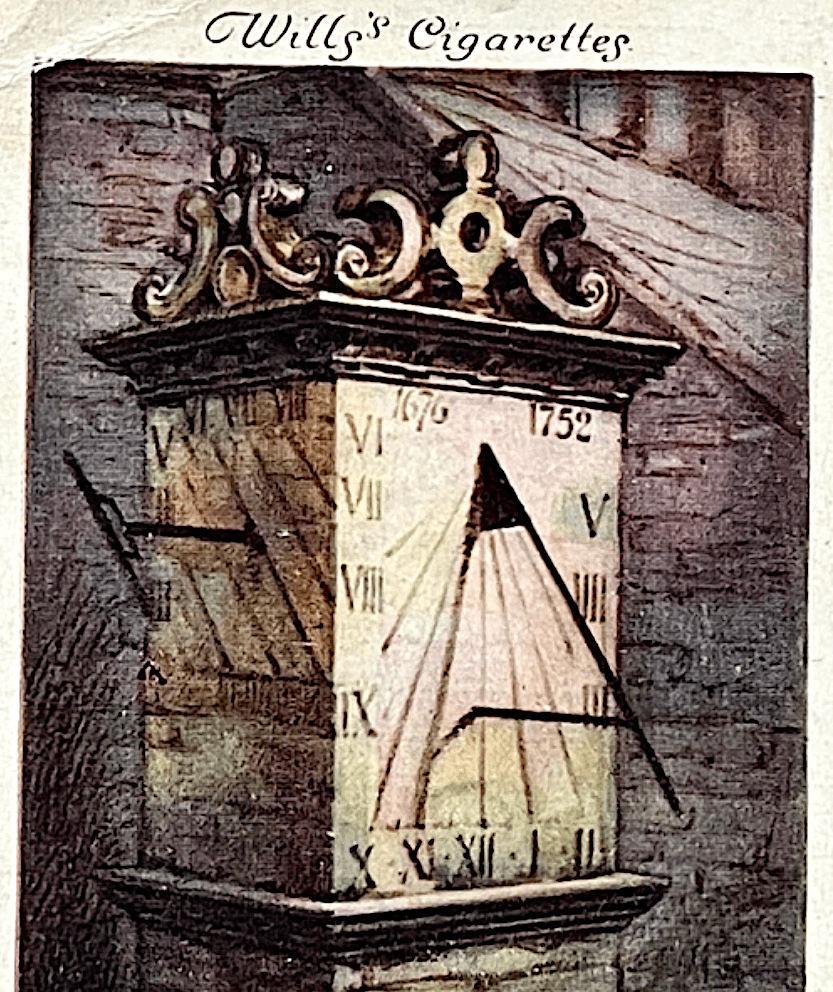
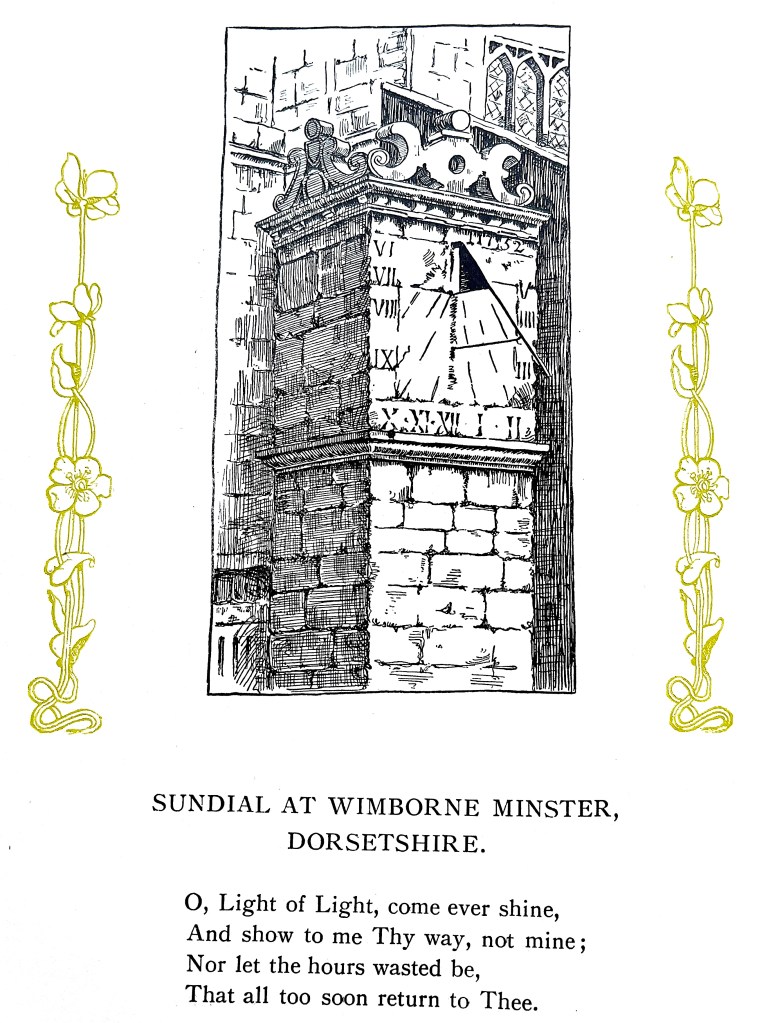
As seen today, the date 1676 is given top left of the south face on new stone. There is no date in the corresponding position on the right side. However in T G W Henslow’s delightful Ye Sundial Booke (1st ed 1914), his charming drawing shows the date 1732 in the top right of the south face with no date on the left side. And more confusingly, in the Wills’s cigarette card sundial series (1928, see below), both dates are shown.

SOUTH

SOUTH WEST

WEST

NORTH WEST

NORTH

EAST

SOUTH EAST

Ye Sundial Booke . T G W Henslow

A BRIEF HISTORY OF THE MINSTER

WILLS’S CIGARETTE CARD SUNDIAL SERIES 1928

FRY’S CHOCOLATE CARD SUNDIAL SERIES

TARRANT CRAWFORD . DORSET . ST MARY – Scratch Dial

ST MARY . TARRANT CRAWFORD . DORSET

LISTING Grade I ✣ C12 origins with abbey links; C12 chancel; C13 nave and refenestration, porch; C15, tower. An astonishing church beyond the scope of this project. Besides the building itself, there are wonderful early C14 wall paintings to admire, also C16 wagon roof & C13 coffin lids. Major restoration in 1911. A very unspoilt church retaining many medieval features PEV. In the care of CCT. 5m SE of Blandford Forum 50.8307 /  -2.1107 / ST922034

DIAL

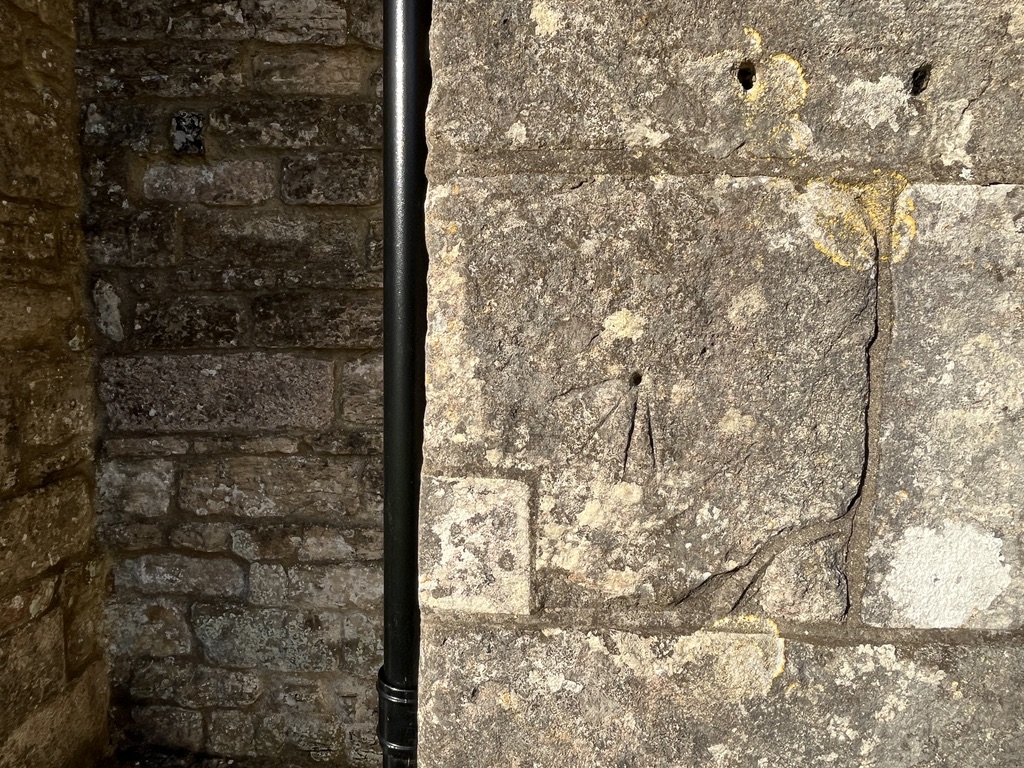
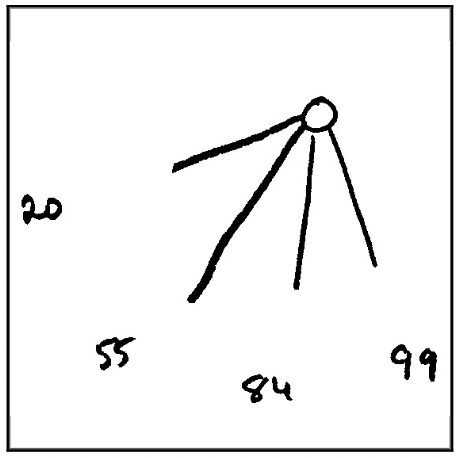
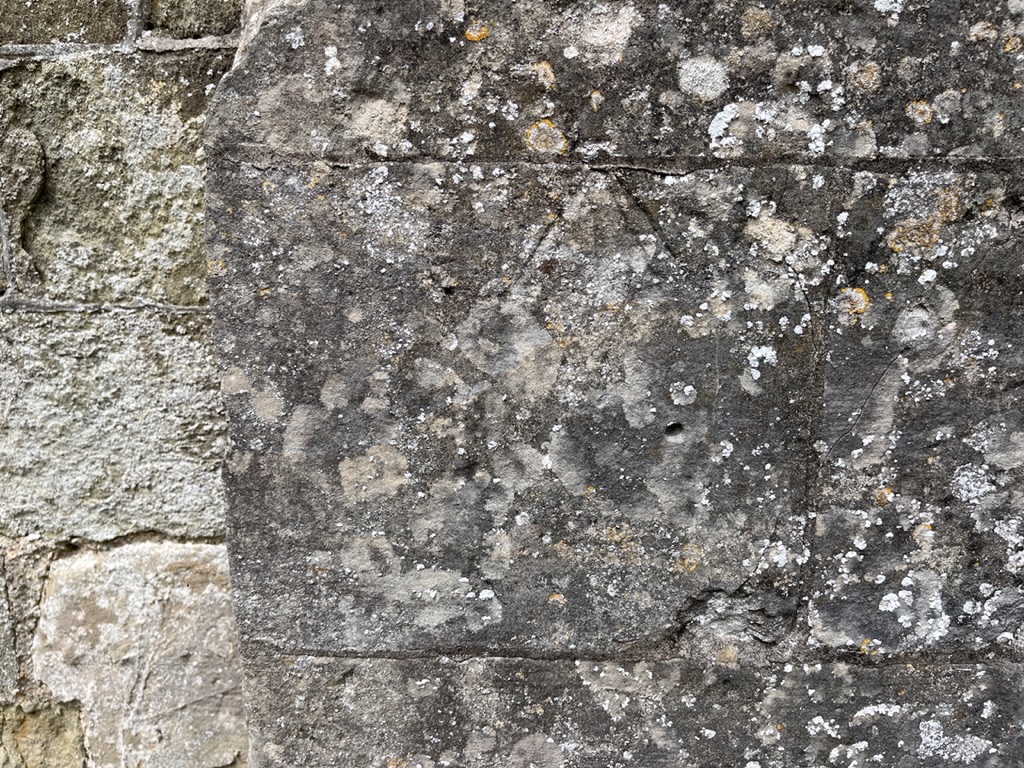
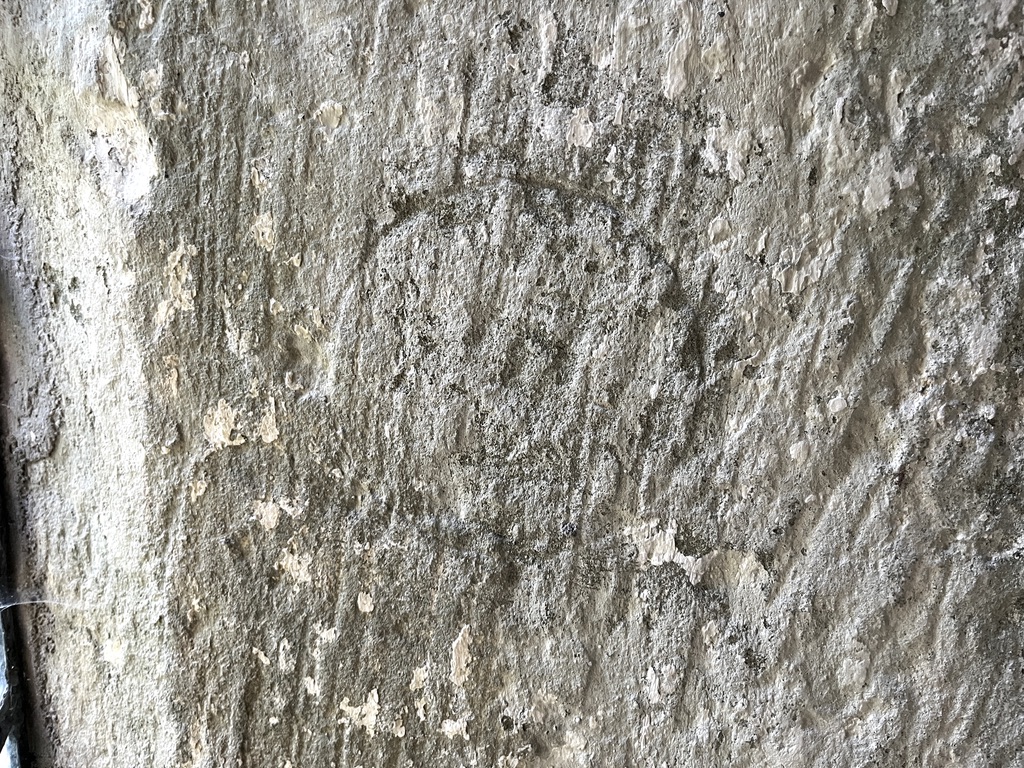
A number of features make this dial rather special. It is inside an intriguing church; it is cut into the architrave of a (historically) relocated doorway; and the design is endearingly haphazard. There are 5 radials from the gnomon hole, mainly LLQ from (roughly) Terce to just past midday. The lines are uneven in length, depth, spacing and straightness ,not least because of the oddly squarish perimeter. One can’t tell what lies behind the cement repair, but it doesn’t seem that the perimeter continues beyond what one can see.

BSS Diagrams

APOTROPAIC CIRCLES

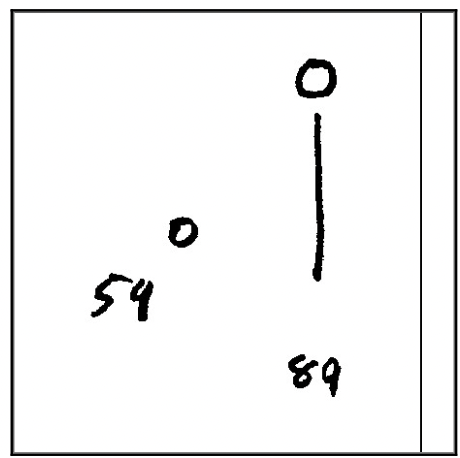
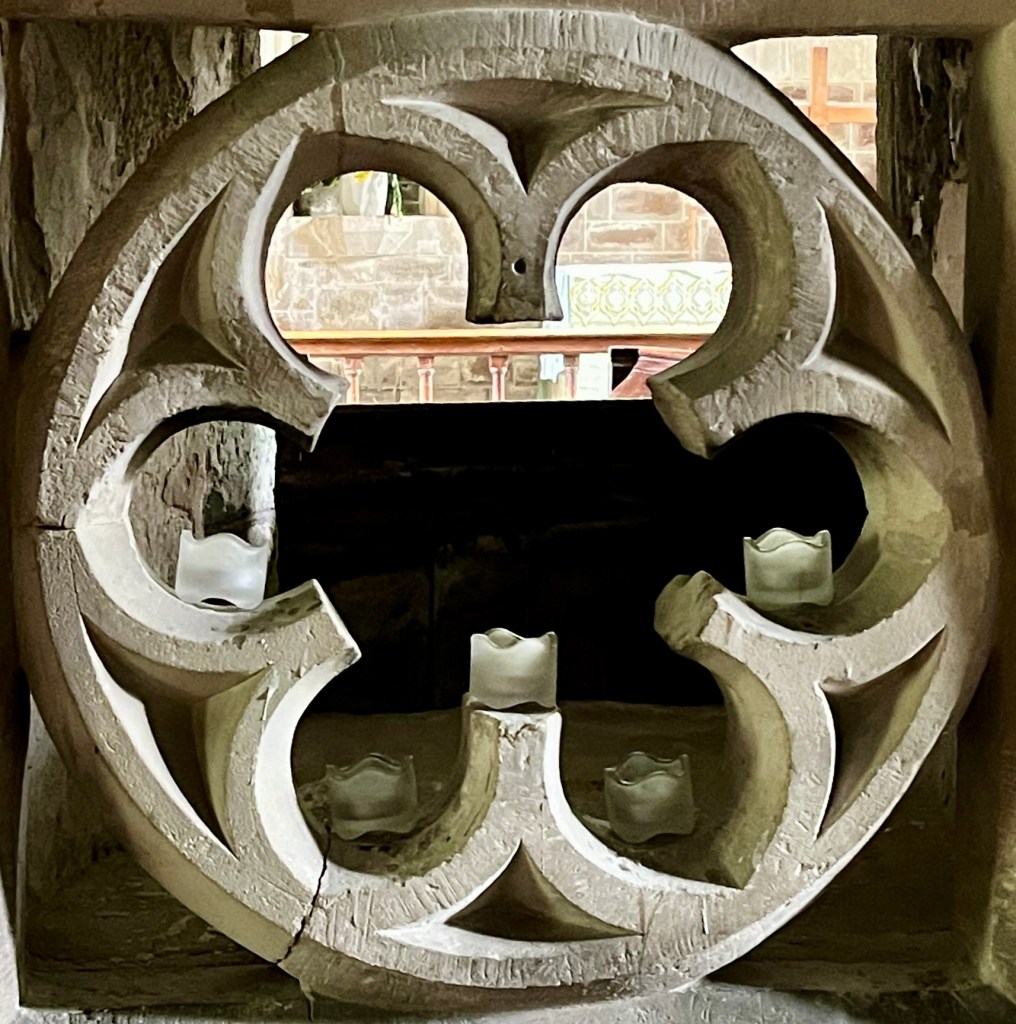
There are two circles cut into one of the window jamb, the lowest with a dot in the centre. These are a simple form of protection symbol, repelling evil and preventing it from entering the church. Some theorise that these and more complex designs (eg ‘daisy wheels’) trapped evil within the circle – so-called demon traps.

GSS Category: Scratch Dial; Mass Dial; Protection Mark, Apotropaic Symbol

All photos: Keith Salvesen

GILLINGHAM MUSEUM . DORSET – Scratch Dial cut into Anglo-Saxon Cross

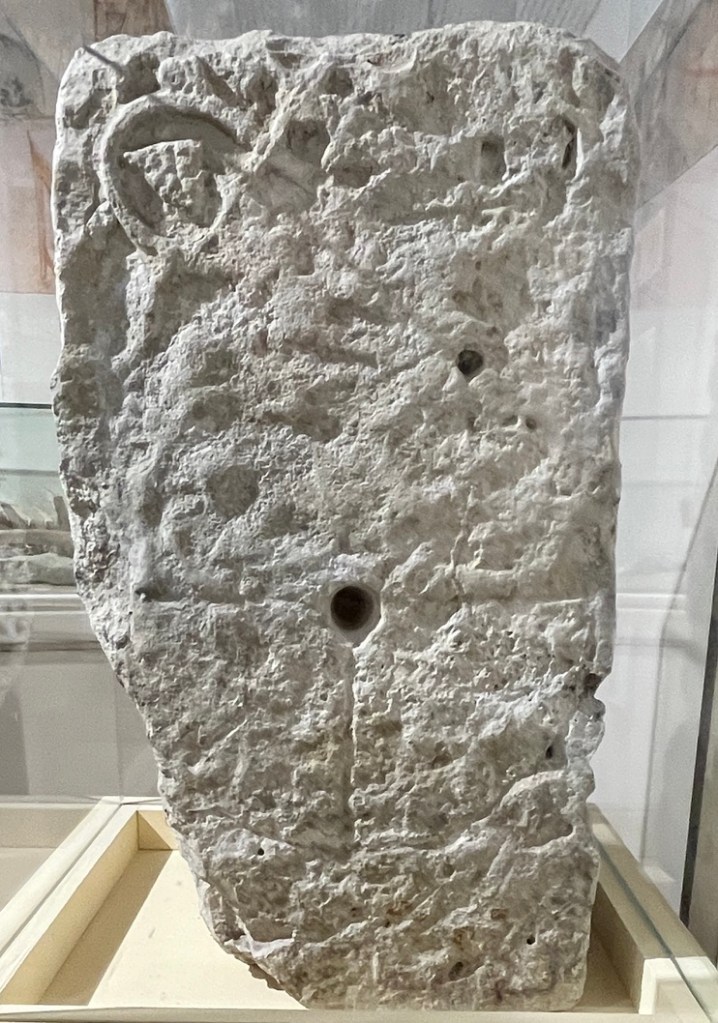
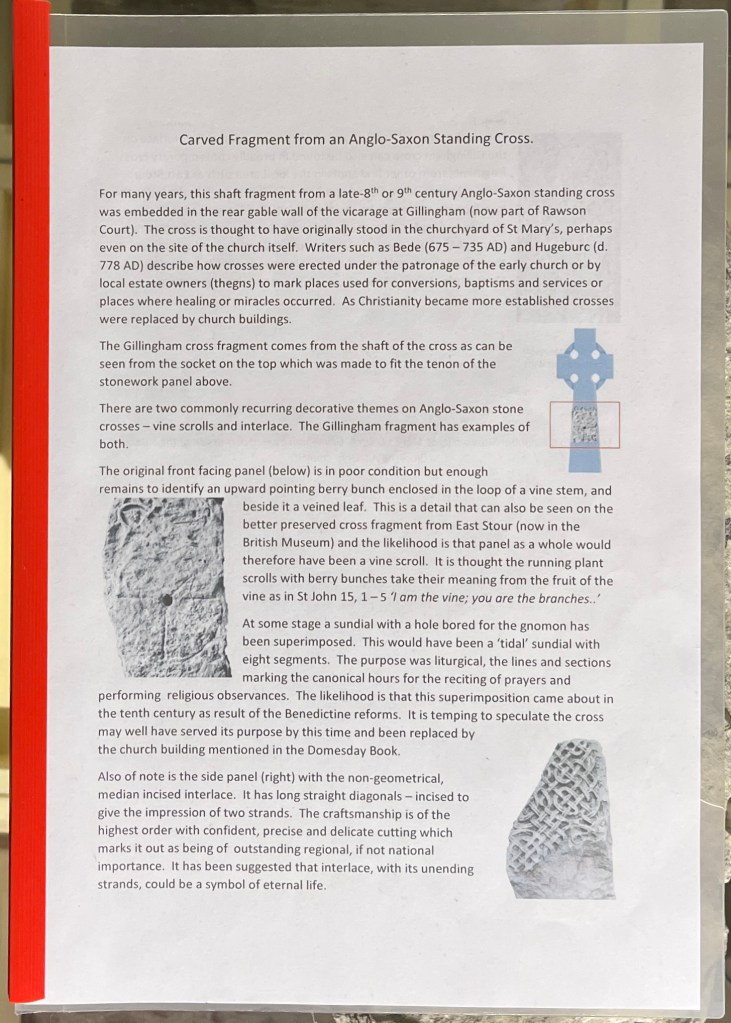
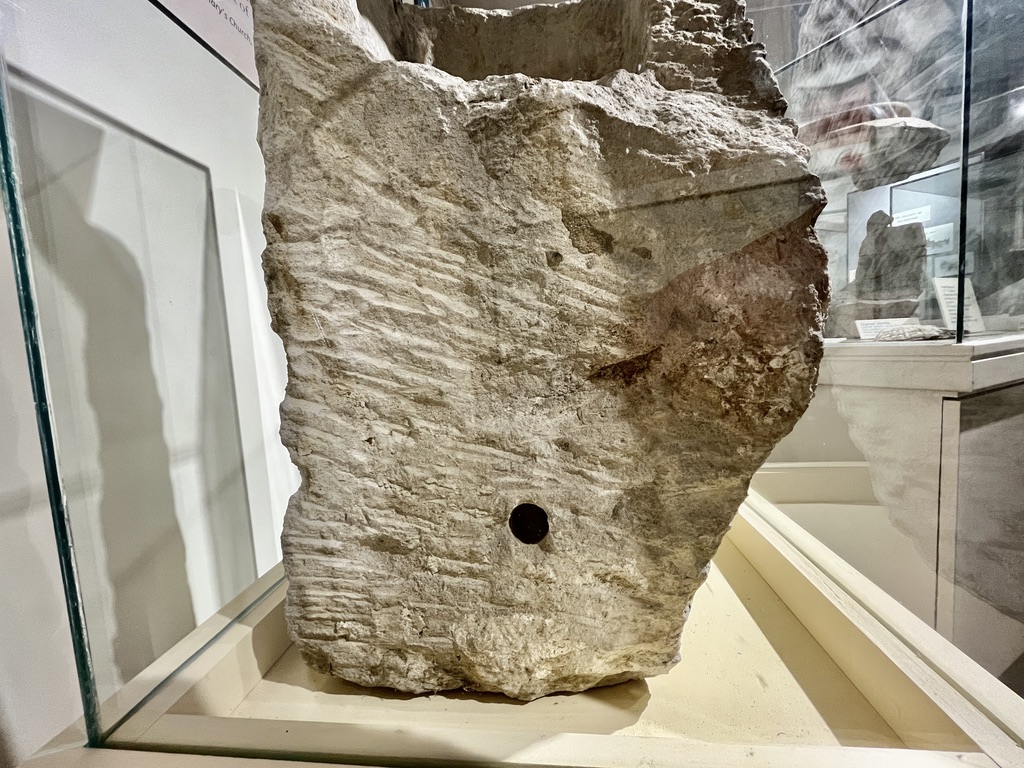
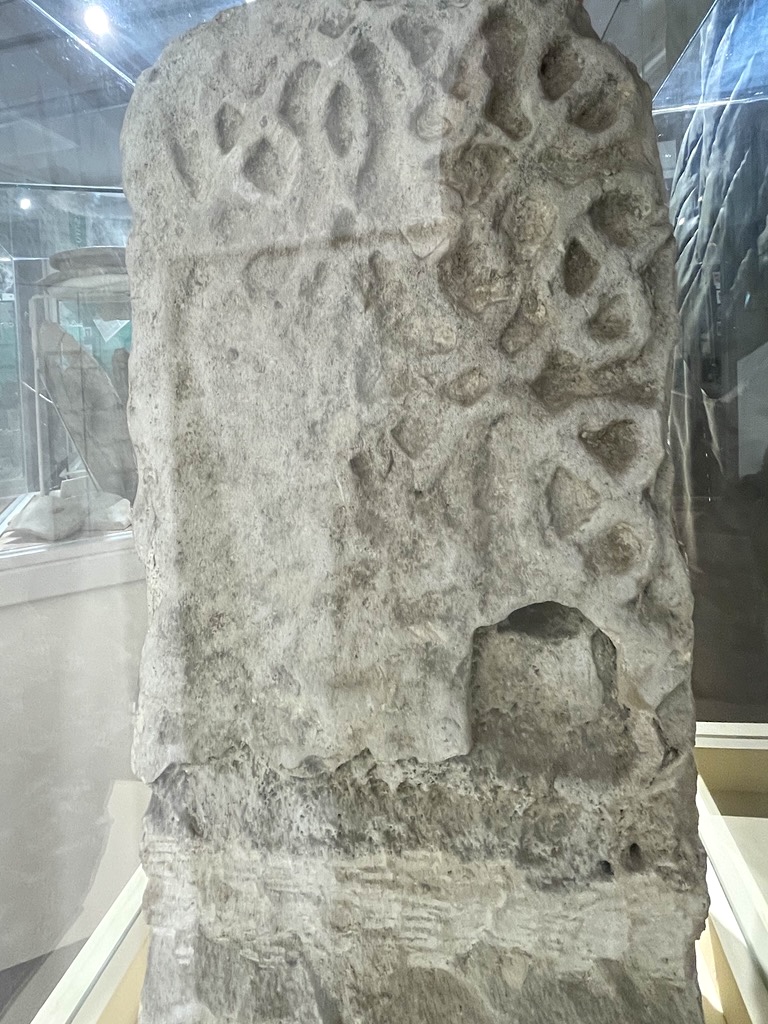
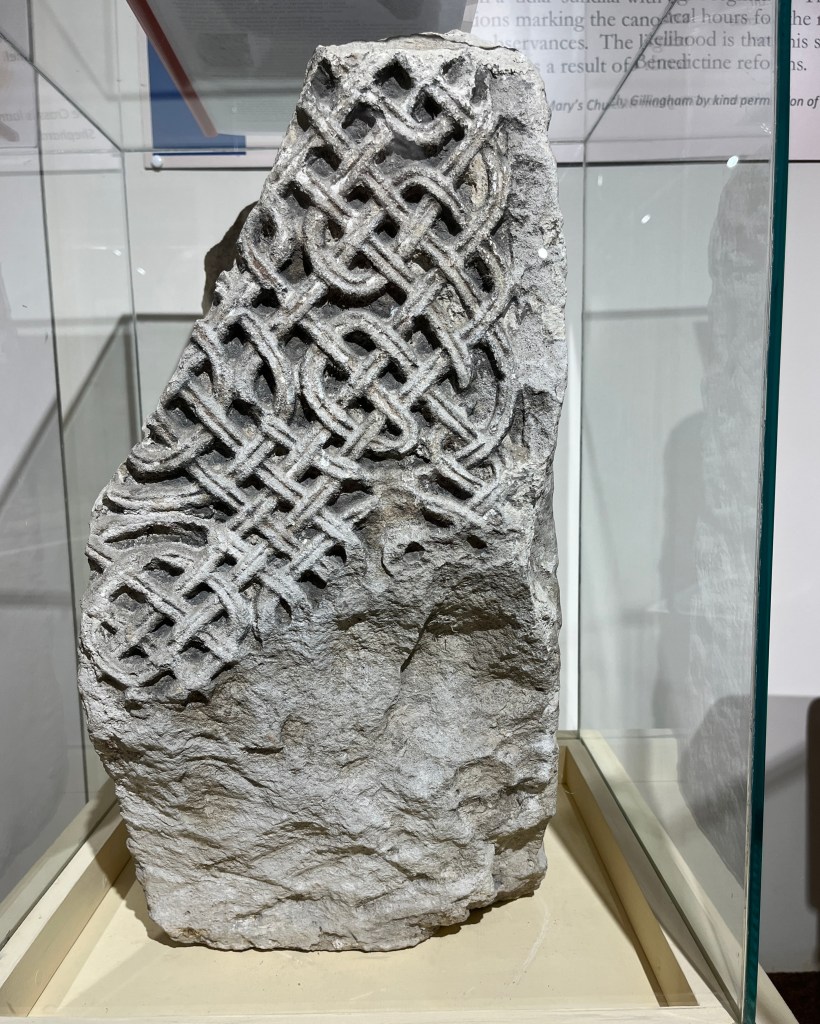
GILLINGHAM in Dorset has a well-curated Museum spanning prehistory to our lifetime. The many and varied displays include a very special one, a handsome carved fragment of an Anglo-Saxon standing cross. Below are images of all four sides of this wonderful stone. It is enhanced by the later addition of an early dial – a Tide dial.

TIDE DIAL

The dial has a complete horizontal (‘6-to-6’) line, an emphatic noon line, and a short deep line corresponding to the canonical Terce, marking the significant part of the day for observance. An arc of circumference is below; there is no hint of a complete circle.

MUSEUM INFORMATION SHEET

DIAL TWO?

Above right on the stone is a smaller hole with (from some angles) 3 very faint lines radiating from it. Very doubtful, but mentioned for completeness. Possibly an imitative attempt by a bored sacristan.

Second Dial above right?

THE OTHER THREE SIDES

Gillingham Museum, where the stone is on loan from the Church of St Mary the Virgin, Gillingham.

Dr John Shepherd: Shephard J F (2023) – Carved fragment from an Anglo-Saxon standing cross and the arrival of Christianity in Gillingham in Annual Report and Review, Dorset Historic Churches Trust 18,  6-7.  

David Lloyd – Gillingham Local History Society

 Images courtesy Tom Wickson (Dorset Historic Churches Trust)

D

TARRANT RUSHTON . DORSET . ST MARY – Scratch Dial

ST MARY . TARRANT RUSHTON . DORSET

LISTING II* ✣ Early C12 origin; nave extended late C12; early C14 chancel,
transepts, squat tower; C15 porch; C19 north vestry and restoration. 3 squints (‘hagioscopes’, as I have recently discovered). 4m E of Blandford forum, nestled in a valley with several other Tarrants. 50.854 / -2.0902 /  ST937060

DIAL

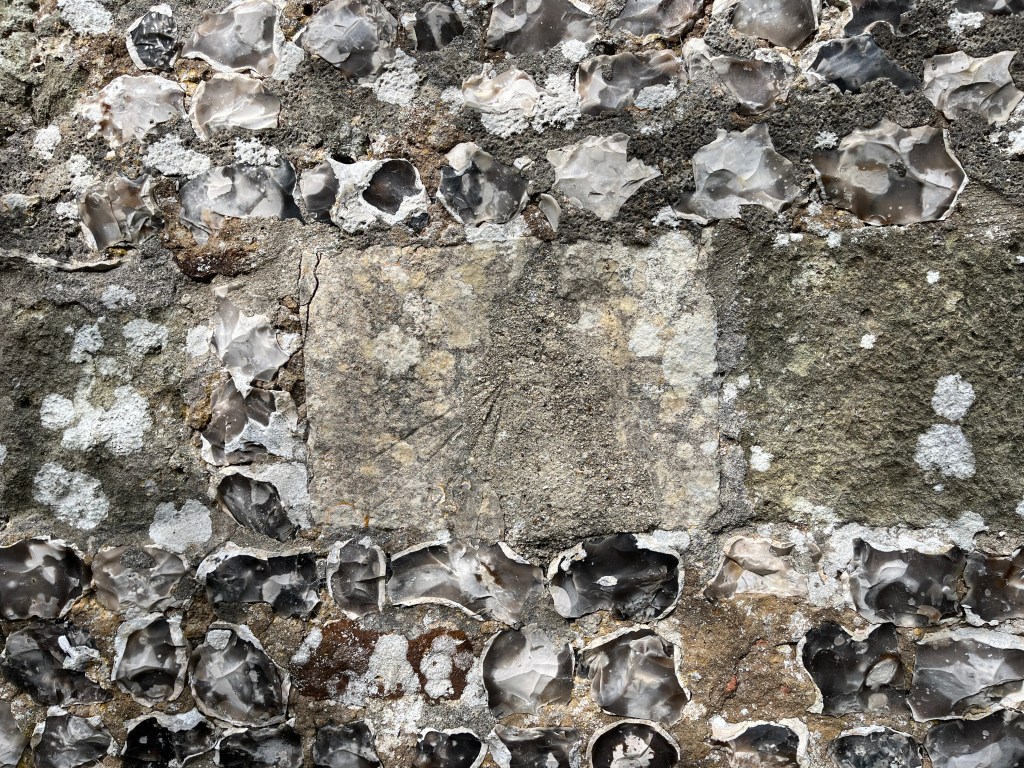
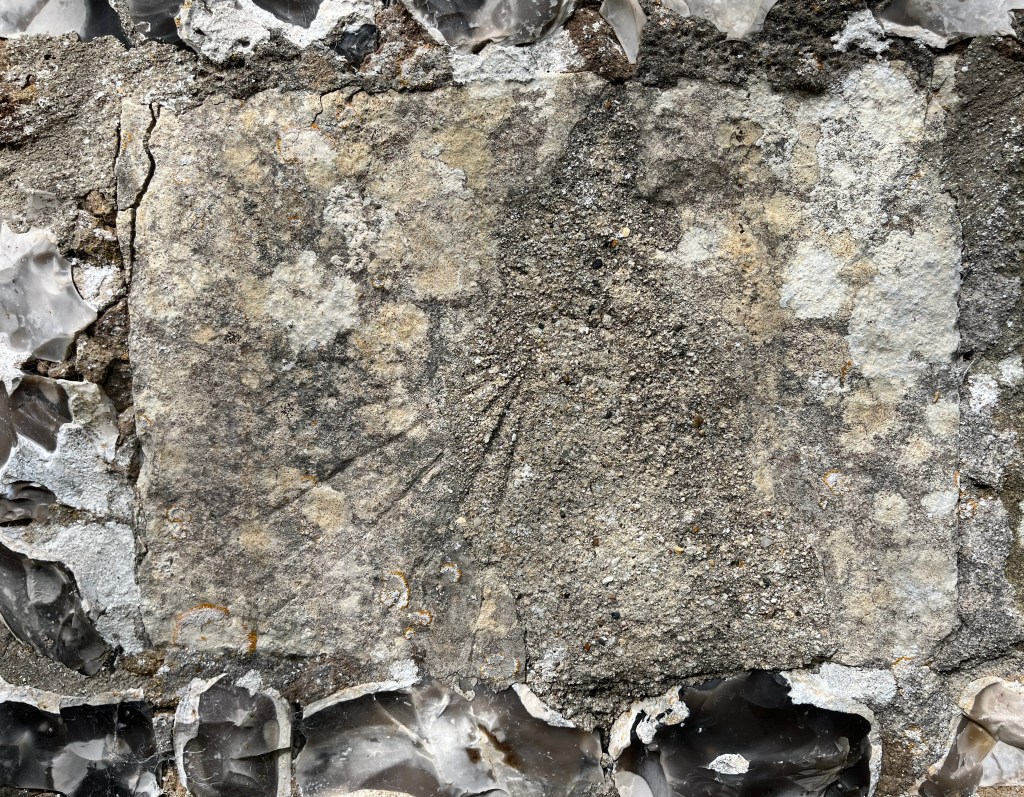
An attractively simple dial set in flint, perhaps not its original location. There are 6 lines LHS from the horizontal (6) down to to 11. Two are very faint. A morning dial, with 2 slightly deeper cut / longer lines suggesting Nones as the main time for observation. The absence of an obvious gnomon hole – open or filled – is a puzzle. There is a slightly paler area where the radials converge, perhaps marking the site of a gnomon hole filled centuries ago, now worn to a smooth patch

GSS Category: Scratch Dial; Mass Dial; Medieval Sundial Dorset

All photos: Keith Salvesen

AUDERVILLE . MANCHE . ST GILLES – Vertical Dial

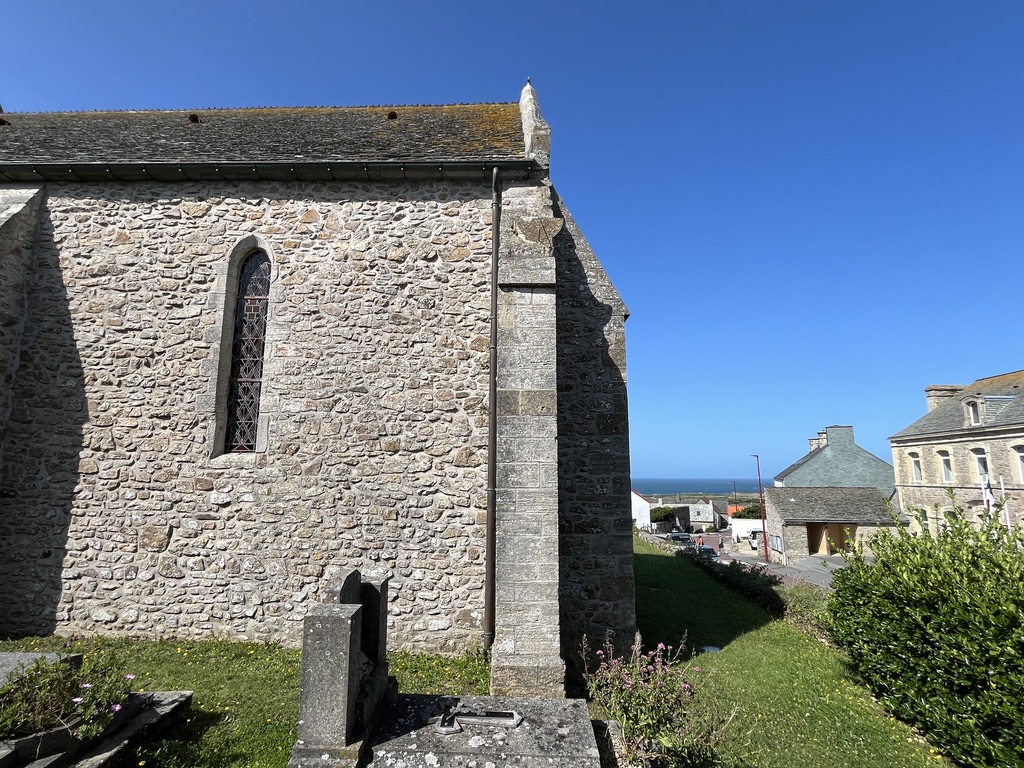
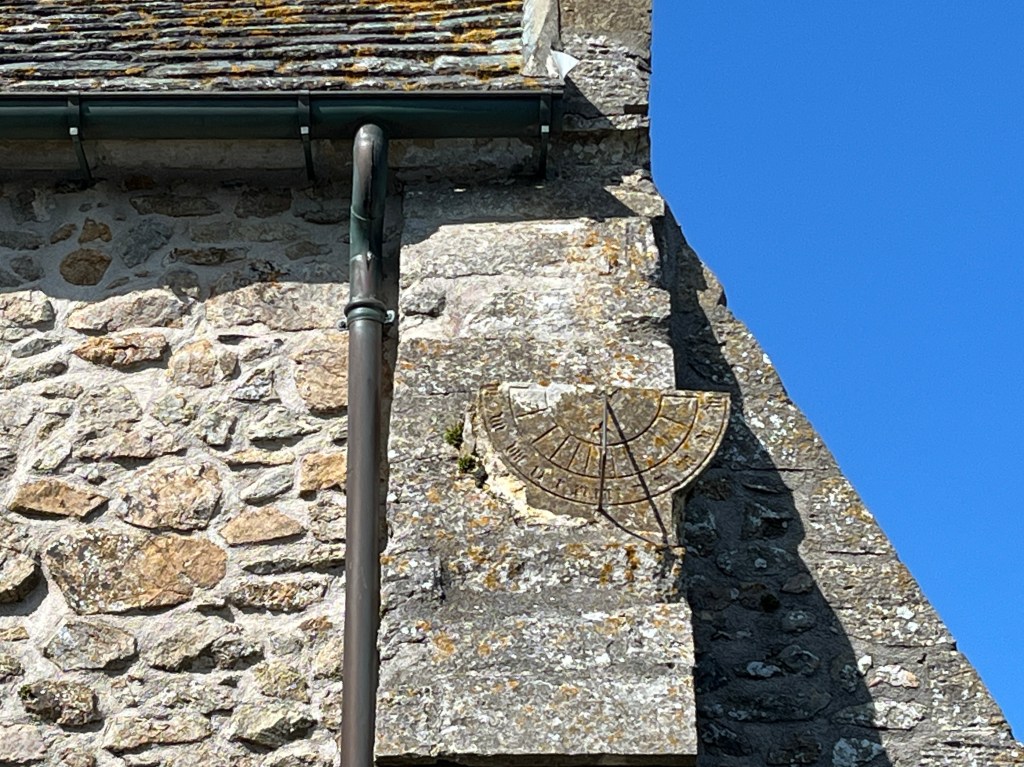
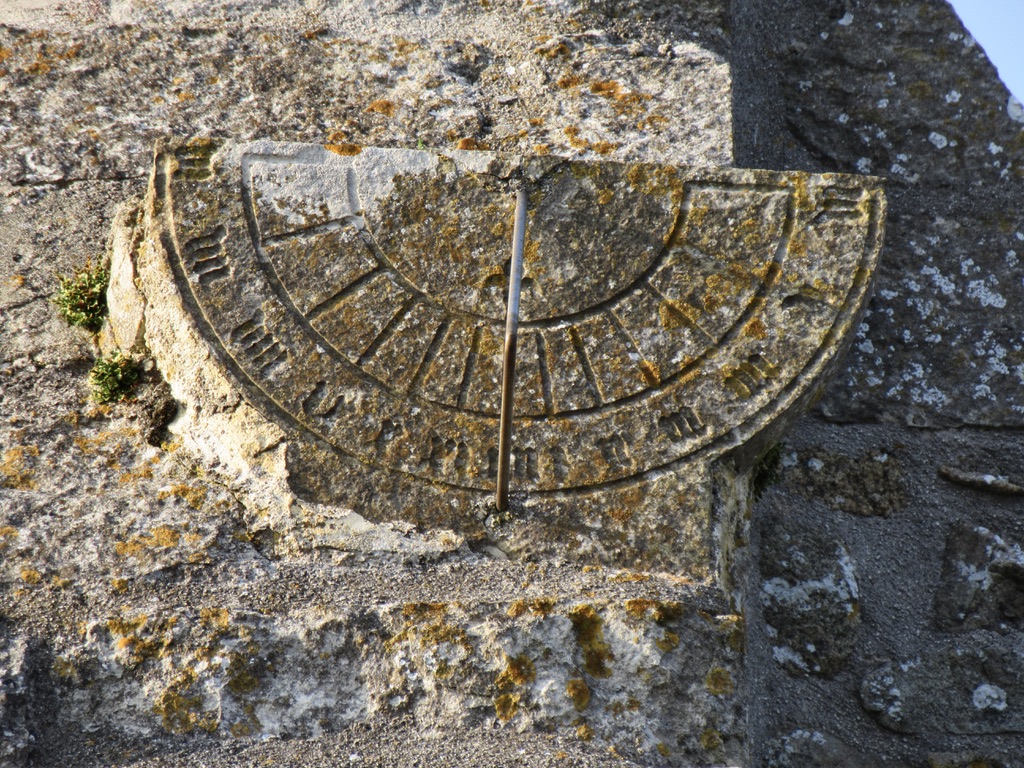
The church of St Gilles at Auderville is one of several churches in the region with similar dials located high up on one end, in this case the E buttress.

The dial is both canted and also slightly angled downwards, enough to notice from ground level. The Roman numerals are Blackletter, as can be found on other churches in the area. I haven’t come across the ‘horseshoe’ 9 before. The modern angled gnomon is plain and functional.

GSS Category: Vertical Dial Normandy France

All photos: Keith Salvesen

BOROUGH GARDENS . DORCHESTER – Analemmatic Sundial

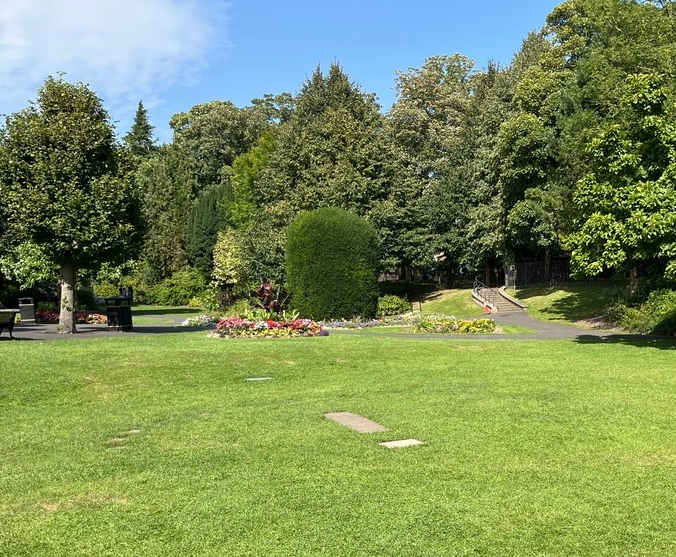
The Borough Gardens in Dorchester are close to the centre of town. They were laid out and opened in the 1890s as ‘pleasure grounds’, as they remain. There is plenty to offer for all ages in an agreeable undulating space. Lawns, tennis courts, bandstand, paddling pool, playground, fountain, a memorial obelisk, and more.

ANALEMMATIC SUNDIAL

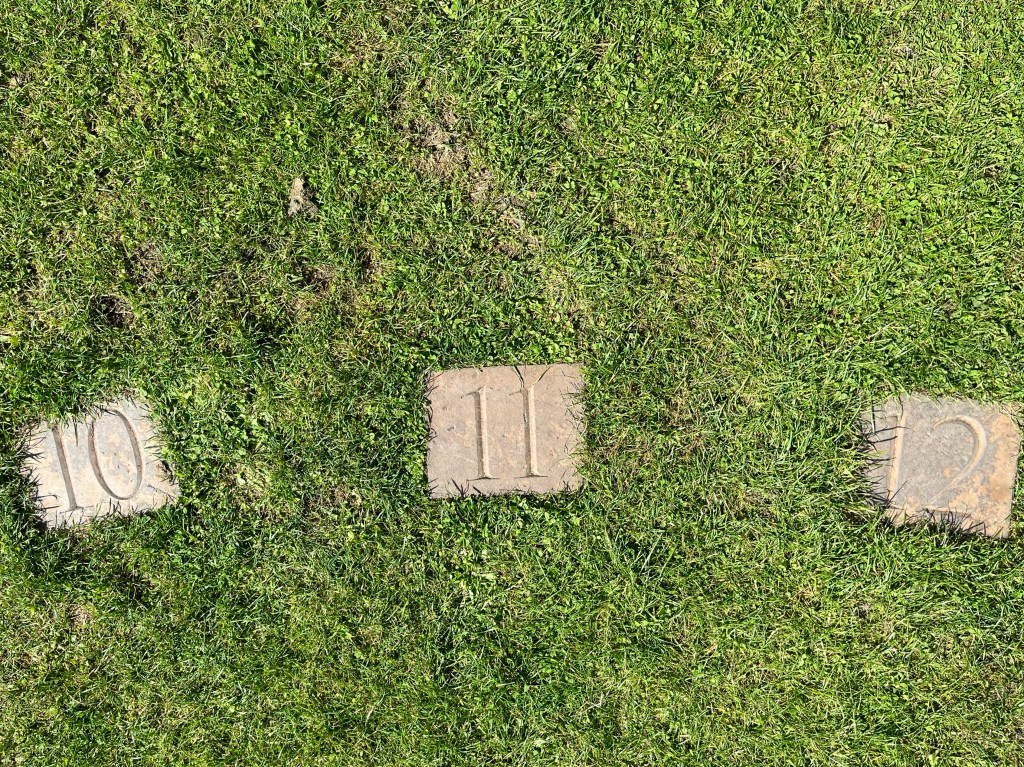
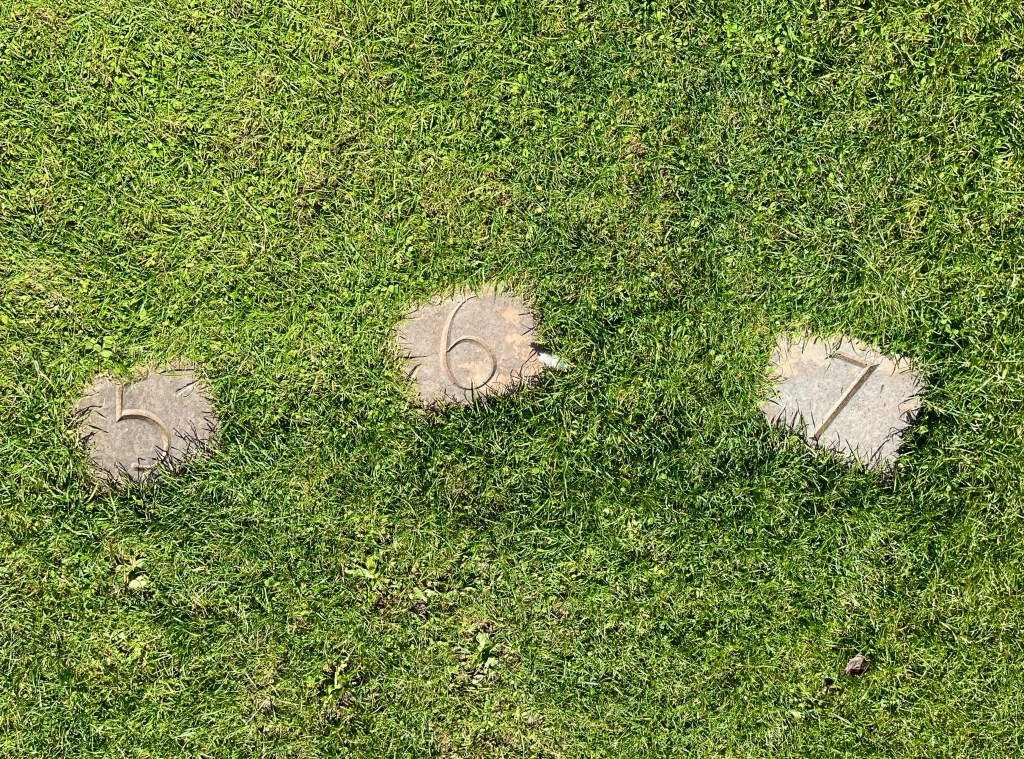
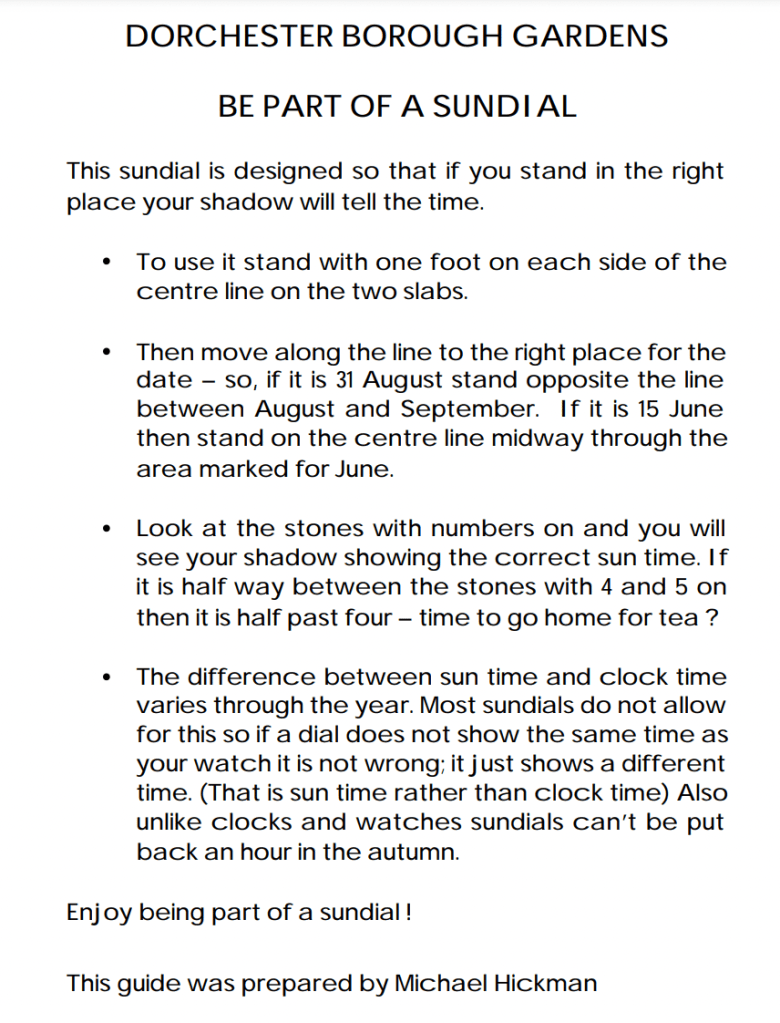
Amongst the attractions, close to the bandstand, is a modern analemmatic sundial. I don’t know the actual date it was laid out, but the BSS record is 1998 with the note: The dial is laid out in the play area near the bandstand. Hour markers adjusted for longitude, an hour added for summertime use. Shows hours from 7am to 7pm.

CALENDAR

GSS Category: Analemmatic Sundial

All photos: Keith Salvesen; written information from municipal sources with thanks

IMBER . WILTS . ST GILES – Graffiti and Apotropaic Symbols

ST GILES . IMBER . WILTS

A lost village with a sad backstory. Once it was a remote small community in the centre of the vast acres of Salisbury Plain, with pretty cottages and a fine church. It was already a huge military training area before WW2 and the decision was made to evict the populace. As the record states: Given nowhere else to go, Imber’s villagers were ‘liberated’ of their homes in 1943, with just 47 days notice, to make way for American troops to train for the liberation of Europe during World War II. 

The displaced population believed – or were led to believe – that in due course they would be able to return to their homes and to normality, but they were not permitted to go back. The cottages were replaced by large buildings to create battle scenarios. Only the Church of St Giles was left alone. You can read more HERE

DIALS

For obvious reasons, access is permitted on only a few specific days of the year. I recently visited on an Open Day, not least because I had found a clear record of two scratch dials. There aren’t any. However there is a wonderful collection of church marks of all types. Much of the trove is in inaccessible parts of the church.

GRAFFITI AND APOTROPAIC SYMBOLS IN THE PORCH

In the time available I briefly examined the porch. Shown below is an illustrative selection (by an amateur) from a far wider choice; I hope to return the Church. Meanwhile here are the key references for further exposition.

Wiltshire Medieval Graffiti Survey – General

Wiltshire Medieval Graffiti Survey – St Giles

Imber Village – account of the village history

In a different light (2024) – a clear, authoritative new book by Tony Hack of WMGS with excellent photography and detailed overlays

ST GILES IMBER: THE PORCH

MARTOCK . SOMERSET . MARKET CROSS – Cube Dial

MARTOCK MARKET CROSS: ‘THE PINNACLE’

GRADE II ❖ Medieval base. 6-metre Column dated 1741. One sundial face also has that date. All but plinth block entirely rebuilt 1982. The fluted Tuscan column was perhaps copied from a similar one at Wilton. 8m NW of Yeovil. 50.970 / -2.7666 /  ST462192

DIAL

The images were taken starting from approx. NW, moving counter-clockwise. All four faces are included, some clearer than others. The various gnomon styles are shown. I have divided the photos into 2 blocks for simplicity. The dial is topped with a ball finial, which in turn supports an attractive weathervane.

As if this sundial were not enough, Martock’s very fine All Saints church has an excellent cube dial over the gateway: ALL SAINTS . MARTOCK . CUBE DIAL

MARTOCK HISTORY CLUB has a good article about the dial and other local features of interest.

GSS Category: Market Cross; Column Dial; Pinnacle Dial; Cube Dial

All photos: Keith Salvesen