FRANCIS BARKER DIAL with LIBERTY ART NOUVEAU PEDESTAL
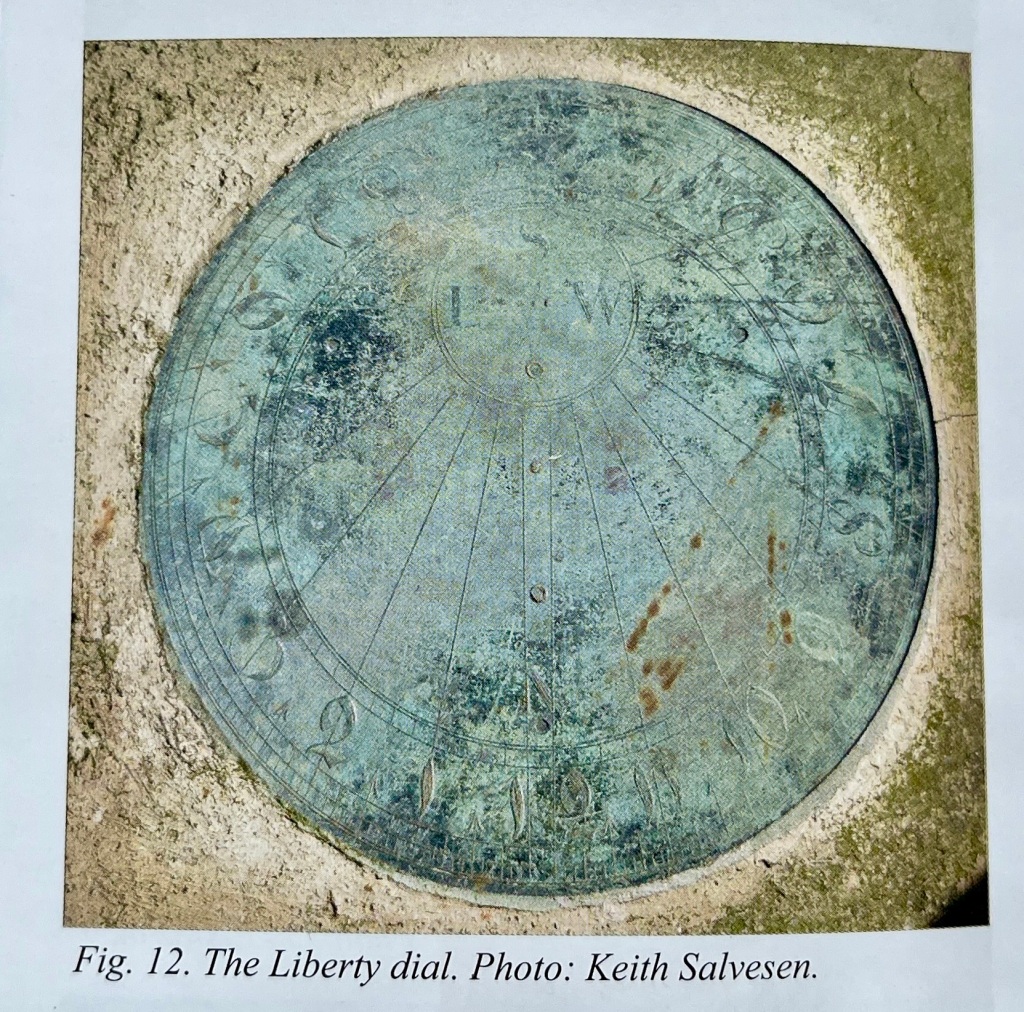
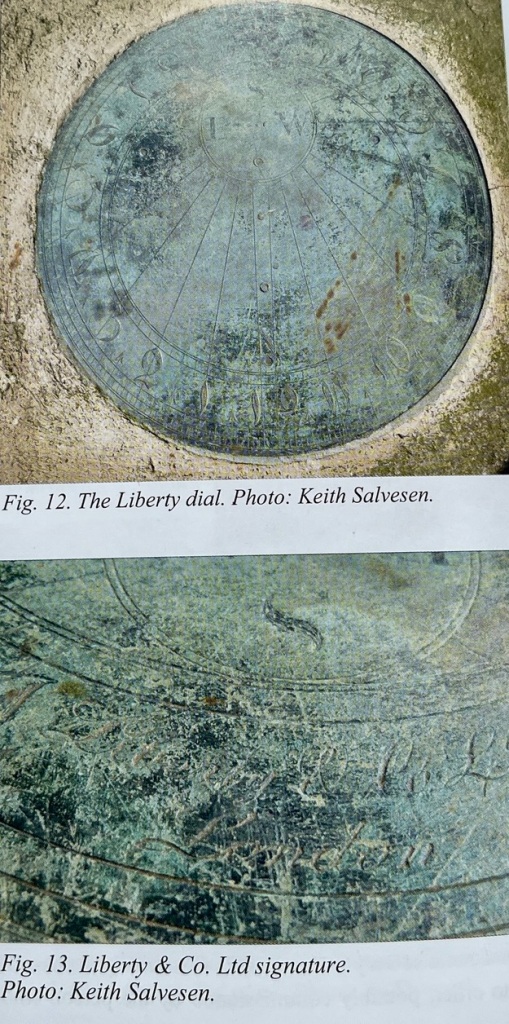
This is a gnomon-less sundial that I dug out of a pigsty at my home. I was about 10. The sty had layers of compacted earth and garden material that almost reached the top, the legacy of the previous owners. I had always wondered whether there might be hidden treasure, and eventually my curiosity got the better of me.
I gradually dug down until, suddenly, my spade hit something with a loud clonk. It took a while but eventually I was able to prise out… a prize. It has lived on as a garden ornament / flower pedestal for many years, with 4 changes of address. Eventually it has settled in Dorset.
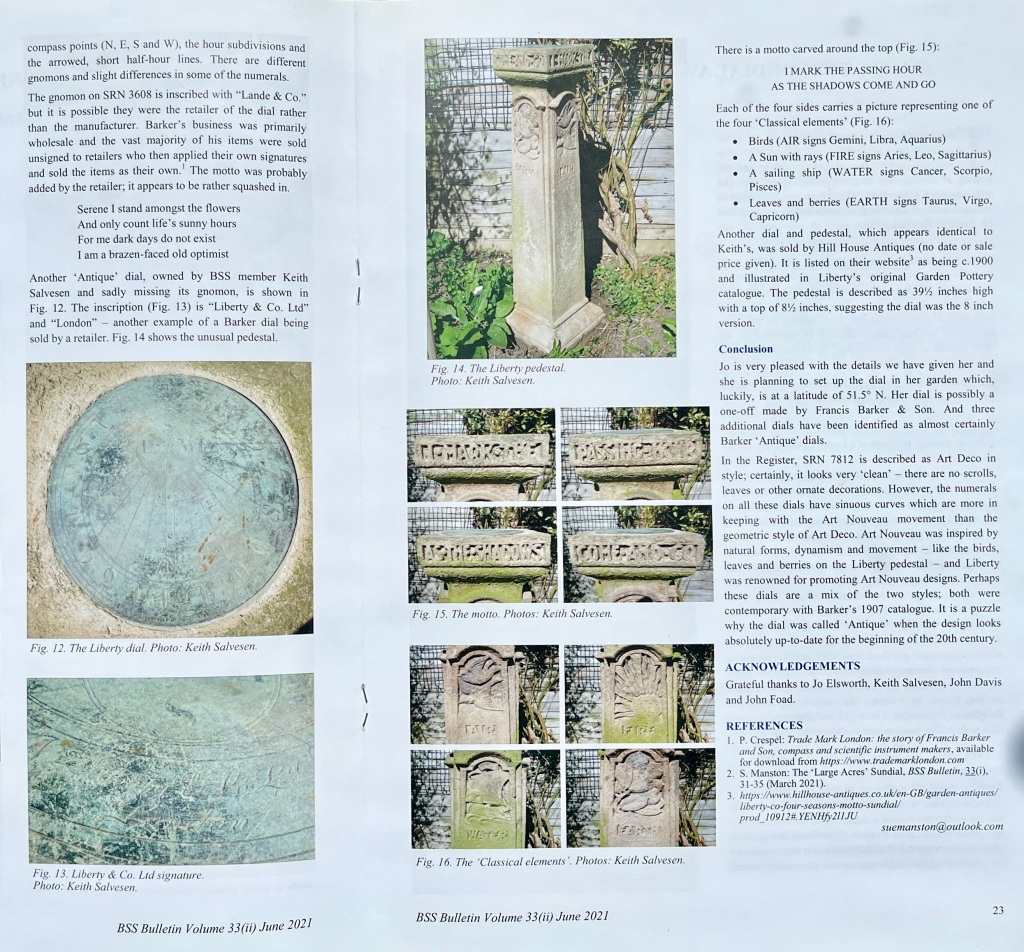
Later – by then a BSS member – I sought advice about my dial. In due course Sue Manston included the dial in an detailed article by Jo Elsworth in the BSS Bulletin 118. Volume 33(ii) – June 2021
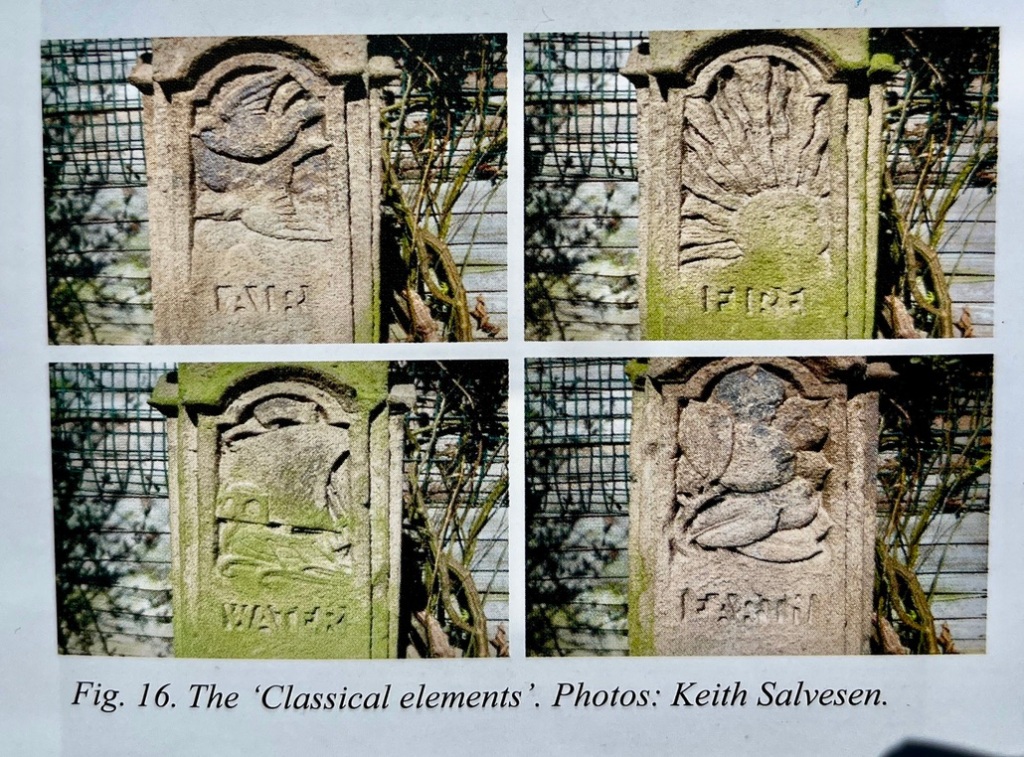
The author Jo Elsworth notes that similar dials have been described as ‘Antique’ and Art Deco. For the reasons she gives, the classification as Art Nouveau is the most approriate,
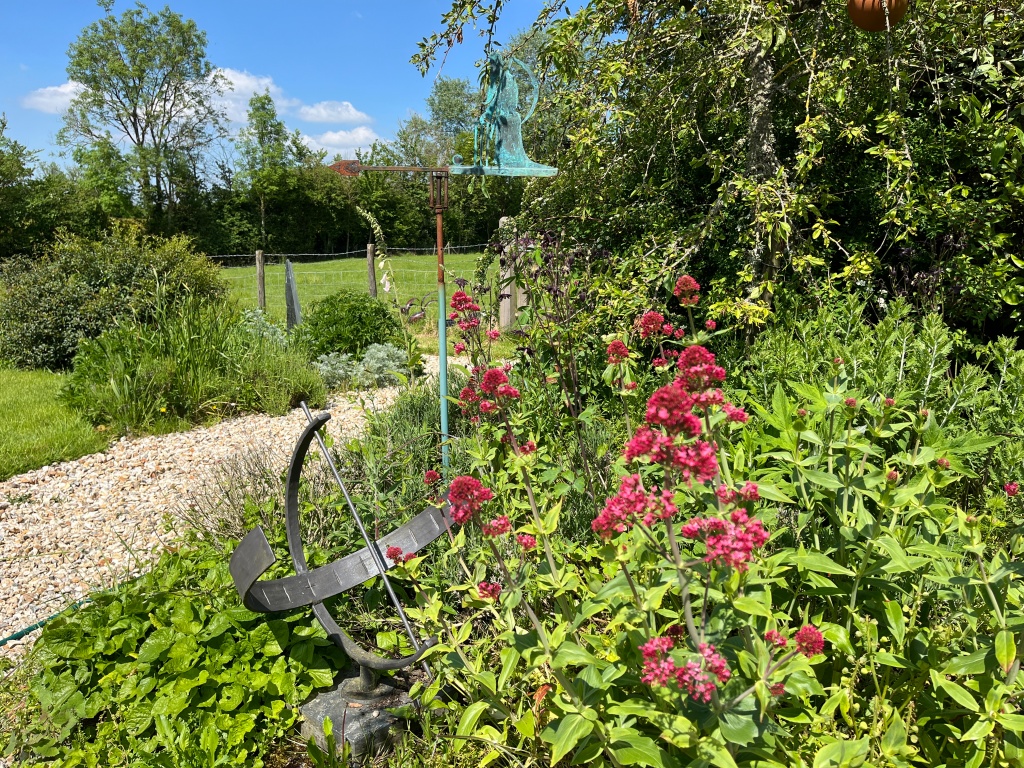
Also in the garden: a modern armillary sphere, watched over by Father Time
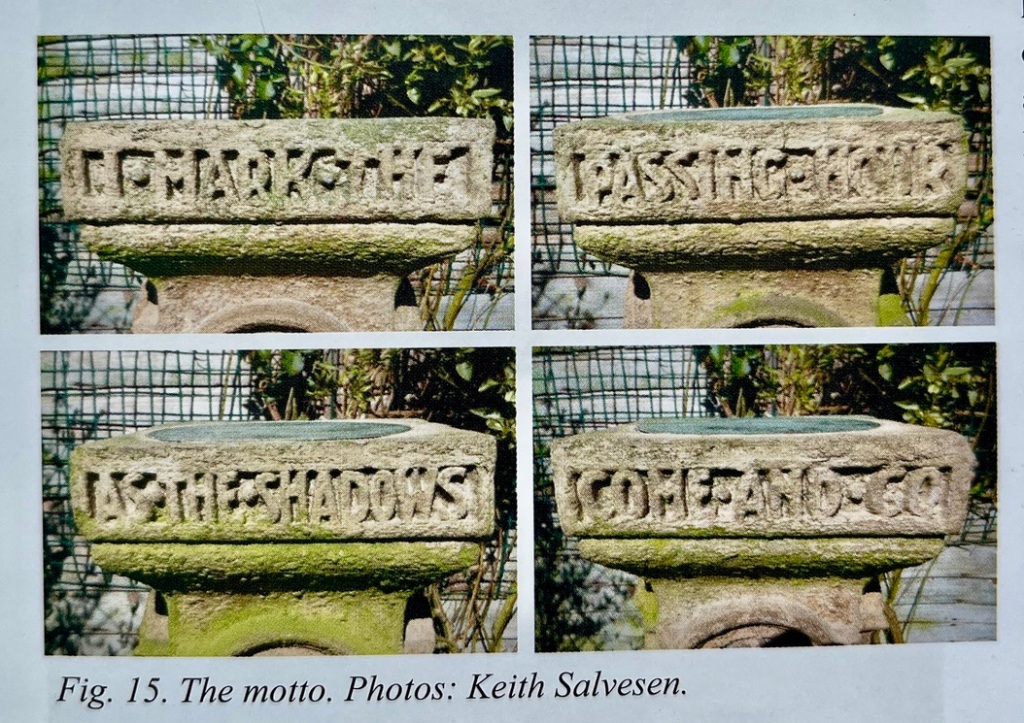
GSS Category: Horizontal Dial; Barker Sundial Plate; Liberty Sundial Pedestal; Art Nouveau Sundial.
All photos: Keith Salvesen; BSS article – Sue Manston, with thanks
GRADE I ♱ Saxon foundation. C12 (first record 1102) early C14, C15, 1845 restoration. C12 Purbeck marble font bowl. Jacobean box pews. Spiritual home of the Dukes of Somerset, duly commemorated. Original 14th century oak door, fittings. Scratch Dial featured HERE. 7m SW of Warminster. Longleat & Stourhead nearby. 51.1468 / -2.2821 / ST803386
✤
DIAL
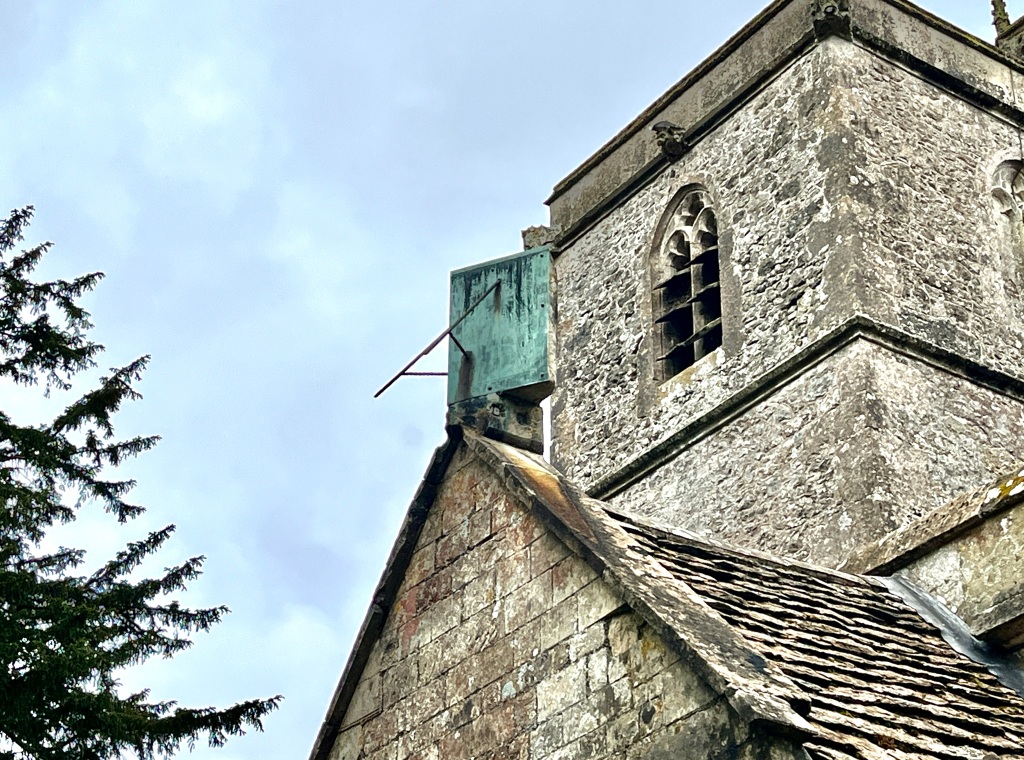
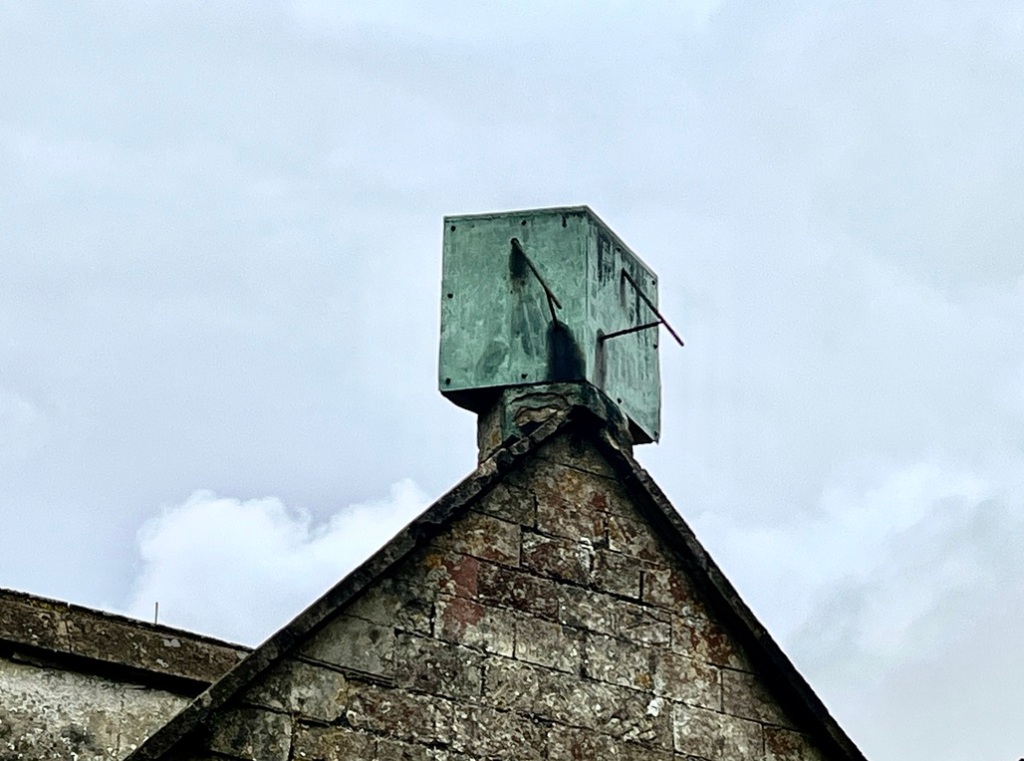
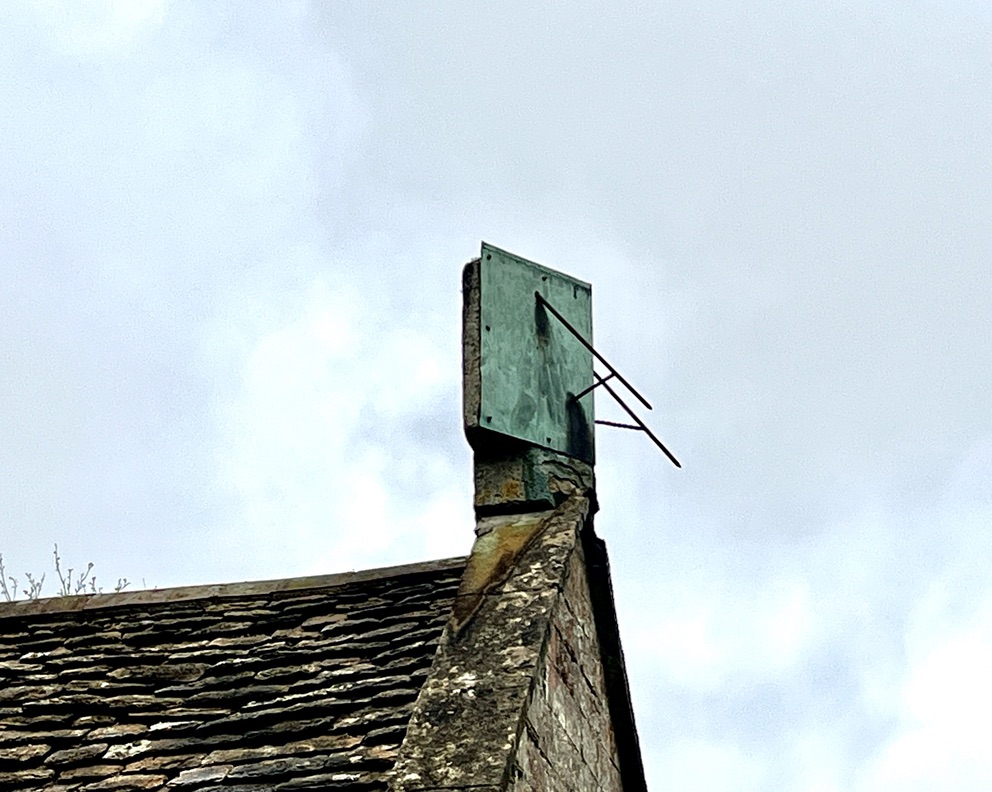
All Saints has an unusual and intriguing double-faced sundial above the porch, thought to be C18. At first sight, looking towards the porch, it could be a cube dial. The 2 sides are at right angles facing SE and SW. Between them, they cover the ‘6-to-6’ time span. There are faint markings on the dial faces – roman numerals, lines (see below).
BSS records two declining dials of similar design believed to be made from one sheet of metal folded at the centre. Between them they show 6am to 6pm in half hours.
✤
SOUTH ASPECT
It is worth noting that the two gnomons are matched in both style, and position on each face. This is only (I think) possible with equal SE / SW angles. BSS notes SE dial may be ‘slow‘.
✤
SOUTH EAST ASPECT
✤
SOUTH WEST ASPECT
✤
DIAL MARKINGS
A poor photo enlarged, showing the visible markings – lines and the reciprocal roman numerals at the edge of each face.
Corciano is an attractive small town 12km west of Perugia, walled and with much of its medieval origins still evident. In contrast, the Commune has commissioned interesting modern projects, for example a residential complex designed by Renzo Piano and inspired by Rubik’s cubes.
The town has initiated an ambitious project, financed by the municipality, to make an itinerary that combines culture, history, astronomy, landscape and science and can be used free of charge for everyone: citizens, schools and tourists.
BORGO del SOLE
The Sundial Trail links 3 different kinds of sundial at sites carefully chosen for each type. These are an Armillary Sphere (Equatorial Dial); an Analemmatic Sundial; and a Ptolemaic Plinth in the Gardens. Other types of dial are planned.
Kenilworth Castle has a long and intriguing history, with royal, civil and military significance over C7 centuries or so. There is an excellent Wiki entry HERE . Anyone who learnt history at any level will be transported back to the classroom. Simon de Montfort C13; the insulting gift of tennis balls from the French to Henry V; Lady Jane Grey; Civil War(s); slighting. The entry is erudite yet clear and concise.
Erika Clarkson
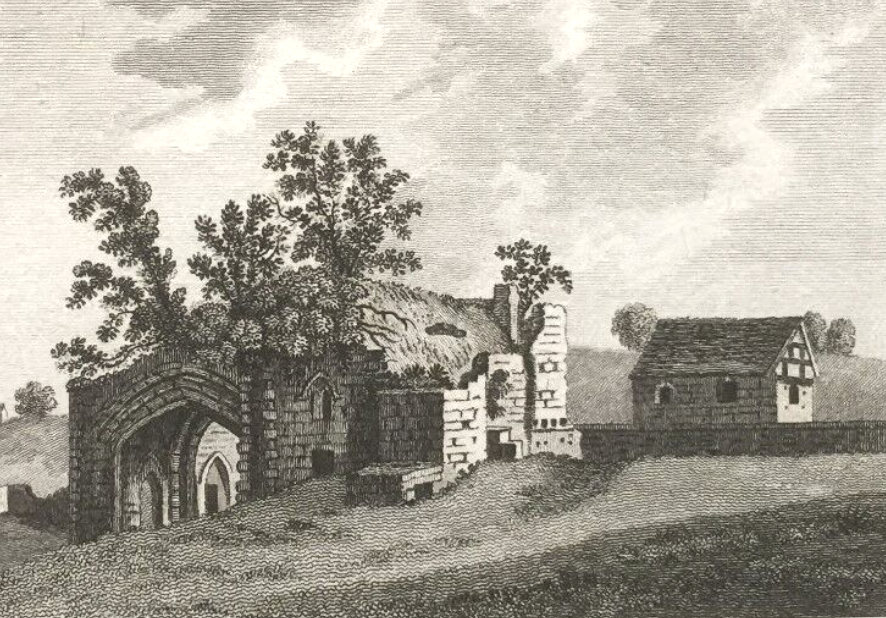
HE Historic Print Archive
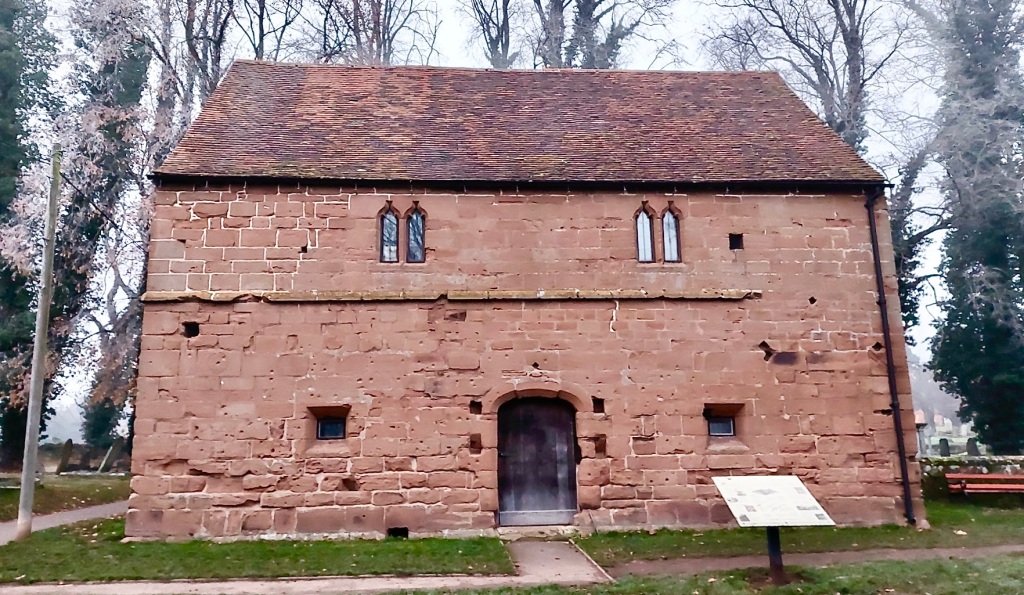
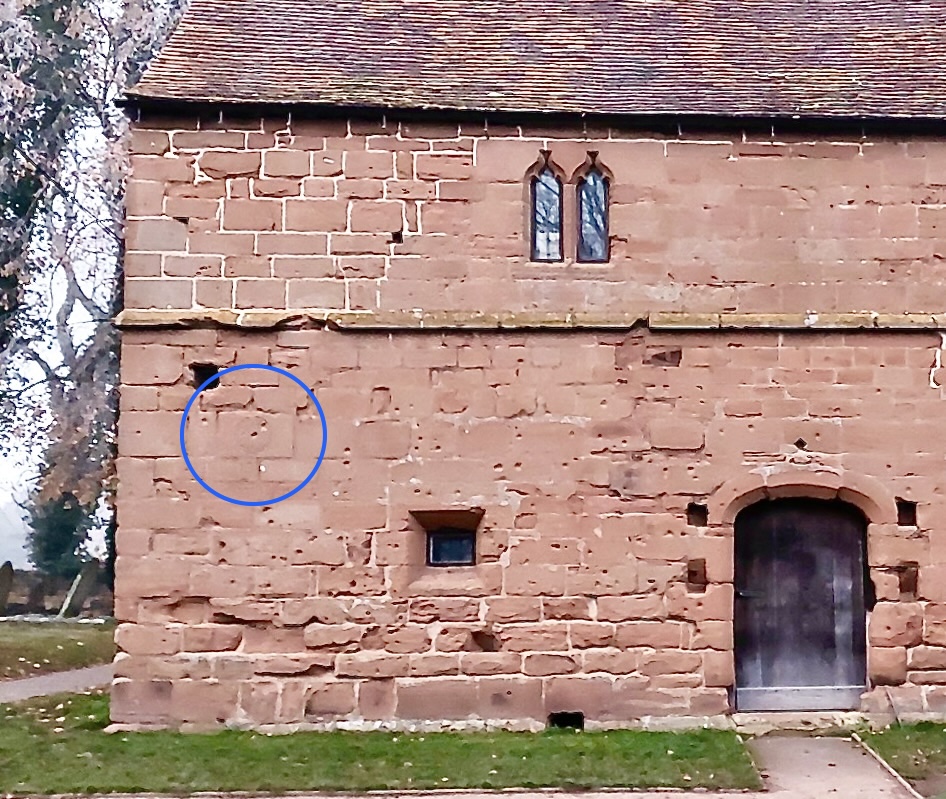
In the grounds close to the C14 gatehouse is a small 2-storey building known as the Barn, now thought unlikely to have been built as, or used as, a barn. The general view seems also to be that it had no monastic function. There were 2 latrines, which makes me wonder if it might have been some sort of lodging house for low-level family, or for visitors with a servant or two. The barn now serves as the Kenilworth Abbey Museum & Heritage Centre.
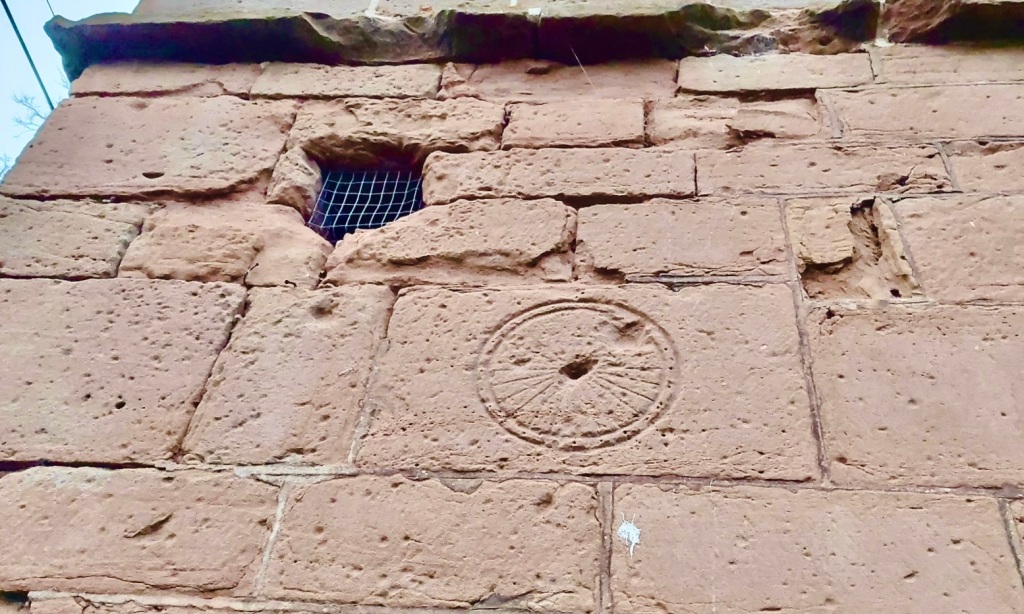
For present purposes, the barn’s significance is the scratch dial LHS on the front of the building. It is relatively rare for a dial to be cut on a secular building. Where found, it is most likely to be on a barn (Bradford-on-Avon has one on its famous tithe barn).
Erika Clarkson
DIAL
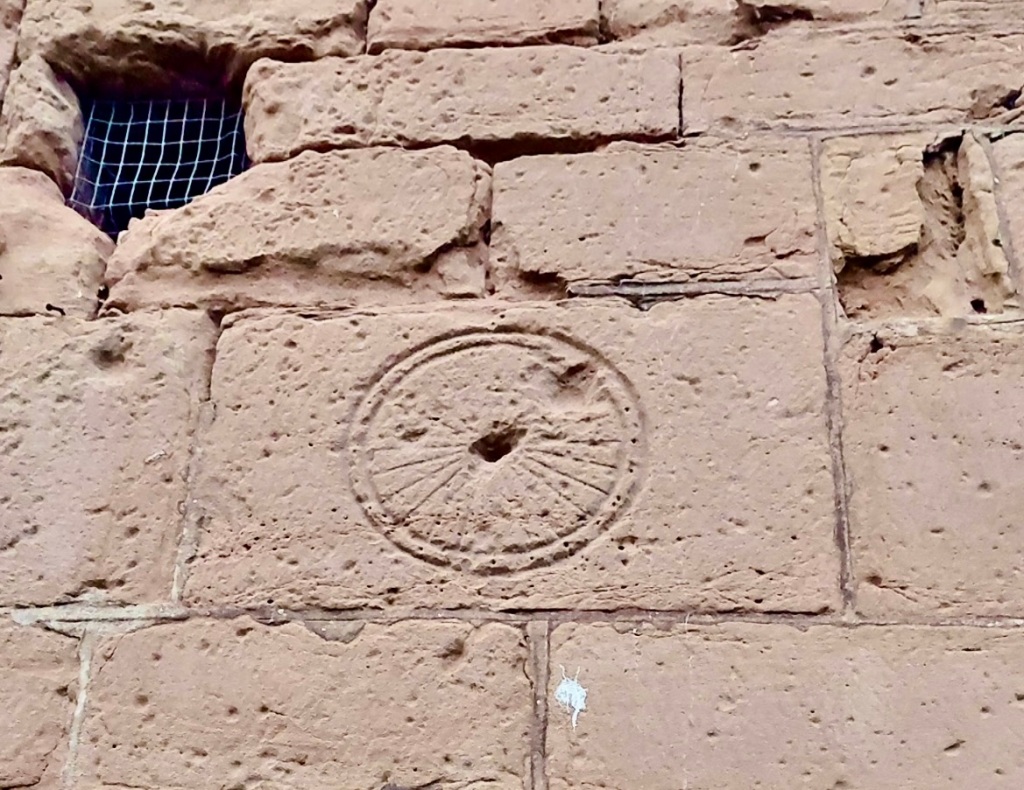
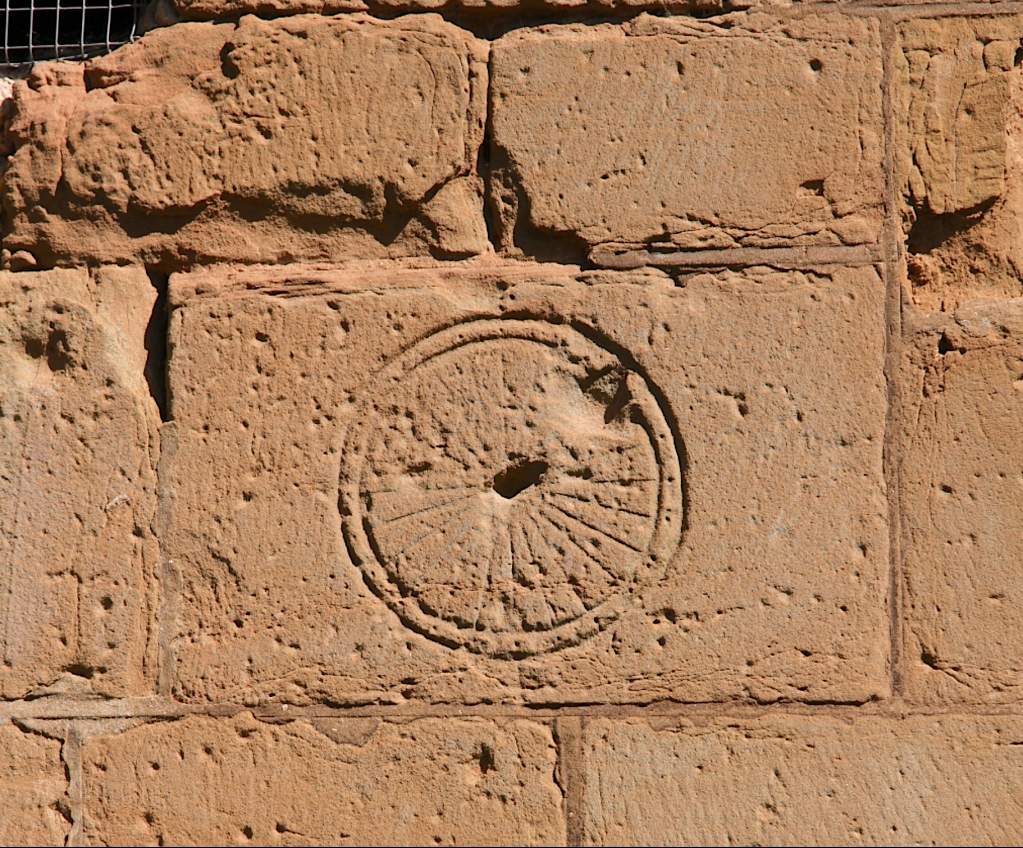
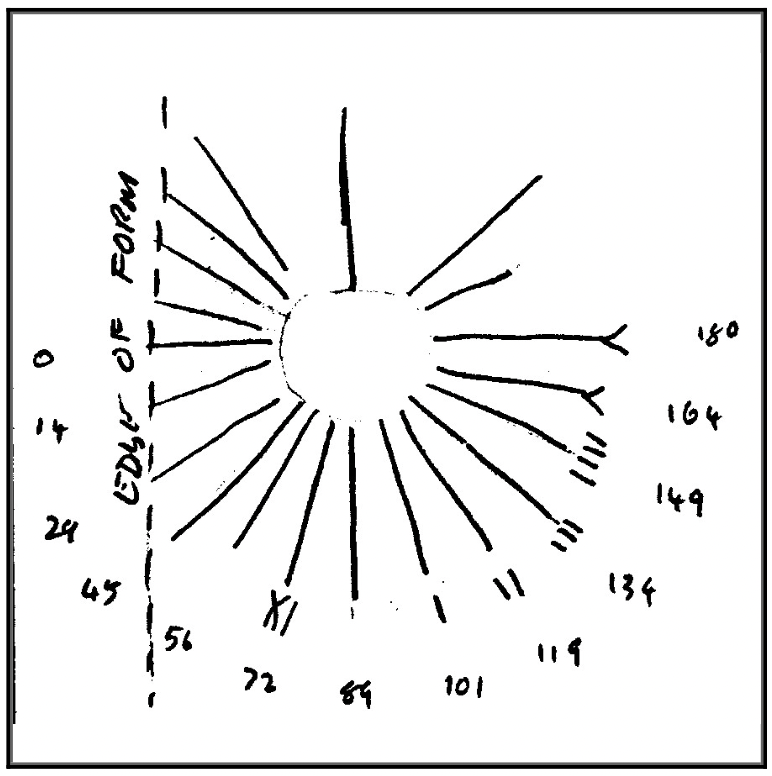
The dial is within a double circle. It has suffered from both erosion and damage – it has indeed been in the wars. There appears to be a complete set of 24 lines spaced fairly equally at 15º to form a complete circle of radials. Unusually I think, each line is matched to a small terminal pock on the ridge between the 2 circles. Those at 3, 4, and 5 have double pocks, perhaps an indication of the most important part of the day for observance. It corresponds with the canonical mid-afternoon hour NONE. The lines are also deeper cut (and thus less eroded), a common form of emphasis. It’s difficult to say whether the other more random pocks on the dial face were intended as part of it.
The gnomon hole is clearly not as it was originally. I expect there was a conventional central hole, (as the curve LHS hints) and at some stage something wedge-shaped was a clumsy substitute or replacement; or perhaps sword tips were sharpened there.
Motacilla . WIKI . OS / CC
The dial is difficult to date. Various features suggest a later date than medieval. The full 24 hour ‘clock’; the reasonably accurate c15º divisions and double circle; the decorative use of the little pocks. Overall a degree of sophistication compared with earlier dials. My uneducated amateur guess is late C15 / early C16.
One mystery is why a dial was cut onto the barn at all – why did it need one? Perhaps my ‘occasional lodging’ theory has a place here – to assist outlying guests to comply with Castle timings for Mass, feasting, or jousting.
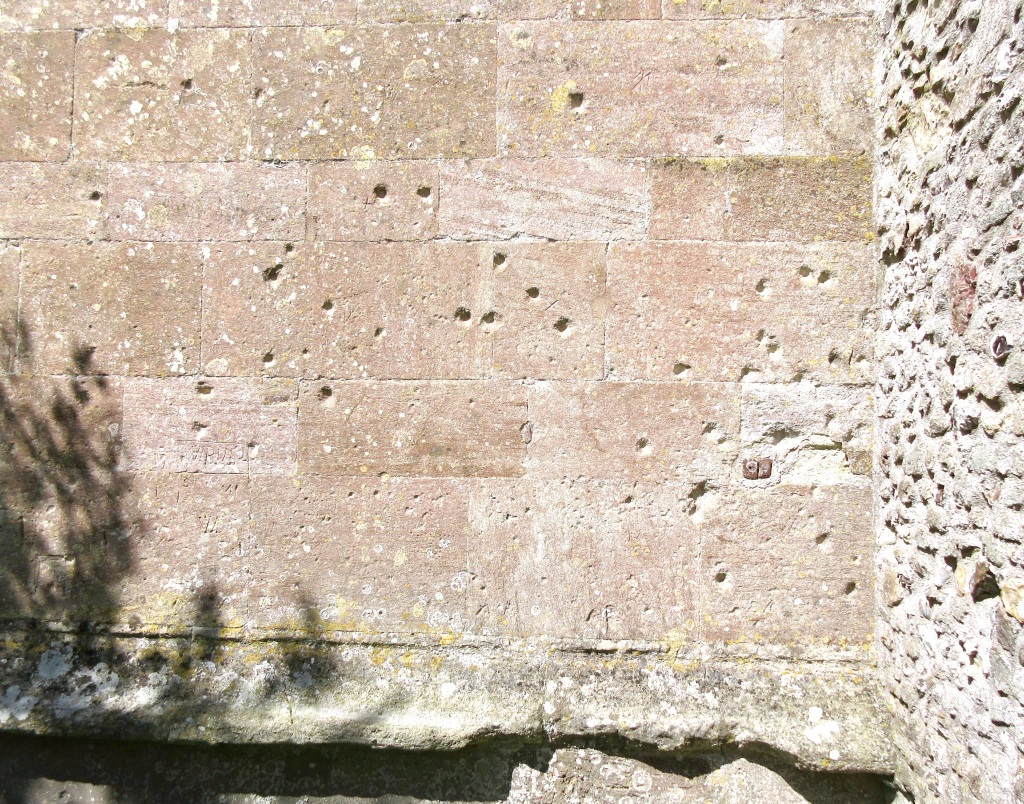
The building has been liberally decorated with musket shot (cf All Saints Alton Priors, below), most plausibly during the Civil War, in which the Castle played a significant part. For building mark / symbols / graffiti enthusiasts, there are quite a few masons’ marks to collect.
All Saints . Alton Priors . Wilts – Musket damage
GSS CATEGORY: Scratch Dial; Scratch Dial on Barn; Scratch Dial on Secular Building
CREDITS: Erika Clarkson (dial detection, images); Motacilla (image OS CC); HE print archive; Kenilworth History and Archaeology Society; Warwickshire World Article by George Evans-Hulme
The image above is enhanced to show this renowned castle in all its dramatic glory. The ancient seat of the Earls of Glasgow dates from C13 – one of the oldest castles in Scotland and the longest continuous family line of descent. This article is adapted from an earlier one published elsewhere. You will find further information about this magnificently daring blend of ancient and modern at the end.
A FINE MULTI-FACETED SCOTTISH SUNDIAL AT KELBURN CASTLE, AYRSHIRE
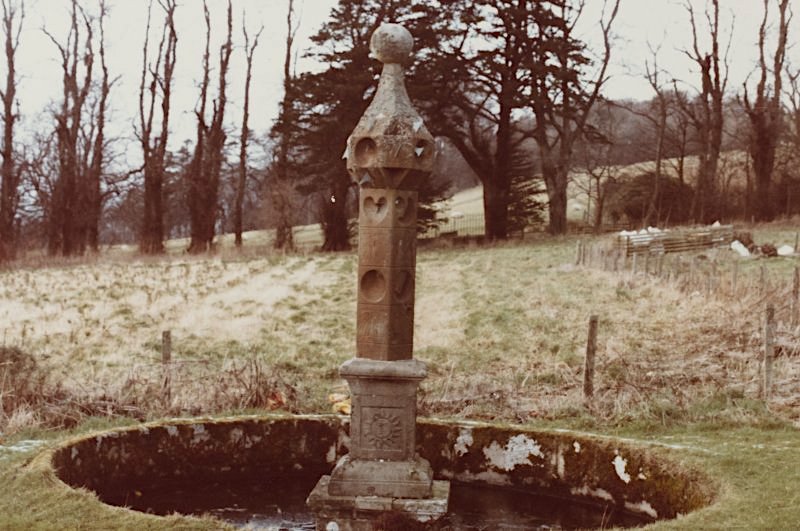
If you want to find a good choice of multi-faceted sundials, Scotland is the place to go. A considerable number may be found at country houses and castles, or elsewhere having originated from a large estate. Many, perhaps most, are 200-300 years old. Some are relatively simple; others are so complex that their purpose is clearly as much ornamental as horological. Good examples can be found at Glamis, Haddo House, Castle Fraser and Culzean Castle.
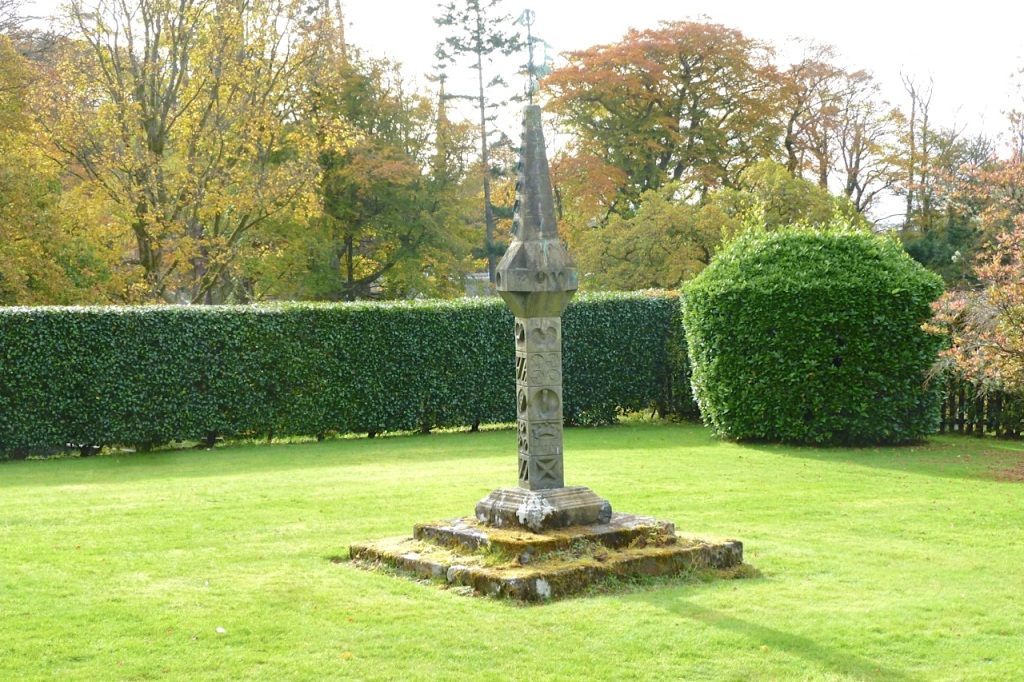
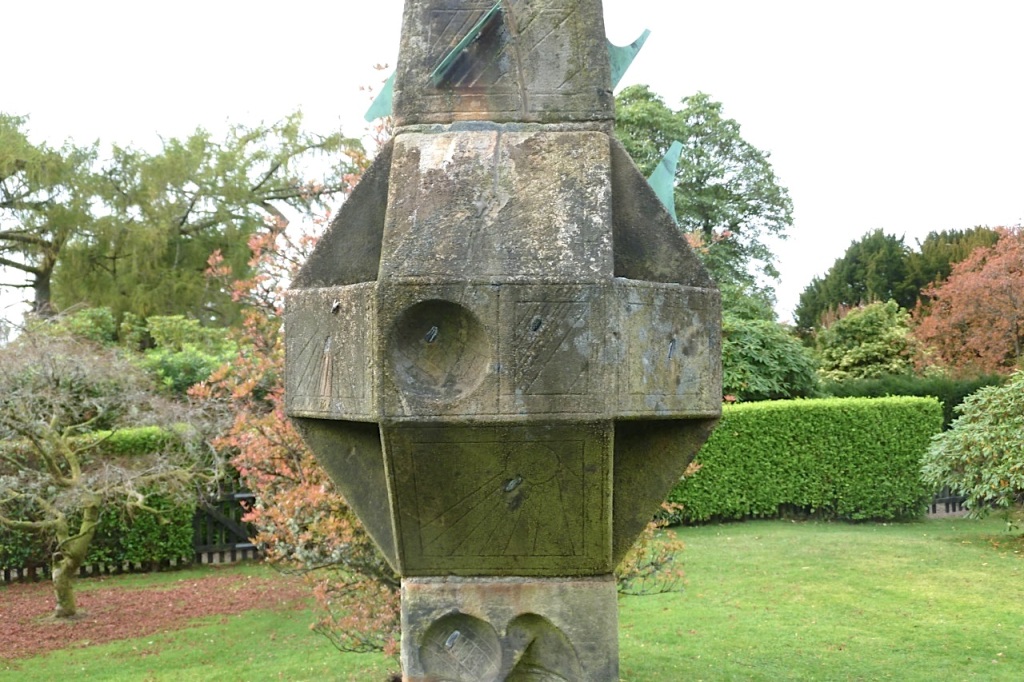
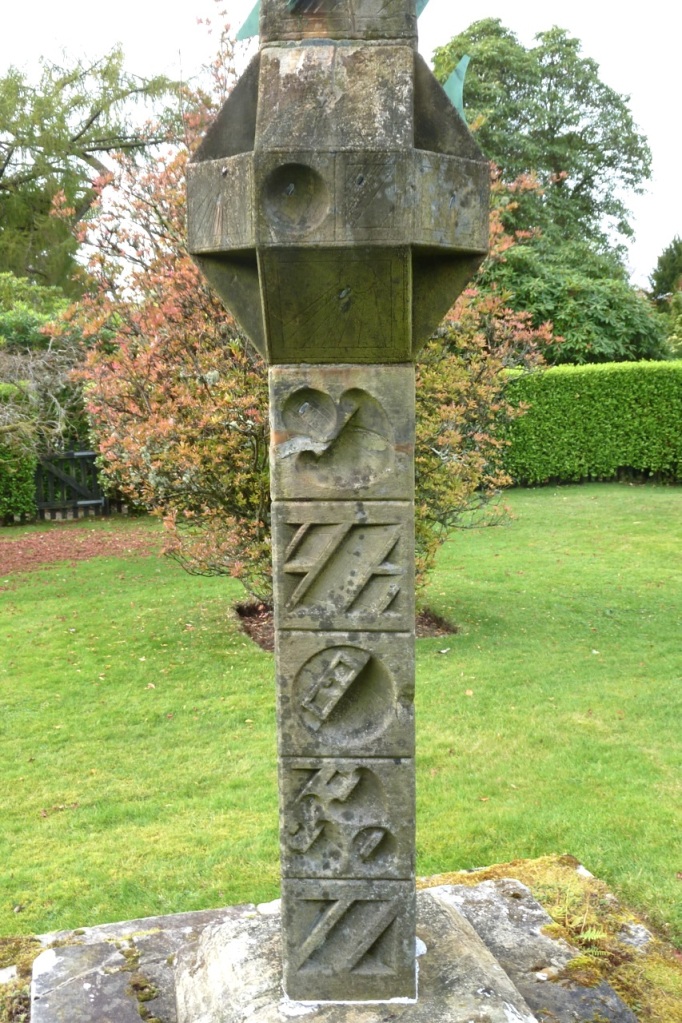
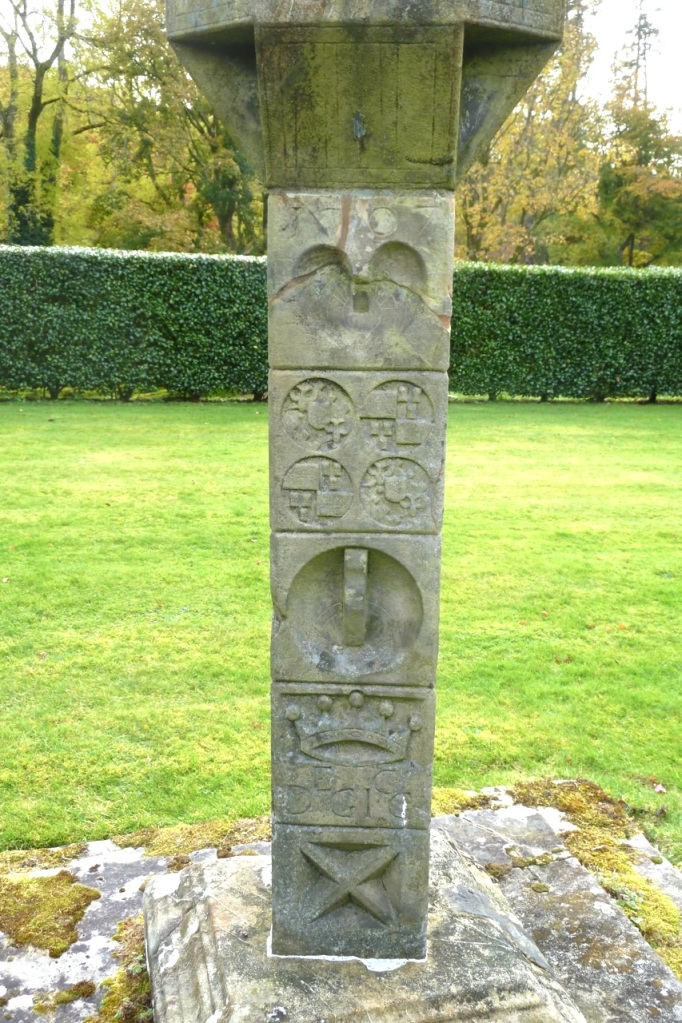
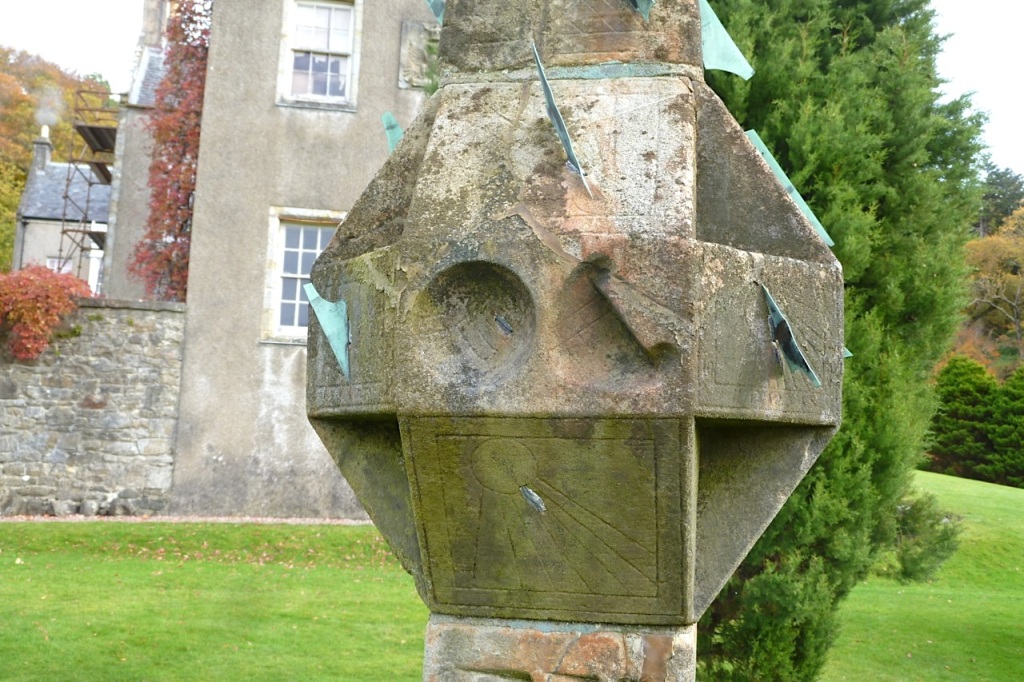
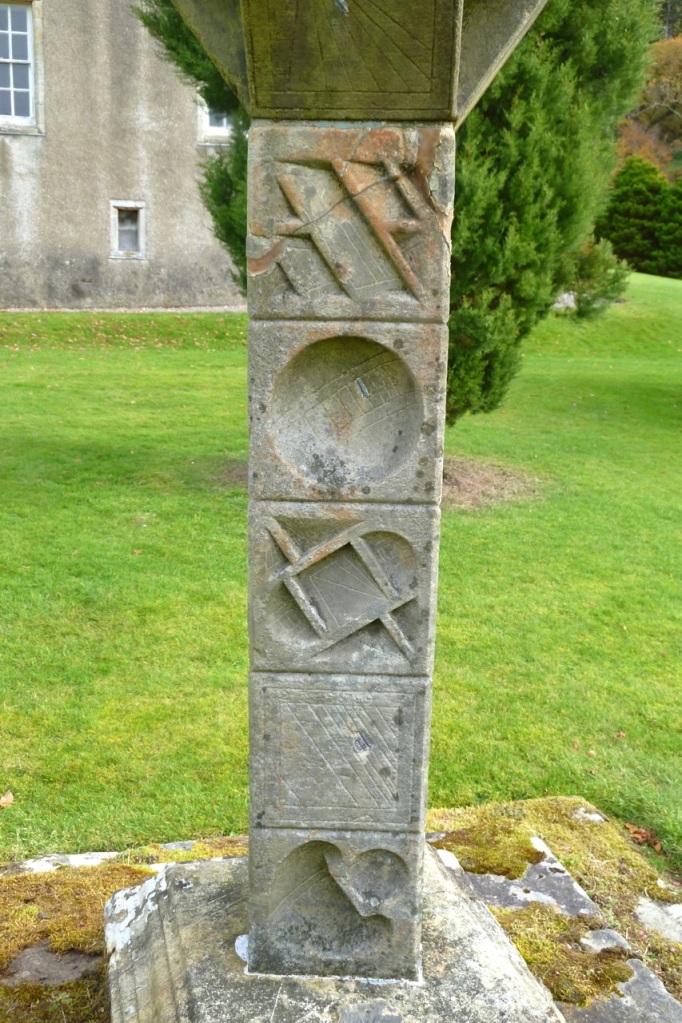
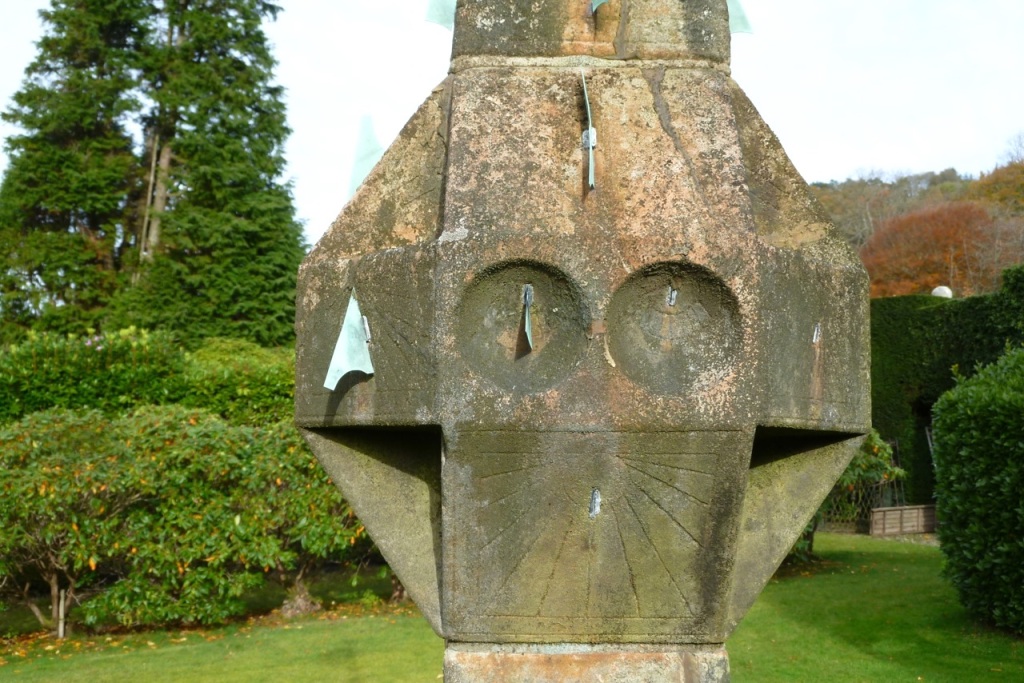
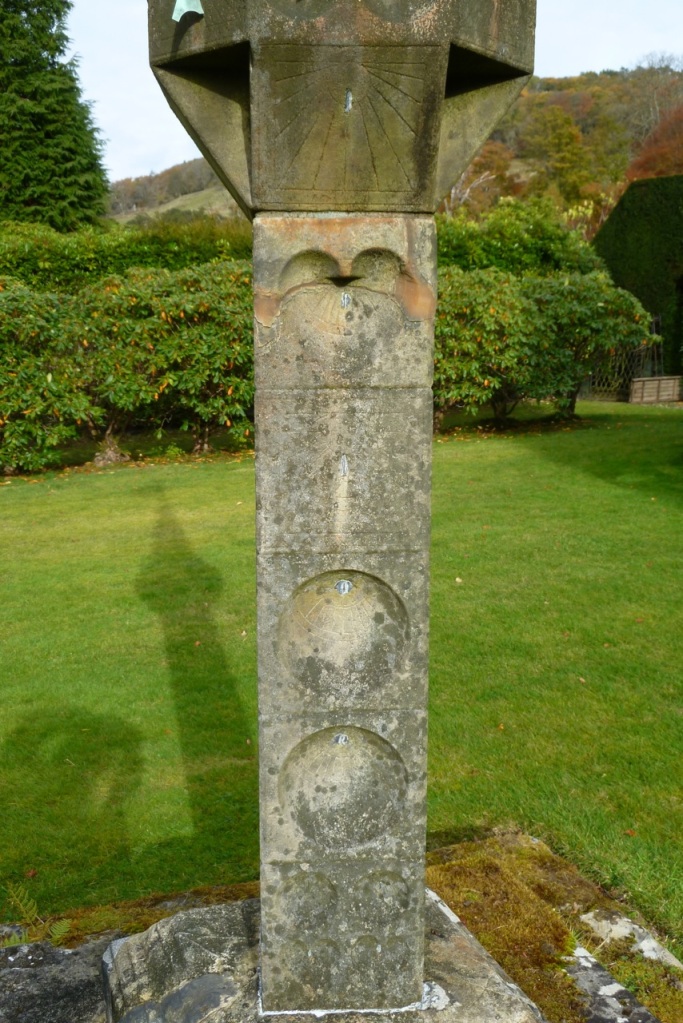
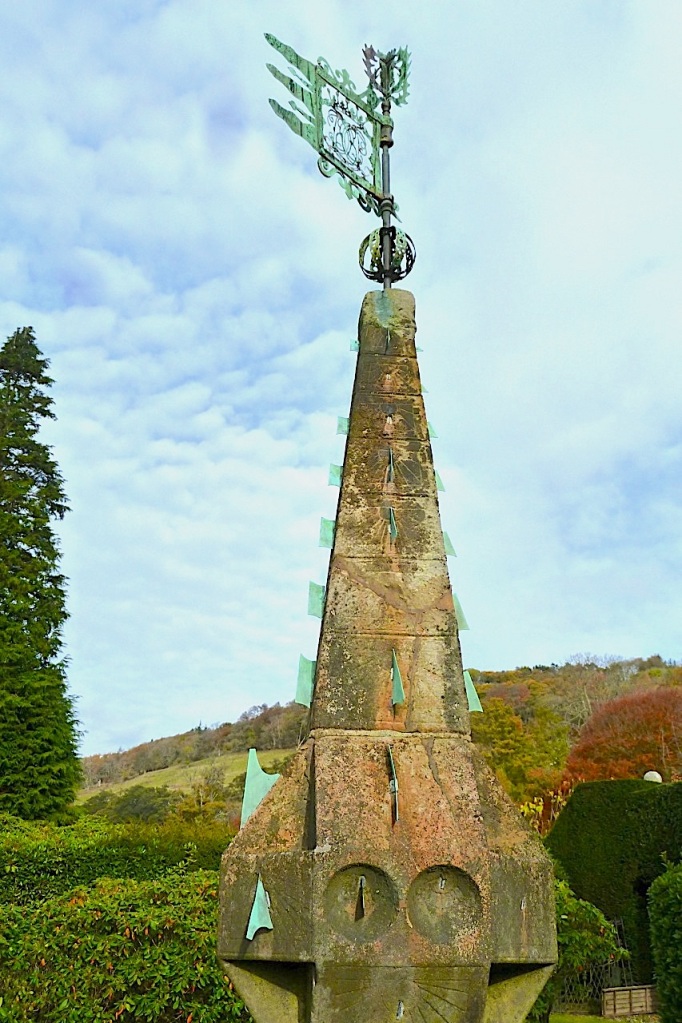
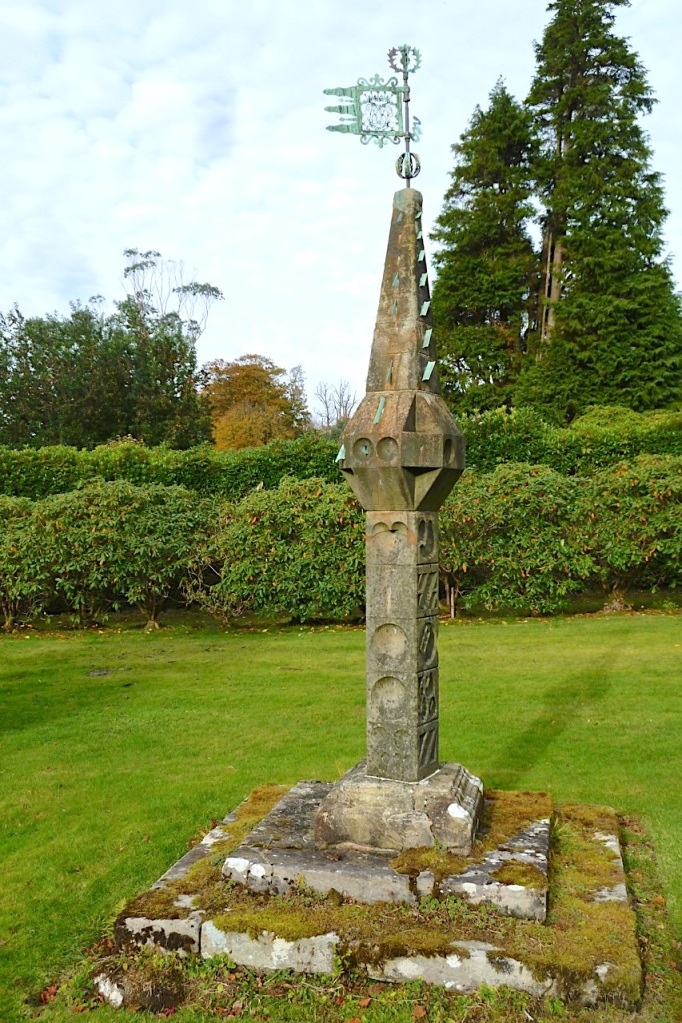
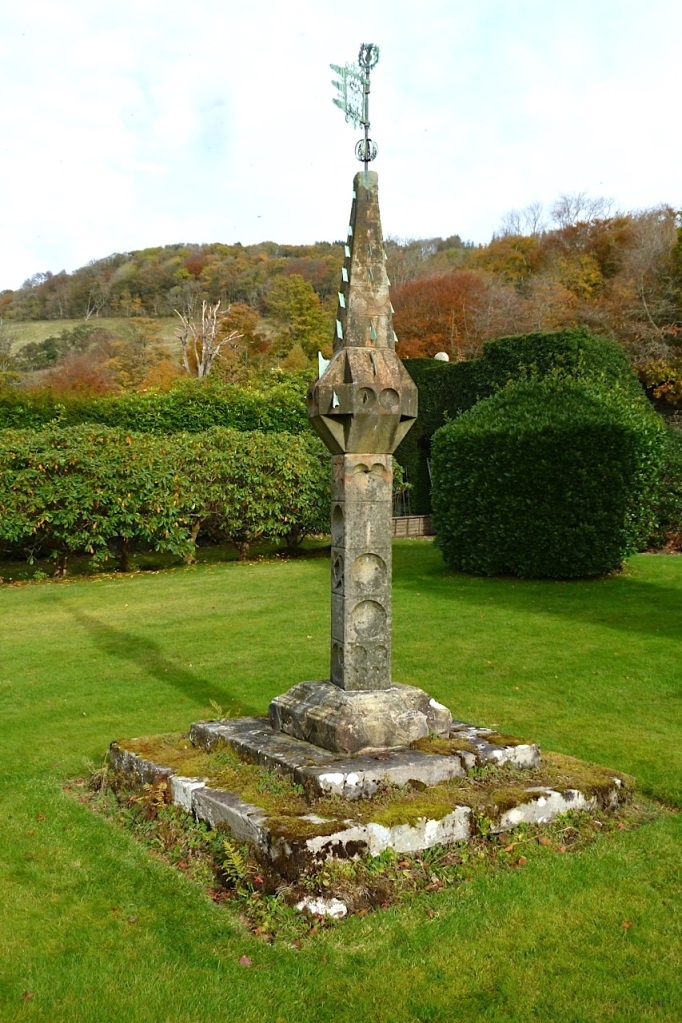
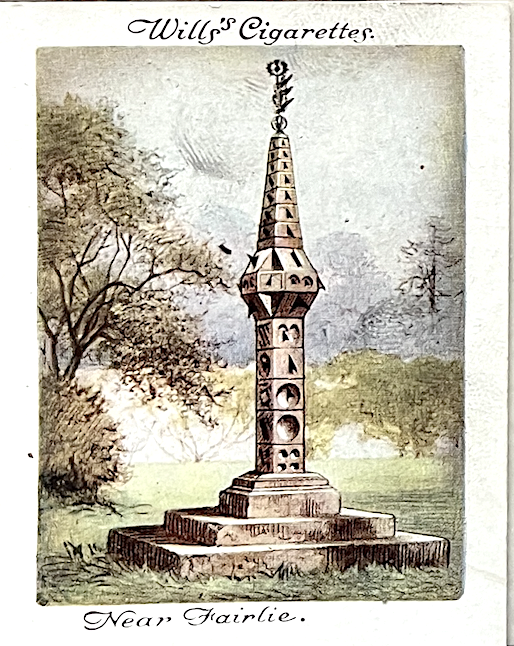
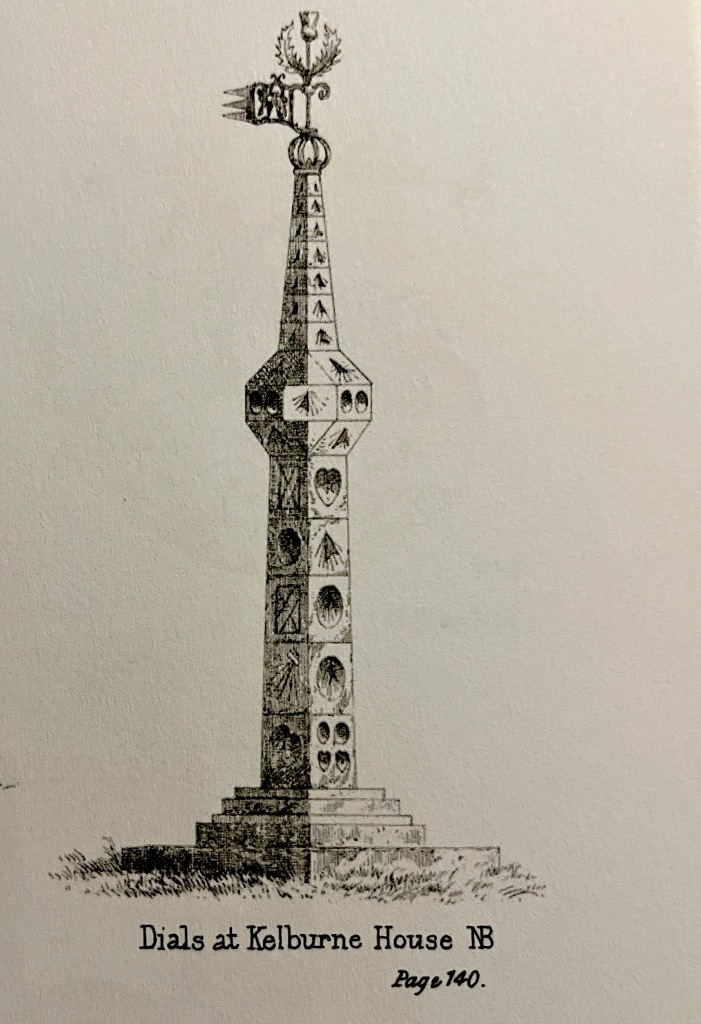
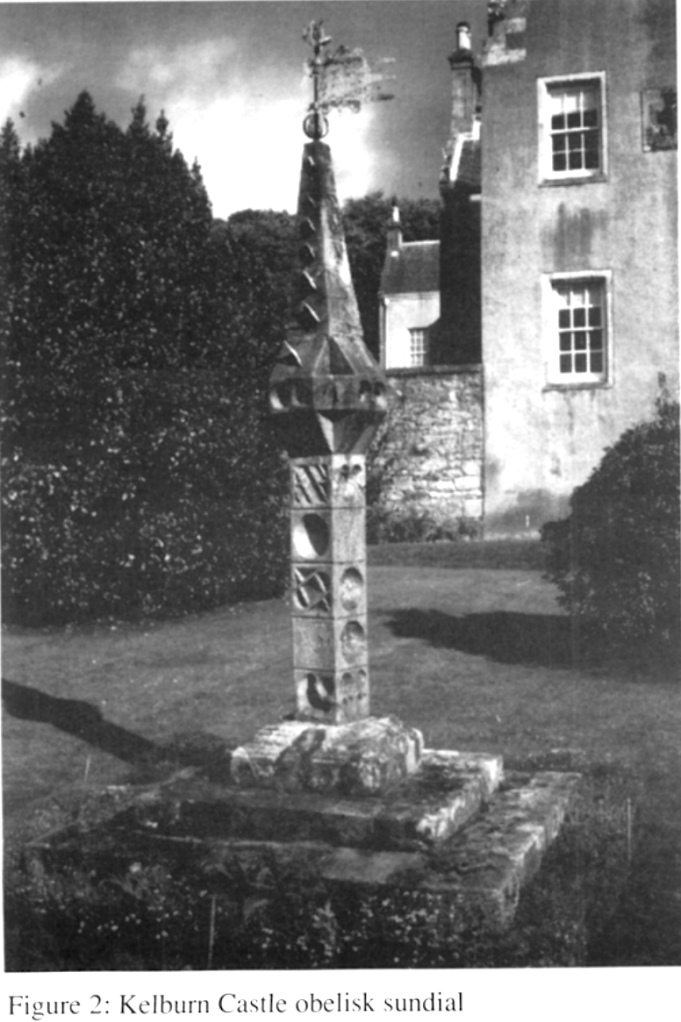
The 1707 multi-faceted oblelisk sundial at Kelburn is one of the most important sundials in Scotland. Some restoration has been carried out, and it now appears to be in overall good condition. While there seems to be no agreed figure for the exact number of individual dials, the count starts at 70.
I’ve made no attempt to describe the dials for obvious reasons, but there are links at the end that will be helpful for those who want to investigate further than looking at the photos.
THE SUNDIAL FROM EACH ORIENTATION
EAST SIDE
NORTH SIDE
WEST SIDE
SOUTH SIDE
SPIRE
NOTES
Kelburn’s astonishing transformation from early medieval stronghold into an outrageous post-psychedelic House of Fun began in 2007. The building’s concrete cladding needed to be replaced, following which (and with official approval) four Brazilian graffiti artists were invited to let their imaginations run loose. And did.
There is plenty of material online about this remarkable building – see link to its website below. Enterprises on offer include weddings; yurts; summer music festival; a reputedly scary Halloween. Summed up in the estate material: It’s a cultural safari for the mind, body and soul.
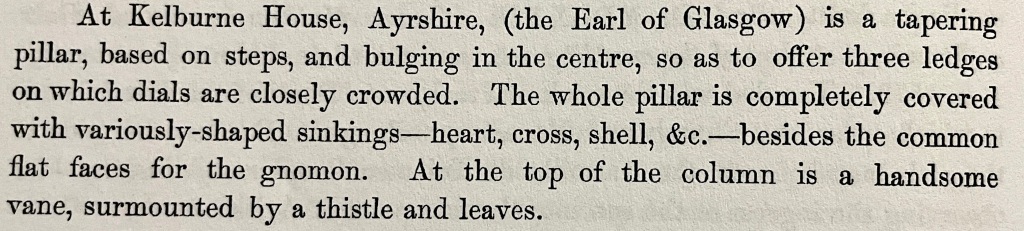
GATTY(p 140)
BSS
The Kelburn Dial featured in Bulletin 1996 in connection with a later dial based on it
There is a second, smaller obelisk sundial NW of the castle that receives rather less attention: Sundial to west of Kelburn Castle, Kelburn Castle Estate, Fairlie (LB7298). Listing details can be found HERE
Image from the Canmore photographic records for Kelburn
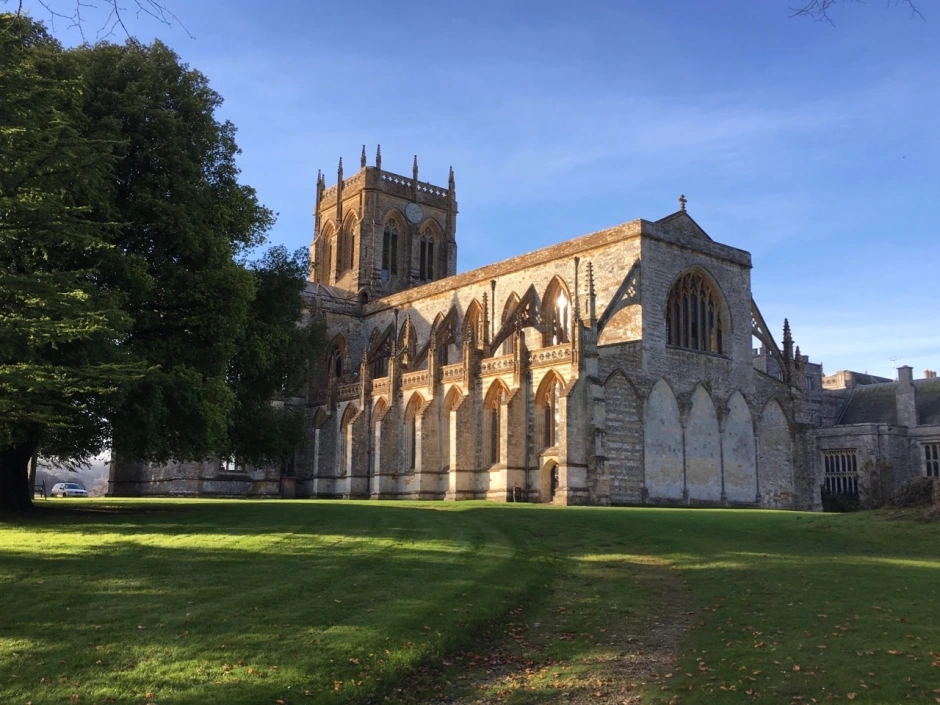
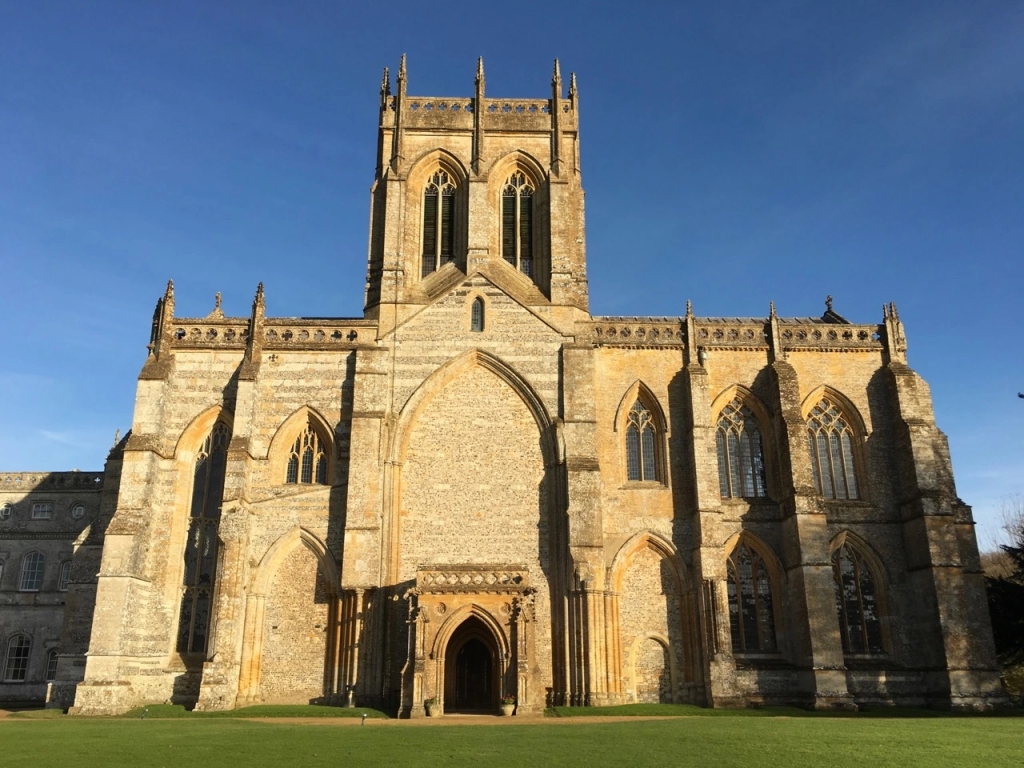
Milton Abbey, more properly called ‘The Abbey Church of St Mary, St Sansom* and St Branwalader**, is a former Benedictine monastery founded in c10. The present building dates from the c14 and c15. The Abbey, with a post-reformation country house attached where the monastic buildings used to be, is now a school.
DIALS
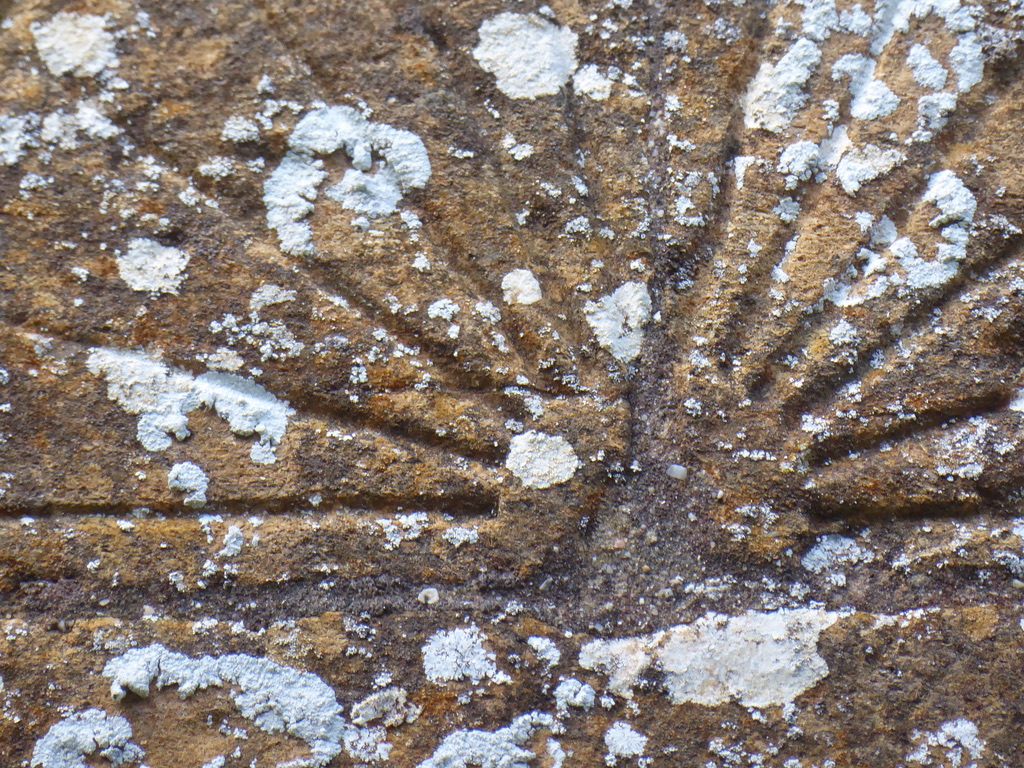
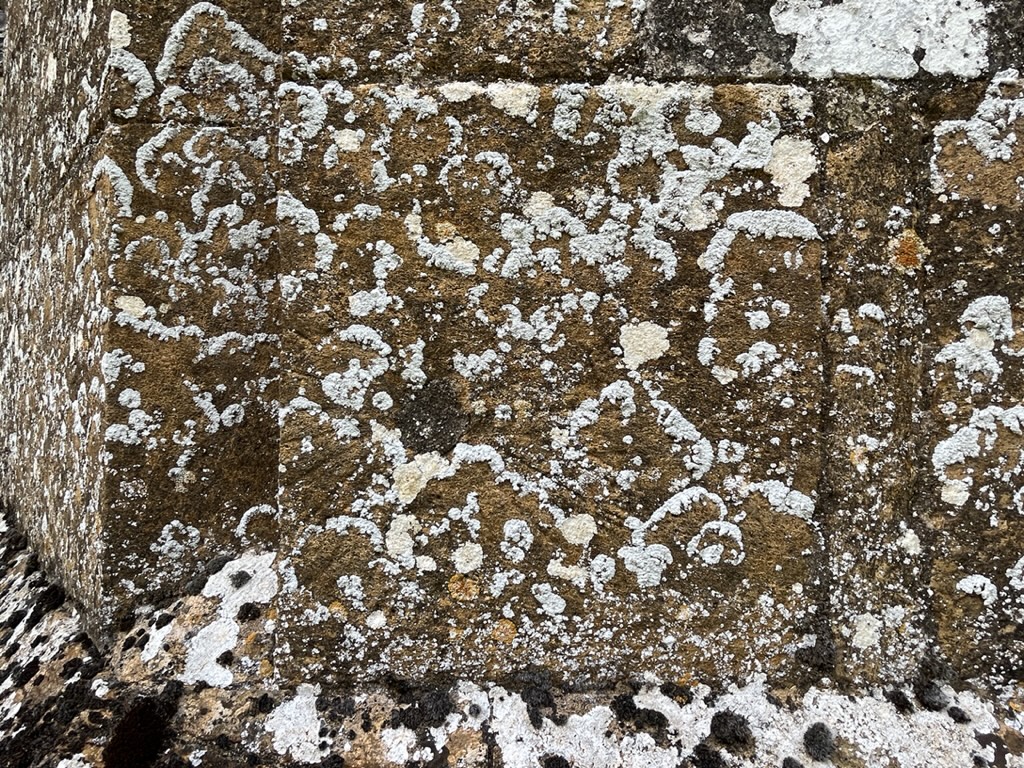
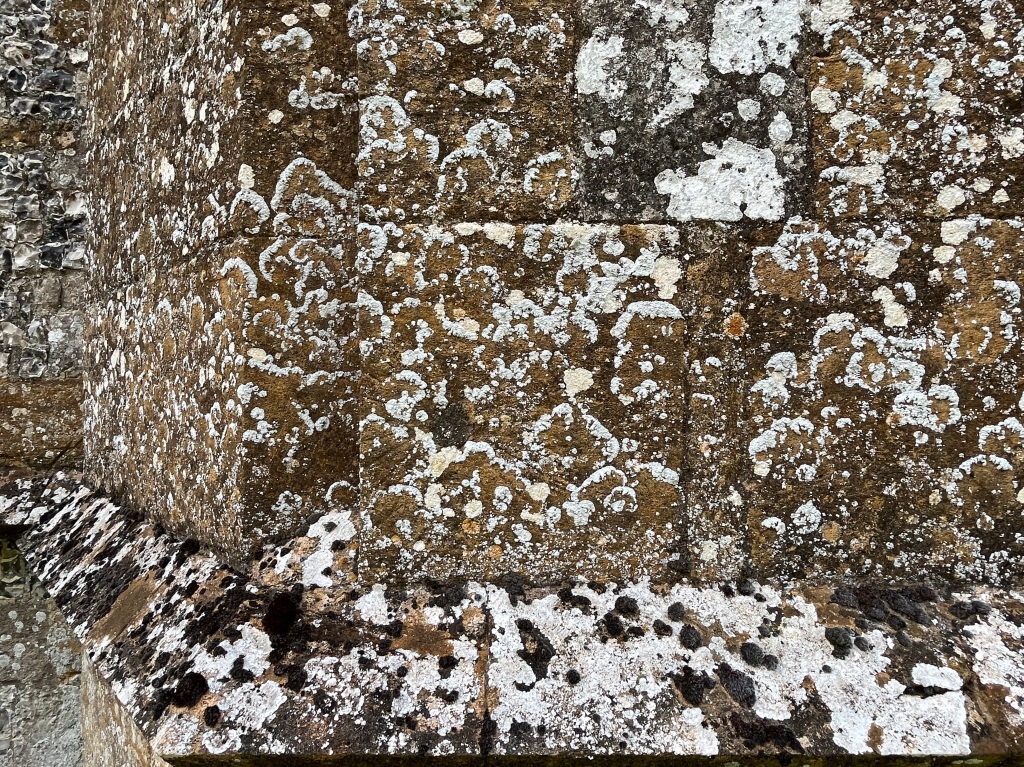
The Abbey has two dials, both on the S face of the SE turret at the end of S transept. Dial 1 – the most intriguing – is some 3m high. Dial 2 is 1m below it, and lichen makes reading it very difficult. Both dials were recorded in 2000 as C14. Dial 1 is unusual, not least because of its condition after C7s.
DIAL 1
Dial 1 is inverted, clearly repositioned. Within a double semicircle are 13 lines radiating from a large filled gnomon hole. Within the 2 rings, each line terminates in a black letter Roman numeral. BSS records these as (with the dial reverted)Il V VIll IX X – space – II IlI IIII V VI Noon is unmarked but extends slightly beyond the outer circle.
DIAL 2
Dial 2, now significantly obscured by lichen, has 20 lines, again with Roman numerals. Only numerals XI I Il III IV and V were recorded as visible in the 2000 survey. Now, only III can be easily seen. The filled gnomon hole is notably L of centre of the dial stone which is significantly cut off LHS, indicating relocation at some time in its history. Possibly there were other numerals at the end of the truncated lines.
*St Sansom: C6 French Bishop and (later) hermit. A Scilly Isle is named after him. An excellent example of a wandering Celtic monk (ODS). Some relics acquired by King Athelstan for Milton.
**St Branwalader: C6 monk. In early C10 King Athelstan obtained his relics and gave them to the monastery at Milton, Dorset. It was not the whole body but either an arm or his head (ODS)
GSS Category: Scratch Dial; Abbey Dial; Roman Numeral Dial
All photos: Keith Salvesen; sources include BBS, GLP; and Oxford Book of Saints
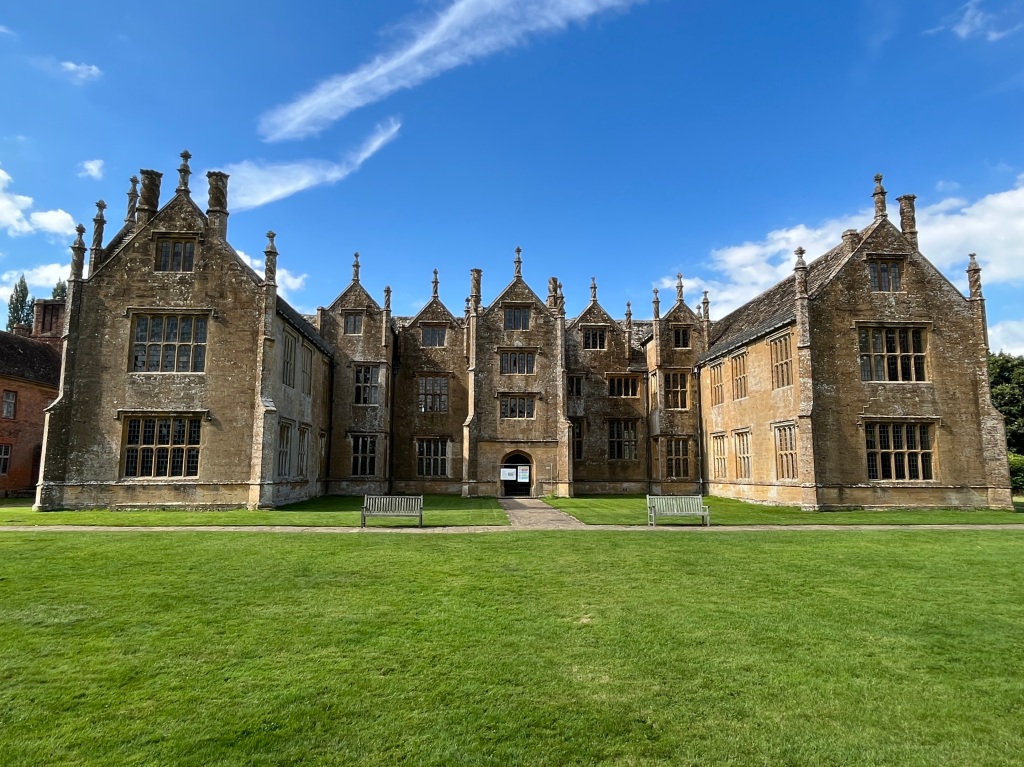
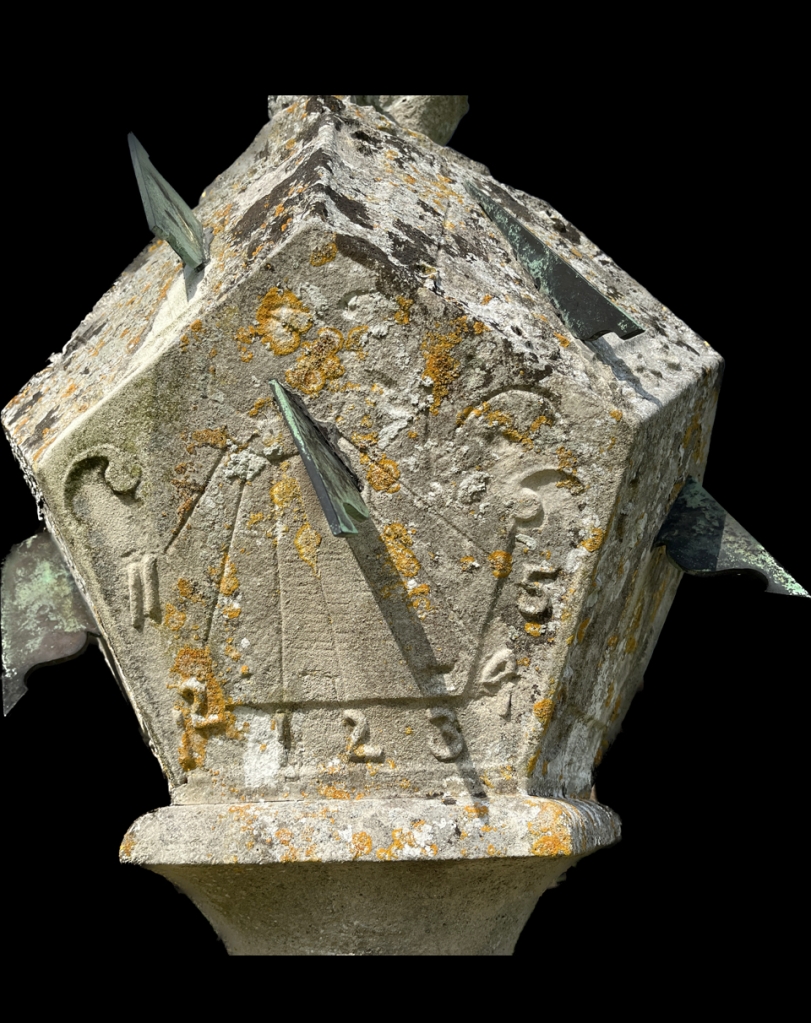
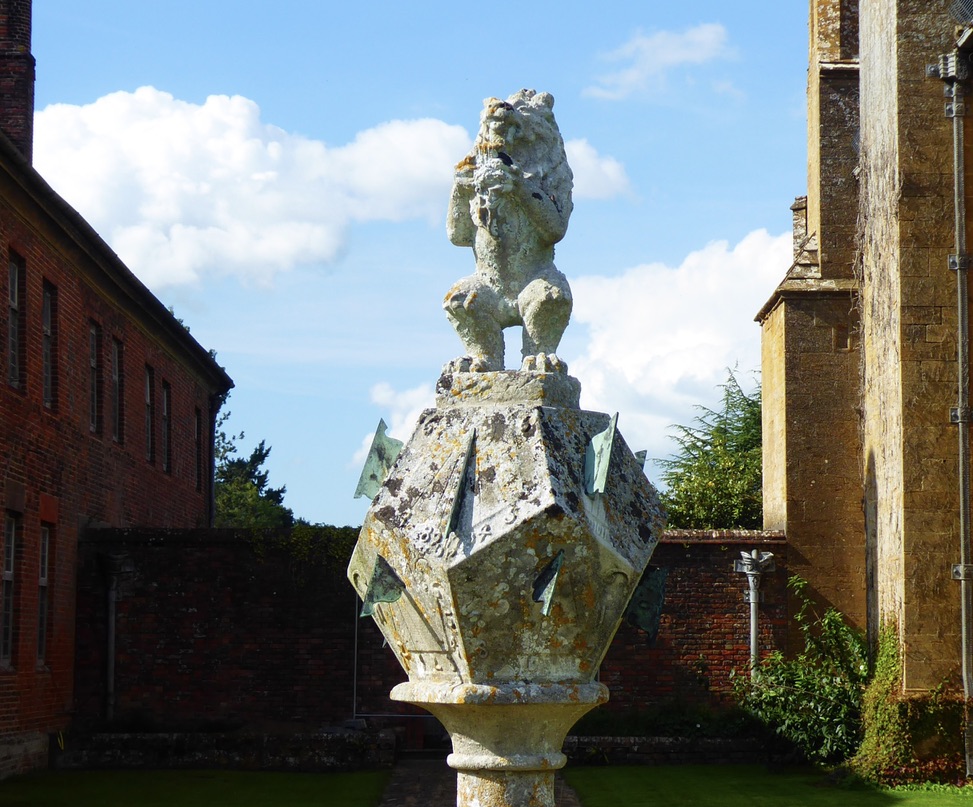
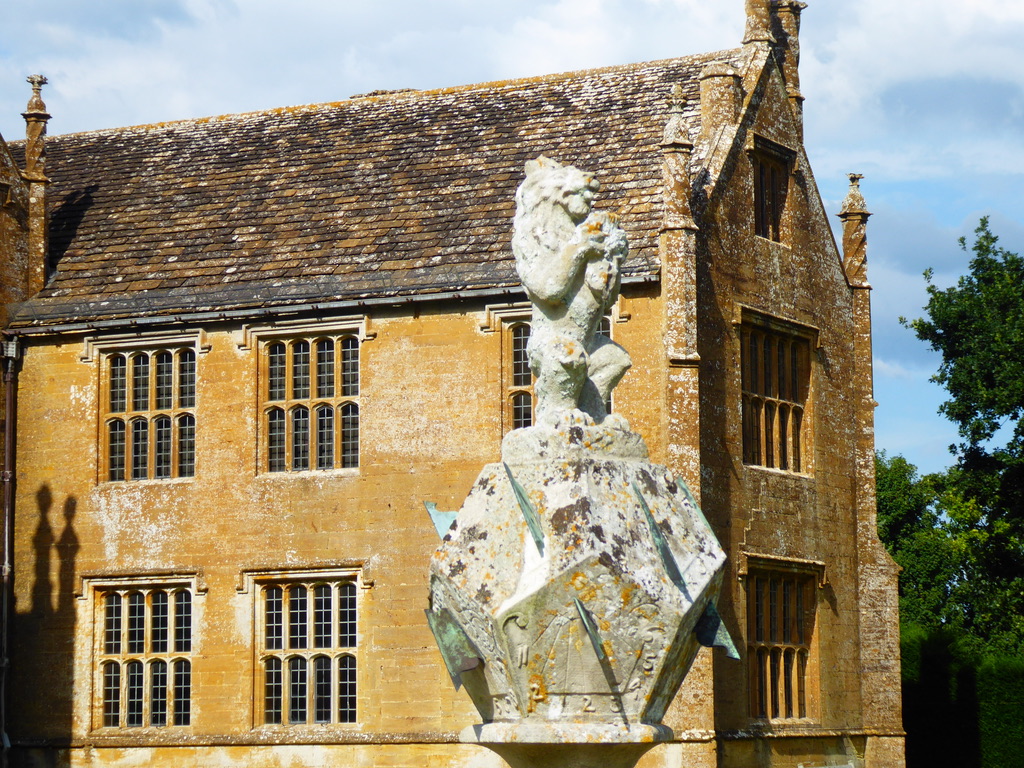
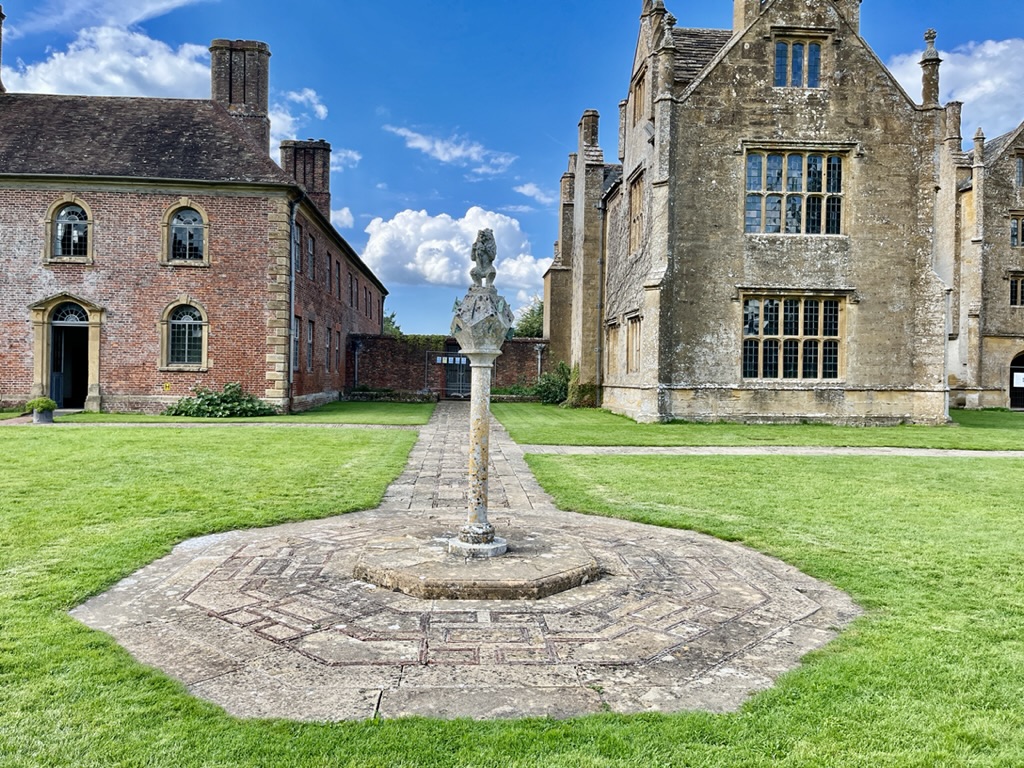
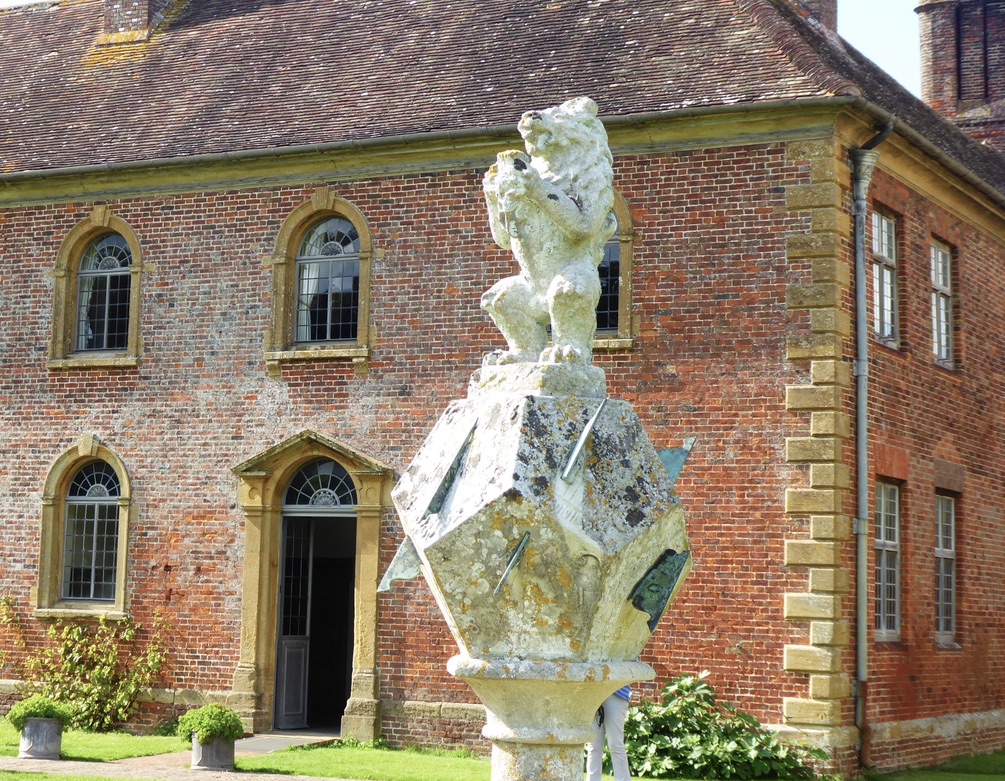
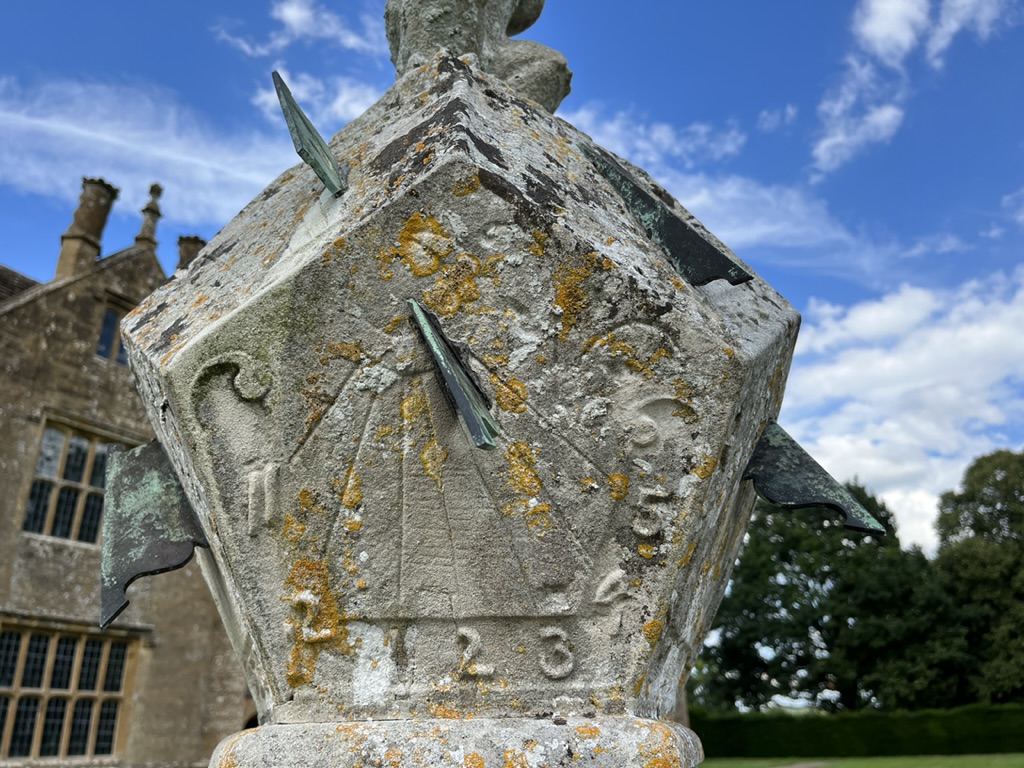
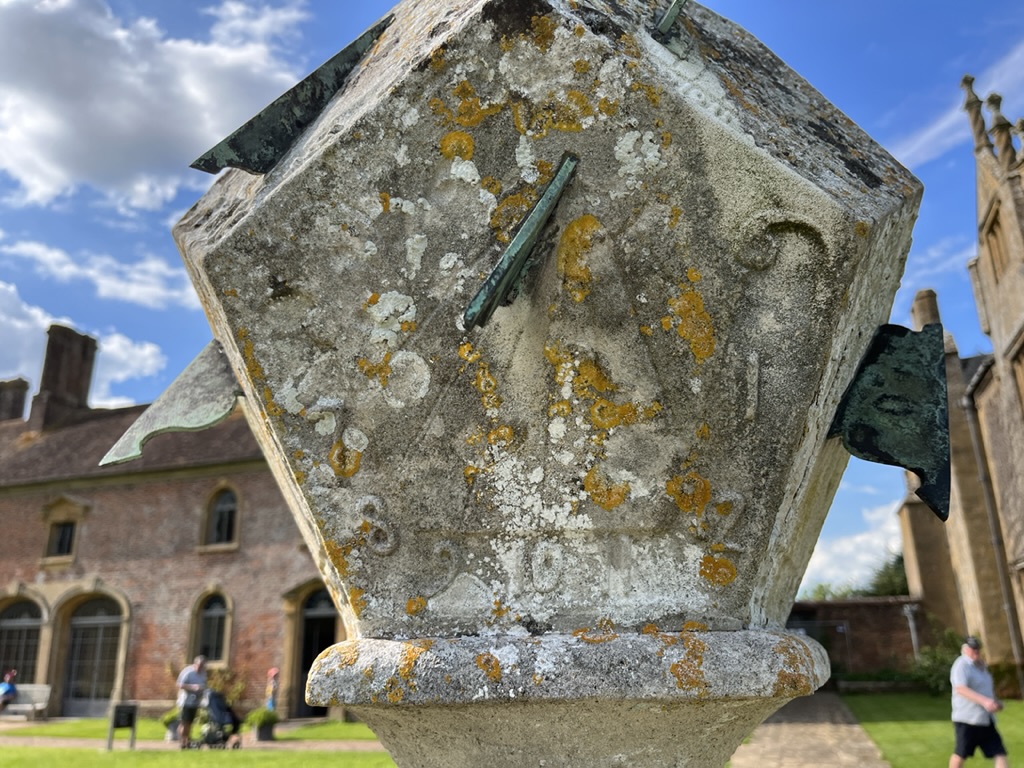
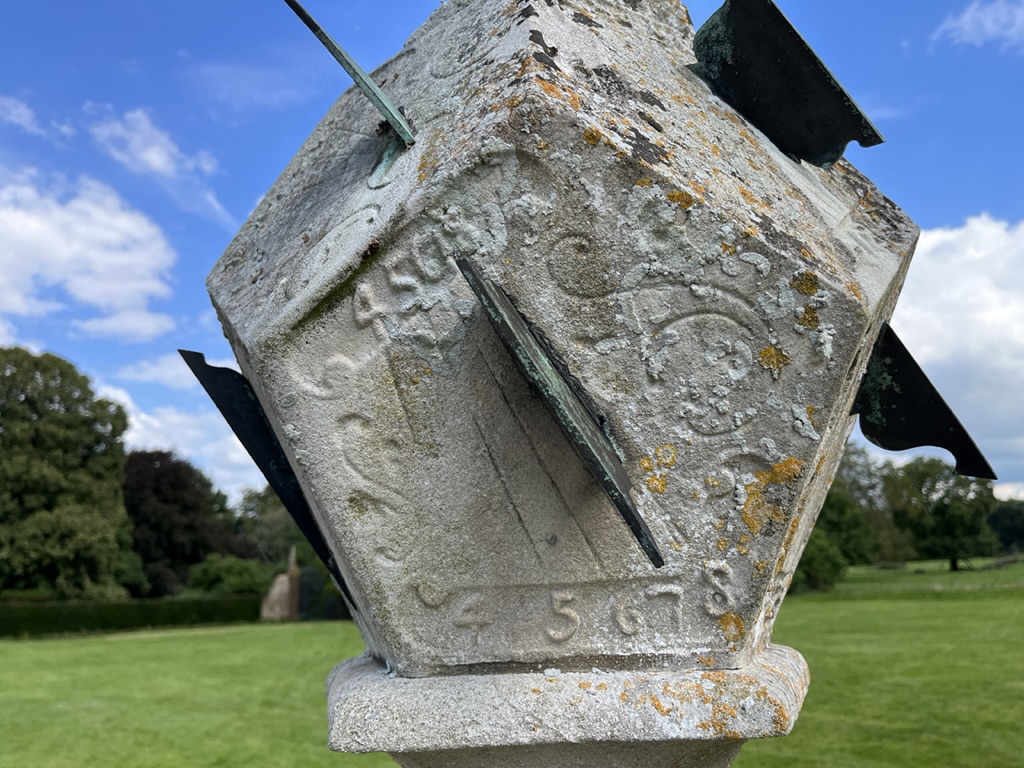
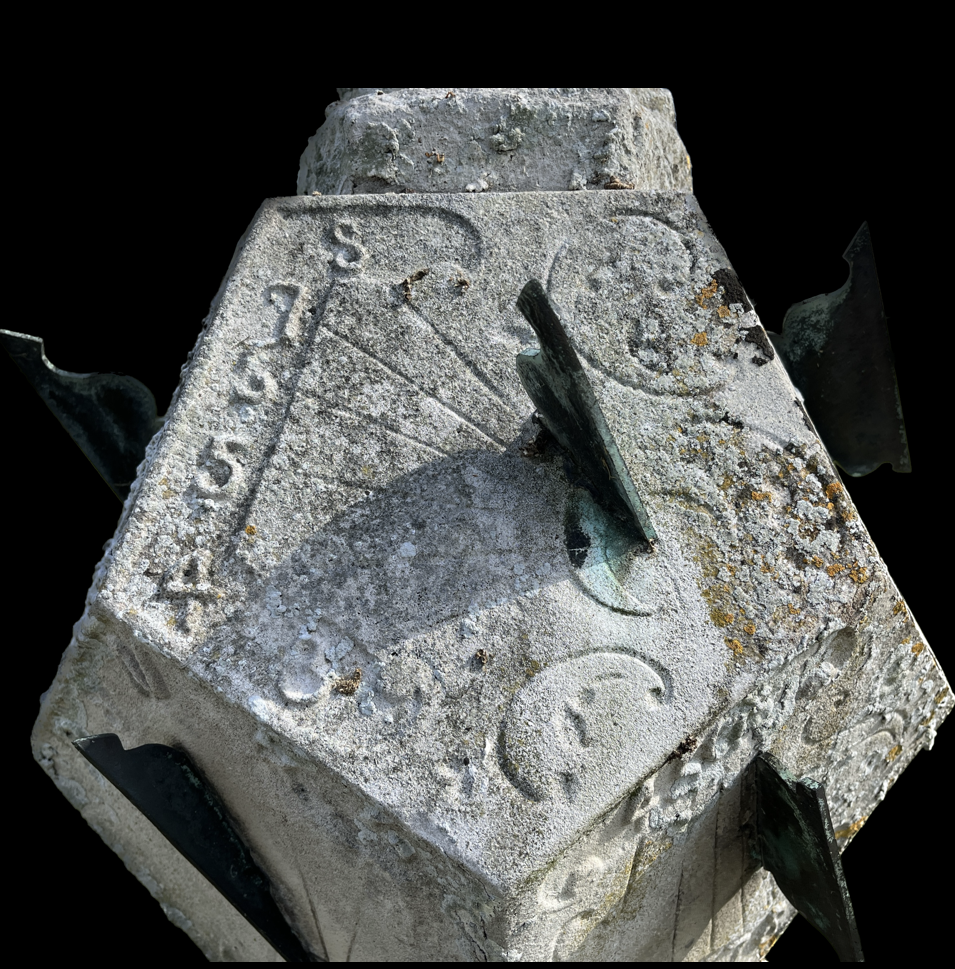
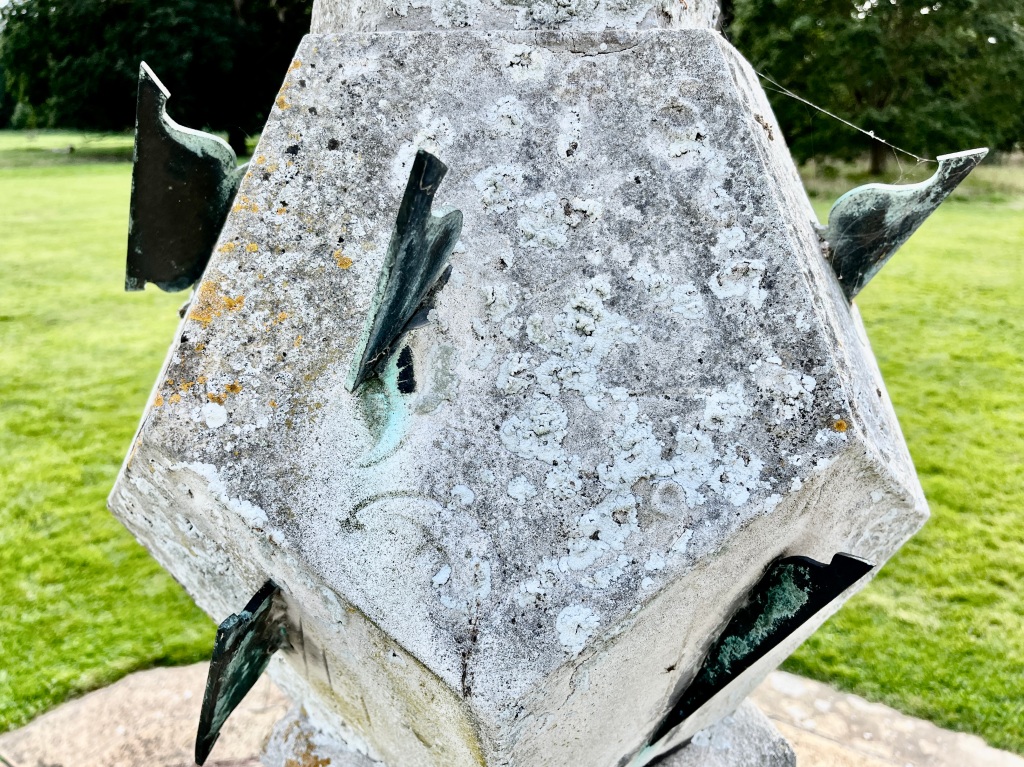
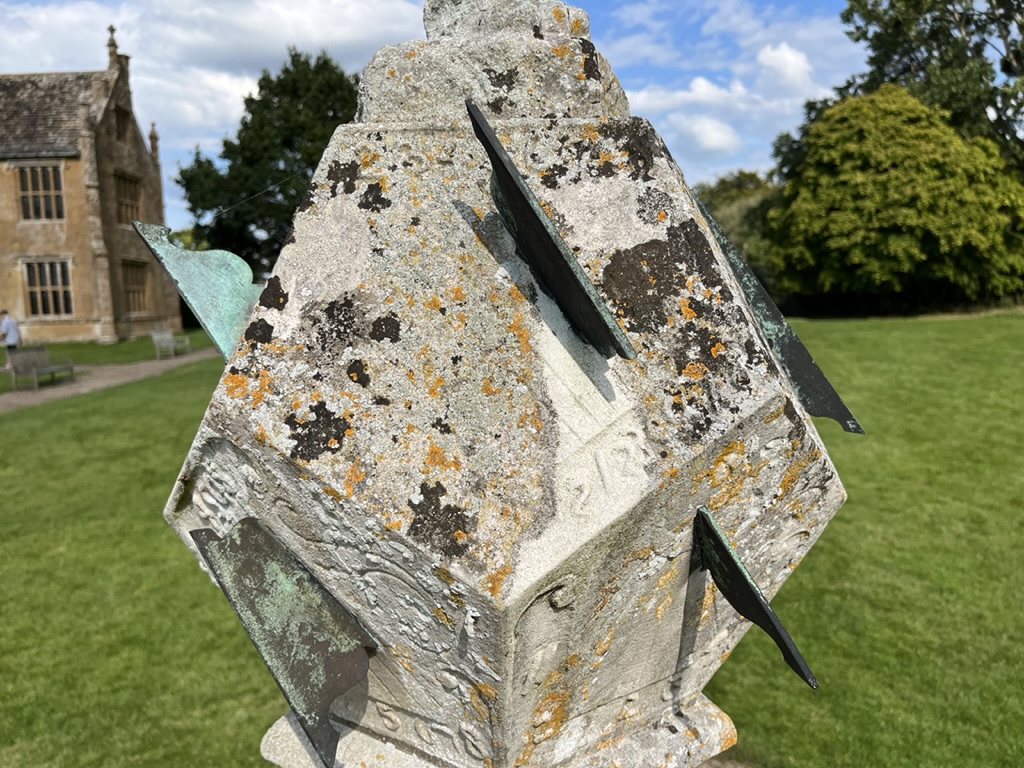
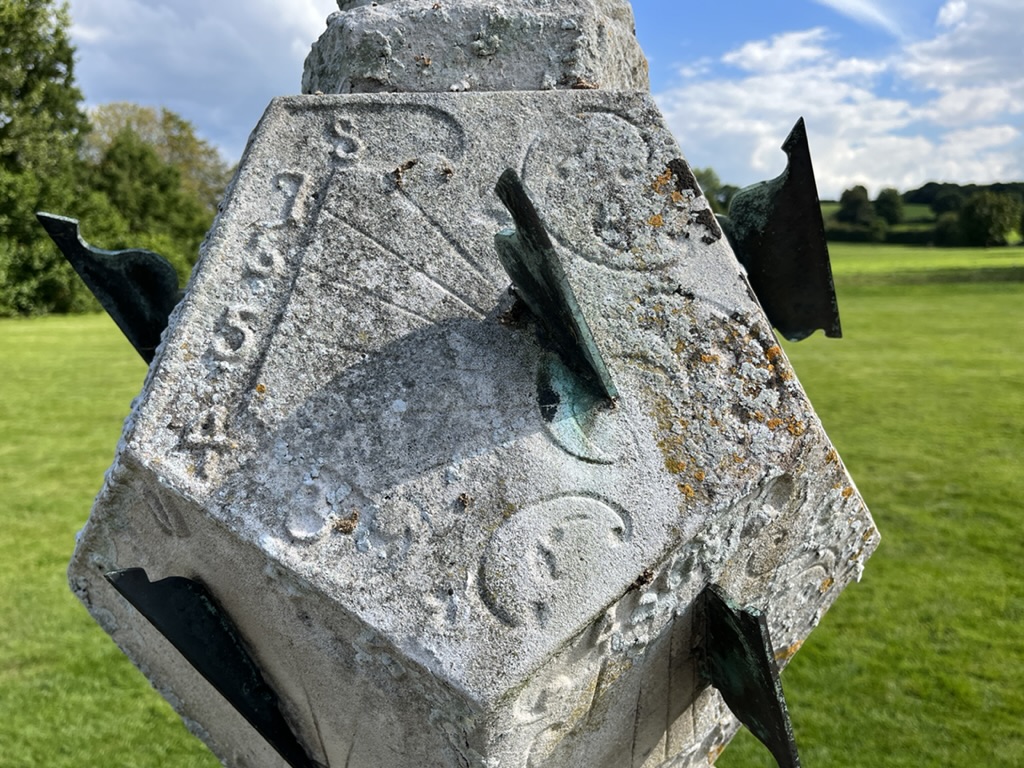
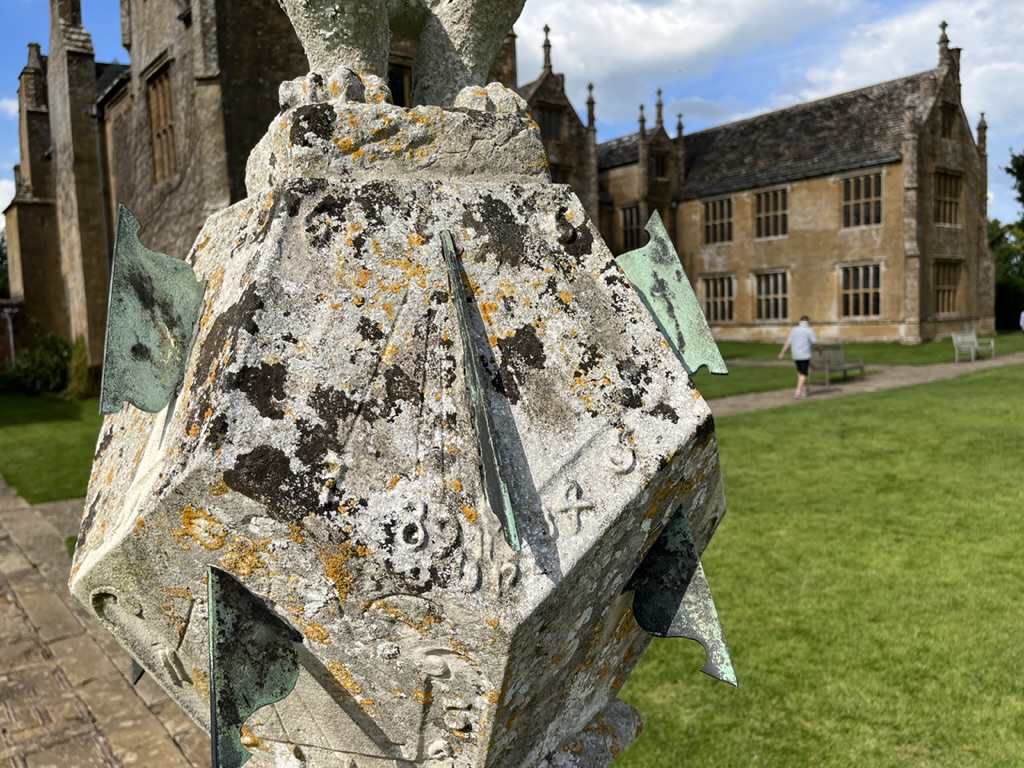
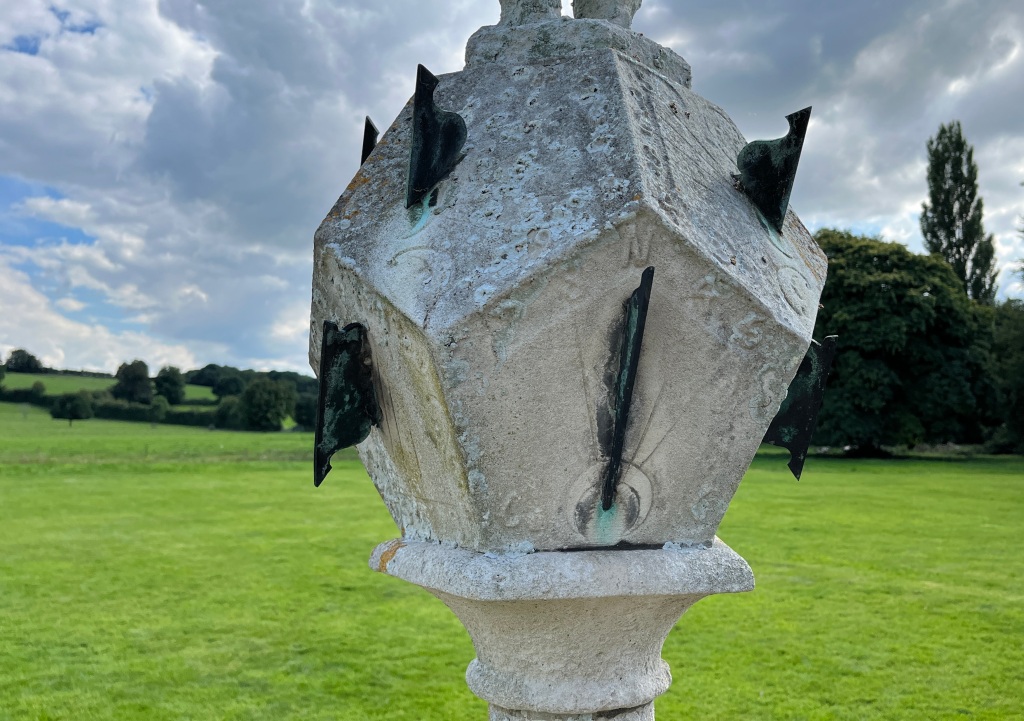
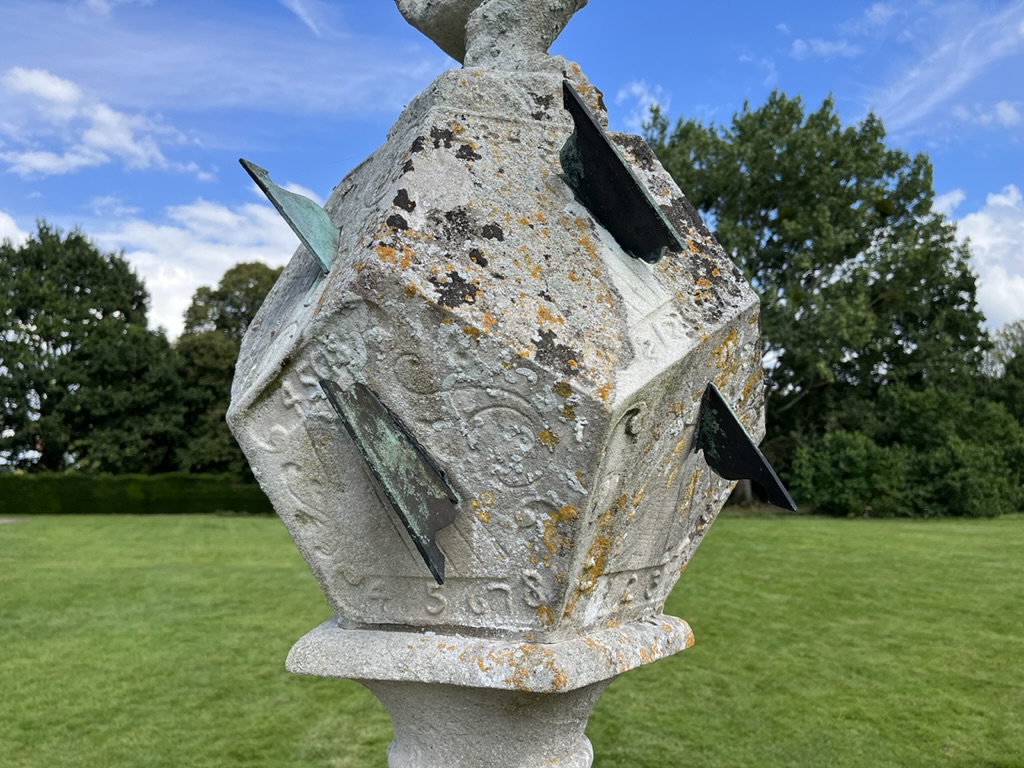
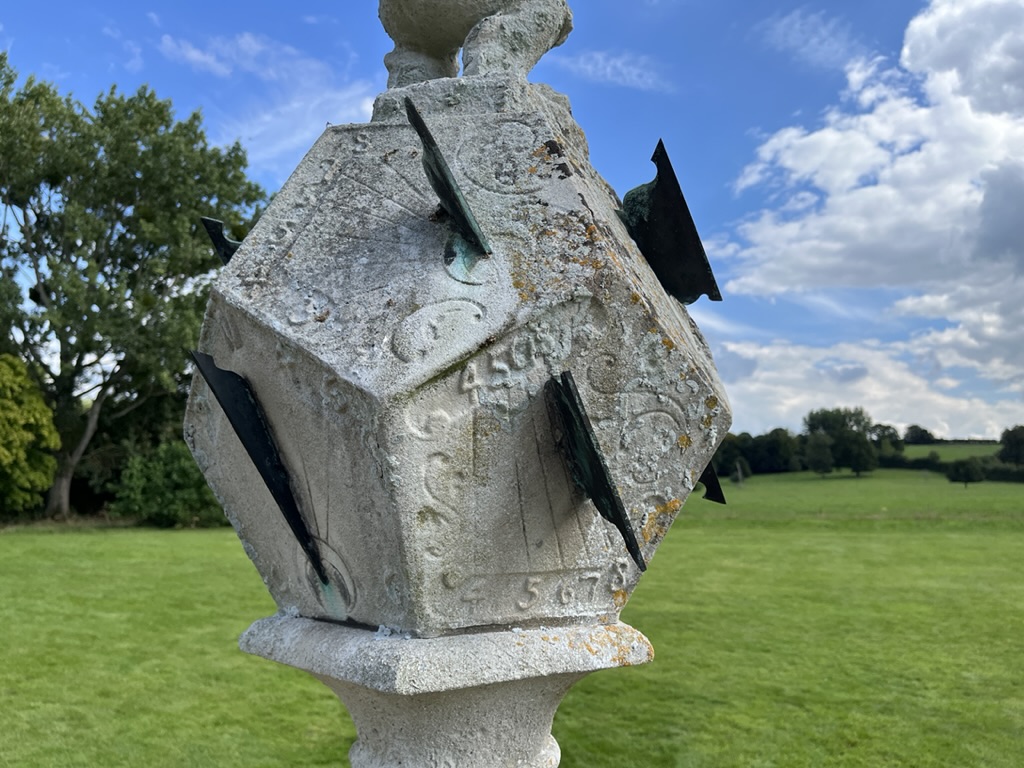
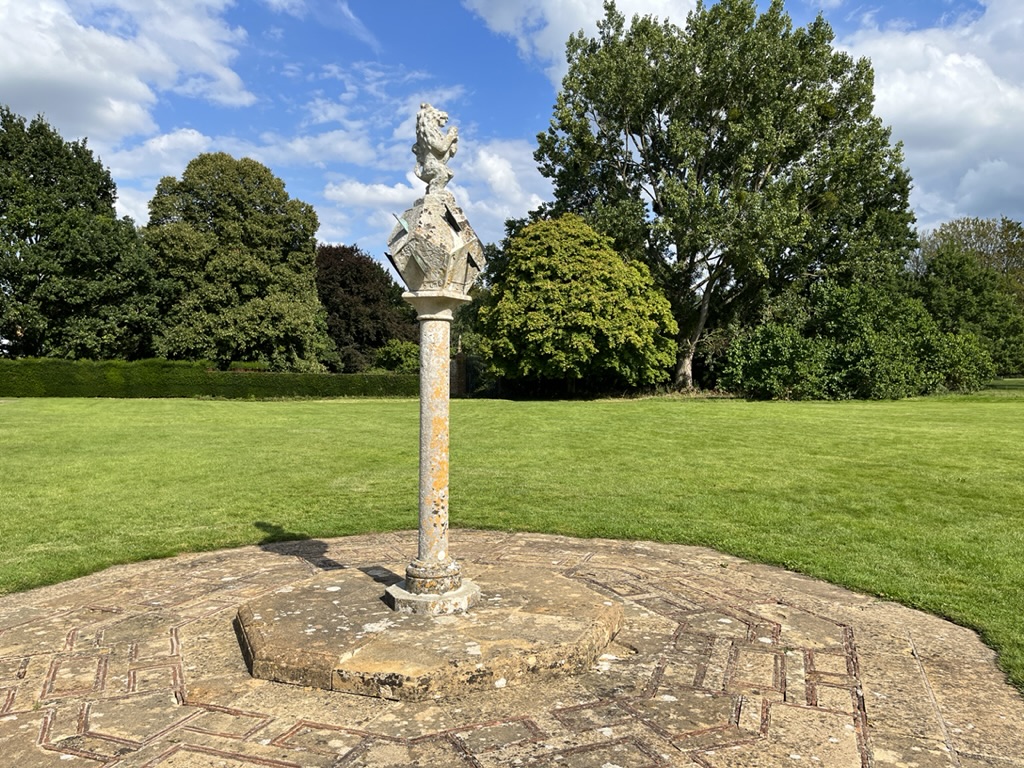
Located on the south lawn. Dodecahedron dial with pentagonal faces. Two ‘rows’ of five dials. The top row reclines, the bottom row inclines. All lines and numerals are visible, all gnomons are intact and 4mm thick. Overall the dial shows 4am to 8pm in hours. The numerals are Arabic, and are in relief, as is light scroll work on some faces. The dial is mounted 1760 mm high on a stone pedestal. It is surmounted by a weathered lion rampant 460 mm tall. The dial is said to have come from Scotland about 1910. SRN 8046 at East Ruston, Norfolk, appears to be a direct copy of this dial.
EGNAZIO DANTI* 1536 – 1586 (also, Ignazio), Dominican monk and polymath, became renowned for his wide learning and intellectual precision. He was a mathematician, cartographer, astronomer (some say ‘cosmographer’) to Cosimo I, and much more. There’s plenty about him – and indeed about his 3 very different dials at SMN – online.
Recommended sites for an informed overview of the dial include that of the Basilica itself SMN.IT; also ARTELEONARDO and ACCADEMIAGALLERY
For those wishing to dig deep into the complex analysis and the historical context of the dial, you can do no better than study the lead article by Simone Bartolini & Marco Pierozzi in the BULLETIN OF THE BRITISH SUNDIAL SOCIETY VOLUME 22(iv) – December 2010. You can download it.
Egnazio Danti
ARMILLARY SPHERE
The armillary sphere consists of two perpendicular bronze circles with a diameter of 1.30 cm. The vertical one represents the meridian and indicates the exact moment when the sun is at its highest point, noon. On the equinox day, these two circles create a cross-shaped shadow, while elongated circle shadows are formed on other days. (AG)
REFORMATION OF THE CALENDAR
Danti’s sphere was installed on the S facade of the SMN in 1572. This device enabled him to determine the equinox precisely, and thus the true length of the year. Measurements the following spring confirmed the conjecture that the equinox was earlier than indicated by the Julian calendar, in fact by 11 days. As Wiki (always good on this sort of topic) puts it: The reforms of Julius Caesar in 45 BC put the Roman world on a solar calendar. This Julian calendar was faulty in that its intercalation still allowed the astronomical solstices and equinoxes to advance against it by about 11 minutes per year. Pope Gregory XIII introduced a correction in 1582; the Gregorian calendar was only slowly adopted by different nations over a period of centuries, but it is now by far the most commonly used calendar around the world.
MERIDIAN DIAL SMN Link to the article on Danti’s marvellous dial inside the Basilica
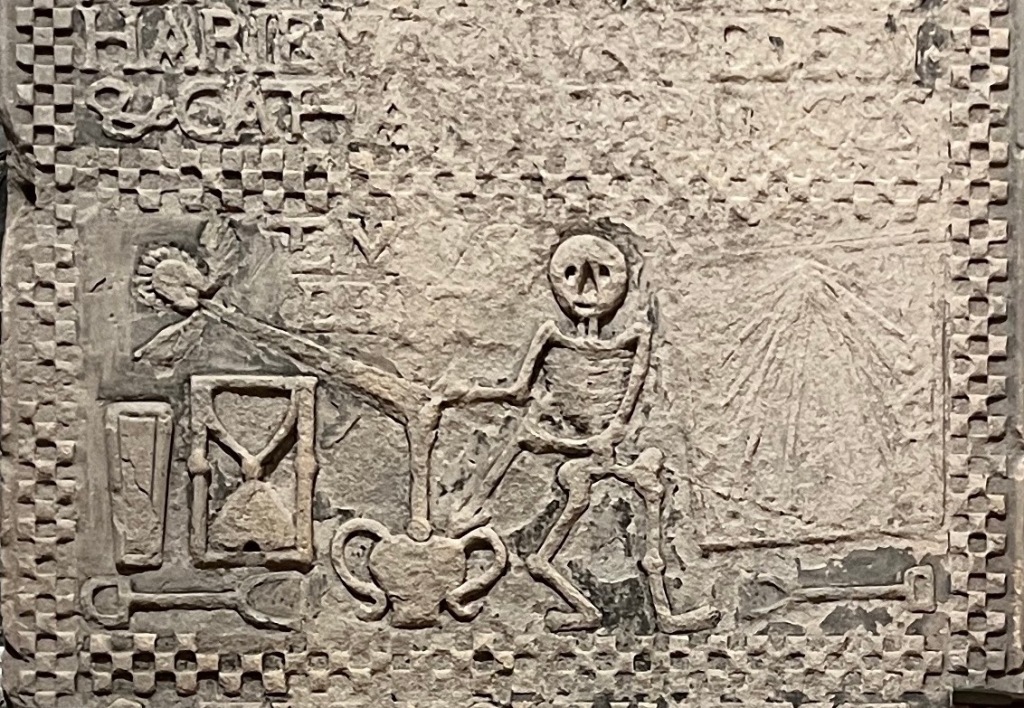
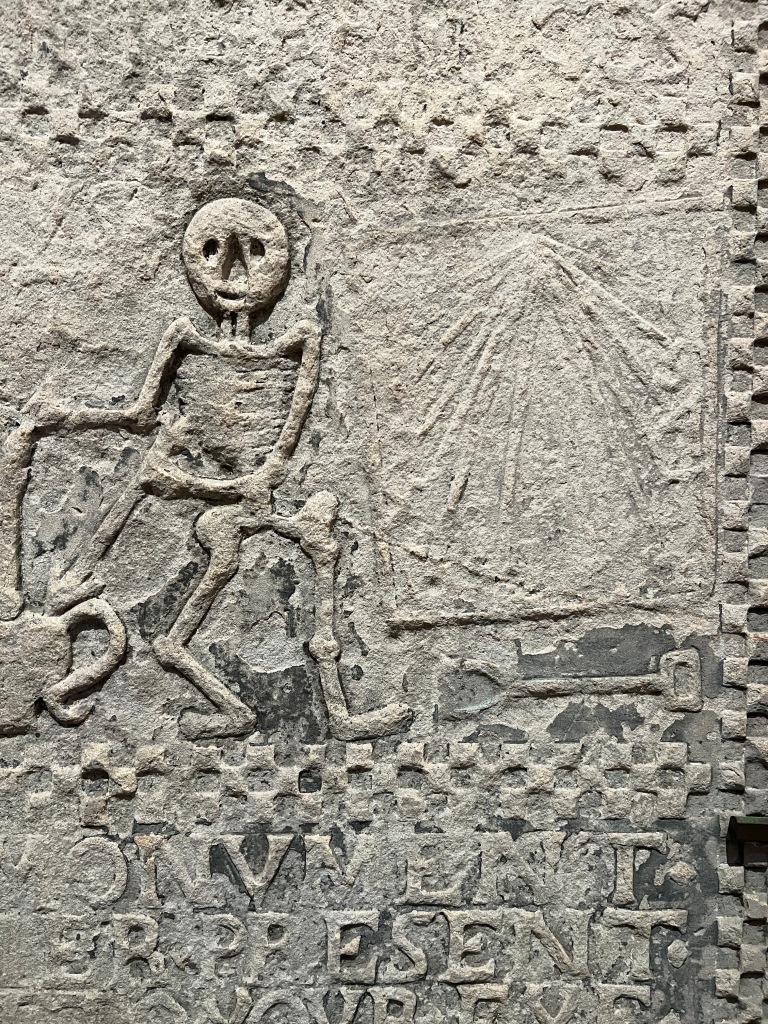
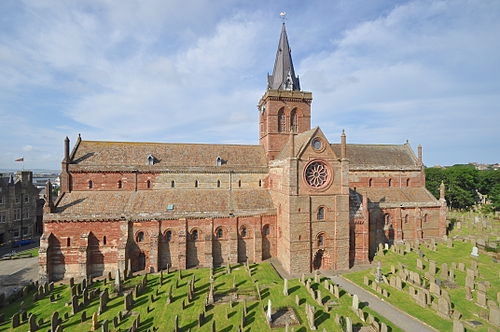
St Mungo . Kirkwall . Orkney – Grave slab with stylised memorial dial for Patrick Prince d. 1673
BSS RECORD
DIAL
This image of a dial appears on a grave slab that is now mounted on the interior south wall of the nave alongside many other such slabs. It is one of a number of symbols associated with death, carved in relief. The symbols are in a central panel between upper and lower panels containing text. The dial is illustrative / symbolic only and is roughly square, with hour lines radiating downwards from the top.
ICONOGRAPHY
The image represents Death breaking the urn of Life with an arrow. A flame bursts forth from the punctured vessel, from the tip of which the soul flies away in a northwesterly direction. An hour-glass with the sand run out, a sun-dial, two spades, and a coffin complete the doleful ideogram. The grave slab is for Patrick Prince, died 1673.
GSS Category: Scratch Dial; Cathedral Dial; Church Dial; Dial inside church
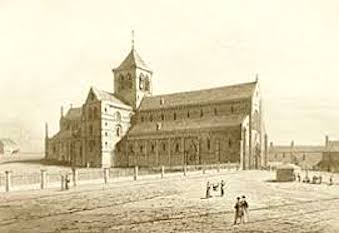
PHOTOS: All photos John Renner, with many thanks; Cathedral Stevekeiretsu Wiki OS CC; Print from Cathedral Guide
ALCISTON CHURCH has no Dedication. That is quite unusual, inviting speculation and maybe inspiring research into the history. I didn’t get that far because this is a multiple scratch dial church, with 4 good examples to admire and write up. You can read my piece about them HERE
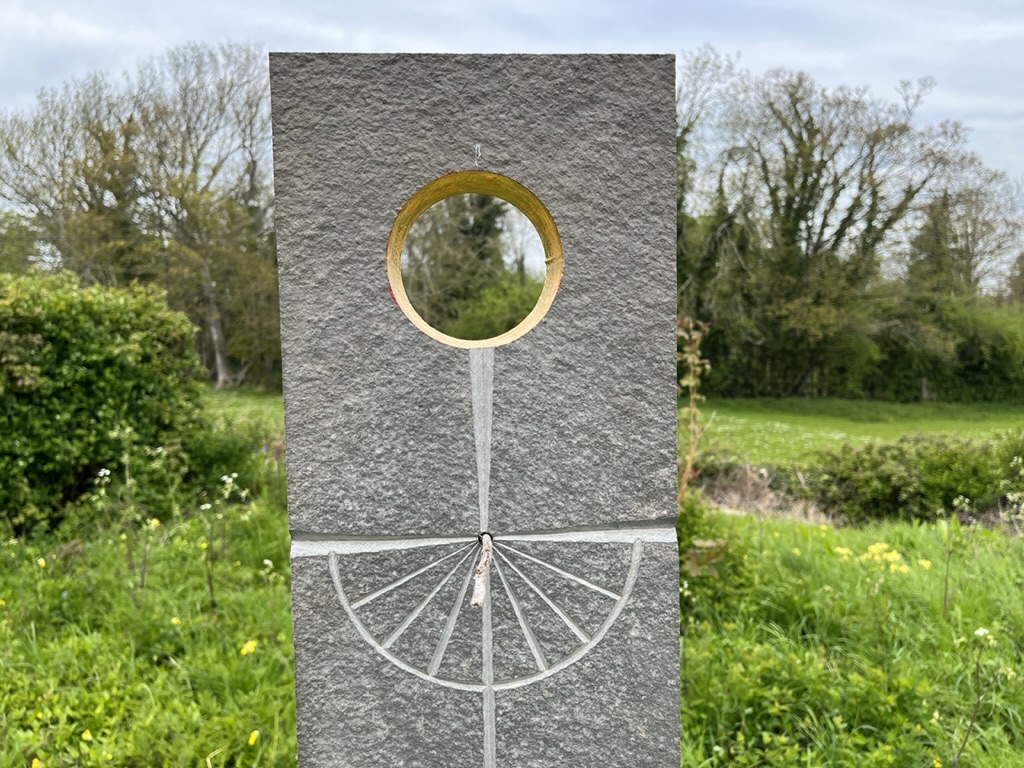
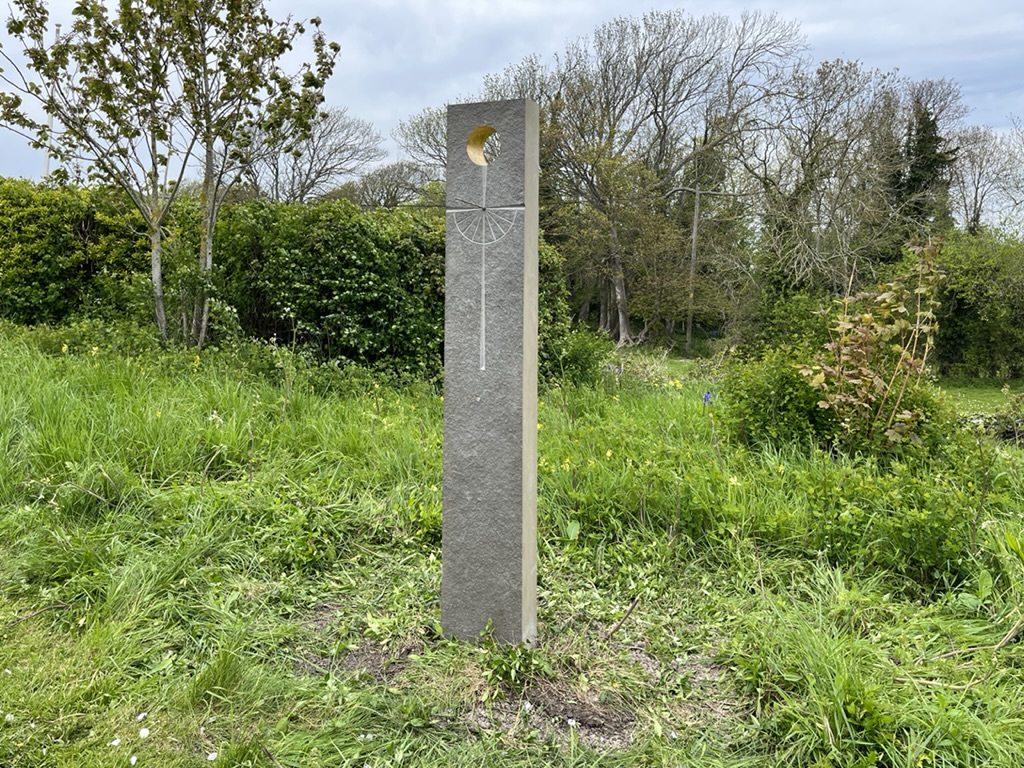
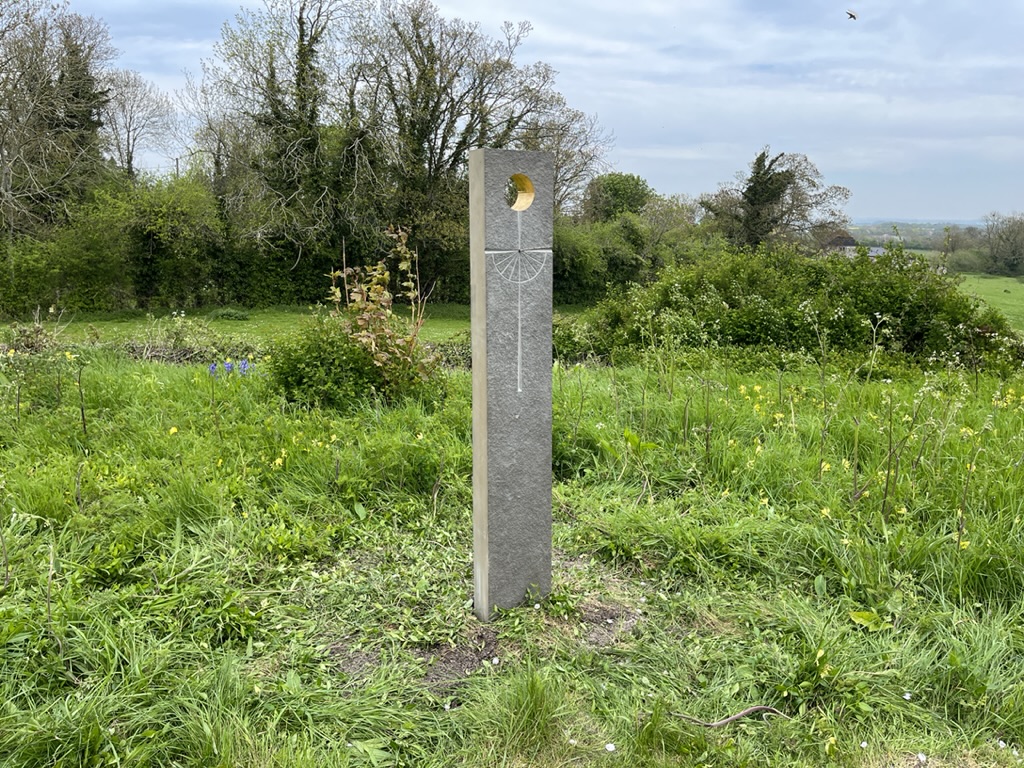
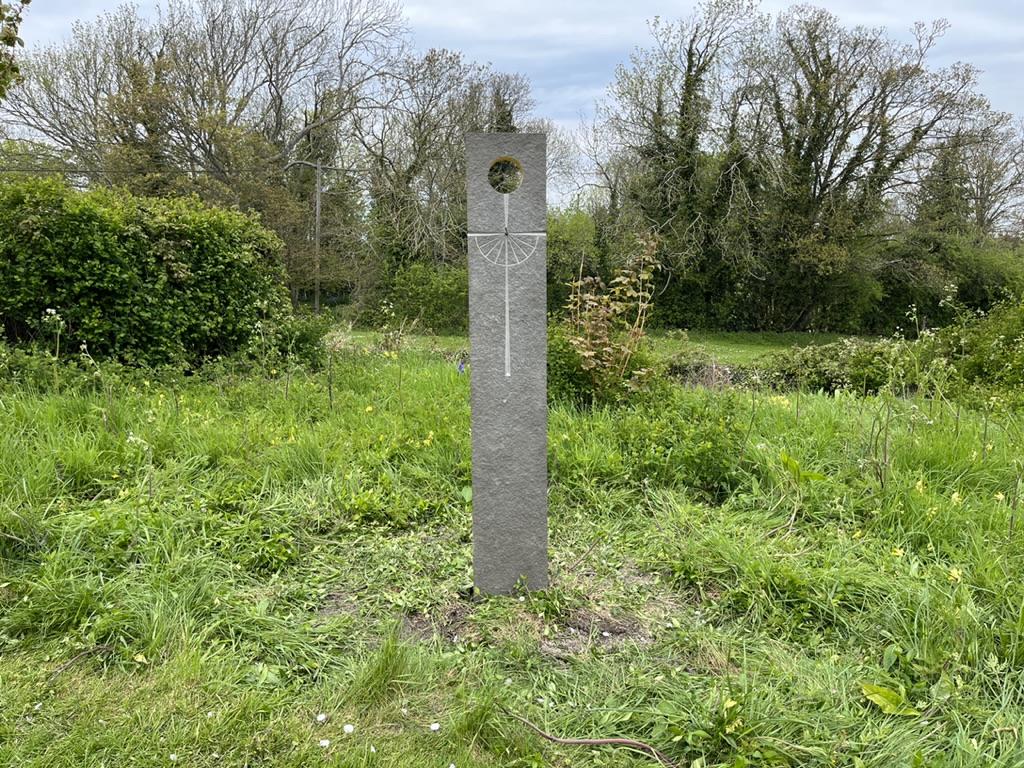
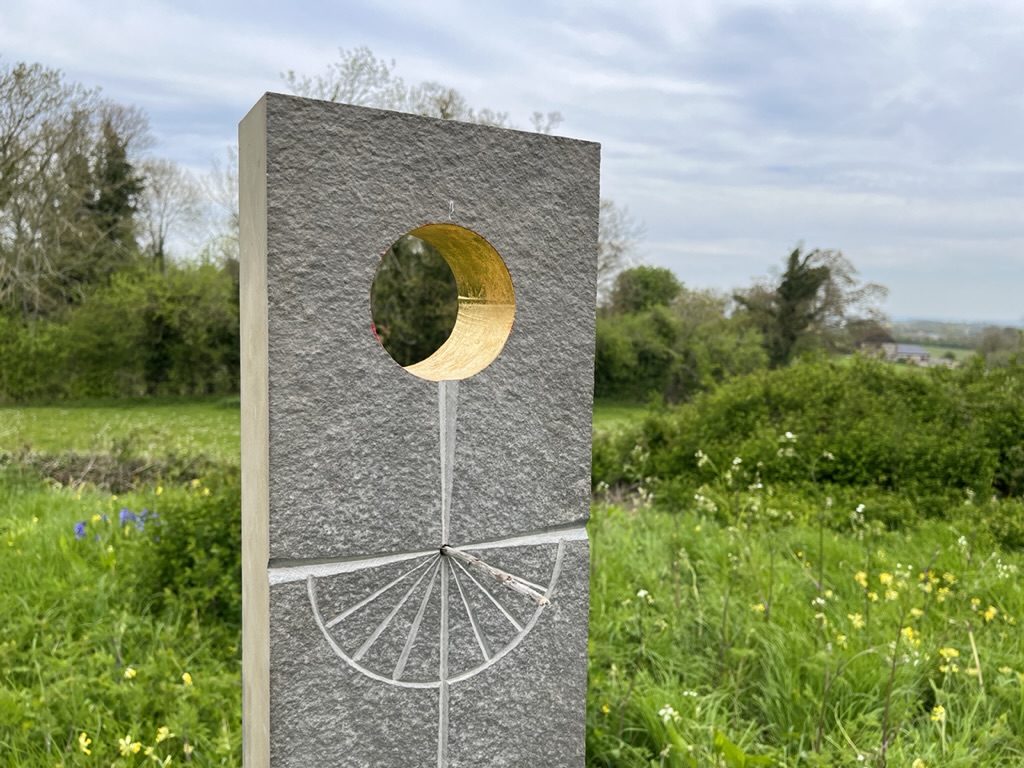
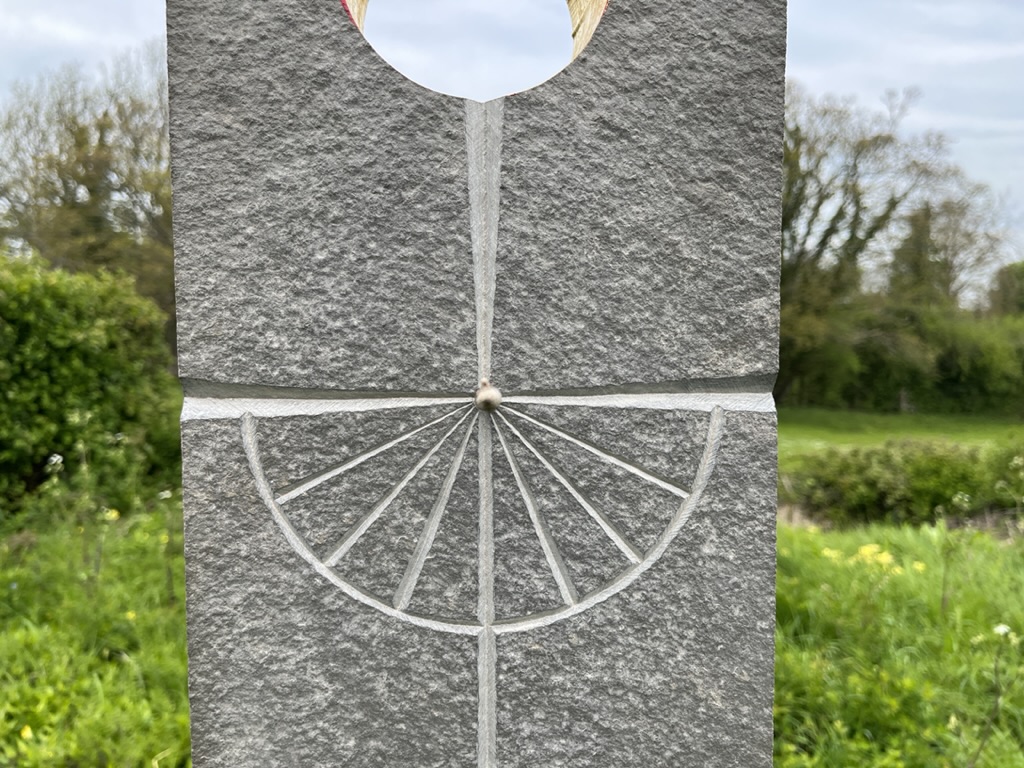
In the churchyard there was an object that attracted our attention. This eye-catching slender column had only recently been dug in, and was in pristine condition. Clearly it is a memorial, but no details were marked. The sides and the back are plain. The large hole at the top is lined with gold, which looks very good. As a whole, it is obviously designed with care and made with skill.
DIAL
The dial itself is pleasingly symmetrical, and the composition works very well. I think it is not necessarily intended to have a gnomon, though someone has chosen to improvise with a stick.
,
However, because it faces roughly E rather than S, its ability to mark the passage of the day is limited. Also, the divisions of the lines would be cut differently. However, as a memorial stone, strict accuracy as a sundial may well not be a consideration anyway. It is a fine piece of work in a lovely setting.
GSS Category: Modern Dial; Vertical Dial; Column Dial; Memorial Dial
All photos: Keith Salvesen; thanks to John Foad BSS




























 GAUDIUM SUB SOLE . SUNDIALS . MEDIEVAL TO MODERN


