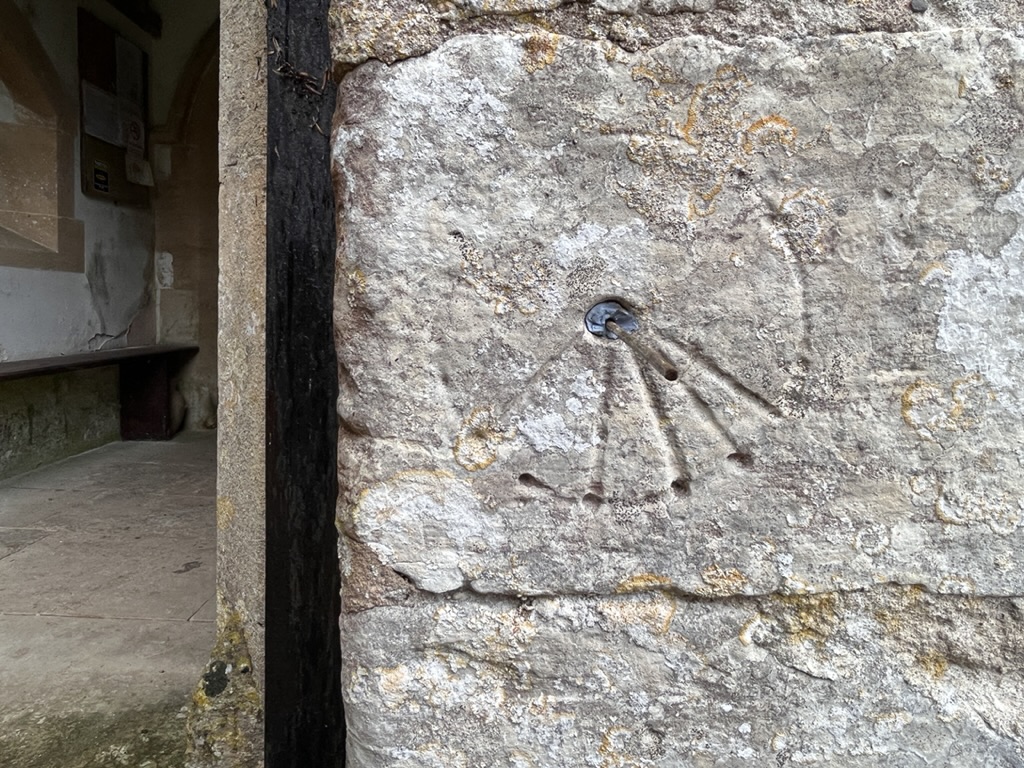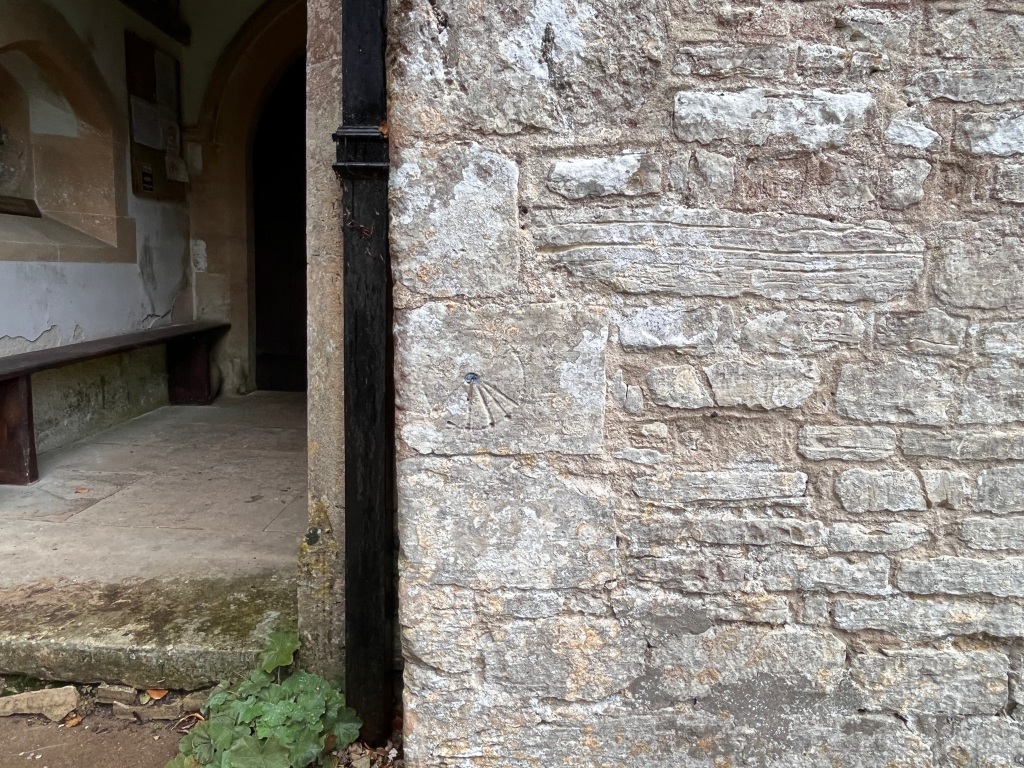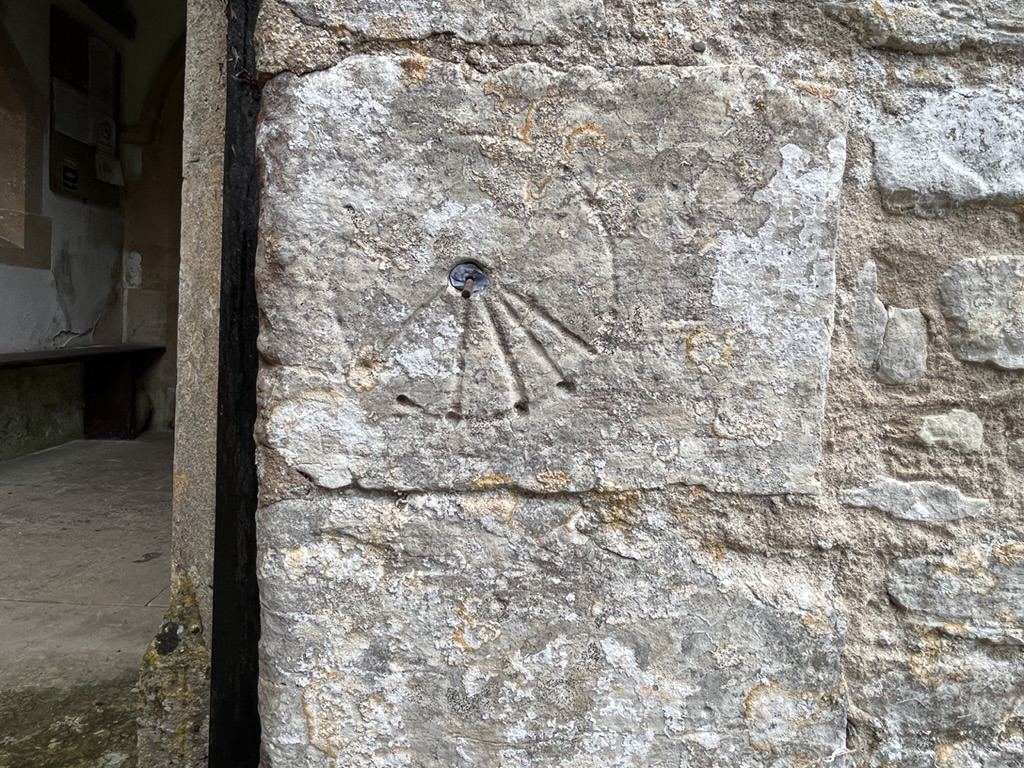
WOLFETON HOUSE . DORCHESTER . DORSET – Multiple Sundial

WOLFETON HOUSE . DORCHESTER

Wolfeton House (sometimes Wolveton) is a fine Grade 1 Elizabethan manor house with medieval origins. It stands amidst the the water meadows of the River Frome near Charminster, just N of Dorchester. Admired by Hardy. For more about the house, its history, and how to stay in the Gatehouse (dated 1534) see:

DORSETLIFE HISTORIC HOUSES LANDMARK TRUST

SUNDIAL

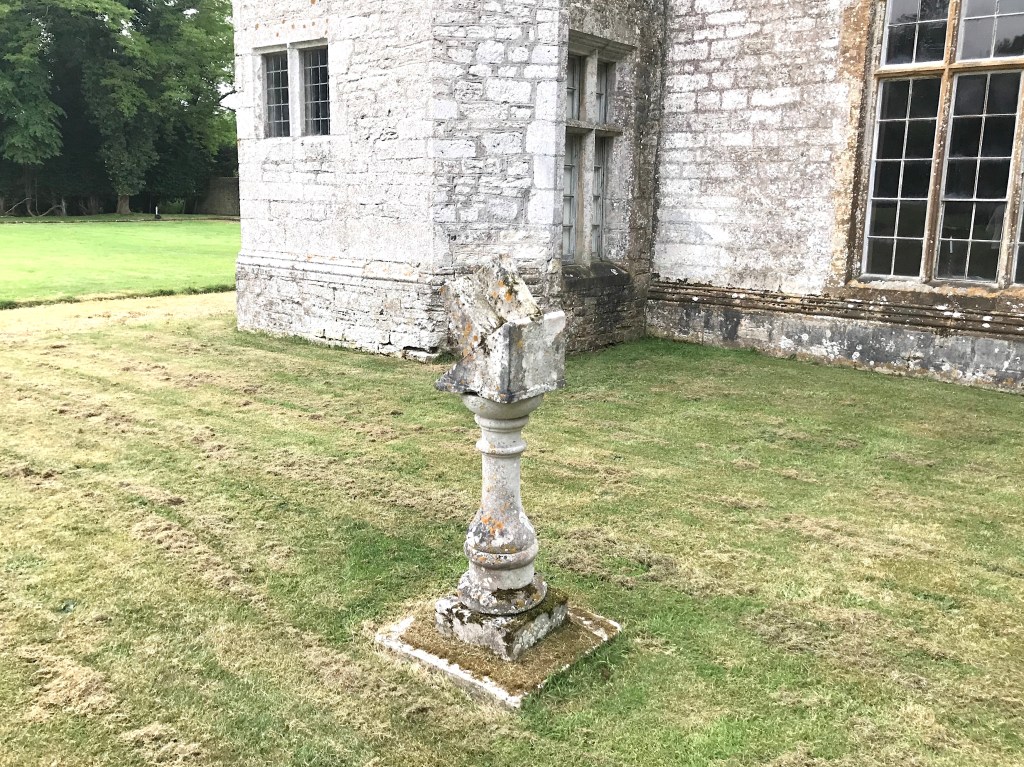
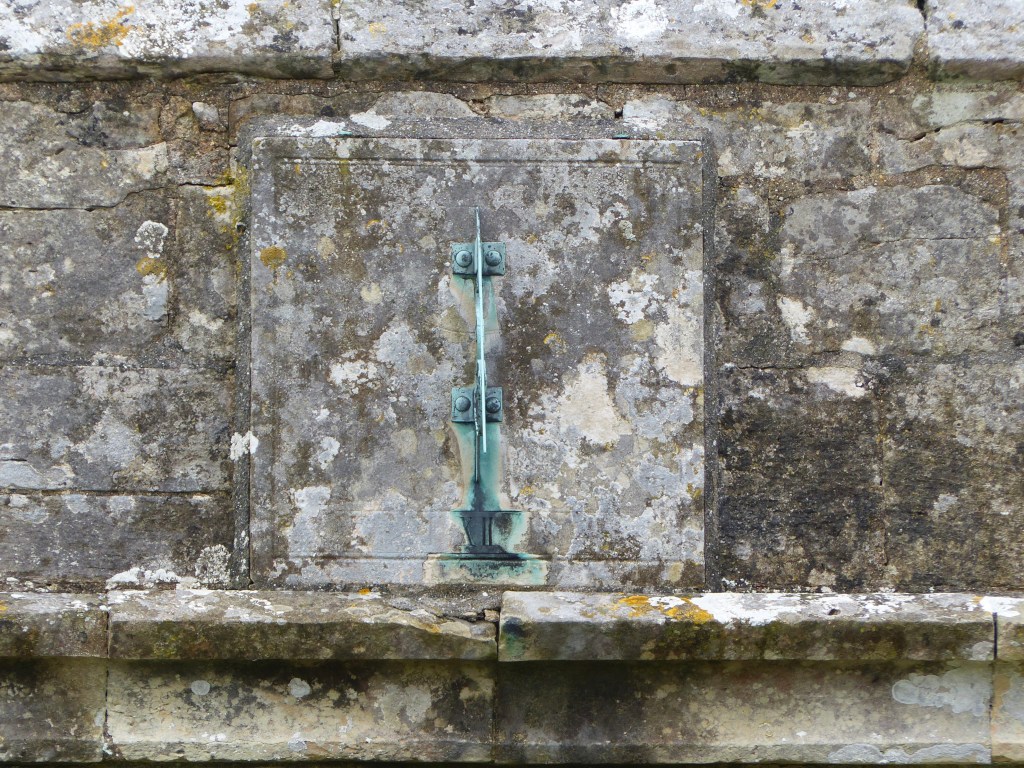
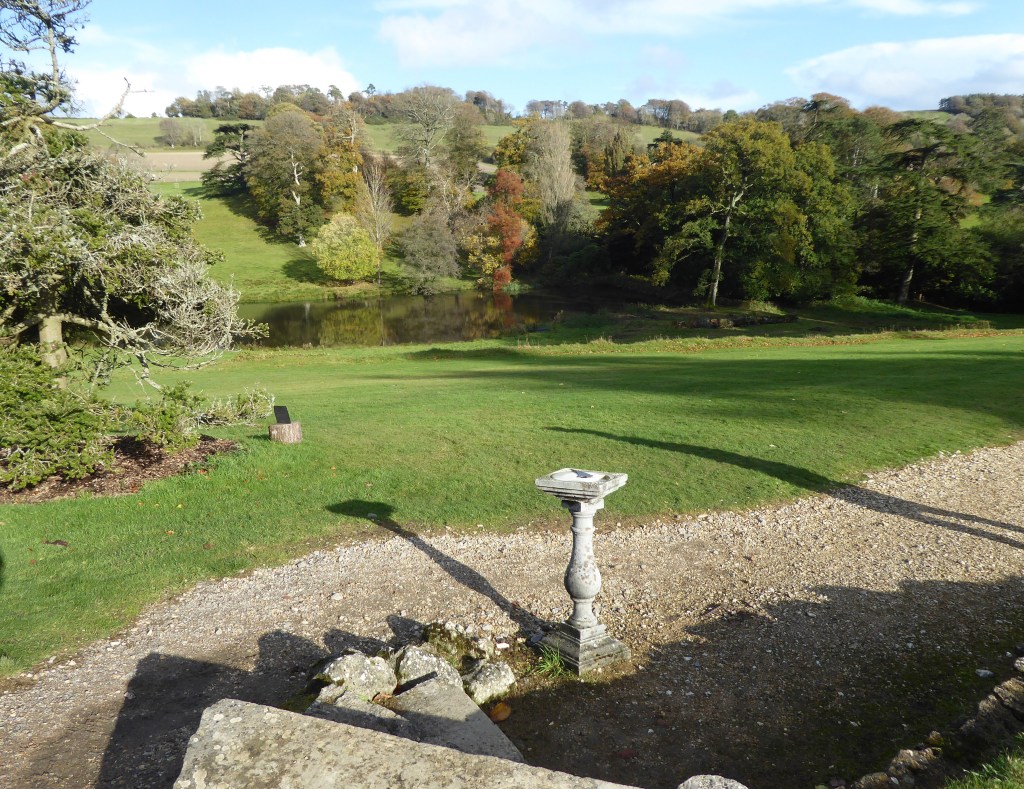
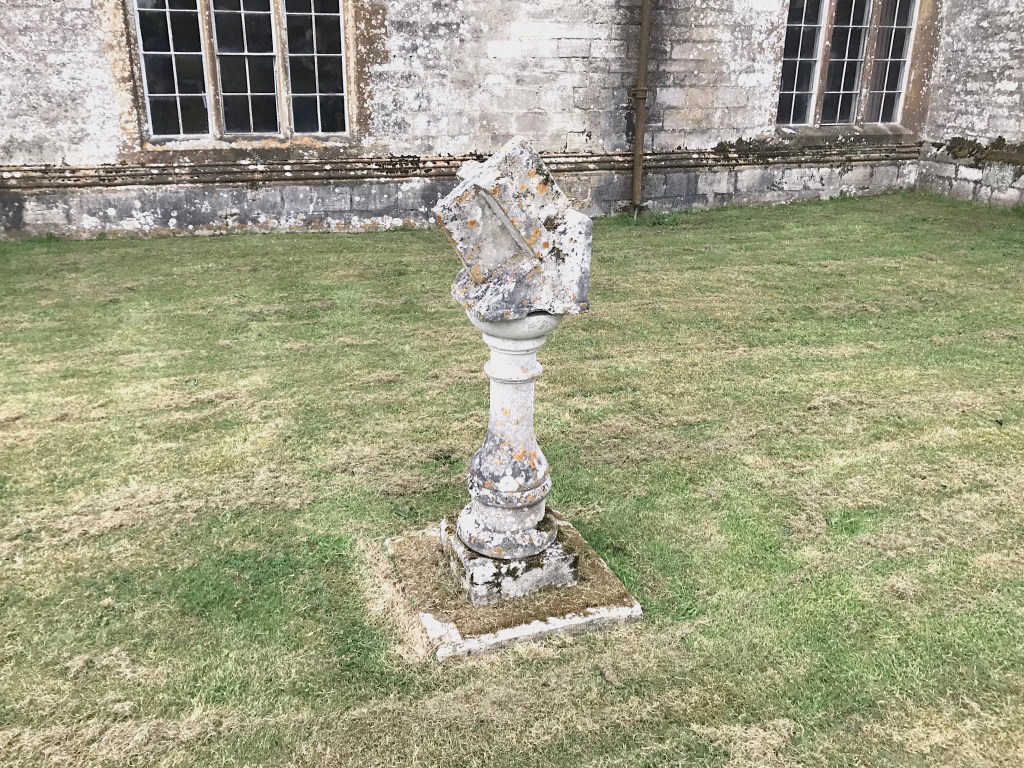
Some time ago we went to Wolfeton in connection with the the Pevsner Buildings of England series. I was able to photograph this most interesting sundial, though with a rather rustic camera and in low light. The dial is not in the optimum place for its primary purpose, but with its pleasing symmetrical design it suits where it stands.
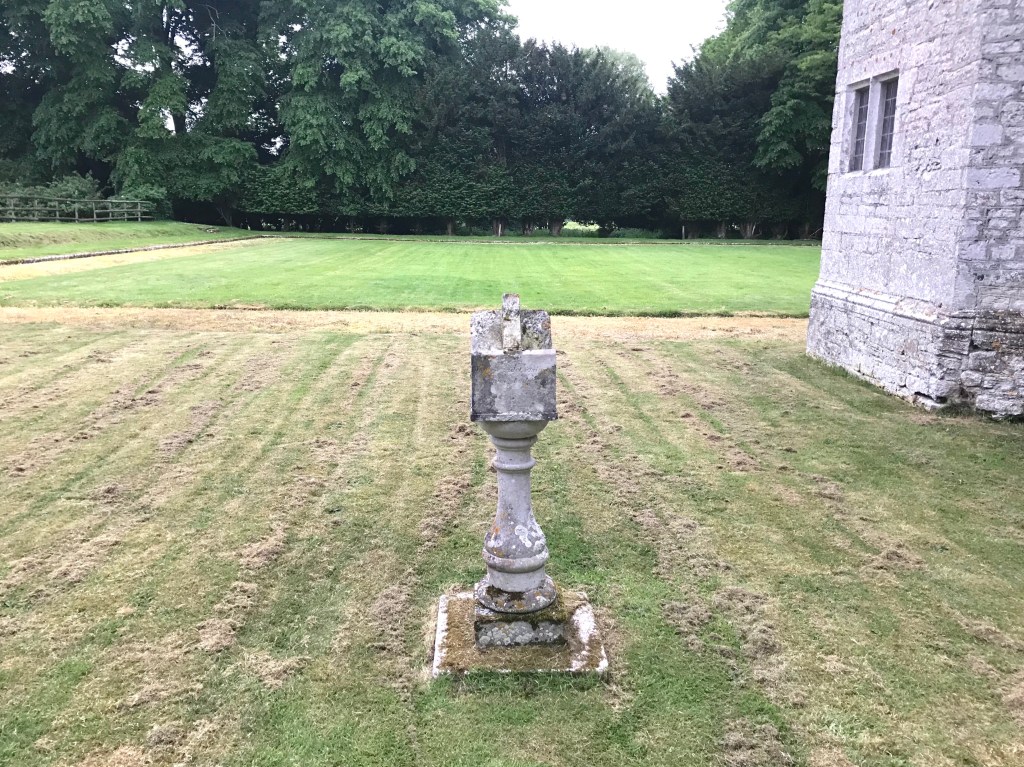
INSCRIPTION

The inscription is an intriguing mystery. At the time I was less engaged with dials, or I might have made more effort to record the details and to take a decent photo. As it is, I cannot make much sense of it. The initial letter U… could perhaps be the start of Umbra? But that assumes the words are in Latin. I have checked the main motto resources including Gatty (original, and revised & expanded); and various less comprehensive sources. I will add the translation if I can make any more sense of the text. Meanwhile, any ideas would be welcome. Actual knowledge, the more so.

ADDENDUM *

UMBRA VIDET UMBRAM
VIVE HODIE.
A shadow marks the shadow.
Live to day.

As it turns out, Gatty did record this dial, attributing it to a neighbouring village Bradford Peverell rather than Charminster. She noted the inscription is somewhat defaced. The dial was possibly erected by George Purling about 1815-20, when the garden was laid out). The same motto is on the tower of Broughton-Gifford Church, near Melksham,

HOW THE DIAL WORKS

This is a polar dial, with the end edges of the cross pieces acting as gnomons (cf the polar dial at Tintinhull).  The dial should be oriented so these point north, ie with the inscription on the south face. However, it is clearly not orientated like that, so it now acts as an interesting garden ornament. John Foad (BSS) has kindly marked up a photo to show how the dial would work if correctly positioned.

DATE

The inscription might give a clue to the dial’s date. My amateur guess is that it is somewhere between mid-C18 and early C19.

GSS Category: Multiple Dial; Old Dial; Garden Dial

All photos: Keith Salvesen; *John Foad BSS for additional material / expertise (see Addendum)
TRENT . DORSET . ST ANDREW – 4 Scratch Dials

St Andrew . Trent . Dorset

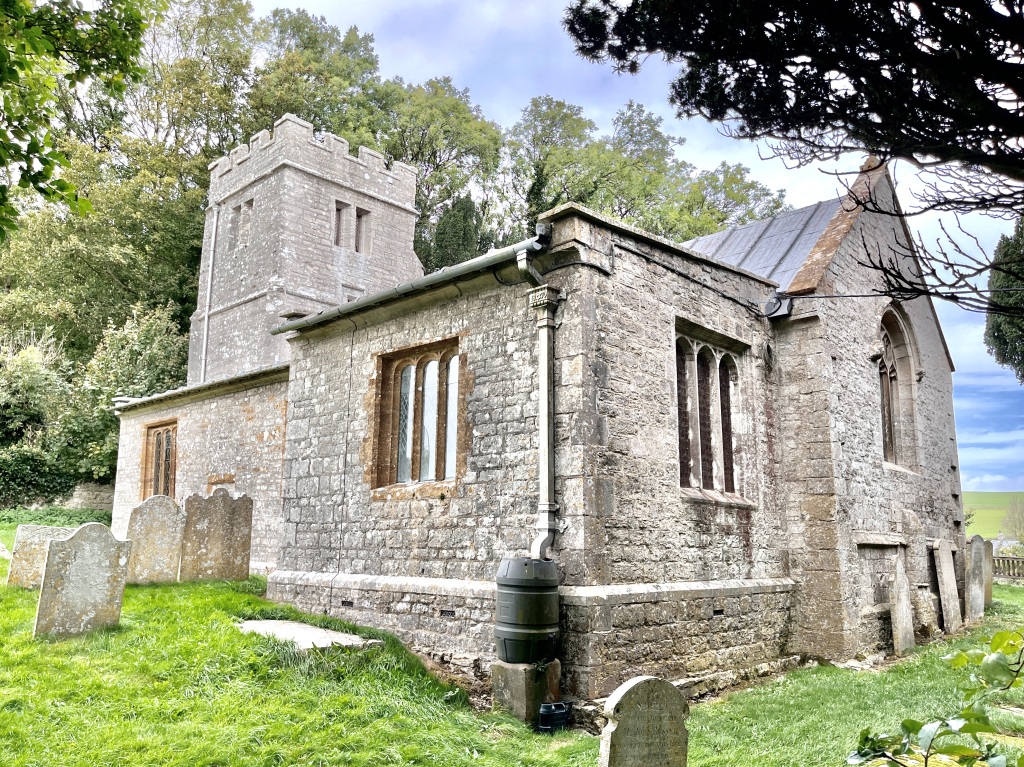
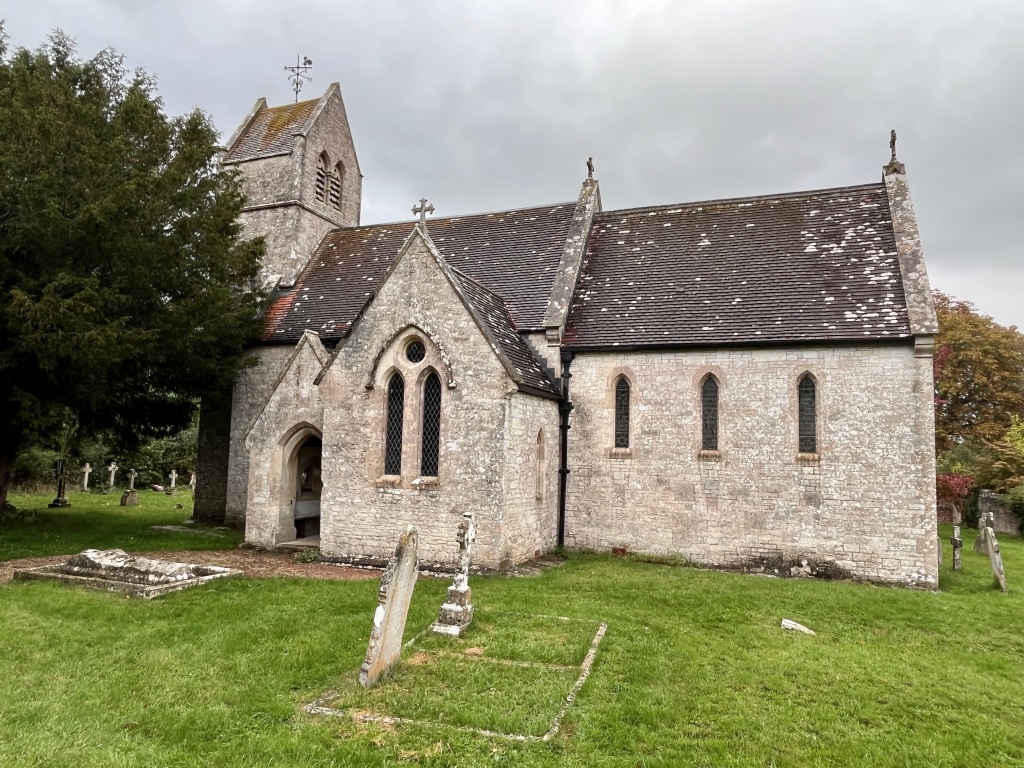
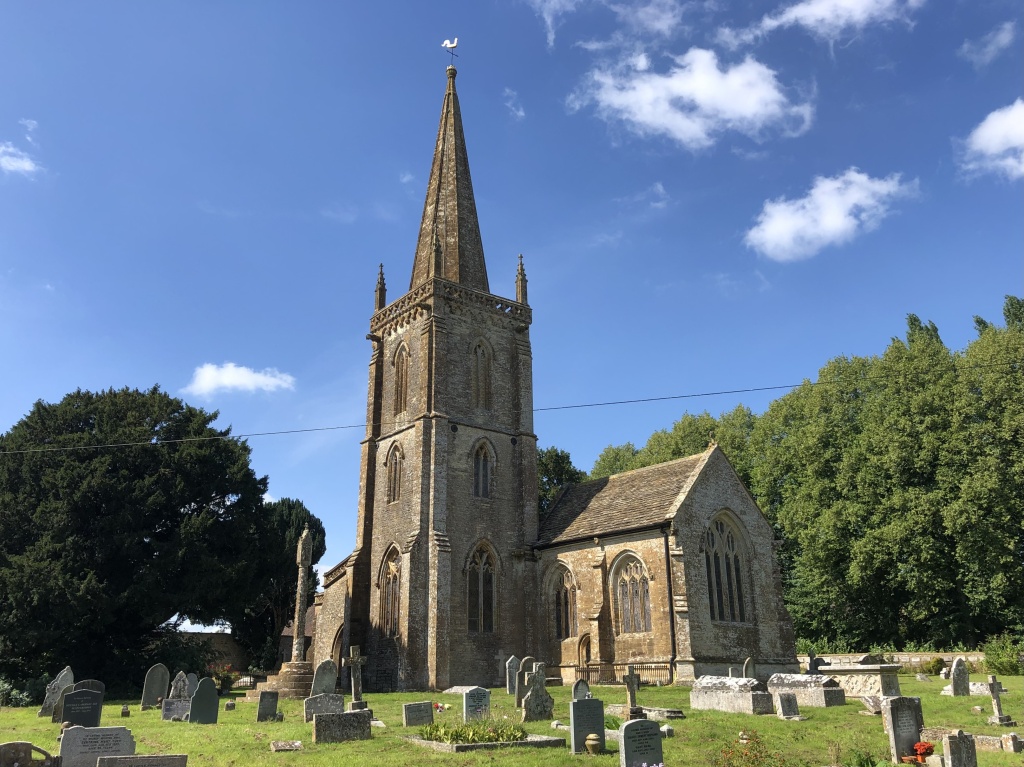
GRADE I † C13 origin nave, N chapel, later enlarged; C14 tower & porch; C15 rebuilt chancel; subsequent repairs and C19 restorations. One of only 3 Dorset medieval churches with a spire (with Iwerne Minster & Winterborne Steepleton). A fascinating church smothered in history, the details best researched separately. C15 font. Pride of place is taken by the superb 16th century screen, which is one of the best in Dorset NCT. Good C16 bench ends. For a quick overview of St Andrew BLB. At the centre of the Sherborne – Yeovil – Marston Magna triangle. 50.9648 / -2.5859 /  ST589185

DIALS

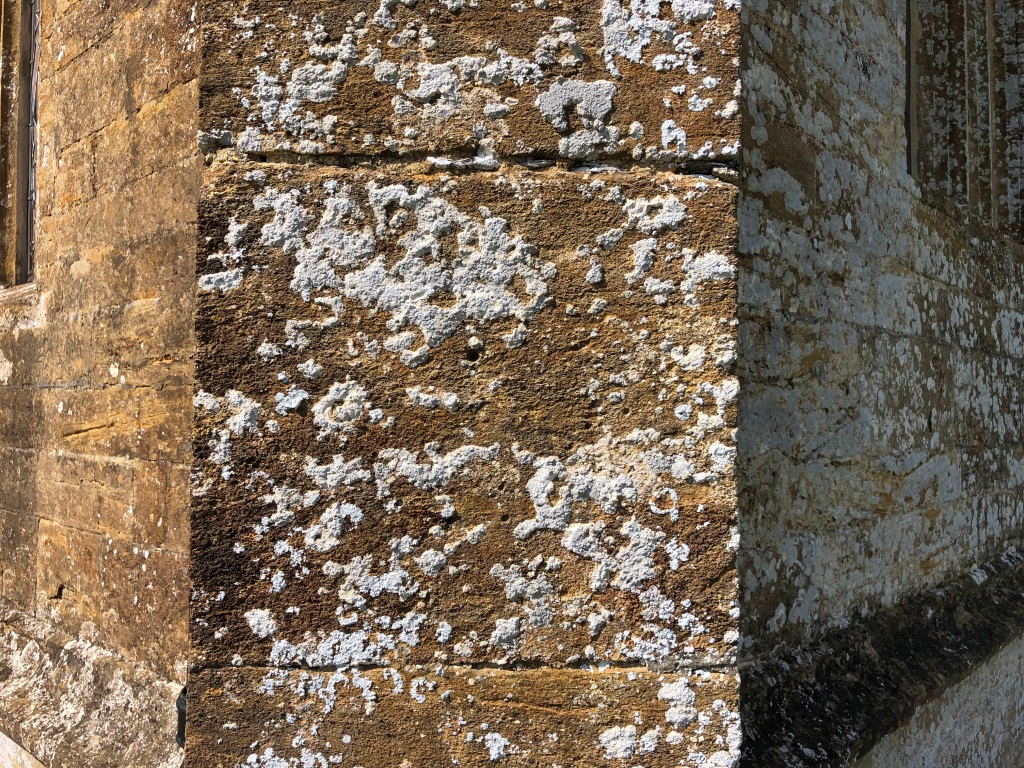
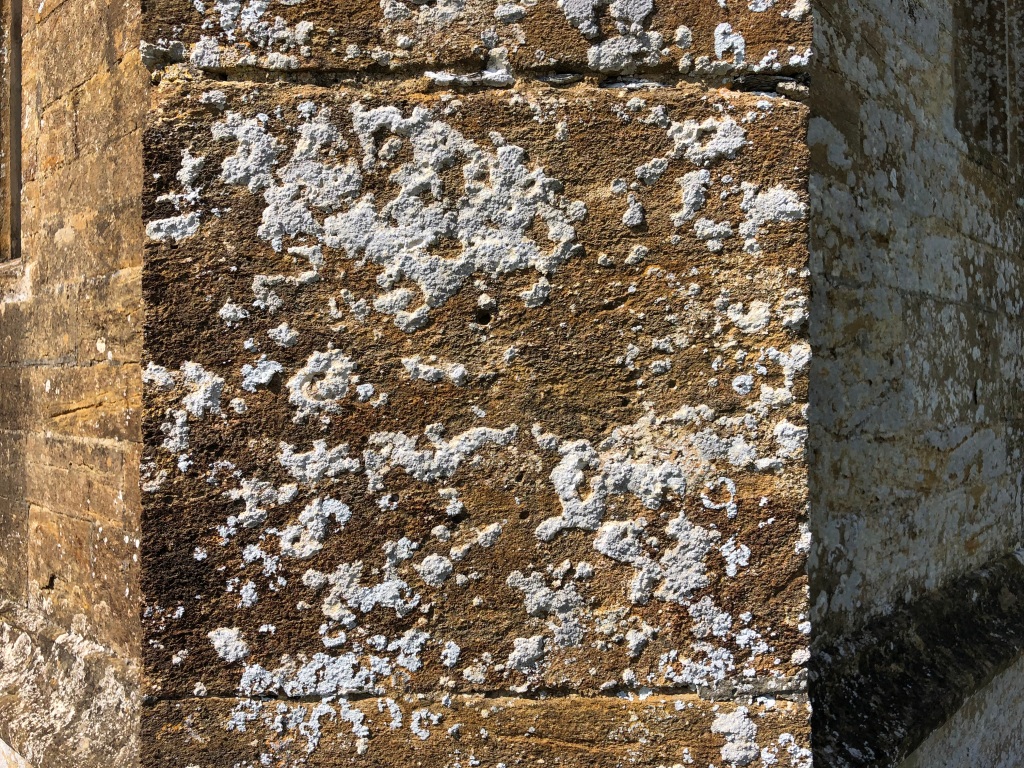
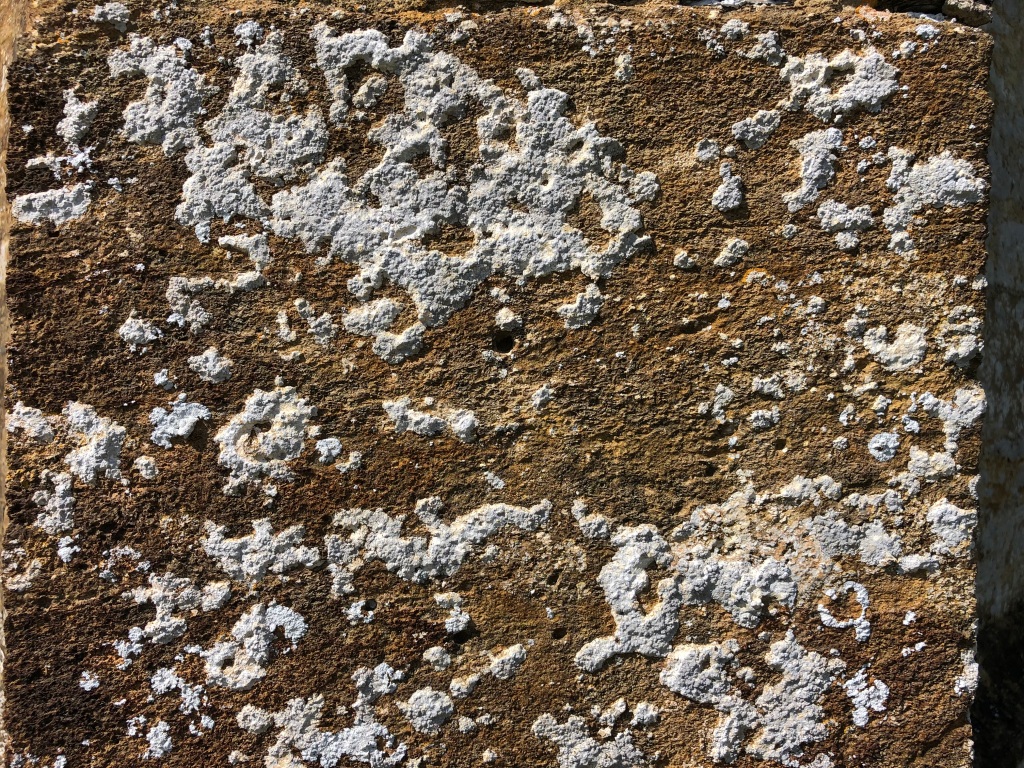
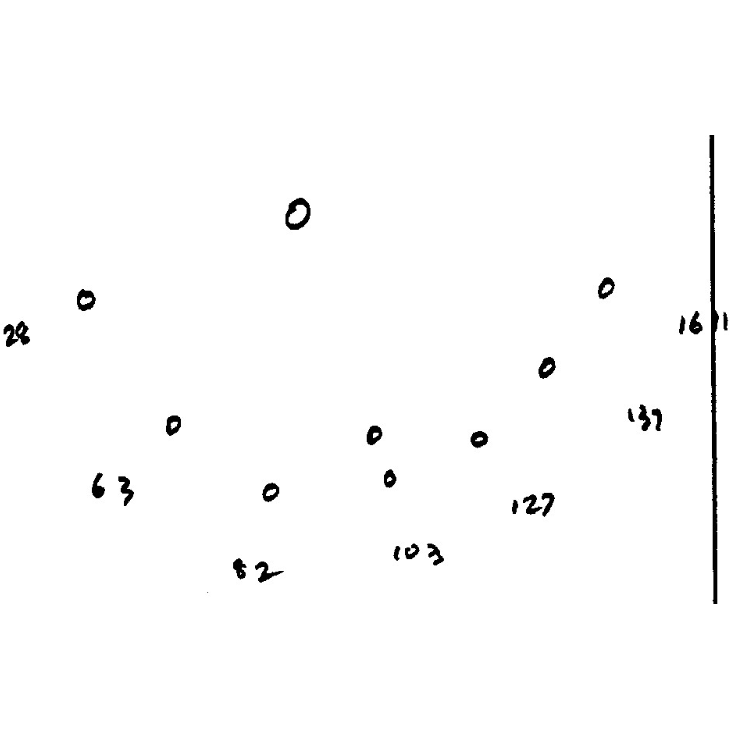
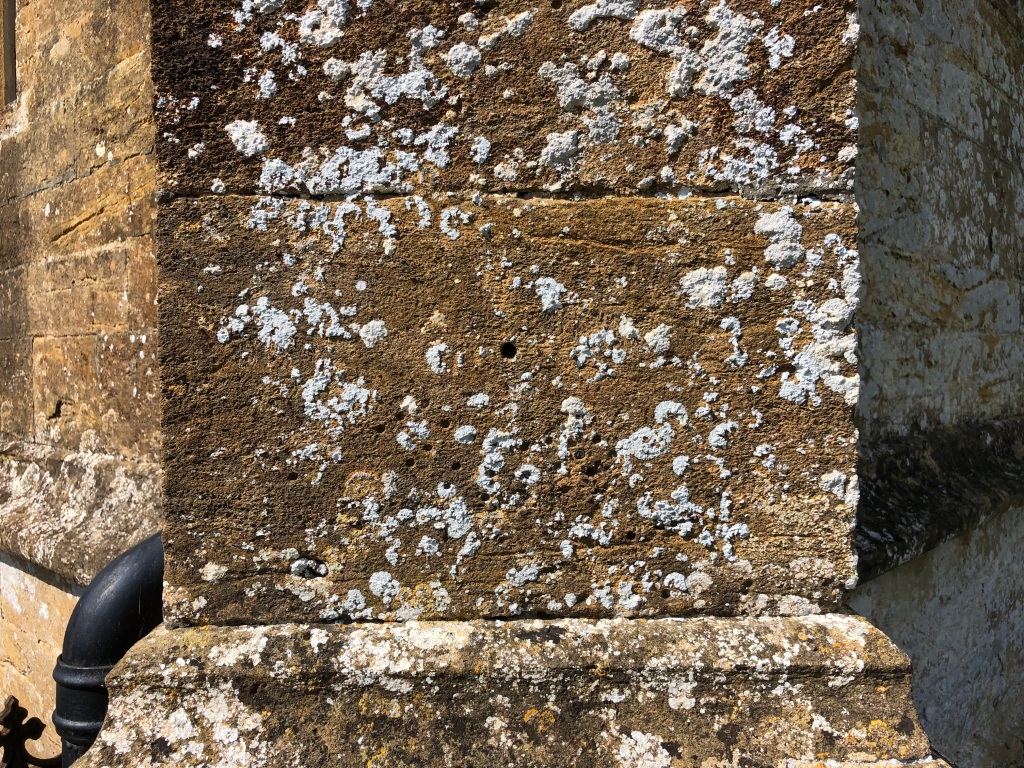
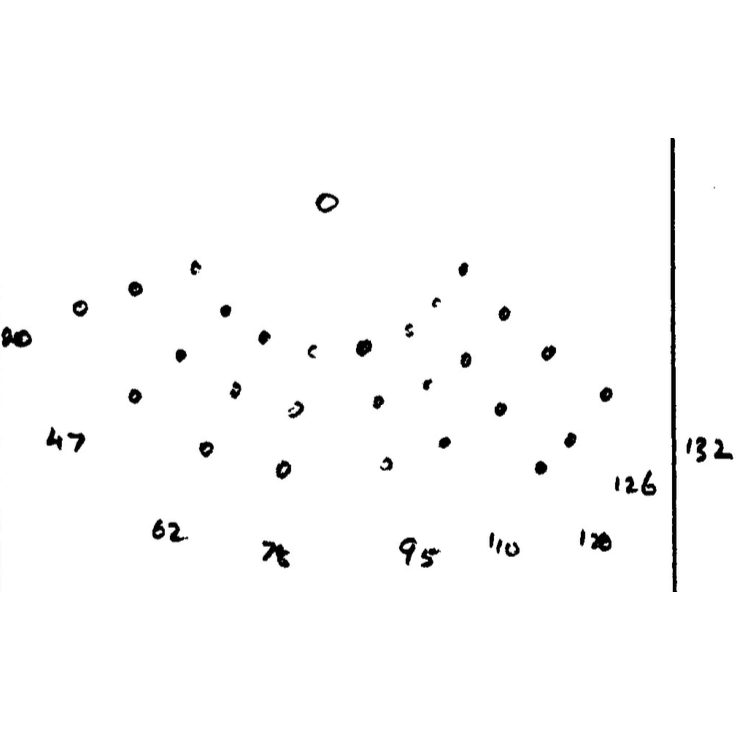
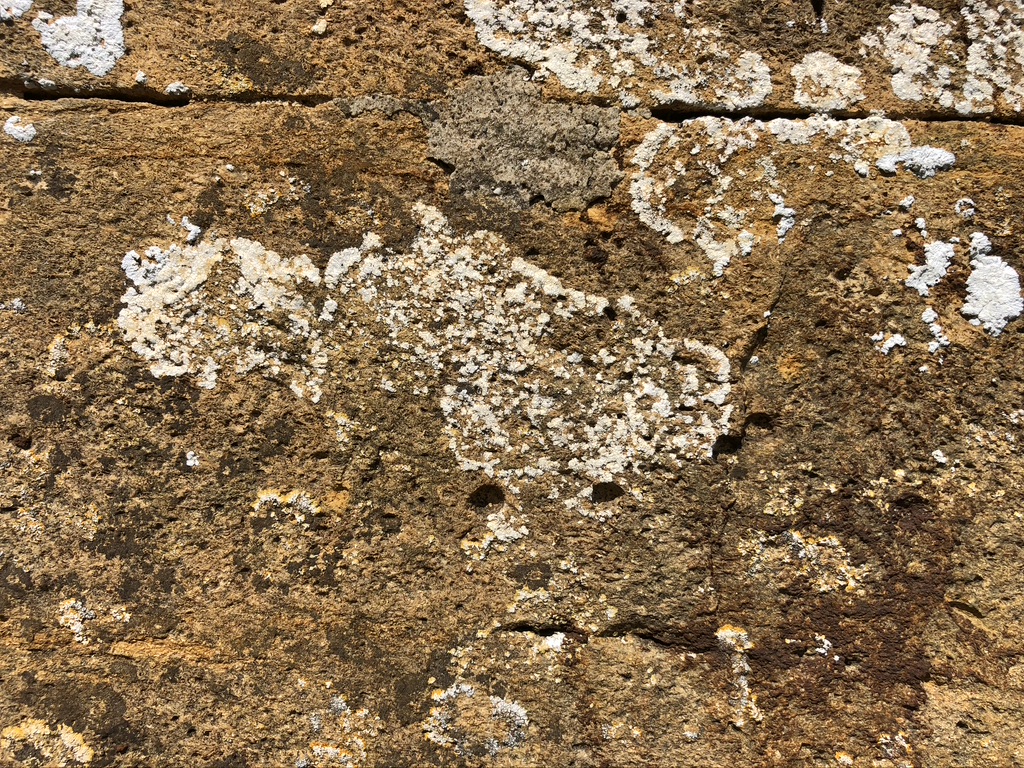
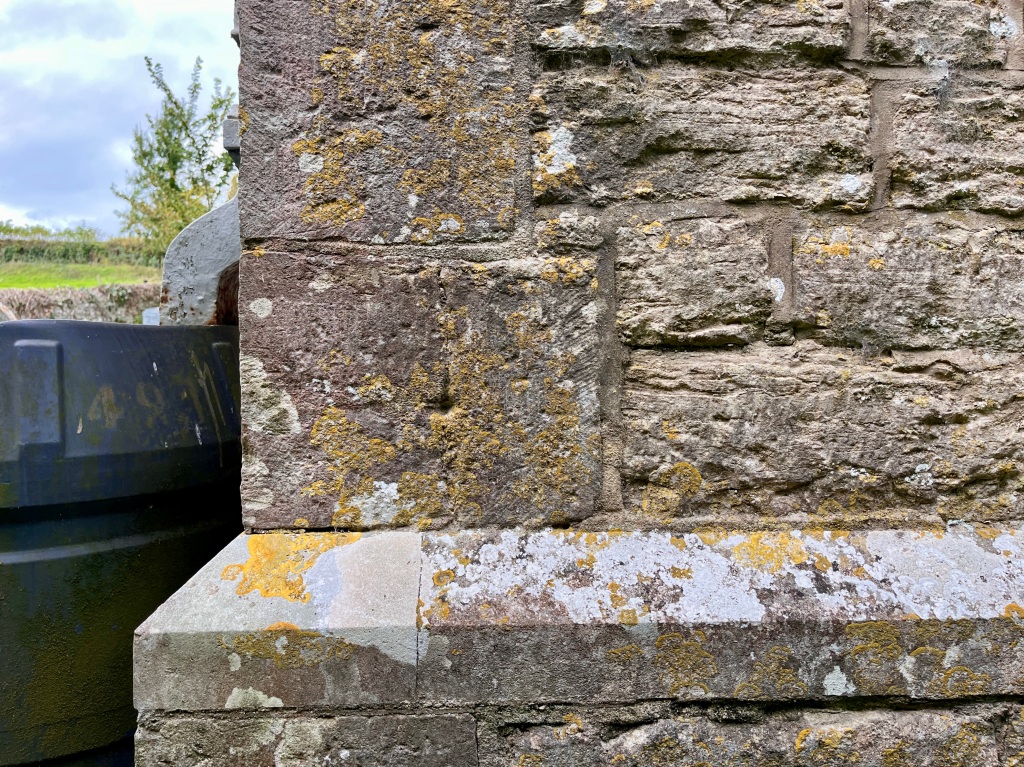
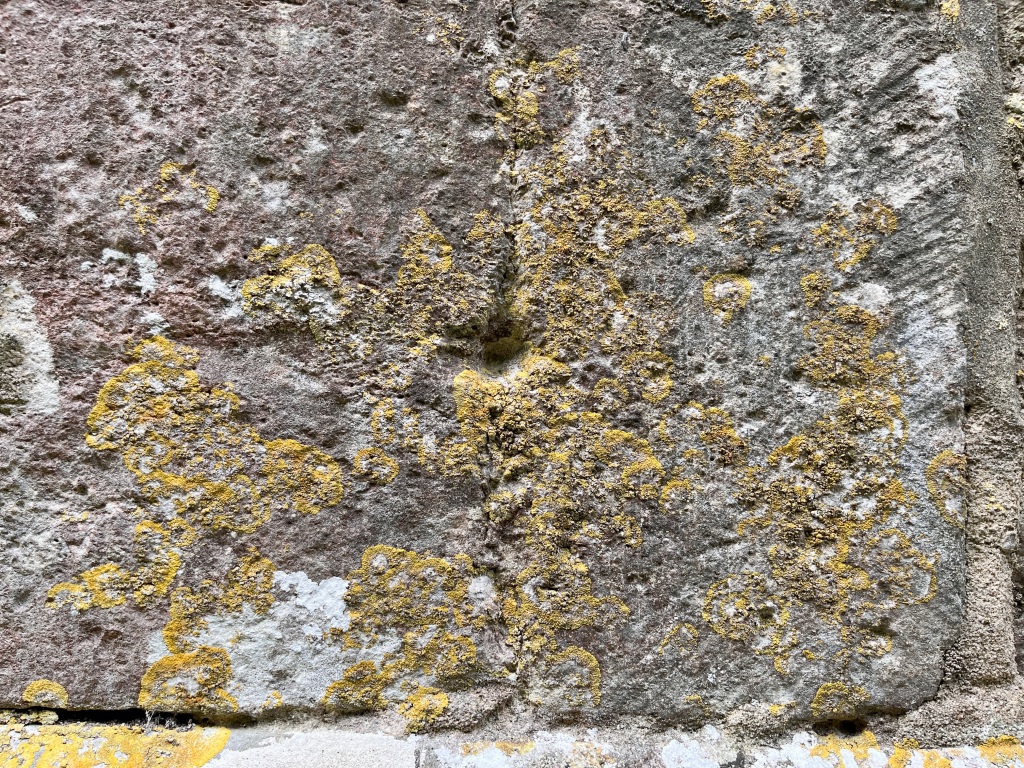
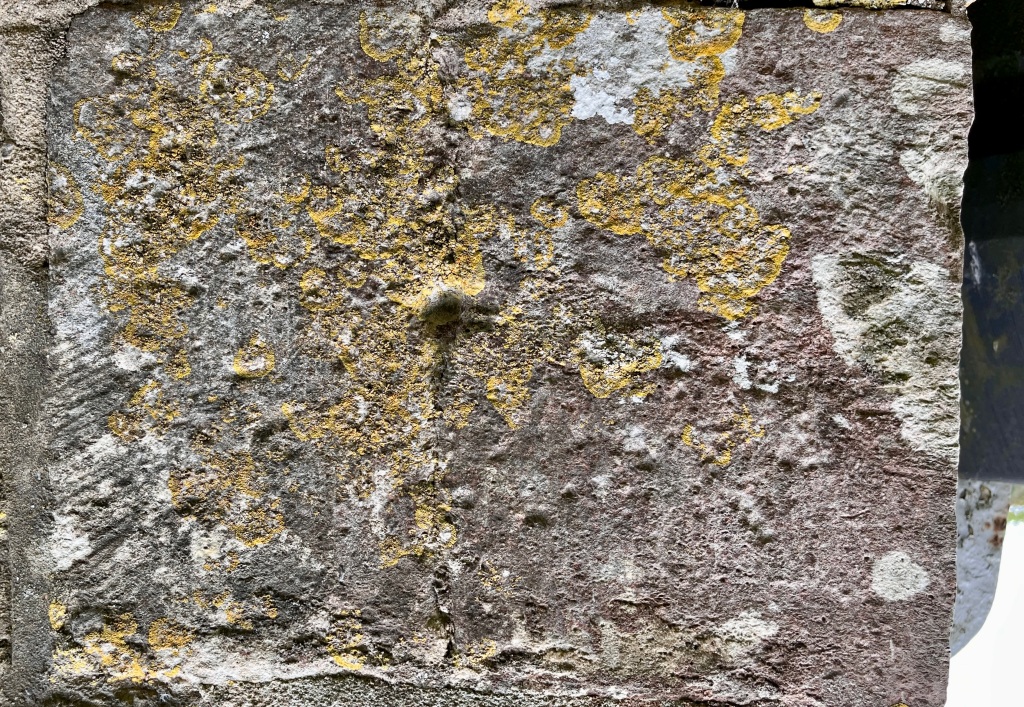
There are 4 dials in 2 pairs. They have much in common. All are on buttresses; all are C15; and unusually, all are designed entirely with pocks, without any lines at all. There are a couple of other plausible dials with a promising style hole in a mortar line or roughly central on a stone. There are hints of pocks that may be related, but erosion and lichen make it hard to be sure. Best left as a mystery.

DIAL 1

St Andrew . Trent . Dorset – Scratch Dial 1

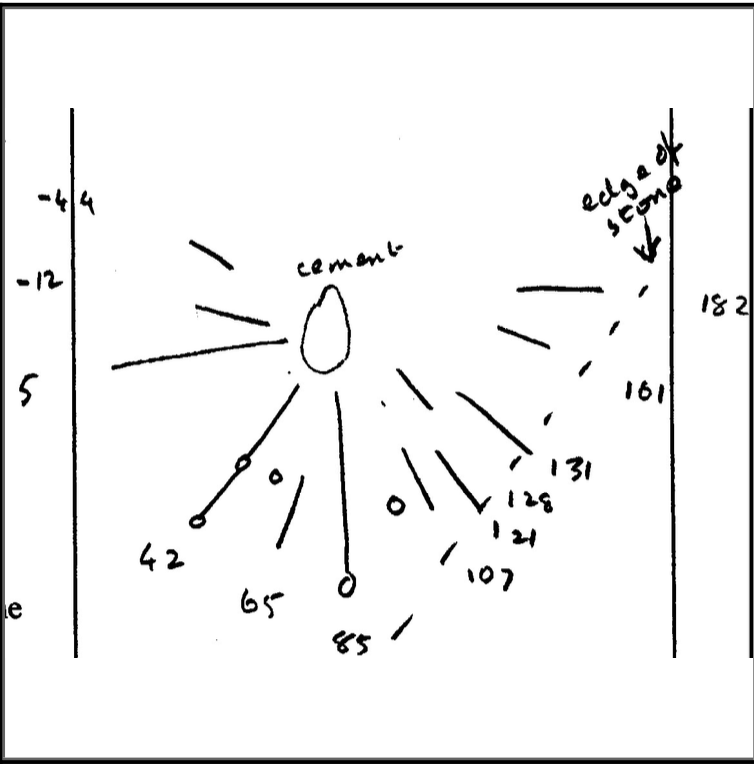
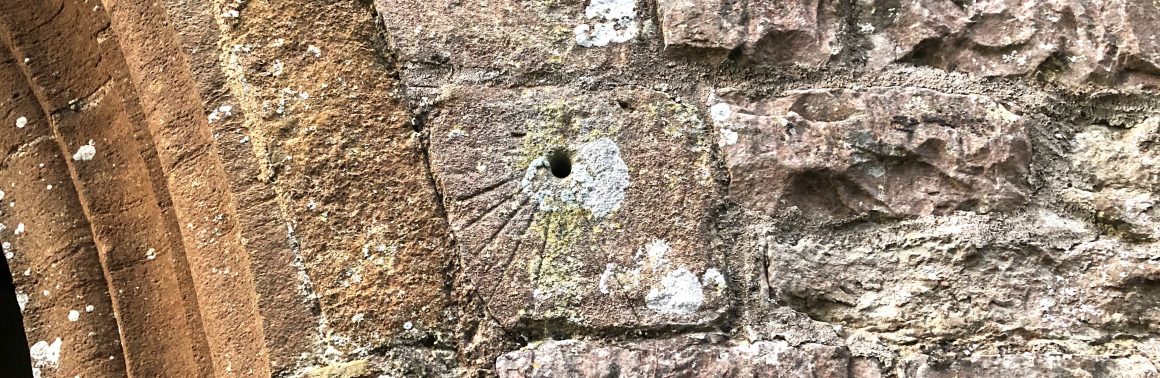
On the chancel, SW face of the end buttress. The gnomon hole is in the dial stone, with a curve of 7 pocks below it, of which one has a second that perhaps marked a an off-vertical noon line.

St Andrew . Trent . Scratch Dial 2 – BSS

DIAL 2

St Andrew . Trent . Dorset – Scratch Dial 2

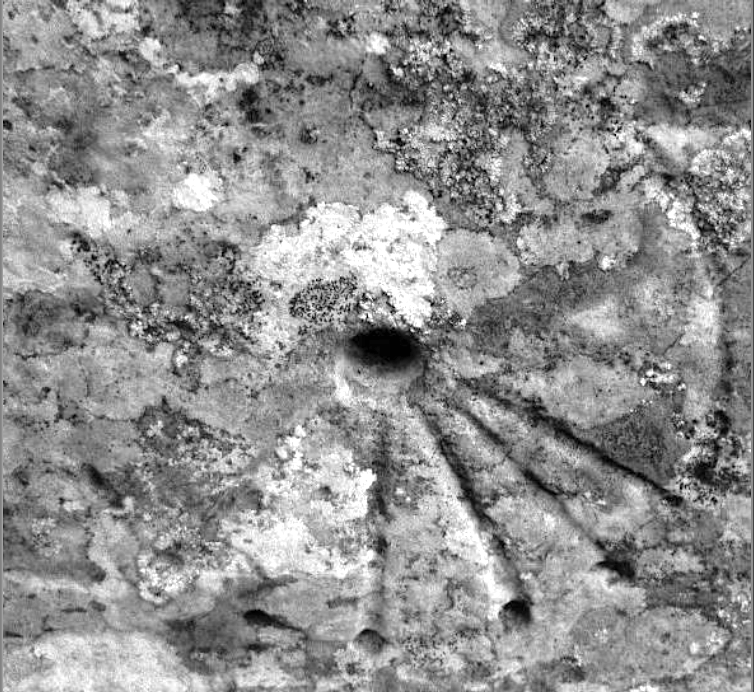
Dial 2 is the most intriguing of the 4 dials. It is below Dial 1 on the SW face of the chancel buttress. There are 24 holes drilled in a curve of 3 rows, with 8 in each row. The careful design has the dots radiating accurately from the gnomon hole as though they were lines. Additionally, there are outlier dots – 3, perhaps 4 – below the neat curve: see image above. They are drilled more or less in line with the design on the main dots, in a way that looks meant. GLP refers to them as extra dots.

DIAL 3

St Andrew . Trent . Dorset – Scratch Dial 3

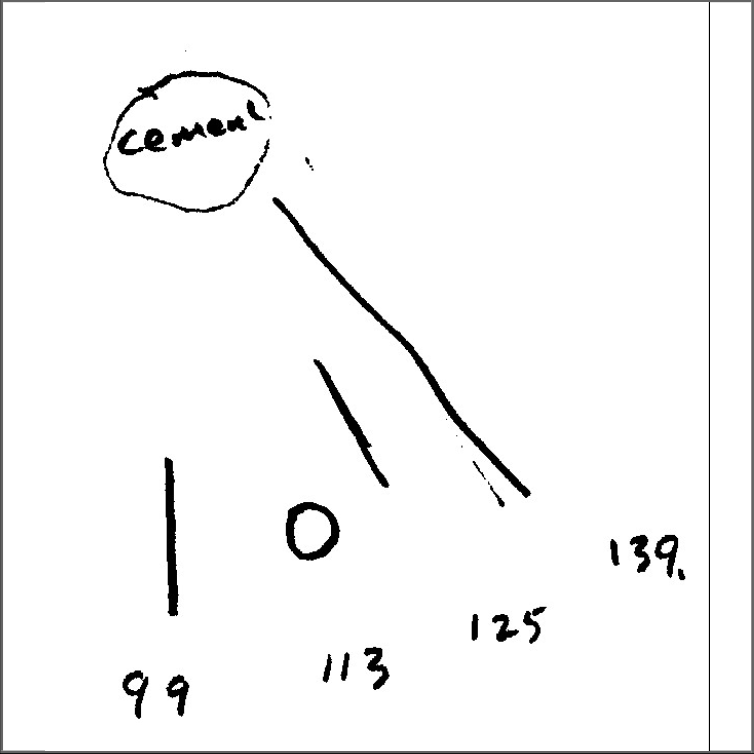
Dial 3 is on the cancel buttress E of the doorway. There are 6 pocks in a curve below a gnomon hole presumed to have been in the mortar but no longer identifiable. GLP concluded that this dial and its companion below were unlikely to have been accurate.

St Andrew . Trent . Dorset – Scratch Dial 3 BSS

DIAL 4

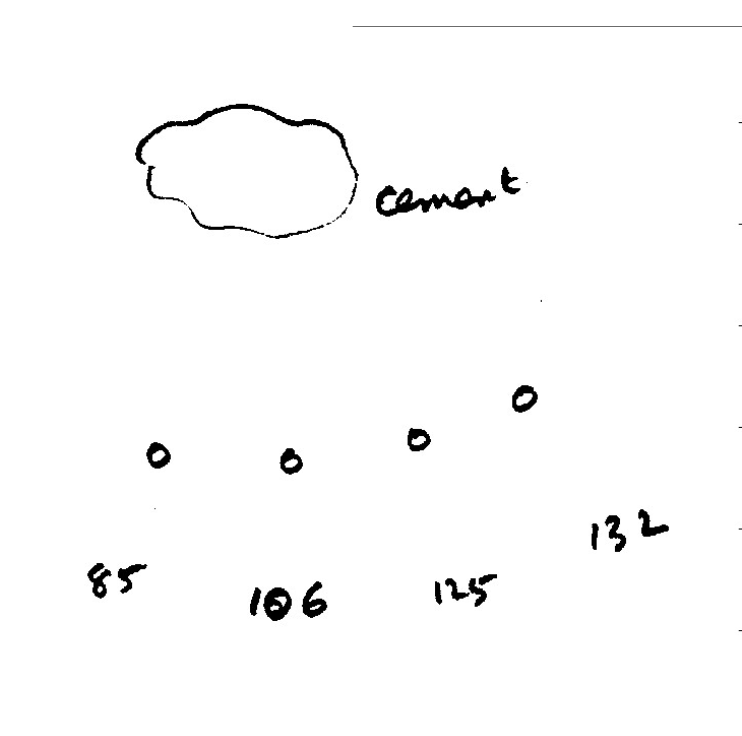
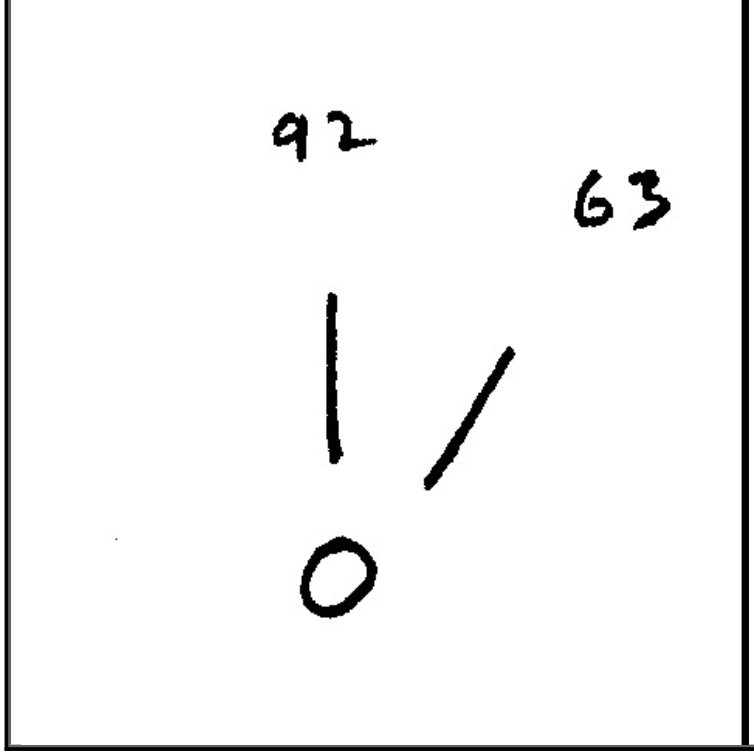
A similar dial with 4 pocks and a cement-filled gnomon hole in the mortar line. GLP also doubted its accuracy. It is hard to account for the fact that 2 such similar basic dials are so close. Rival sextons? A competition? A new incumbent?

St Andrew . Trent . Dorset – Scratch Dial 4 BSS
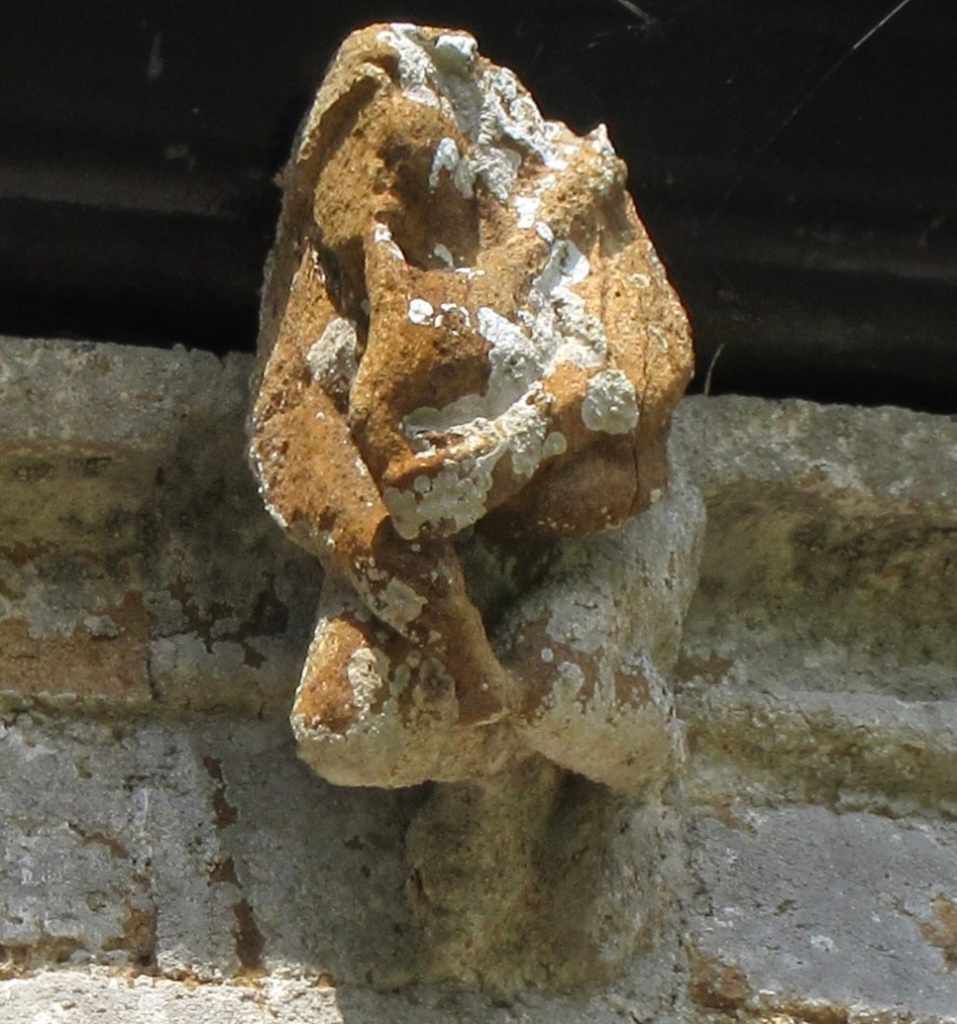
Bagpipe-playing hunky punk – St Andrew Trent Dorset (Keith Salvesen)

Note: To see the Vertical Dial, visit the Old Dial page HERE

GSS Category: Scratch Dial; Hunky Punk

All photos: Keith Salvesen

WINTERBORNE MONKTON . DORSET – ST SIMON & ST JUDE: Scratch Dials

Winterborne Monkton . St Simon & St Jude

ST SIMON & ST JUDE . WINTERBORNE MONKTON . DORSET

GRADE II* † Early C13 chancel, nave, N doorway; C15 N porch; c1500 W Tower; later additions; C19 restorations. A simple typically Dorset small church in an attractive location. 2m S of Dorchester (can be combined with Winterborne Steepleton nearby (2 dials). 50.6884 / -2.4604 / SY675877

DIALS

GLP notes a single doubtful dial over a blocked doorway, not included in BSS records. However there is a clear inverted dial elsewhere on S side. There is also a dial-ish quoin stone that I include. There’s not enough evidence to consider it much more than doubtful, but the location is conventional and the overall ‘jizz’ (to use a birding term) invited more than a glance.
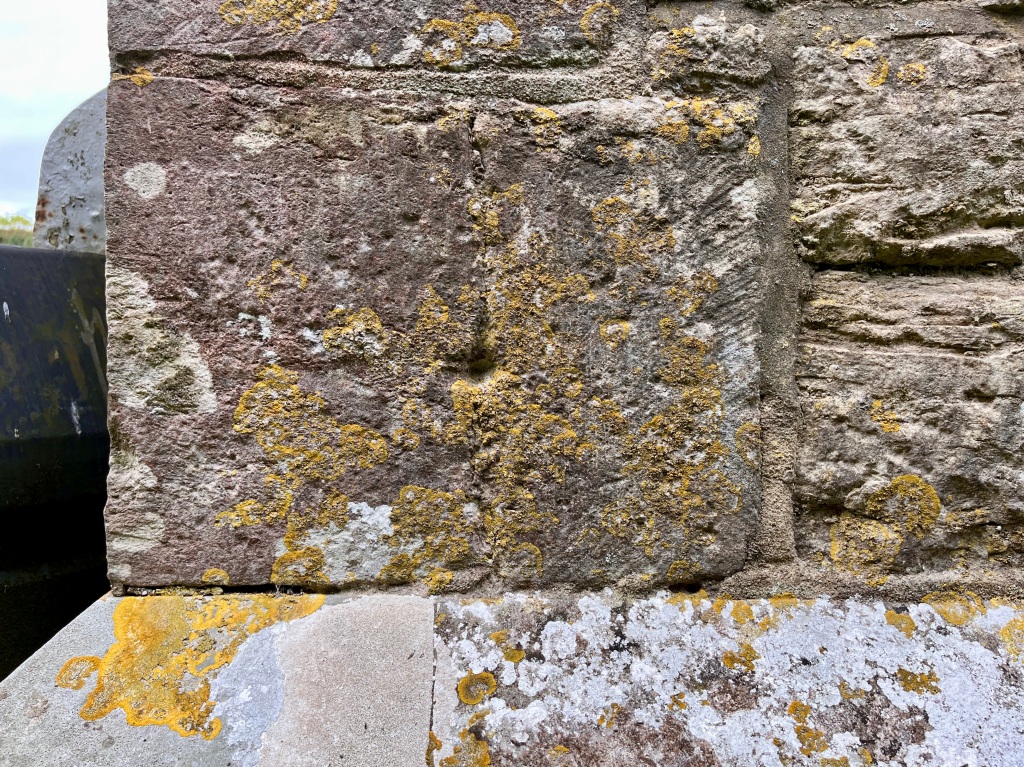
DIAL 1

Above the blocked S aisle door, C16. GLP suggests a masons’ mark rather than a scratch dial and notes a similar ‘dial’ at Hilton, near Blandford. There are 2 faint concentric circles. The very small central hole that would be more consistent with the use of a compass inscribe the circle.

DIAL 2

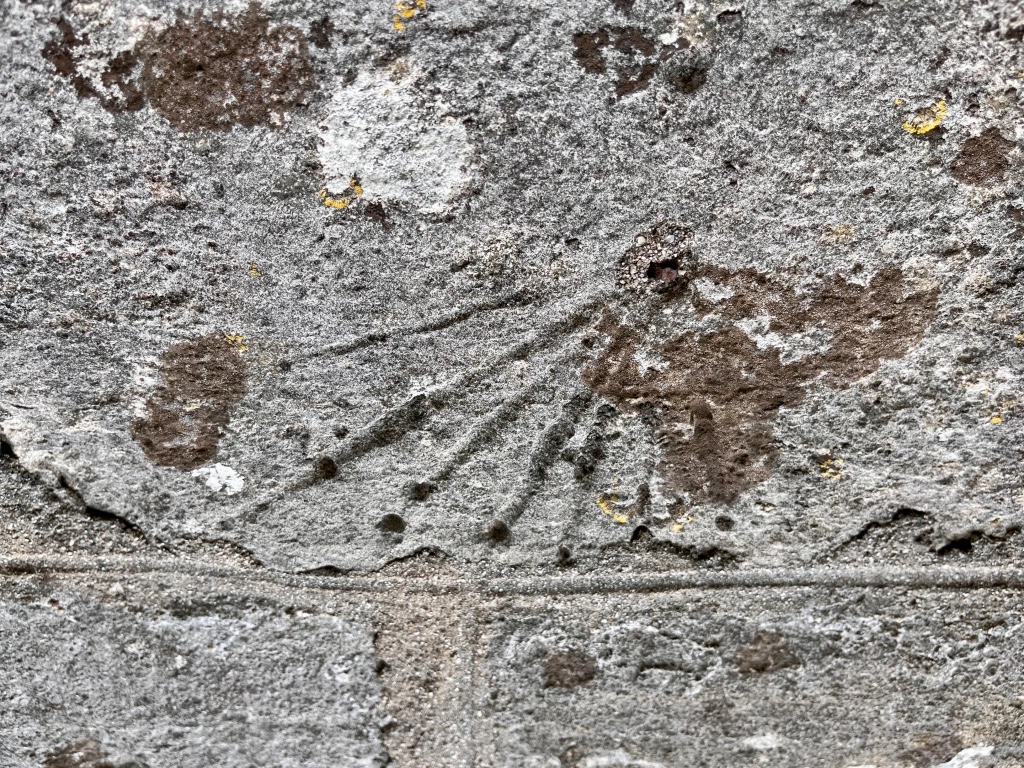
Quite high up at the W end of the S face is a very clear dial that I have not found recorded elsewhere. There are 7 lines, each ending in a pock and with the (presumed) 9-line having a second pock, doubtless the main Mass time. The reversion below shows how the design would have worked well as a morning dial.
The most intriguing feature is the presence of (the remains of) a square rod in the style hole, with filler material round it. It seems highly unlikely to be original, though it may have been inserted many years ago perhaps as a replacement gnomon. A square rod in not so rare: there is one at St Mary, Glanvilles Wootton, for example.

Winterborne Monkton . St Simon & St Jude – Reverted Scratch Dial

DIAL 3 ?

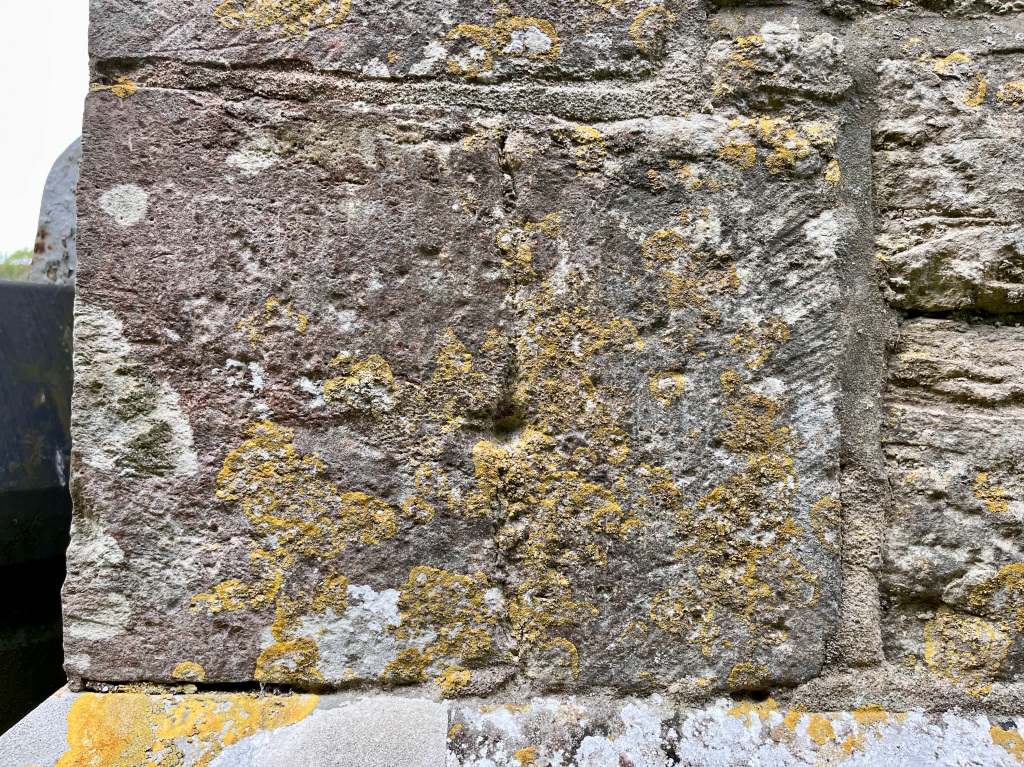
An excellent dial position, a hole almost central to the stone, and inverted (if a dial at all) as often the case where a dial has been superseded or its stone relocated. I have included a reversion that makes the upwards mark into a noon line. There are hints of perimeter pocks in LR quadrant.

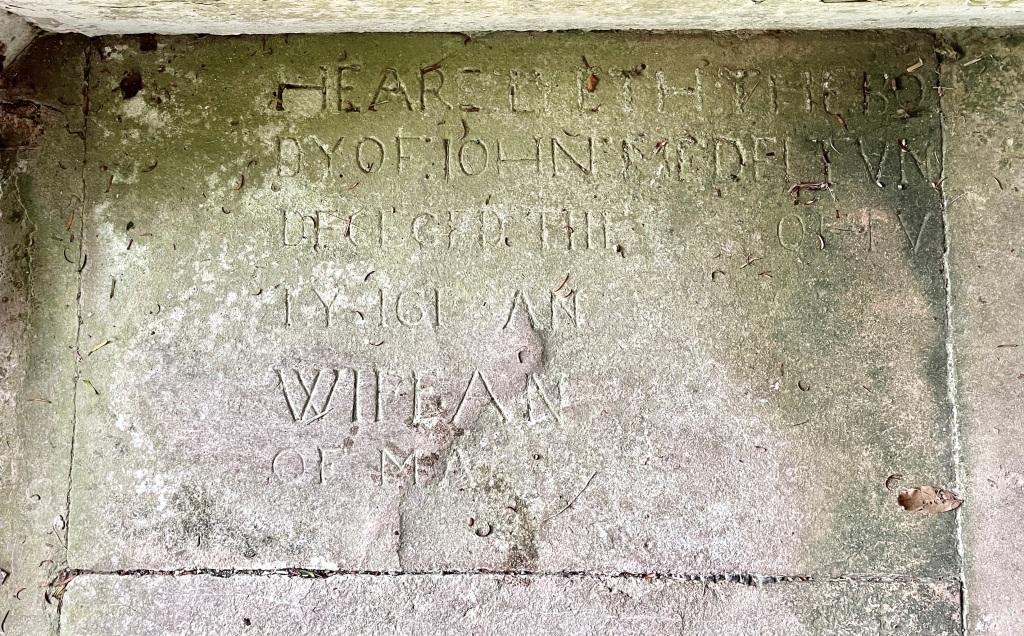
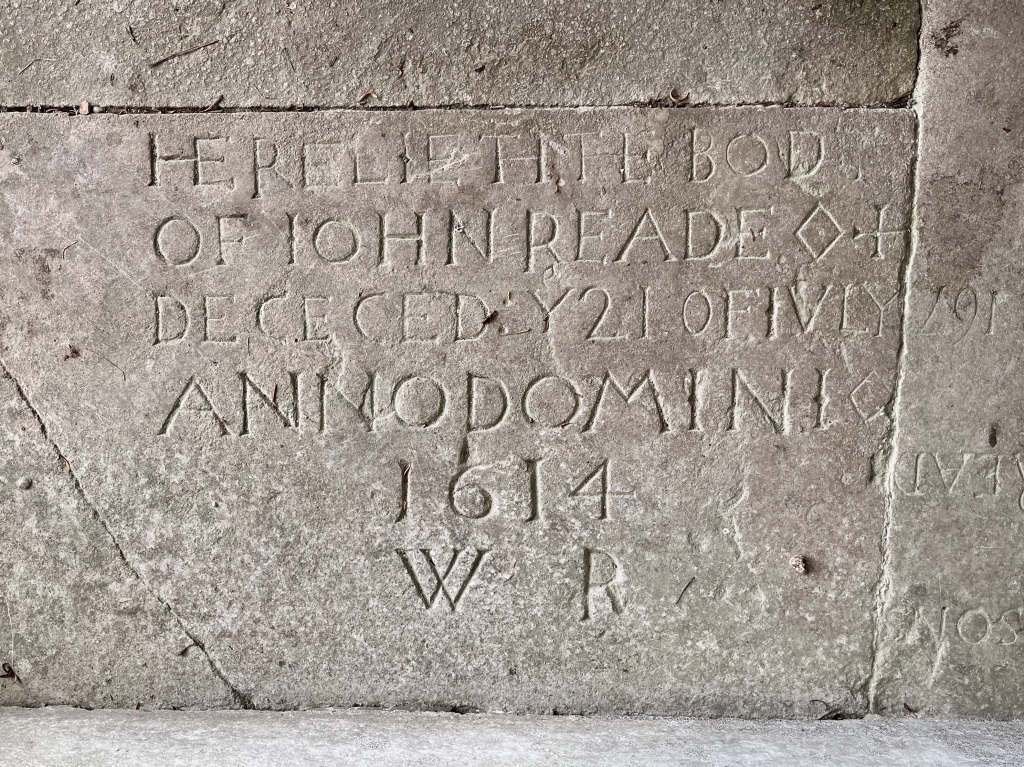
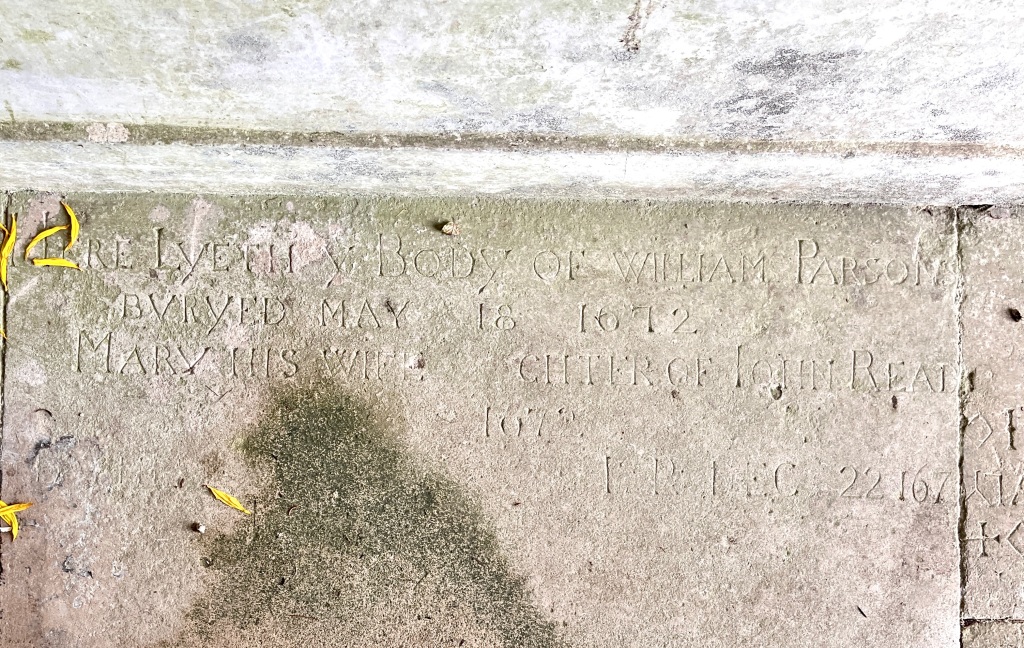
Finally, there are 3 fine C17 memorial floor slabs to admire

GSS Category: Scratch Dial; Mass Dial; Gnomon Rod; Masons’ Mark, C17 memorial floor slabs

All photos: Keith Salvesen

ABBOTSBURY . DORSET . ST NICHOLAS – Vertical Dial

St Nicholas . Abbotsbury . Dorset

ST NICHOLAS . ABBOTSBURY . DORSET

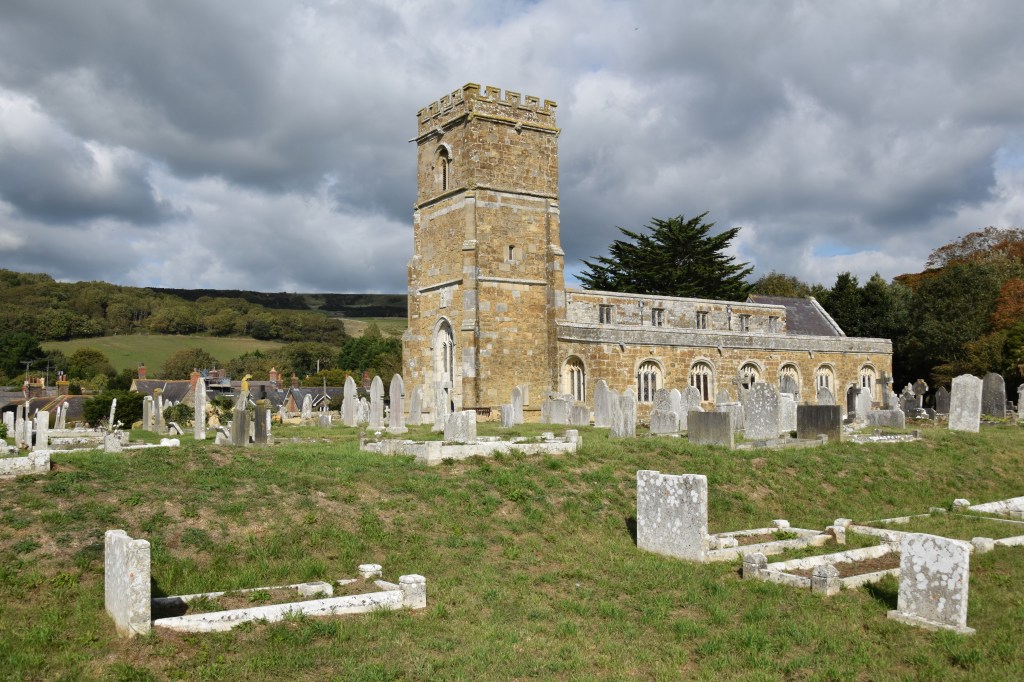
GRADE I † C14 with older origins; gradual development, rebuilding and restorations. This church represents a far wider history of the area ecclesiastically, architecturally and socially. There are a great many good online sources of information, both general and specific, accessible with a single Gxxgle search. One of the most authoritative resources for deeper delving is British History Online BHO. 50.665 / -2.5989 / SY577852

DIAL

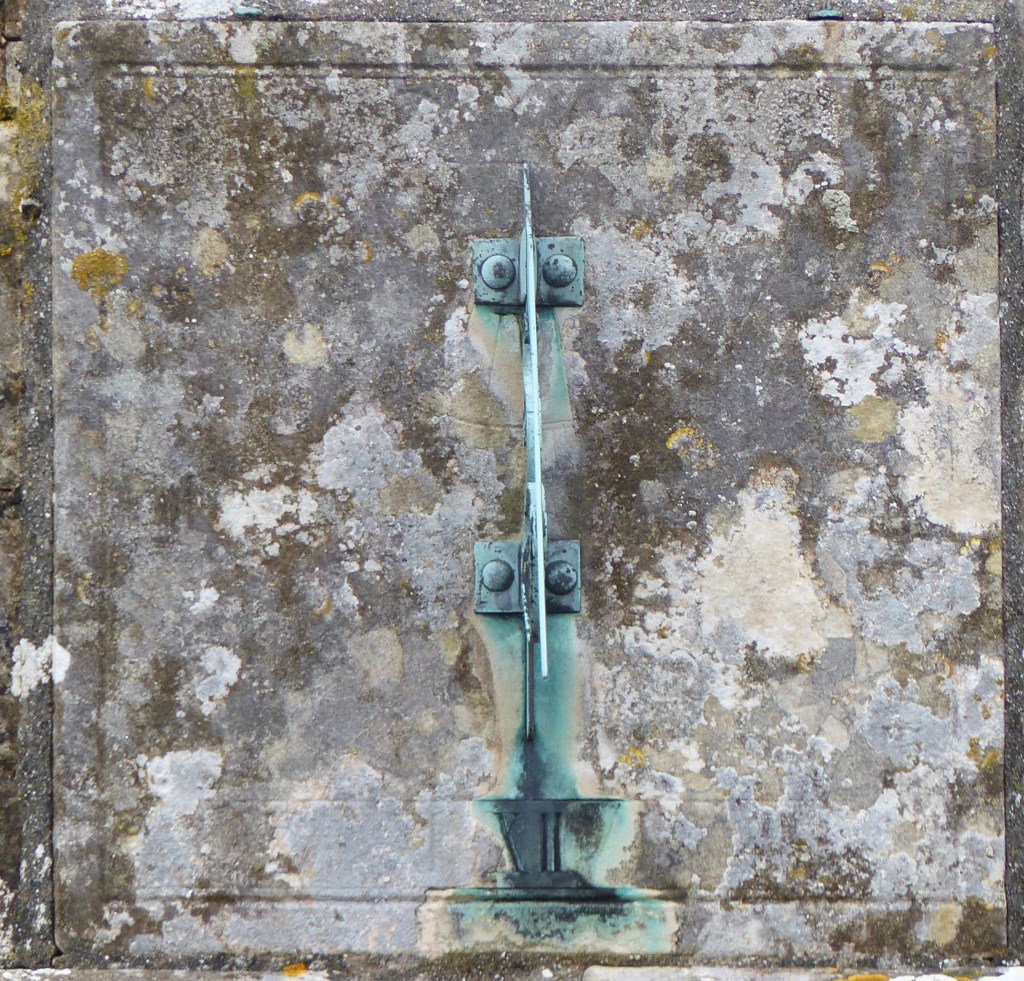
The vertical dial is set in the parapet of the south wall of the south aisle. It is weathered, like the stone around it. A survey some time ago found no visible markings; the high position, extent of weathering and prevailing light probably explains that. A long lens picks out more detail. It is hard to date the dial – ± 1800?

St Nicholas . Abbotsbury . Dorset – Vertical Sundial

The dial is cemented onto the parapet, supported by a ledge and with 2 iron supports at above it. A frame surrounds the dial. In the upper section is a semicircular dial, with the footing of the rather hefty gnomon centred within it. 2 clear lines descend either side of the noon line / gnomon blade.

St Nicholas . Abbotsbury . Dorset – Vertical Sundial

The hint of 2 converging lines above the bolts suggest they radiate down from the horizontal line of the dial. At the base of the semicircle there are traces of an outer semicircle and, significantly, of a few short lines between the two. These seem to be half hour markers. If so, there was once a more complex dial that has all but vanished.

St Nicholas . Abbotsbury . Dorset – Vertical Sundial

Beneath the lower gnomon footing, the number XII is very clear. Possibly it was recut (maybe more than once) to continue to emphasise the noon marker. Apart from that, all other numbers are completely erased except for a ghost of XI.

GNOMON

Is the rather clunky gnomon original? Initially I thought not, but some features suggest it might be. The precision of the tip of the top being exactly on the edge of the frame; the extent of the staining; and the degree to which it has protected the centre line of the dial and in particular XII. Against that, the angled view of the dial makes it seem rather incongruous.

St Nicholas . Abbotsbury . Dorset – Vertical Sundial / S. face with parapet dial above centre windows – stevekeirtsu cc

GSS Category: Vertical Dial; Church Sundial; Gnomon

All photos Keith Salvesen except the last, stevekeiretsu Geo cc

WOODSFORD . DORSET . ST JOHN THE BAPTIST – Scratch Dial

St John the Baptist . Woodsford . Dorset

ST JOHN THE BAPTIST . WOODSFORD . DORSET

GRADE II † C13th origins of which traces survive at the W end; substantial rebuilding 1860s by Wyatt. Set in peaceful countryside close to R. Frome. An excellent folder with details about the church and contents is kept in the church. Woodsford Castle / fortified house is nearby, the largest thatched building in England. 5m E of Dorchester 50.7143 / -2.3383 / SY762905

DIAL

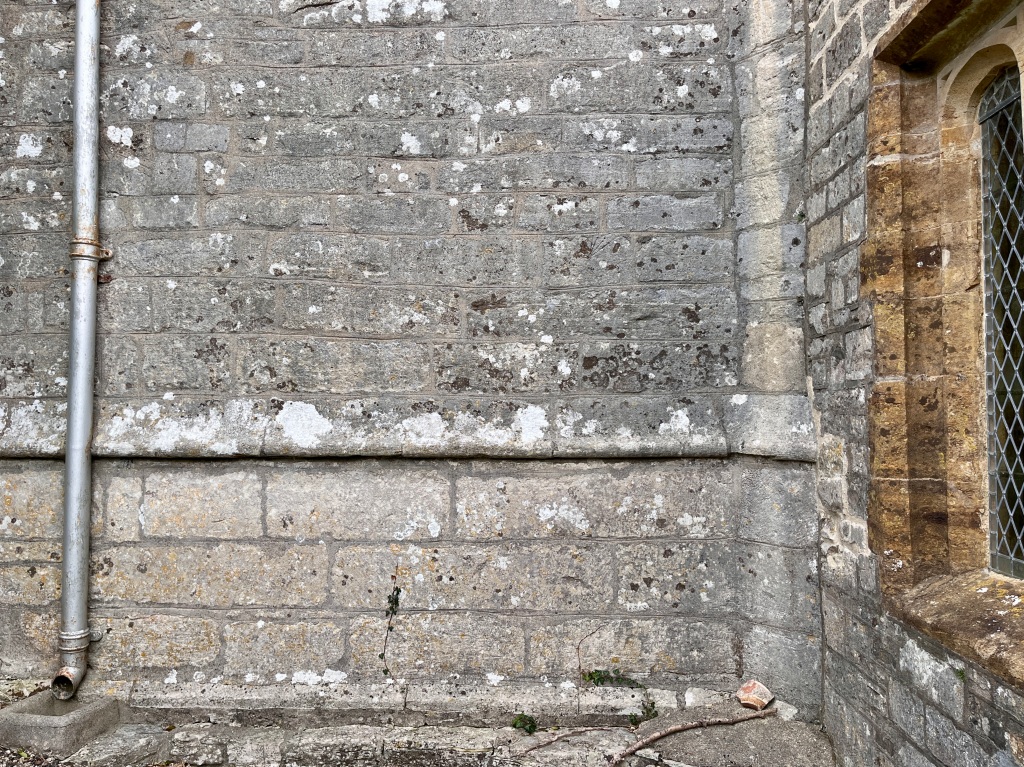
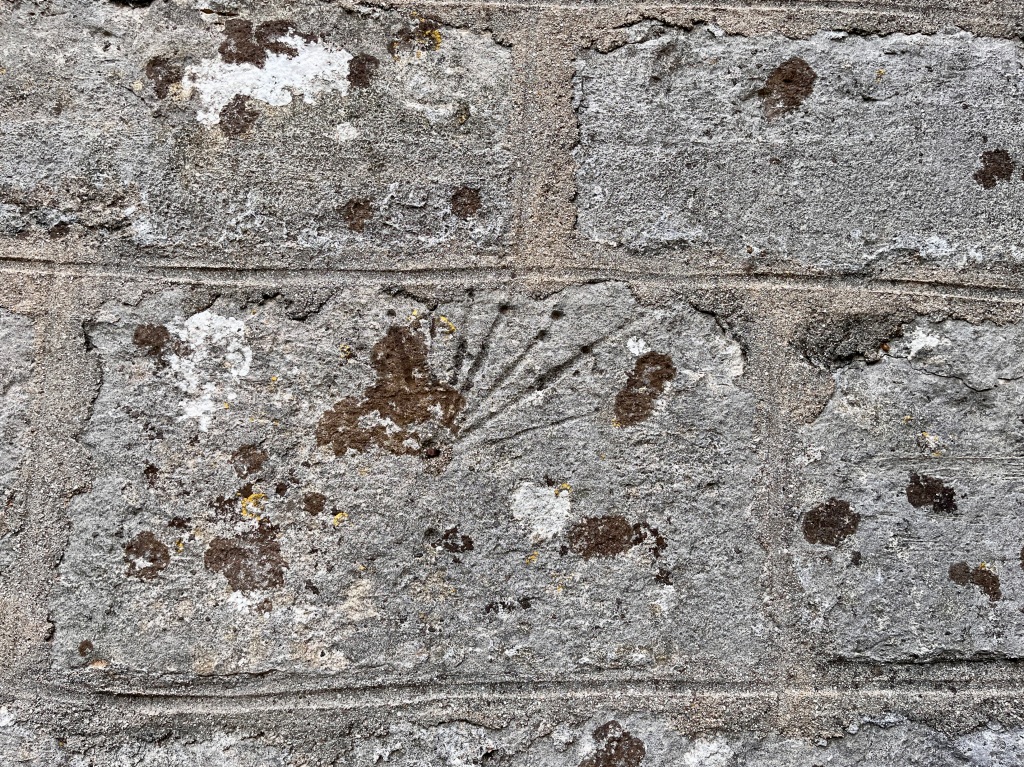
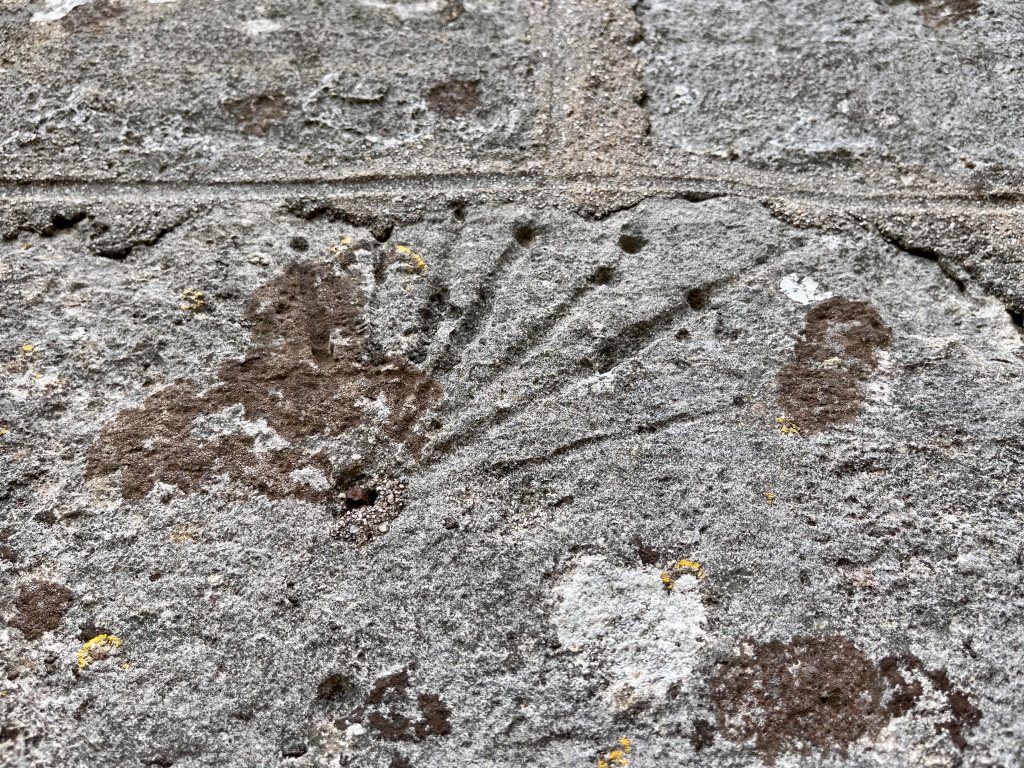
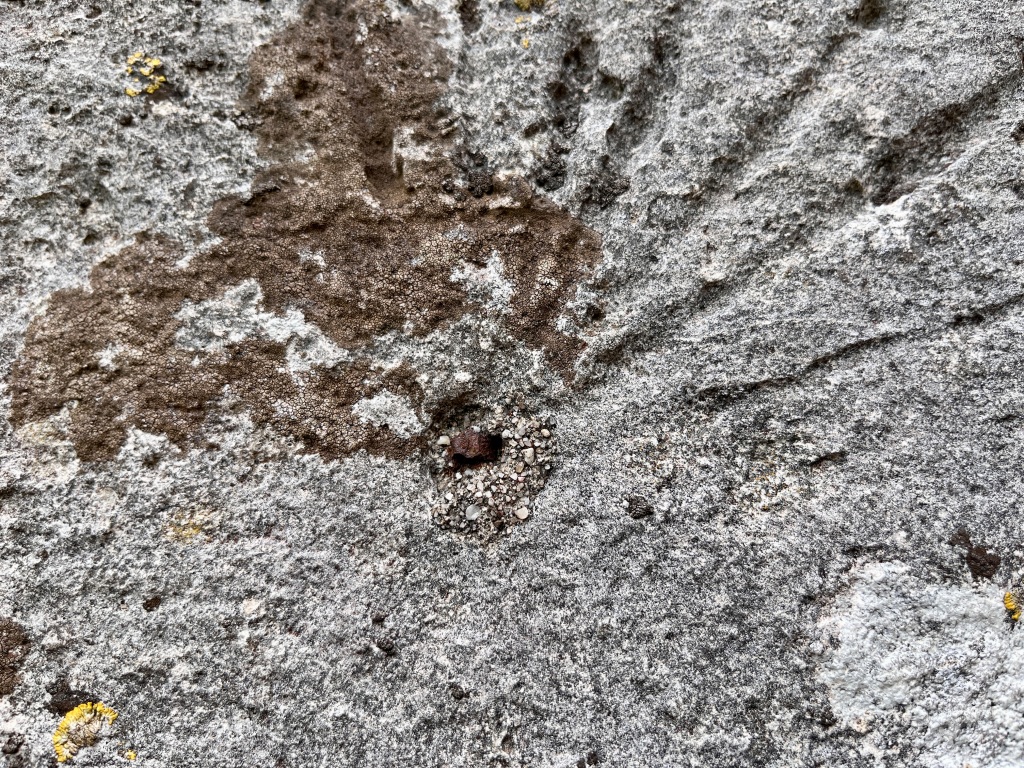
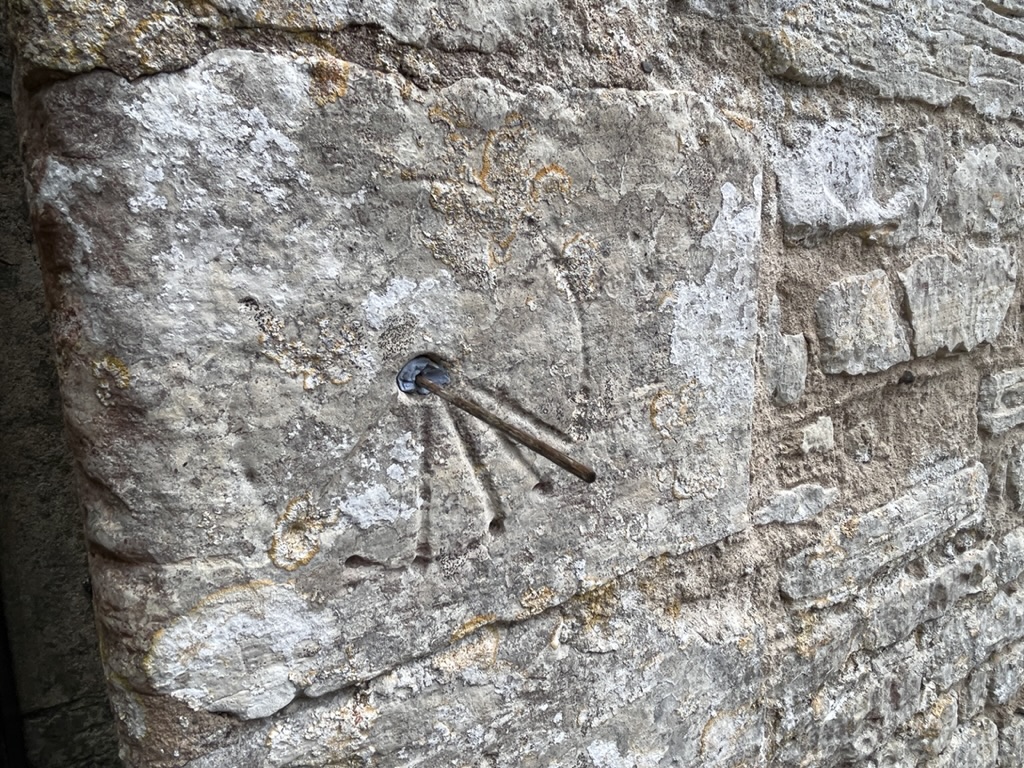
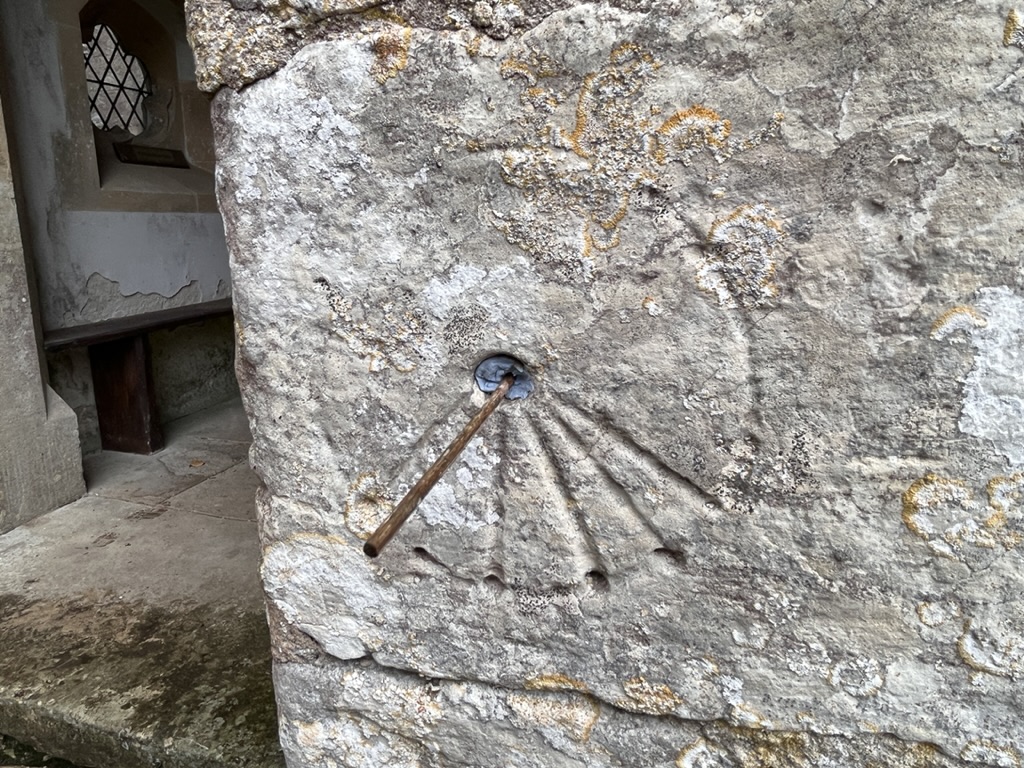
The single dial is just E of the entrance door, on the quoin of the S chapel. Plain and clearly cut. Now adorned with a slim metal rod bedded into blu-tack in the large gnomon hole (not quite as strange as the drill bit gnomon I found in Shropshire…).

St John the Baptist . Woodsford . Dorset – Scratch Dial

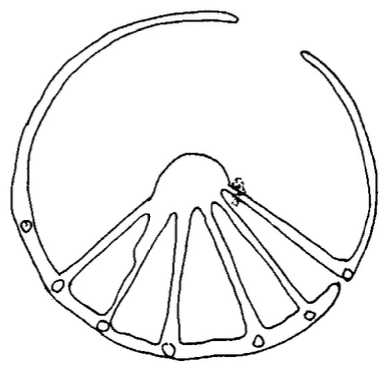
The dial has 5 clear lines descending from the gnomon hole to the lower perimeter of the complete circle. There are large terminal pocks and several other smaller pocks round the circumference that plausibly could be part of the overall design.

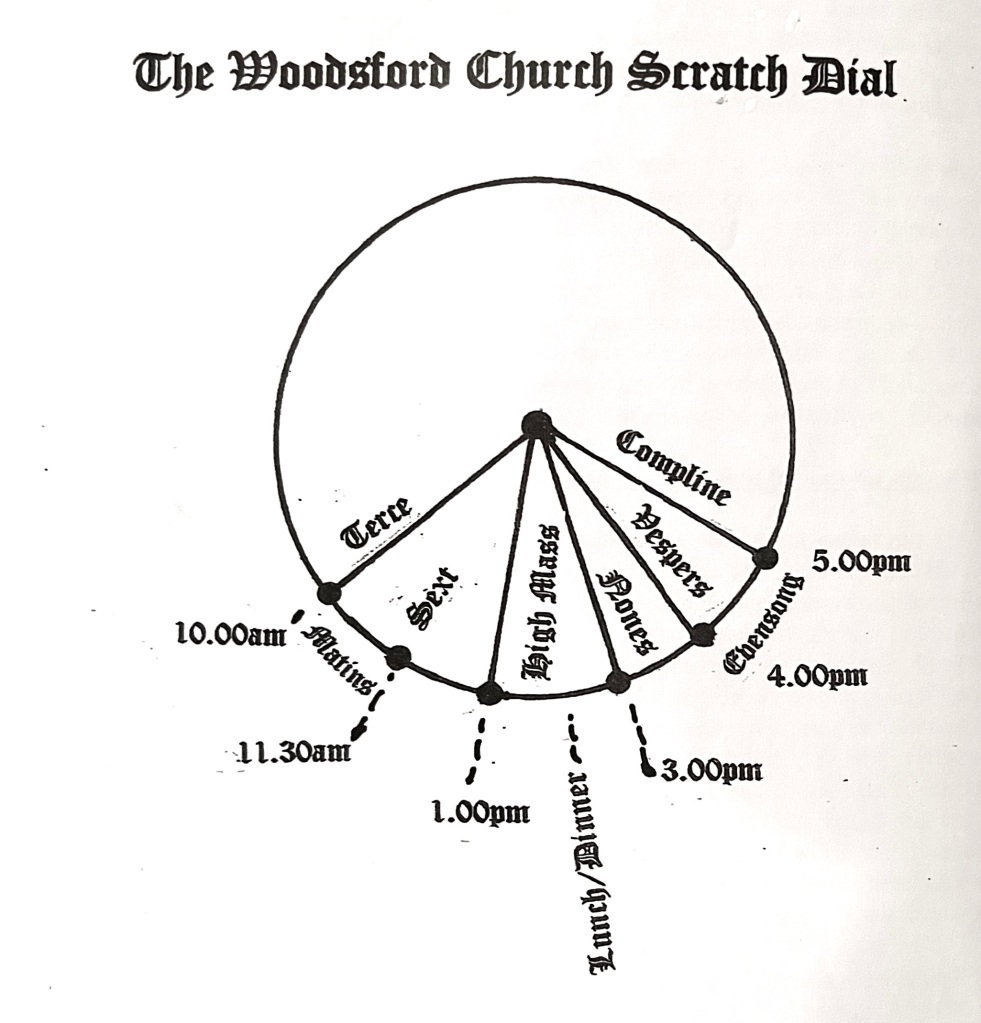
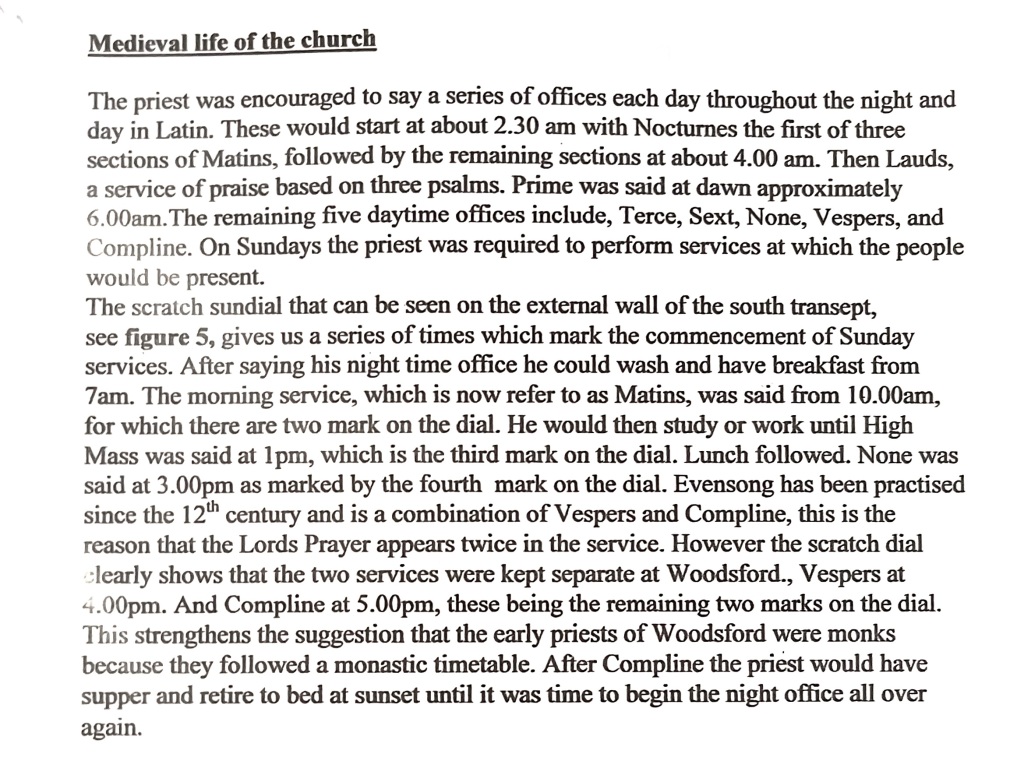
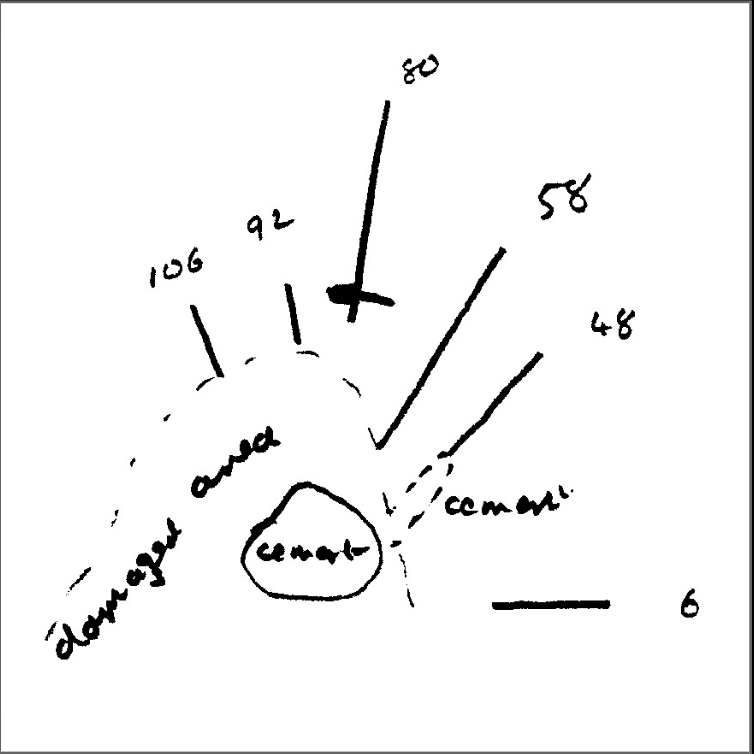
A most informative diagram with commentary explains the intricacies of the medieval day and the significance of the passing hours between dawn and dusk. You can find more on this topic HERE but the material below provides a good straightforward overview.

Woodsford . BSS Diagram

GSS Category: Scratch Dial

All photos Keith Salvesen; Dial Diagram and Explanation courtesy of the Church

GARDEN SUNDIAL . MINTERNE HOUSE . DORSET

MINTERNE HOUSE . DORSET

A sundial on the terrace of this fine house, with its C17 origins and unbroken line of Digbys. The renowned gardens are especially worth visiting in Spring. It features a collapsible gnomon, an unusual feature not conducive to enhancing its primary purpose.

WINFRITH NEWBURGH . DORSET . ST CHRISTOPHER – 6 Scratch Dials

St Christopher . Winfrith Newburgh . Dorset

ST CHRISTOPHER . WINFRITH NEWBURGH . DORSET

GRADE II* † C12 origins, chancel added C13, nave & tower C15. Considerable C19 restoration & rebuilding. Quite a large church, with its gradual development evident. 6 confusing scratch dials. SE of Dorchester, W of Wareham. 50.6585 /  -2.277 /  SY805843

DIALS

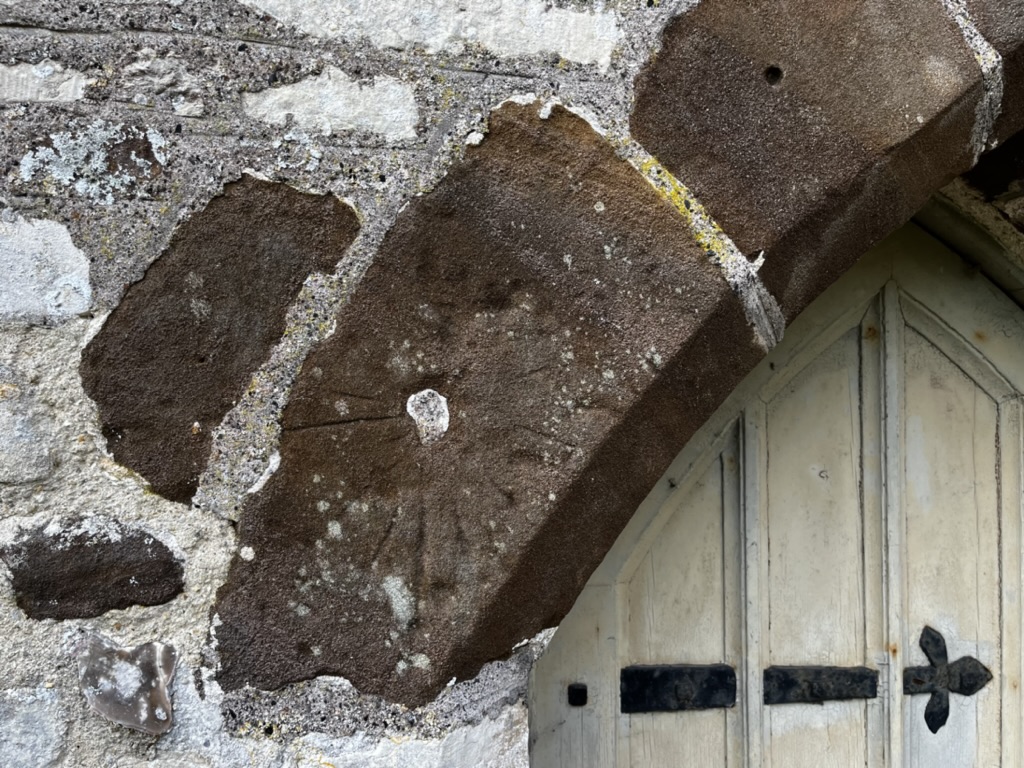
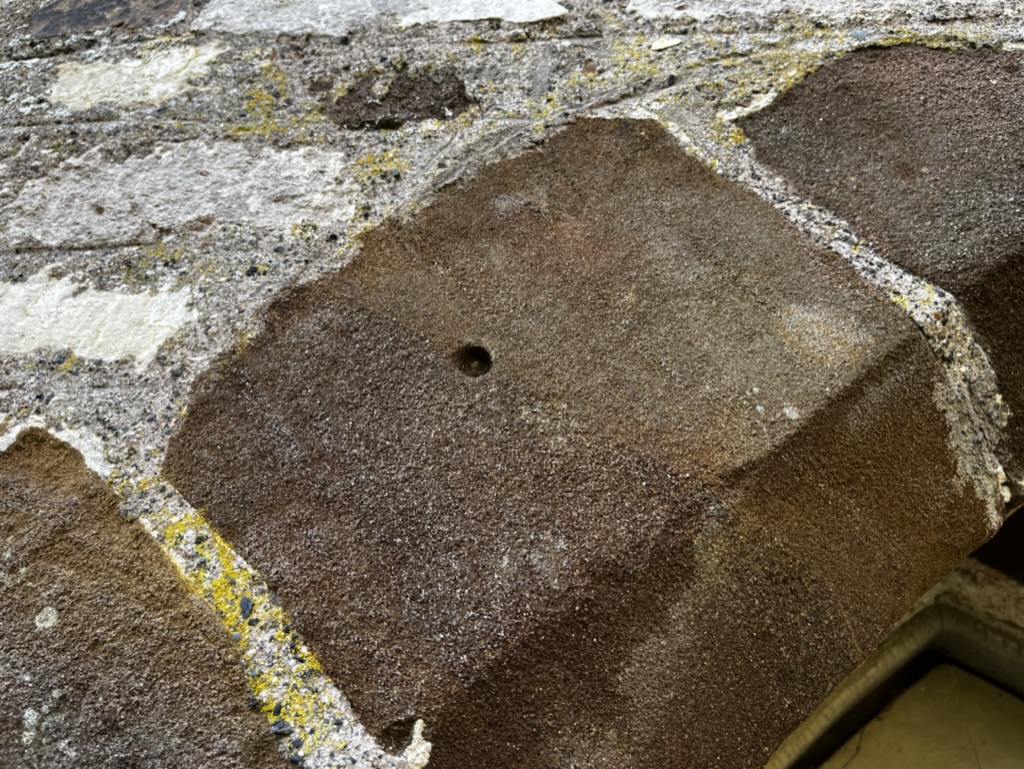
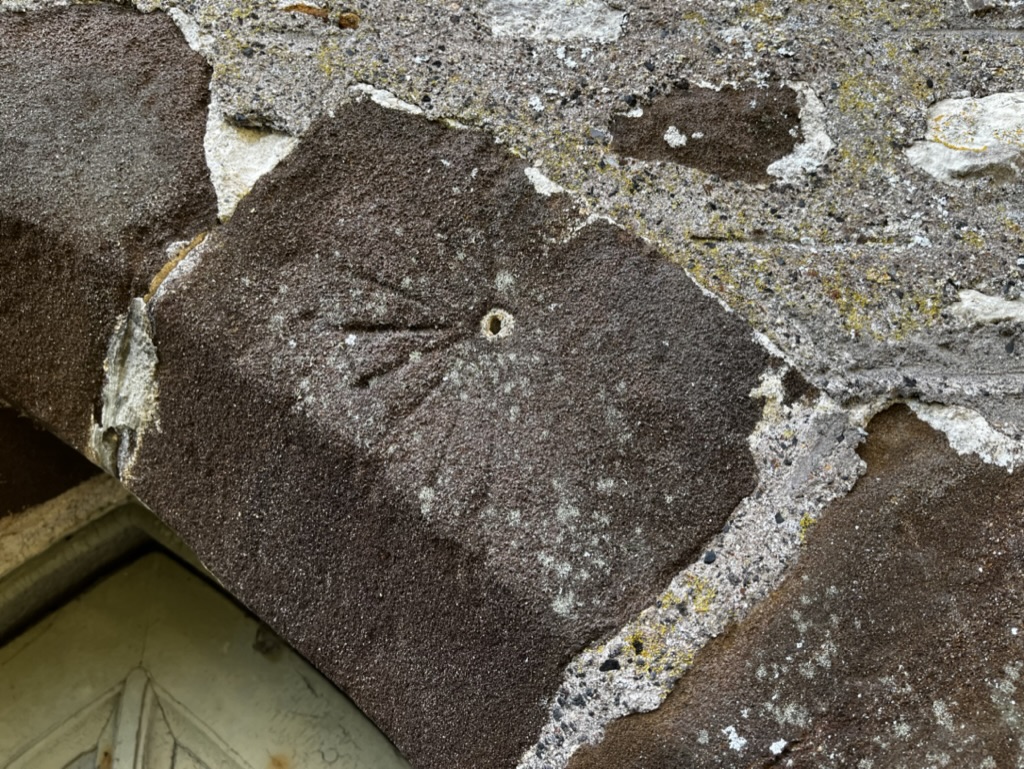
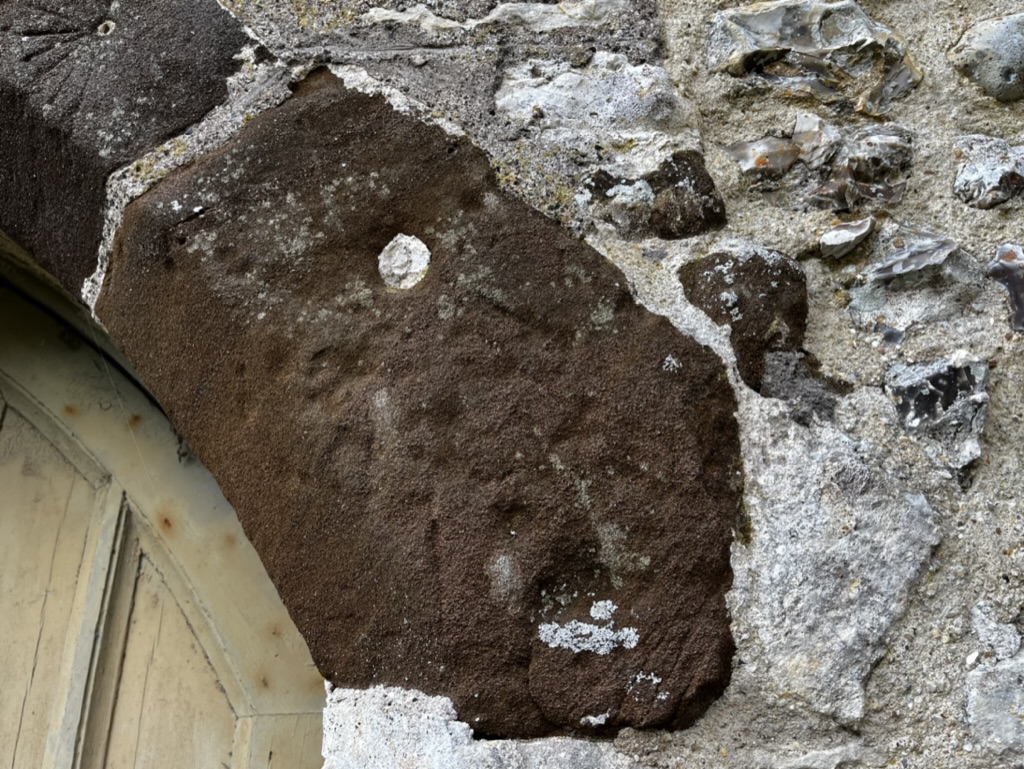
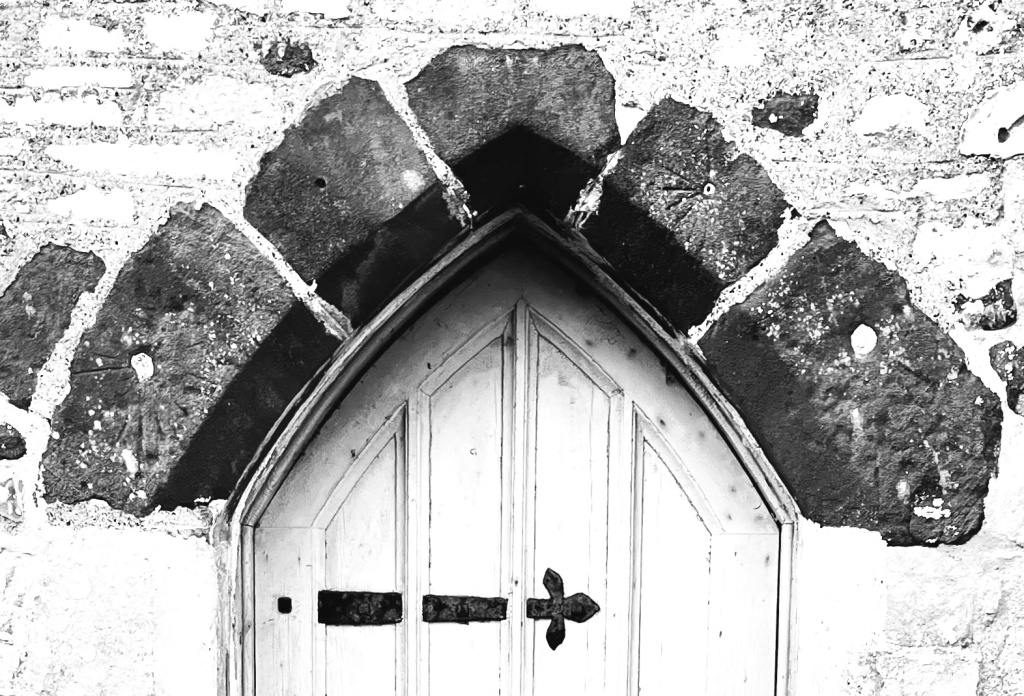
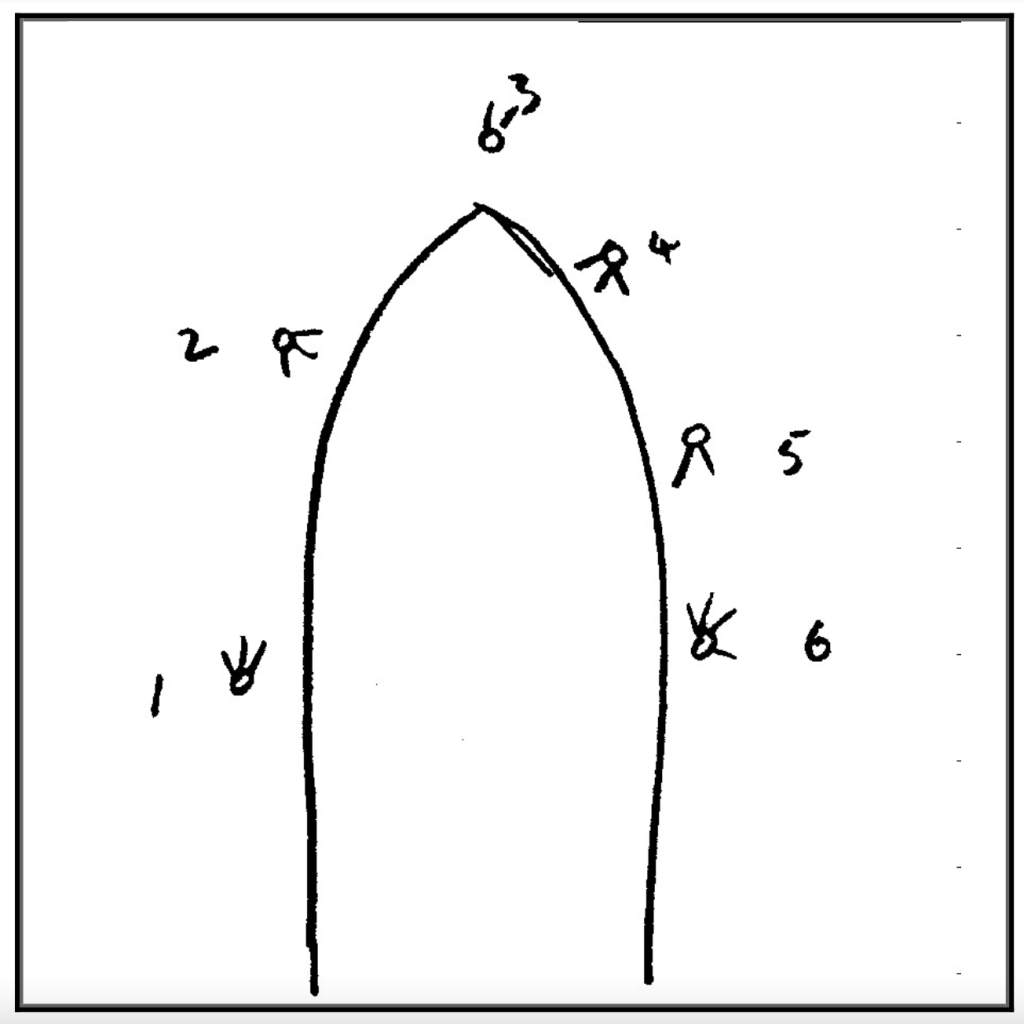
The scratch dials are in a group arranged around the S. door of the chancel. There are 6 in all (BHO records 4) but on the very dark local ironstone none is very clear. BSS / GLP dates them to C15, and their diagrams below are very helpful in marking the locations and configurations. I should say at once that I couldn’t definitively identify dial 3 (at / near the apex of the doorway’s arch) at the time nor in the photos I took see below.

St Christopher . Winfrith Newburgh . Dorset – the ‘Dial Doorway’ with 6 scratch dials

GLP concluded that none of the dials was in its original position. 1, 3, 6 are inverted; the stones of 2, 4, 5 were shaped after the dials were cut, truncating them. Perhaps the entire doorway was originally built using reshaped stones from elsewhere on the church; or perhaps an existing doorway was later rebuilt or reshaped.

DIAL 1

Dial 1 is on L side of the doorway. Inverted, with 5 lines pointing upwards. Style hole area heavily filled (possible repair of damage?). GLP suggests the lines are not convergent so very inaccurate.

DIAL 2

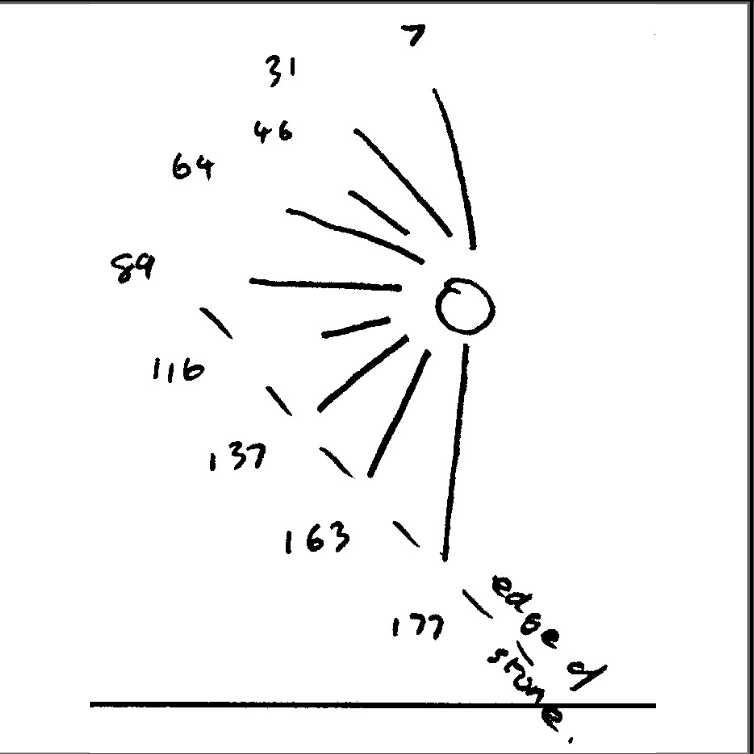
Dial 2 is above dial 1, on the lowest stone of the doorway arch. Parts of the dial have been cut off at the edges. There are 12 lines, 5 pocks and a cement-filled style hole. Of all the dials, it is more or less correctly orientated, with a noon line emphasised by depth and length.

DIAL 3

This is my candidate for dial 3. GLP describes it as very worn and inverted. Apart from the very clear unfilled style hole, he describes 2 trace lines above the dial. I couldn’t detect the 2 lines. The BSS diagram (see below) indicates dial 3 as being on the apex stone, but I found no evidence of a dial there.

DIAL 4

Dial 4 is upper R side of the arch. There are 9 lines radiating from a plugged style hole, one (perhaps 3) with terminal pocks. The dial has clearly been rotated 90º clockwise. Sited correctly, the deeper incised lines L side would become midday lines. GLP considers it clearly and accurately marked (given the correct position).

DIAL 5

Dial 5 is below dial 4 on a larger stone. It is very degraded and it isn’t easy to read. BSS notes 3 lines, and a pock possibly marking noon. My impression was of 2 additional trace lines. This dial is recorded as repositioned, set at a very oblique angle, and could never have been used in its present position.

DIAL 6

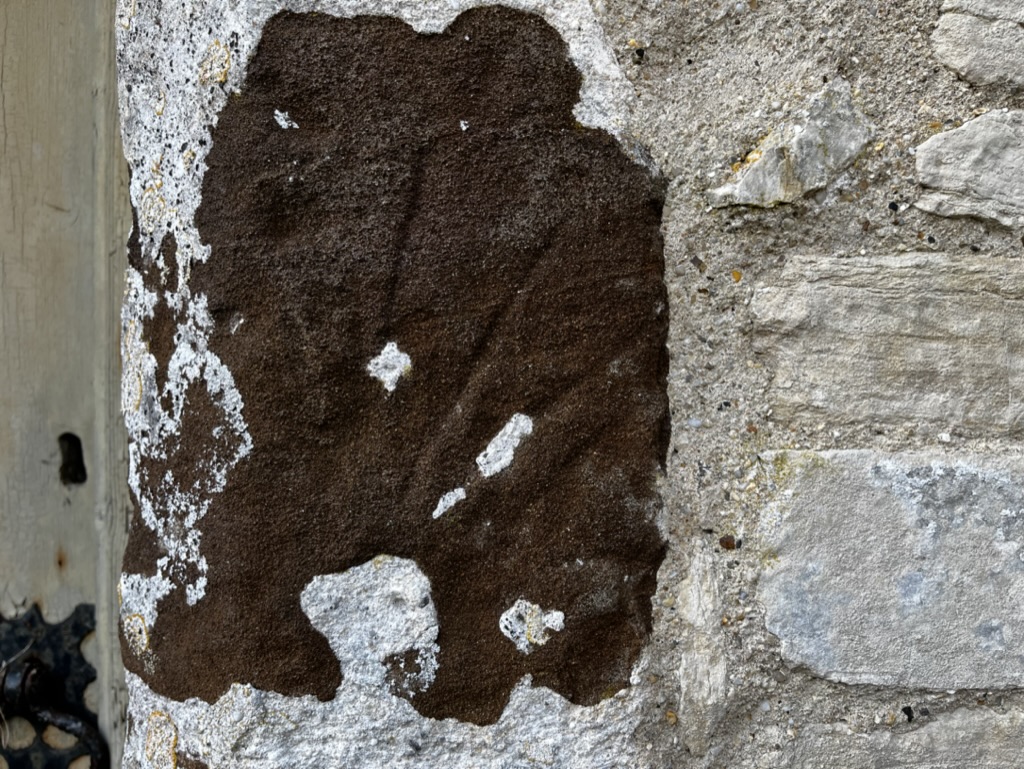
Dial 6 is lower down on the R jamb approx level with dial 1. Again, it is inverted, with 6 distinct lines radiating upwards. One is marked with a cross, probably the Mass line.

Dials 2 -5 B&W: the hole top L presumably marks 3.. No clues on the apex stone
Winfrith Newburgh – 6 dials diagram

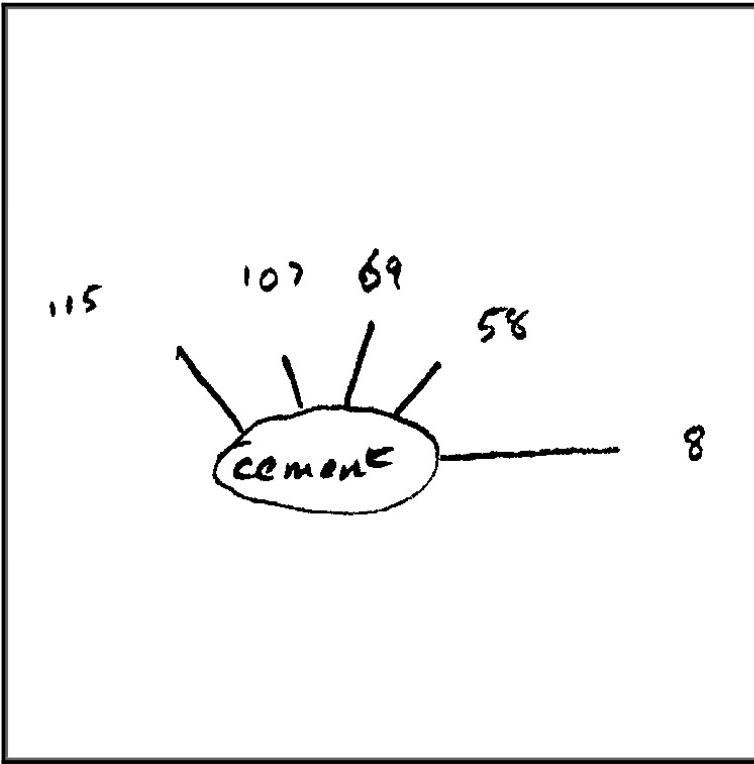
BSS DIAGRAMS OF THE 6 INDIVIDUAL DIALS

NOTE: because of the dark ironstone I have brightened the images to make them clearer

GSS CATEGORY: Scratch Dial; Mass Dial; Medieval Sundial

All photos Keith Salvesen; diagrams and research material GLP / BSS

TARRANT GUNVILLE . DORSET . ST MARY – Scratch / Transitional Dial

St Mary . Tarrant Gunville . Dorset

ST MARY . TARRANT GUNVILLE . DORSET

GRADE II* † Mainly C14, tower C15. C12 vestiges of earlier church. General C19 restorations including by T H Wyatt. A slightly unharmonious impression reflects the changes. Roughly midway between Shaftsbury to NW & Blandford to SW. 50.9135 /  -2.1078 / ST925126

DIAL

A single dial on S porch E of doorway. GLP calls it a remarkable dial, somewhat damaged. Its perplexing design has provoked several theories. The most straightforward is that it is in fact a transitional dial rather than a true scratch dial. BHO notes: Scratch Dial: on S. wall of porch, with black-letter numerals and stump of iron gnomon, early 16th century, which is probably meant generically rather than specifically. GLP, with his compendious knowledge of Dorset dials, dates this one much earlier, late C14.

St Mary . Tarrant Gunville . Dorset – porch

The dial stone is far larger than any other porch stone and seems out of place. The first impression is of a large dial doubly encircled but with the upper half damaged and eroded over the centuries. GLP suggests remnants of large dial with all hour lines marked. The fact that the gnomon hole – still with the stub of an iron rod – is almost exactly at the centre of the dial stone supports the theory of an originally complete circular dial rather than partial arcs. In the upper L quadrant there are hints of double circumference lines continuing upwards.

St Mary . Tarrant Gunville . Dorset – scratch / transitional dial

LINES & POCKS

The details of the dial are intriguing. There are 10 lines leading to numerals carved in blackletter / Gothic form. Legible numbers run from 5am to noon, then there are 2 lines with eroded numerals. There is a plausible very faint near-horizontal line RHS. Hours 9, 10, 11, & 12 are marked with a cross rather than the roman numeral X (see diagram below).

There are also 5 pocks. 4 decorate the noon line. 1 is halfway down the 11 line which is nearly vertical, indicating (I think) that the dial was cut to take account of the orientation of the wall.

St Mary . Tarrant Gunville . Dorset – scratch / transitional dial

GNOMON

Unusually, the dial has the stump of an iron gnomon. It seems unlikely to be original and looks more square than round (cf GLANVILLES WOOTTON , also in Dorset). Whether original or not, there is no way of telling how (if at all) it was angled.

St Mary . Tarrant Gunville . Dorset – scratch / transitional dial

GLP suggests that the dial may be an interesting transitional dial and notes that it would probably not have been accurate. One theory is that this was a horizontal dial set vertically; or with a horizontal design used for this vertical dial. He concludes that it is as much a decorative feature as a real timekeeper. My query is whether C14 dials were sophisticated enough to be making the transition from basic scratch to accurate scientific dials.

St Mary . Tarrant Gunville . Scratch / Transitional Dial

GSS Category: scratch dial; transitional dial; vertical dial

All photos Keith Salvesen; dial diagram BSS / GLP

FORDE ABBEY. DORSET – 2 Unusual Sundials

FORDE ABBEY . DORSET

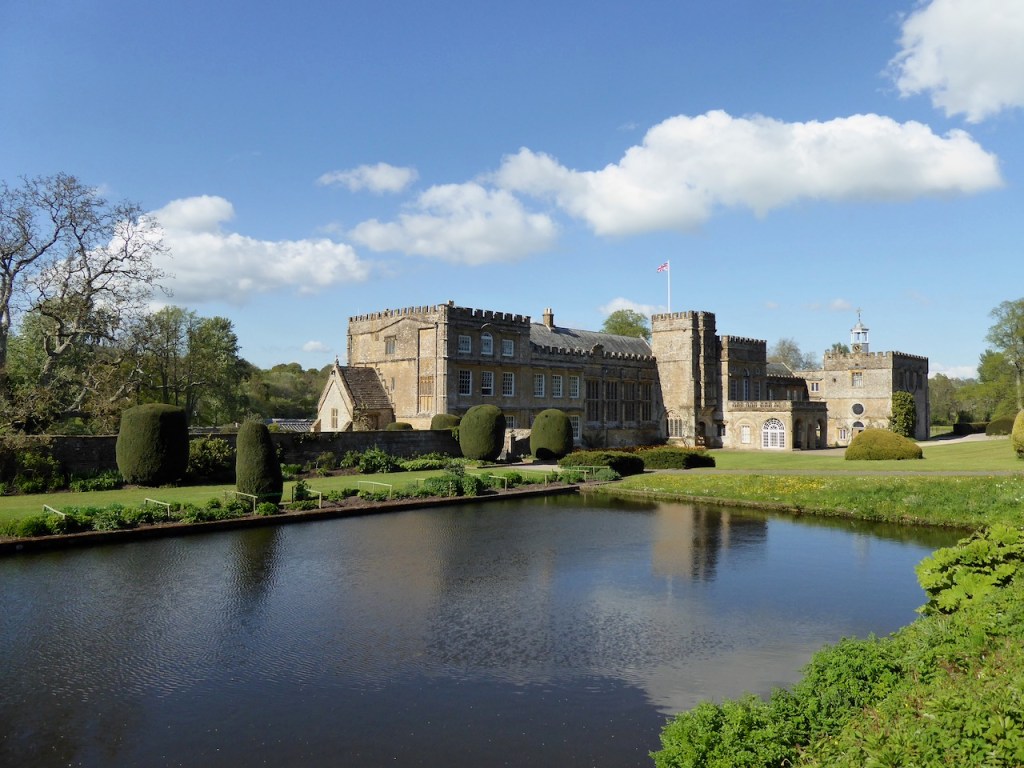
GRADE I † Cistercian Abbey dating from C12, becoming a fine stately home C17 with beautiful gardens and landscaping. Near Chard. 50.8434° N, 2.9113° W

DIAL 1

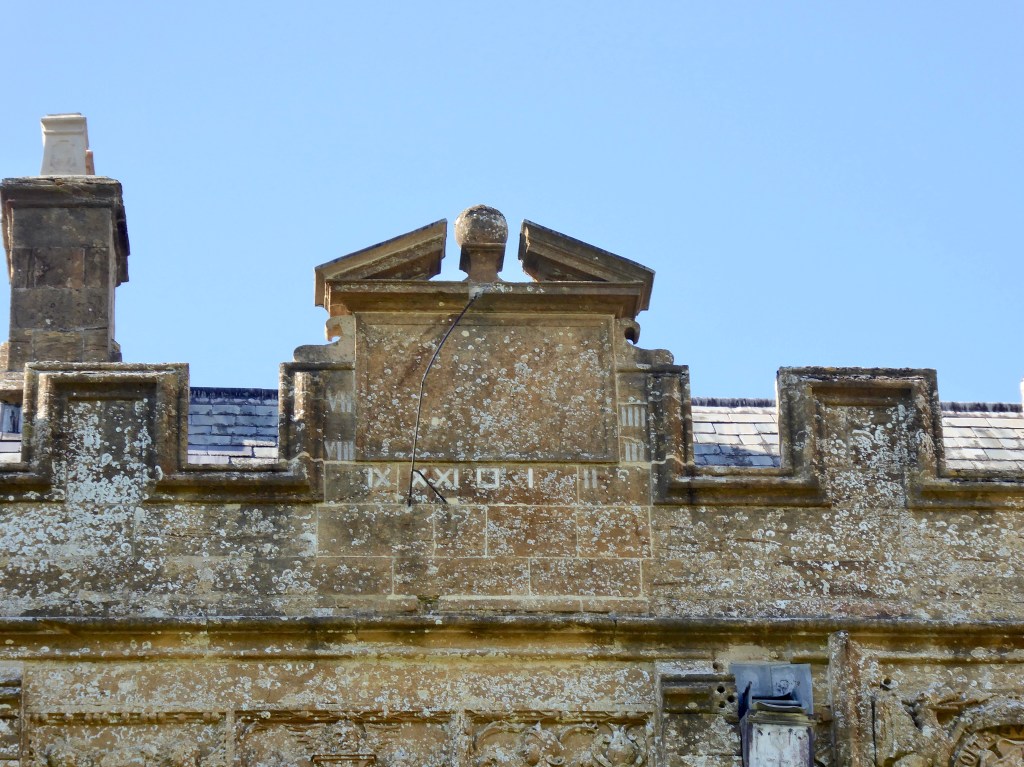
Dial 1 is prominently in the centre of the parapet, crowned with a broken pediment and ball. It has been dated late c17 or early c18. The spindly gnomon has been considerably bent to make the dial as accurate as possible (and see dial 2), given the orientation of the building. At some time, the top end has had to be re-fixed into the stone.

BSS records as Located in roof line castellations. An apparently blank dial plate with painted numbers on the stonework outside – possibly a later innovation. Upright white sans-serif hour numerals VII – IIII. Noon is marked with a square box and 4pm as IIII. Long thin rod gnomon with unusual support formed by a second rod to the tip, itself with a short stay near its foot. Declination is E.

DIAL 2

Dial 2 is located high on a tower, in effect at right-angles to dial 1. It is basically all gnomon and no actual dial face. I haven’t seen a large spindly design like this before. Although it has a rather home-made look to it, the design and positioning must have been carefully calculated, As with dial 1, the orientation of the building necessitated a corrective angle in relation to the sun’s movement. The shadow cast by this rather intriguing ‘gnomon sundial’ seems completely adequate for marking the passage of the day even without additional markings.

GSS Category: Old Dial; Gnomon Dial; C17 dial; C18 dial; Vertical Dial

All photos: Keith Salvesen

HAMMOON . DORSET . ST PAUL – Scratch Dial (inside porch)

St Paul . Hammoon . Dorset

ST PAUL . HAMMOON . DORSET

GRADE I † Late C12 or early C13; porch added C15, C19 general restoration. A pretty and rewarding small church to visit, close to the R Stour. A simple building, comprising a nave, chancel and porch, topped with a small bell cote. Useful photos HE. Seems off the beaten track but only 3 miles E of Sturminster Newton.  50.9304 / -2.2606 / ST817145

DIAL

The dial is on S side, inside the C15 porch. It is cut into the R end of the original doorway arch (as you look at it; other sources say at the top of the L jamb). It clearly precedes the new porch by at least a century; GLP dates it C13.

St Paul . Hammoon . Dorset – scratch dial inside S porch

This is more or less a 1/4 ‘afternoon’ dial, quite roughly cut. Of the 5 lines (GLP suggests 7 but I could not make them all out). Only one line is before noon, and gives the impression of being an afterthought. 4 have slight curves. None of them (now) is connected to the style hole. The noon line is emphasised in both depth and length. GLP suggests some lines recut. There are 5 pocks rather randomly placed.

NOTE: the pleasing name for the village seems to derive from its historical manor, the ‘hame’ of William de Mohun

GSS Category: Scratch Dial (inside porch)

All photos: Keith Salvesen