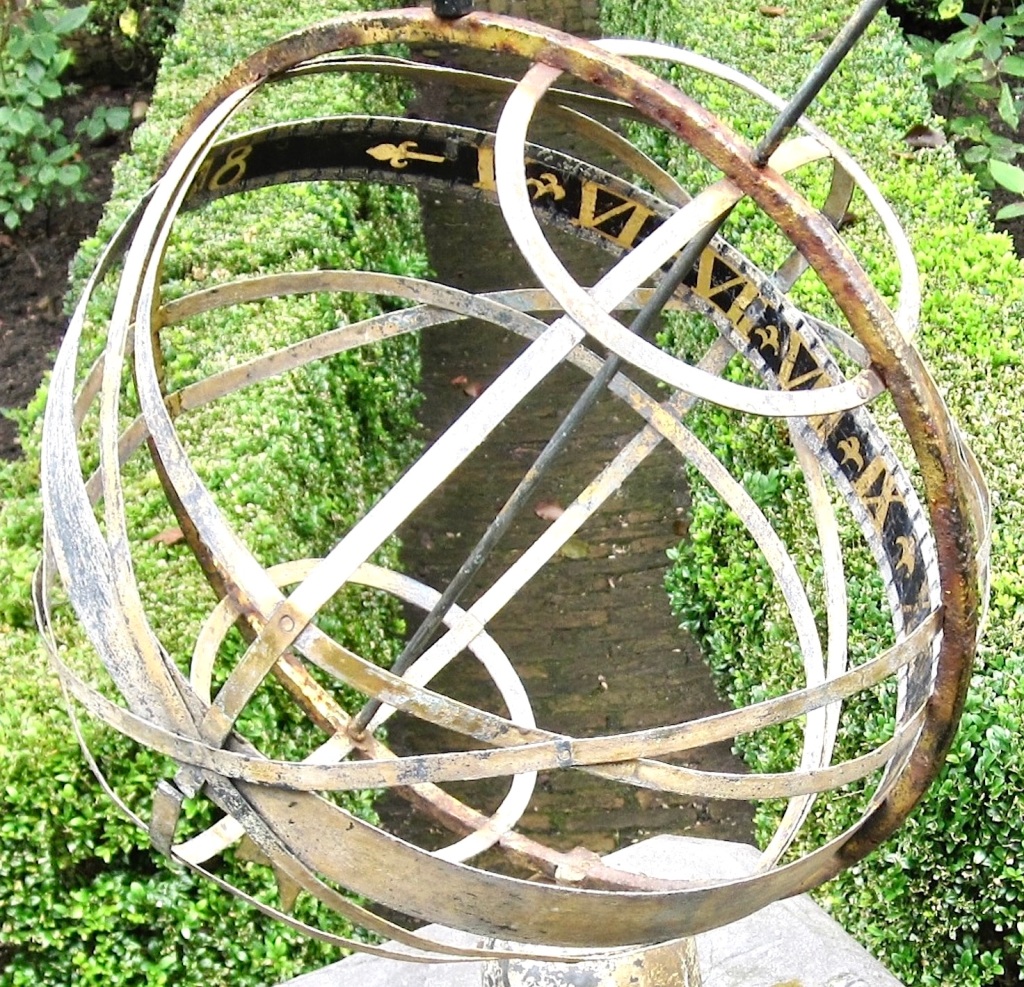
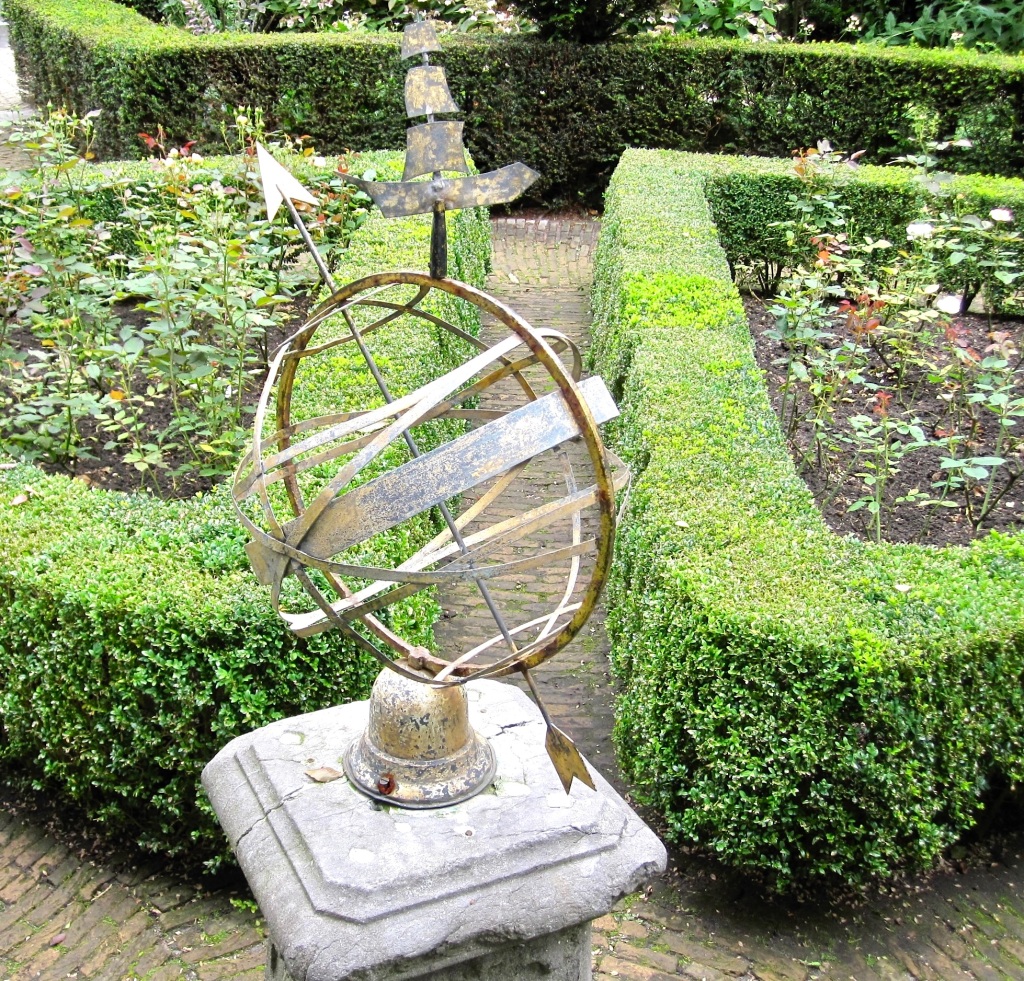
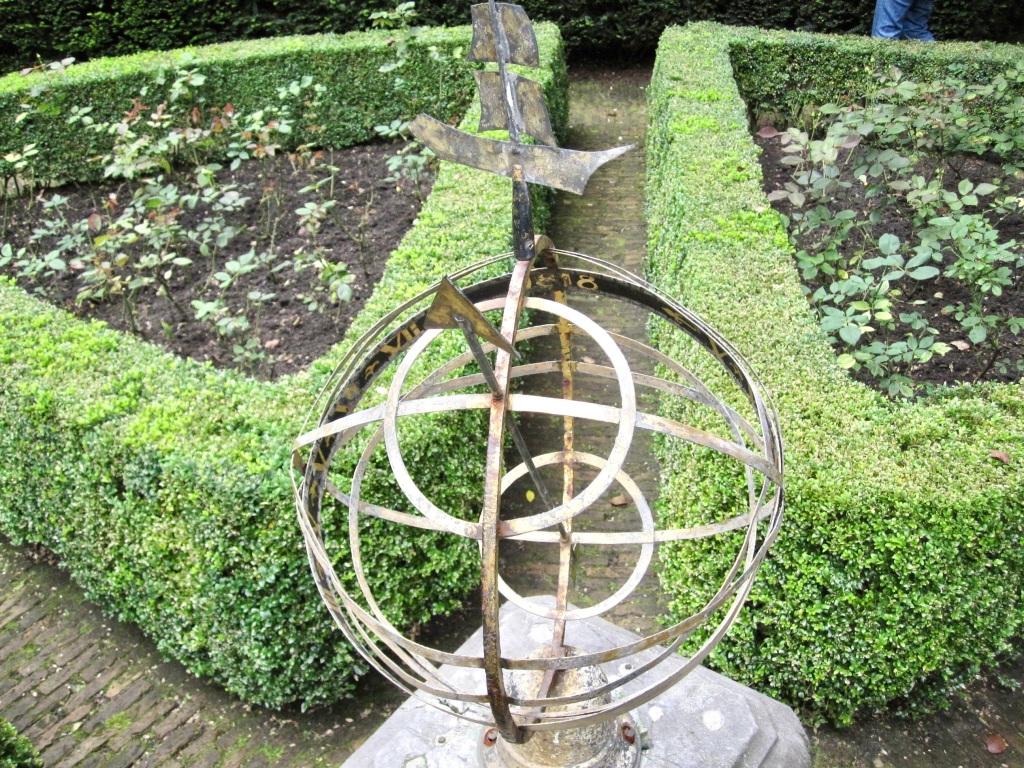
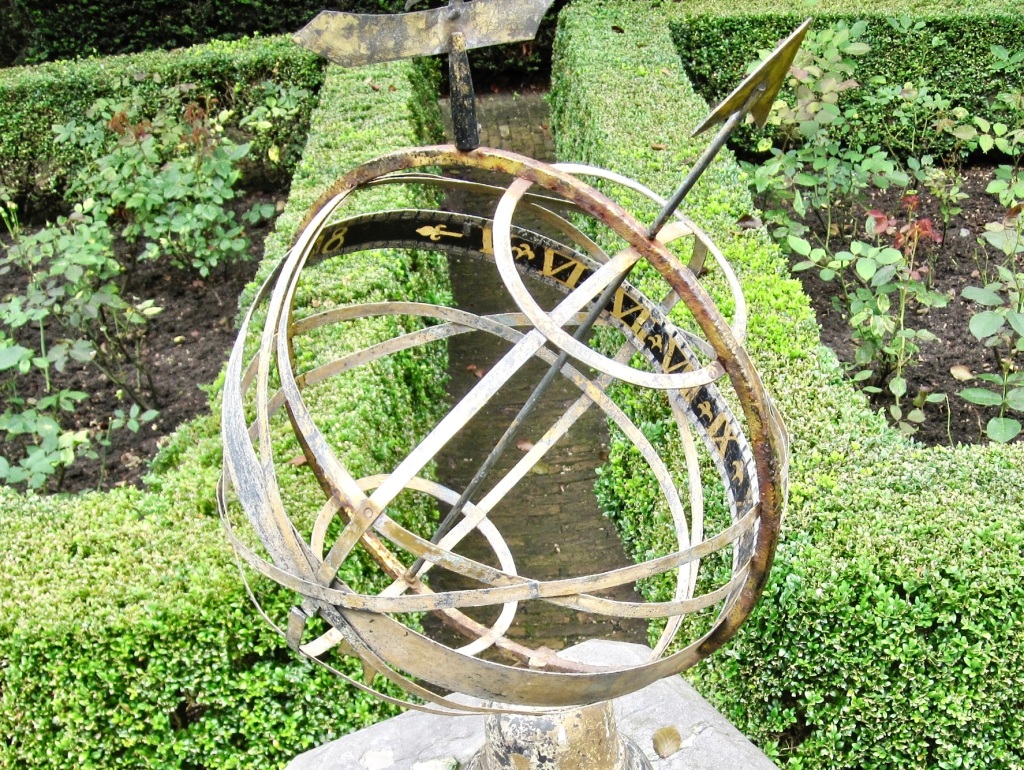
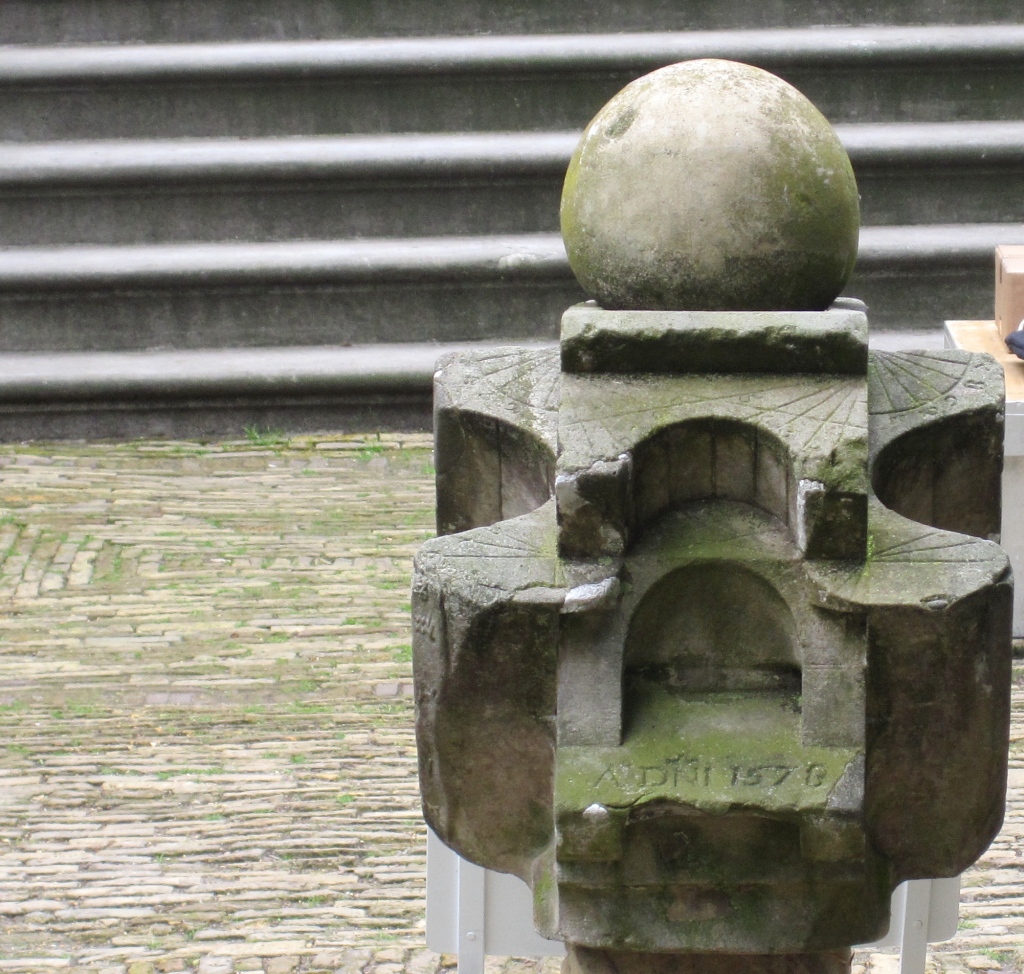
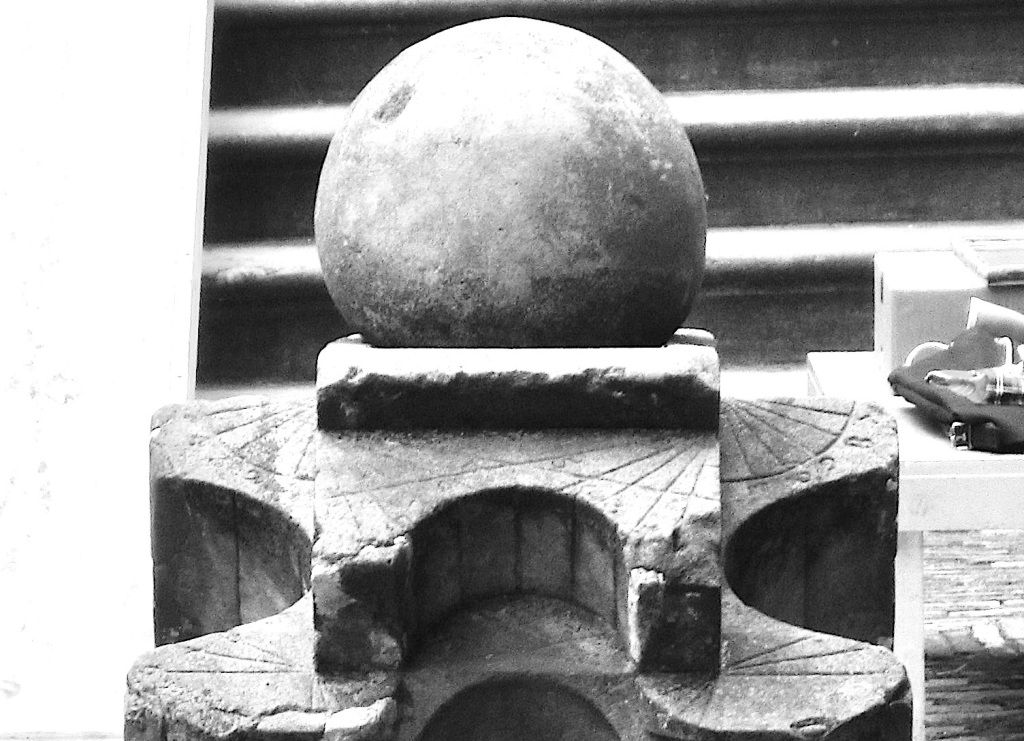
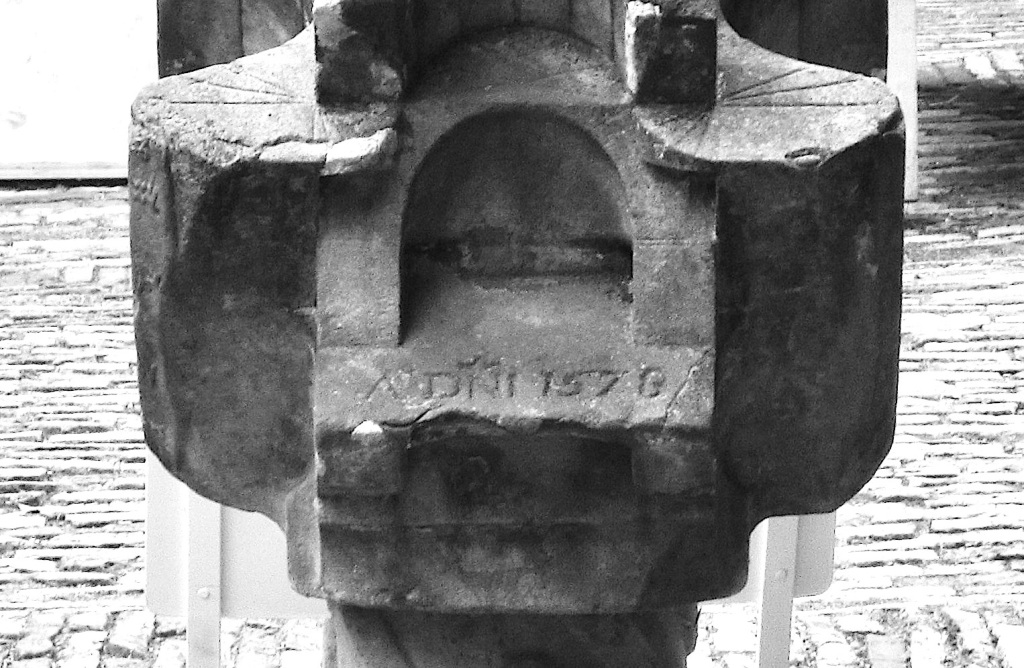
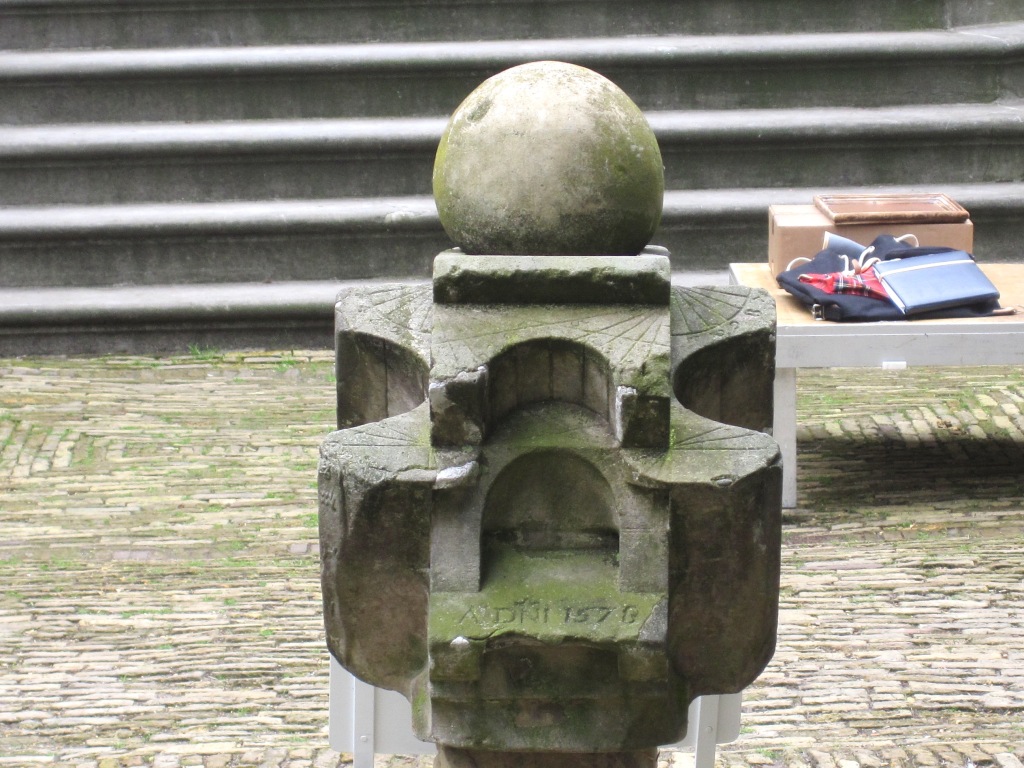
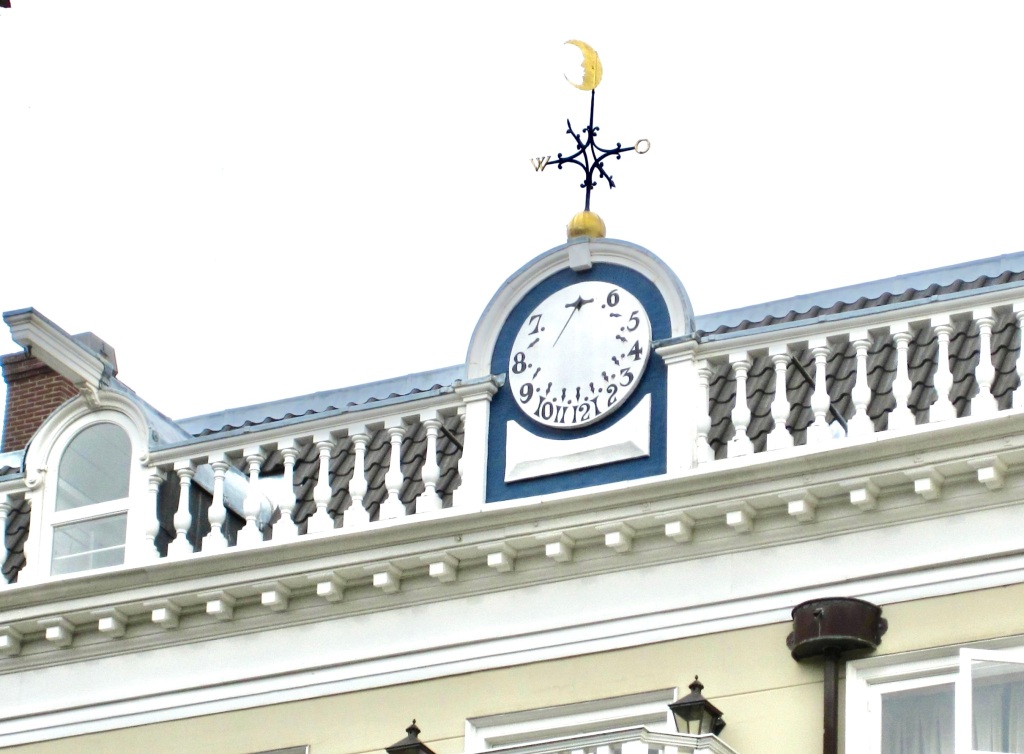
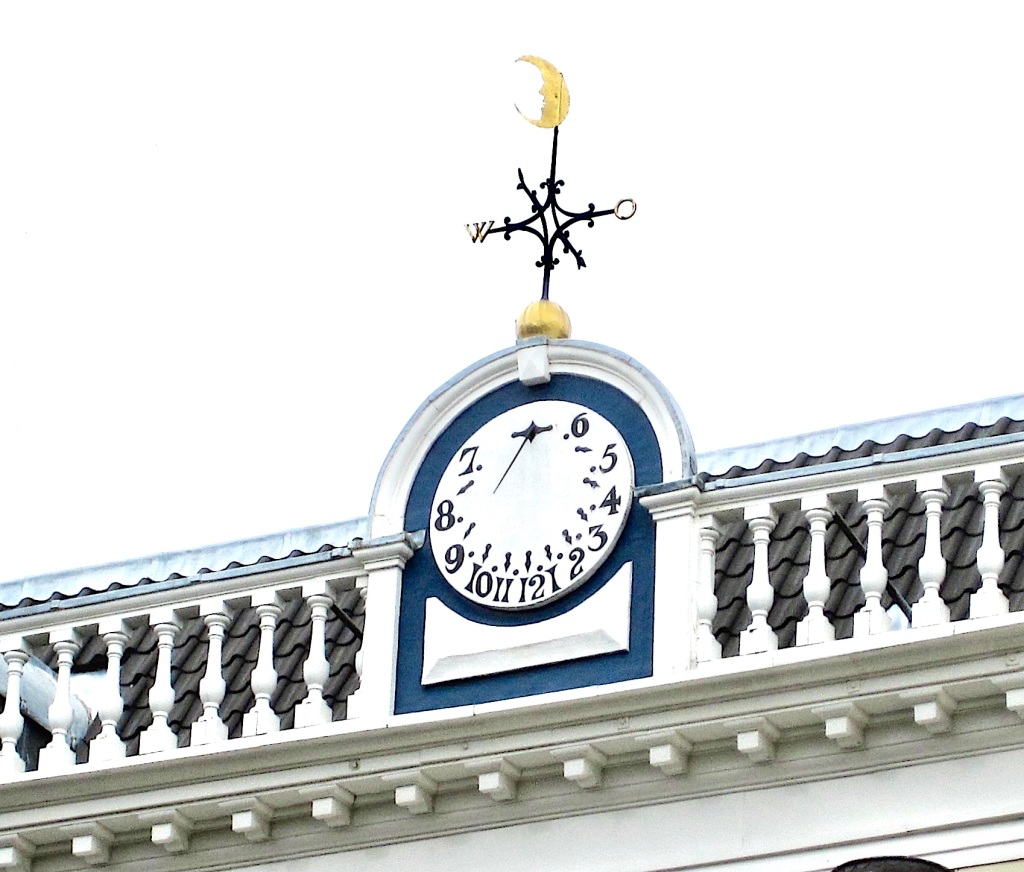
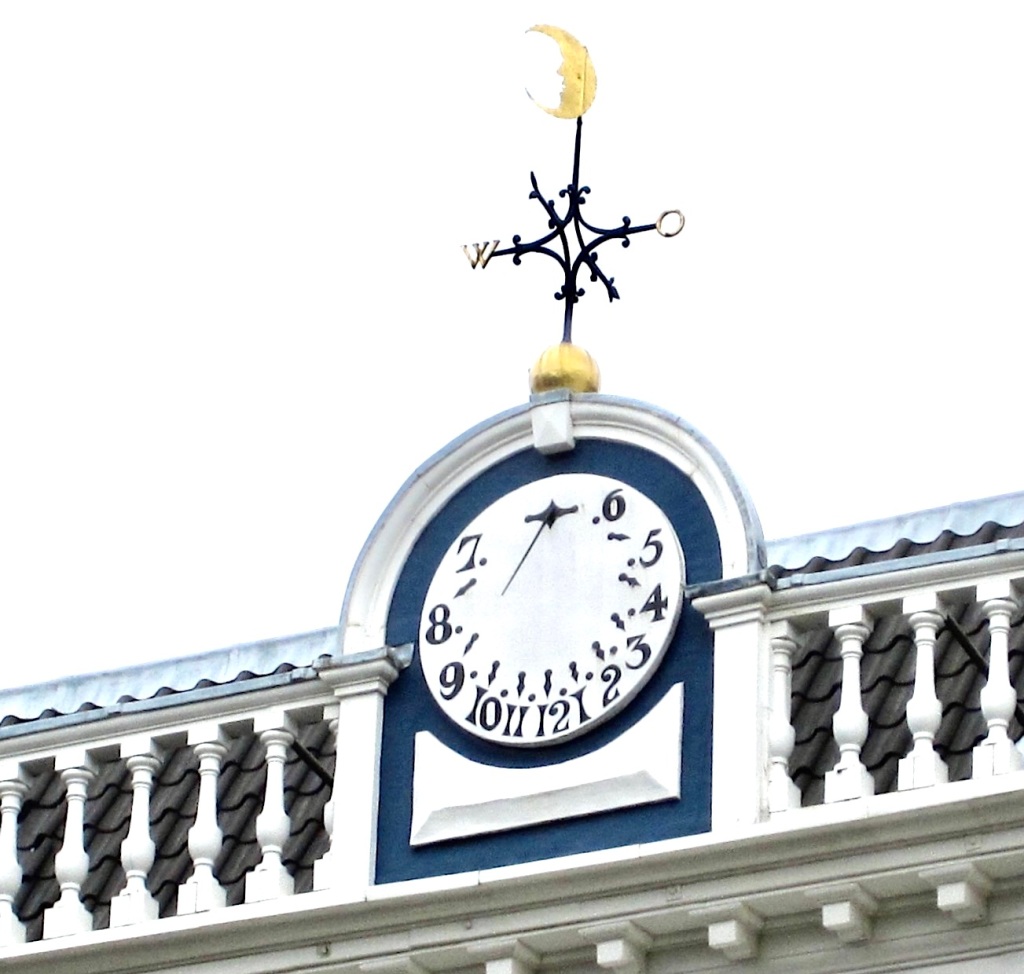
The attractive gardens of the Van Loon Museum contains 3 very different dials. In the centre is an armillary sphere (C19?). By the steps is a complicated early scaphe dial dated 1582. I have included B&W images, which can sometimes be useful for seeing details on multiple dials. The third dial with a weather vane is high up in the centre of the upper gallery overlooking the garden. I am trying to find out a date for it.
ARMILLARY SPHERE
SCAPHE / LECTERN DIAL 1578
Correctly know as a lectern dial because of its angle. Scotland in particular has many of these (eg Culzean), as it also has with obelisk dials (eg Kelburn Castle).
VERTICAL DIAL AND WEATHER VANE
GSS Categories: Armillary Sphere; Cube Dial; Multi Dial; Scaphe Dial; Modern Dial; Amsterdam Dial
GRADE I † Mostly early C14 and C15. Built with local stone: lias and ham. A fine C17 cube dial, 2 slightly unrewarding scratch dials, impressive gargoyles. A complete set of 5 bells dated 1582, 1621, 1623, 1664 and 1666, all by Purdue family. Some pews have graffiti from C17 on. 3m N of Yeovil. 50.9773 / -2.6086 / ST573199
I have previously posted about St Mary with the emphasis on the splendid CUBE DIAL high on the apex of the E end. I mentioned 2 scratch dials but because they fall into the separate Medieval Dial category I am giving them some more attention here.
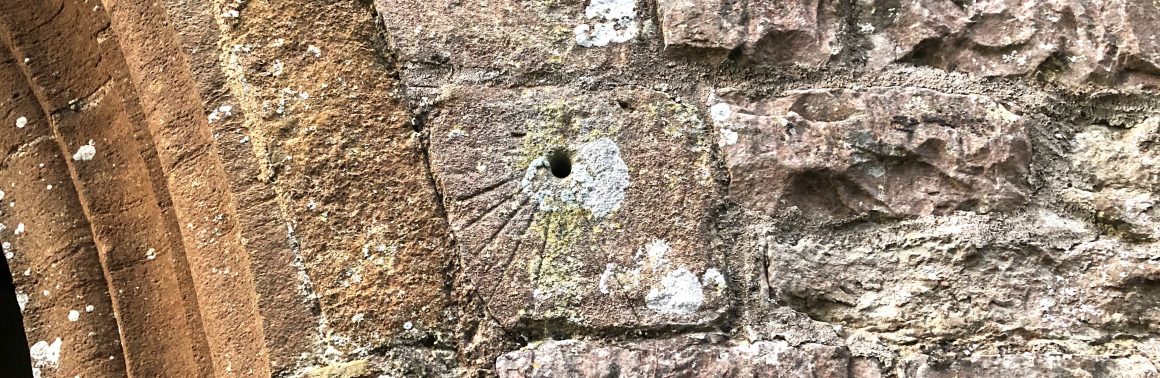
MUDFORD: TWO SCRATCH DIALS
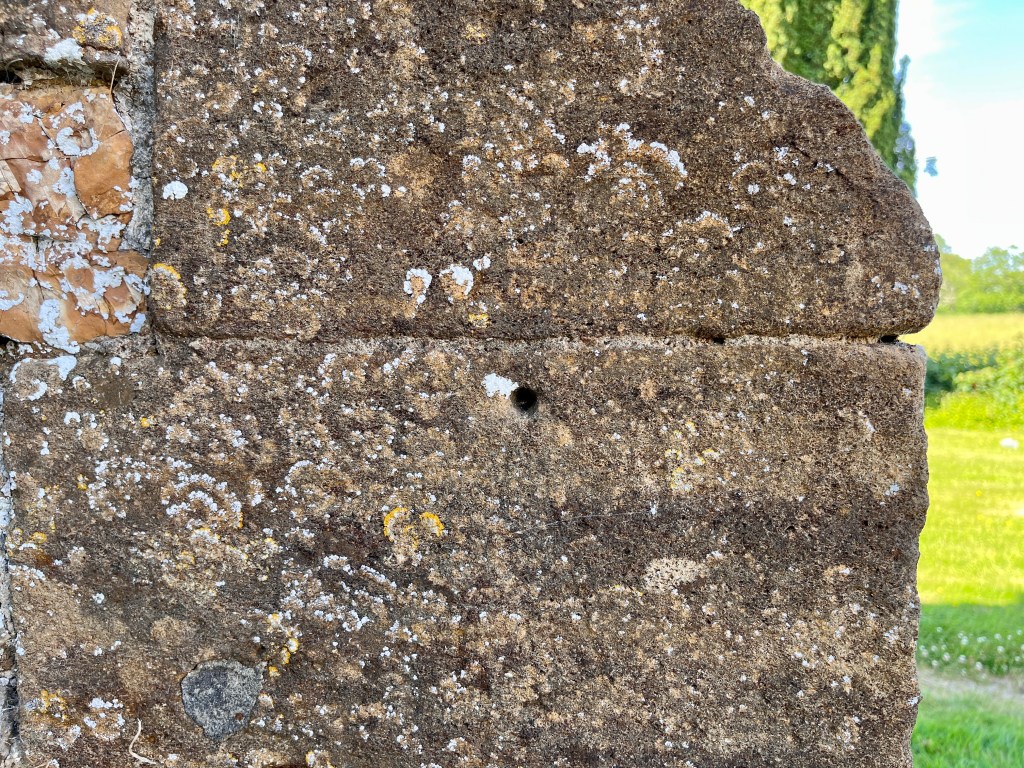
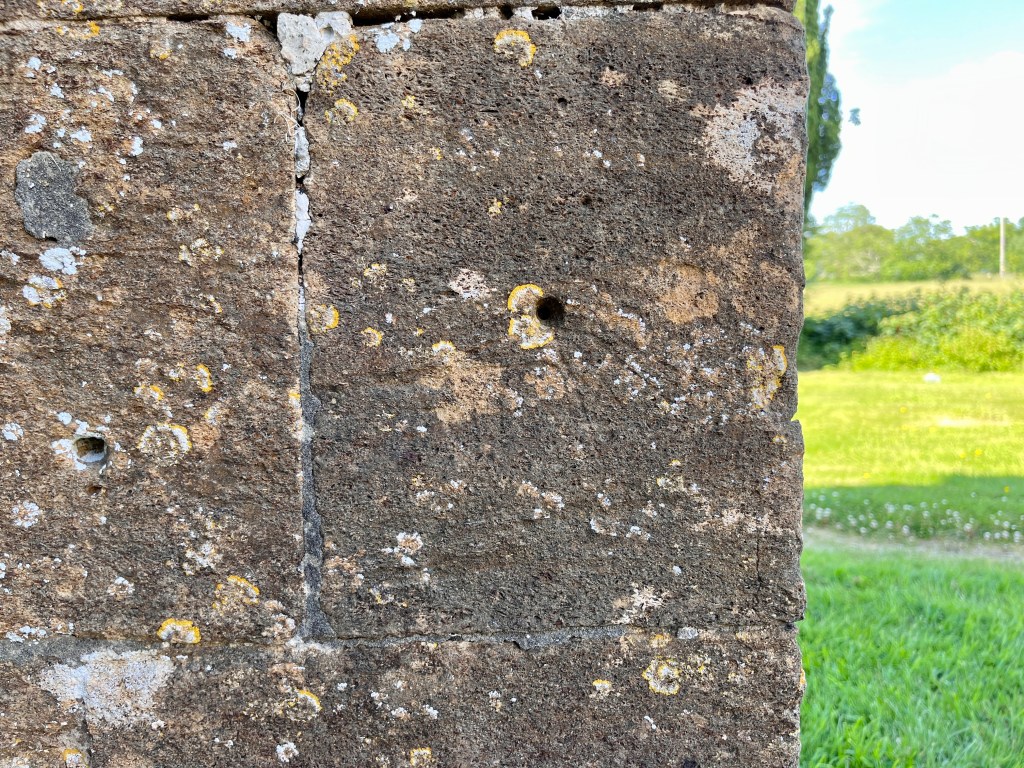
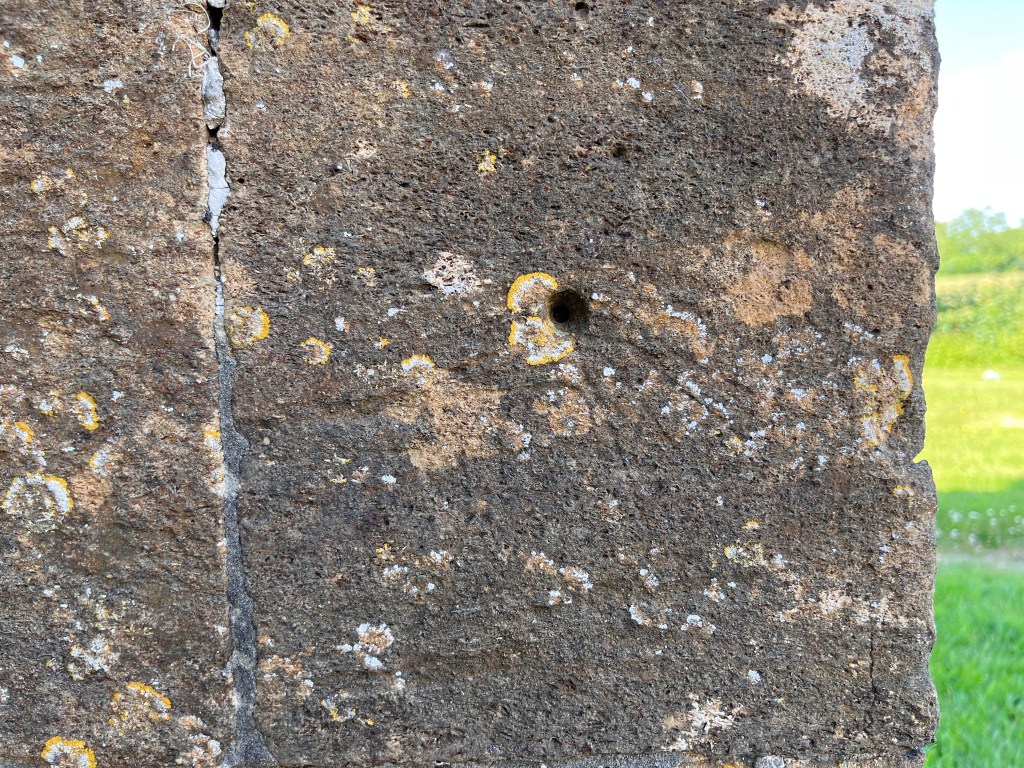
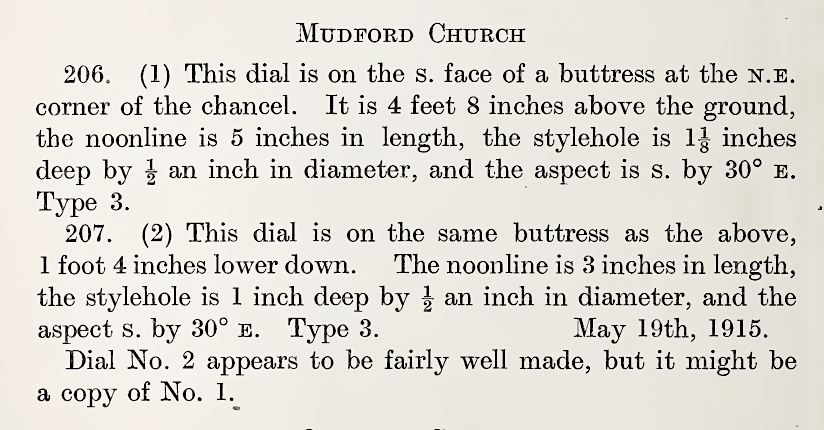
The two dials are on the inner face of the buttress at the E end of the church, one above the other – a less than optimal position.They were obviously relocated and incorporated during expansion / restoration and used as quoin stones for the buttress, though pointless as dials where they are now. The stones themselves are similar, but it seems unlikely that the 2 dials were adjacent before being moved.
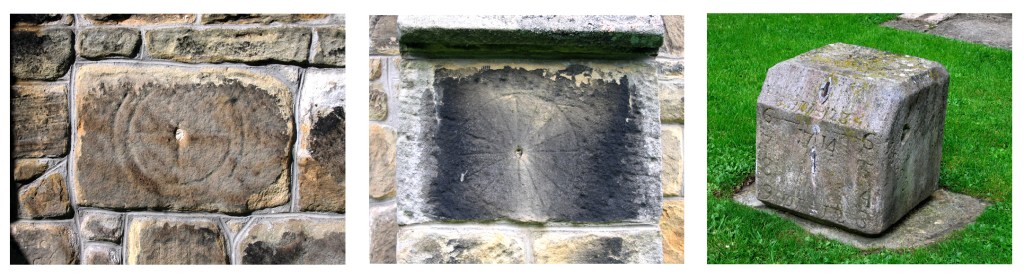
Dial 1 is very simple: a style hole with 2 lines descending, the noon line and 1pm. A rod gnomon would very clearly mark the noon part of the day, perhaps indicating that Mass was not quite yet… or that it had been missed…
There is a similar 2-line dial at BROADMAYNE Dorset, where the 2 lines are at either side of the vertical (ie at 11 and 1), cut so that ‘noon’ is in effect the space between them. At COMPTON PAUNCEFOOT there is a large dial on the facade with 3 lines: noon and one each side.
Dial 2 has 4 clear lines radiating from the style hole. These are E of the vertical, marking roughly 1 to 4 (there is no noon line). On both dials there are faint hints of other lines now eroded.
DEH recorded the Mudford dials in May 2015 during a tour of several churches in the area
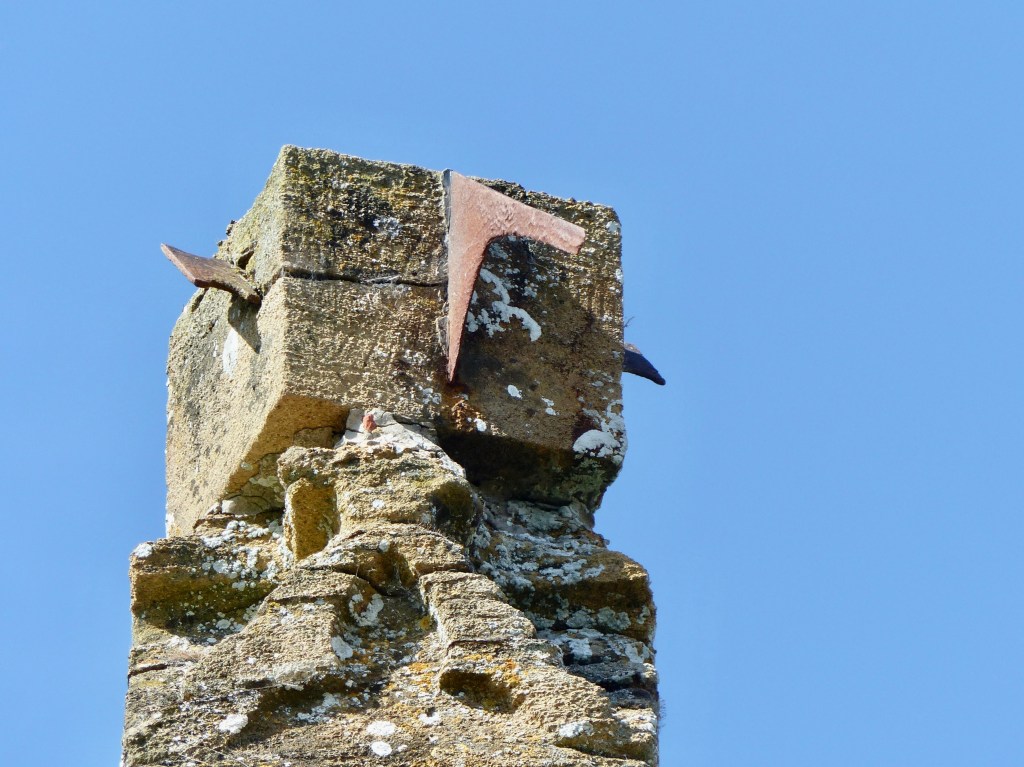
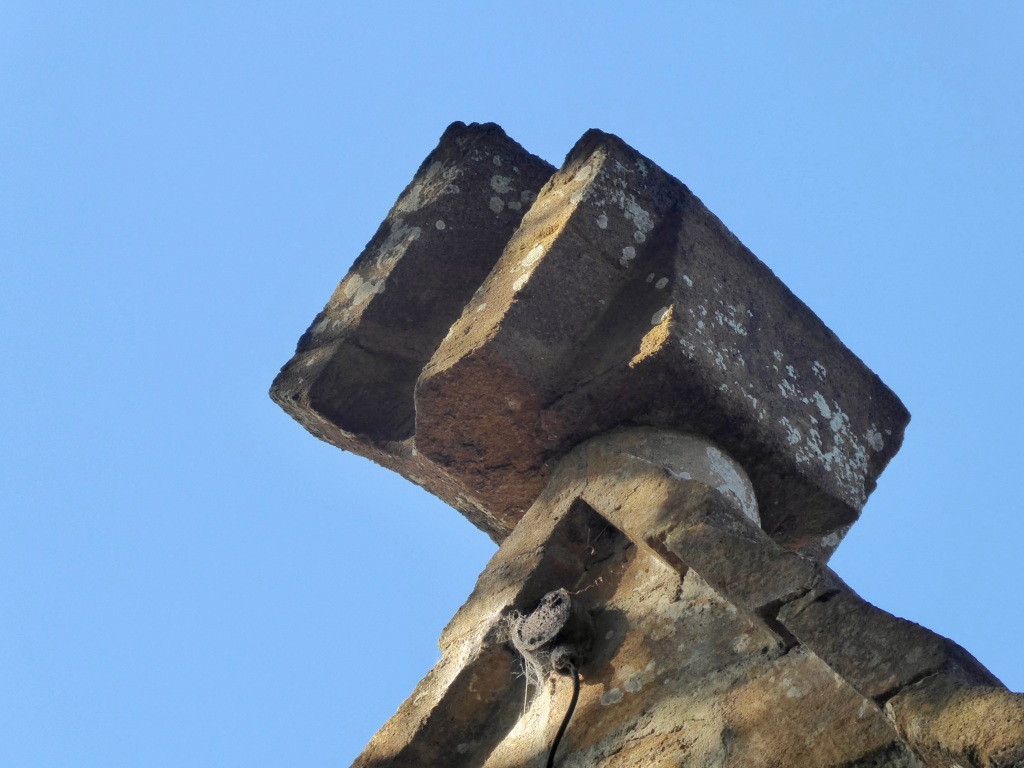
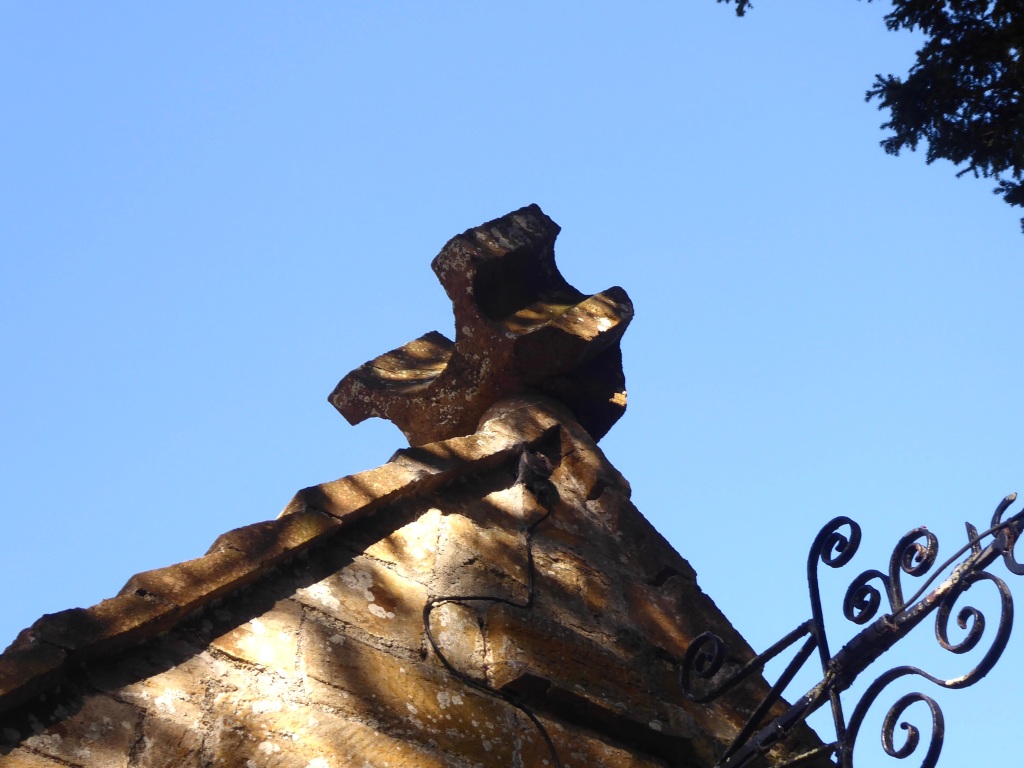
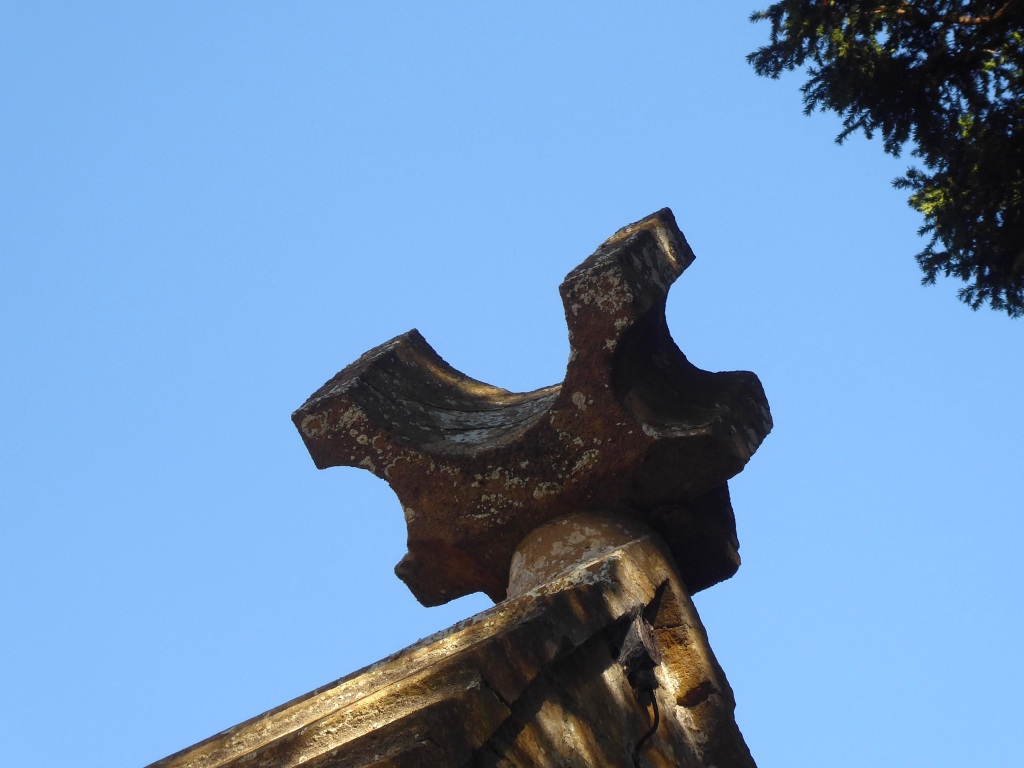
GRADE I † C13 et seq, on early C12 site. Gradual development but (unusually) with little obvious C19 workBHO. Good C16 bench ends. S porch built c1440, originally thatched, with the cube sundial added later. The scratch dials of St Margaret will be written up separately from this unusual dial that, in fact, is not strictly cubic. 5m NW of Yeovil; just S of dread A303. 50.9746 / -2.7156 / ST498197
St Margaret of Antioch . Tintinhull . Somerset – Scaphe Sundial
ADDENDUM 4.11.22
I wrote this piece without access to the BSS dial records, temporarily unavailable online. I had originally described this dial rather broadly as a cube, aware that it wasn’t quite right. Having now got back into the archive, I am better informed (if not wiser). Some of the points I raise below are clarified. Here is the official entry:
There are 3 polar scaphe dials on the porch gable. Possibly C17 or C18. The dial probably showed all hours of sunlight when correctly installed. Now the orientation is incorrect, the polar axis points East and the dial is shaded by a yew tree. The stone is heavily lichened.
DIAL
The large block of stone cut as a sundial is balanced (as it seems) on the end of the S porch roof. Its usefulness as a dial nowadays is reduced by it being partly obscured by the shadows of nearby trees. I have not seen similar dials in England but I believe there are a few in Scotland.
St Margaret of Antioch . Tintinhull . Somerset – Scaphe Sundial
I originally confessed that I had no idea how this dial might have worked in practice, nor could I comment on the design, nor suggest how many dials (3?) or even ‘shadow casting edges’ there are. John Foad BSS has kindly marked up 2 images which help to understand the way the dial functioned.
St Margaret of Antioch . Tintinhull . Somerset – Scaphe Sundial
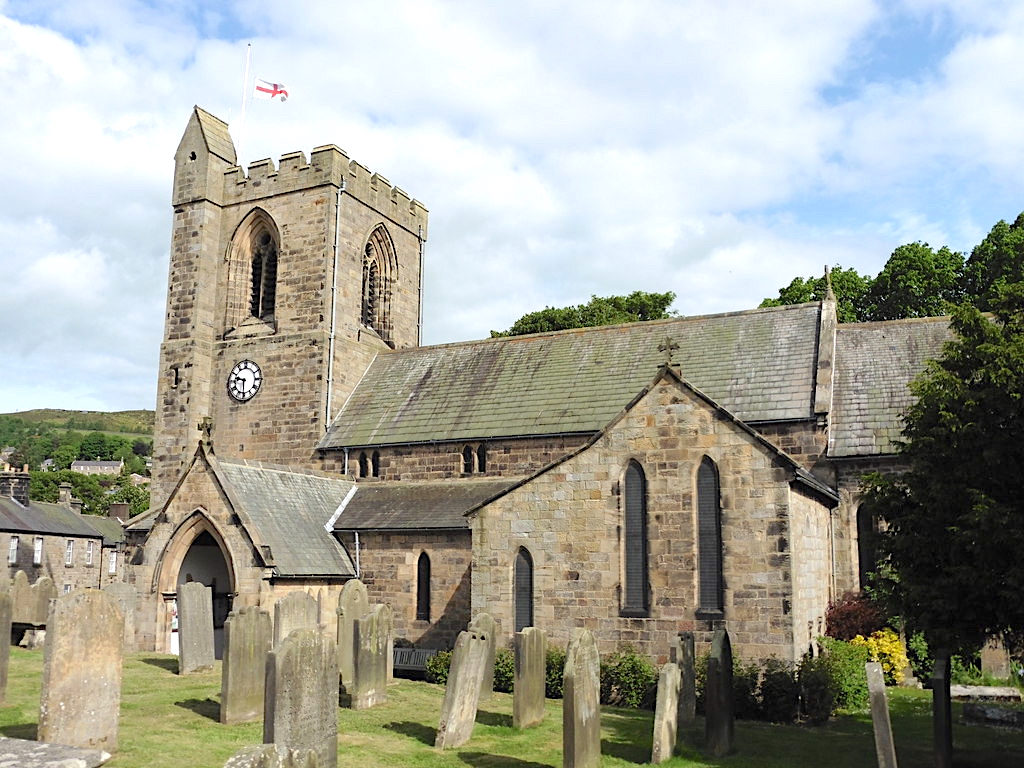
All Saints Church . Rothbury . Northumberland – David Evans for CofE Heritage
ALL SAINTS ROTHBURY NORTHUMBERLAND
GRADE II* † On Pre-Conquest / Anglo-Saxon site. C13 / C14, rebuilding & restoration C19 (Pickering) in similar style. Located in Coquetdale with linked churches. 2 medieval scratch dials and further church details LINK. 12m SW of Alnwick, close to NT Cragside. 55.309 / -1.9106 / NU057016
CUBE SUNDIAL
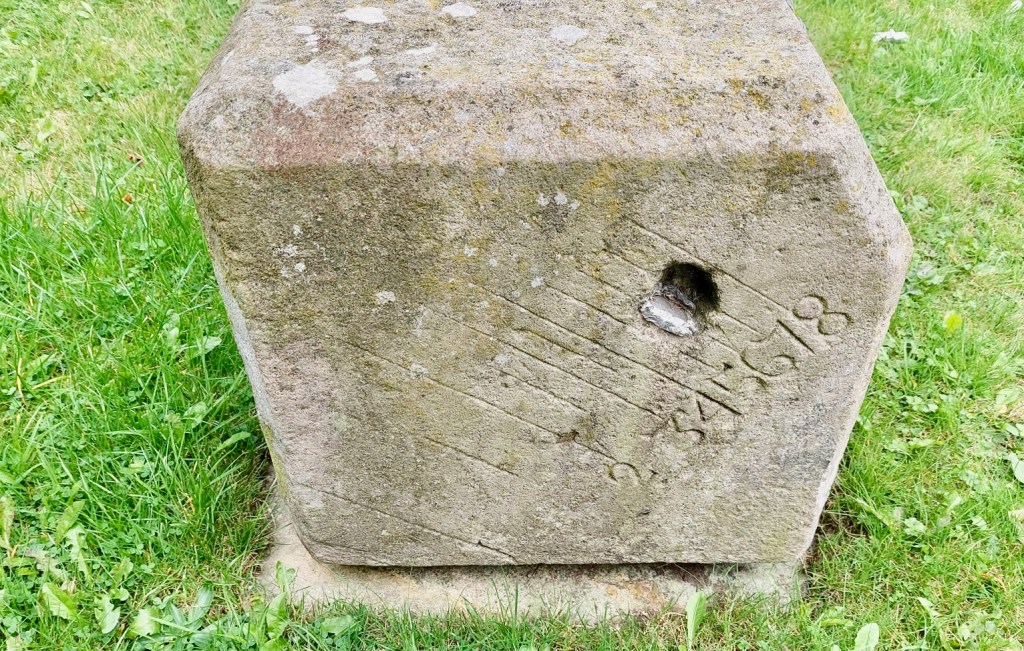
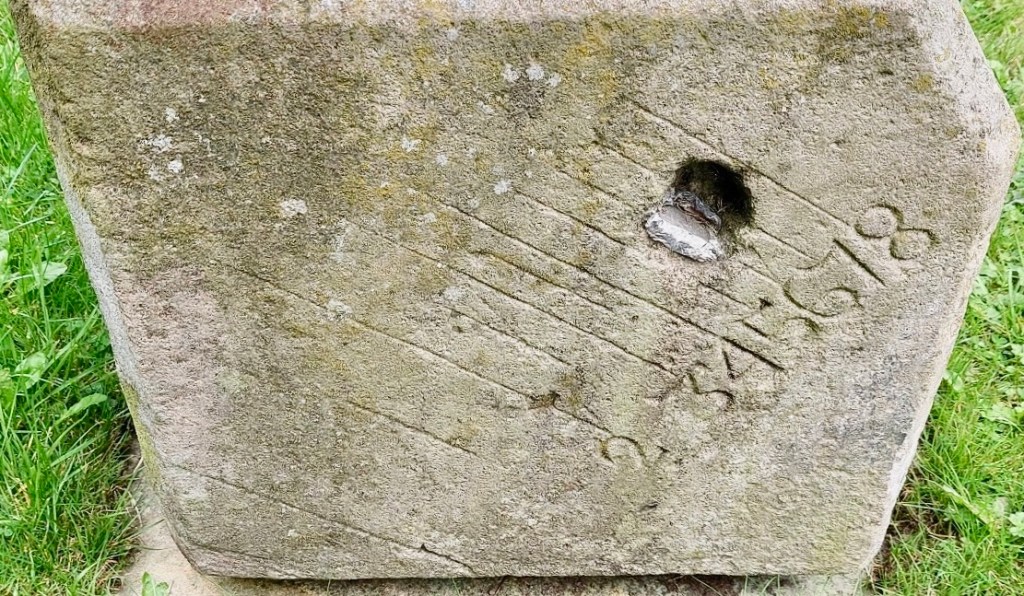
The cube (‘block’) sundial is on the ground in the churchyard, S side. Originally it was on the porch roof. Parish records show that it was once whitewashed, which cost 1s 9p in 1728. I have included 2 images of each dial face, the whole face and close-up.
BSS record: Main S face has date ‘1714’ and upright Arabic numerals 6 – 6. Hour and half-hour lines. Above is a polar dial with hours 8am to 4pm and a cross for noon. The dial, a substantial chunk of masonry, was most likely taken down from its original site aloft for safety.
FRONT FACE
EAST FACE
There is an excellent article about the THE ROTHBURY SUNDIALS in the Nov 1991 Clock Magazine (Pendulum Publications). The relevant parts relating to the cube dial are as clear and concise as anything I can devise:
A cubic dial which is said to have been situated on top of the old church porch, was lost after the demolition work of 1850 but was later found among the old grave stones and is now sited near the new porch entrance. It measures 18in by 18in by 19in and has four dials carved on its surfaces, one each on the east and west faces and two on the south face. The south face has the date 1714 carved into it and some remains of old writing between the numerals and crossed line at 12 noon.
An entry in the vestry accounts for the church in 1728 states that “For white lead and Lamb black for ye Sun Dial – 0 0 9, For Whitning and new drawing the lines and figures – 0 1 0”.
3. If, as the historians tell us, the sundial was on top of the old porch the dials would have been difficult to read, especially the upper south dial sloping as it does at an angle of 45 degrees and has the remains of what was a ½ in thick cast iron gnomon. It would be essential for the lines and figures of the south main dial to be well marked in order to be able to read it.
4. The remains of an angled style (gnomon) 1/8in thick made of cast iron and held in two places by lead filling are easily observed. The east and west styles were set into recesses, scooped out of the faces, and set at 90 degrees to the faces.
WEST FACE
This dial – and its history – is a most unusual one and I am grateful, as ever, to Erika Clarkson for her dial-hunting and photography skills and the resulting coverage of the midlands and the north of England that is well beyond my own territory in the west country.
GSS Category: Cube Dial
All photos by Erika Clarkson except header image of church, David Evans / CofE Heritage Record
All Saints . Rothbury . Northumberland (C of E Heritage Record / Dave Evans)
ALL SAINTS . ROTHBURY . NORTHUMBERLAND
GRADE II* † On Pre-Conquest / Anglo-Saxon site. C13 / C14, rebuilding & restoration C19 in similar style. Located in Coquetdale with linked churches. 12m SW of Alnwick, close to NT Cragside. 55.309 / -1.9106 / NU057016
DIALS
There are 2 dissimilar scratch dials on the church, and an intriguing cube dial (shown below and will feature as a separate post in the Cube Dial section) on the ground in the Churchyard.
DIAL 1
Located on the E-most buttress of the S wall of the chancel. Quite a large dial centred in its stone, with a blocked gnomon hole. There are 16 lines, encircled and fairly evenly spaced. This makes the dial out of kilter with the normal time interludes. BSS notes that instead of the 15º angles usual for this type of dial with 24 lines, they are more like 22º here.
Between the 2 E-most buttresses of the S wall of the chancel. Only 3 lines radiate from the filled gnomon hole (incomplete quadrant markings): the horizontals (6-to-6) and a shorter noon line. BSS notes that in 1903 a vertical line above the hole was recorded, and so the design once had 4 quarters / sectors. The dial is contained within a double circle.
The Parish of Upper Coquetdale has an interesting page about All Saints, its history, and its various features HERE
Pendulum Publications has an excellent and detailed article about the Rothbury Dials – including the C18 cube – HERE Highly recommended if you want to investigate this church and its dials further, and medieval ‘clocks’ generally. It was originally published in Clocks Magazine of November 1991.
All Saints . Rothbury . Northumberland – Keith Bates / Clocks Magazine 1991; Pendulum Publications
GSS Category: Scratch Dial; link to Cube Dial
Image Credits: Erika Clarkson for the photos from her visit; others as captioned
GRADE I † Mostly early C14 and C15. Built with local stone: lias and ham. A fine C17 cube dial, 2 slightly unrewarding scratch dials, impressive gargoyles. A complete set of 5 bells dated 1582, 1621, 1623, 1664 and 1666, all by Purdue family. Some pews have graffiti from C17 on. 3m N of Yeovil. 50.9773 / -2.6086 / ST573199
CUBE DIAL
St Mary . Mudford . Somerset – Cube Dial
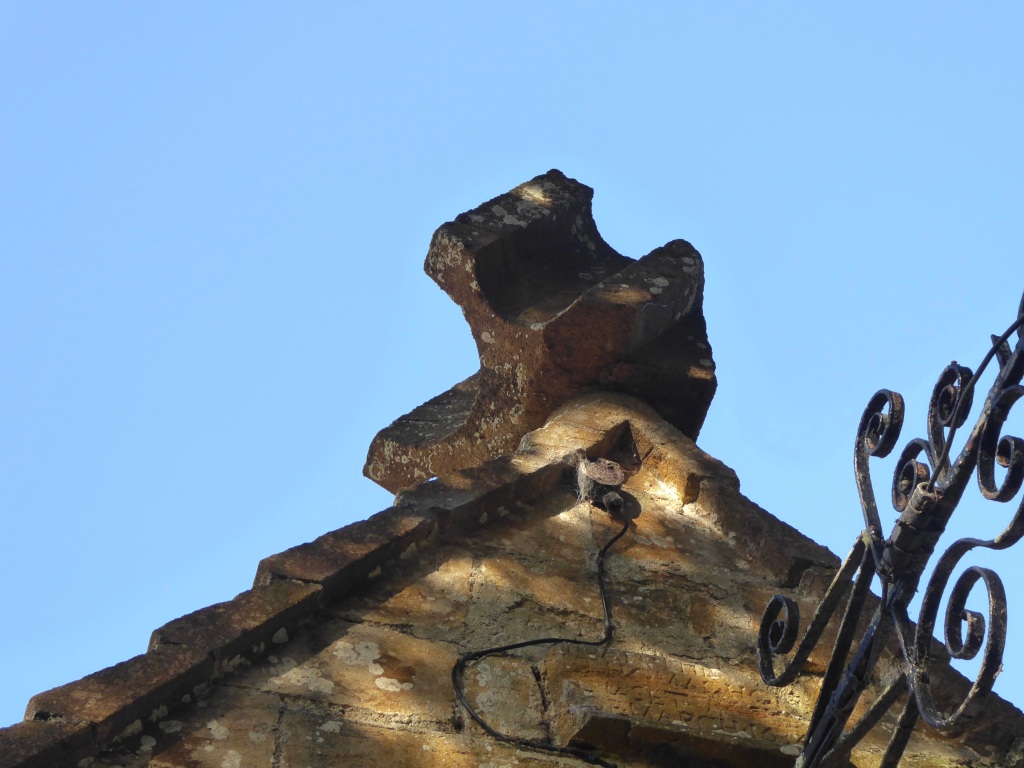
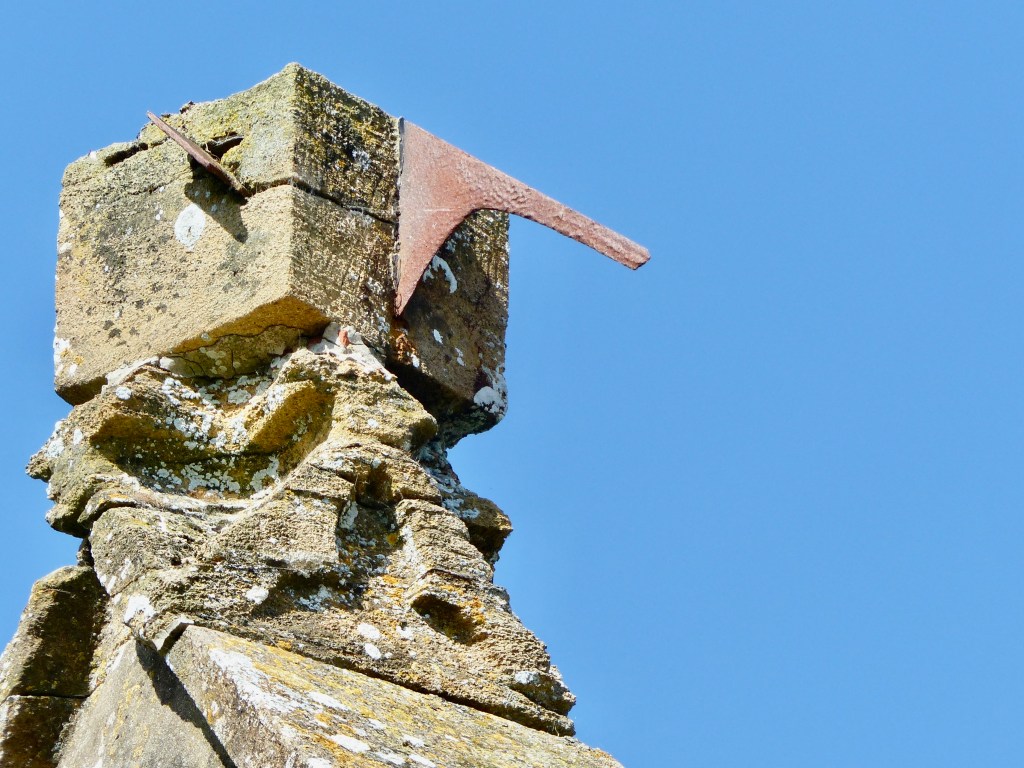
C17 cuboid sundial as finials to gable copingHE
ASPECTS SE & SW
The SE face has a large gnomon inserted vertically into almost the whole depth of the cube. There are 4 (possibly 5) faint lines LHS that mark the morning’s progress. The SW face is (now?) plain, with an angled blade top R at roughly 45º.
ASPECTS SE & NE
The NE face has a blade gnomon at much the same angle as one the SW face. There’s plenty of lichen and no detectable marks.
ASPECTS NE & NW
The ‘back’ of the cube – the NW face – has no gnomon, but there are holes suggesting the location of one. No dial lines visible.
NOTE: It is almost impossible to get satisfactory photographs of all the faces of a cube dial. Two will always be in shade. Perhaps I need to go back at a different time of day. Or year.
MUDFORD: TWO SCRATCH DIALS
The two dials are on the inner face of the buttress at the E end of the church, one above the other – a less than optimal location. Dial 1 is very simple: a style hole with 2 lines descending either side of the vertical, in effect making the noon line the space between them. Dial 2 has 4 clear lines radiating from the style hole. These are E of the vertical, marking roughly 1 to 4 (there is no noon line). On both dials there are faint hints of other lines now eroded.
Charles Cotton’s Fishing House . Beresford . Staffs – Cube Dial
CHARLES COTTON’S FISHING HOUSE . BERESFORD . STAFFS
CUBE DIAL
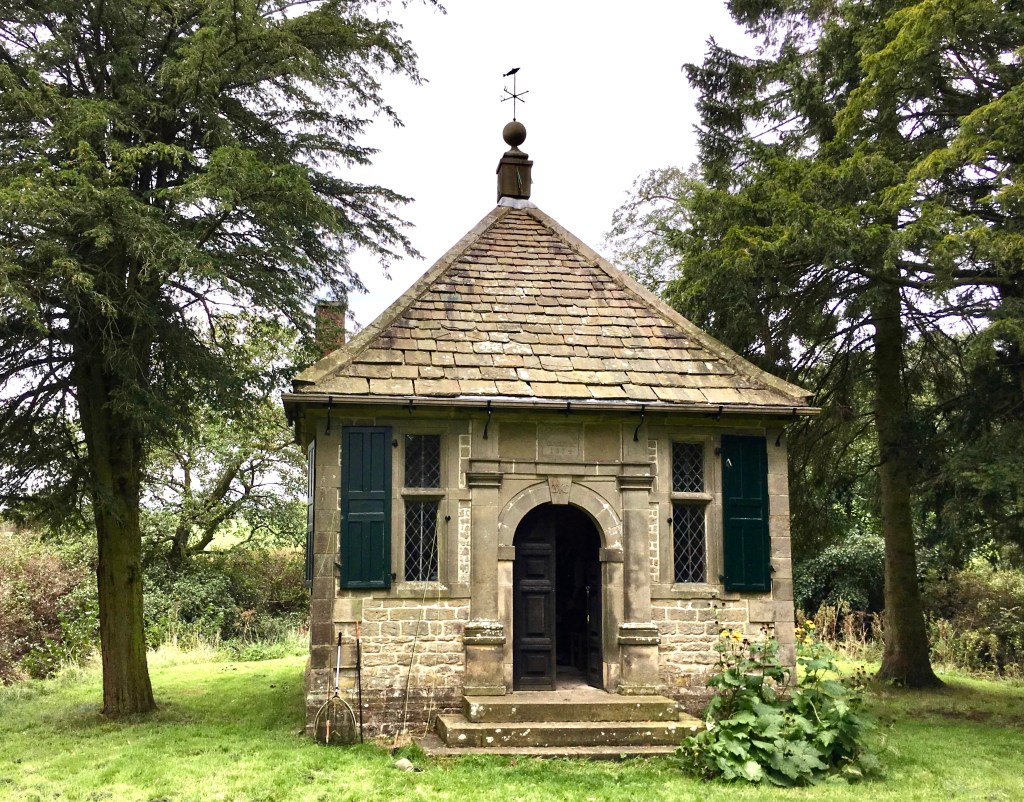
GRADE II* The most famous and piscatorially significant fishing ‘hut’ in the world, in a clearing beside the River Dove, near Hartington. By a quirk of a bend in the river, the hut is in Staffs rather than Derbyshire. Single cell square plan in an Artisan Mannerist styleBLB SK127592
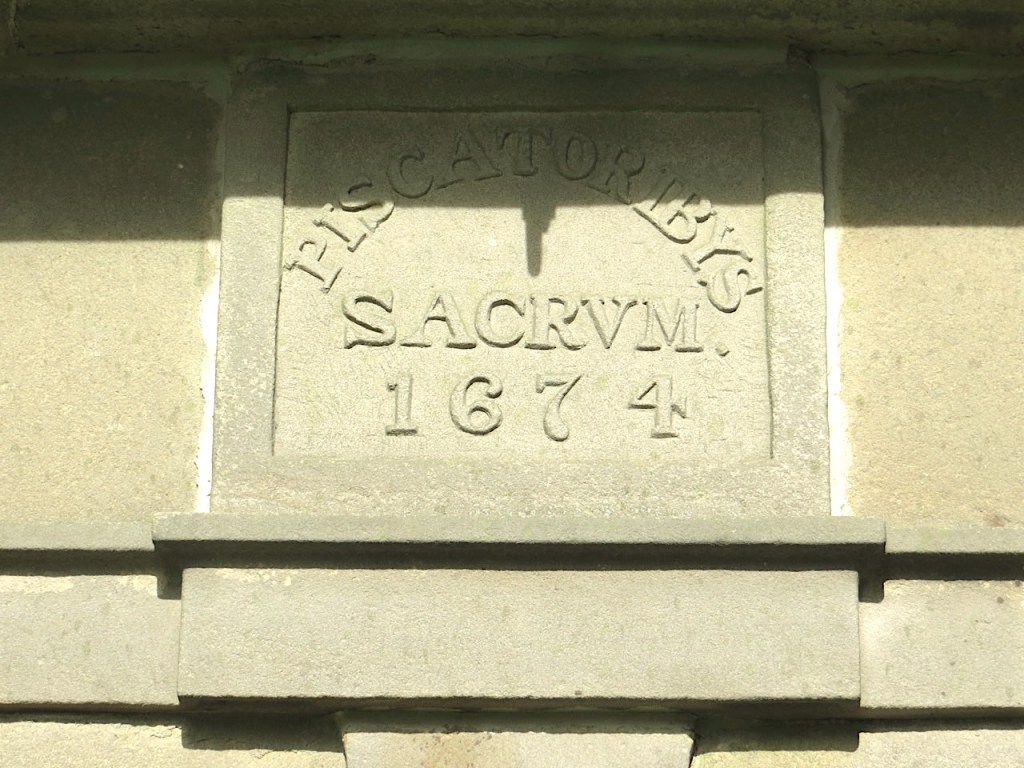
The inscription Piscatoribus Sacrum – a sacred place for anglers – gave rise to the hut’s reverential name among fishermen, The Temple. I can’t improve on this description from HE:
Charles Cotton’s fishing house is a unique building designed specifically for the sport of angling. It was an elaborate building in relation to its simple function, an expression of Cotton’s dedication to angling and to his entertainment of fellow anglers. Izaak Walton and Cotton’s The Compleat Angler was significant in the development and diversification of the sport from the 17th century. The fishing house is a fine preservation of Charles Cotton’s angling endeavours and its association with the popular work The Compleat Angler makes it of national significance.
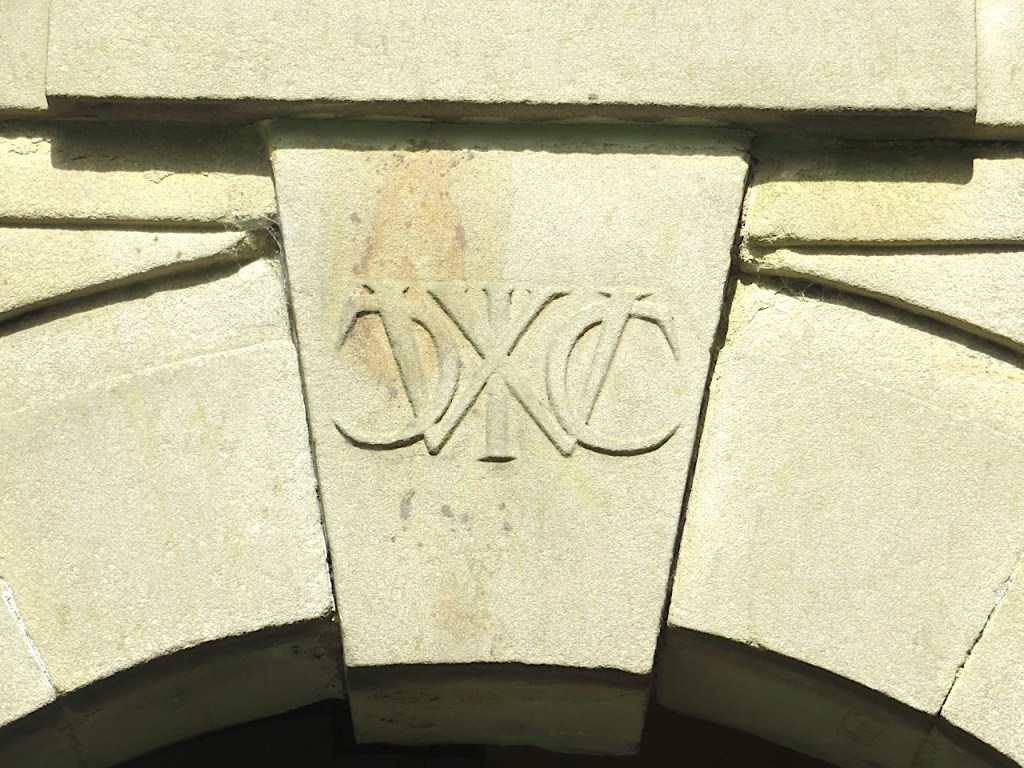
Dated inscription, and intertwined initials of Charles Cotton & Izaak Walton on the keystone
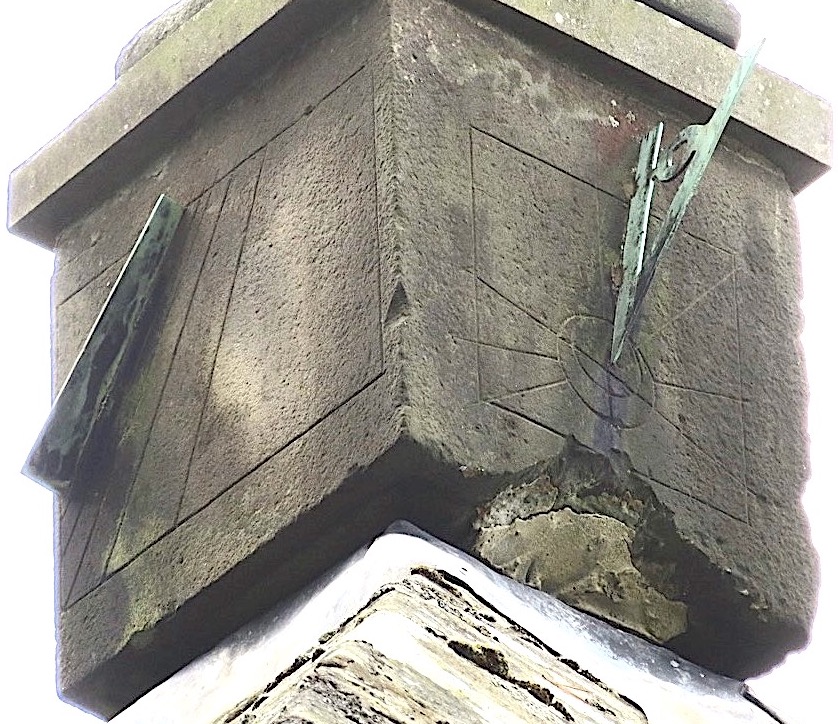
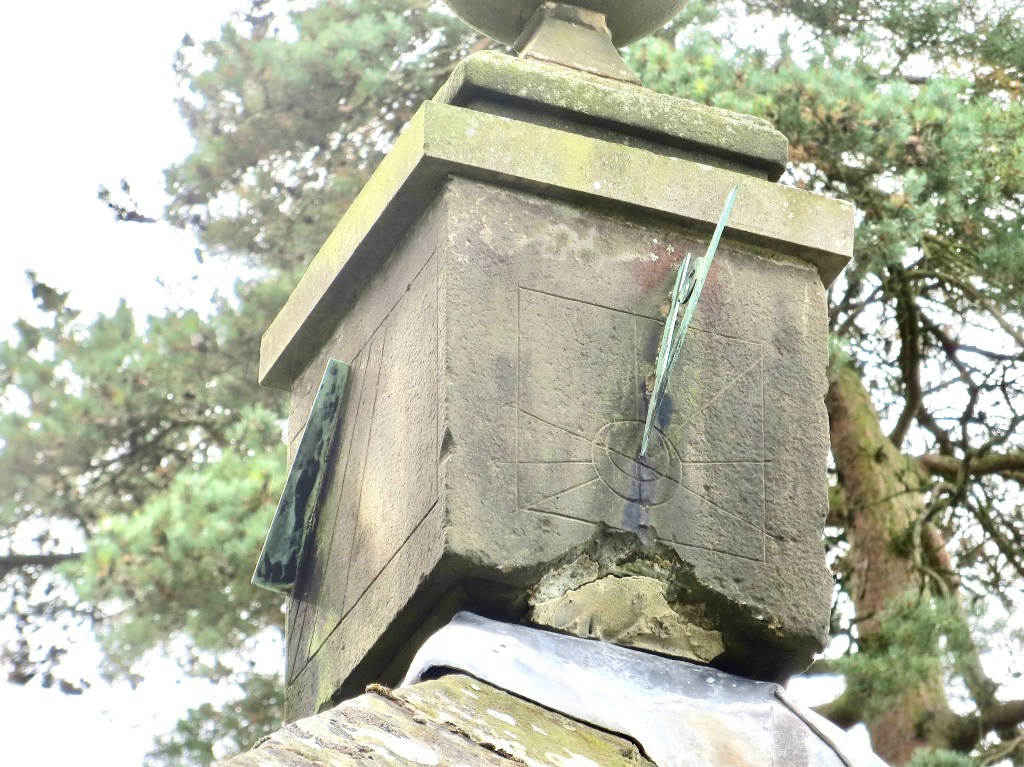
CHARLES COTTON’S CUBE DIAL
A while back I spent a couple of days fishing on the Beresford beat of the Dove (to little effect). Just seeing the hut close to – let alone actually using it for its intended purpose – was an amazing experience. The weather was quite poor; the photos (taken on a basic pocket Canon) poorer still. I’ve had to do some work on the images, which I hope are now clear enough to be informative. 3 faces are featured; images of the 4th, away from the sun, were useless.
Charles Cotton’s Fishing House . Beresford . Staffs – Cube Dial
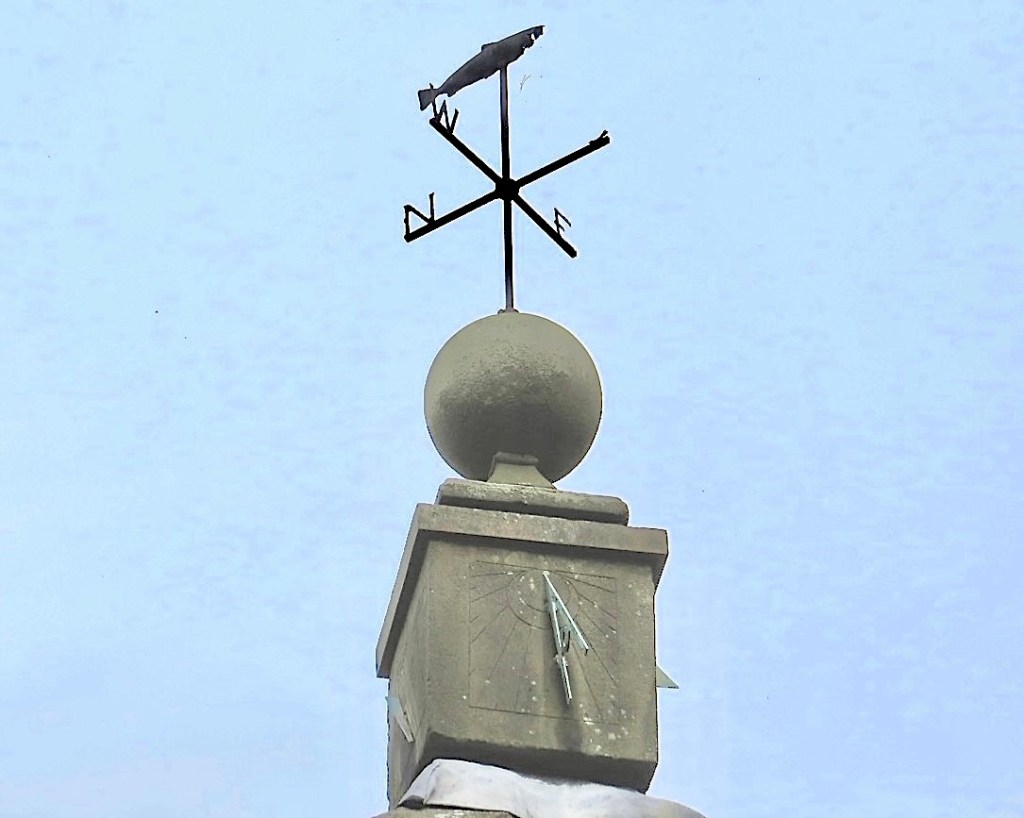
The dial is fixed to the apex of the hut’s roof. It is surmounted by a round finial, then a weather vane, and – a final flourish – a trout.
Charles Cotton’s Fishing House . Beresford . Staffs – Cube DialCharles Cotton’s Fishing House . Beresford . Staffs – Cube DialCharles Cotton’s Fishing House . Beresford . Staffs – Cube Dial




















 GAUDIUM SUB SOLE . SUNDIALS . MEDIEVAL TO MODERN