POTTERNE . WILTS . ST MARY – Scratch Dial

St Mary . Potterne . Wilts (Benefice drawing)

ST MARY . POTTERNE . WILTS

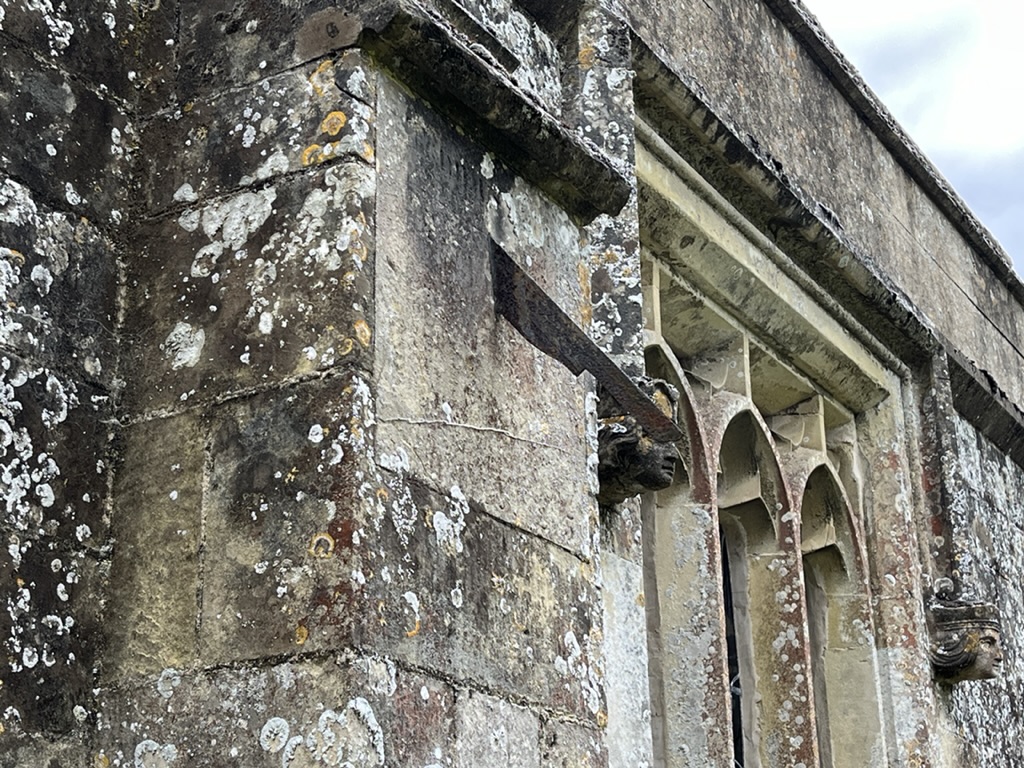
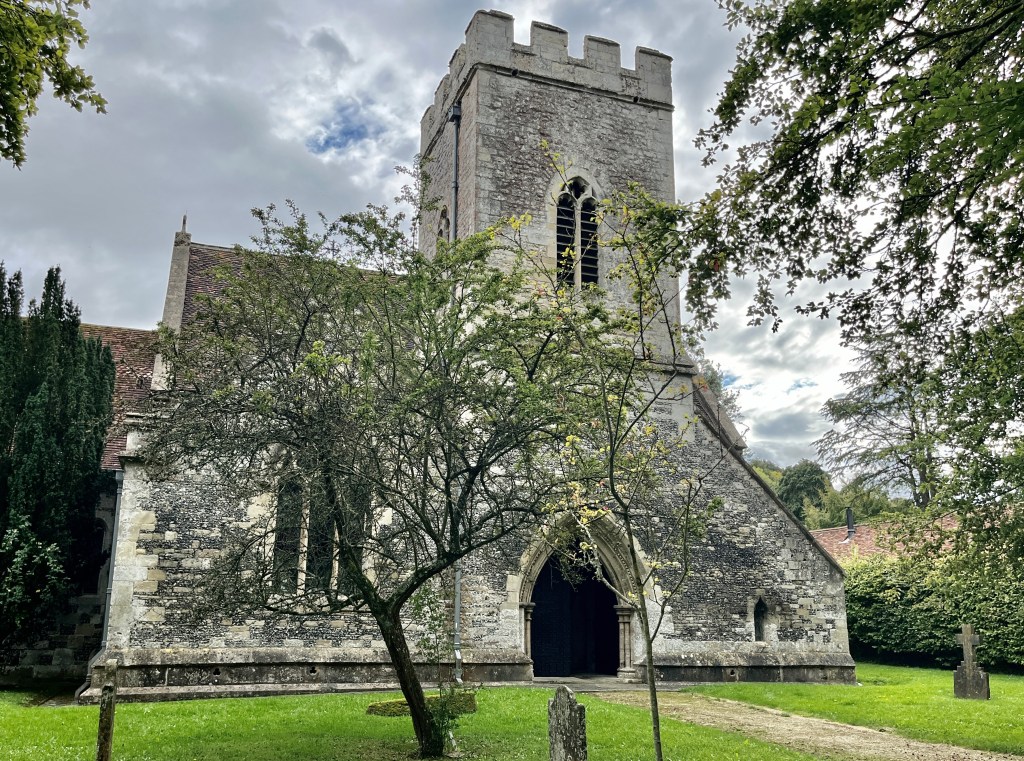
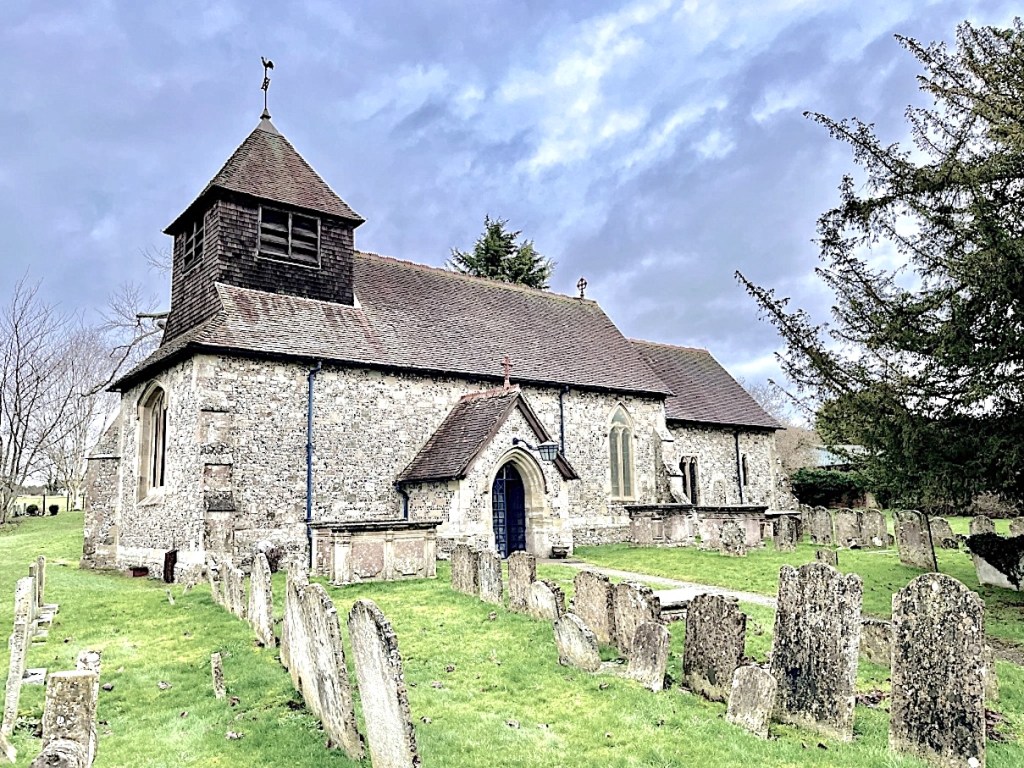
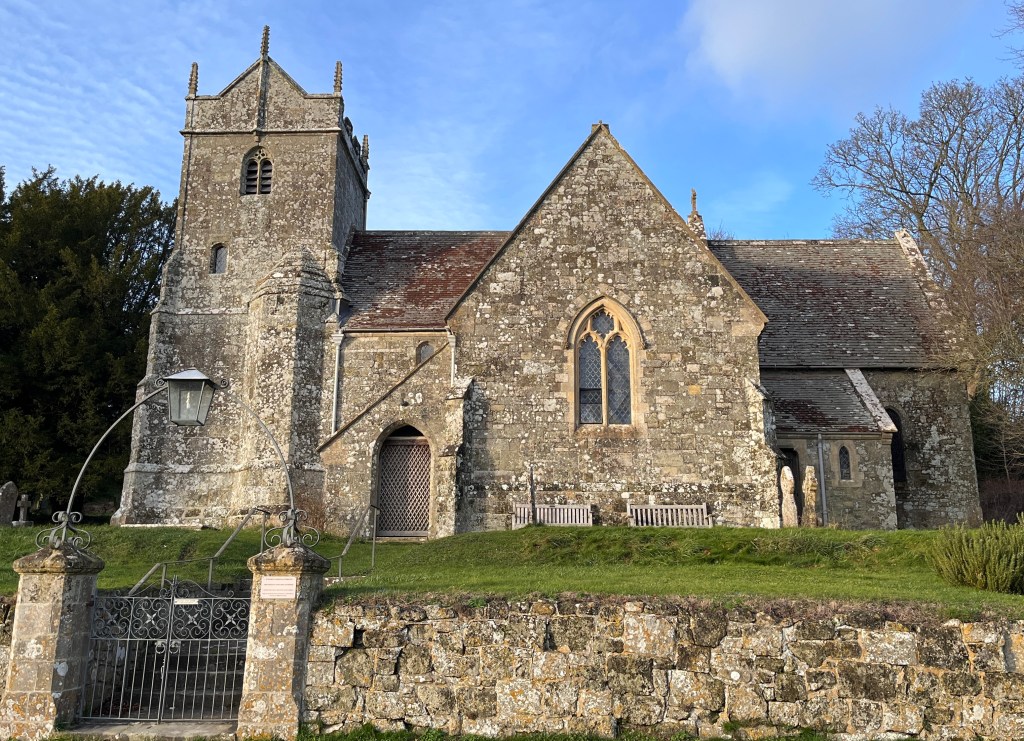
GRADE I ❖ Saxon origins; built C13; C15 work to tower; restorations 1870s. A remarkably uniform E.E. design HE; An E.E. church of exceptional purity and classicity PEV. Features of interest include an Anglo-Saxon tub font with rim inscribed in Latin; a C14 font; fine woodwork; C17(?) Royal Arms of puzzling design. Good graffiti on pillars. Outside, there is an unusual Dole Stone; and the scratch dial featured here. 2m S of Devizes. 51.326 / -2.0079 /  ST995585

DIAL

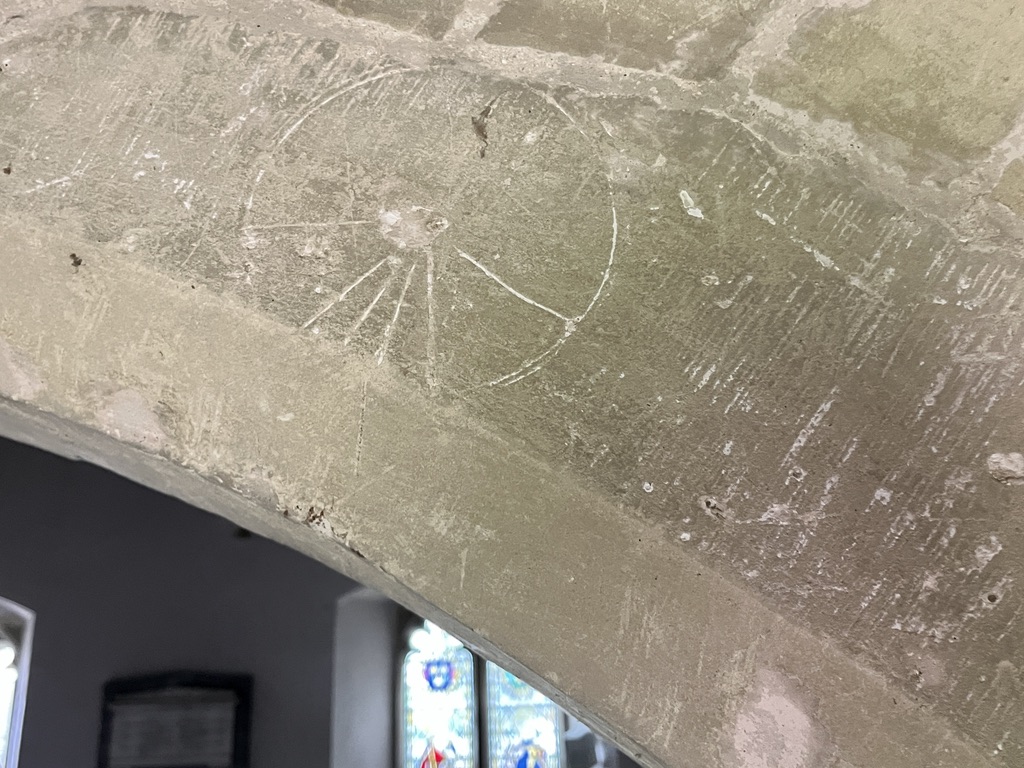
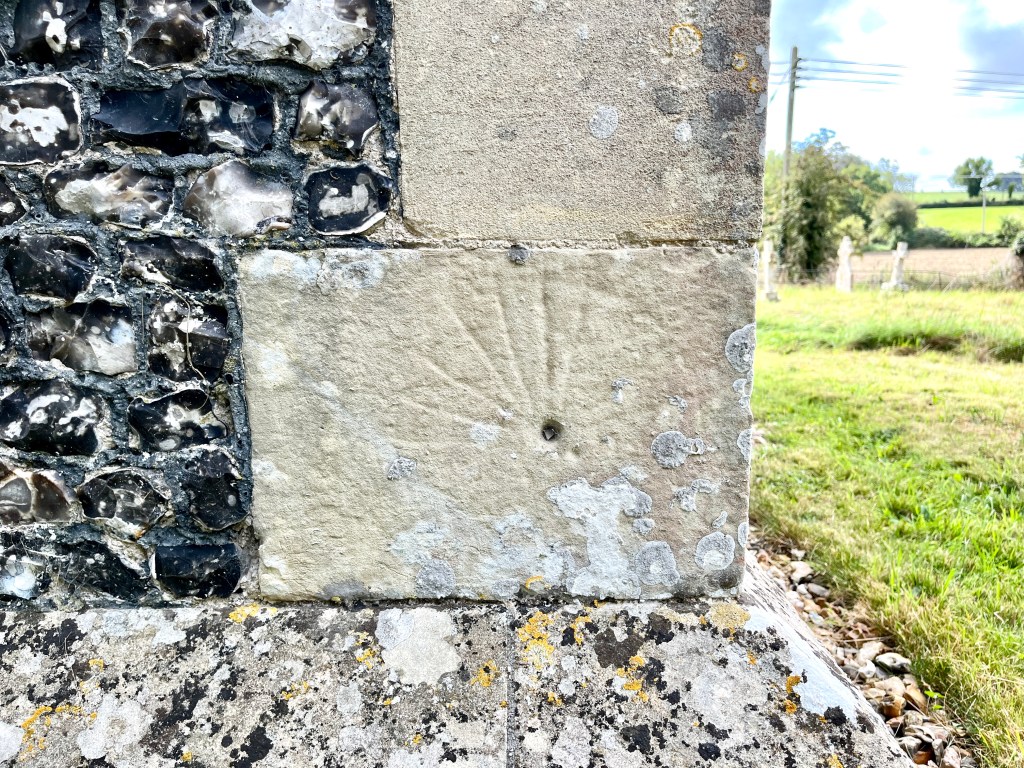
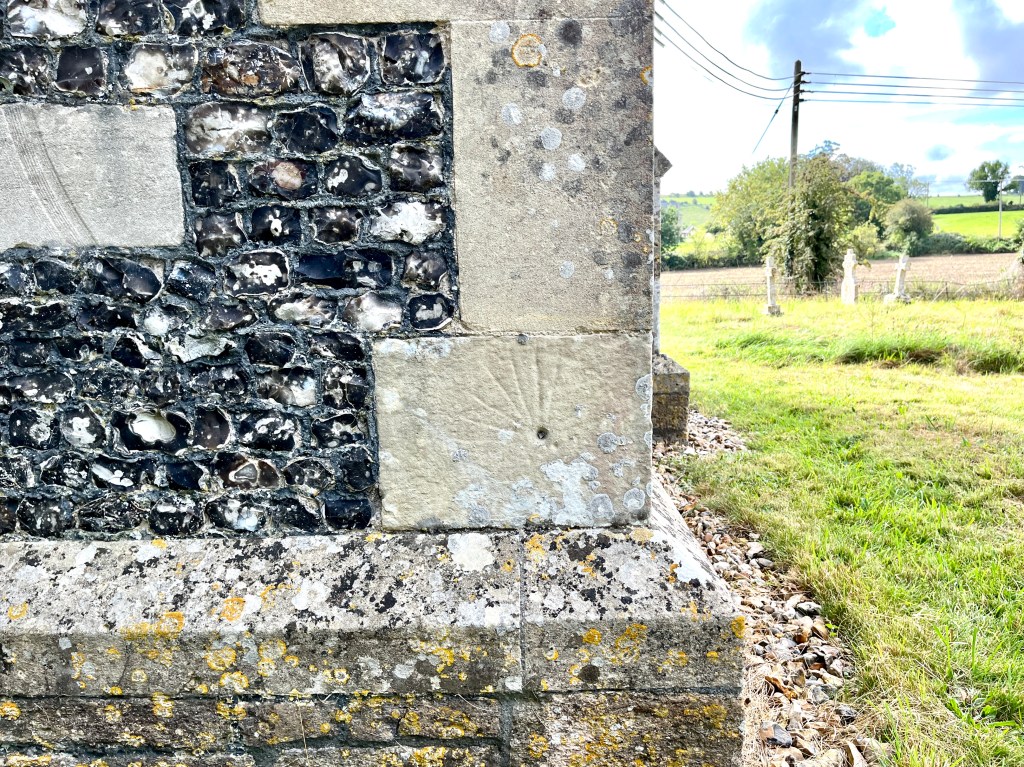
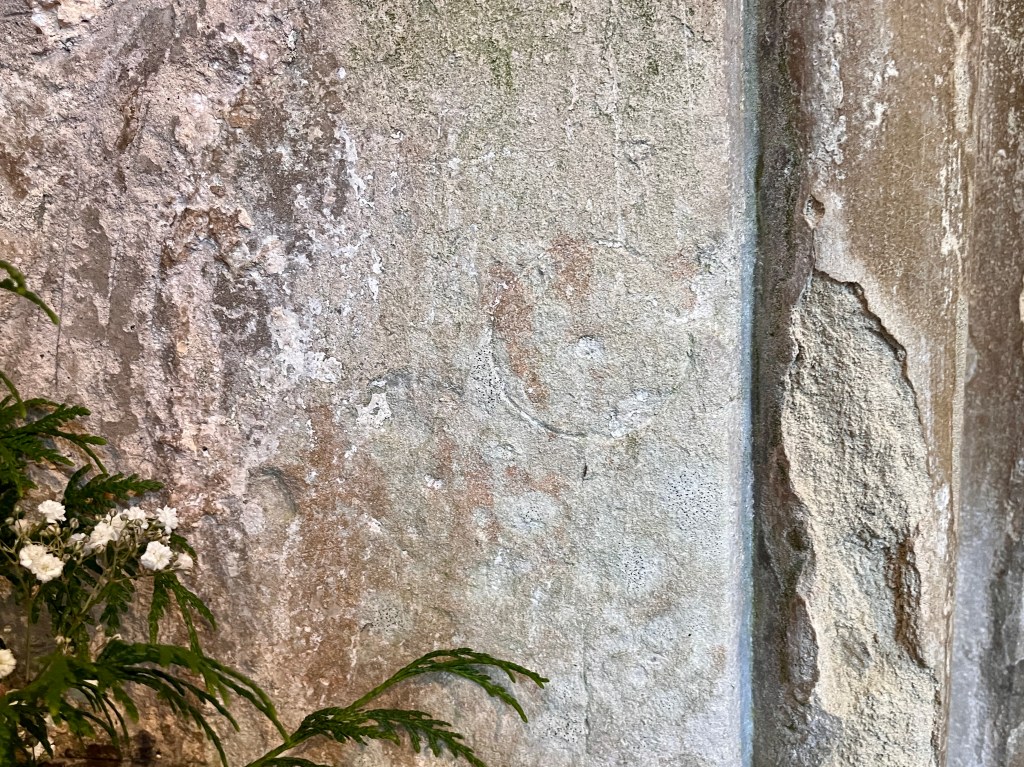
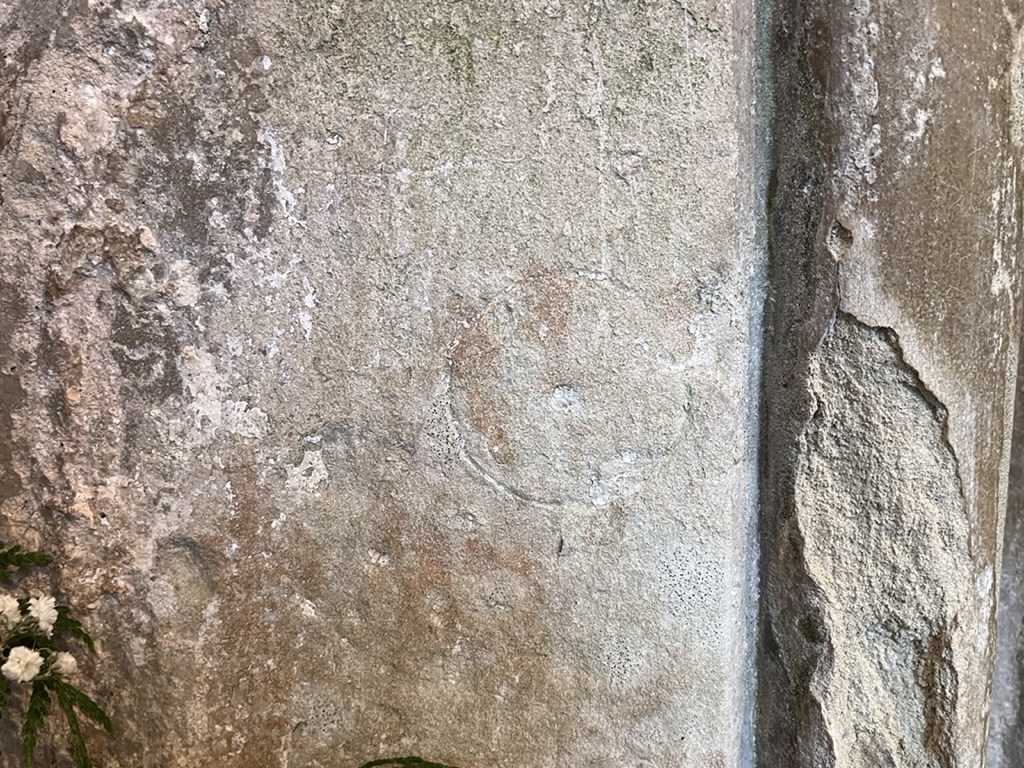
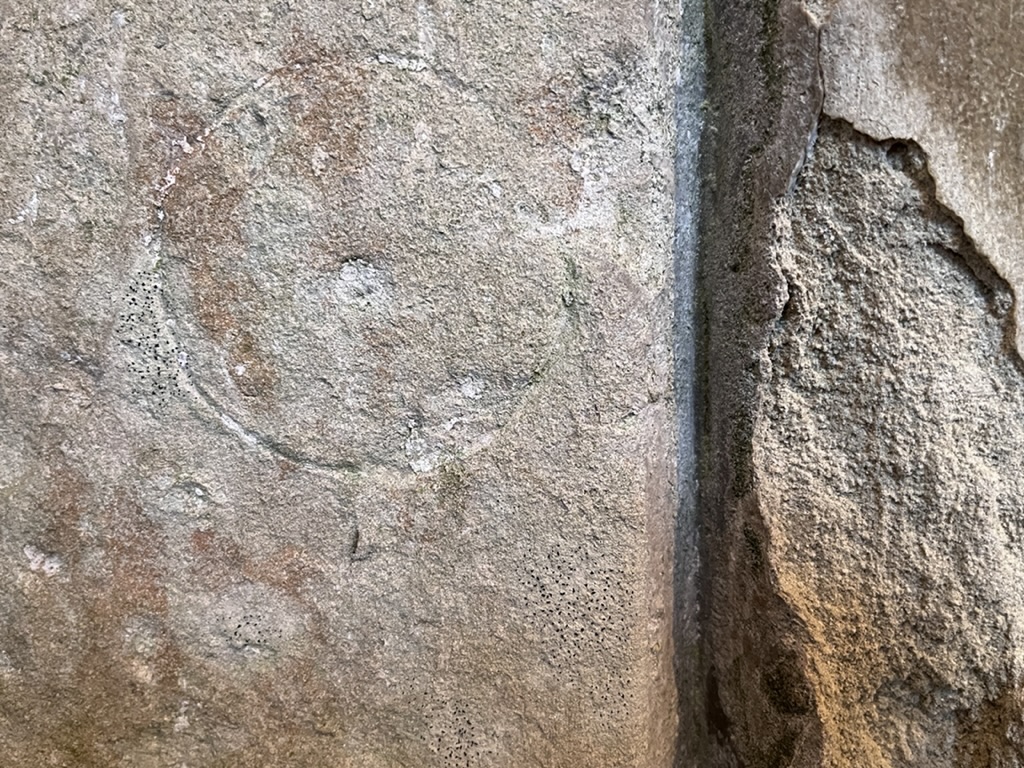
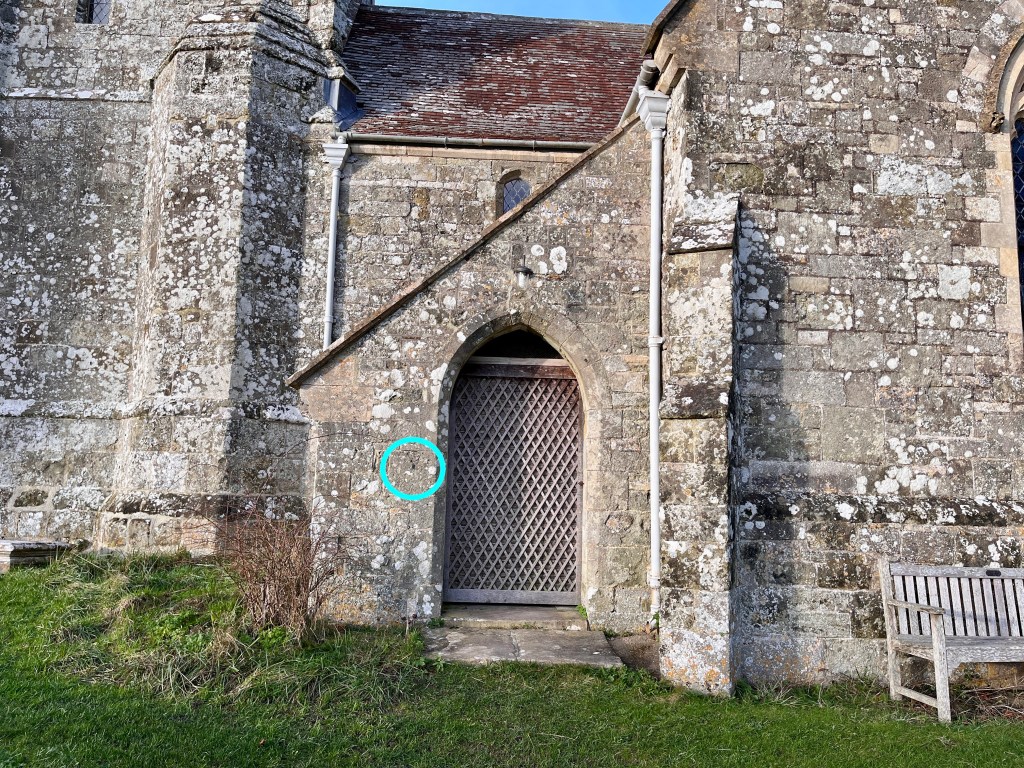
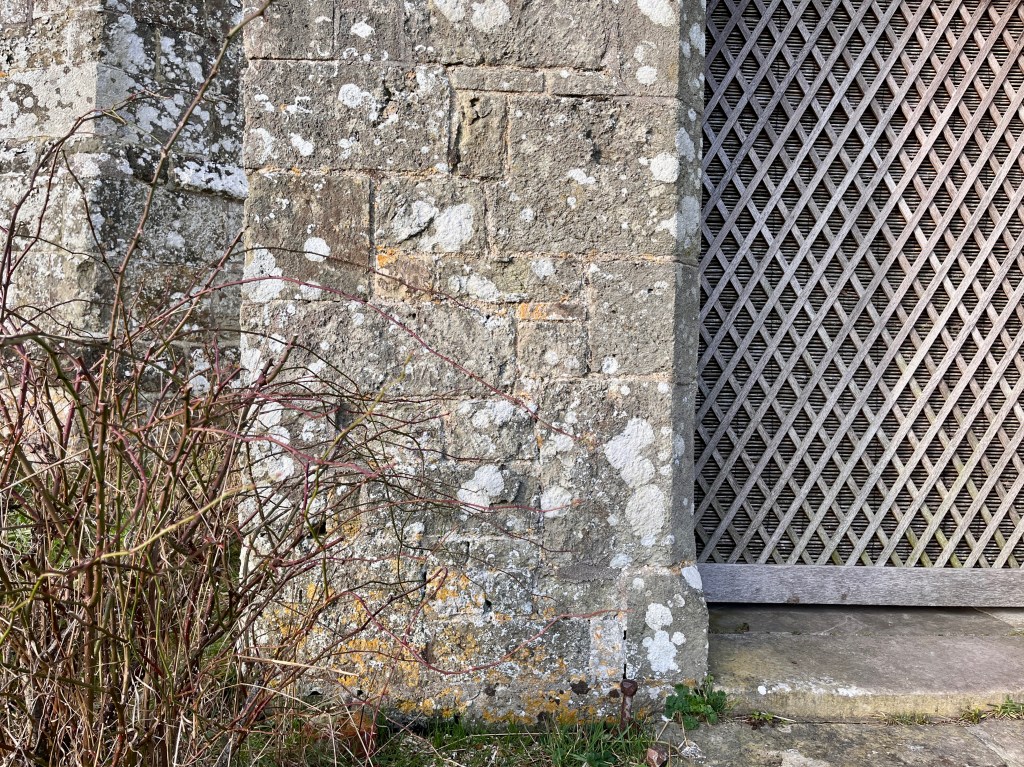
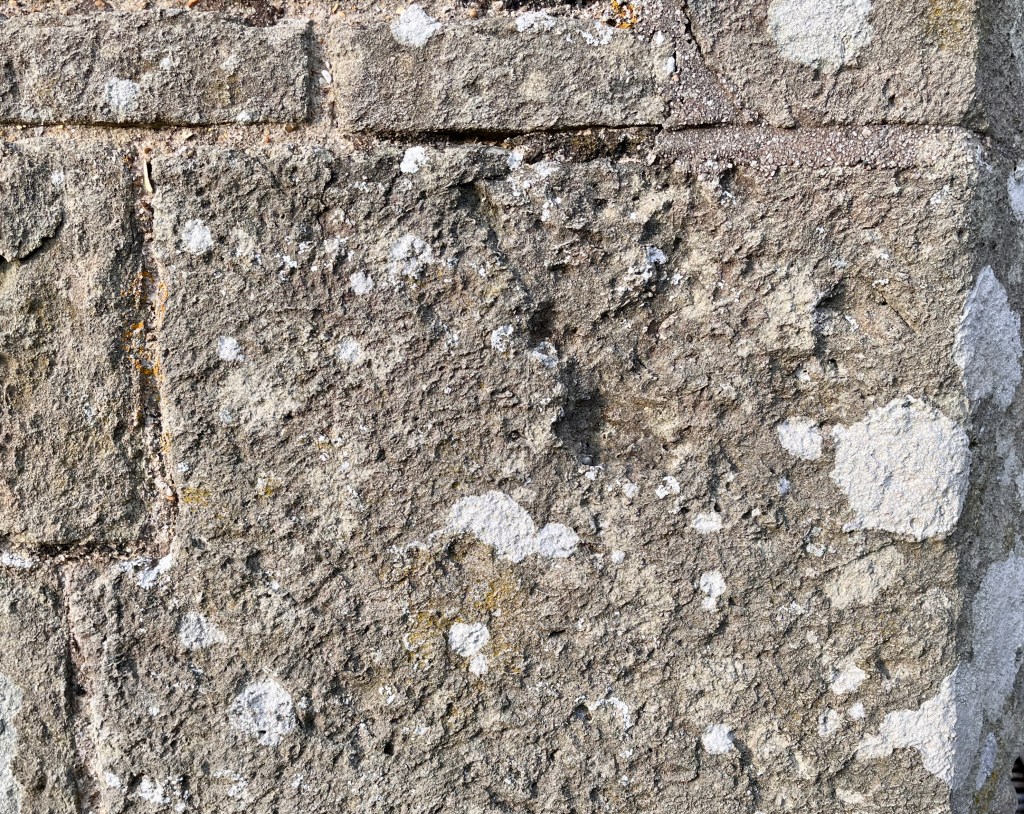
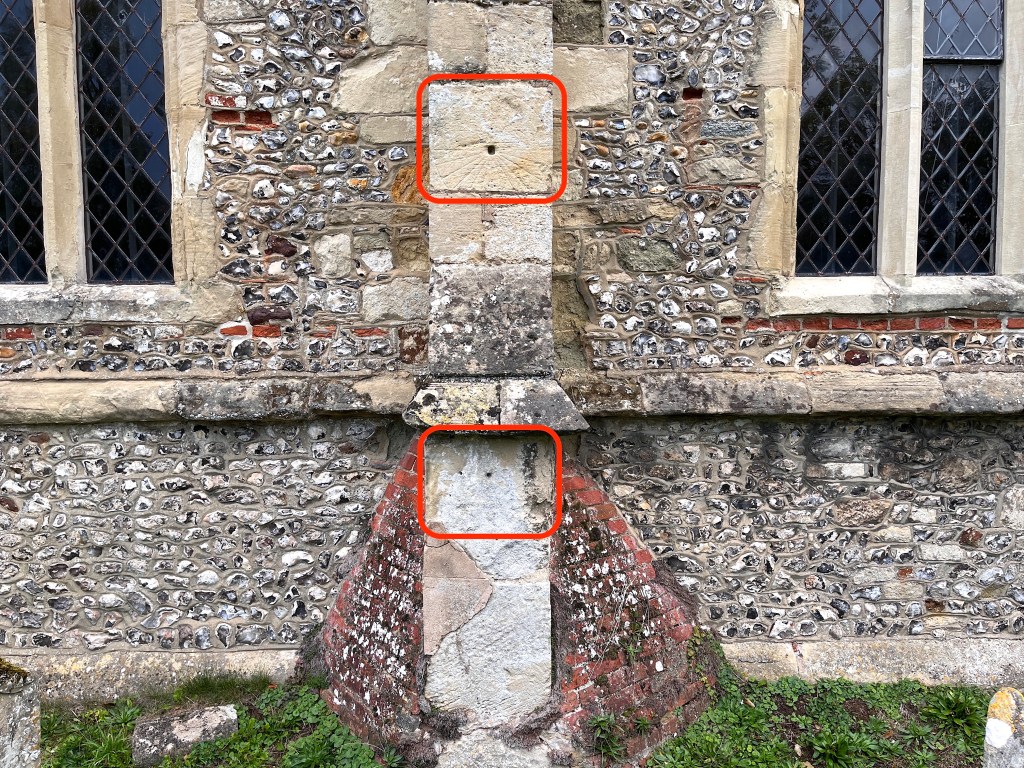
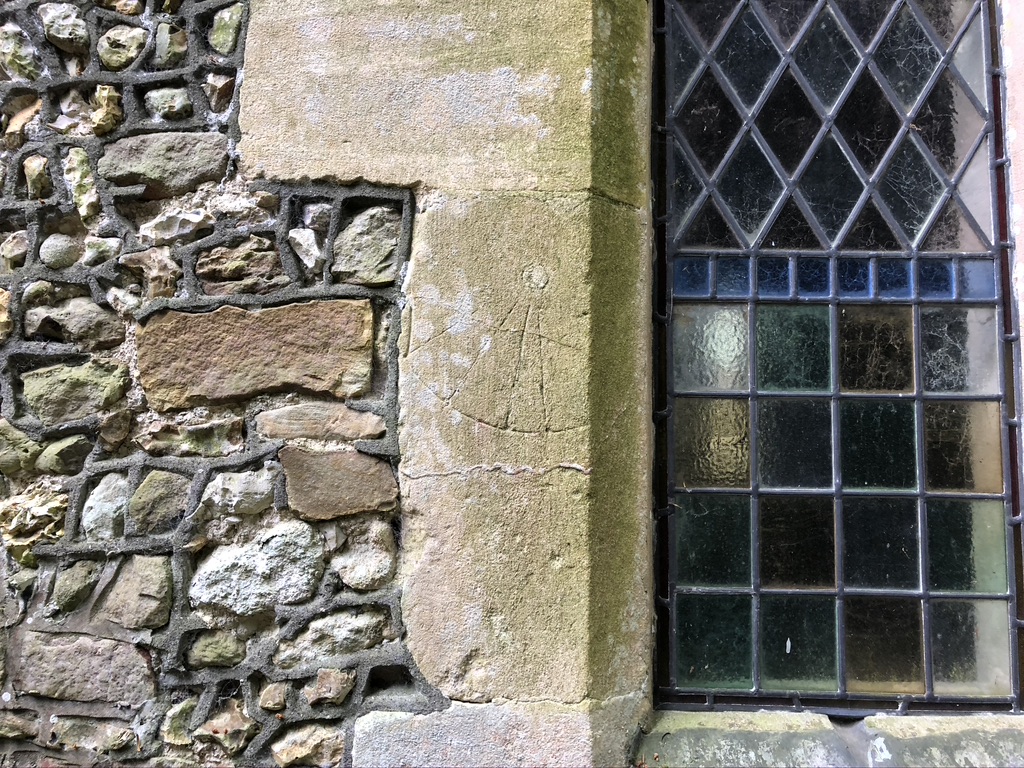
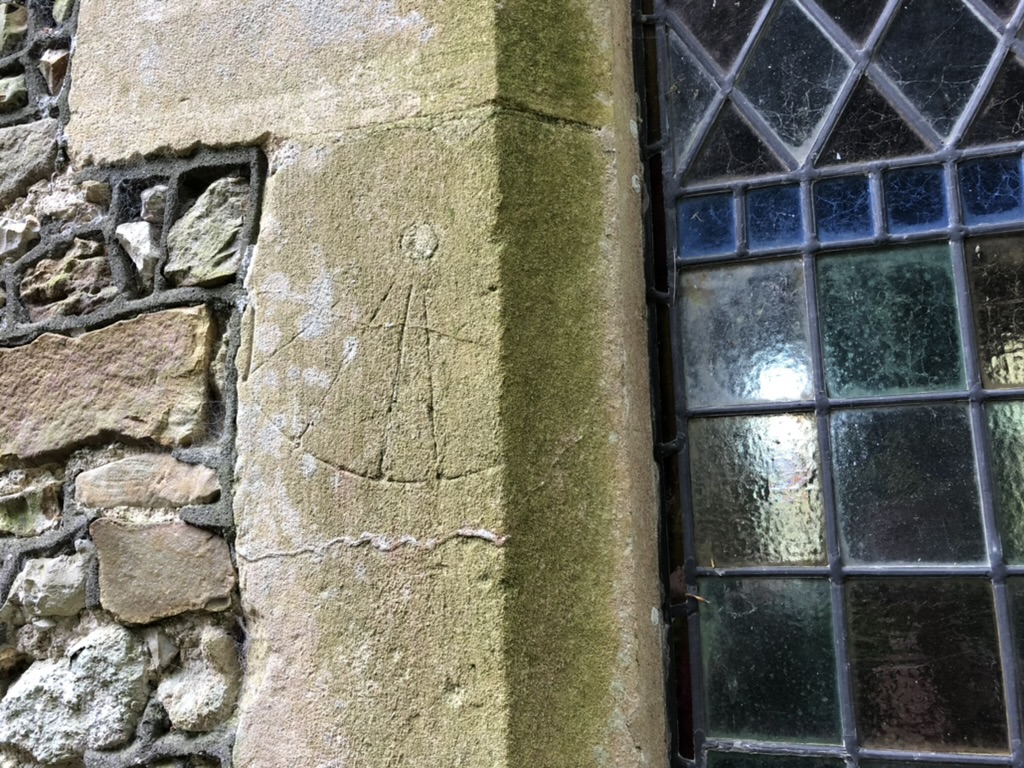
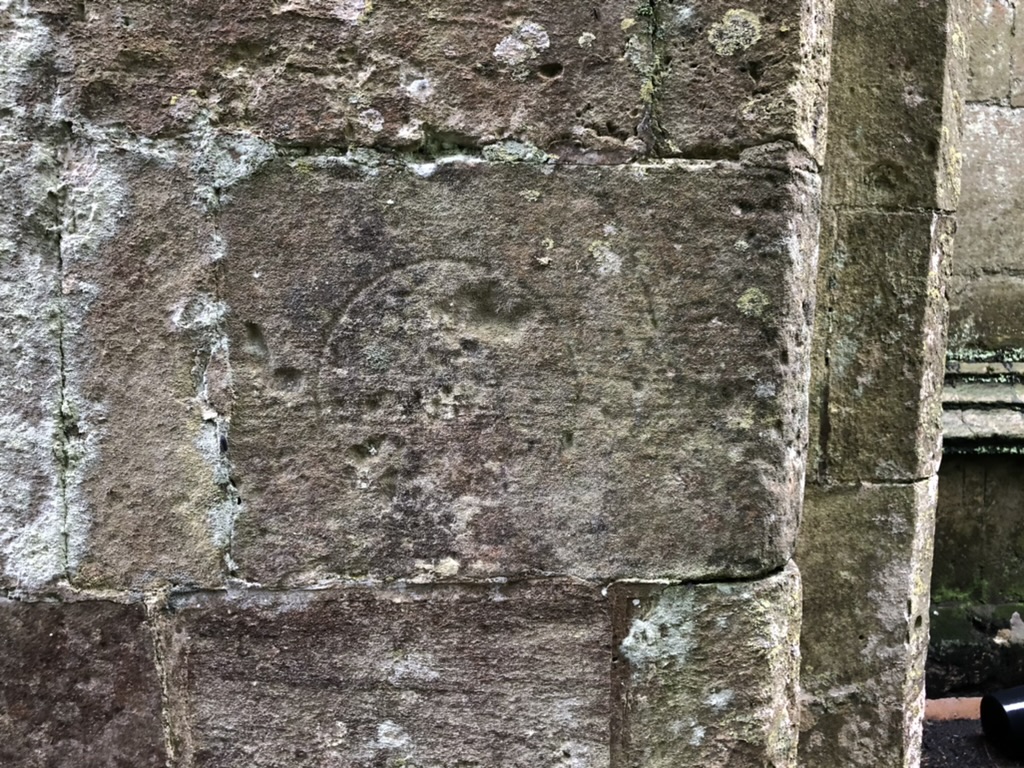
The dial is located on a quoin stone of the buttress at W end of S side. The gnomon hole is centred quite accurately, and surrounded by a ring of small pocks of roughly equal size. The spacing is uneven. 12 of them are drilled in the lower half, in a semicircle that includes the horizontal ‘6-to-6’ line. The other 7 are above the horizontal in the night zone. The pock at notional midnight has 3 on either side, forming an almost symmetrical design. These can only be for decorative purposes, being of no use in marking the passage of the day / night.

As for radial lines, despite erosion 5 lines are visible – 3 LLQ, a faint noon line, the horizontal line RHS. Each terminates with a pock. There remain hints of 2 or 3 others.

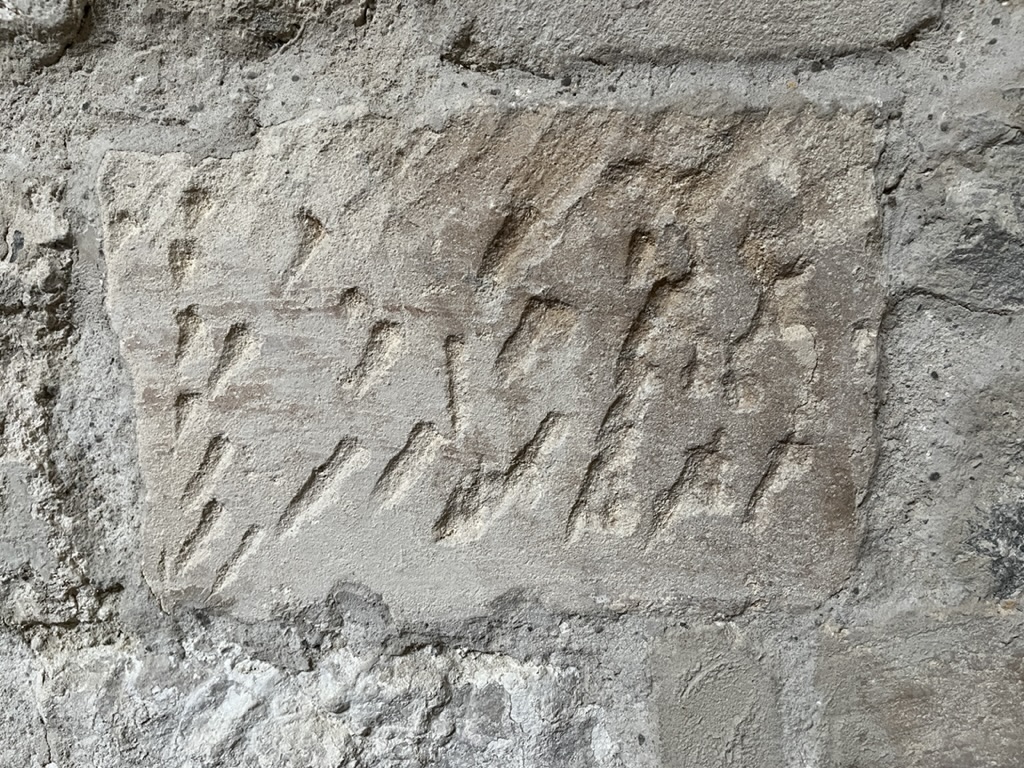
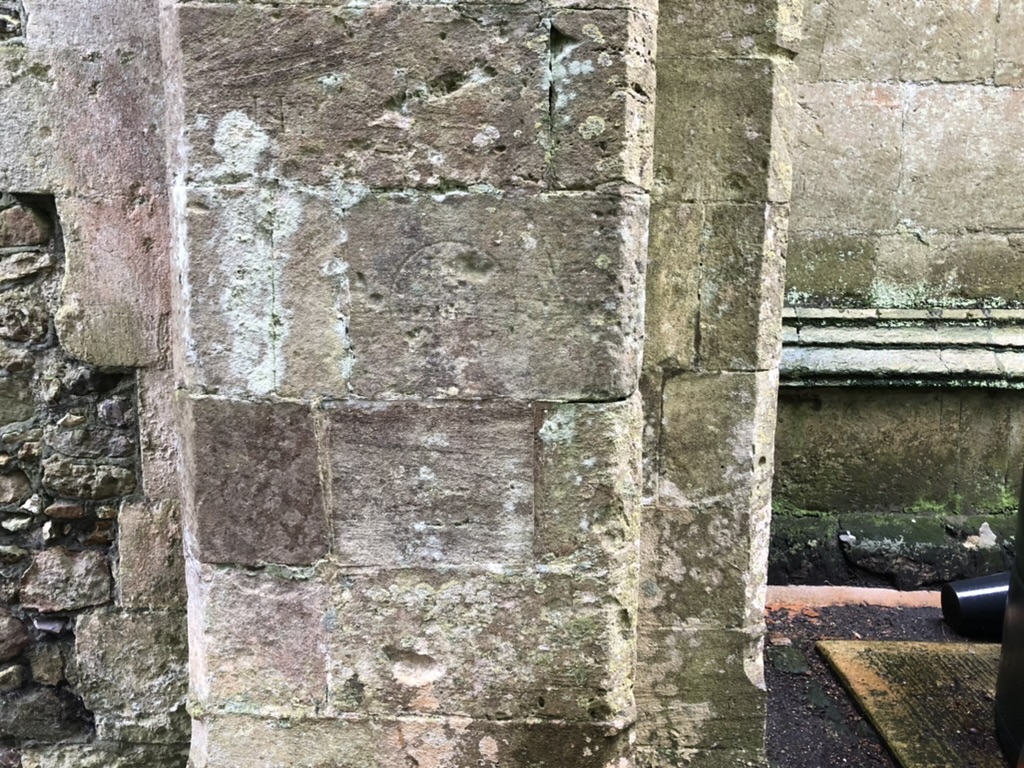
GRAFFITI . FONT WITH LATIN INSCRIPTION . COMPASS-DRAWN PROTECTION MARKS

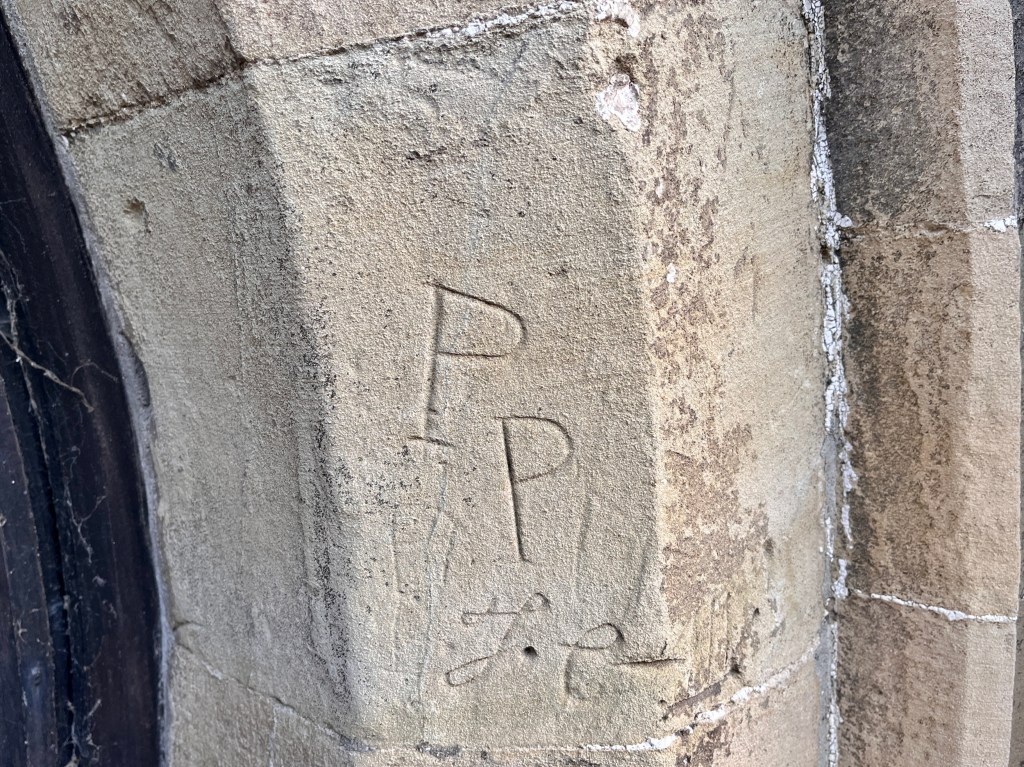
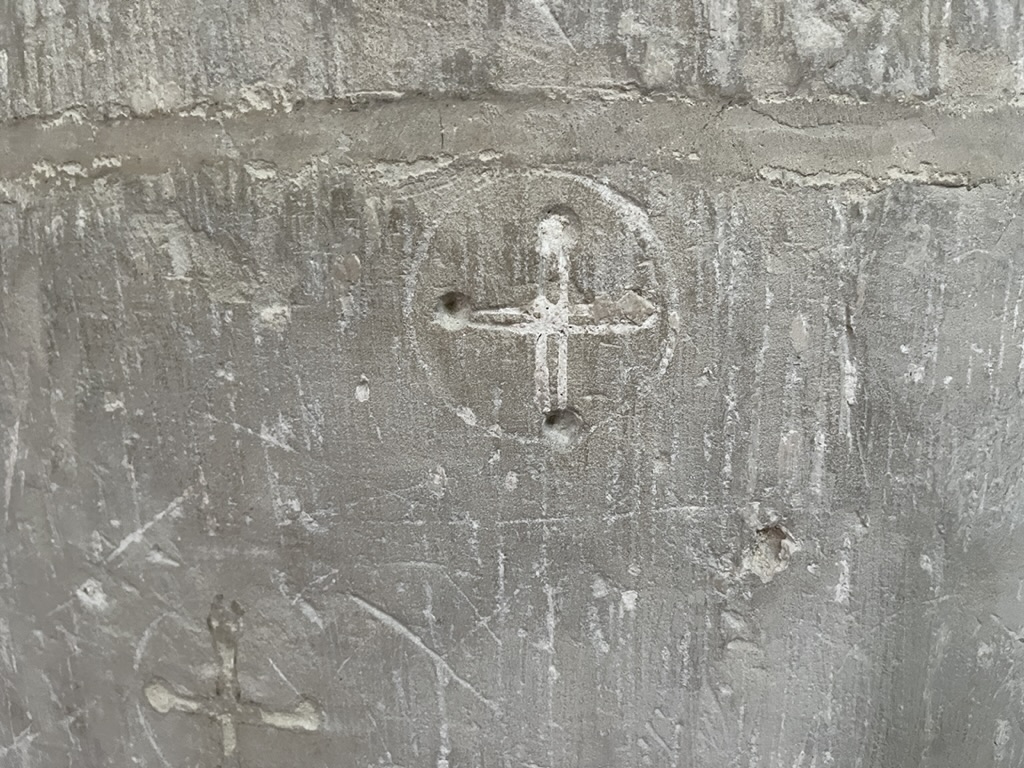
The VV in the first image, assuming it is an initial, is in the distinctive form of a Marian mark, a commonly found protection symbol standing for the ‘Virgin of Virgins’.

GSS Category: Scratch Dial; Mass Dial

All photos Keith Salvesen; header drawing from the Benefice site

MIDDLE WOODFORD . WILTS . ALL SAINTS – Scratch Dials; Vertical Dial

All Saints . Middle Woodford . Wilts

ALL SAINTS . MIDDLE WOODFORD . WILTS

GRADE II ✣ C12, C15; T.H.Wyatt restoration 1845. A fine church by the R. Avon, with plenty of interest. Focus here is on the splendid C12 inner doorway of the porch with nook shafts and scalloped capitals, and an outer order of arch lozenges, inner of horizontal chevrons BHO. See below for Church History. 5m N of Salisbury. 51.1244 /  -1.8301 /  SU119361

SCRATCH DIALS

DIAL 1

Dial 1 is by the capital LHS of the door, and quite easy to overlook. Weathered and damaged, with 3 lines visible within what remains of a double circle. Filled gnomon hole.

DIAL 2

Dial 2 is RHS on the arch of the doorway, and much easier to read. A morning dial with 4 clear lines from 9 (terce) to noon, and another fainter line earlier. The random line LRQ was evidently added some time later. Filled gnomon hole and remnants of a narrow double circle, as with dial 1. Perhaps this dial was cut as a replacement for dial 1 which certainly seems earlier; they could hardly be contemporary.

DIALS 1 AND 2

CHURCH HISTORY

VERTICAL DIAL (CHANCEL BUTTRESS)

The dial is on a south buttress. Motto across the top in angular lettering reads: ‘Tempus Fugit’. Upright Arabic numerals – 10, 11, 12, 1, 2, 3, 4, 5 and 6 still just visible. Divided to 5 mins? Three-dot half hours (remnants of fleur-de-lys? Square frame with wide border, inset into stone of second buttress RHS of south porch. Needs restoring soon if it is to be saved. Would have been quite a good dial originally BSS

The most recent report was in 2005. Given the details mentioned above, the prediction of further deterioration has sadly come to pass.
GSS Category: Scratch Dial; Scratch Dial within porch; Vertical Dial

All photos: Keith Salvesen

BOYTON . WILTS . ST MARY THE VIRGIN – Scratch Dials

ST MARY THE VIRGIN . BOYTON . WILTS

GRADE I ✣ Origins pre-date 1159 building; some C12 features; S chapel c1280. Mainly late C13 to C15; 1860 restoration by Wyatt. Fine Giffard Chapel. Described 1850 (Hoare) as one of the most interesting parish churches in the Vale of Wily [Wylye], and its architecture has been very little altered since the death of Bishop Giffard in 1301. W window described by PEV as a tour-de-force. Painted pews. Turkeys feature in the church decoration – for why, see below. 4m NW of Wylye. 51.1553 / -2.0722 /  ST950395

DIAL 1

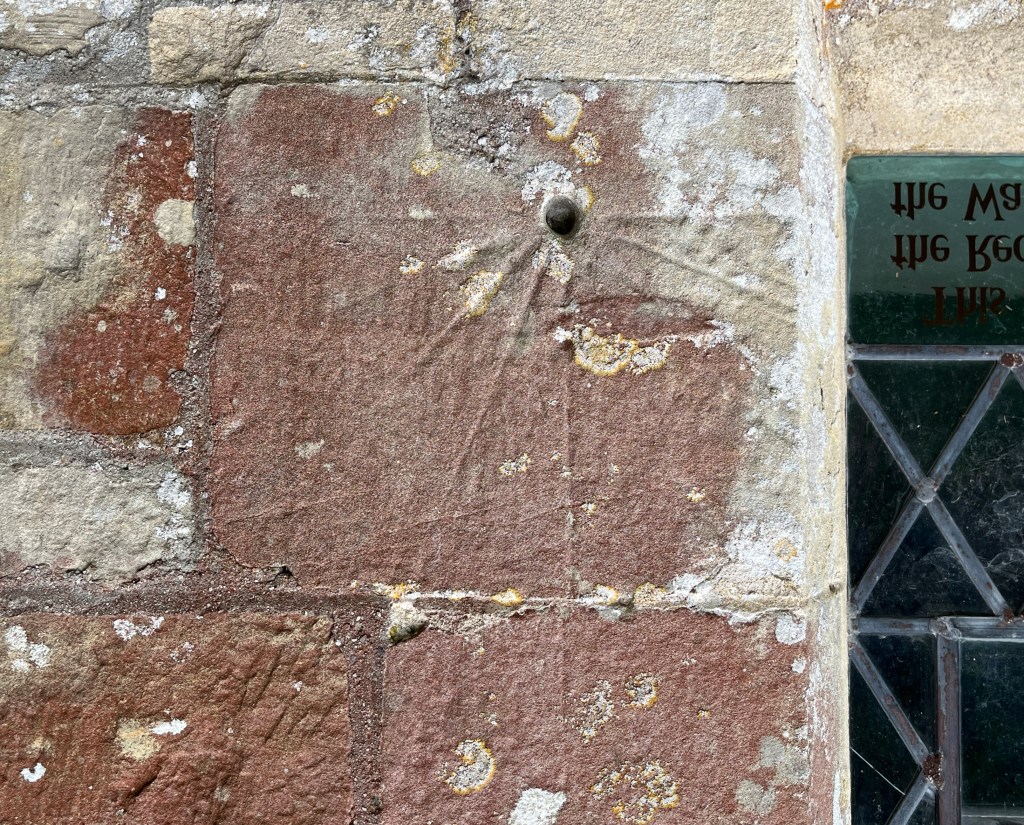
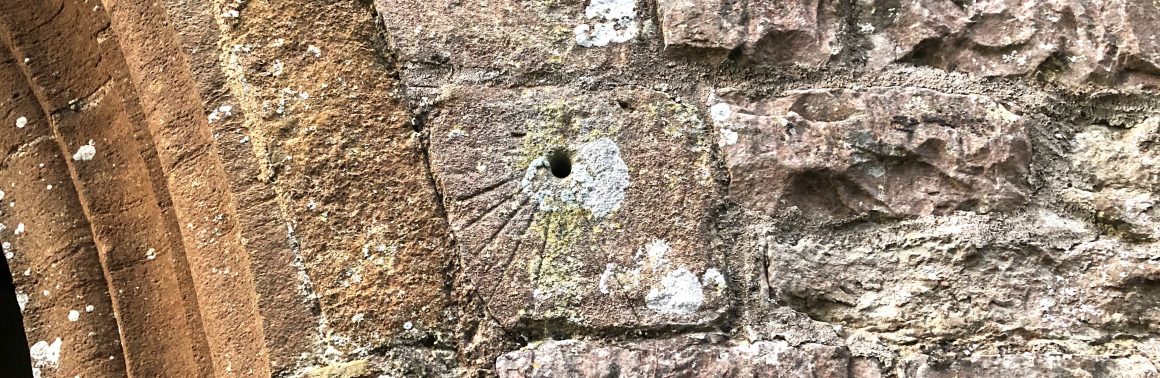
The dial is prominent on the lower right corner of the transept window. It is cut into the attractive red stone. At some time it was inverted, along with the stone above it. It’s an assertive dial, unlikely to be missed. There are 9 lines, with the noon having a pock close to the gnomon hole, then extending onto the stone below. A reverted image is shown below.

REVERTED DIAL

DIAL 2

BSS records 2 other scratch dials. Examining the separate but very similar entries for these 2 dials, it seems near-certain that they are in fact one and the same. The notes for one includes worn, error, omission, query. Report date uncertain. They differ as to whether there is a large gnomon hole or none at all; and whether there may be a circle. As it happens, I could only find one plausible candidate in the given location, so I will leave it at that.

The dial is difficult to interpret, not least because it is so eroded. The larger image below hints at a noon line, with perhaps a trace of a line at XI and on the pm horizontal. There is a rough curve LRQ but no certainty that it was ever part of a circle. I doubt that the 3 shallow circular dents relate to the dial. A simple dial, then, but of use (in that location) to those passing after daybreak.

St Mary . Boyton . Wilts – Hypocrite Stone in the aisle
SIDE NOTE William Strickland, builder of Boyon Hall, was said to have brought the first wild turkey to Britain from America in the late 16th century. As a result, there are carved and painted turkeys all over the church; most notable is the lectern, shaped like a turkey instead of the traditional eagle. (David Ross – Britain Express BE)

GSS Category: Scratch Dial; Mass Dial

All photos: Keith Salvesen; ack. David Ross

HEYTESBURY . WILTS . ST PETER & ST PAUL – Scratch Dial(s?) & Church Marks

GRADE I Early Church recorded at Hestrebe DB. C12 origin as collegiate church; continuing development to C16; mid-C19 restoration (Butterfield). C13 work of particular note. One of the excellent churches to be found in the Wylye valley between Steeple Langford and Sutton Veny. 51.1821 / -2.1086 / ST925425

DIAL

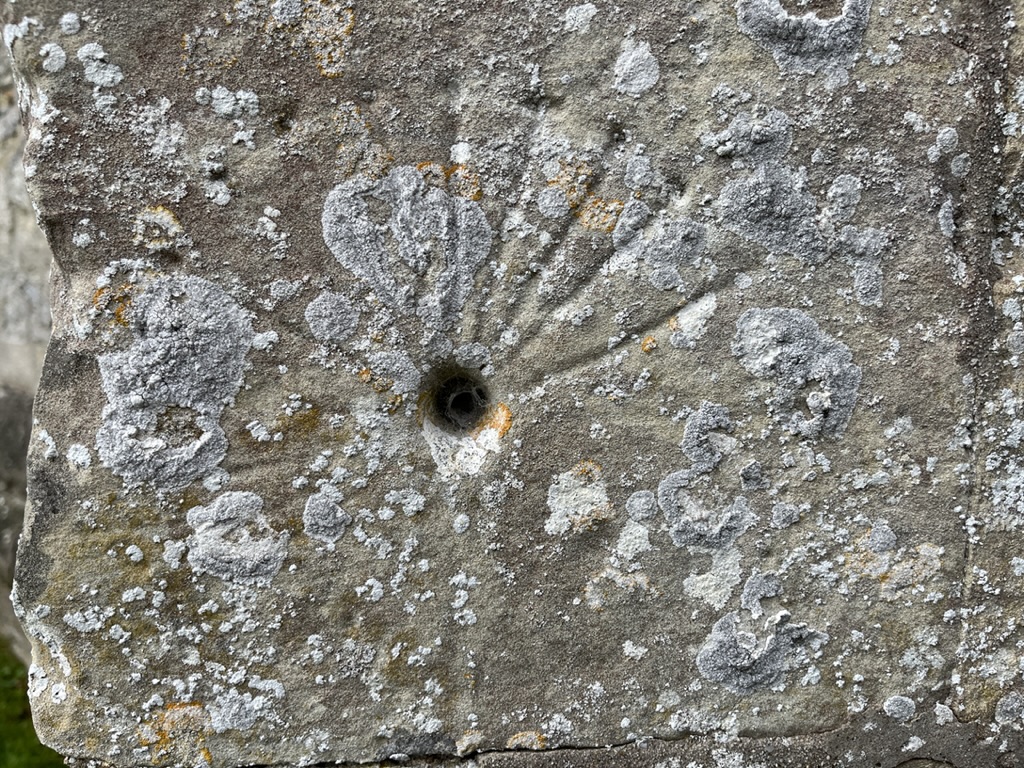
The dial is on the SE face of the angled buttress at E end (by the green tank). It is a fine example of a dial on which all the lines have terminal pocks. At some time it was inverted, and I have shown it reverted below. I cannot find any record of it, BSS or elsewhere.

REVERSION

This dial is primarily a morning dial, with lines marking (in clock terms) the 5 hours from 8 to noon. The deeper lines marking 9 & 10 correspond to the morning Mass time Terce. Possibly, the fainter line LRQ indicates None, another significant time during the day’s observations. In all there are 9 visible lines with terminal pocks during daytime, and a hint of a line above the horizontal in URQ. The vertical ‘midnight’ groove above the gnomon hole can be discounted as part of the dial, I think. It is certainly out of keeping with the carefully thought overall design. Also, it doesn’t reach the gnomon hole.

PLAUSIBLE DIAL?

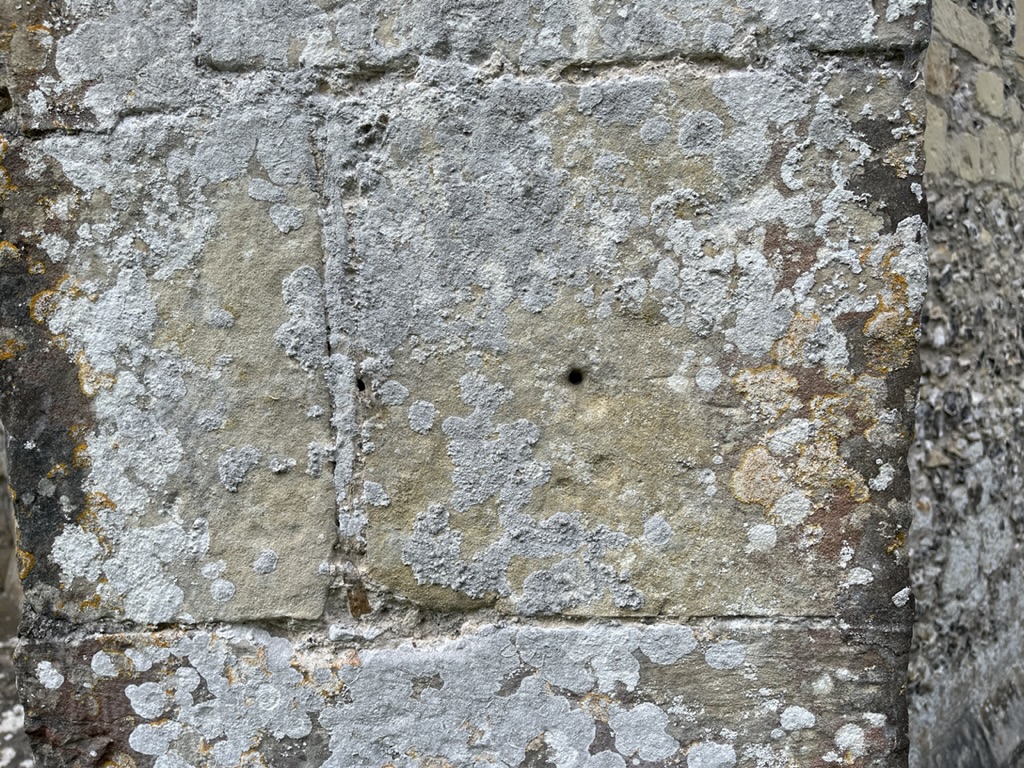
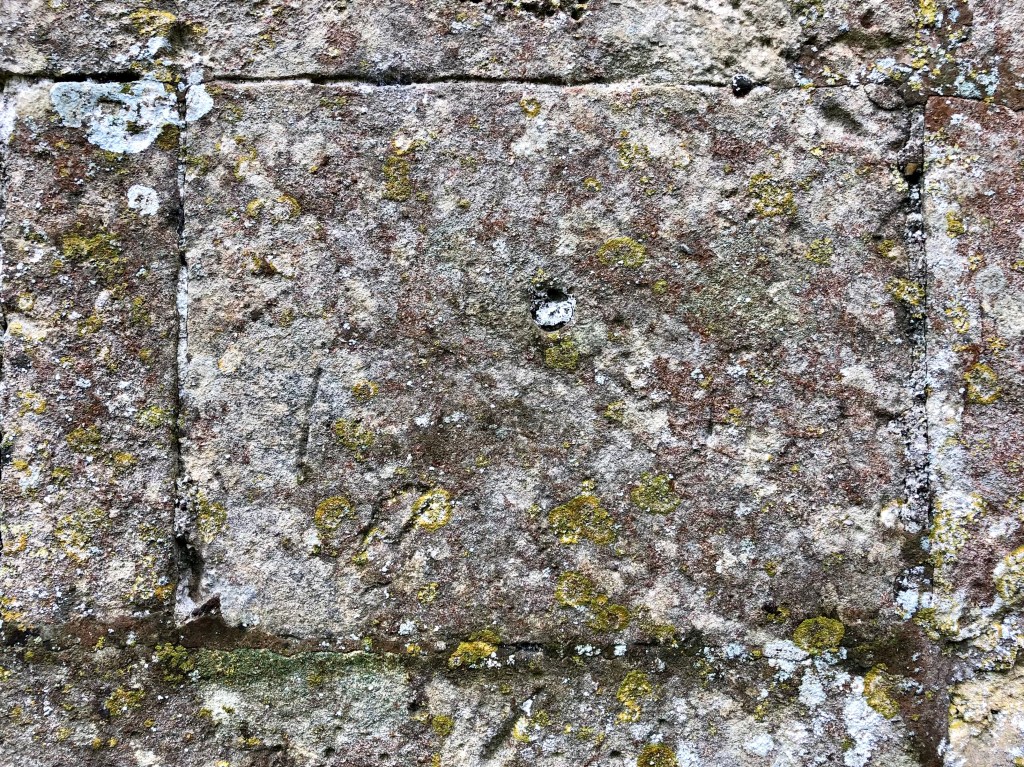
I noticed this patterned stone and photographed it as I walked past. I would very much like it to be a ‘pock-only’ dial. There is certainly a hole close to the centre of the stone, with a pattern of small holes that look crudely drilled, approximately forming a perimeter. Probably I am overthinking this.

CHURCH MARKS

Here is a selection of church marks – masons’ marks, consecration cross; ‘pilgrim’ crosses; graffiti; a small dial-like design that merits further investigation.

GRAFFITI INCLUDING RITUAL PROTECTION SYMBOLS

GSS Category: Scratch Dial; Mass Dial; Church Marks; Consecration Cross; Masons’ marks; Pilgrim Cross; Graffiti

All photos: Keith Salvesen

LITTLE LANGFORD . WILTS . ST NICHOLAS OF MYRA – SCRATCH DIAL . HEXFOIL . TYMPANUM

ST NICHOLAS OF MYRA . LITTLE LANGFORD . WILTS

GRADE II* C12 – C15; Wyatt restoration 1864. Myra (as Church Notice Board; OBS); also, Mira. Charming small church in Little Langford (not nearby Steeple Langford as mostly given in refs) down a side road off a side road. A pleasure to visit and of considerable interest. C12 font bowl; a fine tympanum with symbolic carvings; a large hexfoil re-sited high up on E end N quoin; and – most relevant here – an excellent scratch dial re-sited as quoin stone low down W end of N side (cf Litlington E Sx). 51.1288 /  -1.933 / SU047366

DIAL

Re-purposed, inverted, and making a fine quoin stone. 9 lines (2 faint). Deeper cut noon line. An afternoon dial presumably with Observance ± None.

HEXFOIL

Very visible once noticed re-sited high up N side of E end

TYMPANUM

Well worth examining closely to work out the symbolism before looking it up on HE / BLB

GSS Category: Scratch Dial; Mass Dial; Re-sited dail; Inverted dial; Hexfoil; Tympanum

All photos: Keith Salvesen

SHIPTON BELLINGER . HANTS . ST PETER – Scratch Dials

ST PETER . SHIPTON BELLINGER . HANTS

GRADE II C14 origins; very little remains of the original church. Almost all refaced, restored (Withers 1879) or rebuilt. Registers date from mid-C16. Attractive with its squat wooden bell turret. Just N of A303 between Andover and Amesbury. 51.2076 /  -1.6678 / SU233454

DIALS

There are 2 dials recorded for St Peter, of quite different types. Dial 1 is a simple filled hole in the centre of a circle, without additional markings. Dial 2 is a sector of a fairly large dial that must have covered 2 or more stones.

DIAL 1

St Peter . Shipton Bellinger . Hants – Scratch Dial 1

Dial 1 is inside the porch L of the doorway, quite low down. It consists of a filled central hole within a circle, with a pock (possibly unrelated) ULQ. With a rod as a gnomon, it would work as a basic marker of the the passing day, though at an inconvenient level if in its original position. The unusual shape of the large dial stone also suggests a significant relocation somewhere in the time-line of the various building works. One record dates the dial to C11, which seems unrealistic – it predates the known origins of the church. Also noted were faint traces of a similar circle LLQ, but I could not detect anything significant. There is a further possibility that, rather than a dial, this design is one of the many forms of ritual protection mark. However the size and the filled hole suggest not.

DIAL 2

Located on S wall of the Nave, E of door, W of E Nave buttress, and about 2m high. All that can be seen is the LLQ part-perimeter of a quite large dial (if it is one) cut in the upper R corner of a large stone with no discernible dial-ish markings. Basically it is a plain quarter-circle using the mortar lines for the straights, and with a gnomon hole (not now obvious) in upper R corner. To work as a dial in that (or in any different) position, it would have required one additional stone if a semicircle; or at least 2 more if a complete circle. The absence of any lines or pocks on this fragment militates against it being part of a scratch dial. It would have been hard to resist using such a large blank area as a creative area for a proper dial design. Quite plausibly, this curved incision was part of some decorative feature displaced during rebuilding, with companion stones used elsewhere where needed.

BBS PHOTOGRAPHIC RECORD

GSS Category: Scratch Dial; Mass Dial

All photos Keith Salvesen, BSS

BROAD CHALKE . WILTS . ALL SAINTS – Scratch Dial

GRADE I C13 origins (c1258 on); C14 development, Perp windows, C15 tower (BHO – sources vary on dates). C17 extensive repairs; mid-C19 restorations to Wyatt plans. Cecil Beaton is buried in the churchyard. One of several Ebble valley churches between Salisbury and Shaftsbury (cf Alvediston). 51.0275 /  -1.9432 /  SU040253

DIAL

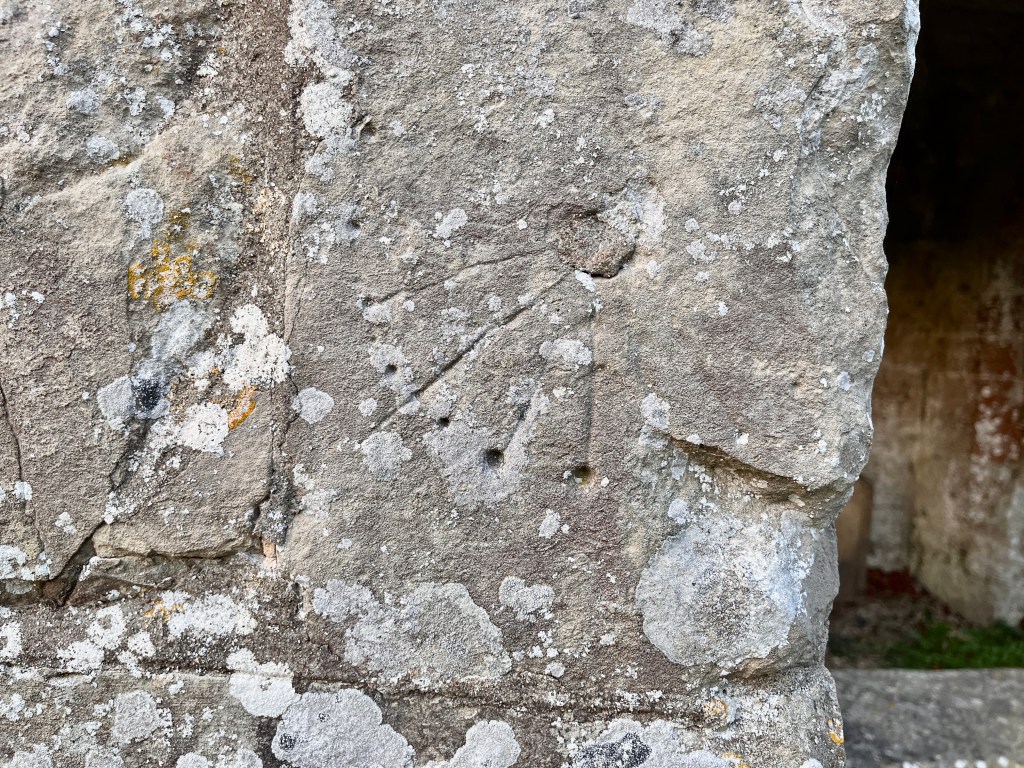
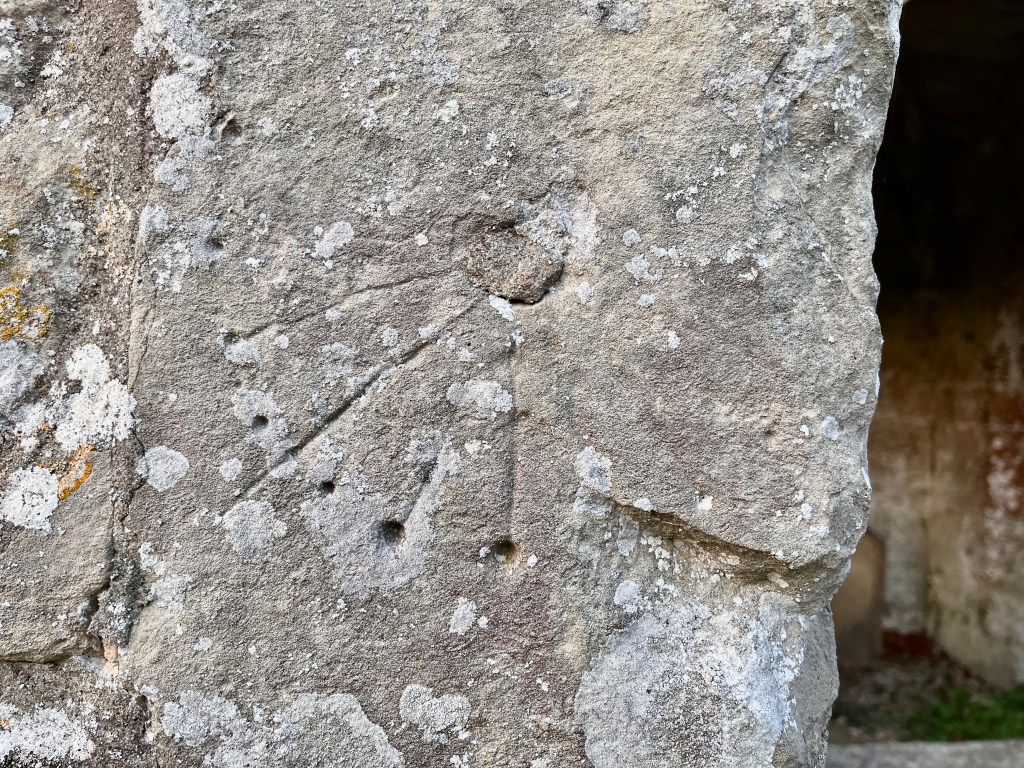
A distinctive and easily visible dial on S buttress between 2 recesses. 4 clear lines with faint traces of others. There are 5 obviously related pocks, with a couple of outliers above UL in a position corresponding to the curvature of the dial. The filled gnomon hole in the centre of the dial stone is large, perhaps enlarged over succeeding centuries (it’s not uncommon to find disproportionately large holes)

This dial is of particular interest for 2 reasons: i. the size of the pocks are graduated from small to large along the perimeter down to the noon line, which has the most emphatic hole. I can’t remember coming across such a clear example before. ii the Mass line – terce – is very clearly indicated both by being elongated, and by having pocks on either side of it, neither of which links to a line.

GRAFFITI

All Saints has some graffiti in the porch area. Here are 2 examples – image includes ‘witch marks’

GSS Category: Scratch dial; Church Graffiti

All photos: Keith Salvesen

ALVEDISTON . WILTS . ST MARY – Scratch Dial

St Mary . Alvediston . Wilts

ST MARY . ALVEDISTON . WILTS

GRADE II* C12 origins; a chapel of Broad Chalke by 1299, from which date Vicars were recorded. From that period, C12 font bowl. Many sources only date the church to C17 with restoration by T. H. Wyatt 1866. One of several pretty villages in the secluded Ebble valley between Salisbury and Shaftsbury. 51.0149 / -2.0345 / ST976239

DIAL

The dial is on the W jamb of the porch, described elsewhere as a C19 lean-to. Restorations clearly entailed considerable relocation of stones over time. The dial is easy to overlook, being small, weathered, and upside-down.

St Mary . Alvediston . Wilts – Scratch Dial

The dial is located 1m high, W of the S doorway, inverted. BSS records it as accurately cut, upside-down, eroded and damaged. Unexpectedly it is described as a Rudimentary (Norman) dial, which dates it back to the C12 / C13 origins of St Mary. If so, the dial has survived intact for several hundred years, only to end up inverted on a C19 lean-to porch.

It is sometimes useful to revert a dial that has been rotated, so that the original design is clearer. There are 2 definite lines. There is no visible noon line but the line LRQ has both a mid-line pock and a terminal pock. Presumably this marked the most significant Mass time during the passage of the day, in this case equating roughly with the canonical Nones.

NOTES When I originally checked some usual resources for St Mary, it was intriguing to find that its history began in C17. A simple (or any?) scratch dial could not be expected. So I turned to the comprehensive BHO entry for the Parish, which explains the origins of St Mary and its medieval dial in more detail:

Of the 12th-century church, only the nave, small and with thick walls, appears to survive. The chancel was possibly replaced in the 13th century but may have survived longer. In 1585 it was said to be ‘down’  and was afterwards presumably rebuilt or repaired. The south transept or chapel was built in the 14th century; there is an effigy of a knight in armour below the south window. The north transept may also have been built in the 14th century. The tower was built in the 17th century. In 1865 the church was extensively restored to designs by T. H. Wyatt. The north transept was rebuilt, the north chapel was built, and the chancel was given 13th century features.

GSS Category: Scratch Dial; Mass Dial

All photos: Keith Salvesen

DOWNTON . WILTS . ST LAURENCE – 2 Scratch Dials

St Laurence . Downton . Wilts

ST LAURENCE . DOWNTON . WILTS

GRADE I † C11 nave; C13 transepts; C14 chancel. From C17, alterations and restorations inc by Wyatt in 1860. Large and interesting cruciform church PEV. Marble Feversham family monuments by Scheemakers. Significant local legacy from NeolithicIron AgeRoman (Villa) and Saxon times. 9m S of Salisbury. 50.9937 / -1.7433 / SU181216

DIALS

St Laurence has 2 dials on the 2nd buttress E of the porch, one above the other. The upper one is a fine example of a large dial filling the dial stone. The lower is so badly damaged / eroded that it would be easy miss; and it is quite hard to imagine what it looked like originally.

DIAL 1

Dial 1 is encircled, with 13 lines and 24 pocks around the perimeter and forming 2 crosses . This large dial not only takes up the width of the stone, the circumference continues onto the stone below as do some lines (esp. 11am). The noon line ends in a 4-dot cross on the main stone, and the 9am line has a 5-dot cross on the lower stone.

The gnomon hole is of particular interest; I haven’t come across a square hole with (apparently) a circular one inside it before. Possibly the original gnomon was a basic rod, and its round hole later enlarged to accommodate a more visible square rod.

DIAL 2

Dials Locations

GSS Category: Scratch Dial; Mass Dial; Medieval Sundial; Church Dated Initials

All photos: Keith Salvesen

BROAD HINTON . WILTS . ST PETER AD VINCULA – Scratch Dial & Porch Sundial

St Peter ad Vincula . Broad Hinton . Wilts

ST PETER AD VINCULA . BROAD HINTON . WILTS

GRADE 1 † C13 origins (possibly back to Saxon); developed C15, C17; late Victorian restoration. Use of local sarsen stone. Hammerbeam roof. Merits a long entry in PEV, especially for the monuments. 5m N of Avebury, 7m NW of Marlborough 51.4858 /  -1.8497 / SU105763

DIALS

St Peter has 2 dials in very different styles, and a couple of ‘not-a-dial’s. There is also a modern-ish sundial on the porch, probably from the late C19 restoration, with a rather gloomy motto that fits in with Victorian mores.

DIAL 1

St Peter ad Vincula . Broad Hinton . Wilts – scratch dial 1

Dial 1 is a fairly large and pleasingly simple dial on L side of a window jamb. 4 lines drop down from the style hole into the lower L quadrant, bounded by a sector of a circle. It looks rather uncomfortable. The puzzle is whether this was the original location (in which case it seems too large for the available space); or whether it is a relocation.

DIAL 2

St Peter ad Vincula . Broad Hinton . Wilts – Scratch Dial 2

Dial 2 is an encircled dial, the lower half eroded. There is a shallow style hole and various pocks, not all necessarily relevant to dial functions. The significant ones are on the L side, with 3 pocks in a row between the style hole and the perimeter. Below them are less organised pocks. The dial would make more sense if rotated 90º, with the horizontal line becoming the noon line and the less defined line perhaps marking a Mass time (None?). This suggests that the stone was relocated, and certainly the size and colour of the stones around it vary significantly (image 1 below).

Promising but on closer inspection unlikely dials

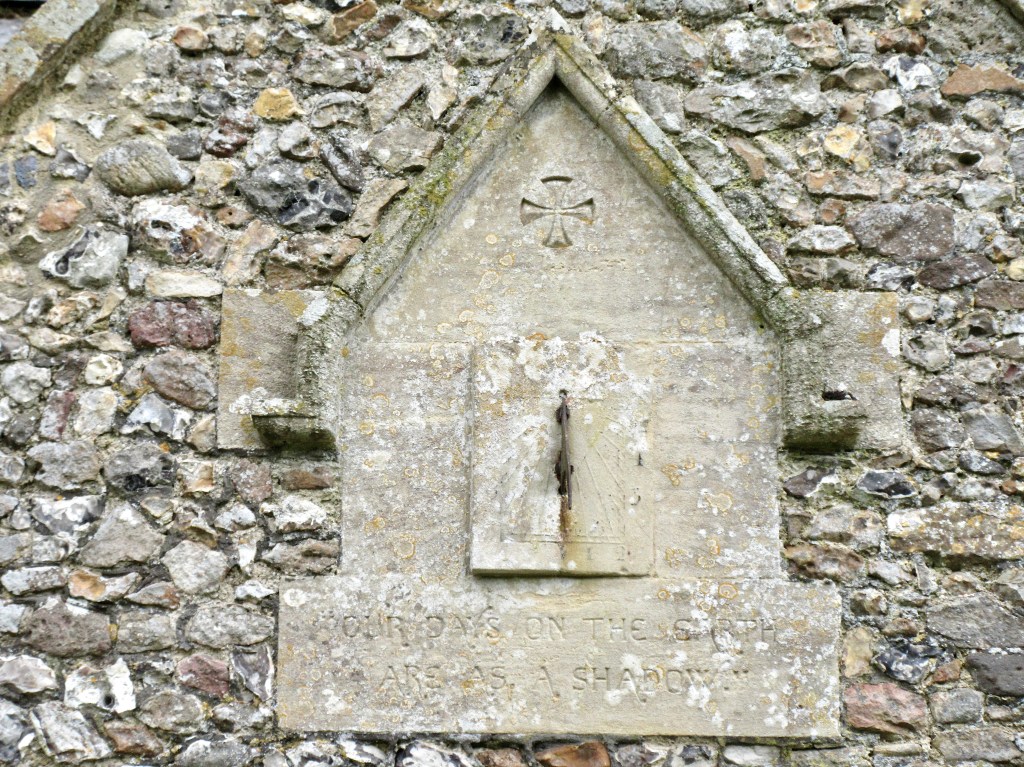
OUR DAYS ON THE EARTH ARE AS A SHADOW

The C17 porch was restored C19 and then (or later?) this dial was added over the door, with its discouraging message (no hint of the ‘sunny hours’ etc found elsewhere). The dial is slightly angled to face due S for greater accuracy.

NOTES: Various types of external graffiti – scratchings, initials, Marian marks etc; on the WILTSHIRE HISTORIC CHURCHES TRAIL

GSS Category: Scratch Dial; New Dial; Medieval Graffiti; Marian marks

All photos: Keith Salvesen