L’ÉGLISE SAINT-SAUVEUR et SAINT ÉTIENNE . COGOLIN . VAR
COGOLIN is an attractive and relatively small town with a harbour close to Port Grimaud. Both towns are a short jet-ski ride from St Tropez. The church, with its double dedication, may date to C11.
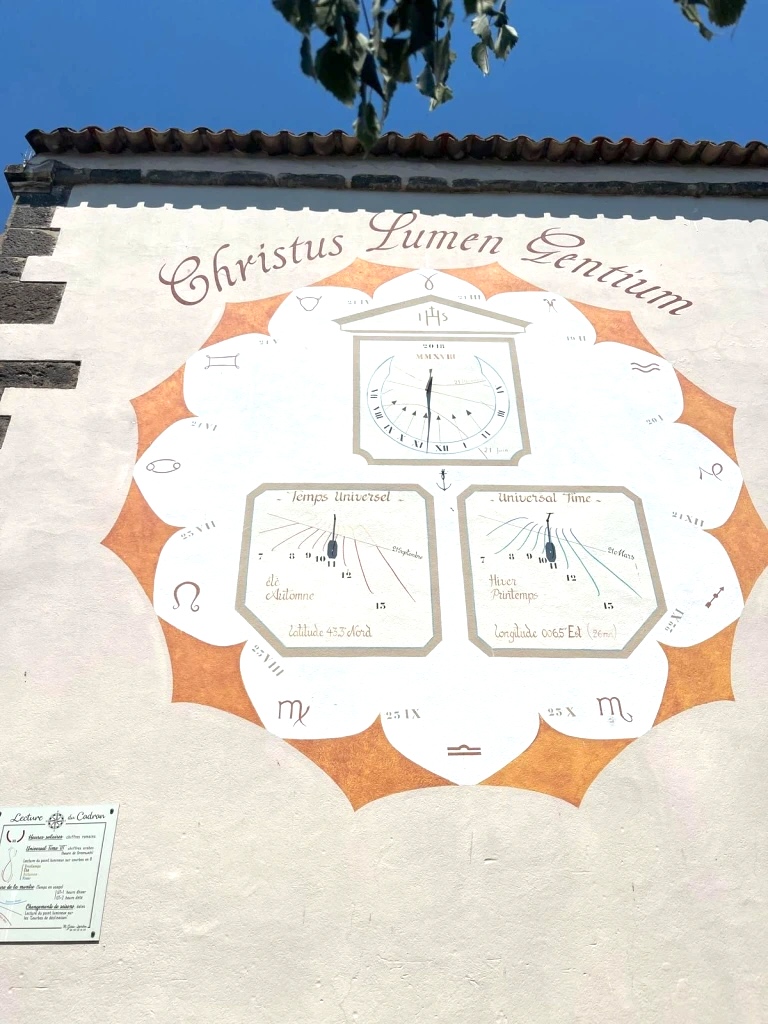
CHRIST IS THE LIGHT OF NATIONS
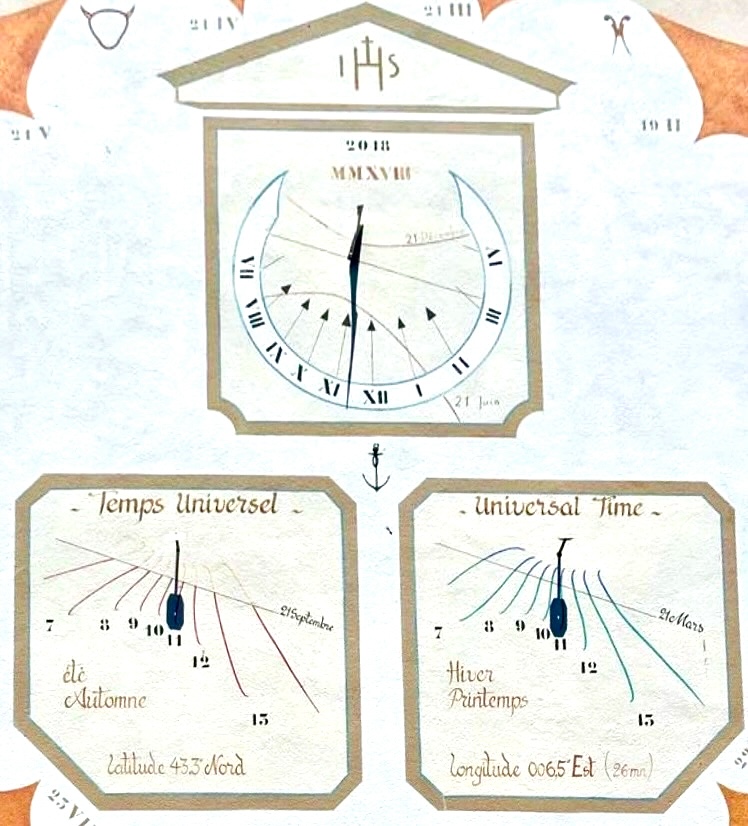
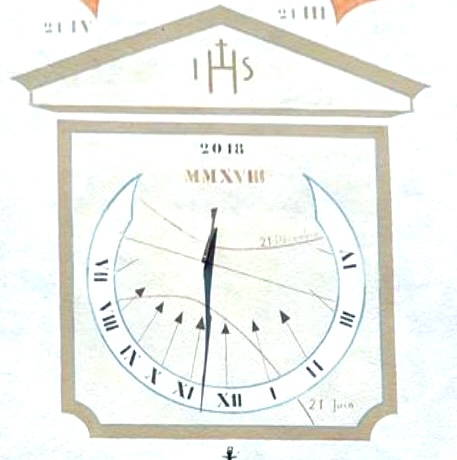
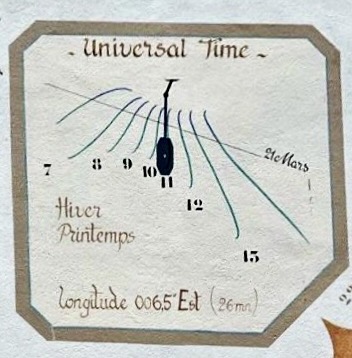
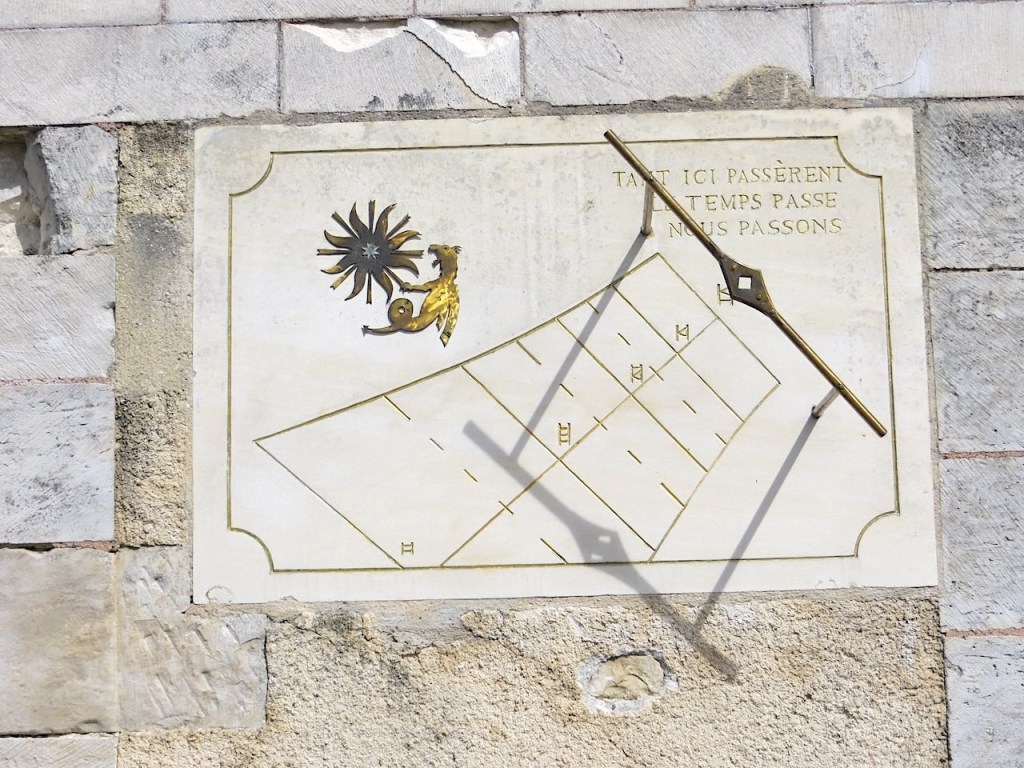
This intriguing dial was created by M. Garde-Lebreton in 2018. It manages to combine accuracy, legibility, and charm. An excellent bonus is the very careful explanation of the dial on a separate plate. An object lesson of modern dial design and analysis.
DIAL 2
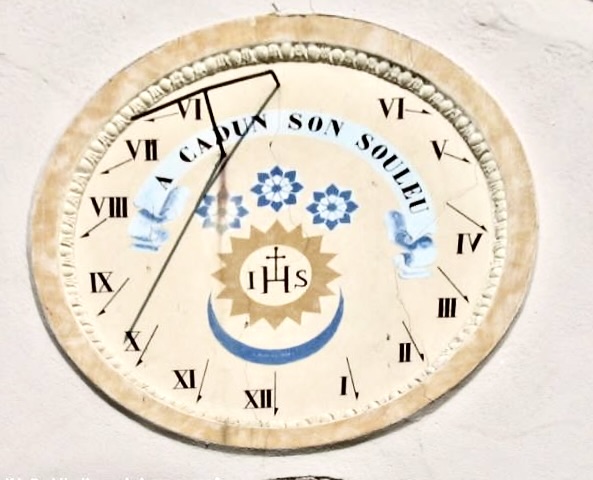
St-Sauveur has a second attractive dial, another good example of a modern dial that combines its purpose with cheerful style. Engraved and painted on cement.
Corciano is an attractive small town 12km west of Perugia, walled and with much of its medieval origins still evident. In contrast, the Commune has commissioned interesting modern projects, for example a residential complex designed by Renzo Piano and inspired by Rubik’s cubes.
The town has initiated an ambitious project, financed by the municipality, to make an itinerary that combines culture, history, astronomy, landscape and science and can be used free of charge for everyone: citizens, schools and tourists.
BORGO del SOLE
The Sundial Trail links 3 different kinds of sundial at sites carefully chosen for each type. These are an Armillary Sphere (Equatorial Dial); an Analemmatic Sundial; and a Ptolemaic Plinth in the Gardens. Other types of dial are planned.
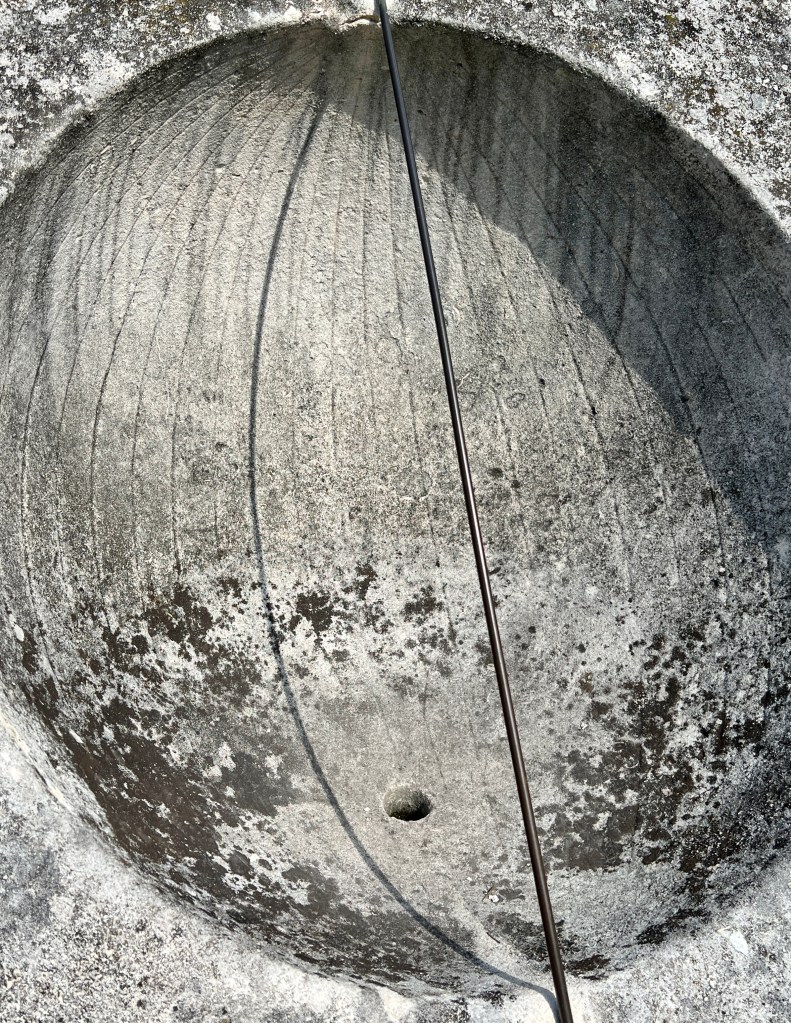
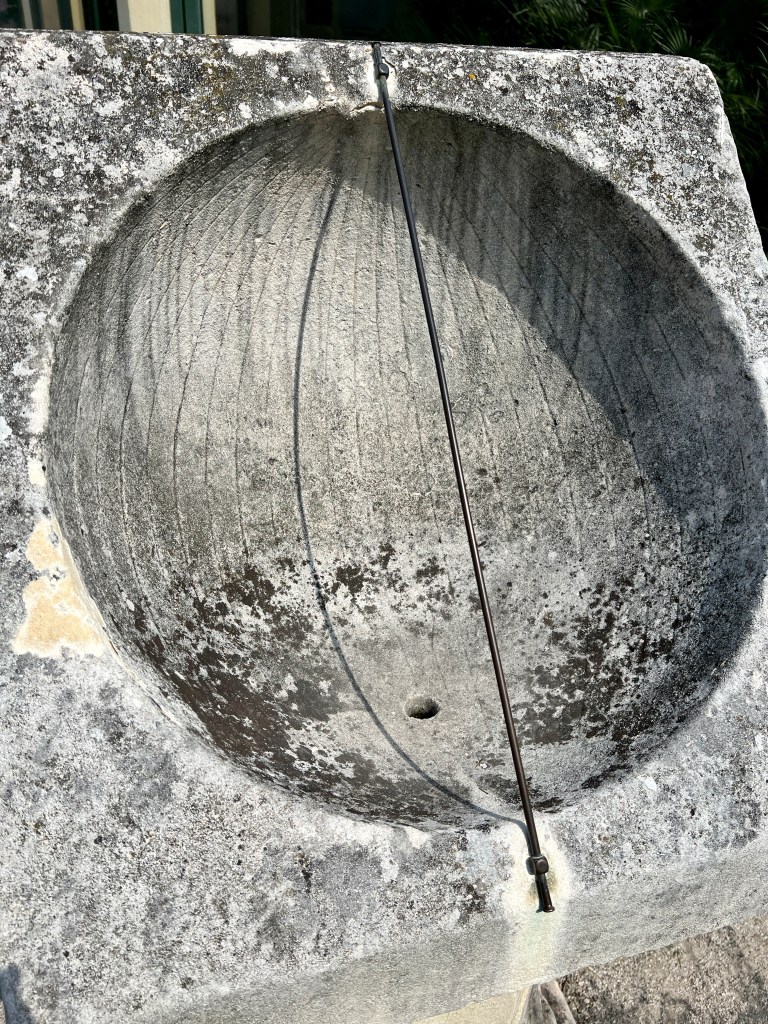
This wonderful example of a scaphe dial is one of 3 dials in the Botanical Gardens of Padua. There is also a cube dial and a cylinder dial (separate post). This first-ever public garden* was created in 1545, and the original layout has been preserved. This is not the space for a short wander round, but there’s plenty of interesting material online. It has been an important centre for scientific research since its inception and, unsurprisingly, it is a UNESCO World Heritage Site.
*Pisa’s botanical garden was actually completed a year earlier but disqualified on a technicality that I haven’t pursued.
GSS Category: Scaphe Dial; Botanical Garden Sundial; Europe Dials
Chartreuse de Mélan . Taninges . France – Vertical Dial
Cat / Salamander Hunky Punk
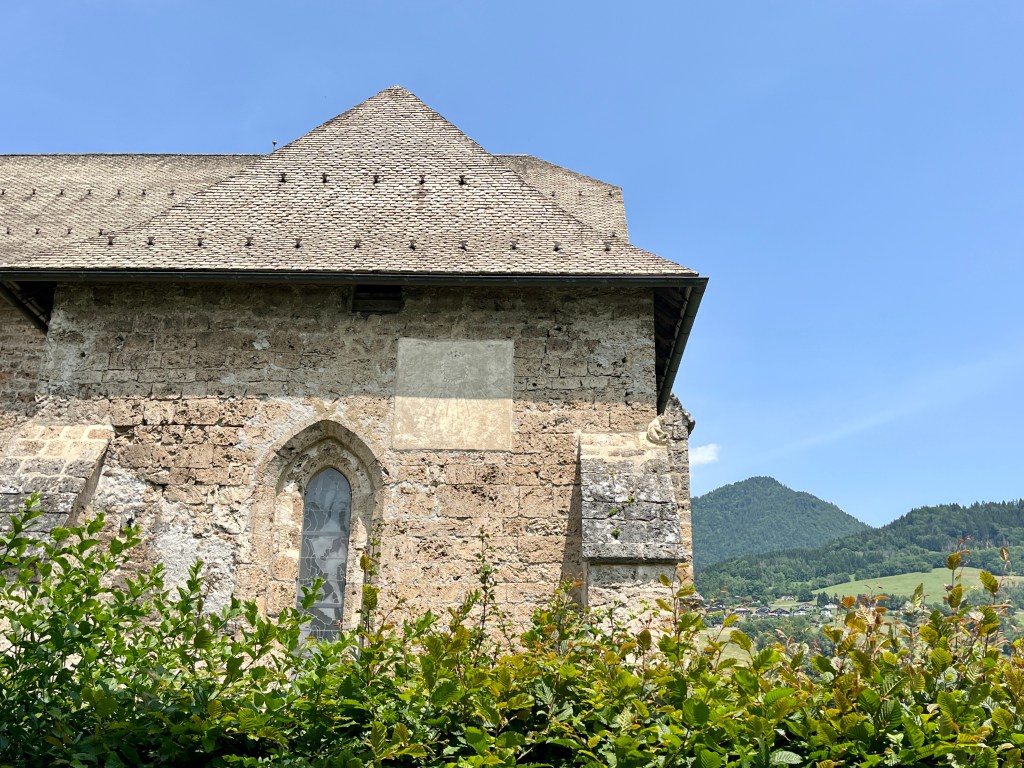
The Chartreuse was founded in 1285 as a Carthusian nunnery and continued its religious functions until the French Revolution. Thereafter it became a school and in due course an orphanage. A disastrous fire in 1967 destroyed almost all the buildings on the site, with loss of life. Only the church and its cloister now remain. The church is an exhibition space and the lawns around it feature examples of modern art, from interesting via enjoyable to a few that are a matter of personal taste.
Chartreuse de Mélan . Taninges . France – Vertical Dial
The dial is included by MICHEL LALOS in his excellent French Cadrans Solaires site. Anyone who has in interest in sundials in France will benefit hugely by using this free resource. It is accessible, informative, and easy to use – not least because the dials are featured by Départment with a map for dial locations. The entry for Mélan is :
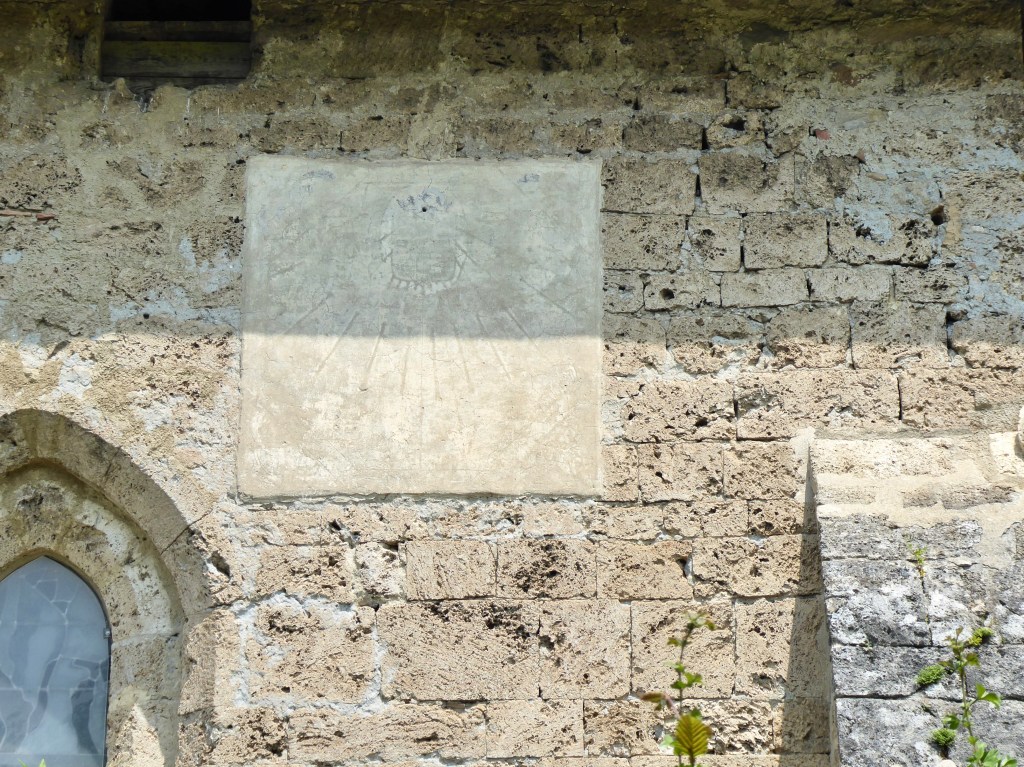
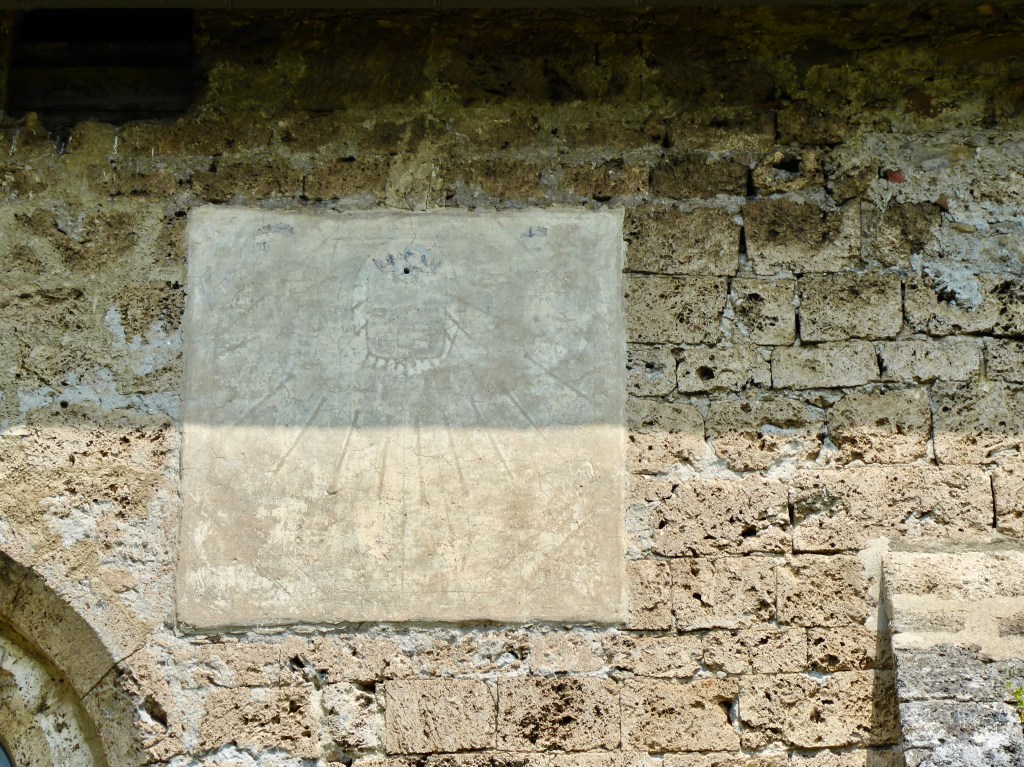
Cadran peu déclinant de l’après-midi, gravé et peint sur enduit, très dégradé, fines lignes, demies, plus de chiffres dans bandeaux, traces de blason et décor
Dial slightly declining in the afternoon, engraved, painted on rendering, very degraded, fine lines, half-hour lines, numbers within a frame, traces of coat of arms and decoration.
There are paint remnants at the top of the dial, where (presumably) it has been protected by the eaves. The gnomon hole at the top of the coat of arms is square. The dial is obviously old and I wondered if it might be dateable. Checking the apparent shape of the escutcheon, I discovered that it was first recorded as an armorial design in late C17 and (conveniently) turns out to be known as French-style. Overall, one might reasonably conclude that this dial is C18.
MEMORIAL STONE 1690
Chartreuse de Mélan . Taninges . France – Memorial Tablet 1690
GSS Category: Vertical Dial; France Sundial; Cadrans Solaires; Dials Abroad
All photos: Keith Salvesen; source used MICHEL LALOS
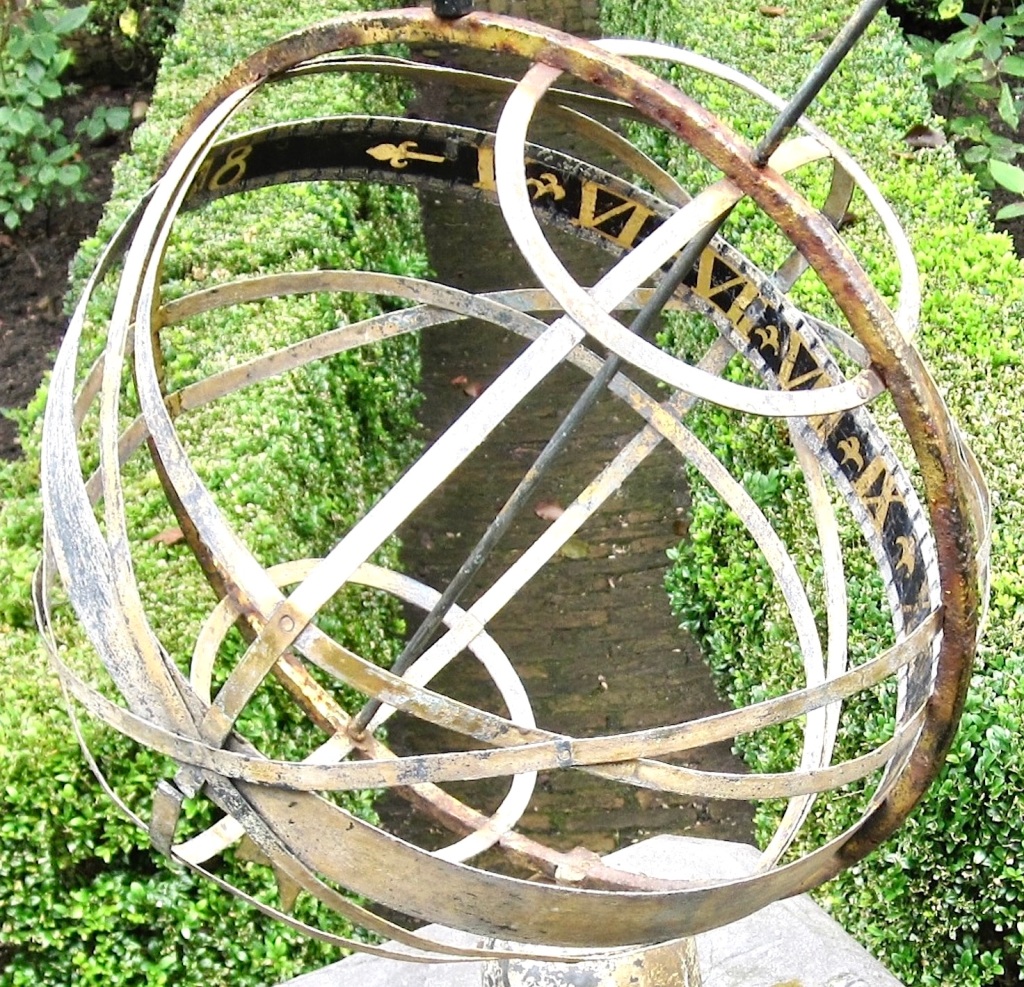
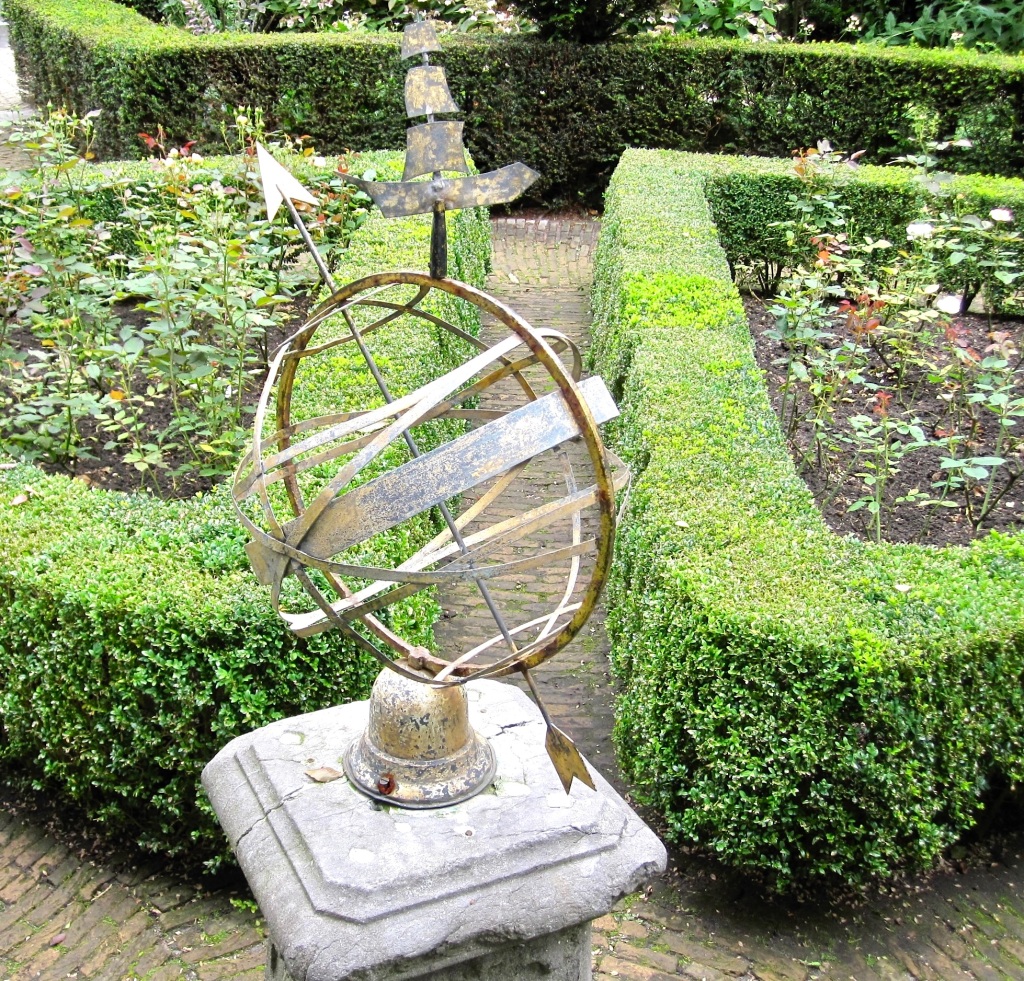
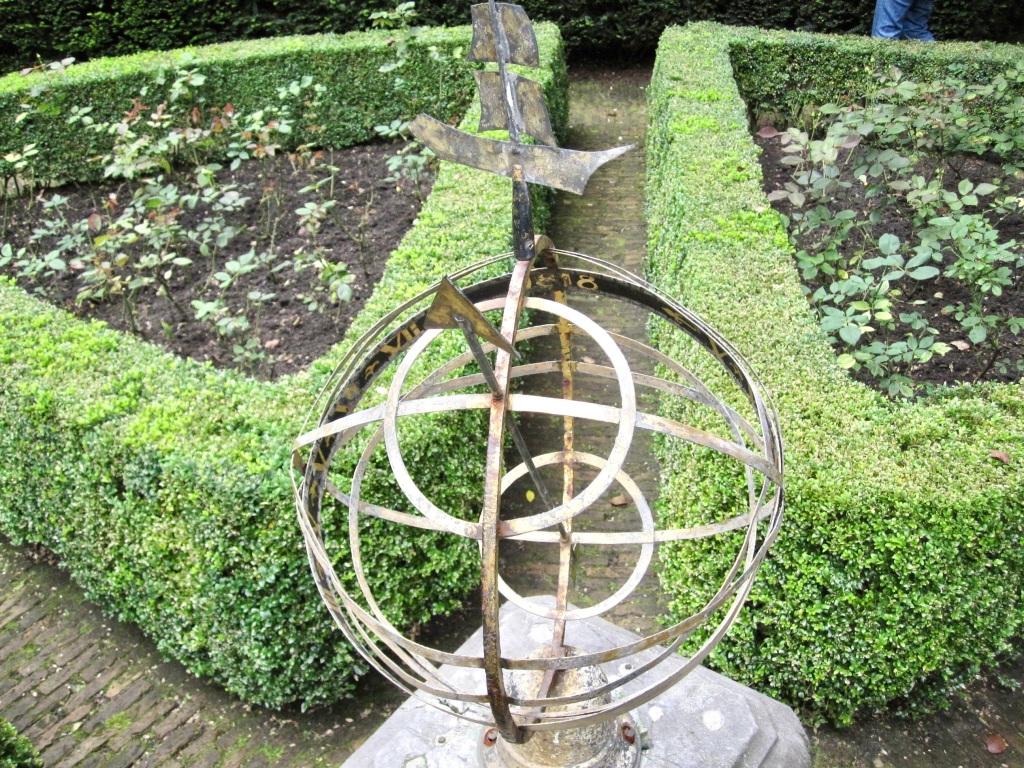
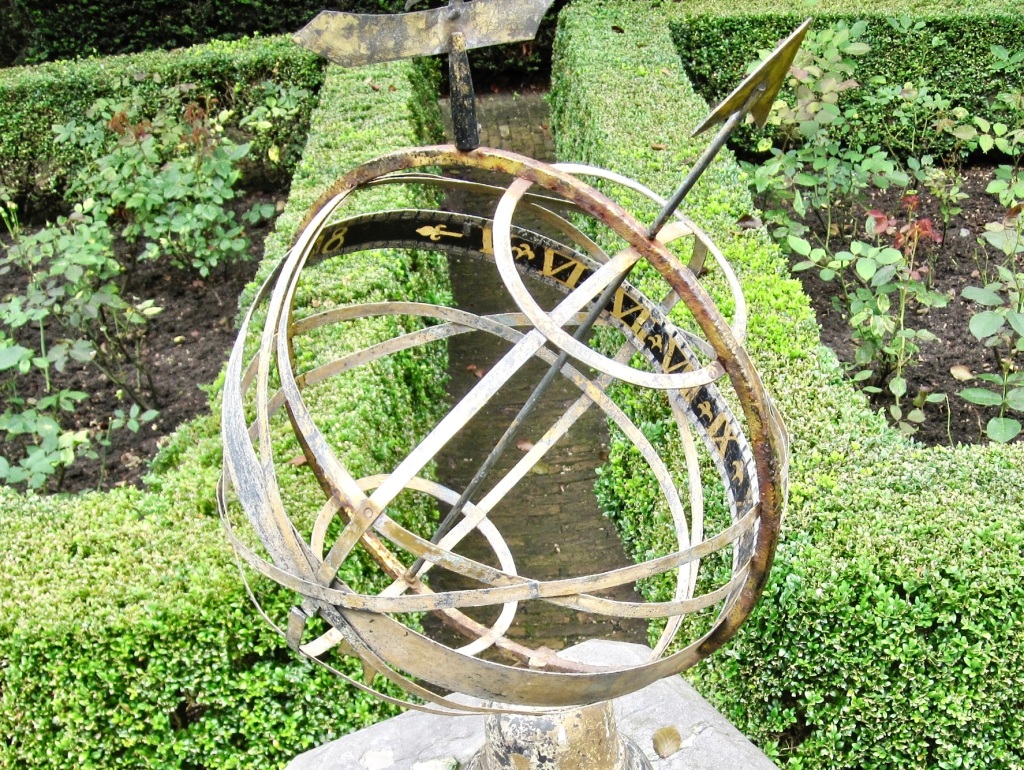
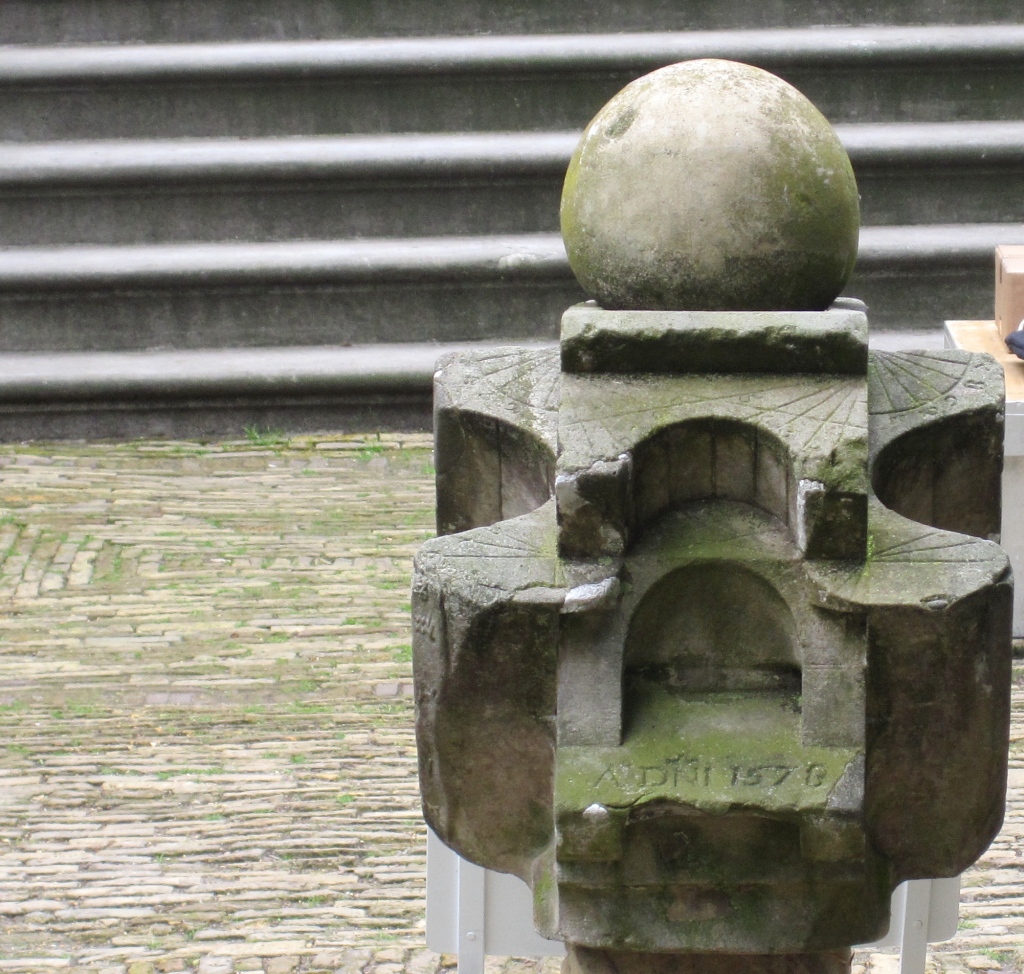
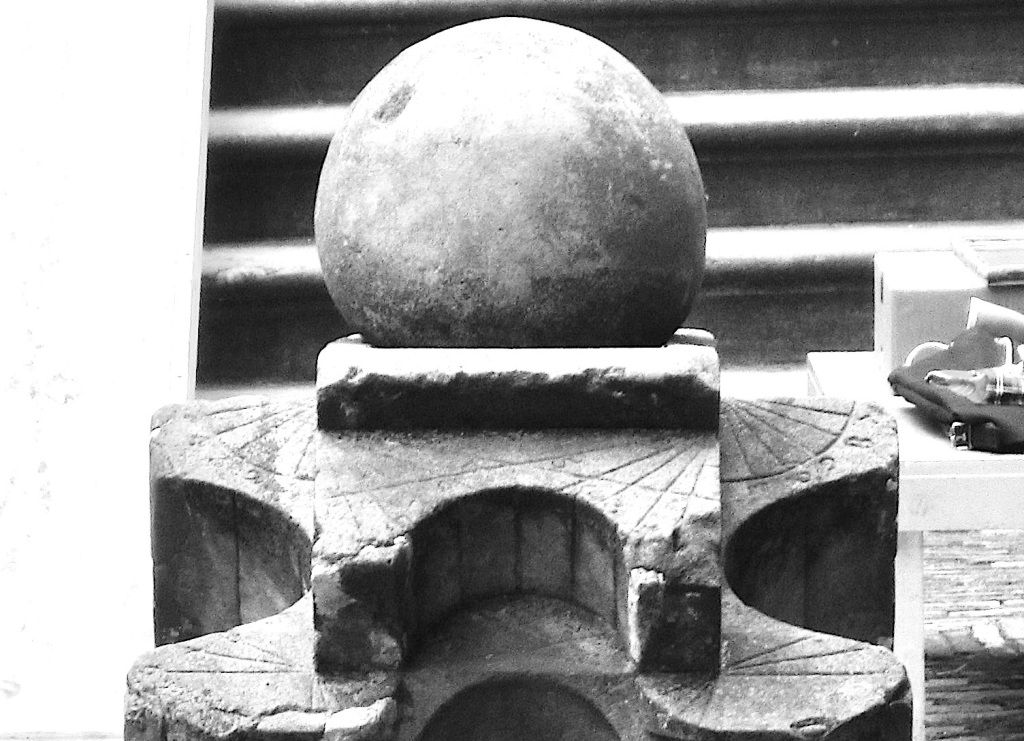
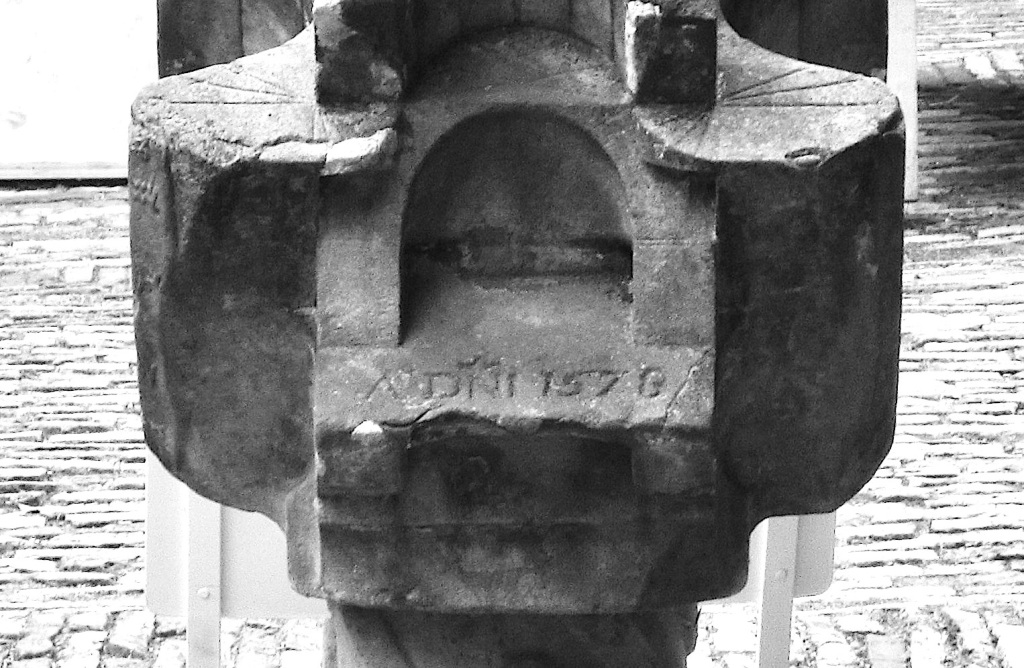
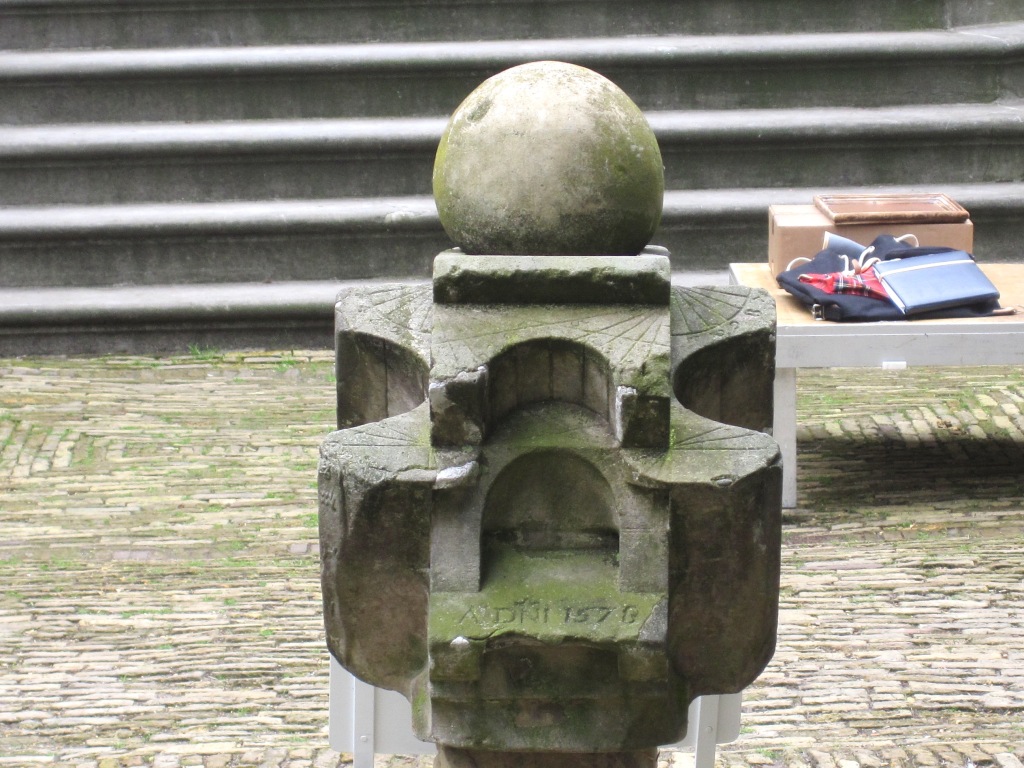
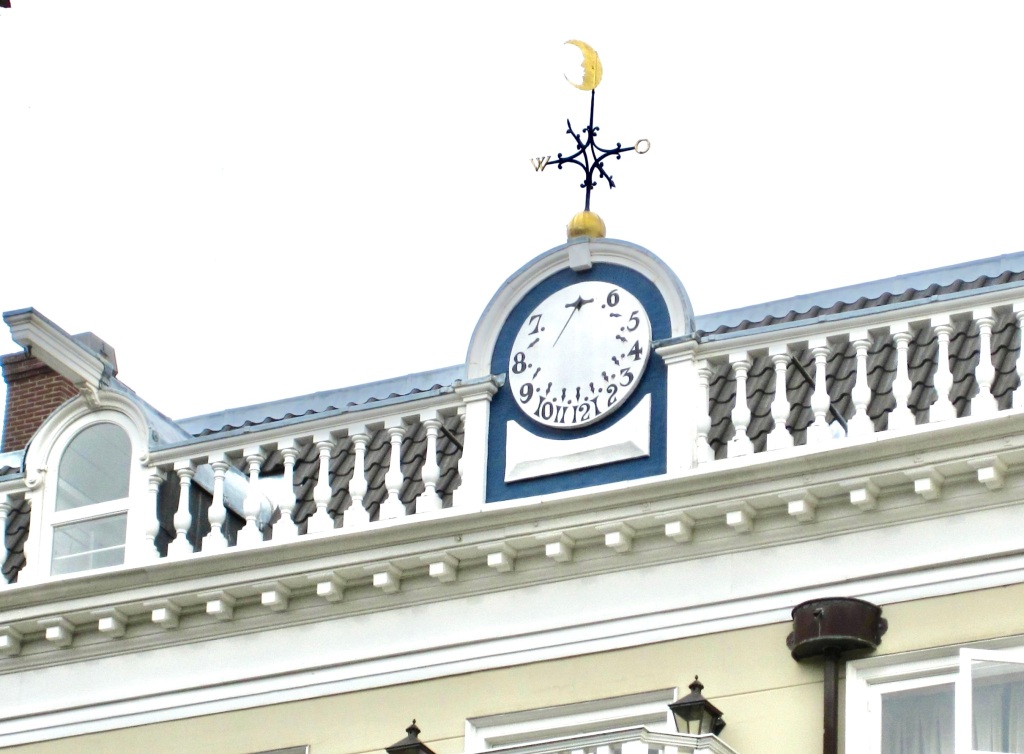
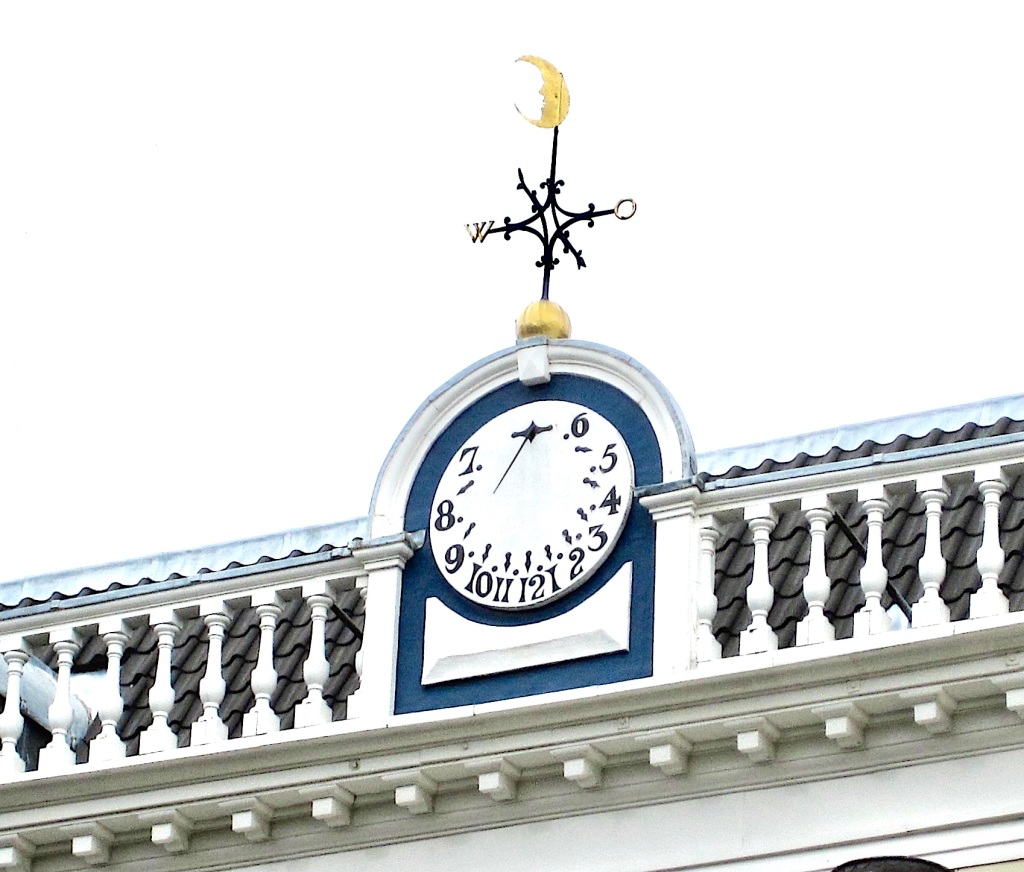
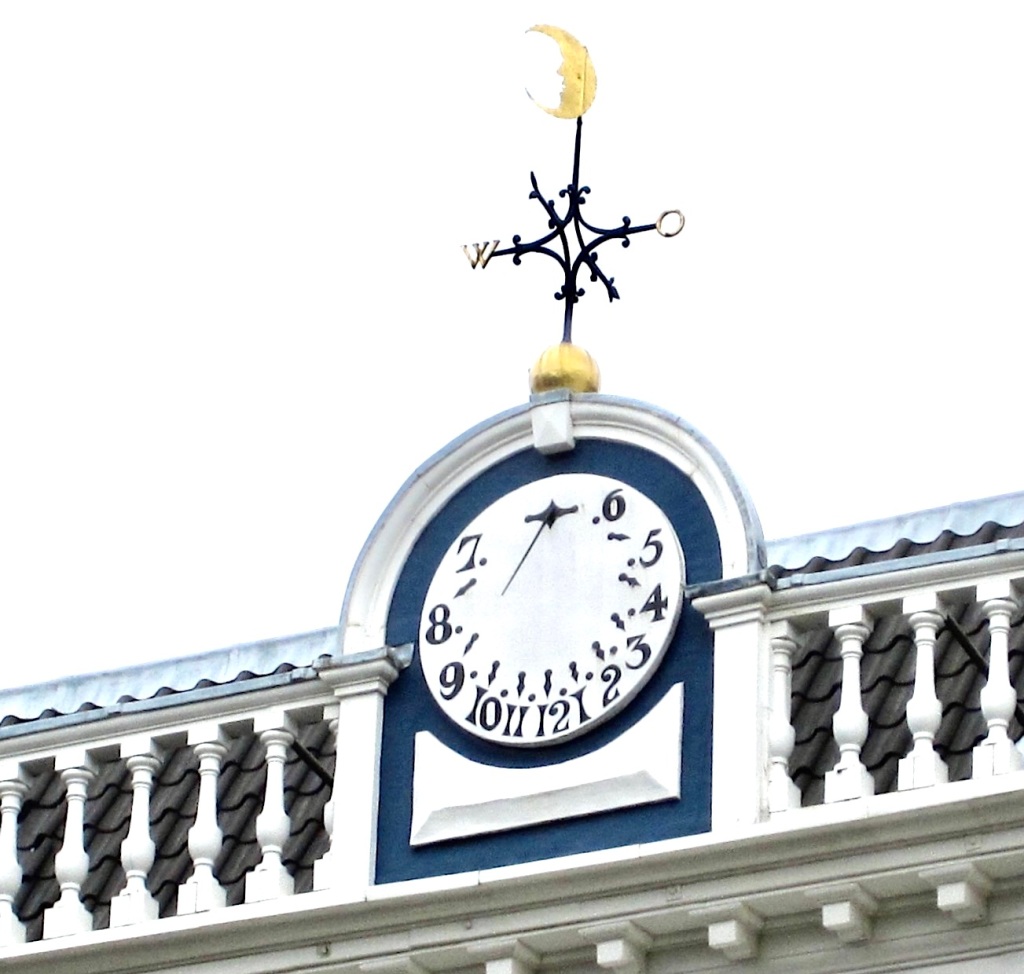
The attractive gardens of the Van Loon Museum contains 3 very different dials. In the centre is an armillary sphere (C19?). By the steps is a complicated early scaphe dial dated 1582. I have included B&W images, which can sometimes be useful for seeing details on multiple dials. The third dial with a weather vane is high up in the centre of the upper gallery overlooking the garden. I am trying to find out a date for it.
ARMILLARY SPHERE
SCAPHE / LECTERN DIAL 1578
Correctly know as a lectern dial because of its angle. Scotland in particular has many of these (eg Culzean), as it also has with obelisk dials (eg Kelburn Castle).
VERTICAL DIAL AND WEATHER VANE
GSS Categories: Armillary Sphere; Cube Dial; Multi Dial; Scaphe Dial; Modern Dial; Amsterdam Dial
Lizard / Viper Gnomon of Monumental Dial . Museo Galileo . Florence
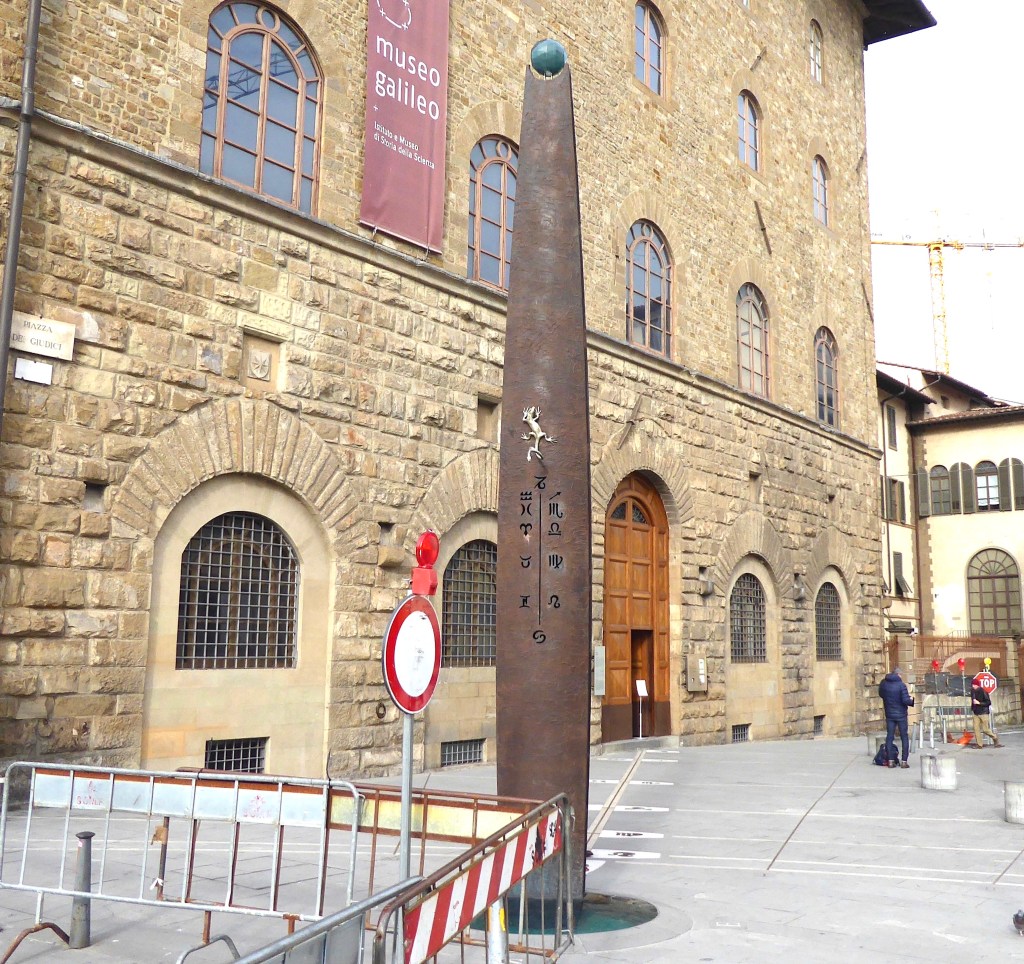
MONUMENTAL SUNDIAL . MUSEO GALILEO . FLORENCE
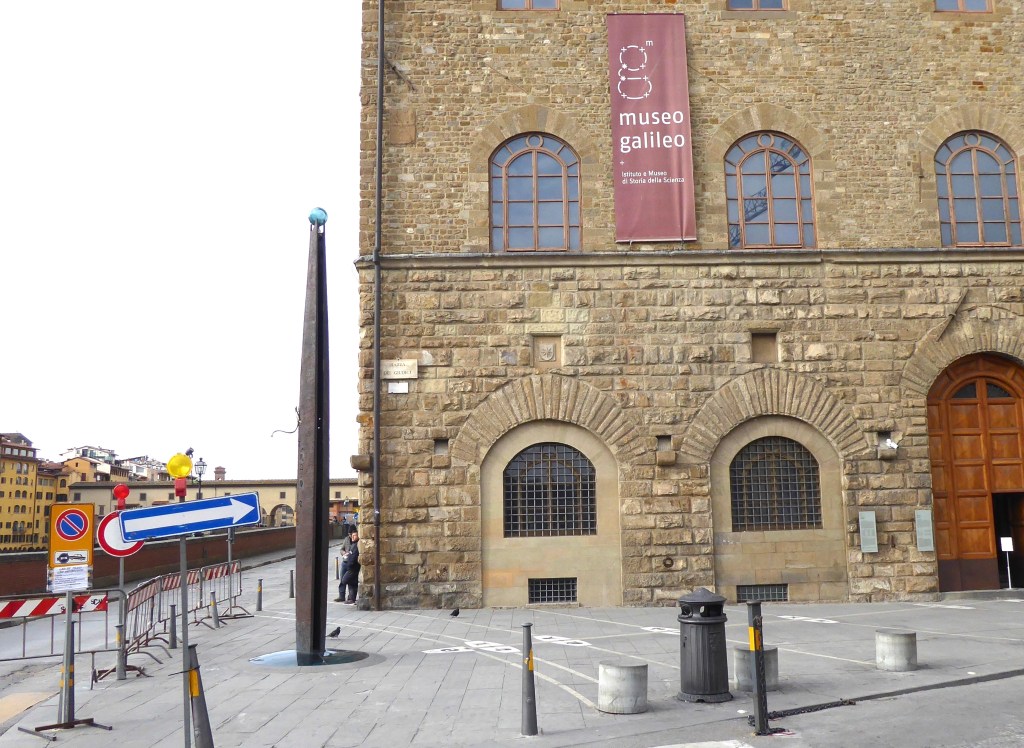
The Museo Galileo‘s Monumental Sundial was built as a mathematical ornament in 2007. The slender bronze column (stele) is in fact formed from two matching columns closely aligned, symbolising day and night. The (mid)day stele faces south, with a vertical meridian line on which the shadow is cast by a lizard’s tail (actually, an imaginary half-lizard, half-viper). The night stele faces north and signifies the constellations Ursa Major and Ursa Minor that enable the Pole Star to be identified.
Monumental Dial . Museo Galileo . Florence
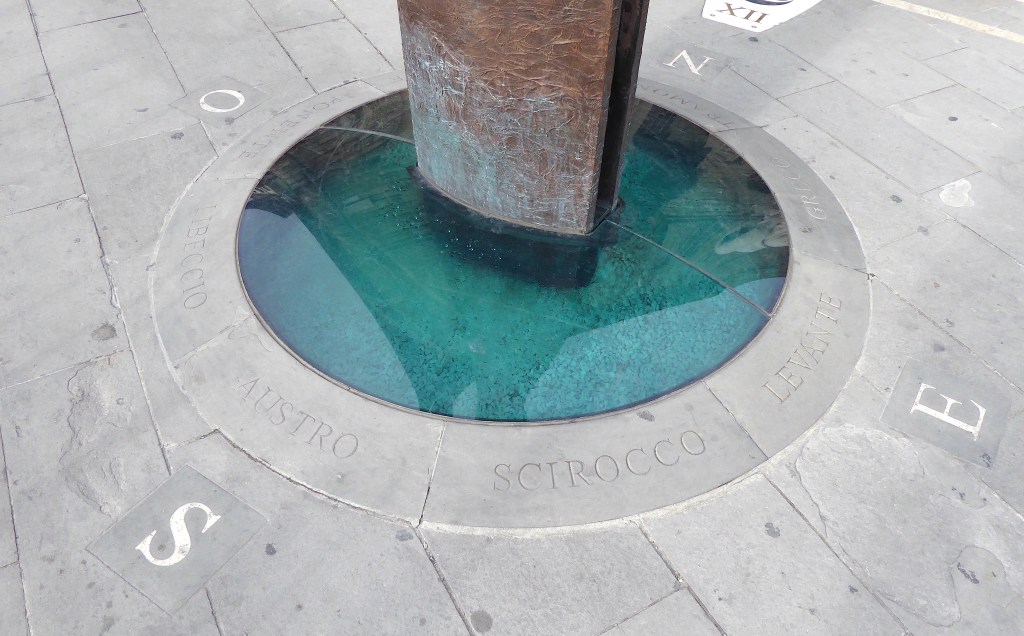
The encircled quadrant design on the pavement at the base of the bronze columns indicates the geographic orientation. This glass base of the gnomon, and also the Zodiac signs in the meridian line (below), are up-lit after dark.
Orientation dial . Monumental Dial . Museo Galileo . Florence
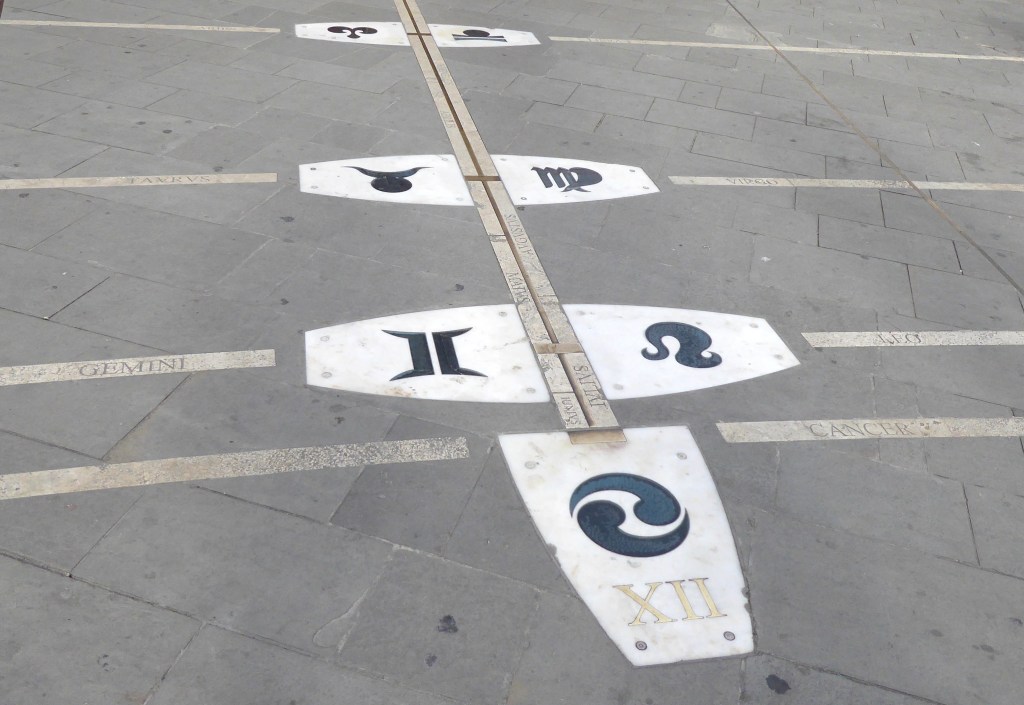
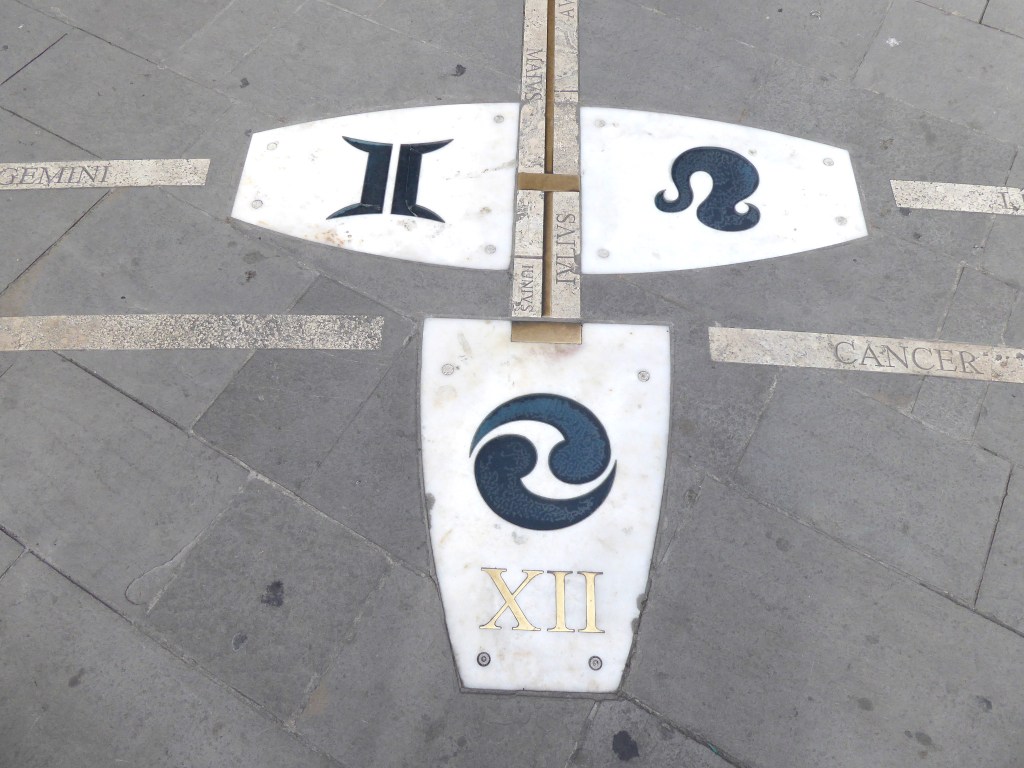
The Museo explains the meridian line in helpfully simple terms: A travertine and brass meridian line is drawn on the pavement, flanked with glass and marble signs of the Zodiac. The meridian line extends for about 15 metres from the museum entrance, where the winter solstice is marked, to the base of the gnomon, where the summer solstice is marked. The travertine curves crossing the meridian line indicate the date. The brass radial lines forming a grid with the two solstitial curves indicate the hours.
The seasons and the four elements are symbolised by the choice of materials: travertine for the earth and autumn; glass for the water and winter; grey stone for the air and spring; bronze for the fire and summer.
LIZARD / VIPER GNOMON ON THE SOUTH FACE OF THE COLUMN
This extraordinary sundial stands by the Arno with the Ponte Vecchio (which itself has a wonderful dial LINK) close by to the west. For anyone with even a minuscule interest in or curiosity about the gradual development of scientific instruments and techniques from medieval times onwards, pay a visit to the excellent online gallery LINK. Look in particular for the two astronomical telescopes made by Galileo himself.
The North American Sundial Society has very good online information about this unique dial. You can watch a short animation of how this gnomonic sundial works here LINK
For those interested in finer details of the way the dial works, the museum’s detailed account is included at the end of this article.
Museo Galileo – Istituto e Museo di Storia della Scienza
NASS (North American Sundial Society) Video: Filippo Camerota, Luise Schnabel, Giorgio Strano
How the Sundial works
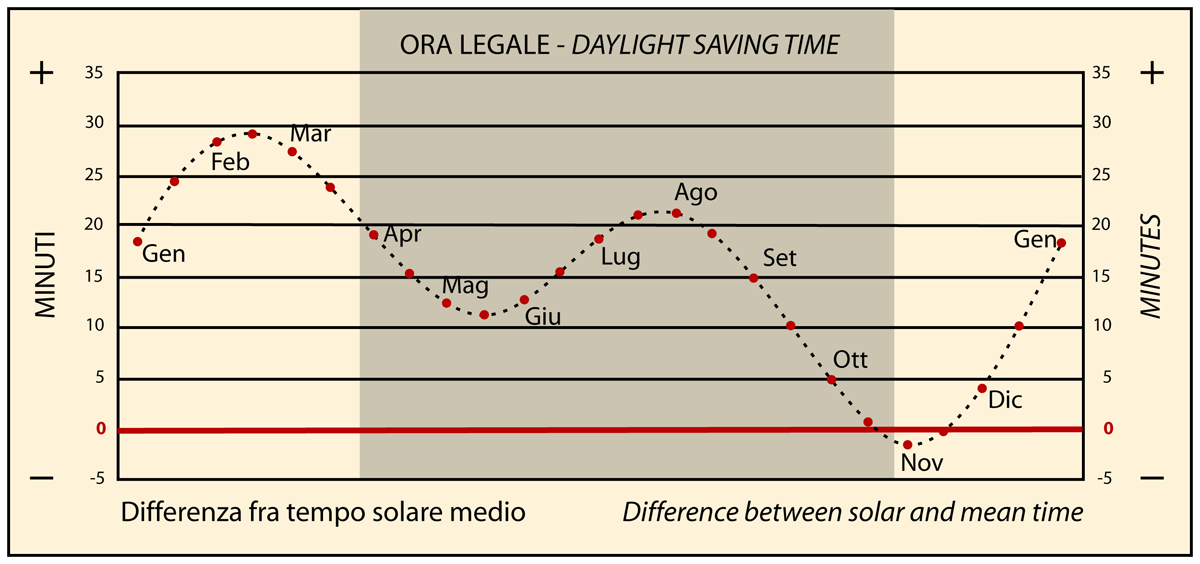
The shadow cast by the glass polyhedron atop the large bronze gnomon indicates the date and time. The hours from 9:00 AM to 2:00 PM are marked out by radial brass lines. The date is indicated by the travertine traversal lines which mark the Sun’s diurnal course for various periods of the year – precisely when the Star enters the signs of the Zodiac. The shadow cast by the gnomon changes in length during the course of the days and seasons, and indicates true solar time for the place where it is located, which is a different time than that of our wristwatches, known as mean time. In respect to mean time, true solar time has a periodic variation that can exceed a quarter of an hour.
Moreover, during daylight saving time, the hands of a clock are moved forward one hour. For example, true midday in the month of February would be indicated by the sundial around 12:28 AM while in the month of July it would be indicated around 1:20 PM daylight saving time.
To read the hour and date, you have to identify the hour lines and the calendrical lines closest to the gnomon’s shadow. When the shadow does not fall exactly on a hour line, you can read the half-hours and quarters with close approximation by ideally subdividing the space between two hour lines in two or four parts. The date can also be read by referring to the Zodiac signs and the start of the months marked out along the meridian line.
LES CADRANS SOLAIRES DE ST GEORGES de BOSCHERVILLE
This decorative sundial – one of two – is something rather special. It is both elegant and complex, and must have taken a long time to devise and lay out accurately. It stands in the extensive grounds of the fine Abbey Church of St Georges de Boscherville in Normandy. I managed to get the last small pamphlet in the Abbey bookshop. Even then I failed to understand the sundial properly, and not simply because of my rusty but workable French. I’m not even going to attempt to describe the dial, but it was easy to photograph in detail in its picturesque setting, and I have included a shot of the explanatory plaque at the end for the science-minded.
One fact I learnt is that until WWII, France was on Greenwich Meantime. During the occupation, the Germans changed the time zone to Central European time, a practice that has remained ever since.





















 GAUDIUM SUB SOLE . SUNDIALS . MEDIEVAL TO MODERN