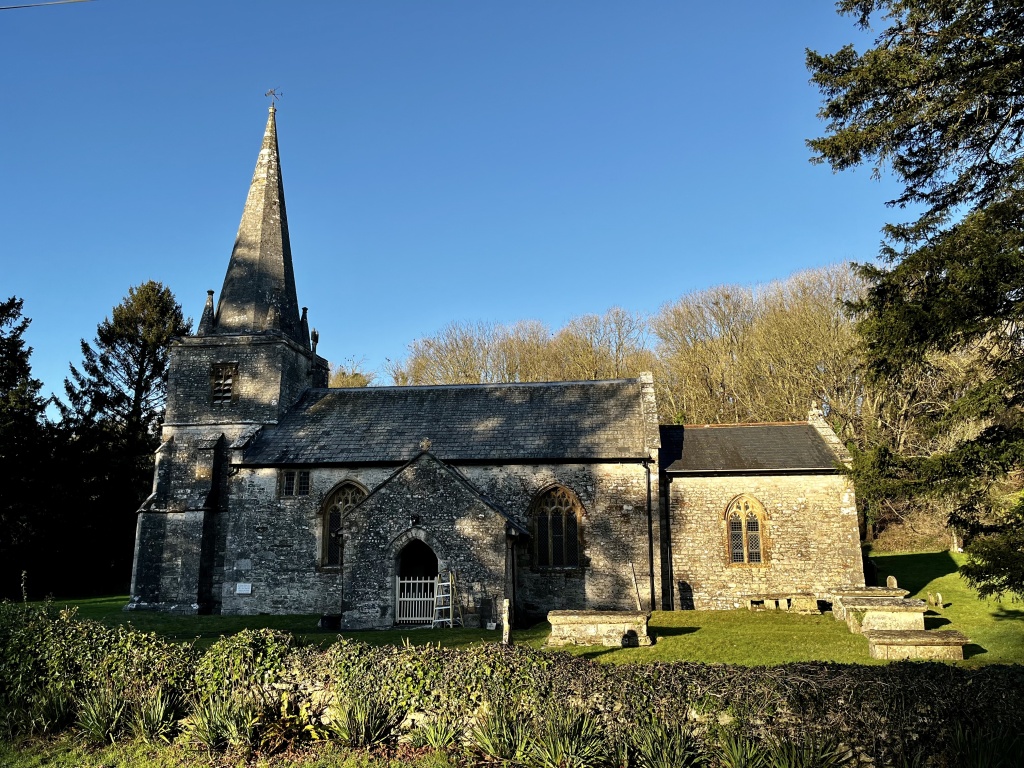
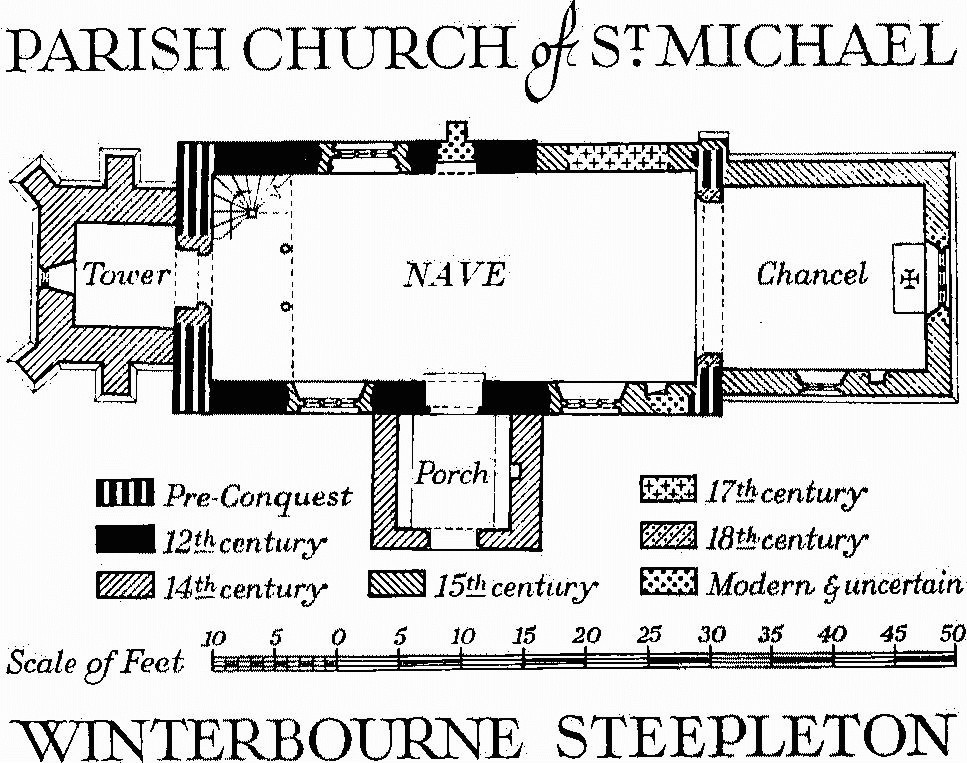
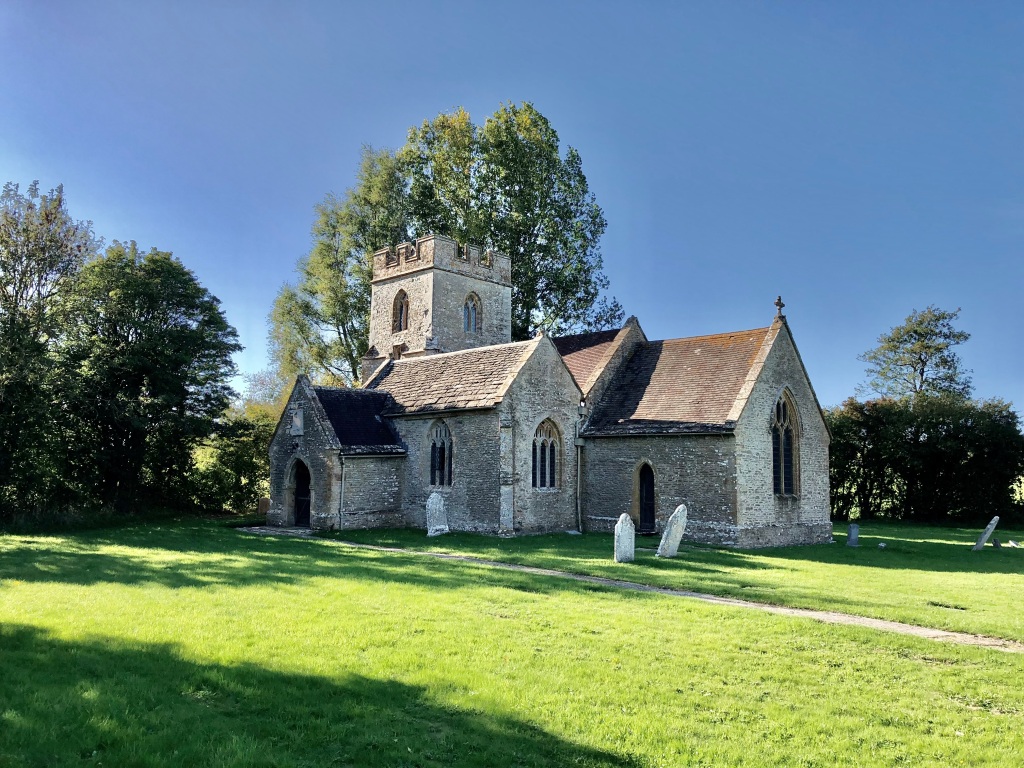
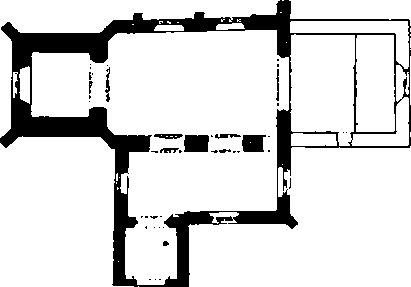
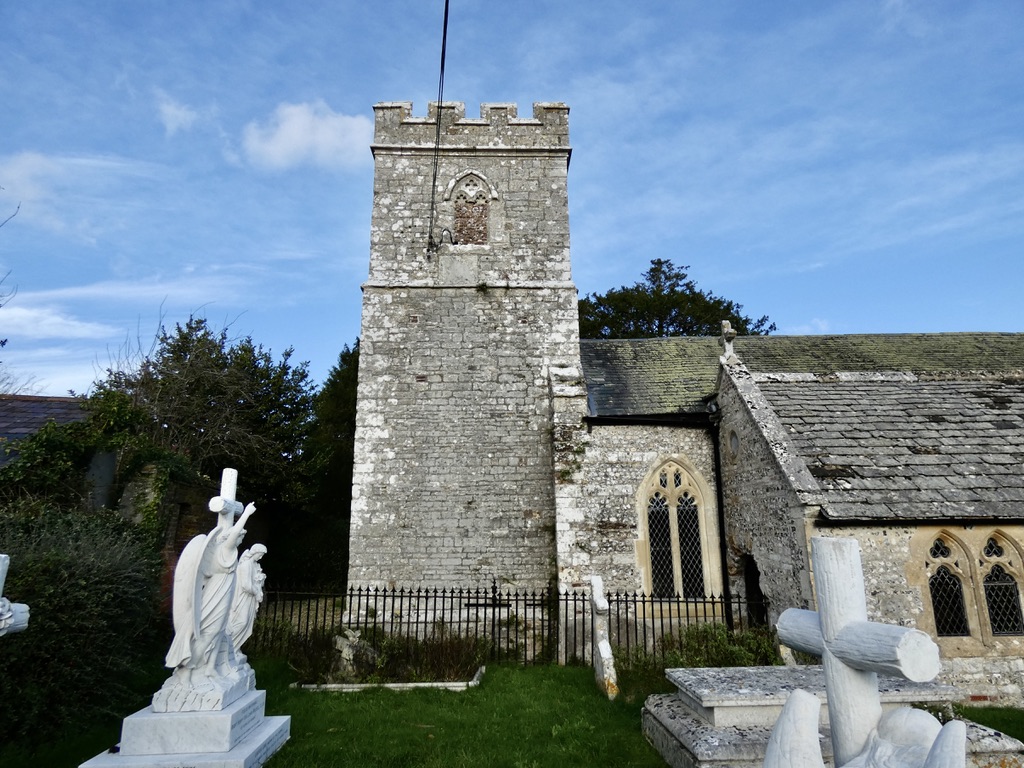
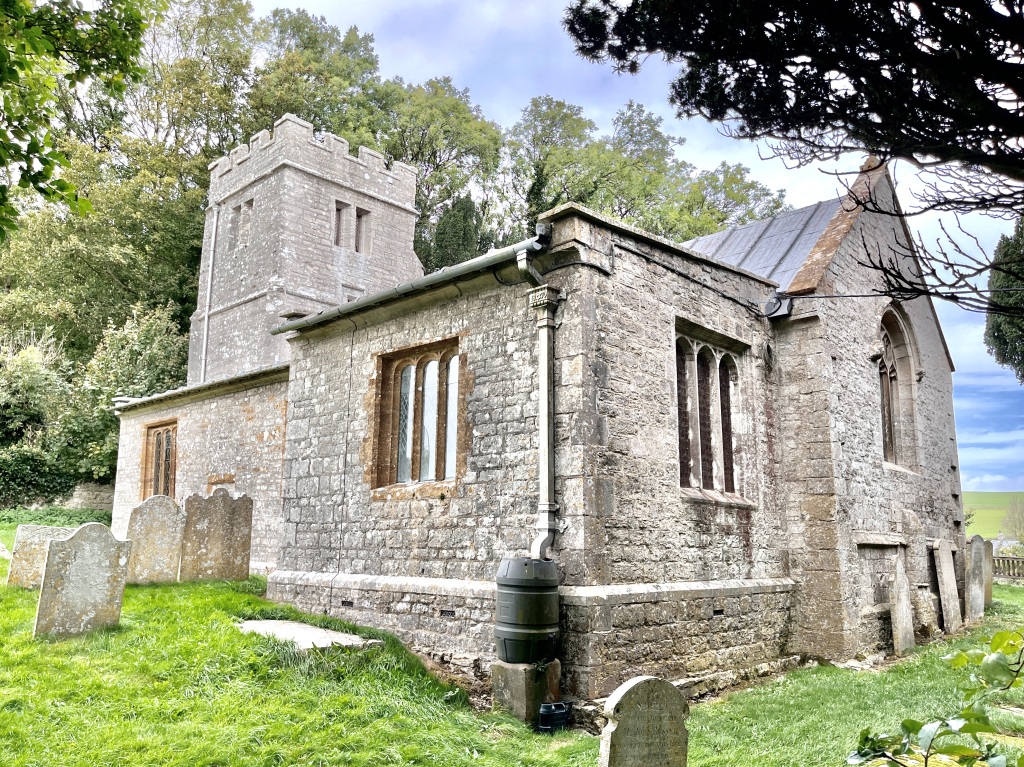
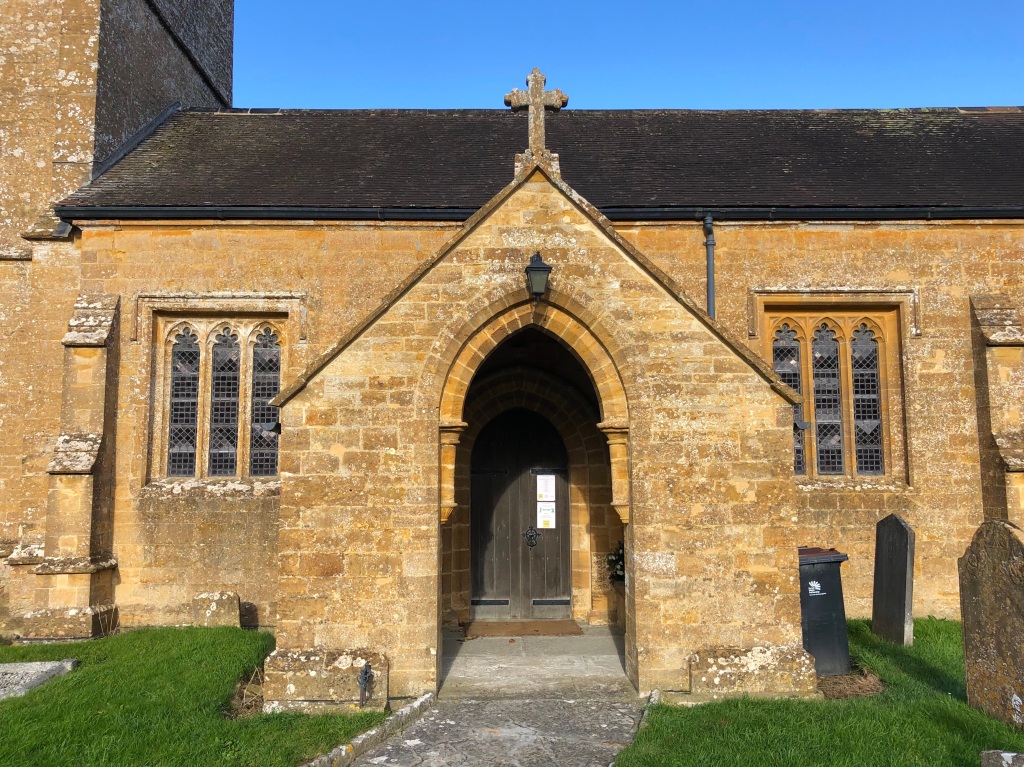
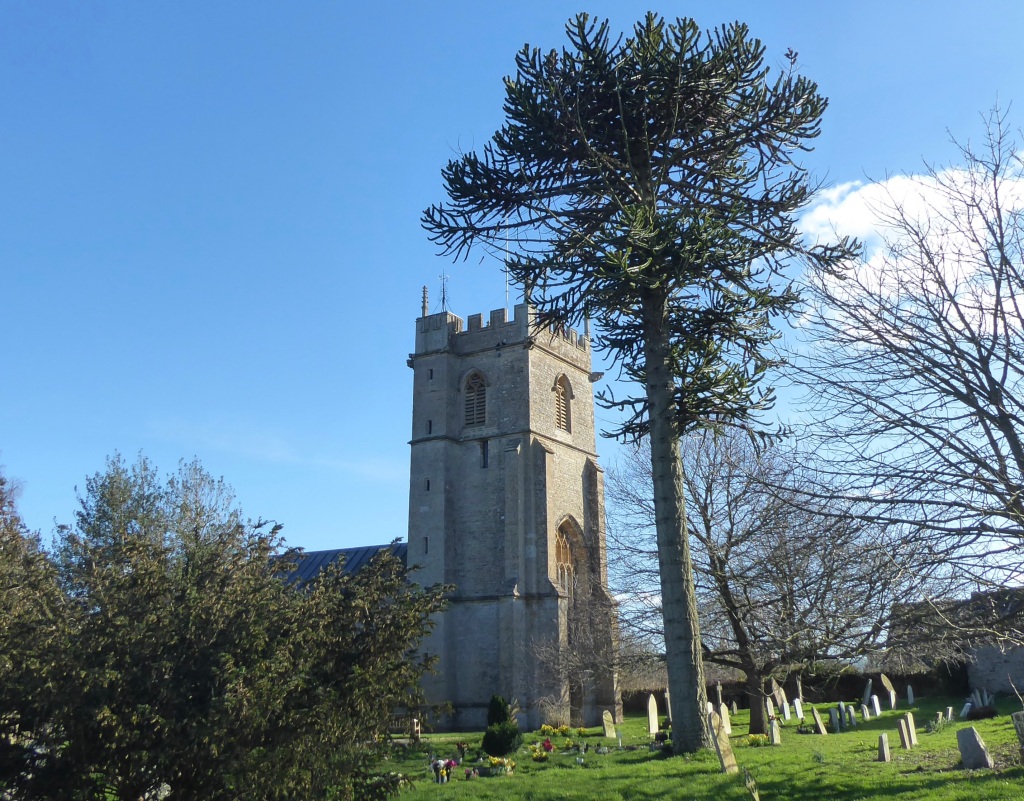
GRADE I † A fine early church in a lovely setting. C11 quoins to nave; C12 nave rebuilt; C14 3-stage W tower, porch; C15 chancel. Later alterations, restorations. Just W of Dorchester, yet seeming miles away in its peaceful valley. Visit Winterbourne Monkton while you are there (2 perhaps 3 dials). 50.7067 / -2.5266 / SY629898
DIALS
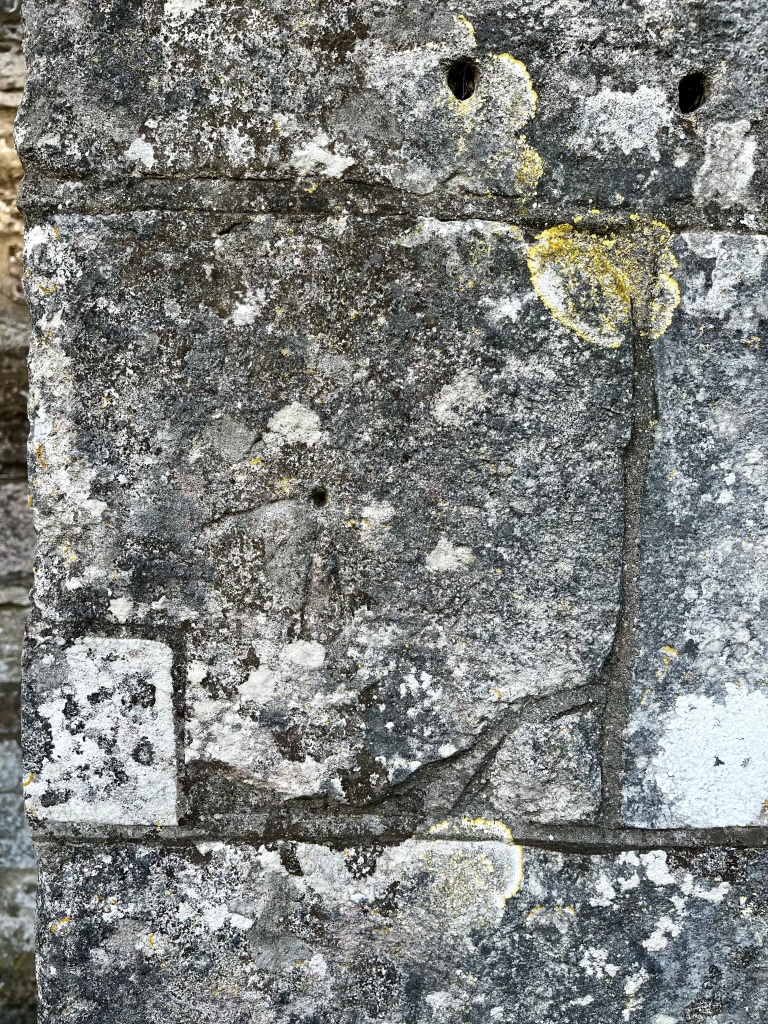
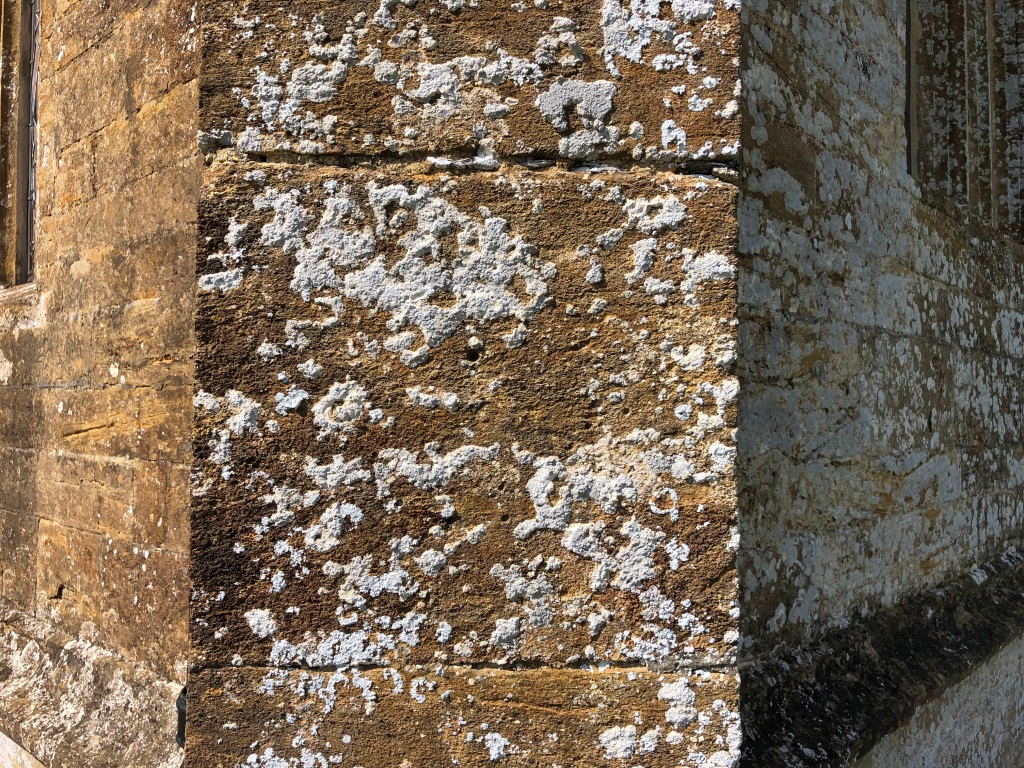
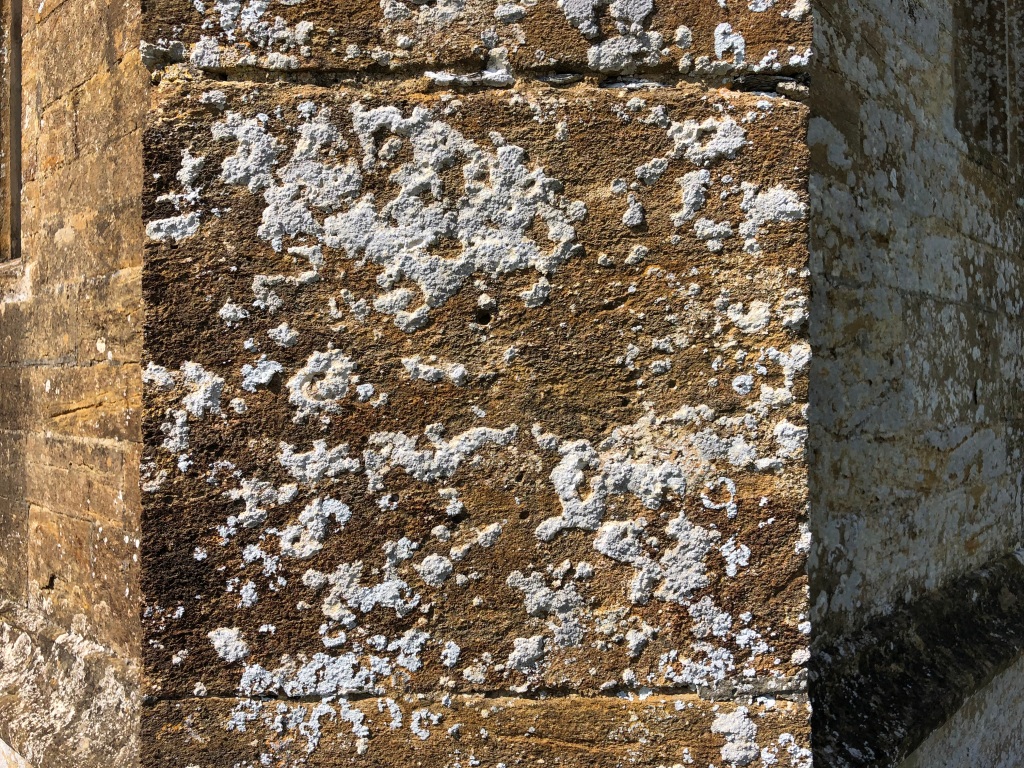
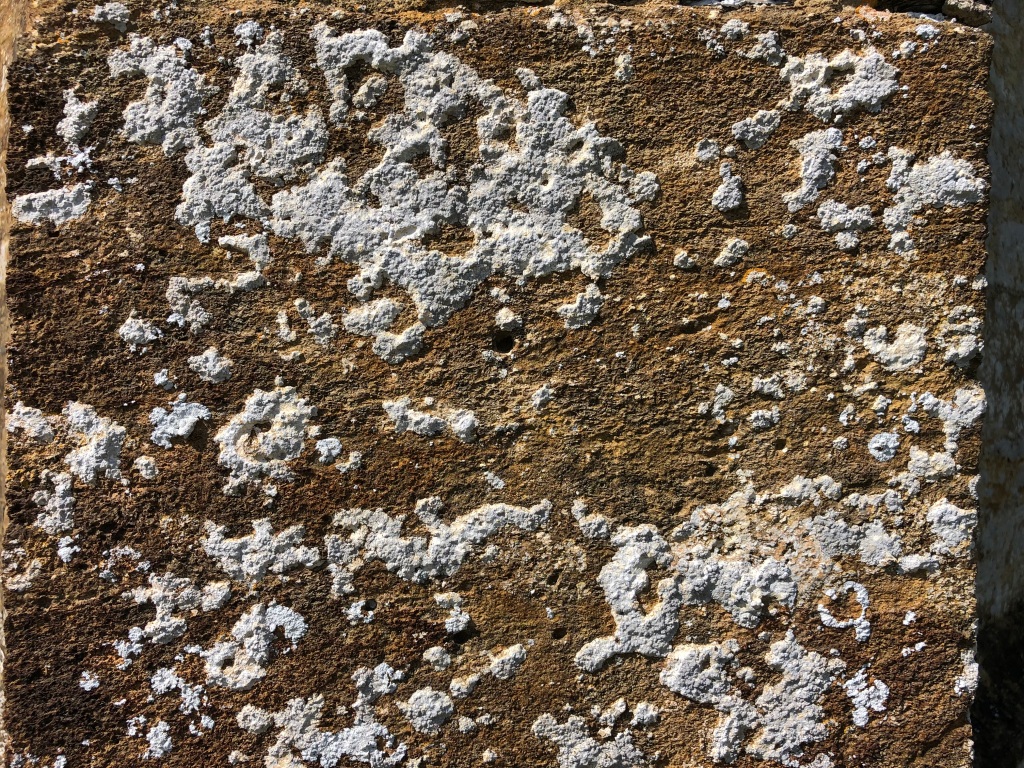
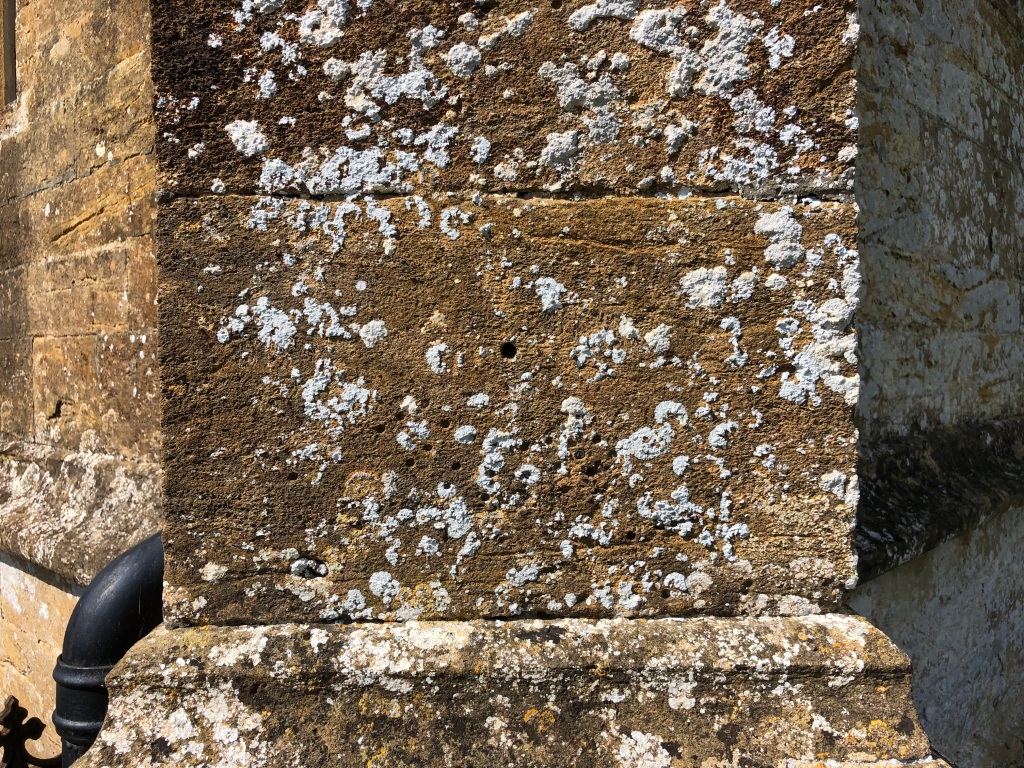
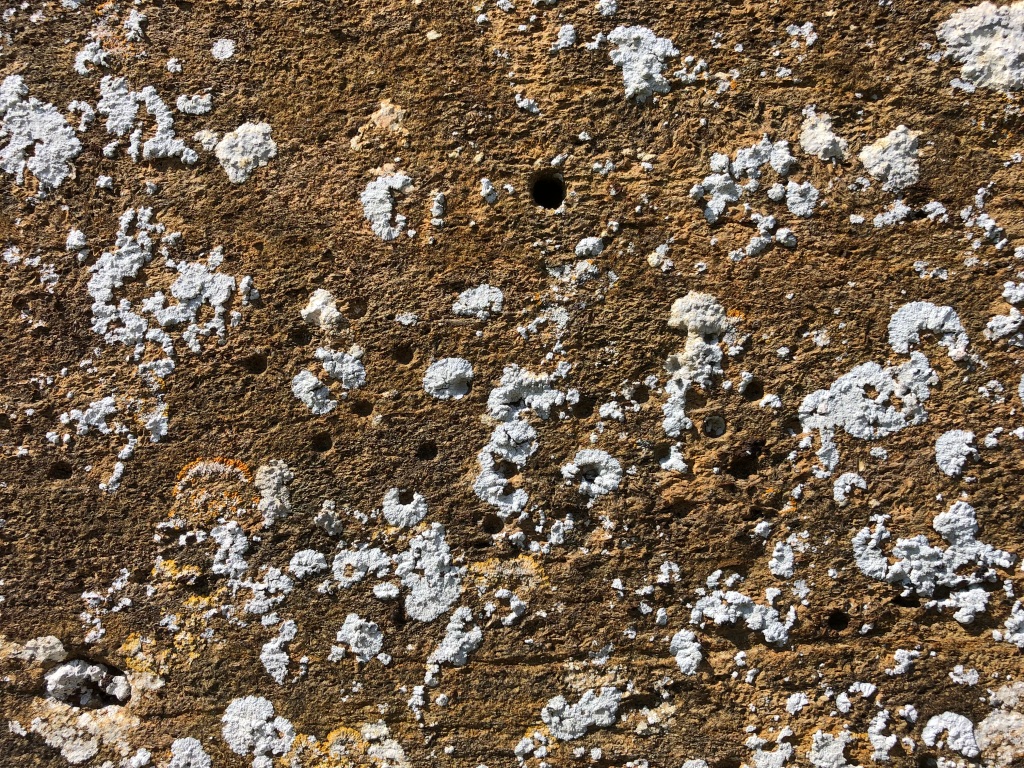
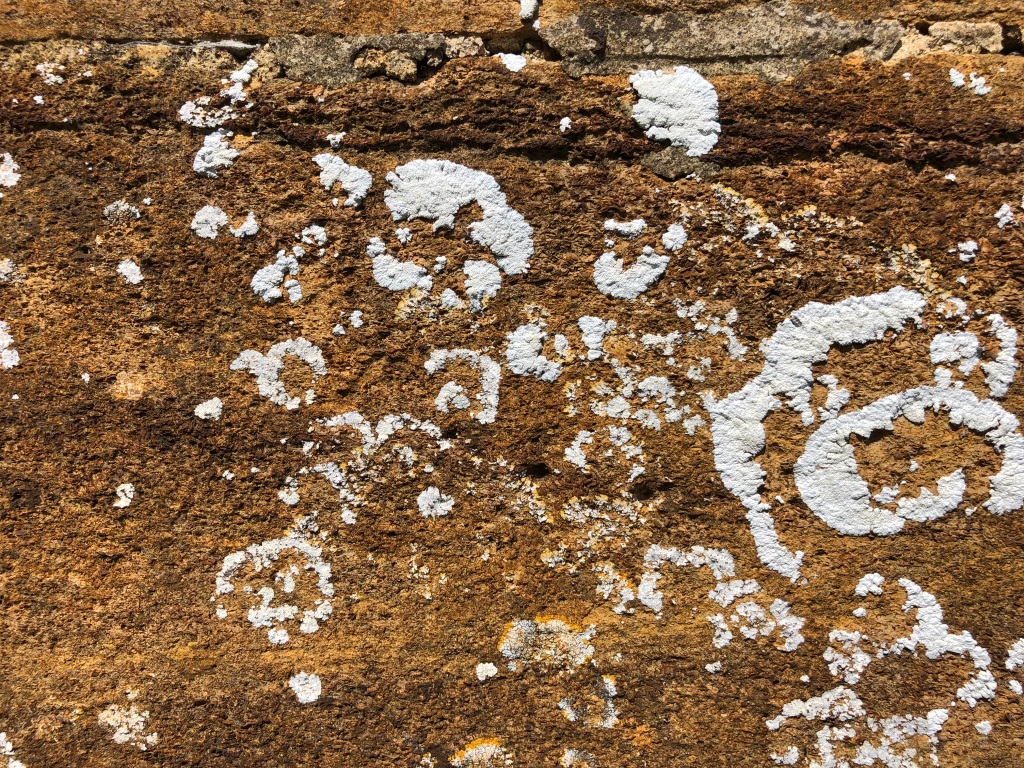
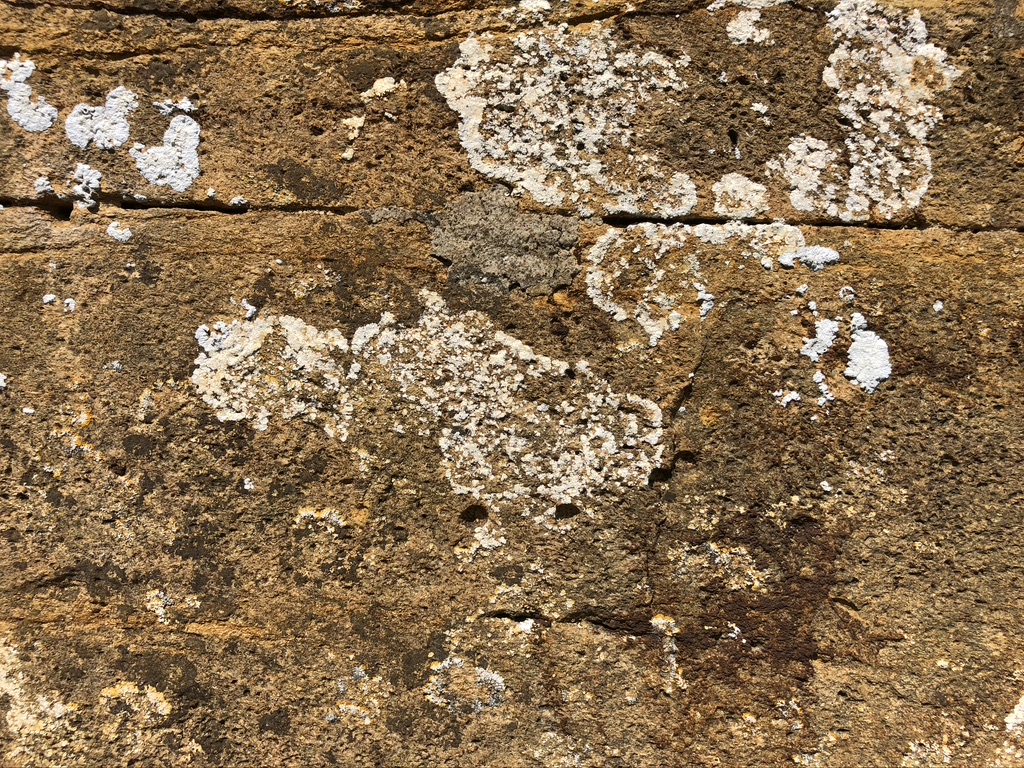
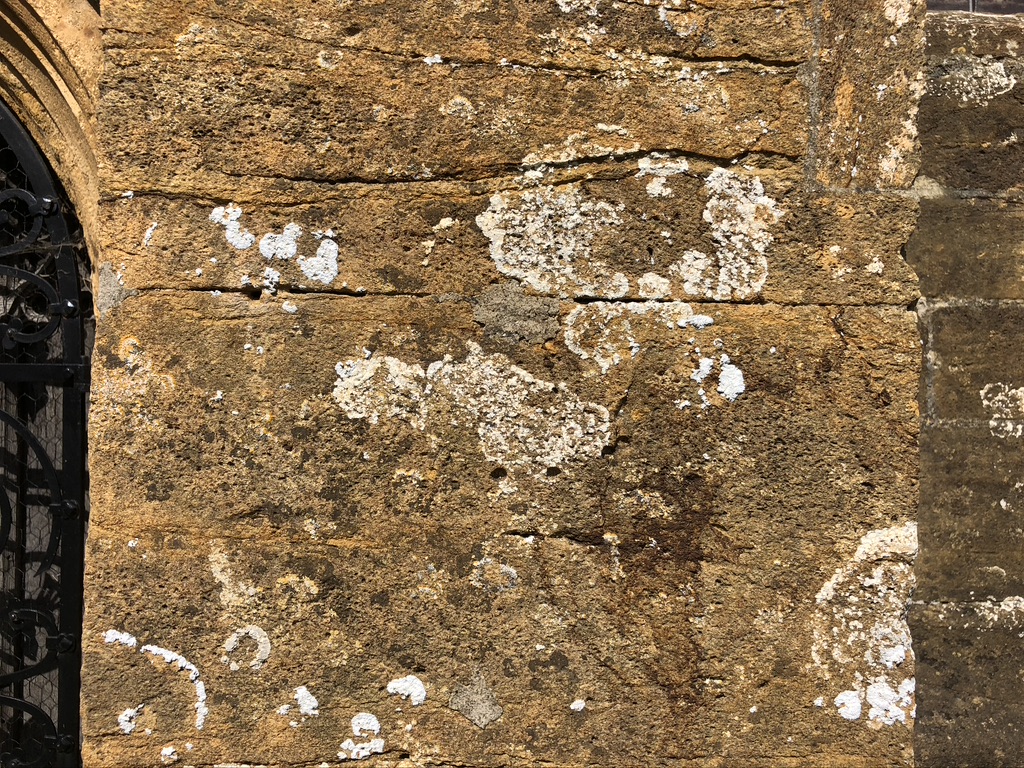
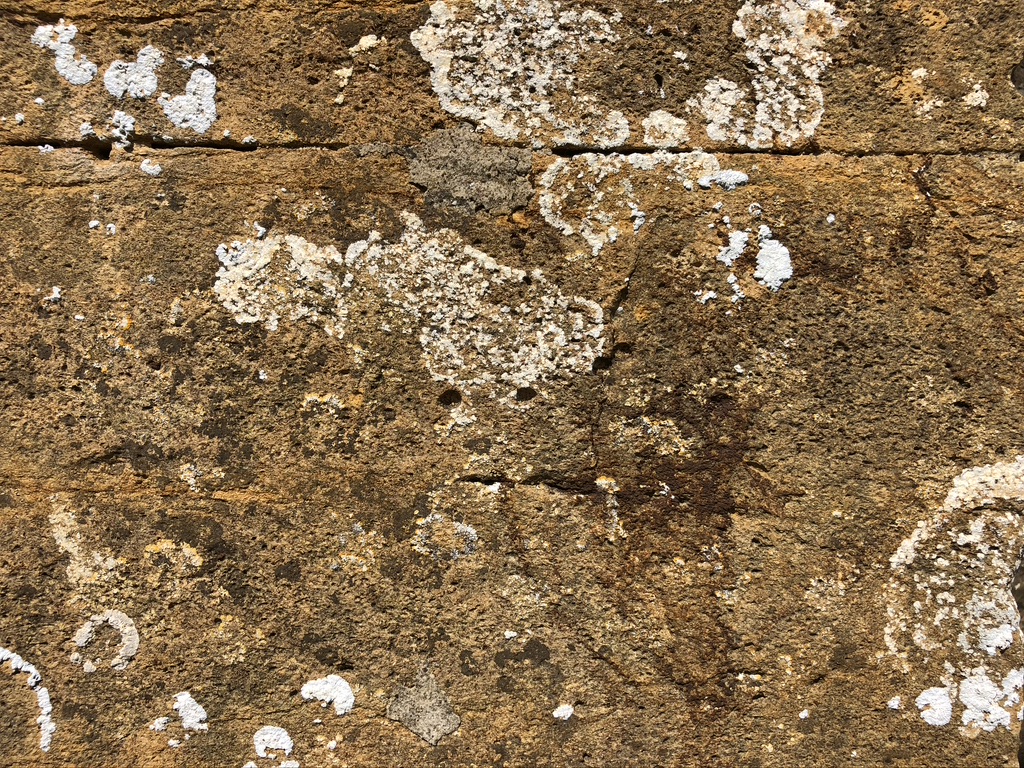
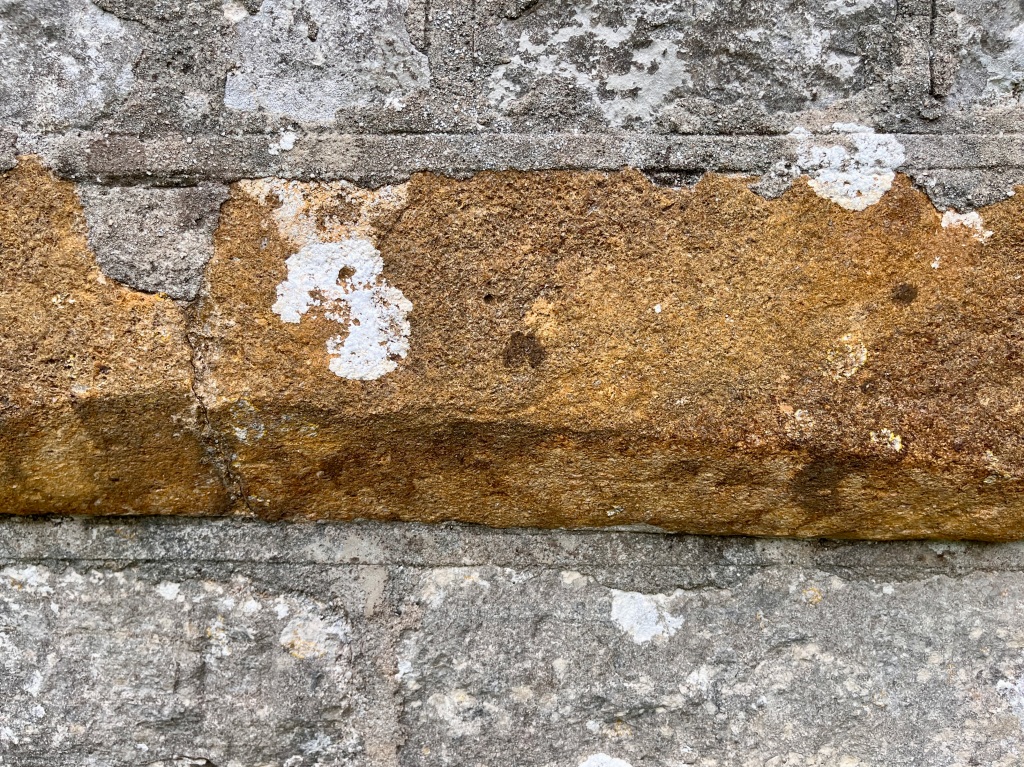
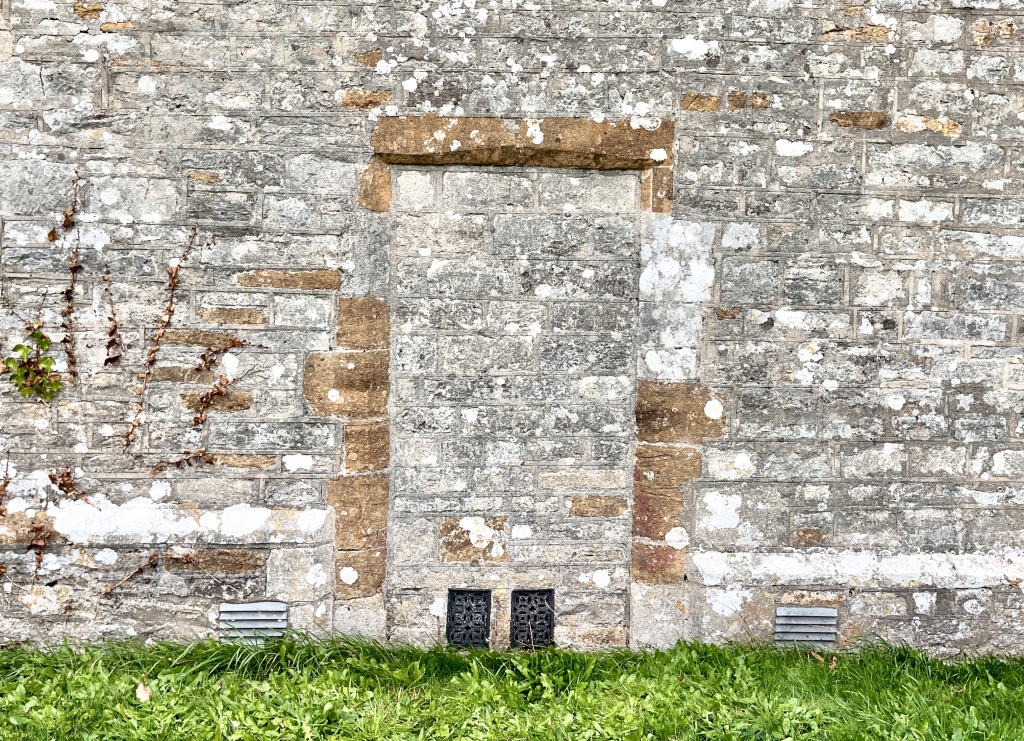
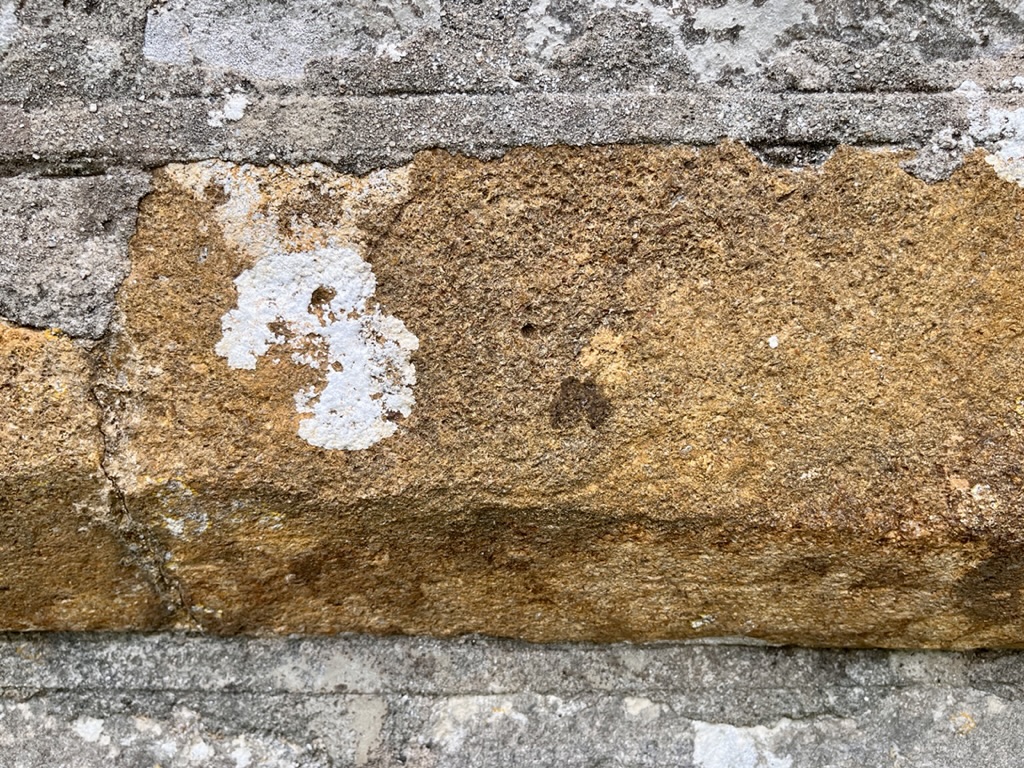
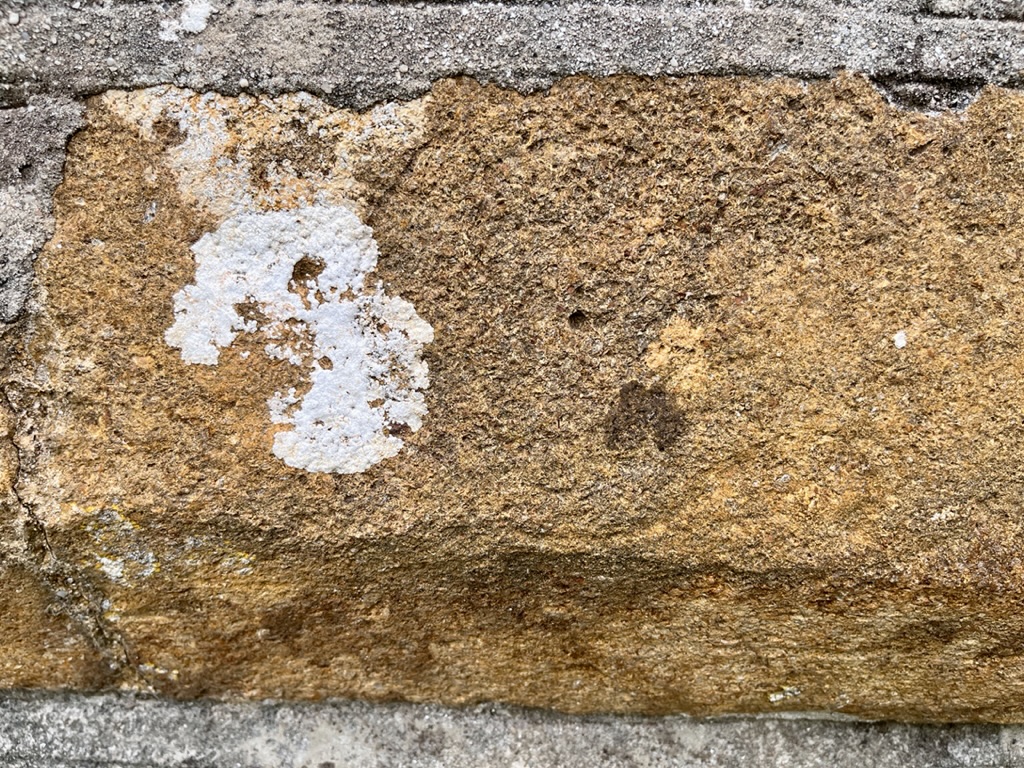
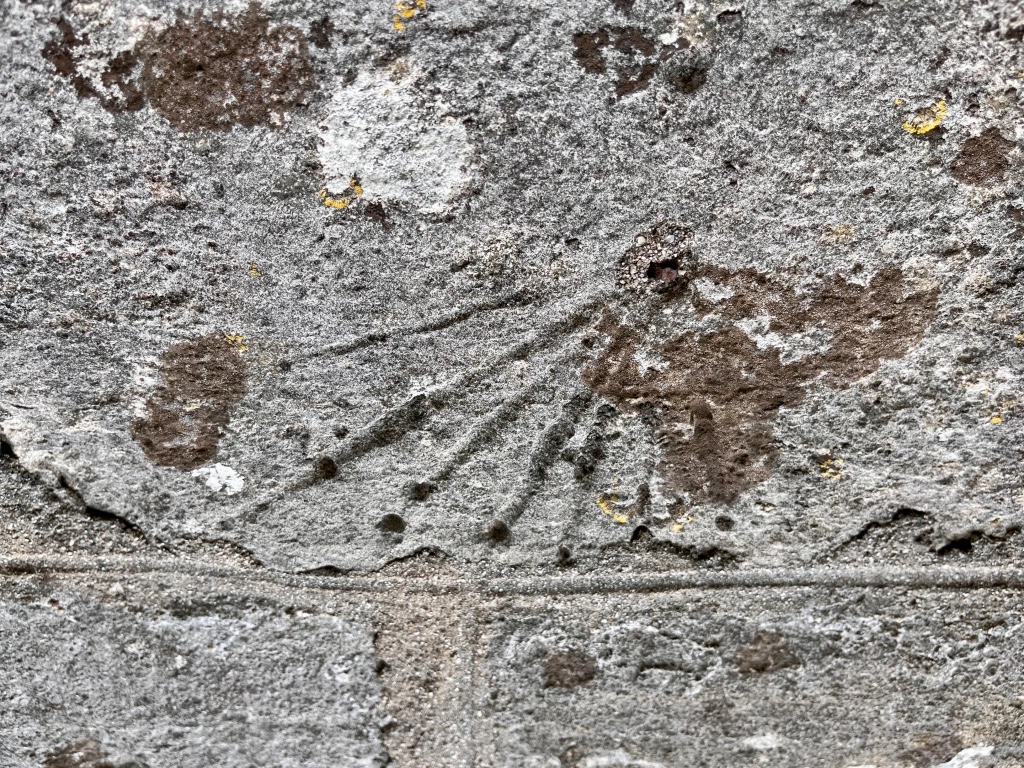
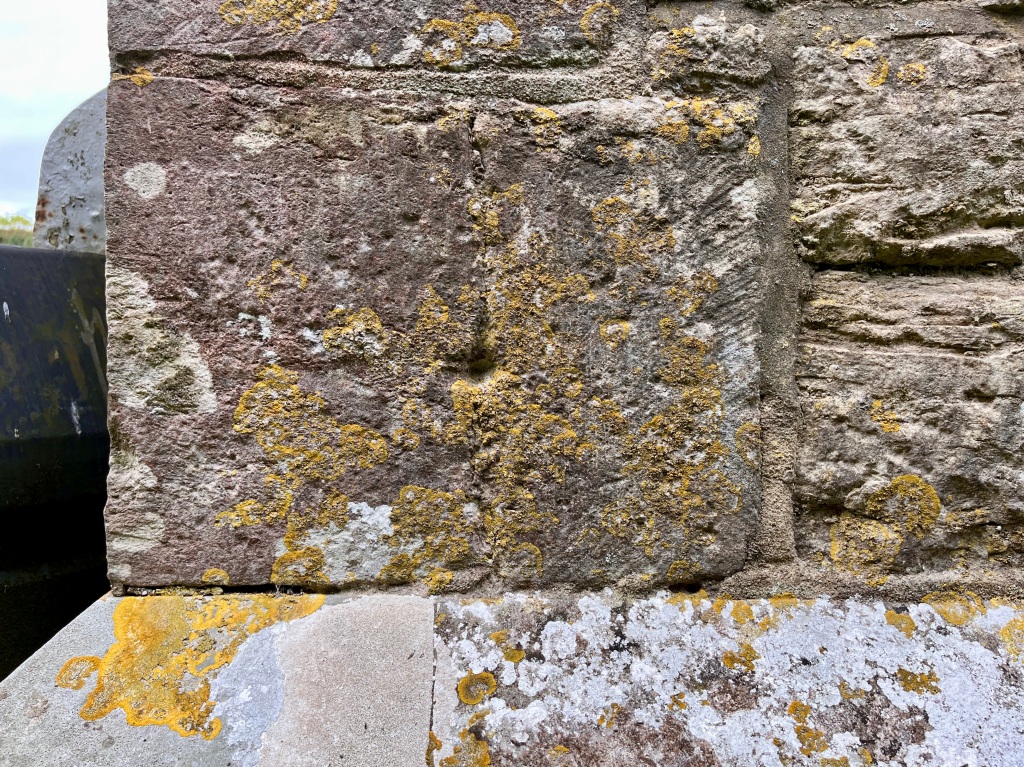
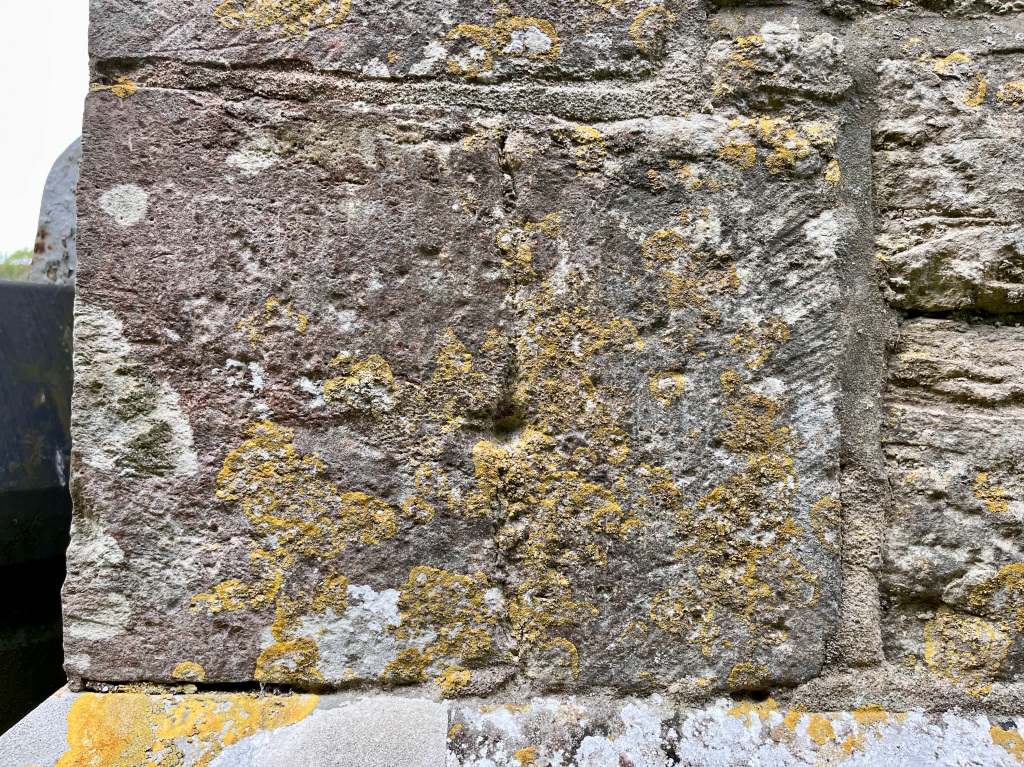
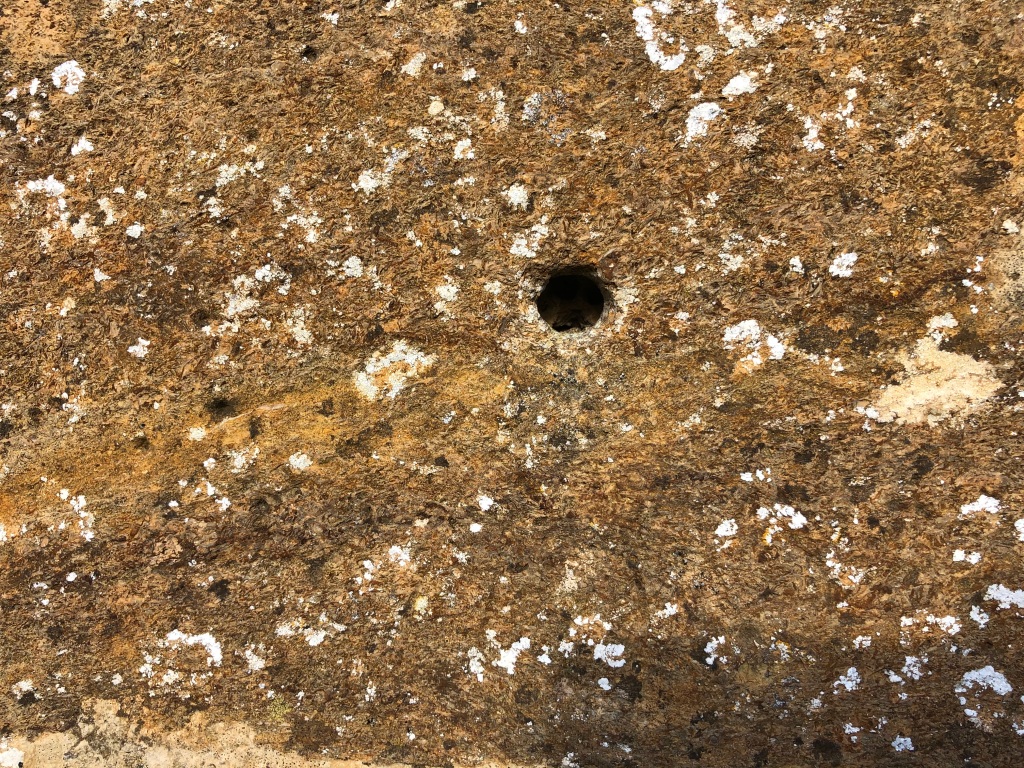
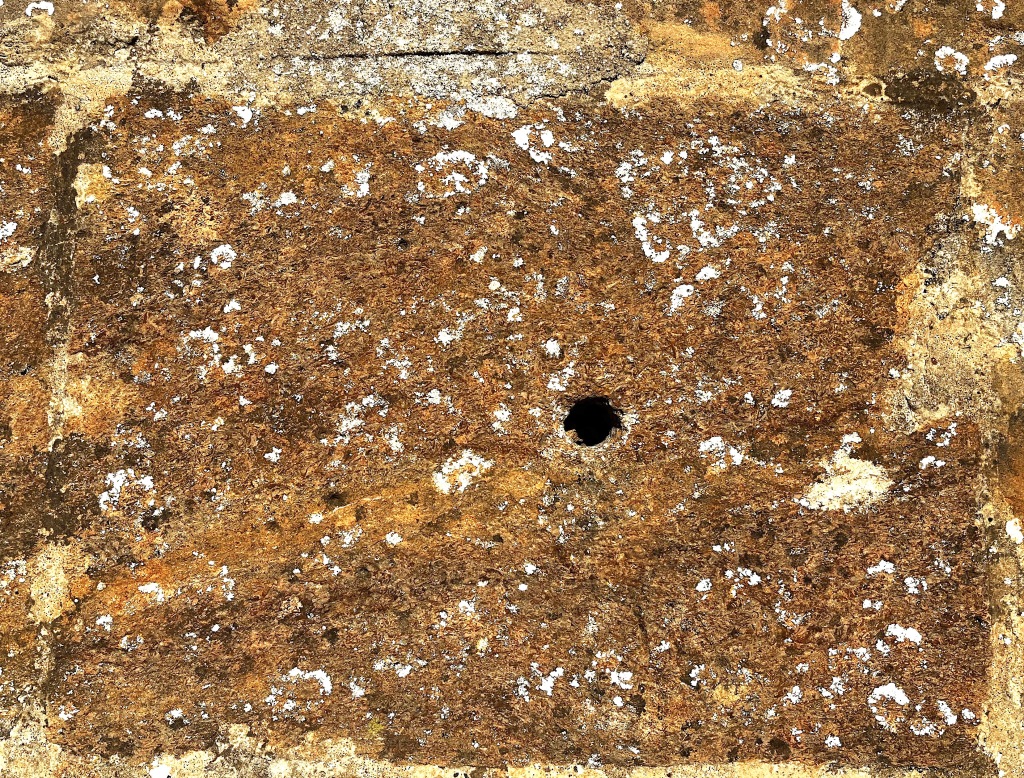
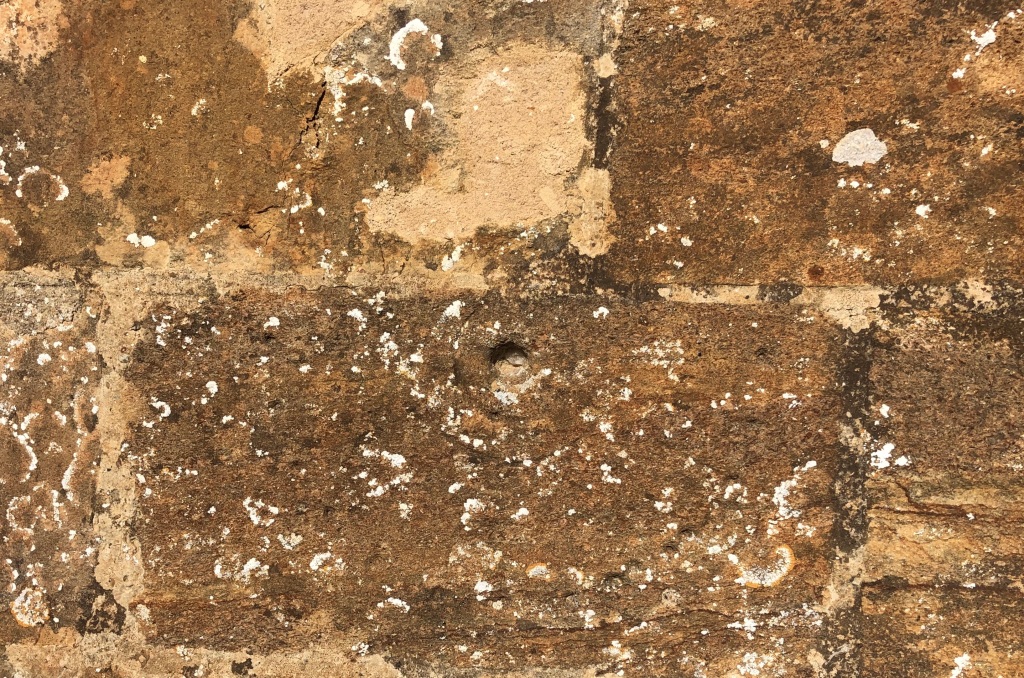
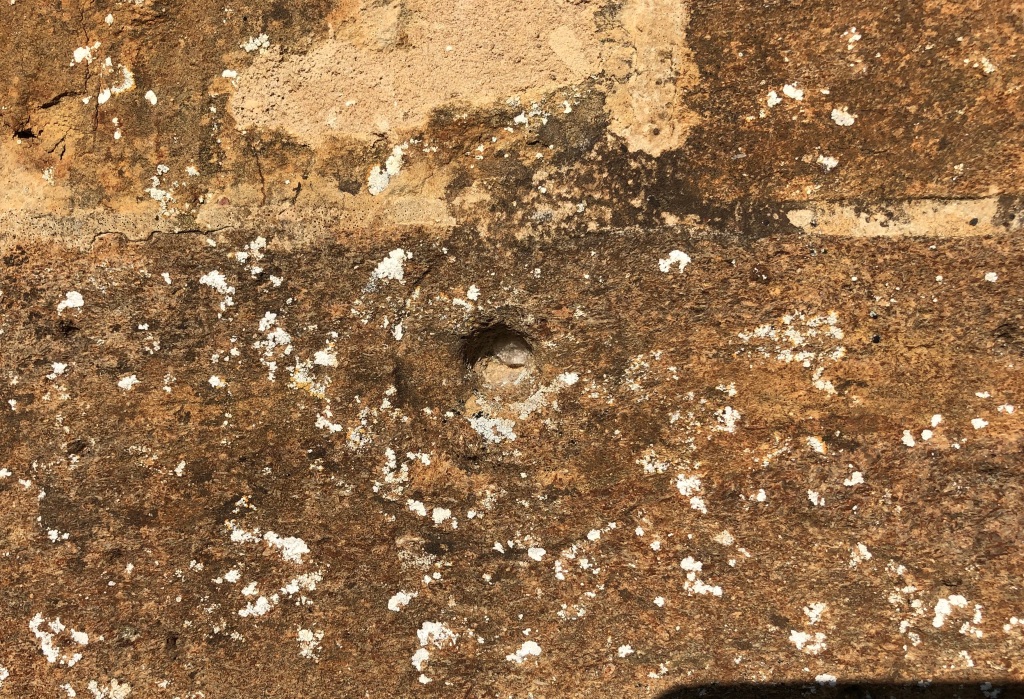
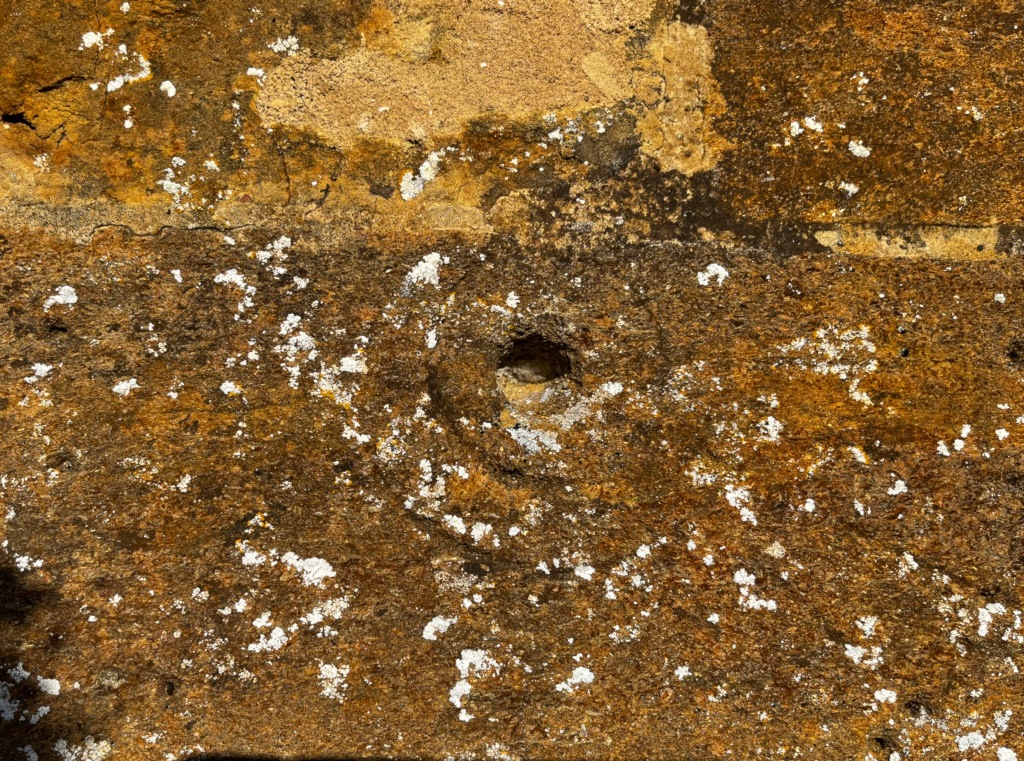
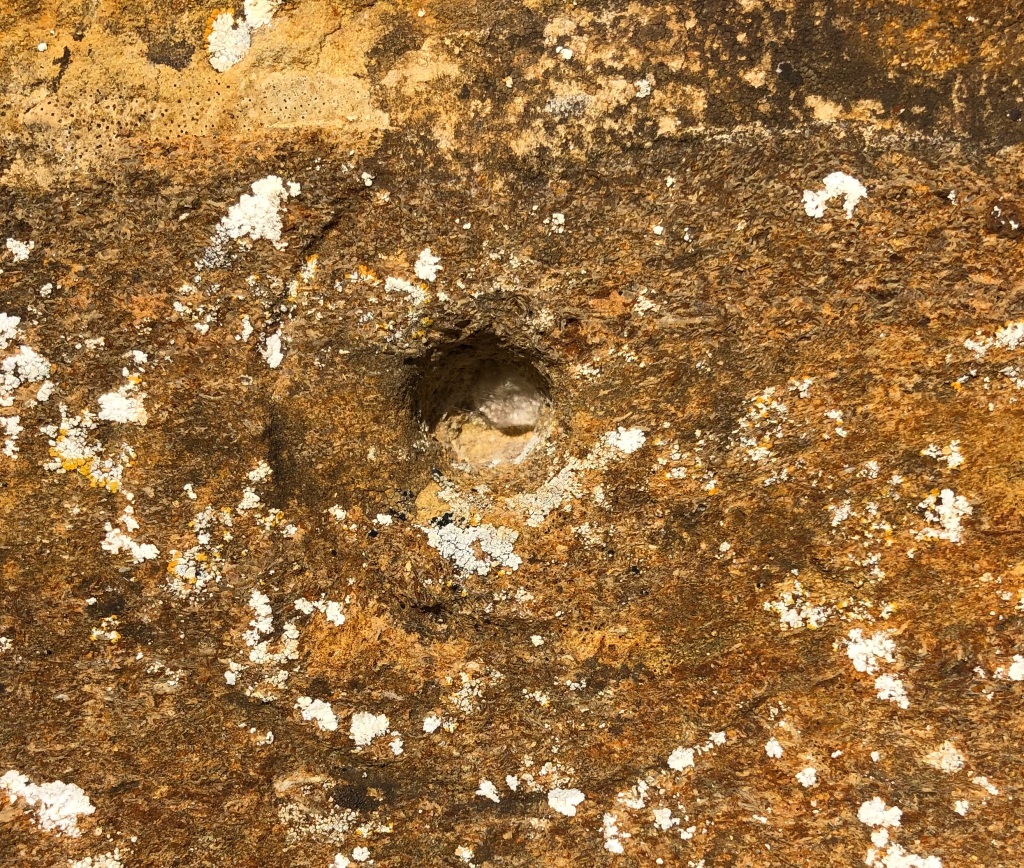
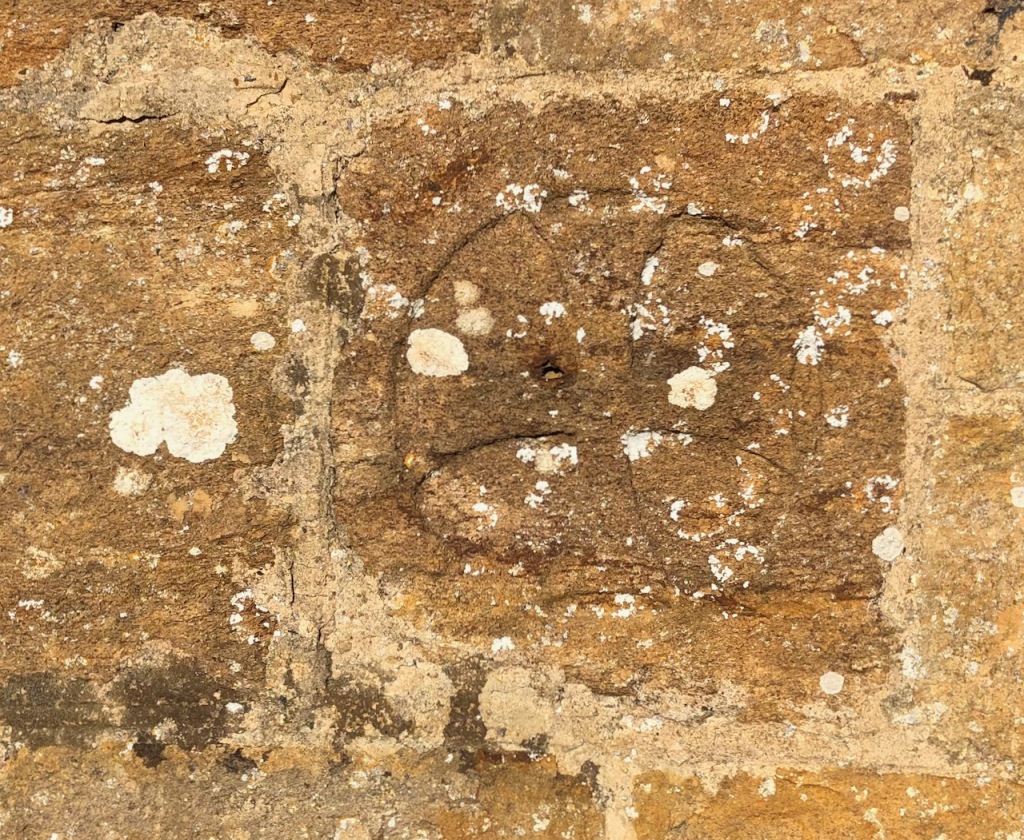
Two dials are recorded. The first is simple to find and simple in style. The second is so simple that I could not with certainty claim to have found it. It was registered quite a while ago, and possibly lichen spread has made what was already faint, no longer identifiable.
DIAL 1
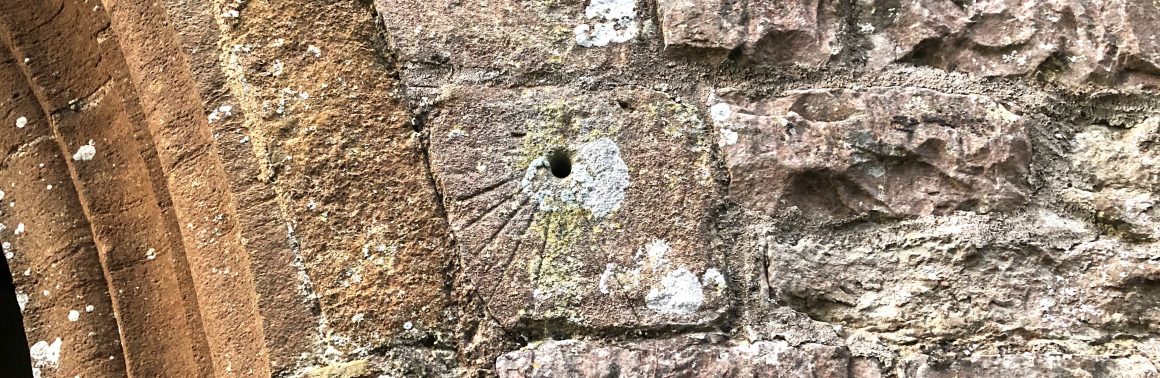
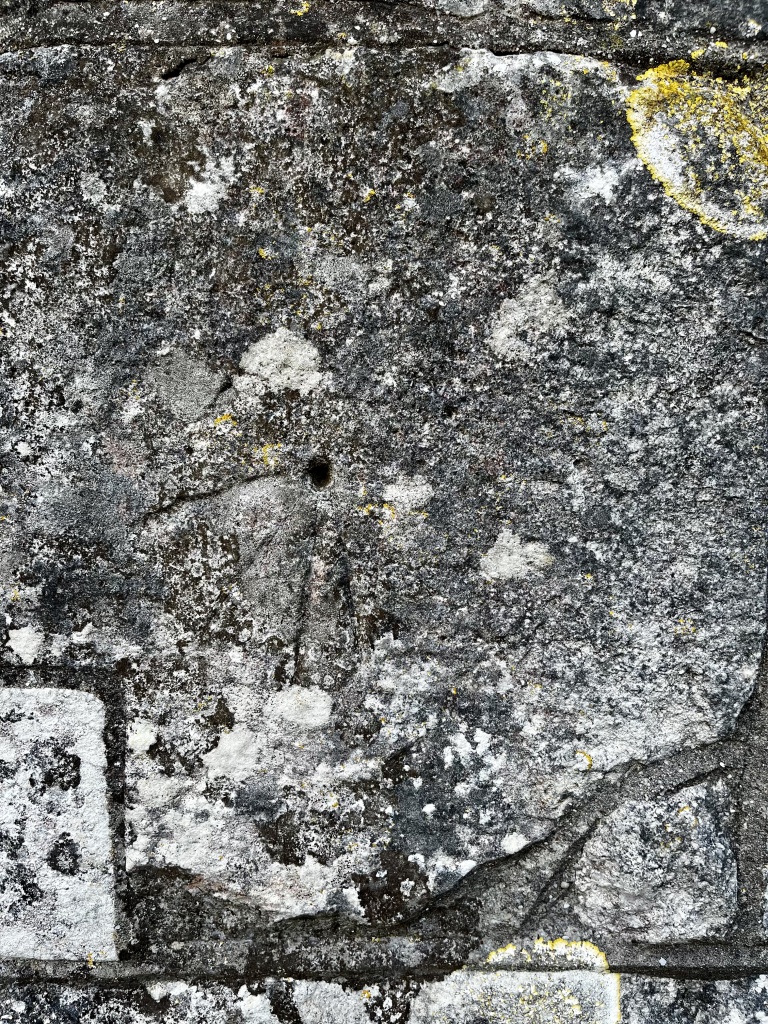
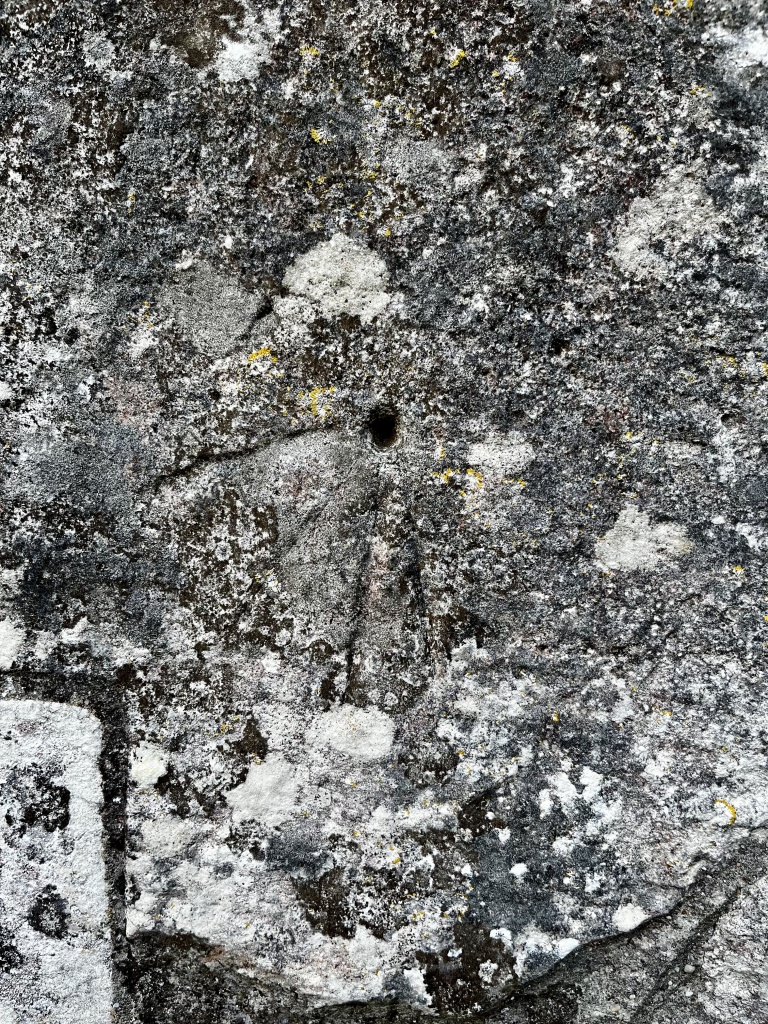
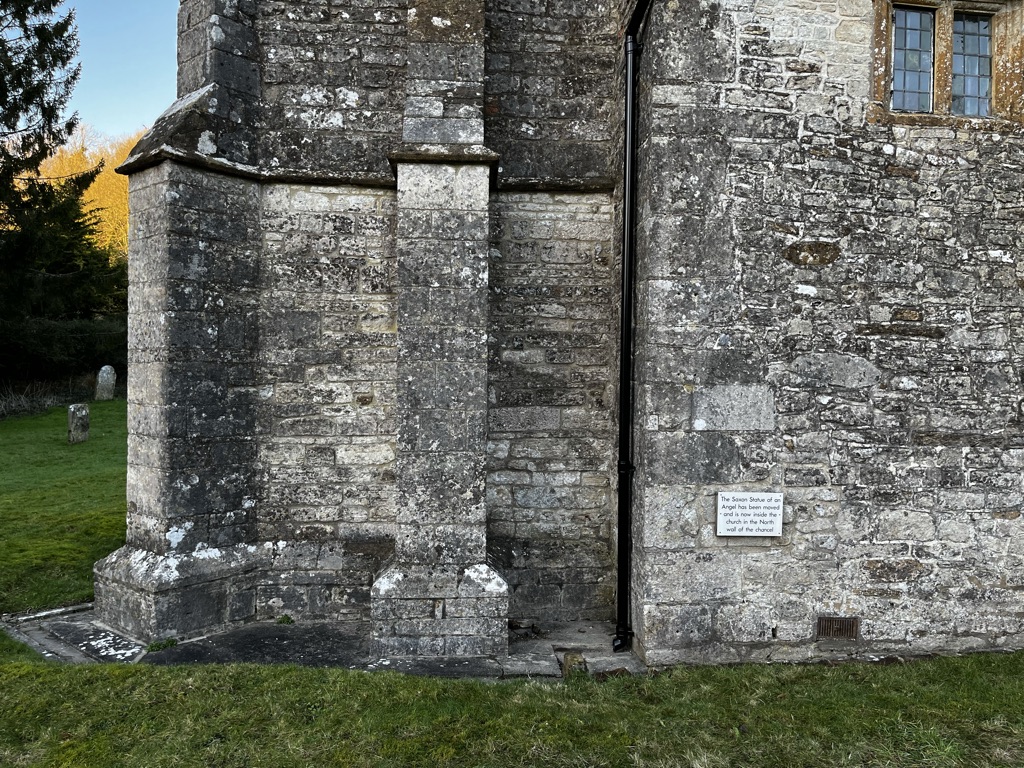
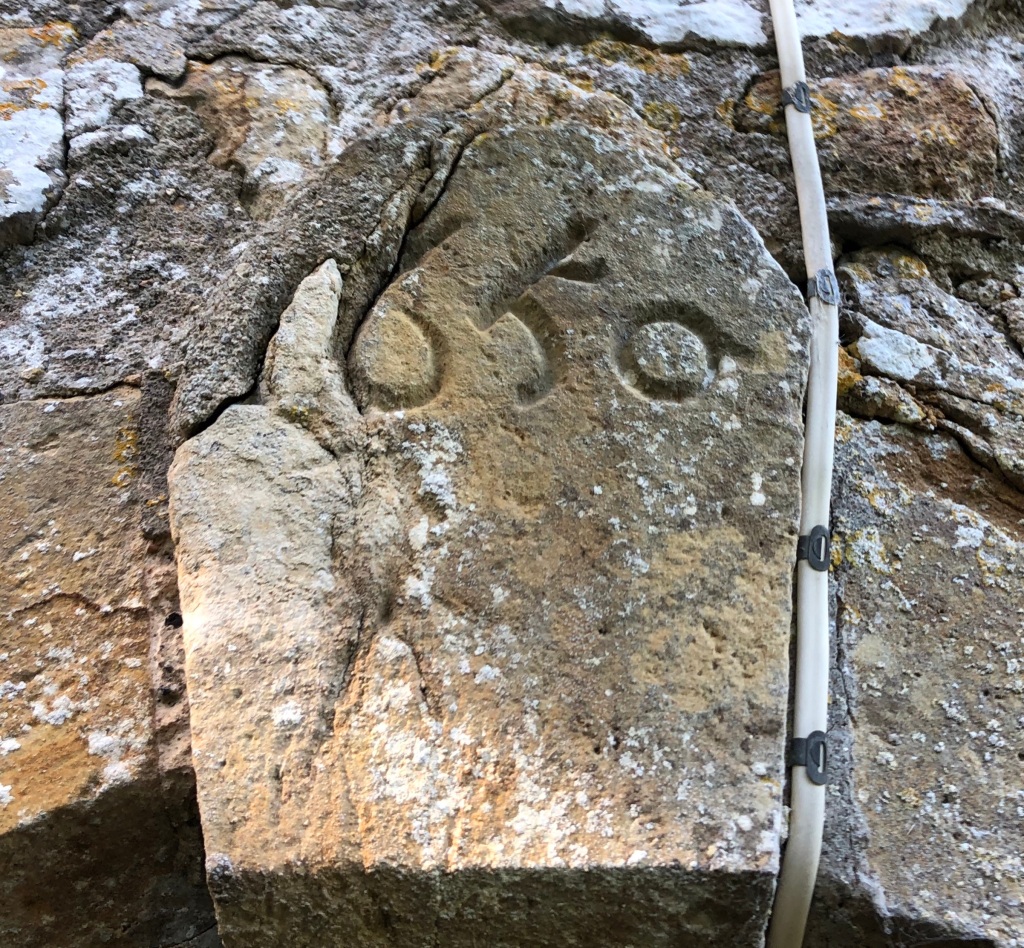
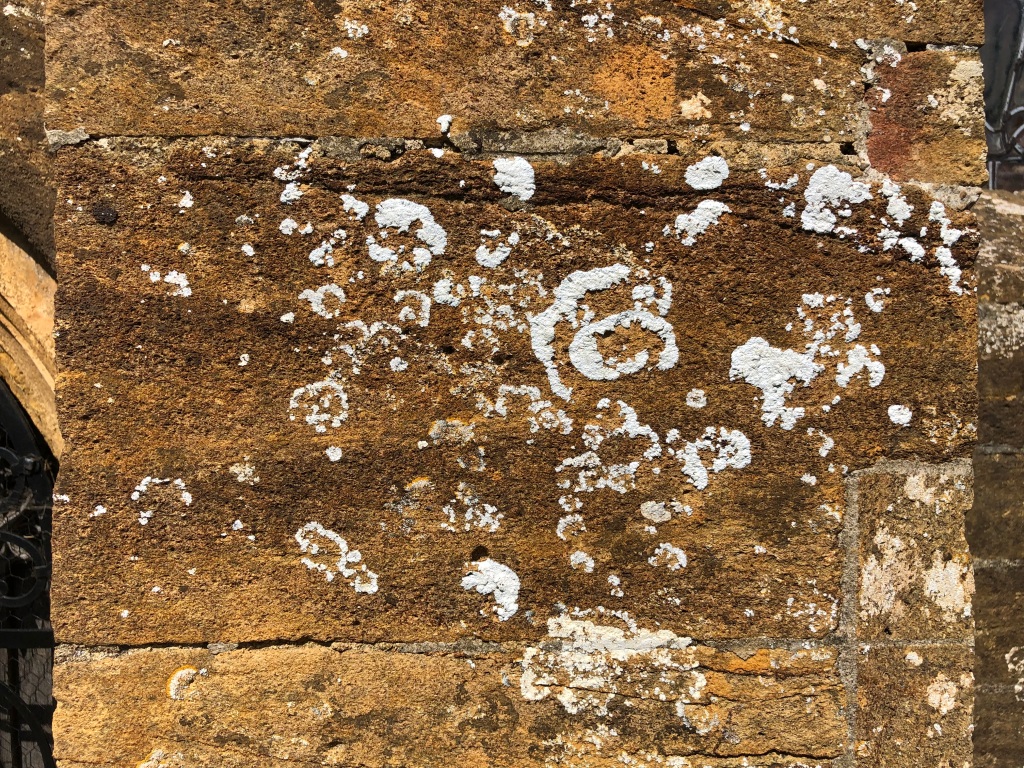
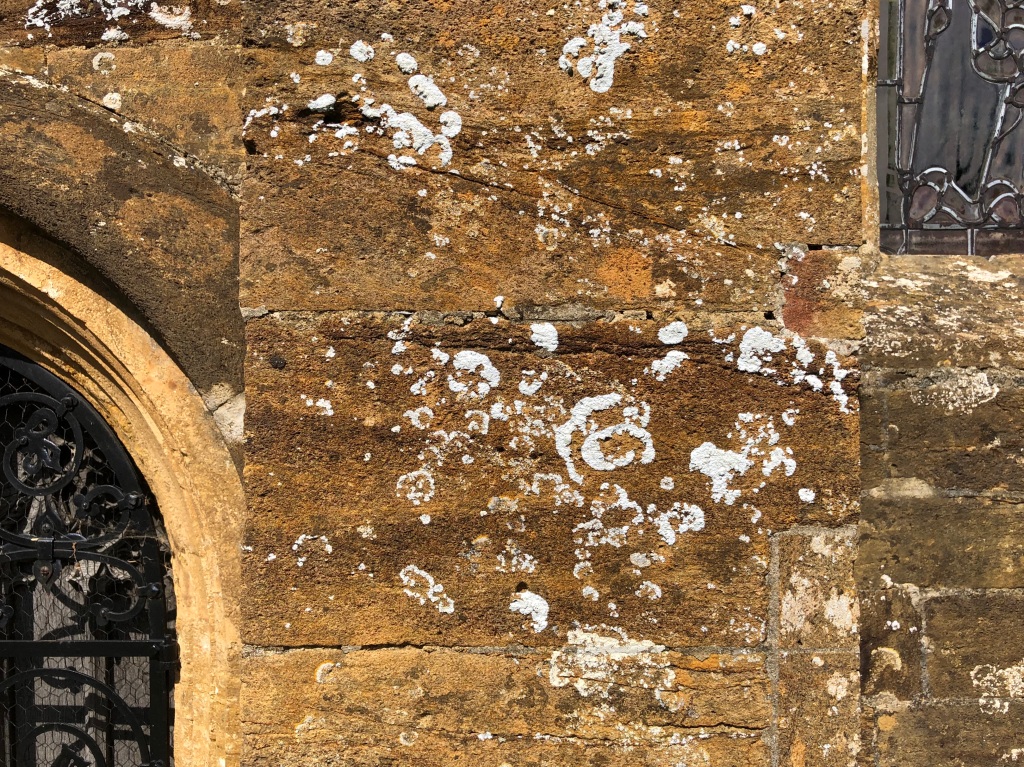
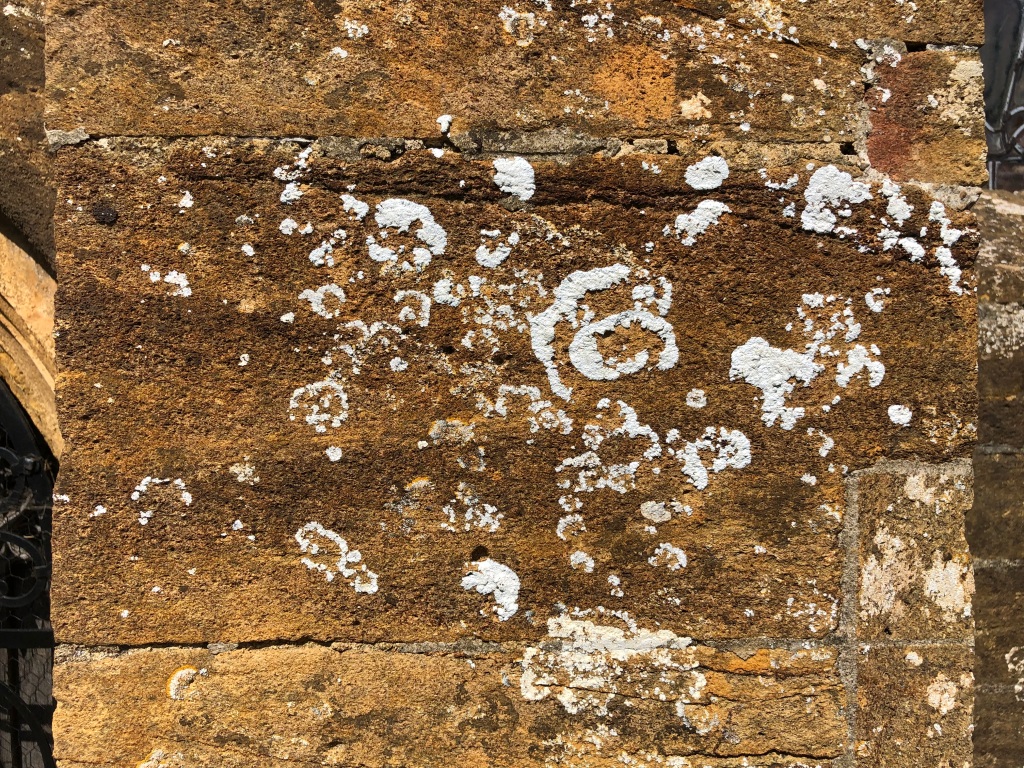
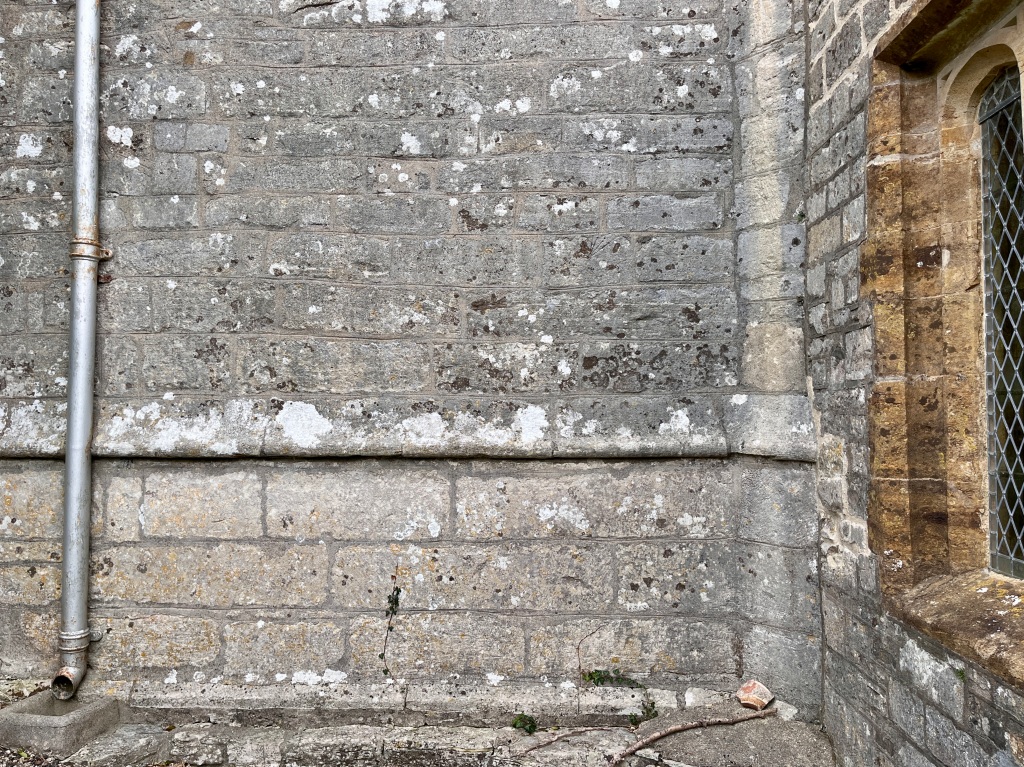
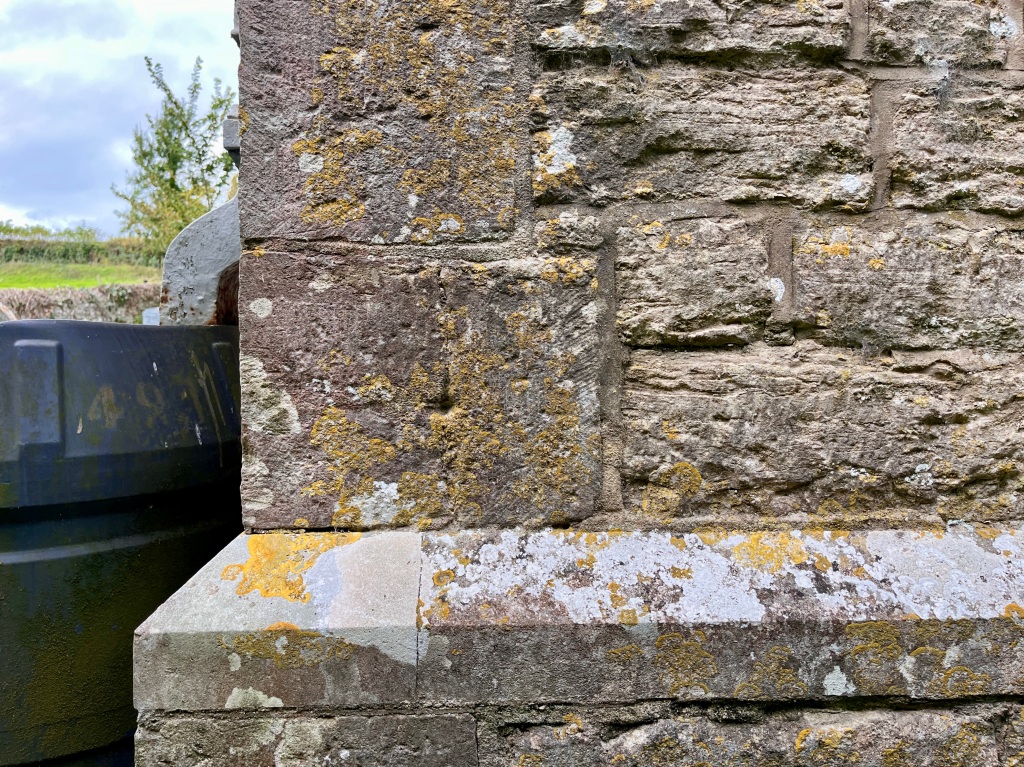
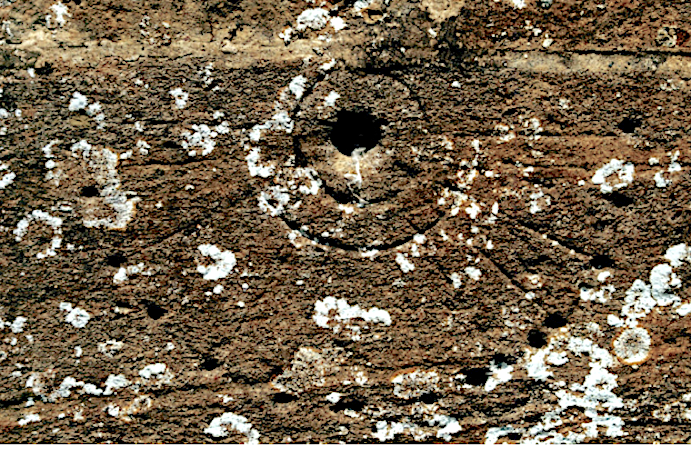
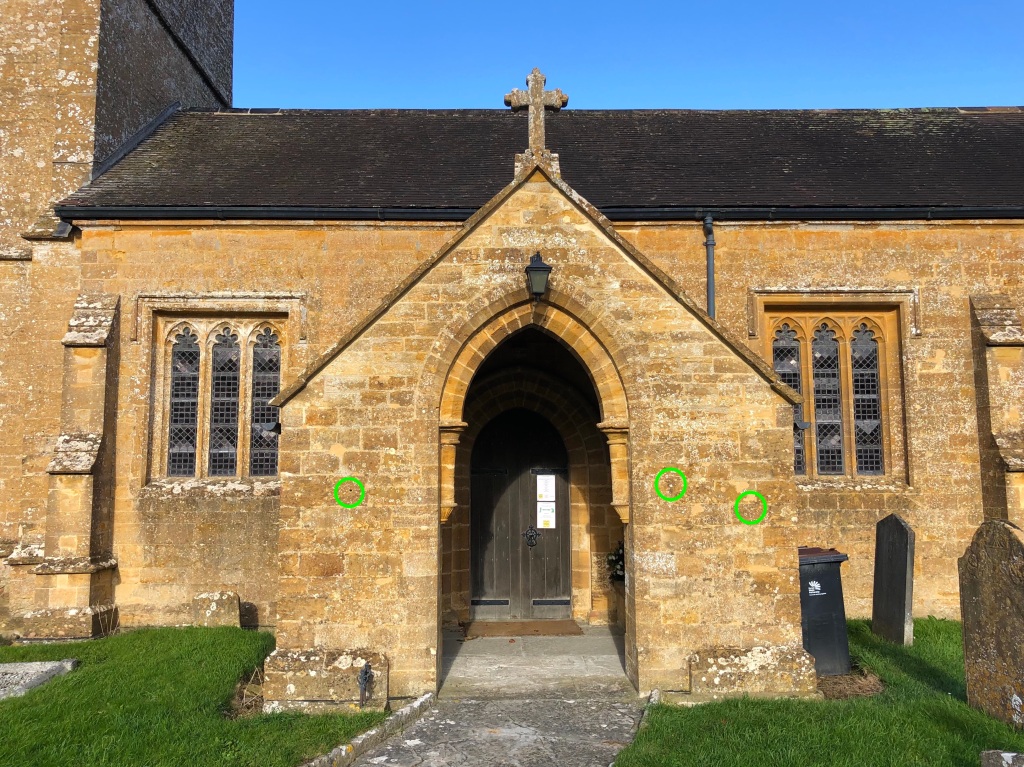
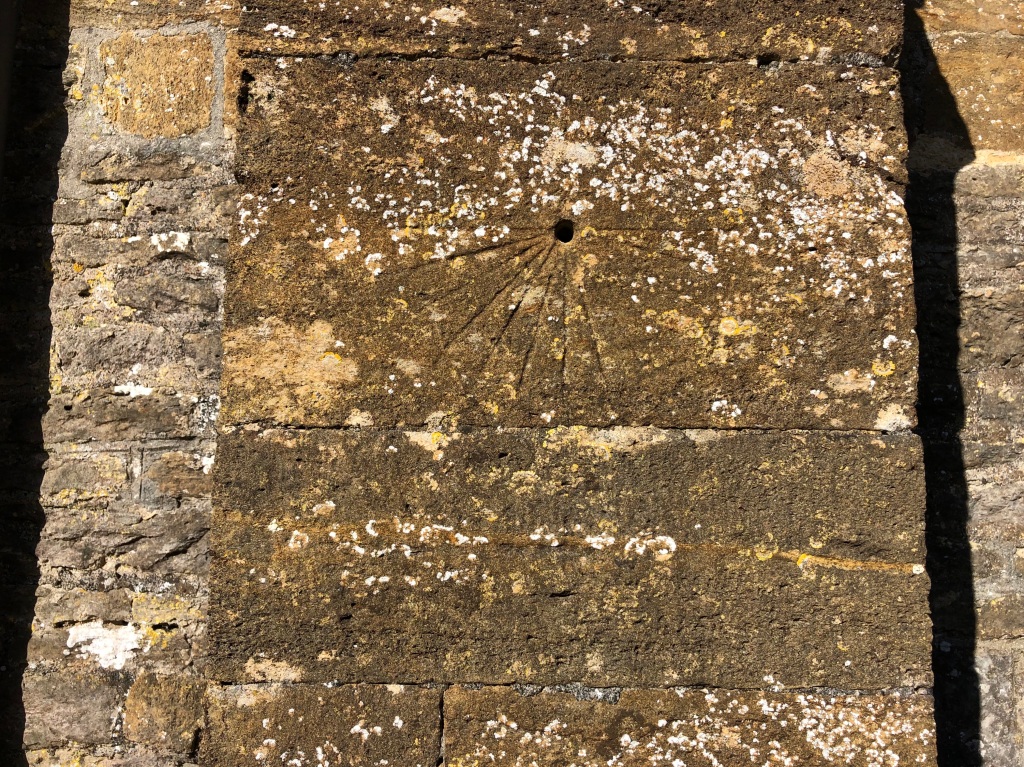
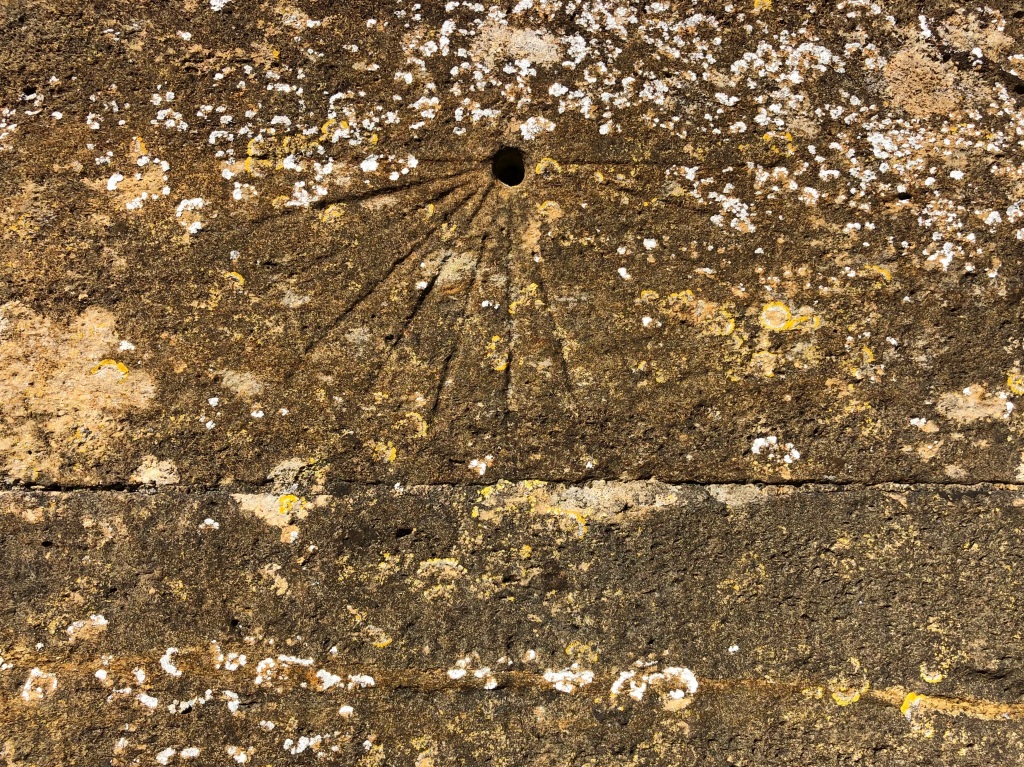
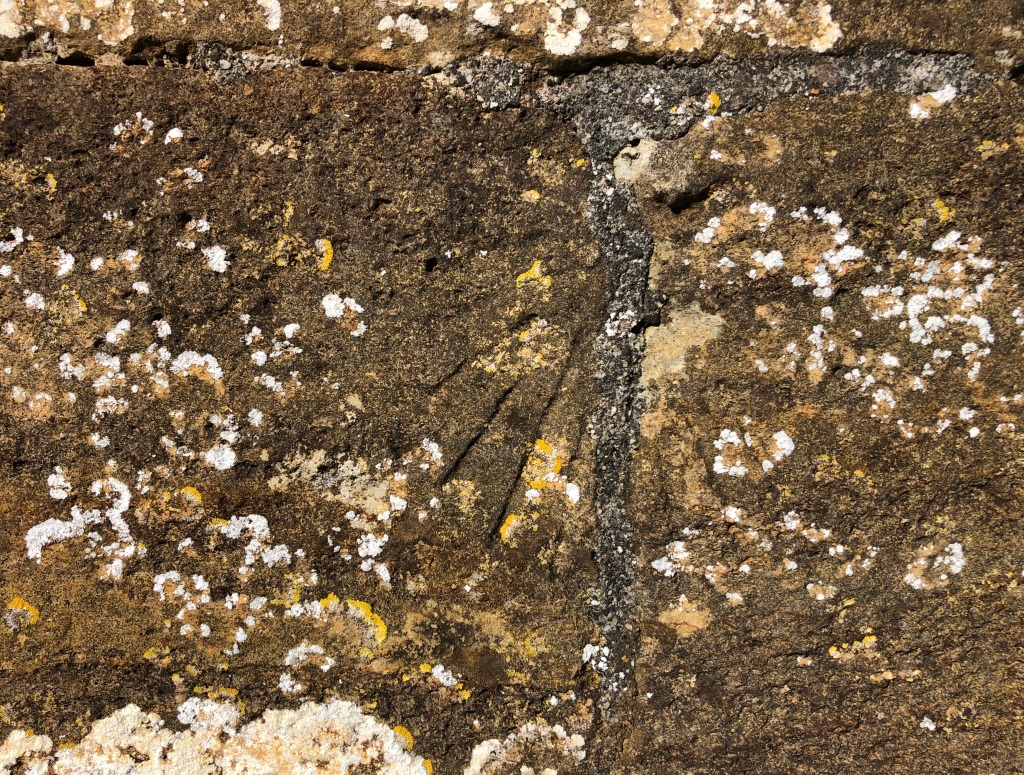
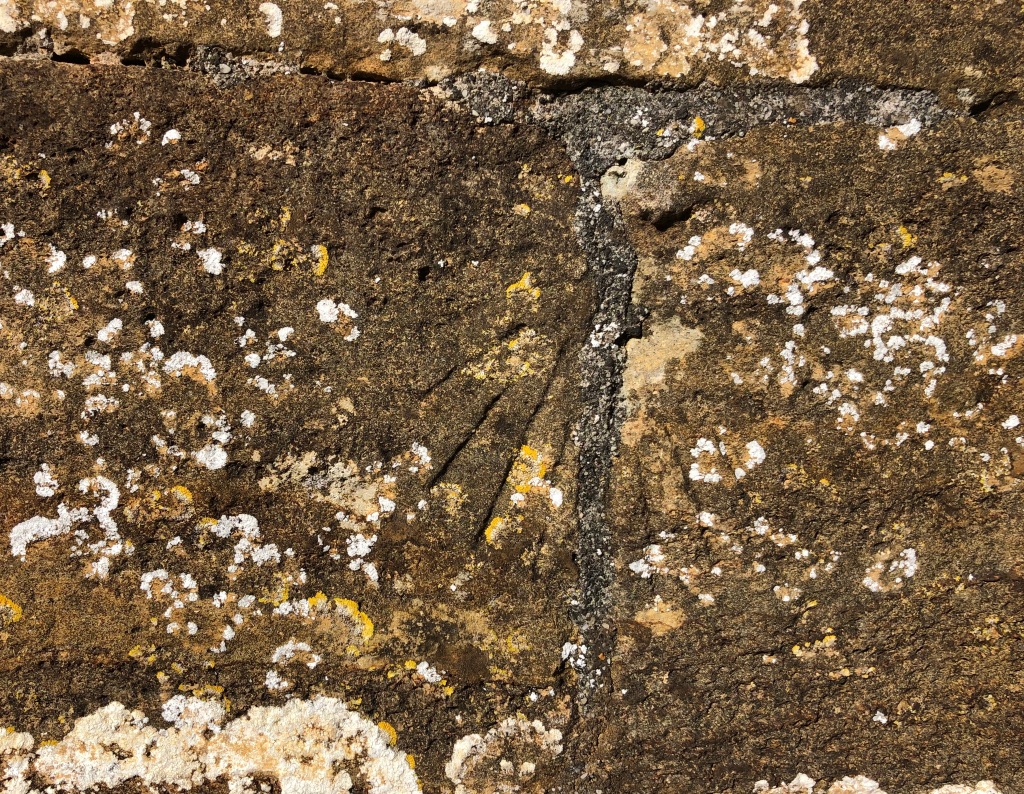
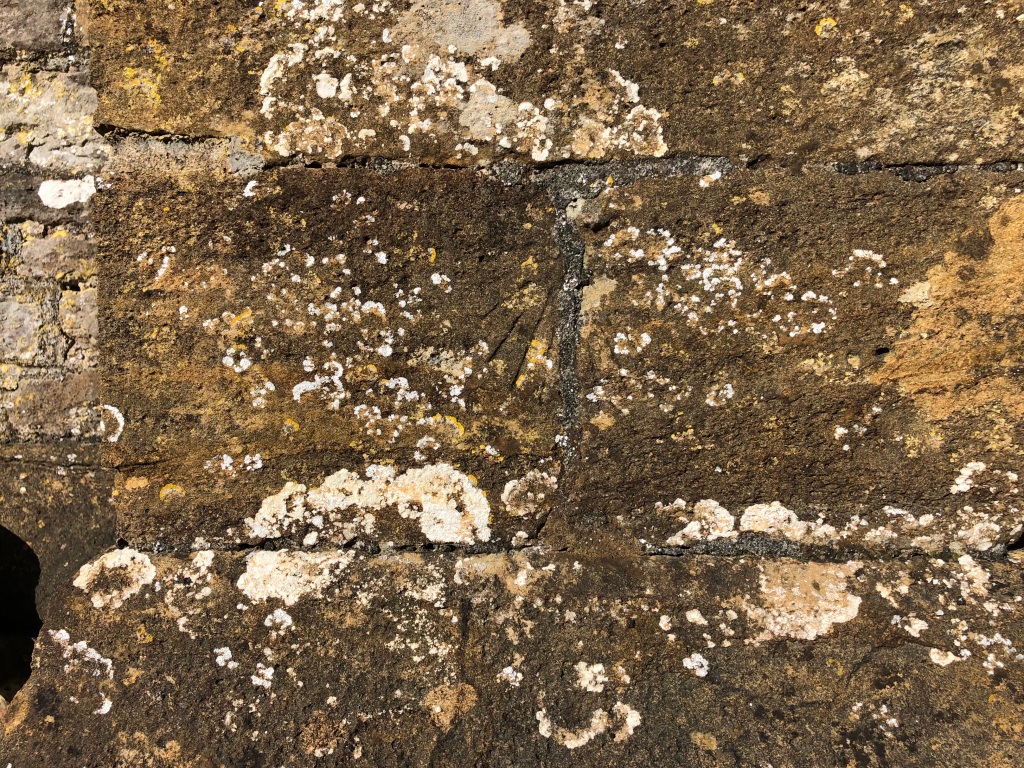
Dial 1 is located on a SW quoin stone of the nave. When examined in the 1990’s it was noted to be ‘behind a drainpipe’, which is no longer the case. By strange coincidence, when I visited the rest of the drainpipes were being repaired and repainted.
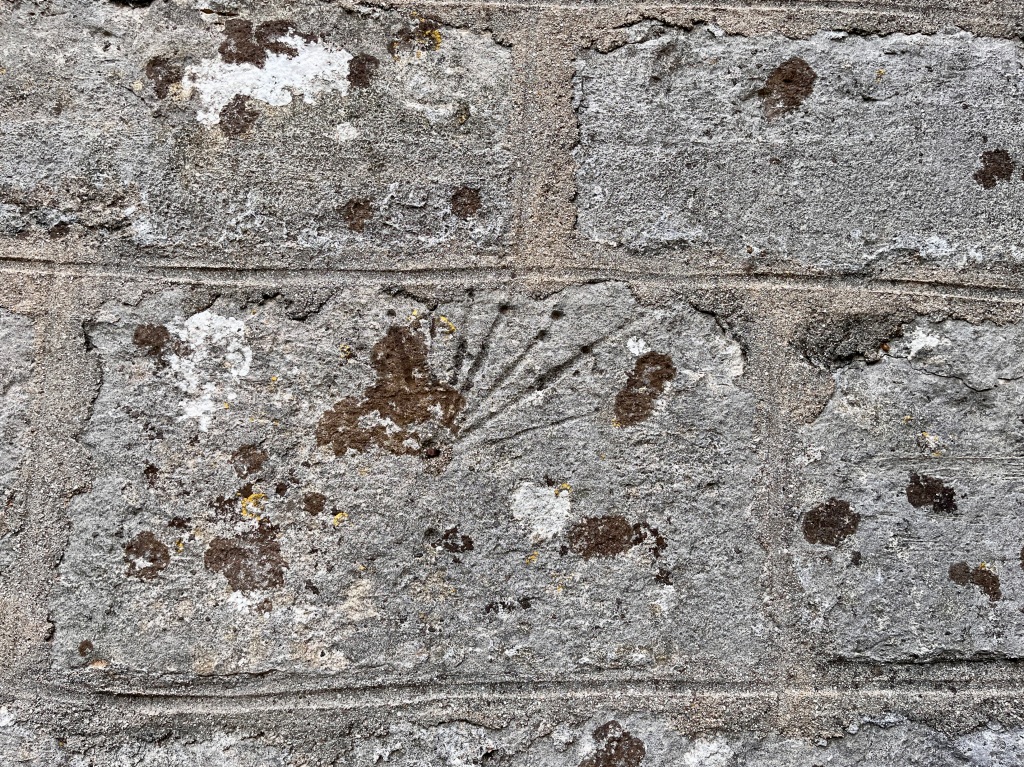
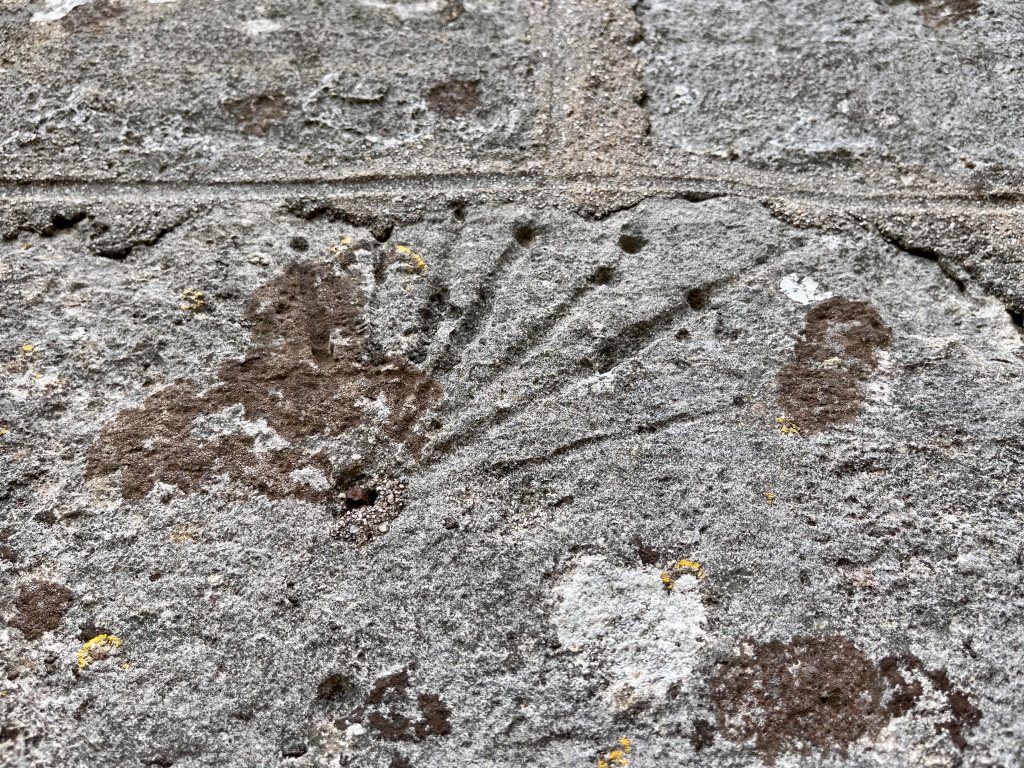
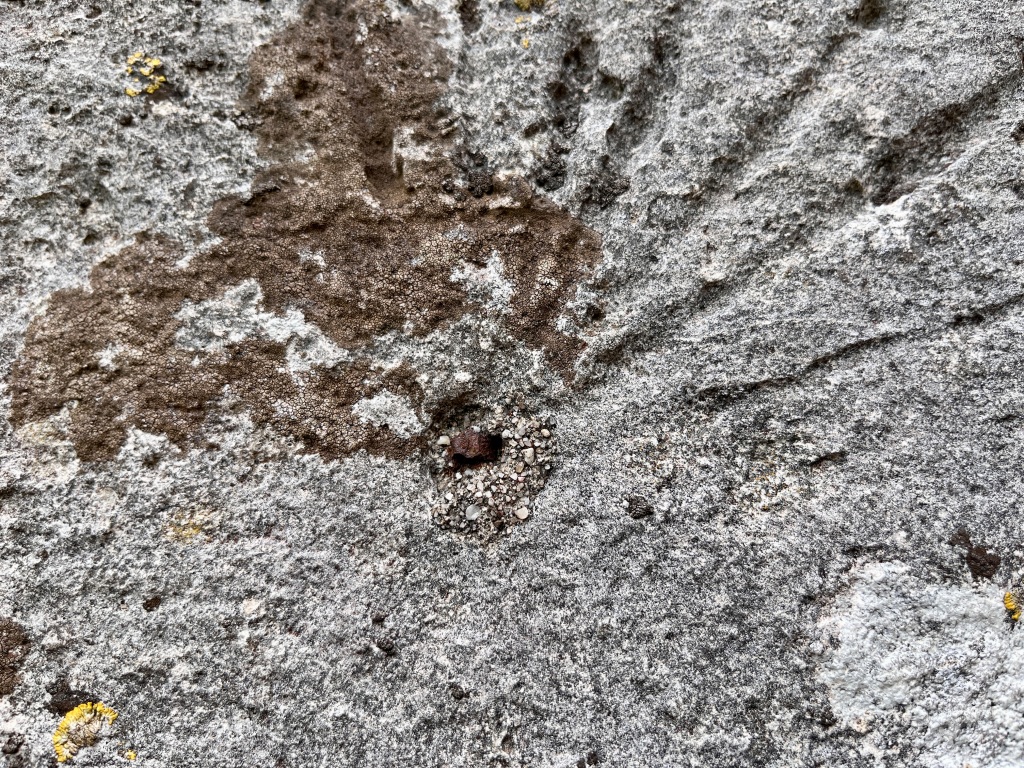
This is a straightforward little 4-line morning dial with a pleasingly casual approach to straight lines. The deeper incised line suggests that terce was the most significant Mass of the day. Do see the Saxon statue mentioned in the notice (there is a similar one in Bradford on Avon), and indeed spend some time inside this interesting small church.
DIAL 2
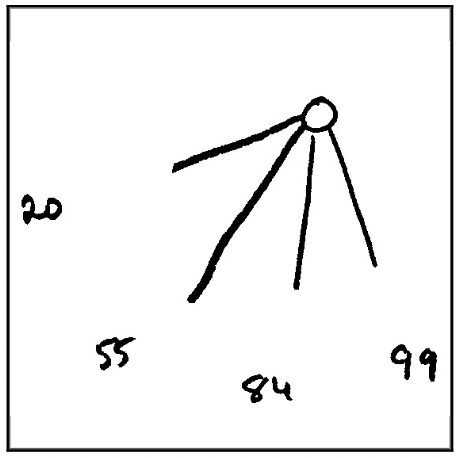
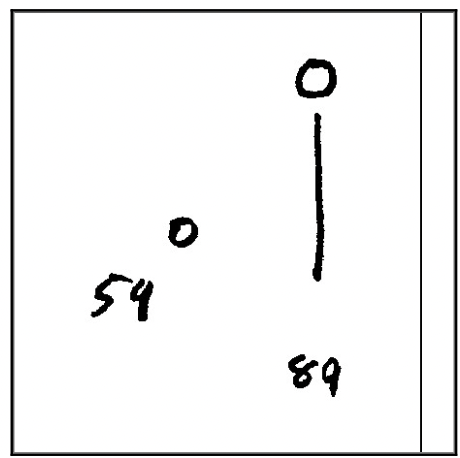
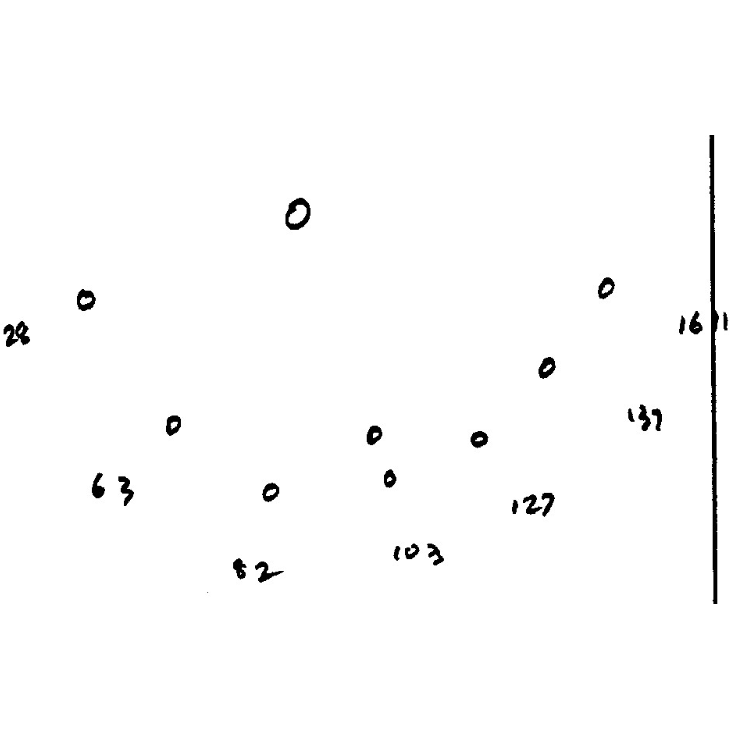
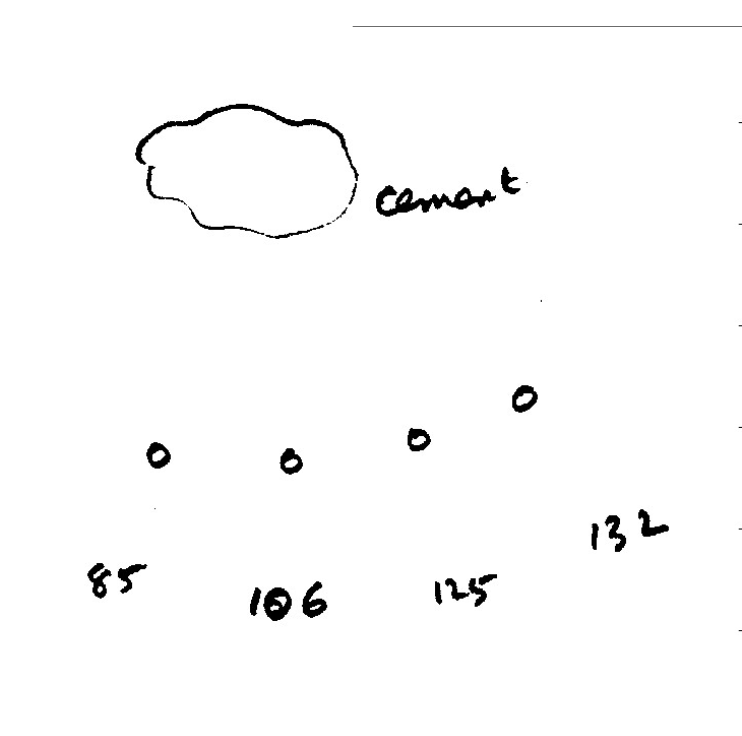
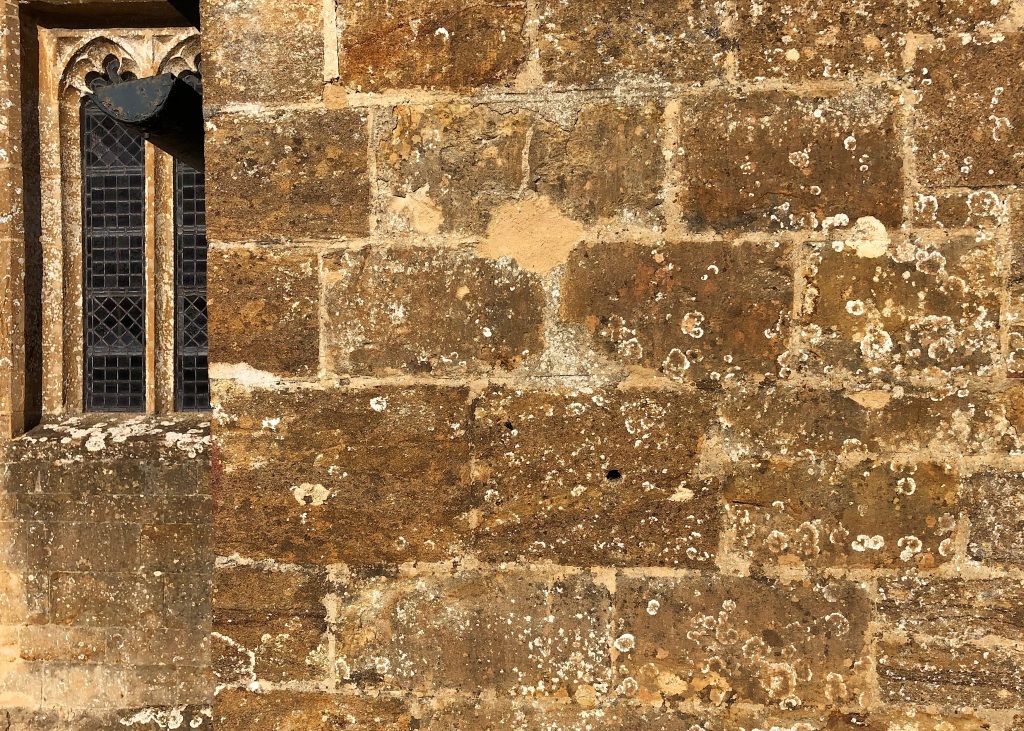
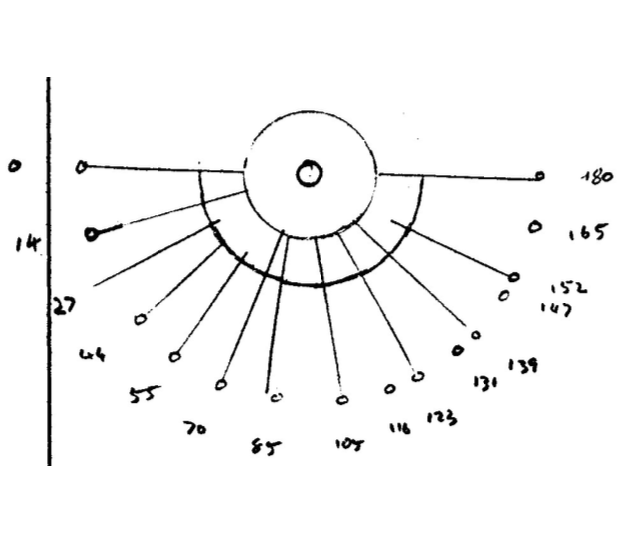
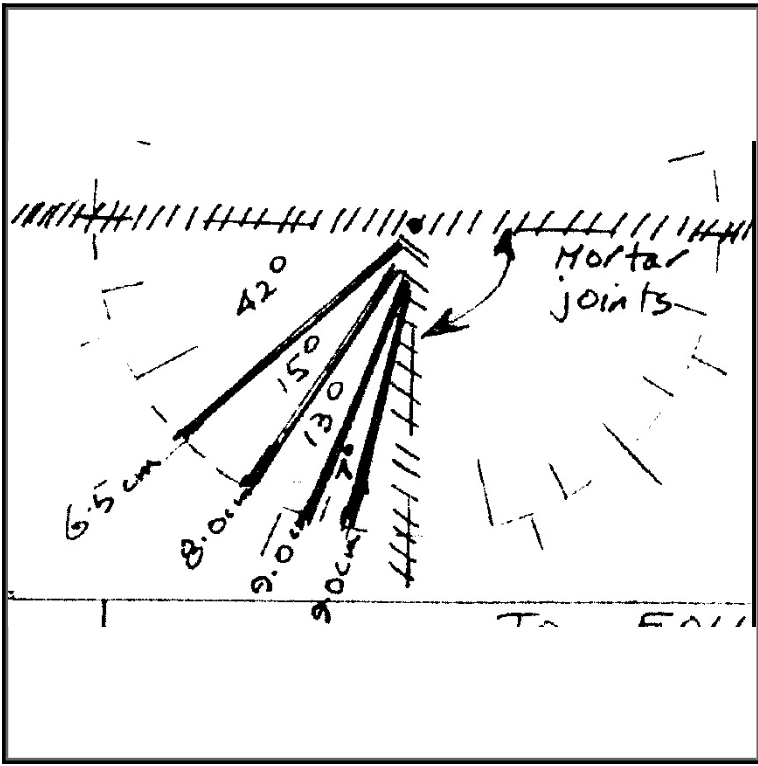
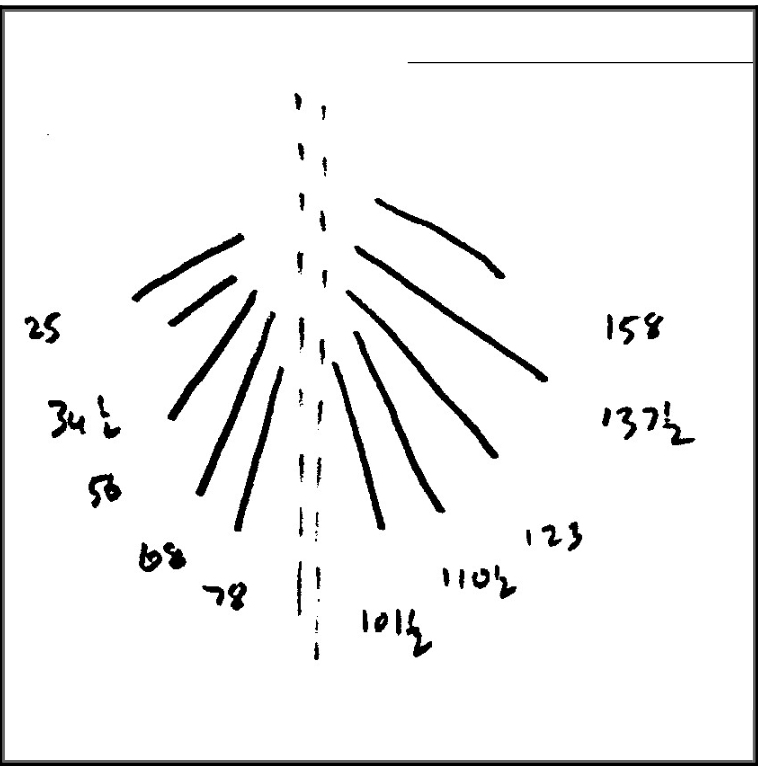
This dial was recorded as being on the S buttress of the tower, with 1 line 45mm long and a pock. It was noted then as ‘very faint’. While Dial 1 is mentioned elsewhere eg BHO, I have found no other reference. However, a drawing was made and is all I can offer for present purposes.
GRADE I † Late C14, C15; C17 alterations inc. porch with date 1650 on keystone. Restorations mid-C19. Very recent skilled restoration 2020. Millennial dial with date-casting gnomon (cf BUCKLAND NEWTON). C18 box pews, candlelit services, Purdue bell c1580. Graffiti and witch marks. 14 formy consecration crosses both outside and inside (see locations below). A perfect small Dorset church standing alone, remnant of a plague village. There has been a recent very skilful restoration that has not impacted on the original charm of St Mary. 6m S of Sherborne. 50.8868 / -2.4902 / ST656098
,
St Mary . Holnest . Dorset – Keystone
SCRATCH DIAL
St Mary . Holnest . Dorset – rare scratch dial on window-sill
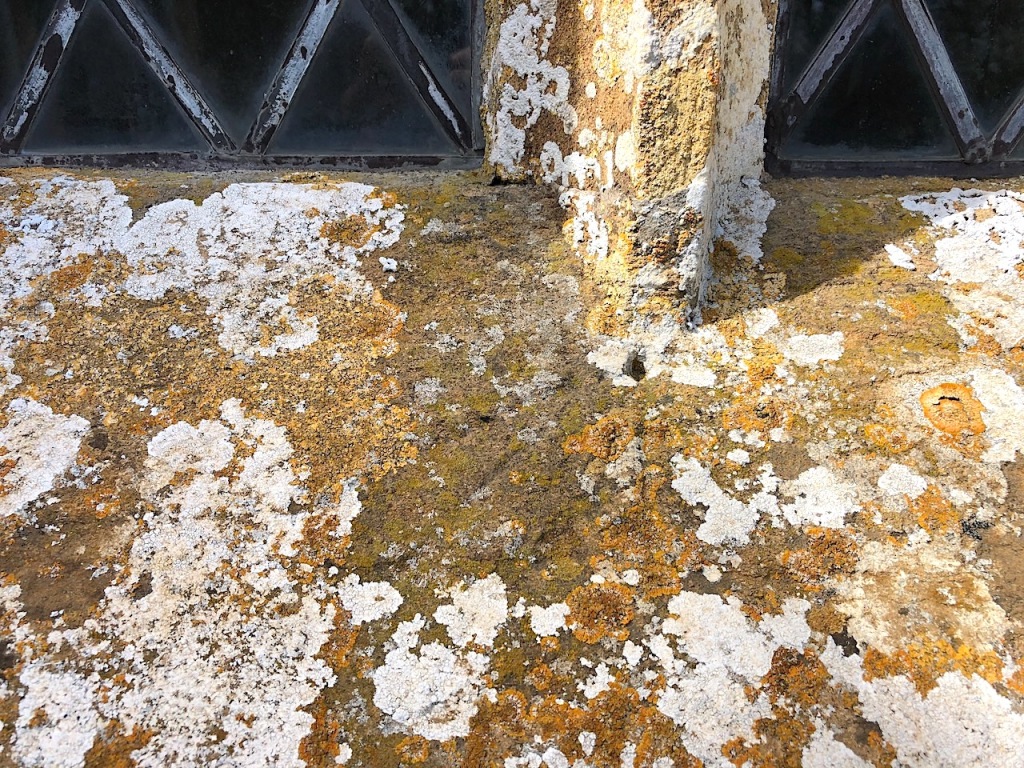
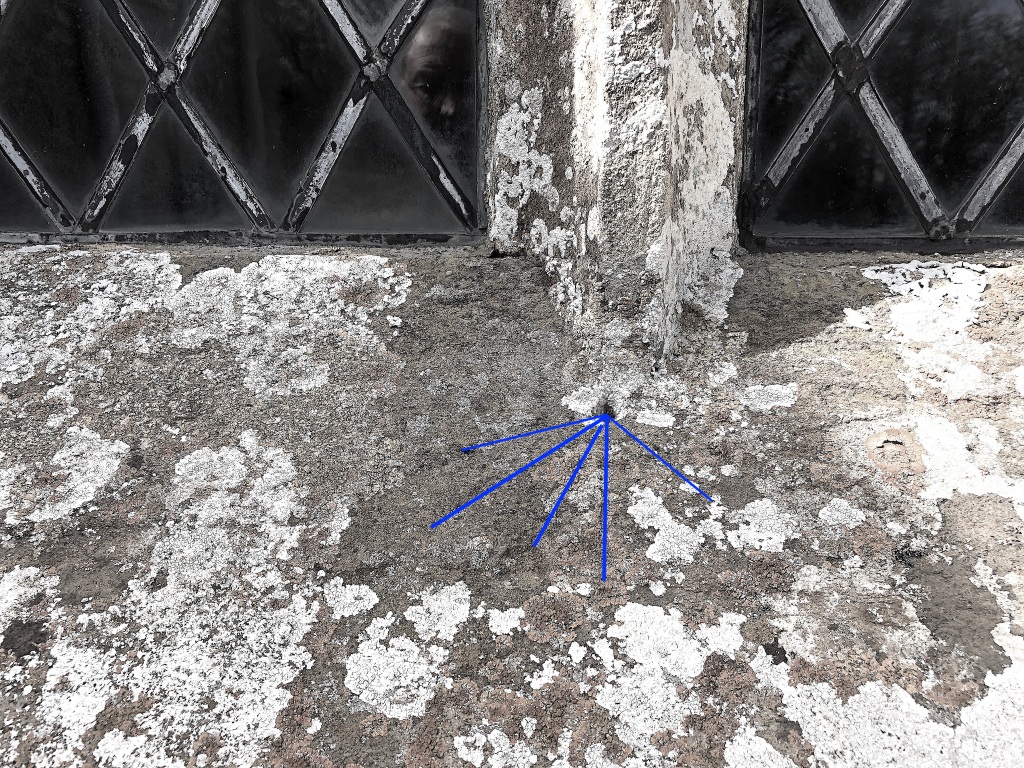
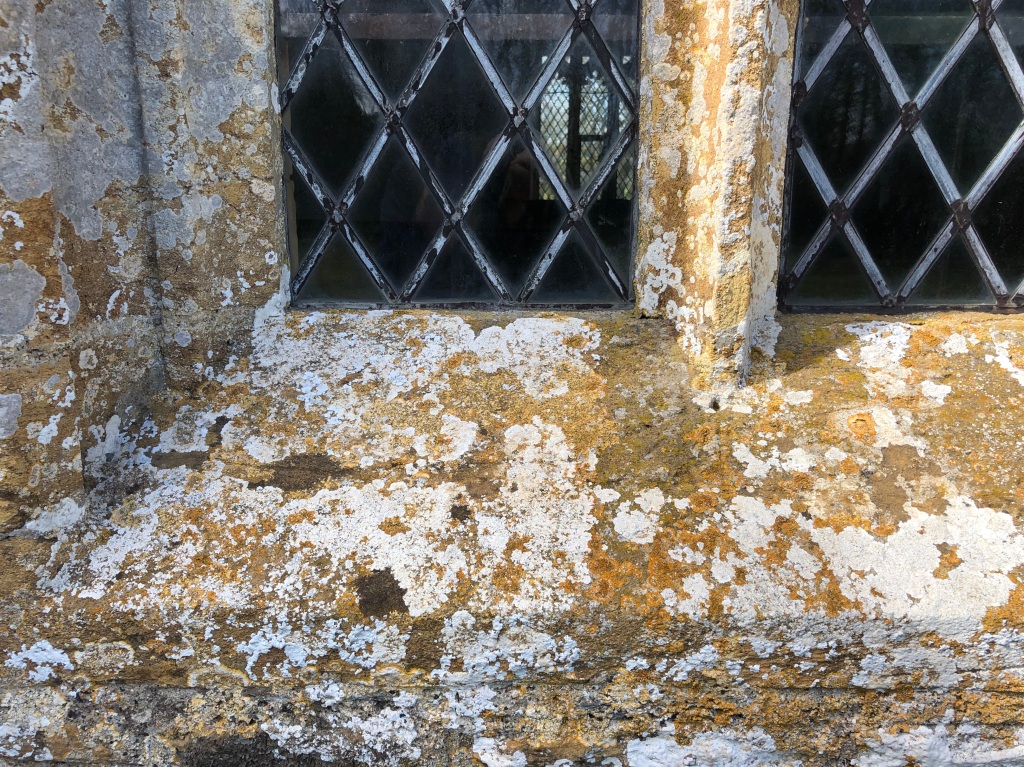
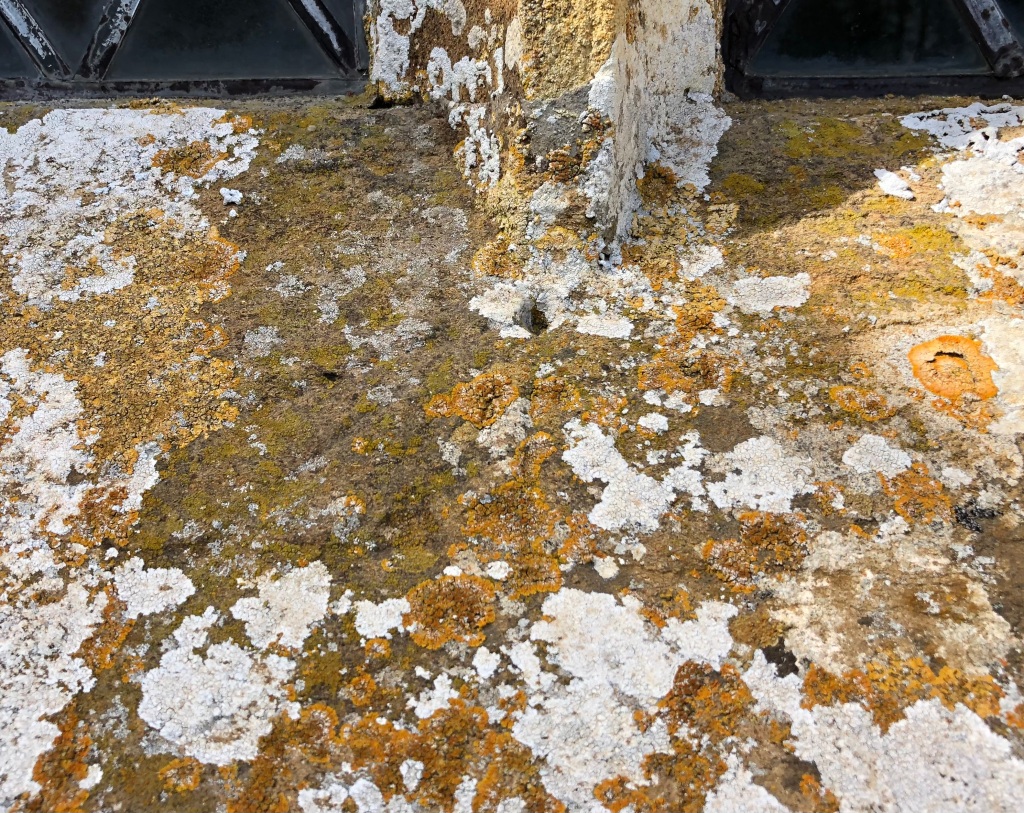
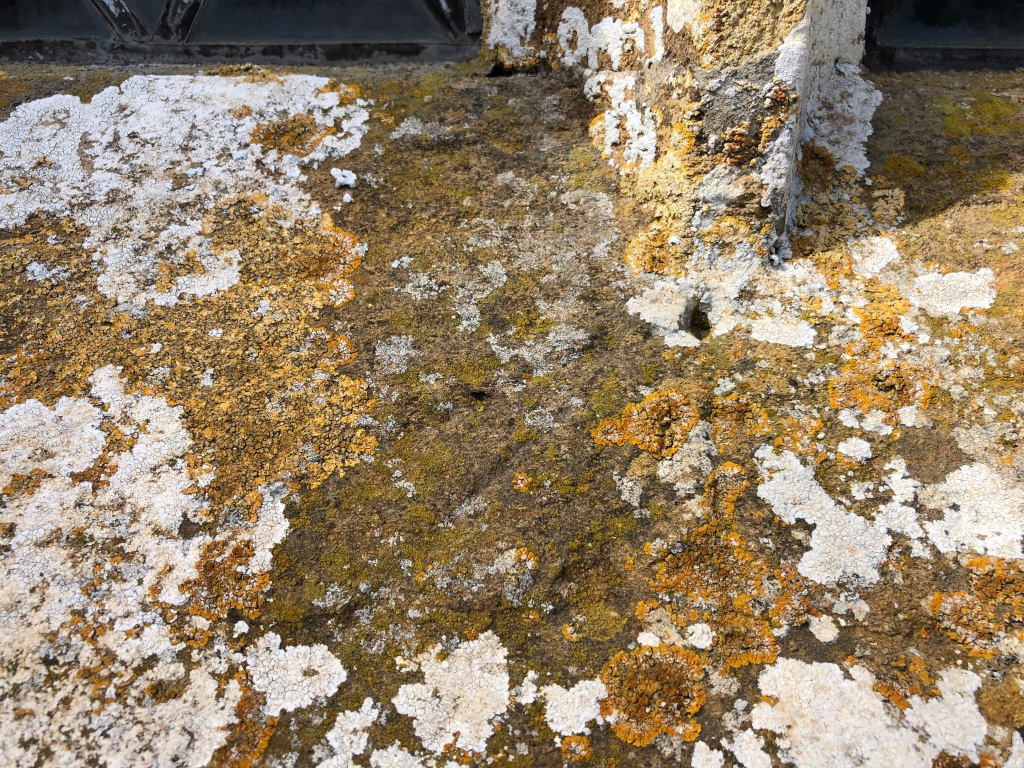
A remarkable and very rare C15 dial, possibly unique (cf nearby THORNFORD). It is located on a window sill of the S aisle, incised at an angle of 35º. It is quite difficult to examine – even close to – because of erosion and lichen. The style hole is centred on the stone divide between 2 windows. To be effective it must have been angled forwards: C15 dial deliberately positioned centrally. Gnomon must have been bent over, perhaps horizontally. Lines are quite accurately cut GLP.
There were originally 12 lines – the full complement for a semicircular dial. However, many are so weathered that they are barely visible – some not at all. The church is across the fields from us and I have spent some time with the dial, examining it and photographing it at different angles and in different light. I’ve managed to identify 8 lines including the horizontals, much as shown on the second BSS diagram below. The most visible lines are these:
St Mary . Holnest . Dorset – diagram of scratch dial on window-sill
St Mary . Holnest . Dorset – scratch dial diagrams BSS
St Mary . Holnest . Dorset – rare scratch dial on window-sill
VERTICAL DIAL
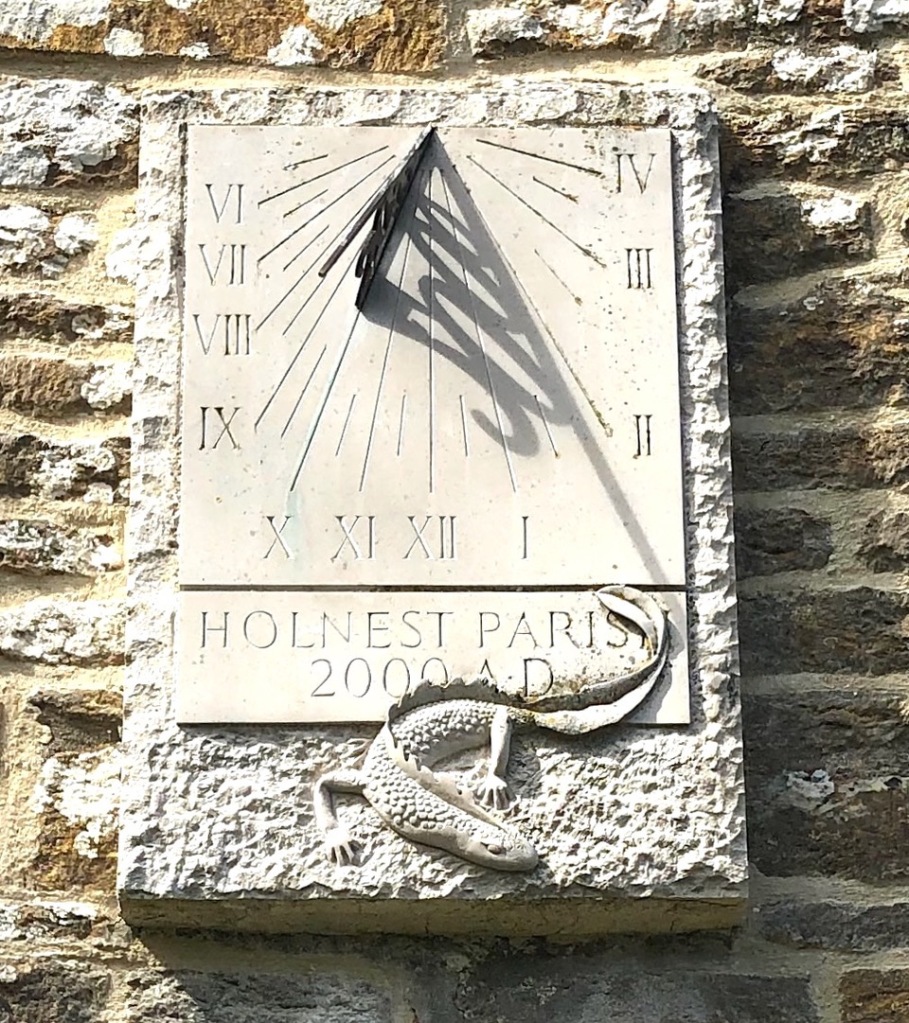
The porch has a date of 1650 and a new [millennium] sundial commemorates the Great Crested Newt that meant that a field nearby could not be developed for housing. Friends of Holnest Church.
A particularly good example of a meaningful local dial designed specifically for its location and time. The Battle of the Newt being won as the new Millennium approached, a fine dial to record both events was fully merited.
St Mary Holnest: millennial vertical dial dated 2000 with unique Newt Protection Symbol
WITCH MARKS & GRAFFITI
St Mary . Holnest . Dorset – witch marks, Marian marks, graffiti
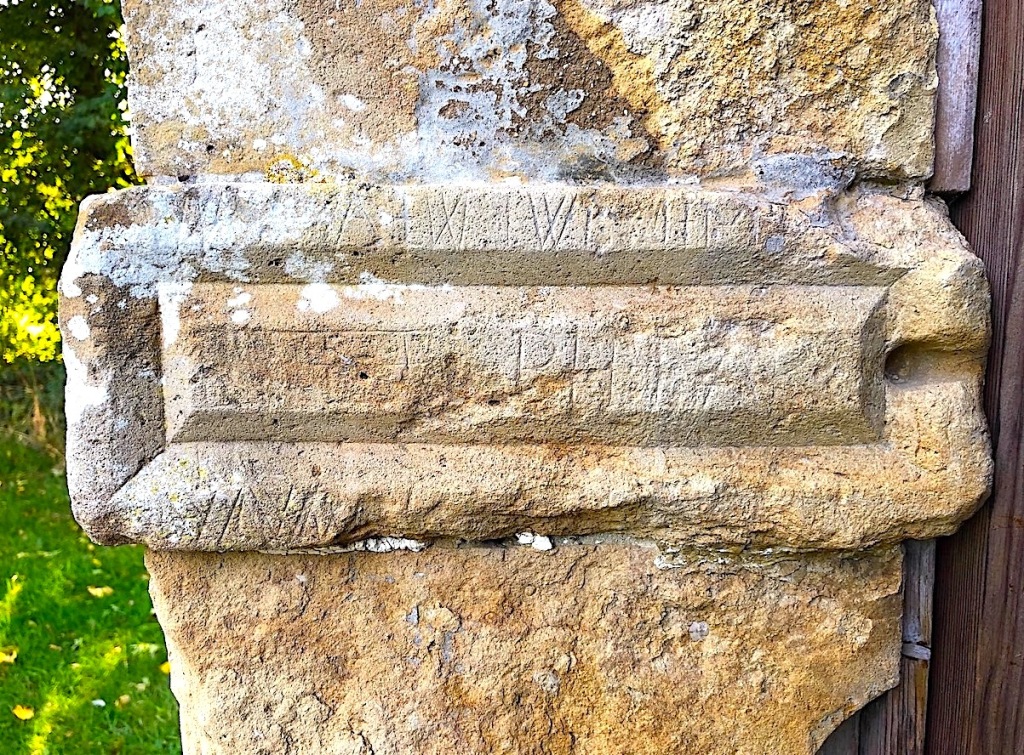
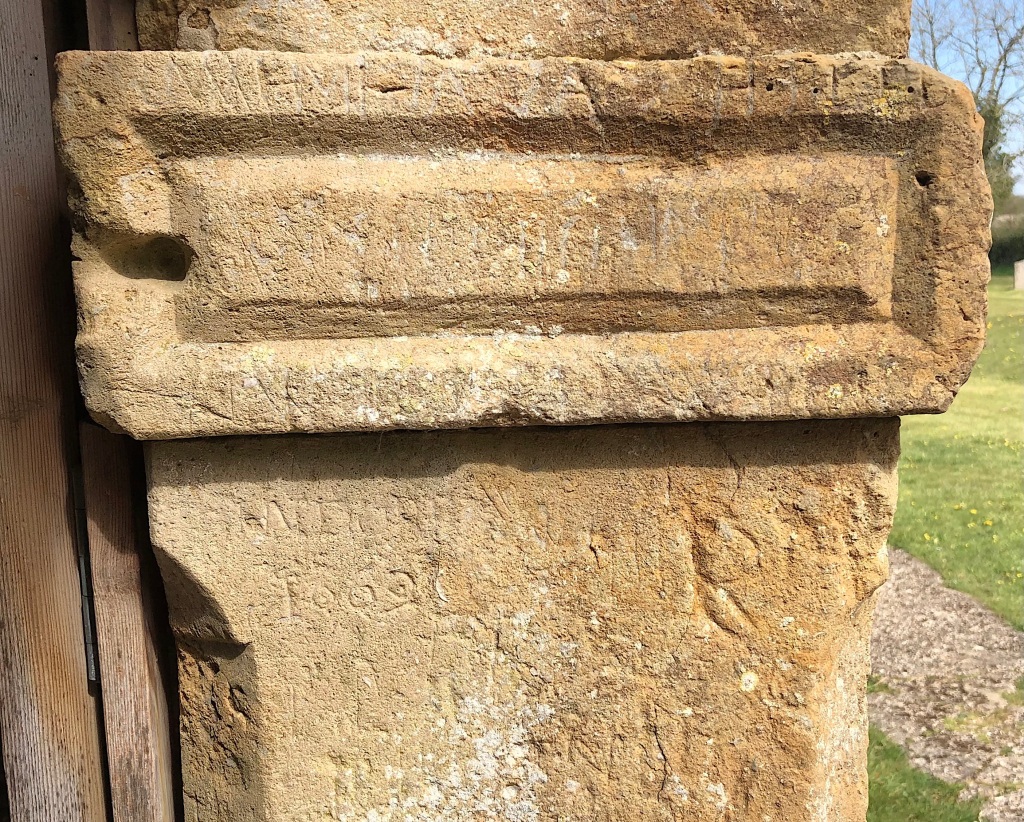
The S porch has a rich variety of medieval church marks. The example stones shown above have witch / ritual protection / apotropaic marks to ward off evil, in particular a number of Marian marks VV (Virgo Virginum / Virgin of Virgins). There are also initials and C17 dates.
CONSECRATION CROSSES
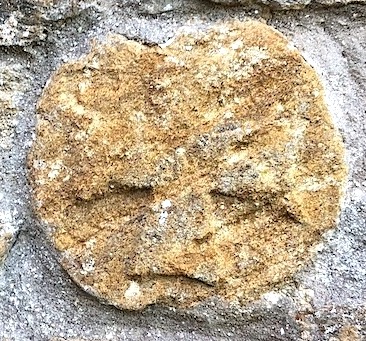
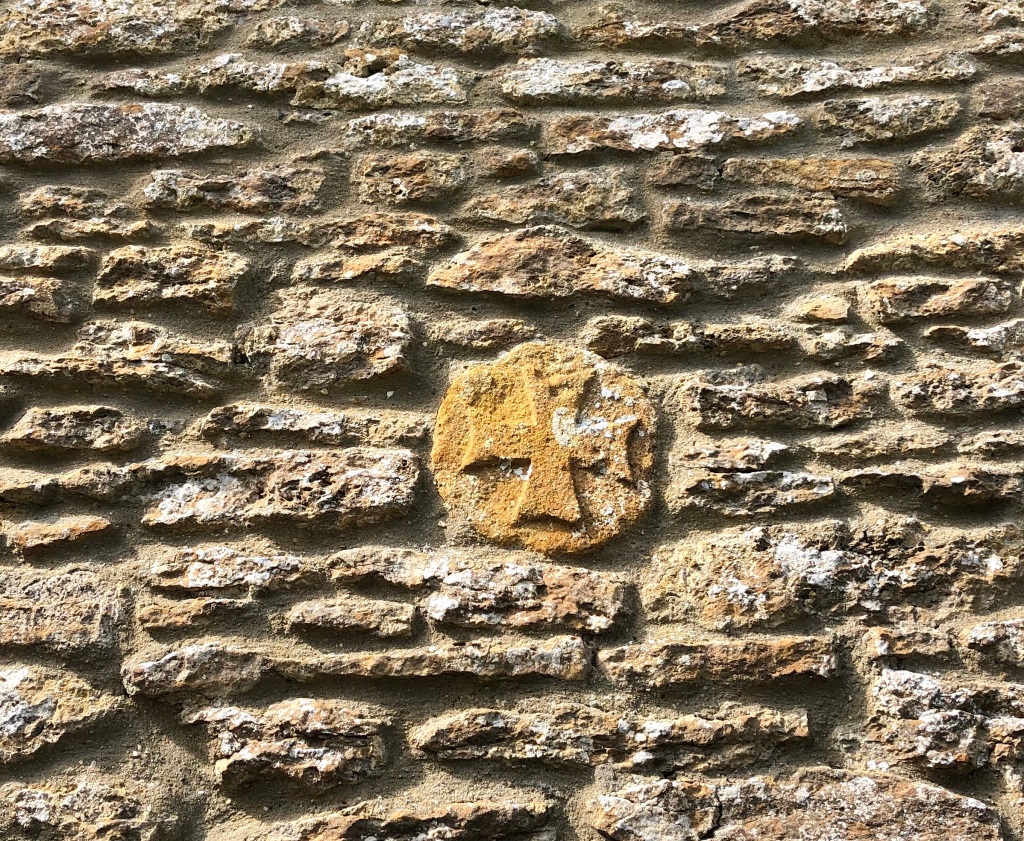
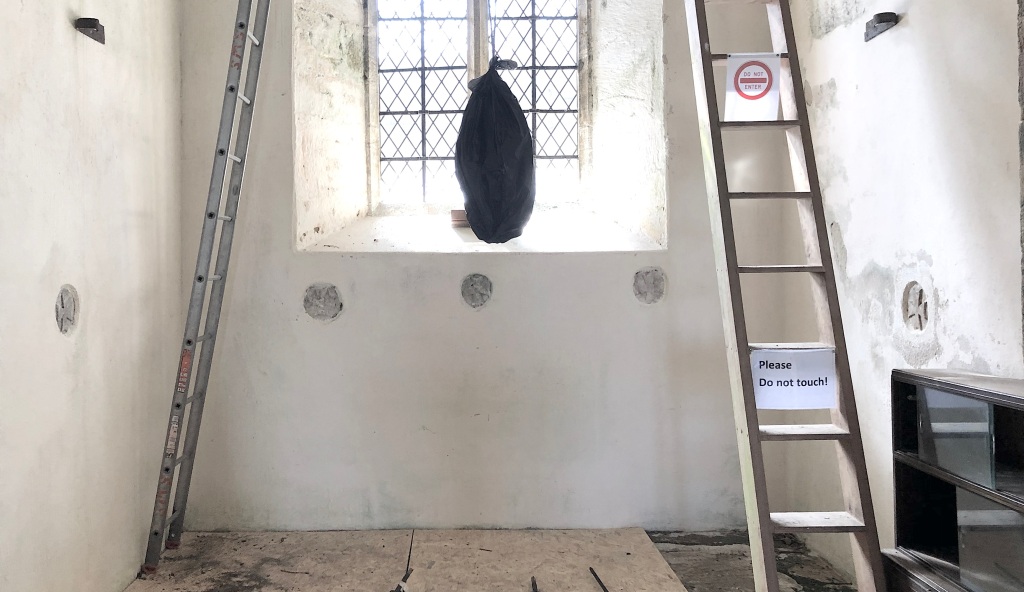
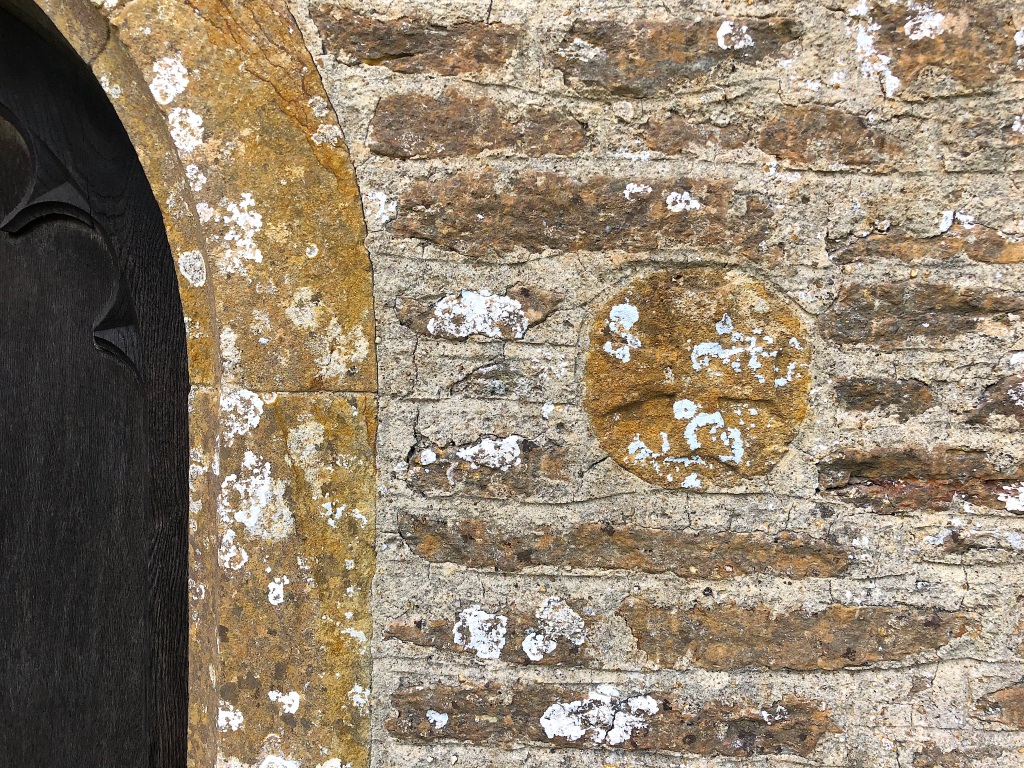
There are 14 in all, 12 being the usual maximum. 5 are inside the church on the tower walls
Consecration Crosses: On chancel— flanking E. window externally, four crosses; flanking S. doorway, two crosses. On nave—W. of heads of N. windows, two crosses. On S. aisle—over E. window and W. of S. window, two crosses. On W. tower, on N. and S. walls, one cross and below W. window, two crosses; formy crosses fourteen in all, mediæval. BHO
St Mary . Holnest . Dorset – Consecration Crosses
GSS Category: Scratch Dial, Mass Dial; Church Marks, Witch Marks, Protection Marks; Consecration Crosses
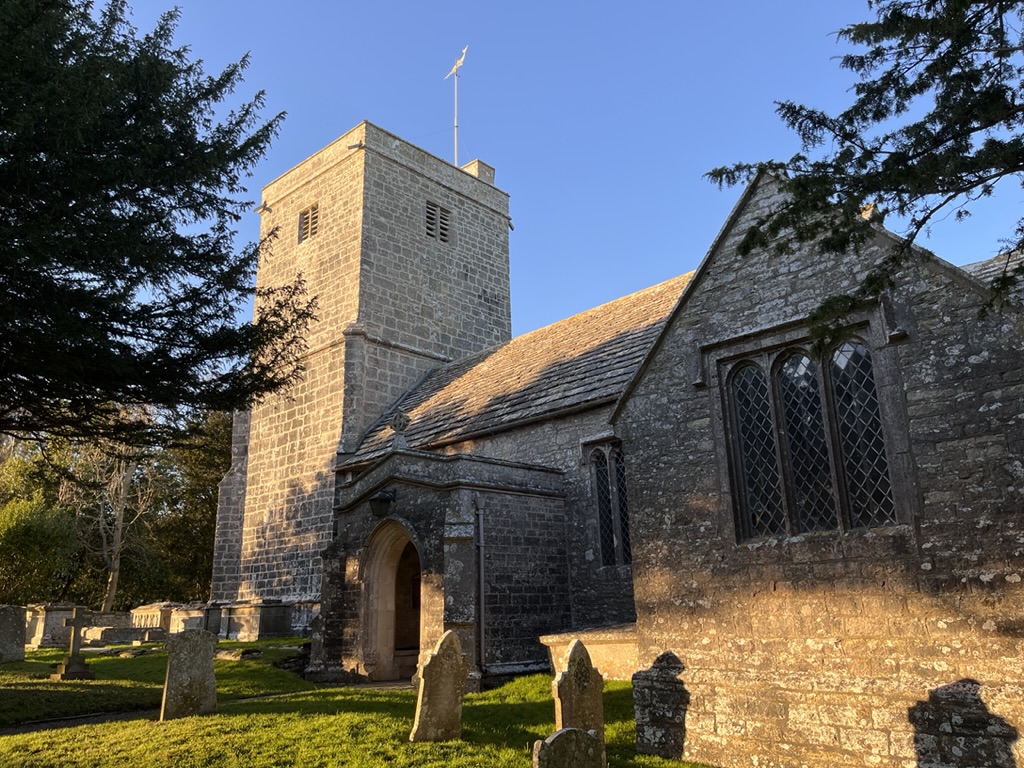
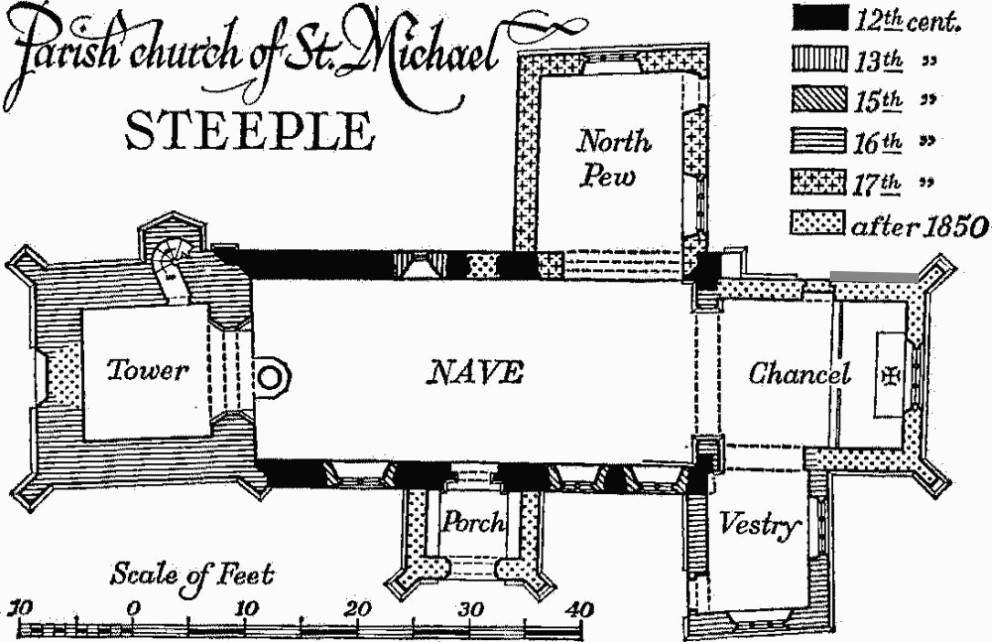
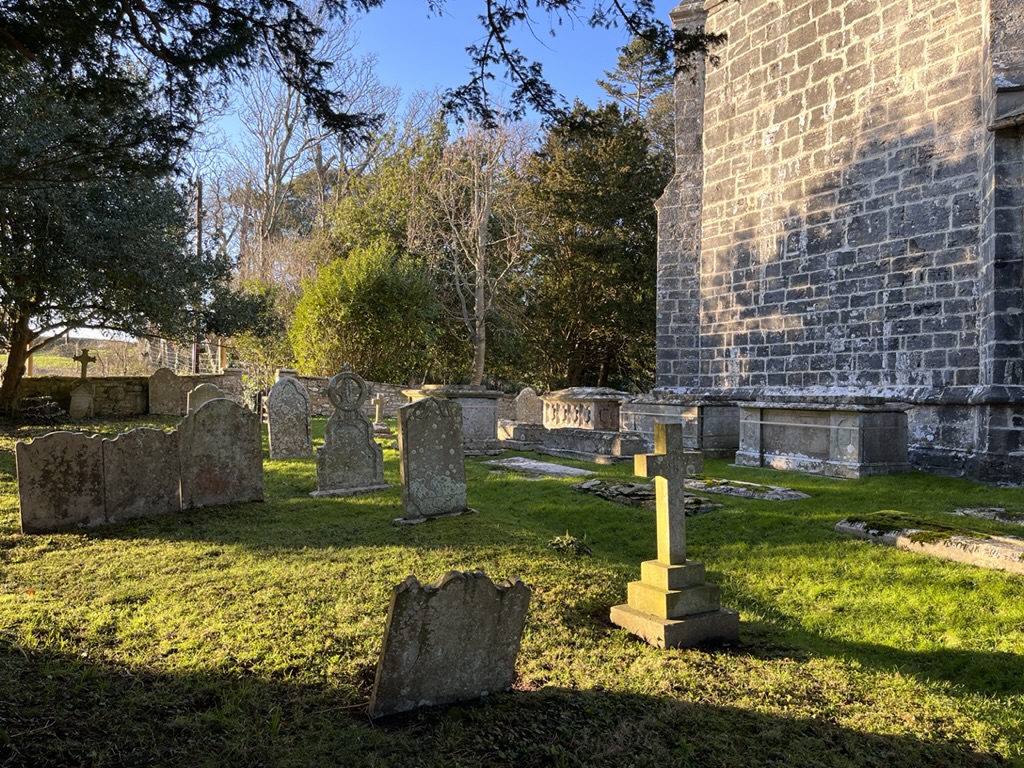
GRADE 1 † C12 origins (nave), enlarged C16 & C17. Mid-C19 restorations; chancel rebuilt. Despite the village name, C16 tower. Fascinating history, with strong links to George Washington: The Lawrence family, Lords of the Manor since the C16, married into the Washington family in 1381 and their Coat of Arms incorporates the Stars and StripesBLB. Much of interest inside inc an impressive barrel organ, and good stained glass E window. Fine chest tombs in the churchyard. 6m S of Wareham, inland from the jurassic coastline at Kimmeridge. 50.6275 / -2.1265 / SY911808
DIAL
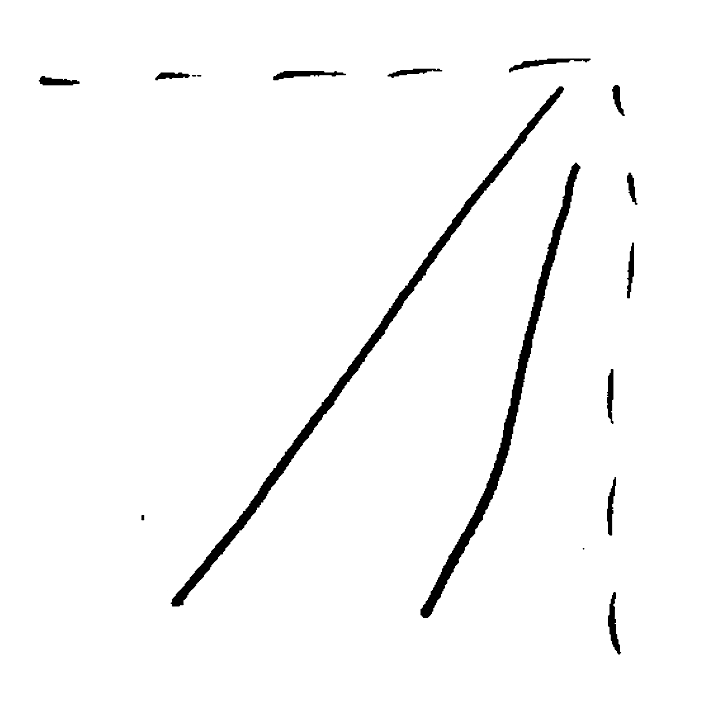
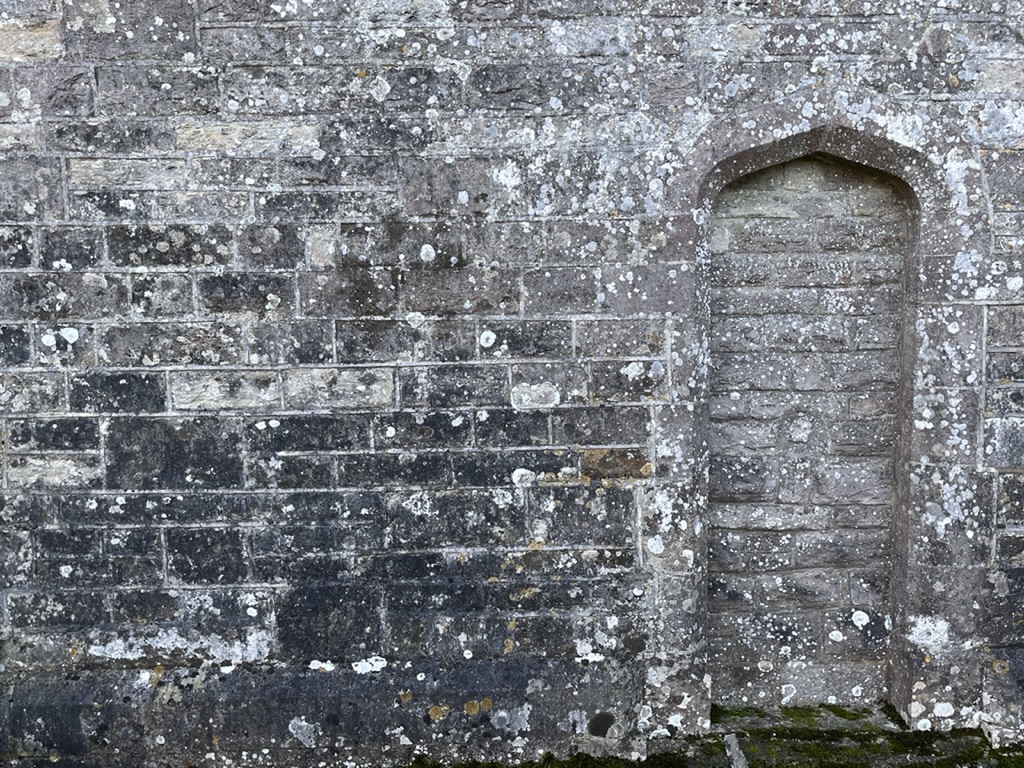
In his 1997 survey GLP noted a single dial relocated to the N wall of the Chancel, E of blocked N doorway. He described it as doubtful – superficially a poorly preserved dial… with 2 lines on a reshaped stone… no gnomon hole, probably relocated during C19 work on the chancel. He found other stones in the vicinity with similar markings – perhaps through weathering – and concluded that the ‘dial’ might not actually be a genuine one at all.
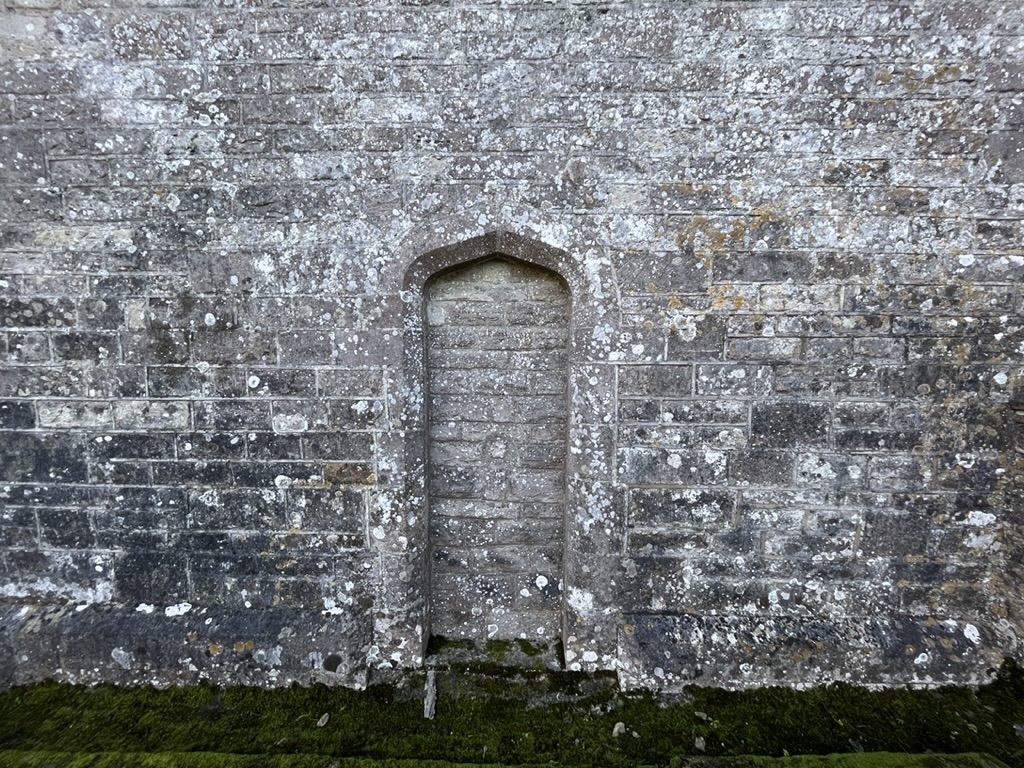
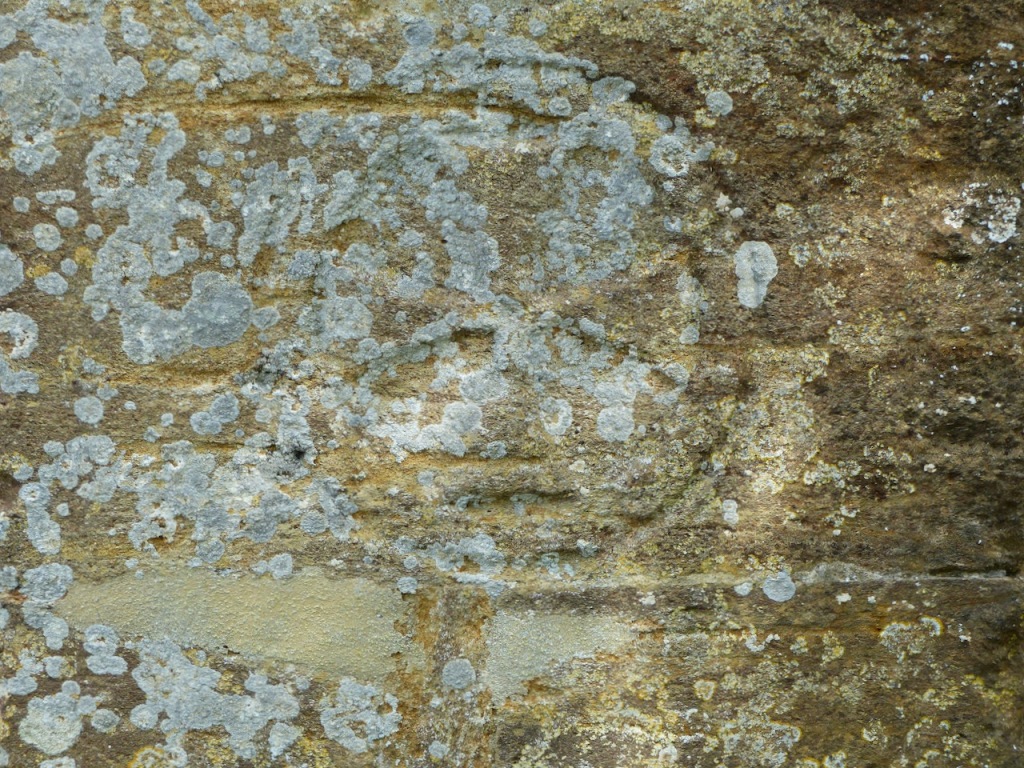
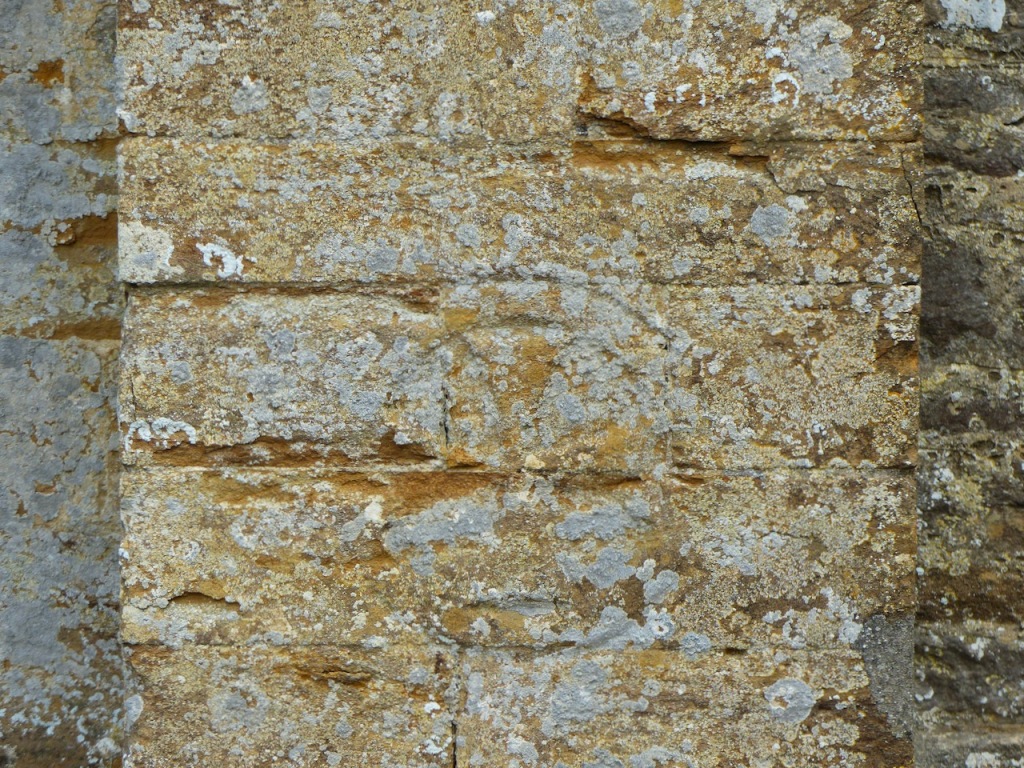
As with a couple of other Dorset churches recently, I couldn’t pinpoint a design such as GLP describes. There are obvious lines or striations on some stones eg top R of the doorway (see below), but little to report on the wall E of the door. The lack of a gnomon hole is one reason for missing eroded dials. This lack may also reinforce doubts about identifying dial-ish marks as being part of a dial. Anyway, if there is one, I missed it.
St Michael . Steeple . Dorset – BSS
The dilemma has been whether to post, rather pointlessly, a failed dial search. However this small secluded church has other merits. It earned its Grade I listing for special architectural or historic interest. I have included a few photos below to illustrate this. The Washington link is only one of the significant features.
St Michael . Steeple . Dorset – North Doorway
IMAGES OF ST MICHAEL AS COMPENSATION
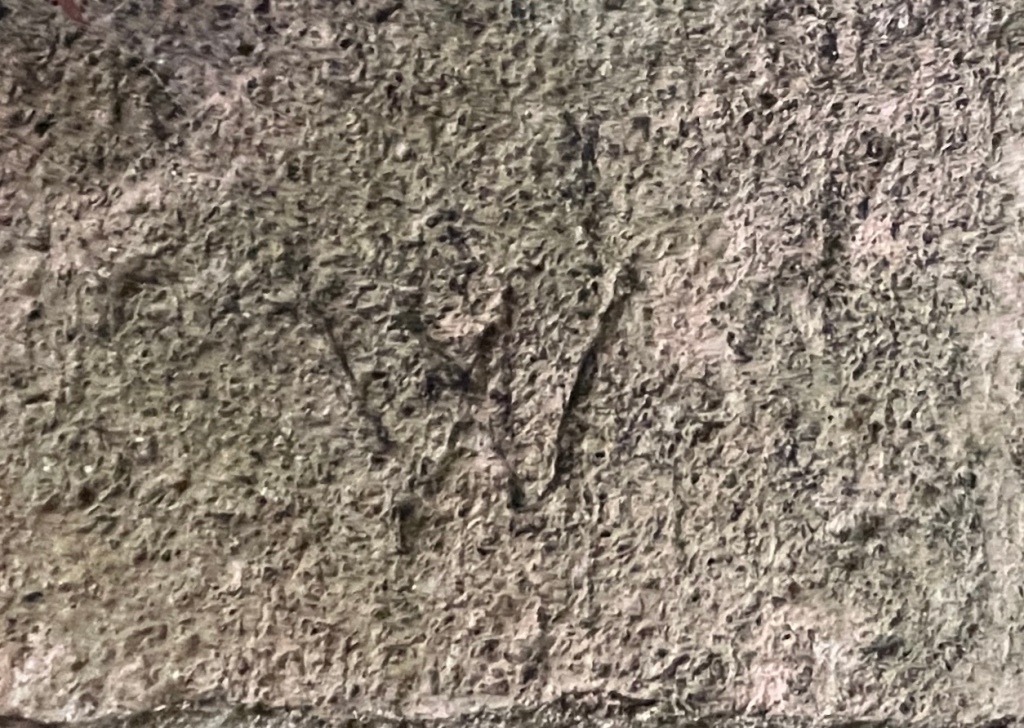
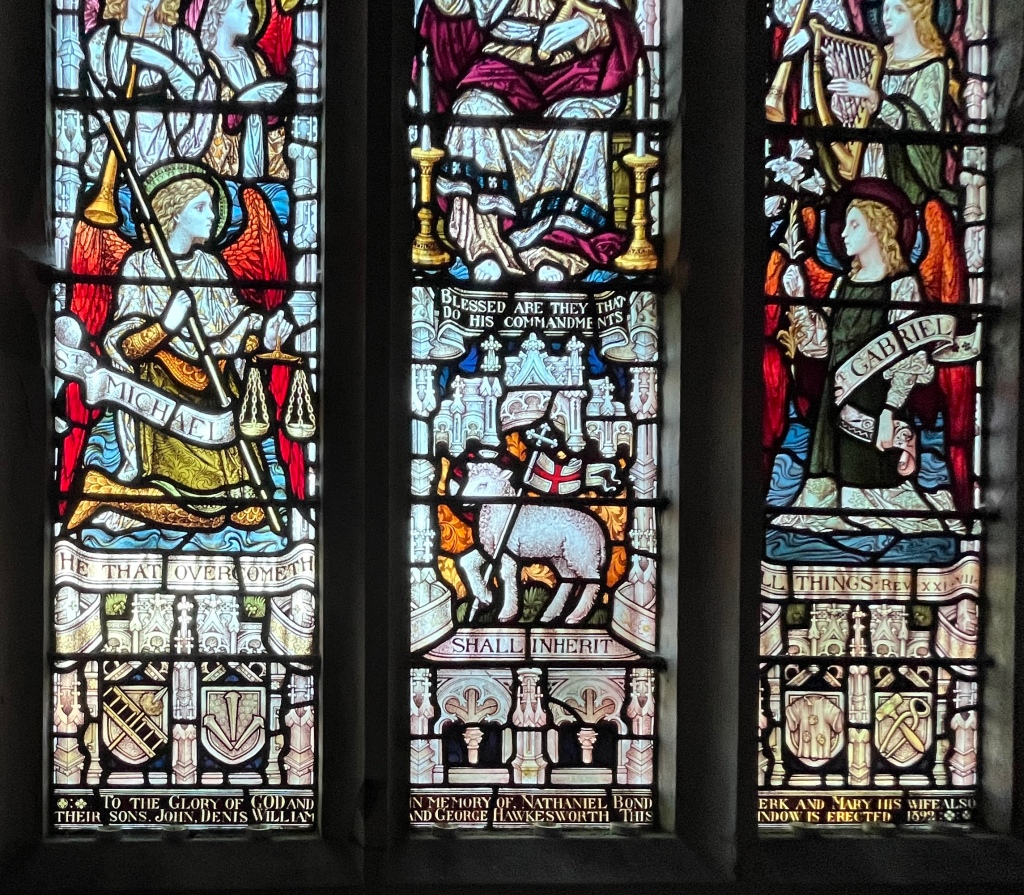
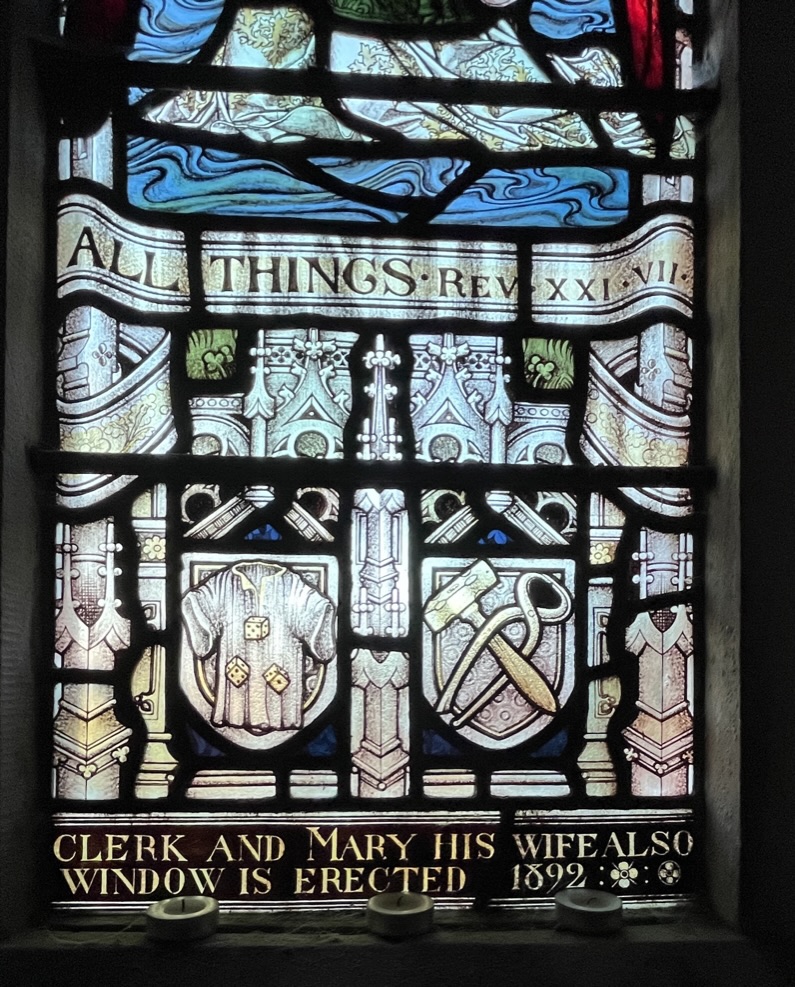
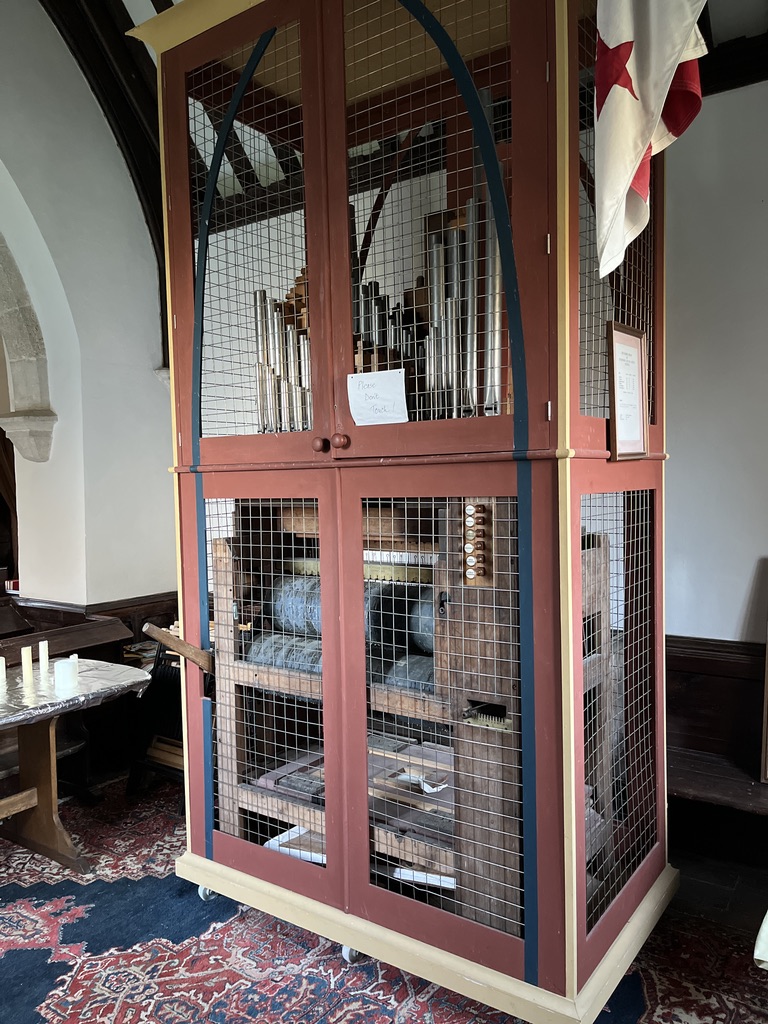
Chest Coffins in the churchyard; crude apotropaic (part-)hexfoil of uncertain age; Marian VV ‘witch’ mark inside the porch; 2 examples of the E window stained glass (image 2 shows dice used for the division of Christ’s robe); the barrel organ
St Michael . Steeple . Dorset – Chest Coffins, Hexfoil, Marian mark, Stained Glass, Barrel Organ
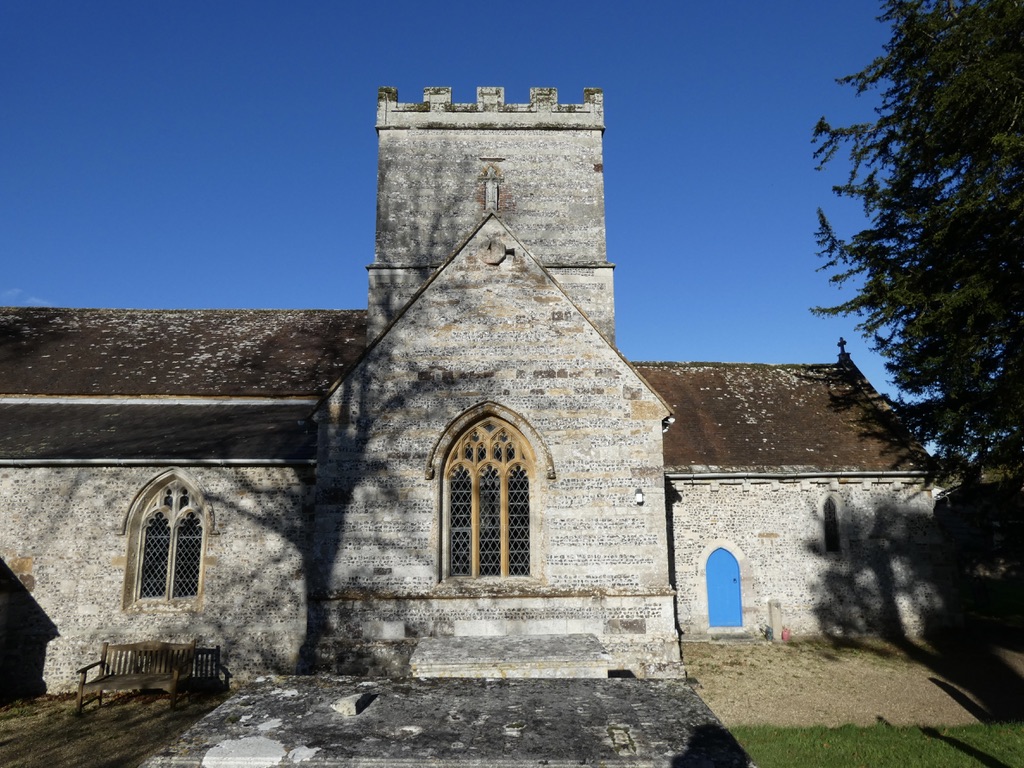
GRADE I † Early C13 chancel with trace transepts (BHO); C14 crossing tower; C15 south chapel and nave; restoration mid-C19 (Ferrey). A most unusual late C17 octagonal dial; 6m SW of Blandford Forum, just off the main road to Dorchester (12m). 50.8004 / -2.234 / ST836001
VERTICAL DIAL C17
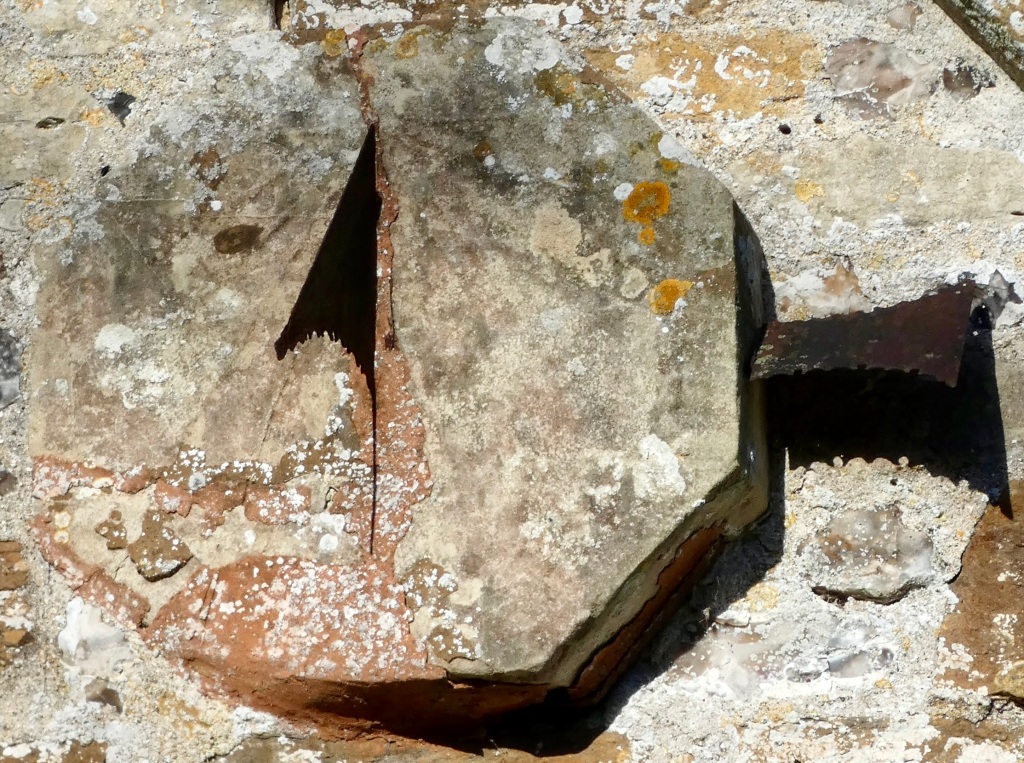
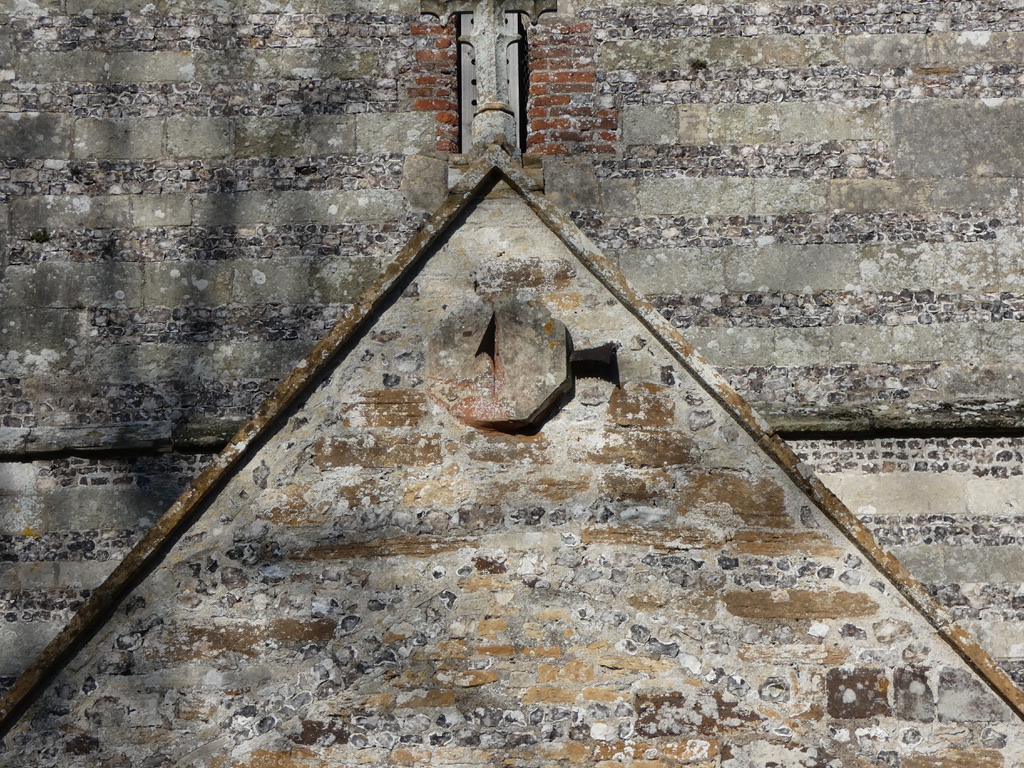
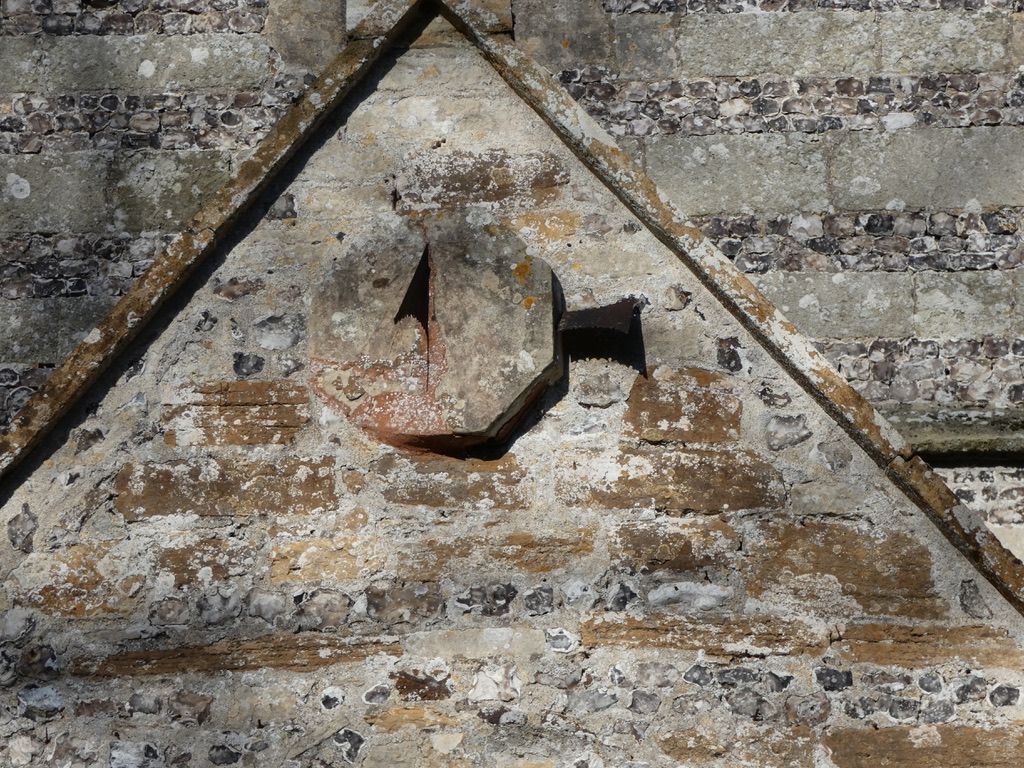
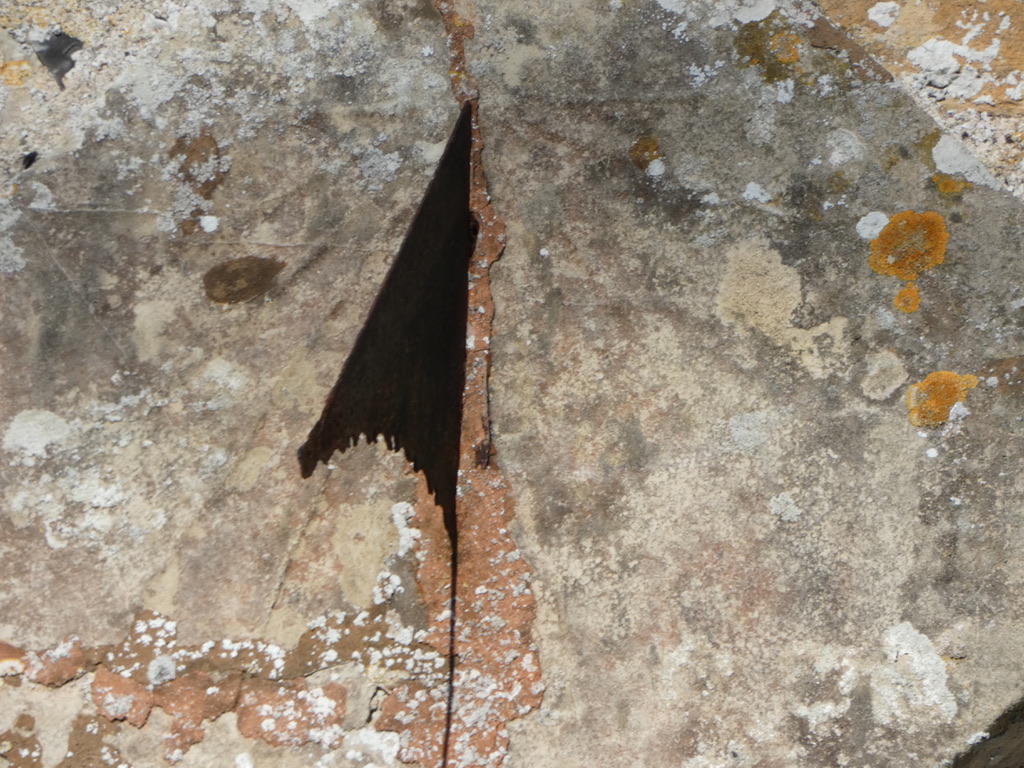
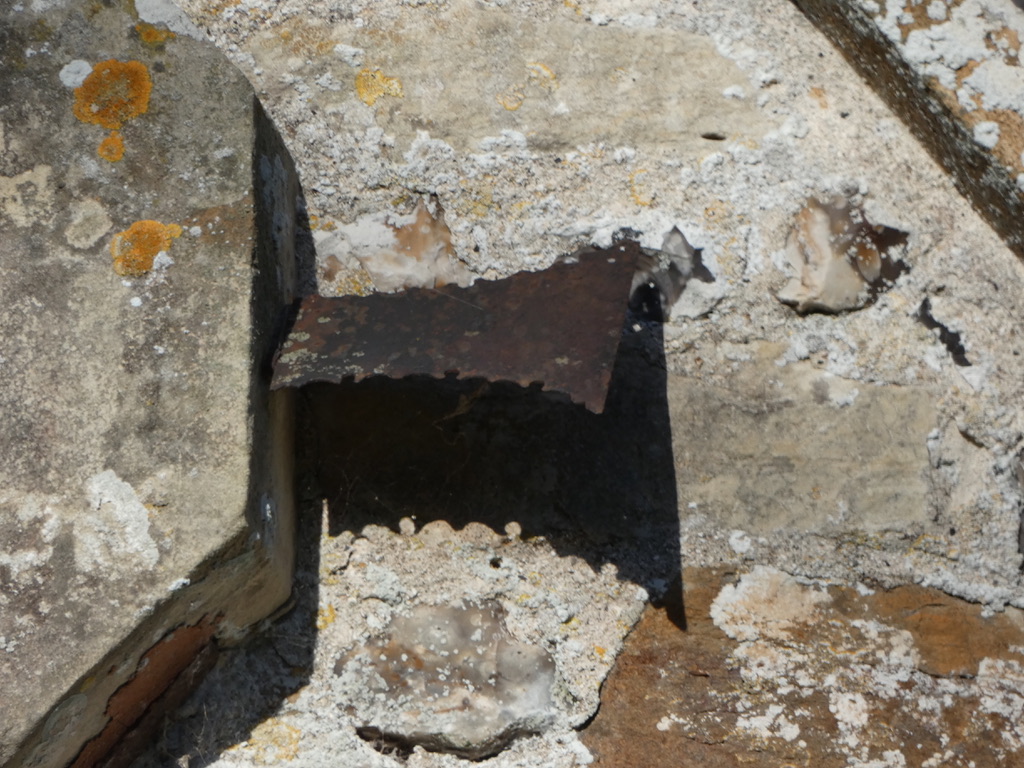
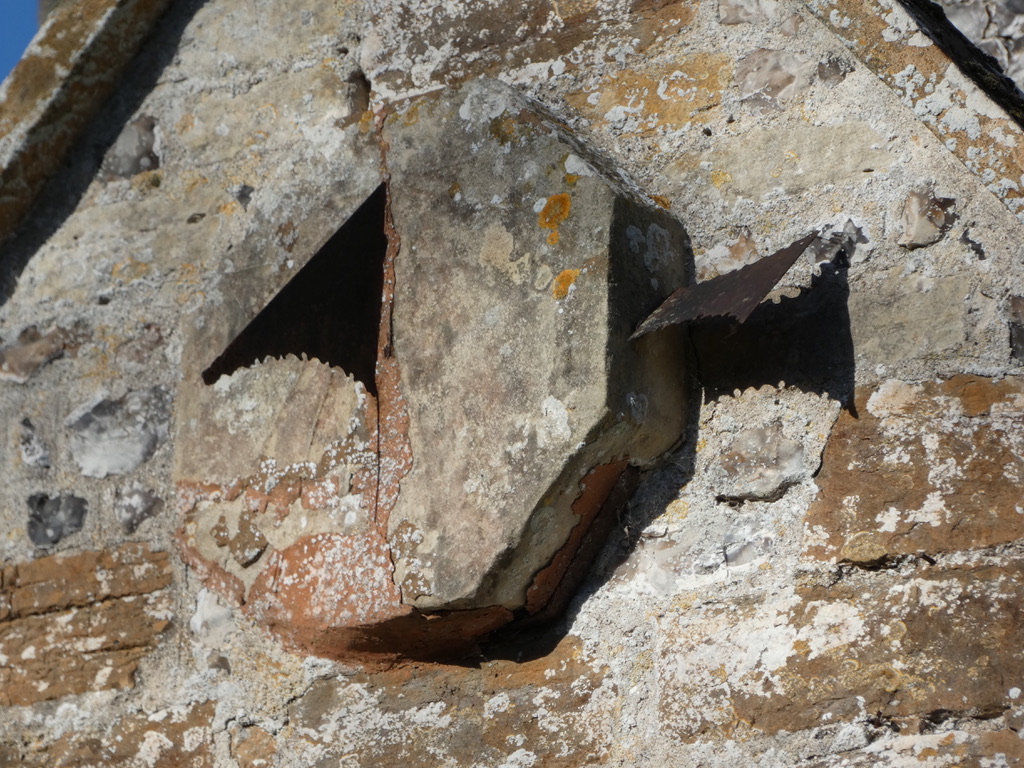
The remarkable vertical dial is located at the apex of the S Chapel gable. It dates to late C17 (BHO). The lines radiating from the top end of the gnomon are reminiscent of a scratch dial. The dial is canted for accuracy, and deeply enough to accommodate a rare E dial. Both gnomons are unusual, not least by being more toothed than merely serrated.
THE EAST DIAL
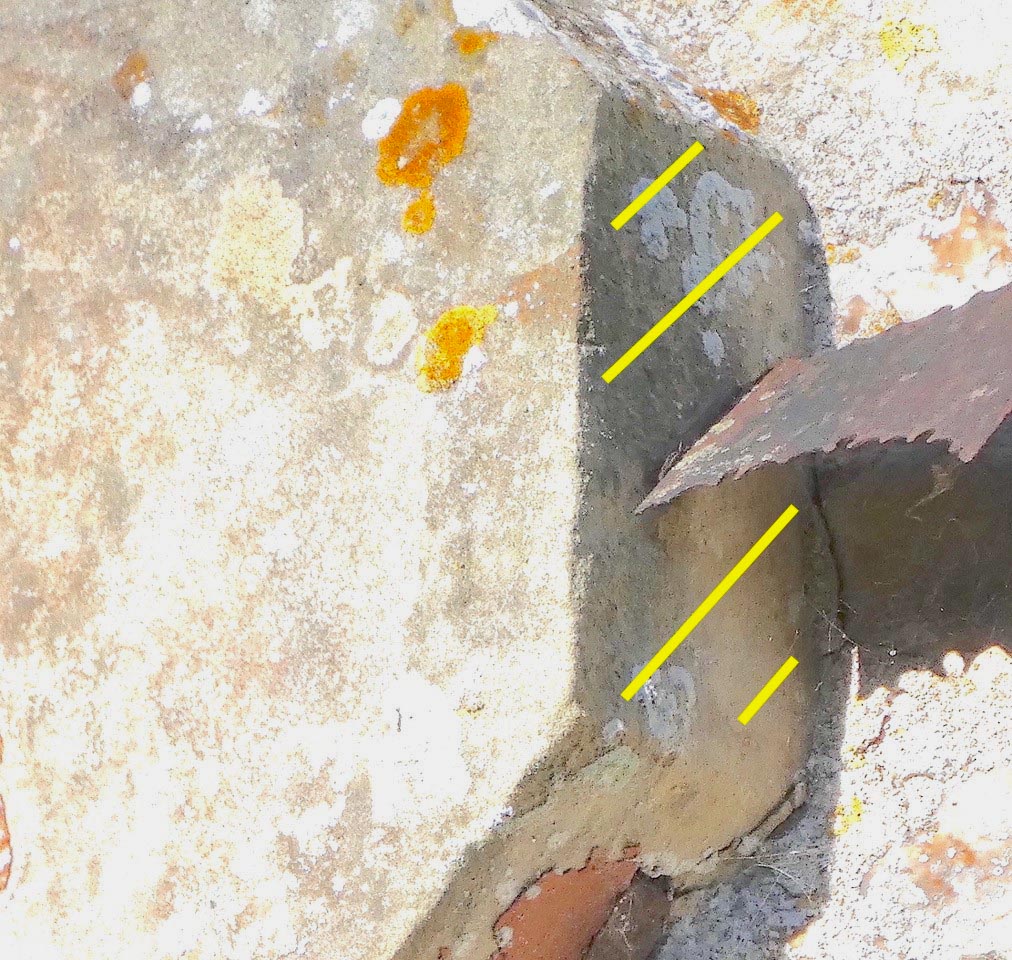
It is very unusual (and possibly unique) to bother to delineate the east or west edge of a canted dial; and really quite strange to use such a tall gnomon, which will only cast a shadow for an hour or two at most.JF / BSS
John Foad (BSS) kindly marked up a close-up of the E. dial to show how it would have worked. He writes: It should have diagonal hour lines on it, though there is probably only room for a couple, as it will only see the sun briefly around 6 each morning. There is a suggestion in the records that there were at one time 2 raised lines, but a magnified image reveals no surviving evidence.
GRADE II* † C14, with (unusually) few changes until C19 additions and restorations (Street). An attractively uncomplicated church and churchyard. The tower houses 7 bells, of which 4 are dated 1600. 14m E of Dorchester 50.7778 / -2.1967 / SY862976
St Nicholas . Winterborne Kingston . Dorset
DIAL
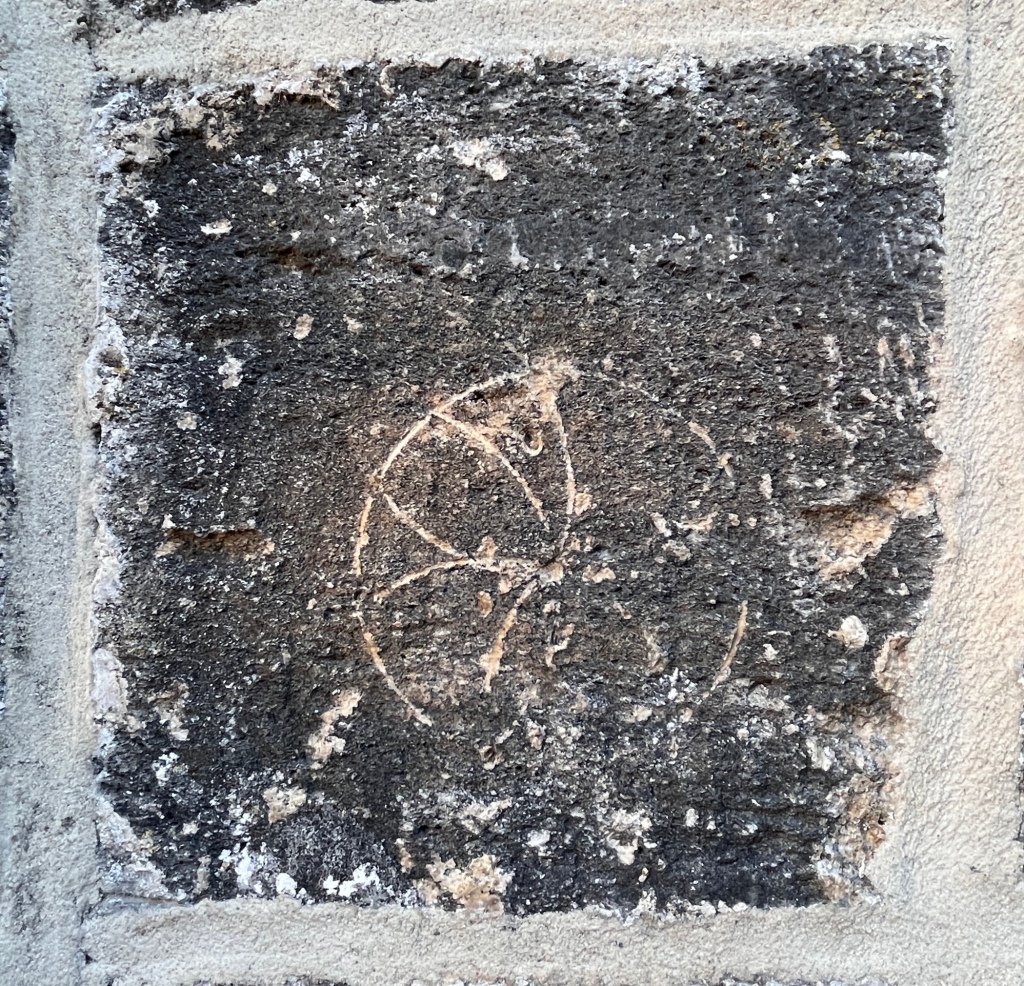
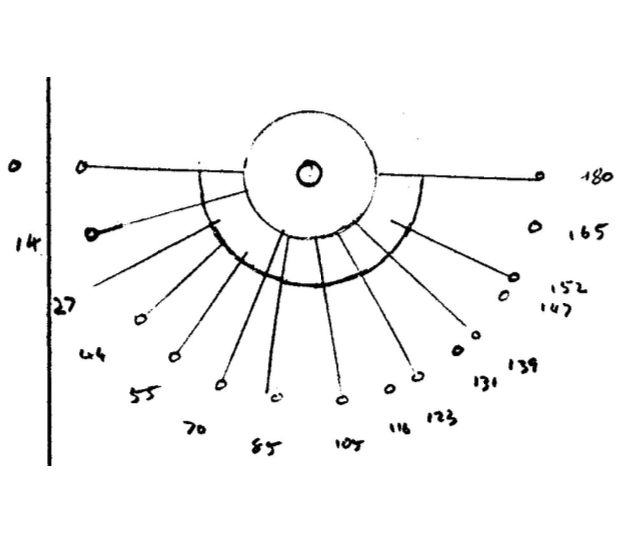
As I read it, the dial has a clear ‘midnight to noon’ line, extended at both ends; and a fainter 6-to-6 horizontal that ends more or less on the circumference. There are 3 other clear lines in LL quadrant, and perhaps other faint traces. I can’t make out more than that, even in a close-up. GLP recorded 13 lines, 7 of which extend beyond the circumference and notes that the dial is partially divided into decimal hours (LL quadrant), with ‘morning hours’ divided into 5 sections and the ‘afternoon hours’ into 6 (I’m not seeing the afternoon hours). He compares it to PIDDLEHINTON.
St Nicholas . Winterborne Kingston . Dorset – Scratch Dial
GRADE II* † C12 origin; alterations / enlargement in C14, C15, C16; restored 1872 (Wyatt). Walls mainly rubble stone and flint. A lovely setting, with a fine manor house. Much older-seeming even than the ubiquitous ‘Hardyesque’ description in these parts. Subtly hidden away 8m NE of Dorchester. 50.7827 / -2.3198 / SY775981
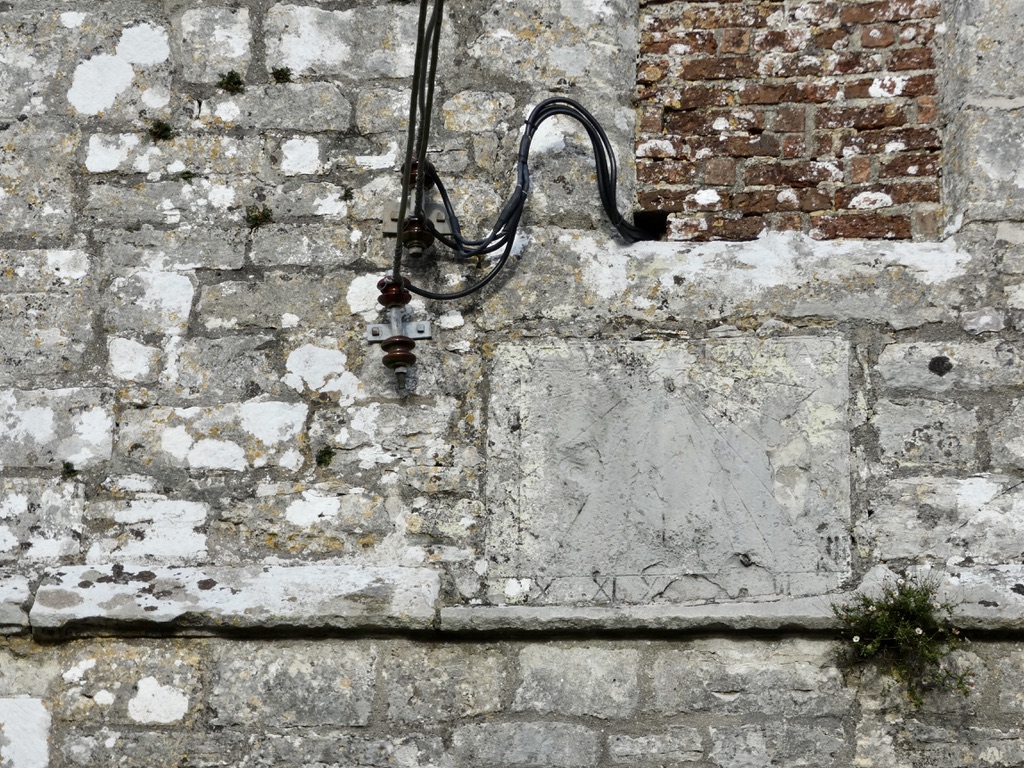
From the ground, this is a difficult dial to admire. It is high up, eroded, damaged, and gnomon-less. It would be easy to dismiss it as a disappointment after you have negotiated the narrow lanes that lead circuitously to the church. Luckily I brought a real camera with me (for scratch dials I just use my phone) to catch the details of 3 vertical dials on churches in the area.
The dial, on a rectangular stone slab, is dated 1671, and marks the hours from VIII am to VII pm. The motto across the top reads UT UMBRA SIC VITAAs a shadow so is life, one of several similar motto variants commonly found. The motto is enclosed within the initials A and R. (BHO elides the initials and the motto to form AUT UMBRA SIC VITAR).
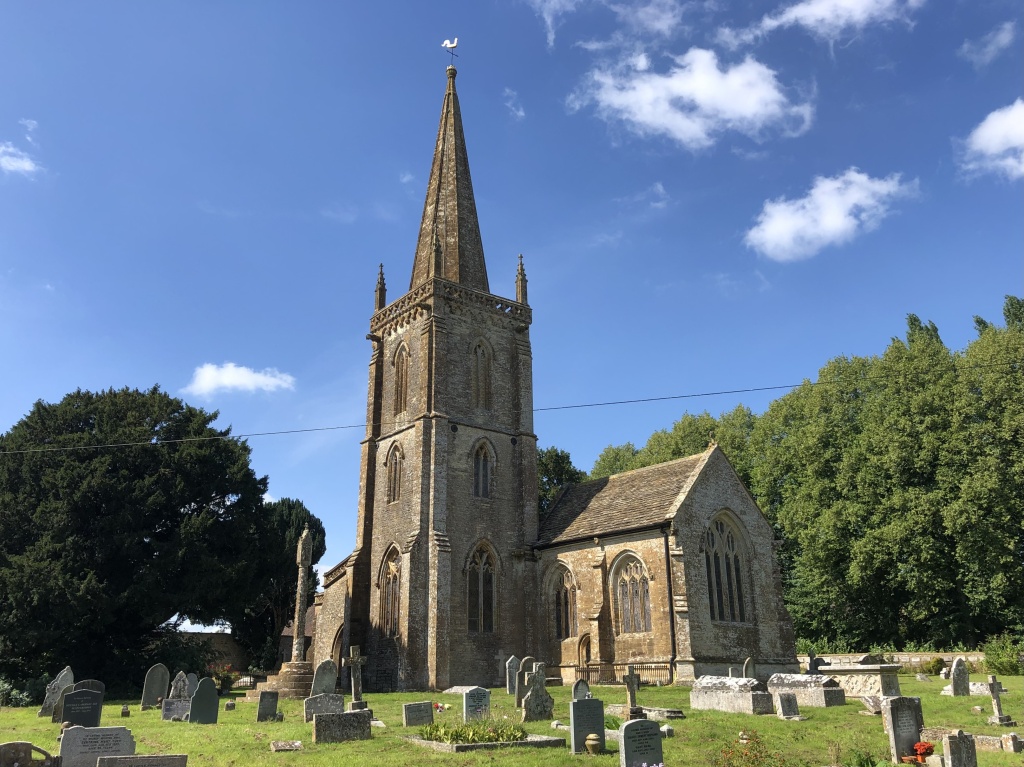
GRADE I † C13 origin nave, N chapel, later enlarged; C14 tower & porch; C15 rebuilt chancel; subsequent repairs and C19 restorations. One of only 3 Dorset medieval churches with a spire (with Iwerne Minster & Winterborne Steepleton). A fascinating church smothered in history, the details best researched separately. C15 font. Pride of place is taken by the superb 16th century screen, which is one of the best in DorsetNCT. Good C16 bench ends. For a quick overview of St Andrew BLB. At the centre of the Sherborne – Yeovil – Marston Magna triangle. 50.9648 / -2.5859 / ST589185
DIALS
There are 4 dials in 2 pairs. They have much in common. All are on buttresses; all are C15; and unusually, all are designed entirely with pocks, without any lines at all. There are a couple of other plausible dials with a promising style hole in a mortar line or roughly central on a stone. There are hints of pocks that may be related, but erosion and lichen make it hard to be sure. Best left as a mystery.
DIAL 1
St Andrew . Trent . Dorset – Scratch Dial 1
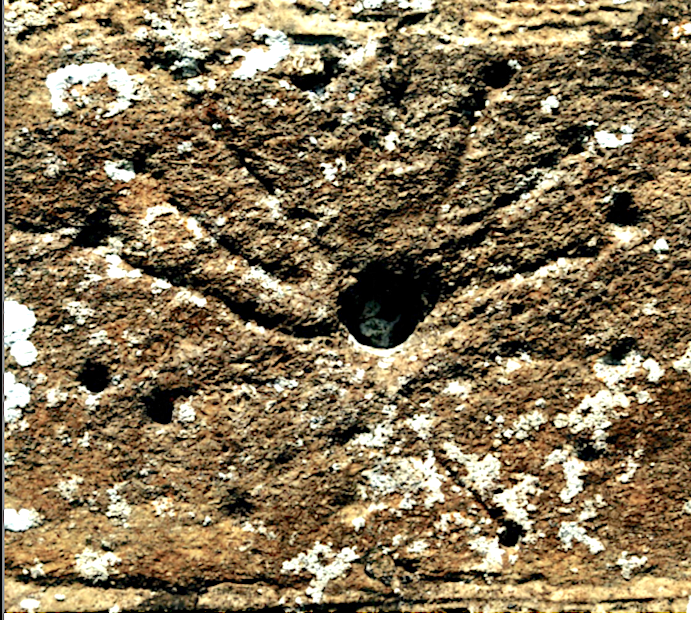
On the chancel, SW face of the end buttress. The gnomon hole is in the dial stone, with a curve of 7 pocks below it, of which one has a second that perhaps marked a an off-vertical noon line.
St Andrew . Trent . Dorset – Scratch Dial 1
St Andrew . Trent . Scratch Dial 2 – BSS
DIAL 2
St Andrew . Trent . Dorset – Scratch Dial 2
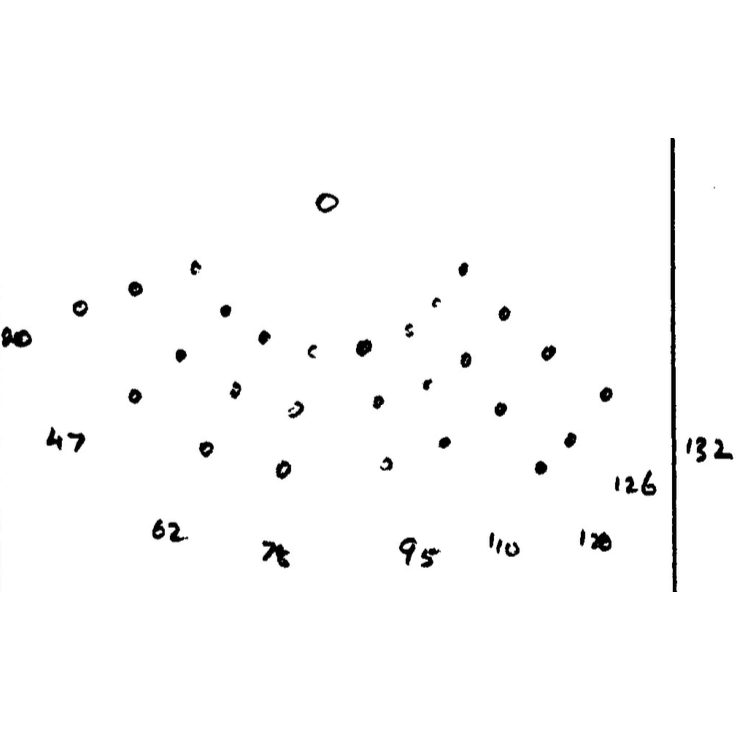
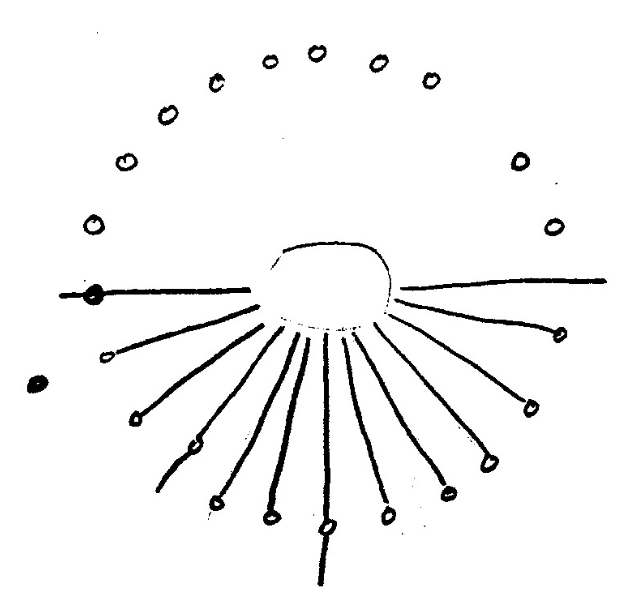
Dial 2 is the most intriguing of the 4 dials. It is below Dial 1 on the SW face of the chancel buttress. There are 24 holes drilled in a curve of 3 rows, with 8 in each row. The careful design has the dots radiating accurately from the gnomon hole as though they were lines. Additionally, there are outlier dots – 3, perhaps 4 – below the neat curve: see image above. They are drilled more or less in line with the design on the main dots, in a way that looks meant. GLP refers to them as extra dots.
St Andrew . Trent . Dorset – Scratch Dial 2St Andrew . Trent . Scratch Dial 2 – BSS diagram
DIAL 3
St Andrew . Trent . Dorset – Scratch Dial 3
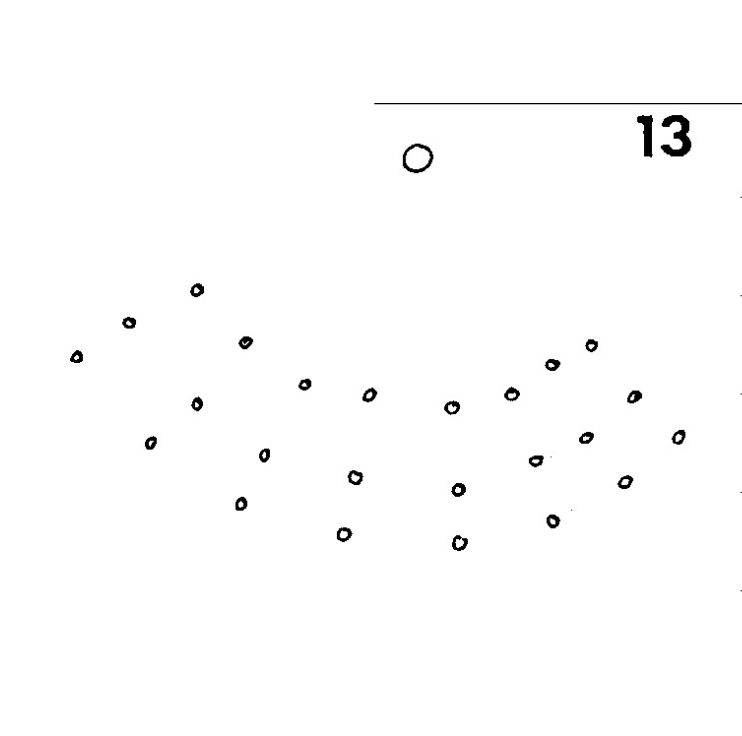
Dial 3 is on the cancel buttress E of the doorway. There are 6 pocks in a curve below a gnomon hole presumed to have been in the mortar but no longer identifiable. GLP concluded that this dial and its companion below were unlikely to have been accurate.
St Andrew . Trent . Dorset – Scratch Dial 3
St Andrew . Trent . Dorset – Scratch Dial 3 BSS
DIAL 4
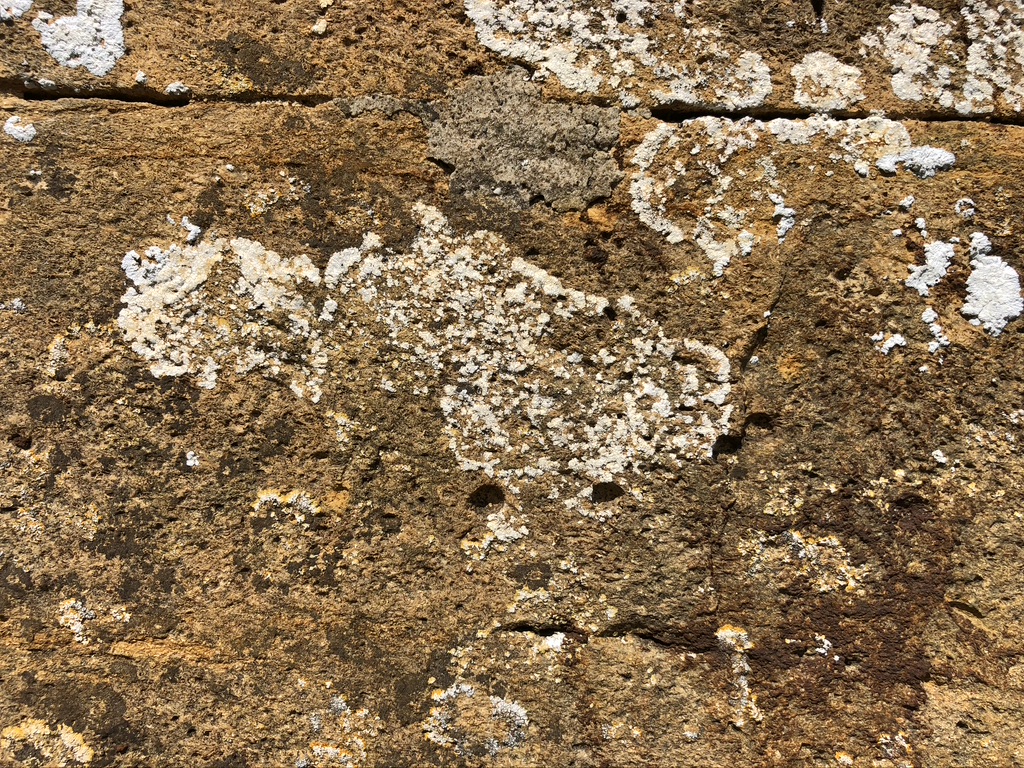
A similar dial with 4 pocks and a cement-filled gnomon hole in the mortar line. GLP also doubted its accuracy. It is hard to account for the fact that 2 such similar basic dials are so close. Rival sextons? A competition? A new incumbent?
St Andrew . Trent . Dorset – Scratch Dial 4
St Andrew . Trent . Dorset – Scratch Dial 4 BSS
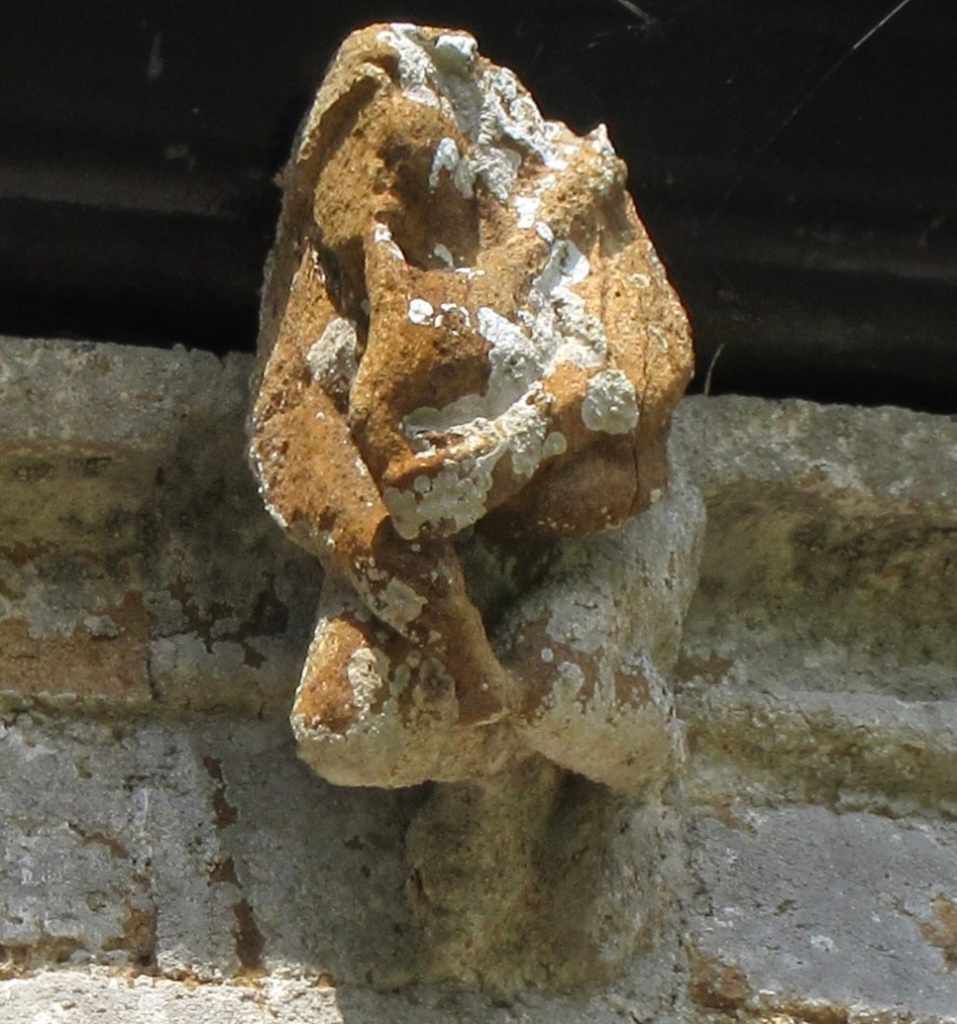
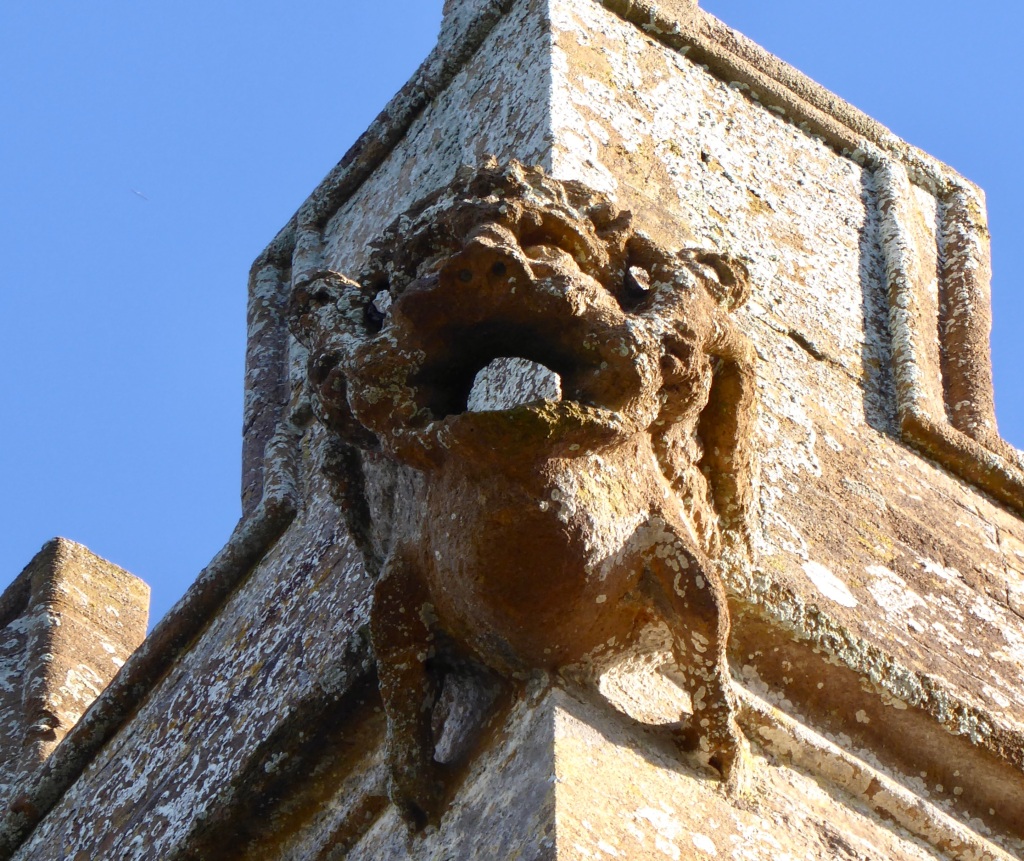
Bagpipe-playing hunky punk – St Andrew Trent Dorset (Keith Salvesen)
Note: To see the Vertical Dial, visit the Old Dial page HERE
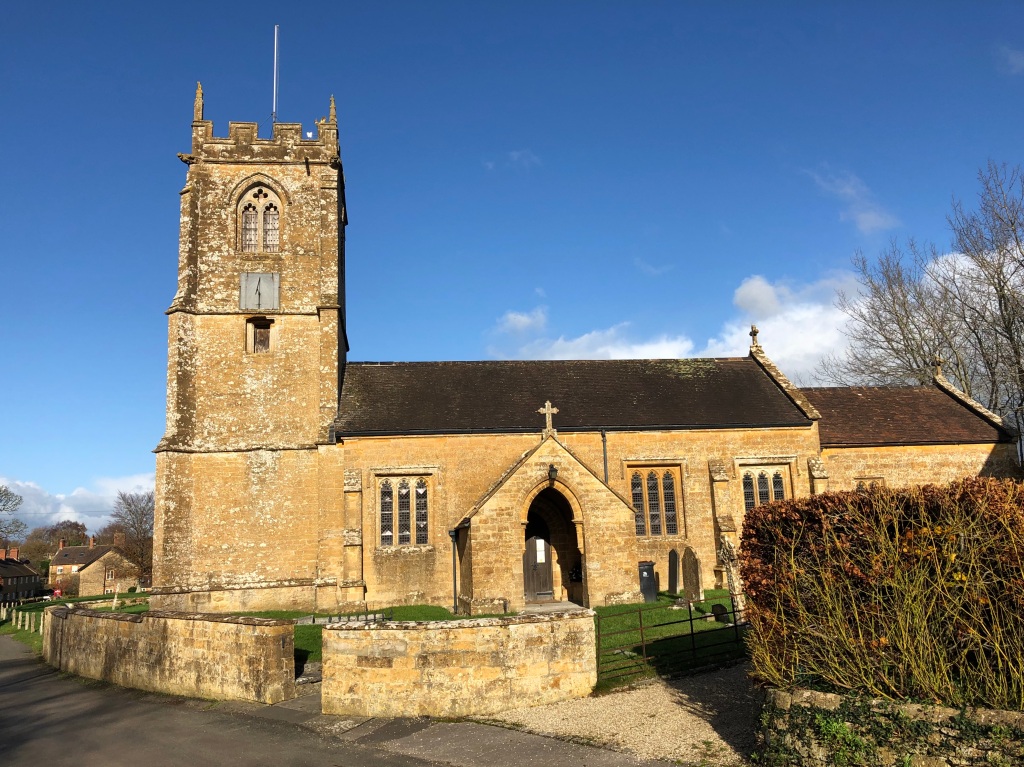
GRADE II* † Early C13 chancel, nave, N doorway; C15 N porch; c1500 W Tower; later additions; C19 restorations. A simple typically Dorset small church in an attractive location. 2m S of Dorchester (can be combined with Winterborne Steepleton nearby (2 dials). 50.6884 / -2.4604 / SY675877
✣
DIALS
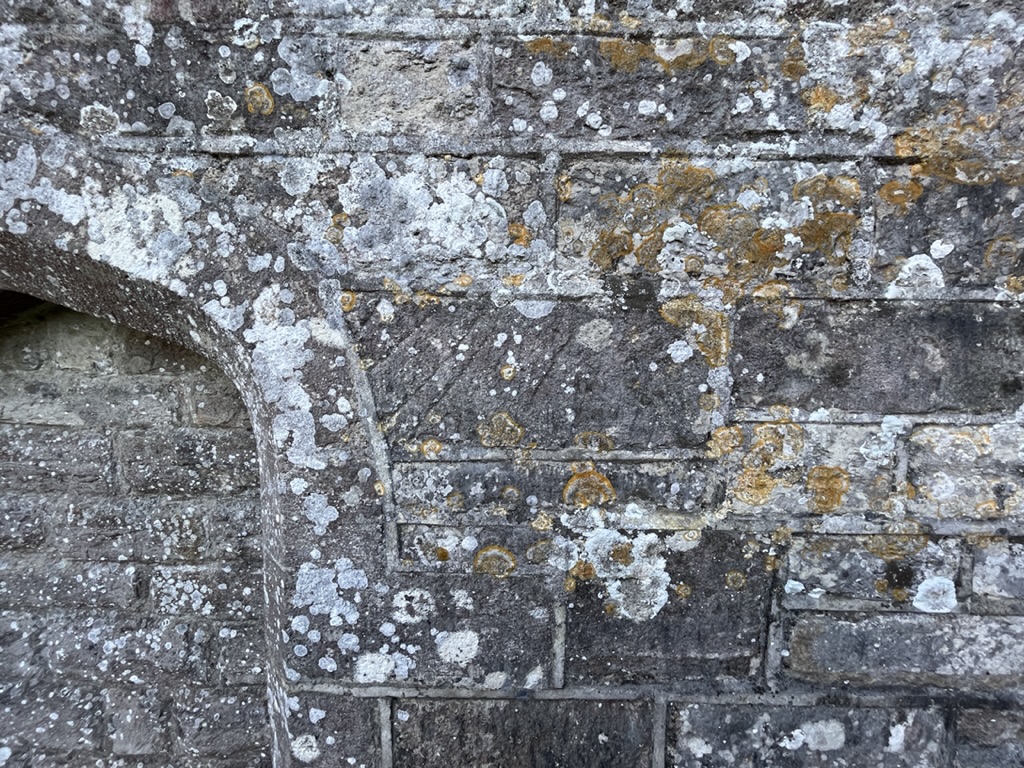
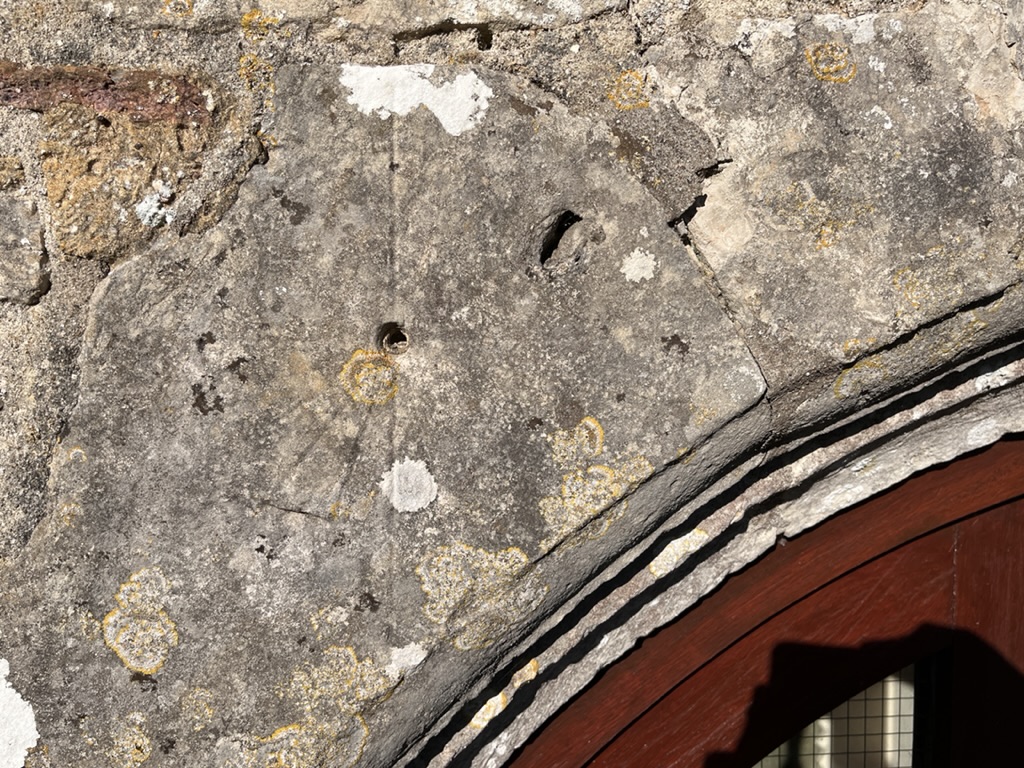
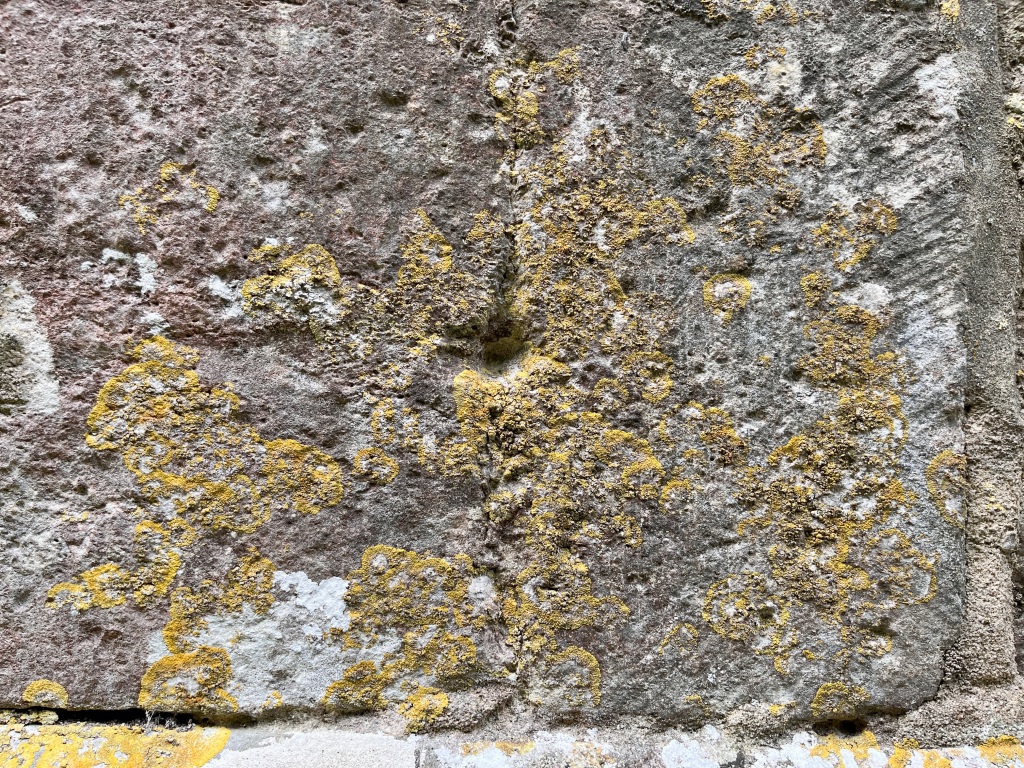
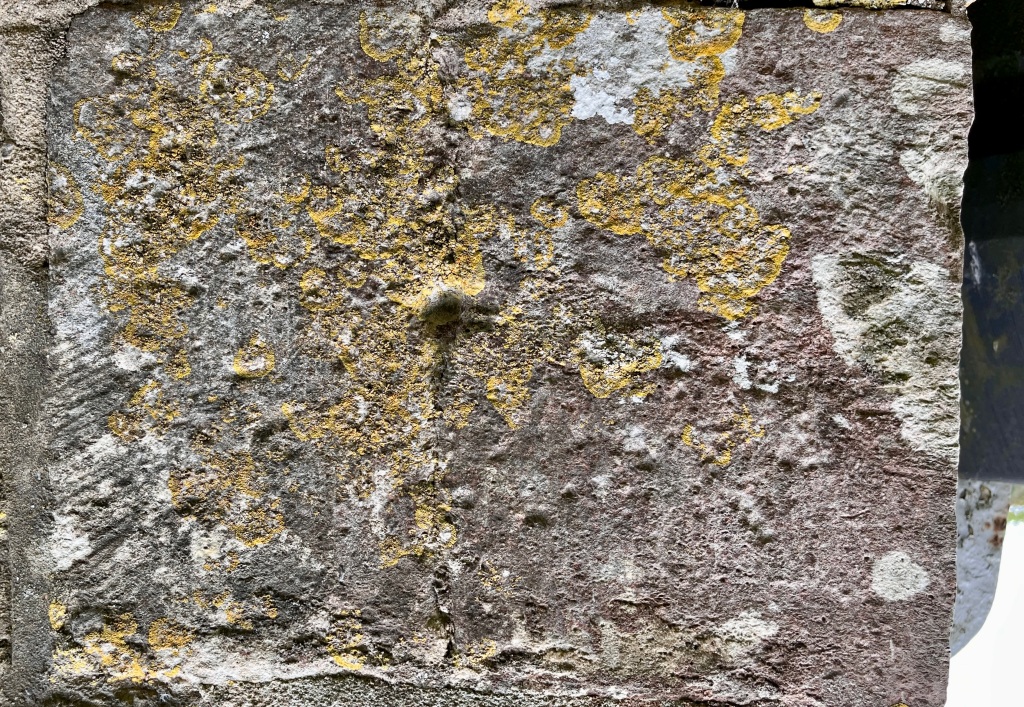
GLP notes a single doubtful dial over a blocked doorway, not included in BSS records. However there is a clear inverted dial elsewhere on S side. There is also a dial-ish quoin stone that I include. There’s not enough evidence to consider it much more than doubtful, but the location is conventional and the overall ‘jizz’ (to use a birding term) invited more than a glance.
✣
DIAL 1
Above the blocked S aisle door, C16. GLP suggests a masons’ mark rather than a scratch dial and notes a similar ‘dial’ at Hilton, near Blandford. There are 2 faint concentric circles. The very small central hole that would be more consistent with the use of a compass inscribe the circle.
✣
DIAL 2
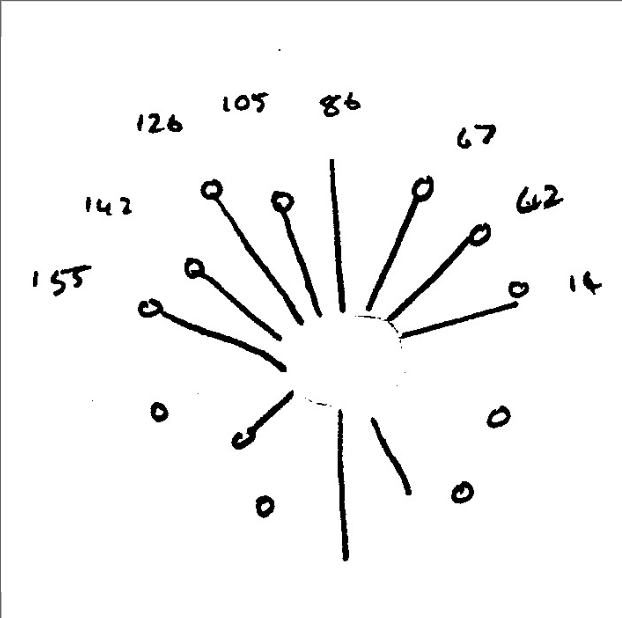
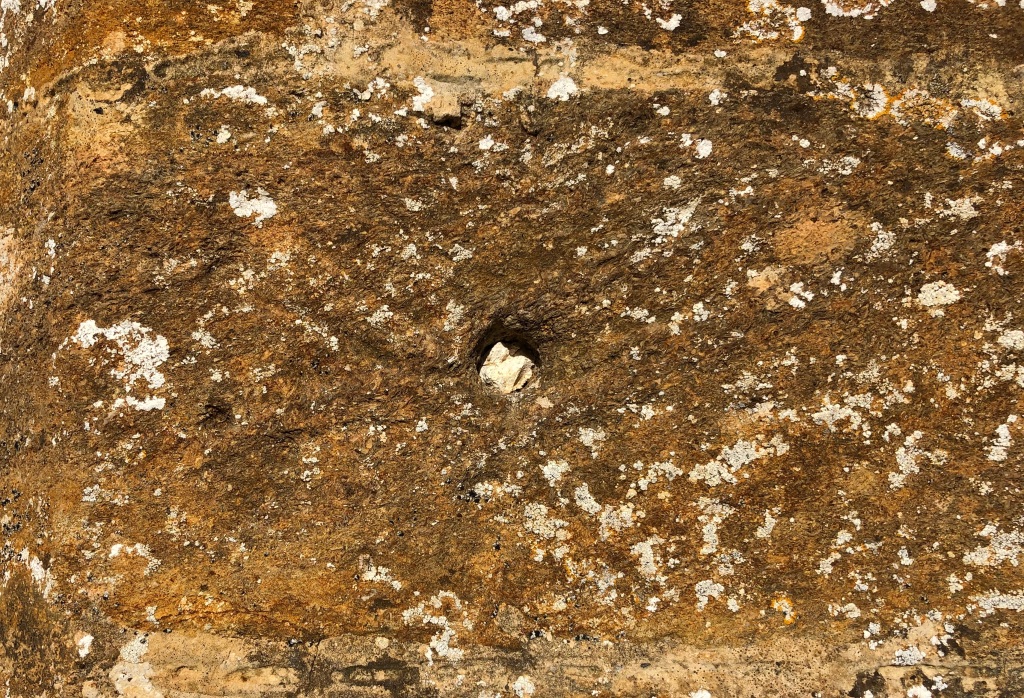
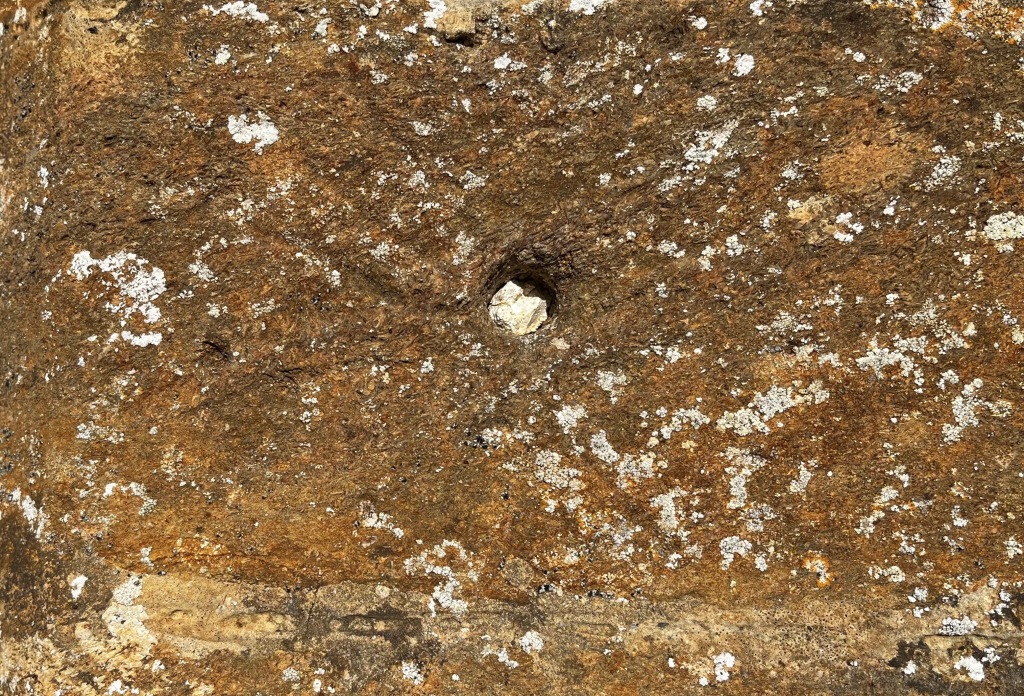
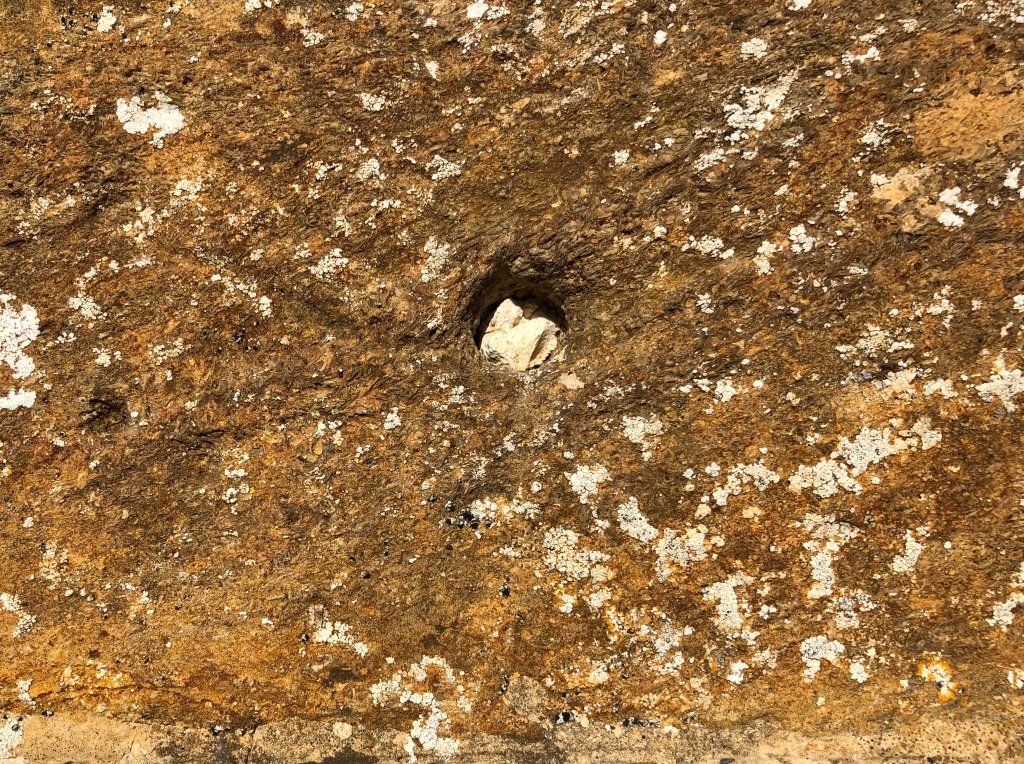
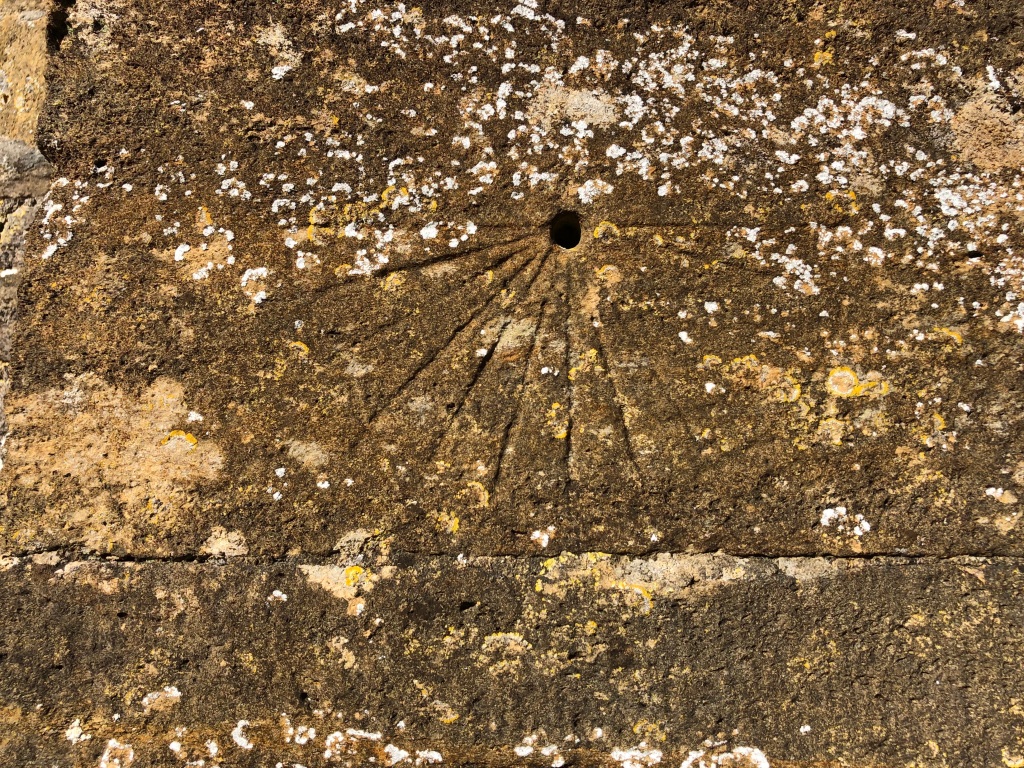
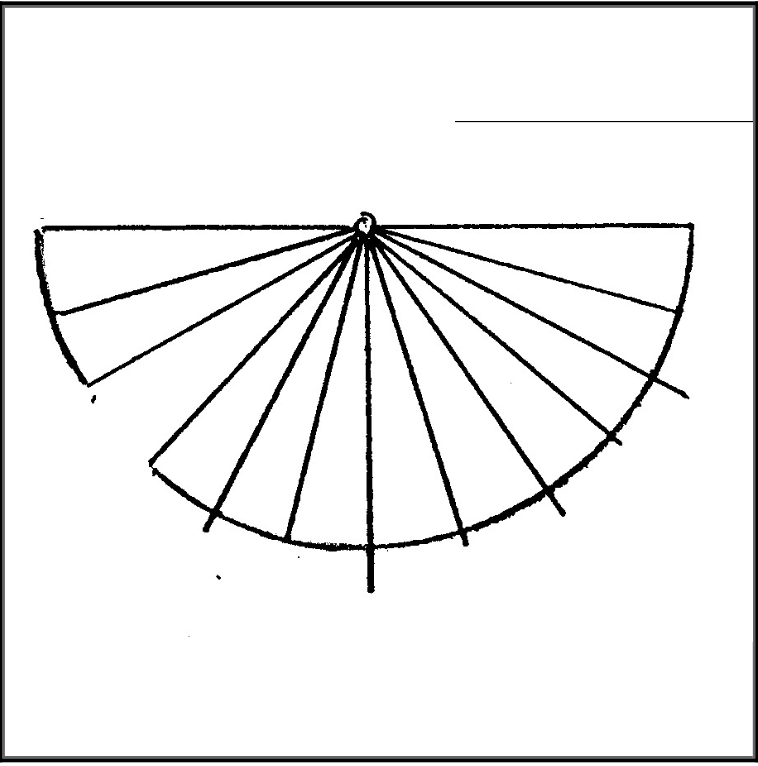
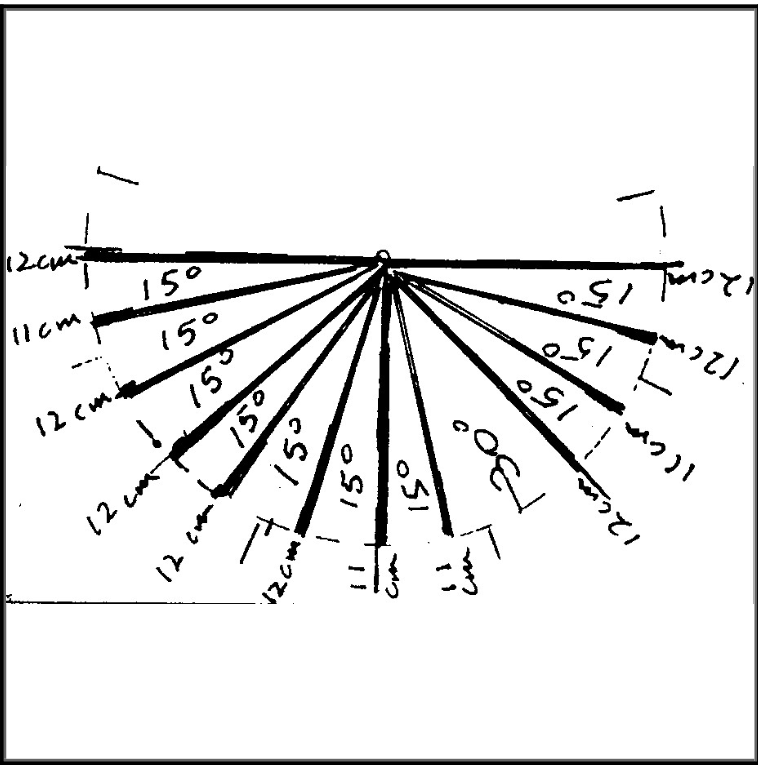
Quite high up at the W end of the S face is a very clear dial that I have not found recorded elsewhere. There are 7 lines, each ending in a pock and with the (presumed) 9-line having a second pock, doubtless the main Mass time. The reversion below shows how the design would have worked well as a morning dial.
The most intriguing feature is the presence of (the remains of) a square rod in the style hole, with filler material round it. It seems highly unlikely to be original, though it may have been inserted many years ago perhaps as a replacement gnomon. A square rod in not so rare: there is one at St Mary, Glanvilles Wootton, for example.
Winterborne Monkton . St Simon & St Jude . Scratch Dial
Winterborne Monkton . St Simon & St Jude – Reverted Scratch Dial
✣
DIAL 3 ?
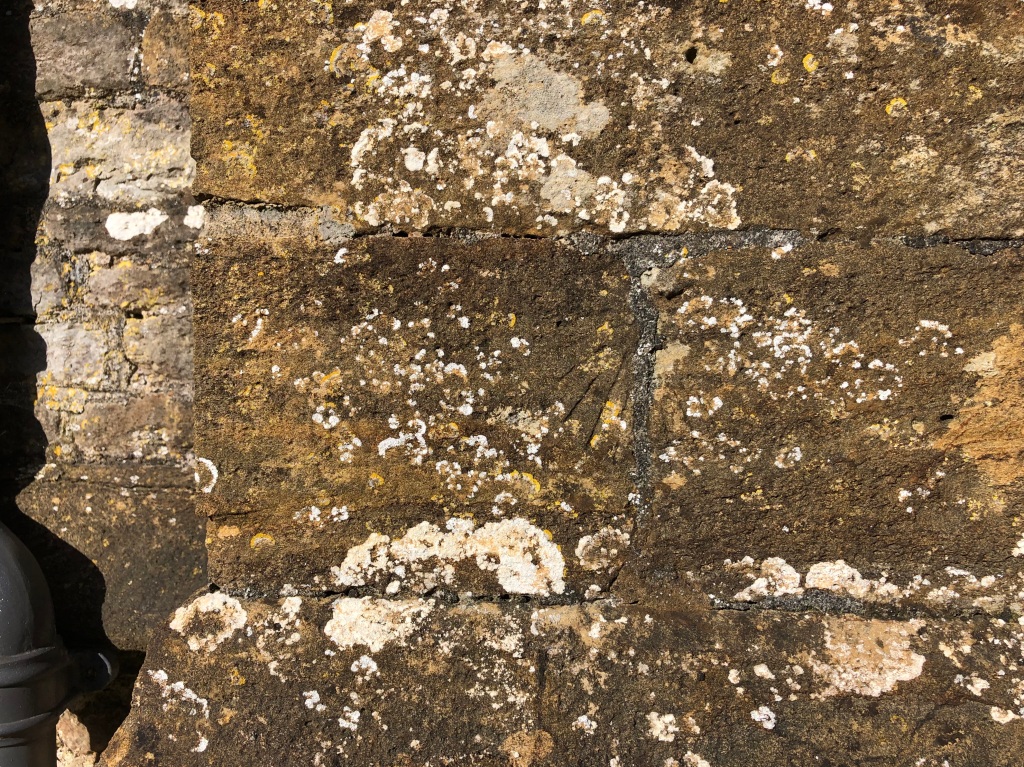
An excellent dial position, a hole almost central to the stone, and inverted (if a dial at all) as often the case where a dial has been superseded or its stone relocated. I have included a reversion that makes the upwards mark into a noon line. There are hints of perimeter pocks in LR quadrant.
Winterborne Monkton . St Simon & St Jude – Possible Scratch Dial
✣
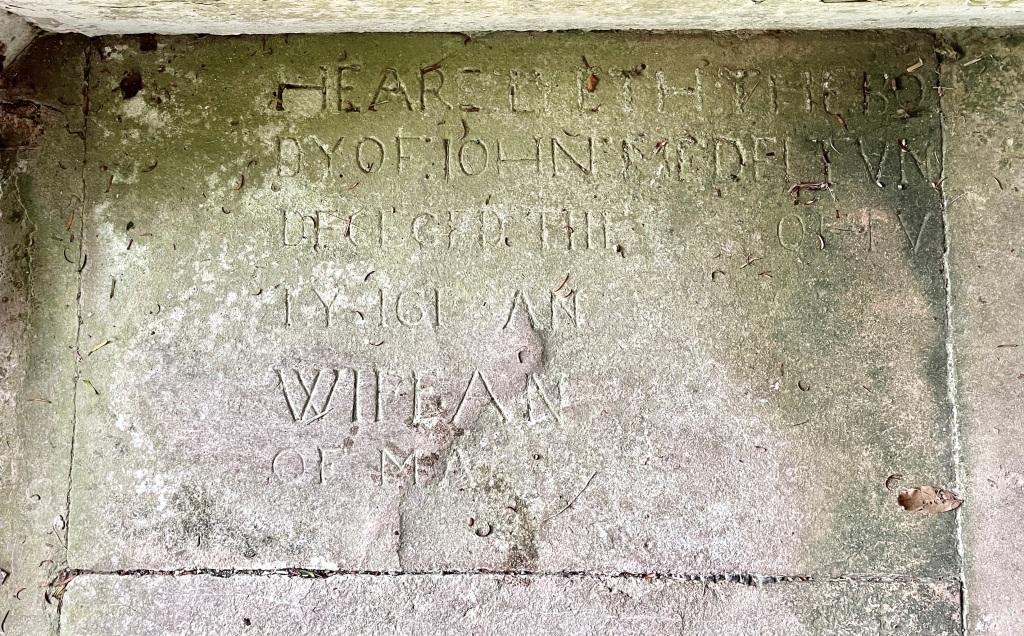
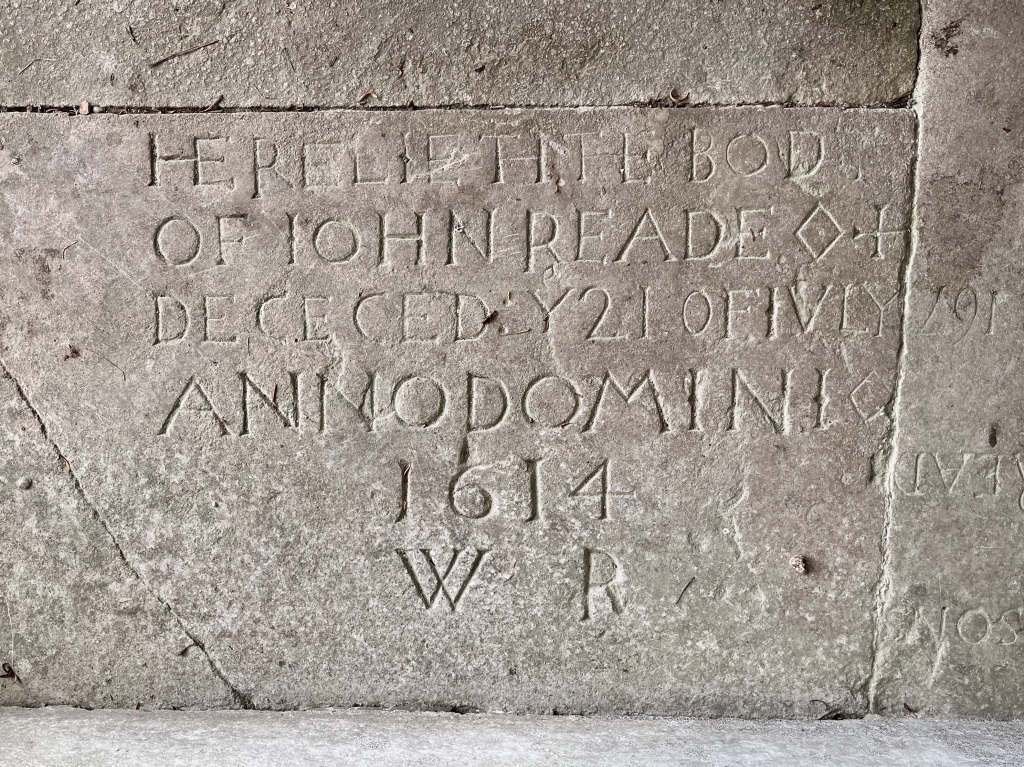
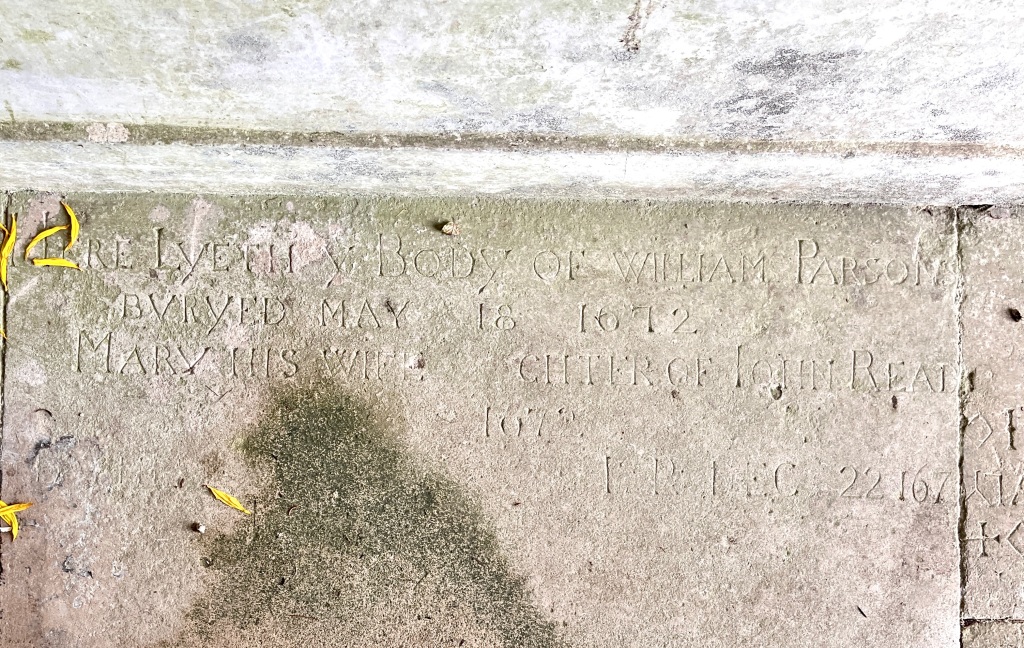
Finally, there are 3 fine C17 memorial floor slabs to admire
GSS Category: Scratch Dial; Mass Dial; Gnomon Rod; Masons’ Mark, C17 memorial floor slabs
GRADE I † C13 nave, chancel, S porch inc outer archway. C15 alterations & additions – chapel, tower. Restored 1885. 2 Purdue bells. 4m W of Sherborne and E of Yeovil. 50.9532 / -2.5732 / ST598172
DIALS
There are 3 dials beside the porch doorway, 1 on the left side and 2 on the right. The intricacies of the dials are clearer from the BSS archive photos and diagrams compared with my photos, taken in bright sunlight and not picking up the details.
DIAL 1
South Porch L of doorway. 13 lines, with the noon line extended, and 23 pocks. The diagram suggests 1, perhaps 2, mid-morning Mass markers. GLP points out that the lines are below the horizontal whereas almost all the pocks are above it; and that the design is accurate.
St Nicholas . Nether Compton . Dorset – Scratch Dial 1
DIAL 2
South porch R of doorway. Despite the extended ‘noon line’ (as it appears), the dial must in fact be upside down. If not, it can’t have had any practical use. 10 lines with very variable angles and 12 pocks. GLP describes it as crudely cut as a tide / octaval dial. The white item is a stone, which was in place when I originally saw the dial, and still 18m later. I left it in peace.
St Nicholas . Nether Compton . Dorset – Scratch Dial 2
DIAL 3
A semi-circular dial with 13 lines, almost all of which end pocks. There is a complete inner circle round the gnomon hole, with semi-circle outside it. GLP found the dial to be accurately cut.
St Nicholas . Nether Compton . Dorset – Scratch Dial 3
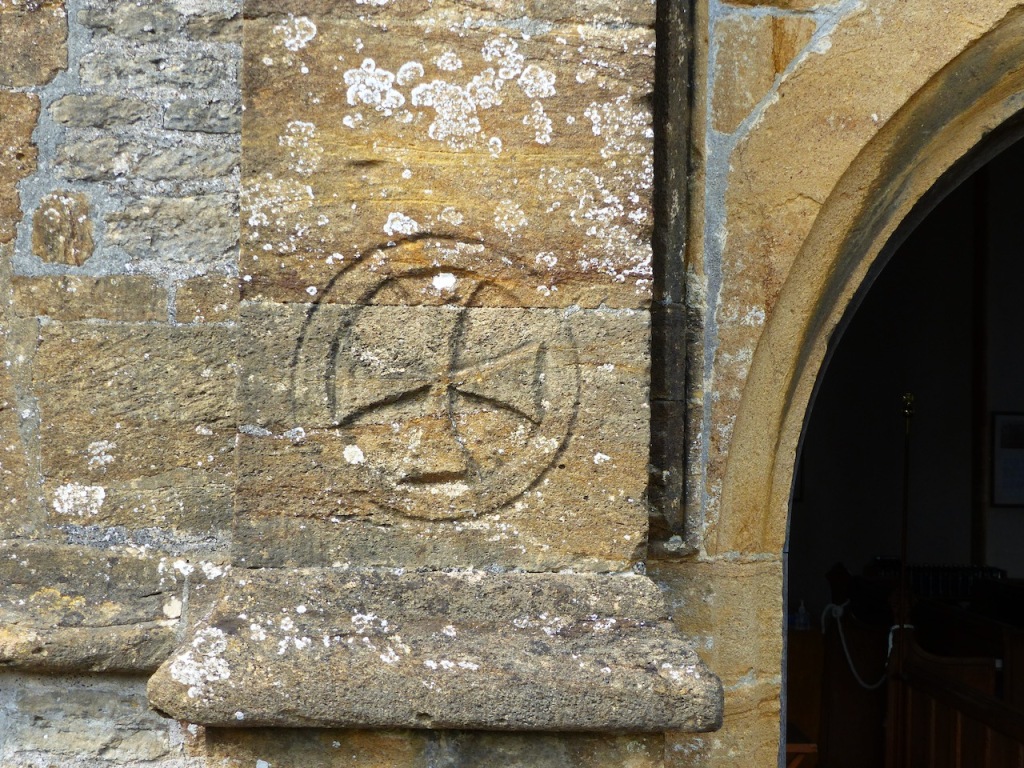
On chancel—(a) on external S. wall, W. of S. window; on N. chapel—(b) on N. external wall, W. of N.E. window, reset; on nave—(c) on external N. wall, between N.E. window and doorway; (d) on E. splay of N. doorway; (e and f) on E. jamb of S. doorway, two crosses; (g) on E. splay of S. doorway; (h) on E. splay of S.W. window; on W. face of tower— (i) against N. buttress; all formy crosses in circles except second on jamb of S. doorway, mediæval (BLB)
St Nicholas . Nether Compton . Dorset – Consecration Cross
GSS Category: Scratch Dial; Consecration Cross
All photos Keith Salvesen + BSS archive (also diagrams)
DEDICATION † ST ANDREW . Parish church. Late C13, consecrated 1312, completed C15, restoration from C19. A ‘major church’PEV. A good place to find out more is the RCHM entry ST ANDREW YETMINSTER. Carefully compiled church and Parish Archive. 10 Consecration Crosses from medieval to (relatively) modern. An important very early (1683) clock, now in restoration (see below).
LISTING † Grade 1
LOCATION † 5 miles SW of Sherborne, / SE of Yeovil. Noteworthy village easily accessed. Fine vernacular Ham stone buildings give the feel of an earlier era. Many listed buildings. Village also highly regarded by PEV. Station in village (not, as elsewhere locally, a wayside halt). Etiminstre in DB 50.8939 / -2.578 / ST594106
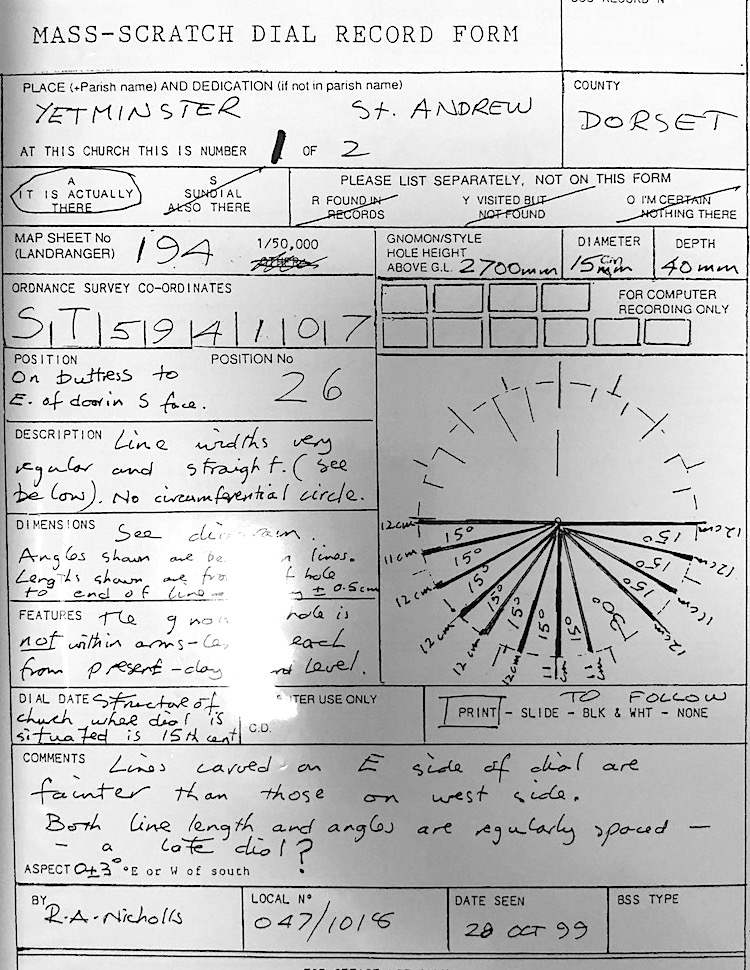
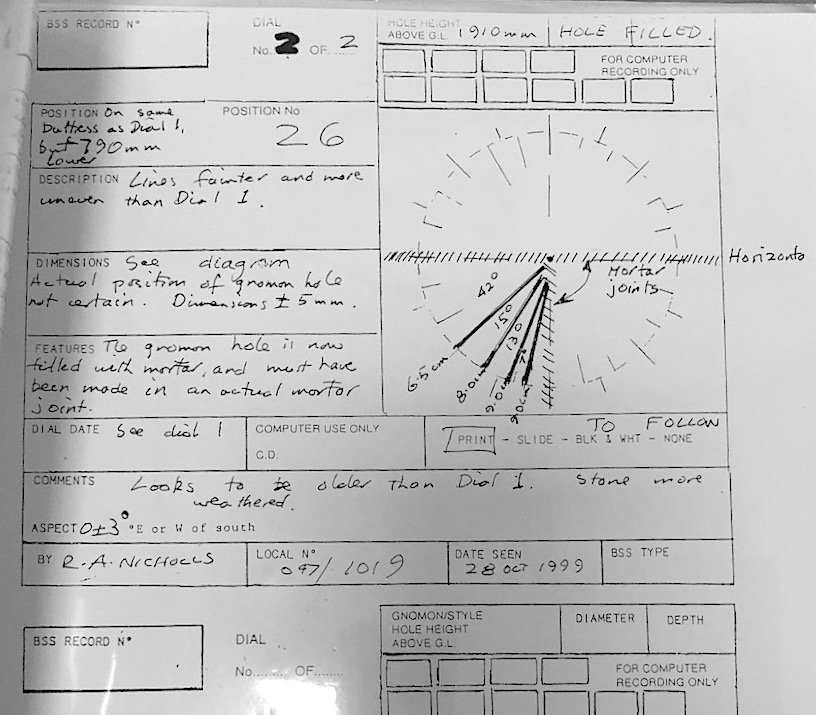
DIALS † Two dials on the buttress E. of S door, both C15
DIAL 1
A semicircle dial with 13 lines (including the horizontal). BSS notes no circumferential circle. The noon line is extended, and 4 others end slightly beyond the circumference . GLP describes it as very neat and accurately marked. Both dials have been thoroughly examined – clips of the original records from the excellent church archive are below.
St Andrew . Yetminster . Dorset – Scratch Dial 1
St Andrew . Yetminster . Dorset – Scratch Dial 1St Andrew . Yetminster . Dorset – Scratch Dial 1
DIAL 2
An unusual rather drooping design, explained below. Gnomon hole in the mortar line. The dial is split across 2 stones by a vertical mortar line. There are 11 lines, if one includes the mortar joint as the vertical / noon line. The lines RHS are badly eroded.
GLP noted that this dial is of particular interest as the angle of the lines suggest that it may be an early Scientific Dial. Comparing the lines with the correct angles for the latitude only one of the lines is more than 4º out. A further even more technical conclusion is that to function this dial would have needed a gnomon at an angle of 39º to the wall. This evidences an advance from earlier dials where the gnomon was simply inserted into its hole straight rather than angled.
St Andrew . Yetminster . Dorset – Scratch Dial 2St Andrew . Yetminster . Dorset – Scratch Dial 2
CLOCK † The historic faceless pendulum clock (1683) is being restored at the moment. I am writing the day after the Queen’s death, and by coincidence the clock has a specific significance: The Clock carillon plays the National Anthem at 3-hourly intervals. This dates from 1897 when it was installed by local benefactors for Queen Victoria’s Diamond Jubilee, and is very rare, and possibly unique. For the Platinum Jubilee of HM The Queen this year, the carillon was operated manually to ring out as part of our Jubilee Celebrations.
NOTES † 10 ‘formy’ Consecration Crosses in sunk round panels on external wall-facesBHO (locations specified); C10 Saxon cross shaft fragment; faceless clock of interest; good hunky punks. Links with Robert Boyle (chemistry, founder of the school) and Benjamin Jesty (smallpox); quite a lot of external graffiti – initials, dates and some Marian (‘witch’) marks
St Andrew . Yetminster . Dorset – Hunky PunksSt Andrew . Yetminster . Dorset – Consecration Crosses
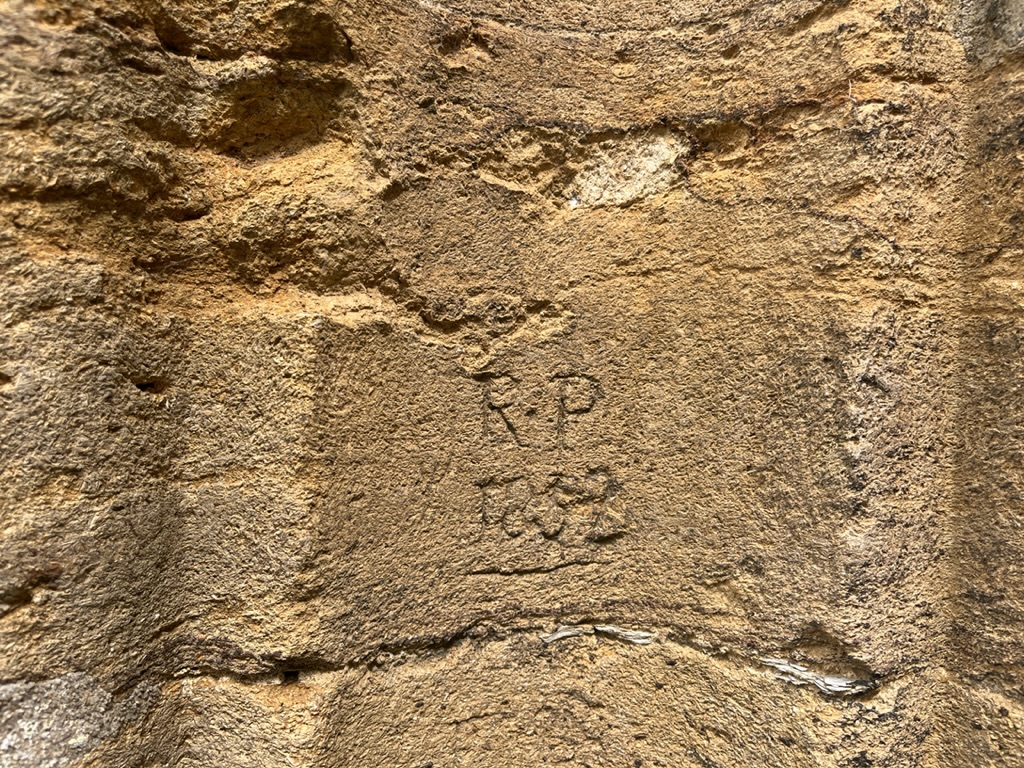
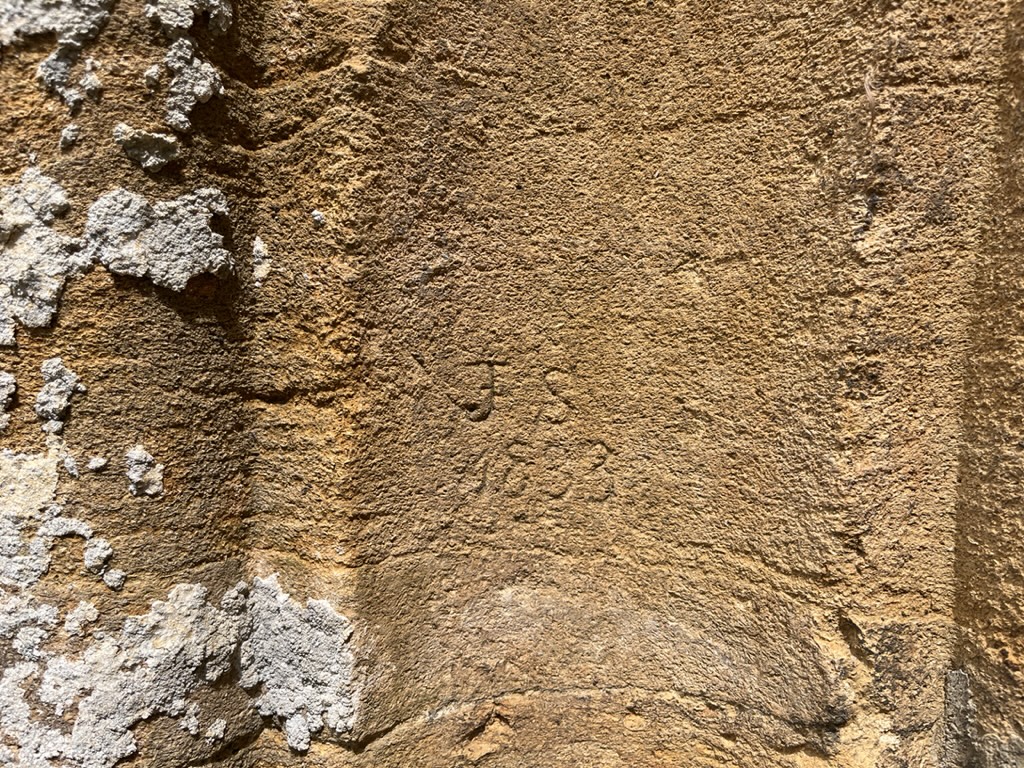
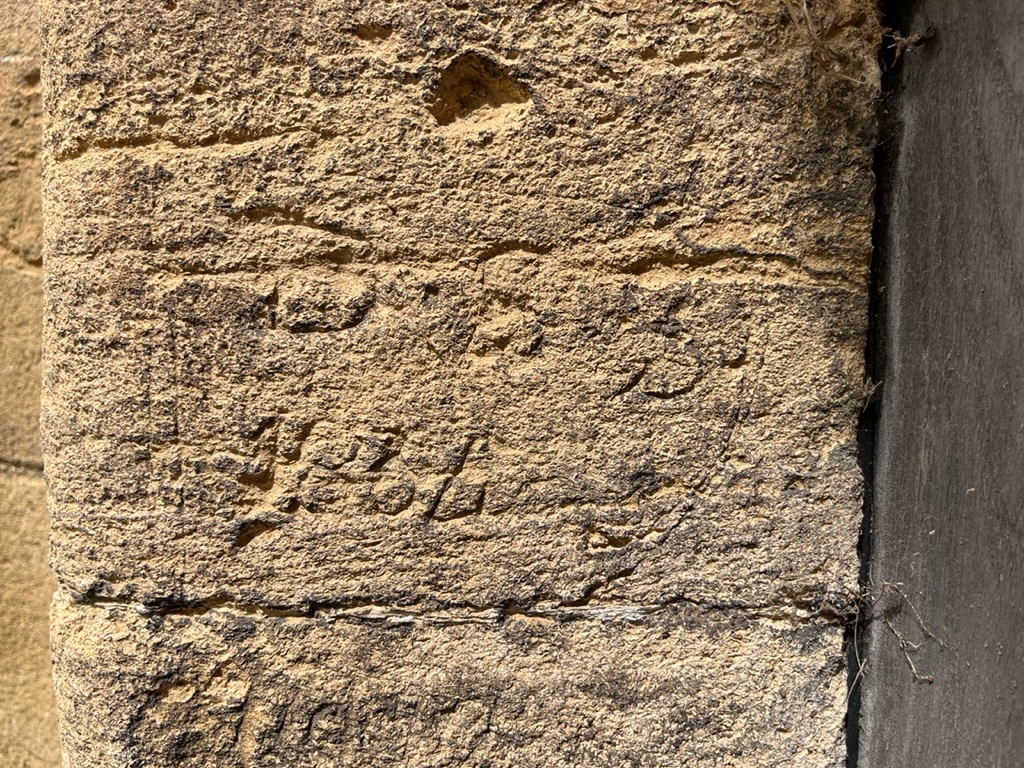
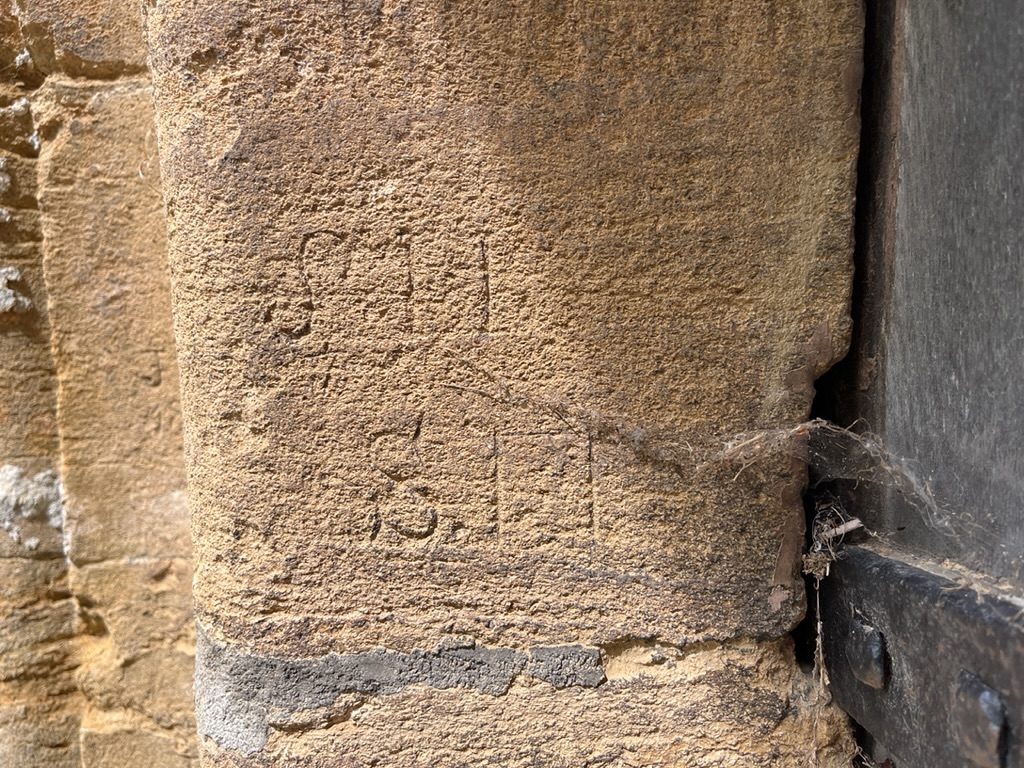
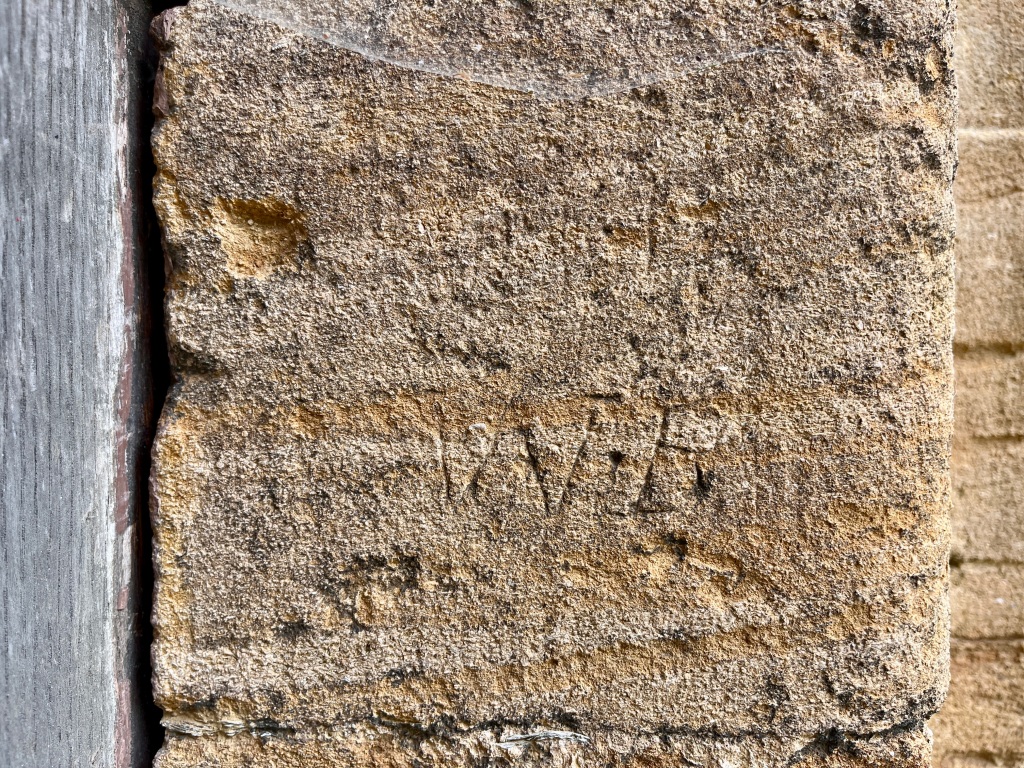
St Andrew . Yetminster . Dorset – Graffiti and a Marian (ritual protection) mark. The 3 initialled and dated marks are likely to be cut by masons who did work on the church in the 1830s (cf Melbury Osmond)
St Andrew Yetminster – the detailed BSS records for the scratch dials

















 GAUDIUM SUB SOLE . SUNDIALS . MEDIEVAL TO MODERN