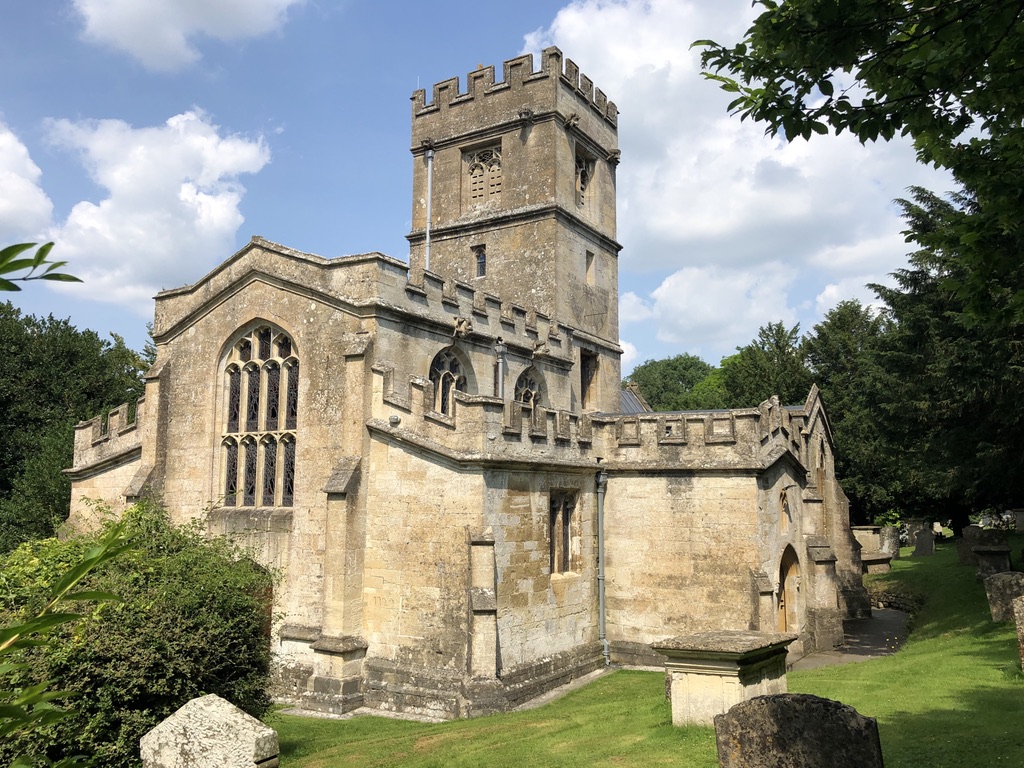
Winterbourne Bassett . Wilts . St Katherine & St Peter
ST KATHERINE & ST PETER . WINTERBOURNE BASSETT . WILTS
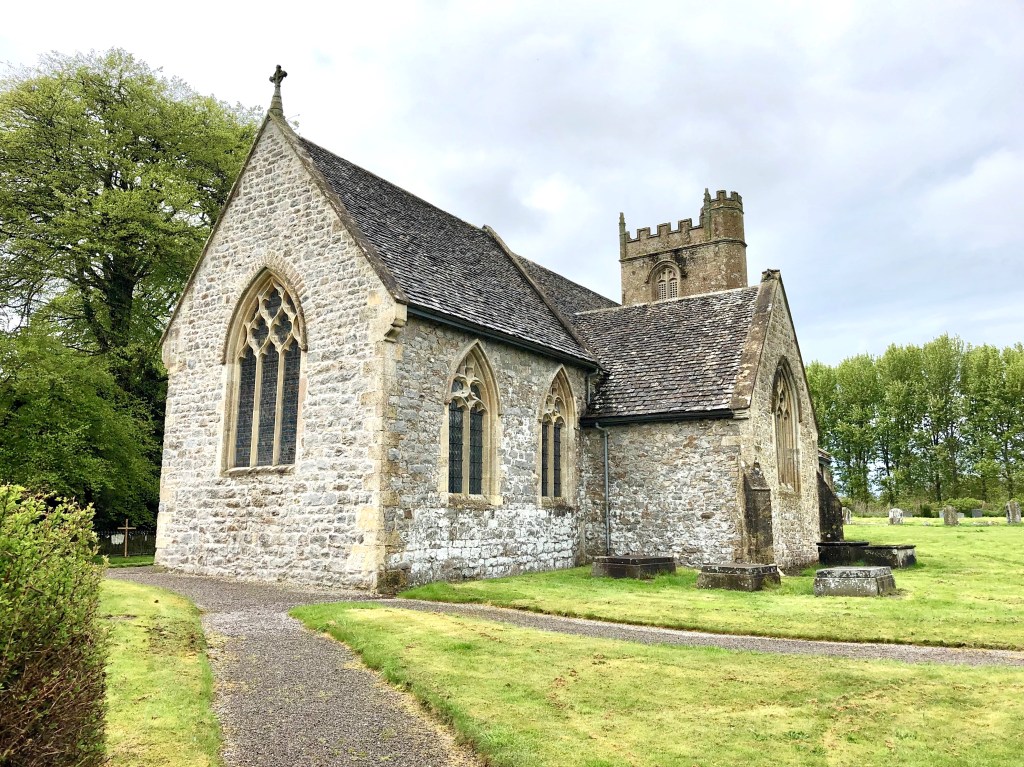
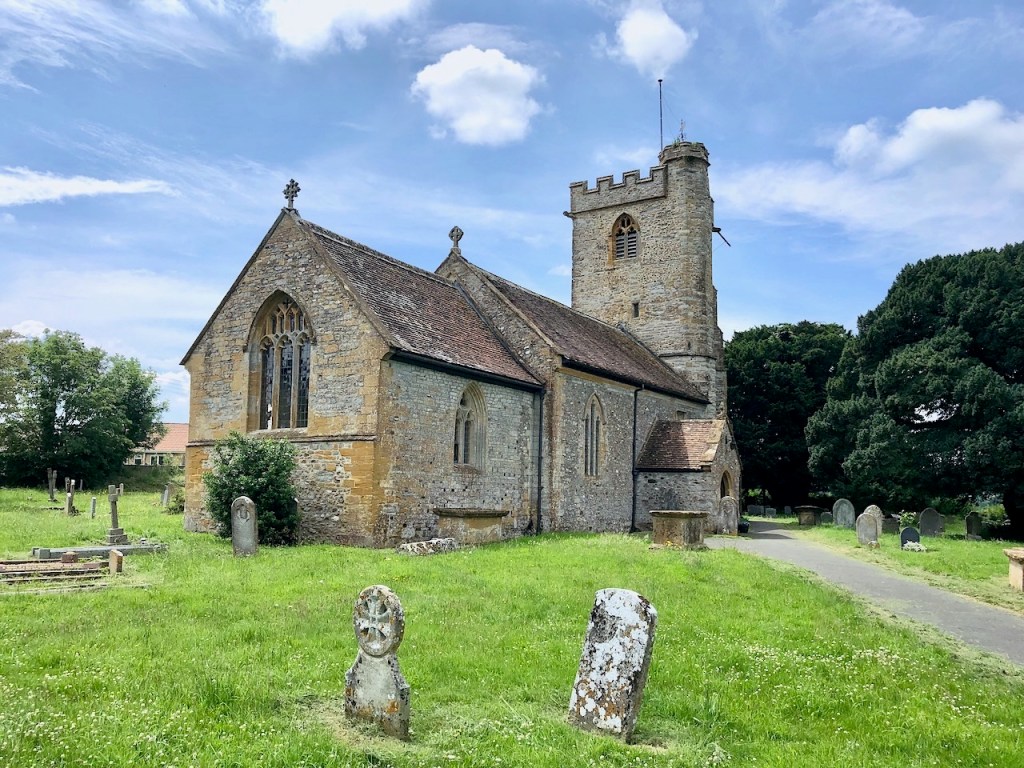
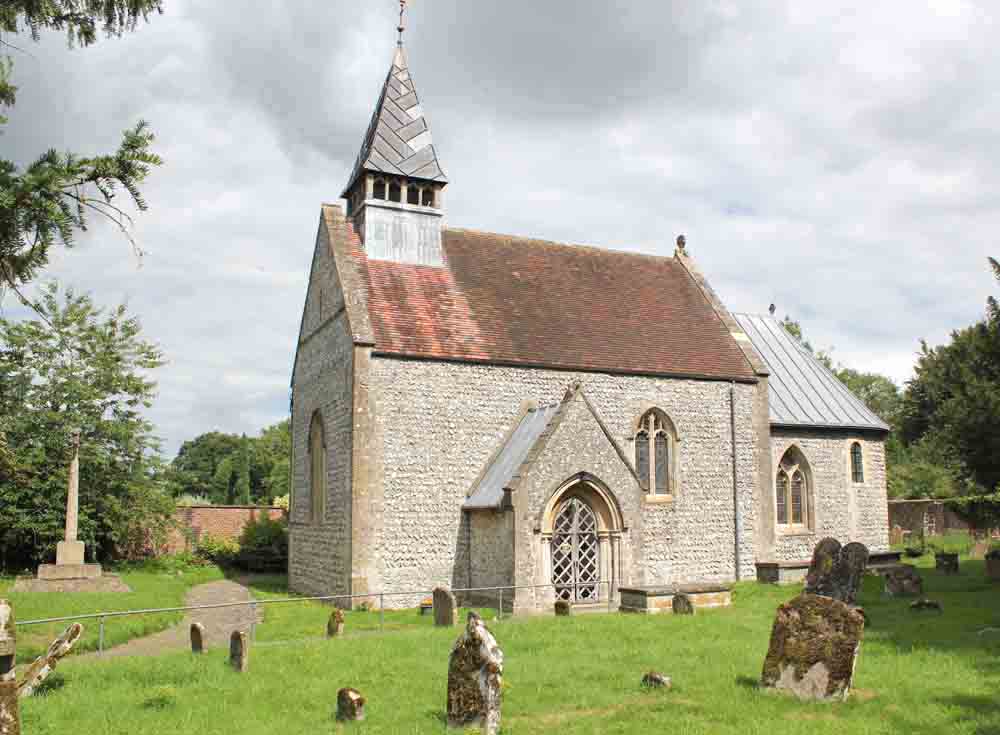
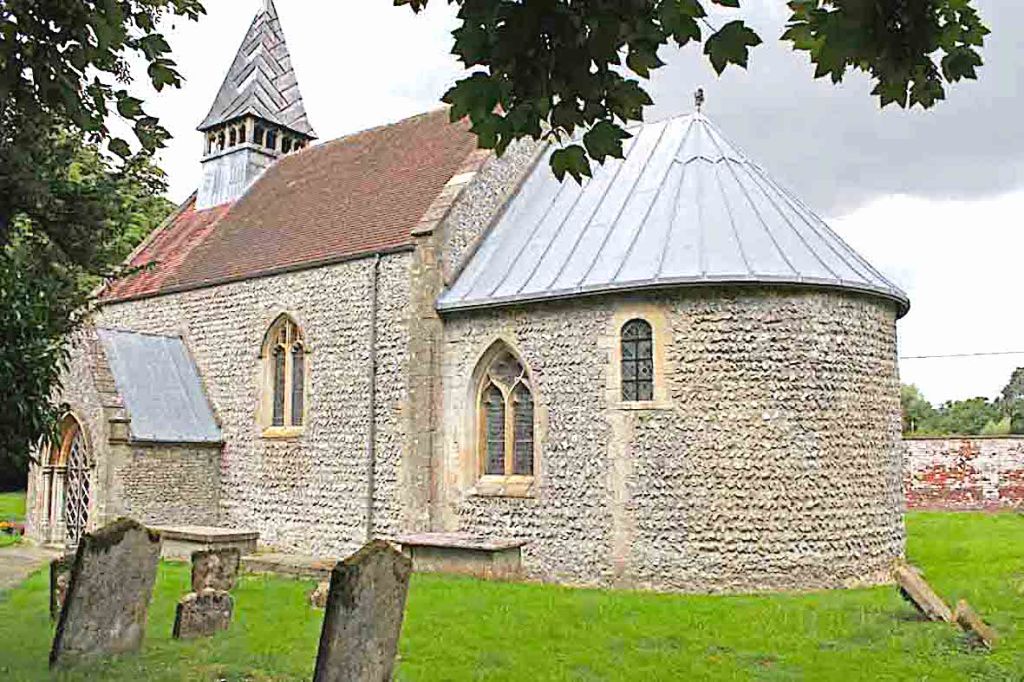
GRADE 1. Records from C12. Mainly late C13 / C14, expanded C15, restored mid-C19. An architectural gem (Betjeman). Dedication has varied over time. 4m N. of Avebury. 51.4731 / -1.8554 / SU101749
DIALS
4 dials identified: 3 scratch dials and 1 ‘very early scientific dial’(BBS)
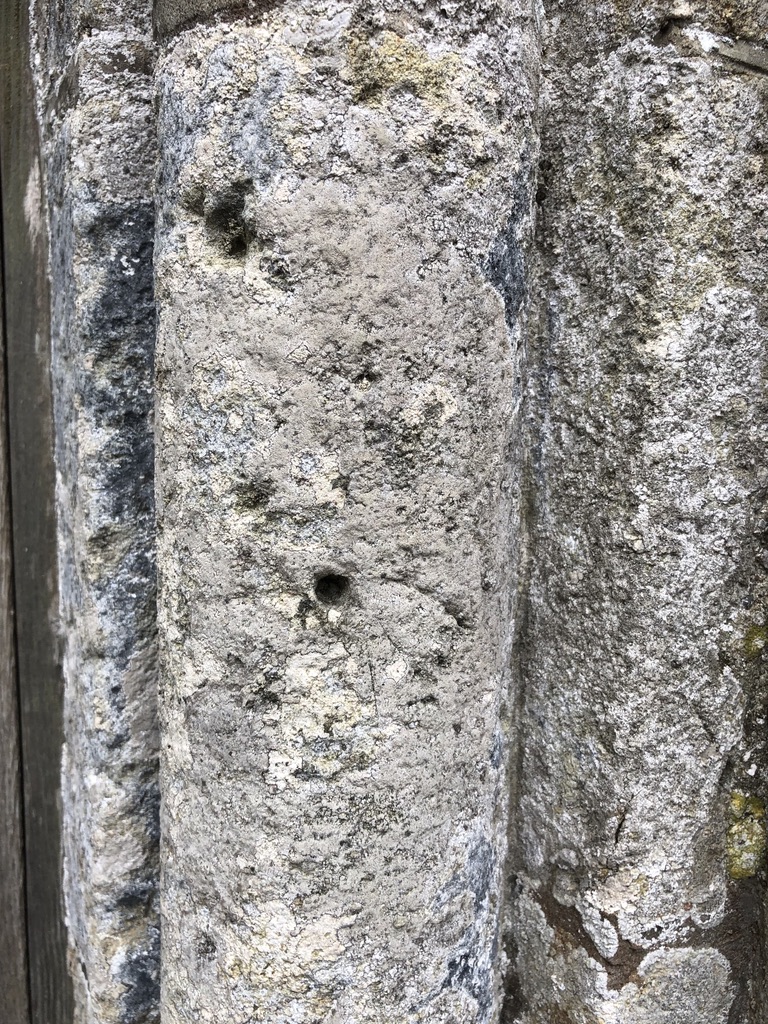
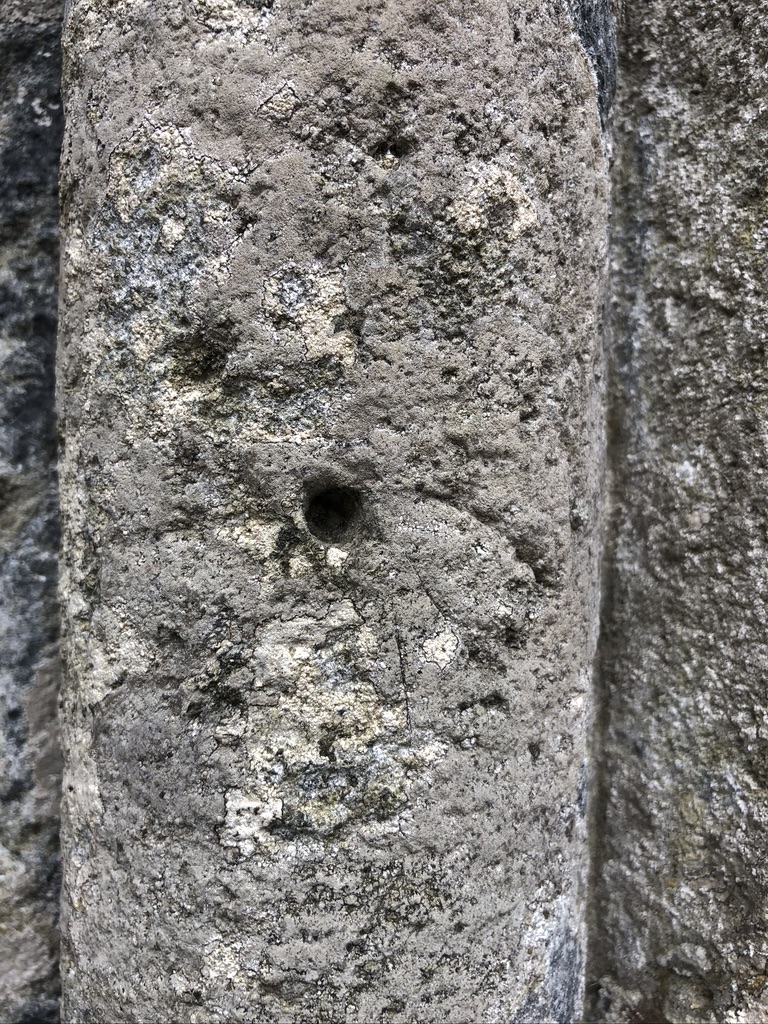
DIAL 1
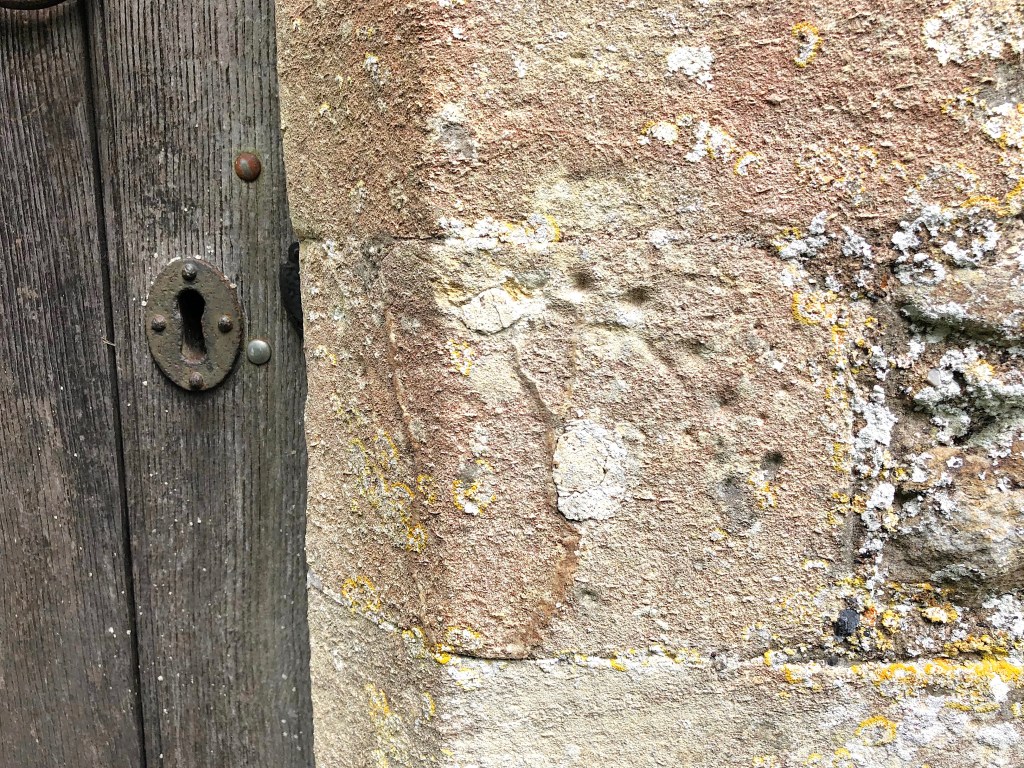
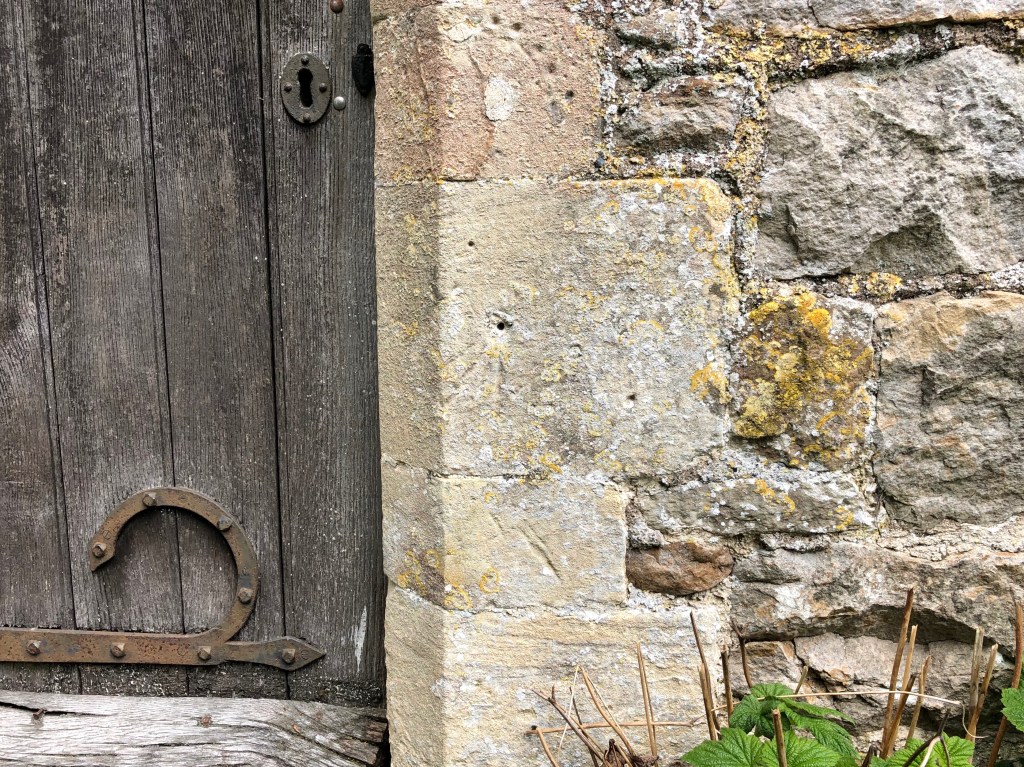
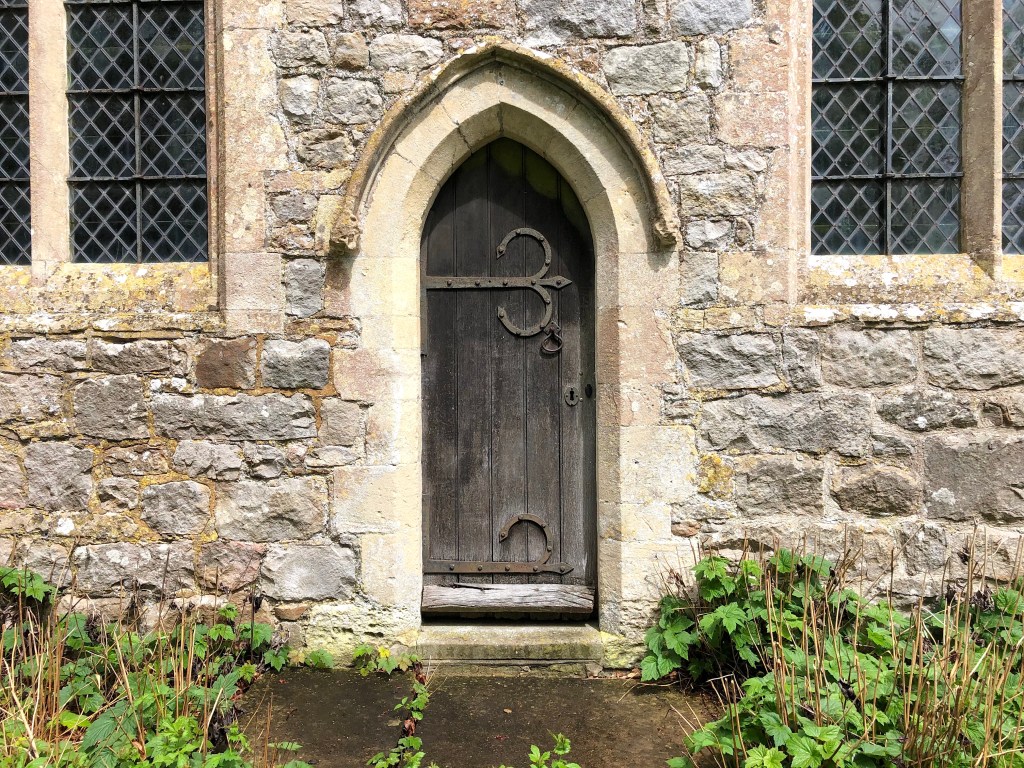
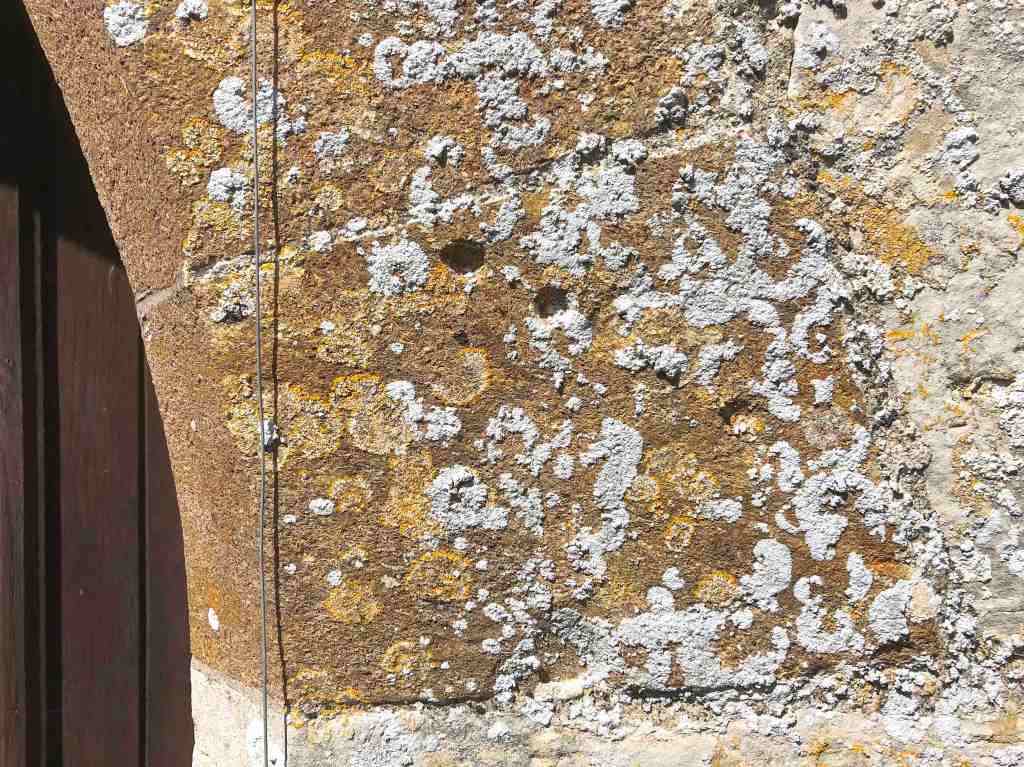
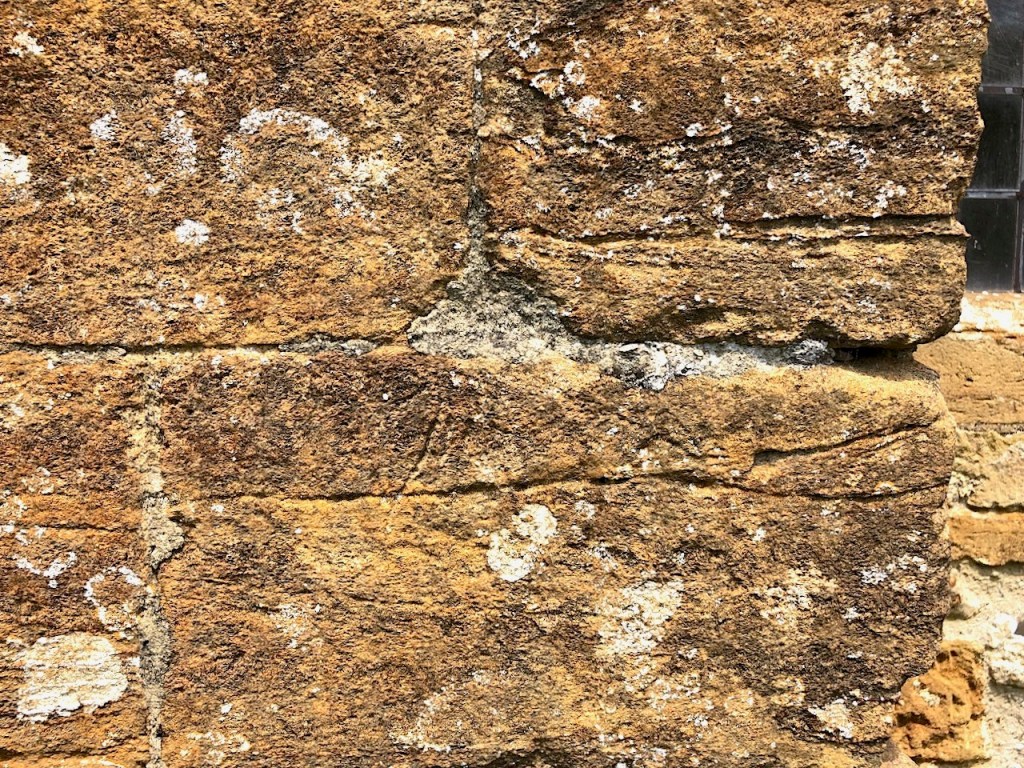
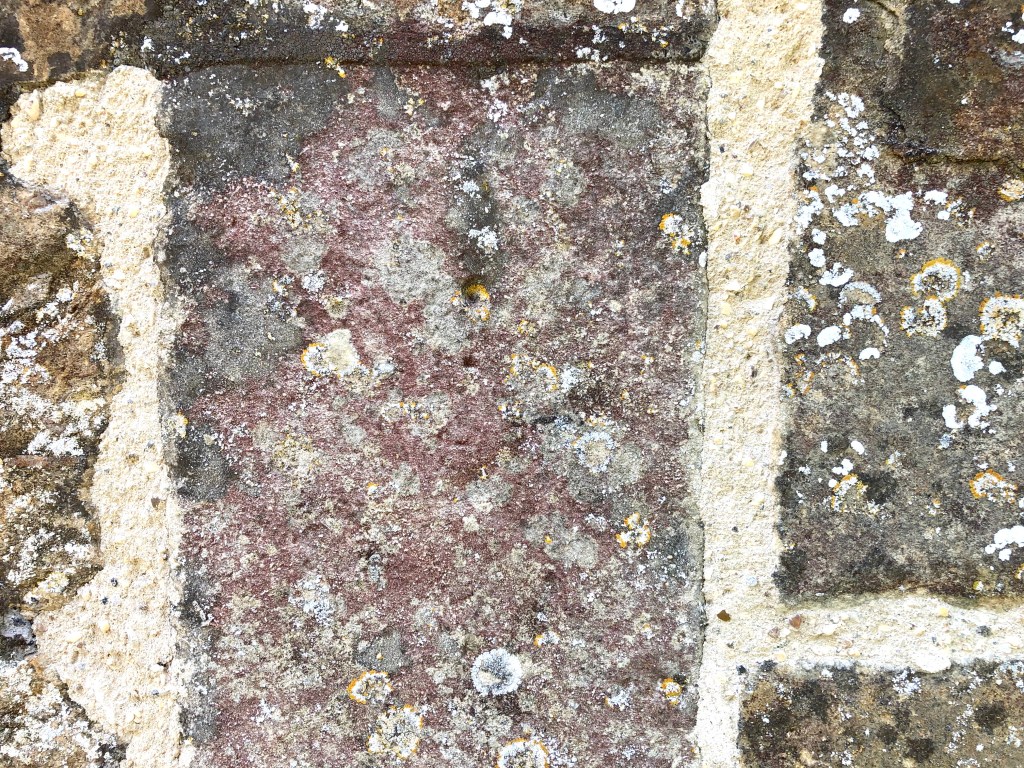
Priest’s Door R. Pock dial with 5 clear dots on pinkish stone (similar position and style to eg Maiden Newton Dorset).
Winterbourne Bassett . Wilts . St Katherine & St Peter – Scratch Dial 1
DIALS 2 & 3
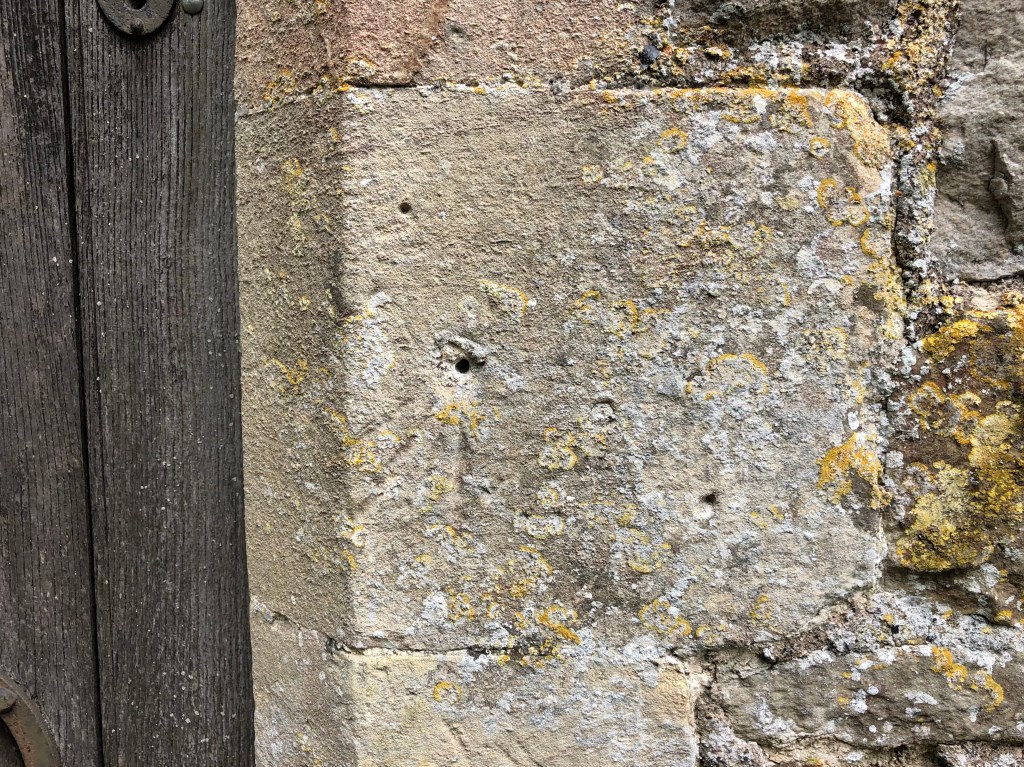
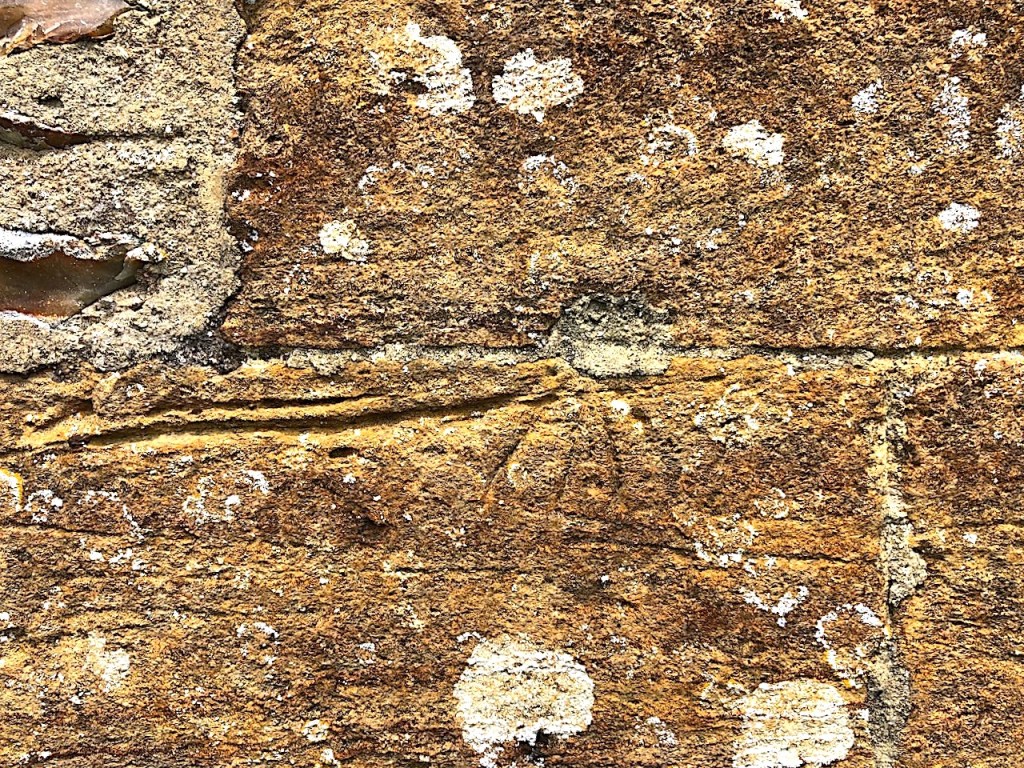
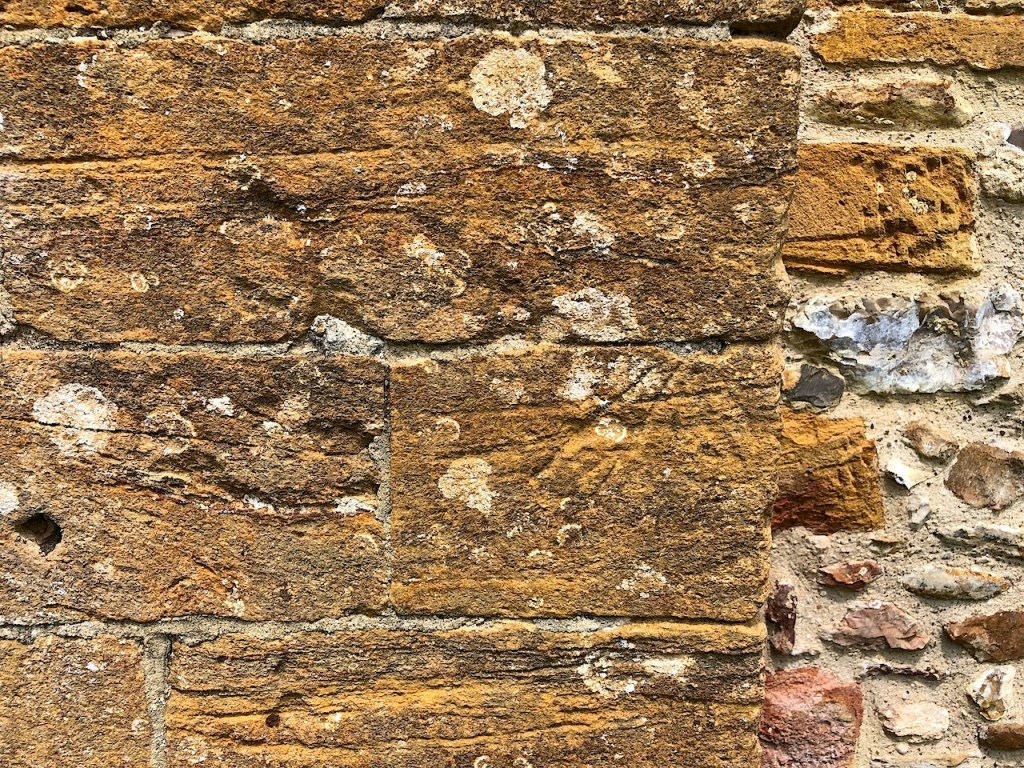
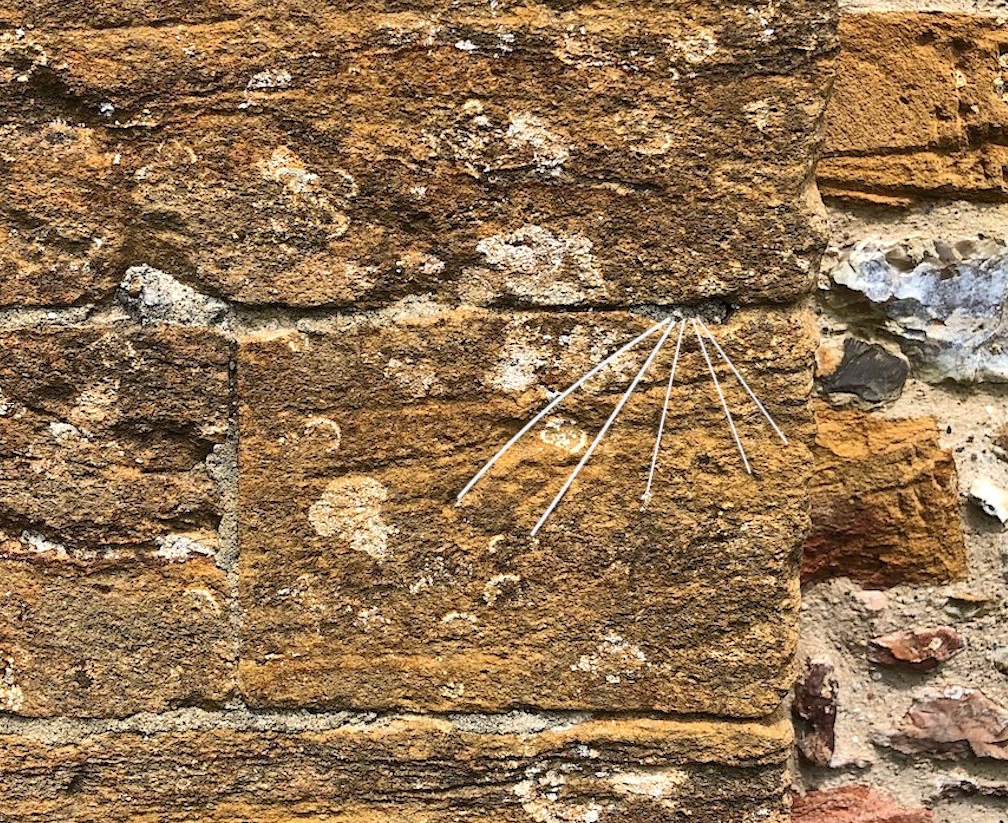
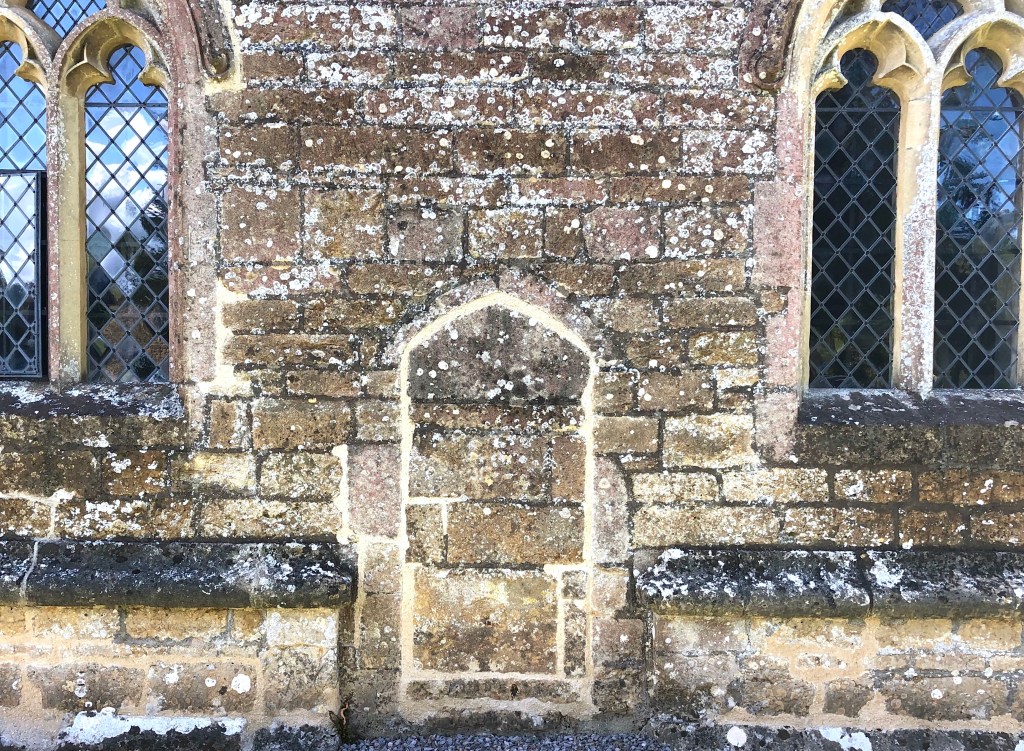
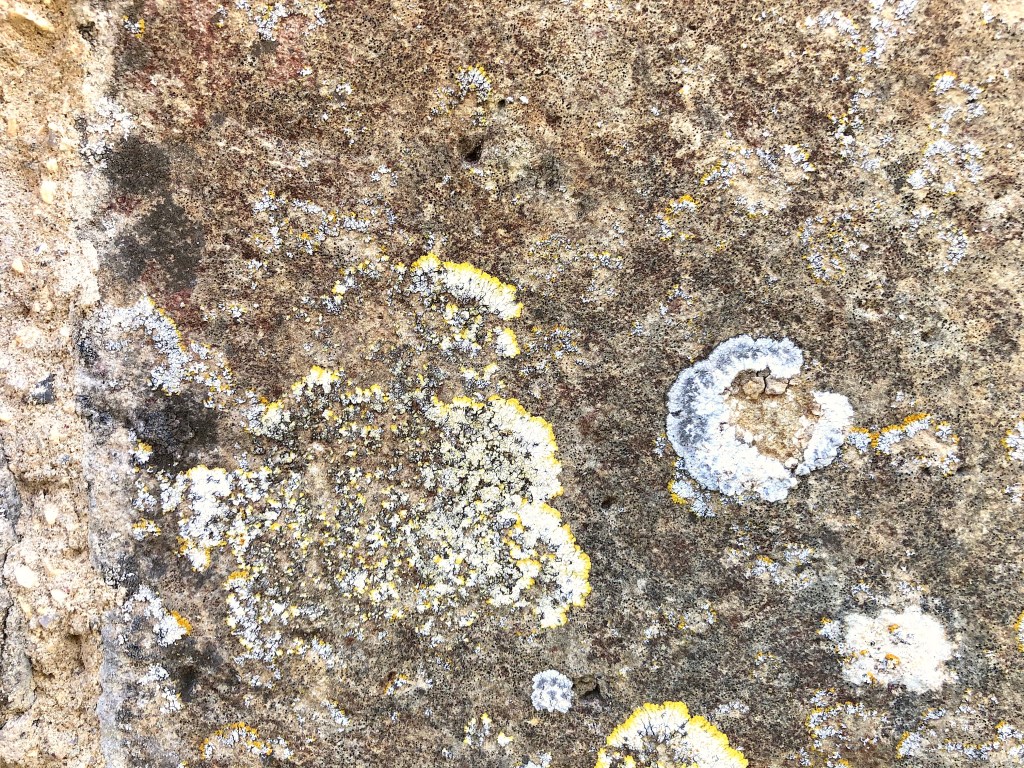
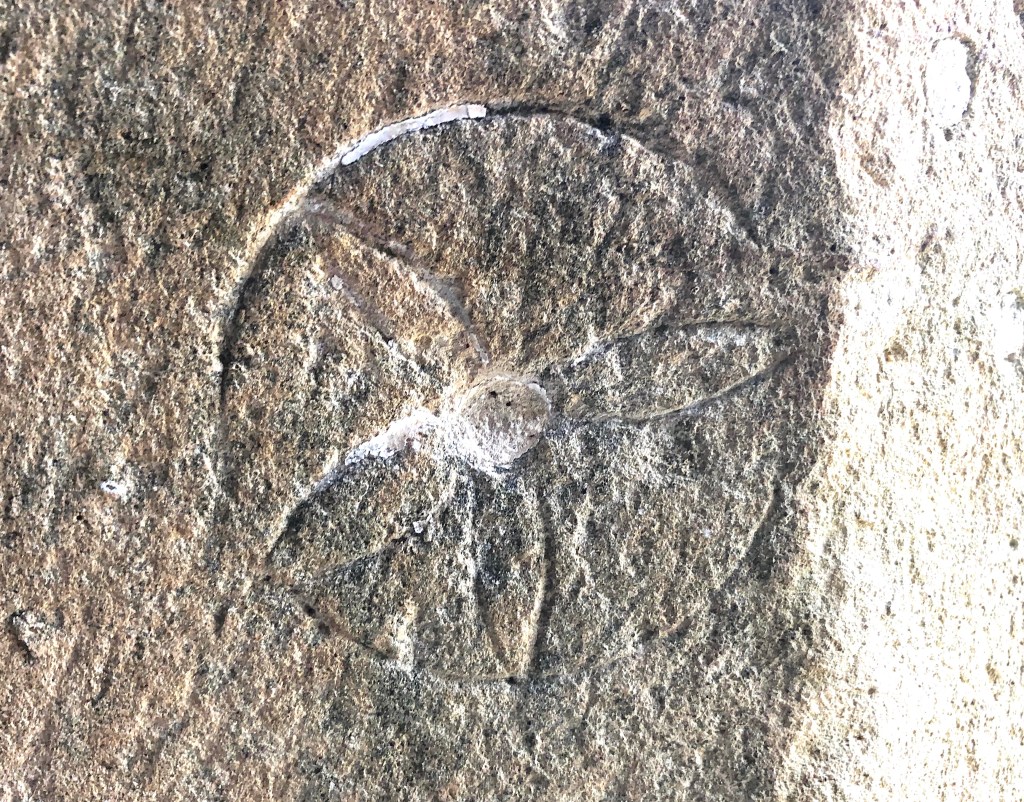
Priest’s Door R, lower down. Dial 2 is a conventional dial with 4 lines in L. lower quadrant; noon line emphasised. Adjacent to less clear Dial 3 with filled style hole and 2 clear thin radials and (perhaps) a very faint noon line. There’s a possible additional dial on this stone, at best a style hole with eroded lines.
Winterbourne Bassett . Wilts . St Katherine & St Peter – Scratch Dials 2 & 3
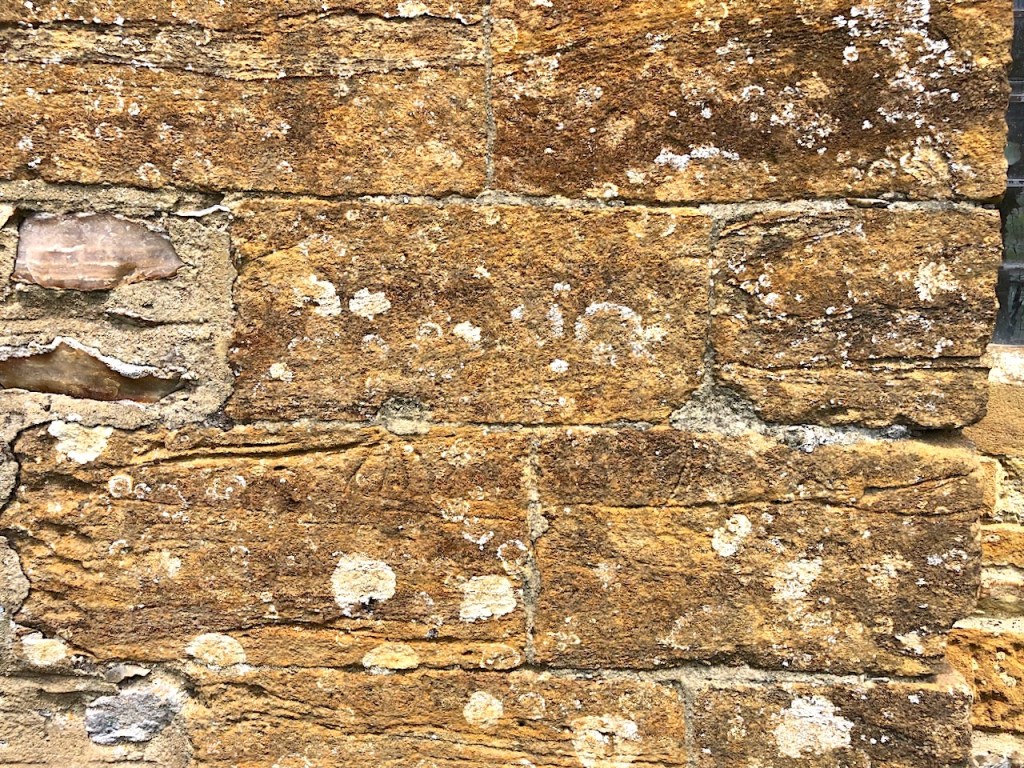
DIALS 1, 2 & 3
Winterbourne Bassett . Wilts . St Katherine & St Peter – Scratch Dials 1 – 3Winterbourne Bassett . Wilts . St Katherine & St Peter – Priest’s Door with 3 scratch dials
DIAL 4
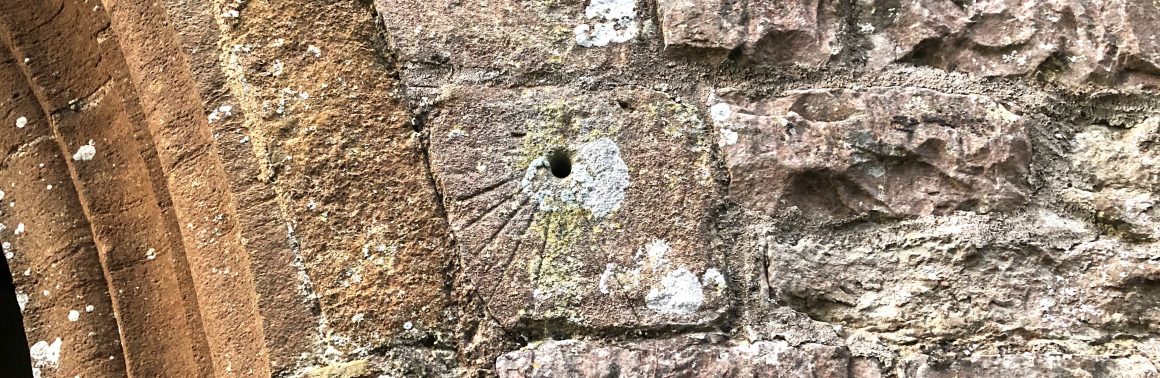
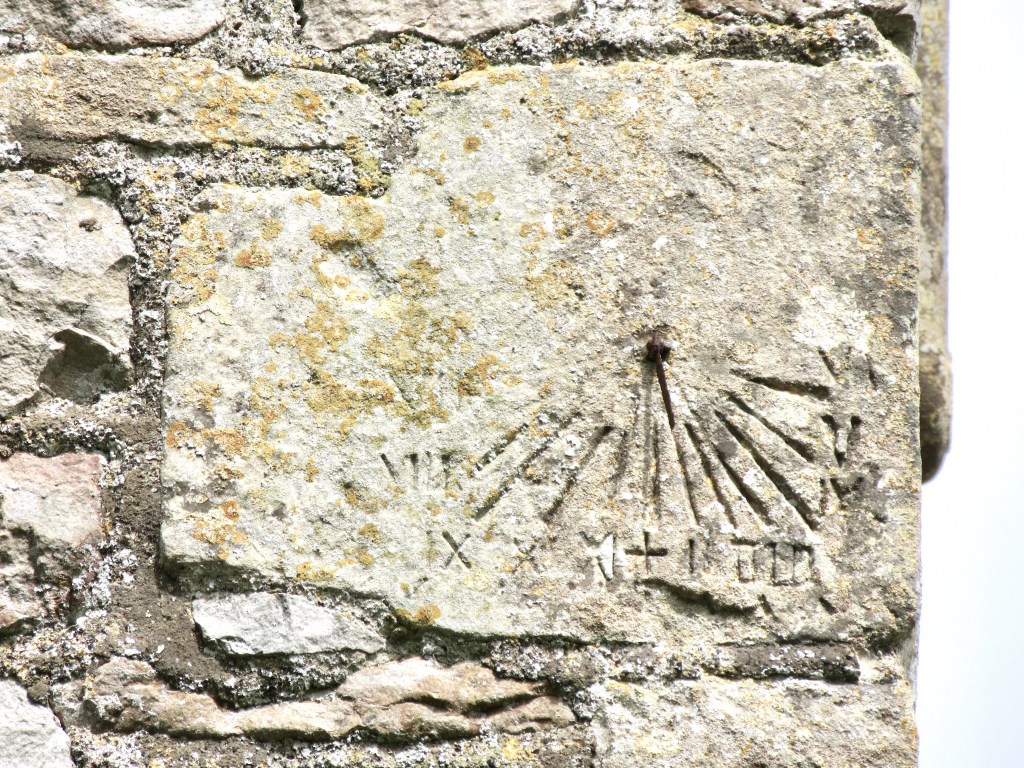
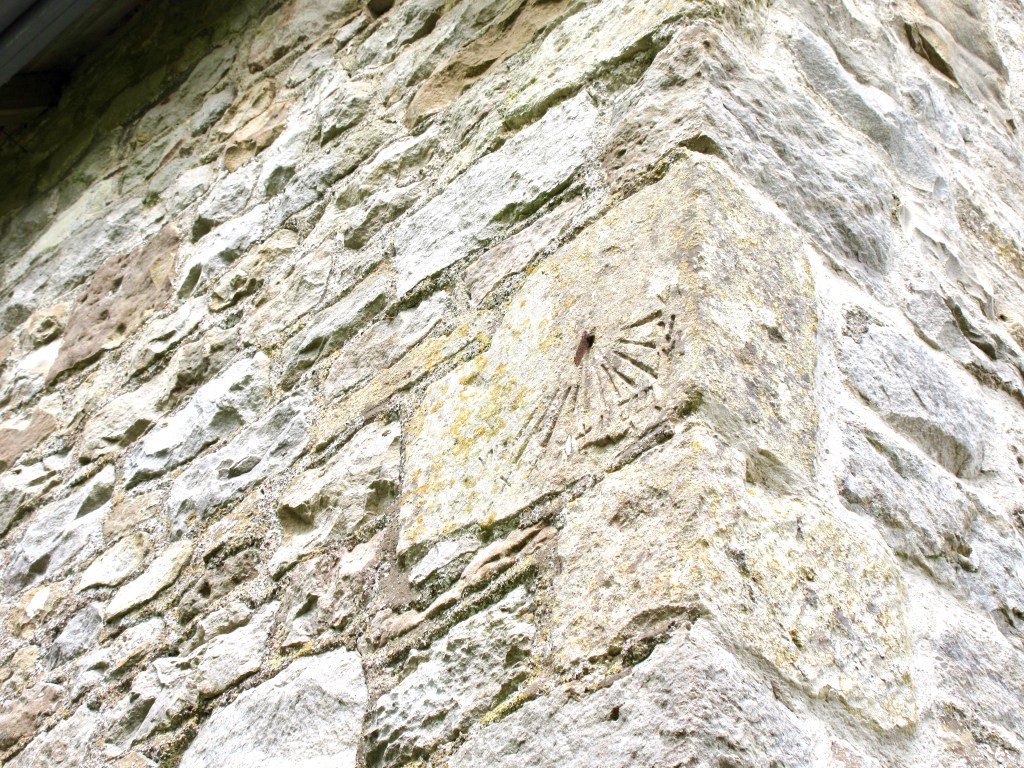
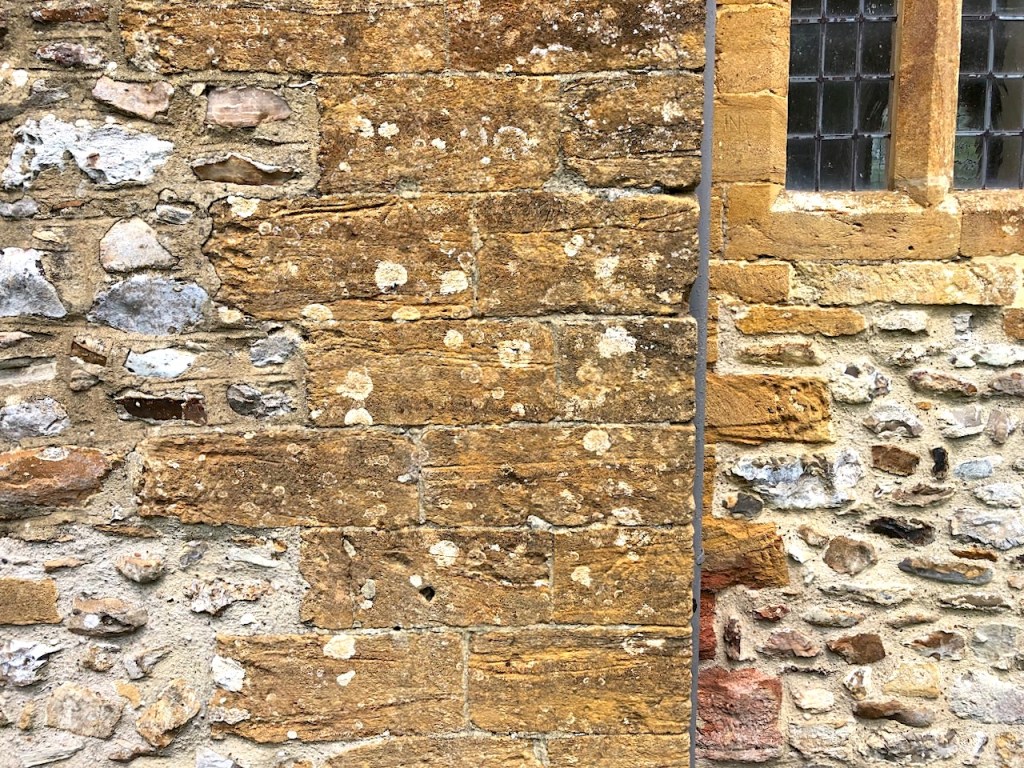
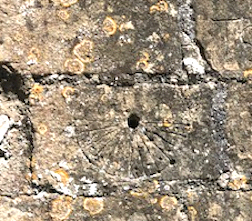
High on quoin on S. side, a far more sophisticated gnomon dial. The BSS record from some years ago states: ‘Probably upright Roman numerals with cross for noon (not easy to see). Very early scientific dial. Gnomon may be a replacement’.
A photo taken last month removes the doubt. The incised lines – of variable width, some with a slight wedge shape, some quite deep (or less eroded) – have Roman numerals from VII round to VI. The IX to III horizontal line of numerals works well. The noon cross is very clear. I wonder if the stumpy little gnomon indicates that it is old (even if not original). Did gnomon design later develop to more elegant and longer markers?
Winterbourne Bassett . Wilts . St Katherine & St Peter – Scientific Dial with Roman NumeralsWinterbourne Bassett . Wilts . St Katherine & St Peter – Scientific Dial with Roman Numerals
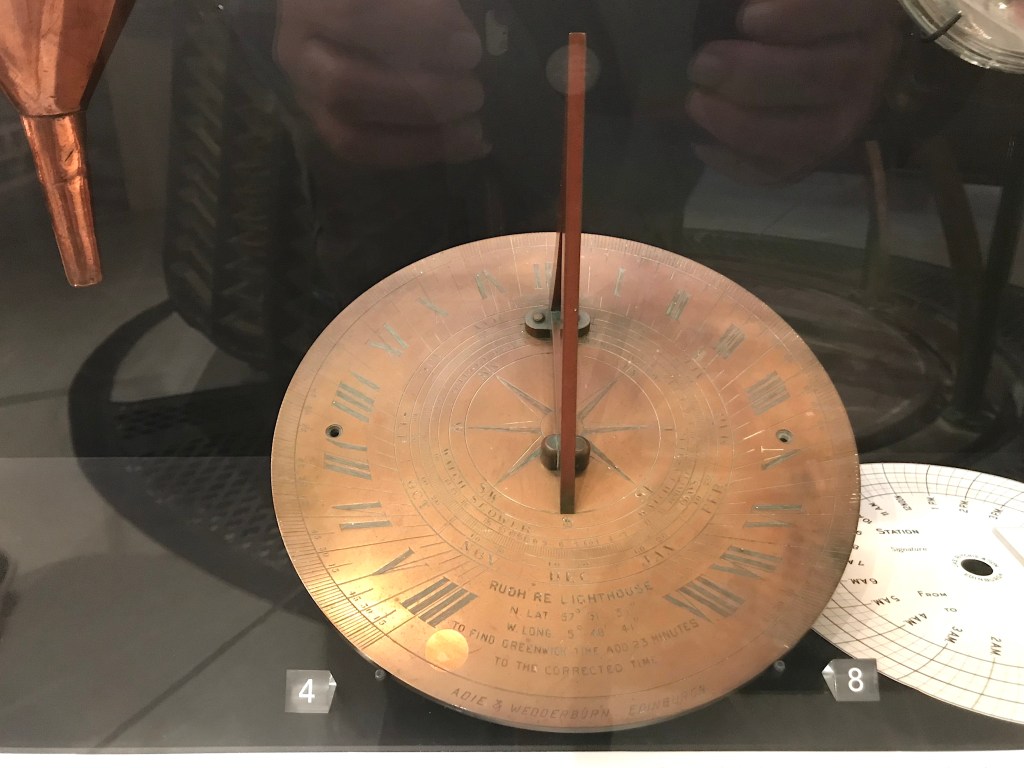
Rhubha Rèidh Lighthouse Sundial . Gairloch Museum .
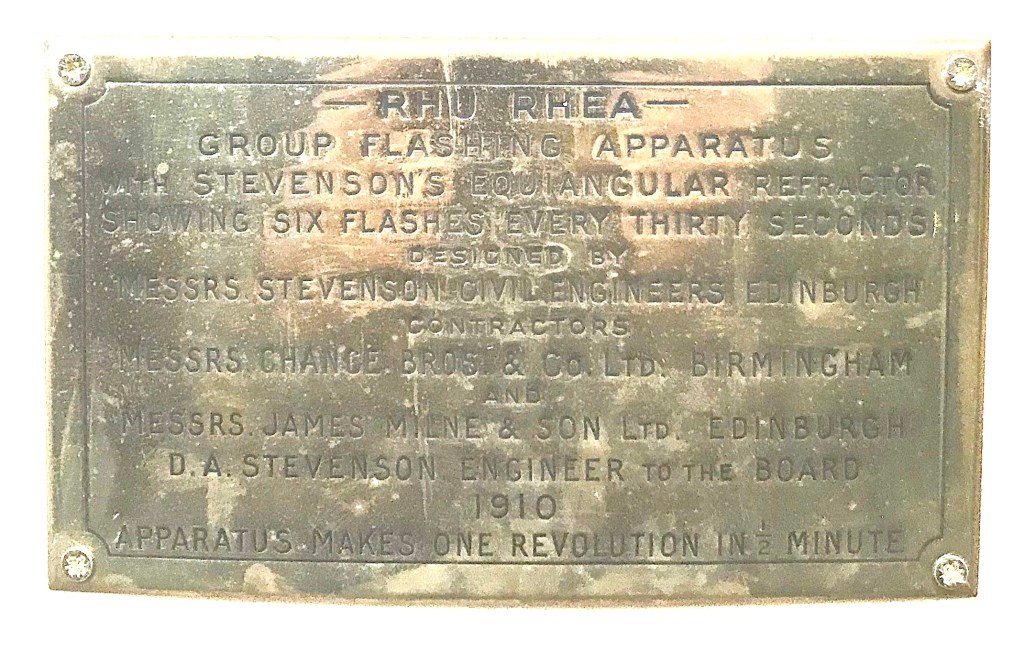
Rhubha Rèidh lighthouse is situated at Melvaig, near Gairloch, Wester Ross. Confusingly, there are several ways to spell the name. Correctly, it is as shown in the title above. However the map below omits the first h in Rhubha. The Northern Lighthouse Board uses Rubh Reidh for the lighthouse itself, perhaps for simplicity. The dial featured is marked Rudh Re. The brass plaque for the lighthouse is headed Rhu Rhea. Whichever, the pronunciation ‘roo ray’ is roughly correct. OS grid · NG7396491847
The lighthouse stands at the remote north west tip of a plump peninsular at the end of a narrow track, with Loch Ewe emerging into the sea to the east. It is one of the ‘Stevenson’ lighthouses, designed by David and completed in 1912. It was automated in 1980 and is still operational. If you want a secluded and unusual place to stay, you can book accommodation in the main building. Official tarmac ends halfway along the 6 mile (or so) road, which continues as an access road. This part of the coastline can be a good place for dolphin and whale watching – if you are lucky, a Minke.
‘Rudh Re’ Lighthouse Sundial . Gairloch Museum .
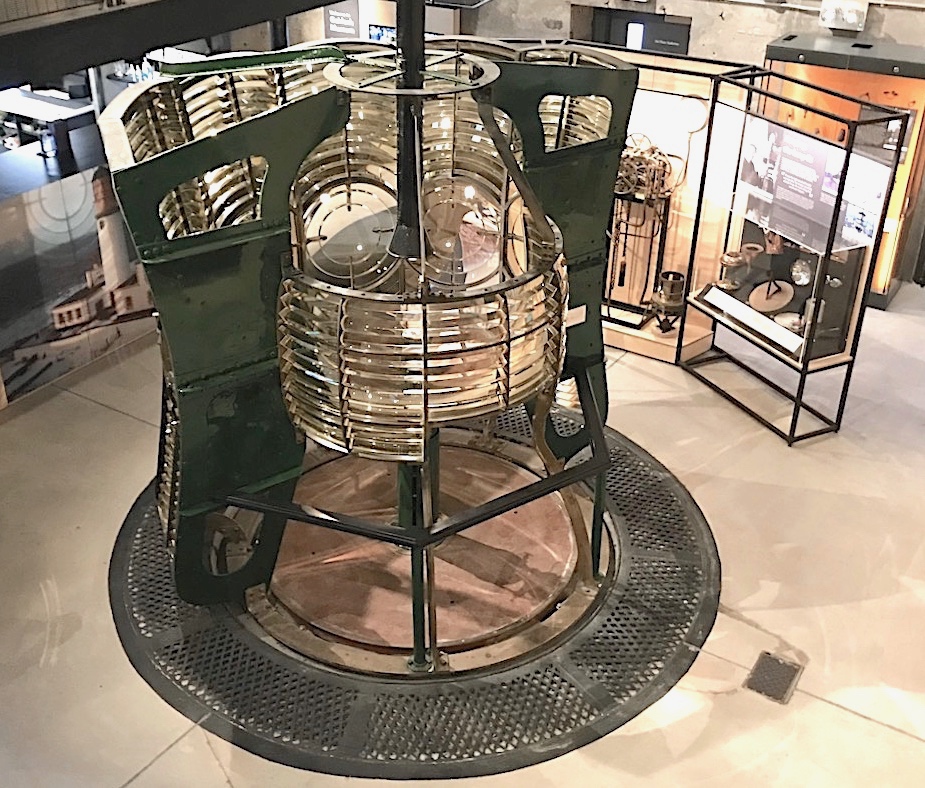
The dial is on display in the outstanding GAIRLOCH MUSEUM, winner of the Art Fund’s Museum of the Year 2020. Small it may be, but packed with interest. The dial is in a glass case displayed with related items. The entire lantern is housed in the main room, viewable from a gallery above as well as at floor level. Its Fresnel lenses are intact. In a parallel life, I have been peripherally involved with a working ‘clockwork lighthouse’ bedded on mercury, with its original Fresnel lenses (Hope Town, Abaco, Bahamas) – possibly the last survivor. There is another lighthouse on the island, long abandoned but still with at least some of its Fresnel lenses.
GRADE ll*. Mainly C14 / C15, broadly Perp. Earlier origins. C19 work by G. Scott & T. Wyatt. Solitary in a combe behind the village and a real challenge to discover (ignore ‘Church Lane’). Well worth the effort to visit, as is Bratton Camp iron-age hill fort with its early white horse to W. 51.2665 / -2.1244 / ST914519
DIAL
CHURCH OF ST JAMES THE GREAT . BRATTON . WILTS – SCRATCH DIAL
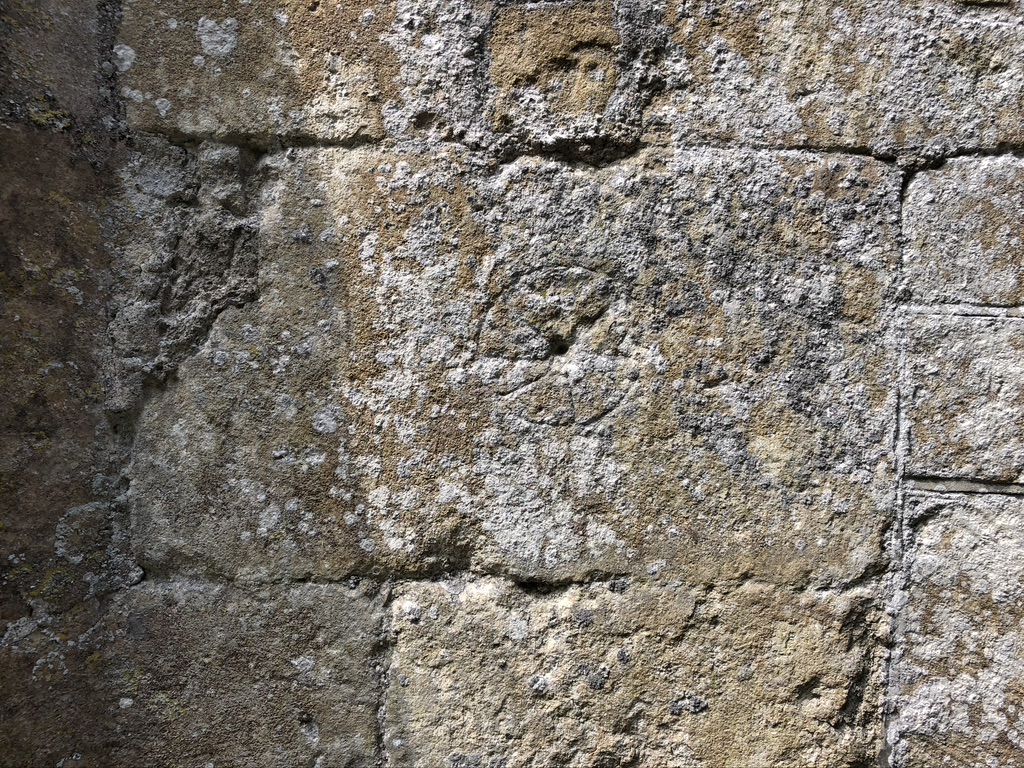
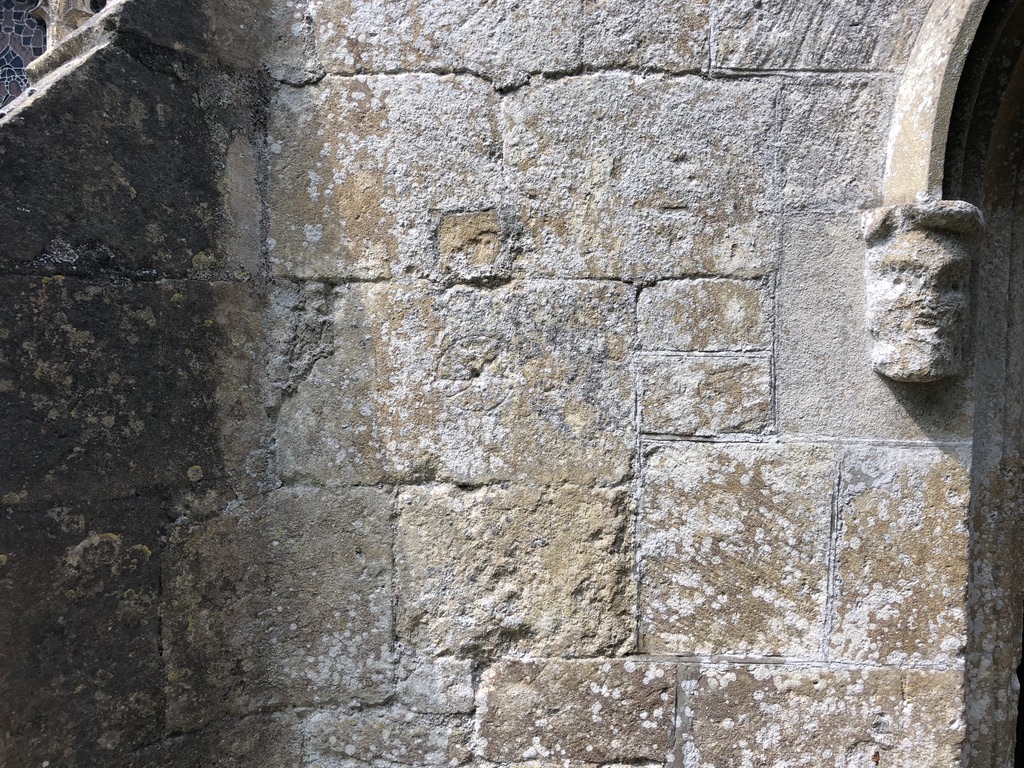
A simple small dial, encircled, with several slightly curving radials. 3 or 4 pocks that may relate to it. Located W. of the S. porch, level with the head stop L. of the arch.
CHURCH OF ST JAMES THE GREAT . BRATTON . WILTS – SCRATCH DIAL
OLD DIAL
On S. face of the tower, a large painted dial dated 1801 ‘TEMPUS FUGIT’. The long spindly gnomon casts an impressively long shadow.
DEDICATION † St Mary. Mid C12 / earlier foundation; main development C15; C19 restoration
LISTING † Grade I
LOCATION † 8 miles NE. of Dorchester, 12 miles SE. of Yeovil, in the valley below the A37 racetrack. Hardy’s ‘Chalknewton’. More of a small town than a village, with a few shops, a garage and a station rather than (as elsewhere locally) a single shop and a halt. 50.7775 2.5727 SY597977
DIAL 1
See detailed post for the recorded dial in the chancel doorway (RHS) HERE
St Mary . Maiden Newton . Dorset . Scratch Dial on Chancel doorway
DIAL 2 (?)
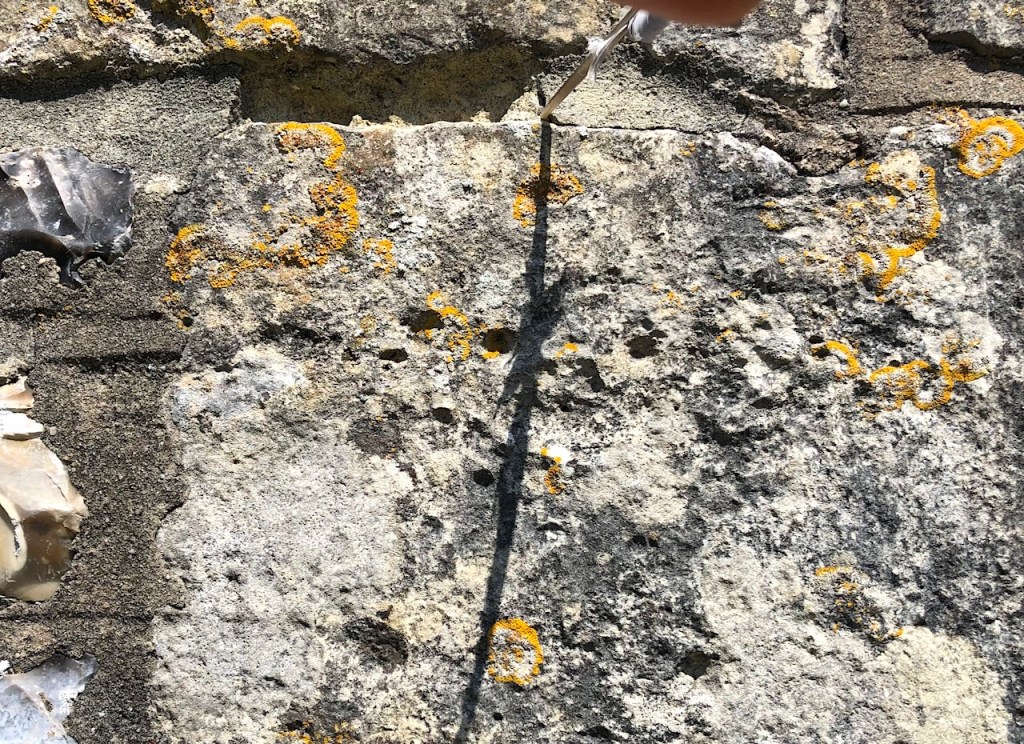
The dial is at eye-level on the quoin of the buttress between the porch and the Chancel door. It is not recorded, and I can see why (a) it may have been overlooked and or (b) why, if noticed, it may have discounted as a definite dial. So I’ll argue the case.
This is a pock dial with no radials. There are 3 large pocks on a slight curve, and a couple of small ones slightly out of line. There are other pocks lower down, two of which (presuming a gnomon in the mortar immediately above) seem to relate to the large pocks – one might even be a noon indicator.
Using a crow’s feather as a style centred in the mortar above the large pocks, the shadow cast was photographed at about 11.30
St Mary . Maiden Newton . Dorset . Scratch Dial 2? (unrecorded)St Mary . Maiden Newton . Dorset . Scratch Dial 2? (unrecorded) . ‘Timed’ with a crow’s featherSt Mary . Maiden Newton . Dorset . Scratch Dial 2? (unrecorded) . Details of the pocksSt Mary . Maiden Newton . Dorset . Scratch Dial 2? (unrecorded) . Location c/w Dial 1 beside the Chancel door
NOTES † There is a fine sundial ‘on S. face of tower, square slab with simple capping, iron gnomon and date 1630‘ BHO. See OLD DIAL menu LINK
GRADE ll*. C15 with earlier origins. Complete rebuild in C18 ‘incorporating C15 windows, arcade and doorways’HE. Separate C13 bell tower (cf Gunwalloe), listed G ll. 5m S. of Truro. 50.2057 / -5.0502 / SW824384
Only 4 scratch dials are recorded for Cornwall, this being one (see also Manaccan). I assume the main reason is that the local building materials – granites, serpentine, and other hard rock – are unrewarding to work with when cutting a dial
DIAL
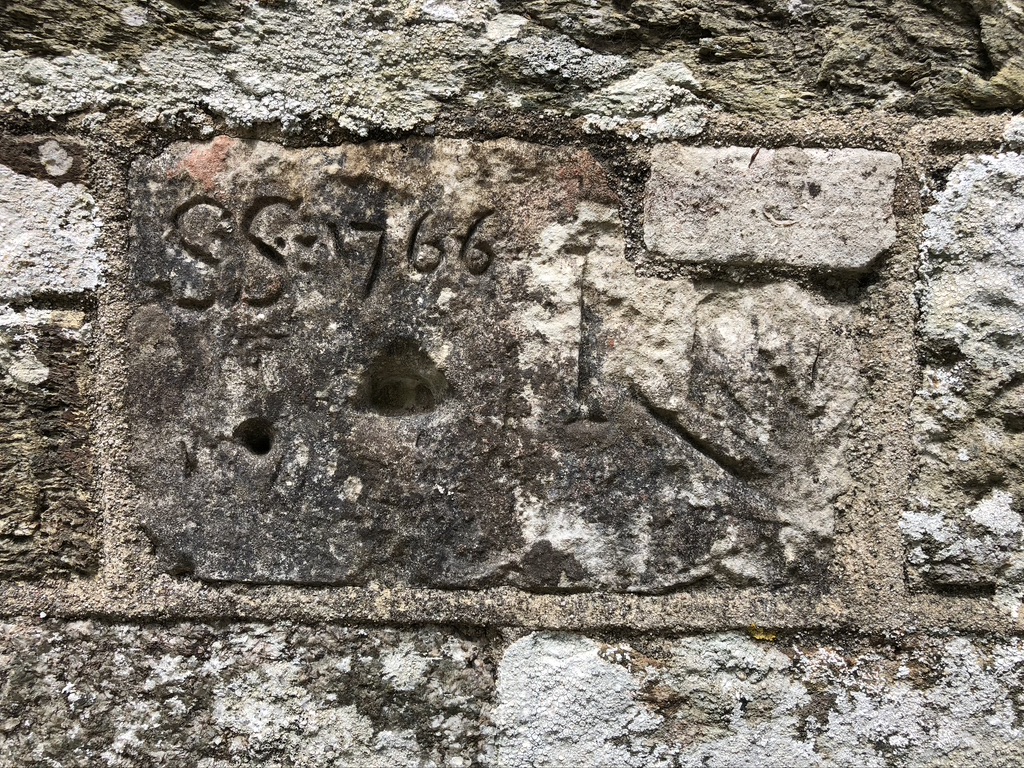
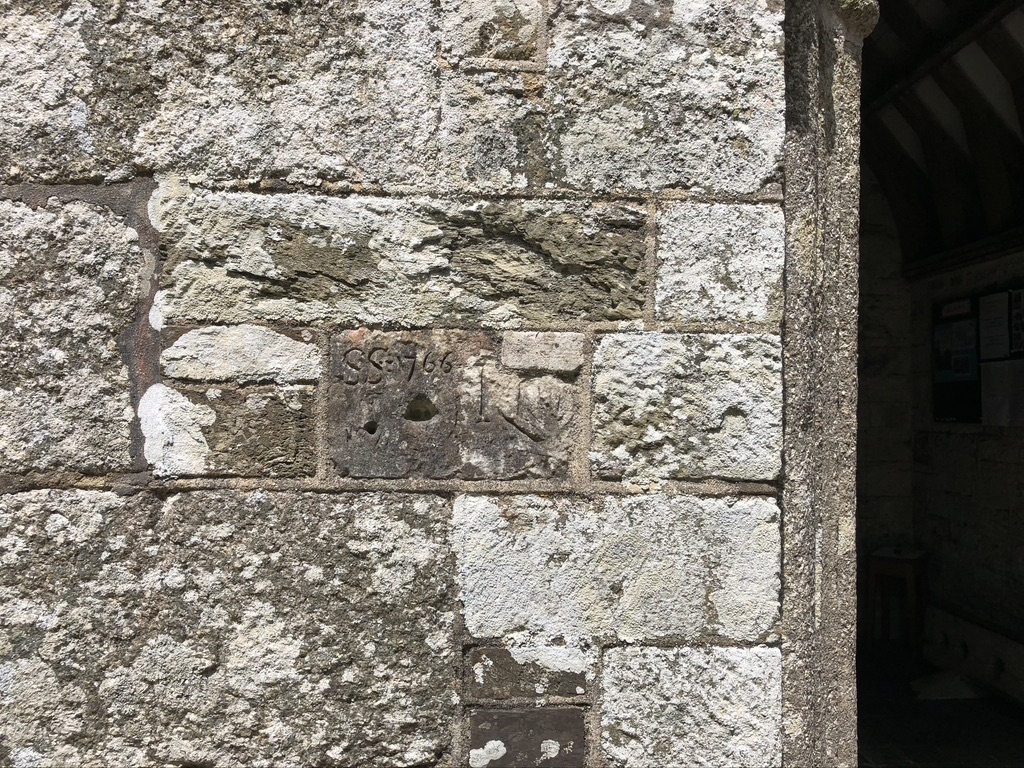
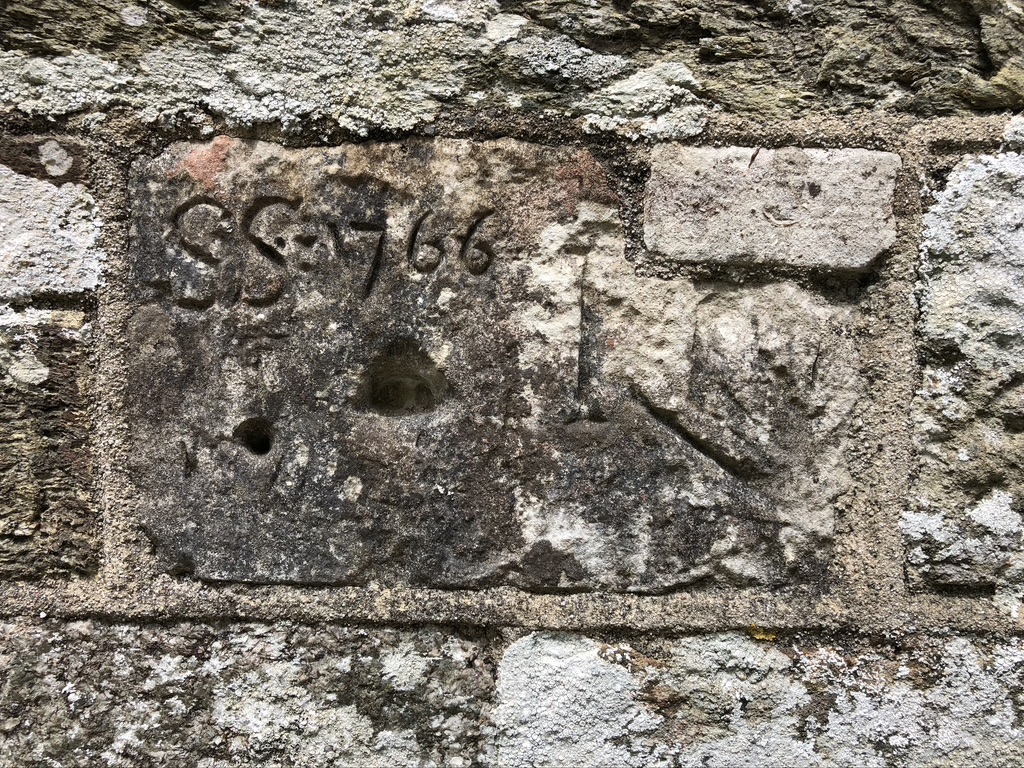
The dial is located prominently on the left side of the porch. Clearly the stone is different from and older than the surrounding stones (BSS dates the dial as C15), so it must have been rescued from the earlier building and reused in a typical dial position during the C18 reconstruction. The graffito SS 1766 makes a good case for being the date of relocation.
The recorded dial is under the date and has 3 or 4 adjacent indistinct short lines described (BSS) as ‘remote’. I take this to mean unlinked to the large style hole. To me they seem rather random and arguably not in the right place / at the right angle to be of much use. There’s the hint of an eroded circle. This basic dial’s main interest (apart from its extreme rarity in the county) arguably lies in the way it was incorporated and marked so appropriately during the rebuilding.
OTHER MARKS
A. I assume SS to be the initials of the stonemason who reset the dial – rather boastfully larger than the incised date. Given the date, it seems unlikely to reference ‘Saints’. B. As for the triangular indented ‘nostrils’ with the trace of a partial circle, I have no idea – possibly the site of a later fixing? C. The vertical line to the right is another puzzle, with its carefully cut decorative ends (one eroded). I’d like it to be a cross, but there’s no indication of a horizontal.
More interesting is the ‘pattern’ lower right. When I first looked at the stone, I presumed from the clearer lines radiating from a centre, the 3 or 4 apparent pocks, and the trace of a circle, that this was the recorded dial. The upwards direction of the lines suggested that the ‘dial’ had been upper left and that the stone was inverted when reused (as is often the case with dial stones), after which the initials and date were added.
Here’s how the stone might have looked. Perhaps there are actually 2 dials on it?
Church of St Feock . Feock . Cornwall – Scratch Dial
St Feock . Cornwall . Stocks
Church of St Feock . Feock . Cornwall – Scratch Dial
NOTE: see also the entry for MANACCAN for a second recorded Cornish dial; and St Martin for 1 or even 2 candidates as hitherto unrecorded dials.
GRADE 1. C12 and C15. Lizard Peninsula, S. of Helford River. Small village protected by a network of narrow roads from tourist hordes. 50.0832 / -5.127 / SW763250
Only 4 scratch dials are recorded for Cornwall, this being one. I assume the main reason is that the local building materials – granites, serpentine, and other hard rock – are unrewarding to work with when cutting a dial
DIAL
The small dial is cut to the right of the splendid Norman doorway, on a cylindrical pillar moulding. BSS suggests this may be a unique location. The lines curve away from the gnomon hole and there is the hint of a partial circle. The overall style is rustic and the condition is poor. It was noted in 2002 (L Burge) that there is a cross † ‘at Mass’ but on a dull day I could not make it out.
St Manaccus . Manaccan . Cornwall – Scratch Dial
NOTE: see also the entry for FEOCK for a second recorded Cornish dial; and St Martin for 1 or even 2 candidates as hitherto unrecorded dials (link to be added).
Church of the Blessed Virgin Mary . Ashill . Somerset
CHURCH OF THE BLESSED VIRGIN MARY . ASHILL . SOM.
GRADE II*. C12 / C13 on the site of an earlier church; later additions and alterations. Just off the A303 between Taunton (7m) and Ilminster (3m). 50.9508 / -2.9677 / ST321172
DIALS
Dom Ethelbert Horne DEH visited Ashill, during his Somerset dial-seeking perambulations, on 16 August 1915. He found 3 dials closely grouped on the SE corner of the nave. As I am finding, his descriptions from more than a century ago have been eroded by the passage of time and by work carried out in the intervening period, for example filled style holes.
DIAL 1
115. (1) This dial is on the s.e. corner of the nave. It is 6 feet above the ground, the noonline is 2 1/2 inches in length, the stylehole is 1 1/4 inches deep by 1 inch diameter, and the aspect is s. by 10° e. Type 2
Notes: the ‘6 feet’ is from the base of the nave wall, which is below the churchyard level; the style hole has been filled in the interim
Church of the Blessed Virgin Mary . Ashill . Somerset – Scratch Dial 1
DIAL 2
116. (2) About 10 inches to the e. of the above is another dial, which may be only a copy. The noonline is 2 1/2 inches in length, the stylehole, which is in a joint, is filled, and the aspect is as above. Type 2.
Notes: the lines are more spidery, less distinct, and more random than dial 1
Church of the Blessed Virgin Mary . Ashill . Somerset – Scratch Dial 2
DIAL 3
117. (3) Two feet below the last named is another, also probably a copy. The noonline is 4 1/2 inches in length, the stylehole, which is in a joint, is filled, and the aspect is as above. Type 2. August 16th 1915.
Church of the Blessed Virgin Mary . Ashill . Somerset – Scratch Dial 3Church of the Blessed Virgin Mary . Ashill . Somerset – Scratch Dial 3 annotated
DIALS 1 & 2
Church of the Blessed Virgin Mary . Ashill . Somerset – Dials 1 & 2
Church of the Blessed Virgin Mary . Ashill . Somerset – 3 dials
DEH notes that ‘it is rather difficult to determine whether Nos. 2 and 3 are only copies of No. 1 or whether they are original’. Having seen and photographed (as he could not) the dials, I am wondering whether the rudimentary dial 2 was in fact the first, with ‘dial 1’ cut later, copying and improving on it.
Dial 3 is rather different to either of its companions. DEH categorises each dial as being in his ‘Type 2’ (of about 12); perhaps that is what he means by ‘copy’ – ie the general style, not the physical details
GRADE II*. C11 origins with Norman features inc. doorway inside the porch; enlarged in C14 (tower) and C15 (S. porch); C19 restoration. One of many attractive villages in the area. 4m W of Wincanton, with only the A303 to spoil the peace. 51.2261 / -2.8478 / ST 65722673
DIALS
Dom Ethelbert Horne DEH visited Blackford on April 24th, 1914, during one of his tours around Somerset examining medieval churches and recording the details of the scratch dials he discovered. Blackford is one of a very small number of Somerset churches where he found a dial inside the porch. It must predate the added C14 S. porch to have had any practical use. Another example of an interior dial can be found at WAYFORD.
DIAL 1
DEH 165. (1) This dial is on the e. side of the inner door of the s. porch, at a height of 4 feet 6 inches above the floor. The noonline is 4 inches in length, the stylehole, which is in a joint, is filled, and the aspect is due s. Type 2
Blackford . Som . St Michael – Dial 1
There are 4 sharply incised lines with no discernible traces of others. The mortar line at the top acts as the horizontal ‘6-line’ and the style location. The spacing of the lines is somewhat unusual for such a well-cut, being neither the 15º equal segments of an old design nor the carefully graduated lines of a later scientific dial. Perhaps this indicates an even earlier origin, even possibly contemporary with the original doorway?
Blackford . Som . St Michael – Dial 1 and possible 1a gallery
The stone immediately below the dial has a very small (apparent) dial descending in the same way from the mortar line. One could probably dismiss it as a later copy or doodle of the dial above. On the other hand, crude though it is, the radials are differently configured with more emphasis on the LR quadrant. Perhaps a practice dial?
Blackford . Som . St Michael – Dial 1a?
DIAL 2
DEH 166. (2) This dial is on the w. side of the priest’s door, which is blocked up. It is 2 feet 6 inches above the ground, the noonline is 2 1/2 inches in length, the stylehole is small and shallow, and the aspect is due s. Type 3. April 24th, 1914.
Blackford . Som . St Michael – Dial 2
This dial on W. side of the blocked Priest’s door would be easy to miss, though the newly mortared surround is not. DEH doesn’t note its state, but I wonder if has eroded significantly in the intervening century since his visit. There is the hint of a full circle. It’s hard to make out a noon line as such. Now only a single pock below the shallow style hole indicates the vertical.
Blackford . Som . St Michael – Dial 2 gallery
ADDITIONAL DIALS?
Besides the small ‘dial’ in the porch mentioned above, there are 2 other candidates, both by the Priest’s door. The first one is faint, but there are 2 visible lines leading from a small hole in the stone. Each has a pock at or near the end. Other pocks in the vicinity may be relevant to the theory. The other candidate looked promising, but is less likely I think.
Blackford . Som . St Michael – plausible Dial 3
Blackford . Som . St Michael – possible Dial 4
NOTES
St Michael is worth visiting just for the splendid apotropaic marks (ritual protection / witch marks) in the porch, in particular a deeply incised flower-like hexafoil; and a delicate and complex multiple hexafoil design.
Blackford . Som . St Michael . Ritual Protection (‘witch’) marks
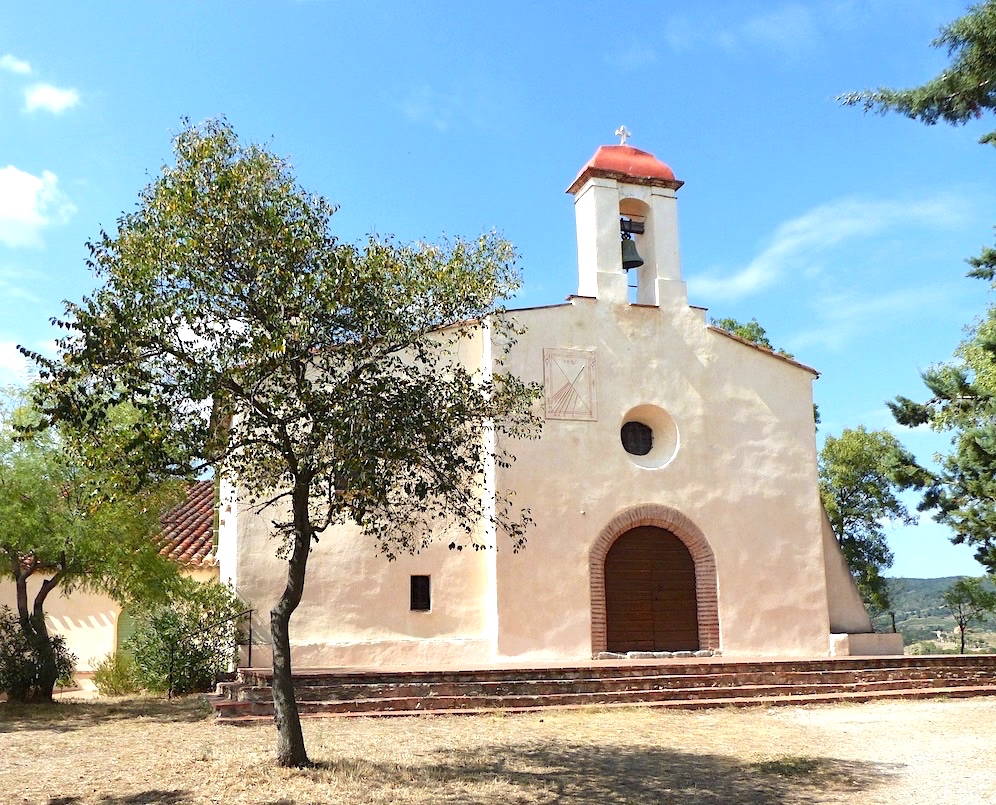
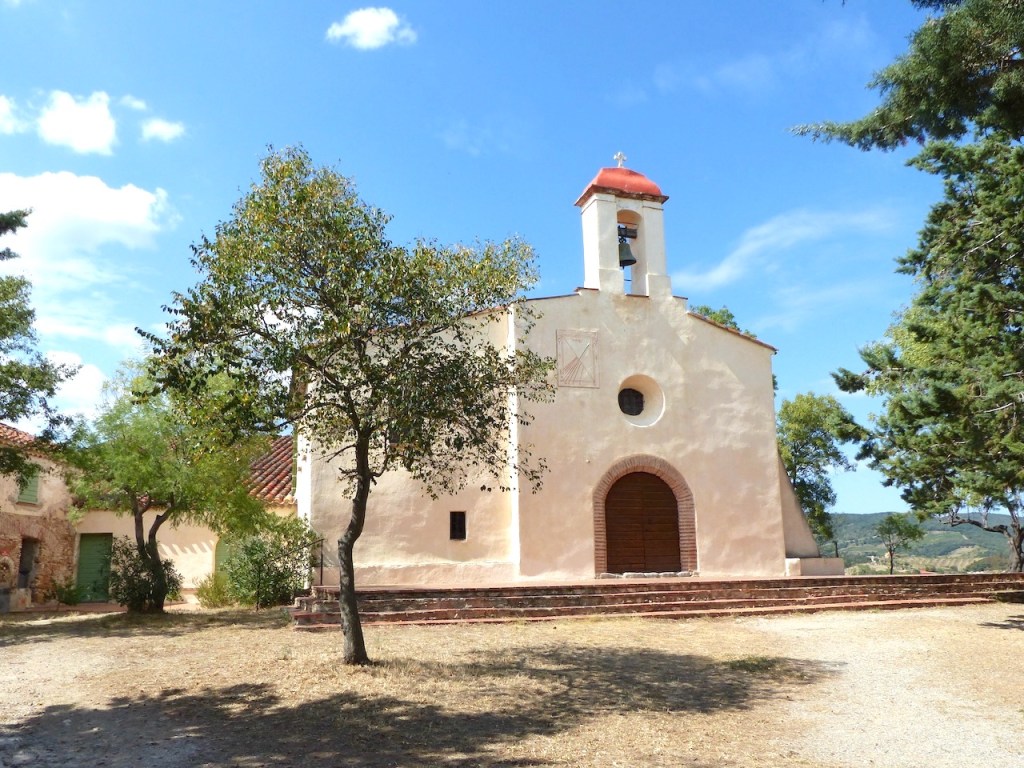
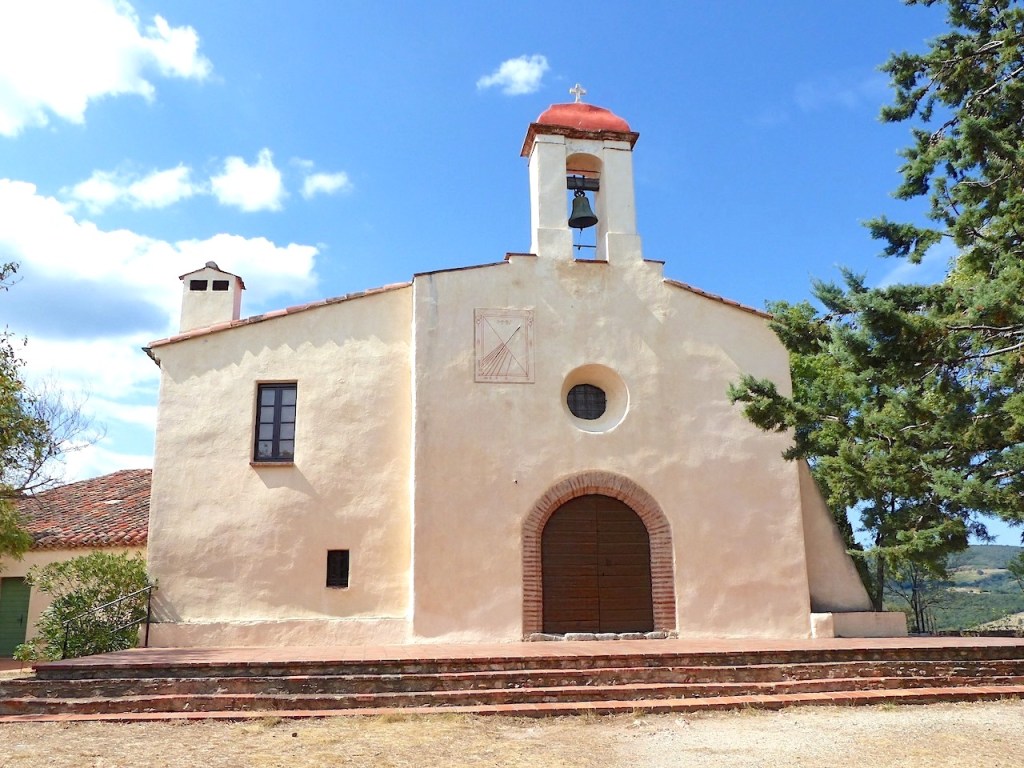
Céret lies south of Perpignan, in the foothills of the Pyrenees quite close to the Spanish border. The Hermitage is a short distance to the north. The modern art museum in Céret has many works by Picasso, including sculpture and ceramics; and by other famous artists of the period.
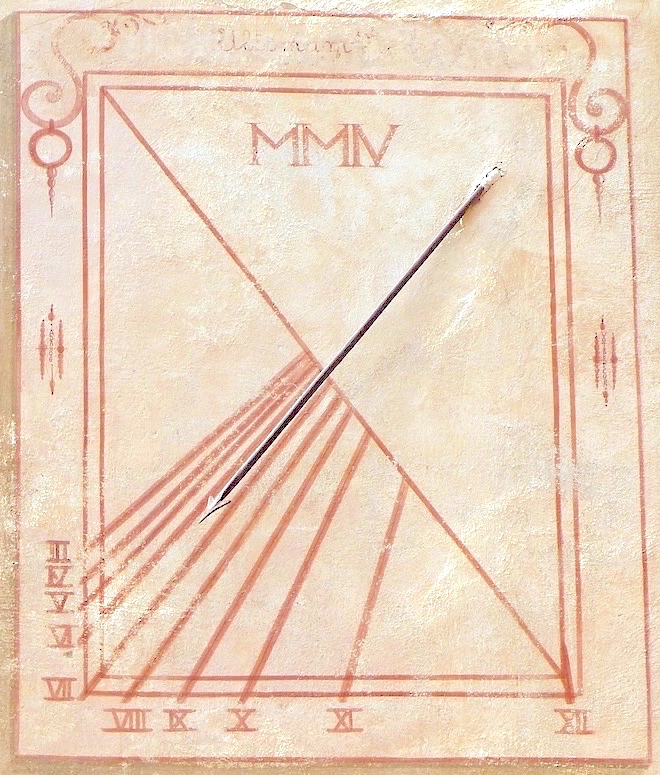
St Ferréol Hermitage, Céret, France – sundial (2004)
This enjoyably rustic sundial is painted directly onto the facade of the C13 chapel (restoration C18). It is intriguing for the way in which the radials are moored, carefully graduated, on the diagonal of the dial face. The arrow gnomon forms part of the opposite diagonal. As an amateur, to me the design of the dial looks quite complicated, especially the calculation of the angle and distance between 11 & noon.
I am still trying to work out the inscription at the top. It seems to be ‘Ultimum’, which could be a neat Latin way of saying something like ‘To the end of Time / Jusqu’ à la fin du temps’
GRADE 1 . On a Roman site. Late C11 or early C12 origin. Development C13 and C15, restoration 1882. Romanesque features. Between Amesbury and Marlborough, close to UPAVON. 51.3212 / -1.801 / SU139580
DIALS
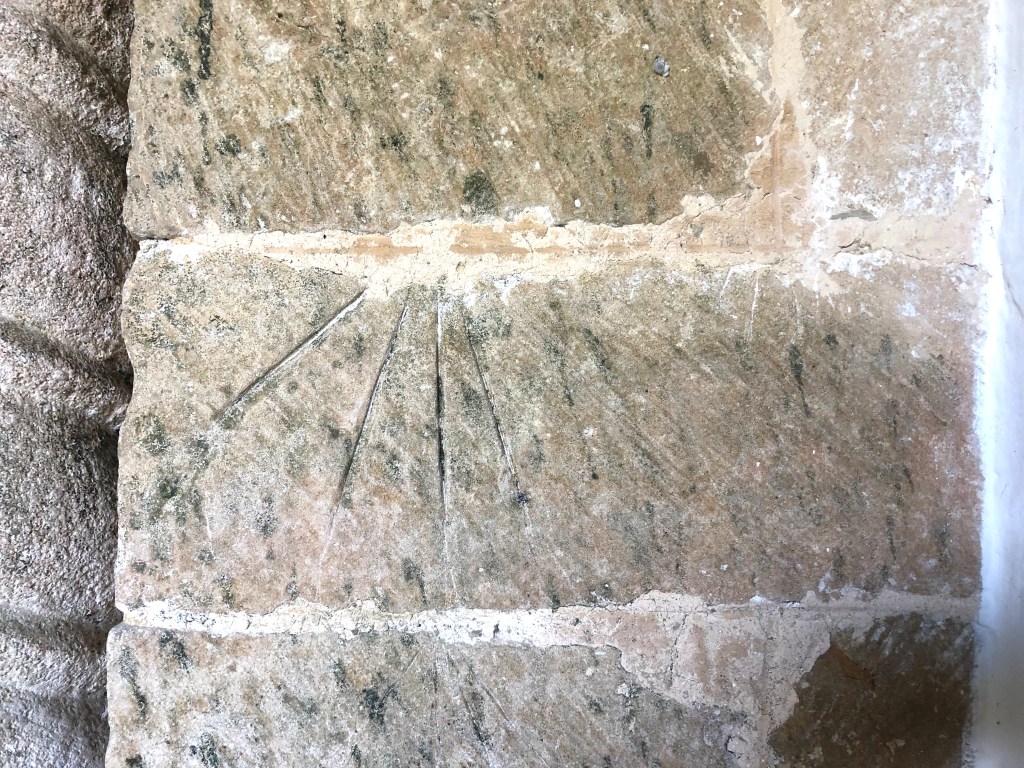
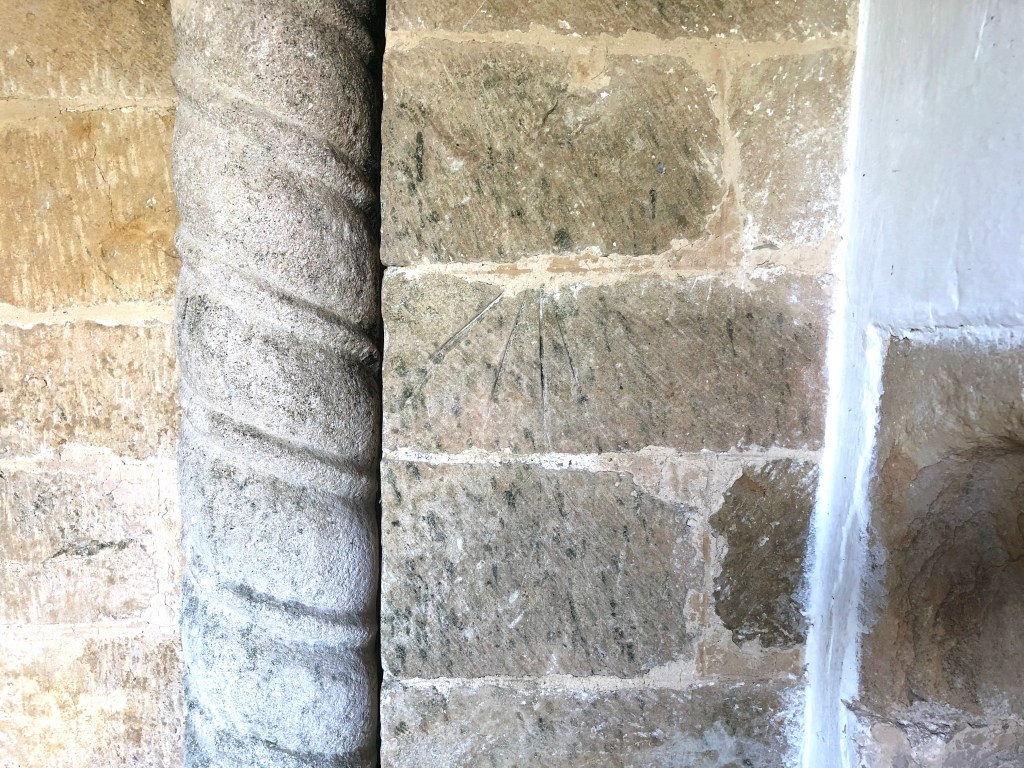
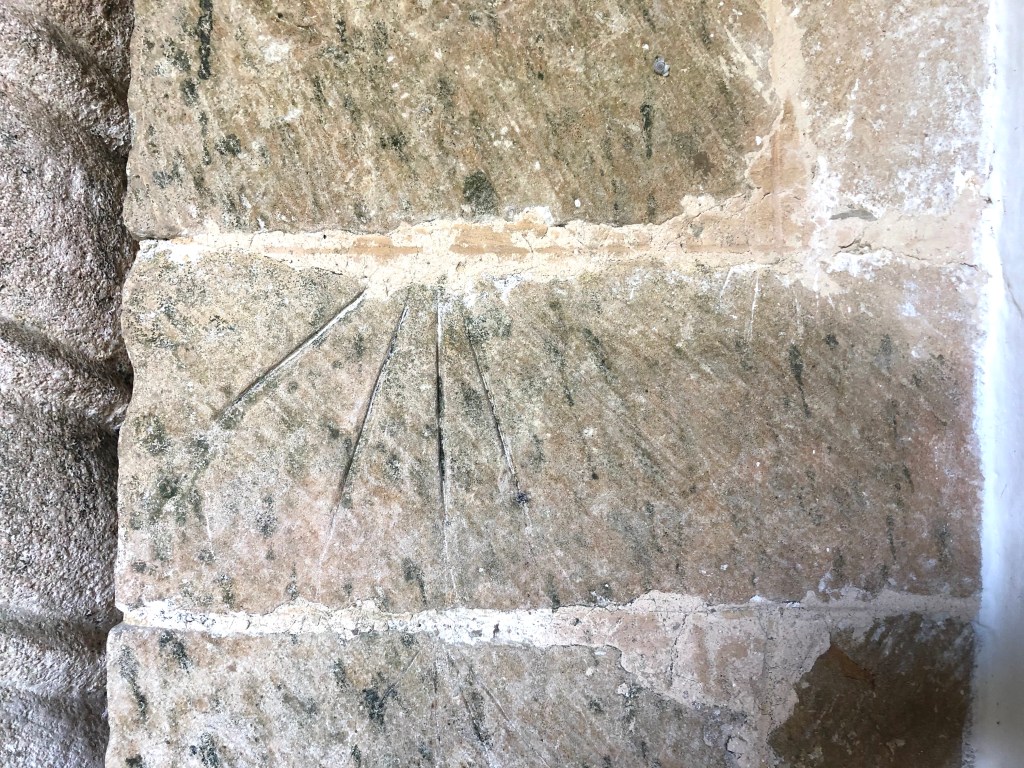
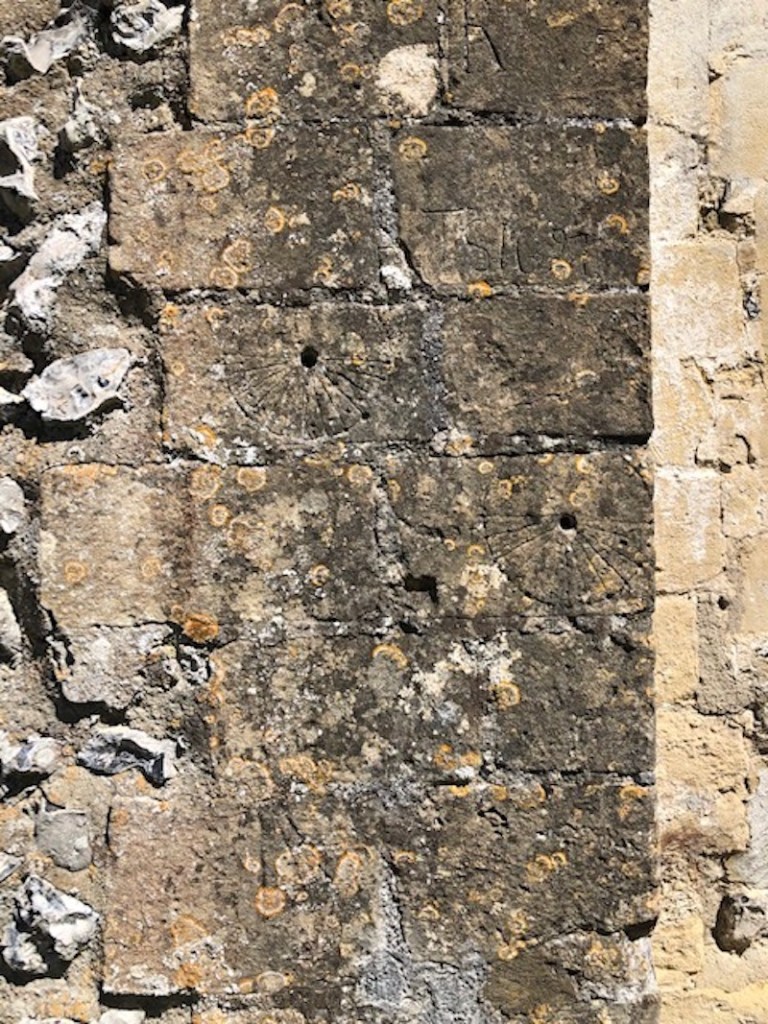
E. quoin stones of transept. Two adjacent and remarkably similar encircled dials with complete semicircles of radials. Both have additional pocks in LR quadrant. Both edge into the mortar at the top; and Dial 2 is cut short by the quoin edge RHS. Possibly this evidences relocation of one or both dials.
DIAL 1 (upper)
Complete semicircle of lines, 5 pocks. Equal 15º radials. BSS notes ‘eroded, damaged, irregular dial with 15º lines in both quadrants’.
DIAL 2 (lower)
Also complete semicircle of lines, 5 pocks, 15º radials. BSS notes as ‘worn’ and with shorter radials.
It is almost as if two people competed to make the most complete or accurate dial to the same design
St Peter . Manningford Bruce . Wilts – Scratch Dials
NOTES
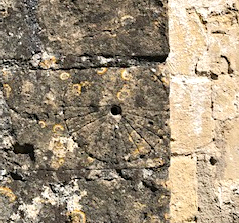
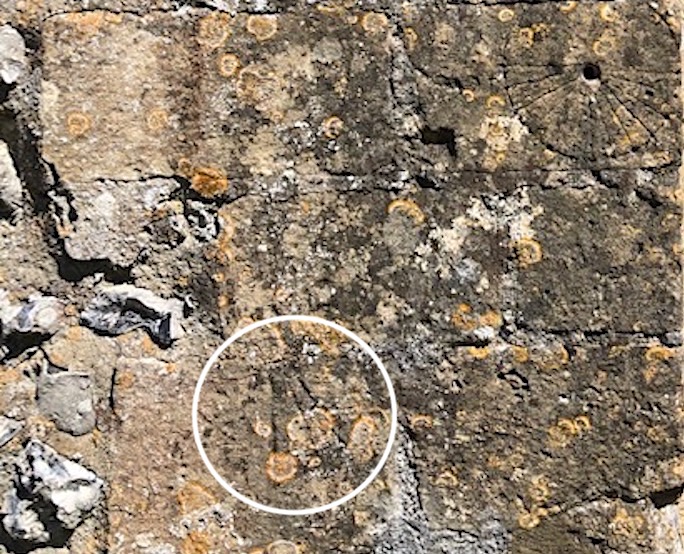
Dial 3? Near the bottom of the image above there are 3 radials spreading downwards from the mortar line. The farthest left is vertical, and (if a dial) is the noon line. The lines were clearly deliberately cut, and it is quite possible that there is a filled style hole above them, though it is hard to tell from the image.
St Peter . Manningford Bruce . Wilts – possible 3rd scratch dial
Graffiti: Initials, dates on quoin stones
GSS Category – Scratch Dial
Dial photographs: Jenny John, to whom many thanks. I recently failed to visit St Peter, having driven through the village en route from Upavon to Marlborough. Next time, I clearly need to check it…
Photographs of the Church: Wilts Council / History Centre; ‘Vale of Pewsey Churches’



























 GAUDIUM SUB SOLE . SUNDIALS . MEDIEVAL TO MODERN