TOLPUDDLE . DORSET . ST JOHN the EVANGELIST – 2 Scratch Dials

St John the Evangelist . Tolpuddle . Dorset

ST JOHN’S CHURCH . TOLPUDDLE . DORSET

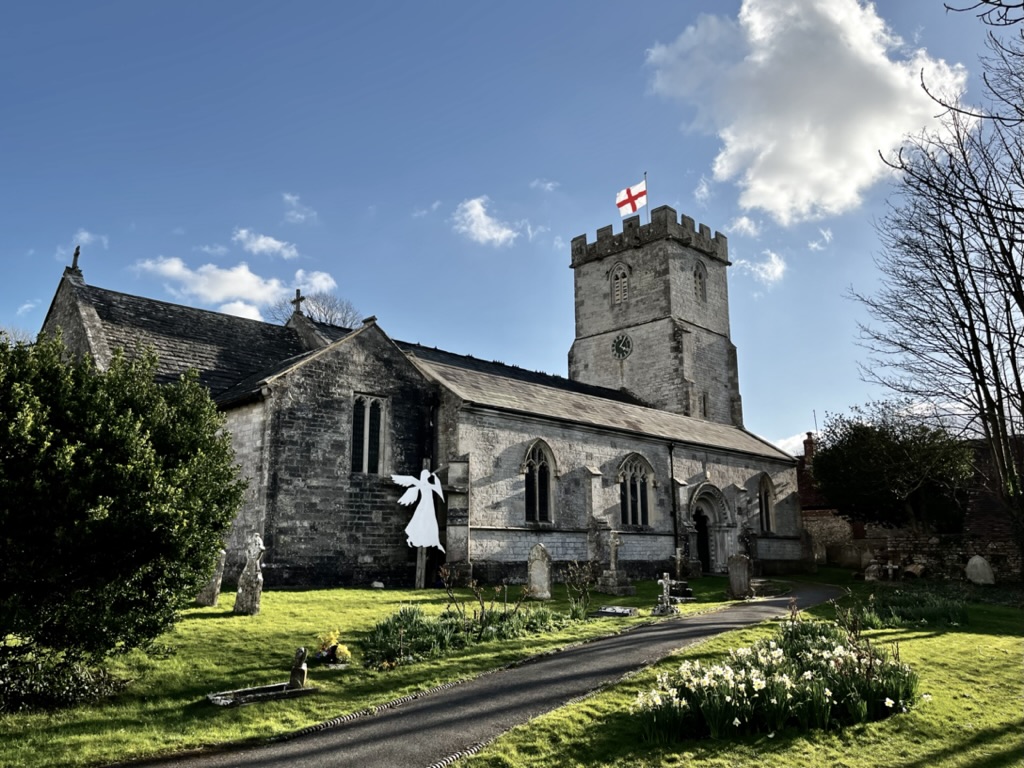
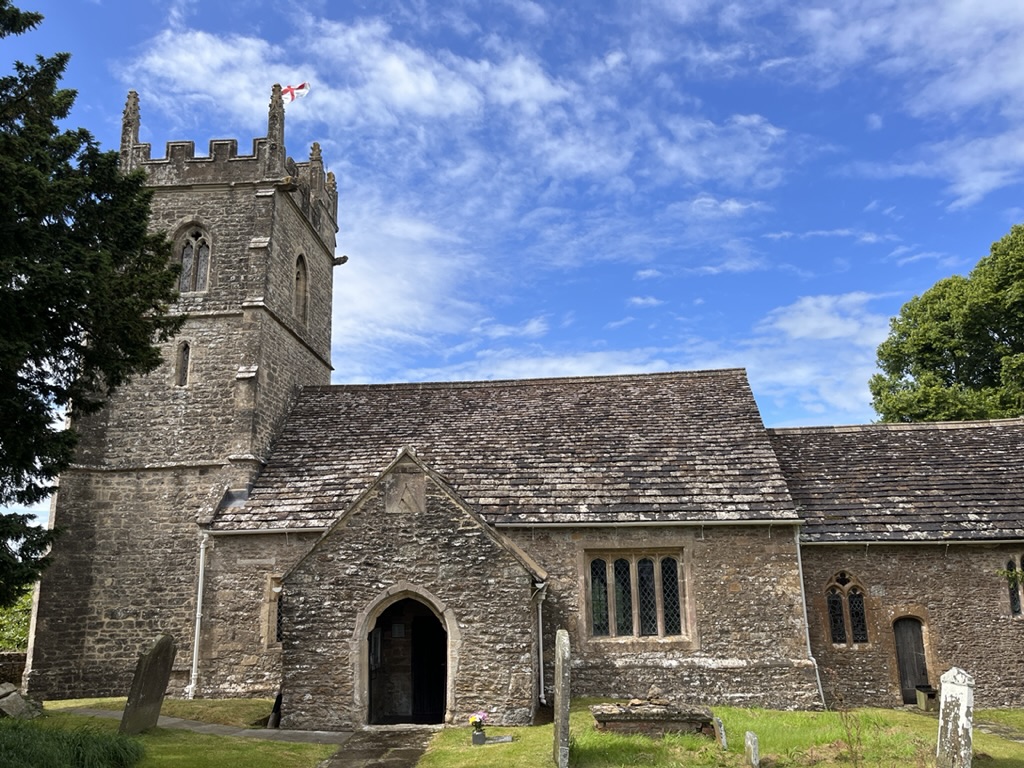
GRADE I † A fine church with C12 origins, gradually enlarged C13 & C14. C19 restoration by T H Wyatt. BLB link. A village irrevocably associated with the 6 Martyrs, at least one of whom (James Hammett) lies in the churchyard. The tree where the Martyr’s met stands just outside the churchyard of St John the Baptist, on the main road through the village BE. 10m E of Dorchester. 50.7497 /  -2.298 /  SY790945

DIALS

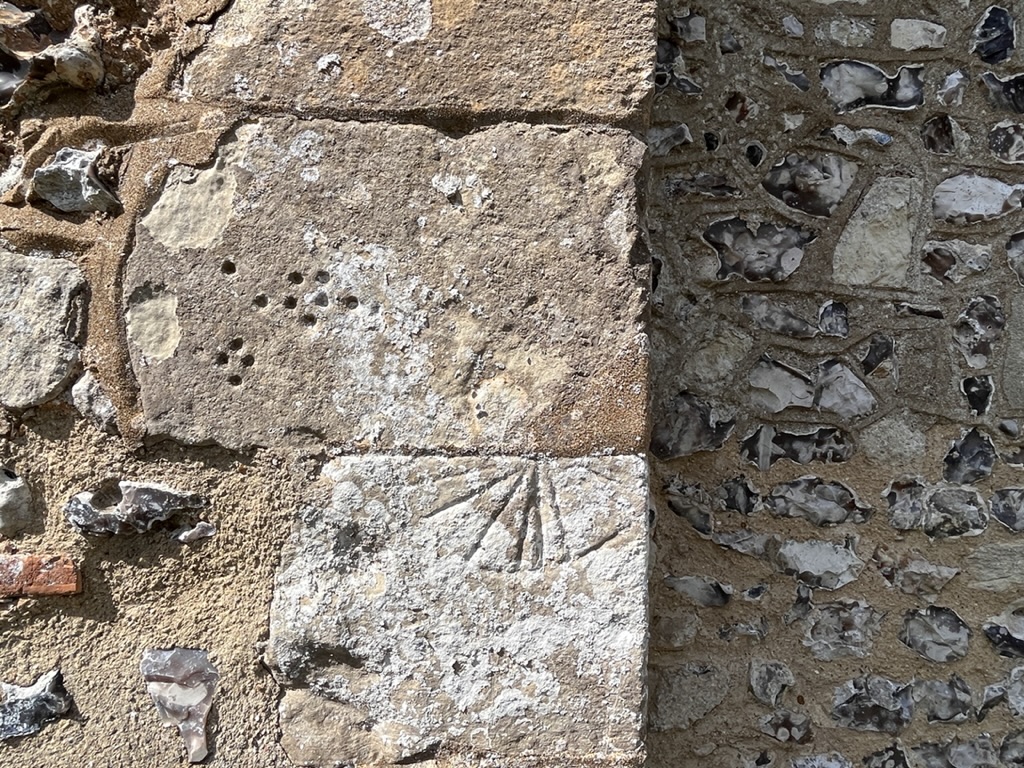
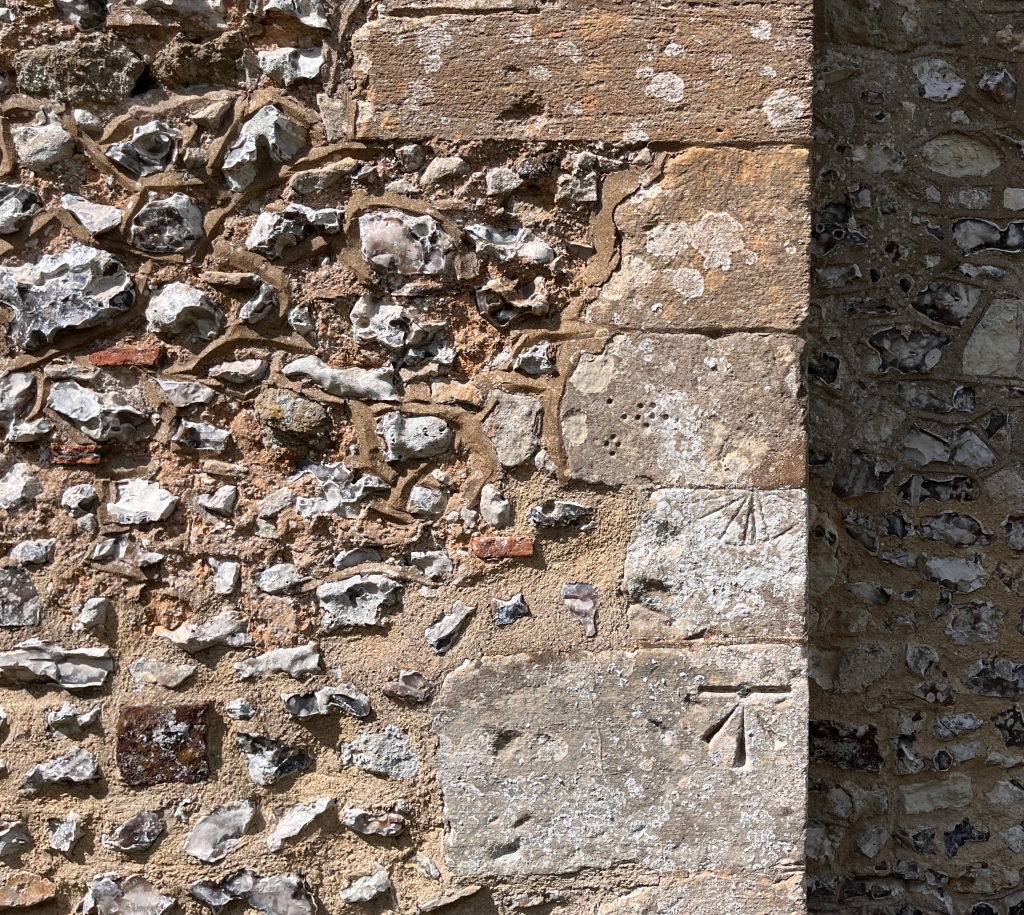
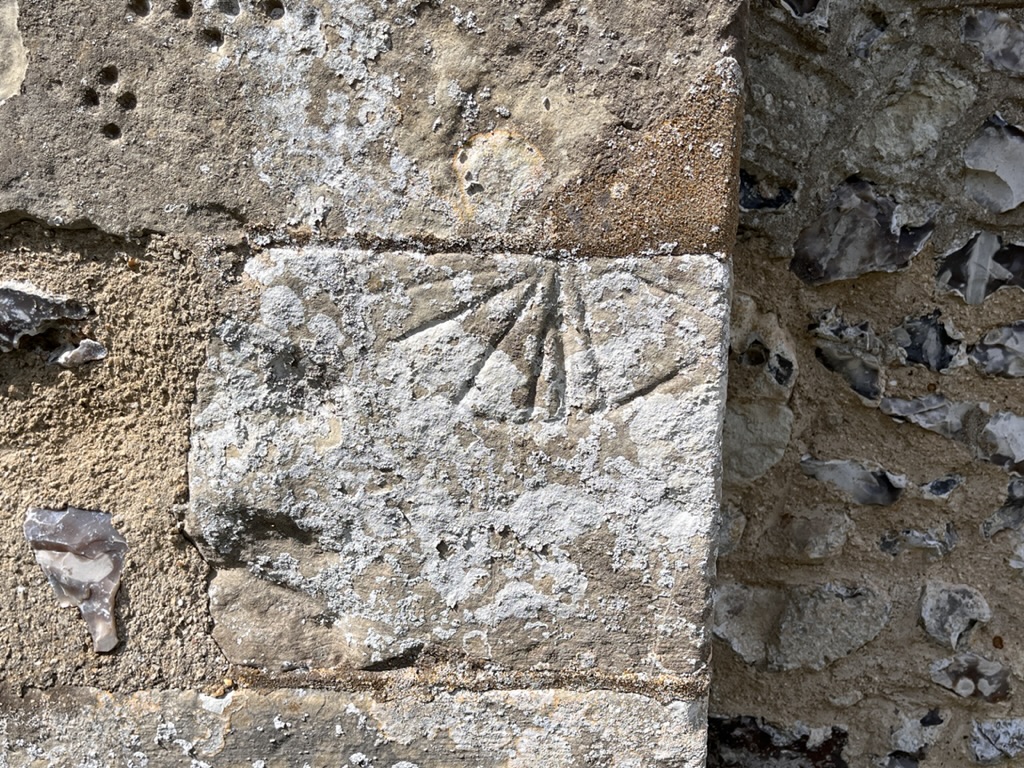
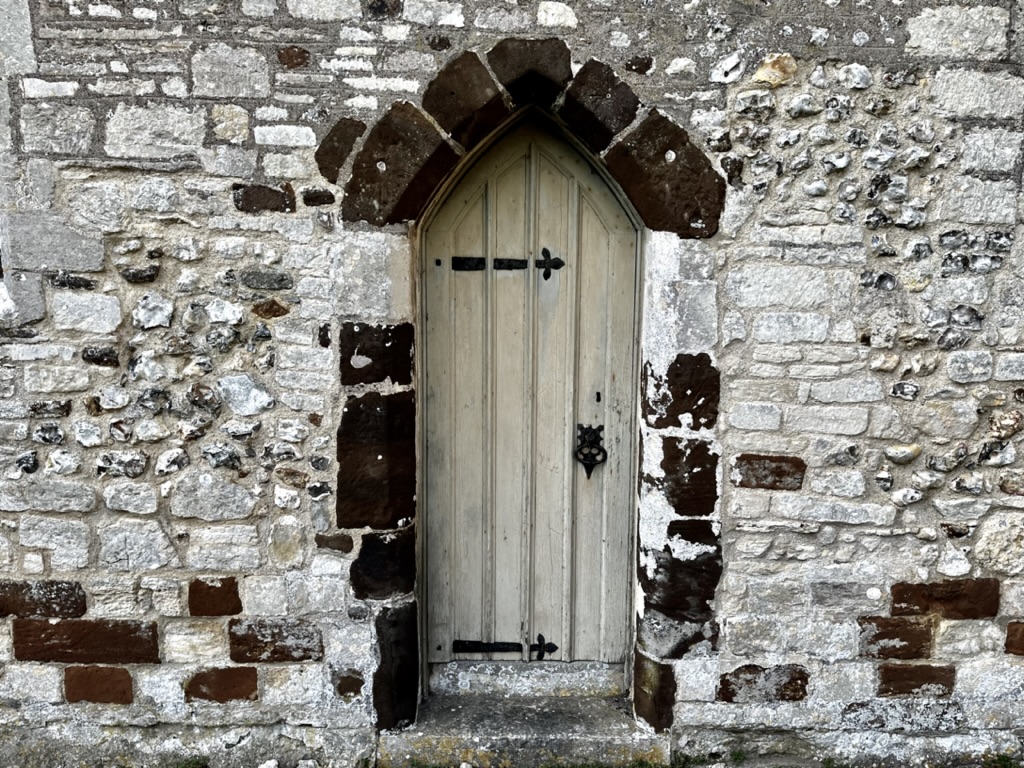
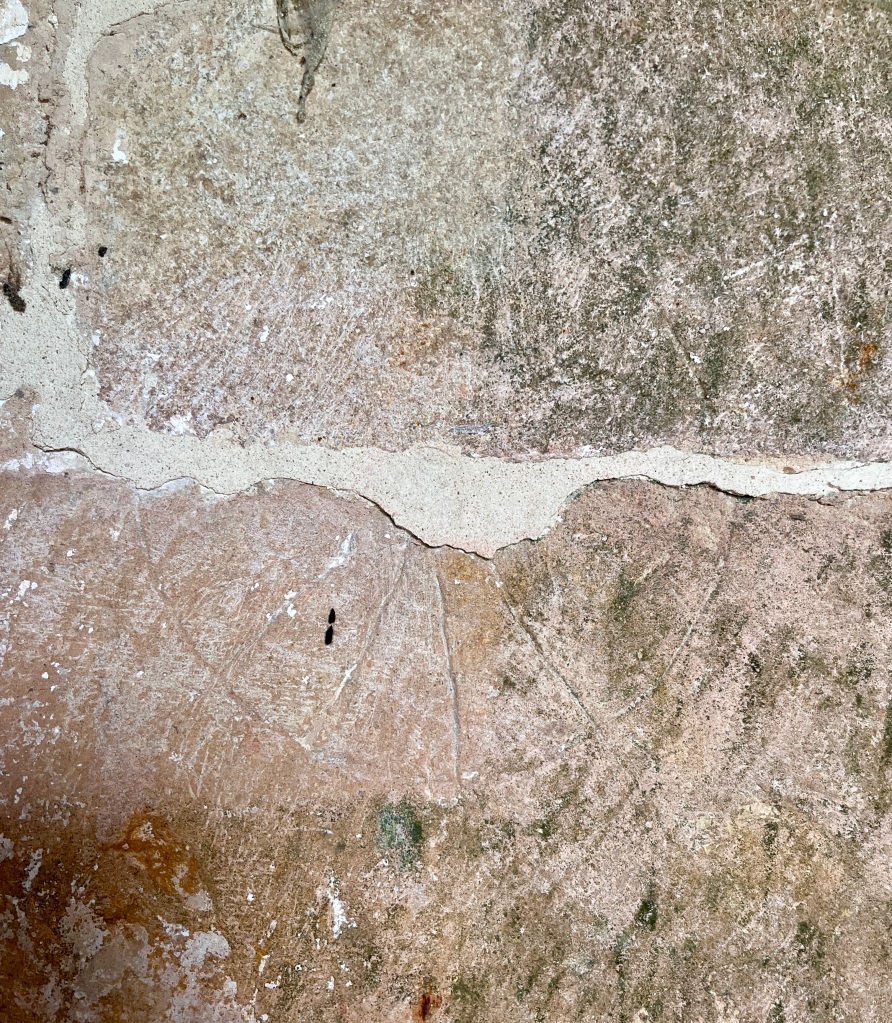
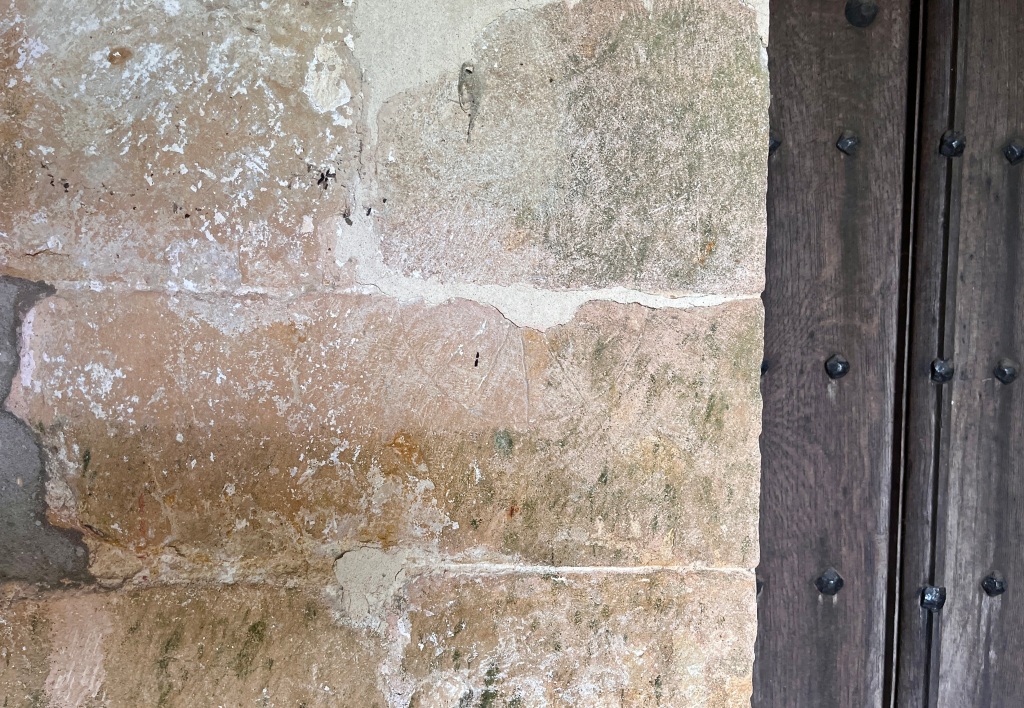
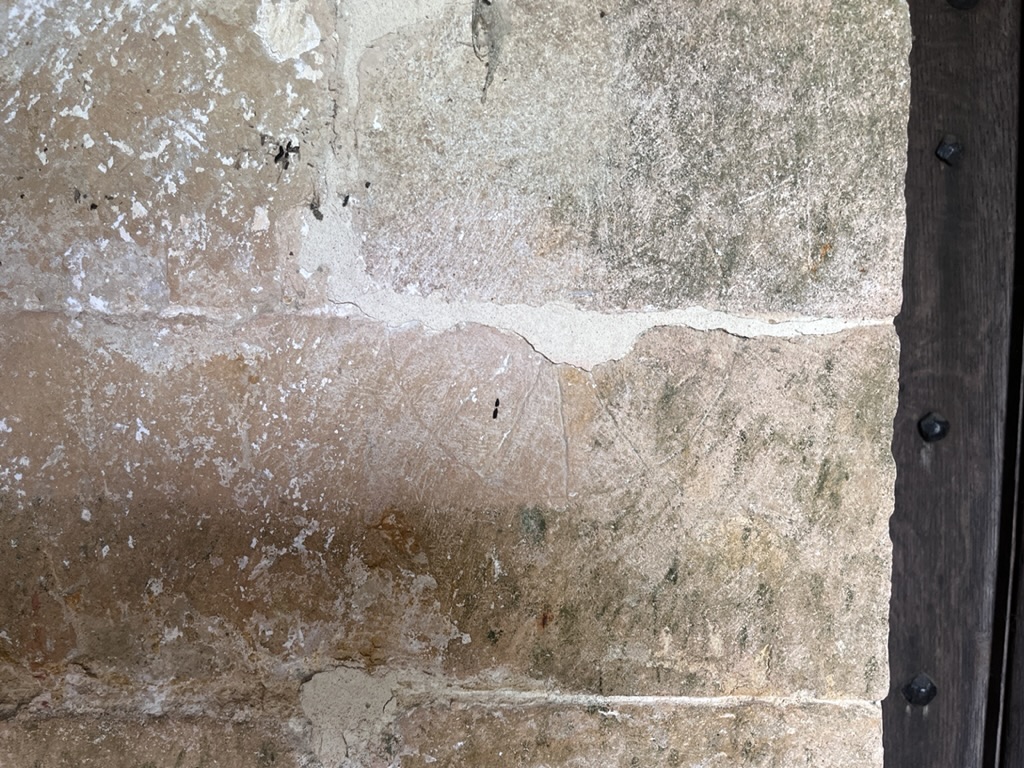
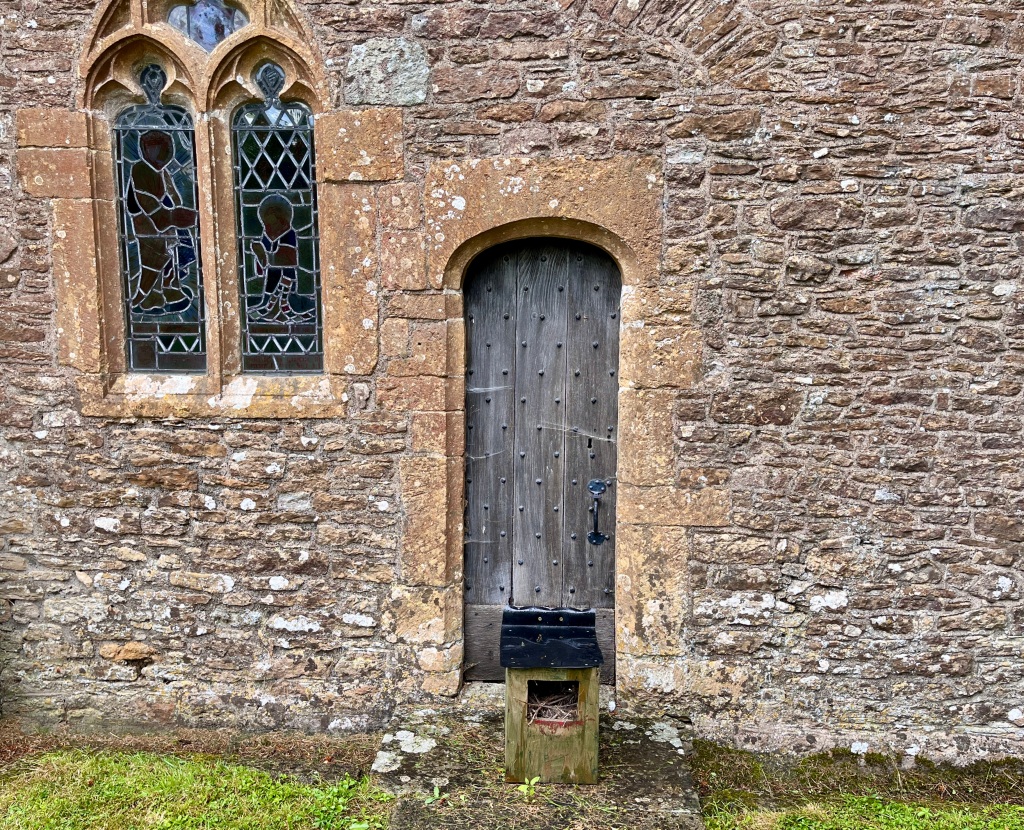
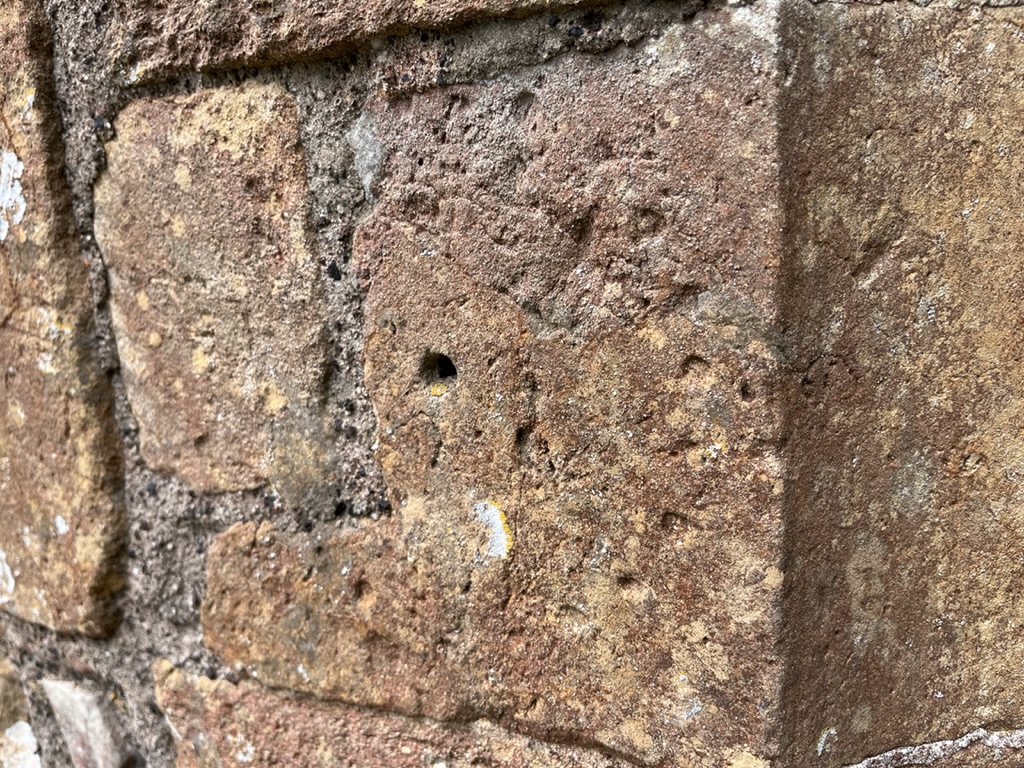
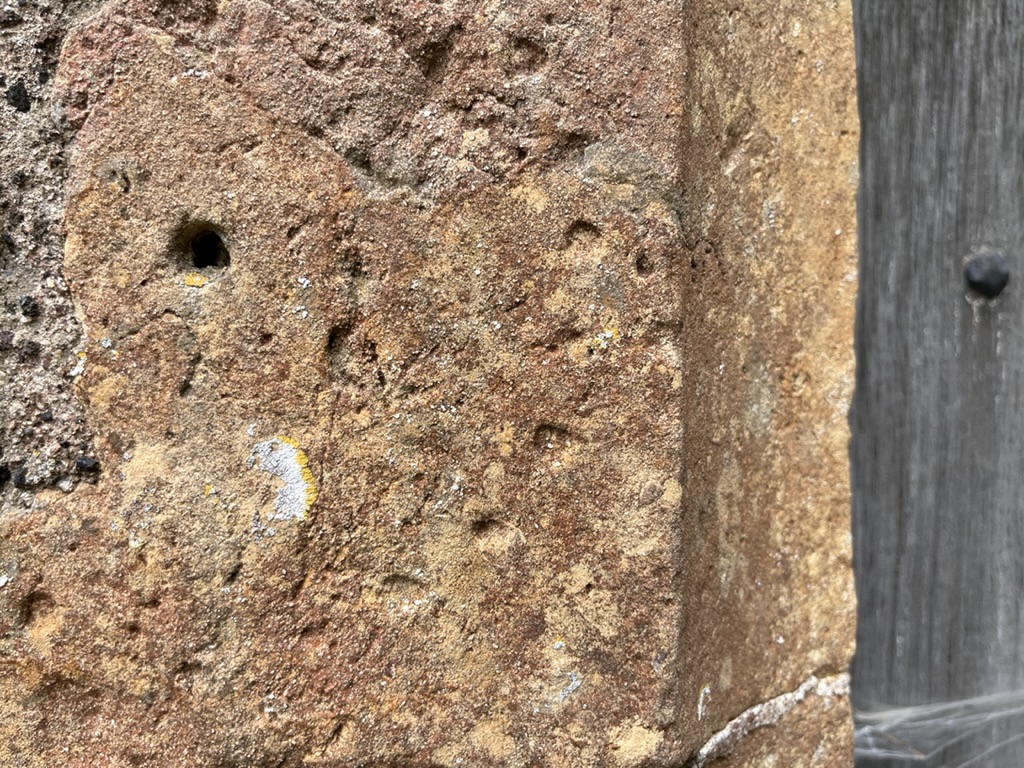
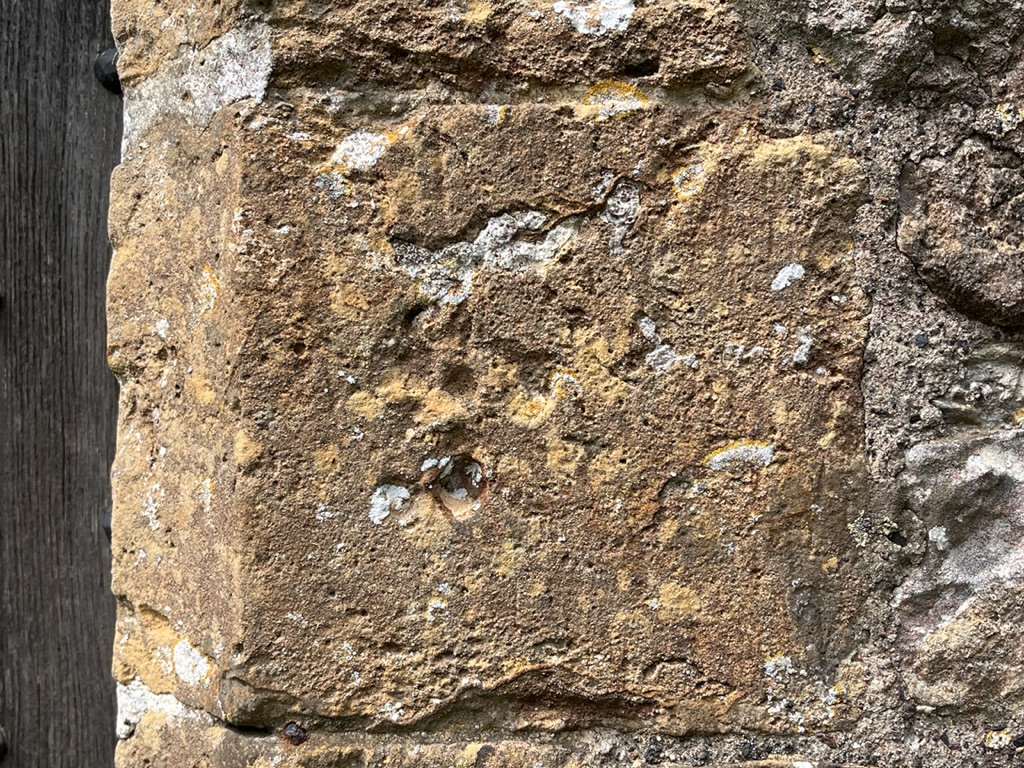
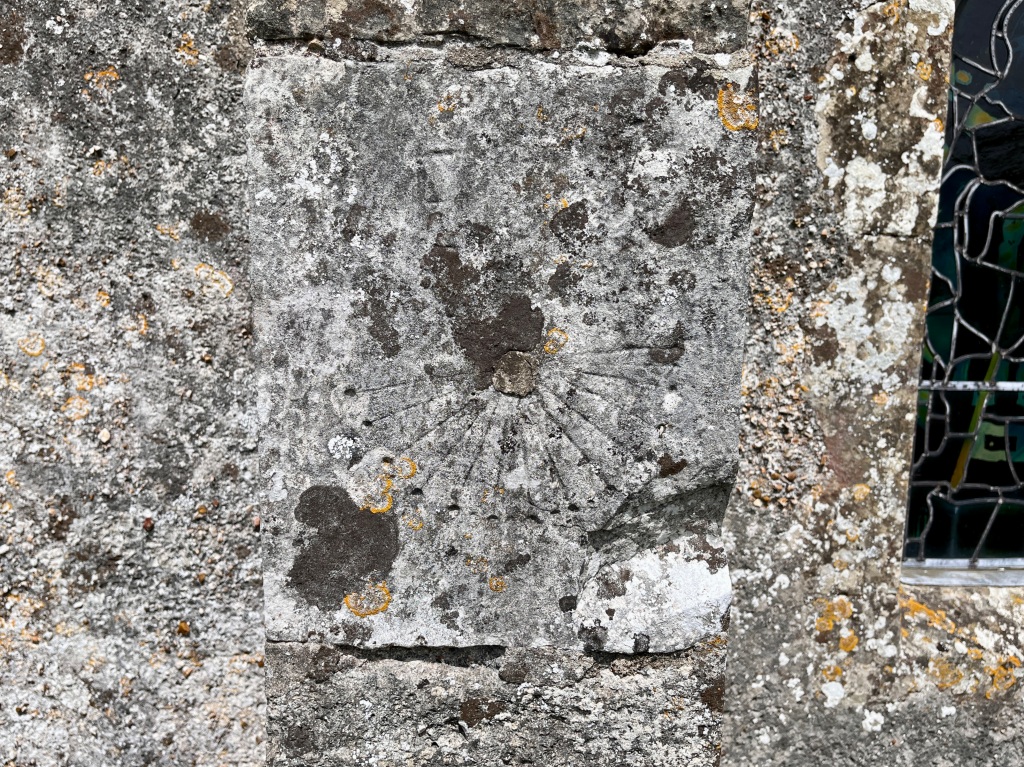
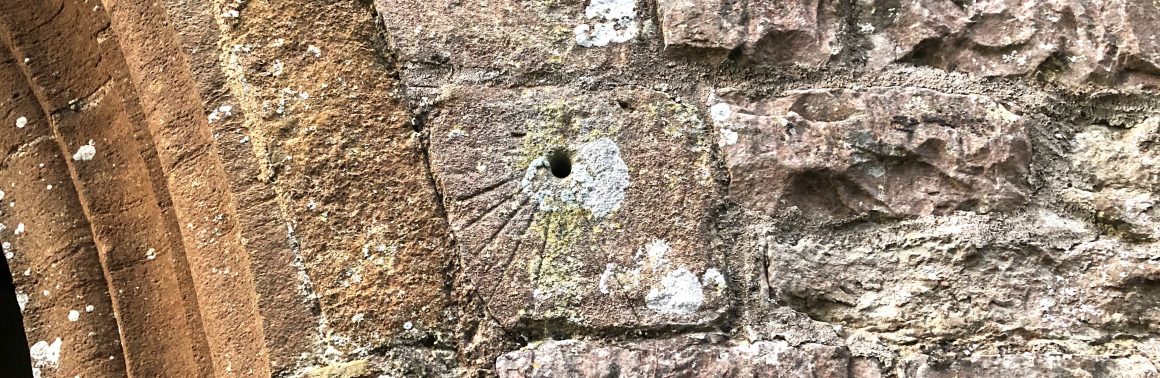
Both dials are on the S transept wall, dial 1 being on a quoin stone and dial 2 being below a window. They are easily visible. GLP has some doubts about dial 2, explained below.

DIAL 1

St John the Evangelist . Tolpuddle . Dorset – scratch dial 1

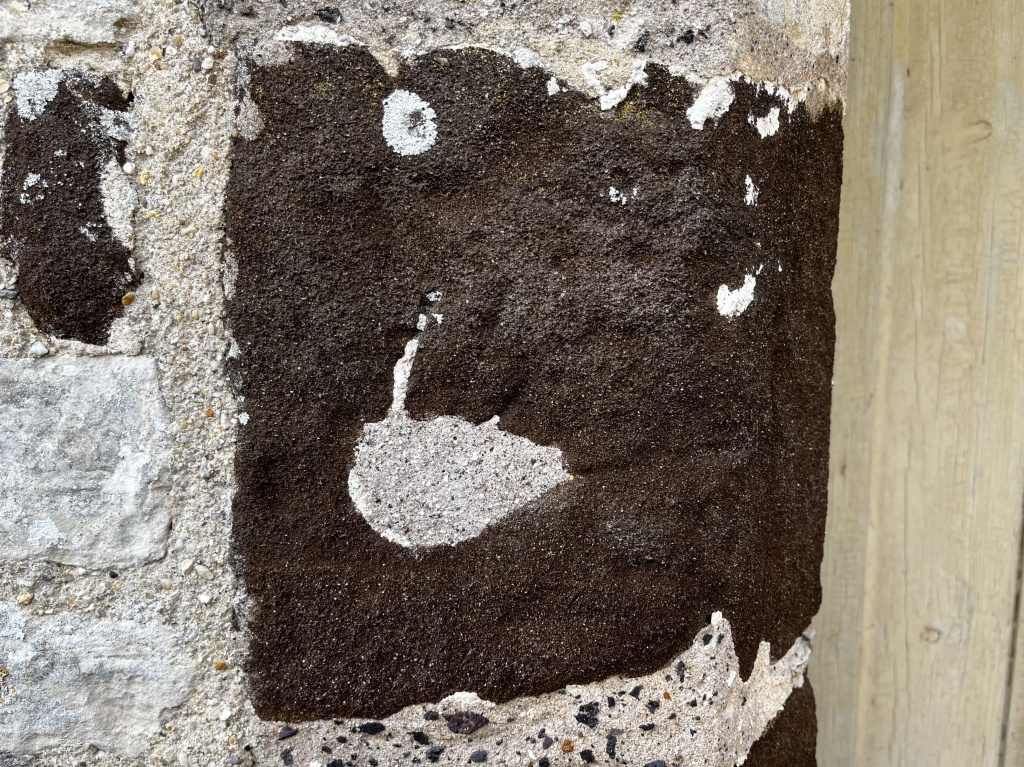
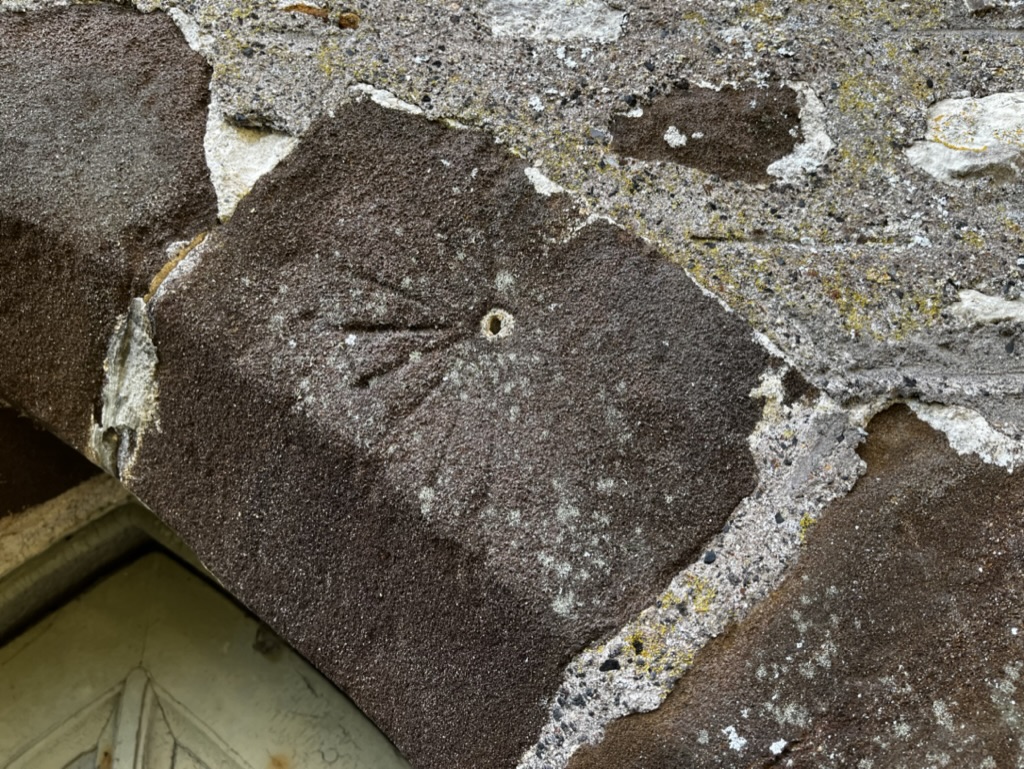
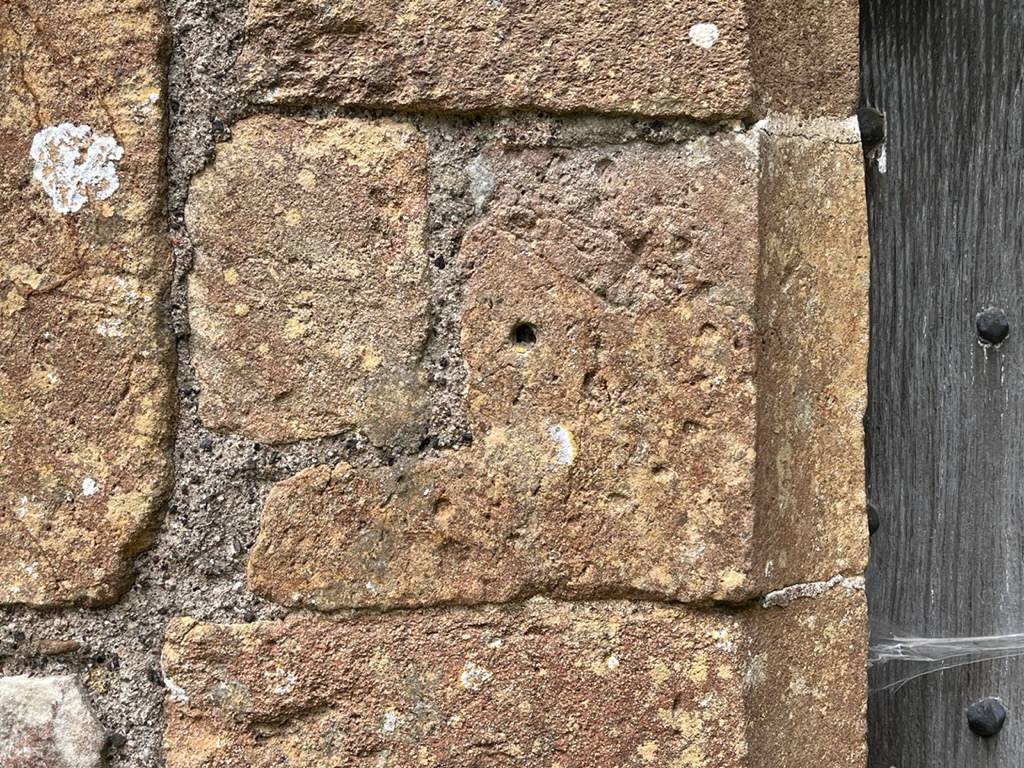
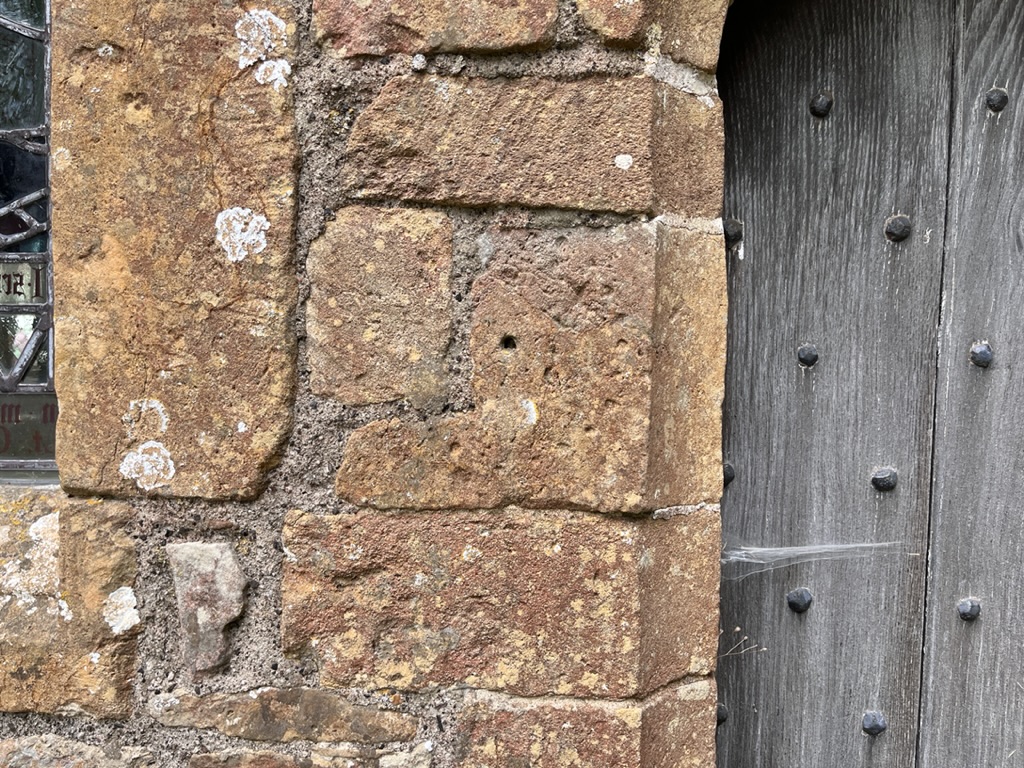
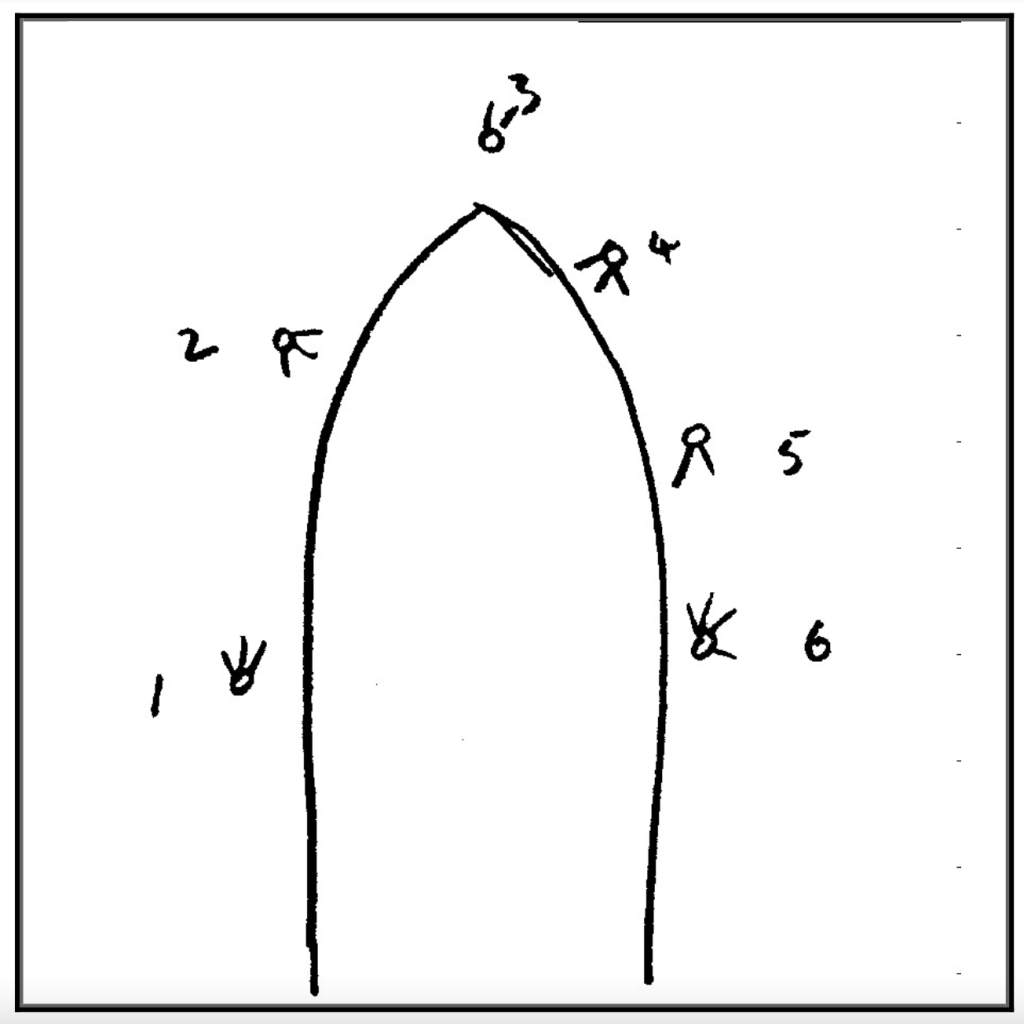
Dial 1 is located on a quoin stone of the S transept, with the gnomon hole in the lower half. There are 6 detectible lines, 2 of which point upwards. In addition there are about 11 pocks, though it is hard to be sure of the exact number. The BSS recorded configuration shows 3 holes marking the horizontal, with the main cluster either side of the noon line, which is emphasised with 2 holes (as are 2 other lines). GLP notes the dial is very accurately laid out and no line is more than 1″ from its ideal position

Tolpuddle – BSS diagram

DIAL 2

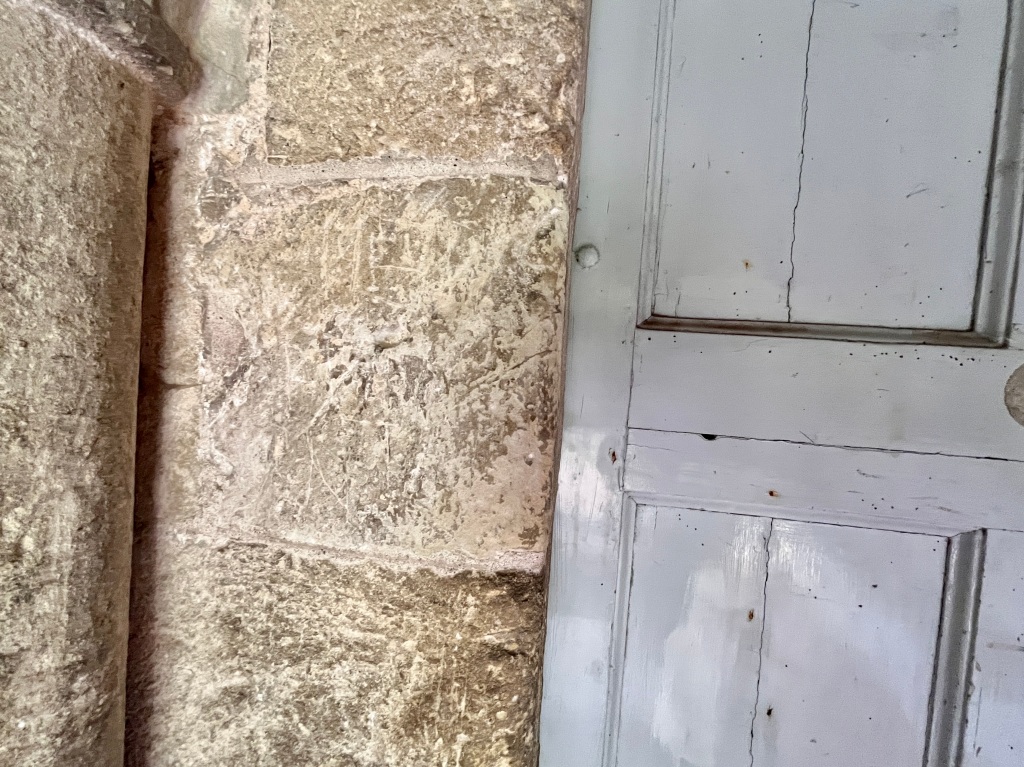
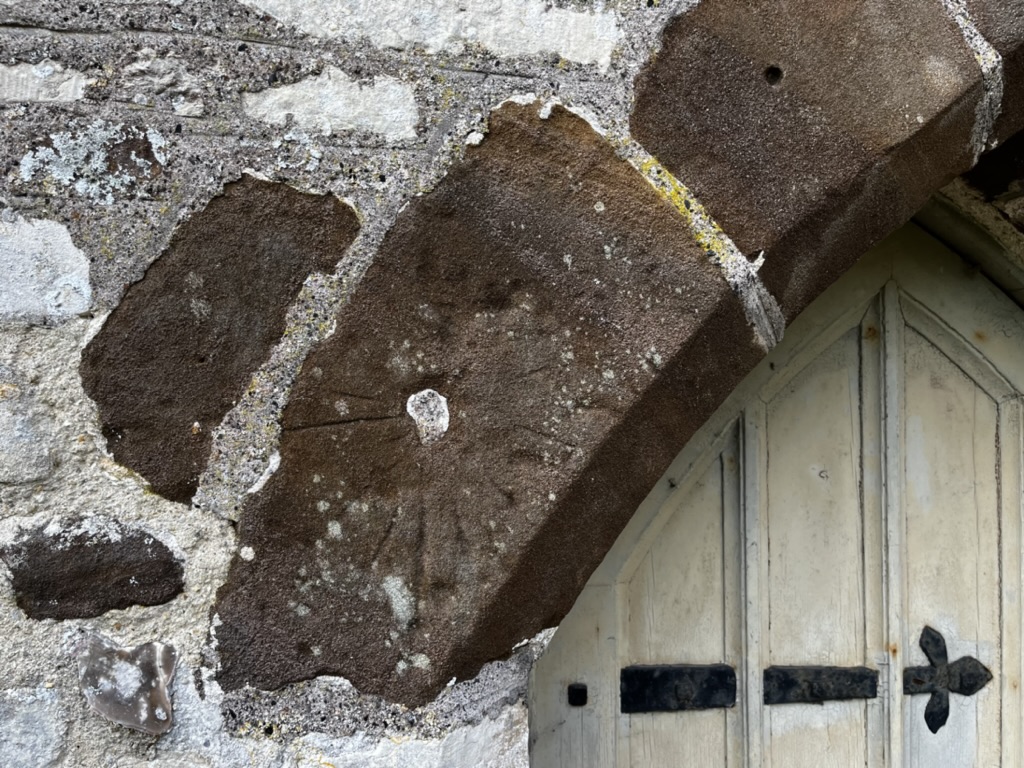
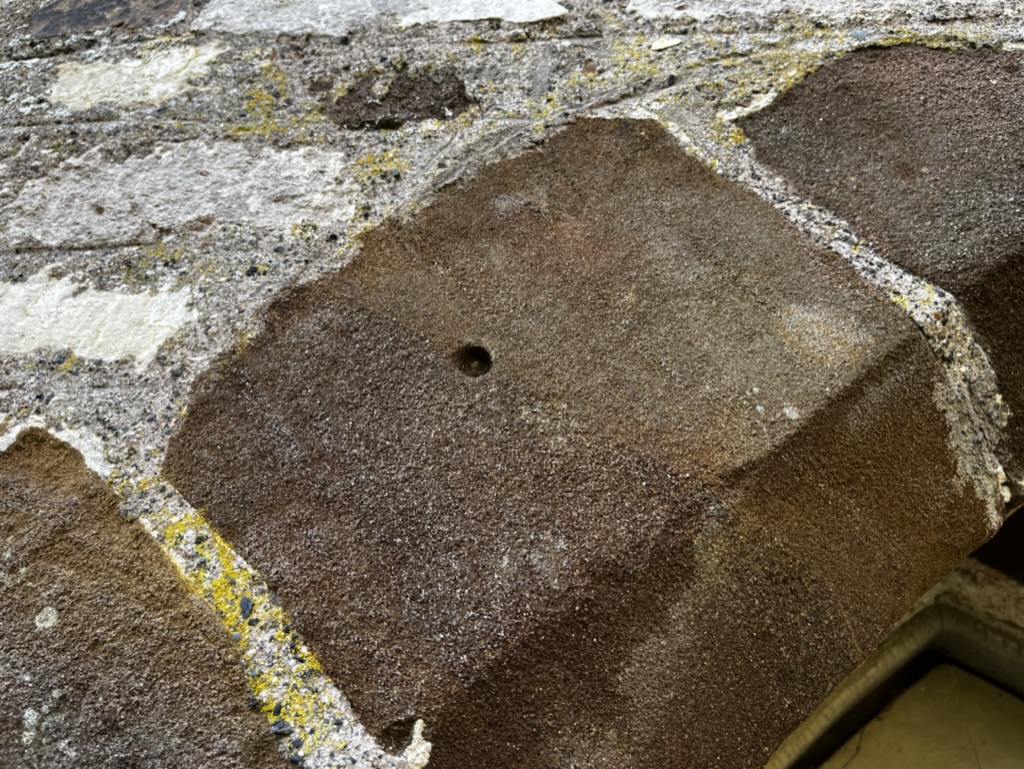
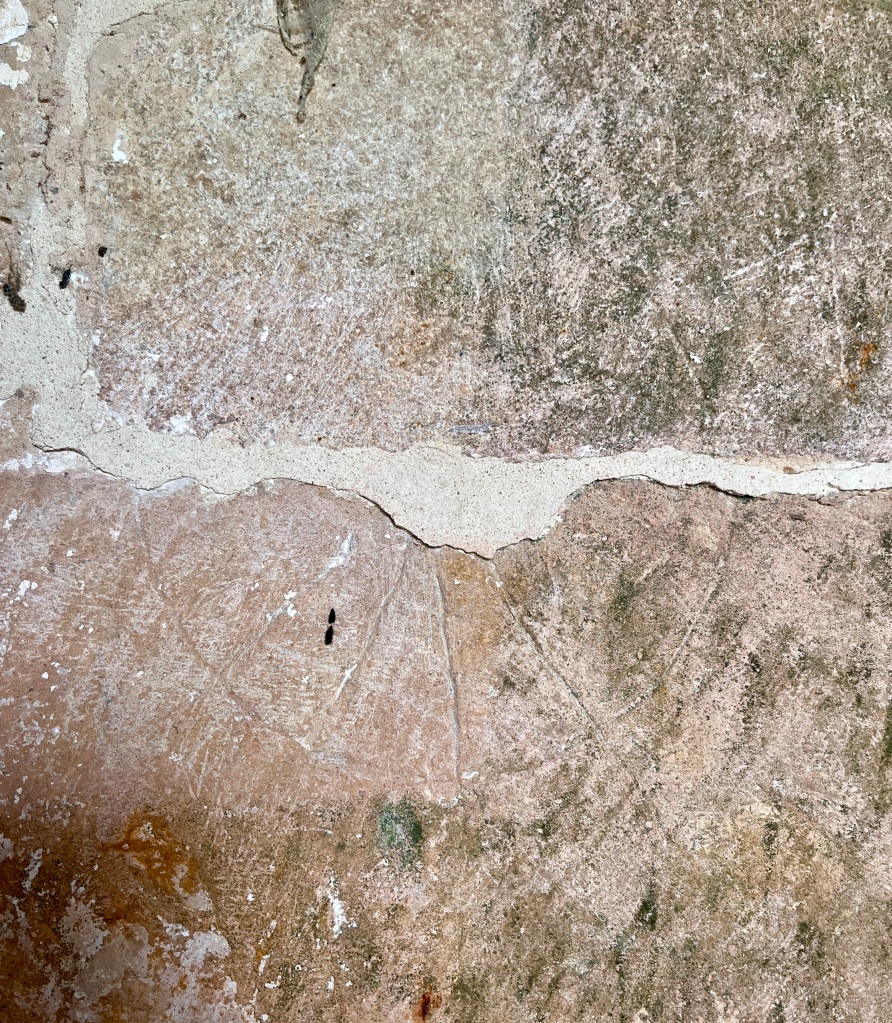
This design cut just below a window on S wall looks decidedly dial-ish as a very simple way to record the passage of the day. There are no detectable lines or pocks, but a stick in the now-cemented style hole would have served some purpose. The circle was perhaps to attract attention and / or highlight the shadow cast. This minimalist approach is not especially rare: for example there’s a similarly-sized slightly more elaborate dial at HAZELBURY BRYAN.

GLP calls it a dubious dial, and suggests that it would work if hour lines were marked in some other way, possibly with paint. It is not included in the BSS record for Tolpuddle

GSS Category: Scratch Dial

All photos: Keith Salvesen
PUDDLETOWN . DORSET . ST MARY THE VIRGIN – ‘Ammonite’ Scratch Dial

St Mary . Puddletown . Dorset

ST MARY . PUDDLETOWN . DORSET

GRADE 1 † C12 Norman origins, mostly enlarged and rebuilt C13 -C15 with relatively little remaining of the earlier church. One of several ‘Puddle’ villages in the Piddle valley, each of considerable merit. St Mary is of exceptional interest for its furnishings and monuments (RCHM Dorset Vol III), including a C12 font. Atmospheric interior; like a Dickensian law court (SJ 1000 *** p.159). 50.7483 / -2.3433 / SY758943

DIAL

St Mary . Puddletown . Dorset – scratch dial

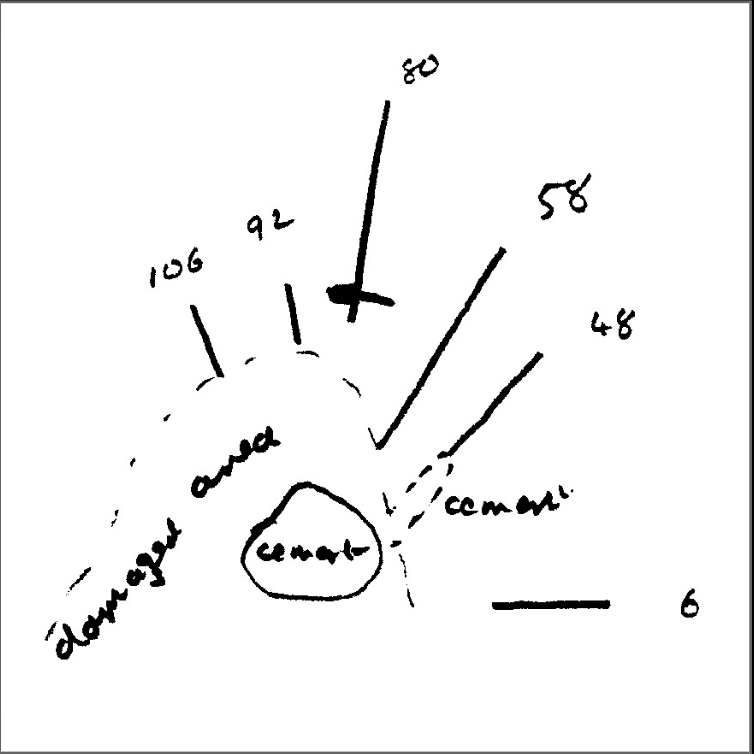
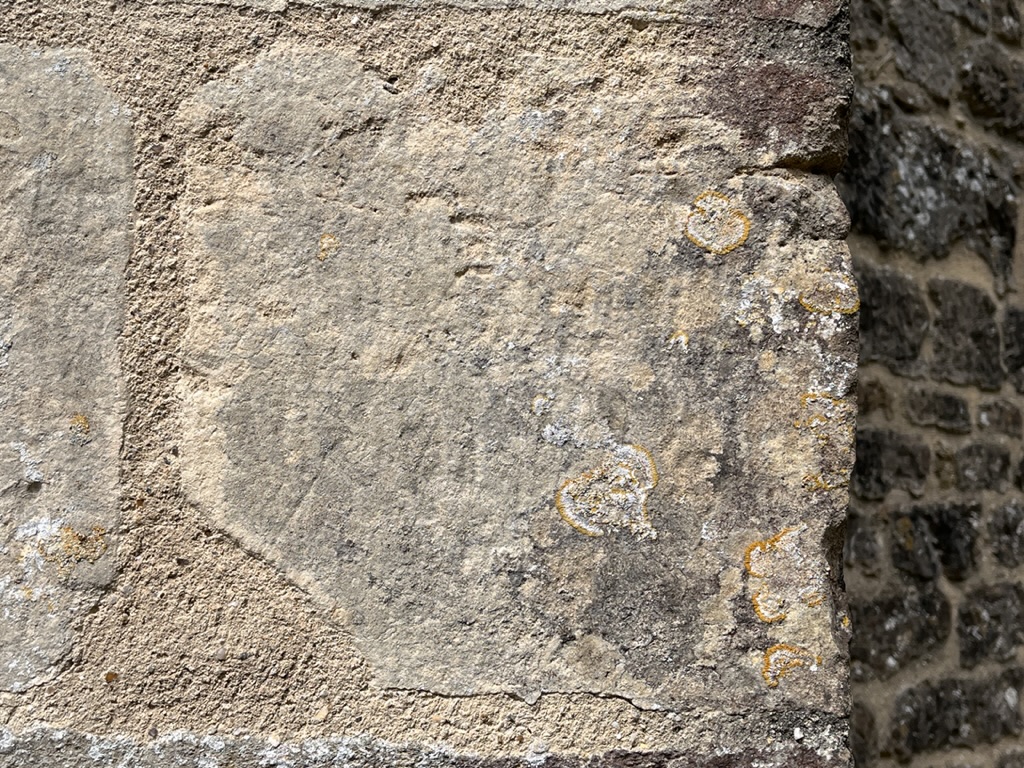
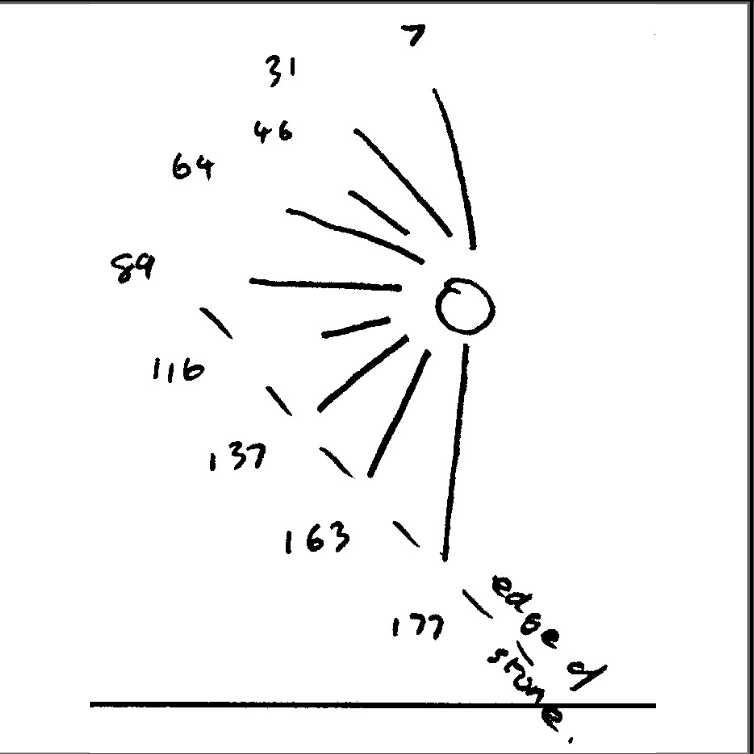
From a distance the dial of St Mary might easily be taken for an ammonite, especially as the church is only 20 miles from the famed Jurassic Coast. It is located on the E buttress W of the S chapel, on the L side of a large quoin stone. This is a very crudely cut dial (GLP) with 13 rather randomly cut lines extending from a now-filled gnomon hole. Its position and condition suggest that it was relocated during rebuilding or restoration. The left side is badly damaged: it would be interesting to know how it originally looked when intact.

GSS Category: Scratch Dial

All photos: Keith salvesen

LONGBURTON . DORSET . ST JAMES THE GREAT (2) – Scratch Dials (one ‘new’)& Vertical Dial

St James the Great . Longburton . Dorset

ST JAMES THE GREAT . LONGBURTON. DORSET (2)

Some time ago I wrote about the intriguing scratch dial rather hidden away through a low archway at the E end of the church: LONGBURTON SCRATCH DIAL 1

DIAL 1

St James the Great . Longburton . Dorset – Scratch Dial 1

The village is better known dial-wise for the vertical dial on the S-facing tower buttress (see below). Yesterday I went back to look for apotropaic and other church marks, and to my surprise found an excellent conventional sundial hidden in plain sight and hitherto unrecorded. I can’t think how I – or any dial gatherer – would miss it…

DIAL 2

The previously unrecorded dial is near the base of the same buttress as the vertical dial. There are 4 lines, the more clearly cut noon line being longer and reaching the edge of the dial stone (and possible trace of extension onto the stone below). The angles are almost equal. There is the distinct trace of a circle in around the top half, but strangely the gnomon hole would not be at its centre.

St James the Great . Longburton . Dorset – Scratch Dial and Vertical Dial, Tower Buttress

VERTICAL DIAL

The dial is high up on the buttress of the tower, and nearly as wide. It is quite eroded, esp. RHS. The lines are contained within a frame, and half hours and some quarter hours are also marked.

BSS notes Triple dot motif at head of half hour lines. Gnomon formed from iron strip with supporter. Supporter is detached at contact with gnomon

The dial numerals are Roman, yet there are Arabic numerals in both bottom corners signifying the date. It is hard to make it out, but I think it is 1798. There are the remains of an inscription along the top of the dial, just the last 2 letters being discernible (O & W?).

GSS Category: Scratch Dial; Old Dial

All photos: Keith Salvesen
LODERS . DORSET . ST MARY MAGDALENE – Scratch Dial

St Mary Magdalene . Loders . Dorset

GRADE I † C12 origins, C13 nave, C14 tower & S porch; seemingly no C19 makeover. Plenty of interest to admire here – see entry in HE. 3m NE of Bridport. 50.7458 / -2.7225 / SY491942

DIALS

St Mary has 2 dials, both on the E side of the porch (late C14). Dial 1 is easily visible on the jamb. Dial 2 is tucked into a corner on the angle formed by the S wall and a staircase that was added C15. After that addition, Dial 2 was probably little use before noon (if at all).

DIAL 1

St Mary Magdalene . Loders . Dorset – Scratch Dial 1

Dial 1 is a good example of the interface between the simple dial function of marking the hours, and decorative design. This is a lovely and ambitious 24-hour dial, with 19 lines and 26 pocks. Although considerably eroded, it intricacies remain clear. There are radial variations of angle, length and emphasis. There are single pocks, double pocks, half-way pocks. GLP notes that the dial is quite accurately laid out and seems to mark most of the hours and some of the half hours as well

St Mary Magdalene . Loders . BSS

DIAL 2

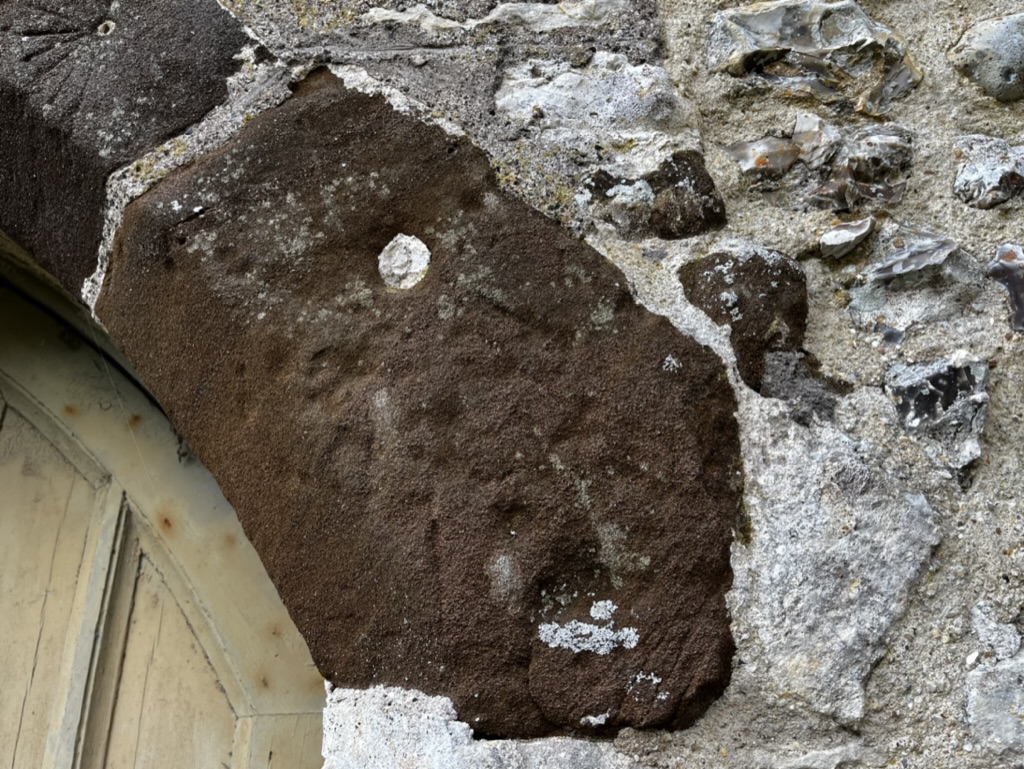
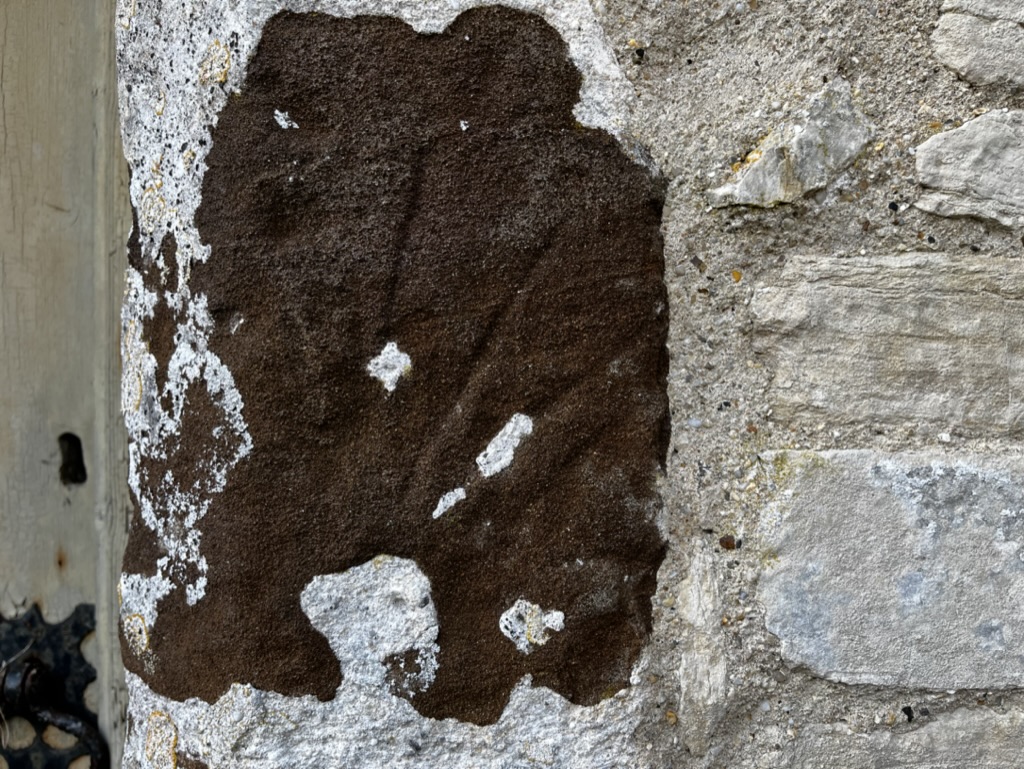
Dial 2 is badly degraded, I suspect rather more so than when last surveyed. 3 lines emerge(d) from a gnomon hole in the dial stone. An amateur (me) would be unlikely to give it a second glance, especially in that position. In its present state it no longer matches the drawing originally made. Or I have made an ID mistake (quite possible)? GLP describes it as a very fragmentary inverted dial. Which perhaps suggests that the stone was moved / turned when the staircase was built. Or, possibly, it was a dial stone used from elsewhere on the building and intentionally inverted (as often the way with moved dials).

St Mary Magdalene . Loders . BSS

St Mary Magdalene . Loders . Dorset – Scratch Dials 1 & 2

WHITCHURCH CANONICORUM . DORSET . St Candida & Holy Cross . Scratch Dial

St Candida & Holy Cross . Whitchurch Canonicorum . Dorset

ST CANDIDA & HOLY CROSS . WHITCHURCH CANONICORUM . DORSET

GRADE I † C12 onwards on a Saxon site, with tower not until C15; C19 restoration. Also known as St Wite (hence Candida?), whose relics are in a shrine inside the church.* A building of outstanding interest in a secluded valley, the Cathedral of the Vale. Too much else to be said for inclusion here. For more details, see BLB BE & ST CANDIDA WIKI 5m NW of Bridport. 50.7554 / -2.8565 / SY396954

DIALS

DIAL 1

St Candida & Holy Cross . Whitchurch Canonicorum – Scratch Dial 1

Dial 1 can be found in a corner of the W buttress of the S transept. It has 12 lines, and the stone has been cut to give a rectangular outline to the dial, the gnomon hole being R of centre. Sited uncomfortably in a corner, the dial seems unlikely to have been effective and certainly not year-round. Nor would it have been very visible to passers-by. So it seems likely – given the way the lower lines are truncated – that the dial was re-sited during later renovation.

St Candida & Holy Cross . Whitchurch Canonicorum BSS Diagram

DIAL 2

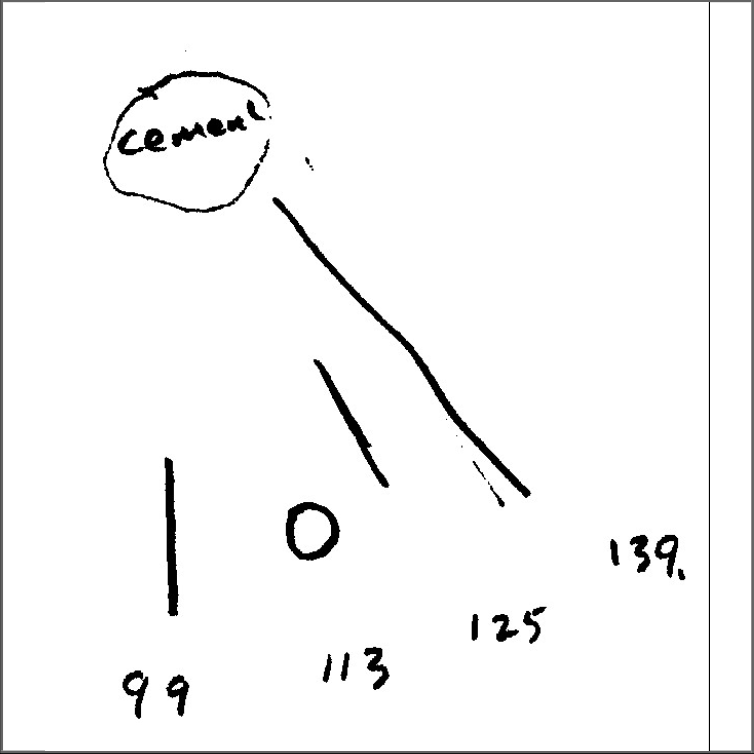
This dial (if it is one) is as simple as could be – 2 holes, large and small, on the vertical. It is located on the W jamb of the C13 blocked door of the chancel. BSS describes it as a ‘Noon Mark’, a style in the upper dial indicating the passage of the day either side of noon. GLP suggests this might originally have been a painted (as opposed to incised) dial. I wondered if the 2 slightly inward-curving faint lines descending from each side of the lower hole were there to emphasise noon (as was done using pocks).

St Candida Whitchurch Canonicorum – Dial 2
St Candida Whitchurch Canonicorum Dial 2

* In 1900 the tomb was opened and was found to hold a lead casket containing the bones of a small woman.[8] On the casket was the Latin inscription “HIC-REQESCT-RELIQE-SCE-WITE” (“Here lie the remains of St Wite”) ST CANDIDA WIKI

GSS Category: Scratch Dial

All photos: Keith Salvesen
AVEBURY . WILTS . ST JAMES – Vertical Dial

ST JAMES . AVEBURY . WILTS

GRADE I † Pre-conquest origins. Significant Saxon features. Splendid Norman doorway. C12 font. Development C12 et seq, with C19 restoration. Archaeologically uncommonly interesting PEV; inc. by Simon Jenkins. BLB Listing. 51.4286 / -1.8579 / SU099699

The vertical dial is below the parapet, L of the porch. From a distance, the only distinct marking on the face is a faint square frame for the dial. Closer examination reveals at least the ‘X’ of noon. The footing of the gnomon is in a badly damaged area. Most notably, the dial is at a canted angle so that it faces south. Hard to date – there’s no clue in the usual resources. C18 perhaps, esp. as roman numerals were used?

GSS Category: Old Dial; Vertical Dial

Photos: Keith Salvesen

KINGS SOMBORNE . HANTS . ST PETER & ST PAUL – Scratch Dials

St Peter & St Paul . Kings Somborne . Hants

ST PETER & ST PAUL . KINGS SOMBORNE . HANTS

GRADE II* † C12 origins then C13 and C14 addition and rebuilding. Much C19 work inc. rebuilding tower & S porch. A most attractive long low church with timber belfry and spire. A rewarding church to explore: see BHO. 3m S of Stockbridge; 7m N of Romsey. 51.077 /  -1.4872 / SU360309

DIALS

There are 4 dials recorded for the church, but only 3 are visible. The 4th seems now to be concealed behind a boiler. The 3 visible dials are all on the jambs of a S nave window. ARG notes that the window was inserted into an old doorway All are inverted, presumably during the 1880 restoration. Maybe this links up with the rebuilding of the S porch and relocation of stones originally there (a more obvious position). BHO notes various window alterations and the movement of stones incised with ornamental crosses and inscriptions… the stones have unfortunately been reset upside down.

St Peter & St Paul . Kings Somborne . Hants – 3 scratch dials

DIAL 1

Dial 1 is inverted on the L jamb. LHS and below, the style hole is badly damaged. Otherwise, the 12 lines are more or less clear, with differing lengths and angles. There is a trace of a semicircle, marked by perimeter pocks. The noon line is considerably elongated and, with 1, has larger perimeter pocks. 1 also has a short extension of 4 dots, perhaps to emphasise a service significant to this church or community.

DIALS 2 & 3

St Peter & St Paul . Kings Somborne . Hants – Scratch Dials 2 & 3

Both dials are on the R jamb, inverted, on the same stone, and actually touching. Unusually (perhaps very rare) both are complete circles with 24-hour marking. Dial 2 has 24 radials; Dial 3 has 24 pocks.

Dial 2 is encircled and imaginatively decorative, with radials for a full 24 hours. The spacing is somewhat random. The style hole is quite deep, and obviously enlarged. The (upside-down) noon line is deeper cut, as are 10, & 11. So too is 1, which is also extended with 2 pocks. This corresponds with Dial 1 and seems to confirm that some importance was attached to that time of day.

St Peter & St Paul . Kings Somborne . Hants – Scratch Dial 2

Dial 3 is also a complete circle, with a small style hole. It is eroded, with only the (upwards) noon line and a couple of fainter lines clear. Most of the daylight hours are marked by pocks on the circumference; close examination has shown that in fact there are 24 pocks. It appears as if squeezed into the space between the upper stone and the lower edge of the stone

St Peter & St Paul . Kings Somborne . Hants – Scratch Dials 2 & 3

BSS drawing of dial 3

DIAL 4

Dial 4 is located on the SE quoin stone of the Chancel. The record indicates that it has 12 lines, mostly curved, and 2 above the horizontal. BSS notes Position is obscured by a hut containing an oil tank. So much so that I couldn’t find it at all. I intend to try again next time I’m in the area – perhaps taking a torch.

ARG in 1923 recorded that the dial consisted of a circle with 10 lines in the lower half, 5 of which end in pocks; and 2 lines in the upper half. None of the lines are straight; most are distinctly curved. Sadly, although he photographed dials 2 & 3, he did not take dial 4.

St Peter & St Paul . Kings Somborne . Hants

GSS Category: Scratch Dial

All photos: Keith Salvesen
BUCKHORN WESTON . DORSET . ST JOHN THE BAPTIST: dated scratch / scientific dial 1599

St John the Baptist . Buckhorn Weston . Dorset

GRADE II* C13 origins; mainly C14 with C15 porch; extensive C19 alteration / restoration including complete rebuild of the tower (1861), & later work by Crickmay. A pleasant aspect as one walks up the church path. 5m SE of Wincanton. 51.0213 / -2.348 / ST756247

DIAL

Sundial: reset on S. wall of tower, square stone plate with arabic numerals and inscription ANNO DO 1599. BHO

St John the Baptist . Buckhorn Weston . Dorset – Scratch / Scientific Dial

A most interesting dial set into the upper stage of the tower. Presumably re-fixed in that position (or perhaps relocated there) during the C19 rebuilding. Despite erosion and damage, the unaffected features are quite well defined. GLP notes that it is one of the earliest dated dials (of any sort) in Dorset.

St John the Baptist . Buckhorn Weston . Dorset – Scratch / Scientific Dial

Although giving the appearance of a large scratch dial with an inscription above it, GLP classifies it as a more sophisticated ‘scientific’ dial, because the angles between the lines measure standard hours. The use of numerals fits in with the inscribed date. GLP calls them roman; BHO has them as arabic. My detailed photos don’t help either way. They do show that the stone was cracked in two at some stage; and they raise the question “where was the gnomon?”

GSS Category: Scratch Dial; Scientific Dial

All photos: Keith Salvesen
BROAD HINTON . WILTS . ST PETER AD VINCULA – Scratch Dial & Porch Sundial

St Peter ad Vincula . Broad Hinton . Wilts

ST PETER AD VINCULA . BROAD HINTON . WILTS

GRADE 1 † C13 origins (possibly back to Saxon); developed C15, C17; late Victorian restoration. Use of local sarsen stone. Hammerbeam roof. Merits a long entry in PEV, especially for the monuments. 5m N of Avebury, 7m NW of Marlborough 51.4858 /  -1.8497 / SU105763

DIALS

St Peter has 2 dials in very different styles, and a couple of ‘not-a-dial’s. There is also a modern-ish sundial on the porch, probably from the late C19 restoration, with a rather gloomy motto that fits in with Victorian mores.

DIAL 1

St Peter ad Vincula . Broad Hinton . Wilts – scratch dial 1

Dial 1 is a fairly large and pleasingly simple dial on L side of a window jamb. 4 lines drop down from the style hole into the lower L quadrant, bounded by a sector of a circle. It looks rather uncomfortable. The puzzle is whether this was the original location (in which case it seems too large for the available space); or whether it is a relocation.

DIAL 2

St Peter ad Vincula . Broad Hinton . Wilts – Scratch Dial 2

Dial 2 is an encircled dial, the lower half eroded. There is a shallow style hole and various pocks, not all necessarily relevant to dial functions. The significant ones are on the L side, with 3 pocks in a row between the style hole and the perimeter. Below them are less organised pocks. The dial would make more sense if rotated 90º, with the horizontal line becoming the noon line and the less defined line perhaps marking a Mass time (None?). This suggests that the stone was relocated, and certainly the size and colour of the stones around it vary significantly (image 1 below).

Promising but on closer inspection unlikely dials

OUR DAYS ON THE EARTH ARE AS A SHADOW

The C17 porch was restored C19 and then (or later?) this dial was added over the door, with its discouraging message (no hint of the ‘sunny hours’ etc found elsewhere). The dial is slightly angled to face due S for greater accuracy.

NOTES: Various types of external graffiti – scratchings, initials, Marian marks etc; on the WILTSHIRE HISTORIC CHURCHES TRAIL

GSS Category: Scratch Dial; New Dial; Medieval Graffiti; Marian marks

All photos: Keith Salvesen