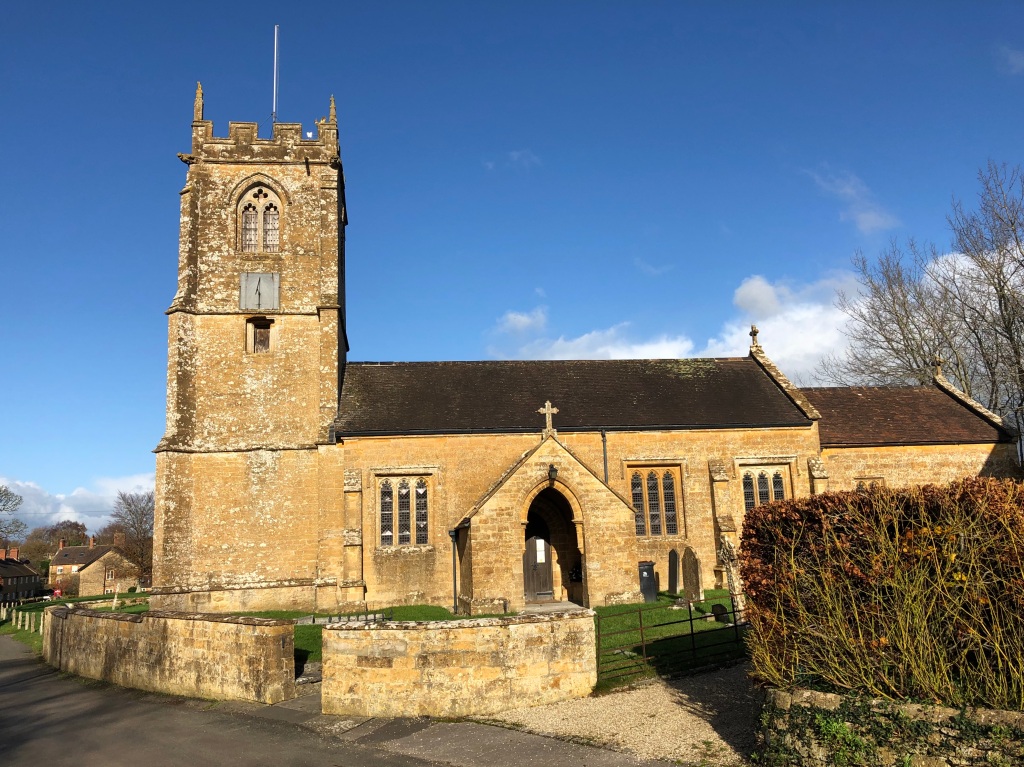
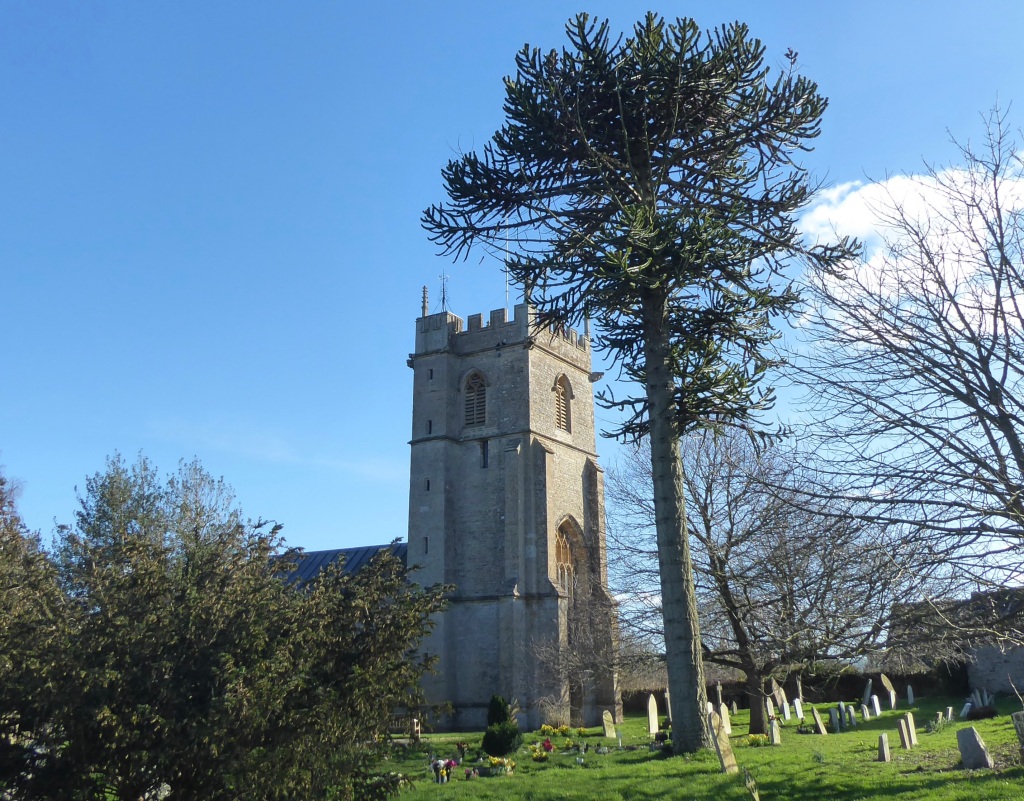
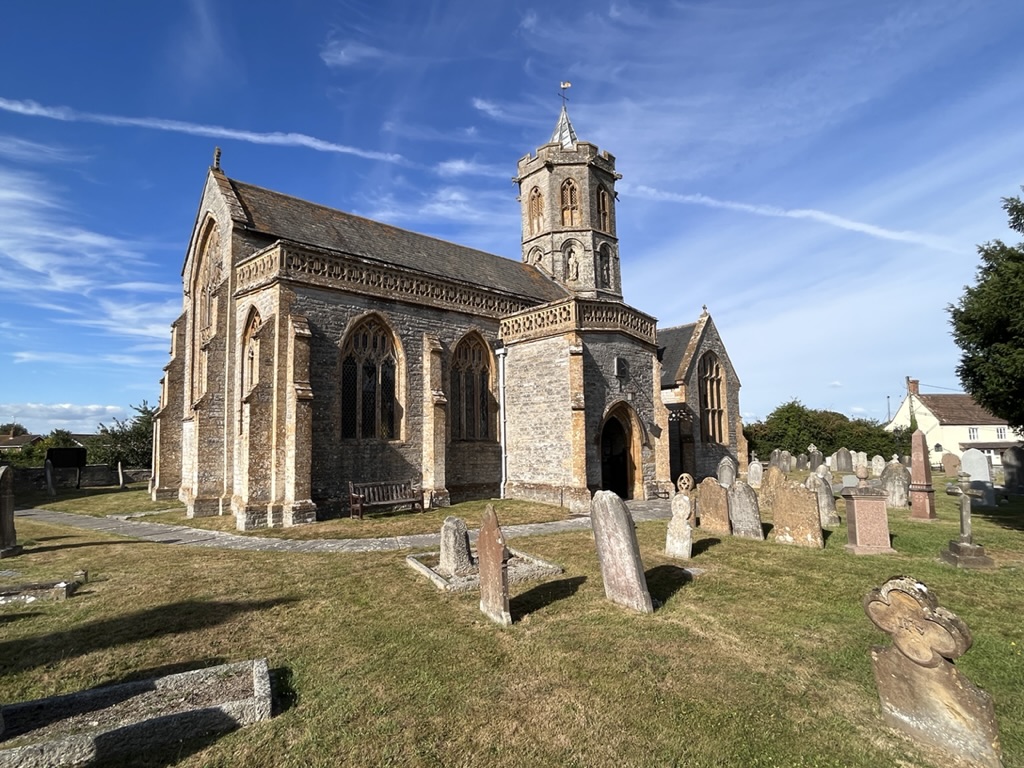
GRADE I † C11 nave; C13 transepts; C14 chancel. From C17, alterations and restorations inc by Wyatt in 1860. Large and interesting cruciform churchPEV. Marble Feversham family monuments by Scheemakers. Significant local legacy from Neolithic, Iron Age, Roman (Villa) and Saxon times. 9m S of Salisbury. 50.9937 / -1.7433 / SU181216
✣
DIALS
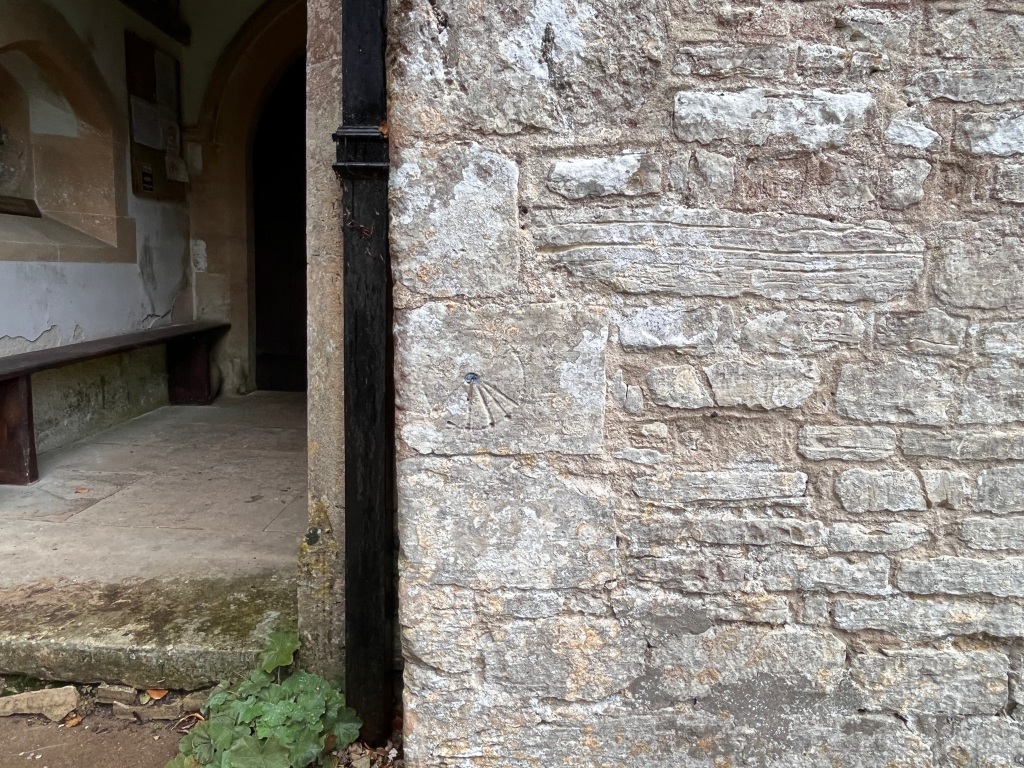
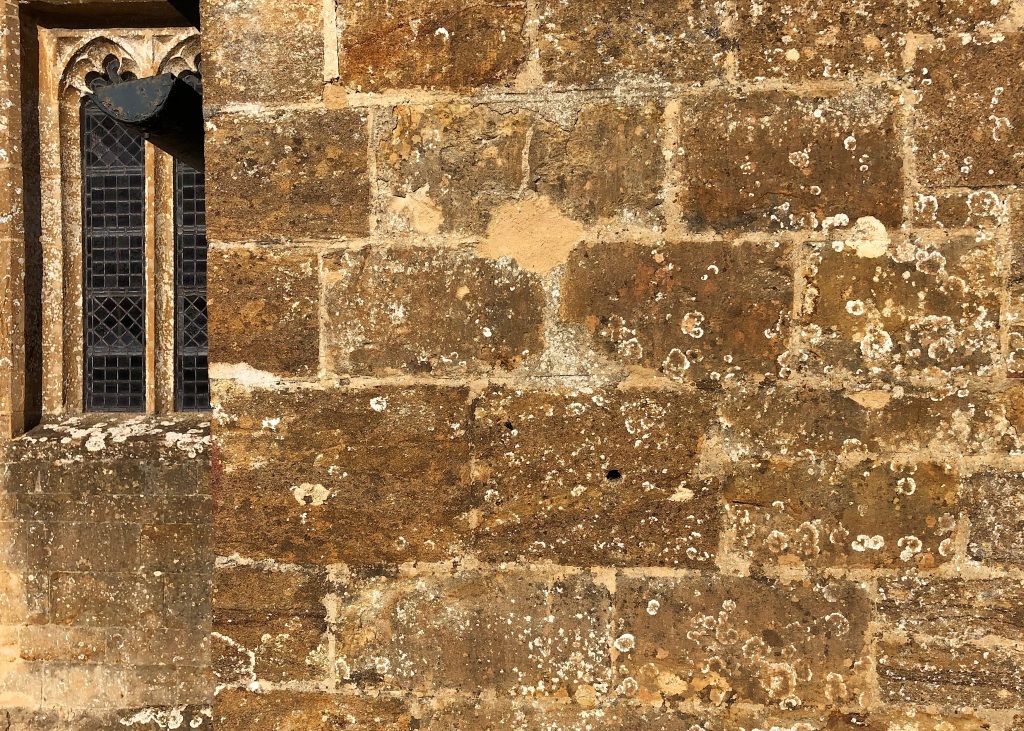
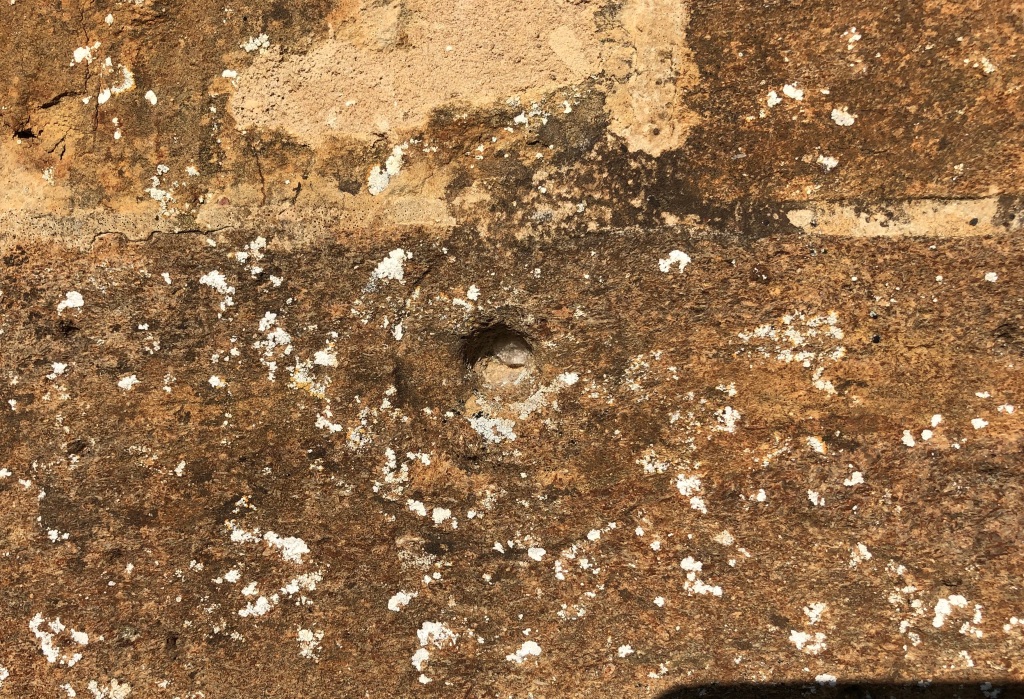
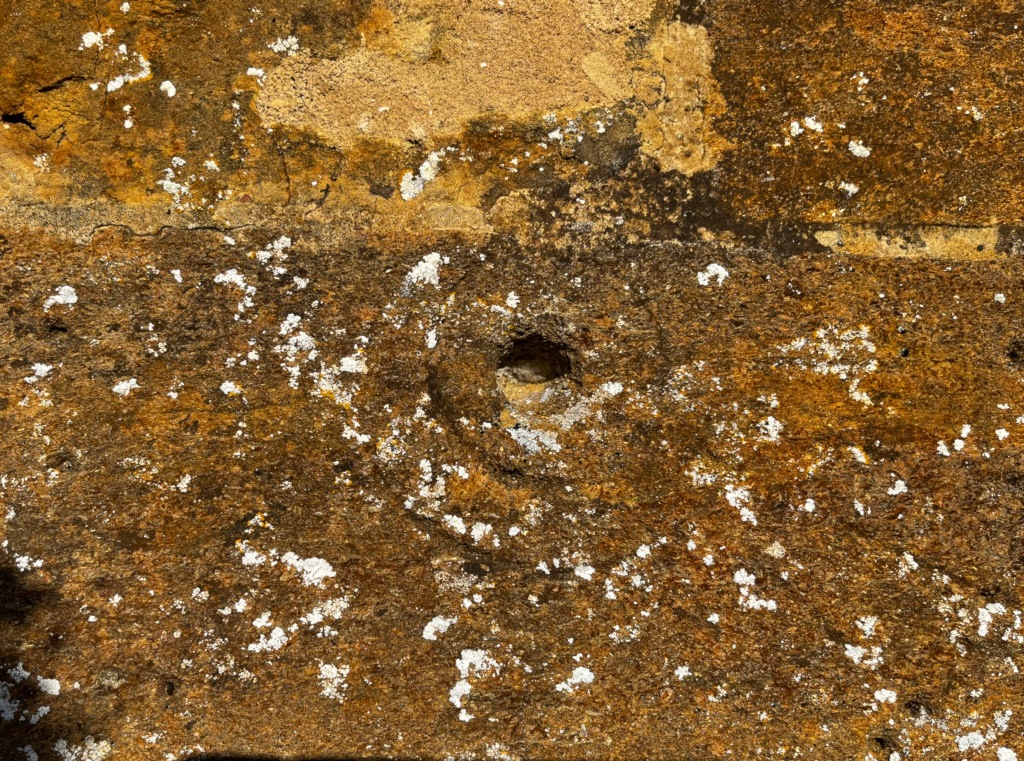
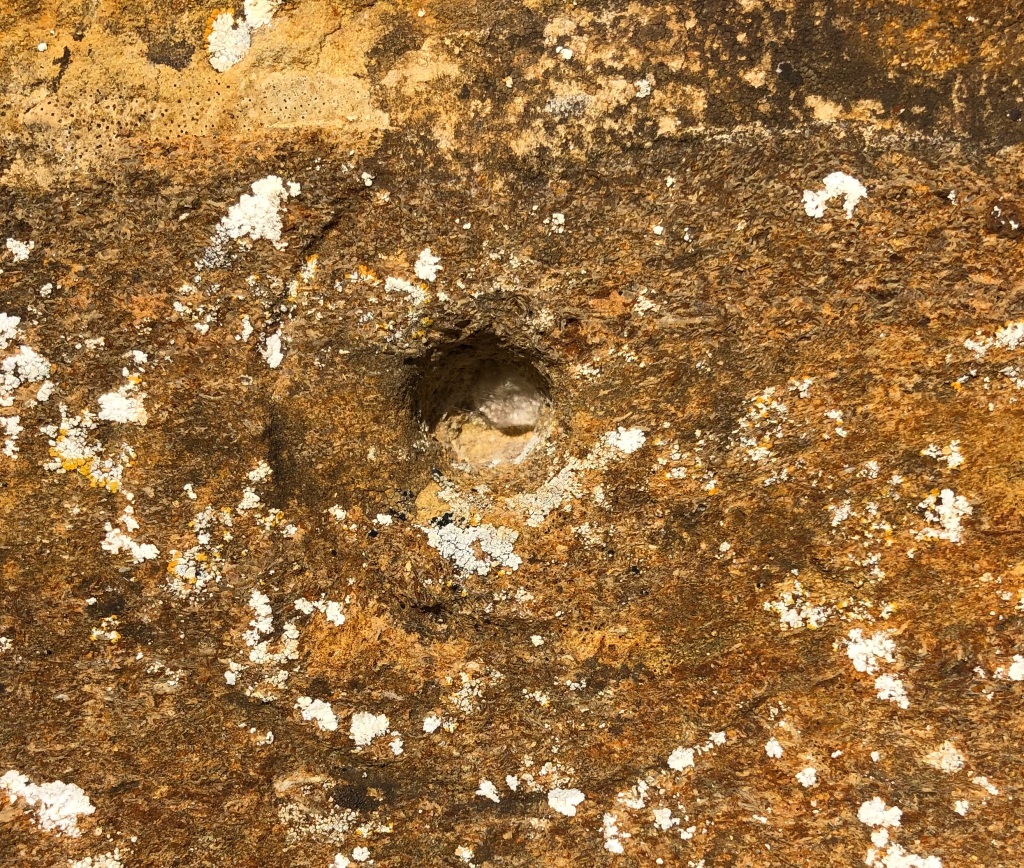
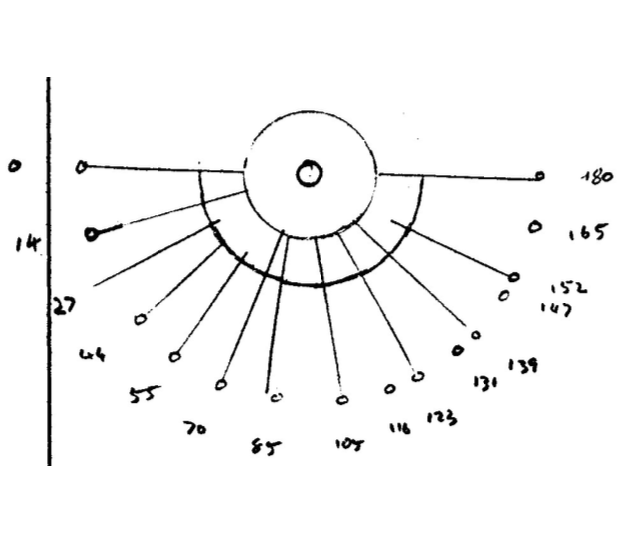
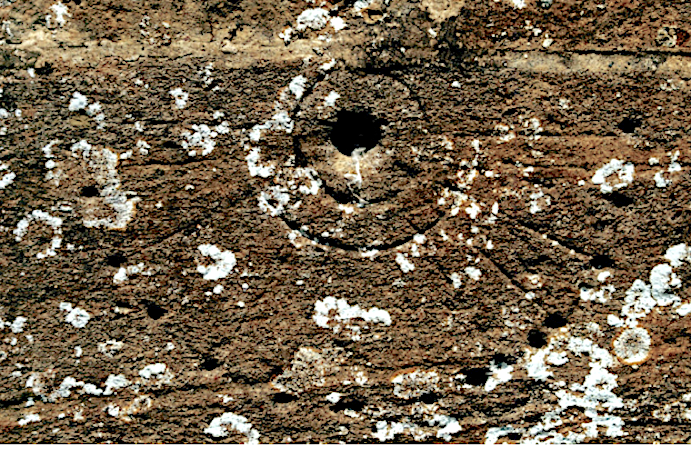
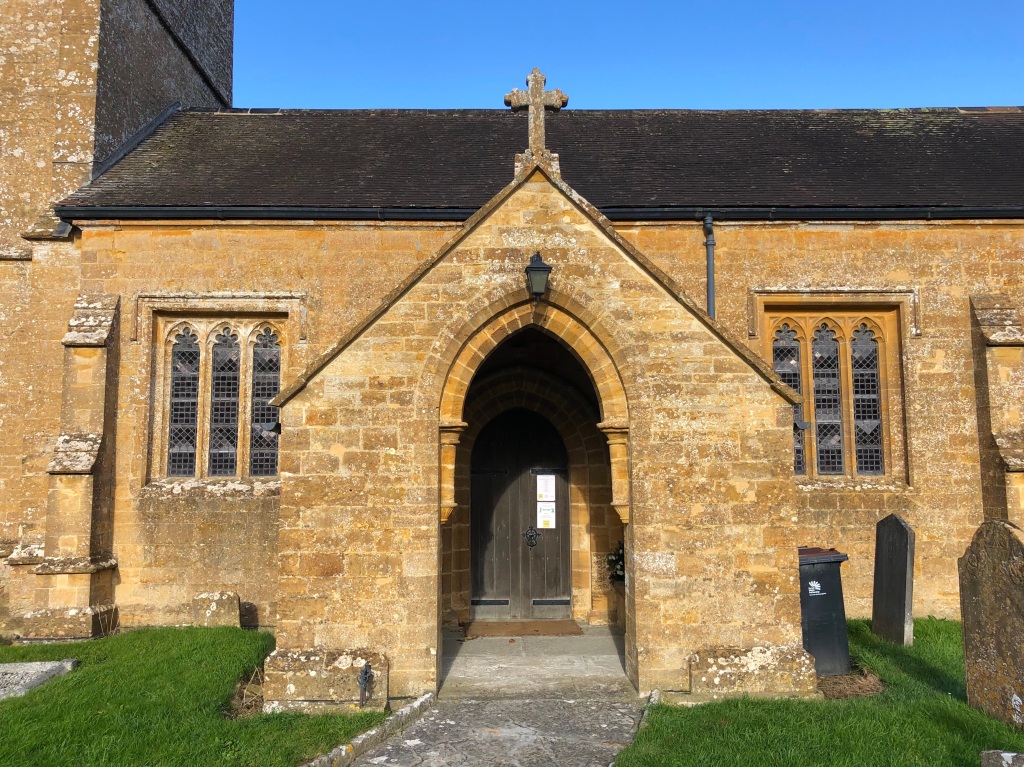
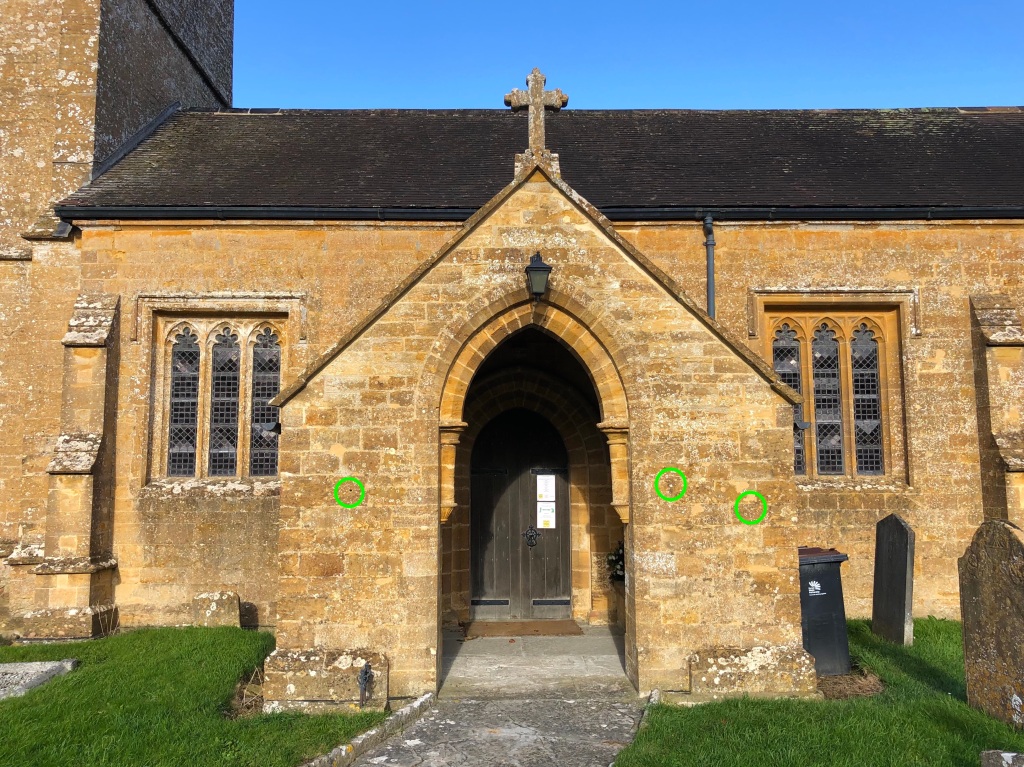
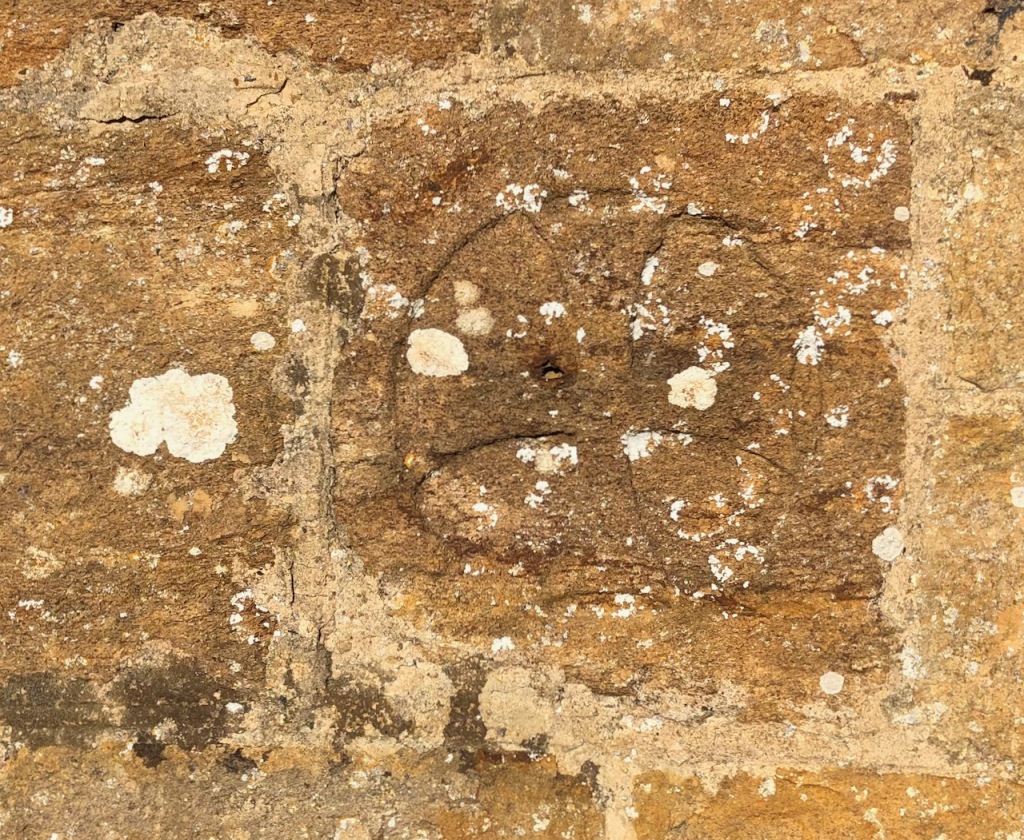
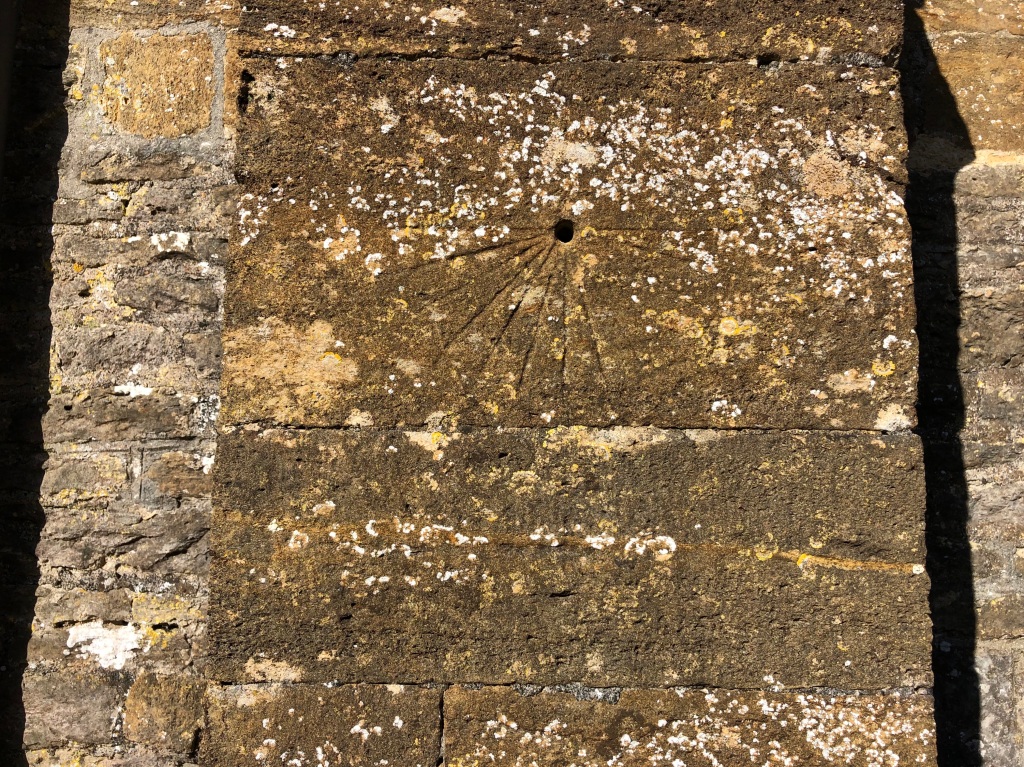
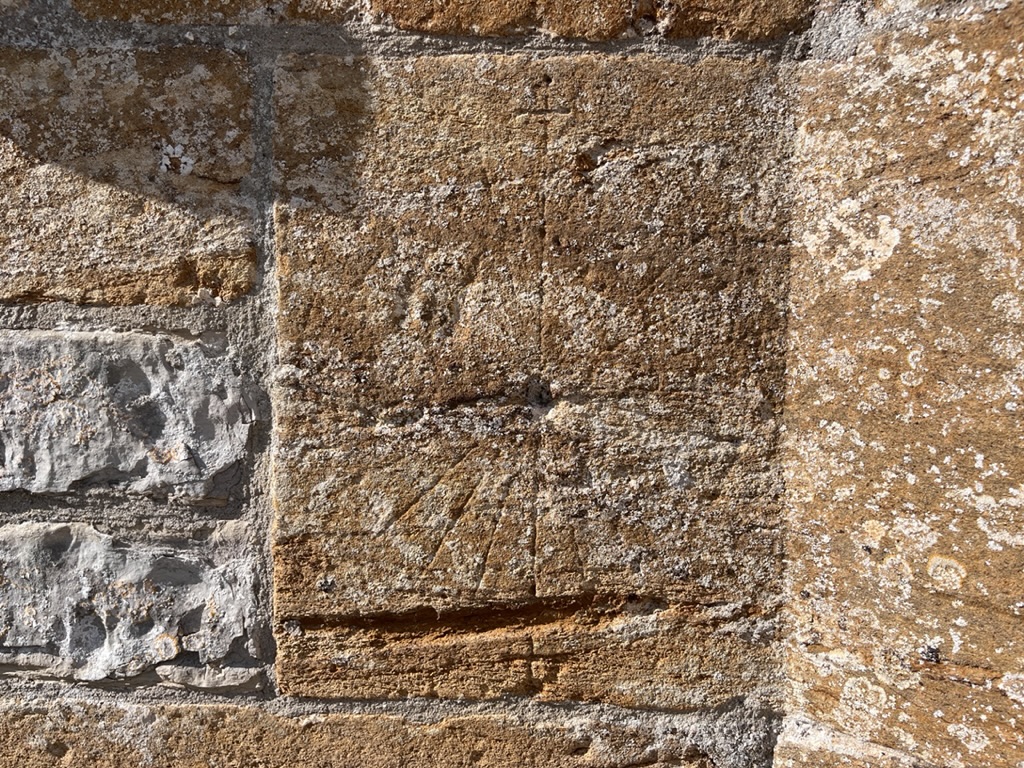
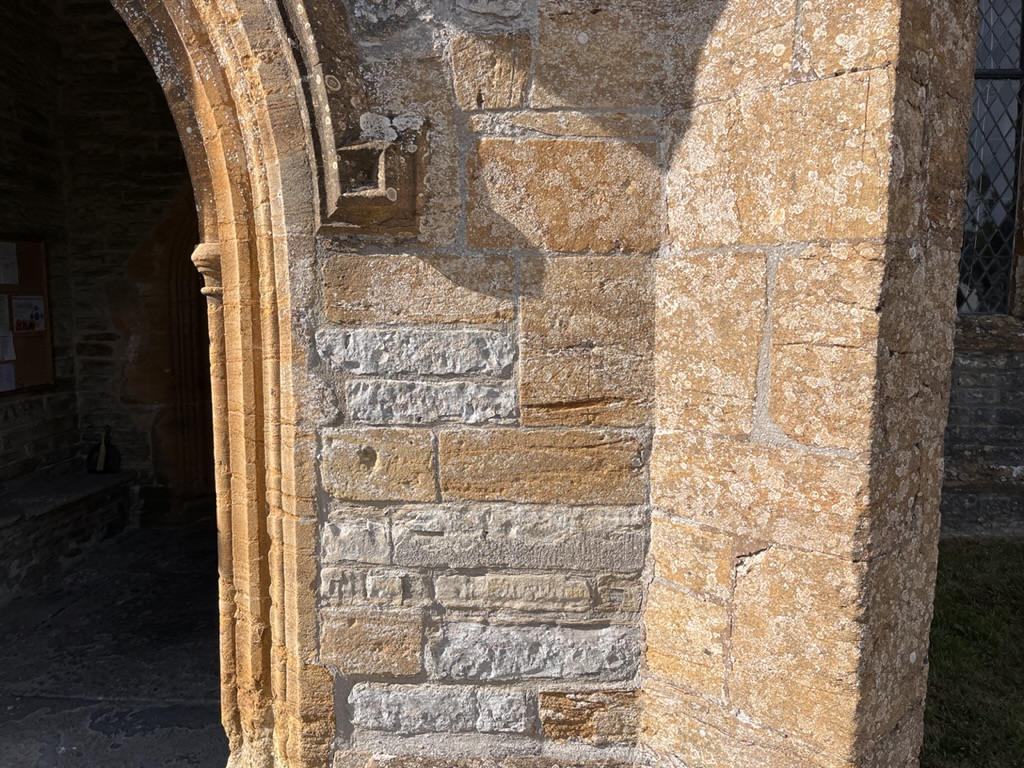
St Laurence has 2 dials on the 2nd buttress E of the porch, one above the other. The upper one is a fine example of a large dial filling the dial stone. The lower is so badly damaged / eroded that it would be easy miss; and it is quite hard to imagine what it looked like originally.
✣
DIAL 1
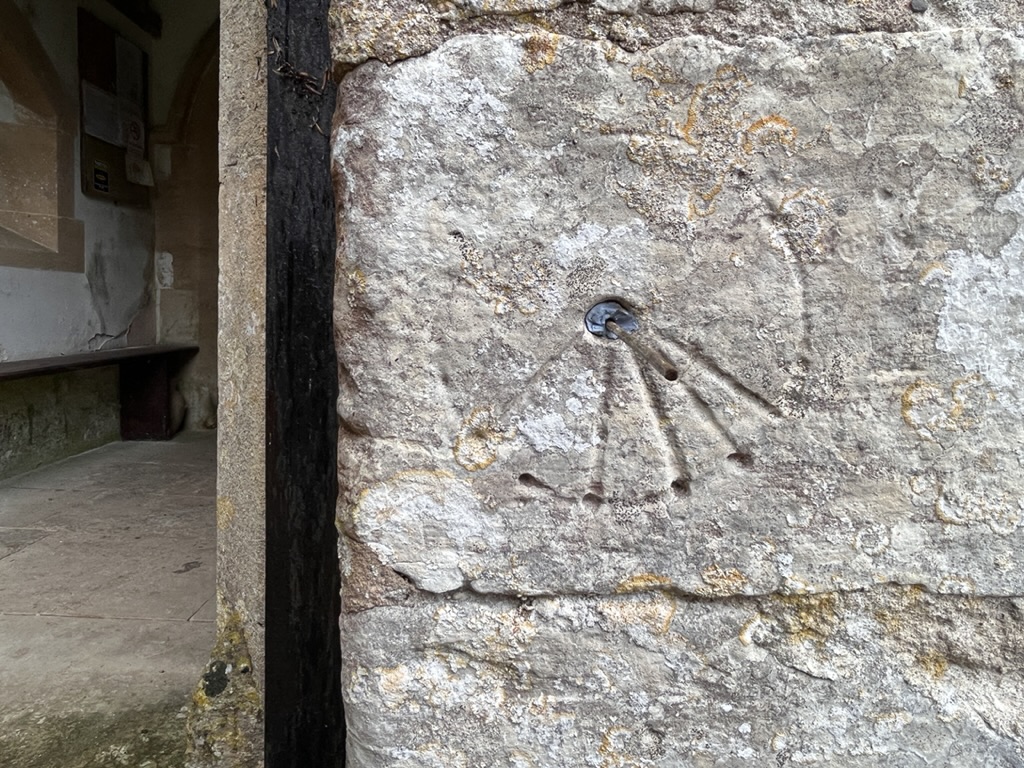
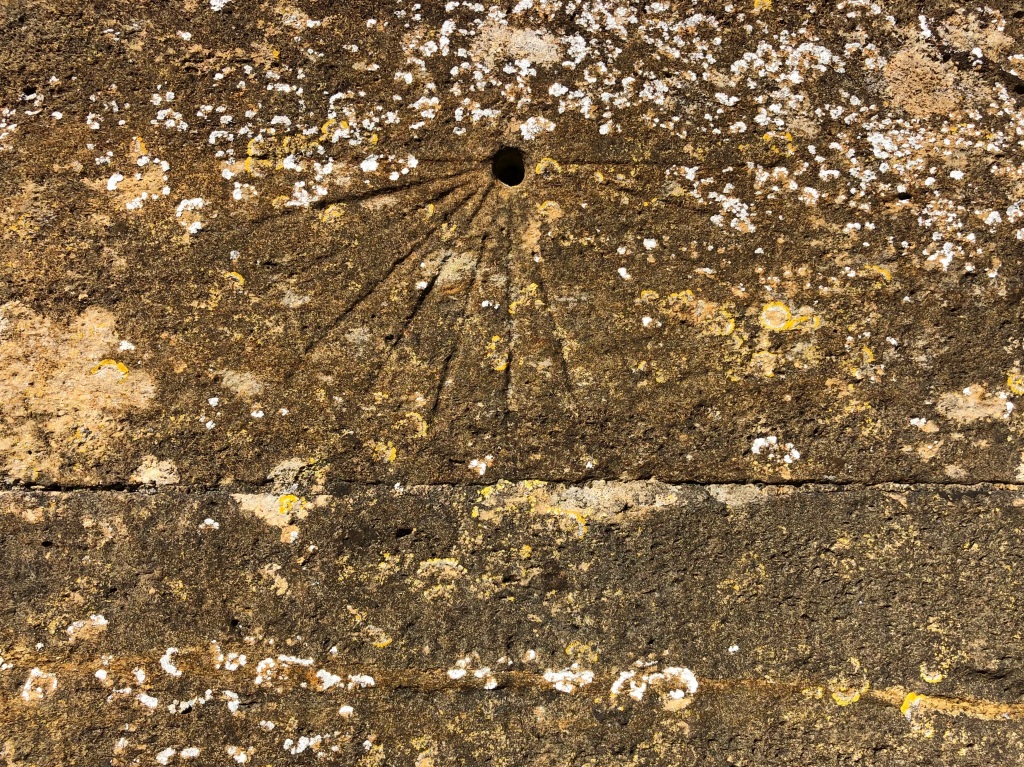
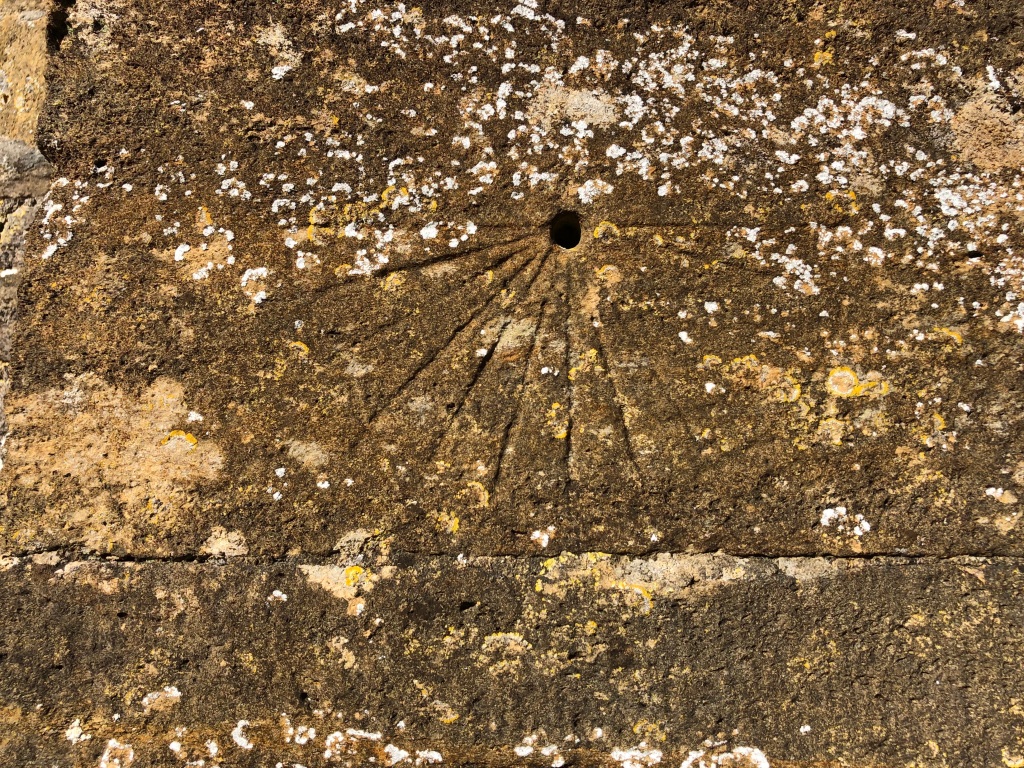
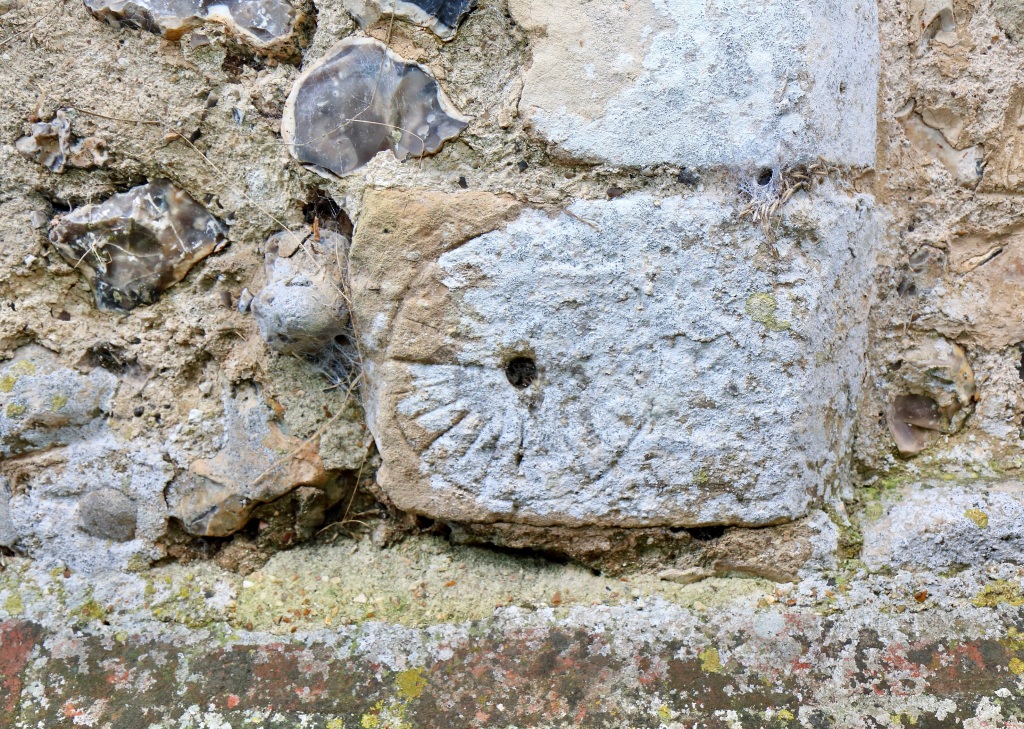
Dial 1 is encircled, with 13 lines and 24 pocks around the perimeter and forming 2 crosses . This large dial not only takes up the width of the stone, the circumference continues onto the stone below as do some lines (esp. 11am). The noon line ends in a 4-dot cross on the main stone, and the 9am line has a 5-dot cross on the lower stone.
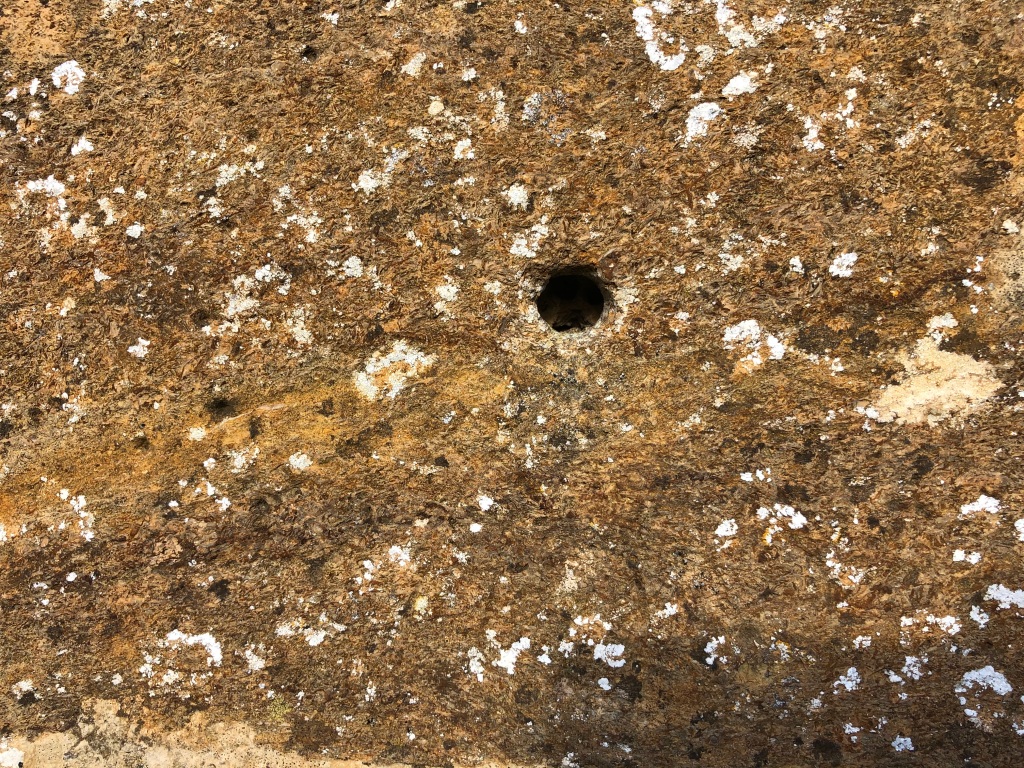
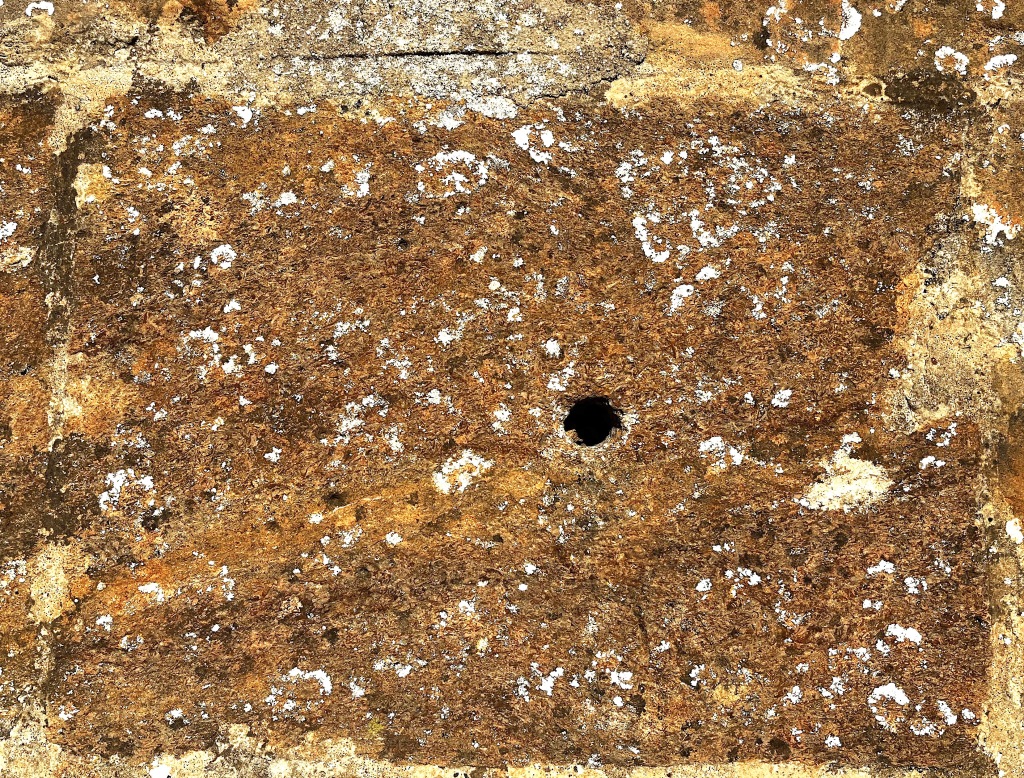
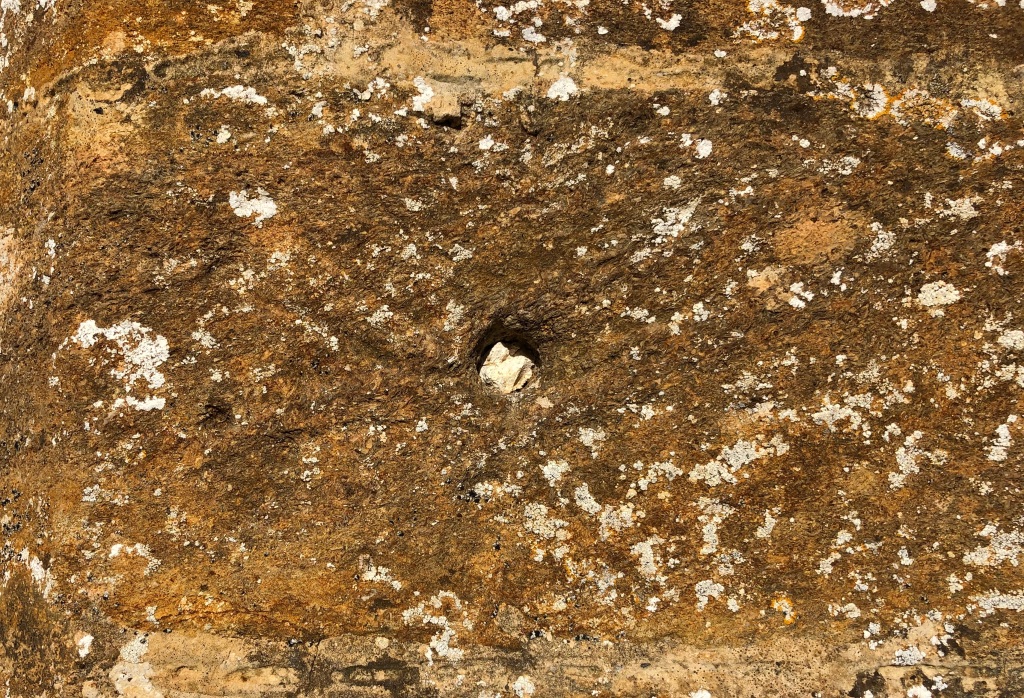
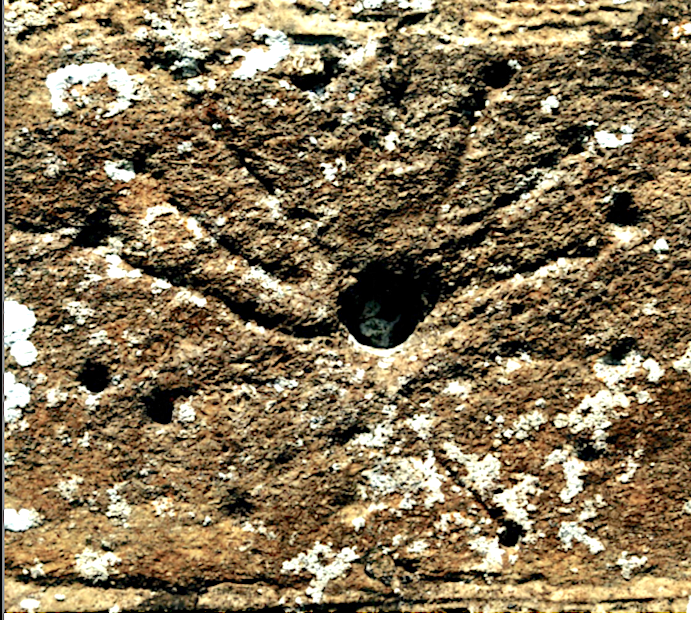
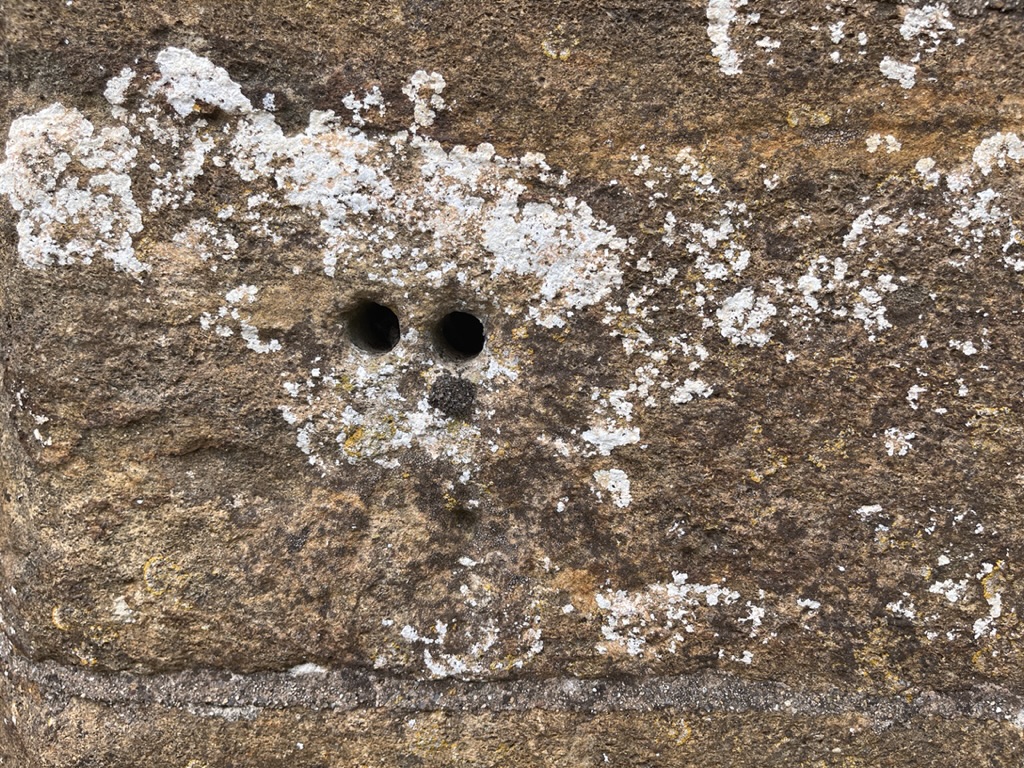
The gnomon hole is of particular interest; I haven’t come across a square hole with (apparently) a circular one inside it before. Possibly the original gnomon was a basic rod, and its round hole later enlarged to accommodate a more visible square rod.
St Laurence . Downton . Wilts – Scratch Dial 1
✣
DIAL 2
St Laurence . Downton . Wilts – Scratch Dial 2
Dials Locations
GSS Category: Scratch Dial; Mass Dial; Medieval Sundial; Church Dated Initials
GRADE II † C13th origins of which traces survive at the W end; substantial rebuilding 1860s by Wyatt. Set in peaceful countryside close to R. Frome. An excellent folder with details about the church and contents is kept in the church. Woodsford Castle / fortified house is nearby, the largest thatched building in England. 5m E of Dorchester 50.7143 / -2.3383 / SY762905
DIAL
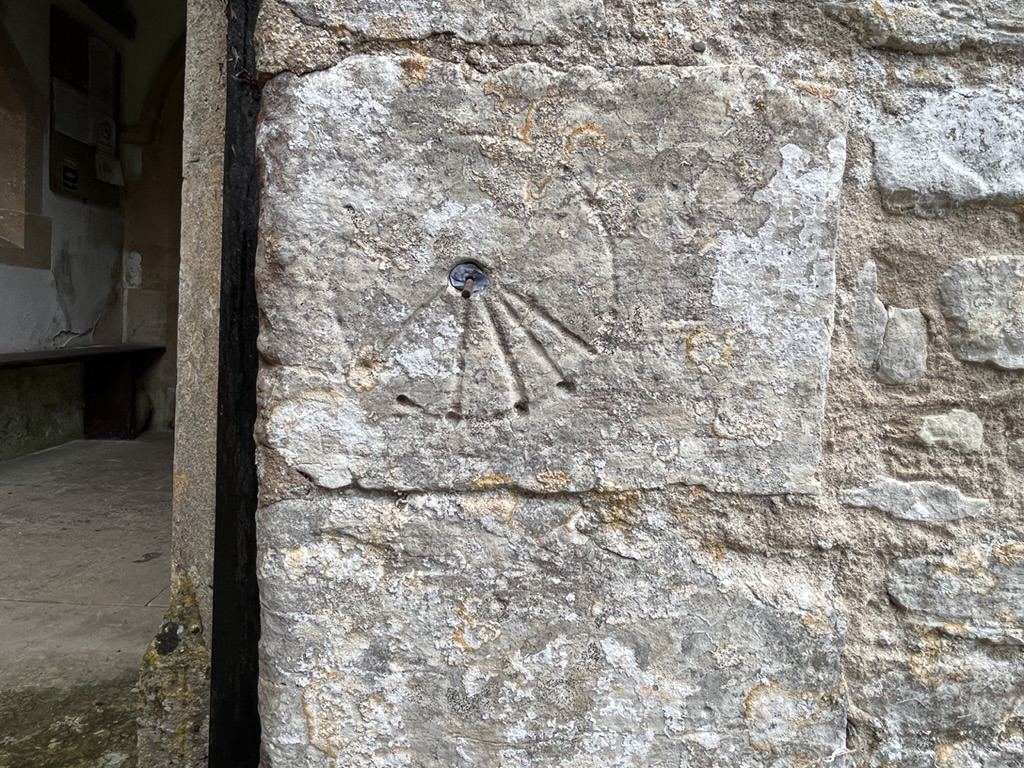
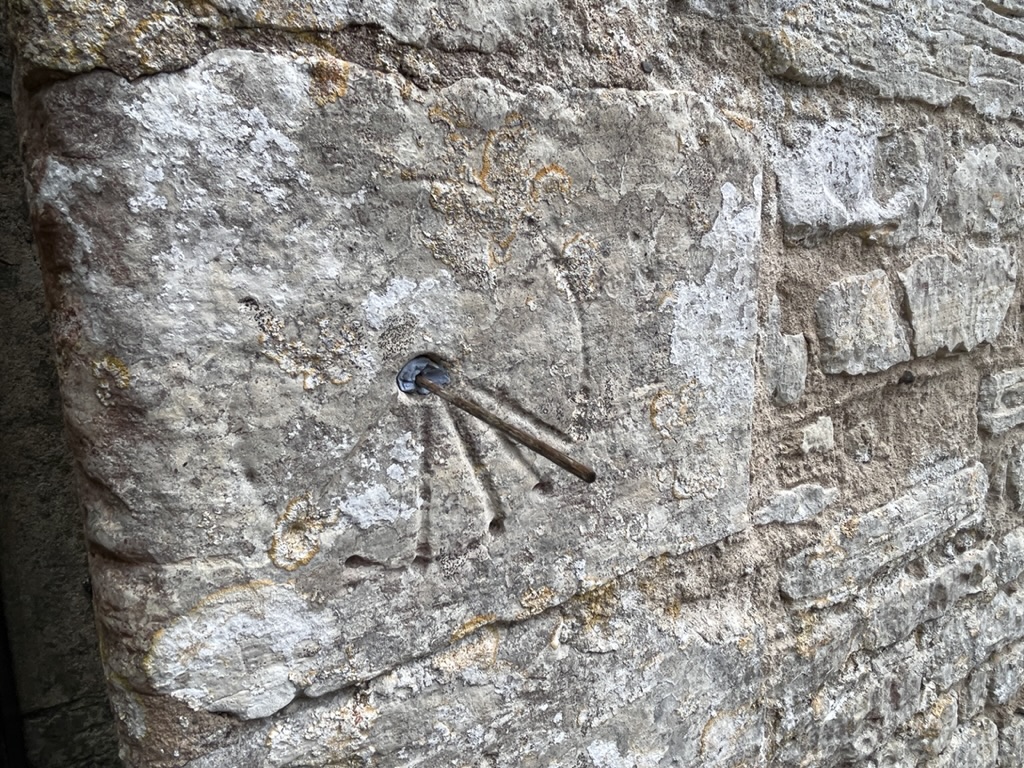
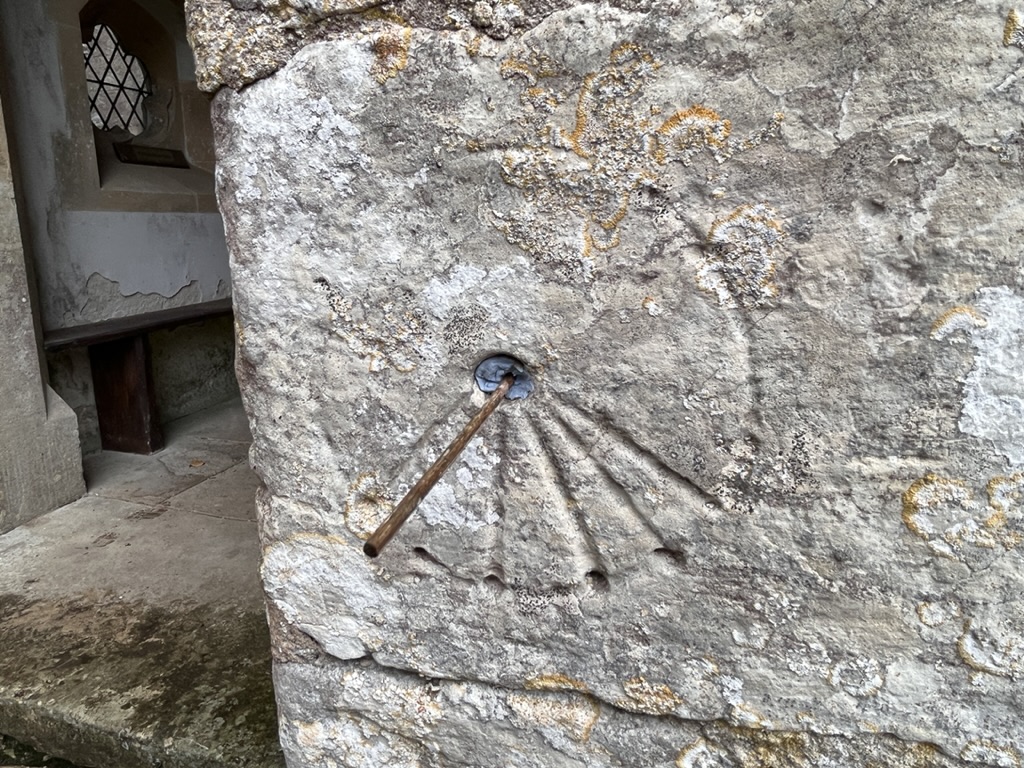
The single dial is just E of the entrance door, on the quoin of the S chapel. Plain and clearly cut. Now adorned with a slim metal rod bedded into blu-tack in the large gnomon hole (not quite as strange as the drill bit gnomon I found in Shropshire…).
St John the Baptist . Woodsford . Dorset – Scratch Dial
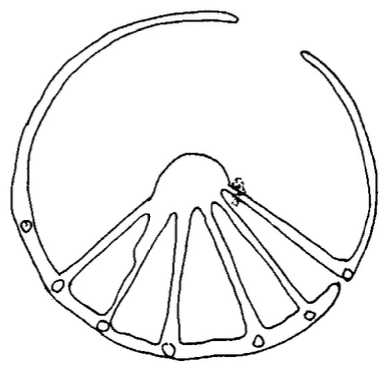
The dial has 5 clear lines descending from the gnomon hole to the lower perimeter of the complete circle. There are large terminal pocks and several other smaller pocks round the circumference that plausibly could be part of the overall design.
St John the Baptist . Woodsford . Dorset – Scratch Dial
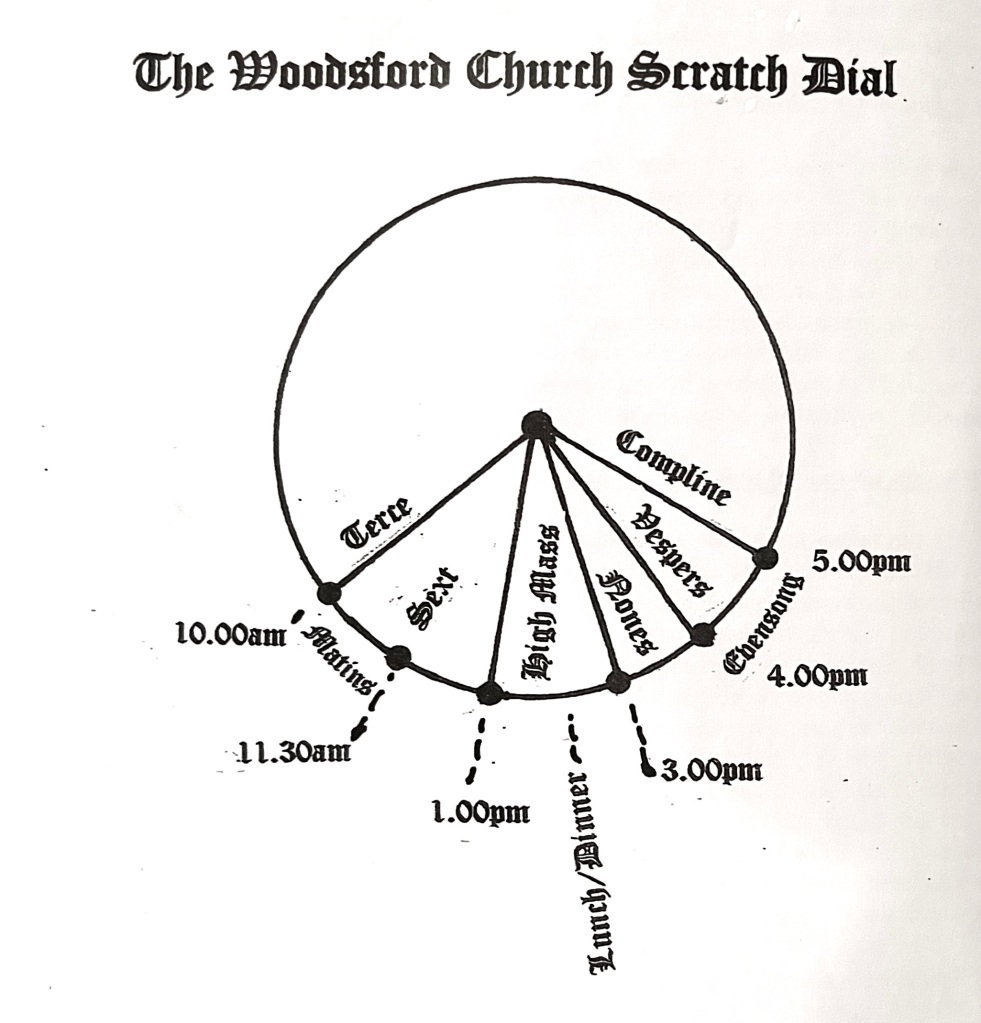
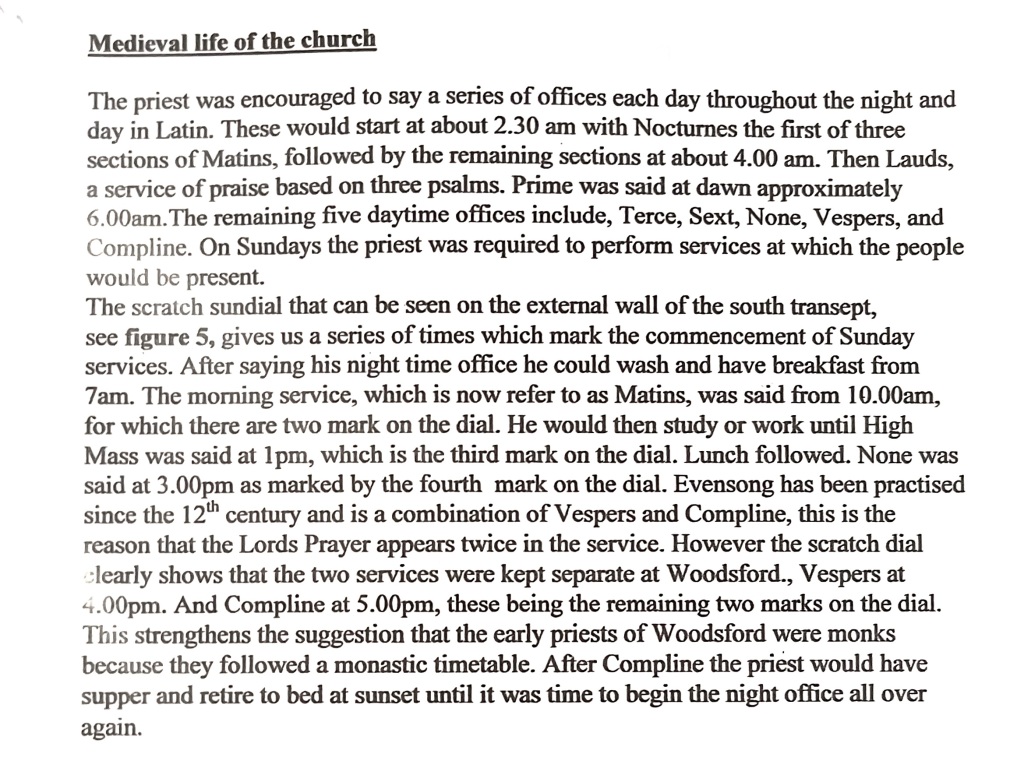
A most informative diagram with commentary explains the intricacies of the medieval day and the significance of the passing hours between dawn and dusk. You can find more on this topic HERE but the material below provides a good straightforward overview.
Woodsford . BSS Diagram
GSS Category: Scratch Dial
All photos Keith Salvesen; Dial Diagram and Explanation courtesy of the Church
GRADE I † C13 nave, chancel, S porch inc outer archway. C15 alterations & additions – chapel, tower. Restored 1885. 2 Purdue bells. 4m W of Sherborne and E of Yeovil. 50.9532 / -2.5732 / ST598172
DIALS
There are 3 dials beside the porch doorway, 1 on the left side and 2 on the right. The intricacies of the dials are clearer from the BSS archive photos and diagrams compared with my photos, taken in bright sunlight and not picking up the details.
DIAL 1
South Porch L of doorway. 13 lines, with the noon line extended, and 23 pocks. The diagram suggests 1, perhaps 2, mid-morning Mass markers. GLP points out that the lines are below the horizontal whereas almost all the pocks are above it; and that the design is accurate.
St Nicholas . Nether Compton . Dorset – Scratch Dial 1
DIAL 2
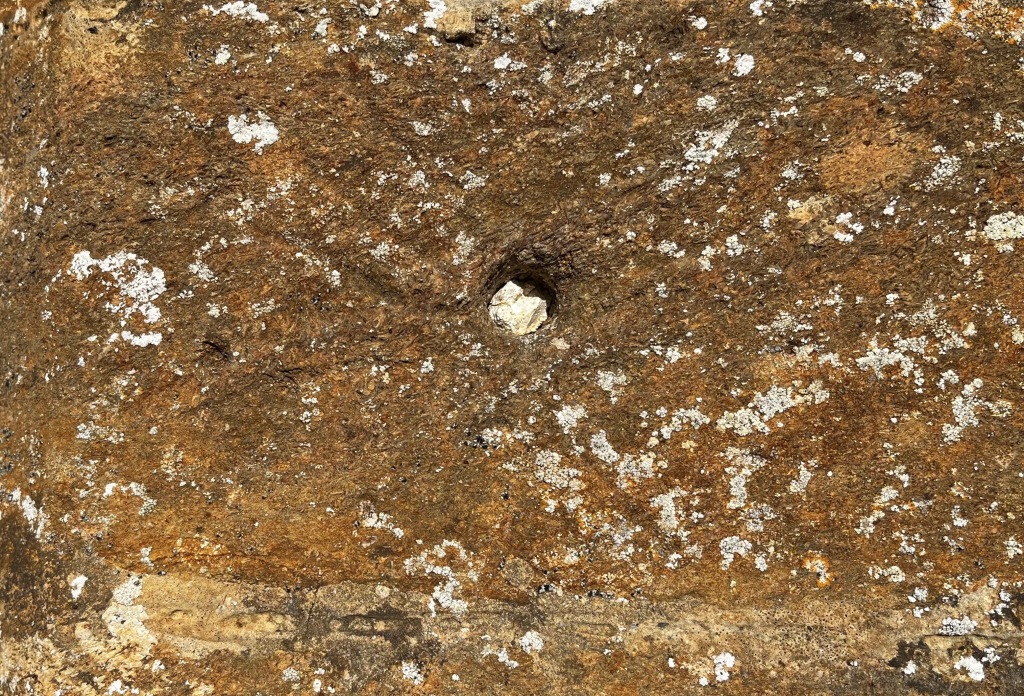
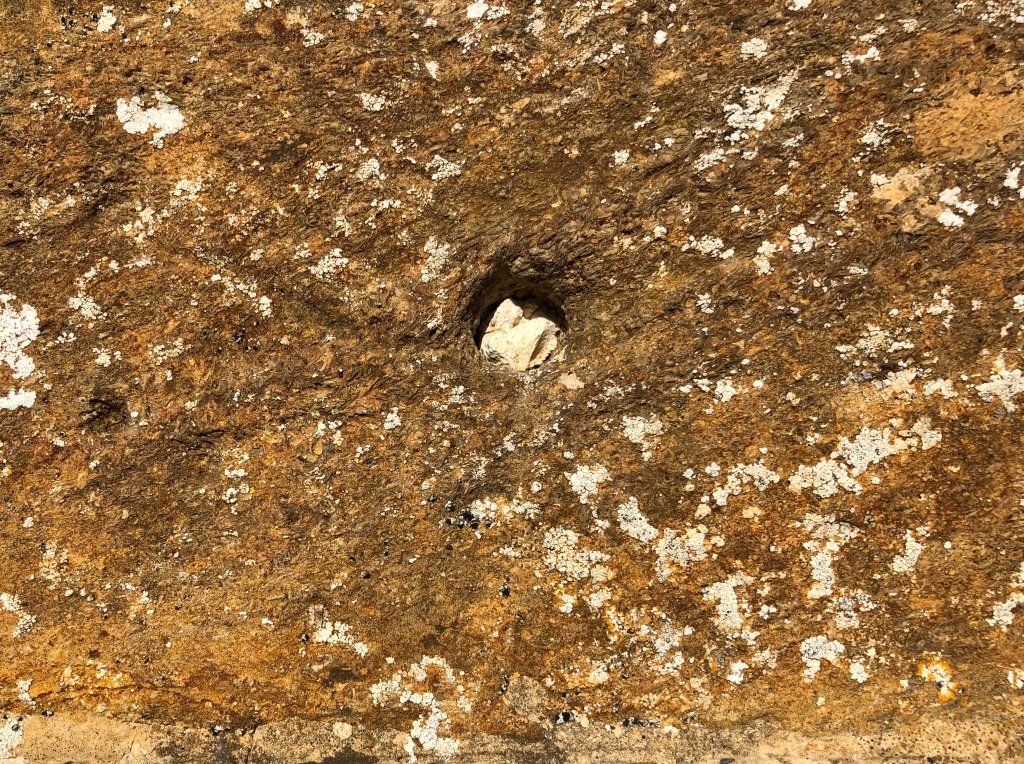
South porch R of doorway. Despite the extended ‘noon line’ (as it appears), the dial must in fact be upside down. If not, it can’t have had any practical use. 10 lines with very variable angles and 12 pocks. GLP describes it as crudely cut as a tide / octaval dial. The white item is a stone, which was in place when I originally saw the dial, and still 18m later. I left it in peace.
St Nicholas . Nether Compton . Dorset – Scratch Dial 2
DIAL 3
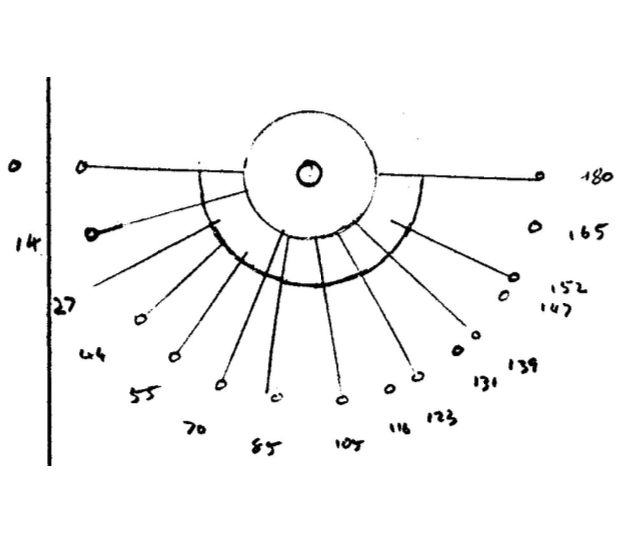
A semi-circular dial with 13 lines, almost all of which end pocks. There is a complete inner circle round the gnomon hole, with semi-circle outside it. GLP found the dial to be accurately cut.
St Nicholas . Nether Compton . Dorset – Scratch Dial 3
On chancel—(a) on external S. wall, W. of S. window; on N. chapel—(b) on N. external wall, W. of N.E. window, reset; on nave—(c) on external N. wall, between N.E. window and doorway; (d) on E. splay of N. doorway; (e and f) on E. jamb of S. doorway, two crosses; (g) on E. splay of S. doorway; (h) on E. splay of S.W. window; on W. face of tower— (i) against N. buttress; all formy crosses in circles except second on jamb of S. doorway, mediæval (BLB)
St Nicholas . Nether Compton . Dorset – Consecration Cross
GSS Category: Scratch Dial; Consecration Cross
All photos Keith Salvesen + BSS archive (also diagrams)
DEDICATION † ST ANDREW . Parish church. Late C13, consecrated 1312, completed C15, restoration from C19. A ‘major church’PEV. A good place to find out more is the RCHM entry ST ANDREW YETMINSTER. Carefully compiled church and Parish Archive. 10 Consecration Crosses from medieval to (relatively) modern. An important very early (1683) clock, now in restoration (see below).
LISTING † Grade 1
LOCATION † 5 miles SW of Sherborne, / SE of Yeovil. Noteworthy village easily accessed. Fine vernacular Ham stone buildings give the feel of an earlier era. Many listed buildings. Village also highly regarded by PEV. Station in village (not, as elsewhere locally, a wayside halt). Etiminstre in DB 50.8939 / -2.578 / ST594106
DIALS † Two dials on the buttress E. of S door, both C15
DIAL 1
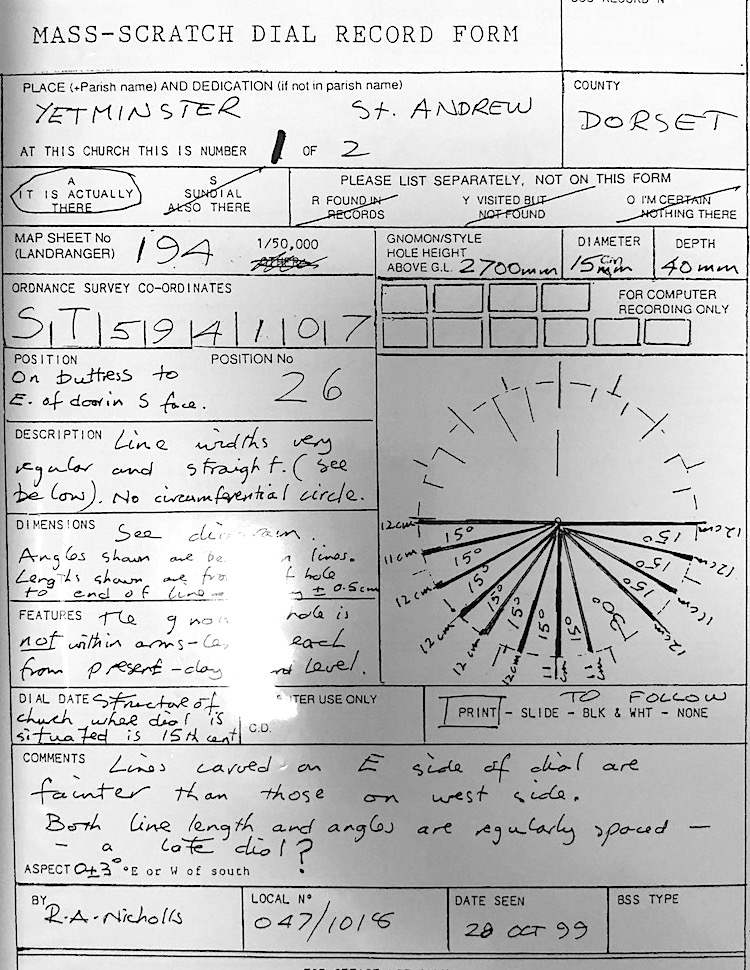
A semicircle dial with 13 lines (including the horizontal). BSS notes no circumferential circle. The noon line is extended, and 4 others end slightly beyond the circumference . GLP describes it as very neat and accurately marked. Both dials have been thoroughly examined – clips of the original records from the excellent church archive are below.
St Andrew . Yetminster . Dorset – Scratch Dial 1
St Andrew . Yetminster . Dorset – Scratch Dial 1St Andrew . Yetminster . Dorset – Scratch Dial 1
DIAL 2
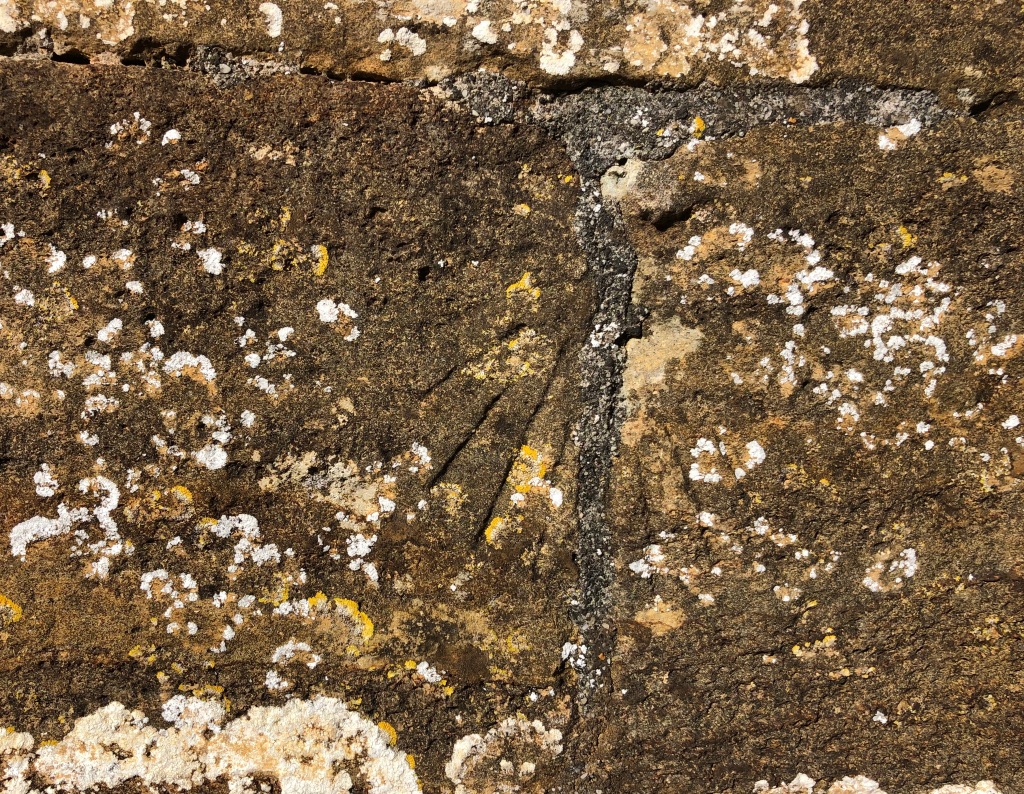
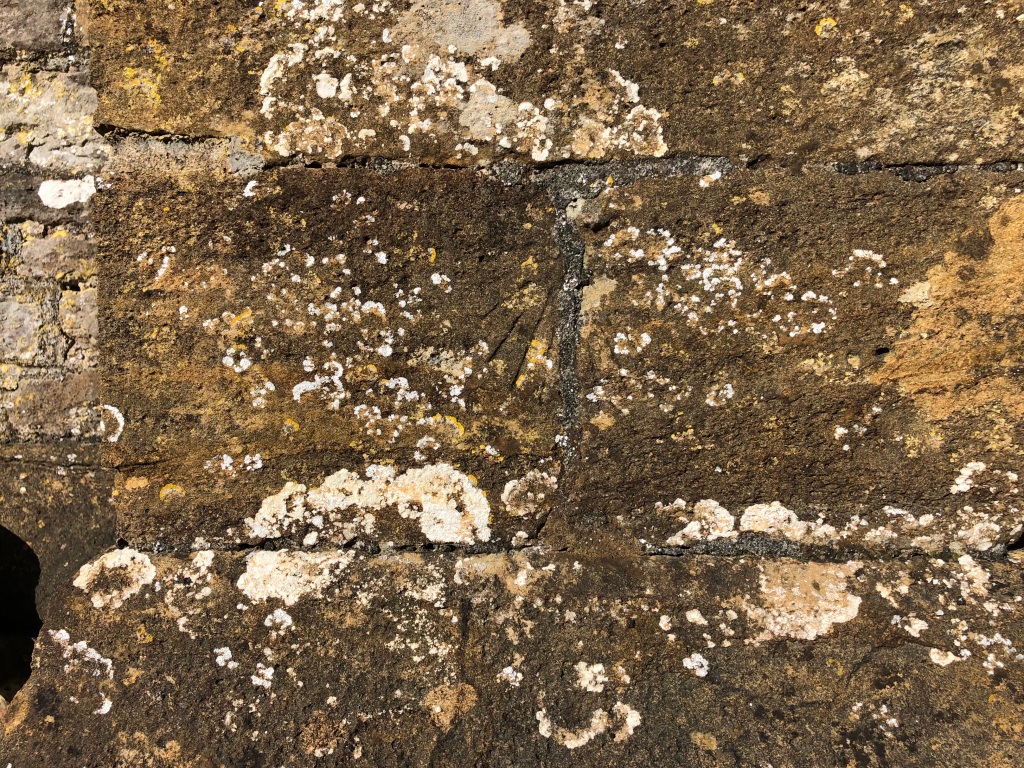
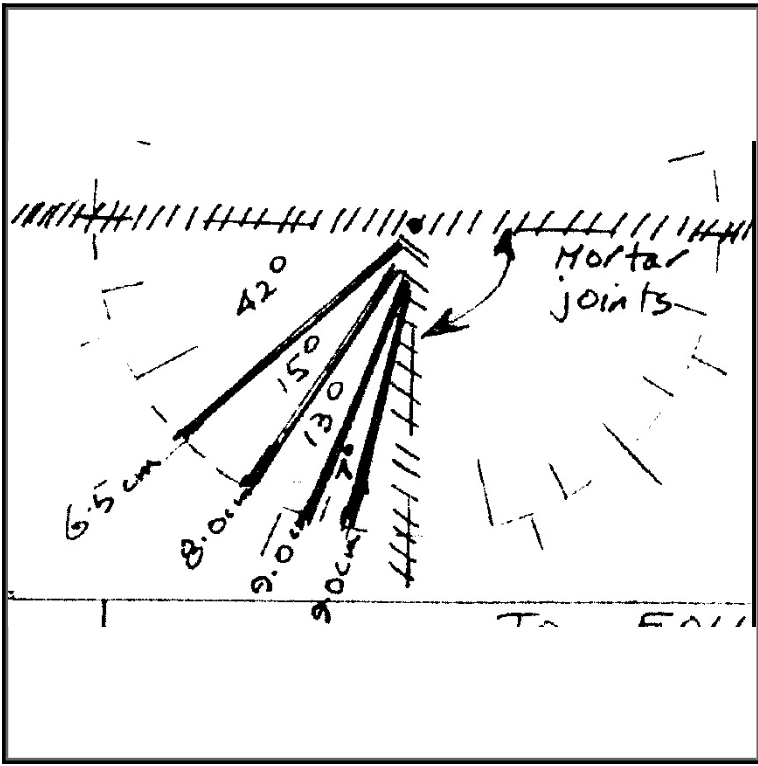
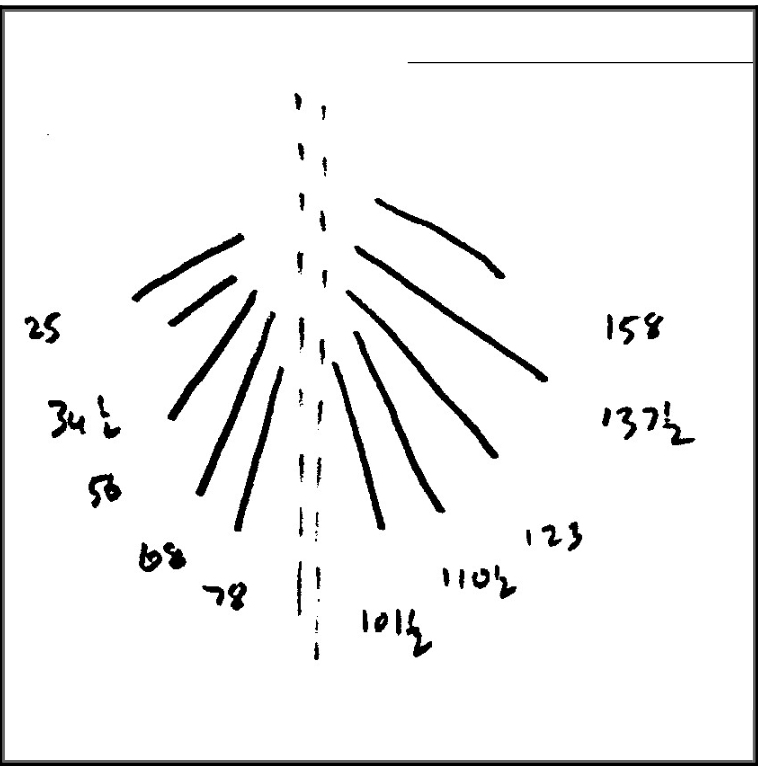
An unusual rather drooping design, explained below. Gnomon hole in the mortar line. The dial is split across 2 stones by a vertical mortar line. There are 11 lines, if one includes the mortar joint as the vertical / noon line. The lines RHS are badly eroded.
GLP noted that this dial is of particular interest as the angle of the lines suggest that it may be an early Scientific Dial. Comparing the lines with the correct angles for the latitude only one of the lines is more than 4º out. A further even more technical conclusion is that to function this dial would have needed a gnomon at an angle of 39º to the wall. This evidences an advance from earlier dials where the gnomon was simply inserted into its hole straight rather than angled.
St Andrew . Yetminster . Dorset – Scratch Dial 2St Andrew . Yetminster . Dorset – Scratch Dial 2
CLOCK † The historic faceless pendulum clock (1683) is being restored at the moment. I am writing the day after the Queen’s death, and by coincidence the clock has a specific significance: The Clock carillon plays the National Anthem at 3-hourly intervals. This dates from 1897 when it was installed by local benefactors for Queen Victoria’s Diamond Jubilee, and is very rare, and possibly unique. For the Platinum Jubilee of HM The Queen this year, the carillon was operated manually to ring out as part of our Jubilee Celebrations.
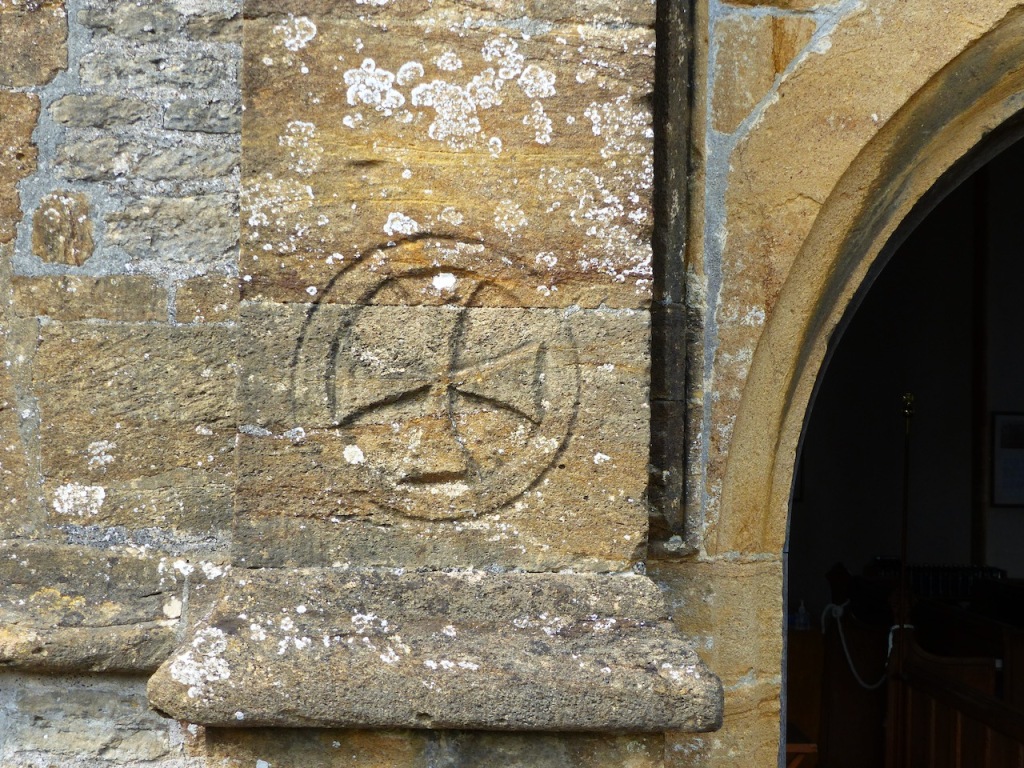
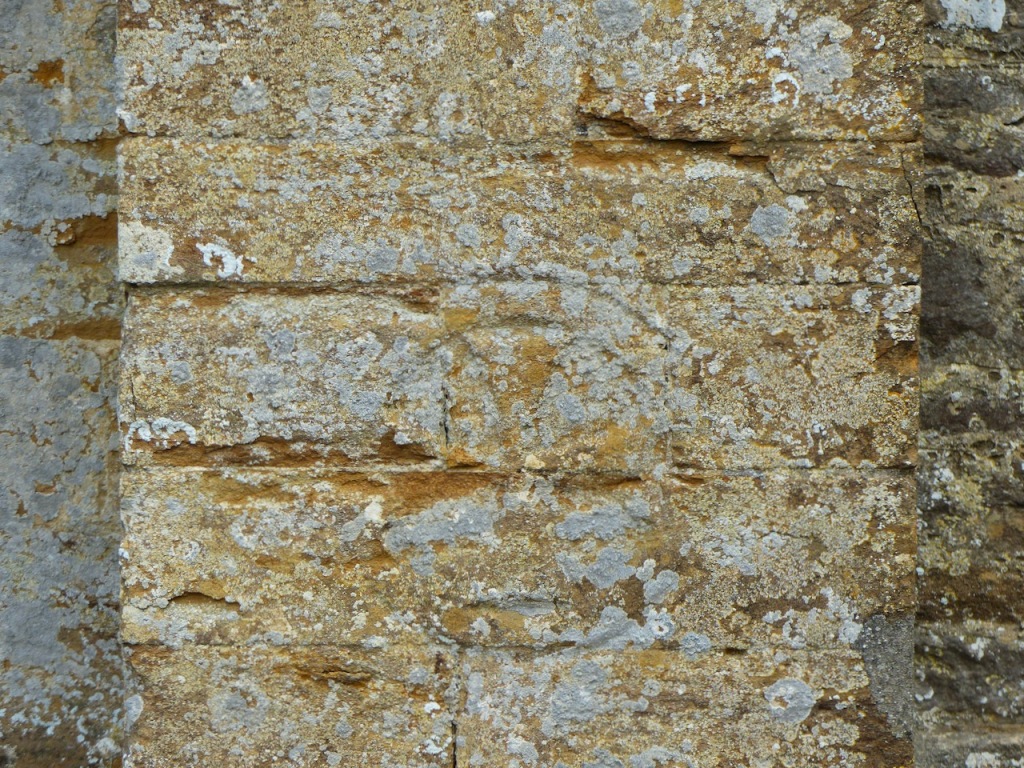
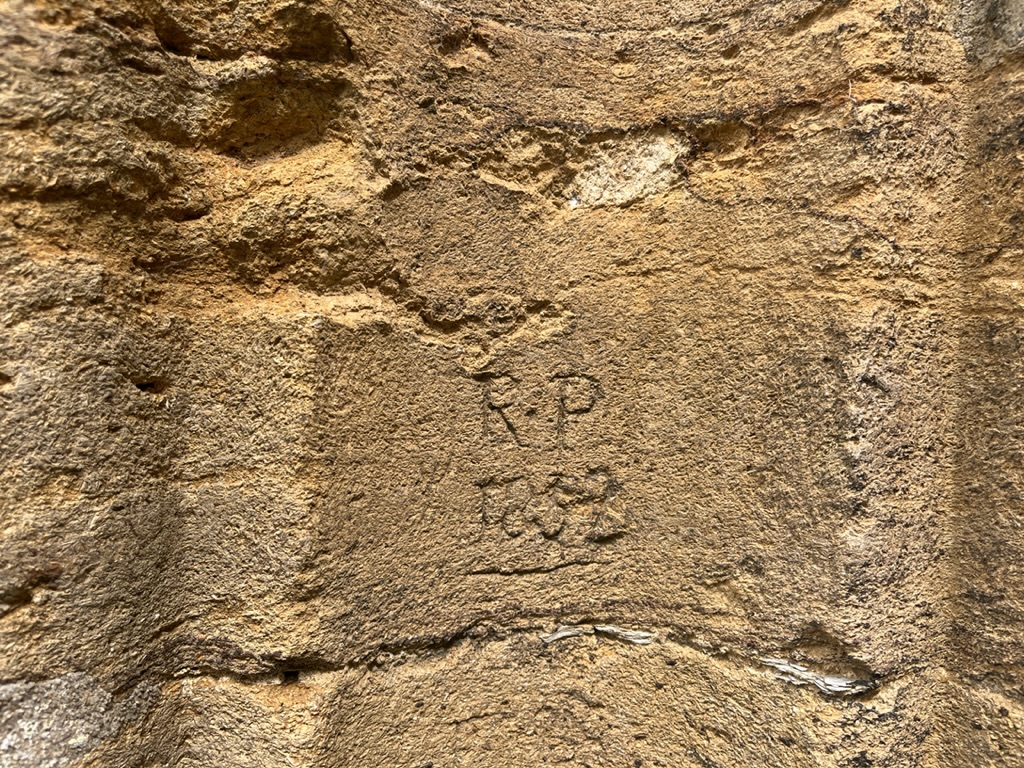
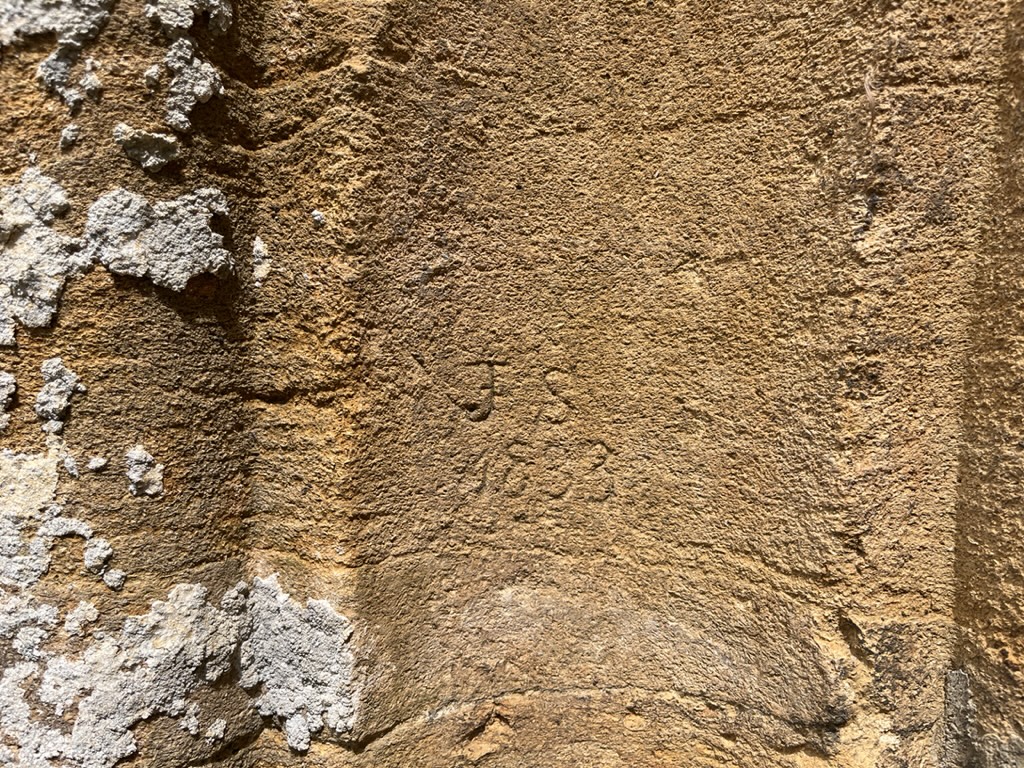
NOTES † 10 ‘formy’ Consecration Crosses in sunk round panels on external wall-facesBHO (locations specified); C10 Saxon cross shaft fragment; faceless clock of interest; good hunky punks. Links with Robert Boyle (chemistry, founder of the school) and Benjamin Jesty (smallpox); quite a lot of external graffiti – initials, dates and some Marian (‘witch’) marks
St Andrew . Yetminster . Dorset – Hunky PunksSt Andrew . Yetminster . Dorset – Consecration Crosses
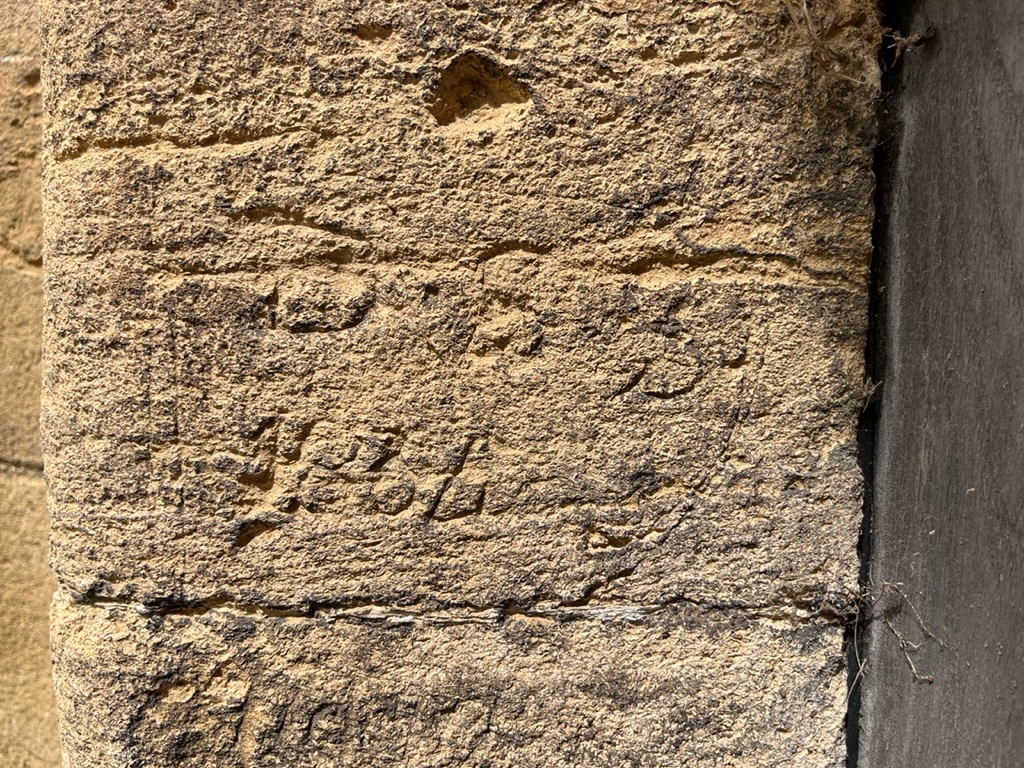
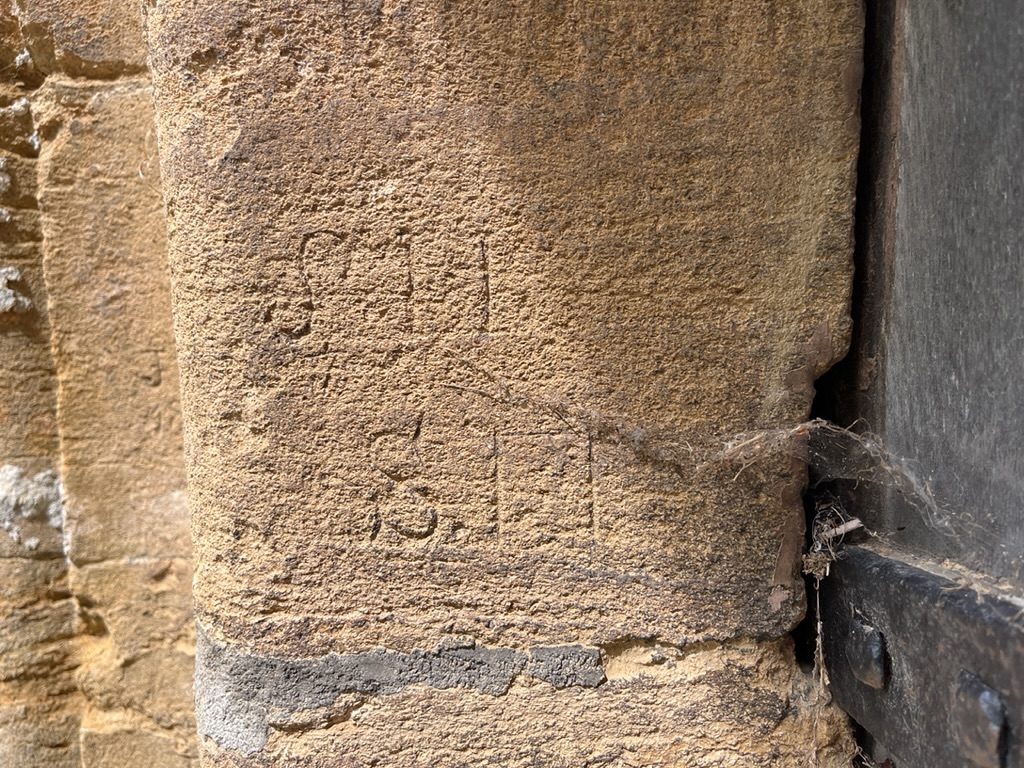
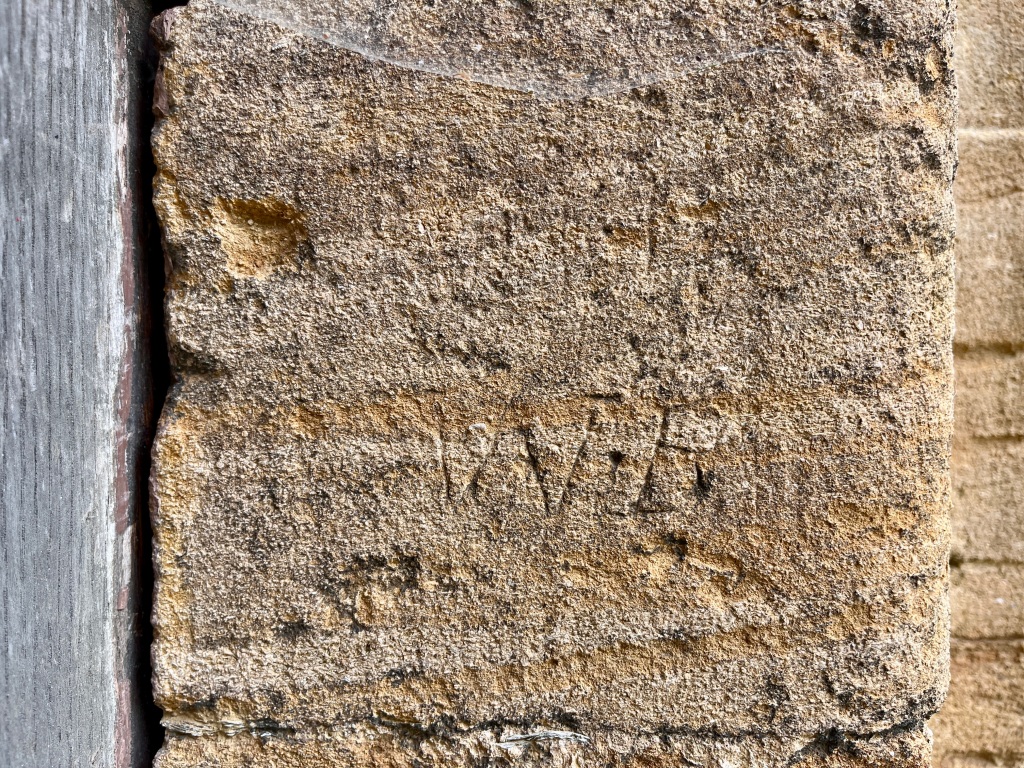
St Andrew . Yetminster . Dorset – Graffiti and a Marian (ritual protection) mark. The 3 initialled and dated marks are likely to be cut by masons who did work on the church in the 1830s (cf Melbury Osmond)
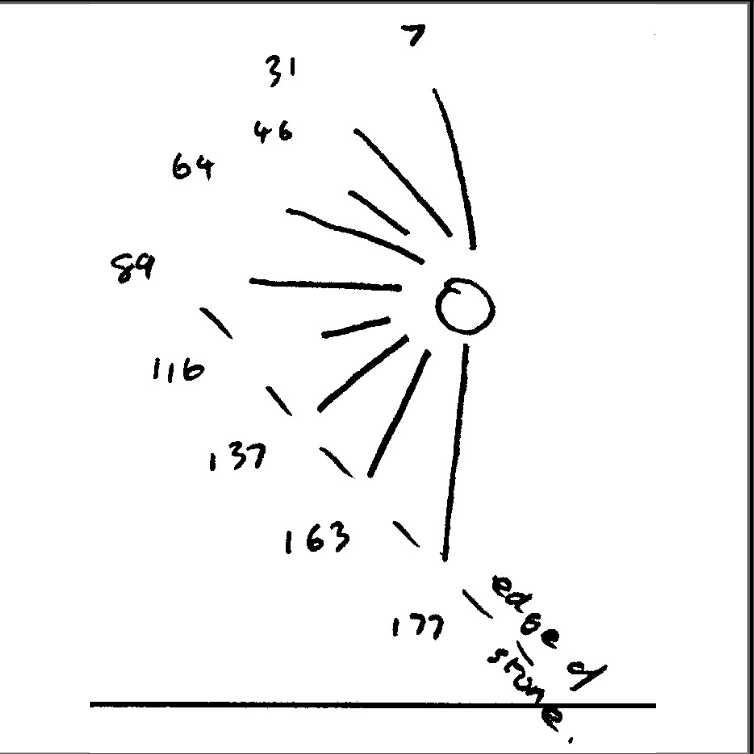
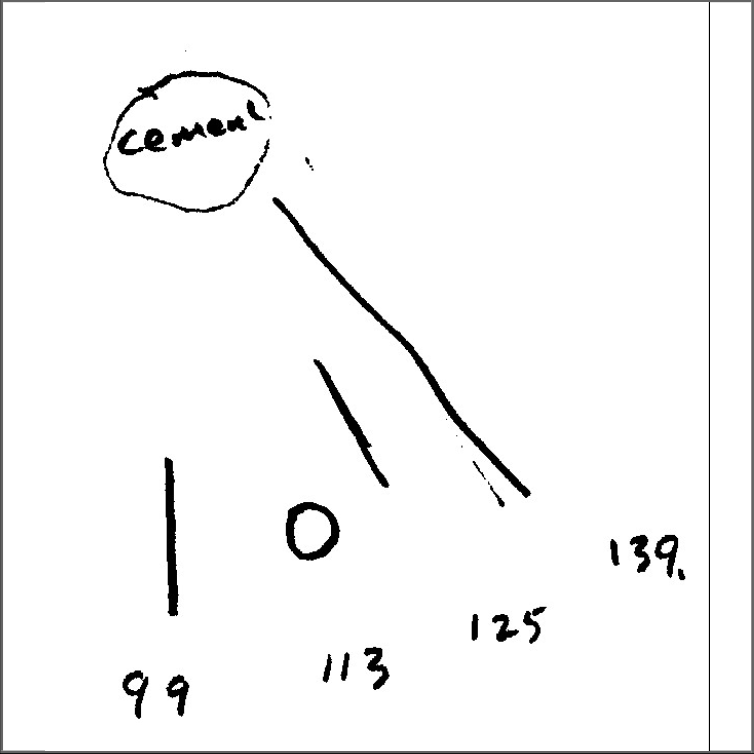
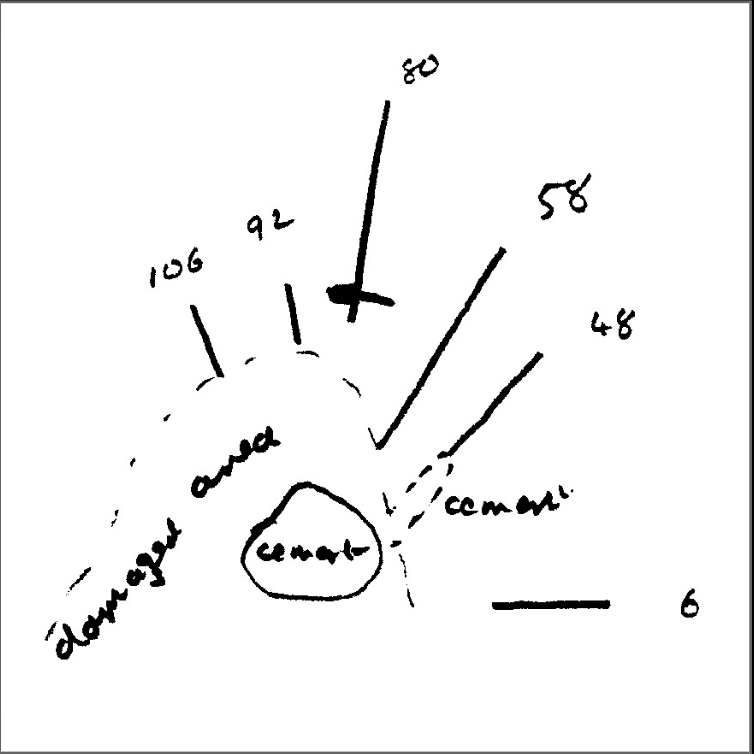
St Andrew Yetminster – the detailed BSS records for the scratch dials
St John . Kingstone . Som. Credit: Julie Ann Workman
ST JOHN THE EVANGELIST & ALL SAINTS . KINGSTONE . SOMERSET
GRADE II* † Records from 1291; C14 chancel, porch; C15 tower, nave. A village with a long history, close to the Fosse Way, recorded in DB as Chingestone. 1m SE of Ilminster. 50.9188 / -2.8851 / ST378136
DIAL
St John . Kingstone . Som.
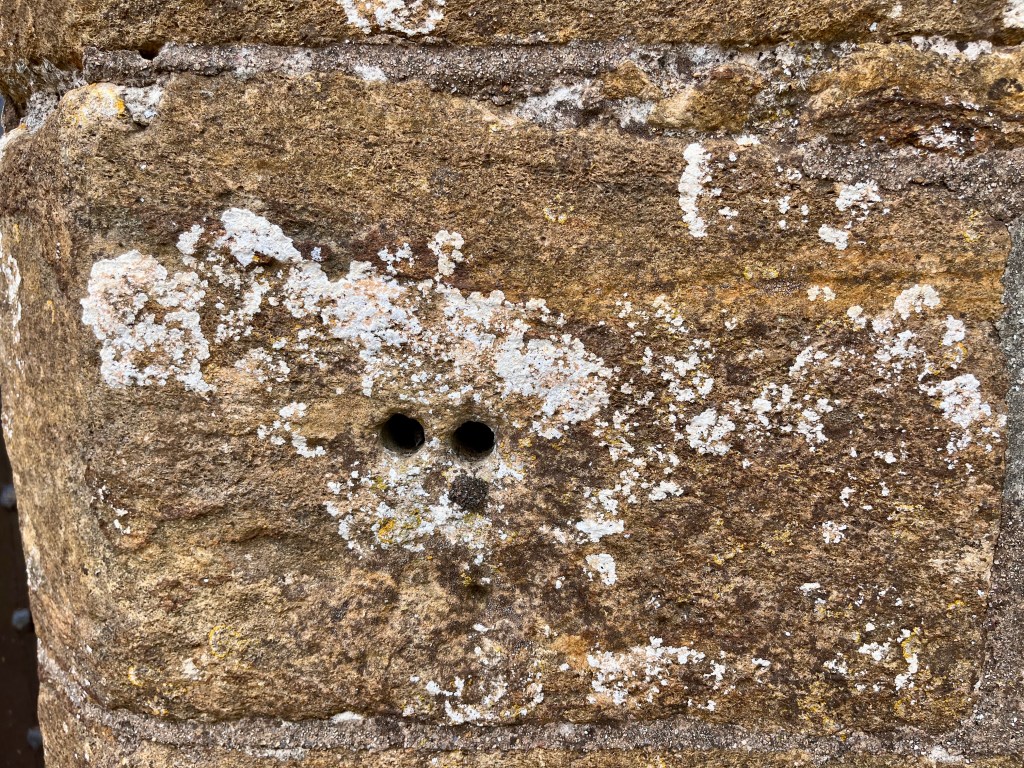
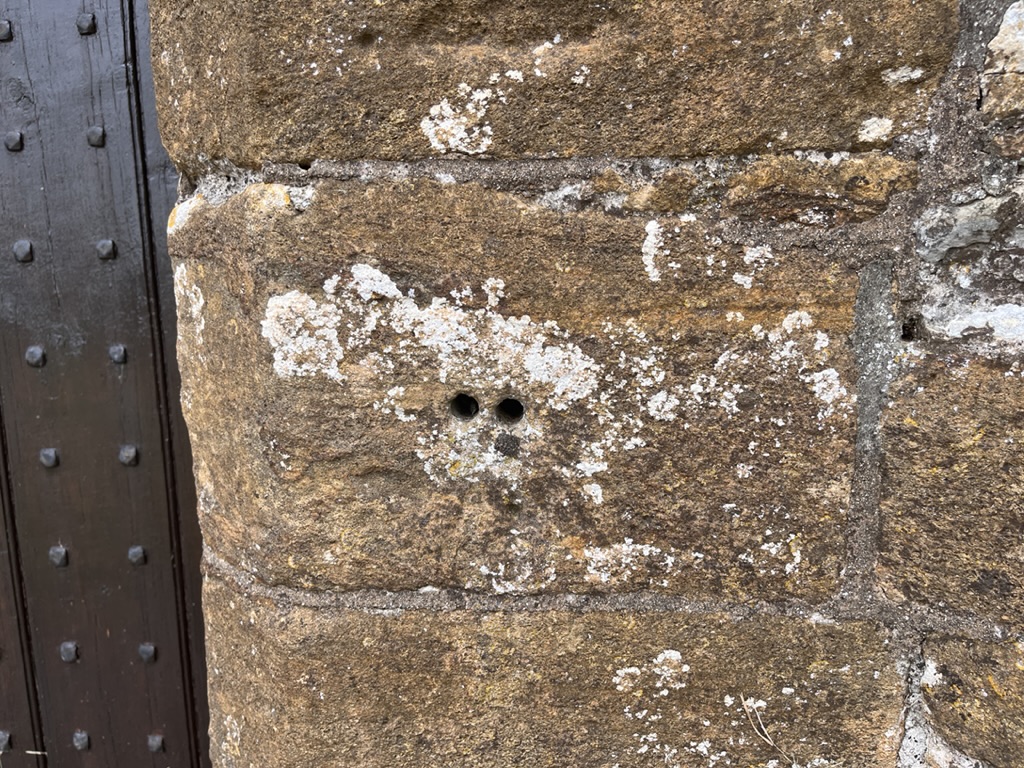
This is an unusual dial, not least because there is a pair of style holes L and R and they are both similarly large. The dial stone is quite badly damaged and it is difficult to analyse the dial. R seems to be the primary hole for the gnomon. The only discernible noon line is below R, marked by a single pock halfway to the mortar line below. On either side, at roughly 11 and 1, are the only 2 clear lines in the whole design. It’s hard to see the purpose of L at all, and perhaps it was a later addition that didn’t add much.
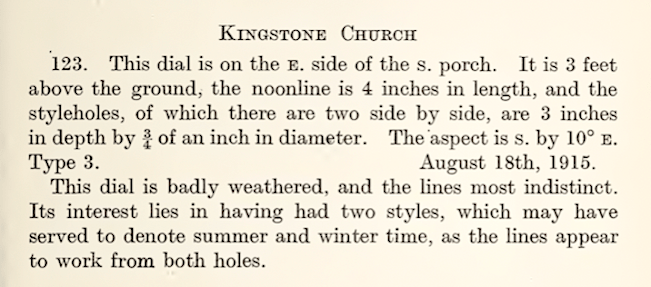
DEH visited in 1915 and included his own theory:
St John the Evangelist . Kingstone . Som
GSS Category: Scratch Dial
All photos: Keith Salvesen except header image as credited (a huge improvement on my own rain-affected photo).
GRADE I † Early C14, octagonal tower (cf neighbouring N Curry and nearby) completed C15. C19 restorations. BLB notes A very fine church, similar in design to Church of St Michael, North Curry CP but not so extensively restored in the C19. Admired by PEV. 12m E of Taunton. 51.04 / -2.9312 / ST348271
DIALS
Two dials are recorded for St Gregory, both of which merited additional comment by DEH. He recorded the first – remarkably decorative – on his visit in 1912. He revisited in 1916 and recorded the second dial, relocated to an obscure corner inside the church. In addition there is a (probable) 3rd dial, unrecorded.
DIAL 1
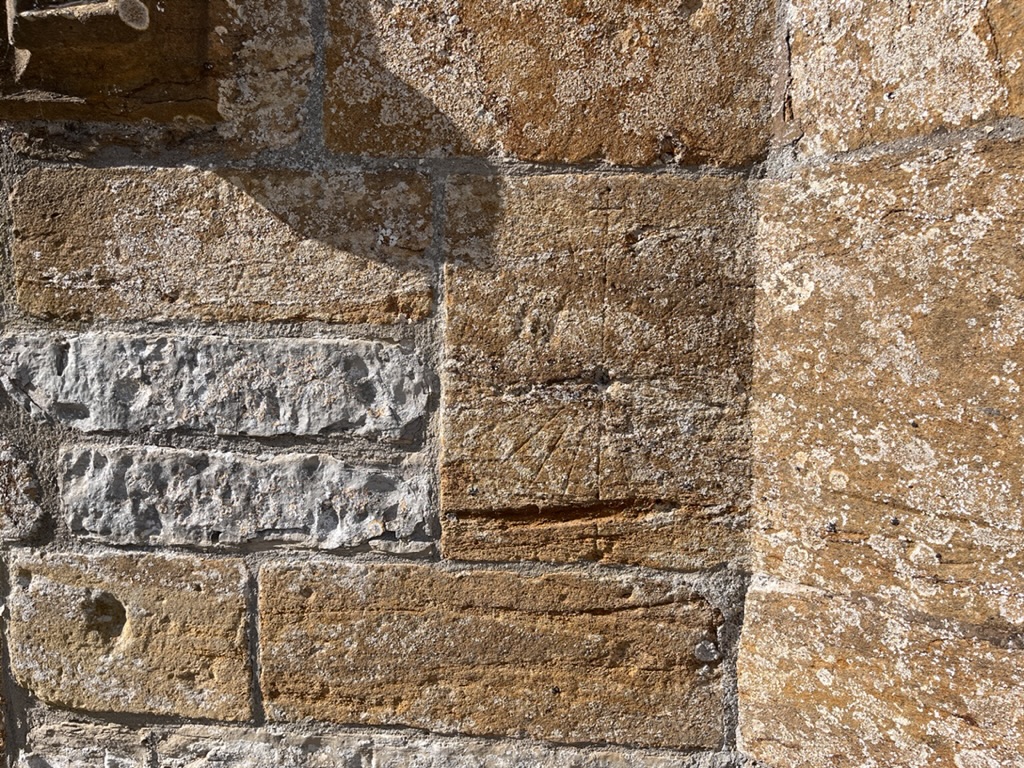
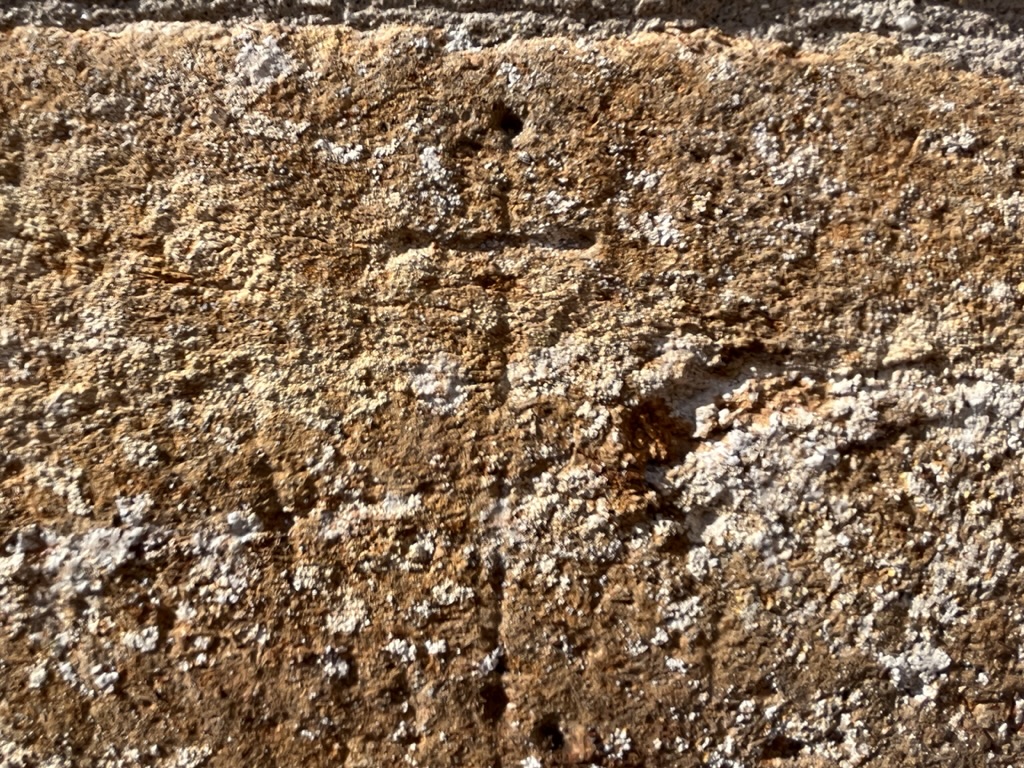
Dial 1 is on the E side of the S porch. It seems likely that there was originally a simpler dial that was embellished over the years. Although not all are now visible, it is reasonable to assume that there was a full complement of 24 lines.
DEH noted: this dial has been decorated. The noon line is lengthened outside the circle and ends in a small cross. This cross is plainly an addition. The noon line is also carried upwards above the circle and also ends in a cross. This cross may be original. The line throughout its length is true and clean cut, so that it may be part of the primitive dial.
DIAL 2
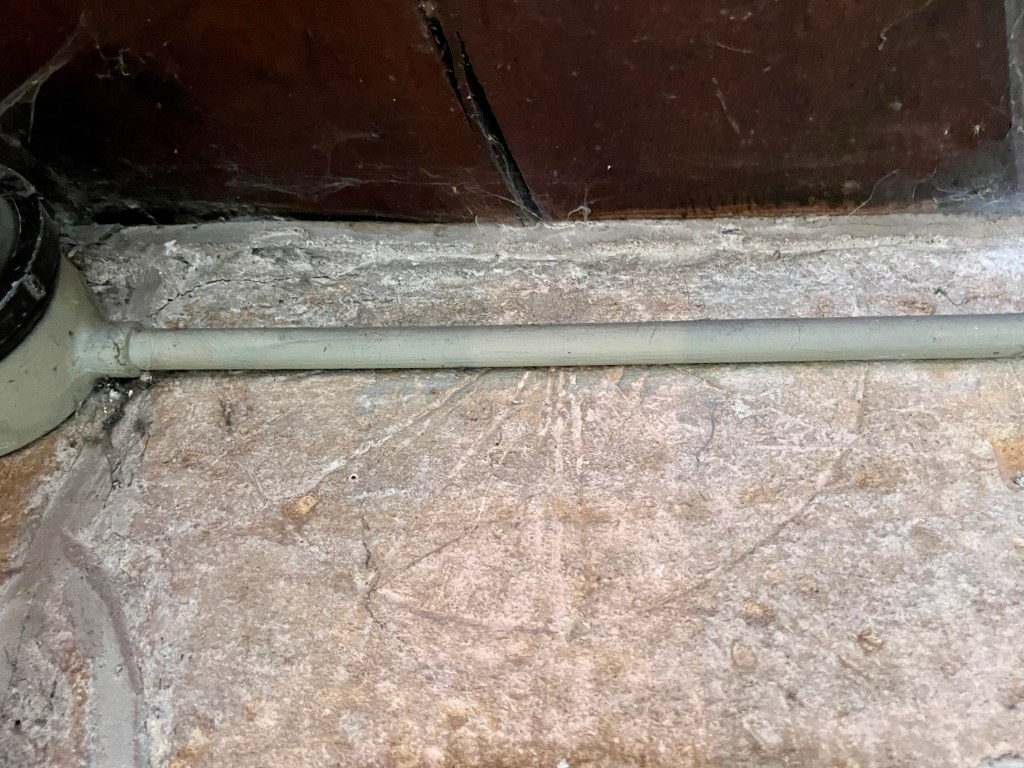
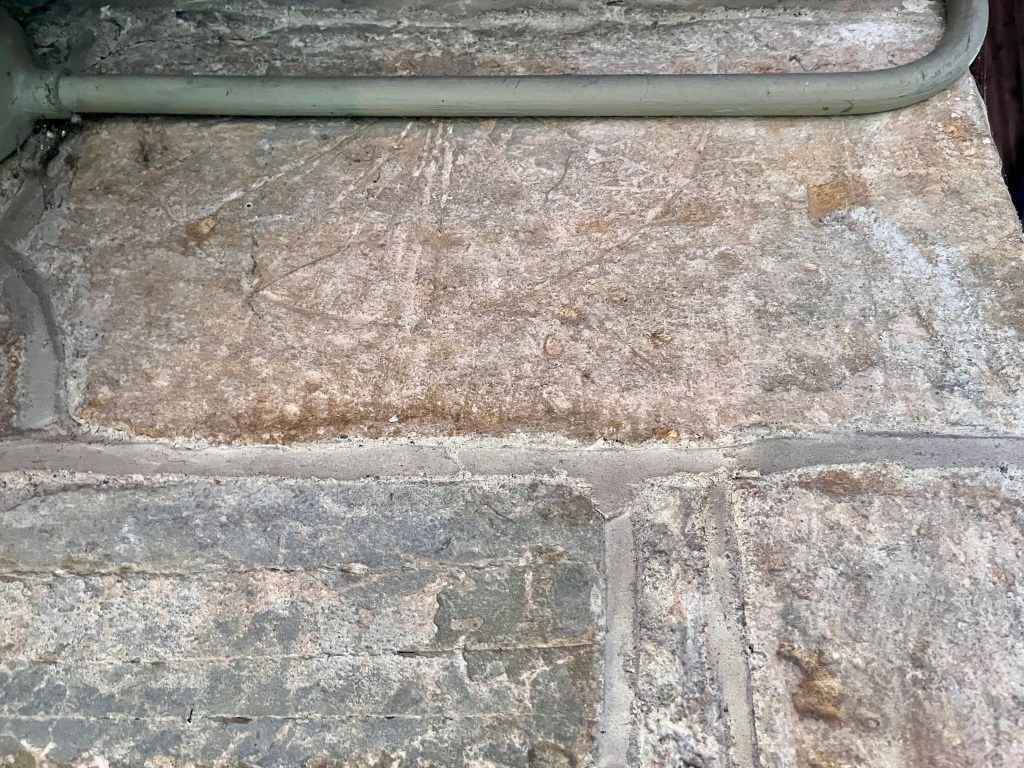
Dial 2 is a rare example of a scratch dial repositioned within a church during restoration / rebuilding (cf Thornford Dorset). DEH must, I think, have been told about it: under no normal circumstances would a dial researcher think of the location without a tip-off. Even knowing the right area, I didn’t spot it straight away.
DEH gives the precise location: This dial is within the church, on the w. splay of the easternmost window in the s. wall. It is on the top stone of the splay, the noonline is about 5 inches in length, and the stylehole, which appears to be an inch in diameter, is filled with plaster. DEH
The dial is a semicircle that looks as though it may originally been a full circle cut across 2 stones. The visible lines are mostly before noon. The noon line is possibly marked as the narrow gap between 2 almost vertical lines.
DEH noted: This dial is the only one that has been found inside a church. It was obviously placed in its present position at the time the late XV century window was inserted, and must have been brought from some other part of the building.
DIAL 3
Found on a buttress W of the porch. I have little doubt that this design is a dial, previously unrecorded. It is at least partly encircled, with 2 close candidates for style hole. There are several pocks that are somewhat random now but seem to have been deliberately made (and are not seen on adjacent stones). It seems convincing to me as a somewhat age-worn remnant.
VERTICAL DIAL
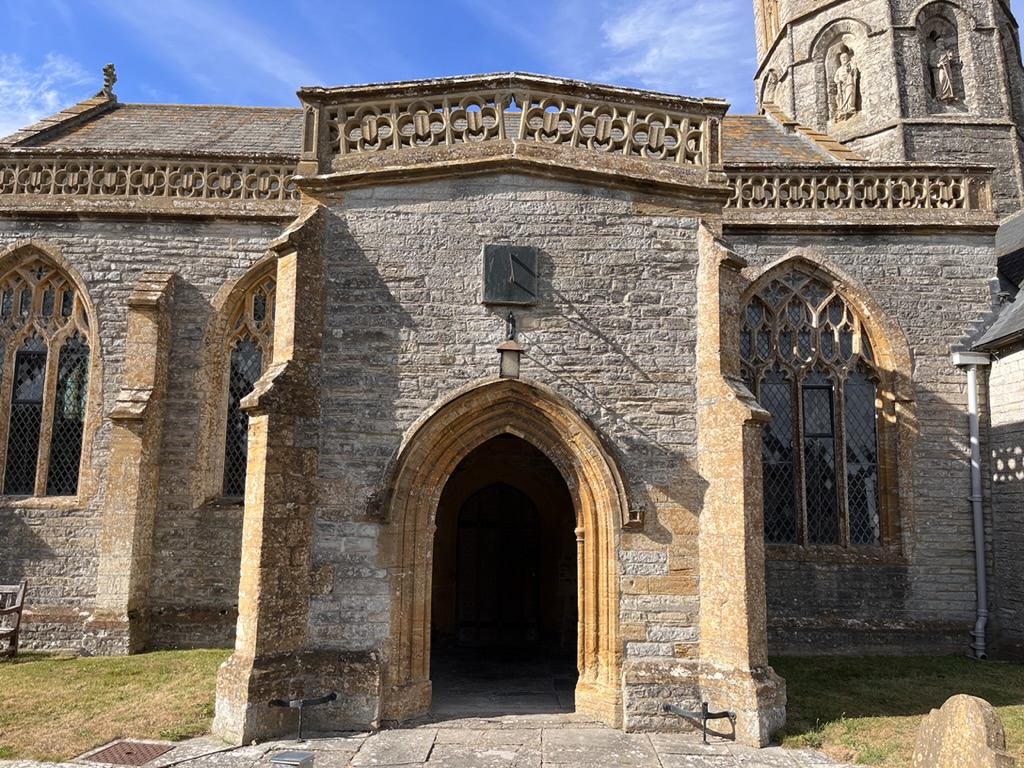
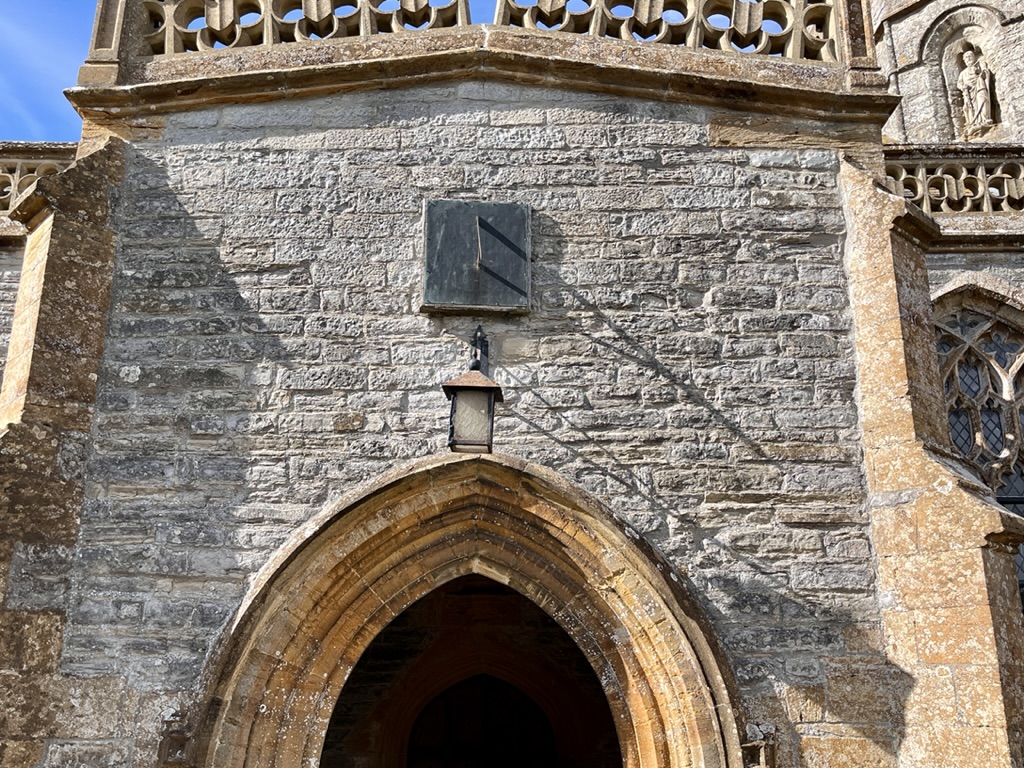
As plain a dial as you could wish to find, yet casting a strong shadow. BSS view is that it dates from the 1880s restoration and it doesn’t look as if the dial has been touched since then! It’s worth pointing out that (as the photos show) the lamp bracket works as effectively as the dial itself.
GSS Category: Scratch Dial; Mass Dial; Vertical Dial
GRADE II † C12 origins (c1190), mostly destroyed by a fire in 1681 and rebuilt. Dilapidation and a new Parish church built in the village centre in 1883 led to demolition of all but the Chancel. In the 1920s used as a mortuary chapel. Stones mark the outline of part of the nave. In the care of CCT. 8m S of Basingstoke. 51.1687 / -1.138 / SU603414
DIALS
Both dials are on the south wall of the Chancel, L of the blocked Priest’s door.
St Mary . Preston Candover Old Church . Dials
DIAL 1
St Mary . Preston Candover Old Church – ScraDial 1
Dial 1 is small and, remarkably, on the lowest stone of the doorway where it would have been of negligible use. It was obviously repositioned during rebuilding and in the process rotated 90º clockwise so that the deeper cut noon line is horizontal rather than vertical to the ground. Encircled but not accurately – slightly elliptical. There are a dozen lines or so radiating from the gnomon in the dial stone, with the afternoon lines emphasised (ARG in 1924found it ‘much damaged by weather’)
St Mary . Preston Candover Old Church Dial BSS
A R Green – Dial 1 1924
DIAL 2
St Mary . Preston Candover Old Church –
Dial 2 is eroded and in a poor state. Though larger than Dial 1, it is less visible, and ARG did not record it in his 1924 survey. It seems to have been cut on softer stone. Lichen makes it harder to read. The blocked gnomon hole is more or less in the centre of the dial stone. There are 7 definite lines leading from it, 2 angled into the upper half of the dial. It looks as if it might once have been encircled, but it is now hard to tell. BSS notes Crudely cut or made. Eroded. Trace of circle only. Partly hidden by rendering
St Mary . Preston Candover Old Church Dial BSS
NOTE In the churchyard is a sundial made up of a twelfth-century capital and base, both being set upside down HE
GSS Category: Scratch Dial; Mass Dial
Credits: Tina Osgood, taken during a recent visit; header image Basingstoke Gazette
GRADE II* † C12 origins, chancel added C13, nave & tower C15. Considerable C19 restoration & rebuilding. Quite a large church, with its gradual development evident. 6 confusing scratch dials. SE of Dorchester, W of Wareham. 50.6585 / -2.277 / SY805843
DIALS
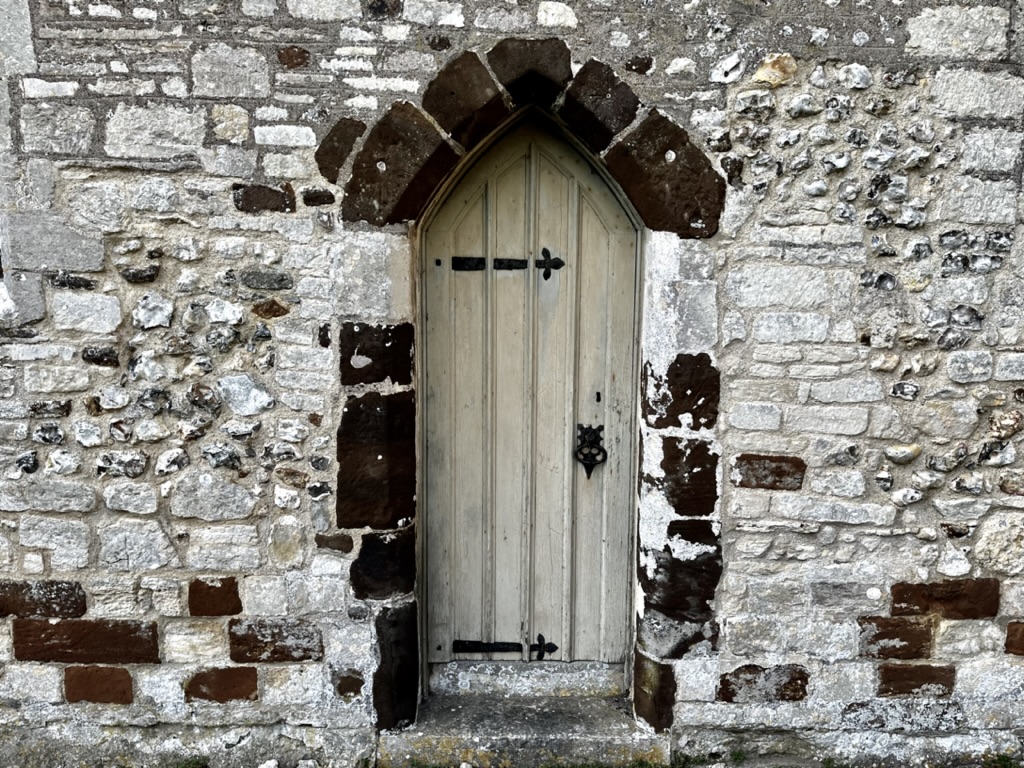
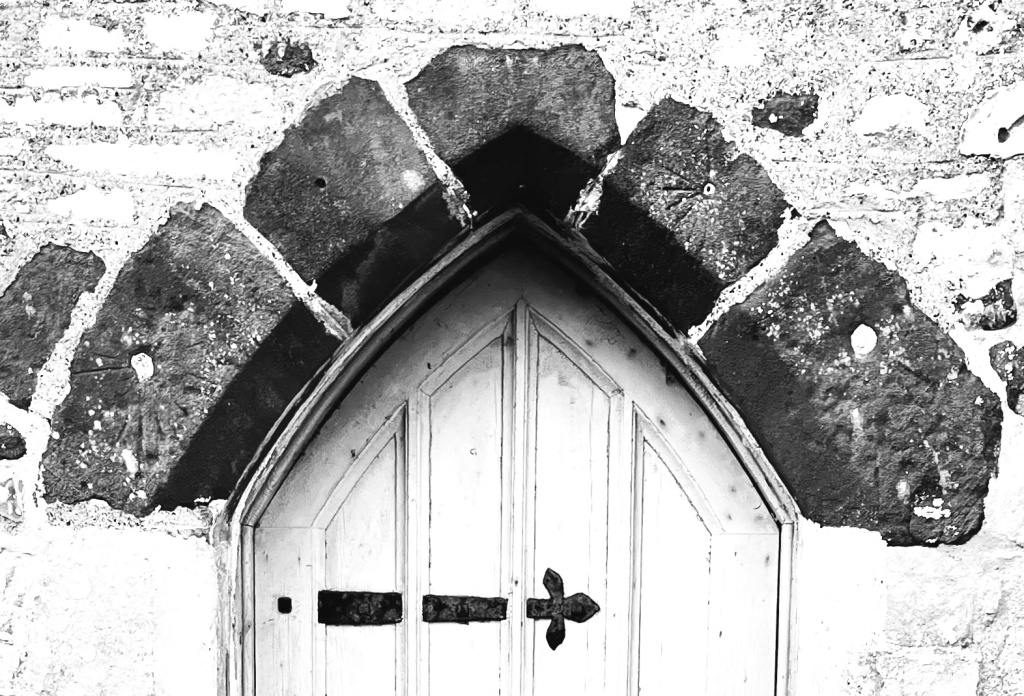
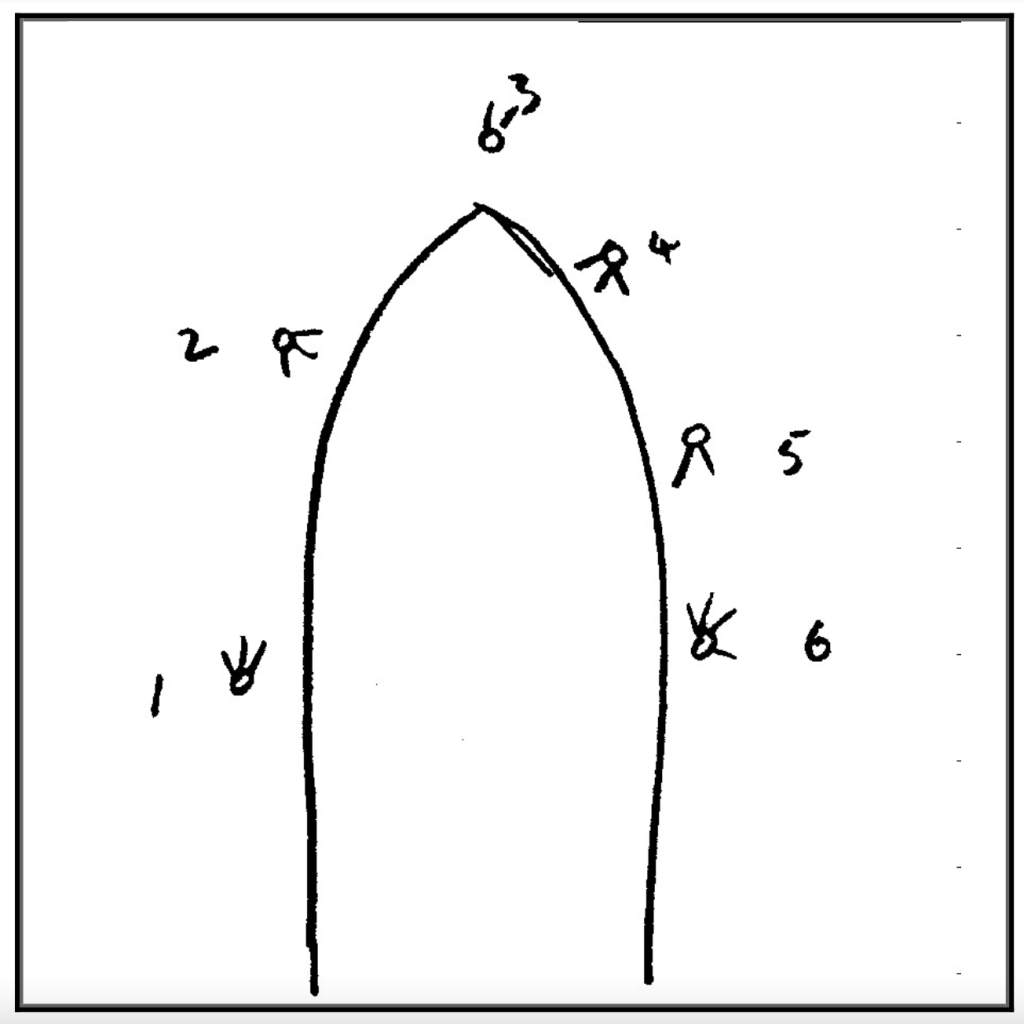
The scratch dials are in a group arranged around the S. door of the chancel. There are 6 in all (BHO records 4) but on the very dark local ironstone none is very clear. BSS / GLP dates them to C15, and their diagrams below are very helpful in marking the locations and configurations. I should say at once that I couldn’t definitively identify dial 3 (at / near the apex of the doorway’s arch) at the time nor in the photos I took see below.
St Christopher . Winfrith Newburgh . Dorset – the ‘Dial Doorway’ with 6 scratch dials
GLP concluded that none of the dials was in its original position. 1, 3, 6 are inverted; the stones of 2, 4, 5 were shaped after the dials were cut, truncating them. Perhaps the entire doorway was originally built using reshaped stones from elsewhere on the church; or perhaps an existing doorway was later rebuilt or reshaped.
DIAL 1
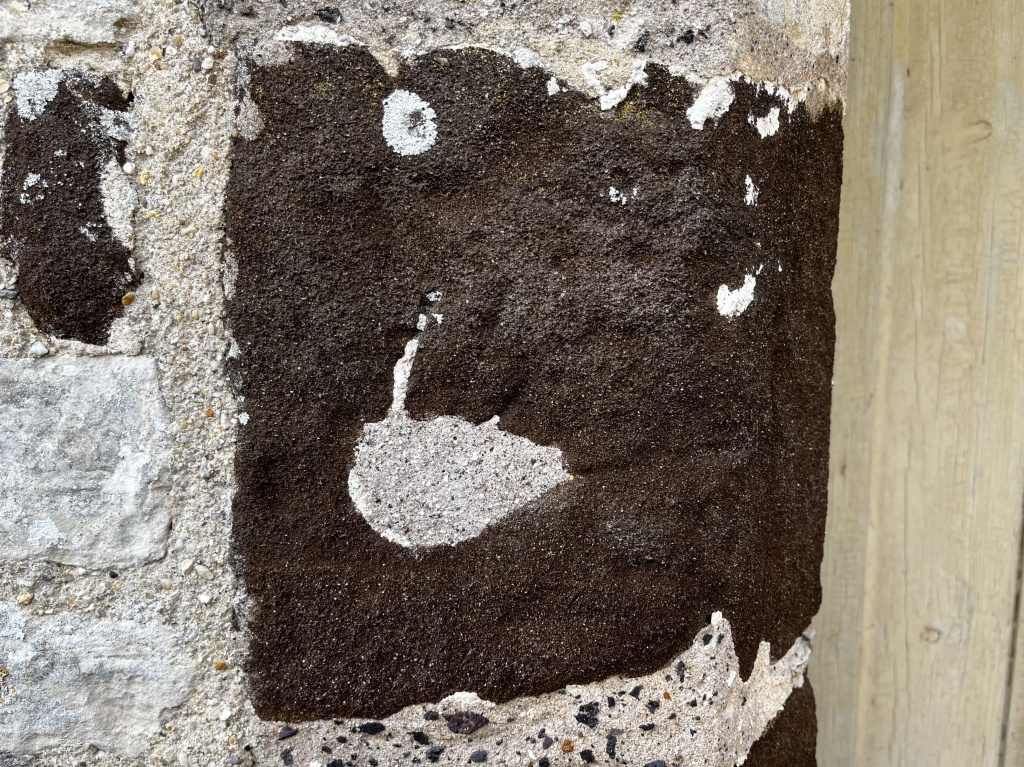
Dial 1 is on L side of the doorway. Inverted, with 5 lines pointing upwards. Style hole area heavily filled (possible repair of damage?). GLP suggests the lines are not convergent so very inaccurate.
DIAL 2
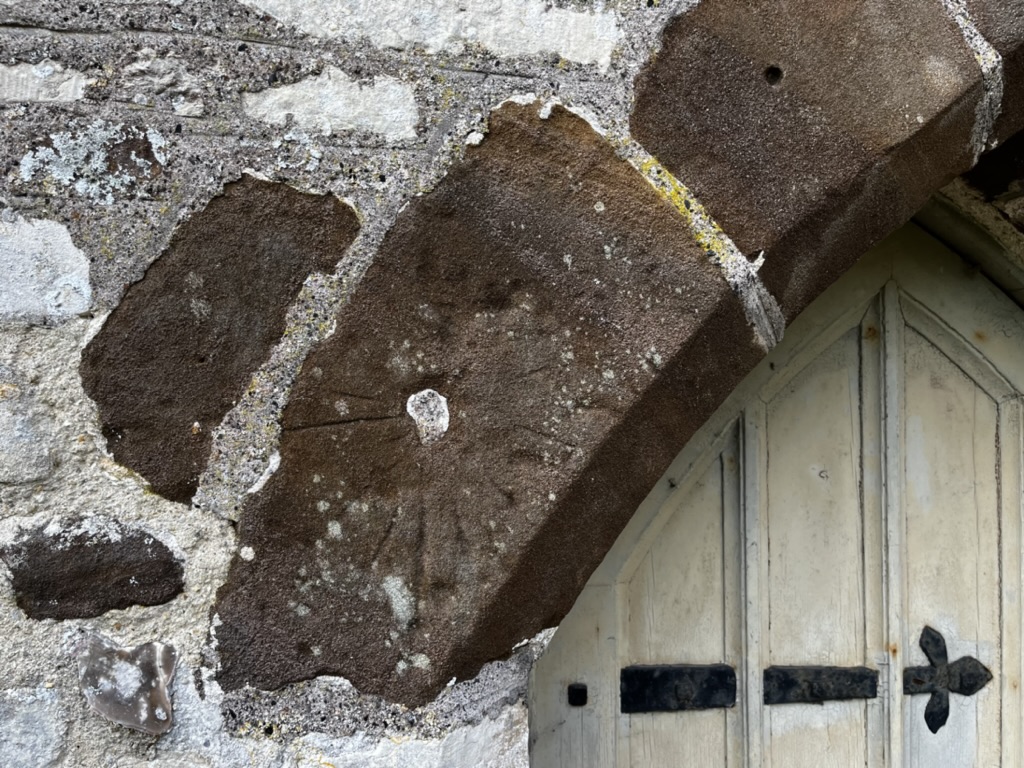
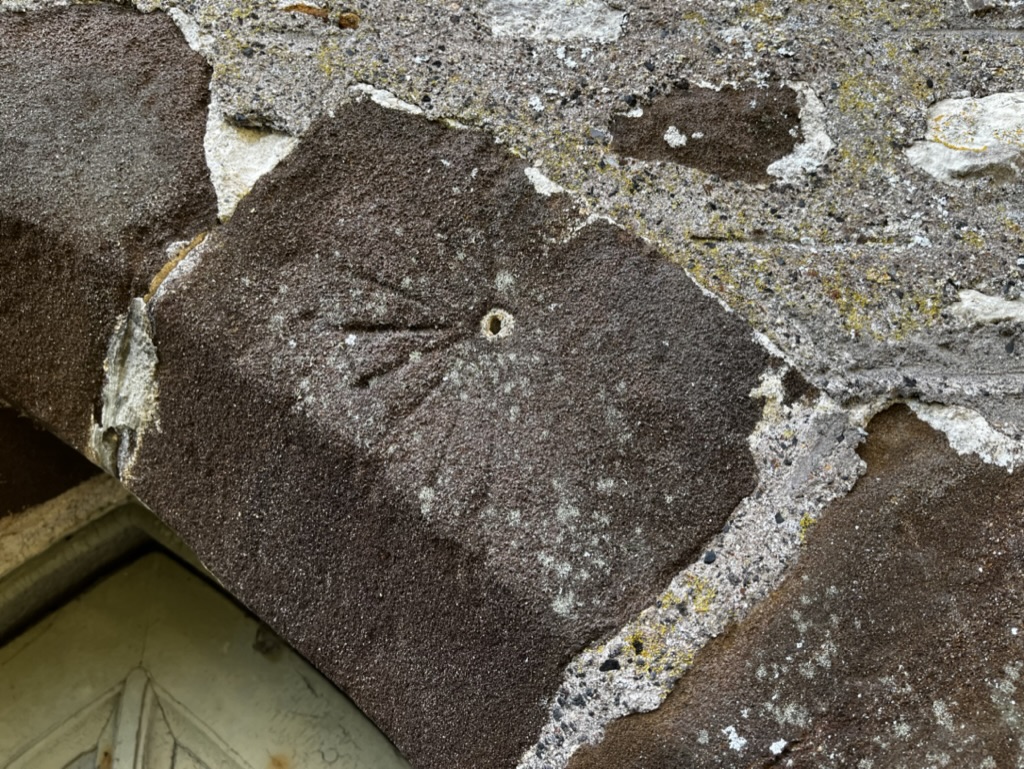
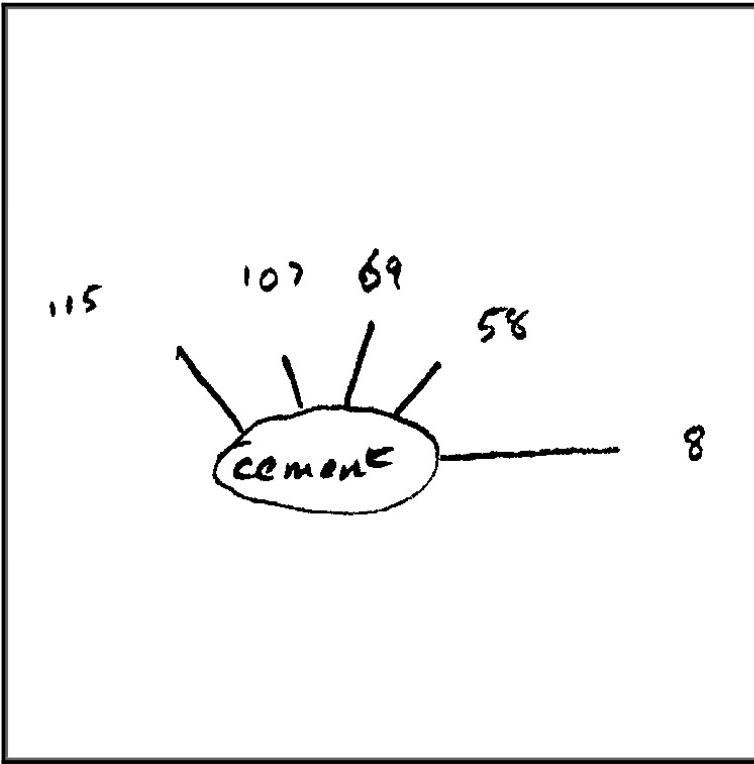
Dial 2 is above dial 1, on the lowest stone of the doorway arch. Parts of the dial have been cut off at the edges. There are 12 lines, 5 pocks and a cement-filled style hole. Of all the dials, it is more or less correctly orientated, with a noon line emphasised by depth and length.
DIAL 3
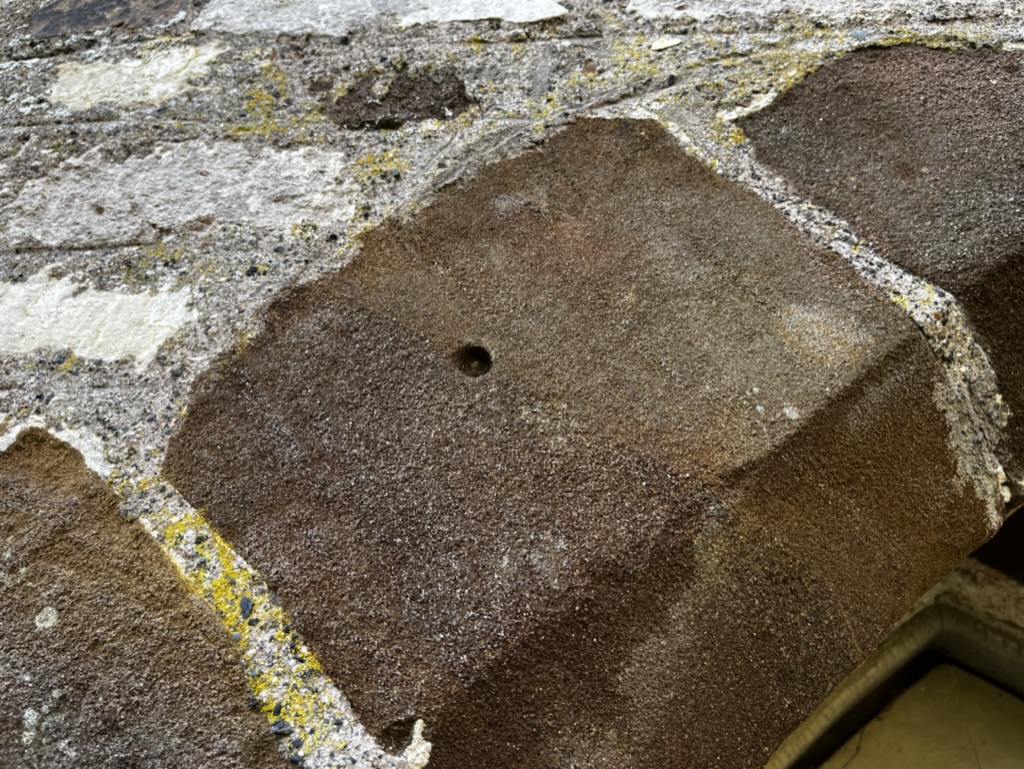
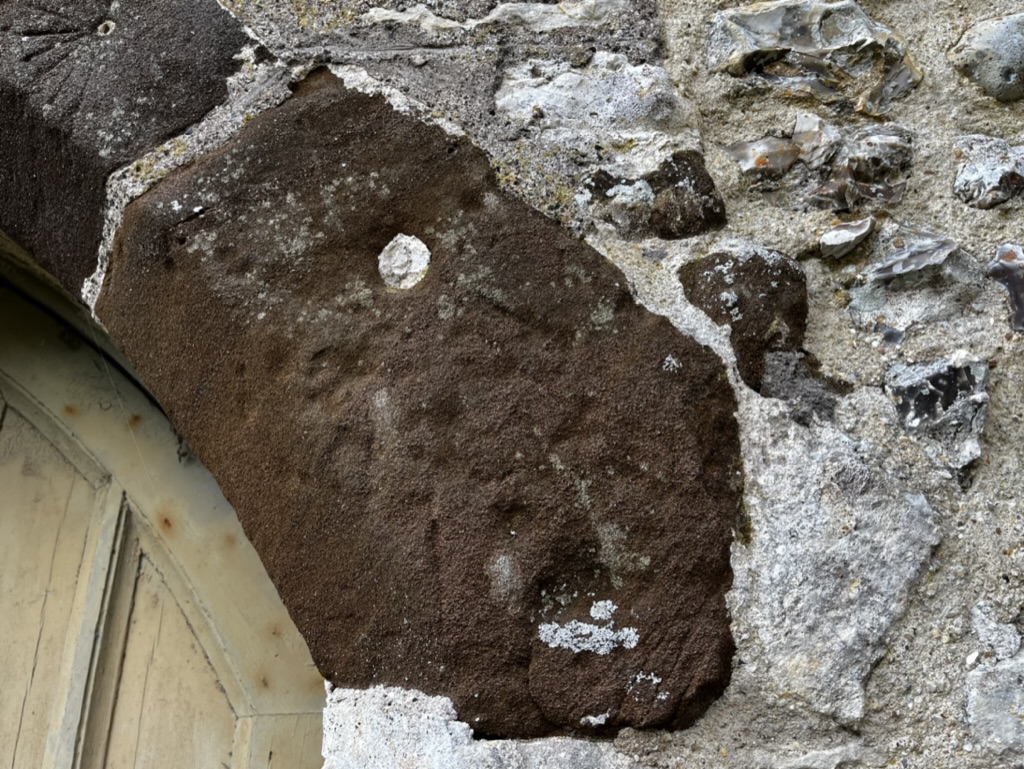
This is my candidate for dial 3. GLP describes it as very worn and inverted. Apart from the very clear unfilled style hole, he describes 2 trace lines above the dial. I couldn’t detect the 2 lines. The BSS diagram (see below) indicates dial 3 as being on the apex stone, but I found no evidence of a dial there.
DIAL 4
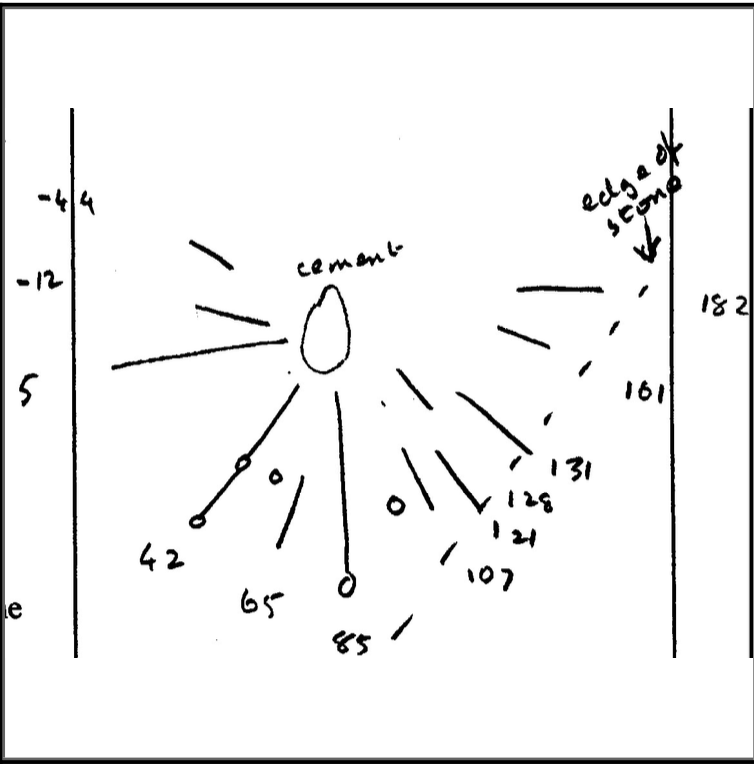
Dial 4 is upper R side of the arch. There are 9 lines radiating from a plugged style hole, one (perhaps 3) with terminal pocks. The dial has clearly been rotated 90º clockwise. Sited correctly, the deeper incised lines L side would become midday lines. GLP considers it clearly and accurately marked (given the correct position).
DIAL 5
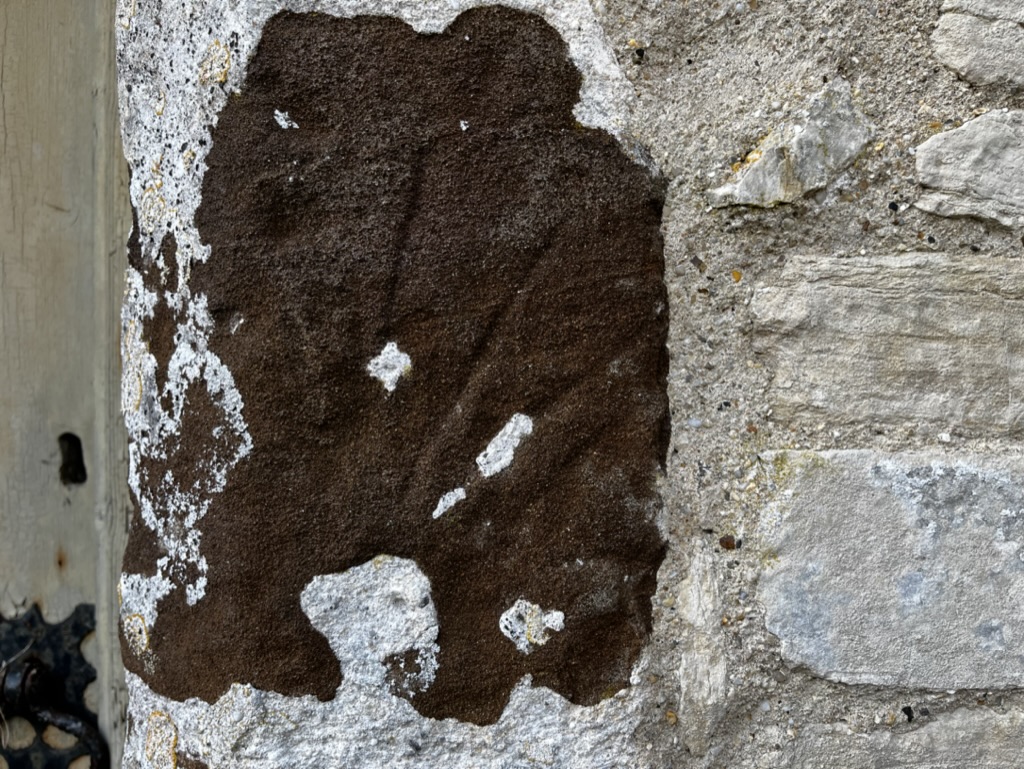
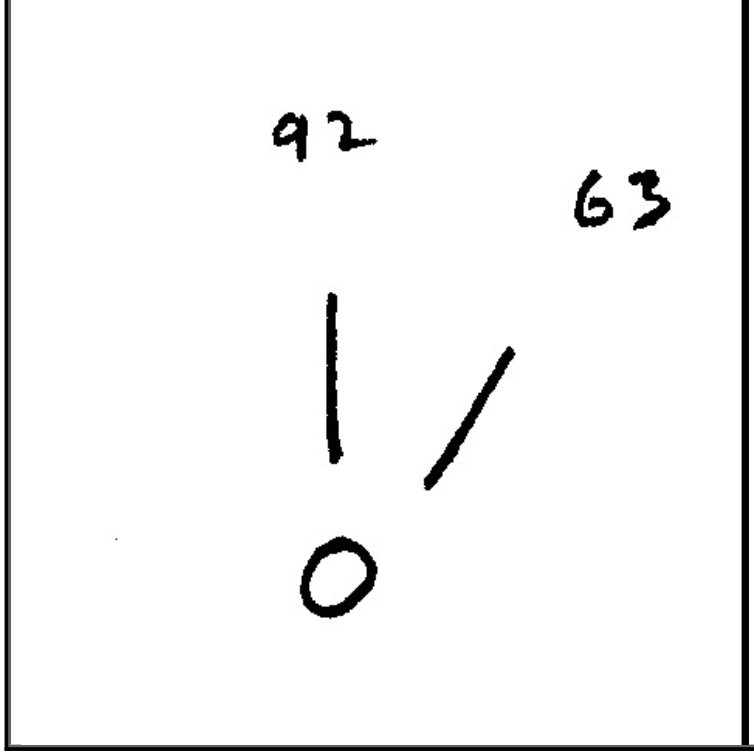
Dial 5 is below dial 4 on a larger stone. It is very degraded and it isn’t easy to read. BSS notes 3 lines, and a pock possibly marking noon. My impression was of 2 additional trace lines. This dial is recorded as repositioned, set at a very oblique angle, and could never have been used in its present position.
DIAL 6
Dial 6 is lower down on the R jamb approx level with dial 1. Again, it is inverted, with 6 distinct lines radiating upwards. One is marked with a cross, probably the Mass line.
Dials 2 -5 B&W: the hole top L presumably marks 3.. No clues on the apex stone
Winfrith Newburgh – 6 dials diagram
BSS DIAGRAMS OF THE 6 INDIVIDUAL DIALS
NOTE: because of the dark ironstone I have brightened the images to make them clearer
GSS CATEGORY: Scratch Dial; Mass Dial; Medieval Sundial
All photos Keith Salvesen; diagrams and research material GLP / BSS
GRADE II* † Mainly C14, tower C15. C12 vestiges of earlier church. General C19 restorations including by T H Wyatt. A slightly unharmonious impression reflects the changes. Roughly midway between Shaftsbury to NW & Blandford to SW. 50.9135 / -2.1078 / ST925126
DIAL
A single dial on S porch E of doorway. GLP calls it a remarkable dial, somewhat damaged. Its perplexing design has provoked several theories. The most straightforward is that it is in fact a transitional dial rather than a true scratch dial. BHO notes: Scratch Dial: on S. wall of porch, with black-letter numerals and stump of iron gnomon, early 16th century, which is probably meant generically rather than specifically. GLP, with his compendious knowledge of Dorset dials, dates this one much earlier, late C14.
St Mary . Tarrant Gunville . Dorset – porch
The dial stone is far larger than any other porch stone and seems out of place. The first impression is of a large dial doubly encircled but with the upper half damaged and eroded over the centuries. GLP suggests remnants of large dial with all hour lines marked. The fact that the gnomon hole – still with the stub of an iron rod – is almost exactly at the centre of the dial stone supports the theory of an originally complete circular dial rather than partial arcs. In the upper L quadrant there are hints of double circumference lines continuing upwards.
St Mary . Tarrant Gunville . Dorset – scratch / transitional dial
LINES & POCKS
The details of the dial are intriguing. There are 10 lines leading to numerals carved in blackletter / Gothic form. Legible numbers run from 5am to noon, then there are 2 lines with eroded numerals. There is a plausible very faint near-horizontal line RHS. Hours 9, 10, 11, & 12 are marked with a cross rather than the roman numeral X (see diagram below).
There are also 5 pocks. 4 decorate the noon line. 1 is halfway down the 11 line which is nearly vertical, indicating (I think) that the dial was cut to take account of the orientation of the wall.
St Mary . Tarrant Gunville . Dorset – scratch / transitional dial
GNOMON
Unusually, the dial has the stump of an iron gnomon. It seems unlikely to be original and looks more square than round (cf GLANVILLES WOOTTON , also in Dorset). Whether original or not, there is no way of telling how (if at all) it was angled.
St Mary . Tarrant Gunville . Dorset – scratch / transitional dial
GLP suggests that the dial may be an interesting transitional dial and notes that it would probably not have been accurate. One theory is that this was a horizontal dial set vertically; or with a horizontal design used for this vertical dial. He concludes that it is as much a decorative feature as a real timekeeper. My query is whether C14 dials were sophisticated enough to be making the transition from basic scratch to accurate scientific dials.
St Mary . Tarrant Gunville . Scratch / Transitional Dial
GRADE II* † Chancel & porch early C14; some C15 & C18 work; remainder of church rebuilt 1877 (Crickmay). For more details (my visit having been curtailed) see St Mary Sixpenny Handley BHO. The village is halfway between Salisbury and Blandford. 50.9552 / -2.0077 / ST995173
St Mary . Sixpenny Handley . Dorset – Scratch Dial
DIALS
There are two dials recorded for St Mary. I visited just after a funeral service had begun, and I paused for a circumspect and respectful moment at the chancel end of the church, where the dial featured here is situated. I took a couple of photos of the dial before stealing away. The other dial (not noted by GLP) is on the W side of the porch, and I will have to check it another time. Hence the header image is an archive postcard showing the church and its handsome lych gate instead of a photo of the church; and there is a diagram only of the porch dial.
DIAL 1
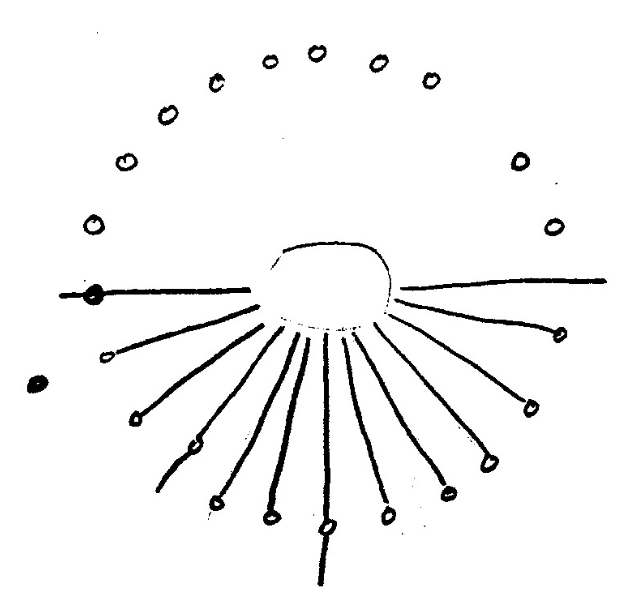
This large C14 dial looks out of place and seems clearly to have been relocated. The hamstone on which it is cut doesn’t match any others in the vicinity, and the dial is awkwardly angled with the presumed extended noon line some 15º from the vertical. An upper segment appears to be missing from the visible semicircle. There isn’t a definite gnomon hole and the 9 lines seem to radiate from a higher point than the edge of the stone, further suggesting a re-siting. 4 lines extend beyond the circumference. There is a trace of a cross at the end on the apparent ‘noon’ line and GLP notes that it may in fact be a Mass line rather a noon line. Overall he found the dial to be accurately cut.
St Mary . Sixpenny Handley . Dorset – Scratch Dial
DIAL 2
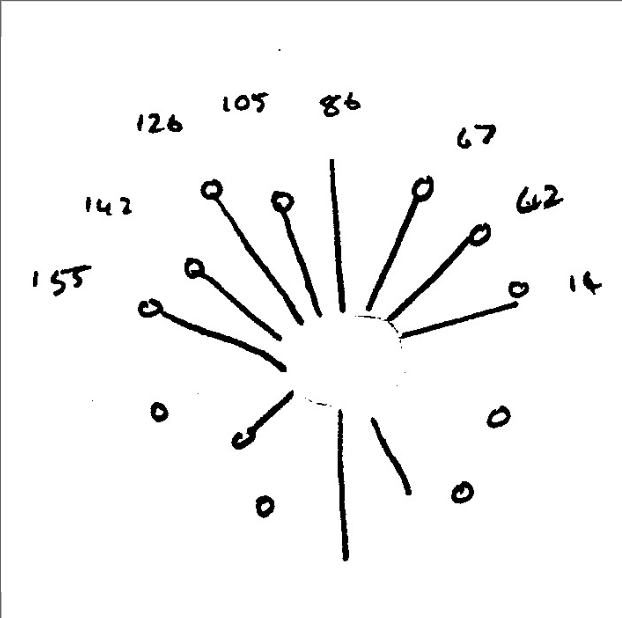
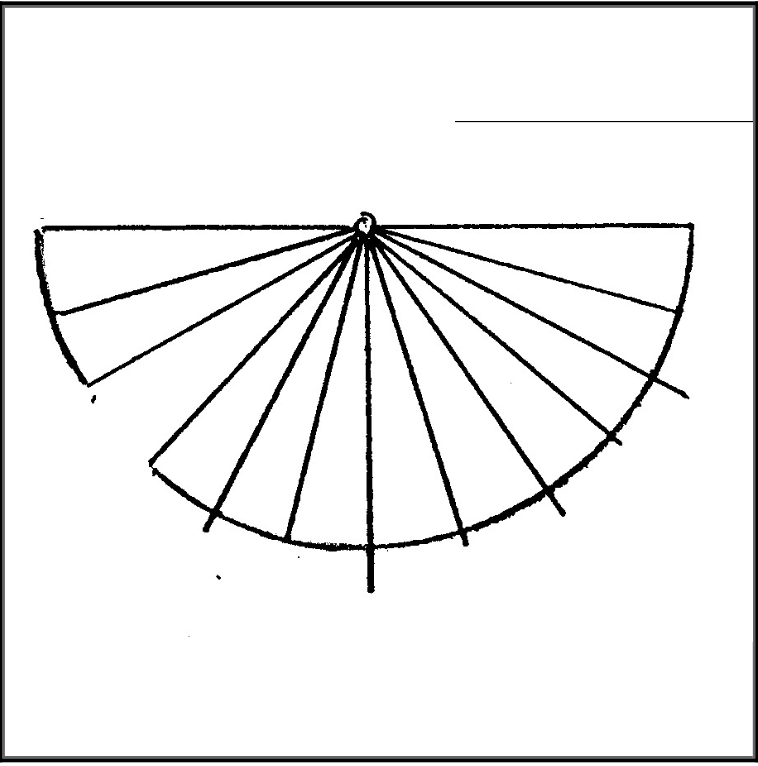
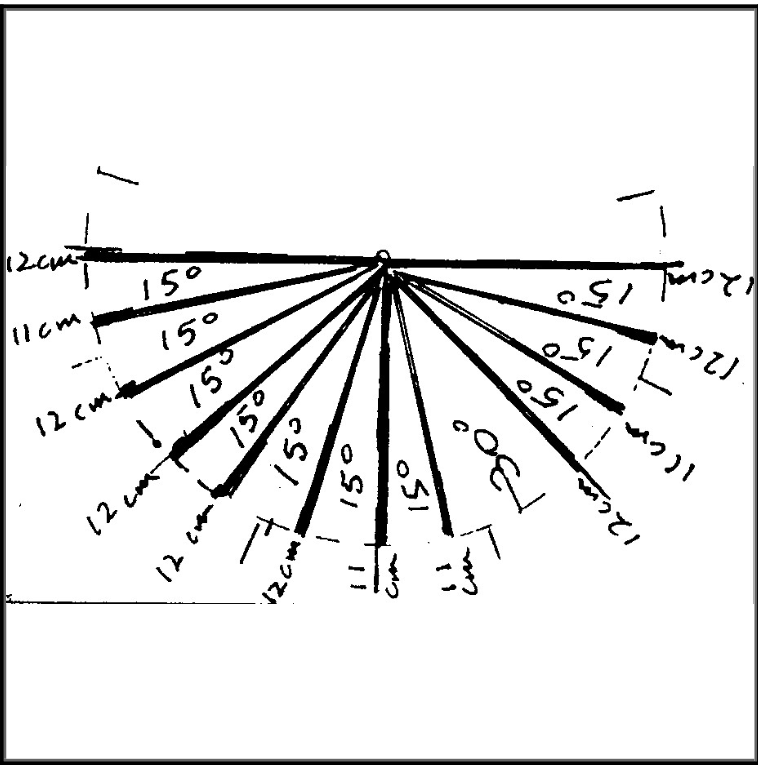
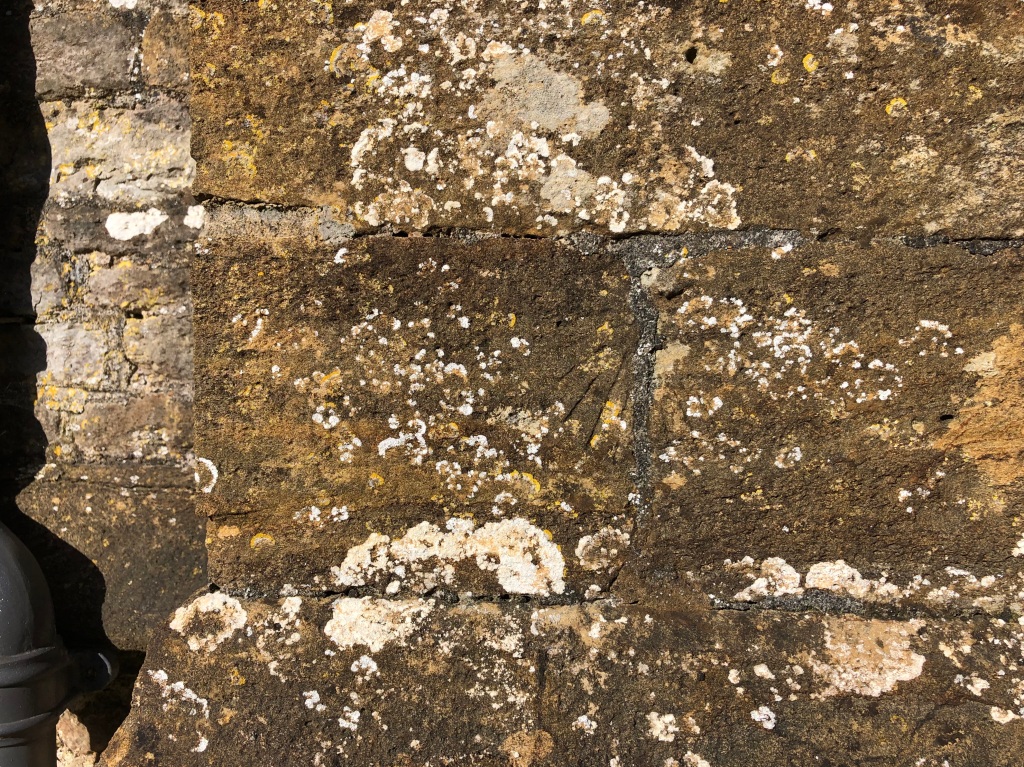
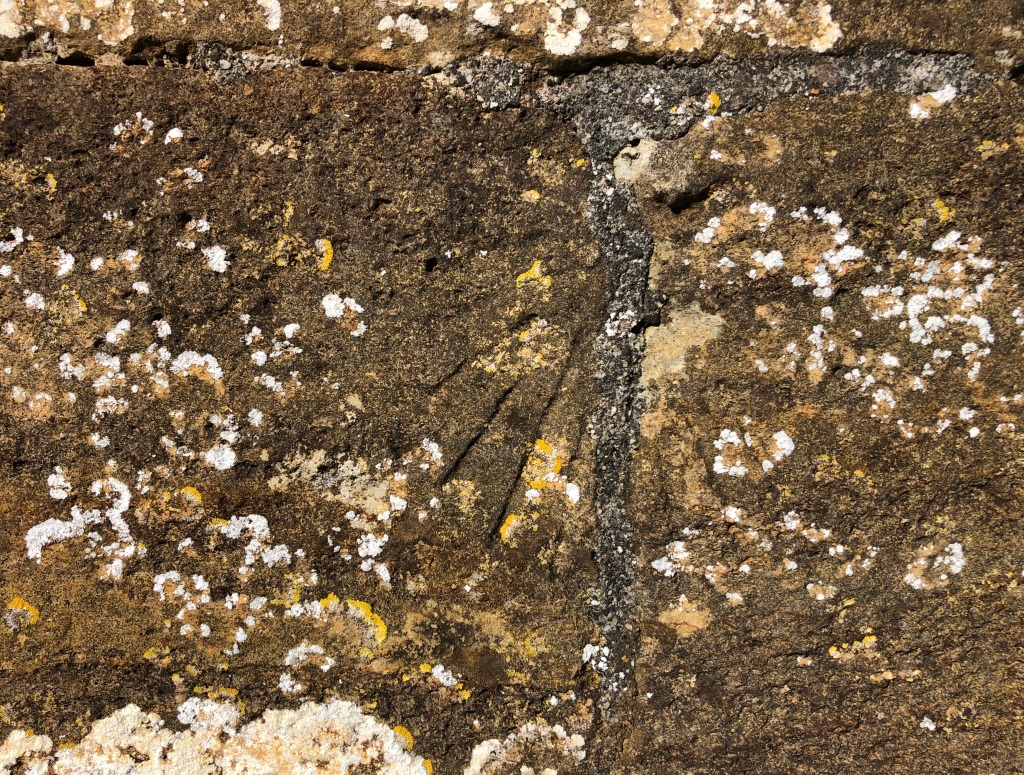
Dial 2 is on the W side of the S porch, and the BSS record suggests it is not easy to make out. There is an arc of 7 pocks RHS, from noon on. Not having seen the dial, I am not sure how much else is now visible. I’ll have to time my next visit to the area with more care, and expand this article accordingly.






















 GAUDIUM SUB SOLE . SUNDIALS . MEDIEVAL TO MODERN