GRADE I † Early C12 traces, rebuilt and extended C15. S. tower added in 1638. Restored and added vestry C19. 2 bells cast on site in 1275, the oldest in Dorset. Notable C12 font. 50.8467 / -2.6524 / ST541054
SCIENTIFIC DIAL
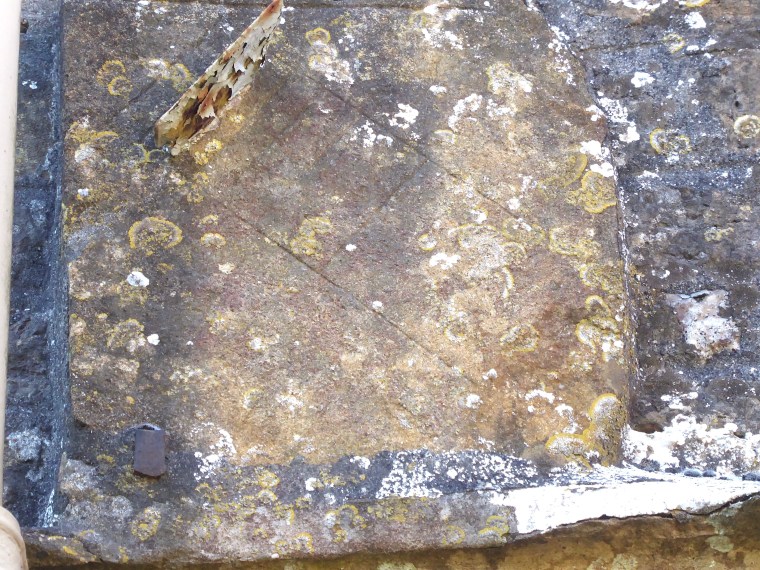
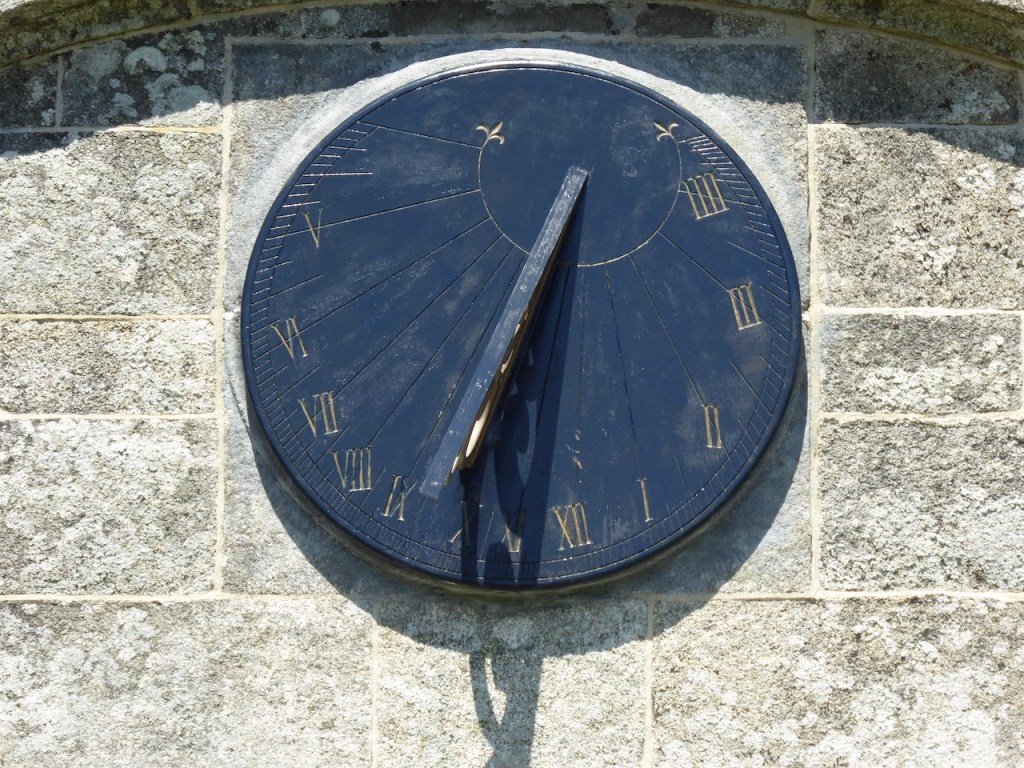
Once you have located the church at the very end of the hamlet – a dead end – of a very long lane, it immediately looks distinctive. In the present context, the dial on the tower – inscribed on S. parapet William Lardar Esq. Thomas Horsford Warden 1638 – is most unusual, not least because it faces due E.
DEH, in a rare excursion into Dorset while researching the scratch dials of Somerset in 1914, recorded this dial as a C17 scientific dial of 1638: E declining down to midday only. No trace of another dial for later in day.
GLP has written the definitive interpretation of the dial, and I include his complete record which explains the dial far better than I ever could.
It would be good to know if this blade of a gnomon is / may be original and has been (re)painted over the years. Also, to know why special dials were almost always sited next to a drainpipe…
GSS Category: Scientific Dial; Scratch Dial; Old Dial
All photos – Keith Salvesen; record extract – Gordon Le Pard
GRADE I † C13 origin, chancel & tower C15, porch C17, south chapel C18. Restored 1848. A small hamlet, a fine church, a tithe barn, a manor house. Sir Walter Raleigh prayed here. Perfect rural Dorset – secluded in a valley, reached only by narrow lanes, and very much a longcut for traffic. 2m over the fields from our house, 15+ minutes drive. 50.9127 / -2.5283 / ST629127
DIALS
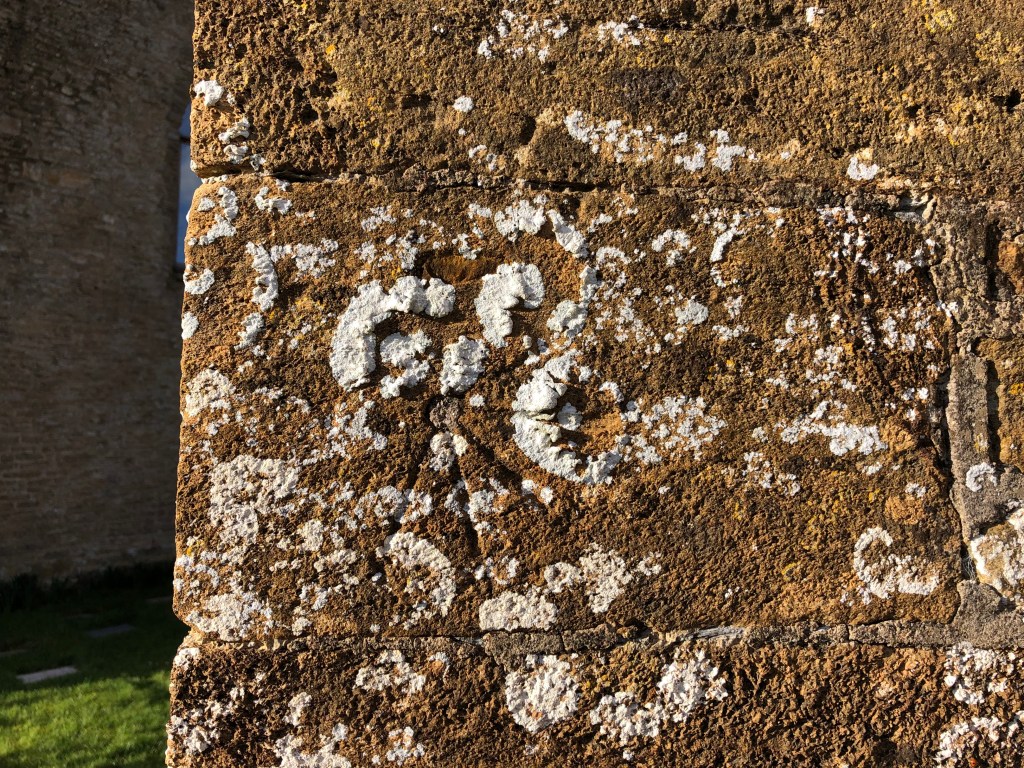
St Martin has 3 scratch dials, all very different. There is a further contender that I put forward as a plausible but very rare type of dial (with a small degree of approval from BSS).
DIAL 1
St Martin . Lillington . Dorset – Scratch Dial 1
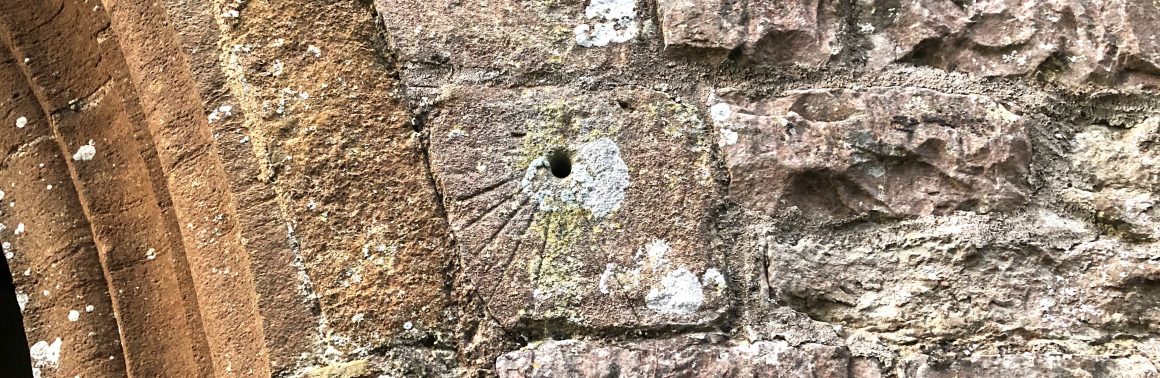
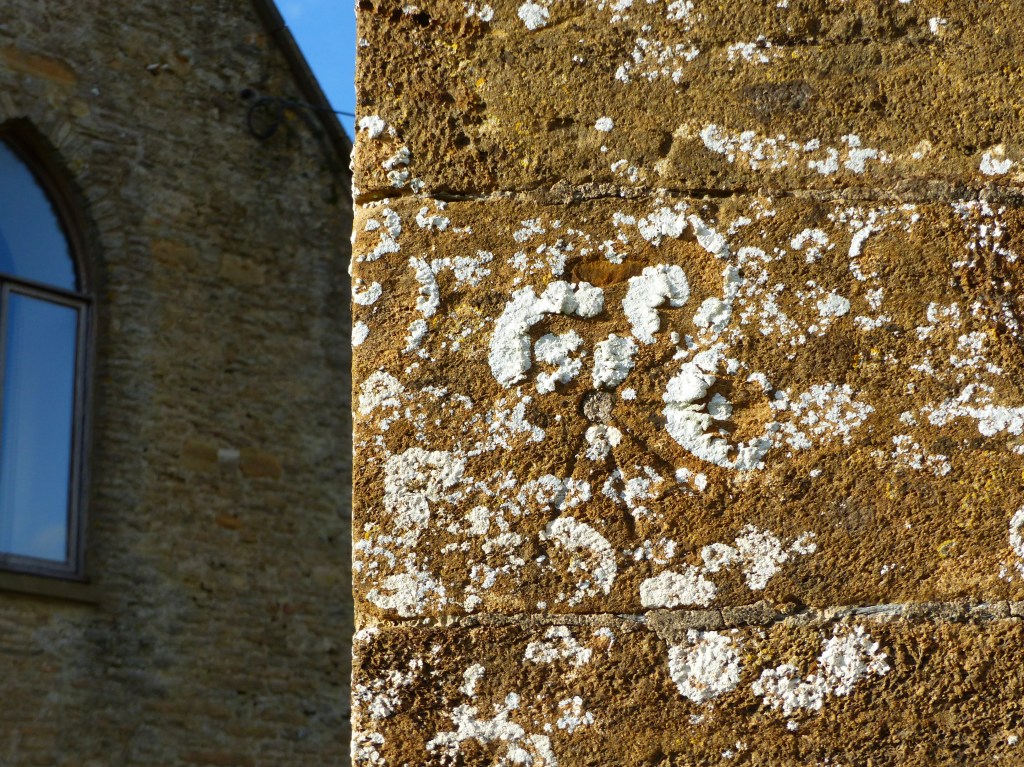
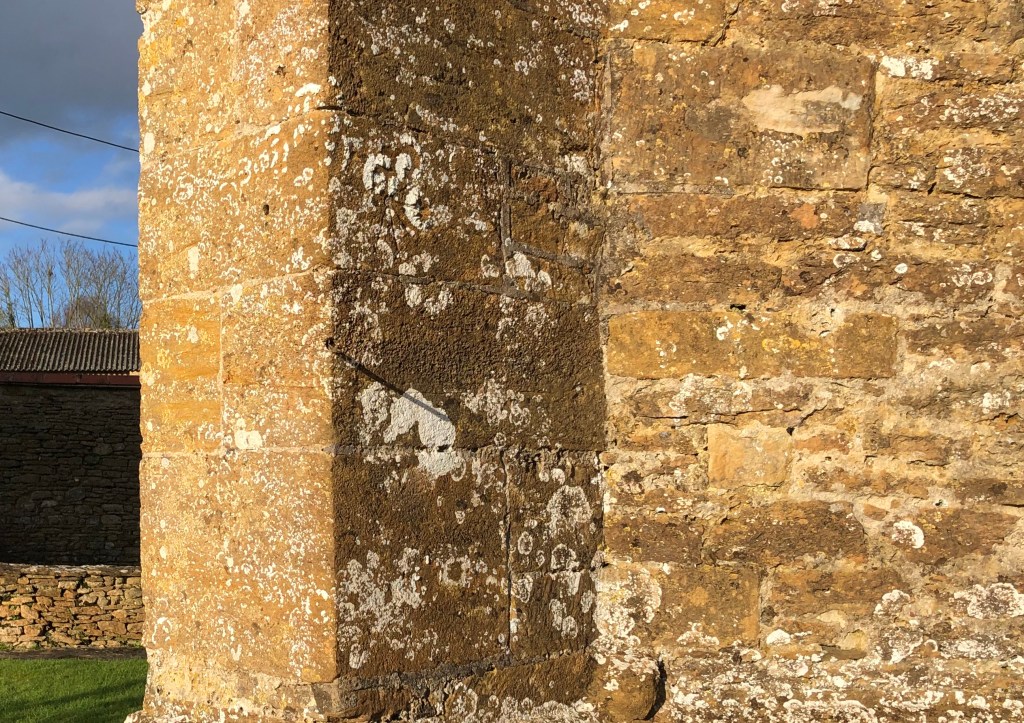
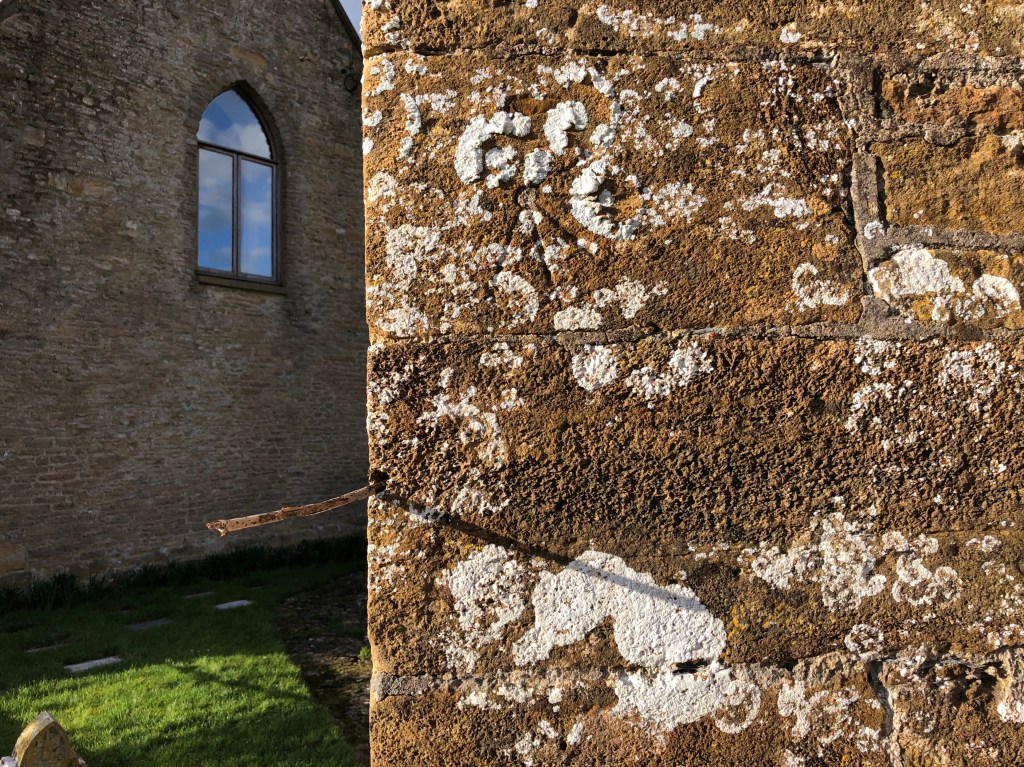
Dial 1 is located on the SW. face of the buttress at the W. end of the tower. It consists of a style hole encircled by a somewhat elliptical ring. There are traces of an inner circle or partial circle, clearest seen at the bottom of the dial. GLP describes it as very eroded, and dates it as C15 (ie when the tower was built). He refers to 2 lines but I did not notice them and I can’t pick them out in the photos.
St Martin . Lillington . Dorset – Scratch Dial 1
DIAL 2
St Martin . Lillington . Dorset – Scratch Dial 2
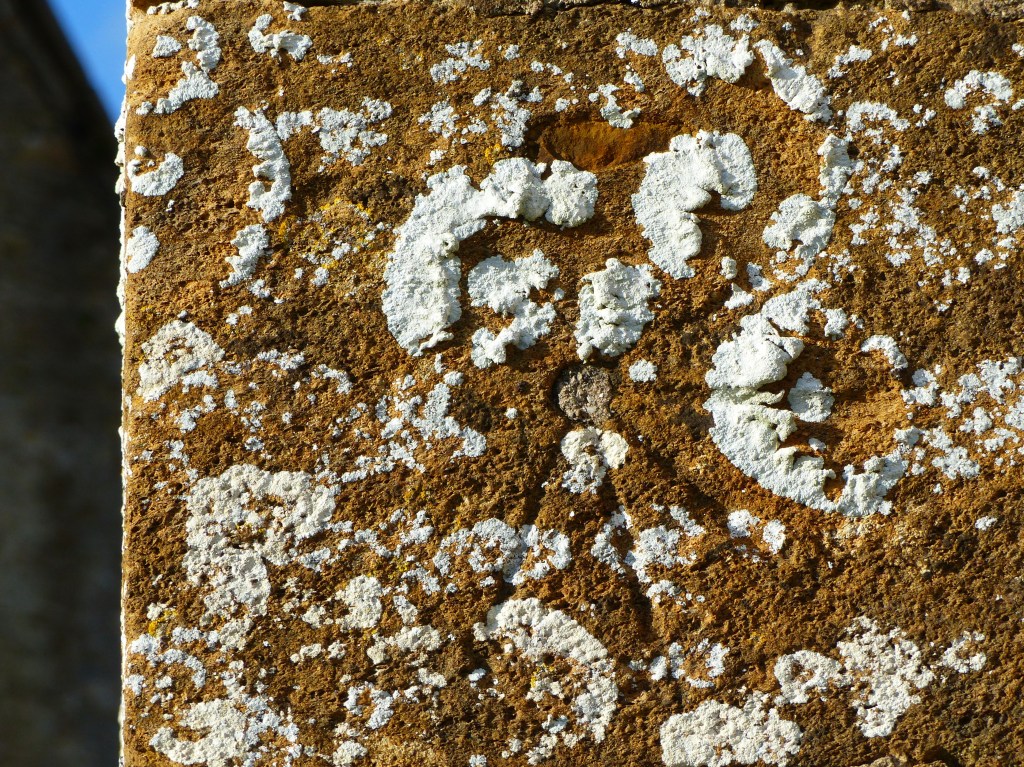
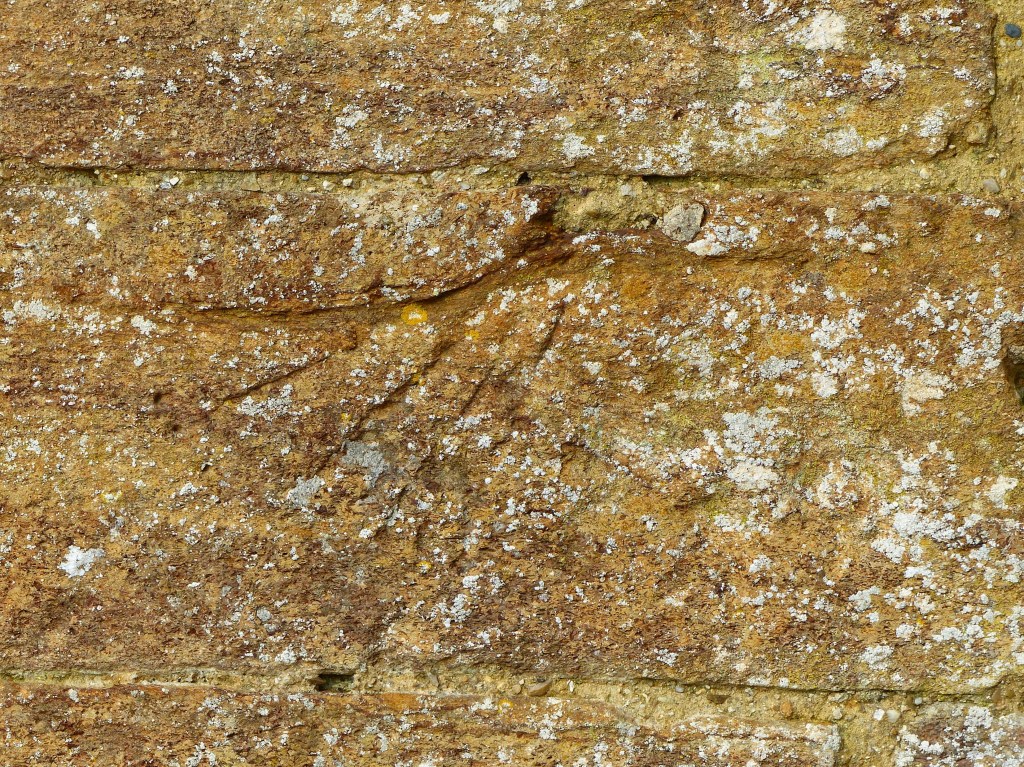
Dial 2 is at 90º to Dial 1, on the SE. face of the same buttress and indeed on the same stone. There are 5 clear lines radiating from a filled style hole, forming what might be called an ‘afternoon dial’. It’s hard to tell which is the noon line: possibly the lowest lines are angled to allow for the dial not facing due S.
GLP also dates this dial as C15. He notes that it may not be in its original position, or may have been (partly) rotated ‘then it might… have been reasonably accurate’. BSS records ‘possibly re-positioned and rotated’. But because this dial and Dial 1 are on the same stone, rotation may be less likely.
St Martin . Lillington . Dorset – Scratch Dial 2
DIAL 3
St Martin . Lillington . Dorset – Scratch Dial 3
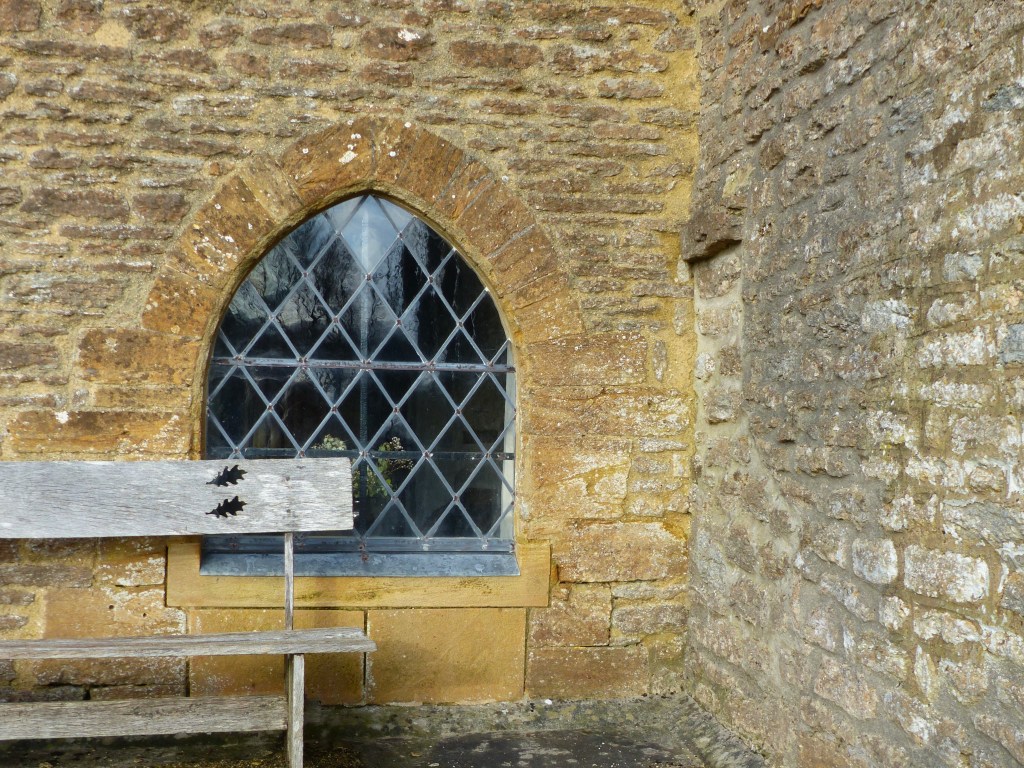
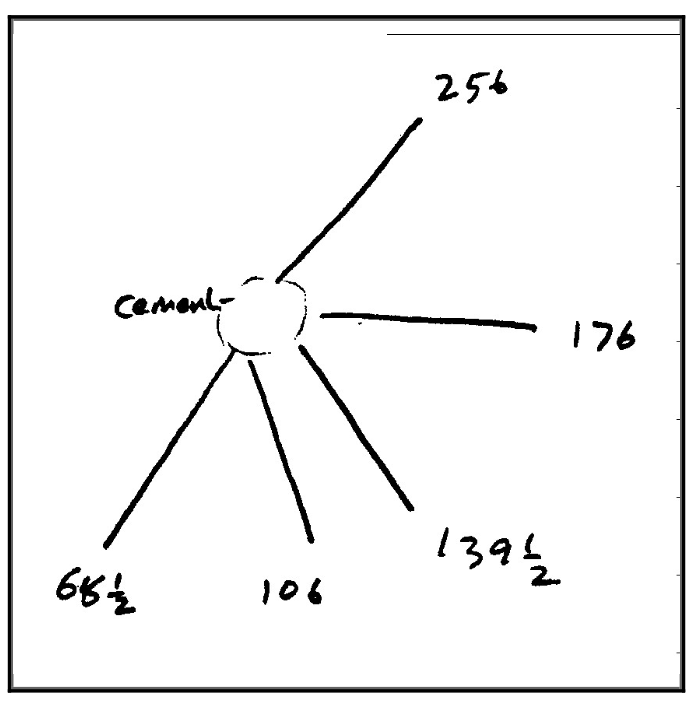
Dial 3, between of the nave window and the side-chapel, is possibly C13. The chapel, added in C18, shades the dial for half the day. GLP counts 4 lines, at least one ending in a pock, and notes shallow marks between lines possibly marking 1/2 hours. BSS also records 4 lines. I presume the uppermost mark or scar is viewed as subsequent damage. The style hole looks as if it has, or has had, metal in it.
St Martin . Lillington . Dorset – Scratch Dial 3
VERTEX DIAL?
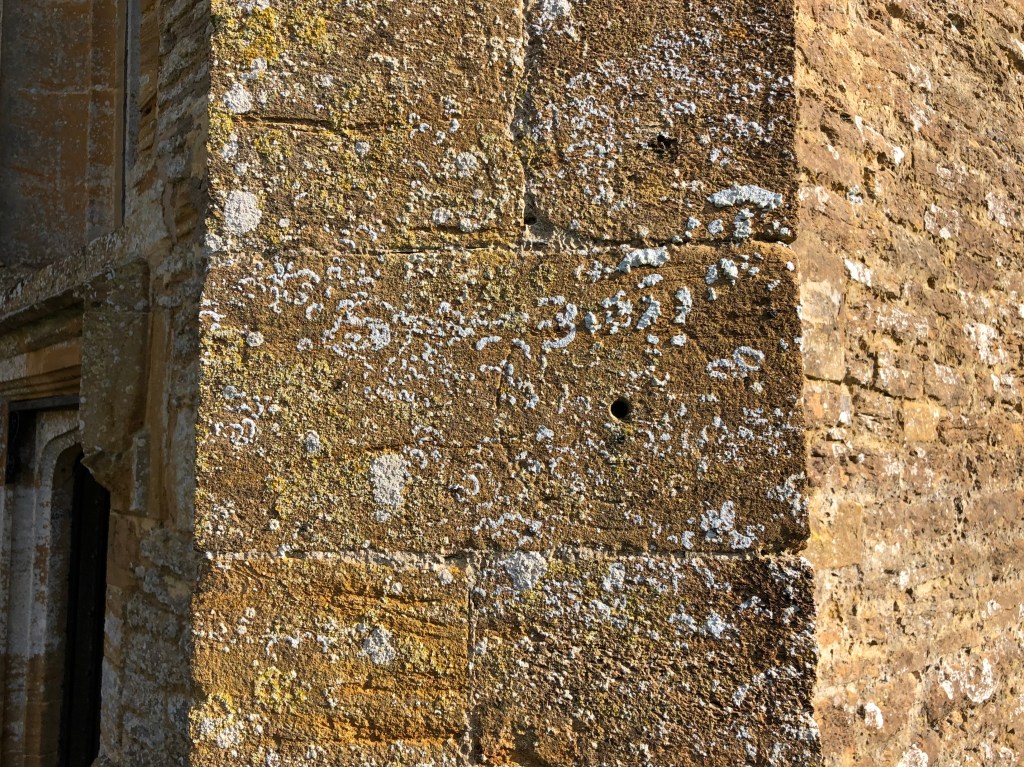
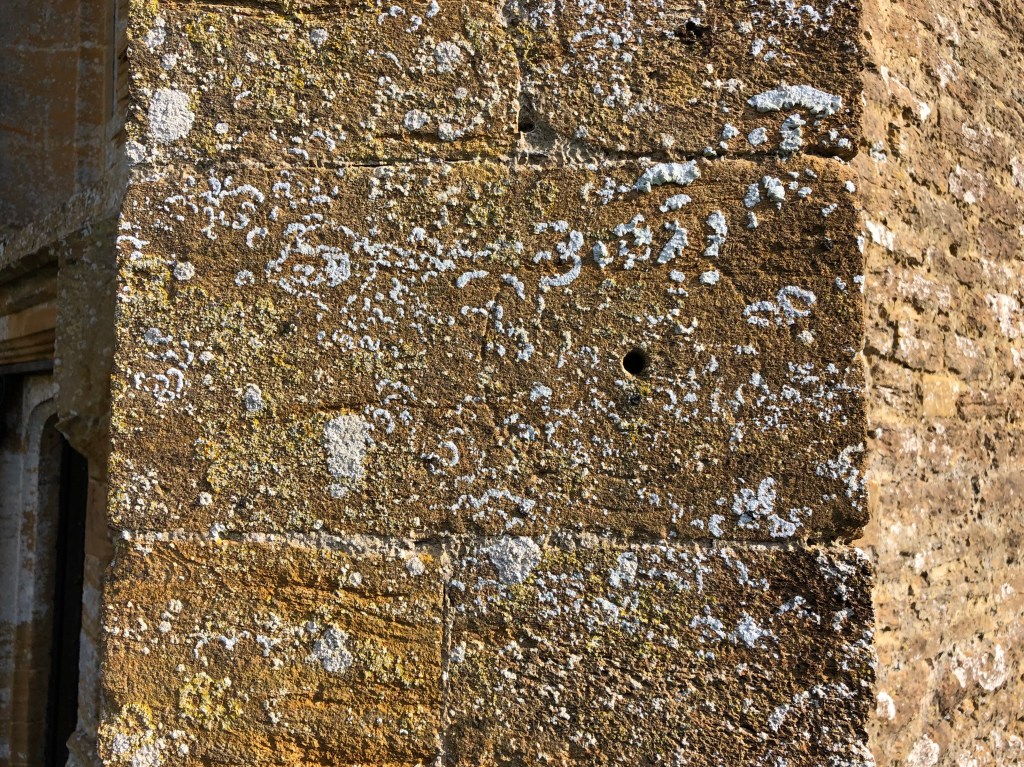
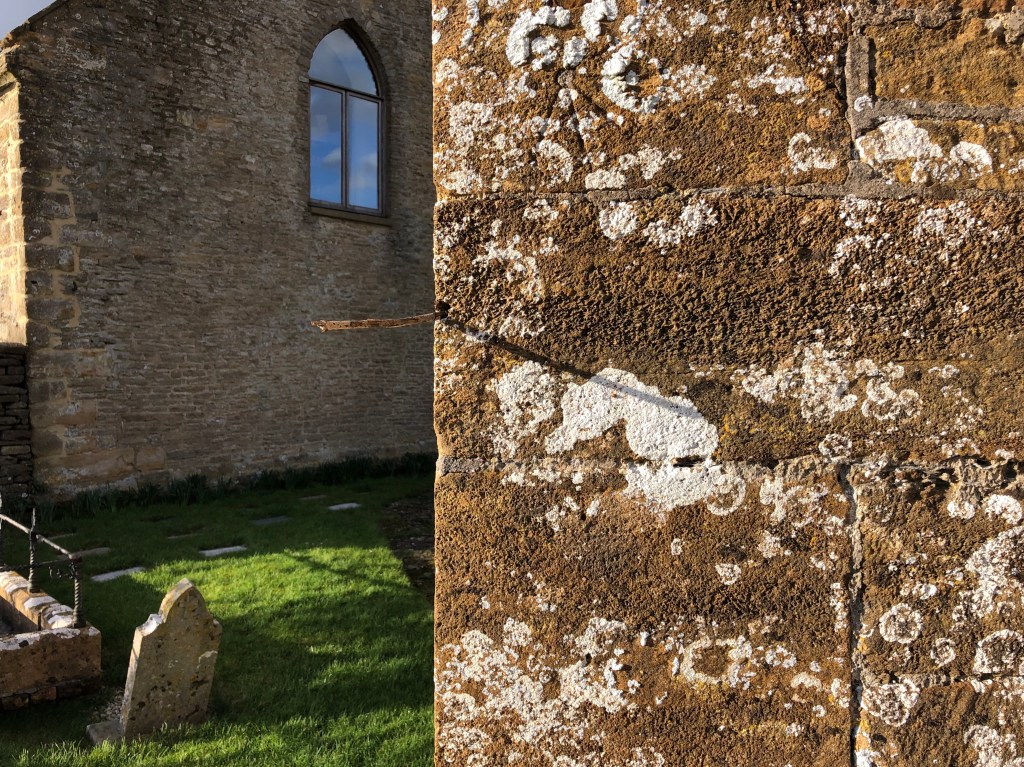
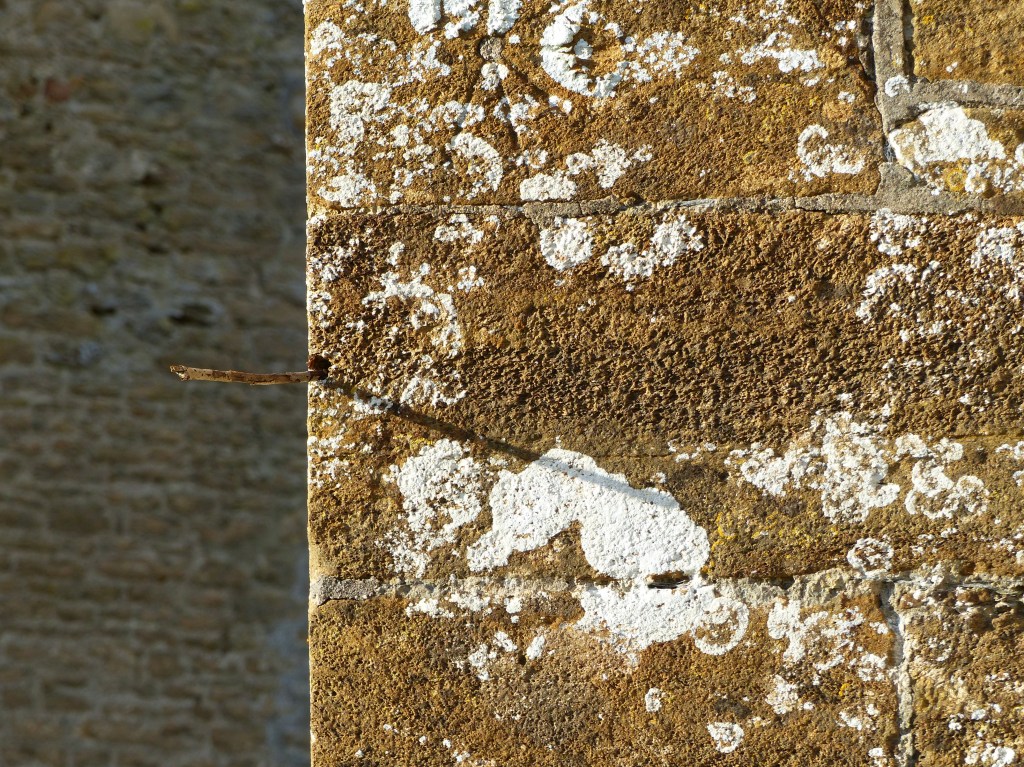
On the same buttress as dials 1 & 2 and on the stone immediately below them, is a fairly deep hole drilled precisely and straight into the corner of the stone. Because of the proximity to the other dials at right-angles to each other, I wondered if this strangely-placed hole was also a dial (and if so, whether unique). So I experimented with a stick, with the result shown below. My conclusion is that a prominent gnomon in the vertex would give a clear indication of the passage of time throughout daylight hours. In a way, it might be rather more effective than a normal dial. I could clearly see the shadow from the E. end of the church.
I put the theory out there. As always, any observations would be welcome.
St Martin . Lillington . Dorset – possible Vertex Dial
St Martin . Lillington . Dorset – BSS diagrams of the 3 scratch dials
LES CADRANS SOLAIRES DE ST GEORGES de BOSCHERVILLE
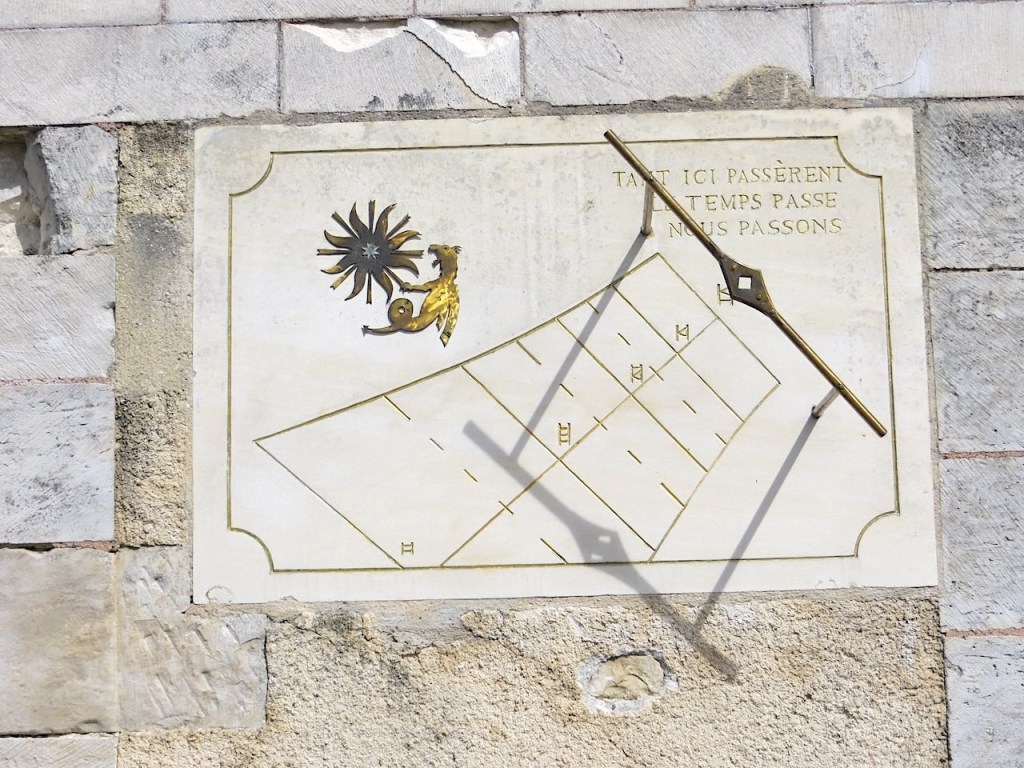
This decorative sundial – one of two – is something rather special. It is both elegant and complex, and must have taken a long time to devise and lay out accurately. It stands in the extensive grounds of the fine Abbey Church of St Georges de Boscherville in Normandy. I managed to get the last small pamphlet in the Abbey bookshop. Even then I failed to understand the sundial properly, and not simply because of my rusty but workable French. I’m not even going to attempt to describe the dial, but it was easy to photograph in detail in its picturesque setting, and I have included a shot of the explanatory plaque at the end for the science-minded.
One fact I learnt is that until WWII, France was on Greenwich Meantime. During the occupation, the Germans changed the time zone to Central European time, a practice that has remained ever since.
Russborough House . Wicklow . Ireland – Courtyard Gateway Sundial
RUSSBOROUGH HOUSE . Co WICKLOW . IRELAND – COURTYARD GATEWAY SUNDIAL
Russborough House . Wicklow . Ireland – Courtyard Gateway Sundial
Russborough House, built mid C18 for Joseph Leeson, is one of Ireland’s finest Georgian houses. Set in a large estate in the Wicklow Mountains, the house is renowned for its outstanding art collections (see http://www.russborough.ie/art).
The pleasing and straightforwardly solid gateway to the Courtyard has a most interesting angled sundial with no part of it in an expected place. One consequence of its position is that the graduations are notably complex. The main photo in the gallery below shows this far better than I can explain it.
It is clearly not an old dial. I have seen one photograph that suggests that at some time it has been painted blue. I need to investigate further and will add the details if I can find a date for the dial.
Russborough House . Wicklow . Ireland – Courtyard Gateway Sundial
Rhubha Rèidh Lighthouse Sundial . Gairloch Museum .
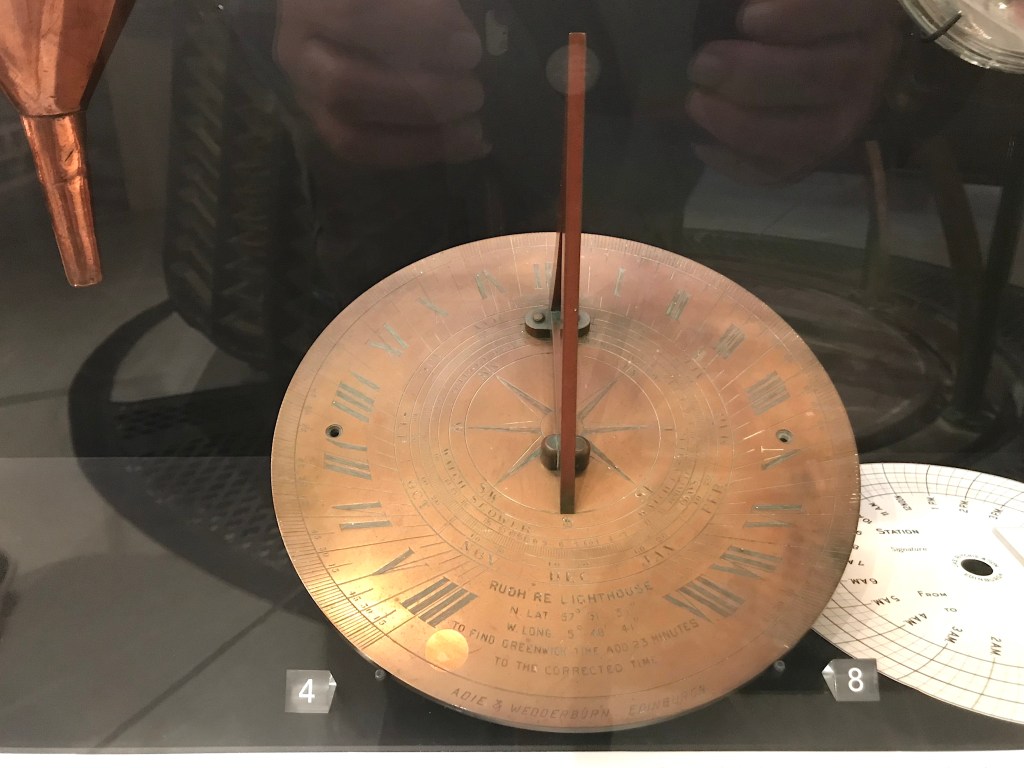
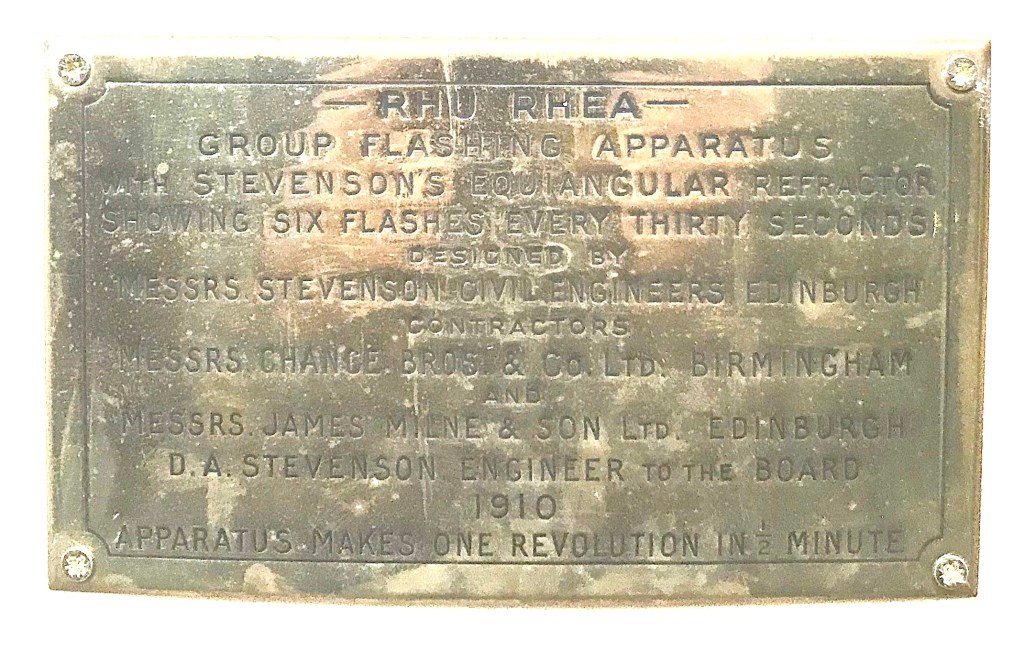
Rhubha Rèidh lighthouse is situated at Melvaig, near Gairloch, Wester Ross. Confusingly, there are several ways to spell the name. Correctly, it is as shown in the title above. However the map below omits the first h in Rhubha. The Northern Lighthouse Board uses Rubh Reidh for the lighthouse itself, perhaps for simplicity. The dial featured is marked Rudh Re. The brass plaque for the lighthouse is headed Rhu Rhea. Whichever, the pronunciation ‘roo ray’ is roughly correct. OS grid · NG7396491847
The lighthouse stands at the remote north west tip of a plump peninsular at the end of a narrow track, with Loch Ewe emerging into the sea to the east. It is one of the ‘Stevenson’ lighthouses, designed by David and completed in 1912. It was automated in 1980 and is still operational. If you want a secluded and unusual place to stay, you can book accommodation in the main building. Official tarmac ends halfway along the 6 mile (or so) road, which continues as an access road. This part of the coastline can be a good place for dolphin and whale watching – if you are lucky, a Minke.
‘Rudh Re’ Lighthouse Sundial . Gairloch Museum .
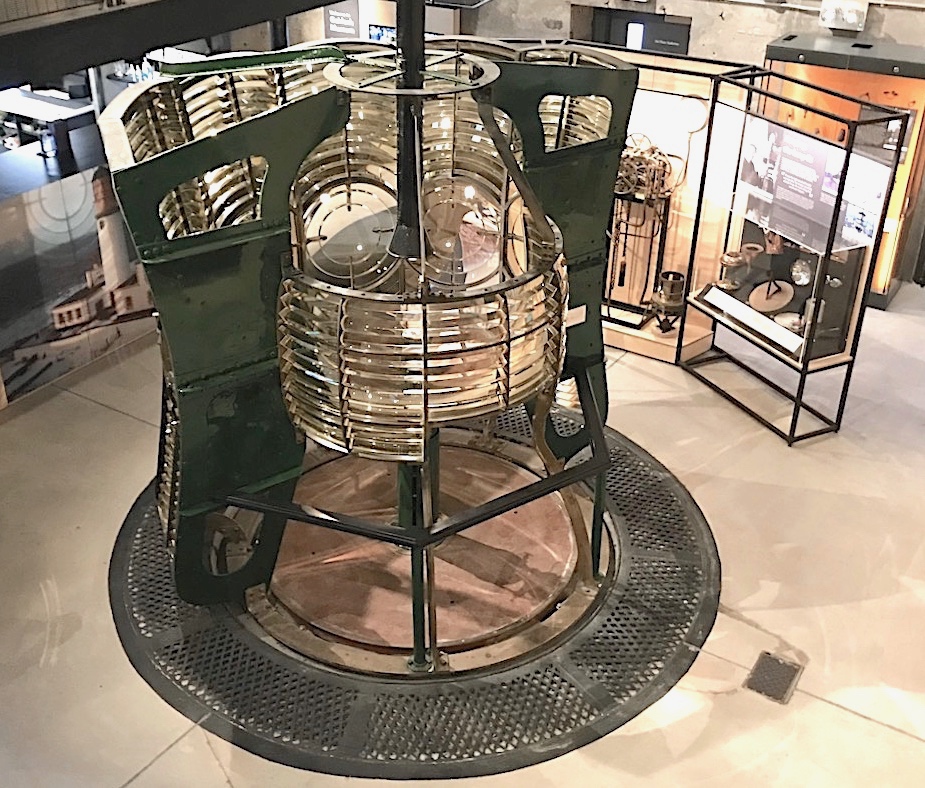
The dial is on display in the outstanding GAIRLOCH MUSEUM, winner of the Art Fund’s Museum of the Year 2020. Small it may be, but packed with interest. The dial is in a glass case displayed with related items. The entire lantern is housed in the main room, viewable from a gallery above as well as at floor level. Its Fresnel lenses are intact. In a parallel life, I have been peripherally involved with a working ‘clockwork lighthouse’ bedded on mercury, with its original Fresnel lenses (Hope Town, Abaco, Bahamas) – possibly the last survivor. There is another lighthouse on the island, long abandoned but still with at least some of its Fresnel lenses.


















 GAUDIUM SUB SOLE . SUNDIALS . MEDIEVAL TO MODERN