St Mary . Castle Bank . Stafford – Geoff Pick Geo CC / OS
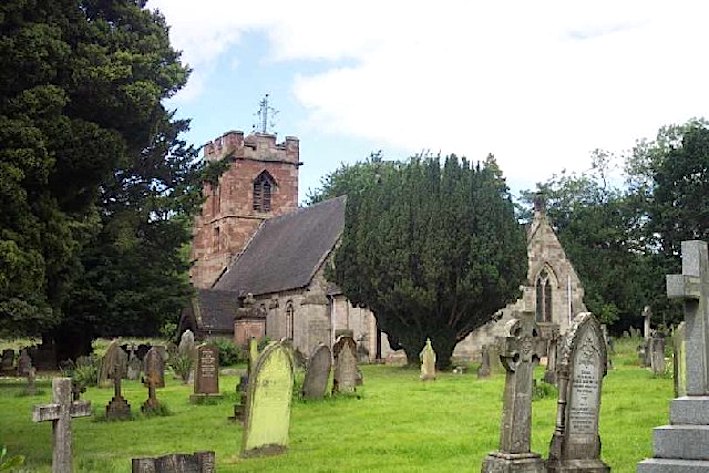
CHURCH OF ST MARY . CASTLE BANK . STAFFORD
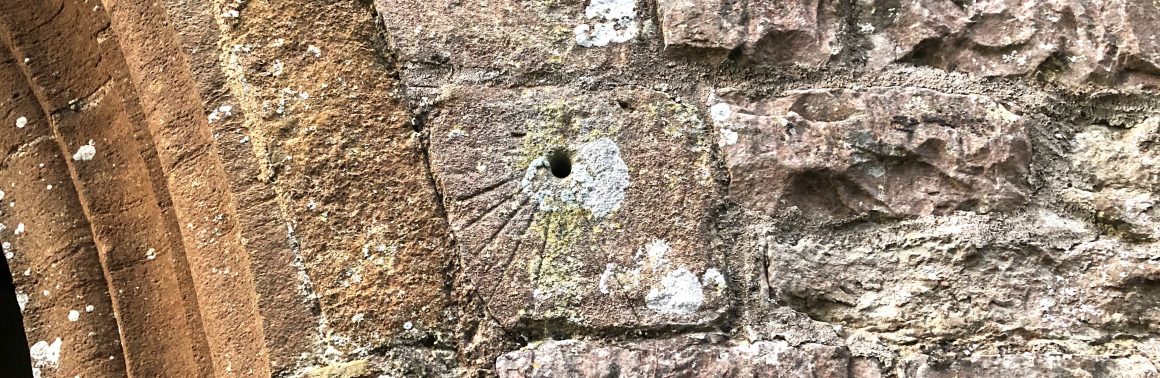
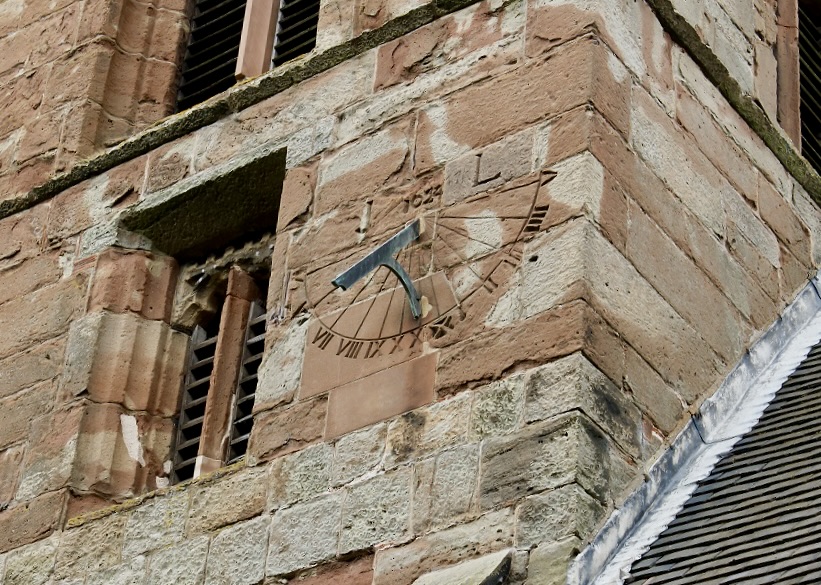
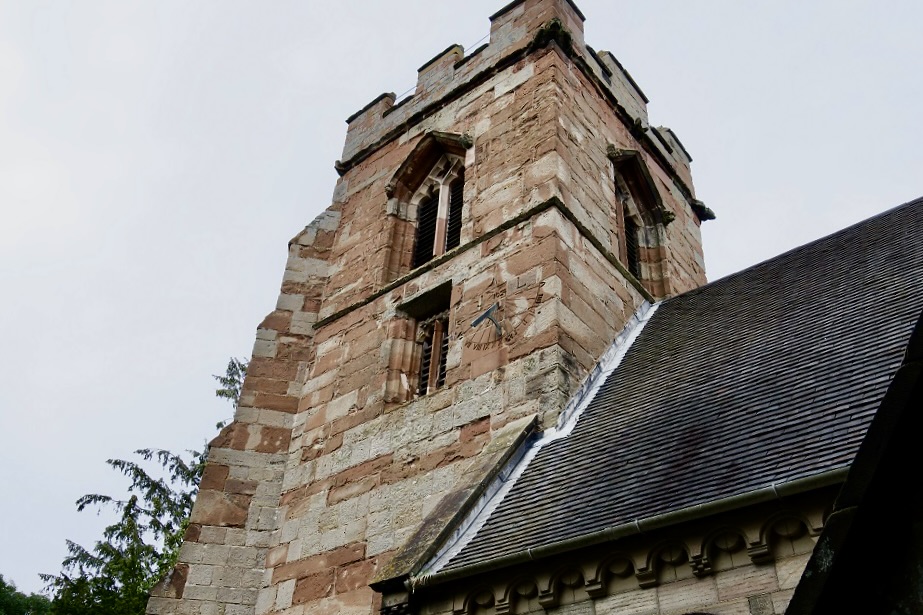
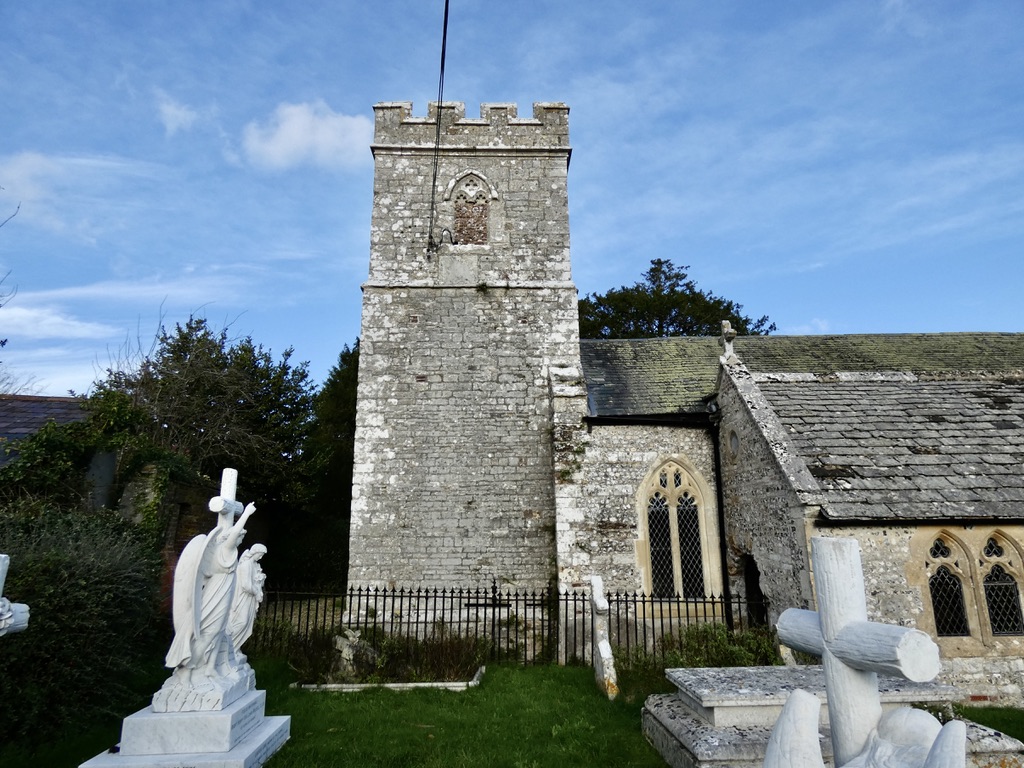
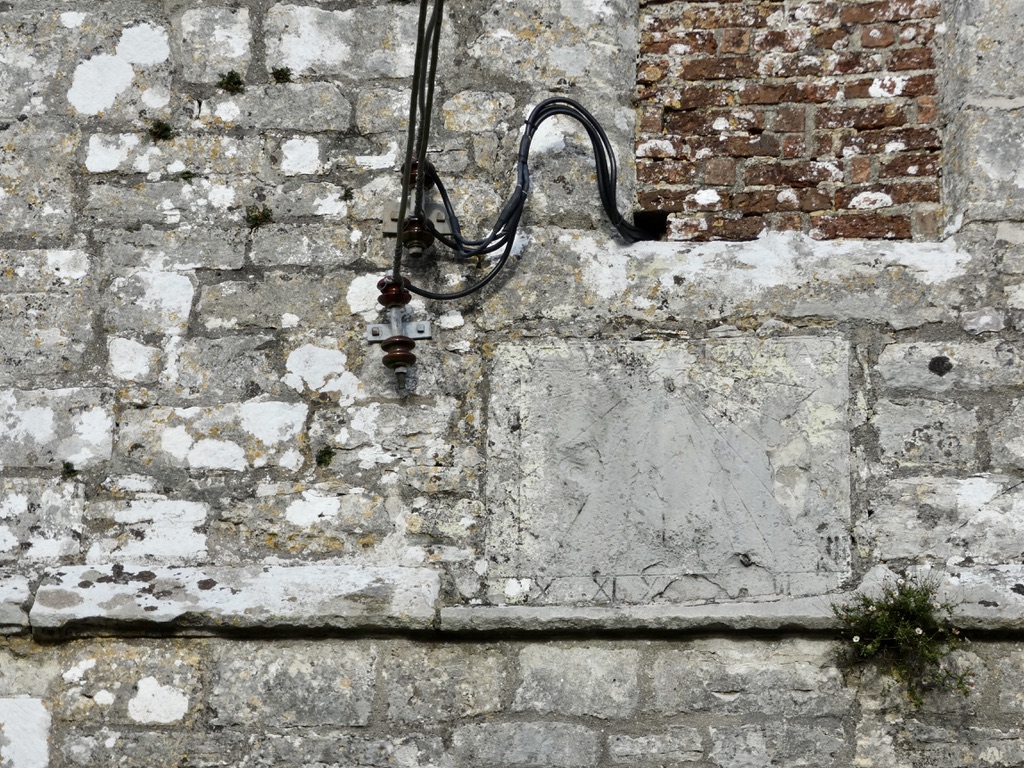
GV II* † C15 tower; otherwise mainly C19. Tower has 2 diagonal buttresses, plinth, south 2-light straight-headed window with sundial to right: incised inverted semi-circle with gnomon and inscription: J 1624 L BLB . In Newport Road below the castle, not to be confused with the large ‘collegiate’ parish church, also St Mary. 52.7969 / -2.141 / SJ905221
St Mary . Castle Church . – Vertical Sundial
DIAL
The vertical dial is high up on the S side of the tower, a semicircle with Roman numerals, with the date 1624 and on either side of it the letters J and L. The date may fit with work carried out on the upper stage of tower in C17. As can be seen, there has been good repair work on the dial, so that it is observably both ancient and modern.
GSS Category: Vertical Dial; Church Sundial; Old Sundial
All photos: Erika Clarkson, with many thanks for this and her other contributions to this project; Geoff Pick for his photo of the church Geo CC / OS
GRADE 1 † Records from 1254; low C14 tower (1st stage) later heightened; mainly C15 / 16. C16 waggon roofs. Bells from C17. Restorations 1870s. BLB notes coped gable with apex cross, but omits the prominent dial. A fine hillside church with wonderful views from high above the Wye valley. 6m S of Monmouth. 51.7932 / -2.6945 / SO521107
St Mary . Penallt Old Church . Monmouth – Vertical Dial
DIAL
An excellent dial, easy to miss. The tree-lined avenue that now leads to the church completely obscures the dial as you approach up the path. Trying to view the dial from other vantage points gives a sideways view. Attempting to take clear shots of the dial is a pleasurable challenge. Move branches aside.
The dial makes for an attractive gable end, and is surmounted by a cross. It is fairly damaged / eroded. A 6-to-6 dial with noon marked by a cross; IIII as IV. The gnomon is modern and rather squiggly / shiny for an old dial.
Dating the dial is not easy. A broad comparison with similar dial designs suggests ± 1800.
The Old Church is in a lovely setting, and besides TRELLECK this is the most rewarding dial to admire in the immediate area. Take a small picnic and sit in the churchyard for peak enjoyment. Other treats include a handsome door (1532) and a walk-though squint.
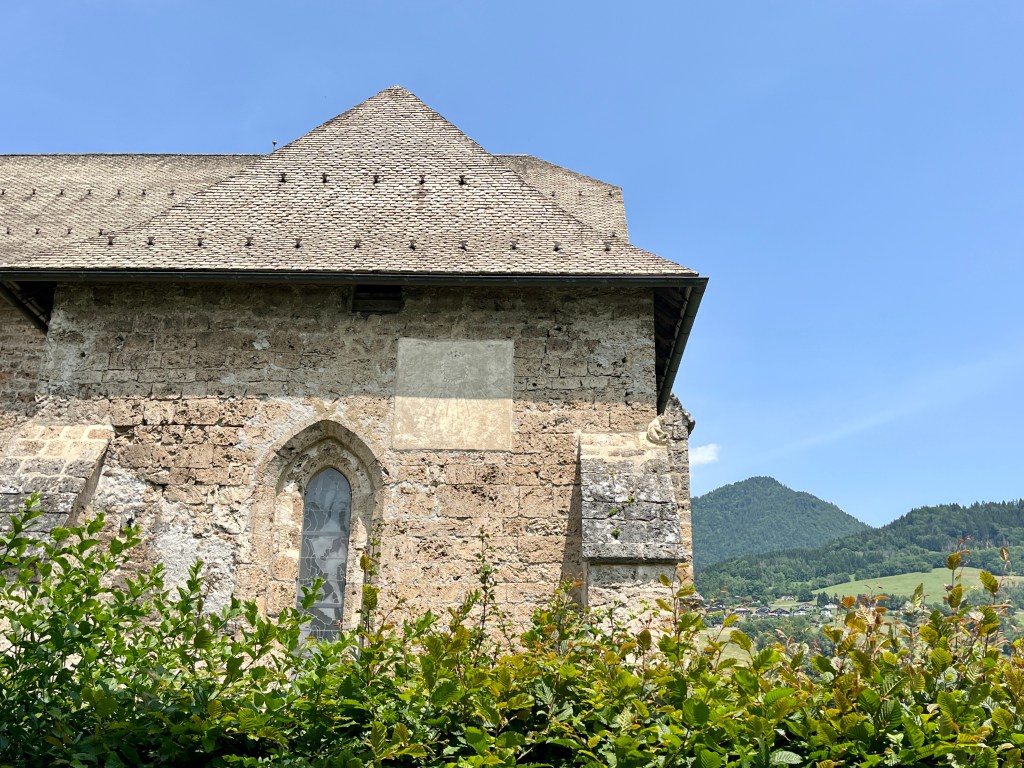
Chartreuse de Mélan . Taninges . France – Vertical Dial
Cat / Salamander Hunky Punk
The Chartreuse was founded in 1285 as a Carthusian nunnery and continued its religious functions until the French Revolution. Thereafter it became a school and in due course an orphanage. A disastrous fire in 1967 destroyed almost all the buildings on the site, with loss of life. Only the church and its cloister now remain. The church is an exhibition space and the lawns around it feature examples of modern art, from interesting via enjoyable to a few that are a matter of personal taste.
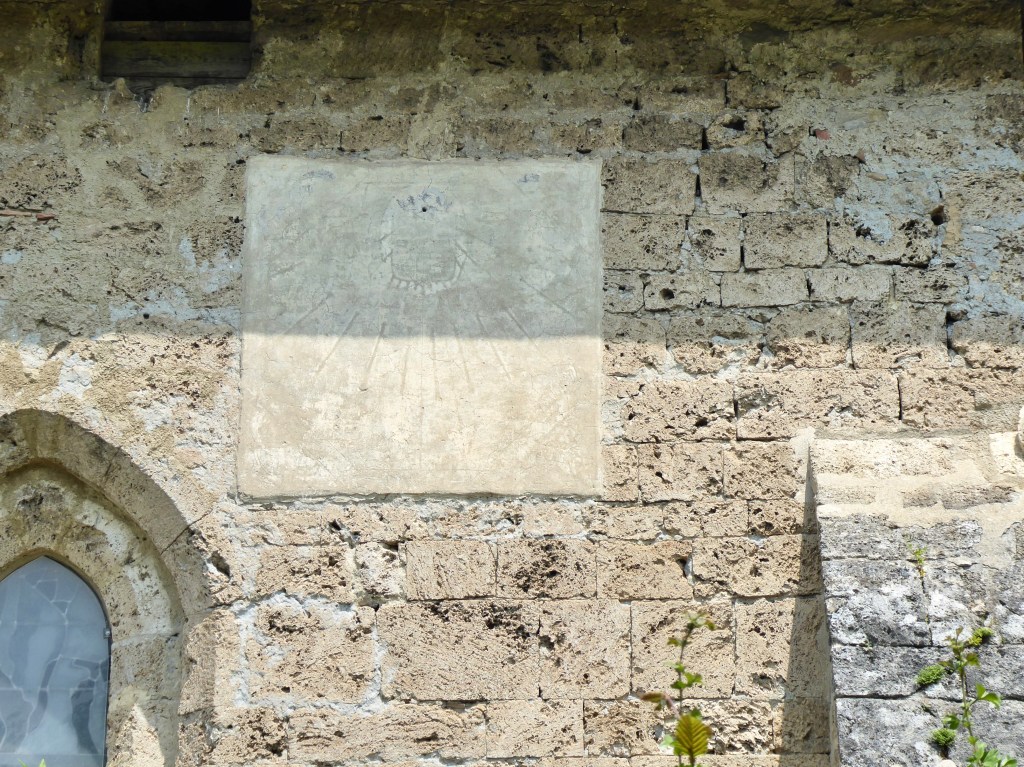
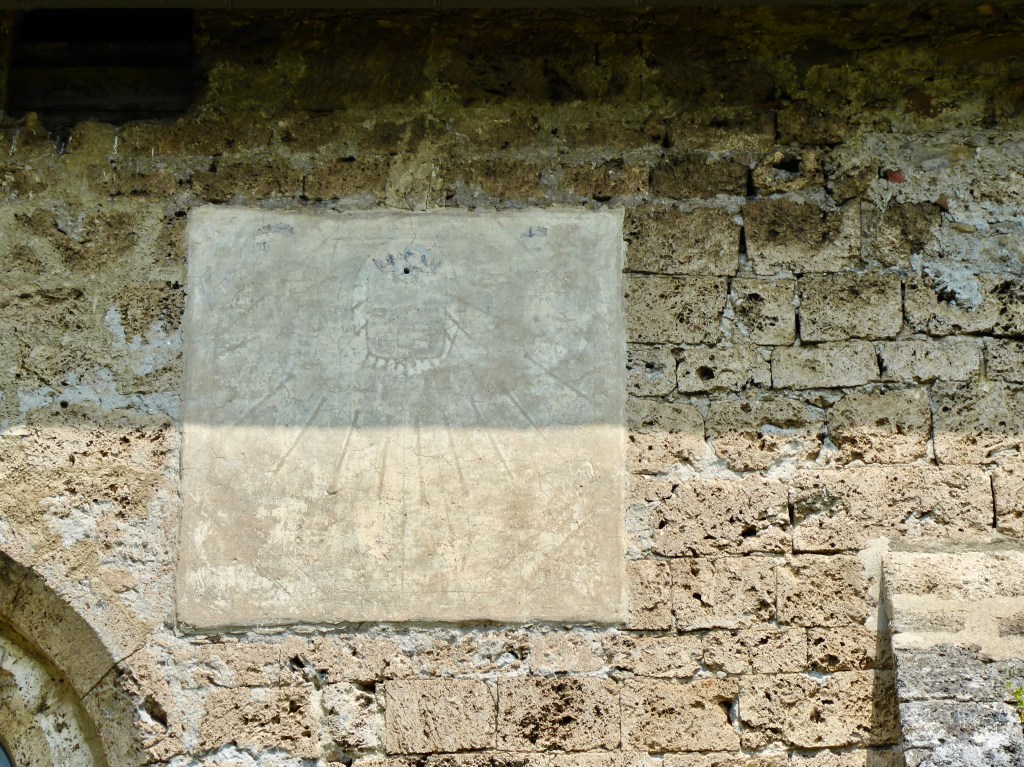
Chartreuse de Mélan . Taninges . France – Vertical Dial
The dial is included by MICHEL LALOS in his excellent French Cadrans Solaires site. Anyone who has in interest in sundials in France will benefit hugely by using this free resource. It is accessible, informative, and easy to use – not least because the dials are featured by Départment with a map for dial locations. The entry for Mélan is :
Cadran peu déclinant de l’après-midi, gravé et peint sur enduit, très dégradé, fines lignes, demies, plus de chiffres dans bandeaux, traces de blason et décor
Dial slightly declining in the afternoon, engraved, painted on rendering, very degraded, fine lines, half-hour lines, numbers within a frame, traces of coat of arms and decoration.
There are paint remnants at the top of the dial, where (presumably) it has been protected by the eaves. The gnomon hole at the top of the coat of arms is square. The dial is obviously old and I wondered if it might be dateable. Checking the apparent shape of the escutcheon, I discovered that it was first recorded as an armorial design in late C17 and (conveniently) turns out to be known as French-style. Overall, one might reasonably conclude that this dial is C18.
MEMORIAL STONE 1690
Chartreuse de Mélan . Taninges . France – Memorial Tablet 1690
GSS Category: Vertical Dial; France Sundial; Cadrans Solaires; Dials Abroad
All photos: Keith Salvesen; source used MICHEL LALOS
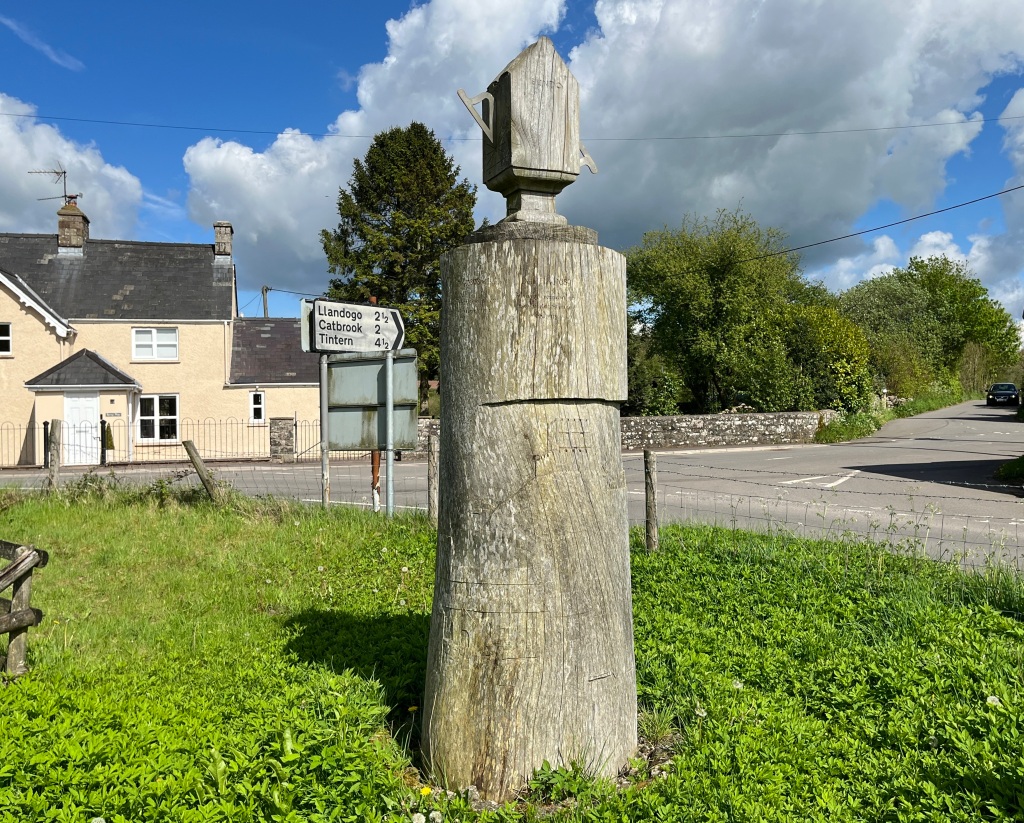
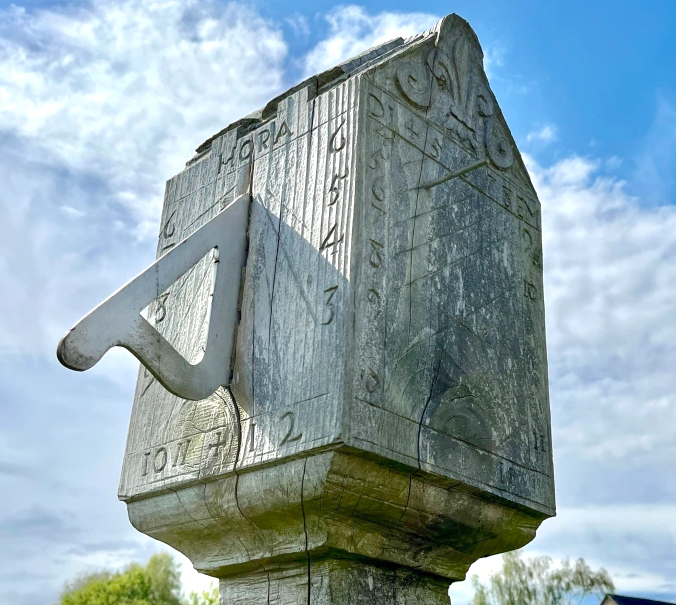
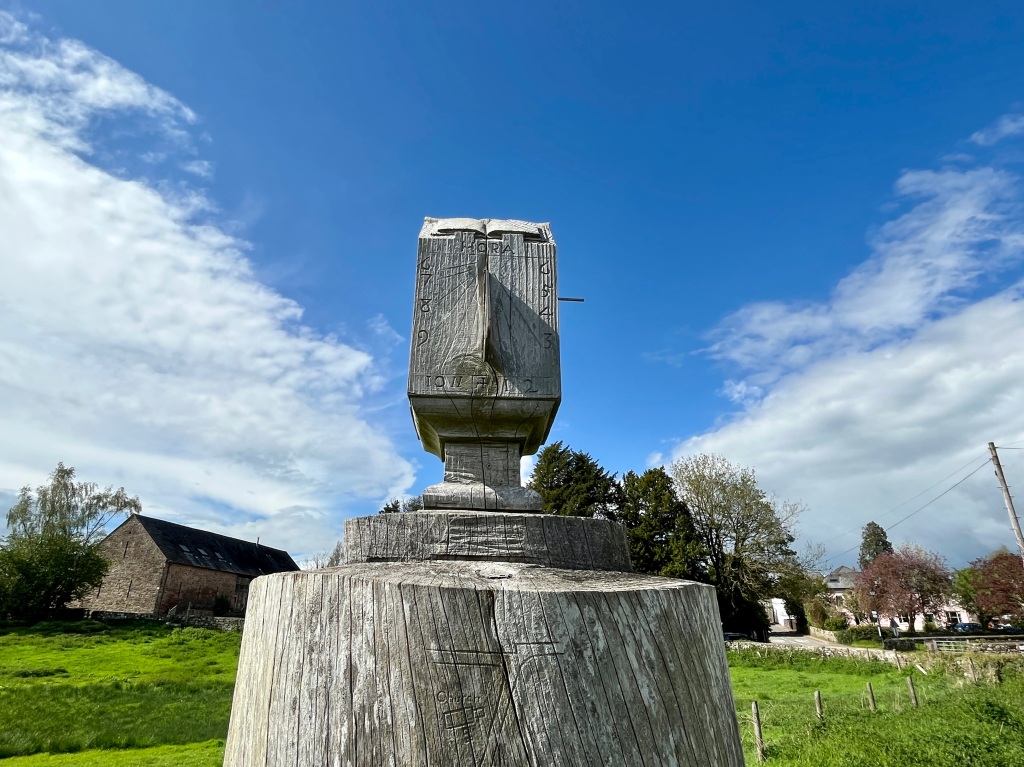
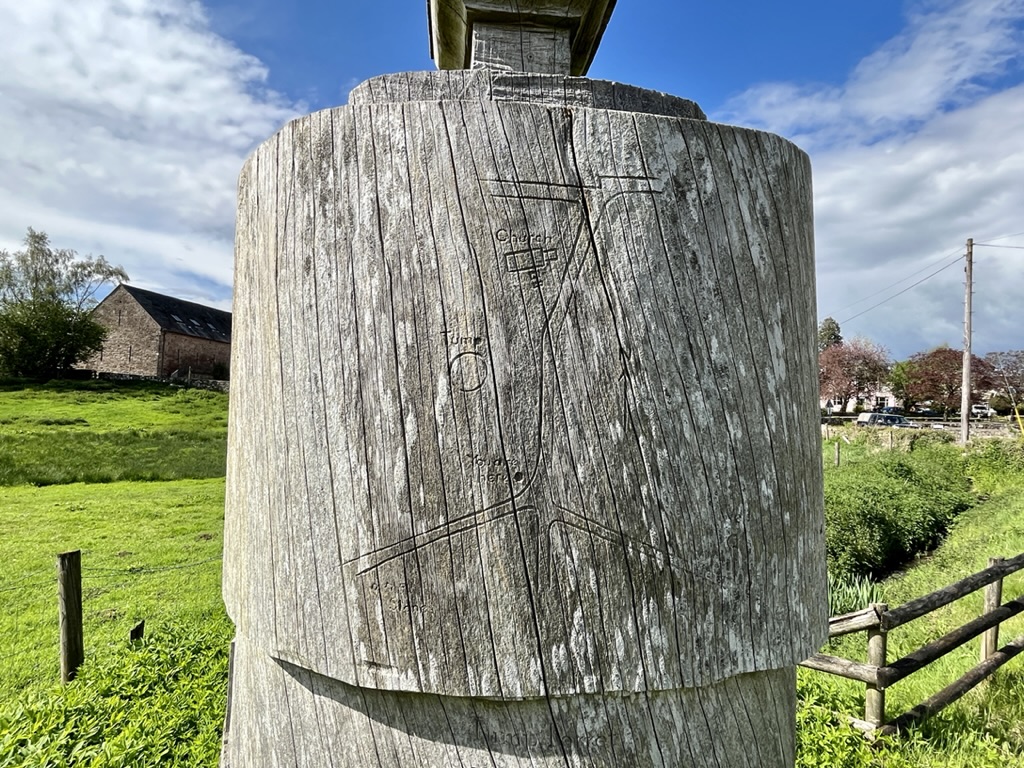
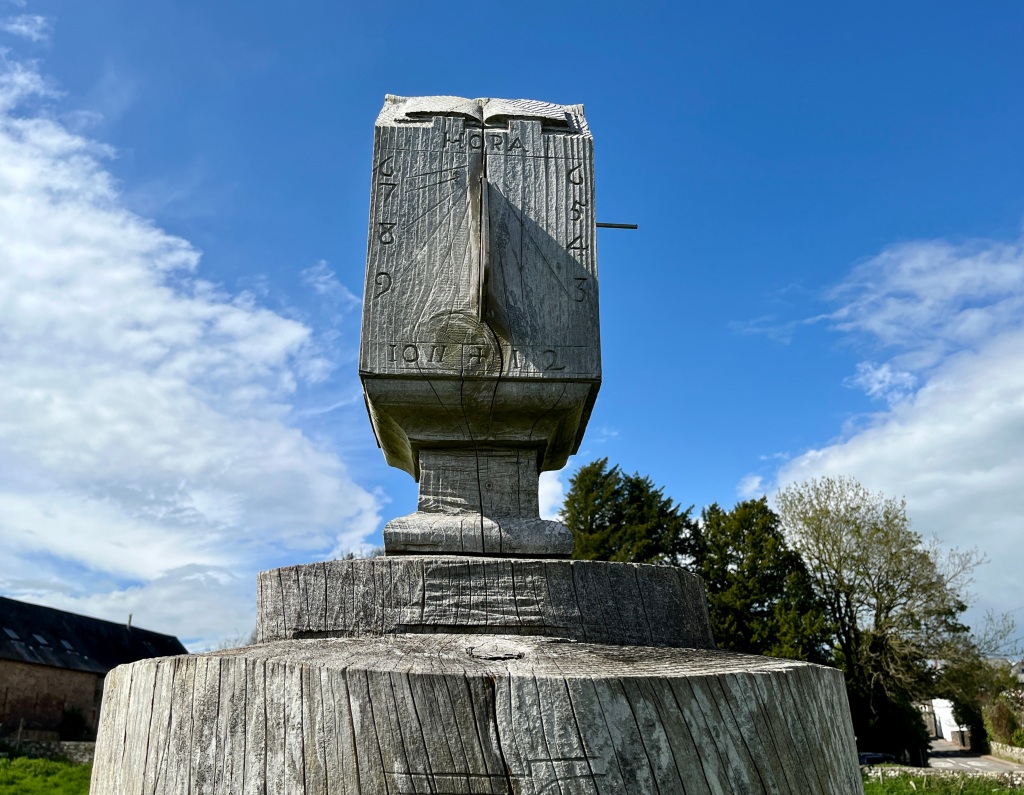
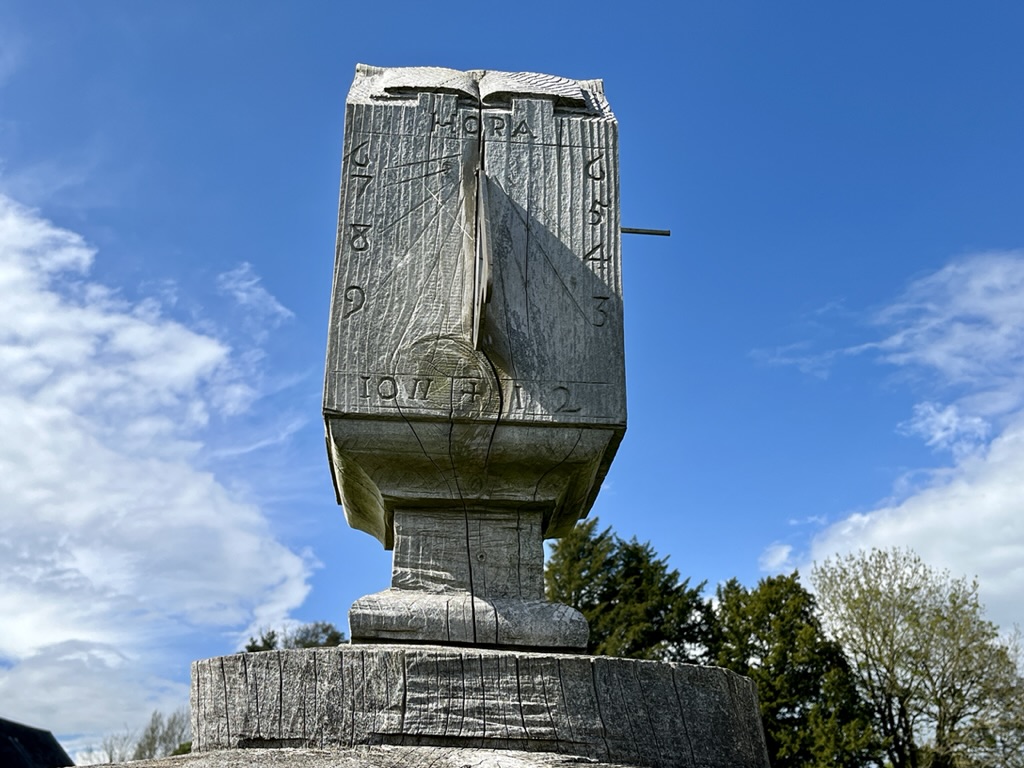
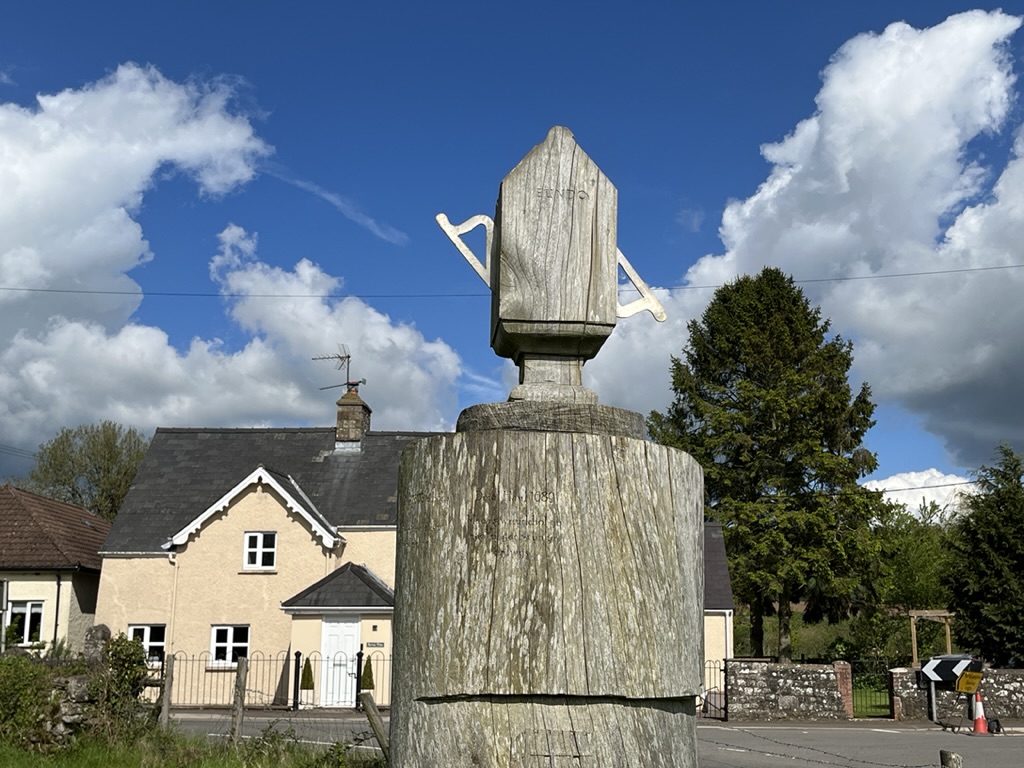
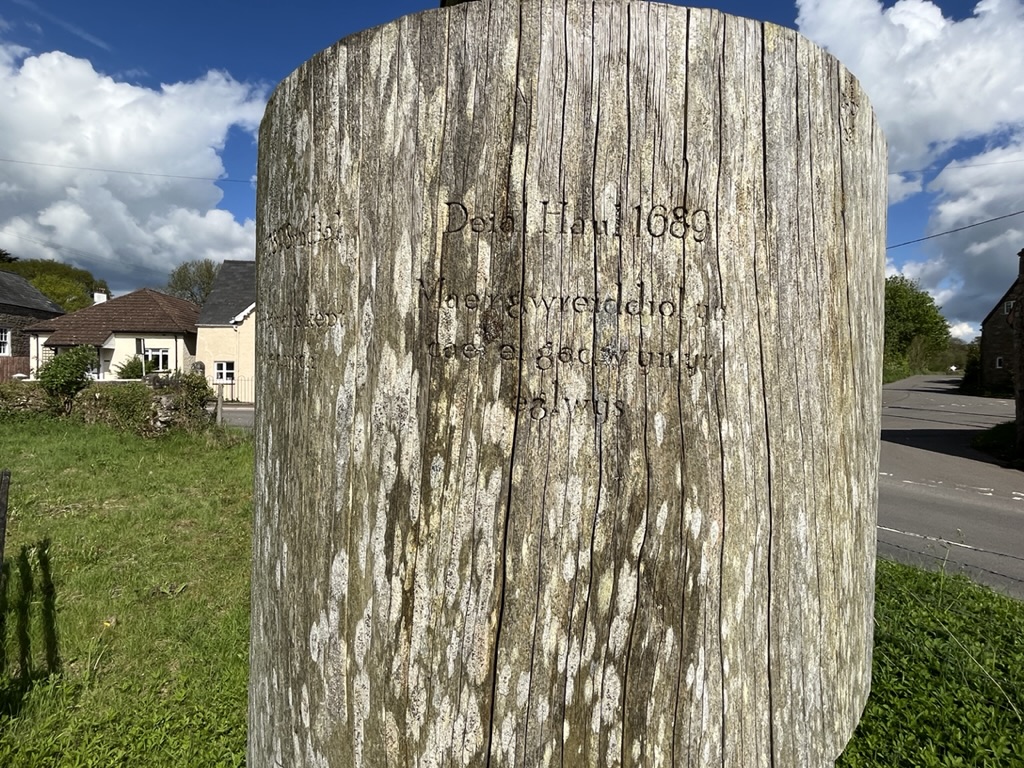
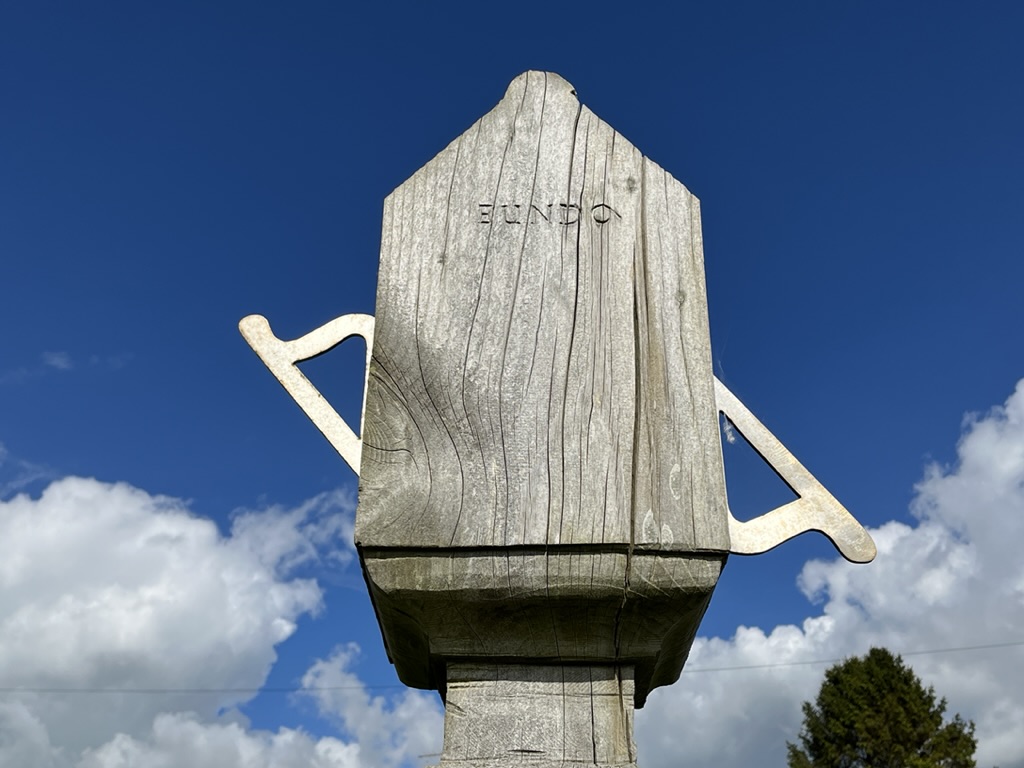
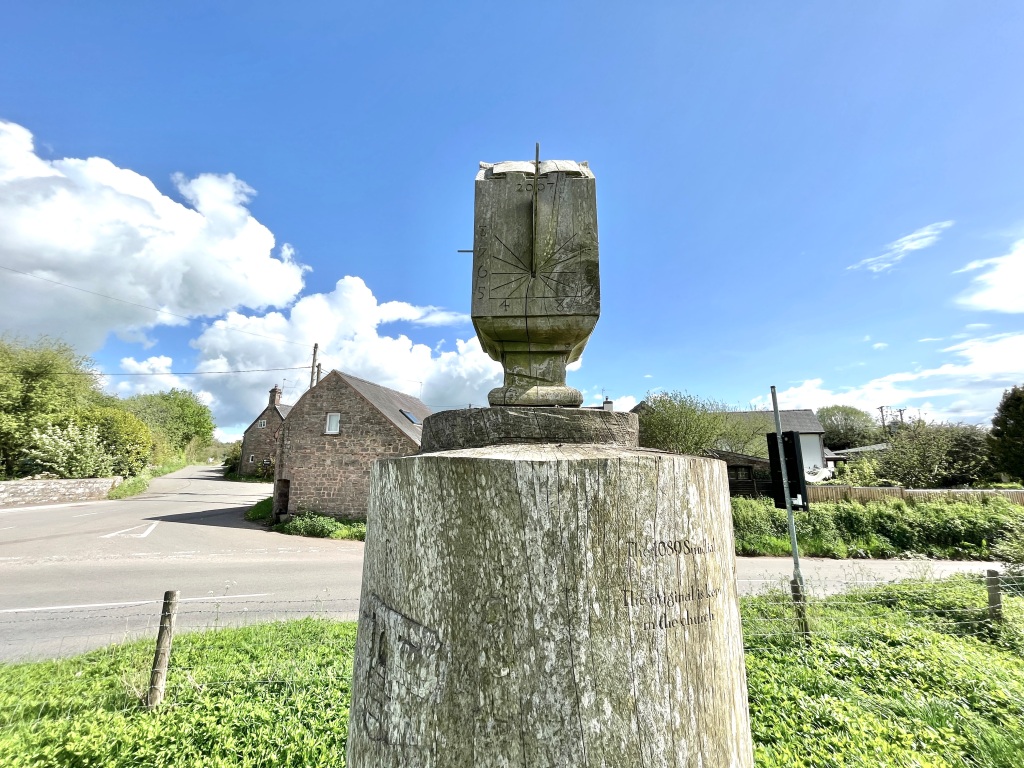
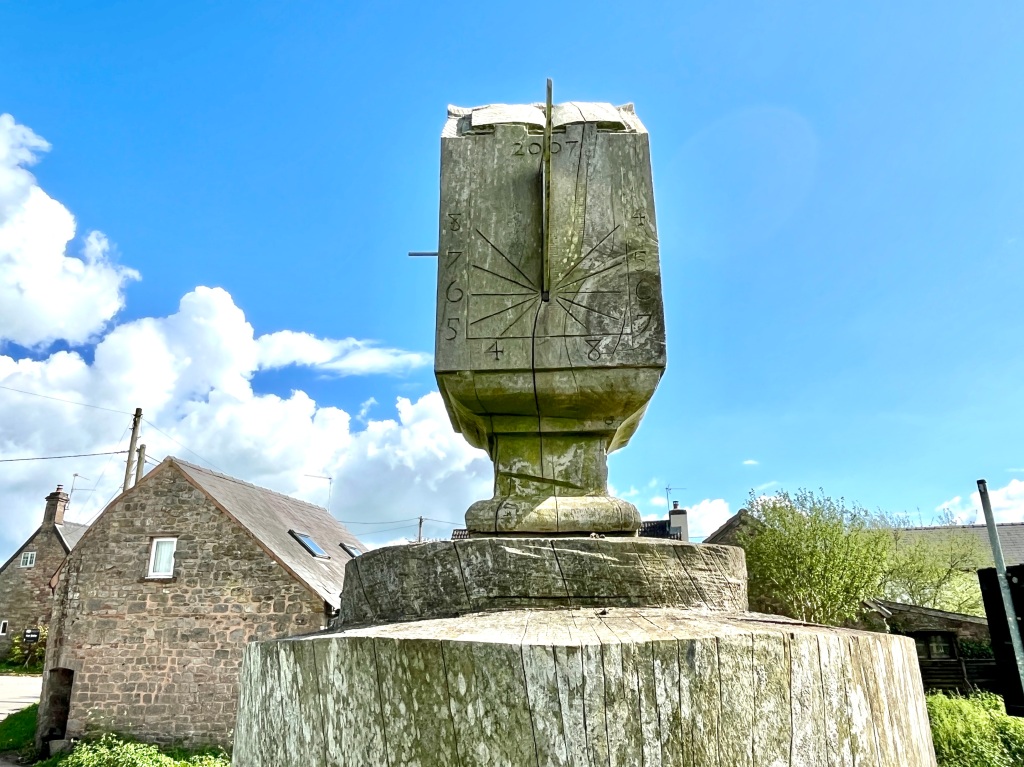
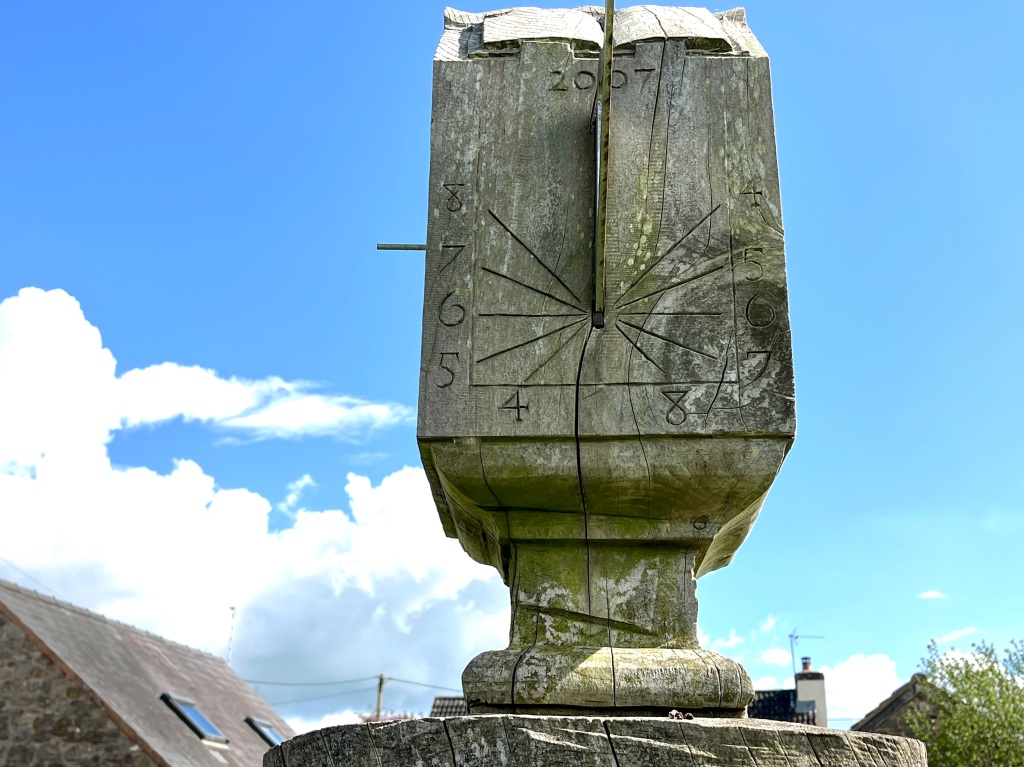
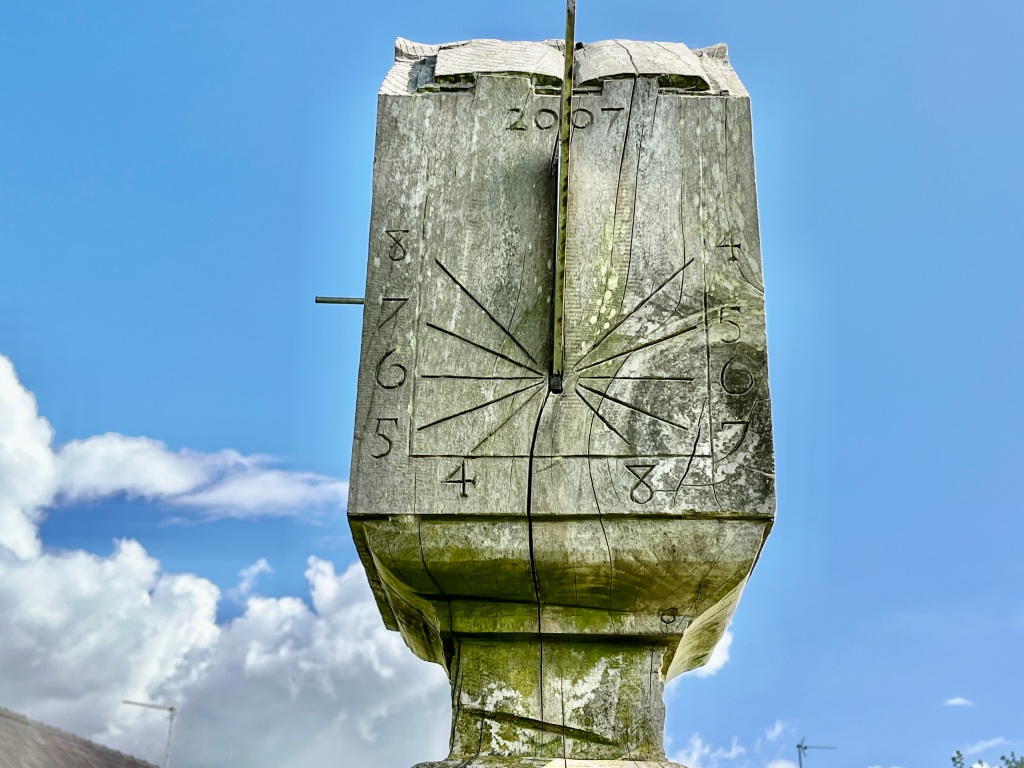
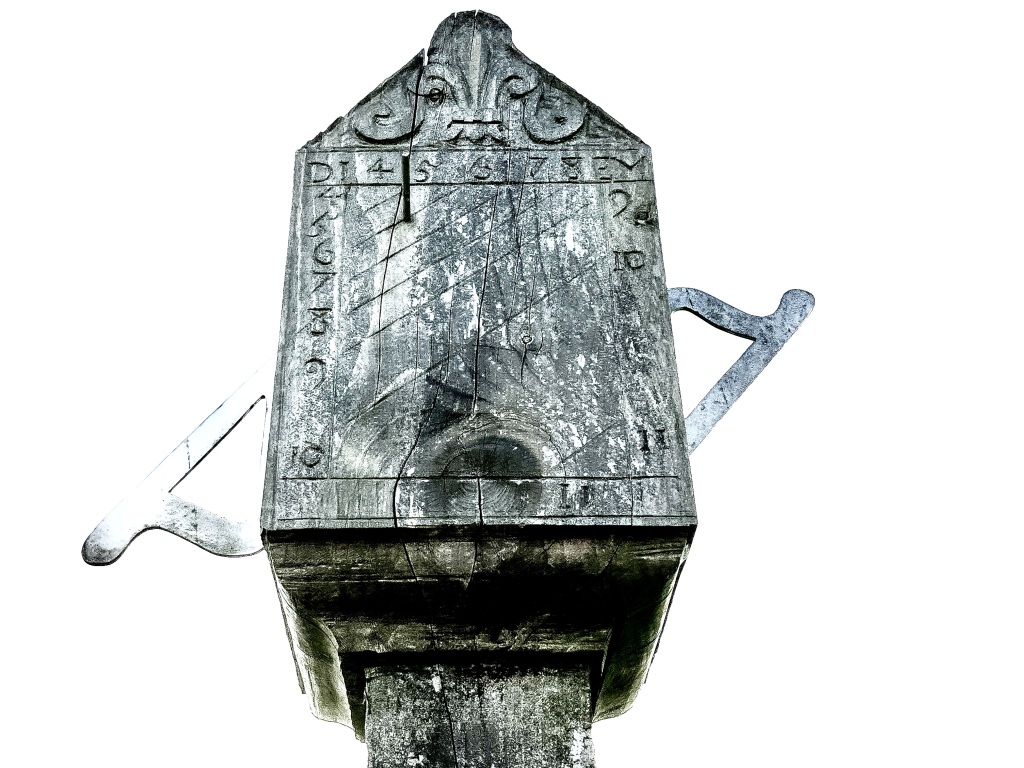
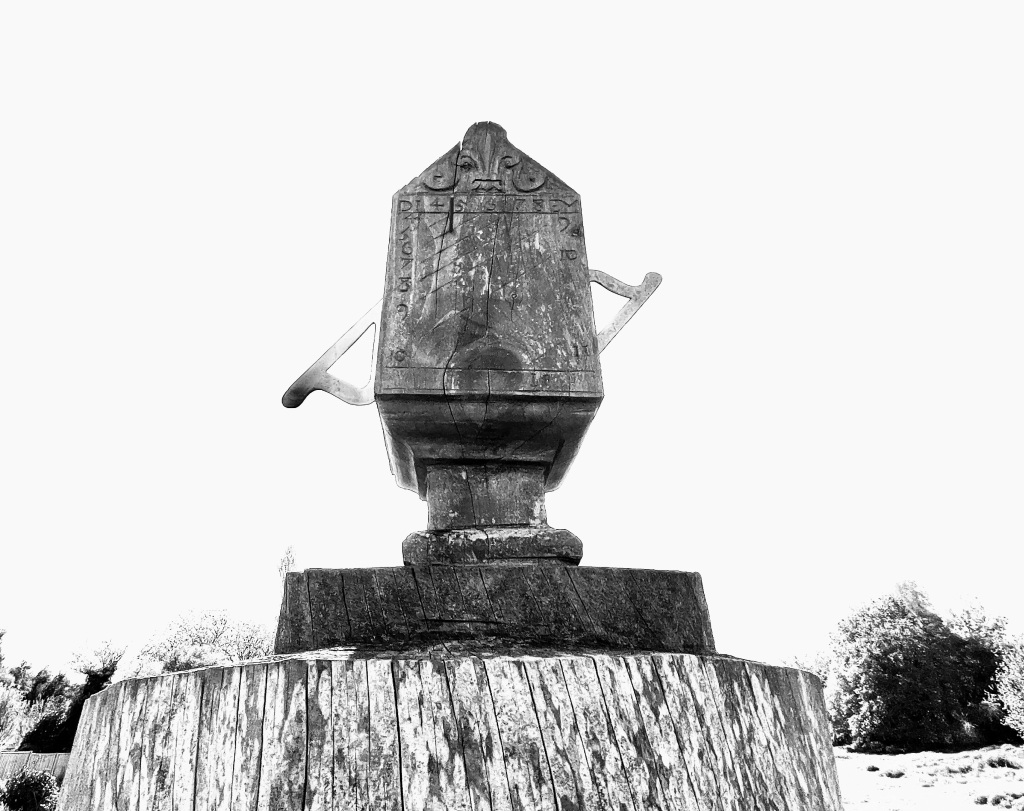
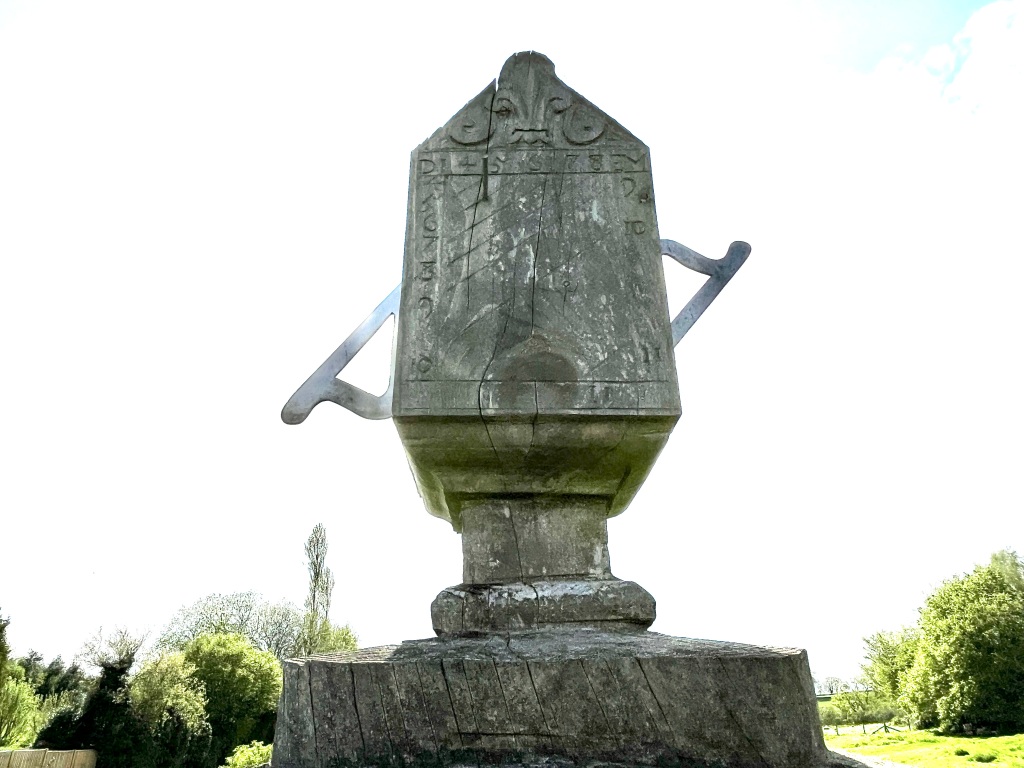
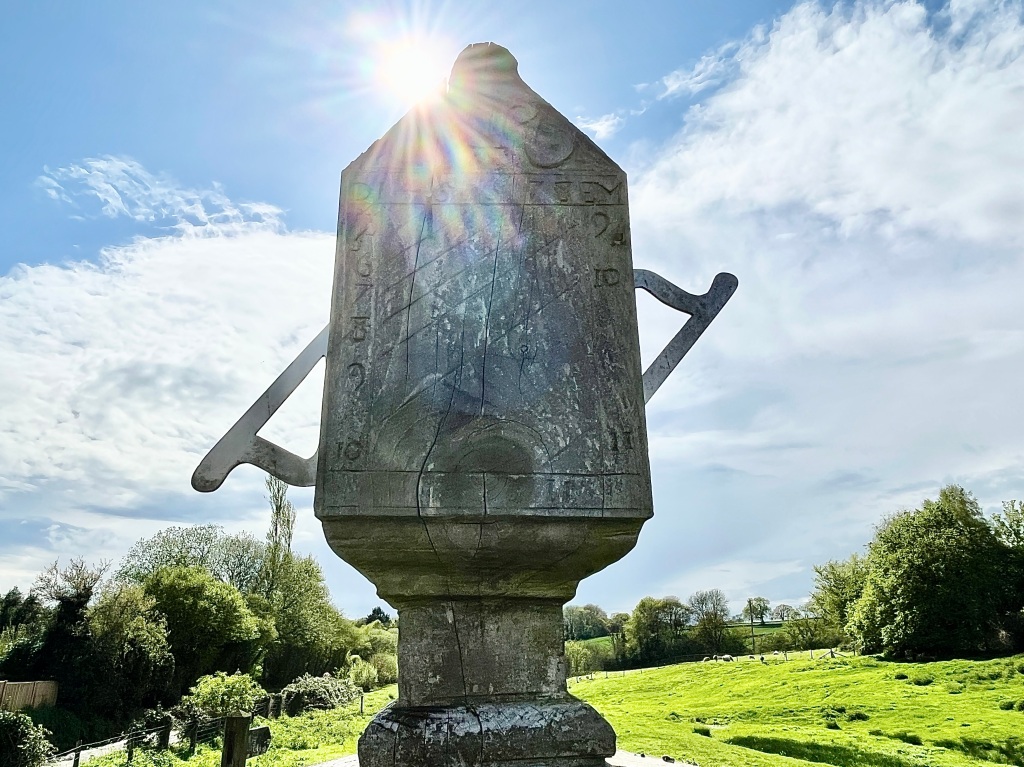
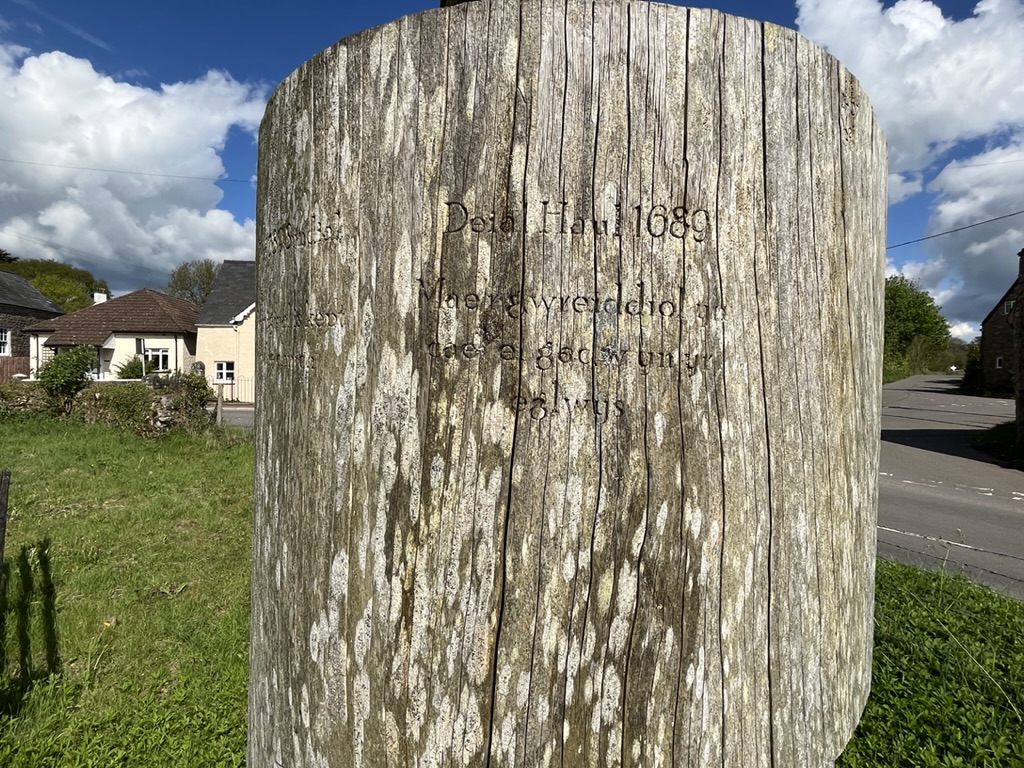
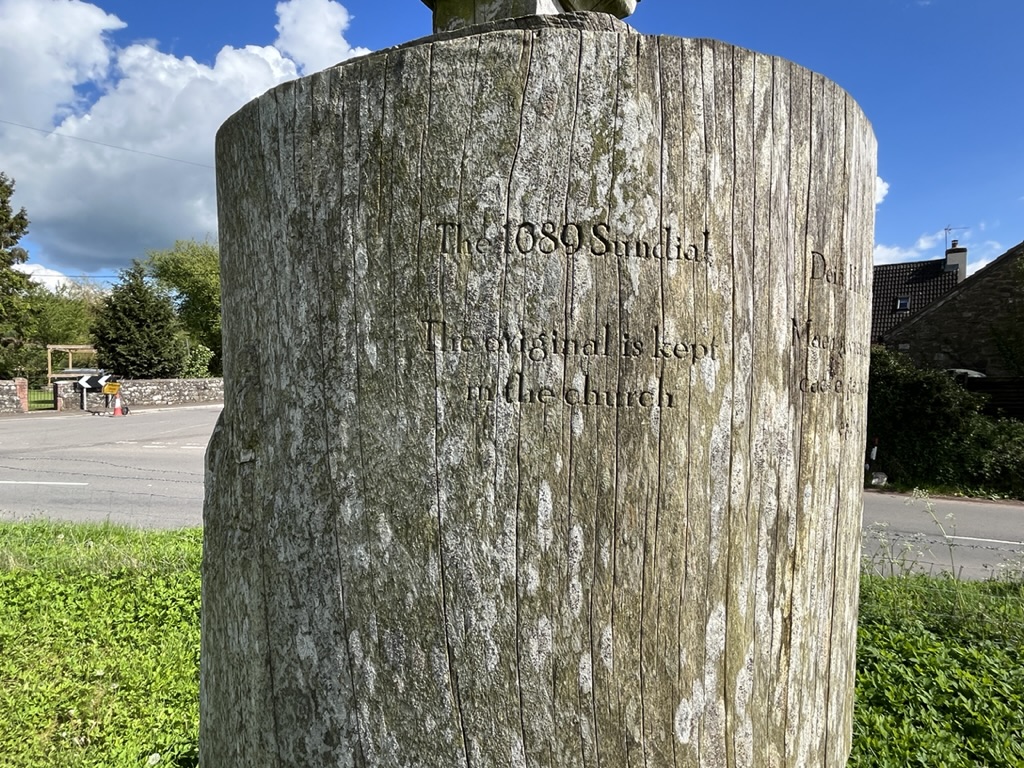
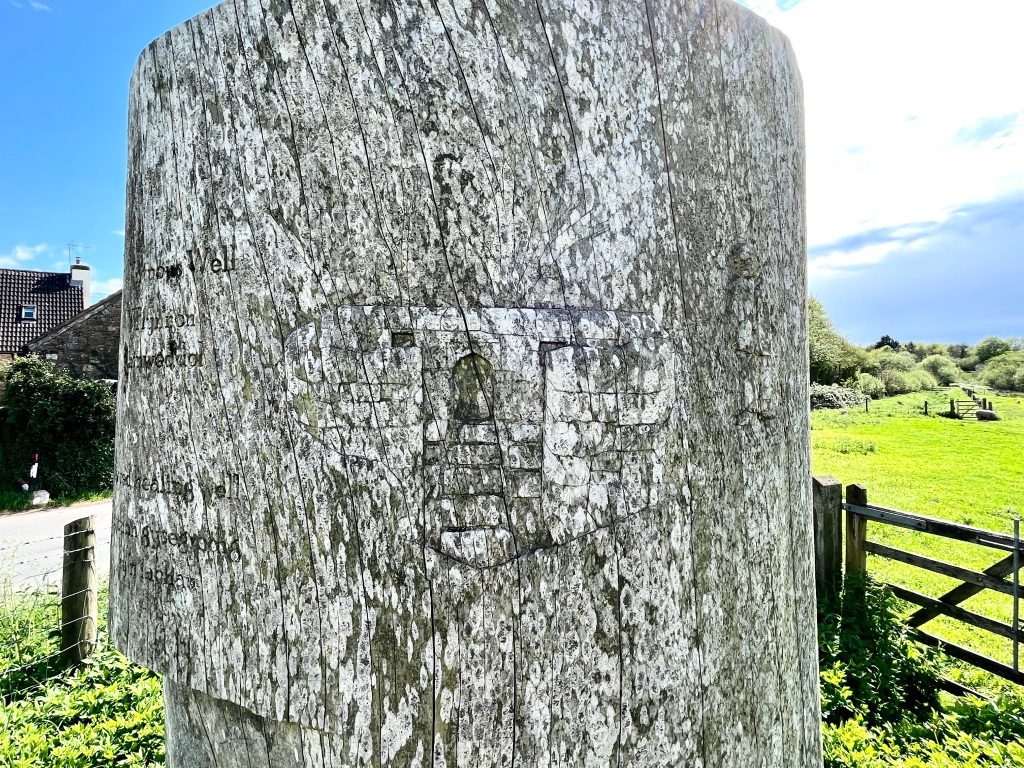
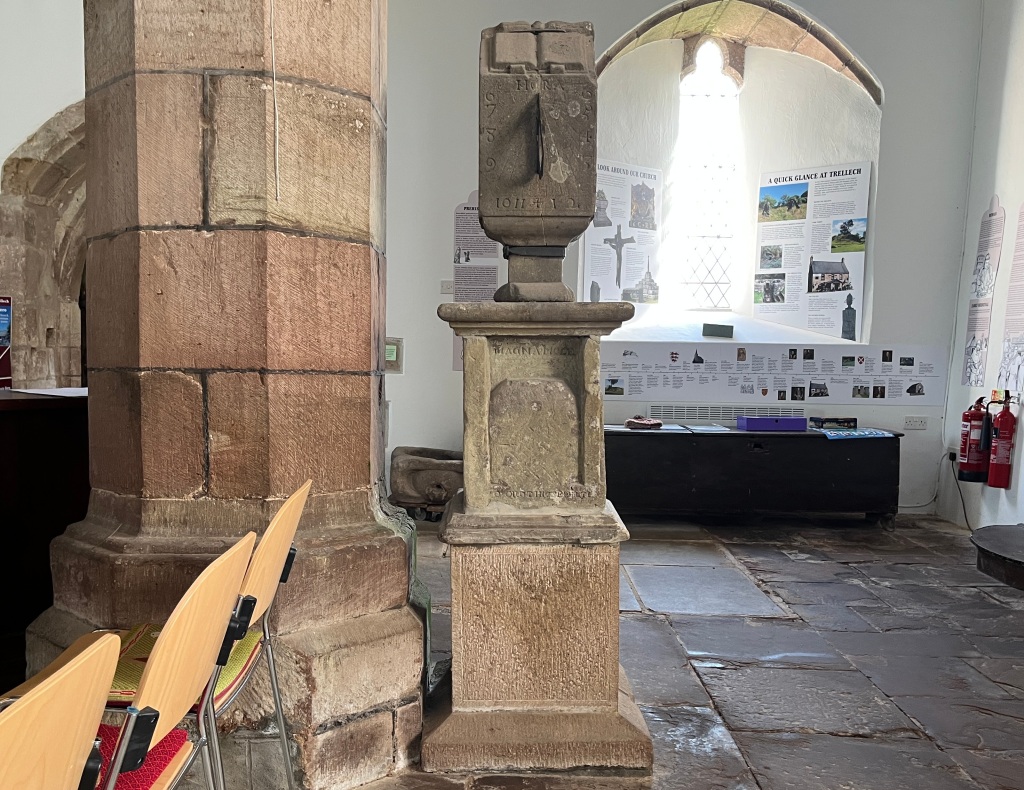
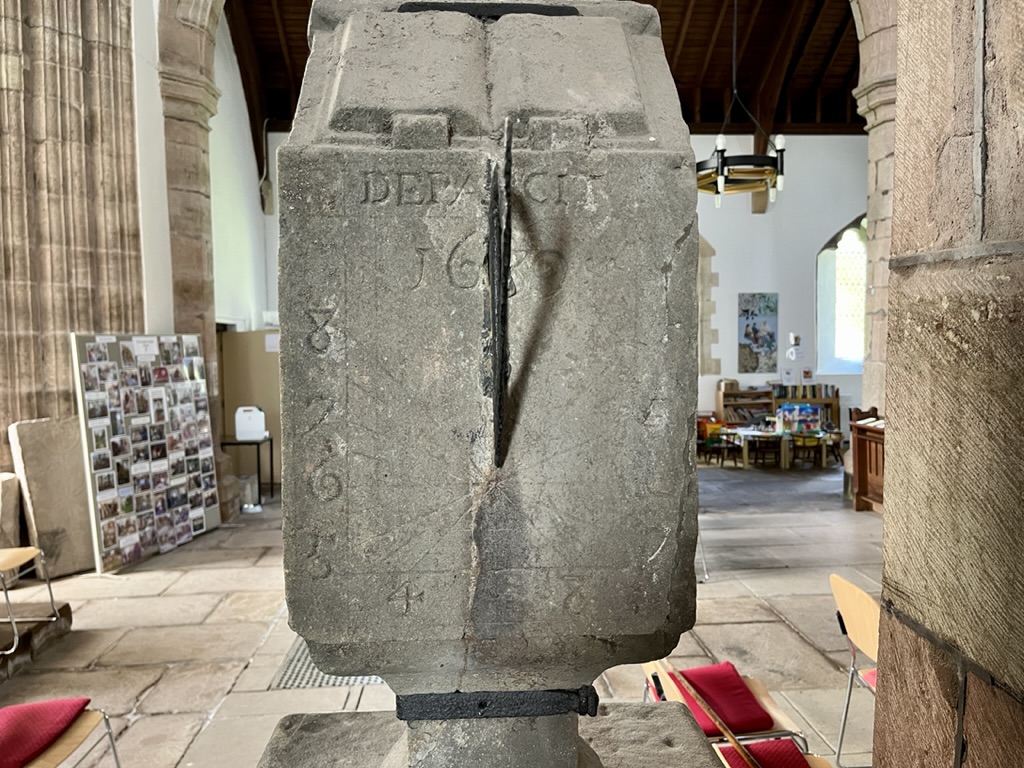
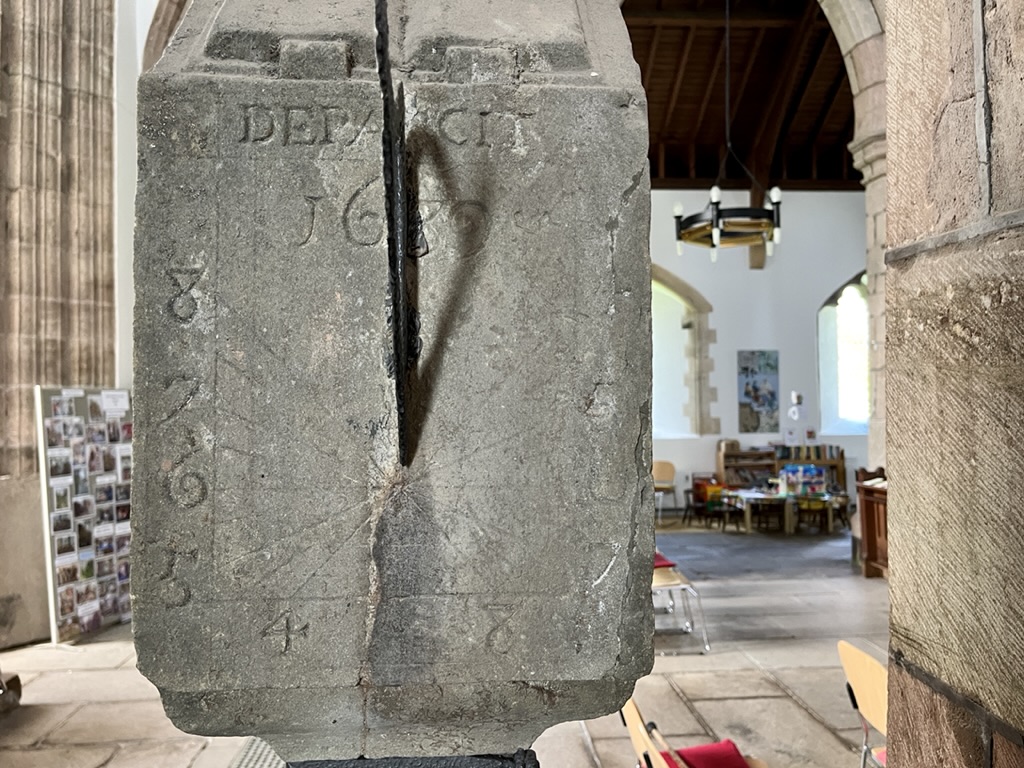
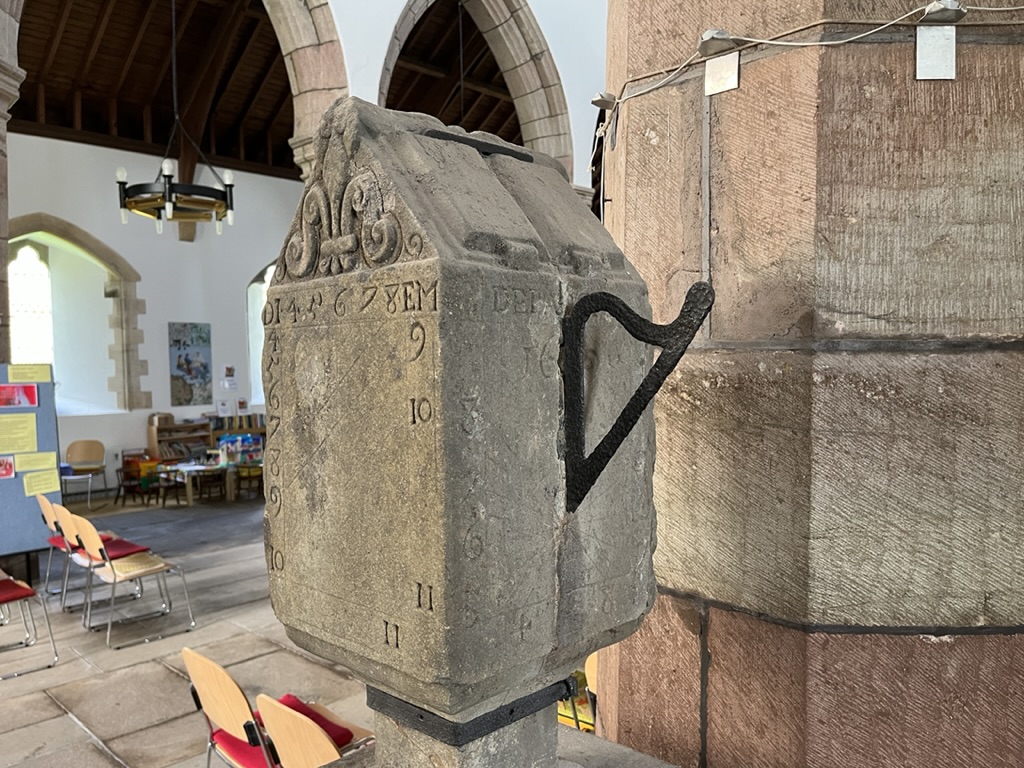
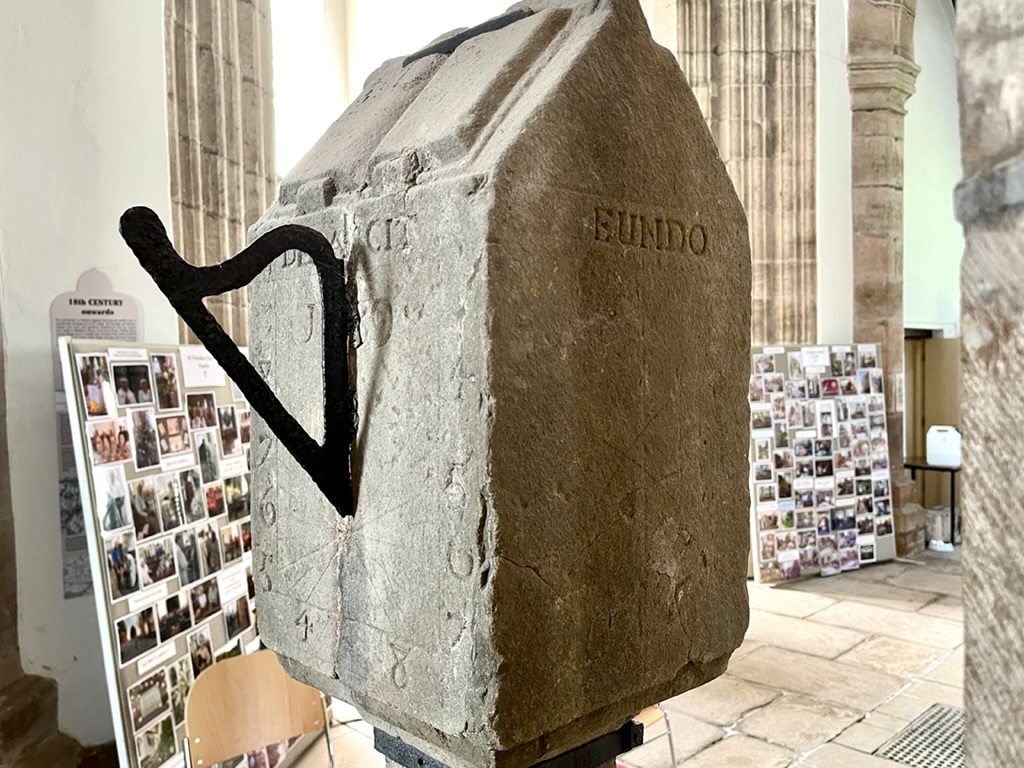
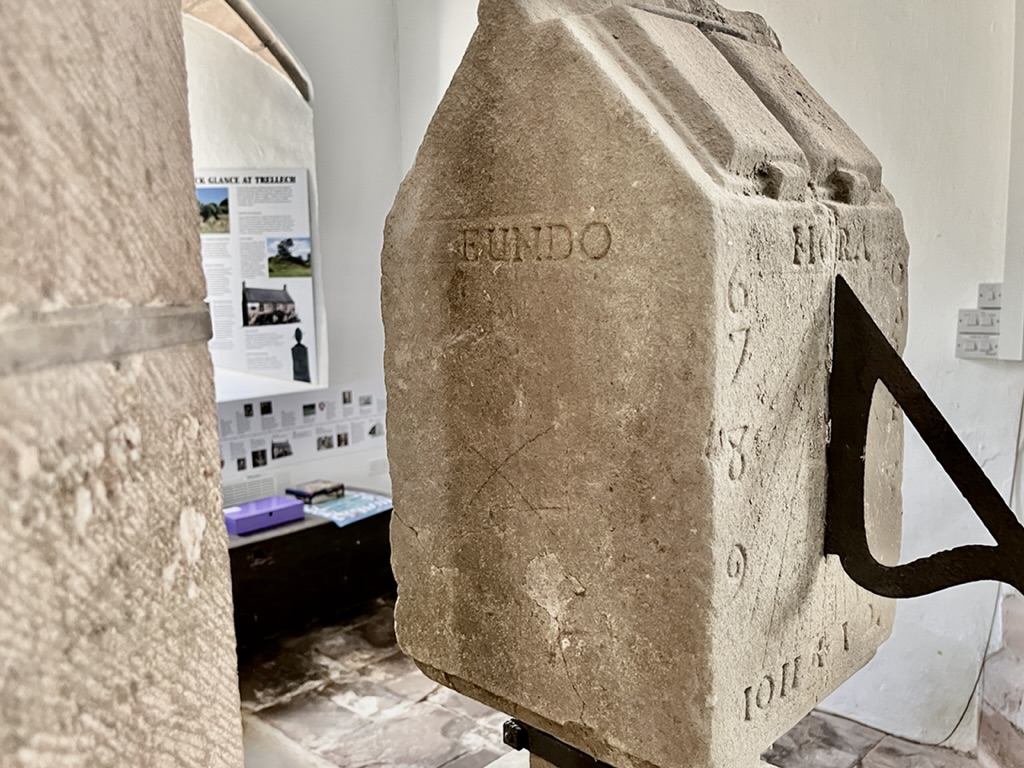
This post relates directly to its companion in Pt 1. Both articles feature the remarkable cube dial dated 1689, now preserved inside the Grade I listed church of St Nicholas, Trellech, Monmouth – the original and a fine recent (2007) wooden replica. You can find images of the original dial and each of its faces, with detailed descriptions, HERE. The location is 5m S of Monmouth 51.7459 / -2.725 / SO500054
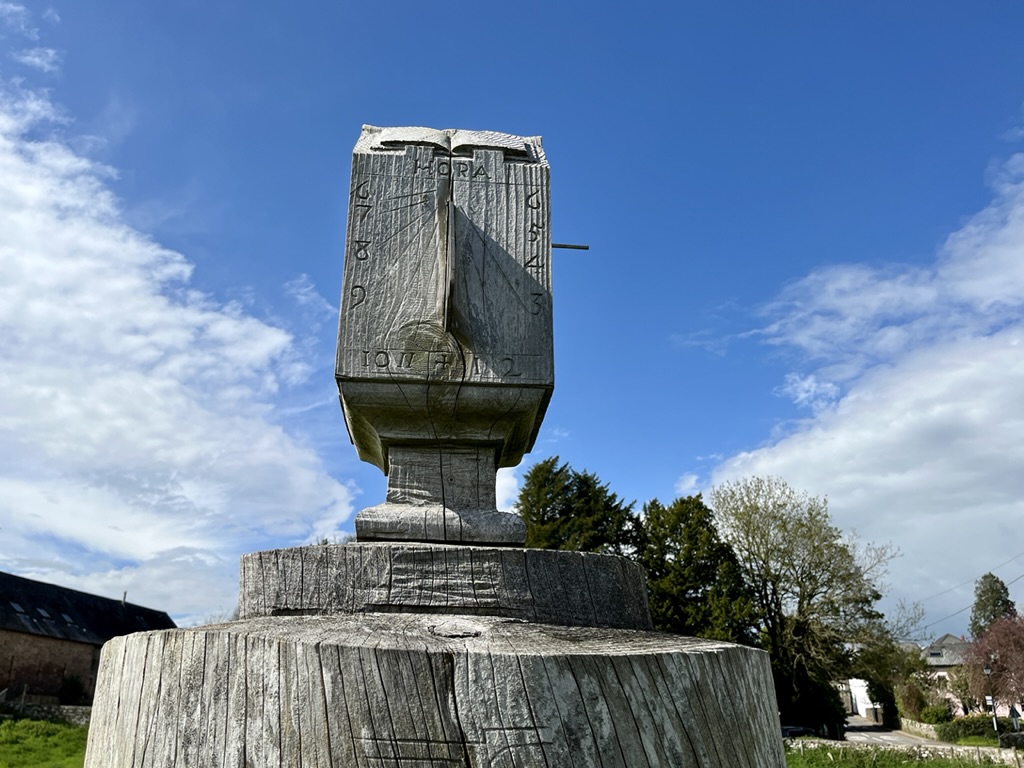
DIAL . 2007
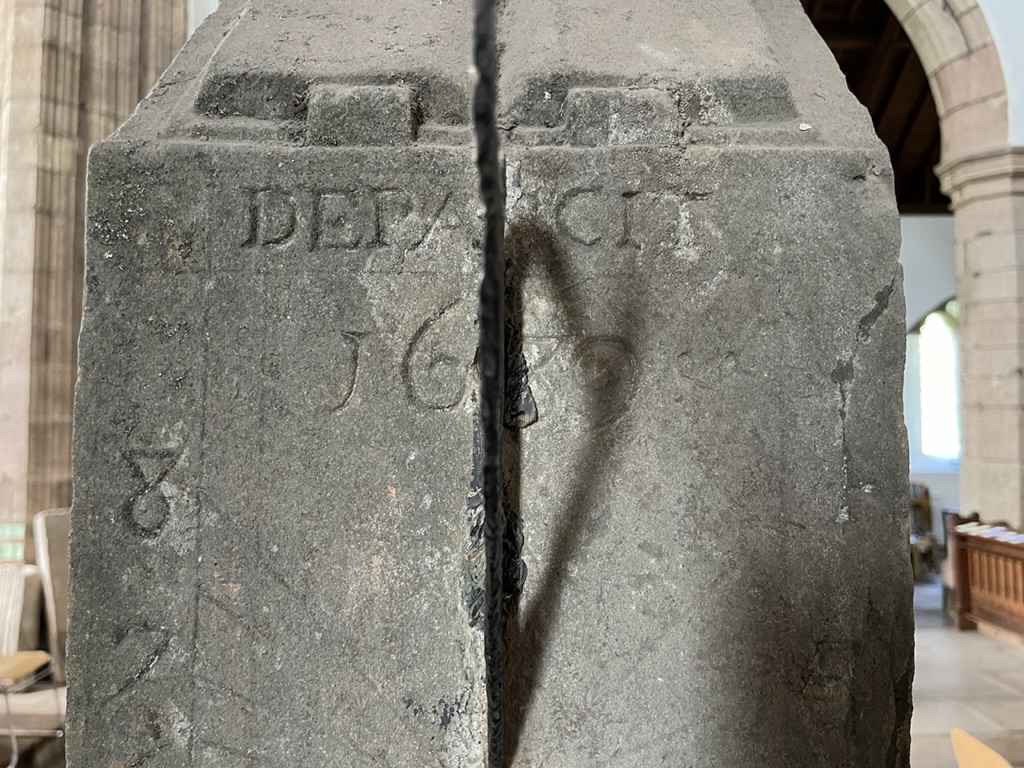
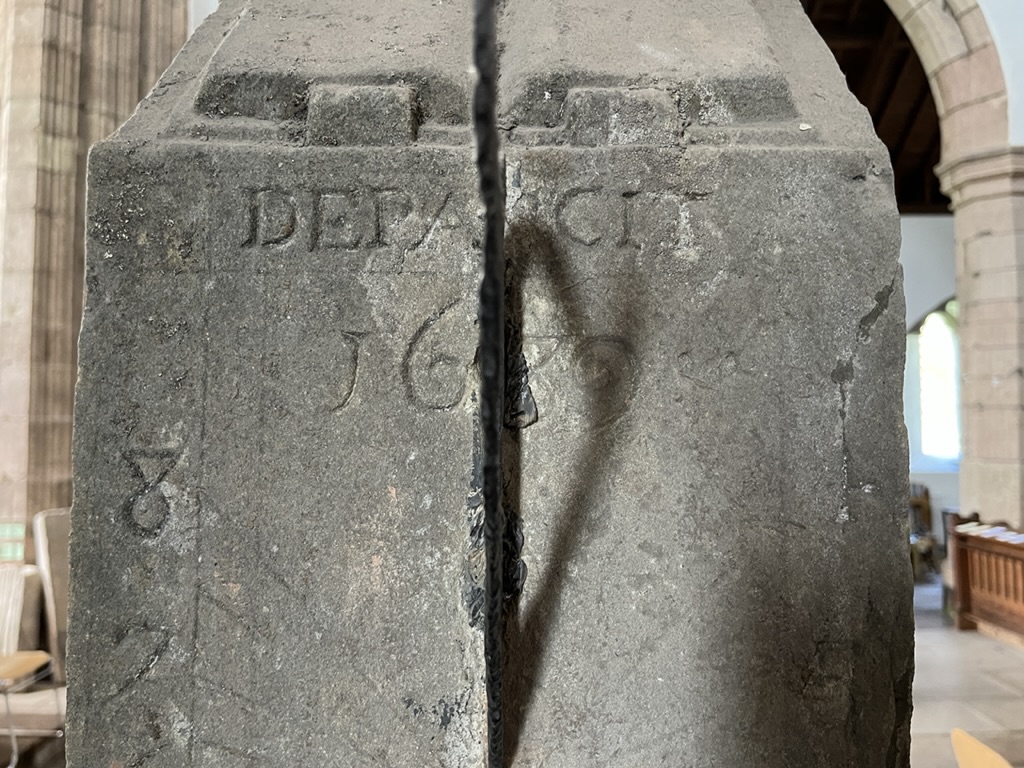
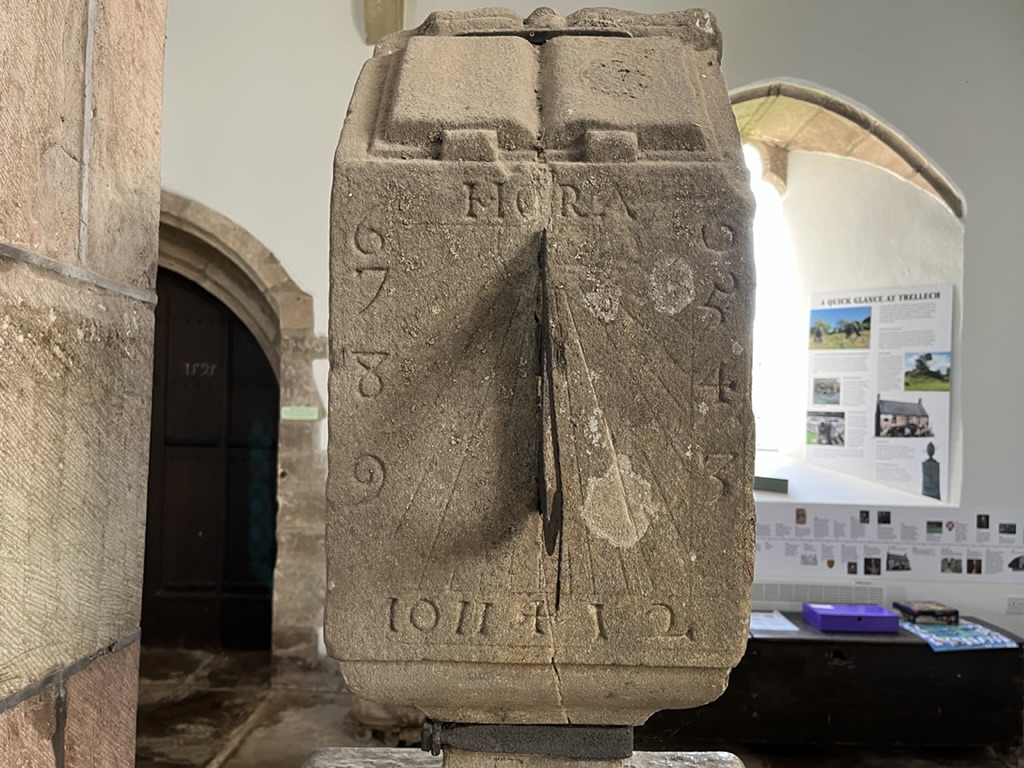
The images of Face 4 below illustrate a frequent experience with cube dials. Invariably, prevailing conditions preclude more than 3 faces being properly photographed. One face will always frustrate all attempts to get a decent photo. Furthermore, it is very difficult to improve a poor photo – it just becomes a different kind of poor. Quite often the only answer is to make the image B&W to catch detail .With apologies, this is what has emerged from the darkroom.
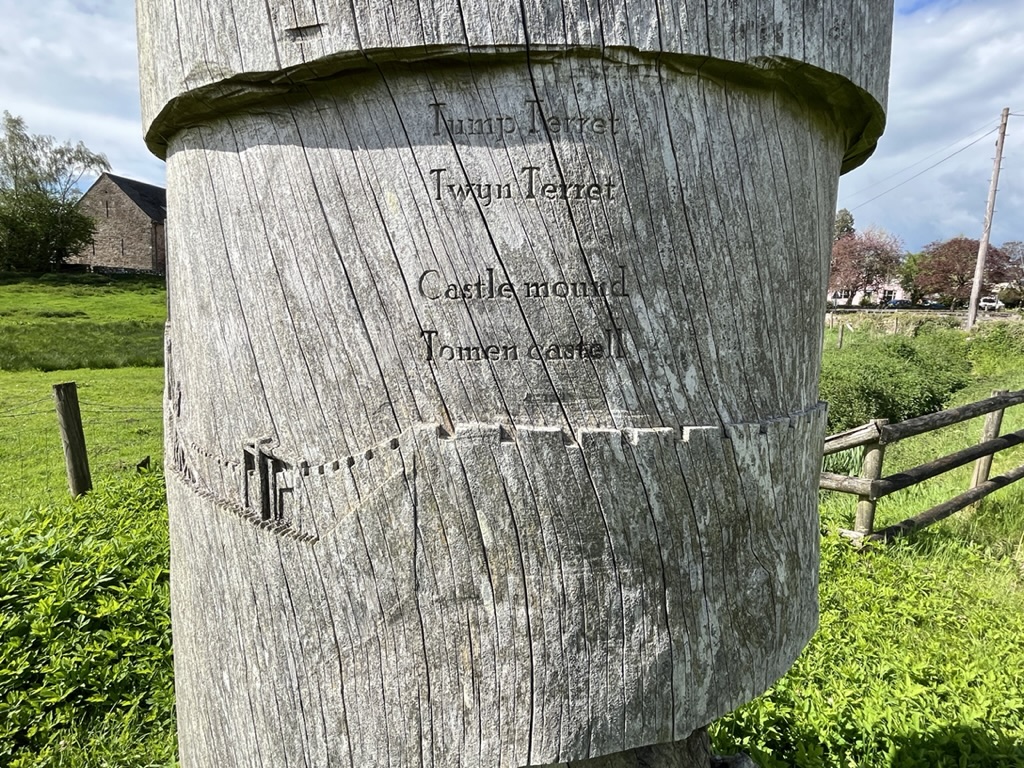
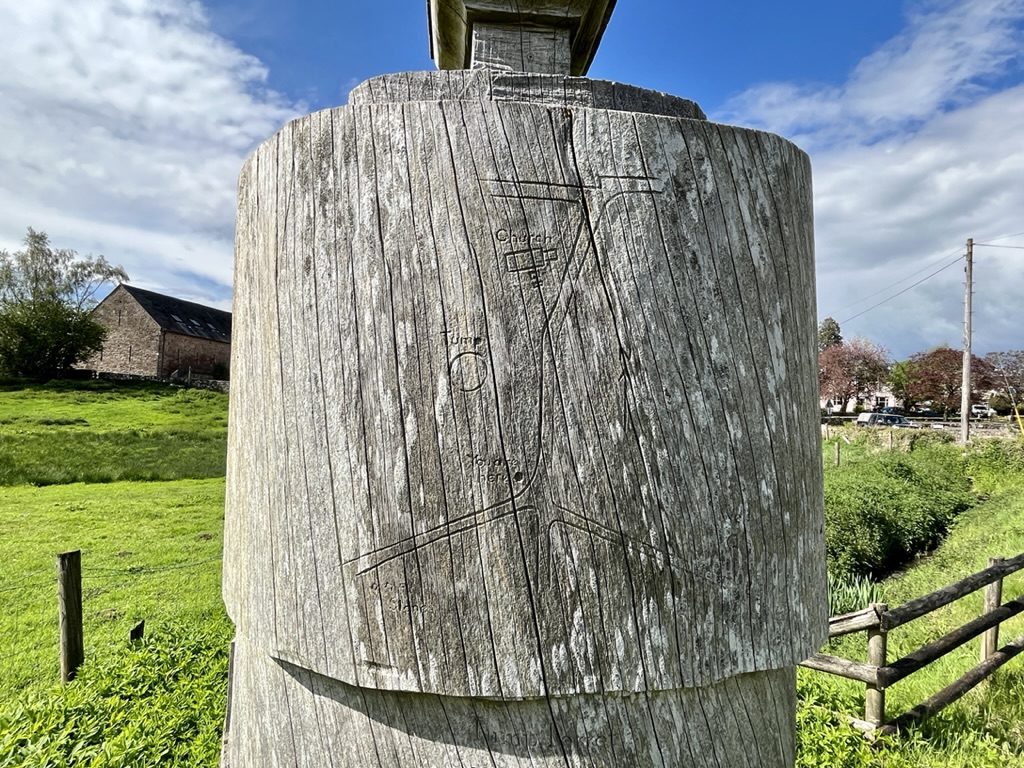
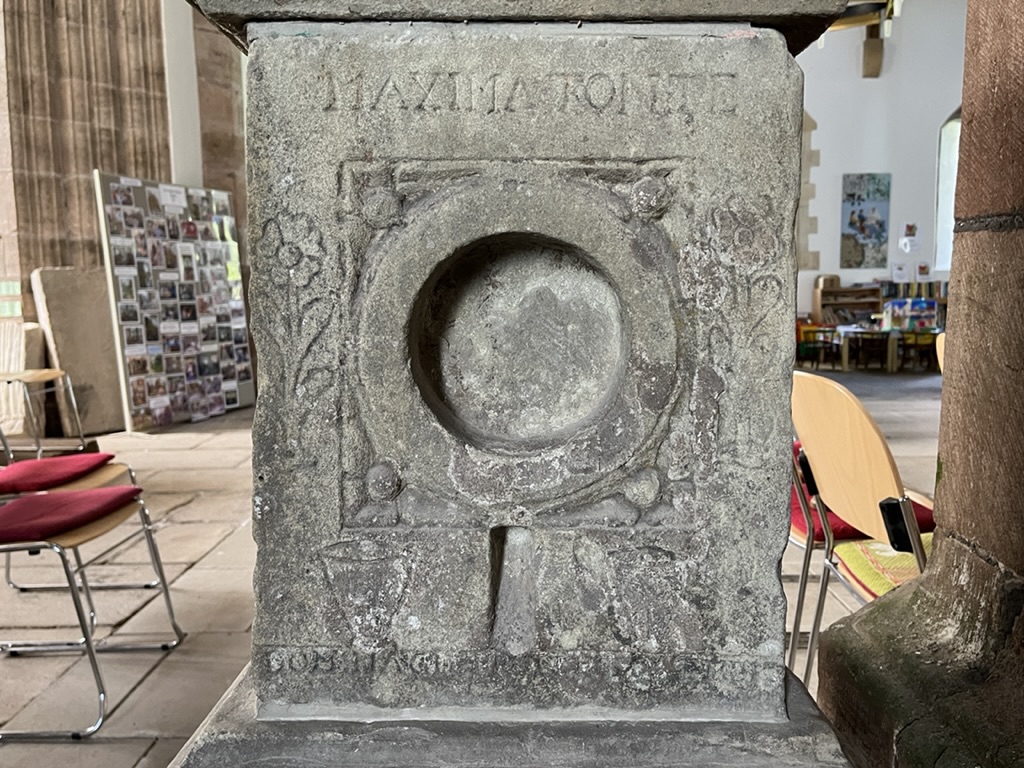
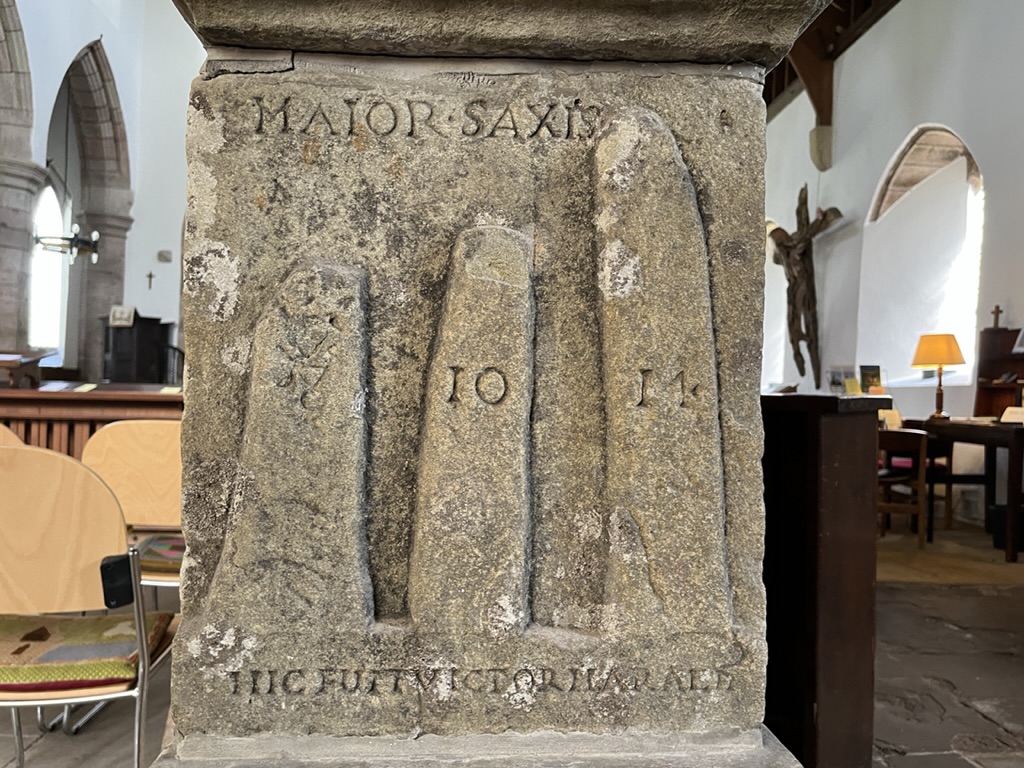
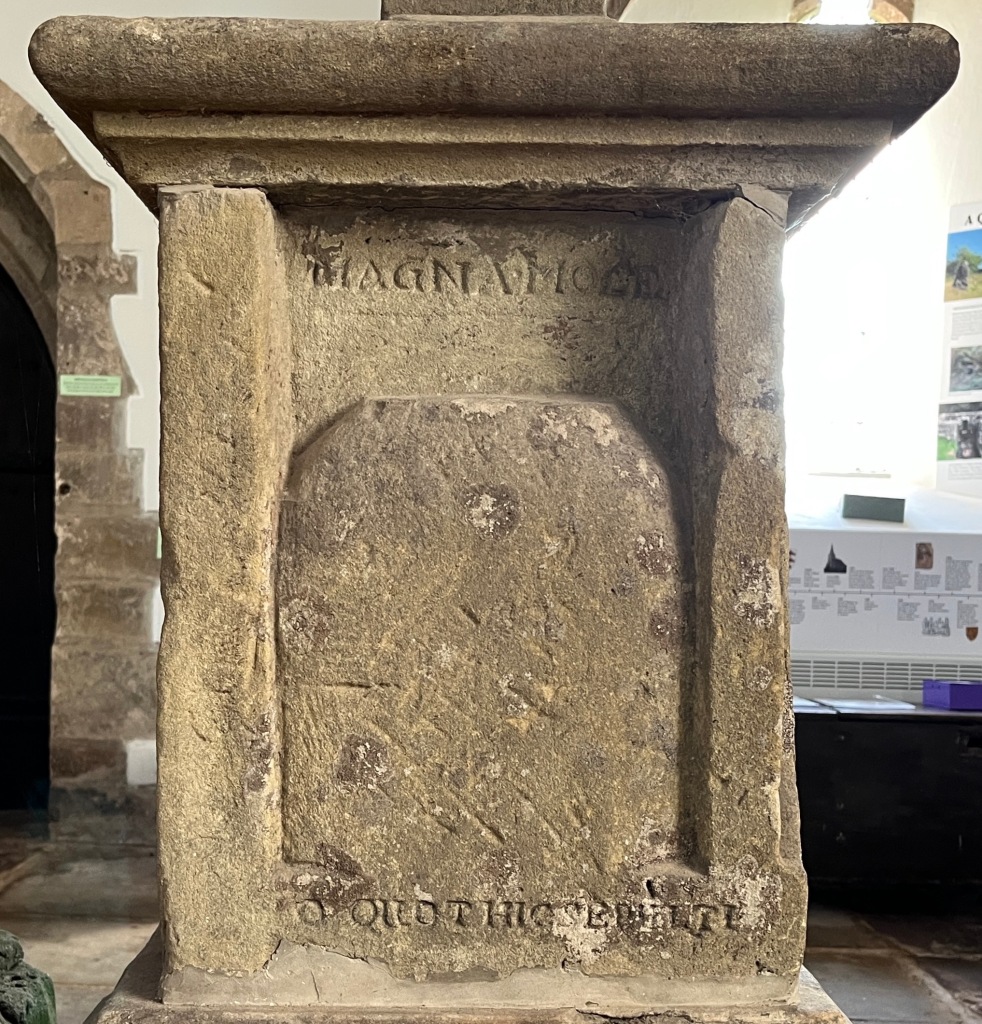
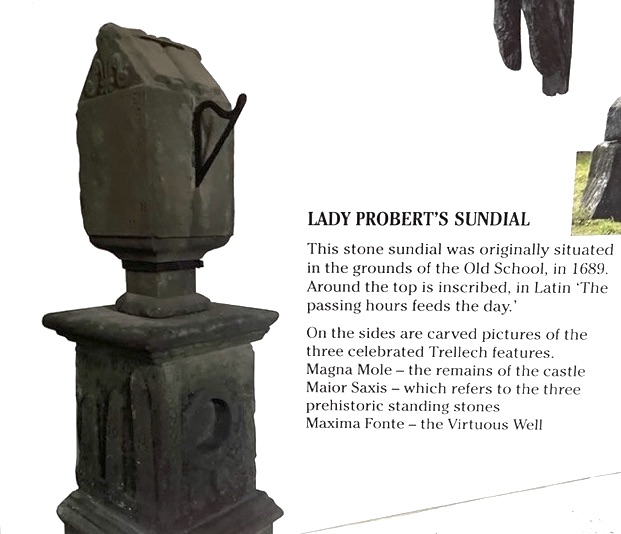
Below the dial are inscriptions on the substantial columns, with carvings that relate to the 3 features of historical importance to the village and its community: Tump Terret; Harold’s Stones; and Virtuous Well.
GRADE I † Early C14 with earlier origins; reconstruction & restorations 1890s. An exceptionally fine and well preserved medieval church (Cadw); One of the finest churches in the county (PEV). Coat-of-Arms of Charles II dated 1683. Weathercock of 1792. You need no further recommendation. 5m S of Monmouth. 51.7459 / -2.725 / SO500054
DIAL
St Nicholas . Trellech . Mon – Cube Multidial
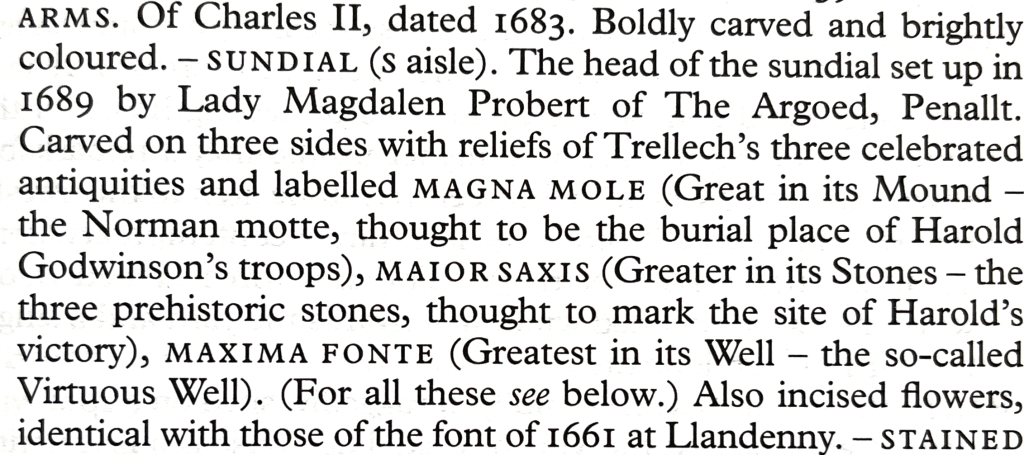
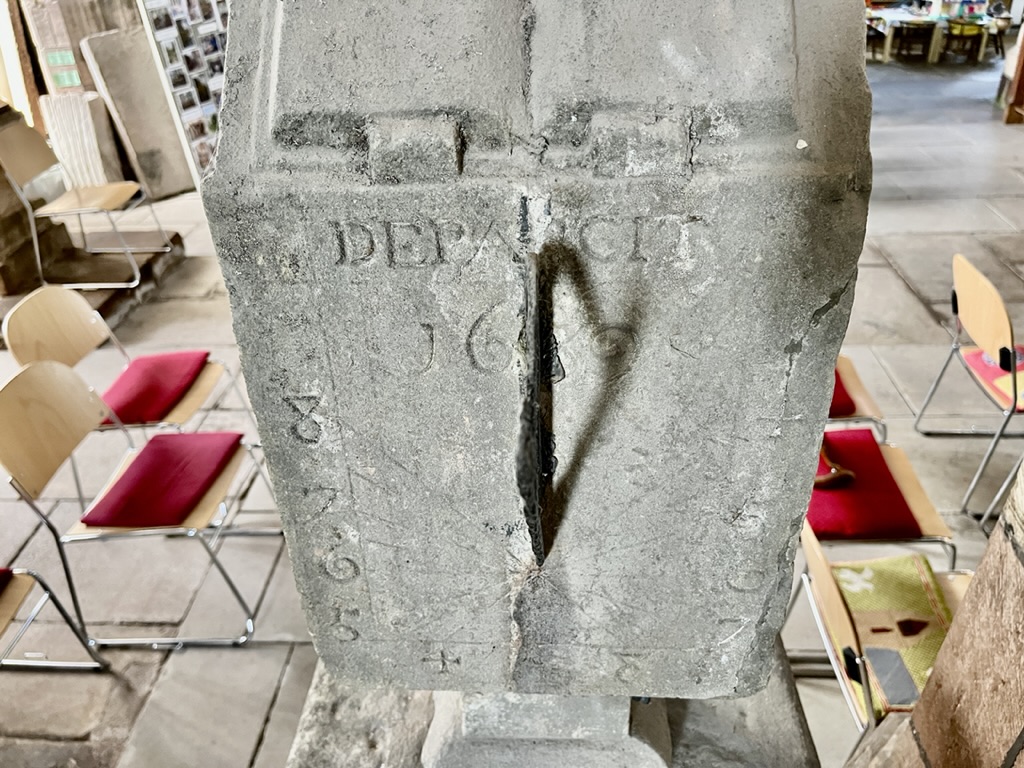
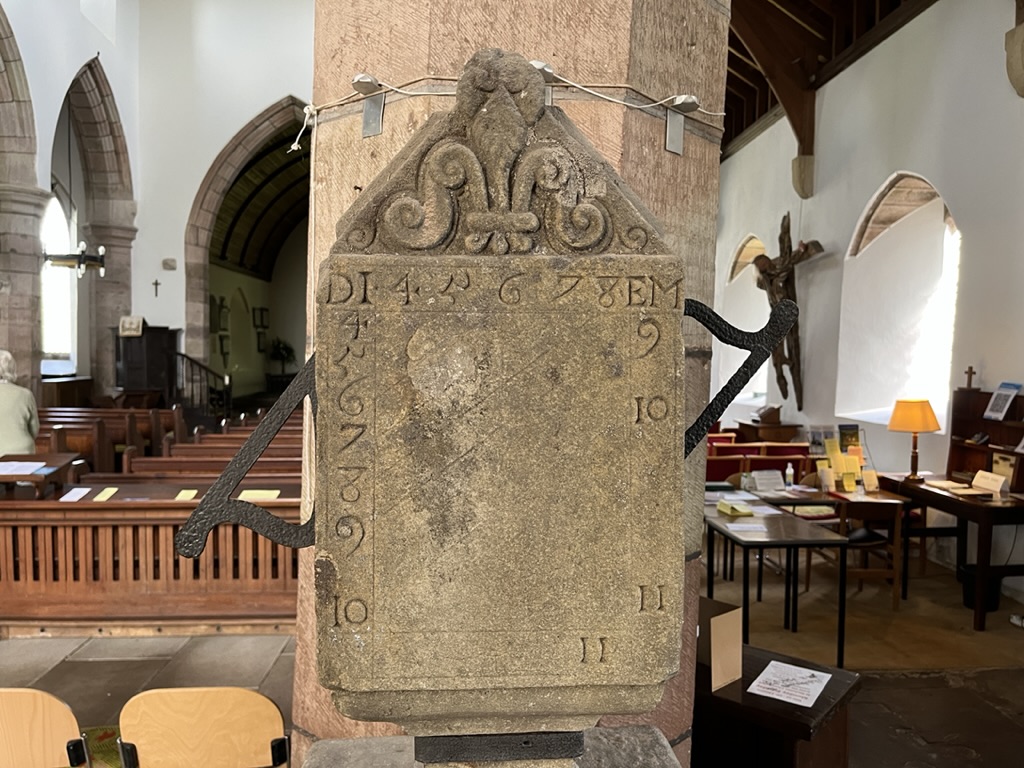
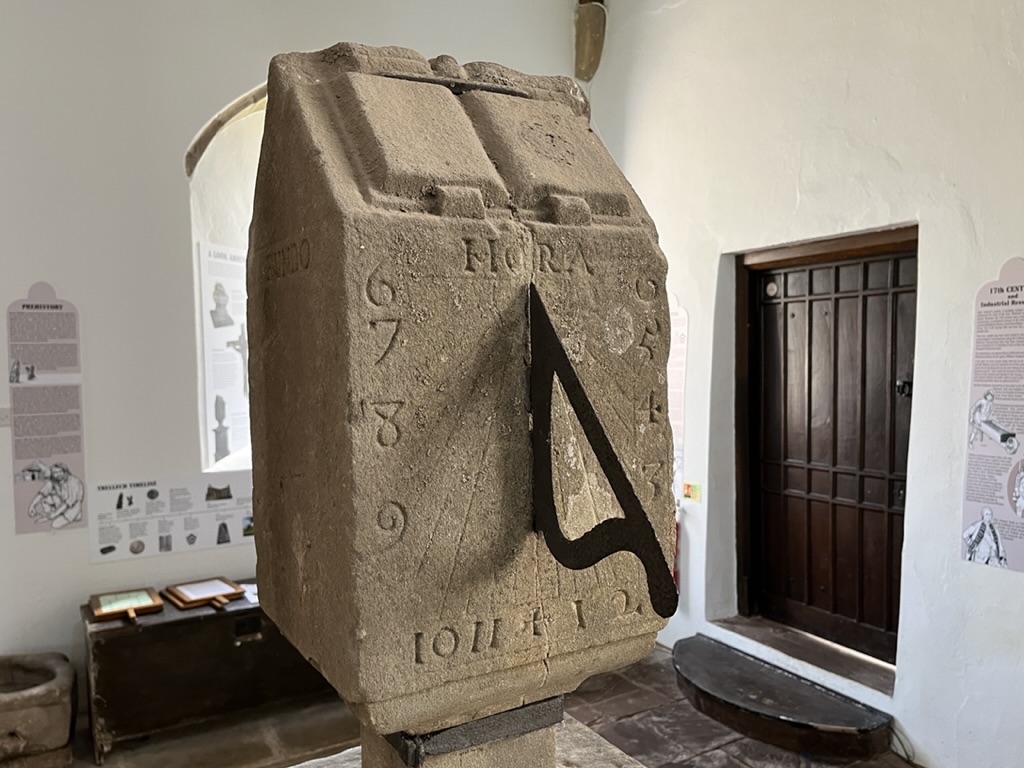
A wonderful C18 cube dial dated 1689, the gift of Lady Probert. Once, it stood in the village near the school. It was moved in 1895 and one source suggests that a concrete cast was made. The Latin inscriptions on the dial are descriptive of 3 features that are of historical importance to the village: Tump Terret; Harold’s Stones; and Virtuous Well. The details (PEV) are:
The detailed BSS record adds further details, including the full Latin motto on S, N & E faces: EUNDO HORA . DI…EM . DEPASCIT (The Hour Itself Consumes the Day).
Also included are the inscriptions on the square stone below the dial: 1. Terret Tump – O QUOT HIC SEPULTI (O How Many Buried Here); 2. Harold’s Stones – HIC FUIT VITOR HAROLD (Here was Harold Victorious); 3. DOM MAGD PROBERT OSTENDIT (Lady Maud Probert set this out to view).
DIAL DETAILS
SOUTH FACE
WEST FACE
NORTH FACE
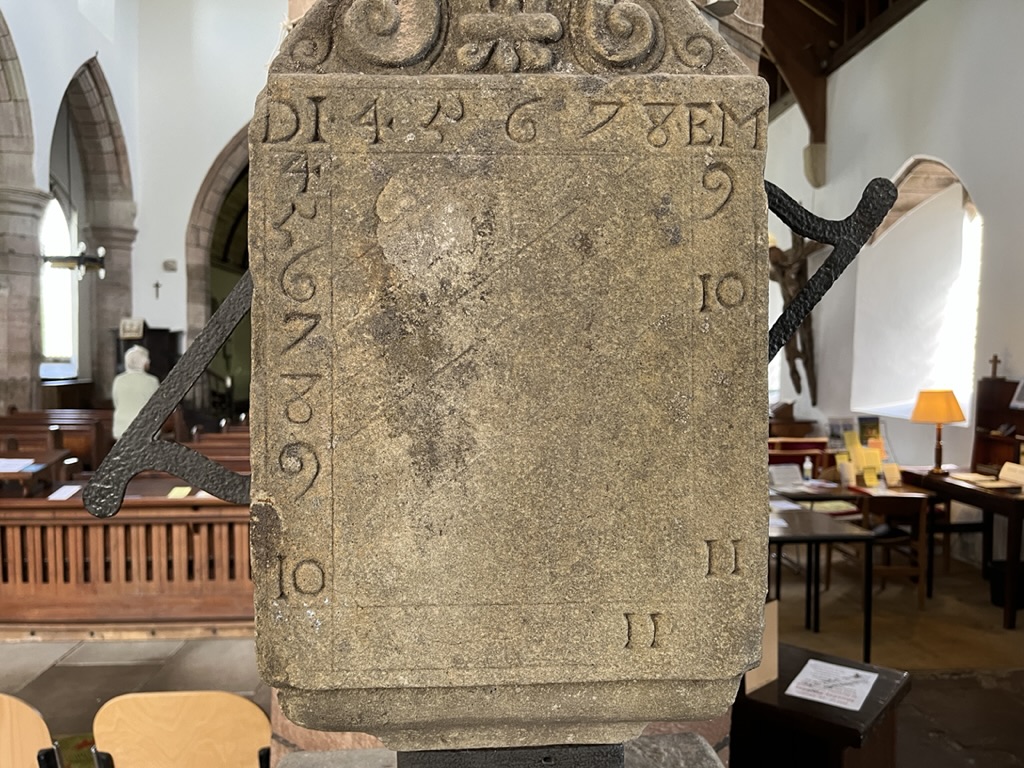
EAST FACE
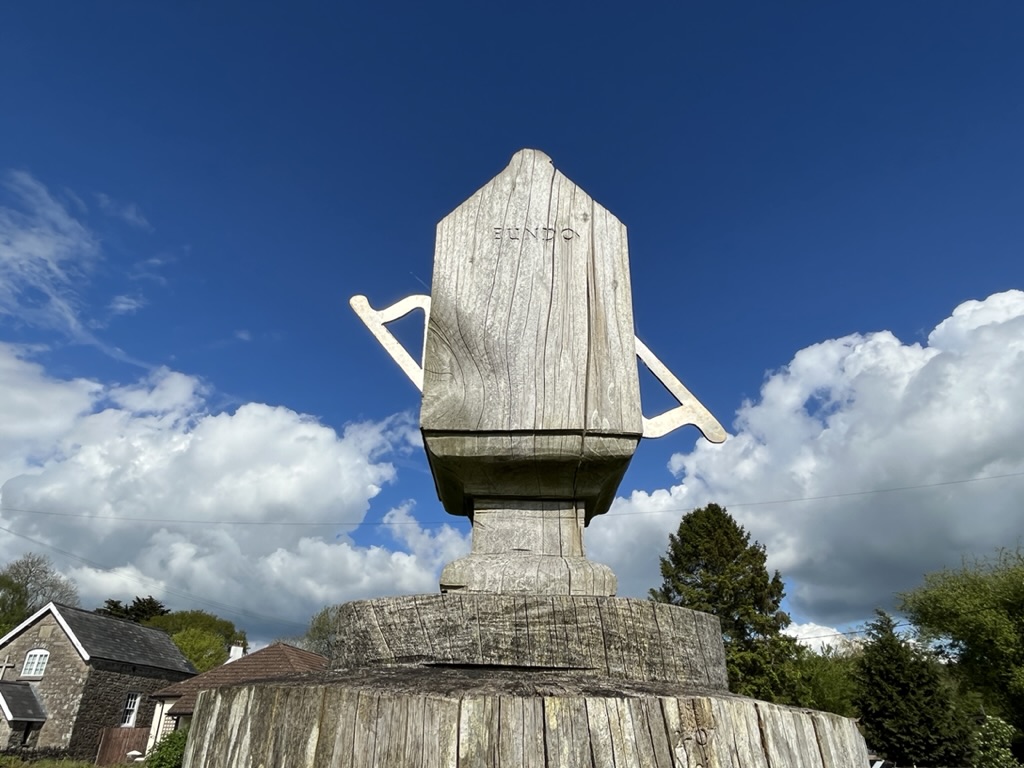
PART 2 will examine the excellent modern wooden replica (out)standing in a small field by a crossroads. It has been beautifully designed and is a dial of distinction in its own right.
GSS Category: Cube Dial; Multiple Dial
All photos Keith Salvesen; Pevsner extract Gwent & Monmouthshire; BSS records; church noticeboard
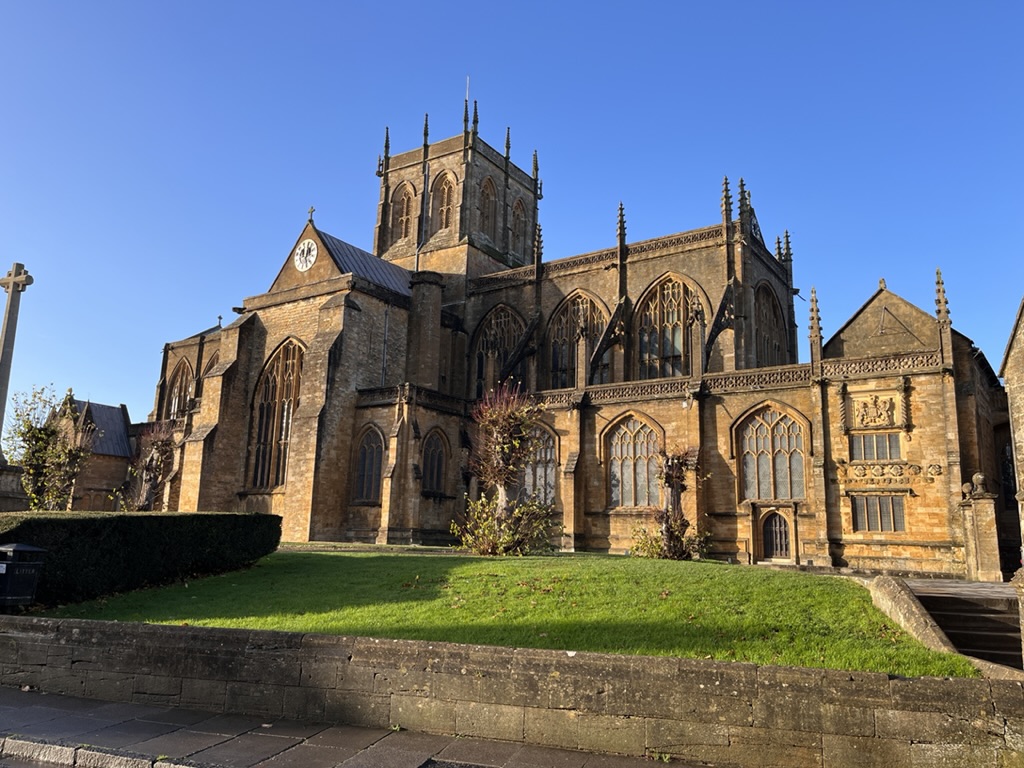
GRADE I † Founded by St. Aldhelm in AD 705 as a Saxon Cathedral, Sherborne Abbey became a Benedictine monastery, and following the Dissolution of the monasteries, a Parish Church of some splendour. Of all the architectural features, the astonishing [earliest majorPEV] fan vaulting is arguably the finest. This is not the place for discussion of the merits of the church. The Wiki entry is a helpful source for an overview of SHERBORNE ABBEY
St Mary the Virgin . Sherborne Abbey . Dorset
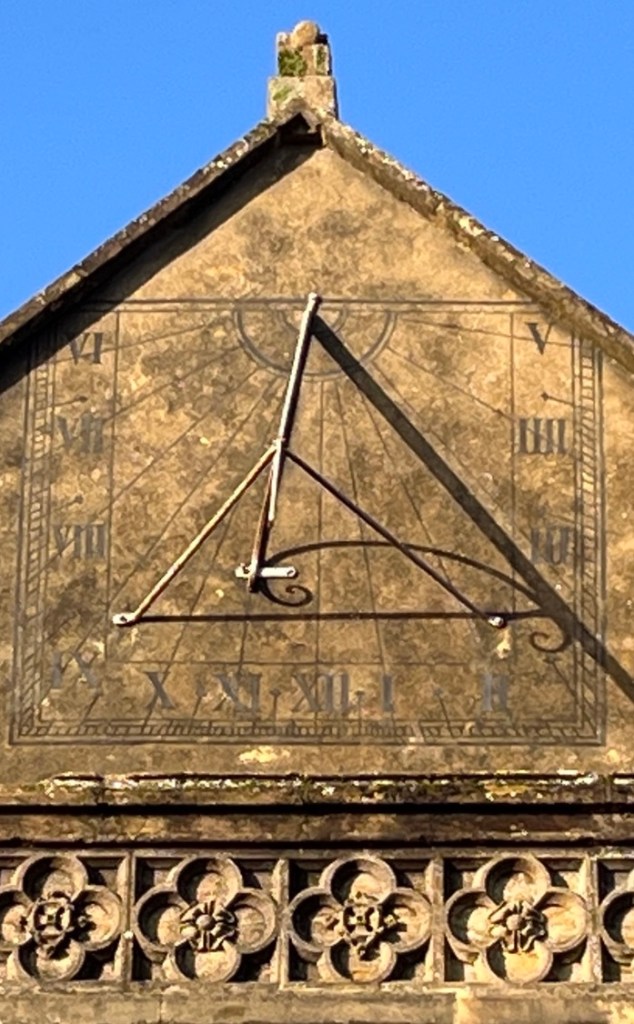
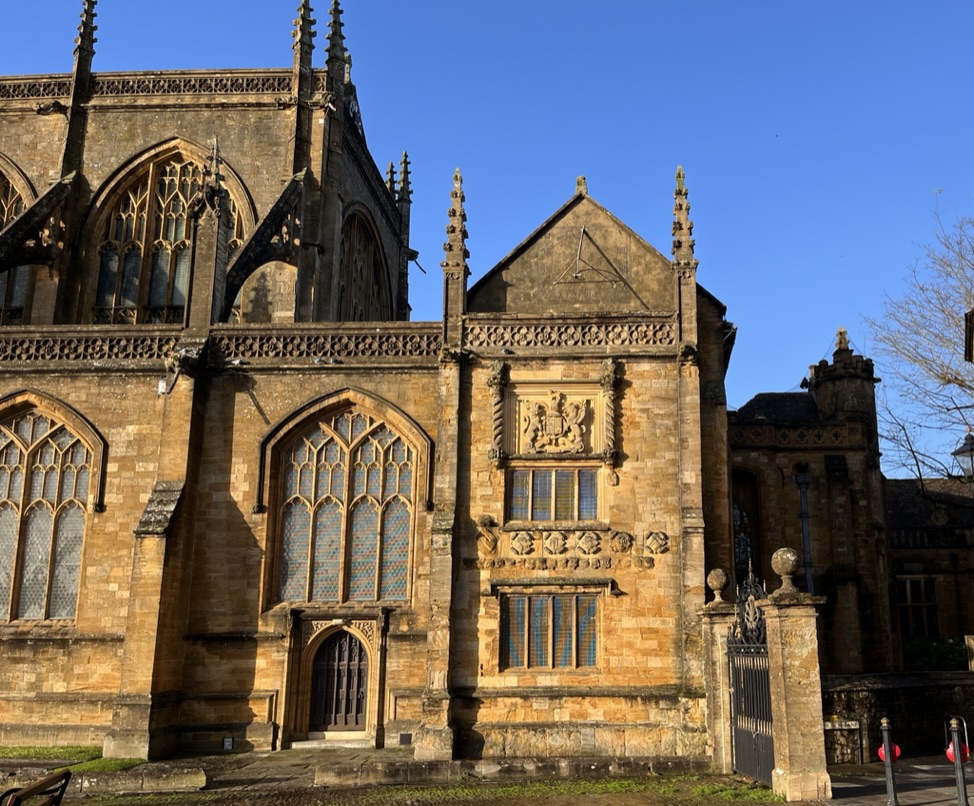
The large Vertical dial at the E end is impressive and visible from some distance. The Old Shirburnian Society records:
The south-facing vertical dial on the south-east end of Sherborne Abbey was erected in 1745 by Sherborne School at a cost of £5.5s.0d. It was built by the Sherborne architect Benjamin Bastard (1690-1776), son of Thomas Bastard of Blandford Forum.
The modern gnomon is effective and casts an attractive shadow; it could be argued that its style and fixings do not quite do justice to a C18 dial.
St Mary the Virgin . Sherborne Abbey . Dorset – Vertical Sundial
The gallery above might suggest overuse of saturation, but the photos – at various distances to show other features – were taken on an iPhone on a bright sunny early winter’s morning, and are un-enhanced (not always the case, I must admit). We were fortunate enough to be married in this glorious building.
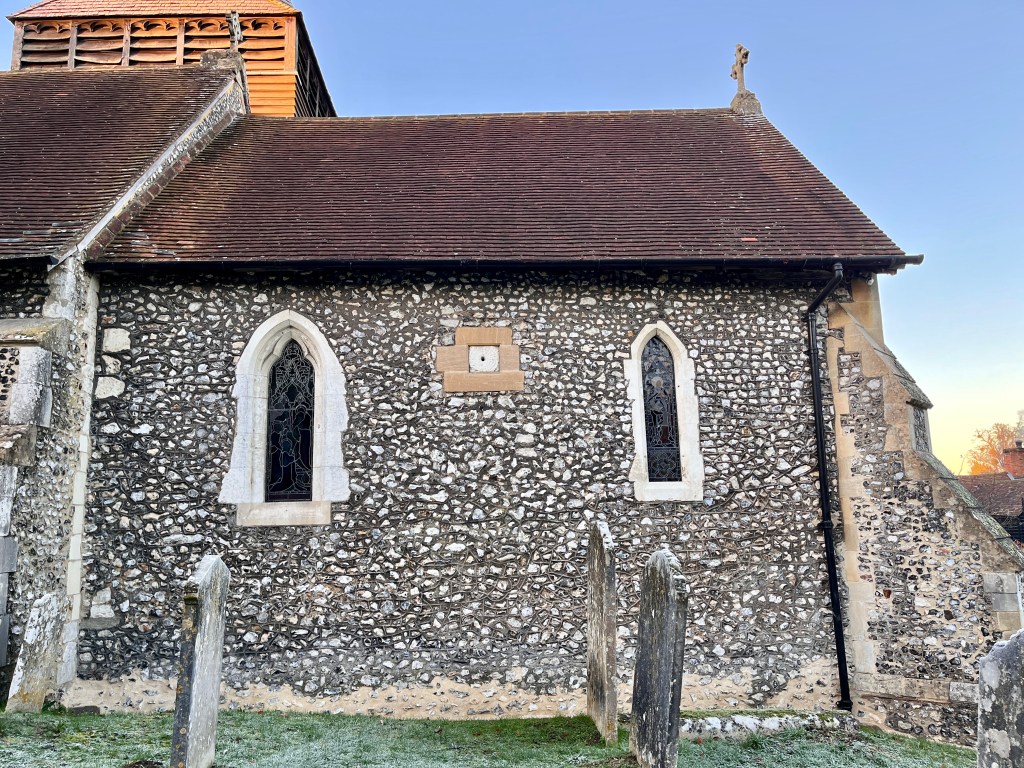
GRADE II* † Saxon origins, mentioned DB, no remnants remain. Nave dated c1180; rebuilding ± 1200, chancel added; tower added then or soon after. Mid-Victorian restorations; shingled spire rebuilt 1913. Much of interest within the church – see HERE for highlights. 6m NE of Guildford. 51.2509 / -0.5052 / TQ044512
DIALS
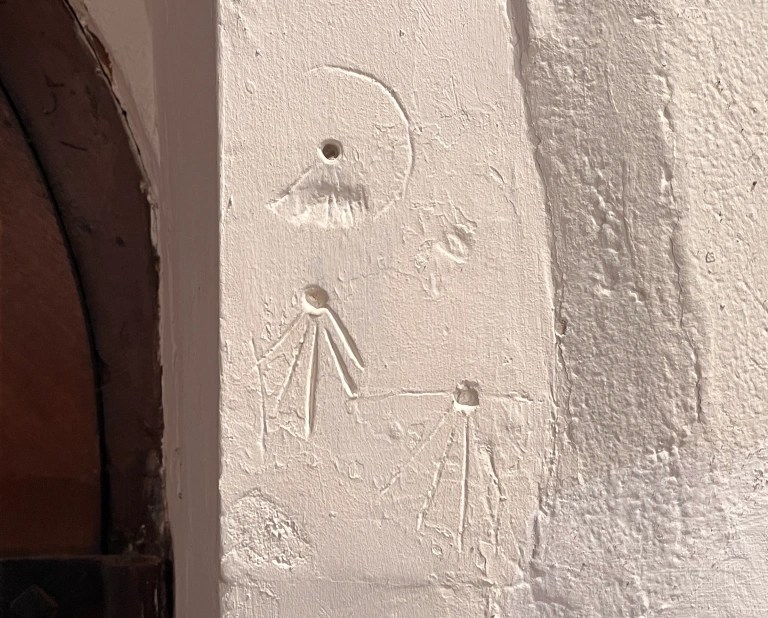
There are 4 dials, each of significance. On the S wall of the chancel, there is a wonderful dial framed in ashlar stone as if to emphasise its qualities. Inside the church – not just inside the porch – are 3 dials cut on the same stone. Interior dials are almost inevitably the result of relocation and are scarce enough (cf THORNFORD); 3 together must be very rare.
DIAL 1
POSITION Relocated from a buttress to the S wall of the chancel, enclosed by a surround of 4 stones set into the local flint and described elsewhere as …marred by the addition of an inappropriate stone frame (an arguable view?). BSS notes a possible inversion based on variations in the size of the dots; but that would nullify the point of the emphatic noon line design. Unless the 4 pocks were added later of course…
DATE The dial seems so sophisticated in design and execution that I had thought it ±C15. However BHO records a stone on which is cut an early circular sundial probably of the 12th century; it has three circles and is divided in twenty-four spaces by radiating lines; four dots mark the hour of noon and a small cross that of six p.m. A Surrey survey records Dated c 1180 by Johnston (1900, 74), SyAC, 21 (1908), 83-100. This date certainly corresponds to the construction of the nave / the additions soon after. So this is a very early dial probably dating from the construction of the church in its present form and clearly merits its prominent location and ashlar protection.
DEREK RENN in his research on the dials of Surrey considered this dial to be the most elaborate in the county, describing it as three concentric circles divided by 24 equidistant radii, having drilled holes at the intersections, as well as on the arms of an external cross and beside another line at right angles to the cross.
HOW THE DIAL WORKS AS A CALENDAR
DR also explains ingeniously how the dial might have worked: This would function best as an equatorial dial… mounted in the plane of the equator with its upright pointer parallel to the earth’s axis and not vertical, but even then little more than one-half of the dial would be necessary. A possible explanation is that the dial also functioned as a calendar: a peg was moved daily from hole to hole, the cross marking the point at which the peg progressed to the next circle. Another peg counted the number of complete circuits of the ‘board’ for the year on the four separate holes, with the odd days as well. In arithmetical terms: 24 x 3 x (4+1) – 360, +(4+1) = 365
DIALS 2 – 4
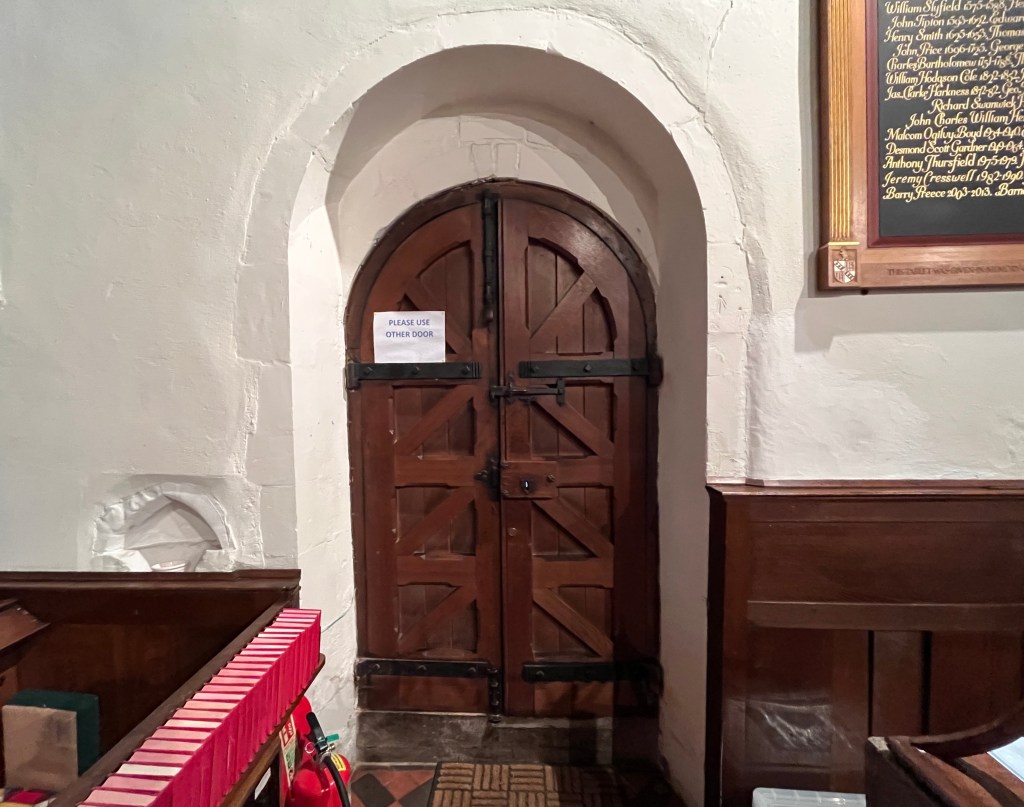
These 3 dials are closely grouped on a single stone on the north face of the west jamb of the south doorway. It would be interesting to know where they were originally located, and when / why they were moved to their present position with a purely decorative function.
DIAL 1 has 7 lines including the horizontals in a late a.m. to early p.m. formation. They are rather untidily incised and only 6 are clearly distinguishable. They are within a very faint perimeter curve, with 3 extending beyond it.
DIAL 2 has 5 lines radiating from a large (for its size) style hole. The lines are interestingly formed: 2 lightly cut a.m. lines; 2 deeper cut p.m. lines and extended noon line. The incisions of the latter 3 are unusually decorative, with one being slightly wedge-shaped. Overall, it seems clear that the afternoon was the most important time for daily religious purposes.
DIAL 3 is fully encircled with one clear line roughly corresponding to Tierce. The other 2 (3?) are faint and rudimentary in comparison. Another large style hole completes the design.
GSS Category: Scratch Dial; Multiple Dials; Early Dials
All photos: Keith Salvesen. Research material: usual resources BLB HE BHO &co; David Ross; Derek Renn
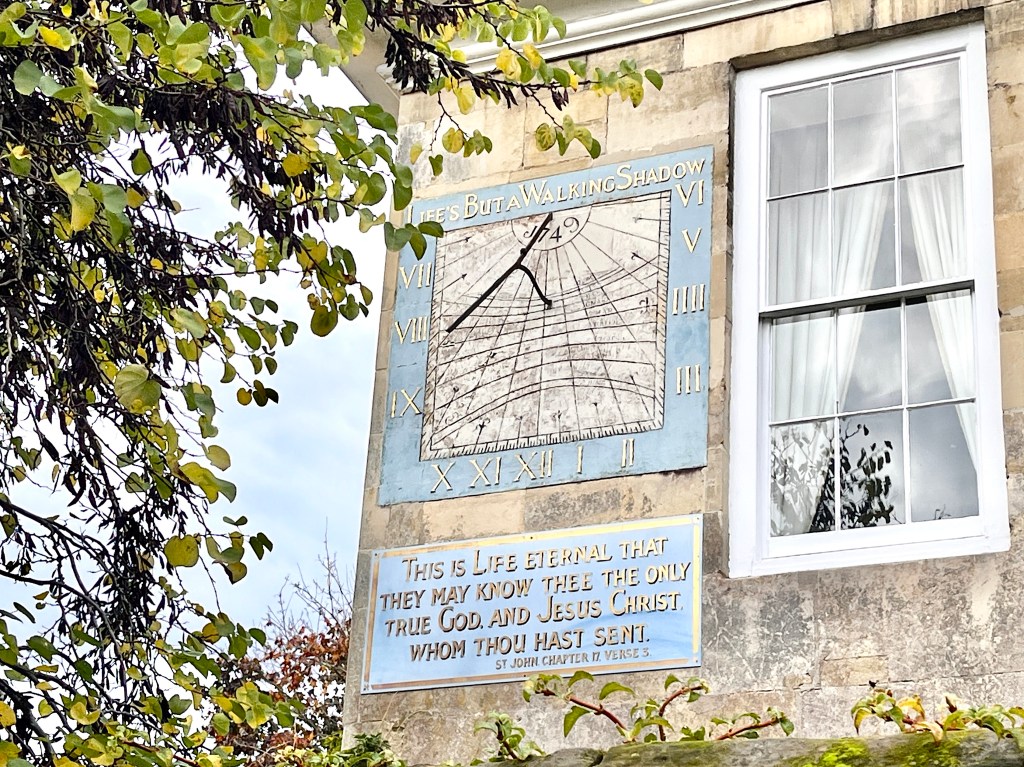
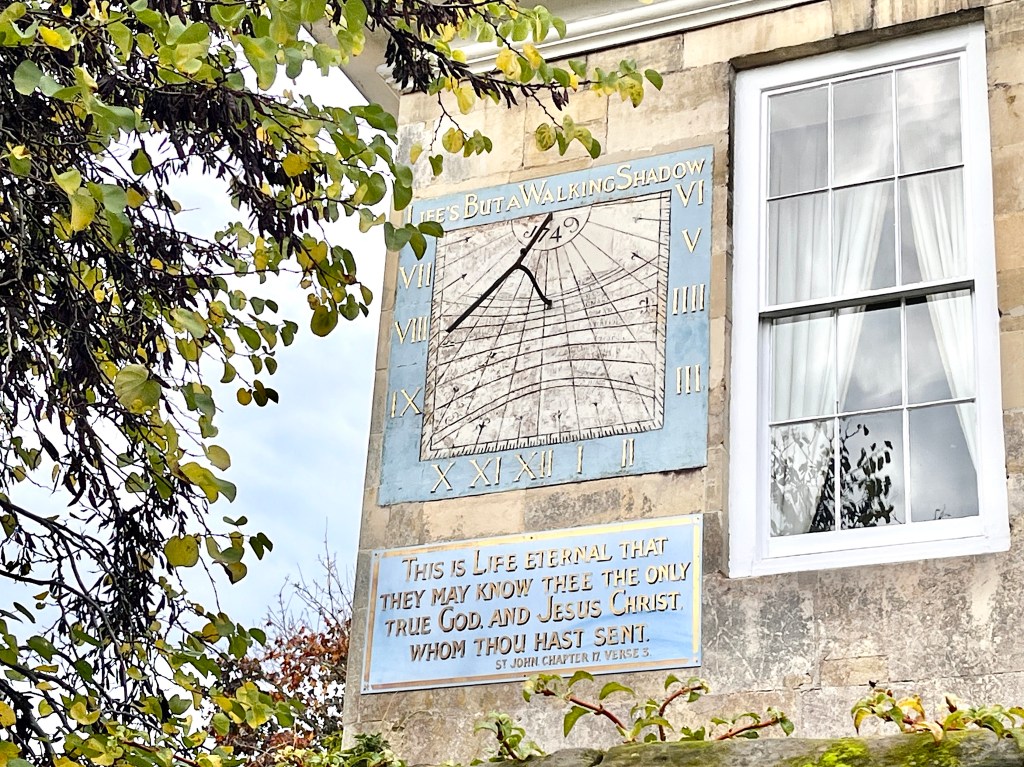
Malmesbury House . St Ann’s Gate . Salisbury . Wilts – Vertical Dial 1749
The Close in Salisbury has plenty to recommend it besides a central building for which superlatives are inadequate. Malmesbury House (GV I) by St Ann’s Gate has a particular claim to fame in sundial terms, with the context succinctly explained in the image below. 51.0659 / -1.7938 / SU145296
The very fine sundial on the house is dated 1749. The motto is part of the familiar speech taken from Macbeth Act 5 Scene 5 as Macbeth reacts to the news of Lady Macbeth’s death. It’s not exactly uplifting.
Below is a short text from the Gospel of St John. The dial itself is in very good condition. My amateurishness precludes any meaningful interpretation of the scientific aspect. I will add any significant details in due course.
Malmesbury House . St Ann’s Gate . Salisbury . Wilts – Vertical Dial 1749
Broughton Grange dates from early C17. Gradual development resulted in a fine house with an extensive estate owned by the Morrell family and associated with the Bloomsbury Group via Lady Ottoline. The whole estate was bought in the 1990s. New gardens have been beautifully landscaped and an arboretum created. The property is renowned as one of the finest contemporary private gardens, to which there is public access. You can find out more here: BROUGHTON GRANGE 3m SW of Banbury 52.0415 / 1.3776 / SP4338
The dial stands at the centre of the Parterre and Rose Garden, overlooking the smart box hedges. It is dated MDCCLI (1751). I’ve spent some time trying to figure out the inscription, some of which cannot be read even with a magnifying glass. I have settled (provisionally) on Tempora Servio, ‘I Serve the Times’ or a similar conjunction of tempus and servere. This formulation does not specifically appear in eg the expanded edition of Gatty; however tempora is in common usage, often with its companion, mores. Any other suggestions welcome, a definitive ruling would be ideal.
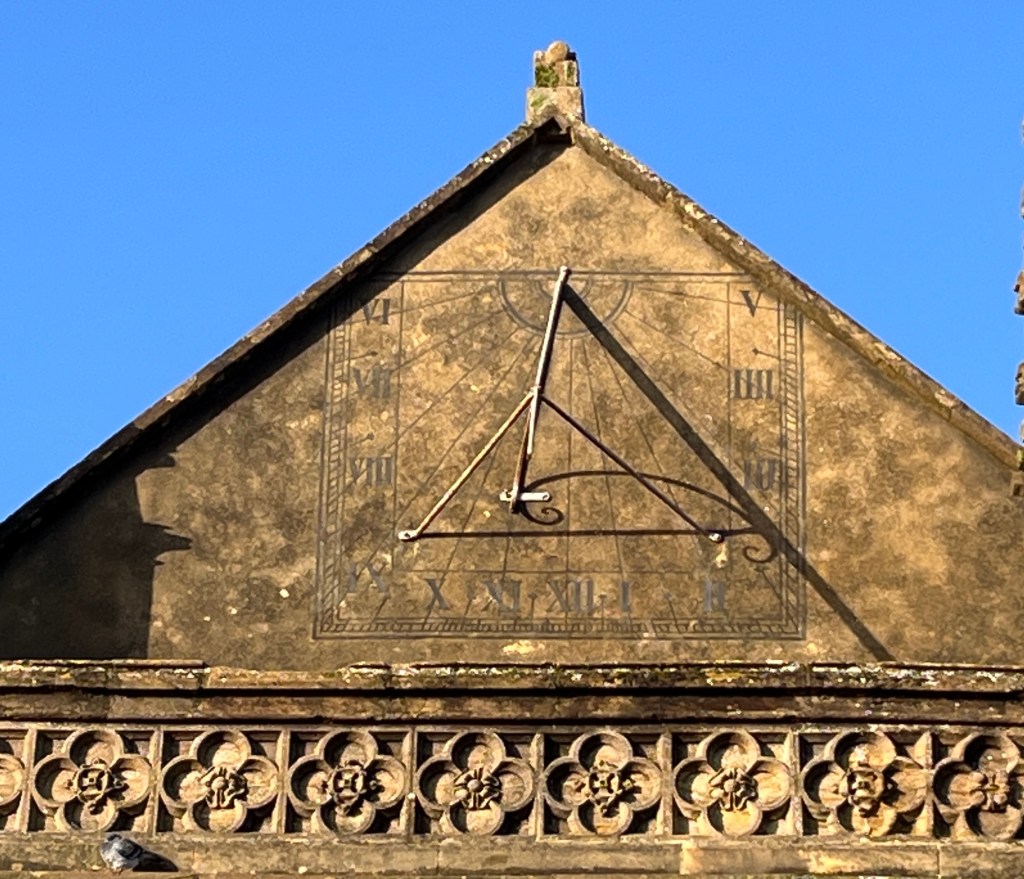
GRADE II* † C12 origin; alterations / enlargement in C14, C15, C16; restored 1872 (Wyatt). Walls mainly rubble stone and flint. A lovely setting, with a fine manor house. Much older-seeming even than the ubiquitous ‘Hardyesque’ description in these parts. Subtly hidden away 8m NE of Dorchester. 50.7827 / -2.3198 / SY775981
From the ground, this is a difficult dial to admire. It is high up, eroded, damaged, and gnomon-less. It would be easy to dismiss it as a disappointment after you have negotiated the narrow lanes that lead circuitously to the church. Luckily I brought a real camera with me (for scratch dials I just use my phone) to catch the details of 3 vertical dials on churches in the area.
The dial, on a rectangular stone slab, is dated 1671, and marks the hours from VIII am to VII pm. The motto across the top reads UT UMBRA SIC VITAAs a shadow so is life, one of several similar motto variants commonly found. The motto is enclosed within the initials A and R. (BHO elides the initials and the motto to form AUT UMBRA SIC VITAR).
































 GAUDIUM SUB SOLE . SUNDIALS . MEDIEVAL TO MODERN