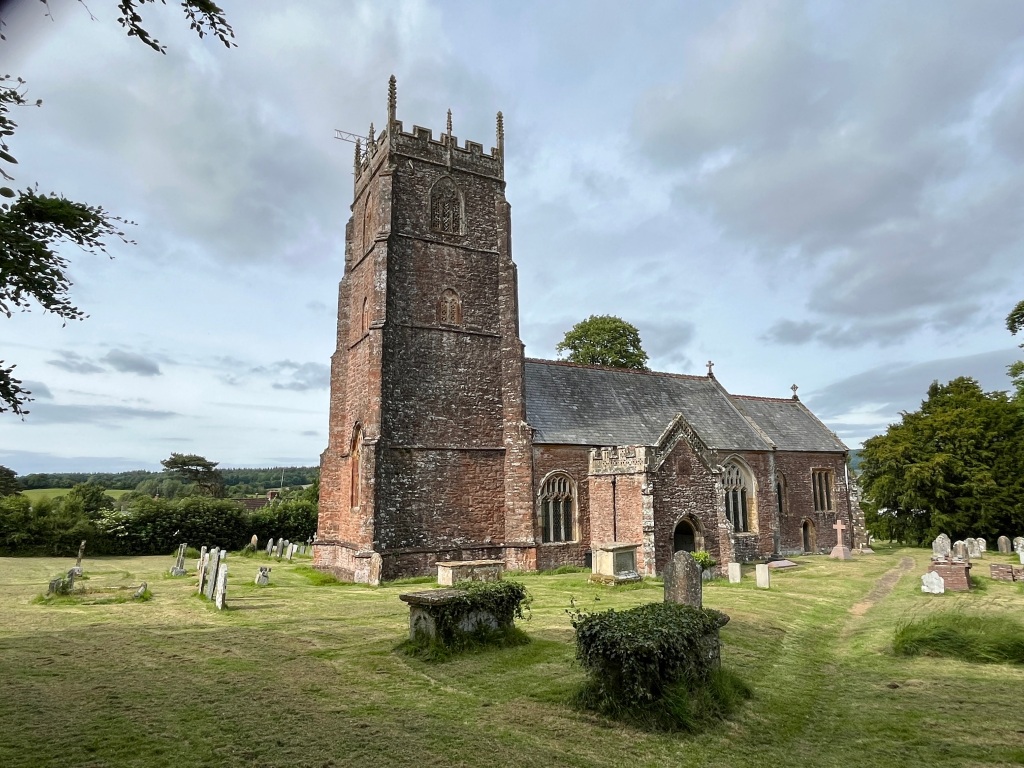
GRADE 1 ❖ Mainly C15, C16; C19 restoration. Plenty of interest for the visitor / church crawler, including C15 wagon roof; particularly well furnished interiorBLB; box pews; fine Jacobean woodwork. Peal of 6 bells (earliest 1613). Inc. by Simon Jenkins in ‘England’s Thousand Best Churches’, with photo. 51.1975 / -2.5873 / ST590444
DIAL
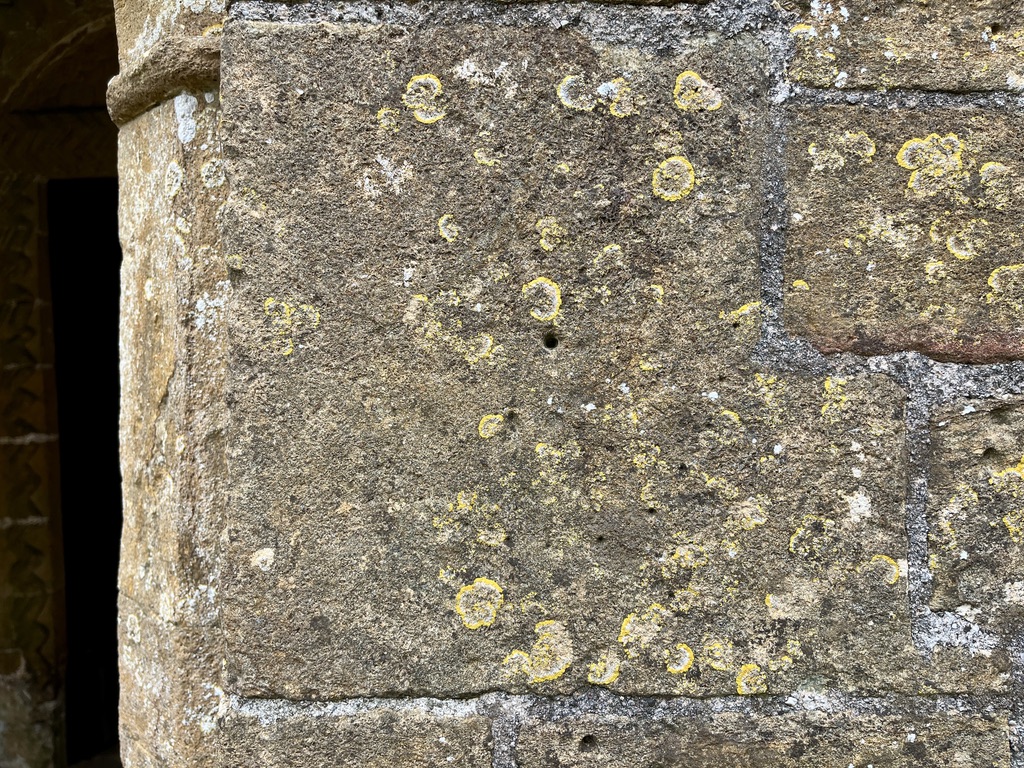
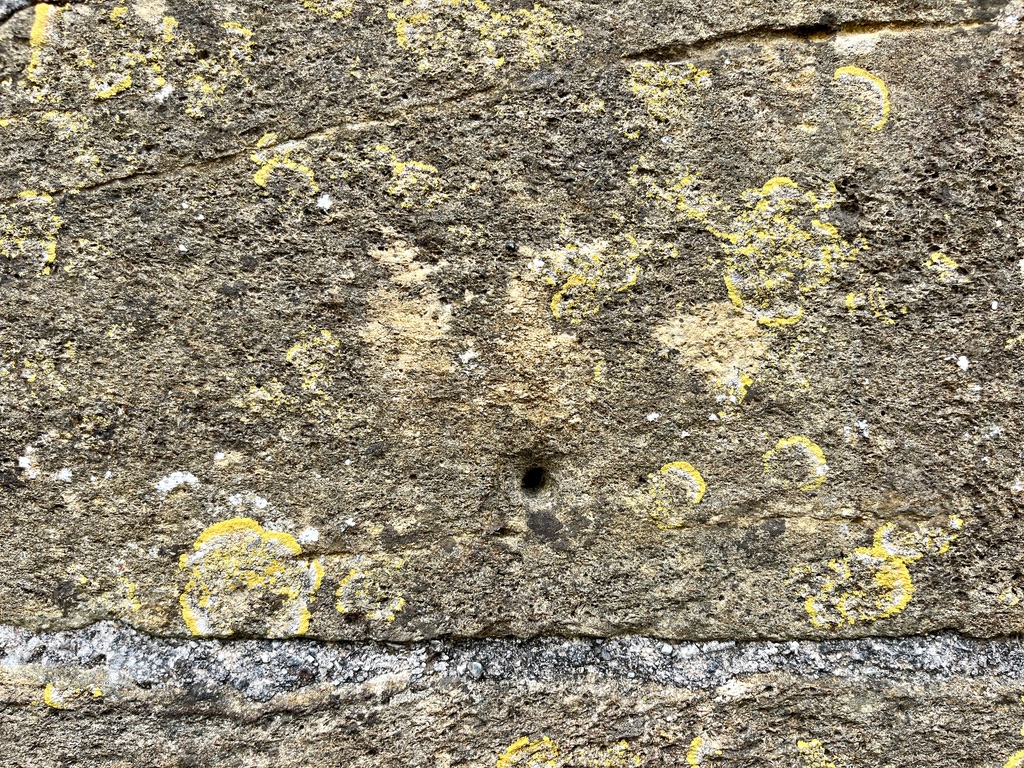
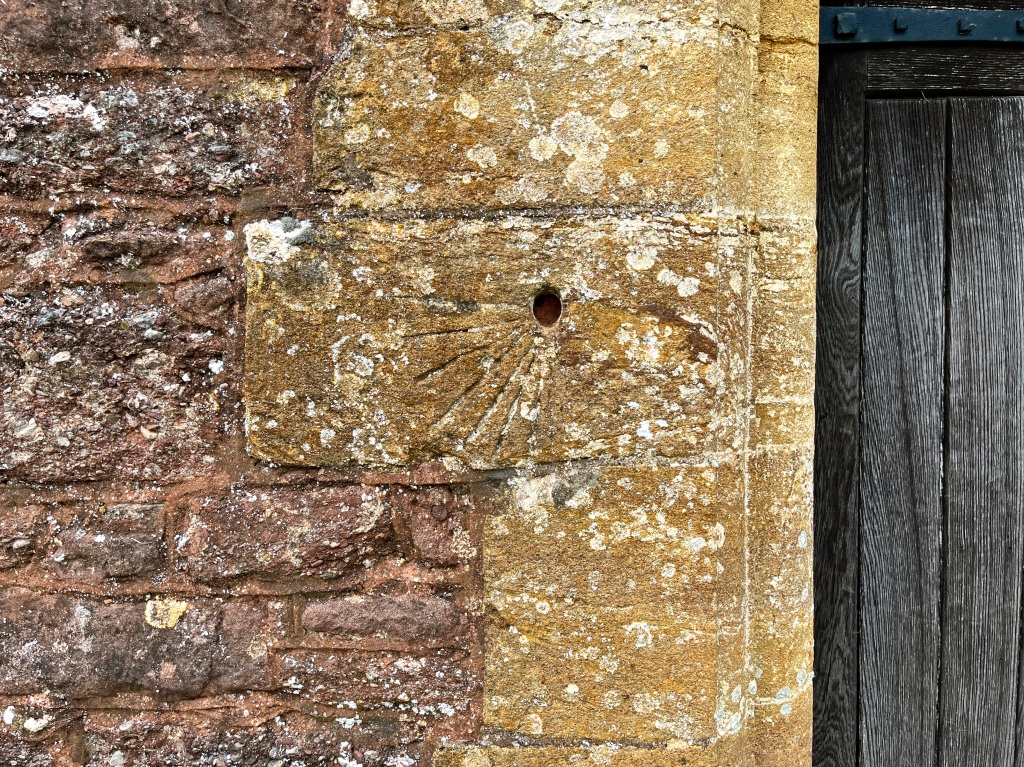
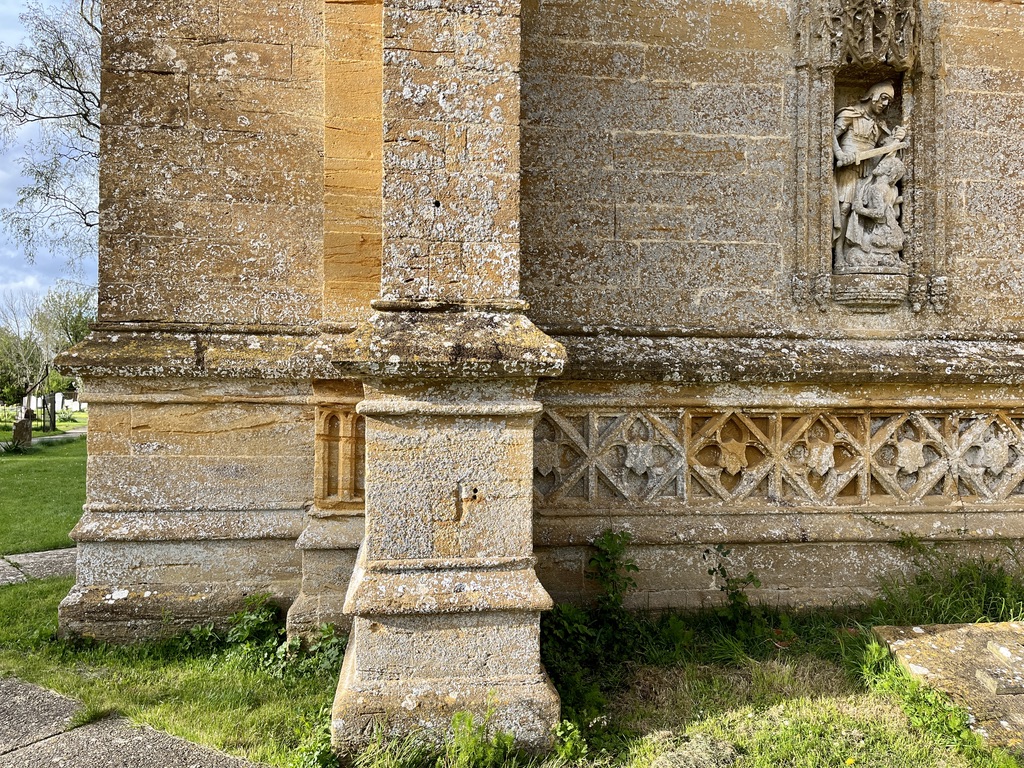
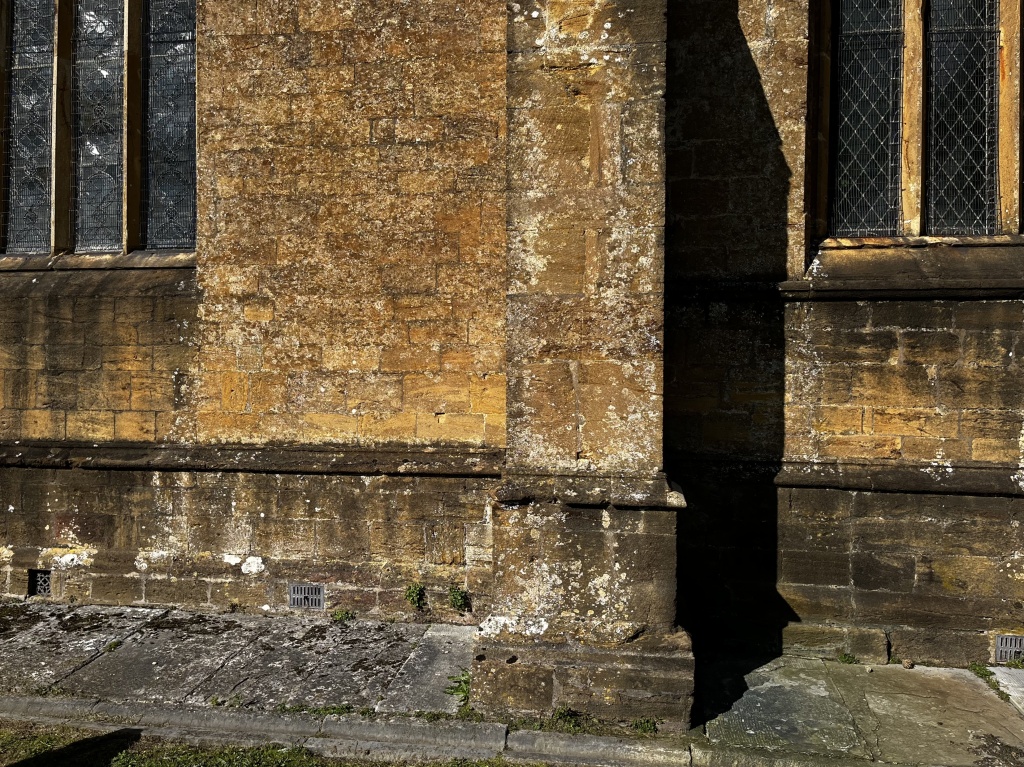
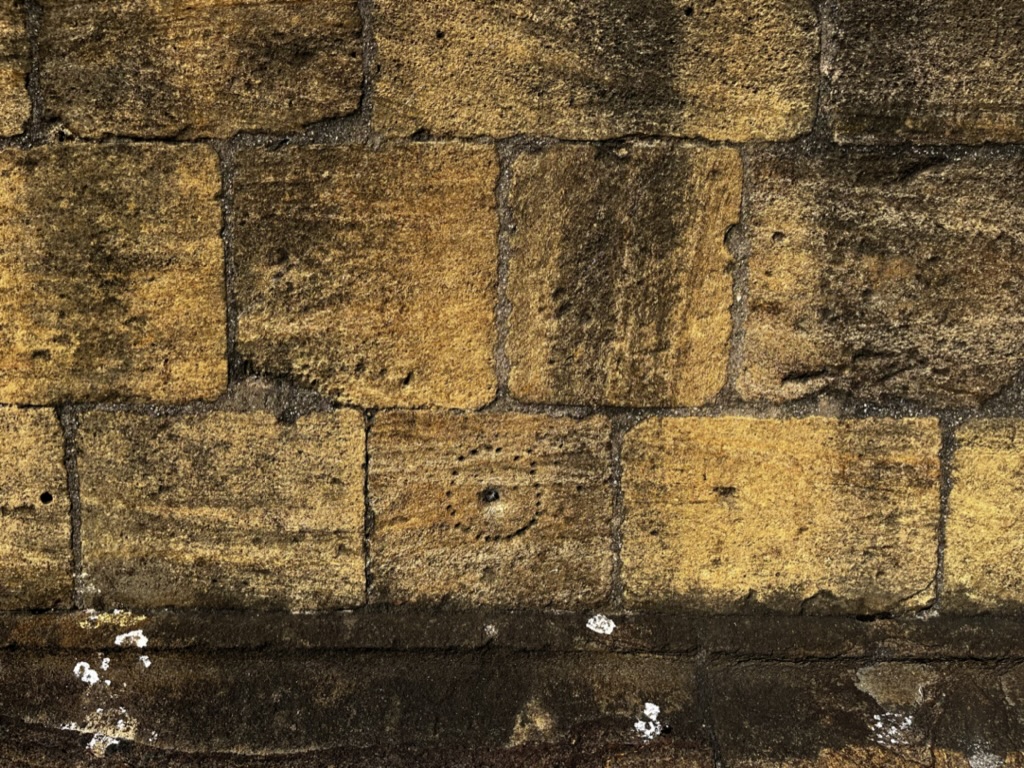
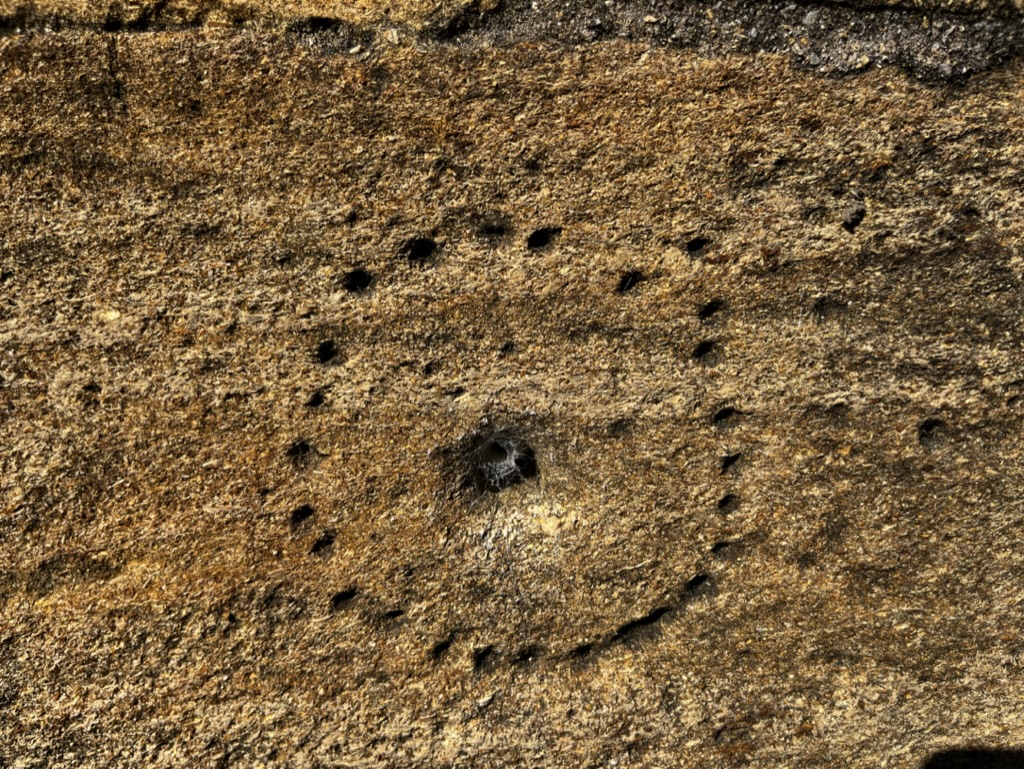
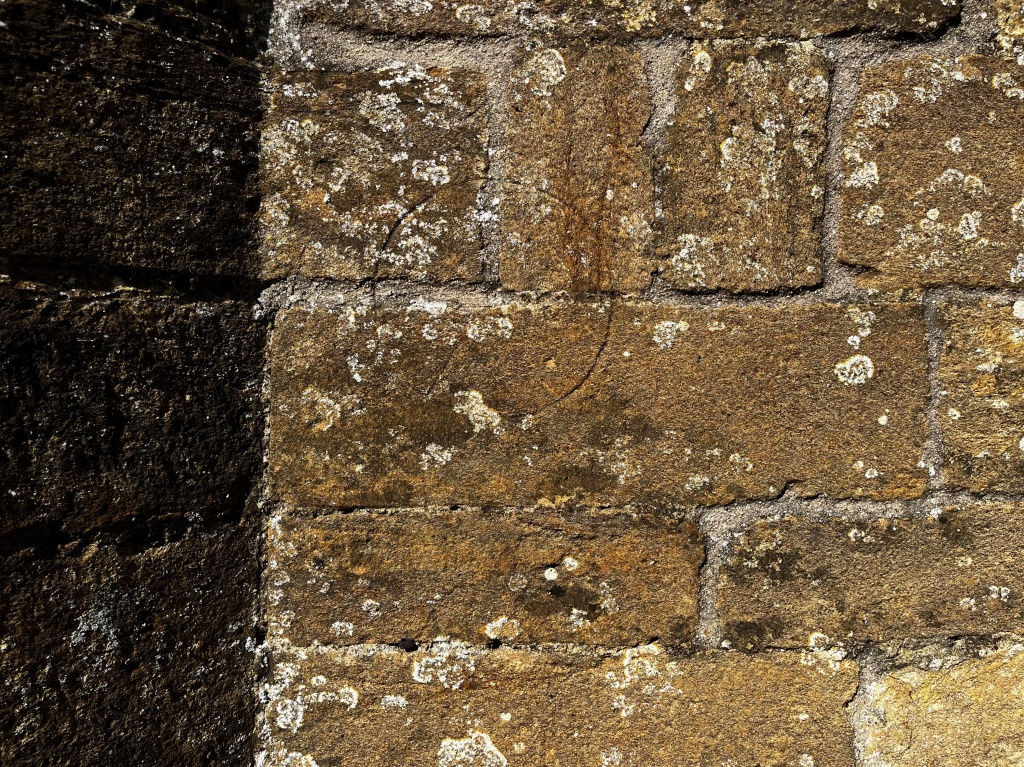
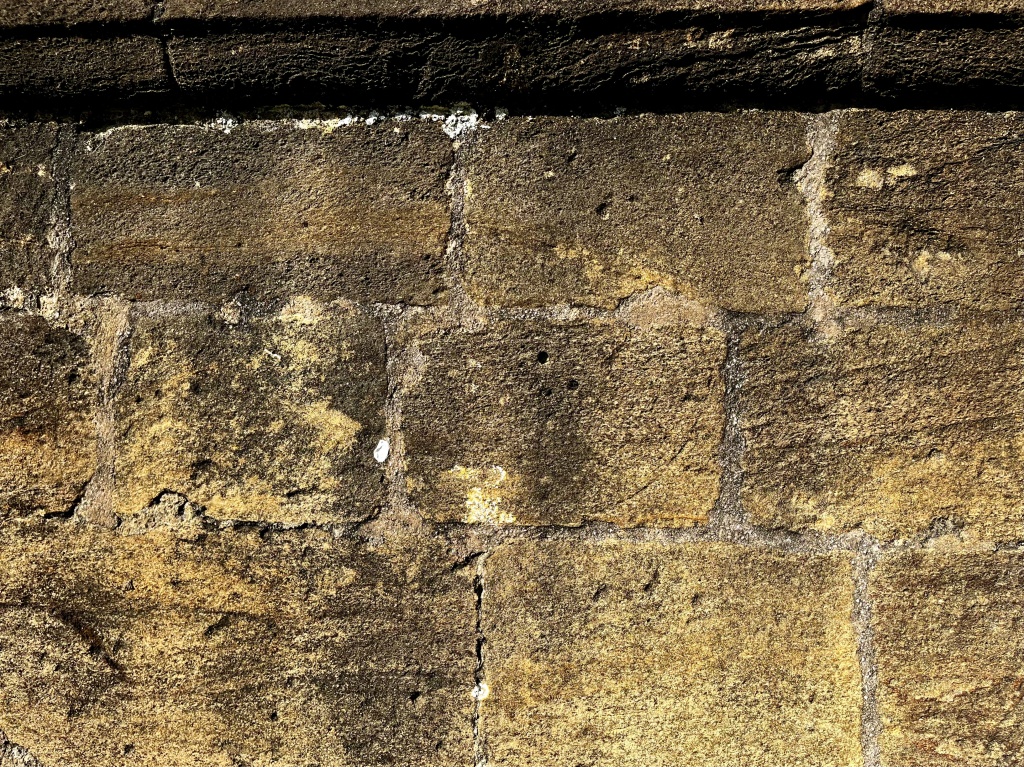
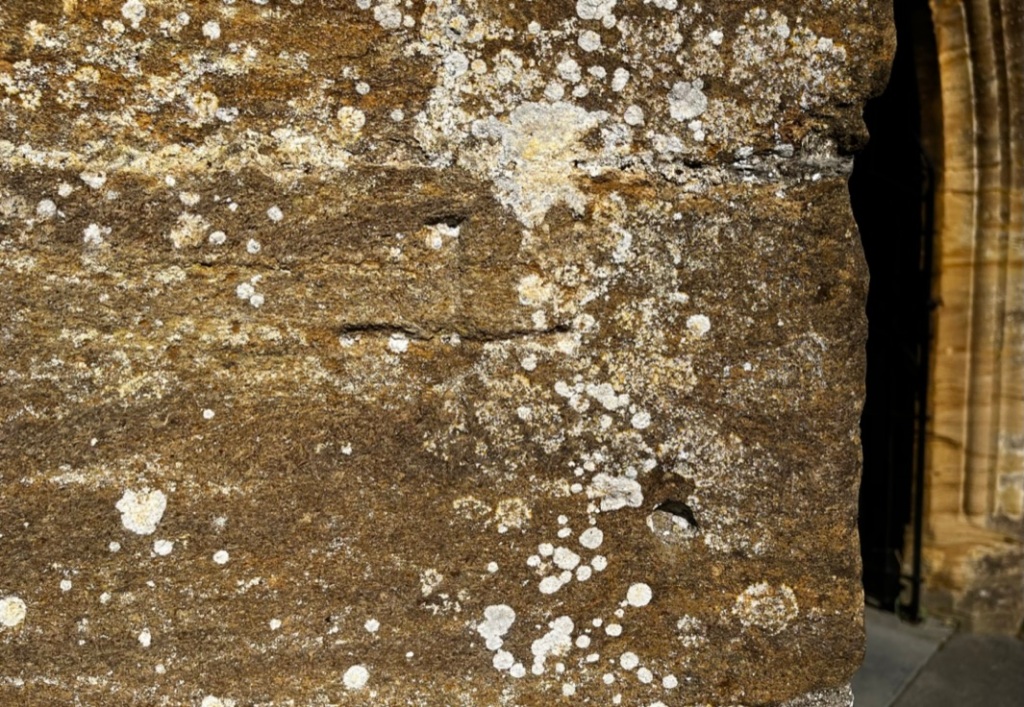
The existence of a scratch dial is debatable. The church was one of the earliest visited by DEH, on October 8th 1911. His record is one of the shortest of his entire project: On the buttress to the W of the priest’s door into the chancel is a stylehole at a height of 5′ 10″ from the ground. There are no remains of either a circle or lines, but from the soft nature of the stone they may have been weathered away.
Points in favour of dial status include its central position on the stone and the height. Against is the peculiarity of the hole itself; and the fact that the stone shows no sign of weathering, even 100+ years later,
GSS Category: Scratch Dial; Mass Dial; Doubtful Dail eg
GRADE II* ❖ Norman origins, C14 work, rebuilt C15, restored 1872. An attractive church both outside and in. Visited by DEH on 6 Oct 1911 on one of his early dial expeditions from Downside Abbey. Roughly halfway between Wells and Shepton Mallet. 51.199 / -2.6094 / ST575446
DIAL
DEH recorded a single dial on W corner of S aisle. He noted a 2.5 inch deep gnomon hole, and commented ‘…this dial is cut on soft red sandstone and has all 12 hour lines… many of them probably added to the original design’. More than 100 years later, only 9 are legible.
GSS Category: Scratch Dial; Mass Dial; Dial erosion
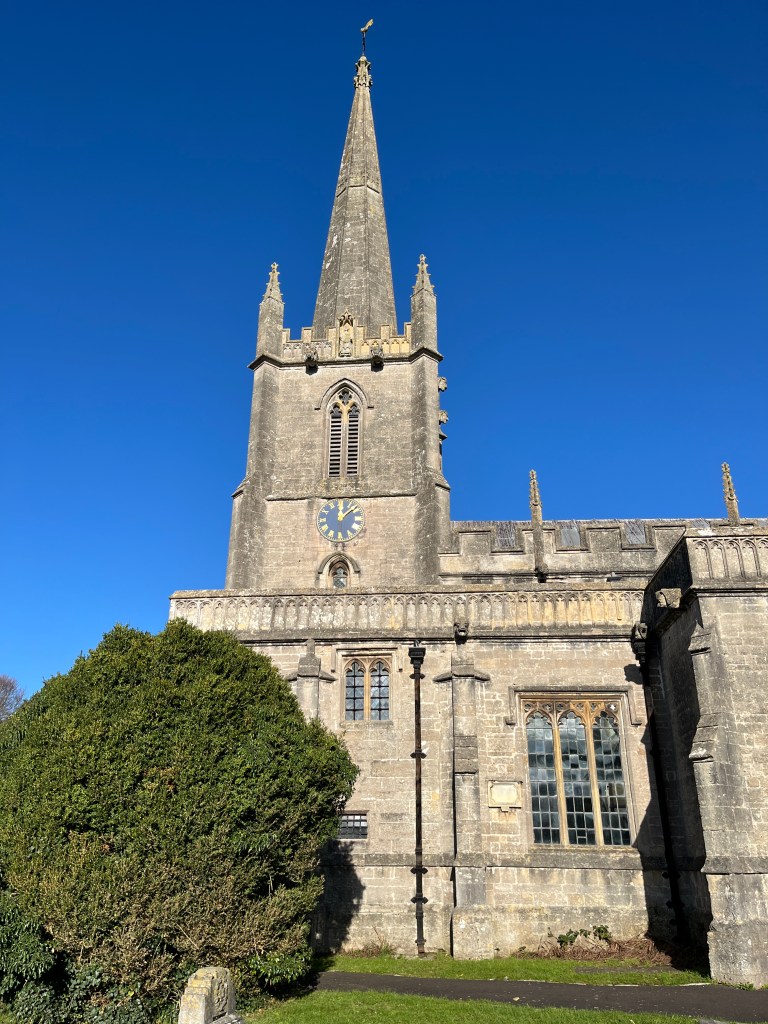
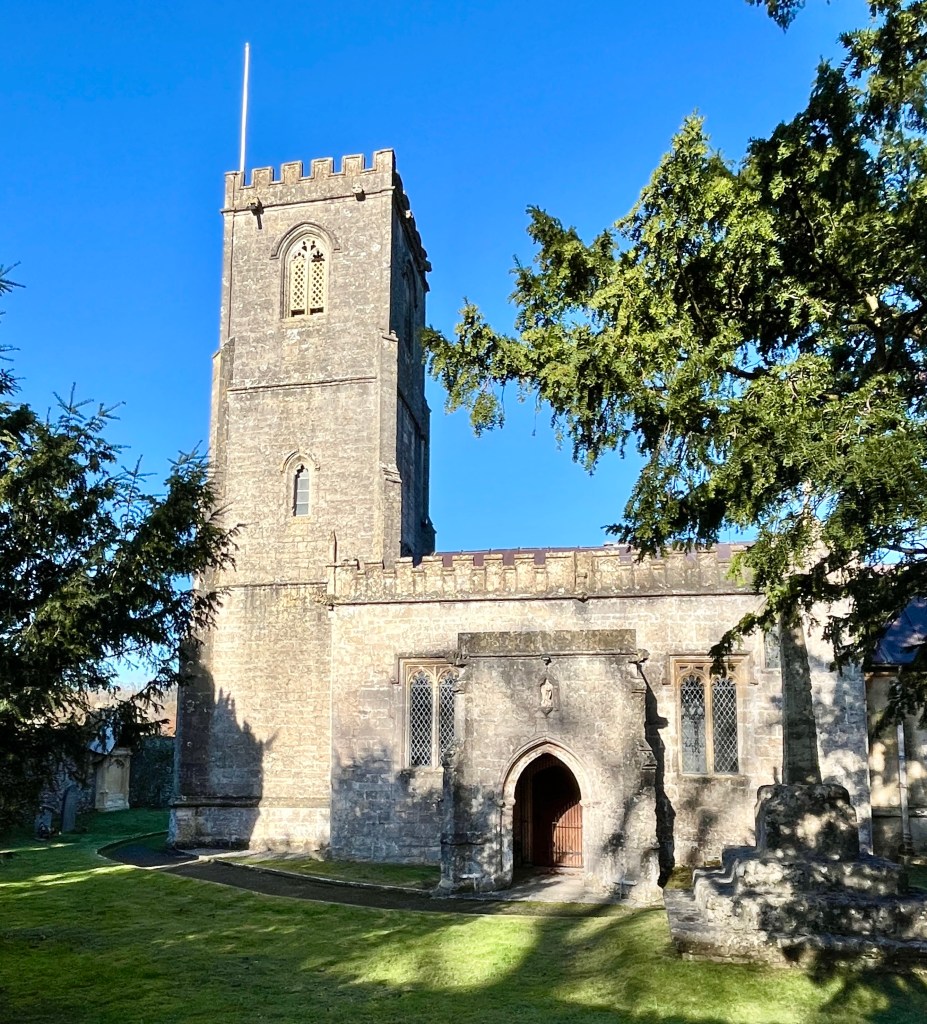
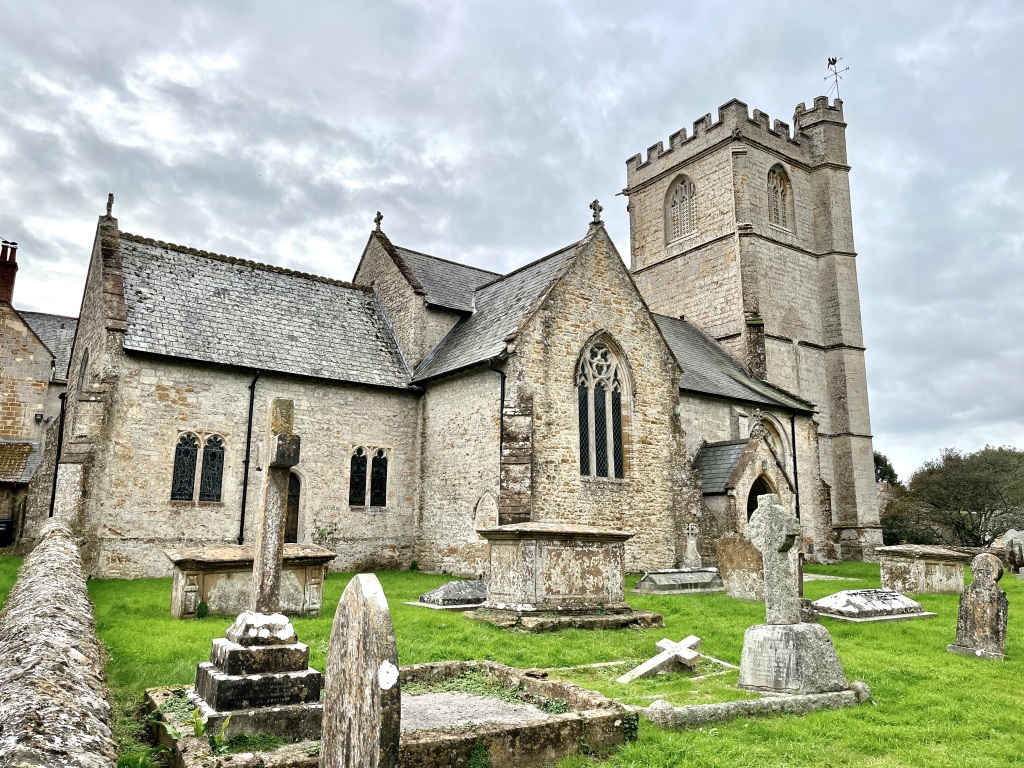
GRADE 1 ❖ C14, C15, restored 1825 by Jesse Gane of Evercreech; further in 1843; late C19 work. Very tall 3-stage ‘Mendip-type’ tower, visible from some distance. Worthwhile interior. Town prosperity partly from silk and enhanced by railway in 1862 – axed by Beeching in 1966 despite intervention by John Betjeman. 51.1463 / -2.5026 / ST649386
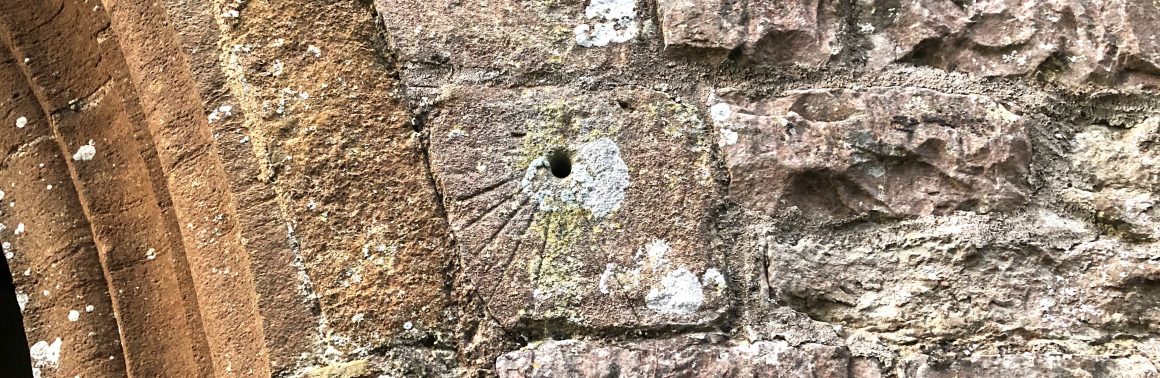
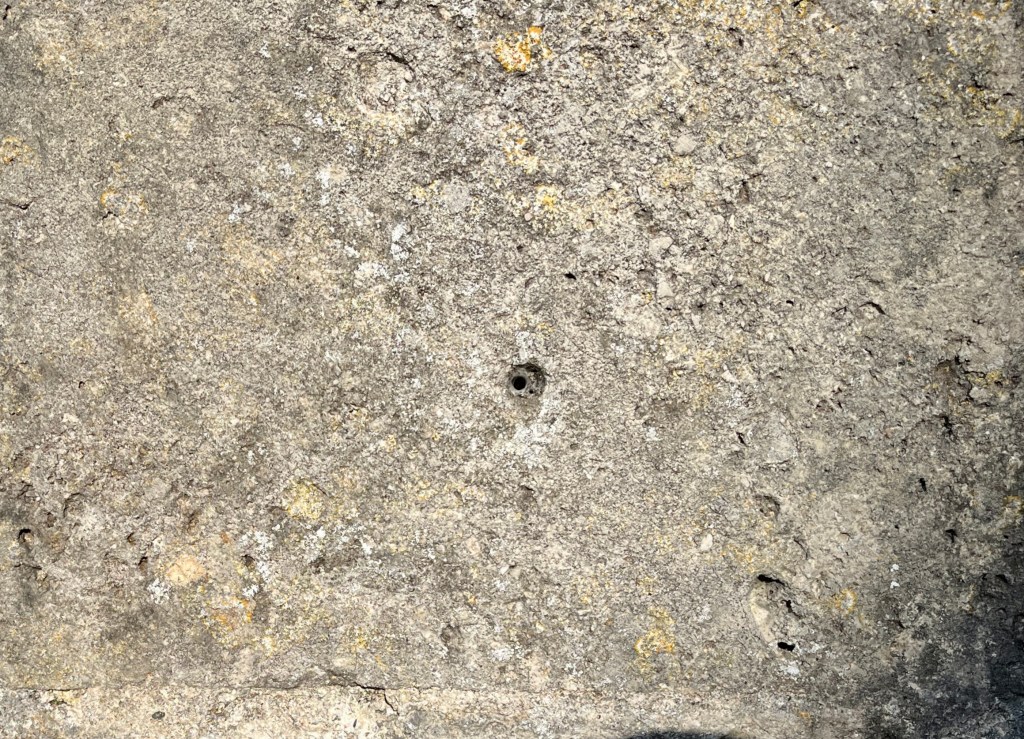
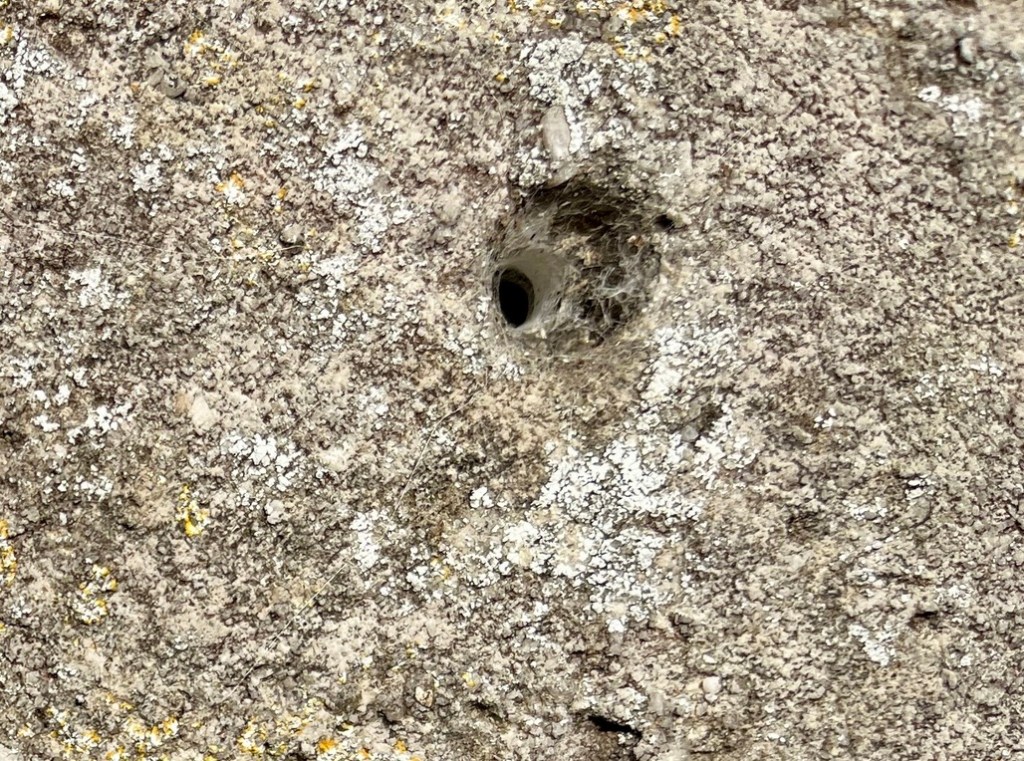
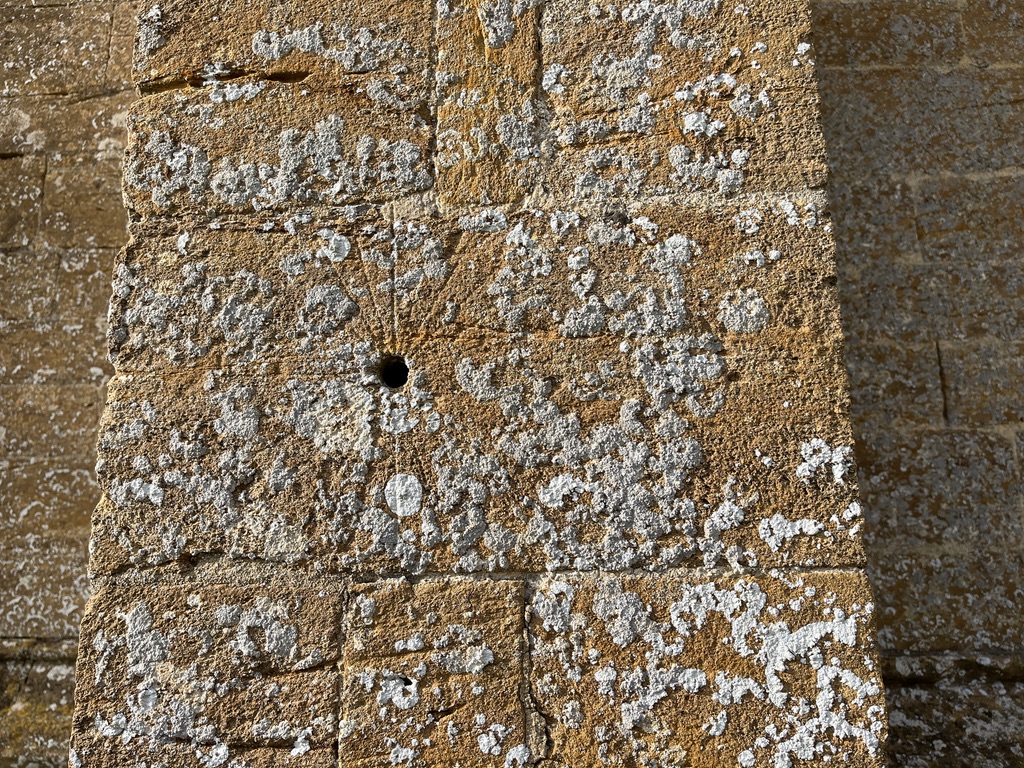
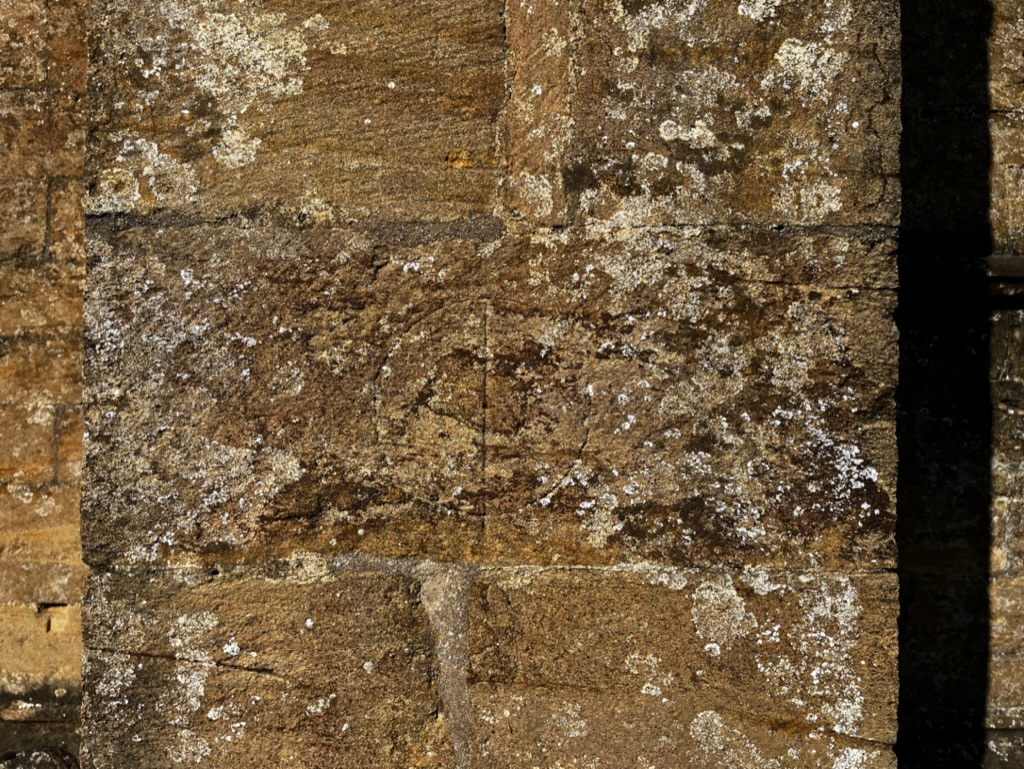
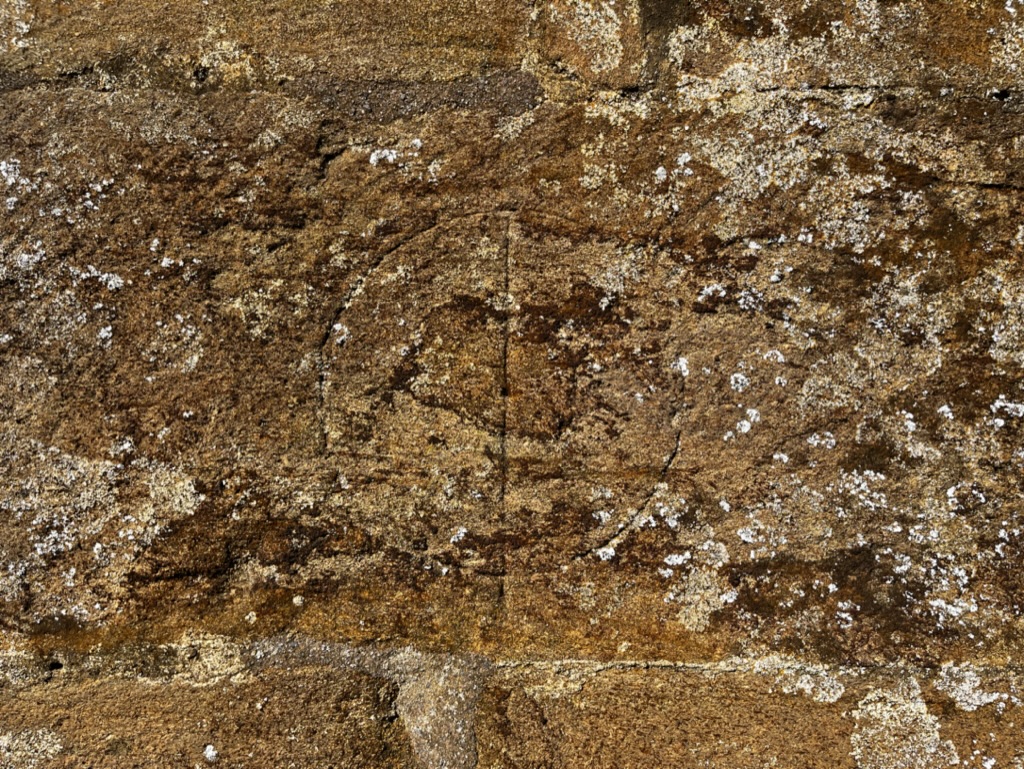
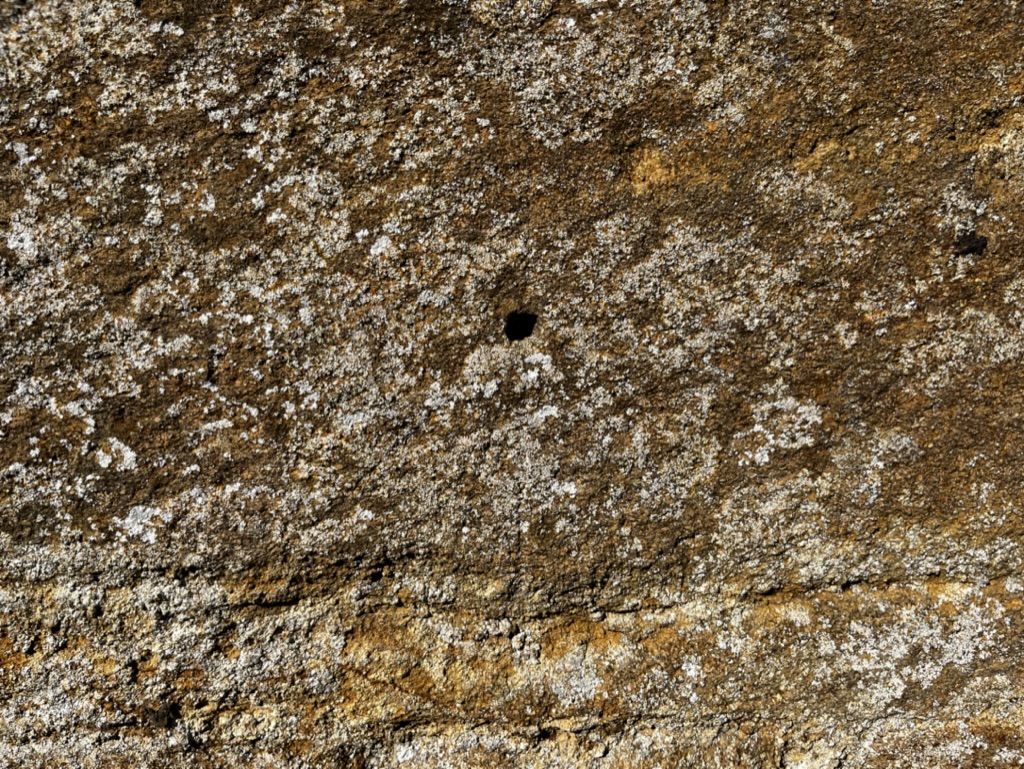
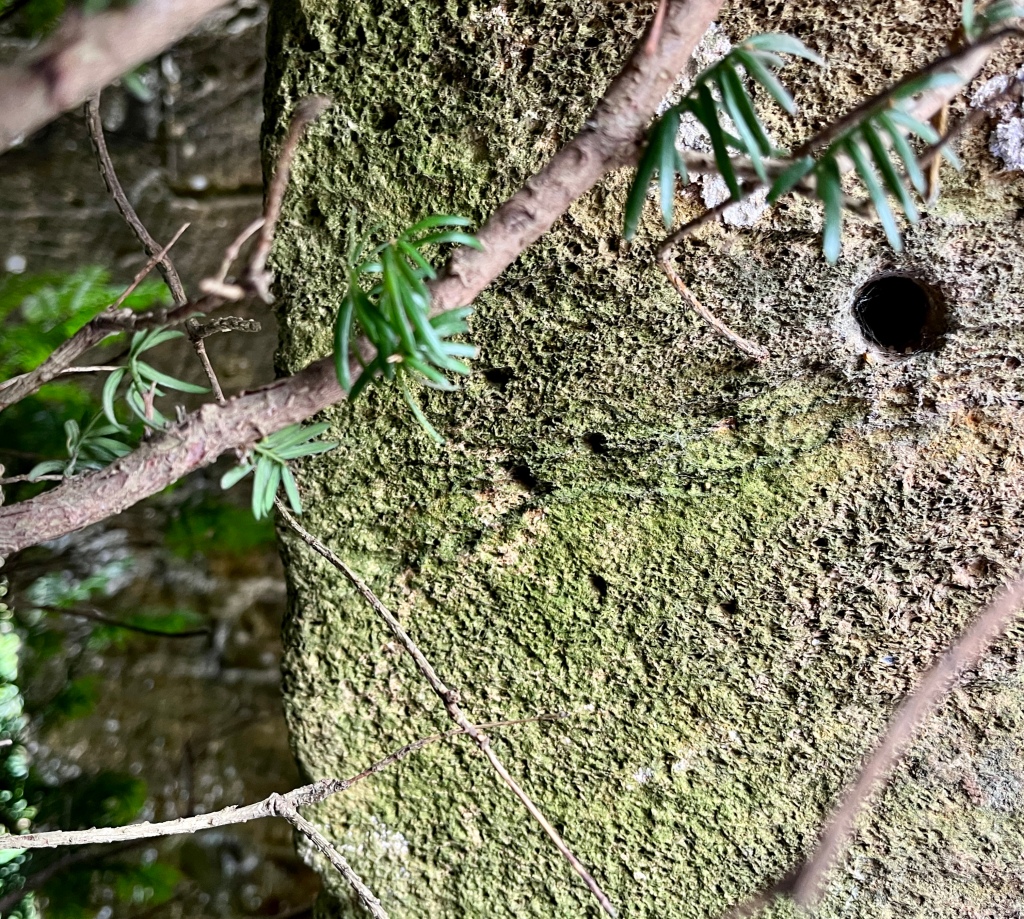
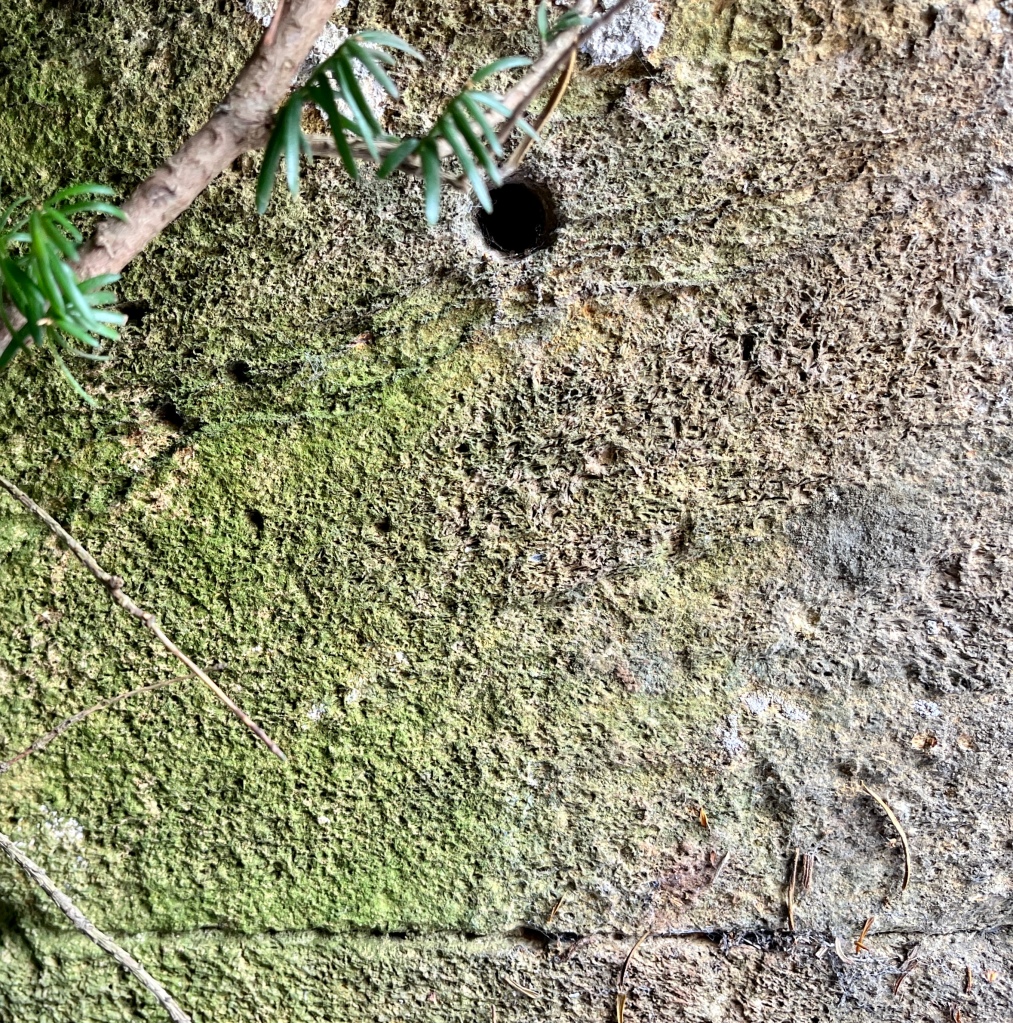
UPDATE: Yesterday I wrote dismissively of the St Peter’s dial, based on camera photos. Now that I have seen my iPhone photos (almost always the best option for close-up shots but I had nearly run out of battery) I have changed my tune a bit…
DIAL
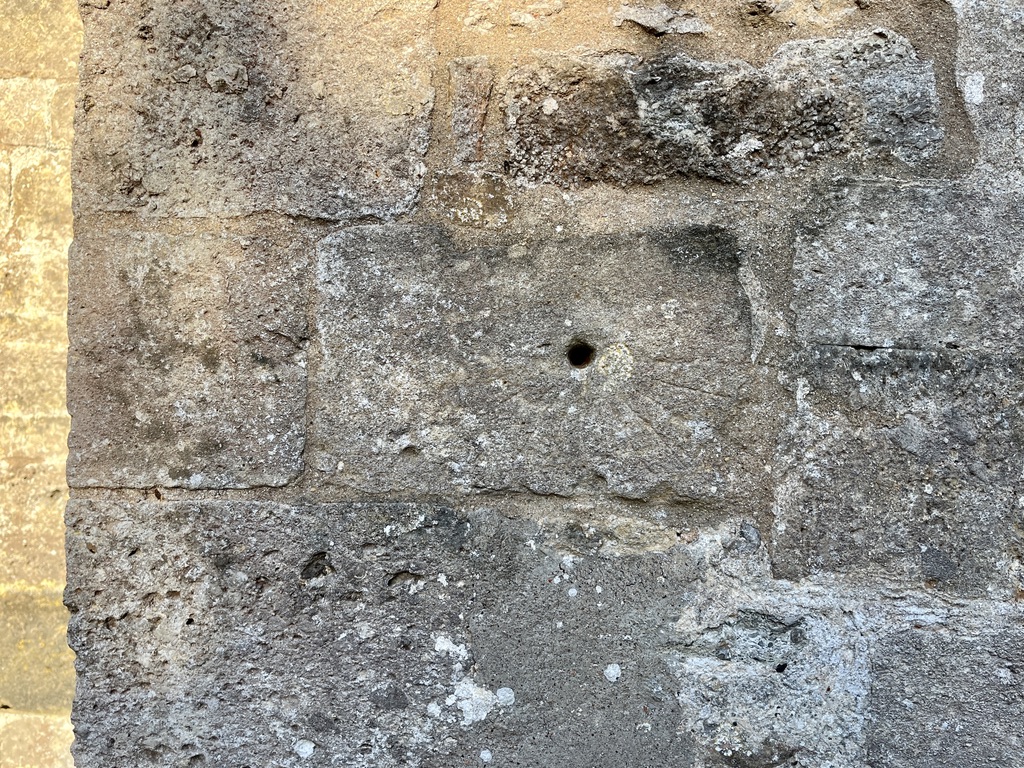
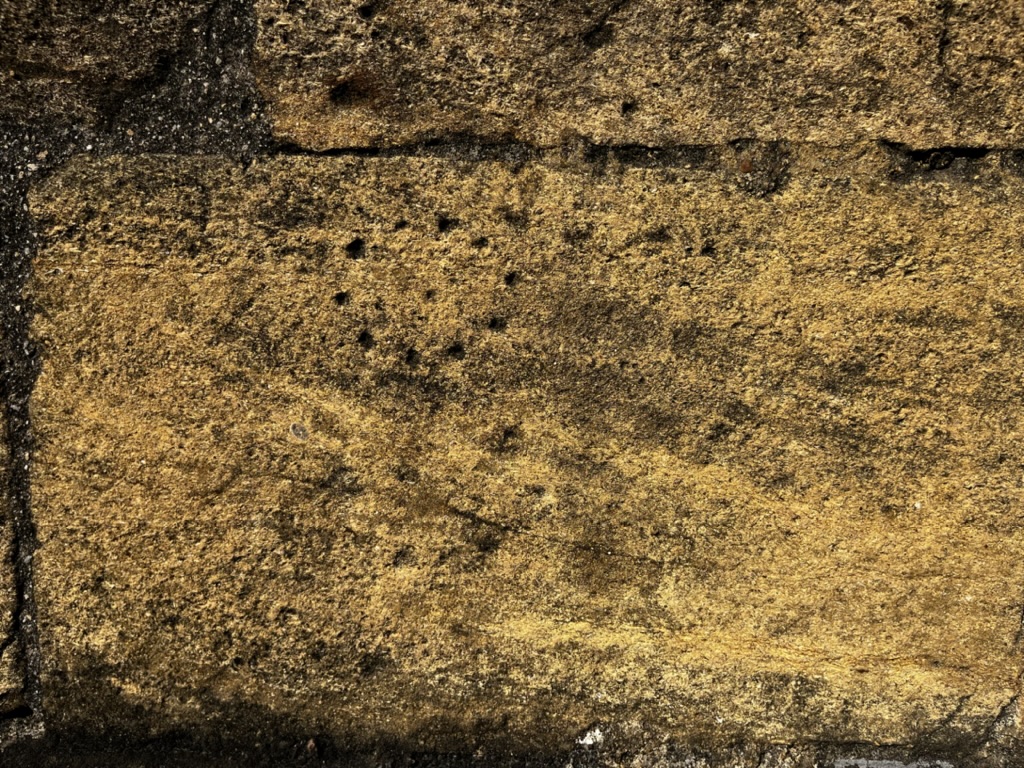
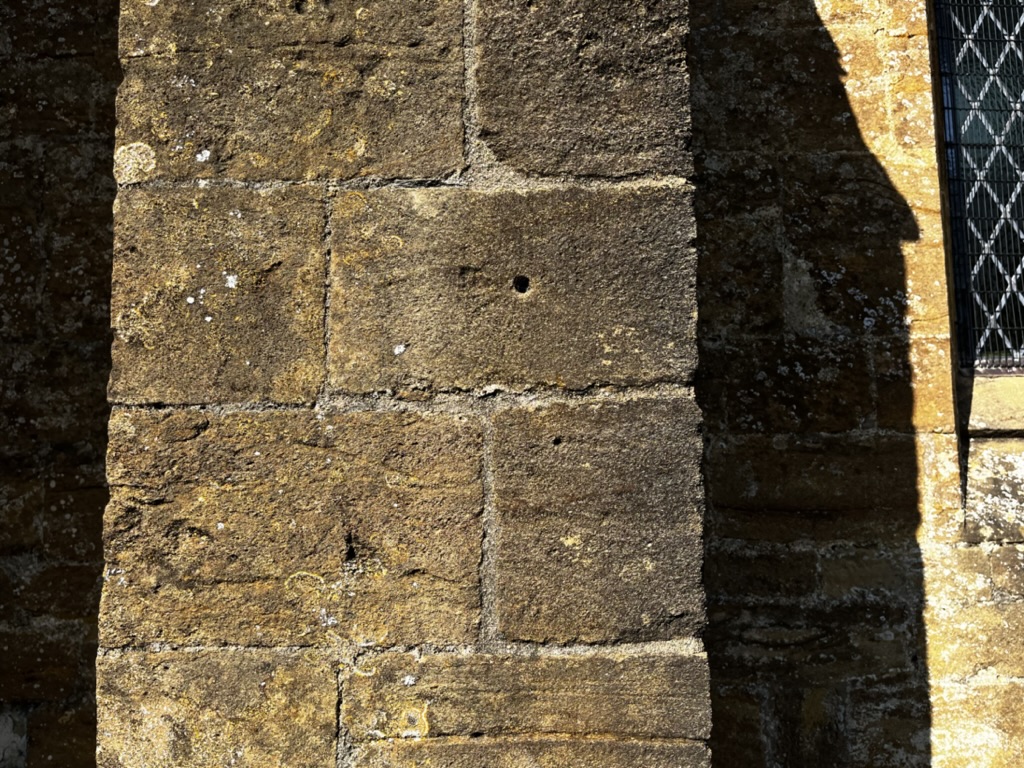
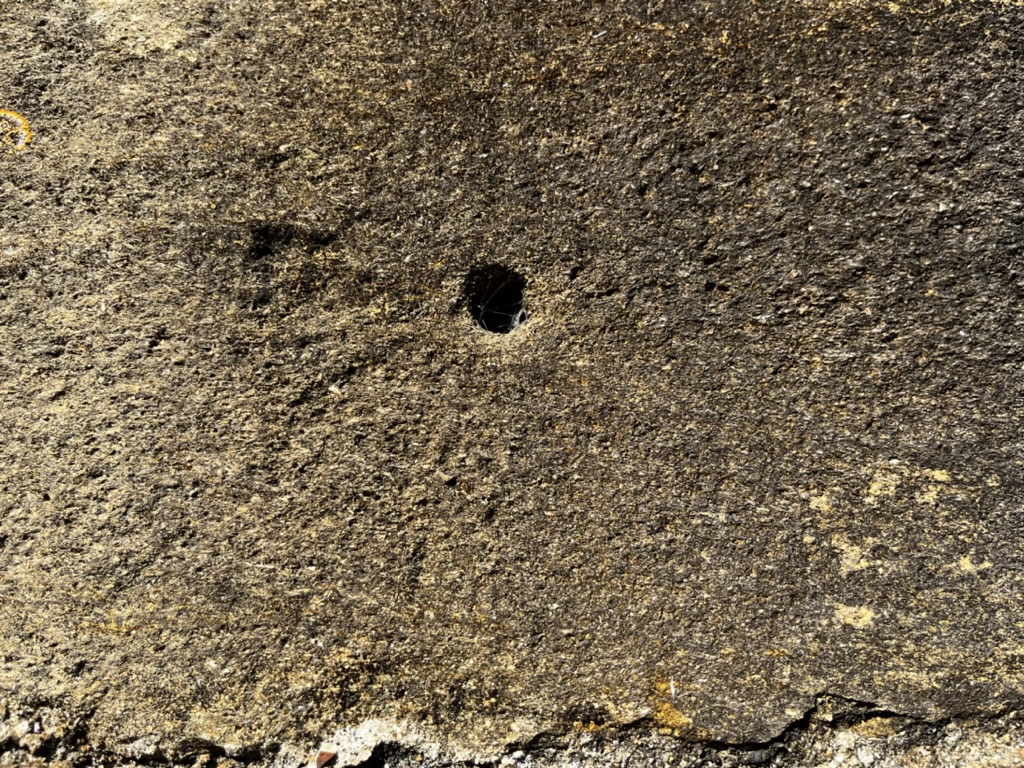
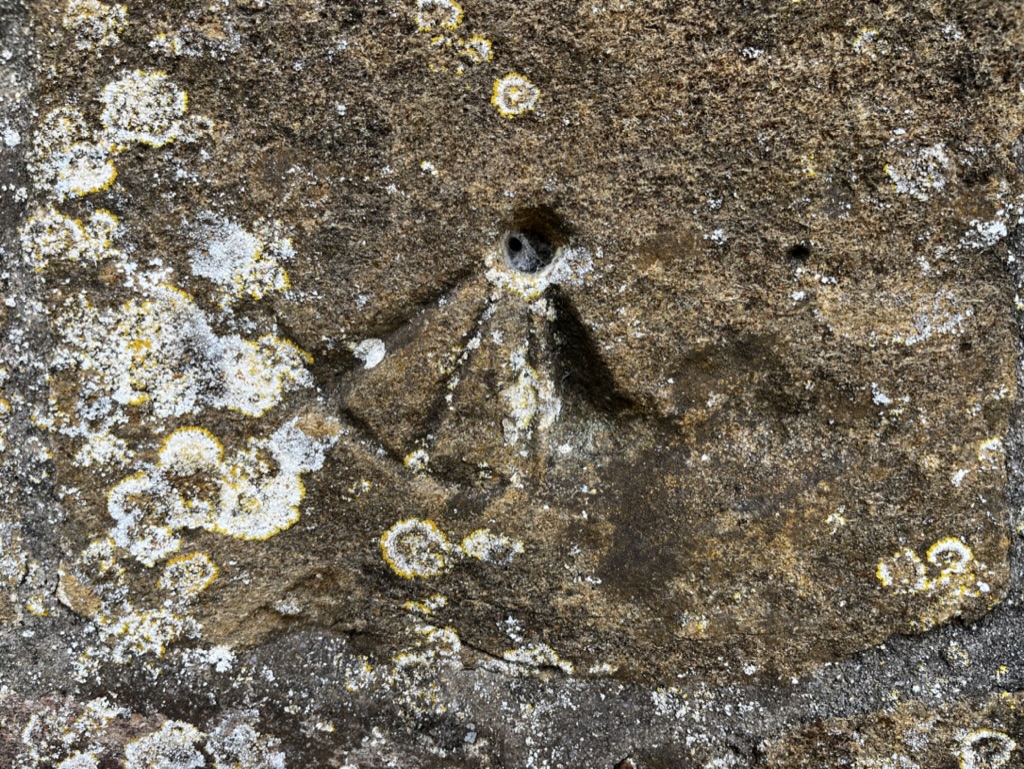
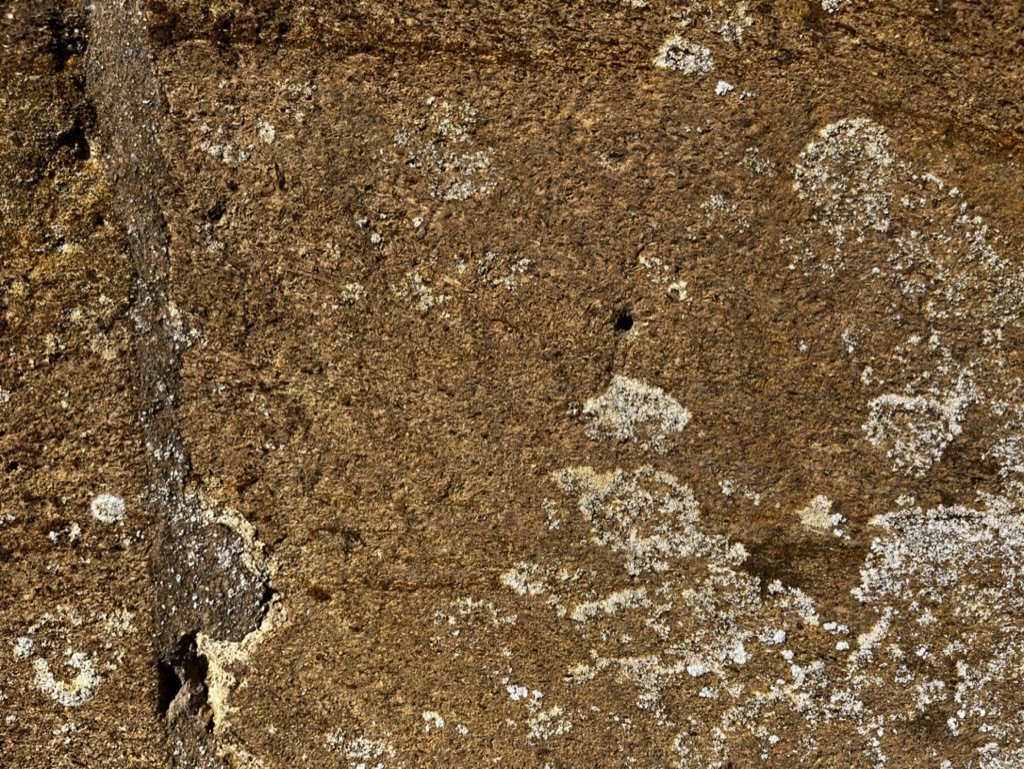
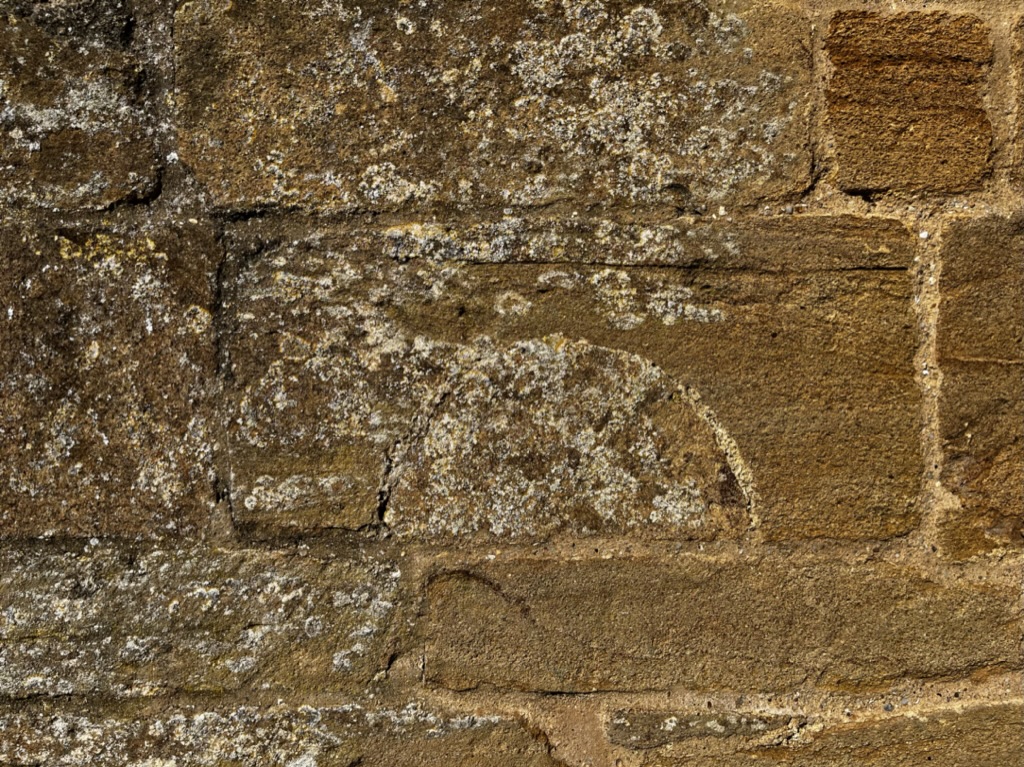
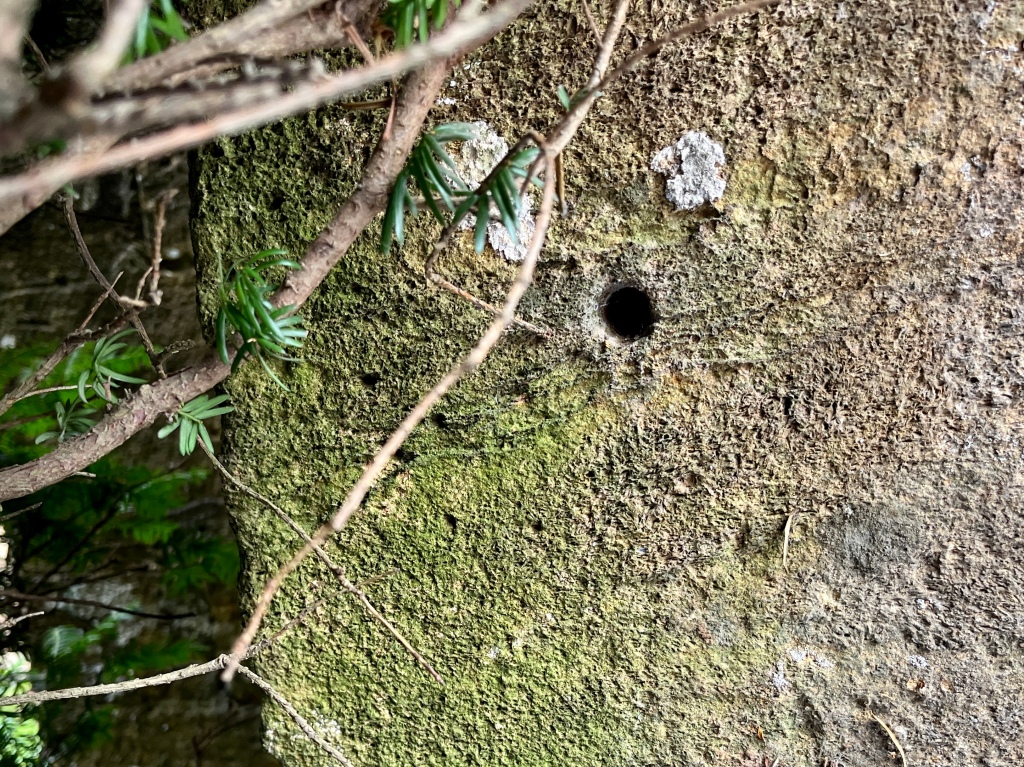
Emphatically not vaux le voyage, and included here mainly because in 1913 DEH counted it as a dial [85] when compiling his exhaustive record of Somerset scratch dials. On SE buttress of the tower he found a ‘quite clear’ circle with a shallow style hole, but without any lines. He put the design in his Doubtful category.
Keith Salvesen
100 + years since the record was made, the circle has eroded away and the hole is not shallow. I had decided to demote this to the not-a-dial category. However, looked at closely and at an angle, it appears that what was once DEH’s ‘shallow hole’ has more recently been neatly drilled deeper into the stone (in fact, a dial would now be workable using a rod or stick). So I conclude that there is evidence of dialishness, though doubtful.
Keith Salvesen
GSS Category: Scratch Dial; Somerset Scratch Dial; Dom Ethelbert Horne
Credits: photos and research – Keith Salvesen (Nov 2025)
GRADE II* ♰ C12 origins with fine Norman arch and tympanum within the early C14 S porch; other early remnants. C14/C15 tower. Subsequent development and restorations; several phases of rebuilding C19. Of note: unusual sundial at the apex of the porch. This will be written up separately. There’s a charming calligraphed guide to the church on which, amongst the highlights, 2 scratch dials are mentioned. Roughly halfway between Yeovil and Crewkerne, on strangely-named Poop Hill. 50.9152 / -2.7523 / ST472131
DIALS
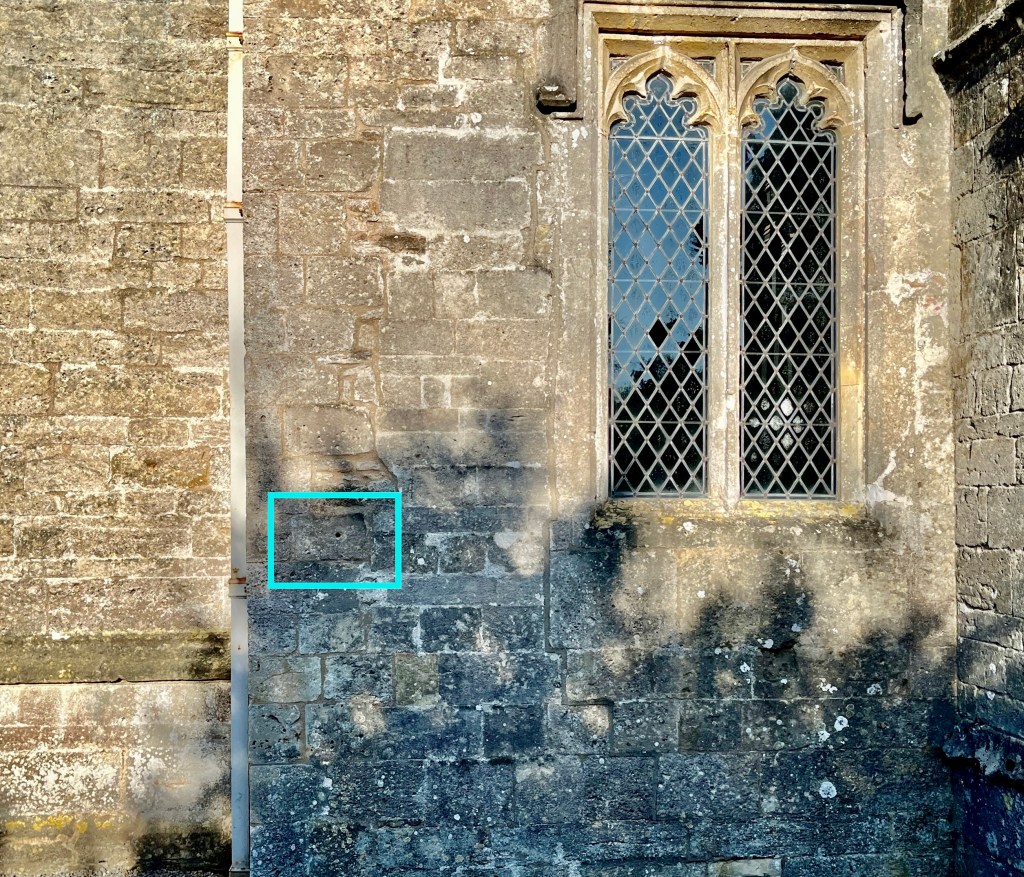
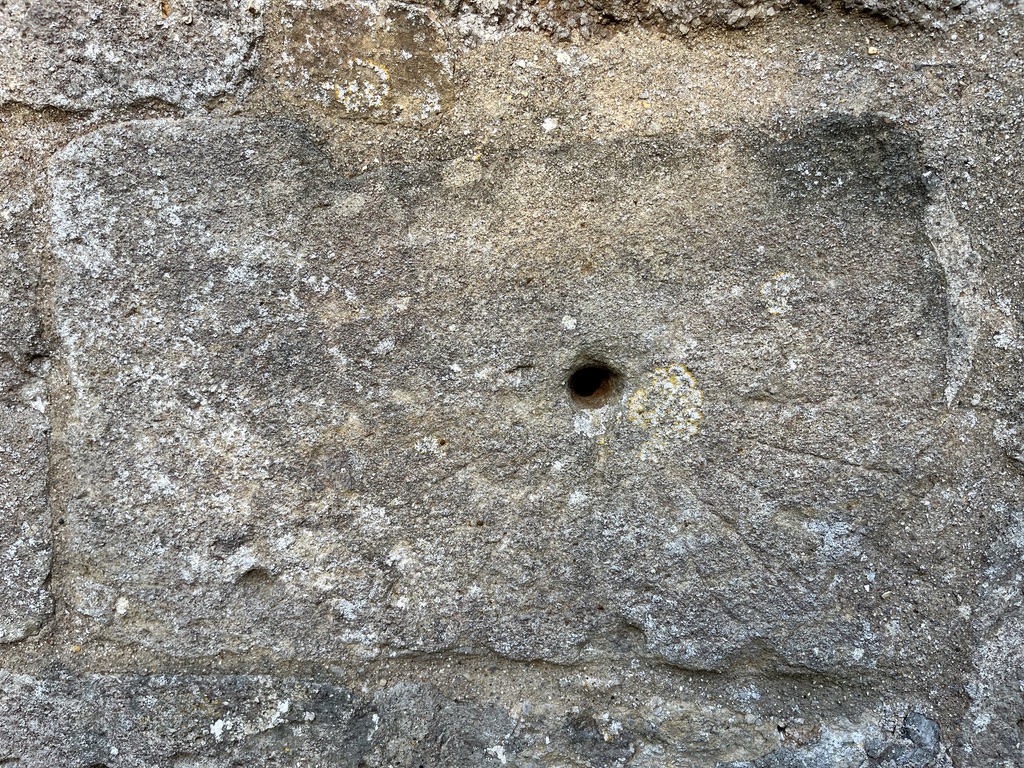
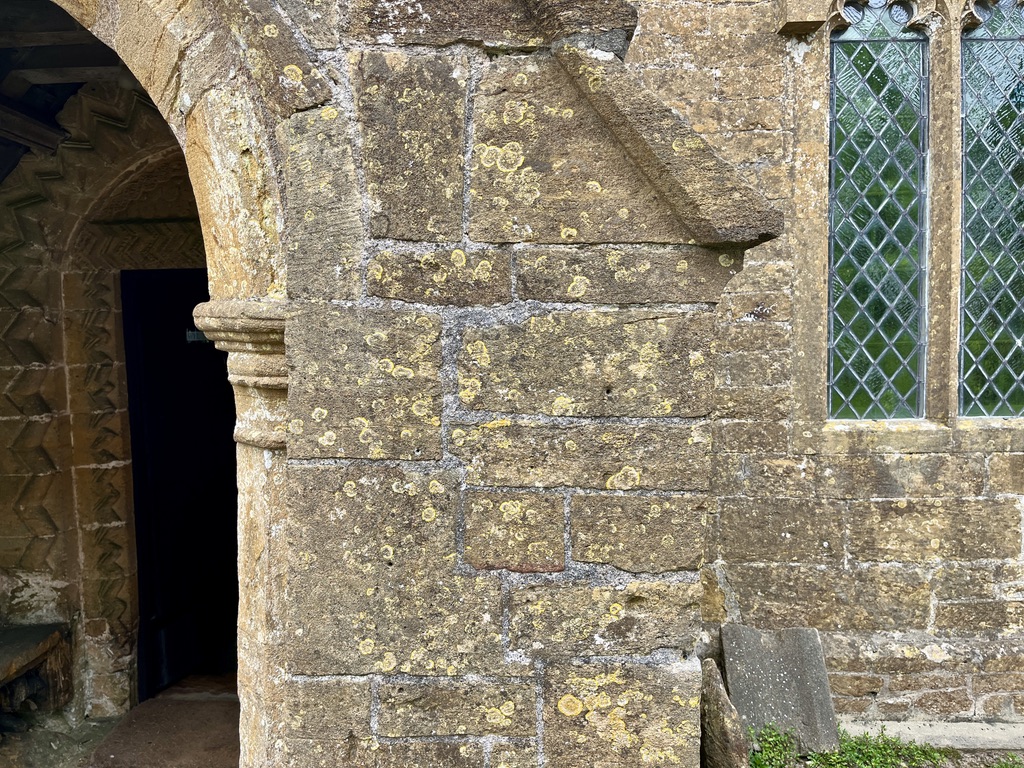
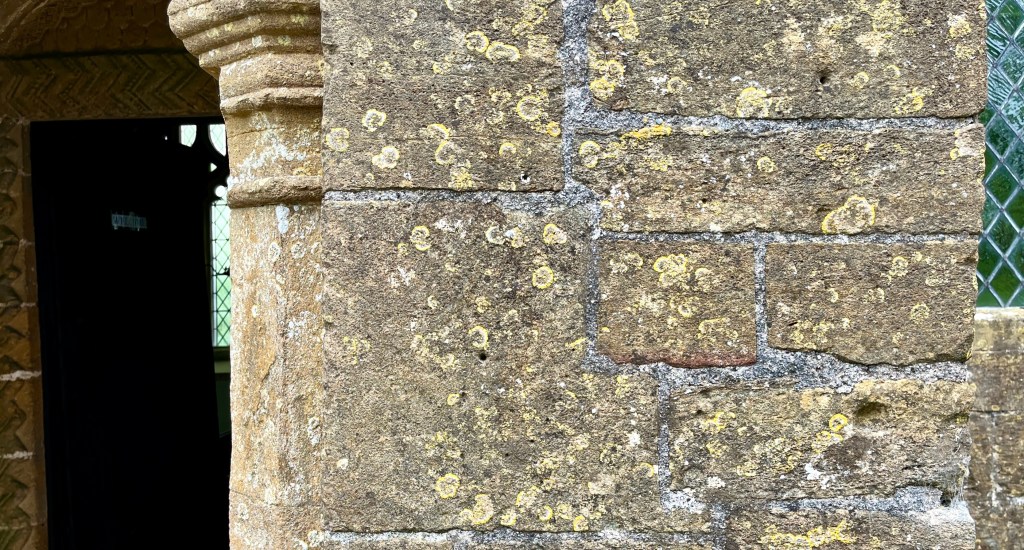
The dials are close together on the E side of the porch. They are plain holes without other visible dial-ish features or adornment – very much in the ‘doubtful’ category. Of note is that Dom Ethelbert Horne, during his exhaustive survey of all Somerset churches in early C20, did not include St Margaret in his records. However, the written church record suggests that scratch dial status was conferred some way into the past, rather than being a recent idea.
The likelihood of 2 dials in one small area, consisting only of a hole with not even a noon line between them, is pretty small. A very simple early dial might be superseded by a separate, more complex one in the fulness of time – sometimes on an adjacent stone. I’m not convinced by this pair. Probably I should find out what the church record reveals.
UPPER DIAL
LOWER DIAL
THE DIAL OVER THE PORCH WILL BE DEALT WITH SEPARATELY
GSS Category: Scratch Dial; Mass Dial; Gnomon Holes
GRADE II* ❖ C13 and later, south aisle added 1870s. Three stage octagonal tower, a feature of this area of Somerset (see Barrington, Stoke St Gregory, North Curry, Podimore and Weston Bamfylde). Close by is a fine market cross with a cube dial, also found in other towns and villages locally (eg Martock, Ilchester) – separate post in due course. 51.0009 / -2.6818 / ST522226
DIAL
Without guidance, it would be easy to overlook the dial. DEH does not mention it. I only discovered it from the very informative church leaflet. Despite the clues to its position, it still took me a while to find the relocated and inverted dial, barely 2ft off the ground.
Dial details – Church Leaflet
.
REVERSION
With relocated dials, especially inverted ones, it’s often worth seeing how they originally looked. This dial takes on a different appearance when righted.
The two dark areas are almost certainly the footings for a vertical sundial. The slight alignment to the right of vertical suggests a calculated angle. The leaflet note that the dial used to be high on the south wall of the nave definitely suggests a vertical dial rather than a scratch dial (which would be pointless in a high position). Seeing it in its original location, I might have described it as an inverted vertical dial with a damaged surround and erosion evident, especially RHS where faint lines can just be detected.
So, without being didactic, I can’t be sure that this is a scratch dial as opposed to a later vertical dial. All comments welcome.
GSS Category: Scratch Dial; Mass Dial; Octagonal Church Tower Somerset; Vertical Dial
GRADE 1 ❖ Saxon / Norman origins. Chancel and nave c1350, rest C15, restorations 1869 and late C20. A fine example of a Somerset church, most rewarding to visit. Early C16 screen, bench ends of note. Jacobean inverted font. Splendid doors that look entirely original. A bier and an interesting clock (not openly accessible). 10m NW of Taunton. 51.0819 / -3.2461 / ST128321
❖
SCRATCH DIAL
❖
The dial is easily seen on W side of the priest’s door. It is a pleasingly straightforward quarter dial marking 6 to noon. The line spacing is somewhat random, and there is some confusion around noon, with faint lines detectable.
DEH visited St Lawrence on Sep 27th 1913, one of his early expeditions. He noted: The stylehole is large and oval, and may have been made so in efforts to extract the style. It is hard to see why this should be done with no new style added; but it does show that the removal of the gnomon was more than a century ago, and not a recent act of vandalism.
❖
❖
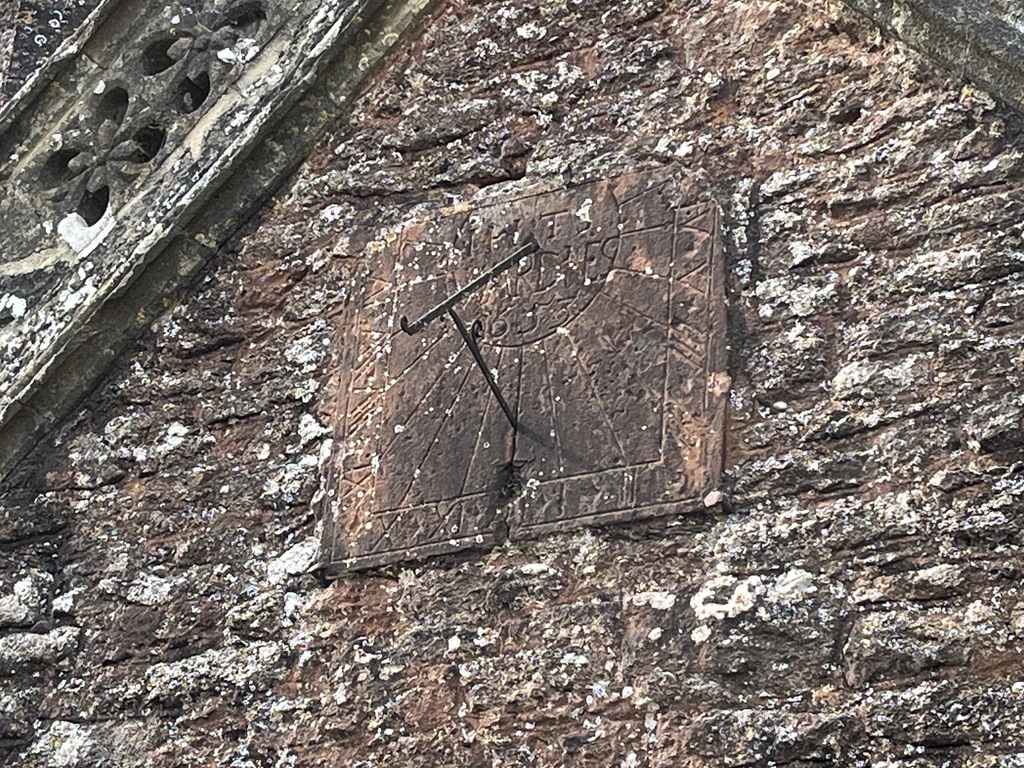
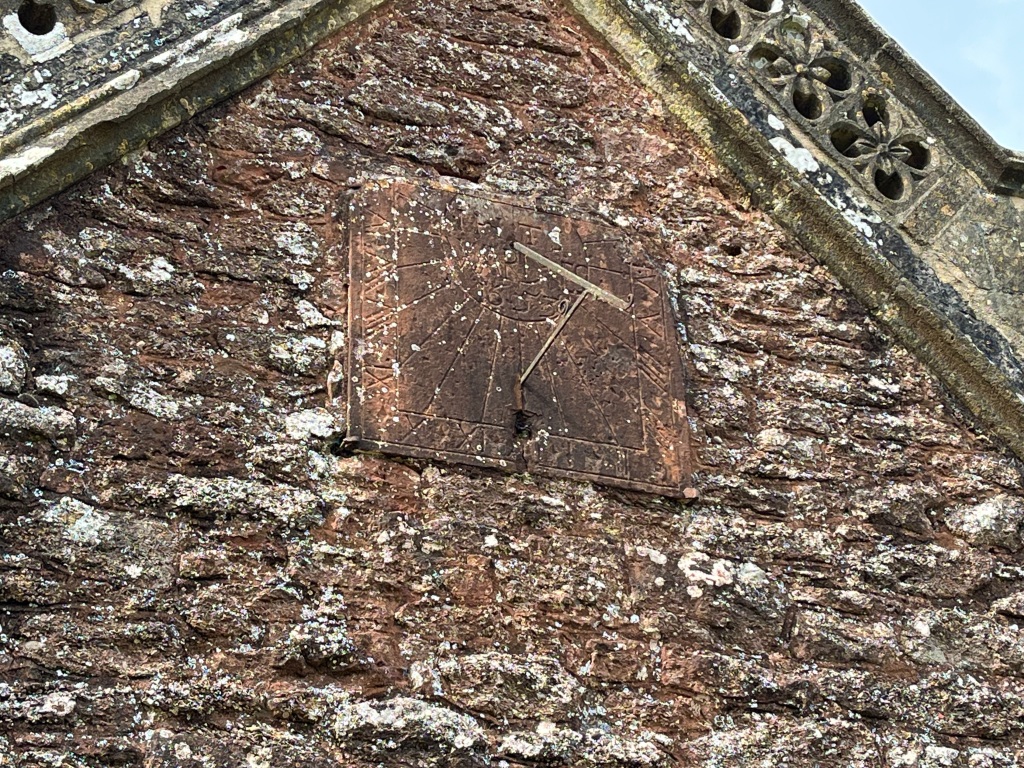
VERTICAL DIAL 1653
BSS Record:The hours use XII for noon and IIII for four pm, and VI, VII and VIII am are written backwards (round the clock’), as is not uncommon. Around the gnomon are carved I HT S / WARDNES / 1653, the W of WARDNES being superimposed Vs, and the letters NE being conjoined, both presumably to save space.
The gnomon is an iron bar with a hooked tip, and the straight support has a curled spur on the upper side and its own hook at the top.
GSS Category: Scratch Dial; Mass Dial; Vertical Dial; Dated Dial
GRADE I ♱ C14, C15; C19 restoration. Mainly Perpendicular, with a very impressive 3-stage tower. C14 font. Splendid gargoyles. Very close to MUCHELNEY ABBEY. 9m NW of Yeovil 50.9865 / -2.8042 / ST436210
NOTE This post supplements a previous post written last year HERE. There was poor light with inadequate details of the dial, now remedied in sunlight. The text is much the same.
DIAL
The dial is cut on the W buttress, S side of the tower on a large stone that is the width of the buttress. DEH visited in Sept 2012 – this was one of his early churches, perhaps because of its proximity to Downside Abbey. He describes a large, deep style hole. He counted a full complement of 24 lines: a complete wheel of thin lines without a circle. Nearly 100 years later, the design is not as clear-cut.
DEH also noted that the dial stone may have been moved during restoration of the tower, which might account for its height on the buttress (8 ft).
GRADE I ✠ C7 origins with a long and fascinating history amply covered by many sources. The Wiki entry gives a good brief account. Now only the Abbot’s House and the Lavatorium remain intact. The ruined foundations are all that can be seen of the Abbey buildings and layout.
The Abbot’s House has a number of apotropaic marks including hexfoils and taper burns, noted on the relevant pages here.
✠
DIAL
We visited the Abbey knowing approximately what to expect from the Abbot’s House. It is well worth exploring, and there are helpful EH volunteers on hand to give information.
We eventually reached the West Kitchen, which has a door to the S side of the building. It was a great surprise to find a simple and eroded scratch dial between the doorway and the East Kitchen window. It is quite rare to find a scratch dial on a building other than a church. Non-secular dials can occasionally be found on medieval barns. Perhaps the Abbot’s dial was originally part of the original abbey building, and re-sited. I’d prefer to think that a factotum had cut the dial specially for an Abbott so that he could keep track of the important times of the monastic day for which he was responsible.
This is not an easy dial to analyse. Certainly there is a horizontal line ( 6-to-6) that runs through the gnomon hole (very faint RHS). There is a deeper cut noon line that seems to extend above the hole to the mortar line.
As often, a b&w image can assist with finer details. There is a faint 9-line, suggesting that Terce was the primary time for observance. Possibly a further line at 11? No relevant markings LRQ. Possibly there is a line ULQ just above the horizontal.
It is clear that EH and the guides know about the dial, but I have been unable to find a reference to it elsewhere. Probably a local research group will have recorded it, but otherwise it seems that this unusual dial (for location) is very little known
MUCHELNEY ABBEY . SOUTH FRONT
Muchelney Abbey – Abbot’s House S side showing W kitchen door . Photo by DeFacto OS CC
GRADE 1 † Mid-C13 with earlier origins; expansion to C16; restorations by Ferrey and Scott 1860 and later. A most impressive Parish church with a 4-stage tower. Admired by PEV as one of the loveliest of Somerset churches on account of its splendid Perp. work on the nave; and for being remarkably airy and spacious. 50.9693 / -2.7687 / ST461191
DIALS
A most rewarding multi-dial church. As often, estimates of the number vary. DEH recorded 5 dials in June 1915 and included a photograph of the dial above in his book.
BHO refers to 7 dials [and also notes that one buttress on the north side has footholds cut in it to aid the recovery of fives balls from the leads when the game was played there in the 18th century. There’s a whole book to be written about the fives courts of Wessex] BSS records 7 dials, without details.
There are so many excellent dials to admire that I am not including interpretations of individual dials. The light was good for photos and the various designs speak for themselves. I haven’t given locations either. Most are in obvious places; also check sides of buttresses. It was a lot of fun finding a couple of new dials, and anyone reading this may prefer to investigate for themselves. DEH’s record is given at the end.
DIAL 1
✣
DIAL 2
✣
DIALS 3 & 4
DIAL 3
DIAL 4
✣
DIAL 5
✣
DIAL 6
✣
DIAL 7
✣
DIAL 8
✣
DIAL 9
✣
DIAL 10
✣
DIAL 11
ARCS etc
Having recently written up Winterbourne Stoke and a few other multi-dial churches, I have decided not to include a plain arc as (part of) a dial unless there’s at least one other dial-ish feature – evidence of a centered hole in the mortar line; perceptible lines; pocks; and so on. I’ll still feature them but not as part of a dial count. Unless corrected of course – please do.
✣
CONSECRATION CROSS OUTSIDE PORCH
ADDITIONAL NOTES
The pride of Martock Church is its superb angel roof, installed in the first decade of the 16th century and completed in 1513. The roof design is a king-post style with tracery infill between the truss beams. There are central pendants from each cross-beam, above which rise beautifully carved figures. (David Ross, Britain Express)
DOM ETHELBERT HORNE’S 5 DIALS
200. (1) This dial is on the w. side of the s. porch. It is 6 feet 1 inch above the ground. The noon line is 3 3/4 inches in length, the style hole is 1 inch deep, and is in a joint. The aspect is s. by 5° e. (See No. 12.)
201. (2) This dial is under the first window E. of the s. porch. It is 4 feet 7 inches above the ground, the noon line is 3 inches in length, the style hole is 1 3/4 inches deep, and the aspect is s. by 15° e. Type 6.
Dial No. 2 is of the unique shape that exists at Tintinhull (224) and Swainswick (25).
202. (3) This dial is on the second buttress e. of the s. porch. It is 5 feet 9 inches above the ground, the noon line is 3 1/2 inches in length, the style hole is very shallow, and the aspect is s. by 15° e. Type 3.
203. (4) This dial is under the third window e. of the s. porch. It is 3 feet 10 inches above the ground, the noon line is 2 inches in length, the style hole is If inches deep, and the aspect is s. by 15° e. Type 10.
204. (5) This dial is on the fifth buttress e. of the s. porch. It is 5 feet 1 inch above the ground, the noon line is 5 1/4 inches in length, the style hole is 1 1/4 inches deep, and the aspect is s. by 15° e. Type 5c.
GSS Category: Scratch Dial; Mass Dial; Multiple Dial Church
GRADE II* ✣ C14 / C15. Pleasantly situated by the Manor. Note that the church is up a driveway the opposite side of the busy road from the signposted village itself. 50.9335 / -2.8843 / ST379152
DIAL
The Whitelackington dial eluded me a year ago when I was looking at several churches either side of the road between Yeovil and Taunton. Cricket at SCC was due to start and took precedence. Having in mind that DEH was enthusiastic enough to include a photo of the dial (taken 5 Sep 1912) in his pioneering treatise, I knew I should try again, and harder.
As it turned out, the dial was invisible until parting the branches of a yew hedge on the Manor side. The S side of St Mary blends into the Manor gardens and It feels sightly transgressive to be poking about in the greenery.
DEH’s RECORD
115 YEARS LATER
Photo 3 shows the features noted by DEH, including the possible noon hole in the lower joint
THE BUTTRESS
GSS Category: Scratch Dial; Mass Dial; Hidden Dial
All photos: Keith Salvesen except B&W, Dom Ethelbert Horne



































 GAUDIUM SUB SOLE . SUNDIALS . MEDIEVAL TO MODERN