CLOSWORTH . SOM . ALL SAINTS – Horizontal Dial

ALL SAINTS . CLOSWORTH . SOM

GV II* C13 origins with some C15 work but drastically restored in 1875 BLB. Fine chest tombs. Village of historical importance as a bell-foundry between C16 and C18, originating with the Purdue family. Notable bells survive from its earliest days eg. Wells Cathedral. Somerset / Dorset border 50.8883 / -2.6214 / ST563100
DIAL

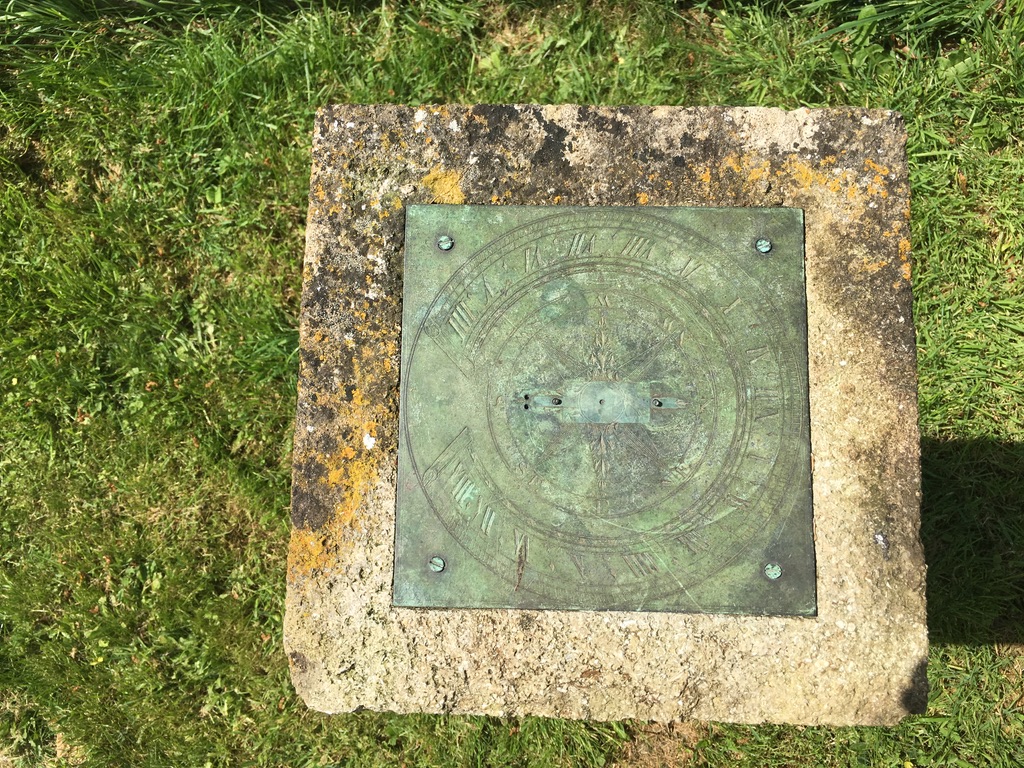
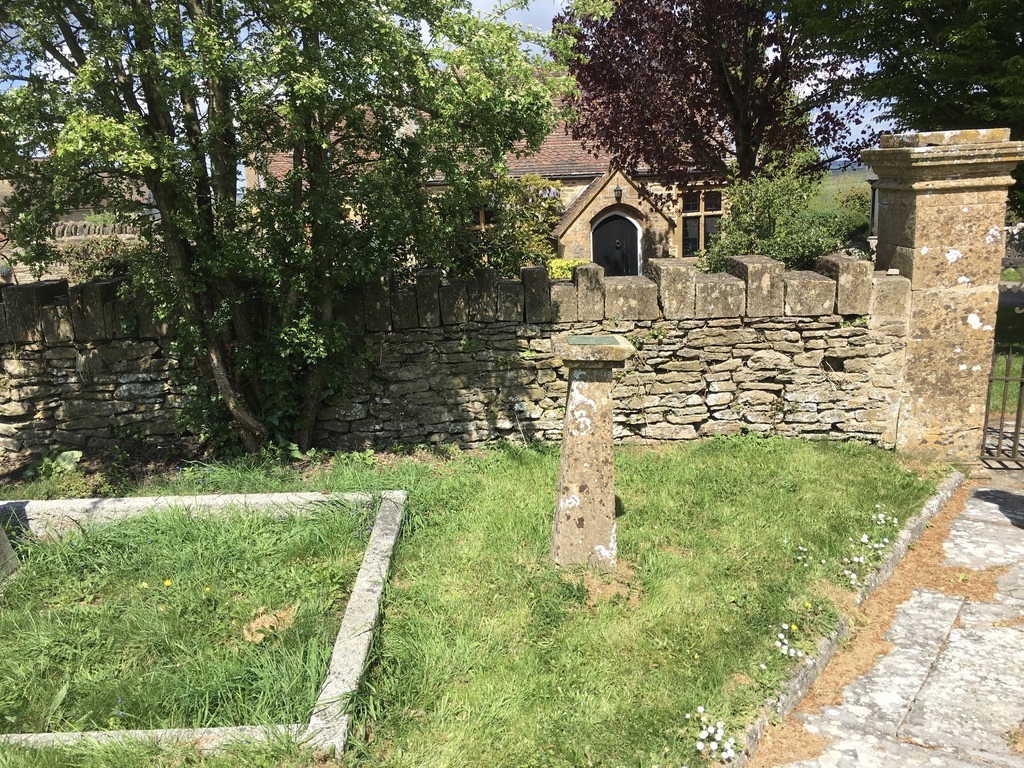
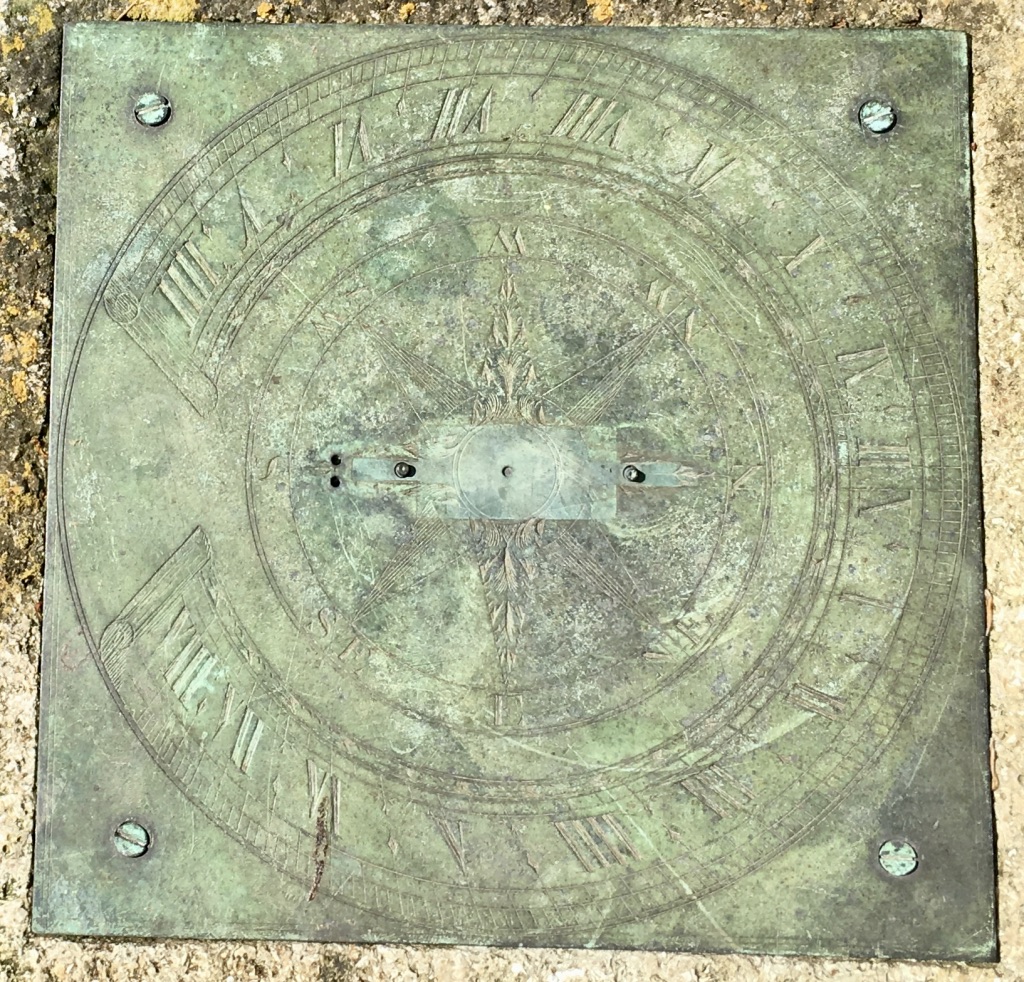
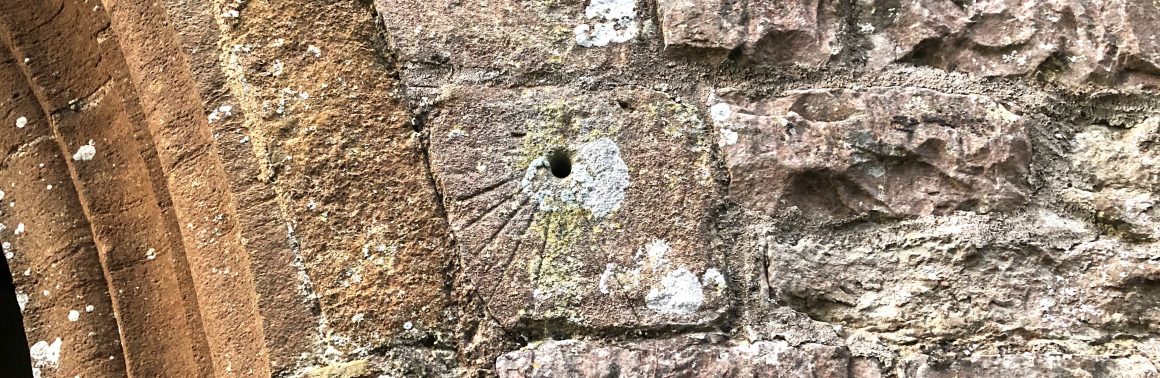
An agreeable churchyard dial in a pretty setting. Missing its gnomon, possibly vandalised (cf Lillington quite nearby). The dial plate is a familiar design, though without a maker’s mark or other indication of its origins.

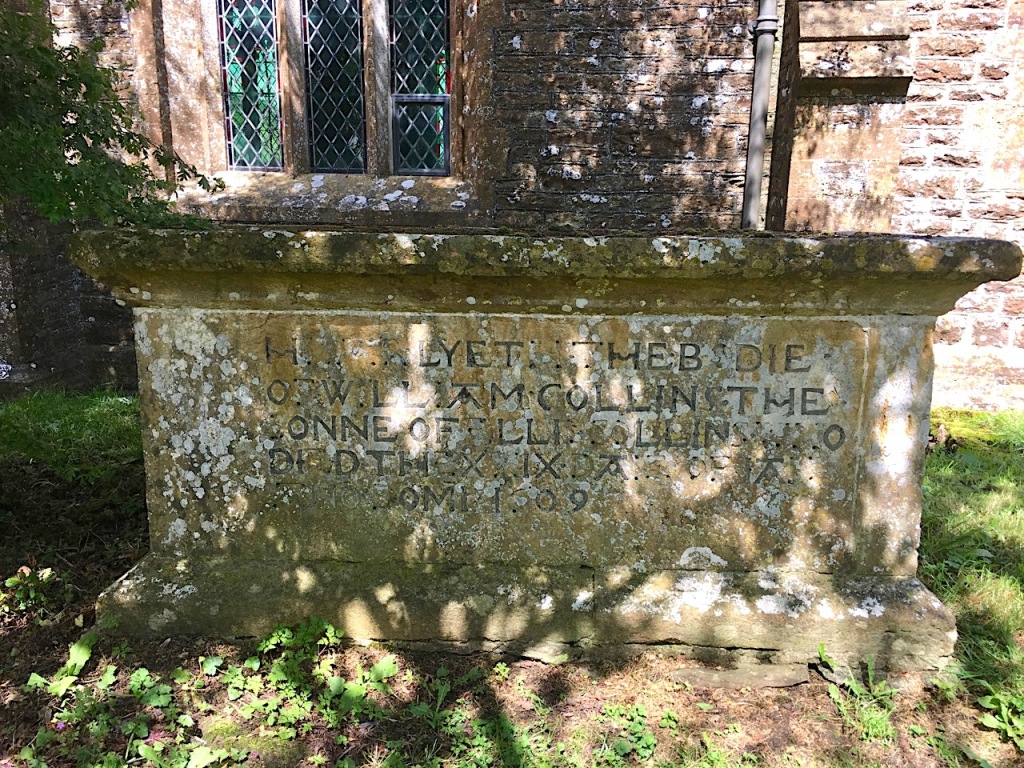
TOMB OF WILLIAM COLLINS, 1609

HERE . LYETH . THE . BODIE . OF . WILLIAM . COLLINS . THE . SONNE . OF . ELLIS . COLLINS . WHO DIED . THE . XXIX . OF . IAN . ANO . DOMI . 1609

GSS Category: Horizontal Sundial; Pedestal Sundial; Churchyard Sundial

All photos: Keith Salvesen

PADUA . VENETO . BASILICA of ST ANTHONY

SUNDIAL

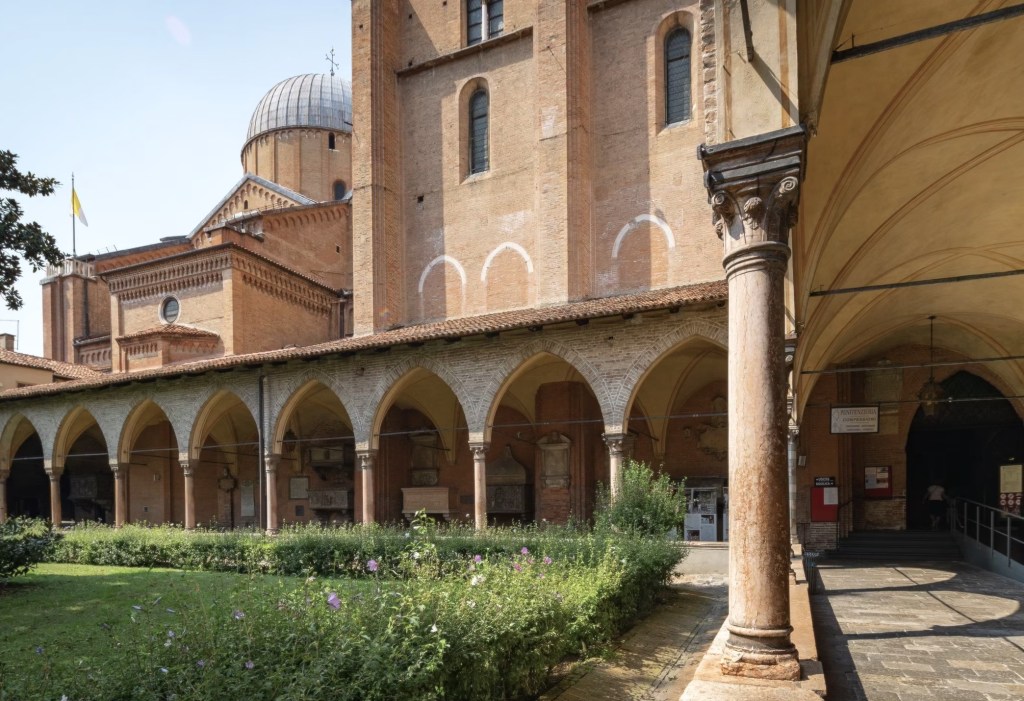
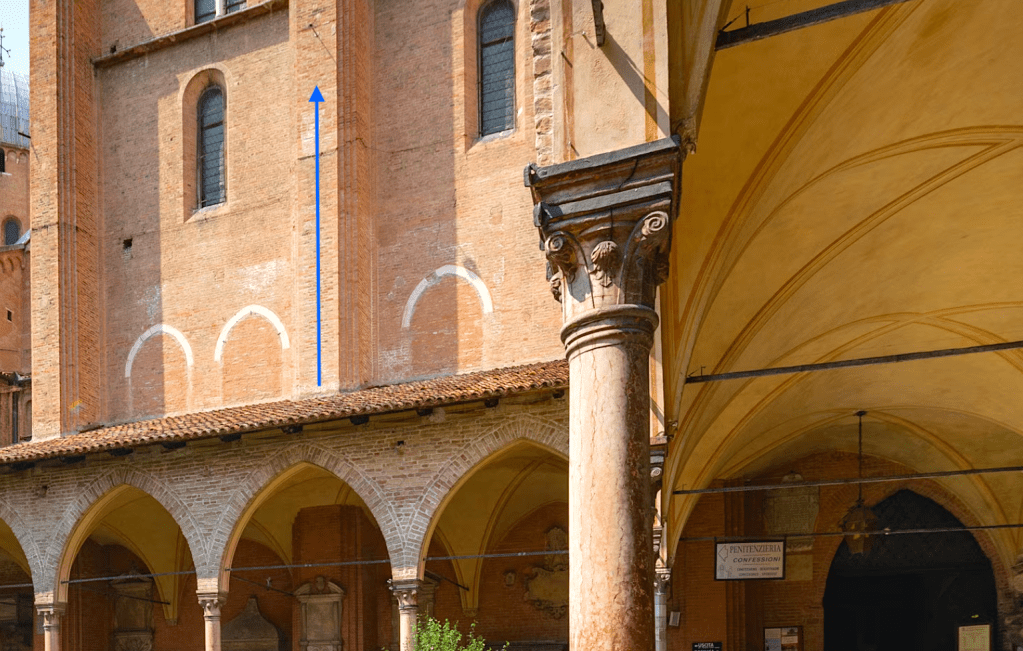
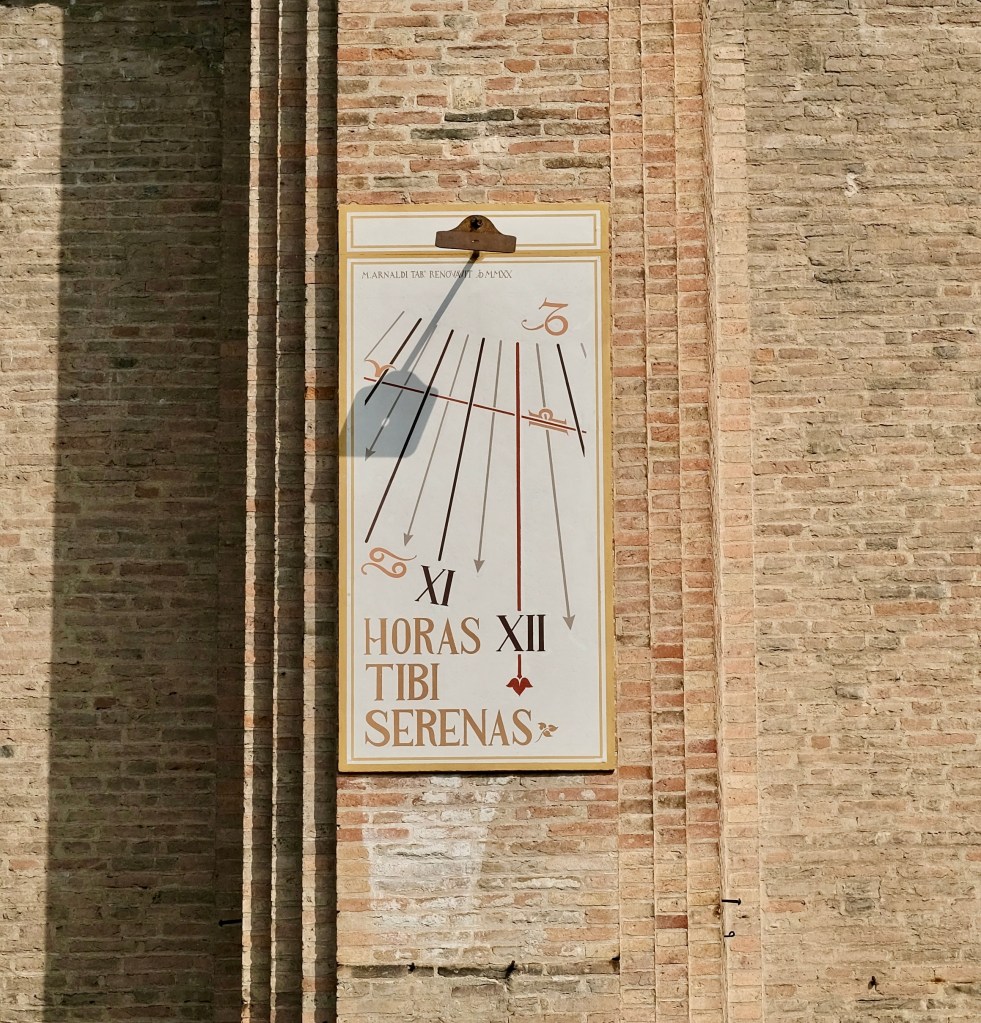
The oblong dial is located high up on the south side of the Basilica. Its modern design contrasts notably with its setting. I can imagine some debate over modern versus traditional styles. It was installed in 2020; a caption refers to renovation.

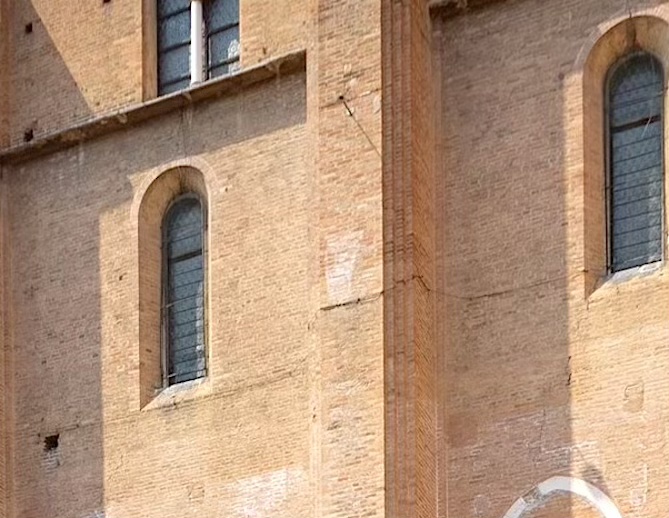
The dial’s height and size makes it very visible. John Renner, who took these photos, suggests convincingly that there must always have been a dial of some sort there, I’d have thought, to be visible to the friars from their cloister and help them say their hours on time. I have now managed to locate a photo taken from the cloister of an earlier dial with a much simpler day-marker. Probably it replaced an even earlier one.

The details of the new dial include 4 signs of the Zodiac; 2 midday roman numerals; 1/2 hours marked with pale arrowed lines; and a fairly traditional motto. The most interesting feature is the gnomon, which is tilted for accuracy and looks adjustable. As the photos clearly show, the sun’s rays are focused through a small hole onto the dial face – here, at exactly 9.30 am.

See HERE for the Scaphe Dial in the Padua Botanical Gardens (one of 3 dials there)

Basilica of St Anthony . Padua . Wiki

GSS Category: Modern Dial; Vertical Dial; Dials in Italy

All photos: John Renner, with thanks as always; Expedia for the old dial

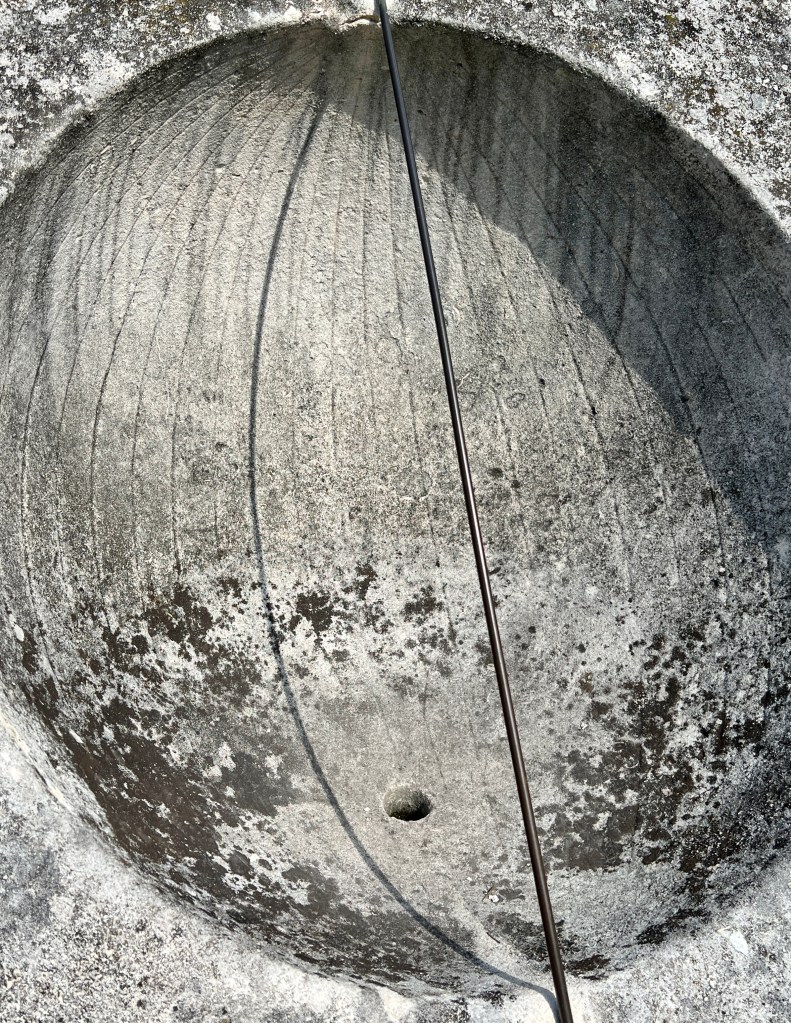
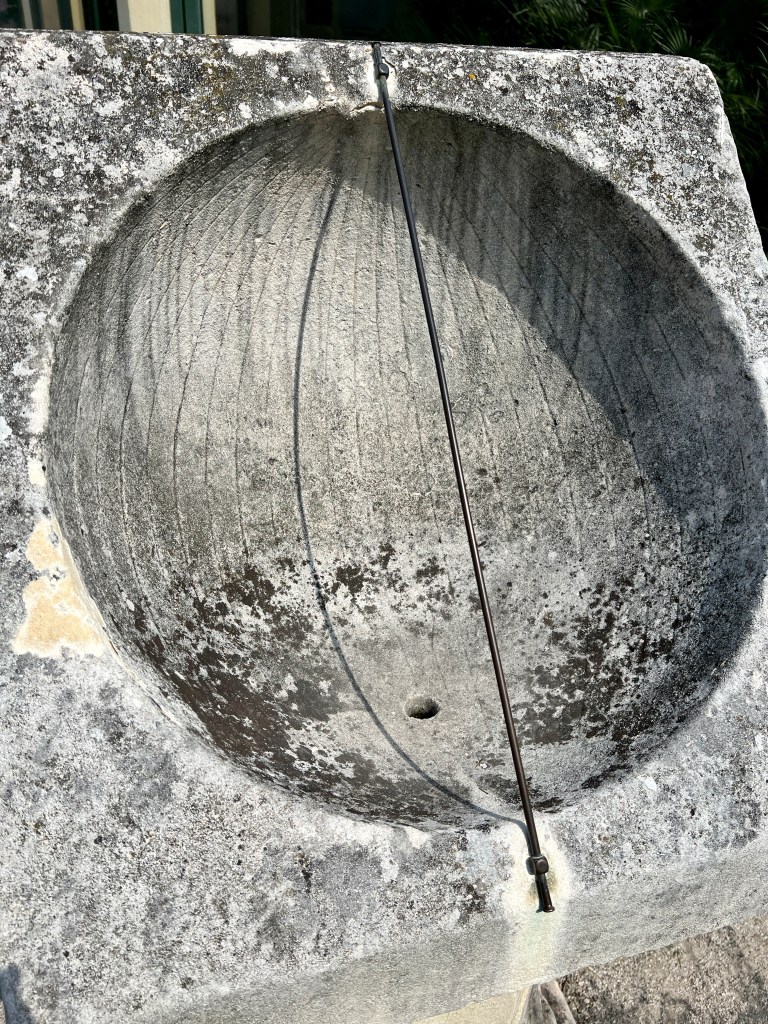
PADUA . BOTANICAL GARDENS . SCAPHE DIAL

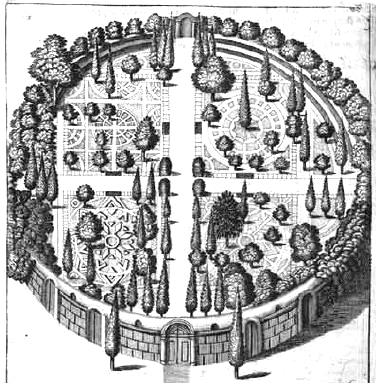
This wonderful example of a scaphe dial is one of 3 dials in the Botanical Gardens of Padua. There is also a cube dial and a cylinder dial (separate post). This first-ever public garden* was created in 1545, and the original layout has been preserved. This is not the space for a short wander round, but there’s plenty of interesting material online. It has been an important centre for scientific research since its inception and, unsurprisingly, it is a UNESCO World Heritage Site.

*Pisa’s botanical garden was actually completed a year earlier but disqualified on a technicality that I haven’t pursued.

GSS Category: Scaphe Dial; Botanical Garden Sundial; Europe Dials

All photos: John Renner, with many thanks

ALCISTON CHURCH . E SUSSEX . (Dedication Unknown) – Modern Column Dial

ALCISTON CHURCH has no Dedication. That is quite unusual, inviting speculation and maybe inspiring research into the history. I didn’t get that far because this is a multiple scratch dial church, with 4 good examples to admire and write up. You can read my piece about them HERE

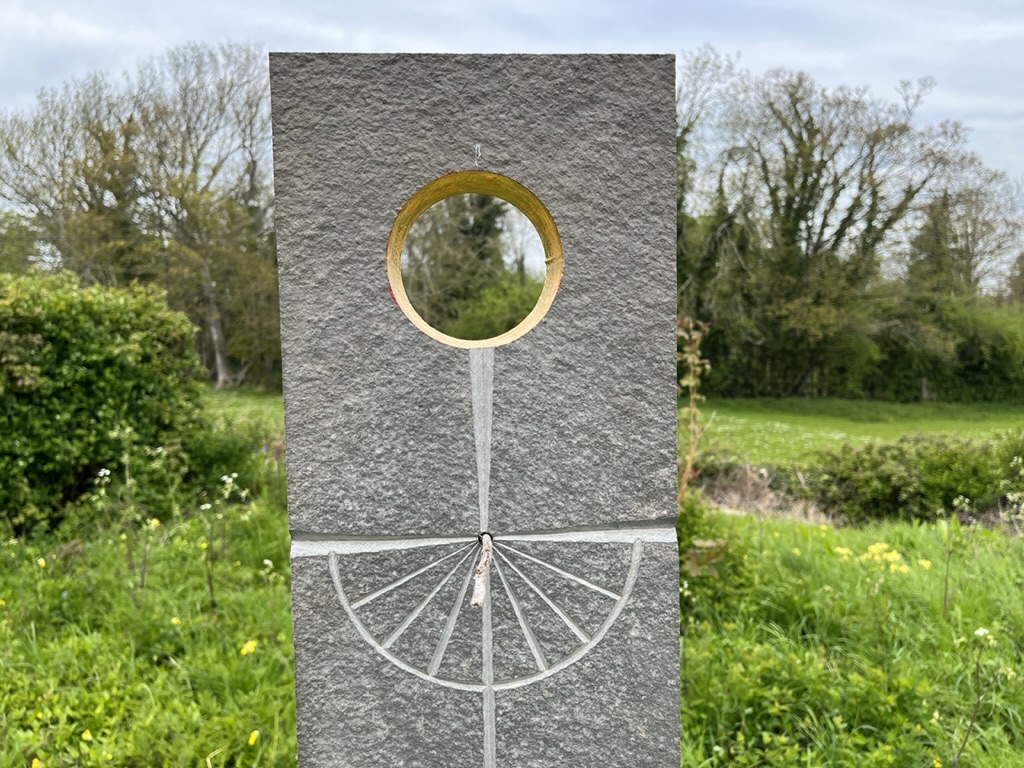
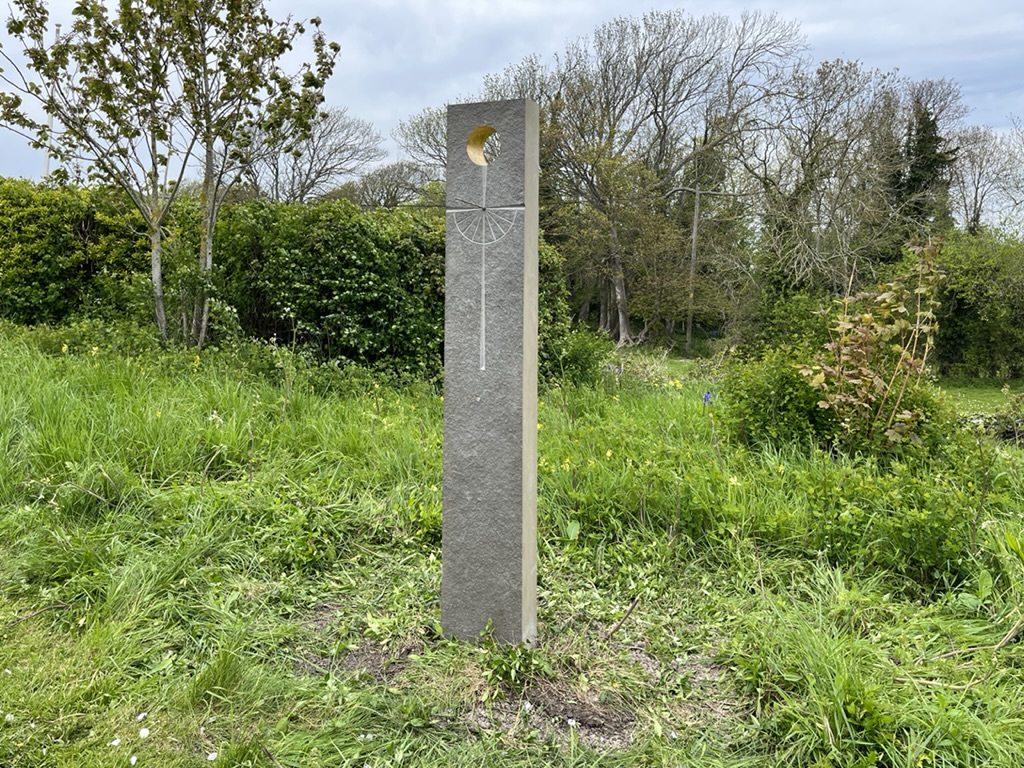
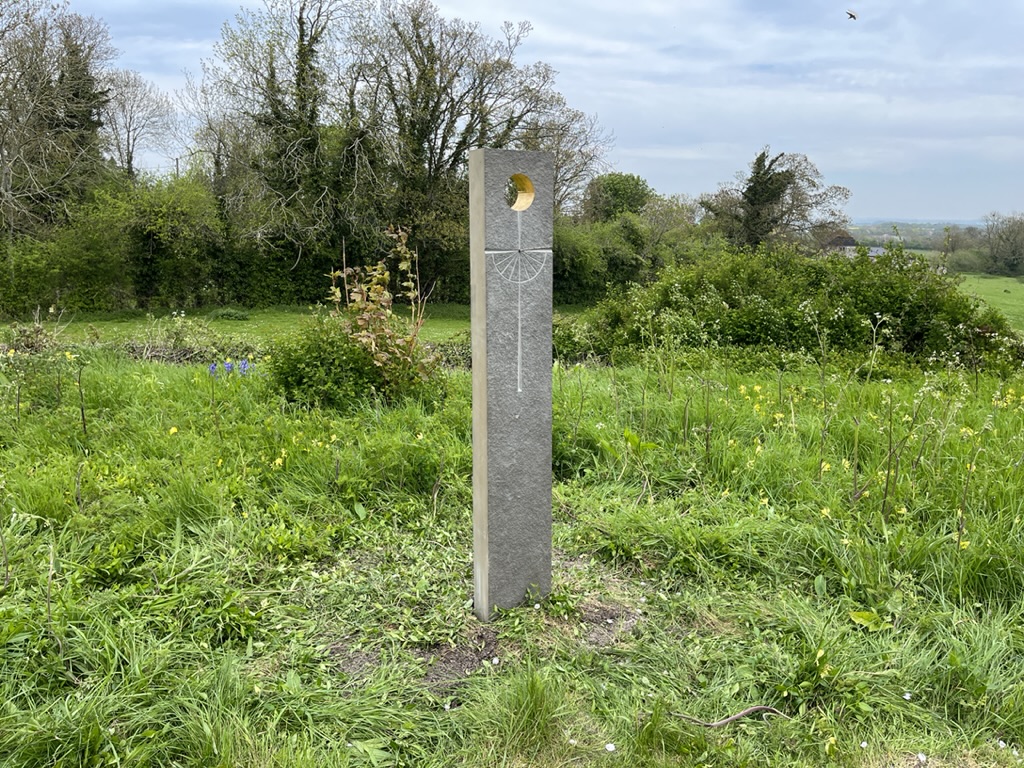
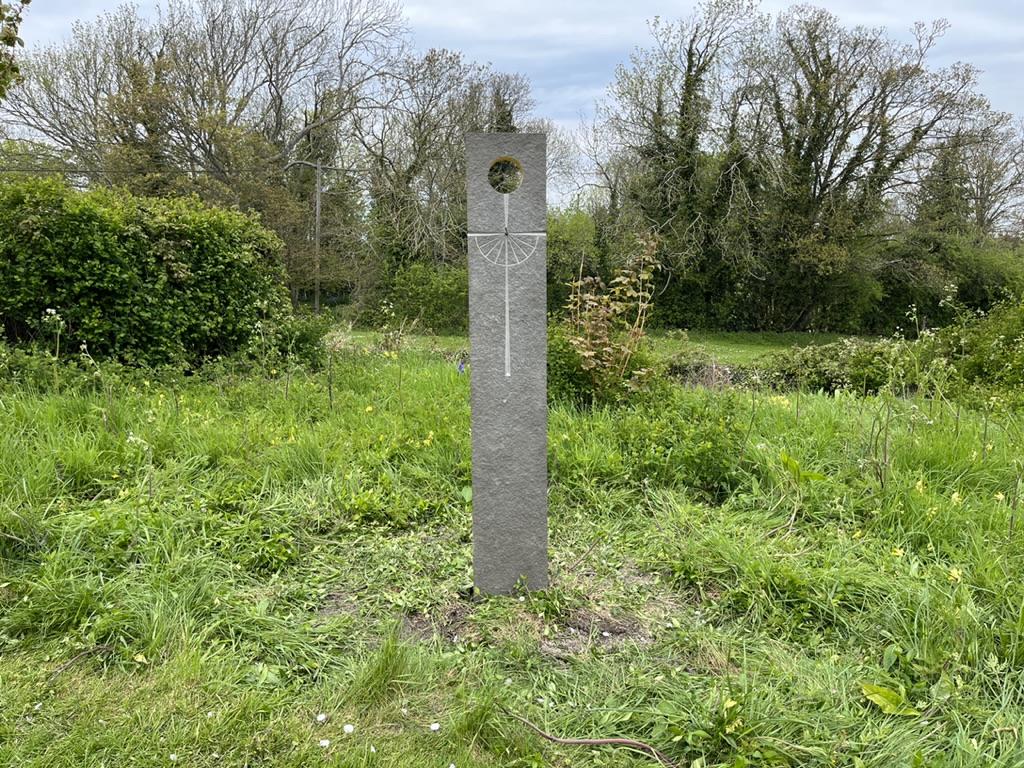
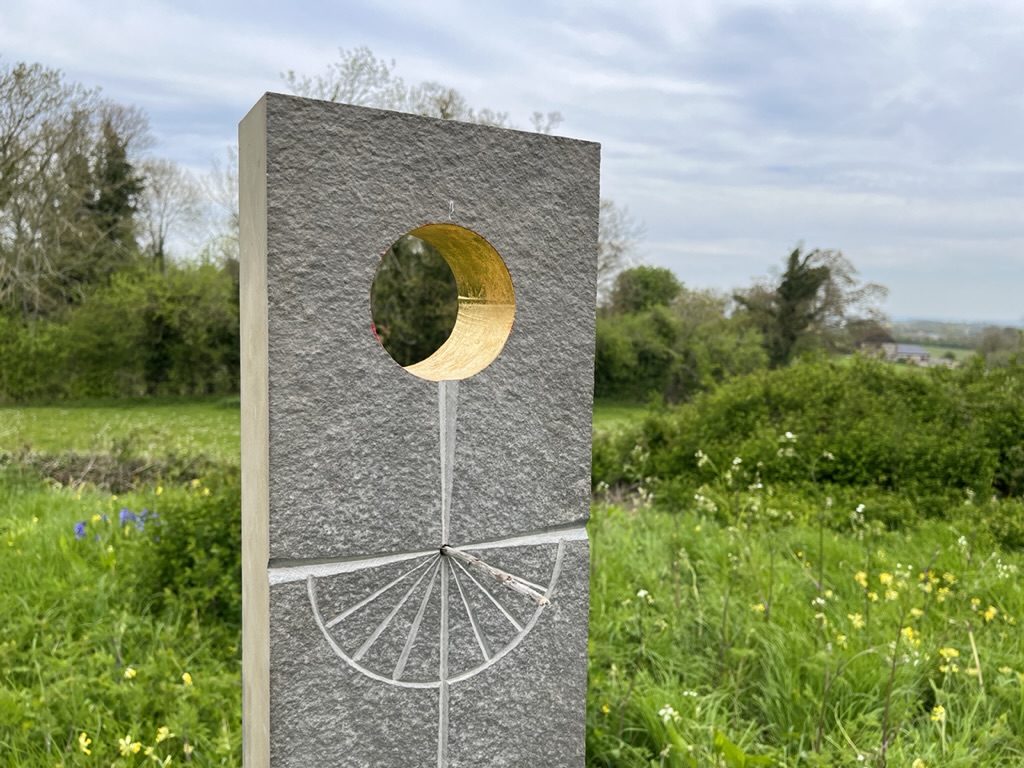
In the churchyard there was an object that attracted our attention. This eye-catching slender column had only recently been dug in, and was in pristine condition. Clearly it is a memorial, but no details were marked. The sides and the back are plain. The large hole at the top is lined with gold, which looks very good. As a whole, it is obviously designed with care and made with skill.

DIAL

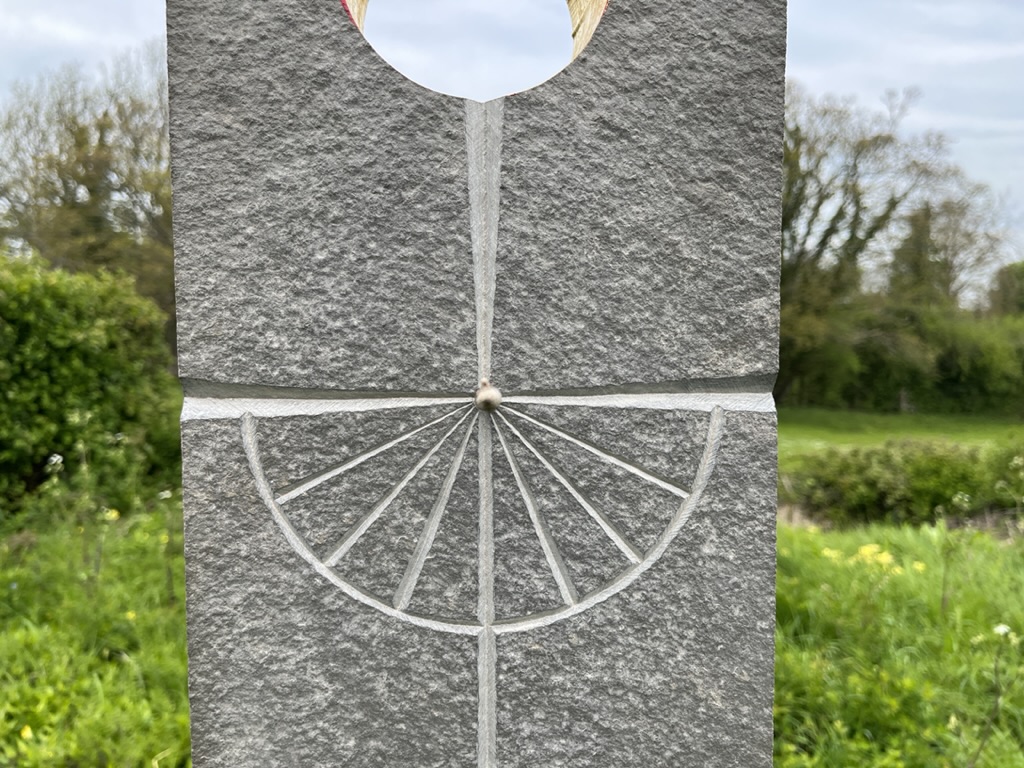
The dial itself is pleasingly symmetrical, and the composition works very well. I think it is not necessarily intended to have a gnomon, though someone has chosen to improvise with a stick.

,

However, because it faces roughly E rather than S, its ability to mark the passage of the day is limited. Also, the divisions of the lines would be cut differently. However, as a memorial stone, strict accuracy as a sundial may well not be a consideration anyway. It is a fine piece of work in a lovely setting.

GSS Category: Modern Dial; Vertical Dial; Column Dial; Memorial Dial

All photos: Keith Salvesen; thanks to John Foad BSS

CHRIST’S COLLEGE CAMBRIDGE: Vertical Dial – Sic Transit Gloria Mundi

Christ’s College Cambridge . Vertical Dial

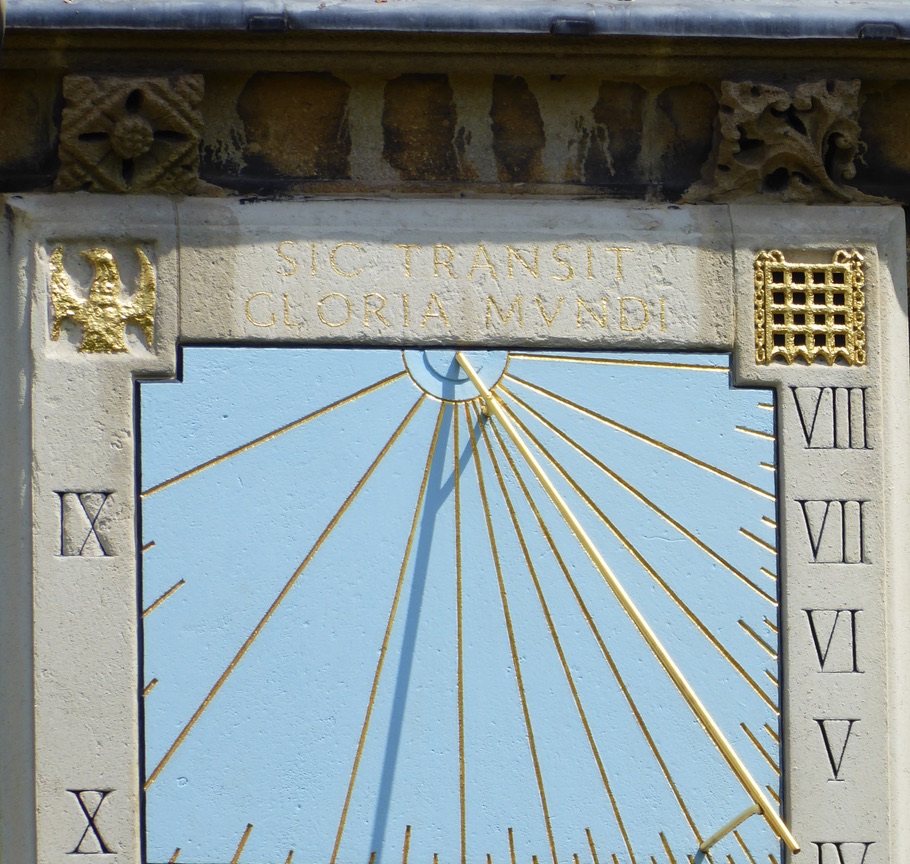
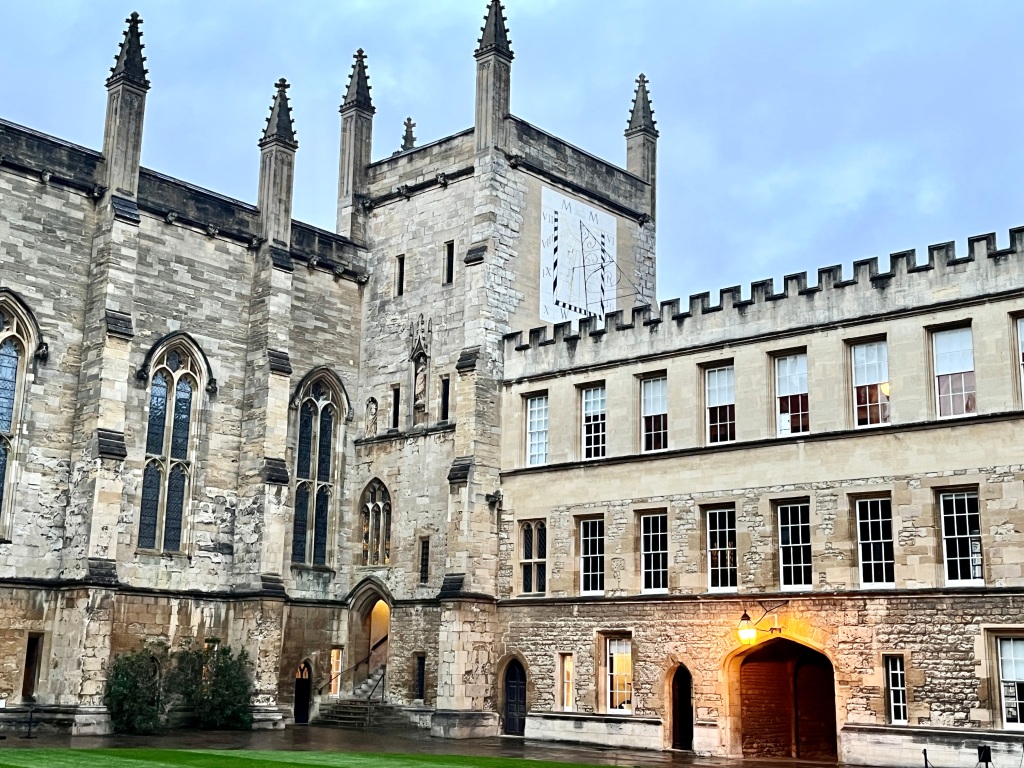
The sundial is located on the wall of the Hall, and – for those not entitled to enter the College – easily visible from the entrance by the Porters’ Lodge. It is dated 1927, replacing a dial known (from an old print) to have been in this position in C17 that was lost during C19 alterations to the Hall. The dial was the gift of a College benefactor. His initials and the year of installation are on the dial supports. The calculations were carried out by a Member of College who was a sundial expert.

The unequal positions of the hour markers take account of the SW aspect of the wall, showing more afternoon than morning hours for accuracy as the sun declines.

GSS Category: Vertical Dial; Old Dial; New Dial; Sundial Motto

All photos: Keith Salvesen

Text based on the entry for Christ’s College in the booklet ‘Cambridge Sundials’ by Margaret Stanier and Alex Brookes. This, and its companion for Oxford, are included in the bibliography.

MAGDALENE COLLEGE . CAMBRIDGE – Double Vertical Dial 1987

I recently came across a very bad photo I took years ago of this elegant and ingenious dial in Magdalene College. My image is too awful to be the basis of a feature. However BSS has in its records this excellent quality photograph with a short account to accompany it.

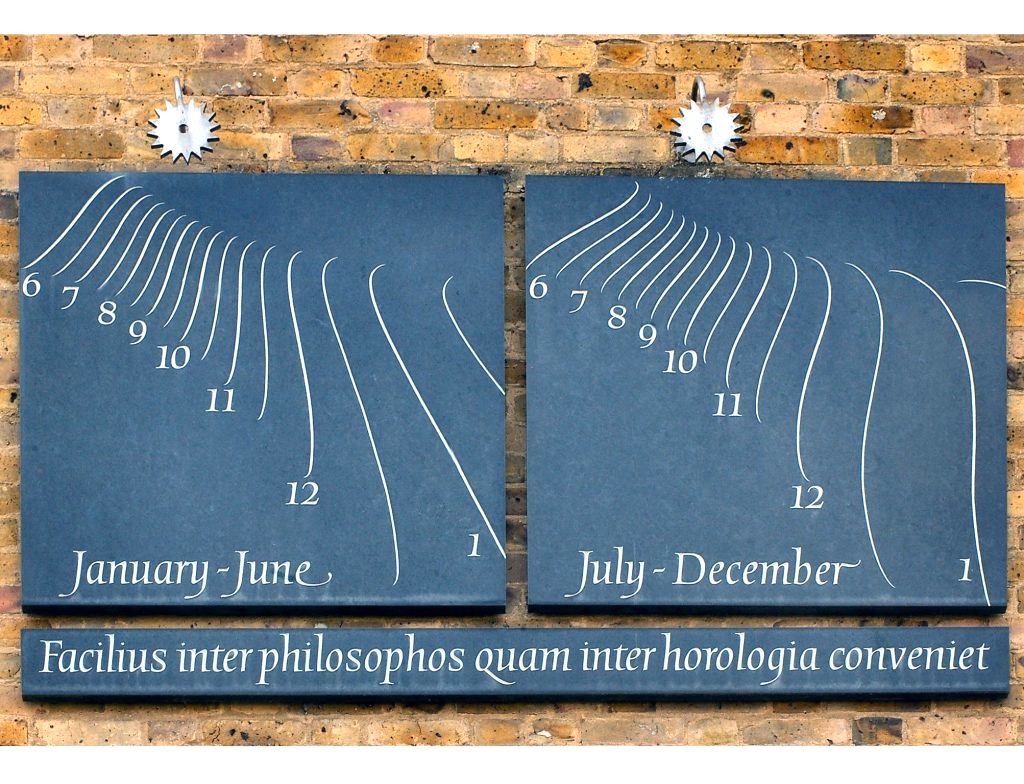
A competition among first year engineering students led to the creation of this most striking double vertical dial, mounted in 1987 on the south-facing wall of Benson Court. It was designed by Will Carter in stone and stainless steel and features the motto: ‘Facilius inter philosophos quam inter horologia conveniet.’ (It is easier to gain agreement among philosophers than among timepieces – Seneca) The prize-winning design has the Equation of Time built into the gracefully curving hour lines. A spot of light shining through a pierced stainless steel sun marks the time on each dial.

‘Facilius inter philosophos quam inter horologia conveniet.’ (It is easier to gain agreement among philosophers than among timepieces – Seneca)

GSS Category: Vertical Dial; Double Dial; Modern Dial; Competition Dial

Credit: British Sundial Society Archive

MUSEUM VAN LOON . KEIZERSGRACHT . AMSTERDAM – 3 Sundials

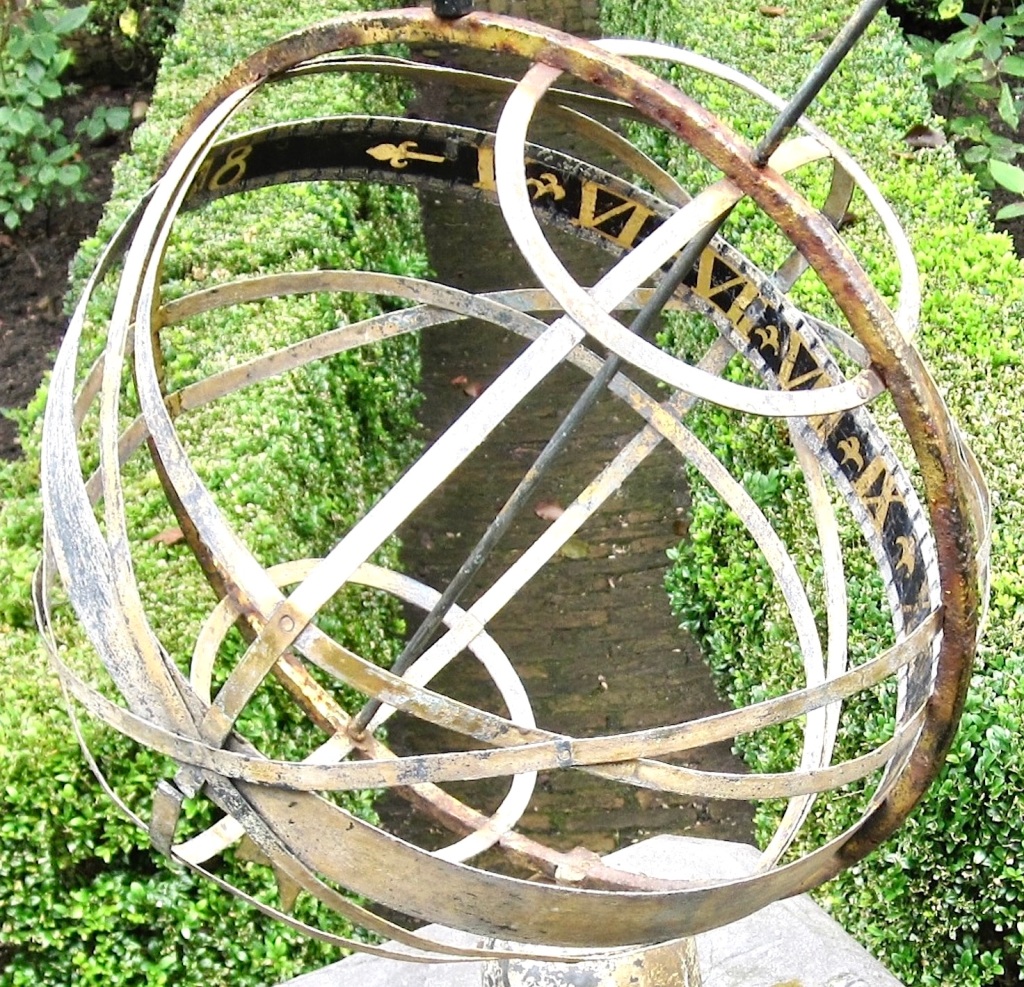
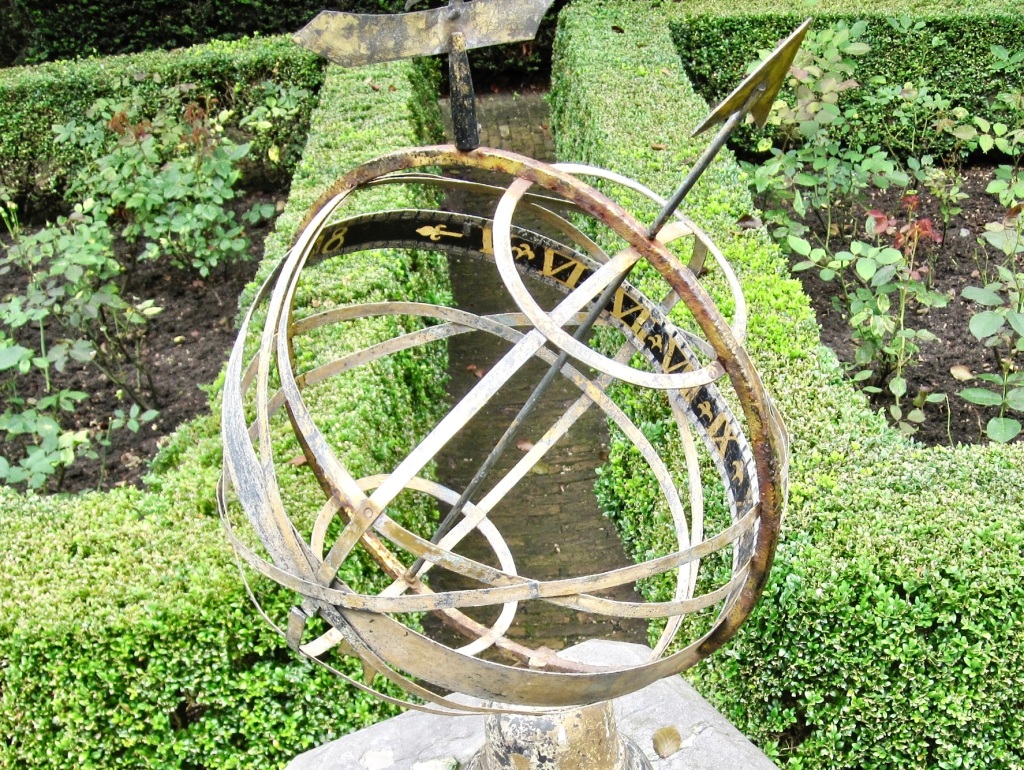
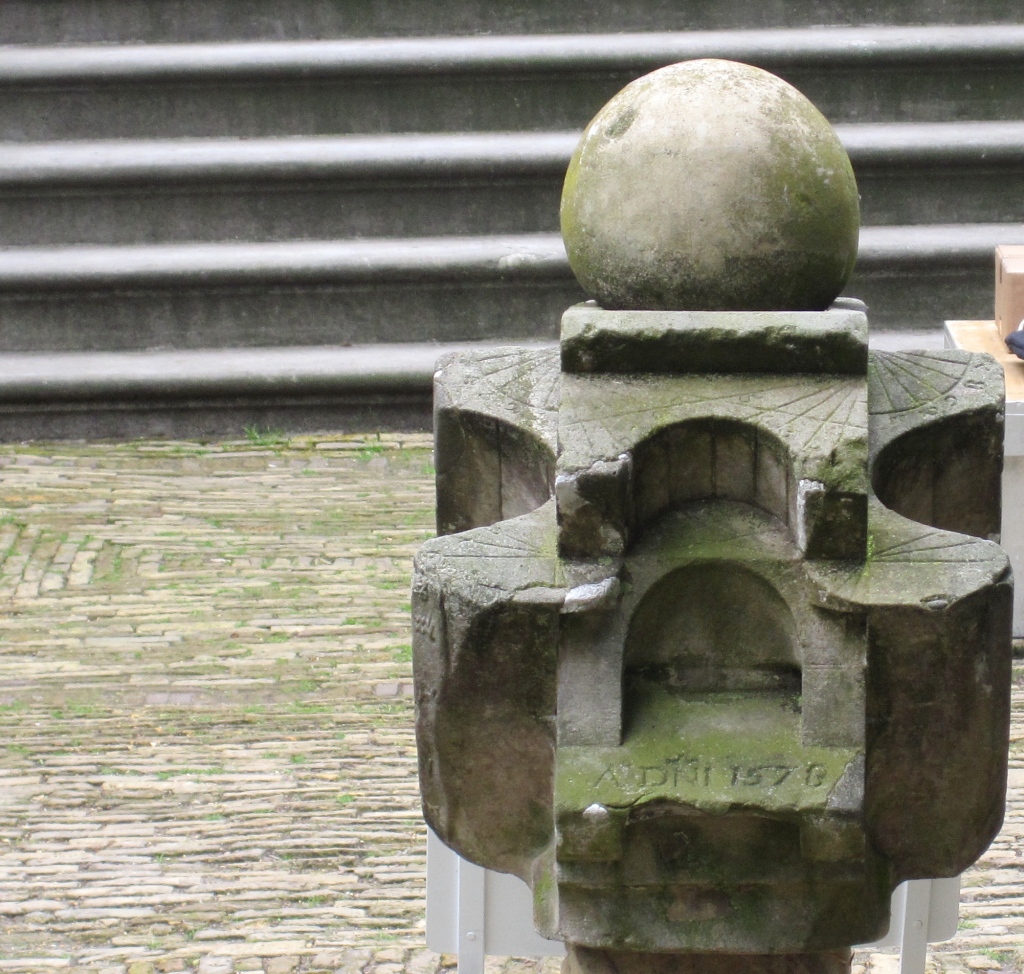
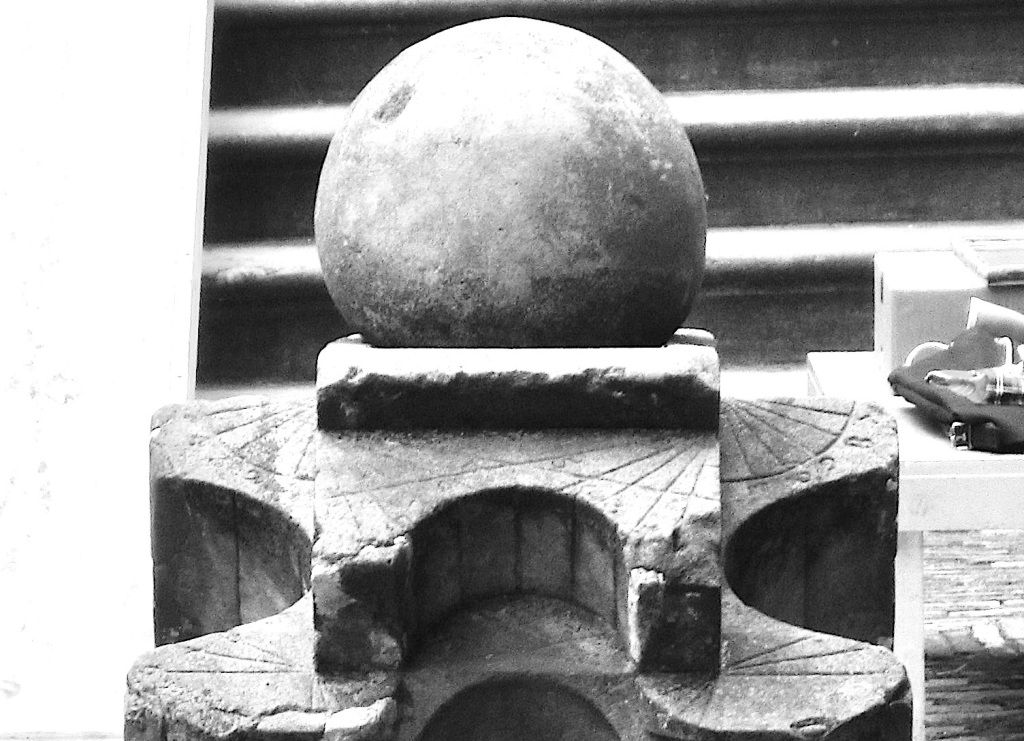
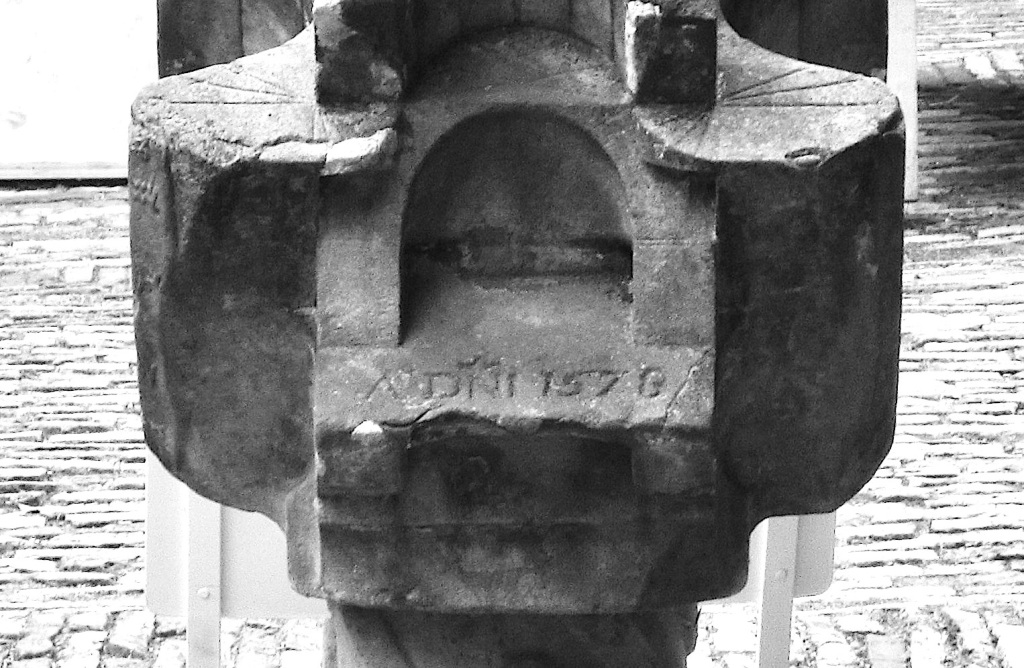
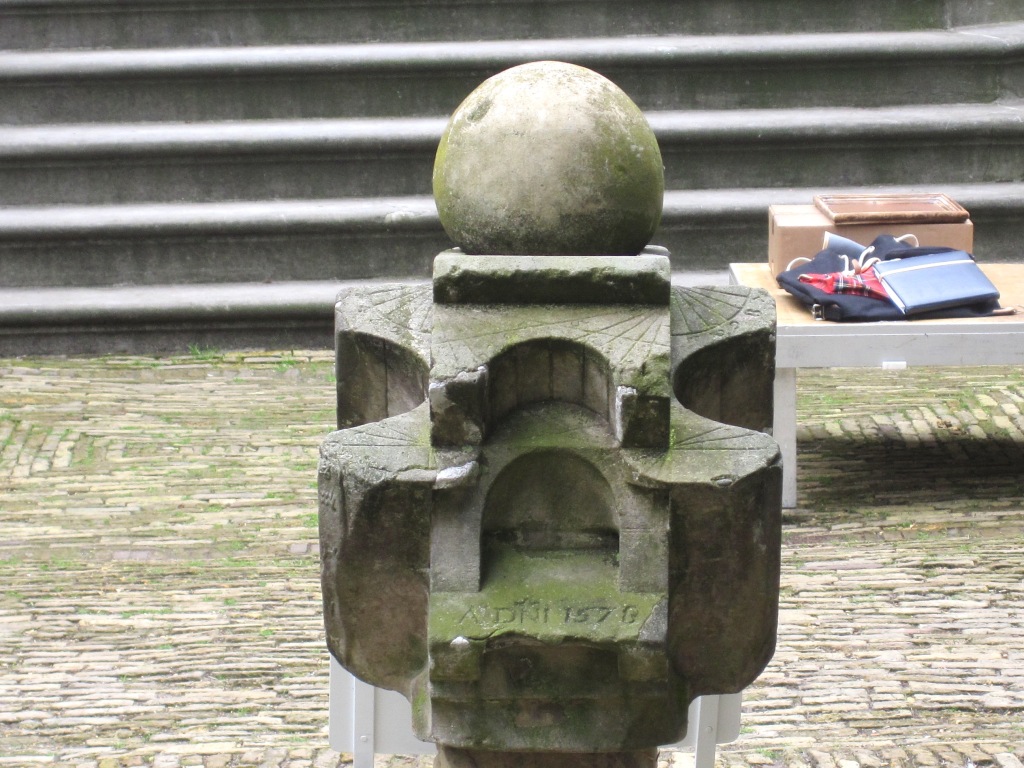
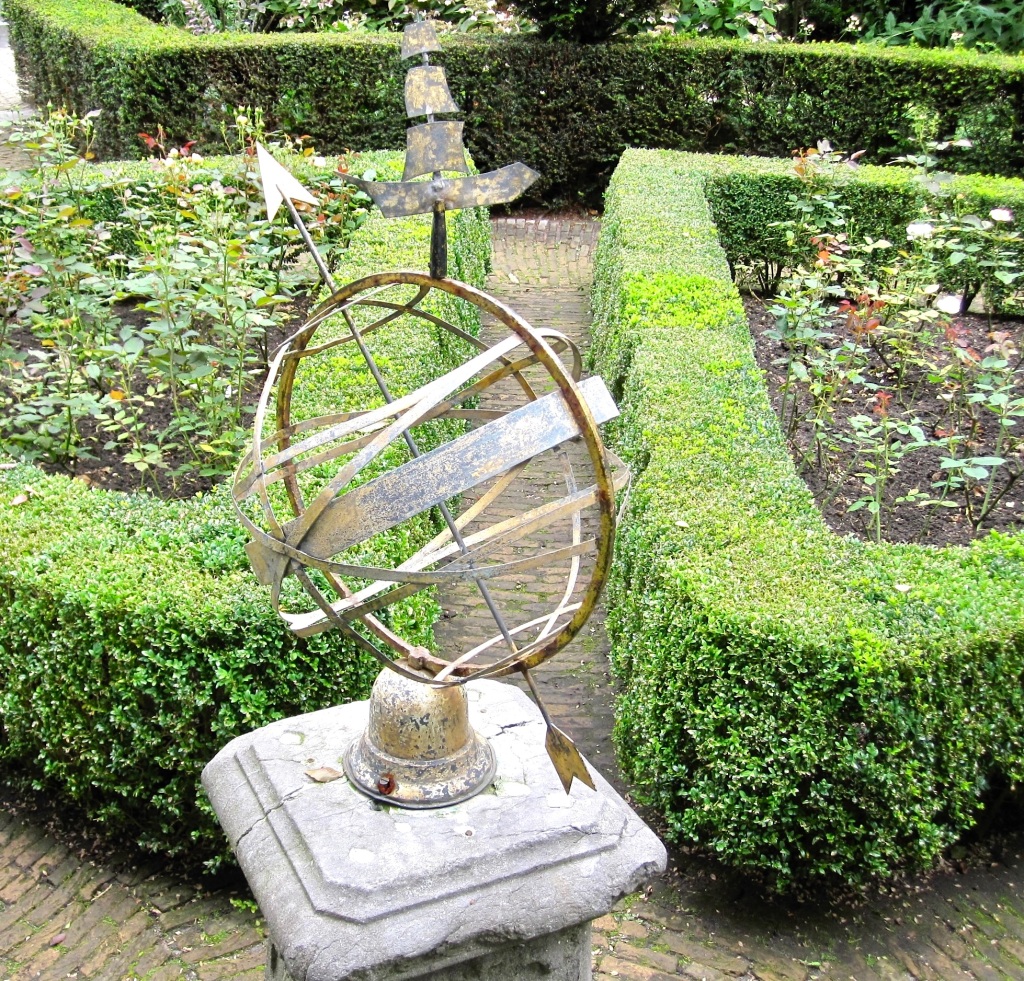
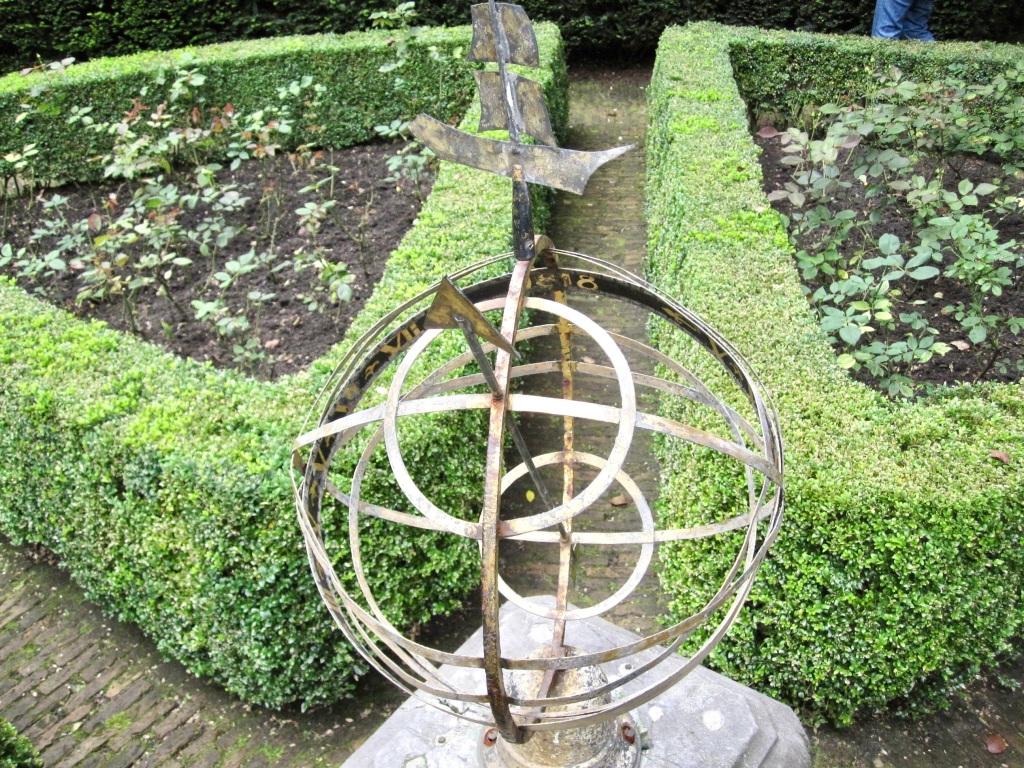
The attractive gardens of the Van Loon Museum contains 3 very different dials. In the centre is an armillary sphere (C19?). By the steps is a complicated early scaphe dial dated 1582. I have included B&W images, which can sometimes be useful for seeing details on multiple dials. The third dial with a weather vane is high up in the centre of the upper gallery overlooking the garden. I am trying to find out a date for it.

ARMILLARY SPHERE

SCAPHE / LECTERN DIAL 1578

Correctly know as a lectern dial because of its angle. Scotland in particular has many of these (eg Culzean), as it also has with obelisk dials (eg Kelburn Castle).

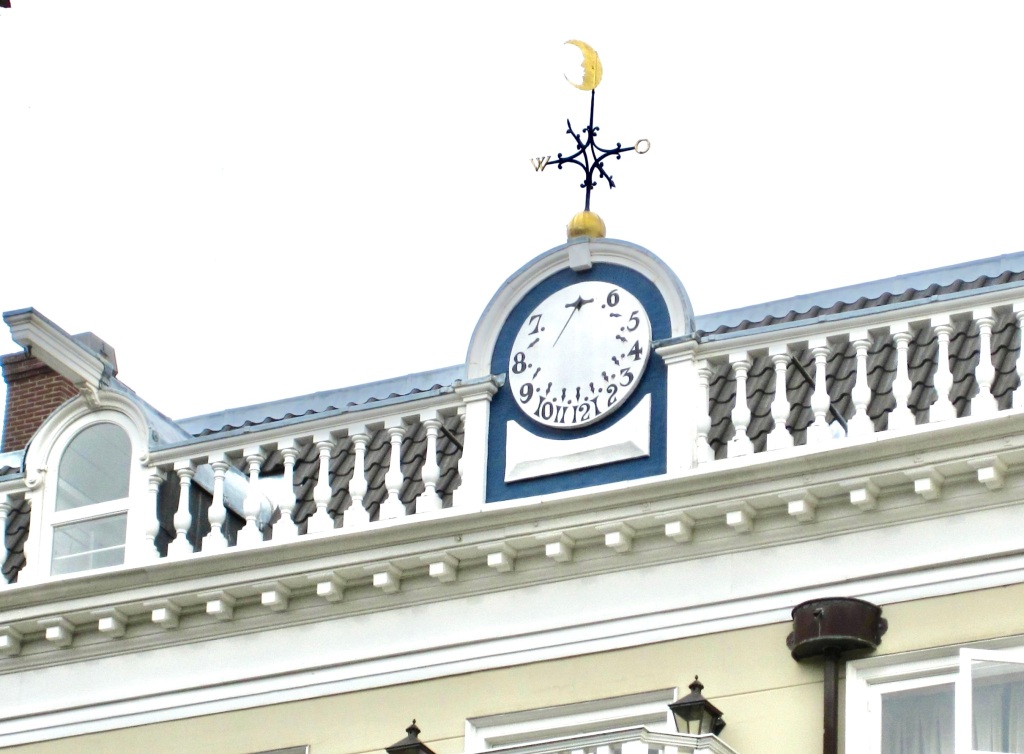
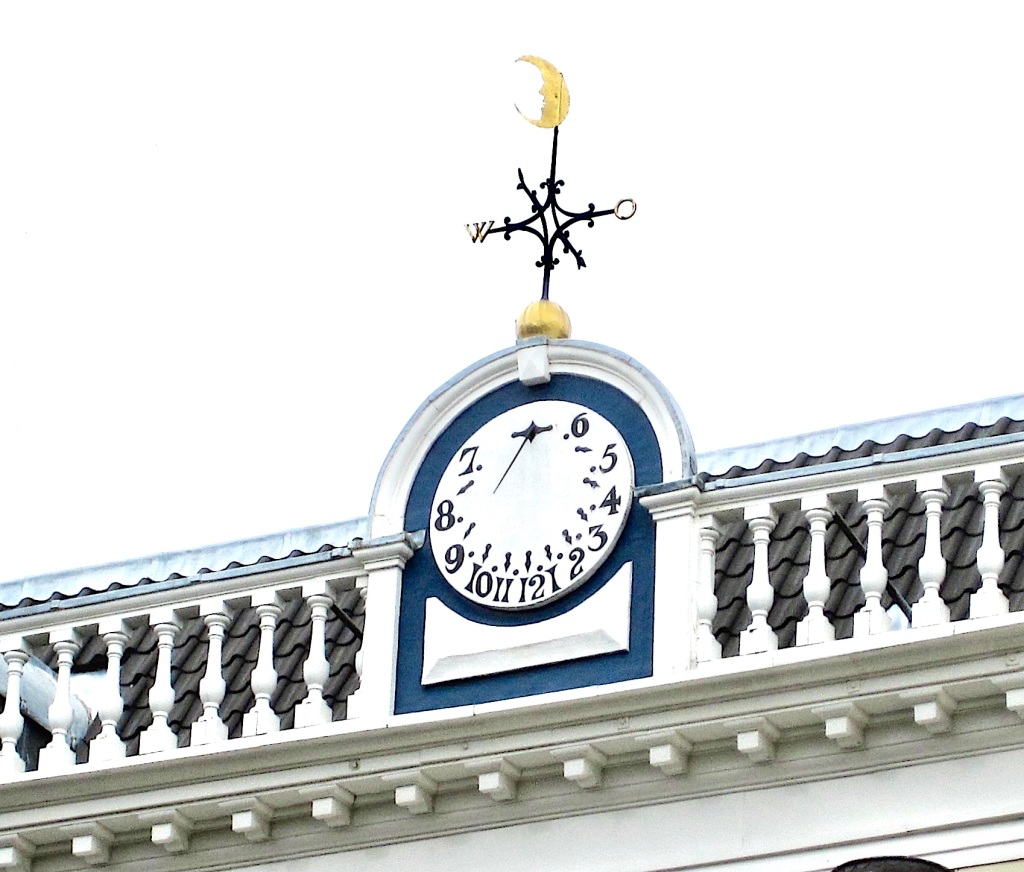
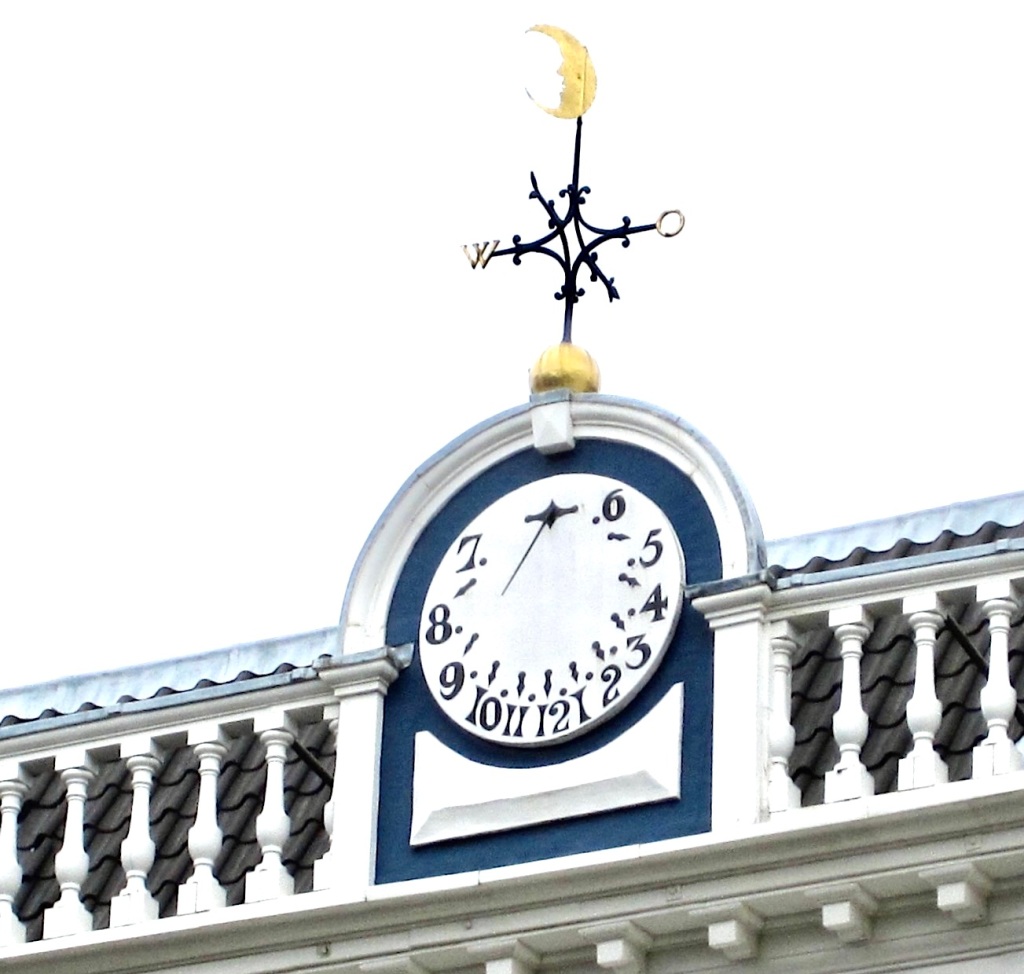
VERTICAL DIAL AND WEATHER VANE

GSS Categories: Armillary Sphere; Cube Dial; Multi Dial; Scaphe Dial; Modern Dial; Amsterdam Dial

All photos: Keith Salvesen

KILMAINHAM . DUBLIN . ROYAL HOSPITAL / IMMA – Vertical Dial

Kilmainham . Dublin . Royal Hospital / IMMA -Vertical Dial

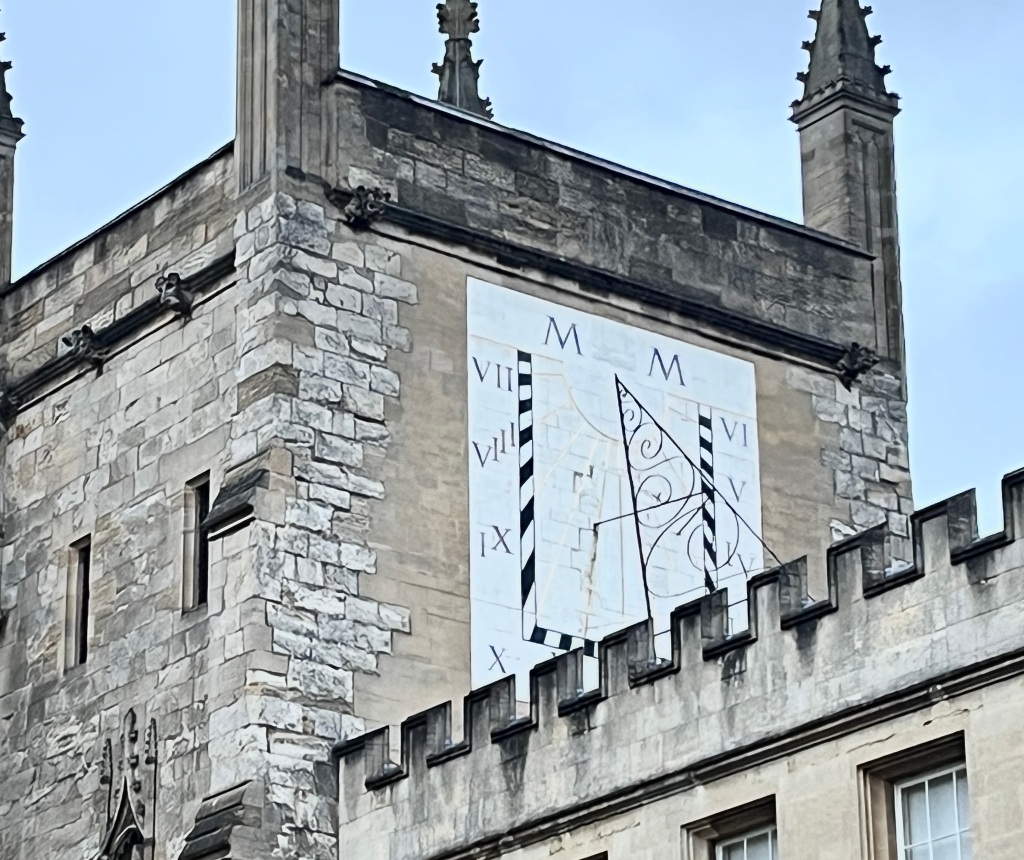
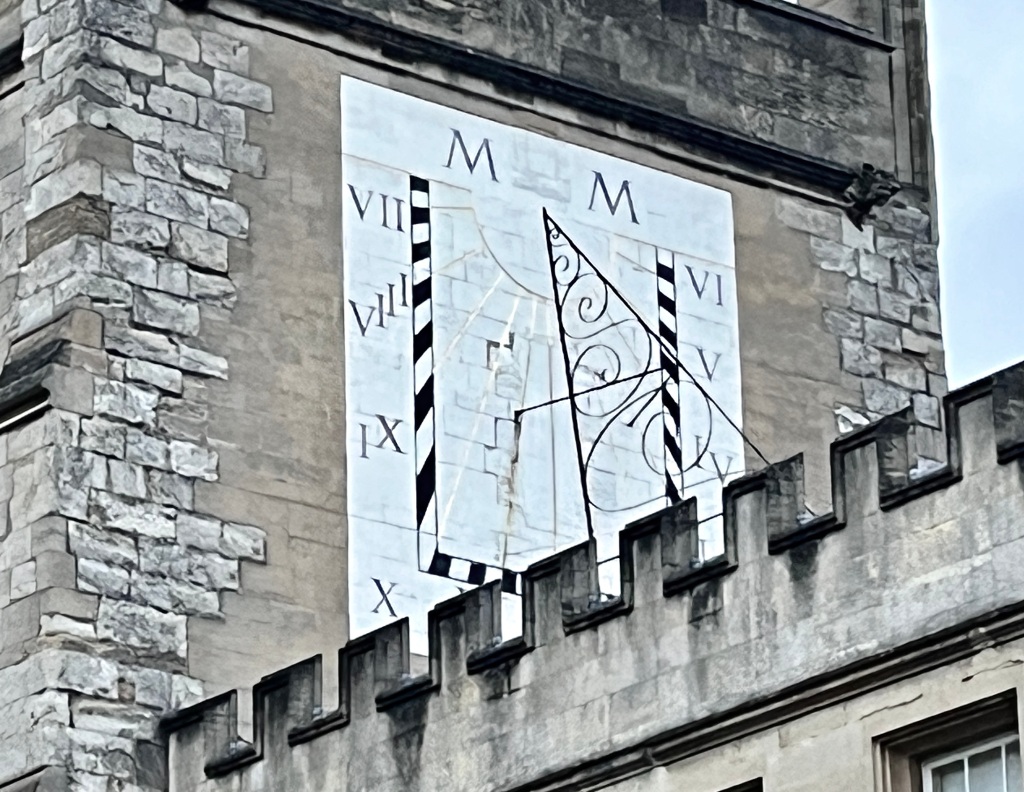
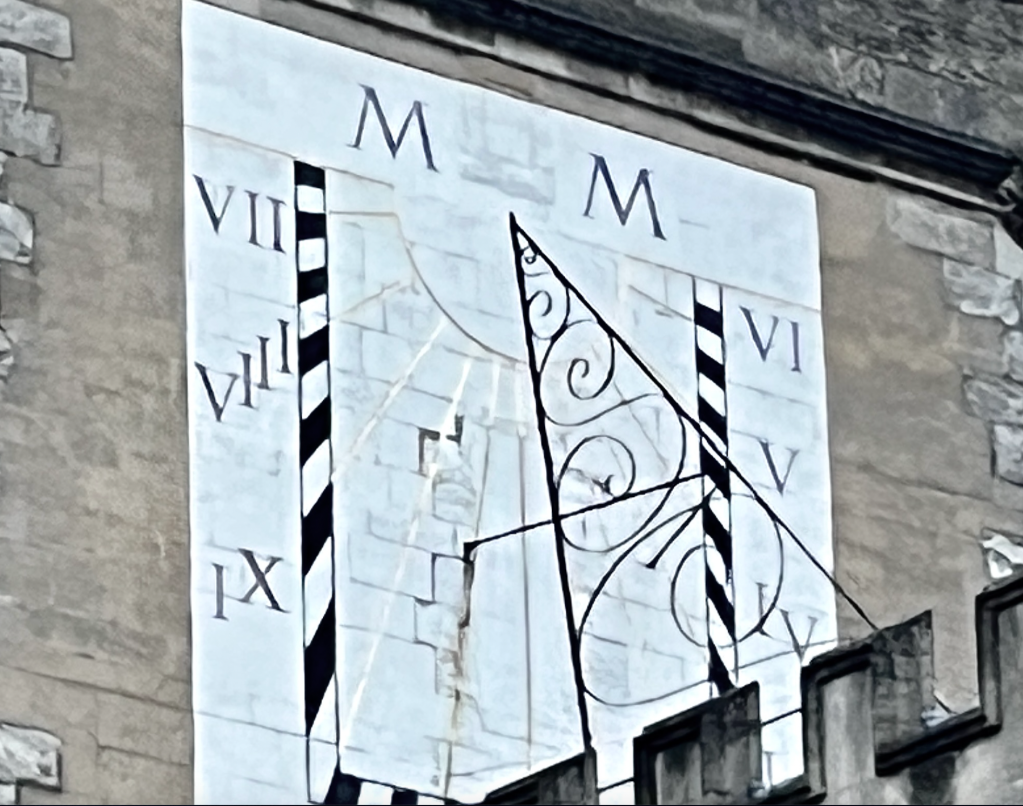
A painted (gold Roman numerals and hour lines on white) vertical timber dial 1000 mm wide by 1200 mm high on the south wall of the courtyard of the Royal Hospital Kilmainham over the entrance to the dining hall. It has an ornate scroll gnomon also painted gold. The RHK, built in 1684, was in use as a retirement home for soldiers until 1927. Following restoration the building was reopened in 1991 as the Irish Museum of Modern Art .

Kilmainham . Royal Hospital / IMMA -Vertical Dial BSS

I am hoping to be able to get more detailed / close-up photos of the dial…

Kilmainham . Dublin . Royal Hospital / IMMA -Vertical Dial

GSS Category: Vertical Dial

Photos: Keith Salvesen; BSS Archive; Text M. J. Harley BSS

GRUNDISBURGH . SUFFOLK . ST MARY – Vertical Dial

St Mary . Grundisburgh . Suffolk

ST MARY . GRUNDISBURGH . SUFFOLK

GRADE I † Late C13; C15 enlargement and alterations. Tower c1730 with a plaque over the doorway: This Steeple was Built The Bells set in Order and Fixt. At the Charge of Robert Thinge Gent. Lately Deceased A.D. 1731-1732. Dial undated. 8m NE of Ipswich. 52.1133 / 1.2459 / TM223510

St Mary . Grundisburgh . Suffolk – Vertical Dial

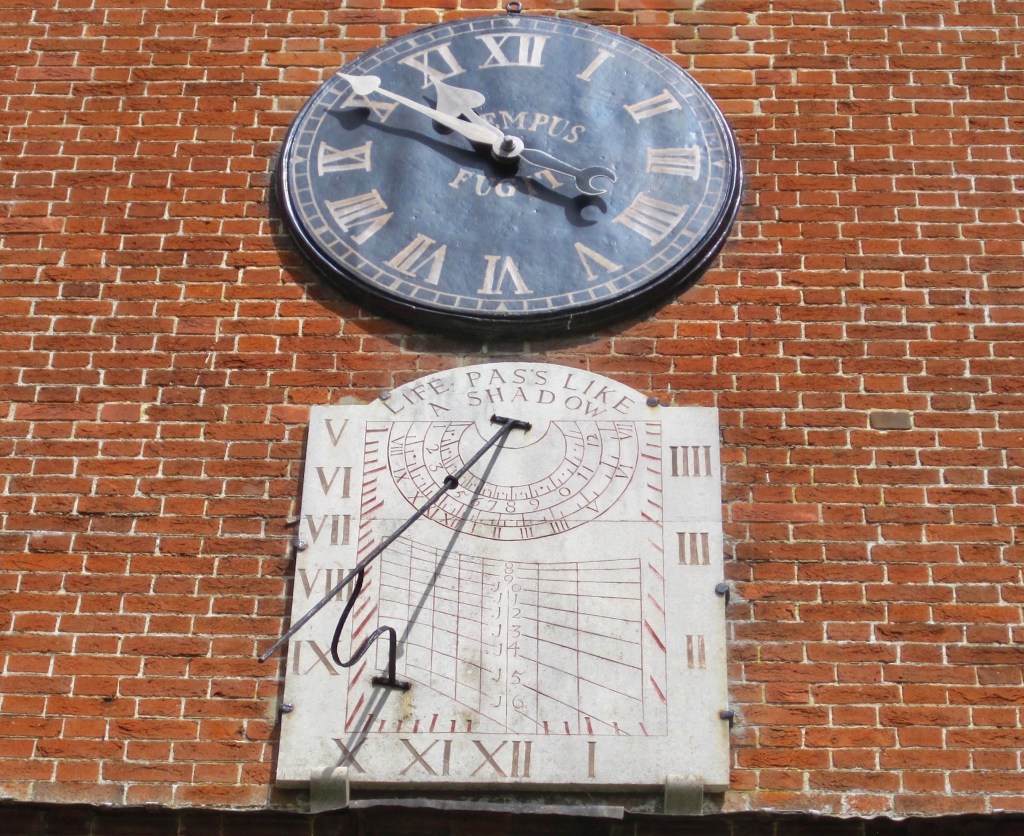
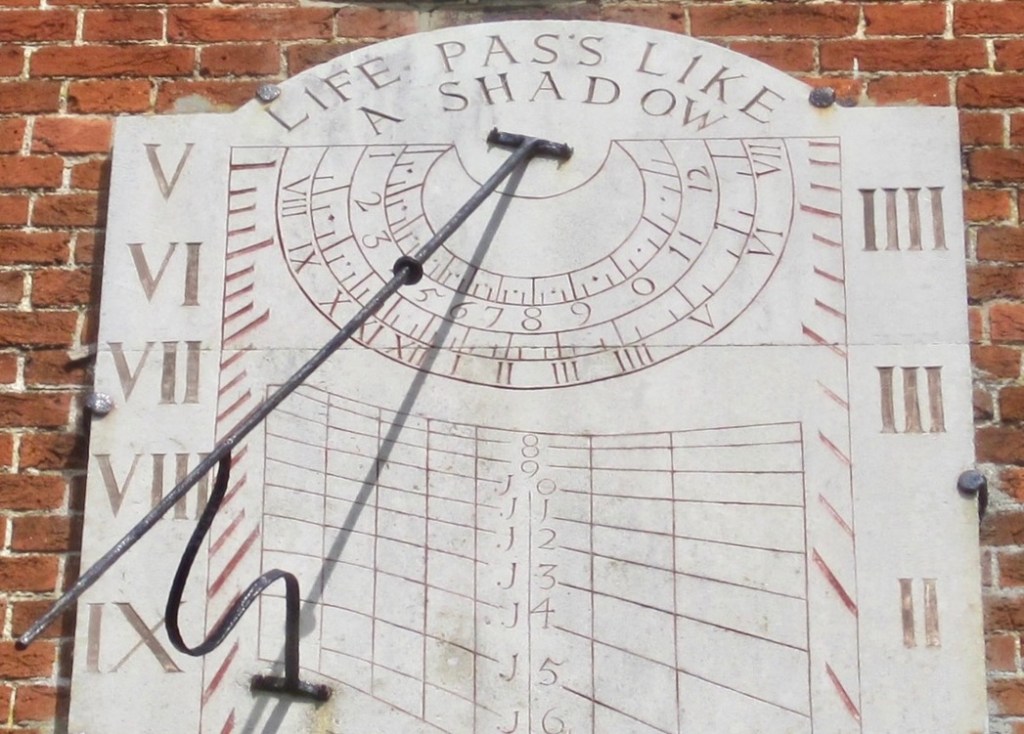
The vertical sundial is immediately below the clock. As David Ross has written, what is immediately obvious as you walk up the path to the door is a large sundial set against the south wall of the tower, below a Victorian clock – as if the Victorians did not quite trust the sundial. Both timepieces are set below a round-headed window that would be perfectly at home in a railway station. (David Ross, Britain Express)

PEV (Suffolk E) is also unenthusiasic about the tower, which showed how the Georgians could be every bit as insensitive as the much-maligned Victorians. 

St Mary . Grundisburgh . Suffolk – Vertical Dial

HOW THE DIAL WORKS (1)

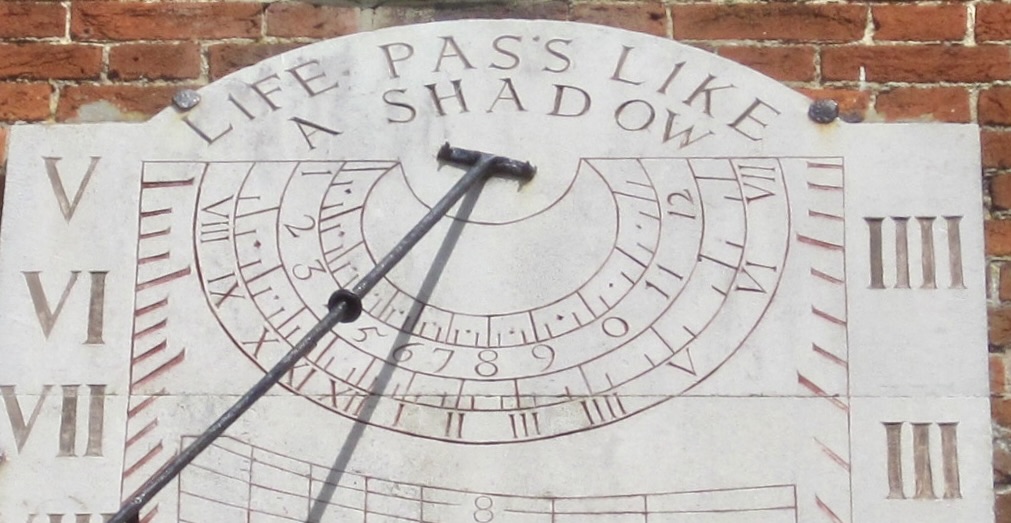
The break-arch shaped dial has a motto within the arch that reads: Life pas’s like a shadow. Roman and Arabic numerals are used to show the time. At the gnomon base are two arcs showing the time elsewhere. Analysis indicates that the scale with Roman numerals suggests Damascus; the scale with Arabic numerals suggests Barbados.

The main dial shows 5am to 4pm in Roman numerals, divided into quarter hours. The gnomon rod has an ‘S’ shaped supporter and a ball nodus. This is associated with the 11 declination lines numbered 8, 9, J0, J1, J2, J3, J4, J5, J6 (8 to 16 for daylight hours), with outer lines unnumbered.

The above notes are based on BSS records. The complete entry is below

HOW THE DIAL WORKS (2)

This break-arch shaped dial on the south wall of the church tower, below a clock, declines about 23° to the east.  The tower dates from 1731-32, but it is not known whether the dial is contemporary. 

A motto within the arch reads: LIFE PAS’S LIKE / A SHADOW.  Scales around the gnomon root show the time at two other places, but they are not named.  The outer scale, with Roman numerals for 8am to 7pm, using XII and IIII, shows the time at about 37° E, so may be intended to show Damascus time.  The inner scale, with Arabic numerals 1 to 12, shows the time at about longitude 60° W, possibly for Barbados. 

The main dial shows 5am to 4pm in upright Roman numerals using XII and IIII, divided to quarter hours. The gnomon rod has an ‘S’ shaped supporter and carries a ball nodus, which is associated with nine declination lines numbered 8, 9, J0,J1, J2, J3, J4, J5, J6 (8 to 16 for the hours of daylight).

The nine vertical lines crossing these are for azimuth, the nodus shadow showing the direction of the sun.  They are also unlabelled, but will indicate bearings of SEbE, SE, SEbS, SSE, SbE, S, SbW, SSW and SWbS.  

A report in September 1983 found the dial completely bare, presumably prior to a restoration.

St Mary . Grundisburgh . Suffolk – Vertical Dial Motto

MOTTOS

LIFE PAS’S LIKE A SHADOW

A rare variant of the many inscriptions that link Life with Shadow(s). Pas’s is said to reflect the Suffolk dialect at the time. There is another example of the ‘misspelling’ (as we might say now) of the word pass. At St Mary, Bucknall, Shropshire, the 1712 dial is inscribed Tyme Paseth.

Tempus Fugit on the C19 clock is… comfortingly familiar

If you want to find out more about St Mary and other churches in Suffolk, I recommend the website of Simon Knott SUFFOLK CHURCHES a journey through the churches of Suffolk

St Mary . Grundisburgh . Suffolk – Vertical Dial

GSS Category: Vertical Dial; Sundial Motto

All photos: Keith Salvesen


BOROUGH GARDENS . DORCHESTER -Analemmatic Sundial

Analemmatic Sundial . Borough Gardens . Dorchester

The Borough Gardens in Dorchester are close to the centre of town. They were laid out and opened in the 1890s as ‘pleasure grounds’, as they remain. There is plenty to offer for all ages in an agreeable undulating space. Lawns, tennis courts, a bandstand, paddling pool, playground, a fountain, a memorial obelisk and more.

ANALEMMATIC SUNDIAL

Amongst the attractions, close to the bandstand, is a modern analemmatic sundial. I don’t know the date it was laid out, but the BSS record is 1998 with the note: The dial is laid out in the play area near the bandstand. Hour markers adjusted for longitude, an hour added for summertime use. Shows hours from 7am to 7pm.

CALENDAR

When I visited a few days ago, several small boys were having a kick around, with the dial in the centre of the pitch. No other type of dial would have worked for the purpose. The dial was partly concealed by uncut grass and leaves – the latter covering each numbered stone completely (I had to move some). I liked the way that the dial has several roles: time-telling in an interesting way; an open invitation to be the gnomon; an educative function; and artful horizontal stonework blending in with grassy and leafy surroundings. And a ‘jumpers for goalposts’ pitch into the bargain.

LAYOUT

NUMERALS

GSS Category: Analemmatic Sundial

All photos: Keith Salvesen; written information from municipal sources with thanks