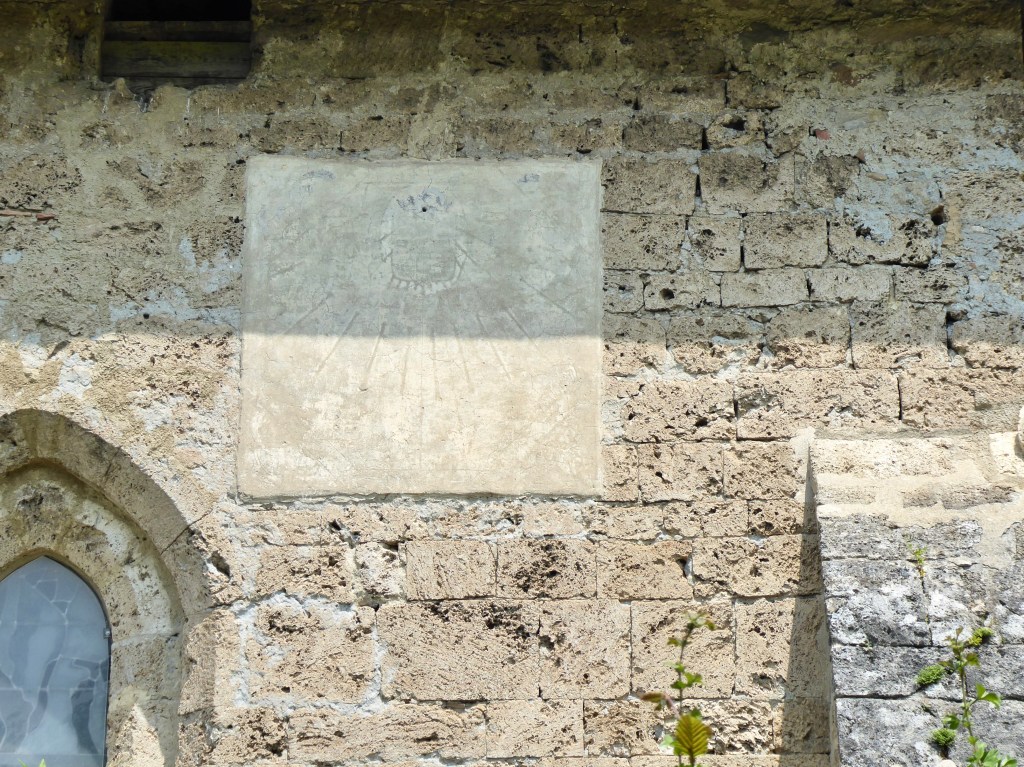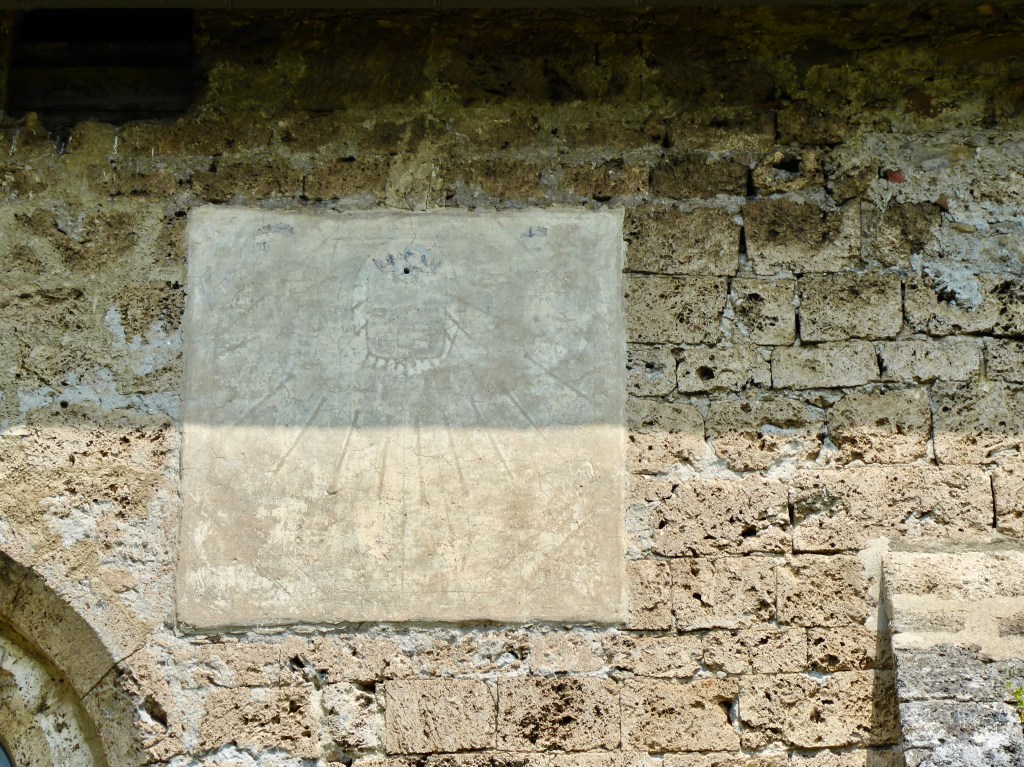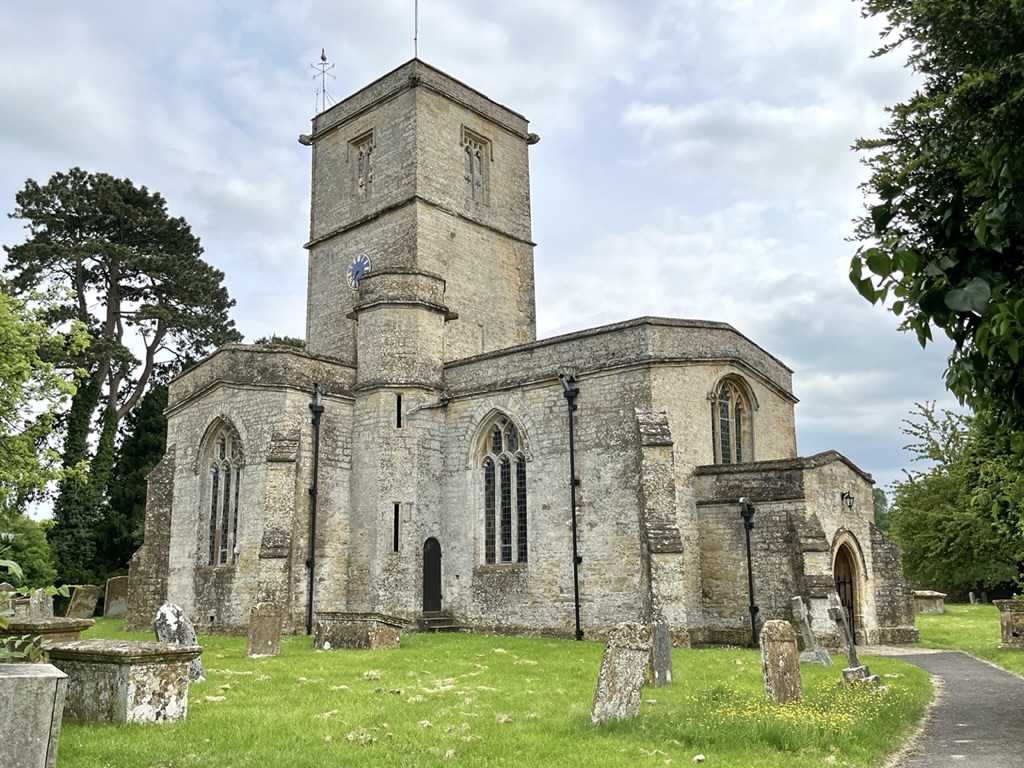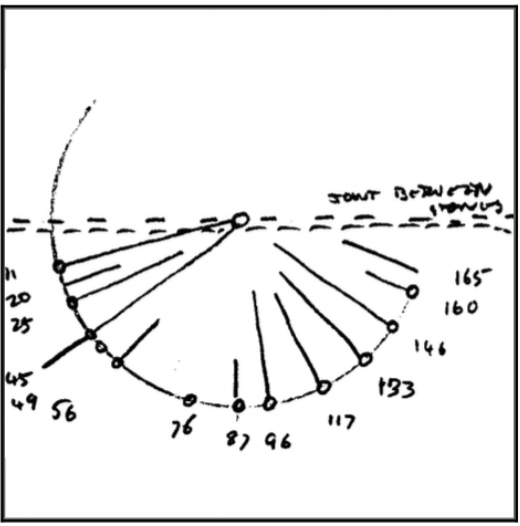
IWERNE MINSTER . DORSET . ST MARY – Scratch Dial

ST MARY . IWERNE MINSTER . DORSET
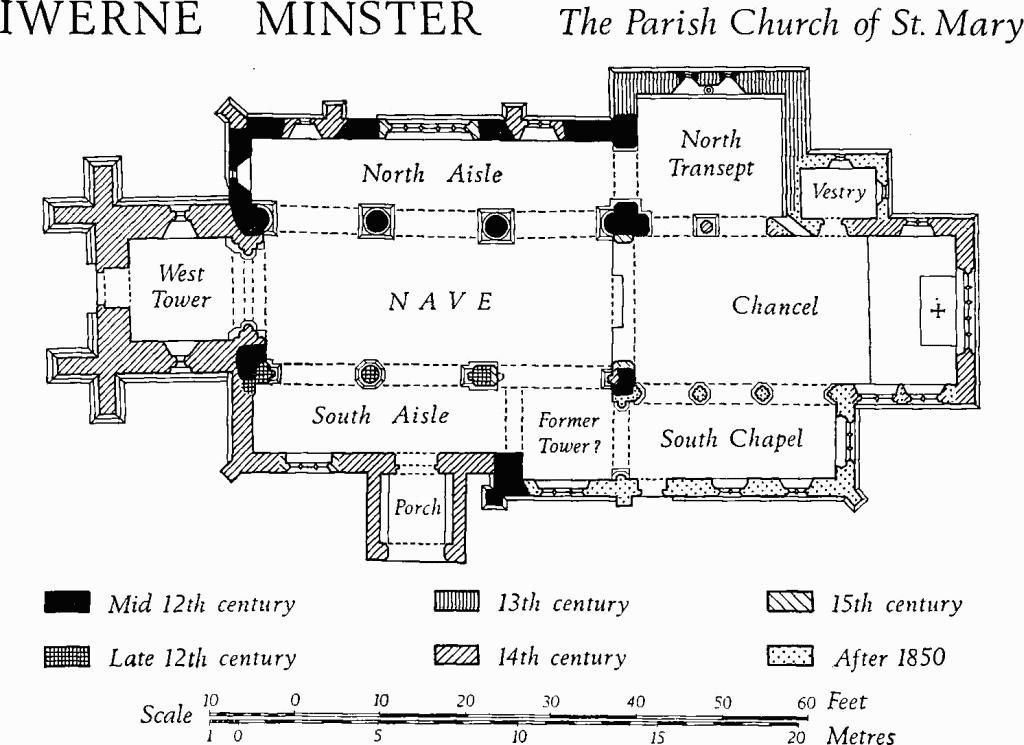
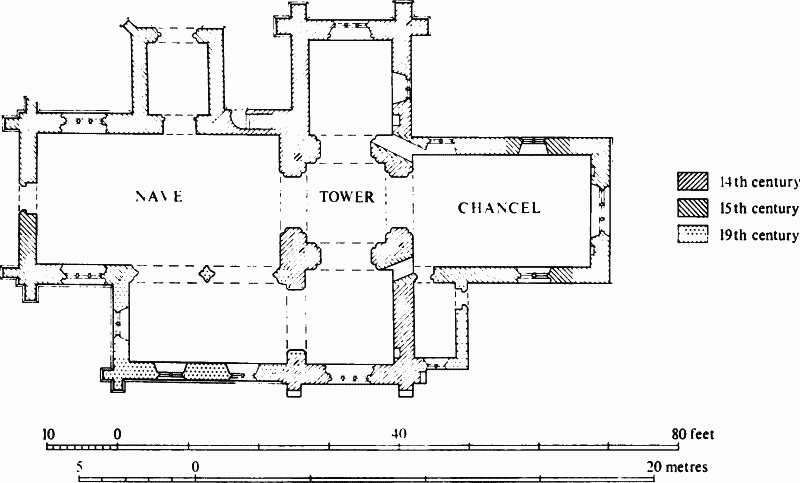
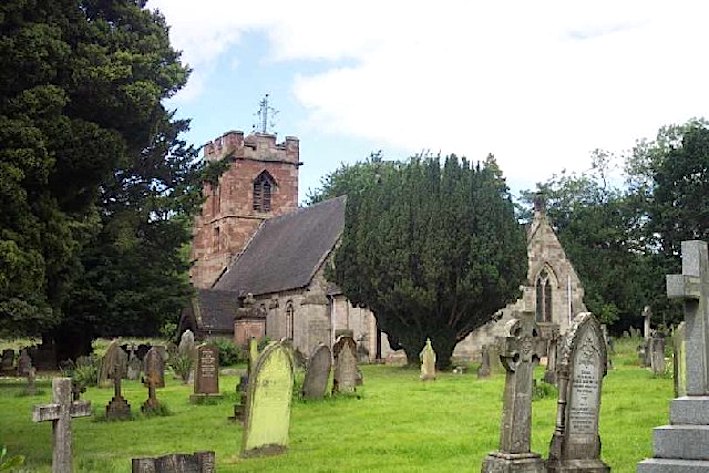
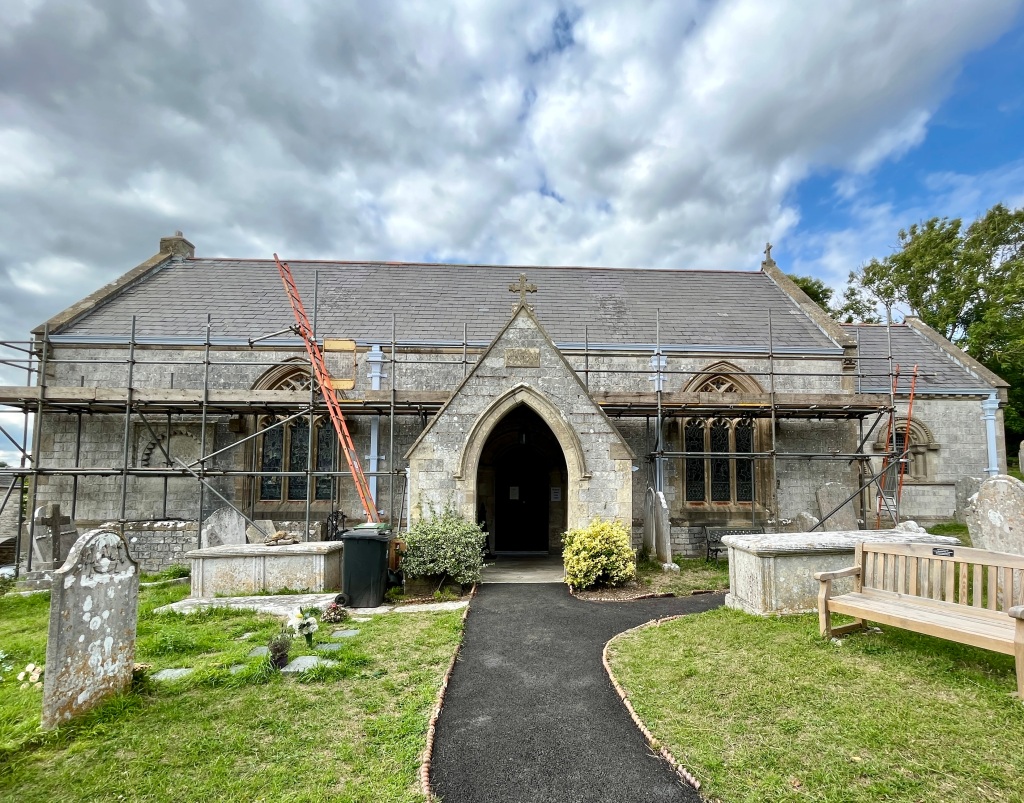
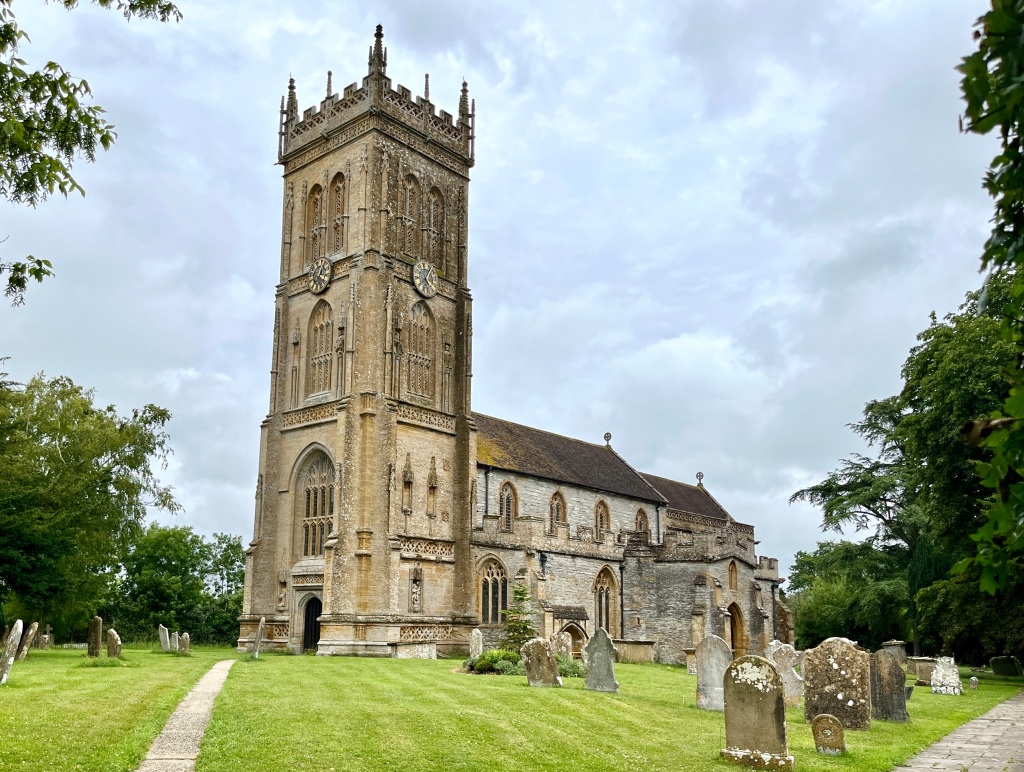
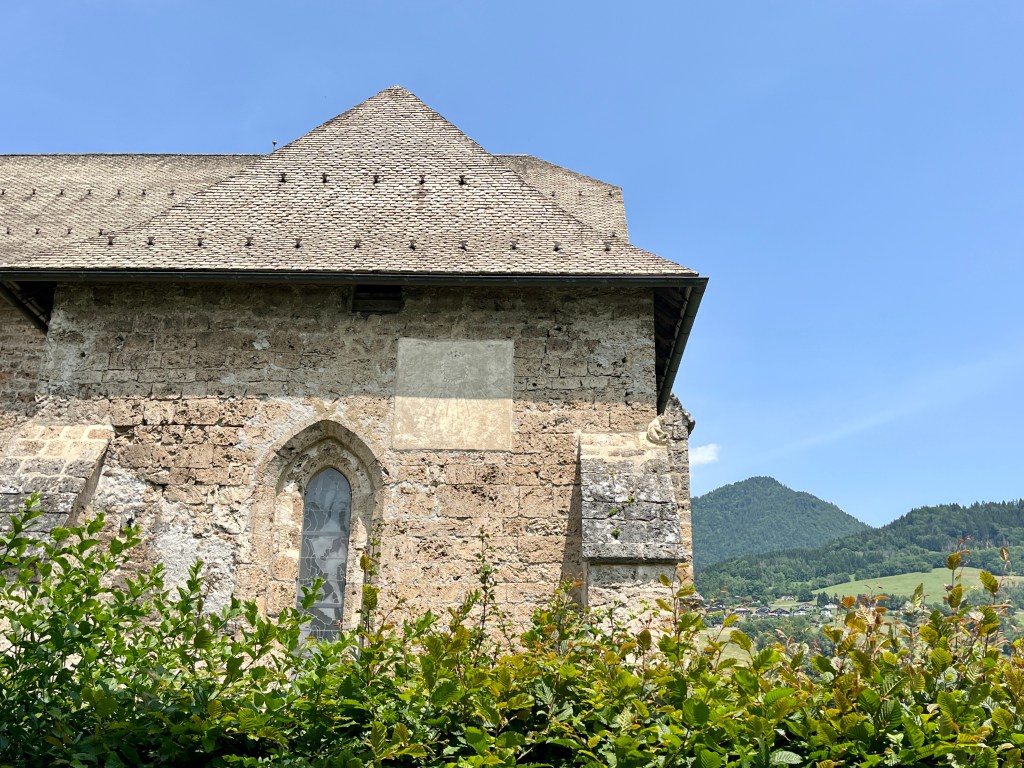
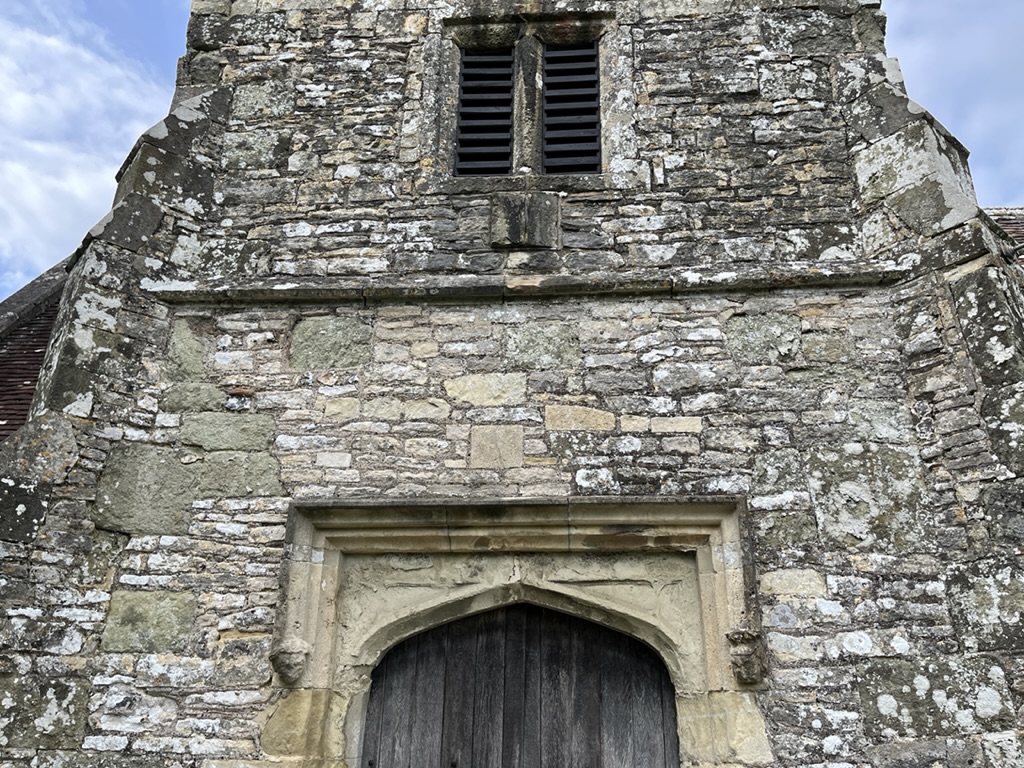
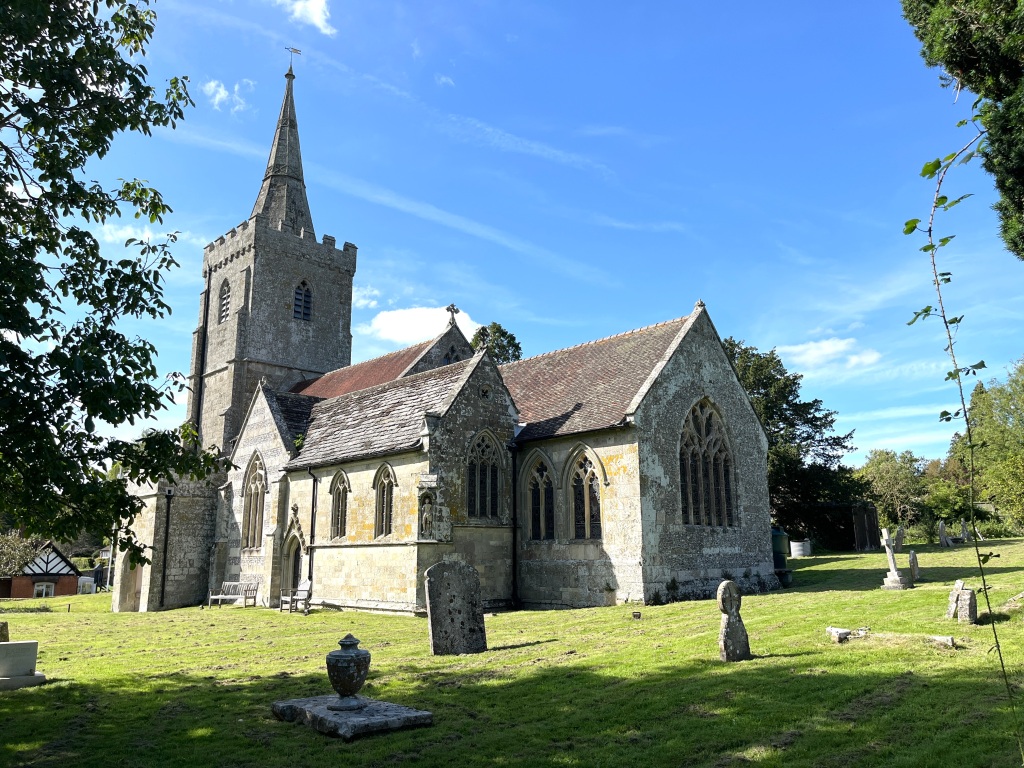
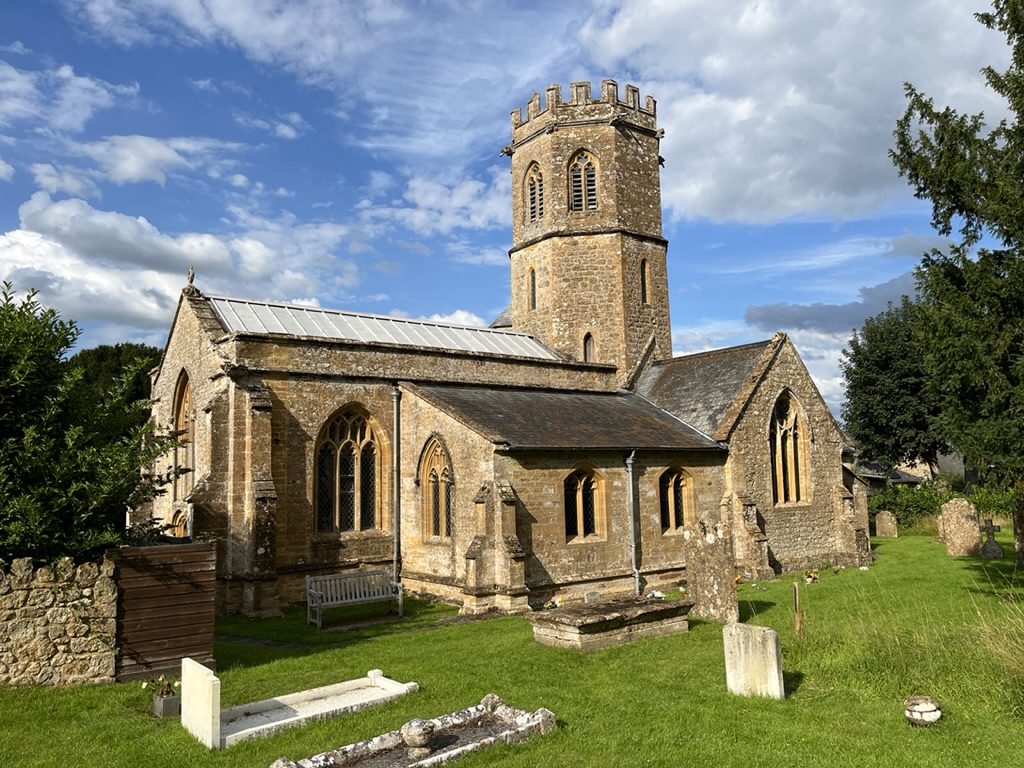
GRADE I ✣ C12 origins & remnants; C13 – C15 enlargement; C19 restorations (Wyatt). One of only 3 Dorset (early) churches with spires, with Trent and Winterbourne Steepleton (the Dorset village of Steeple only has a tower). The spire was originally much taller but has twice been reduced in height. The most important and interesting church in its neighbourhood PEV. If you want to dig deeper there are plenty of excellent resources online eg HE, BLB, BHO. Midway between Shaftsbury and Blandford. 50.9295 / -2.1887 /  ST868144

DIAL

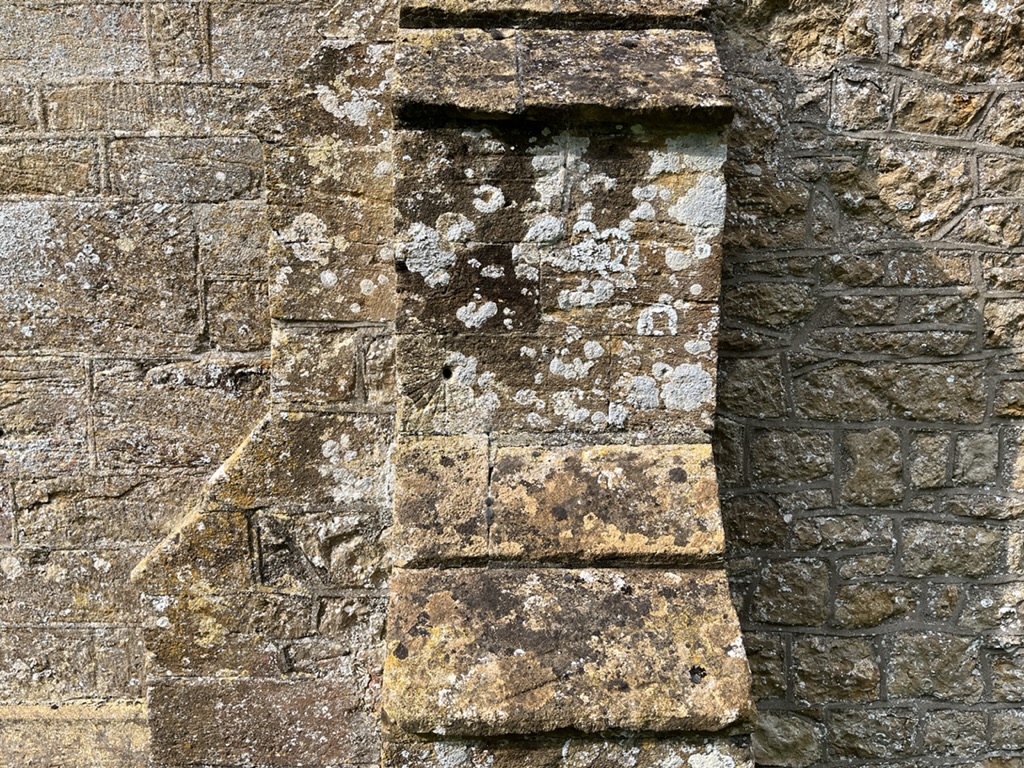
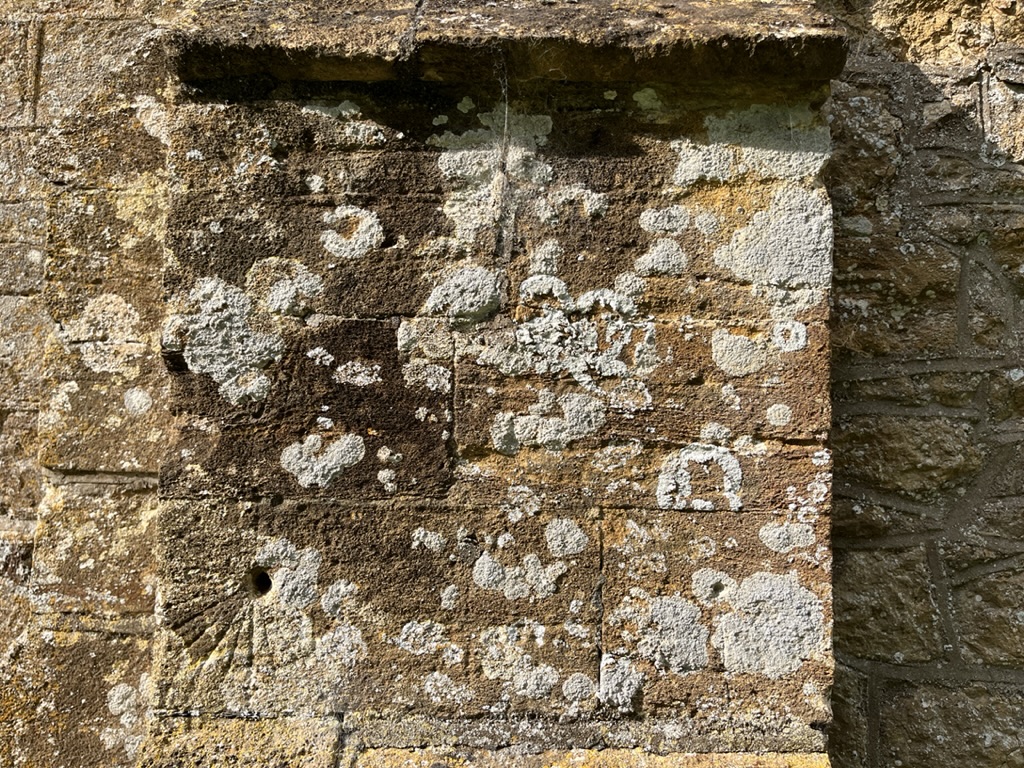
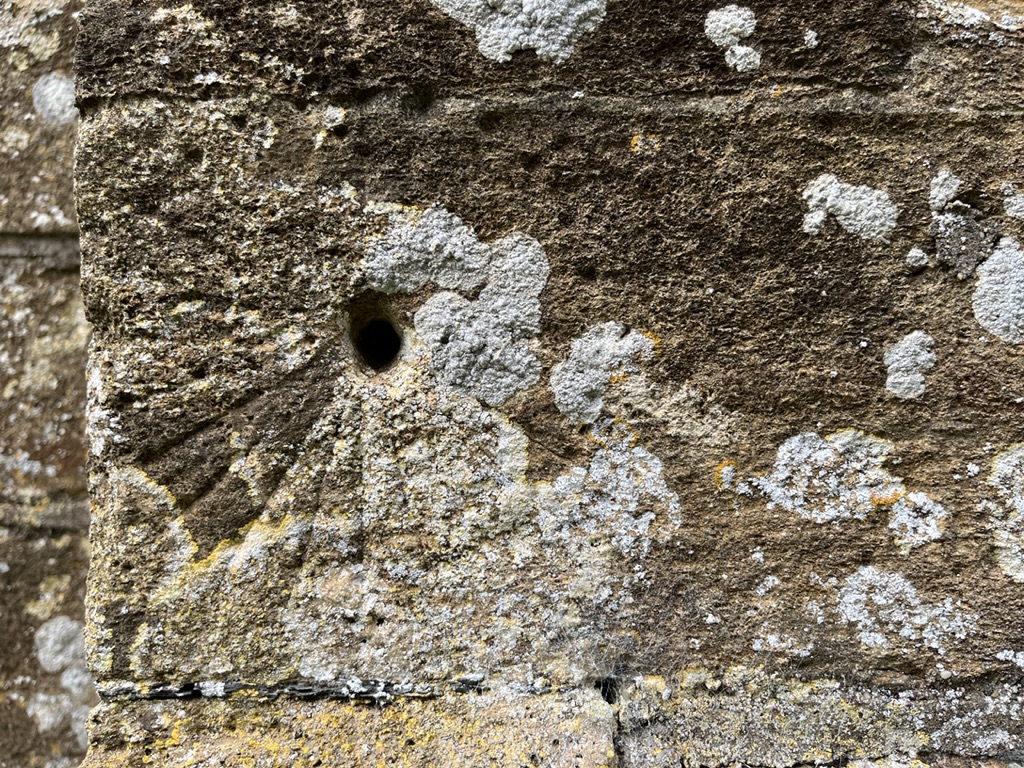
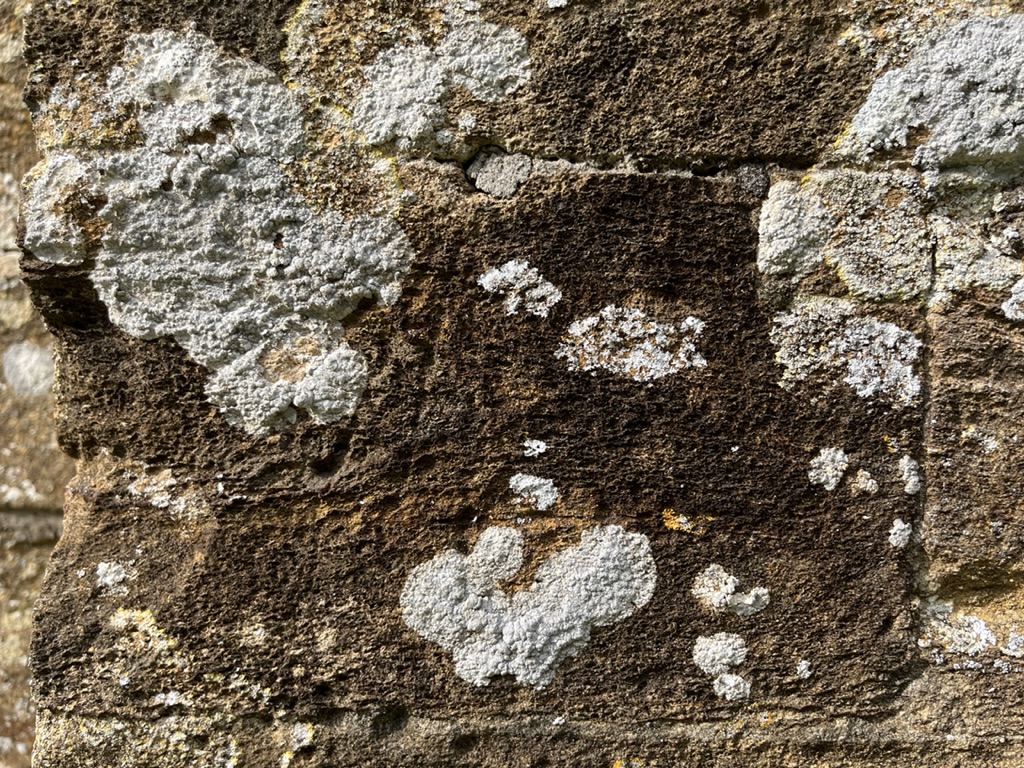
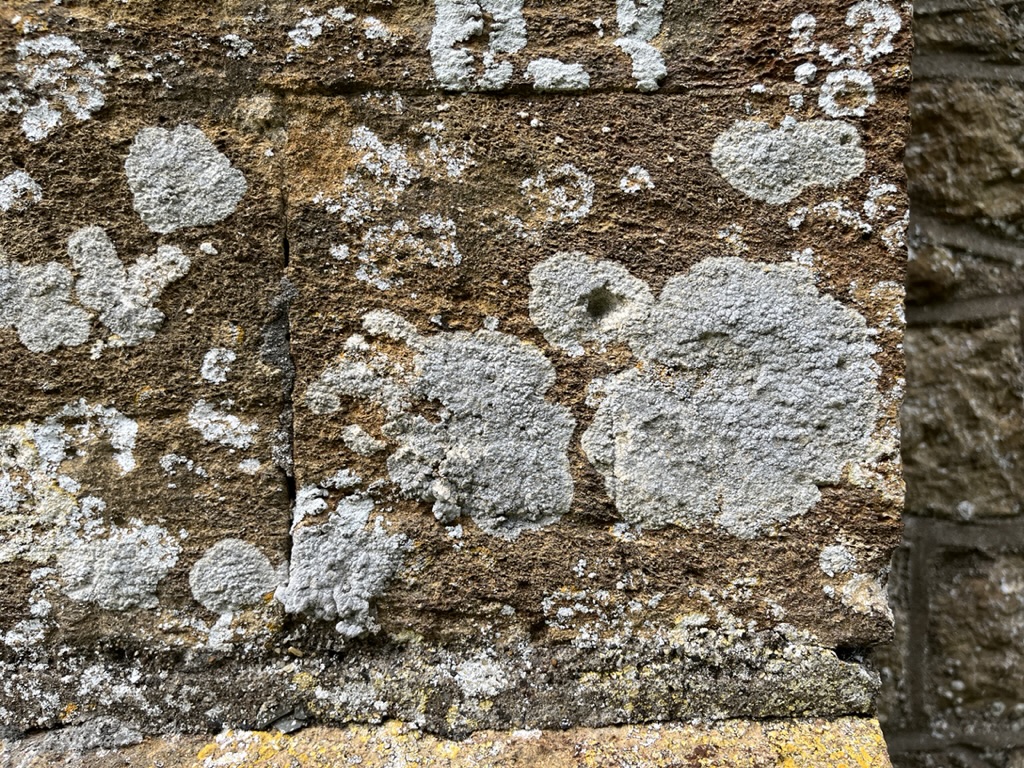
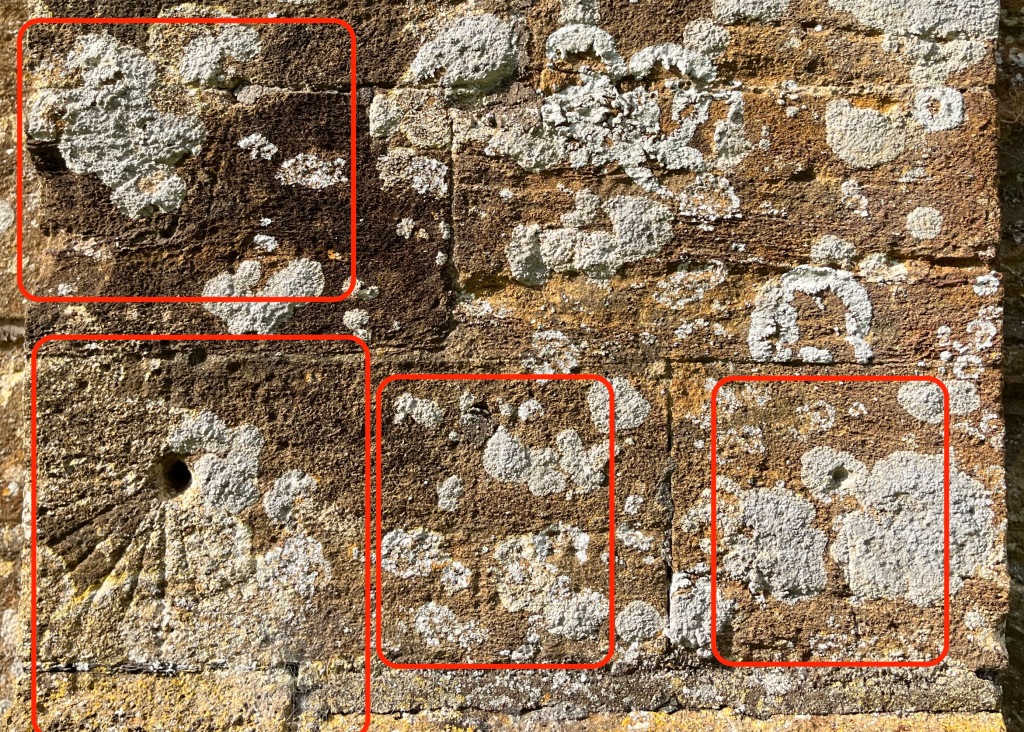
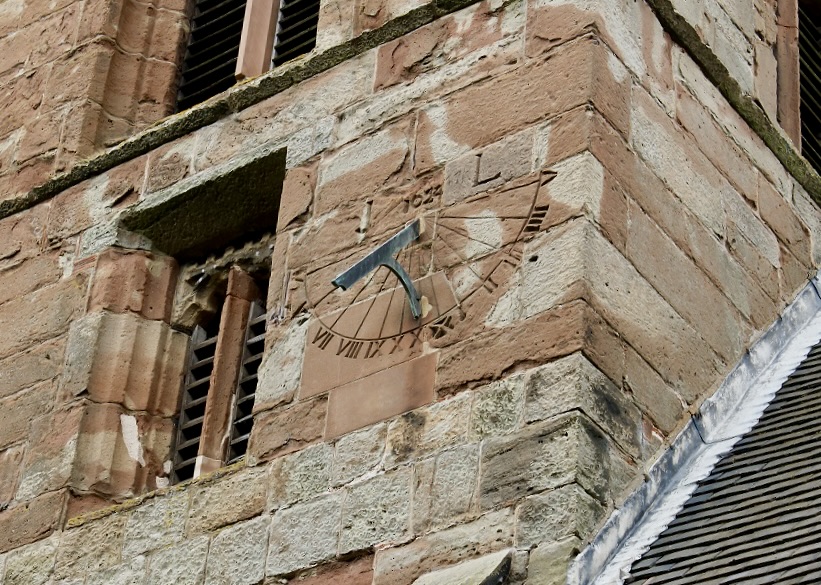
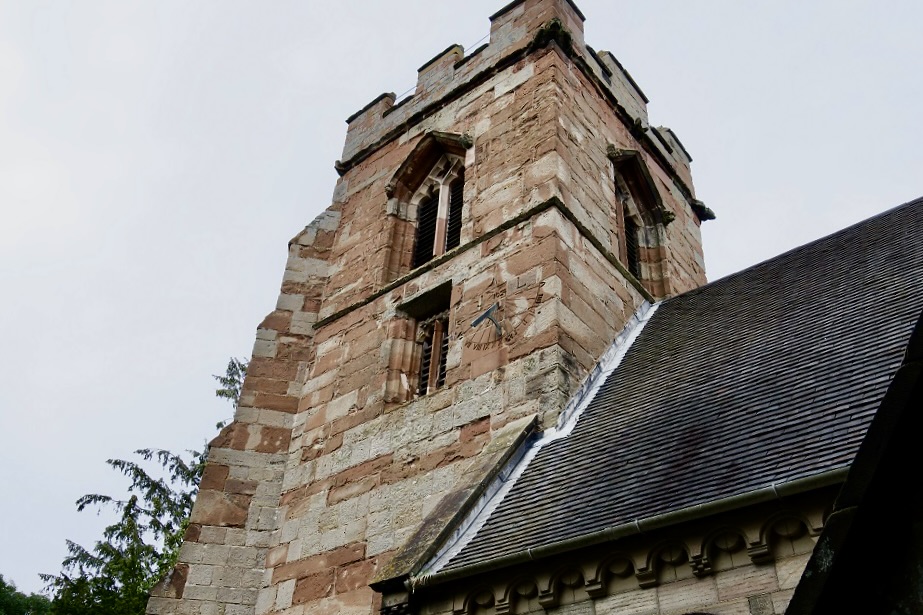
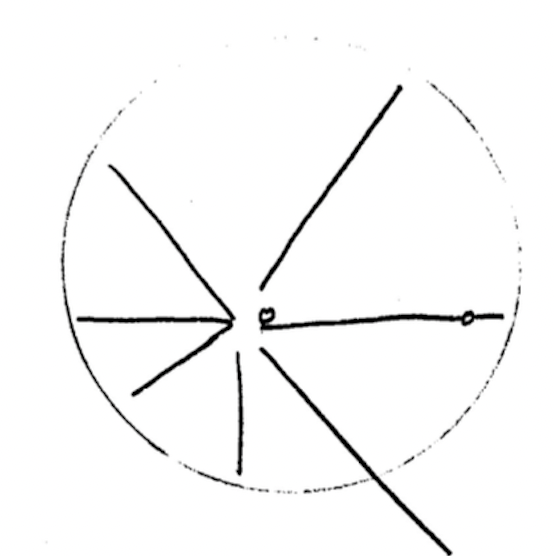
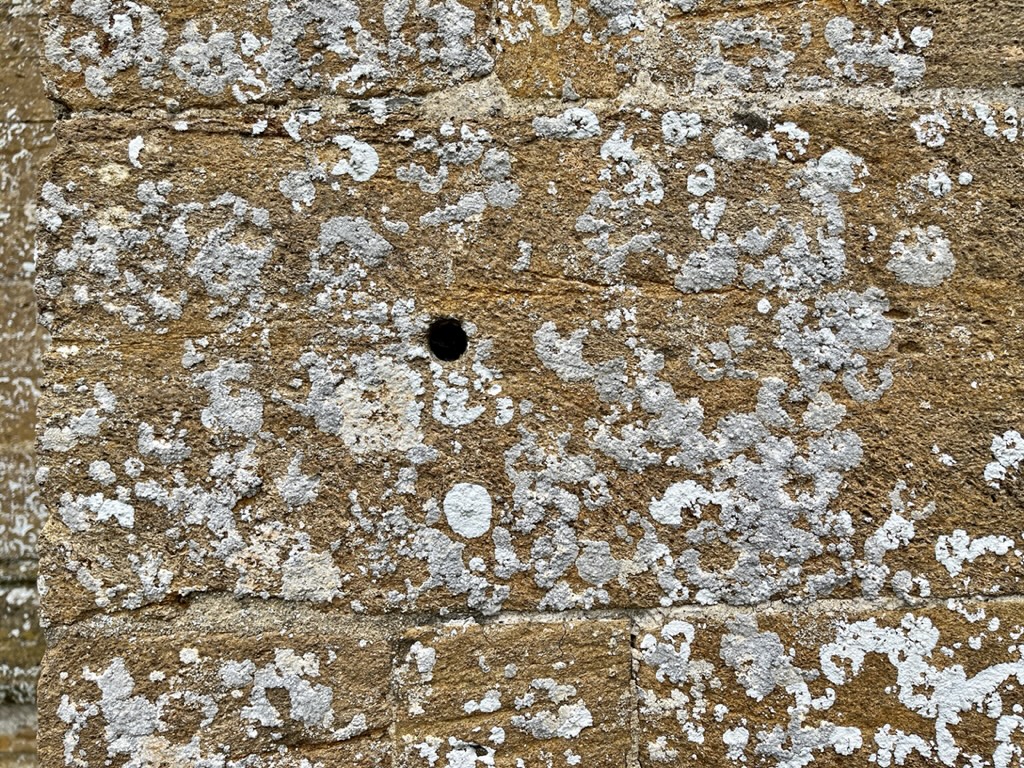
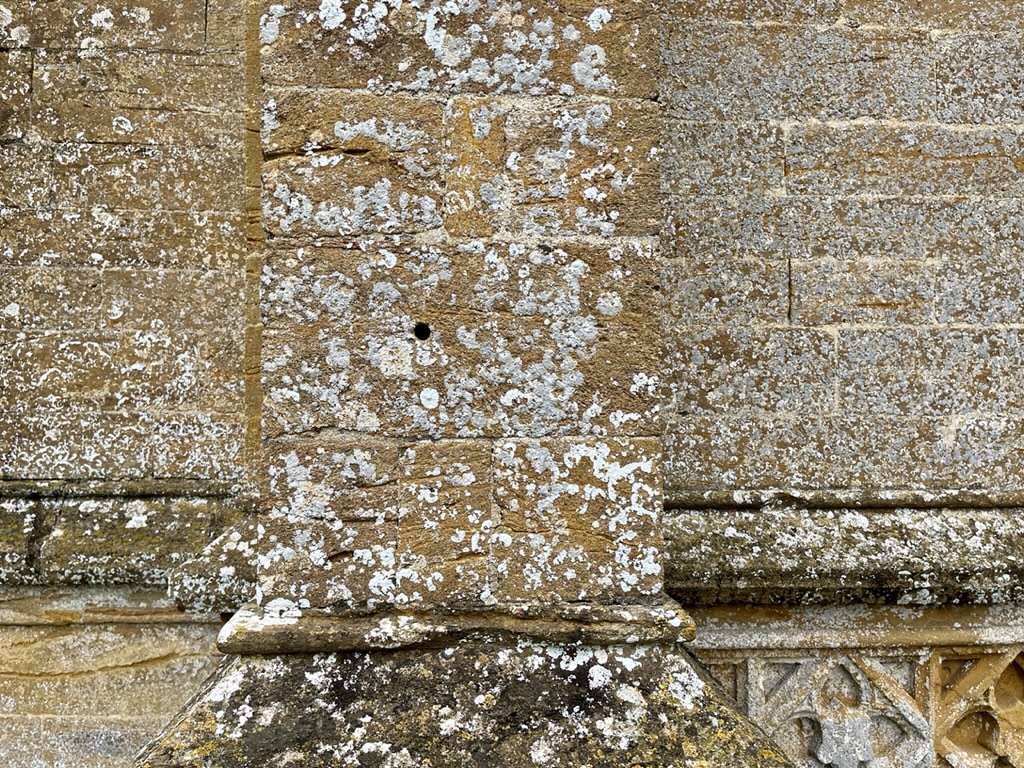
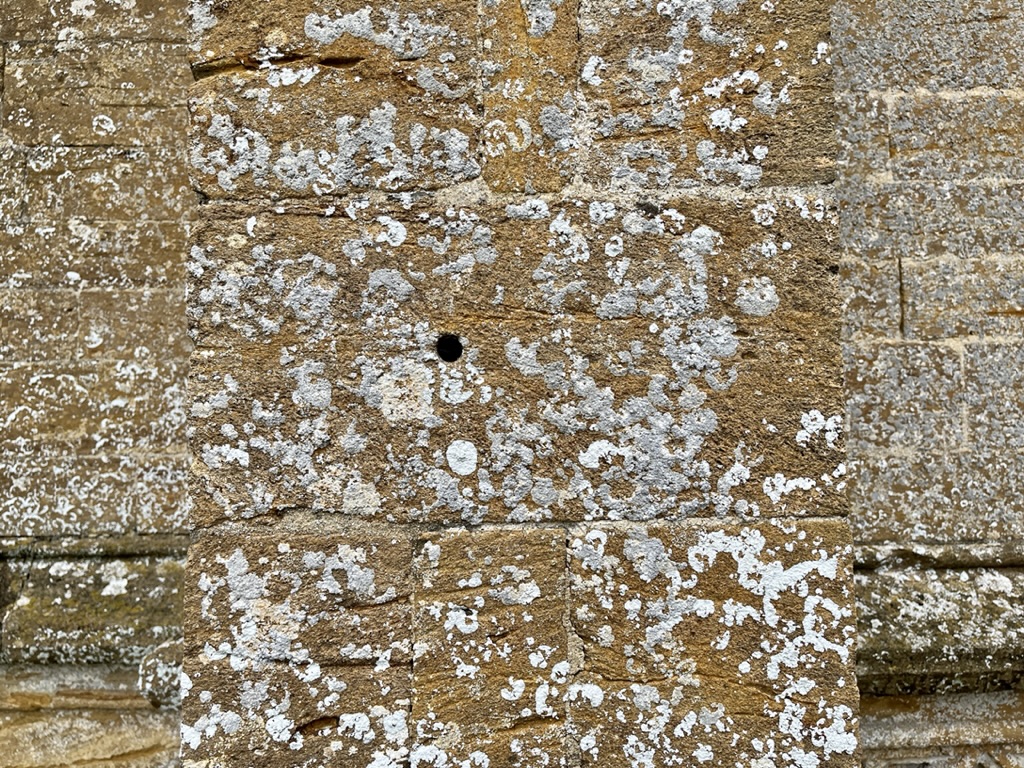
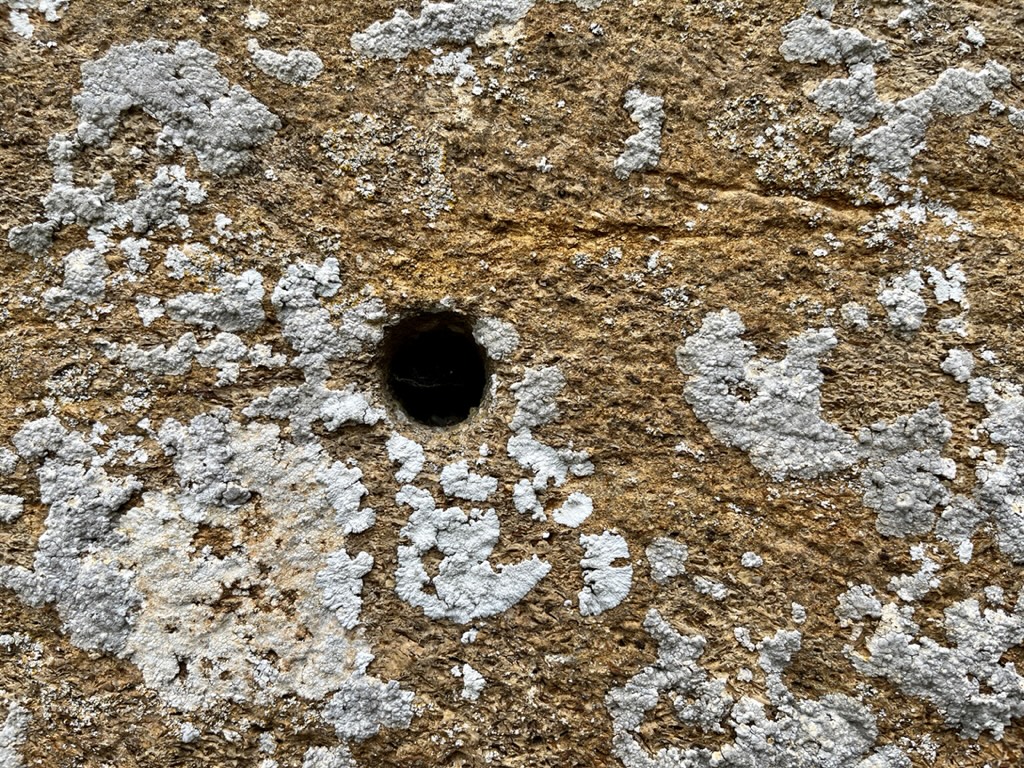
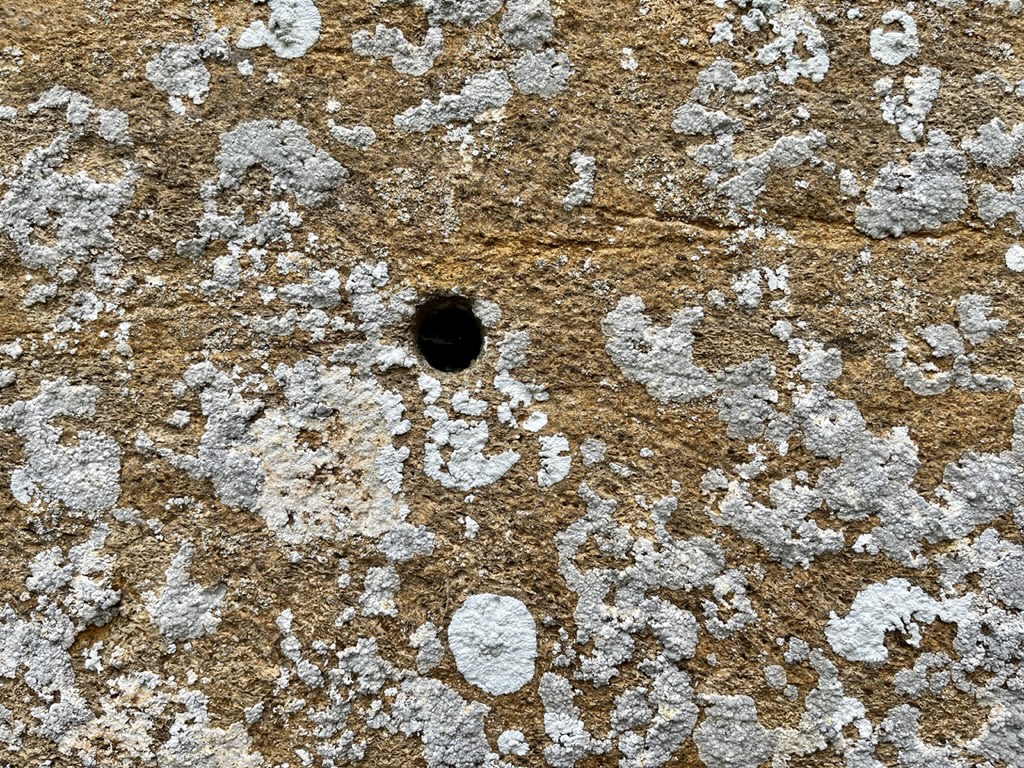
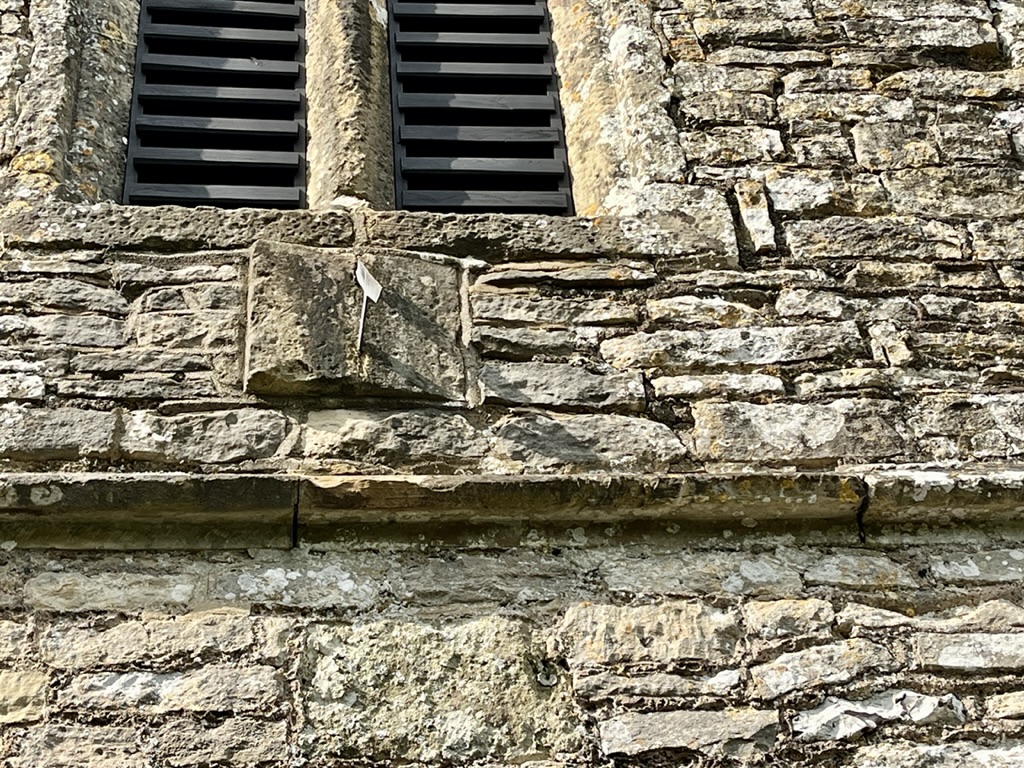
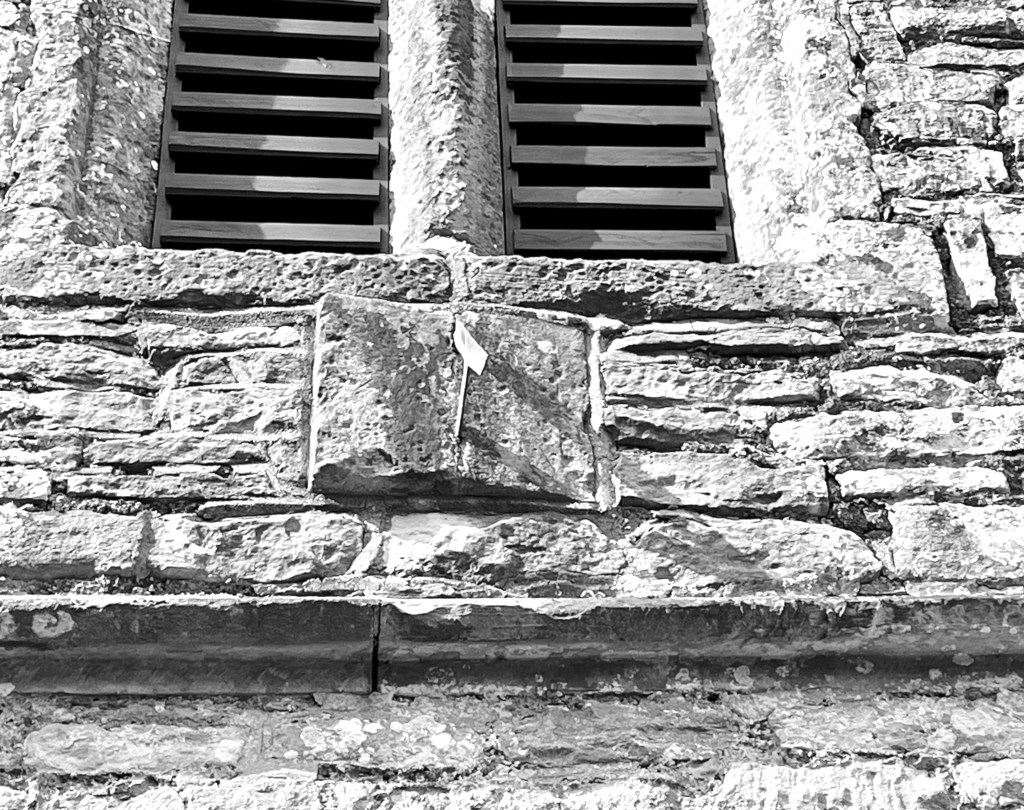
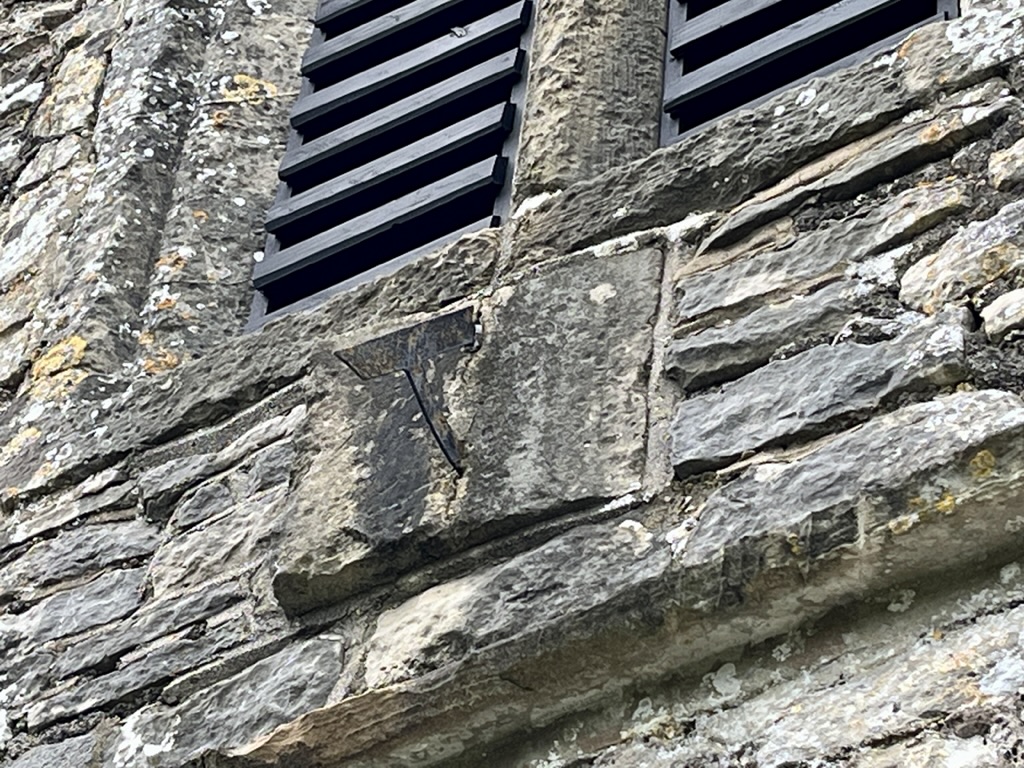
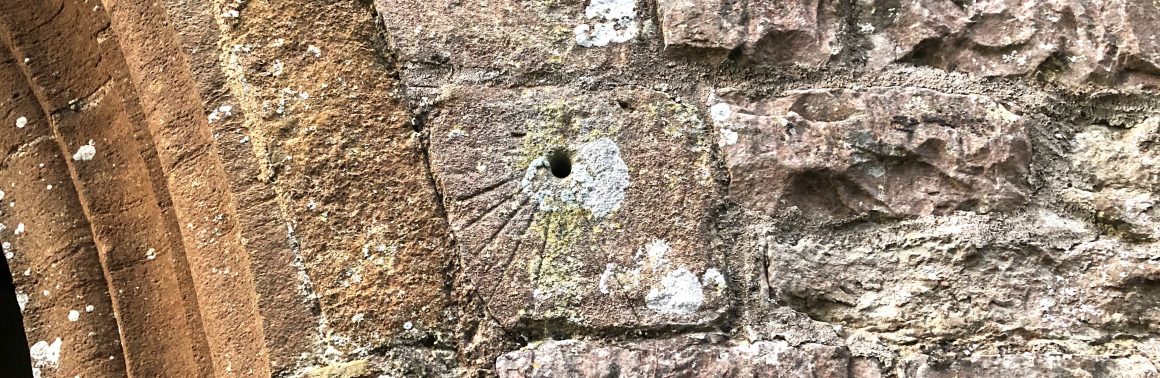
The dial is located on the SW buttress of the tower, about 2m high. There are 12 lines, 6 of which extend beyond the circumference. Some have terminal pocks; the noon line has 2. GLP notes that the dial is quite accurately cut, but is at an angle and of little use in its present position. Probably it was relocated during later work.

GLP dates it to C14, and notes quite sternly that, whereas RCHM suggests perhaps C16, it gives no reason for this opinion.

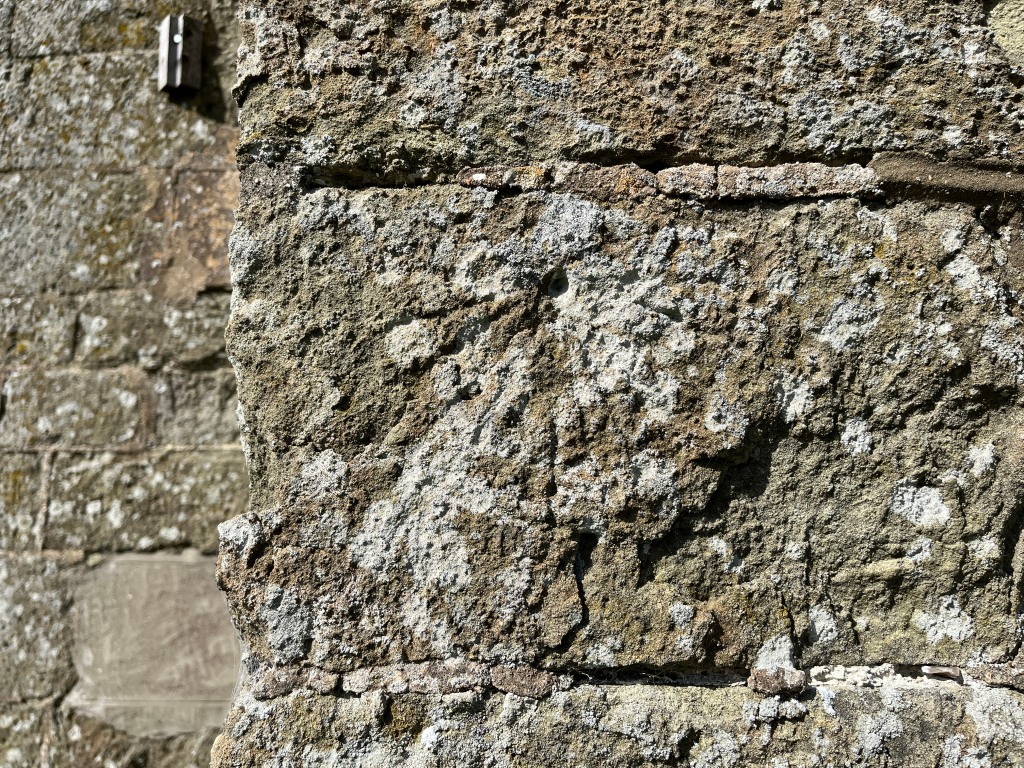
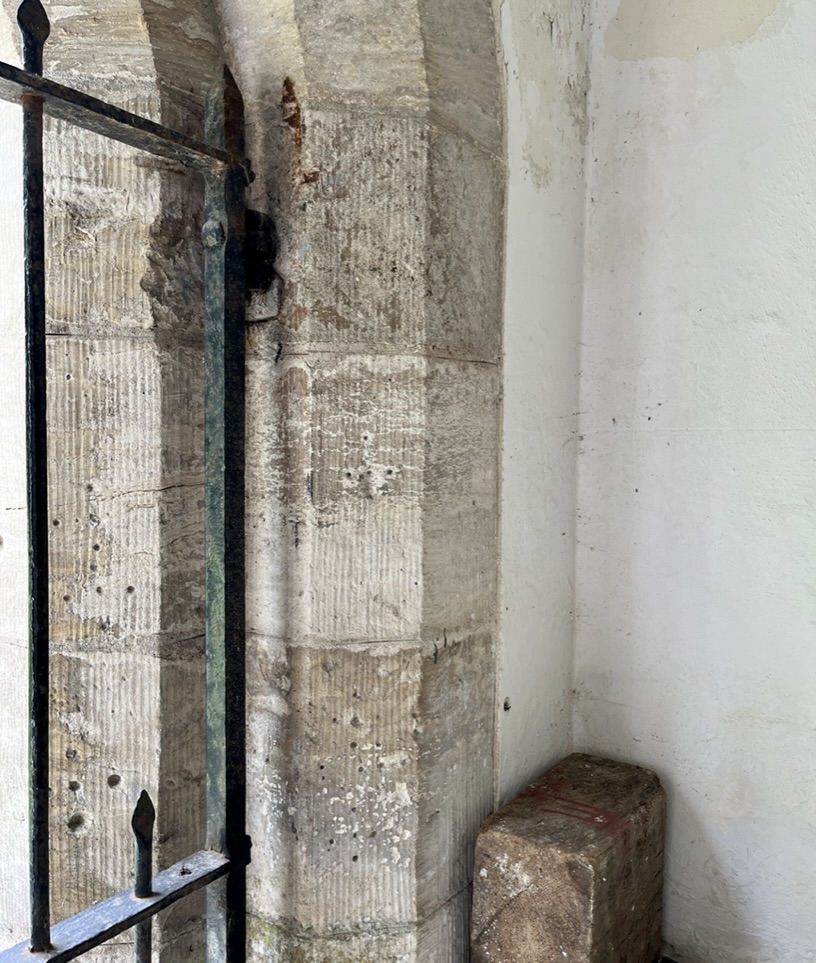
GRAFFITO ON THE STONE BENCH INSIDE THE PORCH: W.D. 1773

GSS Category: Scratch Dial; Dorset Church with Spire

All photos: Keith Salvesen; Thanks as always to Gordon le Pard for Dorset dials
BARRINGTON . SOMERSET . ST MARY – Scratch Dials

St Mary . Barrington . Somerset

ST MARY THE VIRGIN . BARRINGTON . SOMERSET

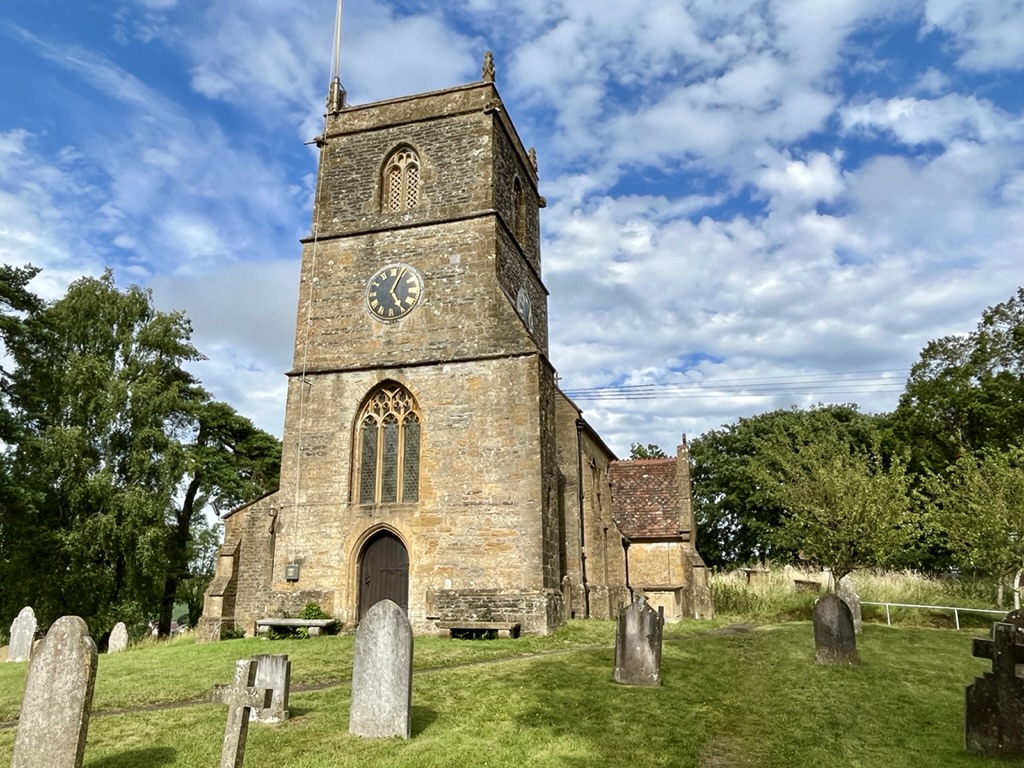
GRADE l † C13 origins; mainly C15 with C19 slightly controversial restoration. Dec and Perp. A fine-looking church with a handsome octagonal tower (one of a number in the area). Picturesque PEV. Combine with Barrington Court (NT) – 2 remarkable pillar dials: one is a dodecahedron with pentagonal faces (post in due course). 4m N of Ilminster. 50.9592 / -2.8712 /  ST389181

DEH the pioneering Downside monk visited on Sept 10th 1912 on one of his early dialling expeditions using a motorbike to get around. He recorded 3 dials in a group on the buttress at the W corner of the S transept. There is a fourth plausible dial in the same location.
DIALS

DIAL BUTTRESS

DIAL 1

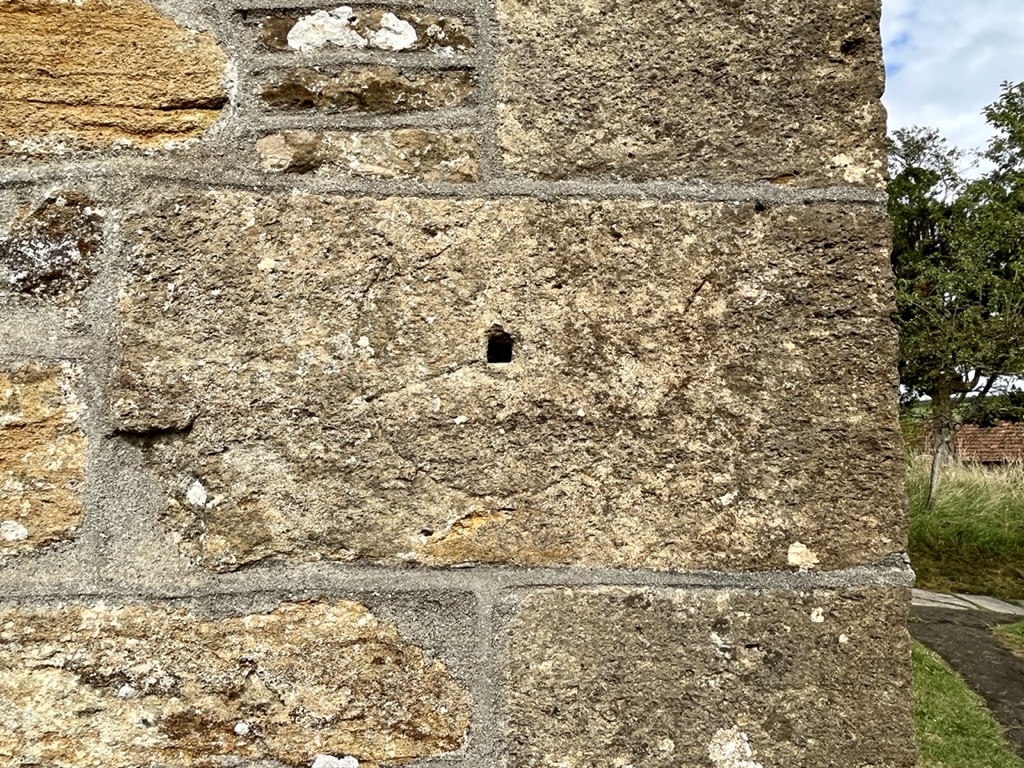
This interesting dial has 10 / 11 radials extending from an enlarged gnomon hole. 8 & 9 are marked by deeper cut lines, suggesting the most important Mass time was Terce. The lower half of the dial has a few pocks on or near the circumference. Intriguingly the top half of the dial has a complete semi-circle of pocks. These are quite carefully graduated so that midnight has the largest, and on either side the size of pock reduces. There’s a trace of a single line upwards from the gnomon hole to midnight. DEH noted This dial has been added to and made into a wheel.
DIAL 2

Immediately above Dial 1, with a blocked gnomon hole in the mortar-line. There are 2 clear lines and 3 (4?) others. 2 (3?) appear to end in pocks.

DIAL 3

Dial 3 is sandwiched between Dials 1 and 4. The most obvious feature is the blocked hole. There is a faint noon line and the hint of a 9 line.
DIAL 4

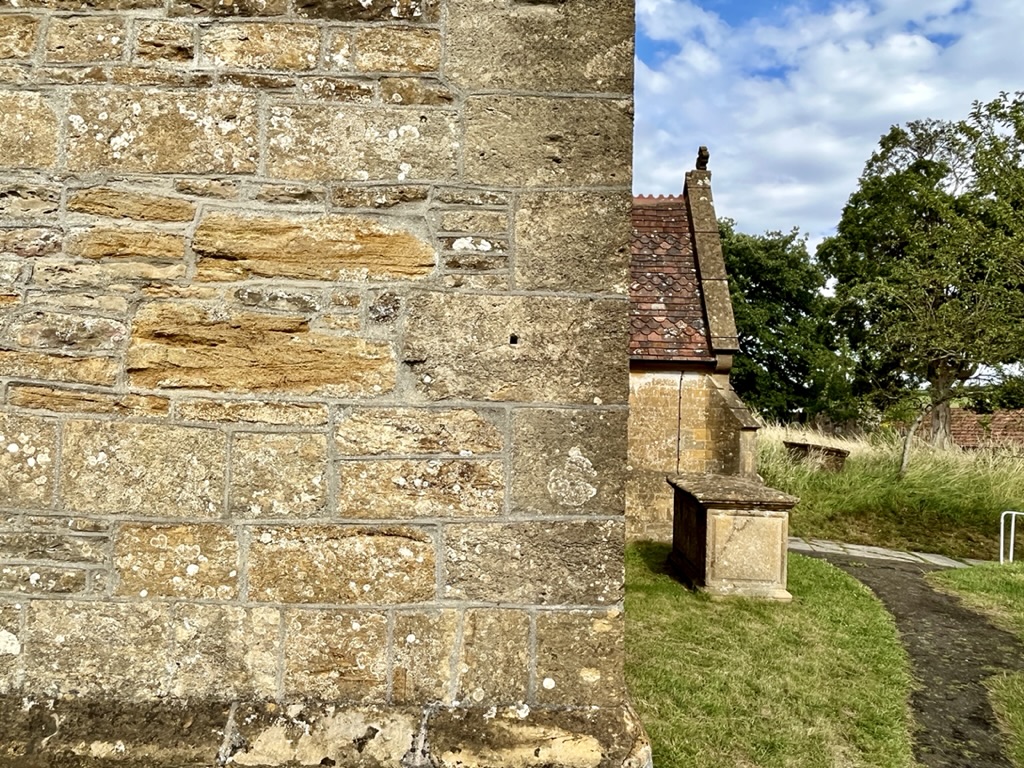
On a quoin stone E of Dial 1 is a shallow hole from which a single thin line extends to mark noon. Plausibly a dial – especially as in a group – but perhaps not definite.

DIAL GROUPING

St Mary . Barrington . Somerset – 4 scratch dials
GSS Category: Scratch Dial; Mass Dial; Dial Group

All Photos: Keith Salvesen

CHURCH of ST MARY . CASTLE BANK . STAFFORD – Vertical Dial (1624)

St Mary . Castle Bank . Stafford – Geoff Pick Geo CC / OS

CHURCH OF ST MARY . CASTLE BANK . STAFFORD

GV II* † C15 tower; otherwise mainly C19. Tower has 2 diagonal buttresses, plinth, south 2-light straight-headed window with sundial to right: incised inverted semi-circle with gnomon and inscription: J 1624 L BLB . In Newport Road below the castle, not to be confused with the large ‘collegiate’ parish church, also St Mary. 52.7969 / -2.141 / SJ905221

St Mary . Castle Church . – Vertical Sundial

DIAL

The vertical dial is high up on the S side of the tower, a semicircle with Roman numerals, with the date 1624 and on either side of it the letters J and L. The date may fit with work carried out on the upper stage of tower in C17. As can be seen, there has been good repair work on the dial, so that it is observably both ancient and modern.

GSS Category: Vertical Dial; Church Sundial; Old Sundial

All photos: Erika Clarkson, with many thanks for this and her other contributions to this project; Geoff Pick for his photo of the church Geo CC / OS

BROADWEY . DORSET . ST NICHOLAS – Scratch Dial

ST NICHOLAS . BROADWEY . DORSET

GRADE II Almost entirely rebuilt & enlarged in successive stages from the beginning of C19, incorporating reused details of C12 fragments, C14 and C15 stonework. Rather incongruous neo-Norman features. C12 Purbeck marble font; fine nail-studded medieval door. Tower-less and Spire-less. 4m N of Weymouth. 50.6506 / 50°39’2″N / SY667835
DIAL

The dial is on the L jamb of the early doorway (inside later porch), and remains of a full circle are still visible. 6 lines radiate from a small filled hole that is significantly off-centre. One line is elongated beyond the circle. The None line is emphasised by a small pock near the end. The noon line (if it is one) is the most unassuming of them all. There’s a hint that very light graffiti has been superimposed on the dial.

GSS Category: Scratch Dial; Mass Dial

All photos Keith Salvesen; diagram BSS

BINCOMBE . DORSET . HOLY TRINITY – Scratch Dial

Holy Trinity . Bincombe . Dorset

GRADE I Late 12th-century origins (parts of nave & chancel evident). Mainly C15 with later additions; S porch added C17 using old stonework; extensive restoration 1865. C13 font; Purdue bell 1658. Off the beaten track in a valley midway between Dorchester & Weymouth. Hardy-esque. 50.6599 / -2.445 / SY686845

Bincombe Church 1802 (Gentleman’s Magazine)

DIAL

Bincombe is a hidden village in the folds of the hills inland from the pleasures of Weymouth. It’s a mere 20m from our house yet until I visited a church nearby, it wasn’t on my radar at all. I must have passed close by it hundreds of times.

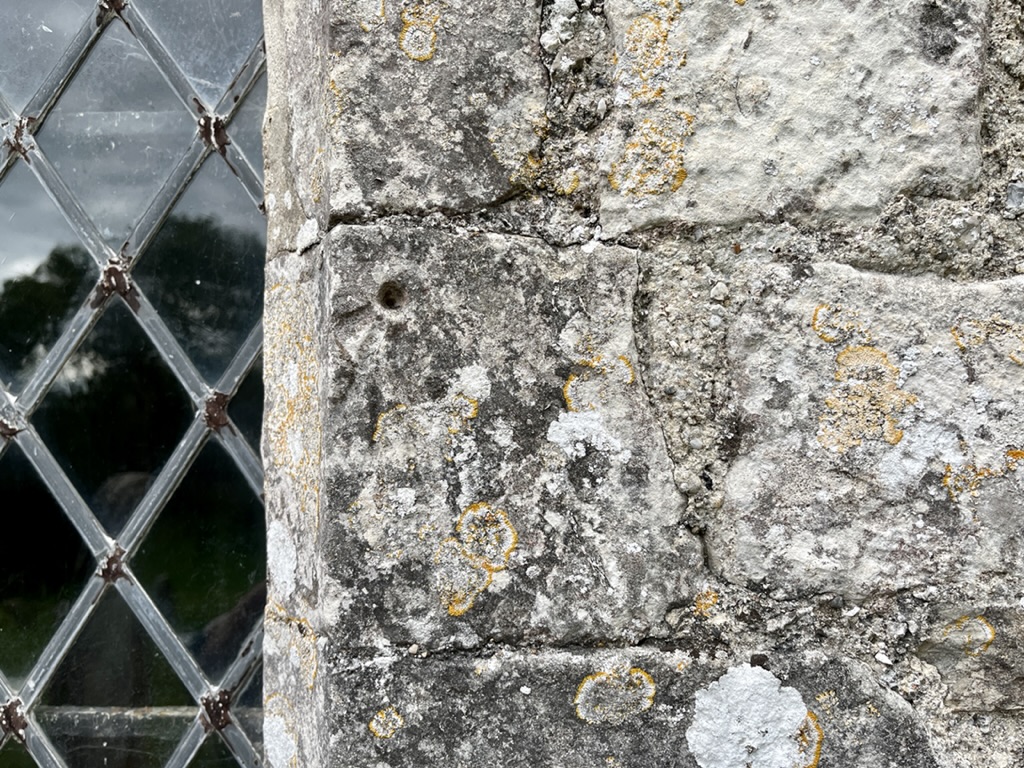
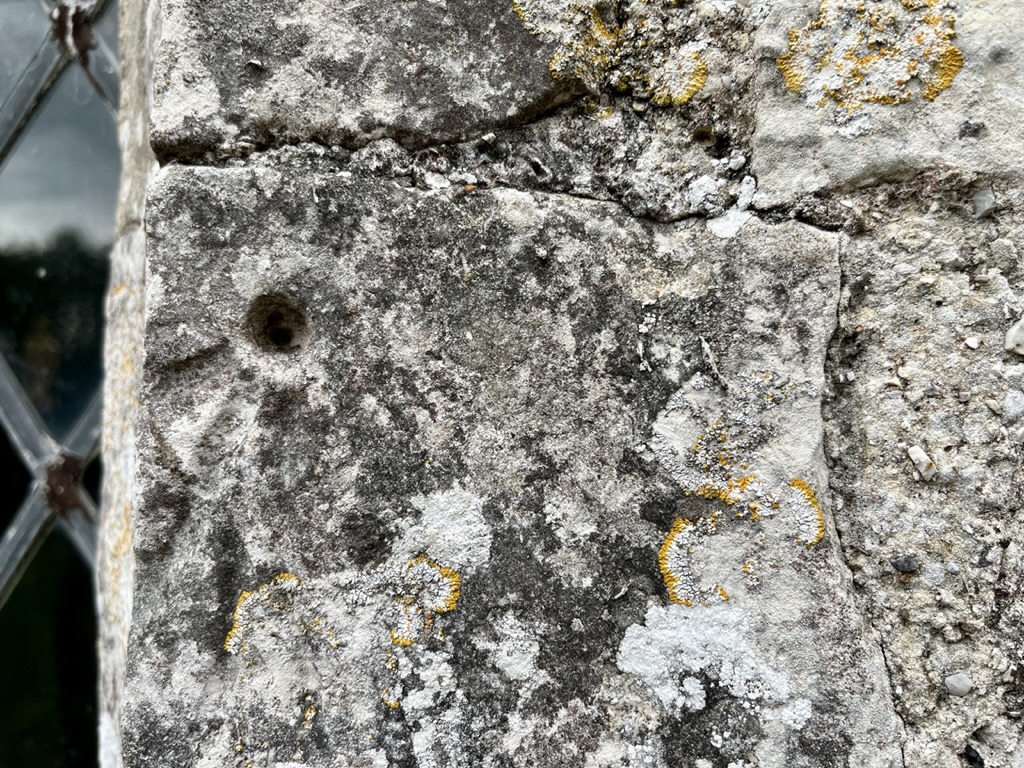
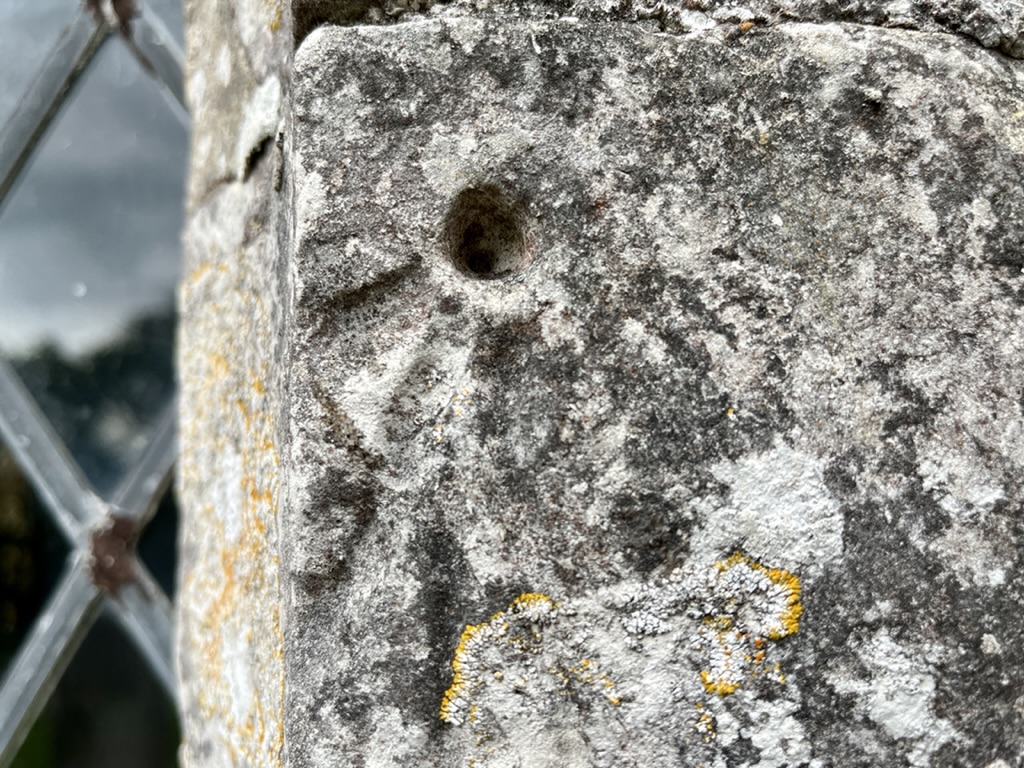
The dial is located on the E jamb of the SW chancel window, about 2m from ground level . GLP describes 4 short lines, with the noon indicator being the gap between two of them. He notes that the dial must have been moved to its position for reuse as part of the window jamb, truncating 2 lines LHS. Finally, he concludes that, the window being C15, the dial predates 1400.

Holy Trinity Bincombe – BSS Record

The dial, small and chunky, is in the top L corner of the dial stone. I haven’t seen one quite like it. The gnomon hole is surprisingly deep for such a little dial. In situ (and in the photos), there are ghosts of 2 or 3 lines LRQ angling towards the hole (but not converging?) Probably best disregarded.

CHURCH MARKS

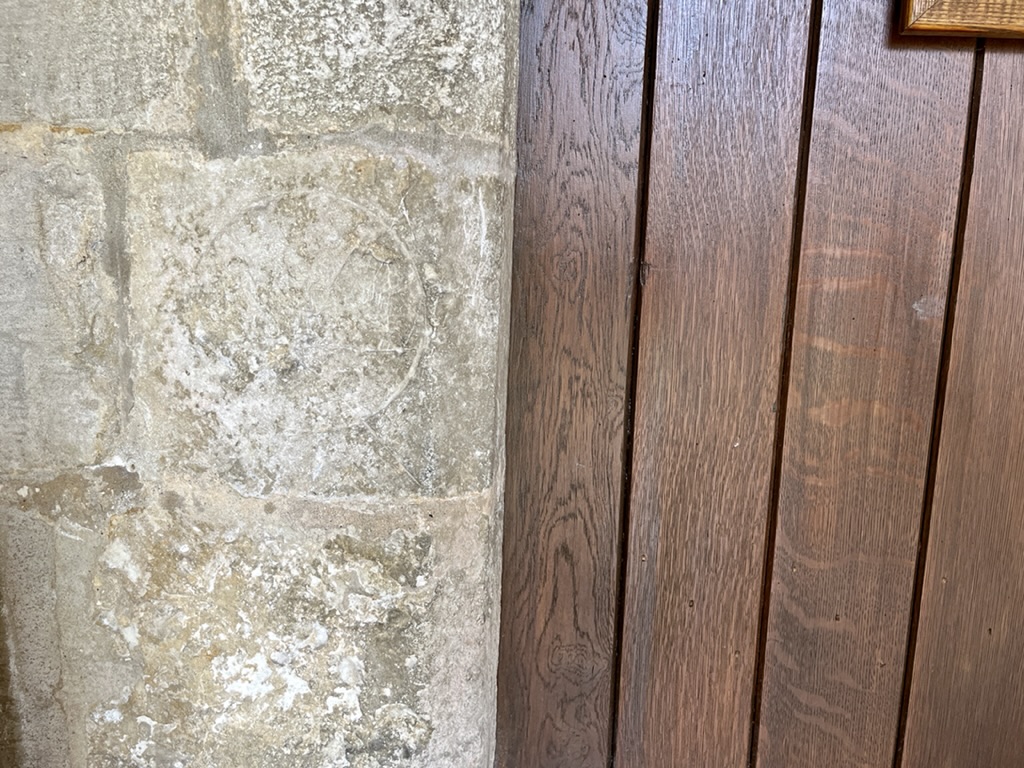
Holy Trinity has a fine selection of crosses / protection marks drilled into the porch entrance. Here are a couple of examples.

GSS Category: Scratch Dial; Mass Dial

All photos, Keith Salvesen; engraving from Wiki

HARDINGTON MANDEVILLE . SOM . ST MARY (revisited) – Scratch Dial

St Mary . Hardington Mandeville . Som

DEDICATION † ST MARY – 1123 (on earlier site)

LISTING † II*

LOCATION † 3m SW of Yeovil, near E & W Coker 50.9048 / -2.6949 / ST512119

An extended village close to the A30 yet approached by lanes (as they are actually named) rather than roads. A peaceful feel to it, especially at dusk when this poor photo was taken. The church had ‘much work’ carried out in C15 and C18. Tower probably of 1123, in three stages, font possibly from same date. BLB.

I visited St Mary a couple of years ago at dusk (it was last on a list), so I have re-photographed the church and updated the post.

DIAL † At the W. end and quite easily overlooked. DEH did not investigate or list it in 1915. A full circle, one clear radial and a square style hole. Possible trace of outer circle top left. Not noted in BLB, HE, nor in TWC extensive list of Somerset dials. I found only one reference to this dial that led me here; since then, one passing reference to a sundial in the porch – perhaps this dial relocated in C15?

NOTES The circular font is thought to be original dating from 1123, and the clock mechanism was built and installed before 1707. There are 6 bells in the tower, 3 of which are from the Purdue (Closworth) foundry, with the earliest being dated 1591

GSS Category – Scratch Dial

All photos: Keith Salvesen

KINGSBURY EPISCOPI . SOM . ST MARTIN – Scratch Dial

St Martin . Kingsbury Episcopi . Som

ST MARTIN . KINGSBURY EPISCOPI . SOM

GRADE 1 † C14, C15 with C19 restorations. Predominantly Perp. A large and impressive building in a small community, admired by PEV: ‘of great interest’. A companion to nearby Huish Episcopi. 9m NW of Yeovil. 50.9865 / -2.8042 / ST436210

NOTE: this post has been superseded in April 2024 after a visit in sunshine. The faint dial markings owing to poor light are now legible. The text is much the same. See the new post HERE

DIAL

St Martin . Kingsbury Episcopi . Som – Scratch Dial

The dial is located on the W buttress on the S side, and has a gnomon hole large enough to be seen from the church path. DEH visited in Sept 1912 and noted that, because the dial is about 8′ above ground level, it would have been moved to its present position during reconstruction of the tower (the oldest part of the church).

The dial is very eroded, and it is now hard to make out the details. DEH describes a complete wheel of thin lines without a circle. More than a hundred years later, the design is very faint indeed. Neither inspection nor photos reveal what DEH will have seen.

GSS Category: Scratch Dial

All photos: Keith Salvesen

CHARTREUSE DE MÉLAN . TANINGES . FRANCE – Vertical Dial on C13 Abbey

Chartreuse de Mélan . Taninges . France – Vertical Dial

Cat / Salamander Hunky Punk

The Chartreuse was founded in 1285 as a Carthusian nunnery and continued its religious functions until the French Revolution. Thereafter it became a school and in due course an orphanage. A disastrous fire in 1967 destroyed almost all the buildings on the site, with loss of life. Only the church and its cloister now remain. The church is an exhibition space and the lawns around it feature examples of modern art, from interesting via enjoyable to a few that are a matter of personal taste.

Chartreuse de Mélan . Taninges . France – Vertical Dial

The dial is included by MICHEL LALOS in his excellent French Cadrans Solaires site. Anyone who has in interest in sundials in France will benefit hugely by using this free resource. It is accessible, informative, and easy to use – not least because the dials are featured by Départment with a map for dial locations. The entry for Mélan is :

Cadran peu déclinant de l’après-midi, gravé et peint sur enduit, très dégradé, fines lignes, demies, plus de chiffres dans bandeaux, traces de blason et décor

Dial slightly declining in the afternoon, engraved, painted on rendering, very degraded, fine lines, half-hour lines, numbers within a frame, traces of coat of arms and decoration.

There are paint remnants at the top of the dial, where (presumably) it has been protected by the eaves. The gnomon hole at the top of the coat of arms is square. The dial is obviously old and I wondered if it might be dateable. Checking the apparent shape of the escutcheon, I discovered that it was first recorded as an armorial design in late C17 and (conveniently) turns out to be known as French-style. Overall, one might reasonably conclude that this dial is C18.

MEMORIAL STONE 1690

Chartreuse de Mélan . Taninges . France – Memorial Tablet 1690

GSS Category: Vertical Dial; France Sundial; Cadrans Solaires; Dials Abroad

All photos: Keith Salvesen; source used MICHEL LALOS

SOUTH PERROTT . DORSET . ST MARY – Scratch Dial

St Mary . South Perrott . Dorset

ST MARY . SOUTH PERROTT . DORSET

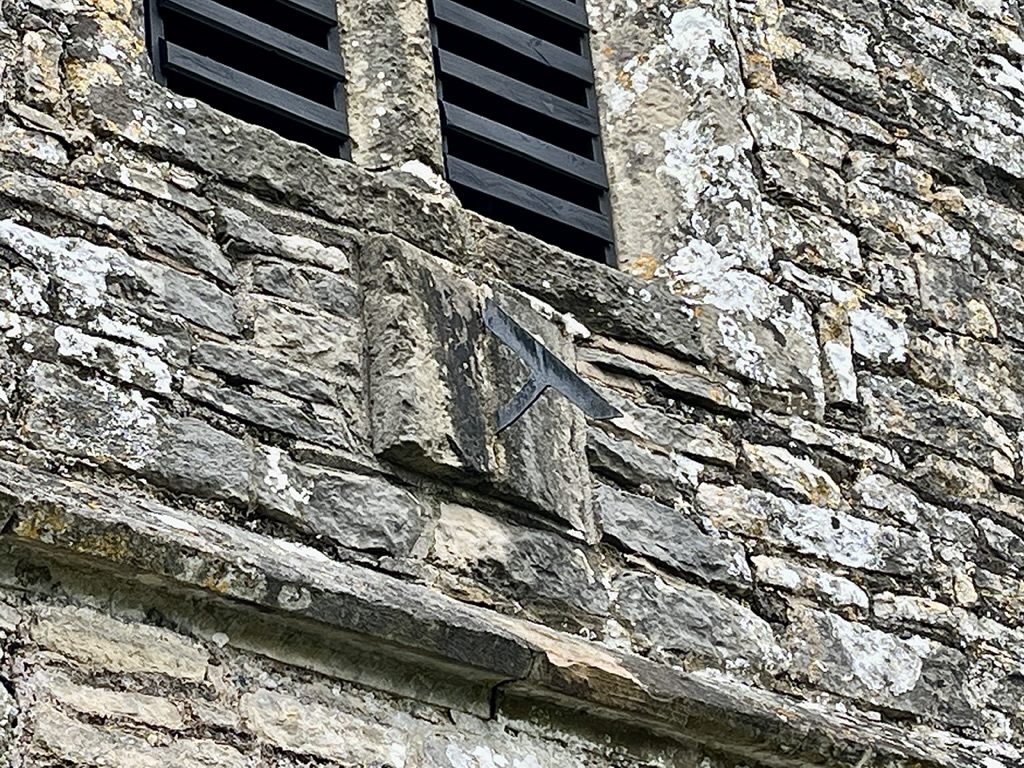
GRADE I C13 origin; tower rebuilt and alterations C15 . Modern (C20) restorations. Early C13 font. Unusual appearance with pleasing matched roof-lines. BHO notes On S.E. buttress of S. transept—scratch dial*. 3m SE of Crewkerne. 50.8571 /  -2.7514 / ST472066

DIAL

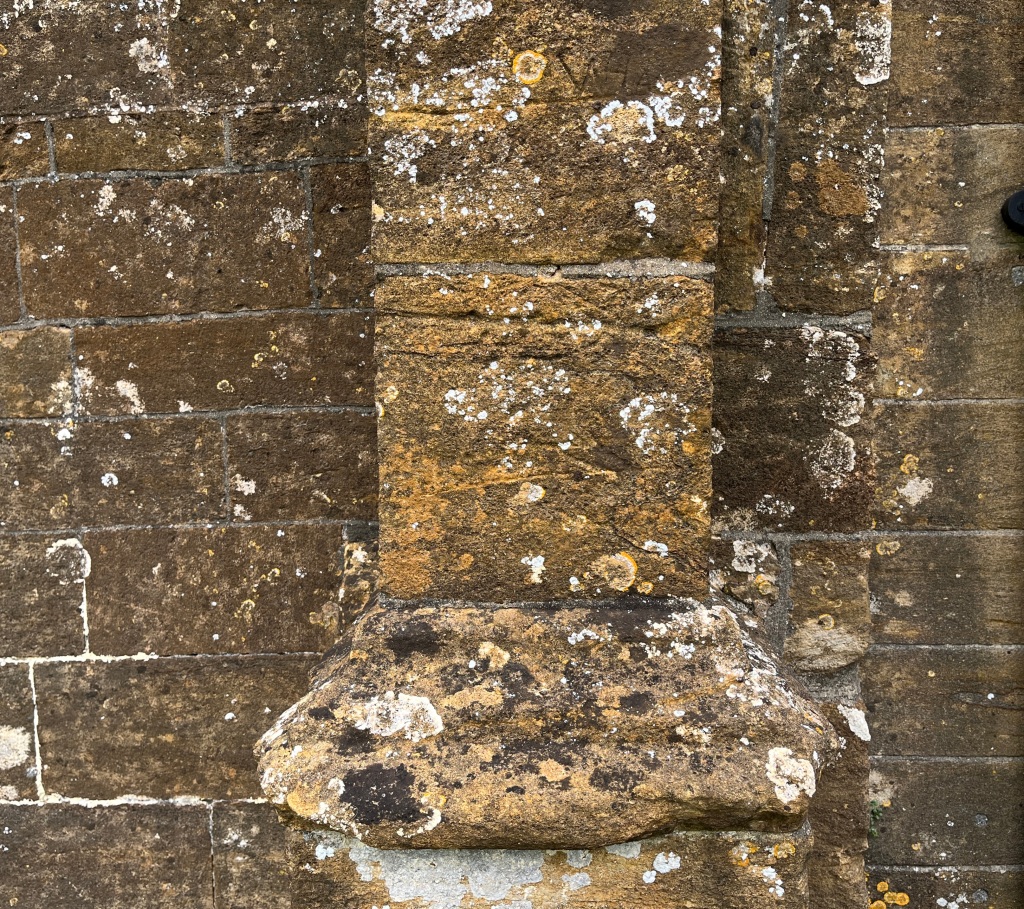
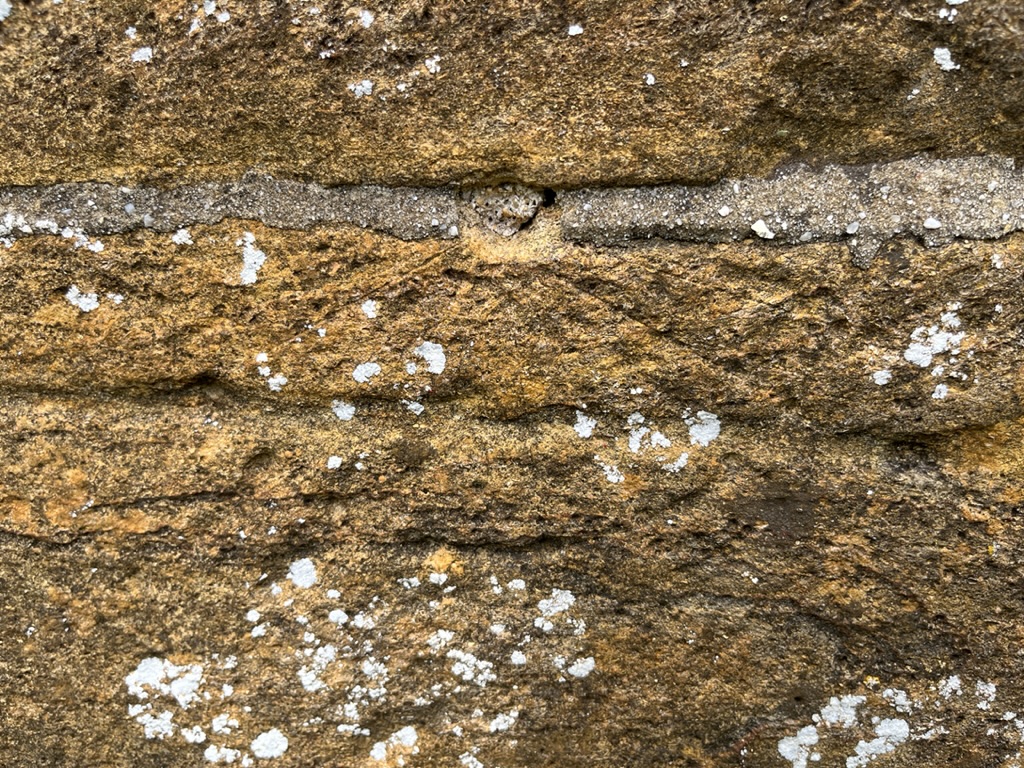
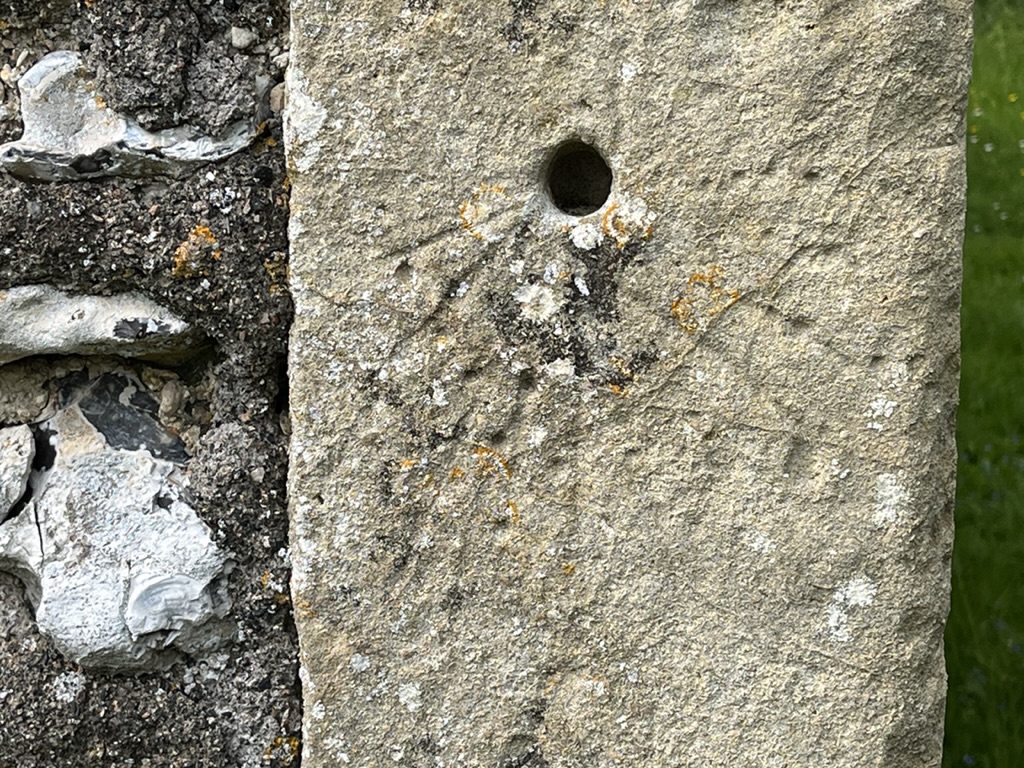
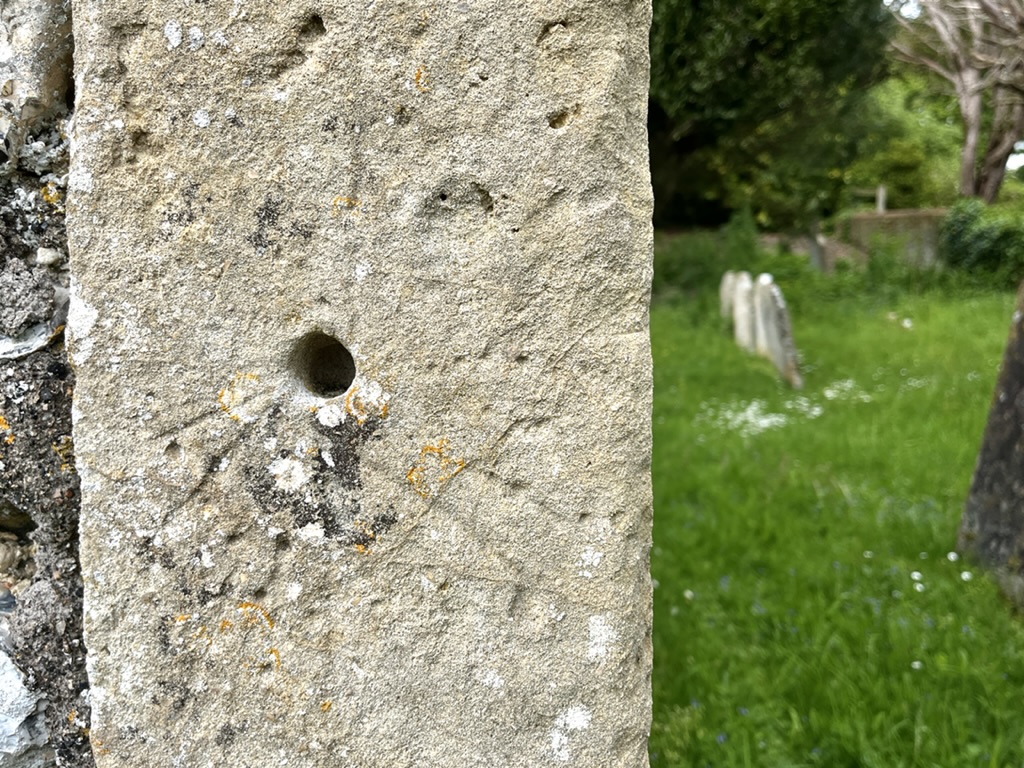
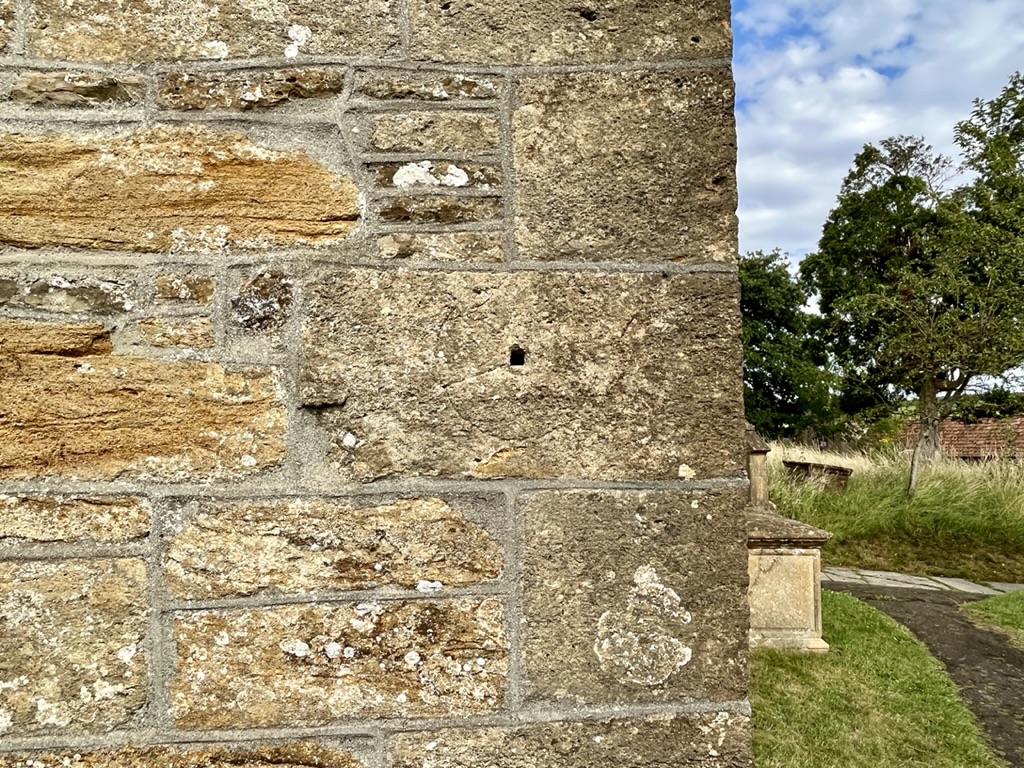
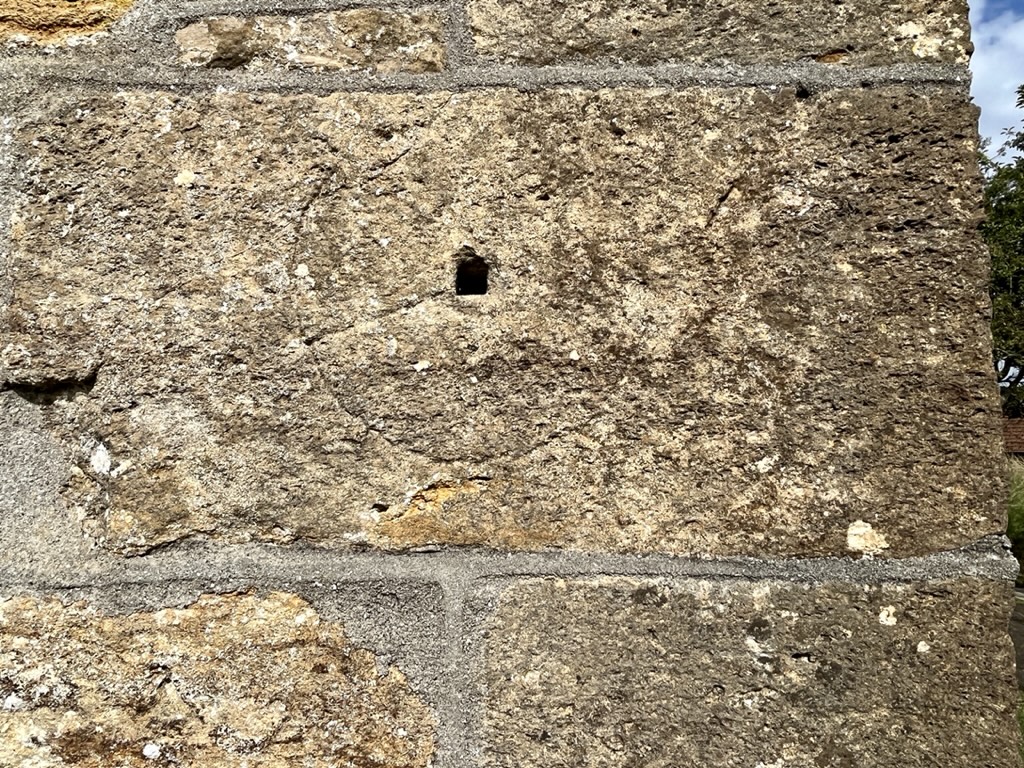
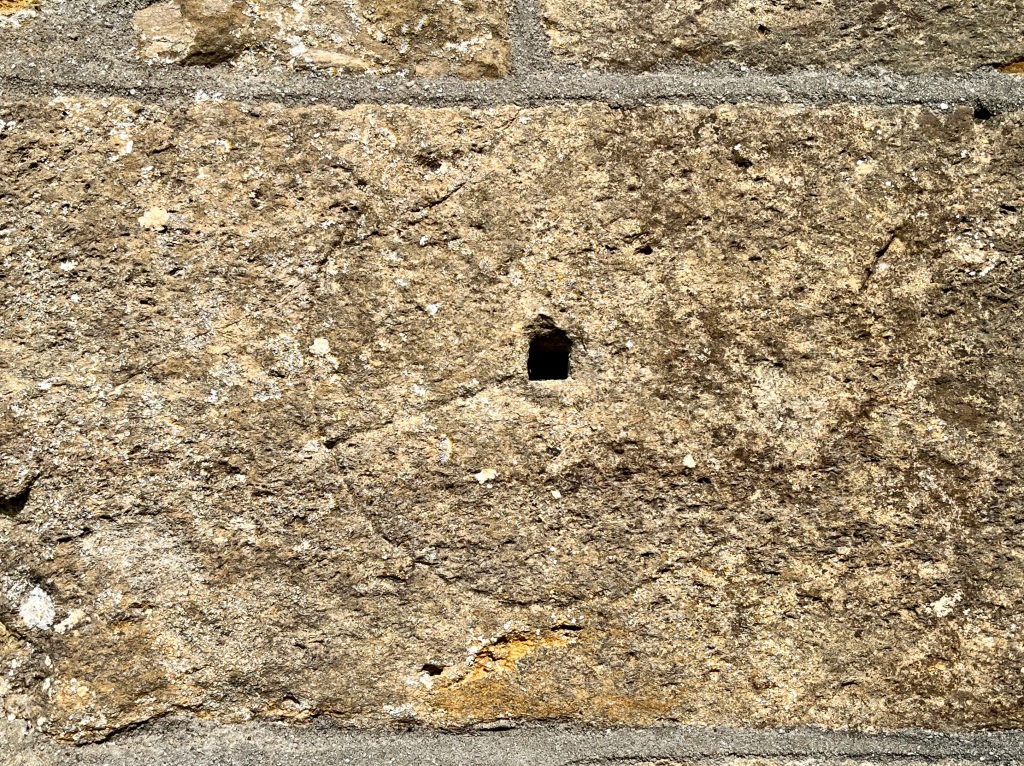
A conundrum. BBS records (1997) show a complex dial, part-encircled and with 10 lines (one extended) and 12 distinct pocks. GLP notes that the continuation of the circumference onto the stone above indicates that the dial is in its original location. He suggests that it may be the remains of a LHS half-circle (cf HOLWELL and HERMITAGE).

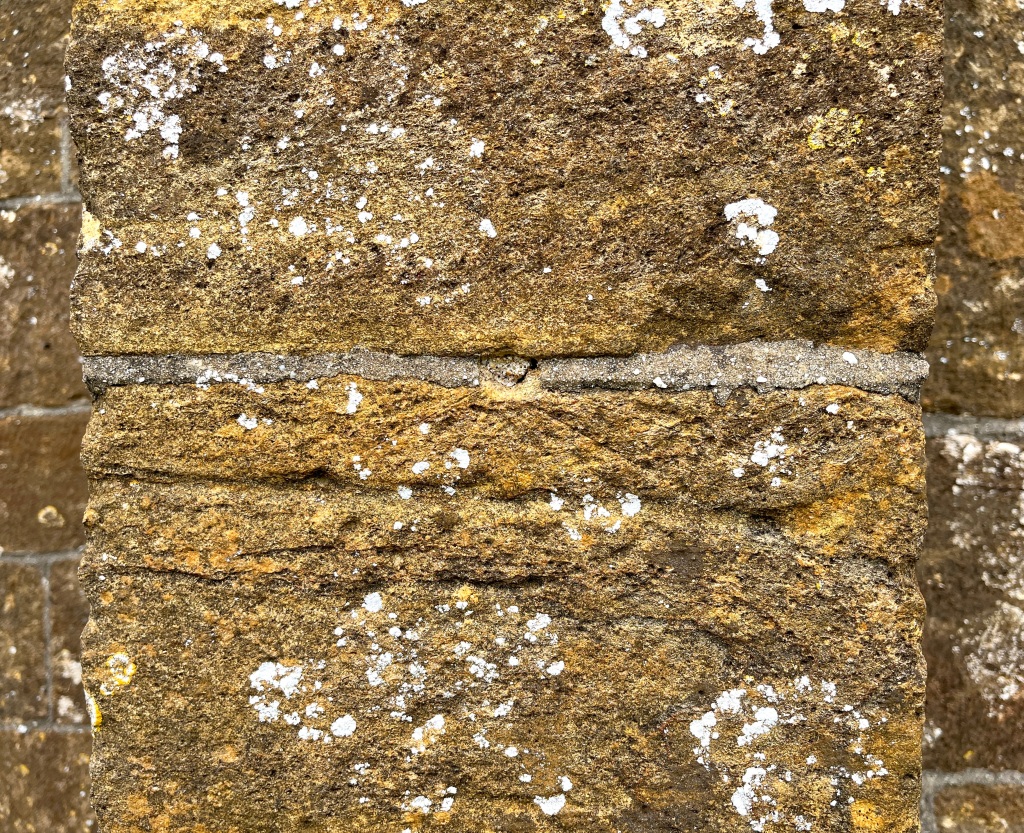
GLP also points out disapprovingly an attempted ‘restoration’ with thin lines scratched along some of the original lines and part of the circumference line… and most of the holes ‘cleaned up’. These lines can be seen in the images below.

However, although a close shot shows the recently added lines, the dial did not reveal the considerable detail shown in the diagram. I am equipped with a camera and a pair of eyes, but (as an amateur) I could not read the S Perrott dial as I had hoped to.

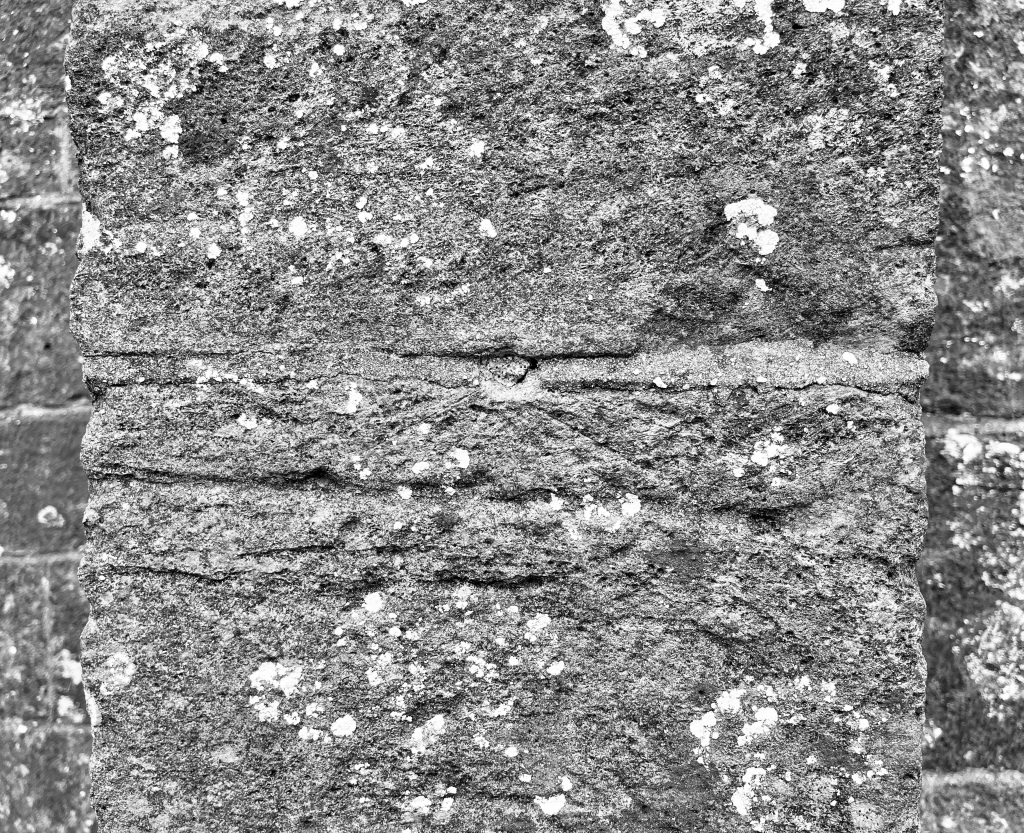
Details of a dial can sometimes be seen more clearly in a B&W photo. It works to a limited extent here, but not enough to bring out, in 2023, the overall design as recorded in the past.

*It is slightly unusual for sources such as BHO, HE, BLB, to acknowledge scratch dials

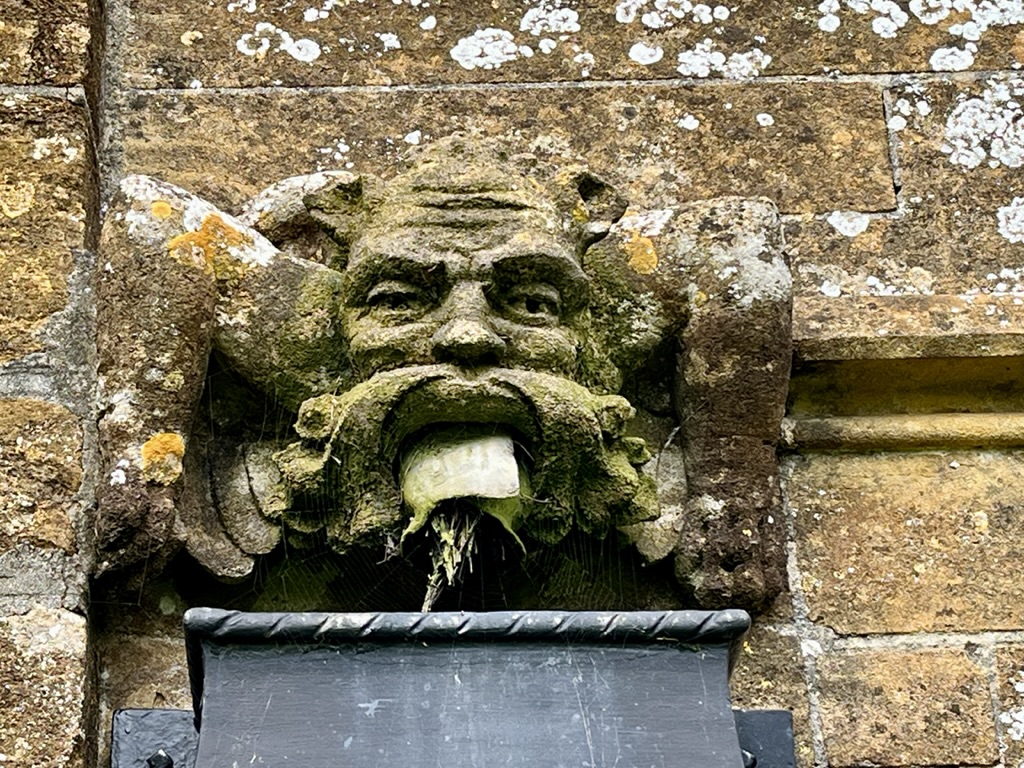
GSS Category: Scratch Dial; Gargoyle

All photos: Keith Salvesen

BURCOMBE . WILTS . ST JOHN – Scratch Dial; Vertical Dial

St John . Burcombe . Wilts

ST JOHN . BURCOMBE WITHOUT (N Burcome) . WILTS

GRADE II* Saxon origins (vestiges still visible); C13, C15; rebuilt tower 1667 (unusually, lower than the nave roof-line); restorations (Wyatt). Split from Burcombe village (S Burcombe) by A30 and hard to find. St John is the sole remnant of N Burcombe. Declared redundant 2005. I could not gain entry. 5m W of Salisbury. 51.0798 / 1.8971 / SU073311

DIAL

St John . Burcombe . Wilts – Scratch Dial

The Burcombe dial is a slight secret, mentioned in TWC‘s Wiltshire dial list but not elsewhere that I can see. St John is also hard to find: check the location carefully before you try. This is a pretty dial, a messy mix of lines and pocks below the horizontal. The noon line – usually an eye-catcher – is upstaged by lines with varying degrees of curve and pocking. It’s hard to interpret, but the two ‘raking light’ photos add a bit of perspective.

St John . Burcombe . Wilts – Scratch Dial

VERTICAL DIAL

St John . Burcombe . Wilts – Vertical Dial

St John also has a canted vertical dial above the porch, with a pleasingly robust gnomon. It fits in with the stonework around it and looks old. However any details on the dial face have been eroded. Unfortunately I didn’t have a proper camera with me to check closely for lines etc. but I wouldn’t expect revelations.

Quaere placename – a mapping mistake

In the early 17th century, when John Speed prepared a map of Wiltshire he copied a version by Christopher Saxton, which showed but did not name North Burcombe. On his own map, Speed labelled the village Quaere (Latin for query), presumably because he intended to check the name later, but never did, and his engraver copied the annotation as if it were the village’s name. Later map printers in turn copied Speed’s map and ‘Quaere’ appeared on maps of Wiltshire for 145 years until Emanuel Bowen corrected the mistake in his 1755 map of the county. (WIKI)

GSS Category: Scratch Dial; Vertical Dial

All photos: Keith Salvesen