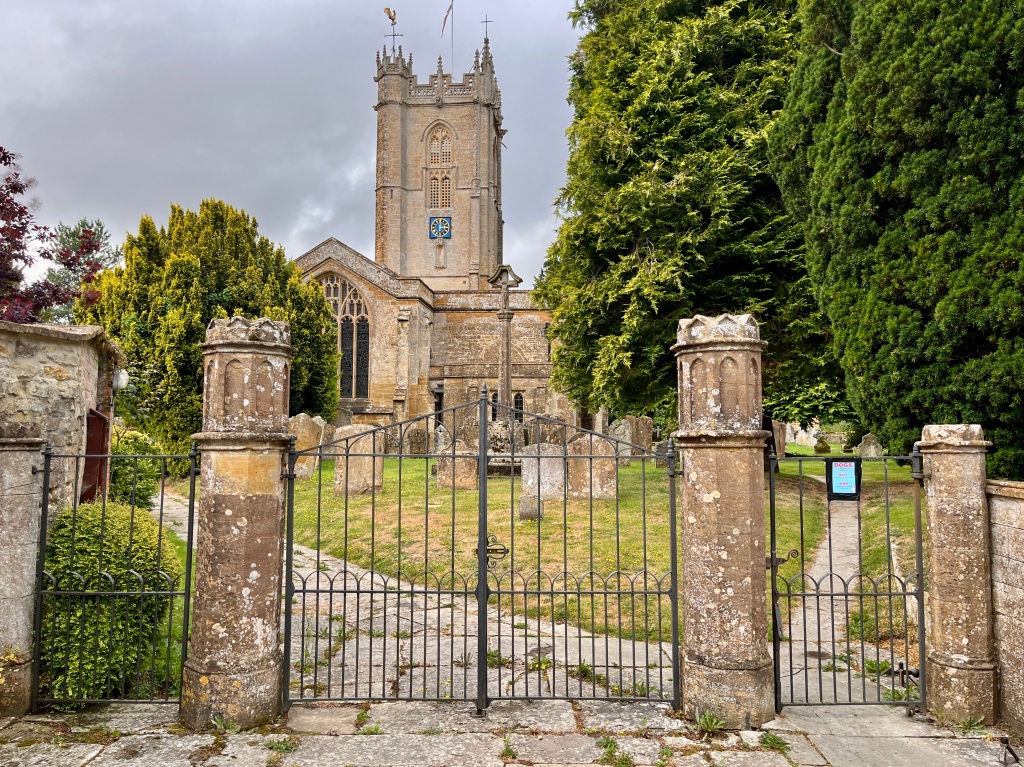
SHIPTON BELLINGER . HANTS . ST PETER – Scratch Dials

ST PETER . SHIPTON BELLINGER . HANTS

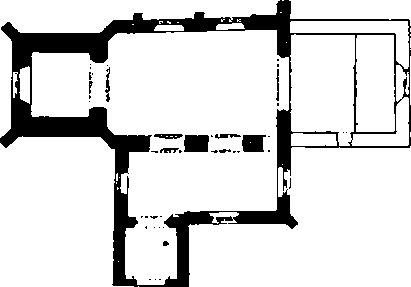
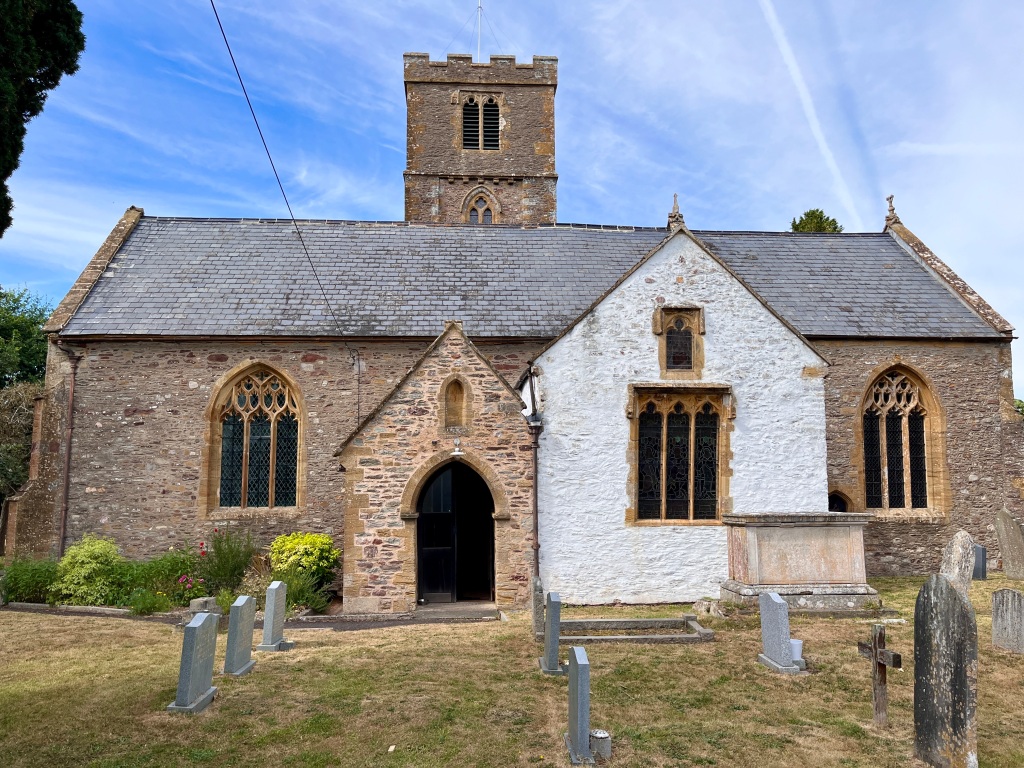
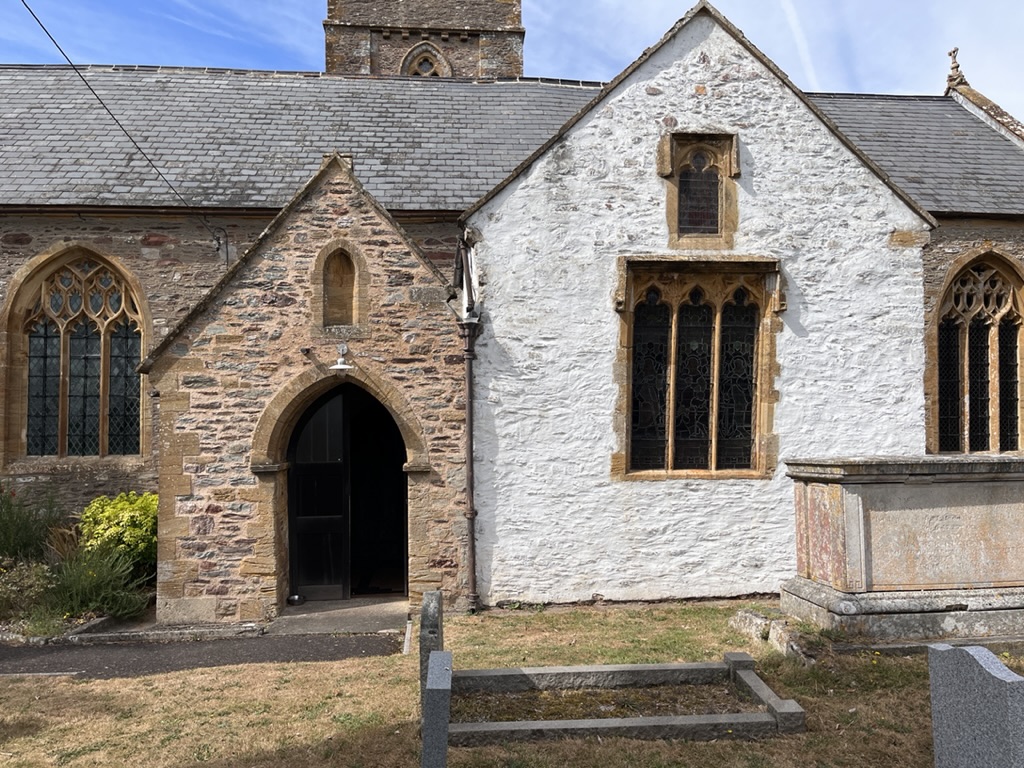
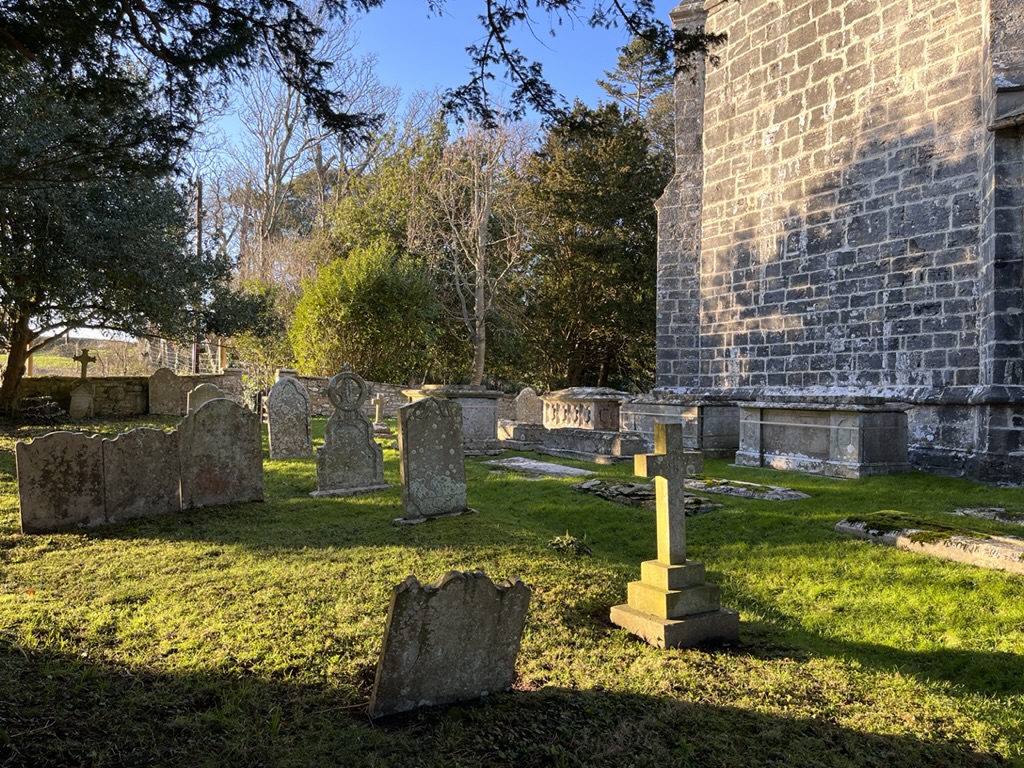
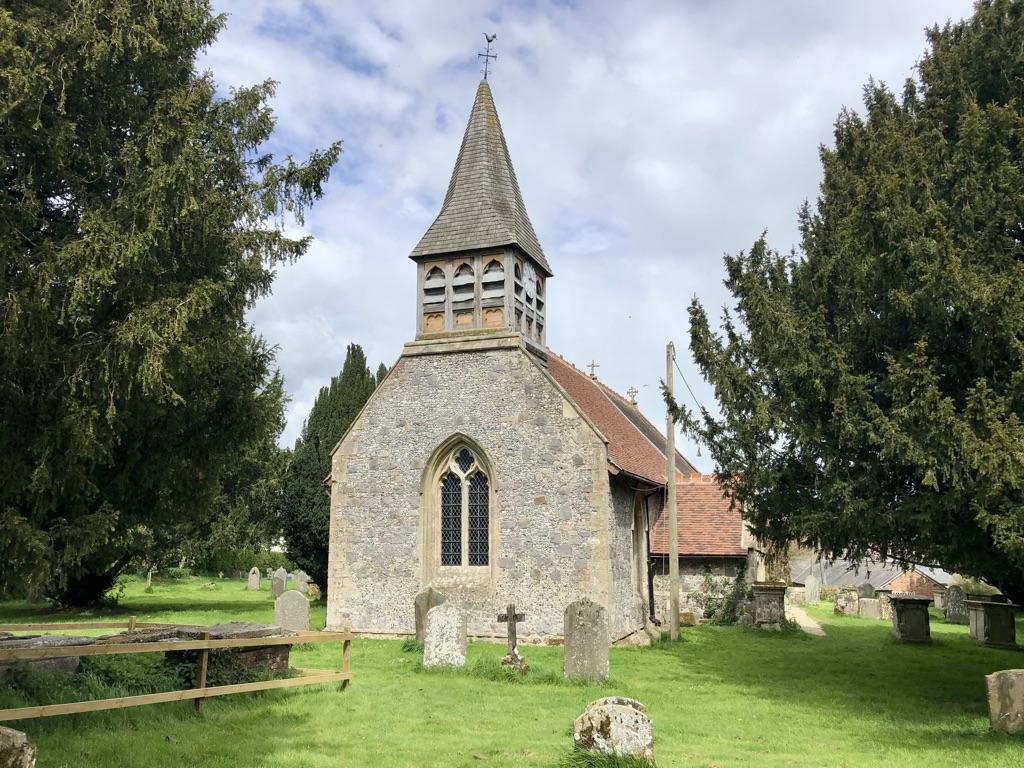
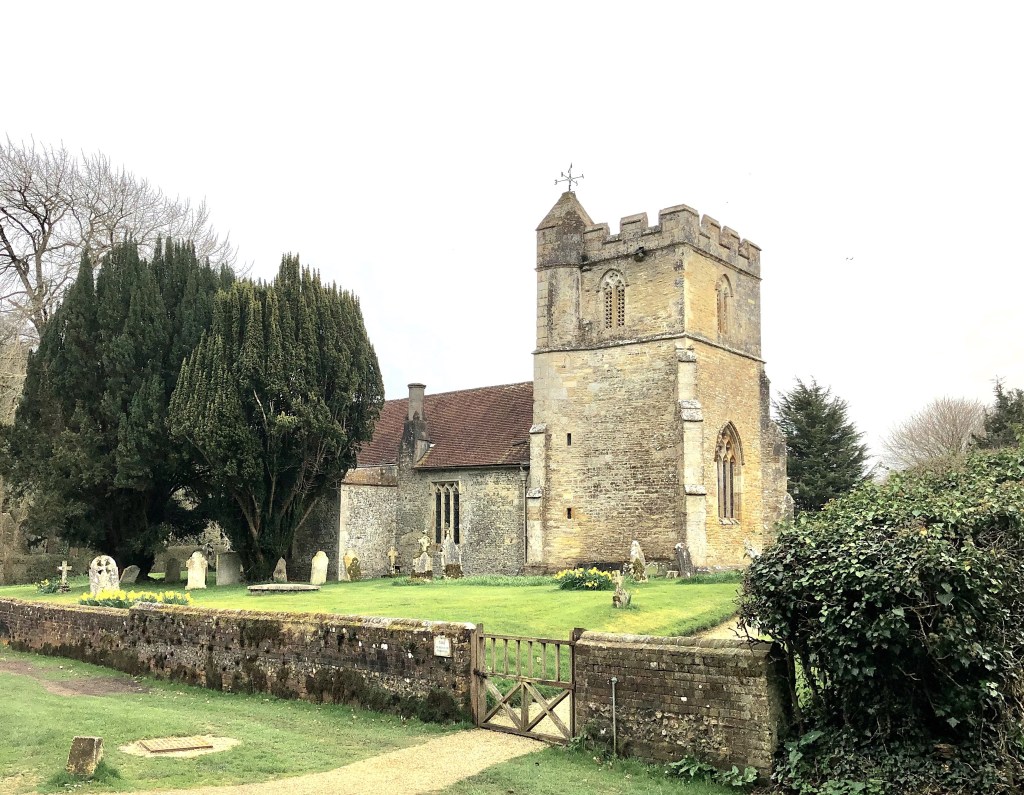
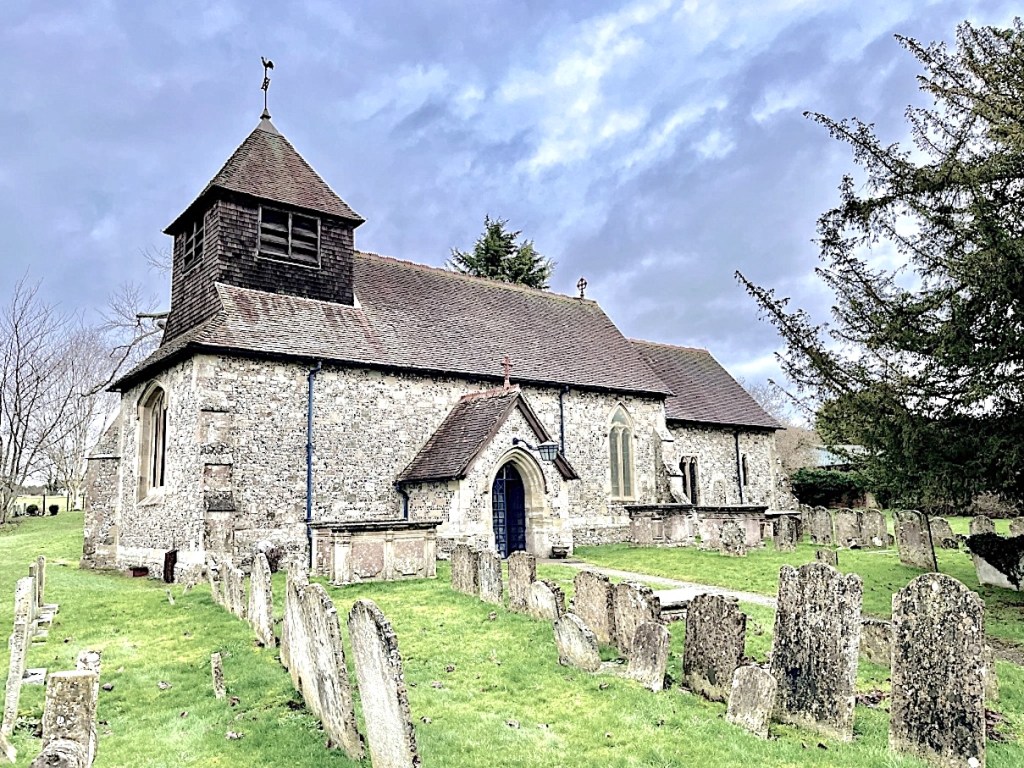
GRADE II C14 origins; very little remains of the original church. Almost all refaced, restored (Withers 1879) or rebuilt. Registers date from mid-C16. Attractive with its squat wooden bell turret. Just N of A303 between Andover and Amesbury. 51.2076 /  -1.6678 / SU233454

DIALS

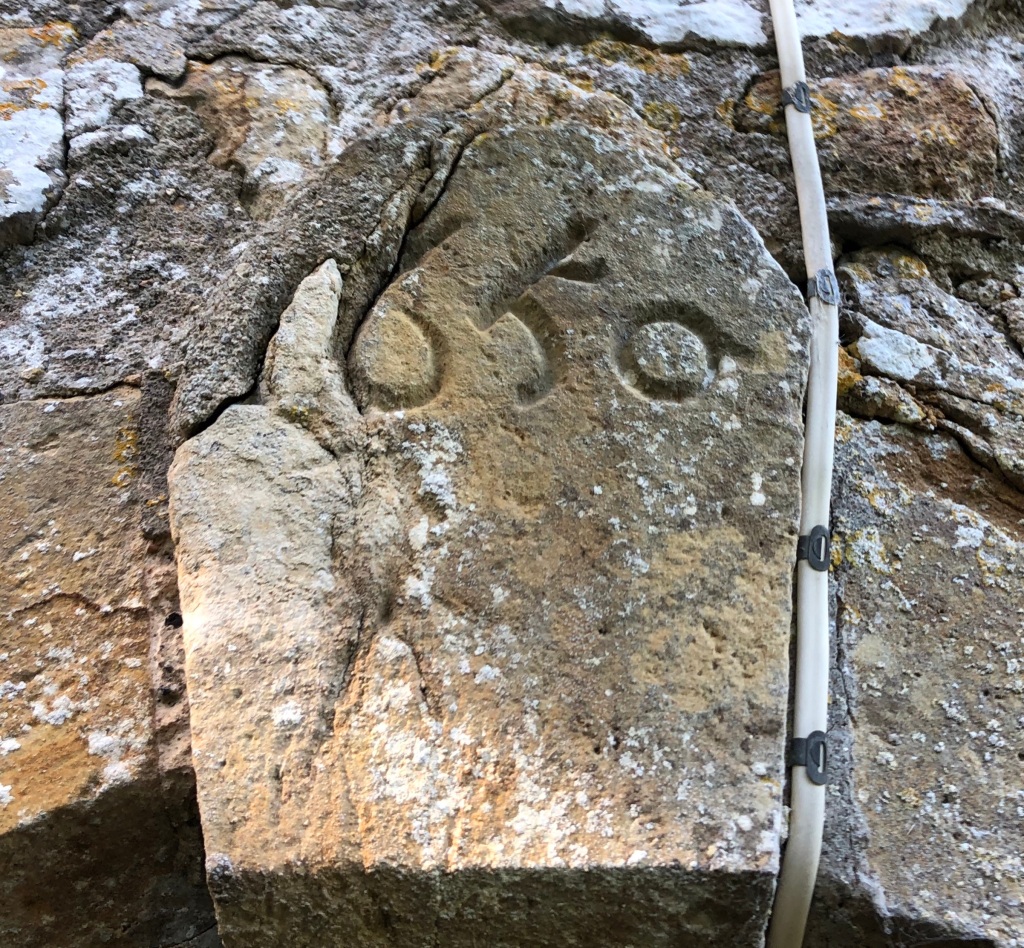
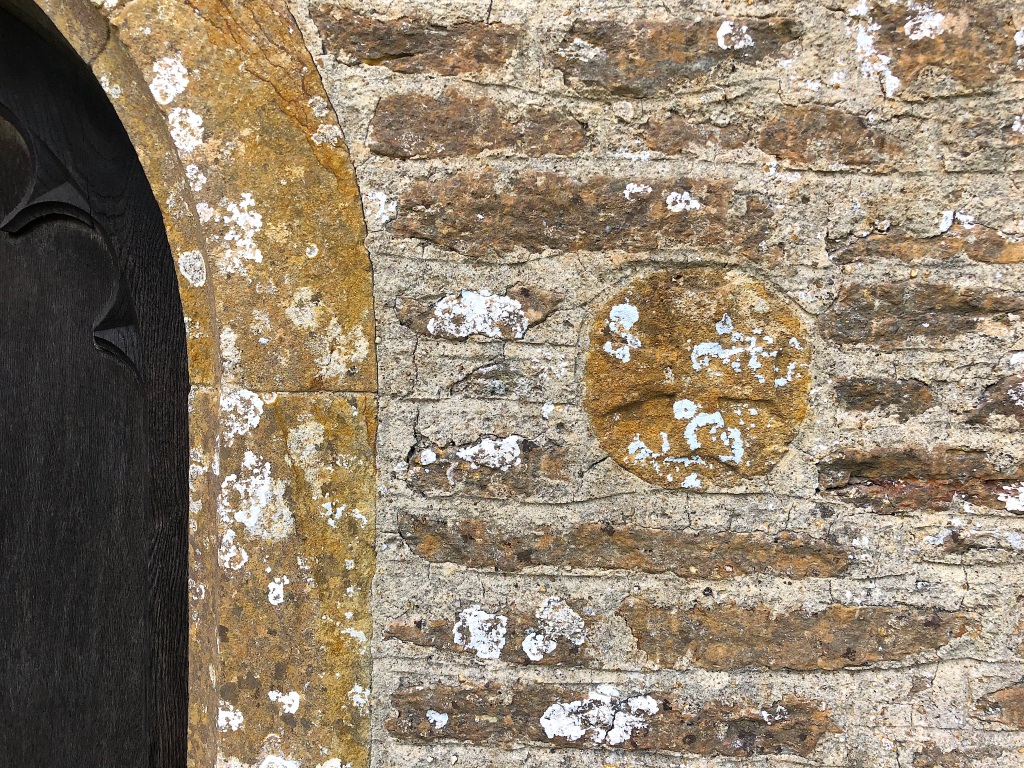
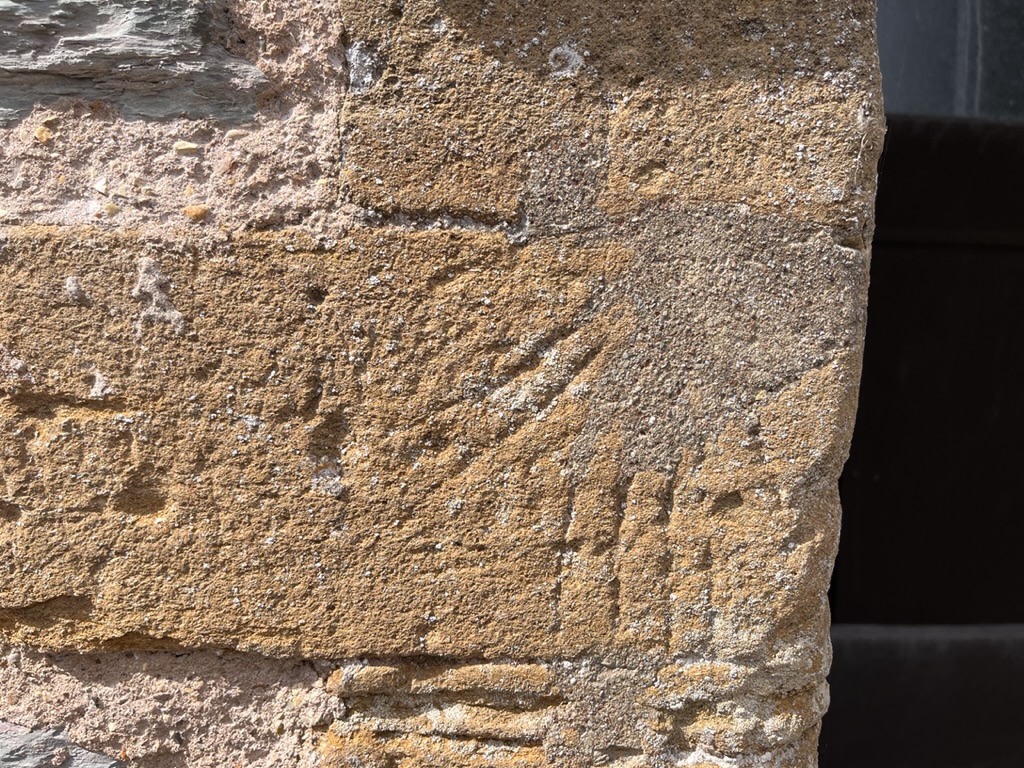
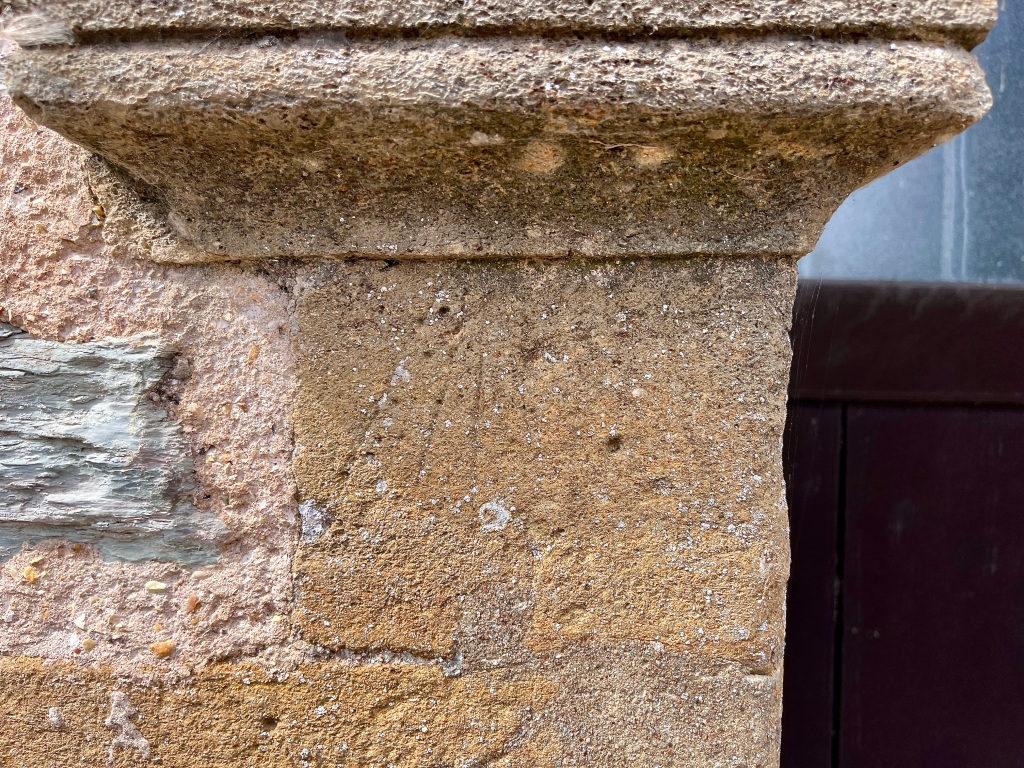
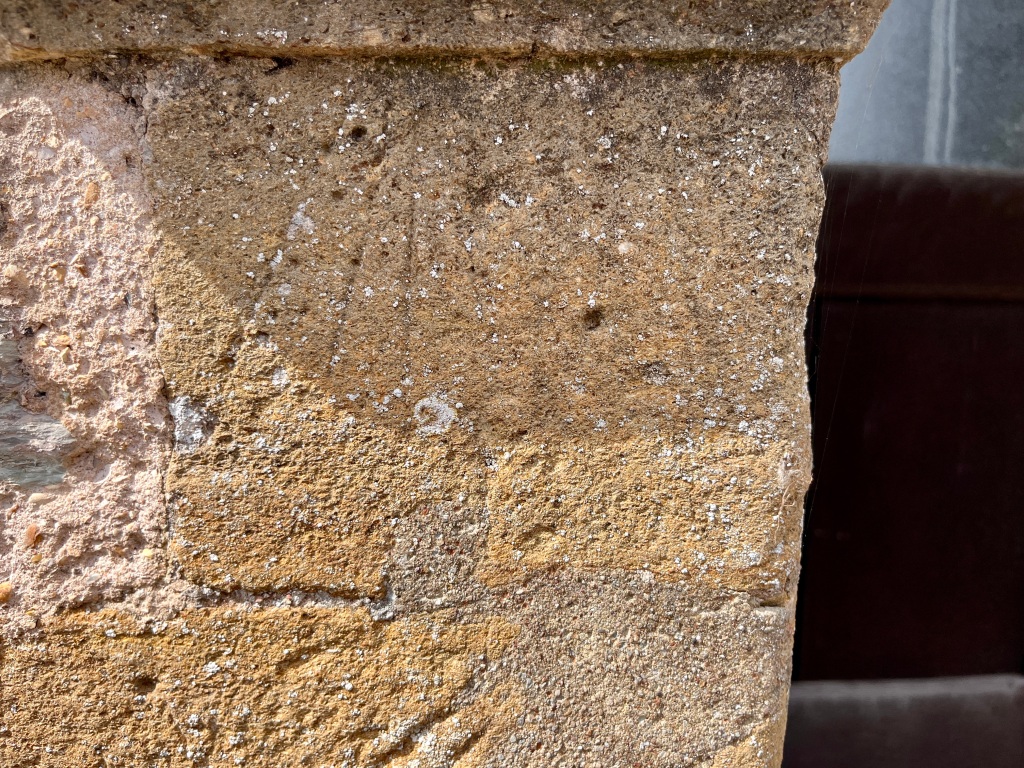
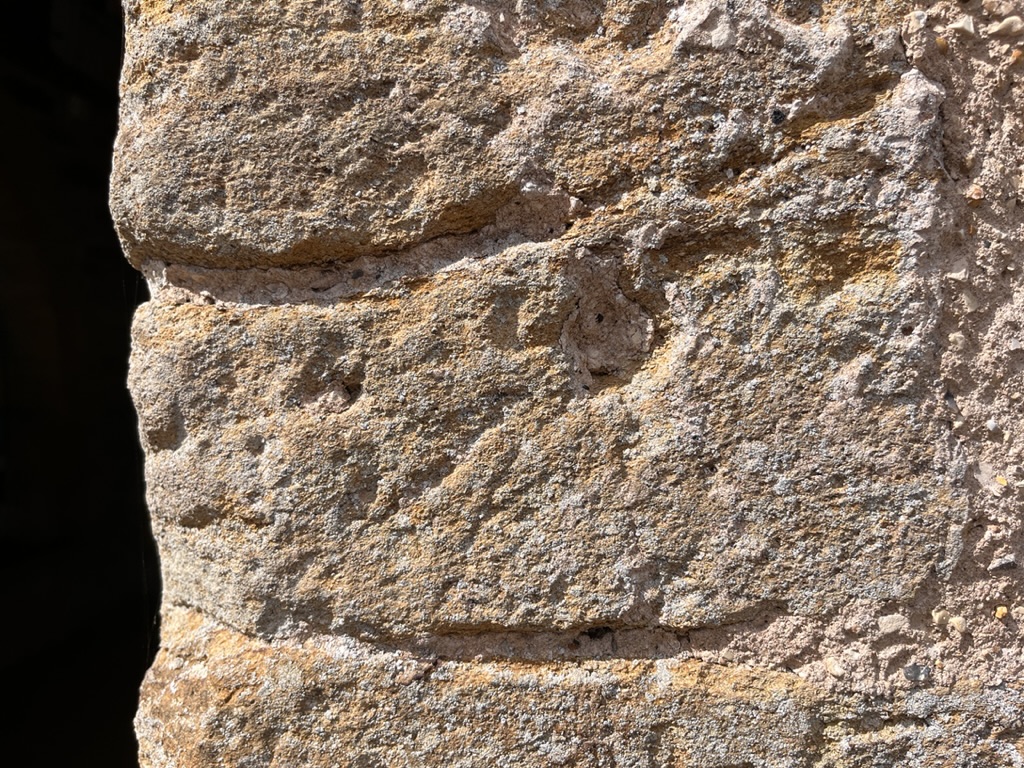
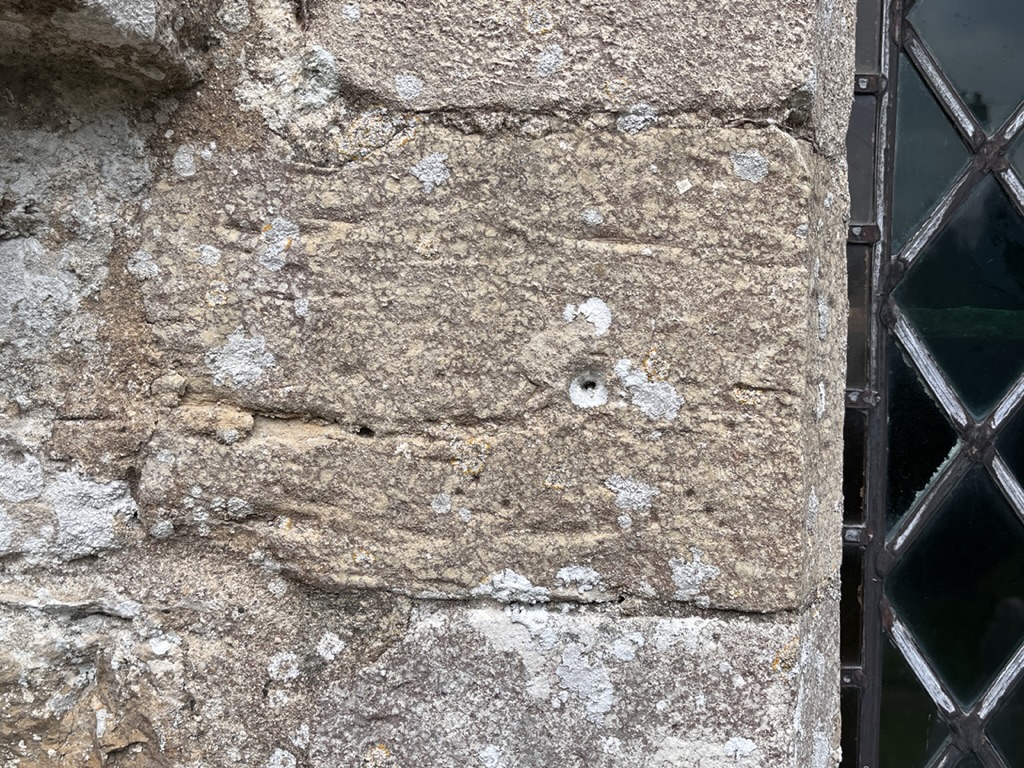
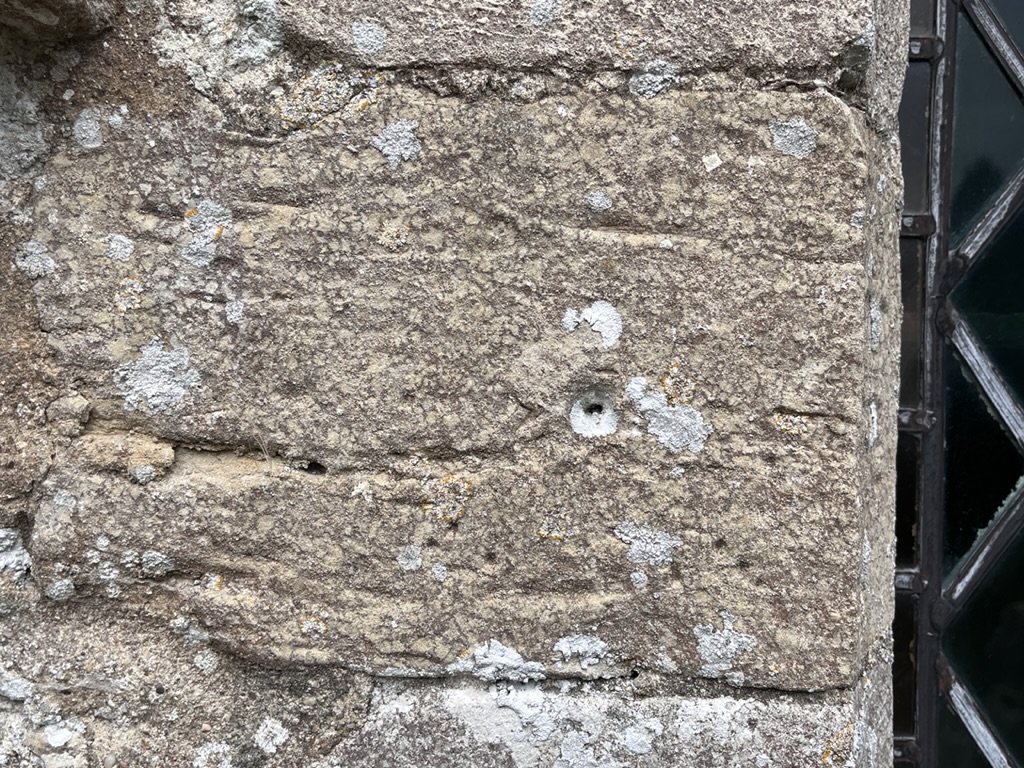
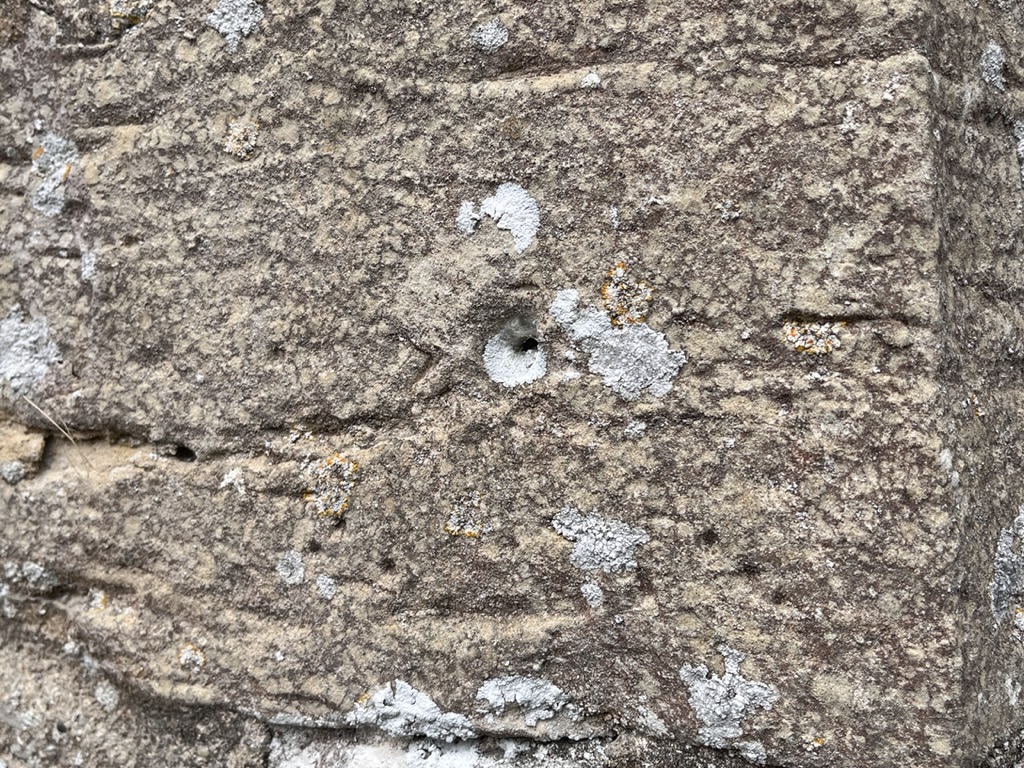
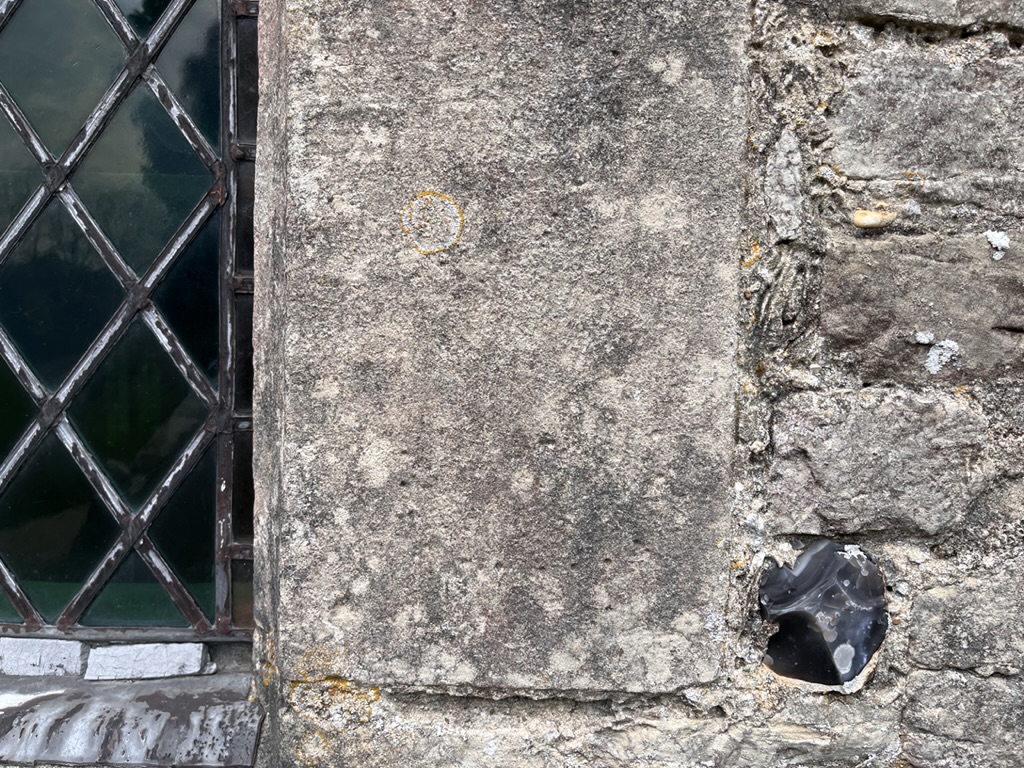
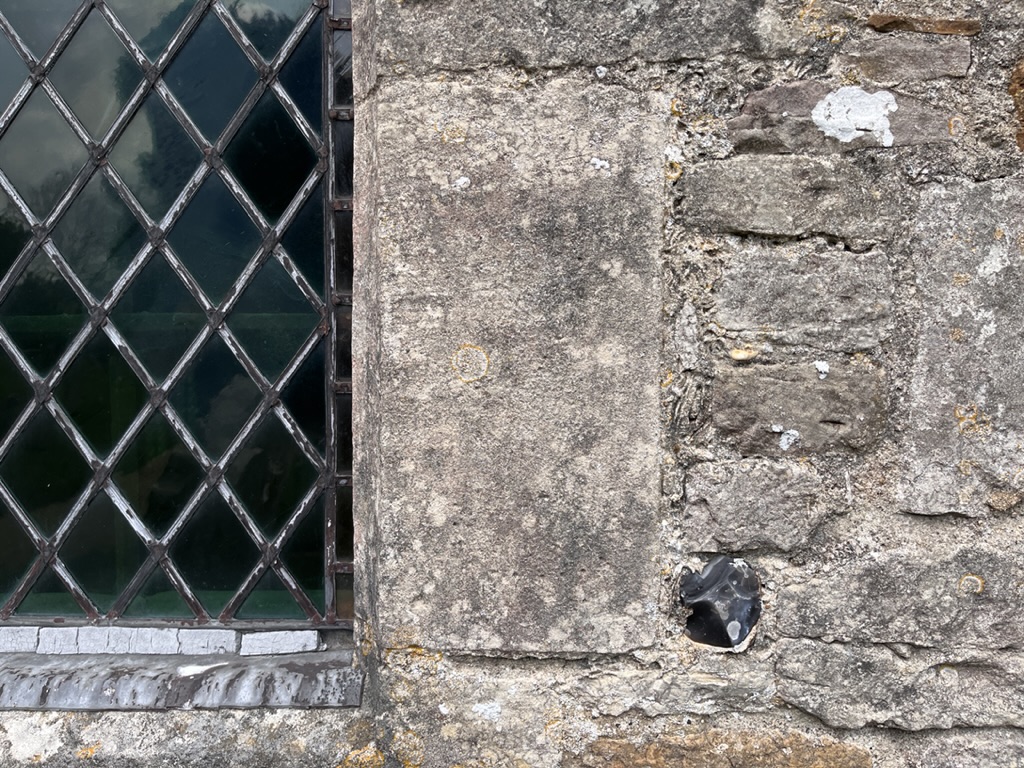
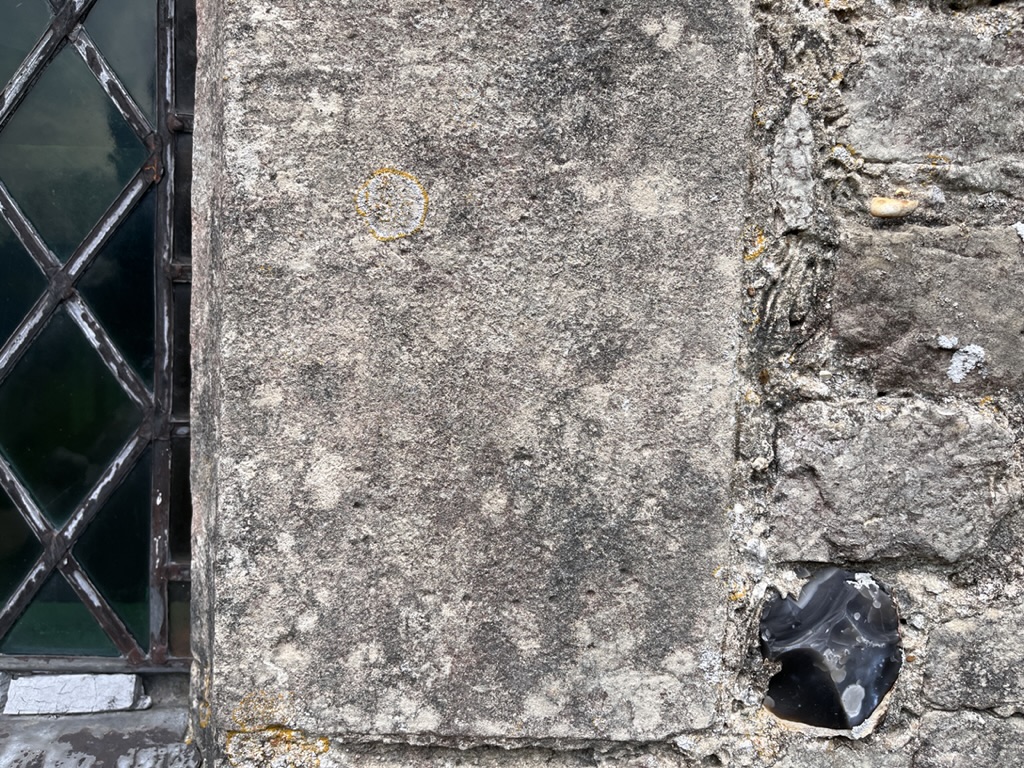
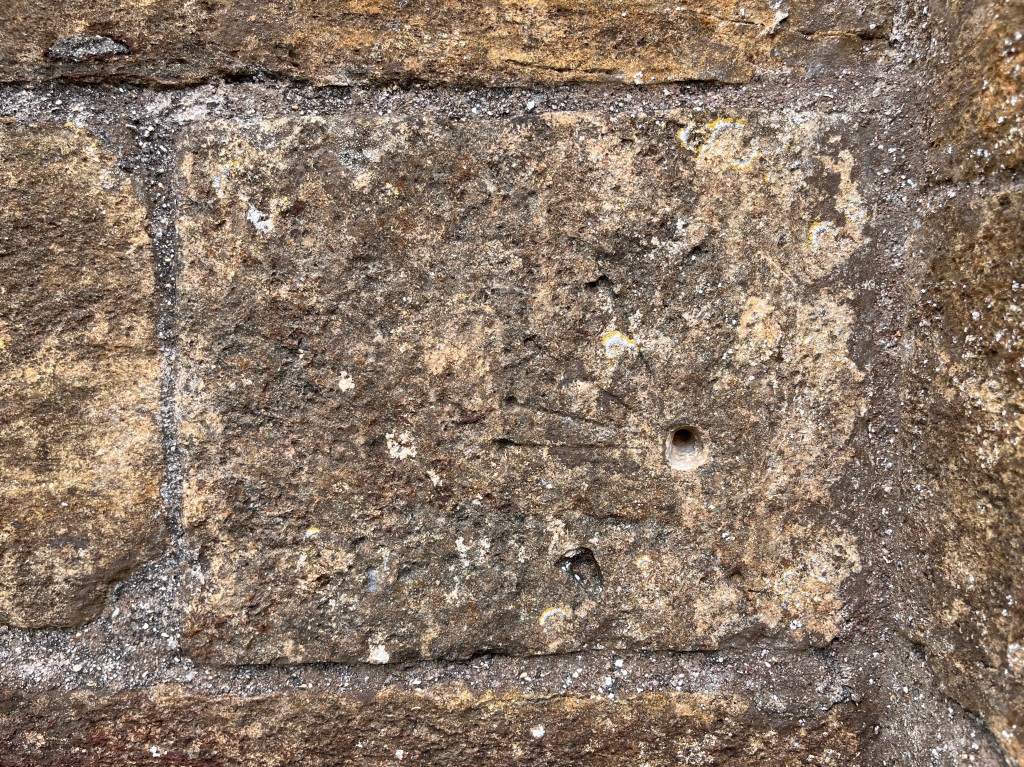
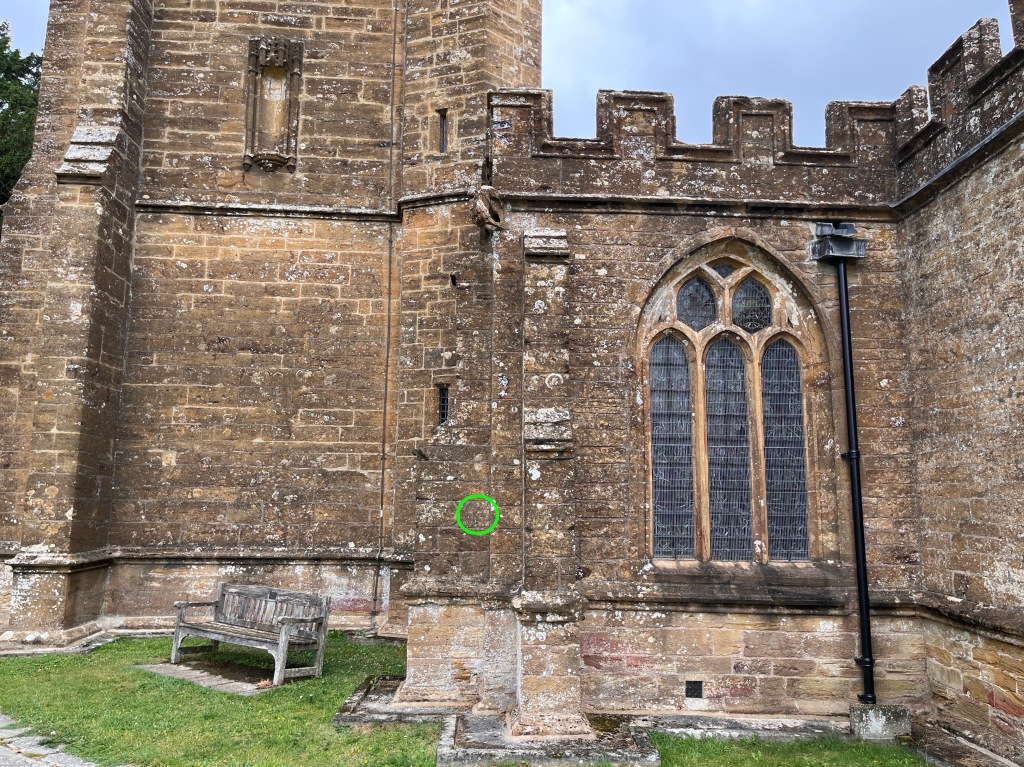
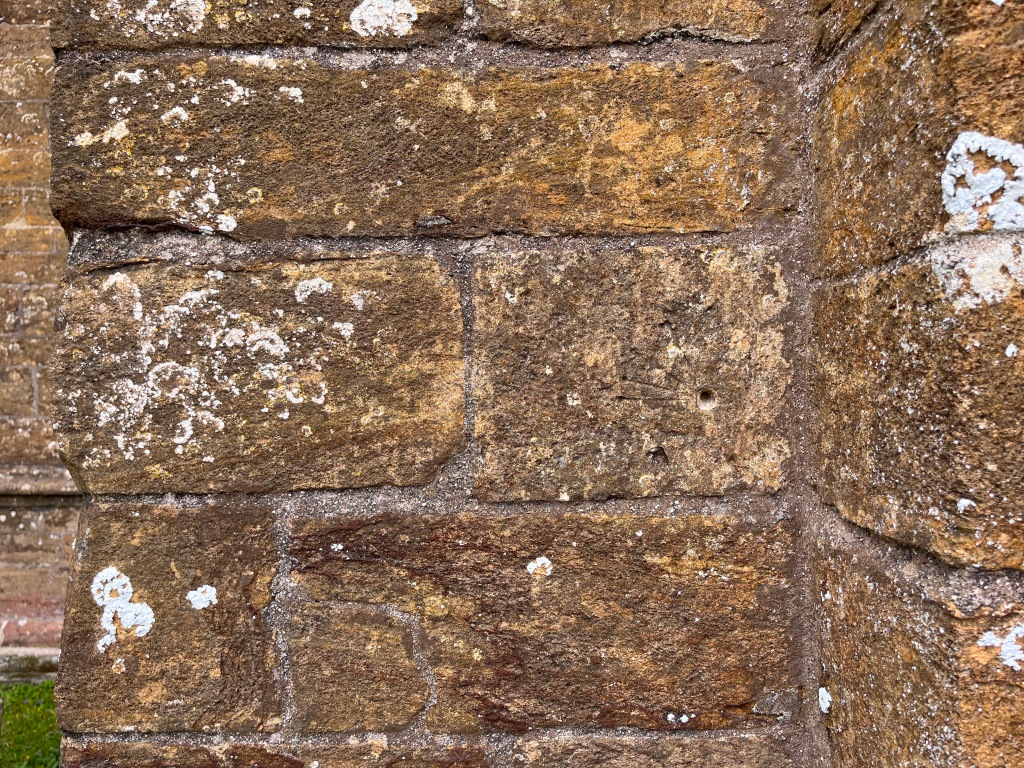
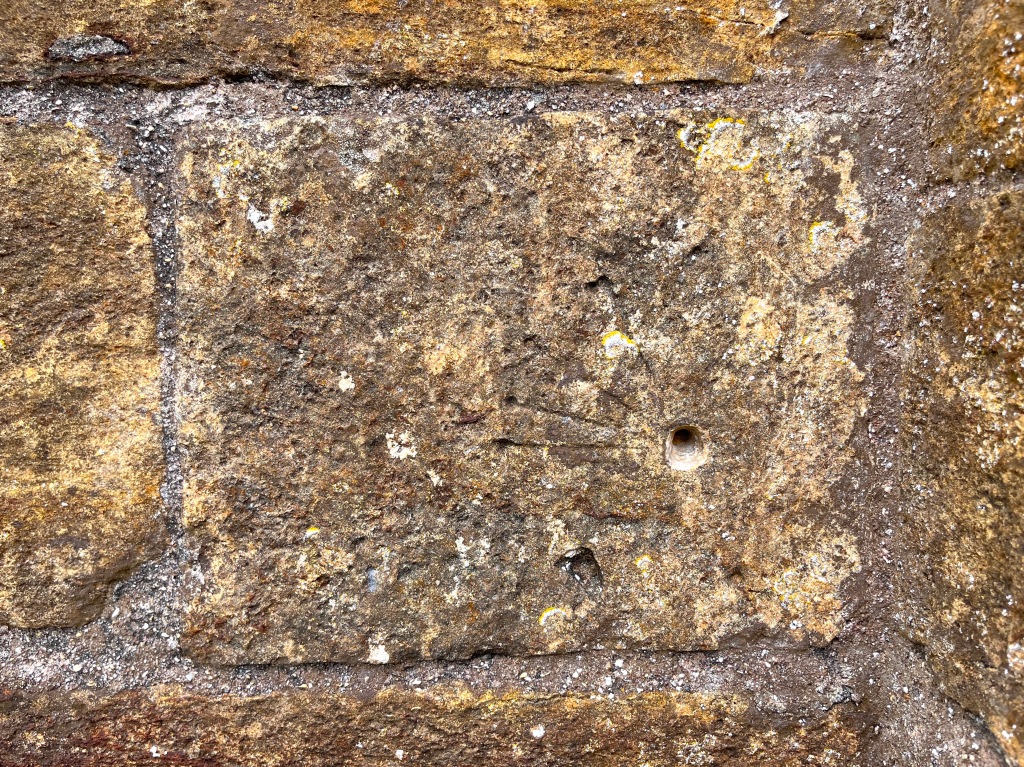
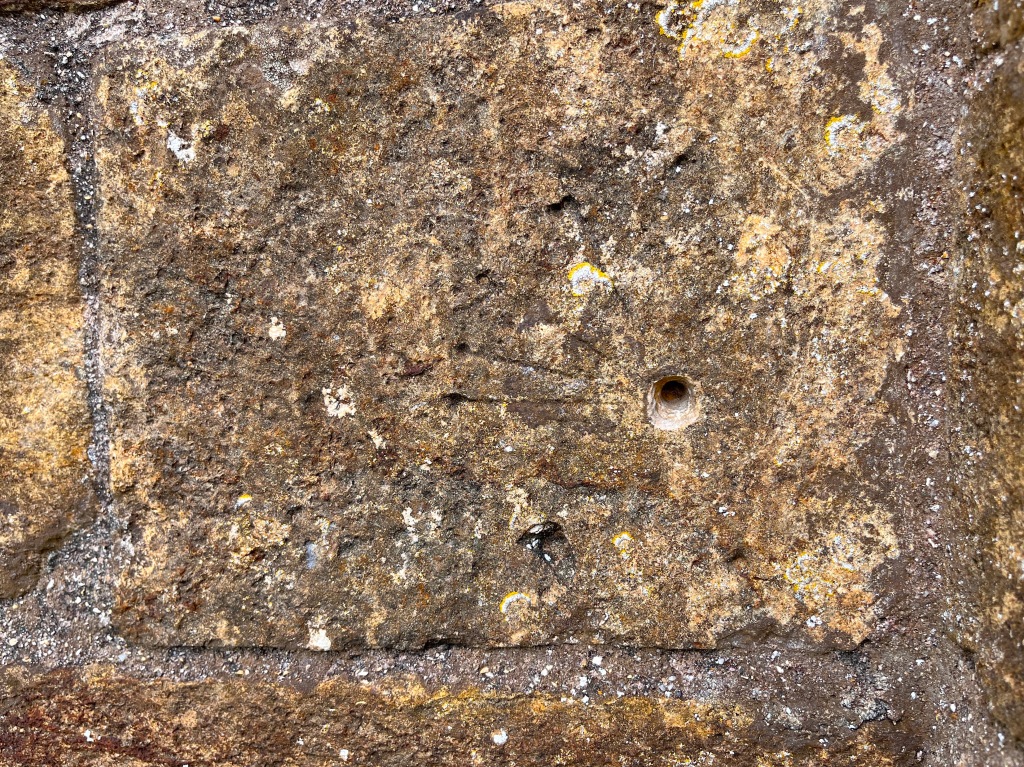
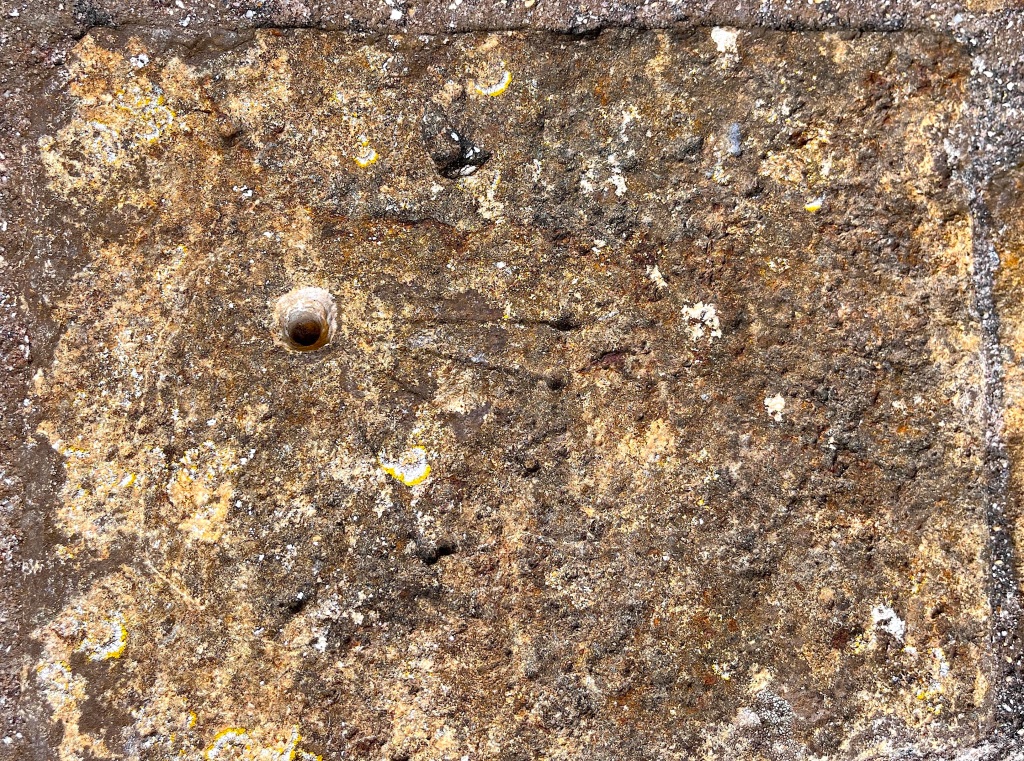
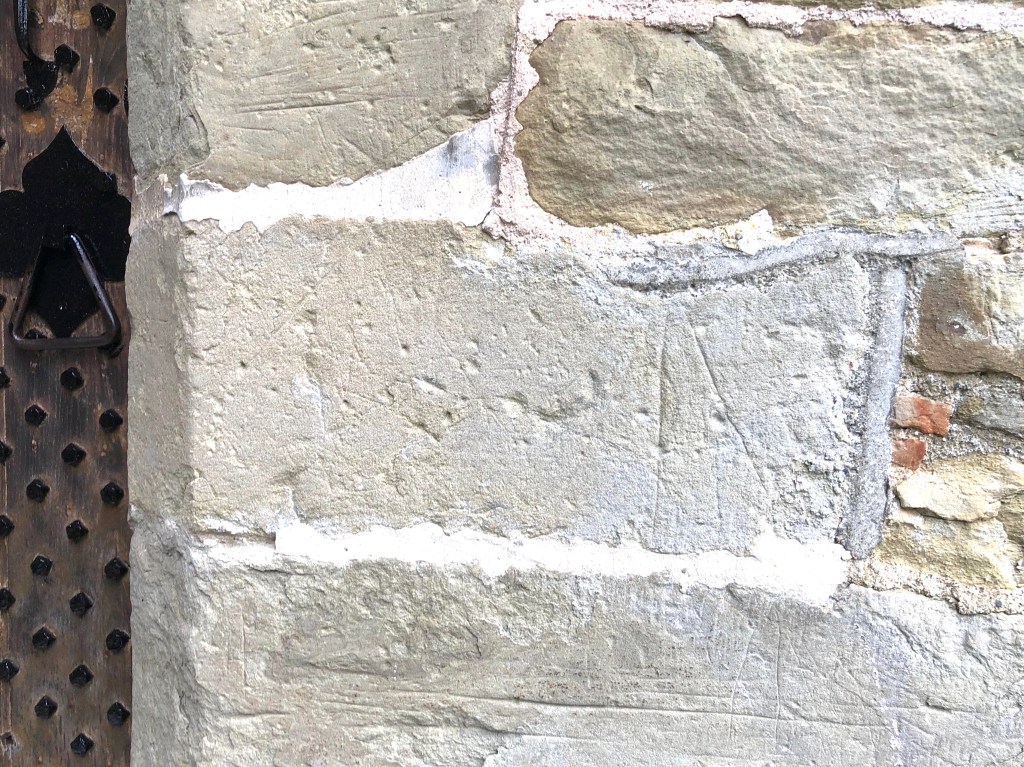
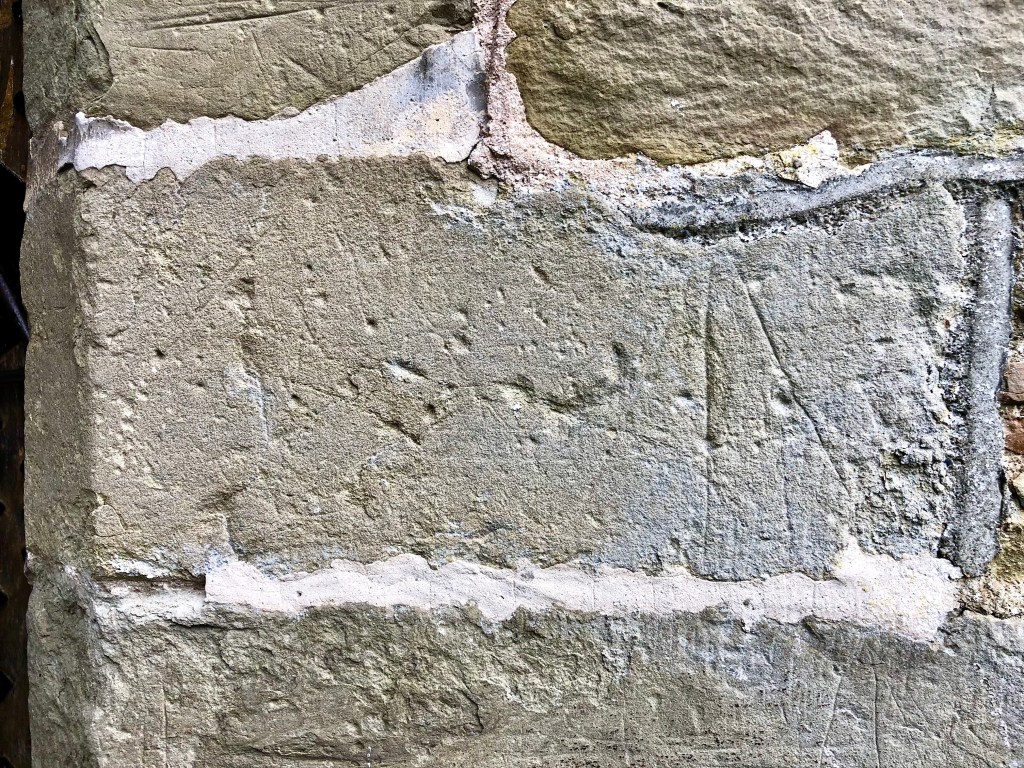
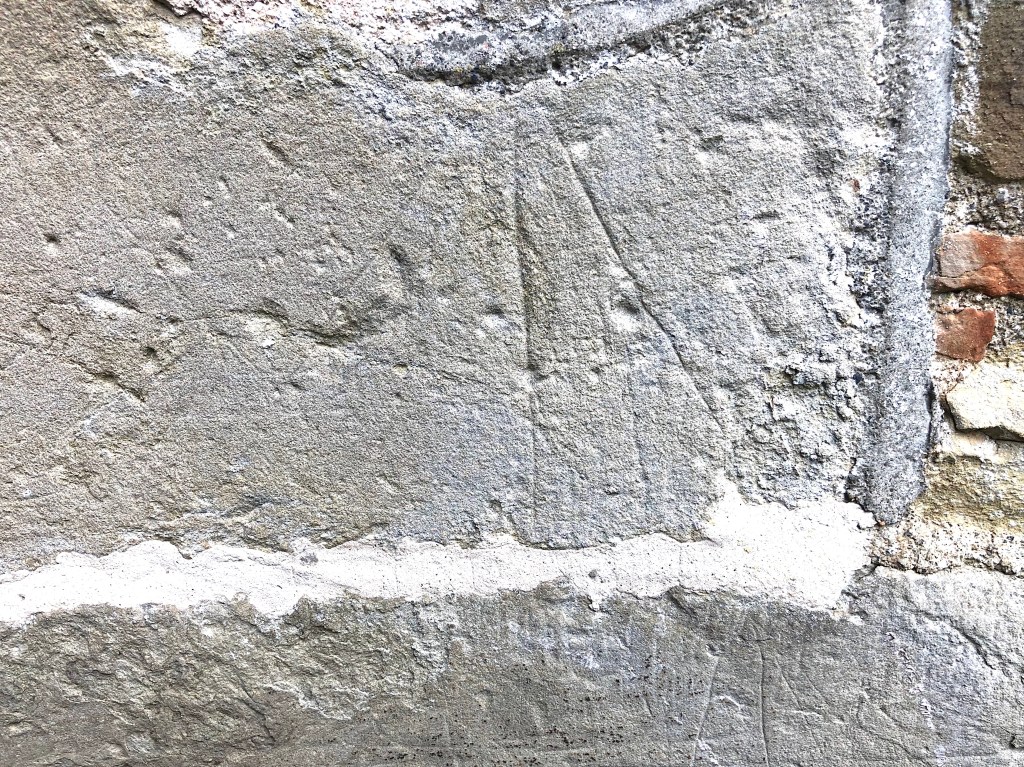
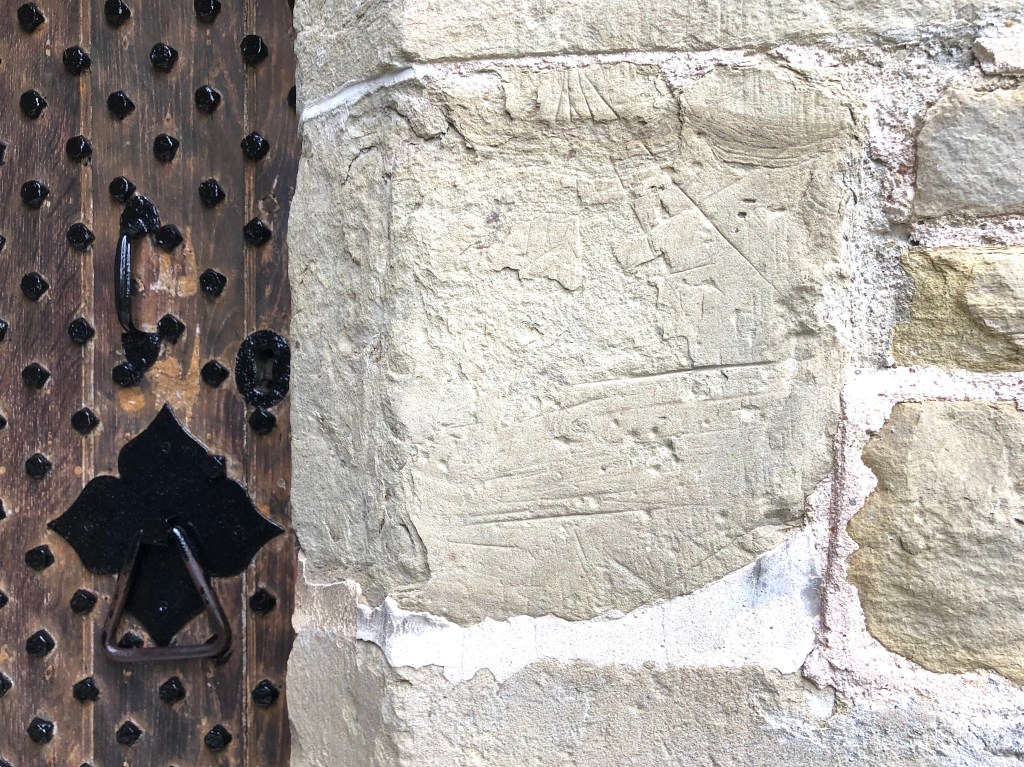
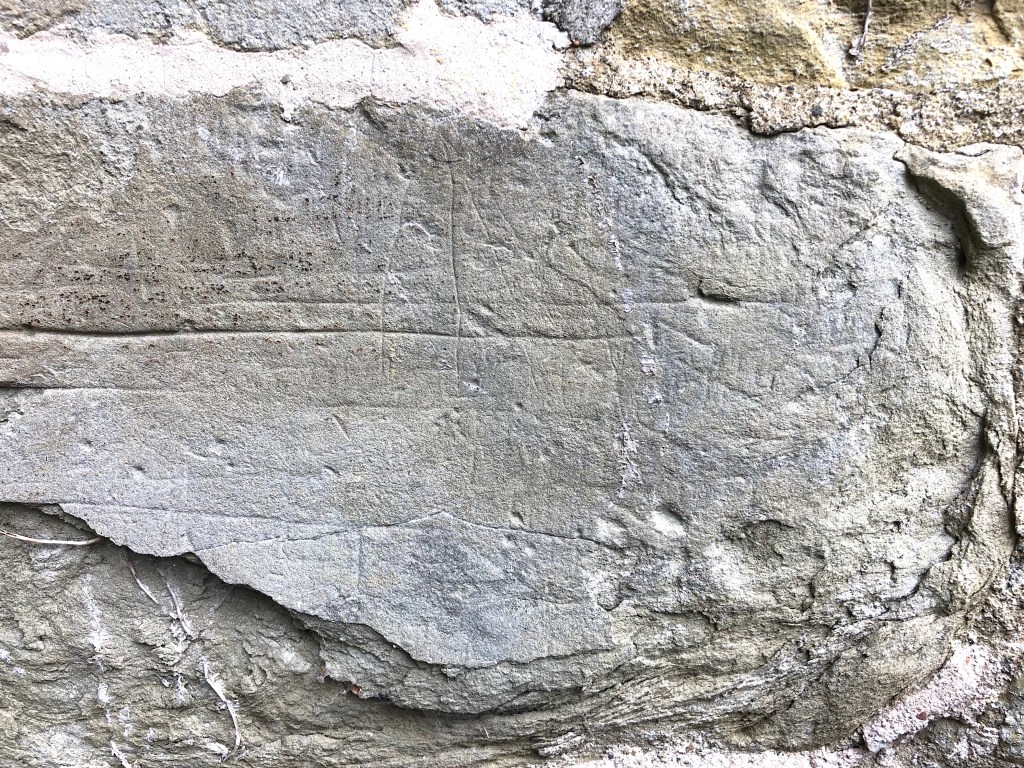
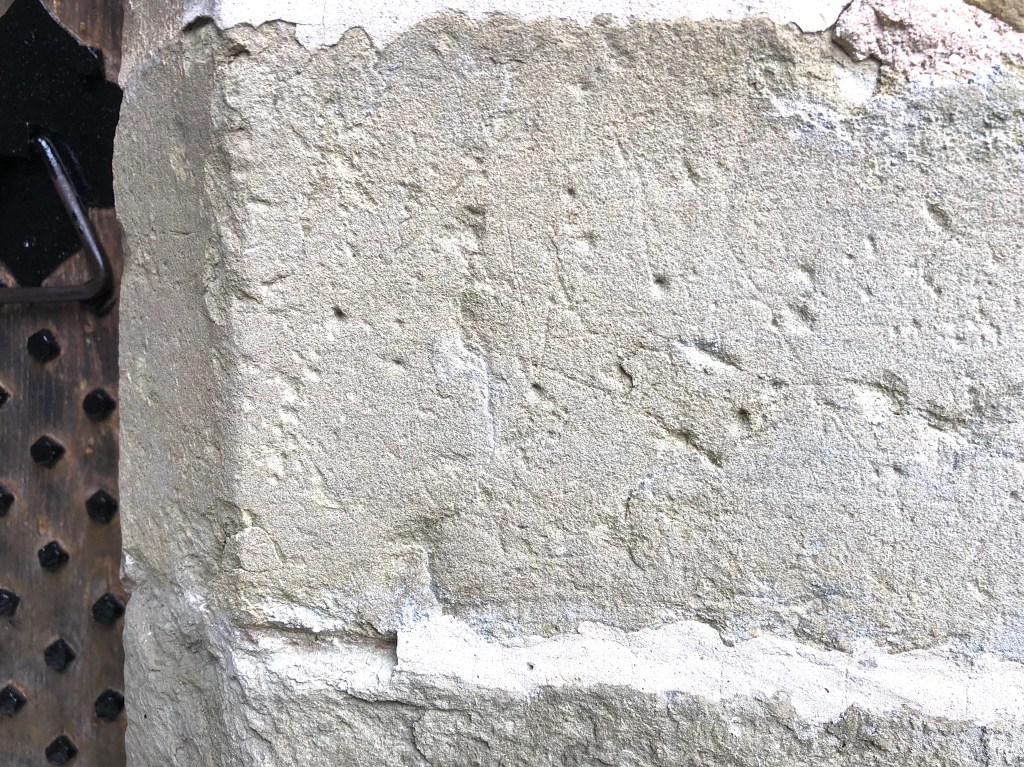
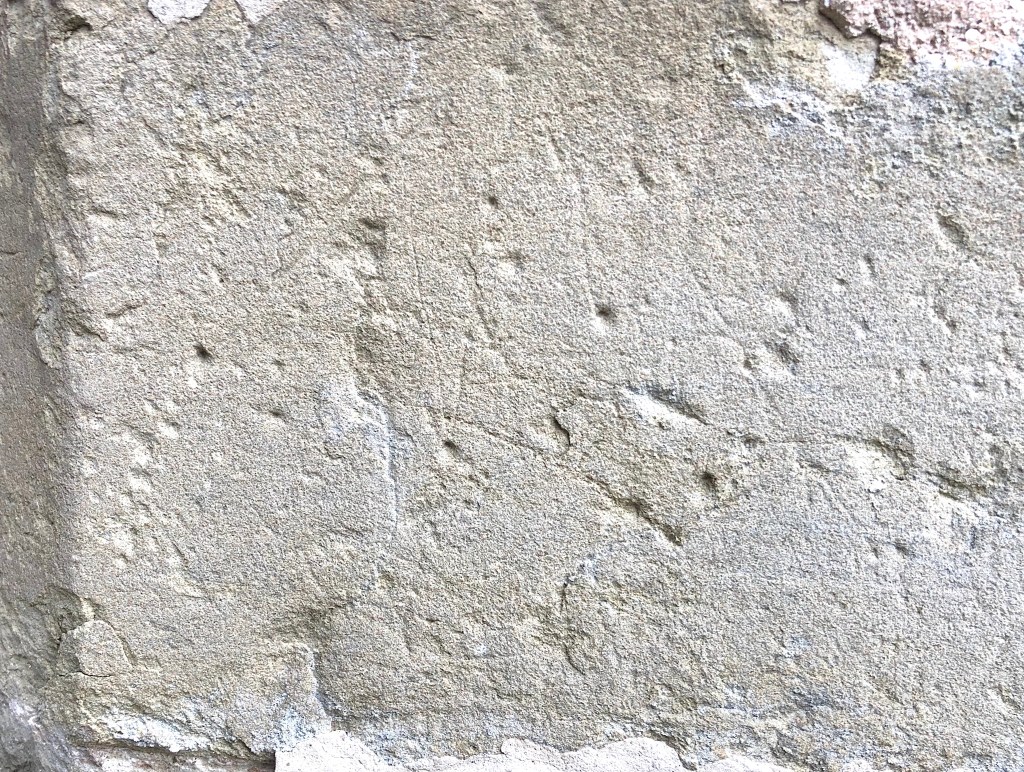
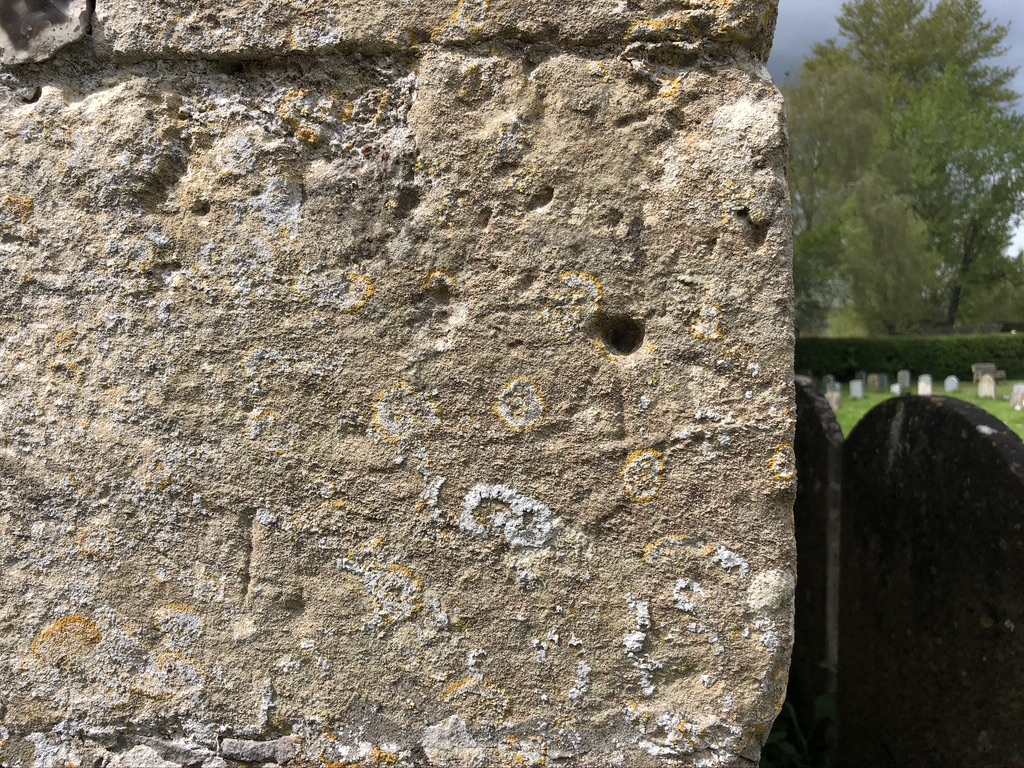
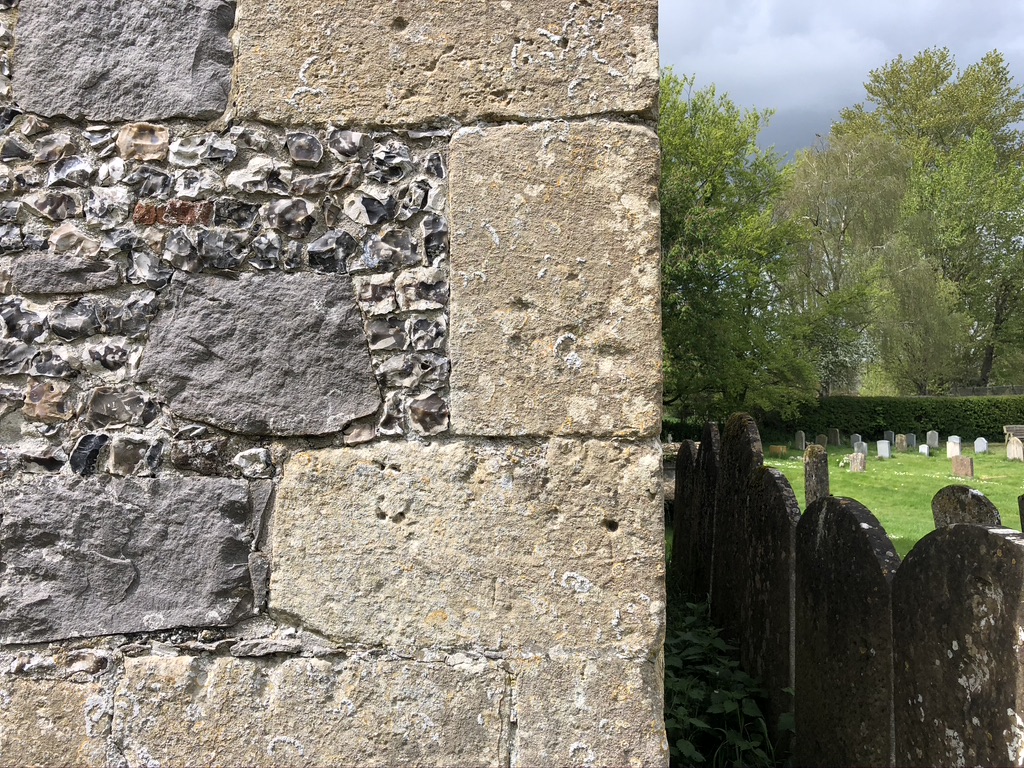
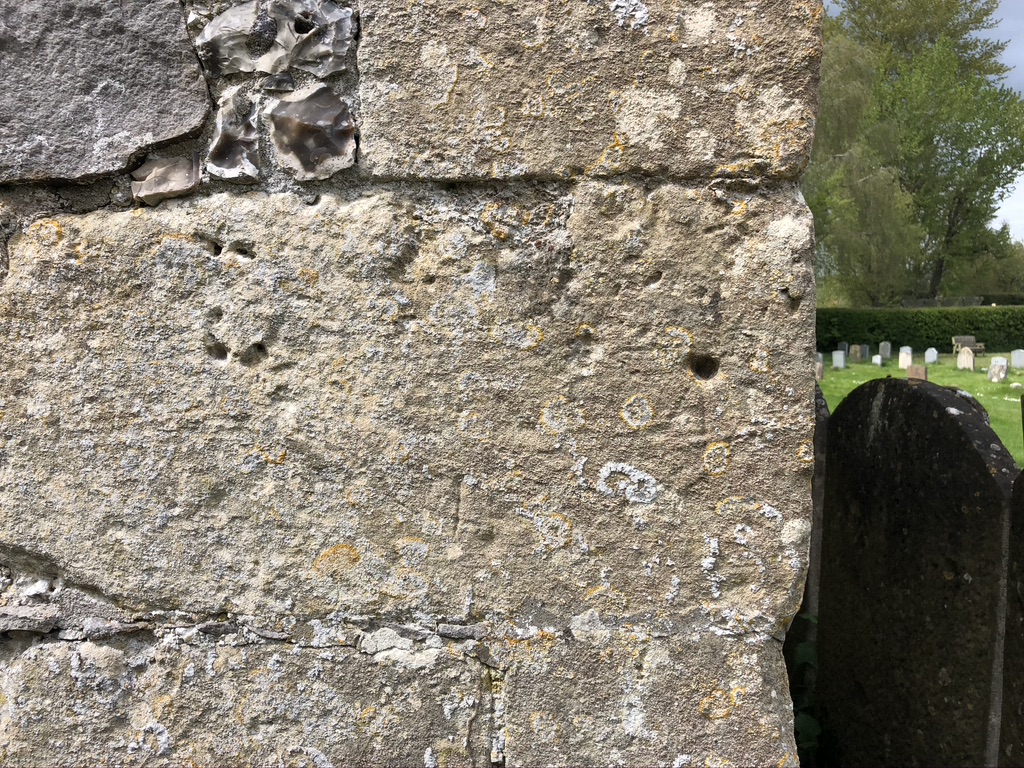
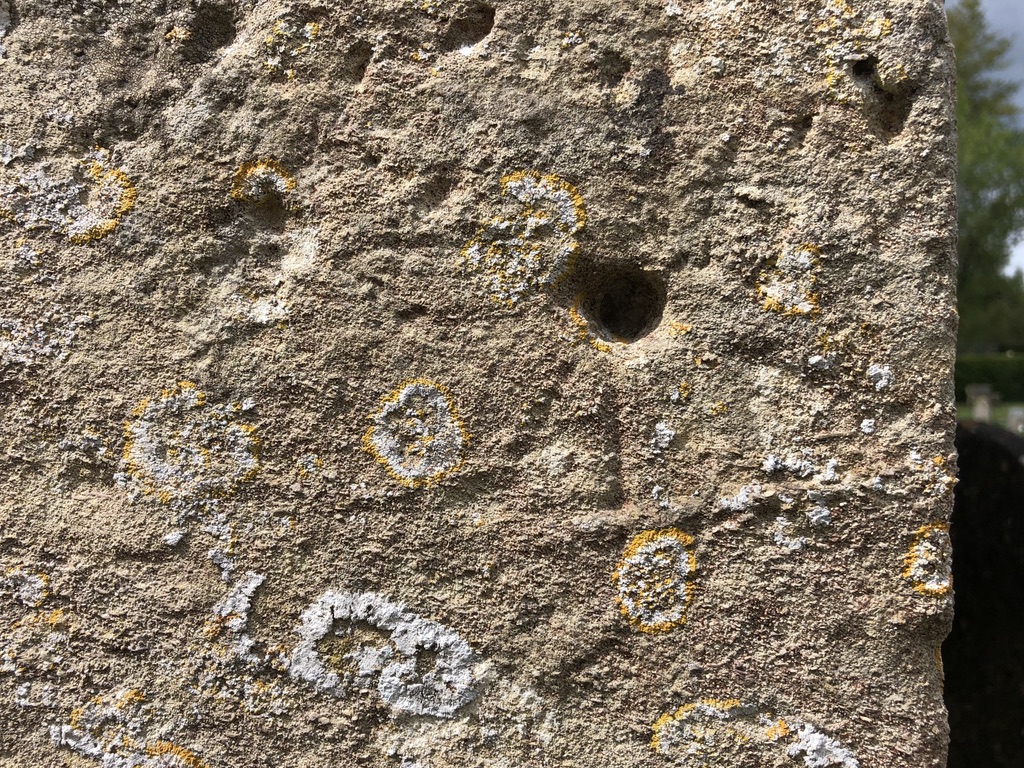
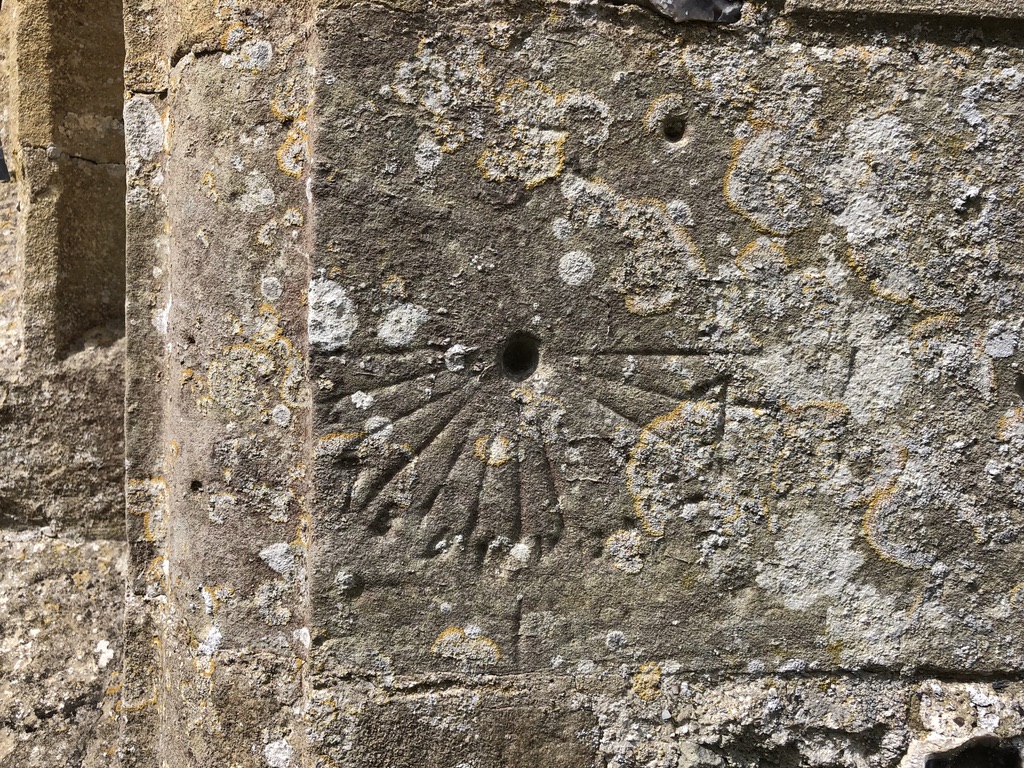
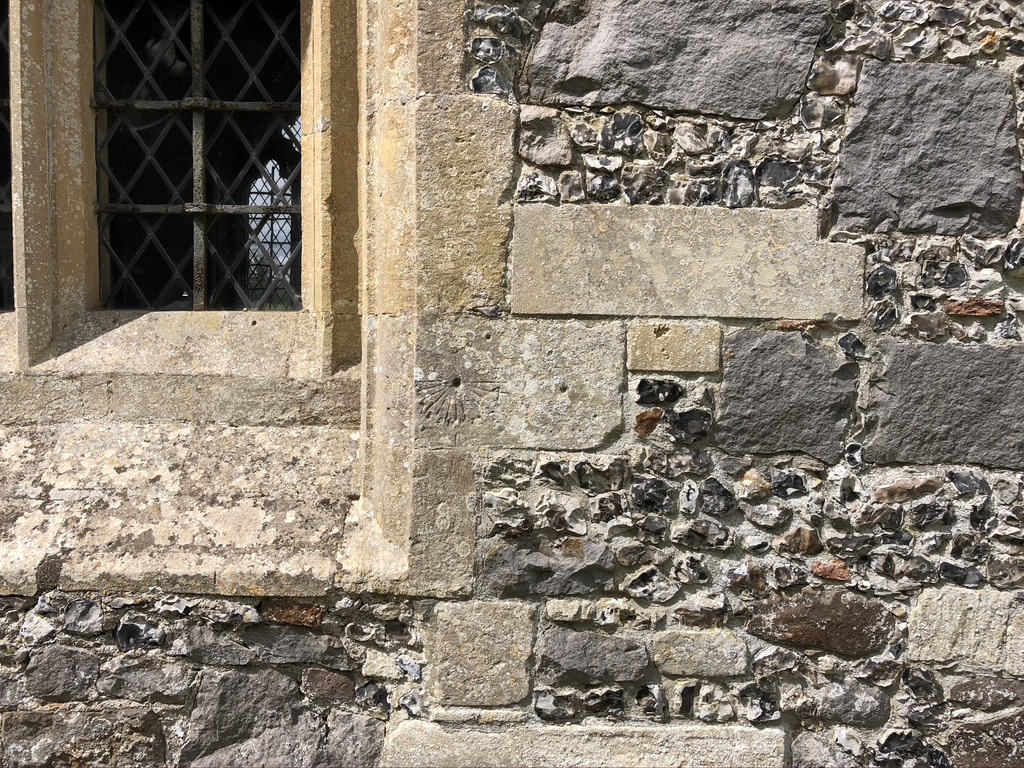
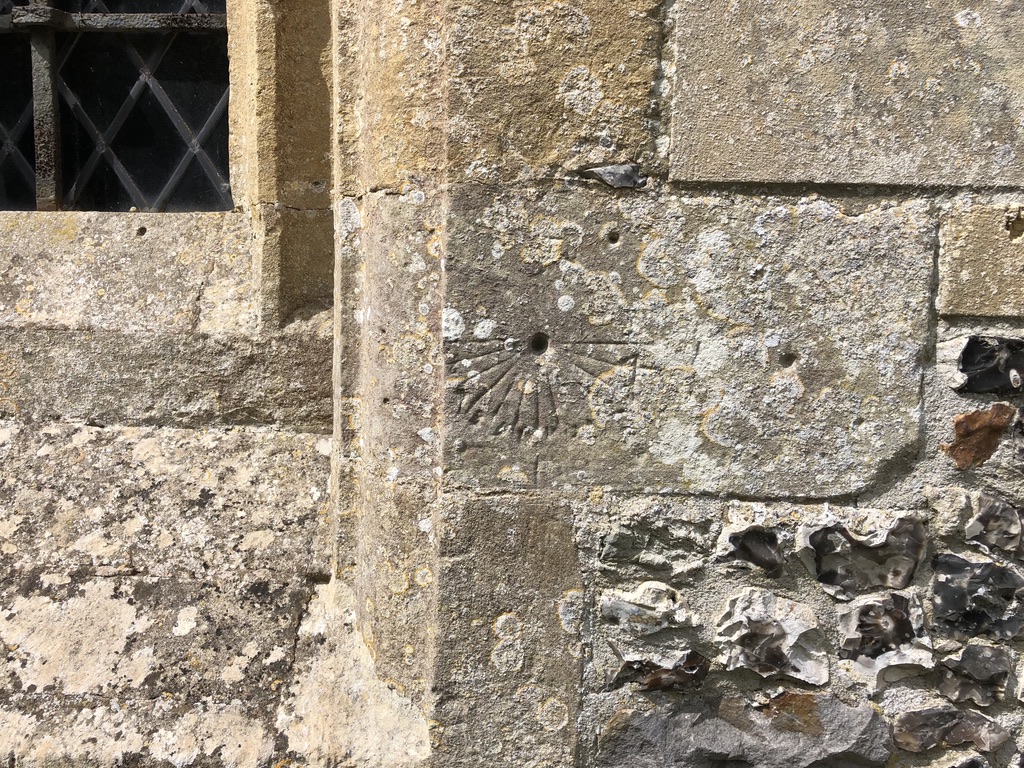
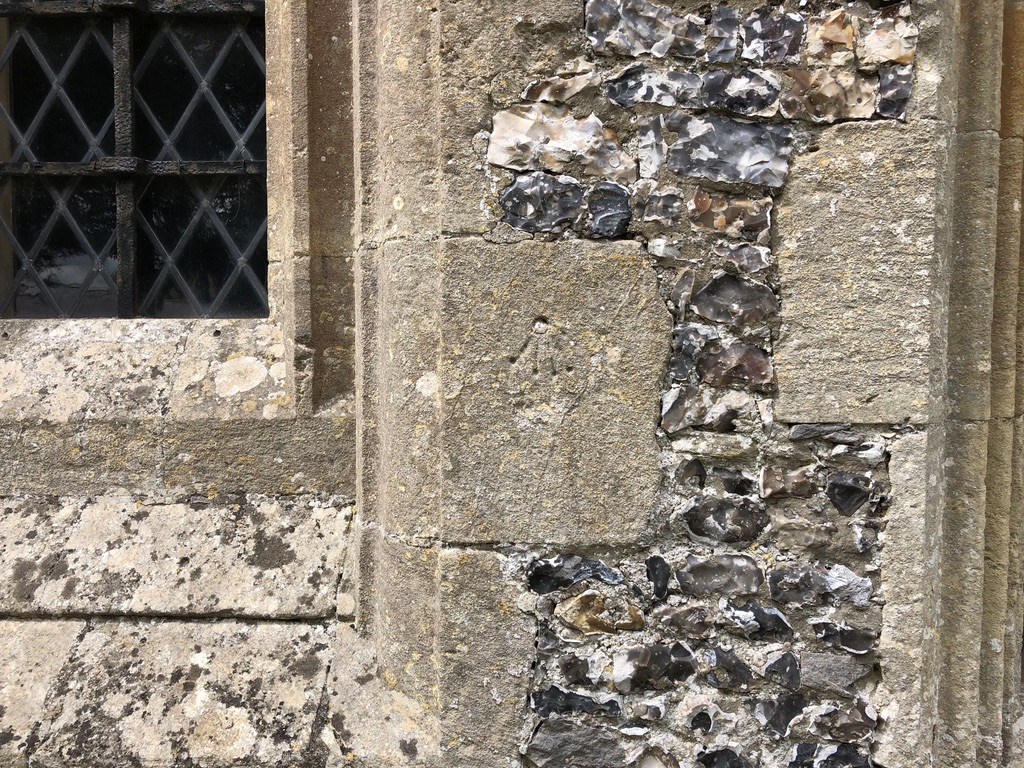
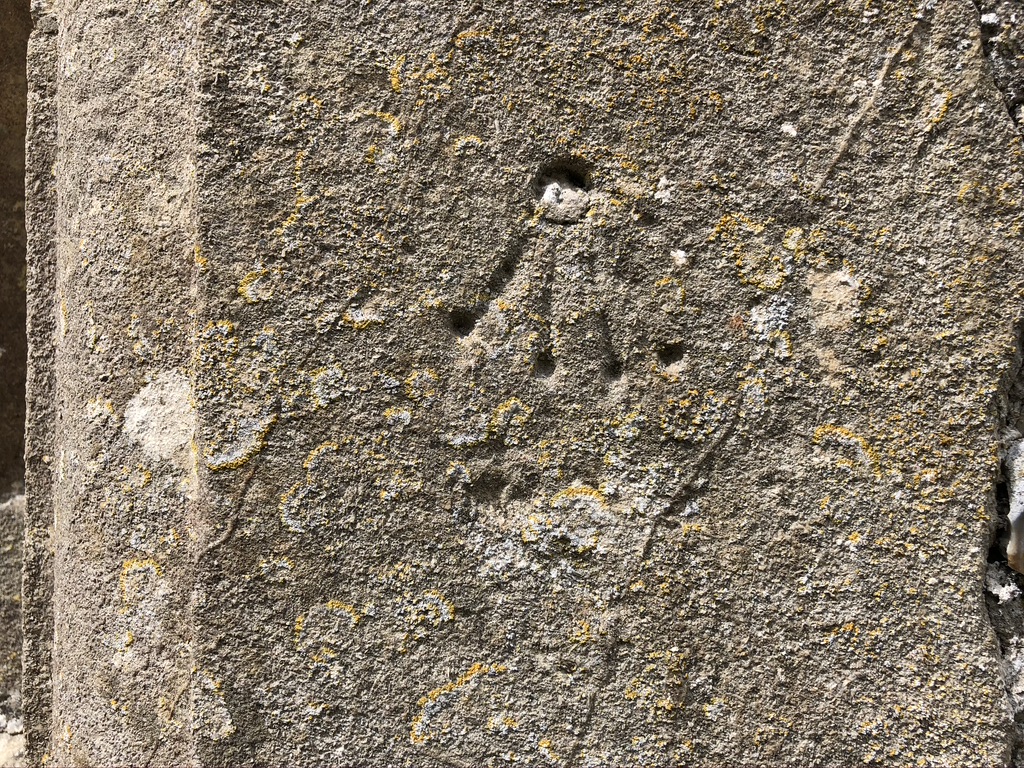
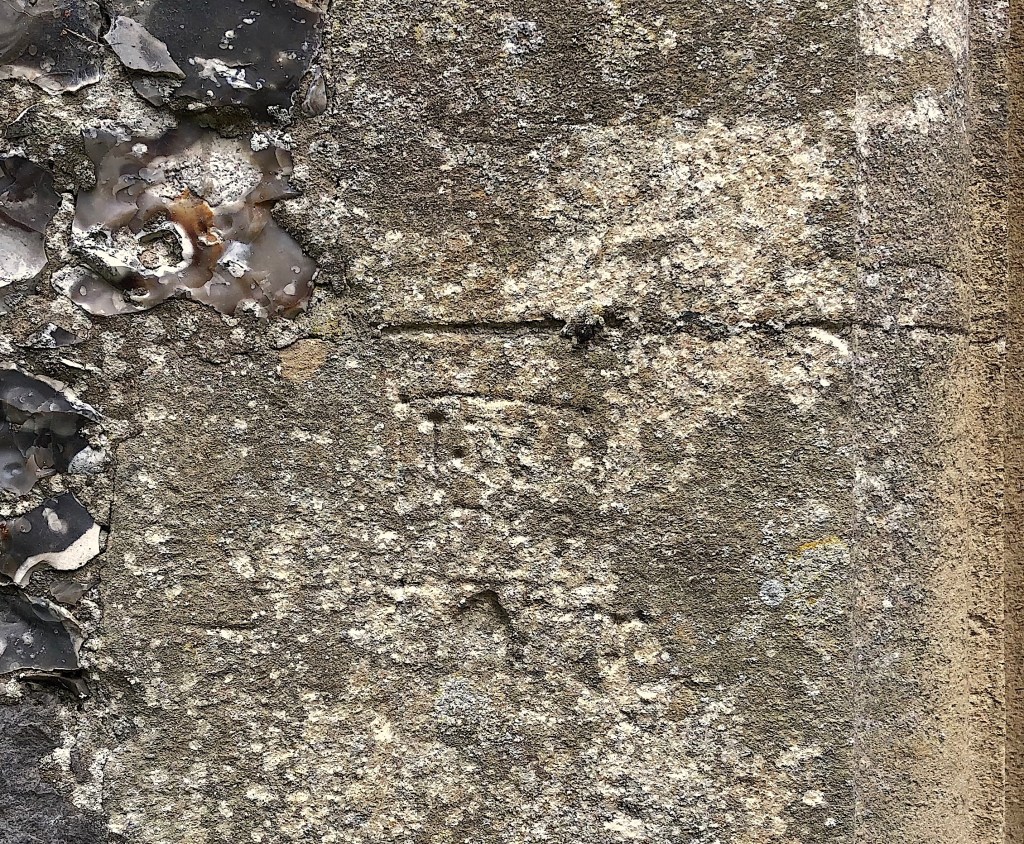
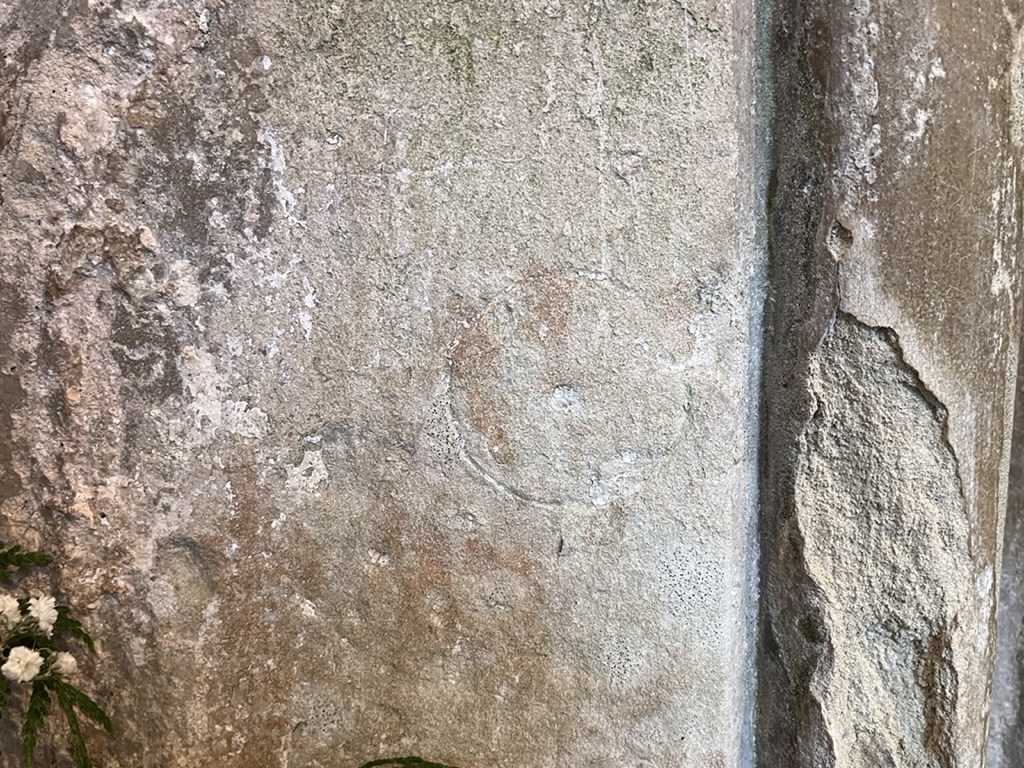
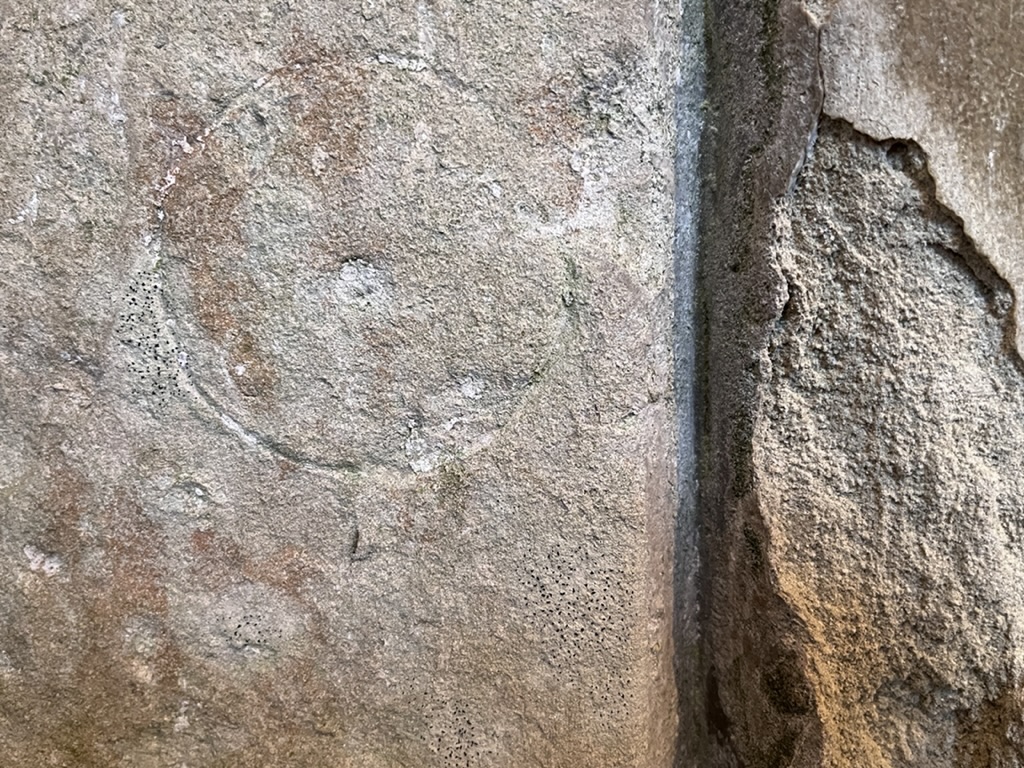
There are 2 dials recorded for St Peter, of quite different types. Dial 1 is a simple filled hole in the centre of a circle, without additional markings. Dial 2 is a sector of a fairly large dial that must have covered 2 or more stones.

DIAL 1
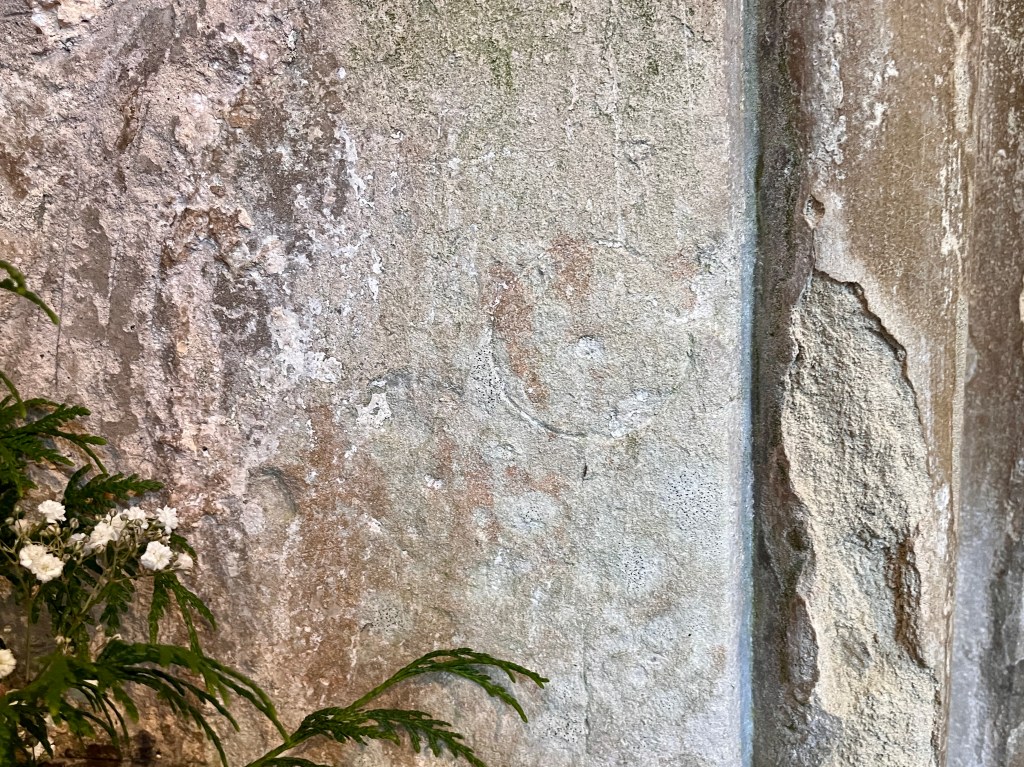
St Peter . Shipton Bellinger . Hants – Scratch Dial 1

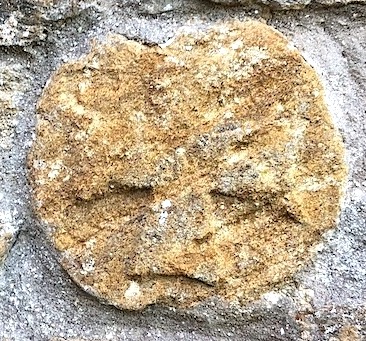
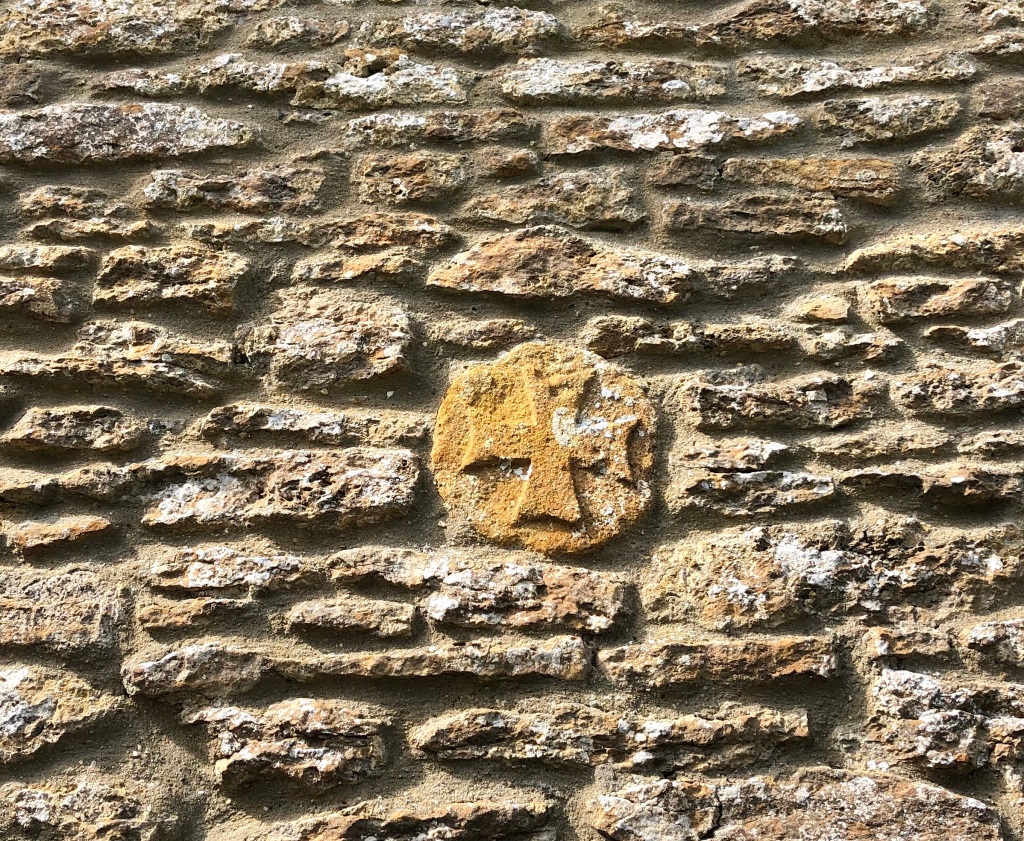
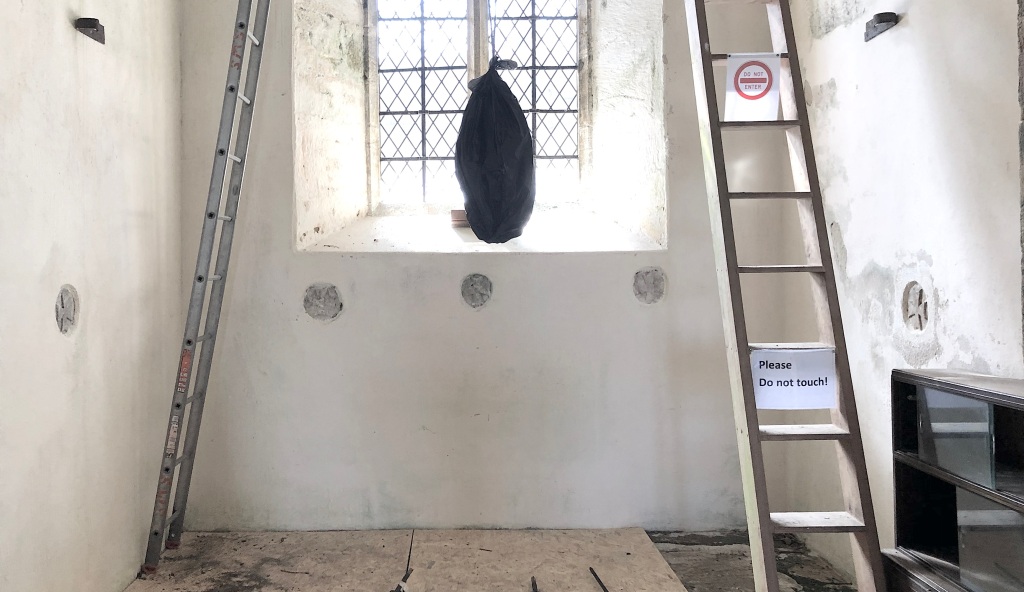
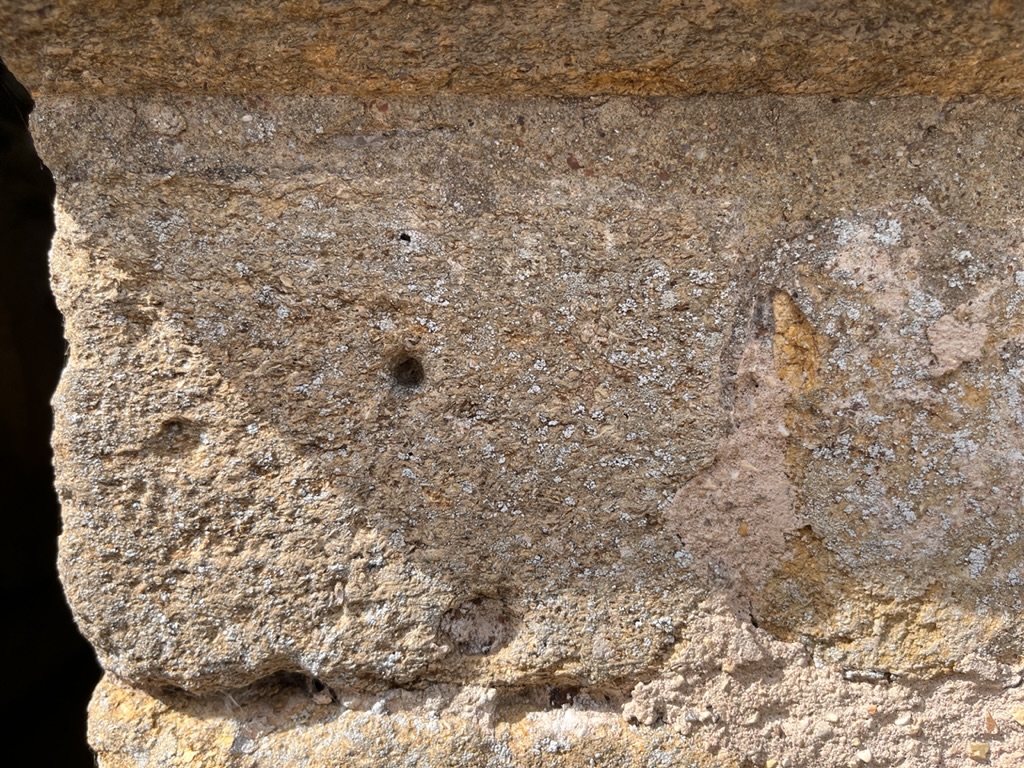
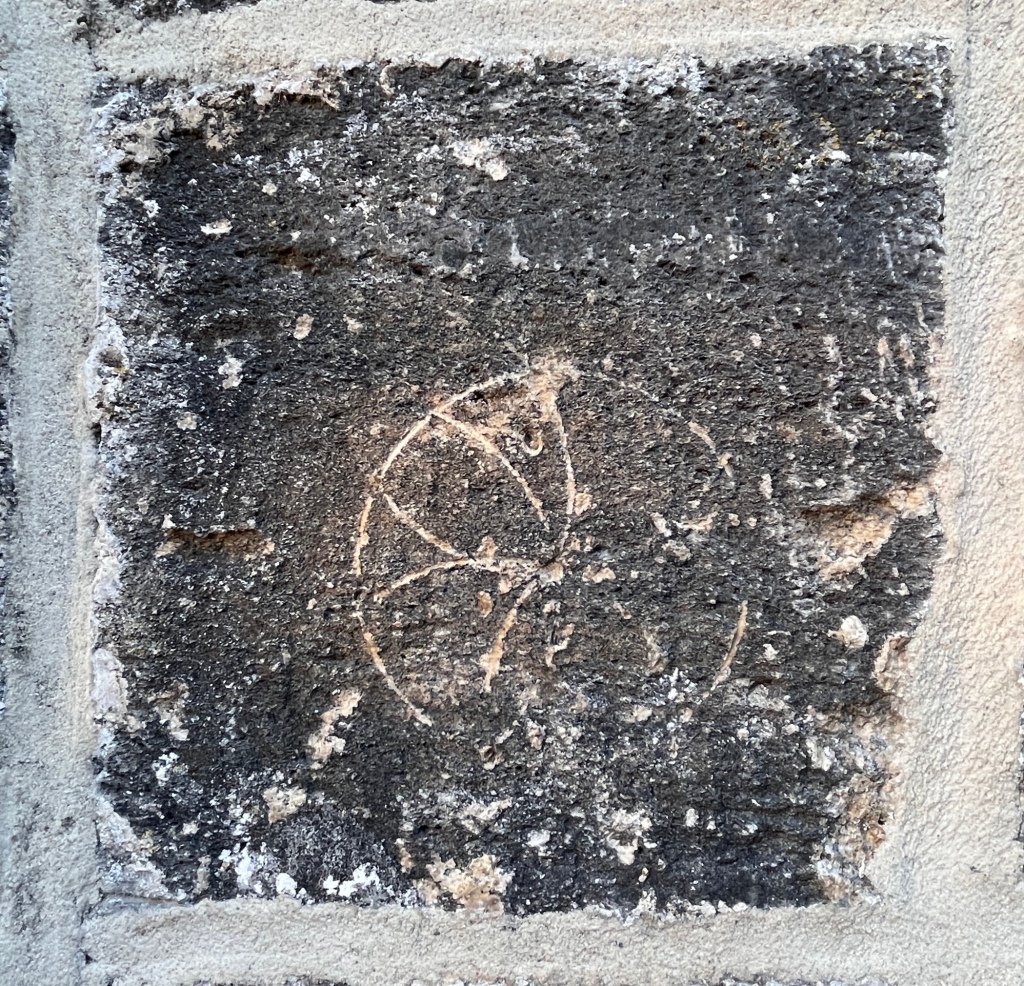
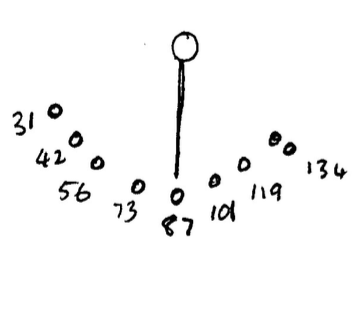
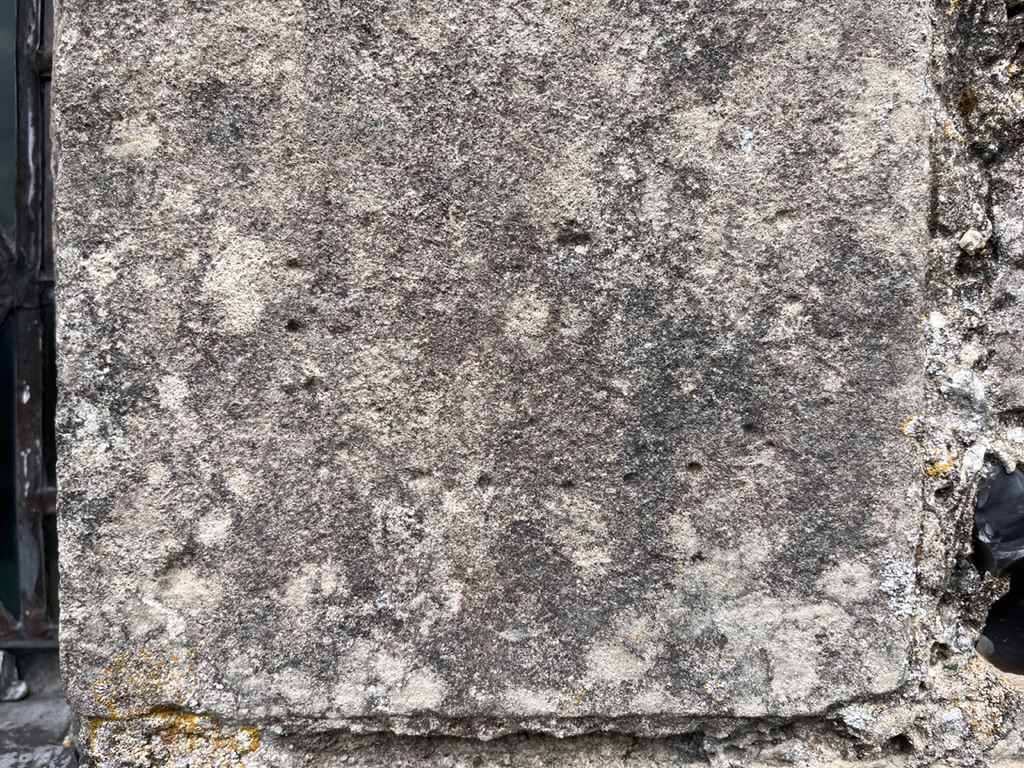
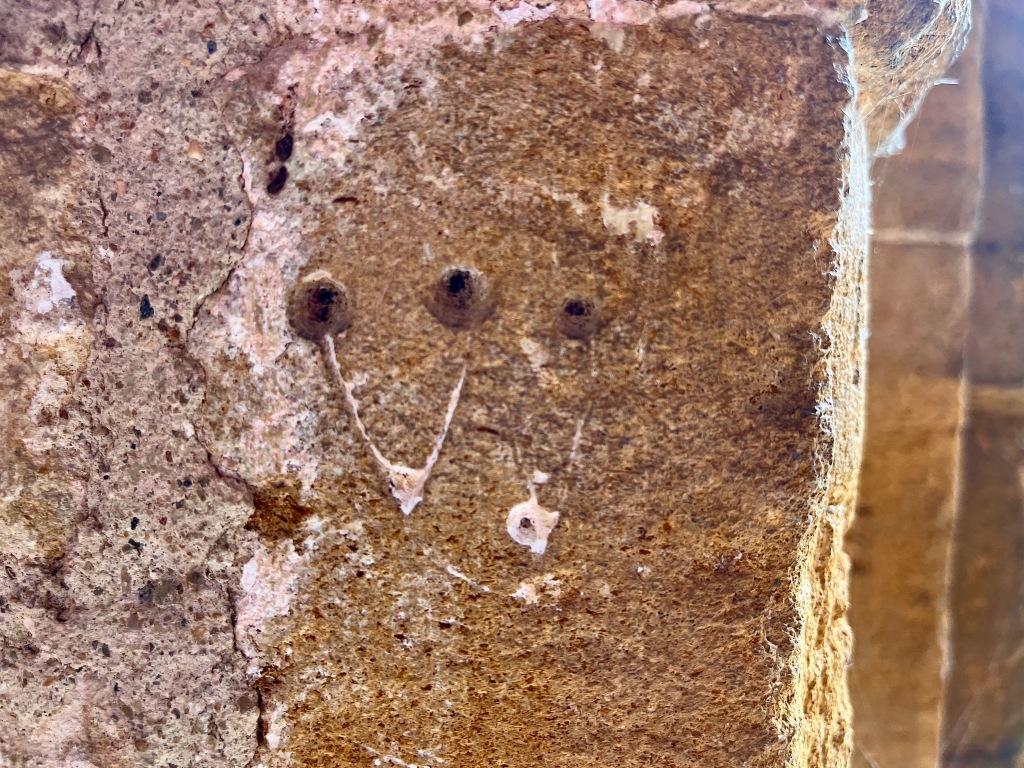
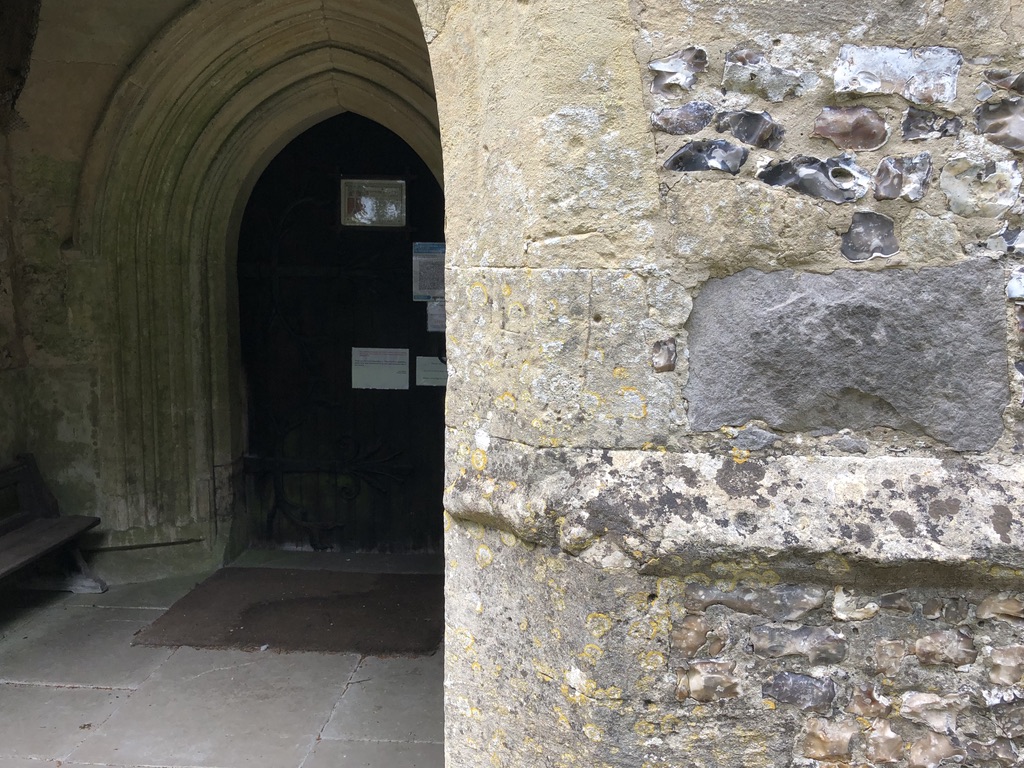
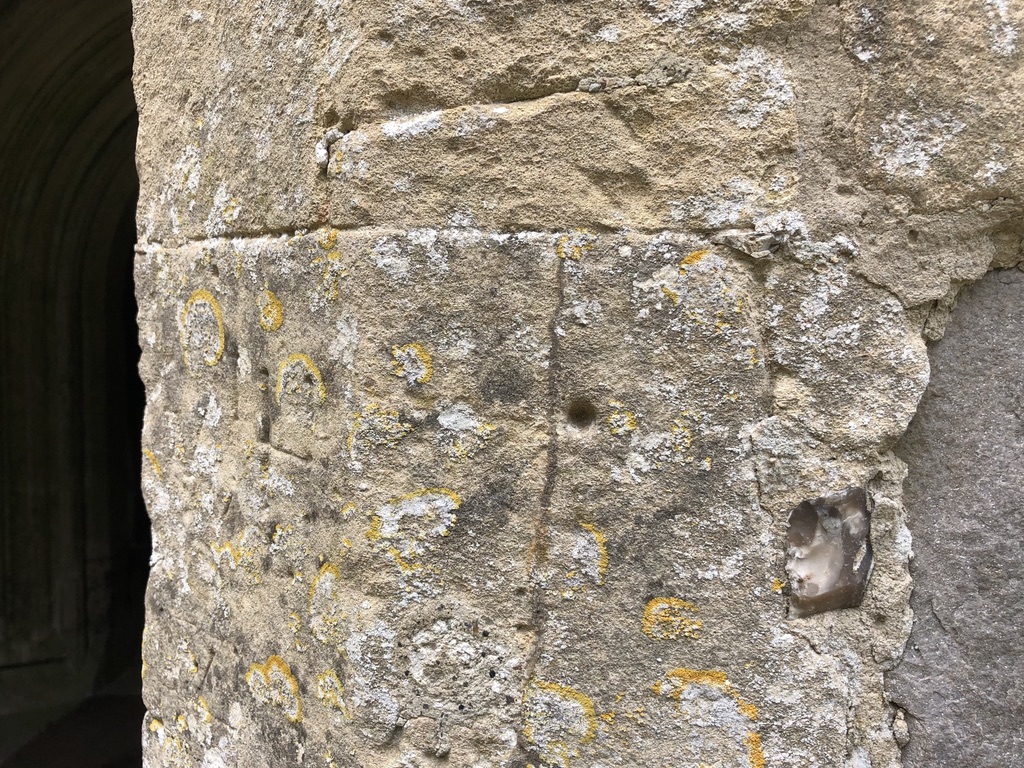
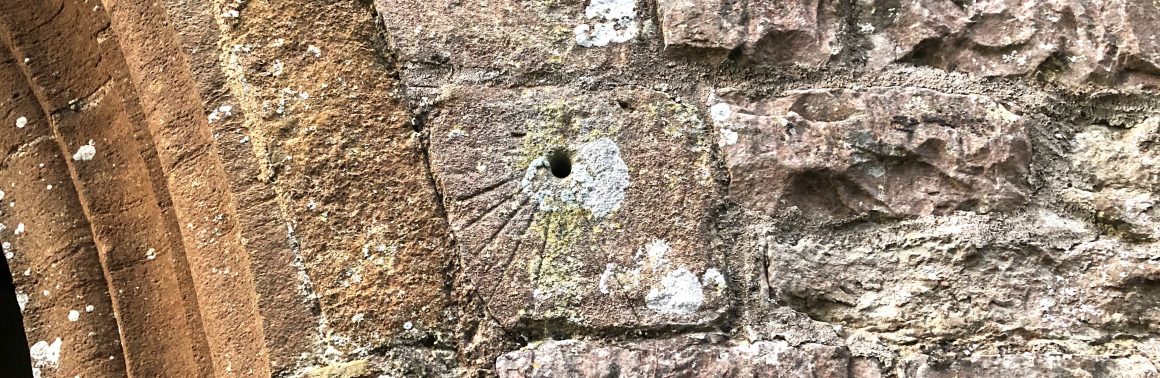
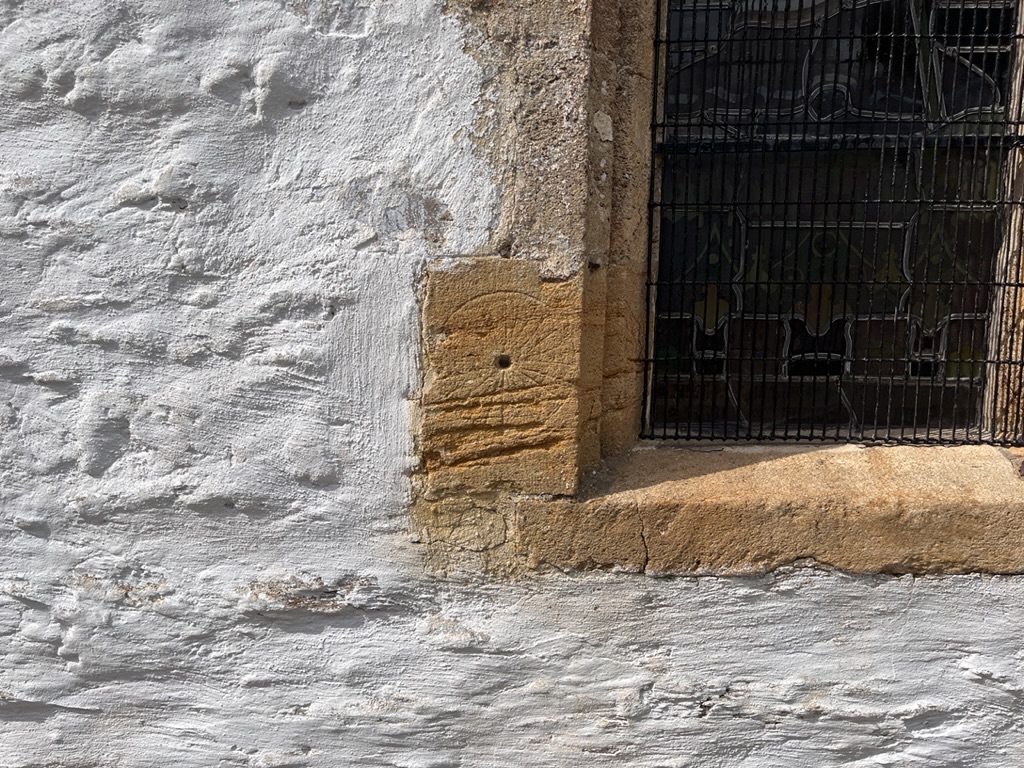
Dial 1 is inside the porch L of the doorway, quite low down. It consists of a filled central hole within a circle, with a pock (possibly unrelated) ULQ. With a rod as a gnomon, it would work as a basic marker of the the passing day, though at an inconvenient level if in its original position. The unusual shape of the large dial stone also suggests a significant relocation somewhere in the time-line of the various building works. One record dates the dial to C11, which seems unrealistic – it predates the known origins of the church. Also noted were faint traces of a similar circle LLQ, but I could not detect anything significant. There is a further possibility that, rather than a dial, this design is one of the many forms of ritual protection mark. However the size and the filled hole suggest not.
DIAL 2

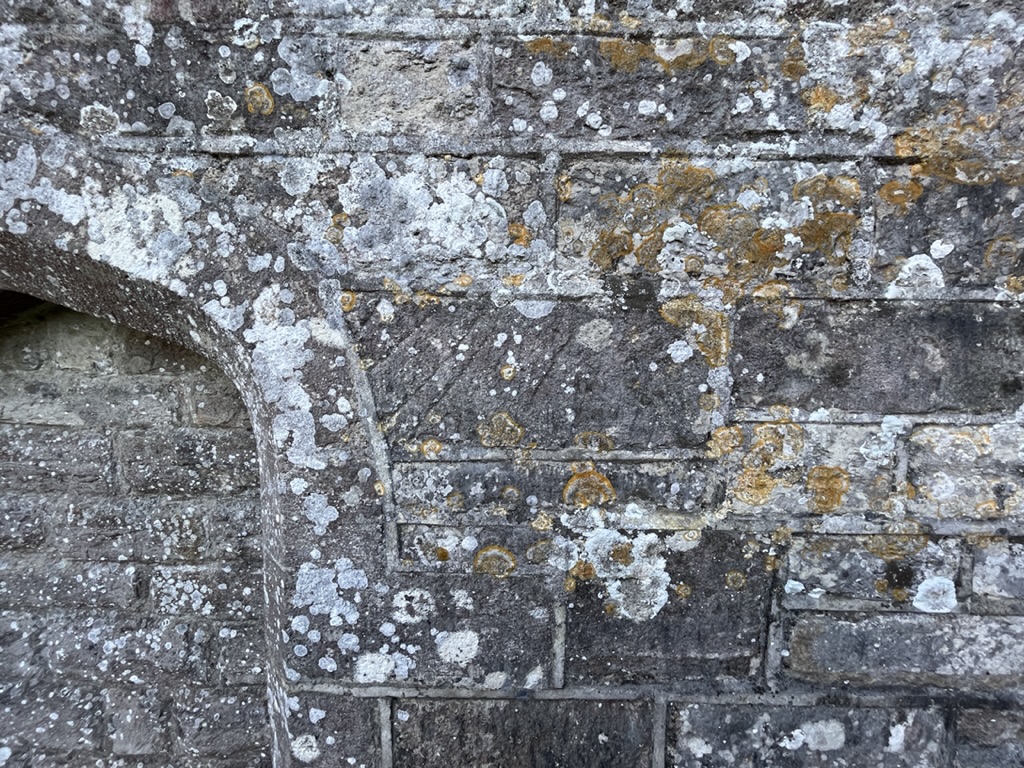
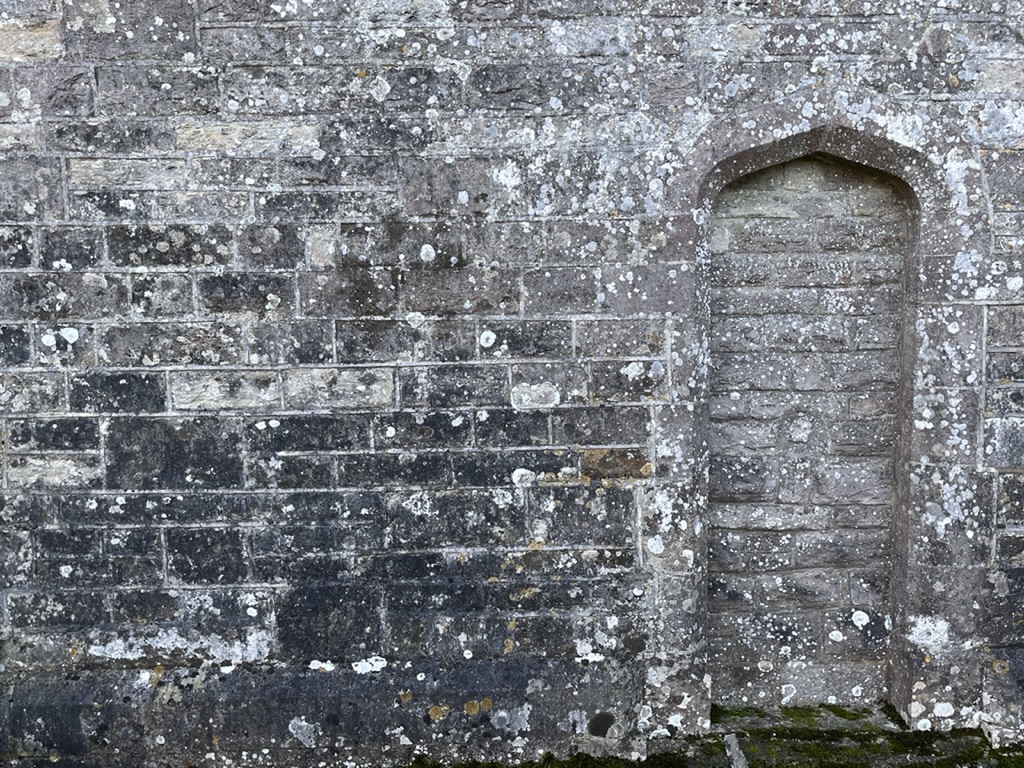
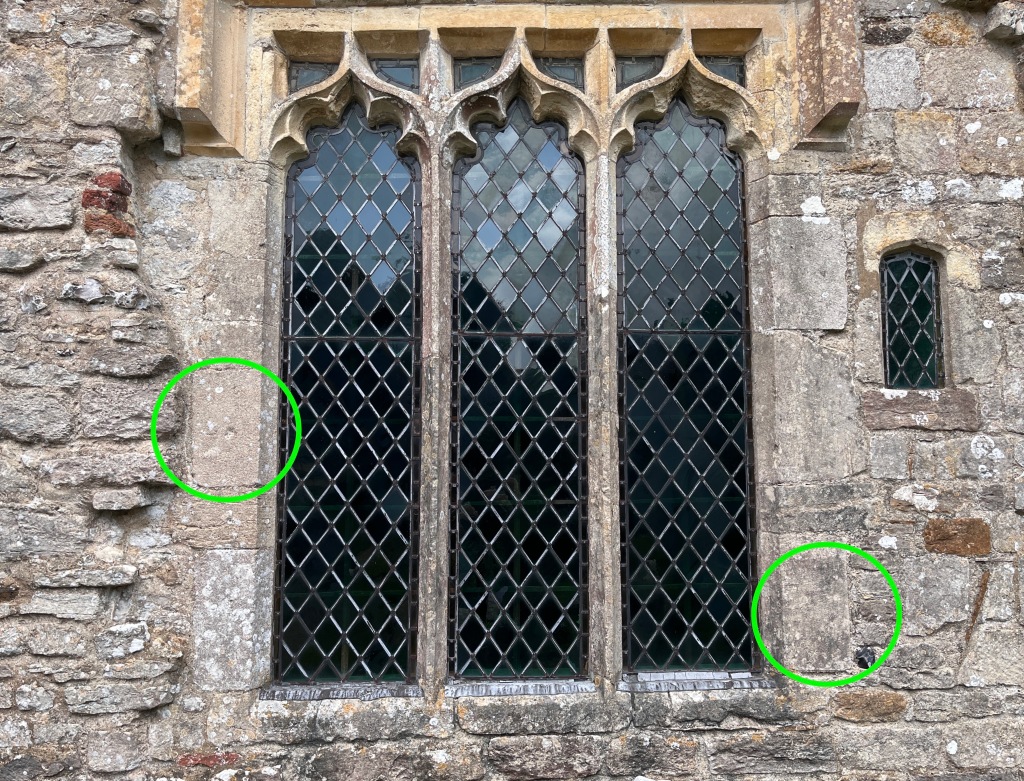
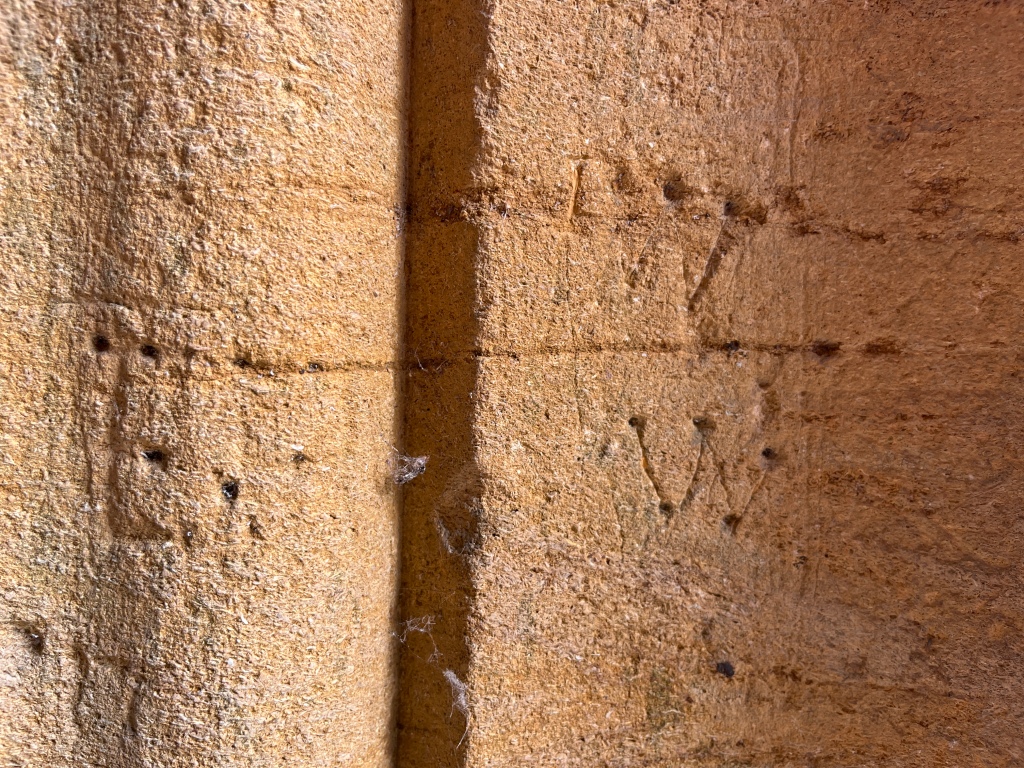
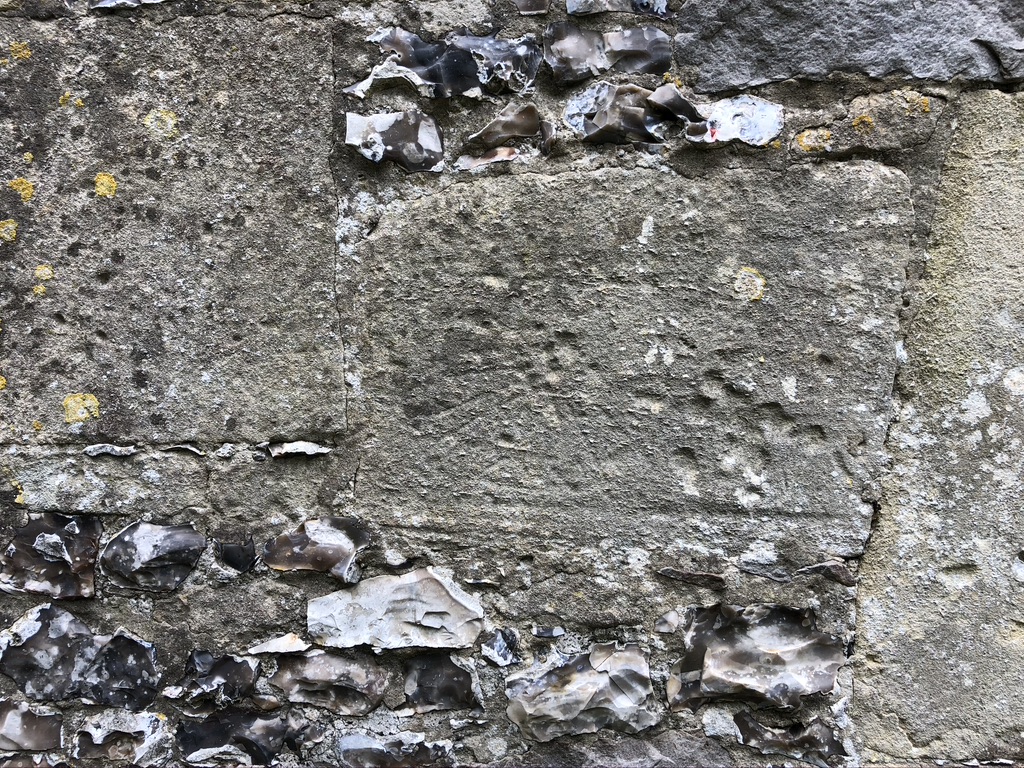
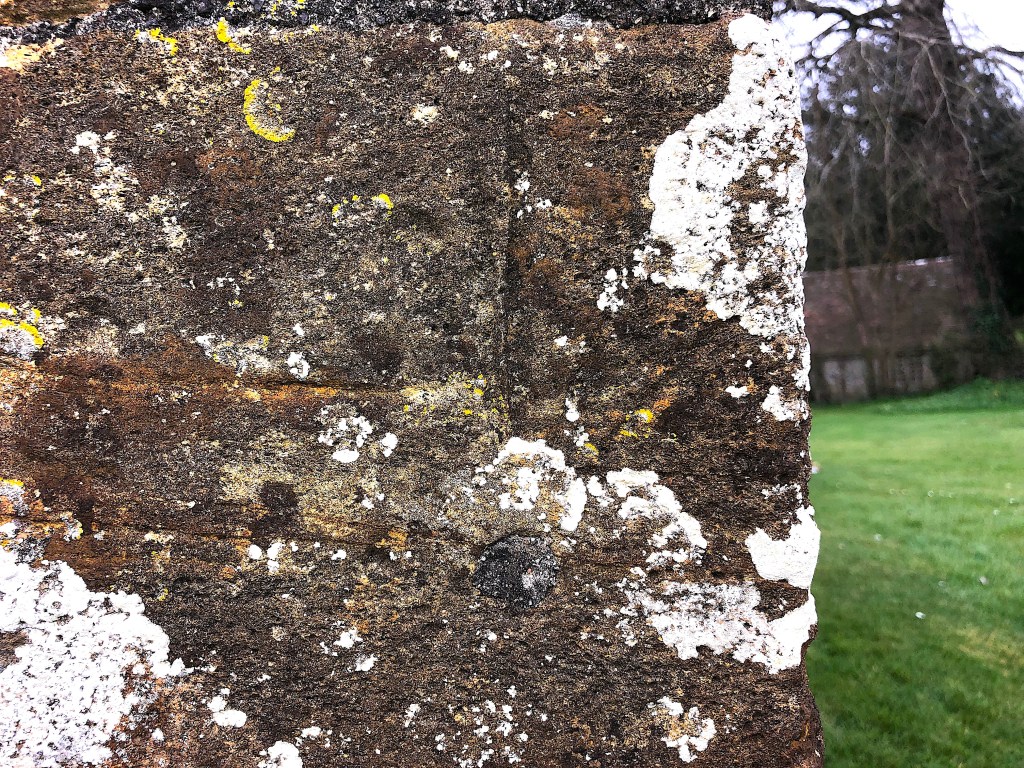
Located on S wall of the Nave, E of door, W of E Nave buttress, and about 2m high. All that can be seen is the LLQ part-perimeter of a quite large dial (if it is one) cut in the upper R corner of a large stone with no discernible dial-ish markings. Basically it is a plain quarter-circle using the mortar lines for the straights, and with a gnomon hole (not now obvious) in upper R corner. To work as a dial in that (or in any different) position, it would have required one additional stone if a semicircle; or at least 2 more if a complete circle. The absence of any lines or pocks on this fragment militates against it being part of a scratch dial. It would have been hard to resist using such a large blank area as a creative area for a proper dial design. Quite plausibly, this curved incision was part of some decorative feature displaced during rebuilding, with companion stones used elsewhere where needed.

BBS PHOTOGRAPHIC RECORD

GSS Category: Scratch Dial; Mass Dial

All photos Keith Salvesen, BSS
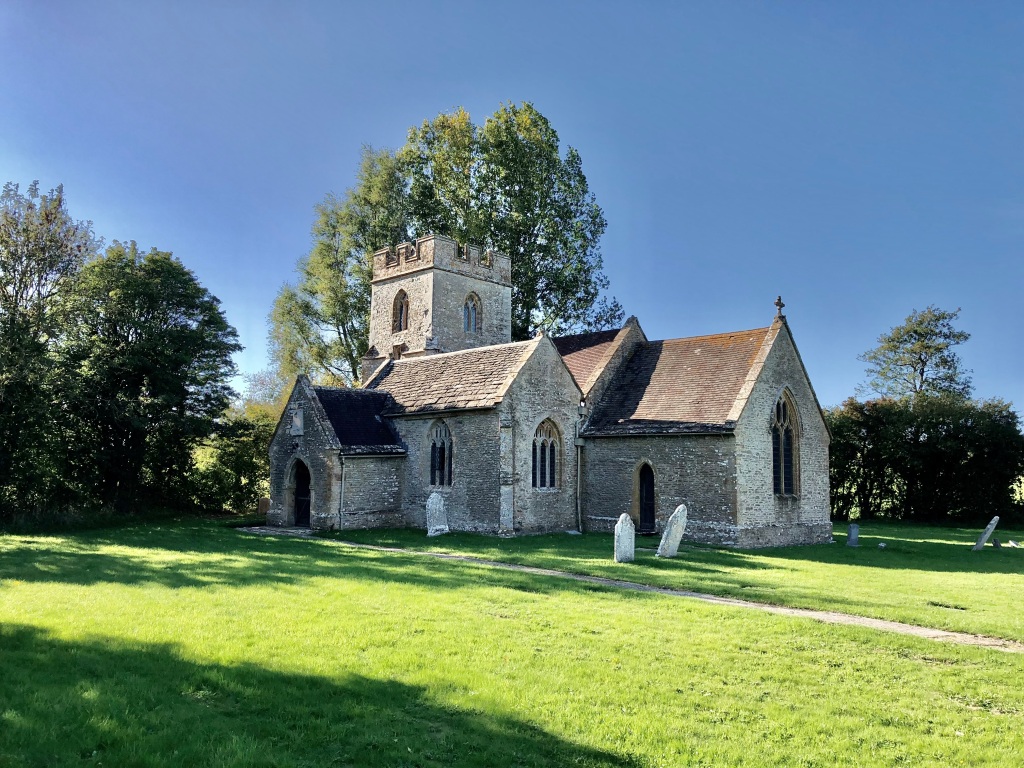
HOLNEST . DORSET . ST MARY – Rare windowsill scratch dial; protection marks & graffiti

St Mary . Holnest . Dorset

GRADE I † Late C14, C15; C17 alterations inc. porch with date 1650 on keystone. Restorations mid-C19. Very recent skilled restoration 2020. Millennial dial with date-casting gnomon (cf BUCKLAND NEWTON). C18 box pews, candlelit services, Purdue bell c1580. Graffiti and witch marks. 14 formy consecration crosses both outside and inside (see locations below). A perfect small Dorset church standing alone, remnant of a plague village. There has been a recent very skilful restoration that has not impacted on the original charm of St Mary. 6m S of Sherborne. 50.8868 / -2.4902 / ST656098

,

St Mary . Holnest . Dorset – Keystone

SCRATCH DIAL

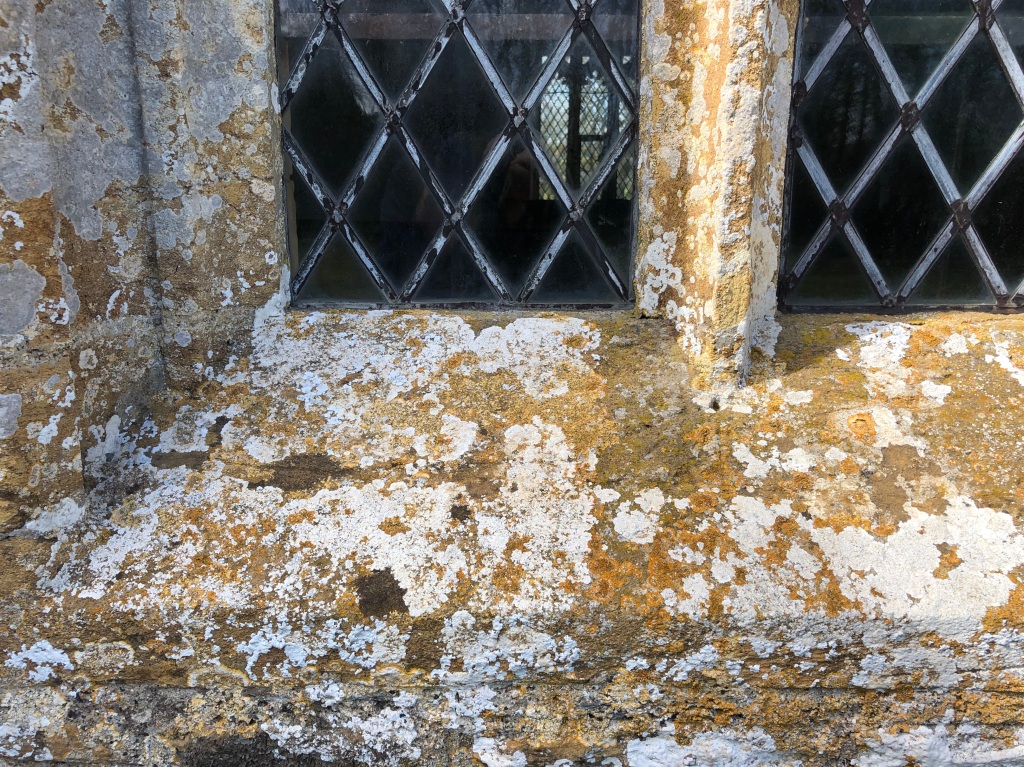
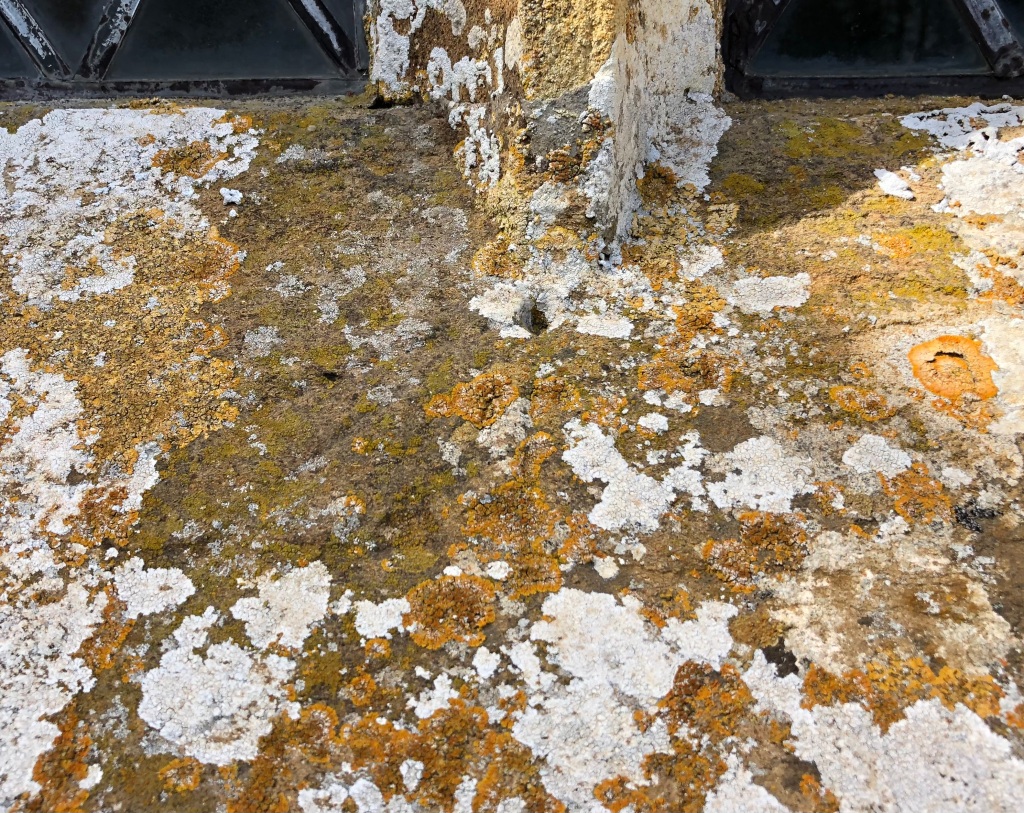
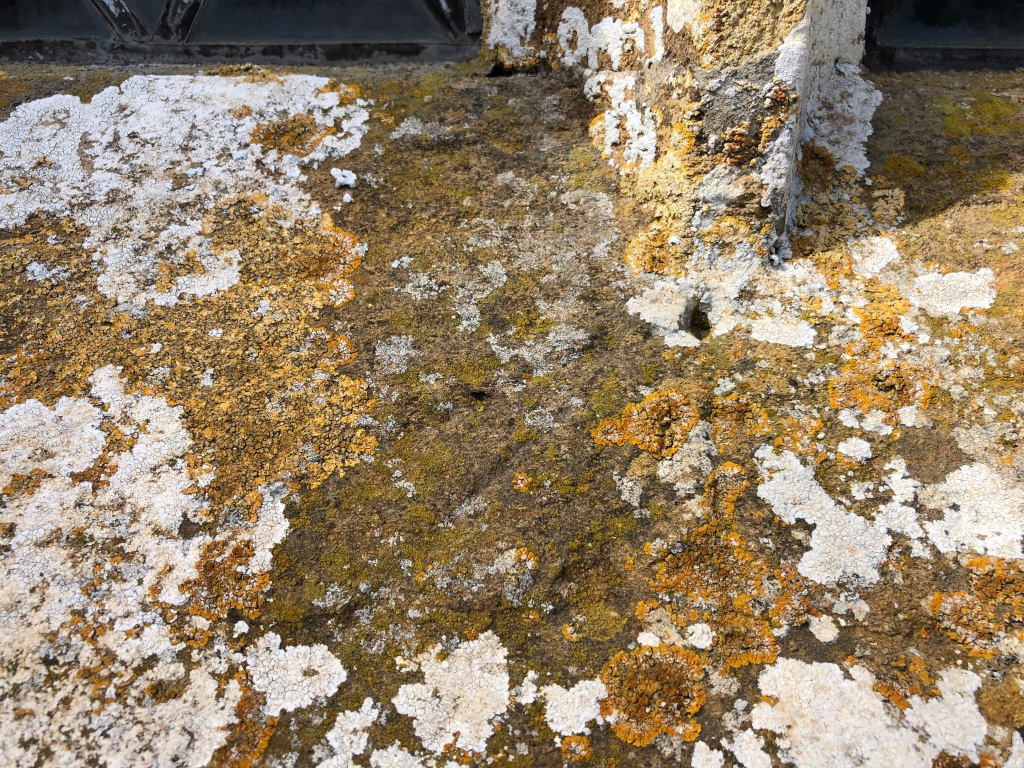
St Mary . Holnest . Dorset – rare scratch dial on window-sill

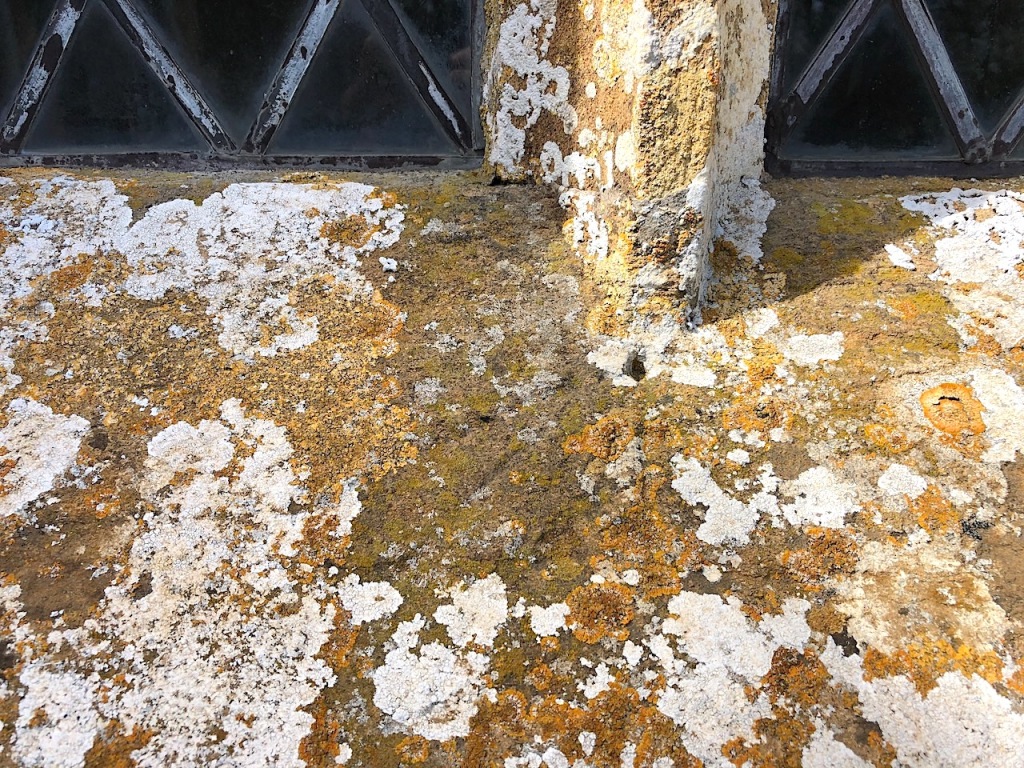
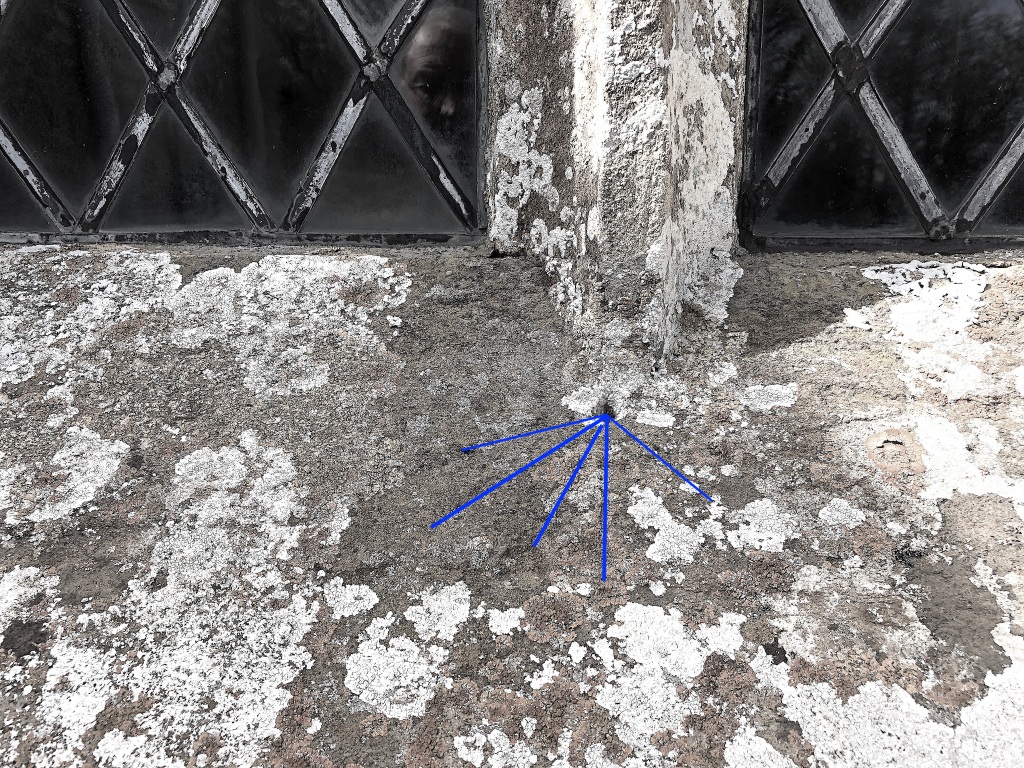
A remarkable and very rare C15 dial, possibly unique (cf nearby THORNFORD). It is located on a window sill of the S aisle, incised at an angle of 35º. It is quite difficult to examine – even close to – because of erosion and lichen. The style hole is centred on the stone divide between 2 windows. To be effective it must have been angled forwards: C15 dial deliberately positioned centrally. Gnomon must have been bent over, perhaps horizontally. Lines are quite accurately cut GLP.

There were originally 12 lines – the full complement for a semicircular dial. However, many are so weathered that they are barely visible – some not at all. The church is across the fields from us and I have spent some time with the dial, examining it and photographing it at different angles and in different light. I’ve managed to identify 8 lines including the horizontals, much as shown on the second BSS diagram below. The most visible lines are these:
St Mary . Holnest . Dorset – diagram of scratch dial on window-sill

St Mary . Holnest . Dorset – scratch dial diagrams BSS

VERTICAL DIAL

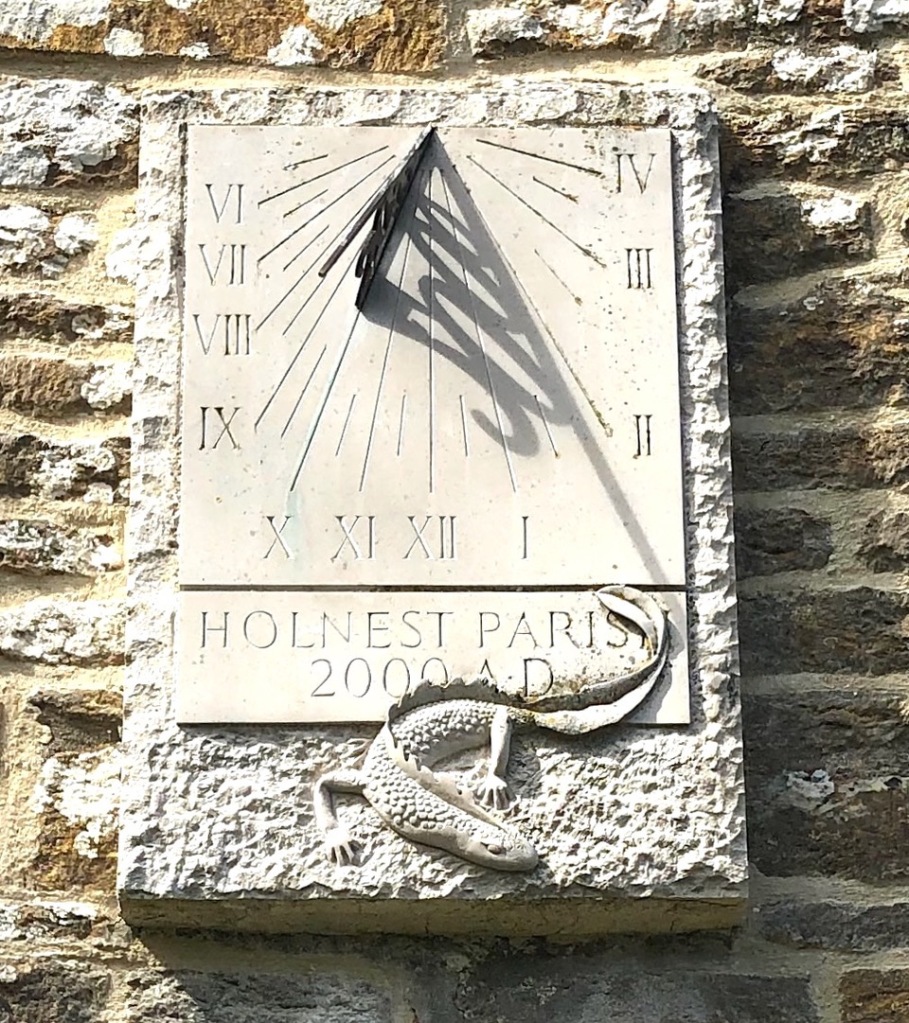
The porch has a date of 1650 and a new [millennium] sundial commemorates the Great Crested Newt that meant that a field nearby could not be developed for housing. Friends of Holnest Church.

A particularly good example of a meaningful local dial designed specifically for its location and time. The Battle of the Newt being won as the new Millennium approached, a fine dial to record both events was fully merited.

St Mary Holnest: millennial vertical dial dated 2000 with unique Newt Protection Symbol

WITCH MARKS & GRAFFITI

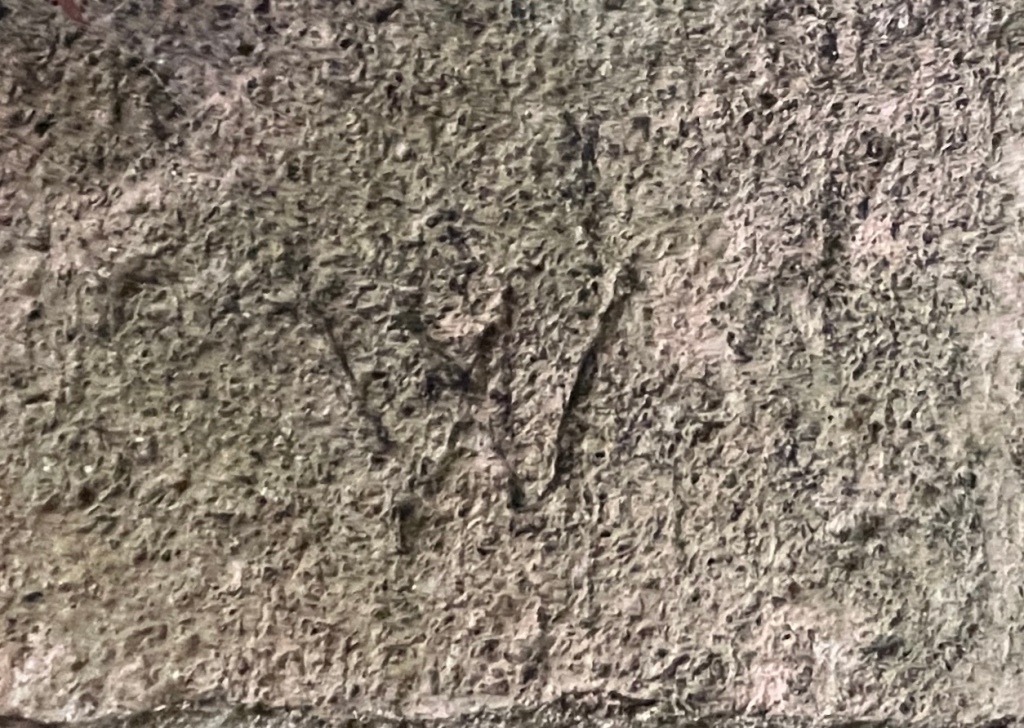
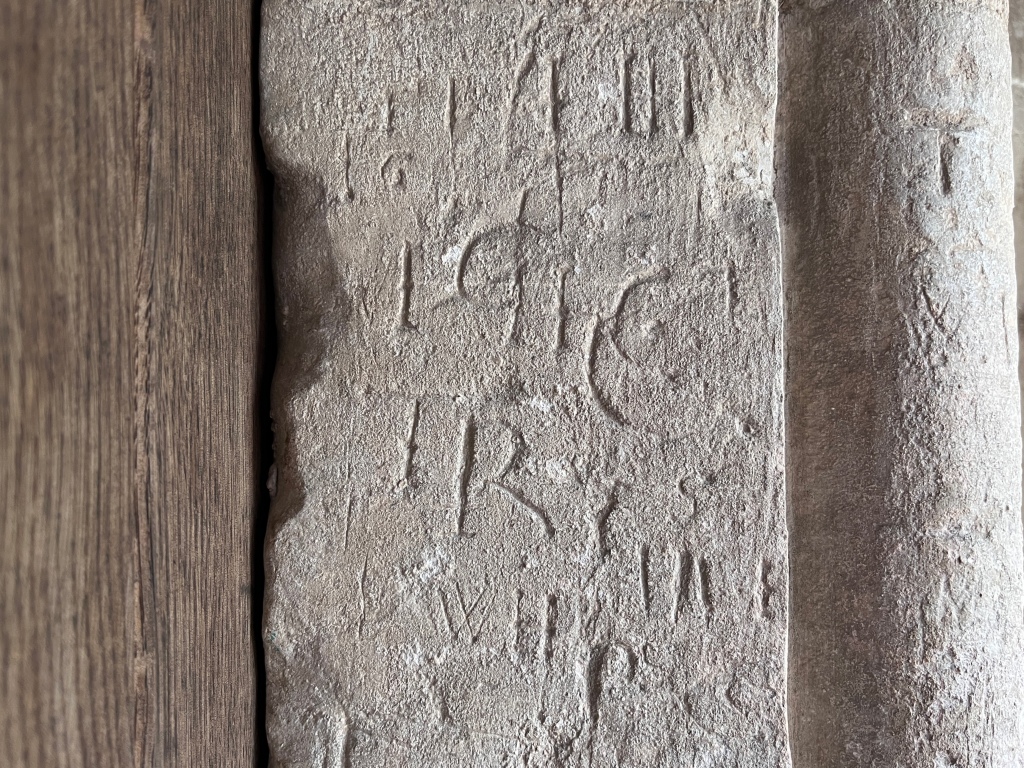
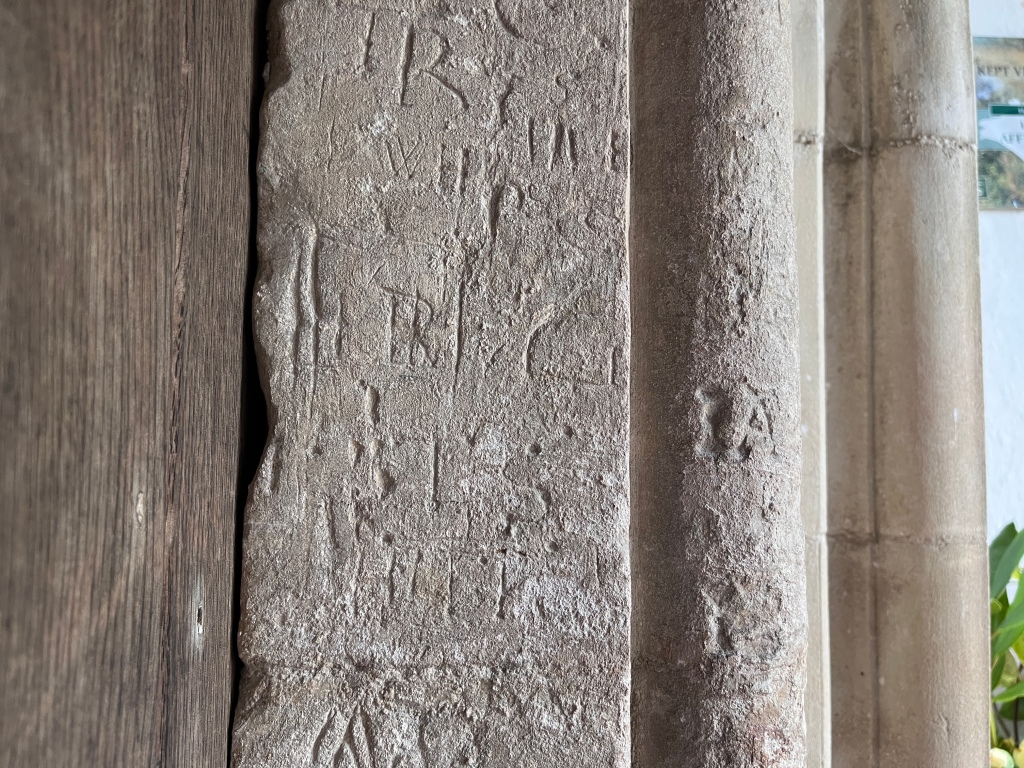
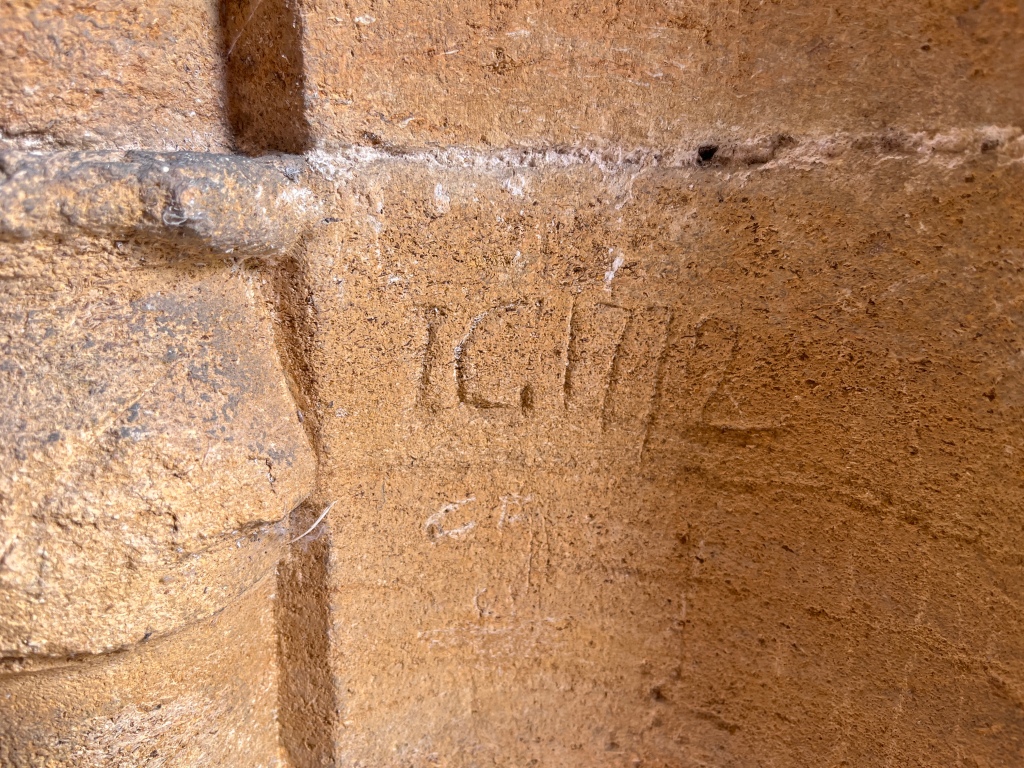
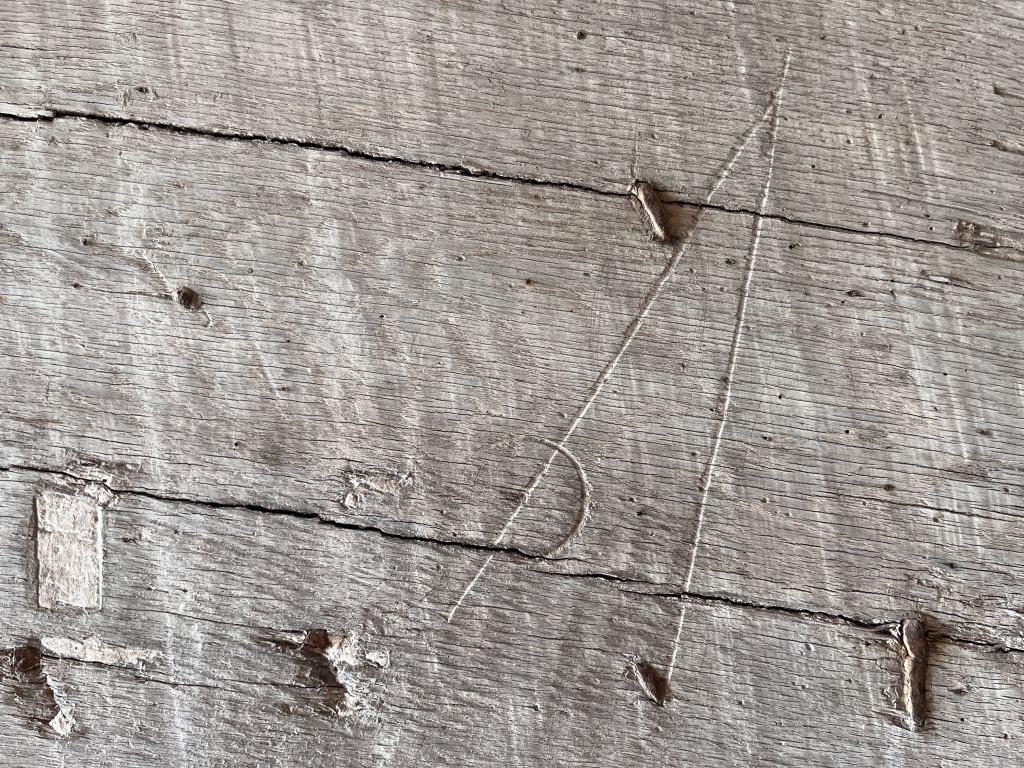
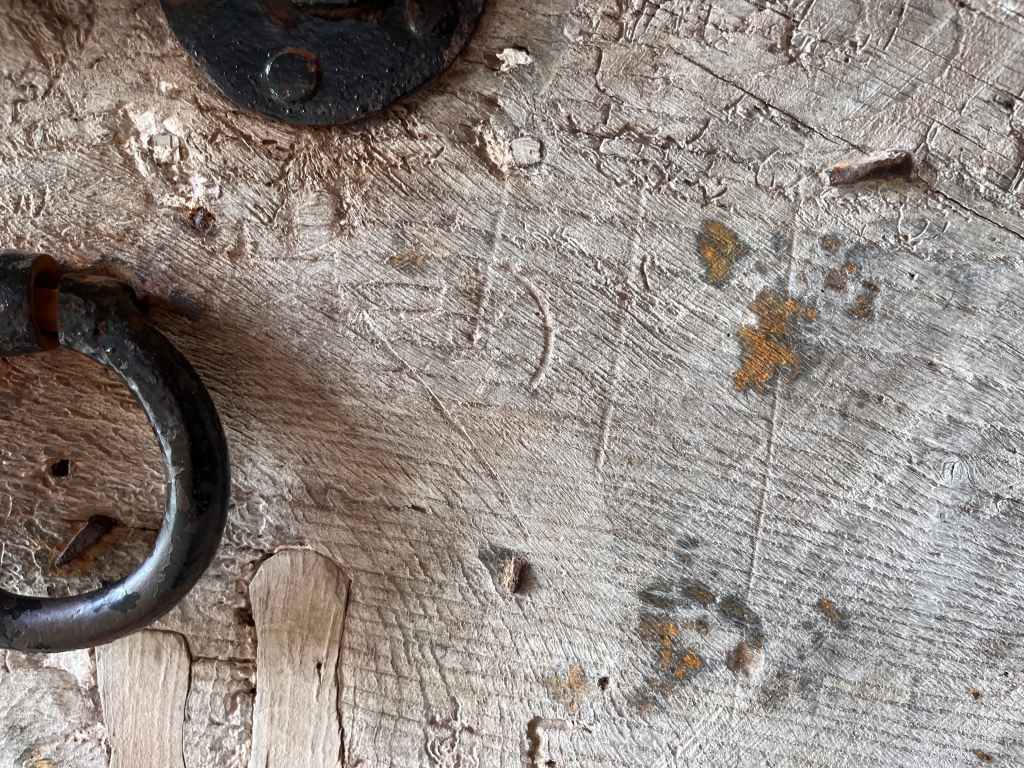
The S porch has a rich variety of medieval church marks. The example stones shown above have witch / ritual protection / apotropaic marks to ward off evil, in particular a number of Marian marks VV (Virgo Virginum / Virgin of Virgins). There are also initials and C17 dates.

CONSECRATION CROSSES

There are 14 in all, 12 being the usual maximum. 5 are inside the church on the tower walls

Consecration Crosses: On chancel— flanking E. window externally, four crosses; flanking S. doorway, two crosses. On nave—W. of heads of N. windows, two crosses. On S. aisle—over E. window and W. of S. window, two crosses. On W. tower, on N. and S. walls, one cross and below W. window, two crosses; formy crosses fourteen in all, mediæval. BHO

GSS Category: Scratch Dial, Mass Dial; Church Marks, Witch Marks, Protection Marks; Consecration Crosses

All photos: Keith Salvesen

CREECH ST MICHAEL . SOM . ST MICHAEL – Scratch Dials

ST MICHAEL . CREECH ST MICHAEL. SOM

GRADE I C12 origins, mainly C13; C15 perp additions and C19 restoration. A most attractive building, highly praised as an uncommonly interesting church PEV. Called All Saints until C16. Traces of C17 wall paintings. 6 bells, earliest 1590. Additional dials found. 5m E of Taunton. 51.0224 / -3.0355 / ST274252

DIALS
DEH visited St Michael in Sept 1913 and noted a group of 3 dials on W side of the porch. He recorded All three of these dials are close together, very poor in construction, and one or other of them is probably only a copy dial, but the lines of all have been added to, and it is difficult to say which is the original. Dial 2 is the least explicable.

There are 3 other dials (one is debatable): 2 on E side of the porch, in much the same position as Dials 1-3; 1 on the W window jamb of the whitewashed chapel. This last is in good condition comparatively; and the more precise design suggests it was the latest and presumably superseded the others in accuracy and legibility.

DIAL 1

DEH: 152. (1) This dial is on the w. side of the s. porch, 4 feet 8 inches above the ground. The noon line is 4 inches in length, the style hole is filled, and the aspect is s. by 8° e.

A fairly conventional morning dial with 9 (10?) lines, with the lines marking (roughly) Tierce and noon cut deeper. It’s difficult to interpret the pocks, if that is what they are. Several correspond with the relevant radials; the vertical seems to have a 2nd pock lower down (Mass time marker?). Possibly they were added later.

DIAL 2

DEH: 153. (2) This dial is close by the side of No 1. The noon line is 4 inches in length, the style hole is filled, aspect as above.

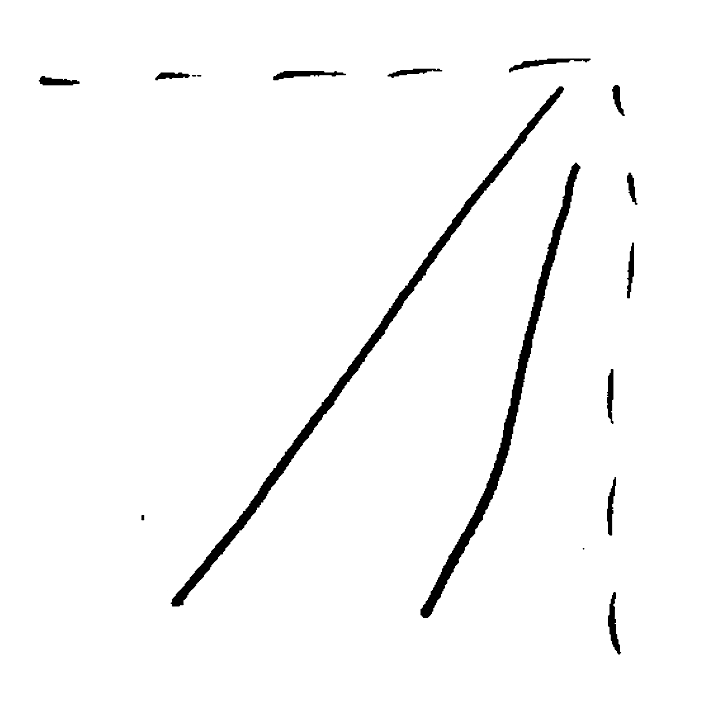
Dial 2 is confusing. How did that mish-mash of lines, hole-infilling, and extensive repair come about – and when? There’s no doubt that in the mix is a very basic dial with 2 lines curving left that appear to radiate from the mortar line above.

The 4 quite deep and almost parallel incisions just below the 2-line dial are problematic. It’s hard to see them as part of the overall dial design on that stone. And 4 verticals in a row would make a poor marker for noon. Also, it does not seem that they would converge at the same position as for the identifiable dial. In fact, seen on their own, they might be taken as an apotropaic mark of the grid and pock kind (though they are not convincing in that respect either).

DIAL 3

DEH: 154. (3) Six inches above No. 2, a dial with noon line 3 inches in length, the style hole filled, aspect as above.

This morning dial has 3 lines that radiate from the stone overhang, There is a small hole at the apex where presumably a thin style was inserted. The upper line ends with 2 clear pocks, and must have marked the most significant Mass time of the day (in this case, Tierce)

DIAL 4

A rough, eroded, and damaged dial on E jamb of the porch, level with dials 1 – 3. There are 6 detectable lines, 2 very faint. Again, a morning dial, with Tierce marked with a pock. The filled gnomon hole is big, but that may have occurred over time.

DIAL 5

This small dial is in the corresponding position opposite dial 3. It is simpler and less well defined, with a small style hole and 3 detectable lines radiating from the hole, only one being easily visible. It might be classified as ‘doubtful’ but for its relationship to dial 3 on the other side of the entrance, which I think upgrades it to ‘plausible’.

DIAL 6

This attractive dial, originally completely encircled, has survived the passage of time rather better than the others. There are 18 lines that make up a 3/4 circle, with a deeper cut noon line and a large style hole. The angles between the lines are somewhat random but I expect that the dial was effective as a marker of the progress of the day.

The way in which the dial stone has been cut to fit the space could suggest that it was relocated. In a way it might make more sense if rotated 90º clockwise, but testing that theory using a photo didn’t look right.

GSS Category: Scratch Dial; Mass Dial

All photos: Keith Salvesen

STEEPLE . DORSET . ST MICHAEL & ALL ANGELS – Di[a]lemma

St Michael . Steeple . Dorset

ST MICHAEL & ALL ANGELS . STEEPLE . DORSET

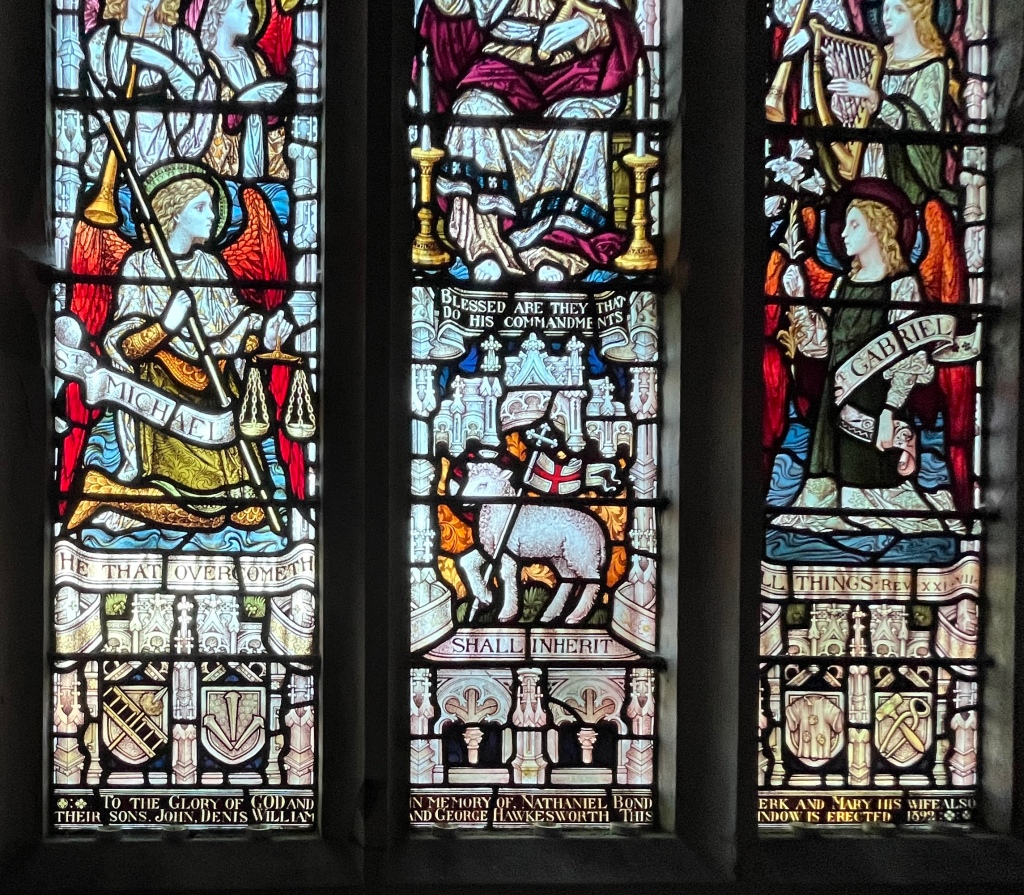
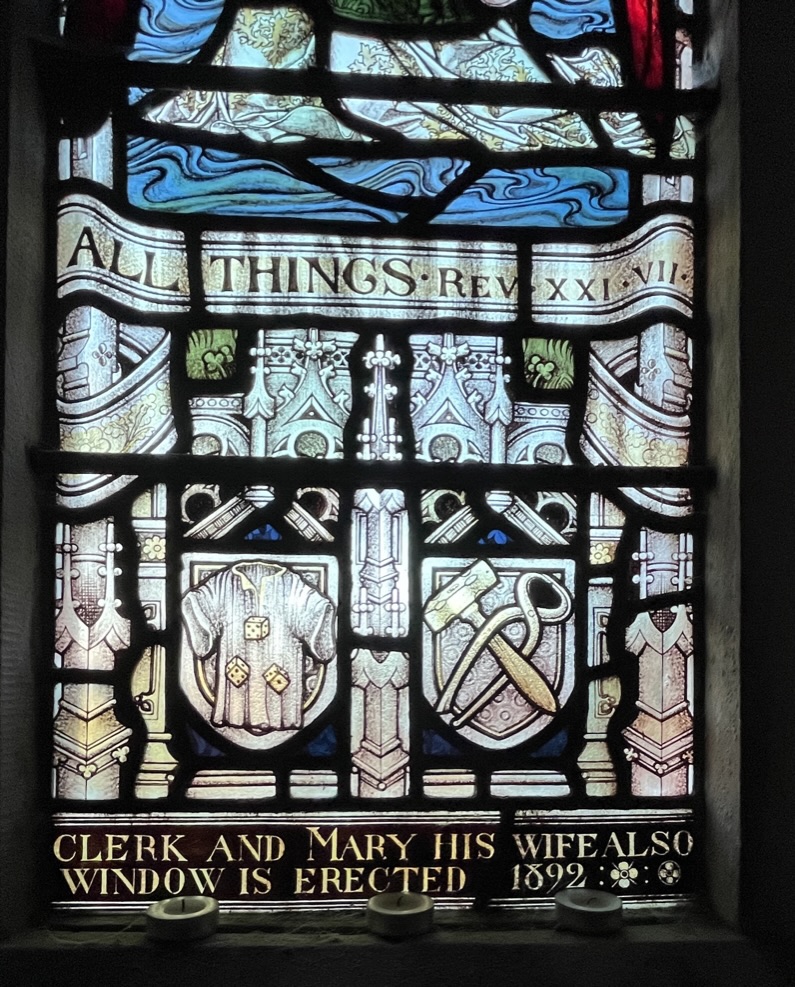
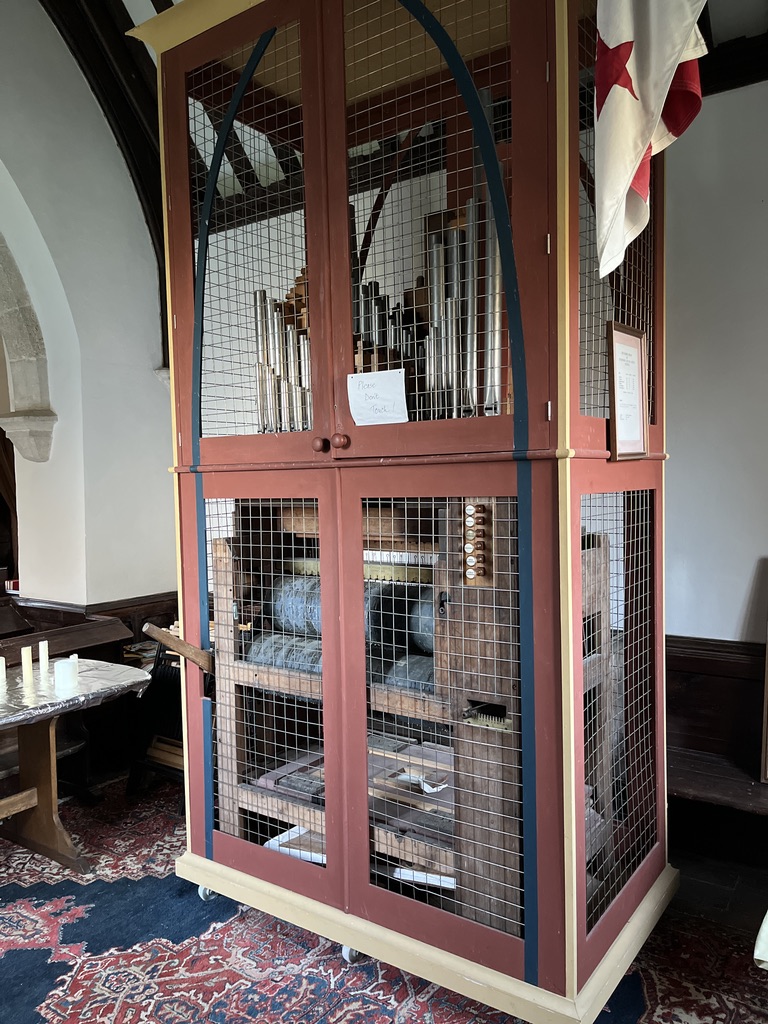
GRADE 1 C12 origins (nave), enlarged C16 & C17. Mid-C19 restorations; chancel rebuilt. Despite the village name, C16 tower. Fascinating history, with strong links to George Washington: The Lawrence family, Lords of the Manor since the C16, married into the Washington family in 1381 and their Coat of Arms incorporates the Stars and Stripes BLB. Much of interest inside inc an impressive barrel organ, and good stained glass E window. Fine chest tombs in the churchyard. 6m S of Wareham, inland from the jurassic coastline at Kimmeridge. 50.6275 / -2.1265 / SY911808

DIAL

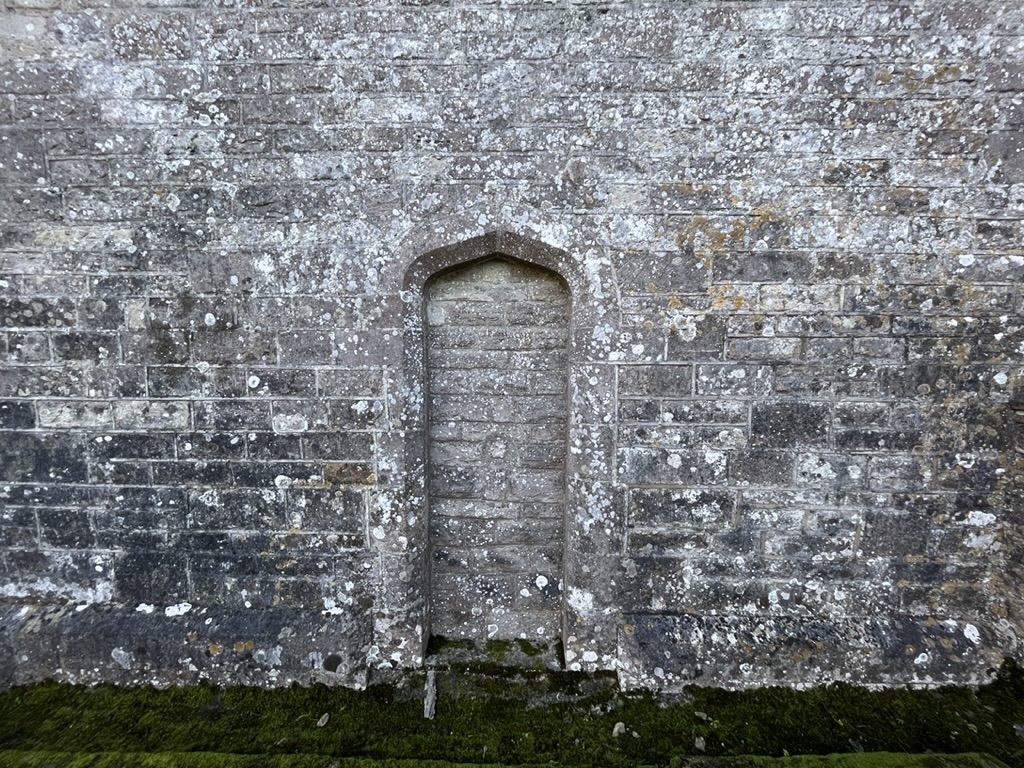
In his 1997 survey GLP noted a single dial relocated to the N wall of the Chancel, E of blocked N doorway. He described it as doubtful – superficially a poorly preserved dial… with 2 lines on a reshaped stone… no gnomon hole, probably relocated during C19 work on the chancel. He found other stones in the vicinity with similar markings – perhaps through weathering – and concluded that the ‘dial’ might not actually be a genuine one at all.

As with a couple of other Dorset churches recently, I couldn’t pinpoint a design such as GLP describes. There are obvious lines or striations on some stones eg top R of the doorway (see below), but little to report on the wall E of the door. The lack of a gnomon hole is one reason for missing eroded dials. This lack may also reinforce doubts about identifying dial-ish marks as being part of a dial. Anyway, if there is one, I missed it.

St Michael . Steeple . Dorset – BSS

The dilemma has been whether to post, rather pointlessly, a failed dial search. However this small secluded church has other merits. It earned its Grade I listing for special architectural or historic interest. I have included a few photos below to illustrate this. The Washington link is only one of the significant features.

IMAGES OF ST MICHAEL AS COMPENSATION

Chest Coffins in the churchyard; crude apotropaic (part-)hexfoil of uncertain age; Marian VV ‘witch’ mark inside the porch; 2 examples of the E window stained glass (image 2 shows dice used for the division of Christ’s robe); the barrel organ

GSS Category: Scratch Dial; Mass Dial

All photos: Keith Salvesen

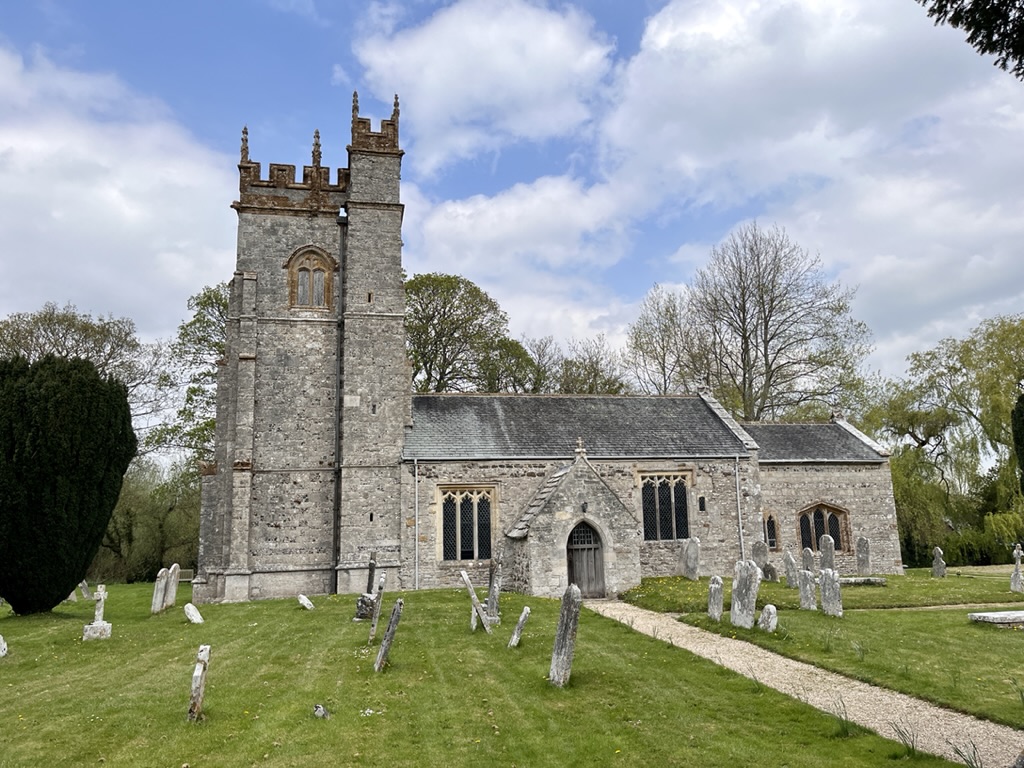
AFFPUDDLE . DORSET . ST LAURENCE – Scratch Dials

St Laurence . Affpuddle . Dorset

ST LAURENCE . AFFPUDDLE . DORSET

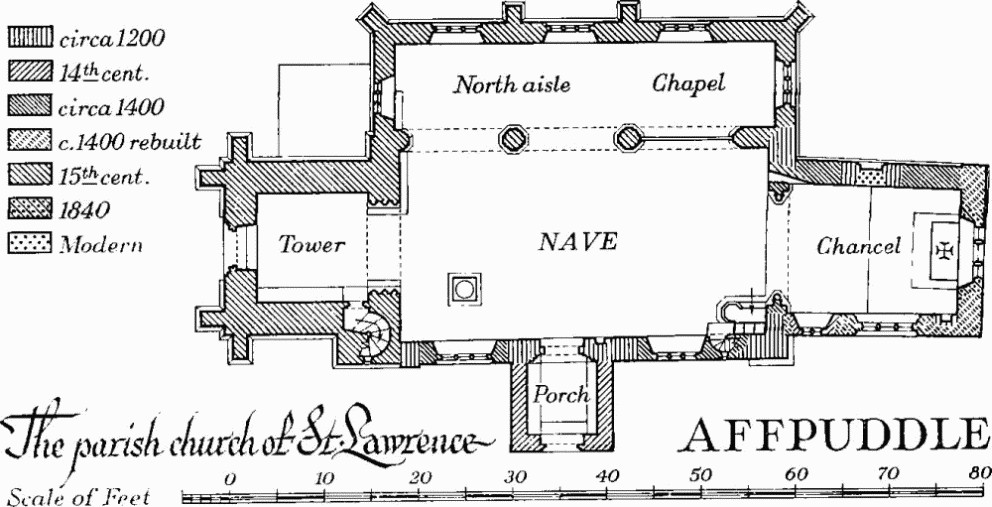
GRADE I † C13 origin (nave, chancel); C14 S porch; C15 enlargement, tower; C19 restorations inc Wyatt. Good C13 south door: cusped arch, carved heads as dripstones BHO. 2 Purdue bells. Early C16 oak pulpit, bench ends. 10m NE Dorchester. A most attractive and well-kept church. 50.7427 /  -2.2772 / SY805937

THES SEATYS WERE MADE YN THE YERE OF OWRE LORD GOD MCCCCCXLV

IN THE THYME OF THOMAS LYLLYNGTON VICAR O THYS CHERCH.

DIALS

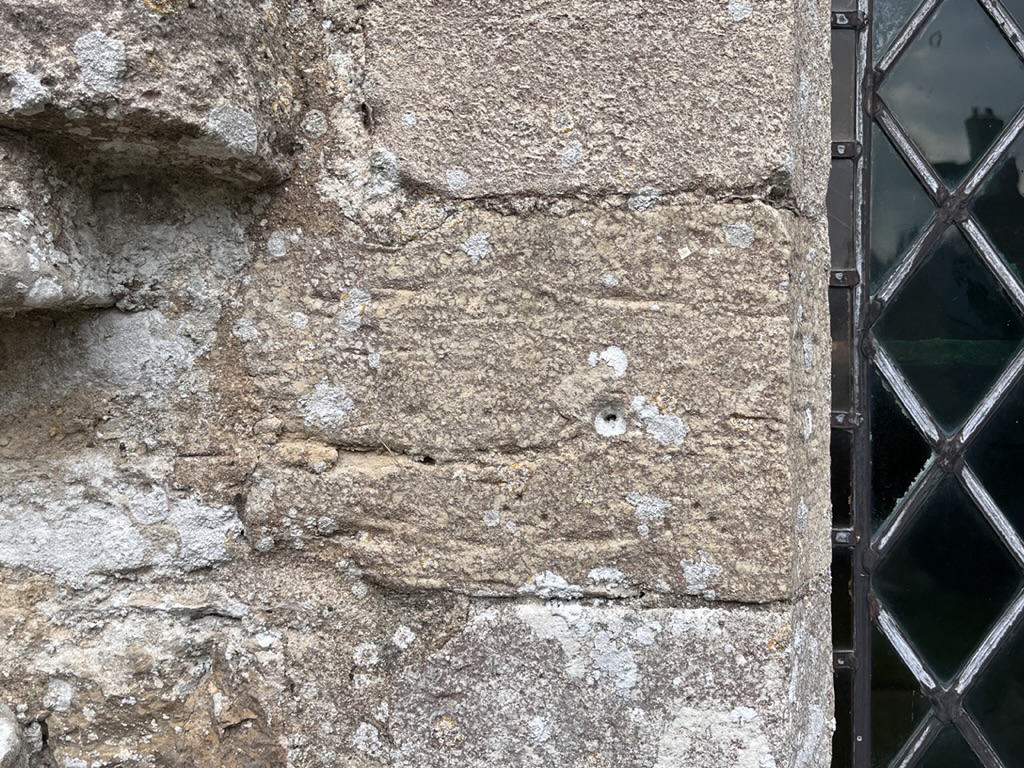
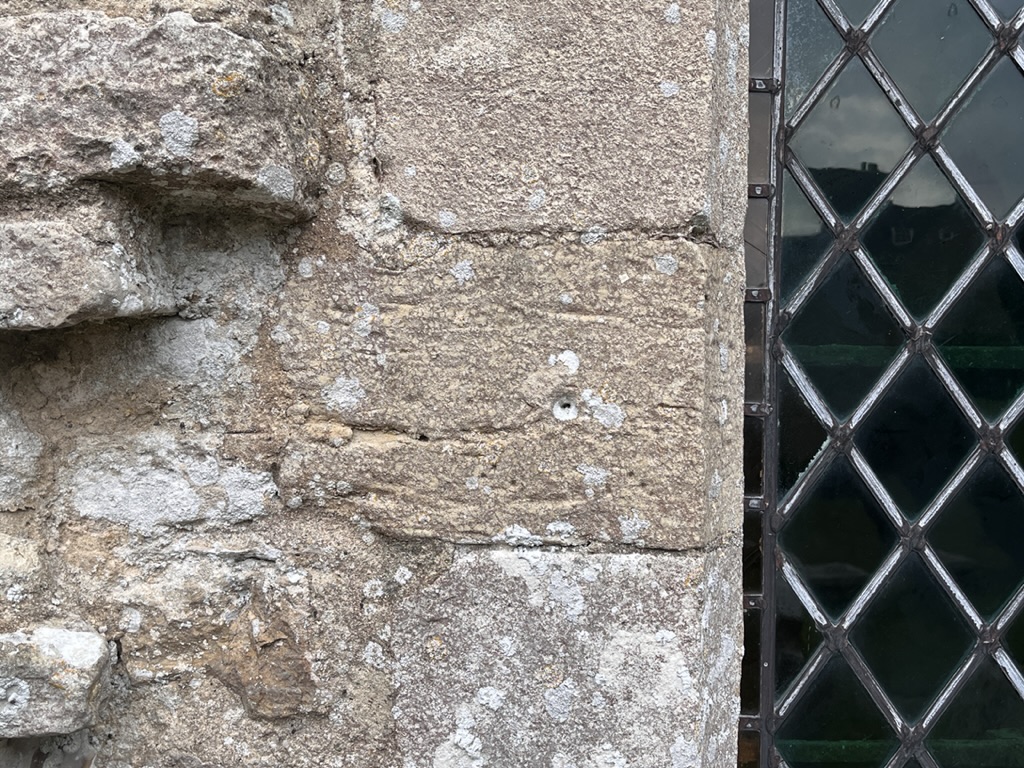
St Laurence has 2 dials, one either side of the nave window. Unusually, both are entirely designed with holes (cf TRENT) apart from a token noon indicator on Dial 1, barely discernible (see diagram).

DIAL 1

St Laurence . Affpuddle . Dorset – Scratch Dial 1

W jamb of the nave window, in poor condition. Besides the single vertical line, there are 8 small holes in a curve below the style hole. 2 further holes emphasise Nones, the Mass time equating in clock terms to 3pm. GLP notes that the dial is accurately cut.

St Laurence . Affpuddle . Dial 1 BBS

DIAL 2

St Laurence . Affpuddle . Dorset – Scratch Dial 2

Dial 2 is on the E jamb, a longer and clearer semicircle of 12 holes. There are a couple of small holes that might be for emphasis / to mark a half hour (see eg between 9 and 10). GLP notes that the style hole is very small / shallow for a gnomon. Again he found the dial very accurate, most holes being within 4º of true, with 5 exactly correct.

St Laurence . Affpuddle . Dial 2 BSS

CHURCH MARKS OF ST LAURENCE

Some of those interested in medieval church dials (and you have after all reached here) are likely to check a church for other medieval marks. St Laurence is worth visiting for these alone. Here are just 3 examples, of which one is especially intriguing and needs be researched further (not by me).

GSS Category: Scratch Dial; Mass Dial; Church Marks; Medieval Graffitti
All photos: Keith Salvesen

HINTON ST GEORGE . SOM. ST GEORGE – Scratch Dial

Hinton St George Church . Som

ST GEORGE’S CHURCH . HINTON ST GEORGE . SOMERSET
GRADE I † C13 origins: masons’ marks on the fabric date from C13 and are identical with some found at Wells cathedral BHO. Development mainly C15 (tower) and C16, with C19 work by Wyatt and later attention. Poulett family much in evidence. Good graffiti / protection marks. Fine gilded weathercock dated to 1756. 4m N of Crewkerne . 50.9107 / -2.8286 / ST418126

DIAL

Hinton St George Church . Som – Scratch Dial

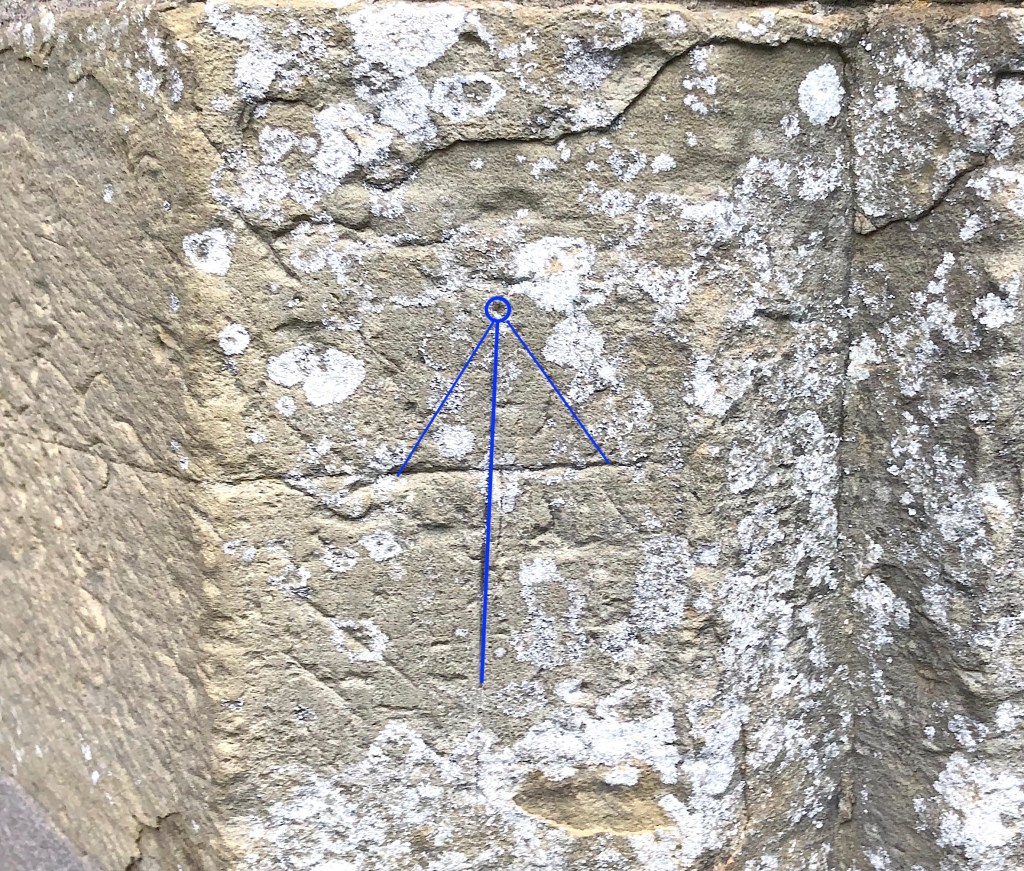
A single scratch dial tucked away on the W side of a buttress, and of doubtful value as a time marker, both for position and orientation. There are 4 lines with terminal pocks on the left side; and a single pock at the top (ie midnight). The gnomon hole, already quite big, has been crudely enlarged – and quite recently, by the look of it.

An explanation for the unpromising location and the unsatisfactory design is that the dial was relocated at some stage, perhaps when the tower was built (and the buttress added?). It is far from unusual for a dial reused in this way to be inverted, as if decommissioning it. An inversion of the image above makes far more sense, with the noon line marked by a single pock, and the radials to its right. An afternoon dial.

Hinton St George Church . Som – Scratch Dial (inverted)

GRAFFITI & APOTROPAIC SYMBOLS / PROTECTION / MARIAN MARKS

GSS Category: Scratch Dial

All photos: Keith Salvesen

KINGTON . HEREFORD . ST MARY – 6 Scratch Dials

Kington Herefs St Mary (Ruth Harris CC)

ST MARY . KINGTON . HEREFORDSHIRE

GRADE I † Dated from c1300, with a C12 tower that was originally separate, later incorporated when the church was extended and (BLB) much altered. Attractively distinctive to look at. 15m W of Leominster. 52.2045 / -3.0384 / SO29156

DIALS

St Mary is a multi-dial church with 6 recorded, one of which is doubtful. They range from conventional to basic. 3 are clustered on adjacent stones.

DIAL 1

Dial 1 is on the S wall, a fan-shaped edged quadrant radiating from the mortar line and stretching across 3 stones. It is near-symmetrical along the noon line. The 5 lines are spaced almost equally, the outer ones being incised more deeply, perhaps to draw attention to service times. The ‘1’ line is of interest, less accurately cut, bifurcating as it crosses onto the stone below, and ending in a single pock. This feature is so specific that it was presumably intended to emphasise a time of day of particular significance in the local community.

DIAL 2

Dial 2, on the S wall, is far simpler than Dial 1 but is also near-symmetrical from the noon line. 3 lines, the one to the L more of a straight scratch than a cut. The style hole is in a fault line in the stone (which may well be subsequent damage). Possibly the ‘1’ line crudely divides halfway down, beginning with a pock. This would match the similar emphasis in Dial 1, and perhaps supports the theory of a special ‘event’ mark.

DIAL 3

Dial 3 is also located by the door on the S wall, very damaged and eroded. 4 clear lines radiate from a style hole in the mortar line (there are also 2 very faint lines). Only the uppermost in the lower R quadrant survives for its full length.

DIALS 4 & 5

Dials 4 & 5 are beside and below Dial 2. Both are faint and barely more than token efforts at a dial, as if a youthful assistant priest had a knife and time on his hands.

Kington Herefs St Mary – Dial 2, 4, 5

DIAL 6

Dial 6 is a very simple dial (if it is one): a style hole within a deeply cut circle, and what could be a stubby noon line. The close-up b&w BSS photograph gives a good idea of it. There’s not a lot of confidence in the record: Position not known. Noon line only? Circle only and faint line at 90L. Possible noon marker. Doubtful dial.

Richard & Catherine Boztum, in their excellent illustrated booklet (cited below) of Herefordshire Church marks and scratch dials include dials 1 – 5, but not this one.

Kington Herefs St Mary – Dial 6 – BSS

I also have my doubts. St Mary has plenty of Church graffiti – initials, scratchings, small crosses, and in particular a number of apotropaic symbols (ritual protection marks). The design of ‘Dial 6’ is one of many forms of ‘witch mark’. And on St Mary itself, there is a more elaborate version of the circle-and-centre-hole mark.

Kington Herefs St Mary – Apotropaic mark

OTHER CANDIDATES?

Having in mind the rather basic design of some of the dials above, there are a couple of candidates that I photographed for later inspection. The first is at least plausible and matches the noon line symmetry of dials 1 & 2. The other is unconvincing. You be the judge…

Kington Herefs St Mary – doubtful scratch dial

GSS Category: Scratch Dials; Multi-dials

Photos: Header image: Ruth Harris (Geograph / Wiki / CC); all other photos Keith Salvesen except dial 6 BSS

REF: Botzum R and C : Scratch Dials, Sundials and unusual Marks on Herefordshire Churches. Lucton, Herefs, 1988

WOOTTON RIVERS . WILTS . ST ANDREW – Five Scratch Dials

St Andrew . Wootton Rivers . Wilts

ST ANDREW. WOTTON RIVERS . WILTS

GRADE II* † C14 with major C19 restoration by G E Street. Attractive village church with a shingled spire (slightly aslant). Situated by the Kennet and Avon canal. Home to the amazing JACK SPRATT’S CLOCK 51.3653 / -1.7187 / SU196629

DIALS

St Andrew has 5 dials (BSS records 2; HE 1) and a couple of doubtfuls. All are on the S side. The porch has graffiti – initials, dates etc – and apotropaic symbols / ritual protection marks.

DIAL 1

St Andrew . Wootton Rivers . Wilts – Scratch Dial 1

Dial 1 is on a quoin stone at the E end of S side. A small but easily visible dial with a large style hole for its size (doubtless enlarged at some time). The noon line is strongest cut, with 3, possibly 4, other lines. The None (9th hour) line is longest, possibly to indicate the most important Mass time of the day. A simple dial with a simple purpose. The 2 ‘tadpole’ marks bottom left could be witch marks to protect the church. There are others in the porch area.

DIAL 2

St Andrew . Wootton Rivers . Wilts – Scratch Dial 2

Dial 2 is relatively complex and later than dial 1. A semicircle design with the lines mostly positively cut evenly at 15º angles, though there is erosion in the lower R quadrant. There are also quite large pocks, mostly between the ends of 2 lines which is, I think, unusual. The style hole, as with Dial 1, is large.

DIAL 3

St Andrew . Wootton Rivers . Wilts – Scratch Dial 3

Dial 3 is a simple little dial consisting of three significant lines terminating in pocks, and an ‘afternoon’ pock. The sketchy marks above this suggest an extended line ending in a pock and, as with Dial 1, roughly corresponding to None, perhaps confirming the most significant service time for the church, ie early evening Mass.

DIAL 4

St Andrew . Wootton Rivers . Wilts – Scratch Dial 4

Dial 4 is on the E side of the porch. Very eroded, with the style hole drawing attention to a small encircled dial with 3 clearish lines – horizontal and 2 curving below it. Indistinct traces of a couple of other lines.

DIAL 5

St Andrew . Wootton Rivers . Wilts – Scratch Dial 5

Dial 5 is on the W side of the porch. Larger than dial 4 and also considerably eroded. 10 lines or so, and a confusion of pocks, especially around the (presumed) shallow style hole. There are hints of at least a semicircle in the lower half and the trace (illusion?) of a complete circle or even a double one.

GRAFFITI and APOTROPAIC (WITCH) MARKS

GSS Category: Scratch Dials

All photos: Keith Salvesen; Jack Spratt’s Clock link – VisitPewseyVale

MELCOMBE HORSEY . DORSET . ST ANDREW – Scratch Dial

St Andrew . Melcombe Horsey . Dorset – north aspect

MELCOMBE HORSEY . DORSET . ST ANDREW

GRADE 1 † C14 origins, additional work C15, Chapels C16, partial C19 restoration. Adjacent to a fine manor house. The Parish confusingly includes Melcombe Bingham, Bingham’s Melcombe and Higher Melcombe, all in a secluded area steeped in medieval history. To explore further, BHO. 50.8178 /  -2.324 / ST772020

DIAL

The church stands in the parkland of Bingham’s Melcombe House, a pleasant walk down a long drive. A single dial is recorded, located on a quoin stone of S.E. buttress of C16 Horsey Chapel. There are other church marks of interest (see below).

St Andrew . Melcombe Horsey . Dorset – scratch dial

The dial is inverted, with 5 radials pointing upwards from a large cement-filled style hole. There are good reasons to suppose the dial was repositioned: it predates the building of the chapel, and so is cut on a reused stone; it is inverted (as often the case with relocated dials); and GLP points out that its angle would receive sunlight for half the day at most.

St Andrew . Melcombe Horsey . Dorset – Scratch dial diagrams (BSS)
St Andrew . Melcombe Horsey . Dorset – south aspect

UNRECORDED DIALS?

There are 2 other configurations on earlier parts on S side of the church that give pause for thought. Both images below show patterns that are distinctly dial-ish.

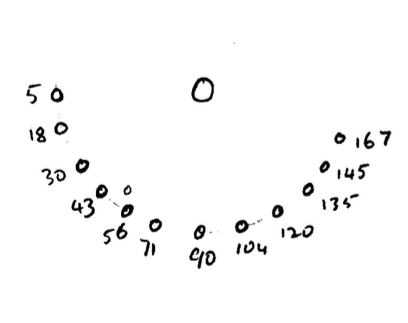
The first is plausible in several respects: style hole just below the mortar line; 2 large pocks in the mortar line (the RHS one beyond the edge of an apparent circumference); the hint of a part-circle above the horizontal; a distinct curve of pocks in lower L quadrant; eroded and less organised pocks lower R.

Note: looking at this configuration some time later and having seen a great many more dials in the interim, I’d say this is definitely a dial; and the other is a ‘not-a-dial’

The second candidate is less clear. It is at an angle L of the S doorway – a conventional place for a dial. The case for it is weaker and unfortunately it looks less dial-like in the photograph than at the time. Doubtful rather than plausible.

St Andrew . Melcombe Horsey . Dorset – scratch dial?

St Andrew has plenty of further interest in the broader category of church marks. The porch is very rewarding. I usually post about such marks separately but the ones below deserve a place here.

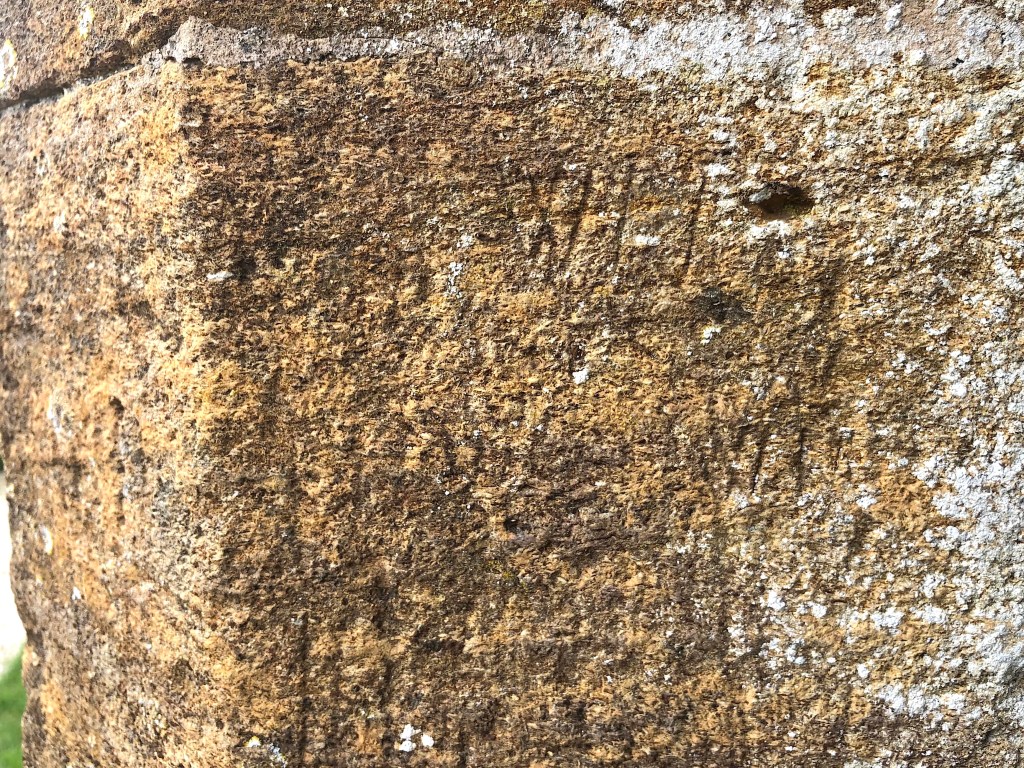
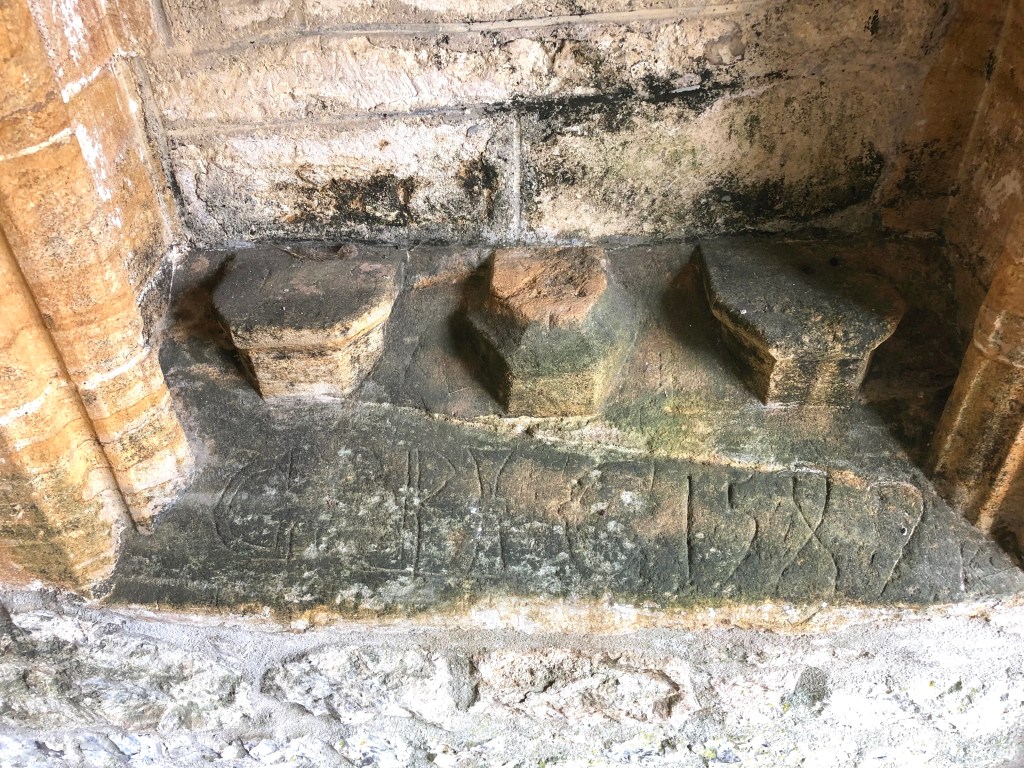
The top row shows Marian V V marks (Virgin of Virgins), one type of so-called ritual protection mark (or apotropaic symbols) designed to ward off evil. There are plenty of less commonly found marks. The main photograph shows mediaeval porch seats with a magnificent inscription (G – PIC?) dated 1589.

GSS Category: Scratch Dials; Apotropaic Marks, Marian Marks, Church Graffiti

All photos: Keith Salvesen