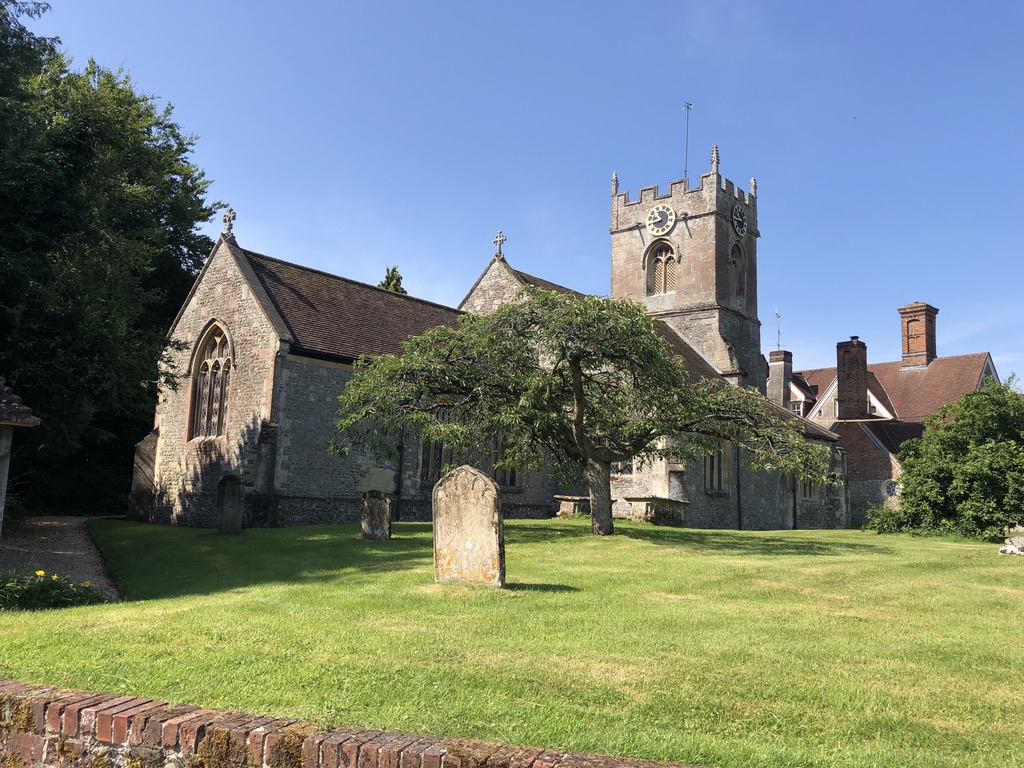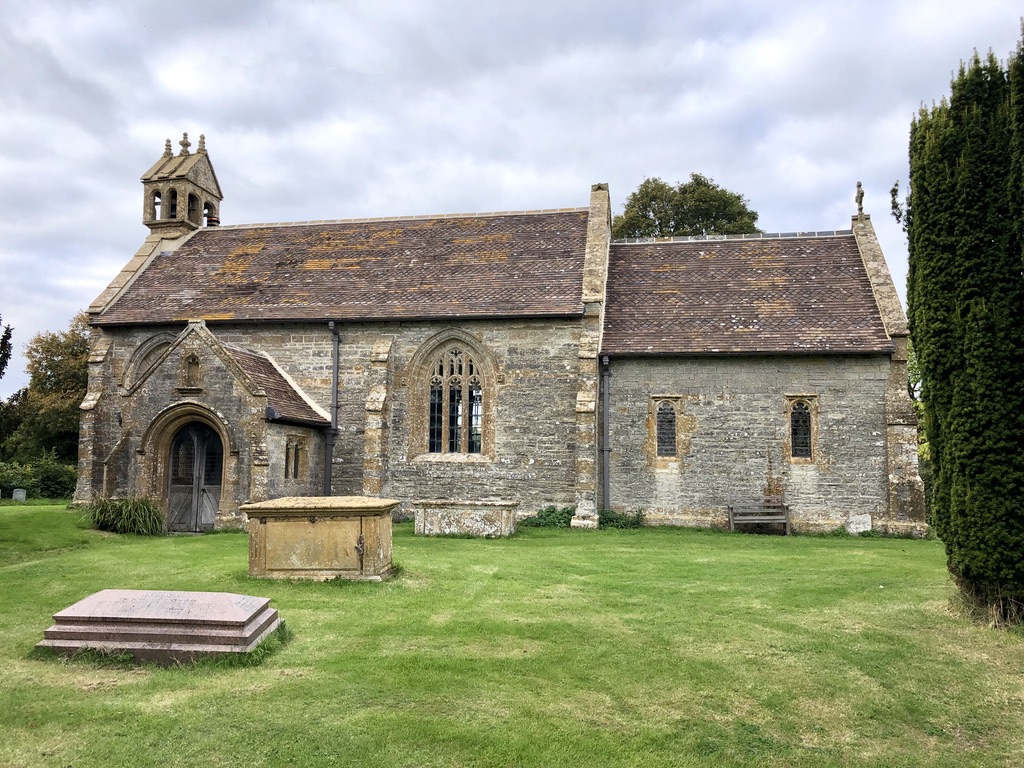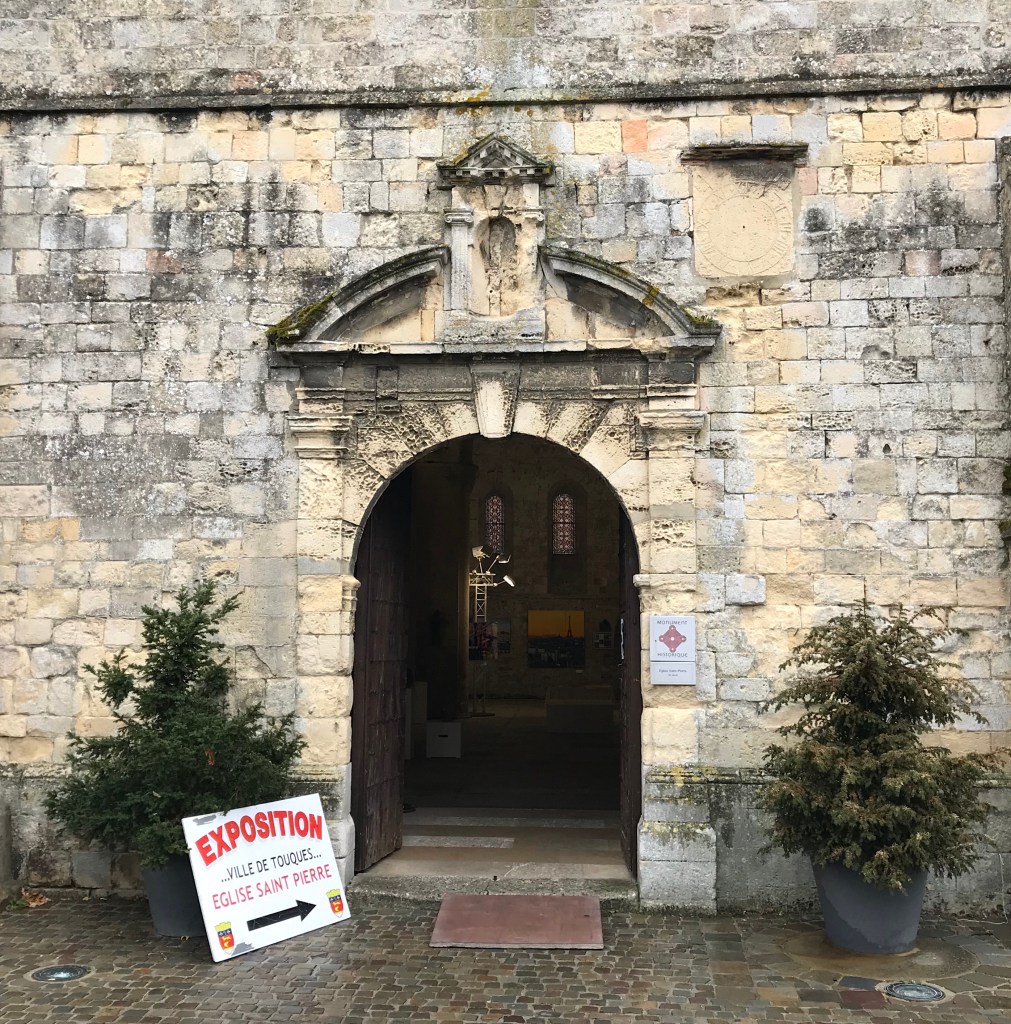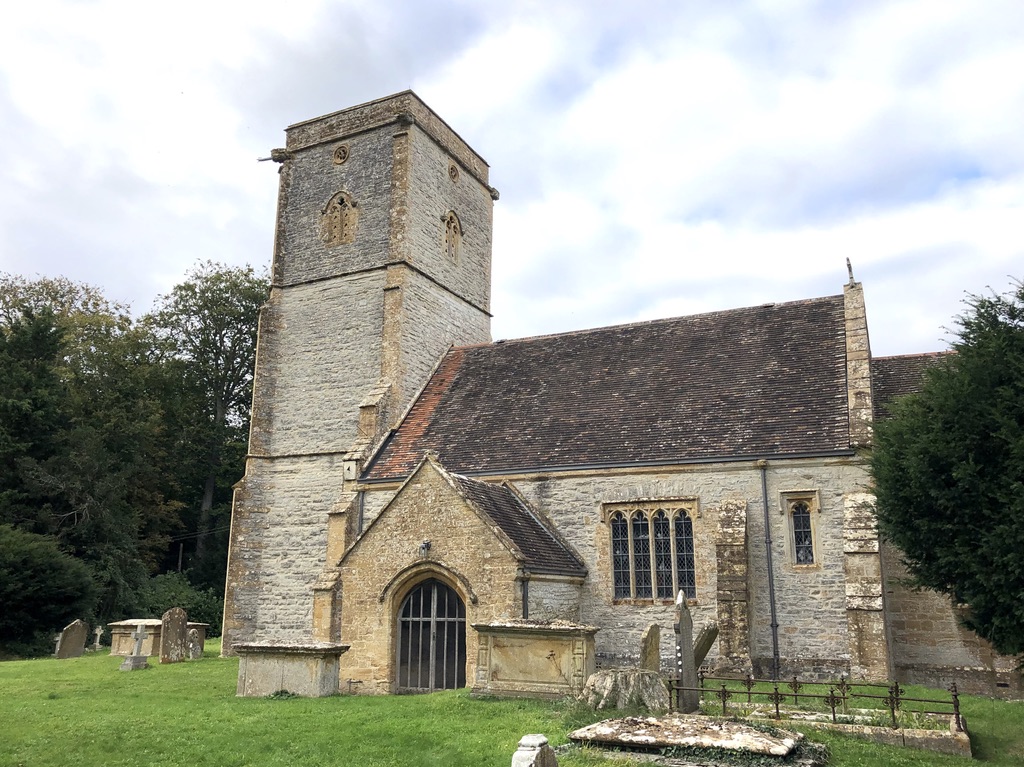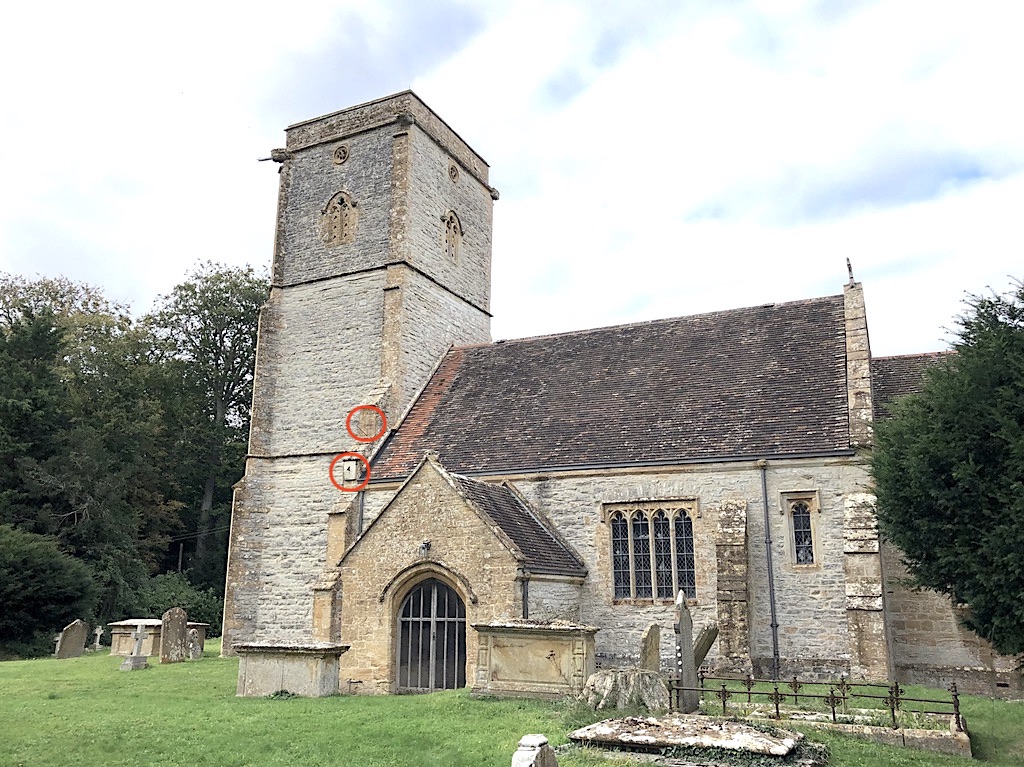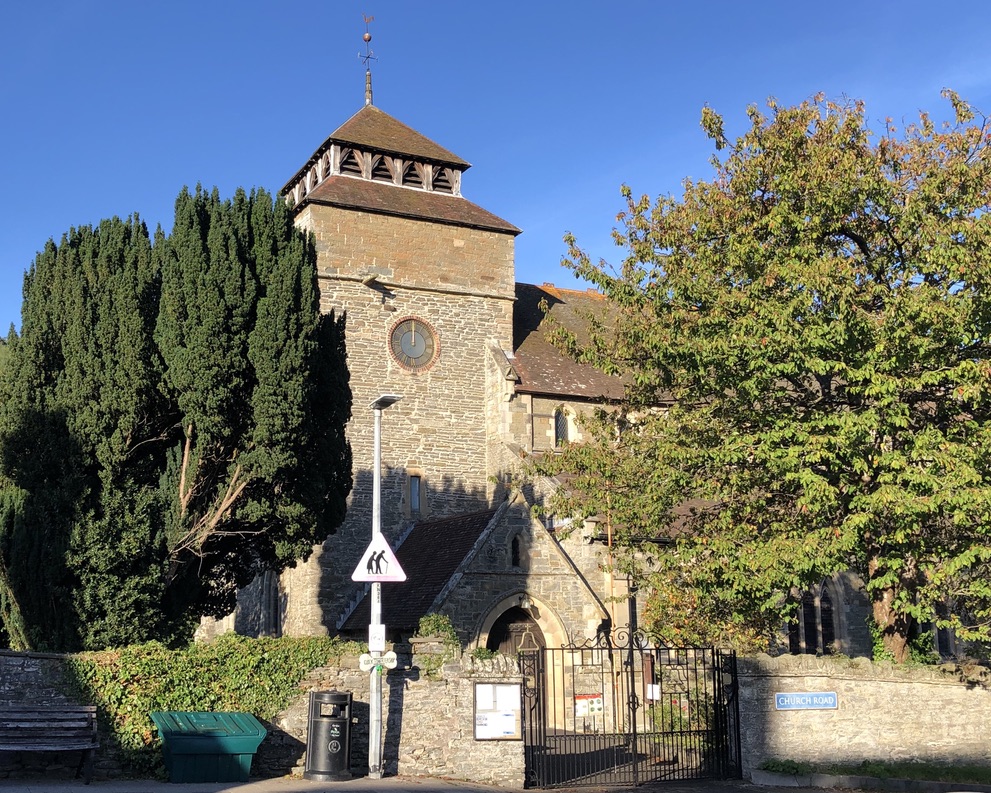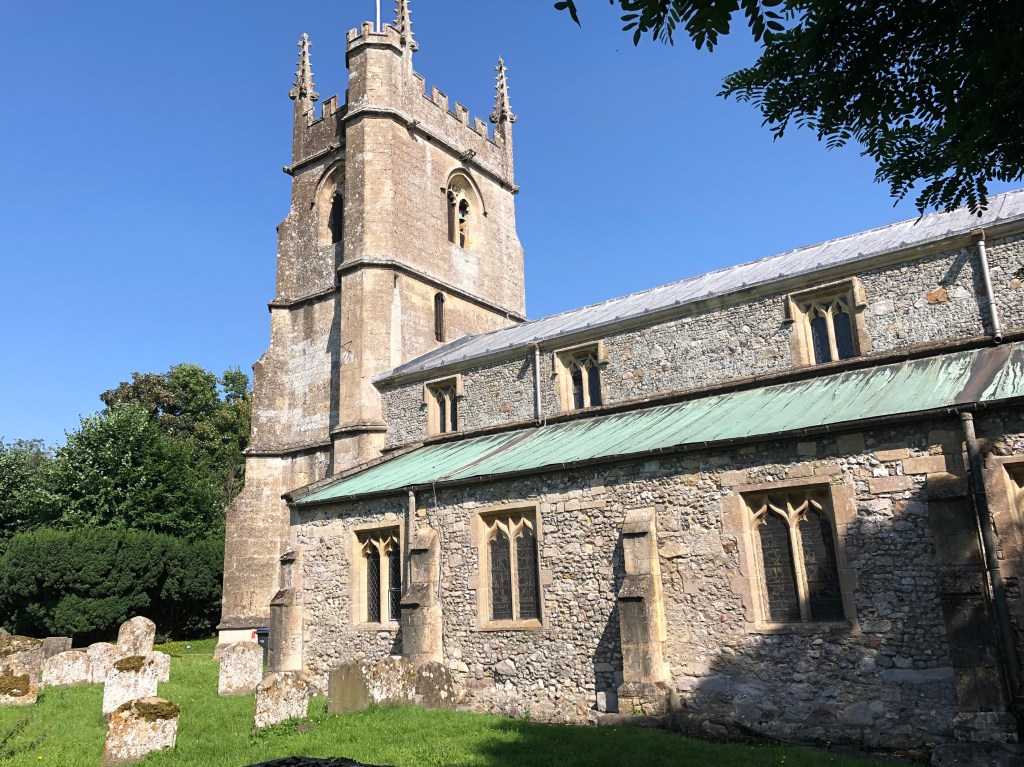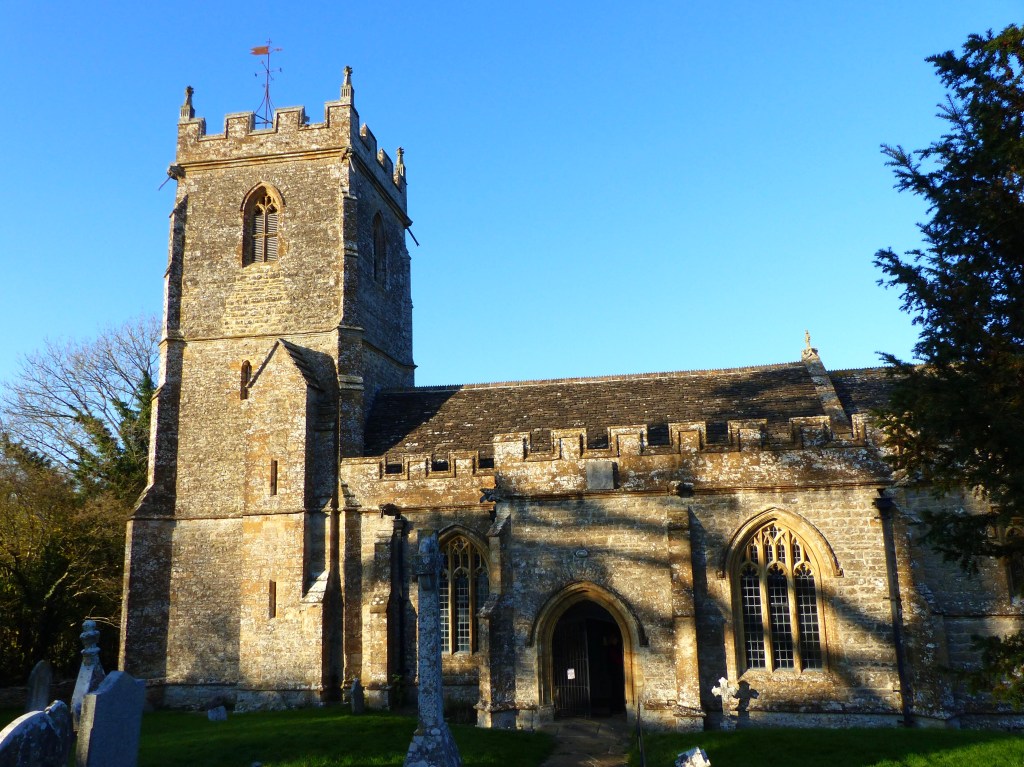
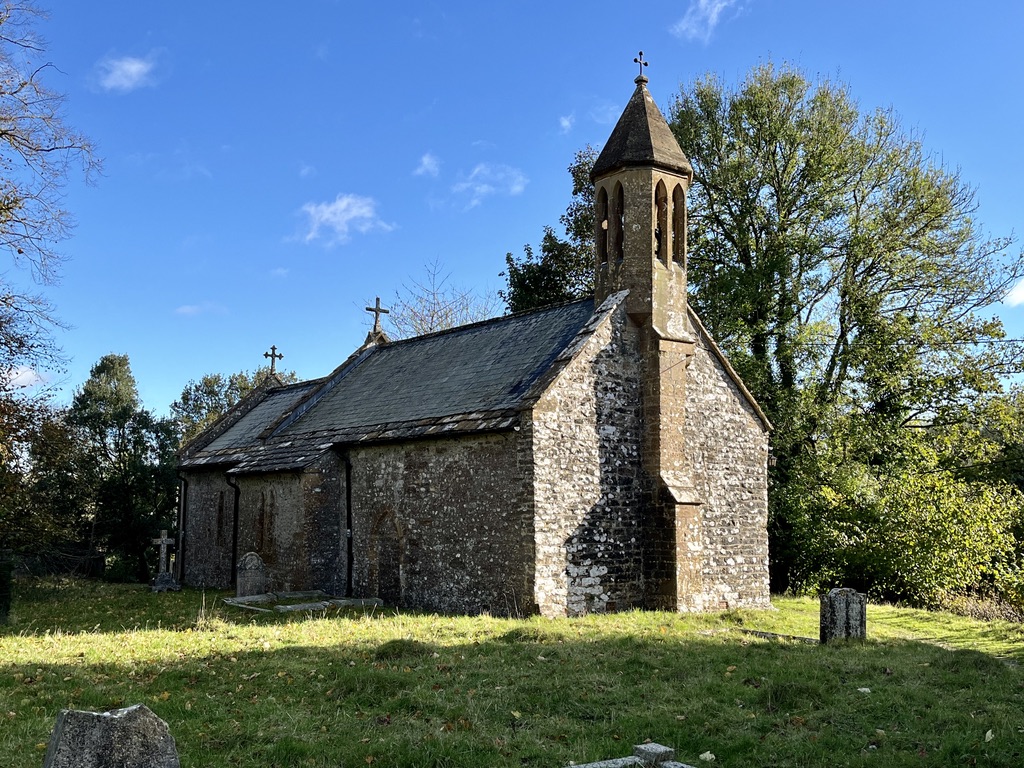
GRADE II*. C12 origins, C13 with C14 additions (chancel, S. porch); tower rebuilt mid C18 after a collapse; Victorian restoration. Much of the medieval church in evidence. External and internal masons’ marks, graffiti etc. A pretty village on the R. Arrow, on the ‘Black & White Village Trail’ 52.2218 / -2.8497 / SO420585
DIAL 1
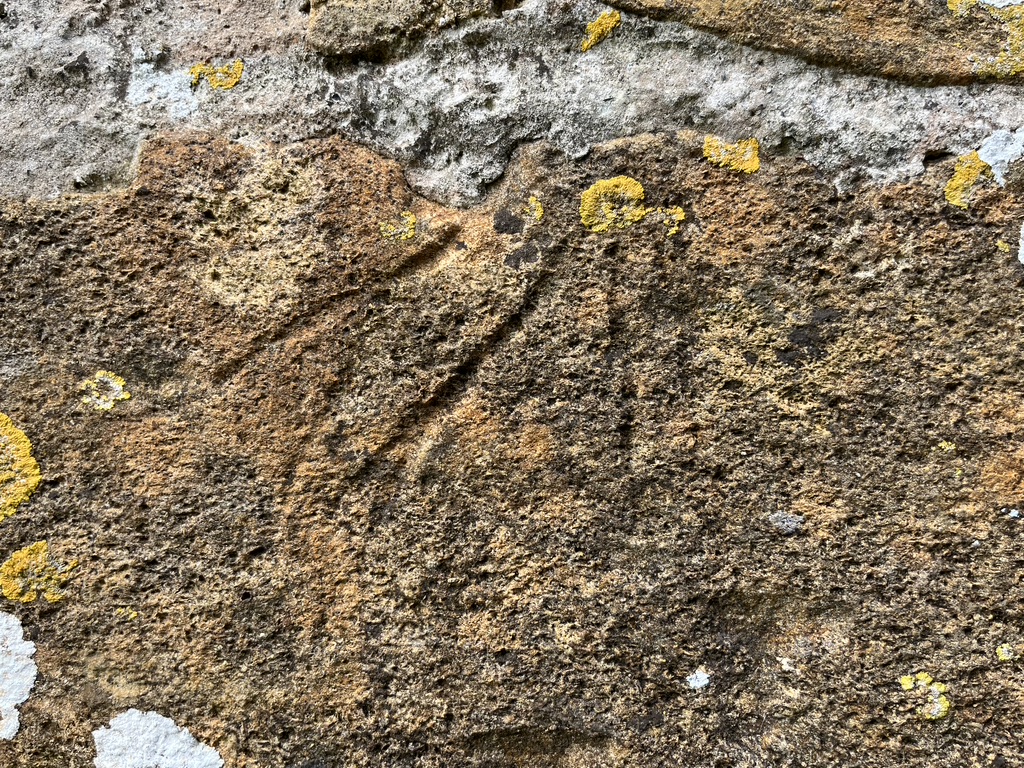
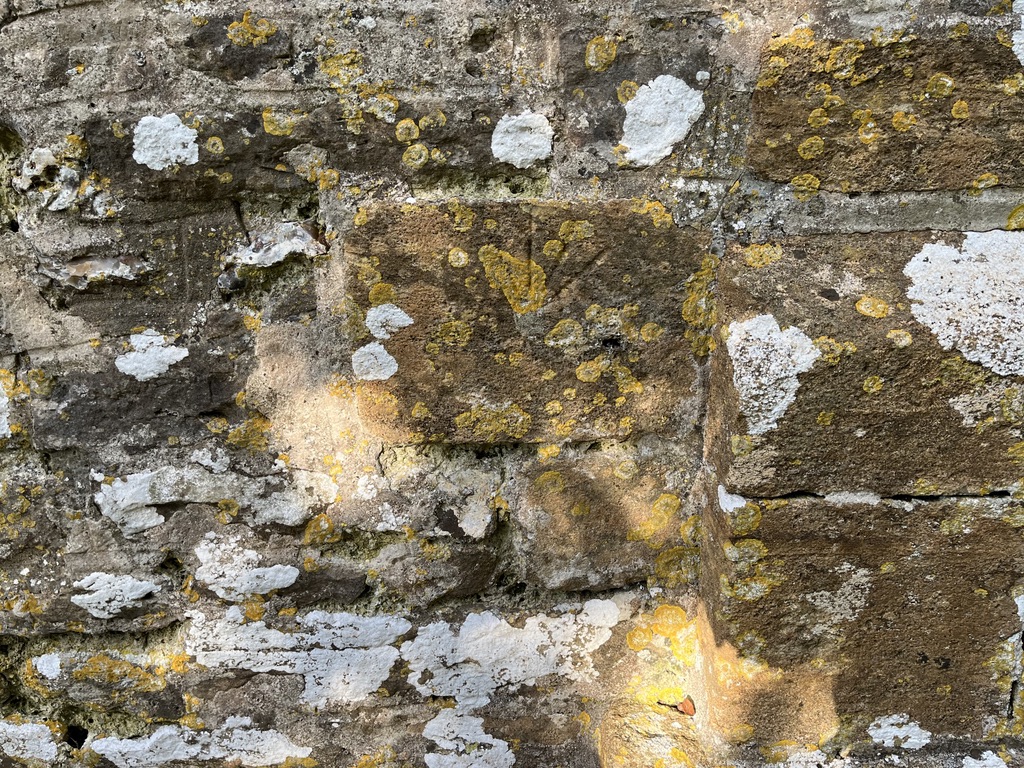
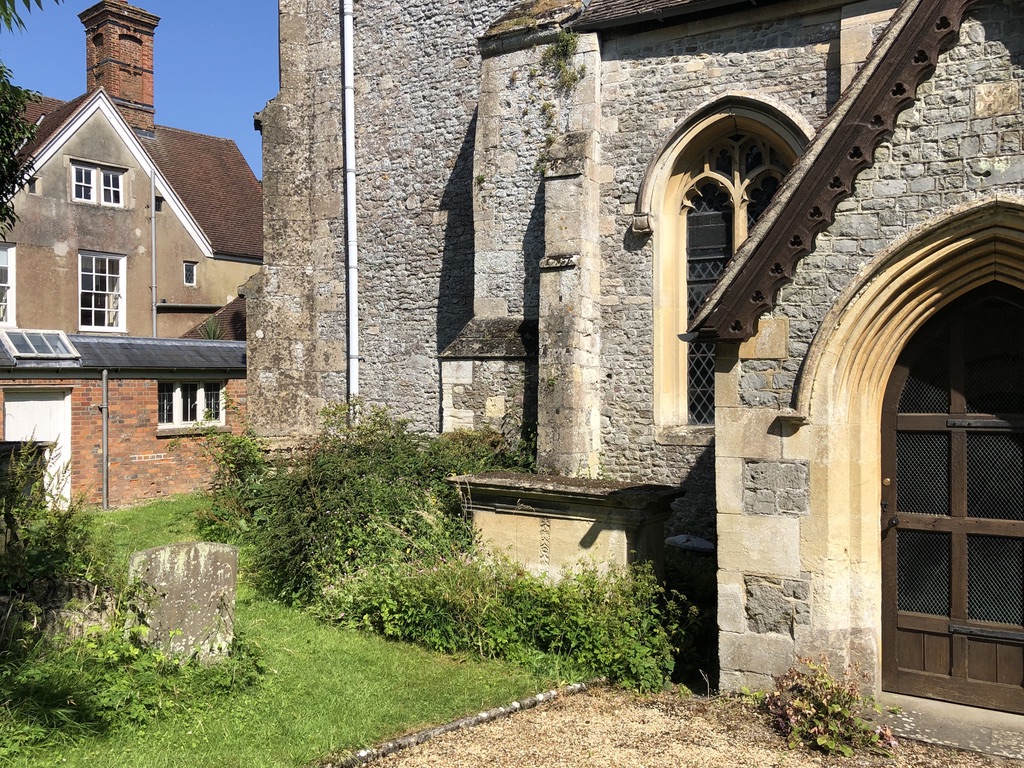
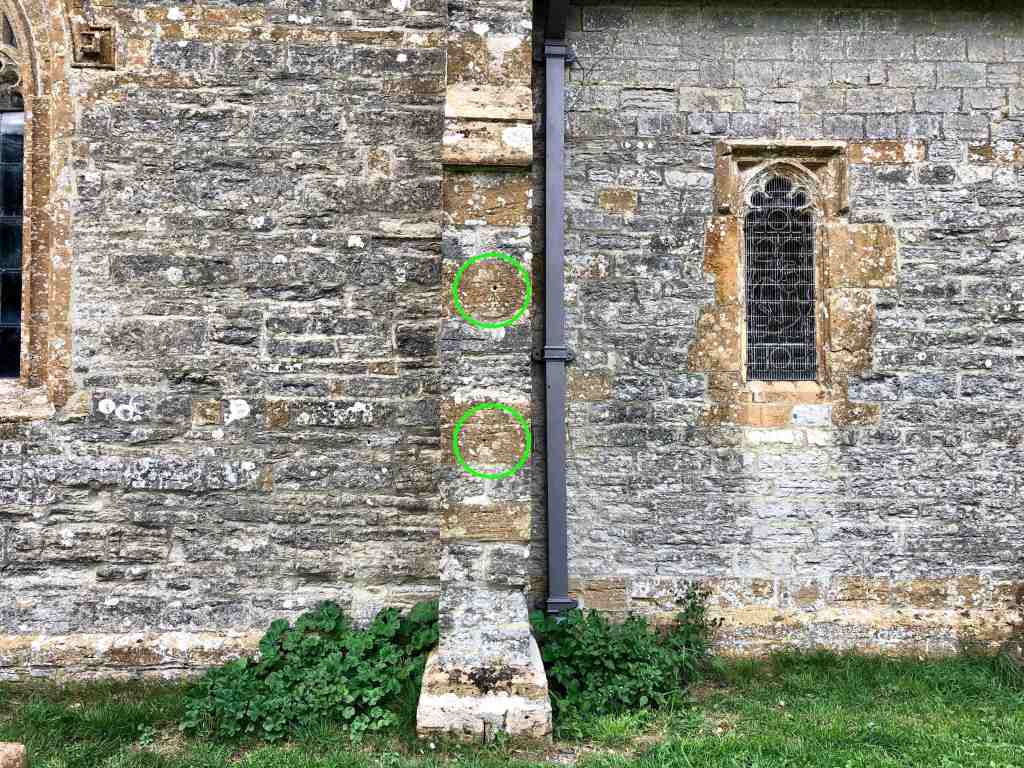
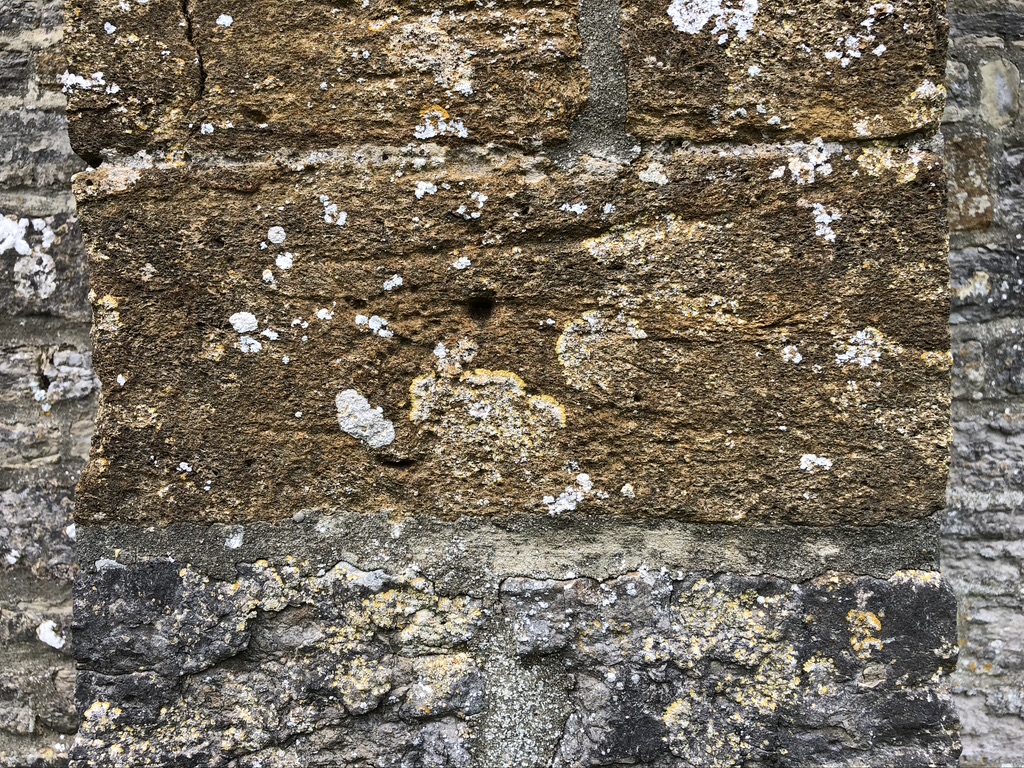
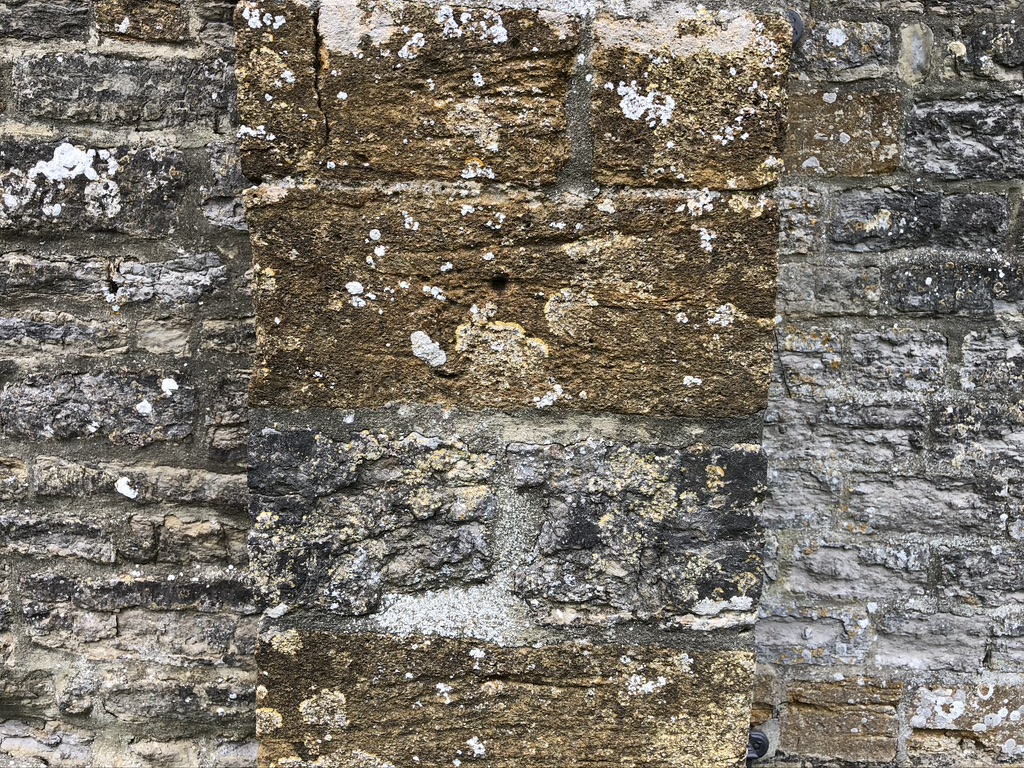
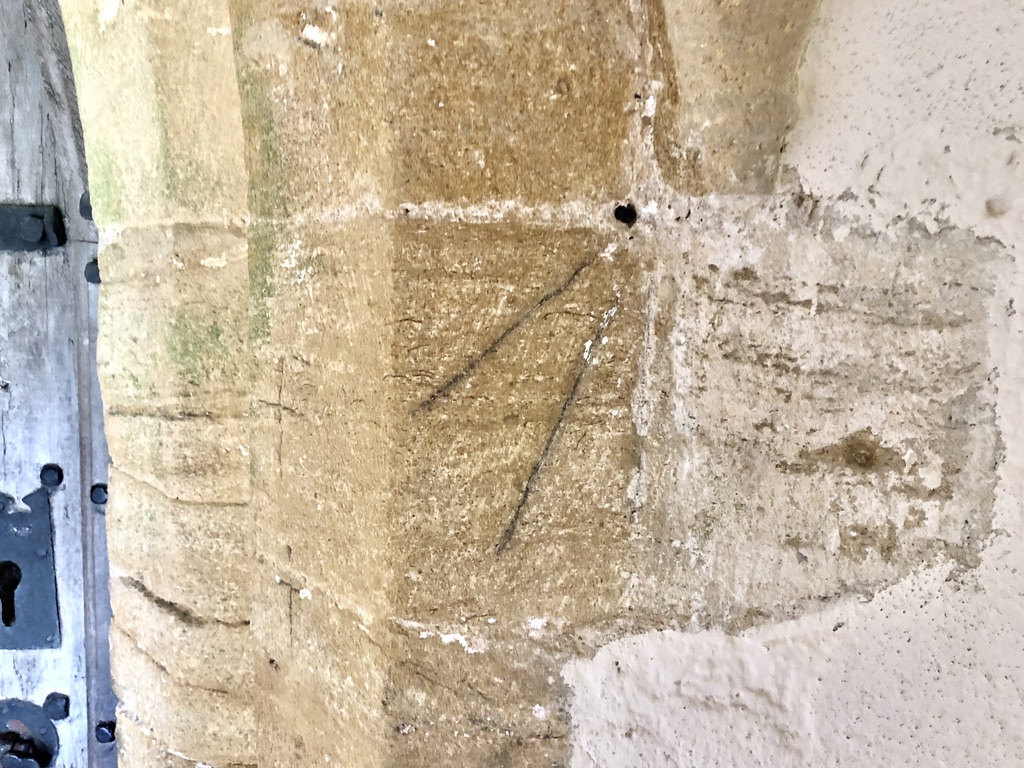
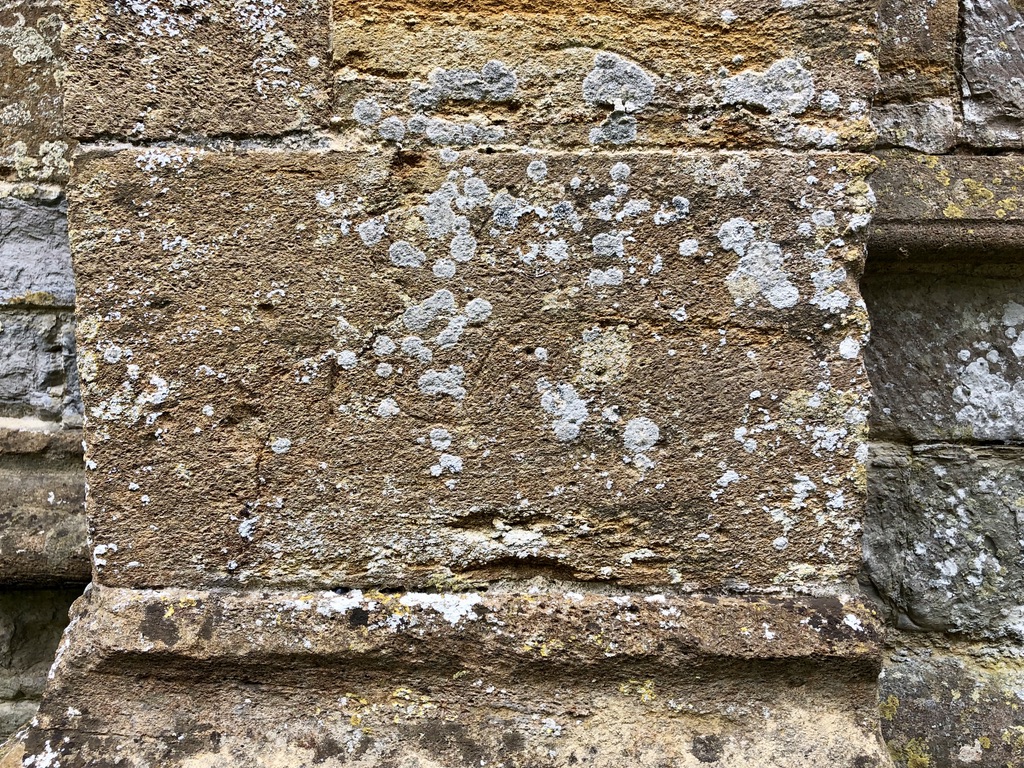
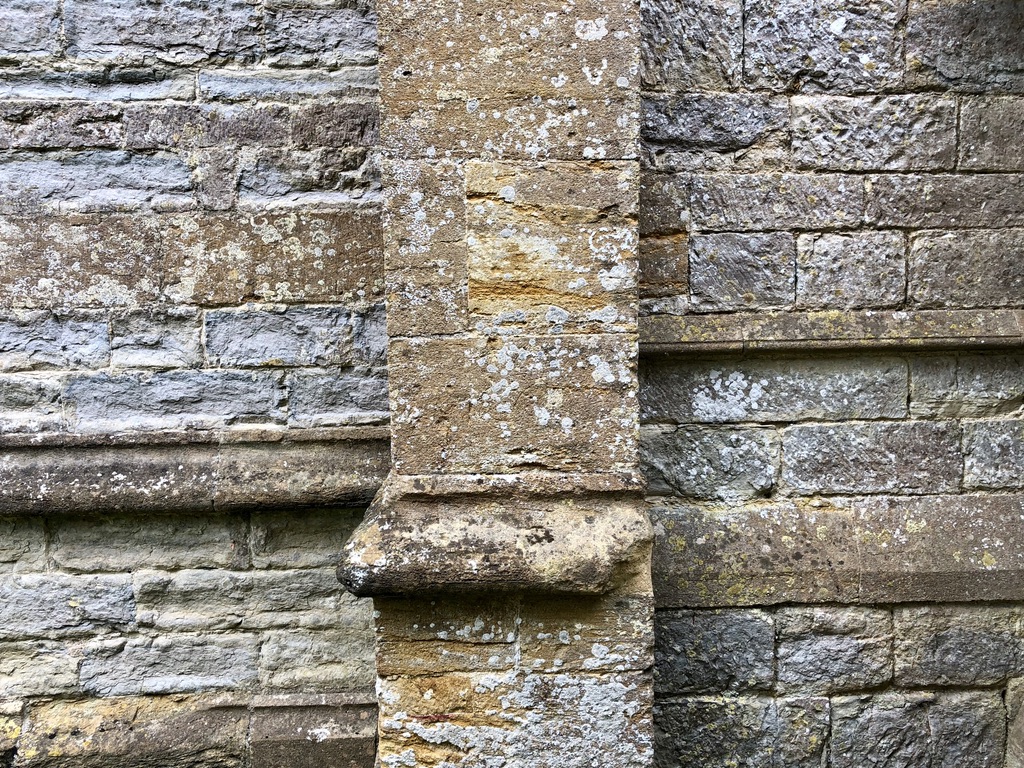
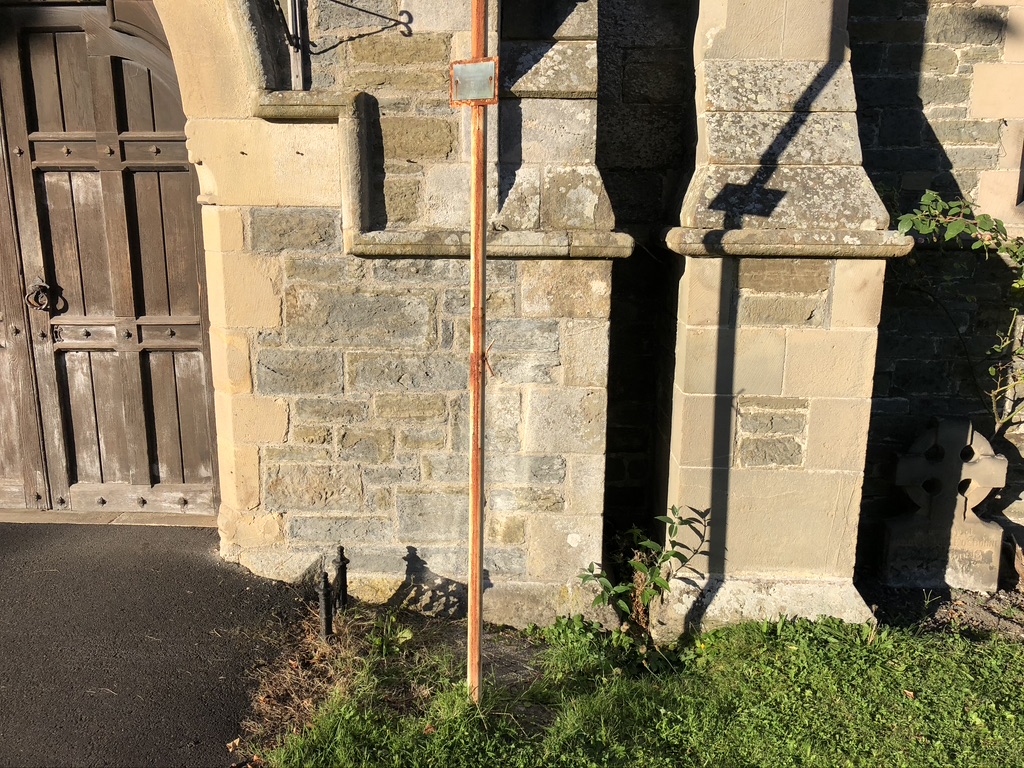
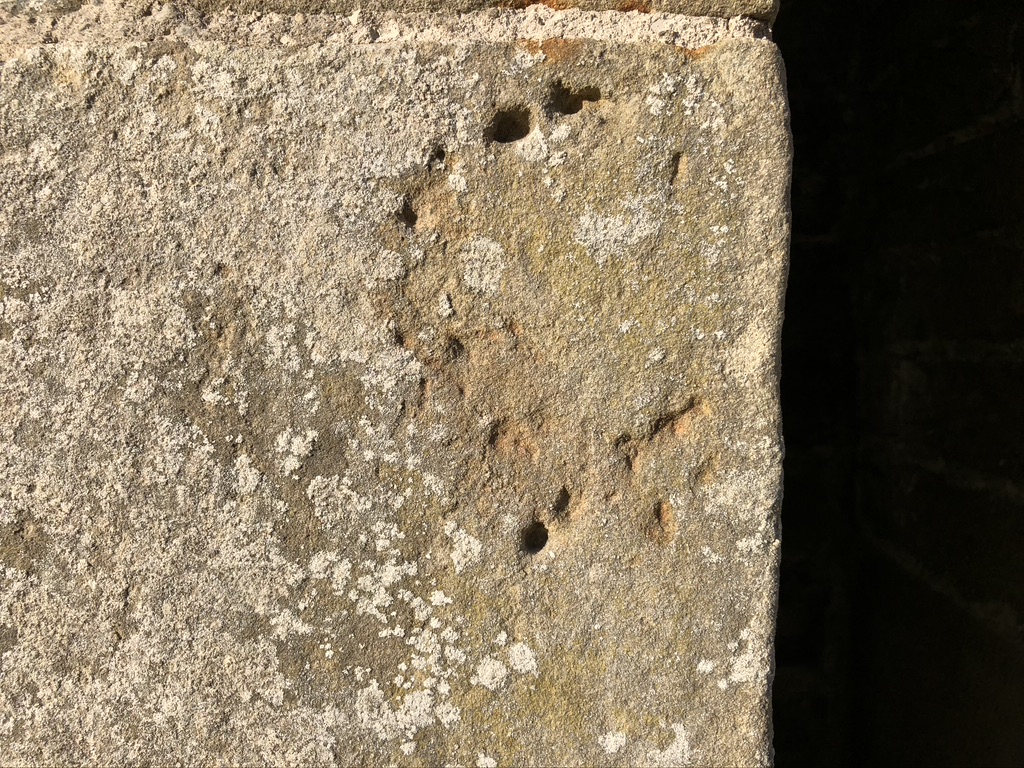
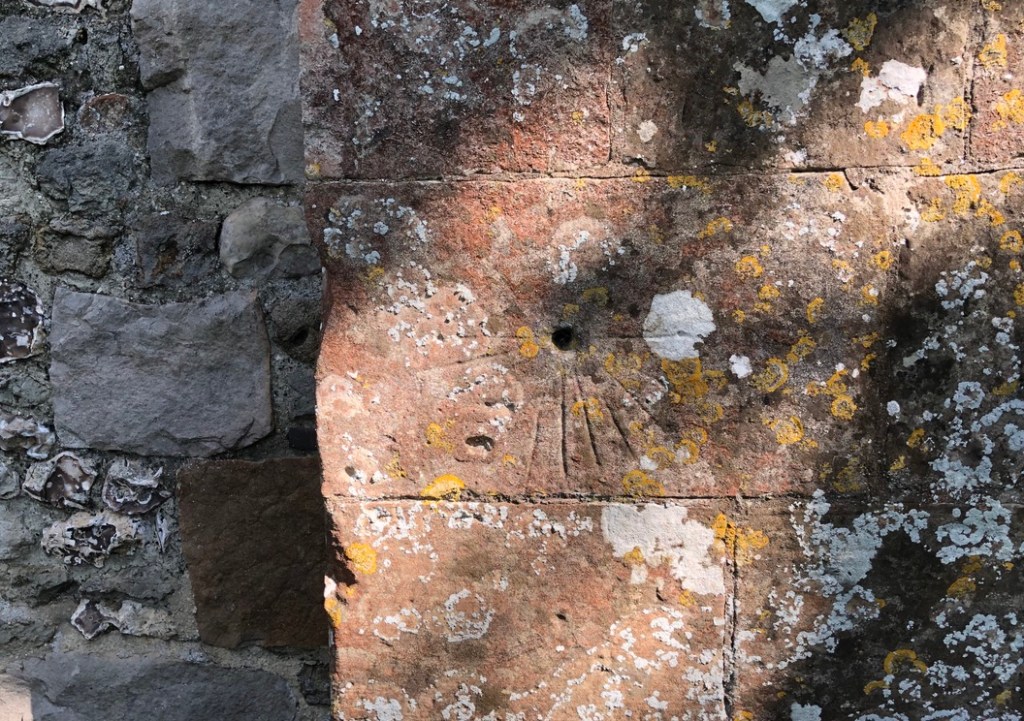
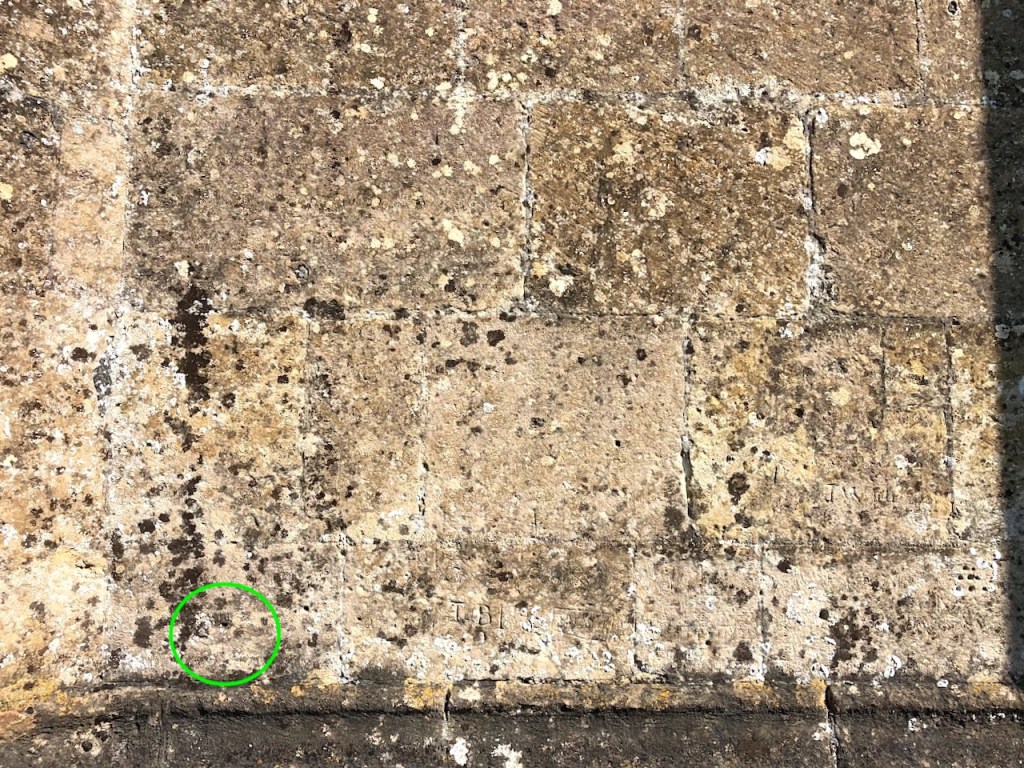
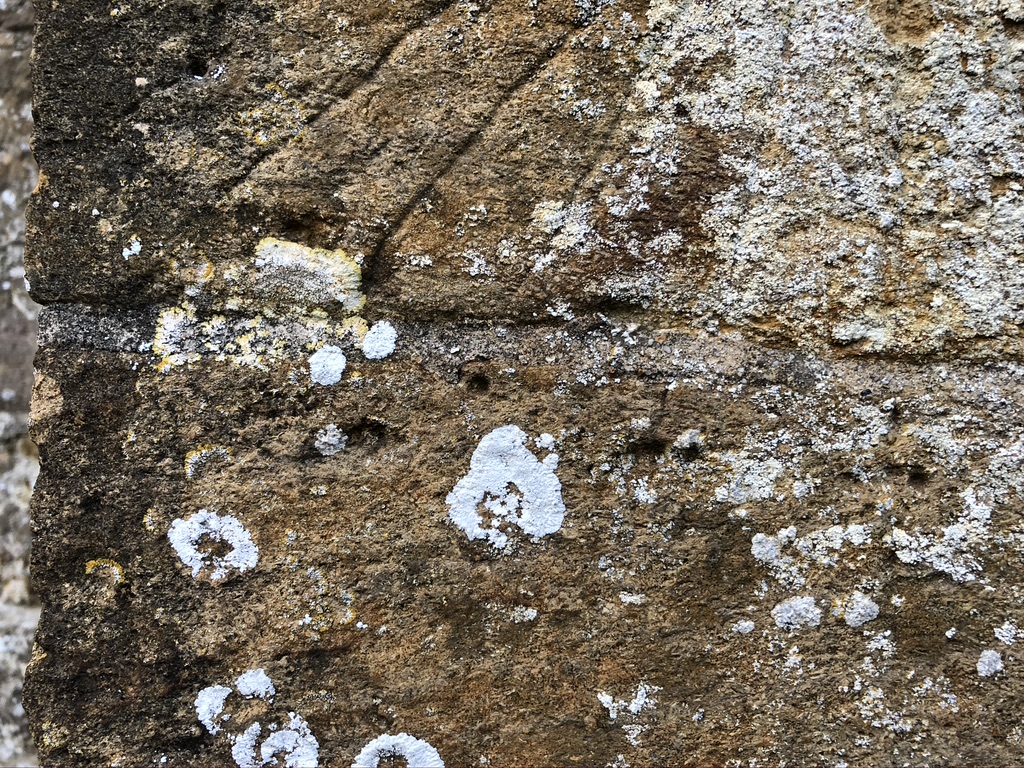
On the R. side of the S. porch, on the stone below the architrave. The stone below has marks that are probably apotropaic. 3 definite lines descending from the mortar line and through a slanting line that looks most like a fault in the stone – that may also apply to the 4th ridged line on the left side, or perhaps it was cut / added at a different time.
St Mary the Virgin . Eardisland . Herefordshire – Scratch Dial 1
DIAL 2
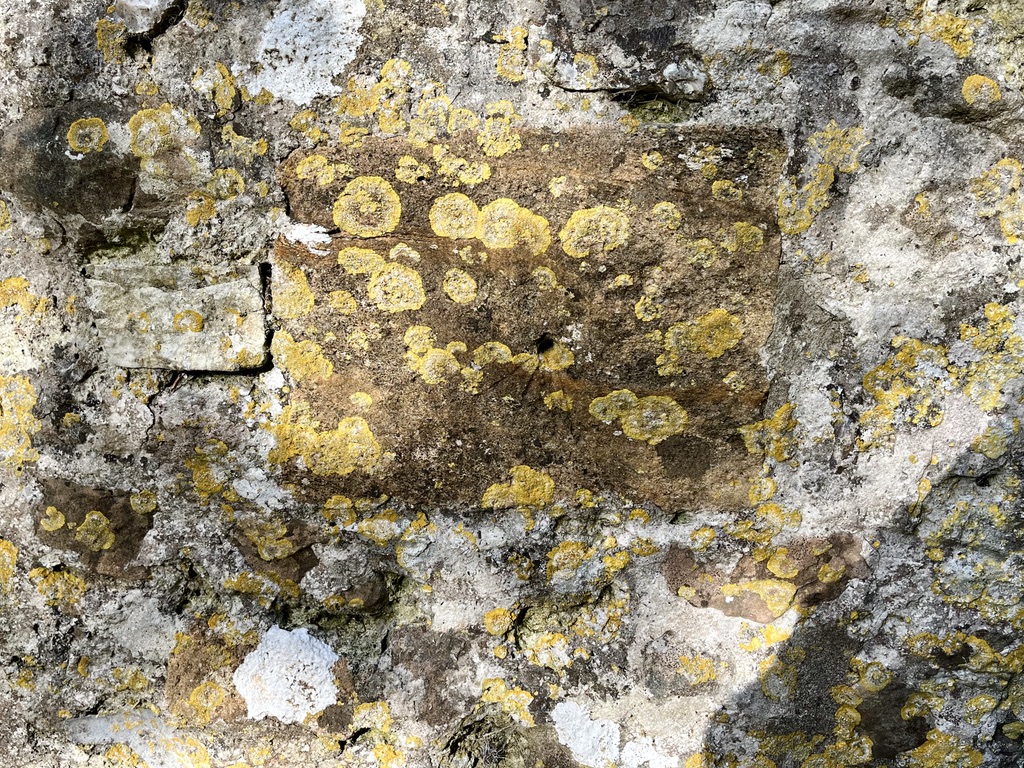
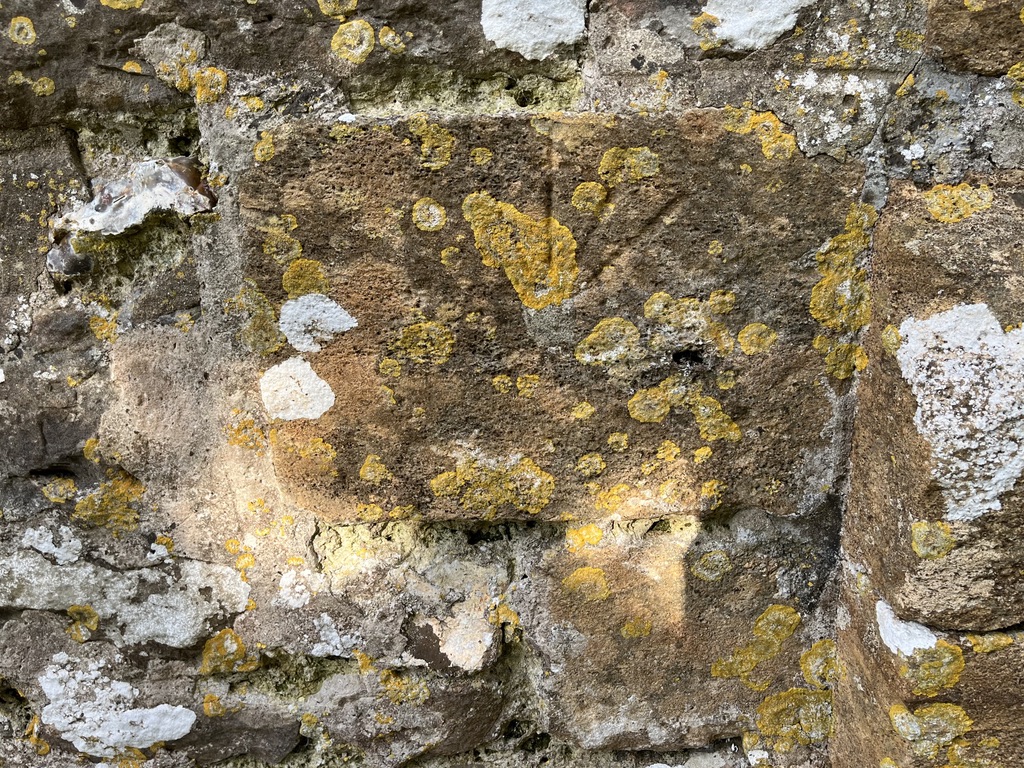
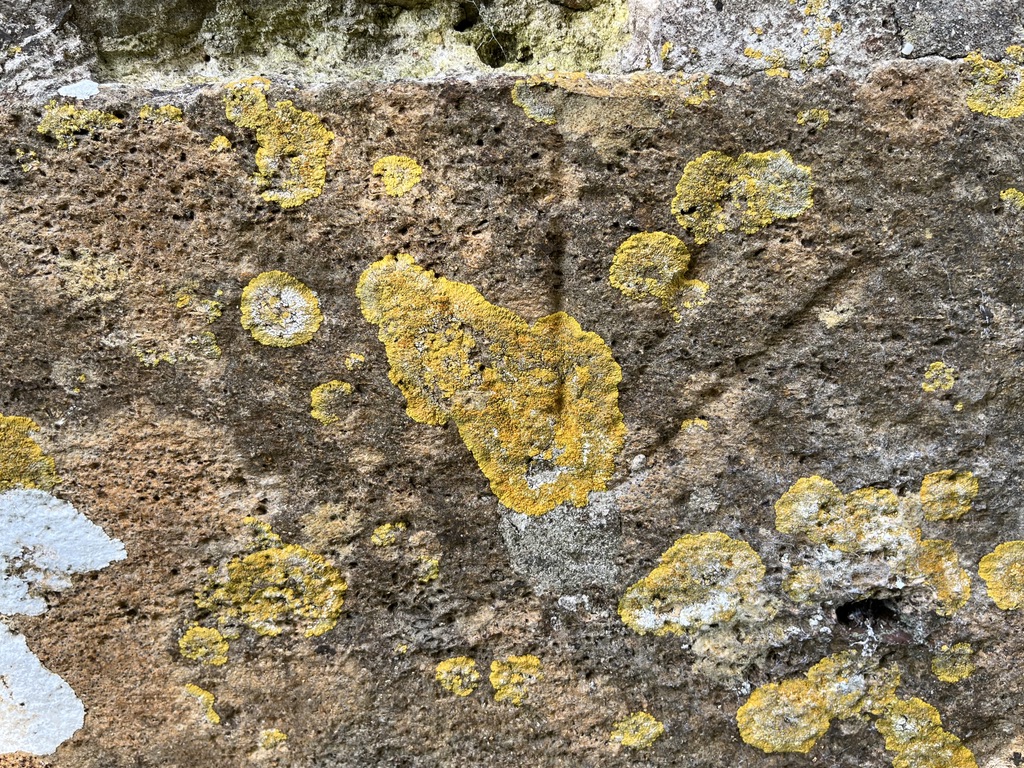
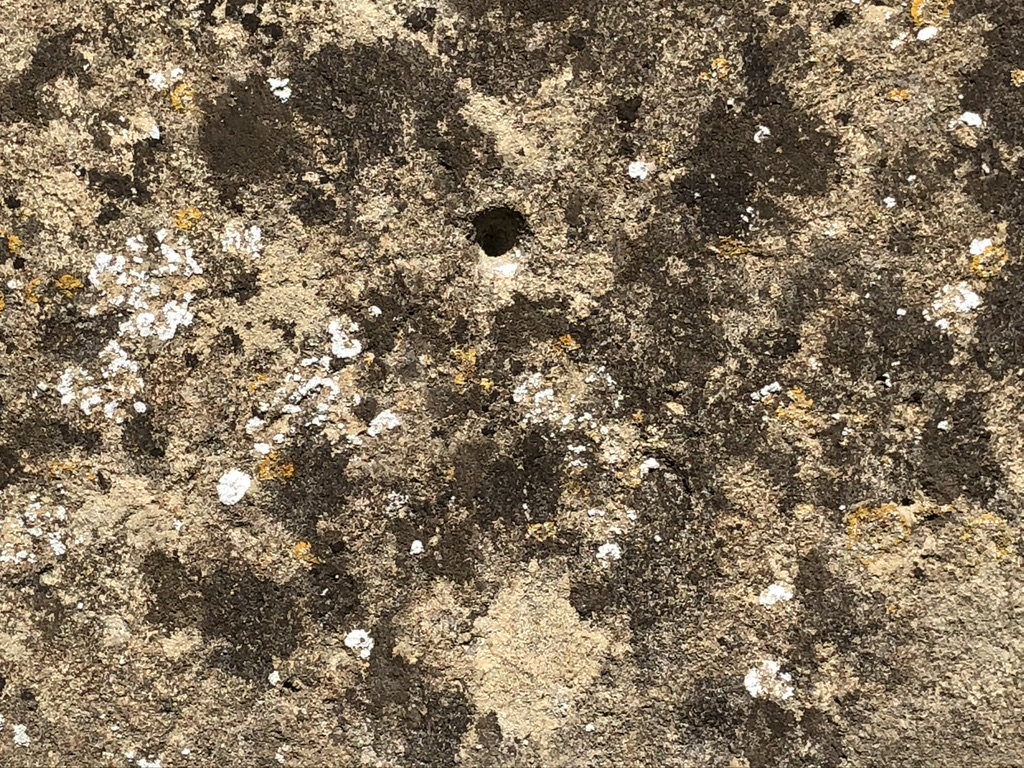
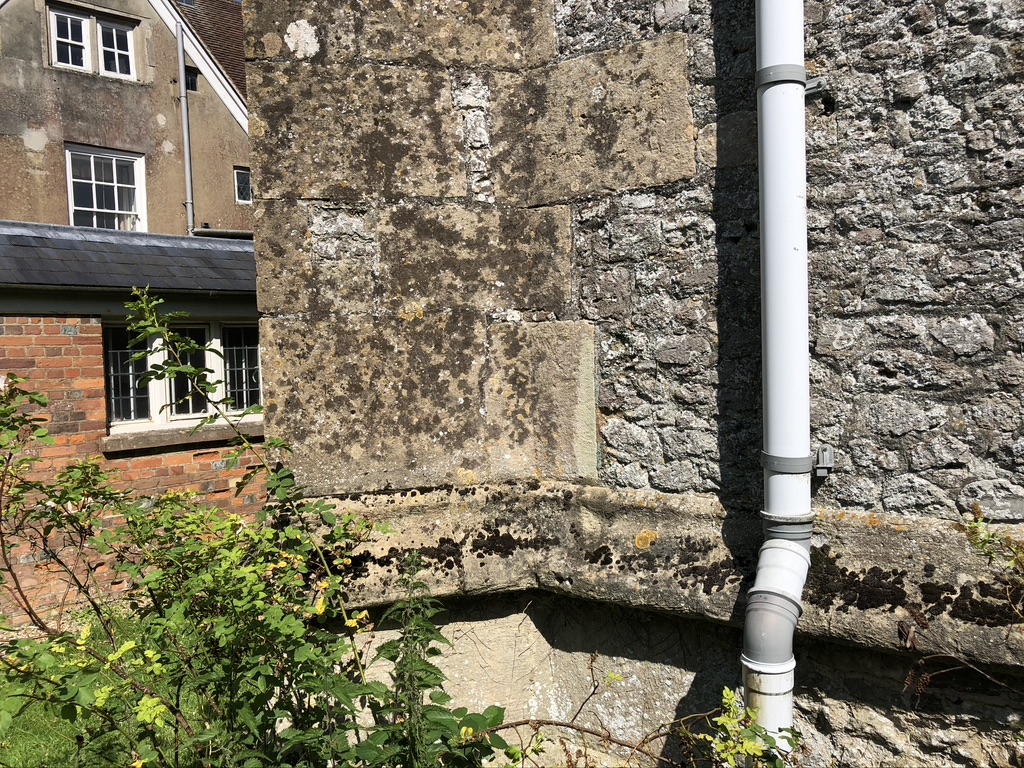
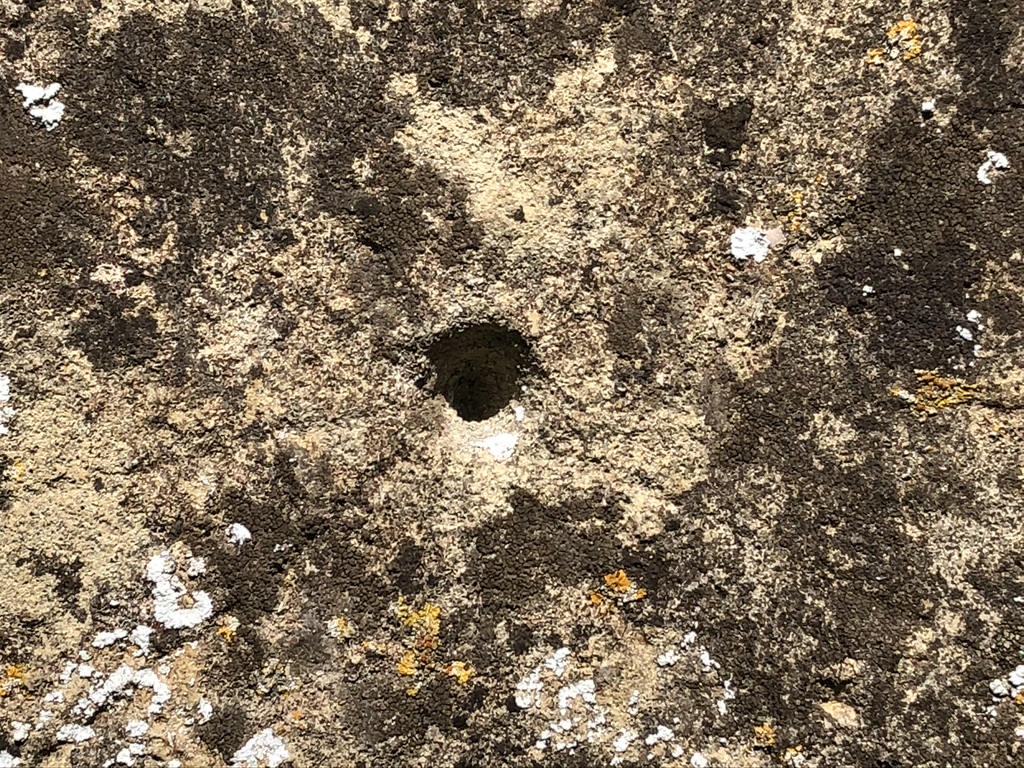
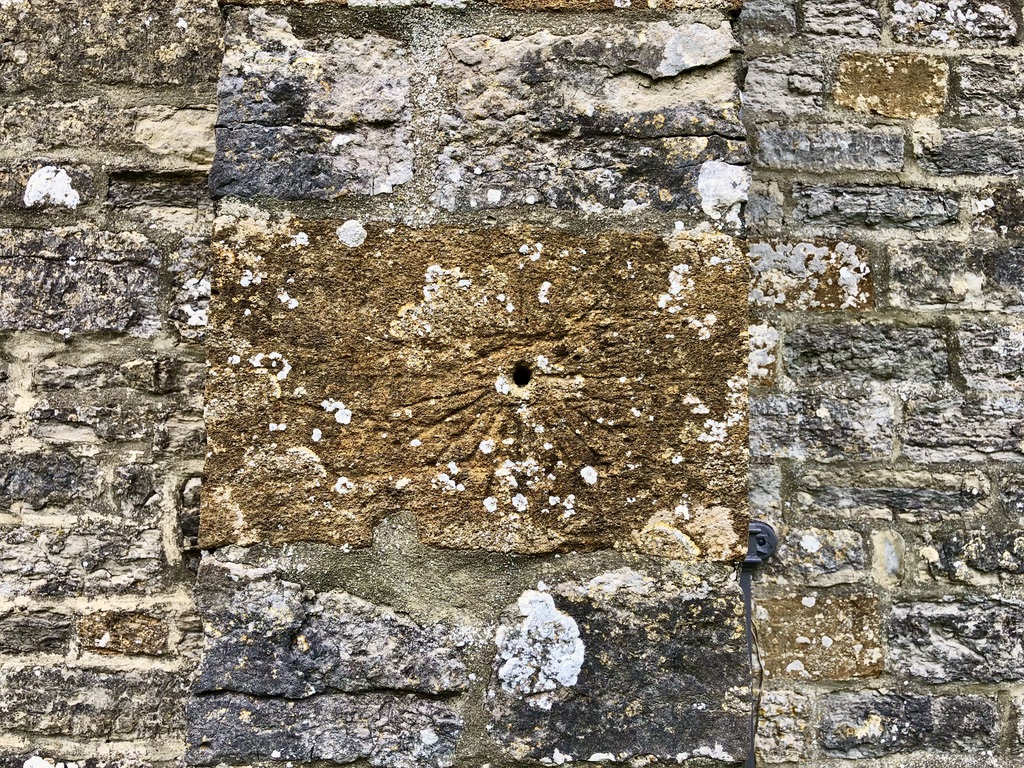
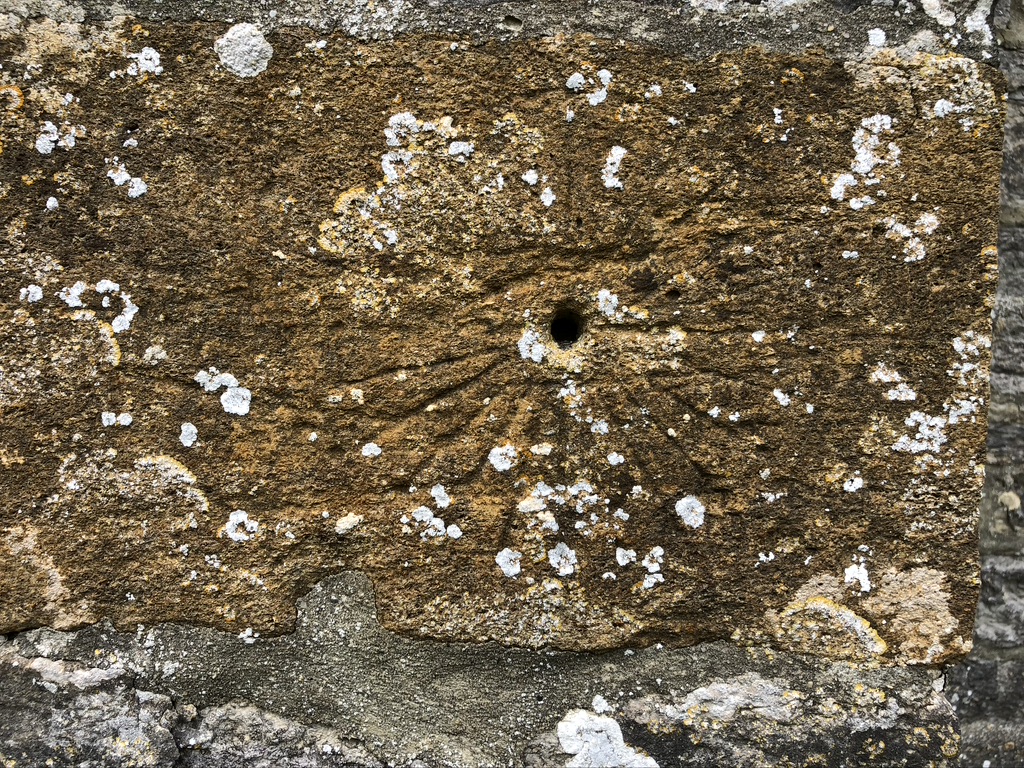
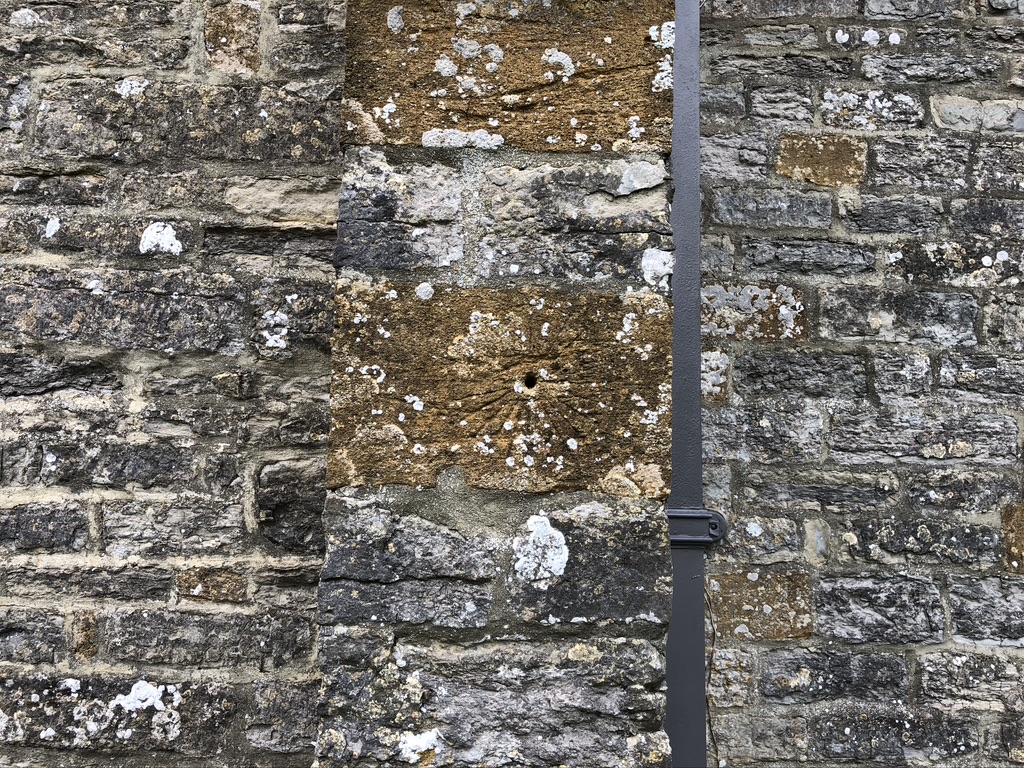
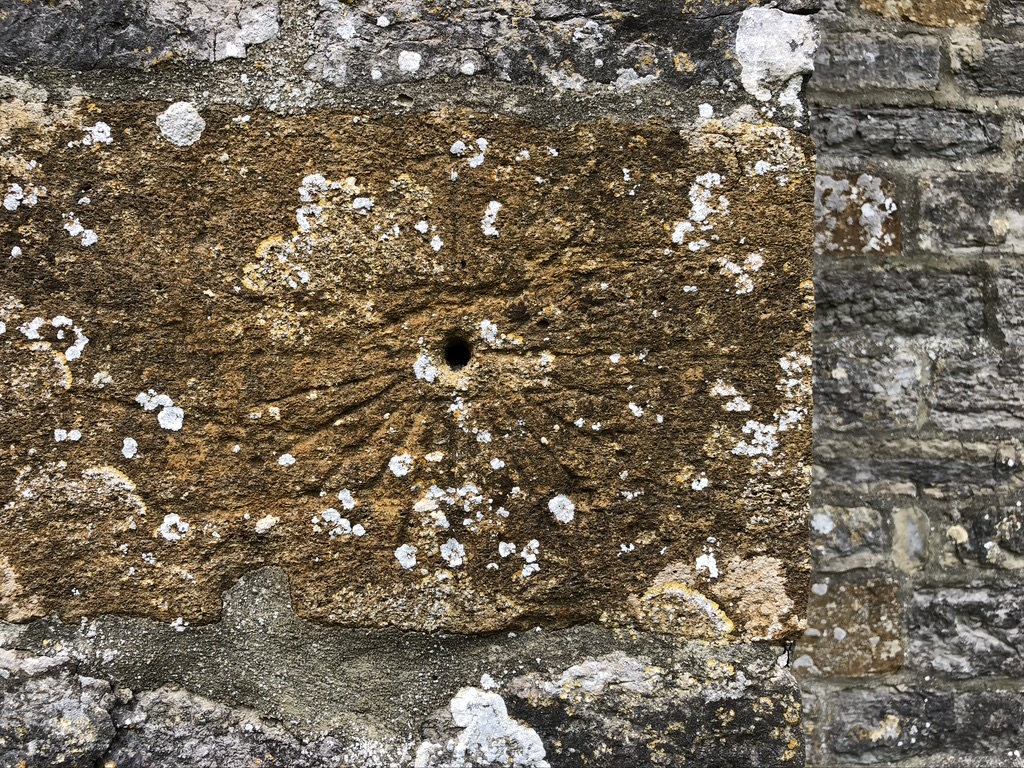
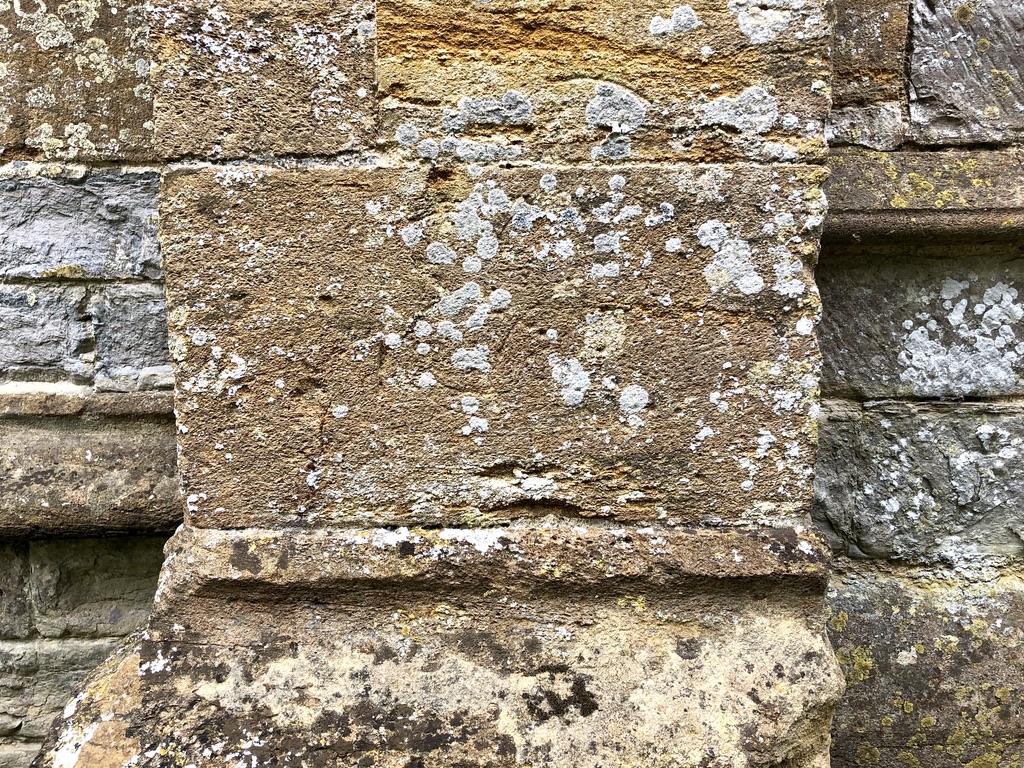
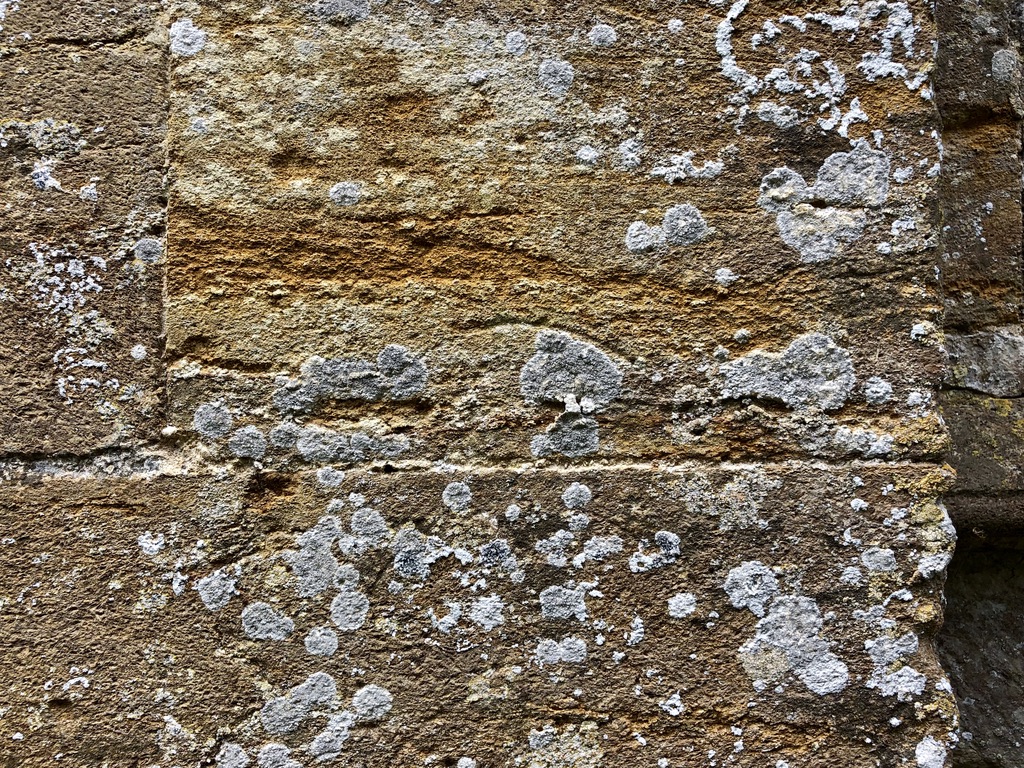
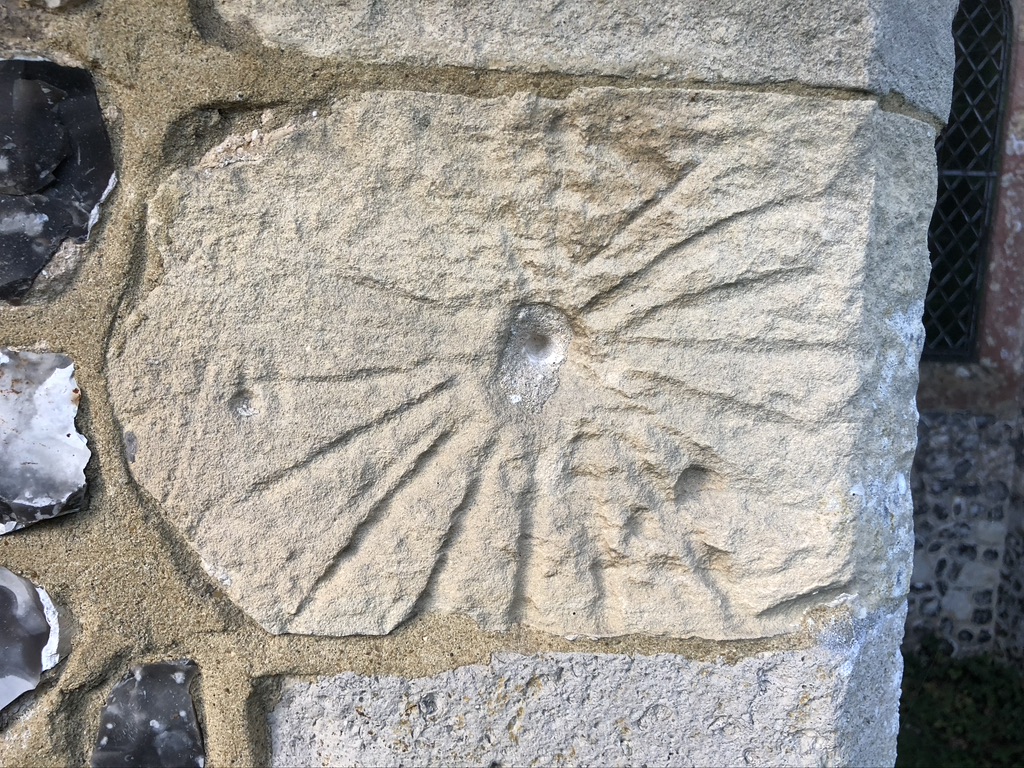
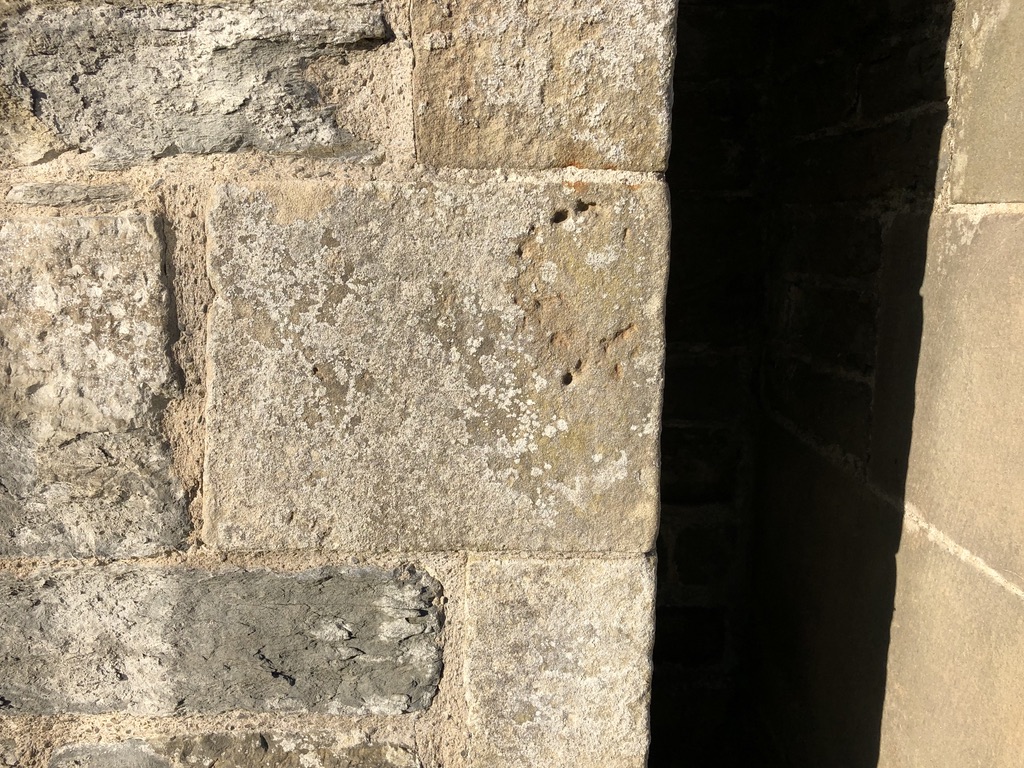
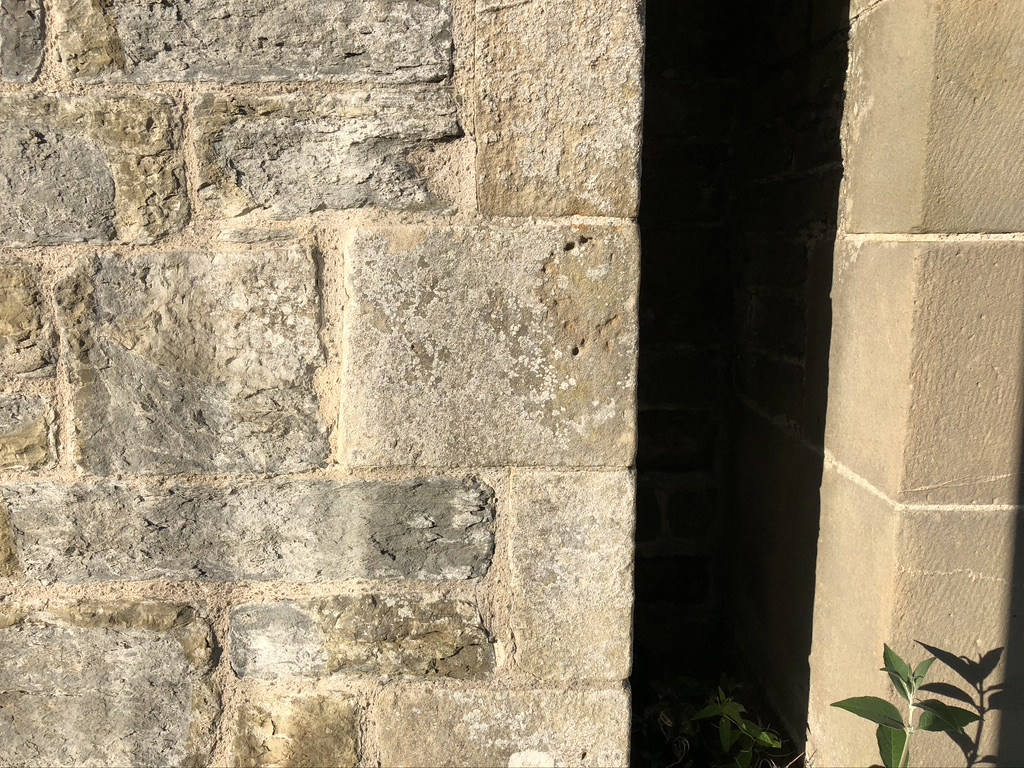
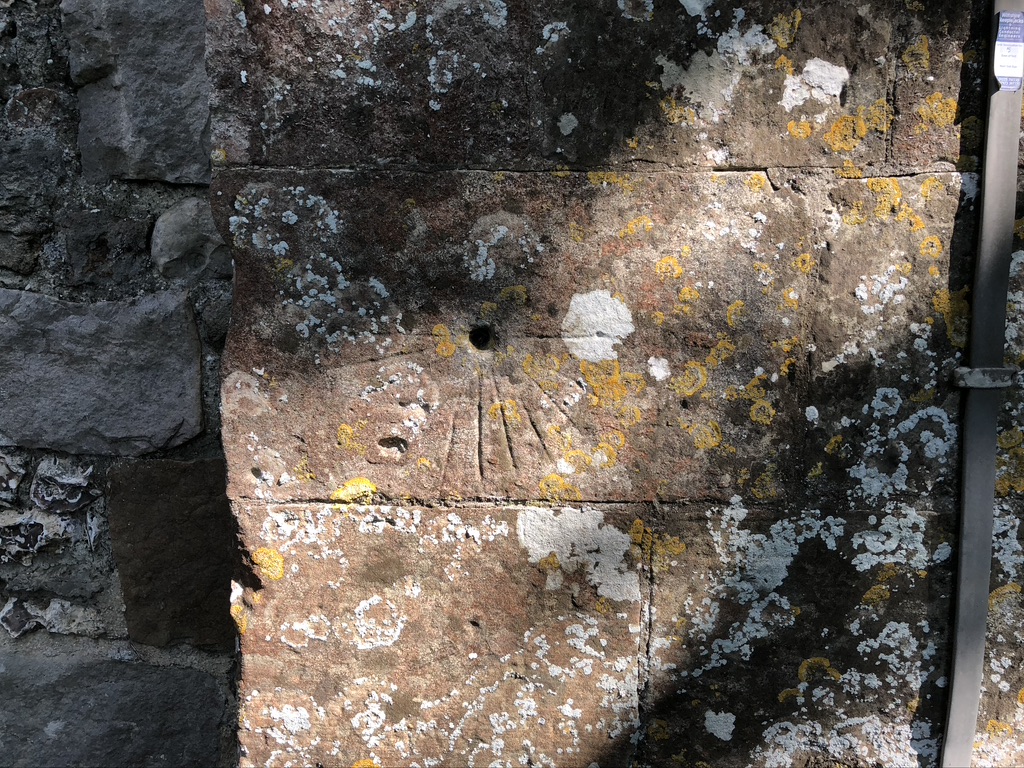
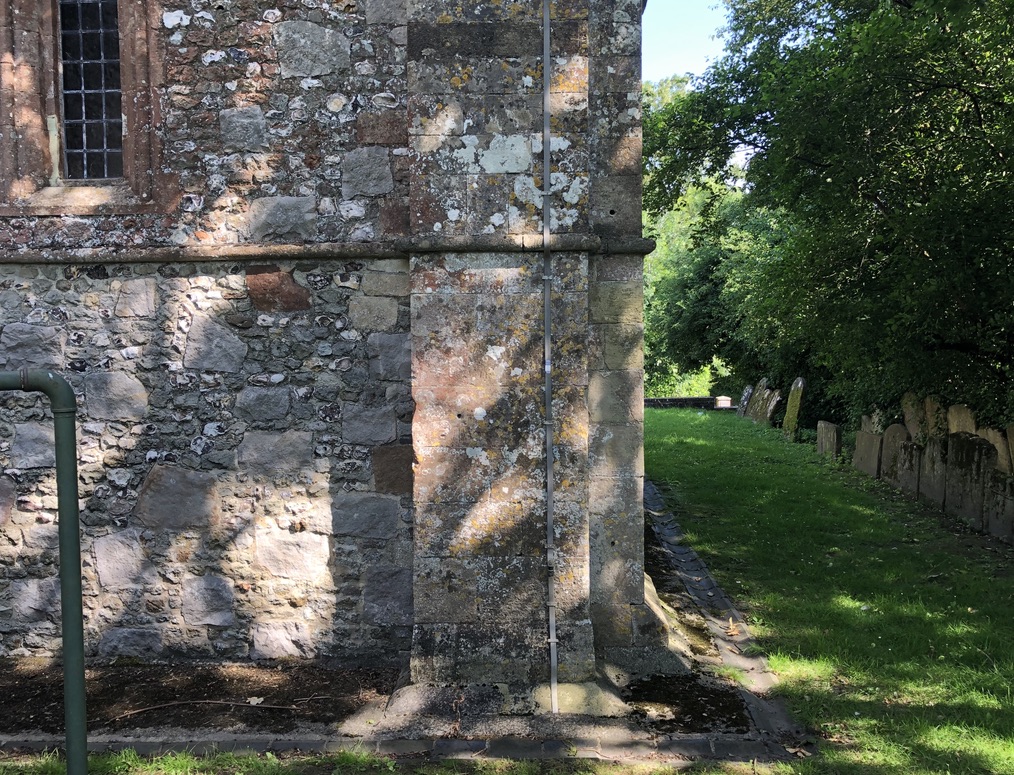
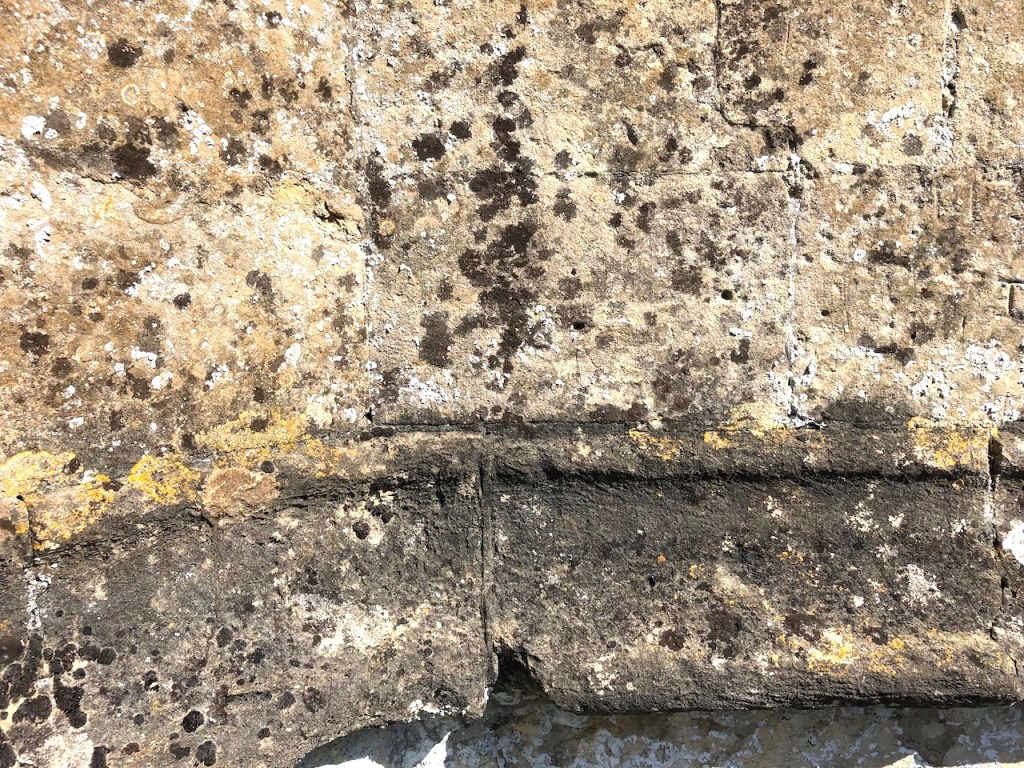
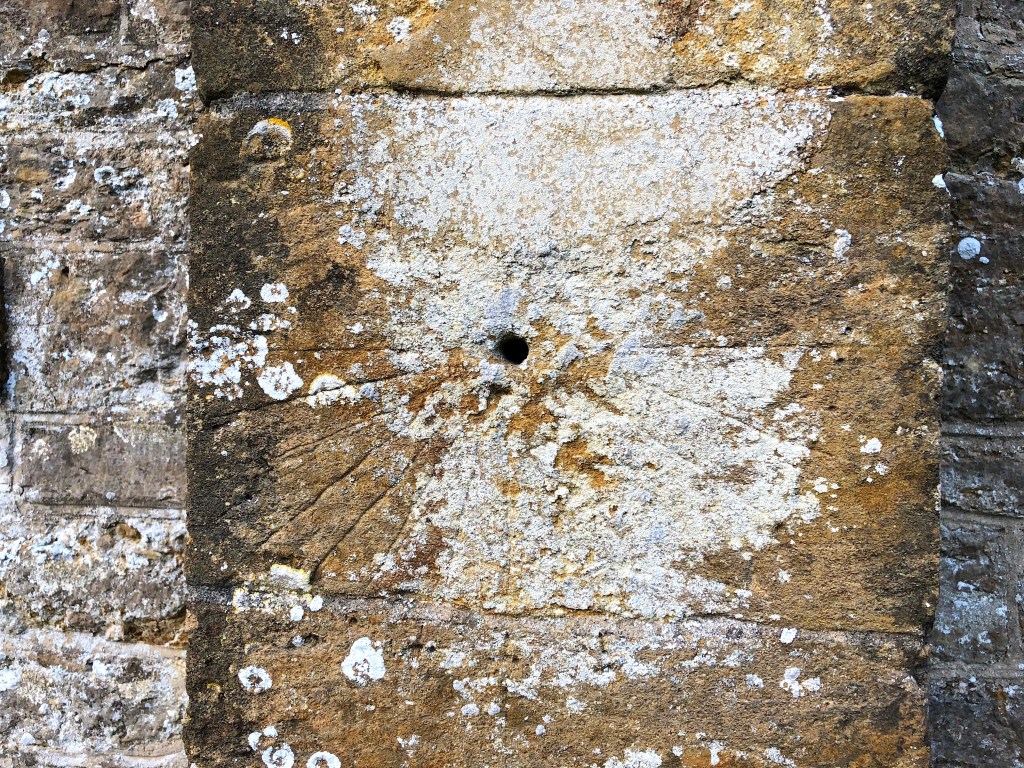
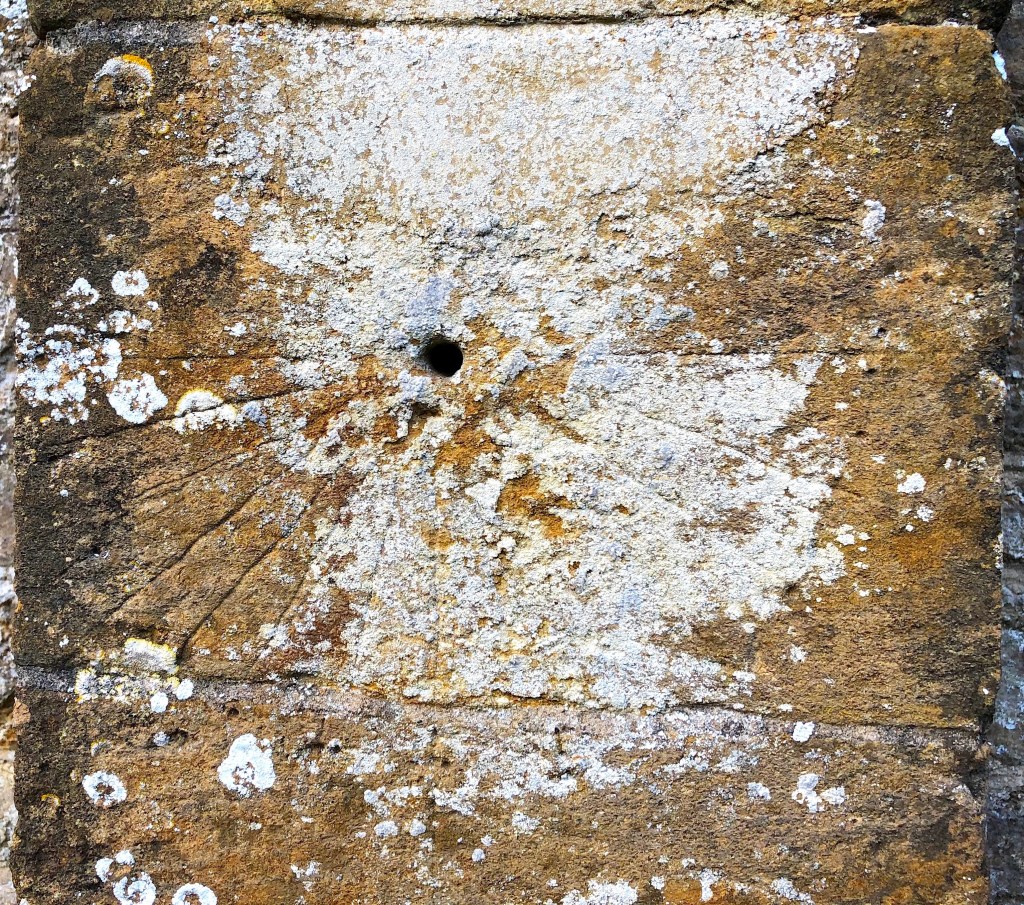
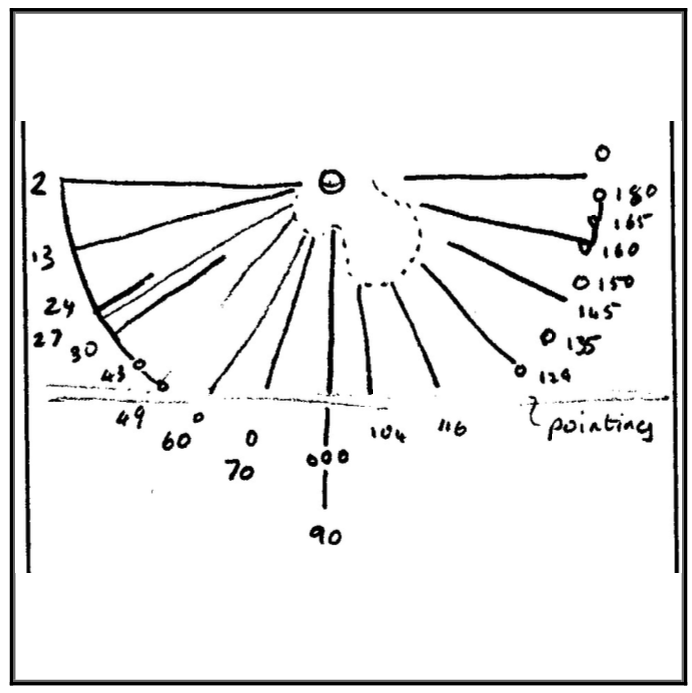
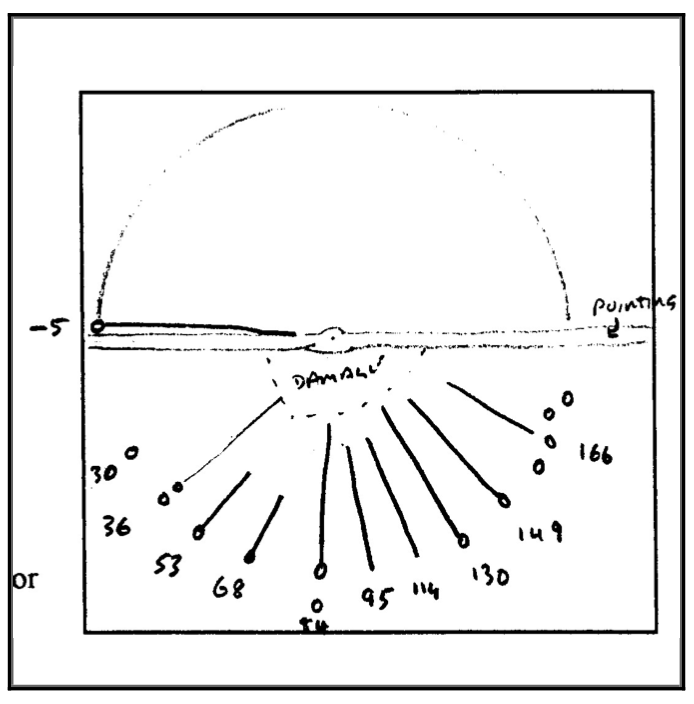
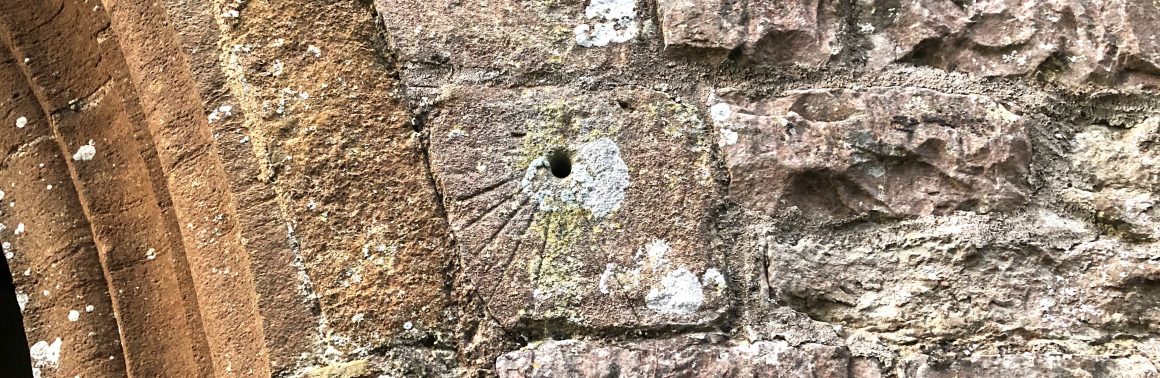
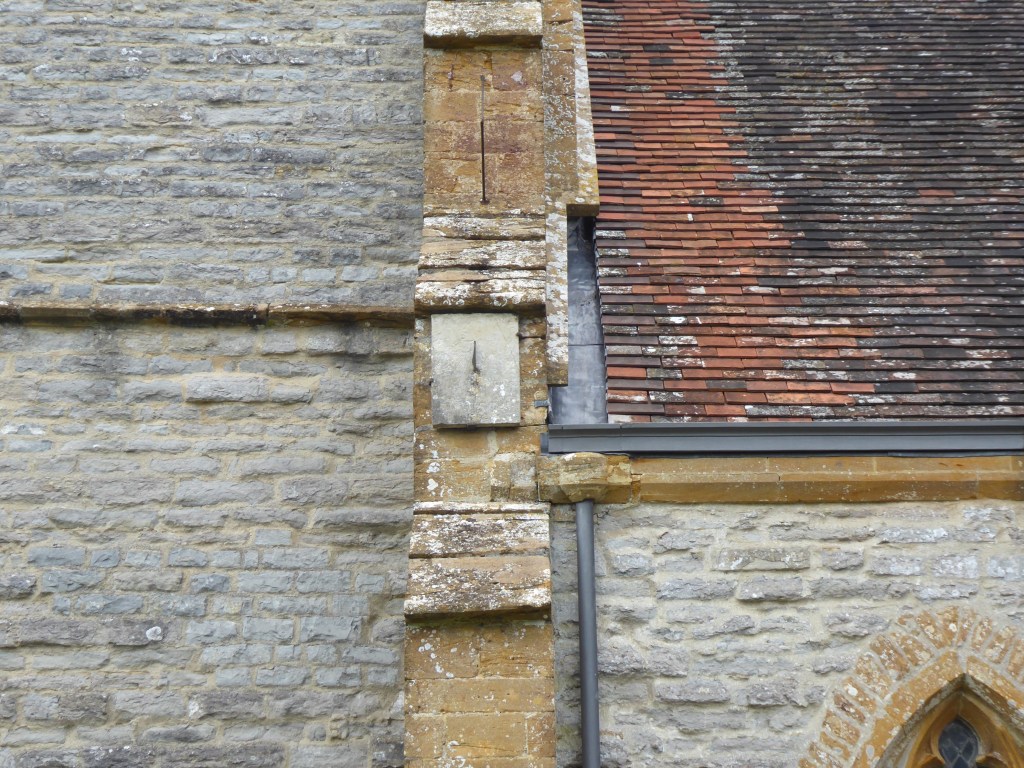
Cut into the large quoin stone on R. side of the priest’s door and spanning its width. The dial has a relatively complex design, perhaps combining its practical purpose with decorative effect. Erosion has made interpretation difficult. The style hole, now a small cave, is in the mortar line. The lower R quadrant shows part of 3 concentric semi-circles. There’s a hint – best seen top L – that at least the inner circle line continued above the horizontal. There’s little other sign of a more complete circle.
St Mary the Virgin . Eardisland . Herefordshire – Scratch Dial 2
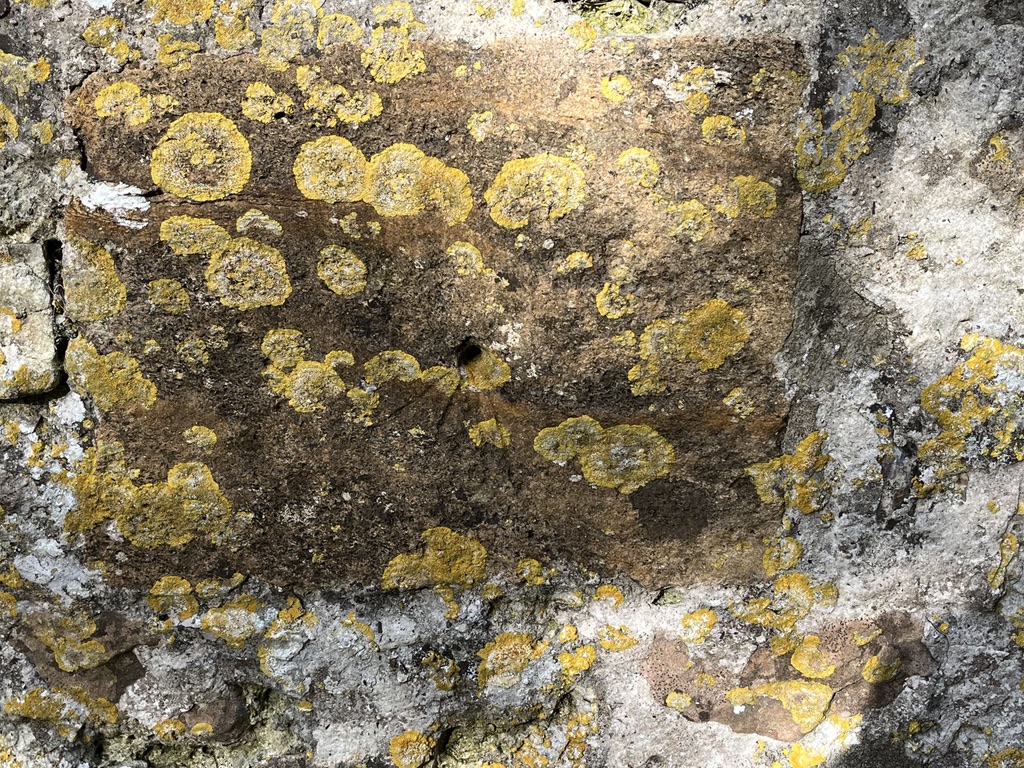
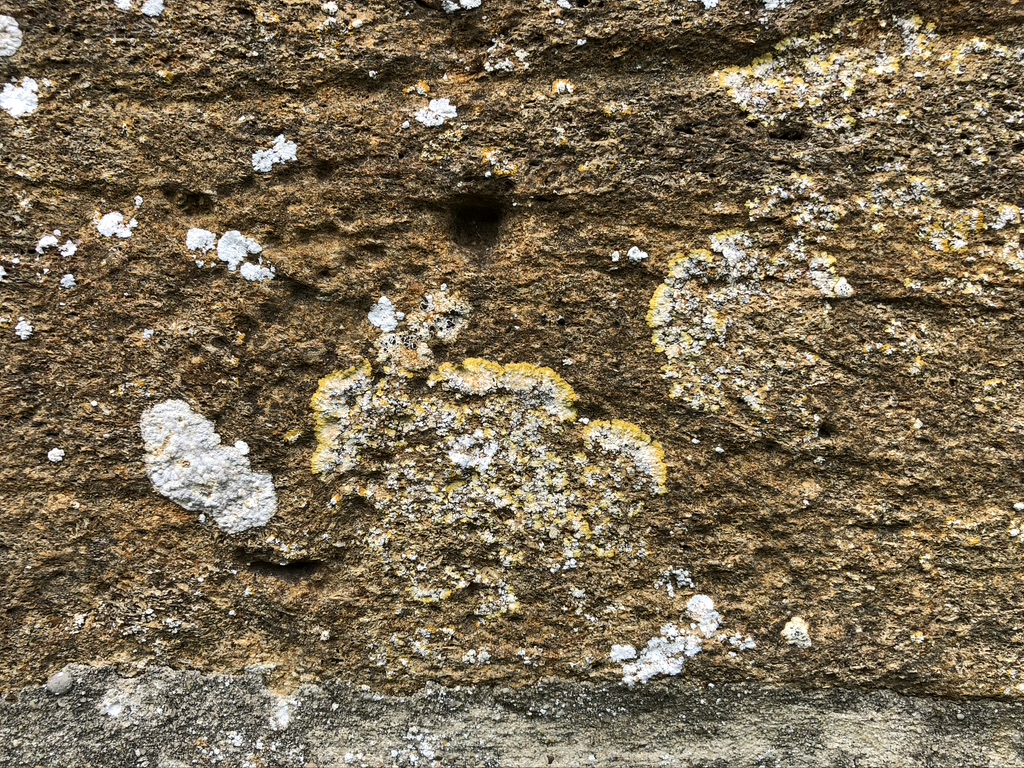
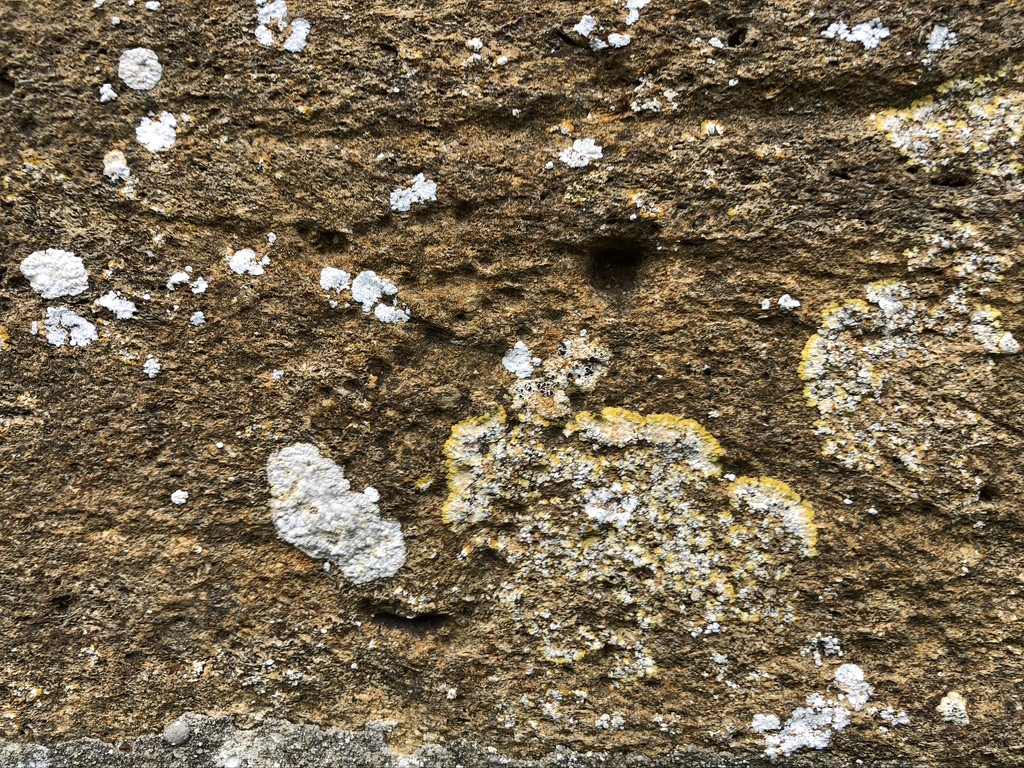
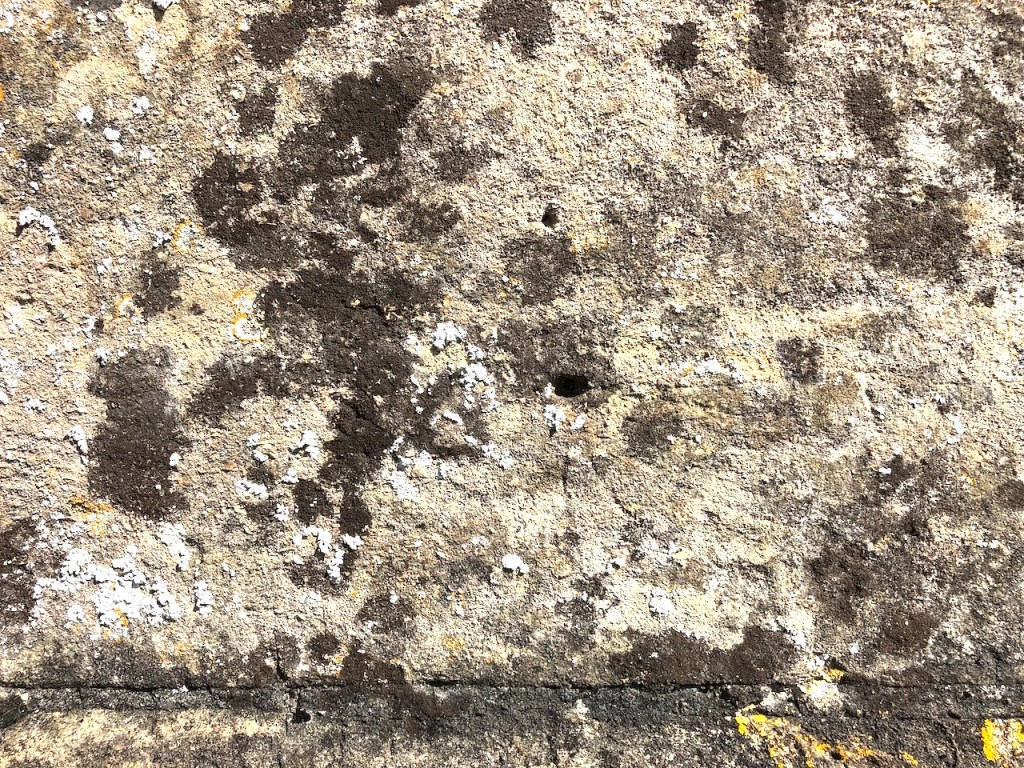
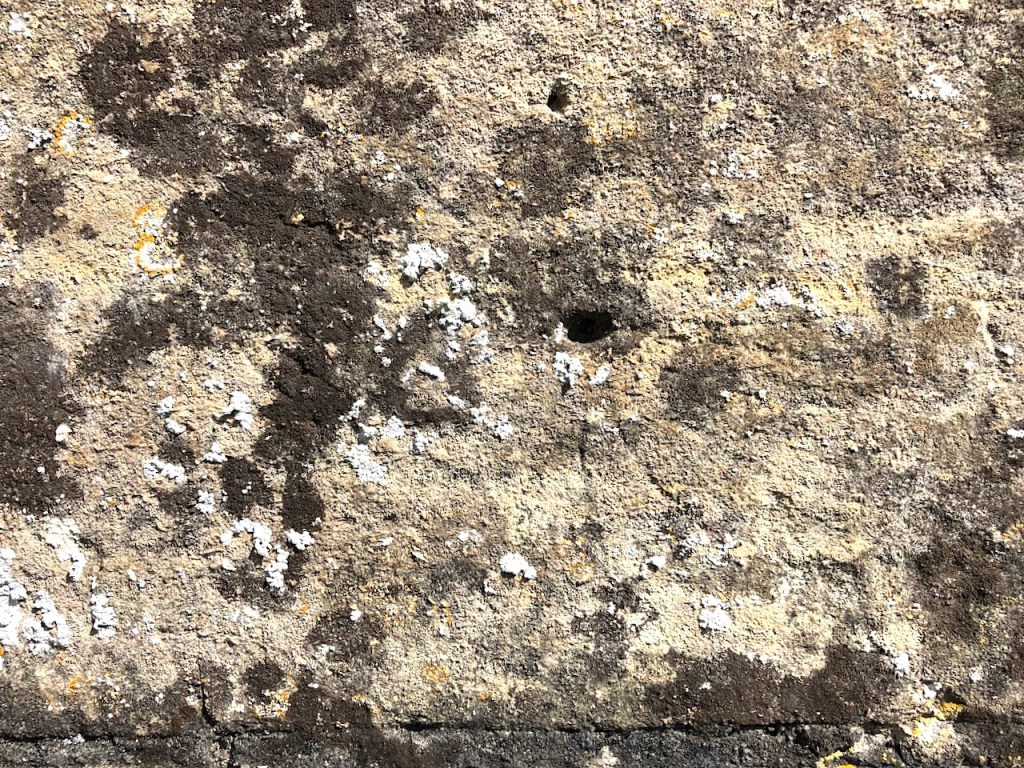
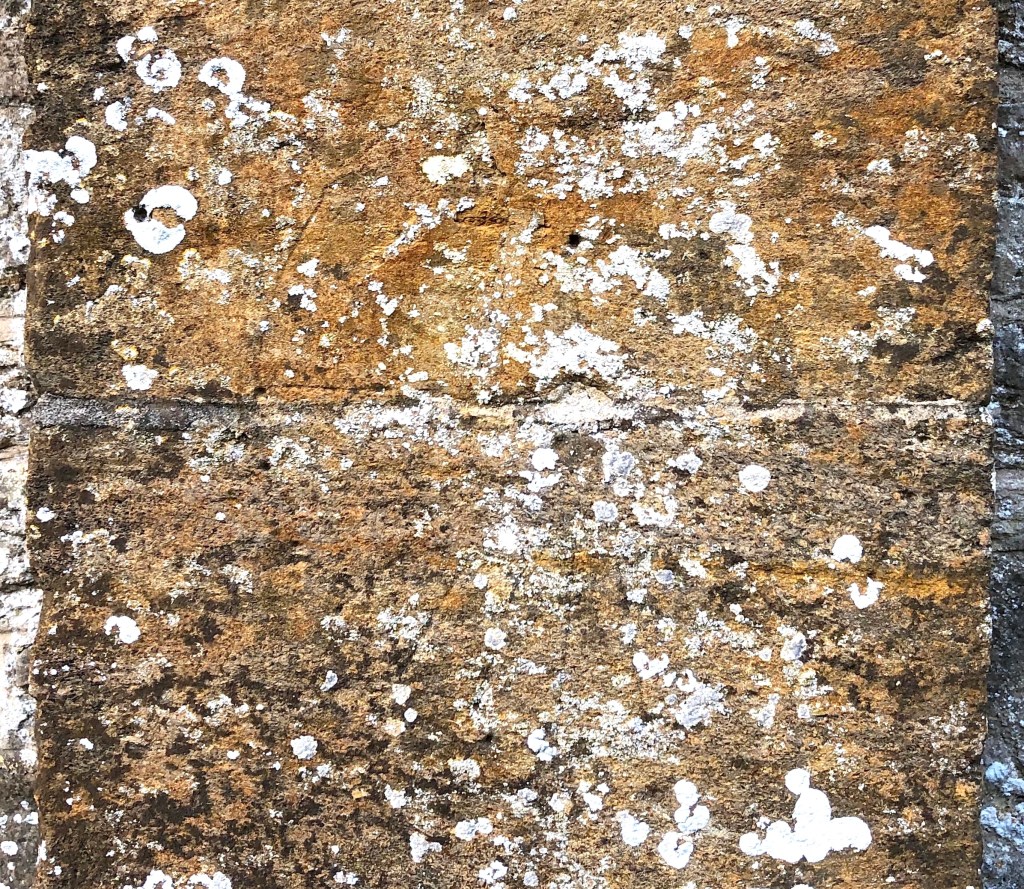
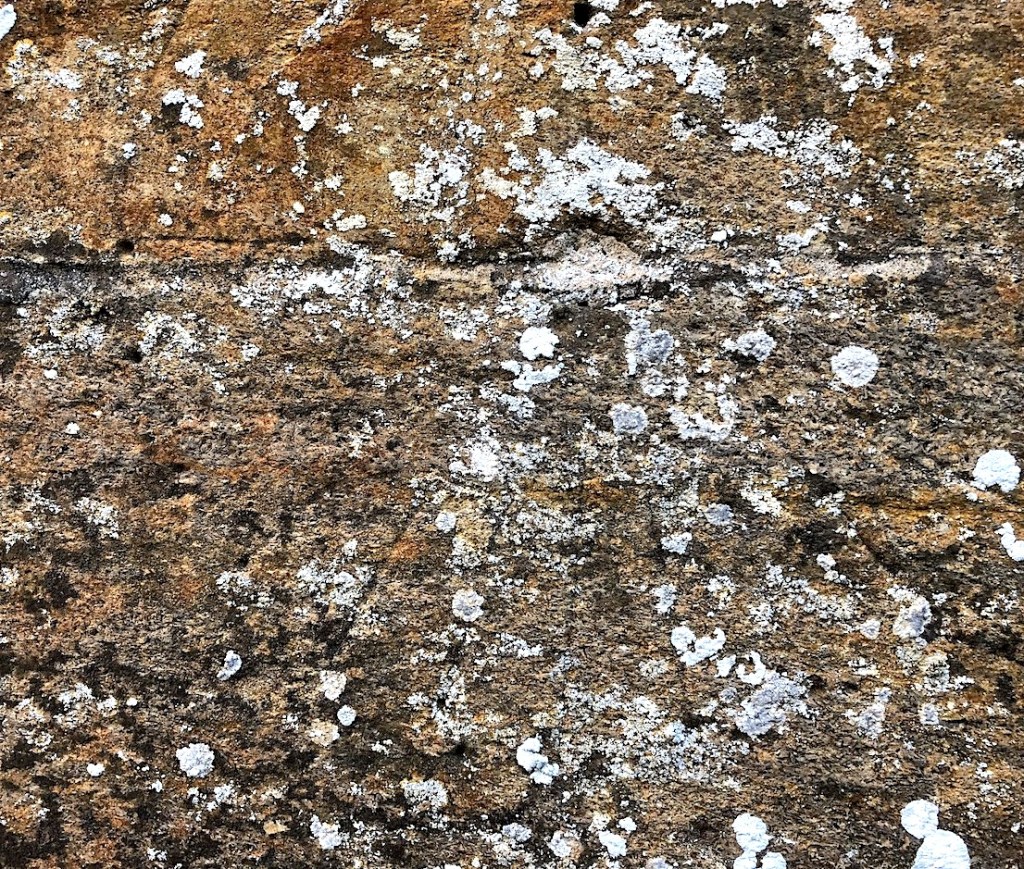
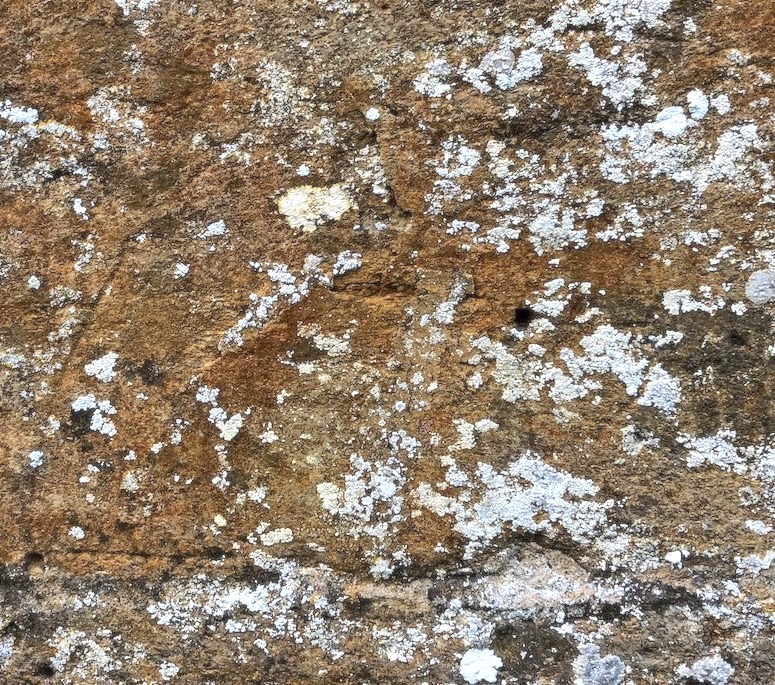
Erosion and lichen obscure the finer details. BSS records 7 lines but a close-up photo in sunlight reveals about a dozen, with possibly some shorter lines (half-hour marks?). There are also pocks, 2 or 3 of which could relate to the dial – in particular the 2 ‘terminal’ ones adjacent to the noon line just above the mortar.
St Mary the Virgin . Eardisland . Herefordshire – Scratch Dial 2
GRADE II*. C13 origins; C14 and later additions / alterations; restored late C19. There are good witch marks and other graffiti on some of the doorways. Long and low in a lovely setting between Craven Arms (N) and Leintwardine (S). 52.4033 / -2.8909 / SO394787
DIAL 1
This recorded dial is quite high (3m approx) on the buttress at the E. end. There are 3 clear lines including the deeper, longer noon line that descends to the edge of the stone below. The R side of the dial is eroded, with 2 fainter lines and a third barely visible. The gnomon hole is in the mortar line. The style has amusingly been replaced by a drill bit, the height suggesting that someone took the trouble to get a ladder for the purpose.
St Cuthbert . Clungunford . Shropshire – Scratch Dial 1
DIAL 2 (unrecorded)
To W. of the priest’s door and the large window to its right is another dial, unrecorded as far as I can tell. It is low on the buttress, 3 stones up from the base. There are 7, perhaps 8, lines radiating from the mortar line, where there is a small metal plate inserted with an unknown purpose. There are 6 pocks that almost certainly belong with the dial. Regrettably our friend with the drill was unable to restrain his DIY instincts on 3 of them.
St Cuthbert . Clungunford . Shropshire – Scratch Dial 2
DIAL 3 (unrecorded)
On the 4th quoin up on the E end, amidst some dead ivy stalks, there’s a further dial candidate. There are 3 noticeable lines and faint traces of a couple more. There is a plausible style hole at the apex of the lines. At the time I wondered whether the design should be awarded dial status. Having examined the photos I now think it should be. All the main criteria are met (location, position, radials, style hole). Luckily the driller has not plied his trade here.
St Cuthbert . Clungunford . Shropshire – Scratch Dial 3
Grade II*. Medieval origins, largely rebuilt using old materials in 1886. Some C12 details (small window, S. doorway). One of a number of hilltop churches in the region, and just W. of the Long Mynd. 2.5283 / -2.91 / SO383926
A scratch dial on this church is mentioned in TWC‘s county lists but not, as far as I can find, elsewhere. It seemed worth visiting as we were nearby. The only likely candidate I could find was in much the most likely location for a dial, to the left of the very early door and on the best stone (long before the porch was added). The configuration of the pocks suggest an afternoon dial marked from a (part-filled) style hole. It’s certainly a plausible candidate for TWC’s dial, and I could find no other. On balance, I’d rate it a probable more than a possible.
Wentnor . Shropshire . St Michael and All Angels – probable scratch dial as recorded by TWC
GRADE 1. C14, earliest record for the site 1275. Largely destroyed in 1643 during the Civil War, as was the adjacent castle. Almost entirely rebuilt in 1656. Late C19 alterations and extensions. Much of interest including a triple hammerbeam roof. Most notable as a rare example of a church built (or rebuilt) during the Commonwealth. 52.3471 / -2.9255 / SO370725
The dial, a large circle, is on a short buttress under the E. window. There are few detectable marks, not least because of the lichen that covers most of it. The presumed style hole is basically a dimple in the centre. The present position – and indeed the history of the building – indicates relocation. It’s hard to say how useful it might originally have been, but it adds to the remnants of the church’s medieval past.
To the right of the E. buttress on the E. end, there is a darker reddish stone, of a type seen elsewhere in the stonework, that caught my eye. There were 2 distinct long downward lines from an apex where there might credibly be a style hole. My photos don’t show the stone and markings as clearly as they looked to the eye. I immediately thought it was a probable dial. If so – given its position – the stone was undoubtedly relocated during reconstruction. I leave these images as food for thought. Comments are welcome.
GRADE 1. Church. C12 nave with C13 transepts, crossing and chancel; tower upper stage C15, vestry added 1831; transept aisles added 1868 in restoration; further restoration 1882 and 1932. Large and dignified PEV. Attractive small town and gateway to the remarkable and beautiful Long Mynd (518m). 52.5382 / -2.8088 / SO452936
DIALS
St Laurence at first sight is clearly much expanded and restored over the centuries. Parts of a much earlier church are evident. The existence of any external decorative features such a scratch dial seemed highly unlikely*. However the stonework round the small doorway looked older, reused, possibly in its original configuration. It was certainly worth walking along the path to take a look.
St Laurence . Church Stretton . Shropshire – doorway with medieval stones and 2 scratch dials
On the W. side of the doorway is a single stone with 2 simple part-dials incised. Their edge positions show that 3 stones were originally involved, but no other stones round the doorway matched the patterns, nor had obvious cuts. So in fact the positions of the stones must have been altered. From what remains of the dials, it is hard to guess how they must have looked but presumably their style holes must have been in the mortar dividing the 3 stones. Possibly this stone is inverted.
The dials are unrecorded by BSS, and I can find no other reference. It is understandable that in their present state they attract little or no attention. Perhaps the moral for dial sleuths is that any church that has a ‘dial-y’ look is worth a quick investigation.
St Laurence . Church Stretton . Shropshire – doorway with medieval stones and 2 scratch dials
* If I had explored further, the church records mention exterior carvings including St Laurence holding a gridiron, and a rare sheela-na-gig, probably of Saxon date.
GRADE 1. Church origins obscure; existing building dates from C15 with substantial C19 rebuilding. Renowned font carved from the column of a C10 Saxon cross and inverted. Excellent chest tombs. Next to a fine C17 Manor. The hamlet – Hardy’s ‘Little Hintock’ – is a few miles SW. of Sherborne, nestled into a peaceful hillside with outstanding views over the Blackmore Vale, shielded from the roar of the lethal A37 Yeovil – Dorchester road. 50.8571°N / 2.5753°W / ST596065
DIAL
BSS register and GLP describe a ‘doubtful’ dial: On W. buttress of tower, late C15. A doubtful dial consisting of a single horizontal line leading to a shallow hole. This could be the remains of a painted dial, or a piece of graffiti.
BSS Diagram of the doubtful dial
This church is local to us. We can see it clearly from our house 3 miles away. Since I started this blog, I have checked the buttress two or three times and failed to find a mark similar to the diagram. There are some horizontal faults in the stone, but I haven’t seen anything as precise.
Recently I decided to try again, choosing early evening on a sunny day when the light would be shining directly onto the face of the buttress. Which it did. This is what was revealed, faintly visible in direct sunlight.
Melbury Bubb . Dorset . St Mary – Scratch Dial
There’s an element of wish fulfilment with amateur dial sleuthing – each hole a potential gnomon location; two or more proximate lines as radials; adjacent erosion faults and dots as dial pocks. However, close inspection here revealed a clear design conforming to dial norms.
Melbury Bubb . Dorset . St Mary – Scratch Dial
The central hole has horizontal and vertical lines leading from it that divide the enclosed area into quadrants. There is the trace of a circle, slightly off-centre from the style hole. The upper vertical extends close to the circumference; the lower vertical (noon-line) stops slightly short of it; the left horizontal extends beyond almost to the lichen; and the right horizontal extends into the lichen. There’s a trace of what could be a 1-line to the right of the noon-line.
Melbury Bubb . Dorset . St Mary – Scratch Dial annotated
Having examined the dial in situ, made some measurements, and checked my photos I am convinced that this is a simple scratch dial probably from C15 soon after the tower was built rather than later. In any event I have convinced myself.
Melbury Bubb . Dorset . St Mary – Scratch Dial Gallery
The remarkable font deserves inclusion. HE describes it as a cylindrical tapering stone bowl, reversed, formerly base of a shaft, carved with continuous design of beasts: stag, horse, wolf, and ?lion, and lesser beasts, and interlacement, C10. There is a helpful description and annotated diagram in the church.
I have seen St Mary described as a ‘one-treasure church’, but the whole interior, the churchyard with its early chest tombs, the lovely setting of the church and hamlet – and possibly a C15 mass dial – make it rather more than that.
Melbury Bubb . Dorset . St Mary – the C10 Saxon-origin font
Grade II. Mid C13, with a Norman font suggesting earlier origins. Tower C15. By early C19, dilapidated and demolished (apart from the tower) and rebuilt. The work was inferior and re-rebuilding was soon required. Close to the Kennet & Avon canal between Devizes and Pewsey. 51.3598 / -1.8703 / SU09162
DIAL
Badly eroded and degraded, the dial is located on the SW face of the buttress S of the W door. Apart from the semicircle at the top it is hard to discern how the dial might have looked. At first sight, this is a dial cut across 2 stones (there’s a hint of a circle on the lower stone), with the style hole presumably lost in the damaged area (the mortar line looks too high for one). Listed by TWC; not in the BSS register
Alternatively, possibly the combination of dilapidation, demolition and double rebuilding in C19 included rearranging some of the stonework of the tower that otherwise survived the chaos. Conceivably the present visible ‘semicircle stone’ was parted from a companion stone cut with the rest of the dial that was repurposed elsewhere.
Stanton St Bernard . Wilts . All Saints – Scratch Dial and Graffiti
Apart from the dial, there are quite a few witch marks and graffiti / initials. I take the double triangle mark beside the dial to be an emphatic ritual protection mark rather than, for example, a mason’s mark.
Stanton St Bernard . Wilts . All Saints – Scratch Dial and Graffiti
GRADE II* . C12, later expansion until decay by C19 rendered it ‘unfit for public worship‘. Radical action was taken and the church demolished leaving only the chancel. The ‘new church’ was built in contemporary style on the High Street. Much of the old church was transferred to the new one (including a dial stone, to be featured another time). The old church is still in use and much of interest remains including Elizabethan wall paintings, early bells, and a C13 (or C12?) font. Also a medieval oak door carbon-dated to 1354. 51.1131 / -1.4876 / SU359349
DIAL
The church information leaflet notes ‘…a Mass Clock ca. 1214 on the door jamb of the west door’. However such a precise date is arrived at, this is a striking example of an early dial and a most unusual one in being set in an approximate rectangle rather than (if anything) a semi or complete circle. In Hants I know of one other, at Laverstoke.
St Peter Old Church . Stockbridge . Hants – Scratch Dial
The dial is set facing south among a selection of witch marks and graffiti scratched around the doorway. I counted 8 (possibly 9) lines rather haphazardly drawn and positioned ’round the clock’, with several pocks on the dial and its perimeter (also a dot pattern below). The noon line seems faintly to be extended. The style hole is filled. I wonder if it is unusual for such a very early dial to mark a full 24-hour cycle?
BSS gives the condition as fair and specifies 8 lines. Pocks are not noted. Comment: Repositioned?Irregular outline. Crudely cut or made. Cannot be classified. Unique shape.
Green ARG includes Stockbridge new church in his indispensable book of 1926 ‘Sundials – Incised Dials or Mass Clocks’. He visited in May 1922 and there is a detailed entry covering the dial stone removed from the old church and repositioned, inverted, high up at the W. end of the N. aisle. I will post about this dial in due course. However ARG makes no specific mention of visiting the old church, and there is no entry for it except in his concluding list of Hants dials.
Stockbridge . Hants . St Peter – Scratch Dial, Witch Marks and Graffiti
NOTE: for a short summary of the Stockbridge churches & dials, see the entry on BRITAIN EXPRESS
GSS Category: Scratch Dial; Witch Mark; Church Graffiti
GRADE II*. C12 origins on earlier pre-conquest site; extended in C13; tower C15; Victorian restoration. Outcompeted as an historic building by Montacute (the house) NT, worth a visit in its own right, obviously. 4 miles NW of Yeovil. 50.9498 / -2.7178 / ST496169
DIALS
DIAL 1
Repositioned and inverted on a S. buttress. An unusually large style hole, with other holes and pocks that may be markers, or perhaps irrelevant. The top left hole, on the circle, is the most likely to be related – perhaps a emphatic reminder for Mass. The afternoon lines are emphasised and the noon line elongated, though it looks a casual later addition. See below for image with the dial reverted
St Catherine . Montacute . Som – Scratch Dial 1
Father Horne DEH visited Montacute on 18 June 1914 and recorded it thus:
205. This dial is on the second buttress from the tower, at a height of 5 feet 7 inches above the ground. The noonline is 5 inches in length, the stylehole is 1 1/4 inches deep by 3/4 of an inch in diameter, and the aspect is s. by 12° e. Type 5b.
This is a rare example (and perhaps none exists now, a century later) of a possible style fragment found in situ. The record continues:
This dial is upside down, and hence has been moved from its original place. A fragment of the metal style was extracted about an inch in length, and which had rusted down to about 1/2 of an inch in diameter. It appears to be a piece of iron. June 18th, 1914.
St Catherine . Montacute . Som – Scratch Dial 1
DIAL 1 REVERTED
St Catherine . Montacute . Som – Scratch Dial 1 Reverted
DIAL 2
On the second (E.) tower buttress on the S. side, another dial, unrecorded by Father Horne presumably because it doesn’t strictly fall within the – or his – scratch dial definition. However, it is a fine dial in its own right and deserves to feature here even if not quite qualified for inclusion.
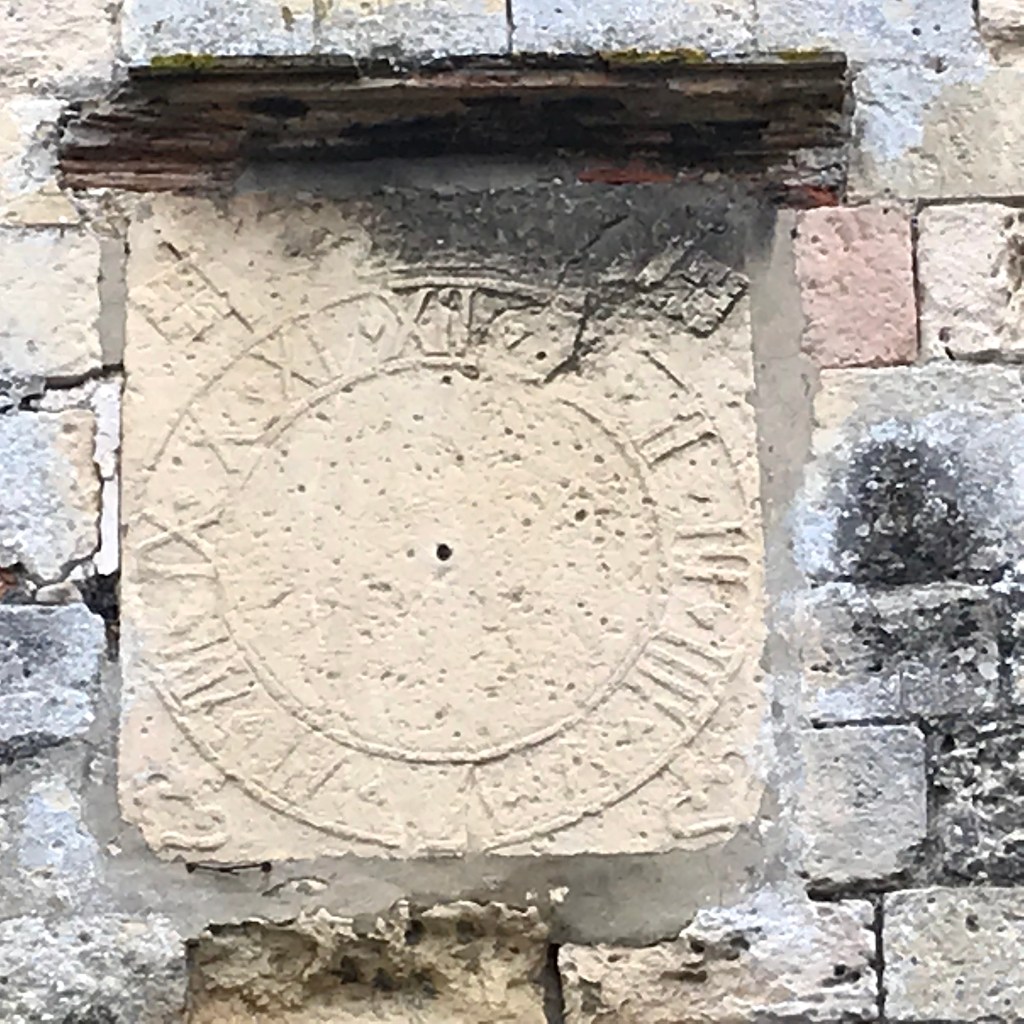
I haven’t yet found an analysis of this dial in the usual resources. The lines are unevenly spaced but not graduated. The hours are clearly marked from 8 to noon in Arabic numerals; then faintly (eroded?) from 1 to 5 in Roman numerals. The 3-line is barely visible.
This Arabic / Roman numbering mix is not something I have come across before. It may help to date the dial – late C16 perhaps? Any further information would be welcome.
St Catherine . Montacute . Som – Scratch Dial 2
Ref: Somerset Historic Environment Record: There are two engraved sundials on the south side of the church. The first is semicircular and reset upside down on the second buttress west from the steps down to the boiler house. There are three marker holes. The second is on the E buttress for the tower and the divisions are numbered in a combination of Roman and arabic numbers.
GRADE II*. C13 origins, mainly C15, later restoration, transepts added 1874. 3 miles W. of Yeovil, close to Montacute. 50.9365 / -2.7031 / ST506154
DIAL
The dial, once located E. of the porch, is disappointingly half-concealed by a discoloured and broken perspex sheet screwed over it. It’s a well-intended method of protection, of course, but some say it is preferable to leave a dial to erode naturally over the centuries. Possibly a covering like this could actually cause deterioration.
A number of clear graduated lines are visible in the lower R quadrant. There is a large pock, with a couple of small holes in the mortar below. The large one – between the terminus of two afternoon lines – may well be part of the dial. It’s too large to be the location of the missing screw for the covering. Perhaps that was fixed in a smaller hole in the mortar.
St Peter and St Paul . Odcombe . Somerset – Scratch Dial
Dom Ethelbert Horne DEH visited Odcombe church on June 8th, 1915. He noted: this dial is on the s.e. face of the buttress, and hence may not be in its original position and his record states:
208. This dial is on the s.e. angle buttress of the s. porch. It is 4 feet 4 inches above the ground, the noonline is 3 inches in length, the stylehole is 4 1/4 inches deep by 1 inch in diameter, and the aspect is s.e. Type 3. June 8th, 1915.
St Peter and St Paul . Odcombe . Somerset – Scratch Dial Gallery