BERESFORD . STAFFS . CHARLES COTTON’S FISHING HOUSE – Cube Dial

Charles Cotton’s Fishing House . Beresford . Staffs – Cube Dial

CHARLES COTTON’S FISHING HOUSE . BERESFORD . STAFFS

CUBE DIAL

GRADE II* The most famous and piscatorially significant fishing ‘hut’ in the world, in a clearing beside the River Dove, near Hartington. By a quirk of a bend in the river, the hut is in Staffs rather than Derbyshire. Single cell square plan in an Artisan Mannerist style BLB SK127592

The inscription Piscatoribus Sacrum – a sacred place for anglers – gave rise to the hut’s reverential name among fishermen, The Temple. I can’t improve on this description from HE:

Charles Cotton’s fishing house is a unique building designed specifically for the sport of angling. It was an elaborate building in relation to its simple function, an expression of Cotton’s dedication to angling and to his entertainment of fellow anglers. Izaak Walton and Cotton’s The Compleat Angler was significant in the development and diversification of the sport from the 17th century. The fishing house is a fine preservation of Charles Cotton’s angling endeavours and its association with the popular work The Compleat Angler makes it of national significance.

Dated inscription, and intertwined initials of Charles Cotton & Izaak Walton on the keystone

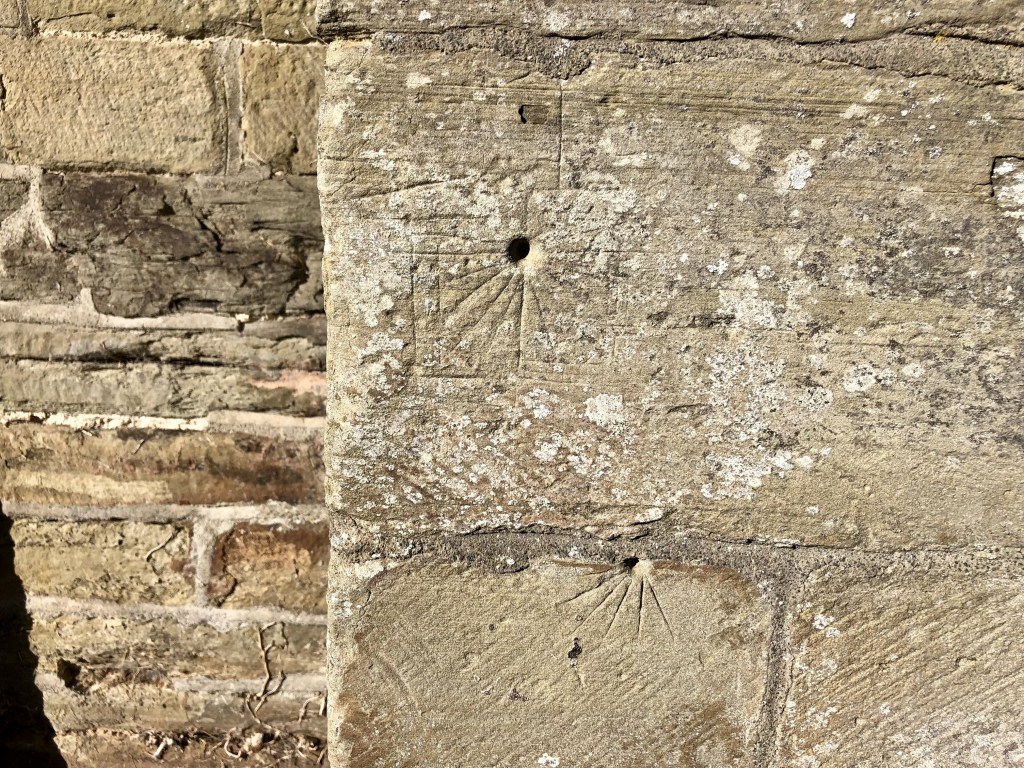
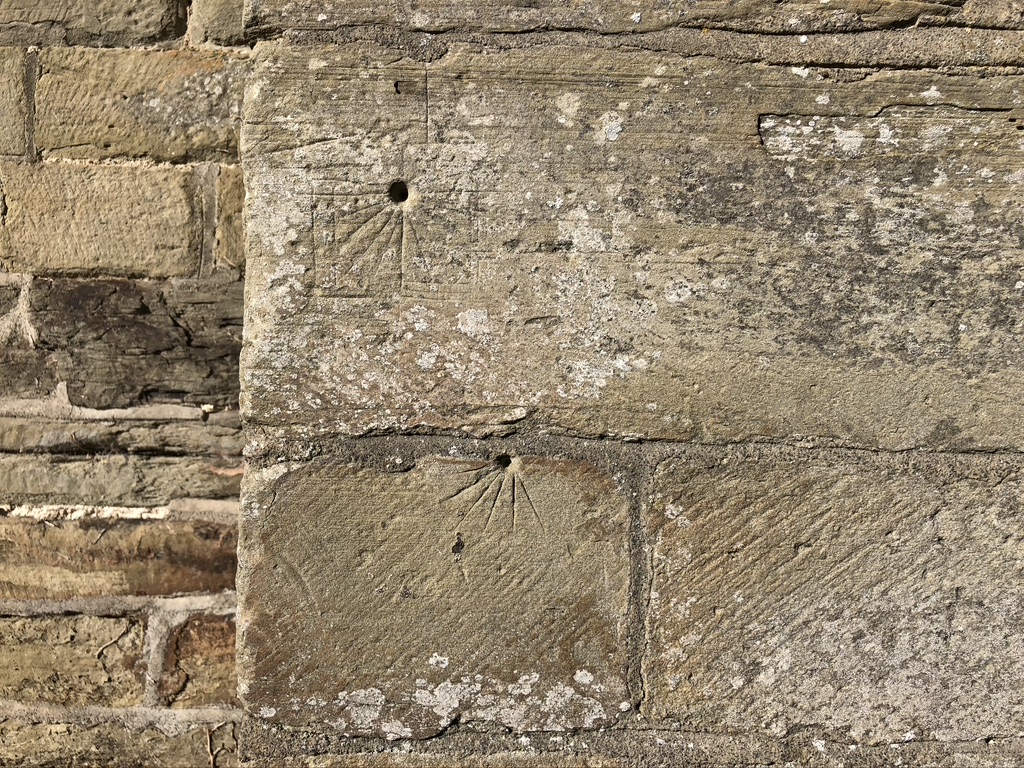
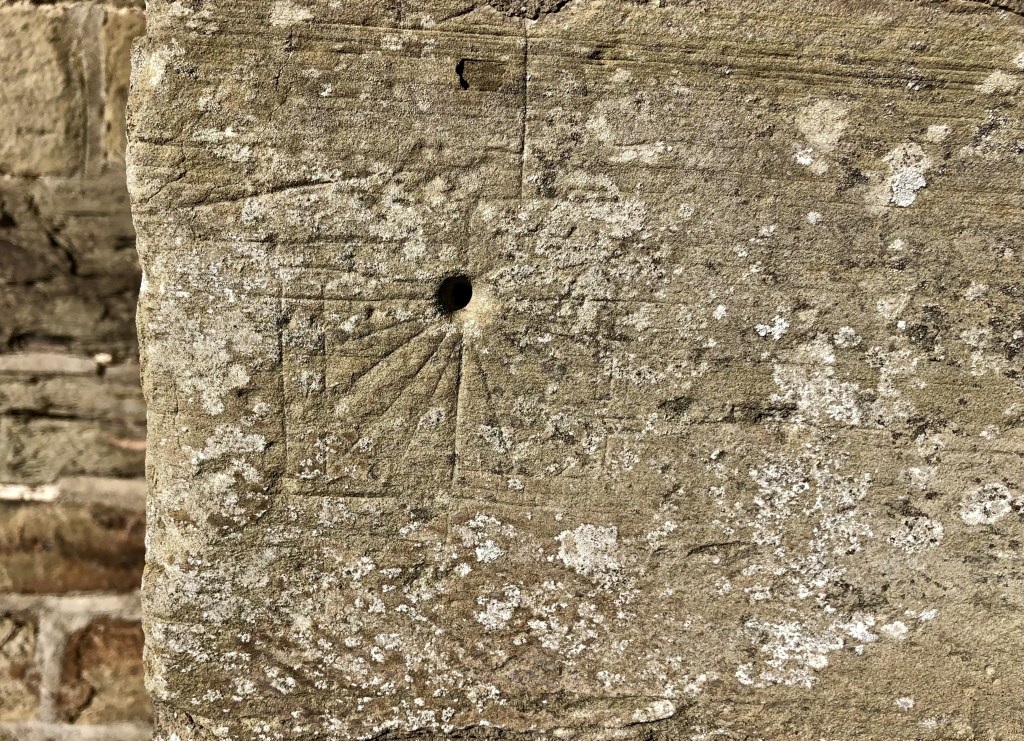
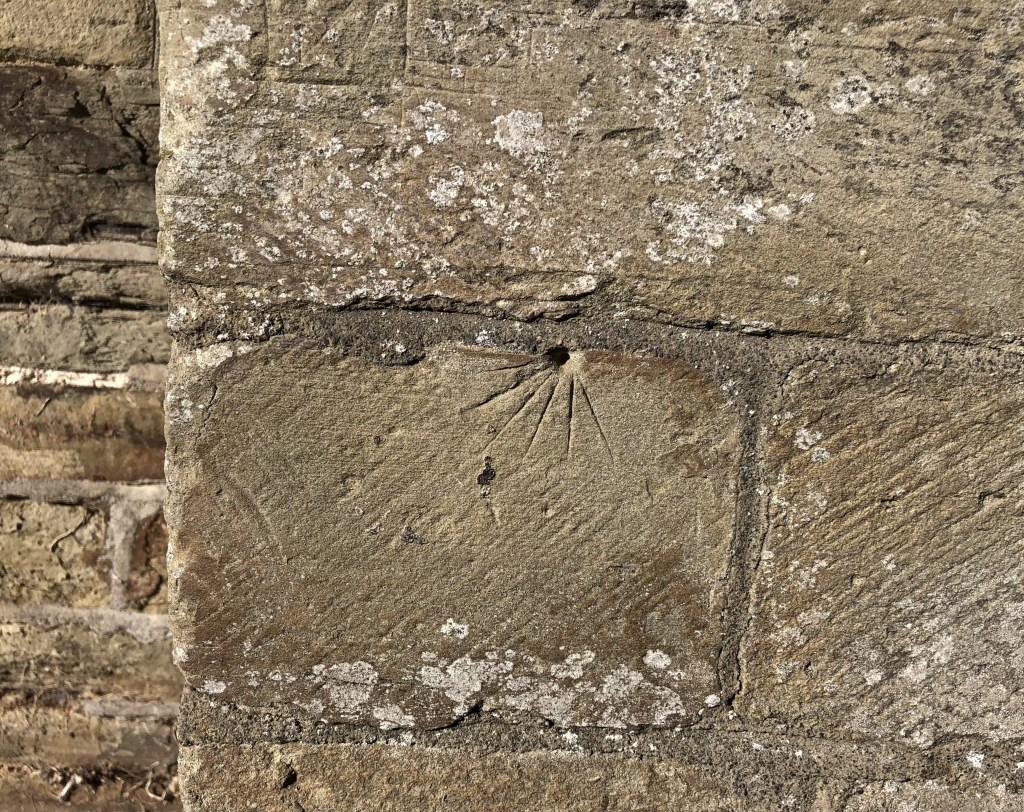
CHARLES COTTON’S CUBE DIAL

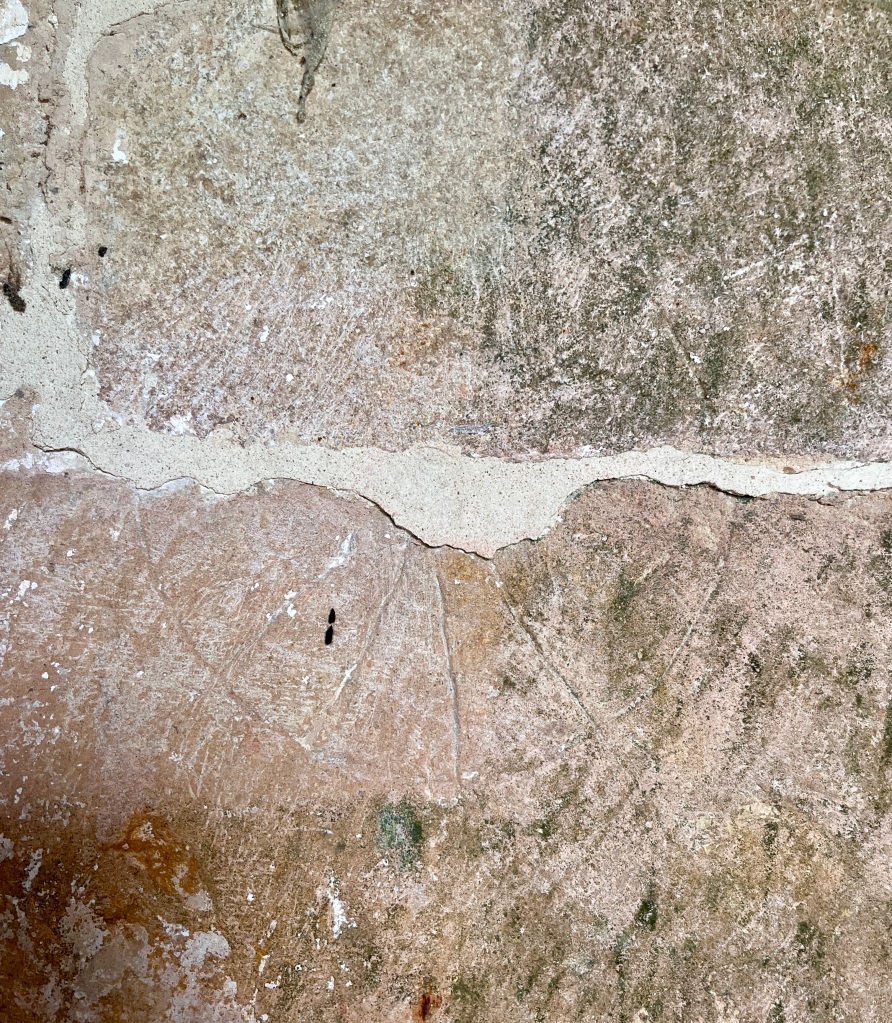
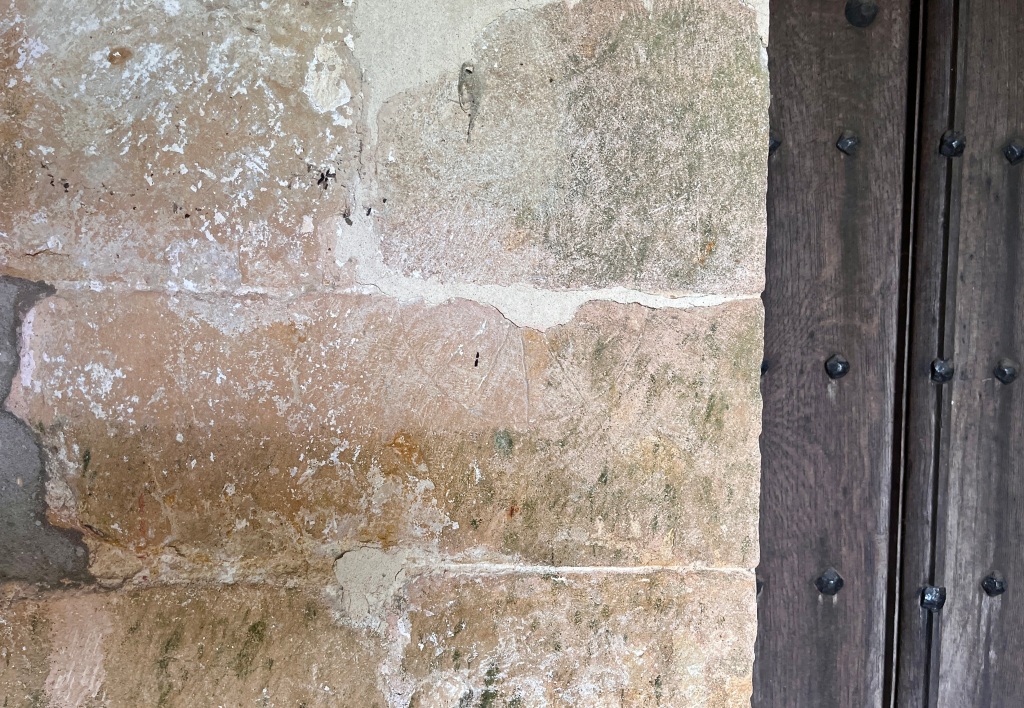
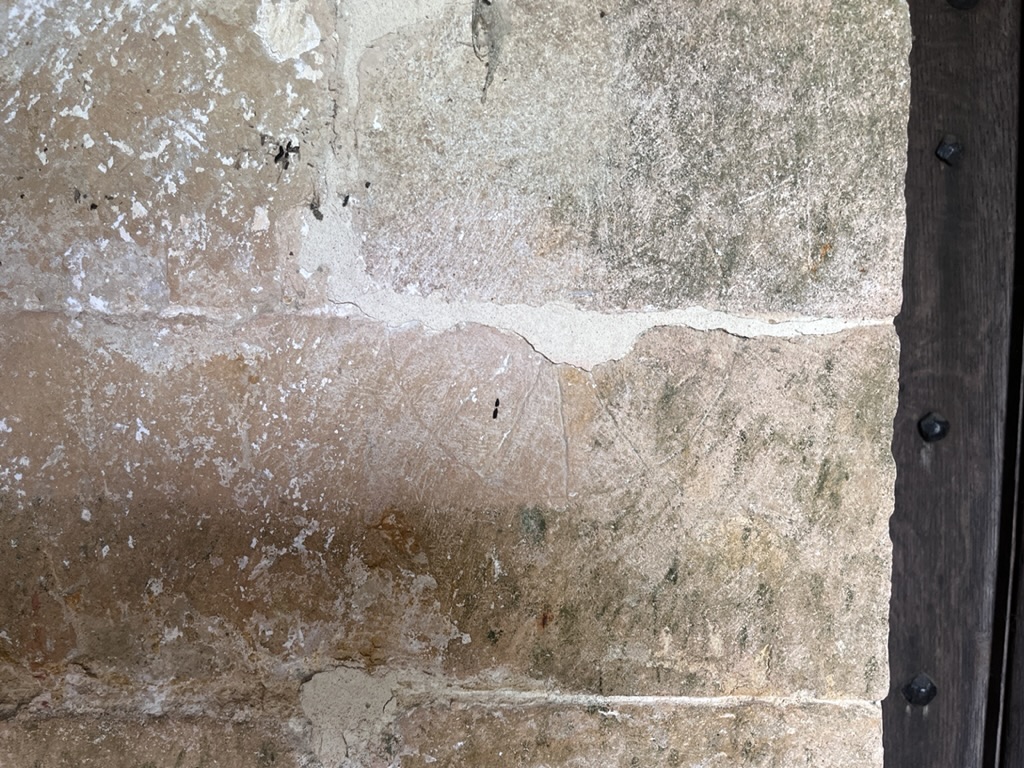
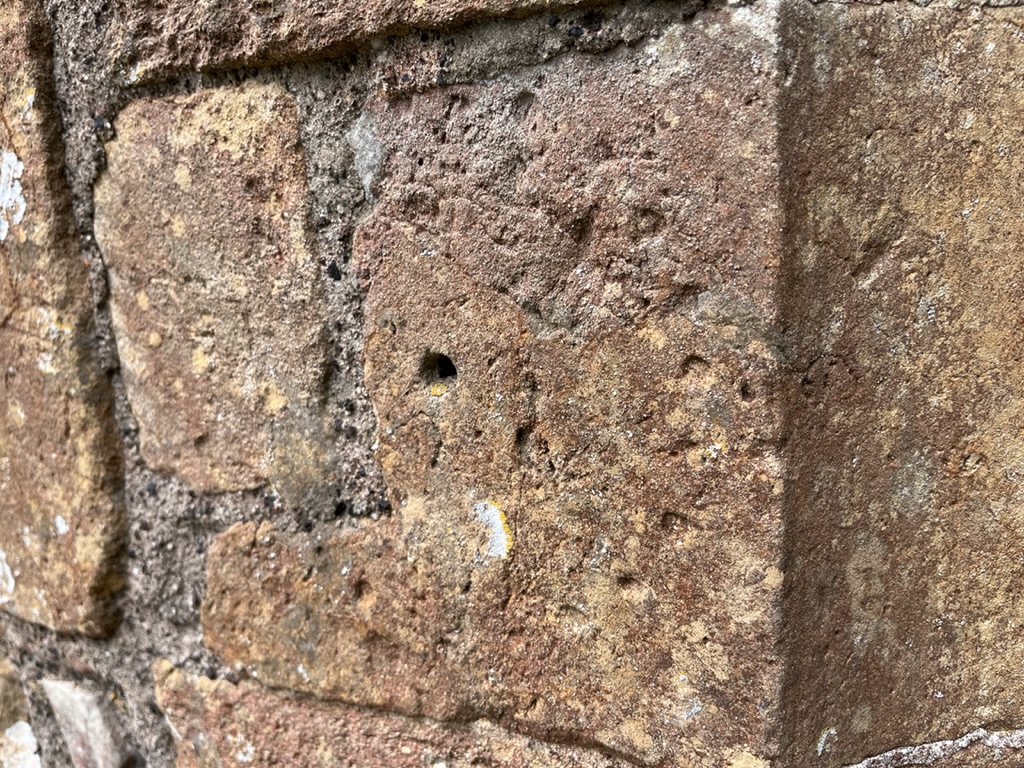
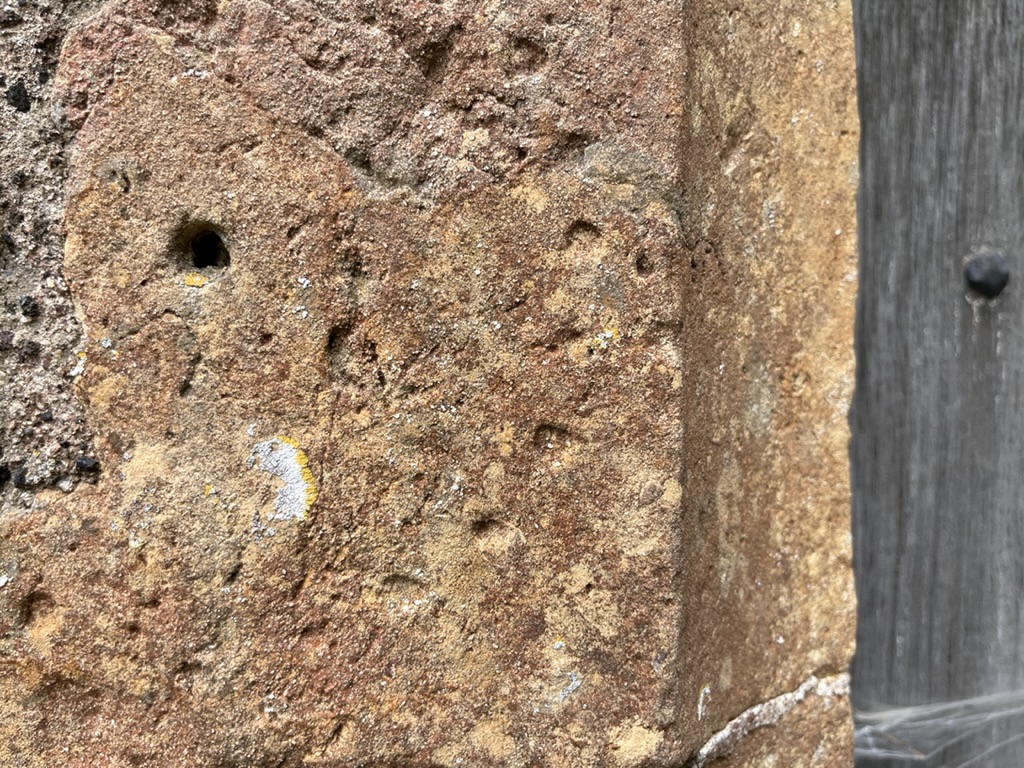
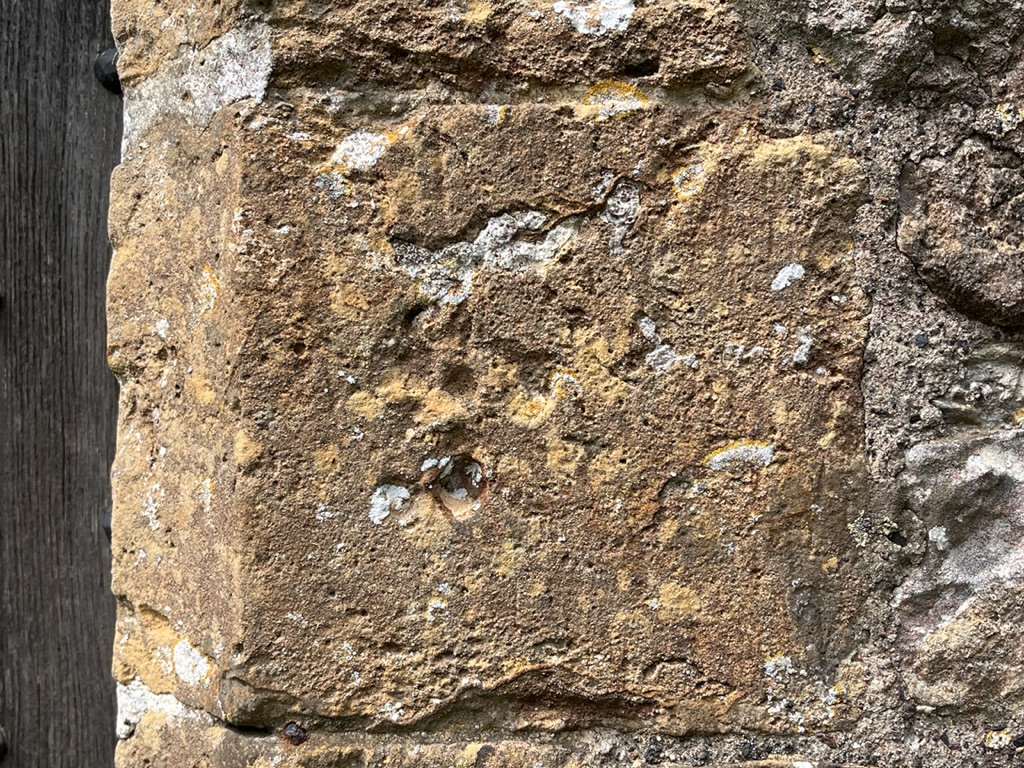
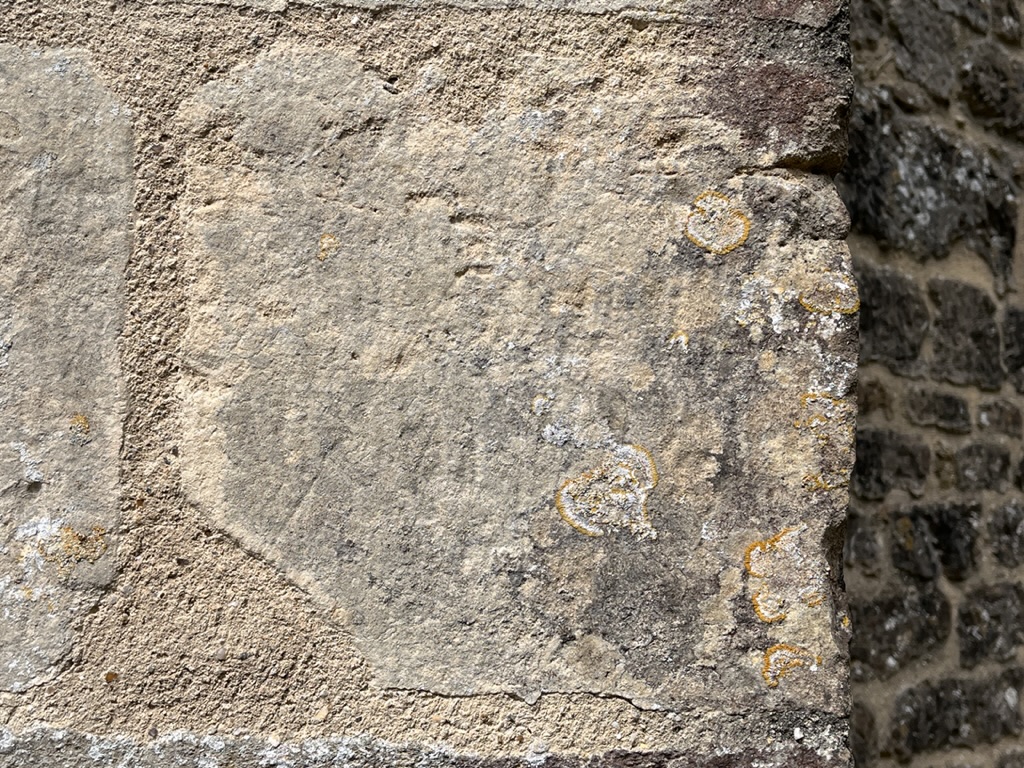
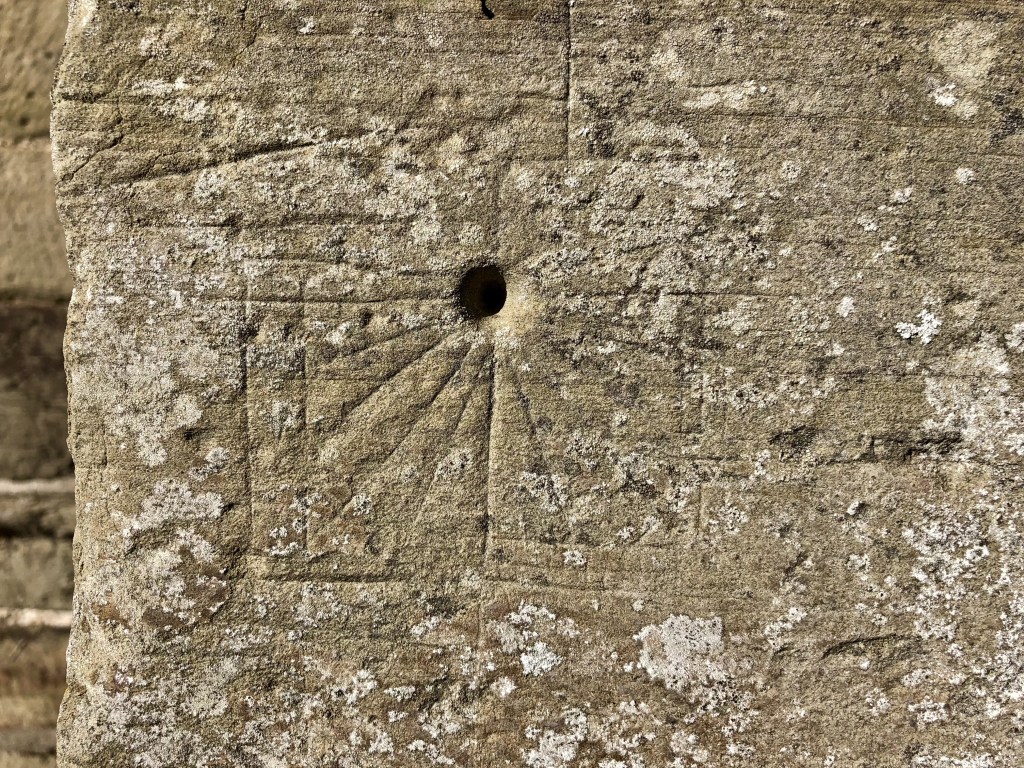
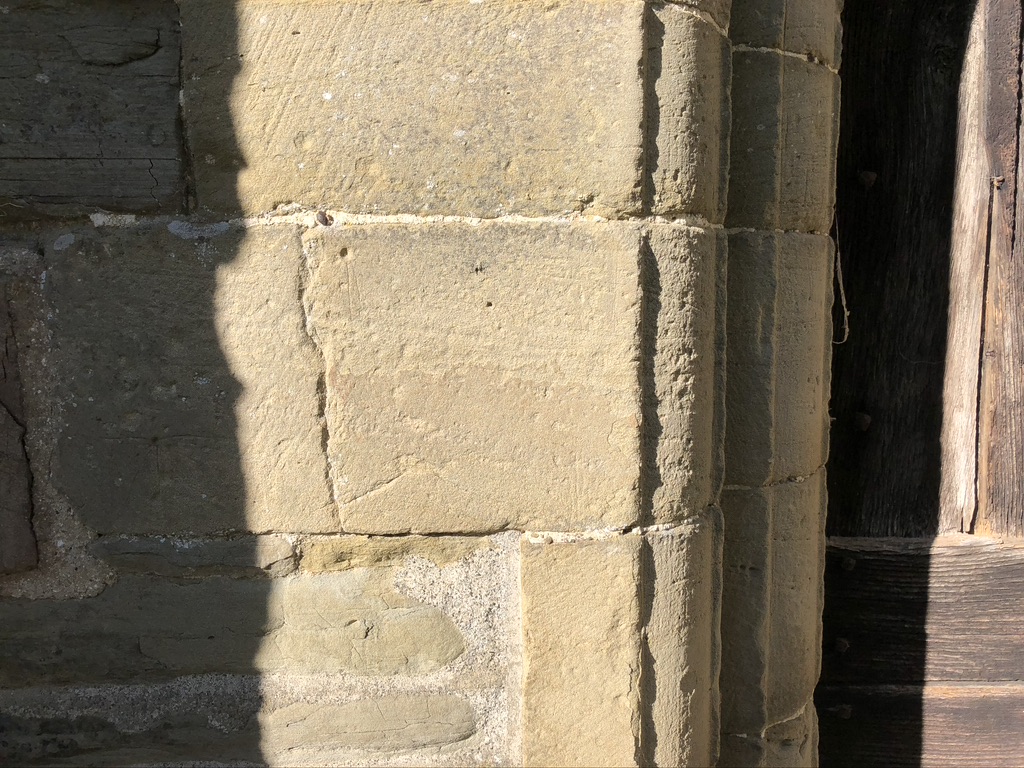
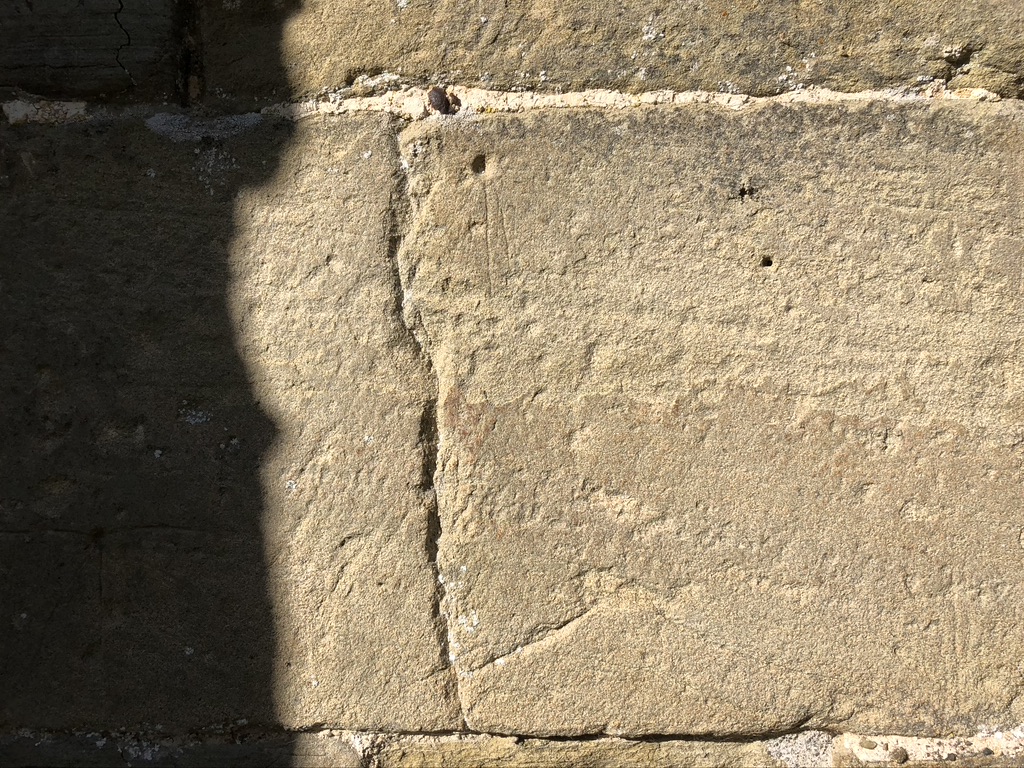
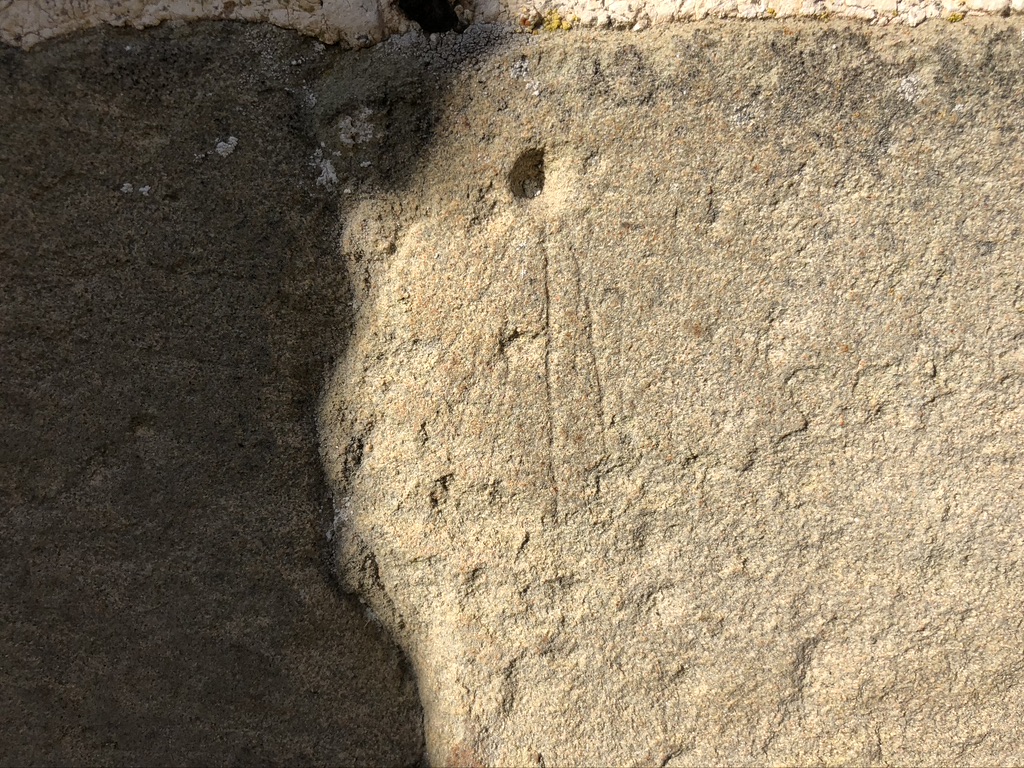
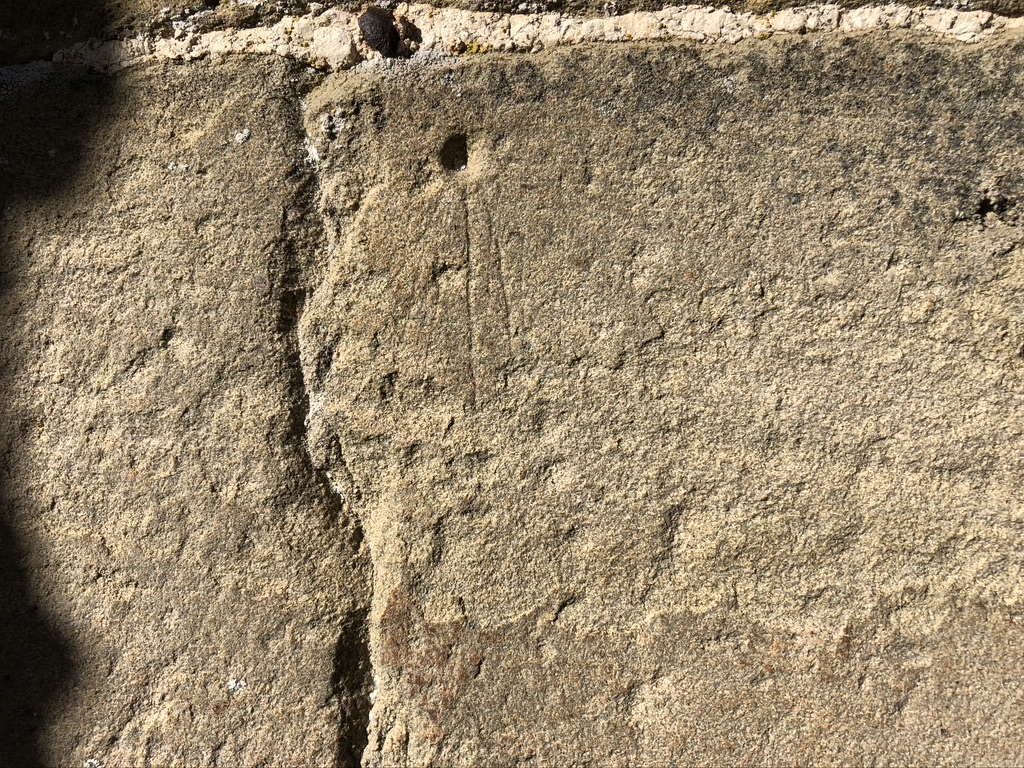
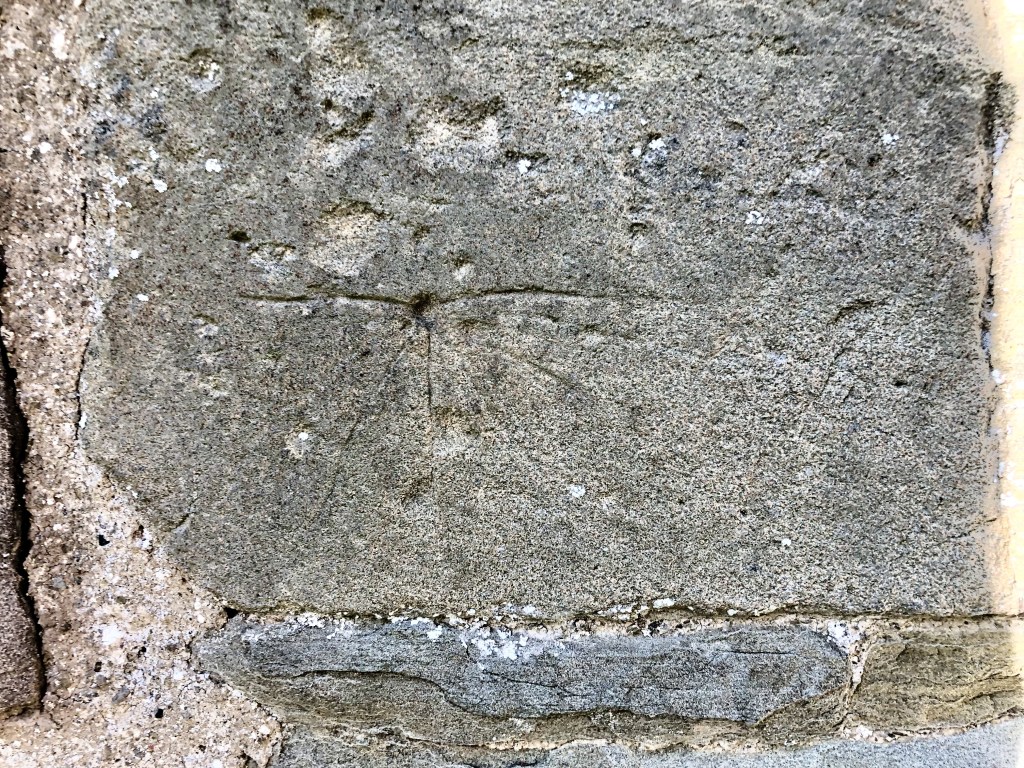
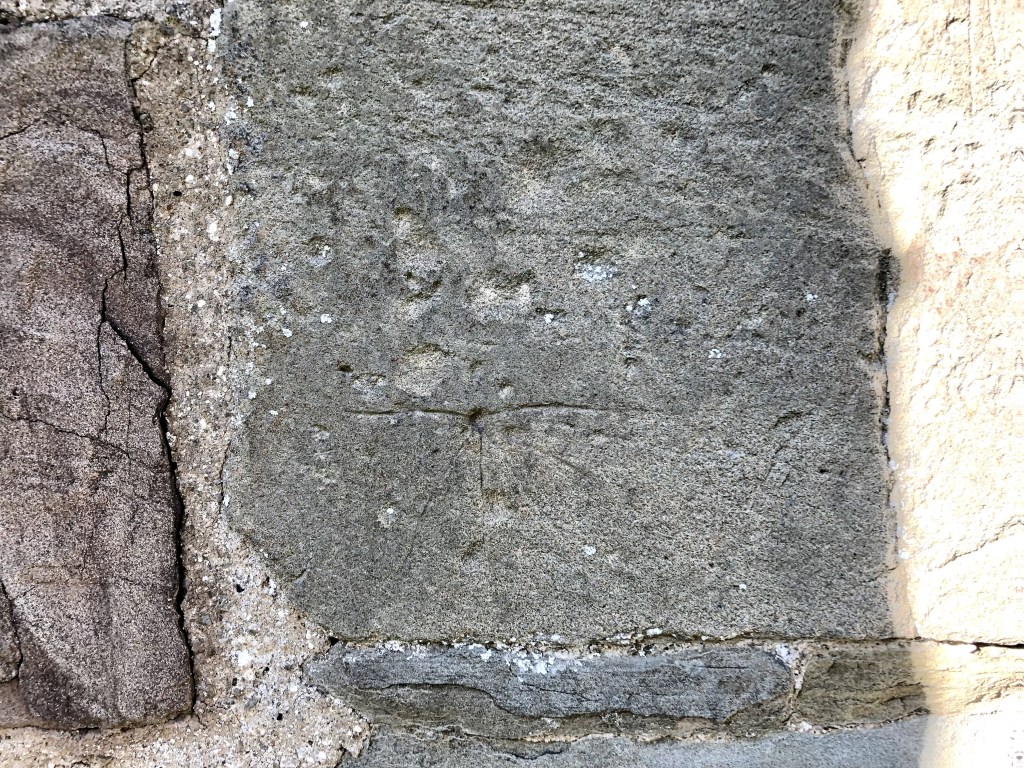
A while back I spent a couple of days fishing on the Beresford beat of the Dove (to little effect). Just seeing the hut close to – let alone actually using it for its intended purpose – was an amazing experience. The weather was quite poor; the photos (taken on a basic pocket Canon) poorer still. I’ve had to do some work on the images, which I hope are now clear enough to be informative. 3 faces are featured; images of the 4th, away from the sun, were useless.

Charles Cotton’s Fishing House . Beresford . Staffs – Cube Dial

The dial is fixed to the apex of the hut’s roof. It is surmounted by a round finial, then a weather vane, and – a final flourish – a trout.

Charles Cotton’s Fishing House . Beresford . Staffs – Cube Dial

Charles Cotton’s Fishing House . Beresford . Staffs – Cube Dial

Charles Cotton’s Fishing House . Beresford . Staffs – Cube Dial

GSS Category: Cube Dial

All photos: Keith Salvesen
ST RÉMY DU VAL . SARTHE . NORMANDY . FRANCE – St Rémy et St Rigomer

St Rémy et St Rigomer . St Rémy du Val . Normandy

St Rémy du Val is about 12m SE of Alençon, in a countryside of fields and forests. The church of St Rémy et St Rigomer stands high above the river Bienne, beside a now-ruined small castle. It has early origins but dates mainly from C15. The strong tower also had a defensive purpose. At some stage a small and attractive renaissance double doorway was added, a pleasing architectural contrast.

DIAL

St Rémy et St Rigomer . St Rémy du Val . Normandy – scratch dial

The dial is located on the SW face of the buttress shown in the foreground of the header image. There is a definite tilt to this part of the church supported by the buttress, and to the adjacent buildings (the photo exaggerates it considerably).

I wasn’t expecting to find a dial (or even looking for one), and I was lucky to see such an unobtrusive example as we walked past. I later discovered that there is one other mention of it, and of a possible small dial close to it.

The dial is considerably eroded and quite badly damaged in the lower R quadrant. Close-to, its relative sophistication is evident. The radials are within a double circle and as far as one can tell do not overlap the inner circumference. Almost certainly the lines were incised all the way round the gnomon hole. There is a hint that in the lower half – or perhaps just the lower L quadrant – there are half-hour marks as well. Perhaps these details suggest a C16 dial.

St Rémy et St Rigomer . St Rémy du Val . Normandy – scratch dial (detail)

SMALL DIAL

Revised 2024

Michael Lalos, who runs a very good site for French sundials of all types, also found this small design. At first sight it doesn’t look very promising as a dial, and might be an apotropaic symbol (demon trap variety, where evil is contained within the circle). However I have since found a number of very similar designs that in their context and position are certainly dials.

With the benefit of hindsight and the hint from M. Lalos, I now think this is a small rustic dial, and much earlier than its counterpart. One oddity is that the informally curved noon line points upwards. It can be useful to rotate a dial 180º to see how it looks.

The noon line is now in (roughly) the right place. In addition, there is a very faint line LLQ that corresponds with the canonical observance time TERCE. The inversion that gives the dial its present orientation would have occurred during rebuilding / restoration at some stage in the church’s history.

GSS Category: Scratch Dial; Mass Dial; Medieval Sundials France

All photos Keith Salvesen except the last pair, Michael Lalos

PUDDLETOWN . DORSET . ST MARY THE VIRGIN – ‘Ammonite’ Scratch Dial

St Mary . Puddletown . Dorset

ST MARY . PUDDLETOWN . DORSET

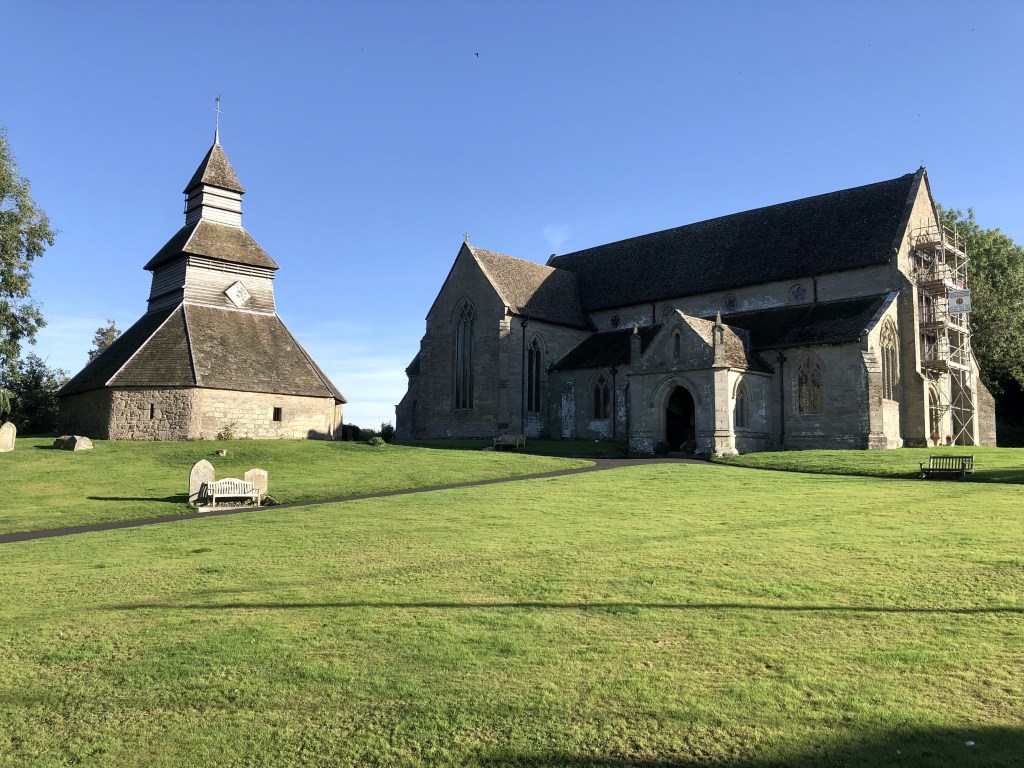
GRADE 1 † C12 Norman origins, mostly enlarged and rebuilt C13 -C15 with relatively little remaining of the earlier church. One of several ‘Puddle’ villages in the Piddle valley, each of considerable merit. St Mary is of exceptional interest for its furnishings and monuments (RCHM Dorset Vol III), including a C12 font. Atmospheric interior; like a Dickensian law court (SJ 1000 *** p.159). 50.7483 / -2.3433 / SY758943

DIAL

St Mary . Puddletown . Dorset – scratch dial

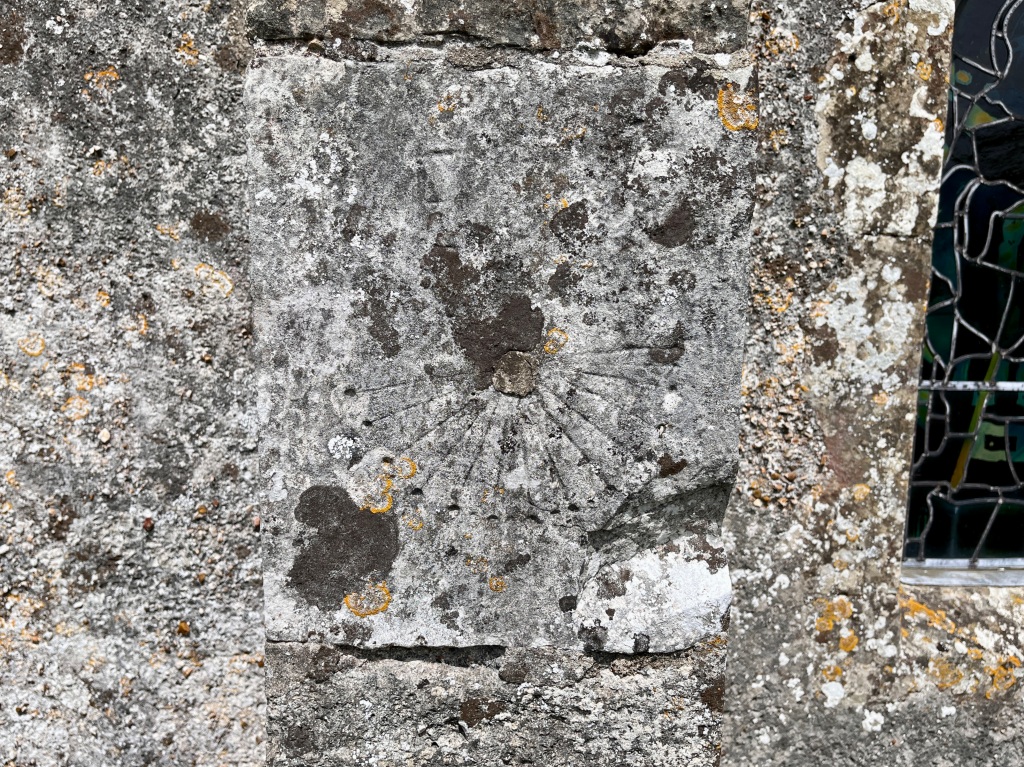
From a distance the dial of St Mary might easily be taken for an ammonite, especially as the church is only 20 miles from the famed Jurassic Coast. It is located on the E buttress W of the S chapel, on the L side of a large quoin stone. This is a very crudely cut dial (GLP) with 13 rather randomly cut lines extending from a now-filled gnomon hole. Its position and condition suggest that it was relocated during rebuilding or restoration. The left side is badly damaged: it would be interesting to know how it originally looked when intact.

GSS Category: Scratch Dial

All photos: Keith salvesen

RUGELEY . STAFFS . ST AUGUSTINE (OLD CHANCEL)

Old Chancel . Rugeley . Staffs

ST AUGUSTINE . RUGELEY . STAFFS

GRADE II † The remains of the original parish church, dating from C12, now known as the Old Chancel. The chancel, C14 tower and a linking arcade (Norman, EE) are all that’s left. Superseded by the new church, the Old Chancel retains its dignity and interest, and is obviously well looked after. It continues in use as a Sunday School. 52.7648 / -1.9353 / SK044185

DIAL(S)

It would not be surprising for there to have been a dial cut somewhere on the original church. TWC in the dial list for Staffs in his 1935 booklet doesn’t mention one here, although he mentions others in the area (Alrewas and Longdon, for example). On a recent visit Erika Clarkson found two candidates. Neither is immediately convincing; perhaps plausible at the highest.

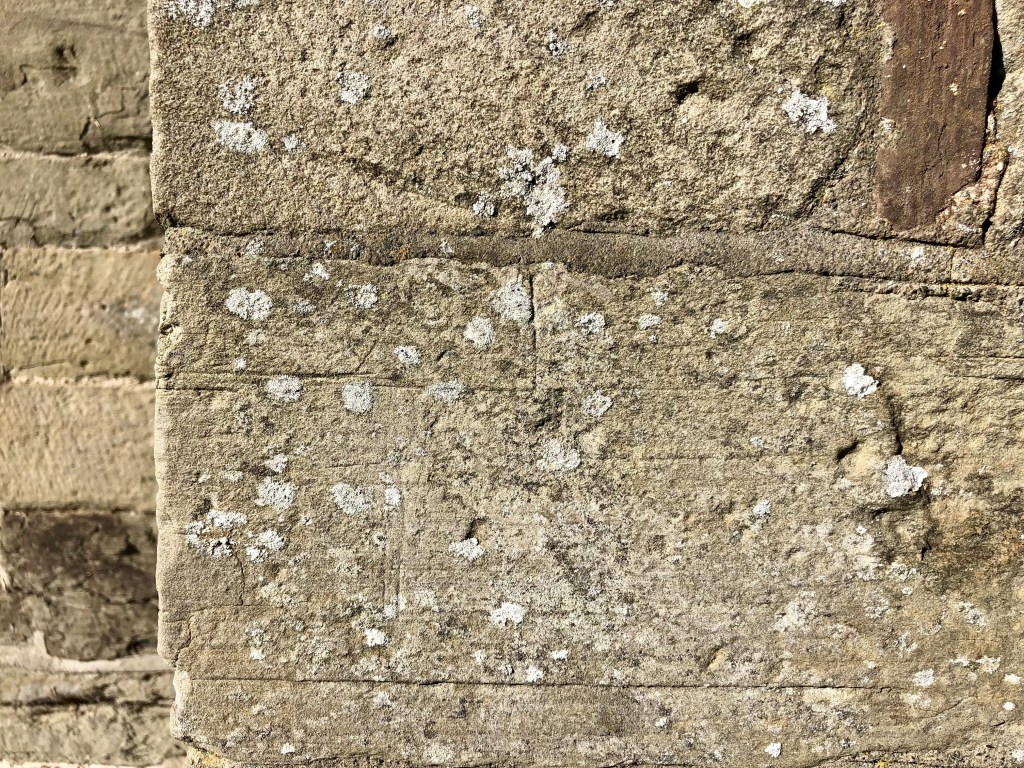
?Dial 1 (if it is one) has its gnomon hole rather low on the stone, when it might have been centred or in the mortar line above. There are a couple of definite faint lines in the lower L quadrant that certainly seem to emanate from the hole. And a vague stubby noon line too? It’s hard to fit what could be a part circle of pocks with the offset position of the hole.

Old Chancel . Rugeley . Staffs – possible scratch dial

?Dial 2 is similarly vague for interpretation. The line LHS is plainly a fault in the stone, but there are 3 very faint lines descending from what could be a very shallow style hole. The middle appears to be slightly longer signifying the noon line. Again, I think it can’t be categorised higher than plausible at best. However I have seen accredited dials that look even less likely to the amateur (me).

Old Chancel . Rugeley . Staffs – possible scratch dial

In checking some sources, I came across this rather attractive old postcard of the Old Chancel, a minor compensation for not being more positive about its putative dials.

GSS Category: Scratch Dial

All photos: Erika Clarkson with thanks for staffing Staffs as it were. PC unattributable.

COLTON . STAFFS . ST MARY THE VIRGIN – Scratch Dial

St Mary the Virgin . Colton . Staffs (image from the Church FB page)

ST MARY THE VIRGIN . COLTON . STAFFS

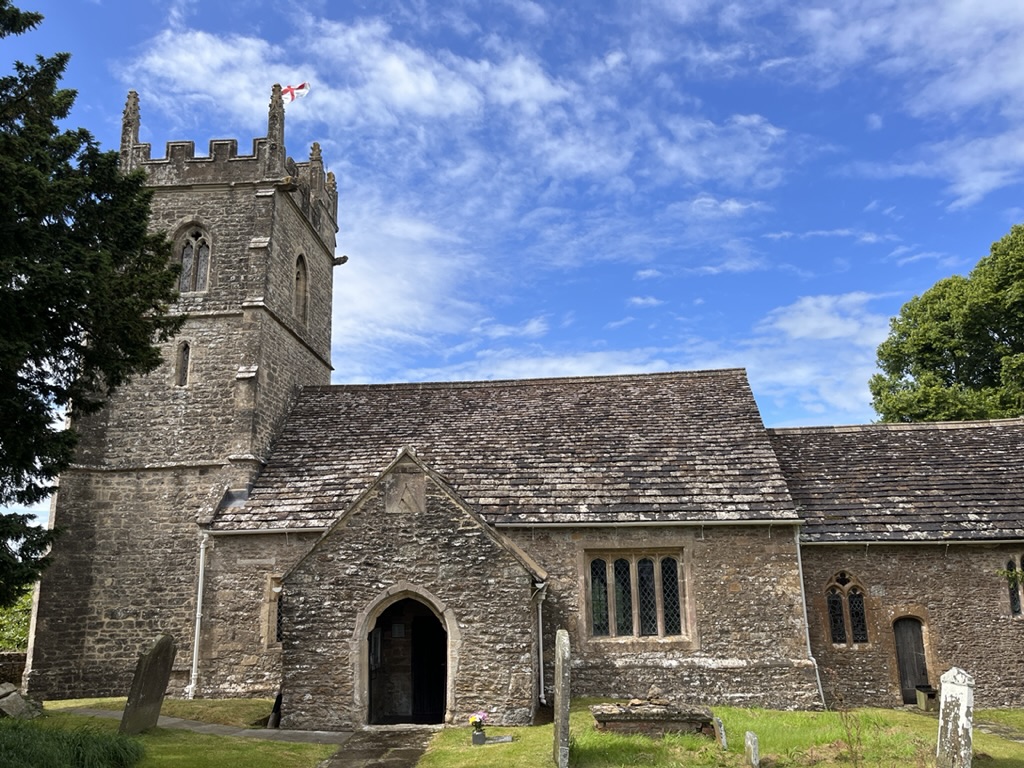
GRADE II* † C13 2-stage tower, chancel, chapel incorporated into C19 church (G.E.Street). An attractive juxtaposition of squat tower and much later elongated expansion. A couple of miles from Rugeley.  52.7813 / -1.9309 / SK047204

DIAL

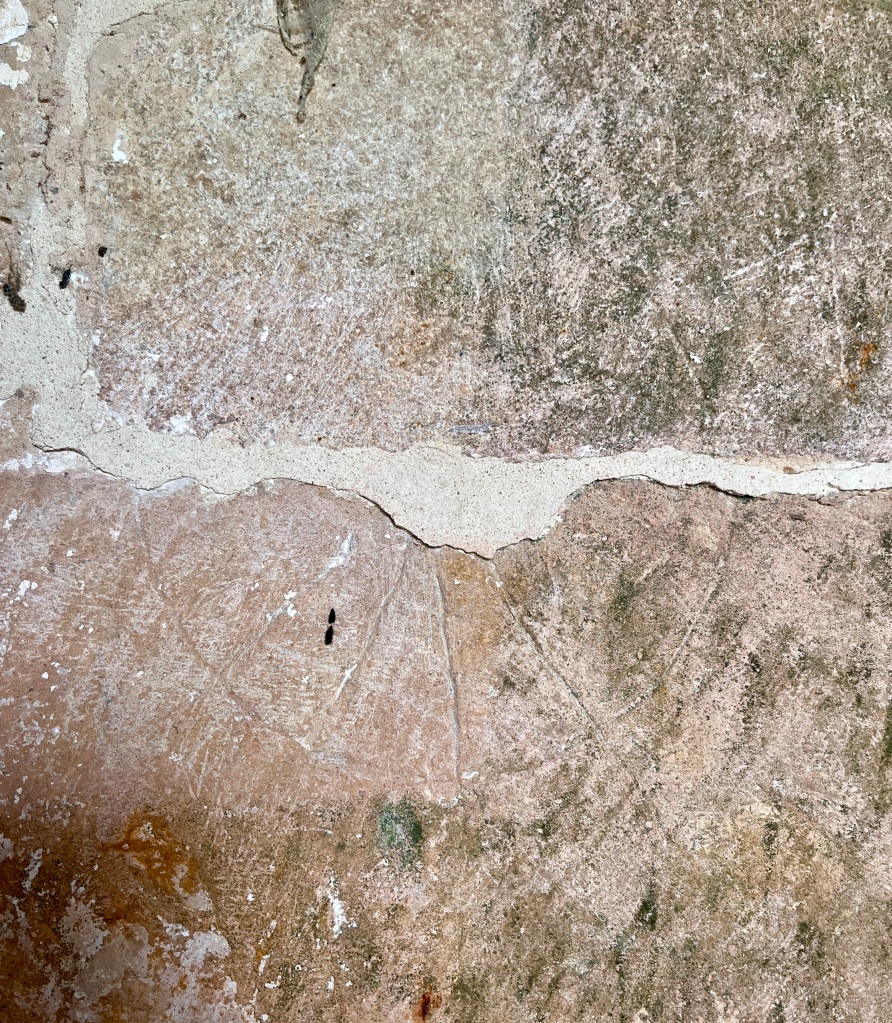
A small and crude dial, perhaps (given the C13 origins) an early one. After centuries of erosion of the sandstone, it remains deeply cut. 4(?) lines descending from the style hole. It’s hard to tell the significance of the upward line that cuts deeply through the hole and downwards. This is not an extended noon line, yet obviously it has a purpose – maybe to add emphasis to the main service of the day (the Mass time Nones?). It’s unclear whether the dent in the stone RHS is anything to do with the dial – it doesn’t directly relate to the style hole. Probably unconnected damage.

St Mary the Virgin . Colton . Staffs – scratch dial

GSS Category: Scratch Dial

Photo Credits: Dial by Erika Clarkson; header image from the St Mary Colton FB page HERE

LONGBURTON . DORSET . ST JAMES THE GREAT (2) – Scratch Dials (one ‘new’)& Vertical Dial

St James the Great . Longburton . Dorset

ST JAMES THE GREAT . LONGBURTON. DORSET (2)

Some time ago I wrote about the intriguing scratch dial rather hidden away through a low archway at the E end of the church: LONGBURTON SCRATCH DIAL 1

DIAL 1

St James the Great . Longburton . Dorset – Scratch Dial 1

The village is better known dial-wise for the vertical dial on the S-facing tower buttress (see below). Yesterday I went back to look for apotropaic and other church marks, and to my surprise found an excellent conventional sundial hidden in plain sight and hitherto unrecorded. I can’t think how I – or any dial gatherer – would miss it…

DIAL 2

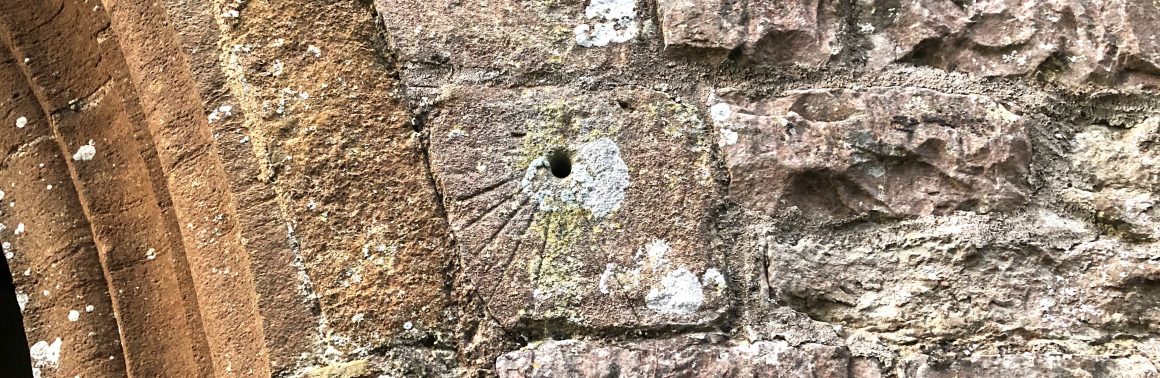
The previously unrecorded dial is near the base of the same buttress as the vertical dial. There are 4 lines, the more clearly cut noon line being longer and reaching the edge of the dial stone (and possible trace of extension onto the stone below). The angles are almost equal. There is the distinct trace of a circle in around the top half, but strangely the gnomon hole would not be at its centre.

St James the Great . Longburton . Dorset – Scratch Dial and Vertical Dial, Tower Buttress

VERTICAL DIAL

The dial is high up on the buttress of the tower, and nearly as wide. It is quite eroded, esp. RHS. The lines are contained within a frame, and half hours and some quarter hours are also marked.

BSS notes Triple dot motif at head of half hour lines. Gnomon formed from iron strip with supporter. Supporter is detached at contact with gnomon

The dial numerals are Roman, yet there are Arabic numerals in both bottom corners signifying the date. It is hard to make it out, but I think it is 1798. There are the remains of an inscription along the top of the dial, just the last 2 letters being discernible (O & W?).

GSS Category: Scratch Dial; Old Dial

All photos: Keith Salvesen

LODERS . DORSET . ST MARY MAGDALENE – Scratch Dial

St Mary Magdalene . Loders . Dorset

GRADE I † C12 origins, C13 nave, C14 tower & S porch; seemingly no C19 makeover. Plenty of interest to admire here – see entry in HE. 3m NE of Bridport. 50.7458 / -2.7225 / SY491942

DIALS

St Mary has 2 dials, both on the E side of the porch (late C14). Dial 1 is easily visible on the jamb. Dial 2 is tucked into a corner on the angle formed by the S wall and a staircase that was added C15. After that addition, Dial 2 was probably little use before noon (if at all).

DIAL 1

St Mary Magdalene . Loders . Dorset – Scratch Dial 1

Dial 1 is a good example of the interface between the simple dial function of marking the hours, and decorative design. This is a lovely and ambitious 24-hour dial, with 19 lines and 26 pocks. Although considerably eroded, it intricacies remain clear. There are radial variations of angle, length and emphasis. There are single pocks, double pocks, half-way pocks. GLP notes that the dial is quite accurately laid out and seems to mark most of the hours and some of the half hours as well

St Mary Magdalene . Loders . BSS

DIAL 2

Dial 2 is badly degraded, I suspect rather more so than when last surveyed. 3 lines emerge(d) from a gnomon hole in the dial stone. An amateur (me) would be unlikely to give it a second glance, especially in that position. In its present state it no longer matches the drawing originally made. Or I have made an ID mistake (quite possible)? GLP describes it as a very fragmentary inverted dial. Which perhaps suggests that the stone was moved / turned when the staircase was built. Or, possibly, it was a dial stone used from elsewhere on the building and intentionally inverted (as often the way with moved dials).

St Mary Magdalene . Loders . BSS

St Mary Magdalene . Loders . Dorset – Scratch Dials 1 & 2

KINGTON . HEREFORD . ST MARY – 6 Scratch Dials

Kington Herefs St Mary (Ruth Harris CC)

ST MARY . KINGTON . HEREFORDSHIRE

GRADE I † Dated from c1300, with a C12 tower that was originally separate, later incorporated when the church was extended and (BLB) much altered. Attractively distinctive to look at. 15m W of Leominster. 52.2045 / -3.0384 / SO29156

DIALS

St Mary is a multi-dial church with 6 recorded, one of which is doubtful. They range from conventional to basic. 3 are clustered on adjacent stones.

DIAL 1

Dial 1 is on the S wall, a fan-shaped edged quadrant radiating from the mortar line and stretching across 3 stones. It is near-symmetrical along the noon line. The 5 lines are spaced almost equally, the outer ones being incised more deeply, perhaps to draw attention to service times. The ‘1’ line is of interest, less accurately cut, bifurcating as it crosses onto the stone below, and ending in a single pock. This feature is so specific that it was presumably intended to emphasise a time of day of particular significance in the local community.

DIAL 2

Dial 2, on the S wall, is far simpler than Dial 1 but is also near-symmetrical from the noon line. 3 lines, the one to the L more of a straight scratch than a cut. The style hole is in a fault line in the stone (which may well be subsequent damage). Possibly the ‘1’ line crudely divides halfway down, beginning with a pock. This would match the similar emphasis in Dial 1, and perhaps supports the theory of a special ‘event’ mark.

DIAL 3

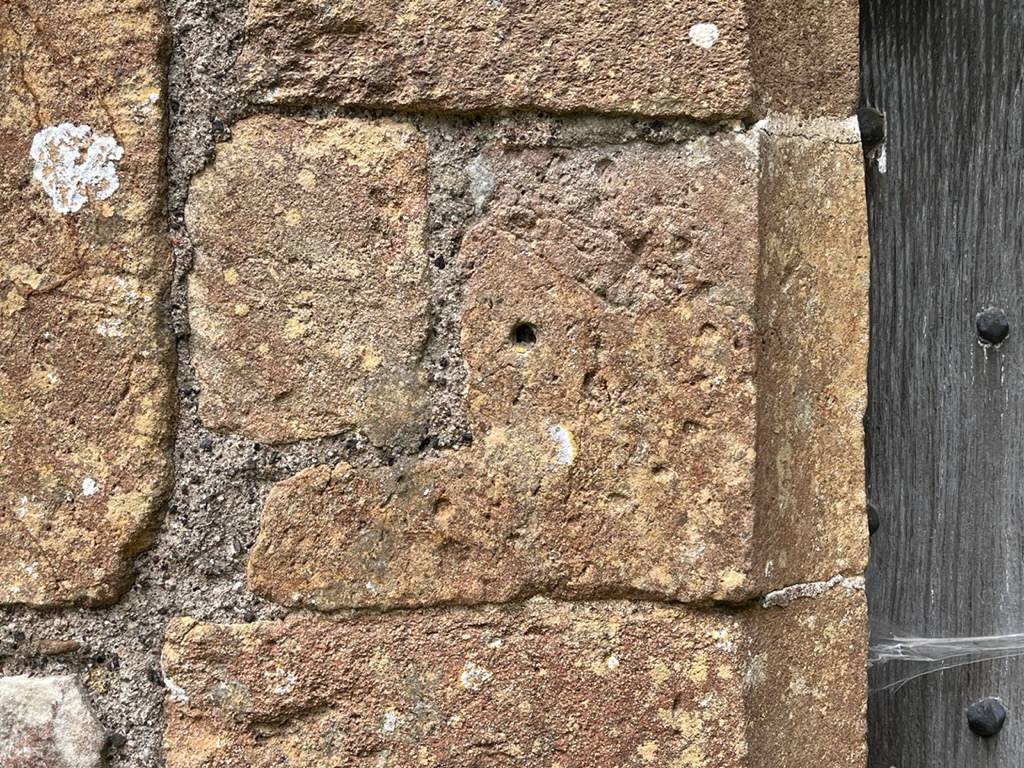
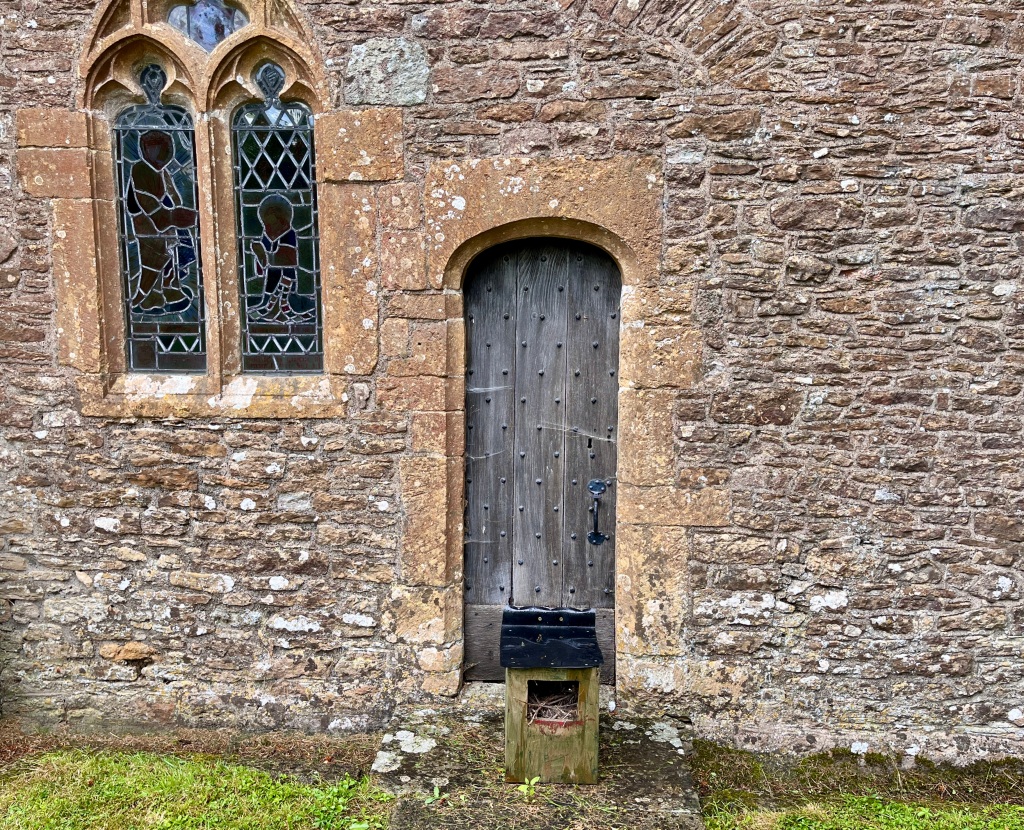
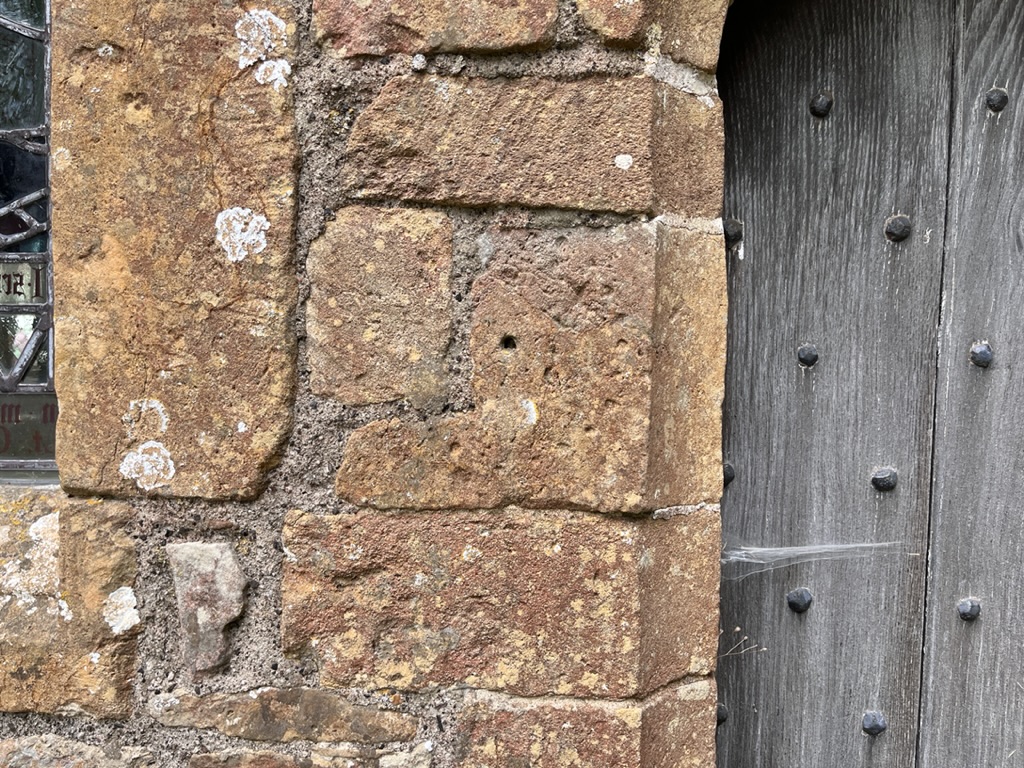
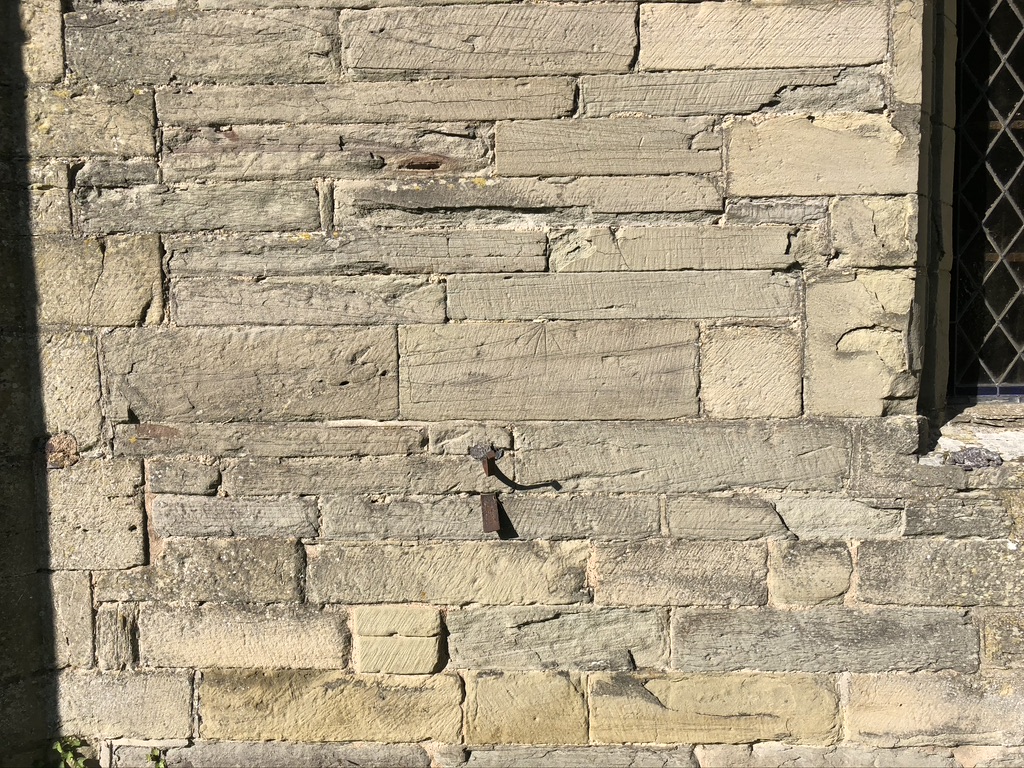
Dial 3 is also located by the door on the S wall, very damaged and eroded. 4 clear lines radiate from a style hole in the mortar line (there are also 2 very faint lines). Only the uppermost in the lower R quadrant survives for its full length.

DIALS 4 & 5

Dials 4 & 5 are beside and below Dial 2. Both are faint and barely more than token efforts at a dial, as if a youthful assistant priest had a knife and time on his hands.

Kington Herefs St Mary – Dial 2, 4, 5

DIAL 6

Dial 6 is a very simple dial (if it is one): a style hole within a deeply cut circle, and what could be a stubby noon line. The close-up b&w BSS photograph gives a good idea of it. There’s not a lot of confidence in the record: Position not known. Noon line only? Circle only and faint line at 90L. Possible noon marker. Doubtful dial.

Richard & Catherine Boztum, in their excellent illustrated booklet (cited below) of Herefordshire Church marks and scratch dials include dials 1 – 5, but not this one.

Kington Herefs St Mary – Dial 6 – BSS

I also have my doubts. St Mary has plenty of Church graffiti – initials, scratchings, small crosses, and in particular a number of apotropaic symbols (ritual protection marks). The design of ‘Dial 6’ is one of many forms of ‘witch mark’. And on St Mary itself, there is a more elaborate version of the circle-and-centre-hole mark.

Kington Herefs St Mary – Apotropaic mark

OTHER CANDIDATES?

Having in mind the rather basic design of some of the dials above, there are a couple of candidates that I photographed for later inspection. The first is at least plausible and matches the noon line symmetry of dials 1 & 2. The other is unconvincing. You be the judge…

Kington Herefs St Mary – doubtful scratch dial

GSS Category: Scratch Dials; Multi-dials

Photos: Header image: Ruth Harris (Geograph / Wiki / CC); all other photos Keith Salvesen except dial 6 BSS

REF: Botzum R and C : Scratch Dials, Sundials and unusual Marks on Herefordshire Churches. Lucton, Herefs, 1988

WHITCHURCH CANONICORUM . DORSET . St Candida & Holy Cross . Scratch Dial

St Candida & Holy Cross . Whitchurch Canonicorum . Dorset

ST CANDIDA & HOLY CROSS . WHITCHURCH CANONICORUM . DORSET

GRADE I † C12 onwards on a Saxon site, with tower not until C15; C19 restoration. Also known as St Wite (hence Candida?), whose relics are in a shrine inside the church.* A building of outstanding interest in a secluded valley, the Cathedral of the Vale. Too much else to be said for inclusion here. For more details, see BLB BE & ST CANDIDA WIKI 5m NW of Bridport. 50.7554 / -2.8565 / SY396954

DIALS

DIAL 1

St Candida & Holy Cross . Whitchurch Canonicorum – Scratch Dial 1

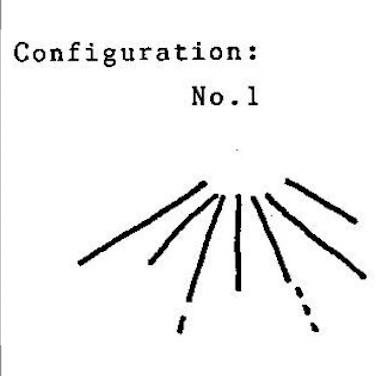
Dial 1 can be found in a corner of the W buttress of the S transept. It has 12 lines, and the stone has been cut to give a rectangular outline to the dial, the gnomon hole being R of centre. Sited uncomfortably in a corner, the dial seems unlikely to have been effective and certainly not year-round. Nor would it have been very visible to passers-by. So it seems likely – given the way the lower lines are truncated – that the dial was re-sited during later renovation.
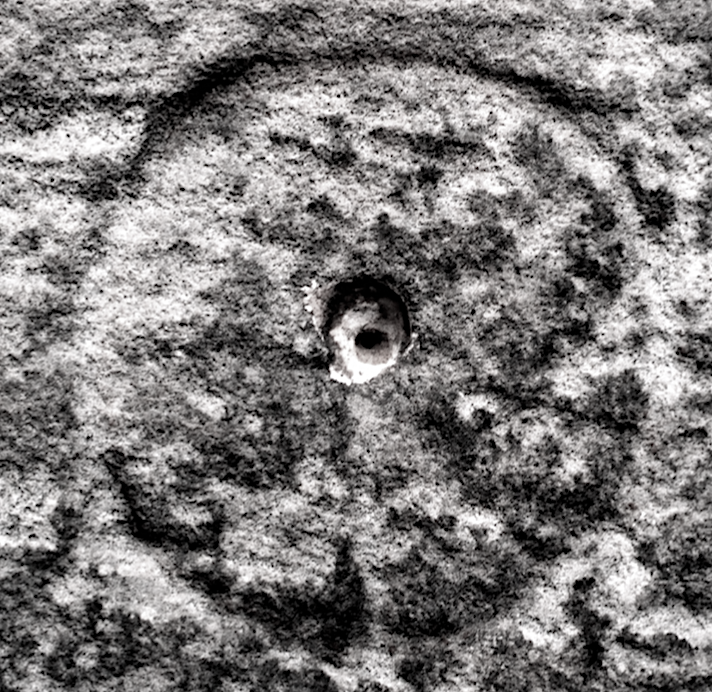
St Candida & Holy Cross . Whitchurch Canonicorum BSS Diagram

DIAL 2

This dial (if it is one) is as simple as could be – 2 holes, large and small, on the vertical. It is located on the W jamb of the C13 blocked door of the chancel. BSS describes it as a ‘Noon Mark’, a style in the upper dial indicating the passage of the day either side of noon. GLP suggests this might originally have been a painted (as opposed to incised) dial. I wondered if the 2 slightly inward-curving faint lines descending from each side of the lower hole were there to emphasise noon (as was done using pocks).

St Candida Whitchurch Canonicorum – Dial 2
St Candida Whitchurch Canonicorum Dial 2

* In 1900 the tomb was opened and was found to hold a lead casket containing the bones of a small woman.[8] On the casket was the Latin inscription “HIC-REQESCT-RELIQE-SCE-WITE” (“Here lie the remains of St Wite”) ST CANDIDA WIKI

GSS Category: Scratch Dial

All photos: Keith Salvesen