ARMILLARY SPHERE PUZZLE

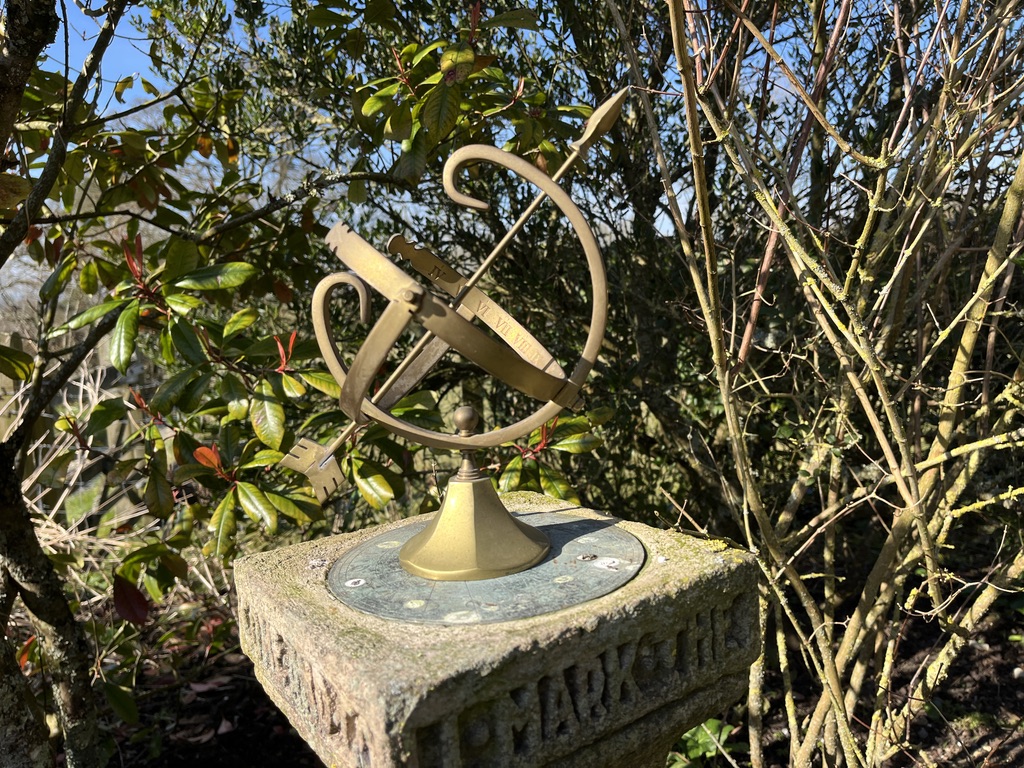
This is a small dial that has recently come into my possession. It stands (temporarily) on our gnomon-less Barker pedestal dial. Is it:

  1. A good example of a small sphere from the 1930s, once owned by an aunt
  2. A find in an old-style antique shop in Oxfordshire in 2003
  3. An impulsive cheapo eBay purchase a few months ago

❖ ❖ ❖

❖ ❖ ❖

THE FRANCIS BARKER ‘LIBERTY’ PEDESTAL

As featured in the BBS Bulletin

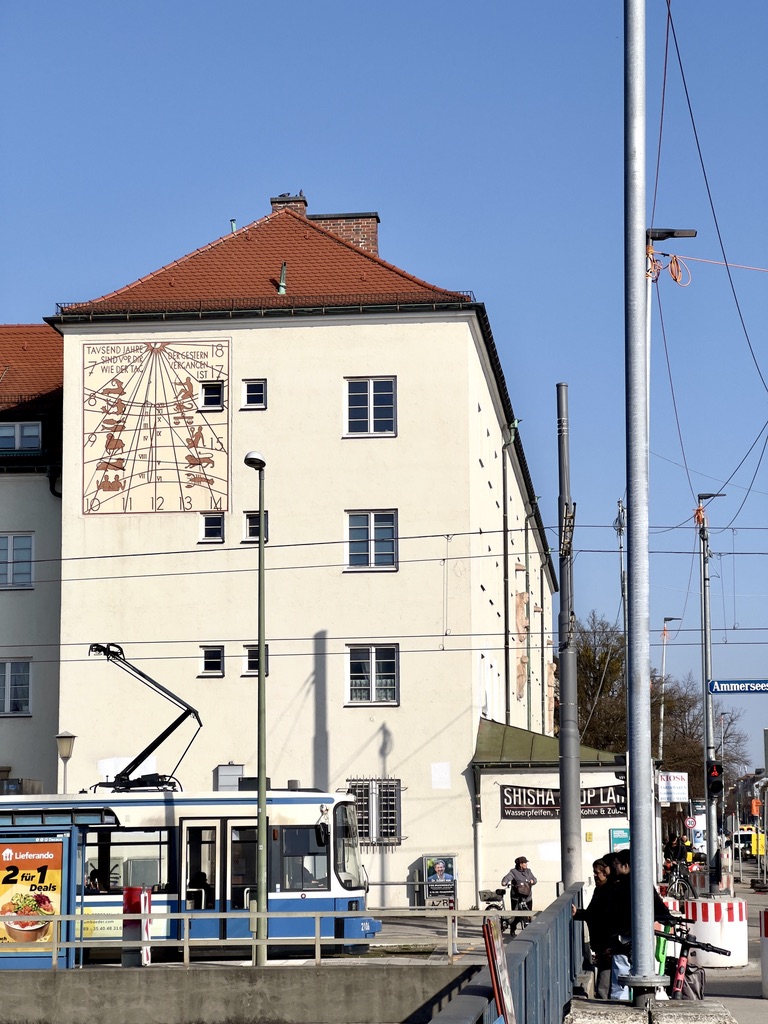
MUNICH . LAIM DISTRICT – Modern Noon Dial

NOON DIALS

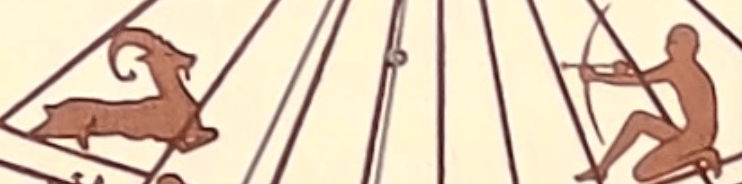
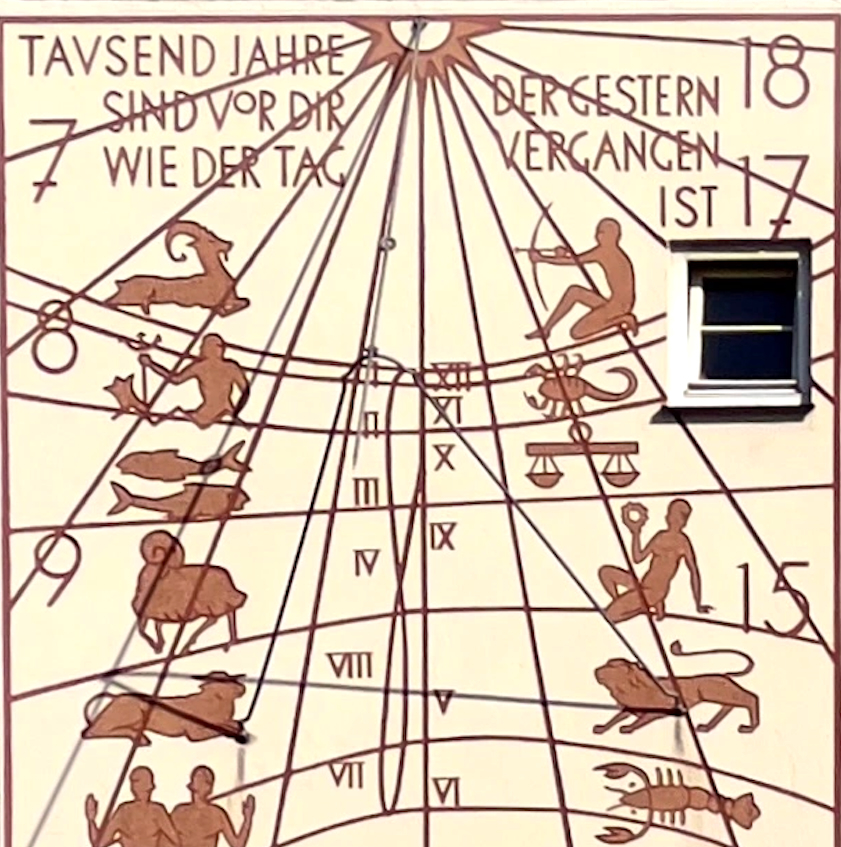
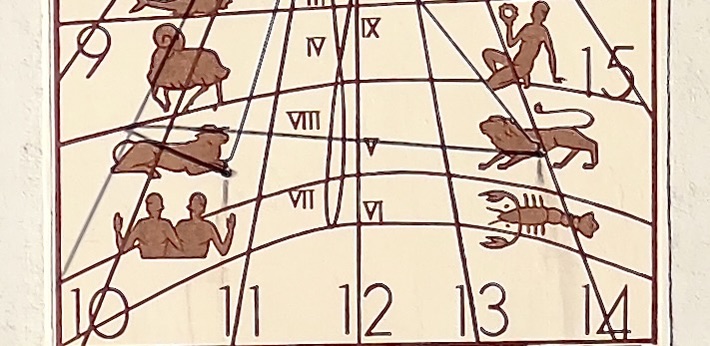
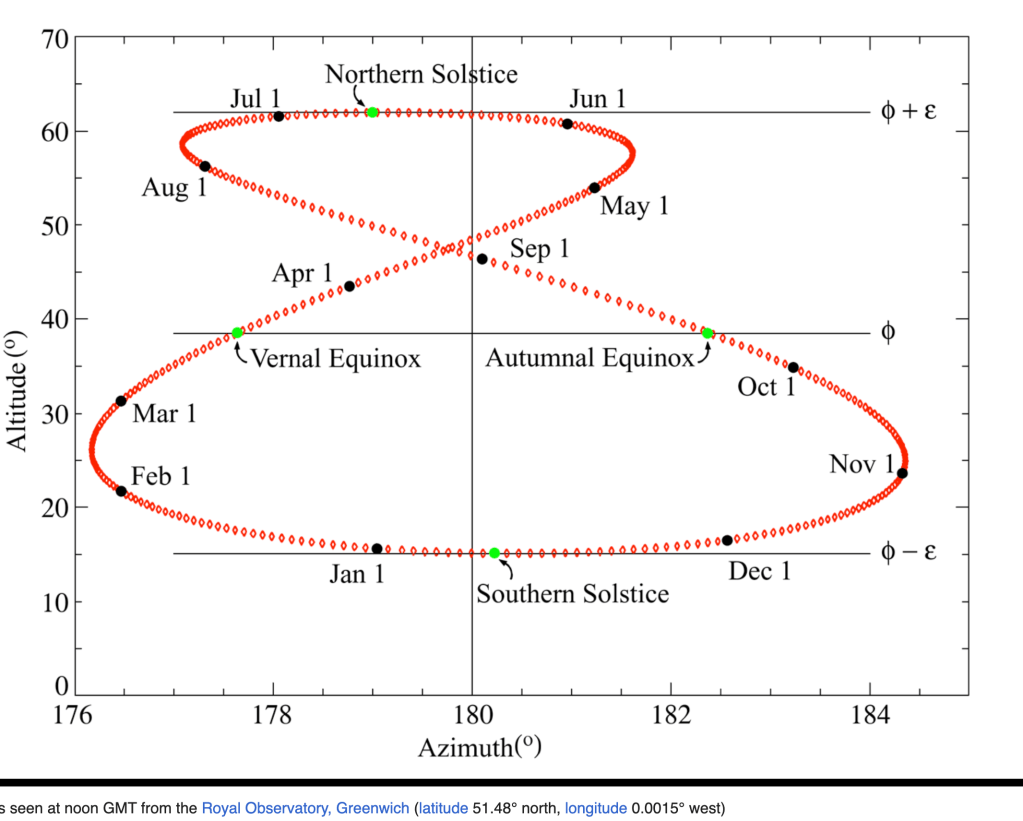
A noon dial / noon mark serves as a method of pinpointing midday, when the sun is at its highest and due south. The origins are ancient. Here, the relevant area is in the centre, flanked by Roman numerals. My maths / science skills are few and I will spare you a rudimentary explanation. The key words are Equation of Time, Analemma, and (my non-technical choice) figure of eight.

This image has an empty alt attribute; its file name is screenshot-2025-03-23-at-12.21.49.png

In the centre of the dial is a narrow figure of eight bounded by the numerals. You can just make out the raised bracket that supports a slender gnomon. You can see a small ring through which, at the perfect moment, the sun’s rays strike the face of the dial:

If you want to know more, there is a concise entry at ANALEMMA (Wiki)

This image has an empty alt attribute; its file name is screenshot-2025-03-23-at-12.21.49.png

This image has an empty alt attribute; its file name is screenshot-2025-03-23-at-12.21.49.png

GREEN TEMPLETON COLLEGE OXFORD

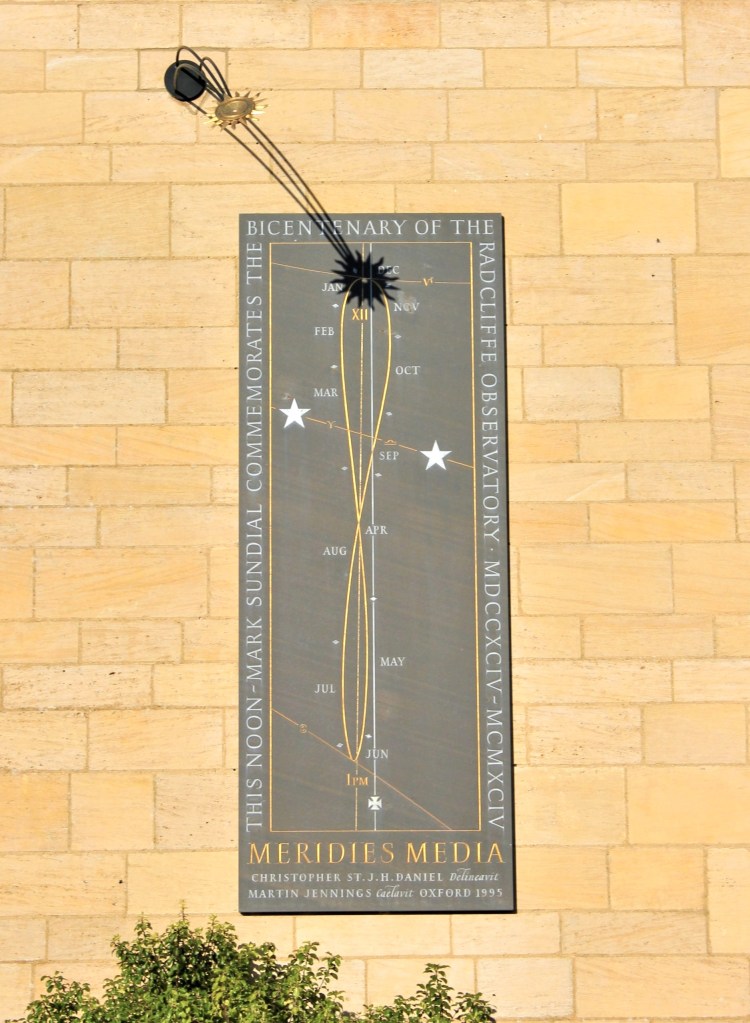
A modern (1995) noon-dial commemorating the Bicentenary of the Radcliffe Observatory, designed by the renowned Christopher Daniel, founder of the British Sundial Society. The critical alignment of the sun’s rays are projected onto the surface of the dial at noon (MERIDIES MEDIA), focused by the small ring.

THE COLLEGE’S NOTES

  • It works by using a spot of light cast by the nodus (the gilded sun with a hole in the middle), falling upon the slate dial-plate and tracking from left to right across it.
  • It is declining because the wall it is attached to does not face due south but ‘declines’ away from the compass point
  • Noon-mark means it gives the point at which the sun at its zenith crosses the Greenwich meridian and the Oxford meridian (the vertical white line down the centre of the dial)
  • Mean-time means you can read clock-time from the dial by following the progress of the year along the figure-of-eight marking, known as an analemma or equation of time correction curve. This makes allowances for the effect of variations in the apparent motion of the sun at different times of year.
Screenshot

GSS Category: Analemma; Equation of Time; Munich Sundial; Nodus; University Sundial

CREDIT: John Renner, for another great find from his travels

WINTERBORNE STICKLAND . DORSET . ST MARY: DOUBLE-FACED VERTICAL DIAL

❖ ❖ ❖

ST MARY . WINTERBORNE STICKLAND . DORSET

GRADE 1 ✣ C13 origins; Tower ± 1600; considerable restoration C18. A charming country church, seemingly plain but with much to justify its listing. Tomb chamber. 2 (perhaps 3) scratch dials, written up separately. Graffiti: C17 & 18 initials & dates on responds of tower arch. 5m S of Blandford. Close-by St Andrew’s at W/B Houghton makes a pleasant short visit. 50.8409 / -2.2363 / ST834046

❖ ❖ ❖

SUNDIAL

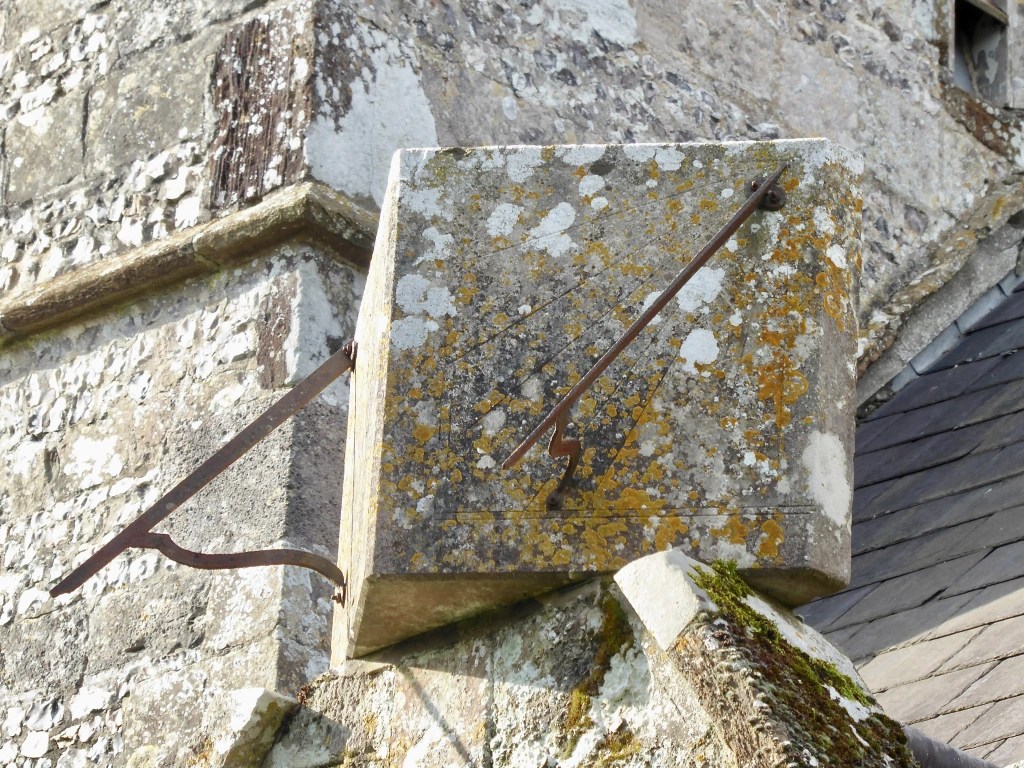
A fine double-faced dial on the S. porch gable, angled SE and SW. Both faces match in design, with identical scrolled iron gnomons. BHO dates to C18th. BSS mentions Roman numerals, but I couldn’t find any trace even with close-up photos.

❖ ❖ ❖

SW FACE

❖ ❖ ❖

SE FACE

❖ ❖ ❖

Geograph image from c2010 for comparison of condition of stone and lichen coverage

GSS Category: Vertical Sundial; Double-faced Sundial; Porch Gable Sundial

All photos: Keith Salvesen except last, Geograph 2010

YE SUNDIAL BOOKE by T. Geoffrey W. Henslow M.A. – Selected Illustrations

A wide variety of reading matter on the subject of dials can be found in the Menu under the name DIAL BOOKS or reached directly by this LINK

Henslow’s engaging work is available via The Project Gutenberg in eBook format, a simple and costless way to admire his work.


Project Gutenberg's Ye Sundial Booke, by Thomas Geoffrey Wall Henslow

This eBook is for the use of anyone anywhere at no cost and with
almost no restrictions whatsoever. You may copy it, give it away or
re-use it under the terms of the Project Gutenberg License included
with this eBook or online at www.gutenberg.org/license

Title: Ye Sundial Booke

Author: Thomas Geoffrey Wall Henslow

Release Date: March 24, 2019 [EBook #59118]

Character set encoding: UTF-8

WINTERBOURNE STEEPLETON . DORSET . ST MICHAEL – Scratch Dials (revisited)

ST MICHAEL . WINTERBOURNE STEEPLETON . DORSET

GRADE I A fine early church in a lovely setting. C11 quoins to nave; C12 nave rebuilt; C14 3-stage W tower, porch; C15 chancel. Later alterations, restorations. Just W of Dorchester, yet seeming miles away in its peaceful valley. Visit Winterbourne Monkton while you are there (2 perhaps 3 dials). 50.7067 /  -2.5266 / SY629898

DIALS

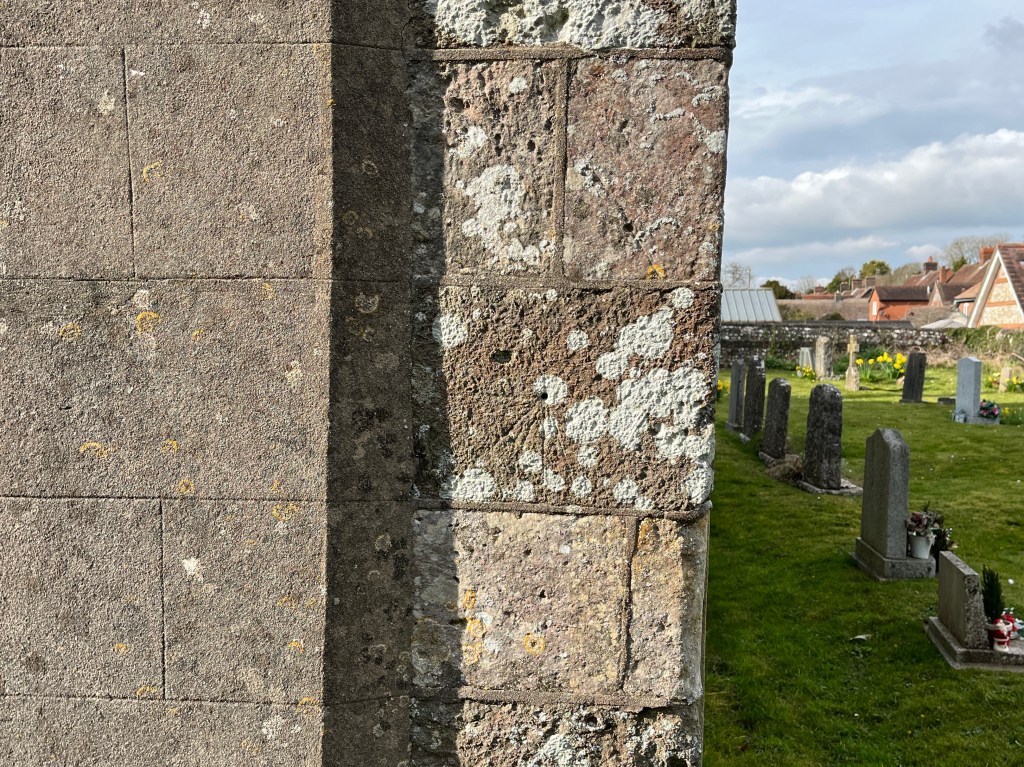
Two dials are recorded. I last visited this church more than 2 years ago, in early evening sunshine but with shadows on the church. I have recently been back in better light to re-photograph the main dial; and to check for another rudimentary dial noted on the S buttress of the tower in a 1997 survey. I didn’t find it on my first visit.

DIAL 1

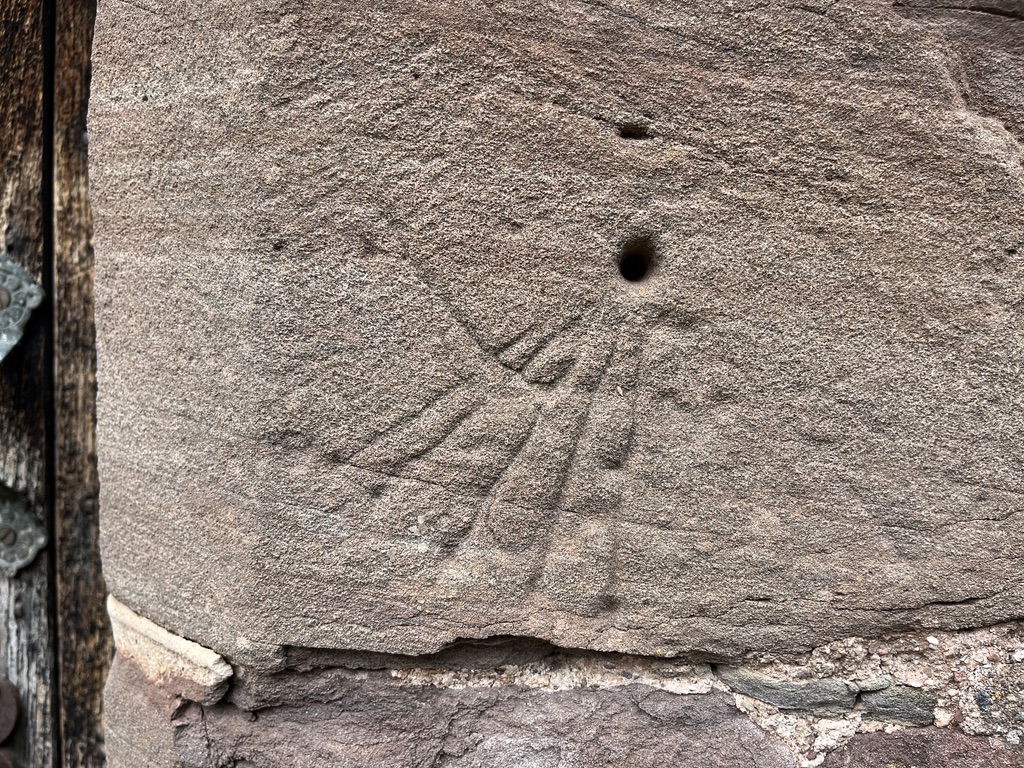
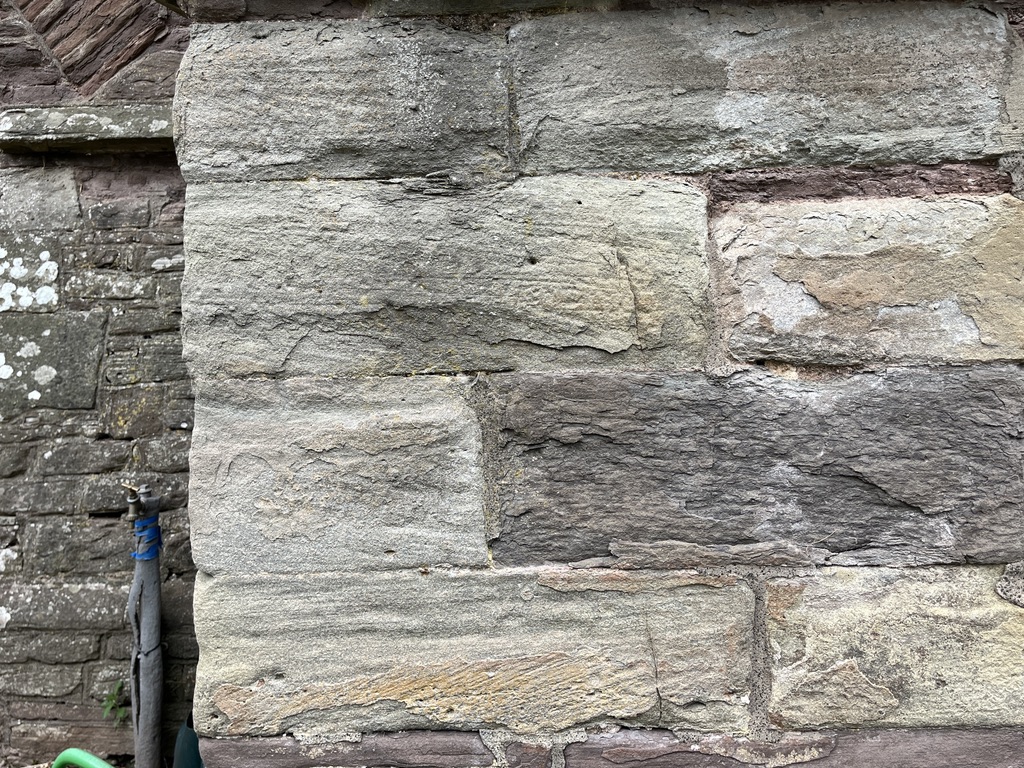
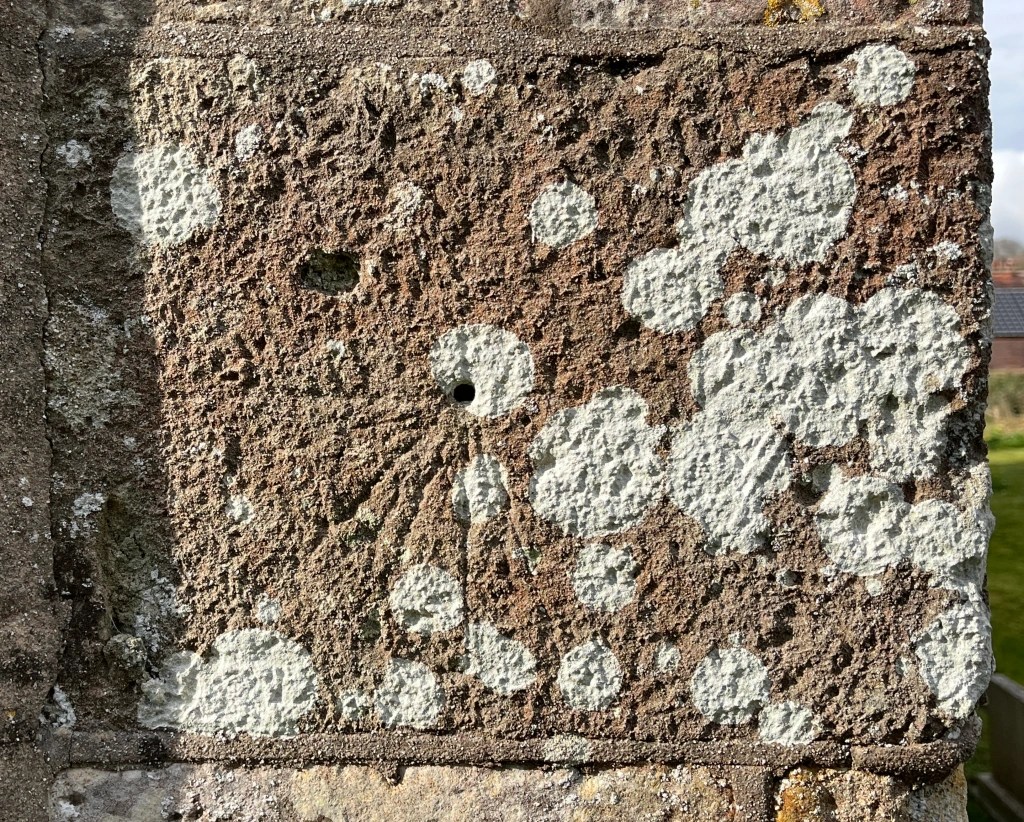
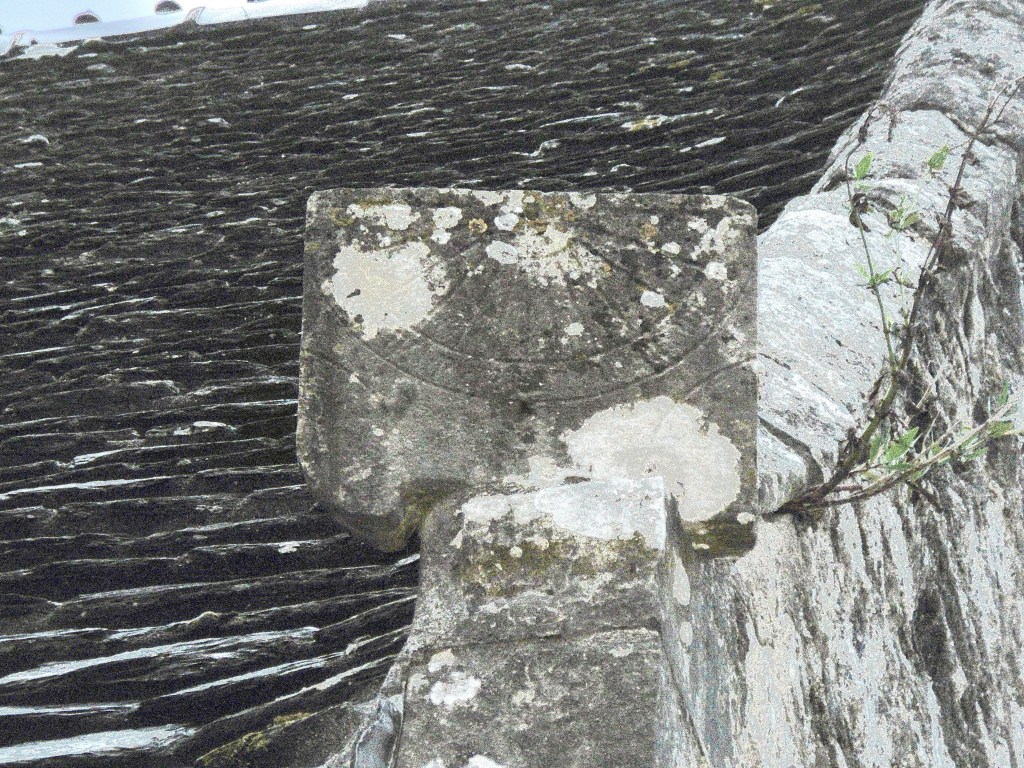
Dial 1 is located on a SW quoin stone of the nave. When examined in the 1990’s it was noted to be ‘behind a drainpipe’, which is no longer the case. By strange coincidence, when I revisited, the rest of the drainpipes were being repaired and repainted.

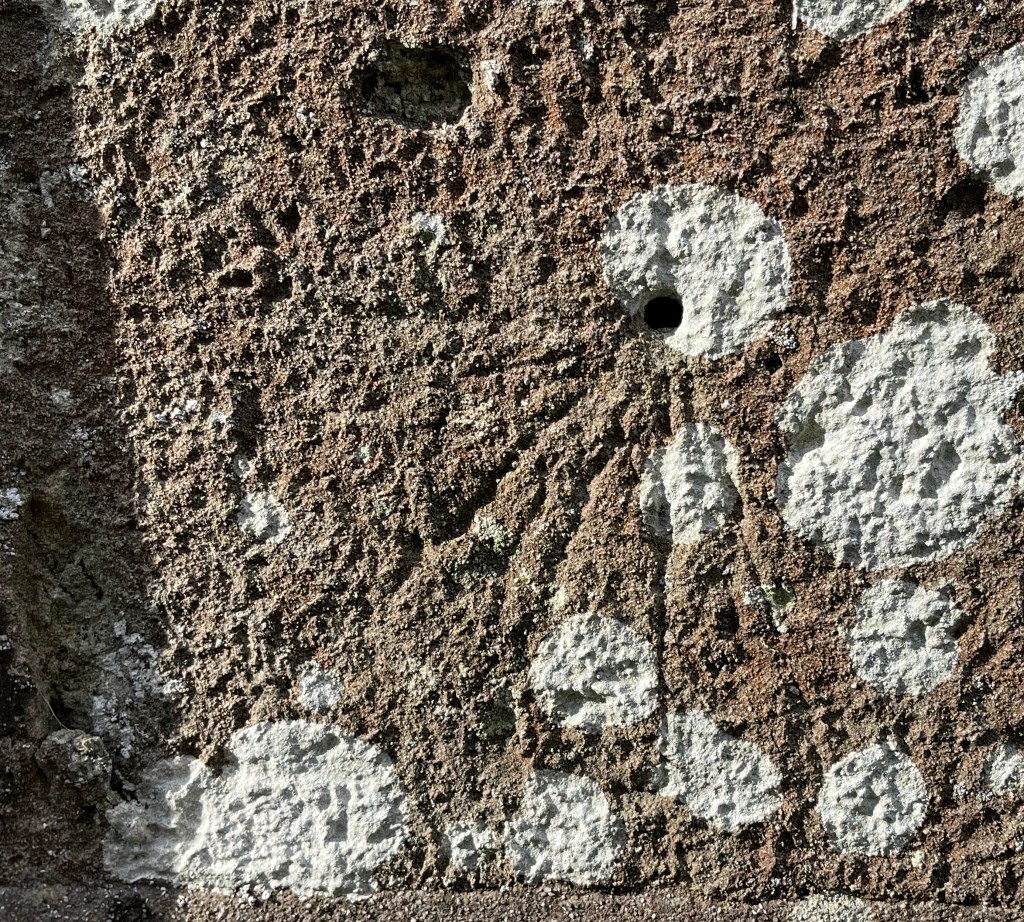
This is a straightforward 4-line morning dial with a pleasingly casual approach to straight lines. The two deeper incised lines suggest that late morning was the significant time of the day for observance.
DIAL 2

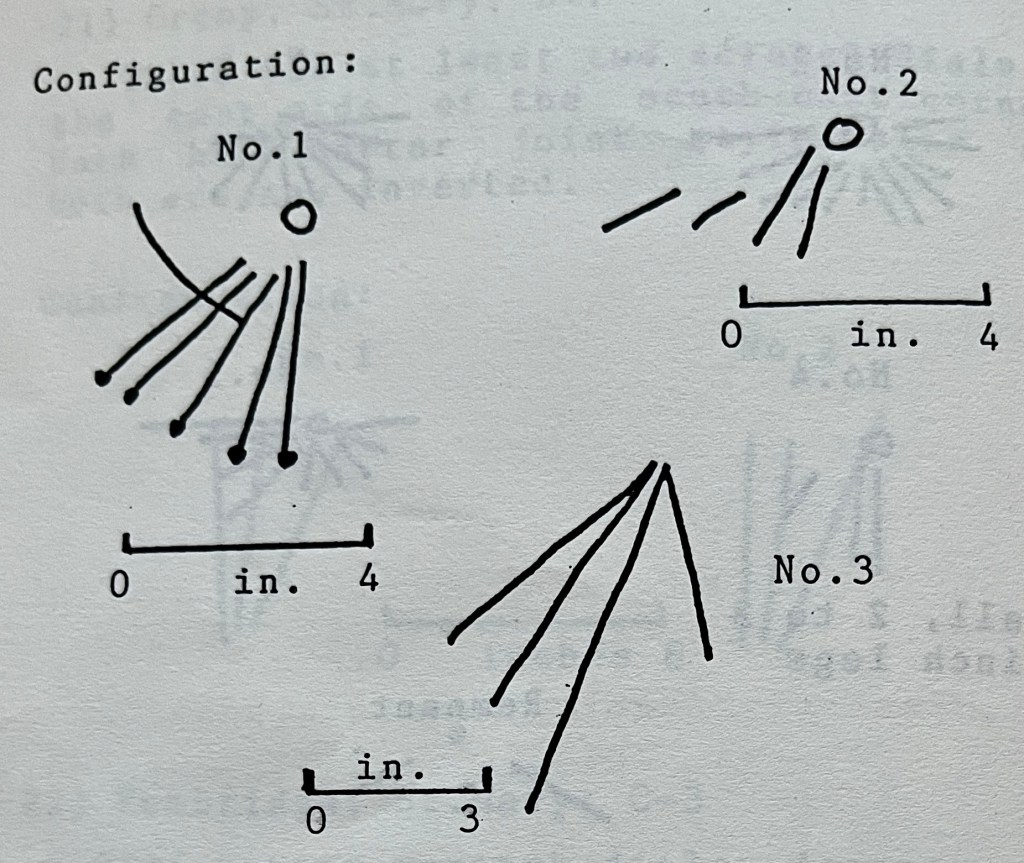
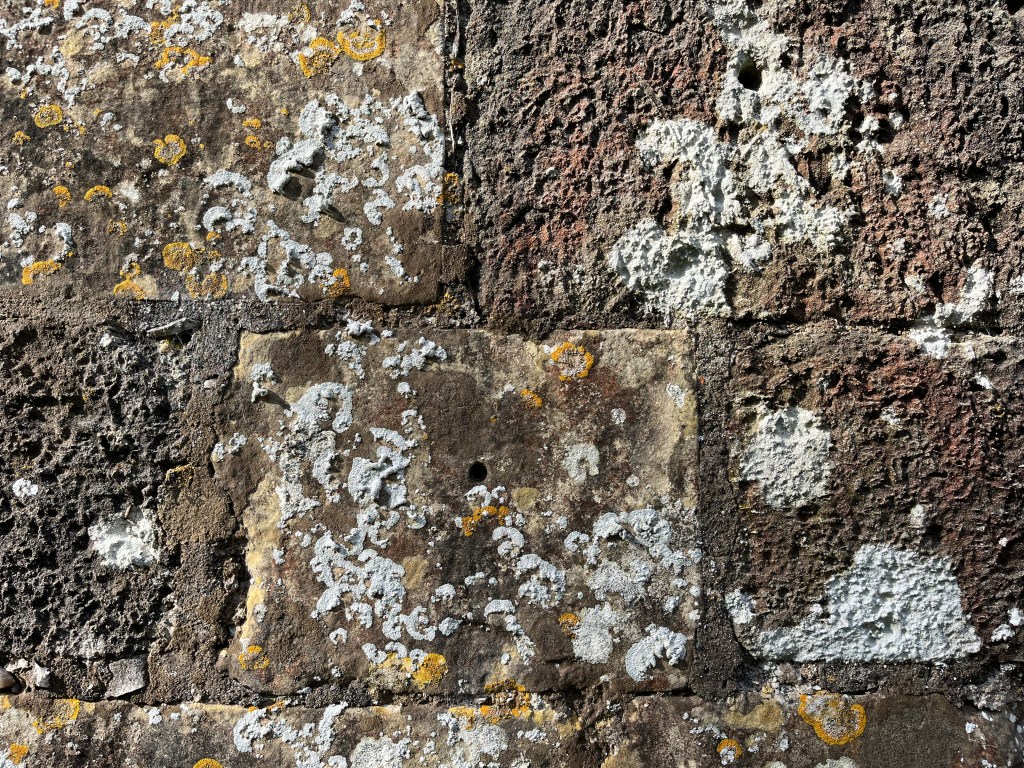
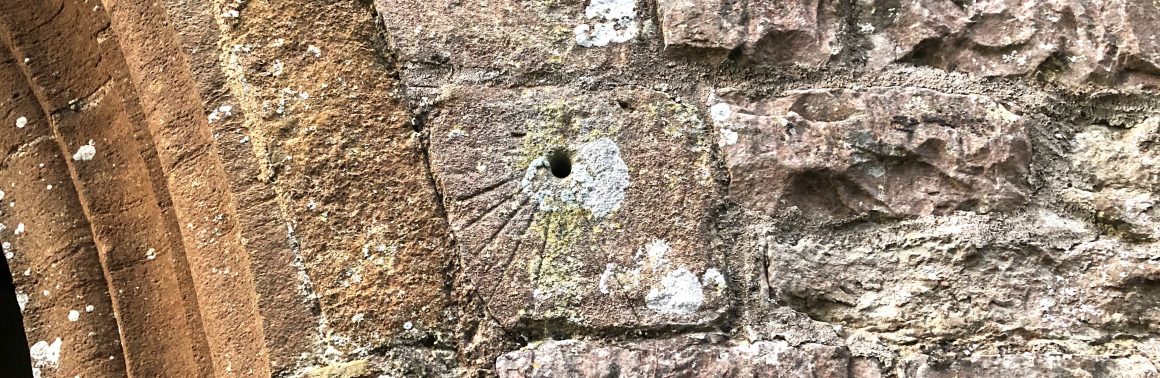
Dial 2 is so simple that I cannot claim to have discovered it this time round. It was recorded as being on S buttress of the tower, with 1 line a mere 45mm long, a small gnomon hole, and a pock LLQ . It was noted in 1997 as ‘very faint’. Although Dial 1 is mentioned in several places (eg BHO), I have found no additional reference to this tiny time marker. So for the second time I failed to find it, even in sunlight. However, a drawing was made and is all I can offer.

Do see the Saxon statue mentioned in the notice below (there is a similar one in Bradford on Avon), and indeed spend some time inside this interesting church.

GSS Category: Scratch Dial; Mass Dial; Eroded Dial

All photos Keith Salvesen; diagrams BSS

MINSTER LOVELL . OXON . ST KENELM – Scratch Dial

St Kenelm . Minster Lovell . John Renner

ST KENELM . MINSTER LOVELL . OXON

GRADE I ✣ Entirely rebuilt in the mid-15th century, incorporating earlier foundations and materials. C15 font and pews. Other details of the interior at BLB. Behind the church are ruins of its predecessor. 51.8001 / -1.5315 / SP324113

St Kenelm . Minster Lovell . ACNY cc/os

DIAL

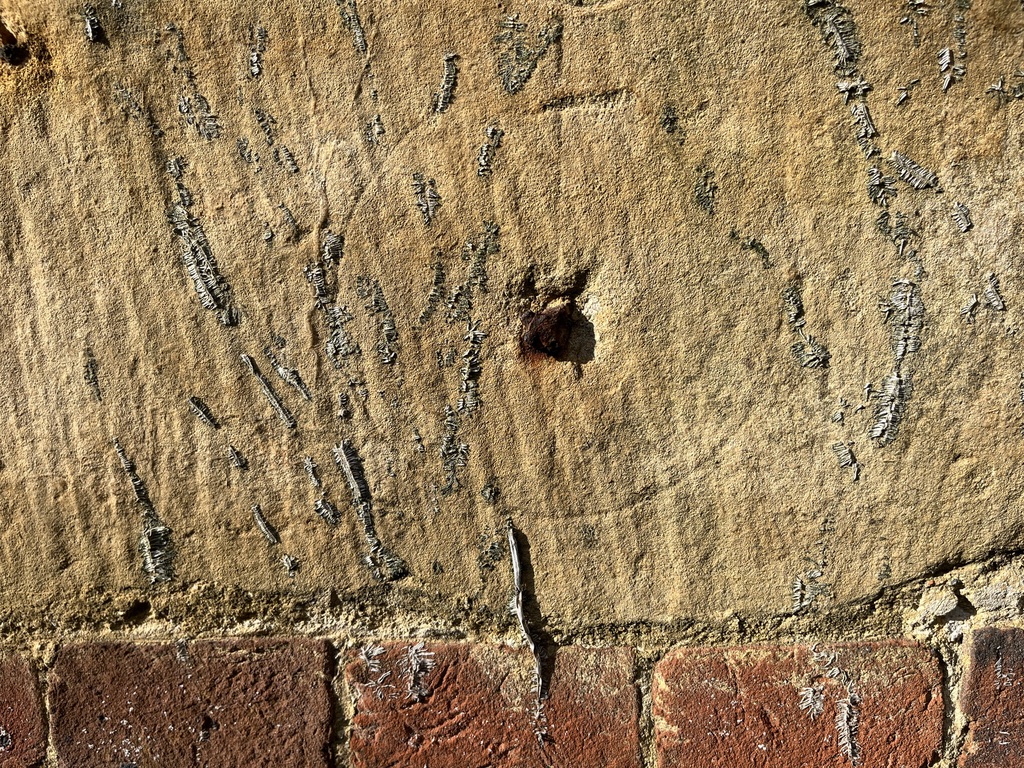
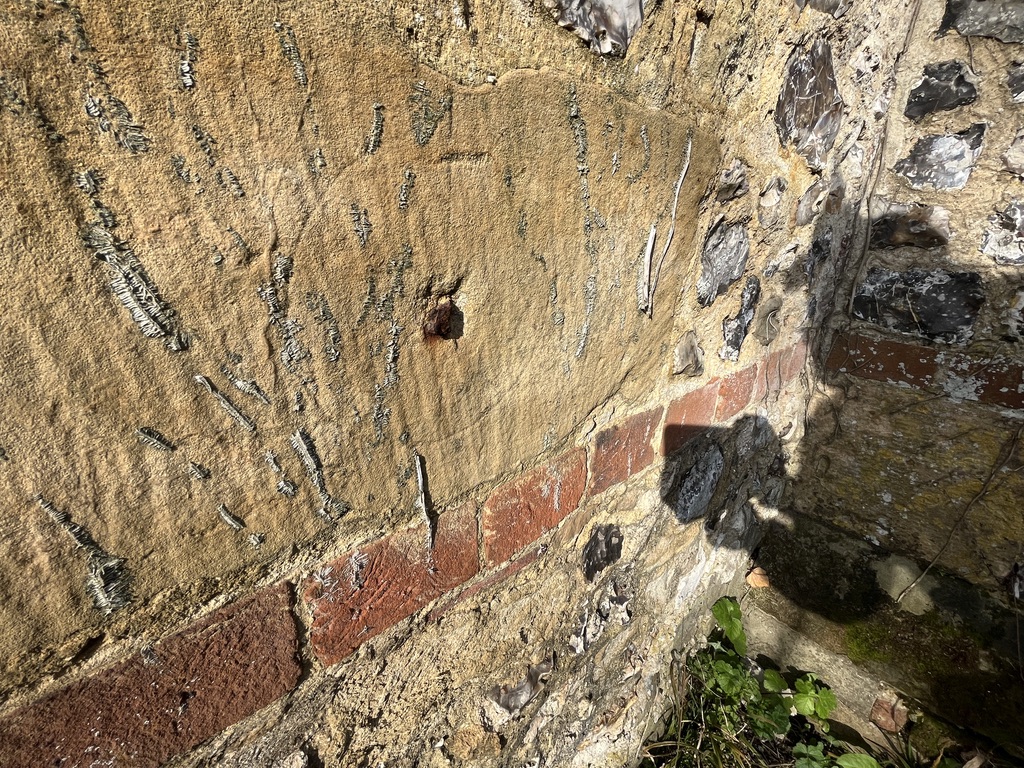
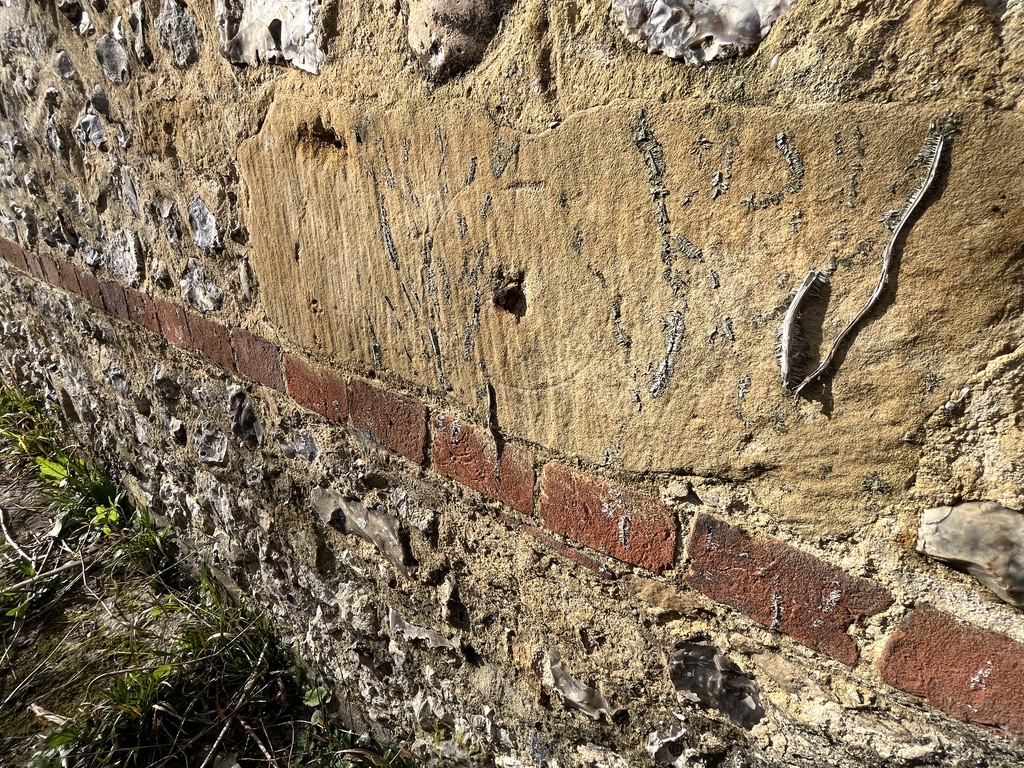
The dial consists of an incomplete circle of 9 holes, and no radials. There are a couple of eroded marks at the top that might have been linked to the design. A pleasingly small, neat dial.
LOCATION

The dial is on the buttress on L corner of N transept chapel, to the left of entrance porch. It was obviously repositioned at some time, given its orientation and the dissimilarity of the stone to those around it.
GSS Category: Scratch Dial; Mass Dial; Relocated Dial
Photos: John Renner with thanks, except 2 ACNY cc/os

ODDINGTON . GLOS . ST NICHOLAS – 3 Scratch Dials

Mike Baldwin Geo cc

ODDINGTON . GLOS . ST NICHOLAS

Grade I ✣ C12 origin; gradual expansion to C15 (see BHO diagram); C19 restorations. Much of interest within, esp vast mid-C14 Doom wall painting on north wall of nave. Of note: stone bench seats within porch with incised lines where yeomen are reputed to have sharpened their arrows (cf Gnosall Staffs). In 1291 the rectory was valued at £14 13s. 4d. The extremely informative Evenlode Churches website is recommended – a model of its kind. 51.928 /  -1.6598 /  SP234255

John Renner

DIALS

There are 3 dials in a cluster on W face of the porch. The first is very visible and detailed, undoubtedly the latest. The second is a semi-circle type, fanned out beneath the mortar line. The third is little more than a trace between the two, perhaps a test scratching or passing whim.

John Renner

DIAL 1

John Renner

DIAL 1 has a sizable gnomon hole, enlarged over tIme. The noon line is emphasised by being cut beyond the circle boundary; it also marks Sext. The emphatic horizontal incision RHS suggests that sunset (nocturns; compline) was a significant hour for observance. There are 4, possibly 5, faint lines URQ – probably rustic knife / nail scratchings rather than part of the original dial.

DIALS 2 and 3

John Renner

DIAL 2 has 6 lines radiating from the mortar line. The discrepancy between the line spacing LLQ and LRQ was perhaps an attempt to correct the shadow-fall angle of the sun in the later part of the day.

DIAL 3 is as close to not being a dial as it could be. However, there is a badly cut line at approximately noon; and (anticlockwise) a line approximately at None. There’s also a hint that a gnomon might have been in the vertical mortar line above the horizontal.

John Renner

GSS Category: Scratch Dial; Mass Dial; Dial Cluster; Medieval Doom Painting

CREDITS: All main photos, John Renner; header Mike Baldwin Geo cc

TOTNES . DEVON . ST MARY – Scratch Dial

wigulf . wiki . cc / os

TOTNES . DEVON . ST MARY

GRADE 1 ✣ A fine Perpendicular church on the site of Benedictine Priory, standing proudly near the centre of the town and visible from some distance away. Mainly built mid C15 using much red sandstone. The Grade denotes the importance of the building, and the interior offers much for the visitor. Also, see the splendid Norman motte and bailey castle nearby. 50.4319 / -3.6878 / SX802604

From the Parish website

SCRATCH DIAL

The dial is in a poor state, and tucked away on a buttress at E end of the church. It was clearly relocated from the sunny side at some time, thereafter serving a decorative function at best.

There are ±8 lines radiating from a large or enlarged gnomon hole. Unusually, they terminate in large pocks that are graduated down in size to noon and (as far as one can tell now) upwards LRQ from the noon line. At some stage the lowest holes and the bottom right corner were badly damaged but despite the remedial mortar, it is just possible to see that there were ‘afternoon holes’.

GSS Category: Scratch Dial; Dial in unusual position; Devon Scratch Dial

Credits: Erika Clarkson, for her detailed photos of the dial; wigulf . wiki . cc / os for the header image; Parish website for the view of Totnes and the church

OXFORD . HISTORY of SCIENCE MUSEUM – GRAFFITI, SYMBOLS & SCRATCHINGS

OXFORD HISTORY OF SCIENCE MUSEUM

OXFORD . HISTORY of SCIENCE MUSEUM – GRAFFITI, SYMBOLS, & SCRATCHINGS

The History of Science Museum in Broad Street, Oxford, has a wonderful collection of scientific instruments dating from the Middle Ages to C19. There is a rich hoard to be investigated. As you enter, you will see an outstanding display of the many instruments that over the ages have been used to measure the passage of time. A superb pair of armillary spheres is / are featured HERE. Only the Museo Galileo in Florence has given me such pleasure.

GRAFFITI, SYMBOLS, & SCRATCHINGS

On each side jamb of the entrance to the Museum, there is a fine collection of graffiti of several kinds. Below is a selection of the marks from either side, left first. These include names and dates, with a Bull (1753) on one side, and a later Bull (1891) on the other; and a couple of probable mason’s marks, together with random scratchings accumulated over time.

MARIAN MARKS and PROTECTION (APOTROPAIC) SYMBOLS

By C17 the concept of thwarting evil by means of incised marks on churches and other buildings (eg the TITHE BARN Bradford-on-Avon) was weakening, yet superstition and the fear of evil lingered on. This building – the original Ashmolean – dates to the late C17. By this time, many medieval incised devices – eg scratch dials – had become things of the past. However, to some extent the comfort of cutting marks to ward off evil persisted. This would explain the various Marian marks VV (Virgo Virginum) on the jambs.

There is also a good collection of compass-drawn circles of varying completeness, accuracy, and depth. In medieval times these were the simplest form of demon trap, luring evil inside a circle from which it could not escape. The principle continued in later centuries.

LEFT SIDE

RIGHT SIDE

GSS Category: Apotropaic marks; Marian marks; Protection marks; Demon Traps; Compass-drawn circles; Graffiti on public buildings;

Reference: History of Science Museum – Oxford; Matthew Champion – Medieval Graffiti

All photos: Keith Salvesen / Rolling Harbour

TOTNES . DEVON . ST MARY – Vertical Dial

wigulf . wiki . cc / os

TOTNES . DEVON . ST MARY

GRADE 1 ✣ A fine Perpendicular church on the site of Benedictine Priory, standing proudly near the centre of the town and visible from some distance away. Mainly built mid-C15 using much red sandstone. The Grade denotes the importance of the building, and the interior offers much for the visitor. Also, see the splendid Norman motte and bailey castle nearby. 50.4319 / -3.6878 / SX802604

VERTICAL DIAL

St Mary online

On the south wall of the church near the porch is a slate dial set in a stone frame. It declines west and shows the hours VII – VI divided into halves and quarters. Across the top is an inscription which reads In memoriam TWW 1903. Below it are the coordinates Lat 5020 ; Long 0340 W. Across the bottom of the dial is the quite common motto Ut Hora Sic Vita (Life is as an Hour).

The gnomon has a pierced nodus which causes a spot of light to appear on the dial plate. In my amateur experience, this is a relatively uncommon addition to a sundial’s capabilities.

GSS Category: Vertical Dial; Sundial with Nodus; Vertical Sundial Motto; Memorial Vertical Sundial

Photos: header, wigulf . wiki . cc / os; dial location, St Mary’s online; dial close-ups, BSS Bridol

Thanks to Erika Clarkson for giving me the details from a visit to St Mary’s, where she had found a scratch dial. I have written it up separately, being completely different in type and time.