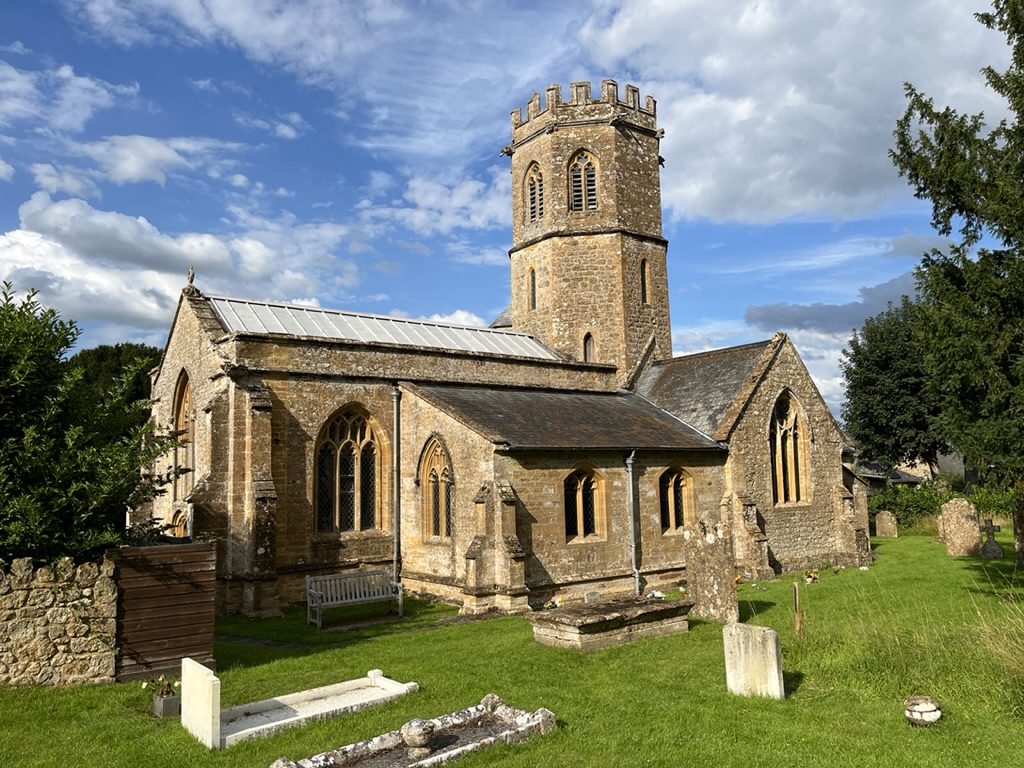
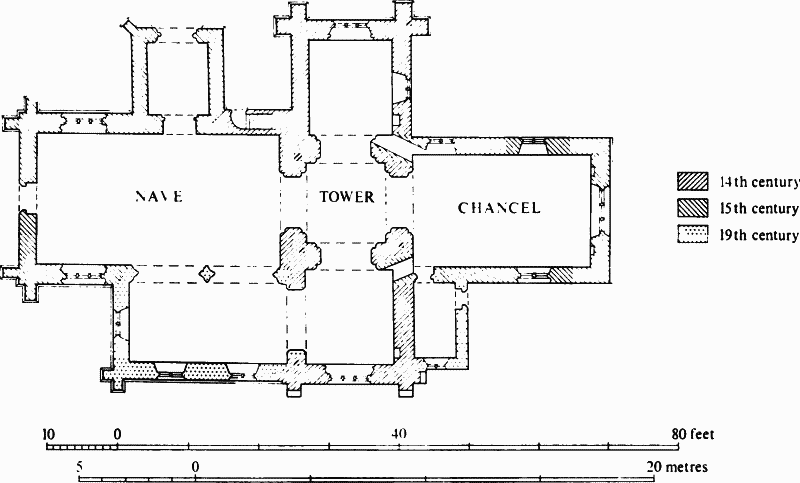
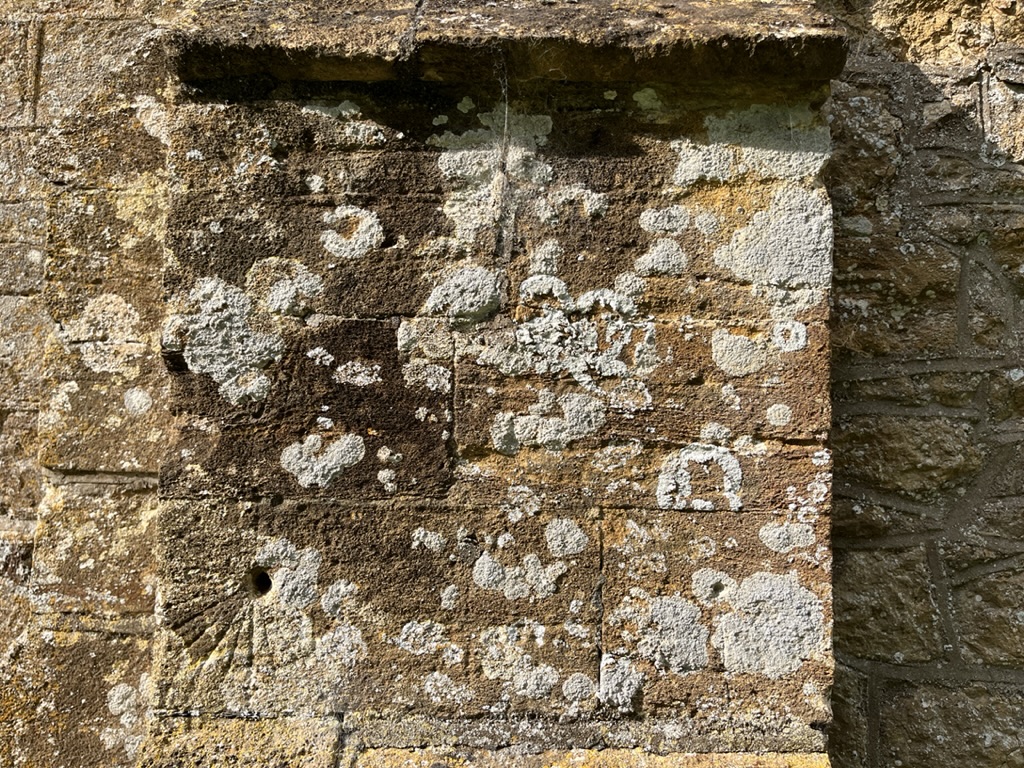
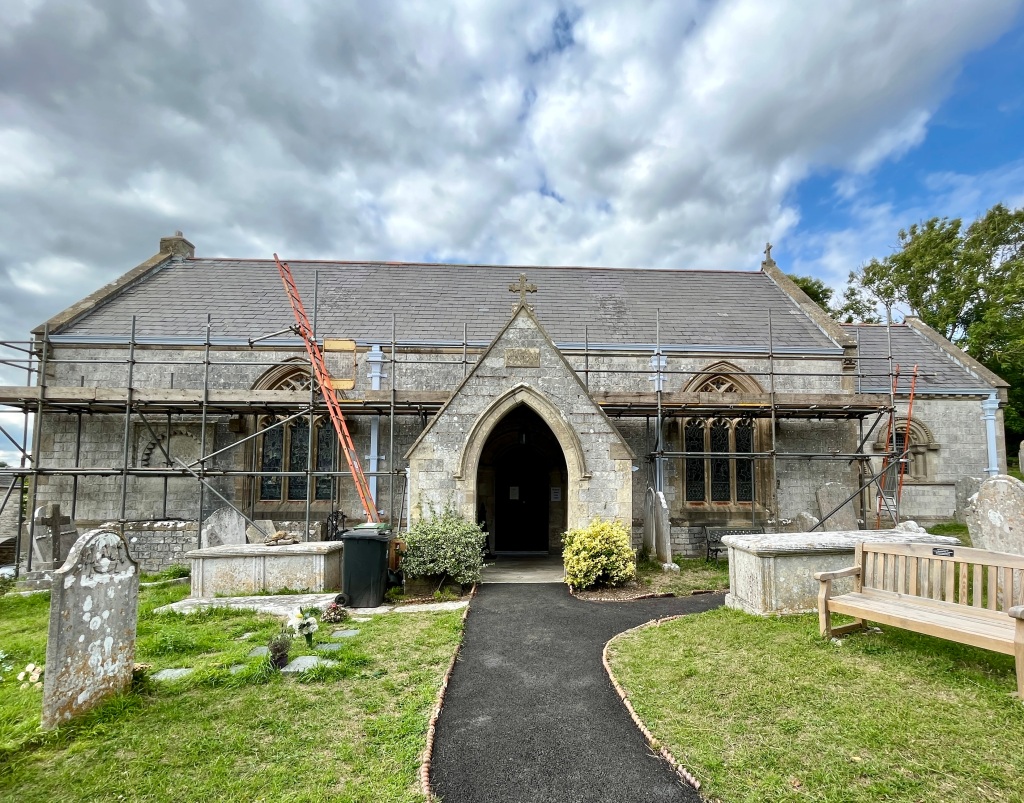
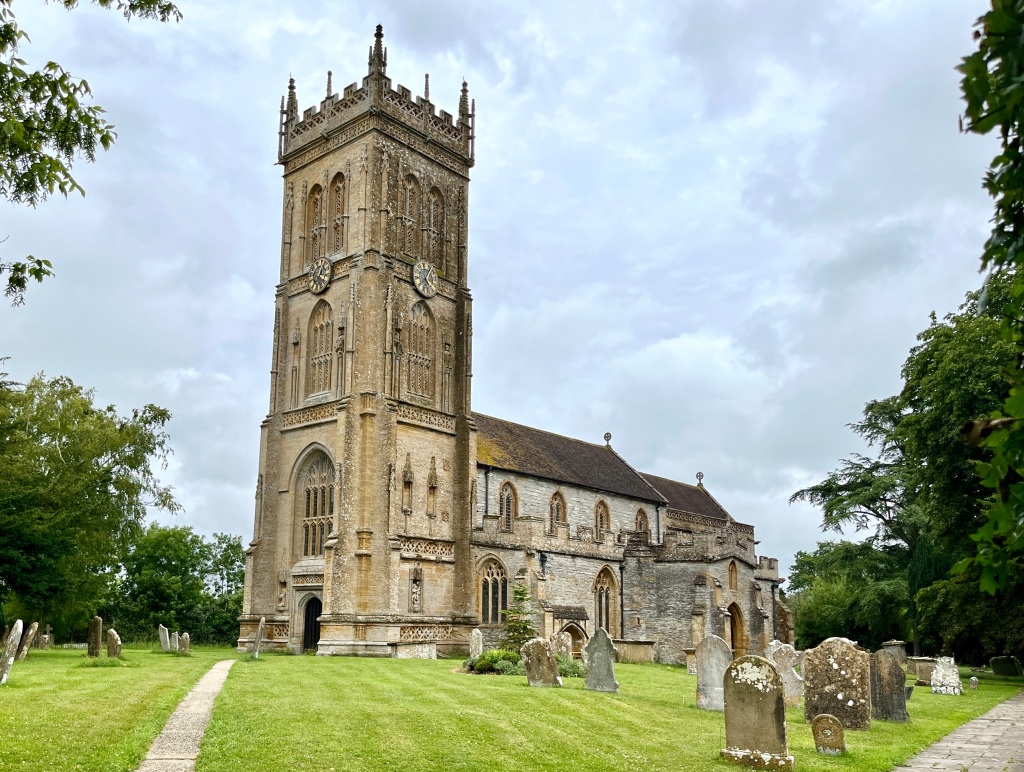
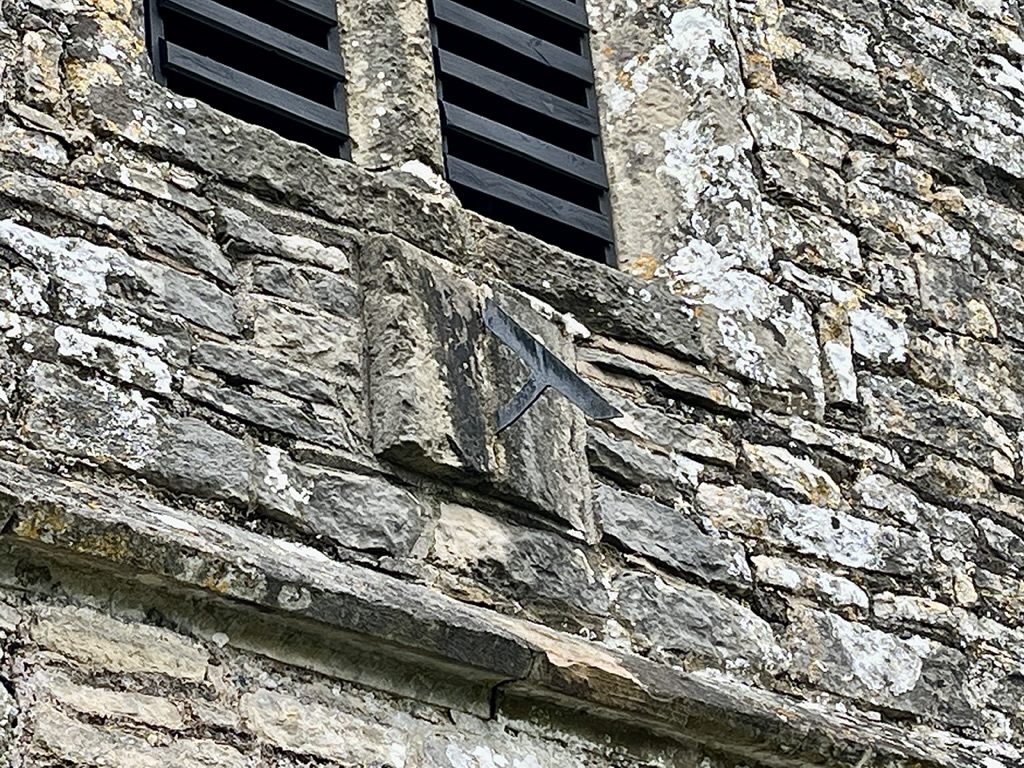
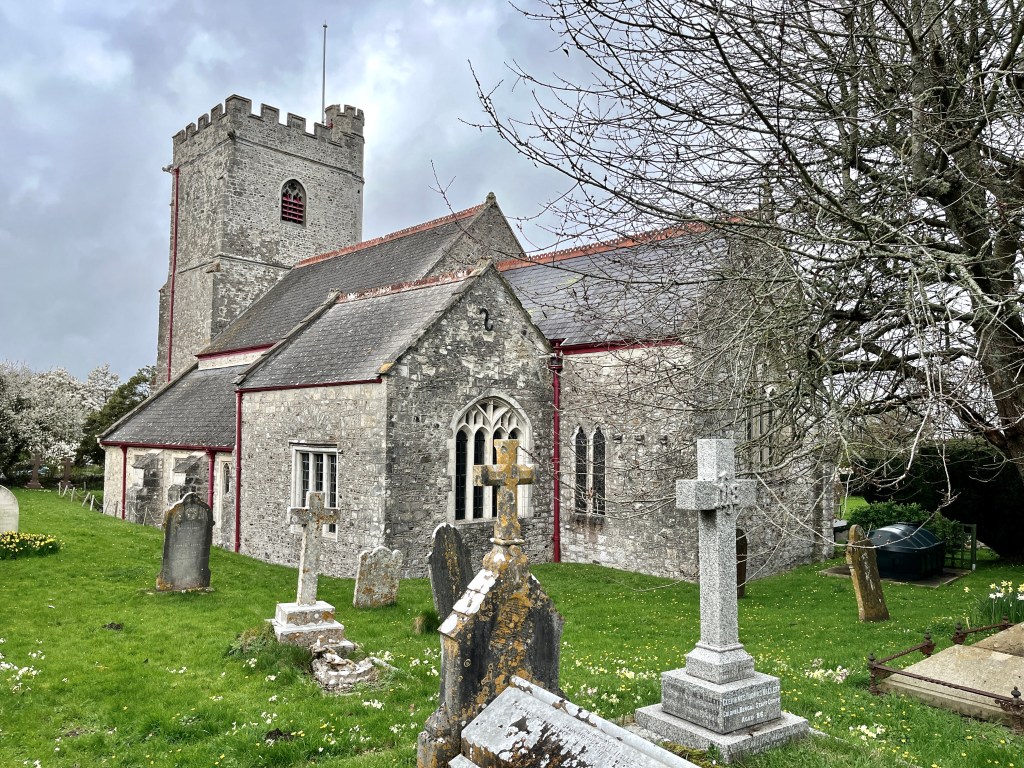
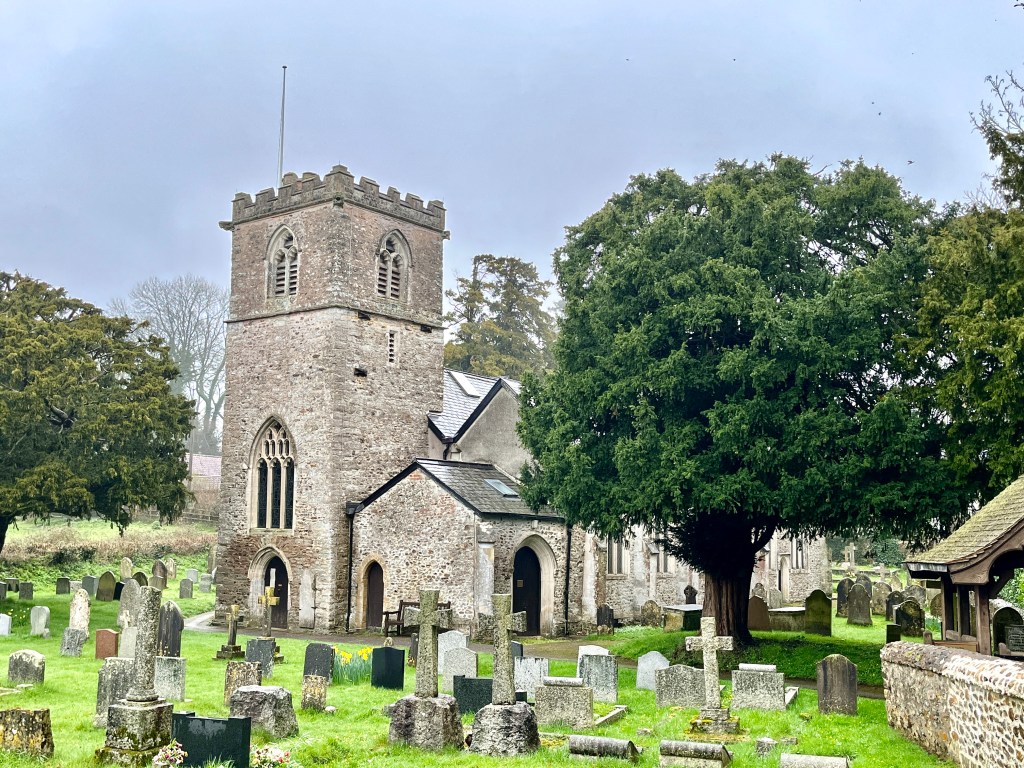
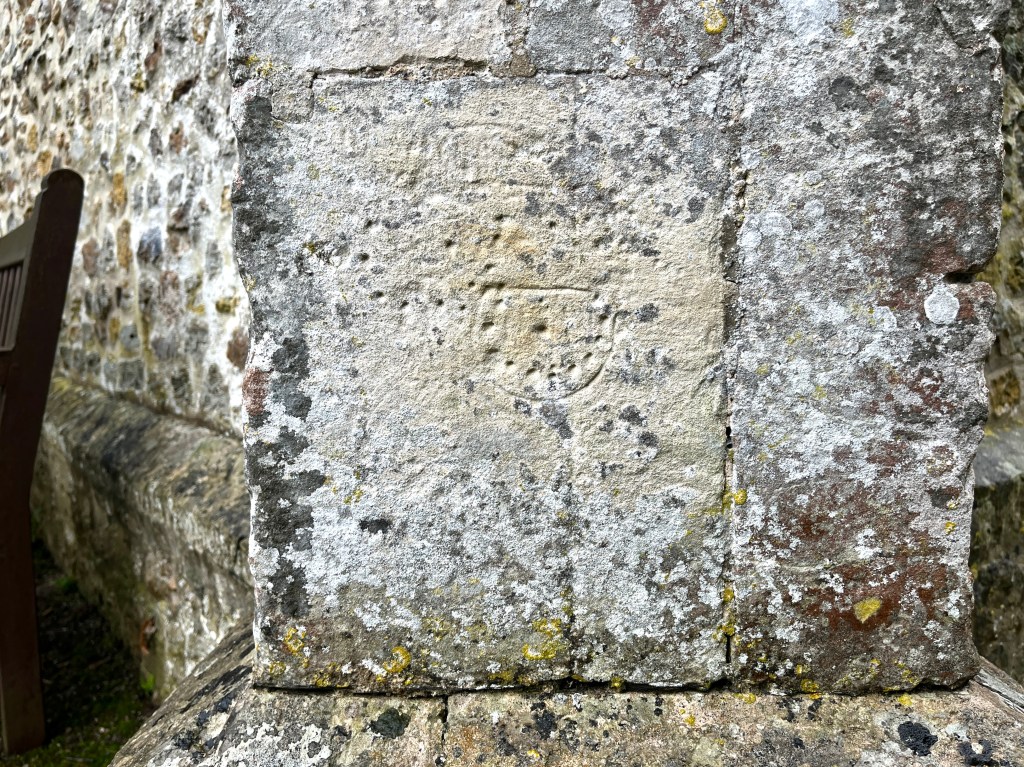
GRADE l † C13 origins; mainly C15 with C19 slightly controversial restoration. Dec and Perp. A fine-looking church with a handsome octagonal tower (one of a number in the area). Picturesque PEV. Combine with Barrington Court (NT) – 2 remarkable pillar dials: one is a dodecahedron with pentagonal faces (post in due course). 4m N of Ilminster. 50.9592 / -2.8712 / ST389181
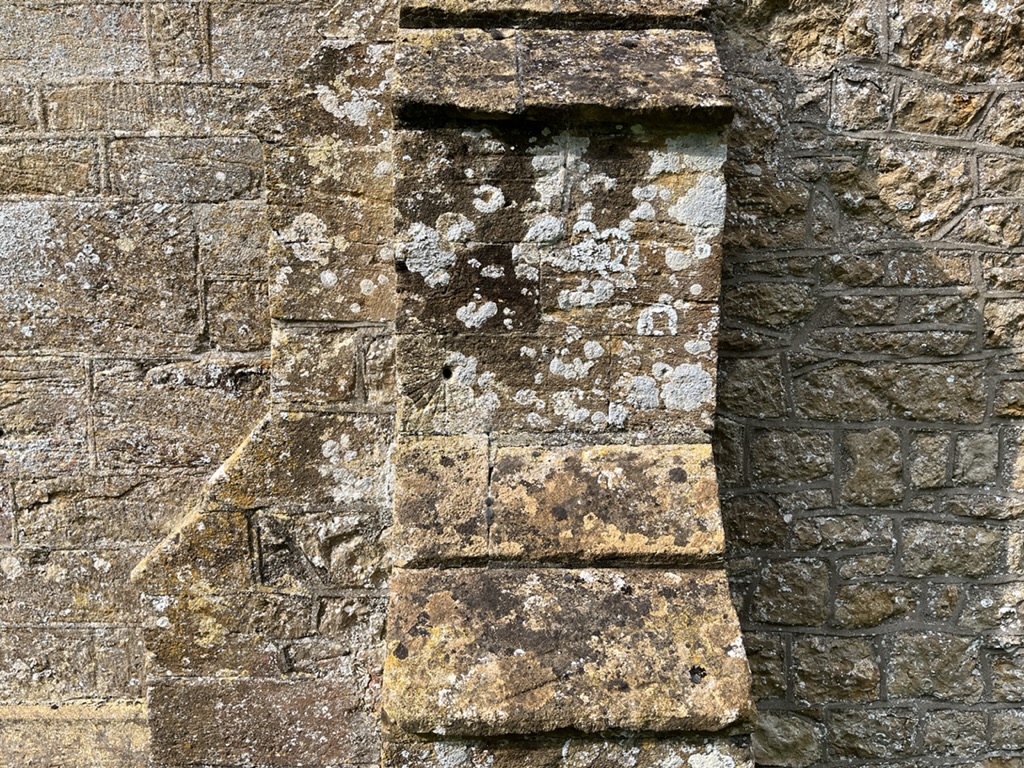
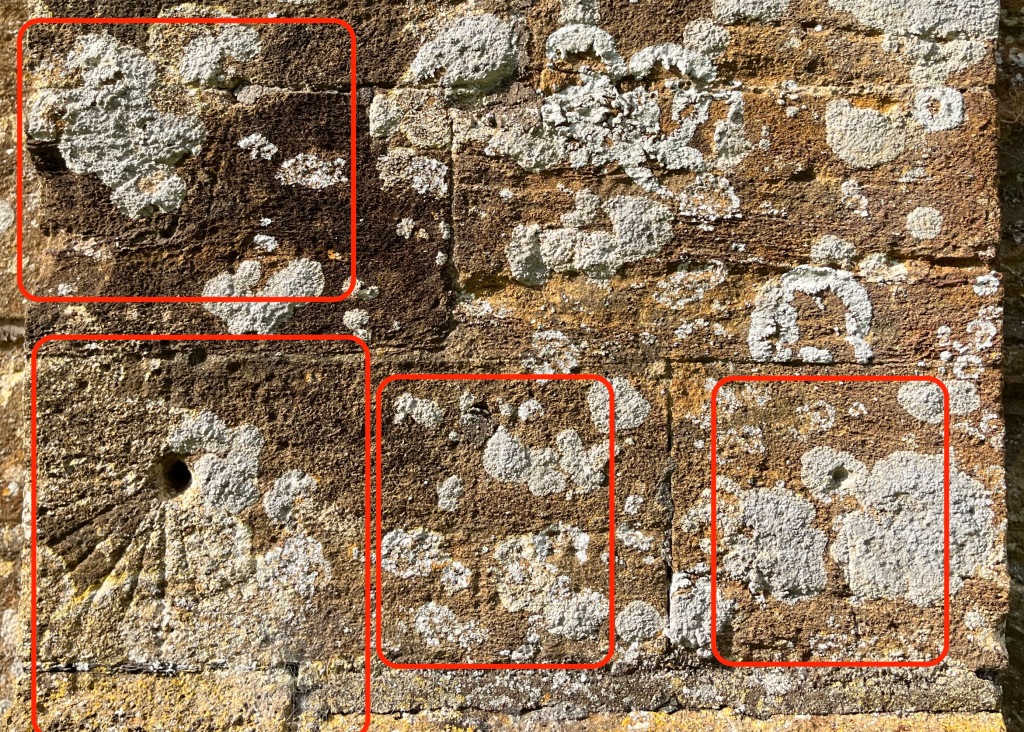
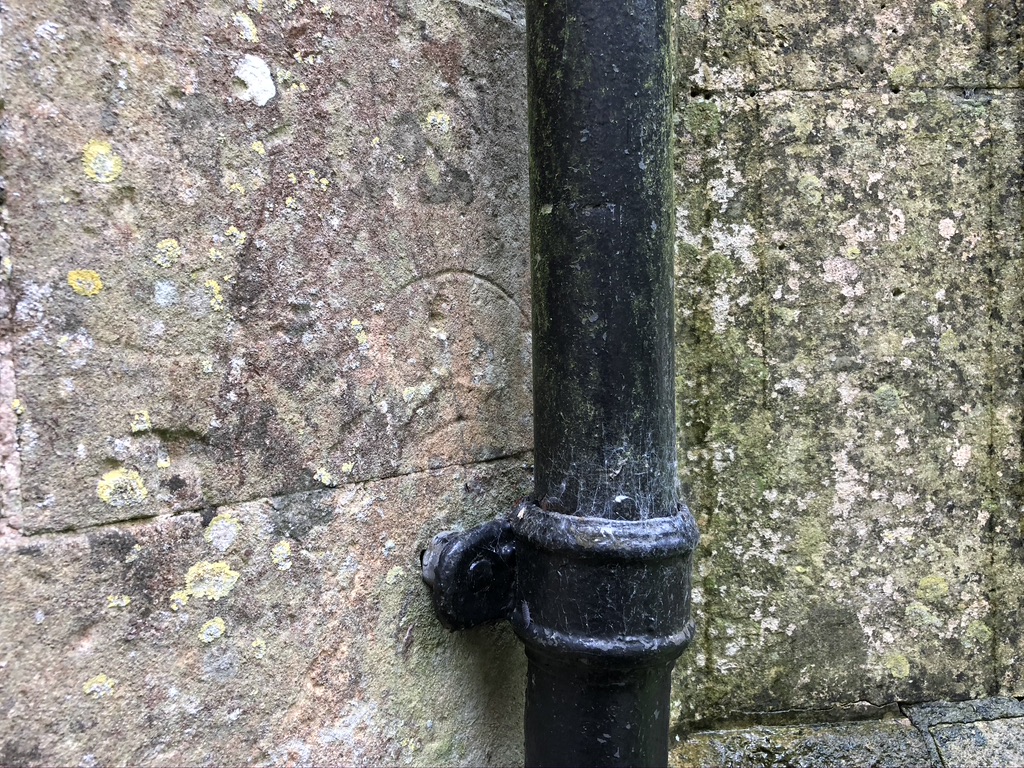
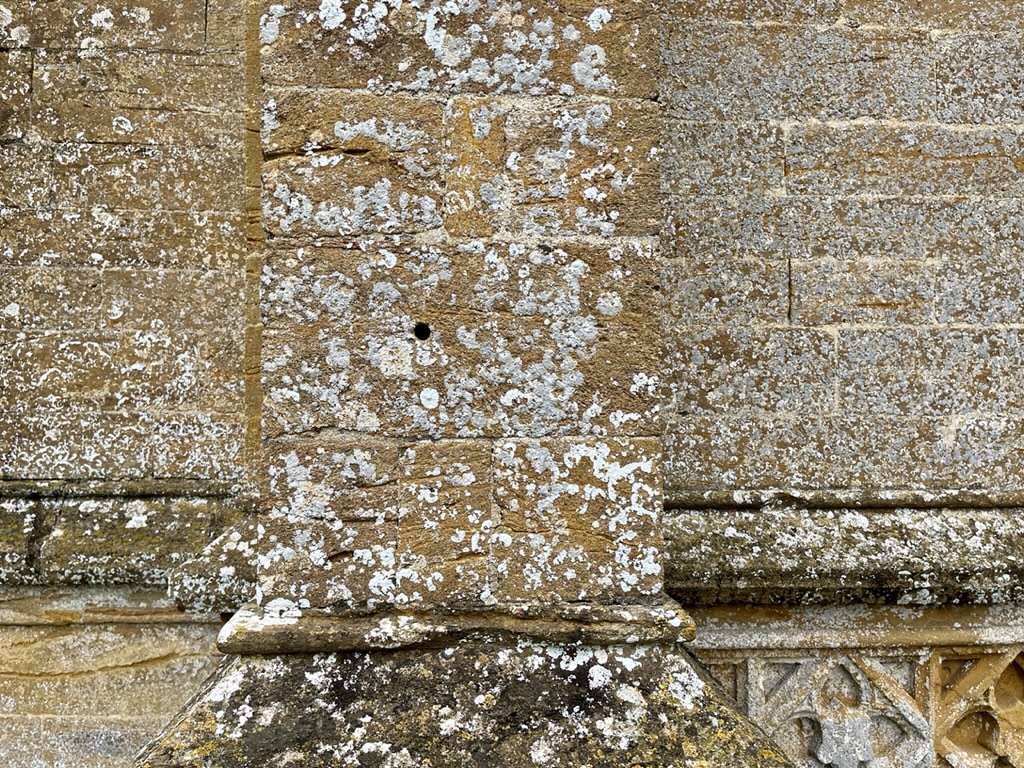
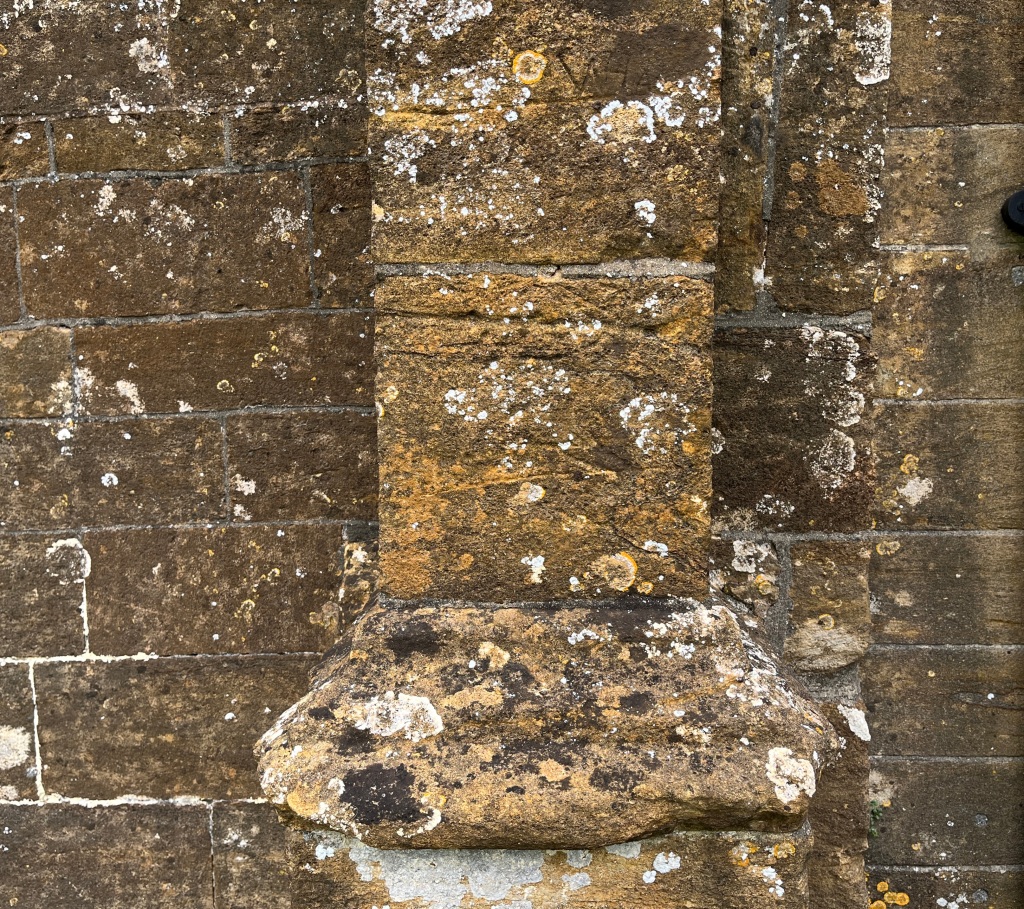
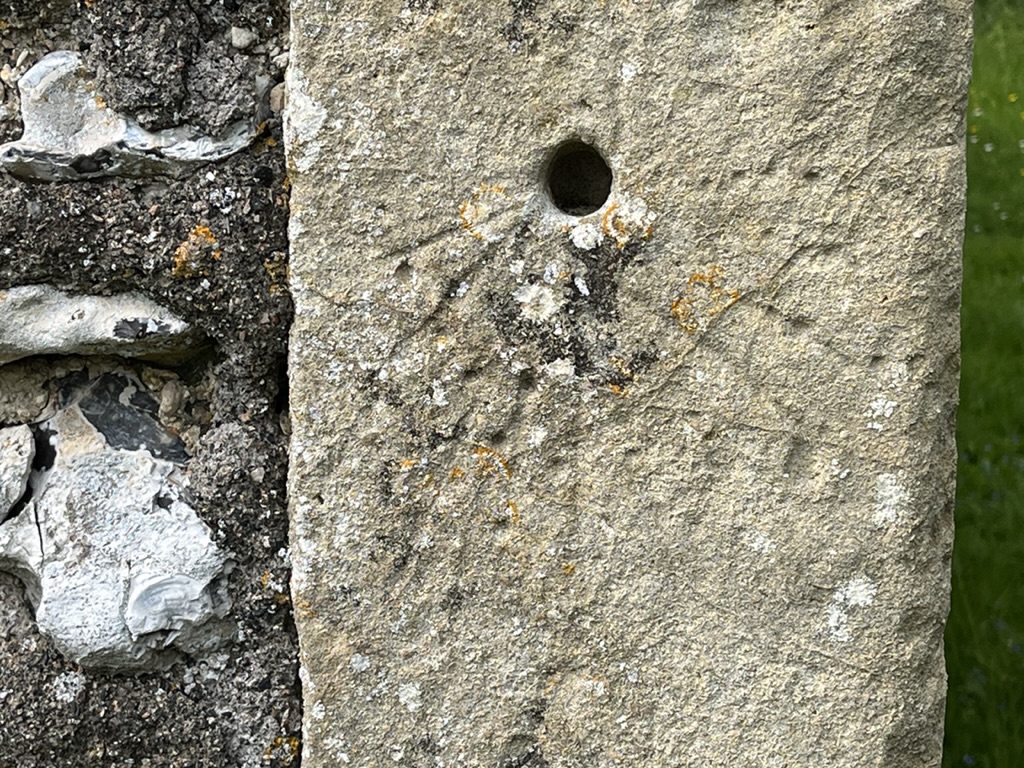
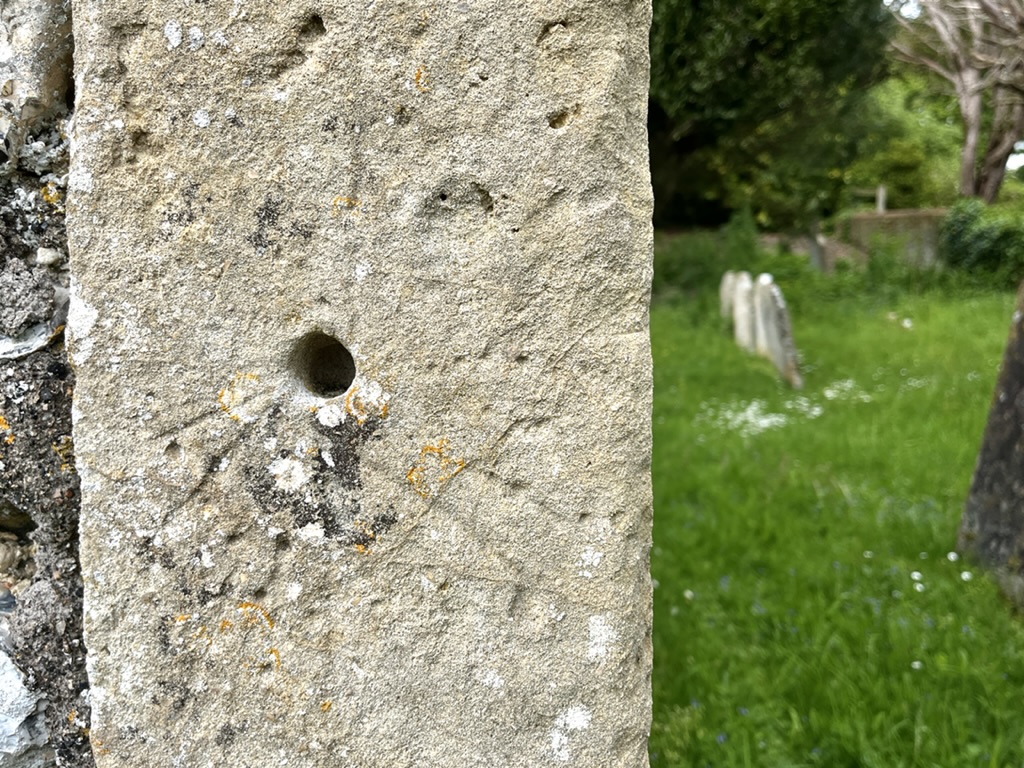
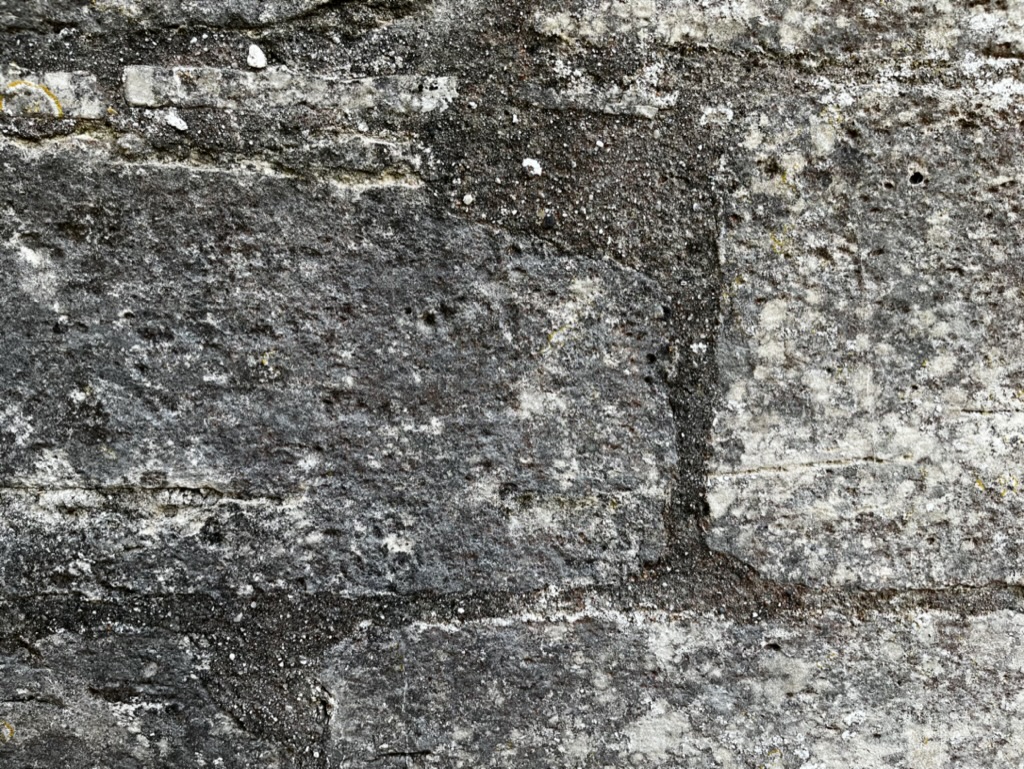
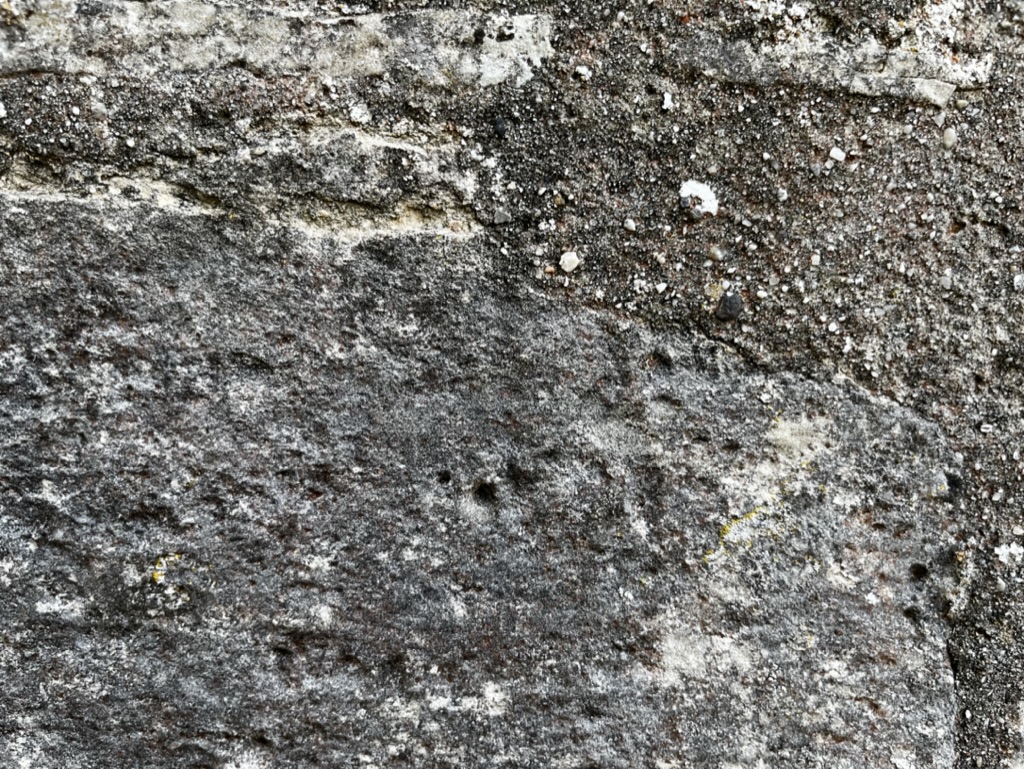
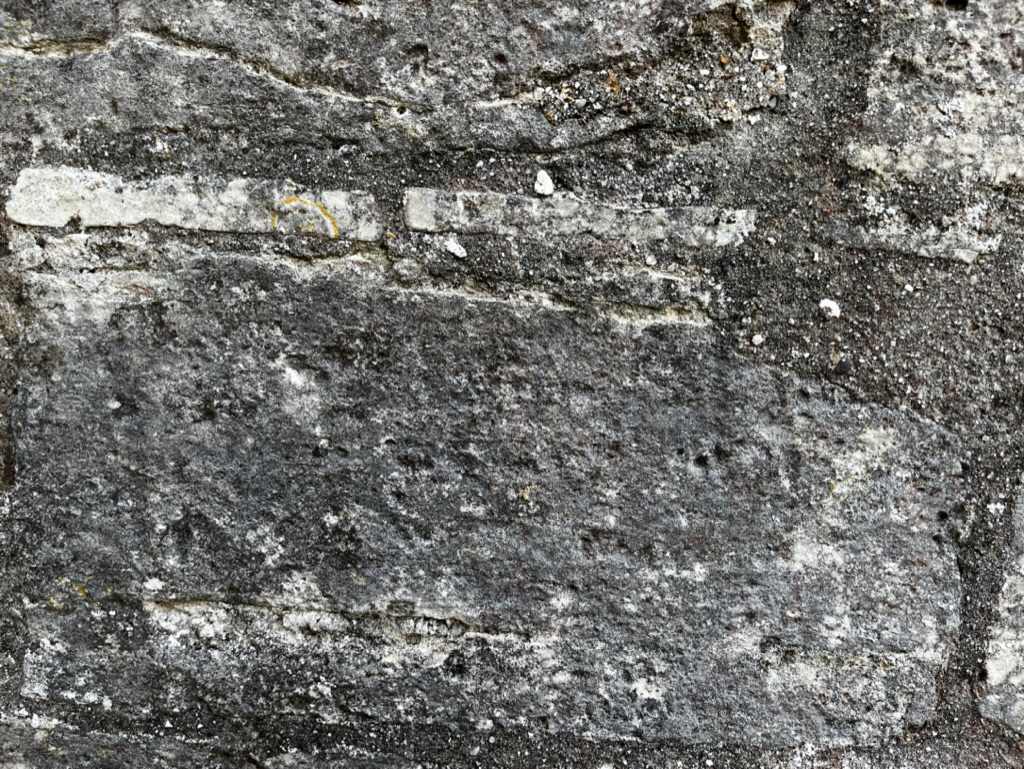
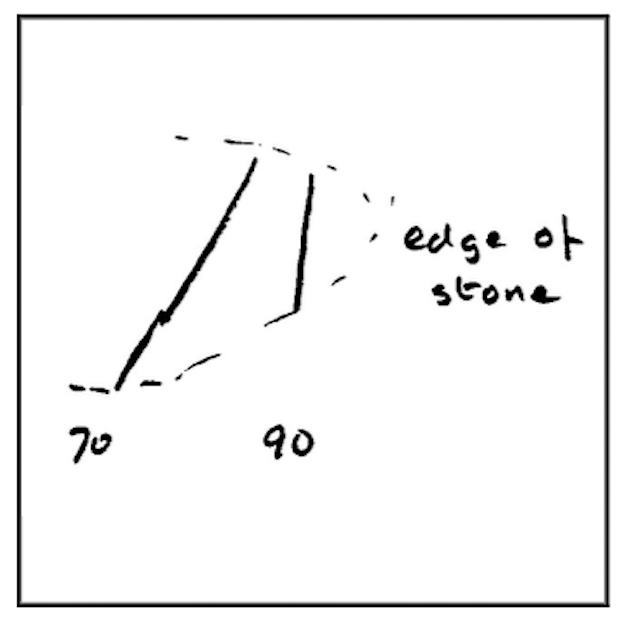
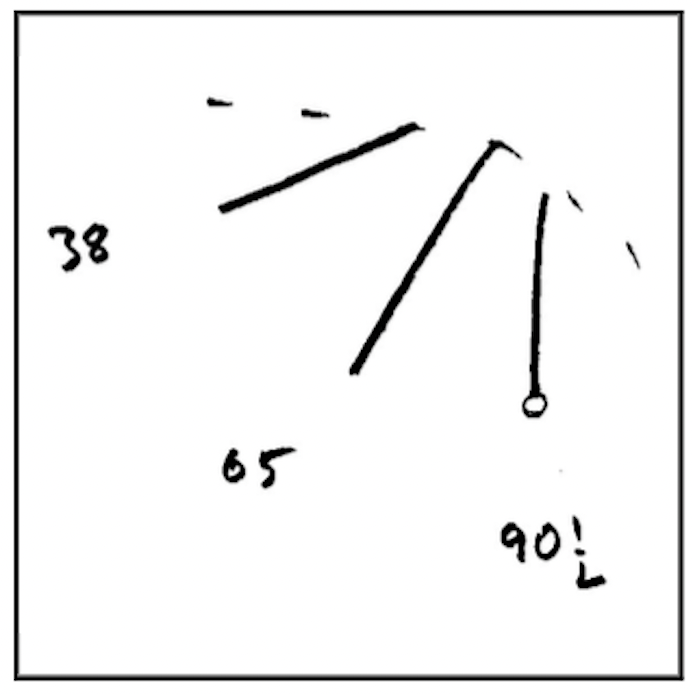
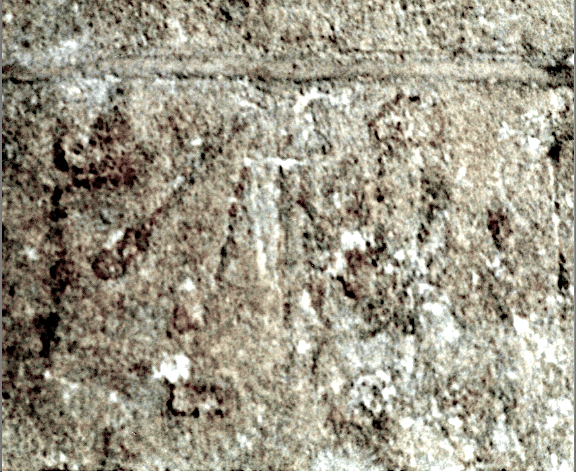
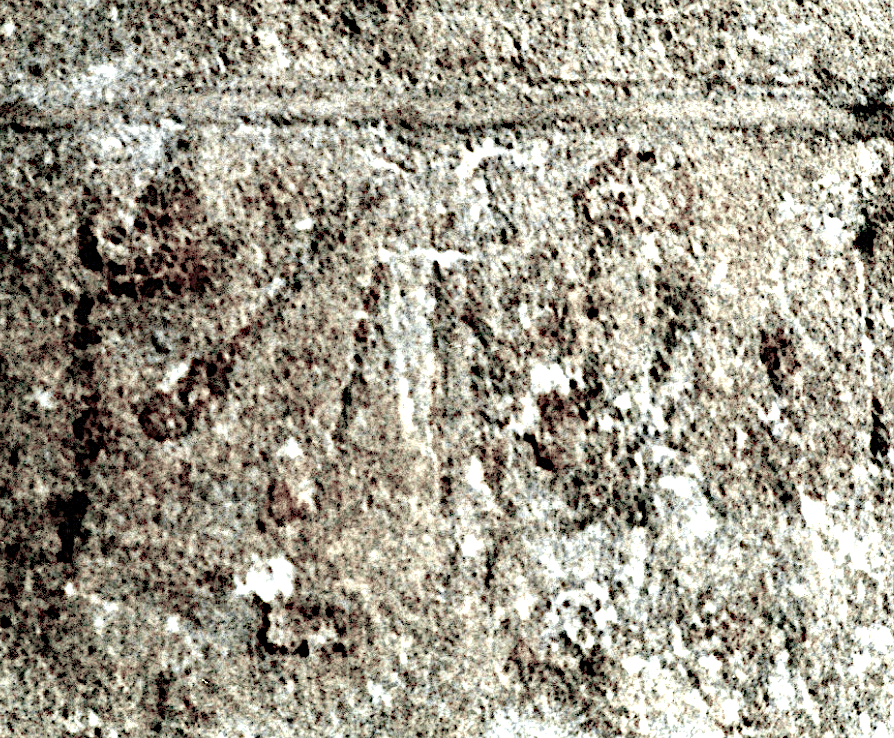
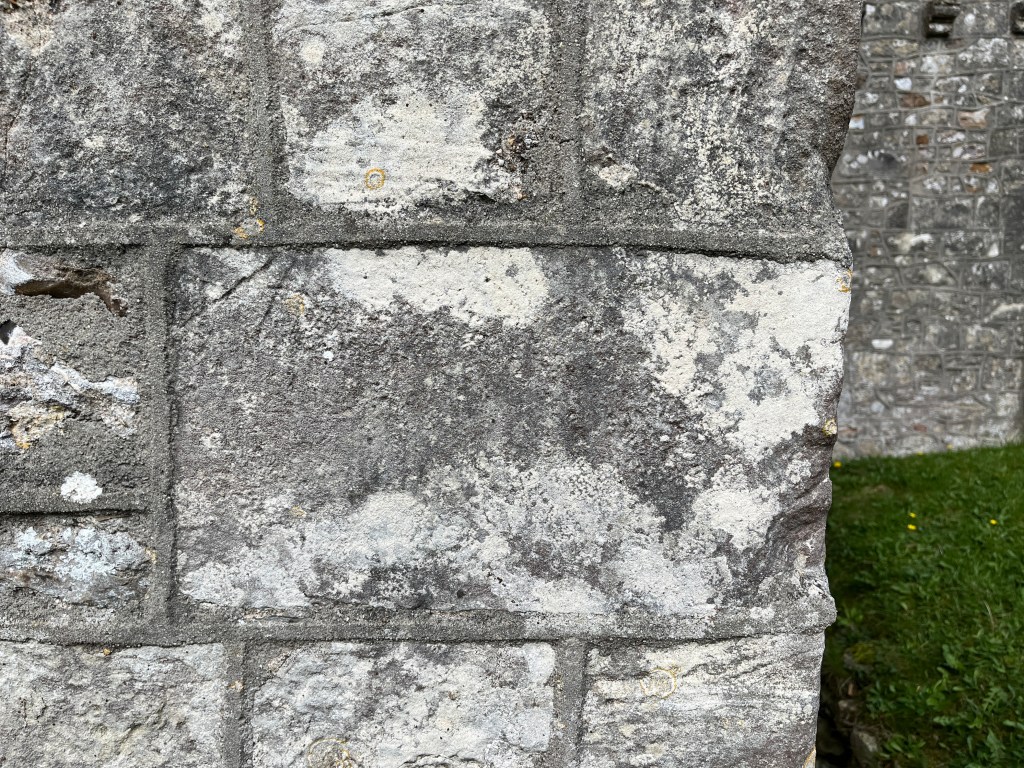
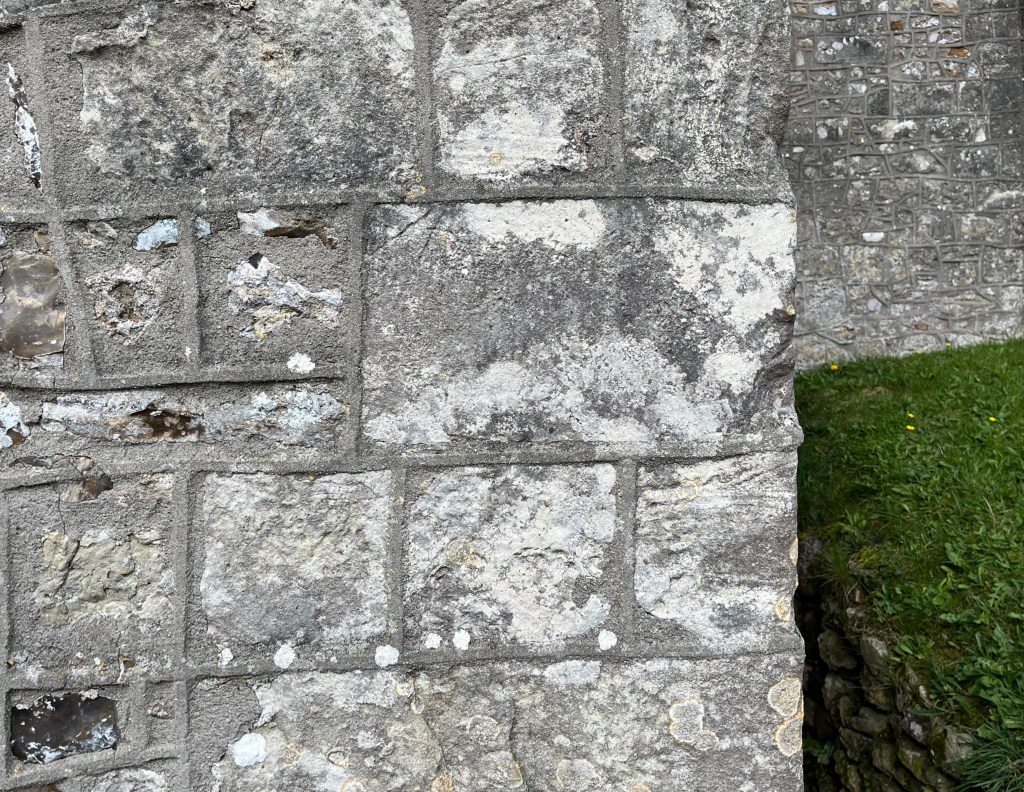
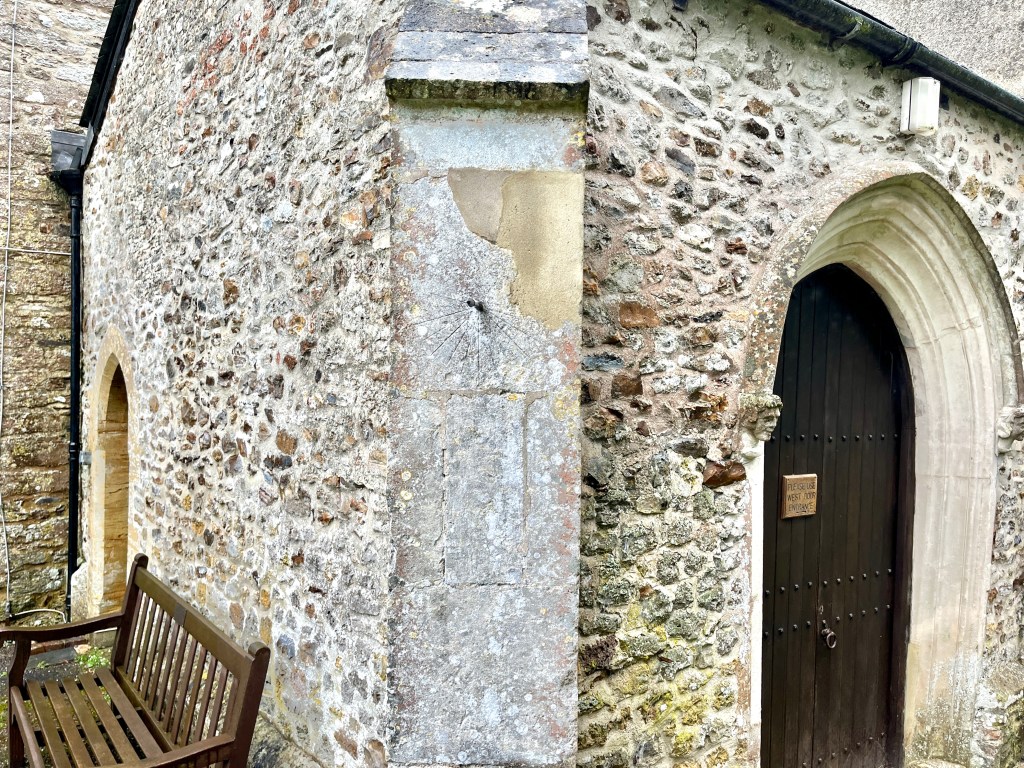
DEH the pioneering Downside monk visited on Sept 10th 1912 on one of his early dialling expeditions using a motorbike to get around. He recorded 3 dials in a group on the buttress at the W corner of the S transept. There is a fourth plausible dial in the same location.
DIALS
DIAL BUTTRESS
DIAL 1
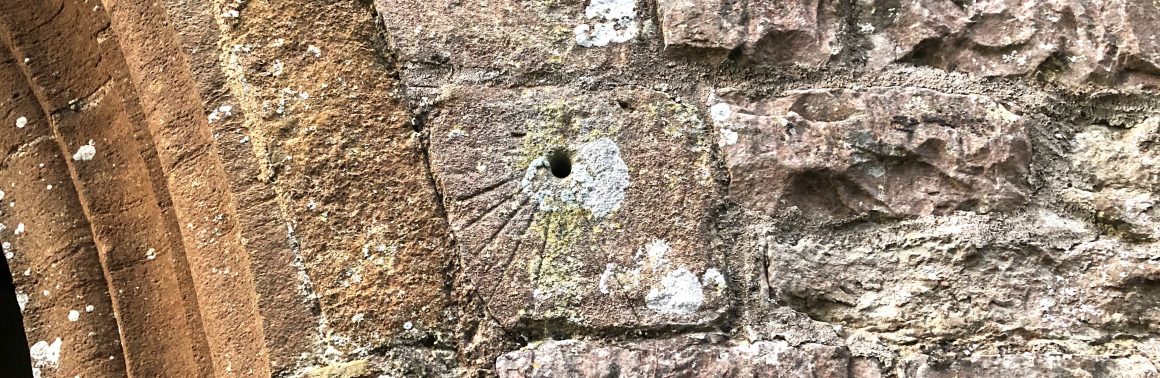
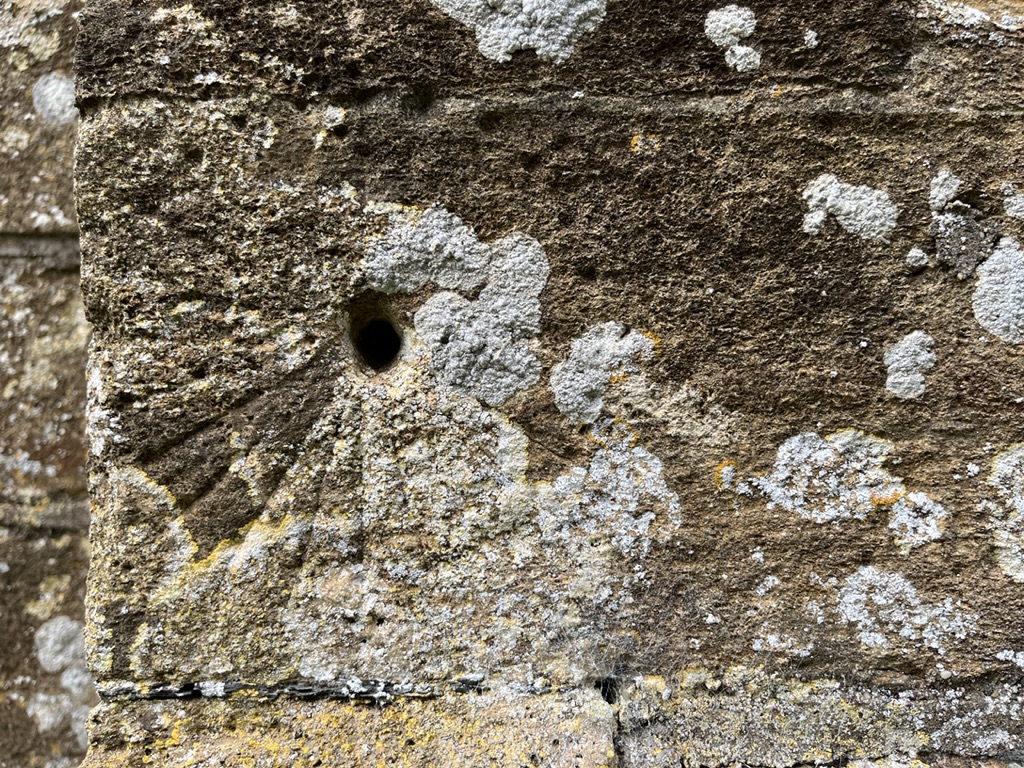
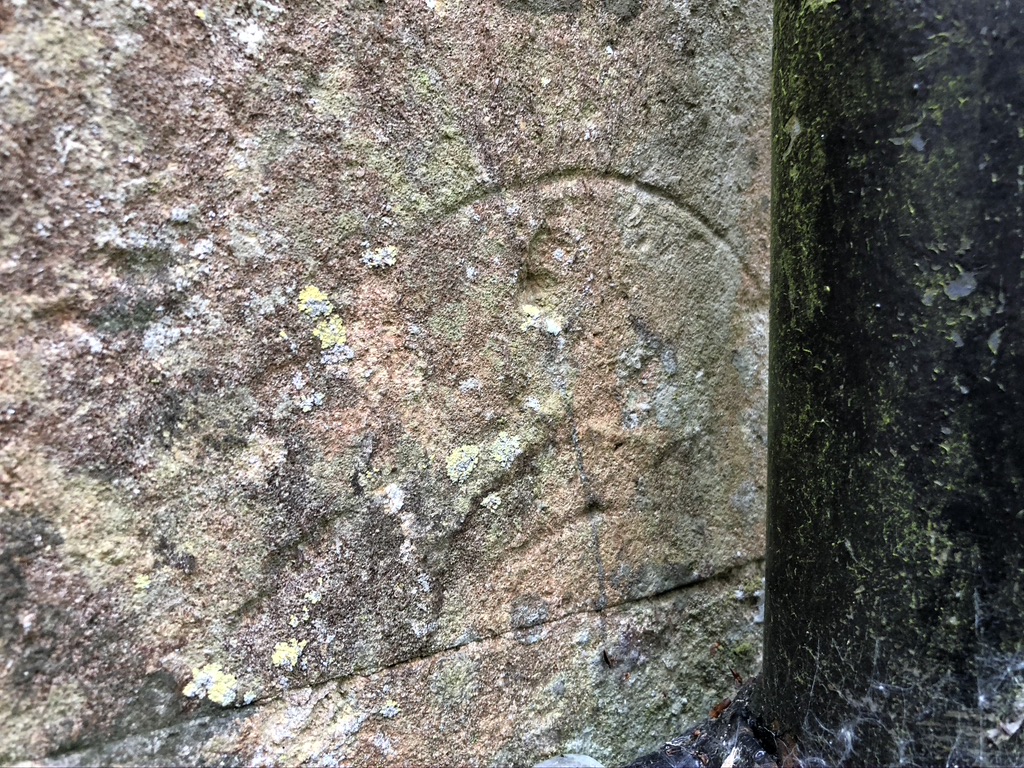
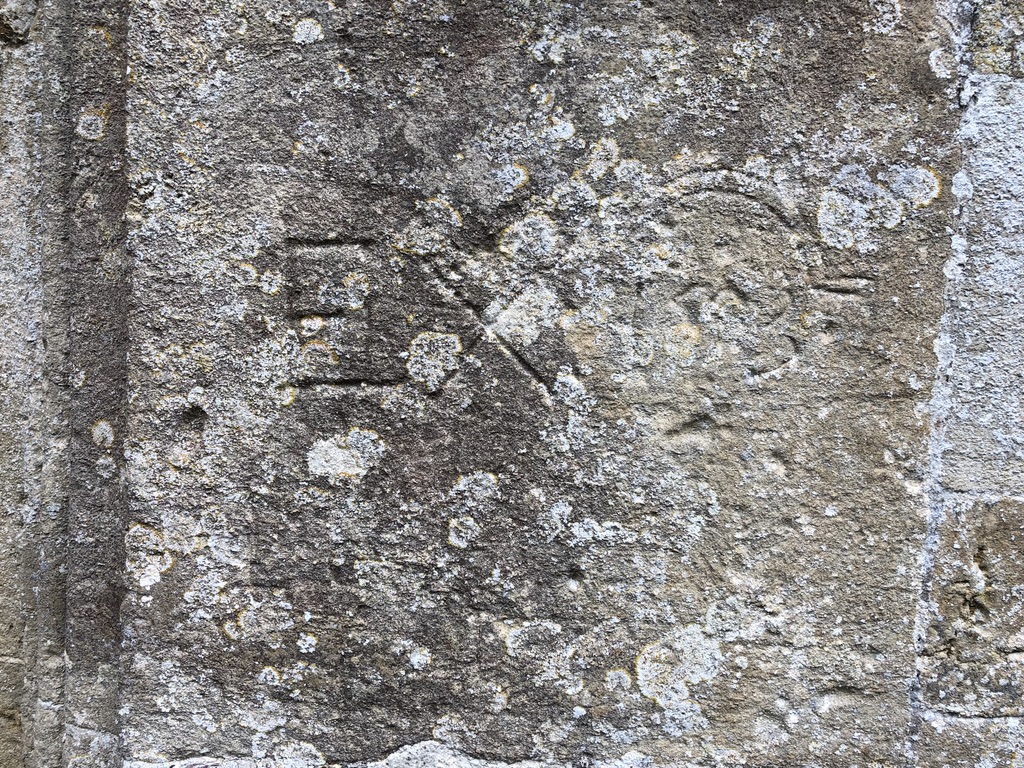
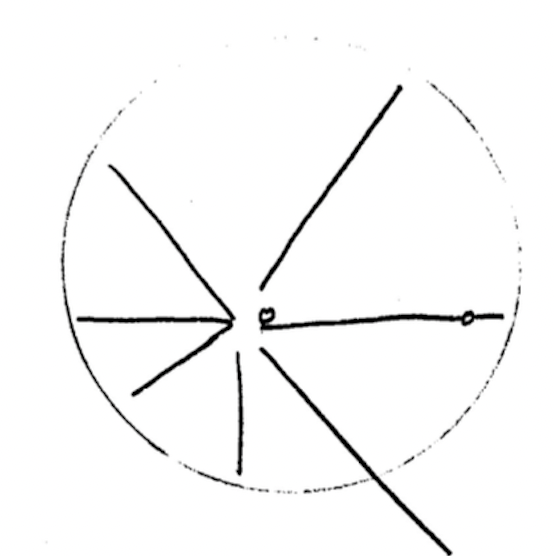
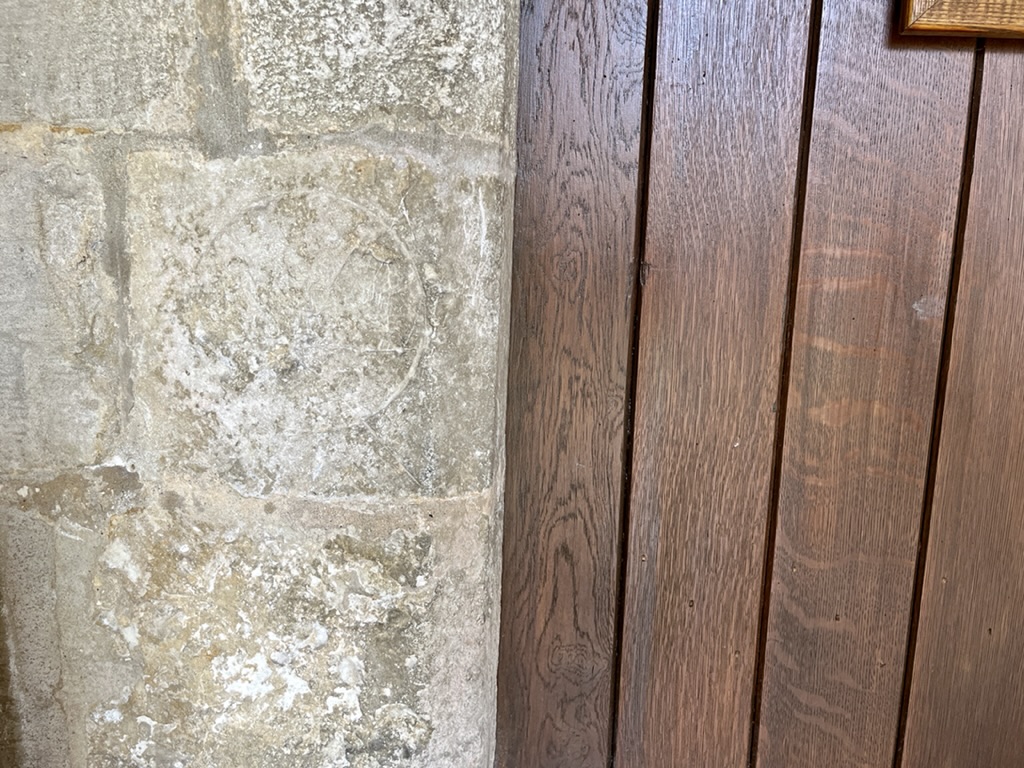
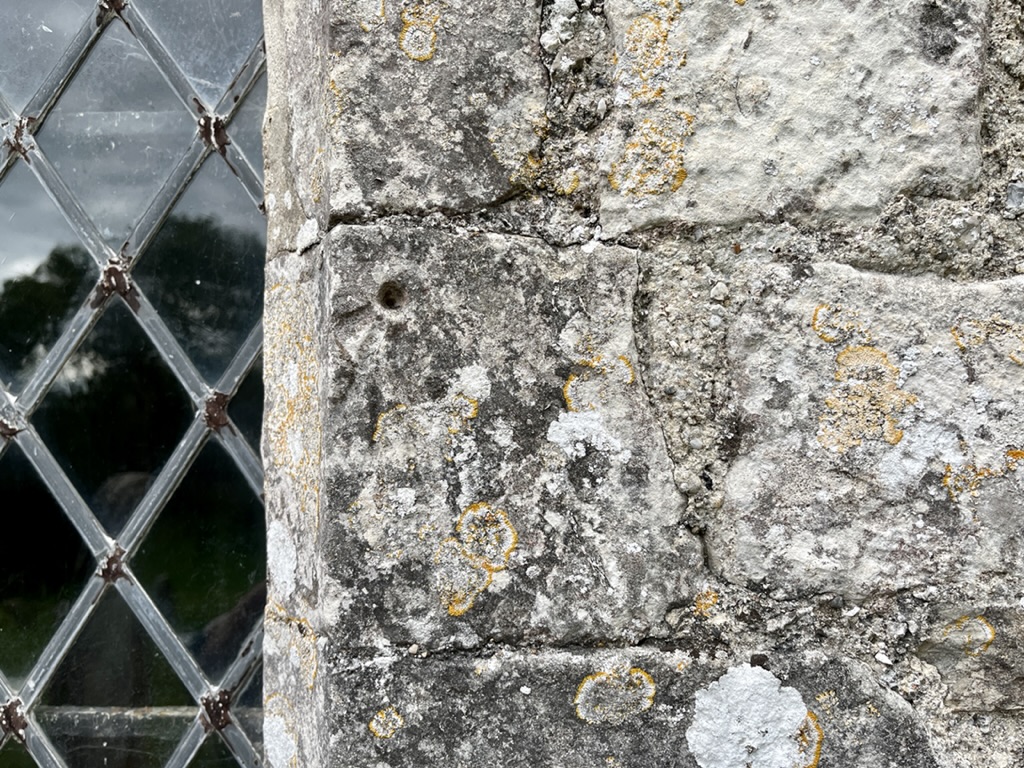
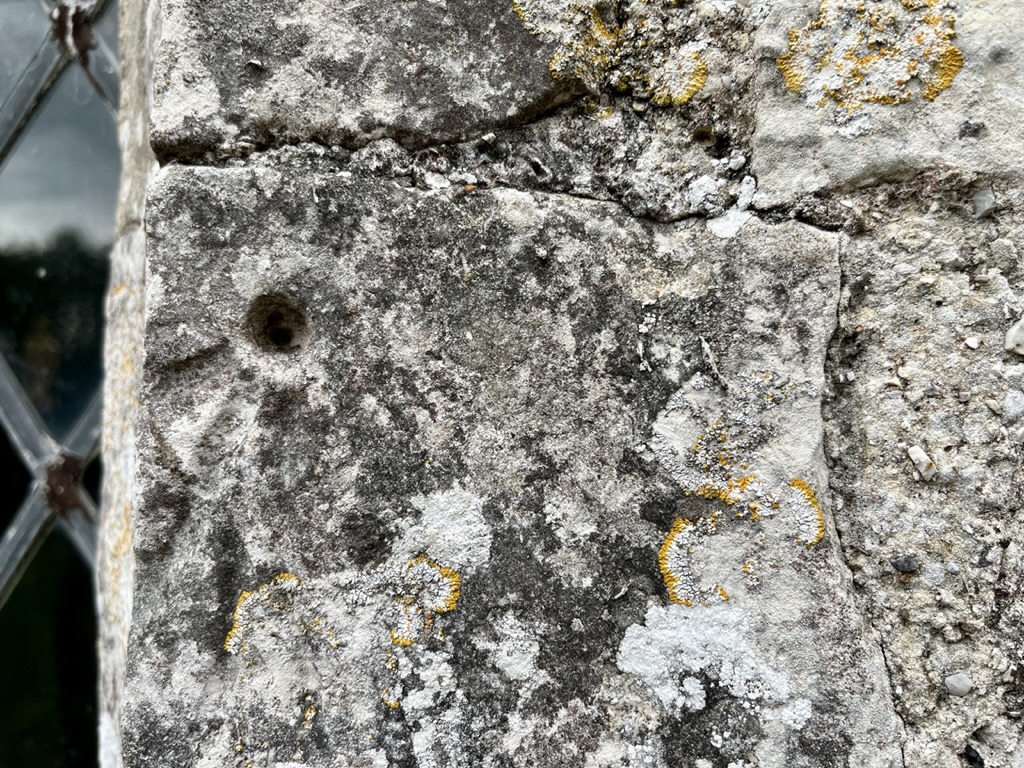
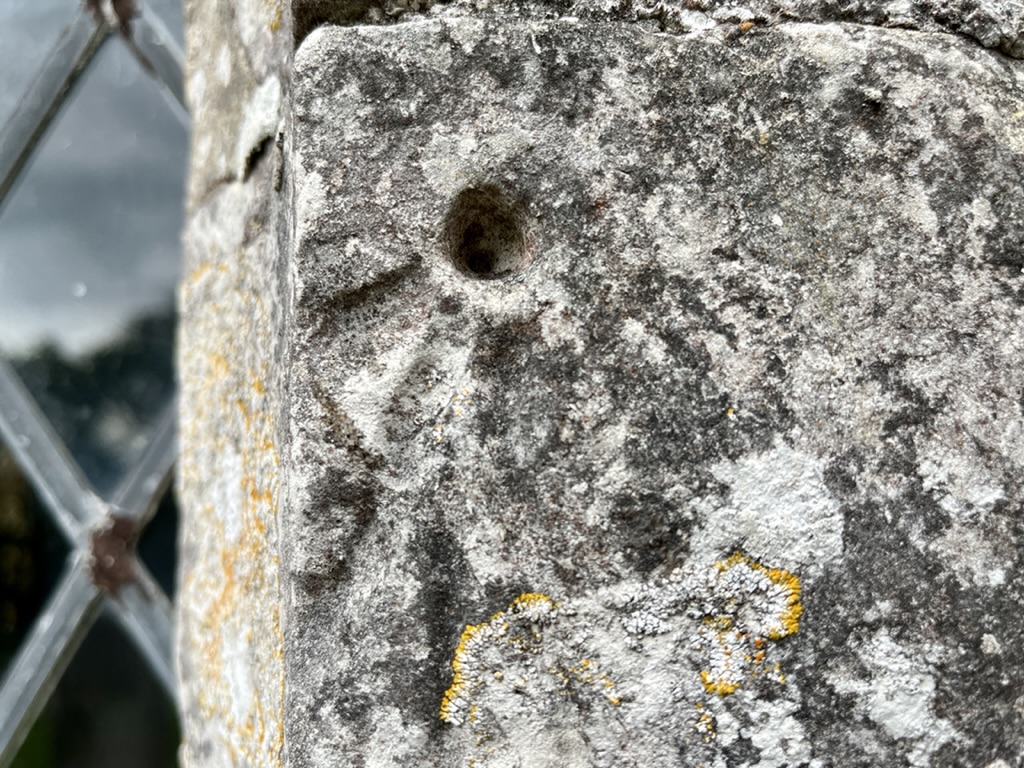
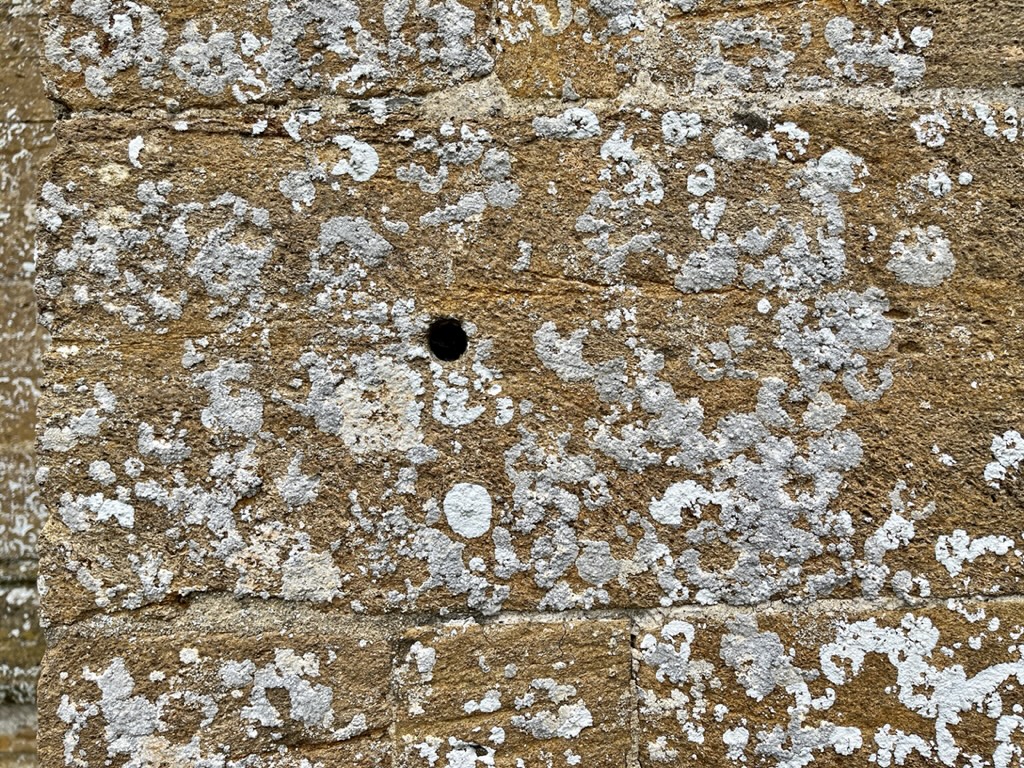
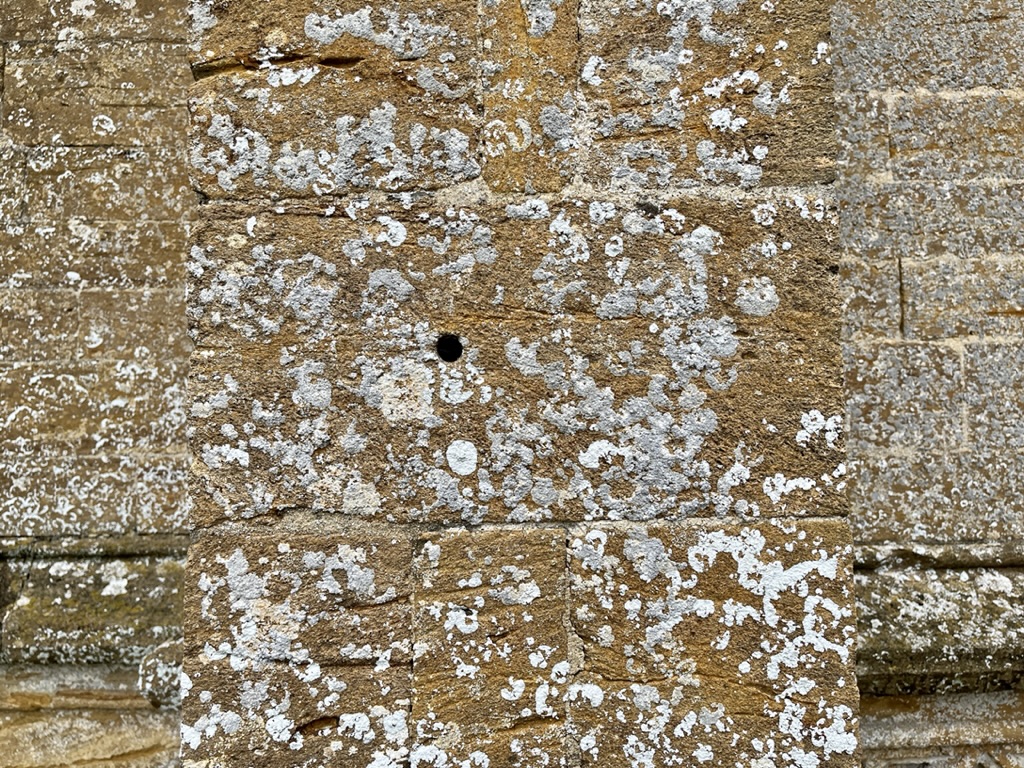
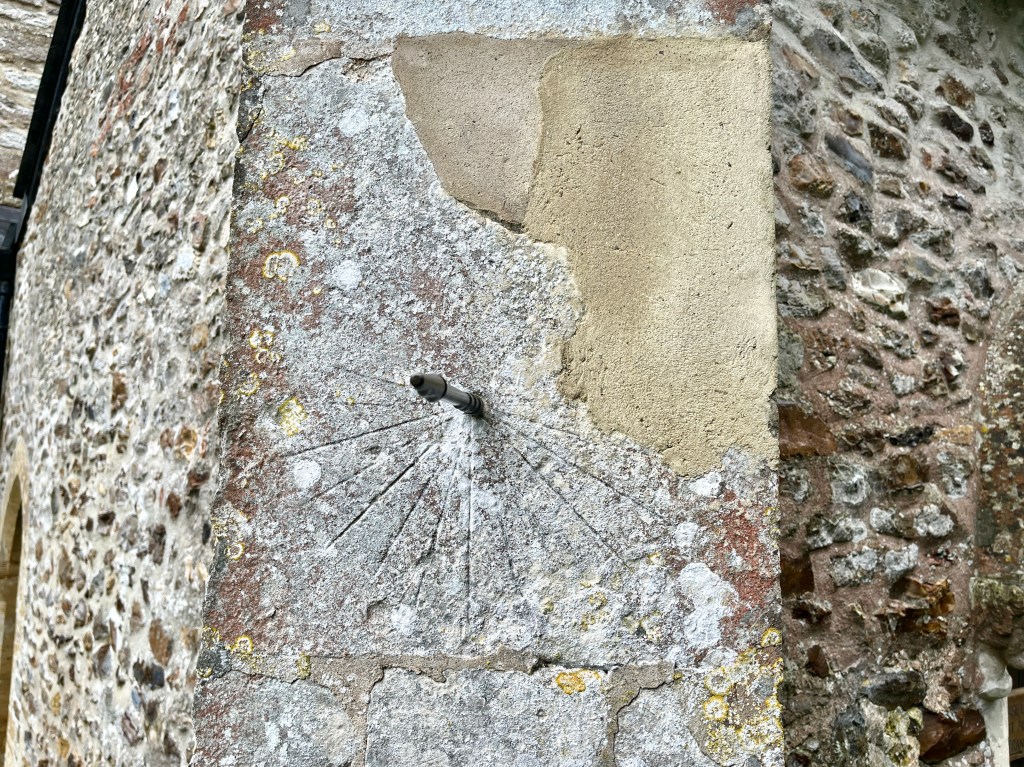
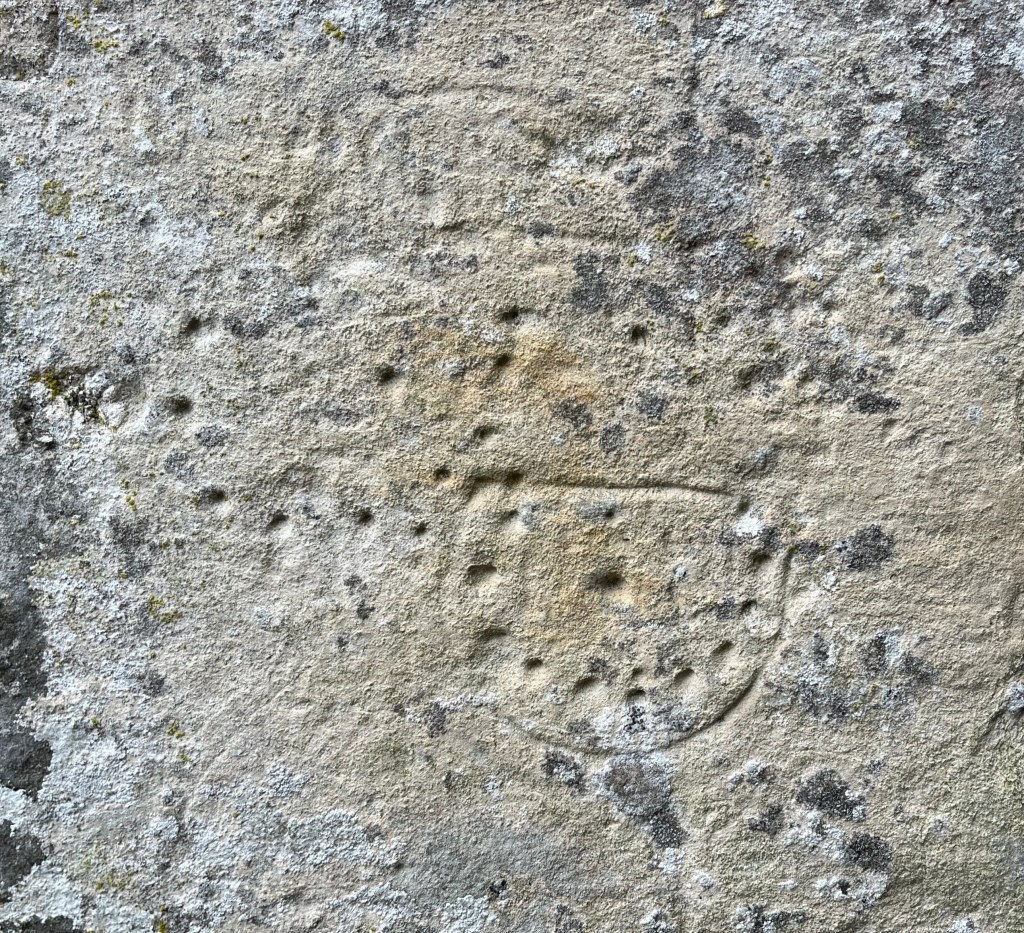
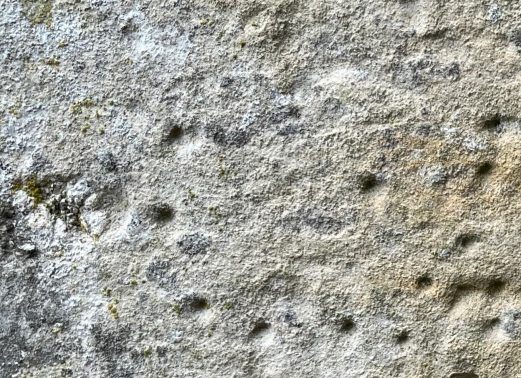
This interesting dial has 10 / 11 radials extending from an enlarged gnomon hole. 8 & 9 are marked by deeper cut lines, suggesting the most important Mass time was Terce. The lower half of the dial has a few pocks on or near the circumference. Intriguingly the top half of the dial has a complete semi-circle of pocks. These are quite carefully graduated so that midnight has the largest, and on either side the size of pock reduces. There’s a trace of a single line upwards from the gnomon hole to midnight. DEH noted This dial has been added to and made into a wheel.
DIAL 2
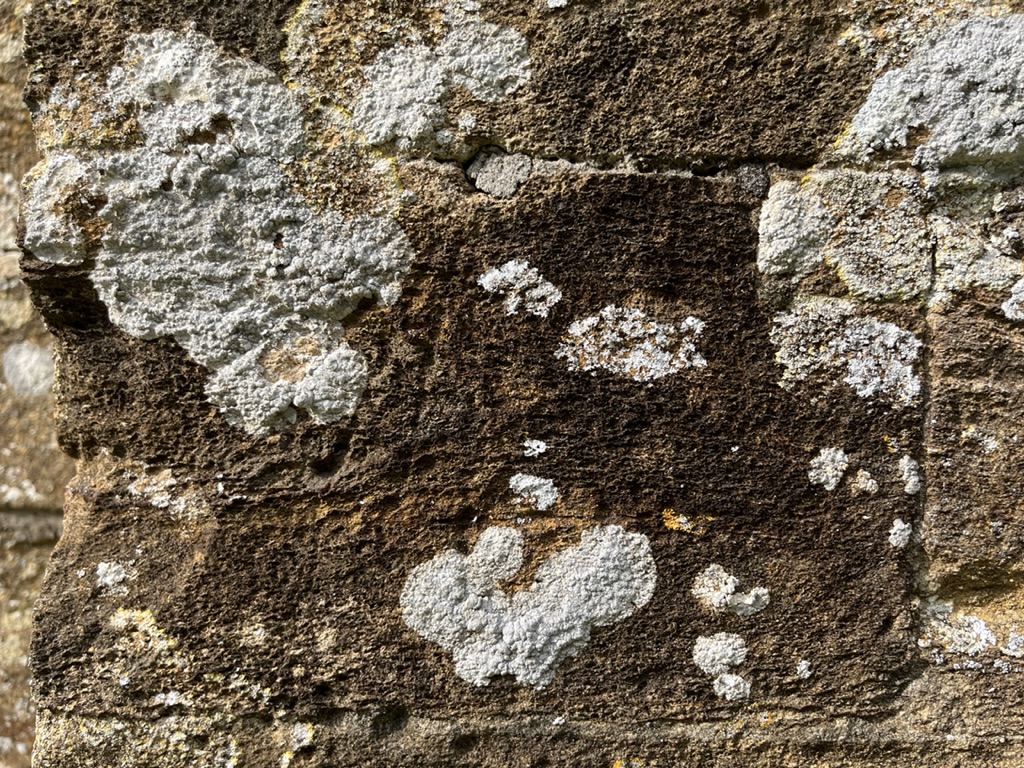
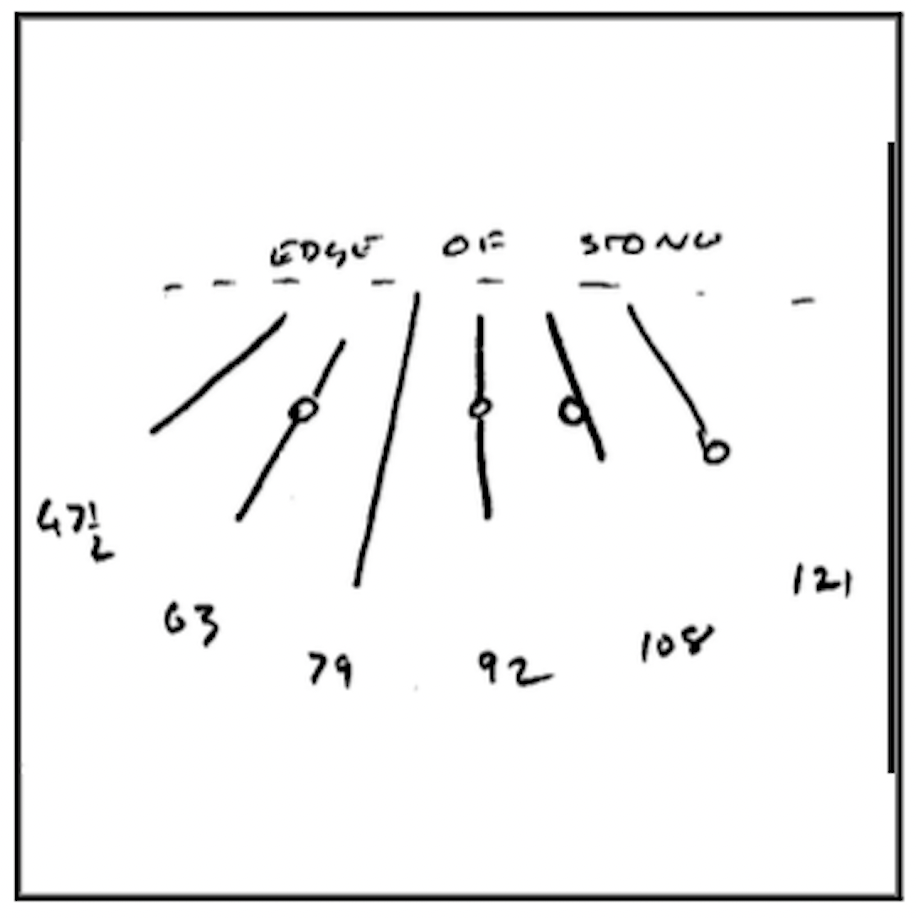
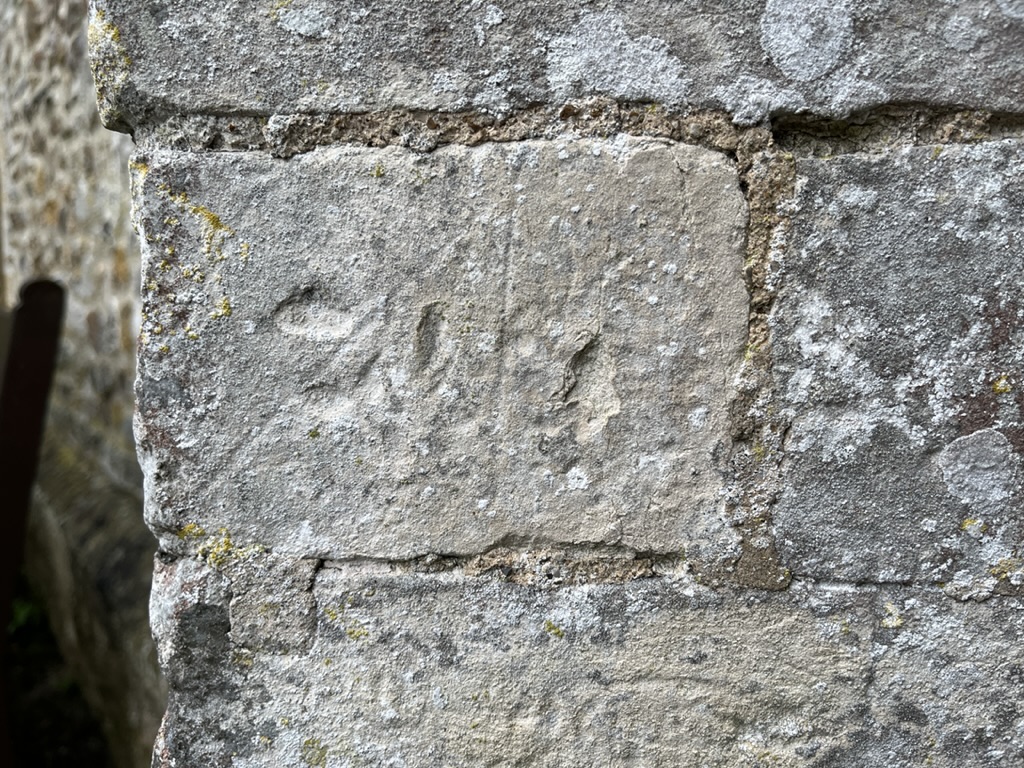
Immediately above Dial 1, with a blocked gnomon hole in the mortar-line. There are 2 clear lines and 3 (4?) others. 2 (3?) appear to end in pocks.
DIAL 3
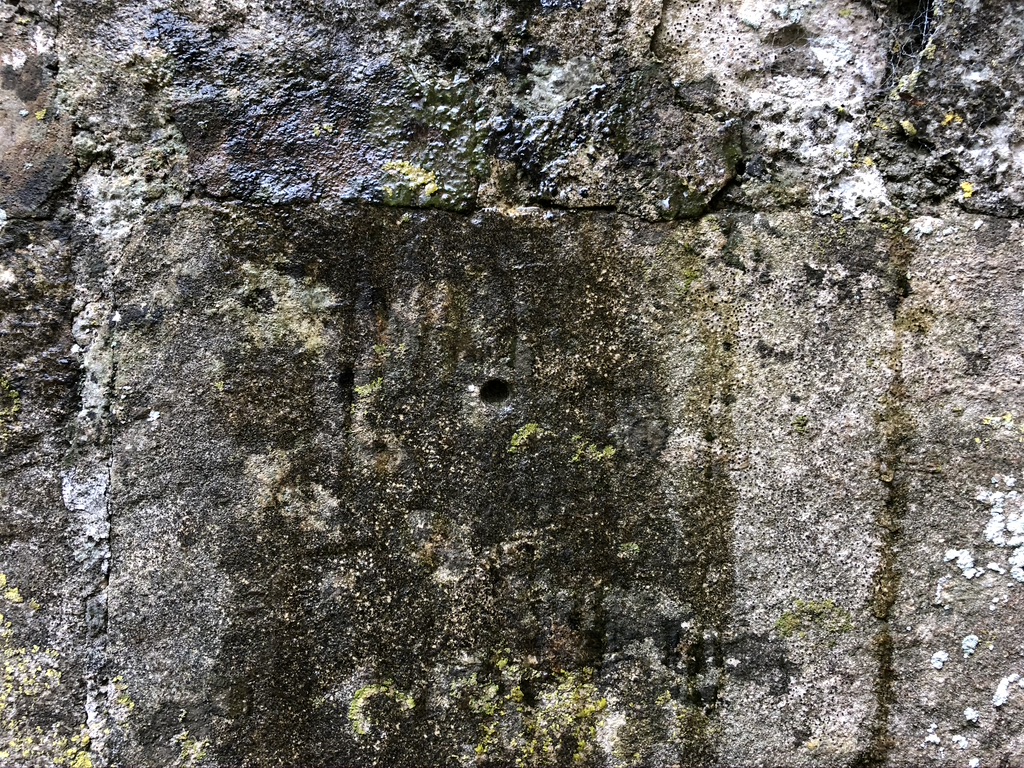
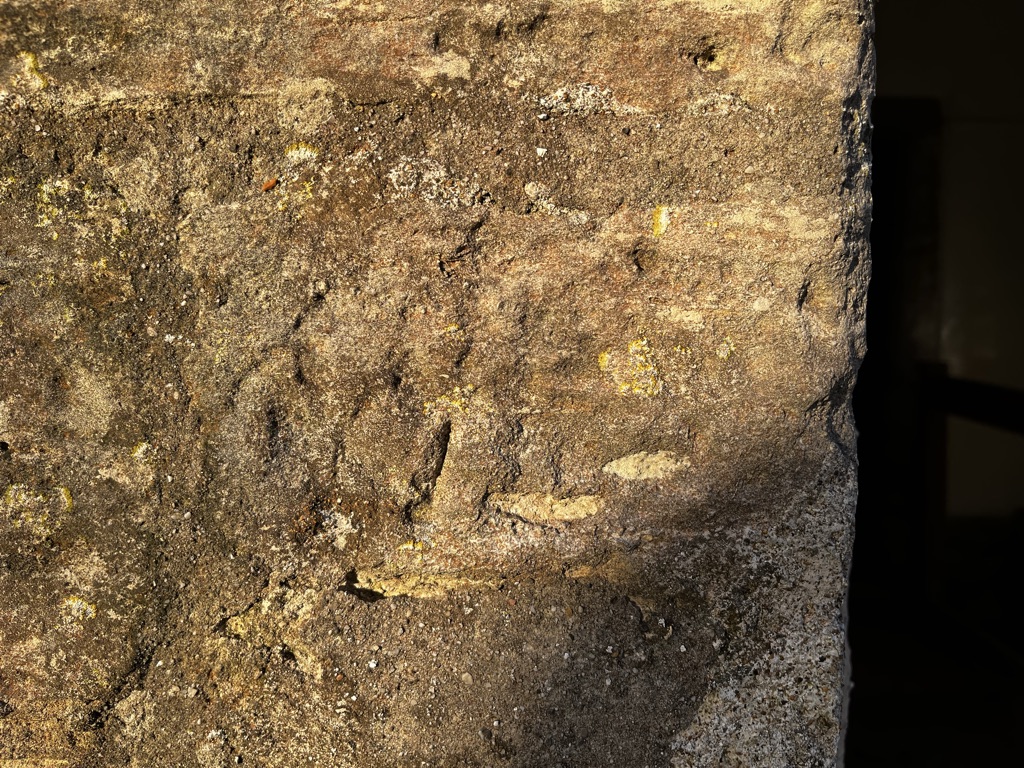
Dial 3 is sandwiched between Dials 1 and 4. The most obvious feature is the blocked hole. There is a faint noon line and the hint of a 9 line.
DIAL 4
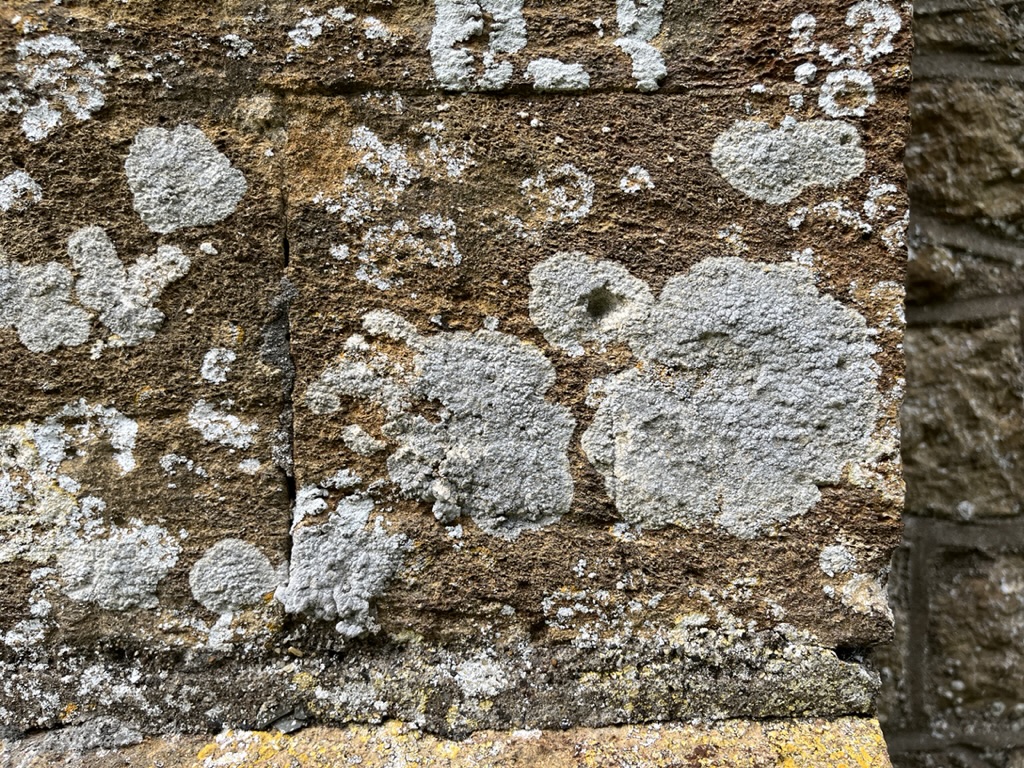
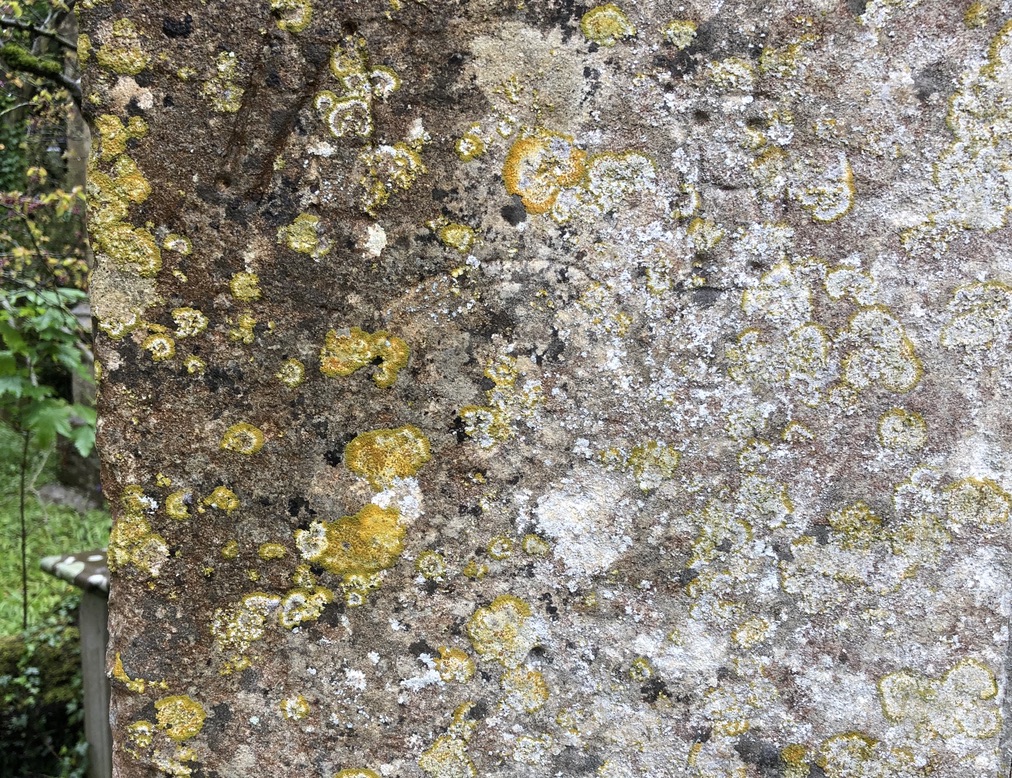
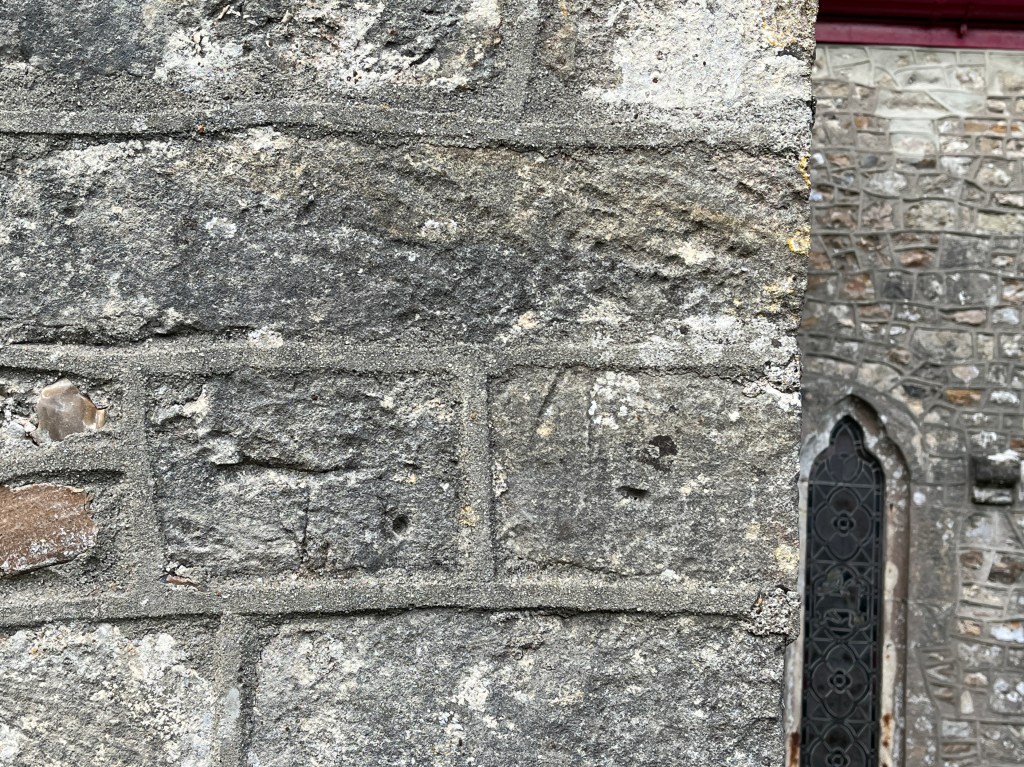
On a quoin stone E of Dial 1 is a shallow hole from which a single thin line extends to mark noon. Plausibly a dial – especially as in a group – but perhaps not definite.
GRADE I † C13 (recorded 1273), C15 nave & tower. C19 restorations (Butterfield). In a lovely position below a wooded stretch of the cliff PEV. Pevsner & his wife Lola are buried together in the churchyard**. Interior has much of interest: pulpit 1629; excellent monuments C13 on, medieval stained glass. 7m SW of Swindon. 51.4917 / -1.8939 / SU074769
Sir Nicolaus Pevsner
DIALS
As one approaches the porch from the lych-gate, there are two very visible dials, one on either side of the entrance. A third dial in that area is noted (eg BLB / HE). In fact there are more dials, but when I visited, finding them involved negotiating overgrown bushes and parting tree branches in light drizzle. There are also some dial-ish designs – eroded or incomplete – that are doubtful, but are included below for consideration.
DIALS 1 & 2
Dial 1 is LHS of the porch. This large dial is encircled, with the upper segment encroaching on the stone above. There are 7 / 8 lines, two of which are ULQ (so, not useful). The noon line extends well below the circumference and through a partial double circle. I think this is the BLB / HE third dial, though I think it is more a doodle than a dial. The emphasised line LLQ may mark Terce. The oddly inaccurately cut lines R of the noon line seem surprisingly casual for such a prominent dial.
Dial 2 is the counterpart of Dial 1, and far simpler. The overall design suggests that it is on its side, 90º anti-clockwise, perhaps re-sited.
DIAL 3
Obscured by foliage, Dial 3 is unconventional. The clear-cut circumference surrounds a single line with a dot at each end, slightly tilted from the horizontal. On the curve RHQ is a dot roughly corresponding to the Mass-time None. In the centre is a blocked gnomon hole. There are no lines or other markers of the passage of the day. In a sense , there is no necessity for lines to mark the hours – a stick’s shadow is almost as helpful.
DIAL 4
Dial 4 is largely hidden by foliage. Unusually, it consists of 4 concentric circles. These are now badly eroded; one is a trace only. Apart from the central gnomon hole, there are no other visible dial attributes: no lines, no pocks.
This type of dial is not unusual. Here is a similar dial in FOVANT Wilts, with 2 concentric circles and no other marks than the gnomon hole. However, I ought to mention that some consider that such designs are not dials, but may have a decorative and possibly an apotropaic function.
DIAL 5
Dial 5 (?) – if a dial – is a classic ‘drainpipe’ example, in part concealed by a more modern addition to the church wall. There must be some doubt here because it is hard to see how it – with the arc of a circle below – would have worked.
DIAL 6?
Dark and damp, this stone was difficult to read. If a dial, it is contained within a square with the top side being the mortar line. In favour of dial status is the location of the dial stone beside a window and the position of the dial; traces of a circle; a pock directly on the circumference LHS roughly corresponding with Terce; and the fact that the design is quite accurately framed as if to display it better. Equally, there are reasons to discount it.
OTHER DIAL CANDIDATES and CHURCH MARKS
Another interesting part double circle, endearingly wonky. Very doubtful as a dial. Most interesting for the graffito UR, which may be a simple form of a type of ritual protection symbol that consists of rectangles with line and dot patterns.
The two marks on this stone – with variations – are quite often used as protection marks.
Note again the the double curves RHS. Most probably an incised design, rather than a dial.
Further evidencing the incidence of protection symbols is this Marian VV mark close to Dial 2.
The handsome bier kept in the church, and in excellent condition.
**In 1951 Pevsner published the first volumes of his magnum opus, The Buildings of England, an enterprise that took nearly 25 years to complete. The substantial Wiltshire volume was recently revised, expanded, and published in 2021
GSS Category: Scratch Dials; Mass Dials ; Multiple Dials
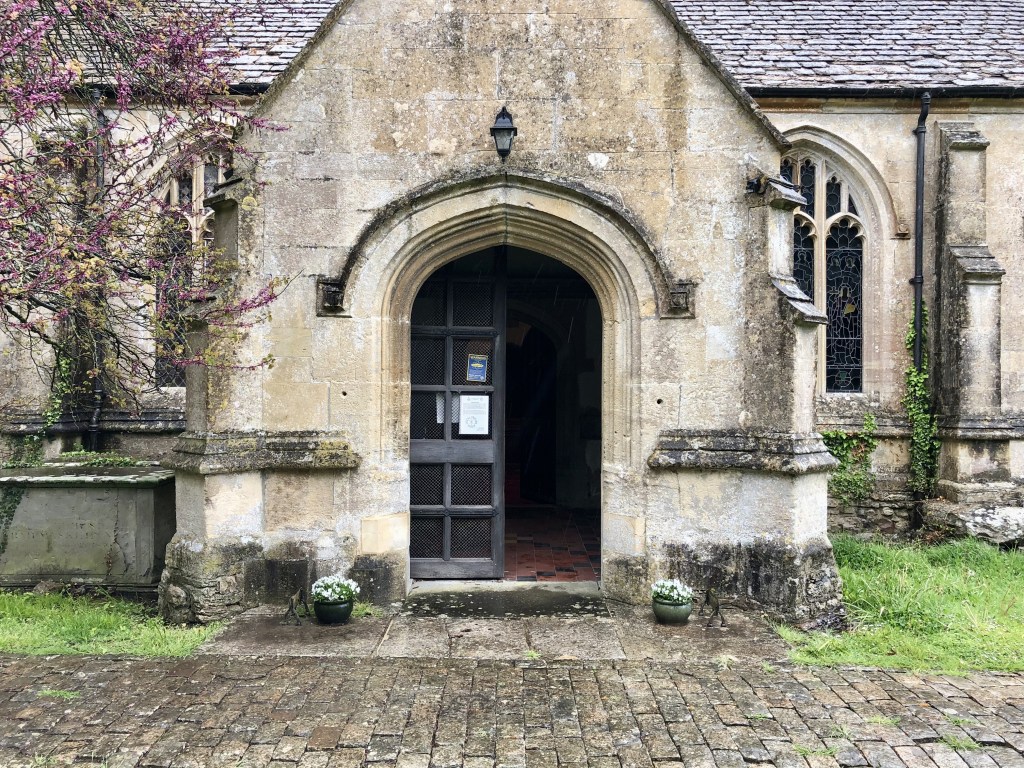
GRADE II † Almost entirely rebuilt & enlarged in successive stages from the beginning of C19, incorporating reused details of C12 fragments, C14 and C15 stonework. Rather incongruous neo-Norman features. C12 Purbeck marble font; fine nail-studded medieval door. Tower-less and Spire-less. 4m N of Weymouth. 50.6506 / 50°39’2″N / SY667835
DIAL
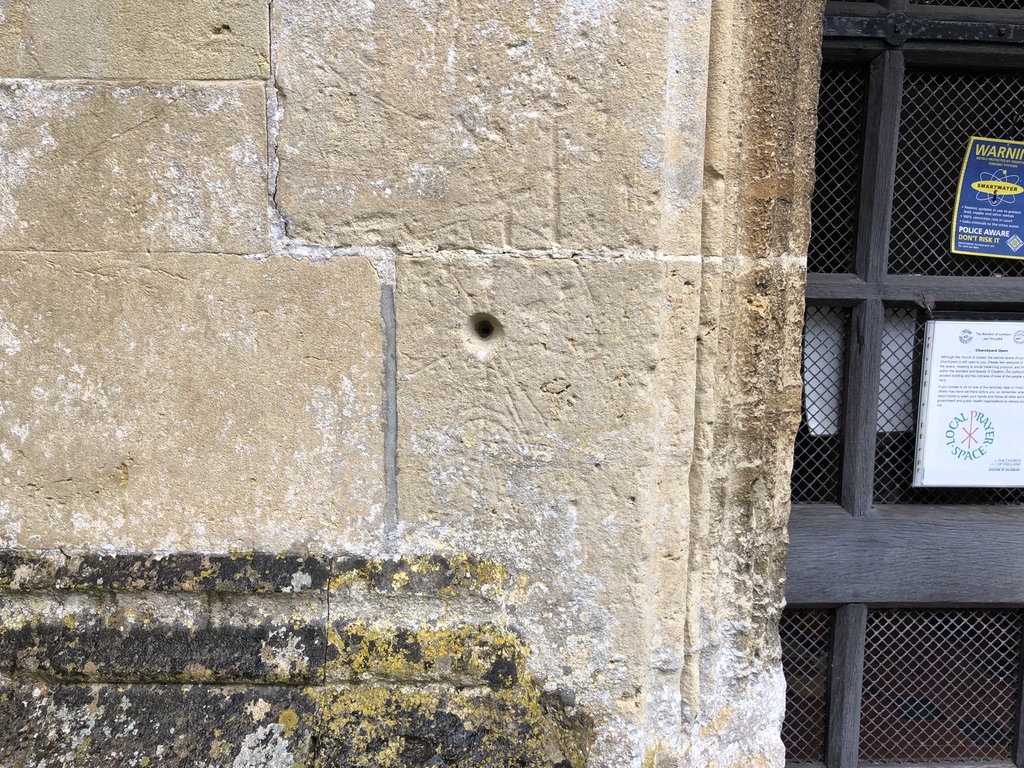
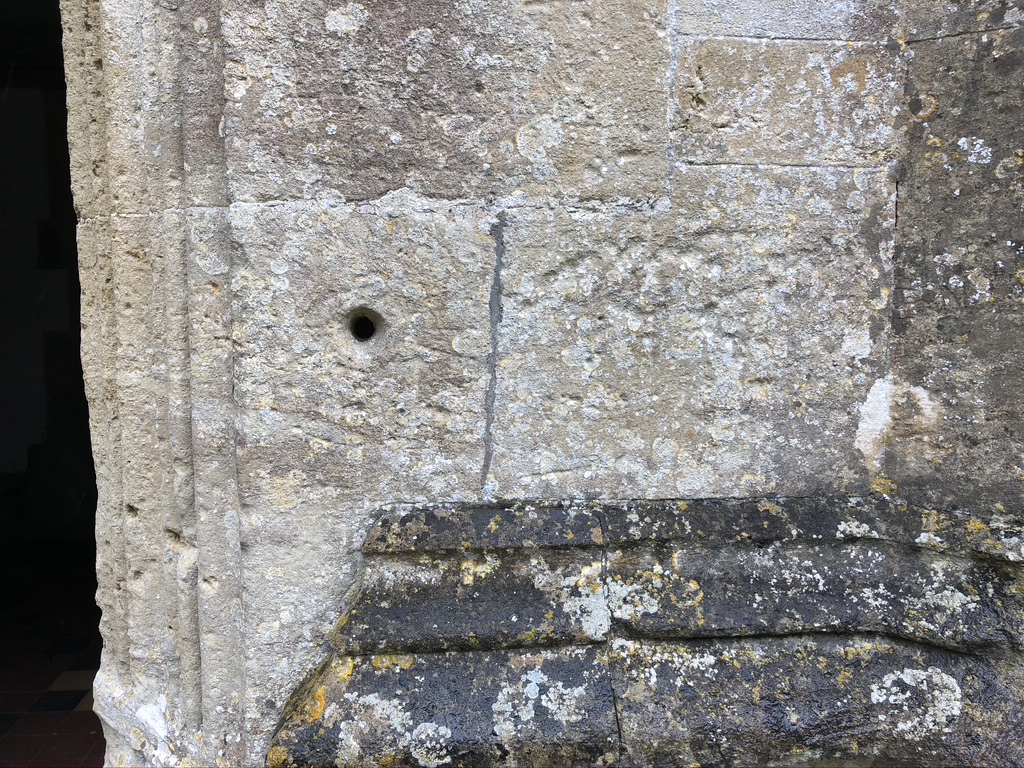
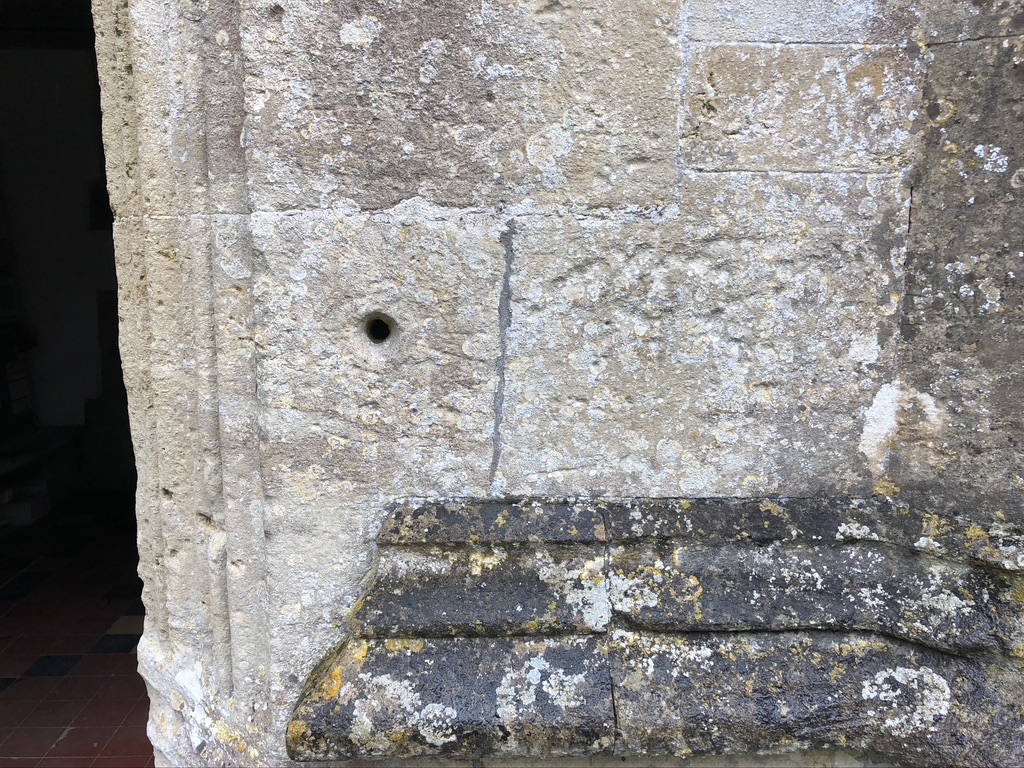
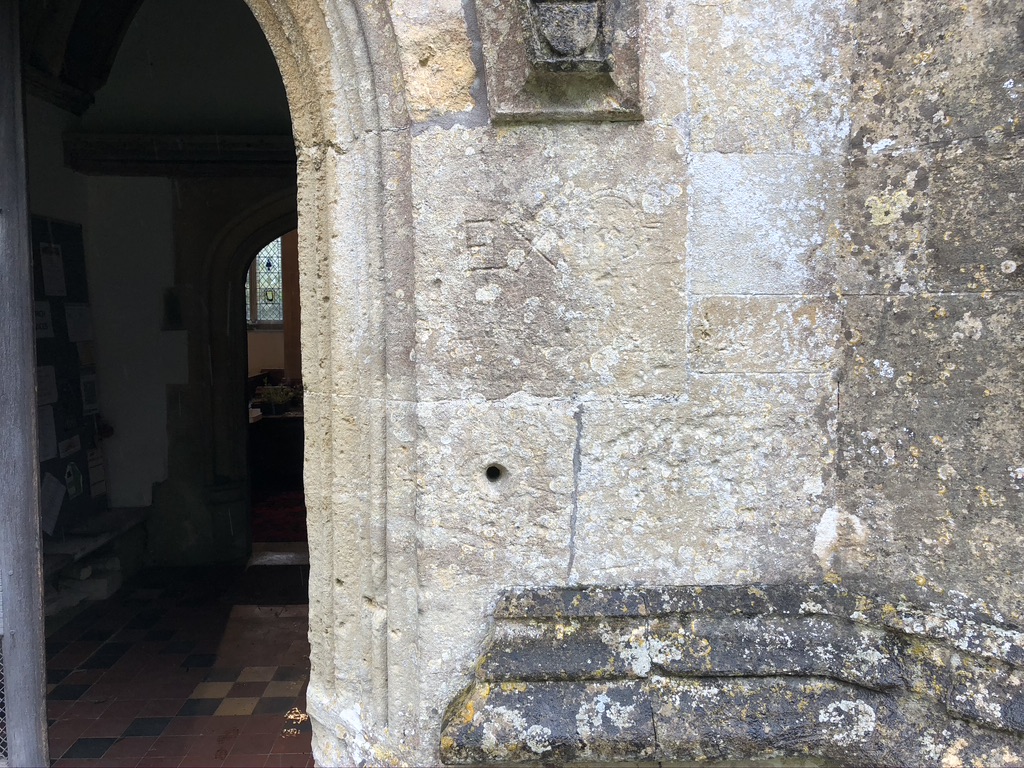
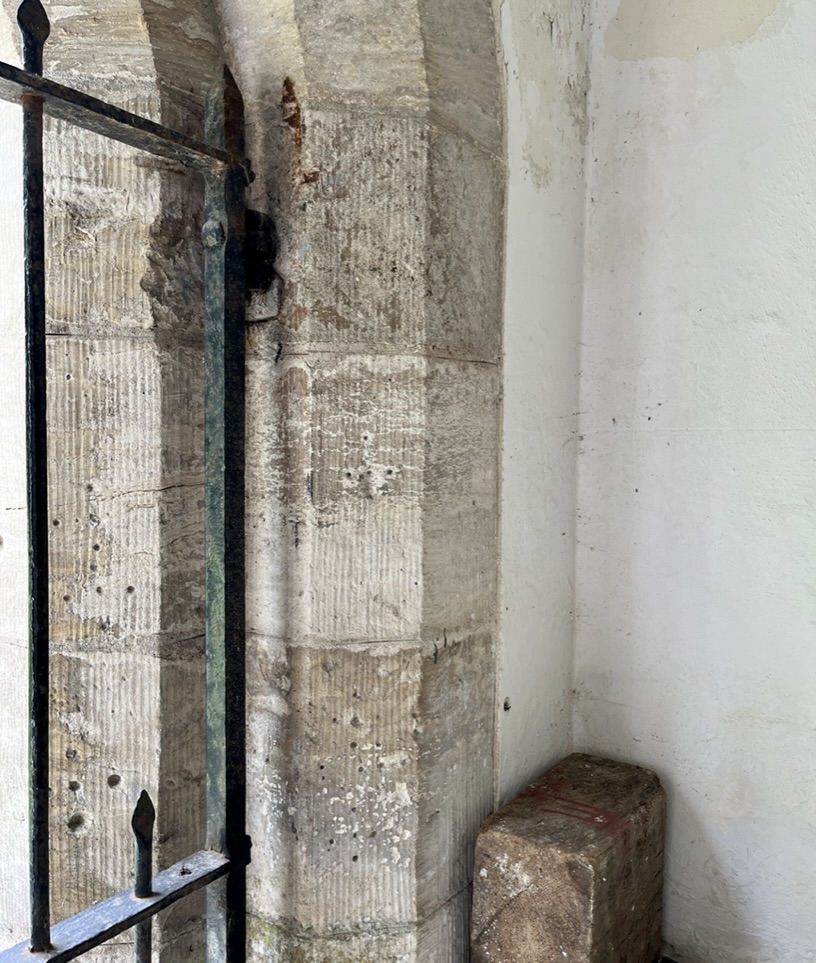
The dial is on the L jamb of the early doorway (inside later porch), and remains of a full circle are still visible. 6 lines radiate from a small filled hole that is significantly off-centre. One line is elongated beyond the circle. The None line is emphasised by a small pock near the end. The noon line (if it is one) is the most unassuming of them all. There’s a hint that very light graffiti has been superimposed on the dial.
GRADE I † Late 12th-century origins (parts of nave & chancel evident). Mainly C15 with later additions; S porch added C17 using old stonework; extensive restoration 1865. C13 font; Purdue bell 1658. Off the beaten track in a valley midway between Dorchester & Weymouth. Hardy-esque. 50.6599 / -2.445 / SY686845
Bincombe Church 1802 (Gentleman’s Magazine)
DIAL
Bincombe is a hidden village in the folds of the hills inland from the pleasures of Weymouth. It’s a mere 20m from our house yet until I visited a church nearby, it wasn’t on my radar at all. I must have passed close by it hundreds of times.
The dial is located on the E jamb of the SW chancel window, about 2m from ground level . GLP describes 4 short lines, with the noon indicator being the gap between two of them. He notes that the dial must have been moved to its position for reuse as part of the window jamb, truncating 2 lines LHS. Finally, he concludes that, the window being C15, the dial predates 1400.
Holy Trinity Bincombe – BSS Record
The dial, small and chunky, is in the top L corner of the dial stone. I haven’t seen one quite like it. The gnomon hole is surprisingly deep for such a little dial. In situ (and in the photos), there are ghosts of 2 or 3 lines LRQ angling towards the hole (but not converging?) Probably best disregarded.
CHURCH MARKS
Holy Trinity has a fine selection of crosses / protection marks drilled into the porch entrance. Here are a couple of examples.
GRADE 1 † C14, C15 with C19 restorations. Predominantly Perp. A large and impressive building in a small community, admired by PEV: ‘of great interest’. A companion to nearby Huish Episcopi. 9m NW of Yeovil. 50.9865 / -2.8042 / ST436210
NOTE: this post has been superseded in April 2024 after a visit in sunshine. The faint dial markings owing to poor light are now legible. The text is much the same. See the new post HERE
DIAL
St Martin . Kingsbury Episcopi . Som – Scratch Dial
The dial is located on the W buttress on the S side, and has a gnomon hole large enough to be seen from the church path. DEH visited in Sept 1912 and noted that, because the dial is about 8′ above ground level, it would have been moved to its present position during reconstruction of the tower (the oldest part of the church).
The dial is very eroded, and it is now hard to make out the details. DEH describes a complete wheel of thin lines without a circle. More than a hundred years later, the design is very faint indeed. Neither inspection nor photos reveal what DEH will have seen.
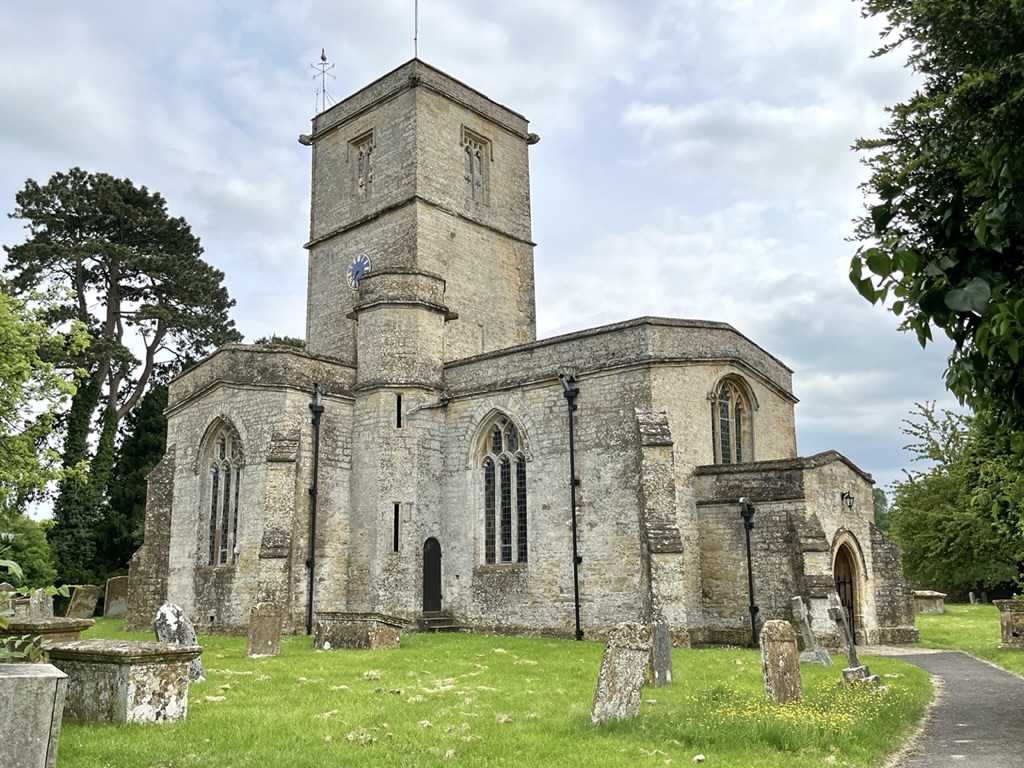
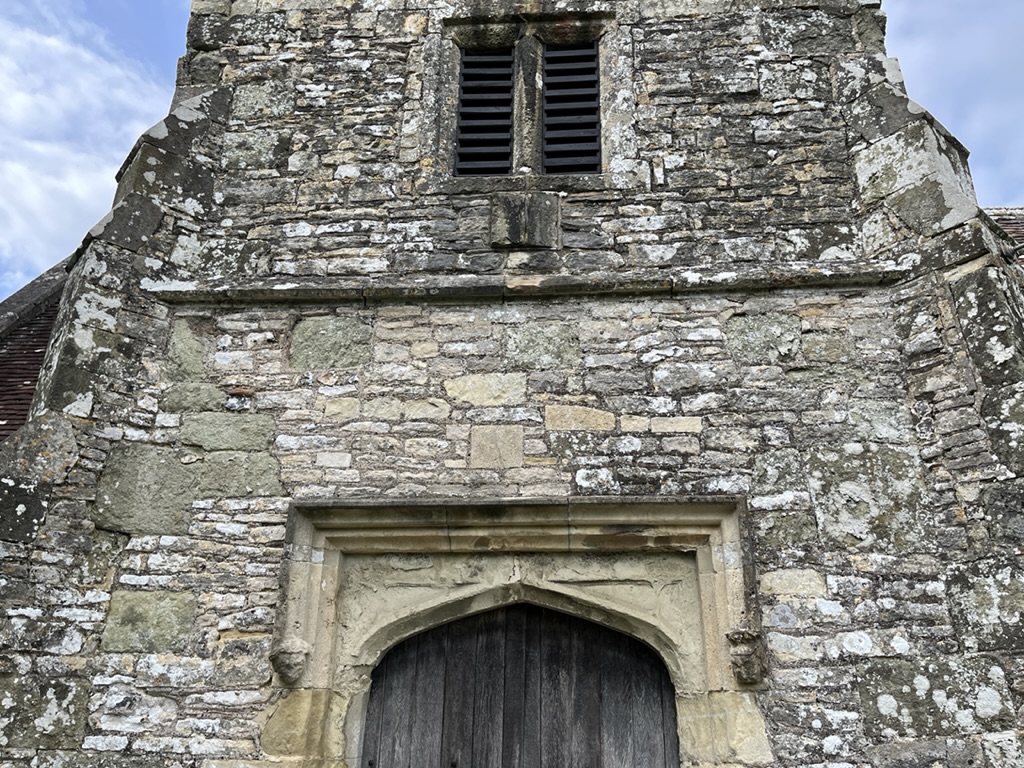
GRADE I † C13 origin; tower rebuilt and alterations C15 . Modern (C20) restorations. Early C13 font. Unusual appearance with pleasing matched roof-lines. BHO notes On S.E. buttress of S. transept—scratch dial*. 3m SE of Crewkerne. 50.8571 / -2.7514 / ST472066
DIAL
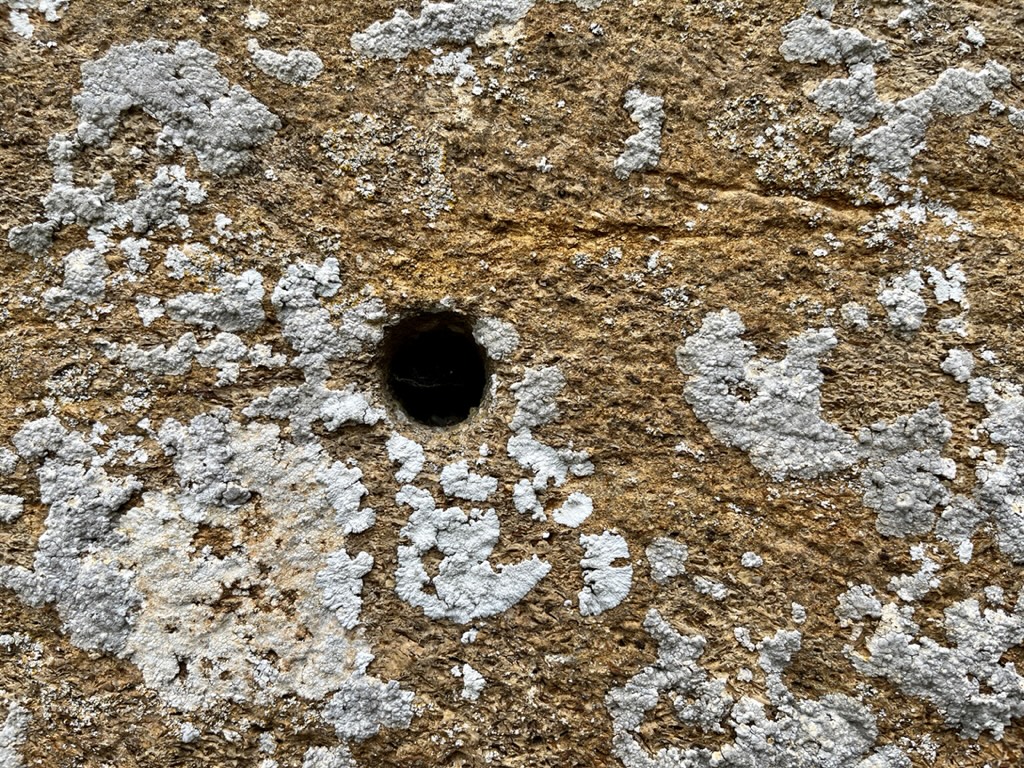
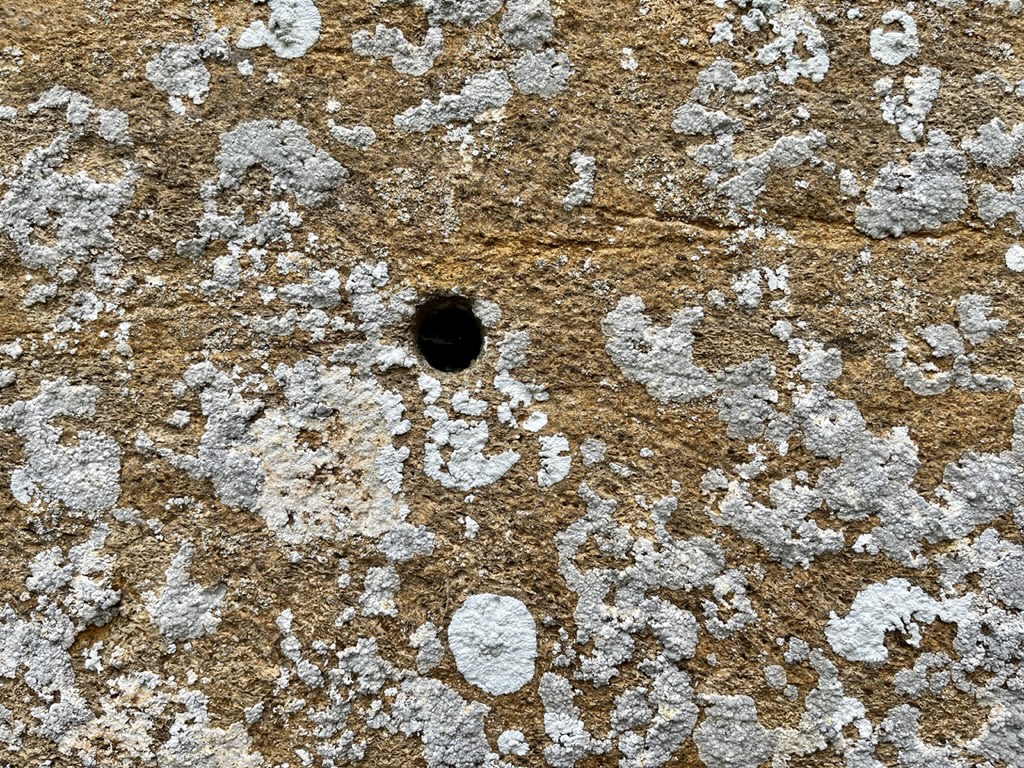
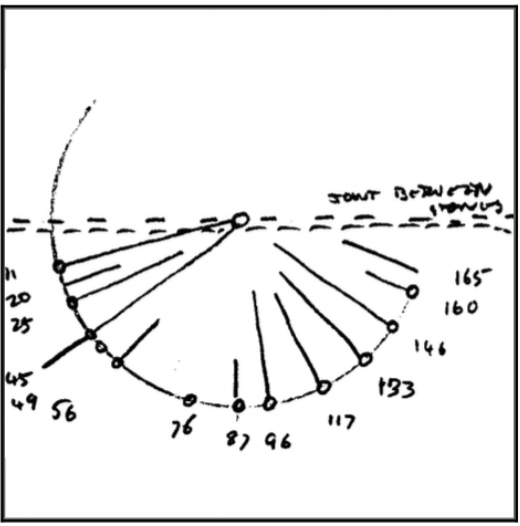
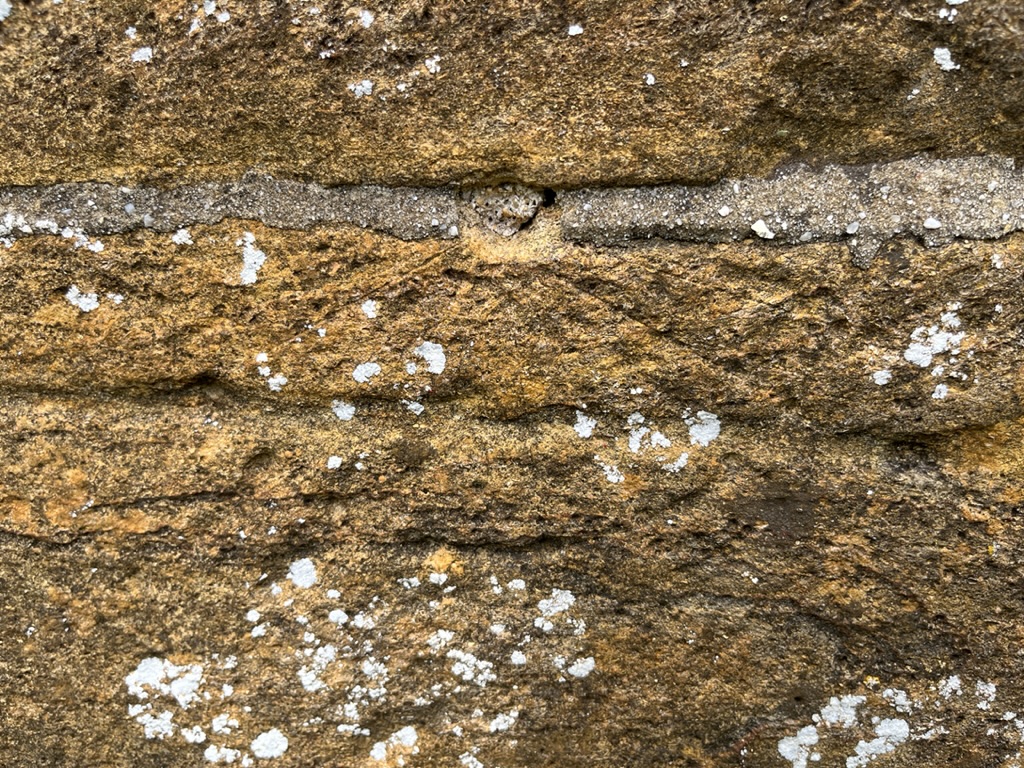
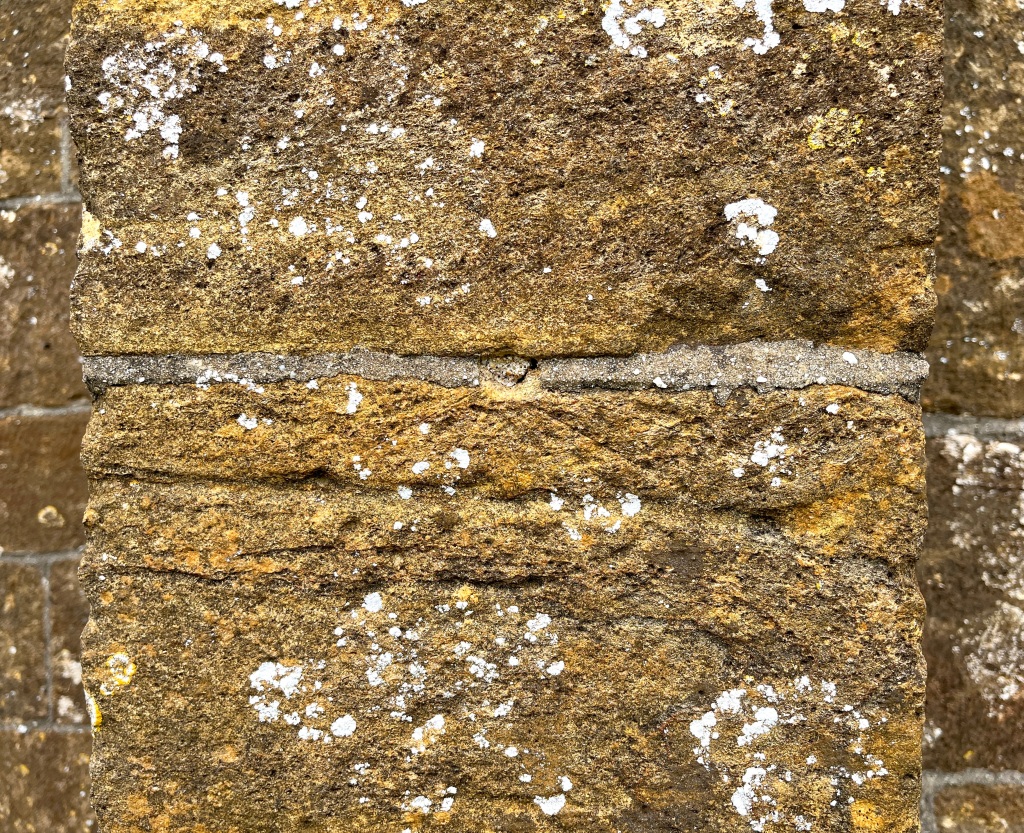
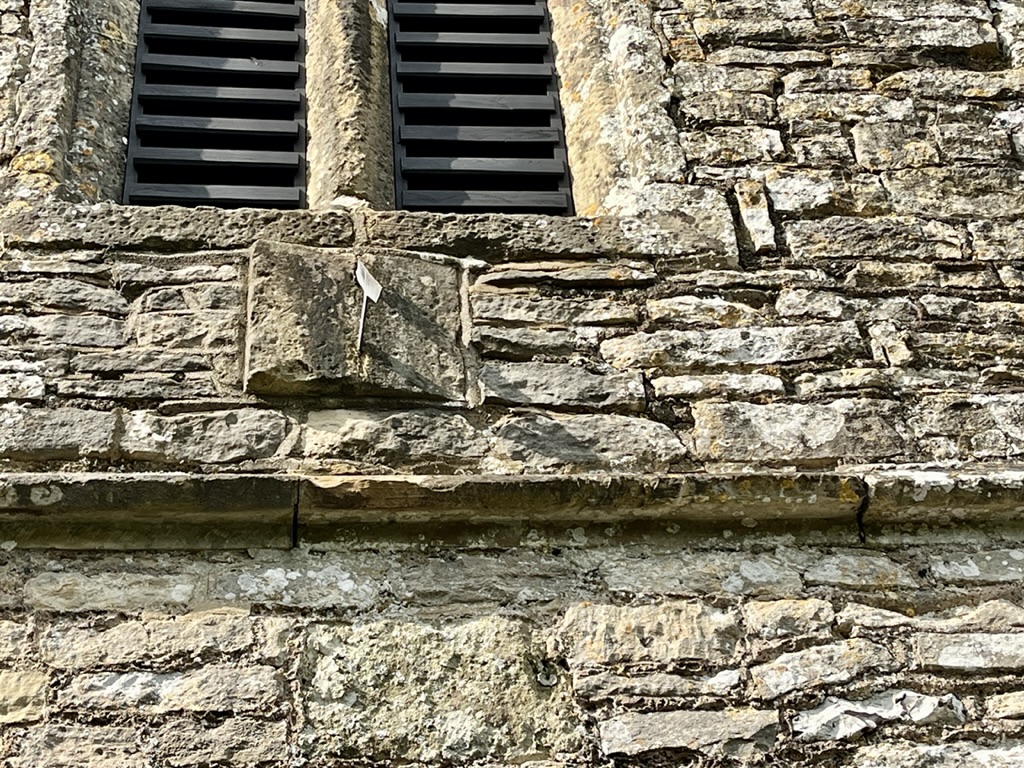
A conundrum. BBS records (1997) show a complex dial, part-encircled and with 10 lines (one extended) and 12 distinct pocks. GLP notes that the continuation of the circumference onto the stone above indicates that the dial is in its original location. He suggests that it may be the remains of a LHS half-circle (cf HOLWELL and HERMITAGE).
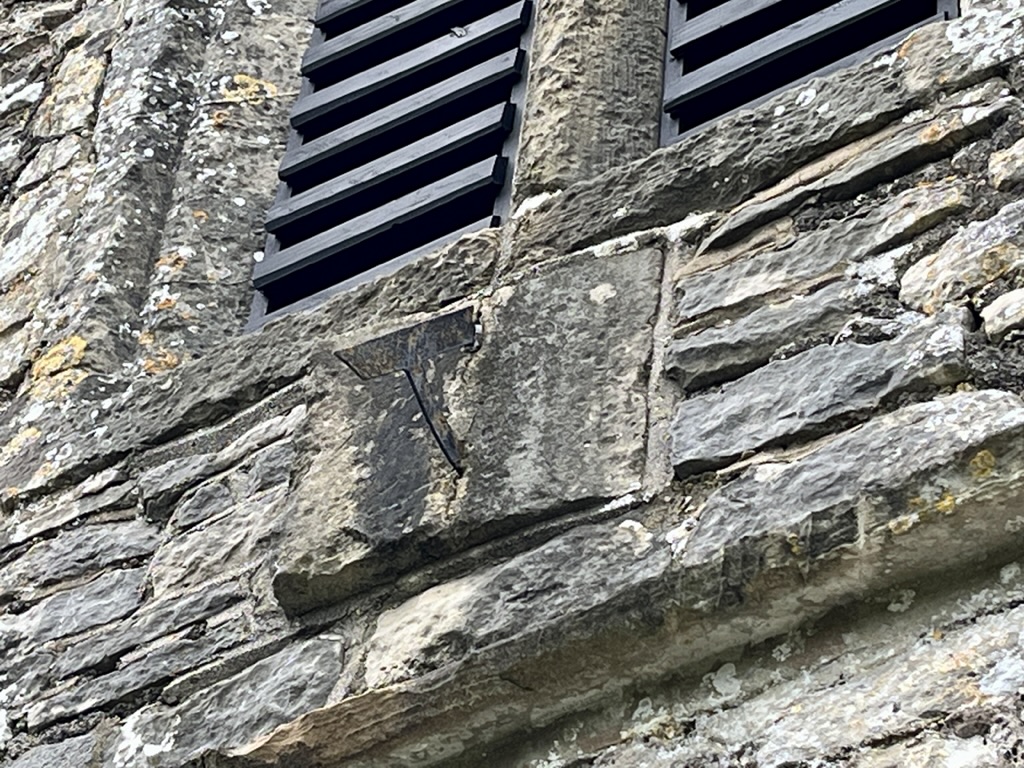
GLP also points out disapprovingly an attempted ‘restoration’ with thin lines scratched along some of the original lines and part of the circumference line… and most of the holes ‘cleaned up’. These lines can be seen in the images below.
However, although a close shot shows the recently added lines, the dial did not reveal the considerable detail shown in the diagram. I am equipped with a camera and a pair of eyes, but (as an amateur) I could not read the S Perrott dial as I had hoped to.
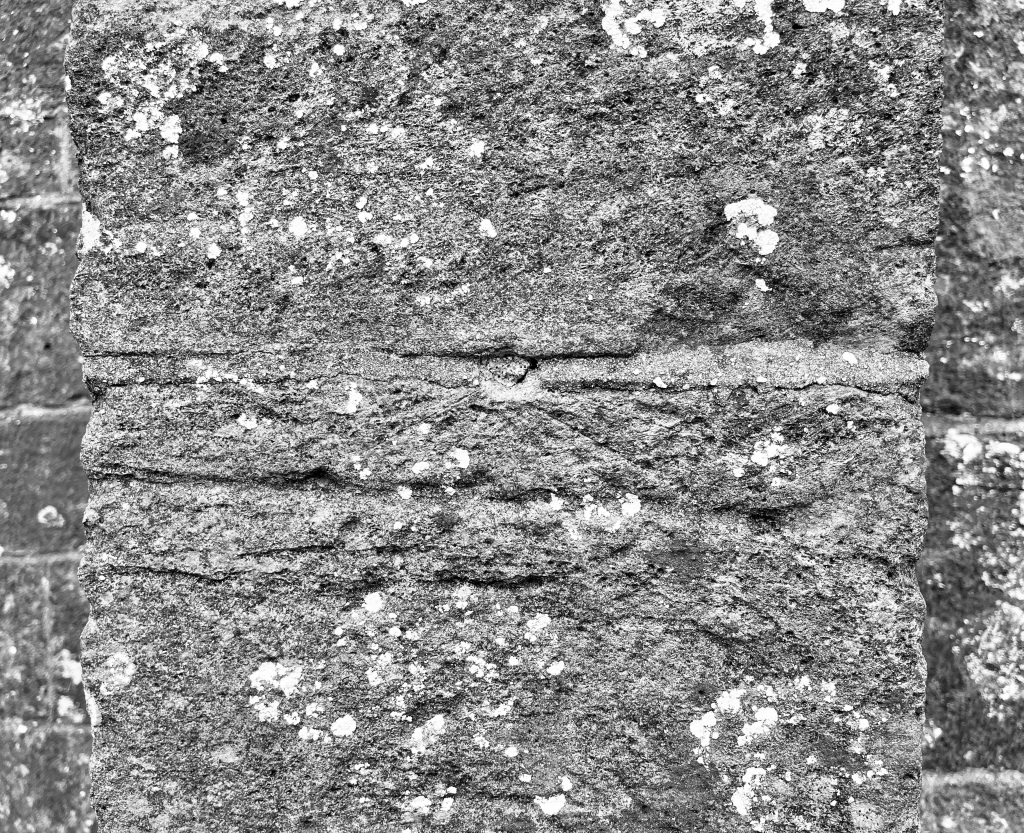
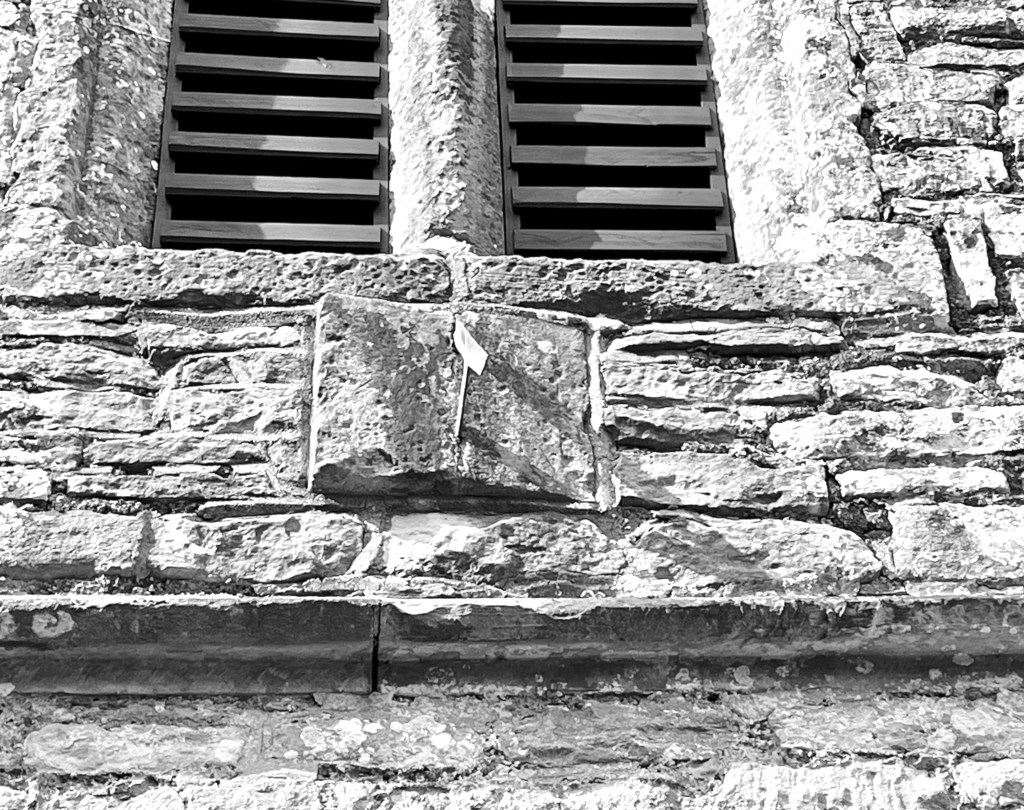
Details of a dial can sometimes be seen more clearly in a B&W photo. It works to a limited extent here, but not enough to bring out, in 2023, the overall design as recorded in the past.
*It is slightly unusual for sources such as BHO, HE, BLB, to acknowledge scratch dials
GRADE II* † Saxon origins (vestiges still visible); C13, C15; rebuilt tower 1667 (unusually, lower than the nave roof-line); restorations (Wyatt). Split from Burcombe village (S Burcombe) by A30 and hard to find. St John is the sole remnant of N Burcombe. Declared redundant 2005. I could not gain entry. 5m W of Salisbury. 51.0798 / 1.8971 / SU073311
DIAL
St John . Burcombe . Wilts – Scratch Dial
The Burcombe dial is a slight secret, mentioned in TWC‘s Wiltshire dial list but not elsewhere that I can see. St John is also hard to find: check the location carefully before you try. This is a pretty dial, a messy mix of lines and pocks below the horizontal. The noon line – usually an eye-catcher – is upstaged by lines with varying degrees of curve and pocking. It’s hard to interpret, but the two ‘raking light’ photos add a bit of perspective.
St John . Burcombe . Wilts – Scratch Dial
VERTICAL DIAL
St John . Burcombe . Wilts – Vertical Dial
St John also has a canted vertical dial above the porch, with a pleasingly robust gnomon. It fits in with the stonework around it and looks old. However any details on the dial face have been eroded. Unfortunately I didn’t have a proper camera with me to check closely for lines etc. but I wouldn’t expect revelations.
Quaere placename – a mapping mistake
In the early 17th century, when John Speed prepared a map of Wiltshire he copied a version by Christopher Saxton, which showed but did not name North Burcombe. On his own map, Speed labelled the village Quaere (Latin for query), presumably because he intended to check the name later, but never did, and his engraver copied the annotation as if it were the village’s name. Later map printers in turn copied Speed’s map and ‘Quaere’ appeared on maps of Wiltshire for 145 years until Emanuel Bowen corrected the mistake in his 1755 map of the county. (WIKI)
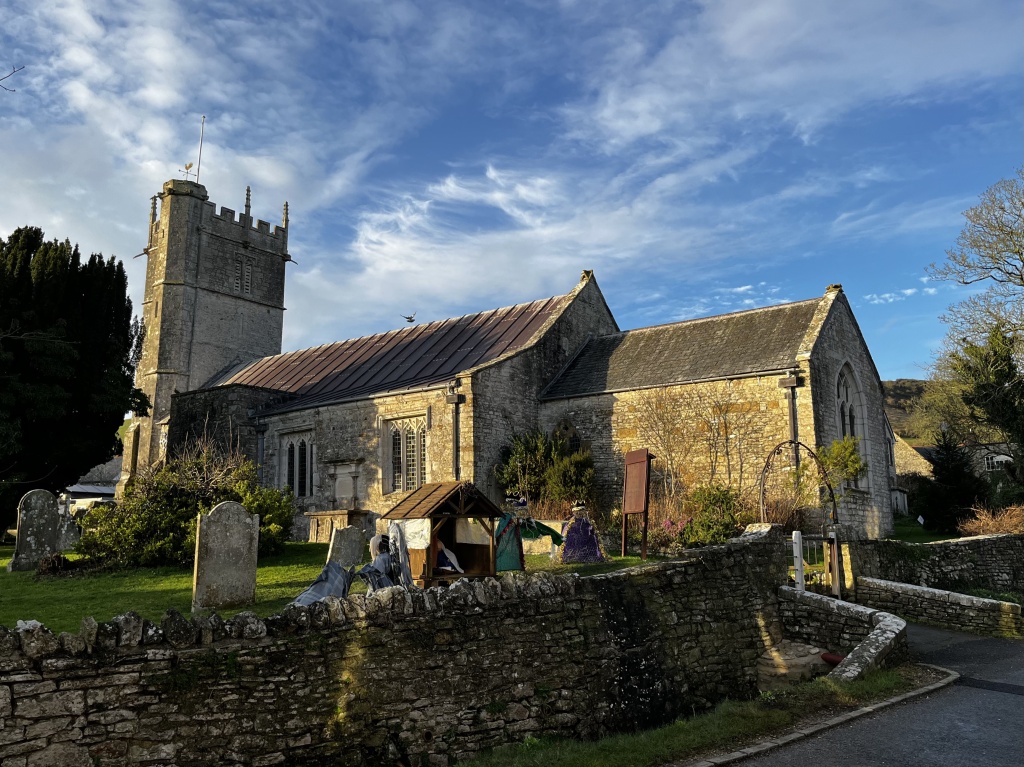
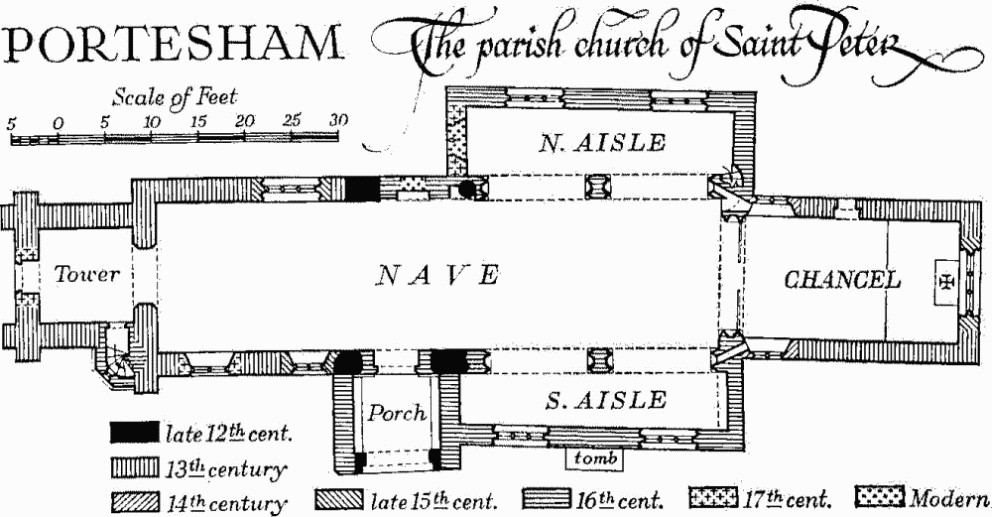
GRADE I † C12 origins; gradual development C13 on, with later restorations C15 / C16. S porch (where the dials are) added C16, with earlier material reused. 8m SW of Dorchester. 50.6709 / -2.5638 / SY602858
DIALS
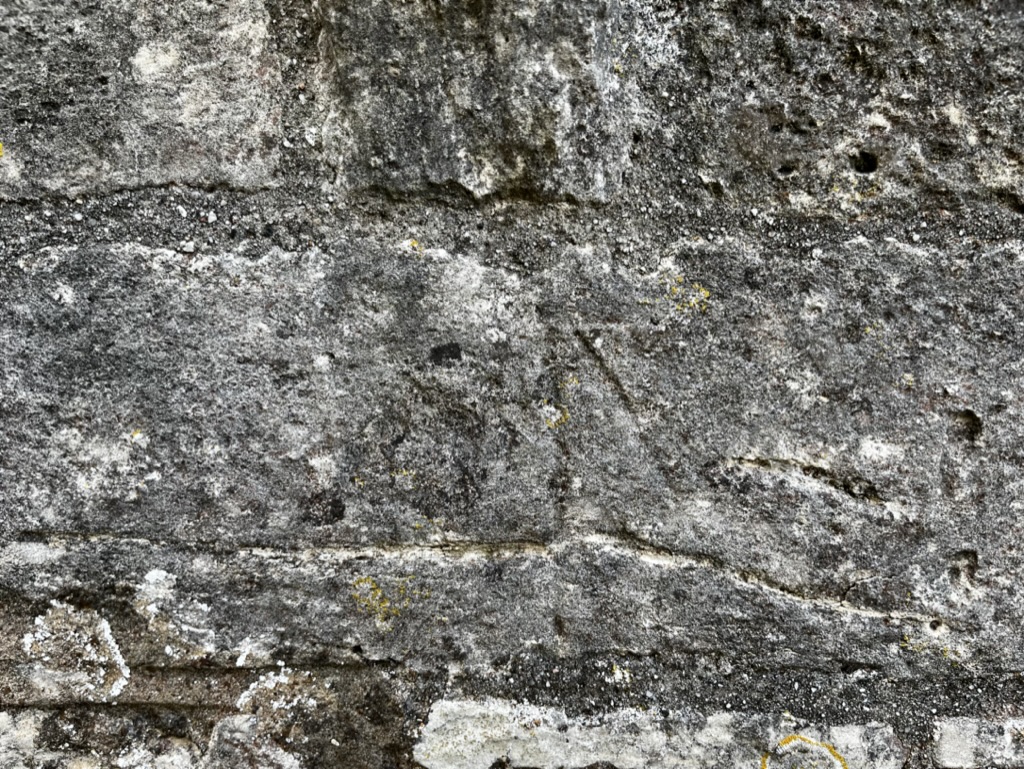
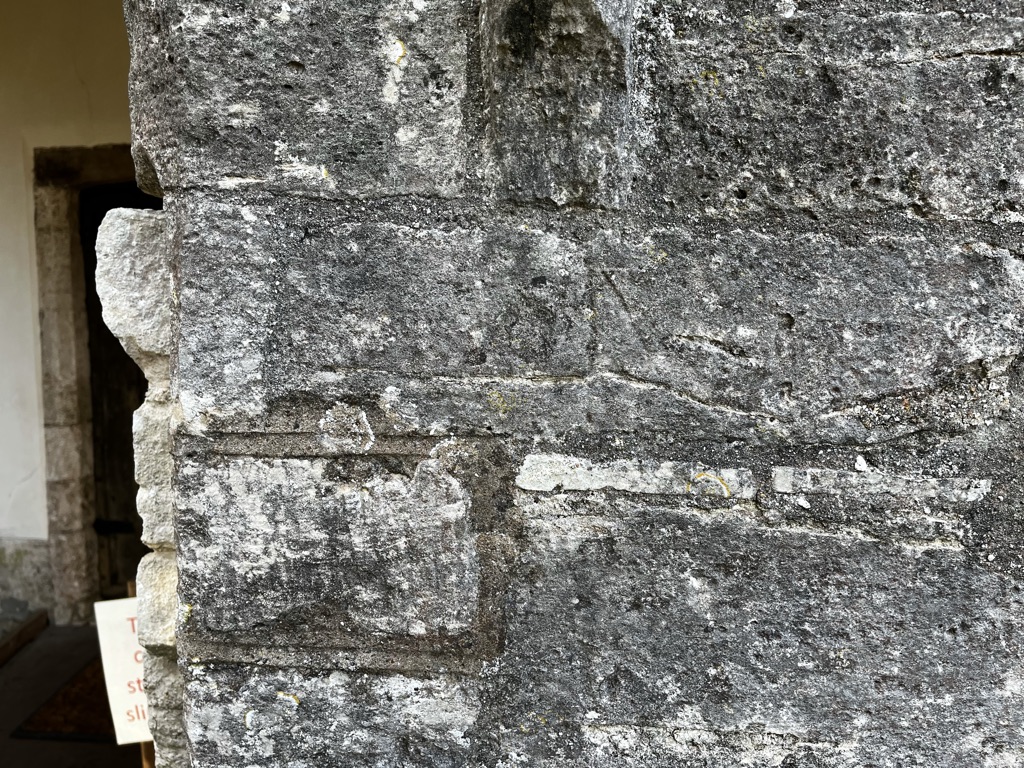
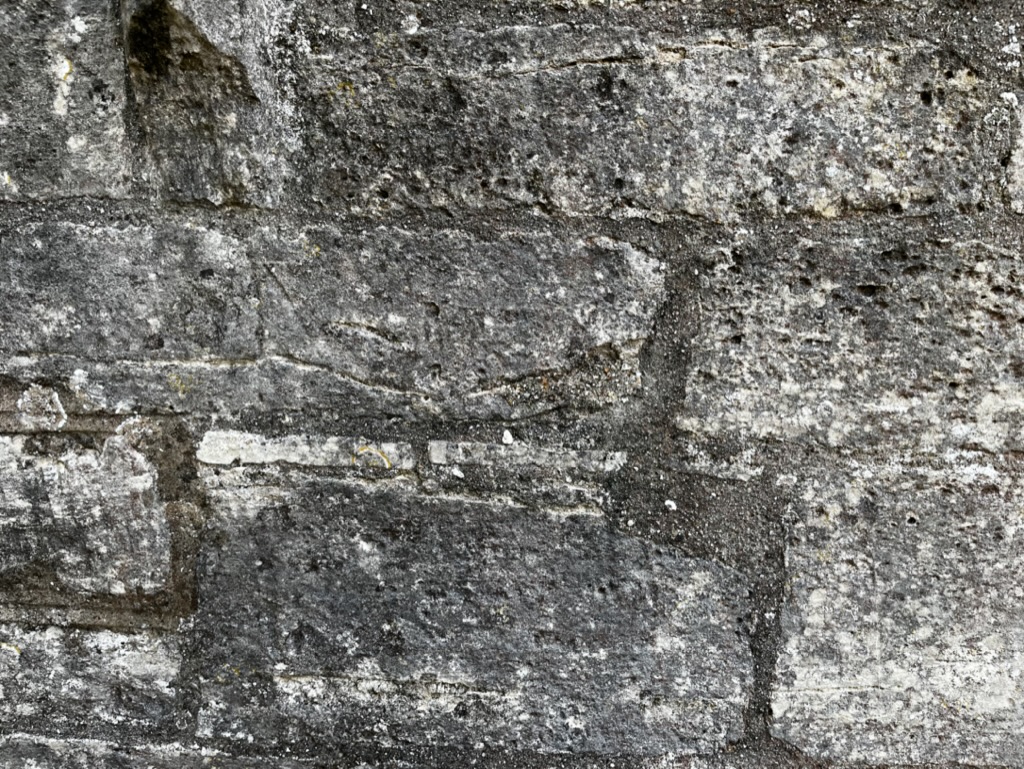
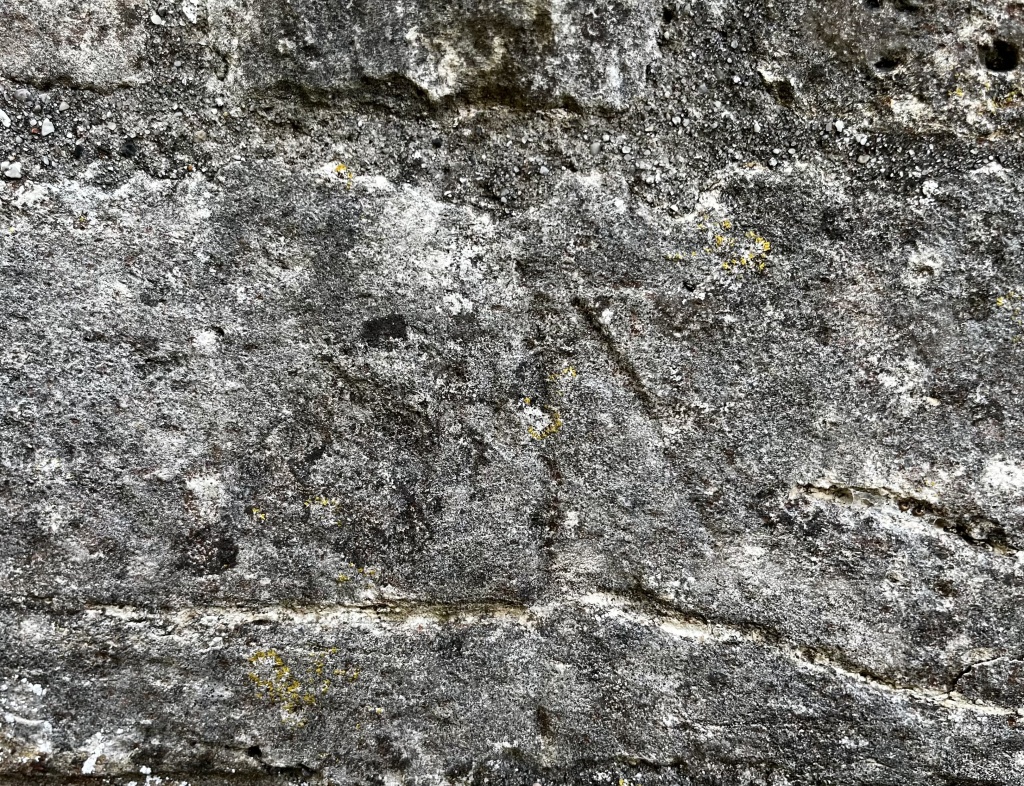
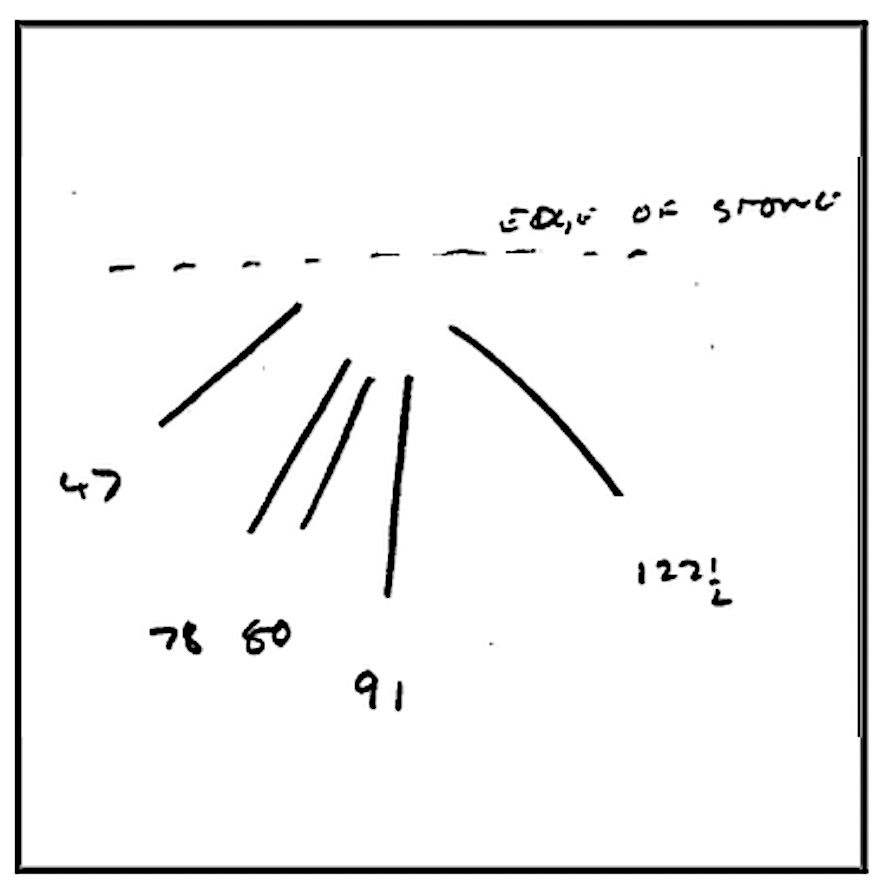
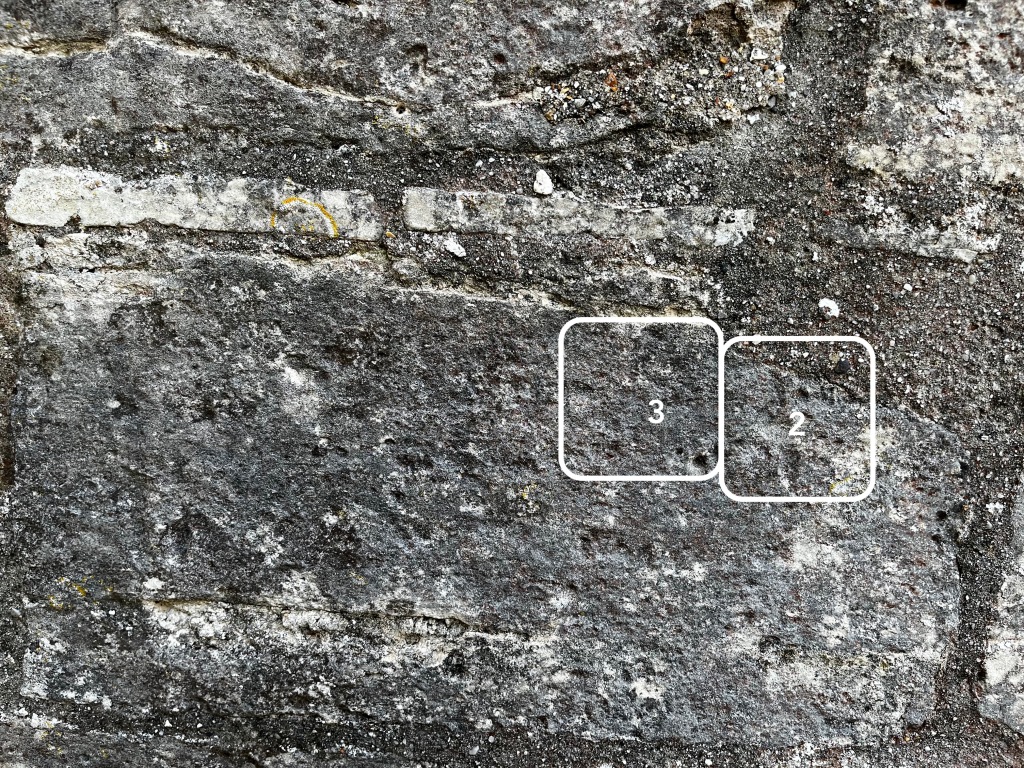
St Peter has 4 scratch dials, 3 on the E side of the S porch, 1 on the W side. One of my nemesis churches. I have visited in rain, in cloud, and in sunshine. Of the cluster of 3 on E side, I could only make out the obvious one. Eventually I managed to identify them from an enlarged photo. The BSS recorder’s diagram below gives an idea of the dials rather more clearly than my photos can.
DIAL 1
Dial 1 is located on the E side of S porch. Five lines are noted in the BSS records, of which 3 are clear and reasonably accurate. The gnomon hole is in the mortar line, where the lines converge.
DIALS 2 & 3
Dial 2 is very basic, and would be easy to overlook. There are 2 faint lines, with the top part including the gnomon hole cemented over a damaged area.
Dial 3 is even less conspicuous: a faint wishbone shape, 2 (3?) lines, one with a pock at the end.
I would doubtless have passed over this pair; and even had I noticed them I would have discounted them in my amateur way.
DIAL 4
Dial 4 is on the west side of the south porch, on an inner quoin stone. At first glance it might be taken for an area of damage. In fact it is a dial with 6 lines, 4 of which end in pocks. It was described many years ago as not very accurately laid out and the passage of time has not improved the situation.
GRADE I † C12 origins (nave, chancel), gradual expansion C13, C14 and C15; restoration 1889. Norman doorway with fine Tympanum (long predating the inscription 1698). Good C15 wall paintings.Very close to the estuary, perfect for a walk or a bird-watch. 6m W of Lyme Regis. 50.7142 / -3.0546 / SY256910
DIALS
Three dials are recorded for St Michael. They are all similar and, unlike most multi-dial churches, their design give little sense of developing methods of marking the passage of the day.
DIAL 1
Dial 1 is located on the E quoin stone of the transept, with the gnomon hole in the mortar line. There are 3 distinct radials, and a 4th that is a faint trace. BSS records include the comment Rescratched and false gnomon added.
St Michael . Axmouth . Devon – Scratch Dial 1
The last record is dated 1994, since when the false gnomon has been removed. I have used an image from then; the dial is less easy to see now. The diagram below has a theoretical perimeter and time marks for a complete dial. The note no noon [line] is slightly surprising. Radial 3 looks vertical and possibly bifurcated in re-scratching.
St Michael . Axmouth . Devon – Scratch Dial 1
DIAL 2
St Michael . Axmouth . Devon – Scratch Dial 2
Dial 2 is cut on the Chancel chapel, E end of the wall, on a quoin stone. There are 4 lines radiating from a filled gnomon hole in the mortar line
In close-up (below) it is just possible to see that line 3 (L to R) is longer than the others. That could suggest a noon line incised slightly off true vertical. If so, on this simple dial it might be a casual approach to the medieval daylight hours. On a later, more sophisticated dial, it might represent a way to achieve accuracy on a church that was not square on to the true SWNE footprint.
DIAL 3
St Michael . Axmouth . Devon – Scratch Dial 3
Also situated on the wall of the chancel chapel, and again radiating from the mortar line. BSS notes 4 lines, but 2 cannot now be detected. However the suggestion that noon is marked by double lines is plausible. This might be for emphasis (as with a terminal pock or cross); or because the vertical was re-scratched.
GSS Category: Scratch Dial
Photos. Keith Salvesen; diagram and other material, BSS
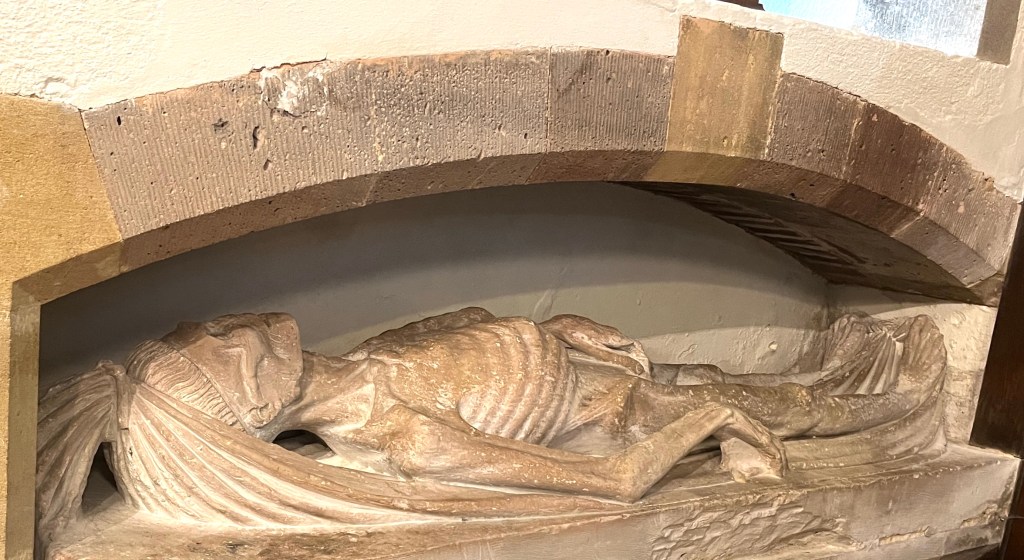
GRADE II* † Norman origins; rebuilding C15 & early C16; substantial restoration 1877. A church that repays one’s interest, with an intriguing Rood screen / reredos repositioning conundrum; and unusual chest tomb: on top lies the effigy of an emaciated cadaver partly covered by a shroudBLB. 14m E of Exeter, 5m W of Honiton. 50.7875 / -3.2659 / SY108994
DIALS
St Andrew has 3 scratch dials, the most obvious being visible from the lych gate and as one approaches S porch. The other 2 dials, very close together, are remarkable and probably unique (certainly so as a pair). Dial 3 may be doubtful. An additional basic but dial-ish scratching is shown below, as are various other church marks including a good example of a Consecration cross.
DIAL 1
St Andrew . Feniton . Devon – Scratch Dial 1
Dial 1 on the porch buttress is a straightforward design and easy to make out, but damaged and cement patched UR. There are 13 lines, some now very faint. The angles are more or less accurate at 15º. The vertical / noon line is not emphasised in any way, which is slightly unusual. The main Mass was presumably Terce, marked with a deeper cut line LHS. The gnomon hole has been filled with a rather well-chosen rounded arrow design; it is modern yet respectful of its purpose.
DIAL 2
St Andrew . Feniton . Devon – Scratch Dial 2
Dials 2 & 3 are adjacent low down on the same porch buttress as Dial 1. It is a remarkable juxtaposition. BSS suggests they are early dials – pre-1400?
Dial 2 consists of a pattern of pocks contained within what could be termed geometrically as the major segment of a circle. The horizontal line is incised more deeply. BSS suggests that 13 pocks are identifiably associated with the dial, with a few random ones besides. The quite shallow gnomon hole in such a small design presumably contained a stud rather than a rod.
A noon line is seemingly marked by the sightly offset double pocks just R of the vertical. Theres’s also a very small pock directly above the gnomon hole, conceivably a decorative-use-only marker for midnight and symmetry.
DIAL 3
Dial 3 The BSS entry for this little configuration of dots describes a semi-circle of 8 pocks, with other associated pocks and no obvious gnomon hole. It concludes closely related to dial no. 2, possibly never used as a dial.
Perhaps it is not a dial at all. The rather untidy part-circle curves away NE after noon – pointlessly, if part of a dial. BSS notes that there is no central style hole. There is a single pock inside the perimeter that might have held a stud – but unlikely to be much use in that position. Some might suspect unserious pattern-copying efforts along the lines of Dial 2.
St Andrew . Feniton . Devon – Scratch Dial 3
My amateur reading of this buttress as a whole is firstly, that the low stone on which Dials 2 & 3 are located is not its original location. At some stage during all the rebuilding and restoration over the centuries it was re-sited. The little dial that ‘worked’ was then too low and would anyway have been an obsolete design. It was therefore superseded by a far larger, more modern (? mid C16) and very visible dial, accurately cut and ideal for marking the passage of the day for a larger, better educated community in a more modern era. Comparatively.
DIAL 4?
Both lines seem deliberately scratched. One is approximately vertical, the other could mark the Mass time Terce (cf Dial 1). The lines diverge from the mortar line, as do many simple dials – it means not having to drill a dial gnomon into stone. I have seen less convincing 2-line versions that have been recorded as dials. I am slightly in favour of it being a dial.
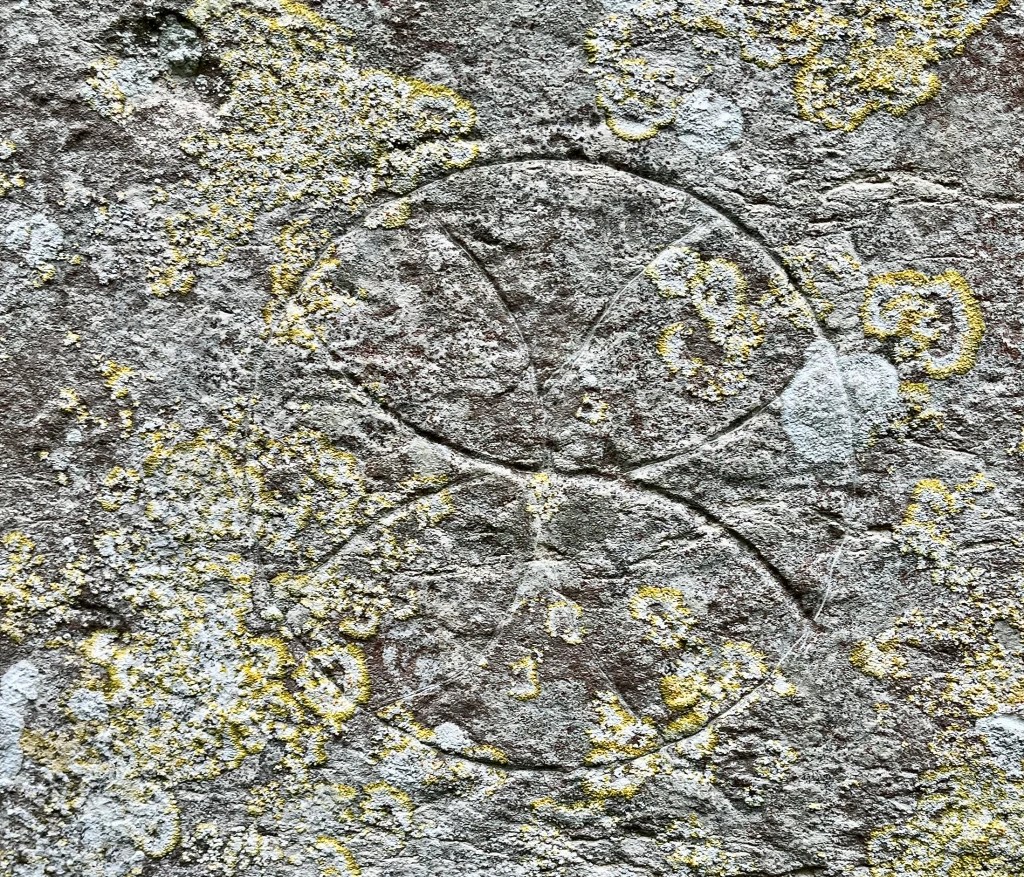
CONSECRATION CROSS
This is a good example of a rural consecration cross, incised on a buttress between 2 windows. From a distance the design might mislead and be seen as four petals, rather than a compass drawn cross. There are hints of an outer circle. This is a fairly common type of cross, but good see one that is relatively unworn. The four distinct quarters rule out ID as a protective hexfoil, although there is a similarity.
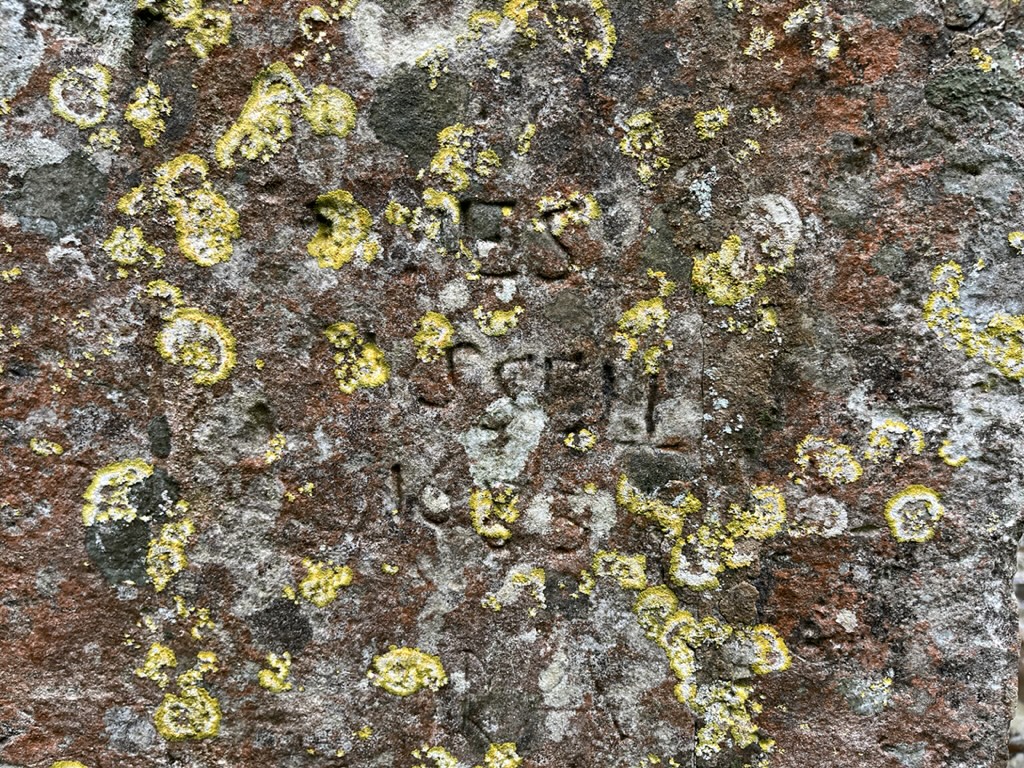
GRAFFITI
Graffiti on two adjacent stones, one example dated ?1675
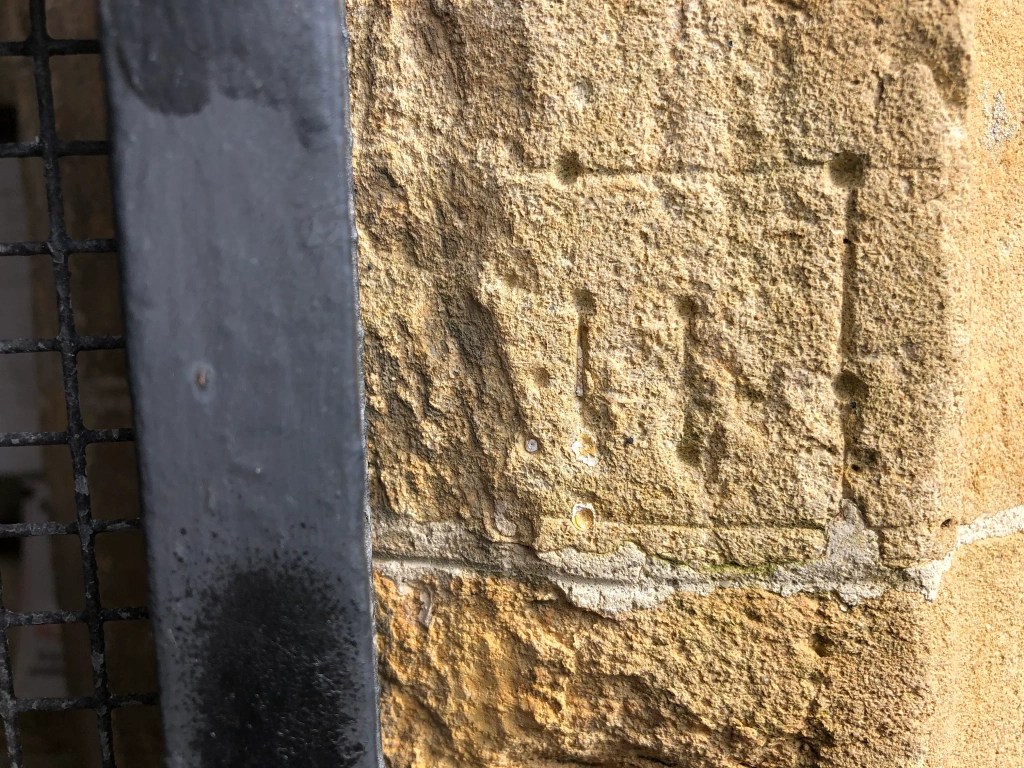
PROTECTION MARK
This is very likely a ritual protection mark / apotropaic symbol designed both to prevent evil from entering the church, and to repel it. For that reason they are most often found inside or near porches. I haven’t encountered the pattern below before, but a group of dots with some joined by deep cut lines is a commonly found design – see an example from Dorset below.