SELWYN COLLEGE . CAMBRIDGE – Vertical Dial

undefined
Diliff 

SELWYN COLLEGE CAMBRIDGE – VERTICAL DIAL

DIAL
BRITISH SUNDIAL SOCIETY RECORD

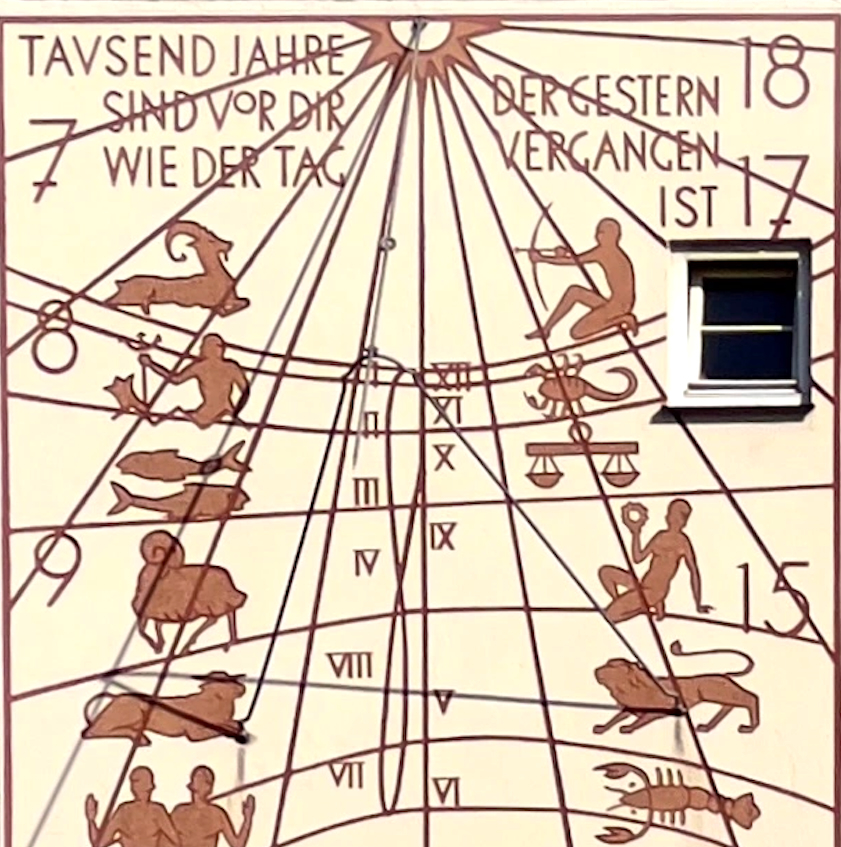
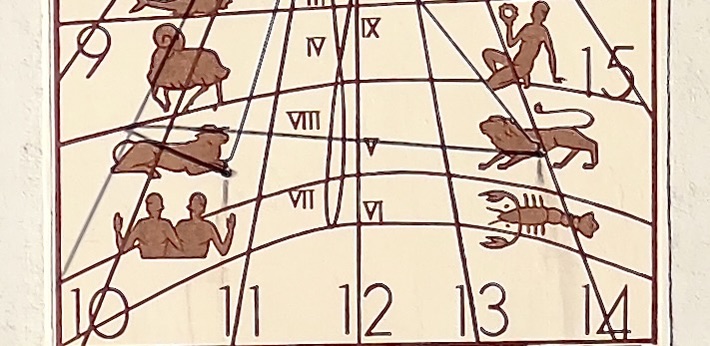
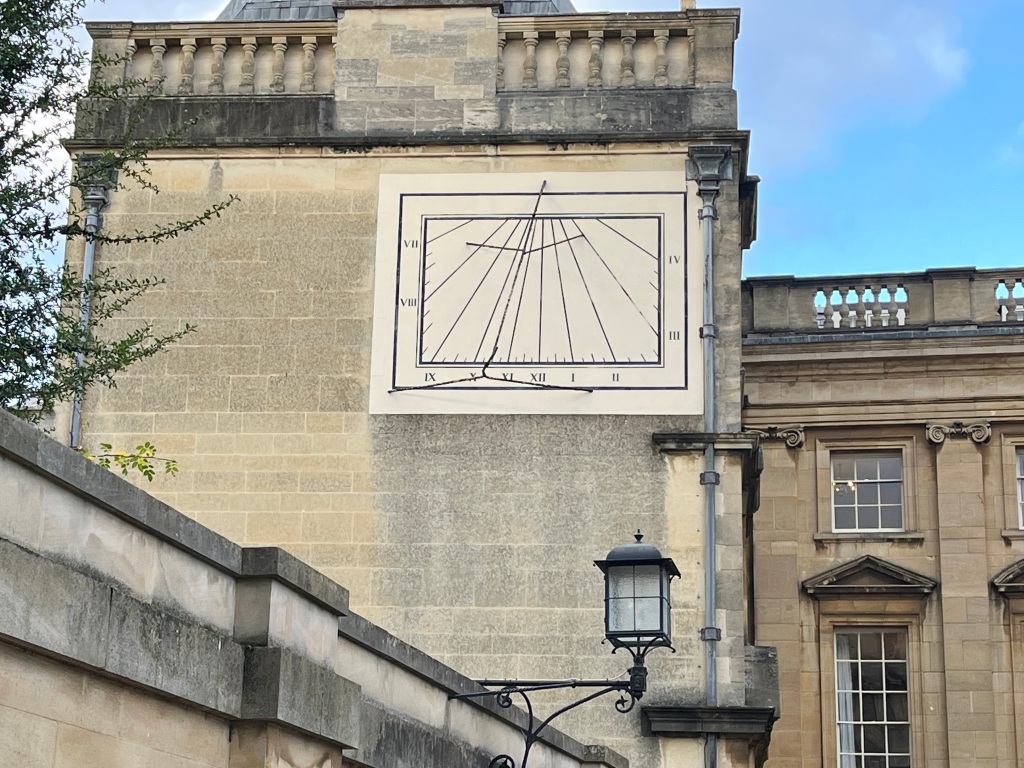
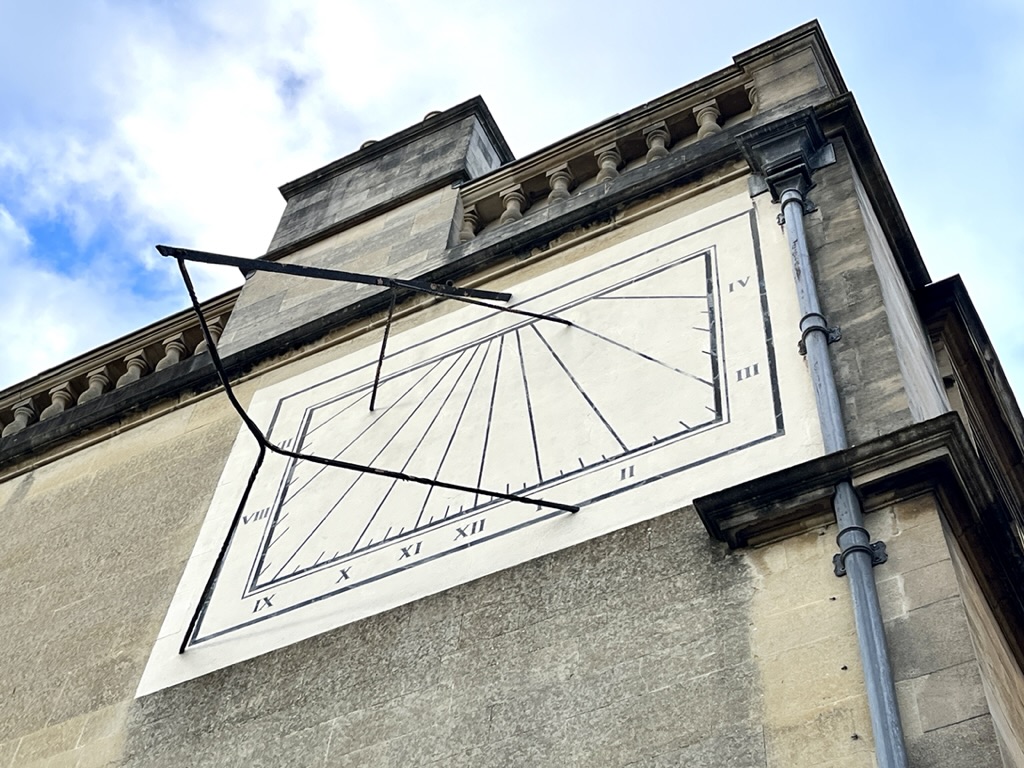
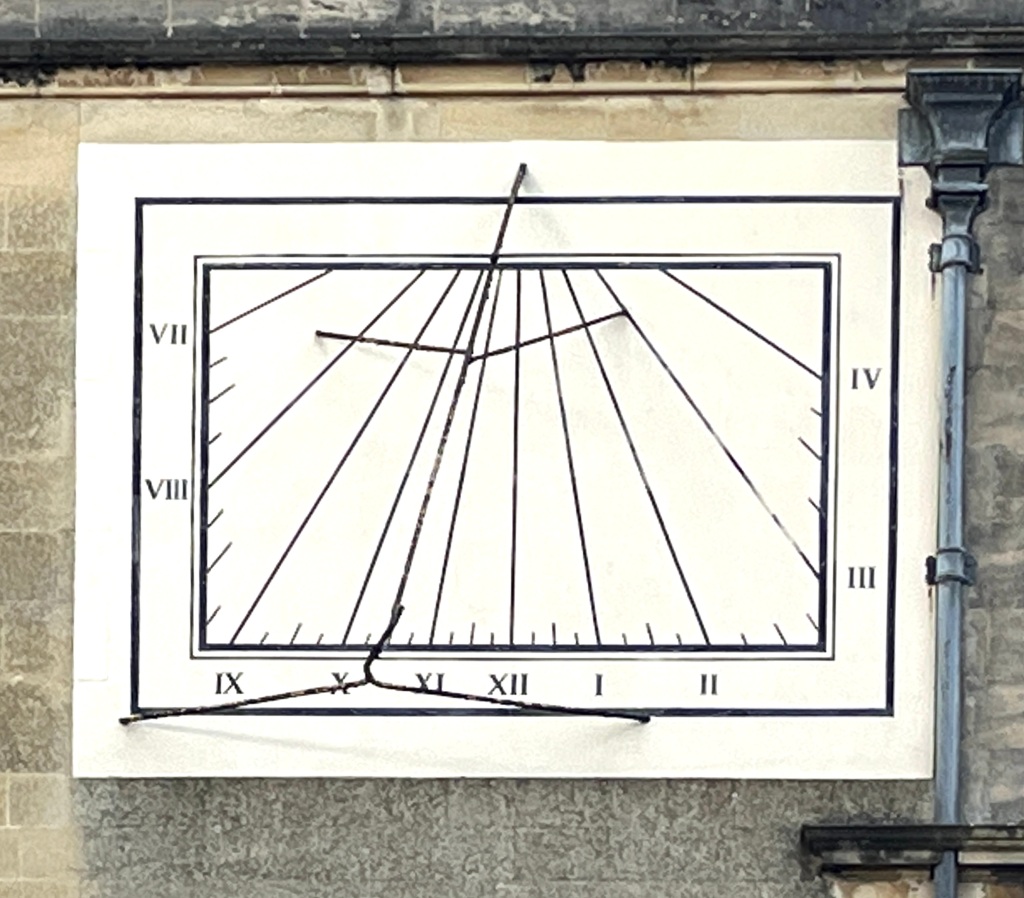
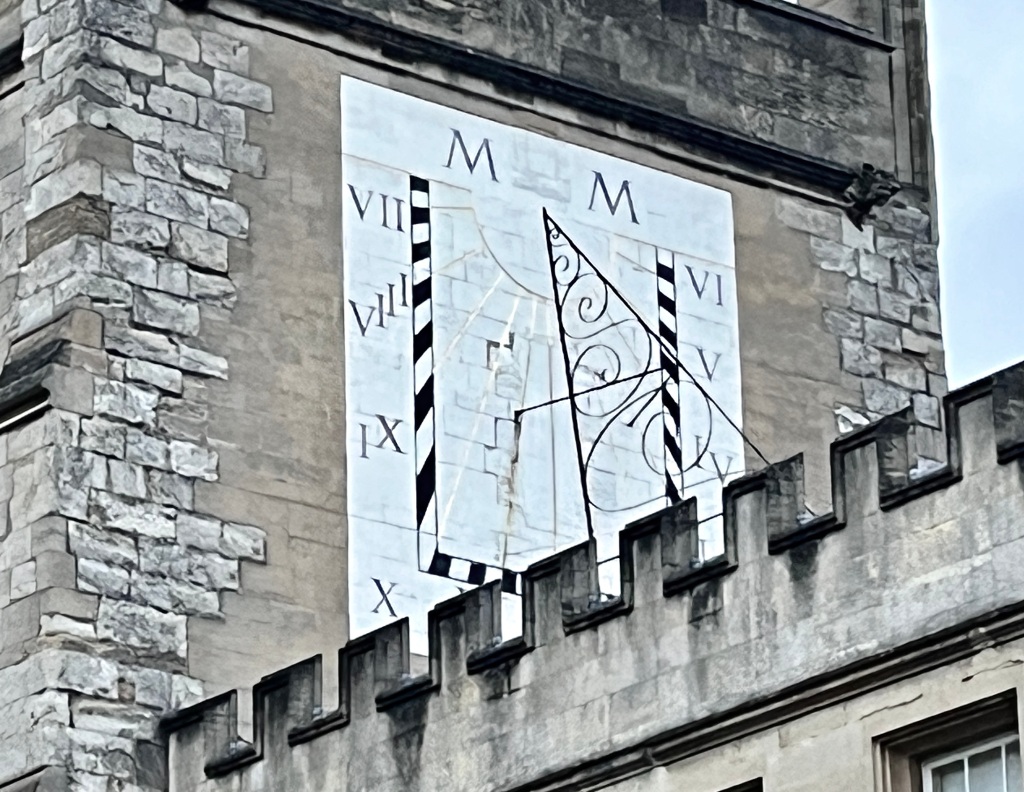
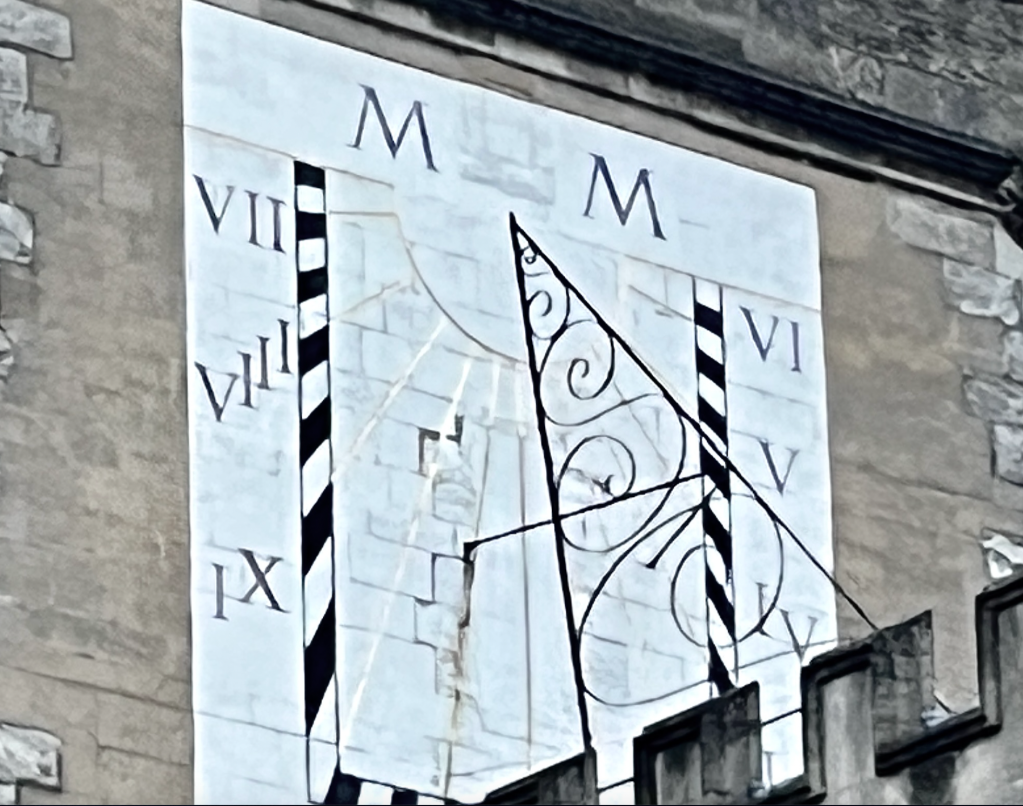
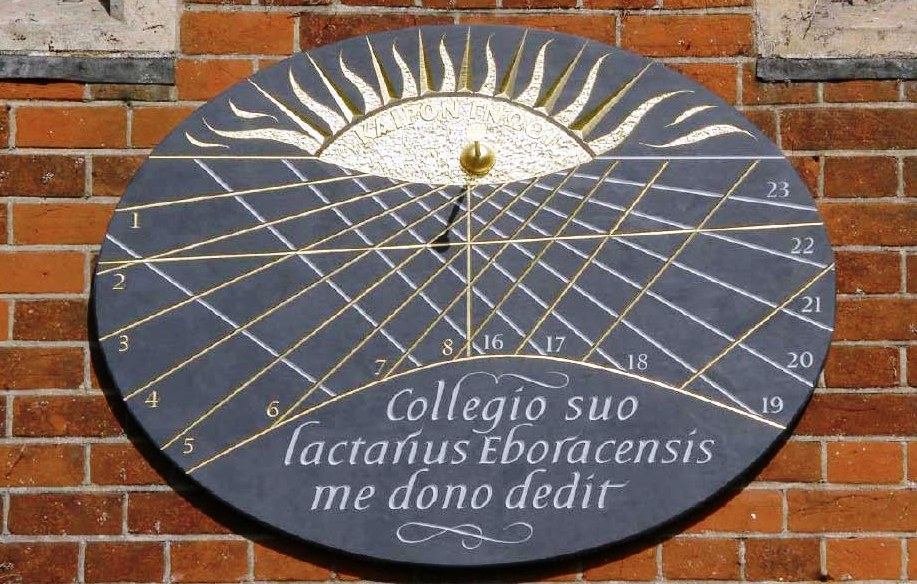
The dial is mounted on the north range of Old Court just above ground floor window level, to the right of staircase D, and declines about 4° west of south. It was designed by Frank King and made by the Cardozo Kindersley workshops in Cambridge. It has Babylonian and Italian hour-lines (showing hours since sunrise and since the previous sunset). The hours are read from the shadow of the brass nodus ball (this type of dial does not require a polar-directed gnomon). Across the top section of the dial, above the winter solstice curve, is a rising sun with the inscription ’ΚΑΙΡΟΝ ΓΝΩΘΙ’ (Know the time). Across the lower part, below the summer solstice, is inscribed ’Collegio suo / lactarius Eboracensis / me dono dedit’ (To his college the Yorkshire dairyman gave me as a gift). Around the rim of the dial are inscribed ’Babylonian hours since sunrise’ and ’Italian hours since sunset’. Ref: BSS Bulletin 22(iii), Sept 2010, pp 2-8, and 22(iv), Dec 2010, pp 9-11.

The use of the Greek motto reflects strong historical links between the College and Ely Cathedral, where the motto is also used. My recent piece on the Cathedral can be seen HERE.

For further details about the Selwyn Dial, see THE SELWYN DIAL – article by the maker Frank King BSS (7pp, detailed analysis) 2010, rich with knowledge.

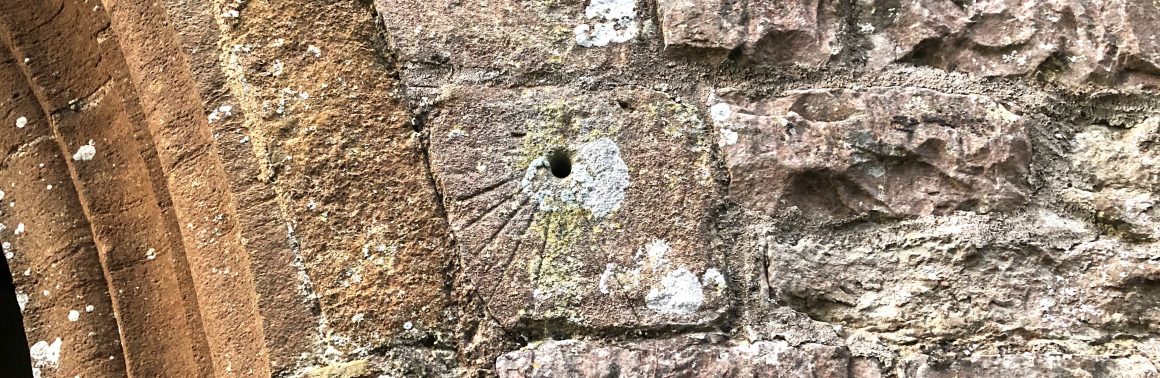
GSS Category: Scratch Dial; Mass Dial; Re-sited Dial; Dial facing W

Photos and text, BSS; header image Diliff 
MUNICH . LAIM DISTRICT – Modern Noon Dial

NOON DIALS

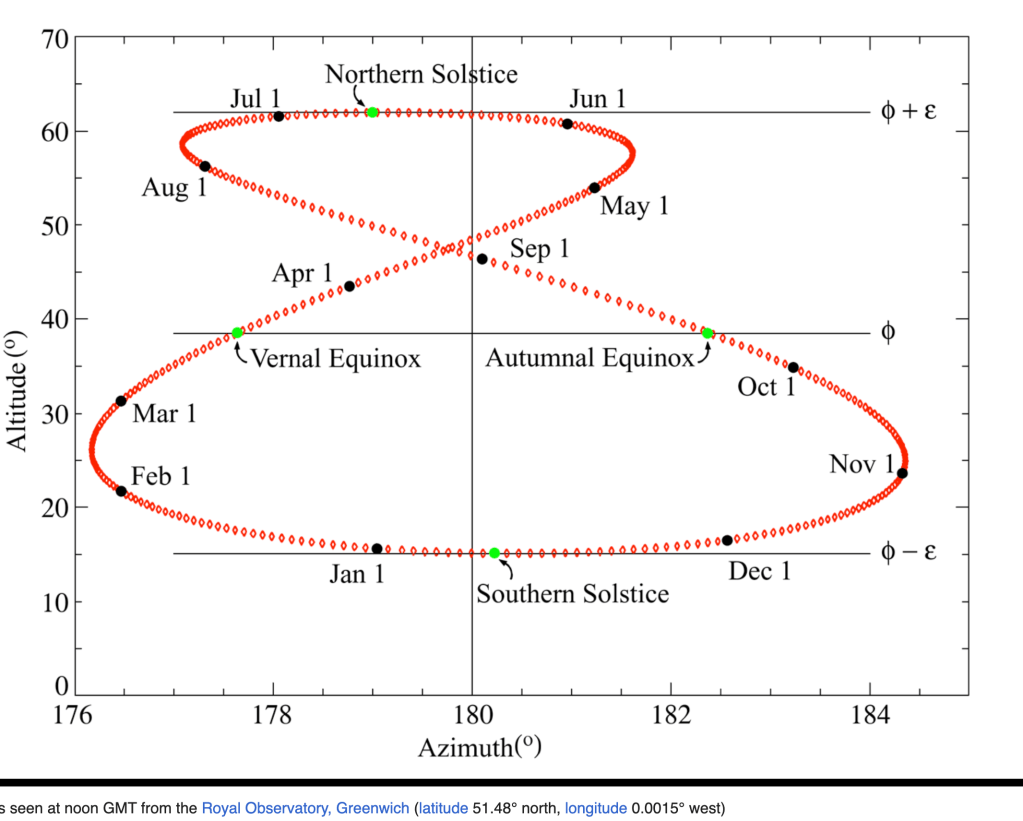
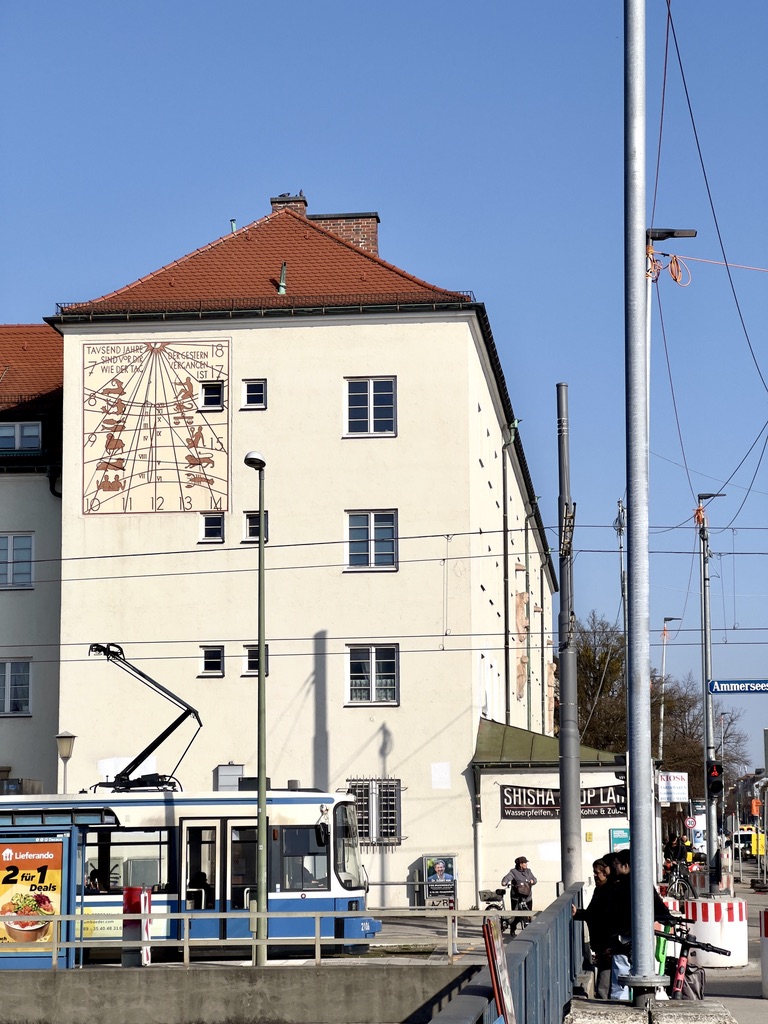
A noon dial / noon mark serves as a method of pinpointing midday, when the sun is at its highest and due south. The origins are ancient. Here, the relevant area is in the centre, flanked by Roman numerals. My maths / science skills are few and I will spare you a rudimentary explanation. The key words are Equation of Time, Analemma, and (my non-technical choice) figure of eight.

This image has an empty alt attribute; its file name is screenshot-2025-03-23-at-12.21.49.png

In the centre of the dial is a narrow figure of eight bounded by the numerals. You can just make out the raised bracket that supports a slender gnomon. You can see a small ring through which, at the perfect moment, the sun’s rays strike the face of the dial:

If you want to know more, there is a concise entry at ANALEMMA (Wiki)

This image has an empty alt attribute; its file name is screenshot-2025-03-23-at-12.21.49.png

This image has an empty alt attribute; its file name is screenshot-2025-03-23-at-12.21.49.png

GREEN TEMPLETON COLLEGE OXFORD

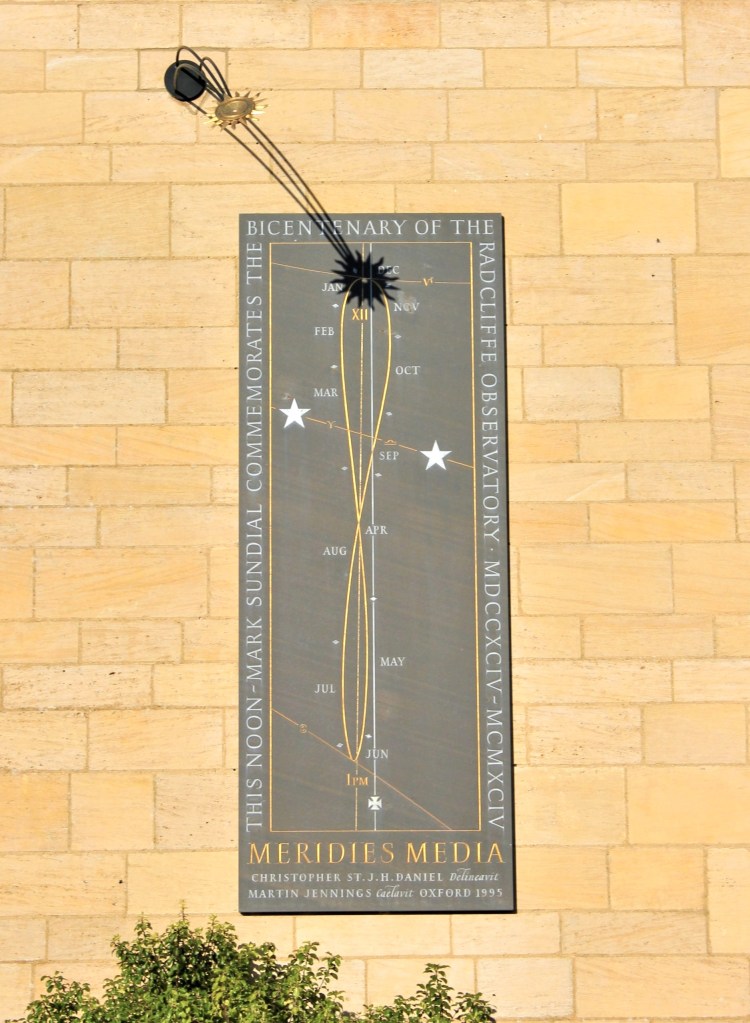
A modern (1995) noon-dial commemorating the Bicentenary of the Radcliffe Observatory, designed by the renowned Christopher Daniel, founder of the British Sundial Society. The critical alignment of the sun’s rays are projected onto the surface of the dial at noon (MERIDIES MEDIA), focused by the small ring.

THE COLLEGE’S NOTES

  • It works by using a spot of light cast by the nodus (the gilded sun with a hole in the middle), falling upon the slate dial-plate and tracking from left to right across it.
  • It is declining because the wall it is attached to does not face due south but ‘declines’ away from the compass point
  • Noon-mark means it gives the point at which the sun at its zenith crosses the Greenwich meridian and the Oxford meridian (the vertical white line down the centre of the dial)
  • Mean-time means you can read clock-time from the dial by following the progress of the year along the figure-of-eight marking, known as an analemma or equation of time correction curve. This makes allowances for the effect of variations in the apparent motion of the sun at different times of year.
Screenshot

GSS Category: Analemma; Equation of Time; Munich Sundial; Nodus; University Sundial

CREDIT: John Renner, for another great find from his travels

CHRIST CHURCH COLLEGE . OXFORD – Vertical Dial c1750

CHRIST CHURCH COLLEGE . OXFORD . VERTICAL DIAL

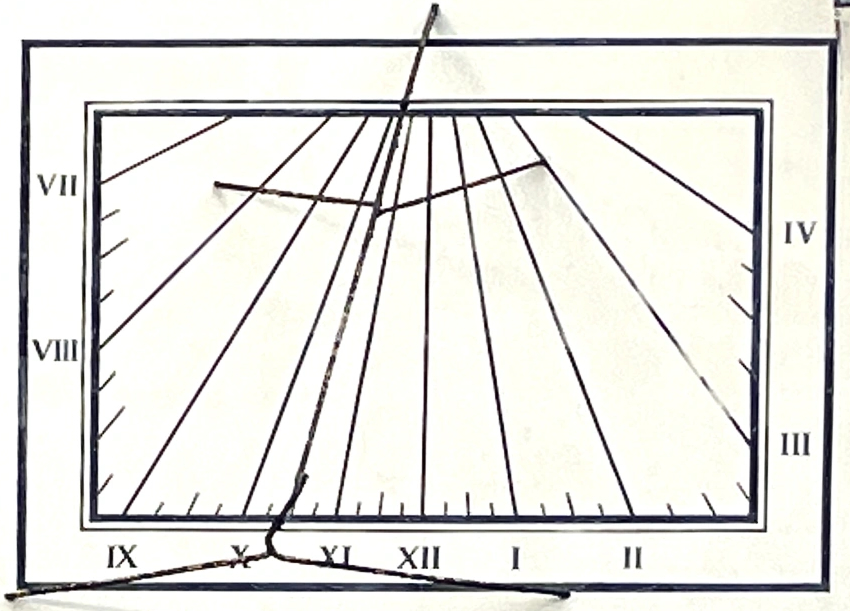
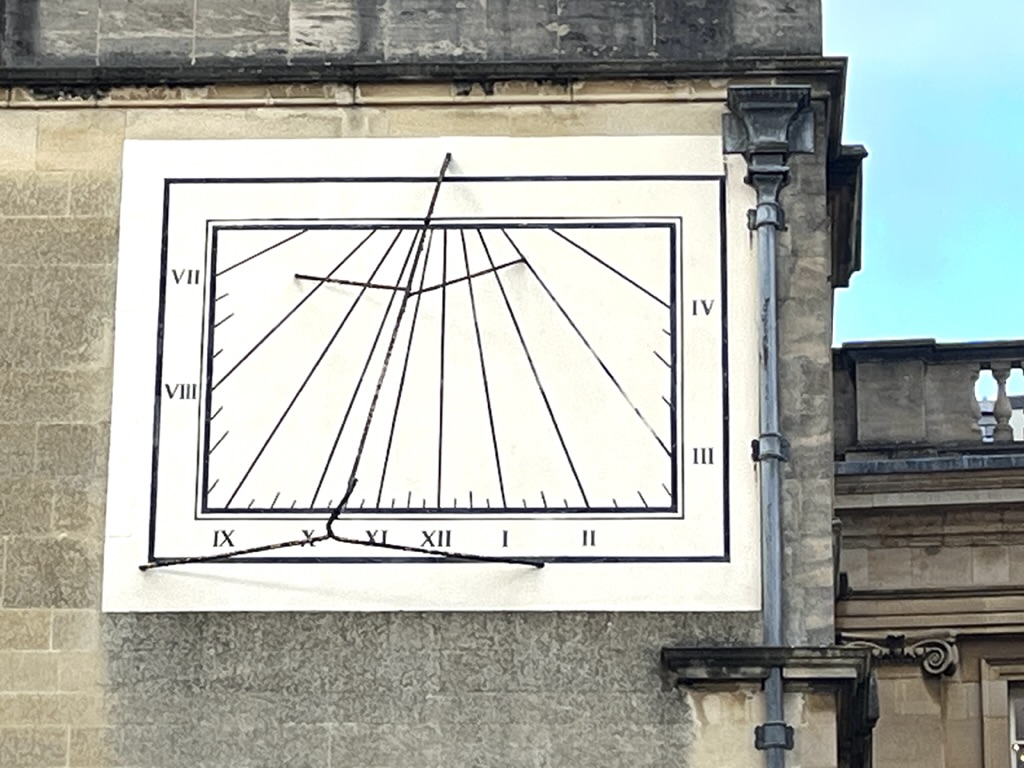
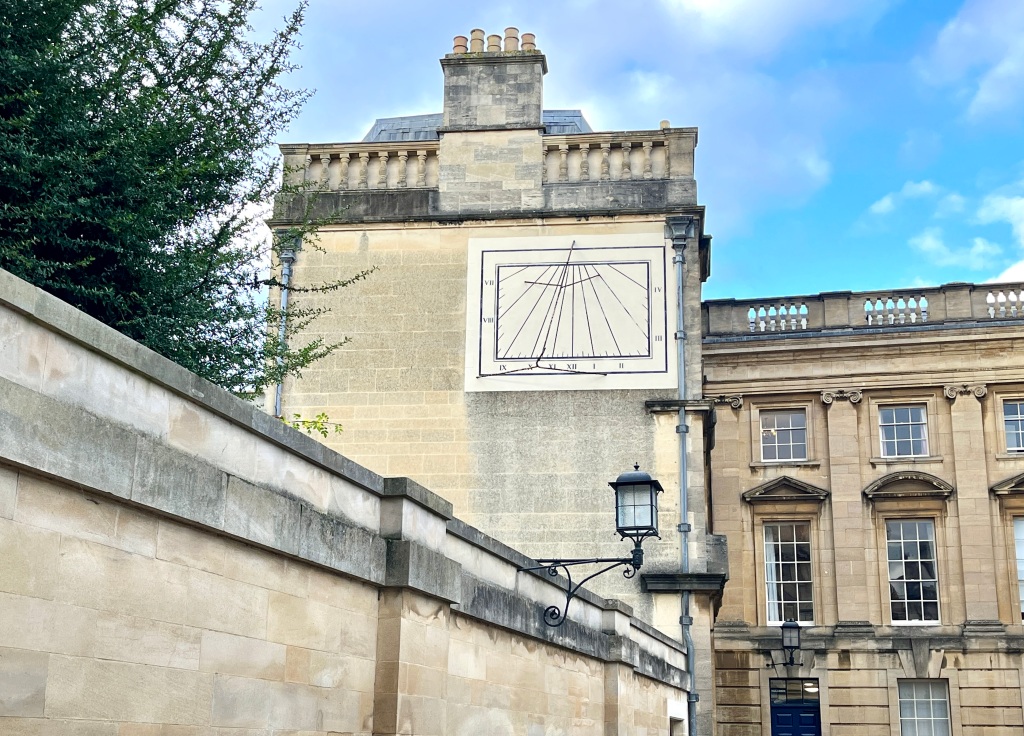
Located on W side of the Peckwater quad. c 1750, recently restored. Its position restricts the marked hour to VII – IV. Described rather harshly as a very plain and severely functional sundial of no great beauty in one source. Its simplicity and clarity in a City with many fine and some most elaborate sundials gives it some distinction.

Several other historic Christ Church dials both in the College and on the Cathedral (including mural dials) are sadly no longer extant. However, John Foad BSS points out that there is an outstanding multiple dial in the Pocock Garden, made by David Brown and installed 1998. There is also a small unobtrusive vertical dial elsewhere. These will have their own post in due course.

Christ Church Cathedral runs on Oxford time, five minutes and two seconds behind GMT. This is presumably a throwback to the late C19 before Standard Time was introduced by Statute, though there may be more arcane collegiate reasons.

To be linked in due course to the 2 modern sundials in the College.

GSS Category: Vertical Dial; Oxford Sundial; University Sundial; Old Sundial (C18)

All photos: Keith Salvesen

TRINITY COLLEGE CAMBRIDGE . HORIZONTAL SUNDIAL

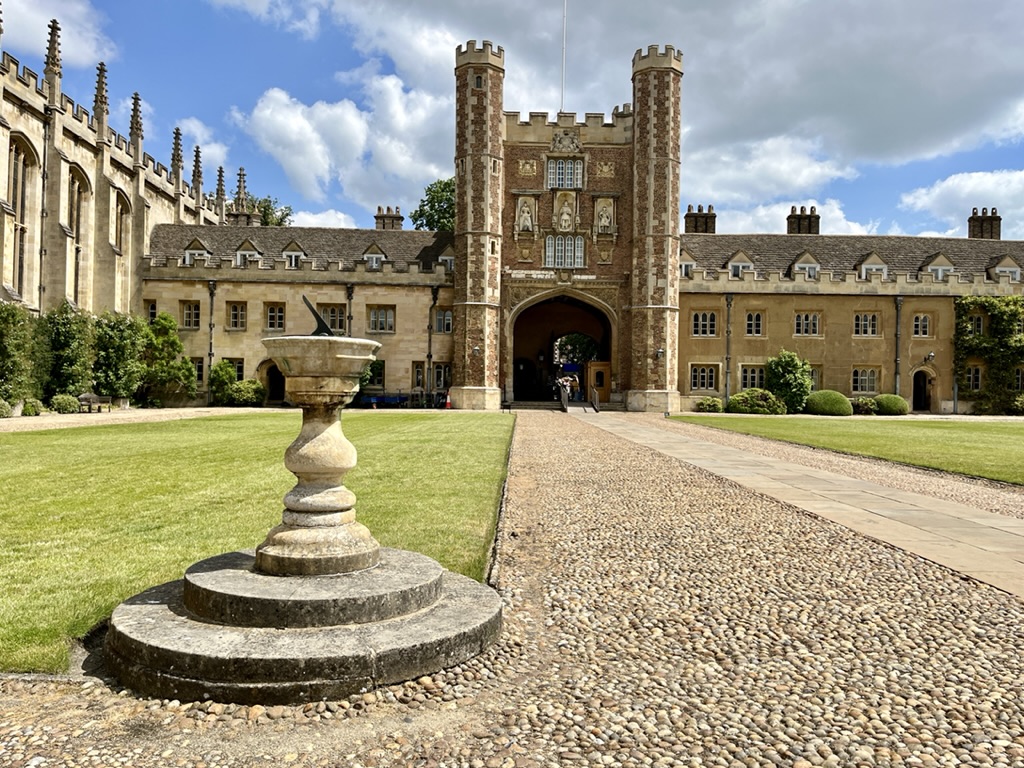
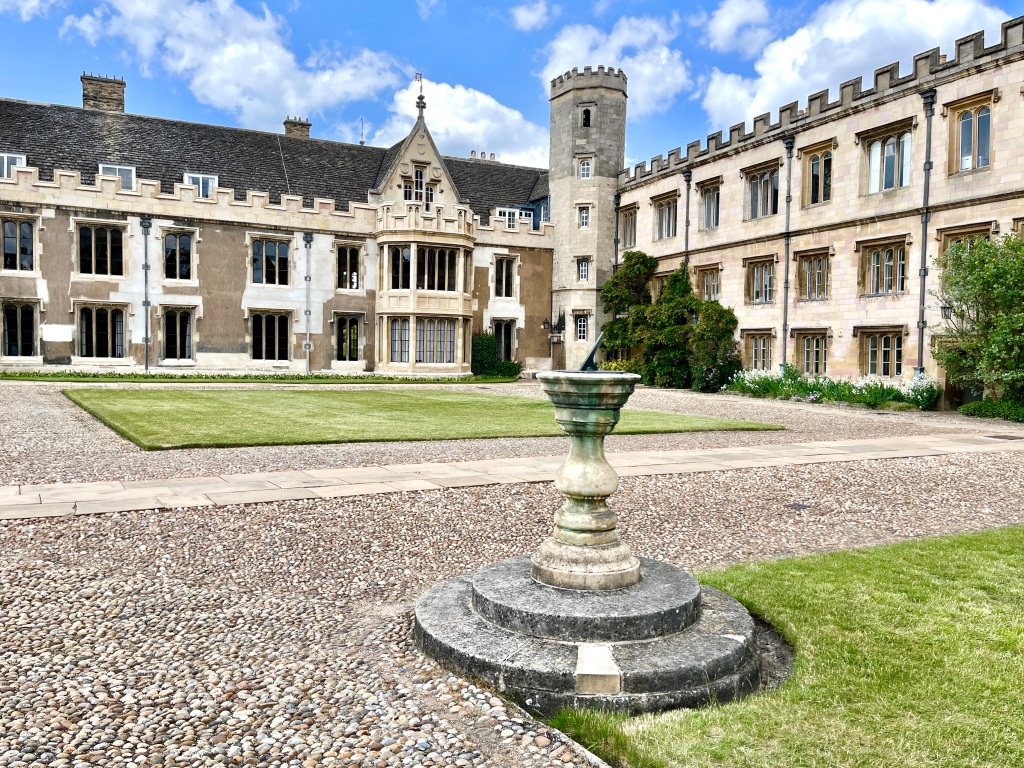
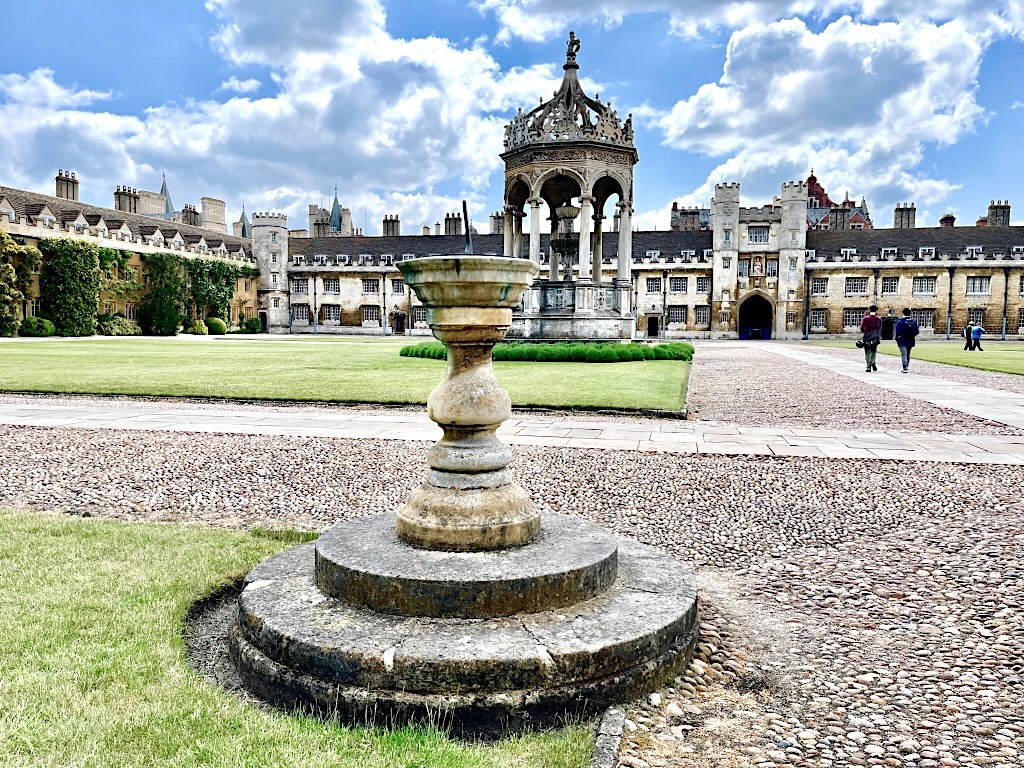
Trinity College Cambridge . Sundial – view from Master’s Lodge to Great Gate (Keith Salvesen)

TRINITY COLLEGE CAMBRIDGE . GREAT COURT

THE TALE OF TWO DIALS

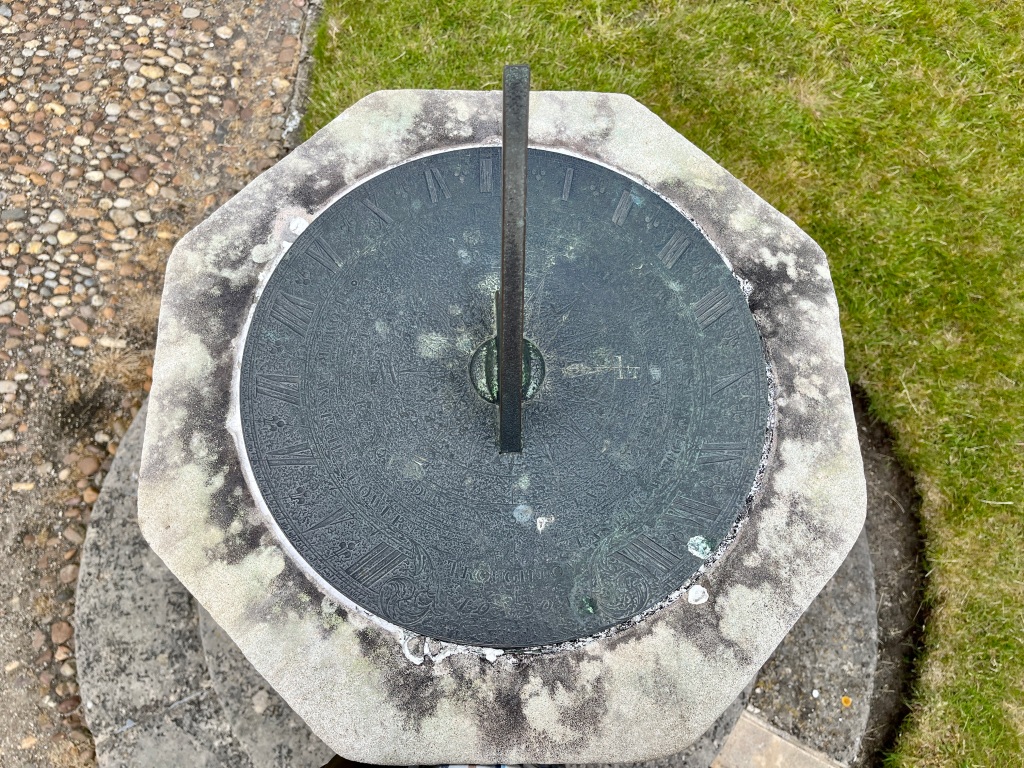
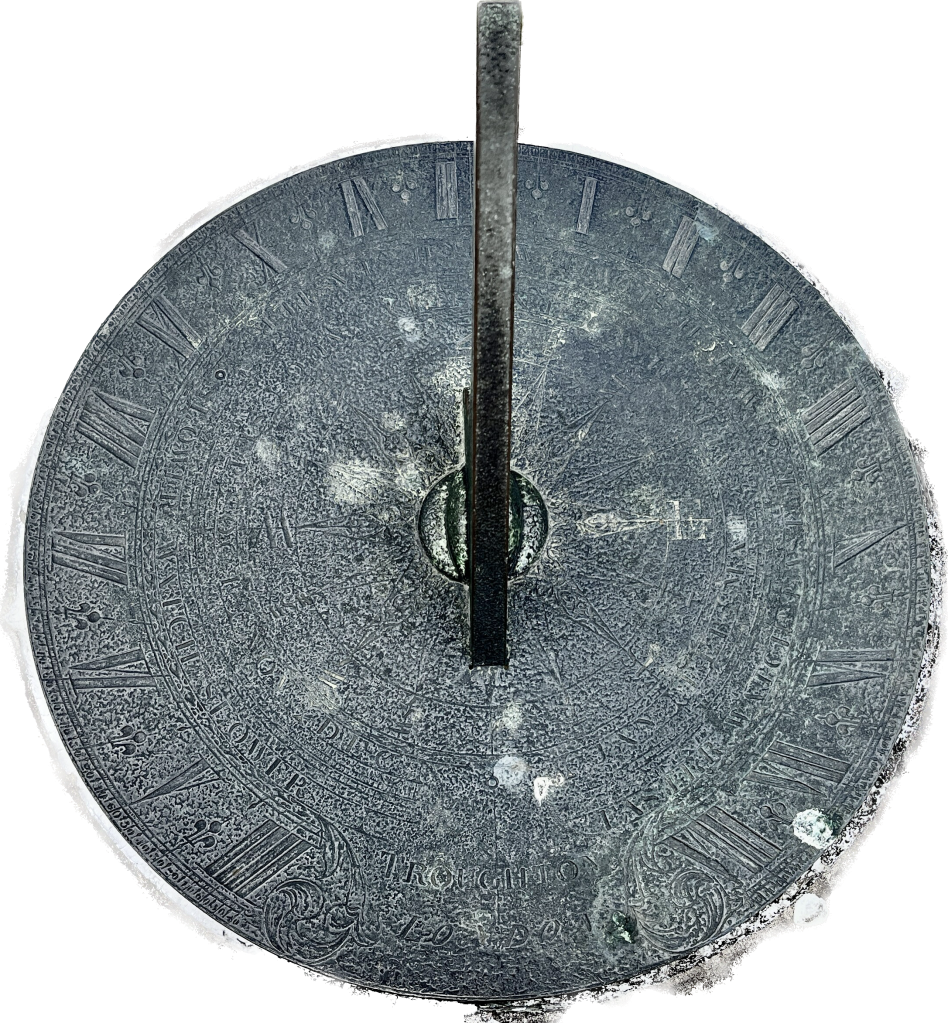
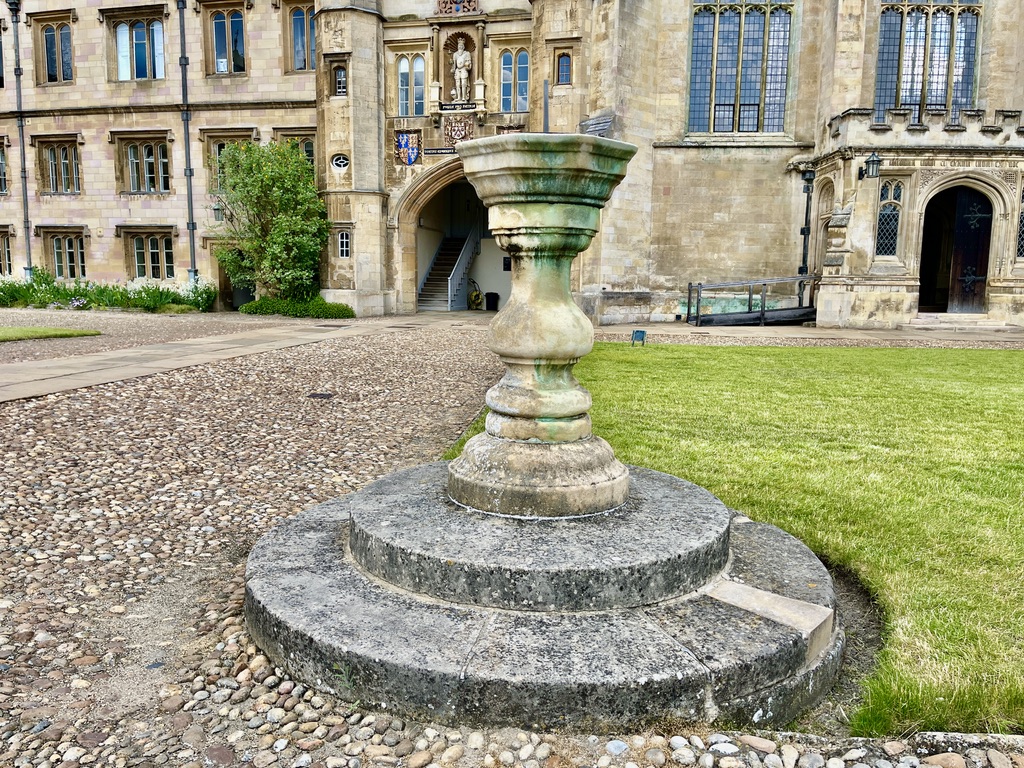
GRADE II ✣ 1704, dial renewed in 1795 by Edward Troughton of London. Simple stone baluster with moulded base and cap, set on 2 steps. RCHM.

The fine C18 horizontal sundial in Great Court has a long history, and an intriguing twist in its story. Over a period of 3 years I must have walked past or near it thousands of times without giving it a glance. The passage of the day was marked by the chimes of the famous clock, a sound that stays with me even today.

Trinity College Cambridge . Sundial – view towards the Master’s Lodge (Keith Salvesen)

Trinity College Cambridge . Sundial – view from above (Keith Salvesen)


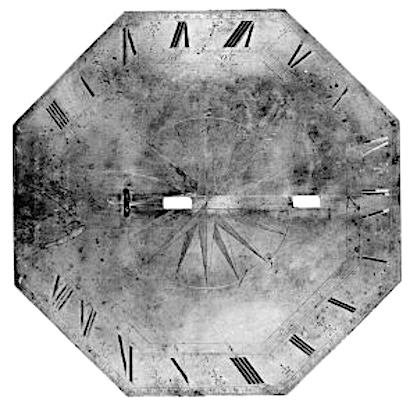
The description ends with an intriguing footnote:The baluster pedestal on which the dial stands may be the same one which supported an earlier dial by John England (see BSS Register, SRN 5295). Which leads to the story of the original dial that was in place until Troughton’s renewal in 1795.

  John England Dial Plate 1704

The image above shows a gnomon-less dial plate made by John England in 1704. Like the pedestal, the plate is octagonal. It was rediscovered in a cupboard in the College in 2002. BSS recorded the find as follows:

Trinity College Cambridge . Sundial – view S towards the Fountain (Keith Salvesen)


GSS Category: Horizontal Dial; Pedestal Dial

All photos: Keith Salvesen (Matric. 1970)

NEW COLLEGE OXFORD . Vertical Millennium Dial

New College Oxford . Vertical Sundial

NEW COLLEGE . OXFORD

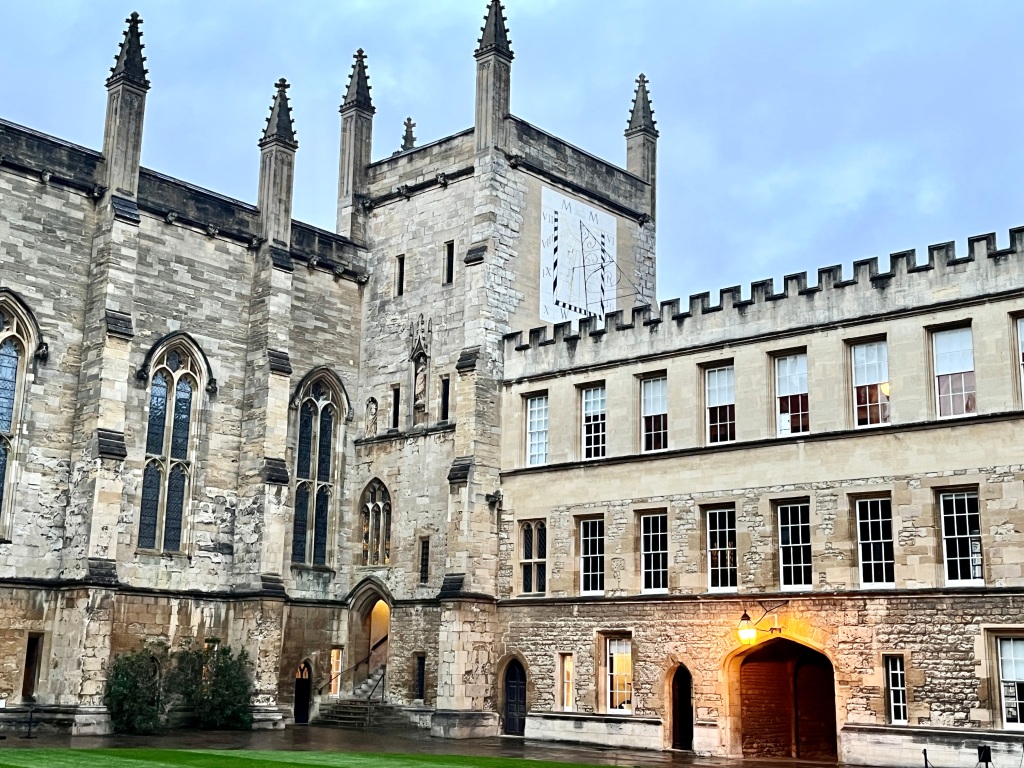
Dusk on a rainy November evening is not an ideal time to photograph high-up sundials, especially ones with intricate but delicate gnomons. Entering the Great Quadrangle, the sundial is visible on the Muniment Tower, beyond which is the Garden Quad. The position of the dial somewhat limits the photographer. A certain amount of refining has been needed in presentation, which I hope will be excused. The dial face is pale blue (white in some photos I have come across). The light conditions resulted in a rather startling blue that I have attempted not very successfully to tone down.

New College Oxford . Vertical Sundial

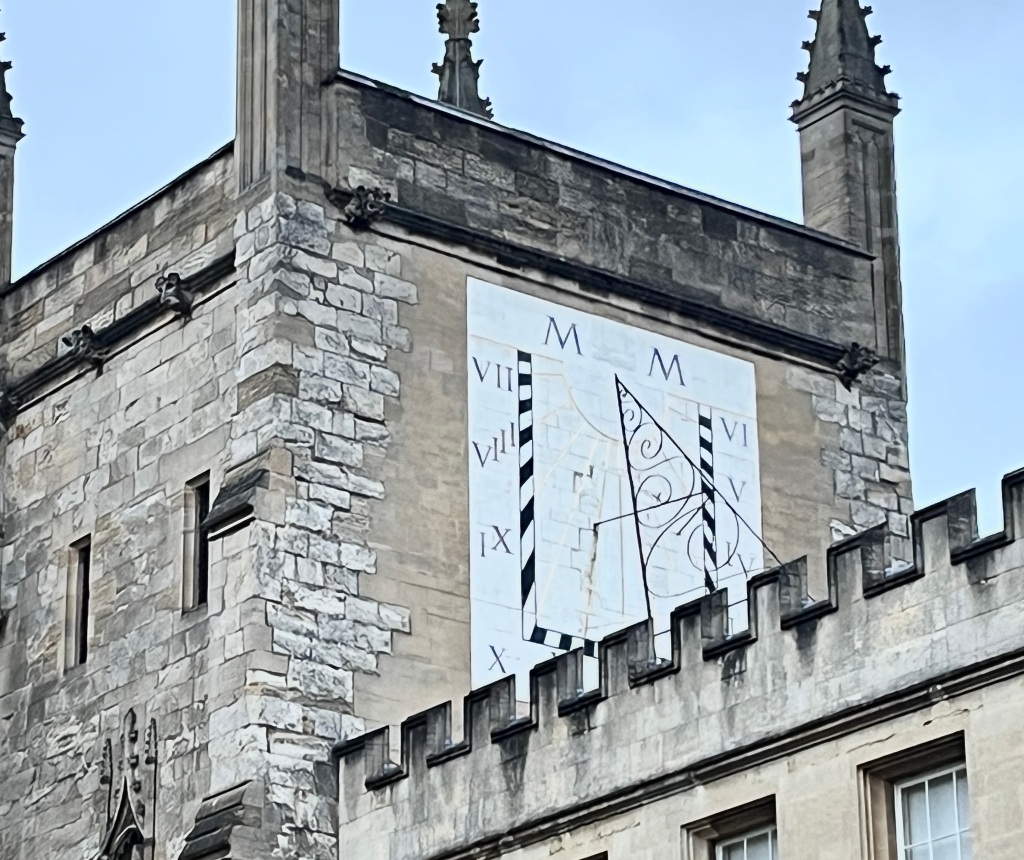
The New College Millennium dial is on the S facing wall of the Muniment Tower. Quite apart from photographic considerations, the high position means that it is not possible to see the whole dial from ground level. One cannot, for example, see that the M M at the top is matched by W W at the bottom, standing for William of Wykeham who founded New College in 1379; nor that noon is marked by a golden cross.

New College Oxford . Vertical Sundial

The dial marks quarter hours, as indicated by the chequered perimeter. Margaret Stanier mentions a wall-mounted plate showing the EQUATION OF TIME ; and she notes that there was a vertical dial in the same position from 1696 until c1850, then being obliterated by restoration and refacing.

BRITISH SUNDIAL SOCIETY ARTICLE – HARRIET JAMES

This excellent article from the BSS Bulletin Vol 12 .1 of Feb 2000 was published very shortly after the installation of the dial. It has all the material you need regarding the dial, and there are some very clear images that give a view of the whole dial. It also covers the original C17 dial in the gardens.

New College Oxford . Vertical Sundial

GSS Category: Vertical Dial; Millennium Dial; University Dial

All photos: Keith Salvesen. Source material: Margaret Stanier ‘Oxford Sundials’ 2003. College diagram: BLB; tip of the hat to Michael Lalos, a fellow dial enthusiast, who also used the BSS Bulletin

MAGDALENE COLLEGE . CAMBRIDGE – Double Vertical Dial 1987

I recently came across a very bad photo I took years ago of this elegant and ingenious dial in Magdalene College. My image is too awful to be the basis of a feature. However BSS has in its records this excellent quality photograph with a short account to accompany it.

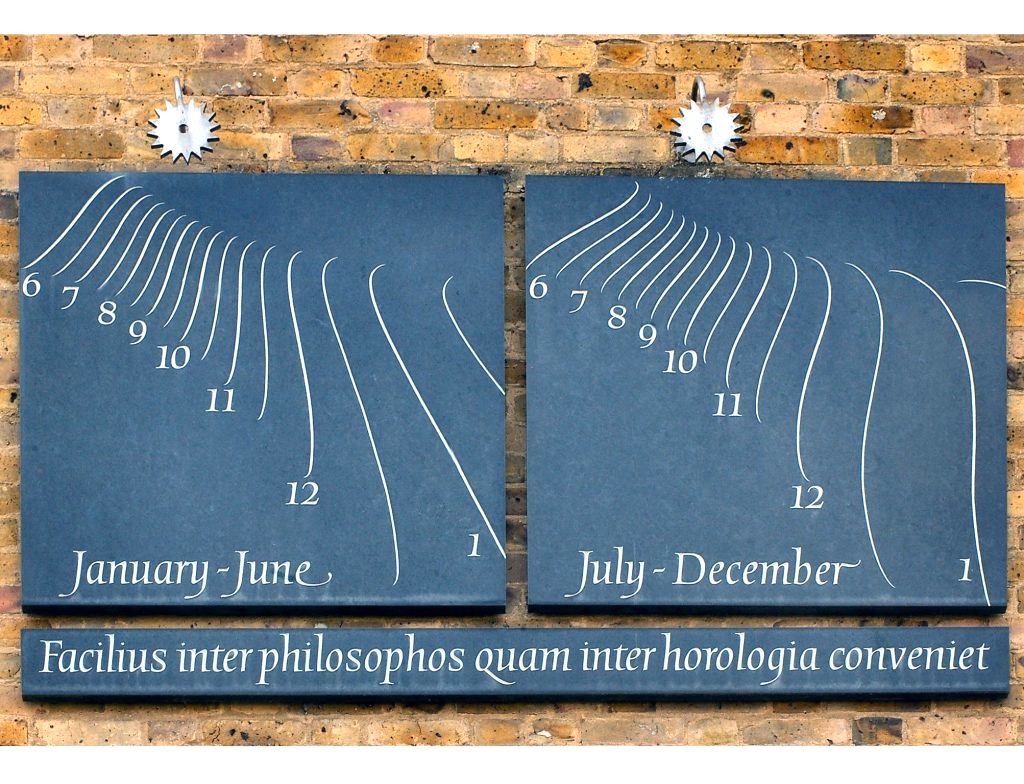
A competition among first year engineering students led to the creation of this most striking double vertical dial, mounted in 1987 on the south-facing wall of Benson Court. It was designed by Will Carter in stone and stainless steel and features the motto: ‘Facilius inter philosophos quam inter horologia conveniet.’ (It is easier to gain agreement among philosophers than among timepieces – Seneca) The prize-winning design has the Equation of Time built into the gracefully curving hour lines. A spot of light shining through a pierced stainless steel sun marks the time on each dial.

‘Facilius inter philosophos quam inter horologia conveniet.’ (It is easier to gain agreement among philosophers than among timepieces – Seneca)

GSS Category: Vertical Dial; Double Dial; Modern Dial; Competition Dial

Credit: British Sundial Society Archive