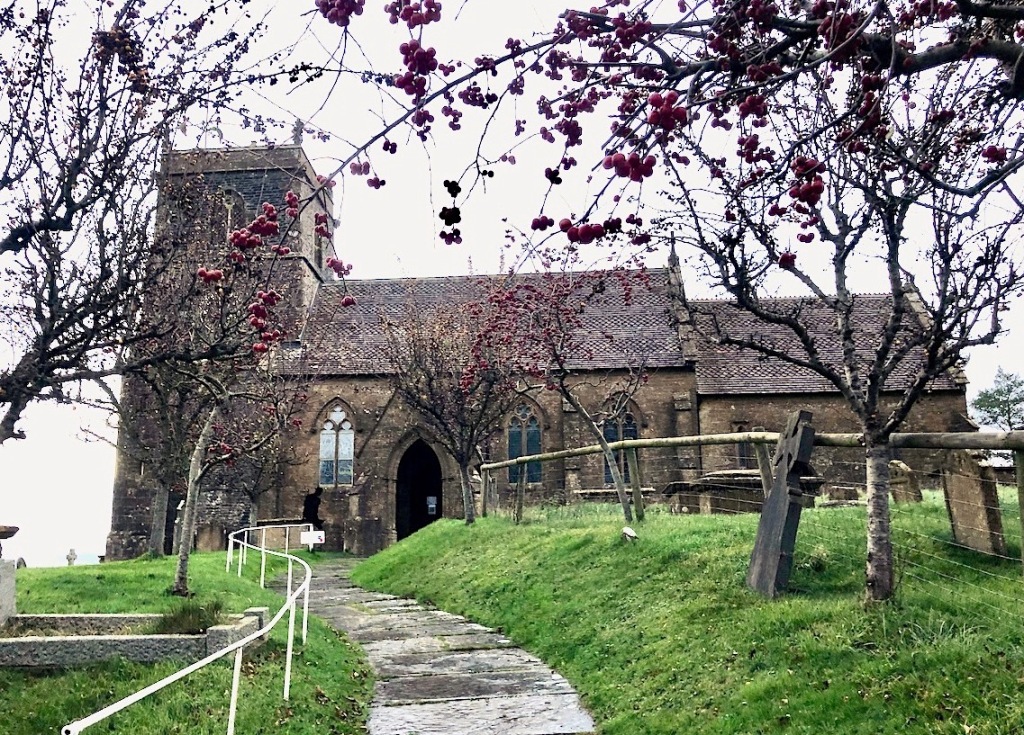
BLACKFORD . SOM . ST MICHAEL – 2 SCRATCH DIALS

Blackford . Som . St Michael

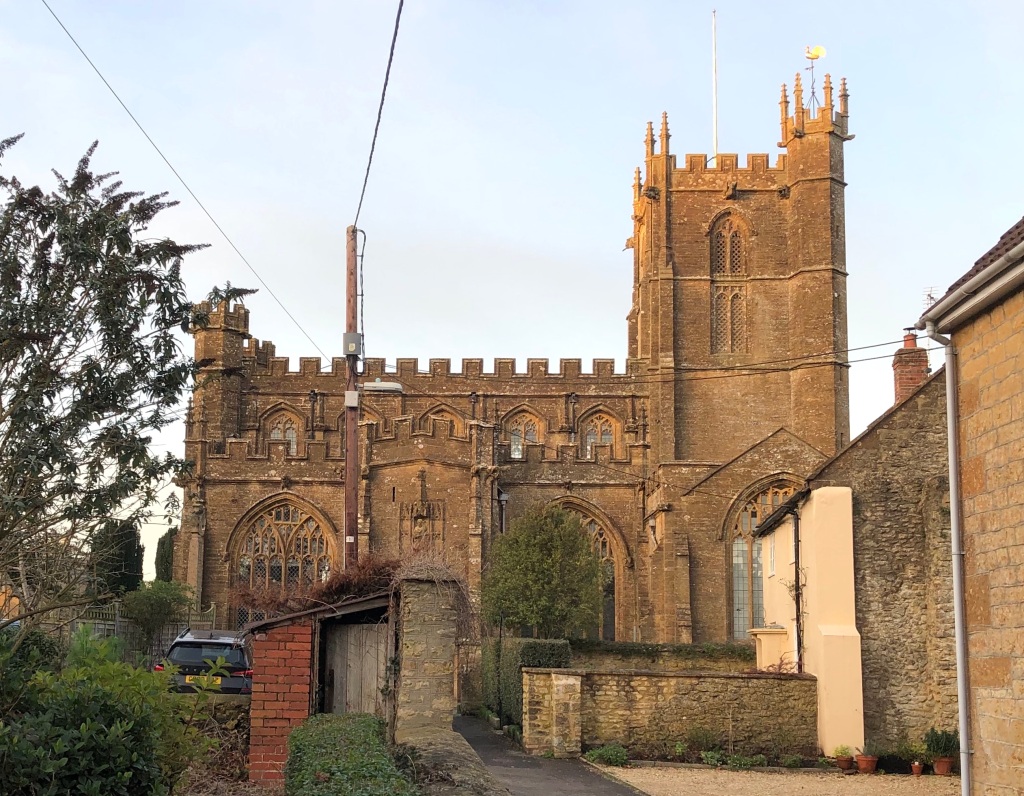
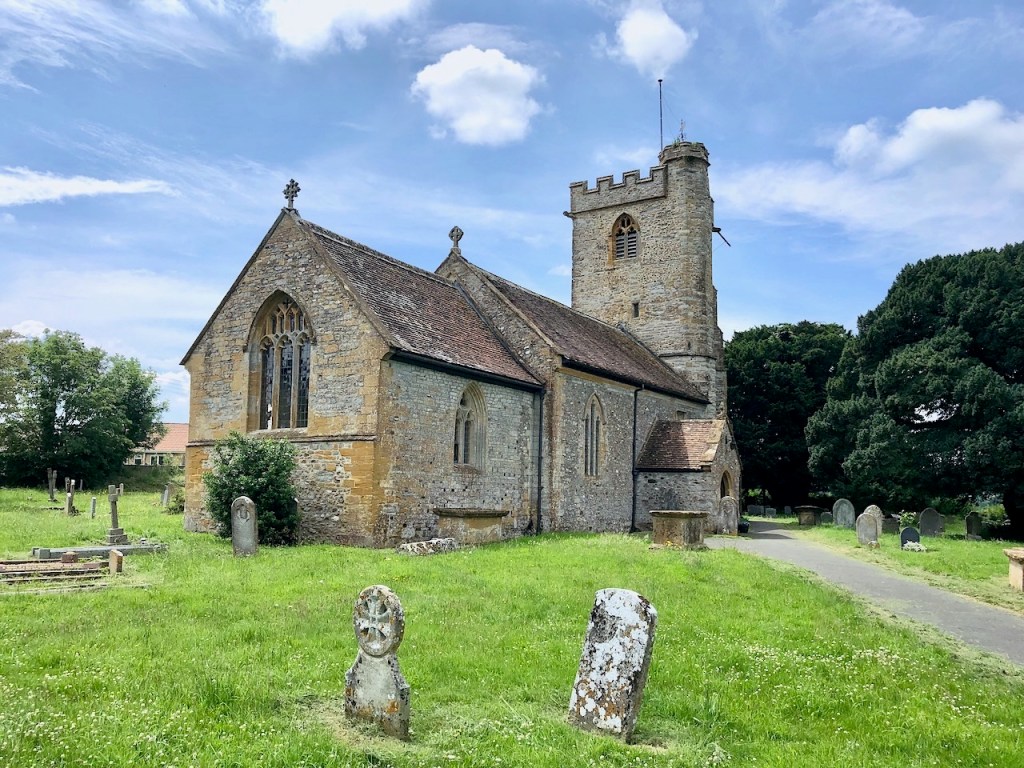
ST MICHAEL . BLACKFORD . SOM.

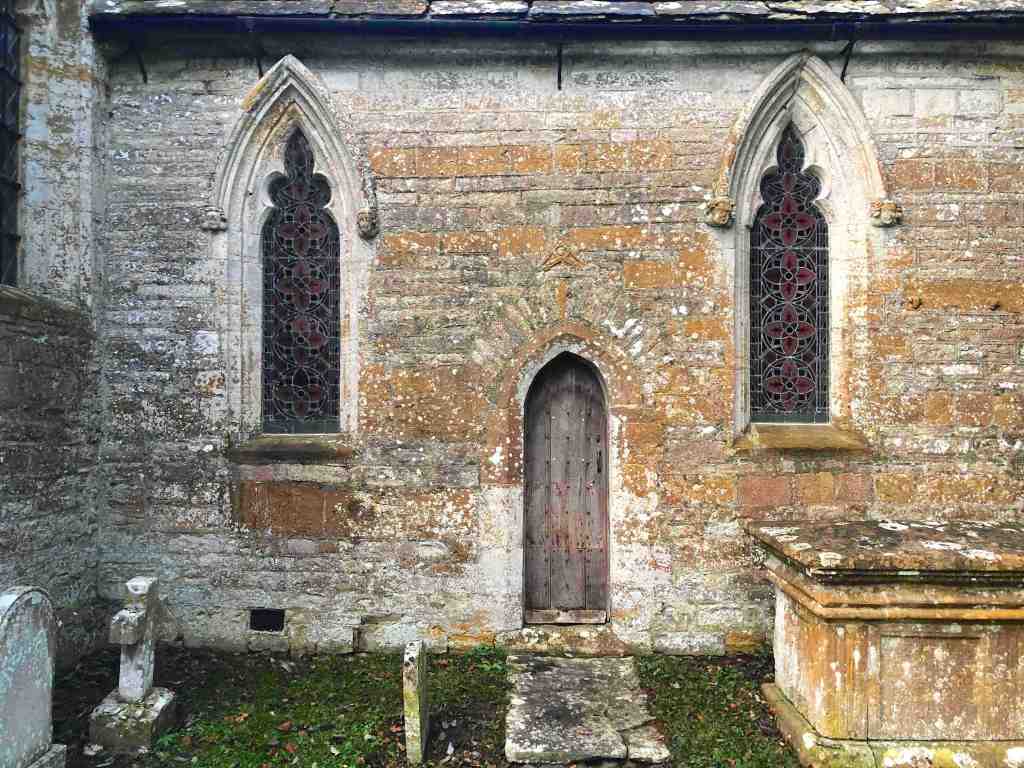
GRADE II*. C11 origins with Norman features inc. doorway inside the porch; enlarged in C14 (tower) and C15 (S. porch); C19 restoration. One of many attractive villages in the area. 4m W of Wincanton, with only the A303 to spoil the peace. 51.2261 /  -2.8478 / ST 65722673

DIALS

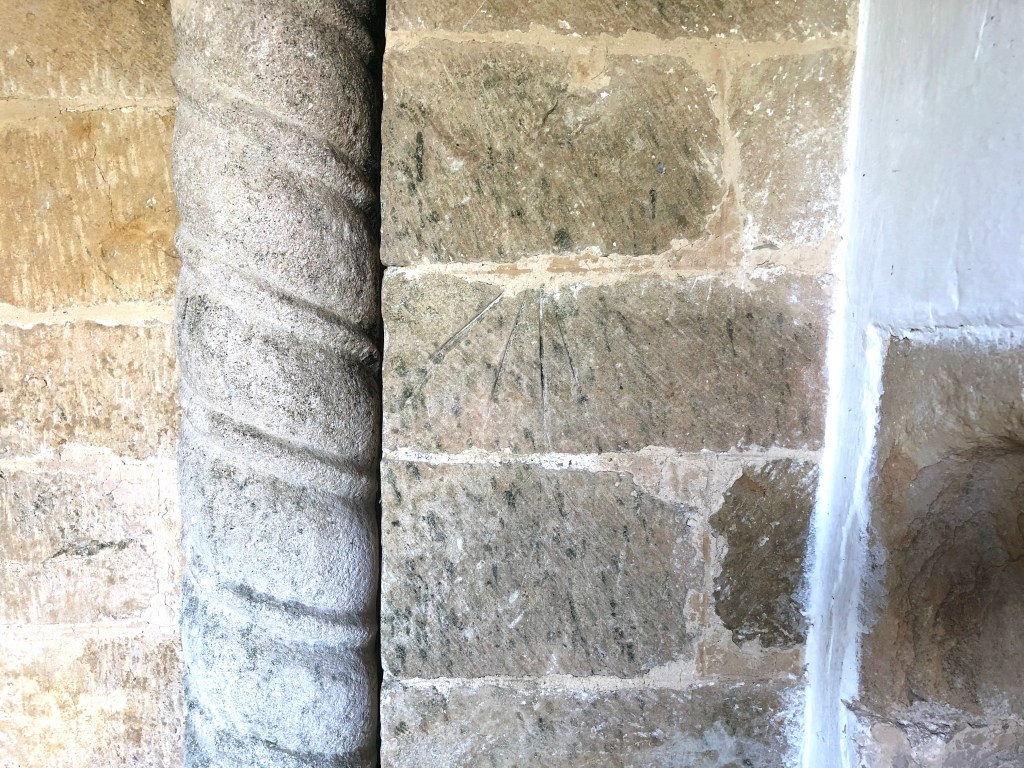
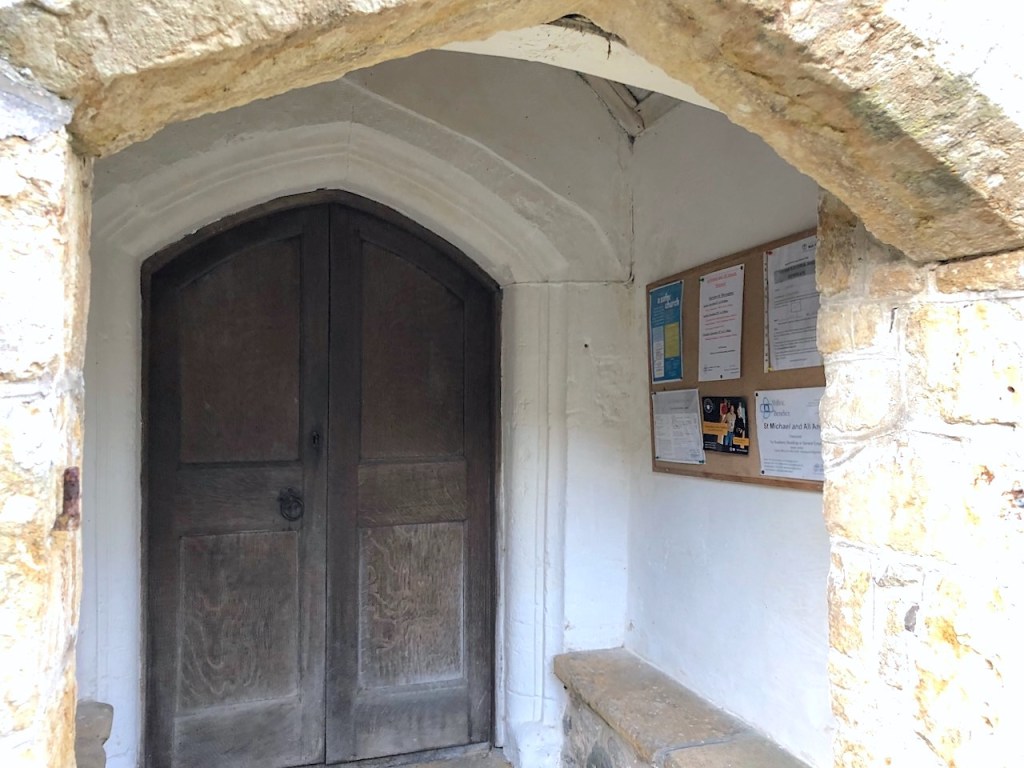
Dom Ethelbert Horne DEH visited Blackford on April 24th, 1914, during one of his tours around Somerset examining medieval churches and recording the details of the scratch dials he discovered. Blackford is one of a very small number of Somerset churches where he found a dial inside the porch. It must predate the added C14 S. porch to have had any practical use. Another example of an interior dial can be found at WAYFORD.

DIAL 1

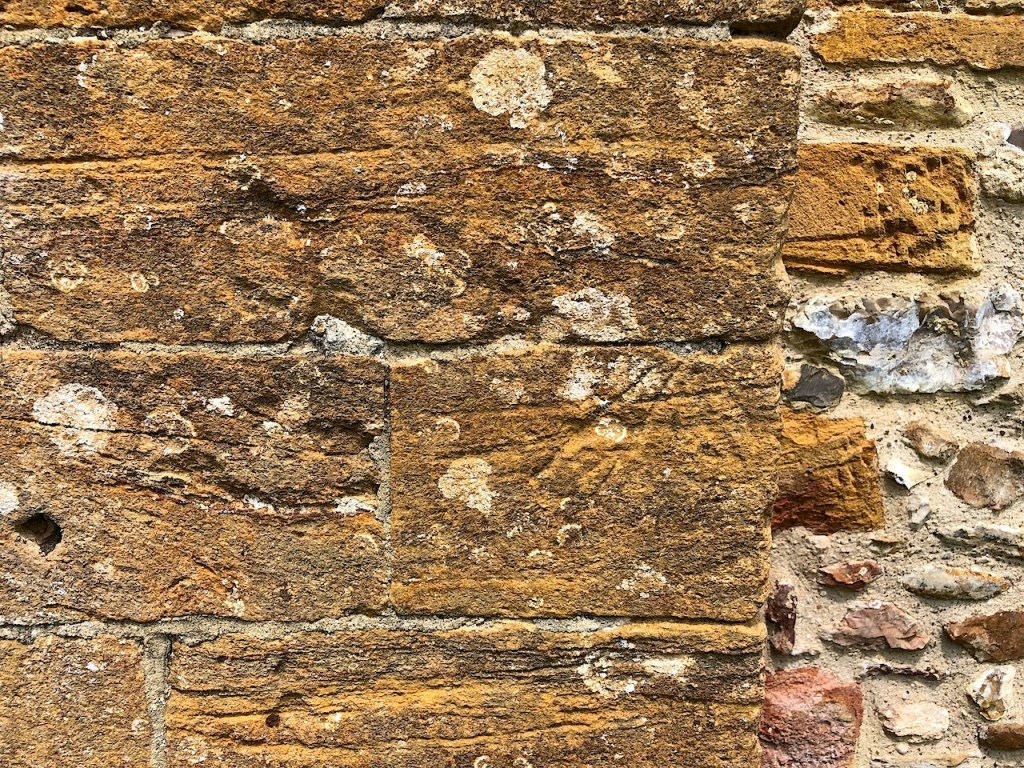
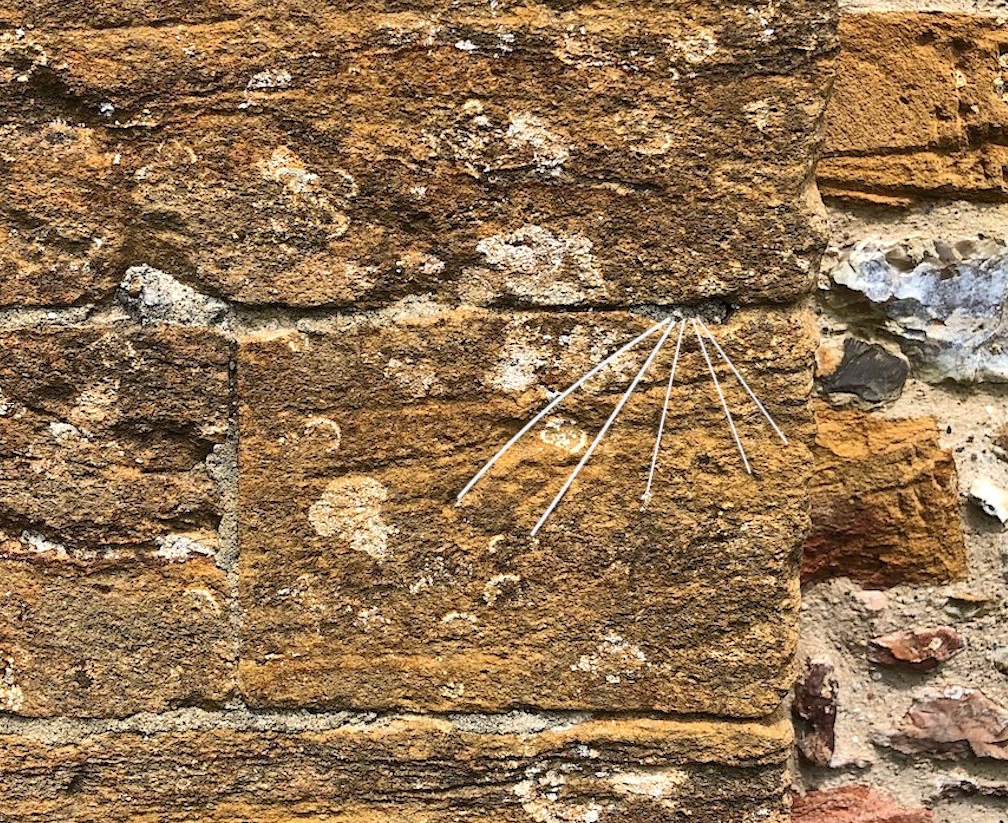
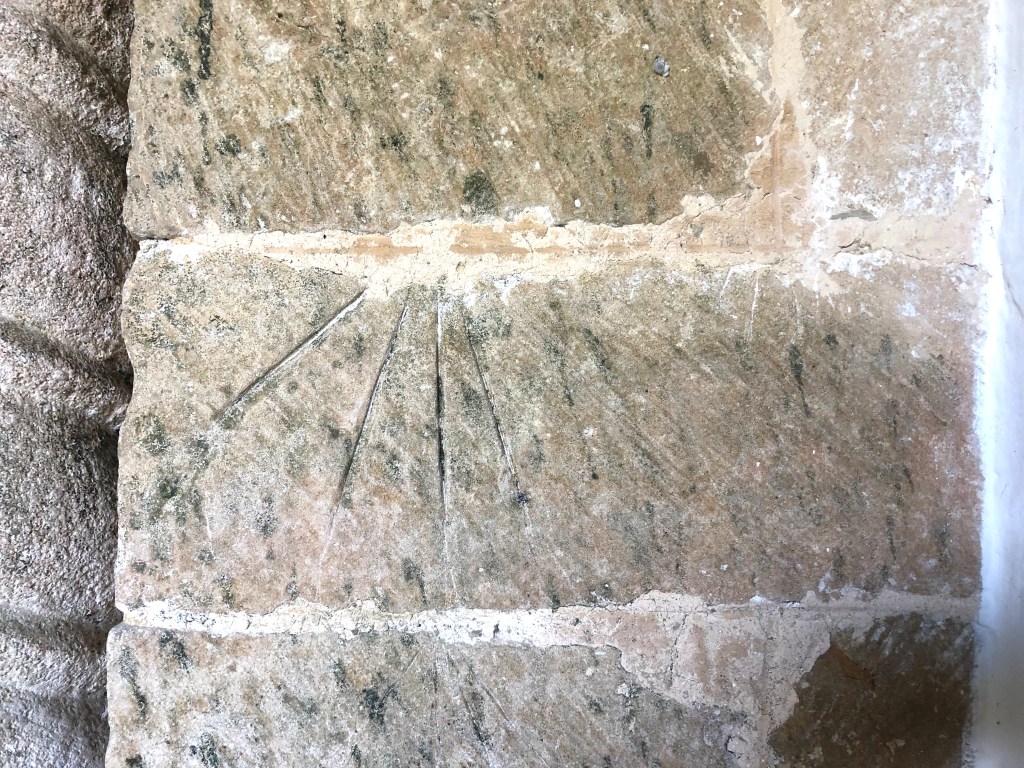
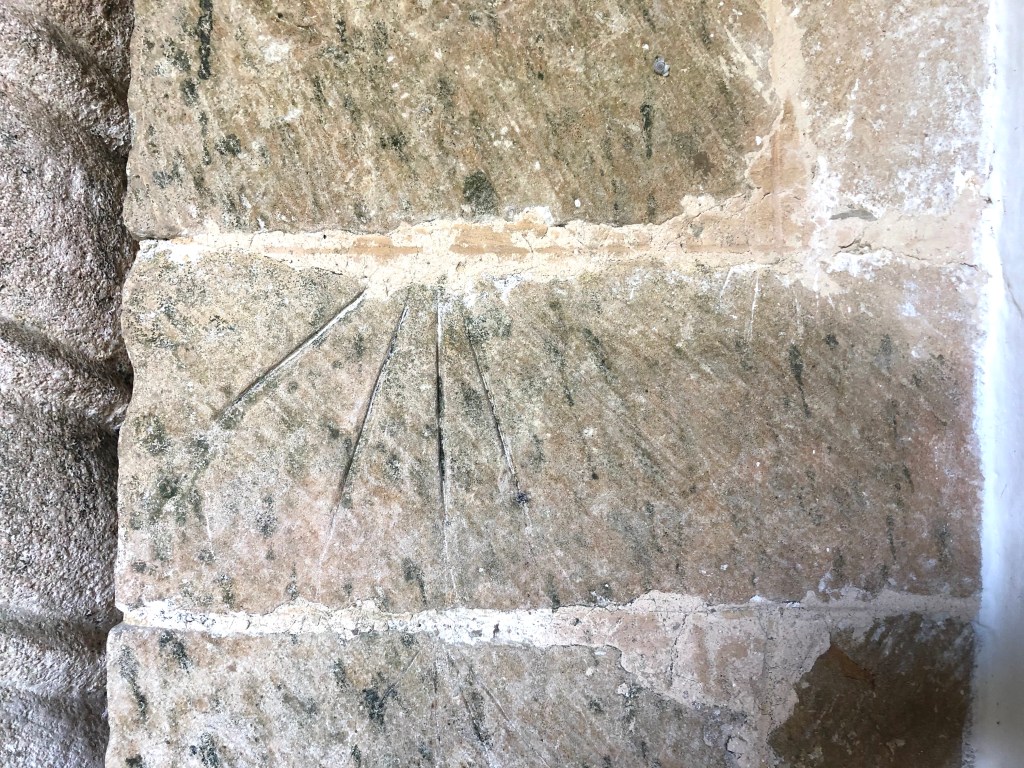
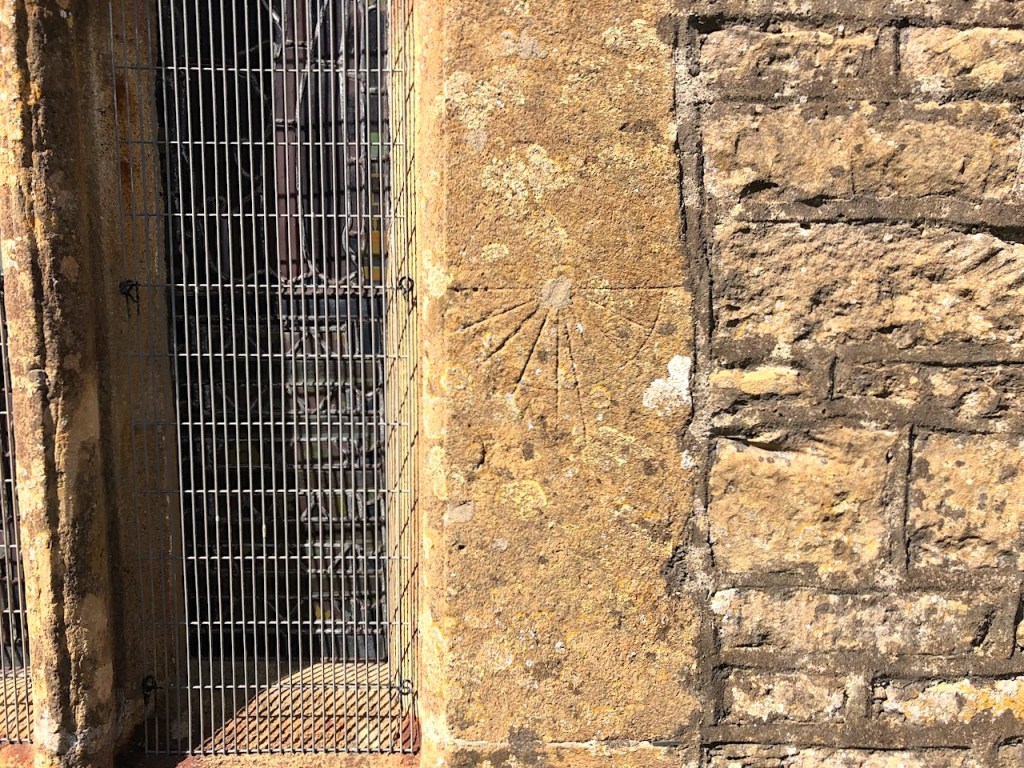
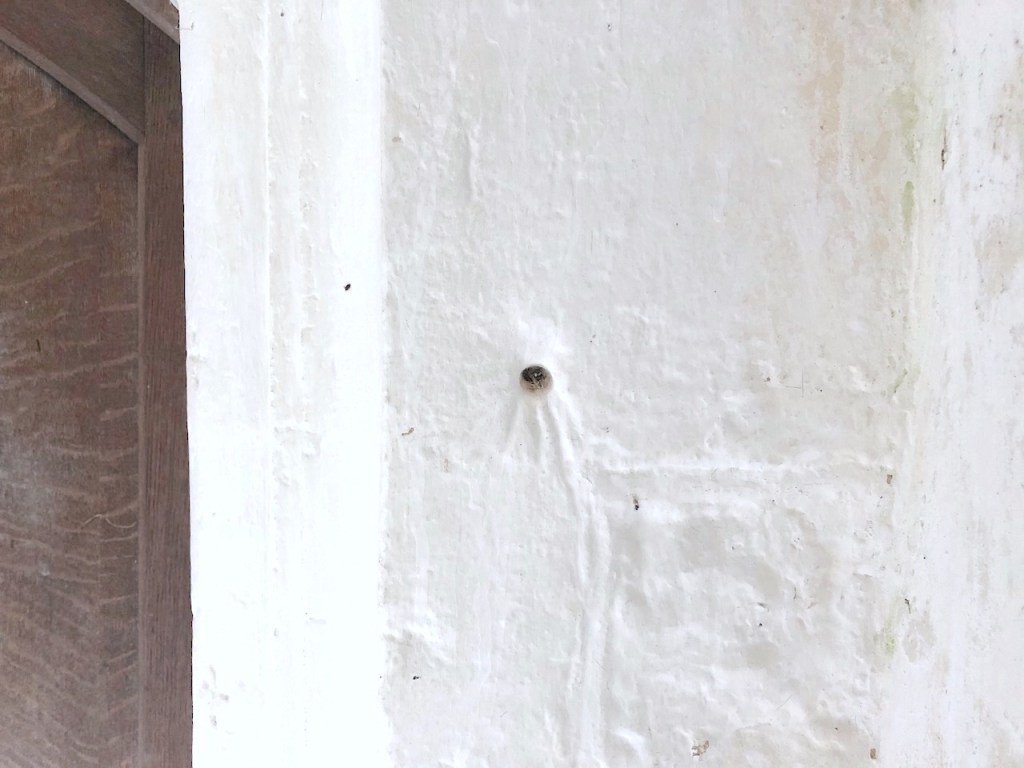
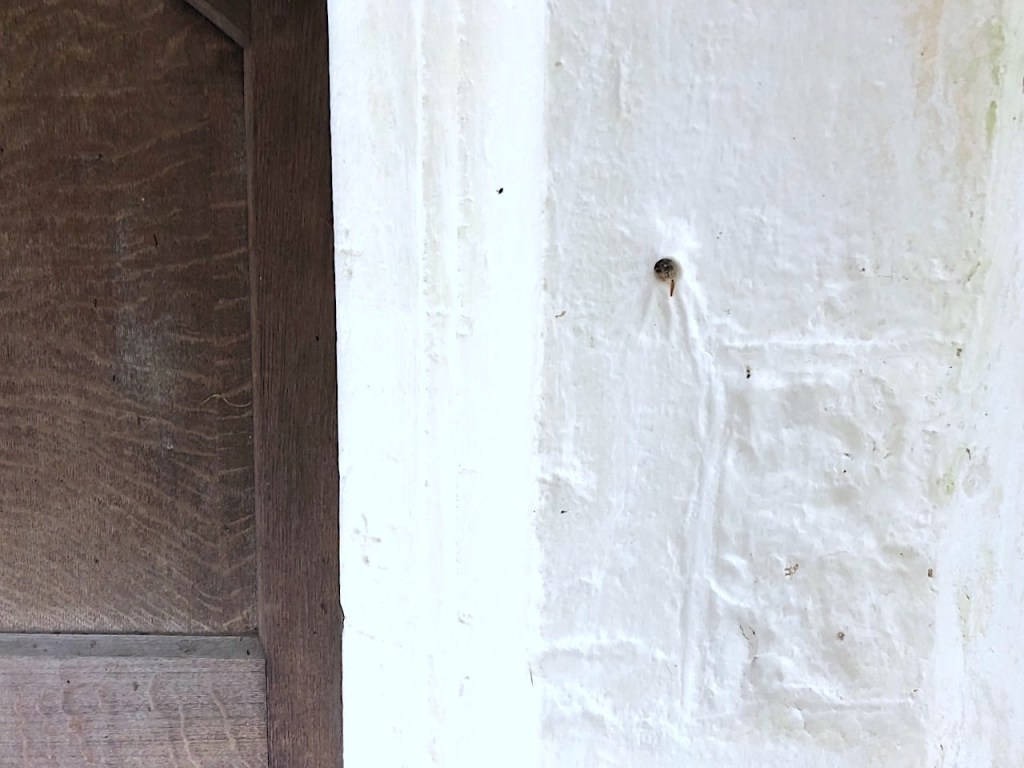
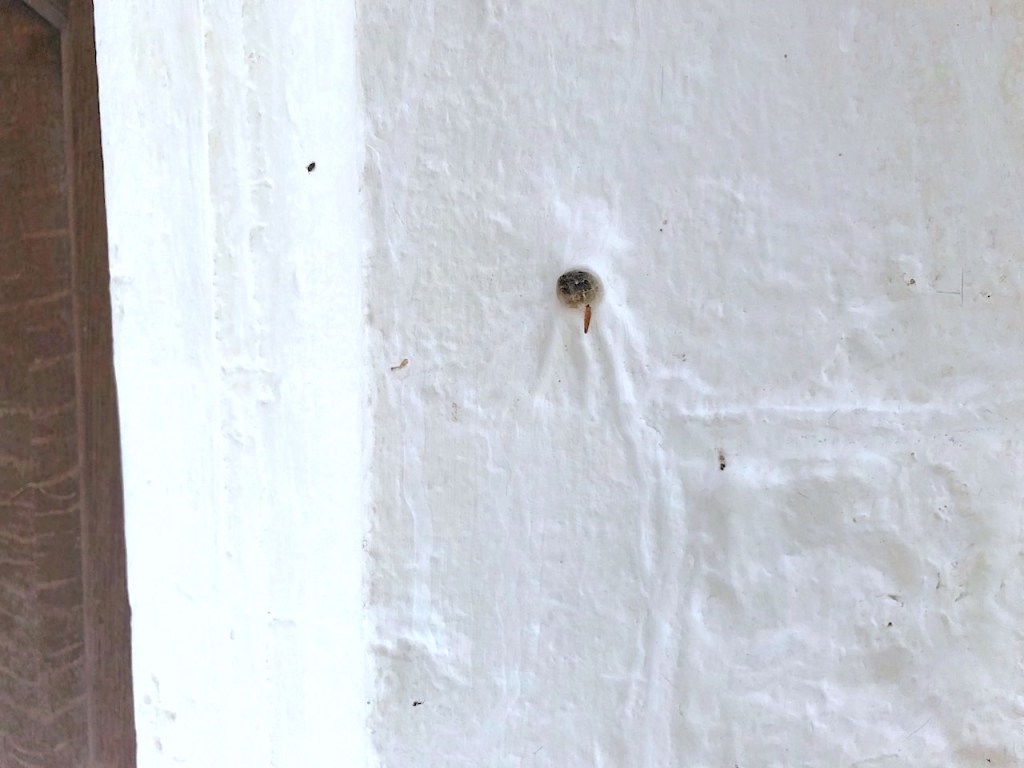
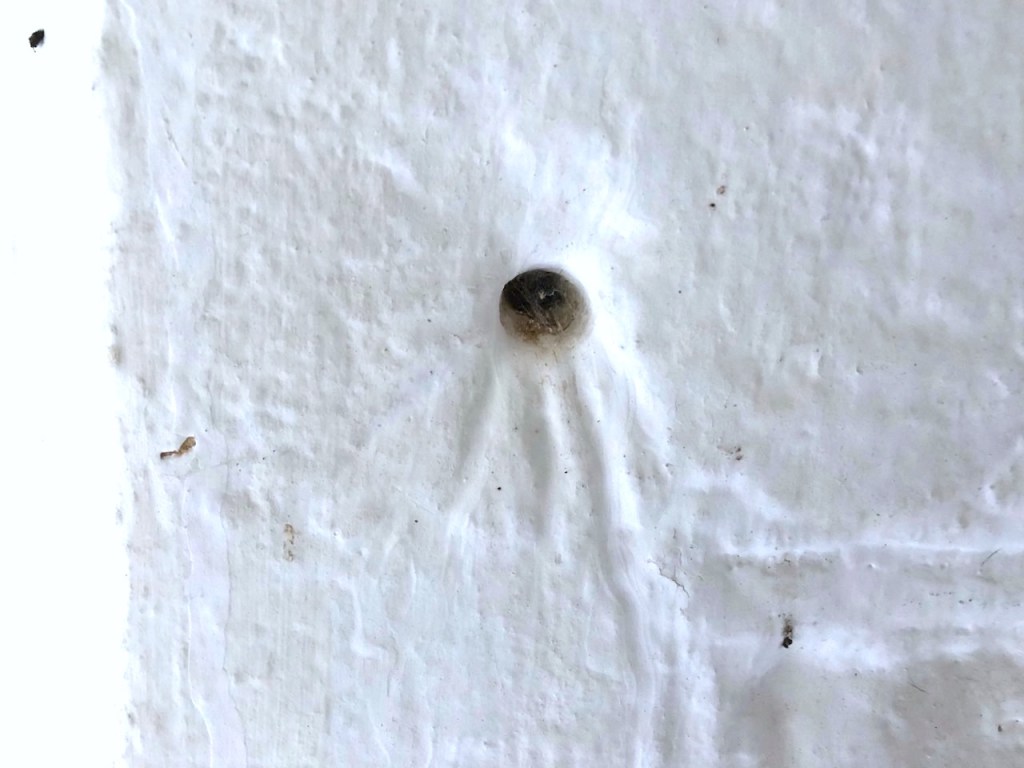
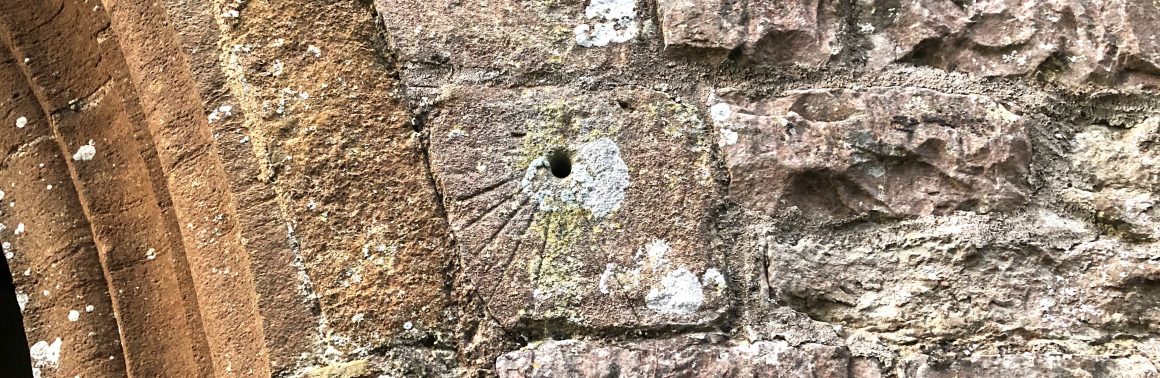
DEH 165. (1) This dial is on the e. side of the inner door of the s. porch, at a height of 4 feet 6 inches above the floor. The noonline is 4 inches in length, the stylehole, which is in a joint, is filled, and the aspect is due s. Type 2

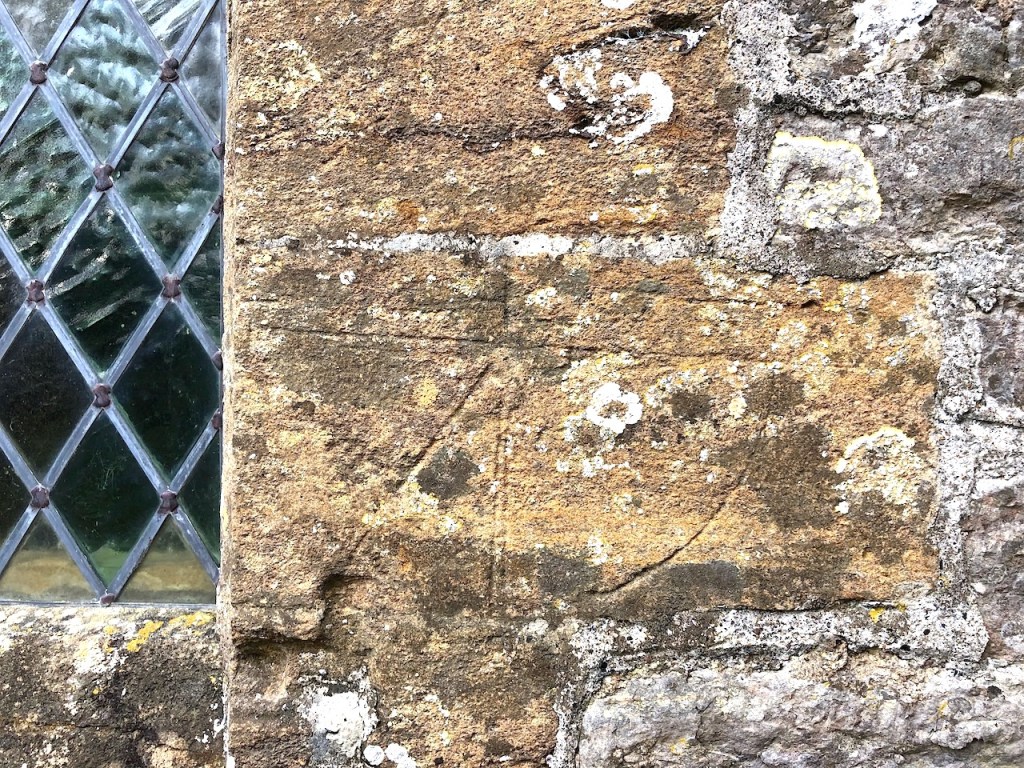
Blackford . Som . St Michael – Dial 1

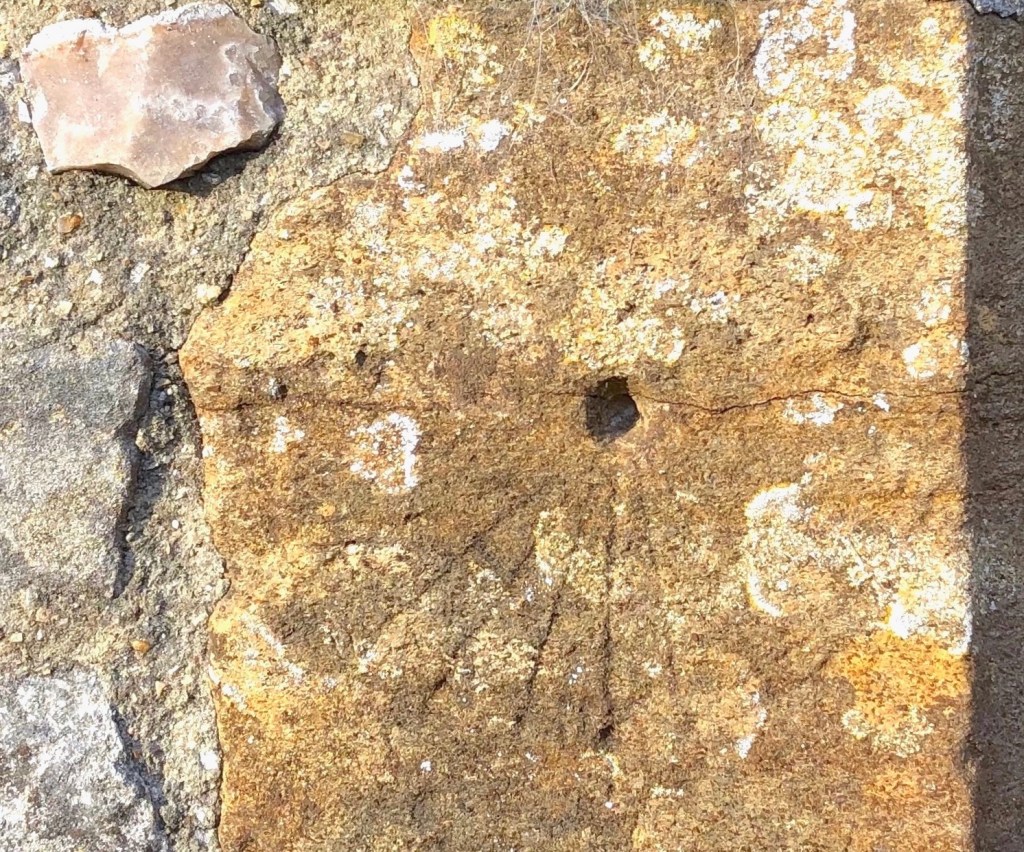
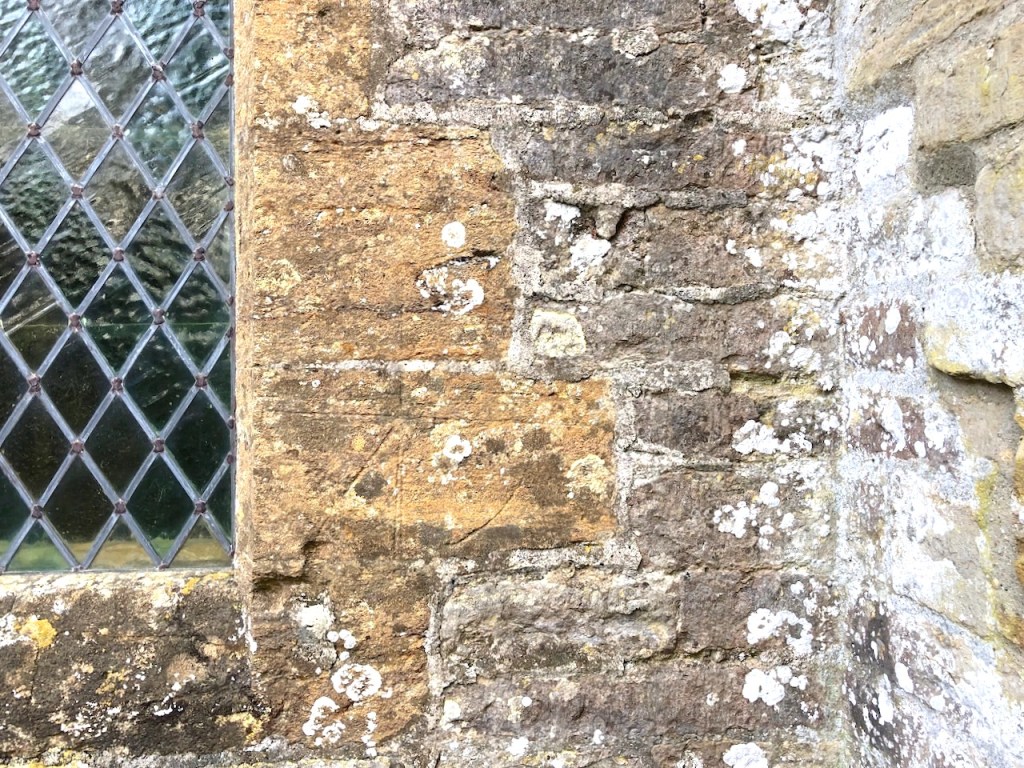
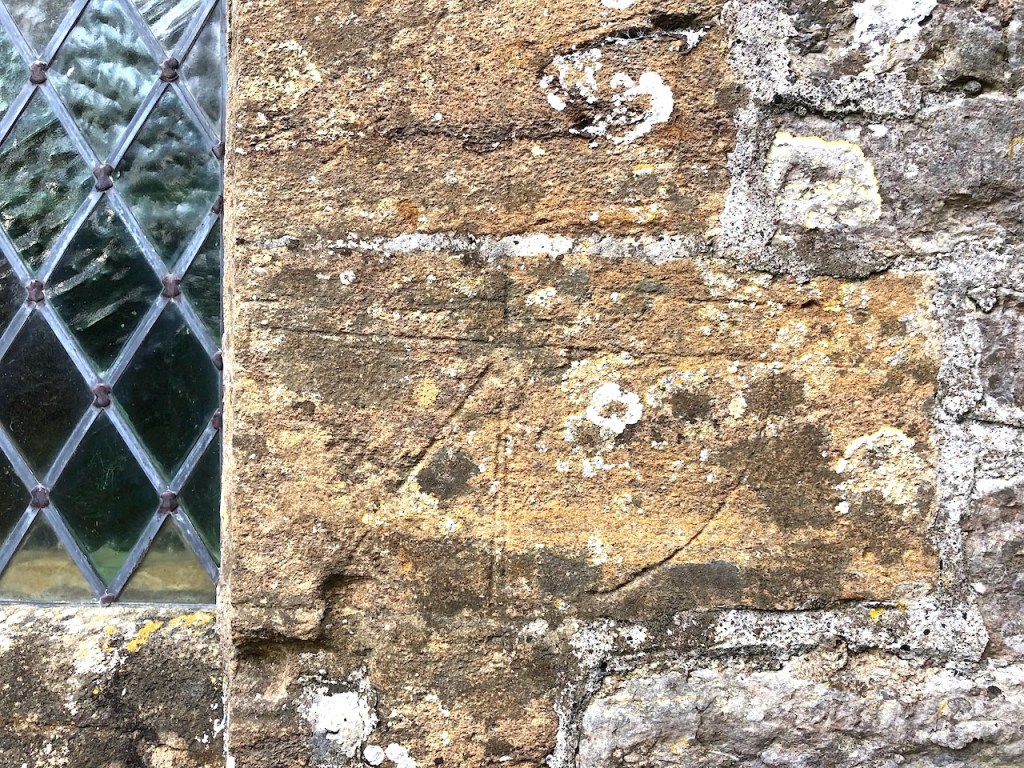
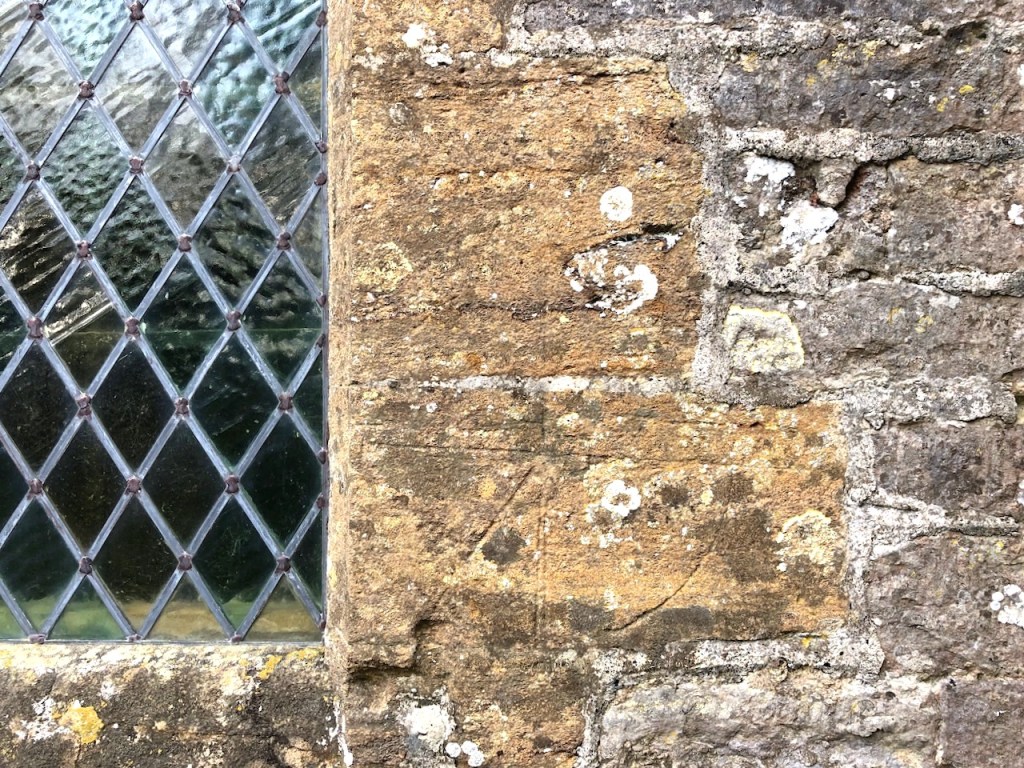
There are 4 sharply incised lines with no discernible traces of others. The mortar line at the top acts as the horizontal ‘6-line’ and the style location. The spacing of the lines is somewhat unusual for such a well-cut, being neither the 15º equal segments of an old design nor the carefully graduated lines of a later scientific dial. Perhaps this indicates an even earlier origin, even possibly contemporary with the original doorway?

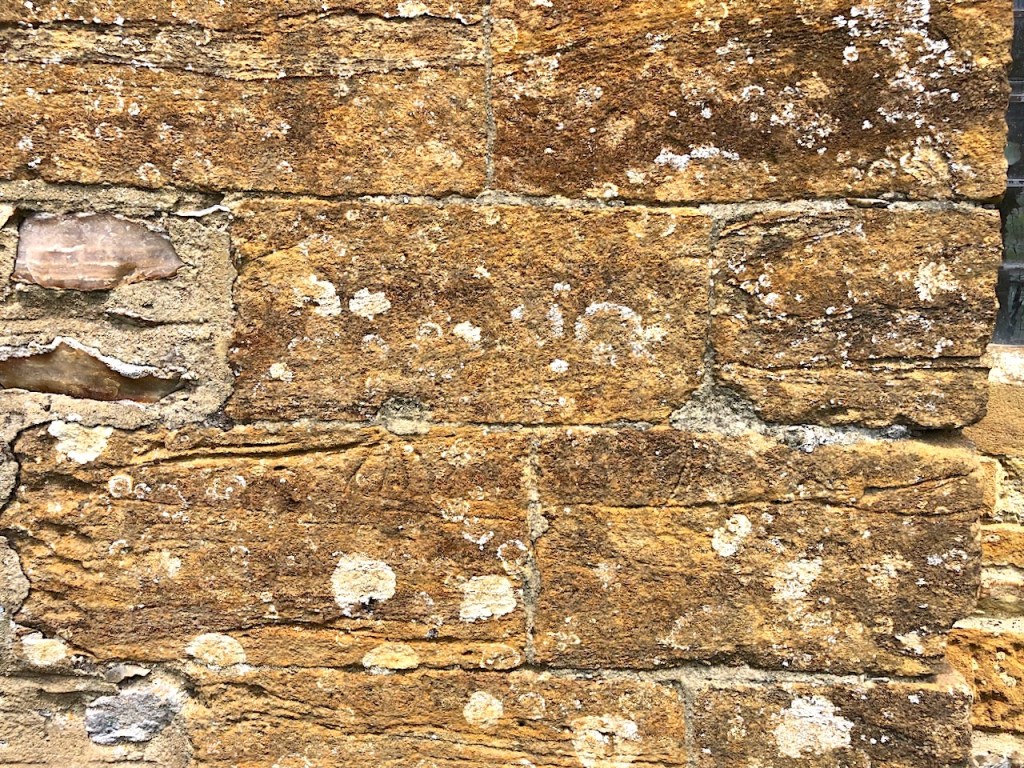
The stone immediately below the dial has a very small (apparent) dial descending in the same way from the mortar line. One could probably dismiss it as a later copy or doodle of the dial above. On the other hand, crude though it is, the radials are differently configured with more emphasis on the LR quadrant. Perhaps a practice dial?

Blackford . Som . St Michael – Dial 1a?

DIAL 2

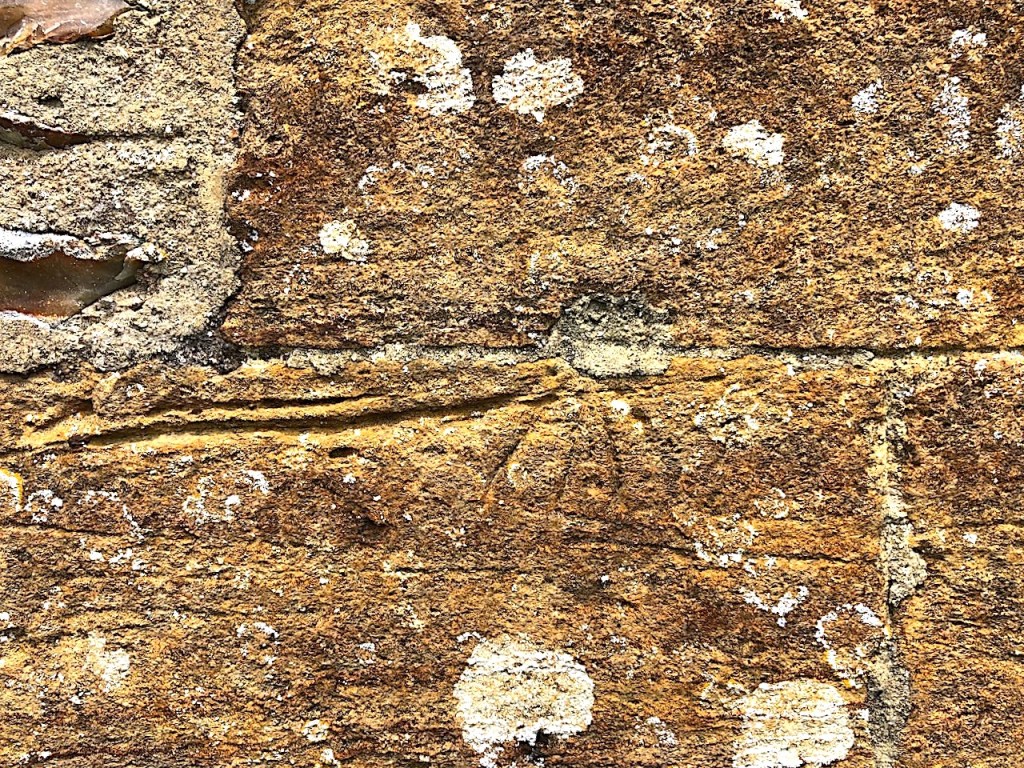
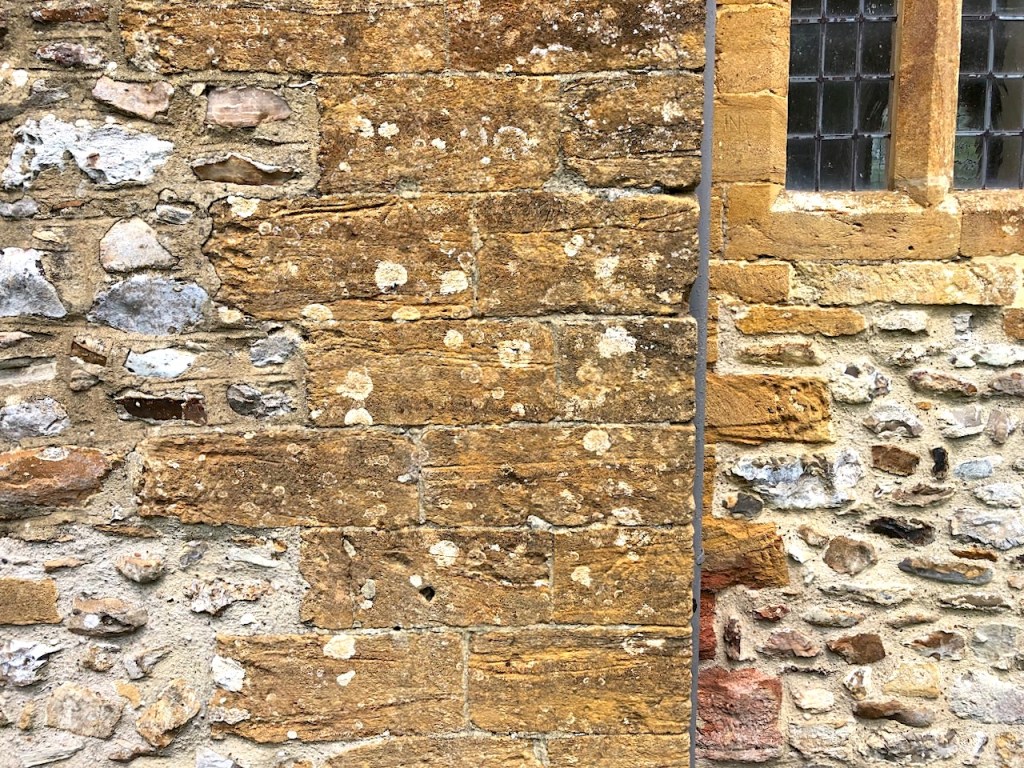
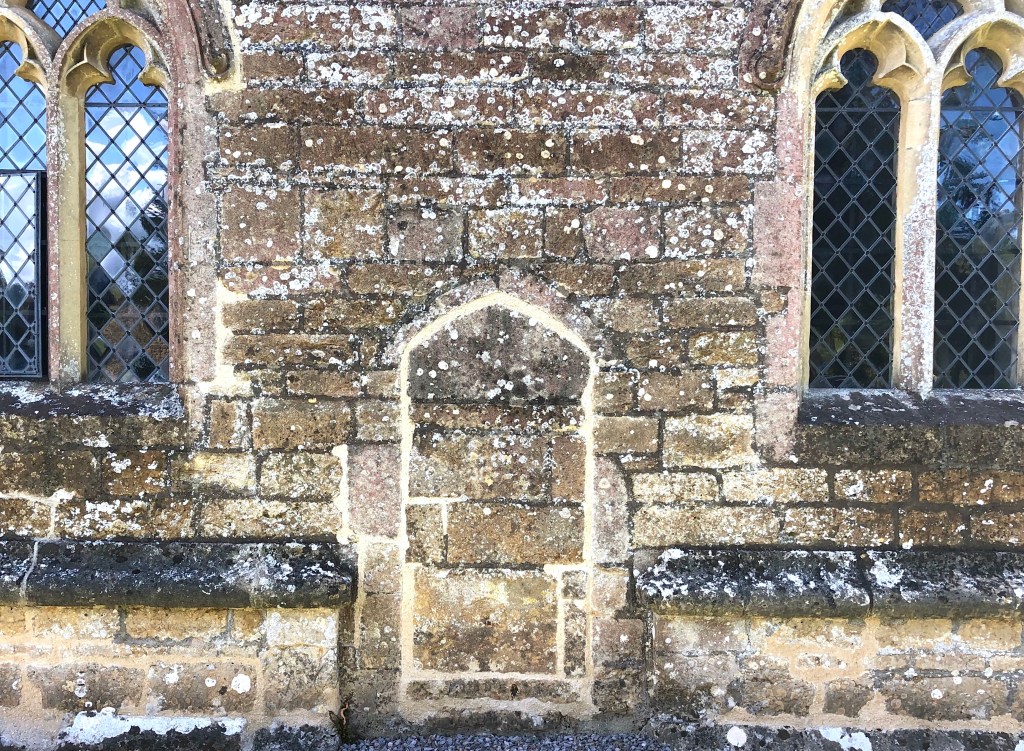
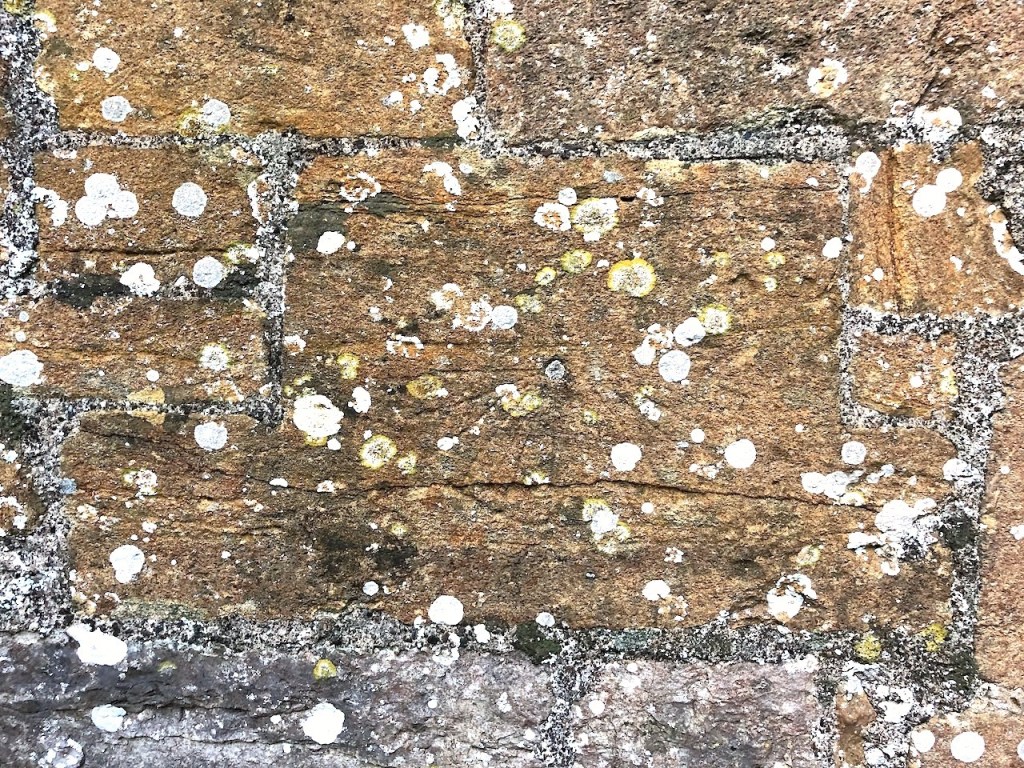
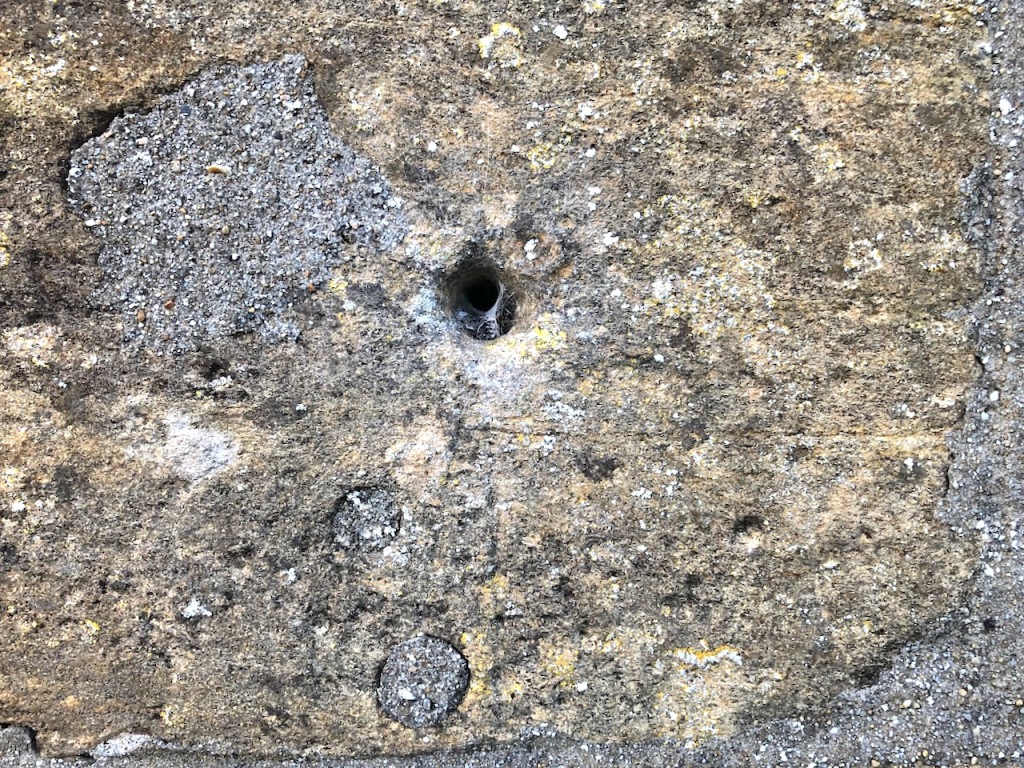
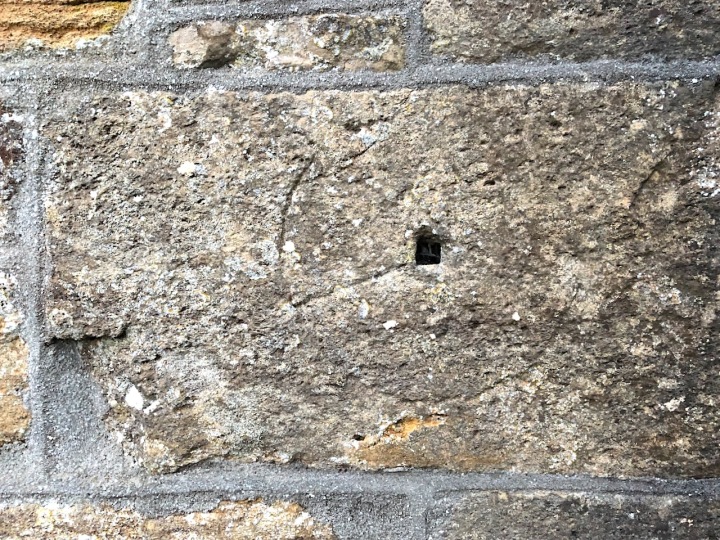
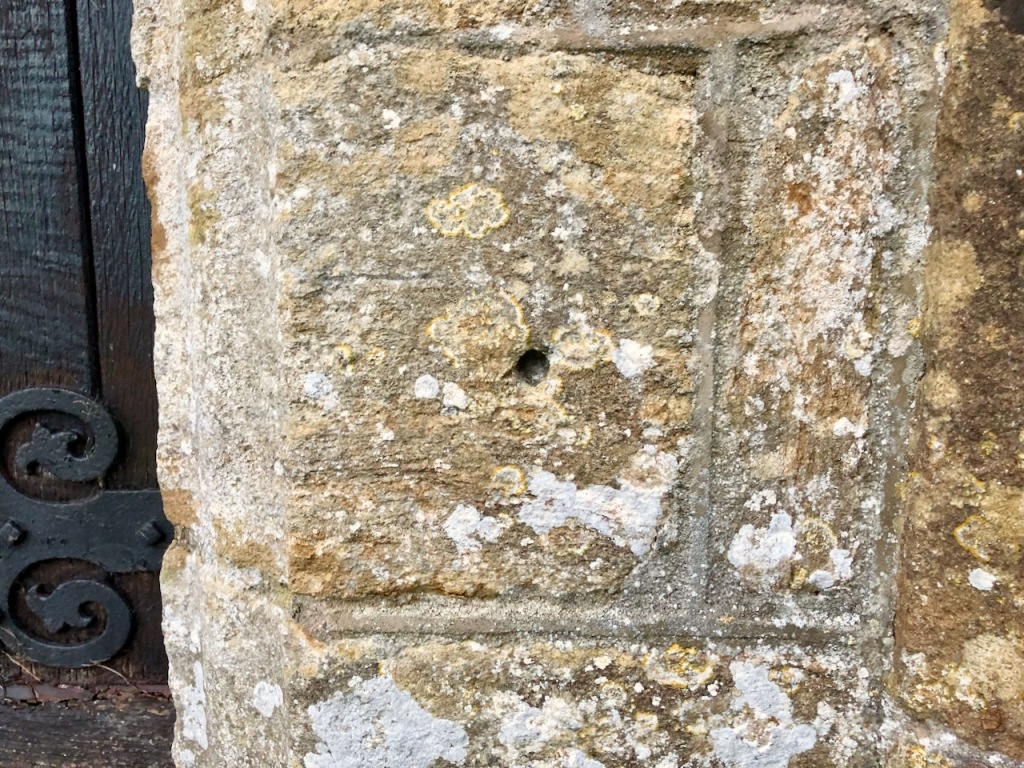
DEH 166. (2) This dial is on the w. side of the priest’s door, which is blocked up. It is 2 feet 6 inches above the ground, the noonline is 2 1/2 inches in length, the stylehole is small and shallow, and the aspect is due s. Type 3. April 24th, 1914.

Blackford . Som . St Michael – Dial 2

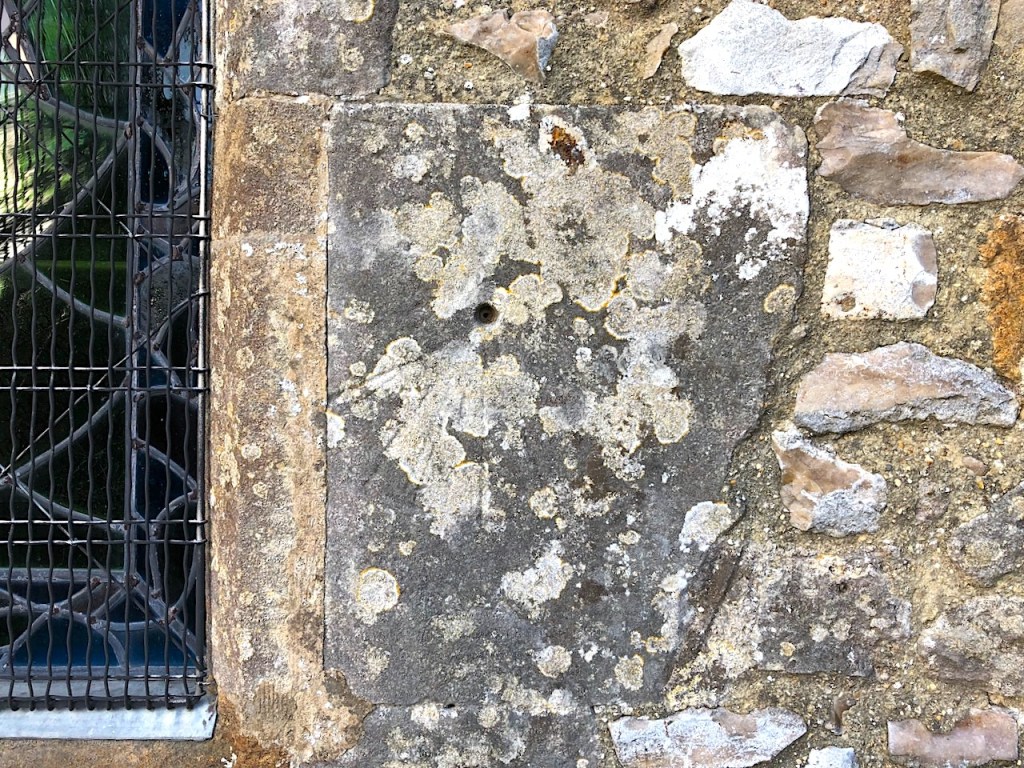
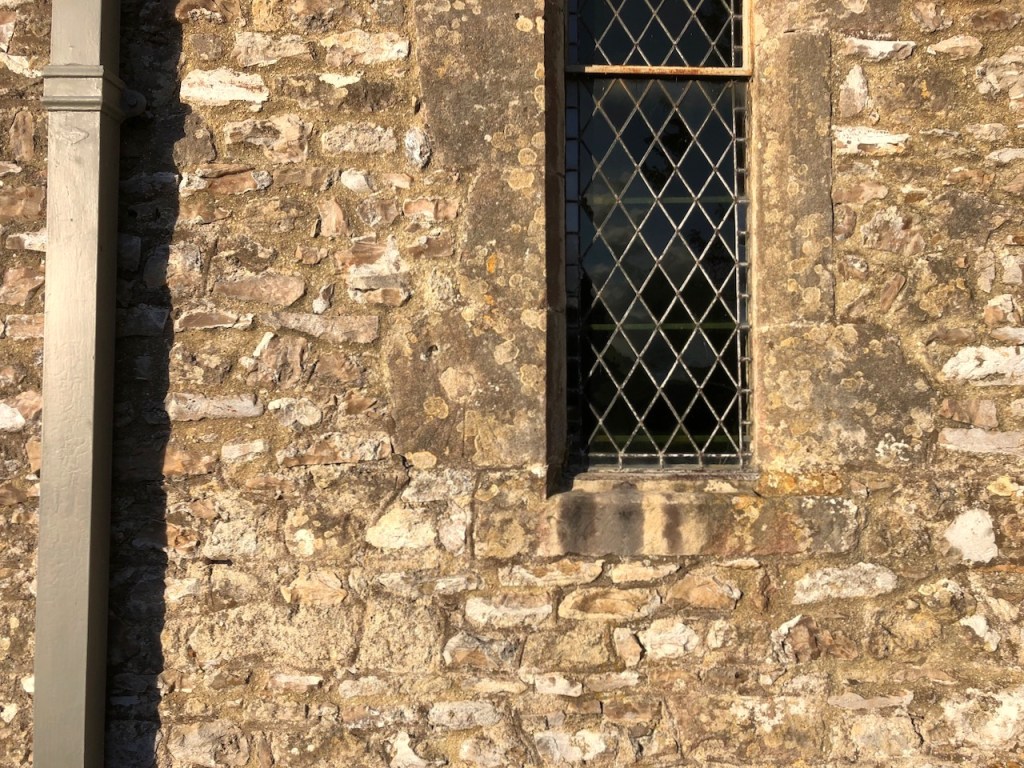
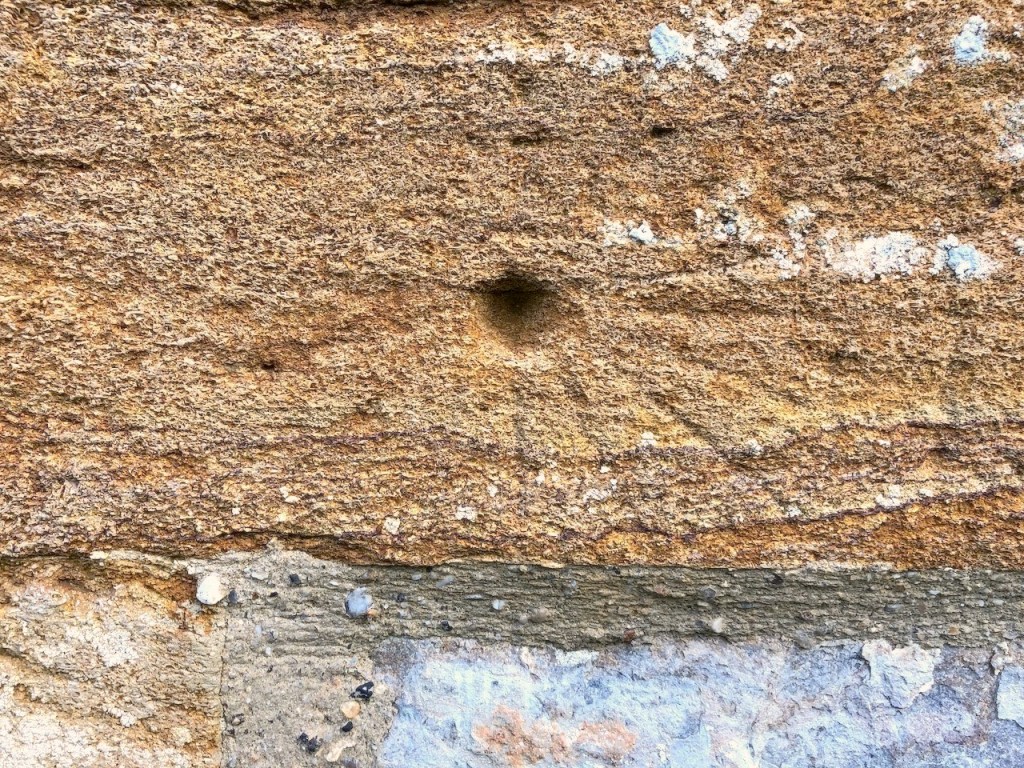
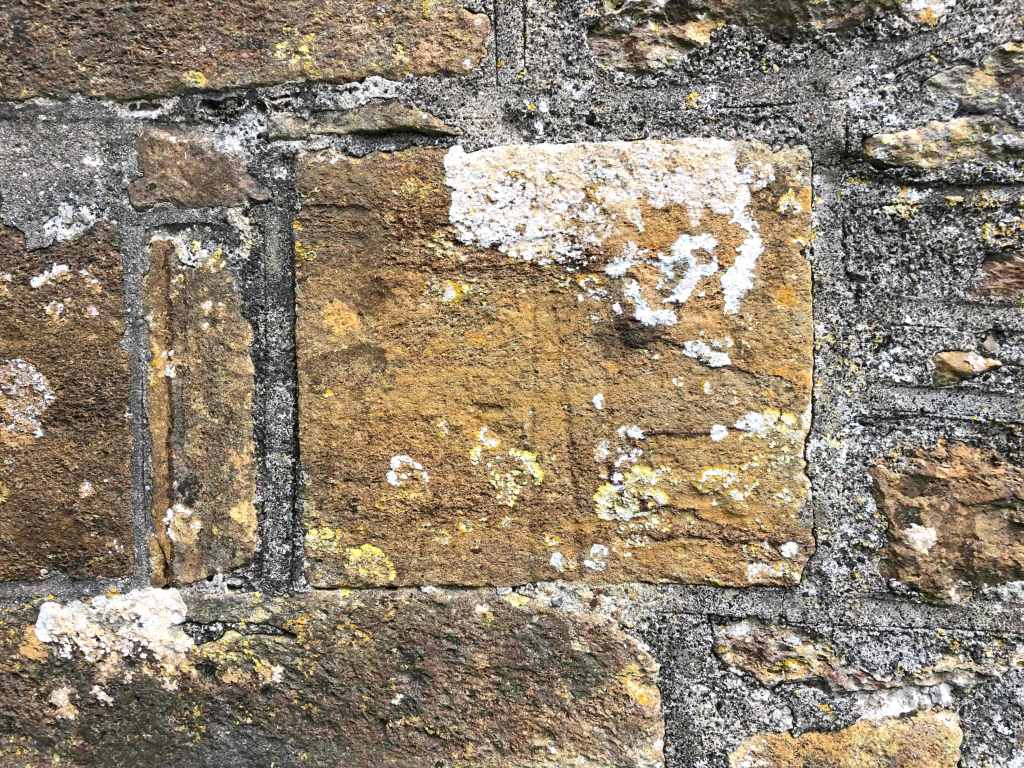
This dial on W. side of the blocked Priest’s door would be easy to miss, though the newly mortared surround is not. DEH doesn’t note its state, but I wonder if has eroded significantly in the intervening century since his visit. There is the hint of a full circle. It’s hard to make out a noon line as such. Now only a single pock below the shallow style hole indicates the vertical.

ADDITIONAL DIALS?

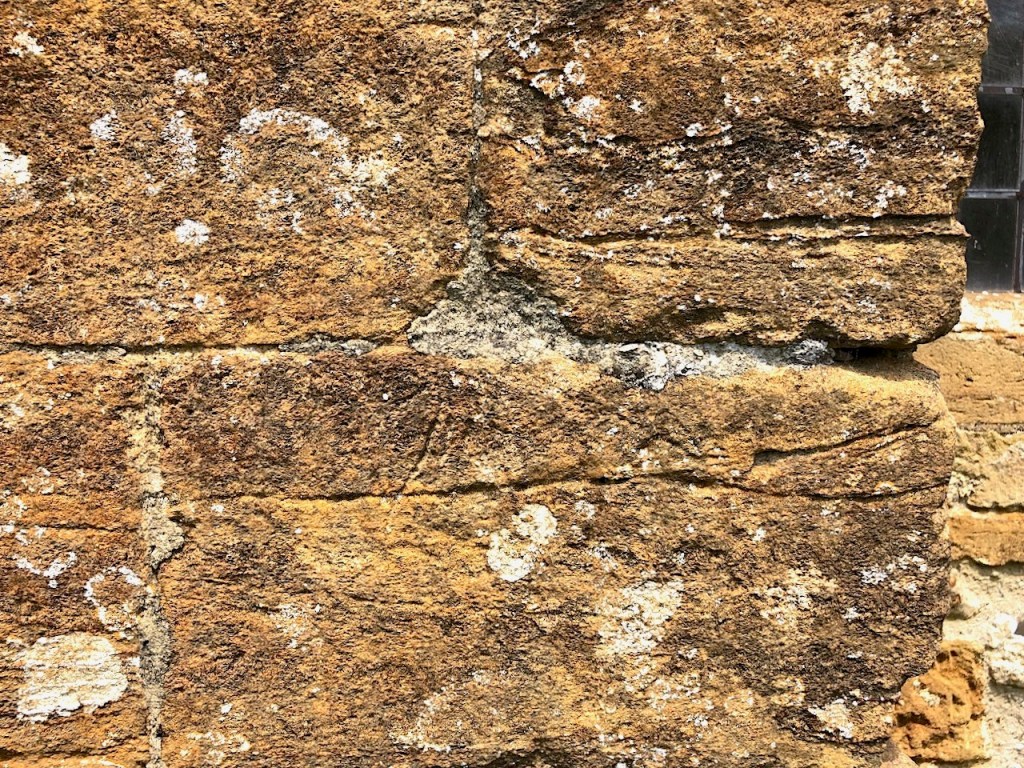
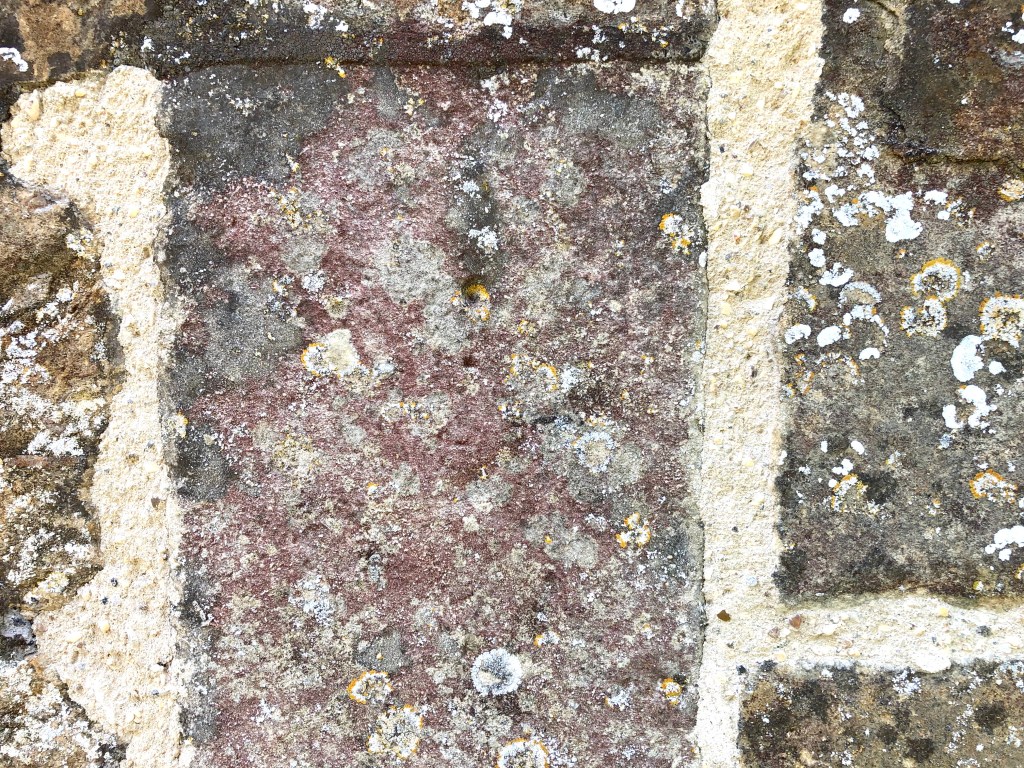
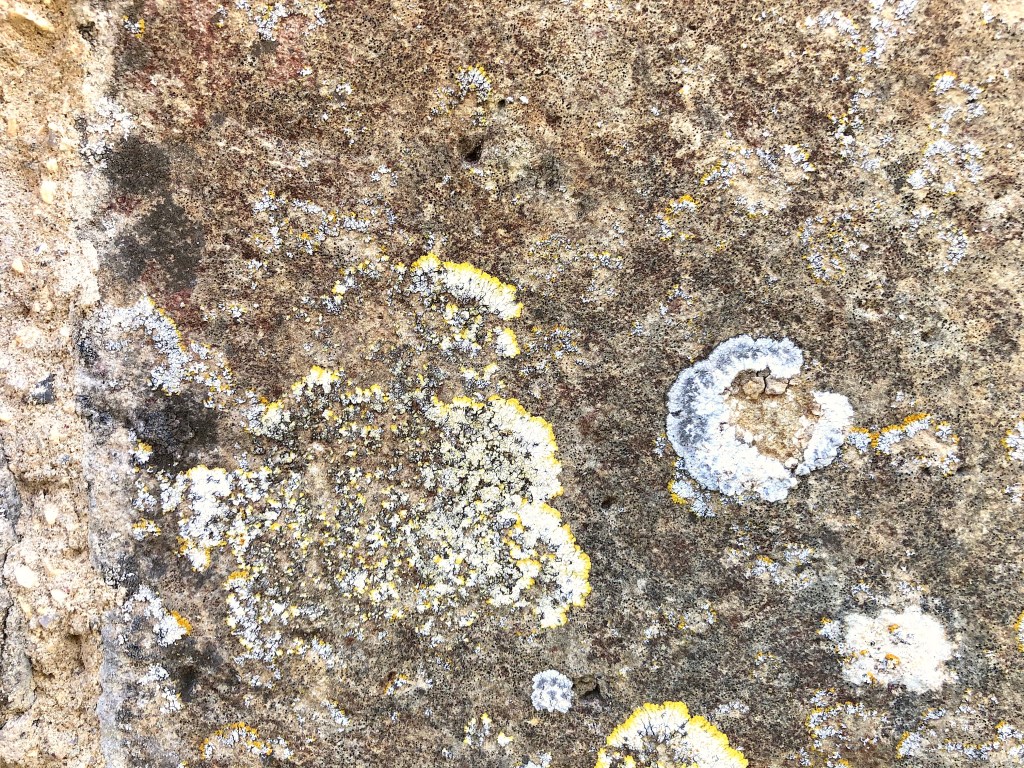
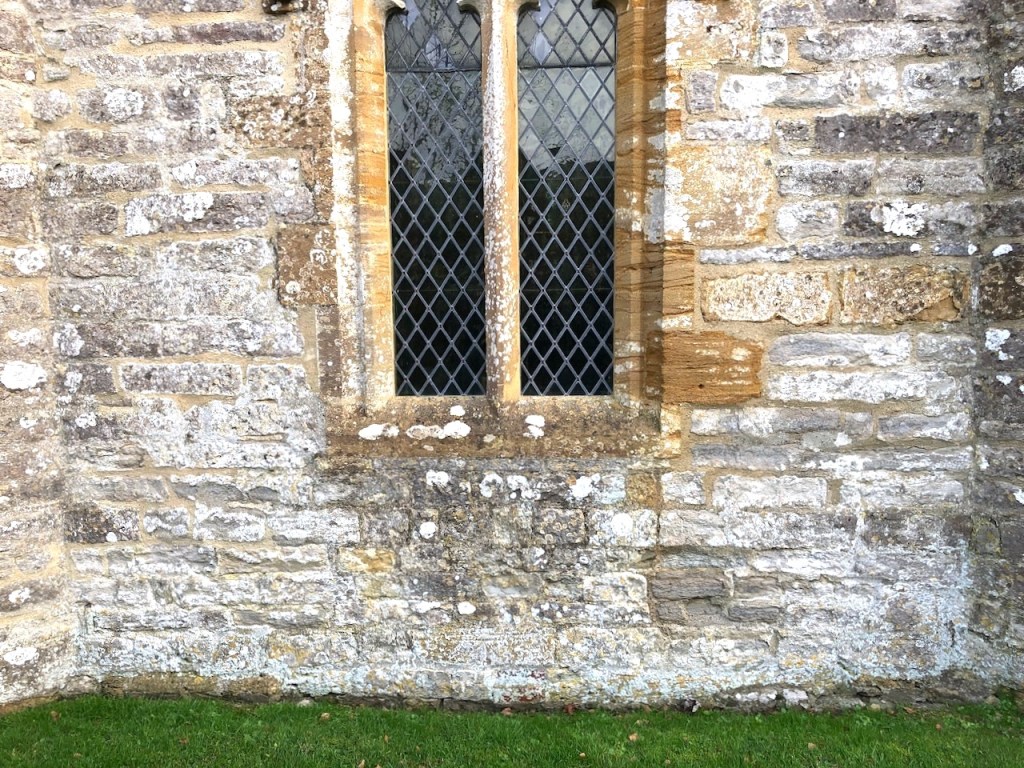
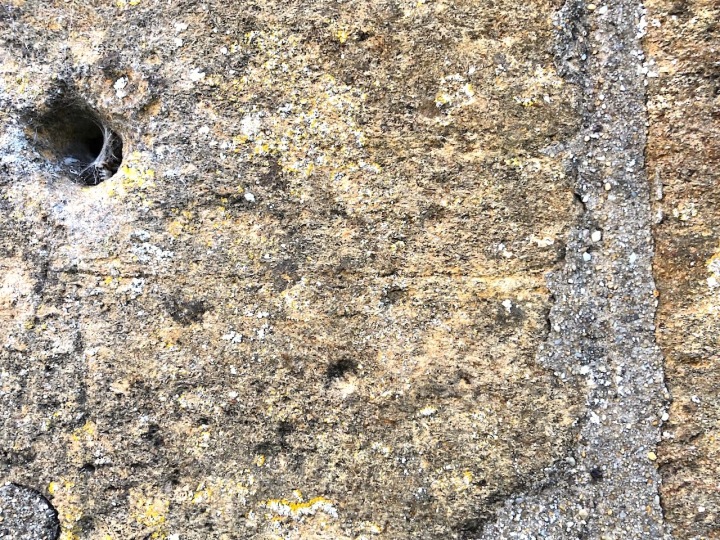
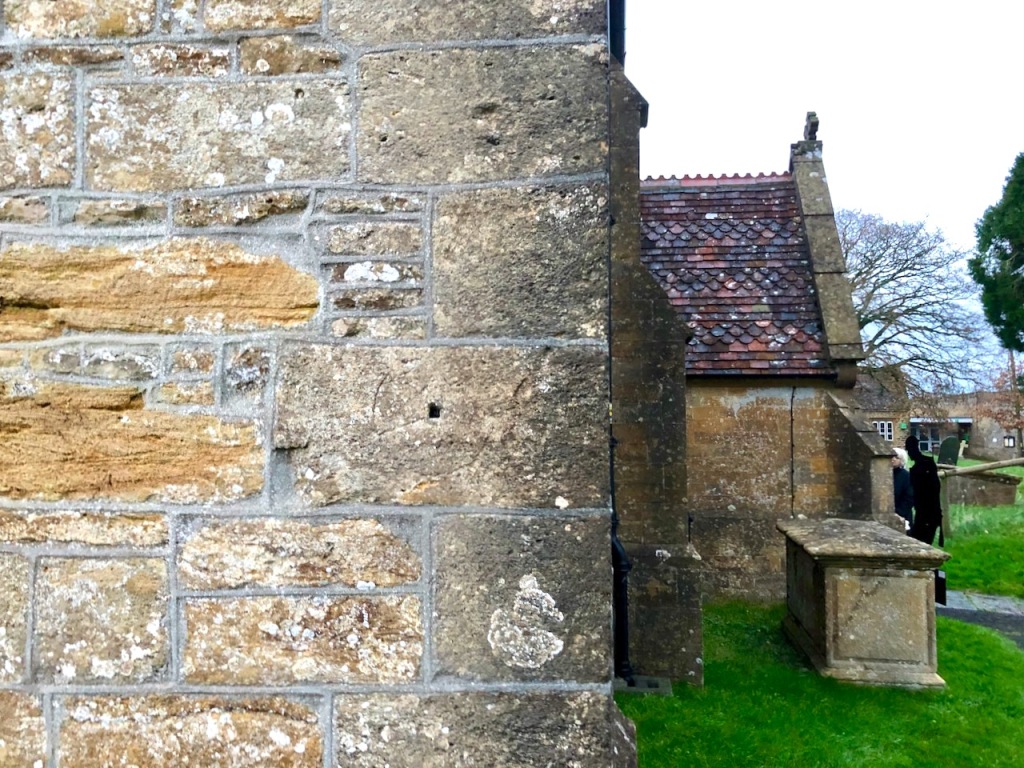
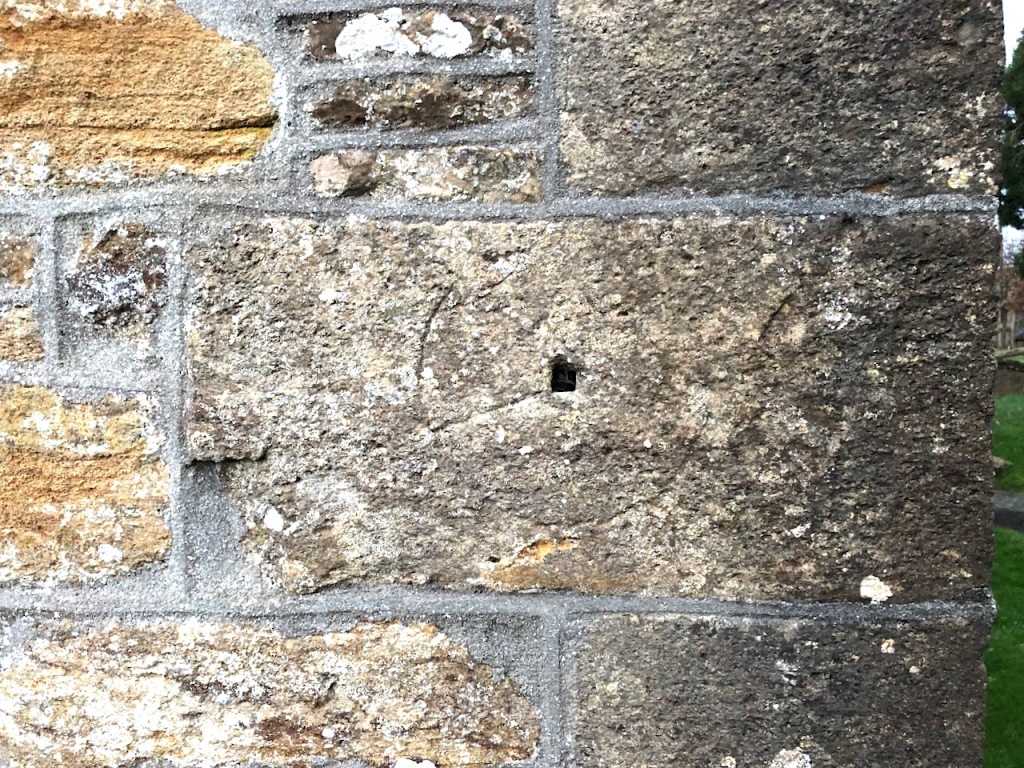
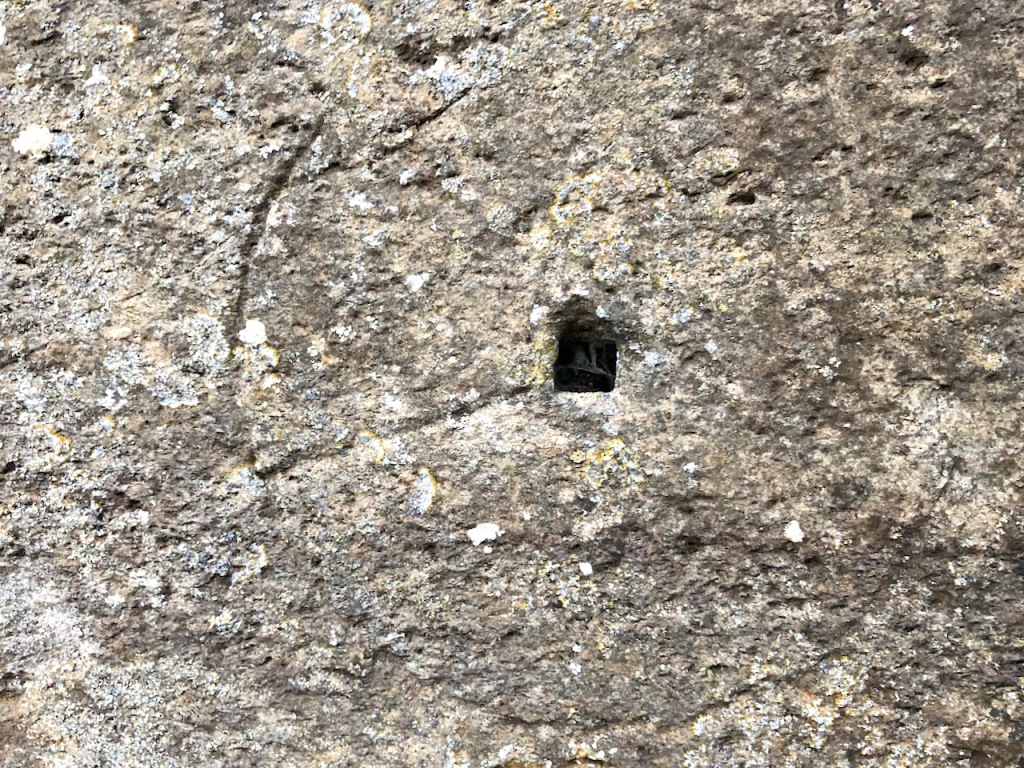
Besides the small ‘dial’ in the porch mentioned above, there are 2 other candidates, both by the Priest’s door. The first one is faint, but there are 2 visible lines leading from a small hole in the stone. Each has a pock at or near the end. Other pocks in the vicinity may be relevant to the theory. The other candidate looked promising, but is less likely I think.

Blackford . Som . St Michael – possible Dial 4

NOTES

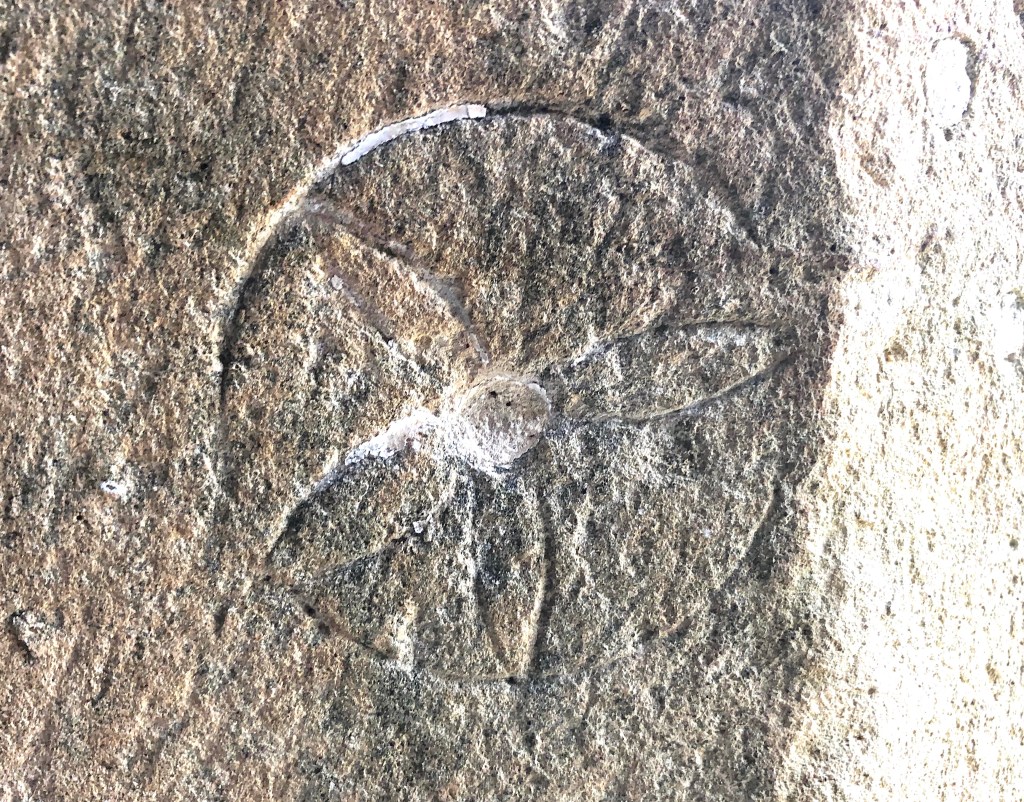
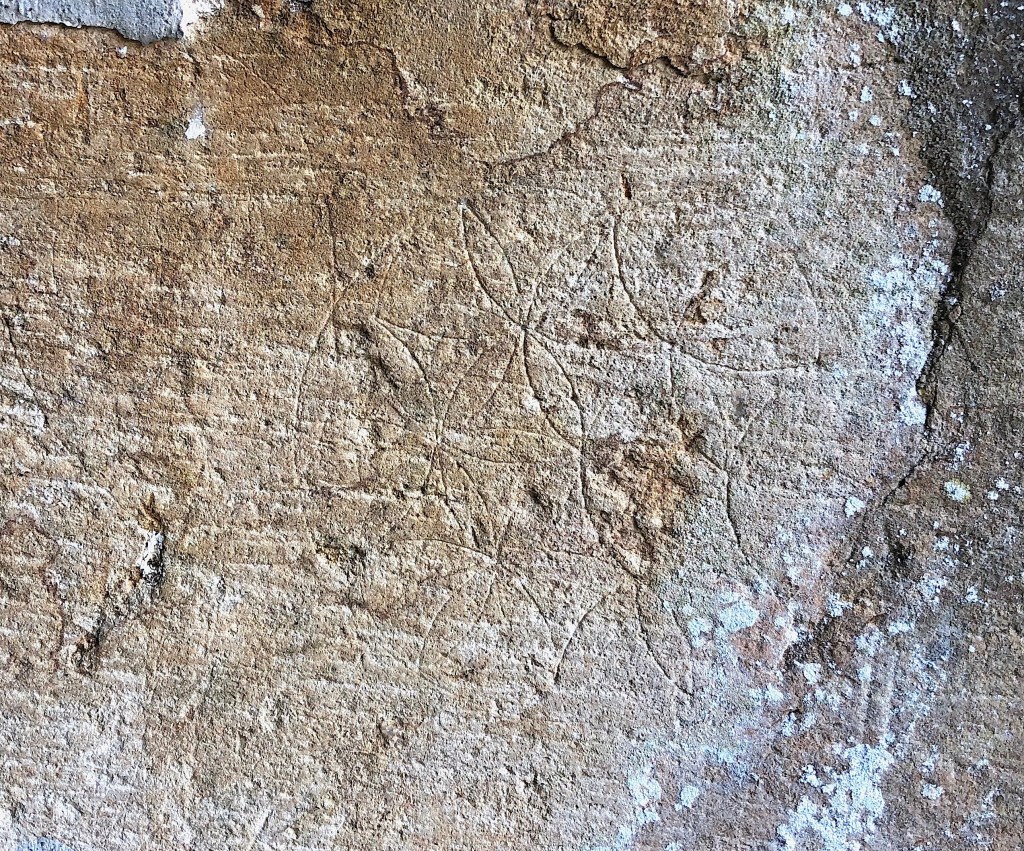
St Michael is worth visiting just for the splendid apotropaic marks (ritual protection / witch marks) in the porch, in particular a deeply incised flower-like hexafoil; and a delicate and complex multiple hexafoil design.

Useful general information can be found at CAMELOT PARISHES

GSS Category – Scratch Dial

All photos – Keith Salvesen

CHARLTON HORETHORNE . SOM – ST PETER AND ST PAUL . TWO SCRATCH DIALS

DEDICATION † St Peter and St Paul. C12 onwards on probable Saxon site; later work C15 and especially C19

LISTING † Grade II* BLB LINK

LOCATION † 5 miles NE. of Sherborne, 5 miles SW. of Wincanton. A fine early church situated next to the Manor House, overlooking a pleasant village and with fine views. 51.0061 / -2.4785 / ST665230

DIALS † There are two dials. Dial 1, easily found, is on a quoin W. of the porch. Dial 2 is located where the foundations are well below present ground level, and is difficult to reach. The dial is E. of the window E. of the porch and only visible from a narrow trench behind a screen of laurels. Access with care.

Dom Ethelbert Horne – DEH visited the church of May 25th 1915. His observations follow below in italics.

DIAL 1

173. (1) This dial is on a quoin at the s.w. corner of the s. aisle. It is 8 feet 3 inches above the foundations, the noon- line is 4 inches in length, the stylehole is 1 3/4 inches in depth by 1/2 an inch in diameter, and the aspect is s. by 10° e. Type3.

Comment:

1. A faint trace of a circle rhs

2. The noon-line below the style hole has a considerable gap before the start of the line, which is longer and deeper cut than the other radials

3. Above the style hole there is a roughly incised and skewed line from the top of the stone towards the side of the style hole, with (possibly) some form of emphasis at the top end. It seems unlikely to be an upper noon-line, being squint and at odds with the neatly cut lower radials. Possibly it is just a random unrelated mark, from a different century even.

4. However the hint of a further short incision to the left of the crude one makes me wonder if it and the longer line are part of an earlier dial that radiated from a hole in the mortar line above. Perhaps it was superseded by the later more sophisticated dial we now see. DEH clearly did not consider these upper markings to be part of the main dial

DIAL 2

174. (2) This dial is on a quoin on the e. side of the first window e. of the s.porch. It is 8 feet above the foundations, the noonline is 4 inches in length, the stylehole is filled up, and the aspect is s. by 10° e. Type 5b. May 20th, 1915.

Comment: an encircled dial with the upper half left blank. Elongated mid-line with the Prime line emphasised with 3 pocks. Hints of other pocks. The radials have rather random spacing, with the lower significantly elongated below the circle

NOTES † Interesting to see 2 quite different types of dial like these, and on different types of stone. I can’t date them but I suspect Dial 1 is earlier than Dial 2

GSS Category: Scratch Dial

All photos: Keith Salvesen

WINSHAM . Som . ST STEPHEN – 3 Scratch Dials

St Stephen . Winsham . Som .

DEDICATION † ST STEPHEN – C13 origin, mainly C15, C19 restoration, porch link to C20 vestry

LISTING † GRADE II*

LOCATION † In the centre of the village, a few miles SW. of Crewkerne / SE. of Chard. Contains 2 rare treasures (see notes). Close to Forde Abbey 50.8526 / 2.8898 / ST 37400637

St Stephen . Winsham . Som . Scratch dial 3

DIALS † 3 dials on or near the priest’s door, described in detail by DEH (see below for his notes on each). In evening light (hence the vaguely apocalyptic photo), a fine trio of dials to collect.
Later I discovered that (according to HE) there are 6 ‘mass dials’ in all. I need to return to find the other 3…

St Stephen . Winsham . Som . Position of 3 scratch dials

DIAL 1

129. (1) This dial is on the e. side of the window on the w. of the priest’s door. It is 6 feet 5 inches above the ground, the noonline is 6 inches in length, and the stylehole is 2 inches deep by 3/4 of an inch in diameter. The aspect is s.by10°e. Type 5b.

DIAL 2

130. (2) This dial is on the w. side of the priest’s door. It is 5 feet 2 1/2 inches above the ground, the noonline is 3 1/2 inches in length, the stylehole is 1 inch deep by 1/2 an inch in diameter, and the aspect as above. Type 3a or 5b.

DIAL 3

131. (3) This dial is on the w. side of the window e. of the priest’s door. It is 6 feet 3 inches above the ground, the noon- line is 6 1/4 inches in length, and the stylehole, which is large, is filled with cement. The aspect as above. Type 4, combining 5c.

The dials Nos. 1 and 3 are carefully cut on very large stones that form the quoins of the windows on either side of the priest’s door. Dom Ethelbert Horne August 19th, 1915

NOTES † The church has one of very few surviving copies of Foxe’s Book of Martyrs on display; also, one of the only two surviving pre-Reformation tympana (rood screens) of the Crucifixion in the world. And 3 scratch dials left for me to find.

St Stephen . Winsham . Som . The Priest’s Door . 3 scratch dials

WAYFORD – ST MICHAEL & ALL ANGELS

St Michael & All Angels . Wayford . Som.

DEDICATION † ST MICHAEL & ALL ANGELS First recorded 1266, later work & repairs from C18. Significantly, the porch was added in 1602: Wulfric Benefice archive (C17 BHO; C18 HE, BLB)

LISTING † GRADE II*

LOCATION † 3 miles S. of Crewkerne as the crow flies, yet a journey into the past. A small rural community down a lane with an ancient church, its appearance slightly spoiled by being ‘pebbledashed’ yet an interior with ‘a barn-like charm’ PEV. Adjacent to a wonderful Grade 1 Manor likened in certain resects to Montacute. Friendly Kuni Kuni pigs nearby. 50.8563 / -2.847 / ST404066

DIAL

DH 127. This dial is on the e. side of the inner door of the s. porch. It is 4 feet 11 inches above the floor, the noon-line is only 1 1/4 inches in length, the style-hole is 1 inch deep by 5/8 of an inch in diameter, and the aspect is due s. Type 3. August 19th, 1915

DH NOTE This is a quaint and probably very ancient little dial. The a.m. lines are longer than the noon line, which is cut off by the edge of the stone. The porch over this dial looks extremely old. The head of the outer door is cut from one huge piece of stone in the form of a rough debased arch, and is of the most primitive kind of workmanship.

The dial clearly precedes the later addition of the porch. It would be good to know what DH considered to be ‘very ancient’. C14 or even C13? See first image for the whole porch and ‘huge’ head stone. Perhaps it was a relic from a much earlier building – maybe a medieval part of the original Manor – repurposed for the new porch.

NOTES † Dials inside a porch are not as rare as one might expect. A porch was often a much later addition to a church. DH identified 12 in Somerset alone. This dial is listed by TWC; not found in other usual sources

GSS Category: Scratch Dial

RIMPTON – ST MARY (2) † Dom Horne Dials 3 & 4

St Mary . Rimpton . Som. Priest’s Door

RIMPTON – ST MARY (2) † DOM HORNE DIALS 3 & 4

PART 2

PART 1 LINK featured Dials 1 & 2 on Rimpton church – two of the four dials identified and recorded by Dom Ethelbert Horne (DH) of Downside Abbey, the Father of modern dialling so to speak. In 1913 – 15 he made several trips around Somerset collecting dials, measuring and recording them in great detail. He went on to produce his pioneering book about dials, published in 1917.

LOCATION † Between Sherborne & Marston Magna, on the Som. / Dorset boundary. S 50.9948 / -2.5565 / ST610218

DOM ETHELBERT HORNE

DH (1852 – 1952) was a Benedictine monk at Downside Abbey. The Archives state that he was “a noted archaeologist, antiquary and folklorist… and published works on subjects as diverse as holy wells, mistletoe, scratch dials and St Aldhelm”. Between 1913 – 15 he made several tours around Somerset in search of scratch dials. In 1917, he published his delightfully written book ‘Primitive Sun Dials or Scratch Dials’ containing several chapters about dials, their construction and their purpose. These were followed by a detailed analysis, by district, of 224 dials that he located. He divided these into 12 main types, for each of which there are photographs, including a Rimpton dial (see Part 1). DH’s 4 Rimpton dials are numbers 212 – 215 in the Yeovil District list.

DIALS † This article covers DH dials 3 & 4 of the multiple dials on this church. I have visited the church twice and found other dials & less convincing candidates. These will be written up separately in Part 3.

DH DIAL 3

214. (3) This dial is on the w. side of the window to w. of priest’s door. It is 5 feet above the ground, the noon line is 5 1/4 inches in length, the style hole 5/8 of an inch in depth by 3/4 of an inch in diameter, and the aspect is s. by 15°e. Type 3.

NOTE † a. the trace of a circle, upper left and b. the small dial hanging down from the mortar line above. More on the additional dials on Rimpton church in Part 3.

LOCATION CONUNDRUM

The dial location given above presents a puzzle. Put simply, an error may have crept at some stage between DH finding and noting the dial shown here; transcribing his notes to a more formal record; preparing a draft for publication; or in the printing.

There are 4 prominent and obvious dials. Dials 1, 2 and 4 are unproblematic. However in 2 visits, I haven’t been able to locate Dial 3 (or any dial) as described and in that location. The remaining ‘obvious’ dial is on the W. side of the window to W. of the porch – the dial shown here (although it is plainly not ‘5 feet above the ground’). The converse is that the dial shown here, on the W. side of the window from dial 2 (see marked image) was missed by DH.

DH DIAL 4

St Mary . Rimpton . Som. DH Dial 4

215. (4) This dial is w. of the priest’s door. It is 4 feet 9 inches above the ground, the noon-line is 4 inches in length, the style hole is filled up, and the aspect is s.by15°e. Type5b.

NOTES † Comments on the question of Dial 3 would be welcome. There an interesting and informative Parish website that is well-worth visiting LINK.

GSS Category: Scratch Dial

RIMPTON – ST MARY (1) † Dom Horne Dials 1 & 2

St Mary . Rimpton . Som.

DEDICATION † ST MARY – early C13, alterations c.1500, N transept added C19.

LISTING † Grade 1

LOCATION † Between Sherborne & Marston Magna, on the Som. / Dorset boundary. Secluded, approached by narrow roads. Historical significance. A small village with plenty of listed buildings to enjoy. Church opposite Manor House at the end of a lane (a good walk starts from there) 50.9948 / -2.5565 / ST610218

DOM ETHELBERT HORNE

DH (1852 – 1952) was a Benedictine monk at Downside Abbey. The Archives state that he was “a noted archaeologist, antiquary and folklorist… and published works on subjects as diverse as holy wells, mistletoe, scratch dials and St Aldhelm”. Between 1913 – 15 he made several tours around Somerset in search of scratch dials. In 1917, he published his delightfully written book ‘Primitive Sun Dials or Scratch Dials’ containing several chapters about dials, their construction and their purpose. These were followed by a detailed analysis, by district, of 224 dials that he located. He divided these into 12 main types, for each of which there are photographs. The Rimpton dials are numbers 212 – 215 in Yeovil District.

MULTIPLE DIALS

DIALS † Part 1 concerns two of the four dials recorded in detail by Dom Ethelbert Horne (DH) during his dial tour of Som. in May 1915. He devised a method of categorising dials by appearance, and ascribed a ‘Type’ to each, as shown in the entries below. Part 2 covers DH dials 3 & 4. Having visited the church twice recently I have found 3 or 4 more dials and a couple of less convincing candidates. These will be written up separately in Part 3.

DH DIAL 1

St Mary . Rimpton . Som. Scratch Dial DH1 . West end

212. (1) This dial is at the w. end of the church on s. quoin of the window under the tower. It is 4 feet 6 1/2 inches above the ground, the noon-line is about 2 inches in length, the style-hole, which is very shallow, is 3/4 of an inch in diameter, and the aspect is due w. Type 3. [DH further notes: Dial No. 1 has been moved from its original place and used as a quoin for the w. window. The mortar round the stone is of different date from that of the adjoining stones.

DH DIAL 2

St Mary . Rimpton . Som. Scratch Dial DH2 . W. of S. Porch

213. (2) This dial is on the e. side of the first window from the w.end. It is 3 feet 8 1/4 inches above the ground, the noon- line is 6 1/2 inches in length, the style hole is 1 inch deep by 3/4 of an inch in diameter, and the aspect is s. by 15° e. Type 8.

St Mary . Rimpton . Som. Dial DH2 . Illustration from Dom Horne’s book 1917

NOTES † Strangely, no dials – let alone a collection of them – are referenced in BLB BHO or HE. There is however an interesting and informative Parish website LINK.

St Mary . Rimpton . Som. Locations of Scratch Dial DH2 and (see next post) DH4

OTHER MARKS

GSS Category: Scratch Dial

CREWKERNE – ST BARTHOLOMEW

St Batholomew . Crewkerne . Som.

DEDICATION † ST BARTHOLOMEW C15, Saxon / Norman origins

LISTING † GRADE I

LOCATION † Close to the centre of this pleasant country town, prominent but not dominating. Classy Perpendicular 50.885 / -2.798 / ST439098

DIAL † From his survey of this area in June 1915, DEH noted:

120. This dial is on the first buttress from the e. end of the chancel. It is 4 feet 5 inches above the ground, the noon-line is 3 inches in length, the stylehole is 3\ inches in depth by half of an inch in diameter, and the aspect is s. by 10° e. Type 3. June 8th, 1915.

The lines on this dial are distinct in sunlight, but difficult to see in ordinary light. There is an enlarged hole at the end of what is probably the mass line.

NOTES † DEH was right about the visibility of the details – and 100 years has not improved it. Excellent gargoyles and hunky punks (some lewd). Adjacent Undials.

St Batholomew . Crewkerne . Som. Buttress Scratch Dial
St Batholomew . Crewkerne . Som. Hunky Punks
St Batholomew . Crewkerne . Som. Buttress Scratch Dial

GSS Category – Scratch Dial

HARDINGTON MANDEVILLE – ST MARY

St Mary . Hardington Mandeville . Som

DEDICATION † ST MARY – 1123 (on earlier site)

LISTING † II*

LOCATION † SW of Yeovil, near E & W Coker 50.9048 / -2.6949 / ST512119

An extended village close to the A30 yet approached by lanes (as they are actually named) rather than roads. A peaceful feel to it, especially at dusk when this poor photo was taken. The church had ‘much work’ carried out in C15 and C18. Tower probably of 1123, in three stages, font possibly from same date. BLB

DIAL † At the W. end and quite easily overlooked. DEH did not investigate or list it in 1915. A full circle, one clear radial and a square style hole. Possible trace of outer circle top left.

NOTES † Not mentioned in BLB, HE. Not in TWC extensive list of Somerset dials. I found only one reference to this dial that led me here; since then, one passing reference to a sundial in the porch – perhaps this dial relocated in C15?

NOTADIAL † A plausible dial location quite low on arch of the W. door; apparent style hole but no detectable marks

GSS Category – Scratch Dial

SUTTON BINGHAM – ALL SAINTS

DEDICATION † ALL SAINTS – C12 / C13

LISTING † Grade 1

LOCATION † Closworth, Somerset (nr Yeovil) 50.8978 / -2.6443 /  ST547111

Close to the W. shore of Sutton Bingham reservoir, tucked behind the Manor House up a track, a small and simple church dated from 1111AD with a wonderful interior, in particular the well-preserved wall paintings / murals of C13 / C14. One of the bells is dated to c1250

DIAL † DEH – dial 220 Type 3 June 16th, 1915

“This dial, which is faint, contains few lines and is probably in its primitive condition. The wall is Norman work and does not appear to have been restored.  is on the s.w. corner of the nave. It is about 6 feet above the ground, the noonline is 9 inches in length, the stylehole, which is in a joint, is filled and does not show, and the aspect is s. by 10° e”

All Saints Church . Sutton Bingham . Somerset

GSS Category – Scratch Dial