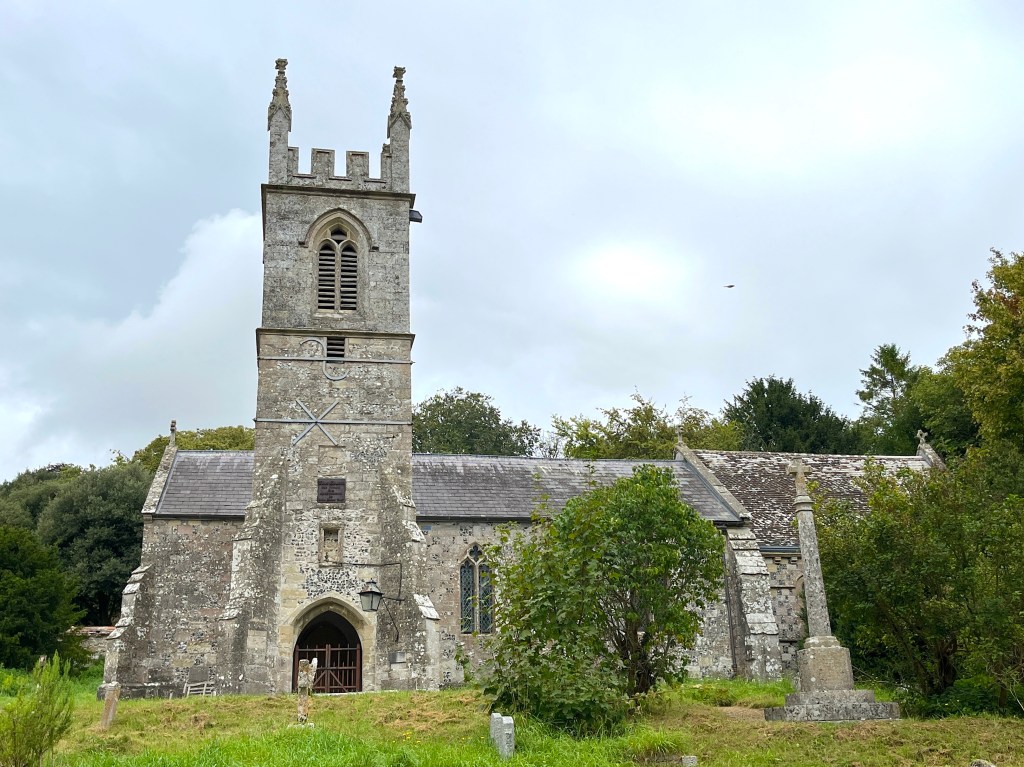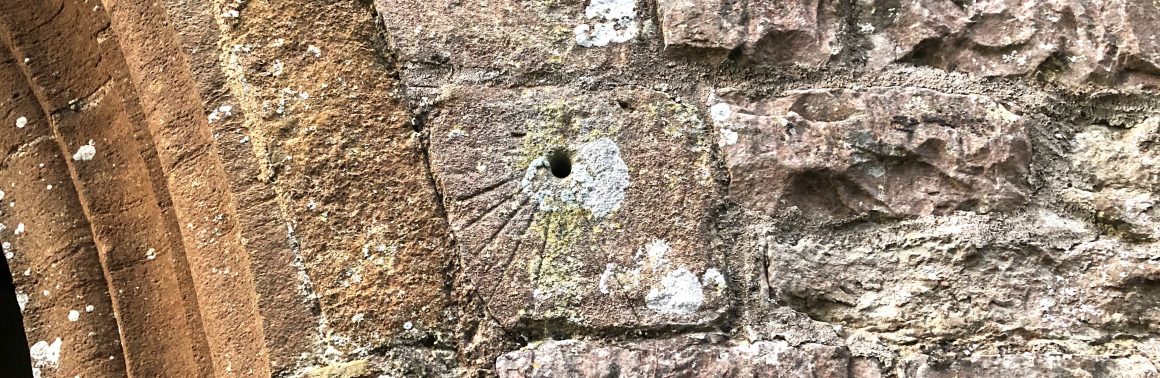
WHITELACKINGTON . SOM . ST MARY THE VIRGIN – Scratch Dial

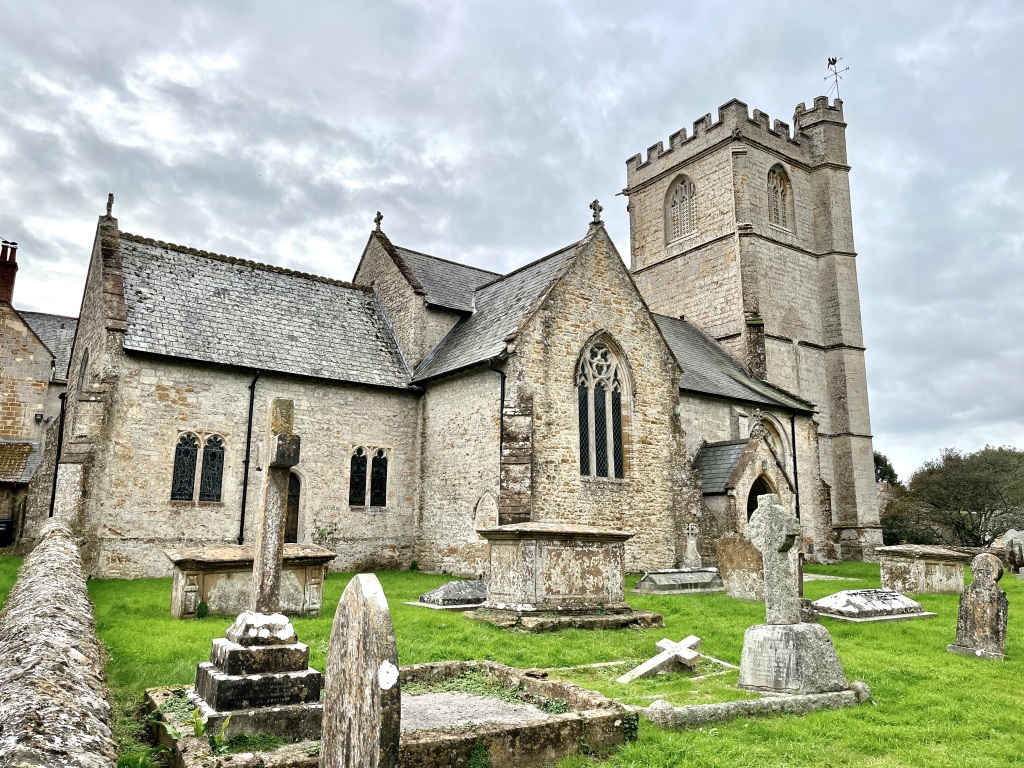
ST MARY . WHITELACKINGTON . SOMERSET

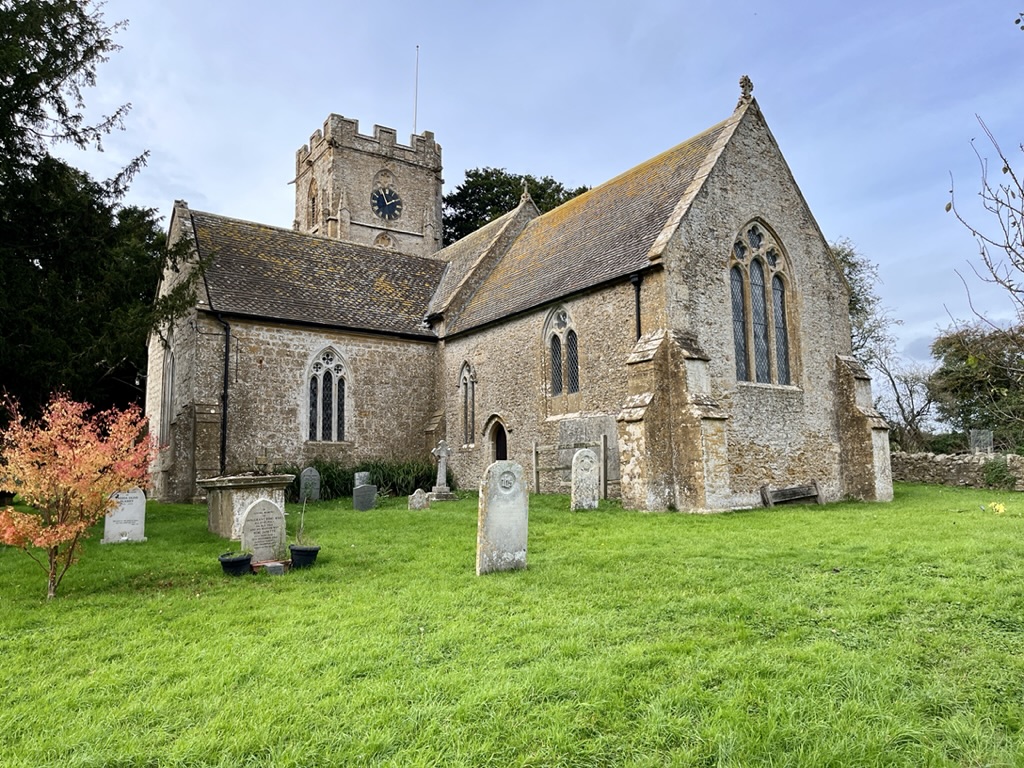
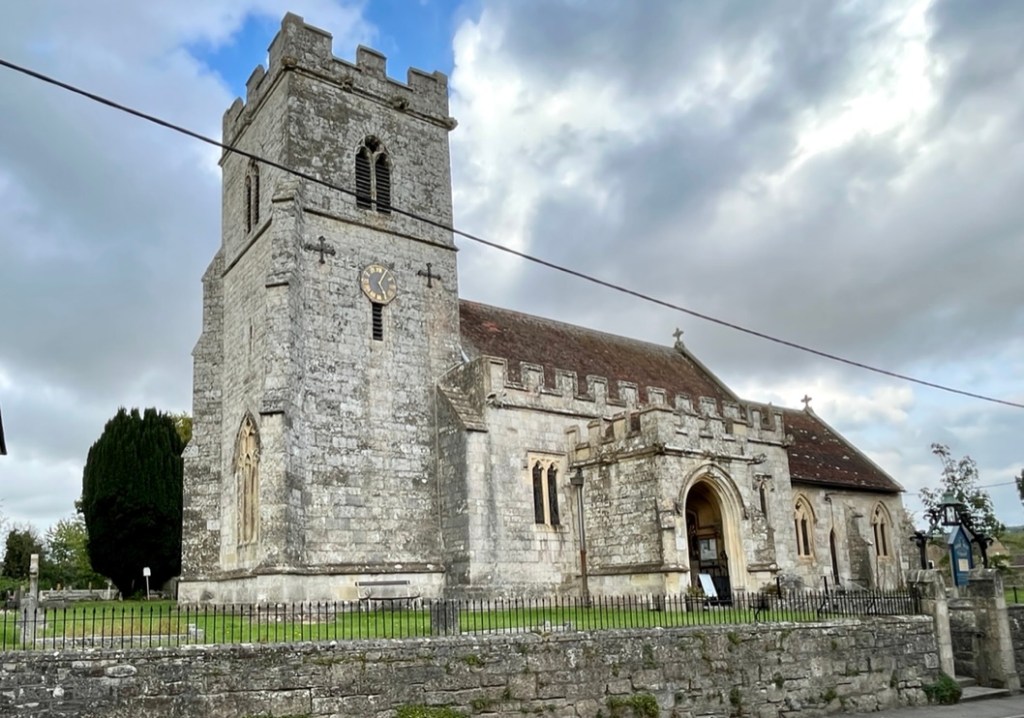
GRADE II* ✣ C14 / C15. Pleasantly situated by the Manor. Note that the church is up a driveway the opposite side of the busy road from the signposted village itself. 50.9335 / -2.8843 / ST379152

DIAL

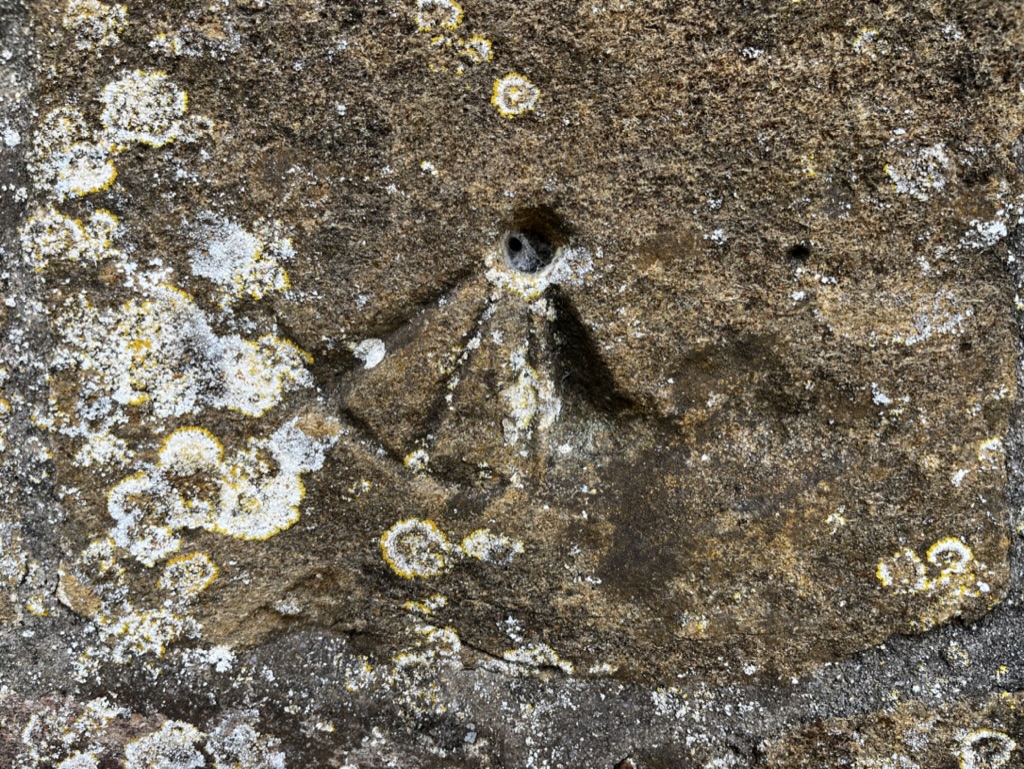
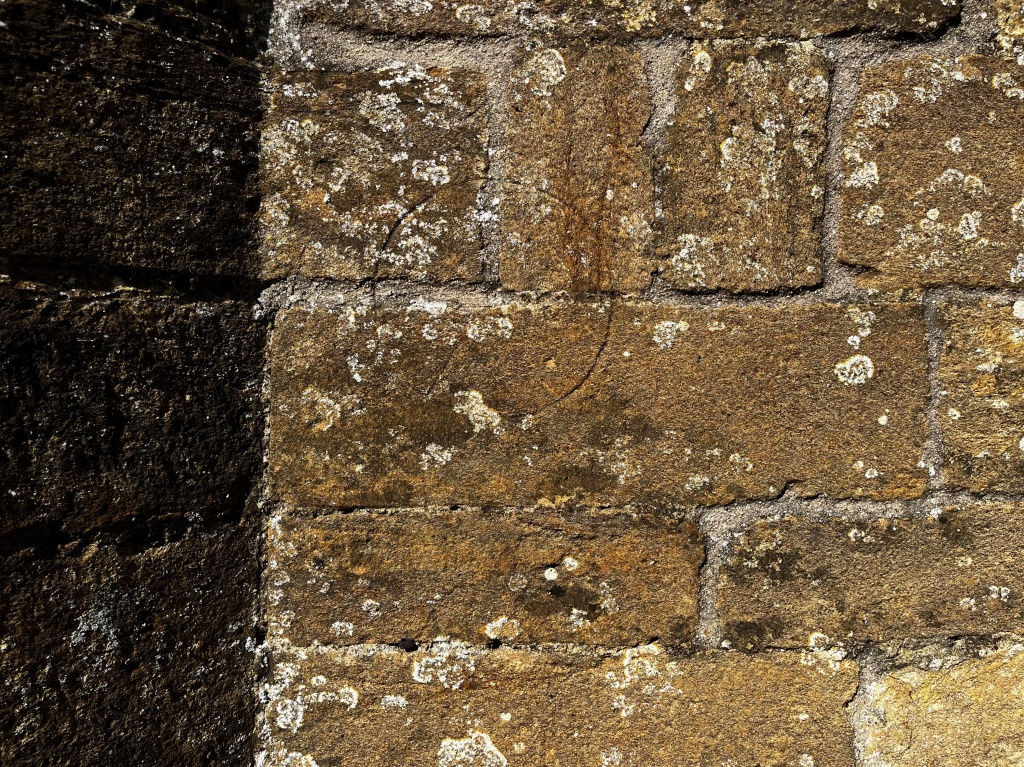
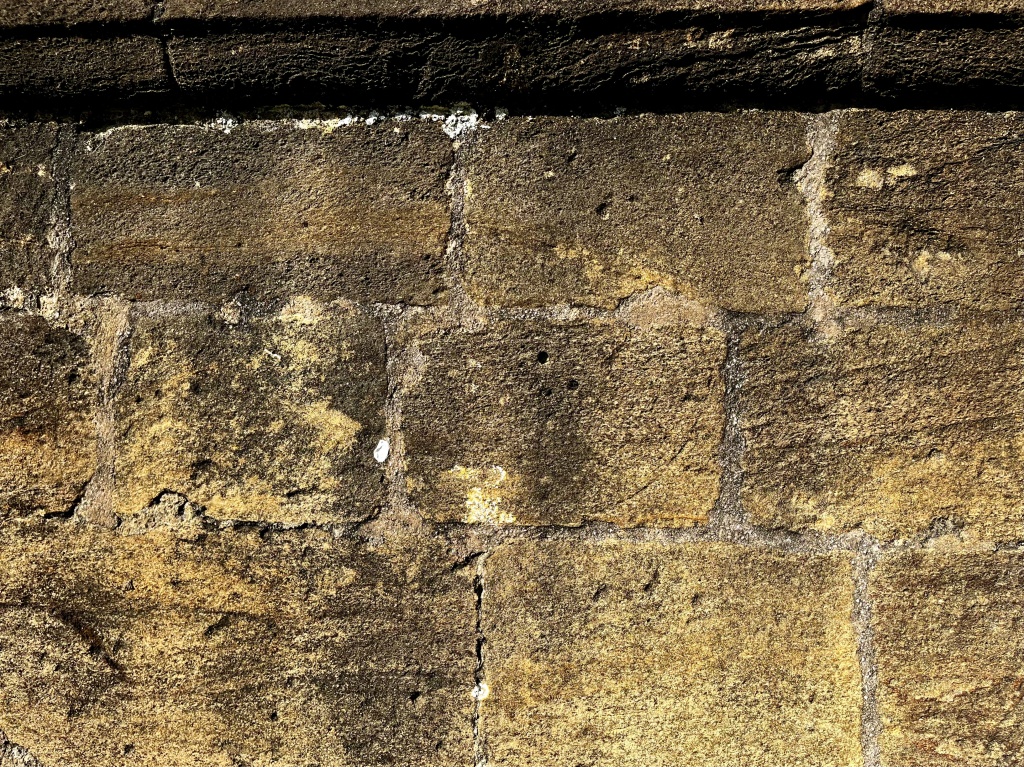
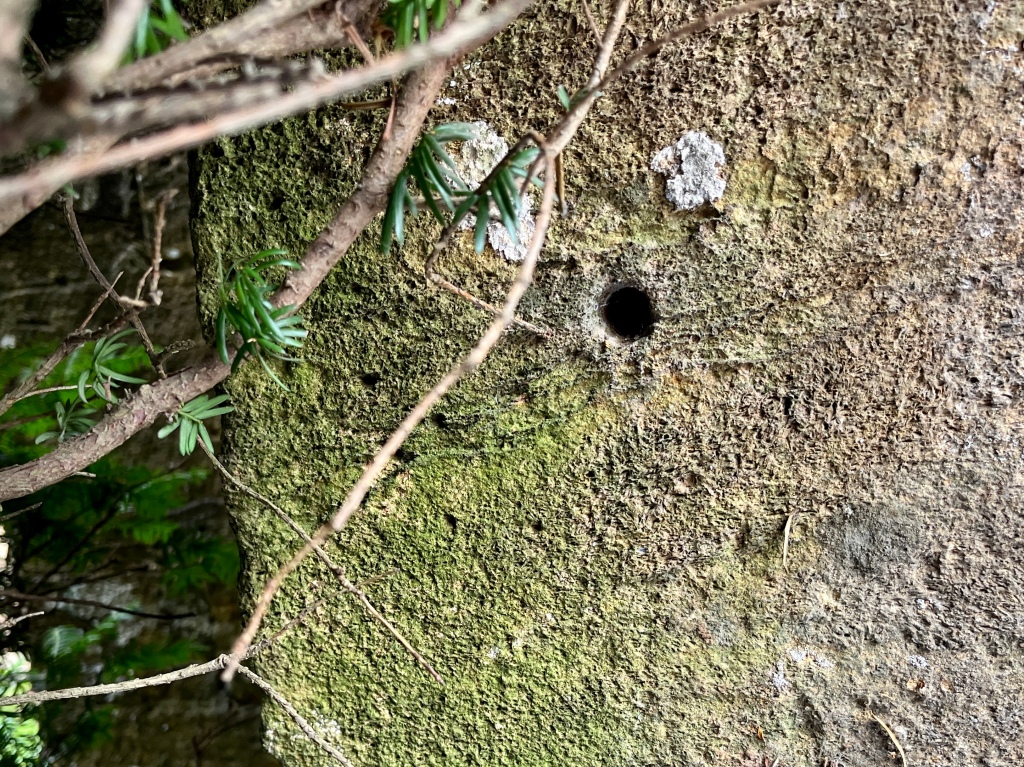
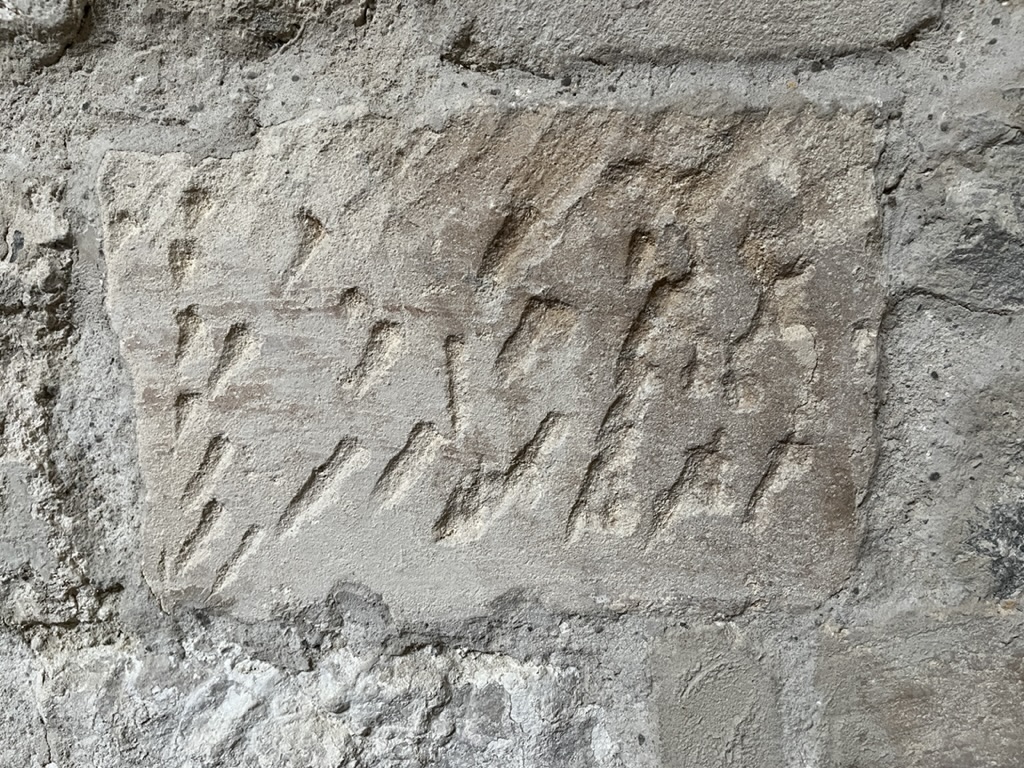
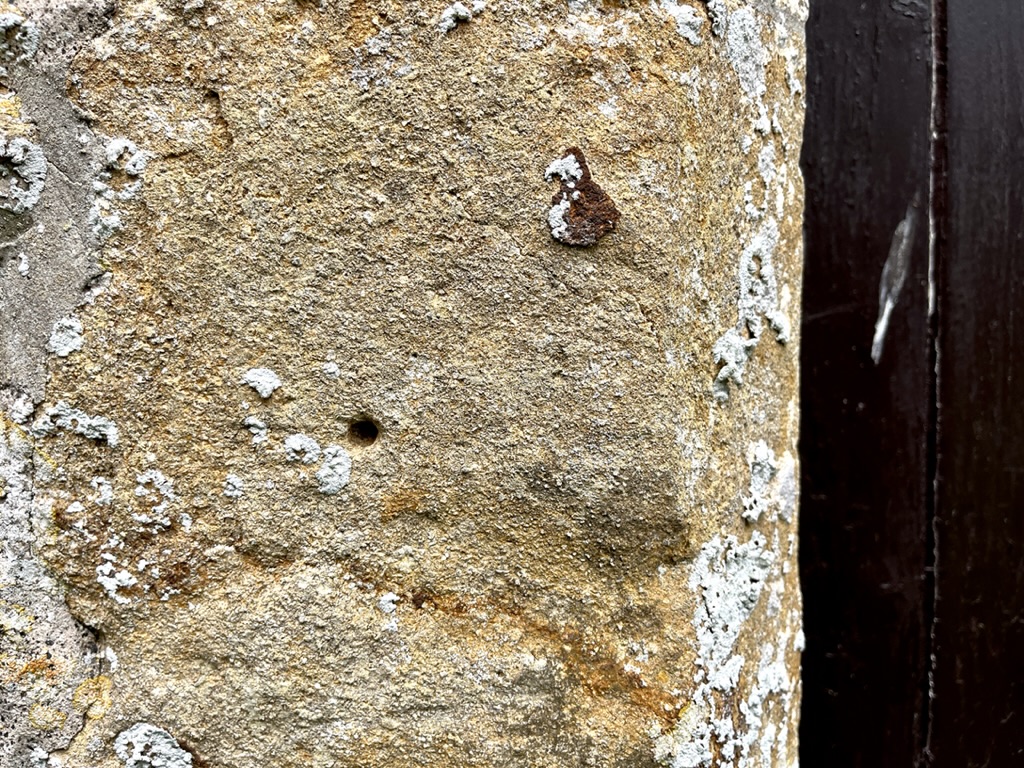
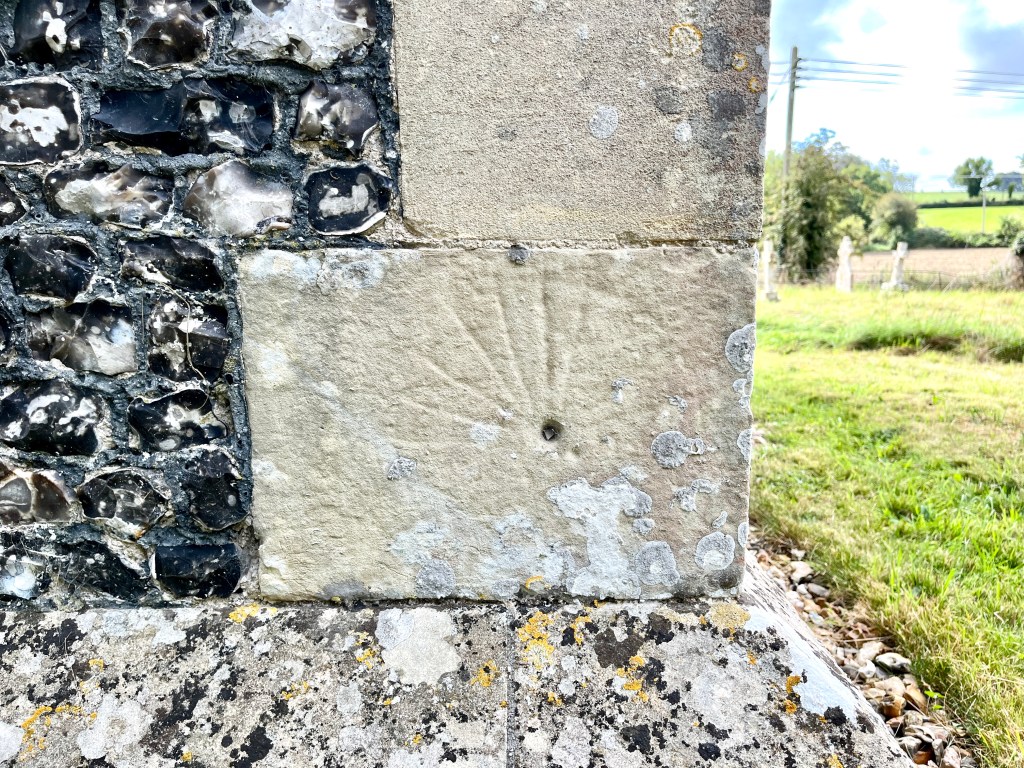
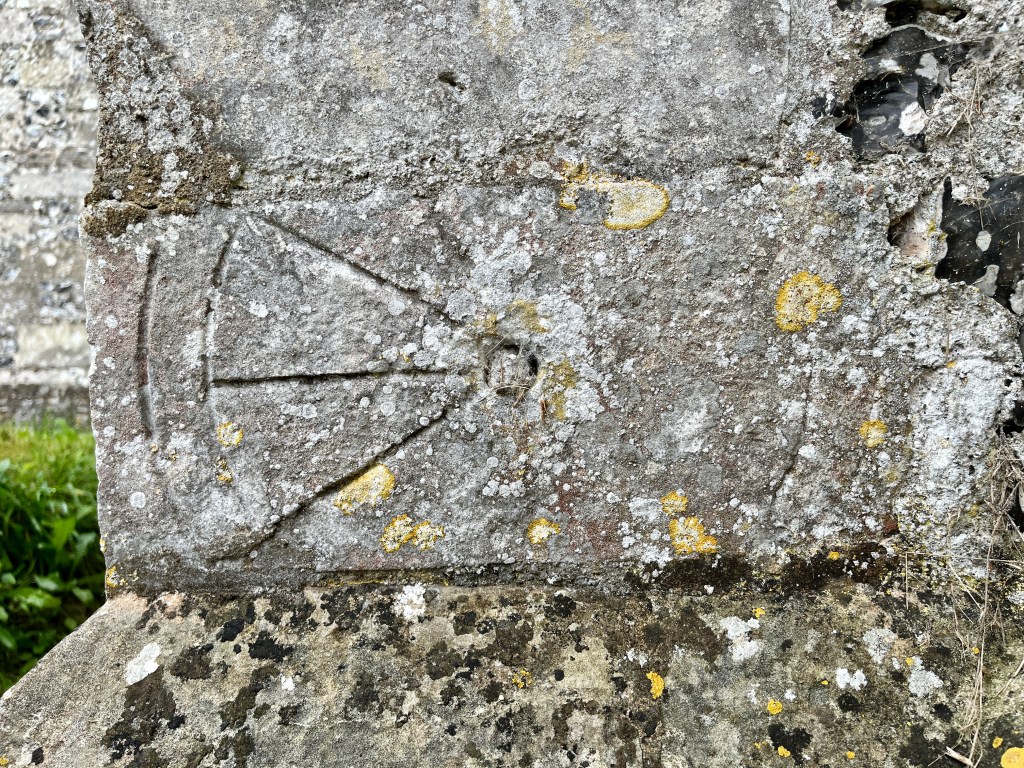
The Whitelackington dial eluded me a year ago when I was looking at several churches either side of the road between Yeovil and Taunton. Cricket at SCC was due to start and took precedence. Having in mind that DEH was enthusiastic enough to include a photo of the dial (taken 5 Sep 1912) in his pioneering treatise, I knew I should try again, and harder.

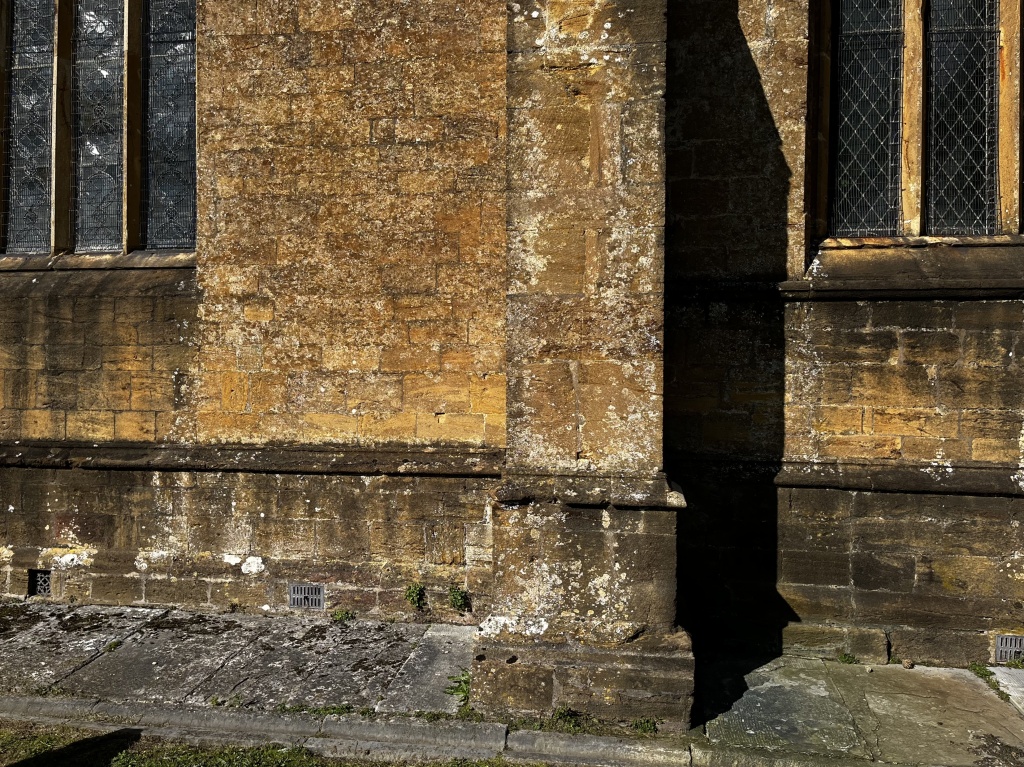
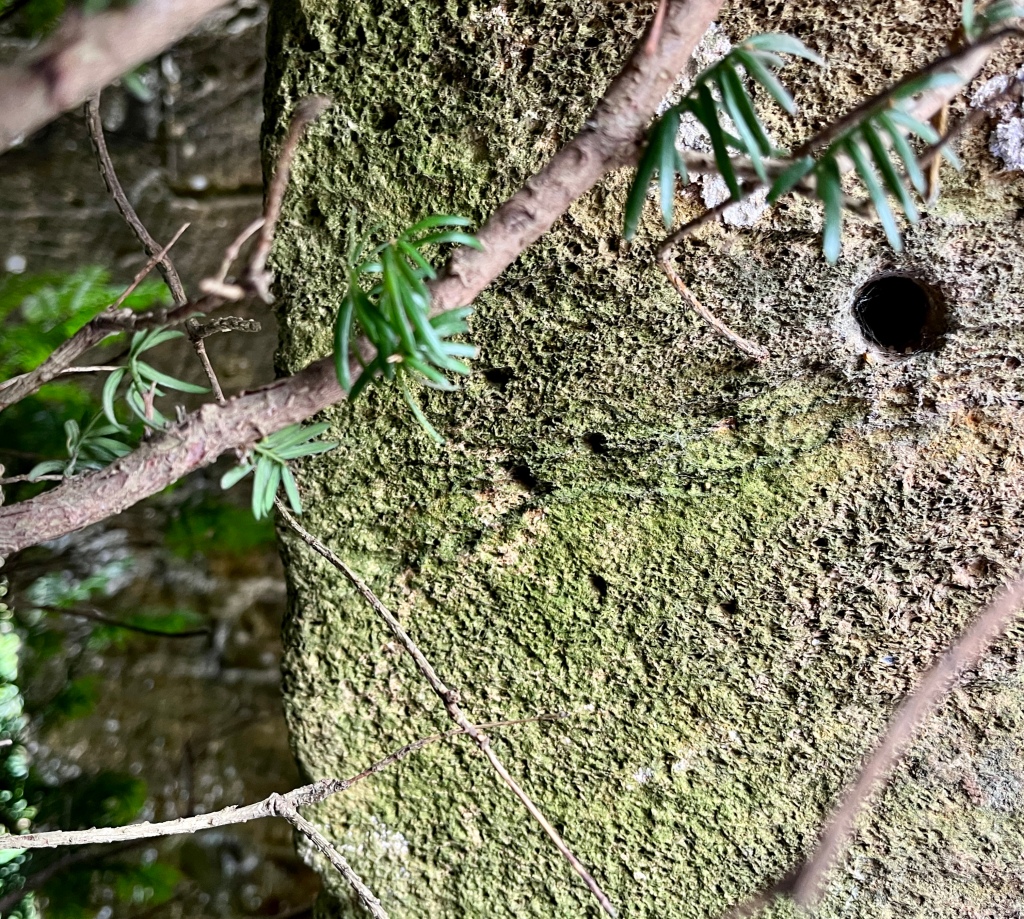
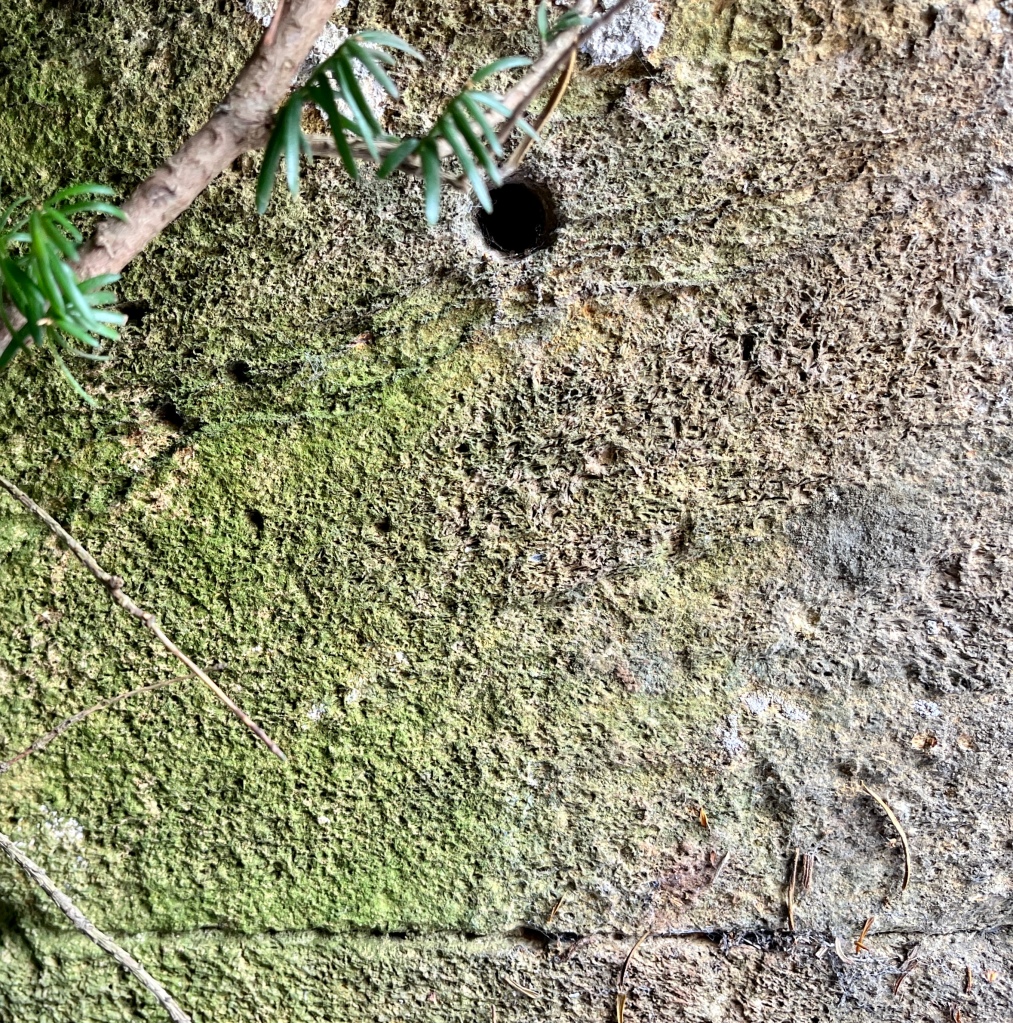
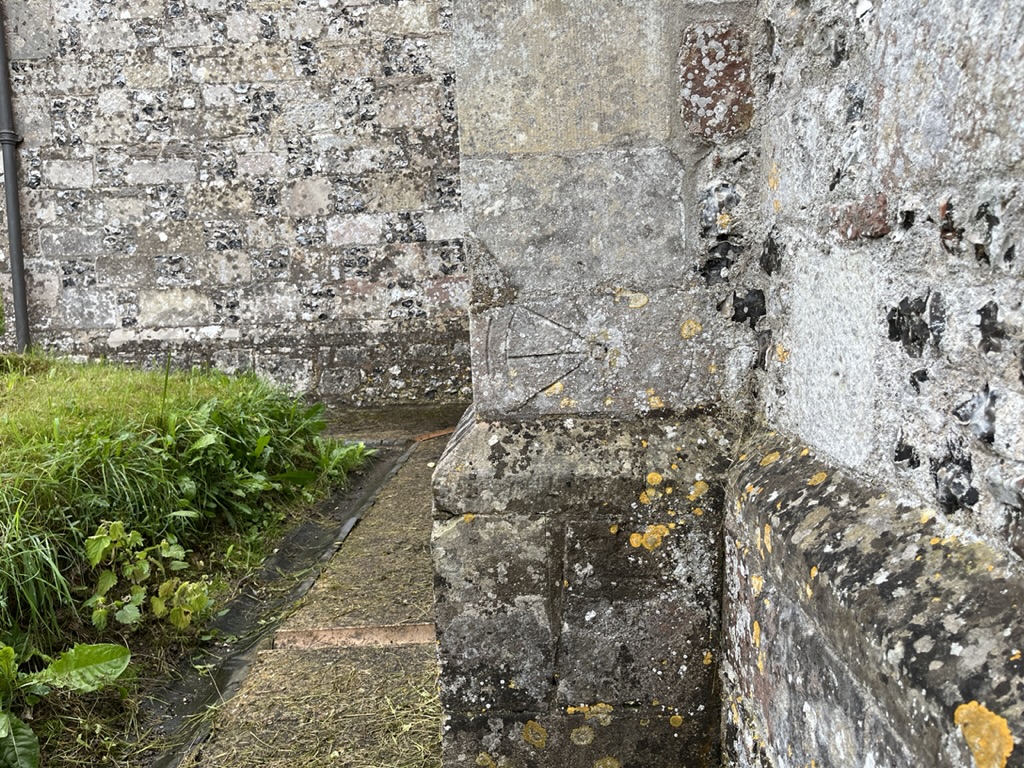
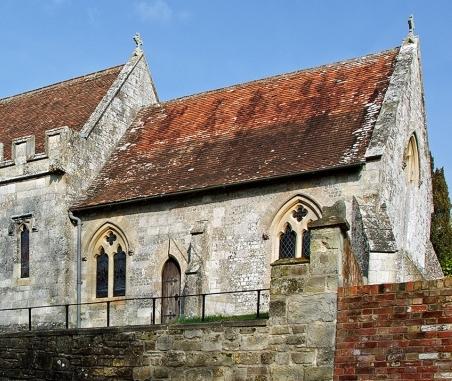
As it turned out, the dial was invisible until parting the branches of a yew hedge on the Manor side. The S side of St Mary blends into the Manor gardens and It feels sightly transgressive to be poking about in the greenery.

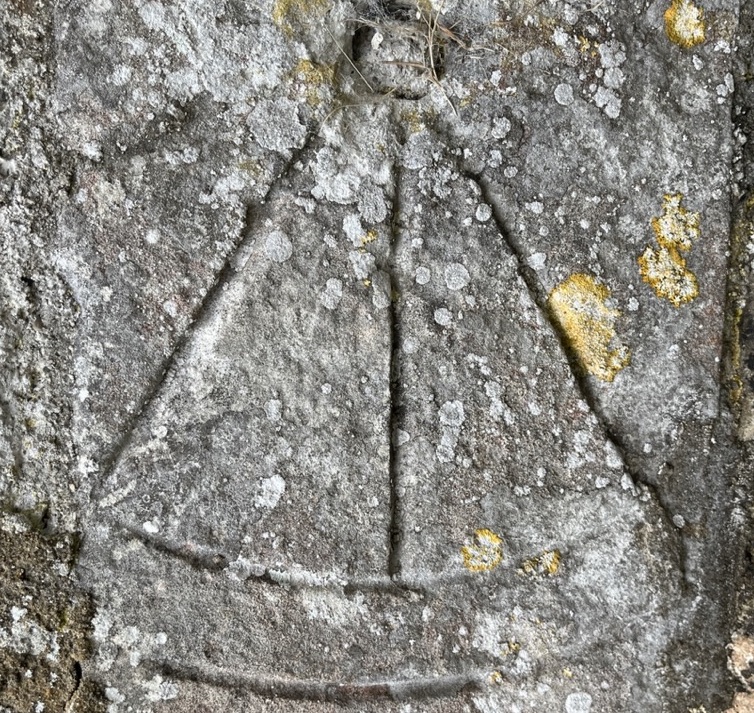
DEH’s RECORD

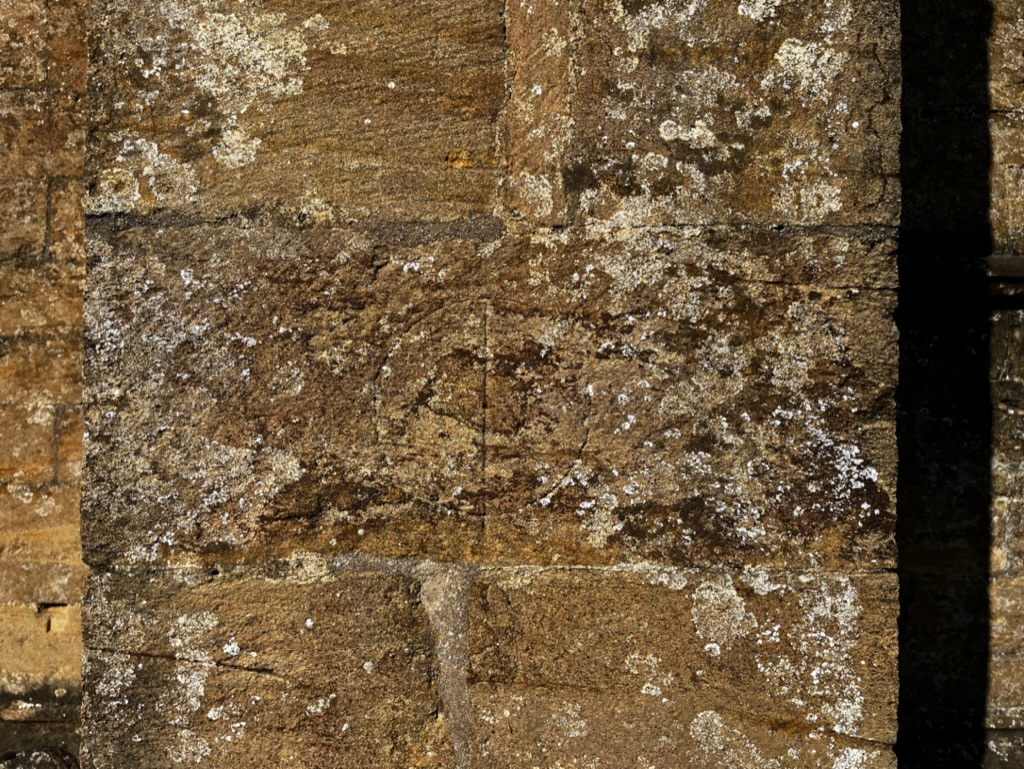
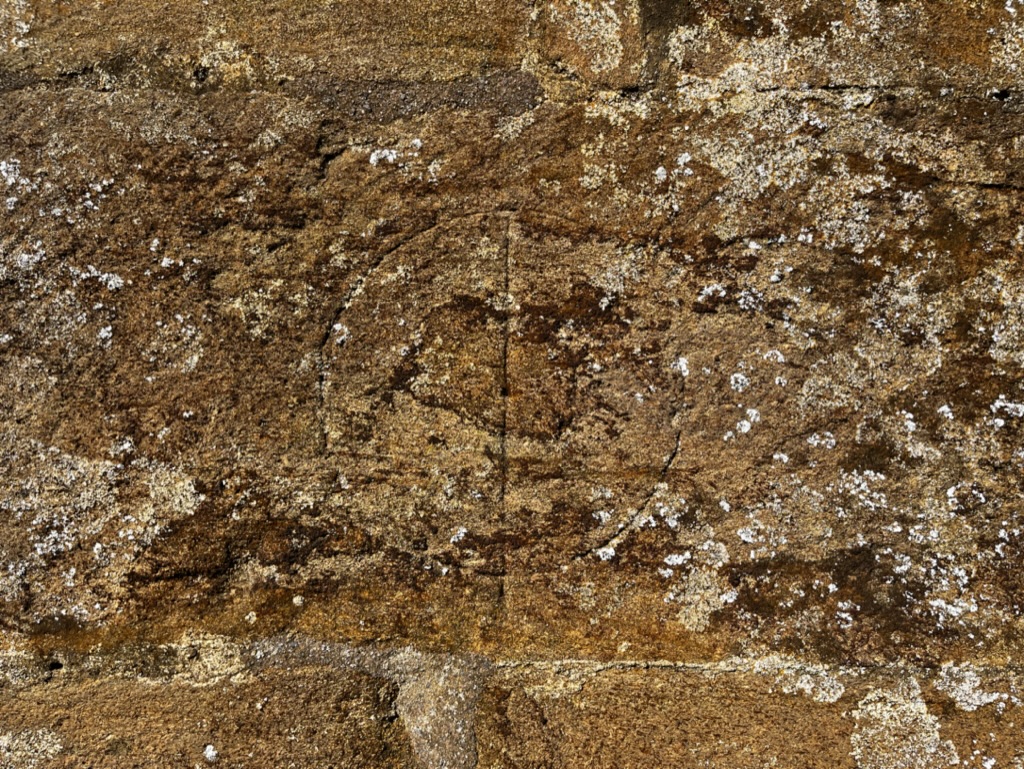
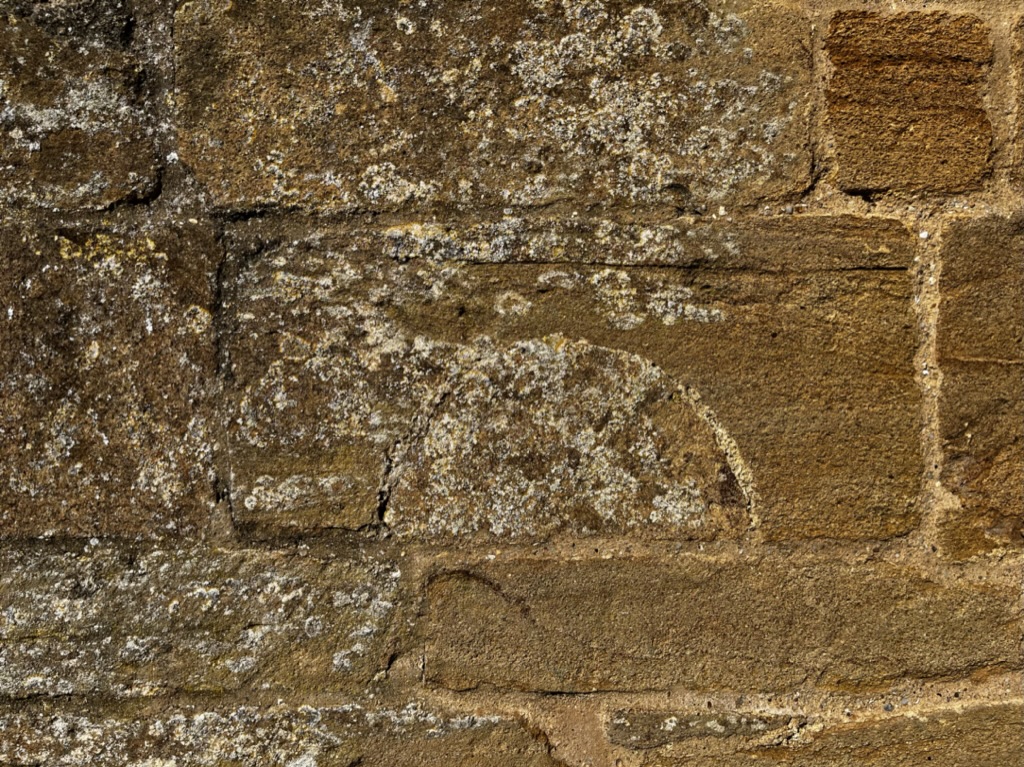
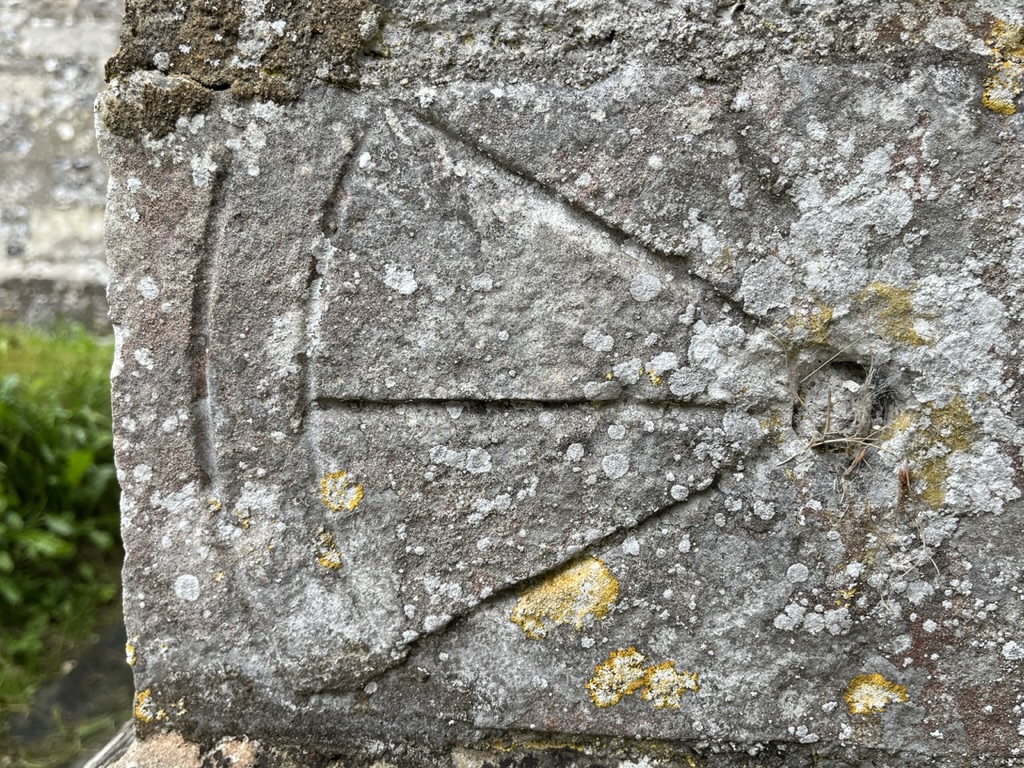
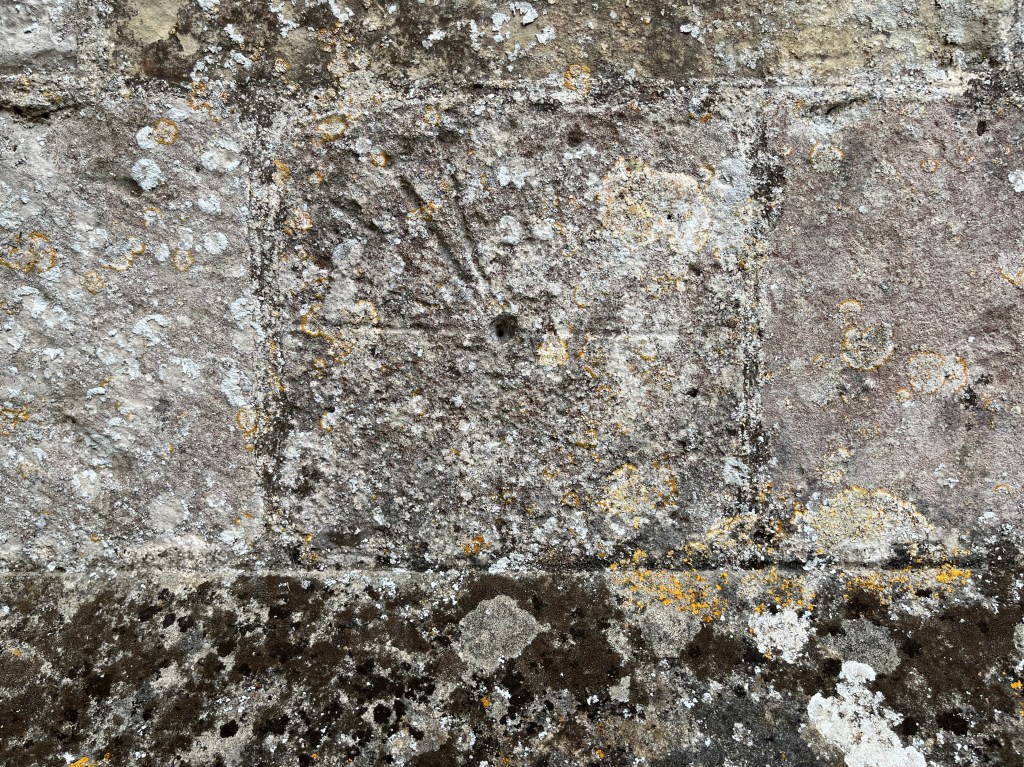
115 YEARS LATER

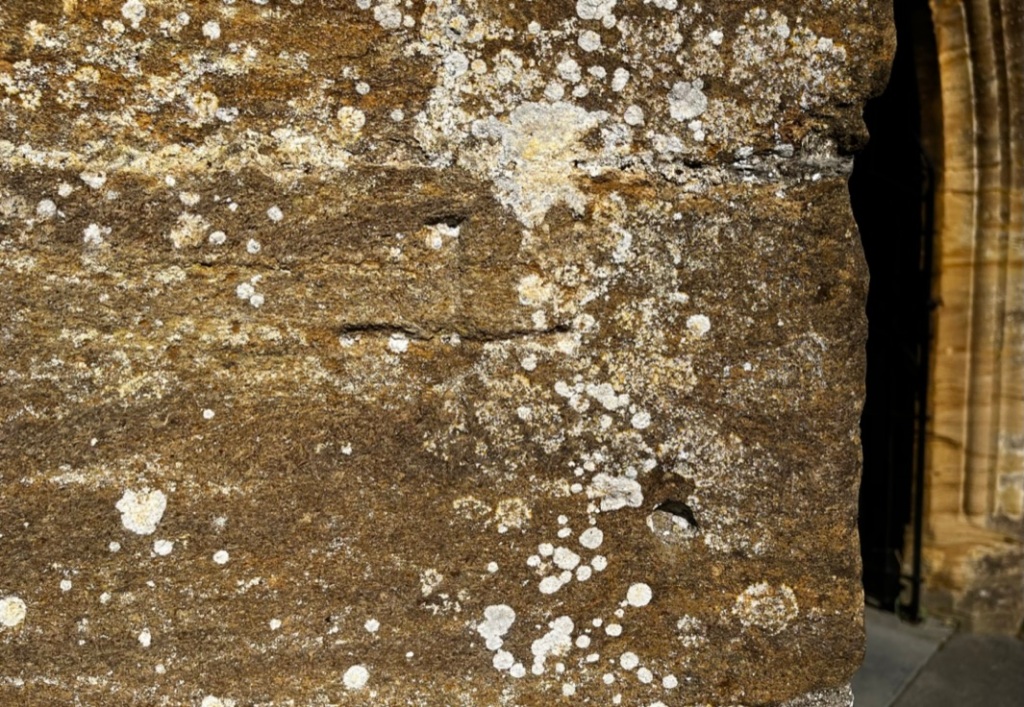
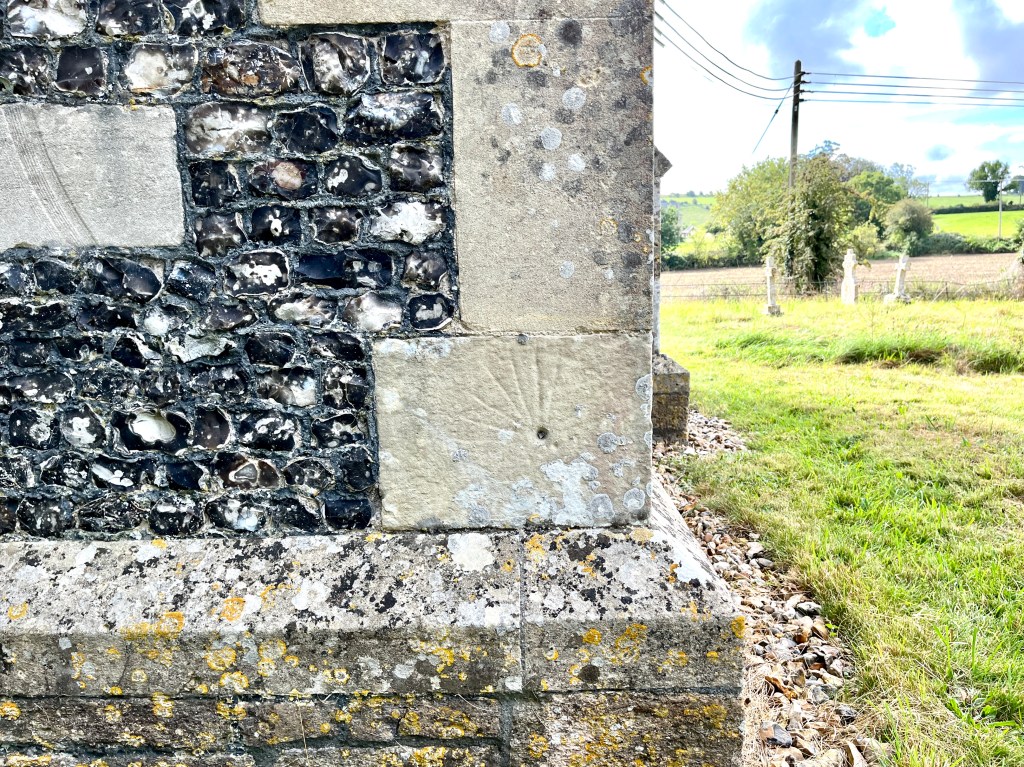
Photo 3 shows the features noted by DEH, including the possible noon hole in the lower joint

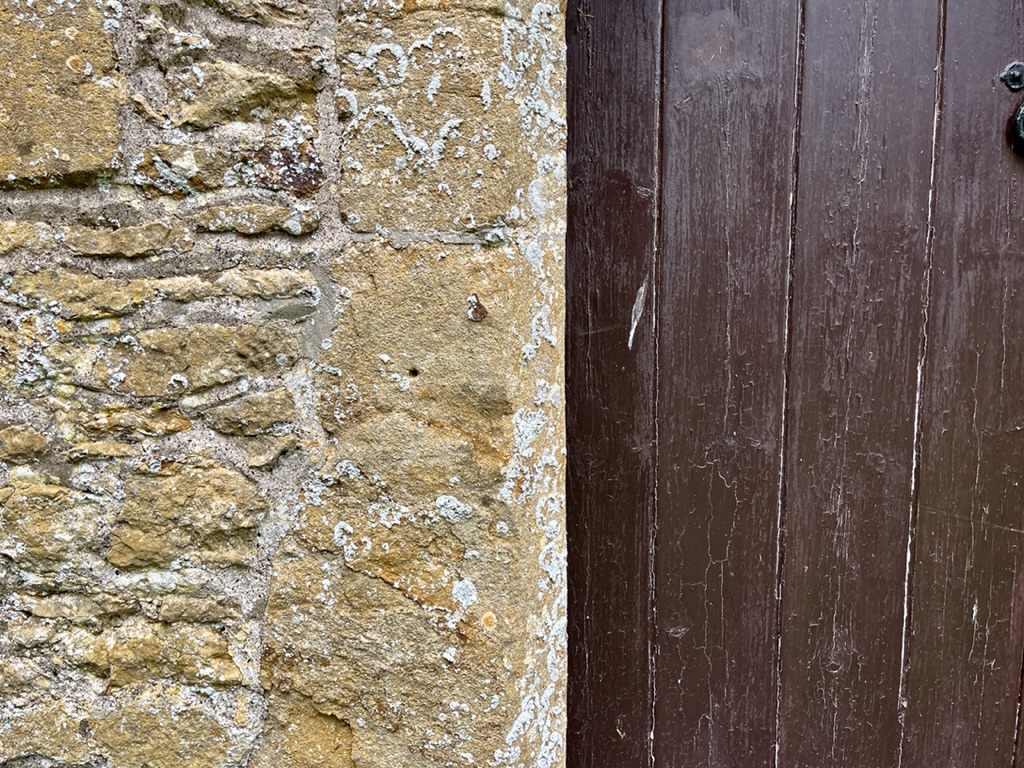
THE BUTTRESS

GSS Category: Scratch Dial; Mass Dial; Hidden Dial

All photos: Keith Salvesen except B&W, Dom Ethelbert Horne

HEYTESBURY . WILTS . ST PETER & ST PAUL – Scratch Dial(s?) & Church Marks

GRADE I Early Church recorded at Hestrebe DB. C12 origin as collegiate church; continuing development to C16; mid-C19 restoration (Butterfield). C13 work of particular note. One of the excellent churches to be found in the Wylye valley between Steeple Langford and Sutton Veny. 51.1821 / -2.1086 / ST925425

DIAL

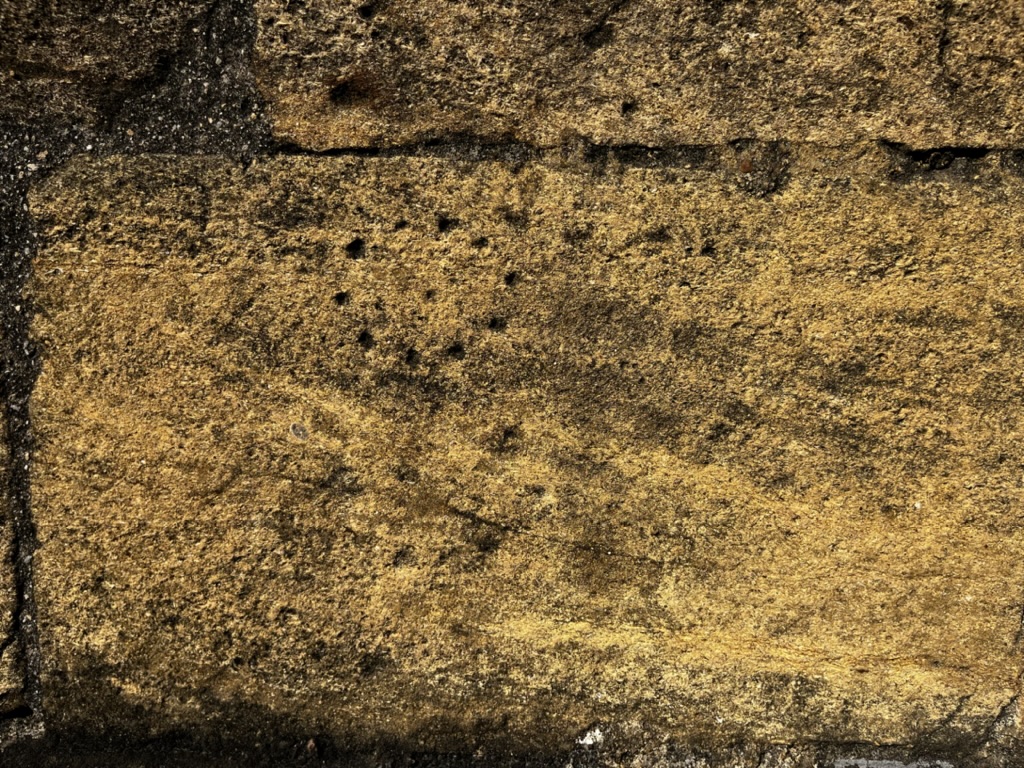
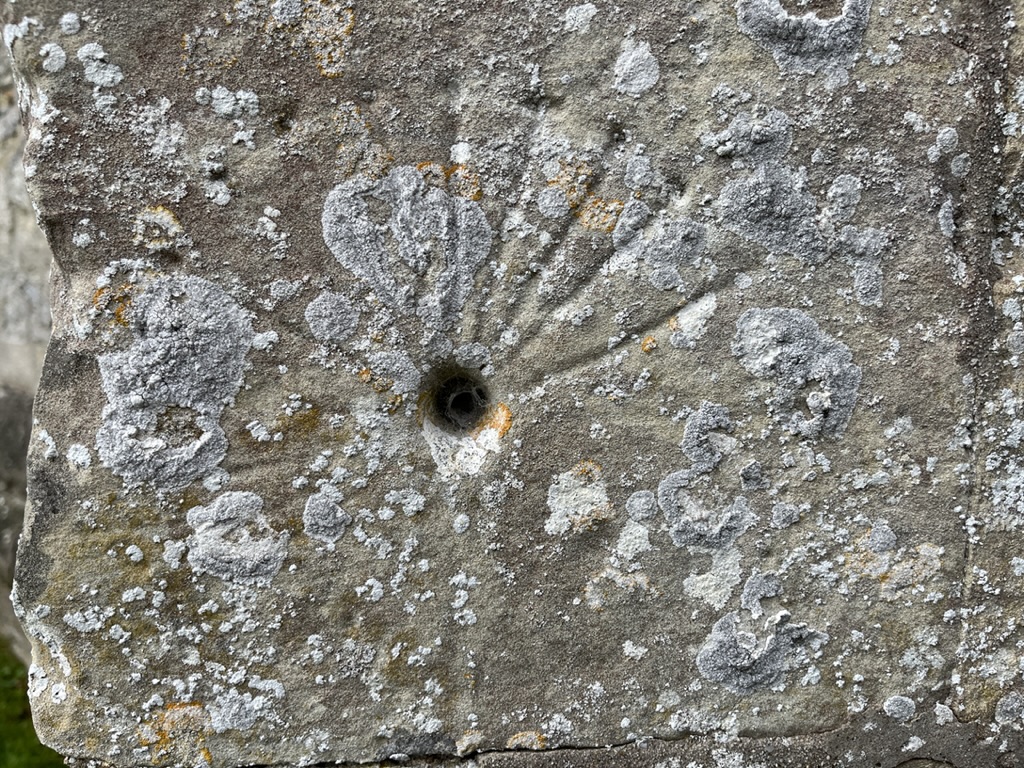
The dial is on the SE face of the angled buttress at E end (by the green tank). It is a fine example of a dial on which all the lines have terminal pocks. At some time it was inverted, and I have shown it reverted below. I cannot find any record of it, BSS or elsewhere.

REVERSION

This dial is primarily a morning dial, with lines marking (in clock terms) the 5 hours from 8 to noon. The deeper lines marking 9 & 10 correspond to the morning Mass time Terce. Possibly, the fainter line LRQ indicates None, another significant time during the day’s observations. In all there are 9 visible lines with terminal pocks during daytime, and a hint of a line above the horizontal in URQ. The vertical ‘midnight’ groove above the gnomon hole can be discounted as part of the dial, I think. It is certainly out of keeping with the carefully thought overall design. Also, it doesn’t reach the gnomon hole.

PLAUSIBLE DIAL?

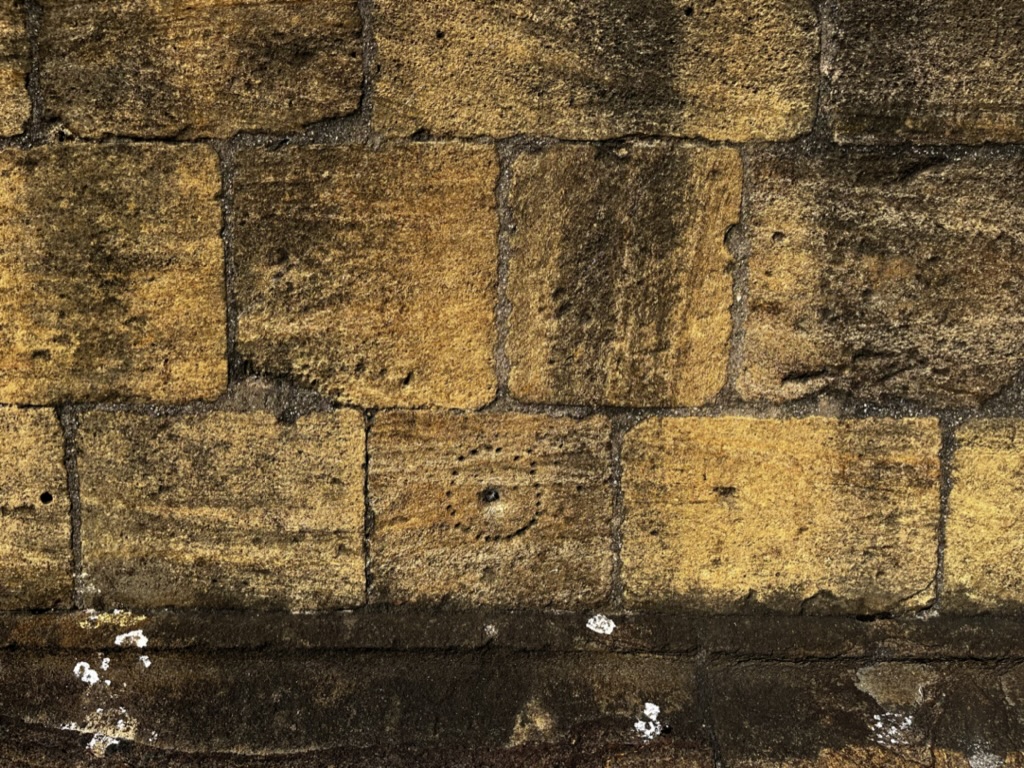
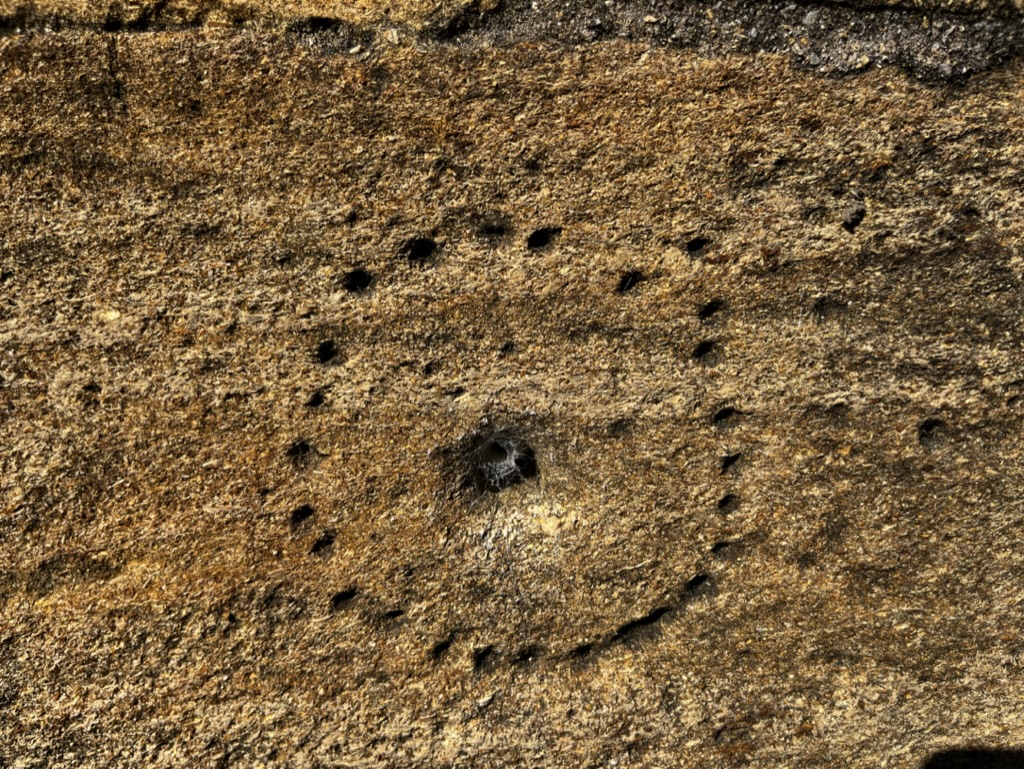
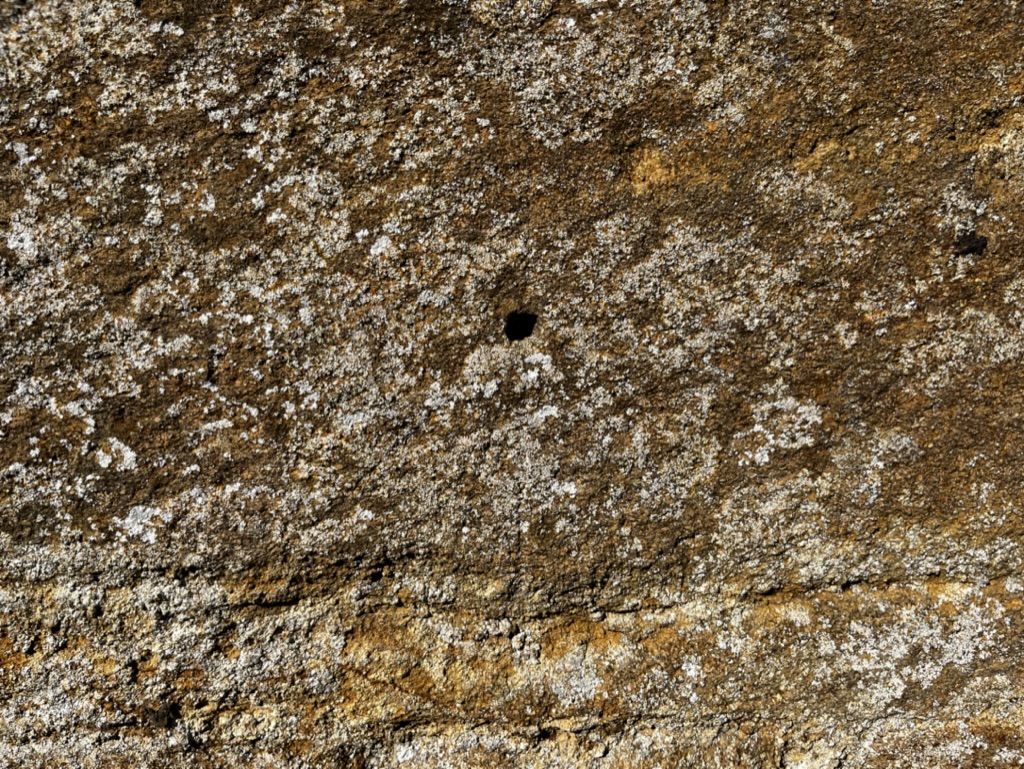
I noticed this patterned stone and photographed it as I walked past. I would very much like it to be a ‘pock-only’ dial. There is certainly a hole close to the centre of the stone, with a pattern of small holes that look crudely drilled, approximately forming a perimeter. Probably I am overthinking this.

CHURCH MARKS

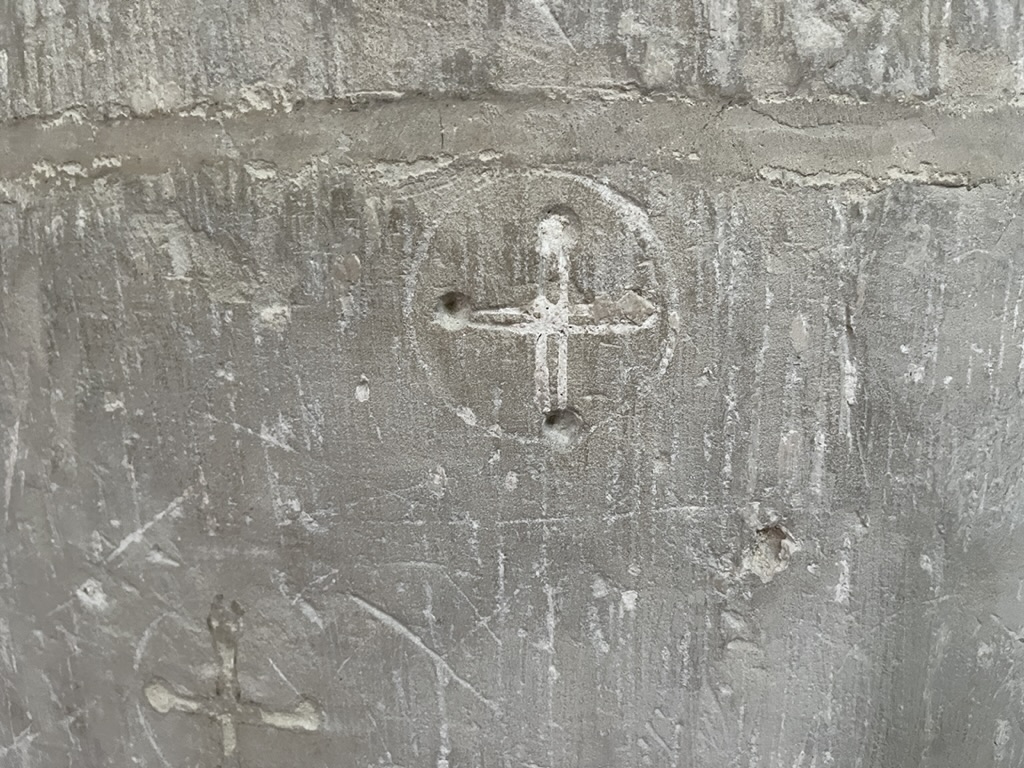
Here is a selection of church marks – masons’ marks, consecration cross; ‘pilgrim’ crosses; graffiti; a small dial-like design that merits further investigation.

GRAFFITI INCLUDING RITUAL PROTECTION SYMBOLS

GSS Category: Scratch Dial; Mass Dial; Church Marks; Consecration Cross; Masons’ marks; Pilgrim Cross; Graffiti

All photos: Keith Salvesen

PUCKINGTON . SOM . ST ANDREW – Scratch Dial

ST ANDREW . PUCKINGTON . SOM

GRADE II* C13 (of which traces), C15, major C19 restoration. An attractive church to visit, close to Barrington Court NT. 50.9606 / -2.8884 / T377182

DIAL

DEH visited in Sept 1912 and recorded: The dial is on the W side of the Priest’s door… 2 early A.M. lines are all that show but the stone is badly weathered and others may have been on it.

The erosion is doubtless worse now. One can just about make out a short horizontal 6-line L side, and a trace line below. Without DEH’s pioneering scratch dial project, I doubt that this little dial would ever have achieved a later mention.

GSS Category: Scratch Dial

All photos: Keith Salvesen
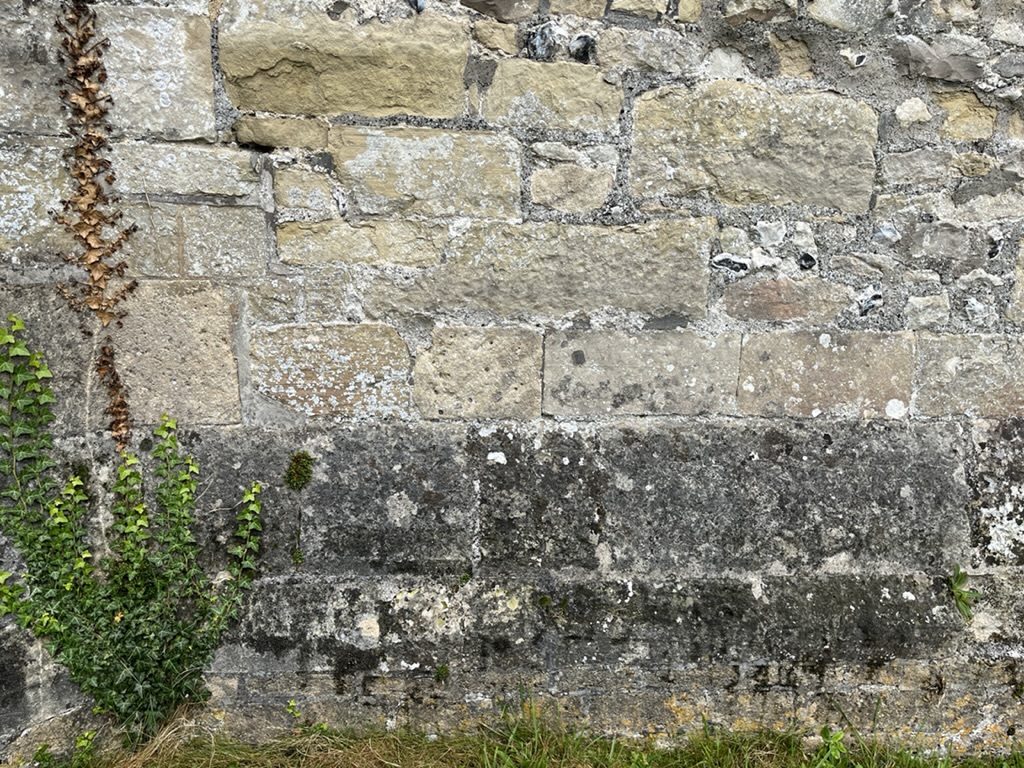
WINTERBOURNE STOKE. WILTS . ST PETER – Multiple Scratch Dials

ST PETER . WINTERBOURNE STOKE . WILTS

GRADE II* C12 origins (recorded 1163); C13 expansion; C15 works, additions (tower). Mid-C19 extensive restorations. C12 font. Consecration crosses. 3m W of Stonehenge. 51.1651 /  -1.8914 / SU076406

An extraordinary and diverse collection of dials on a lovely church that is a short walk from the dreaded A303. The village is the first traffic choke-point on the road W of Stonehenge. Who would guess, inching forwards in your car where pedestrians daily take a life-or-death decision when to cross, that a lane to the south offers such a rich treat?

DIALS

St Peter is a multiple scratch dial church. Estimates vary of precisely how many: perhaps 8 or 9, depending on individual interpretation. BSS records 4. The range of plausibility covers all bases: obvious dials, probable dials, possible dials, not-a-dials. Some candidates – whole or partial – may simply be decorative. Others look promising but are unlikely to work as dials in design or (present) position. I have grouped various candidates, accepting that my choices may be lightly contentious. Note that I have mostly not specified locations. I started (2 visits) on the SE corner, if that helps. I have given links below with helpful details. Anyway, a multi-dial church is always a pleasing challenge for locating them.

DIAL 1

A simple dial on a RHS window jamb, consisting of 2 circles and a central gnomon hole. The double rings, badly eroded, look compass drawn. There are no visible lines, nor any pocks.

DIAL 2

On a LHS window jamb, a plugged gnomon hole with very little else remaining. Enlarging the image reveals a faint trace of what might once have been a circle; and the ghost of a noon line.

DIAL 3

A much clearer dial on a quoin stone, though quite badly eroded. Originally it was presumably a complete circle of lines with terminal pocks. Only about 12 lines and 9 pocks are visible.

DIAL 4

Another quoin stone dial, with 2 lines emerging downwards from the gnomon hole, diverging either side of noon. L line possibly has a terminal pock; R line is badly eroded, barely visible. It’s hard to make sense of the bent grooves LLQ – somewhat pointless as parts of a dial.

DIAL 5

Dials 5, 6, and 7 are collected together in corner, one above the other. Dial 5 is at the top. Heavy-handed repairs have been carried out in this area. The gnomon hole is in the mortar line, with 4 defined radials and traces of 1 or 2 more. There’s a hint of an arc LRQ, perhaps the remains of a semi-circle.

DIAL 6

The lowest dial of the 3. Again the gnomon is in the mortar line. It looks as though the dial stone must have split vertically at some time. 3 lines LRQ, the noon line less deeply cut. The single line LLQ corresponds to the Mass time Terce.

DIAL 7 (?)

Dial 7 is (as others note) a doubtful dial, and I share reservations. It would certainly work in a most rustic way, with a stick in the large hole and the smaller indentation below denoting noon. However, in a multi-dial church one might expect something rather more complex or decorative..

DIAL 8 (?)

Again, this design is taken to be a dial, which it may well be. I’ve never seen one quite like it, with a short arc at one side with no sign of a semi- or complete circle. The large deep hole has a minimal cut at noon, hardly a call to prayer. I wonder if this is in fact apotropaic in purpose, a protection symbol to ward off evil.

DIAL 9 (?)

I originally discounted this as a dial but reviewing photographs made me look more closely. The slapped-on filler helps to the extent that it suggests a gnomon hole in the mortar line that was large enough to need filling. There is a faint near-vertical that might be a noon line with a pock to mark it; and a hint of a line with a pock at roughly 9 / Terce. Doubtful.

SEMI-CIRCLES

Although these semi-circles are generally included in mentions of the dials of St Peter’s, I have reservations, in particular for the double circle in the fine archway. It is very large for a scratch dial, and the church is quite small to require such a one. There are no marks – radials, pocks, numbers – to suggest use as a dial. I wonder if is an example of simple compass-drawn decoration on a large scale. Also the blocked door and its arch are set back, with a buttress in front on either side. The position is a most unlikely one for enabling the community to mark the passage of the day.

This double semi-circle is more dial-ish, but is still quite large, with (it seems) damage but no relevant dial marks. Too small in diameter to be the other half of the semicircle above.

A segment of a single circle on the edge of a clean-edged stone, clearly re-sited at some time. If a dial, one would expect there to be lines / pocks in the lower half ie from 6 to noon.

NOT-A-DIALS

I include these without conviction that any one of them is a dial. The top one, similar to Dial 8 above and on the same kind of stone, is simply a shallow hole. There’s no hint of another relevant mark.

A very helpful analysis by the Parish Council of the dials of St Peter is recommended HERE

GSS Category: Scratch Dial; Mass Dial; Multiple Dials

All photos: Keith Salvesen; Winterbourne Stoke PC (A. Shuttleworth)

LITTLE LANGFORD . WILTS . ST NICHOLAS OF MYRA – SCRATCH DIAL . HEXFOIL . TYMPANUM

ST NICHOLAS OF MYRA . LITTLE LANGFORD . WILTS

GRADE II* C12 – C15; Wyatt restoration 1864. Myra (as Church Notice Board; OBS); also, Mira. Charming small church in Little Langford (not nearby Steeple Langford as mostly given in refs) down a side road off a side road. A pleasure to visit and of considerable interest. C12 font bowl; a fine tympanum with symbolic carvings; a large hexfoil re-sited high up on E end N quoin; and – most relevant here – an excellent scratch dial re-sited as quoin stone low down W end of N side (cf Litlington E Sx). 51.1288 /  -1.933 / SU047366

DIAL

Re-purposed, inverted, and making a fine quoin stone. 9 lines (2 faint). Deeper cut noon line. An afternoon dial presumably with Observance ± None.

HEXFOIL

Very visible once noticed re-sited high up N side of E end

TYMPANUM

Well worth examining closely to work out the symbolism before looking it up on HE / BLB

GSS Category: Scratch Dial; Mass Dial; Re-sited dail; Inverted dial; Hexfoil; Tympanum

All photos: Keith Salvesen
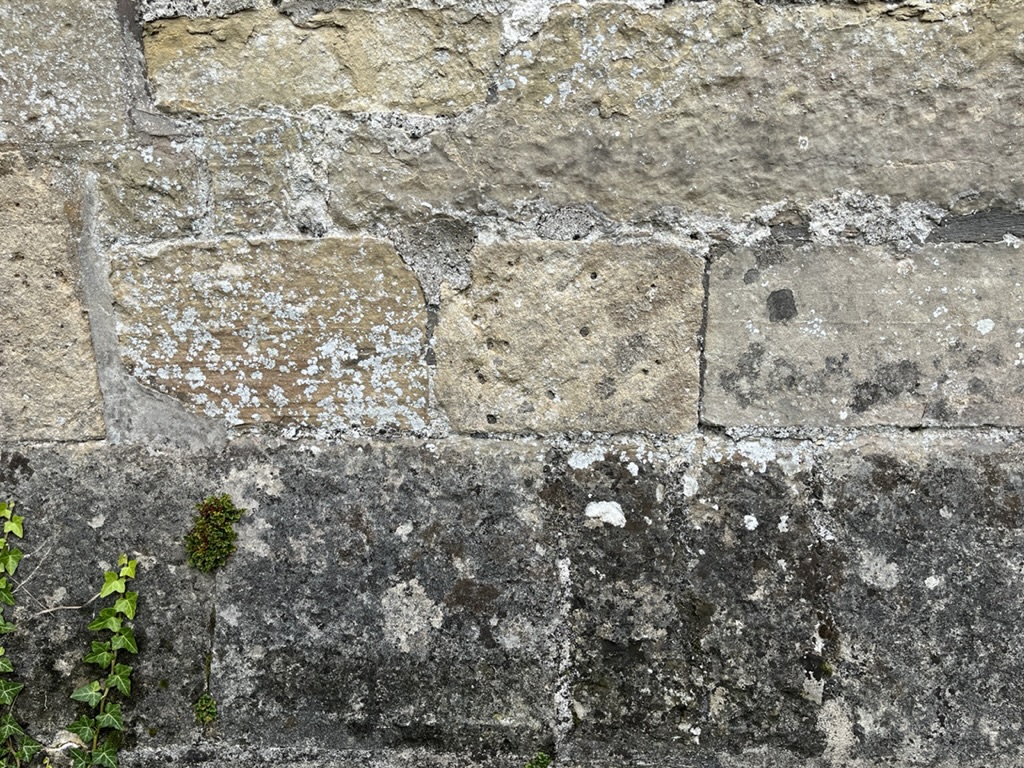
WYLYE . WILTS . ST MARY – Scratch Dial (2)

ST MARY . WYLYE . WILTS

GRADE II* C13 origins; C15 expansion; 1846 rebuilding by Wyatt. Wonderful pulpit. Well positioned beside an excellent pub to quench congregational thirst after righteousness. An ideal peaceful country church, despite being just S of the hectic A303 raceway. 51.1389 / -1.9898 / SU008377

DIAL 1


I very recently featured the inverted dial on the nave wall, tucked away quite low down on E side of the buttress.

Almost immediately I was contacted by Lee Baines, pointing out that I’d missed a mass dial in poor condition (but at least right way up) with standard three radials in SW quadrant. By chance I was passing Wylye yesterday, and I am pleased to be able to correct the omission so soon.

DIAL 2

The dial is a good example of a less common feature. The joint between 2 stones acts as an emphasised noon line, with the gnomon hole in the mortar line above it. The mortar line doubles as a 6-to-6 line. There are 3 lines in LLQ, neither straight nor accurately leading to the gnomon hole. The deeper cut line corresponds approximates the Mass time Terce. The overall lack of finesse of this rustic dial suggests that it is rather earlier than Dial 1.

GSS Category: Scratch Dial; Mass Dial

All photos: Keith Salvesen; many thanks to Lee Baines for pointing out my omission

FISHERTON DE LA MERE . WILTS . ST NICHOLAS – Scratch Dial

ST NICHOLAS . FISHERTON de la MERE. WILTS

GV II* C12 origins; C13 records; C15; restorations 1833 J Davis, 1861 W Hardwick; and 1912. Now redundant. Cast-iron plaque records 1833 rebuilding. Surprisingly large for a small community hidden away on the banks of the Wylye river (nb close to a very busy A303 intersection; check a map or you may miss the little side-road and could be going back and forth for some time. Close to Wylye. 51.146 / 51°8’45″N / -2 / 2°0’0″W  SU000385

DIAL

Part of the original dial stone was at some stage relocated and reused as a building block in a most unexpected place. You will find it N side, low down on the side of a buttress, facing W. In its working days, it must have been a fine marker of the passage of the day.

From the visible fragment one can tell that the dial was almost certainly cut over 2 (or more?) stones. The double circle – faintly seen RHS – gives an idea of the overall size.

Rotation of the stone 90º anticlockwise reveals well-defined XI – noon – I lines

GSS Category: Scratch Dial; Mass Dial

All photos: Keith Salvesen

CODFORD . WILTS . ST PETER – Scratch Dial

ST PETER . CODFORD . WILTS

GV II* C13, C15, 1863 restoration by T.H. Wyatt. PEV notes Very well preserved C9 Saxon cross shaft with fine carving… against north wall of chancel. Worth visiting close-by St Mary (no dial), an agreeable church. 7m SE of Warminster. 51.1586 / -2.0503 /  ST965399

DIAL

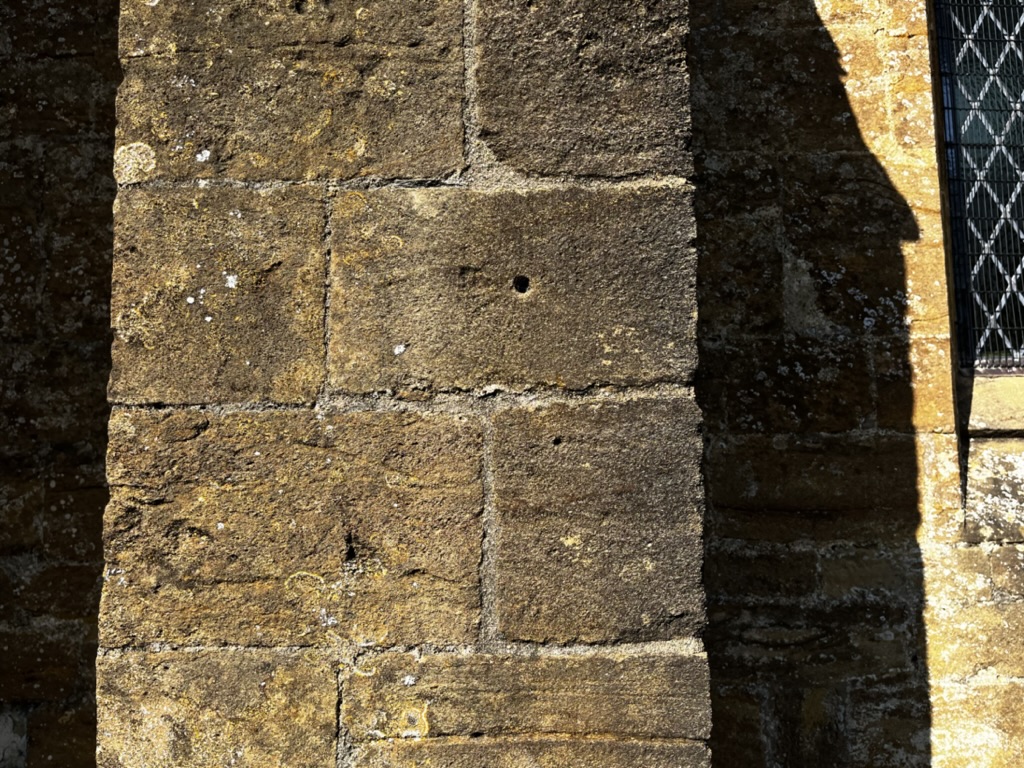
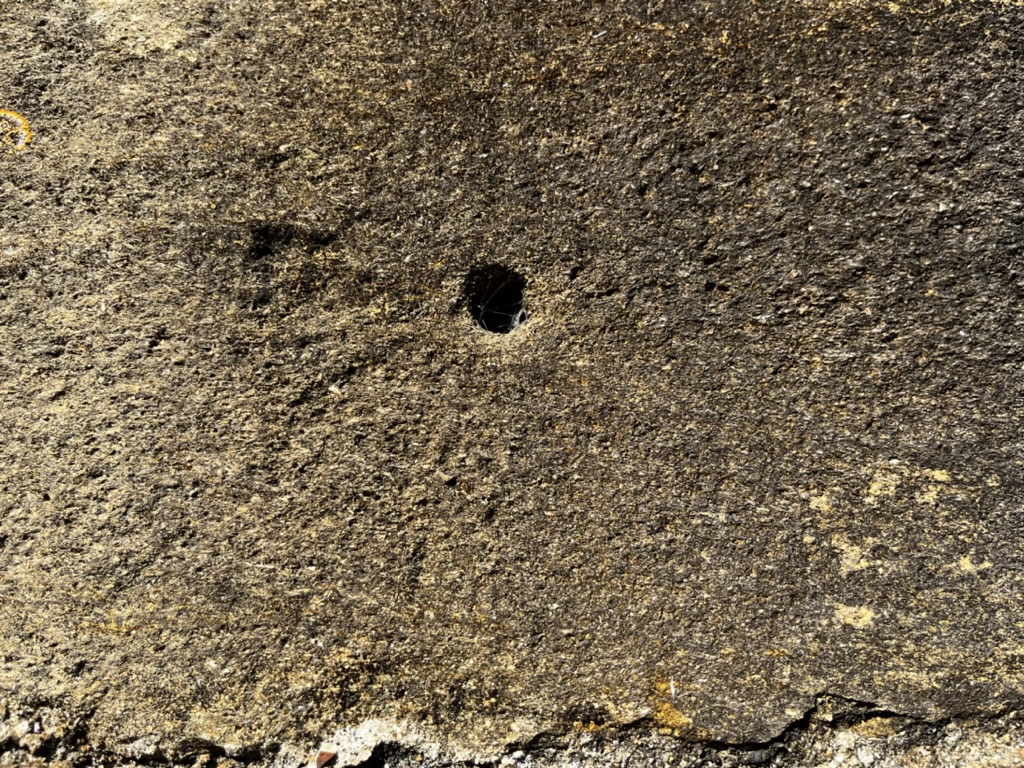
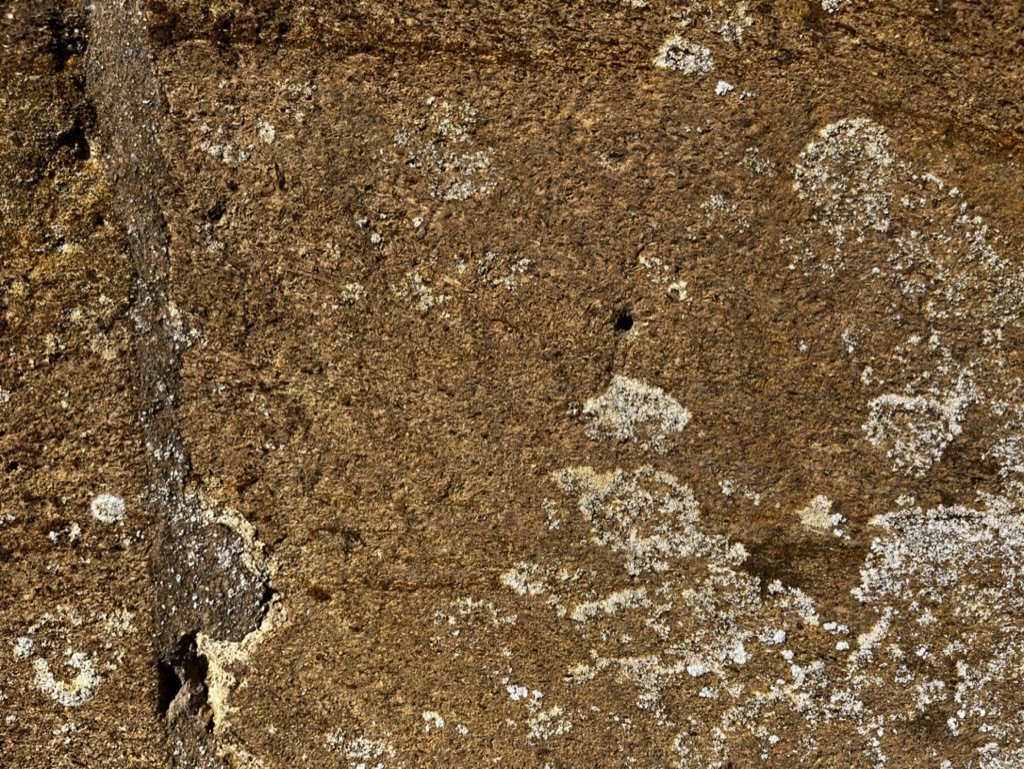
An enigma: the dial recorded for St Peter gives the details shown below. However at the position and height specified is a single hole drilled near the centre of the stone. There are no markings whatsoever that I could make out. I looked at similar locations on the S side without success.

Chancel, S wall, to R of priest door. Height 1.4m. Worn.
Dial (Norman?) with tides, with duodec., sometimes both. Mason-cut or roughly scratched

I realise this is a disappointing post. On balance I decided it would be worth writing up. This visit was part of a 3-day project with the Wylye Valley churches. I also failed to locate the dial at nearby Knook; and I didn’t get a full score for the multiple dials noted at Stockton (17) and Sutton Veny (9). There were a couple of new finds to even up the score. Not all older records are accurate; then again, neither am I… Any guidance with the dial(s) on this Church would be welcome.

GSS Category: Scratch Dial

All photos: Keith Salvesen

WYLYE . WILTS . ST MARY – Scratch Dial (1)

ST MARY . WYLYE . WILTS

GRADE II* C13 origins; C15 expansion; 1846 rebuilding by Wyatt. Well positioned next to an excellent pub for congregational thirst after righteousness. An ideal peaceful country church, despite being just S of the hectic A303 raceway. 51.1389 / -1.9898 / SU008377

Addendum: just after posting this, I was told of a dial I had missed (thanks, Lee). By coincidence we were driving past Wylye the next day. Separate post for Dial 2 HERE

DIAL

The dial is on the nave wall, tucked away quite low down on E side of the buttress where the tower joins the nave. It is upside down, suggesting that the stone was reused during building work – a plausible theory is that inversion indicated that a dial had outlived its original purpose.

REVERTED DIAL

Assuming a 180º turn, this is an afternoon dial, with the lines in the quadrant R of the noon line indicating the important part of the day for observance corresponding with the canonical hour None.

GSS Category: Scratch Dial; Mass Dial

All photos: Keith Salvesen

CHITTERNE OLD CHURCH (Chapel of St Mary) . WILTS – Scratch Dial

CHAPEL OF ST MARY (CHITTERNE OLD CHURCH) . WILTS

GRADE II*St Mary recorded by at least 1319, date of the first known vicar. Chancel built c.1450; survived demolition of the rest of the church; used as a mortuary chapel. NB this is not Wyatt’s fine flint and limestone church of 1863, All Saints, in the centre of the village. You will have to seek out this tiny single cell churchlet – with its impressively large churchyard – via a narrow path behind a dejected-looking pub. 51.1943 /  -2.0163 / ST989438-

DIAL

St Mary has a single dial R of first window. It would be easy to overlook – unusually for a scratch dial it is 2.5m high. Centred in dial stone, with 9 lines encircled in a double ring.

GSS Category: Scratch Dial

All photos: Keith Salvesen