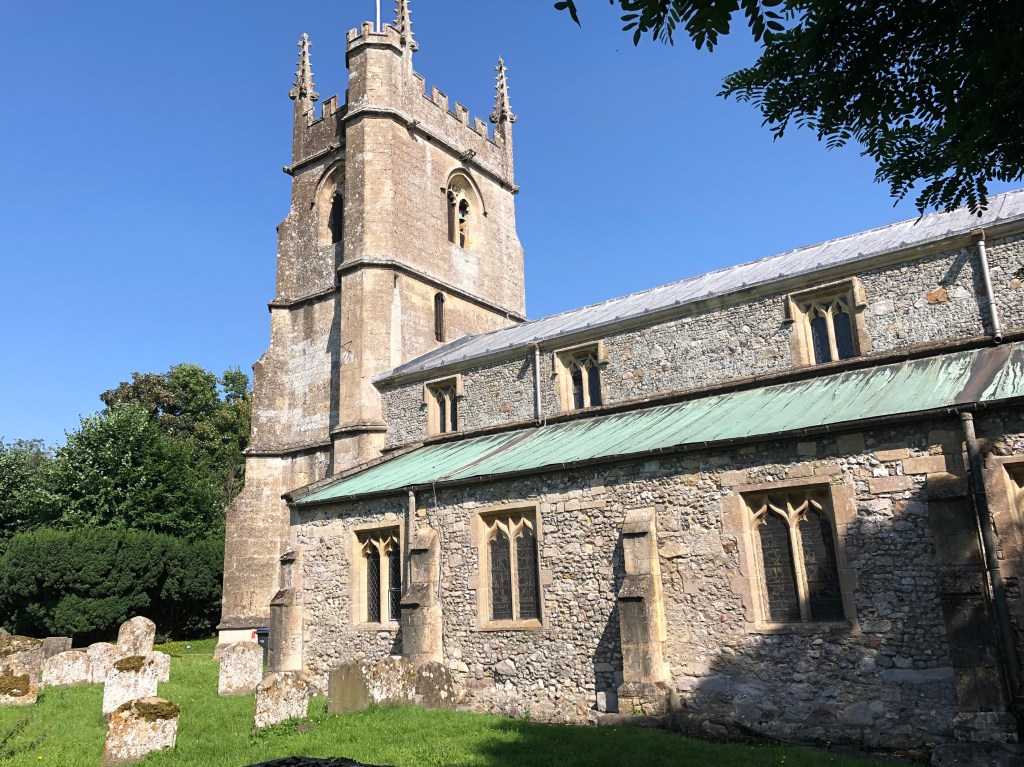
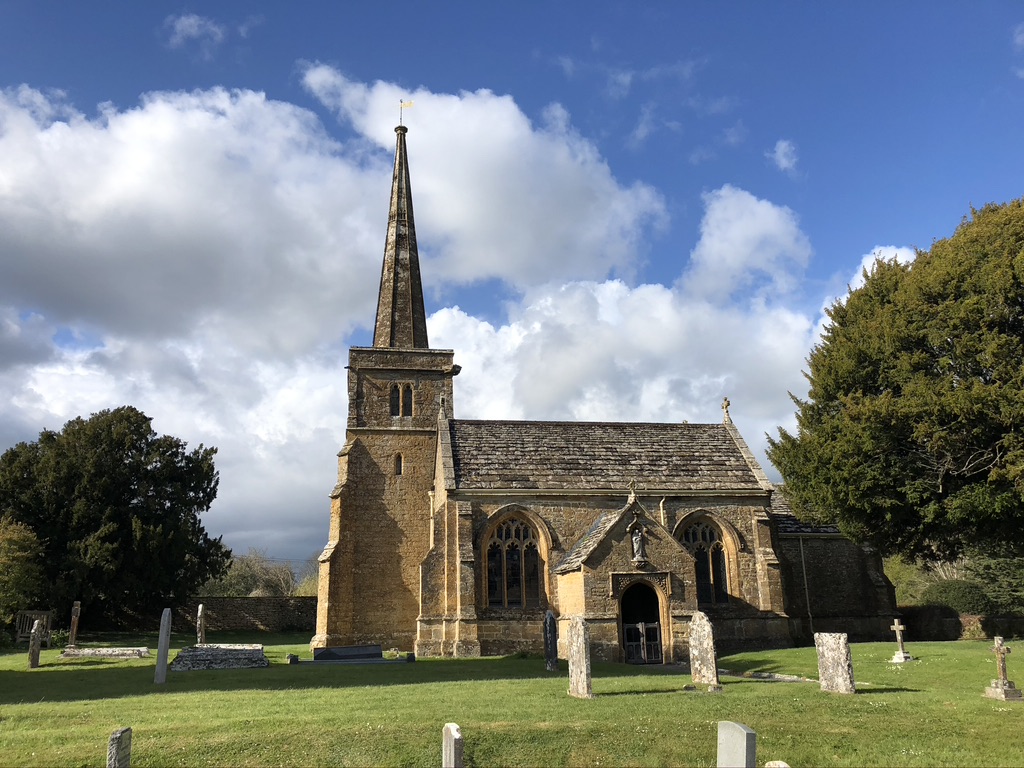
PRESHUTE . WILTS . ST GEORGE – C18 sundial

St George . Preshute . Wilts

SUNDIAL . ST GEORGE . PRESHUTE

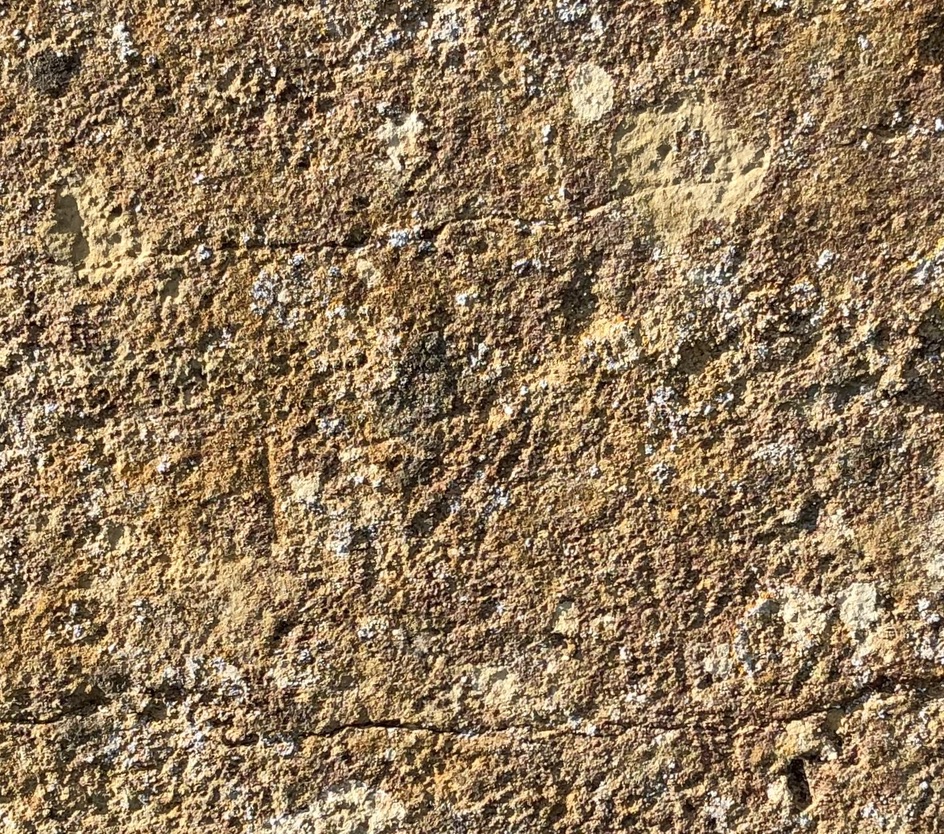
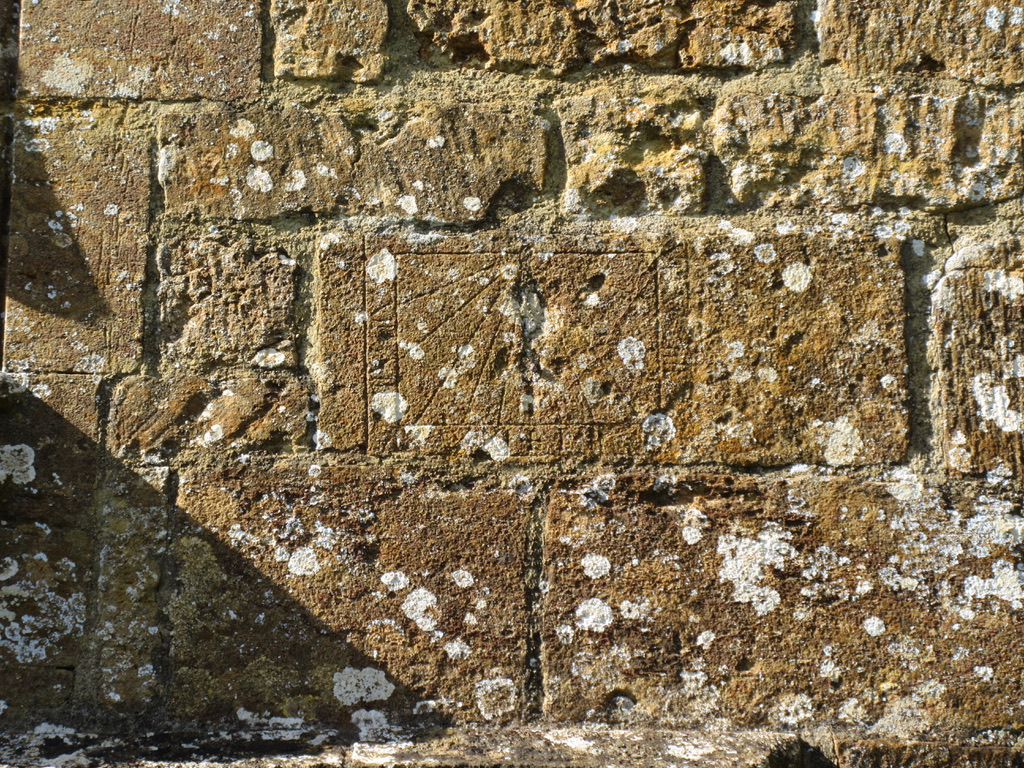
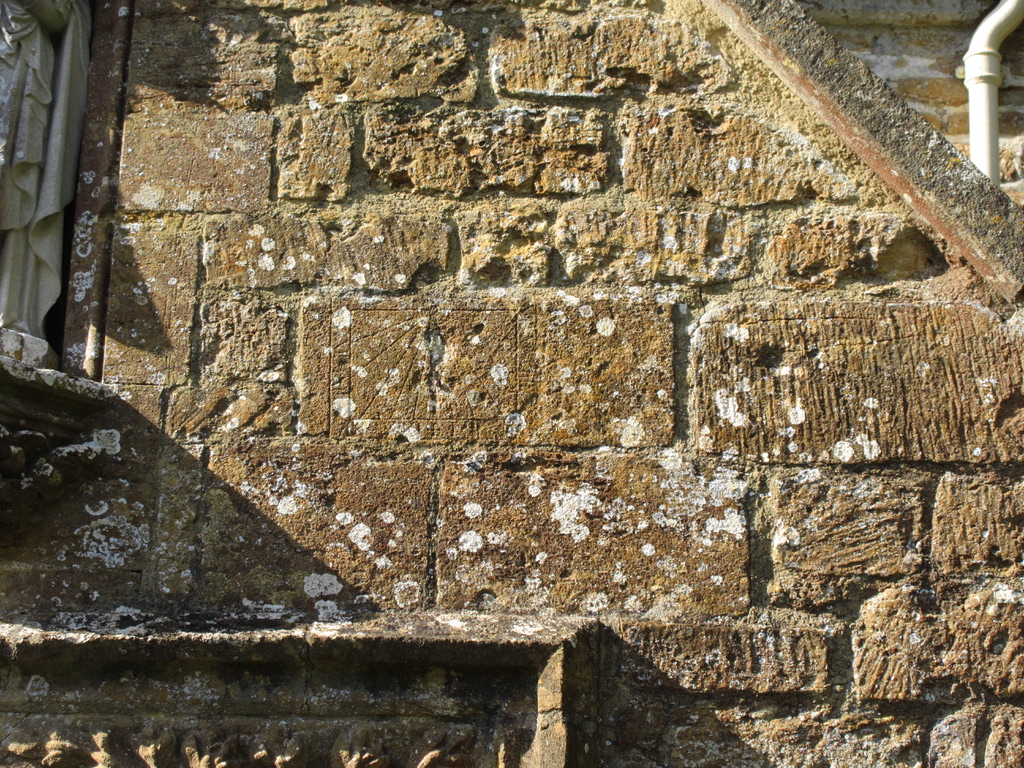
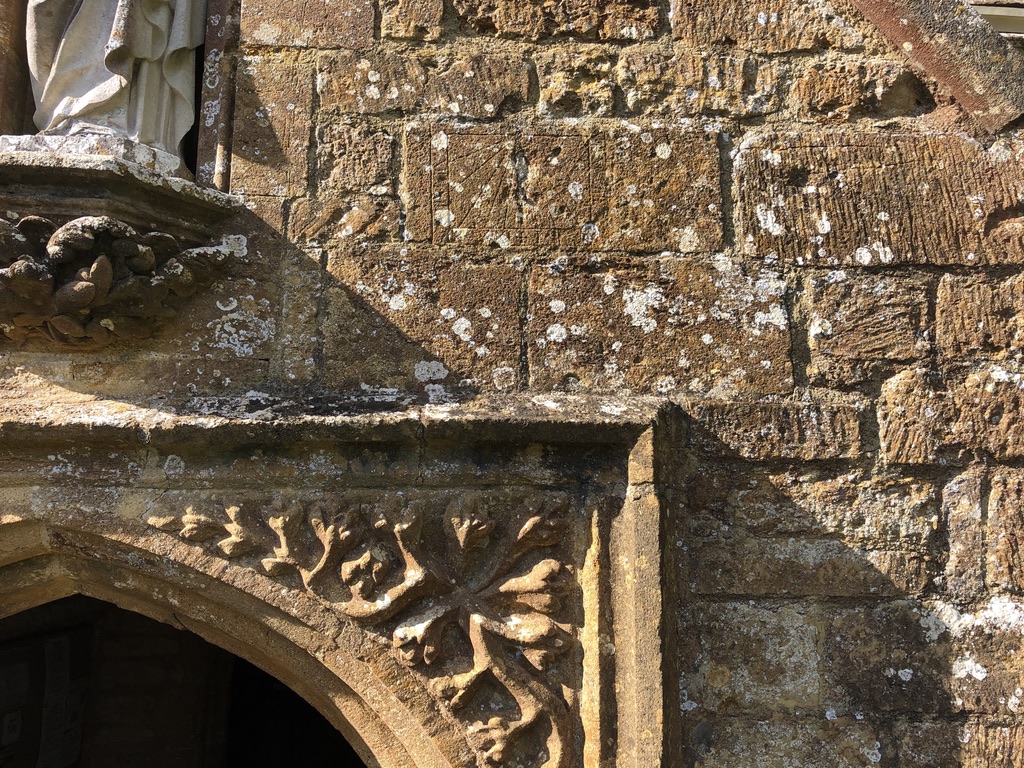
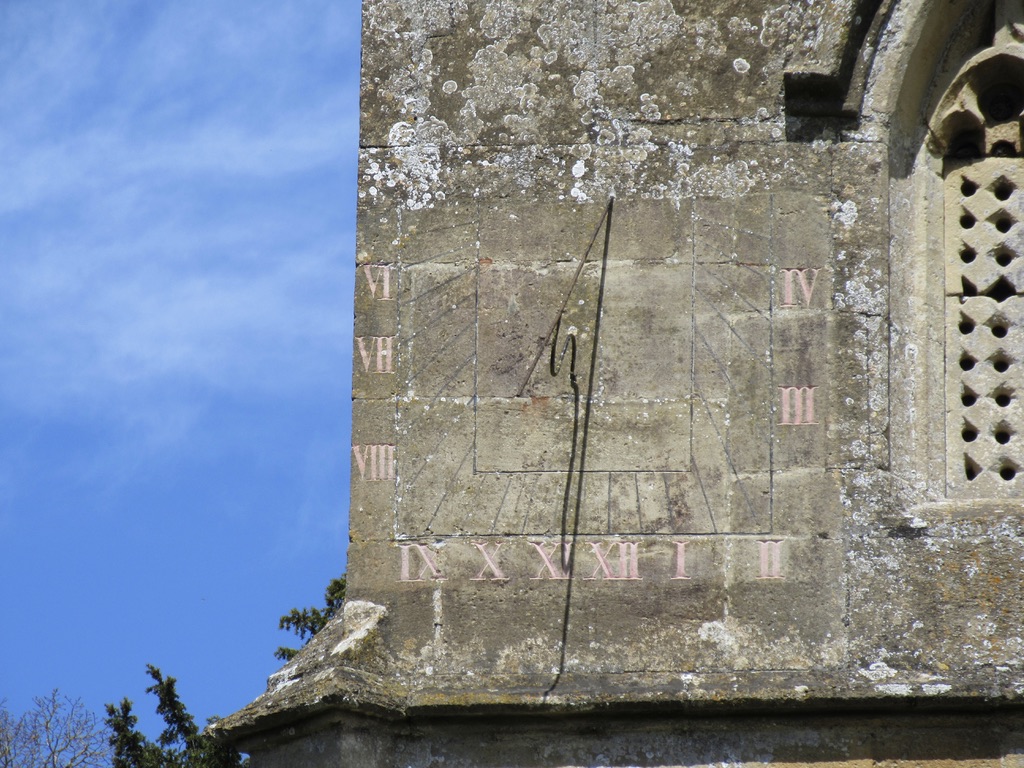
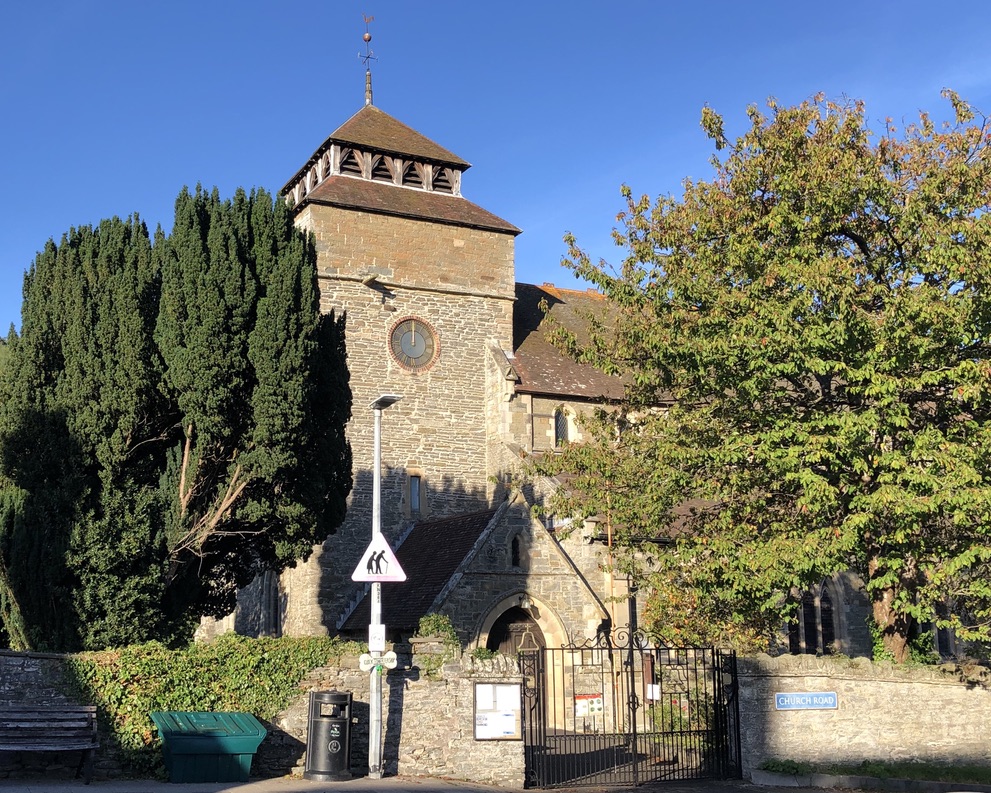
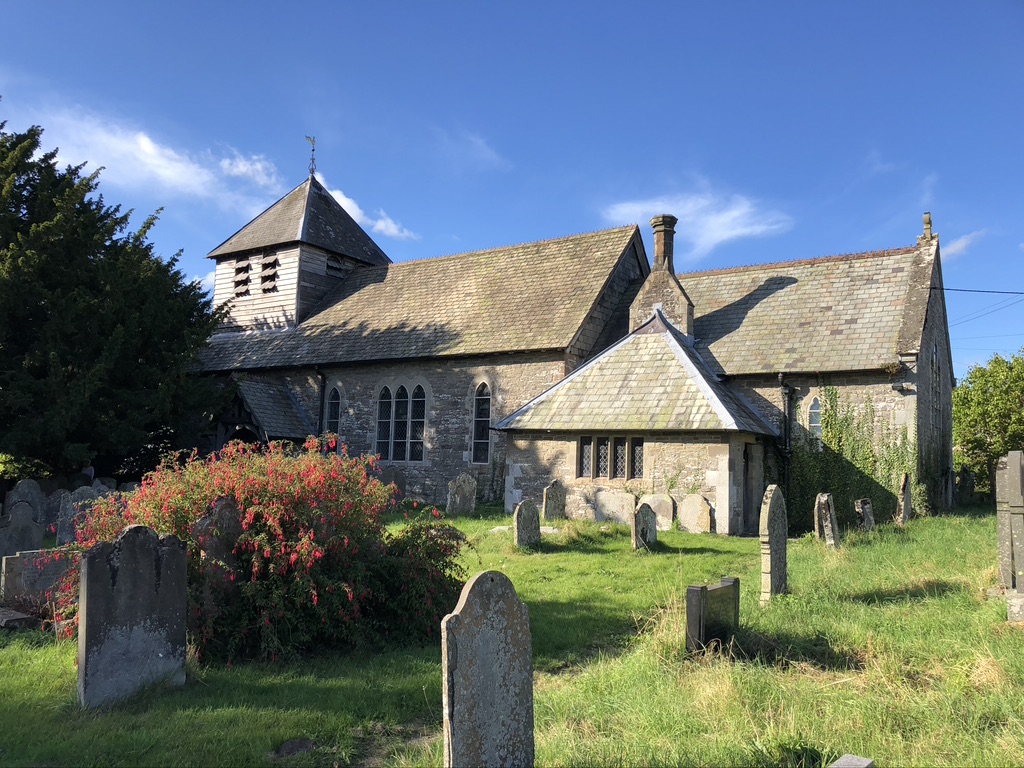
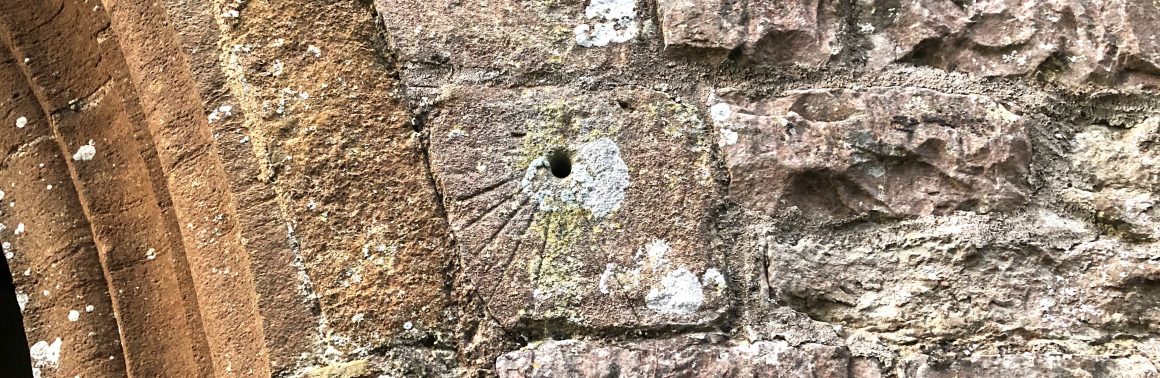
High up on the third stage of the C15 tower is a magnificent C18 sundial. A border of Roman serif numerals from 6am to 4pm frame a complex design of carefully graduated radials that mark the hours and the half hours. The large but slender gnomon casts a long shadow.

St George . Preshute . Wilts – the sundial on the tower

The imbalance in the hour marks – 6 to the left of the noon line, 4 to the right – presumably arises from the orientation of the church and its relation to the angle of the sun (though that’s probably not the correct technical way to express it).

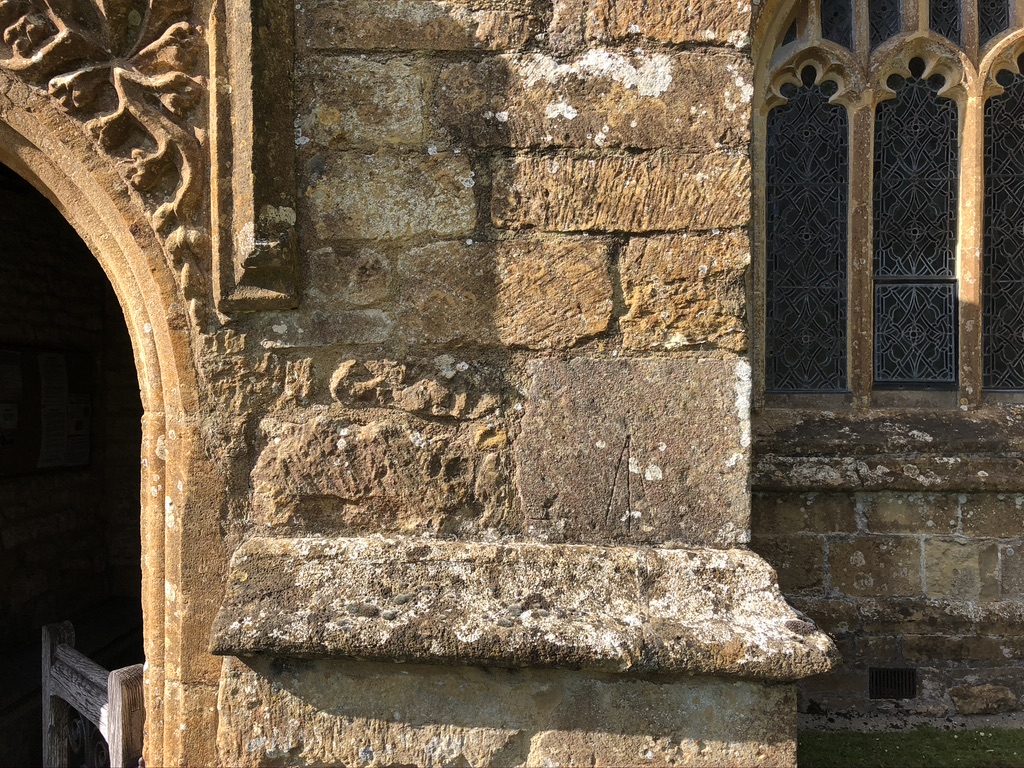
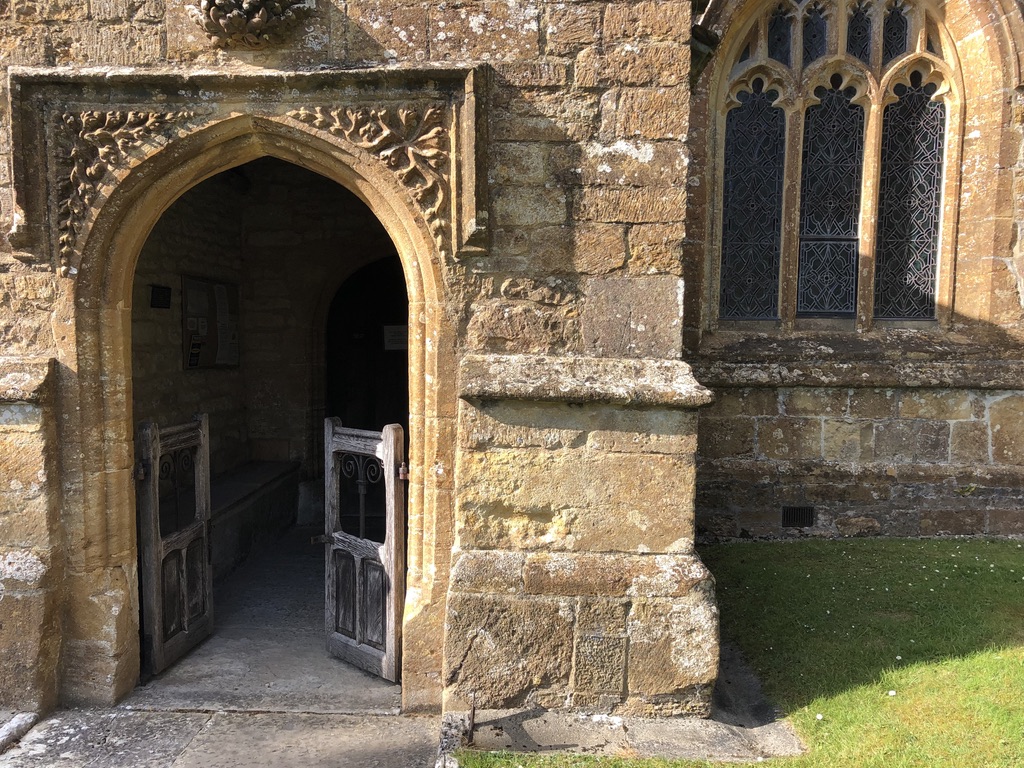
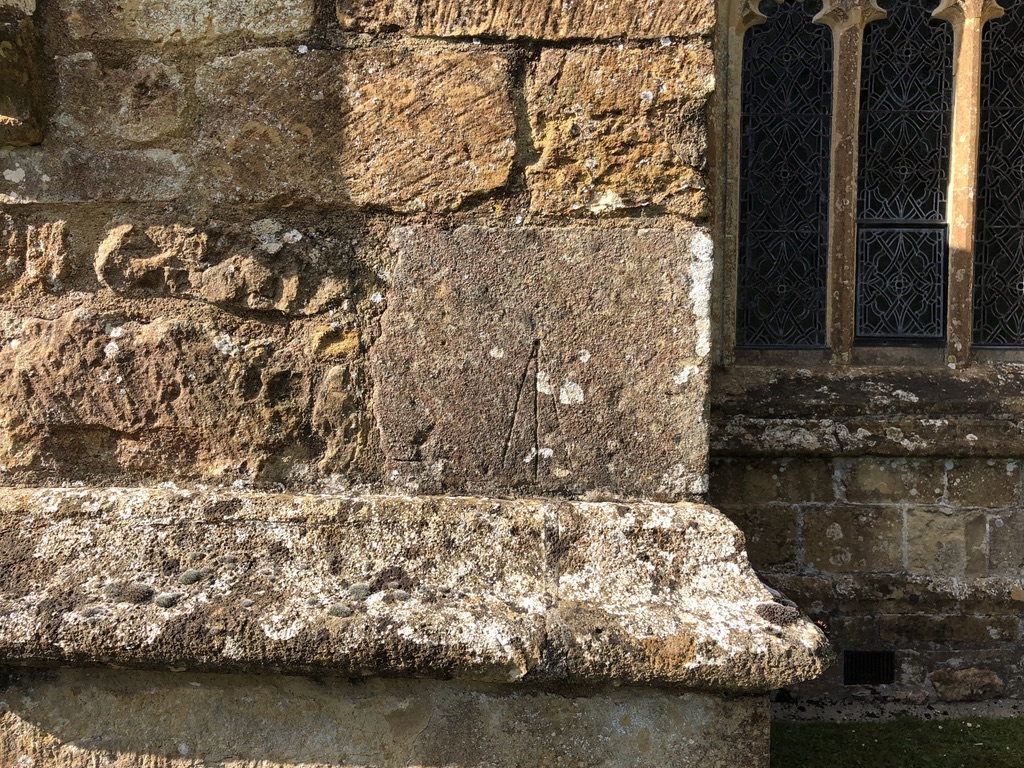
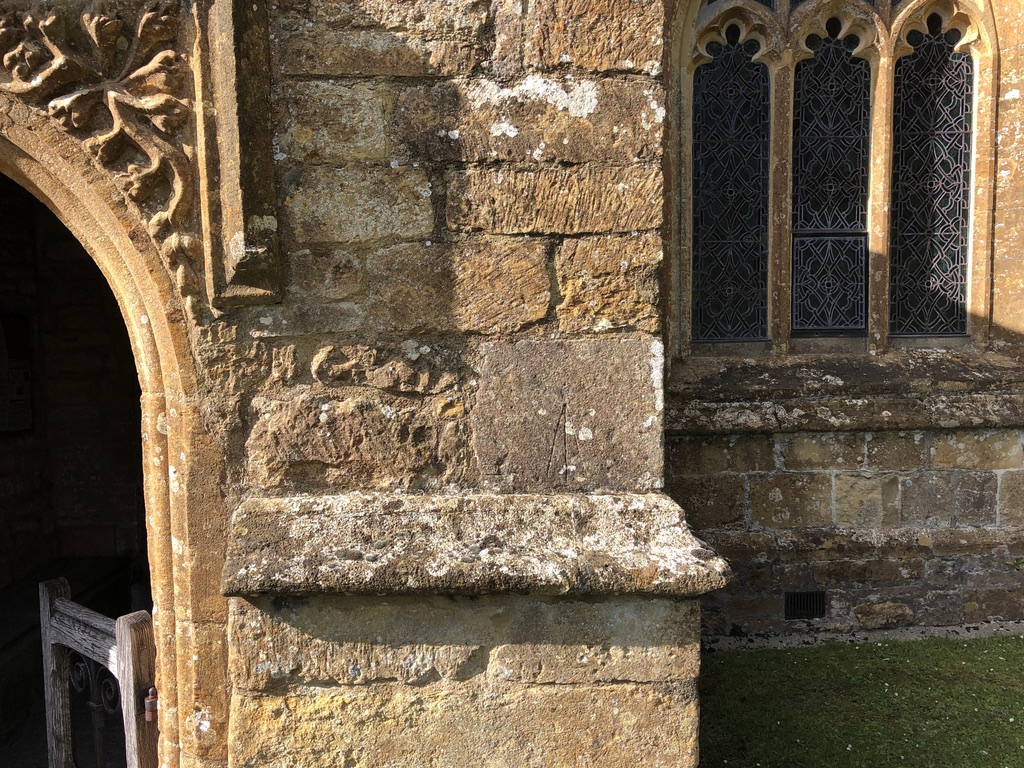
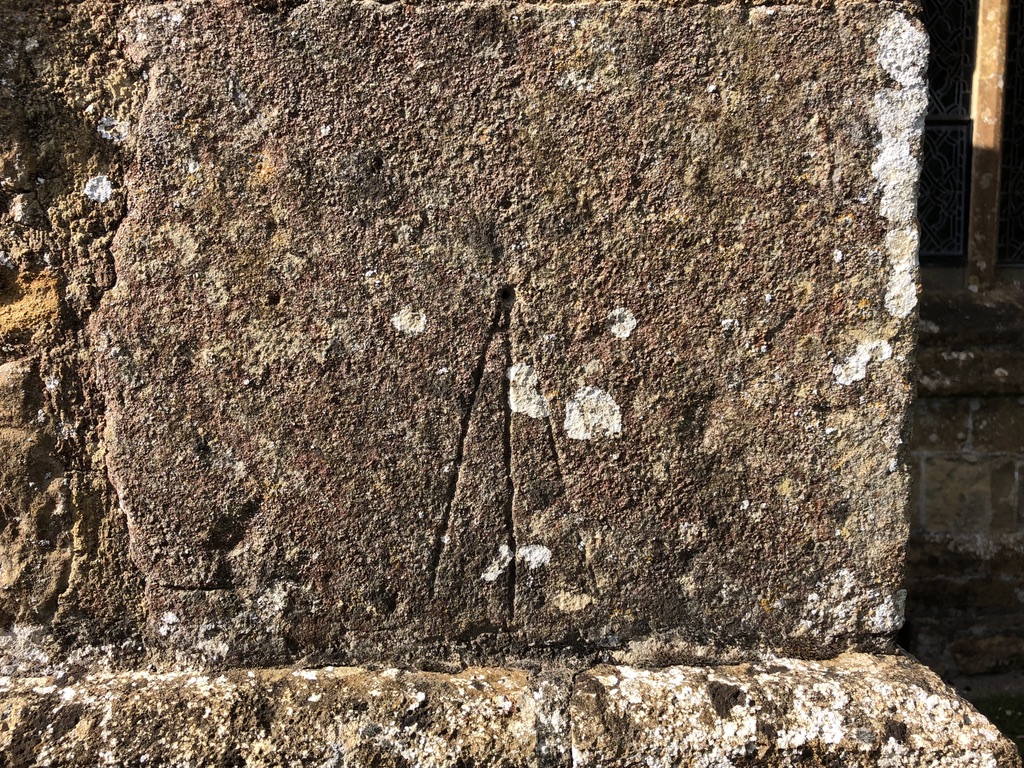
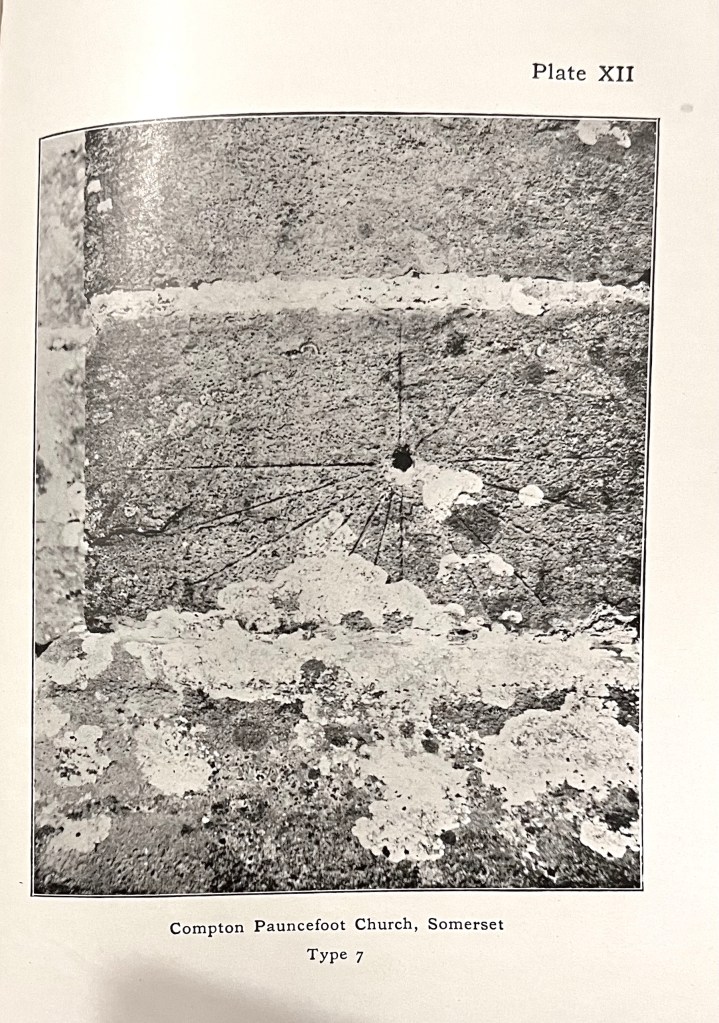
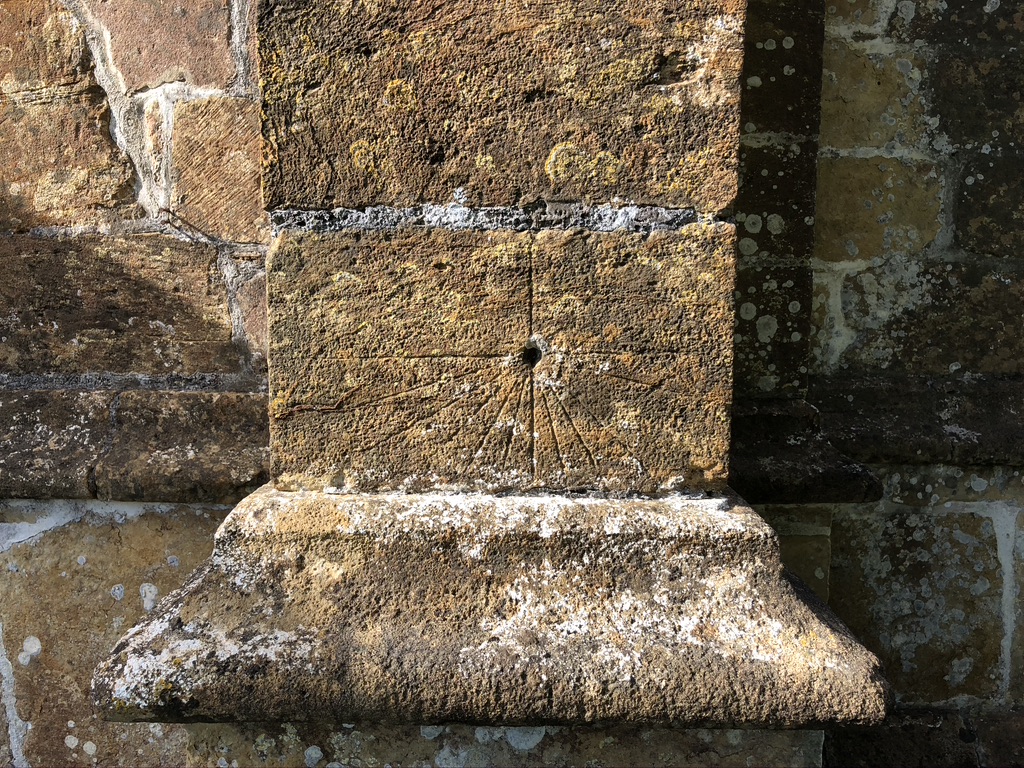
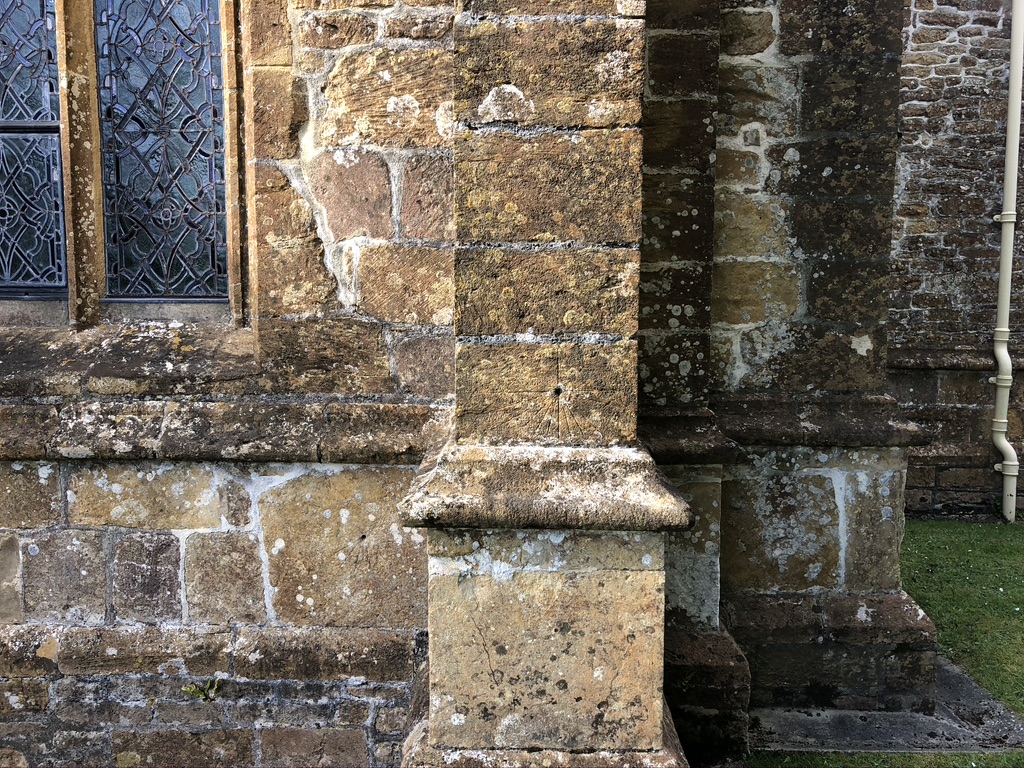
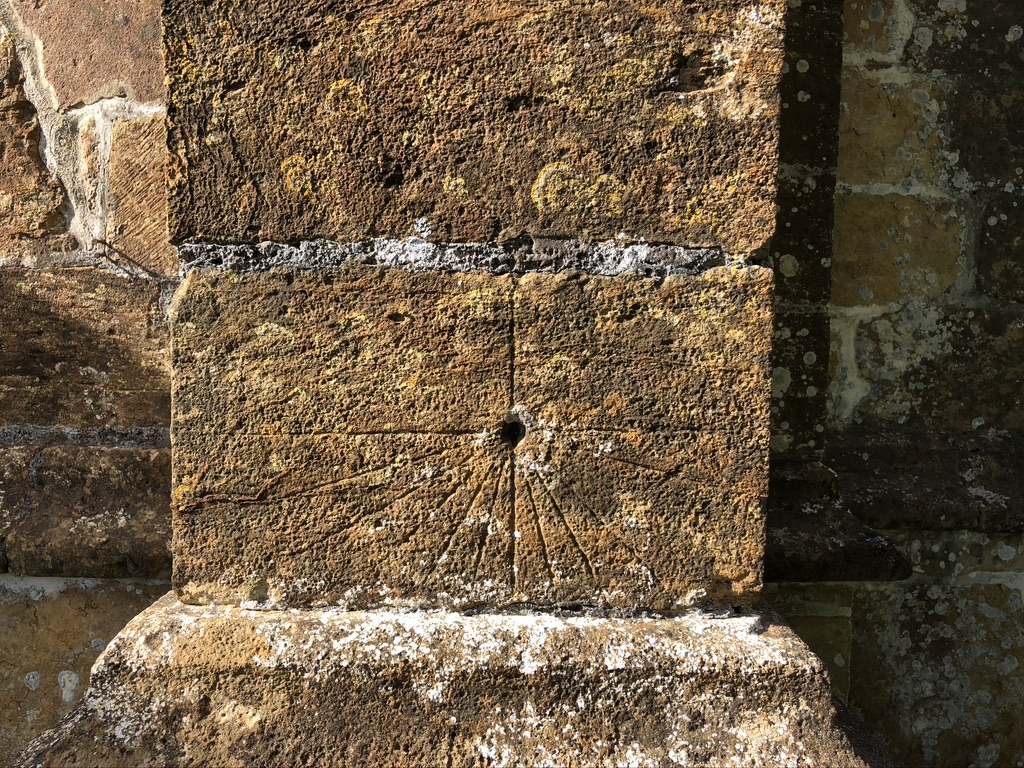
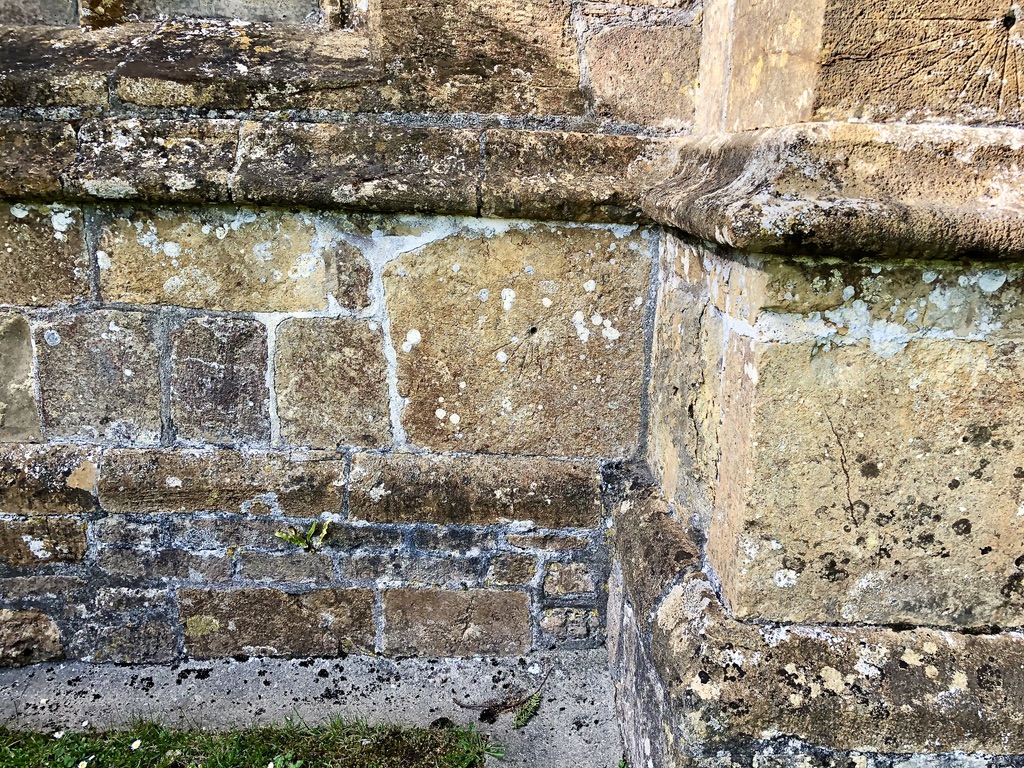
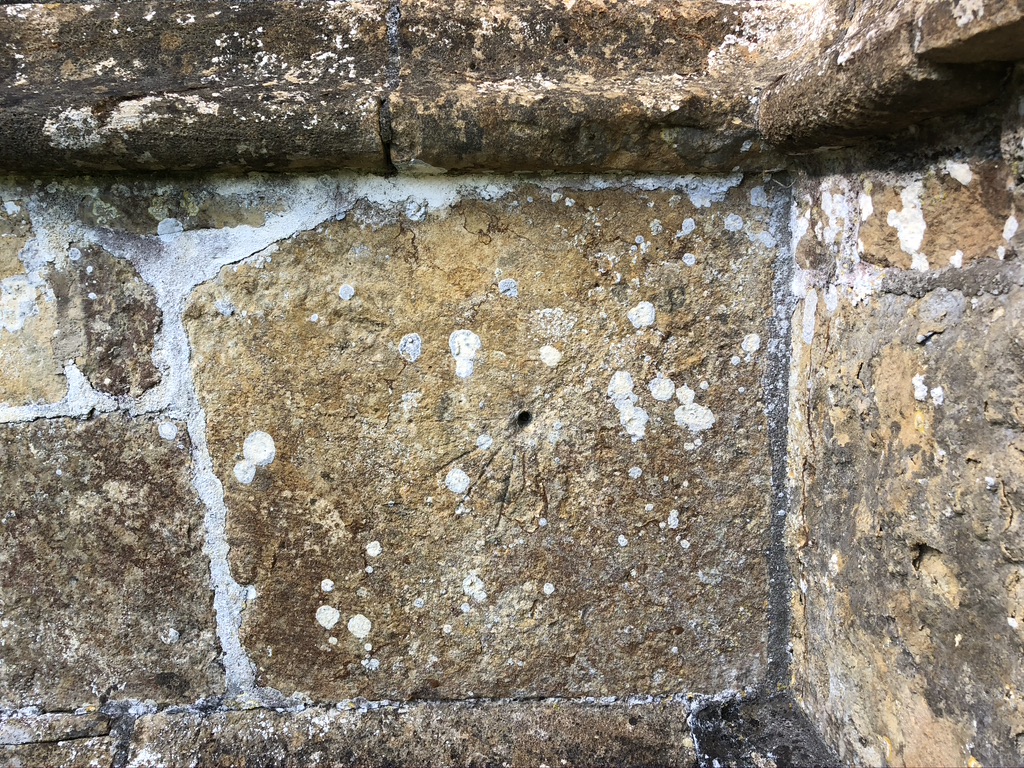
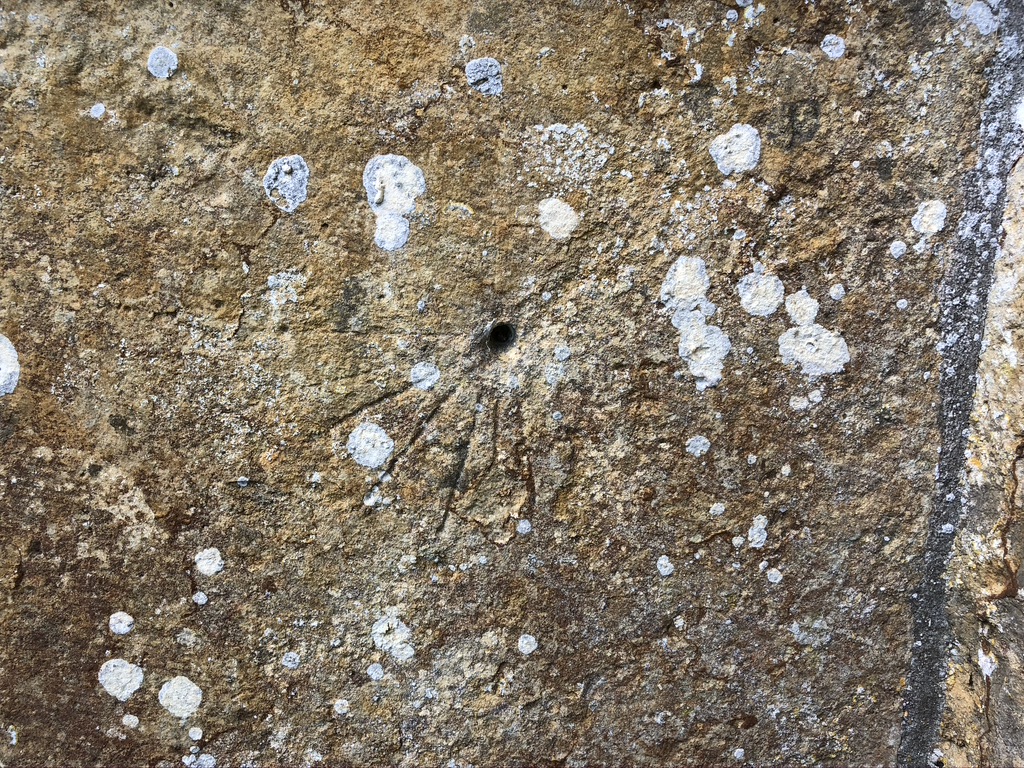
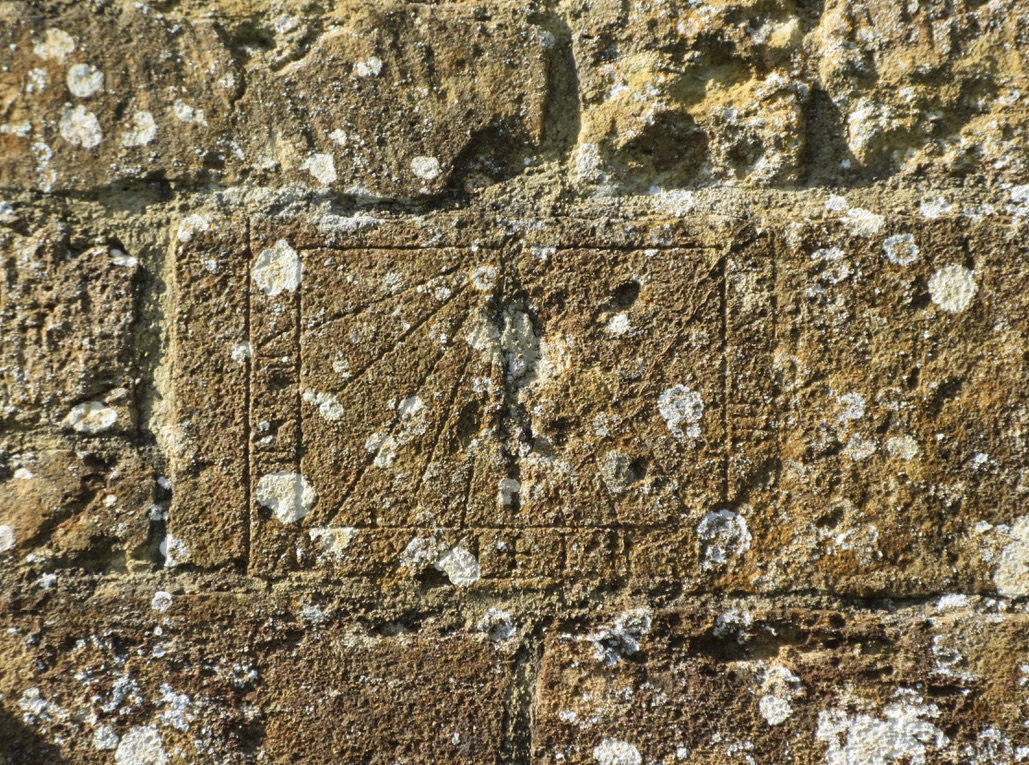
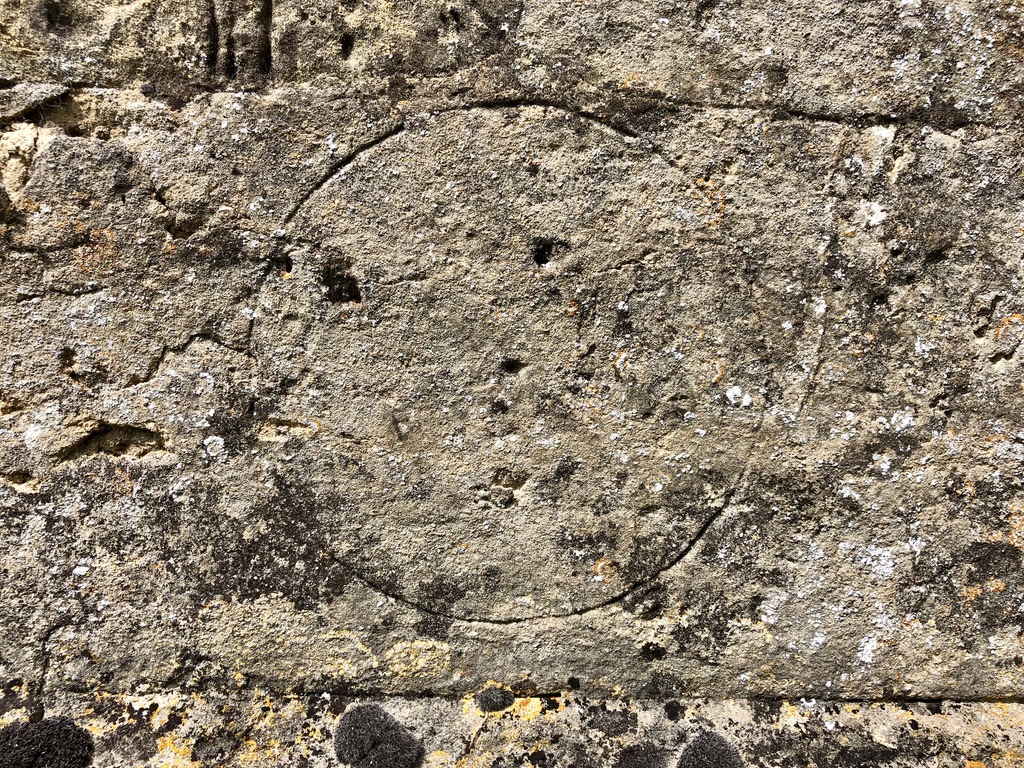
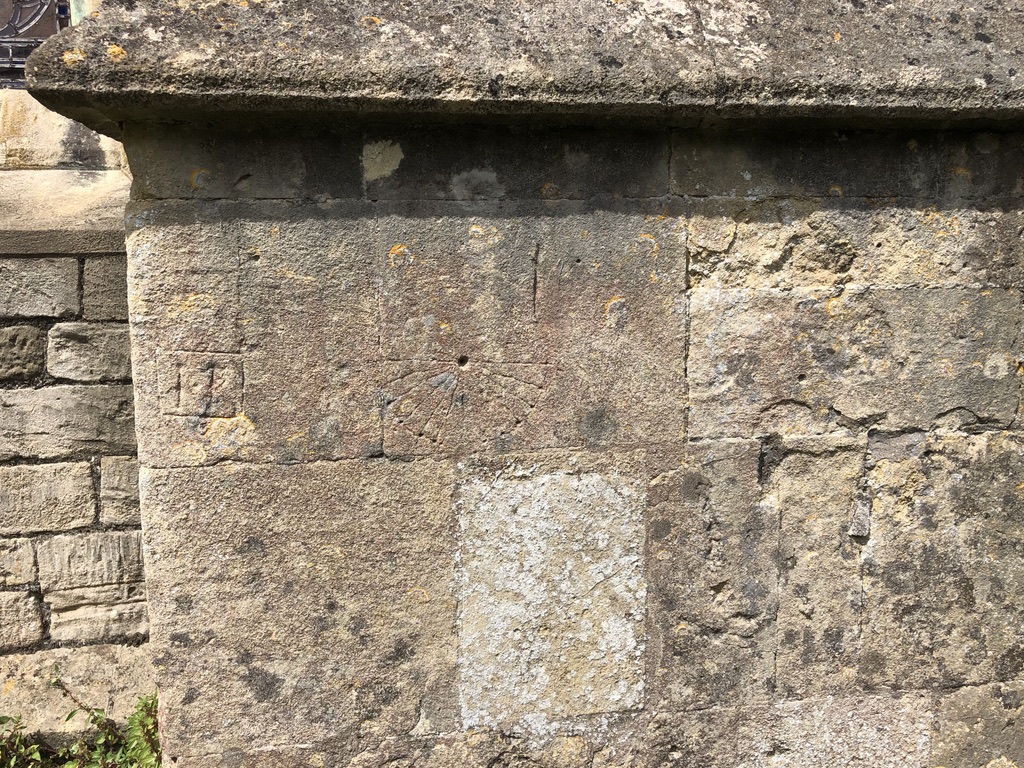
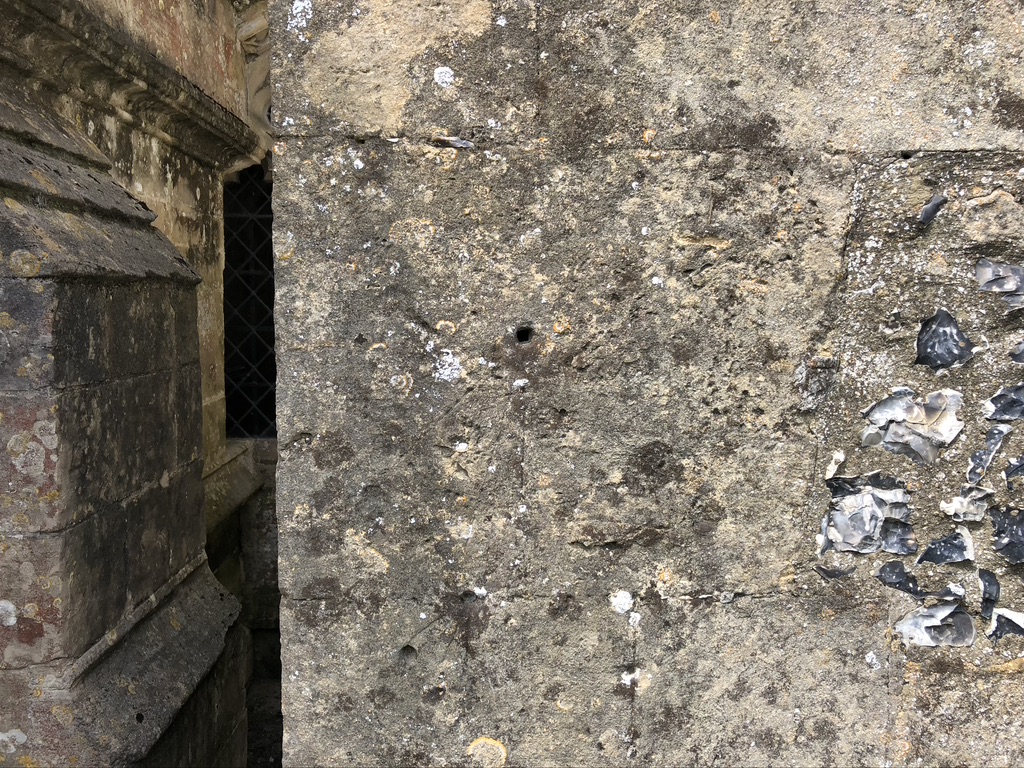
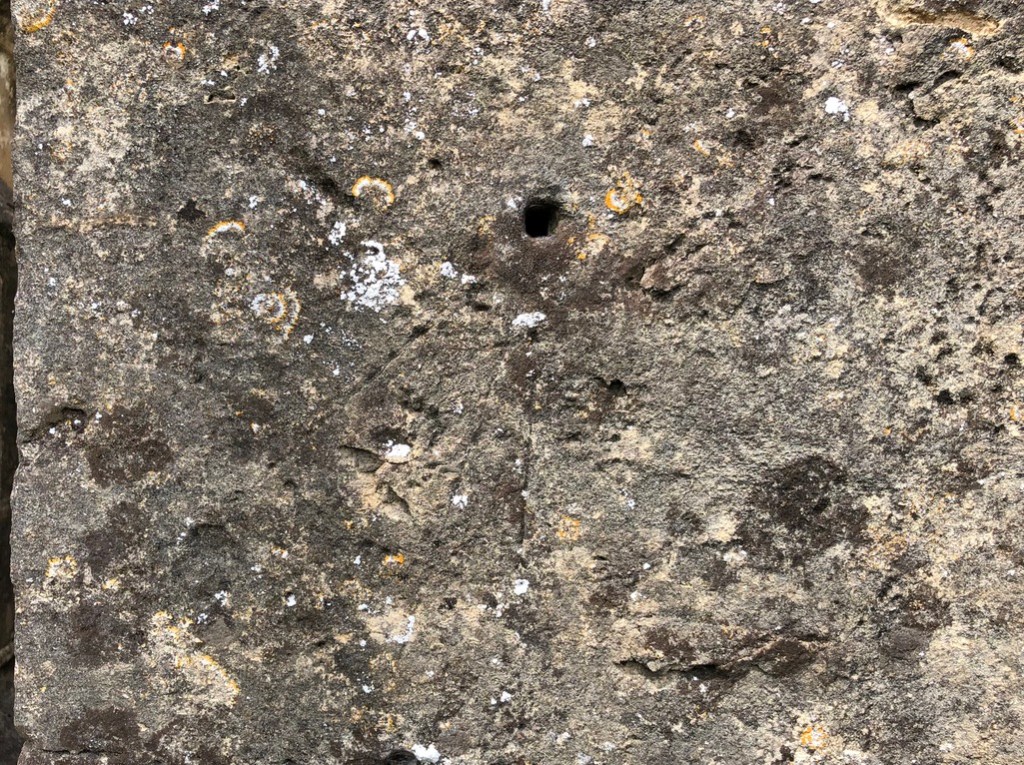
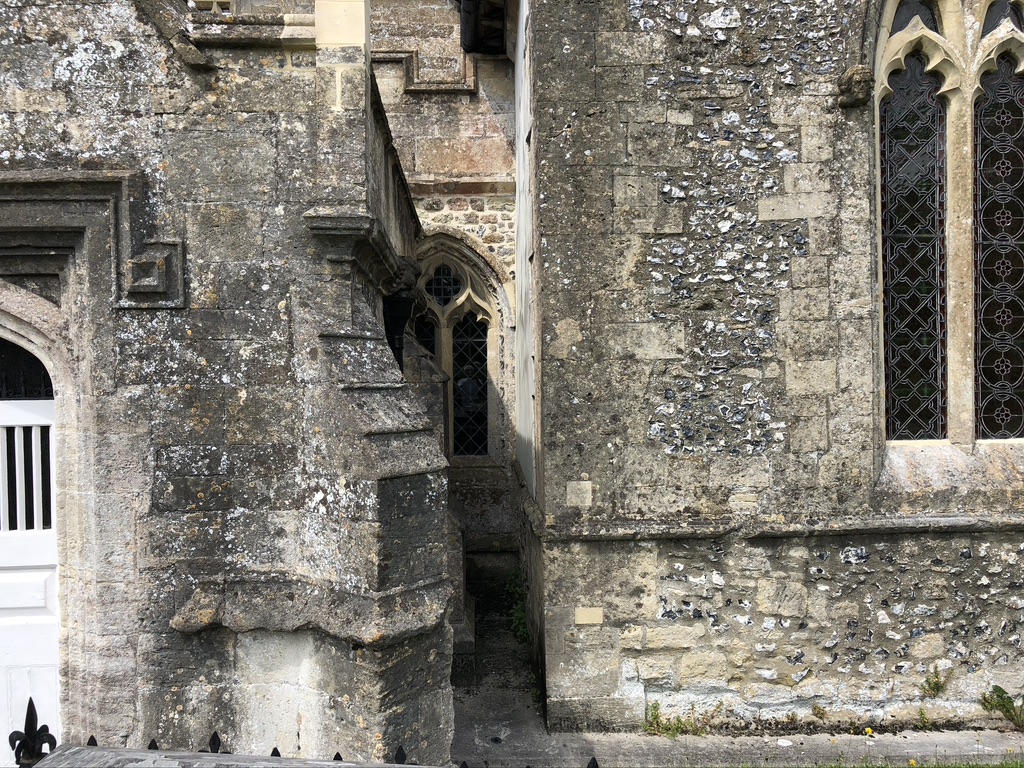
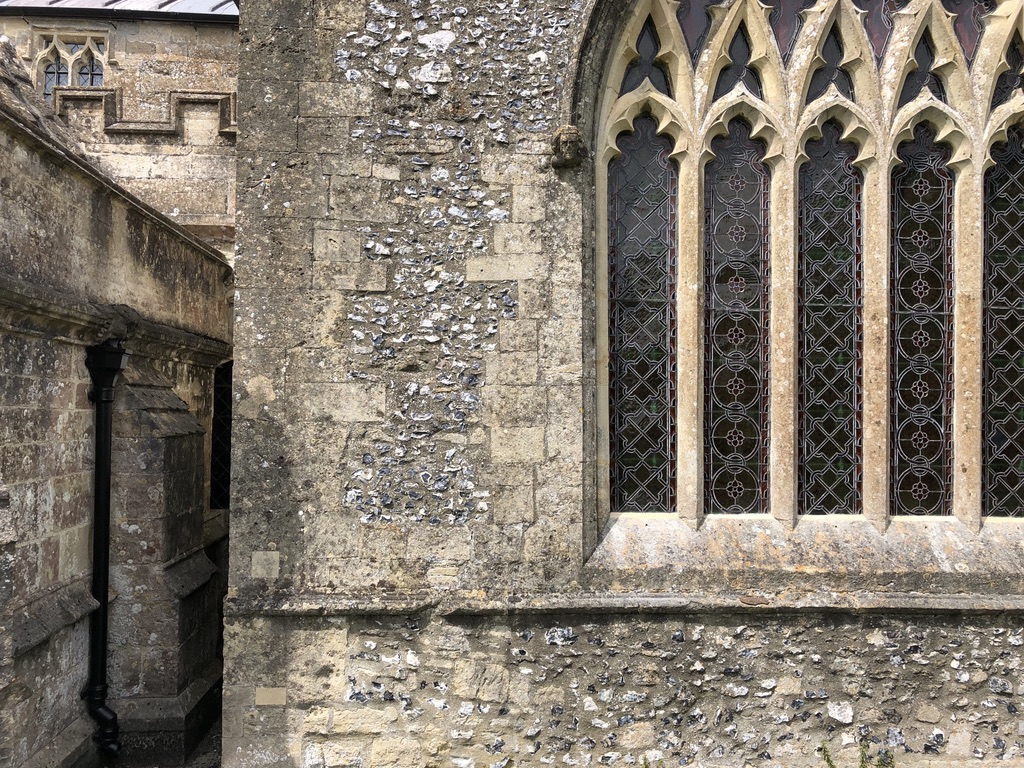
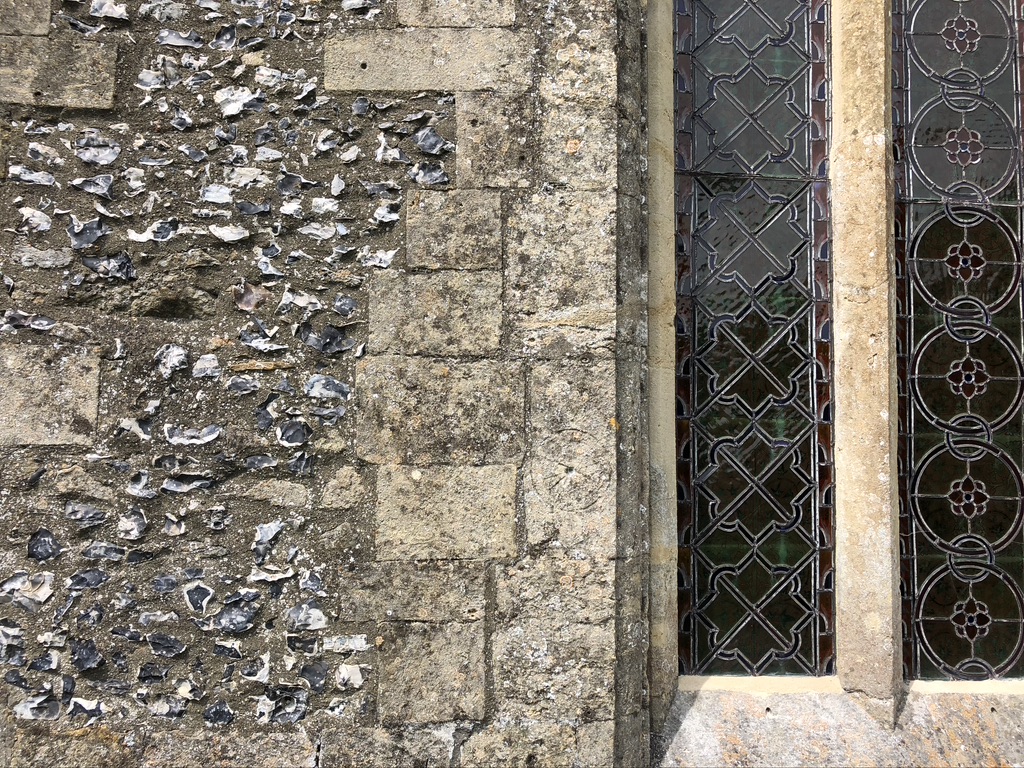
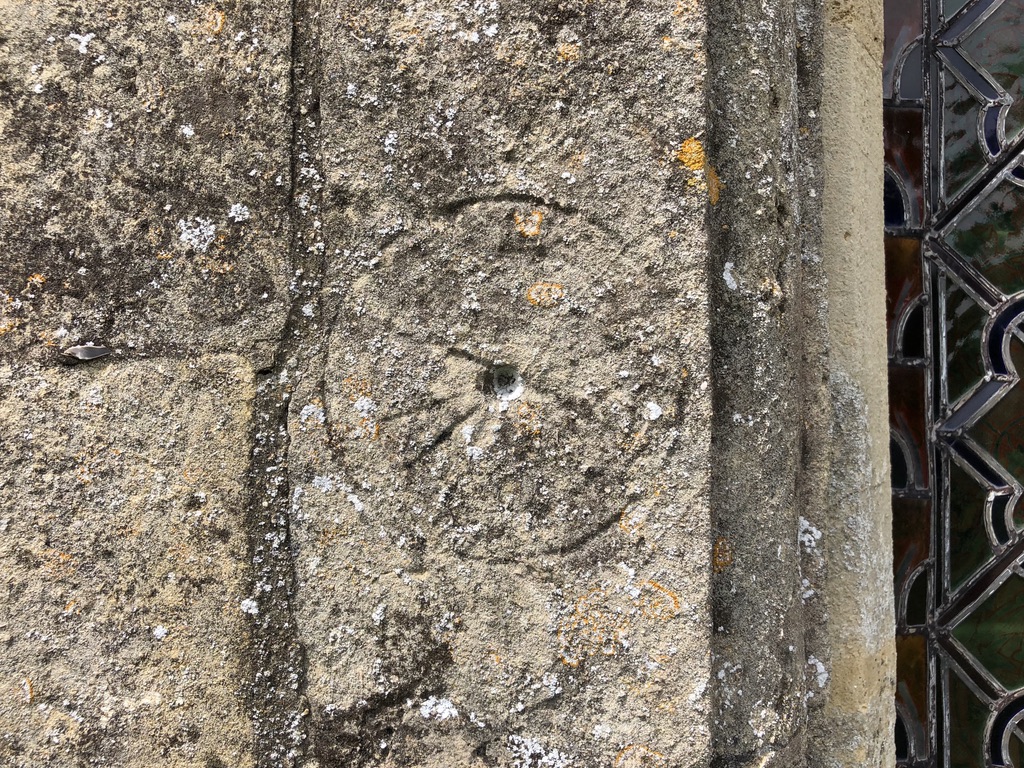
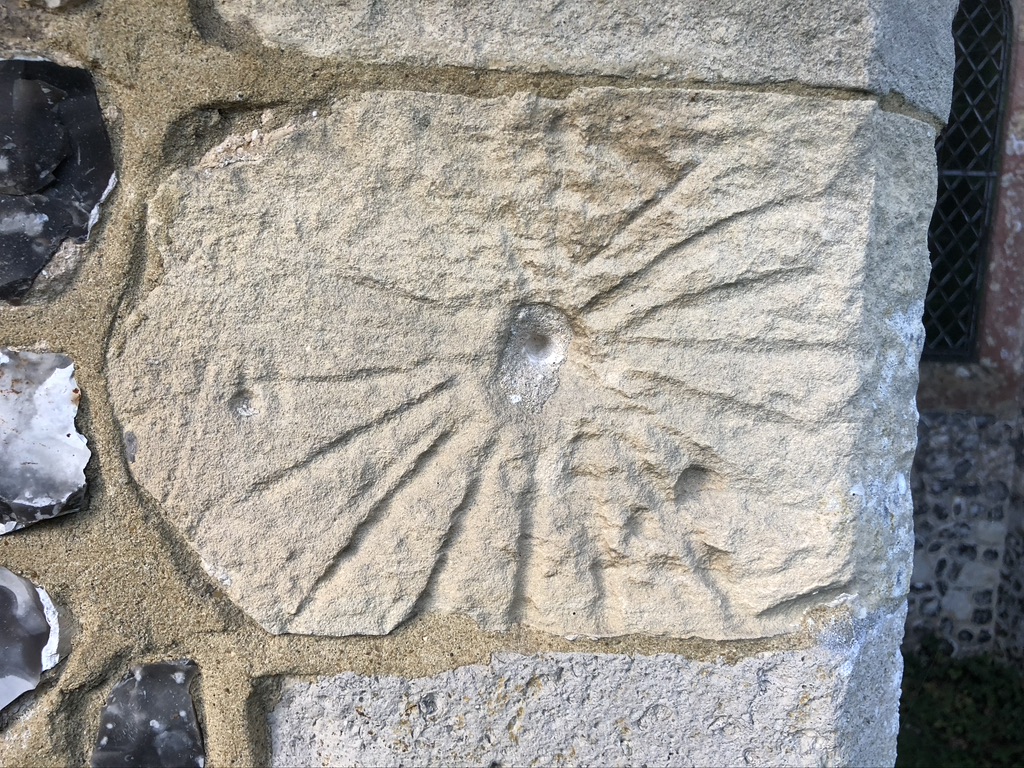
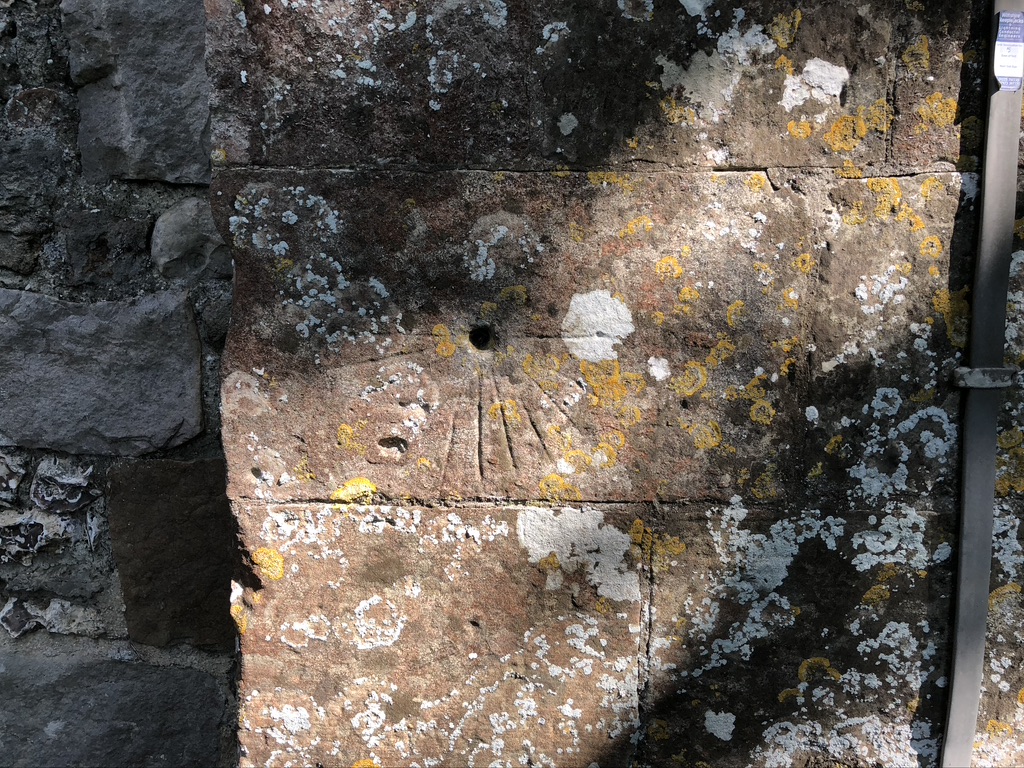
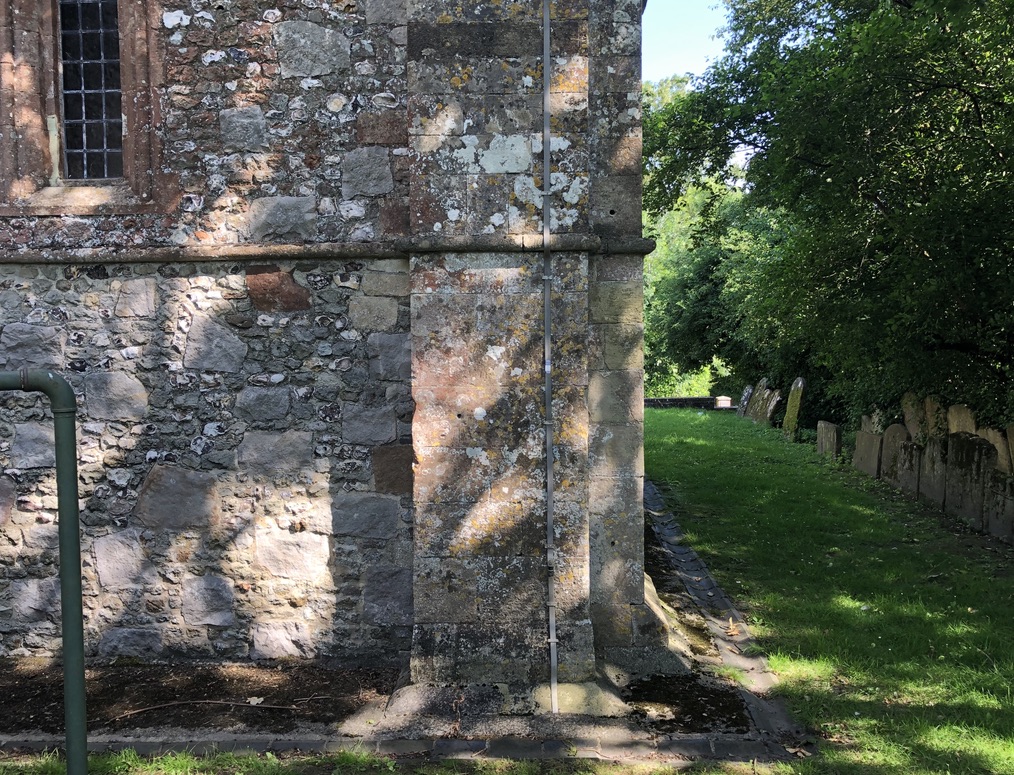
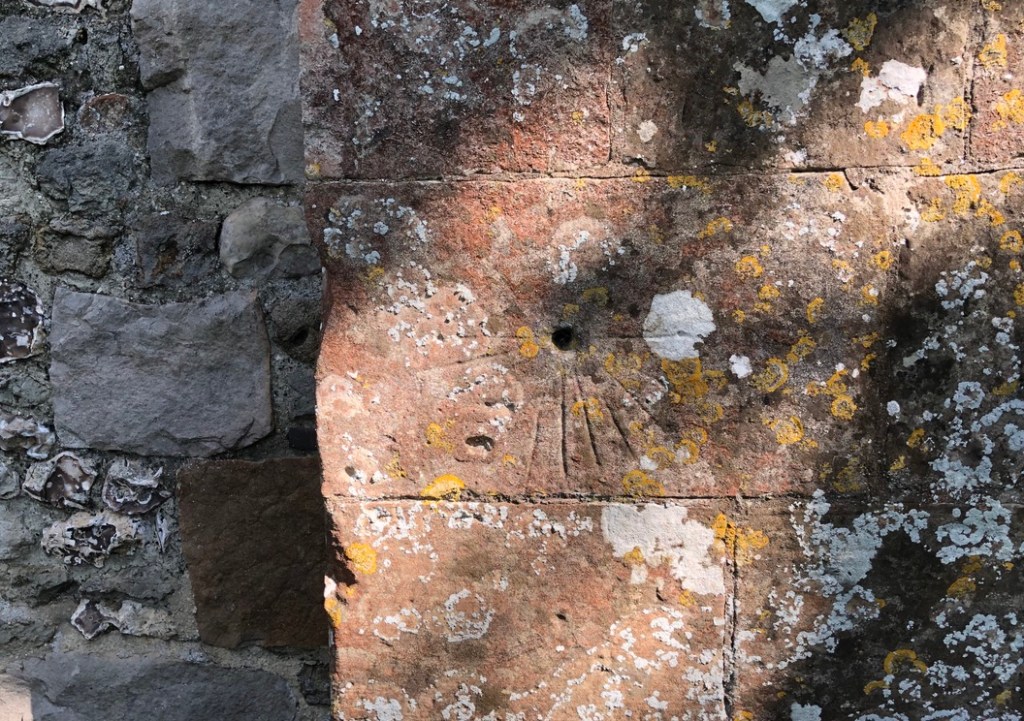
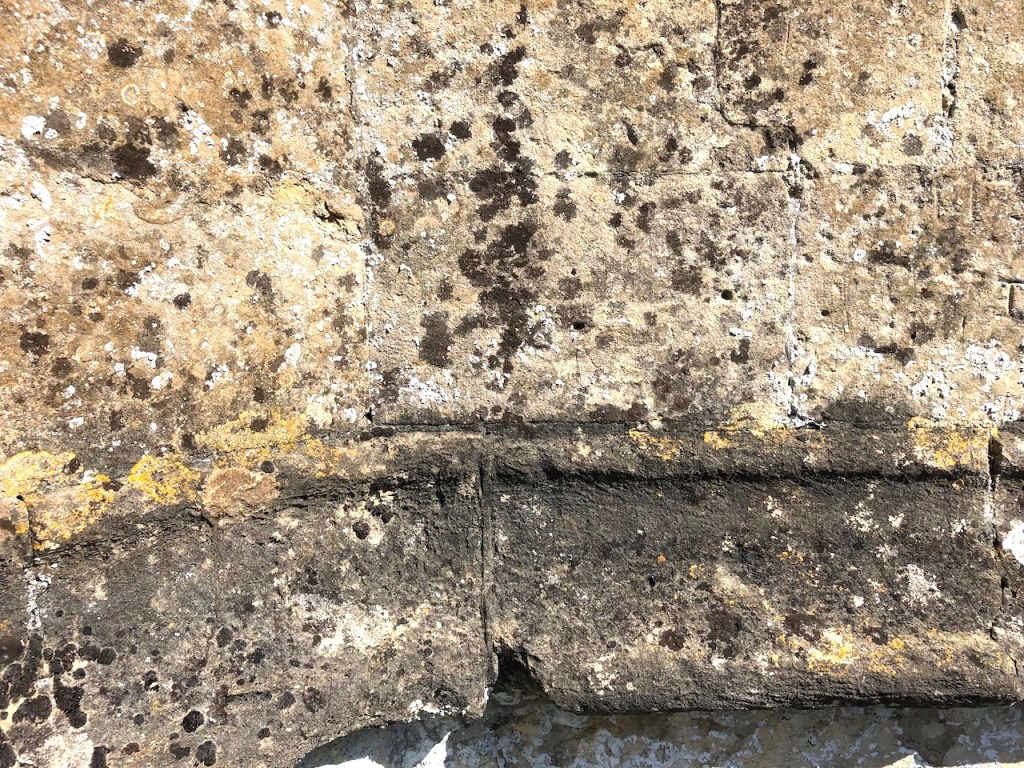
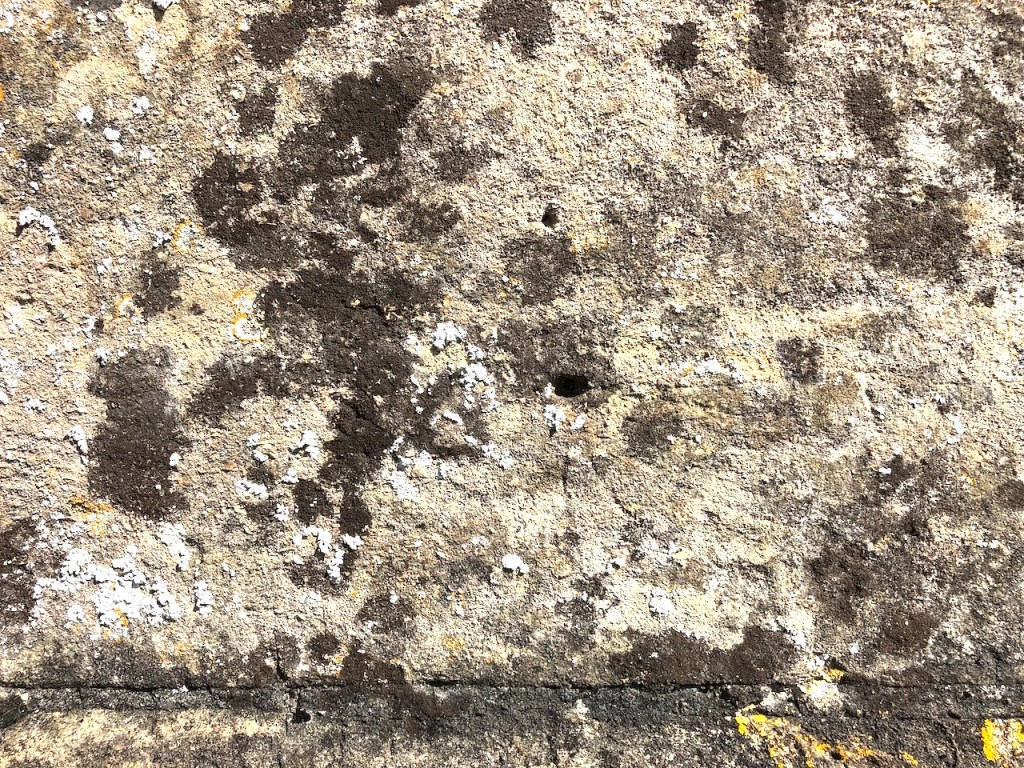
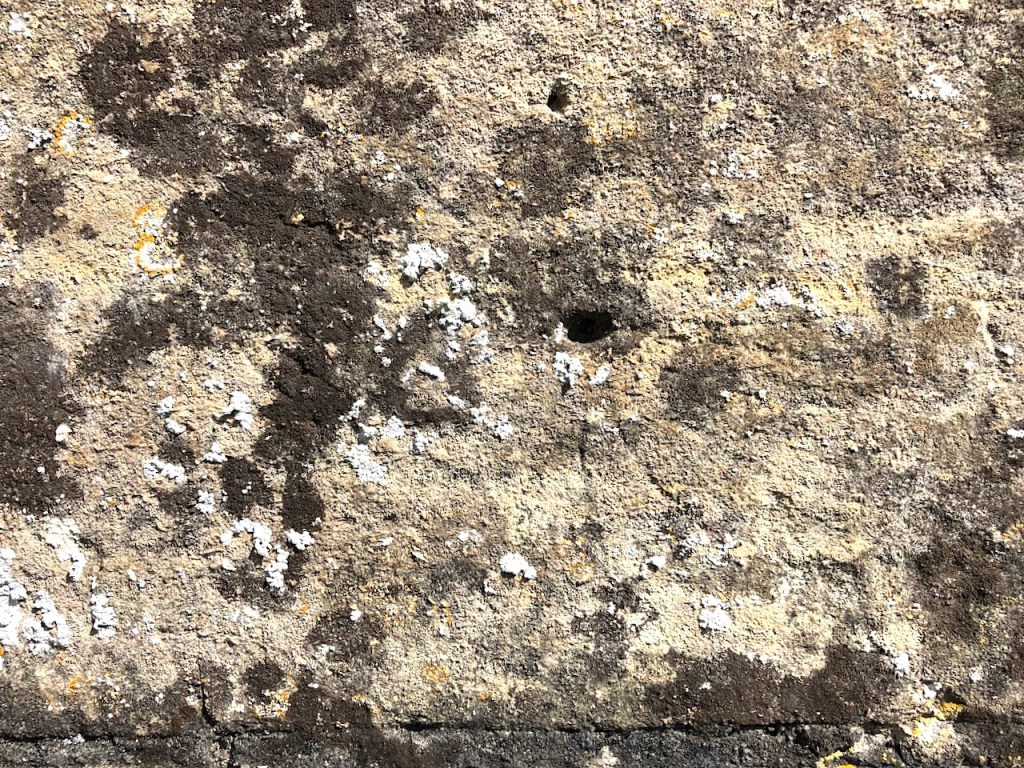
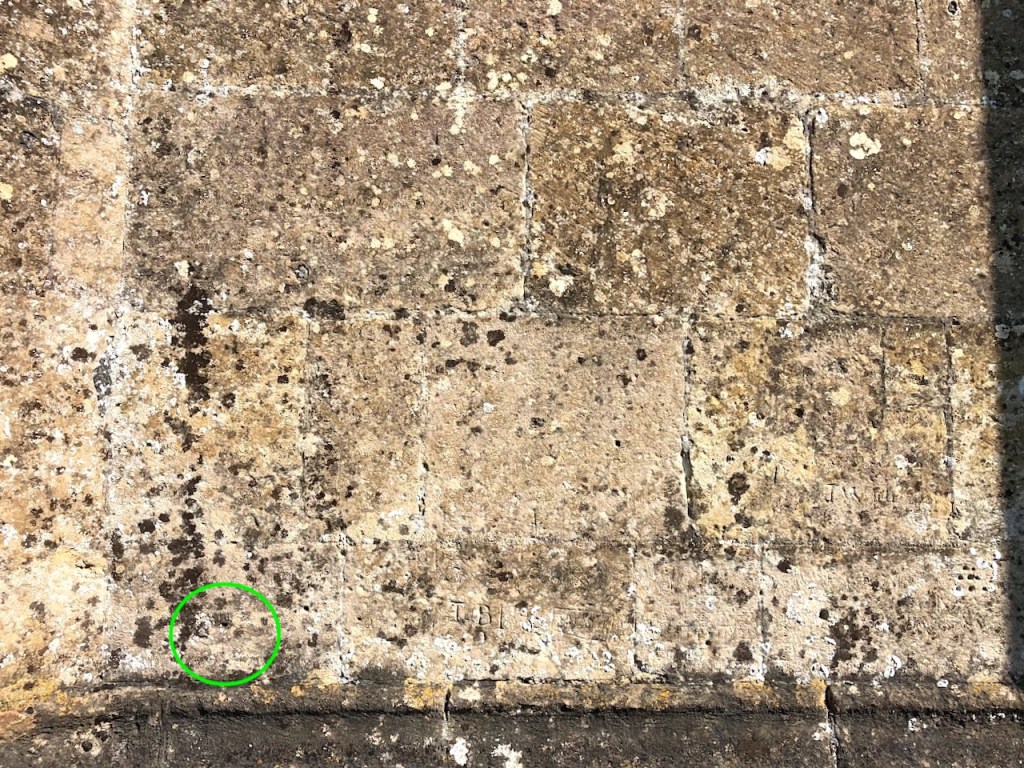
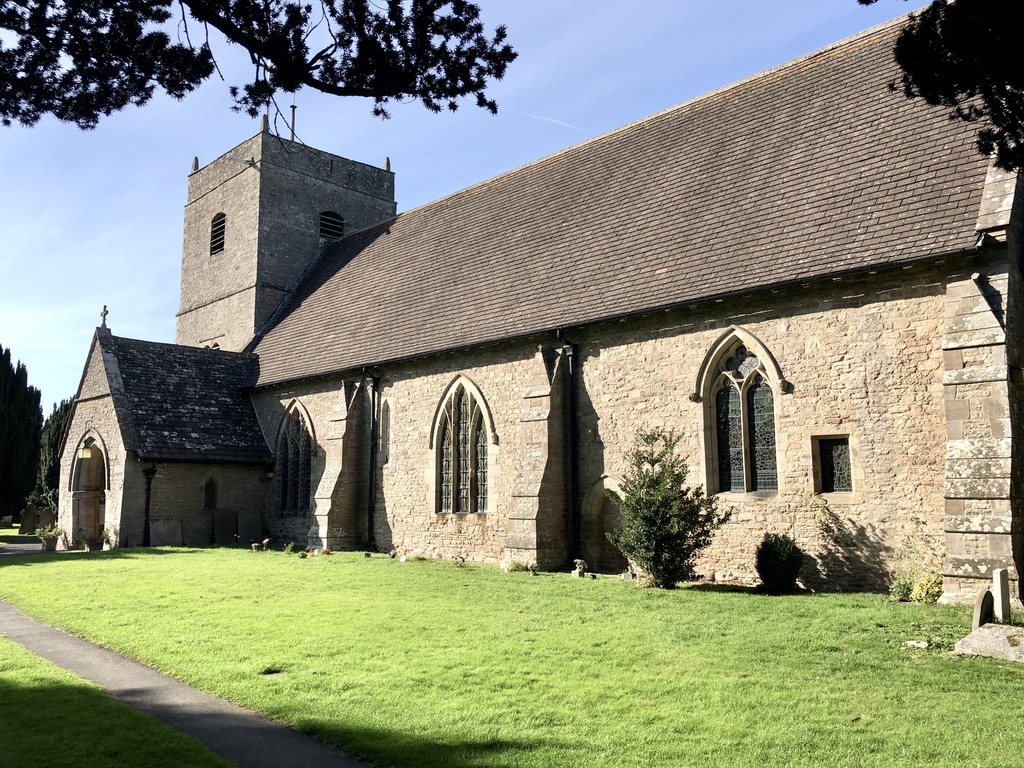
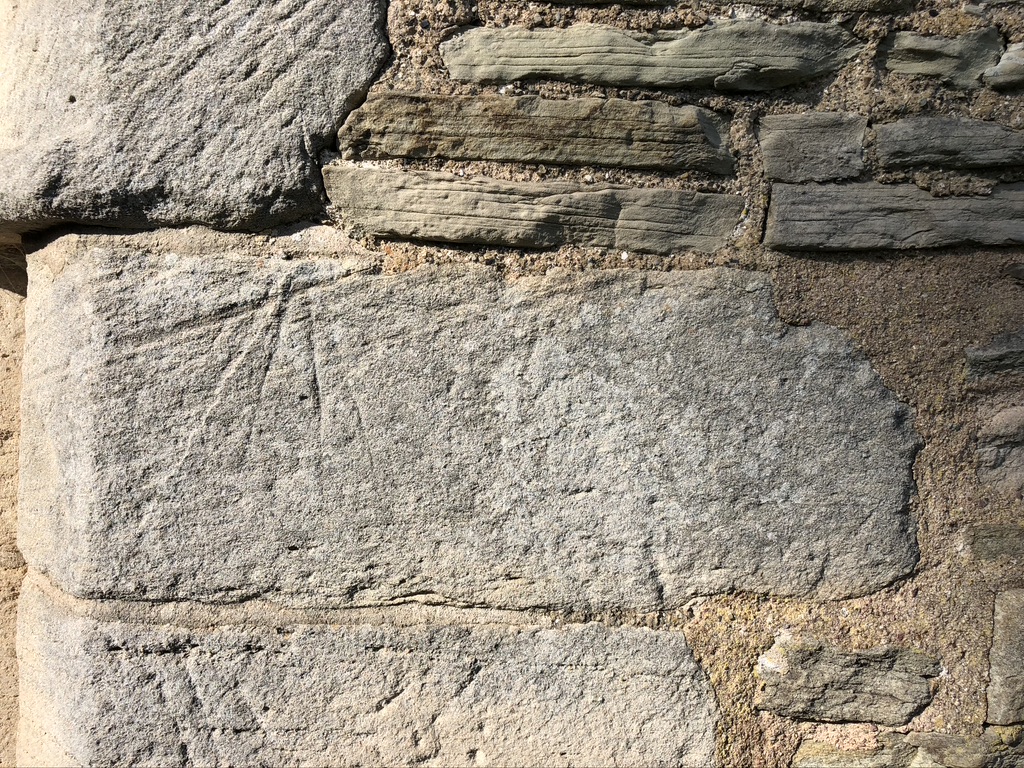
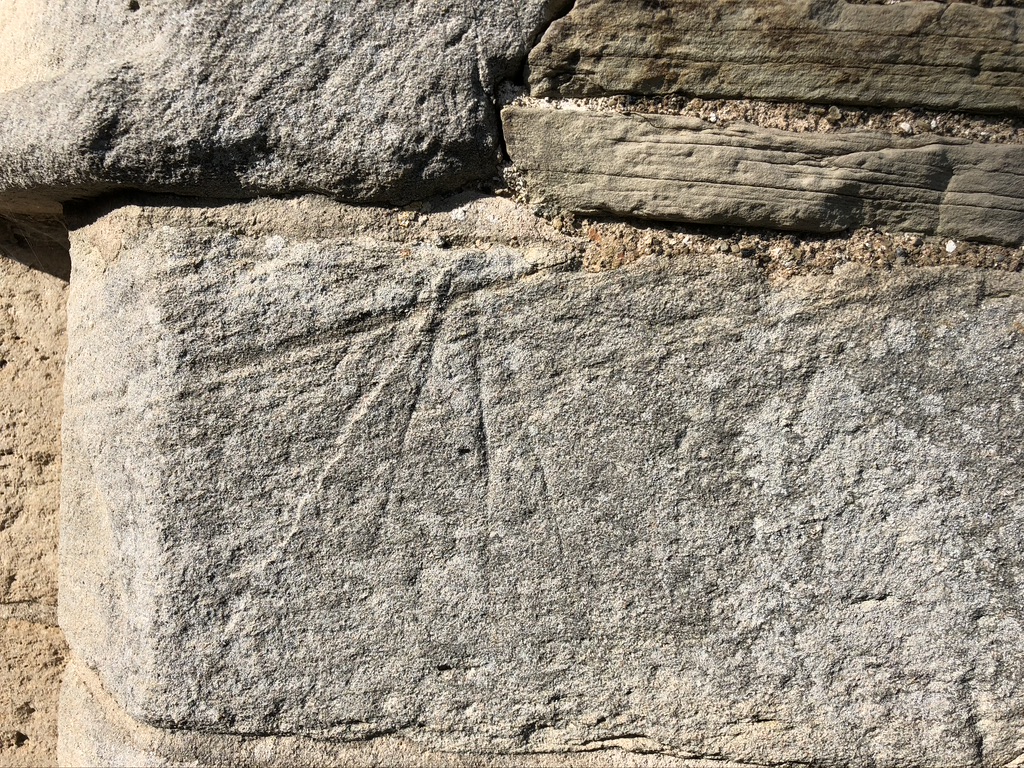
NOTE there is a plausible medieval scratch dial on one buttress (not as yet recorded). It’s status is under consideration by others… If it is deemed a dial I will write it up separately.

GSS Category: Old Dial

All photos: Keith Salvesen

URCHFONT . WILTS . ST MICHAEL – Scratch Dials 5 – 8

Urchfont . Wilts – St Michael & All Angels

URCHFONT . WILTS . ST MICHAEL & ALL ANGELS

GRADE 1. Late C13 / early C14 Decorated, C15 tower, restored 1864 & 1900. Set elegantly in a spacious and pleasant churchyard on the W. side of the Vale of Pewsey. Besides an excellent collection of dials, much else of interest – see BLB entry. 4m SE. of Devizes. 51.3148 / -1.9429 / SU040573

This is the second post about the 8 scratch dials of Urchfont. The first post for dials 1 – 4 can be found HERE. There is some duplication of general details so that this post can be read without cross-reference.

DIALS

DIALS 5 – 8

A fine ‘multi-dial’ church. There are 8 (possibly 9) dials in all. 6 of these dials are recorded in the BSS register. Dials 5 & 6 are close together on the edge of E. side of the transept. Dials 7 & 8 are low down on adjacent buttresses on the Chancel wall. They are somewhat concealed by chest tombs and easy to miss.

DIALS 5 & 6

Urchfont . Wilts – St Michael & All Angels – Scratch Dials 4 & 5

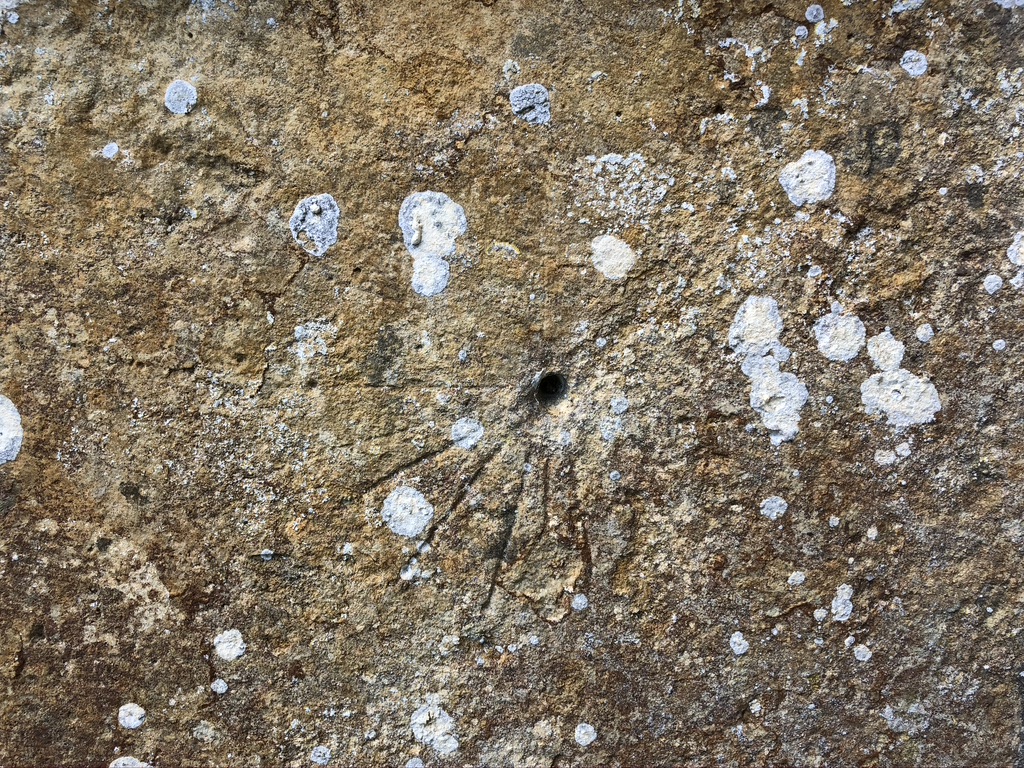
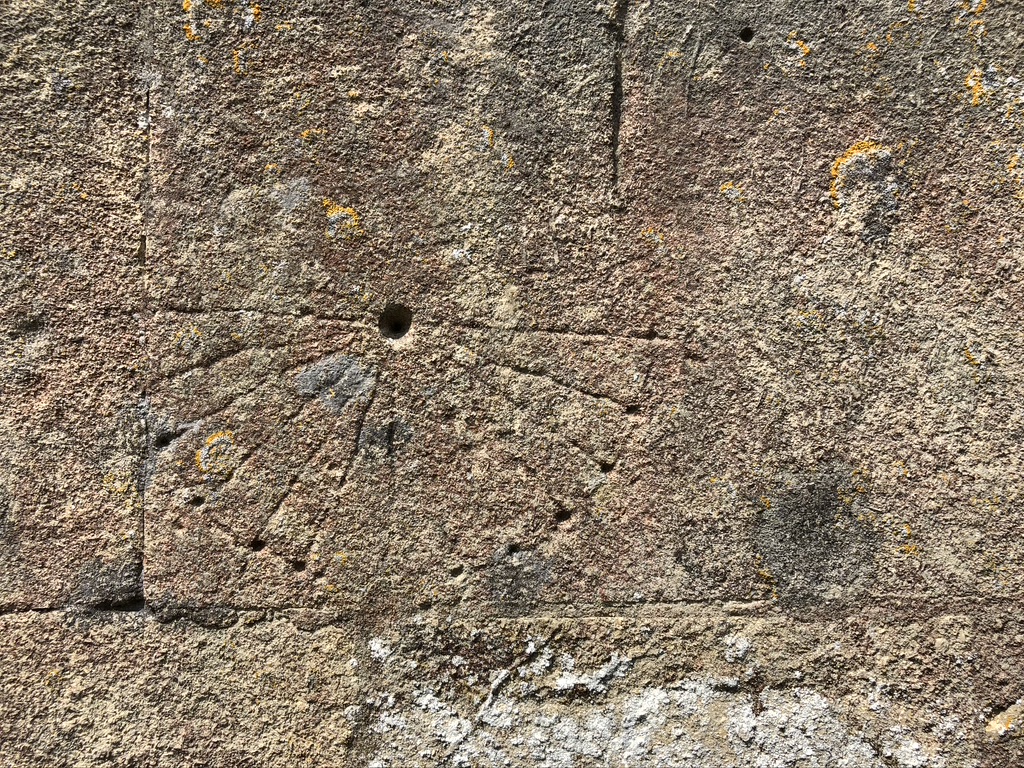
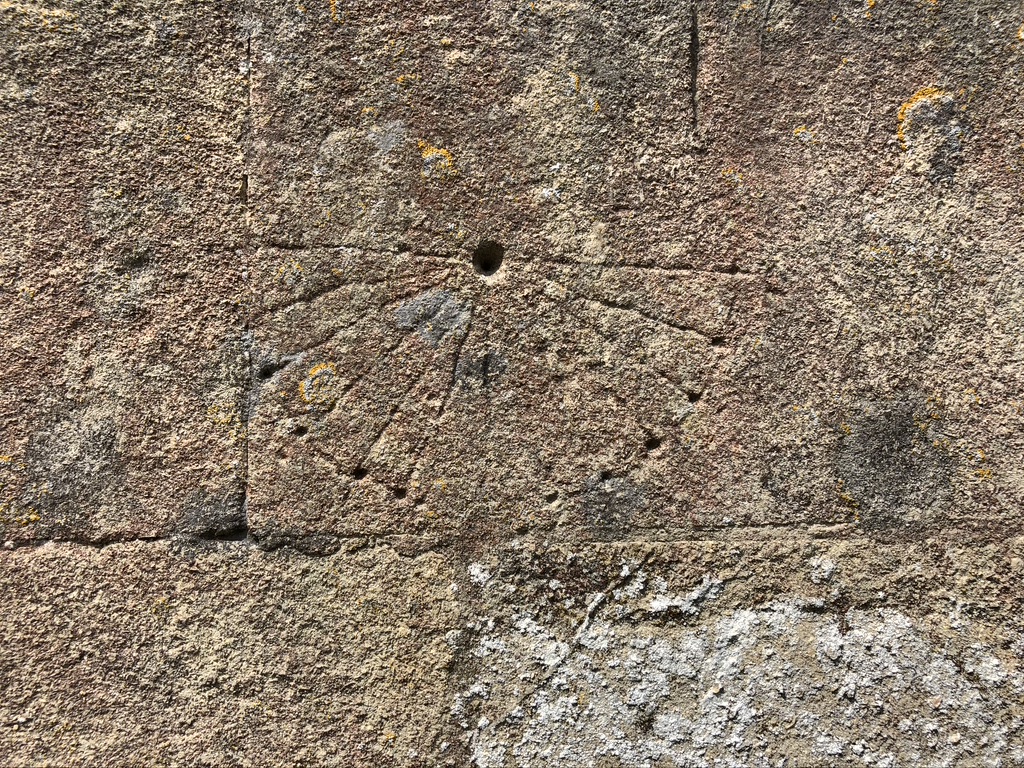
DIAL 5 has 10 distinct lines in additional to the horizontal in the mortar line, and a couple of ?line traces. The gnomon hole is within a larger filled area of (presumably) damage. An emphasised ?Mass line leads down to a crowed noon line area with a possible 1/2 hour radial. The dial seems truncated LHS and along the bottom edge, suggesting a relocation. However, RHS has 2 lines that sweep across into the adjacent stone, suggesting repair / restoration beside and below it.

DIAL 6 is a simple complete circle with a small style hole in the centre. Given that medieval dials marked the passage of the day and not ‘clock time’, this very basic type of dial may have been almost as helpful as later, more elaborate ones.

DIAL 7

Urchfont . Wilts – St Michael & All Angels – Scratch Dial 7

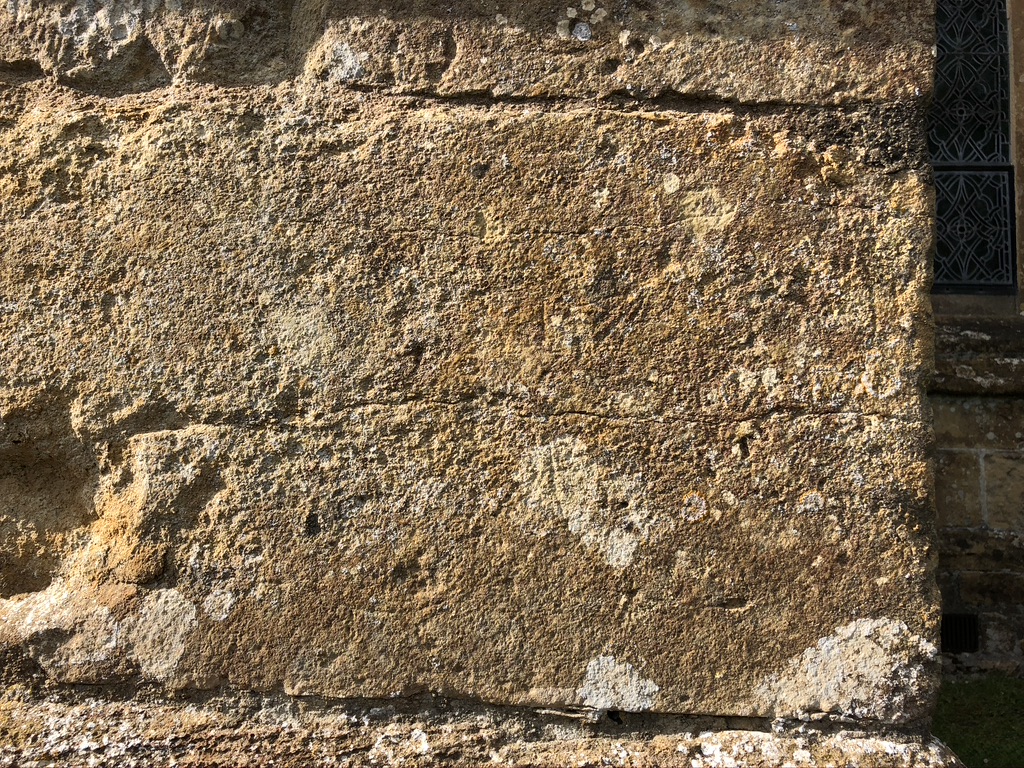
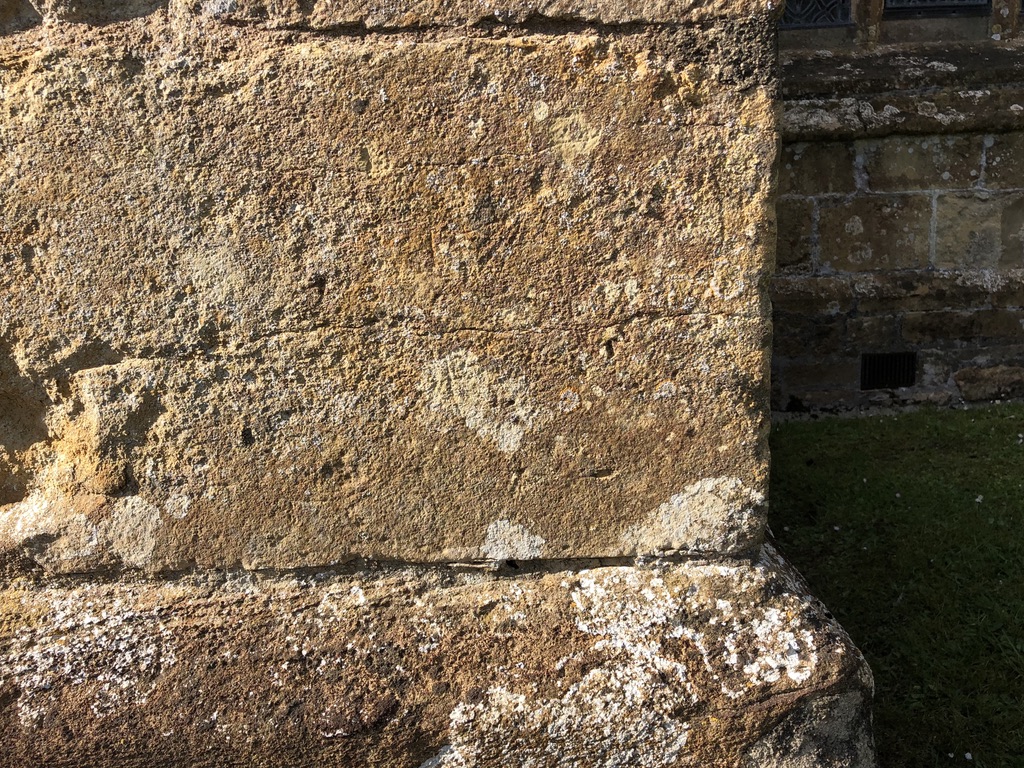
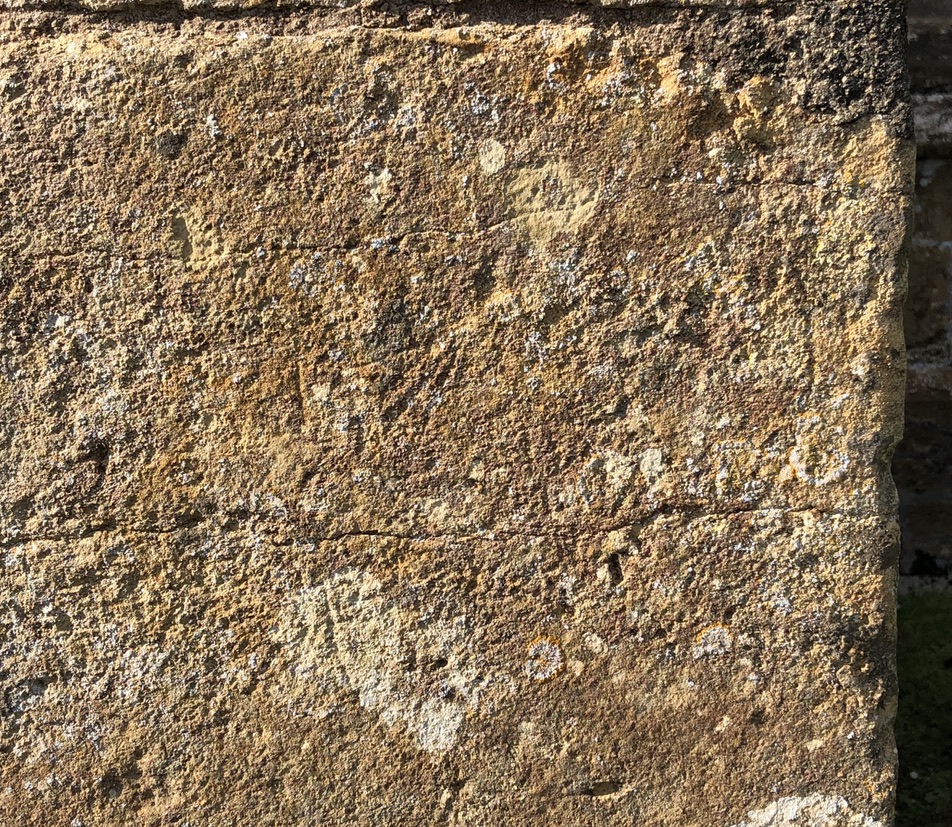
Dial 7 is located low on the middle S. facing Chancel buttress. A semicircle with a complete complement of lines around from the horizontal. Almost all end in pocks (2 in L. quadrant may be lost in the join with the adjacent stone). RHS is partly eroded from the faint noon line upwards. The symbol to the left may be a ritual protection / witch mark – too large for a mason’s mark.

DIAL 8

Urchfont . Wilts – St Michael & All Angels – Scratch Dials

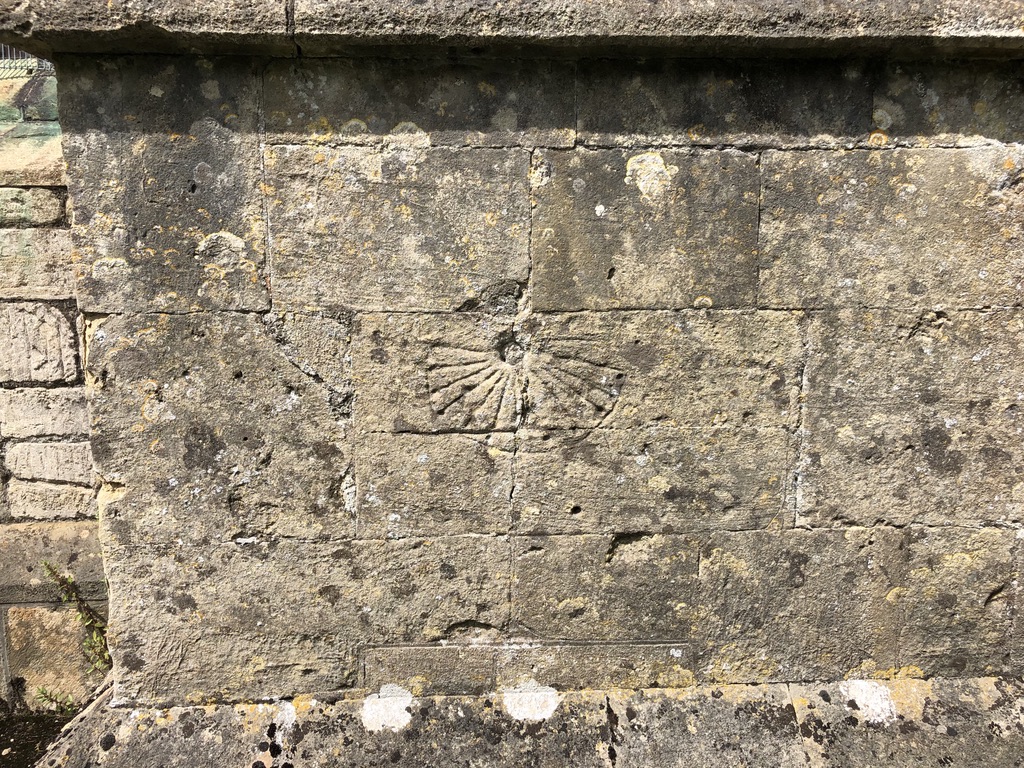
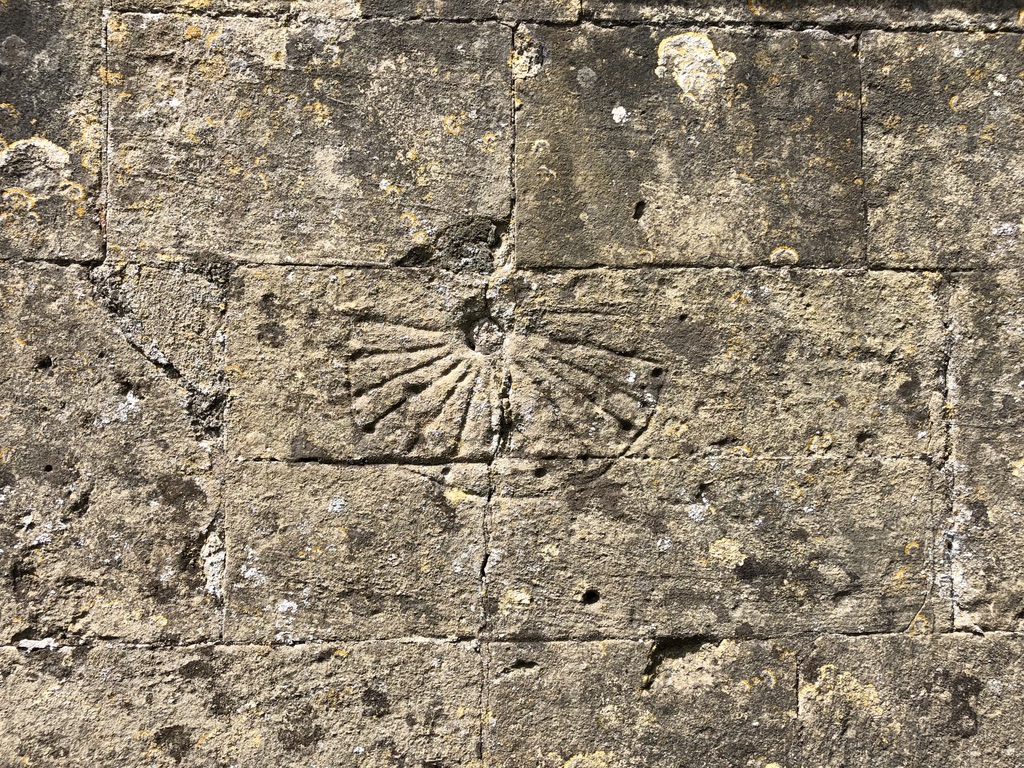
Dial 8 is on the Chancel buttress E. of Dial 7, at the same low level. It is more rustic. Unusually, the dial, though quite small, was cut across 6 stones. Originally the circle was presumably complete, but damage top L and a relocated stone top R have removed the upper segment. The gnomon hole is notably off-centre. Perhaps odd that the dial wasn’t cut using the mortar line for the style hole and as the horizontal 6-to-6 line? Like Dial 7, a full complement of lines with pocks. There is a some graduation, but irregular.

Urchfont . Wilts – St Michael & All Angels – Scratch Dials 7 & 8 and a plausible dial…

DIAL-ISH MARKS

The first is a deliberate pattern of pocks by a doorway – an obvious dial location – with a possible style hole in the mortar. There are similar short curved dot patterns elsewhere, eg Maiden Newton (Dorset). A plausible dial. The second dial is higher on the same buttress as Dial 8, a small hole with 2 apparently intentional lines just before and at noon. Doubtful, but I have seen rather less convincing patterns credited with dial status…

GSS Category: Scratch Dials

All photos: Keith Salvesen

PONTE VECCHIO . FLORENCE – ‘ UNEXPECTED TIMES’: A C14 SUNDIAL

sundial-ponte-vecchio-florence-4

‘ UNEXPECTED TIMES’: A SUNDIAL ON THE PONTE VECCHIO

This article was written a while back, in the pre-Covid era. Now I have a sundial site up and running, this dial and some others from Florence have a new space.

Florence in January.  -8°C at night, zero during the day – but sunny enough in the middle of the day to be able to have coffee or even lunch outside. Apart from the Uffizi, no queues for anywhere. Most significant places on the tourist trail almost to oneself. Despite the cold, there is no frost: the air is so dry that the pavements, piazzas and even the cars are quite clear of frozen white crystals. By the river I caught the electric flash of a male kingfisher flying up from the water to an overhanging bush, his hunting perch. I watched him as he scanned the water below, occasionally diving down and returning to the same branch. Twice, I could see the glint of a tiny fish in his beak. 

sundial-ponte-vecchio-florence-5

Over the years I don’t know how often I have crossed the Ponte Vecchio – or even simply walked to the mid-point to admire the views up and down river from the open areas between the pricey shops. This time I was walking the length of the Vasari corridor that connects the Palazzo Vecchio to the Palazzo Pitti on the other side of the Arno. A section runs straight over the bridge and then passes across the facade of Santa Felicita, into which the Medici family could sneak from the corridor to a large private balcony for spiritual refreshment. Passing the middle of the west side of the bridge, in the ‘tourist photo op’ gap where Cellini’s bust adds to the photogenic view, I have never before looked upwards.

sundial-ponte-vecchio-florence-2

Here, on the roof of a shop, is an ancient sundial, supported by a white marble pillar. An eroded and almost illegible engraving below the pillar records that in 1333, floods caused the bridge to collapse and that “twelve years later, as pleased the Commune, it was rebuilt with this ornamentation”. The sundial itself, with its columnar divisions reminiscent of a rose window, marks the CANONICAL HOURS. The gnomon’s shadow indicates the hour of the day. If the sundial is the ‘ornamentation’ to which the inscription refers, then it is around 650 years old.

If you look closely, you’ll see, halfway up the south face of the hexagonal column, a lizardsundial-ponte-vecchio-florence-1

Seeing the sundial for the first time ever, yet in such a familiar place was a reminder that Florence is a city that demands great attention as one walks through the streets. Many buildings, even unassuming ones, have fine adornments high up that will catch the eye… but only if you are looking out for them. 

sundial-ponte-vecchio-florence-7


URCHFONT . WILTS . ST MICHAEL – Scratch Dials 1 – 4 (of 8)

Urchfont . Wilts – St Michael & All Angels

URCHFONT . WILTS . ST MICHAEL & ALL ANGELS

GRADE 1 † Late C13 / early C14 Decorated, C15 tower, restored 1864 & 1900. Set elegantly in a spacious and pleasant churchyard. Besides an excellent collection of dials, much else of interest – see BLB entry. 4m SE. of Devizes. 51.3148 / -1.9429 / SU040573

DIALS

This fine church in an attractive village on the W. edge of the Vale of Pewsey is well worth a visit, not least (in the context of this site) because it is a ‘multi-dial’ church. There are 8 (possibly 9) dials in all, mostly easy to spot and rewarding to examine in detail. 6 of these dials are recorded in the BSS register. I have split them into 2 groups. The first 4, featured here, are all on the S. transept.

DIALS 1 – 4

Dials 1 – 4 are all close to each other on the S. face of the transept. Dials 1 – 3 are cut into quoin stones on the W. edge of the transept, nearest the porch. Two are close to each other; the third is higher up (I was fortunate to spot it). All 3 dials are marked mainly in the lower L. quadrant. Dial 4 is a quite different type, within a circle. Located immediately W. of the large transept window.

DIALS 1 & 2

Urchfont . Wilts – St Michael & All Angels – Scratch Dials 1 & 2

DIAL 1 has 3 distinct lines and a trace at (roughly) 07. 11 is faintly extended. A partial (semi?) circle encloses the lines and the sector continues past the slightly offset noon line. There are 4 pocks that are part of the design, one a terminal dot. The shape of the style hole is (now) square, suggesting a later replacement (cf Glanvilles Wootton, which still has its square gnomon).

DIAL 2 has a large style hole drilled between the 2 stones that form the horizontal. There are 3 clear lines – the noon line extended – and possibly a couple of faint / eroded lines. Small pocks on the edge are dwarfed by a huge ‘mid-morning’ hole that was perhaps added later – or was a forthright call to Mass.

Urchfont: dials 1 – 3

DIAL 3

The third dial on the same quoin is much higher, and easy to miss. A large style hole with 3 clear-cut lines, the middle one extended and with a pock at the end. There’s a fainter line R. of the (slightly offset) noon line. Presumably, although the quoin as a whole seems uniform, the stone was relocated to its elevated position.

DIAL 4

This is a pretty dial enclosed by a complete outer circle. The dial markings are enclosed within a very faint inner circle. There are 5 clear lines and traces of 3 or 4 others. There is no clear noon line, and overall the positions of the radials seem rather unusual.

Urchfont . Wilts – St Michael & All Angels – Scratch Dials

Image 1 in the gallery below includes dials 1 -3 on their respective quoin stones, alongside dial 4.

GSS Category: Scratch Dials

All photos: Keith Salvesen

HOUGHTON . HANTS . ALL SAINTS – 2 Scratch Dials

All Saints . Houghton . Hants

ALL SAINTS . HOUGHTON . HANTS

GRADE II* † Early C12 origins, C13 aisles, C14 chancel, C15 alterations, 1875 and 1882 restorations BLB. One of several attractive villages on or close to the River Test. Houghton is midway between Stockbridge (N) and Romsey (S). Exploring locally – especially Mottisfont – is well worthwhile (nice pubs as well). 51.0922 / -1.5139 / SU341326

All Saints . Houghton . Hants – Scratch Dial 1

DIAL 1

The dial is located on a quoin stone on the nave E. of the porch and ‘crudely cut’ BSS. There are 17 lines in all, some very eroded; and 3 pocks that are probably unrelated. The gnomon is of particular interest. For obvious reasons, discoveries of plausible remains of a gnomon are very scarce. BSS records (1994) that the stub of one was noted, the hole being otherwise filled. I did not notice the hint of a stub, and the photos suggest an intact mortar filling with a neatly rounded pock in the centre.

DIAL 2

The dial is located low down on the SE. corner of the chancel. 4 lines, with the hole in the horizontal mortar line and filled. BSS records (1996) the dial as originally complete but with the right half replaced by another stone. The fact of a new quoin stone seems certain. The intriguing questions are what the dial might have looked like when complete; and whether the other half was used elsewhere on the exterior during any of the later additions and restorations.

I checked dial 1 on a fleeting evening visit, and didn’t look for another. The BSS image below suggests that the upper L quadrant, the horizontal mortar line where the lines converge, and the hole at the intersection might be worth investigating when I am next passing.

All Saints . Houghton . Hants – Scratch Dial 2

GSS Category – Scratch Dial

All photos Keith Salvesen except Dial 2, BSS records

KNIGHTON . POWYS . ST EDWARD – Scratch Dial (?)

St Edward . Knighton . Powys

KNIGHTON . POWYS . ST EDWARD

GRADE II † ‘Victorian Gothic rebuilding of earlier church of which the medieval west tower is the only survival- no remains of 1752 Georgian rebuildBLB. A handsome reconstructed church in a pleasant town, well-situated on Offa’s Dyke close to the point where Powys meets Hereford and Shropshire. The only church dedication to St Edward in Wales – he, along with St Richard, seem to be somewhat overlooked across much of Britain. 52.3457 / -3.0477 / SO287724

DIAL?

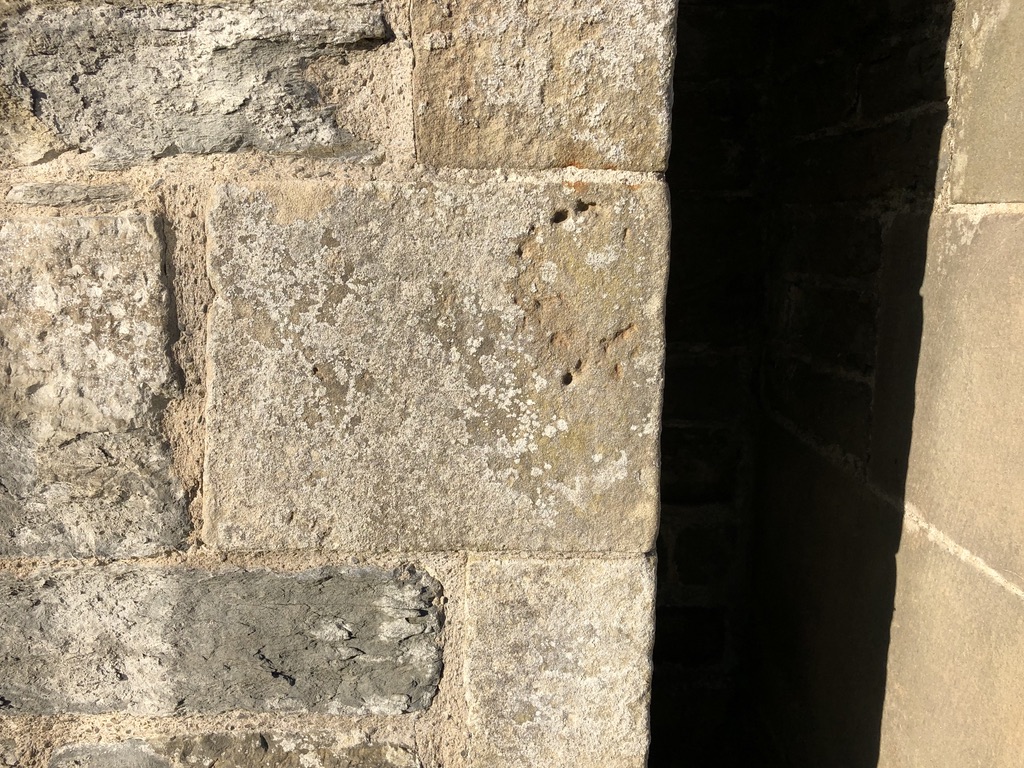
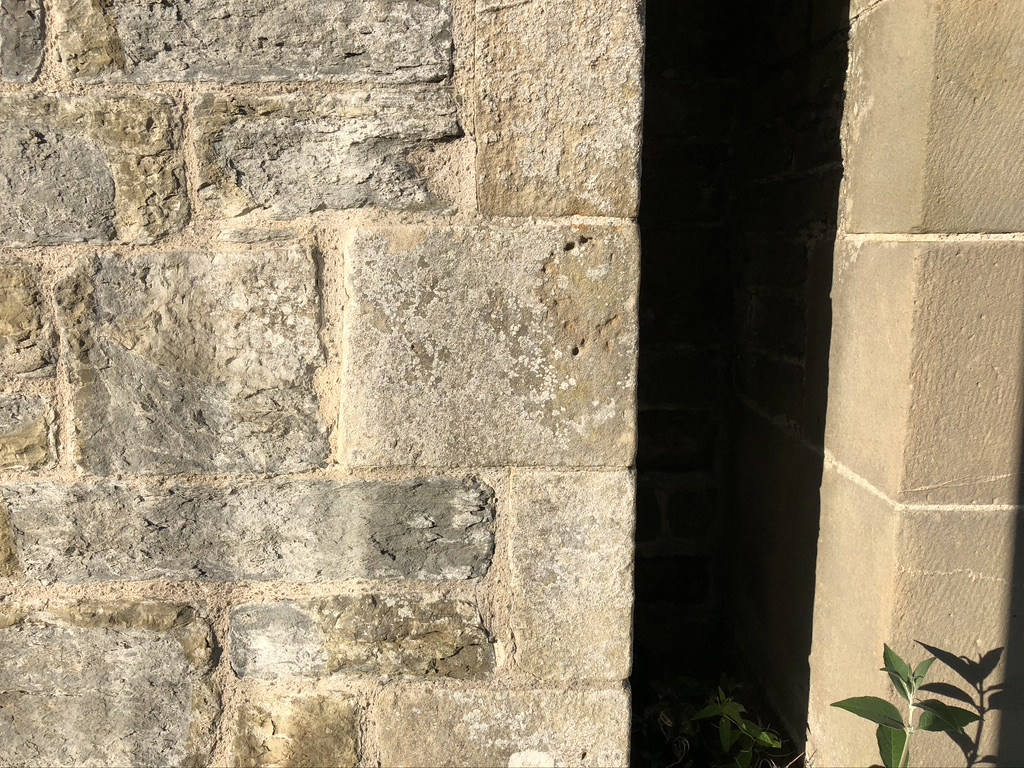
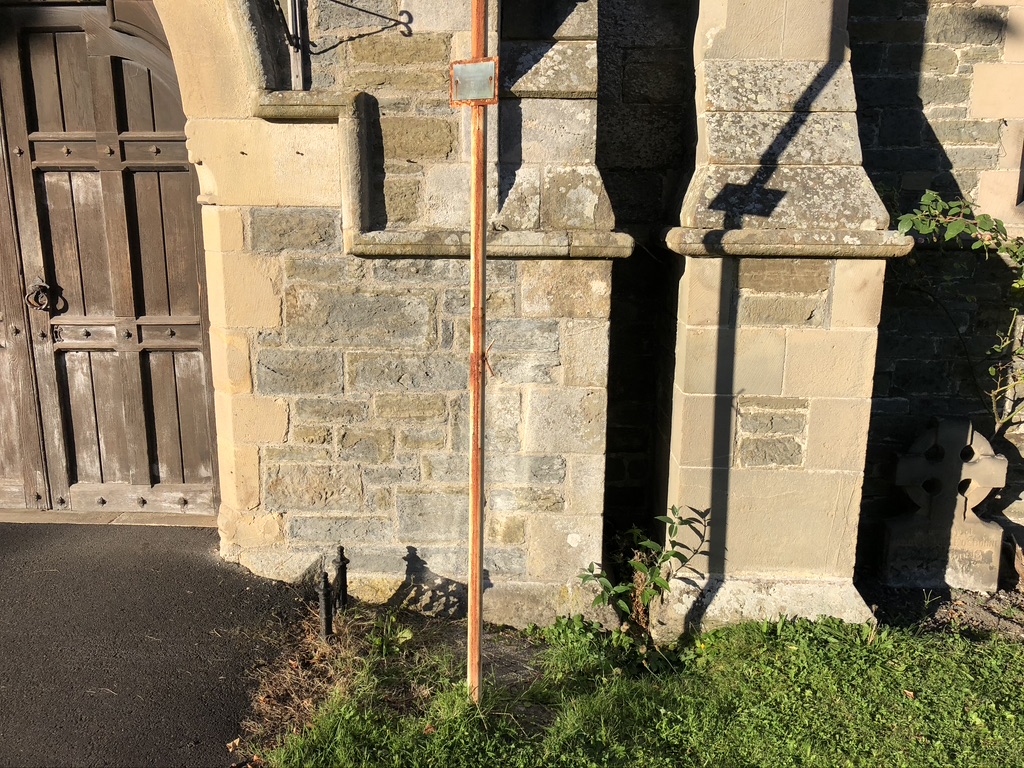
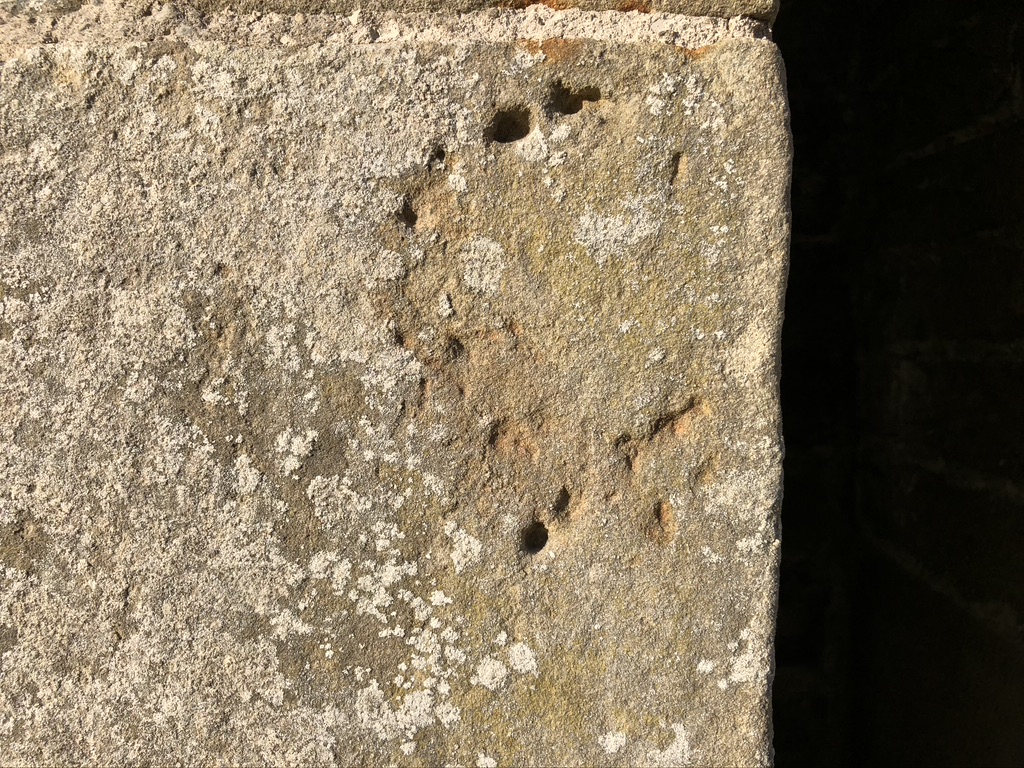
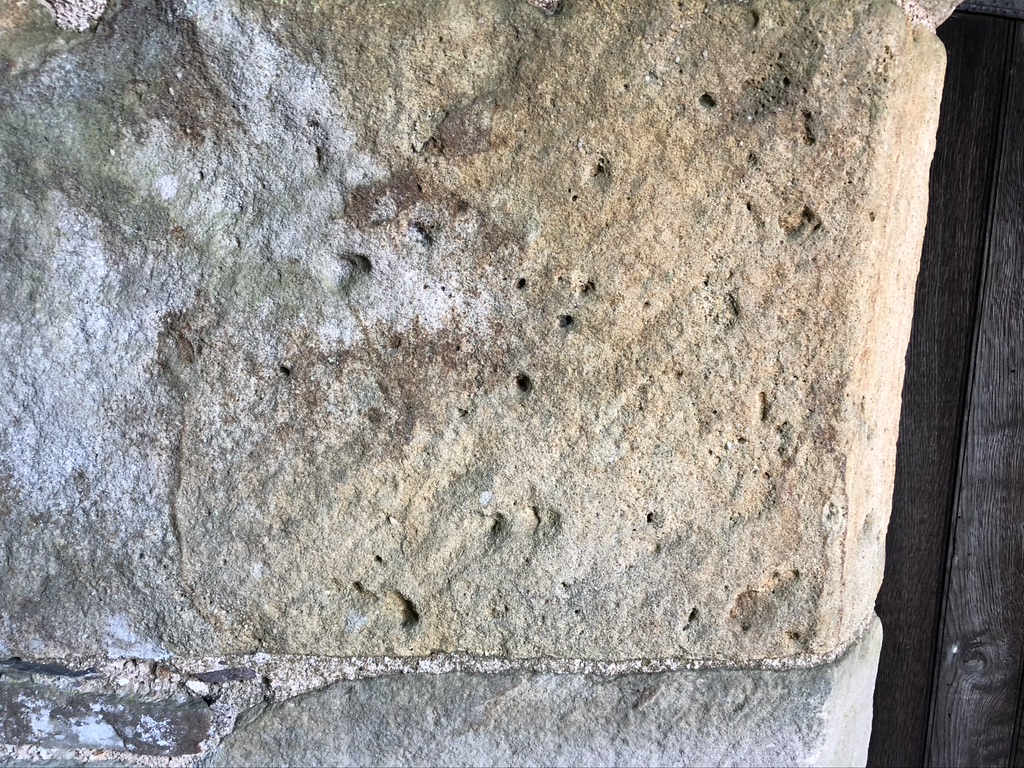
The double rebuilding of a medieval church (except for its tower) must inevitably have expunged almost all traces of the early building, and with that its church marks. Or so you would think. Yet when I visited the church on a warm September evening in sunshine, I saw what – on a church with a different history – might be taken as a medieval pock dial. I realise that it is most unlikely. However, restoration and rebuilding does not preclude the reuse and / or relocation of stones from the original church. It was a common practice, for obvious reasons.

St Edward . Knighton . Powys – scratch dial?

There is no visible style hole. The curved pocked pattern seems intentional but – absent some architectural or decorative purpose – it is difficult to account for the design. Given the church history, claiming dial status is debatable. However I have seen far less convincing dials elsewhere. The stone fits with the church. Its location on the porch wall – perhaps intentionally during reconstruction – is appropriate. But probably I have an amateur dial collector’s over-optimism. Maybe this sort of find shows how intriguing the analysis of church marks can be.

GSS Category: Scratch Dial

Photos: Keith Salvesen

PEWSEY . WILTS . ST JOHN THE BAPTIST – Scratch Dials

St John the Baptist . Pewsey . Wilts

PEWSEY . WILTS . ST JOHN THE BAPTIST

GRADE I † Saxon origins. C11 Norman and later development inc. C12 nave, C13 aisles, C16 tower, C18 expansion, C19 restorations. An interesting church, with C12 Norman limestone font with suspended cover; and wonderful early C17 clock. Enjoy the Kennet & Avon canal while you are there. 51.3379 / -1.7664 / SU163598

DIAL

The dial is on S. side of the chancel, on the E. quoin stone of E. end buttress. The appearance is of a classic 6-to-6 dial (not within a semicircle) on a lovely colourful stone. 11 clear lines (the 9 line is not visible – erosion? Omission of the Terce line seems unlikely). The longer 11 line extends to the mortar line below. 3 lines are emphasised inc. noon line. There are several pocks, a few at the end of lines – those at the ends of the horizontal must almost certainly part of the dial.

I wrote ‘appearance’ above, because looking closely at the photos, the dial is in fact slightly less straightforward. There are 2 faint lines and the hint of another in the upper right quadrant (see large image below).

St John the Baptist . Pewsey . Wilts – Scratch Dial

DIAL 2? (unrecorded)

In several places on the outside walls there are groups of church marks and graffiti – initials, dates, apotropaic (witch) marks / Marian symbols. While photographing these I noticed a very small rustic dial scratched in the angle of wall and buttress on the S. side. I might have ignored it or classified it as ‘doubtful’, but the crude cuts in the stone running from the putative style hole suggest a casual dial attempt – possibly a trial run, and / or a contribution to the gallery of marks in this area.

GSS Catregory: Scratch Dial

All photos: Keith Salvesen

EARDISLAND . HEREFORD . ST MARY THE VIRGIN – 2 Scratch Dials

St Mary the Virgin . Eardisland . Herefordshire

GRADE II*. C12 origins, C13 with C14 additions (chancel, S. porch); tower rebuilt mid C18 after a collapse; Victorian restoration. Much of the medieval church in evidence. External and internal masons’ marks, graffiti etc. A pretty village on the R. Arrow, on the ‘Black & White Village Trail’ 52.2218 / -2.8497 / SO420585

DIAL 1

On the R. side of the S. porch, on the stone below the architrave. The stone below has marks that are probably apotropaic. 3 definite lines descending from the mortar line and through a slanting line that looks most like a fault in the stone – that may also apply to the 4th ridged line on the left side, or perhaps it was cut / added at a different time.

St Mary the Virgin . Eardisland . Herefordshire – Scratch Dial 1

DIAL 2

Cut into the large quoin stone on R. side of the priest’s door and spanning its width. The dial has a relatively complex design, perhaps combining its practical purpose with decorative effect. Erosion has made interpretation difficult. The style hole, now a small cave, is in the mortar line. The lower R quadrant shows part of 3 concentric semi-circles. There’s a hint – best seen top L – that at least the inner circle line continued above the horizontal. There’s little other sign of a more complete circle.

St Mary the Virgin . Eardisland . Herefordshire – Scratch Dial 2

Erosion and lichen obscure the finer details. BSS records 7 lines but a close-up photo in sunlight reveals about a dozen, with possibly some shorter lines (half-hour marks?). There are also pocks, 2 or 3 of which could relate to the dial – in particular the 2 ‘terminal’ ones adjacent to the noon line just above the mortar.

St Mary the Virgin . Eardisland . Herefordshire – Scratch Dial 2

GSS Category: Scratch Dial

All photos: Keith Salvesen
WENTNOR . SHROPSHIRE . ST MICHAEL & ALL ANGELS – Scratch Dial

Wentnor . Shropshire . St Michael and All Angels

Grade II*. Medieval origins, largely rebuilt using old materials in 1886. Some C12 details (small window, S. doorway). One of a number of hilltop churches in the region, and just W. of the Long Mynd. 2.5283 / -2.91 / SO383926

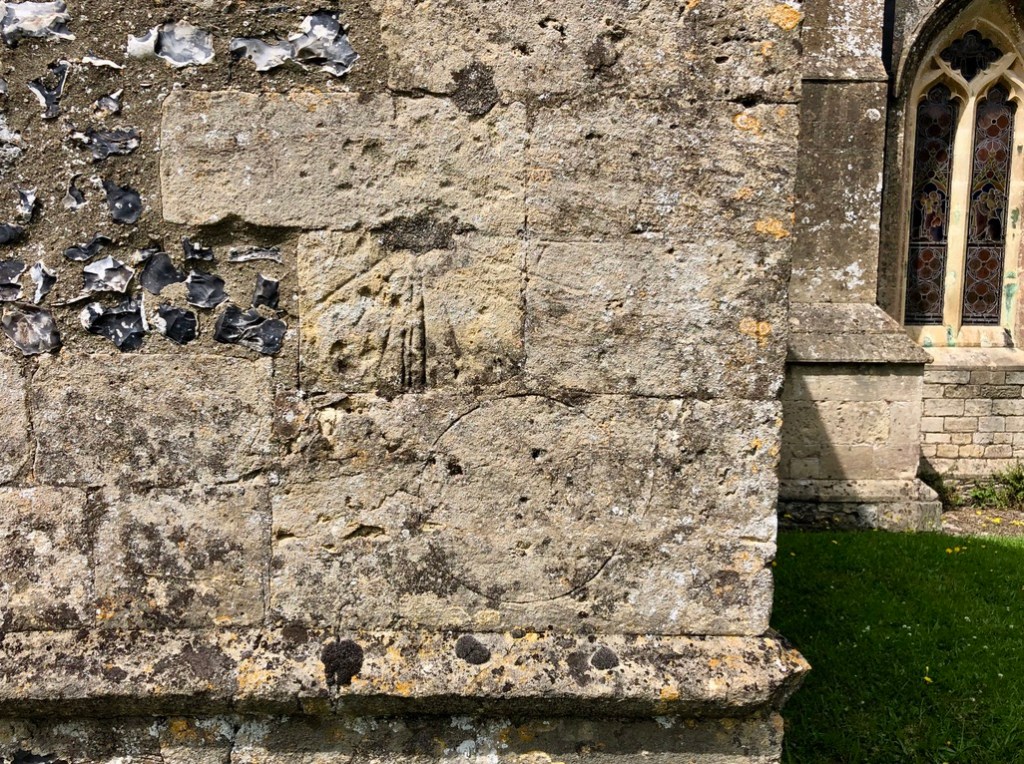
A scratch dial on this church is mentioned in TWC‘s county lists but not, as far as I can find, elsewhere. It seemed worth visiting as we were nearby. The only likely candidate I could find was in much the most likely location for a dial, to the left of the very early door and on the best stone (long before the porch was added). The configuration of the pocks suggest an afternoon dial marked from a (part-filled) style hole. It’s certainly a plausible candidate for TWC’s dial, and I could find no other. On balance, I’d rate it a probable more than a possible.

Wentnor . Shropshire . St Michael and All Angels – probable scratch dial as recorded by TWC

GSS Category – Scratch Dial

Photos: Keith Salvesen
CHURCH STRETTON . SHROPSHIRE . ST LAURENCE – 2 scratch dials (unrecorded)

St Laurence . Church Stretton . Shropshire

GRADE 1. Church. C12 nave with C13 transepts, crossing and chancel; tower upper stage C15, vestry added 1831; transept aisles added 1868 in restoration; further restoration 1882 and 1932. Large and dignified PEV. Attractive small town and gateway to the remarkable and beautiful Long Mynd (518m). 52.5382 / -2.8088 / SO452936

DIALS

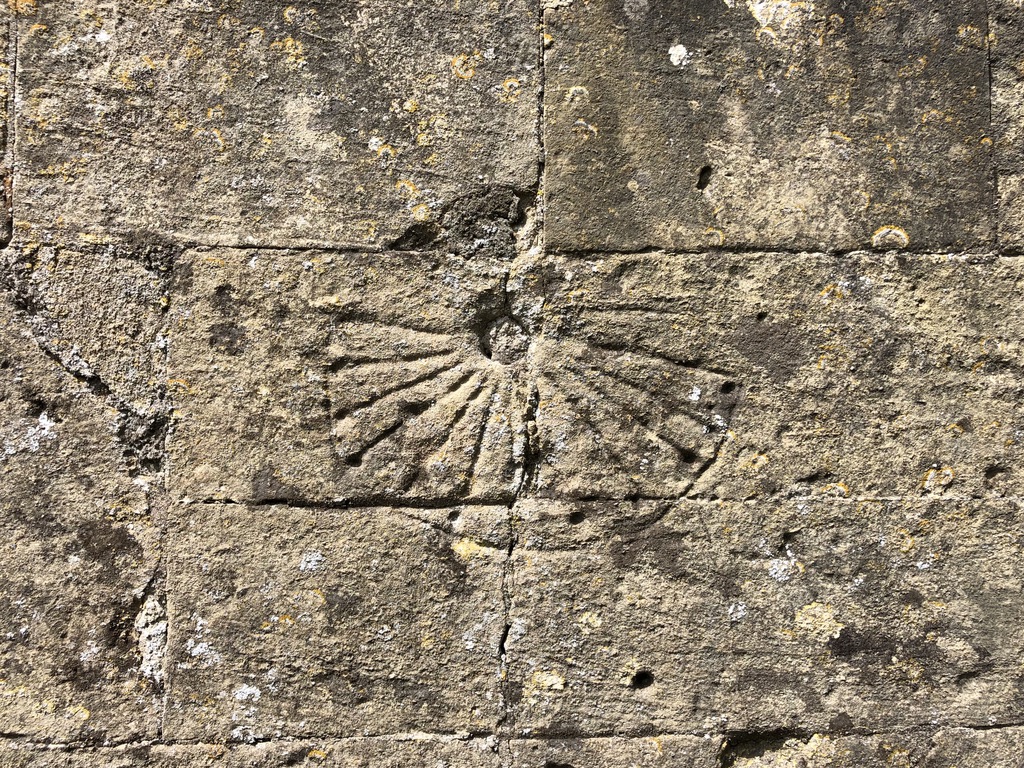
St Laurence at first sight is clearly much expanded and restored over the centuries. Parts of a much earlier church are evident. The existence of any external decorative features such a scratch dial seemed highly unlikely*. However the stonework round the small doorway looked older, reused, possibly in its original configuration. It was certainly worth walking along the path to take a look.

St Laurence . Church Stretton . Shropshire – doorway with medieval stones and 2 scratch dials

On the W. side of the doorway is a single stone with 2 simple part-dials incised. Their edge positions show that 3 stones were originally involved, but no other stones round the doorway matched the patterns, nor had obvious cuts. So in fact the positions of the stones must have been altered. From what remains of the dials, it is hard to guess how they must have looked but presumably their style holes must have been in the mortar dividing the 3 stones. Possibly this stone is inverted.

The dials are unrecorded by BSS, and I can find no other reference. It is understandable that in their present state they attract little or no attention. Perhaps the moral for dial sleuths is that any church that has a ‘dial-y’ look is worth a quick investigation.

* If I had explored further, the church records mention exterior carvings including St Laurence holding a gridiron, and a rare sheela-na-gig, probably of Saxon date. 

GSS Category: Scratch Dial

Photos: Keith Salvesen