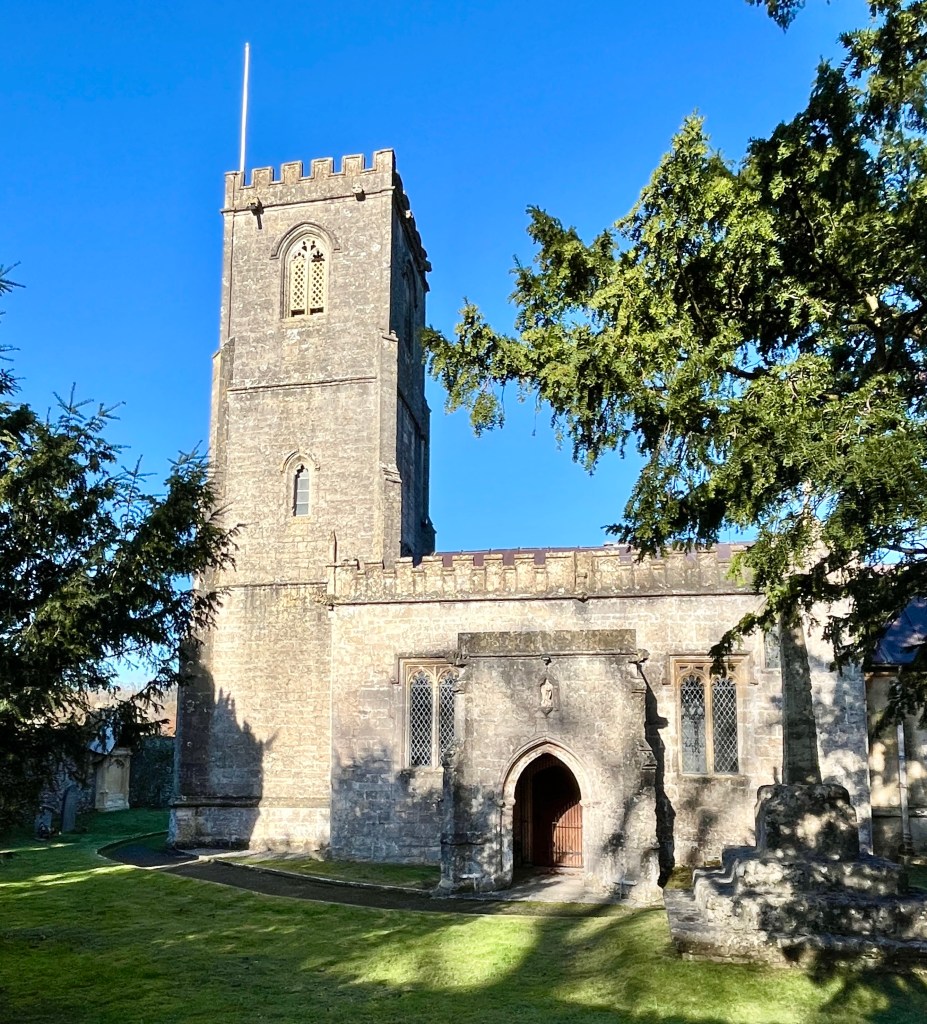
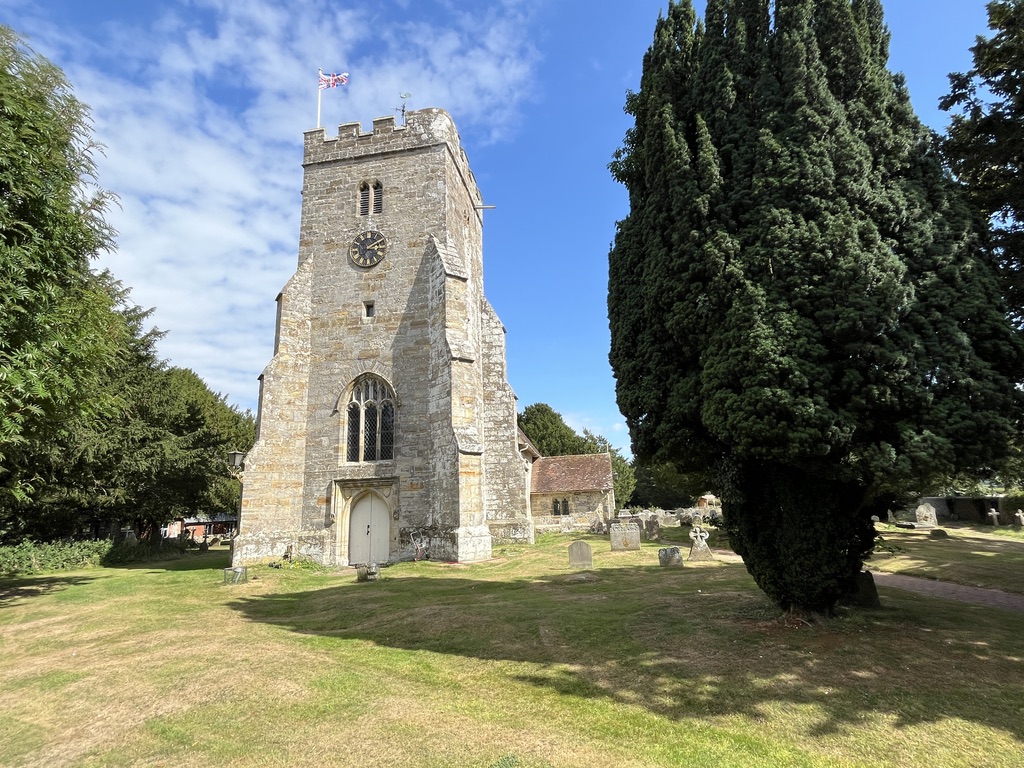
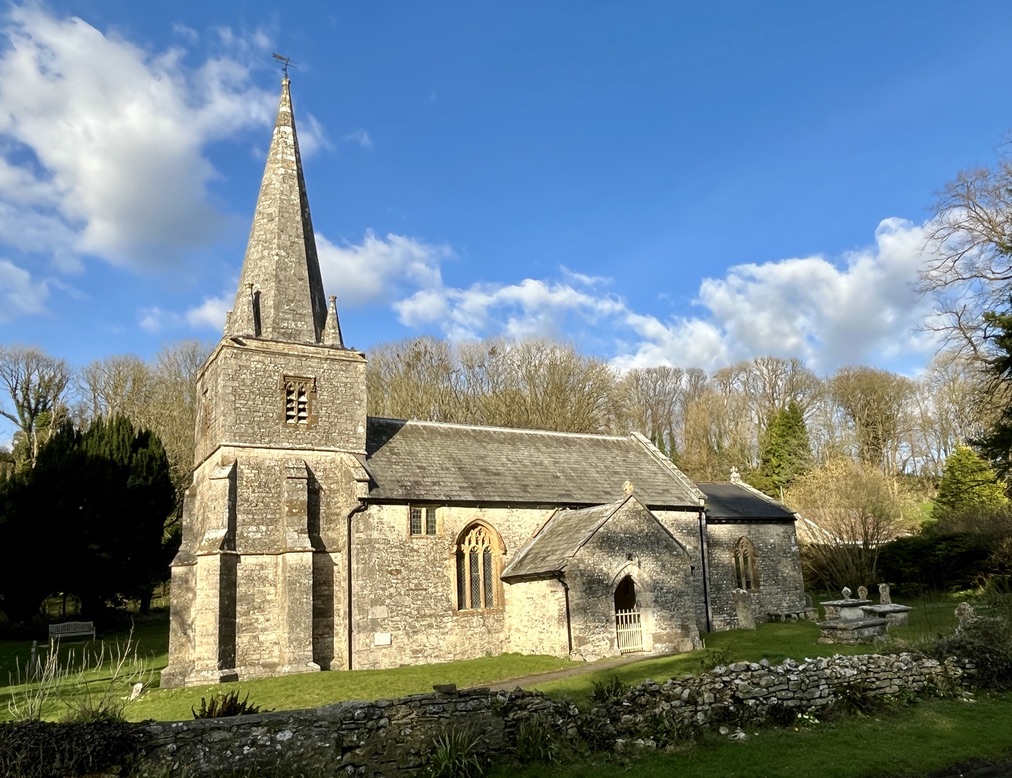
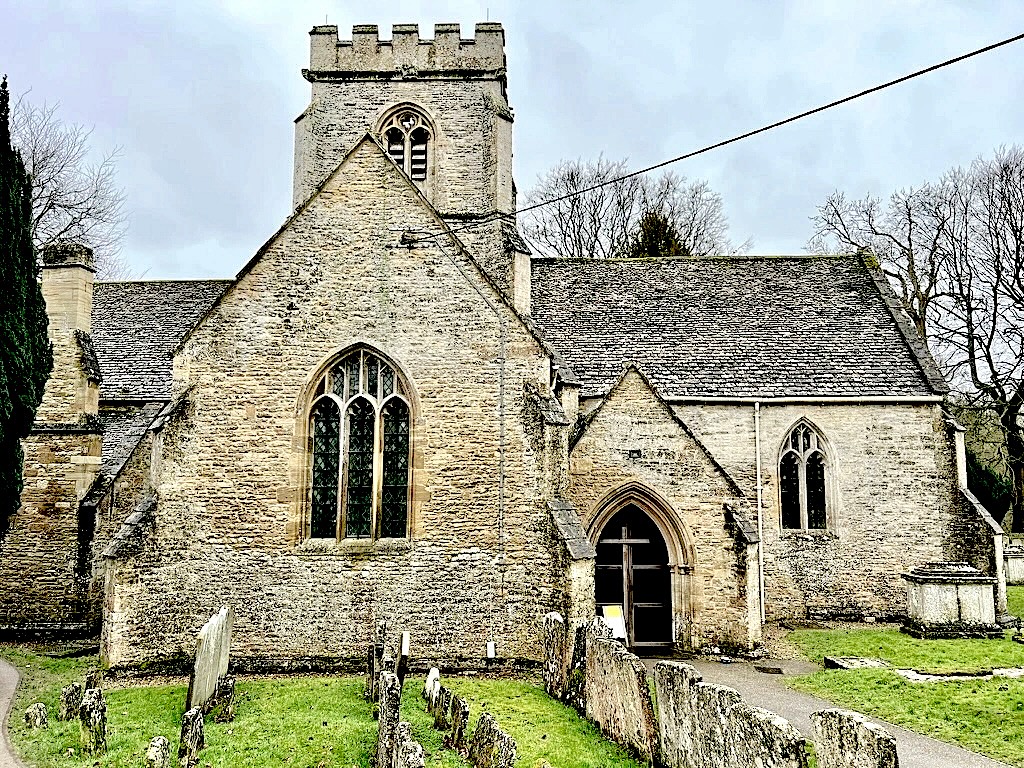
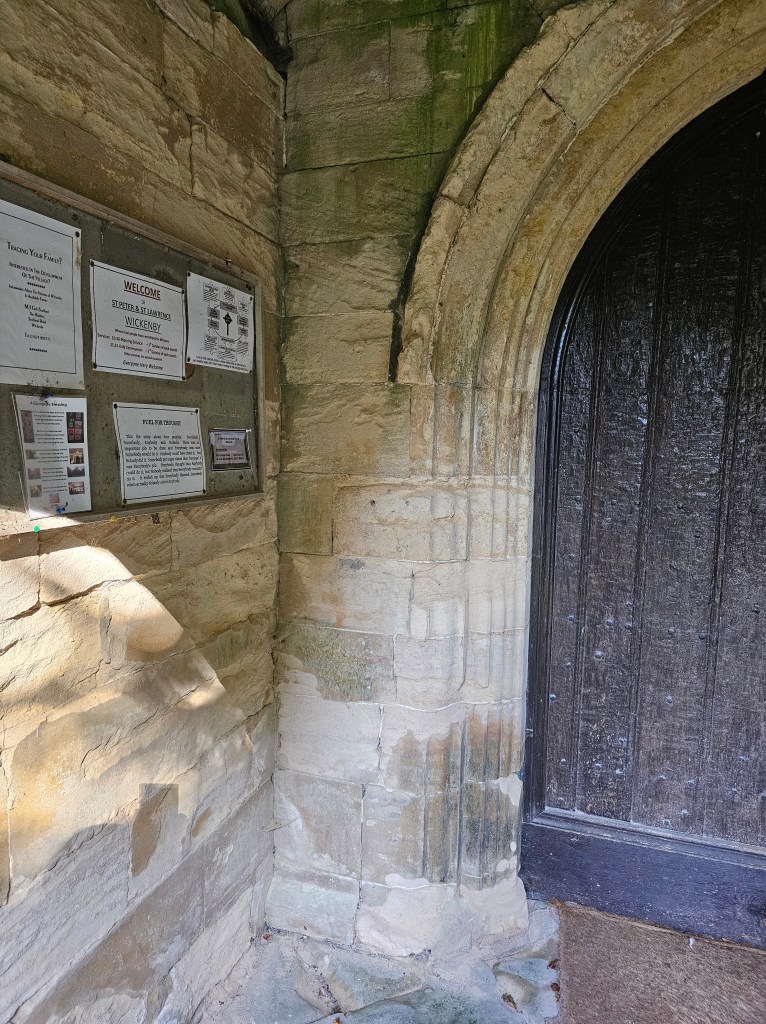
GRADE II* ❖ Early origins; mainly C14 / C15; additions C19 (inc. Ferrey). PEV gives this small church quite a detailed entry. This is lias stone country. The building, the churchyard, and the setting make this a fine country church. There are 2 scratch dials. Visited by DEH on 10 Sept 1912. 12m N of Yeovil. 51.0566 / -2.6271 / ST561287
❖
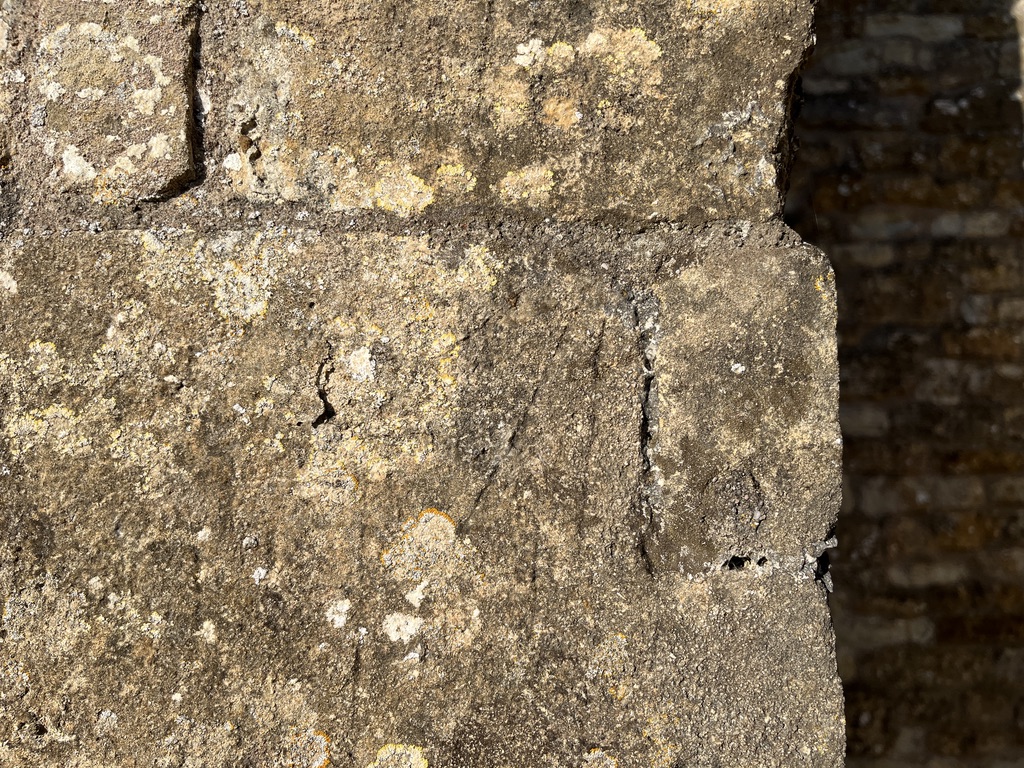
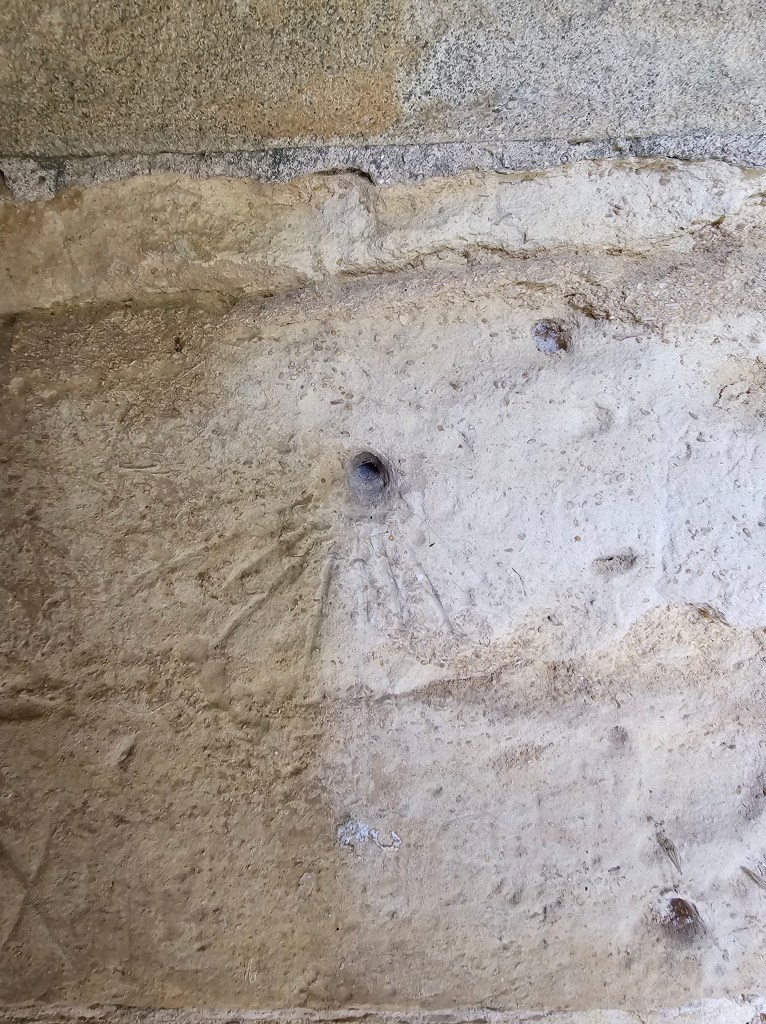
DIAL 1
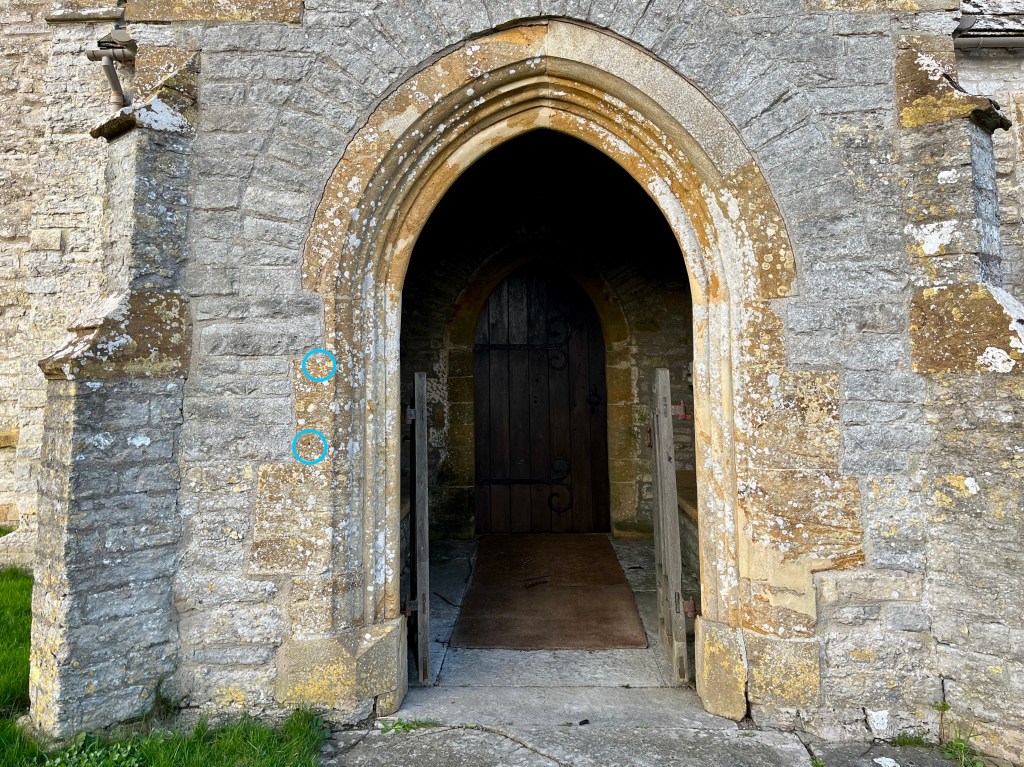
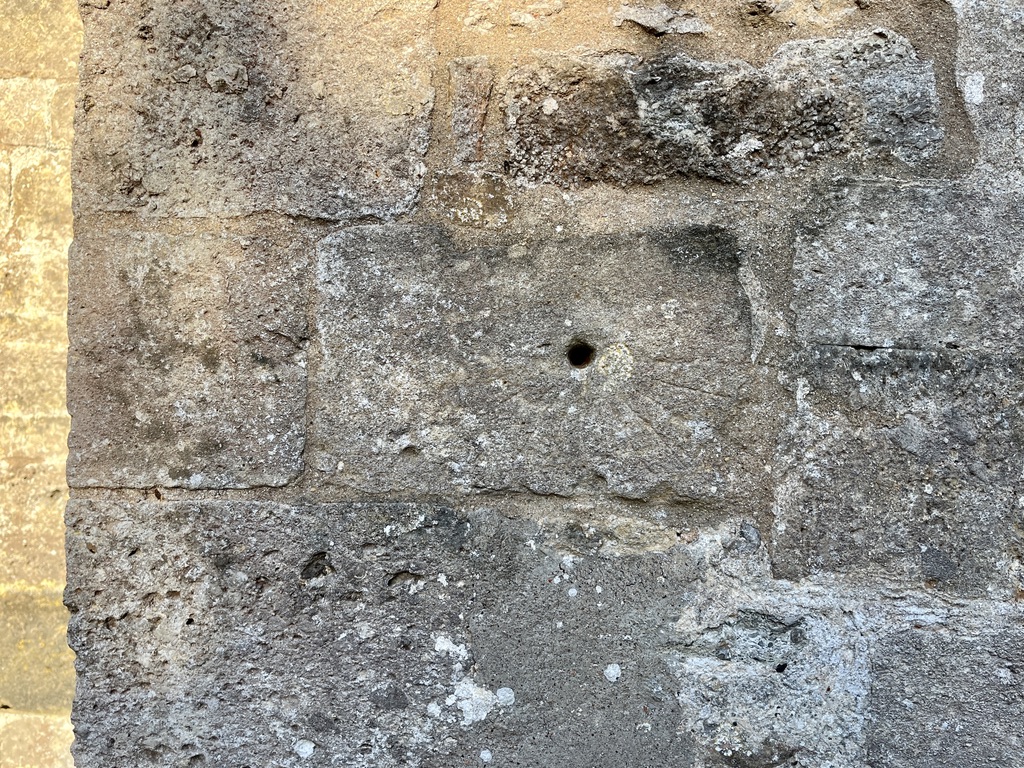
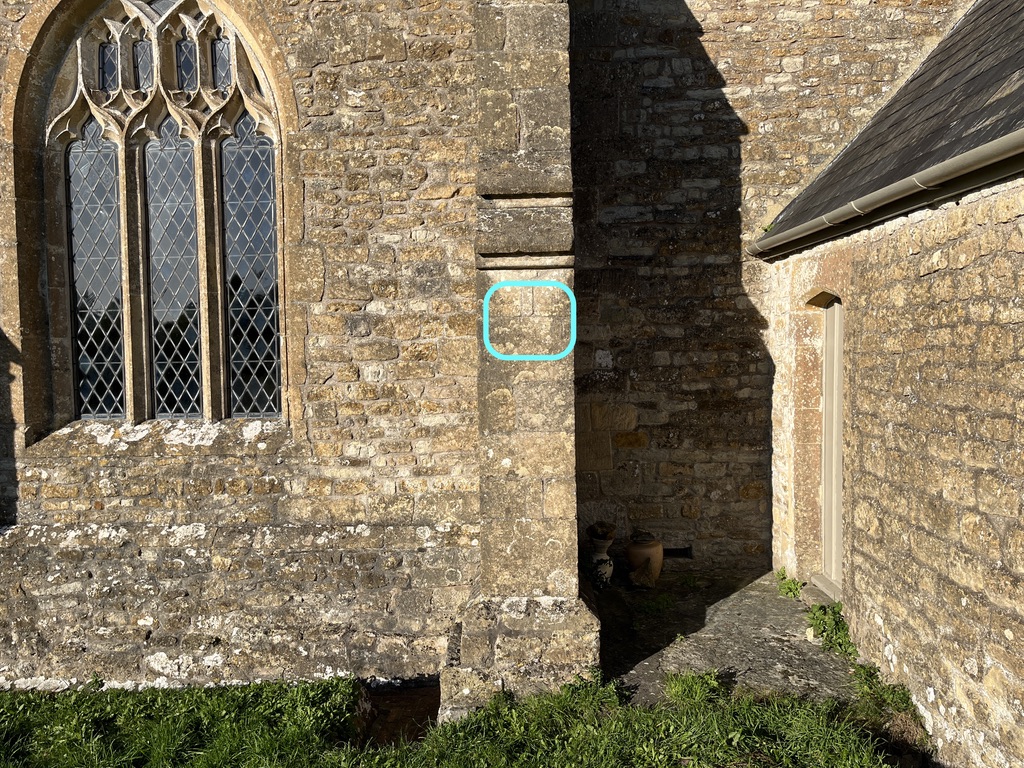
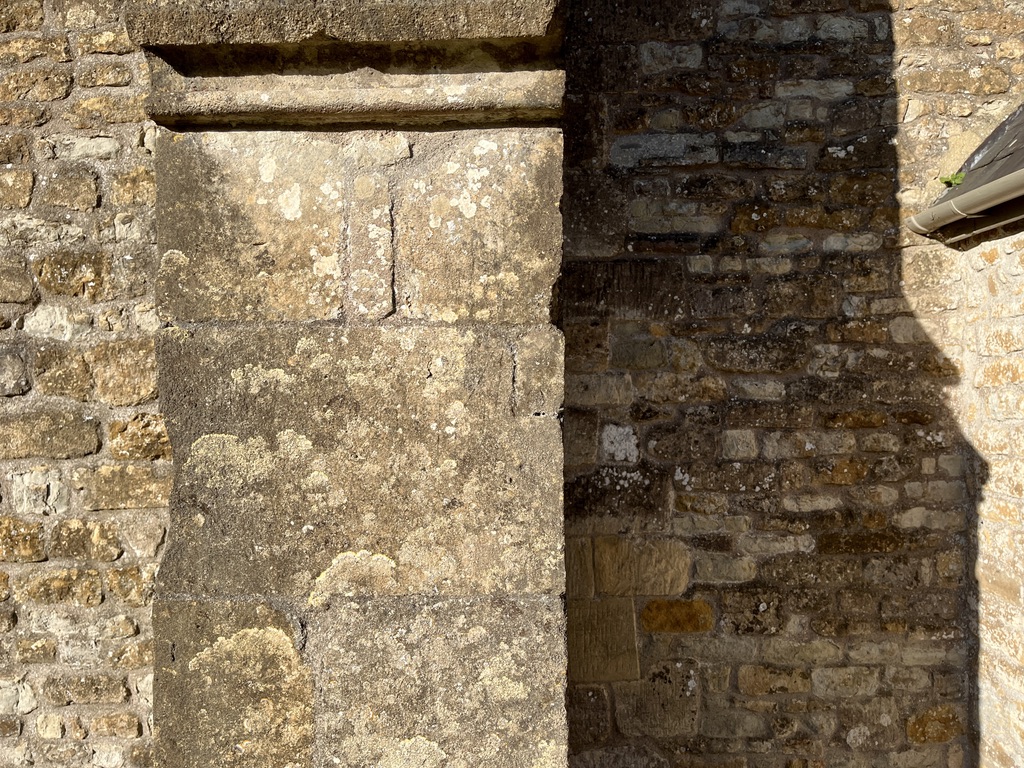
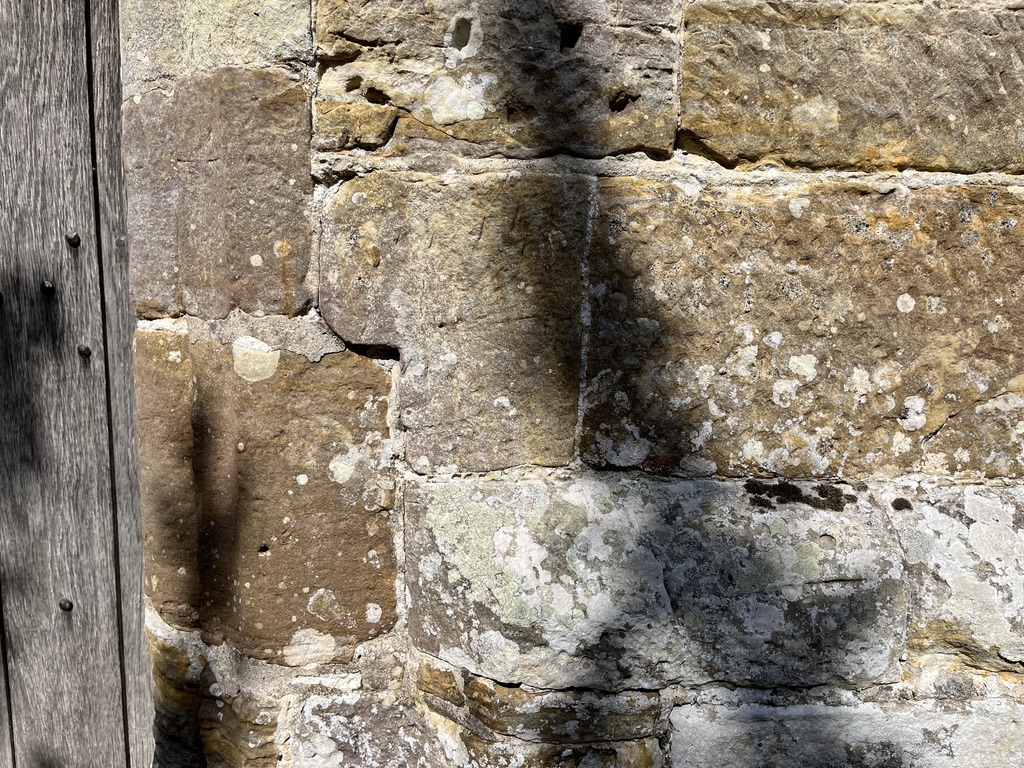
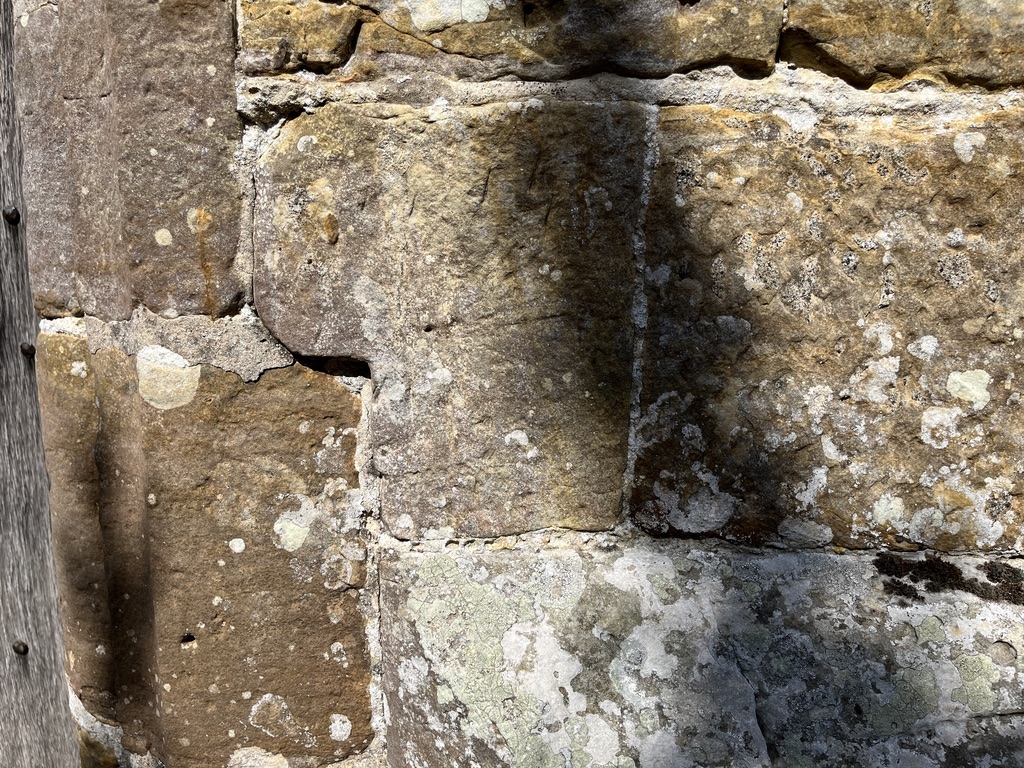
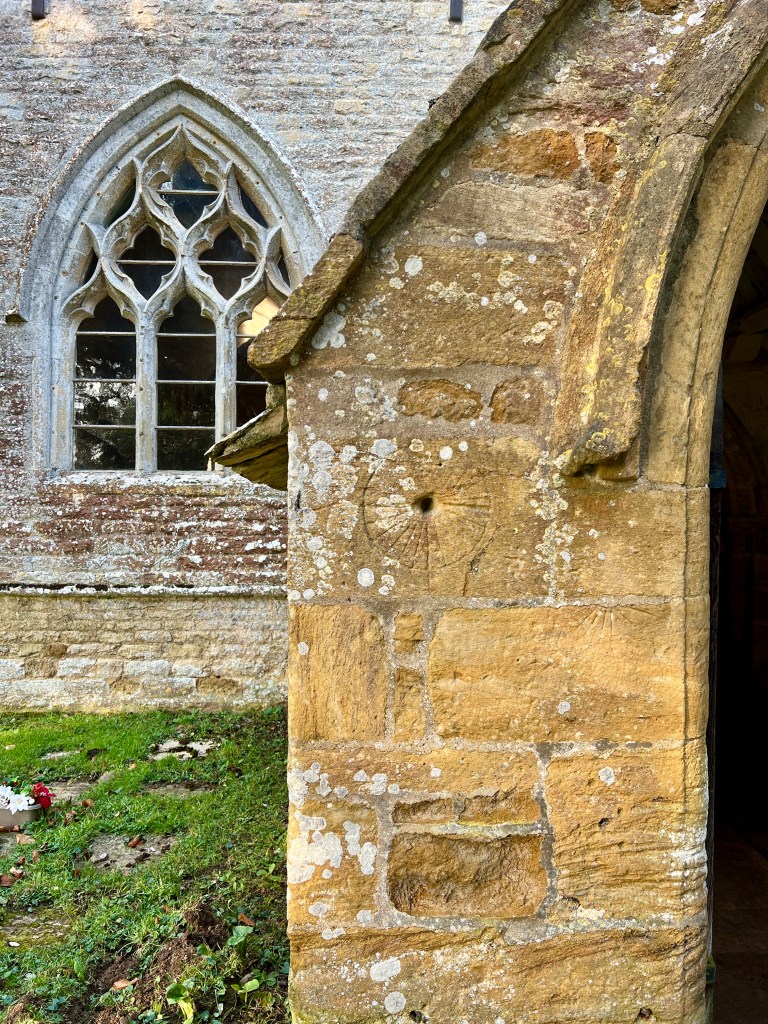
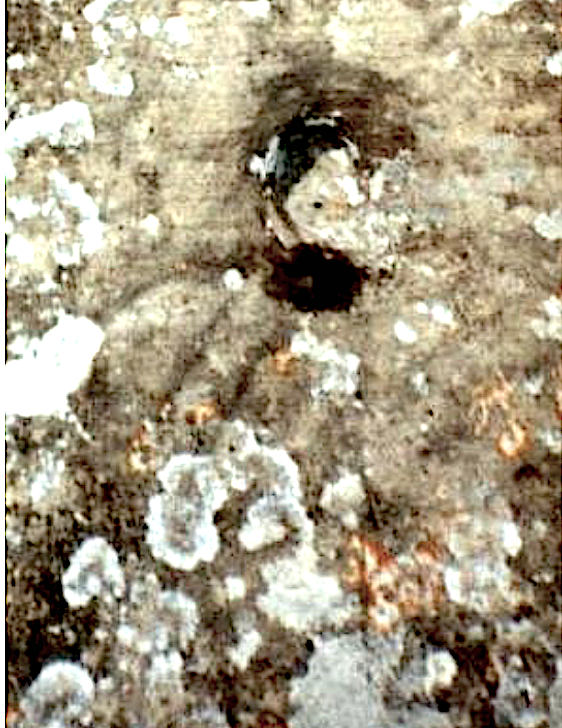
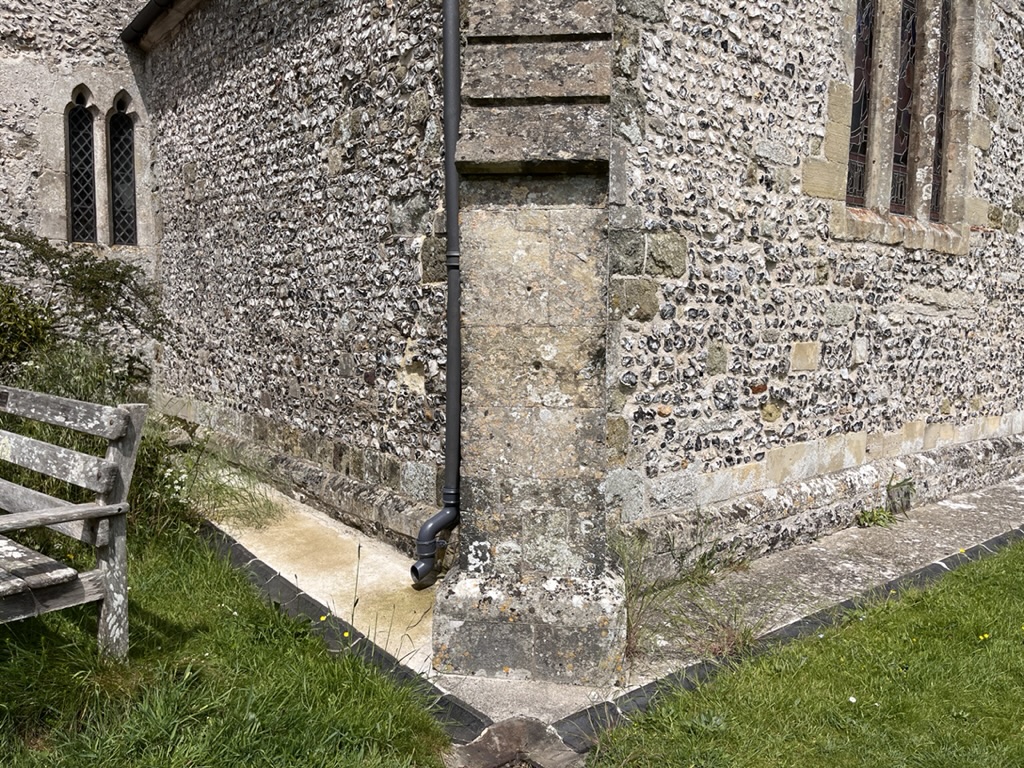
On a quoin stone W side of S porch, the gnomon hole easily seen. DEH calls it a faint scratchy dial, and thought that the hole may still contain the style. He seems not to have checked; later in his dialing project, he would have. There’s no trace now.
Babcary 1
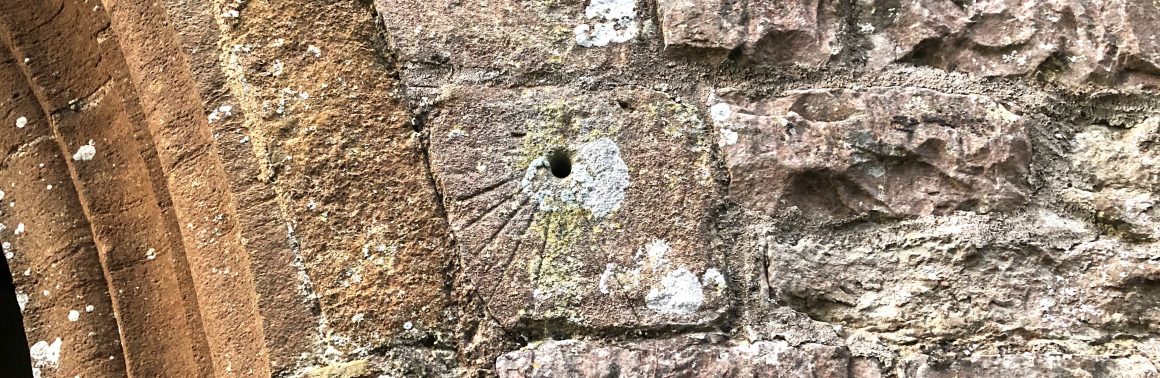
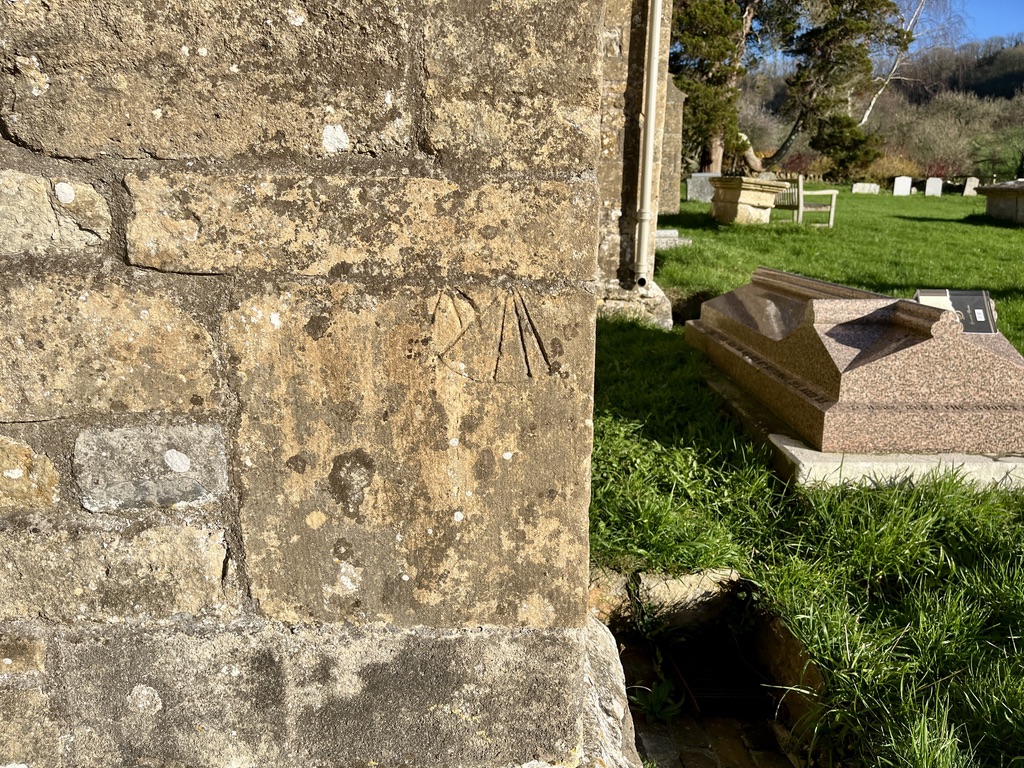
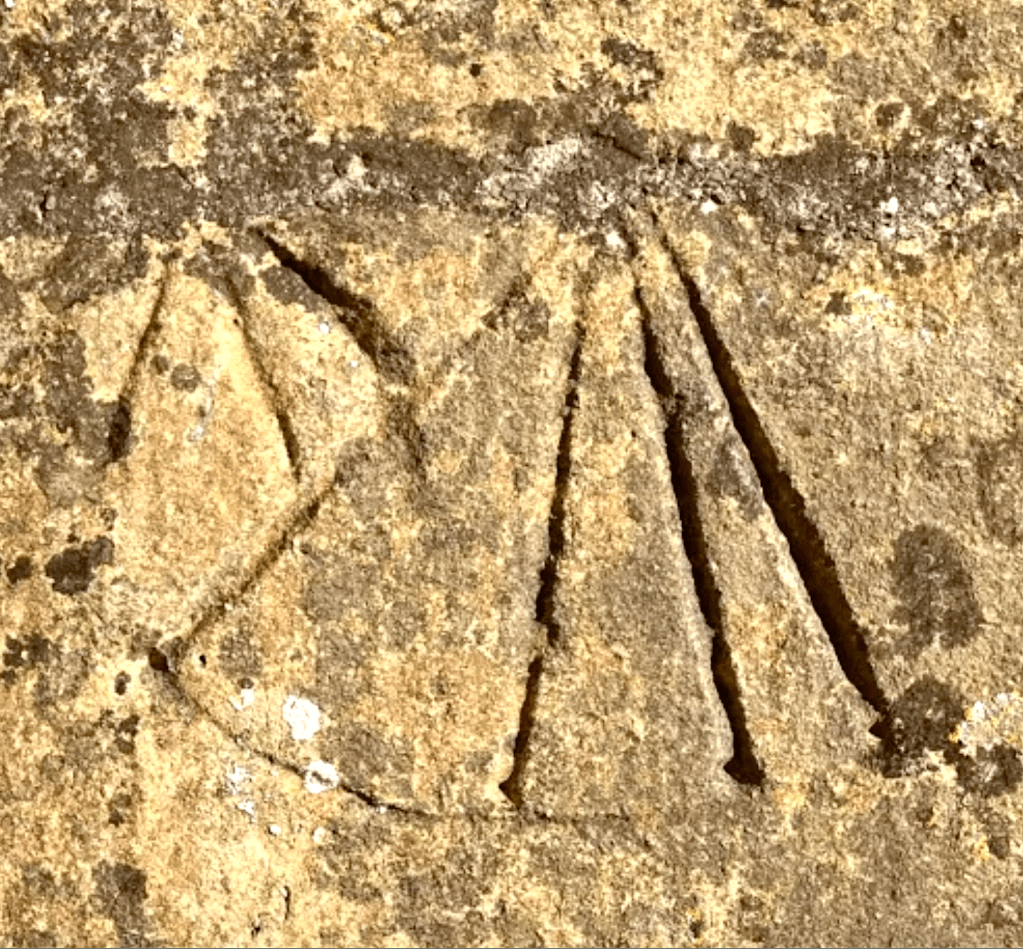
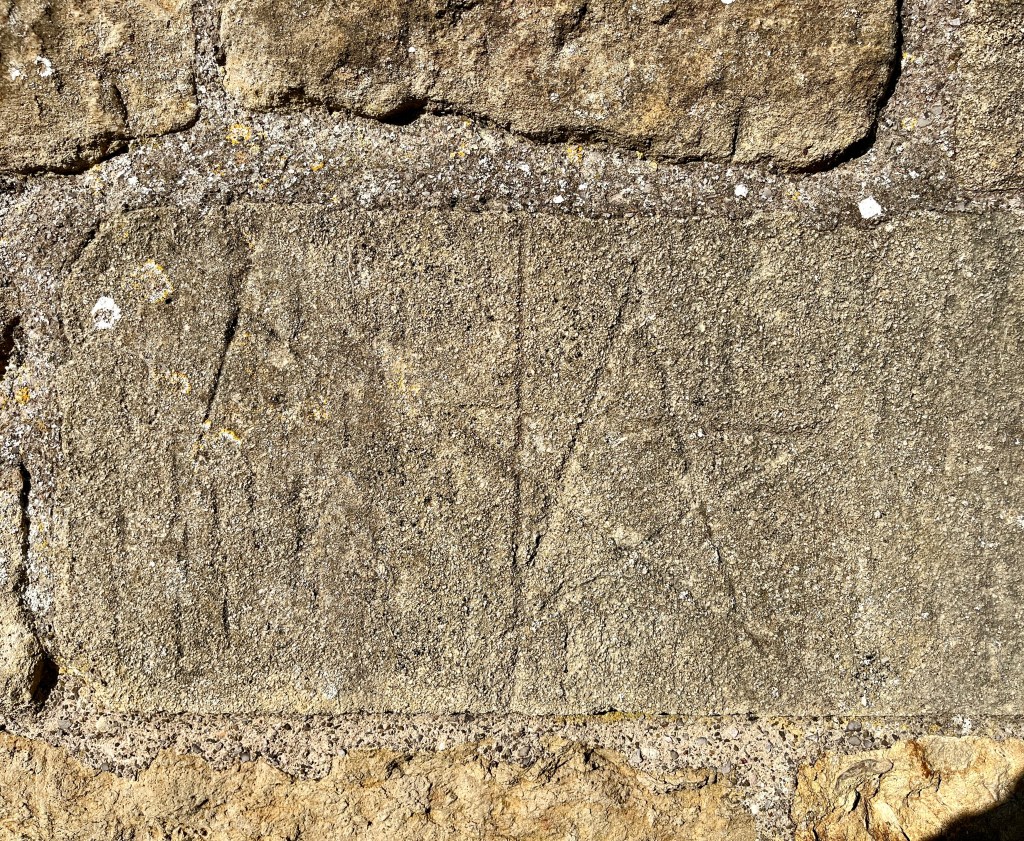
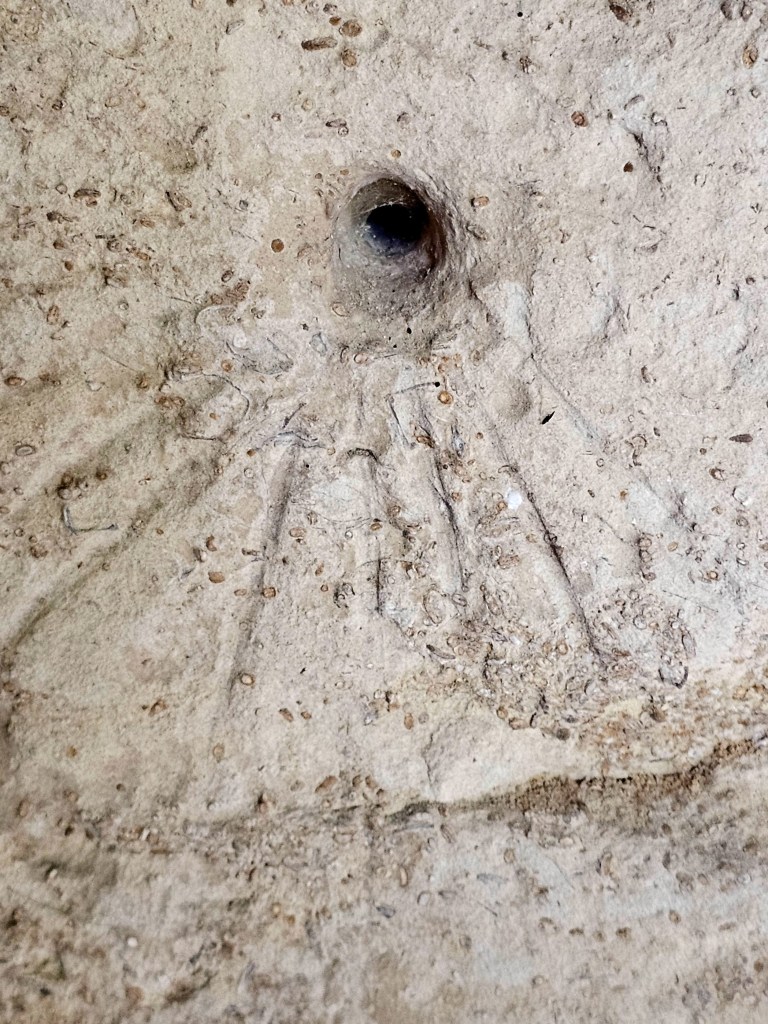
DIAL 2
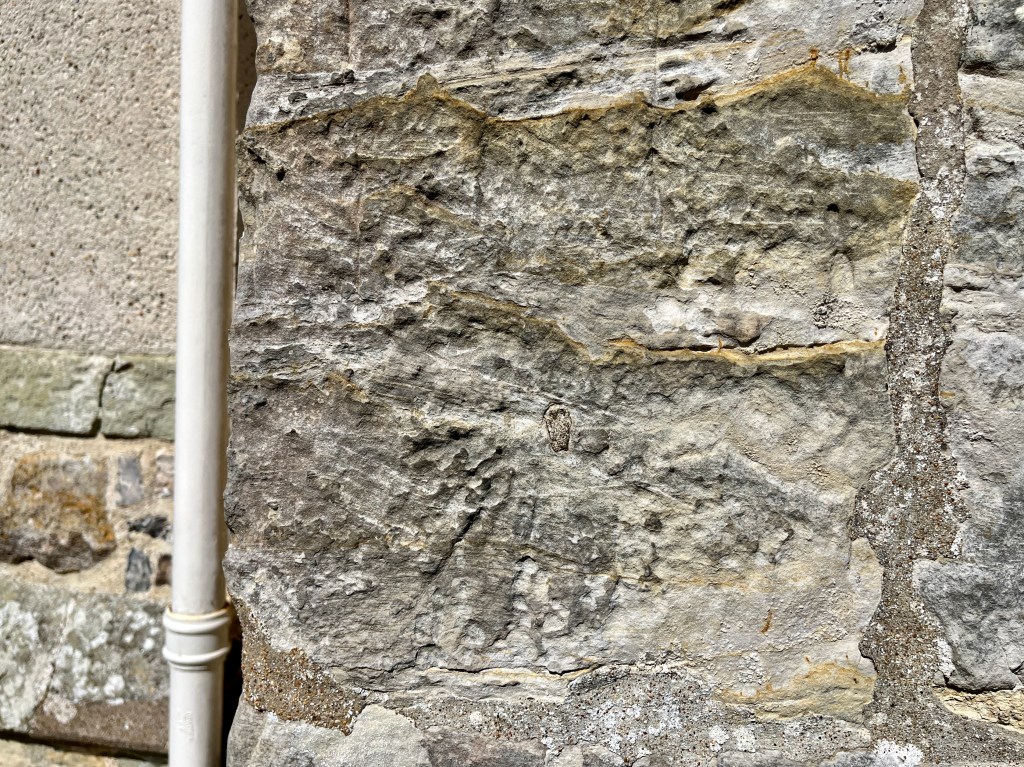
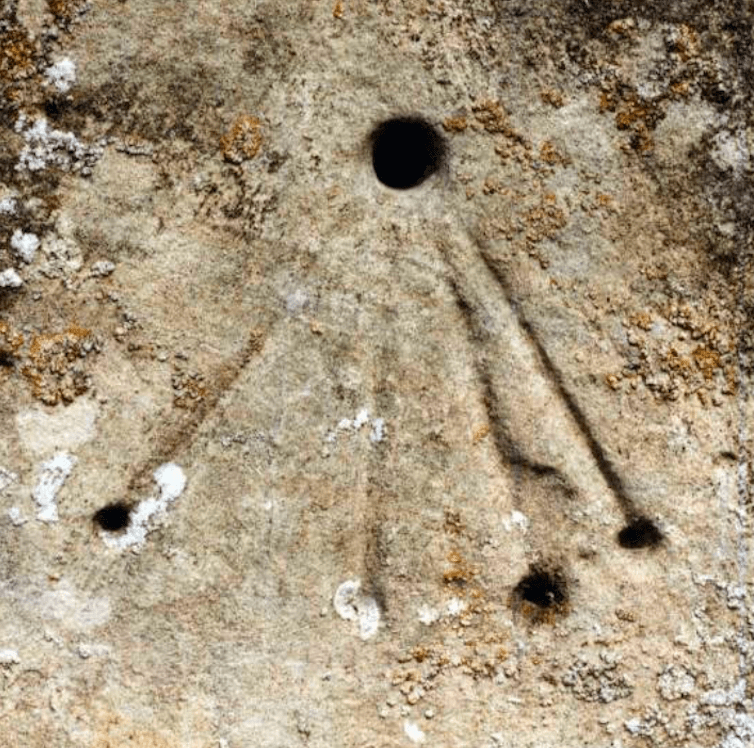
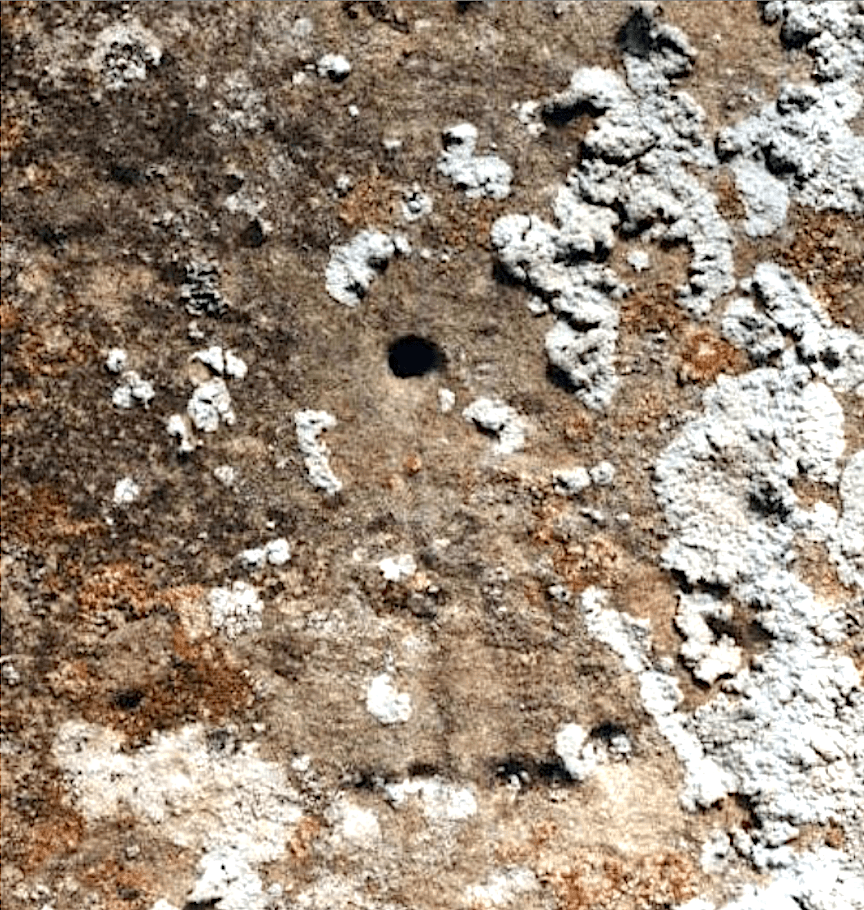
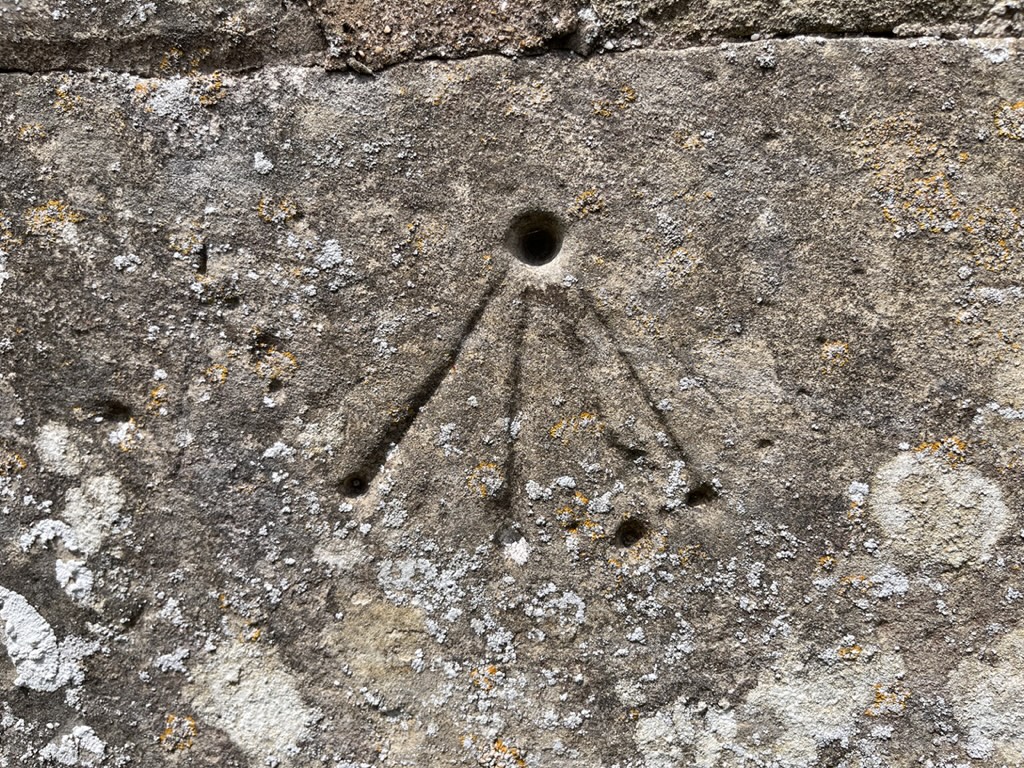
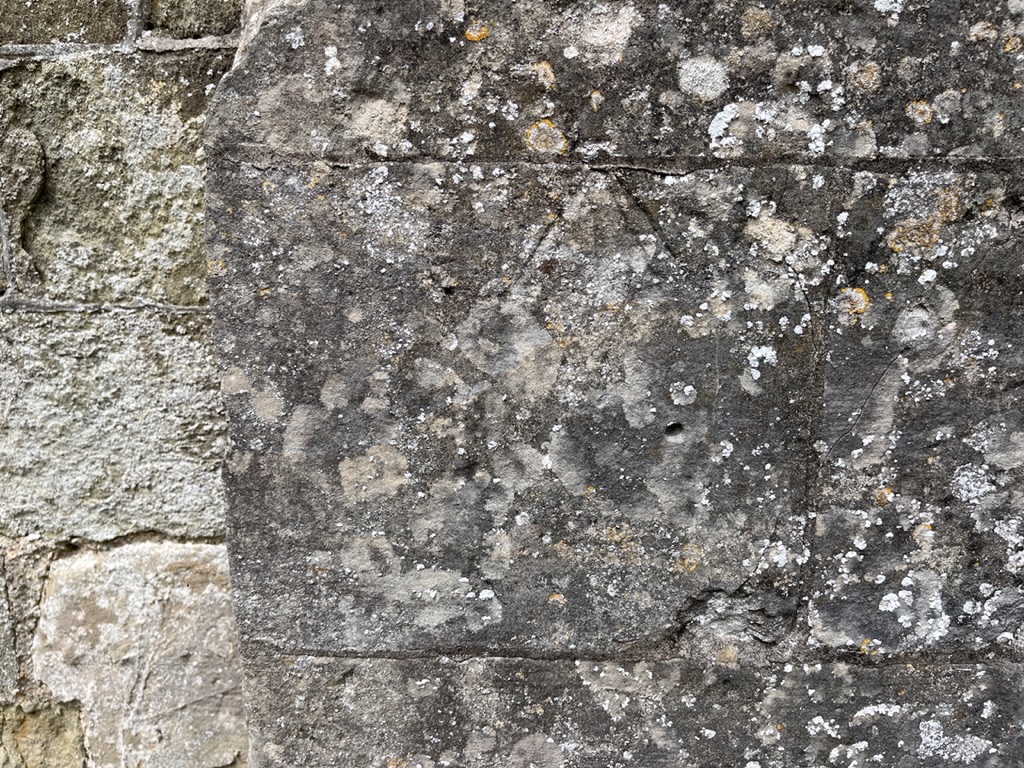
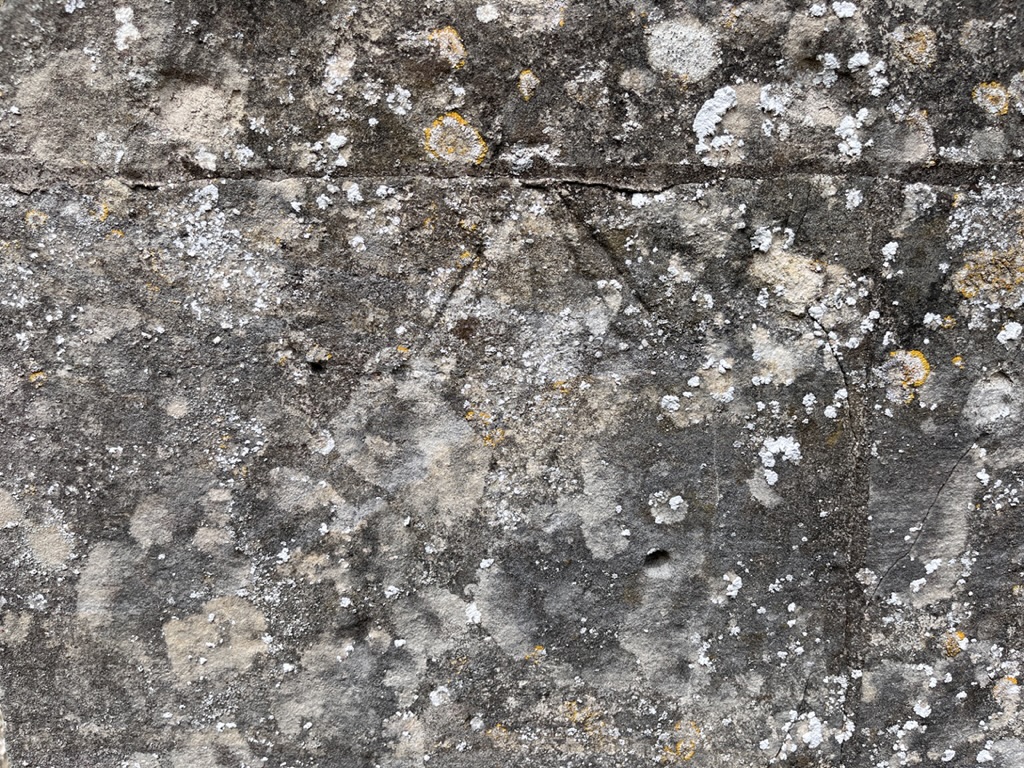
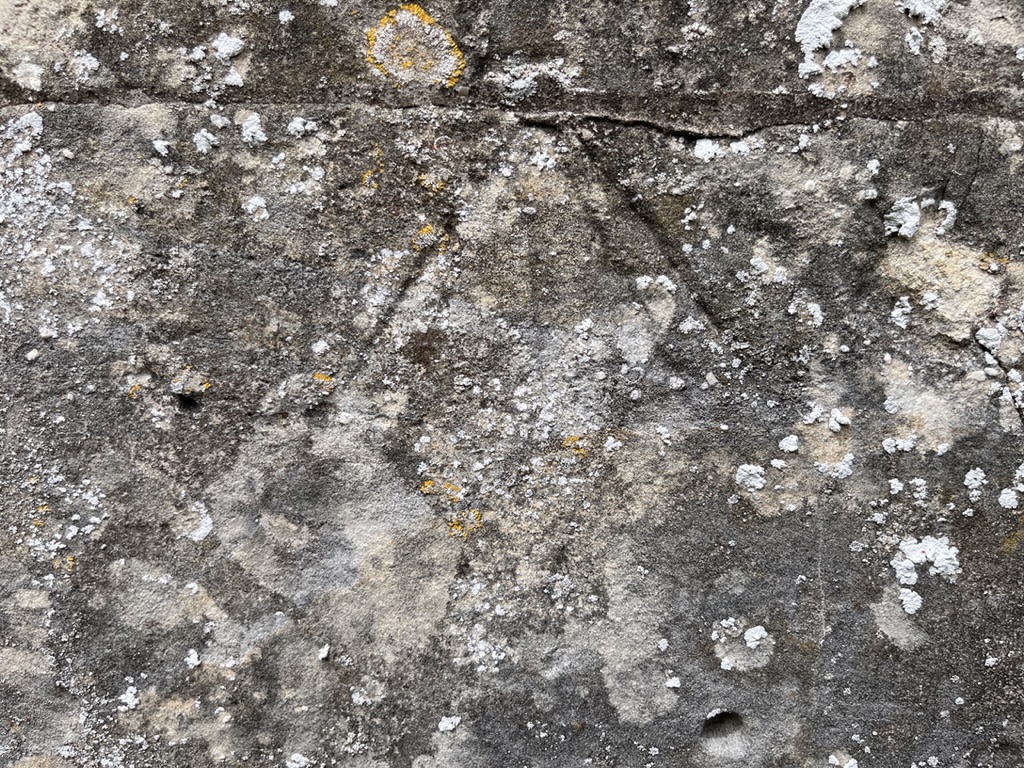
A few inches above Dial 1 is an indistinct dial, noted by DEH. But for his careful records, no one would notice it now, a century later. 4 faint and somewhat wonky radials can just be made out LLQ, descending from a shallow hole now covered by lichen. This has a slight bluish tinge suggestive of a copper rod being used as a gnomon, a speculation too far.
GGS Category: Scratch Dial; Mass Dial; Somerset Scratch Dial
GRADE II* ❖ Norman origins, C14 work, rebuilt C15, restored 1872. An attractive church both outside and in. Visited by DEH on 6 Oct 1911 on one of his early dial expeditions from Downside Abbey. Roughly halfway between Wells and Shepton Mallet. 51.199 / -2.6094 / ST575446
DIAL
DEH recorded a single dial on W corner of S aisle. He noted a 2.5 inch deep gnomon hole, and commented ‘…this dial is cut on soft red sandstone and has all 12 hour lines… many of them probably added to the original design’. More than 100 years later, only 9 are legible.
GSS Category: Scratch Dial; Mass Dial; Dial erosion
GRADE II* ❖ C13 – C15; C19 restoration (some by T H Wyatt). Quite large, with nave, chancel, north and south porches, south vestry, west tower. Predominantly Perp. Busy history and plenty to look at, approval by PEV. 10m N of Castle Cary; 16m S of Shepton Mallet 51.124 / -2.4854 / ST661361
DIALS
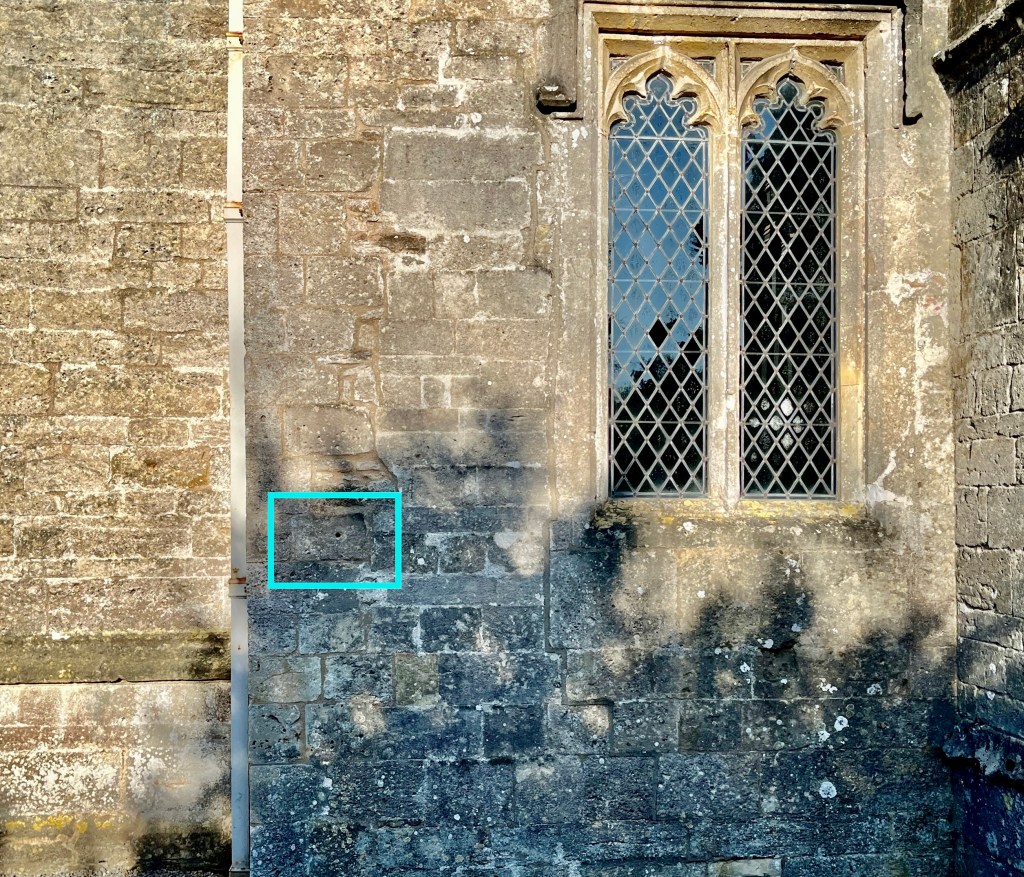
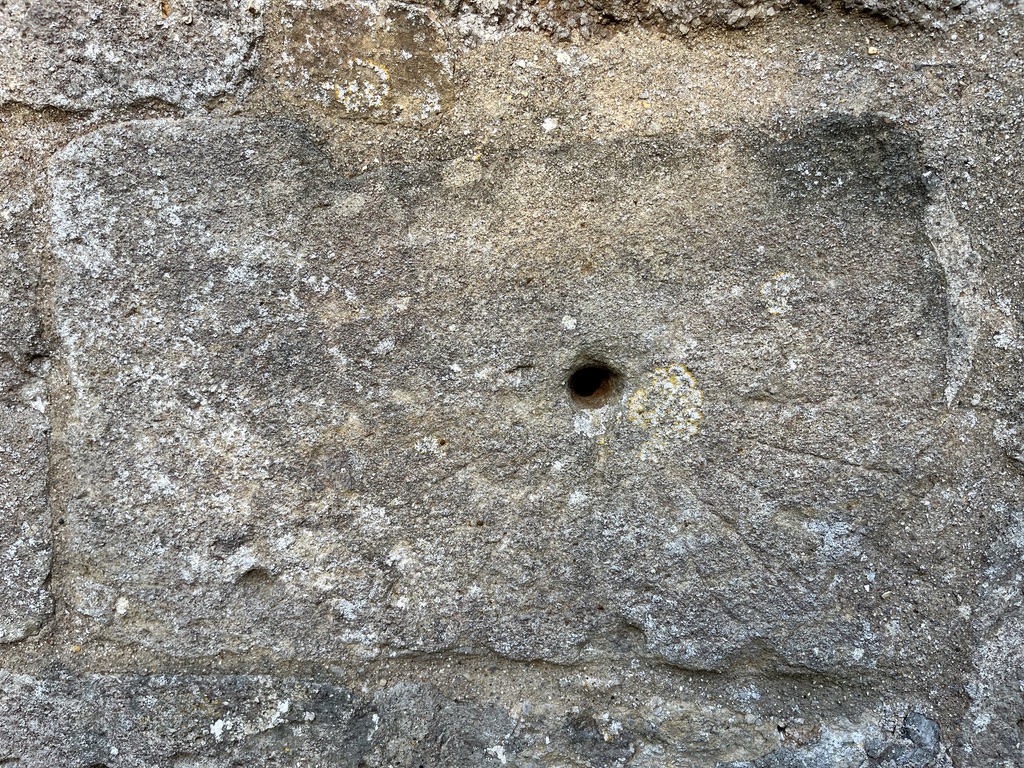
There are 3 dials (one unrecorded?). W of the porch, low down on a relocated quoin stone, there are 2 interesting near-overlapping dials cut on W face. This is a good example of ‘dials ancient and modern’: a small early dial – simple and rustic – superseded by a later dial cut with attention to detail. The 3rd dial is on the buttress E of the porch.
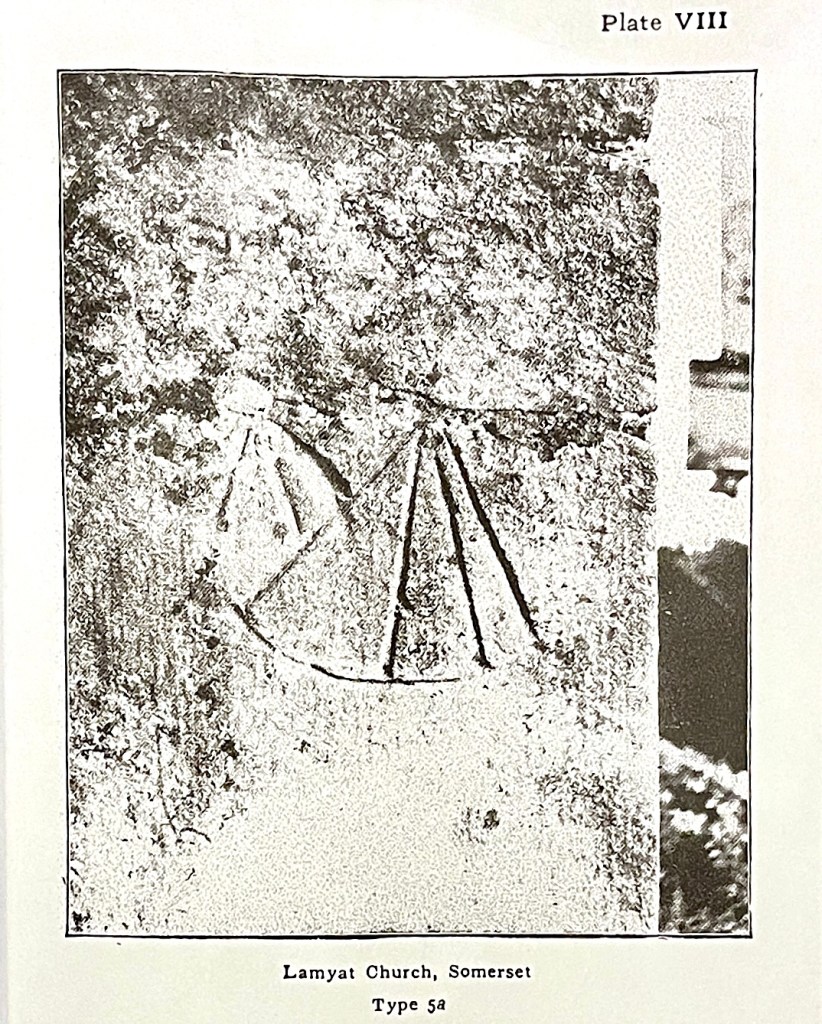
DEH visited the church on 16 October 1913 . By now he was using a camera to photograph selected dials, including Lamyatt. The quality of his images is surprisingly good. He also used a motorcycle to extend the scope of his researches from Downside Abbey. More about this extraordinary monk in due course.
Note: single ‘t’ Lamyatt; plugged gnomon hole, now invisible
DIALS 1 and 2
DEH visited the church on 16 October 1913 and recorded dials 1 & 2.
DIAL 1. This small dial has 3 radials emerging from a now undetectable gnomon hole in the corner of the mortar line ULQ. The deeper cut and crudely bent line RHS suggests that the main canonical hour for observance was Nones. In due course a replacement dial was called for.
DIAL 2
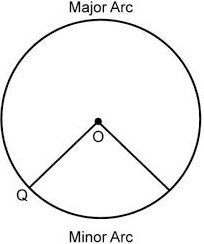
DIAL 2. On the same quoin stone, also W-facing, a later and far more practical dial was cut. 4 radials the same length fan out from a gnomon hole in the mortar line (the original plug?). These are arranged within a minor arc, and scale up both in width and depth LHS to RHS. The overall effect indicates competence and care by the maker.
The radials each end in a dot (one is barely detectable). The line spacing of the dial in its original position arrangement is a puzzle. In a literal way, noon would be exactly between lines 2 and 3, as sometimes found on other churches.
DIAL 3
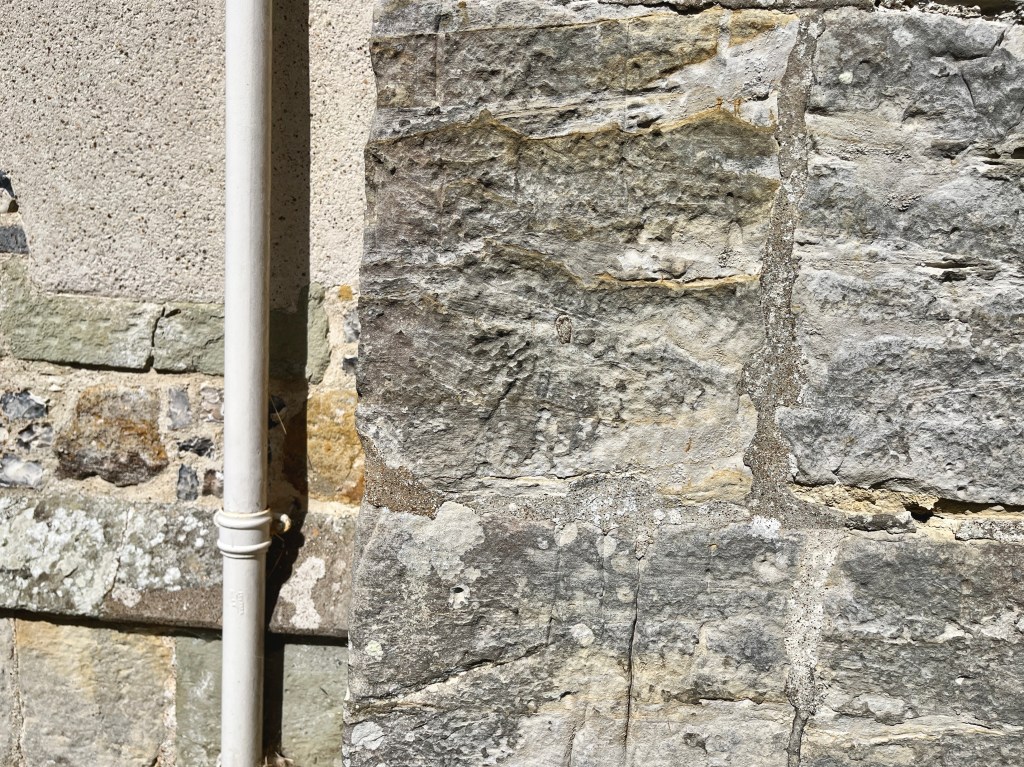
On the buttress E of porch, at head height, a dial with 2 long lines descending from a mortar line that has a hint of a gnomon hole. It seems to be in its original position. Presumably the vertical mortar line – now a crack – acted as the noon line dividing the 2 radials from the smaller quoin stone.
GRADE 1 ❖ C13 traces, mainly C14, C15. C19 restorations. Little information HE / BLB, but this link is informative https://sussexparishchurches.org/church/ripe-st-john-the-baptist/. One of a cluster of interesting churches in the area. 8 miles E of Lewes. 50.8684 / 0.15 / TQ513098
DIALS
❖
DIAL 1
The church is said to have 3 dials, though I could only find 2 definite ones. The first is very rough, with ?2 lines dropping down from a plugged hole, and some scrapes around the area. It’s hard to see how it marked the course of the day effectively. The hardness of the stone may explain it.
❖
DIAL 2
An intriguing dial in quadrant form, and cut on a shaped stone re-sited from elsewhere on the church. The images below show the dial as it is now, located URQ – the least effective location for marking the passage of today.
Two orientations could have worked: as a morning dial (LLQ) or an afternoon dial (RLQ). But then the stone would have needed to be recut…
❖
DIAL 3?
I did not find a definite 3rd dial, but on an adjacent stone to the others is one with a mix of holes. Two have faint lines / possible radials. If I had to choose one, it would be top left. Any helpful views welcome.
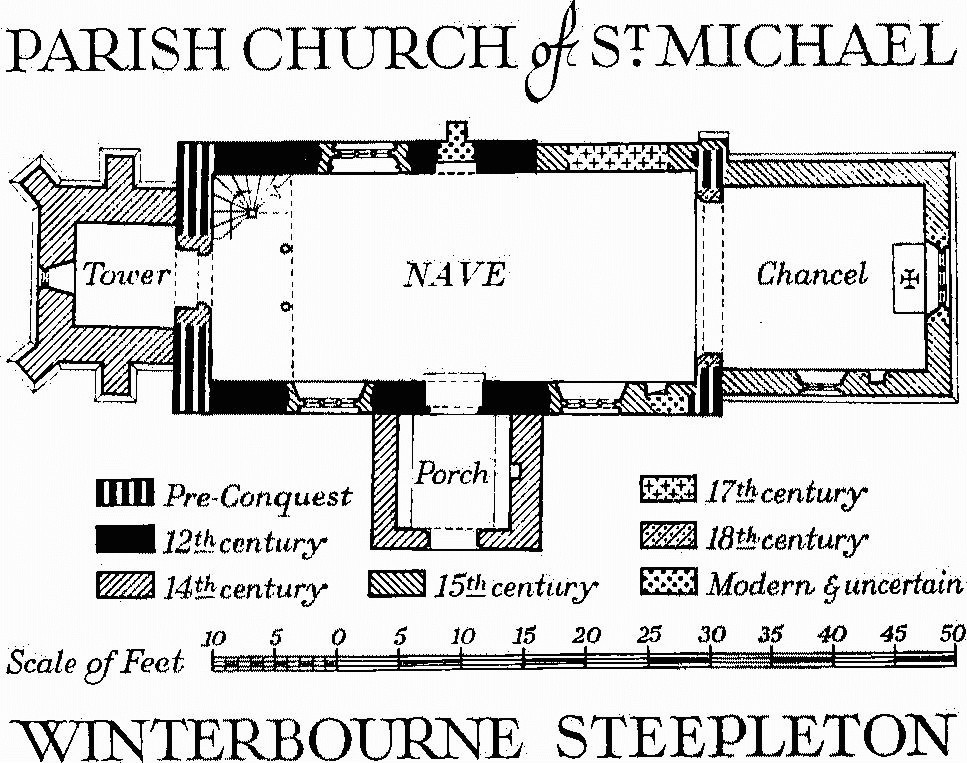
GRADE I † A fine early church in a lovely setting. C11 quoins to nave; C12 nave rebuilt; C14 3-stage W tower, porch; C15 chancel. Later alterations, restorations. Just W of Dorchester, yet seeming miles away in its peaceful valley. Visit Winterbourne Monkton while you are there (2 perhaps 3 dials). 50.7067 / -2.5266 / SY629898
DIALS
Two dials are recorded. I last visited this church more than 2 years ago, in early evening sunshine but with shadows on the church. I have recently been back in better light to re-photograph the main dial; and to check for another rudimentary dial noted on the S buttress of the tower in a 1997 survey. I didn’t find it on my first visit.
DIAL 1
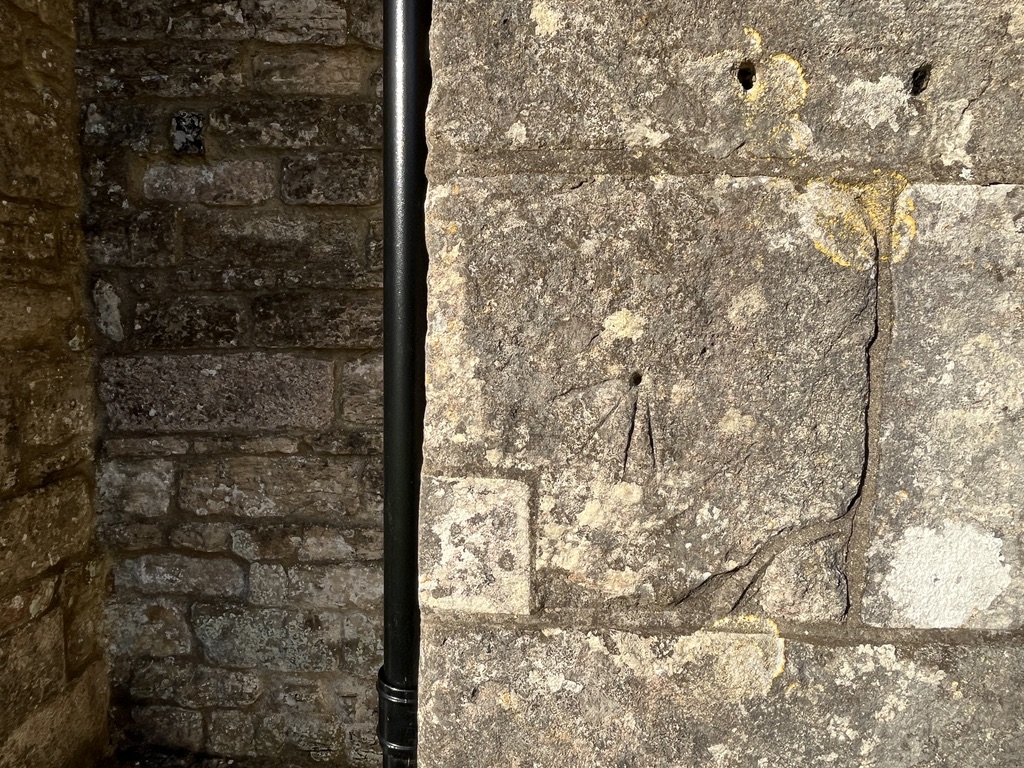
Dial 1 is located on a SW quoin stone of the nave. When examined in the 1990’s it was noted to be ‘behind a drainpipe’, which is no longer the case. By strange coincidence, when I revisited, the rest of the drainpipes were being repaired and repainted.
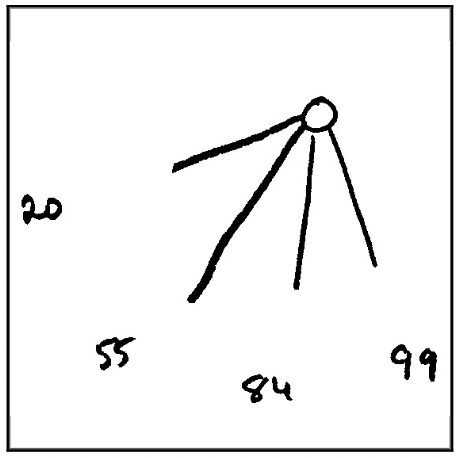
This is a straightforward 4-line morning dial with a pleasingly casual approach to straight lines. The two deeper incised lines suggest that late morning was the significant time of the day for observance.
DIAL 2
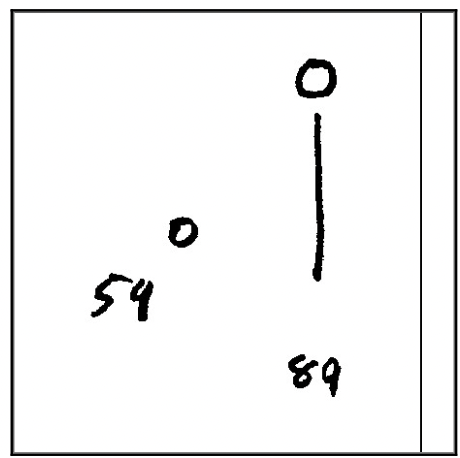
Dial 2 is so simple that I cannot claim to have discovered it this time round. It was recorded as being on S buttress of the tower, with 1 line a mere 45mm long, a small gnomon hole, and a pock LLQ . It was noted in 1997 as ‘very faint’. Although Dial 1 is mentioned in several places (eg BHO), I have found no additional reference to this tiny time marker. So for the second time I failed to find it, even in sunlight. However, a drawing was made and is all I can offer.
Do see the Saxon statue mentioned in the notice below (there is a similar one in Bradford on Avon), and indeed spend some time inside this interesting church.
GSS Category: Scratch Dial; Mass Dial; Eroded Dial
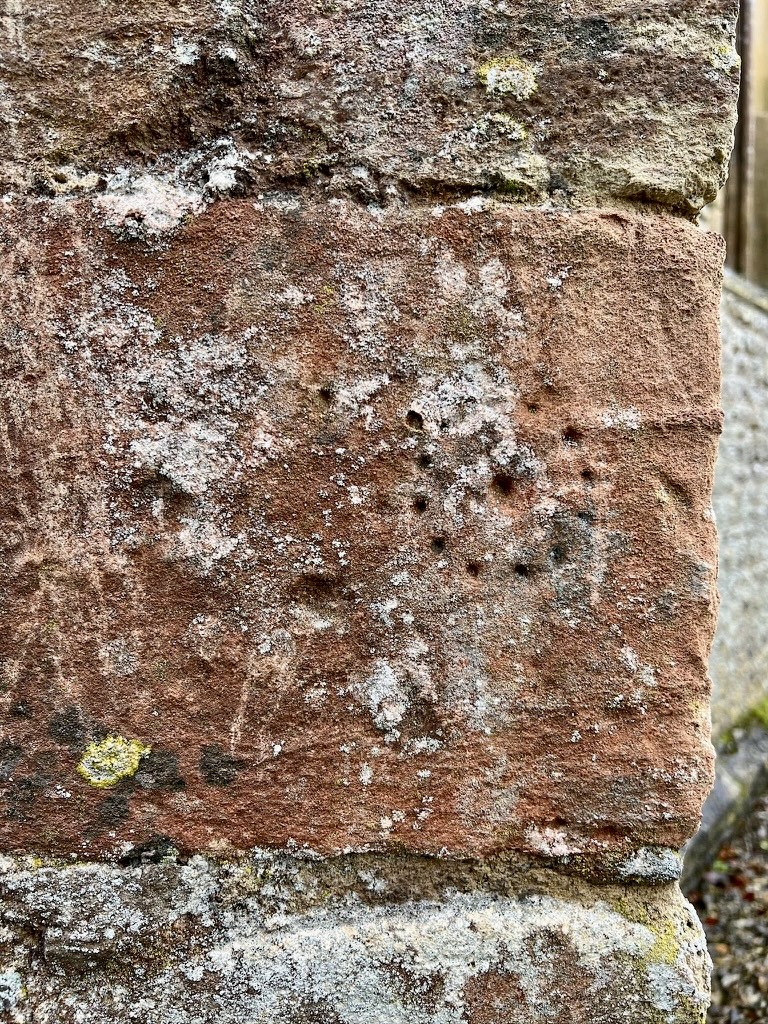
GRADE I ✣ Entirely rebuilt in the mid-15th century, incorporating earlier foundations and materials. C15 font and pews. Other details of the interior at BLB. Behind the church are ruins of its predecessor. 51.8001 / -1.5315 / SP324113
St Kenelm . Minster Lovell . ACNY cc/os
DIAL
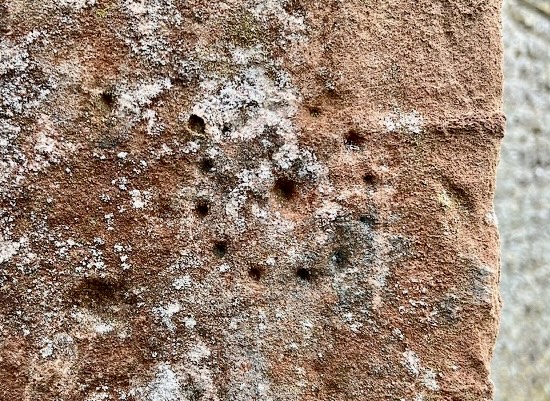
The dial consists of an incomplete circle of 9 holes, and no radials. There are a couple of eroded marks at the top that might have been linked to the design. A pleasingly small, neat dial.
LOCATION
The dial is on the buttress on L corner of N transept chapel, to the left of entrance porch. It was obviously repositioned at some time, given its orientation and the dissimilarity of the stone to those around it.
GSS Category: Scratch Dial; Mass Dial; Relocated Dial
Photos: John Renner with thanks, except 2 ACNY cc/os
Grade I ✣ C12 origin; gradual expansion to C15 (see BHO diagram); C19 restorations. Much of interest within, esp vast mid-C14 Doom wall painting on north wall of nave. Of note: stone bench seats within porch with incised lines where yeomen are reputed to have sharpened their arrows (cf Gnosall Staffs). In 1291 the rectory was valued at £14 13s. 4d. The extremely informative Evenlode Churches website is recommended – a model of its kind. 51.928 / -1.6598 / SP234255
John Renner
DIALS
There are 3 dials in a cluster on W face of the porch. The first is very visible and detailed, undoubtedly the latest. The second is a semi-circle type, fanned out beneath the mortar line. The third is little more than a trace between the two, perhaps a test scratching or passing whim.
John Renner
DIAL 1
John Renner
DIAL 1 has a sizable gnomon hole, enlarged over tIme. The noon line is emphasised by being cut beyond the circle boundary; it also marks Sext. The emphatic horizontal incision RHS suggests that sunset (nocturns; compline) was a significant hour for observance. There are 4, possibly 5, faint lines URQ – probably rustic knife / nail scratchings rather than part of the original dial.
DIALS 2 and 3
John Renner
DIAL 2 has 6 lines radiating from the mortar line. The discrepancy between the line spacing LLQ and LRQ was perhaps an attempt to correct the shadow-fall angle of the sun in the later part of the day.
DIAL 3 is as close to not being a dial as it could be. However, there is a badly cut line at approximately noon; and (anticlockwise) a line approximately at None. There’s also a hint that a gnomon might have been in the vertical mortar line above the horizontal.
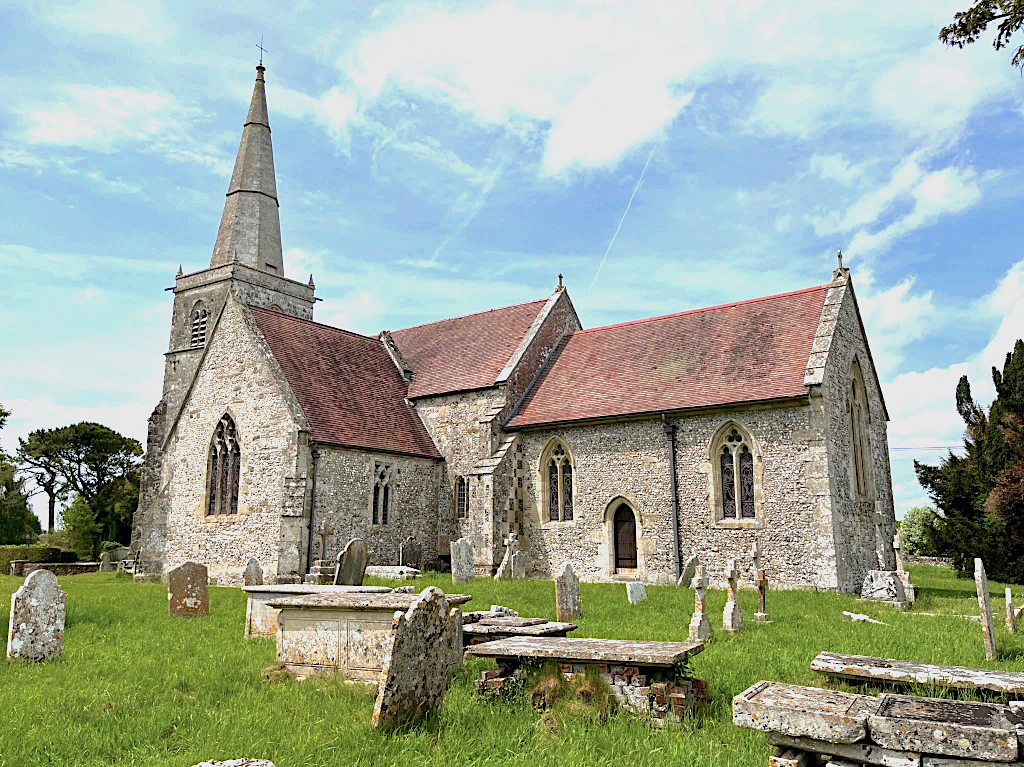
GRADE I † Early C12 origins; C13 chancel, tower; C14 / C15 transepts; other works then & later inc C18 spire, C19 restorations. A striking building in a small village just off the A354 Salisbury – Blandford Forum. Clock installed in honour of Winston Churchill 50.9754 / -1.9009 / SU070195
DIALS
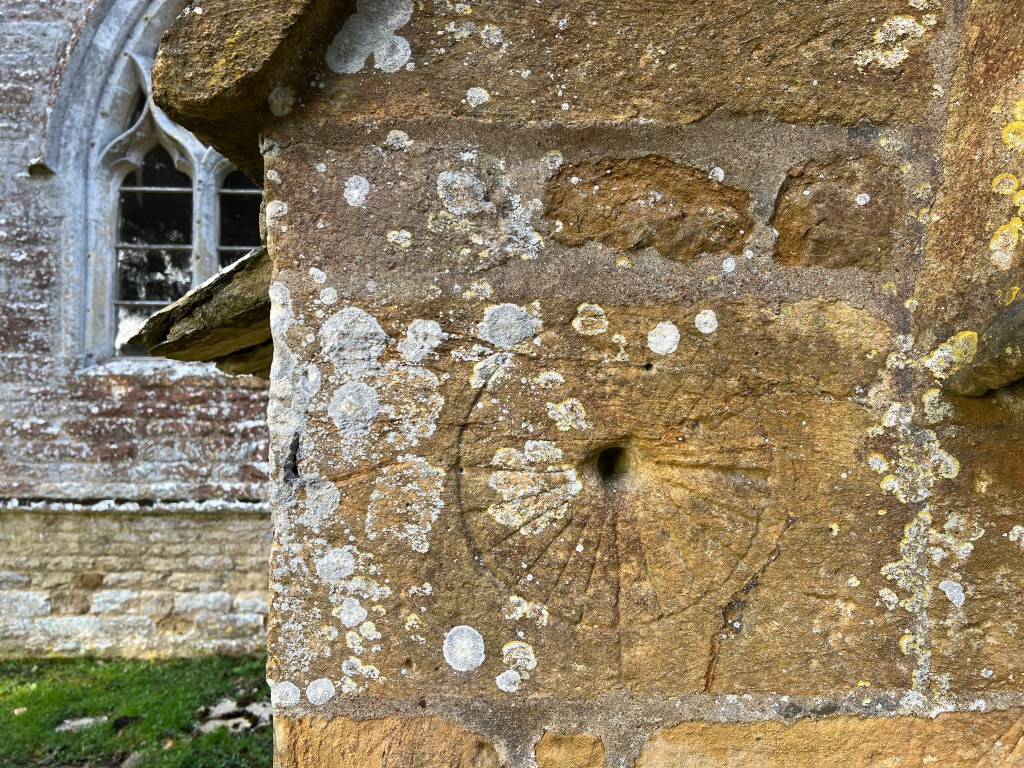
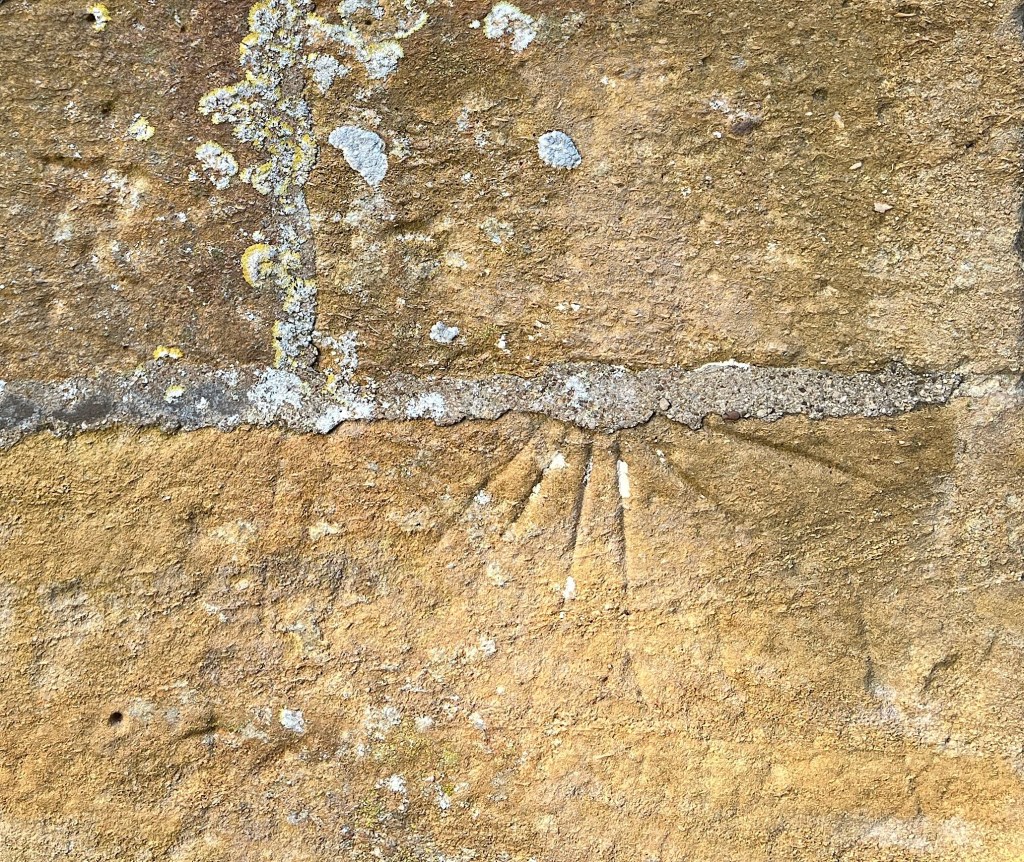
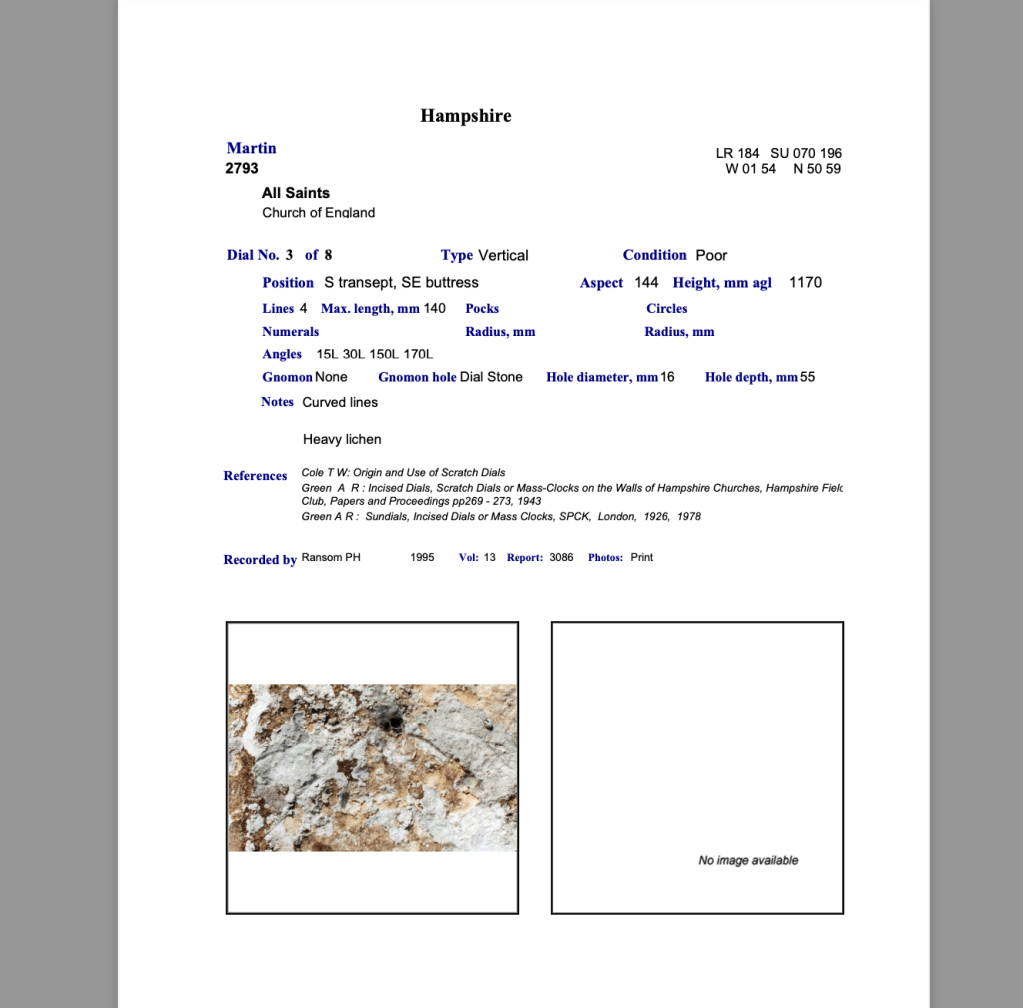
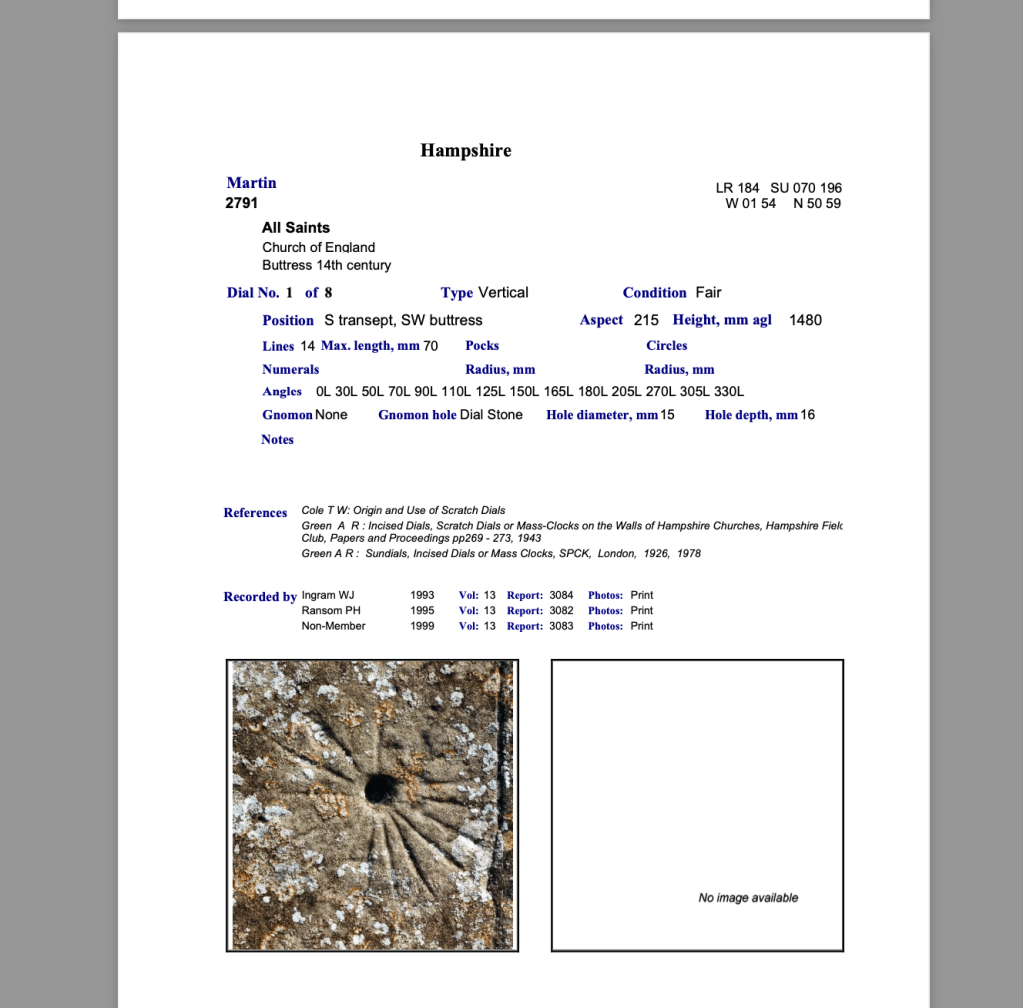
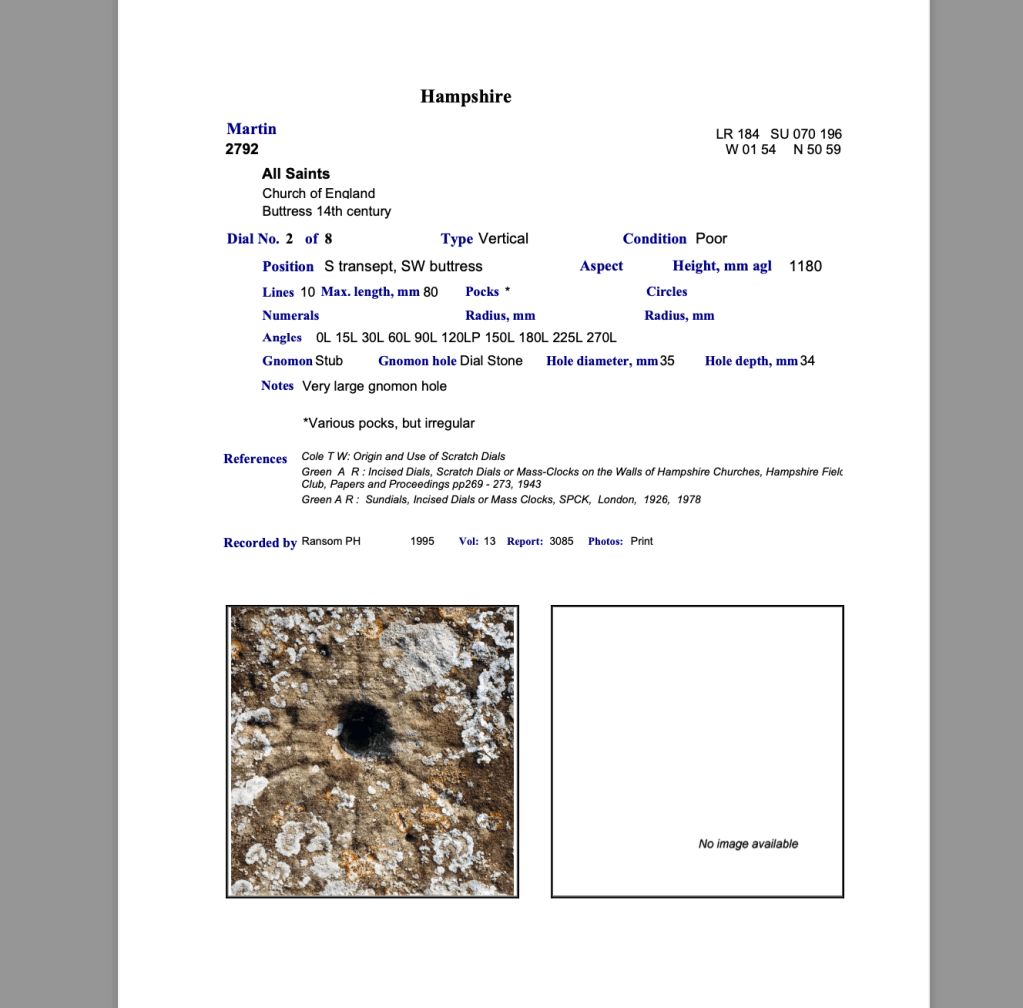
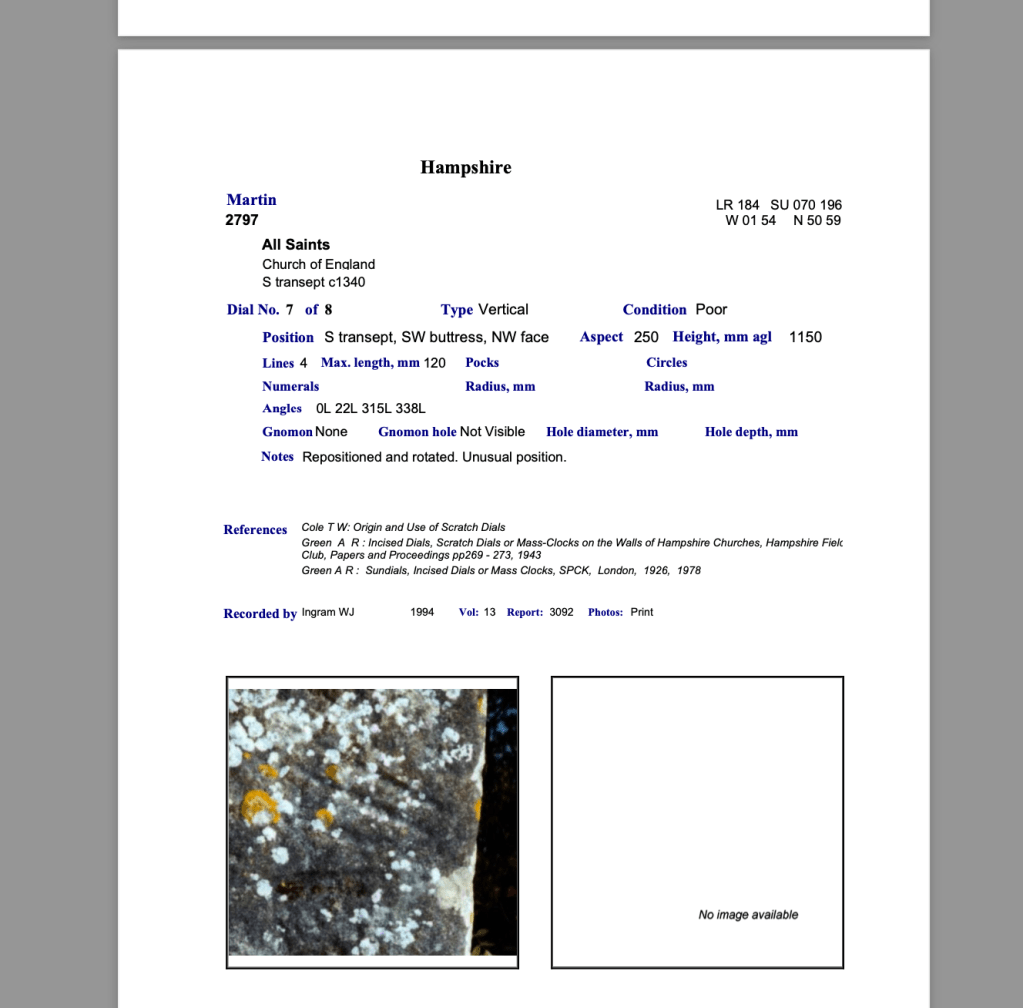
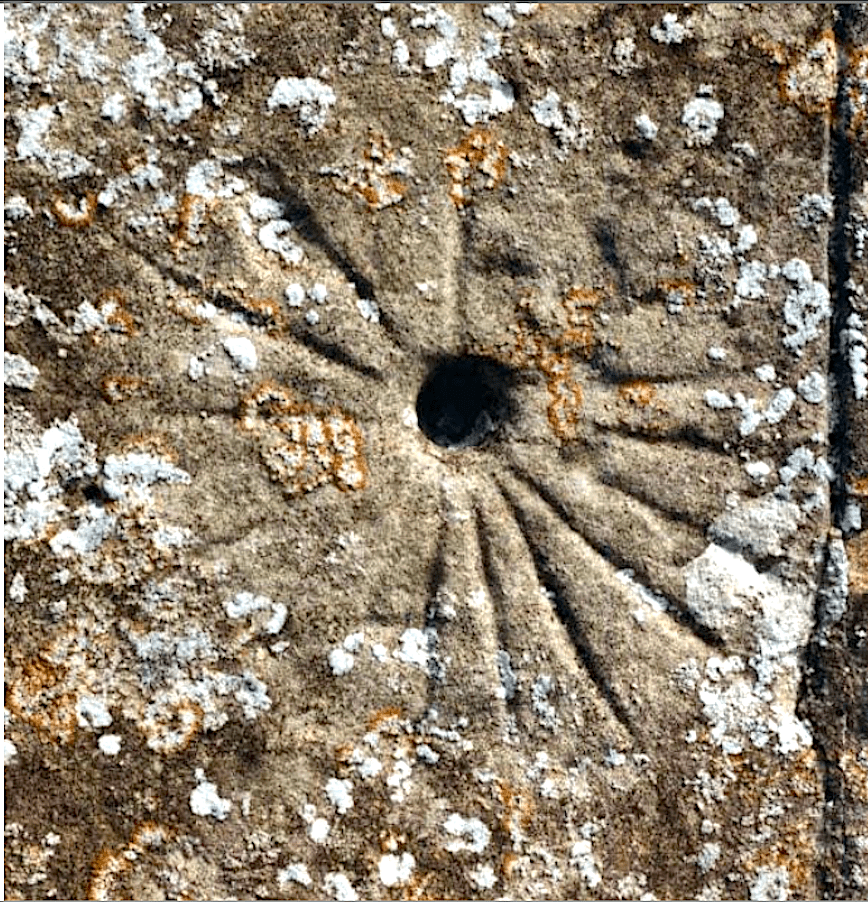
All Saints is a multiple dial church, with 8 listed in the BSS records. My dial count is 9. It’s a fine church, and dial-hunting was an easy pleasure. I have decided to let the dials speak for themselves without undue commentary on individual characteristics unless called for. Below the dials is an excellent article by the Hampshire Field Club that analyses all you need to know about each dial, and in particular the locations (for which I lost my notes).
BSS RECORDS
GALLERY OF 8 + 1 DIALS
DETAILED IMAGES
DIAL 1
DIAL 2
DIAL 3
DIAL 4
DIAL 5
DIAL 6
DIAL 7
DIAL 8
DIAL 9
This dial is included in the BSS records (bottom row LHS)
Volume VII Part I.pdf
Proceedings of the Hampshire Field Club, XV , Pt. 3, p. 27a.
Spetisbury Church as drawn by Thomas Rackett for the 2nd edition of Hutchings’ History of Dorset
ST JOHN THE BAPTIST . SPETISBURY . DORSET
GRADE 1 ✣ Late C12 / early C13 origins; west tower late C15 / early C16. Major mid C19 restorations from 1858 by T H Wyatt, and later works. 3m SE of Blandford Forum. 50.8258 / -2.13 / ST909029
TWO PROXIMATE DIAL-LIKE DESIGNS
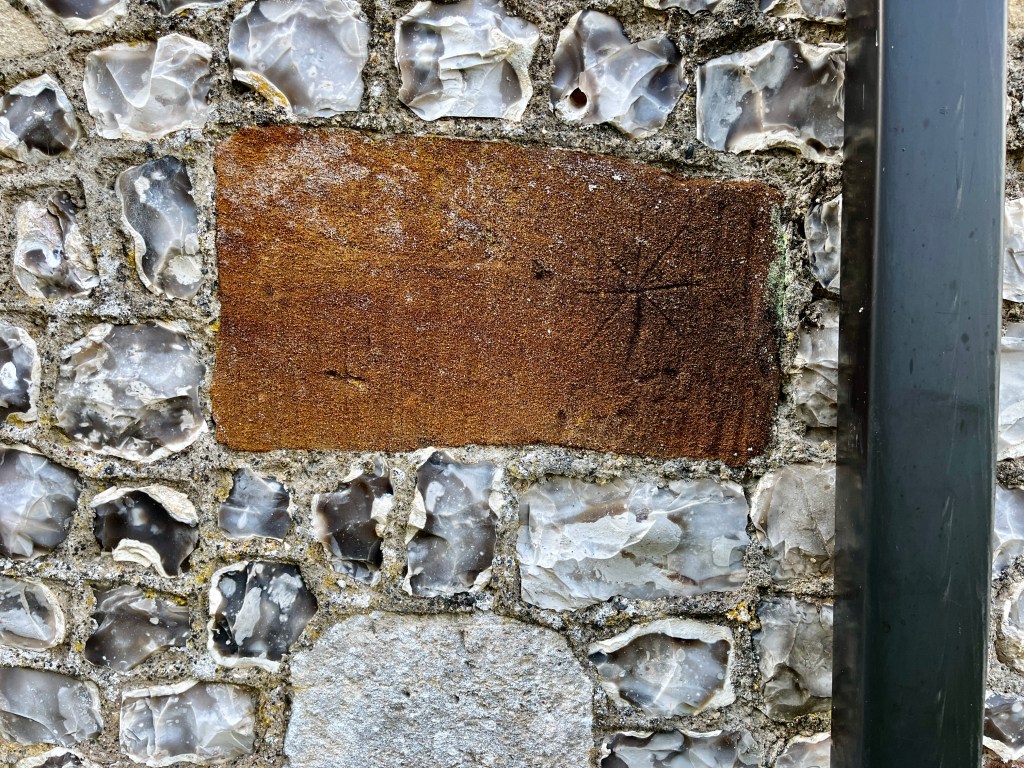
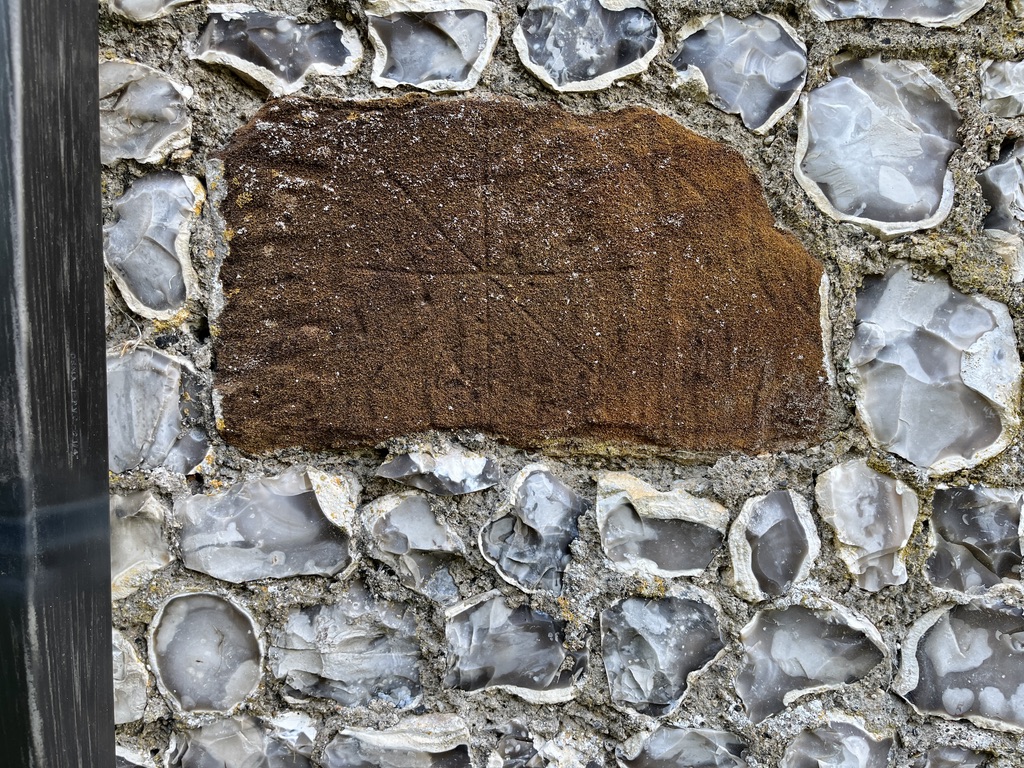
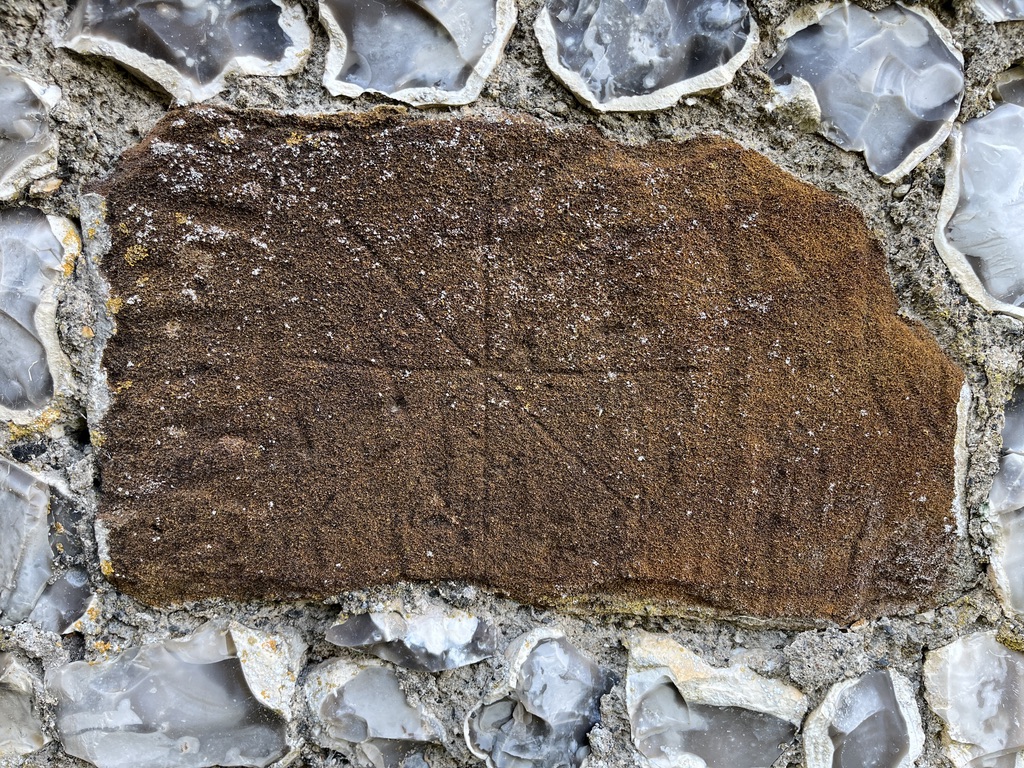
The two incised stones are located either side of the drainpipe on S wall of the chancel. Both have 8 segments (as with a Saxon / Tide Dial). A gnomon hole is conspicuously absent from both. There’s no trace of filling. There are one or two pocks on each, but random and with no specific relation to the overall designs.
GLP in his comprehensive survey of Dorset church scratch dials concluded that the dials “…are just graffiti of unknown date”. He explains that he has included these near-matching designs since otherwise “they might be mistaken for genuine dials”.
Apotropaic symbols? These don’t conform to any mainstream style of protection mark. And they are not in a location that Evil would naturally choose to gain entry.
My own theory is that these 2 designs were scratched on adjacent dark stones during the lengthy C19 restoration period. Perhaps there was a small competition between 2 apprentice masons engaged on the work, or bored by it.
DIAL 1
The cruder of the two, with bent lines and an awkwardly gouged curving ‘noon line’.
DIAL 2
More carefully designed and executed than Dial 1, and with the hint of circle round it.
GSS Category: Scratch Dial; Mass Dial; Church Graffiti circular pattern; False scratch dials
LISTING: II* . C12, C13 (of which remnants); C14, C15, 1868 restoration by G. G. Scott. C14 door. Good C14 stained glass. 53.3234 / -0.368 / TF088819
DIAL
Located within later porch, LHS of entrance door. 7 clear lines; probably one upper LHS, very faint. Deep gnomon hole. Noon line perhaps marked with a pock 2″ below? Of interest, the 2 deeper and longer cut lines LHS of the vertical. These suggest that the main time of day for observance was Terce, or (as cut) somewhere between that and midday.
Unrecorded by BSS. I am grateful to Keith Freeman for contacting me about this dial, and for his excellent photos
GSS Category: Scratch Dial; Mass Dial; Scratch Dial within porch







































 GAUDIUM SUB SOLE . SUNDIALS . MEDIEVAL TO MODERN