Padua . Palazzo della Ragione . Sundial . John Renner
PADUA . PALAZZO DELLA RAGIONE . SUNDIAL
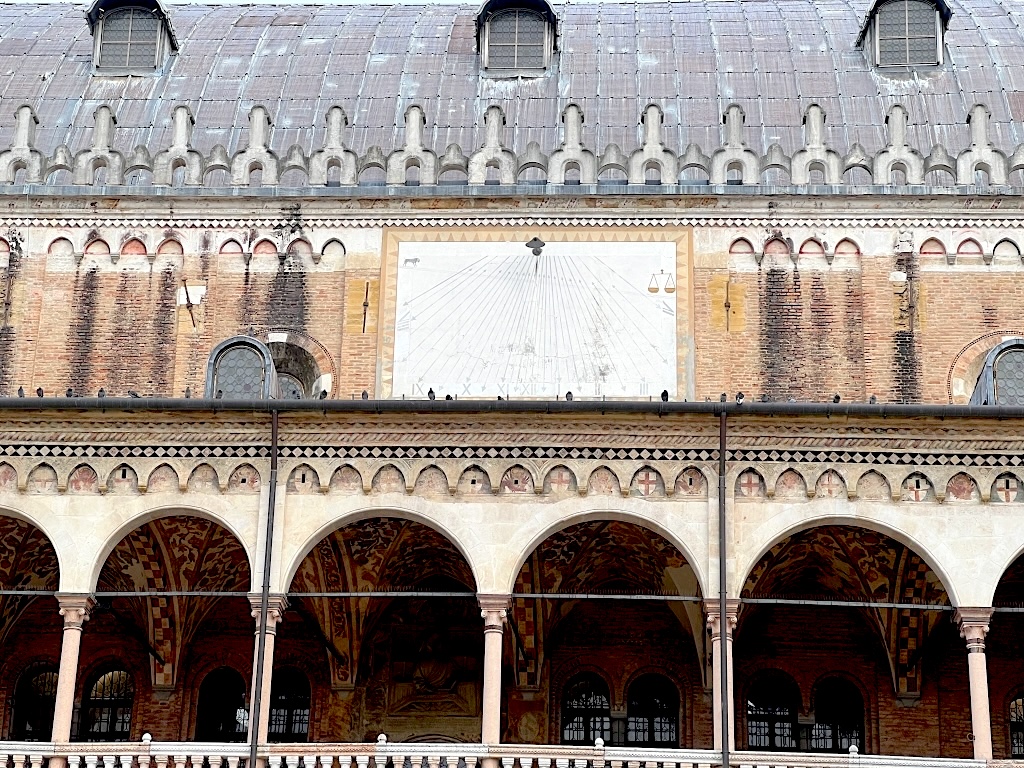
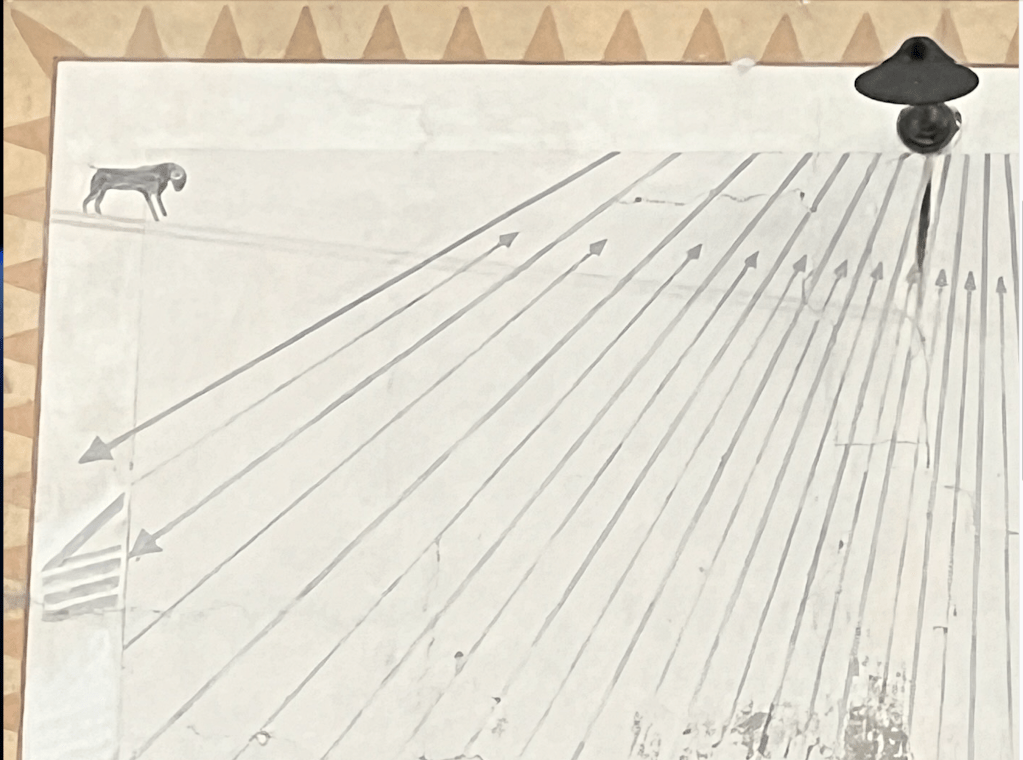
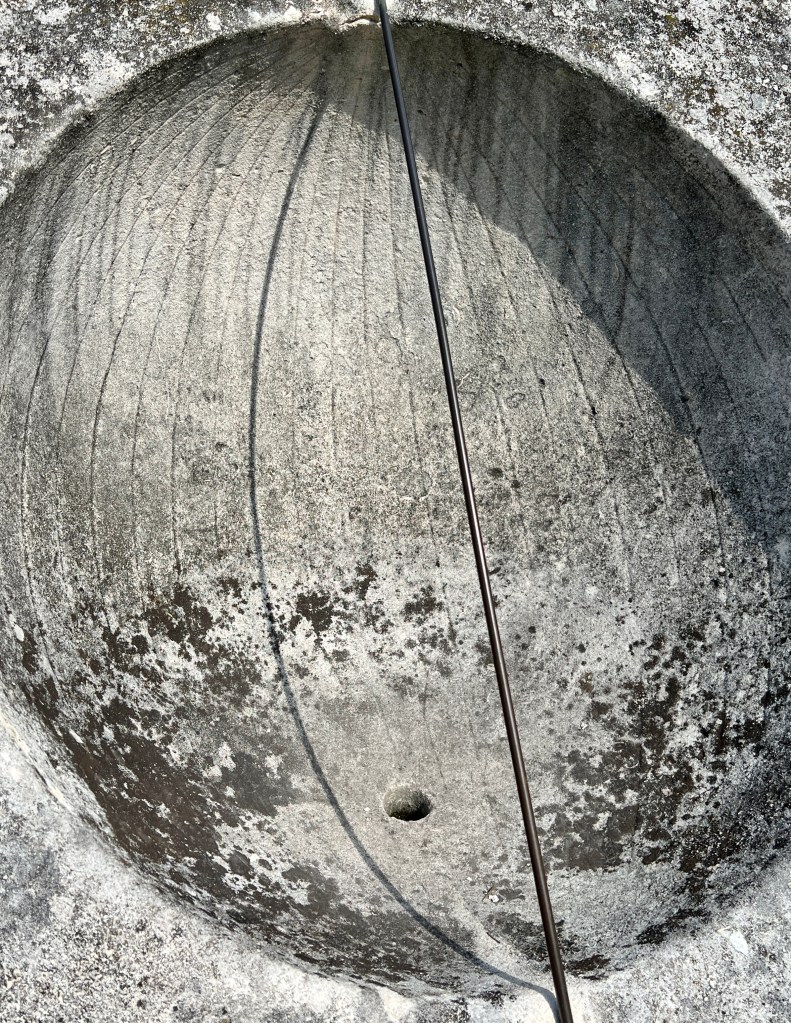
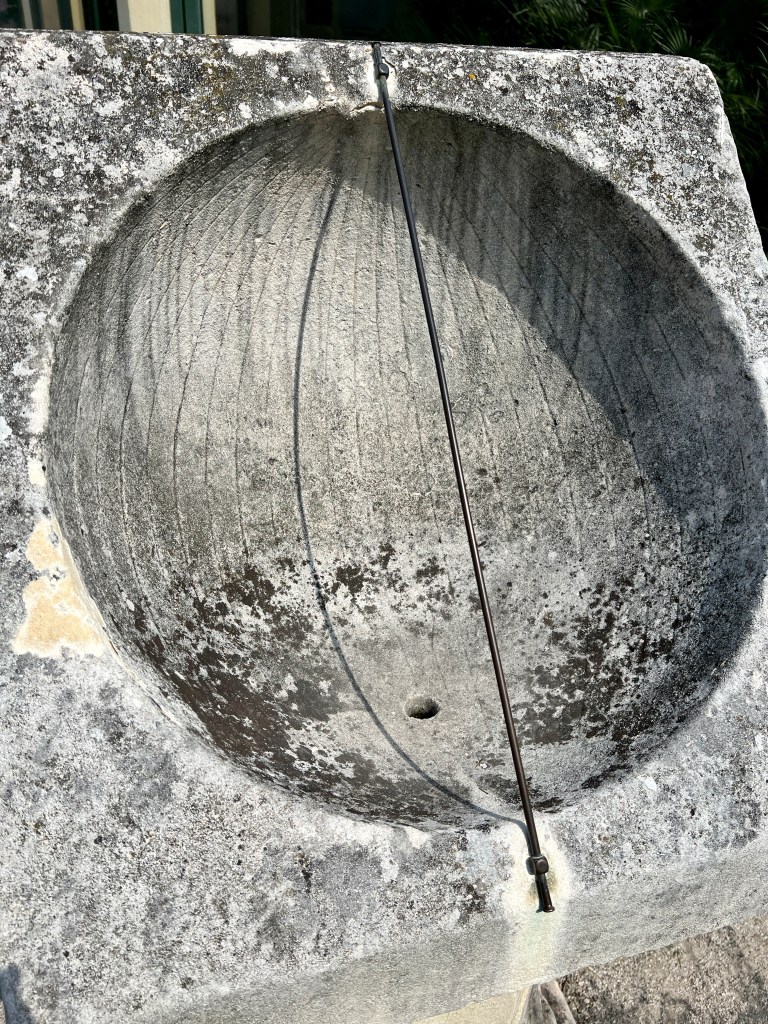
A confident and assertive sundial to match the glory and prosperity of the city. The lines divide the hours from VIII to IV into quarters. Each has an arrowhead, with (?unusually) reversal of the ‘minor quarter’ arrows.
GNOMON
At first glance you may wonder why there’s just a dark splodge where one might hope to see a gnomon. It is the gnomon. In researching the dial I came across a really helpful photo by Richard Mortel* that reveals the gnomon to be the ‘pin-hole’ type, the effectiveness of which is clearly shown.
Padua . Palazzo della Ragione . Sundial Pinhole . Richard Mortel
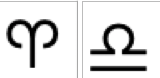
The upper half of the dial has an angled line across the whole dial, leading from an indeterminate animal (in fact a sheep) to a set of scales: Aries and Libra in opposition (Note: this Zodiacal conjunction should not be investigated, for fear of unwanted advice about who you should be dating).
There is an additional aspect to this dial that I am currently researching. First of all I have to clear use permission, but I hope to add to write again soon about this splendid dial. The clue is ‘Meridian’.
Credits: John Renner for his excellent photos of this fantastic sundial taken recently; *Richard Mortel for his clear illustrative photo of the gnomon taken a while back (with apologies if I have wrongly taken it as CC / OS)
Corciano is an attractive small town 12km west of Perugia, walled and with much of its medieval origins still evident. In contrast, the Commune has commissioned interesting modern projects, for example a residential complex designed by Renzo Piano and inspired by Rubik’s cubes.
The town has initiated an ambitious project, financed by the municipality, to make an itinerary that combines culture, history, astronomy, landscape and science and can be used free of charge for everyone: citizens, schools and tourists.
BORGO del SOLE
The Sundial Trail links 3 different kinds of sundial at sites carefully chosen for each type. These are an Armillary Sphere (Equatorial Dial); an Analemmatic Sundial; and a Ptolemaic Plinth in the Gardens. Other types of dial are planned.
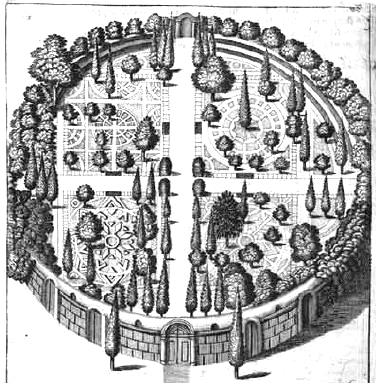
This wonderful example of a scaphe dial is one of 3 dials in the Botanical Gardens of Padua. There is also a cube dial and a cylinder dial (separate post). This first-ever public garden* was created in 1545, and the original layout has been preserved. This is not the space for a short wander round, but there’s plenty of interesting material online. It has been an important centre for scientific research since its inception and, unsurprisingly, it is a UNESCO World Heritage Site.
*Pisa’s botanical garden was actually completed a year earlier but disqualified on a technicality that I haven’t pursued.
GSS Category: Scaphe Dial; Botanical Garden Sundial; Europe Dials
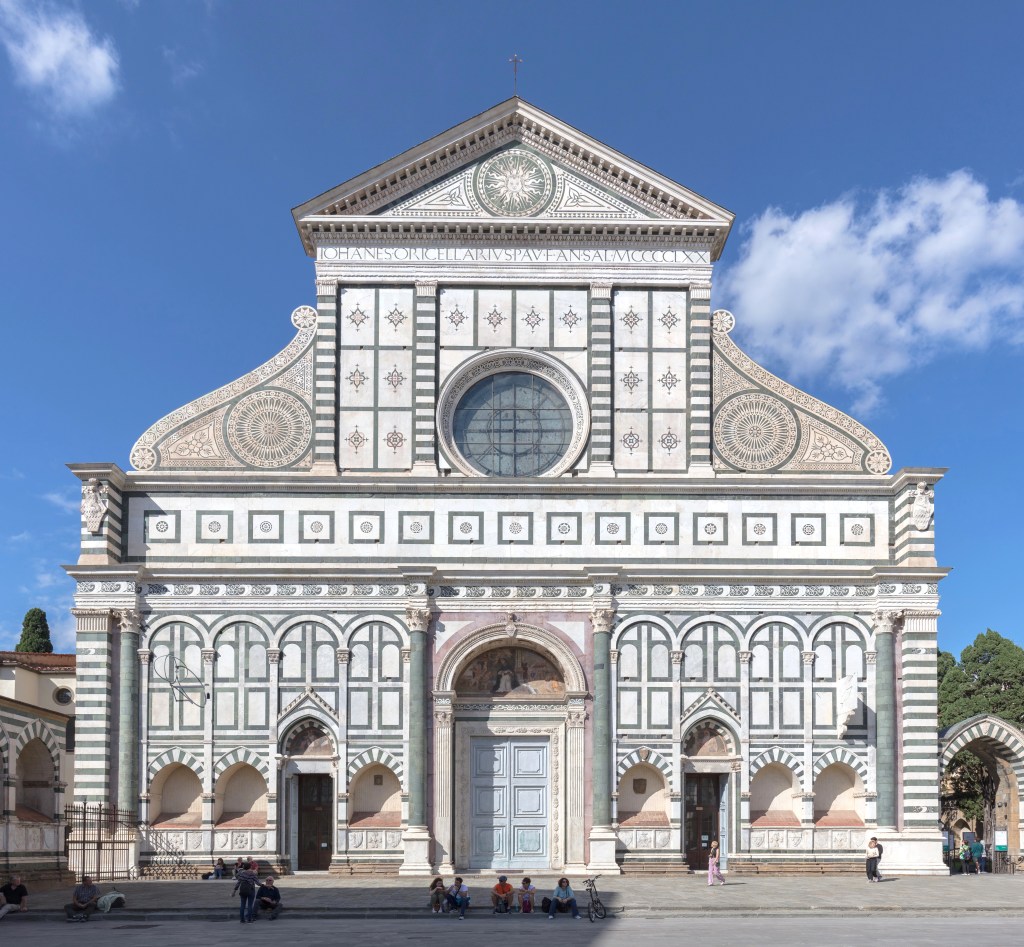
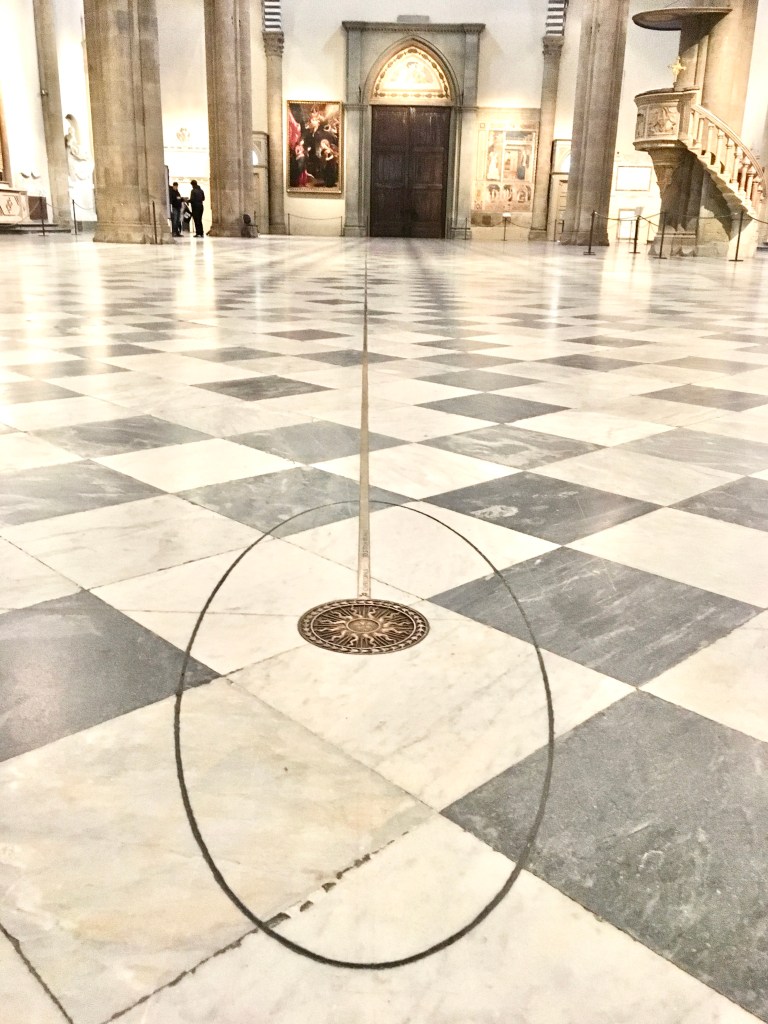
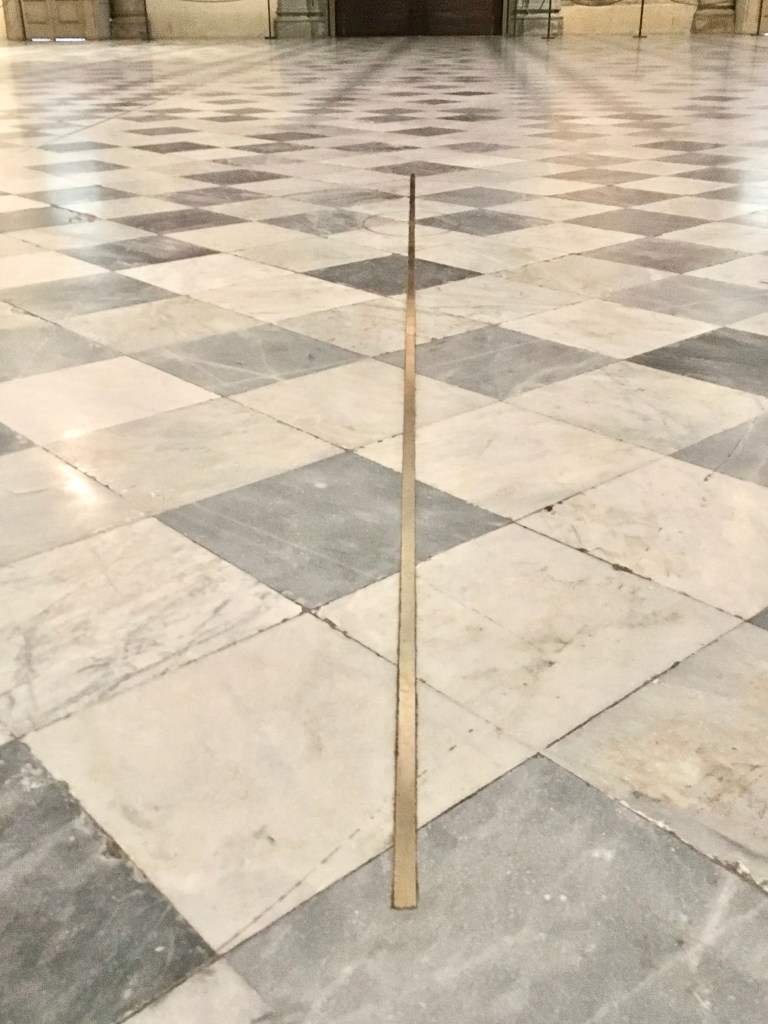
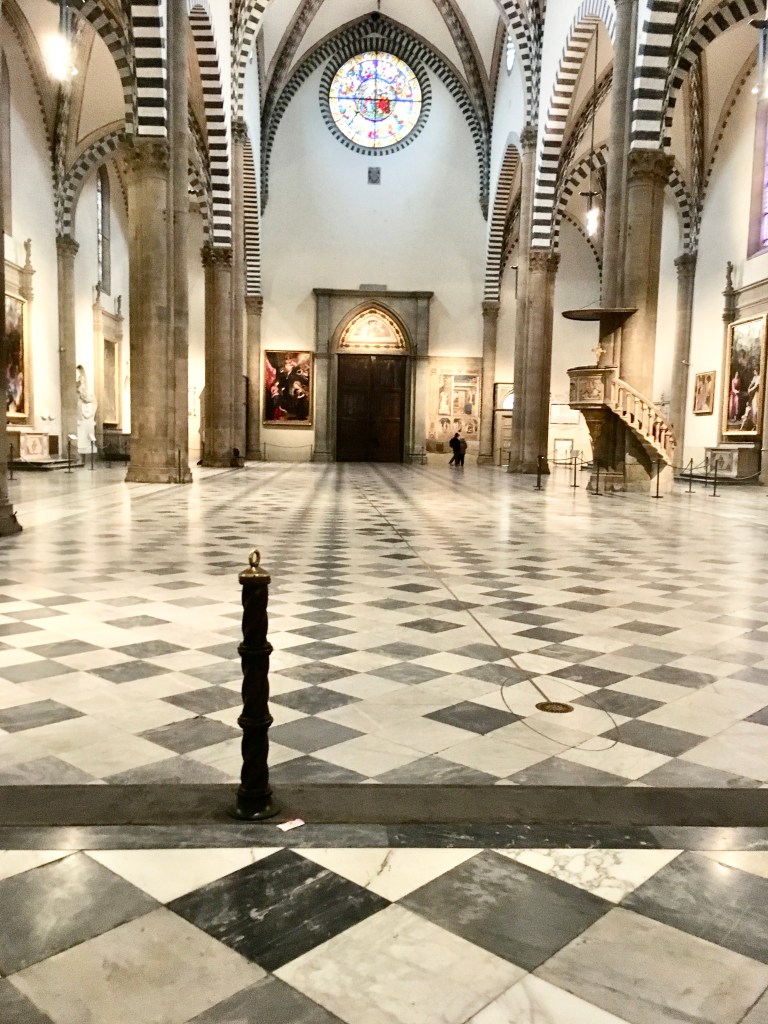
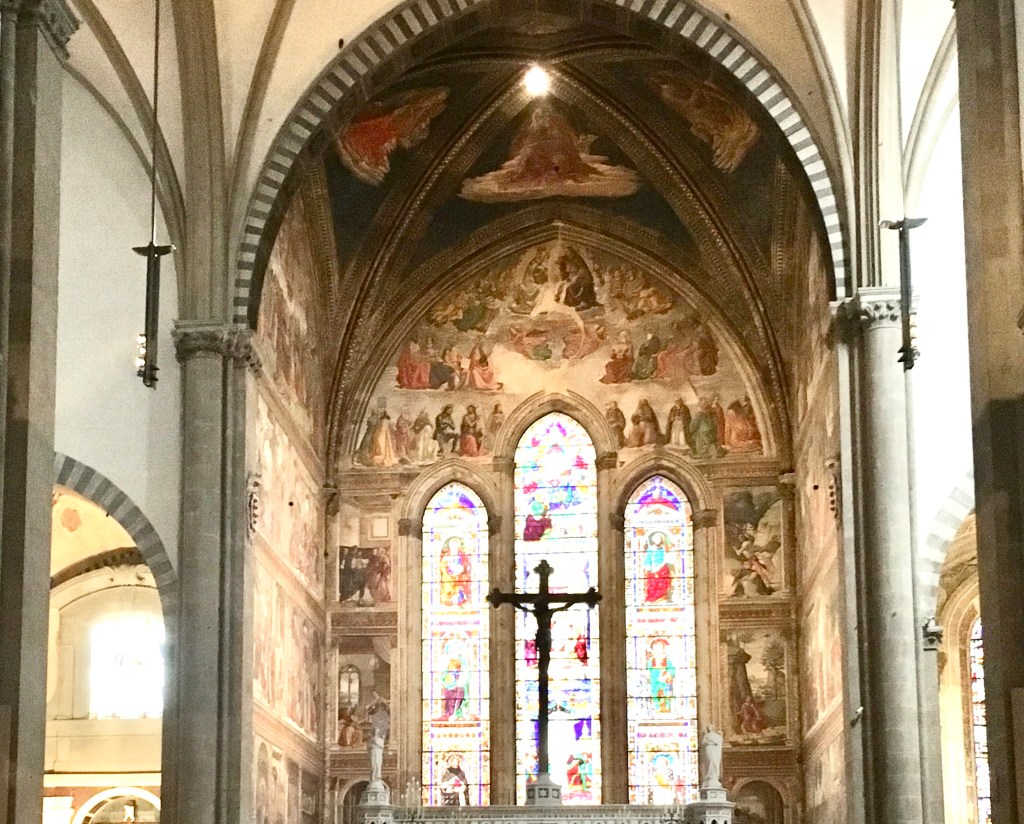
Santa Maria Novella, one of the most sublime churches in Tuscany, needs no general introduction. The Wiki articleSMV gives a very good overview. The focus of this article is on the amazing meridian dial inside the church itself.
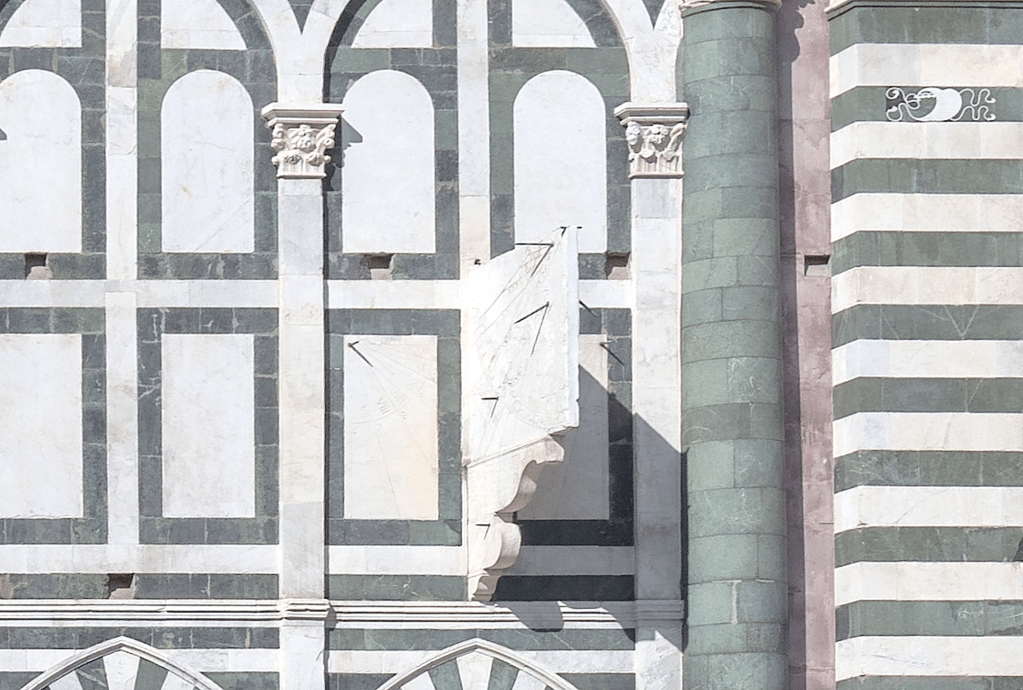
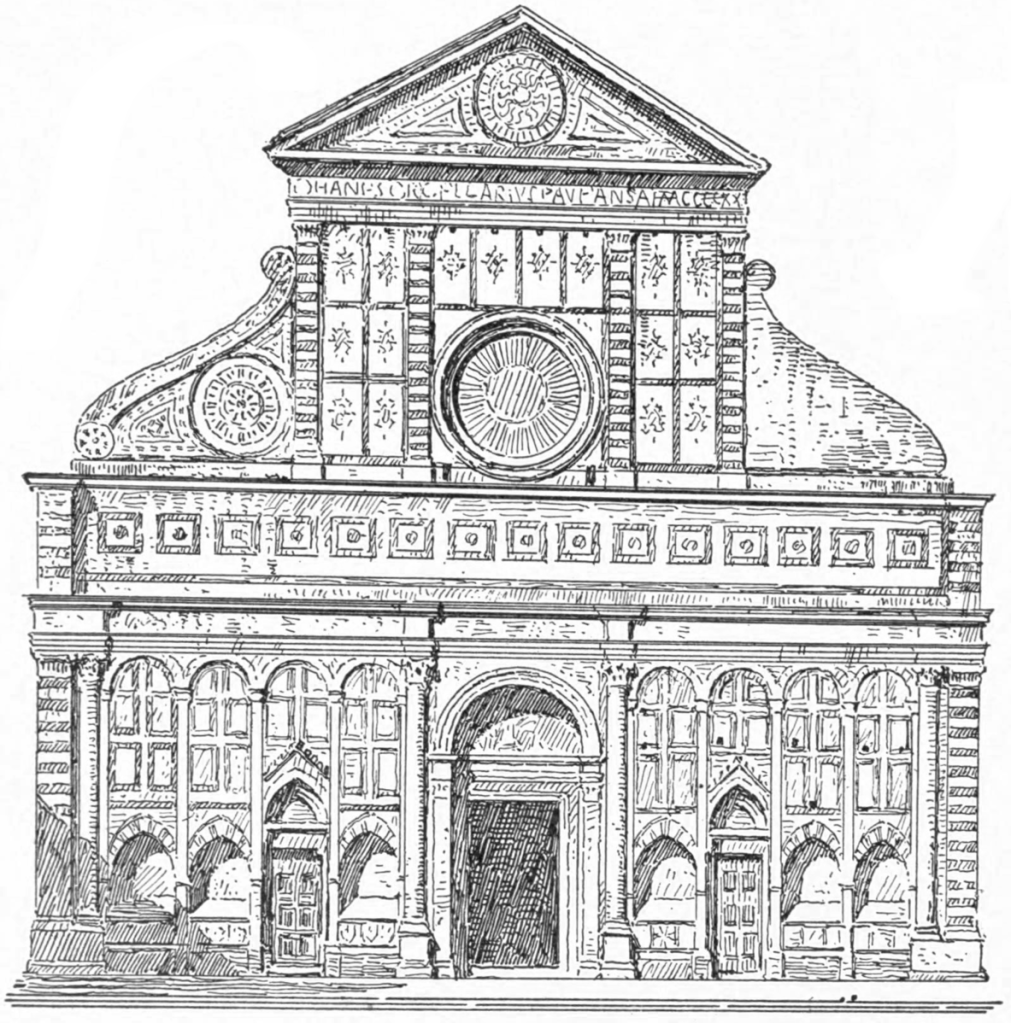
First, I should mention the 2 famous dials on the facade, the subject of much interest, investigation, and analysis including detailed articles by BSS. I plan to feature both separately in due course. On the left is an armillary sphere; on the right is an astronomical quadrant. They are the work of Egnatzio Danti, astronomer to Cosimo I, and were installed c1570.
Armillary Sphere & Astronomical Quadrant on the Facade (Egnazio Danti c1570)cc os
The Museo Galileo has a comprehensive website here MG and is a superb resource for historical science. Exhibits include 2 of Galileo’s telescopes. In 2007 it held a remarkable dial-based exhibition called The Line of the Sun. The entry for SMN includes all 3 dials and gives a succinct account of their creation and significance. I am adapting / adopting some entries from the museum’s explanations.
MERIDIAN DIAL
Background: Between 1572 and 1575, the cosmographer Egnazio Danti (1536-1586) installed on the façade of Santa Maria Novella no less than three astronomical instruments: a great quadrant with sundials; an equinoctial armillary; and two ‘camera obscura gnomons’. These instruments were designed to be used for new astronomical calculations linked to the project for reforming the Julian calendar…
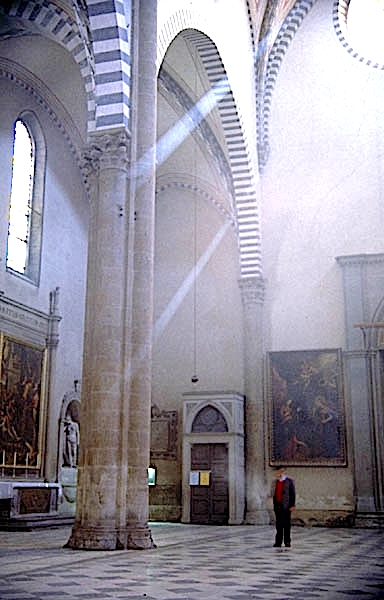
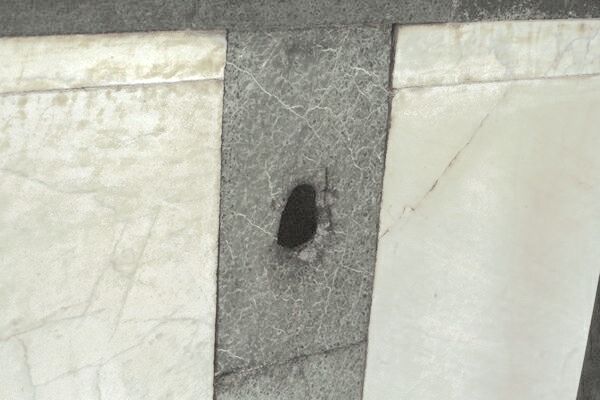
Meridian Dial: Although Danti designed the dials he was unable to complete the tracing of the meridian line on the floor of the church. He only opened gnomonic holes, first in the glass of the rose window, then on the church’s façade, much higher, and made two openings in the vaulting as well, through which rays of light would pass only during the equinoxes and the winter solstice.
Operation:The entrance of the sunbeam was through the two gnomonic holes. The pinhole on the rose-window would have allowed [the measurement of] time during the entire year. The pinhole on the façade would have allowed the same reading only in the days of the equinoxes and of the winter solstice (IMSS Multimedia Laboratory).
FACADE POSITIONS
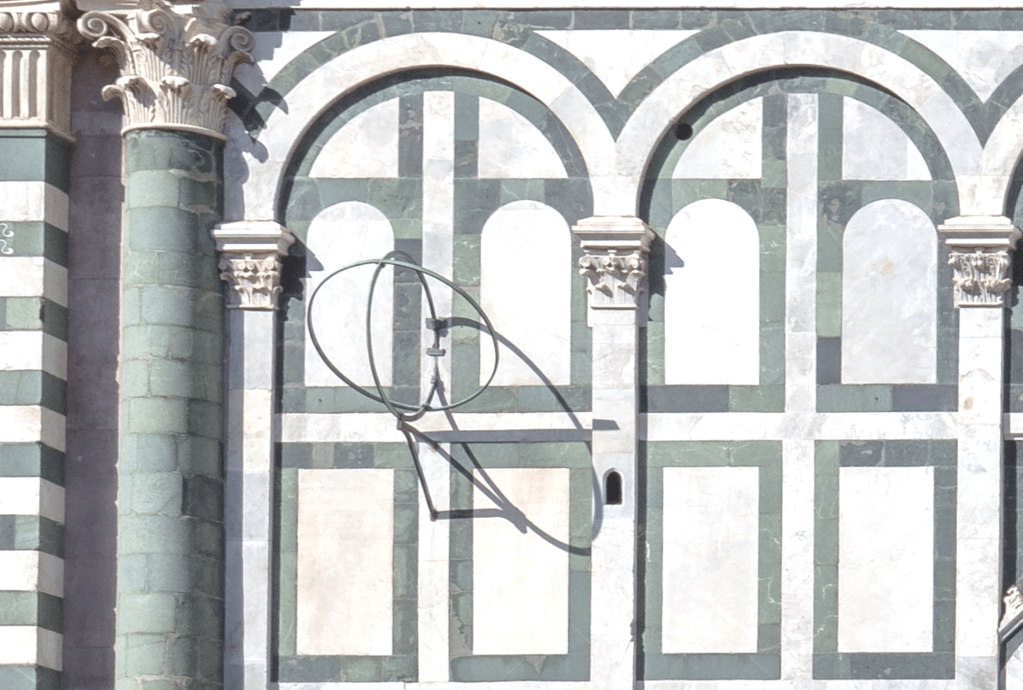
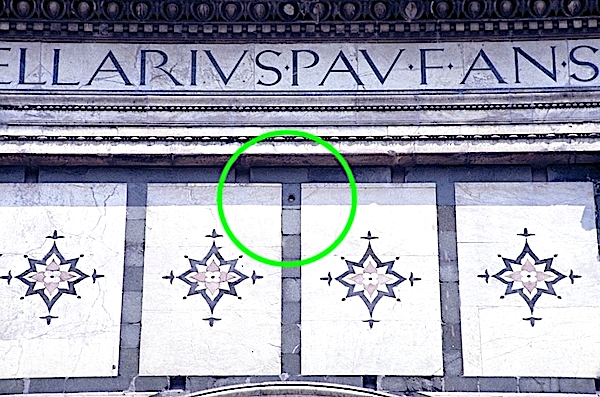
Gnomon holes on the facade in the rose window (70′ high) and just below the pediment
tsettle
MERIDIAN DIAL IN DETAIL
Basilica of Santa Maria Novella . Firenze . Meridian Dial – Keith Salvesen
Basilica of Santa Maria Novella . Firenze . Meridian Dial – Keith Salvesen
Basilica of Santa Maria Novella . Firenze . Meridian Dial – Keith Salvesen
Basilica of Santa Maria Novella . Firenze . Meridian Dial – Keith Salvesen
Basilica of Santa Maria Novella . Firenze . Meridian Dial – Keith SalvesenBasilica of Santa Maria Novella . Firenze . Meridian Dial – Keith Salvesen
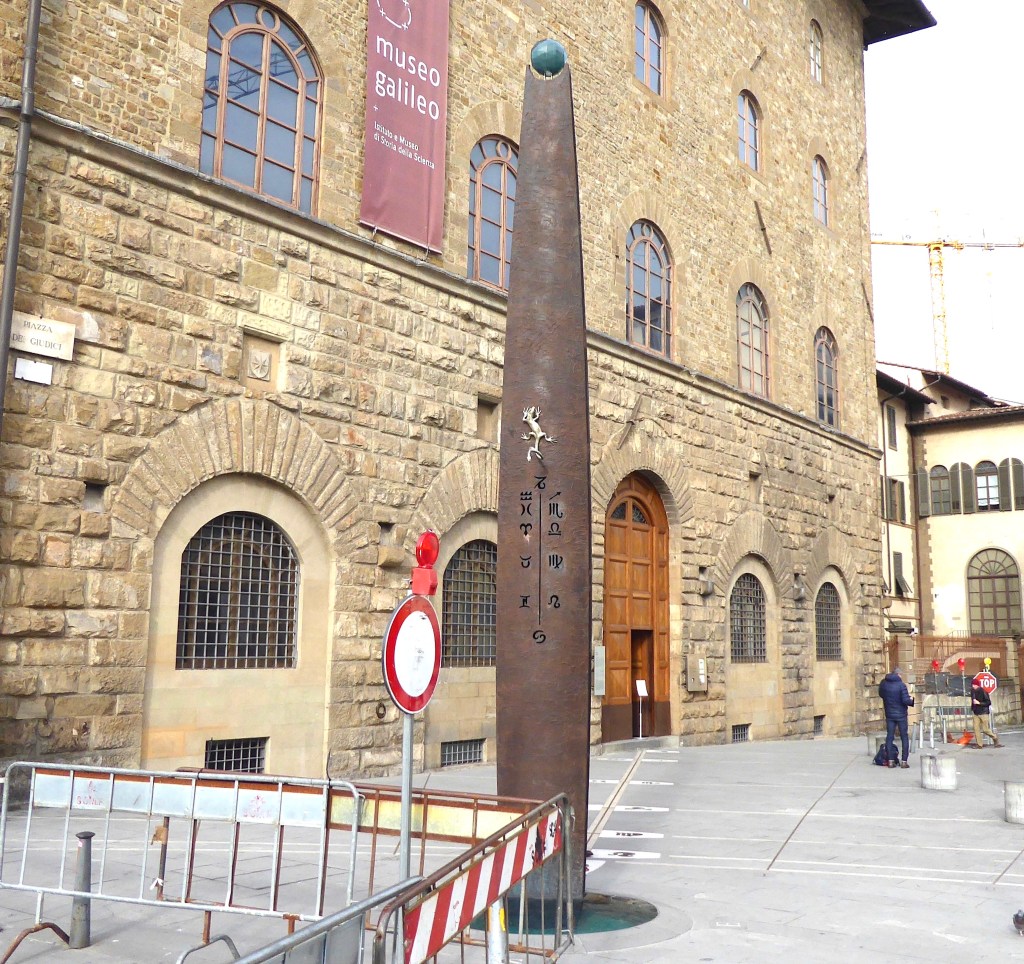
Lizard / Viper Gnomon of Monumental Dial . Museo Galileo . Florence
MONUMENTAL SUNDIAL . MUSEO GALILEO . FLORENCE
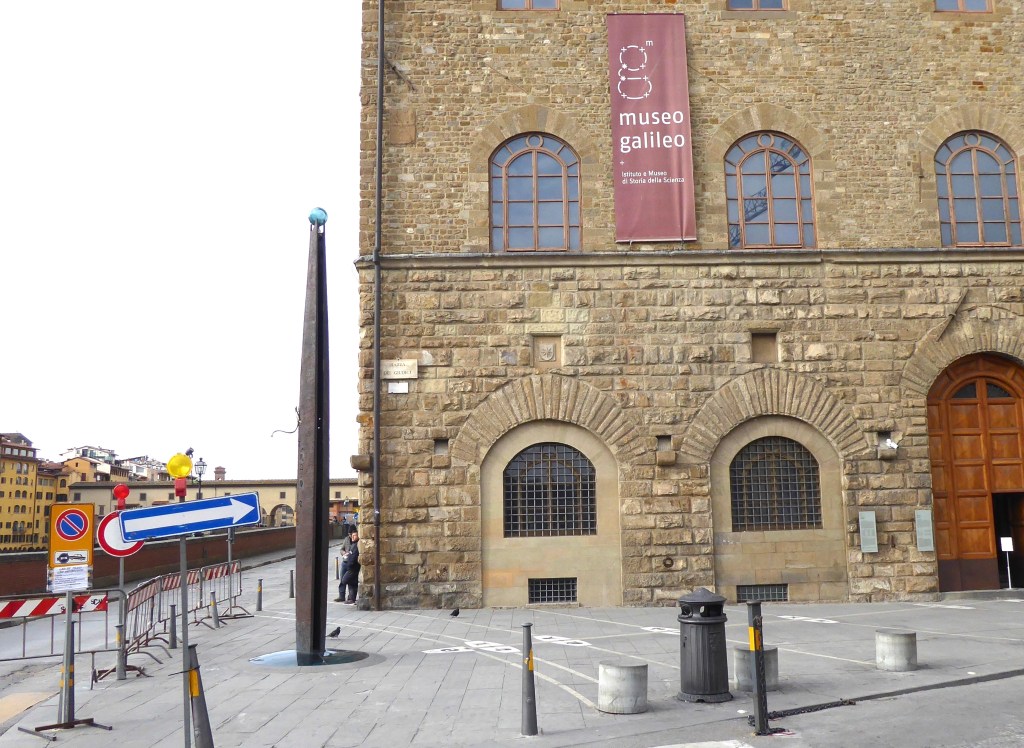
The Museo Galileo‘s Monumental Sundial was built as a mathematical ornament in 2007. The slender bronze column (stele) is in fact formed from two matching columns closely aligned, symbolising day and night. The (mid)day stele faces south, with a vertical meridian line on which the shadow is cast by a lizard’s tail (actually, an imaginary half-lizard, half-viper). The night stele faces north and signifies the constellations Ursa Major and Ursa Minor that enable the Pole Star to be identified.
Monumental Dial . Museo Galileo . Florence
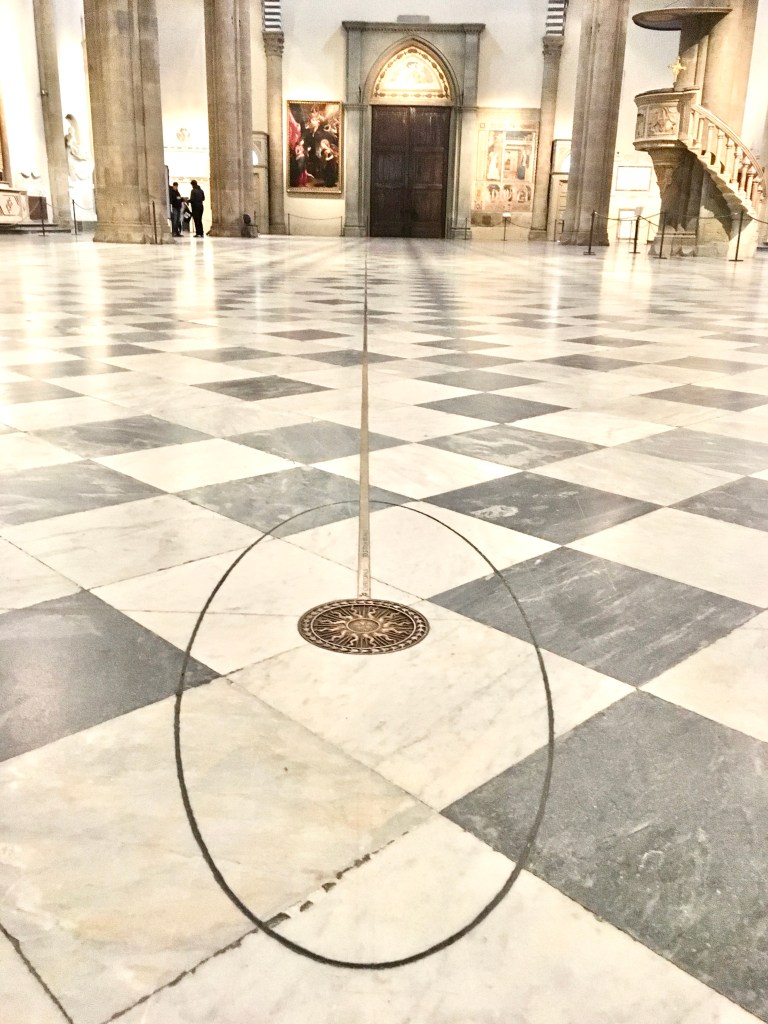
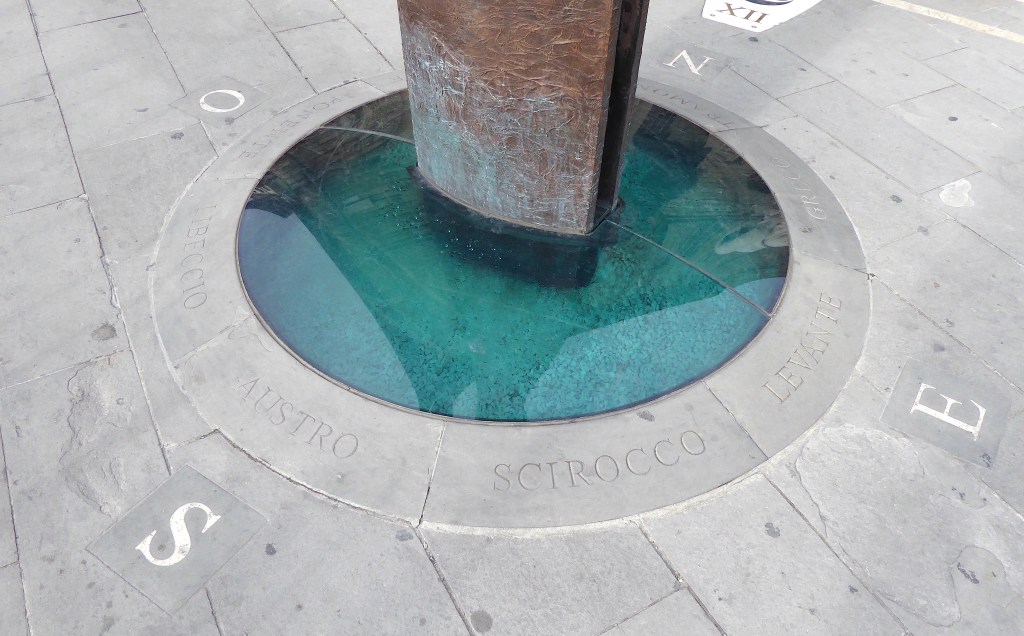
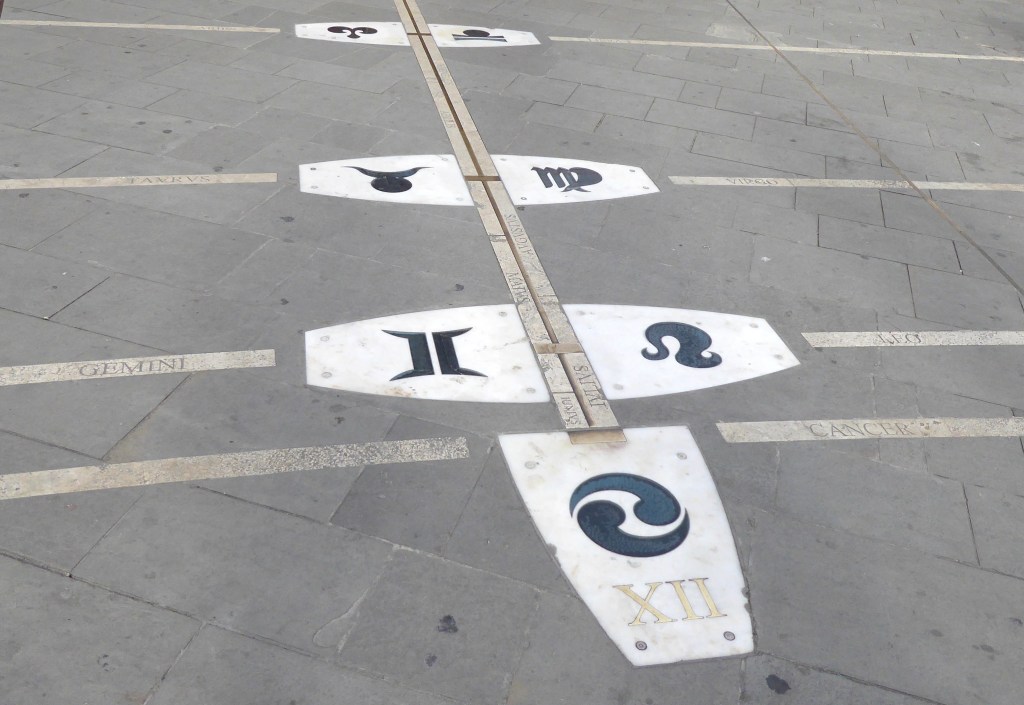
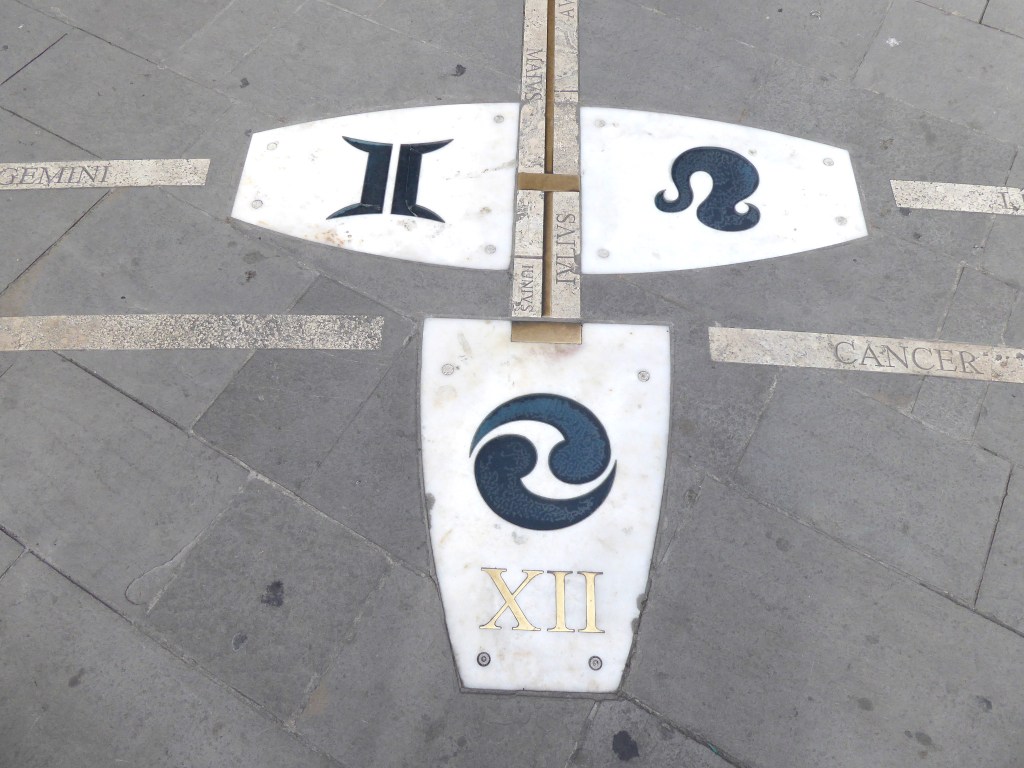
The encircled quadrant design on the pavement at the base of the bronze columns indicates the geographic orientation. This glass base of the gnomon, and also the Zodiac signs in the meridian line (below), are up-lit after dark.
Orientation dial . Monumental Dial . Museo Galileo . Florence
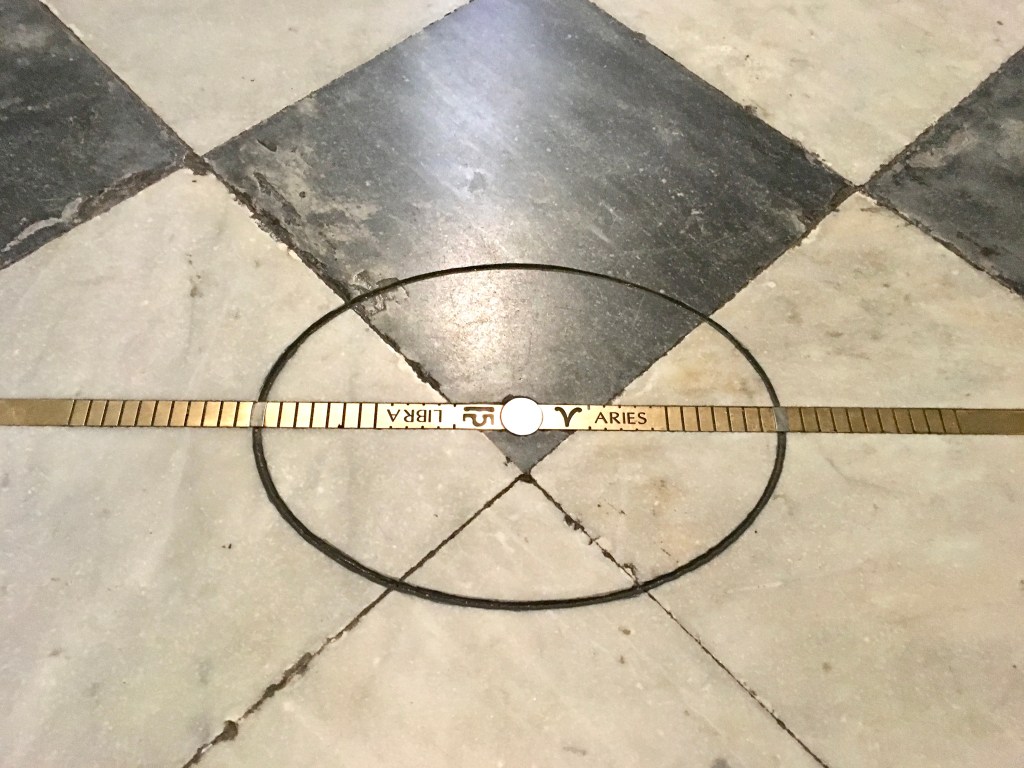
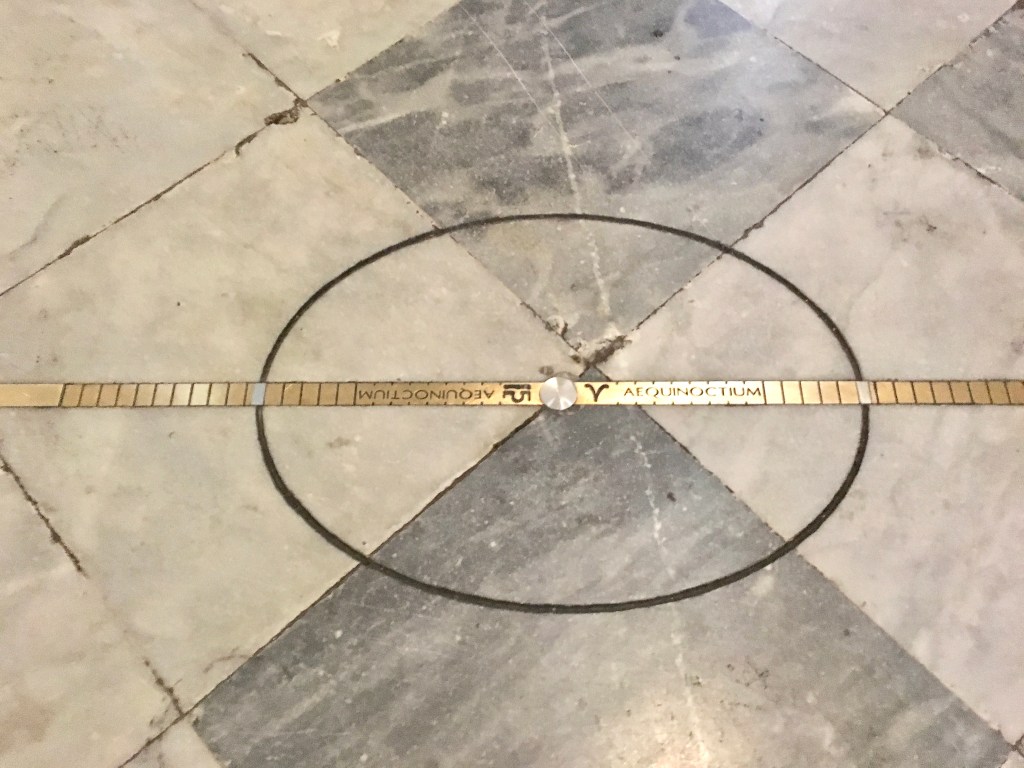
The Museo explains the meridian line in helpfully simple terms: A travertine and brass meridian line is drawn on the pavement, flanked with glass and marble signs of the Zodiac. The meridian line extends for about 15 metres from the museum entrance, where the winter solstice is marked, to the base of the gnomon, where the summer solstice is marked. The travertine curves crossing the meridian line indicate the date. The brass radial lines forming a grid with the two solstitial curves indicate the hours.
The seasons and the four elements are symbolised by the choice of materials: travertine for the earth and autumn; glass for the water and winter; grey stone for the air and spring; bronze for the fire and summer.
LIZARD / VIPER GNOMON ON THE SOUTH FACE OF THE COLUMN
This extraordinary sundial stands by the Arno with the Ponte Vecchio (which itself has a wonderful dial LINK) close by to the west. For anyone with even a minuscule interest in or curiosity about the gradual development of scientific instruments and techniques from medieval times onwards, pay a visit to the excellent online gallery LINK. Look in particular for the two astronomical telescopes made by Galileo himself.
The North American Sundial Society has very good online information about this unique dial. You can watch a short animation of how this gnomonic sundial works here LINK
For those interested in finer details of the way the dial works, the museum’s detailed account is included at the end of this article.
Museo Galileo – Istituto e Museo di Storia della Scienza
NASS (North American Sundial Society) Video: Filippo Camerota, Luise Schnabel, Giorgio Strano
How the Sundial works
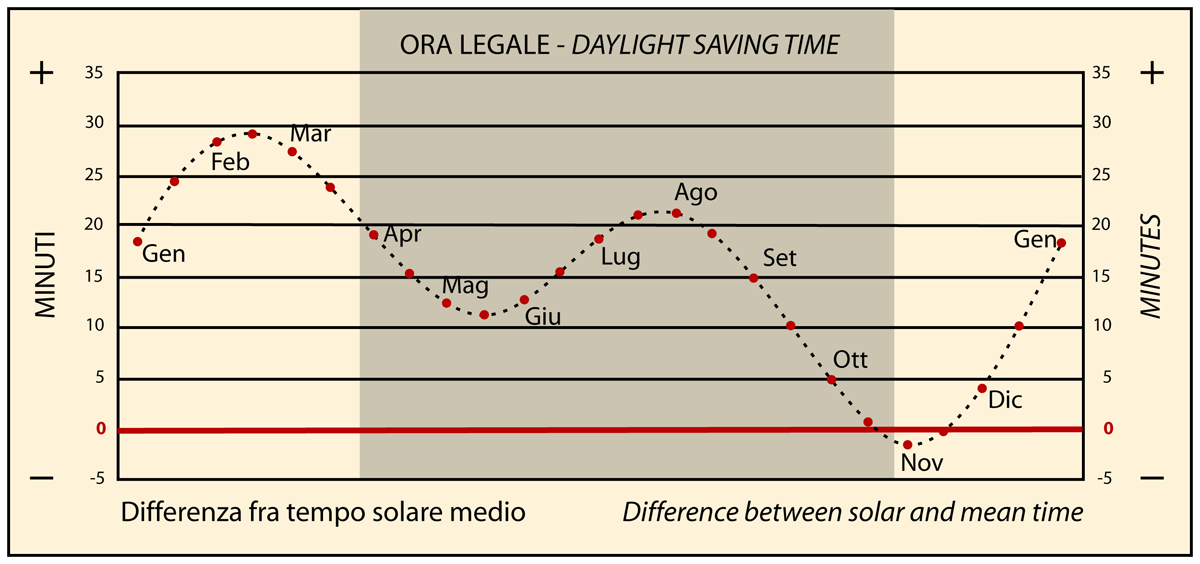
The shadow cast by the glass polyhedron atop the large bronze gnomon indicates the date and time. The hours from 9:00 AM to 2:00 PM are marked out by radial brass lines. The date is indicated by the travertine traversal lines which mark the Sun’s diurnal course for various periods of the year – precisely when the Star enters the signs of the Zodiac. The shadow cast by the gnomon changes in length during the course of the days and seasons, and indicates true solar time for the place where it is located, which is a different time than that of our wristwatches, known as mean time. In respect to mean time, true solar time has a periodic variation that can exceed a quarter of an hour.
Moreover, during daylight saving time, the hands of a clock are moved forward one hour. For example, true midday in the month of February would be indicated by the sundial around 12:28 AM while in the month of July it would be indicated around 1:20 PM daylight saving time.
To read the hour and date, you have to identify the hour lines and the calendrical lines closest to the gnomon’s shadow. When the shadow does not fall exactly on a hour line, you can read the half-hours and quarters with close approximation by ideally subdividing the space between two hour lines in two or four parts. The date can also be read by referring to the Zodiac signs and the start of the months marked out along the meridian line.
























 GAUDIUM SUB SOLE . SUNDIALS . MEDIEVAL TO MODERN