This idiosyncratic garden is close to Port Racine in the NW corner of the Cotentin peninsular, in the Vallée des Moulins. There is a tumbling stream that at one time flowed past more than a dozen mills, of which some ruins remain. The garden was created in homage to the poet and screen-writer Jacques Prévert. After his death (1977), trees were planted by his wife, Yves Montand, Juliette Gréco, and Picasso among others, a quality tribute to his artistic achievements.
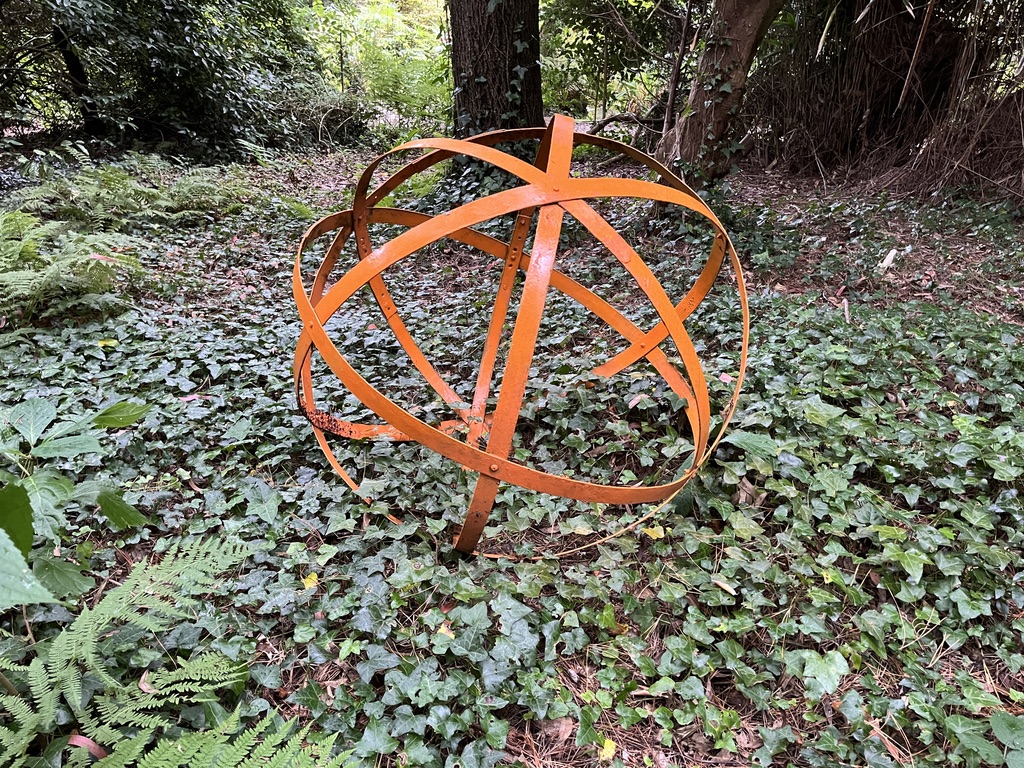
Amid the peaceful woodland bordering the stream are artfully twisting paths. These reveal clusters of metalwork sculptures, inscribed poems hanging from trees, and plenty of somewhat surreal creations. In amongst the foliage I spotted this sphere. Enjoy the poem.
An orange on the table
Your dress on the rug
And you in my bed
Sweet gift of the present
Freshness of the night
Warmth of my life
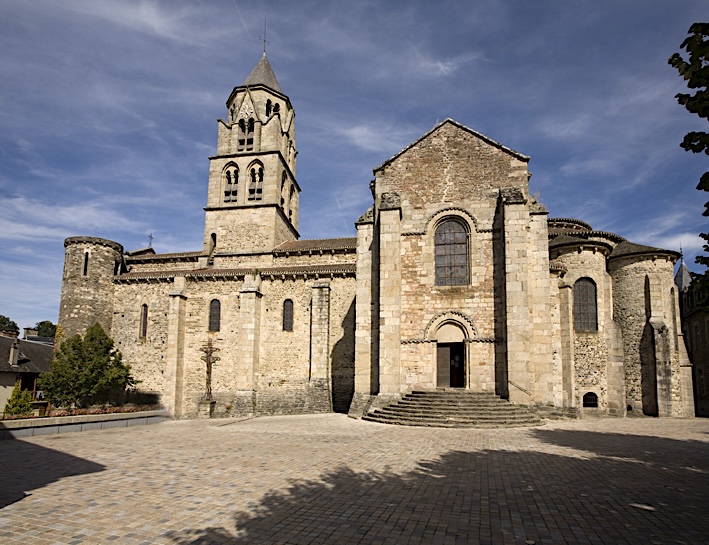
Records of a ‘primitive building’ on this site date from C6. Subsequent monastic development followed. The present building dates from C11 (chancel, N transept); C12 (nave); C13 (expansion). Later in its long history the Abbey survived turbulent times during the many uprisings and downfalls in France. The Abbey was restored in the early C20. There is a saying ‘He who owns a house in Uzerche has a castle in the Limousin‘
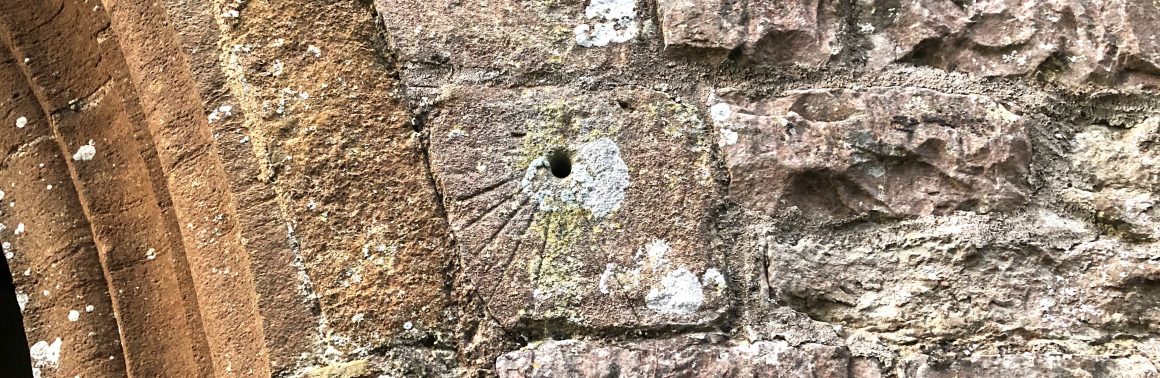
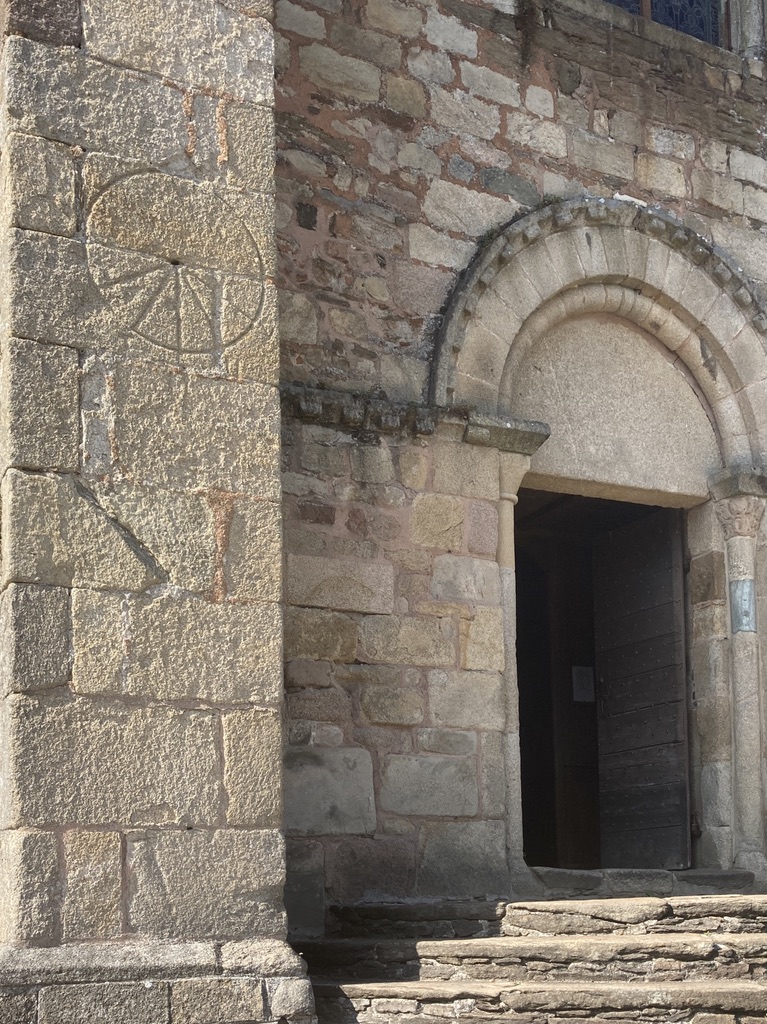
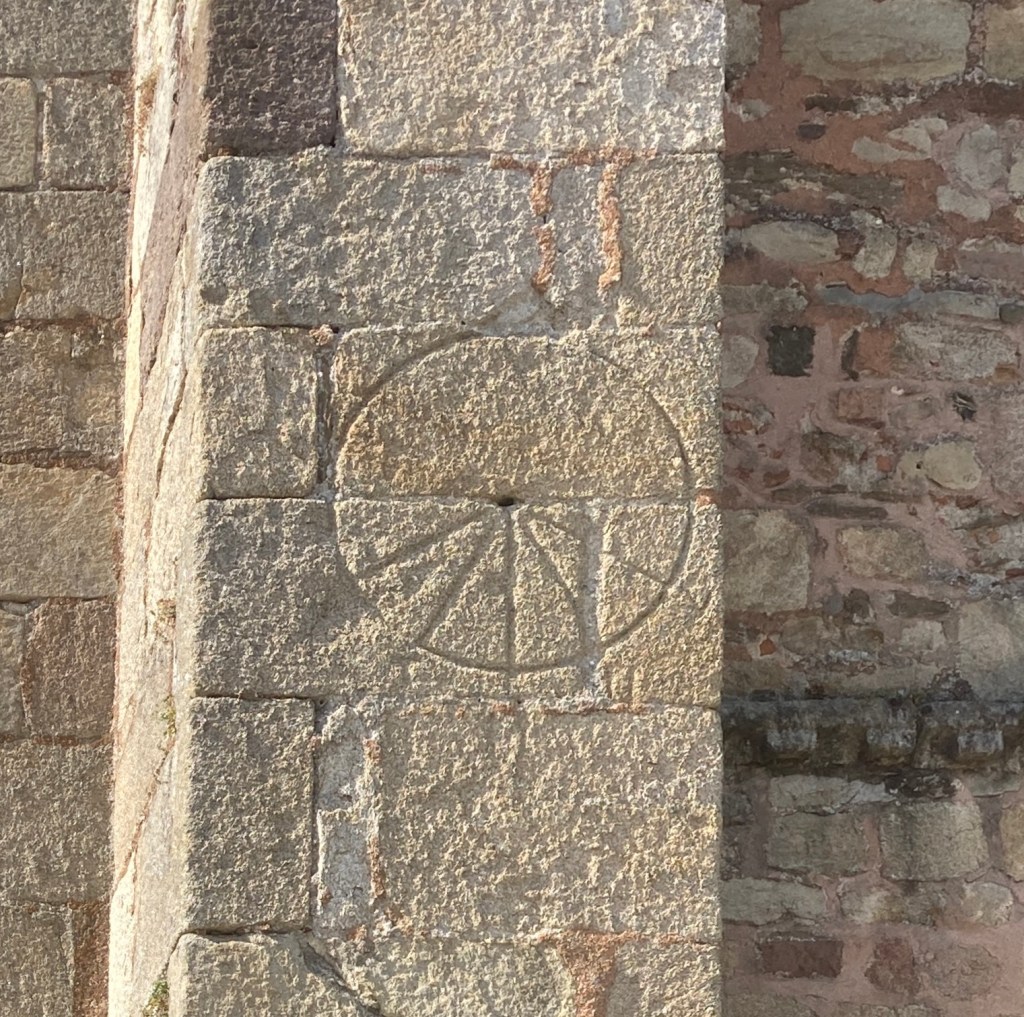
This unusually large dial is cut on the SW buttress of the imposing entrance doorway. It is too grand to be given the normal designation ‘scratch dial’. The much less used description ‘Mass dial’ seems more appropriate in this case. It is accurately cut , and within the circle the 5 radials form 6 segments in the lower half of the dial. It is in remarkably good condition apart from the damage to the lower right quadrant. Further research is needed to find a plausible date-span for the dial’s construction.
Photography: Plaxy Arthur, with many thanks; Jacques Mossot os / cc
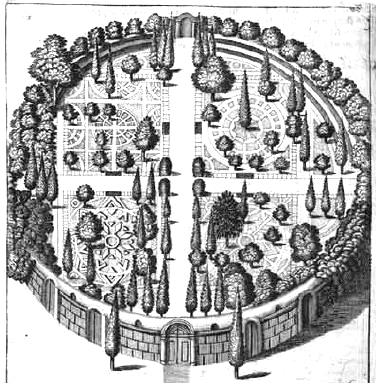
Corciano is an attractive small town 12km west of Perugia, walled and with much of its medieval origins still evident. In contrast, the Commune has commissioned interesting modern projects, for example a residential complex designed by Renzo Piano and inspired by Rubik’s cubes.
The town has initiated an ambitious project, financed by the municipality, to make an itinerary that combines culture, history, astronomy, landscape and science and can be used free of charge for everyone: citizens, schools and tourists.
BORGO del SOLE
The Sundial Trail links 3 different kinds of sundial at sites carefully chosen for each type. These are an Armillary Sphere (Equatorial Dial); an Analemmatic Sundial; and a Ptolemaic Plinth in the Gardens. Other types of dial are planned.
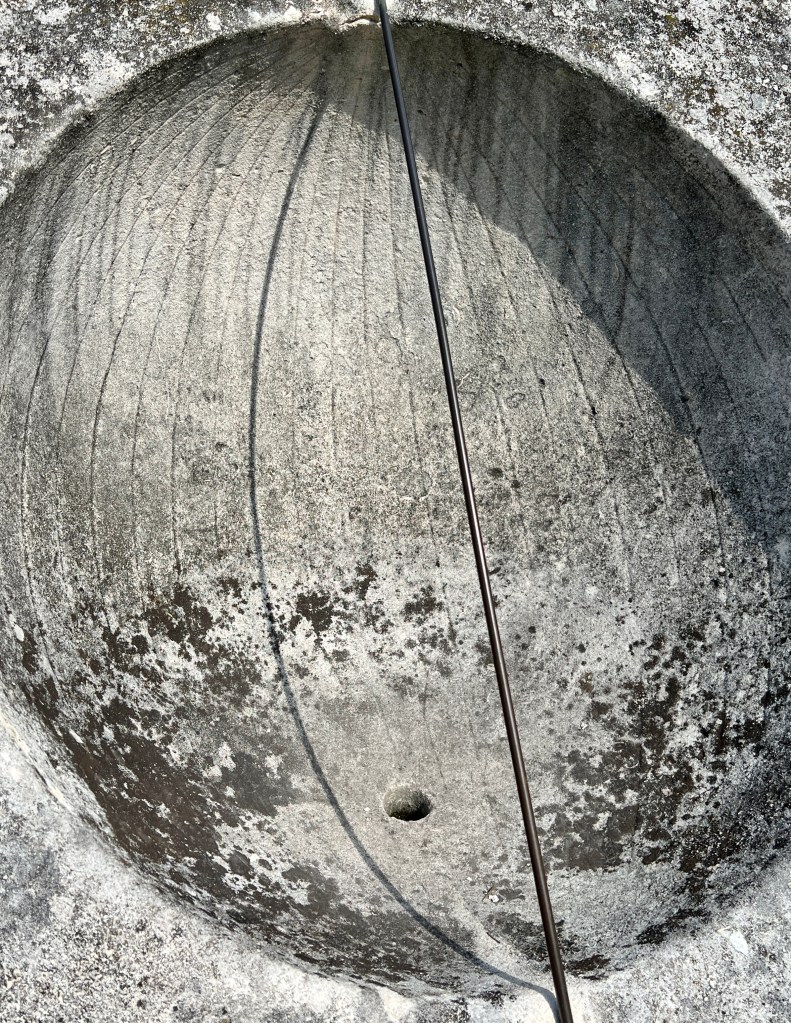
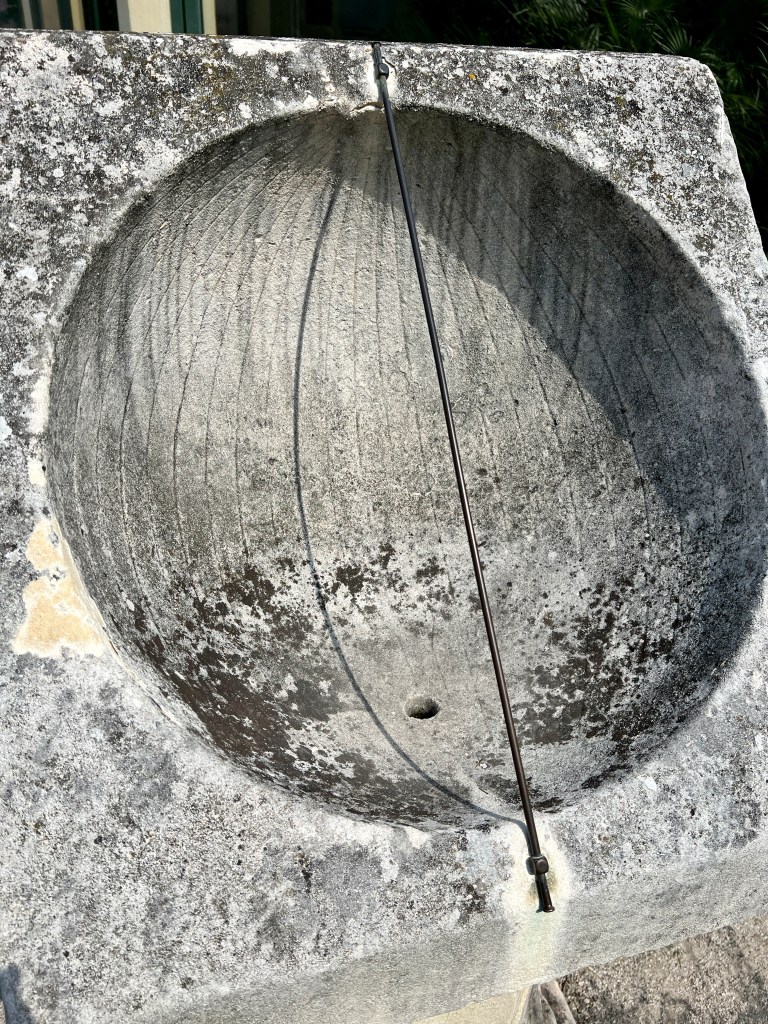
This wonderful example of a scaphe dial is one of 3 dials in the Botanical Gardens of Padua. There is also a cube dial and a cylinder dial (separate post). This first-ever public garden* was created in 1545, and the original layout has been preserved. This is not the space for a short wander round, but there’s plenty of interesting material online. It has been an important centre for scientific research since its inception and, unsurprisingly, it is a UNESCO World Heritage Site.
*Pisa’s botanical garden was actually completed a year earlier but disqualified on a technicality that I haven’t pursued.
GSS Category: Scaphe Dial; Botanical Garden Sundial; Europe Dials
Chartreuse de Mélan . Taninges . France – Vertical Dial
Cat / Salamander Hunky Punk
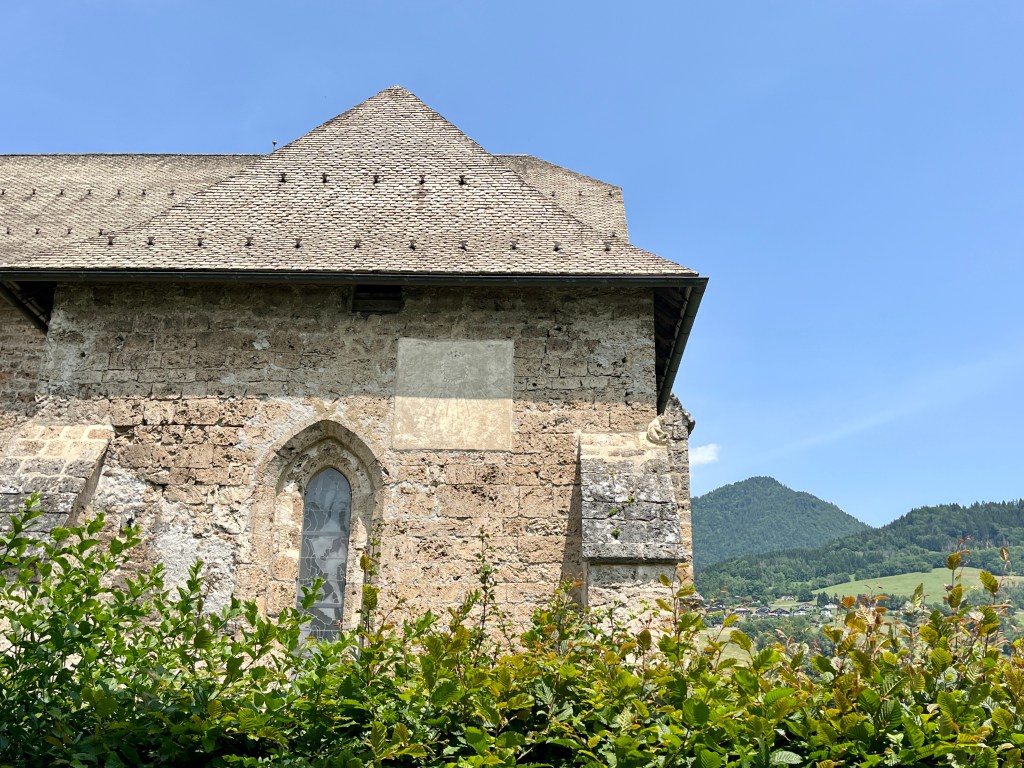
The Chartreuse was founded in 1285 as a Carthusian nunnery and continued its religious functions until the French Revolution. Thereafter it became a school and in due course an orphanage. A disastrous fire in 1967 destroyed almost all the buildings on the site, with loss of life. Only the church and its cloister now remain. The church is an exhibition space and the lawns around it feature examples of modern art, from interesting via enjoyable to a few that are a matter of personal taste.
Chartreuse de Mélan . Taninges . France – Vertical Dial
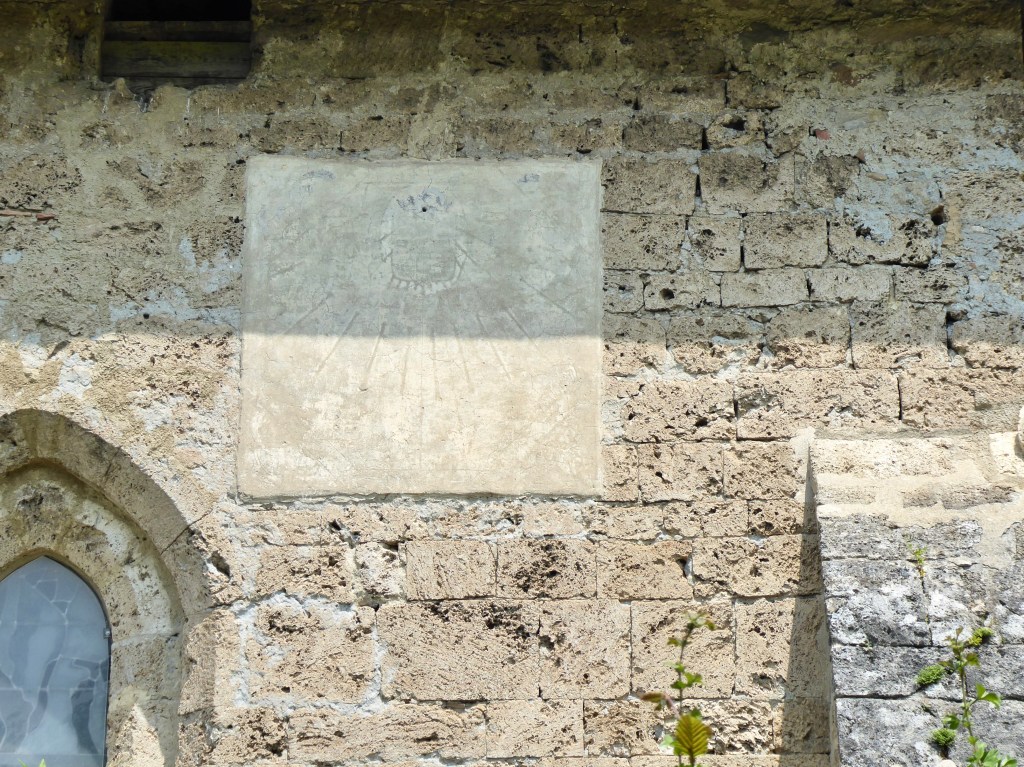
The dial is included by MICHEL LALOS in his excellent French Cadrans Solaires site. Anyone who has in interest in sundials in France will benefit hugely by using this free resource. It is accessible, informative, and easy to use – not least because the dials are featured by Départment with a map for dial locations. The entry for Mélan is :
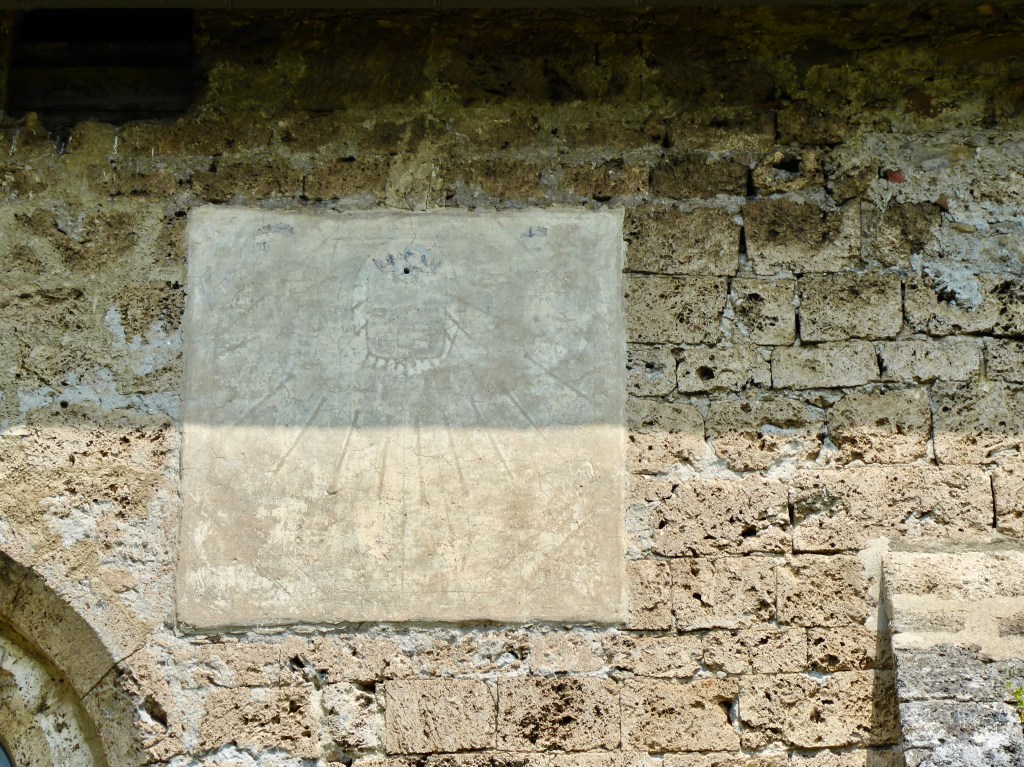
Cadran peu déclinant de l’après-midi, gravé et peint sur enduit, très dégradé, fines lignes, demies, plus de chiffres dans bandeaux, traces de blason et décor
Dial slightly declining in the afternoon, engraved, painted on rendering, very degraded, fine lines, half-hour lines, numbers within a frame, traces of coat of arms and decoration.
There are paint remnants at the top of the dial, where (presumably) it has been protected by the eaves. The gnomon hole at the top of the coat of arms is square. The dial is obviously old and I wondered if it might be dateable. Checking the apparent shape of the escutcheon, I discovered that it was first recorded as an armorial design in late C17 and (conveniently) turns out to be known as French-style. Overall, one might reasonably conclude that this dial is C18.
MEMORIAL STONE 1690
Chartreuse de Mélan . Taninges . France – Memorial Tablet 1690
GSS Category: Vertical Dial; France Sundial; Cadrans Solaires; Dials Abroad
All photos: Keith Salvesen; source used MICHEL LALOS
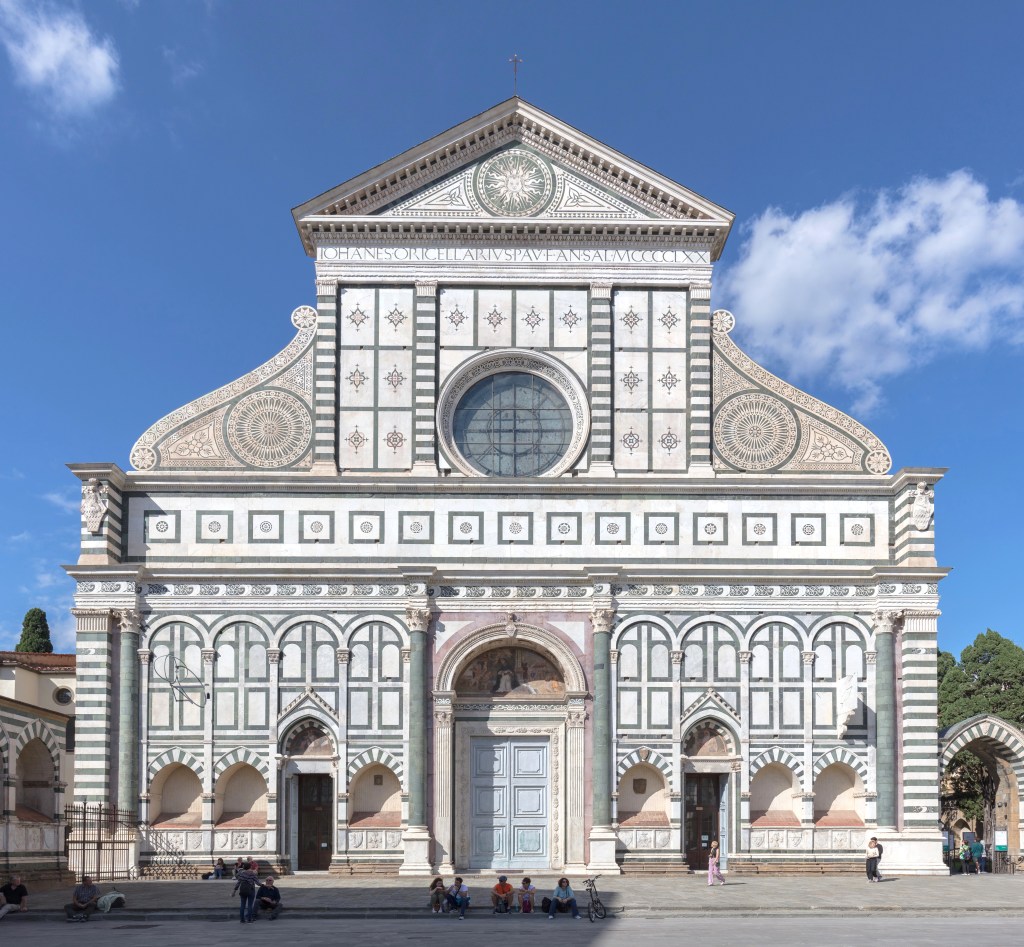
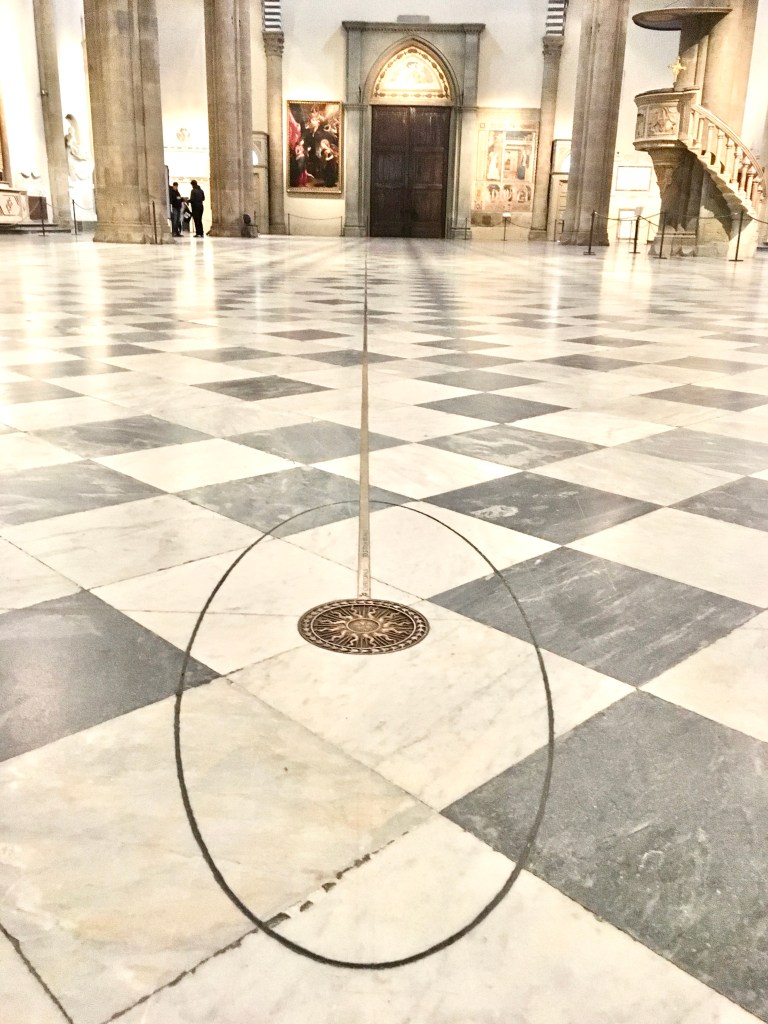
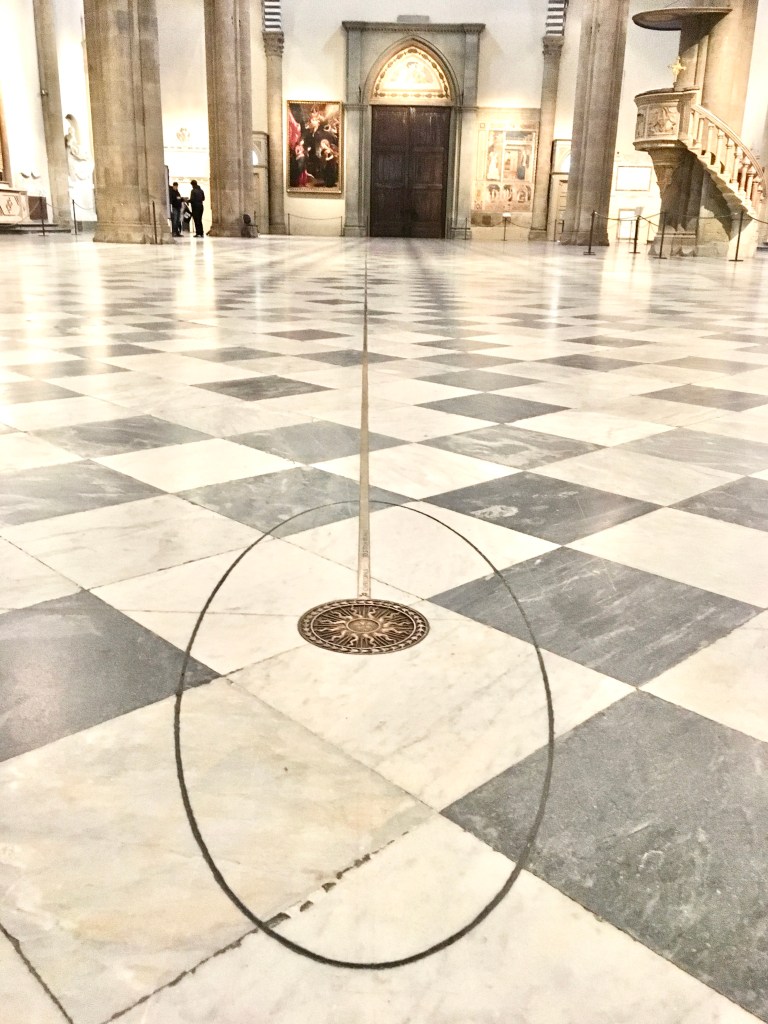
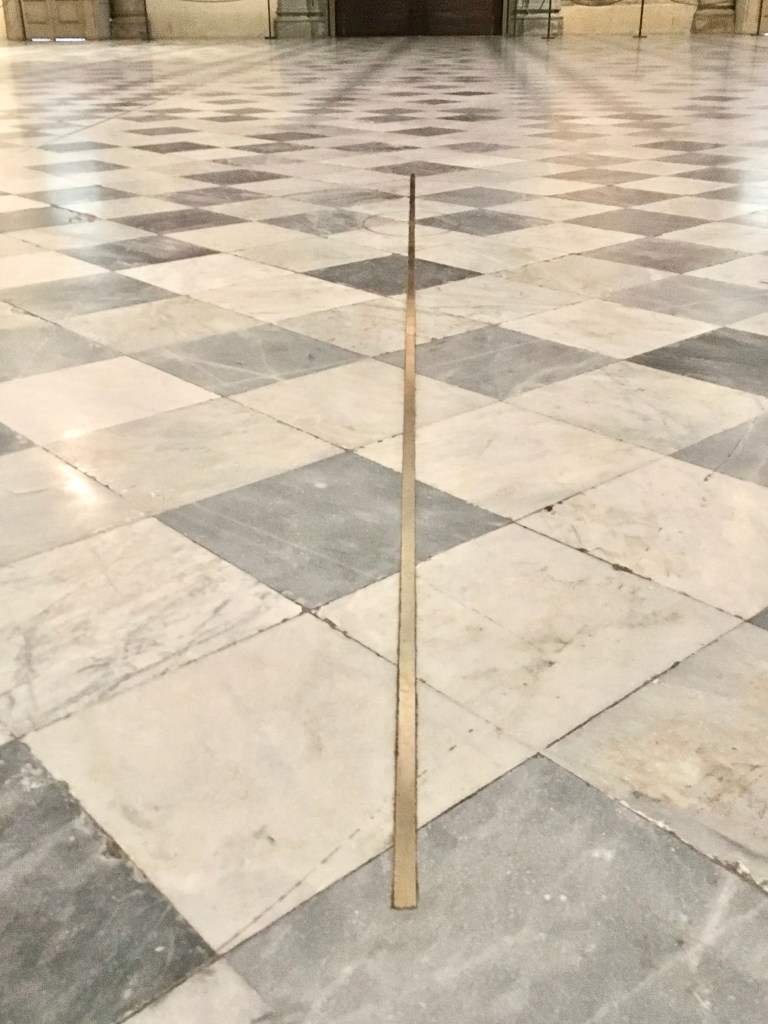
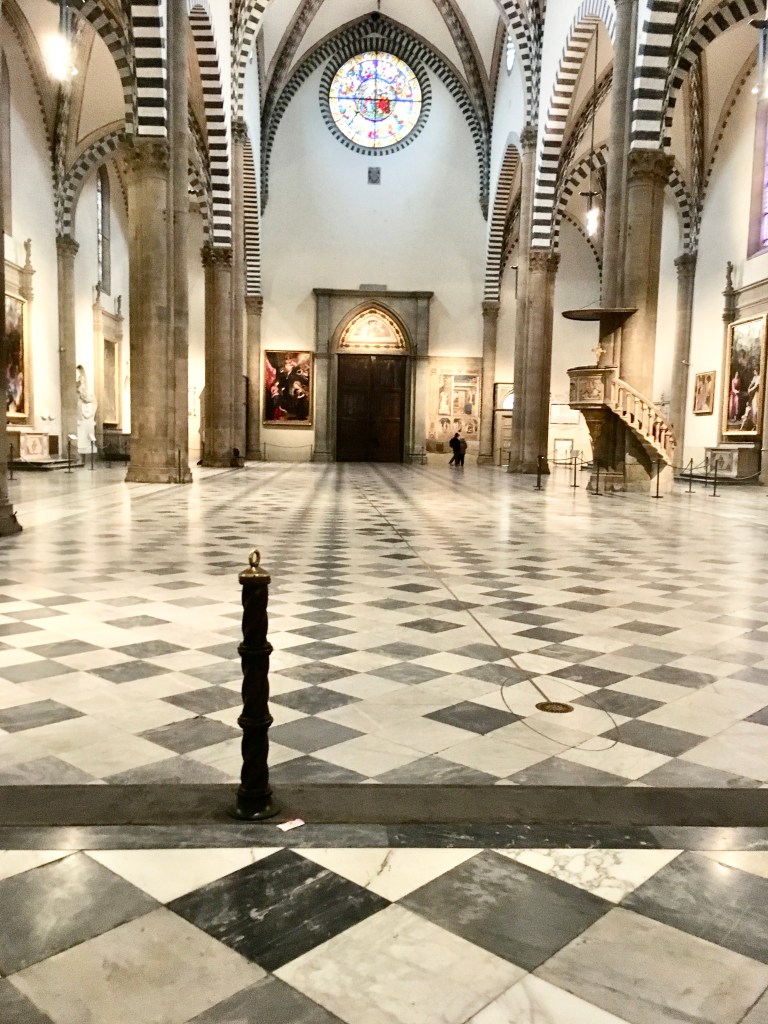
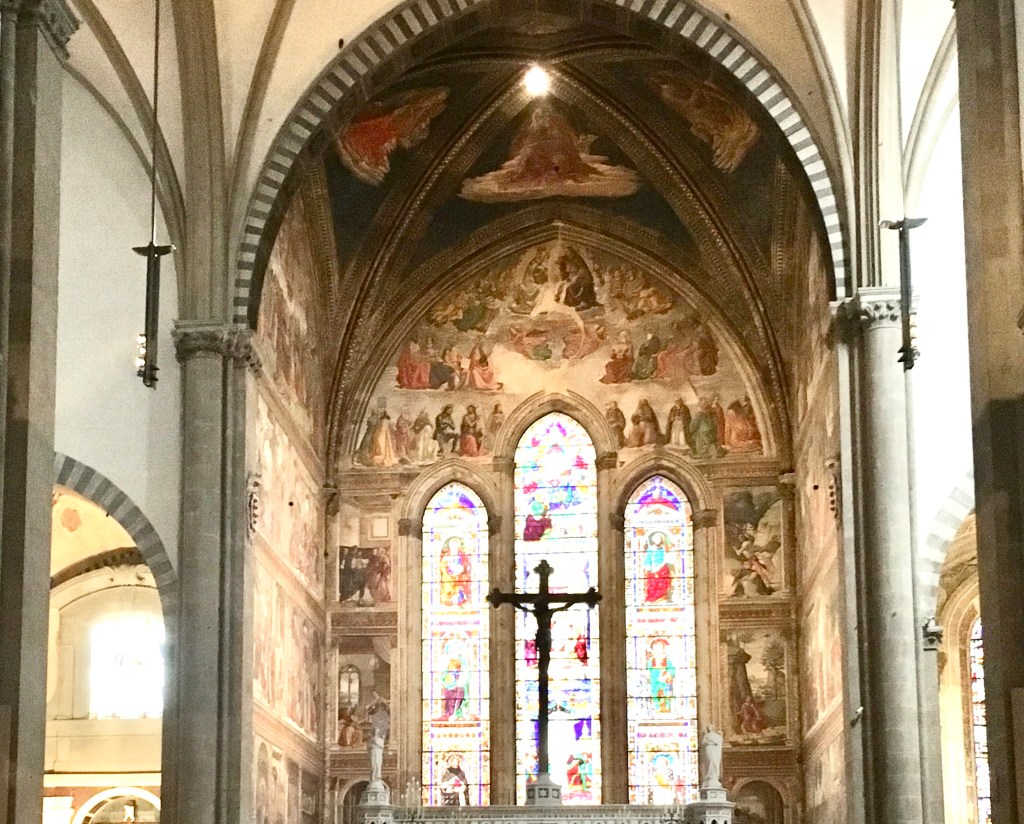
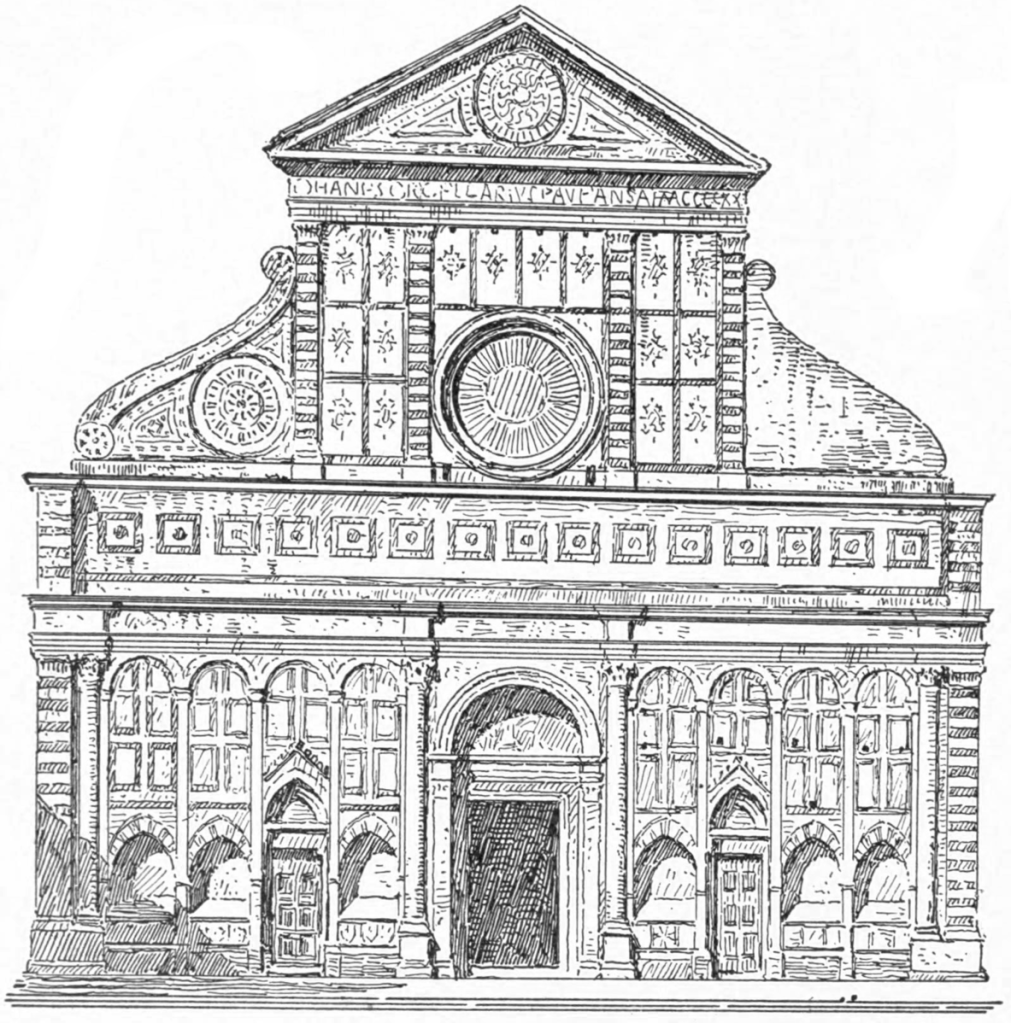
Santa Maria Novella, one of the most sublime churches in Tuscany, needs no general introduction. The Wiki articleSMV gives a very good overview. The focus of this article is on the amazing meridian dial inside the church itself.
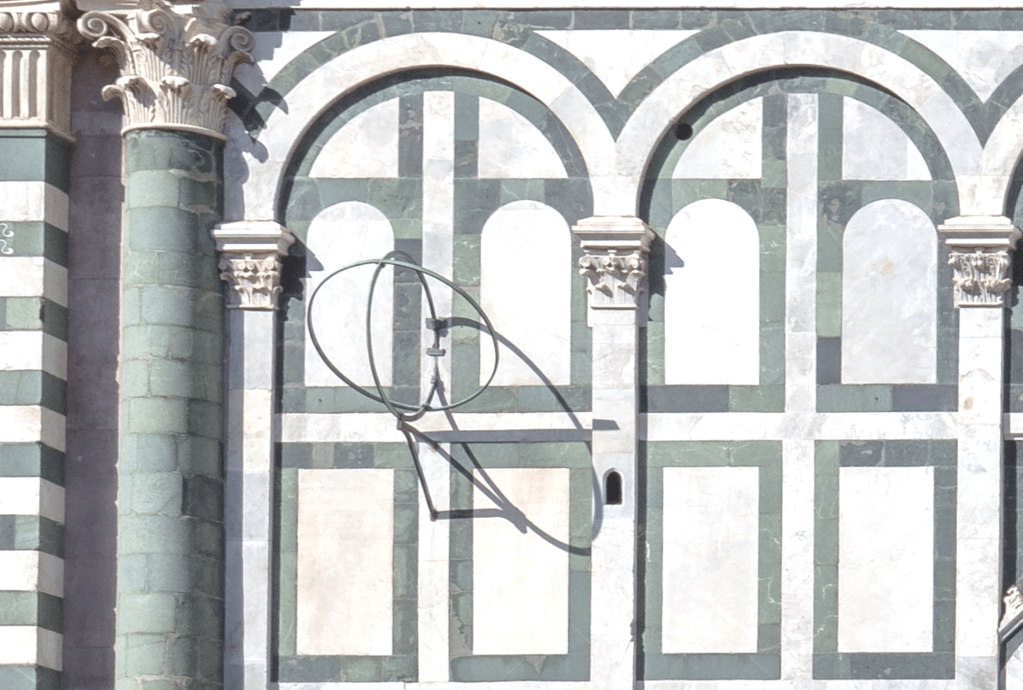
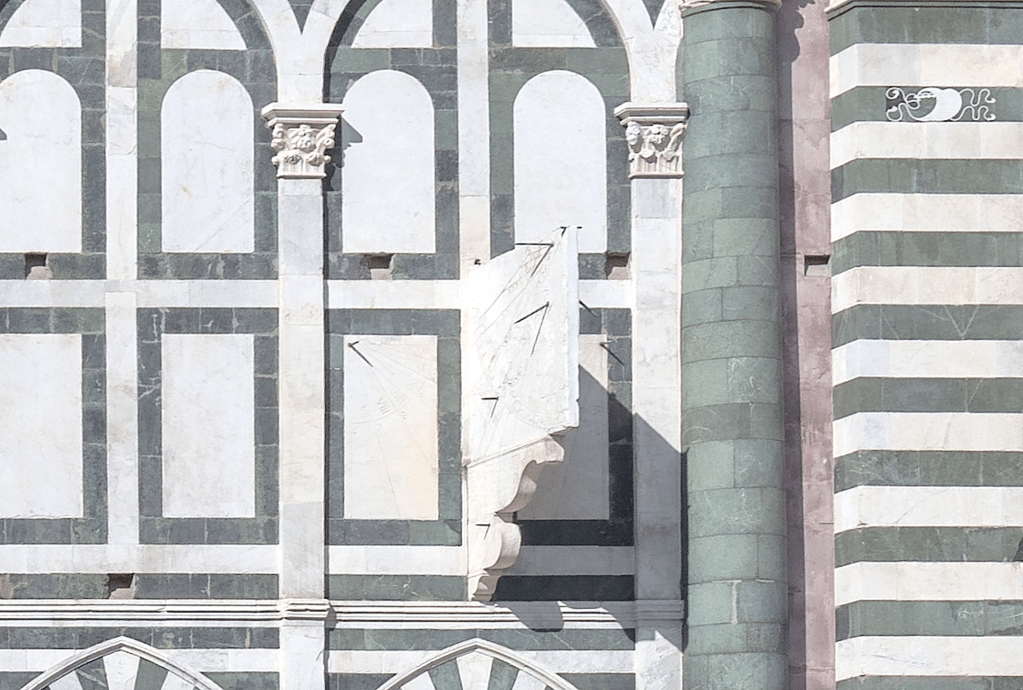
First, I should mention the 2 famous dials on the facade, the subject of much interest, investigation, and analysis including detailed articles by BSS. I plan to feature both separately in due course. On the left is an armillary sphere; on the right is an astronomical quadrant. They are the work of Egnatzio Danti, astronomer to Cosimo I, and were installed c1570.
Armillary Sphere & Astronomical Quadrant on the Facade (Egnazio Danti c1570)cc os
The Museo Galileo has a comprehensive website here MG and is a superb resource for historical science. Exhibits include 2 of Galileo’s telescopes. In 2007 it held a remarkable dial-based exhibition called The Line of the Sun. The entry for SMN includes all 3 dials and gives a succinct account of their creation and significance. I am adapting / adopting some entries from the museum’s explanations.
MERIDIAN DIAL
Background: Between 1572 and 1575, the cosmographer Egnazio Danti (1536-1586) installed on the façade of Santa Maria Novella no less than three astronomical instruments: a great quadrant with sundials; an equinoctial armillary; and two ‘camera obscura gnomons’. These instruments were designed to be used for new astronomical calculations linked to the project for reforming the Julian calendar…
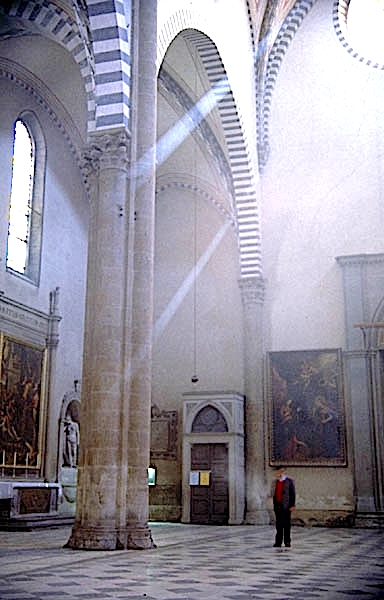
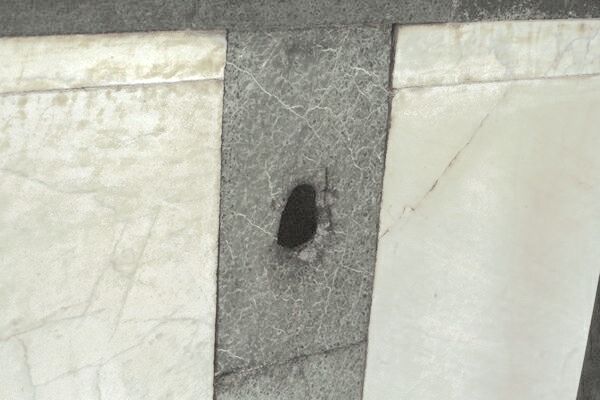
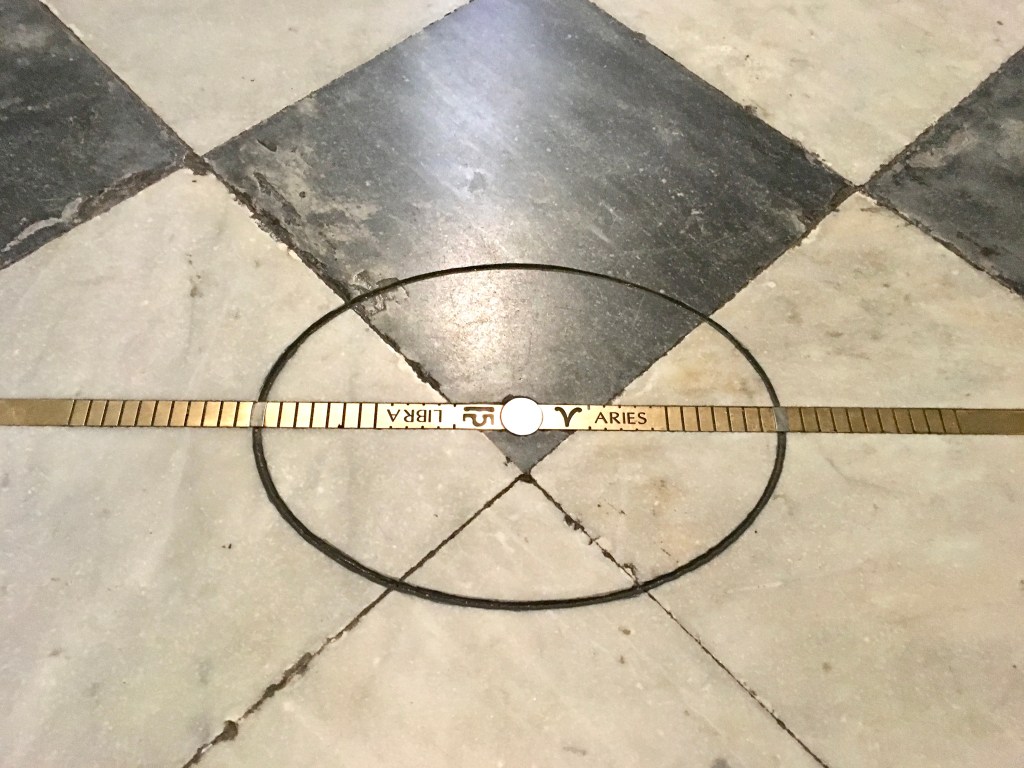
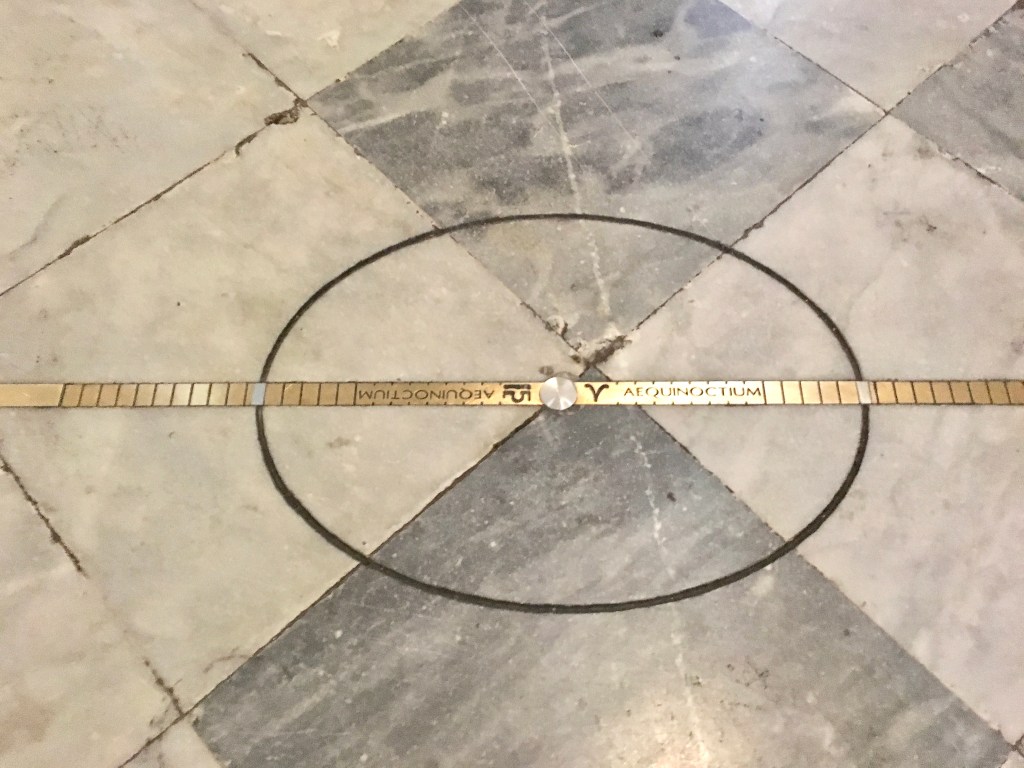
Meridian Dial: Although Danti designed the dials he was unable to complete the tracing of the meridian line on the floor of the church. He only opened gnomonic holes, first in the glass of the rose window, then on the church’s façade, much higher, and made two openings in the vaulting as well, through which rays of light would pass only during the equinoxes and the winter solstice.
Operation:The entrance of the sunbeam was through the two gnomonic holes. The pinhole on the rose-window would have allowed [the measurement of] time during the entire year. The pinhole on the façade would have allowed the same reading only in the days of the equinoxes and of the winter solstice (IMSS Multimedia Laboratory).
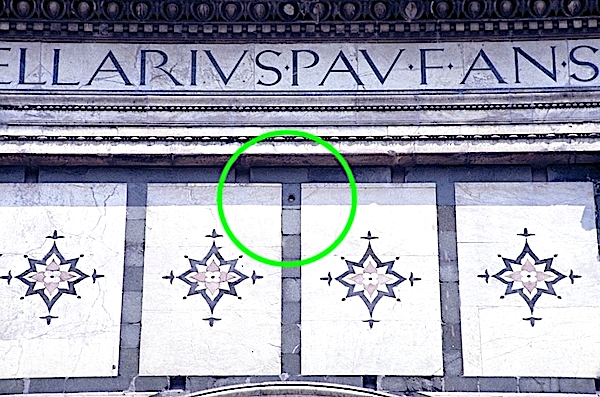
FACADE POSITIONS
Gnomon holes on the facade in the rose window (70′ high) and just below the pediment
tsettle
MERIDIAN DIAL IN DETAIL
Basilica of Santa Maria Novella . Firenze . Meridian Dial – Keith Salvesen
Basilica of Santa Maria Novella . Firenze . Meridian Dial – Keith Salvesen
Basilica of Santa Maria Novella . Firenze . Meridian Dial – Keith Salvesen
Basilica of Santa Maria Novella . Firenze . Meridian Dial – Keith Salvesen
Basilica of Santa Maria Novella . Firenze . Meridian Dial – Keith SalvesenBasilica of Santa Maria Novella . Firenze . Meridian Dial – Keith Salvesen
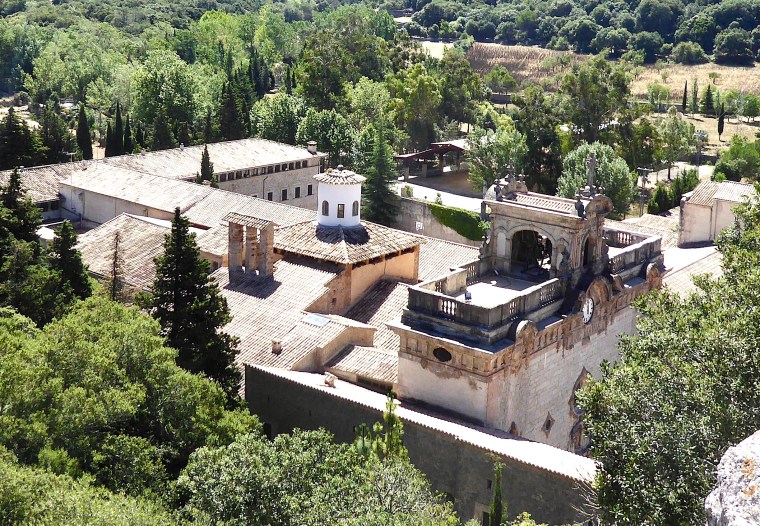
The secluded Monastery of Lluc is situated near Escorca in the Tramuntana mountains of Mallorca. It dates from the c13, and is famous for its Black Madonna, the discovery of which is said to have led to the monastery’s foundation . It is a place of pilgrimage. The location is remote and peaceful, though inevitably the monastery has become an essential stop on the tourist and coach party trail. We returned there recently, not having visited Mallorca for more than 20 years. The buildings were much as we remembered, but the parking and visitor arrangements were more regimented and complex. Before, one just drove down the narrow road from the main mountain road and parked in the forecourt area close to the buildings. Now, everything is (unsurprisingly) geared to a daily mass influx of people and their needs for sustenance and souvenirs. We were pleased to see that it is still possible to stay at Lluc in one of small rooms under a long covered walk where the monks once slept. You can even book a room for the night.
Lluc Monastery . Mallorca – Sundial
A short walk from the monastery, there is a path that leads up to a calvary and some great views. Along the way is an amazing multiple vertical sundial. It was designed by Rafael Soler, and carved in 1991. It displays with some style the evolution of sundials from medieval to modern. There are two historical dials, one solar dial, and two seasonal dials.
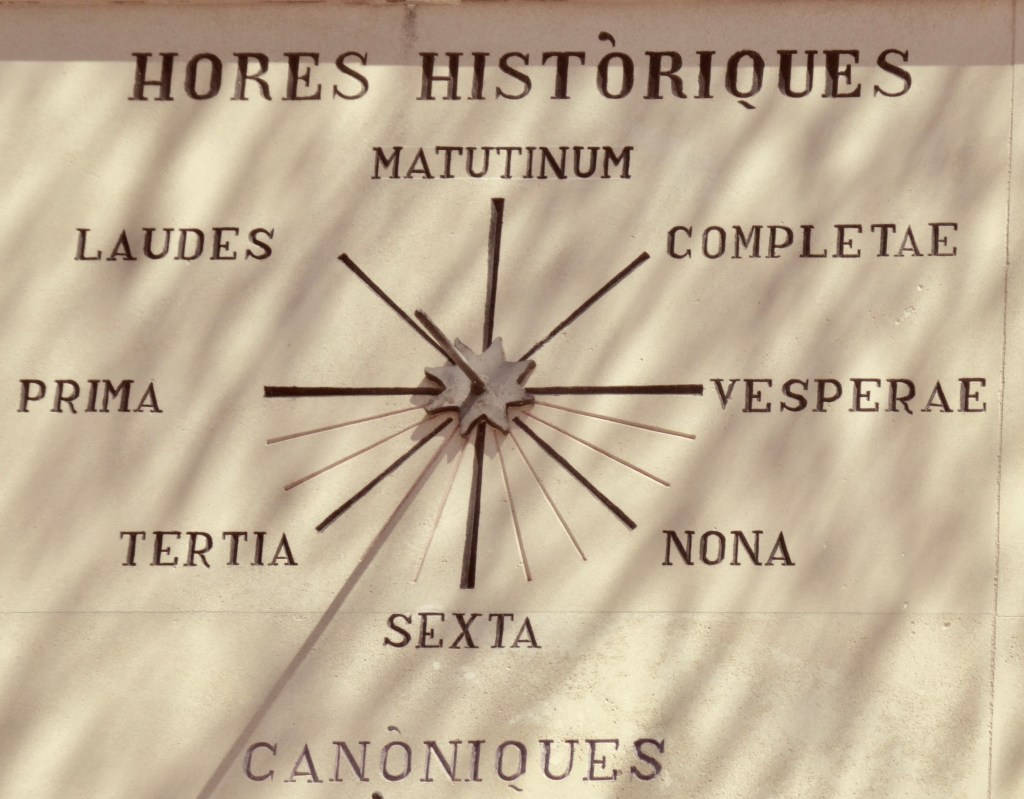
CANONICAL HOURS – LATINATE
This dial simply records the 3-hourly canonical divisions of the liturgical day (as with the early medieval mass / scratch dials), starting with midnight (top) and working counterclockwise round a central gnomon.
Lluc Monastery . Mallorca – Sundial (Canonical)
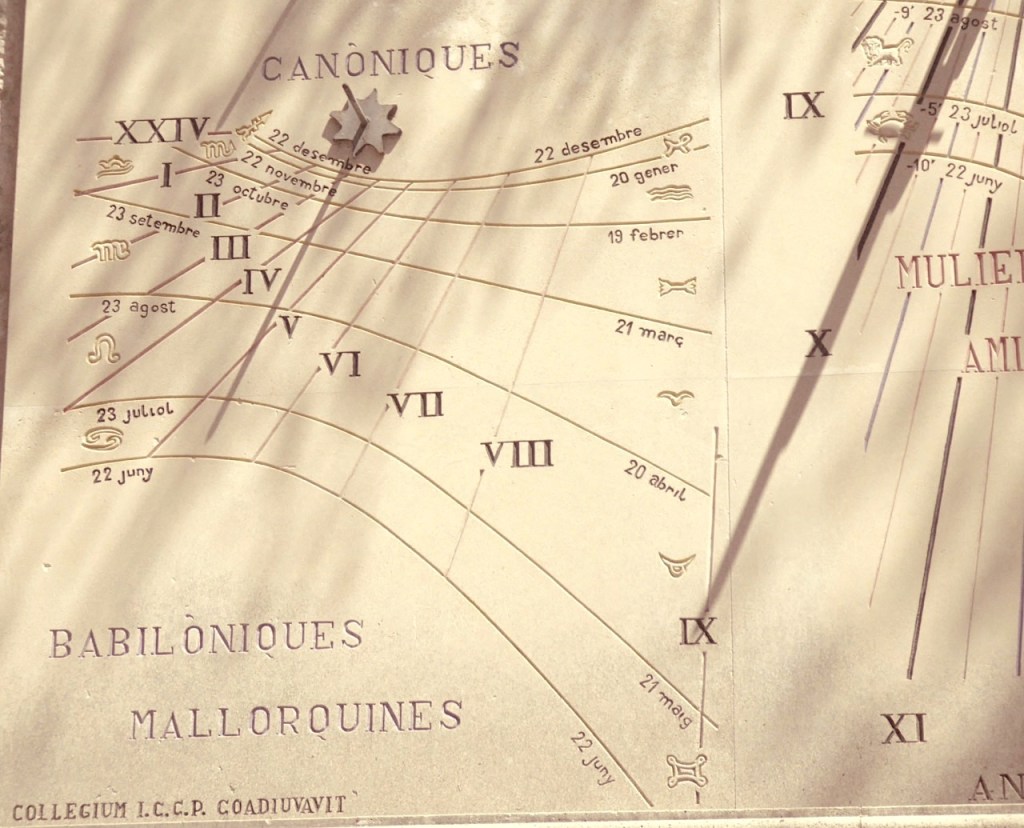
CANONICAL HOURS – BABYLONIAN / MALLORQUIN
A more complex dial, starting at noon shown as XXIV (I’m not clear why not XII) through to 21.00. The dial includes months and the signs of the Zodiac.
The centre dial shows true solar time. The polar gnomon (triangular) shows the hours, the pointer shows the date with the declination lines. The inscription MULIER AMICTER SOLE (Woman Clothed by the Sun) references an account in the Book of Revelations. You can find out more HERE
Lluc Monastery . Mallorca – Sundial
MEAN TIME DIAL (SUMMER /AUTUMN)
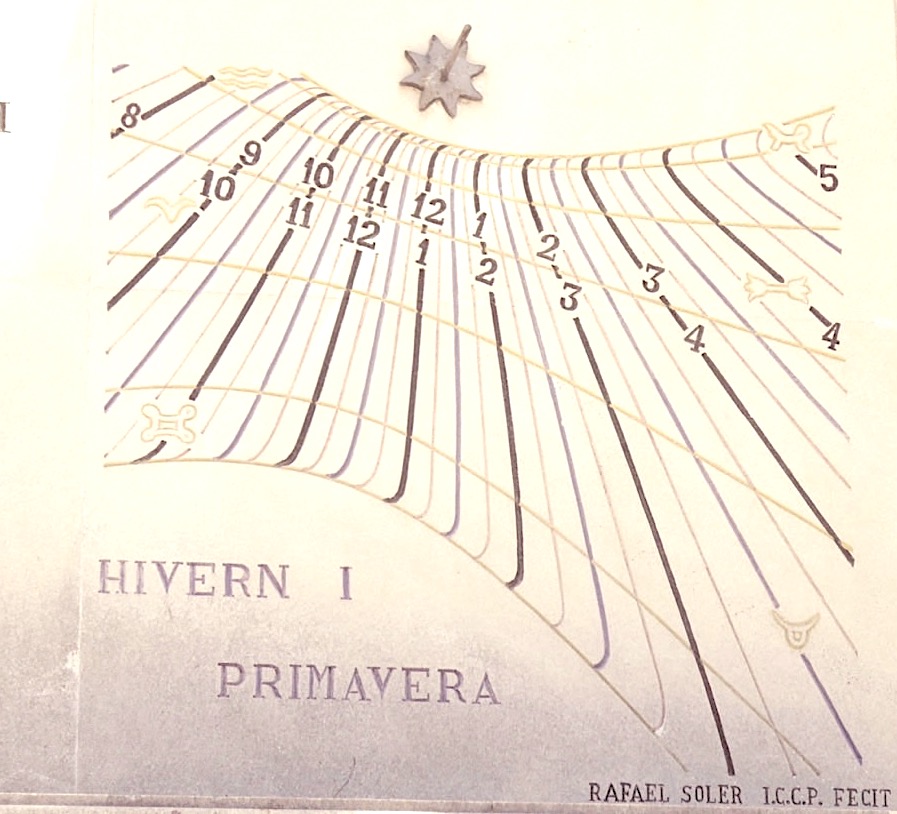
The two right-hand sundials are complementary and each covers two seasons. Presumably for a particular month, one dial will be reliable as to time and the ‘off-season’ one will not. The words are Catalan eg Hores Mitjanes = Mean Time; Estiu I Tardor = Summer and Autumn.
Lluc Monastery . Mallorca – Sundial
MEAN TIME DIAL (WINTER / SPRING)
Lluc Monastery . Mallorca – Sundial
BBS Record
The creation of these dials was obviously a labour of love and skill combined. There’s doubtless plenty more to be said about these sundials and the splendid ensemble but I decided not to get too technical – indeed, as an amateur I don’t understand enough to do so. The rather washed out appearance of the images was operator error – I had the camera on the wrong settings and didn’t realise until too late…
Lluc Monastery . Mallorca
GSS Category: canonical to modern multi-dial; sundial Lluc Mallorca
All photos: Keith Salvesen; snippet from BSS record
Original Credits: ‘Props to arby101ca and lumbricus, members of a geocaching & waymarking website called Groundspeak. They hiked to Lluc (respect!) and wrote informatively about these dials. I found relatively little elsewhere.

































 GAUDIUM SUB SOLE . SUNDIALS . MEDIEVAL TO MODERN