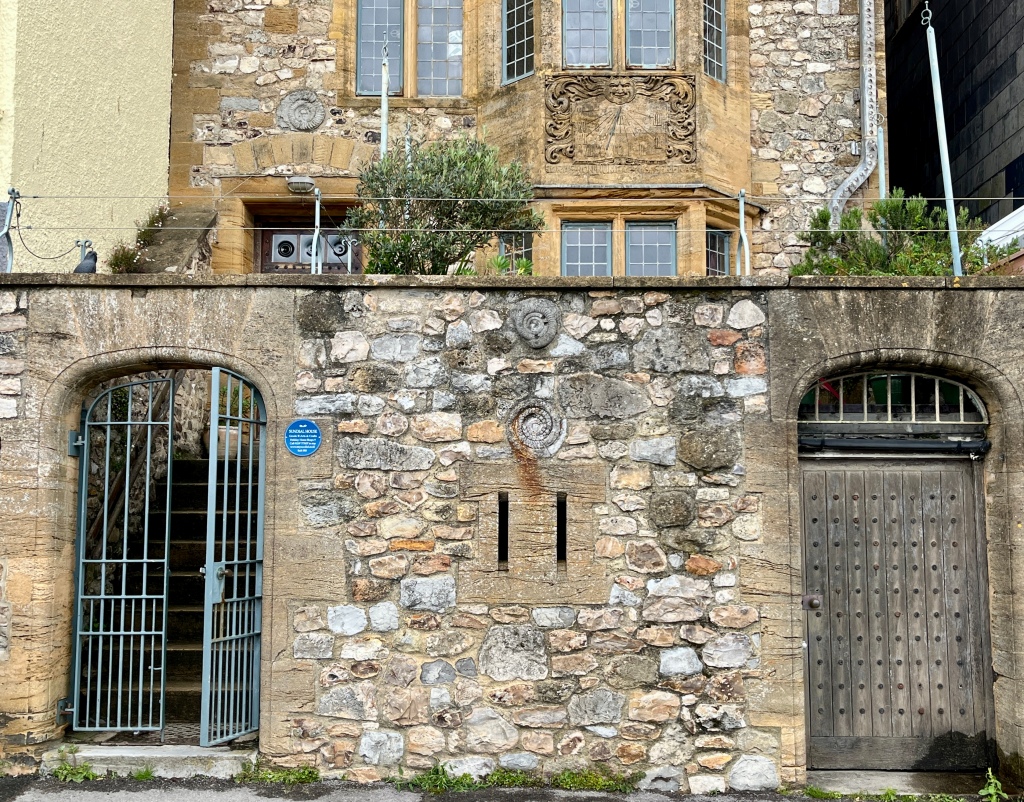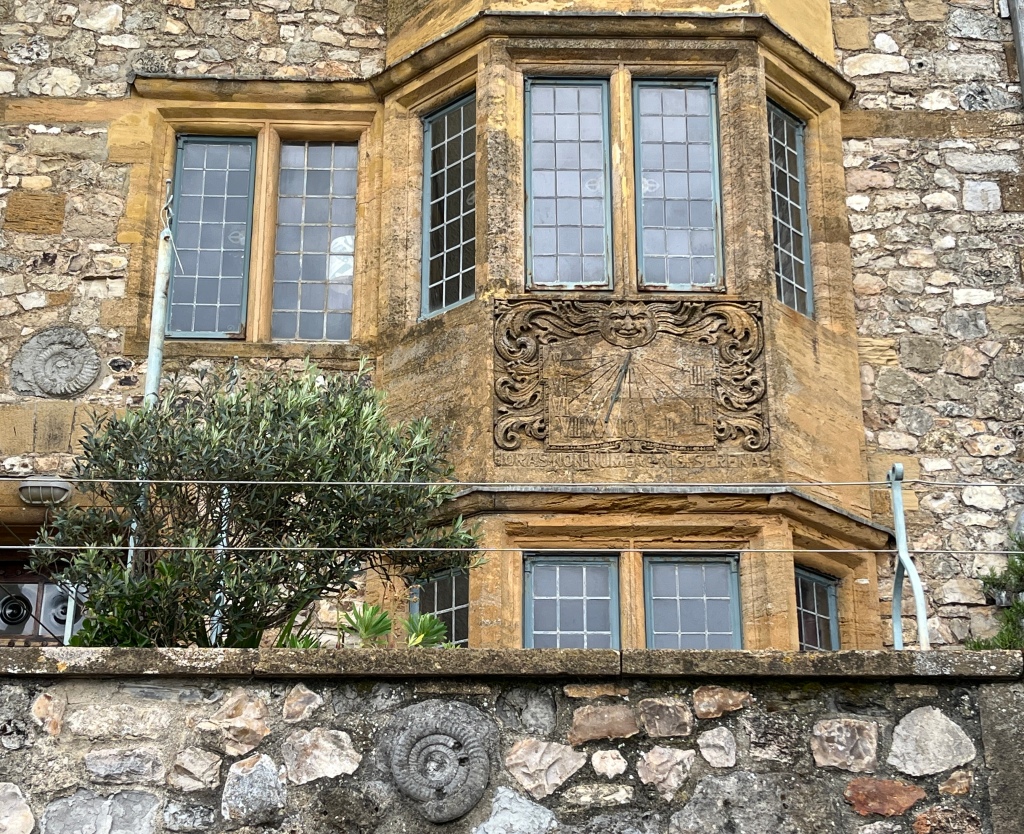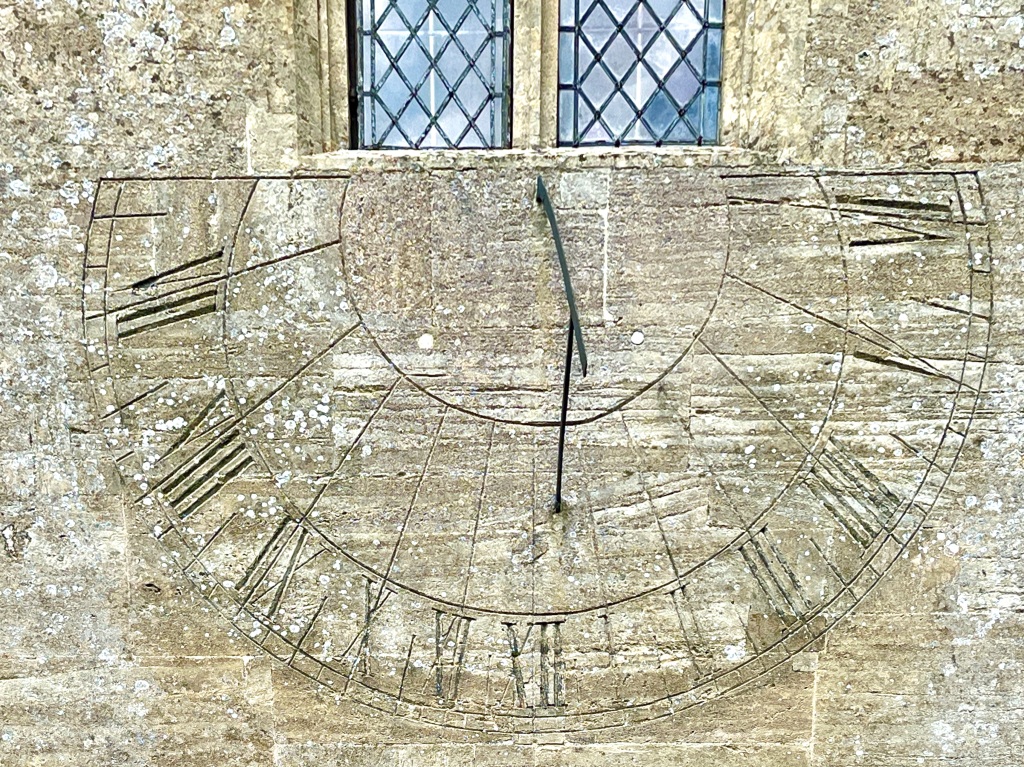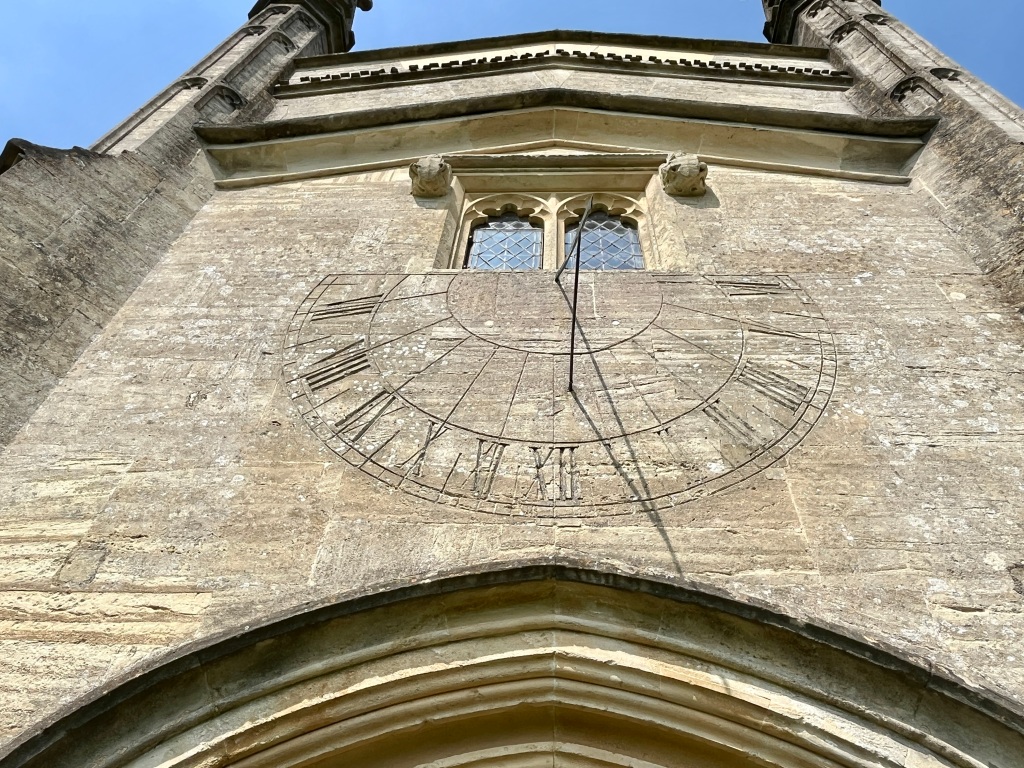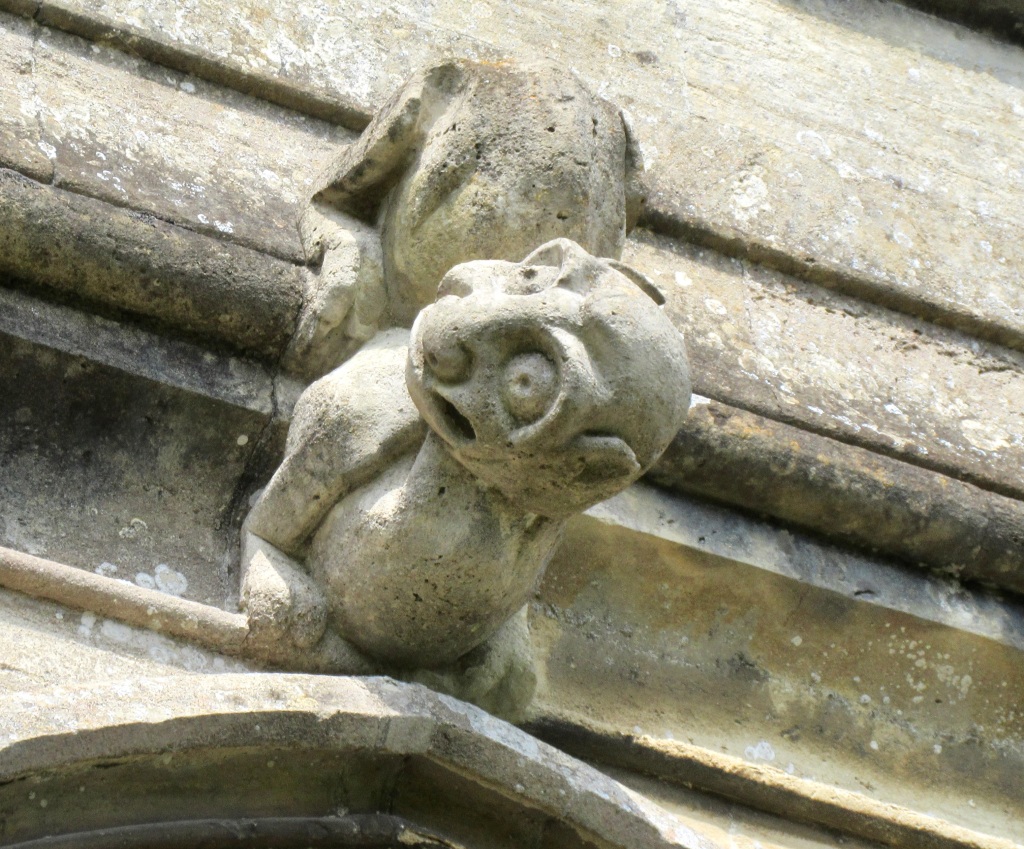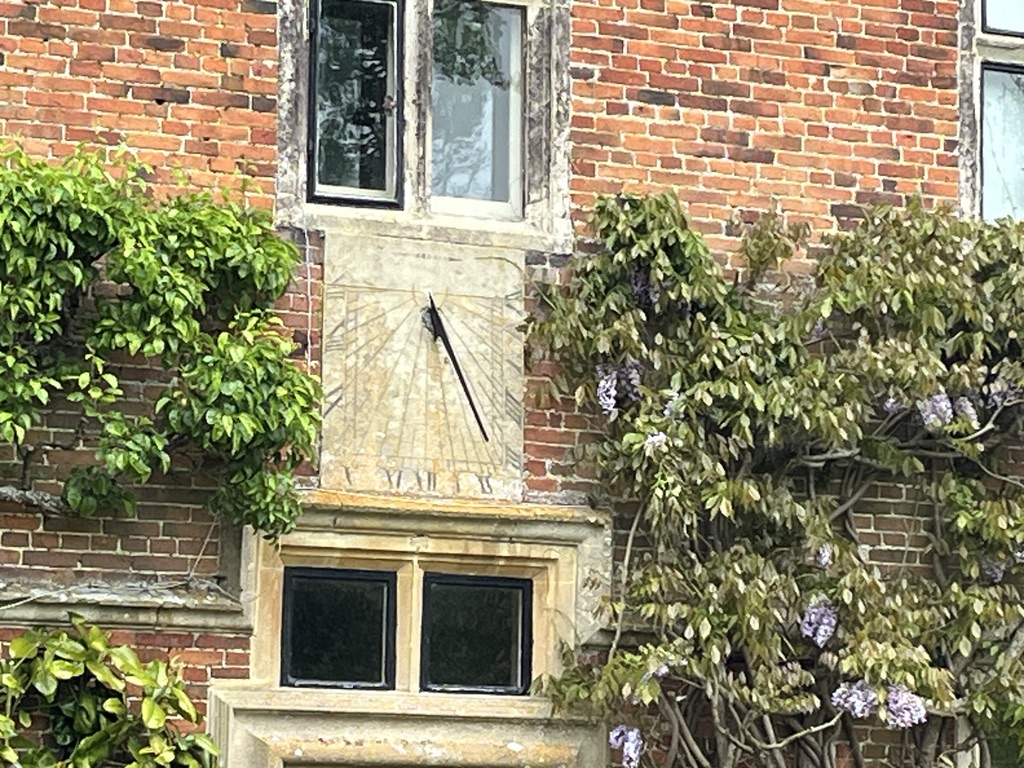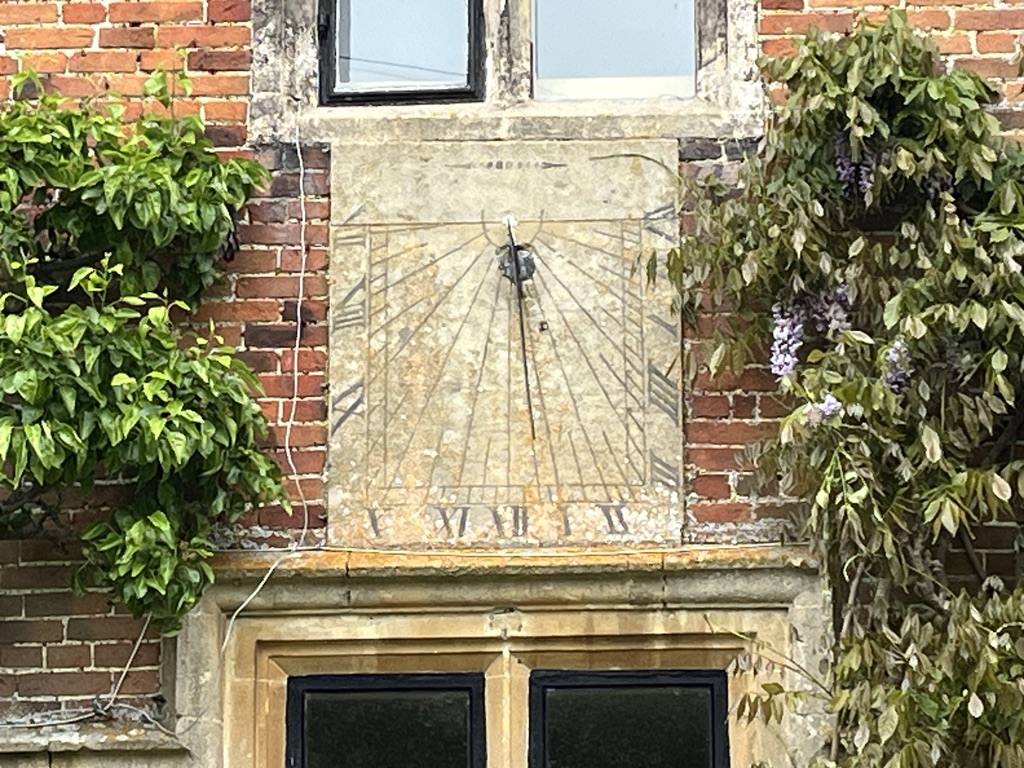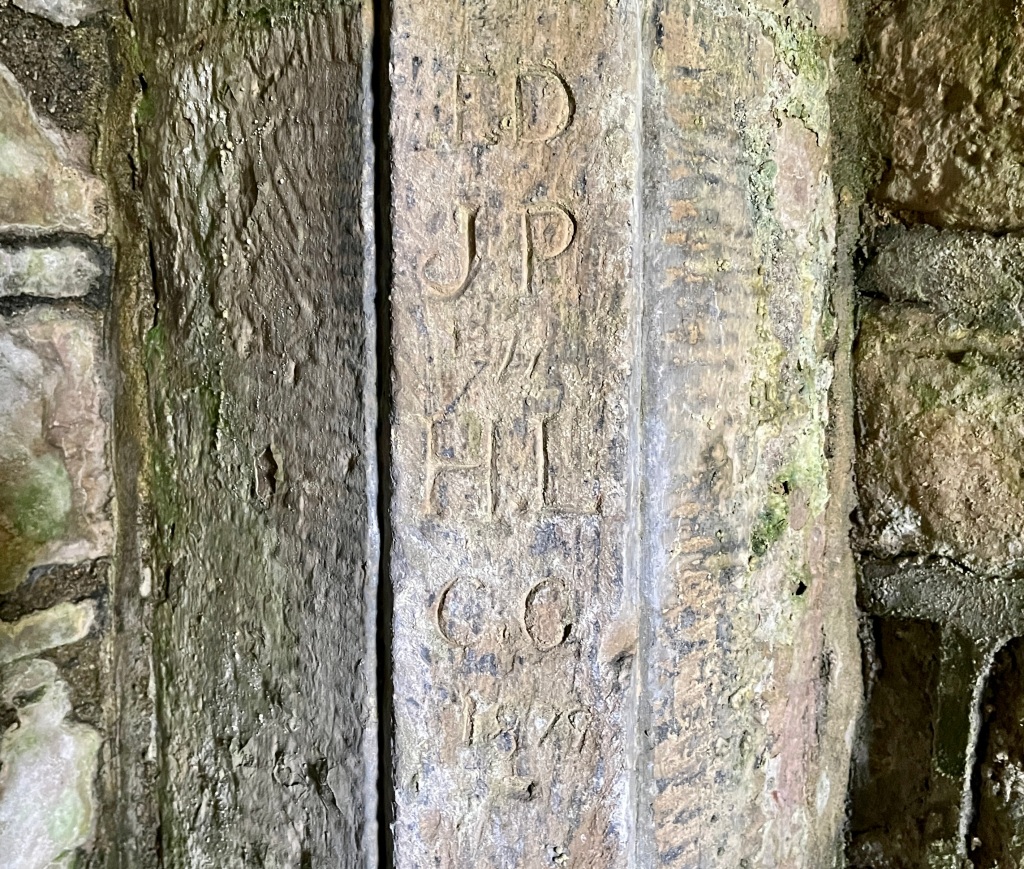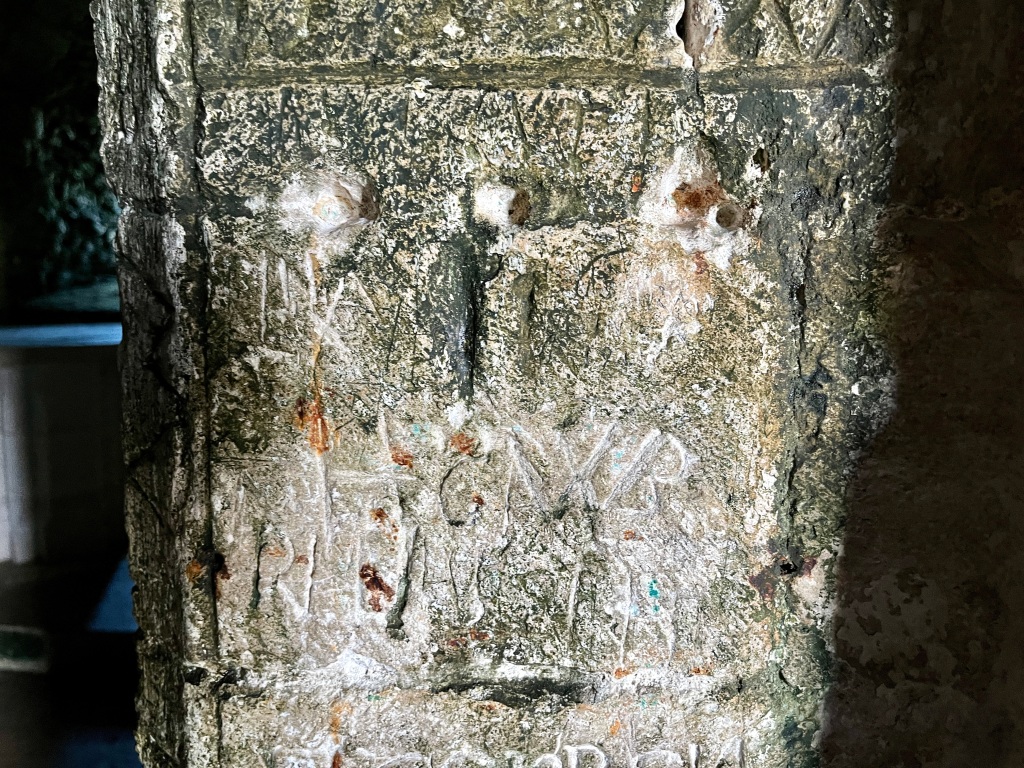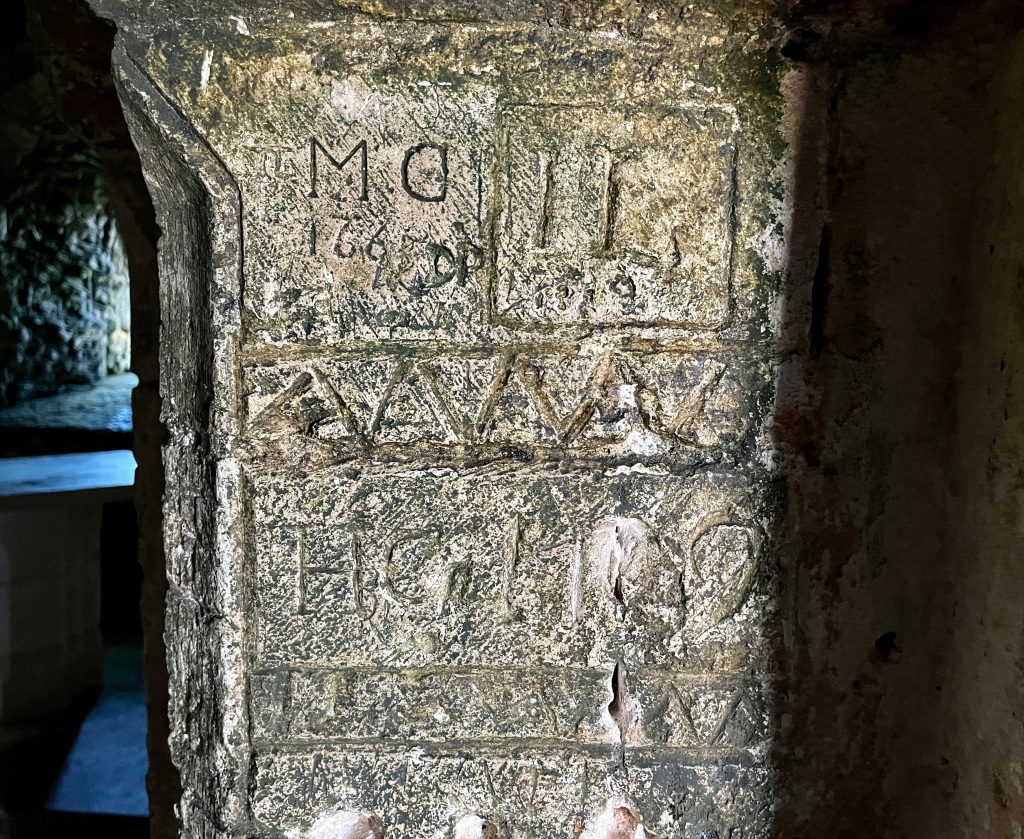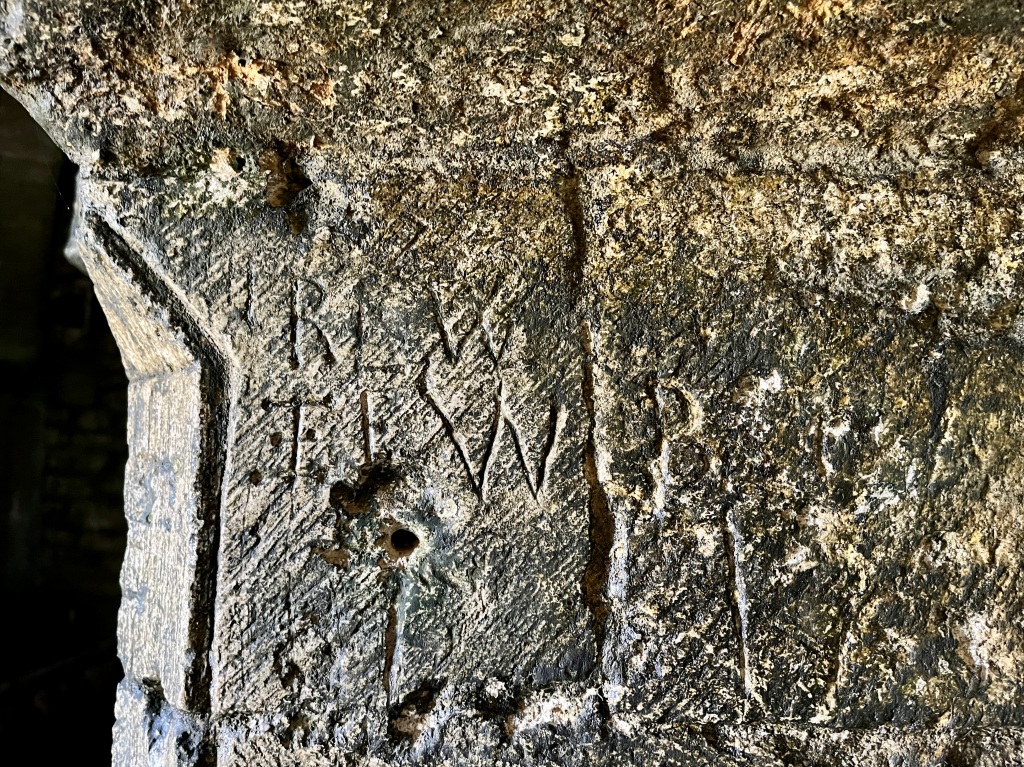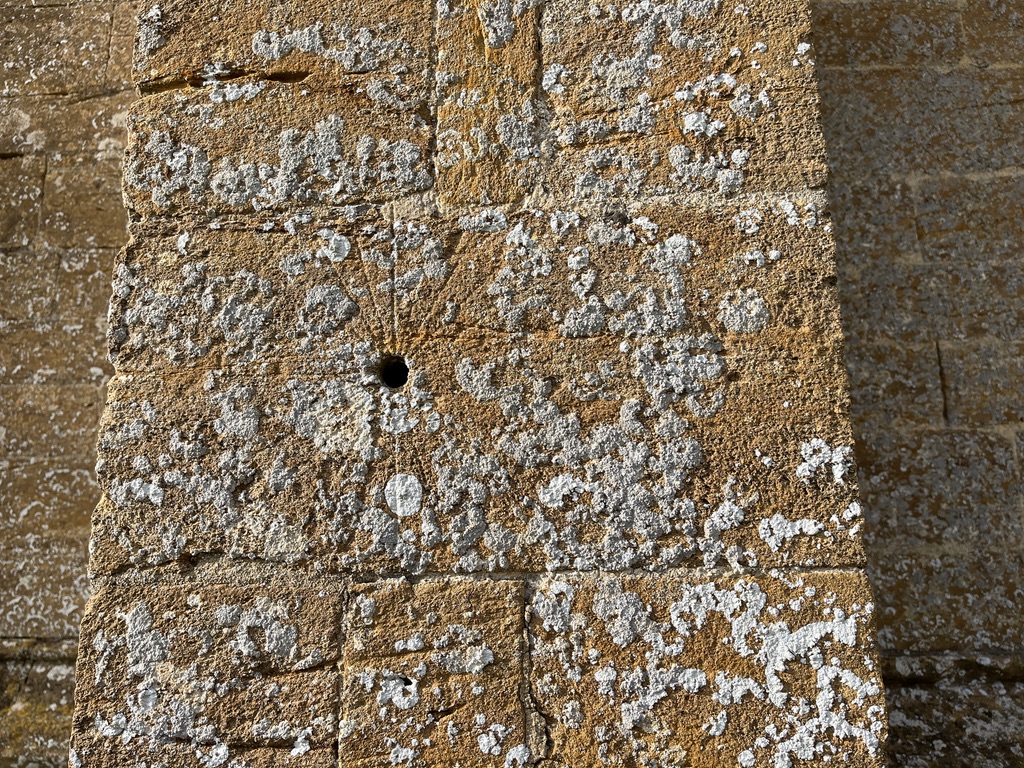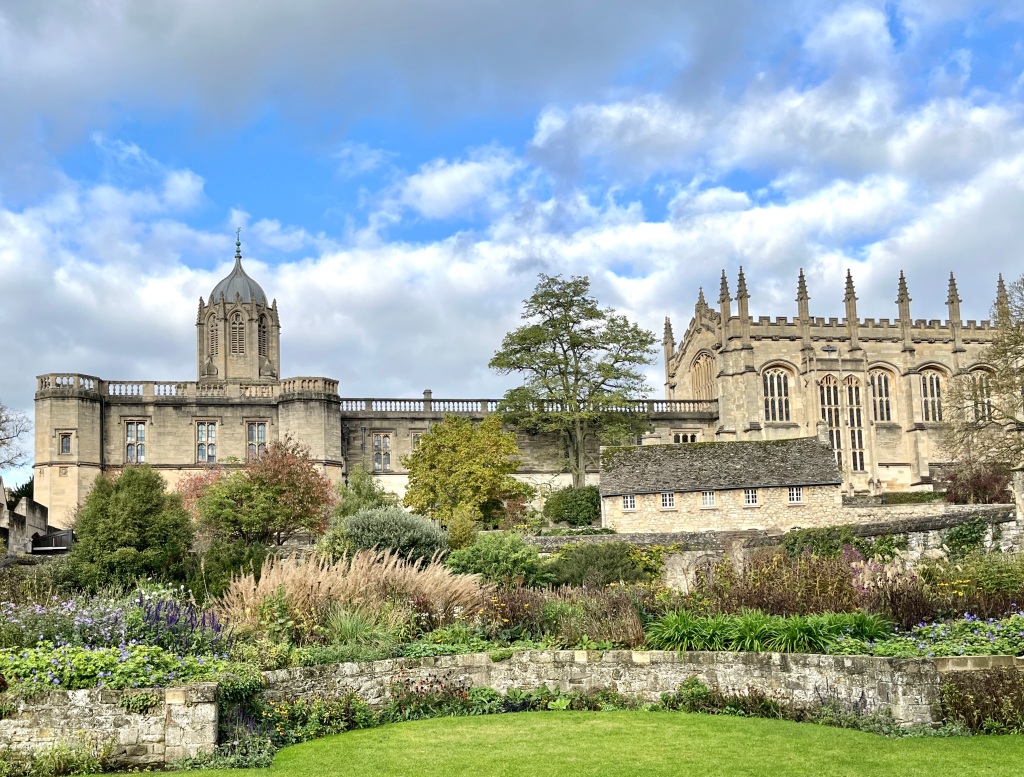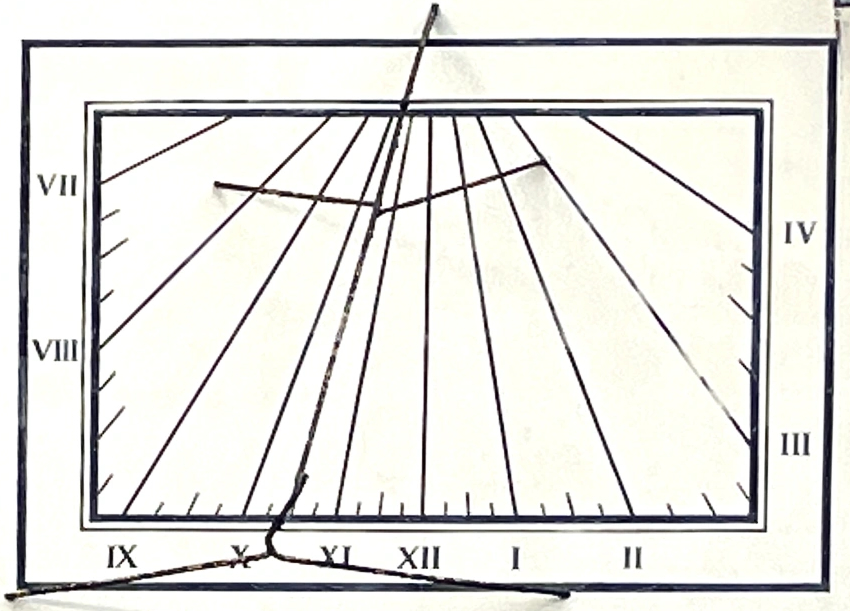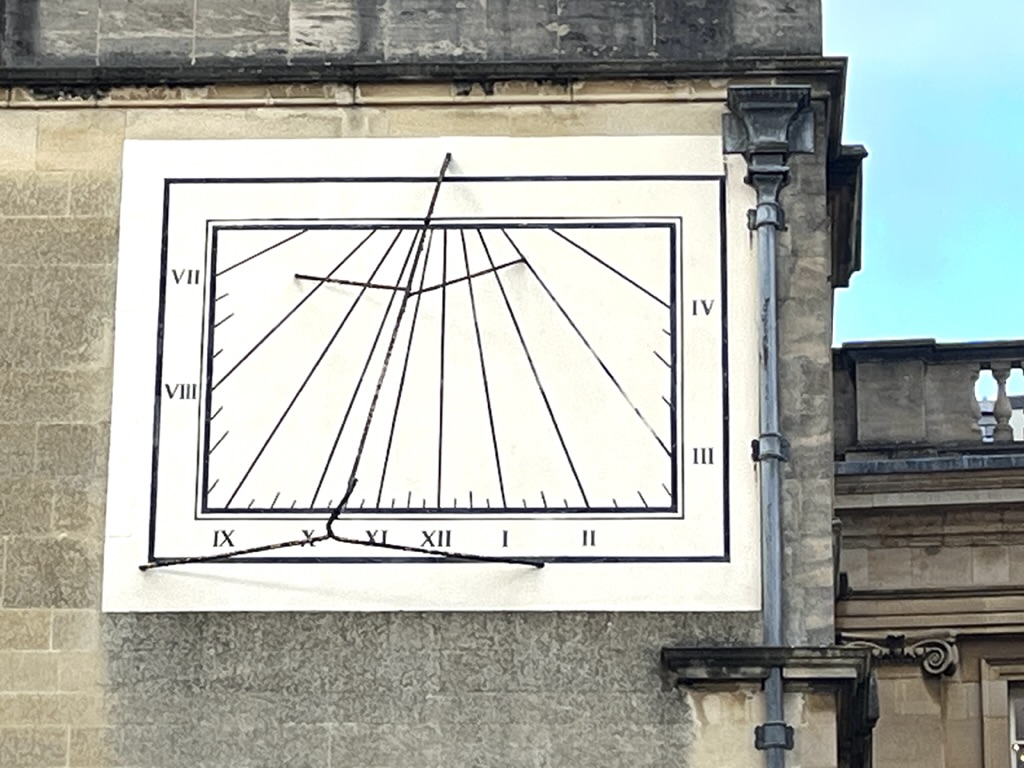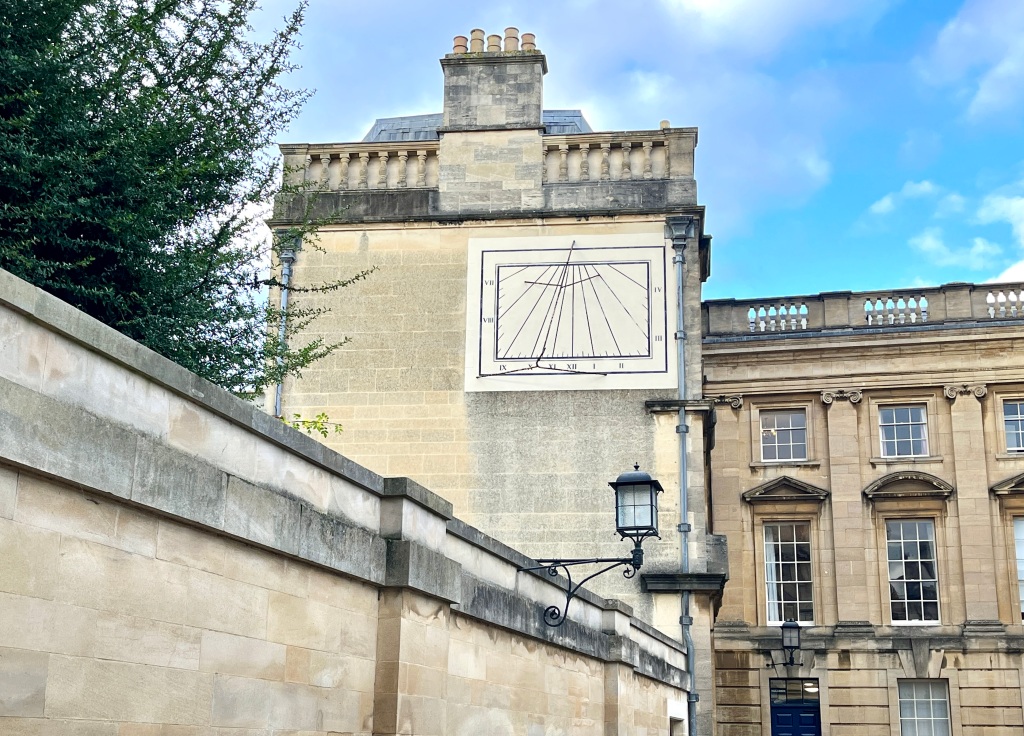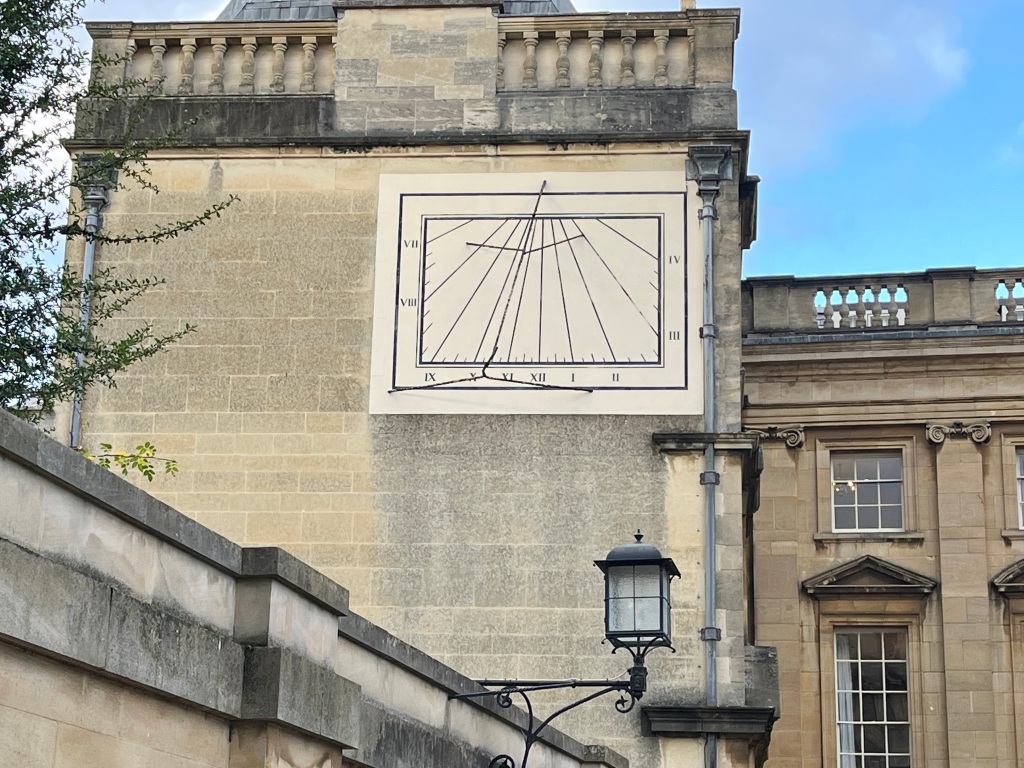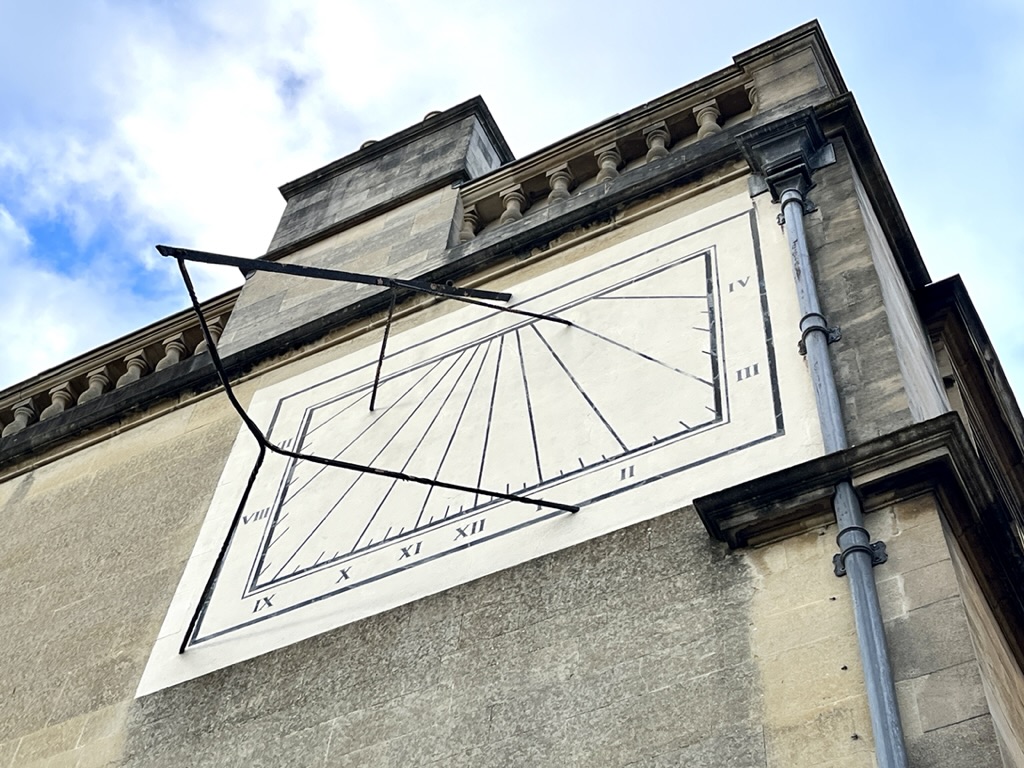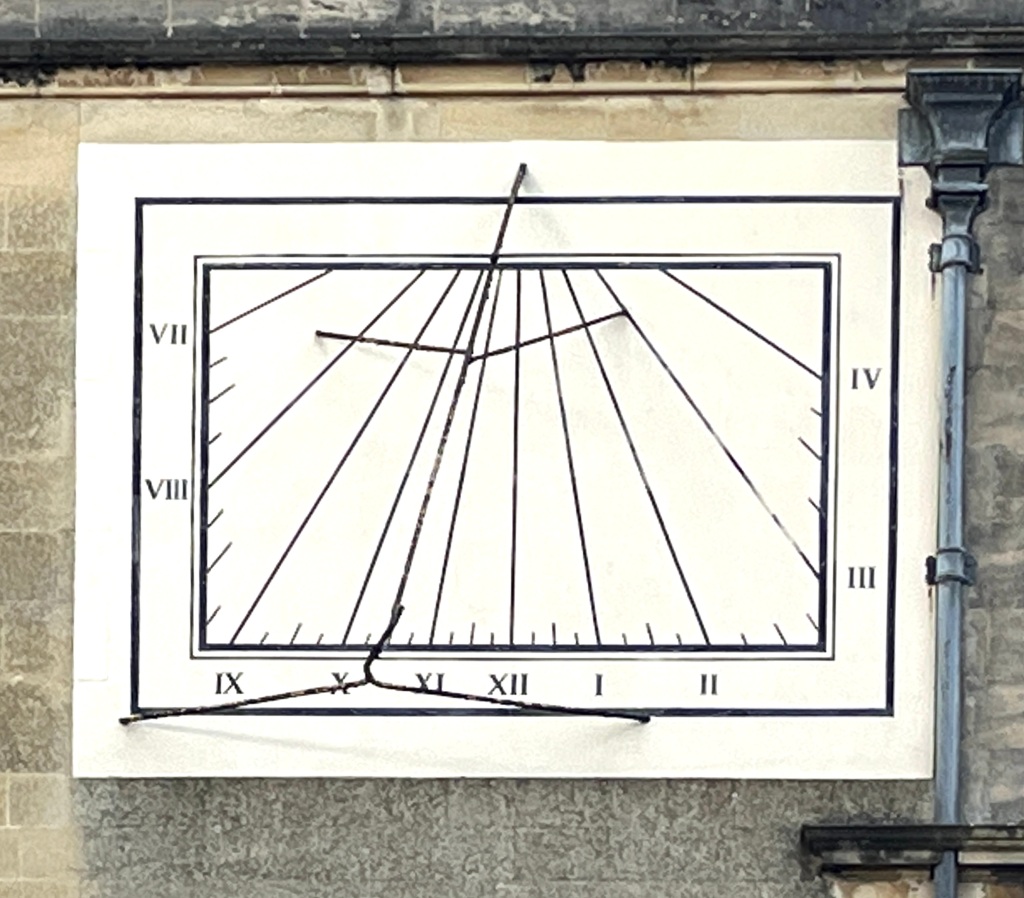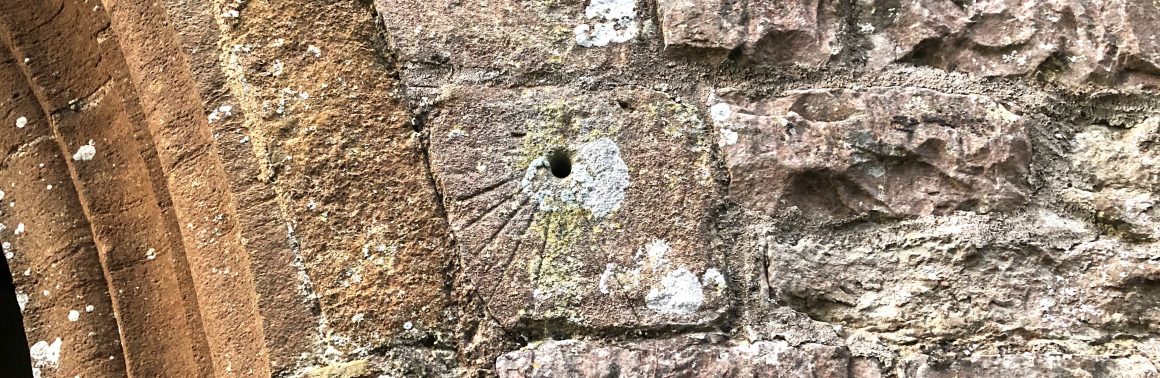
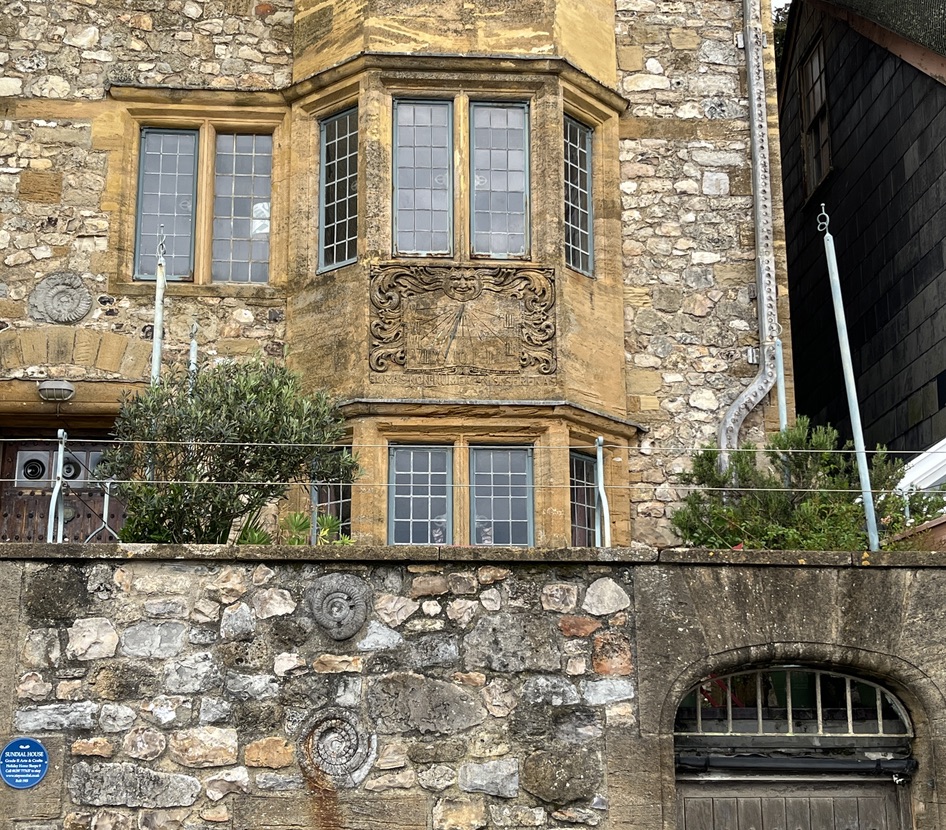
CHRIST CHURCH COLLEGE . OXFORD – Vertical Dial c1750

CHRIST CHURCH COLLEGE . OXFORD . VERTICAL DIAL

Located on W side of the Peckwater quad. c 1750, recently restored. Its position restricts the marked hour to VII – IV. Described rather harshly as a very plain and severely functional sundial of no great beauty in one source. Its simplicity and clarity in a City with many fine and some most elaborate sundials gives it some distinction.

Several other historic Christ Church dials both in the College and on the Cathedral (including mural dials) are sadly no longer extant. However, John Foad BSS points out that there is an outstanding multiple dial in the Pocock Garden, made by David Brown and installed 1998. There is also a small unobtrusive vertical dial elsewhere. These will have their own post in due course.

Christ Church Cathedral runs on Oxford time, five minutes and two seconds behind GMT. This is presumably a throwback to the late C19 before Standard Time was introduced by Statute, though there may be more arcane collegiate reasons.

To be linked in due course to the 2 modern sundials in the College.

GSS Category: Vertical Dial; Oxford Sundial; University Sundial; Old Sundial (C18)

All photos: Keith Salvesen

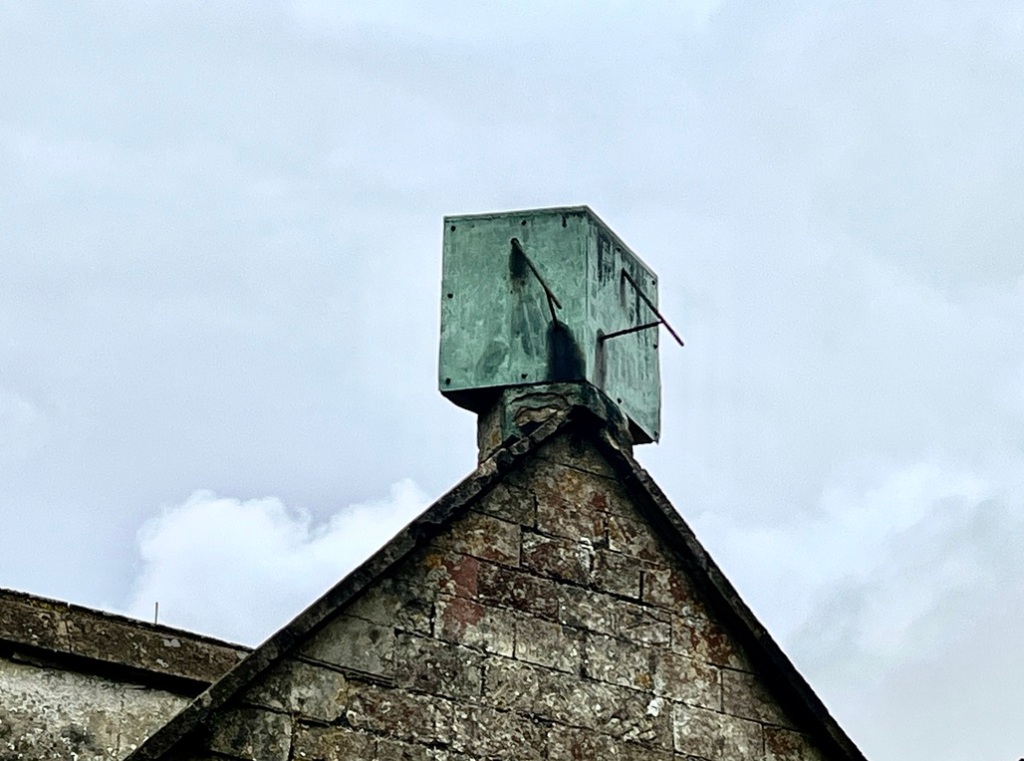
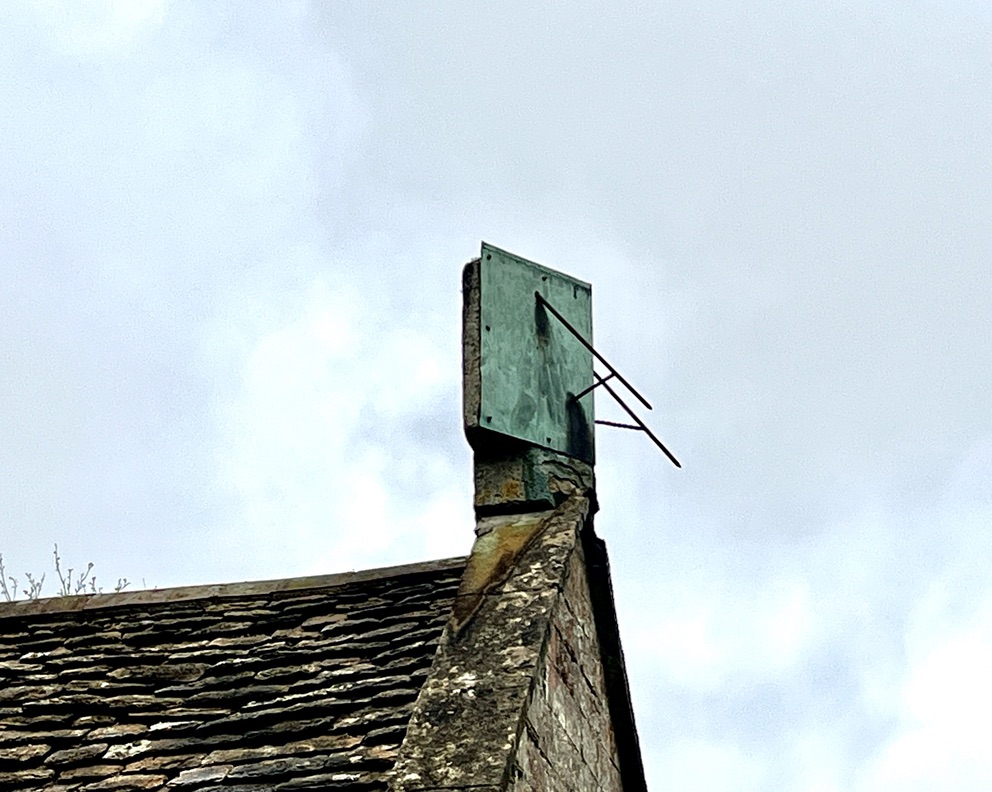
TINTINHULL GARDEN (NT) . SOMERSET . ARMILLARY SPHERE

TINTINHULL HOUSE (COURT) . SOMERSET

GRADE I ⚘ C17 Attractive small manor house with lovely gardens and a small arboretum. NT. Plenty of information online. Don’t miss St Margaret’s with its remarkable scaphe dial above the porch, and 6+ scratch dials – links below. 4m NW of Yeovil

ARMILLARY SPHERE

A fine armillary sphere surmounted by a charming pairing of an exotic galleon and a delicately stylised sun. The gardens as they are now were designed by Phyllis Reiss after she and her husband bought the house in 1933. She died in 1961, leaving the property to NT. My guess is that the dial dates to mid-1930 as the new gardens took shape.

TINTINHULL GARDENS . DECORATIVE FEATURES ON THE ARMILLARY SPHERE

LINK POSTS

TINTINHULL . ST MARGARET . MULTIPLE SCRATCH DIALS

TINTINHULL . ST MARGARET . TRIPLE POLAR SCAPHE DIAL

======================

GSS CATEGORY: Armillary Sphere; Equatorial Dial

All photos: Keith Salvesen

MUCHELNEY ABBEY . SOMERSET . Scratch Dial (Rare Example)

✠ 

MUCHELNEY ABBEY . SOMERSET

GRADE I ✠  C7 origins with a long and fascinating history amply covered by many sources. The Wiki entry gives a good brief account. Now only the Abbot’s House and the Lavatorium remain intact. The ruined foundations are all that can be seen of the Abbey buildings and layout.

The Abbot’s House has a number of apotropaic marks including hexfoils and taper burns, noted on the relevant pages here.

✠ 

DIAL

We visited the Abbey knowing approximately what to expect from the Abbot’s House. It is well worth exploring, and there are helpful EH volunteers on hand to give information.

We eventually reached the West Kitchen, which has a door to the S side of the building. It was a great surprise to find a simple and eroded scratch dial between the doorway and the East Kitchen window. It is quite rare to find a scratch dial on a building other than a church. Non-secular dials can occasionally be found on medieval barns. Perhaps the Abbot’s dial was originally part of the original abbey building, and re-sited. I’d prefer to think that a factotum had cut the dial specially for an Abbott so that he could keep track of the important times of the monastic day for which he was responsible.

This is not an easy dial to analyse. Certainly there is a horizontal line ( 6-to-6) that runs through the gnomon hole (very faint RHS). There is a deeper cut noon line that seems to extend above the hole to the mortar line.

As often, a b&w image can assist with finer details. There is a faint 9-line, suggesting that Terce was the primary time for observance. Possibly a further line at 11? No relevant markings LRQ.  Possibly there is a line ULQ just above the horizontal.

It is clear that EH and the guides know about the dial, but I have been unable to find a reference to it elsewhere. Probably a local research group will have recorded it, but otherwise it seems that this unusual dial (for location) is very little known

MUCHELNEY ABBEY . SOUTH FRONT

Muchelney Abbey – Abbot’s House S side showing W kitchen door . Photo by DeFacto OS CC

GSS Category: Scratch Dial; Mass Dial

All photos: Keith Salvesen

SYMONDSBURY . DORSET . ST JOHN – Scratch Dial

ST JOHN . SYMONDSBURY . DORSET

GRADE I ❖ C14, rebuilt from earlier church (BHO); C15 S porch, C17 chancel rebuilt. Wagon-type nave roof. Gargoyles. An attractive and well-kept church. Also recommended: visit the Symondsbury Estate complex. 2m W of Bridport. 50.7396 / -2.7879 /  SY445936


DIAL

The dial is on E. jamb of the porch entrance. The gnomon hole is in the mortar line, from which 10 lines radiate in a semi-circle. The noon line is terminates in a pock. RHS, is considerably damaged / erosion. Noted by GLP as a very accurate dial.

GSS Category: Scratch Dail; Mass Dial

All photos: Keith Salvesen

NETHERBURY . DORSET . ST MARY – Scratch Dial

ST MARY . NETHERBURY . DORSET

GRADE I C14 nave and aisles; C14/15 chancel; C15 west tower. S porch rebuilt in 1848 (see below). A handsome church with pleasing proportions. 6m N of Bridport, 9m S of Crewkerne. 50.7923 / -2.7528 / SY470994

DIAL

The dial dates to C15 and is on W jamb of SW window of S aisle. Allowing for damage, it is a (near) semi-circle with 11 lines of varying length. 8 of them have holes, some terminal and some on the longer lines. GLP notes that the dial is extremely accurately drawn. (GLP) The dial is now shaded by the C19 porch that replaced a smaller one.

GSS Category: Scratch Dial; Mass Dial

All photos: Keith Salvesen; analysis GLP

CHICKERELL . DORSET . ST MARY – Scratch Dial

GRADE II* ☩ C13 Chancel, Nave; other remnants eg blocked C13 doorway. Later additions and restorations. Fine hexagonal pulpit, one panel carved 1630 RW.IM. With its bellcote, a charming small church. On W edge of Weymouth. 50.6248 /  -2.5048 / SY643806

DIAL

The dial is high up (c 3m) on the chancel quoin stone SE corner. GLP dates to C13. Semi-circular (a hint of a complete circle?), with 13 lines. Some terminal pocks. One line – corresponding with Terce – is deeper incised, with a hole outside the circumference.

GSS Category: Scratch Dial; Mass Dial

All photos: Keith Salvesen

CORCIANO . UMBRIA (2): Analemmatic Sundial

CORCIANO . UMBRIA . ANALEMMATIC DIAL

Corciano is an attractive small town 12km west of Perugia, walled and with much of its medieval origins still evident. In contrast, the Commune has commissioned interesting modern projects, for example a residential complex designed by Renzo Piano and inspired by Rubik’s cubes. 

The town has initiated an ambitious project, financed by the municipality, to make an itinerary that combines culture, history, astronomy, landscape and science and can be used free of charge for everyone: citizens, schools and tourists.

BORGO del SOLE

The Sundial Trail links 3 different kinds of sundial at sites carefully chosen for each type. These are an Armillary Sphere (Equatorial Dial); an Analemmatic Sundial; and a Ptolemaic Plinth in the Gardens. Other types of dial are planned.

See also CORCIANO (1)

GSS Category: Analemmatic Dial; Dial Italy

Credits: with thanks to John & Jane (gnomon) Renner

MERE . WILTS . ST MICHAEL – Multiple Scratch Dials

ST MICHAEL . MERE . WILTS

GRADE I ✣ Saxon origins, remnants from late C12; Chancel C13, north and south chantries C14, aisles rebuilt late C14, remainder C15. Highly praised *** by SJ: the screen is the best in Wiltshire; excellent stained glass… A small town fortunately by-passed by the dread A303. 51.0893 / -2.2711 / ST 811322

DIALS

St Michael provides plenty of scope for scratch dial sleuths to bicker about. BBS records 6. The Mere Historical Society records show Handwritten notes on green paper by John Ingram to Dr David Longbourne relating to a sundial (scratch dial) on the buttress of St Michael’s Church, Mere, 1990’s. The Church’s helpful info suggests 2 or perhaps 3. I believe there are at least 6 and possibly up to 10 dials in all.

The BSS record of 6 dials gives 1 – 3 in a cluster on buttress 2 E of the porch (see 4, 9 & 10 below); and 4 – 6 grouped further E on buttress 5 / S wall stairway area.

DIAL 1

DIAL 2

DIAL 3

DIAL 4

(and see plausible dials 9 & 10 on same stone))

DIAL 5

DIAL 6

DIAL 7

DIAL 8 (?)

DIALS 4 (above), 9 & 10

Dials 4, 9 and 10 – all different types – are on the same stone and to an extent impinge on each other.

DIAL 9

DIAL 10

CONCLUSION: enthusiasm can be an enemy of accuracy, and there is always some leeway with multiple dial Churches. I haven’t tried to analyse each dial – the array will with any luck elicit some opinions.

GSS Category: Scratch Dial; Multiple Scratch Dials; Scratch Dial Clusters

All photos: Keith Salvesen

OSMINGTON . DORSET . ST OSMUND – Scratch Dial

ST OSMUND . OSMINGTON . DORSET

GRADE II* ☩ C15 west tower; otherwise mainly rebuilt 1846 retaining very little of the original church (?Ferry). Set in a pretty village close to the coast that has the feel of an earlier age (in a good way). 5m E of Weymouth. 50°38’45″N /  2°23’29″W / SY724829

DIAL

This unusual dial is cut on the SW buttress of the tower. I say cut, but in fact it is drilled in a complete circle of small holes surrounding a large gnomon hole centred on the dial stone. There are no lines at all (as with eg TRENT AFPUDDLE TINTINHULL).

St Osmond . Osmington – Dial Diagram BSS

In all there are 36 holes that form an irregular circle flattened at the top. The ring of pocks is (unsurprisingly) not entirely accurate, as the diagram above (GLP; BSS) shows.

As for a noon line, I wonder if the short downward line of (apparent) small pocks, below and to the left of damaged area, mark noon. It’s not vertical, but the design of the dial and its position on the SW face of the buttress perhaps called for a slightly offset noon marker.

The gnomon hole has clearly been enlarged at some time, and sufficiently so to provide a modern home for small snails.

GSS Category: Scratch Dial; Scratch Dial (pocks only)

All photos: Keith Salvesen

TIMSBURY . HANTS . ST ANDREW – Horizontal Pedestal Sundial

TIMSBURY . HANTS . ST ANDREW

St Andrew is a fine church, and fully lives up to the interest its appearance suggests. Before looking closely at and inside the church for dials and apotropaic marks, I walked over to the sundial in the churchyard.
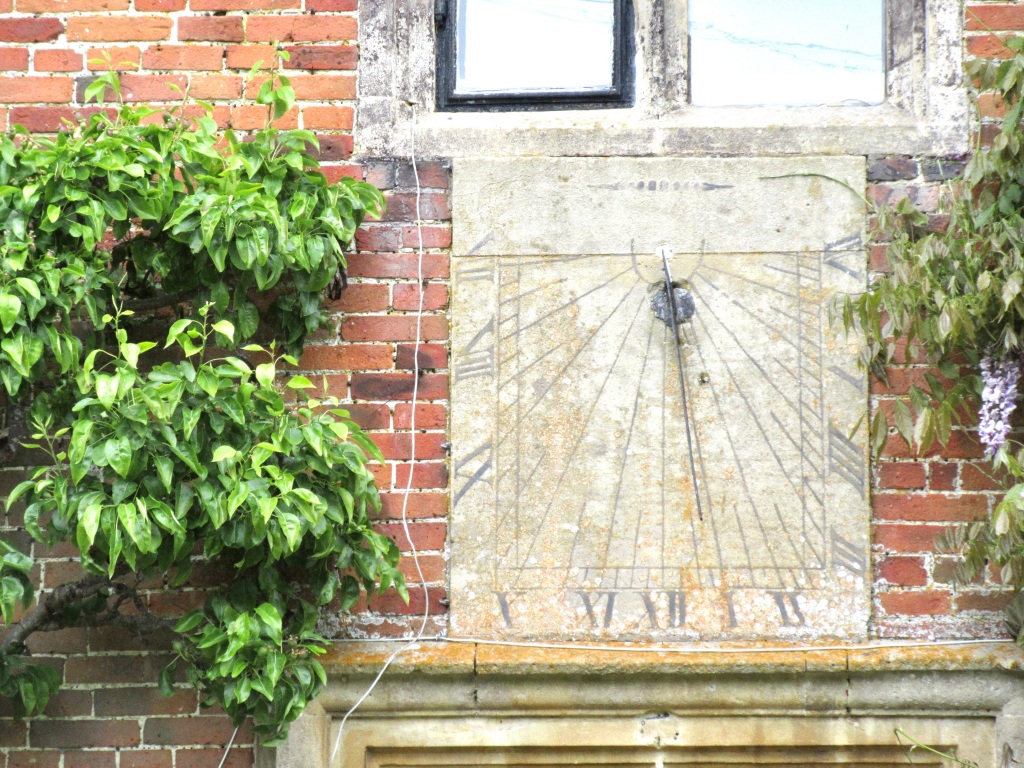
It proved to be a simple and quite elegant Memorial sundial for Janet Knox Zorab who lived to be nearly 100.

The dial plate and gnomon are conventional. The rustic feel to the churchyard and the closeness to a rather special church provide a peaceful setting for a memorial.

GSS Category: Horizontal Sundial; Pedestal Sundial; Memorial Sundial

All photos: Keith Salvesen