Some time ago I wrote about the intriguing scratch dial rather hidden away through a low archway at the E end of the church: LONGBURTON SCRATCH DIAL 1
DIAL 1
St James the Great . Longburton . Dorset – Scratch Dial 1
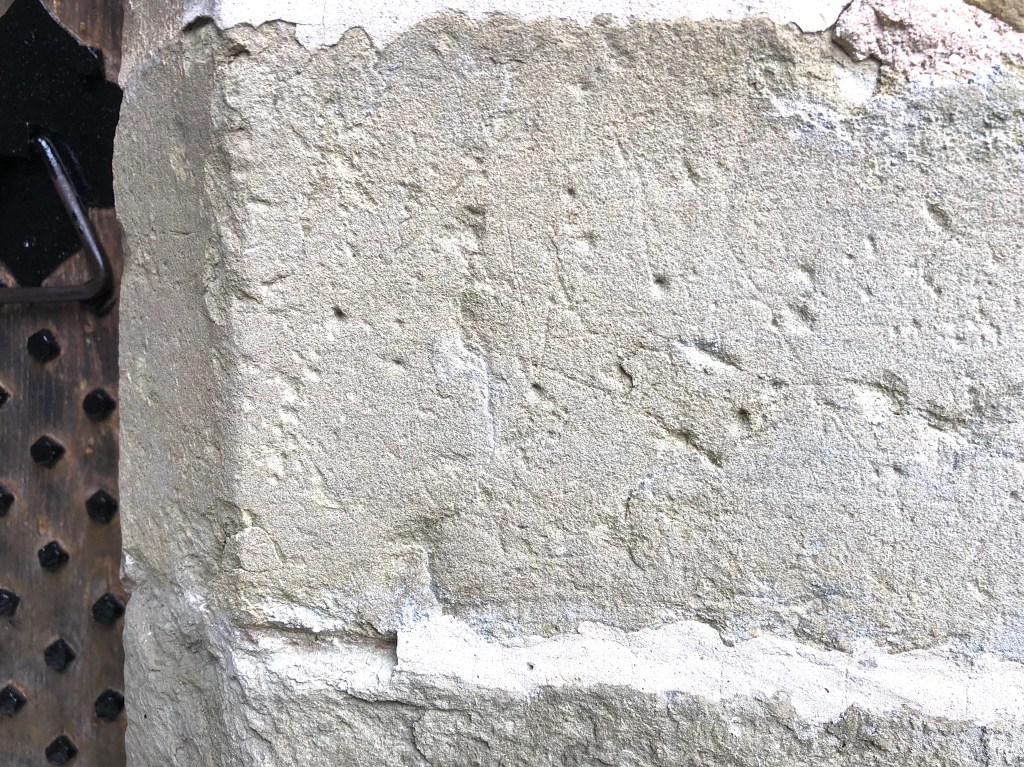
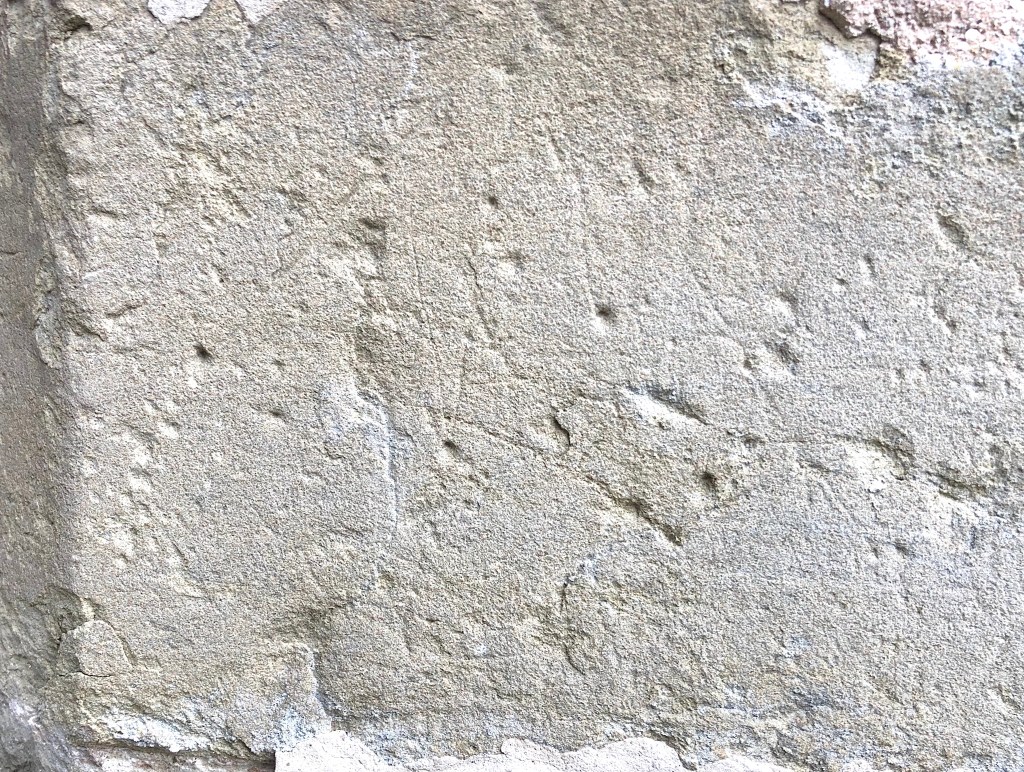
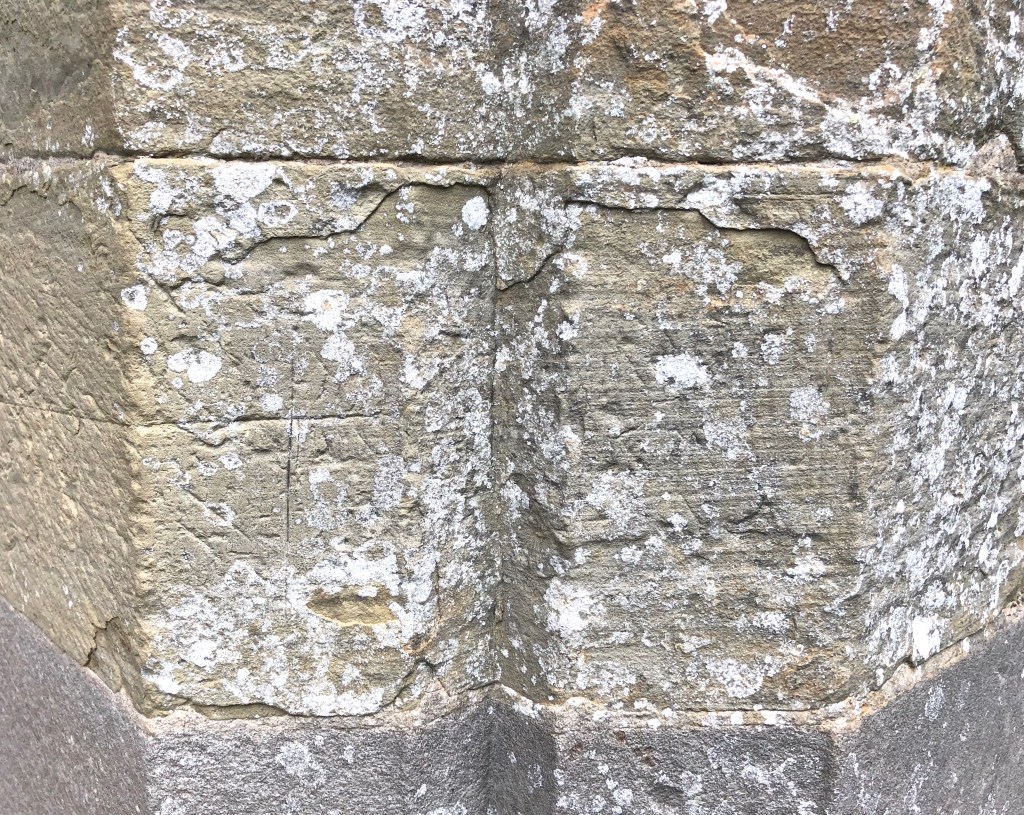
The village is better known dial-wise for the vertical dial on the S-facing tower buttress (see below). Yesterday I went back to look for apotropaic and other church marks, and to my surprise found an excellent conventional sundial hidden in plain sight and hitherto unrecorded. I can’t think how I – or any dial gatherer – would miss it…
DIAL 2
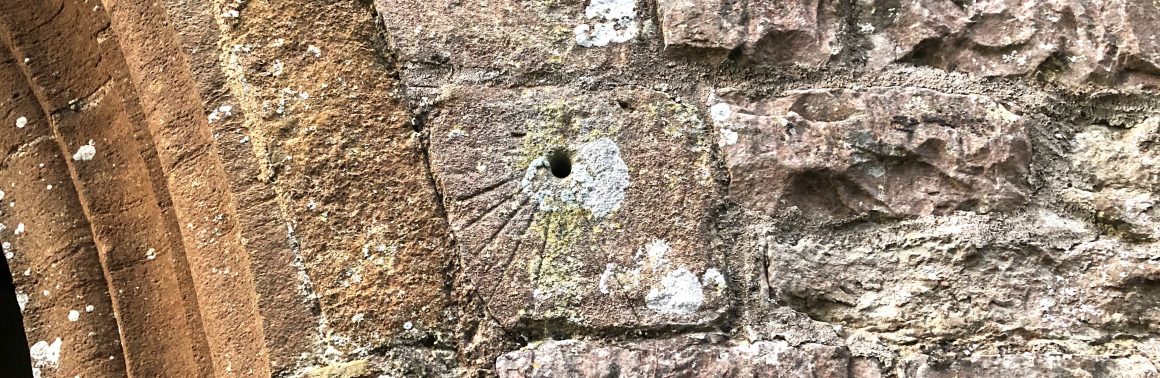
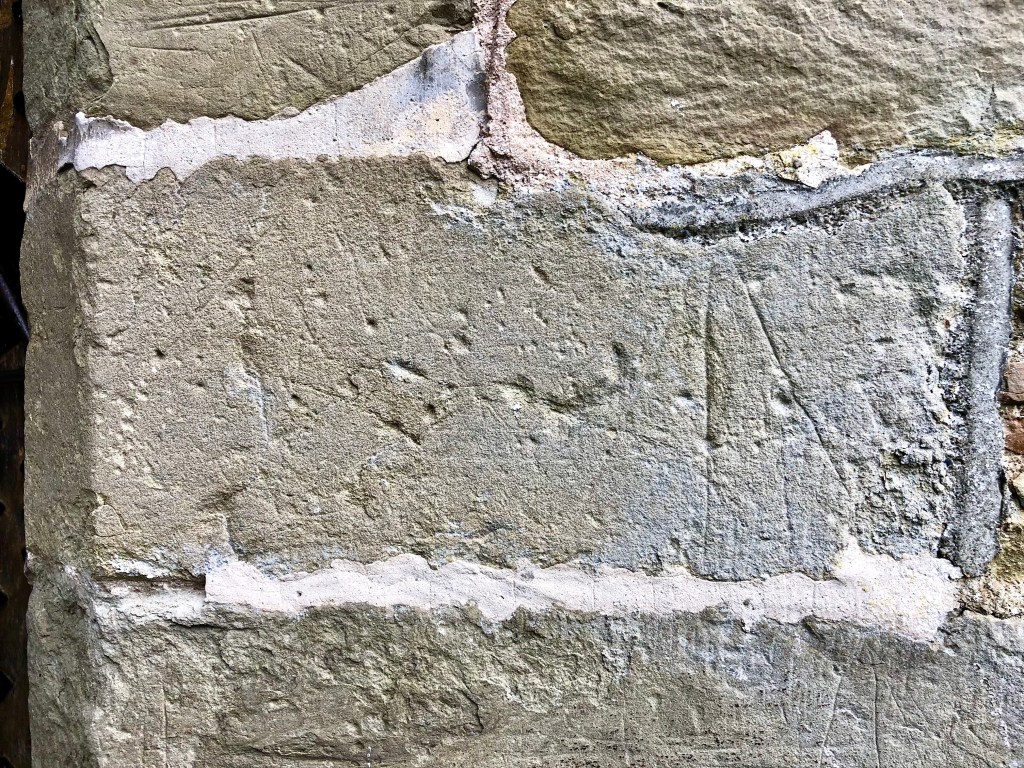
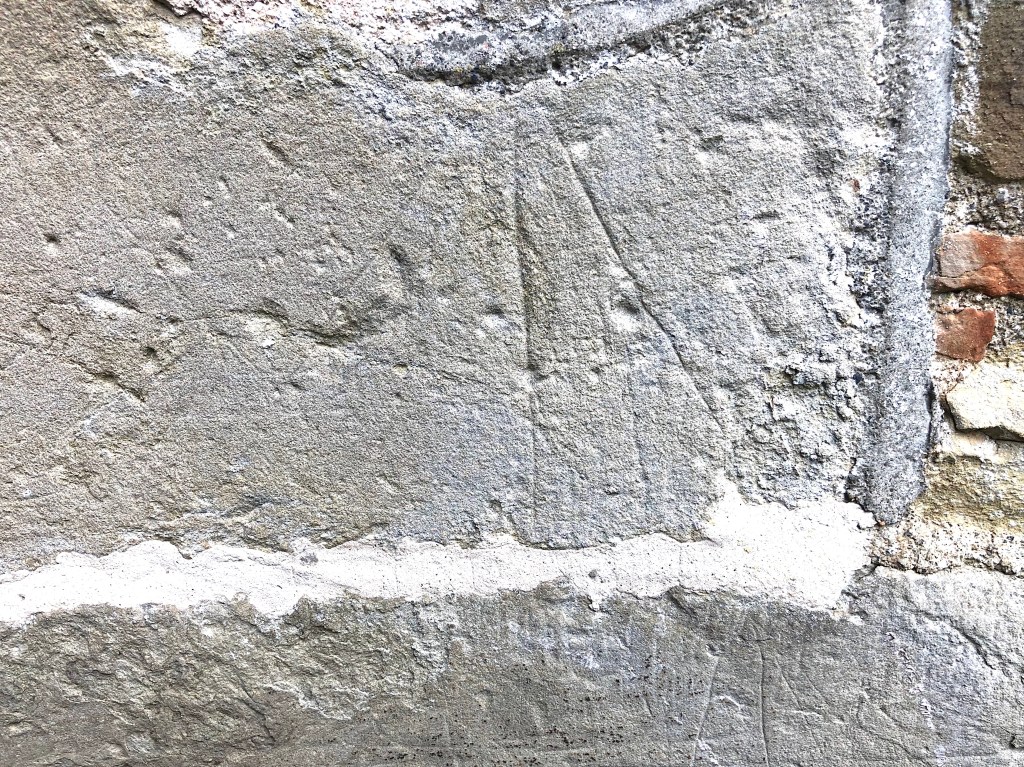
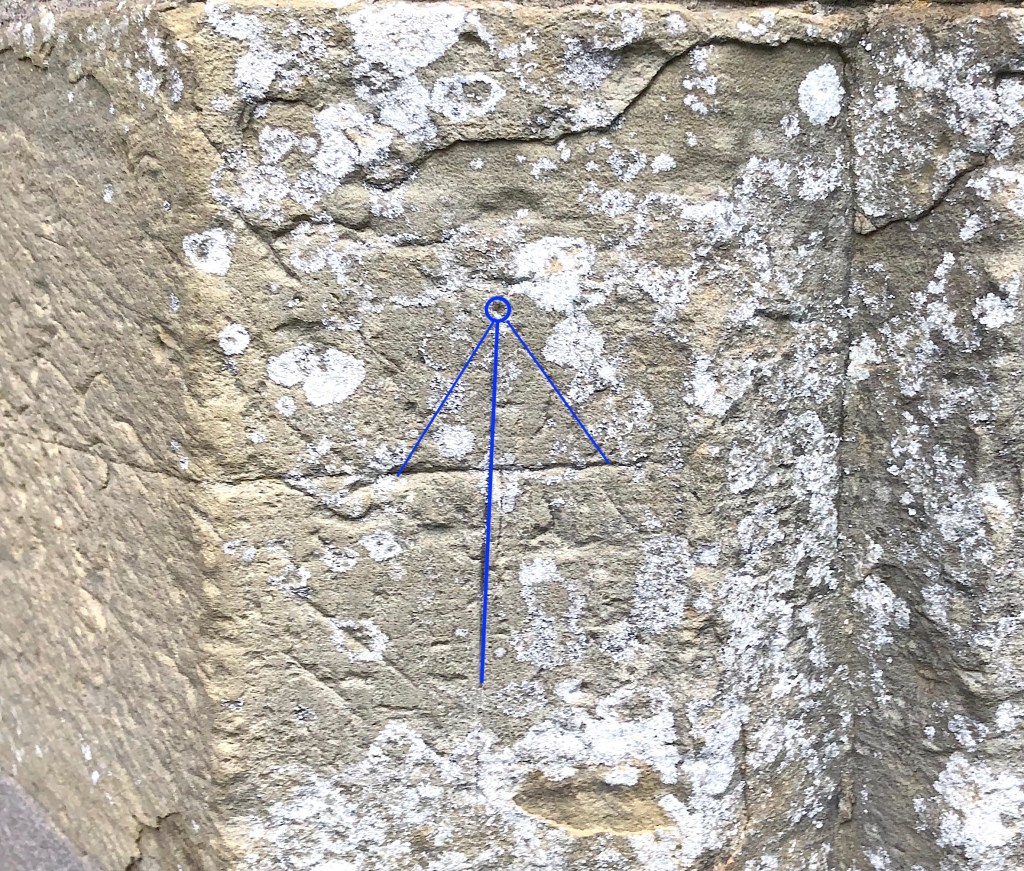
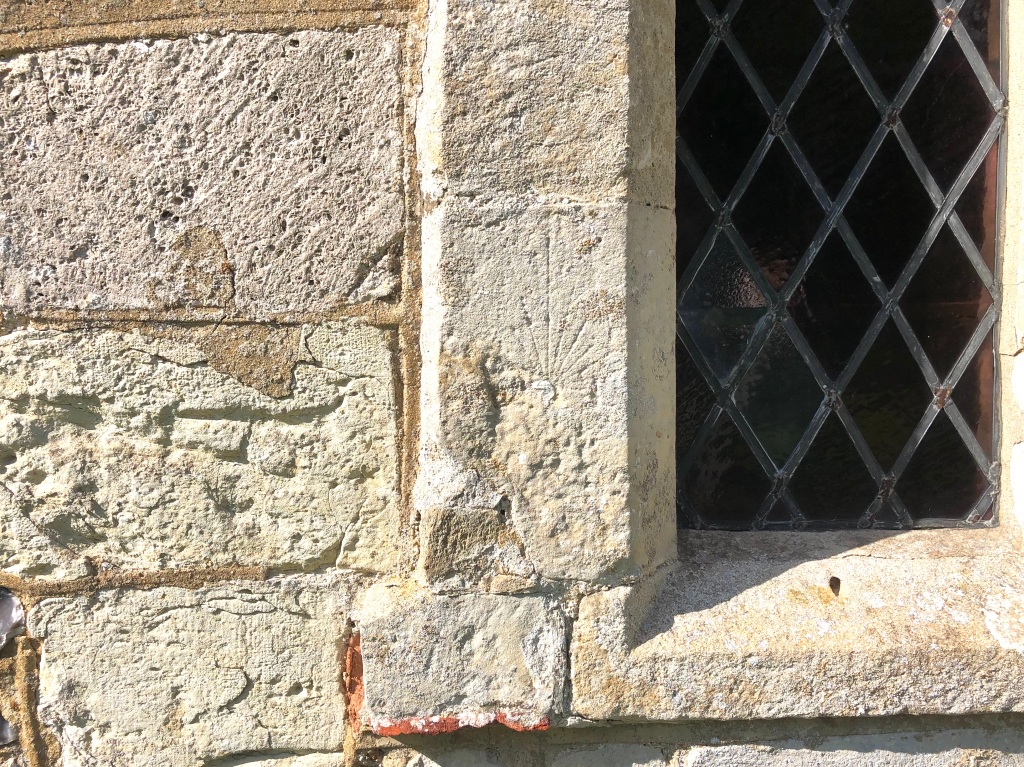
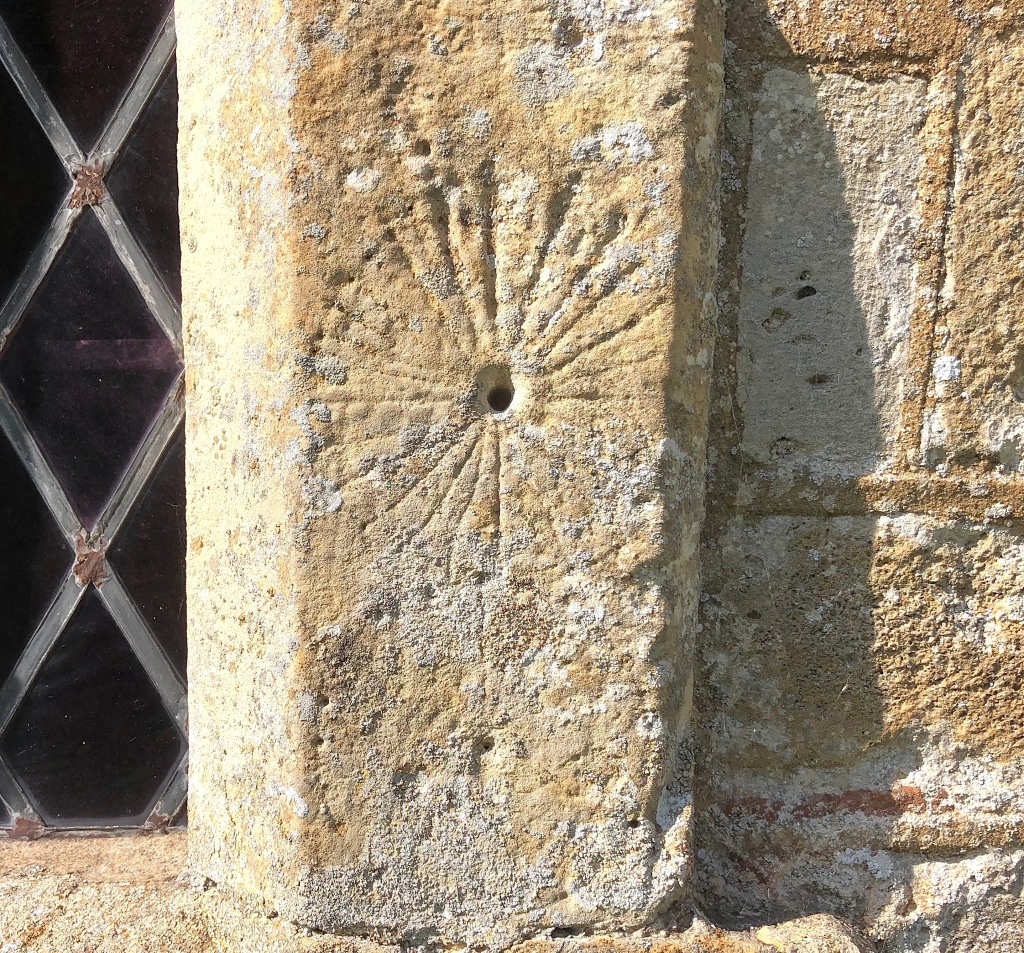
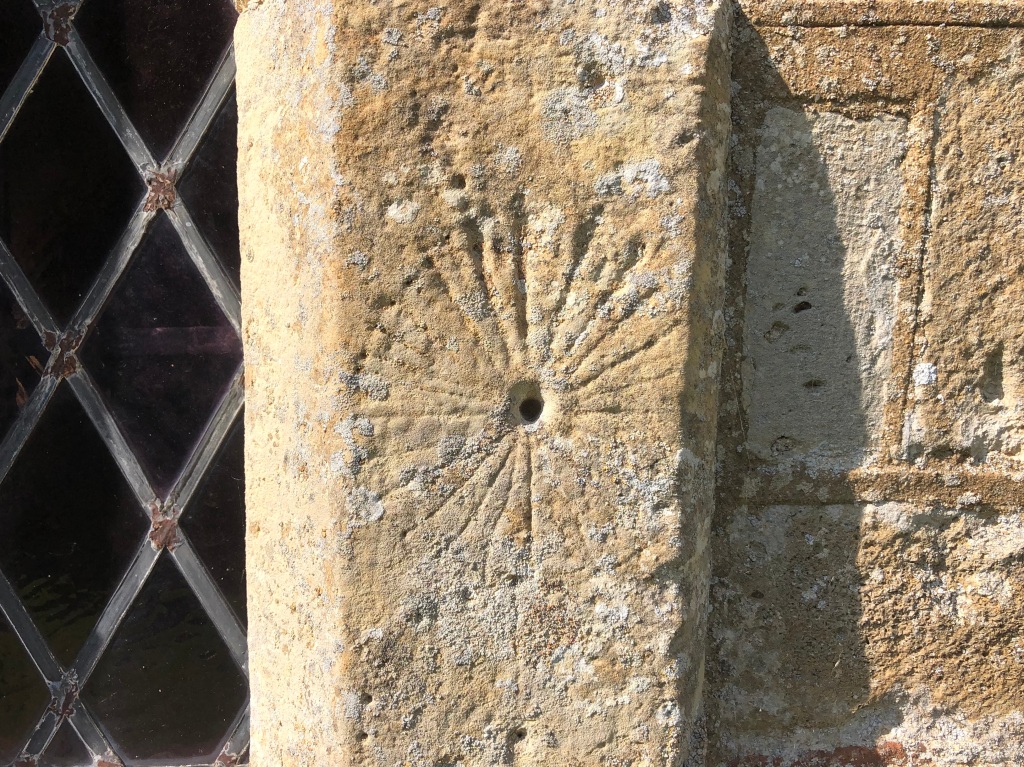
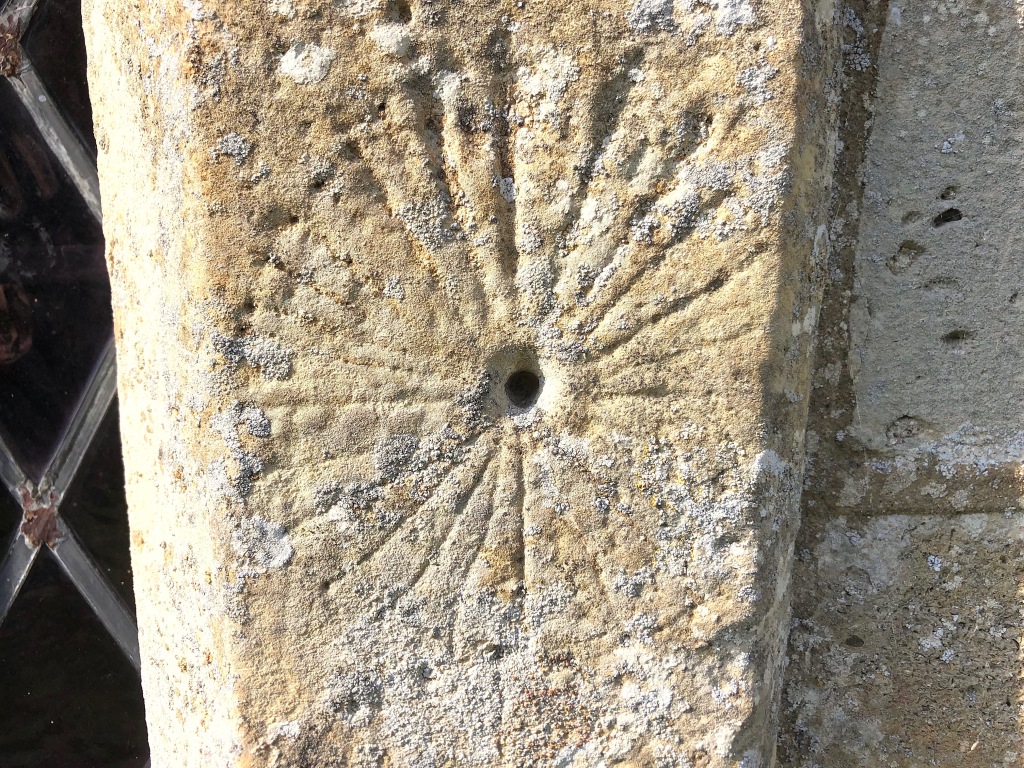
The previously unrecorded dial is near the base of the same buttress as the vertical dial. There are 4 lines, the more clearly cut noon line being longer and reaching the edge of the dial stone (and possible trace of extension onto the stone below). The angles are almost equal. There is the distinct trace of a circle in around the top half, but strangely the gnomon hole would not be at its centre.
St James the Great . Longburton . Dorset – Scratch Dial 2
St James the Great . Longburton . Dorset – Scratch Dial and Vertical Dial, Tower Buttress
VERTICAL DIAL
The dial is high up on the buttress of the tower, and nearly as wide. It is quite eroded, esp. RHS. The lines are contained within a frame, and half hours and some quarter hours are also marked.
BSS notes Triple dot motif at head of half hour lines. Gnomon formed from iron strip with supporter. Supporter is detached at contact with gnomon
The dial numerals are Roman, yet there are Arabic numerals in both bottom corners signifying the date. It is hard to make it out, but I think it is 1798. There are the remains of an inscription along the top of the dial, just the last 2 letters being discernible (O & W?).
GRADE I † C12 origins, C13 nave, C14 tower & S porch; seemingly no C19 makeover. Plenty of interest to admire here – see entry in HE. 3m NE of Bridport. 50.7458 / -2.7225 / SY491942
DIALS
St Mary has 2 dials, both on the E side of the porch (late C14). Dial 1 is easily visible on the jamb. Dial 2 is tucked into a corner on the angle formed by the S wall and a staircase that was added C15. After that addition, Dial 2 was probably little use before noon (if at all).
DIAL 1
St Mary Magdalene . Loders . Dorset – Scratch Dial 1
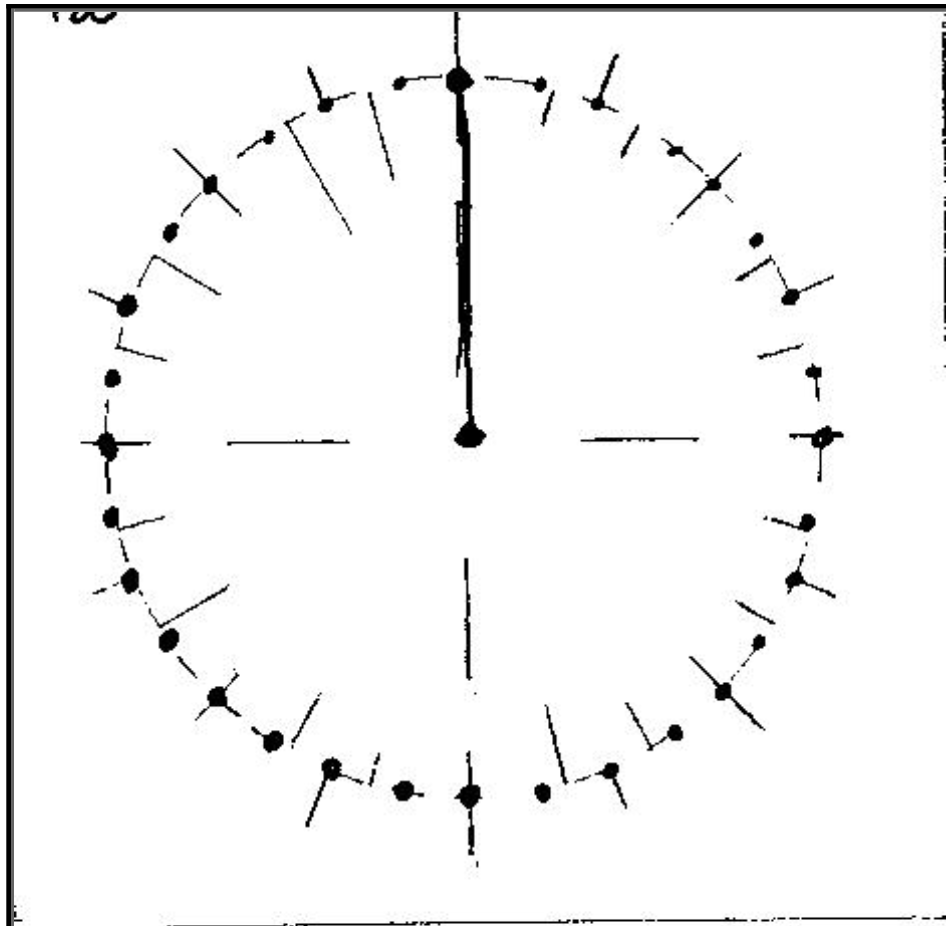
Dial 1 is a good example of the interface between the simple dial function of marking the hours, and decorative design. This is a lovely and ambitious 24-hour dial, with 19 lines and 26 pocks. Although considerably eroded, it intricacies remain clear. There are radial variations of angle, length and emphasis. There are single pocks, double pocks, half-way pocks. GLP notes that the dial is quite accurately laid out and seems to mark most of the hours and some of the half hours as well
St Mary Magdalene . Loders . Dorset – Scratch Dial 1
St Mary Magdalene . Loders . BSS
DIAL 2
Dial 2 is badly degraded, I suspect rather more so than when last surveyed. 3 lines emerge(d) from a gnomon hole in the dial stone. An amateur (me) would be unlikely to give it a second glance, especially in that position. In its present state it no longer matches the drawing originally made. Or I have made an ID mistake (quite possible)? GLP describes it as a very fragmentary inverted dial. Which perhaps suggests that the stone was moved / turned when the staircase was built. Or, possibly, it was a dial stone used from elsewhere on the building and intentionally inverted (as often the way with moved dials).
St Mary Magdalene . Loders . Dorset – Scratch Dial 2
St Mary Magdalene . Loders . BSS
St Mary Magdalene . Loders . Dorset – Scratch Dials 1 & 2
GRADE I † Dated from c1300, with a C12 tower that was originally separate, later incorporated when the church was extended and (BLB) much altered. Attractively distinctive to look at. 15m W of Leominster. 52.2045 / -3.0384 / SO29156
DIALS
St Mary is a multi-dial church with 6 recorded, one of which is doubtful. They range from conventional to basic. 3 are clustered on adjacent stones.
DIAL 1
Dial 1 is on the S wall, a fan-shaped edged quadrant radiating from the mortar line and stretching across 3 stones. It is near-symmetrical along the noon line. The 5 lines are spaced almost equally, the outer ones being incised more deeply, perhaps to draw attention to service times. The ‘1’ line is of interest, less accurately cut, bifurcating as it crosses onto the stone below, and ending in a single pock. This feature is so specific that it was presumably intended to emphasise a time of day of particular significance in the local community.
Kington Herefs St Mary – Dial 1
DIAL 2
Dial 2, on the S wall, is far simpler than Dial 1 but is also near-symmetrical from the noon line. 3 lines, the one to the L more of a straight scratch than a cut. The style hole is in a fault line in the stone (which may well be subsequent damage). Possibly the ‘1’ line crudely divides halfway down, beginning with a pock. This would match the similar emphasis in Dial 1, and perhaps supports the theory of a special ‘event’ mark.
Kington Herefs St Mary – Dial 2
DIAL 3
Dial 3 is also located by the door on the S wall, very damaged and eroded. 4 clear lines radiate from a style hole in the mortar line (there are also 2 very faint lines). Only the uppermost in the lower R quadrant survives for its full length.
Kington Herefs St Mary – Dial 3
DIALS 4 & 5
Dials 4 & 5 are beside and below Dial 2. Both are faint and barely more than token efforts at a dial, as if a youthful assistant priest had a knife and time on his hands.
Kington Herefs St Mary – Dial 4 & 5
Kington Herefs St Mary – Dial 2, 4, 5
DIAL 6
Dial 6 is a very simple dial (if it is one): a style hole within a deeply cut circle, and what could be a stubby noon line. The close-up b&w BSS photograph gives a good idea of it. There’s not a lot of confidence in the record: Position not known. Noon line only? Circle only and faint line at 90L. Possible noon marker. Doubtful dial.
Richard & Catherine Boztum, in their excellent illustrated booklet (cited below) of Herefordshire Church marks and scratch dials include dials 1 – 5, but not this one.
Kington Herefs St Mary – Dial 6 – BSS
I also have my doubts. St Mary has plenty of Church graffiti – initials, scratchings, small crosses, and in particular a number of apotropaic symbols (ritual protection marks). The design of ‘Dial 6’ is one of many forms of ‘witch mark’. And on St Mary itself, there is a more elaborate version of the circle-and-centre-hole mark.
Kington Herefs St Mary – Apotropaic mark
OTHER CANDIDATES?
Having in mind the rather basic design of some of the dials above, there are a couple of candidates that I photographed for later inspection. The first is at least plausible and matches the noon line symmetry of dials 1 & 2. The other is unconvincing. You be the judge…
Kington Herefs St Mary – Plausible Scratch Dial
Kington Herefs St Mary – doubtful scratch dial
GSS Category: Scratch Dials; Multi-dials
Photos: Header image: Ruth Harris (Geograph / Wiki / CC); all other photos Keith Salvesen except dial 6 BSS
REF: Botzum R and C : Scratch Dials, Sundials and unusual Marks on Herefordshire Churches. Lucton, Herefs, 1988
St Candida & Holy Cross . Whitchurch Canonicorum . Dorset
ST CANDIDA & HOLY CROSS . WHITCHURCH CANONICORUM . DORSET
GRADE I † C12 onwards on a Saxon site, with tower not until C15; C19 restoration. Also known as St Wite (hence Candida?), whose relics are in a shrine inside the church.* A building of outstanding interest in a secluded valley, the Cathedral of the Vale. Too much else to be said for inclusion here. For more details, see BLBBE & ST CANDIDA WIKI 5m NW of Bridport. 50.7554 / -2.8565 / SY396954
Dial 1 can be found in a corner of the W buttress of the S transept. It has 12 lines, and the stone has been cut to give a rectangular outline to the dial, the gnomon hole being R of centre. Sited uncomfortably in a corner, the dial seems unlikely to have been effective and certainly not year-round. Nor would it have been very visible to passers-by. So it seems likely – given the way the lower lines are truncated – that the dial was re-sited during later renovation.
St Candida & Holy Cross . Whitchurch Canonicorum BSS Diagram
DIAL 2
This dial (if it is one) is as simple as could be – 2 holes, large and small, on the vertical. It is located on the W jamb of the C13 blocked door of the chancel. BSS describes it as a ‘Noon Mark’, a style in the upper dial indicating the passage of the day either side of noon. GLP suggests this might originally have been a painted (as opposed to incised) dial. I wondered if the 2 slightly inward-curving faint lines descending from each side of the lower hole were there to emphasise noon (as was done using pocks).
St Candida Whitchurch Canonicorum – Dial 2
St Candida Whitchurch Canonicorum Dial 2
* In 1900 the tomb was opened and was found to hold a lead casket containing the bones of a small woman.[8] On the casket was the Latin inscription “HIC-REQESCT-RELIQE-SCE-WITE” (“Here lie the remains of St Wite”) ST CANDIDA WIKI
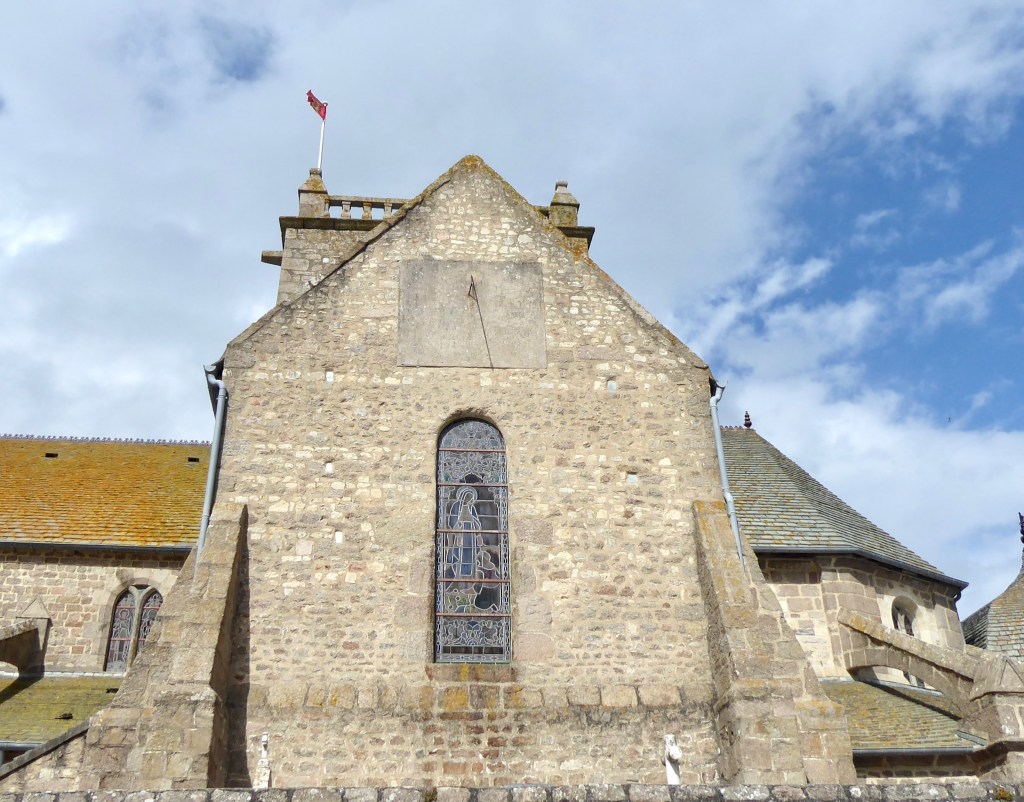
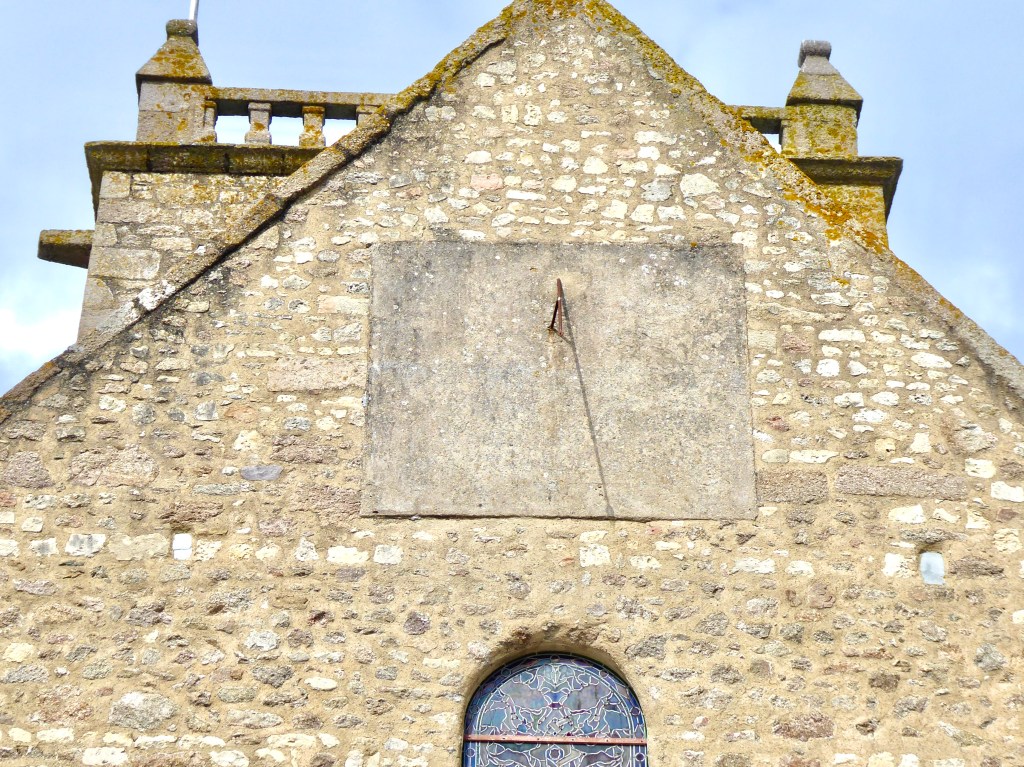
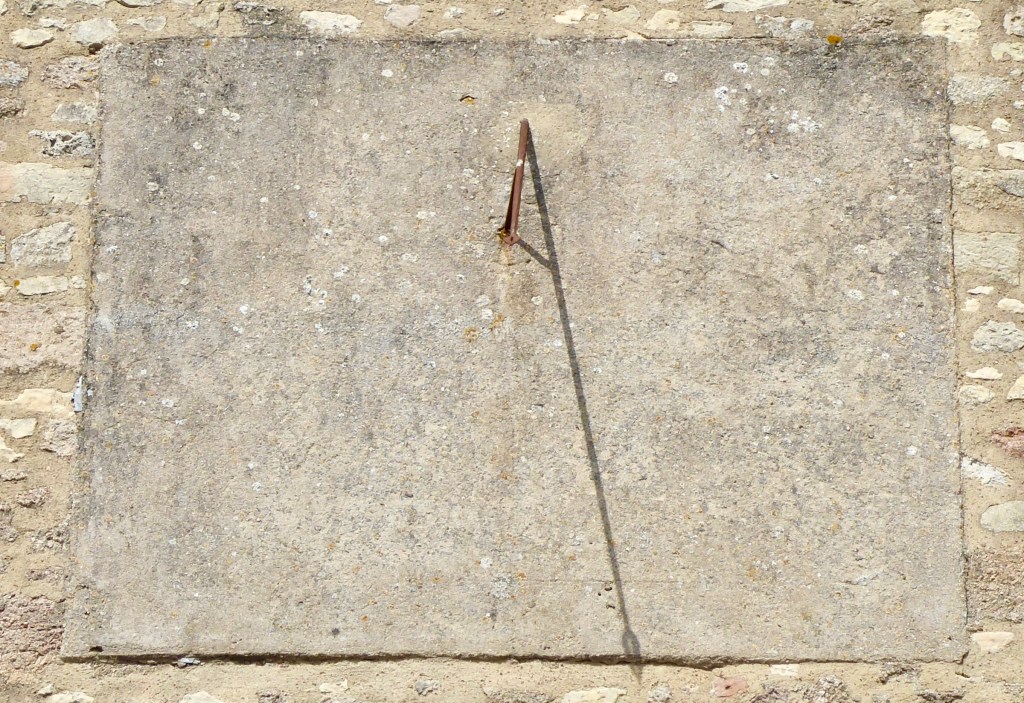
Barfleur is a small town / large village on the NE tip of the Contentin peninsula in Normandy, roughly due E of Cherbourg. The church of St Nicolas, despite the initial impression, was built mid-C17. Later additions and restoration mid-C19 incorporated an impressively large sundial (it doesn’t seem to have been a later addition).
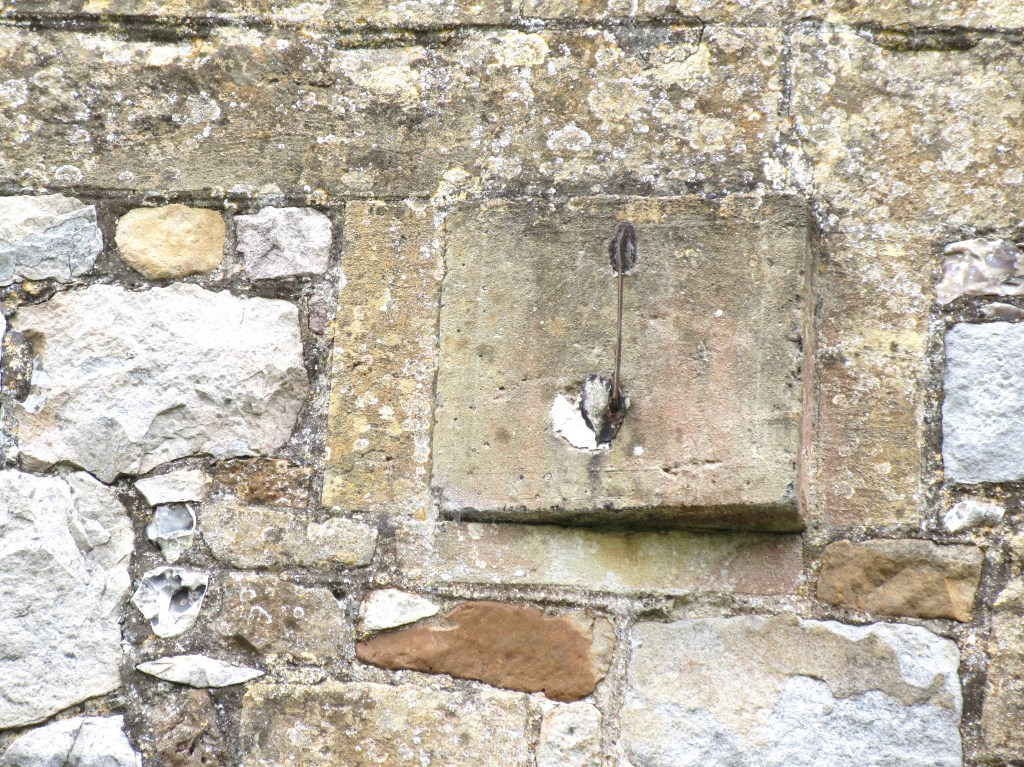
The face of the dial has almost entirely been obliterated, with half a dozen very faint lines just visible in the lower L quadrant. There is also the hint of a frame under the cast shadow, though it might simply be the remains of a horizontal line. Erosion by the sea over many decades has made the details speculative. The gnomon may possibly be original. Whether or not, the design of the tip is clever and includes a small hole at the tip that creates a neat spearhead.
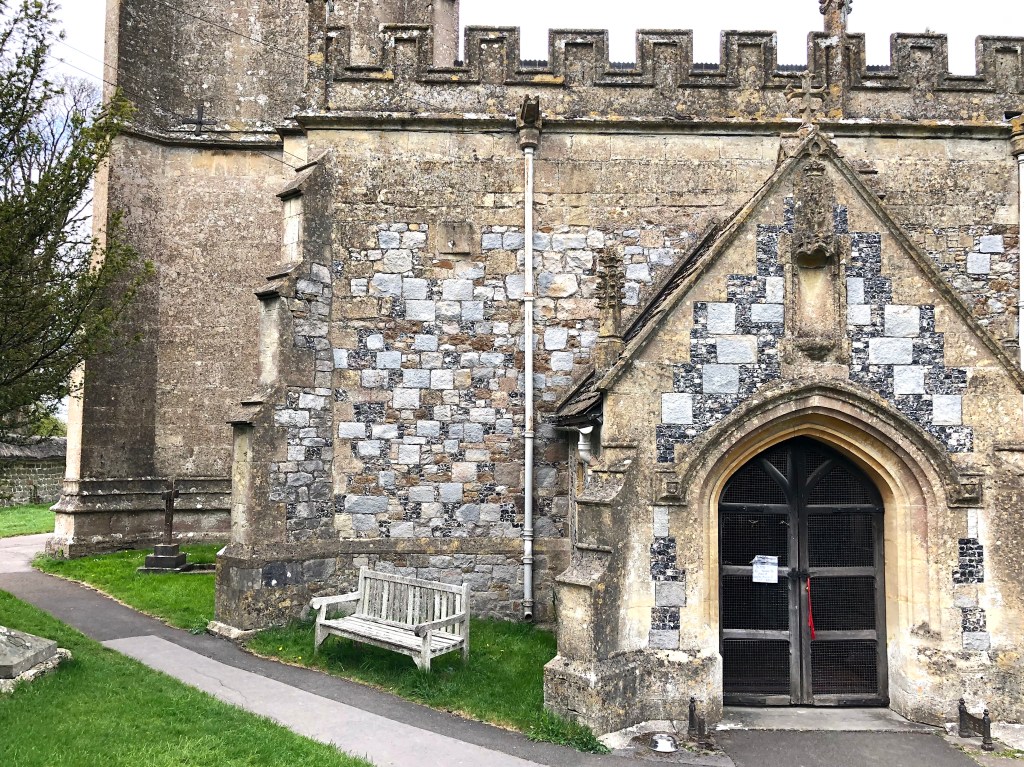
GRADE I † Pre-conquest origins. Significant Saxon features. Splendid Norman doorway. C12 font. Development C12 et seq, with C19 restoration. Archaeologically uncommonly interestingPEV; inc. by Simon Jenkins. BLB Listing. 51.4286 / -1.8579 / SU099699
The vertical dial is below the parapet, L of the porch. From a distance, the only distinct marking on the face is a faint square frame for the dial. Closer examination reveals at least the ‘X’ of noon. The footing of the gnomon is in a badly damaged area. Most notably, the dial is at a canted angle so that it faces south. Hard to date – there’s no clue in the usual resources. C18 perhaps, esp. as roman numerals were used?
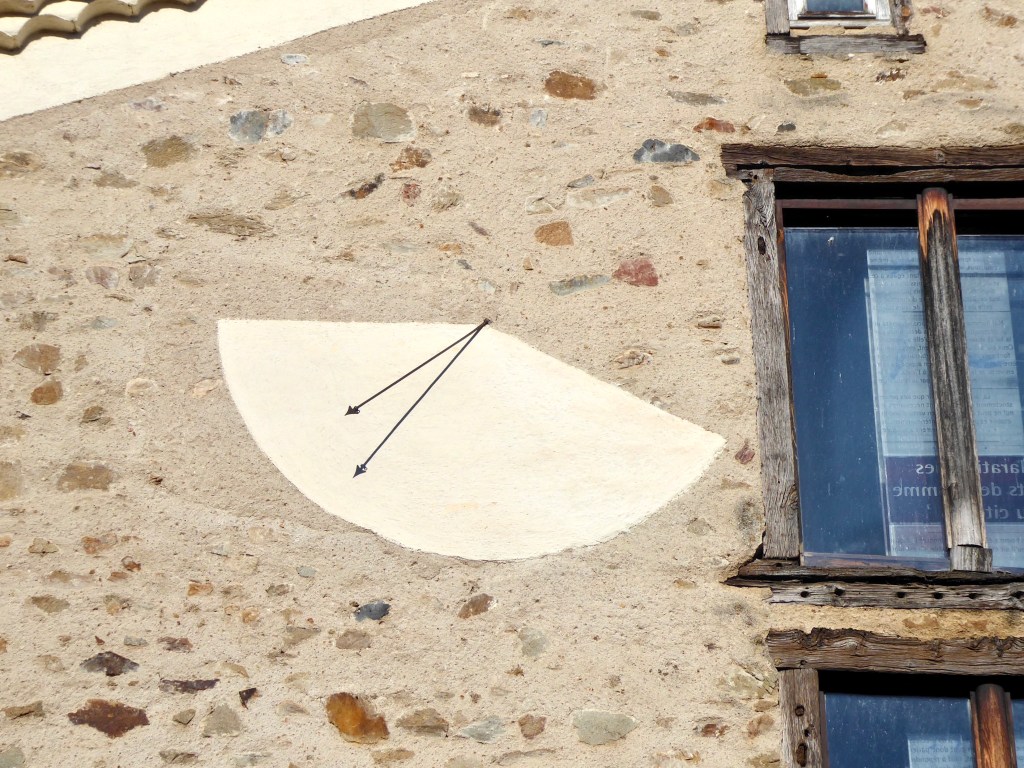
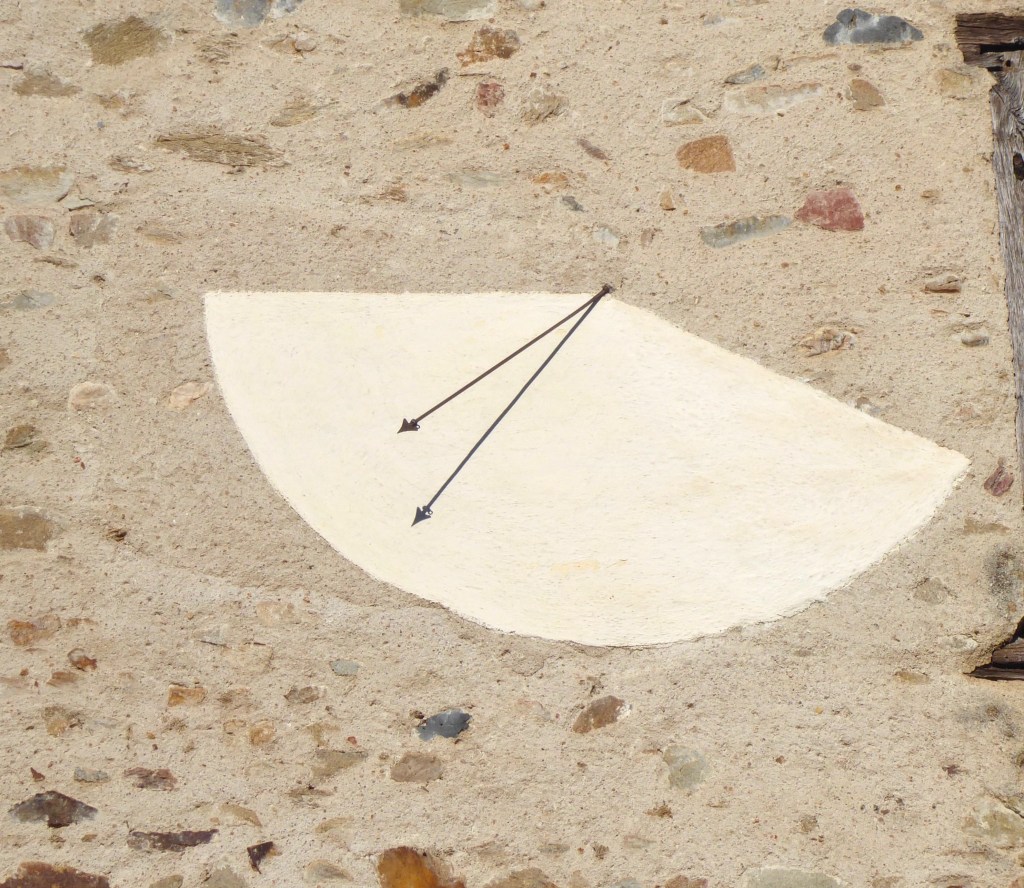
Lavaudieu is a small Auvergne town with a fine romanesque Abbey. For present purposes, the sundial on the wall of the Mairie is the attraction. On a bright sunny day, the simplicity and legibility of this civic dial is hard to beat. The ‘arrowheads’ might be considered a little too ornate for the overall design.
‘Moins est plus’ might be a good motto for the dial, as it is more generally. As soon as I saw it I knew it would be in my top 20 non-medieval dials. It still is.
GRADE II* † C12 origins then C13 and C14 addition and rebuilding. Much C19 work inc. rebuilding tower & S porch. A most attractive long low church with timber belfry and spire. A rewarding church to explore: see BHO. 3m S of Stockbridge; 7m N of Romsey. 51.077 / -1.4872 / SU360309
DIALS
There are 4 dials recorded for the church, but only 3 are visible. The 4th seems now to be concealed behind a boiler. The 3 visible dials are all on the jambs of a S nave window. ARG notes that the window was inserted into an old doorway All are inverted, presumably during the 1880 restoration. Maybe this links up with the rebuilding of the S porch and relocation of stones originally there (a more obvious position). BHO notes various window alterations and the movement of stones incised with ornamental crosses and inscriptions… the stones have unfortunately been reset upside down.
St Peter & St Paul . Kings Somborne . Hants – 3 scratch dials
DIAL 1
St Peter & St Paul . Kings Somborne . Hants – Scratch Dial 1
Dial 1 is inverted on the L jamb. LHS and below, the style hole is badly damaged. Otherwise, the 12 lines are more or less clear, with differing lengths and angles. There is a trace of a semicircle, marked by perimeter pocks. The noon line is considerably elongated and, with 1, has larger perimeter pocks. 1 also has a short extension of 4 dots, perhaps to emphasise a service significant to this church or community.
DIALS 2 & 3
St Peter & St Paul . Kings Somborne . Hants – Scratch Dials 2 & 3
Both dials are on the R jamb, inverted, on the same stone, and actually touching. Unusually (perhaps very rare) both are complete circles with 24-hour marking. Dial 2 has 24 radials; Dial 3 has 24 pocks.
Dial 2 is encircled and imaginatively decorative, with radials for a full 24 hours. The spacing is somewhat random. The style hole is quite deep, and obviously enlarged. The (upside-down) noon line is deeper cut, as are 10, & 11. So too is 1, which is also extended with 2 pocks. This corresponds with Dial 1 and seems to confirm that some importance was attached to that time of day.
St Peter & St Paul . Kings Somborne . Hants – Scratch Dial 2
Dial 3 is also a complete circle, with a small style hole. It is eroded, with only the (upwards) noon line and a couple of fainter lines clear. Most of the daylight hours are marked by pocks on the circumference; close examination has shown that in fact there are 24 pocks. It appears as if squeezed into the space between the upper stone and the lower edge of the stone
St Peter & St Paul . Kings Somborne . Hants – Scratch Dials 2 & 3
BSS drawing of dial 3
DIAL 4
Dial 4 is located on the SE quoin stone of the Chancel. The record indicates that it has 12 lines, mostly curved, and 2 above the horizontal. BSS notes Position is obscured by a hut containing an oil tank. So much so that I couldn’t find it at all. I intend to try again next time I’m in the area – perhaps taking a torch.
ARG in 1923 recorded that the dial consisted of a circle with 10 lines in the lower half, 5 of which end in pocks; and 2 lines in the upper half. None of the lines are straight; most are distinctly curved. Sadly, although he photographed dials 2 & 3, he did not take dial 4.
GRADE II* C13 origins; mainly C14 with C15 porch; extensive C19 alteration / restoration including complete rebuild of the tower (1861), & later work by Crickmay. A pleasant aspect as one walks up the church path. 5m SE of Wincanton. 51.0213 / -2.348 / ST756247
DIAL
Sundial: reset on S. wall of tower, square stone plate with arabic numerals and inscription ANNO DO 1599.BHO
St John the Baptist . Buckhorn Weston . Dorset – Scratch / Scientific Dial
A most interesting dial set into the upper stage of the tower. Presumably re-fixed in that position (or perhaps relocated there) during the C19 rebuilding. Despite erosion and damage, the unaffected features are quite well defined. GLP notes that it is one of the earliest dated dials (of any sort) in Dorset.
St John the Baptist . Buckhorn Weston . Dorset – Scratch / Scientific Dial
Although giving the appearance of a large scratch dial with an inscription above it, GLP classifies it as a more sophisticated ‘scientific’ dial, because the angles between the lines measure standard hours. The use of numerals fits in with the inscribed date. GLP calls them roman; BHO has them as arabic. My detailed photos don’t help either way. They do show that the stone was cracked in two at some stage; and they raise the question “where was the gnomon?”
St John the Baptist . Buckhorn Weston . Dorset – Scratch / Scientific Dial
























 GAUDIUM SUB SOLE . SUNDIALS . MEDIEVAL TO MODERN