All Saints . Burnham Thorpe . Norfolk (Explore West Norfolk)
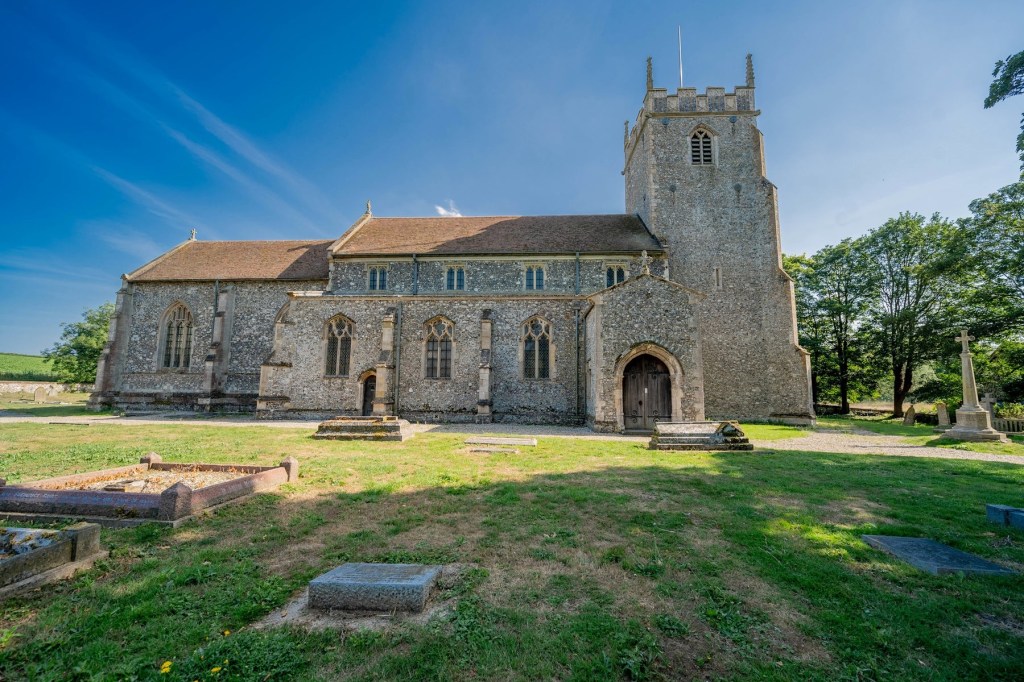
GRADE I ✣ First record DB 1087; first rector 1229. C13 expanded C14 & C15. The birthplace of Horatio Nelson; baptised in the C13 font. The gradual development reveals much of interest, enriched by the Nelson connection. A fine North Norfolk church. 52.9412 / 0.7549 / TF852417
DIALS
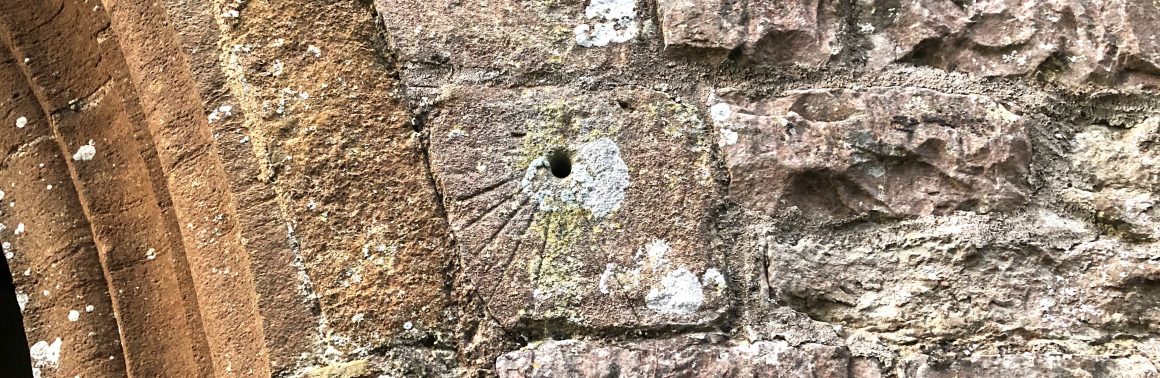
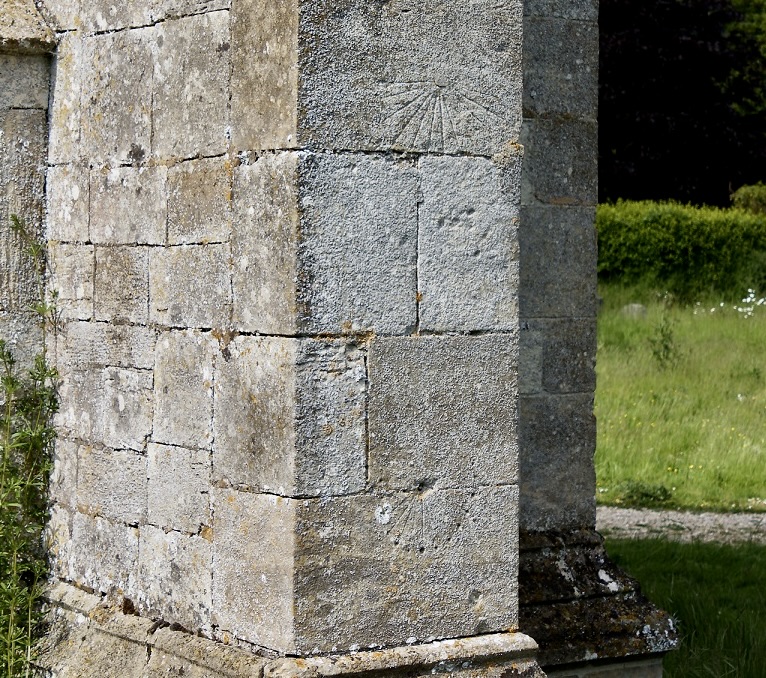
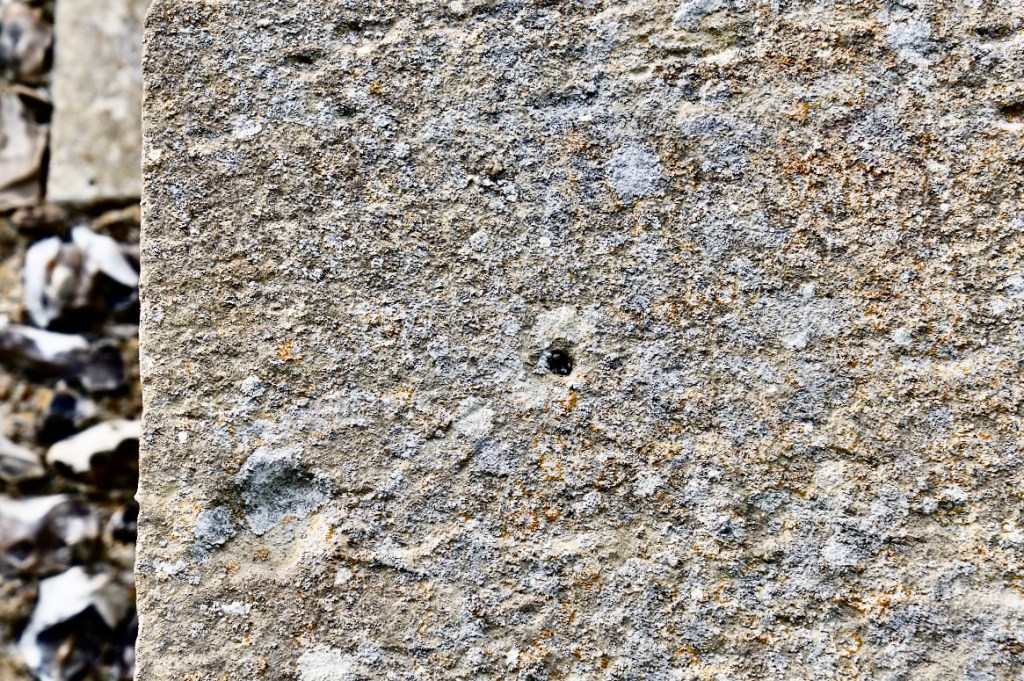
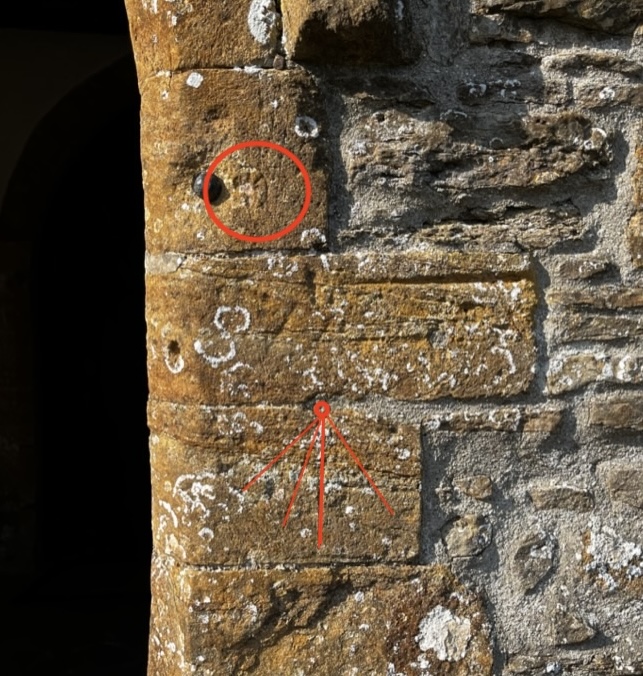
All Saints has 2 large clear dials on the same buttress. Contributor Erica Clarkson found an unobtrusive third dial on a quoin stone, not otherwise recorded as far as I can see.
All Saints . Burnham Thorpe . Norfolk (EC)
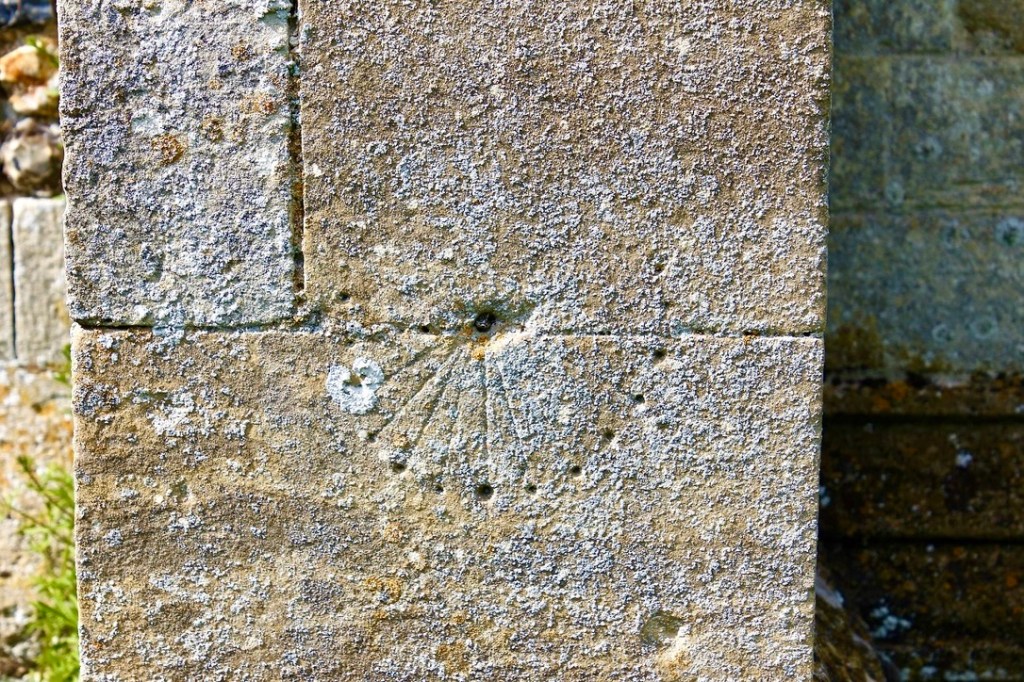
DIAL 1
A fine dial low down on the buttress. There are 3 pocks above the the gnomon hole in the mortar line. Below is a semi-circle of lines all ending in pocks, the noon one being largest. The well-defined lines cut LLQ suggest that morning / None was the main hour for observance.
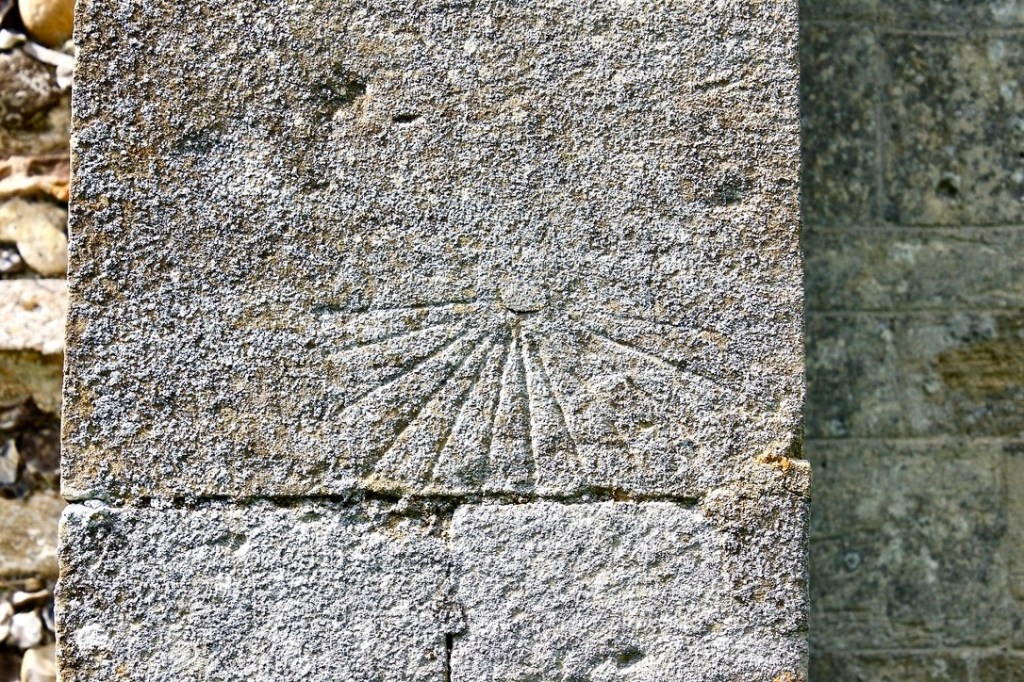
DIAL 2
Dial 2 has 12 lines radiating from a plugged gnomon hole. There are no pocks. There’s minor puzzle: which is the noon line? The deepest cut line is the seventh line from the LHS horizontal rather than the sixth, and slightly offset to the right. In addition, 3 or 4 lines seem cut off at the mortar line, suggesting a rearrangement of the stonework at some time. (It might also explain why Dial 1 is so low down on the buttress).
DIAL 3
A simple time marker centred in the dial stone, from an earlier period. 2 lines are visible L side. Probably that was all that was required in (say) C13, in simpler times and before the church had developed. The position of the lines suggests that None was the (main) service time.
GSS Category: Scratch Dial; Mass Dial; Buttress Dial
Credits: All photos Erika Clarkson with thanks, except header as shown
A pair of armillary spheres dating to about 1700 show competing models of the universe. One has the Earth stationary at the center in the Ptolemaic system of the ancient Greeks. The other shows the later Copernican system, in which the sun is at the center and the Earth and the other planets revolve around it HoHS
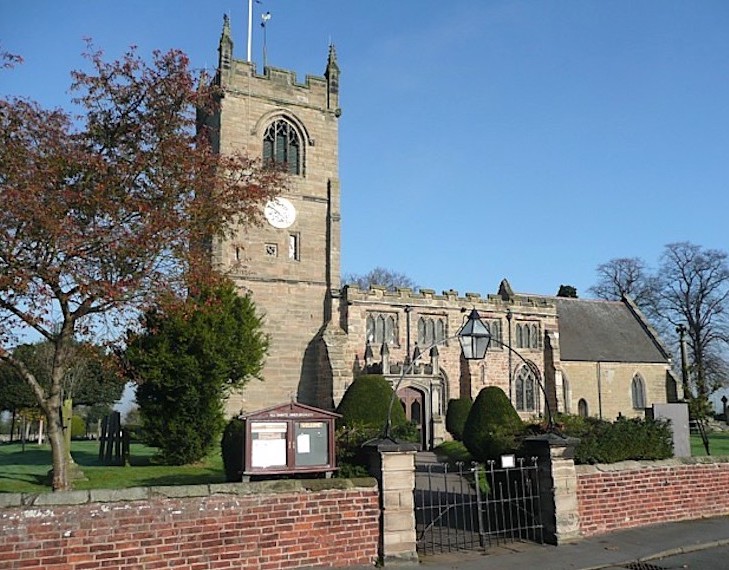
All Saints Church . Kings Bromley . Staffs (Humphrey Bolton, Geo CC)
ALL SAINTS . KINGS BROMLEY . STAFFS
GRADE I † Late C11 nave, with remnants; C14 additions, C16 Perp W tower, C19 work. An attractive church in a pretty setting. 3 scratch dials are recorded. 5m N of Lichfield. 52.7507 / -1.8206 / SK122170
DIALS
Dial 1 and Dial 2 can be considered together, because Dial 2 is recorded as being superimposed on Dial 1. It is not uncommon for there to be some overlap between dials, but not to this extent. One might expect a second dial to be cut on a different stone so that it stands out as superseding the first. But perhaps it is the other way round – a rather basic dial over-cut by a more sophisticated one centered on the dial stone.
✣✣✣✣✣
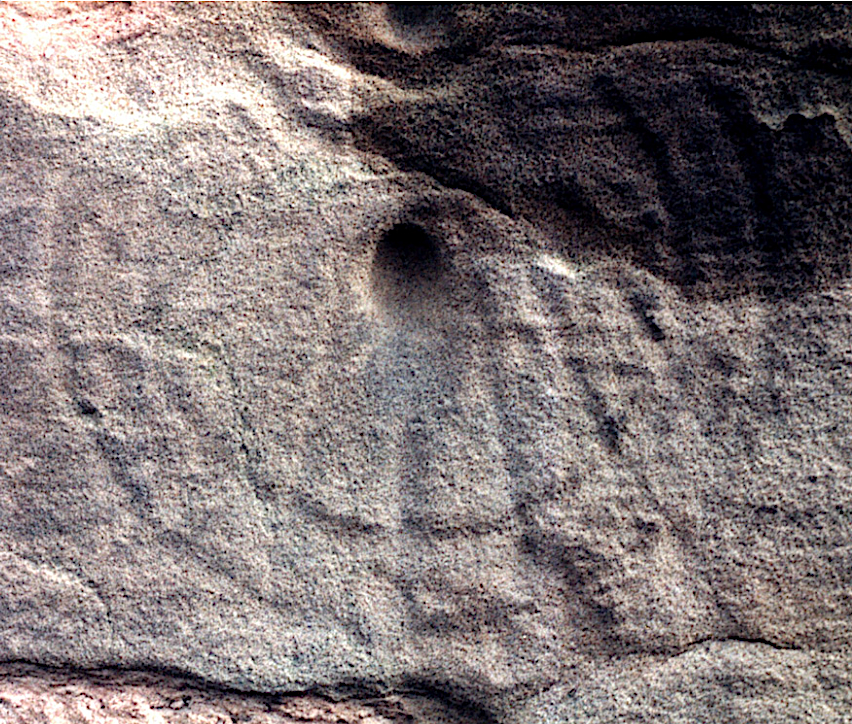
DIAL 1
BSS regards this unusual dial highly. It is located on the buttress at E end of the nave. There are eroded remnants of two concentric circles RHS. Notes Worn. Important, poss. unique. Dial like conventional sundial. Double dial, see 2
The gnomon hole is in the centre of the dial stone, and is angled down. The confusion with Dial 2 makes it difficult to apportion the badly eroded lines
✣✣✣✣✣
DIAL 2
Dial 2 has an oblong gnomon hole just below the mortar line, slightly surprisingly because it prevents the mortar line from acting as the horizontal. It, too, is slanted downwards and it is hard to think how it could have held a peg, rod, or stick. In the confusion of the linear scratchings, I reckon 2 lines LHS come direct from the hole; and possibly 2 RHS.
✣✣✣✣✣
DIAL 3
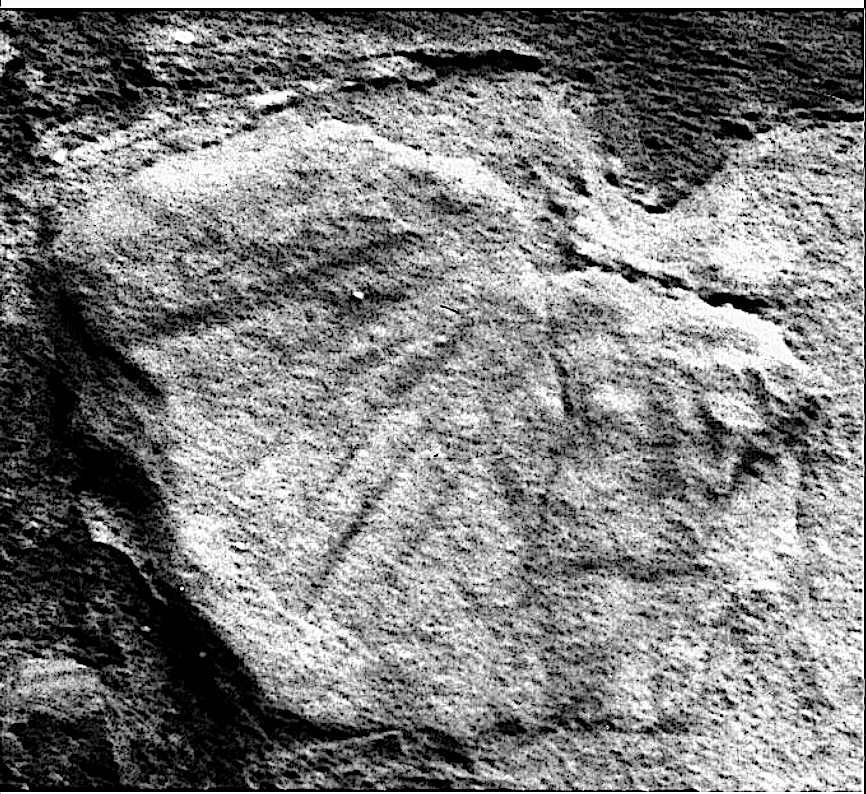
Dial 3 is on the S wall of the Chancel, under the first window. BBS notes On the verge of destruction. The image in the records is quite old. I have added a B&W version that is a bit easier to read.
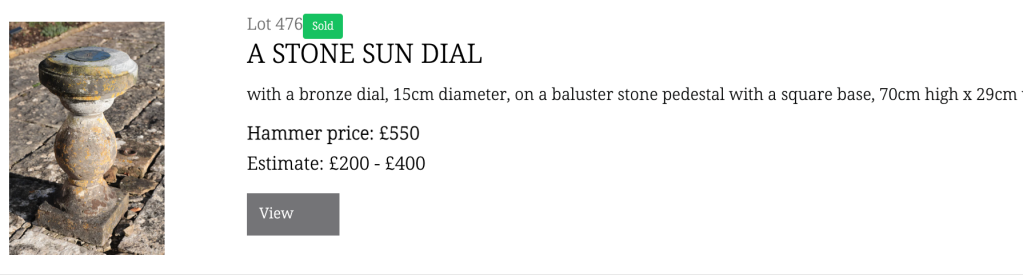
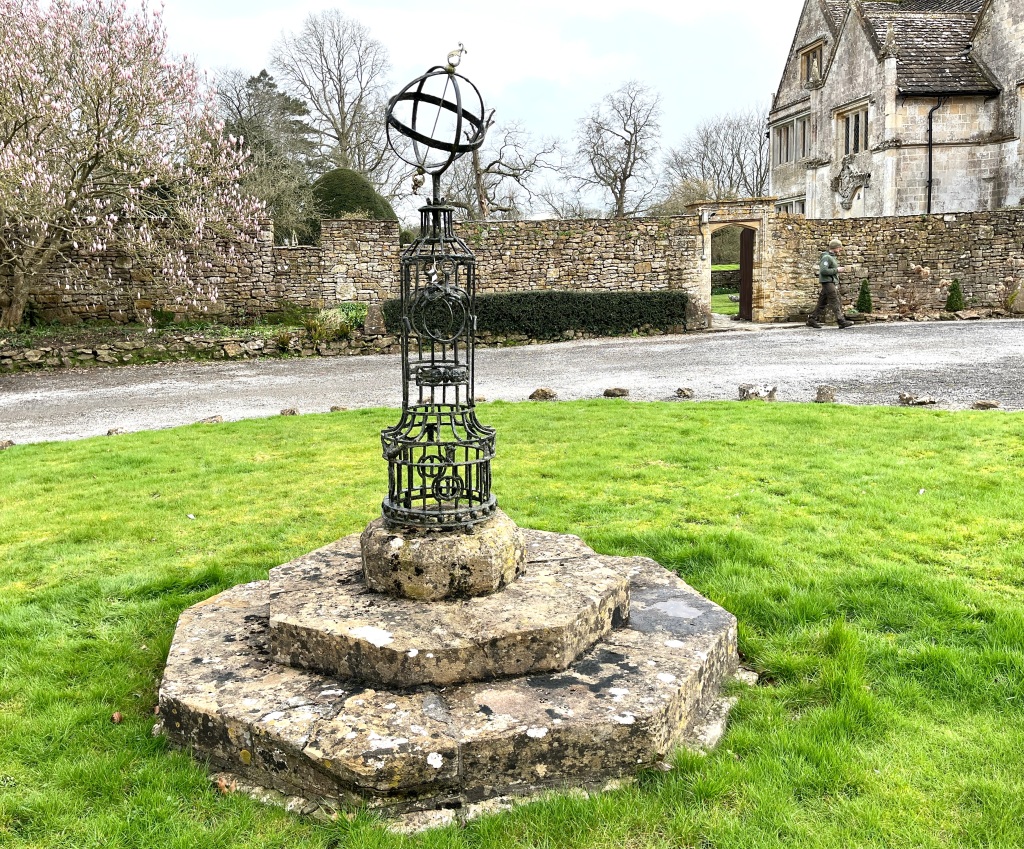
The entire contents of Sandford Orcas Manor, a fine example of country house Tudor, have been auctioned following 4 days of viewings. The sale has generated much interest and excitement both locally and well beyond. Such a complete disposal – even the family Bible (1702) was included – is quite rare. The house dates from mid C16 and has been in the same family for 300 years. It has a reputation for being ‘the most haunted house in England‘. The task of gathering statistics to support this proposition must have been a nightmare.
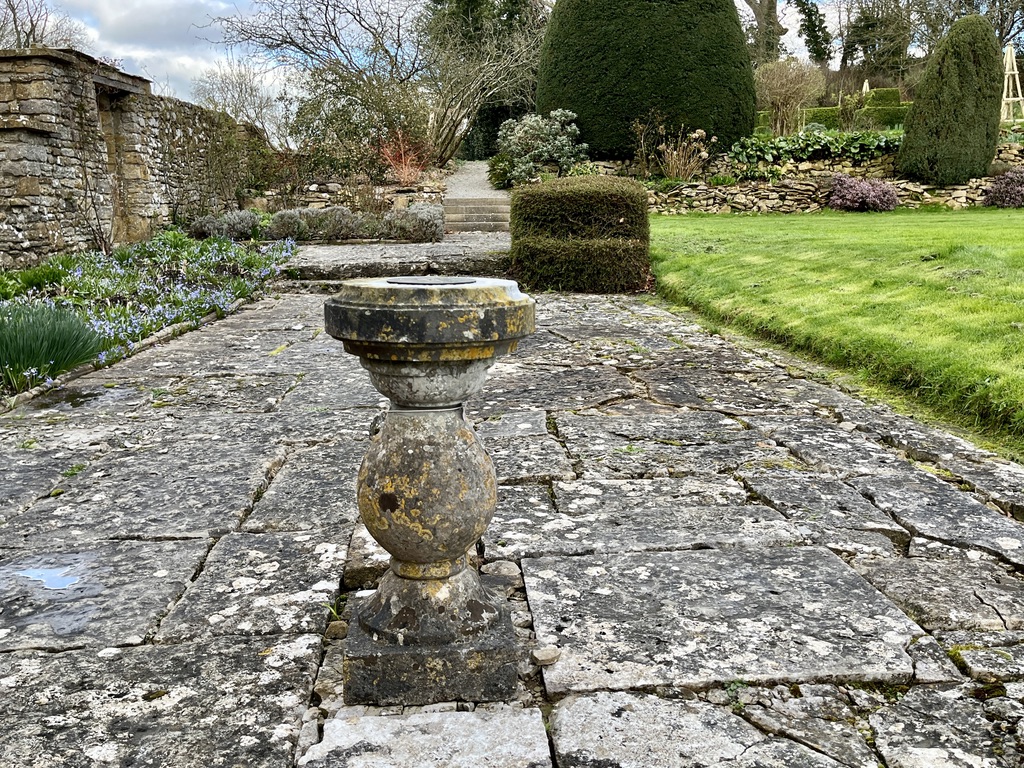
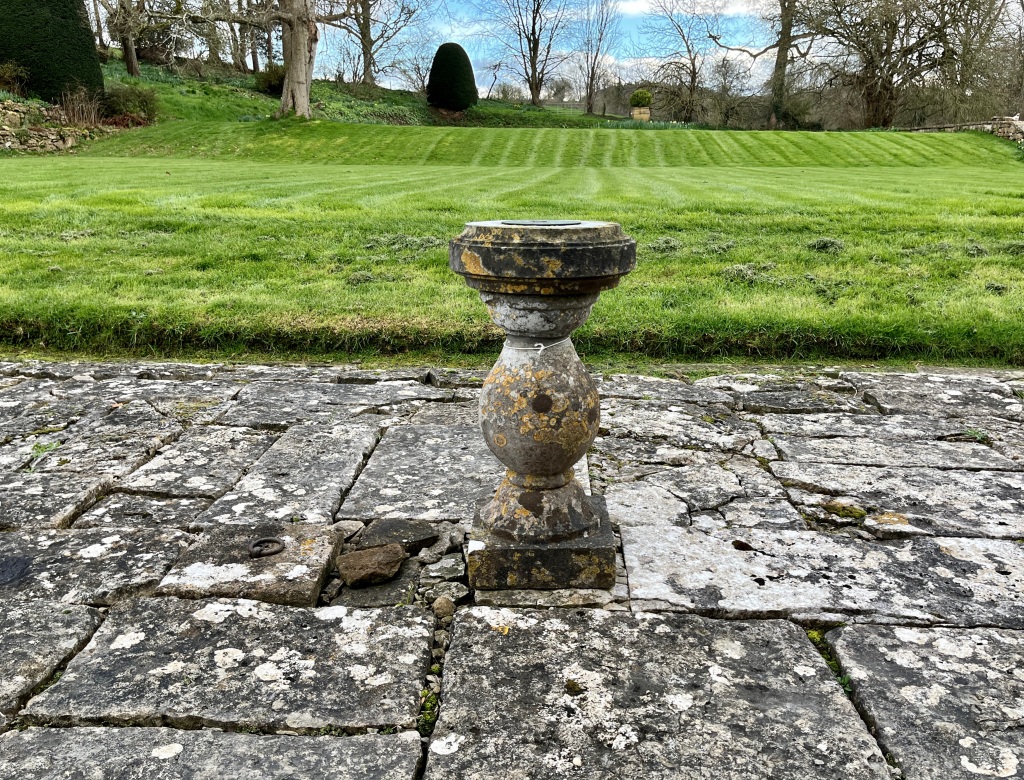
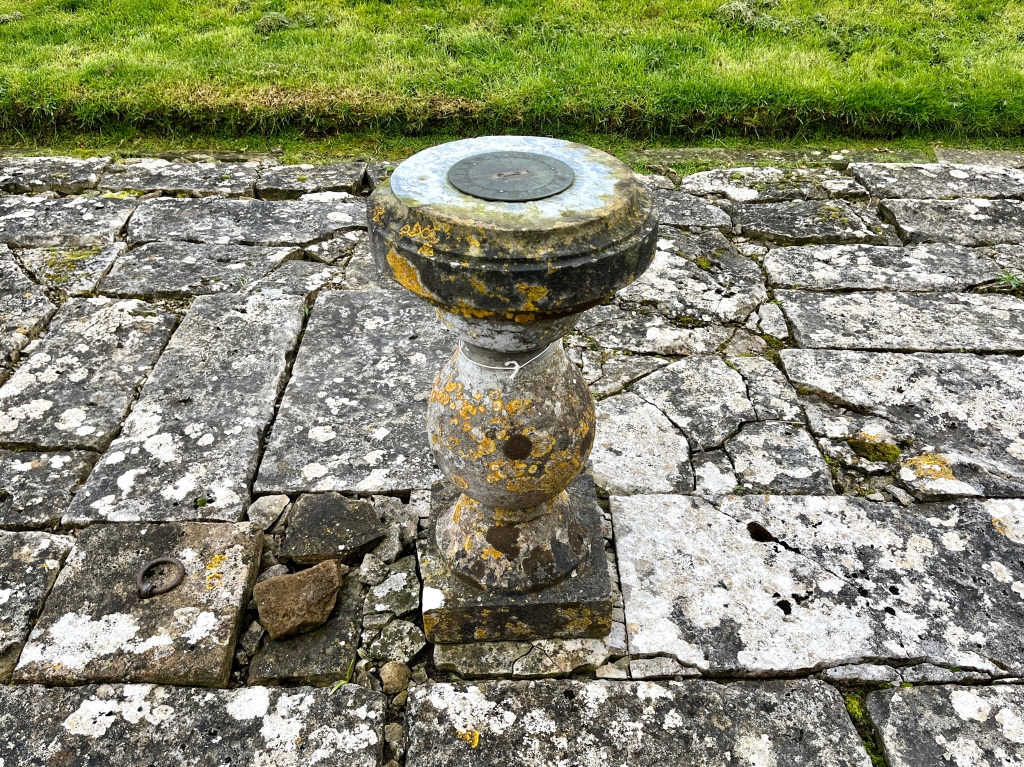
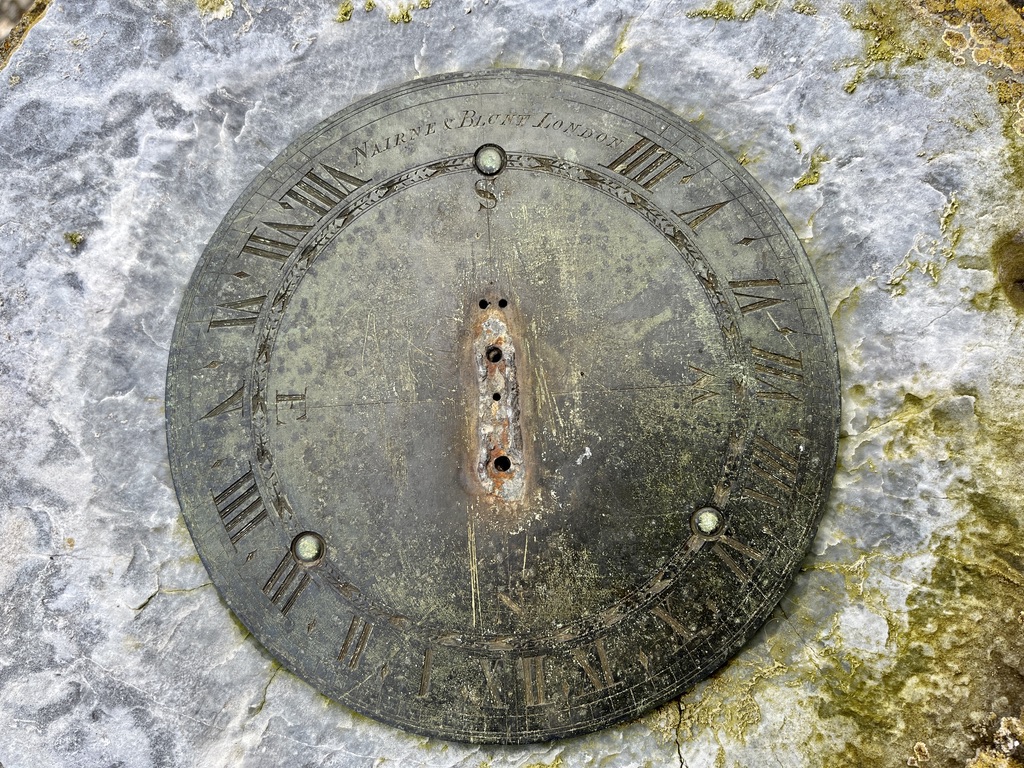
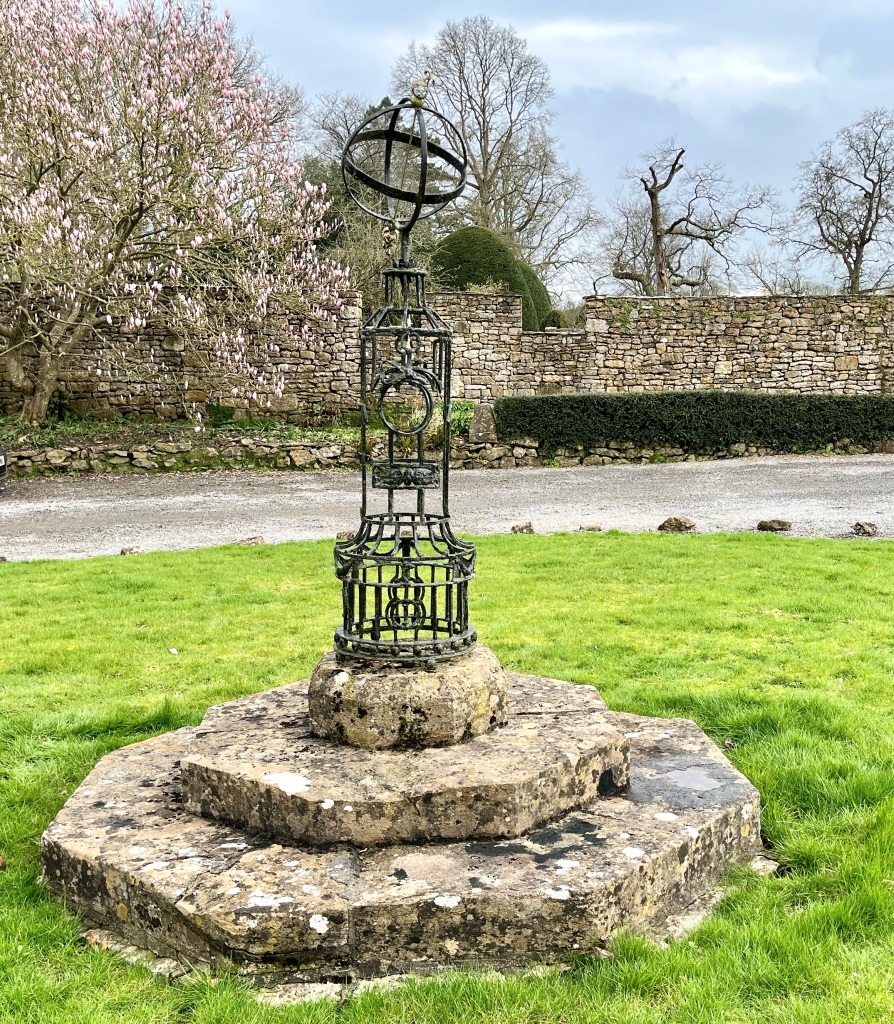
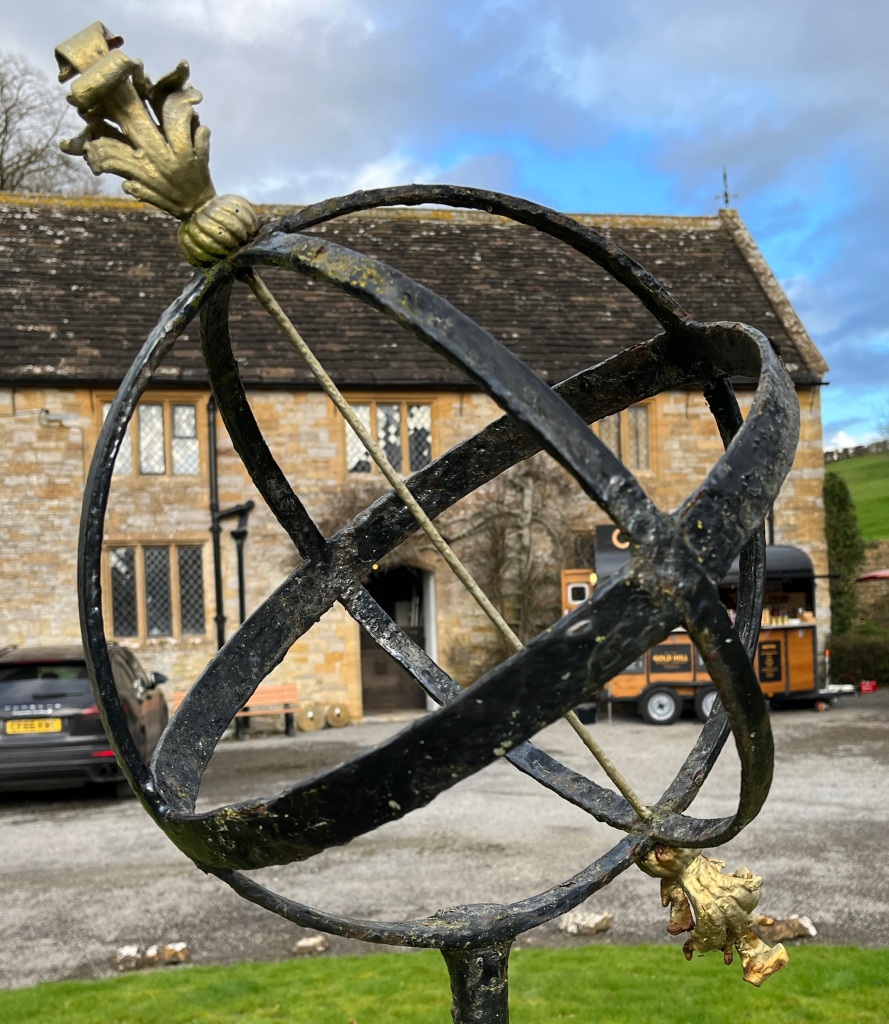
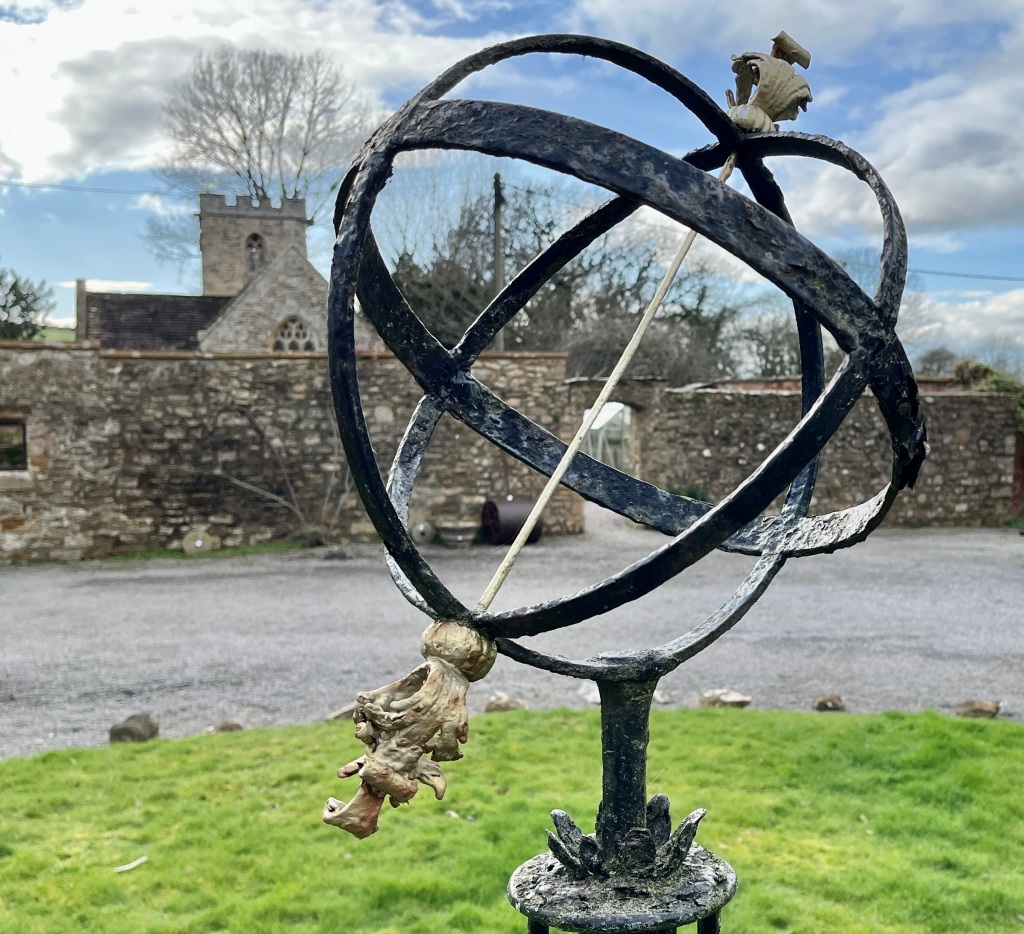
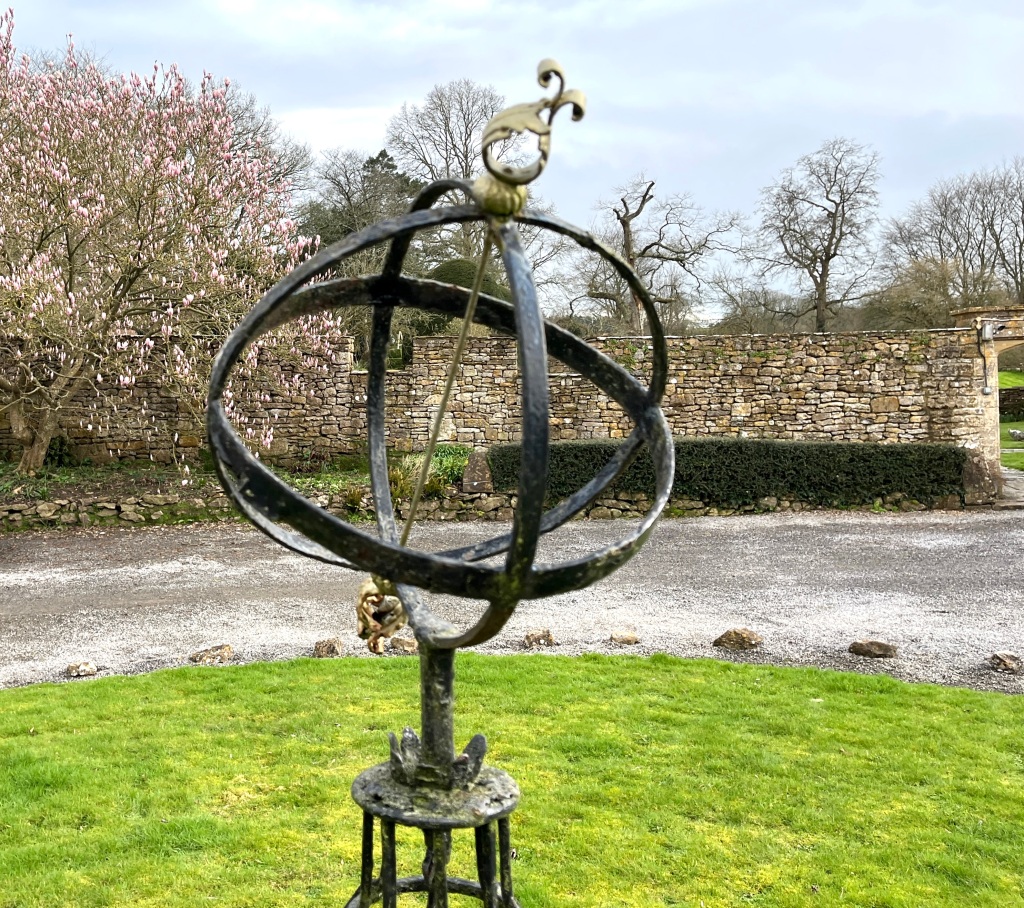
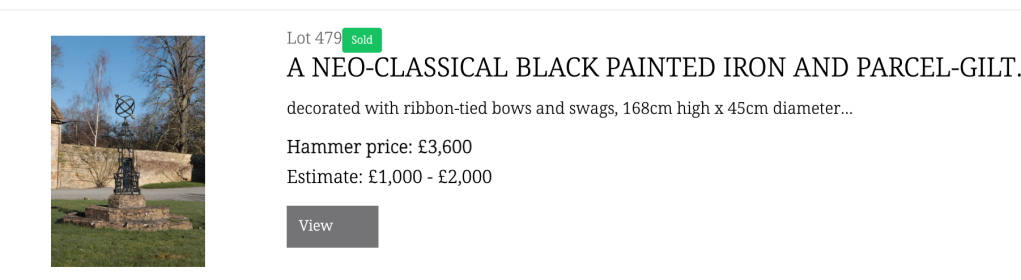
Two sundials were sold and are now removed from the property. One is a conventional garden dial, gnomon-less, on a baluster stone pedestal. The other is an armillary sphere grandly resting on a substantial triple plinth and supported by a tall ironwork obelisk.
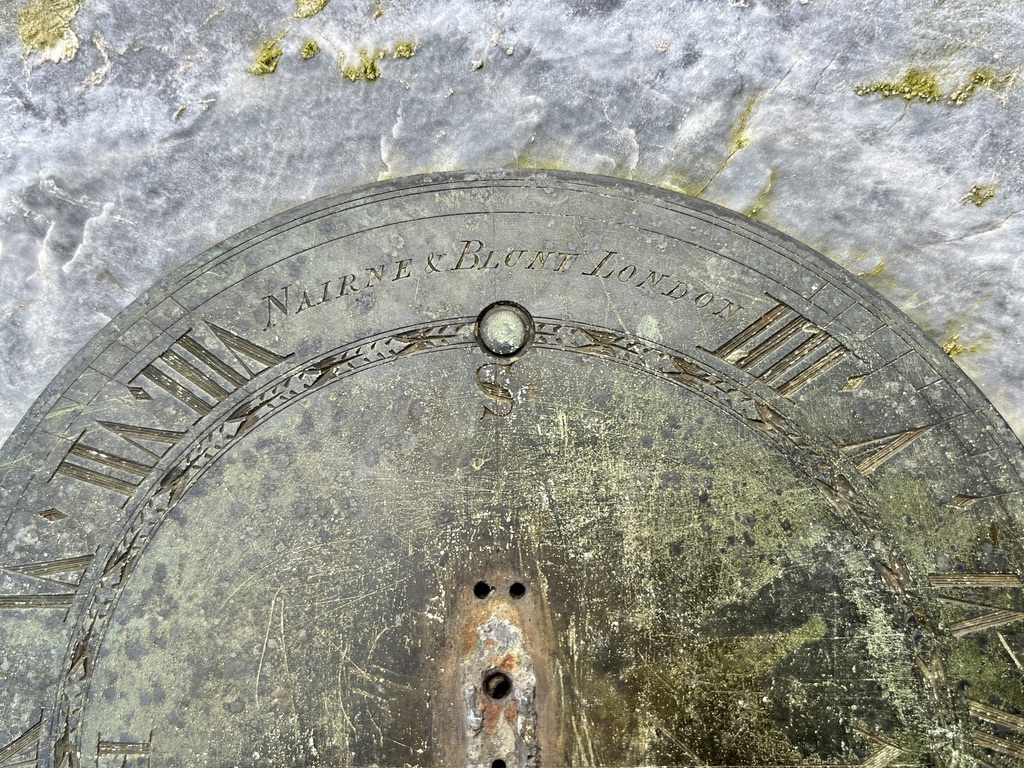
HORIZONTAL DIAL (C18) BY NAIRNE & BLUNT
Edward Nairne and Thomas Blunt established themselves in London as scientific instrument makers. They worked together between 1774 and 1793 and this dial must be from that period.
St Helen’s, Ashby-de-la-Zouch (from Church website)
‘
ST HELEN . ASHBY-de-la-ZOUCH
GRADE I ♱ C15 on older site; C19 enlargement. Listed as a building of exceptional interest. A fine church that invites investigation. Its orientation is significantly out of true. The focus is on the large vertical dial on the third stage of the mainly C15 tower. SK360167 / 52.7473 / -1.4668
SUNDIAL
St Helens . Ashby-de-la-Zouch – Vertical Dial (Erika Clarkson)
BSS RECORD
I am using the detailed BSS record for this dial, which is better informed and more concise than my own effort (discarded):
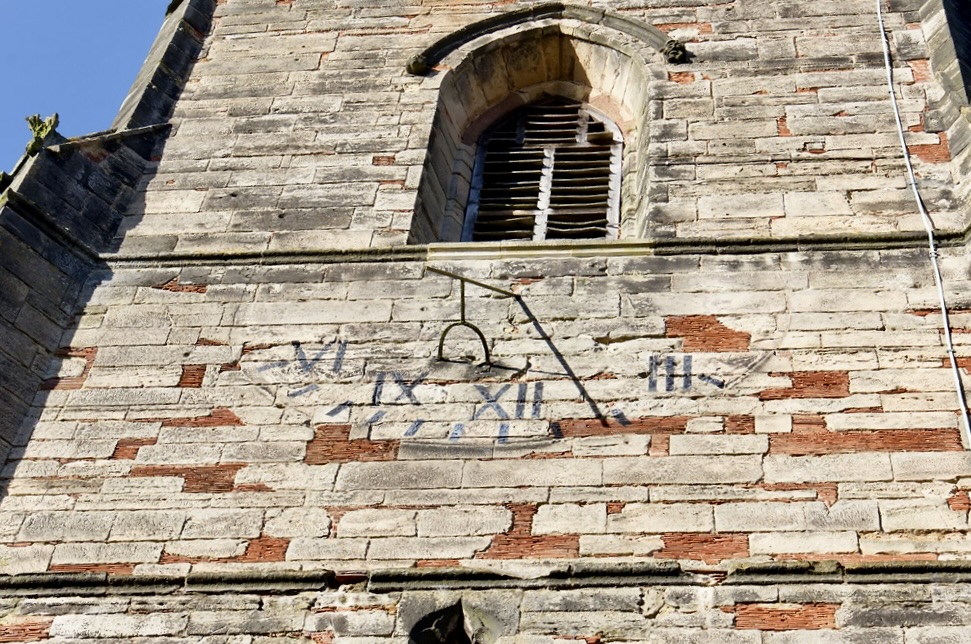
The dial is painted on the south wall of the tower, below the belfry. The hour lines and numerals were restored in August 2000. No markings previously remained though evidence of semicircular edging stones was visible. Interesting rod gnomon located near its end by a two legged ‘stirrup’ supporter. Shows 6am to 3pm in hours. Four 18in high numerals only (VI, IX, XII, III) inside the hour circle painted in black on stone, to be visible from the castle. No prior rendering. Restoration showed no evidence of any other attachments. Restoration by J A Tyldesley. Refer Church Booklet ‘The Restoration of the Ancient Sundial’.
To which I add that the gnomon / stirrup is slightly skewed, perhaps a correction of the church’s unaligned orientation.
St Helens . Ashby-de-la-Zouch – Vertical Dial (Erika Clarkson)
BSS also notes: Church website says “On the south wall of the Memorial chapel is a sundial which is easily overlooked”. Is this another dial? Any further information would be welcome.
The St Helen’s website is a model of its kind: informative, clear, interesting, and with excellent short videos of important aspects of the church https://www.sthelensashby.net/
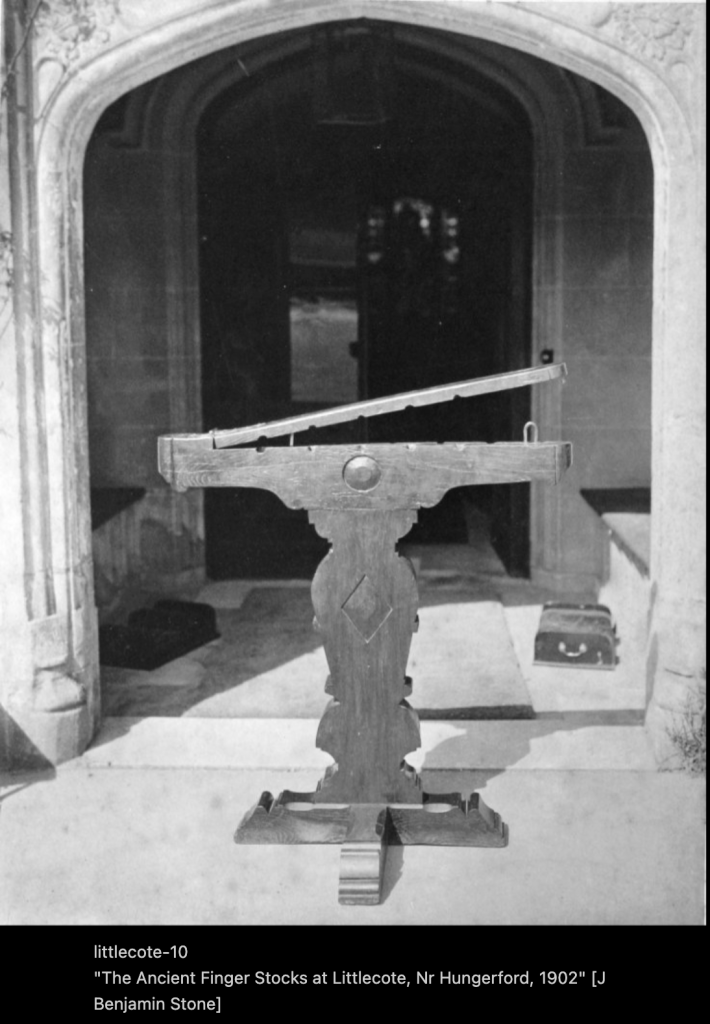
FINGER PILLORY
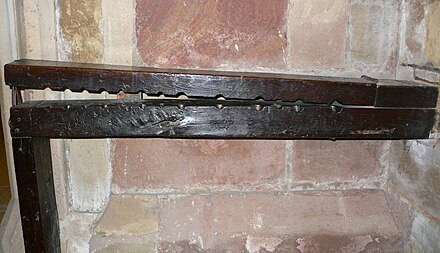
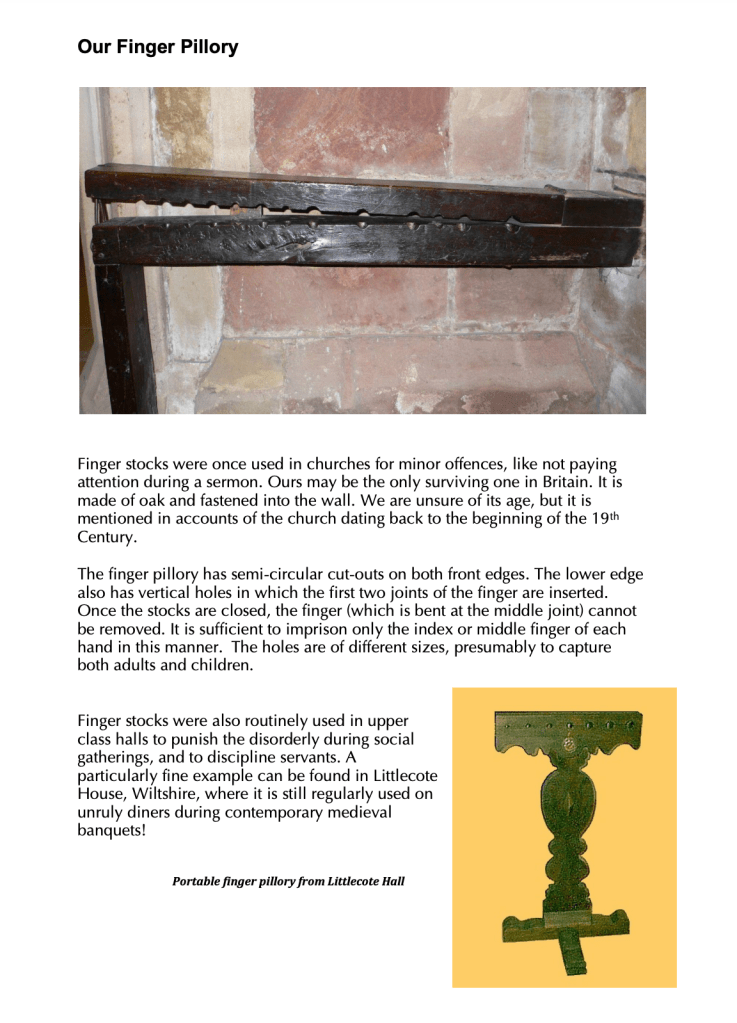
Adding to my pages dealing with interesting non-dial features in Medieval churches, the image above shows a most unusual treasure that I have not come across before, a FINGER PILLORY. It seems that there is only one other in the country (Littlecote House Wilts) . This device was used to punish minor miscreants in public for offences not serious enough to warrant the stocks.
Finger ‘stocks’ were used in churches for minor offences like not paying attention during a sermon.
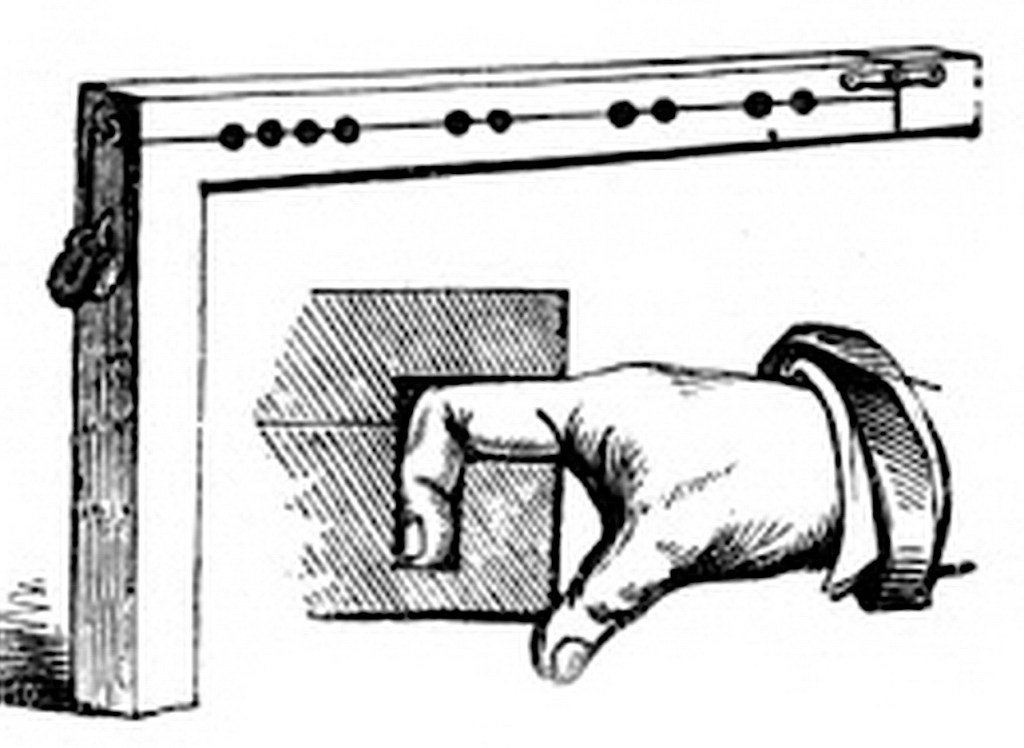
This drawing suggests another painful reminder to conform, with a finger being trapped inextricably at a right angle. I’d stick with listening to the sermon in preference.
GSS Category: Vertical Dial; Restored Church Dial; Rediscovered Church Sundial; Finger Pillory
Credits: Erika Clarkson; St Helen’s church website; OS / CC sources
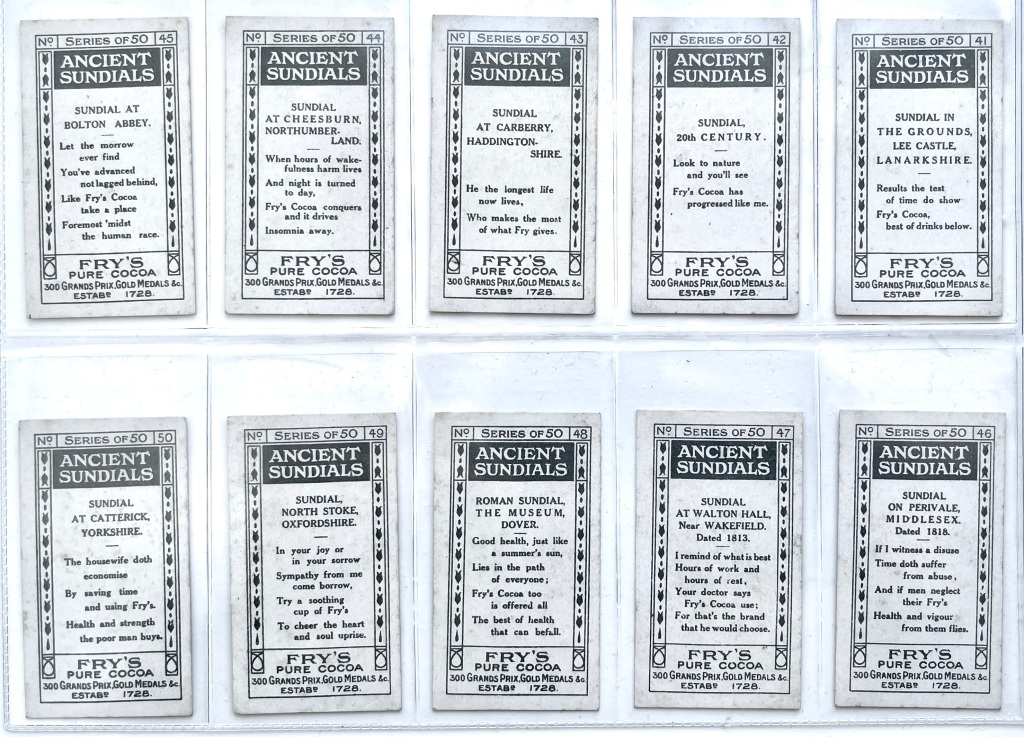
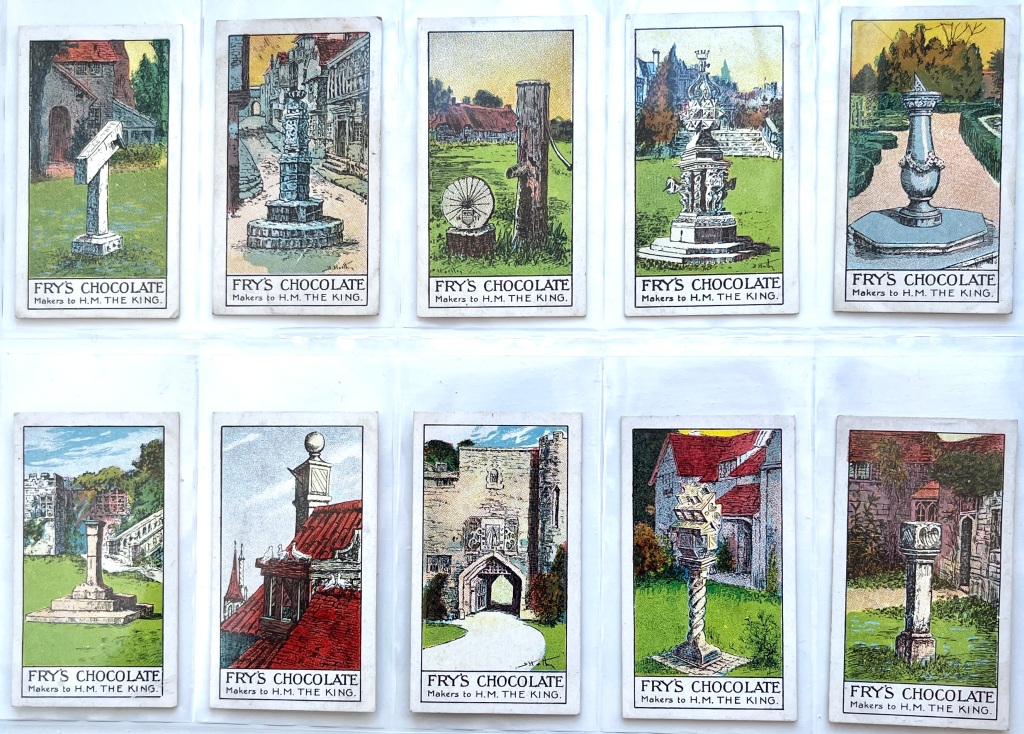
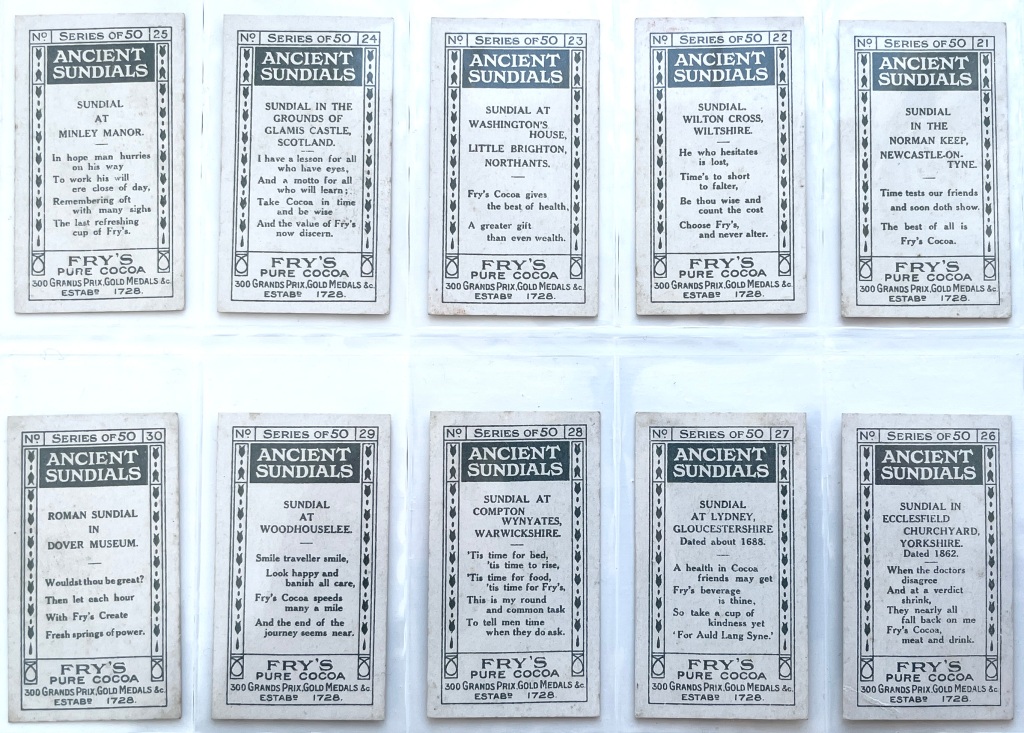
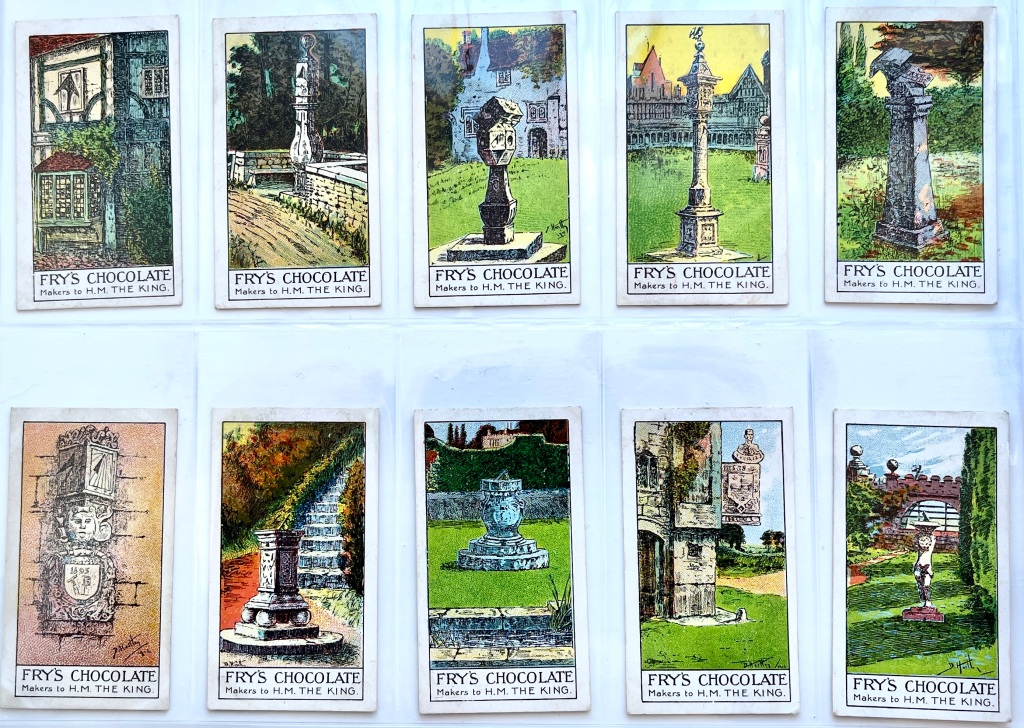
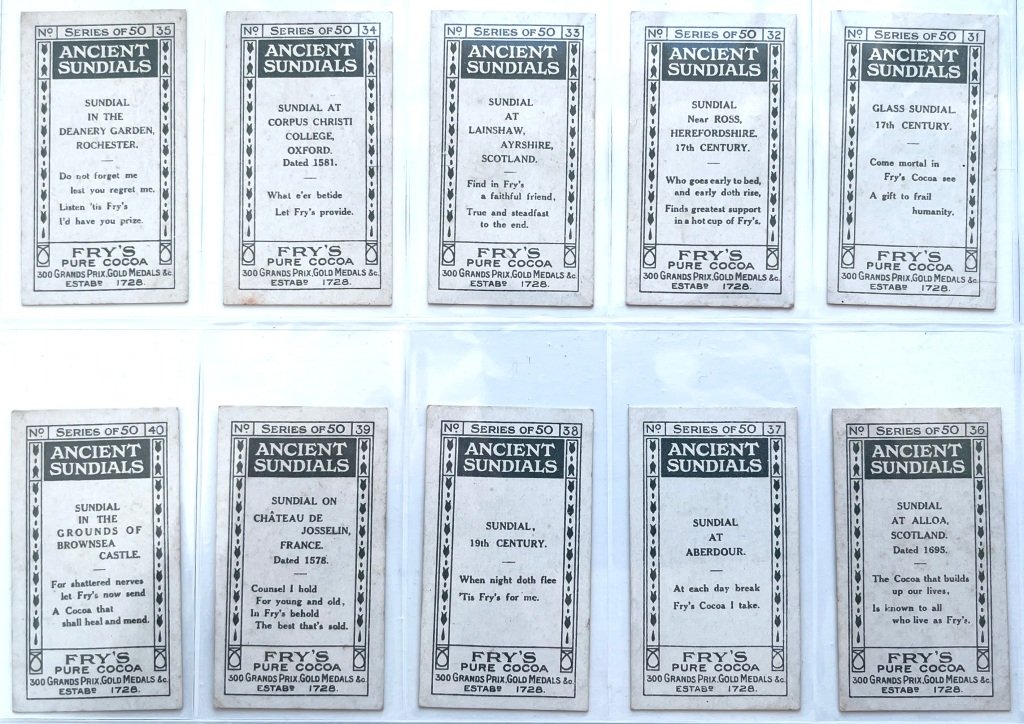
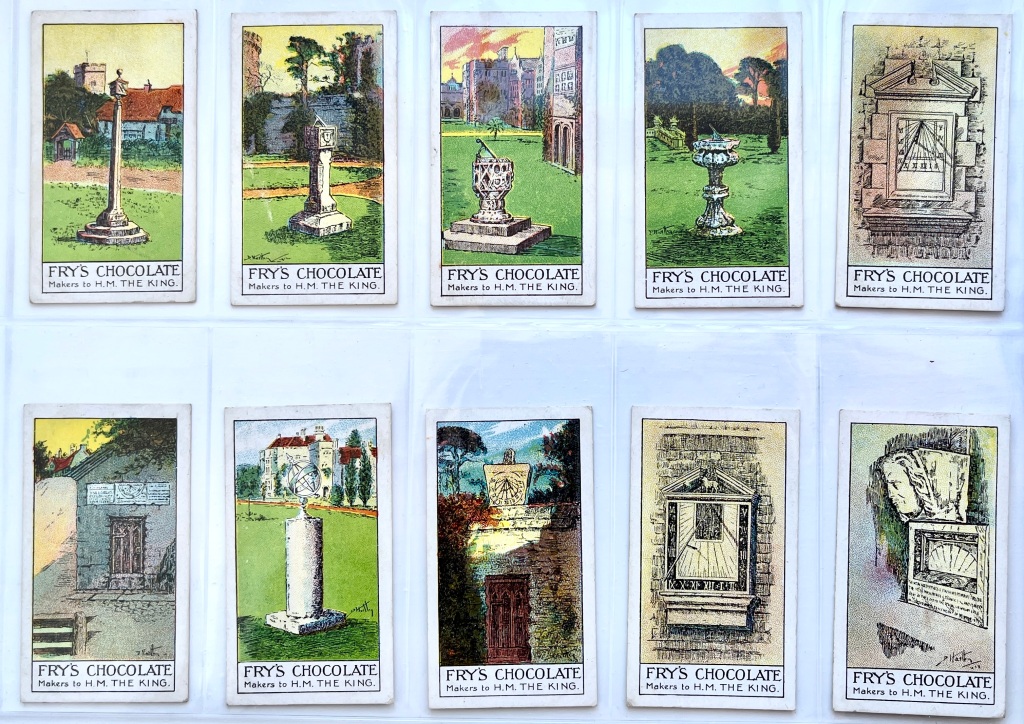
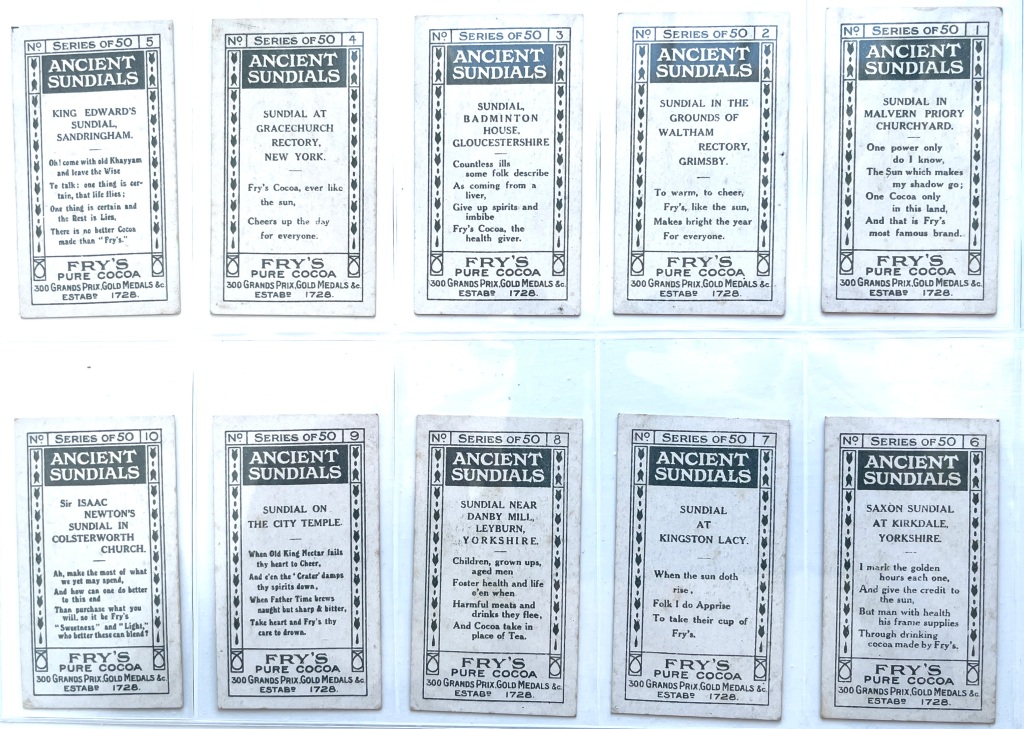
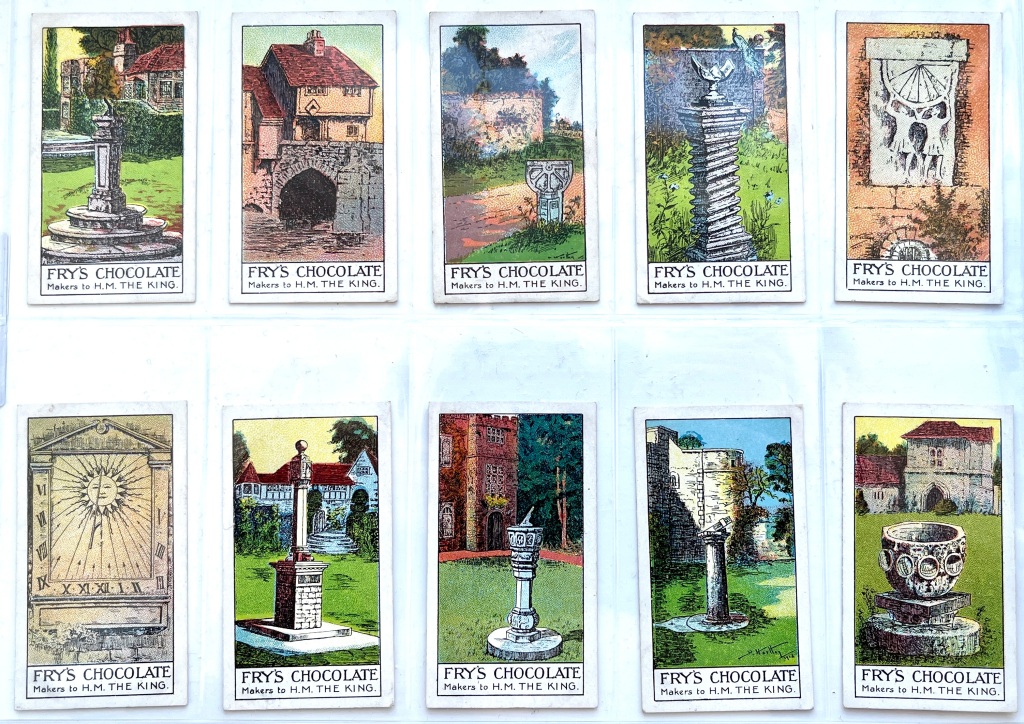
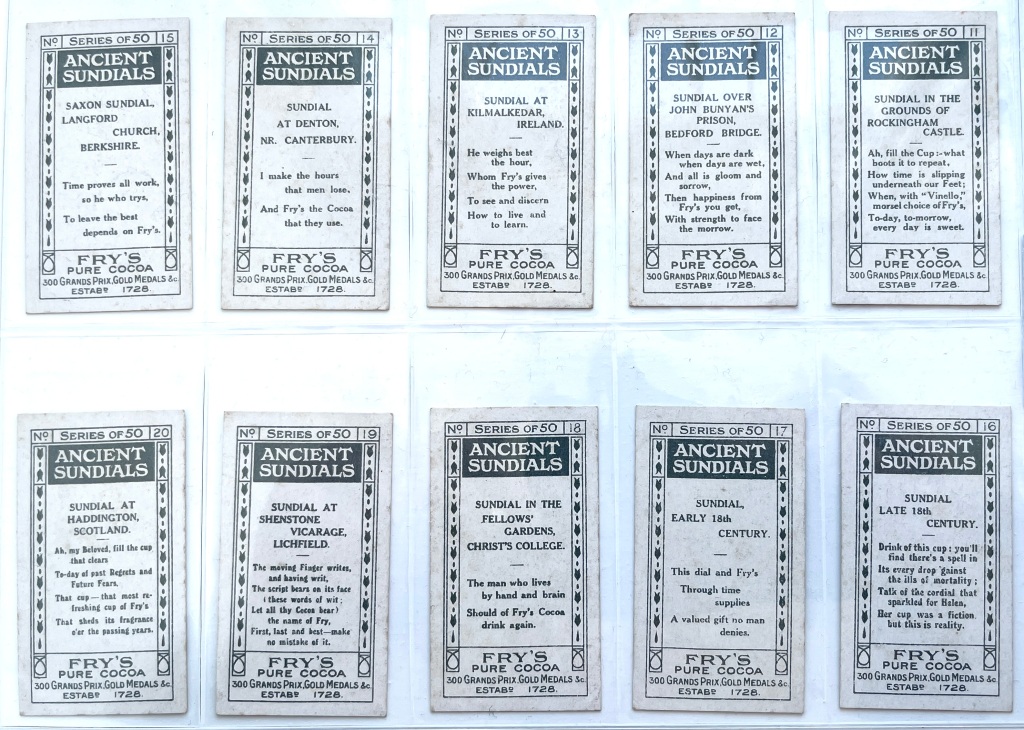
In the late C19, the first series of collectable themed cards were devised in America to encourage trade. The idea caught on, and these early examples of product placement gradually spread. Sportsmen (Cricketers), Nature, Actors, Military and Important People, were among the topics. By the turn of the century, British companies had taken up the challenge.
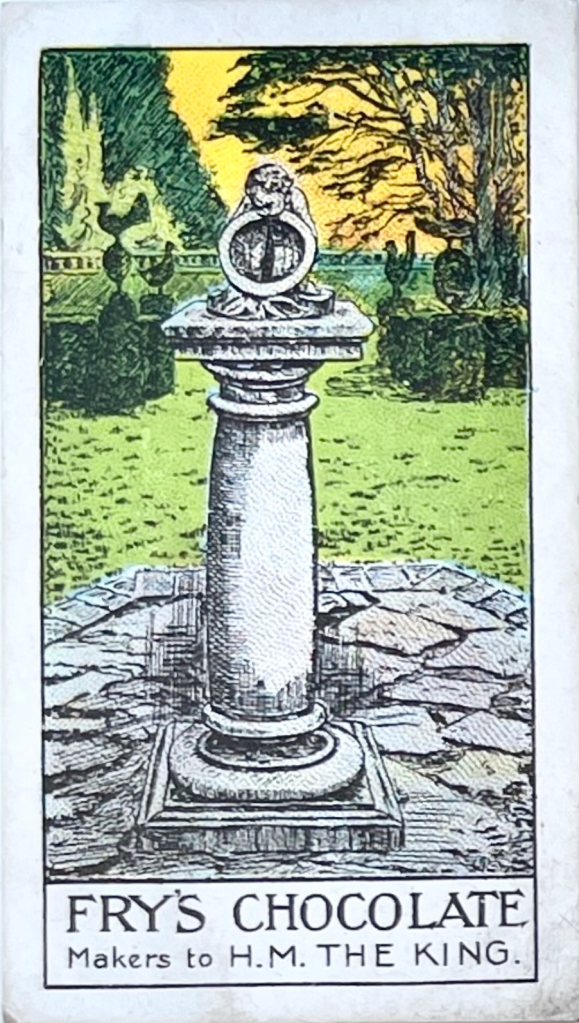
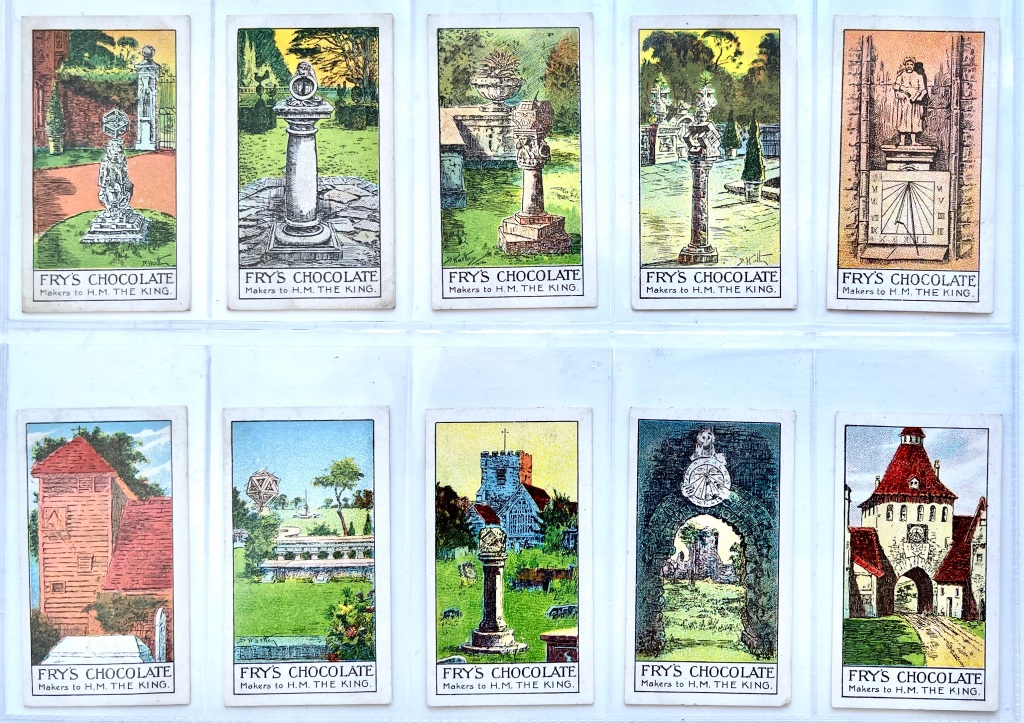
In 1924, Sundials became a novel theme, with an astonishing set of 50 cards produced by Fry’s. This was – until a takeover in 2011 – a long-established Bristol company founded in 1728 to process cocoa beans, and passed on down succeeding Fry generations.
Besides the large number of dials from all parts of Britain, each card had a sundial-and-product specific motto / pithy ditty on the back. The 5 collectors’ pages below show the front and the backs separately. Please note that you will have to read the text sides in reverse order to match the description to the correct dial. The centre one will be the same.
Following the example set by Fry’s, the cigarette company W.D. & H.O. Wills produced its own Sundial cards in 1928 with a set of 25. I have featured theseHERE.
NATIONAL PORTRAIT GALLERY Explore the Cigarette Card Collection HERE
DEDICATION † ST ANDREW – C15, mid-C19 restoration; C13 font
LISTING † GRADE II*
LOCATION † 5 miles SW of Sherborne, a sprawling village set deep in farming country. Some fine old buildings dating from C16, now mixed in with modern housing. A fine village cross with C15 shaft. A friendly very rural place. No street lights. 50.8762 / -2.5445 / ST617086
In the early days of this site when I was researching scratch dials close to us in Dorset, I discovered that our own village church had one that was already recorded. It didn’t look very ‘dial-ish’ so I was pleased to find an authoritative drawing of it by GLP. My original post is HERE and see below for an image.
ST ANDREW . DIAL 2
The dial is semicircular, RHS of the porch, and just below Dial 1. The gnomon hole is in the mortar line, and plugged. The horizontal mortar line acts as a ‘6-to-6’ line, split by the vertical noon line. This is deeper incised than the three other visible lines.
Rousham is a fine country house less than 20m N of Oxford, built for the Dormer family in 1635 and still in their possession. Its landscape gardens were designed by William Kent, the inspired founder of the great tradition of such gardens in England. Little has changed at Rousham since C18. The RH site notes: In ‘Around the World in Eighty gardens’ Monty Don says (William) Kent is the great genius of eighteenth-century garden design and Rousham is his masterpiece, one of the greatest gardens in the world”
DOLLAND SUNDIAL AT ROUSHAM HOUSE OXON
BSS RECORD
By the pigeon house in the rose garden east of the house is a bronze horizontal dial 314mm in diameter made by Dollond of London.. It shows the customary hours IV – VIII divided into halves and quarters.The hours are also displayed in Arabic numerals and divided into periods of 10 And 2 minutes. There is an Equation of Time scale and round the centre of the dial a 16-point compass rose. There is a noon gap to compensate for the 7/16″ thick gnomon. The dial is mounted on a tapering stone column with a circular capital.
DOLLAND
Dolland workshops were active from approx 1750 to 1850. The business was founded by John Dolland who was joined by his son Peter, and later other members of the family. The name became synonymous with the crafting of intricate and precise scientific instruments. Sundial plates were a (rare, I think) sideline. Dolland collections can be found in many museums and individual pieces in auction rooms. All items have the Dolland mark, but some cannot be attributed with certainty to a particular member of the family.
George Dollond was elected to a fellowship into the Royal Society in 1819 and was an active participant in founding the Astronomical Society in 1820 (Confusingly, his son was also called George)
East Stour is a small village 5m W of Shaftsbury, with the A30 dividing its church from the majority of its (potential) congregation. I had a good lunch in the pub as bell-ringing issues were being keenly discussed around me..
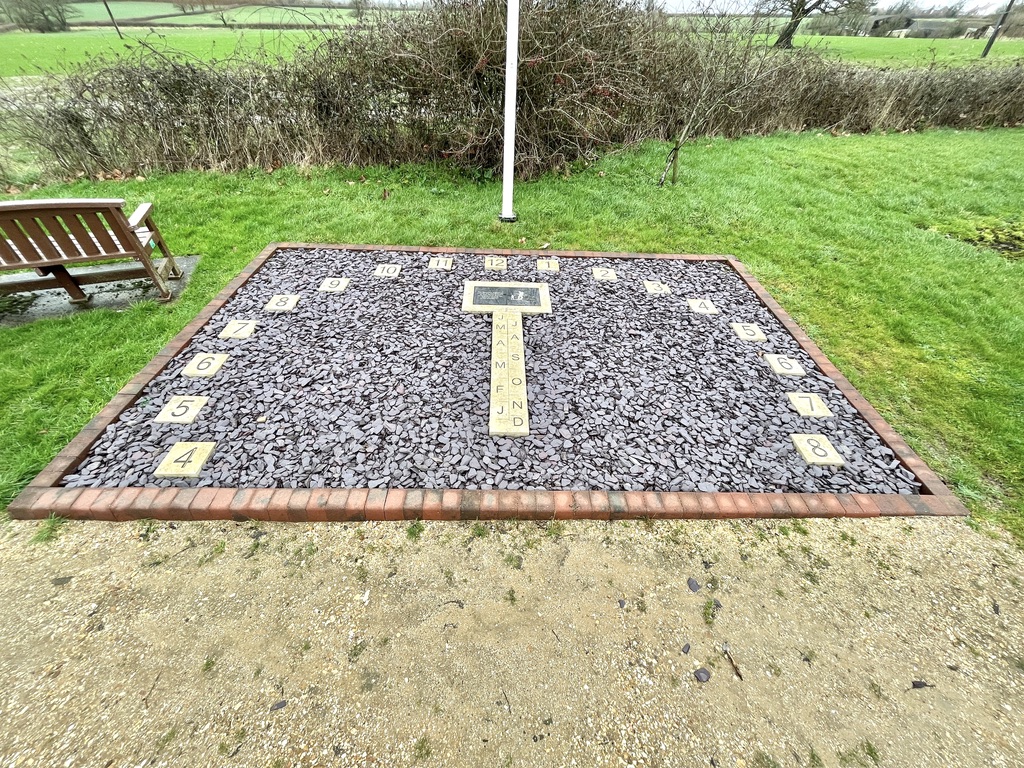
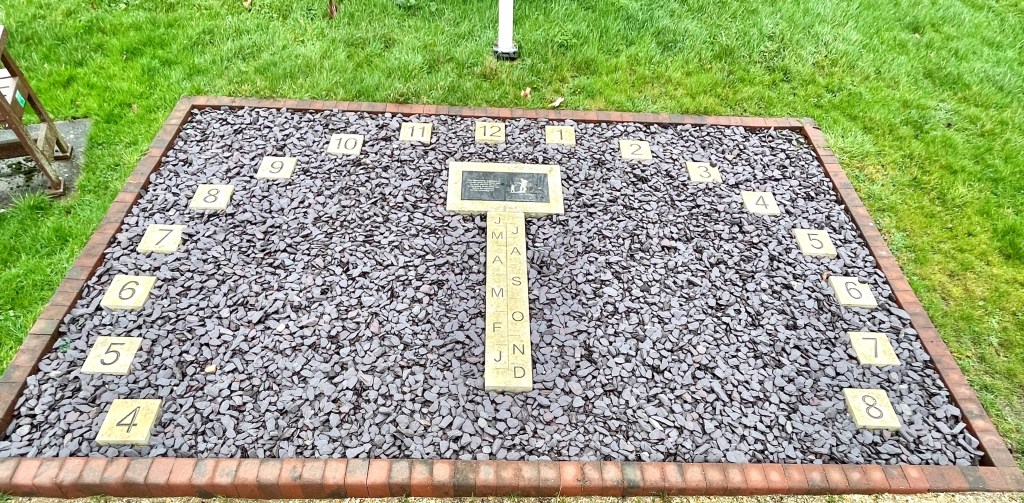
A short but perilous (no pavements) walk away is a very fine and beautifully designed analemmatic sundial in a small park by the Village Hall. It is a war memorial, and the dedication poignantly extends the commemoration to everyone from East Stour who has been affected by war.
BSS RECORD
The dial is in the north corner of East Stour playing field. It is made from Portland stone and black granite with slate shingle infill. Granite tablet set into portland stone slab to N of date scale is all slightly canted and carries the laser-etched inscription: 4This Memorial is dedicated everyone from East Stour who has been affected by war. At the going down of the sun and in the morning, we will remember them.X To the right of the words is an etched image of a soldier, a child and three crosses. The dial shows Arabic hours for 5am to 8pm.
Delineation was by David Brown, content by Guy Gilding, letter-cutting and stone-laying by lan Viney of Stonemasons of Dorset Ltd, and groundwork by local builder.
GSS Category: Analemmatic Sundial; Memorial Sundial























 GAUDIUM SUB SOLE . SUNDIALS . MEDIEVAL TO MODERN