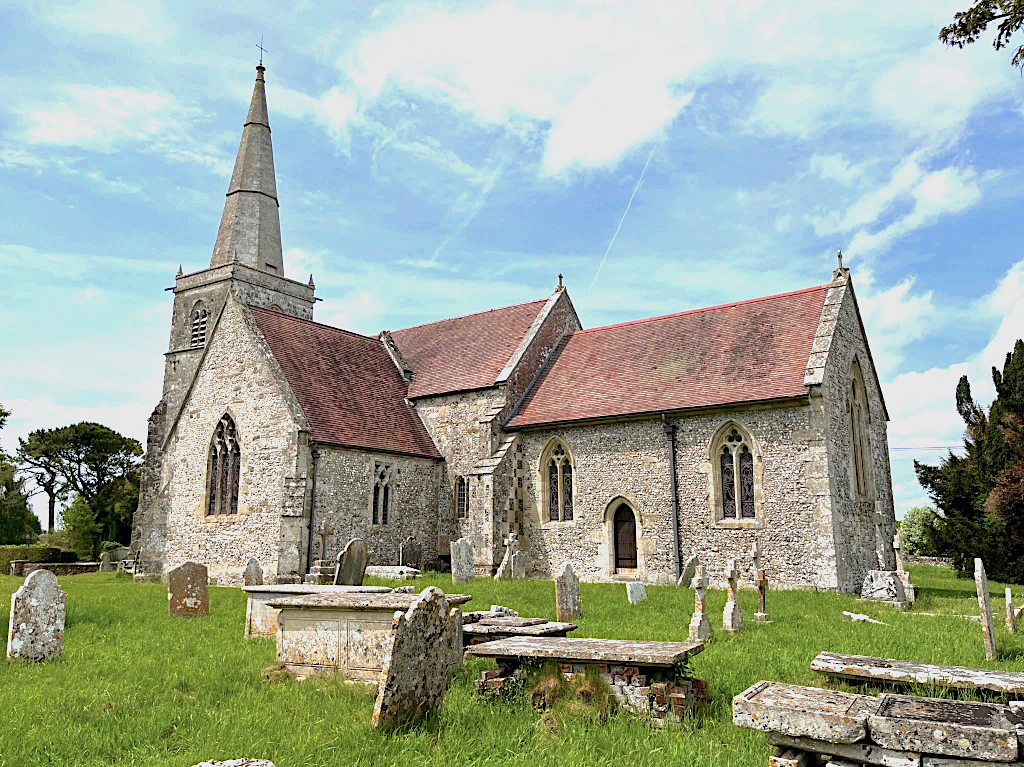
GRADE I † Early C12 origins; C13 chancel, tower; C14 / C15 transepts; other works then & later inc C18 spire, C19 restorations. A striking building in a small village just off the A354 Salisbury – Blandford Forum. Clock installed in honour of Winston Churchill 50.9754 / -1.9009 / SU070195
DIALS
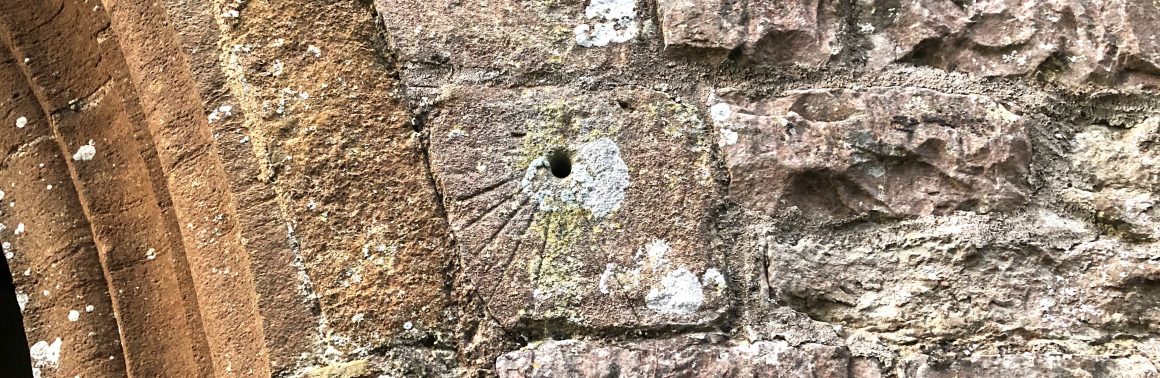
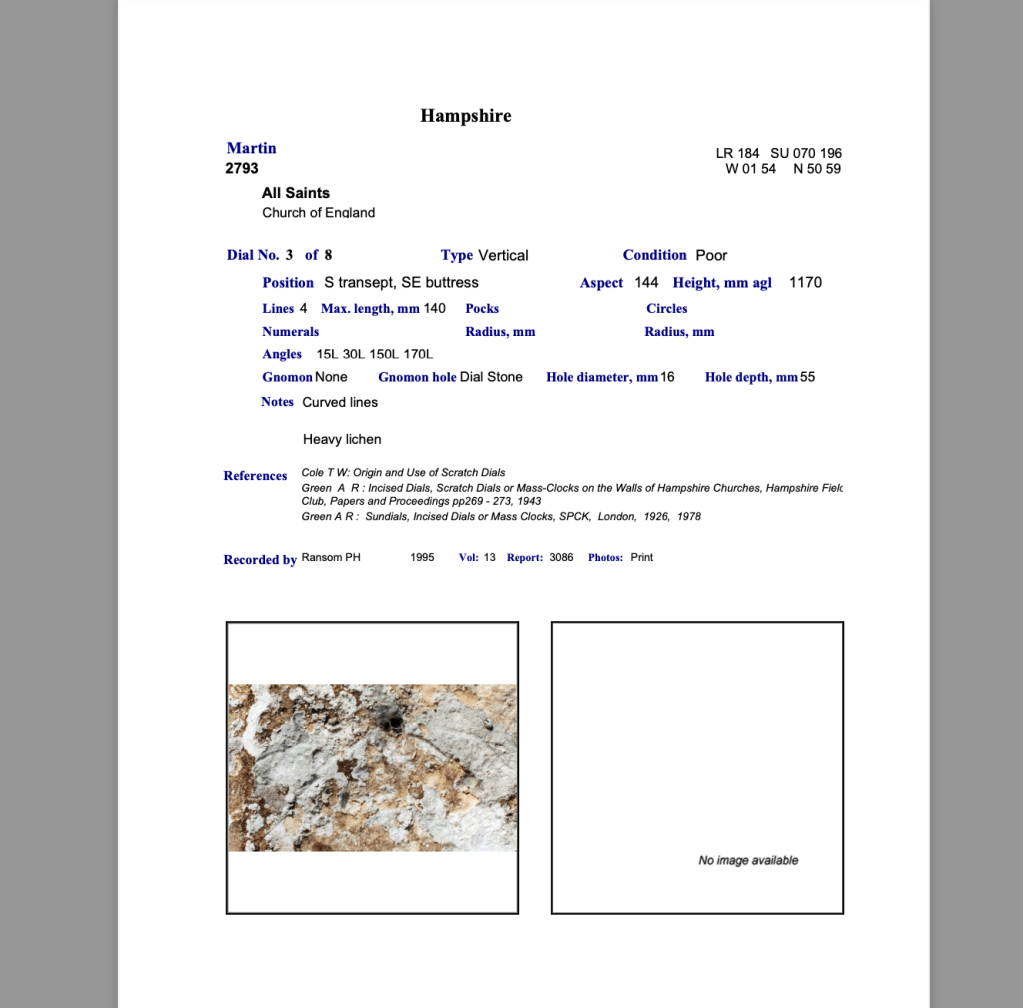
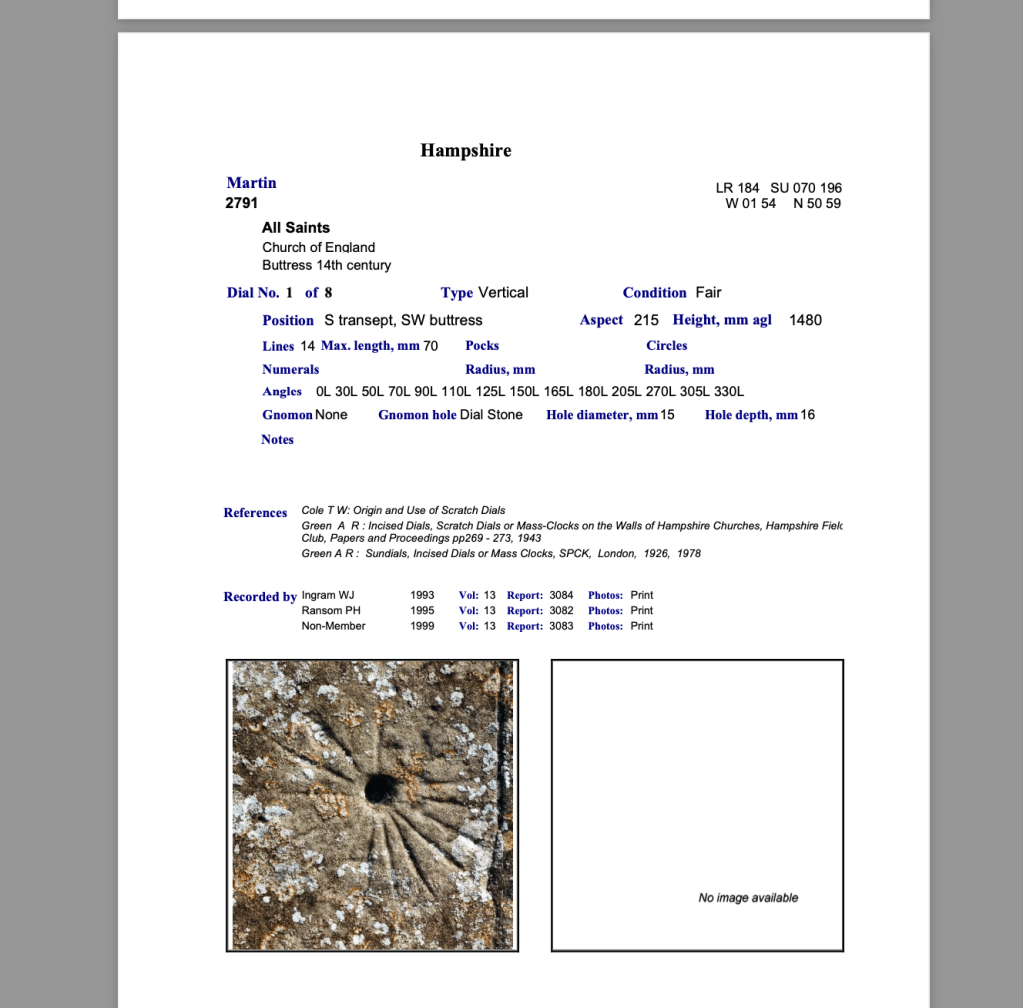
All Saints is a multiple dial church, with 8 listed in the BSS records. My dial count is 9. It’s a fine church, and dial-hunting was an easy pleasure. I have decided to let the dials speak for themselves without undue commentary on individual characteristics unless called for. Below the dials is an excellent article by the Hampshire Field Club that analyses all you need to know about each dial, and in particular the locations (for which I lost my notes).
BSS RECORDS
GALLERY OF 8 + 1 DIALS
DETAILED IMAGES
DIAL 1
DIAL 2
DIAL 3
DIAL 4
DIAL 5
DIAL 6
DIAL 7
DIAL 8
DIAL 9
This dial is included in the BSS records (bottom row LHS)
Volume VII Part I.pdf
Proceedings of the Hampshire Field Club, XV , Pt. 3, p. 27a.
LISTING II* ❖ C13, C15 and early C16, good Victorian and later restorations. A link to the well-presented history of the church and its context in the village is given below. One bell is of particular historical interest. A multiple scratch dial church: BSS records 7 from a 1994 survey. I feature 9 candidates below, of which 2 are probably not-a-dials, leaving 7. But are they the same 7, I wonder? 6m E of Trowbridge. 51.3209 / -2.1195 / ST917579
GSS Category: Scratch Dial; Mass Dial; Multiple Scratch Dial Church
All photos: Keith Salvesen [
I am beginning to find my own photos borrowed for online use. I don’t really mind, especially for this sort of niche interest, but a link to this project might be good]
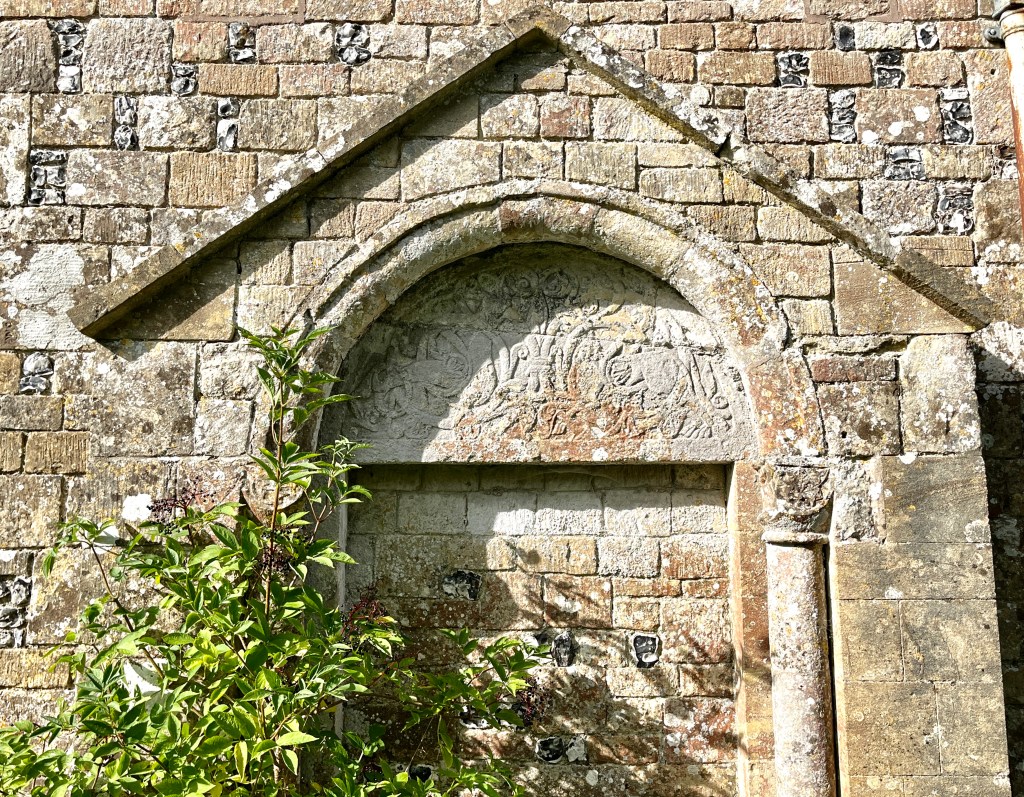
GRADE I ❖. C11 – evidenced from 1078, probably on site of a wooden church. C14, C17, mid-C18 alterations / additions. Major restoration 1874-76 (Butterfield). One of several excellent and varied Wylye valley churches with dials (eg Stockton (18); Heytesbury; Chitterne; Sutton Veny). Wonderful C11 / Saxon tympanum. 3m SE of Warminster. 51.1755 / 2.0908 / ST937418
DIAL
The dial is in a privileged position high on a quoin stone next to the tympanum. It is in fact the LRQ of a complete dial that must have been divided during restorations.This quarter includes the noon line.
TYMPANUM
The dial is LHS at tympanum height, just visible behind the elder
GSS Category: Scratch Dial; Mass Dial; Wiltshire Sundials
GRADE I ✣ Late C12, C13, early C14, C15 and C17; restoration 1879. Interior has much of interest, described in detail by PEV. Two squints. One of several fine churches in the Wylye Valley, ranging from ruined Sutton Veny via tiny Tytherington small, medium to large. Most have at least one dial, all are worth a visit. 8m SE of Warminster 51.1433 / 2.0272 / ST981382
DIALS
St John is the supreme multi-dial church in the Wylye valley. BSS lists 17 in its records (some with circumspection). Although locations are noted, there are no drawings / images. It isn’t possible / practical to try to match my photos to the given locations in a helpful way. I have tried to sort indisputable dials from the probable, possible, and ‘not really’. My search started at the E end and mostly went W along the S side. I found 17 dials, from indisputable to some that I think meet the broad criteria.
There are 2 clusters on the ‘red’ buttresses: dials 6 – 9; and dials 11 -13
There are too many dials for detailed comment, with a variety of mostly conventional designs. A few may be rotated / re-sited. I have tried to display photos of the dials informatively and in approximate sequence E to W. A separate section deals with other candidates.
❖
DIAL 1
❖
DIAL 2
❖
DIAL 3
❖
DIAL 4
❖
DIAL 5
❖
DIAL 6
❖
DIAL 7
❖
DIAL 8
❖
DIAL 9
❖
DIAL 10
❖
DIAL 11
❖
DIAL 12
❖
DIAL 13
❖
DIAL 14
❖
DIAL 15
❖
DIAL 16
❖
DIAL 17
❖ ❖ ❖ ❖ ❖ ❖
DEBATABLE DIALS
PLAUSIBLE IN SOME WAY?
UNLIKELY / NOT AT ALL
GSS Category: Scratch Dials; Mass Dials; Multiple Dials; Medieval Church Sundials
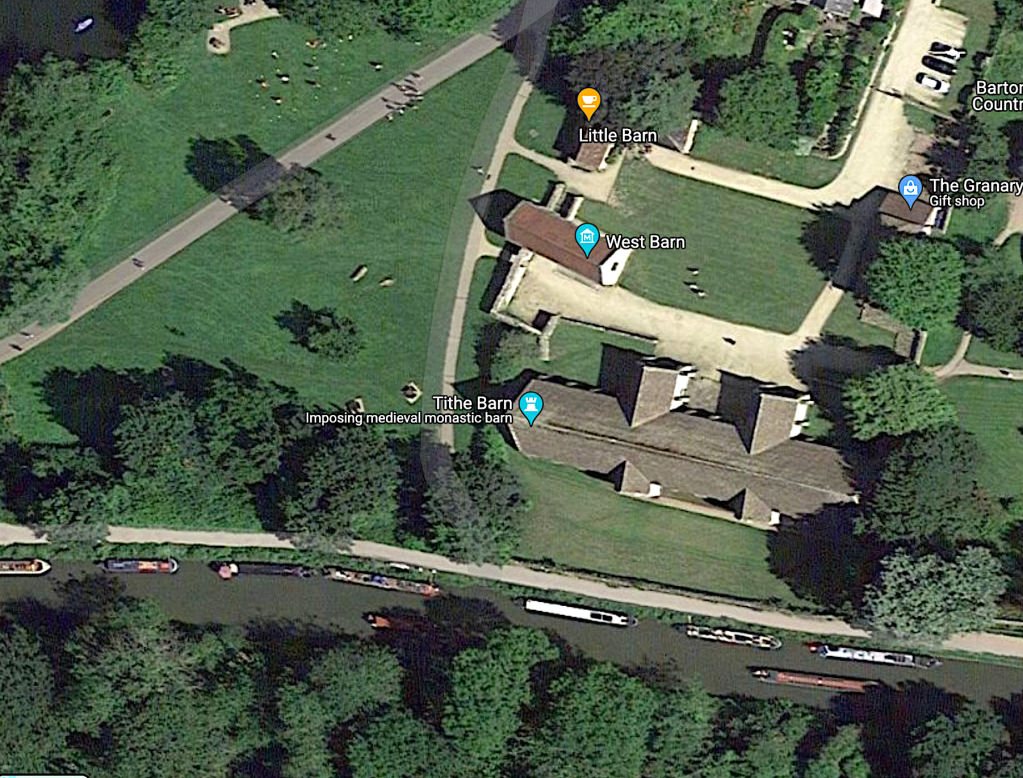
GRADE I ✣ The huge tithe barn is dated to the 1330s, replacing an older barn. Even allowing for restoration and maintenance over the centuries, the barn very much retains the feel of a building unchanged for several hundred years. Its situation right by – and lower than – the K&A canal adds to the pleasure of the general surroundings.
✣
DIAL
Scratch dials on buildings other than churches are rare. TWC mentions only 4 in his (admittedly dated) list of non-church dials, one of which is a tithe barn. Featured in this project are KENILWORTH ABBEY which has a dial on a barn that is a small part of the whole; and MUCHELNEY ABBEY which has one on the S wall of the Abbot’s Lodging. Neither can be regarded as entirely secular.
✣
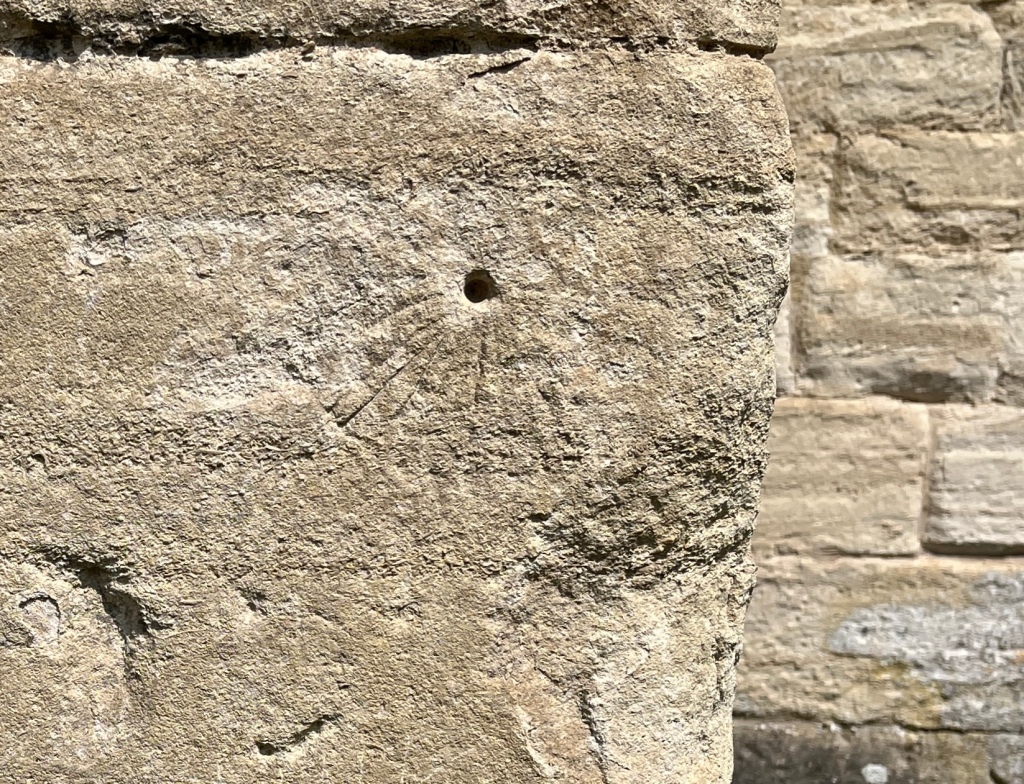
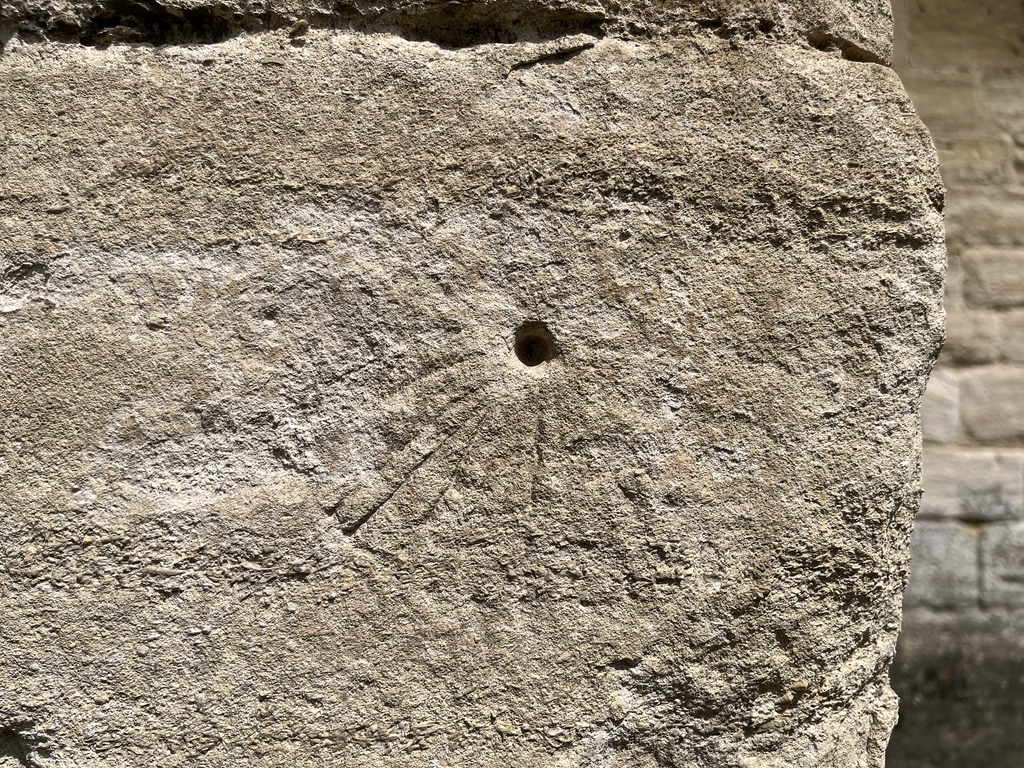
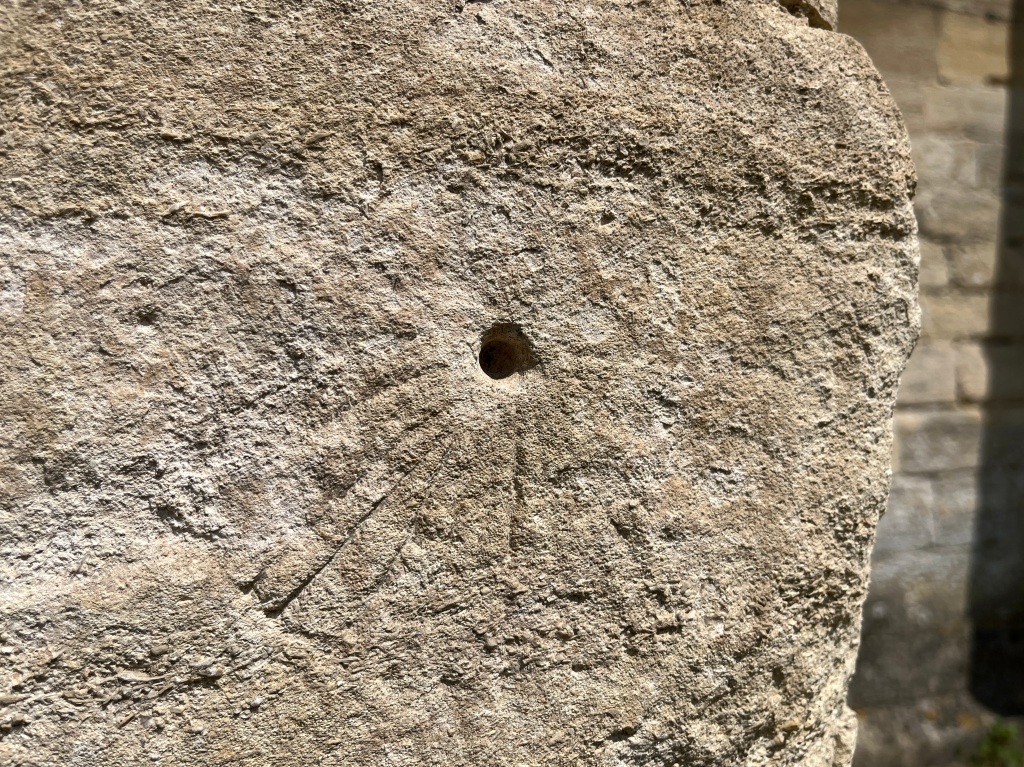
The Bradford dial is located on the S wall on a buttress quoin stone near the entrance of the large E doorway. It is considerably eroded and damaged. I can’t see any trace of a dial above the horizontal and I take it to be a semicircle. There are ± 8 visible lines – impossible to be sure. The noon line is deeper cut and 9 (terce) seems more sharply incised, suggesting the main hour of observance. I am almost certain there there are terminal pocks on several lines, an impression taken more from the photos than from direct observation.
✣
✣
✣
PROTECTION MARKS AND GRAFFITI
Unsurprisingly for such a magnificent medieval structure, there is a vast omnium-gatherum of graffiti and protection marks, mainly at or close to the great entrances as one might expect. Anyone remotely interested in such marks will have a field day. Here is a small gallery.
GSS Category: Scratch Dial; Scratch Dial on Barn; Secular Mass Dials; Protection Marks; Medieval Graffiti
All photos: Keith Salvesen. Please ask for specific use permission to use any of these. Normally I am relaxed, but these images relate to parallel research.
GRADE I ❖ Saxon origins; built C13; C15 work to tower; restorations 1870s. A remarkably uniform E.E. design HE; An E.E. church of exceptional purity and classicity PEV. Features of interest include an Anglo-Saxon tub font with rim inscribed in Latin; a C14 font; fine woodwork; C17(?) Royal Arms of puzzling design. Good graffiti on pillars. Outside, there is an unusual Dole Stone; and the scratch dial featured here. 2m S of Devizes. 51.326 / -2.0079 / ST995585
DIAL
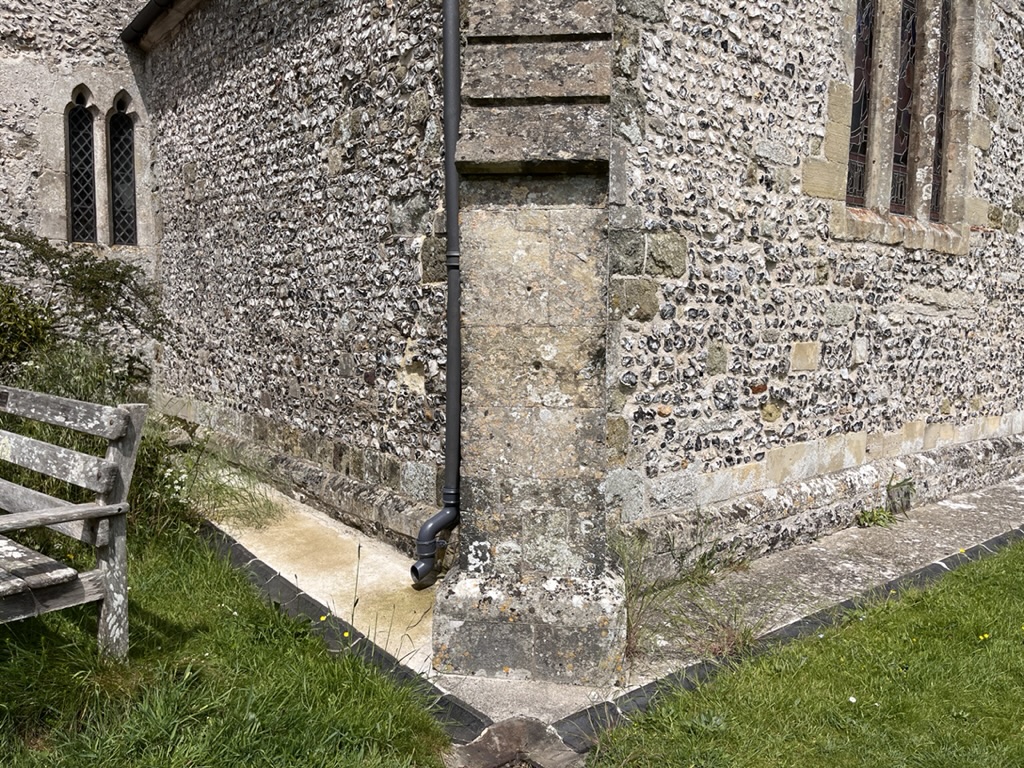
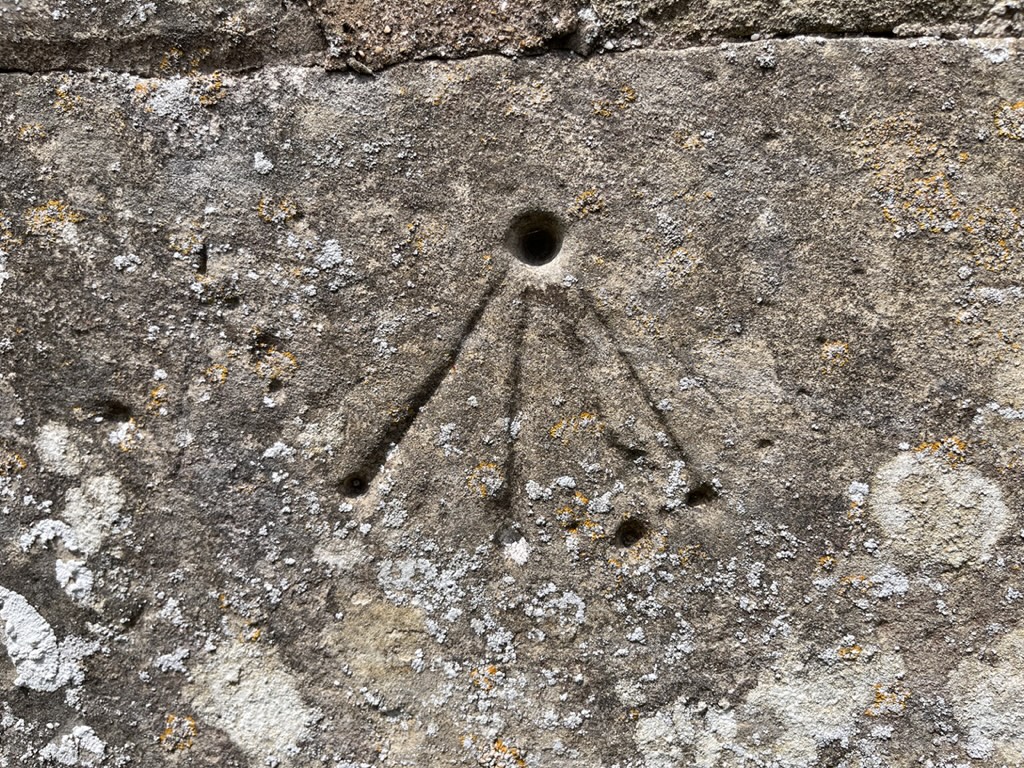
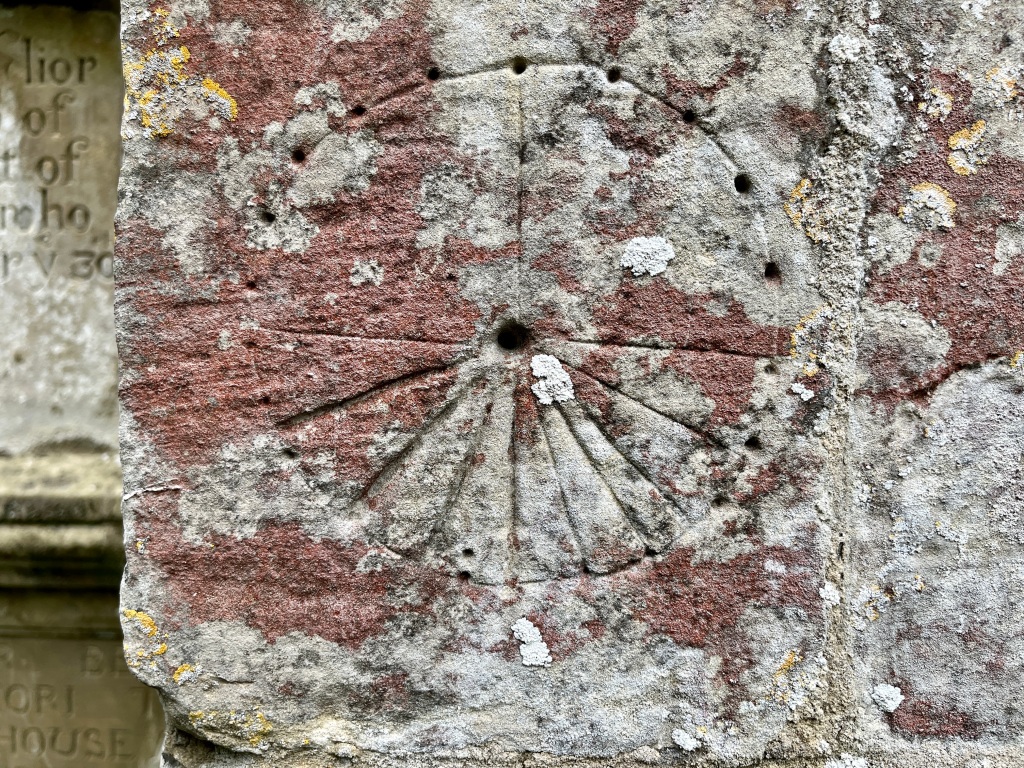
The dial is located on a quoin stone of the buttress at W end of S side. The gnomon hole is centred quite accurately, and surrounded by a ring of small pocks of roughly equal size. The spacing is uneven. 12 of them are drilled in the lower half, in a semicircle that includes the horizontal ‘6-to-6’ line. The other 7 are above the horizontal in the night zone. The pock at notional midnight has 3 on either side, forming an almost symmetrical design. These can only be for decorative purposes, being of no use in marking the passage of the day / night.
As for radial lines, despite erosion 5 lines are visible – 3 LLQ, a faint noon line, the horizontal line RHS. Each terminates with a pock. There remain hints of 2 or 3 others.
❖
GRAFFITI . FONT WITH LATIN INSCRIPTION . COMPASS-DRAWN PROTECTION MARKS
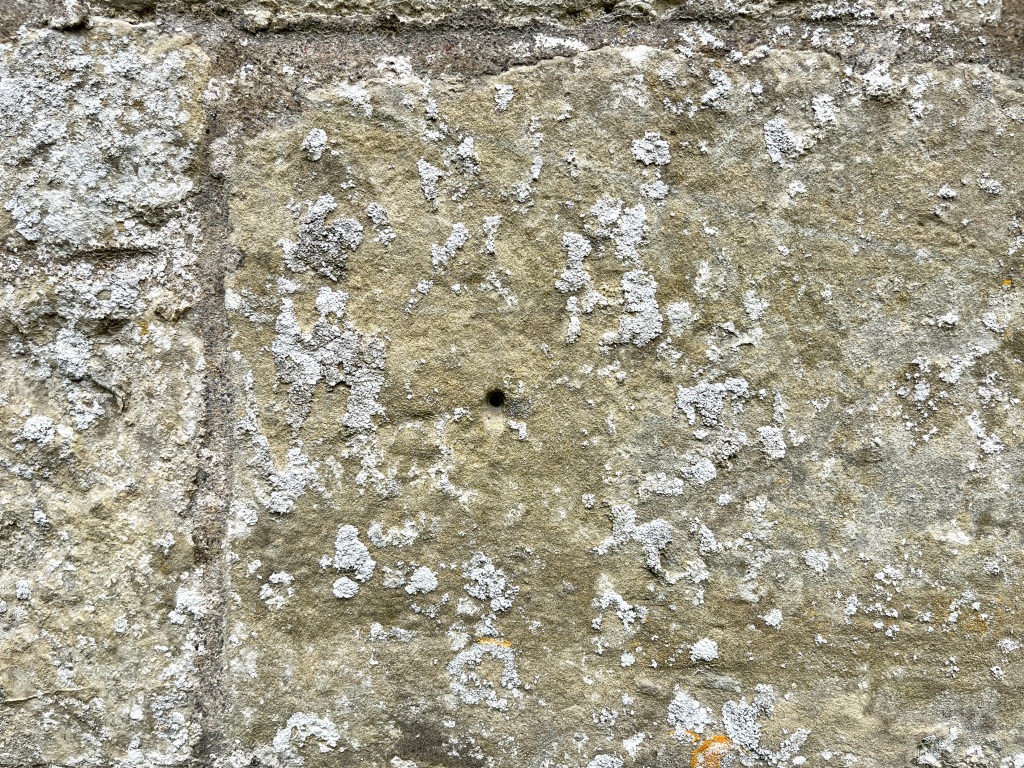
The VV in the first image, assuming it is an initial, is in the distinctive form of a Marian mark, a commonly found protection symbol standing for the ‘Virgin of Virgins’.
GSS Category: Scratch Dial; Mass Dial
All photos Keith Salvesen; header drawing from the Benefice site
GRADE I ♱ Saxon foundation. C12 (first record 1102) early C14, C15, 1845 restoration. C12 Purbeck marble font bowl. Jacobean box pews. Spiritual home of the Dukes of Somerset, duly commemorated. Original 14th century oak door, fittings. 18th-century metal sundial LINK. 7m SW of Warminster. Longleat, Stourhead nearby. 51.1468 / -2.2821 / ST803386
DIAL
The dial is located on a quoin stone on the angled W buttress of the nave, in effect facing SE. There are 8 lines (2 faint RHS), with a hint of a horizontal across the filled gnomon hole. In LLQ the large gap between the first 2 lines appears to have a pock midway between them, spaced accurately enough to be deliberate. If so, it may have been intended as a marker of Terce as the most significant hour of observance.
TWO-FACED DIAL: above the porch is an intriguing metal dial with 2 faces at right angles, facing SE and SW. This will be written up separately.
GSS Category: Scratch Dial; Mass Dial
All photos Keith Salvesen except header, Retired QA (OS CC)
GRADE I ✣ Saxon origins, remnants from late C12; Chancel C13, north and south chantries C14, aisles rebuilt late C14, remainder C15. Highly praised *** by SJ: the screen is the best in Wiltshire; excellent stained glass… A small town fortunately by-passed by the dread A303. 51.0893 / -2.2711 / ST 811322
DIALS
St Michael provides plenty of scope for scratch dial sleuths to bicker about. BBS records 6. The Mere Historical Society records show Handwritten notes on green paper by John Ingram to Dr David Longbourne relating to a sundial (scratch dial) on the buttress of St Michael’s Church, Mere, 1990’s. The Church’s helpful info suggests 2 or perhaps 3. I believe there are at least 6 and possibly up to 10 dials in all.
The BSS record of 6 dials gives 1 – 3 in a cluster on buttress 2 E of the porch (see 4, 9 & 10 below); and 4 – 6 grouped further E on buttress 5 / S wall stairway area.
DIAL 1
DIAL 2
DIAL 3
DIAL 4
(and see plausible dials 9 & 10 on same stone))
DIAL 5
DIAL 6
DIAL 7
DIAL 8 (?)
DIALS 4 (above), 9 & 10
Dials 4, 9 and 10 – all different types – are on the same stone and to an extent impinge on each other.
DIAL 9
DIAL 10
CONCLUSION: enthusiasm can be an enemy of accuracy, and there is always some leeway with multiple dial Churches. I haven’t tried to analyse each dial – the array will with any luck elicit some opinions.
GRADE II ✣ C12, C13, C16. Originally cruciform with crossing tower. Chancel arch blocked and west part of church partly dismantled 1868, gradual deterioration. Chancel used as a mortuary. Declared redundant 1970; now in the care of CCT. A surprising and rather poignant place to visit, all well worth examining. Note the bier. 3m SE of Warminster. 51.1728 / -2.1323 / ST908415
DIALS
St Leonard is a multi-dial church with 9 dials recorded by BSS (1994), of which some details are scant. Four are described only as ‘gnomon hole only’ / ‘cannot be classified’. Featured below are 8 designs that I have concluded are dials, or might be (if only doubtful) in a couple of cases.
DIAL 1
Dials 1 and 2 are together LHS of the Priest’s door
DIAL 2
DIAL 3
Hint of a circle, esp. ULQ
DIAL 4
A hint of a circle, esp ULQ
DIAL 5
Dial stone presumed to have been re-sited and rotated 90º
DIAL 6
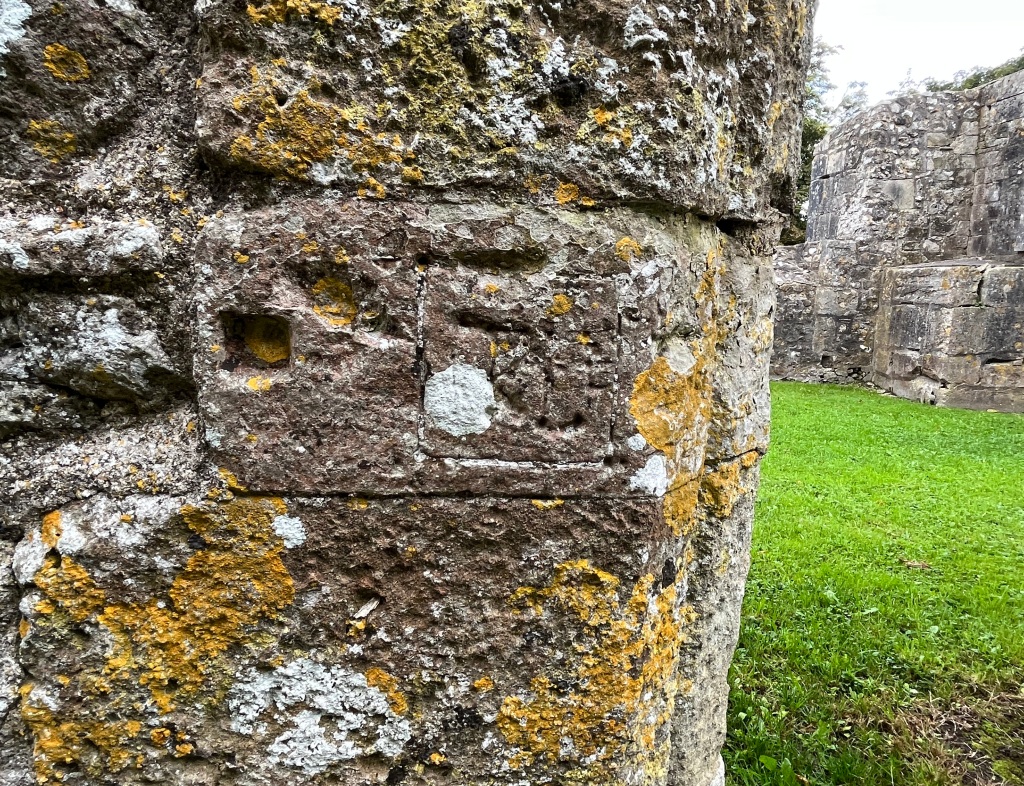
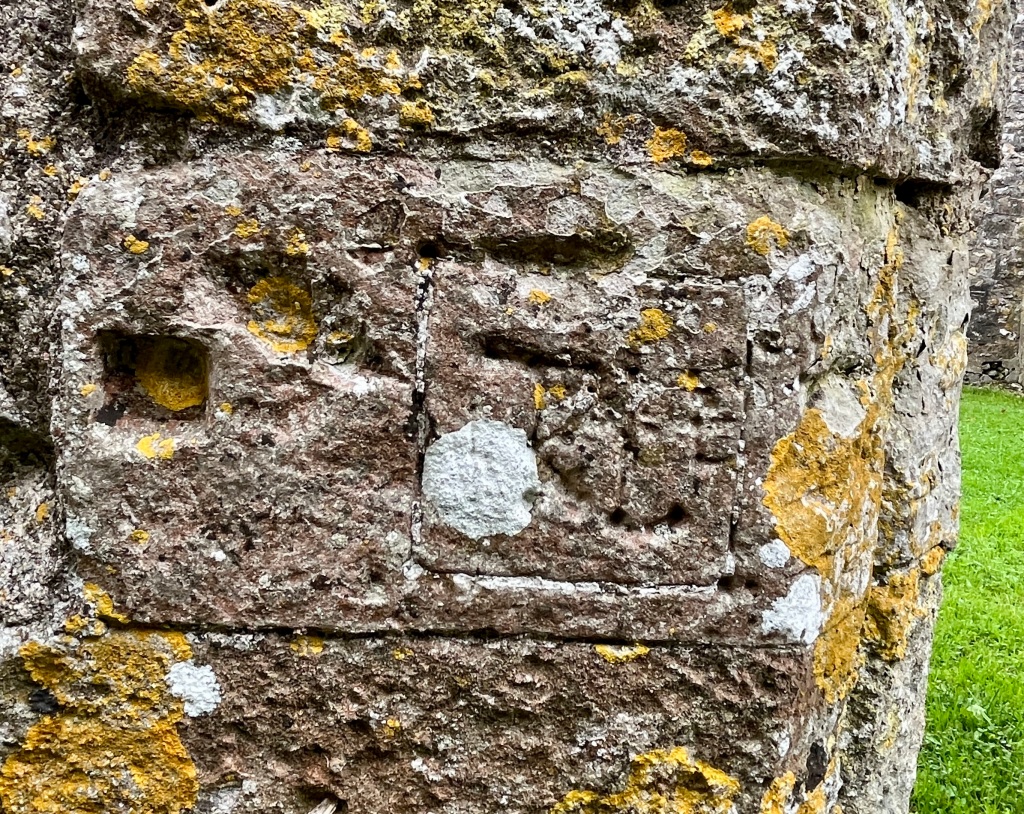
A remarkable dial within a square, with 2 large holes at bottom that appear to represent noon. It’s almost certainly unique. There’s mention of a Norman dial: perhaps this is it. There’s an apotropaic feel to it.
DIAL 7
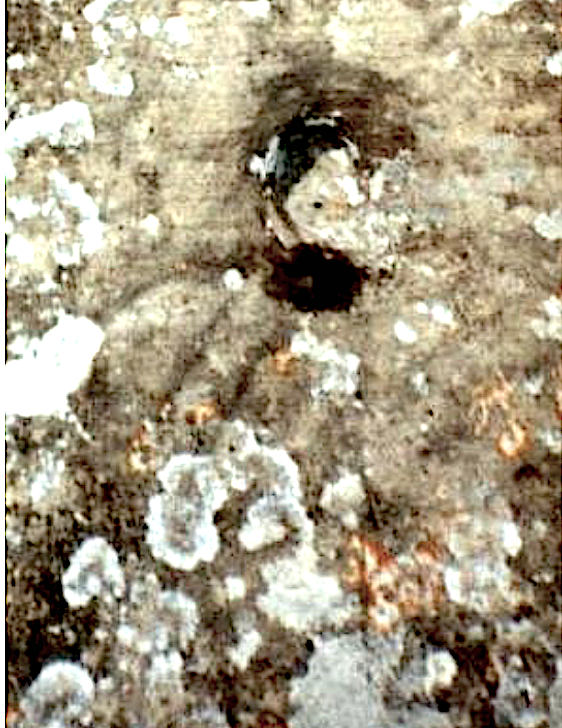
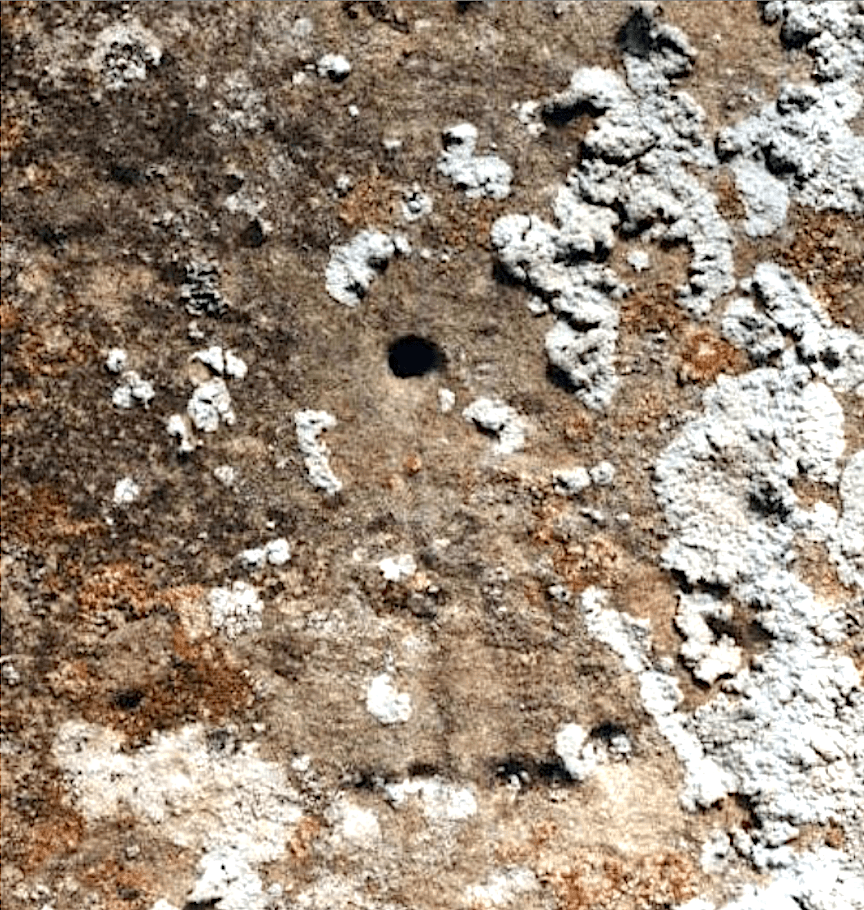
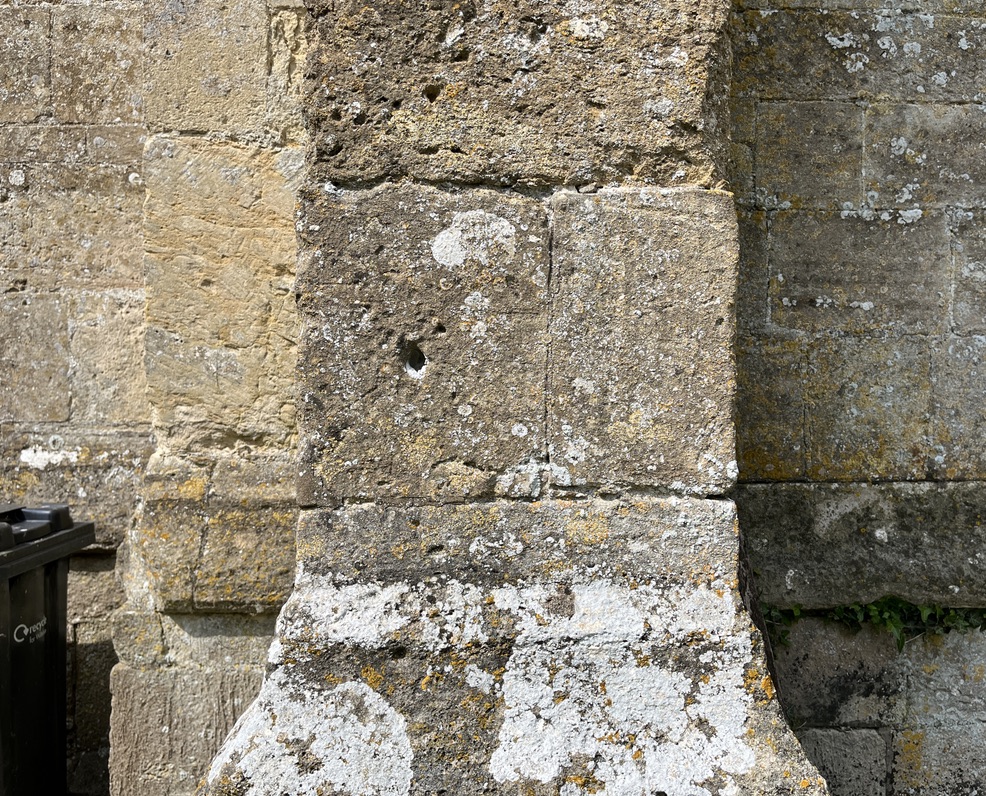
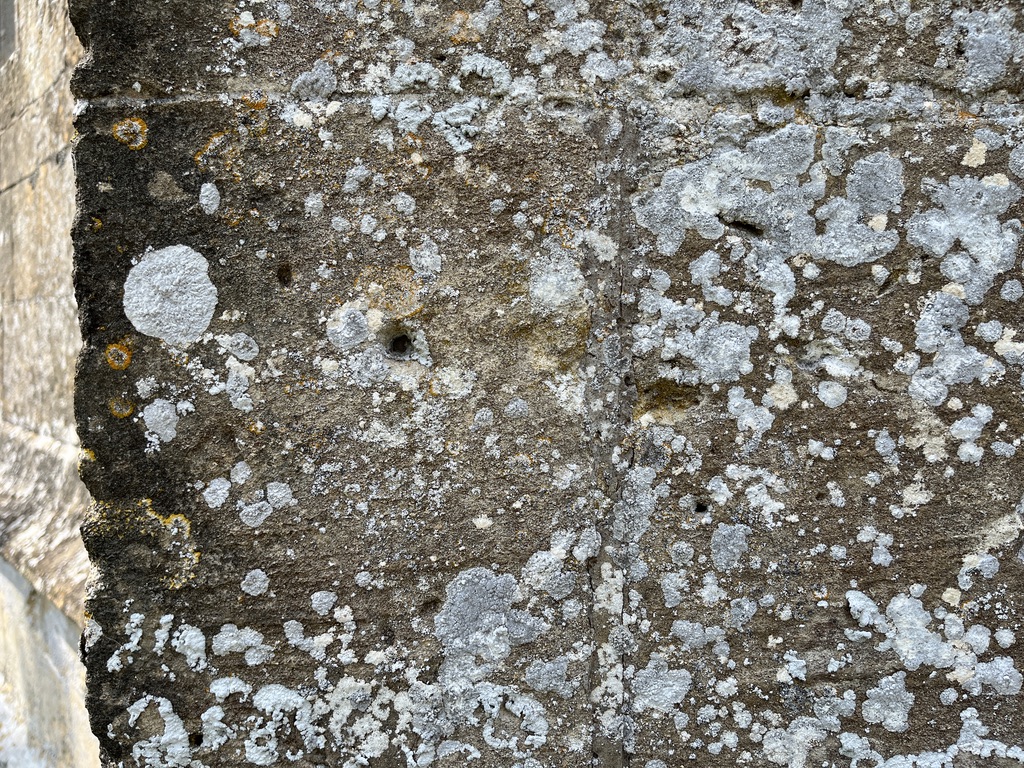
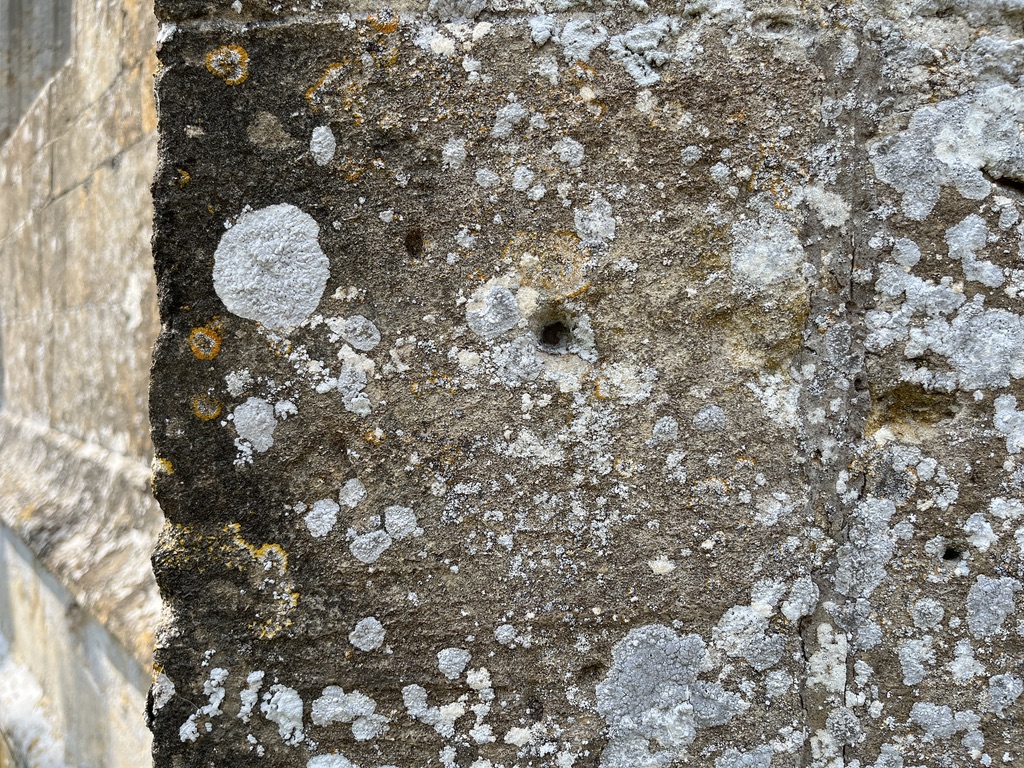
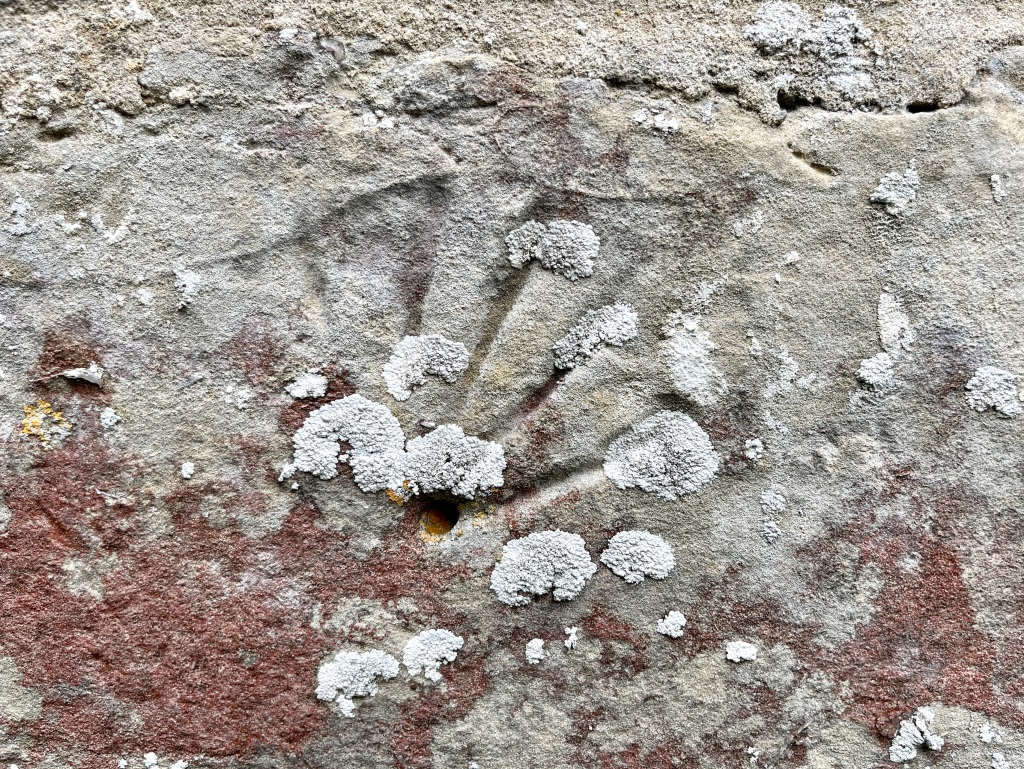
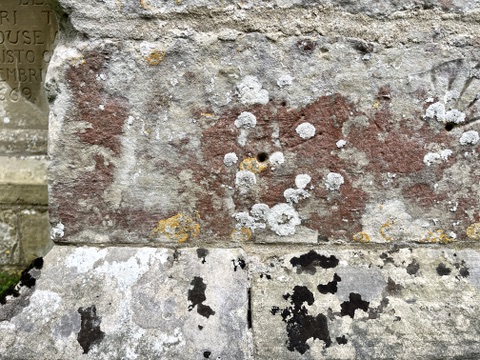
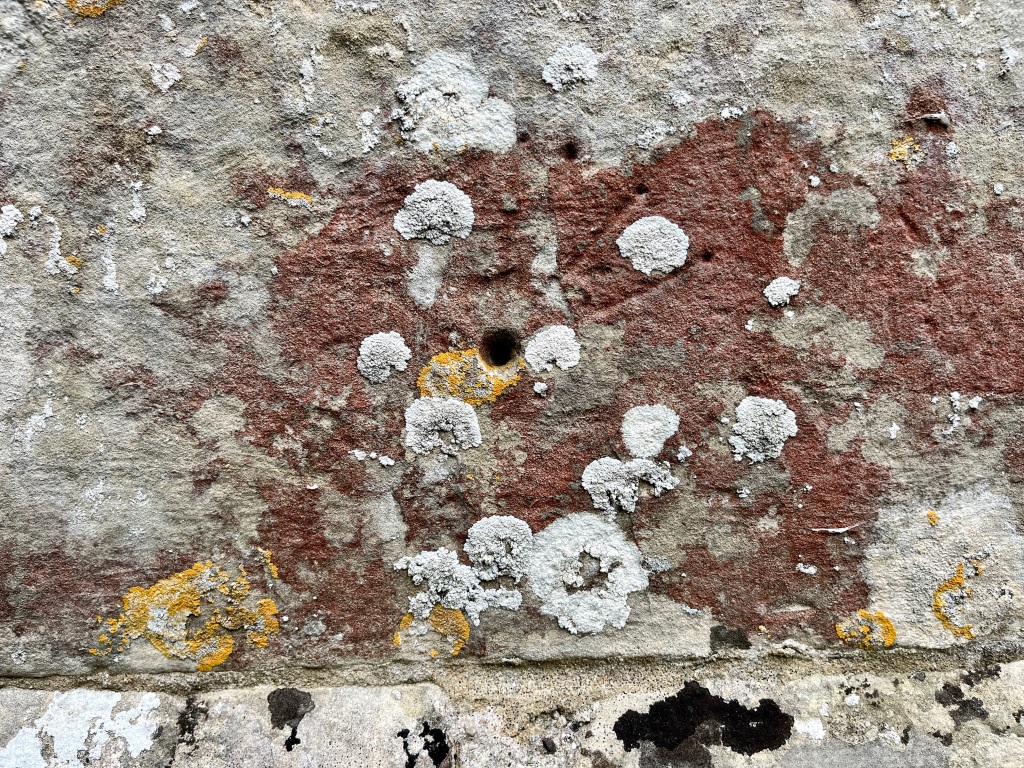
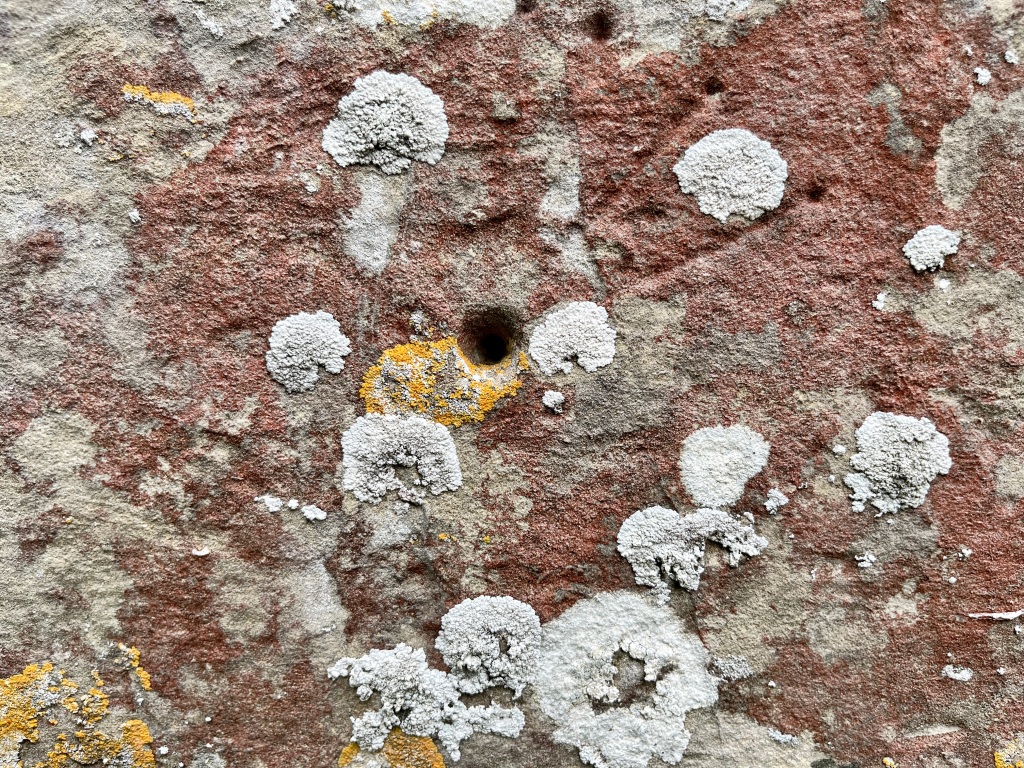
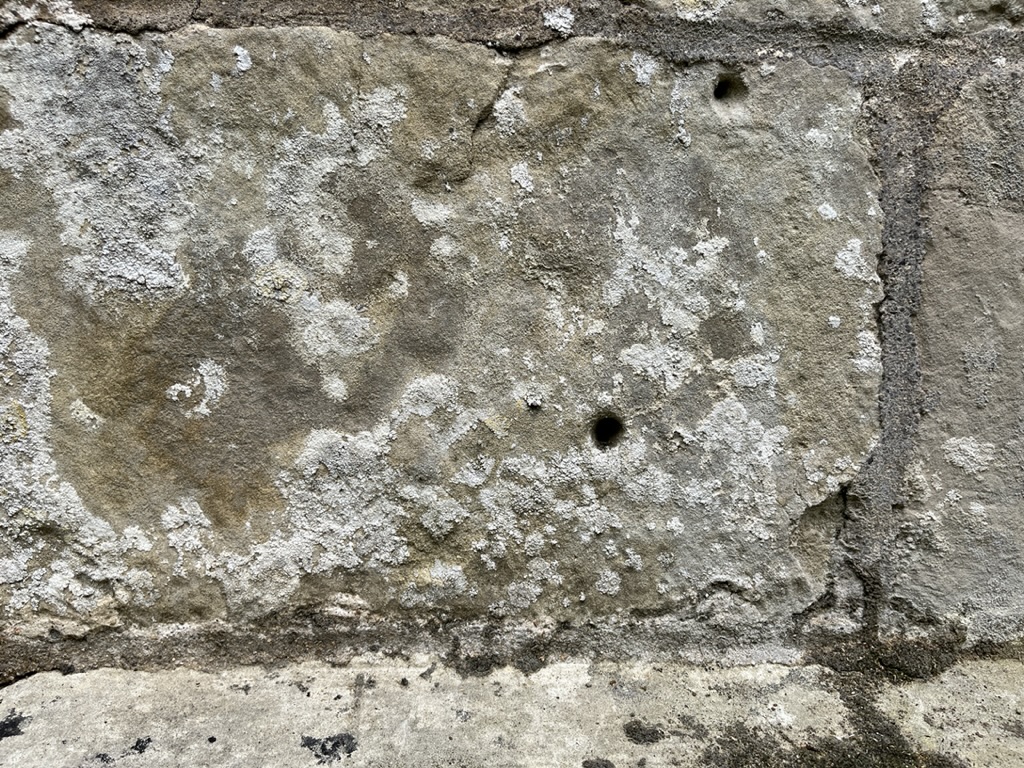
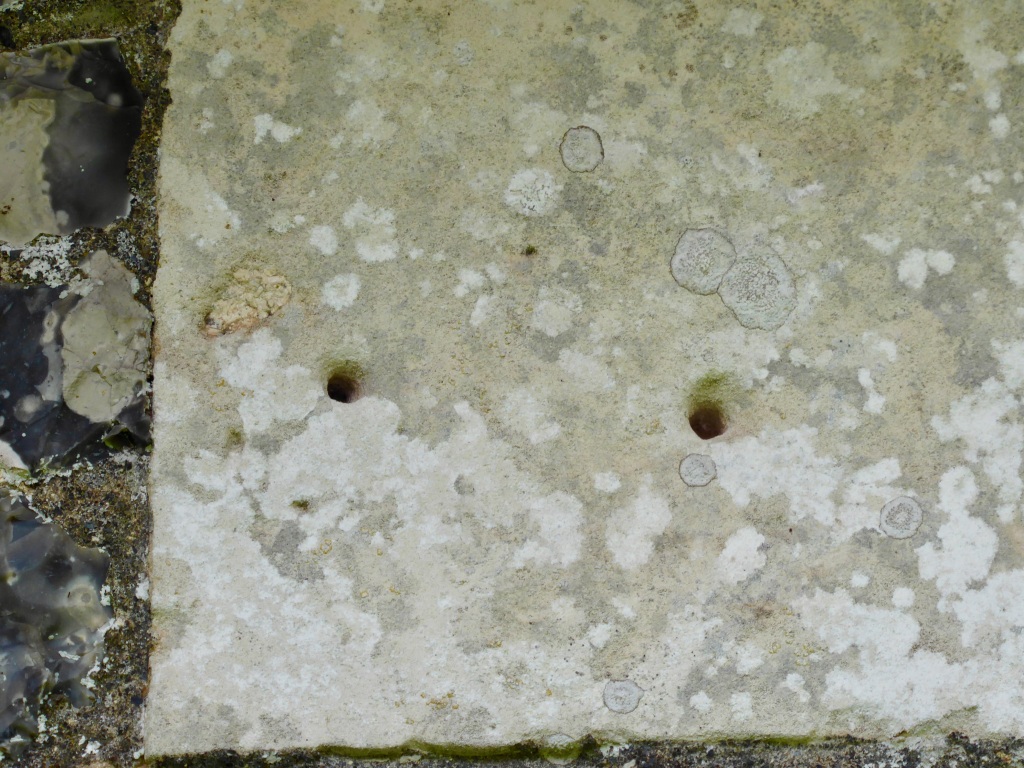
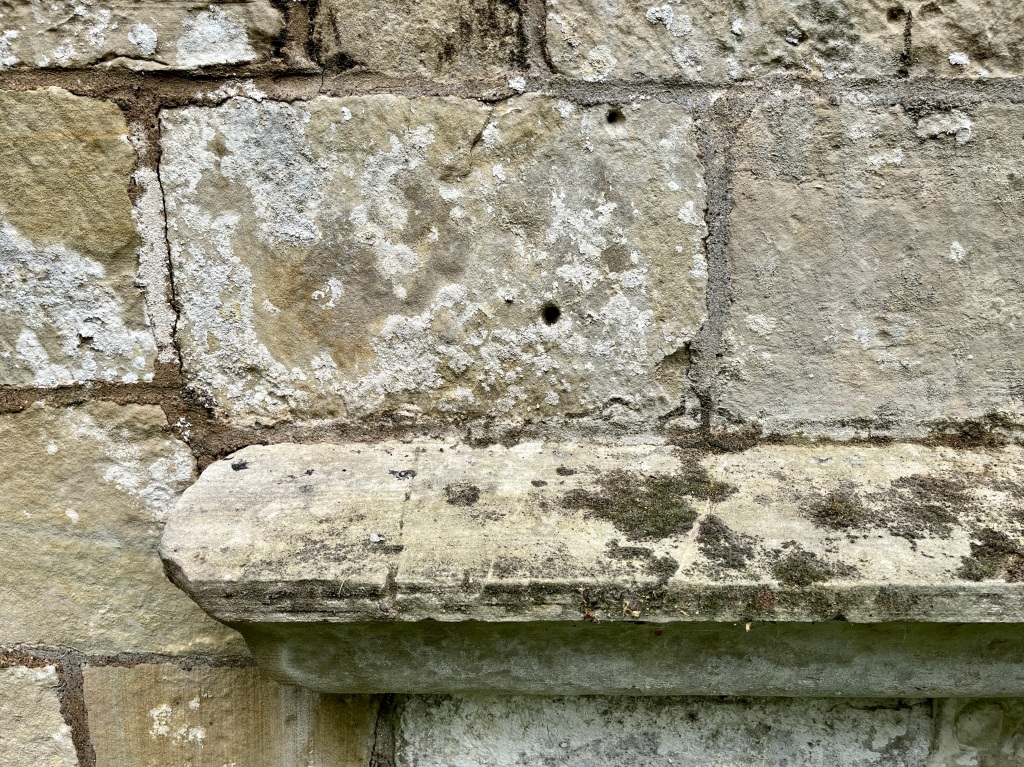
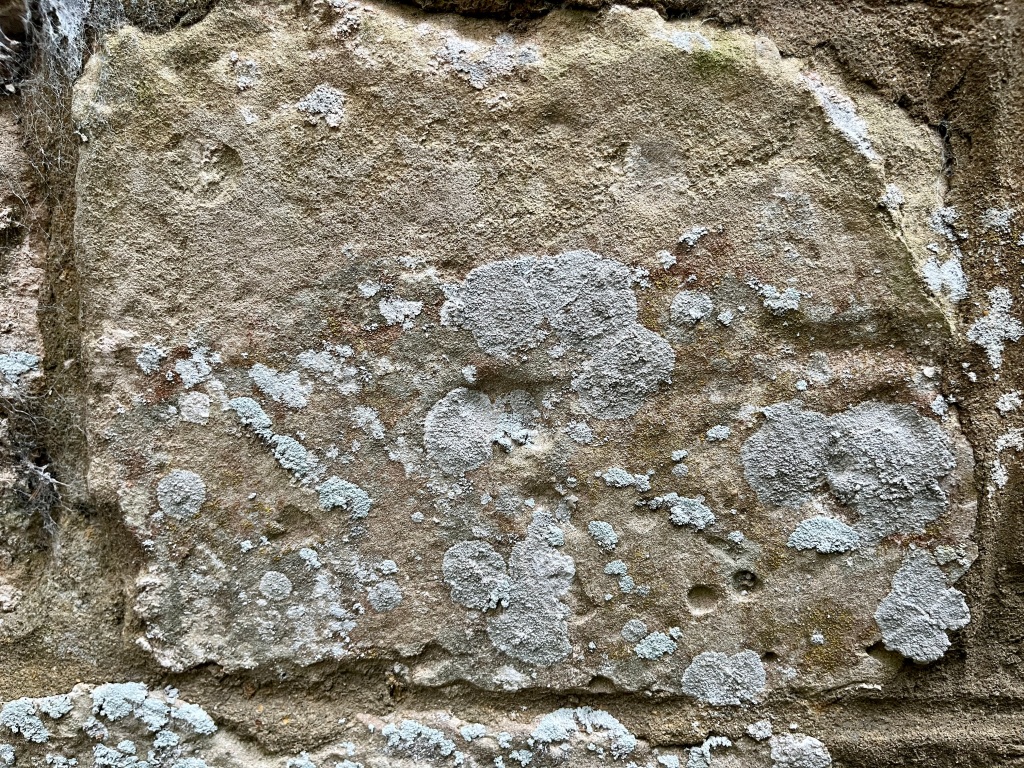
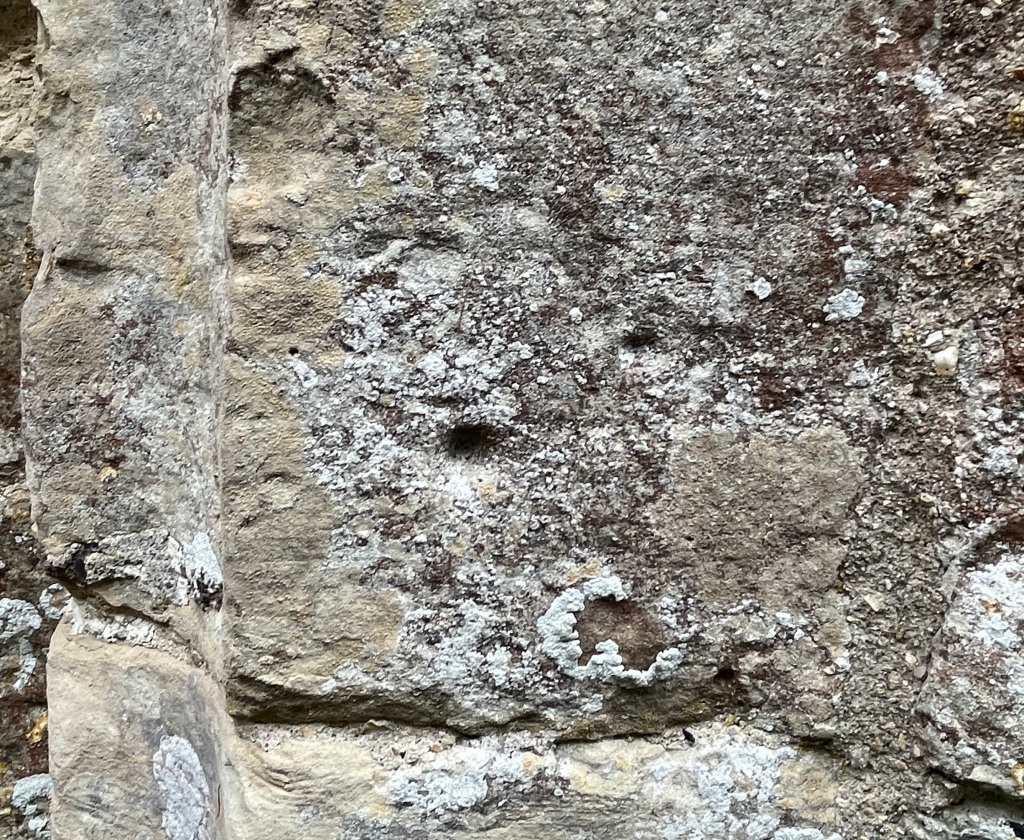
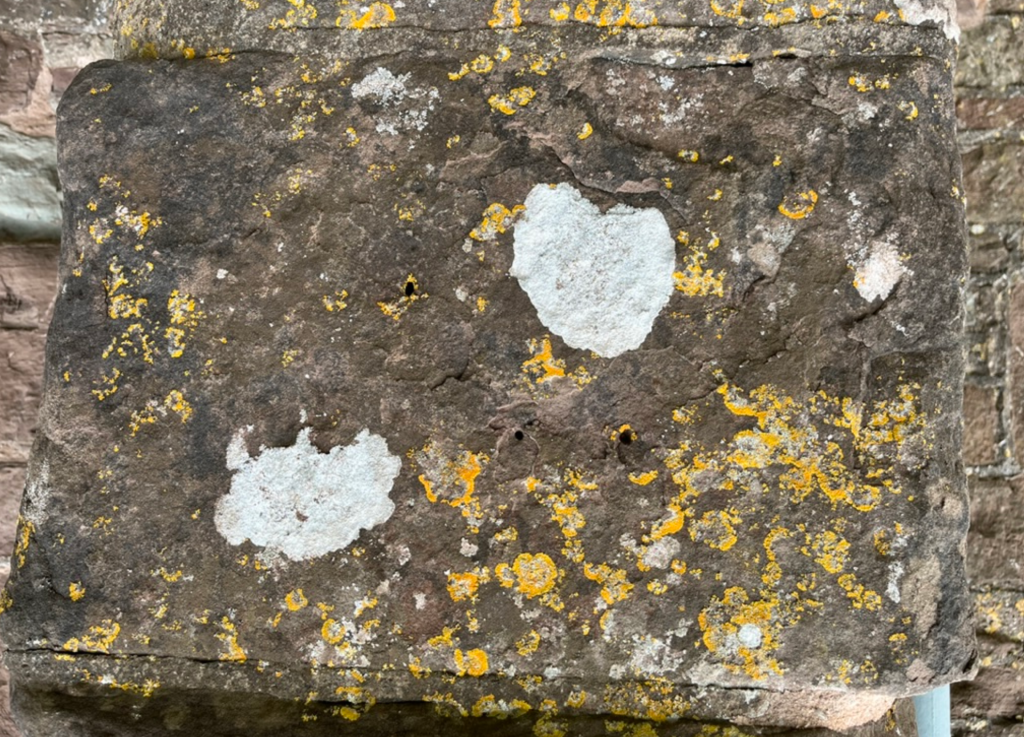
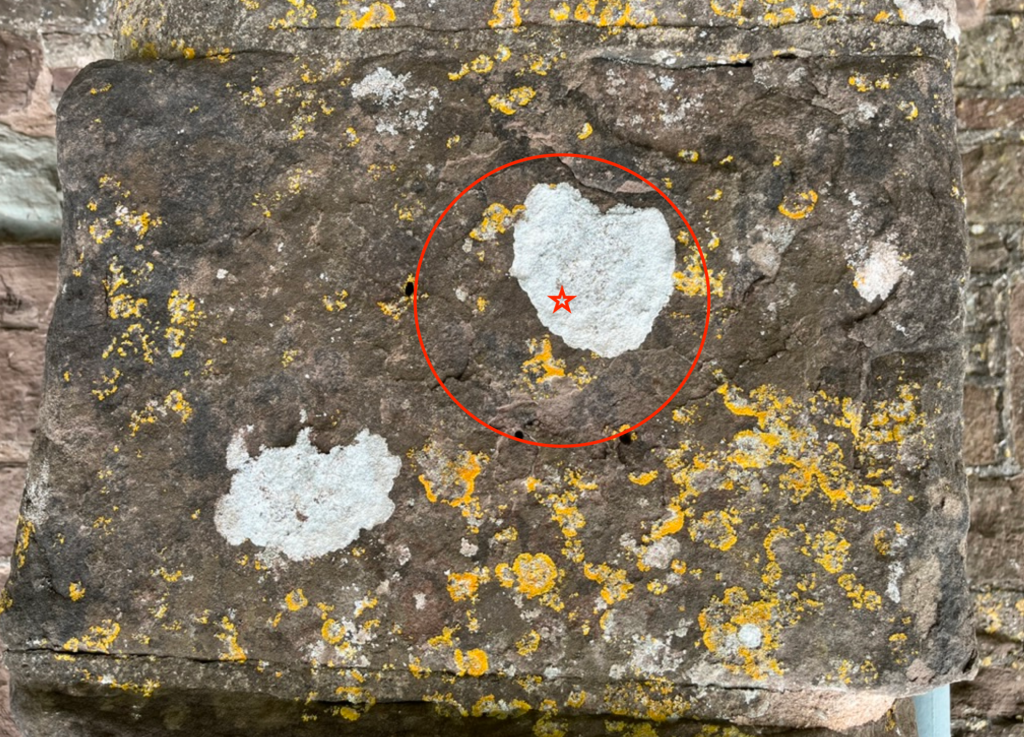
Nearly excluded from consideration. However the small holes are accurately on a circumference, and there’s the possibility of a small gnomon hole under the lichen. Borerline.
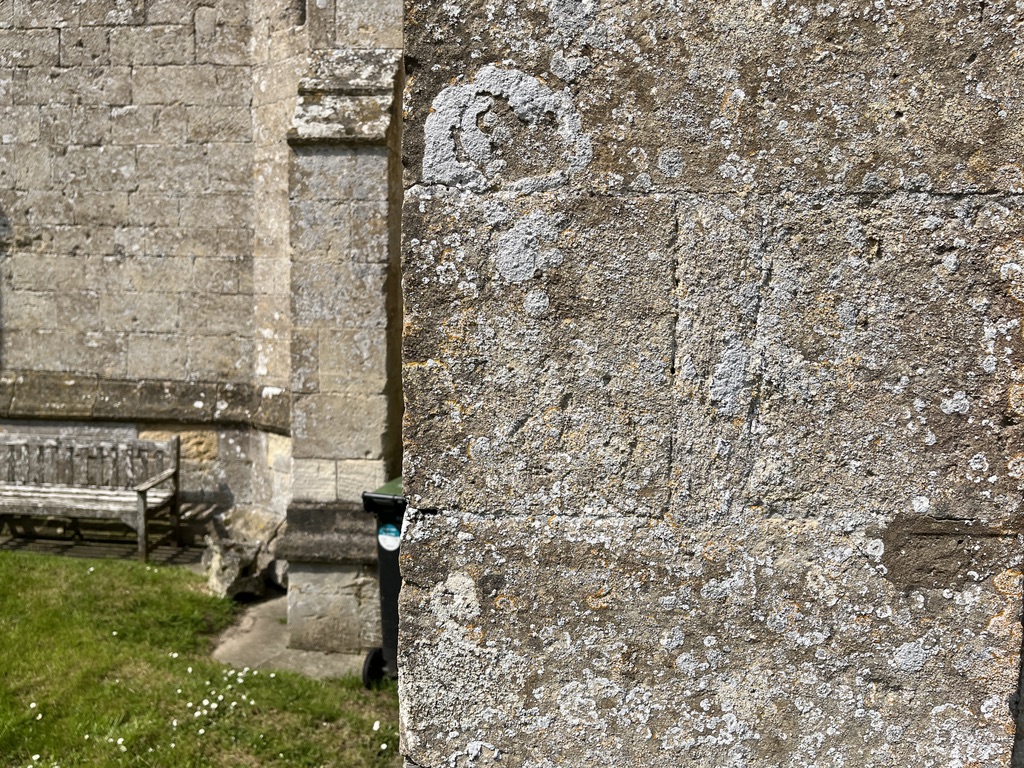
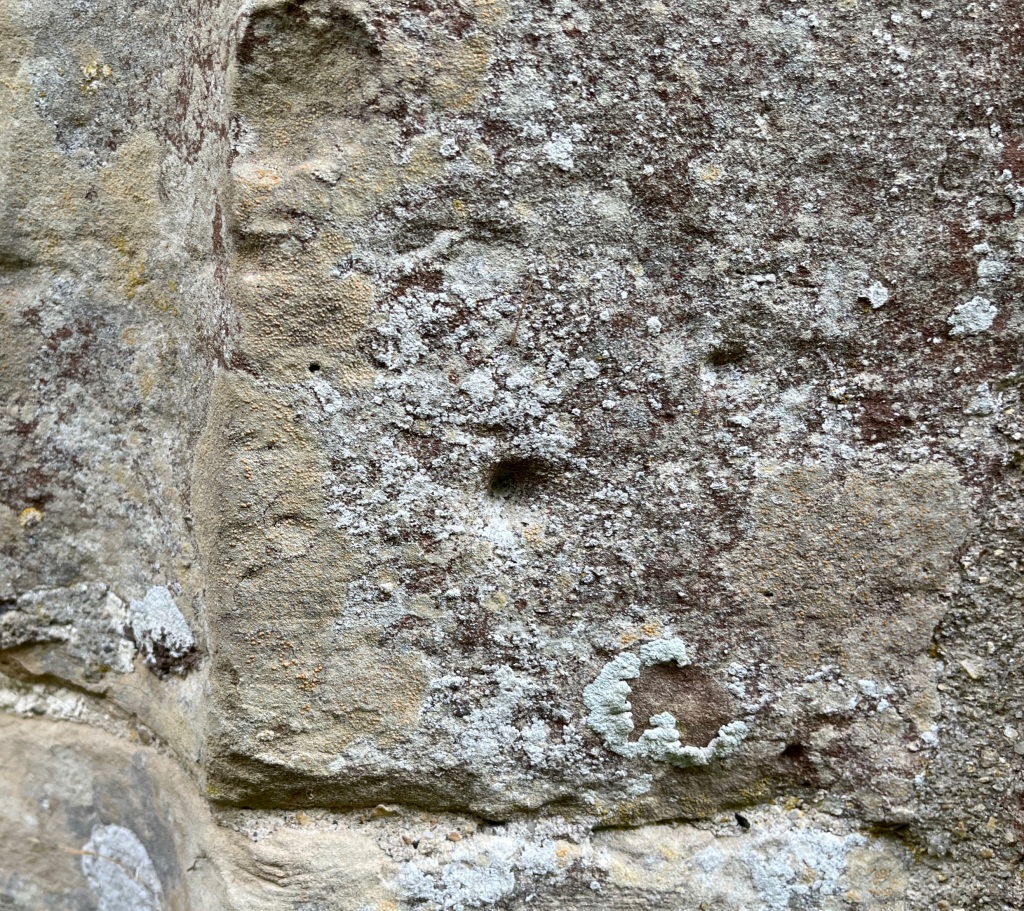
Probably not a dial but looks a bit more promising when rotated 90º. The pocks are (roughly) evenly spaced and there is a slight curve. No evident gnomon hole. Maybe simply a drilled design bored by a bored sacristan.
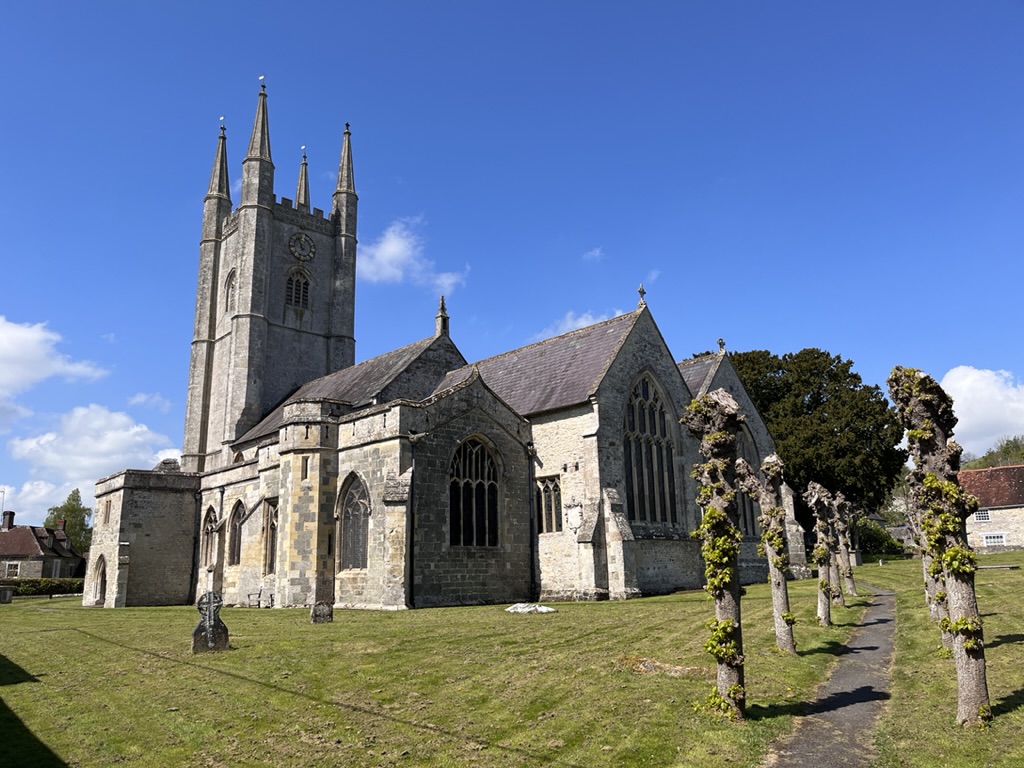
GRADE II ✣ A fine Norman church built late C11 (nave); chancel c1200; tower C13. Major restorations ±1900 (Ponting). An estimable entrance. Worthwhile (PEV) and (more graciously) one of Wiltshire’s most delightful churches (Betjeman). Lovely font; wall paintings; pilgrim crosses, protection marks & graffiti. 6m N of Salisbury. 51.1244 / -1.8301 / SU119361
All Saints also has a vertical dial which will feature separately
DIAL 1
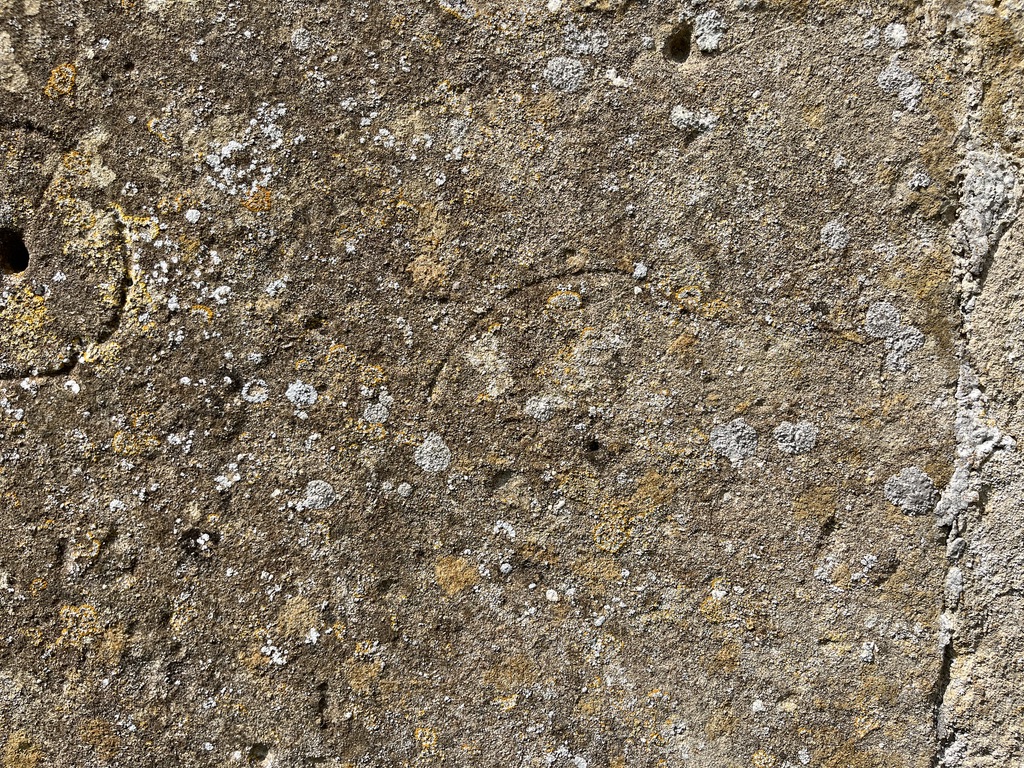
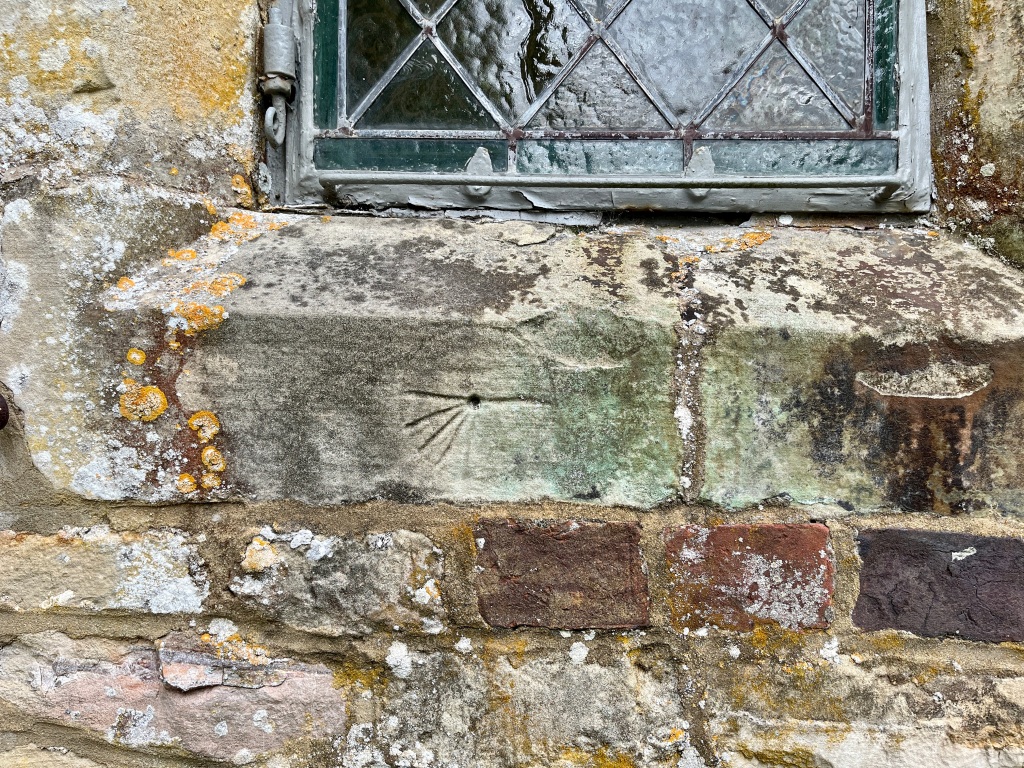
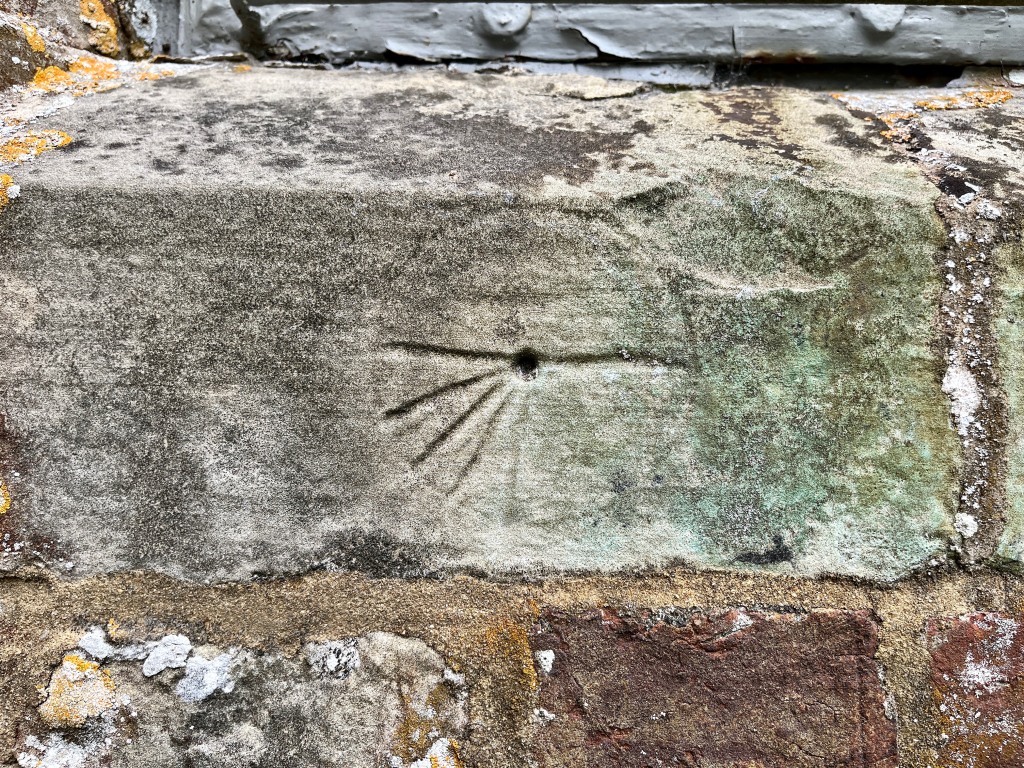
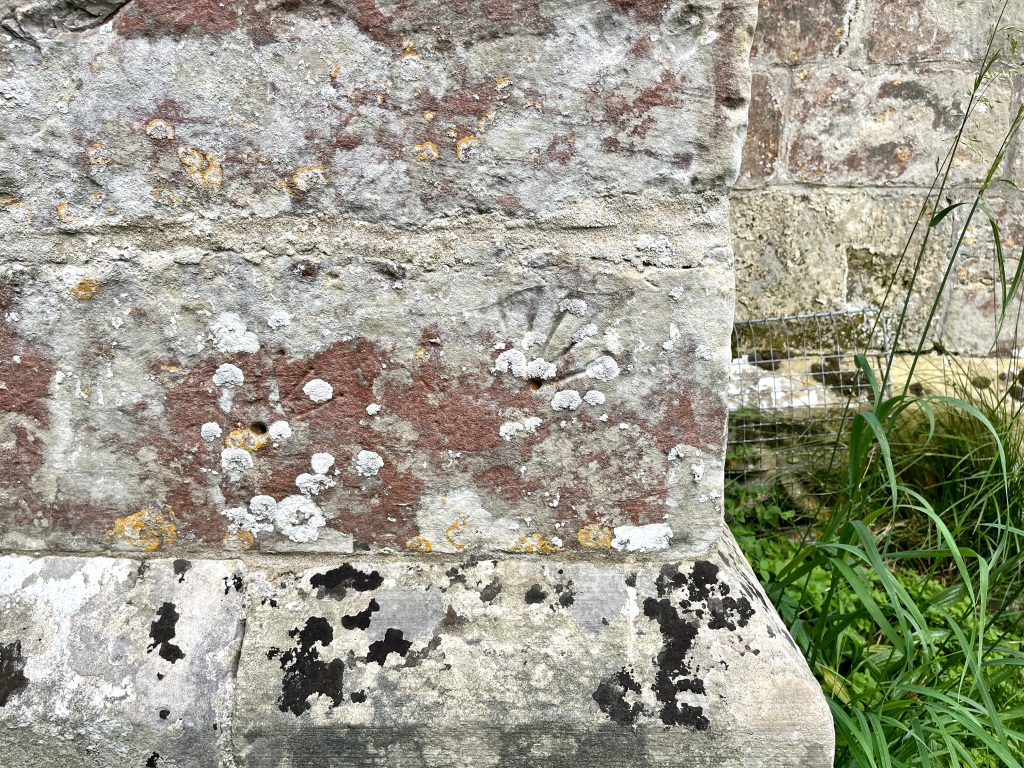
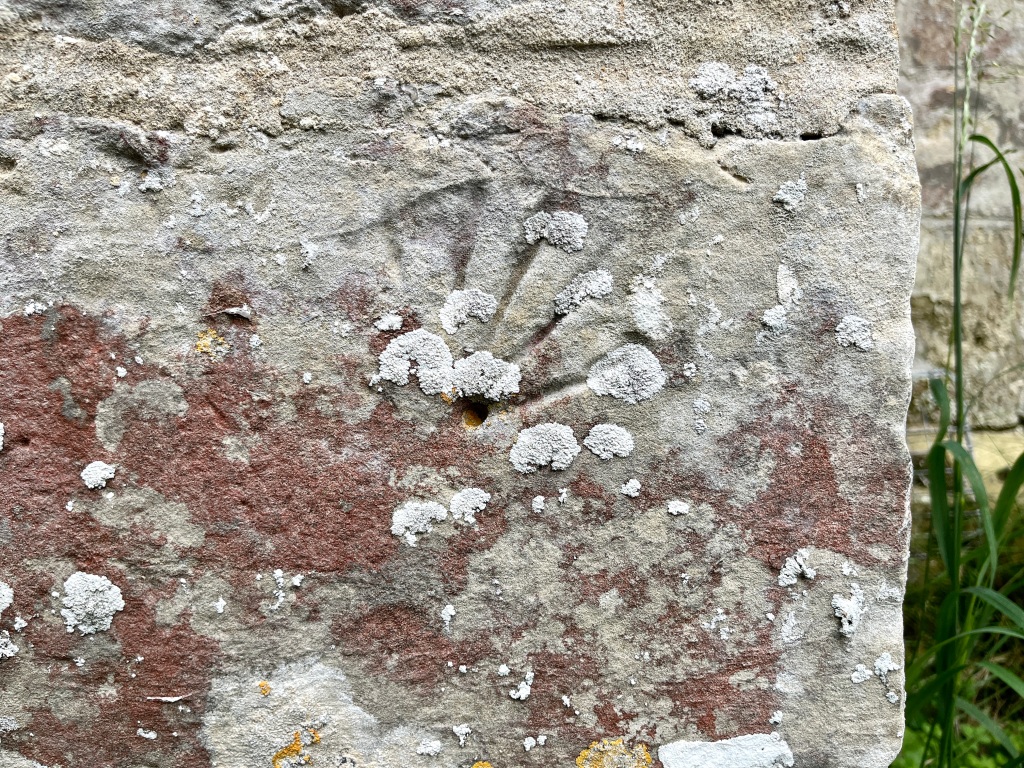
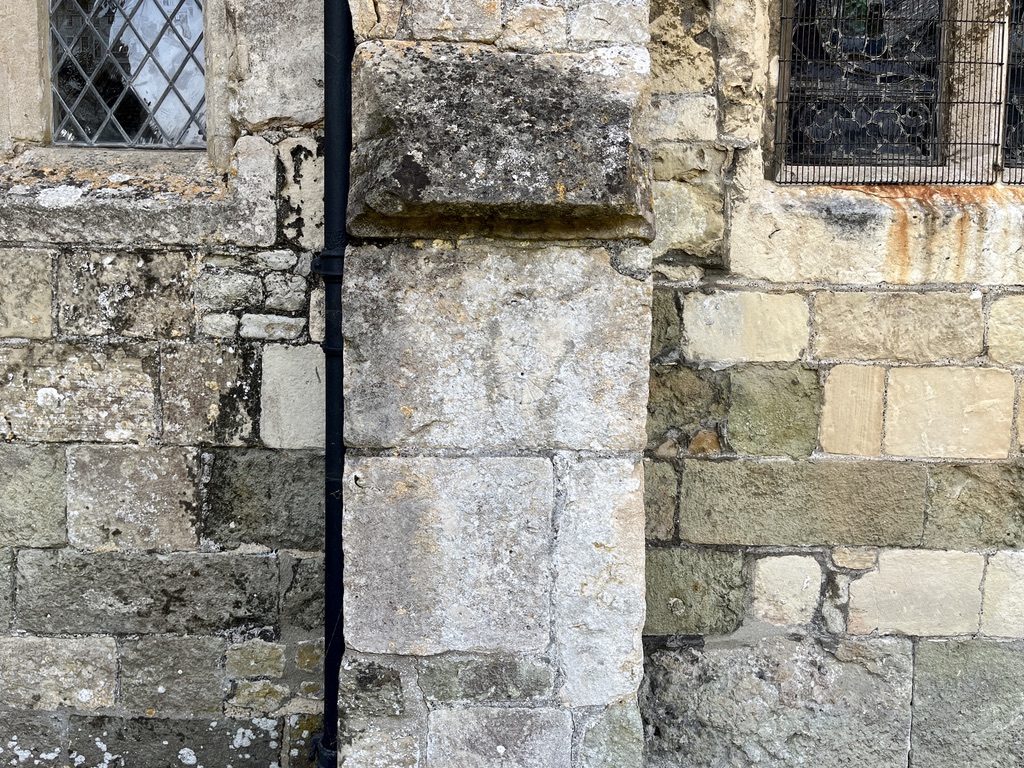
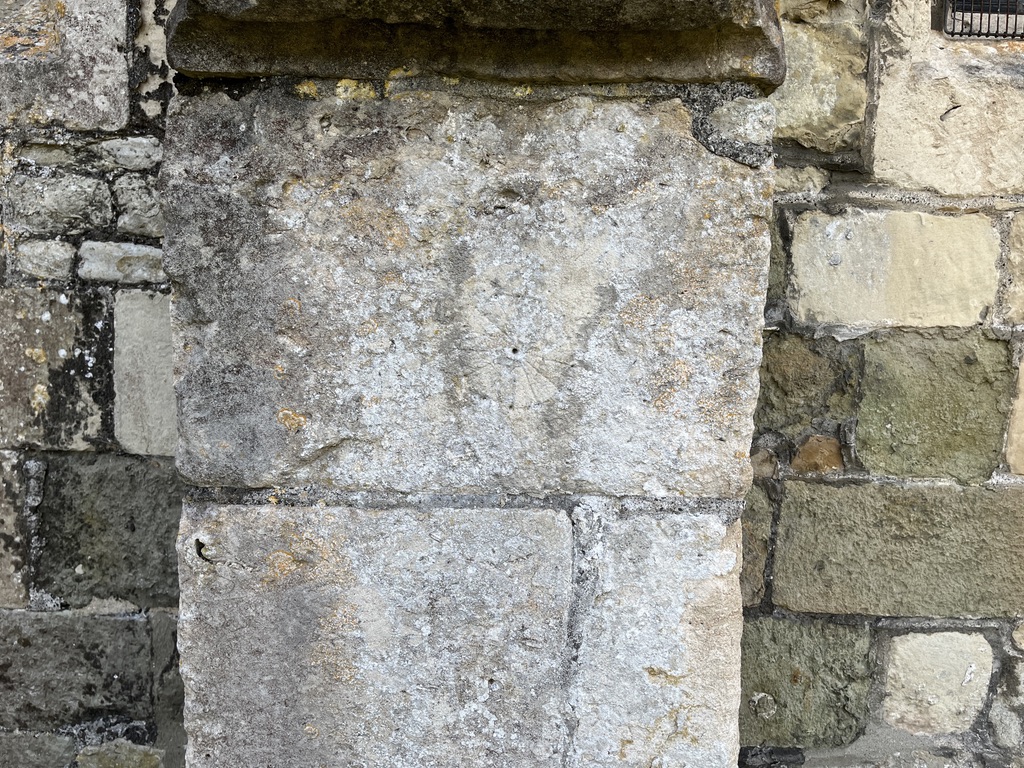
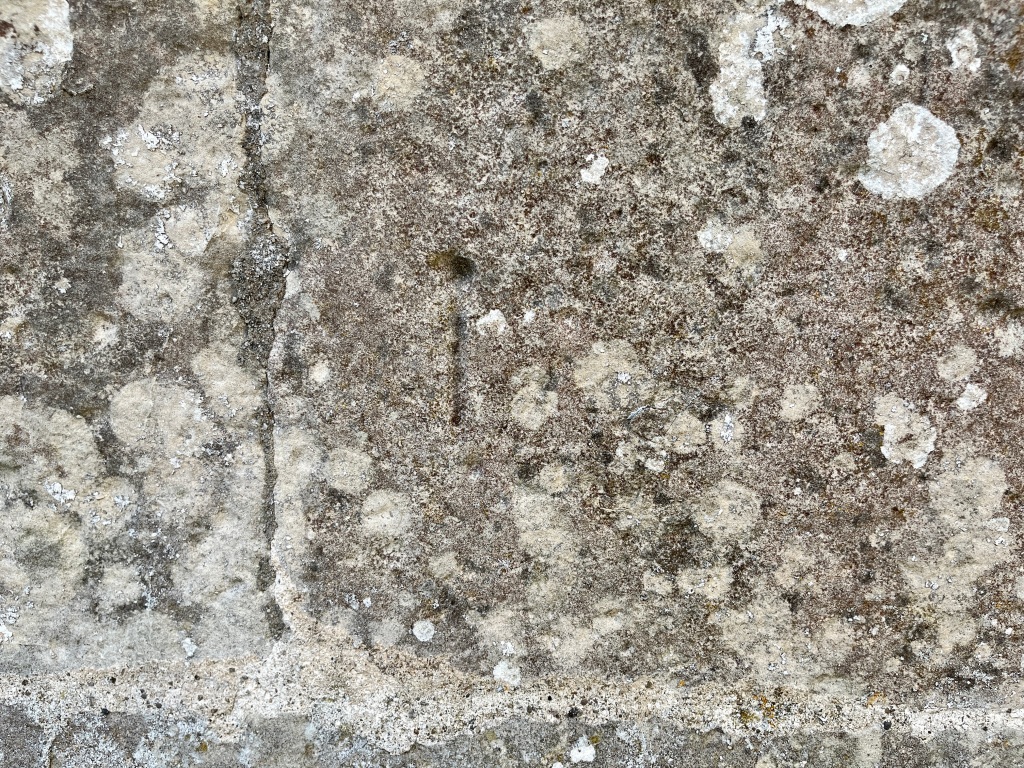
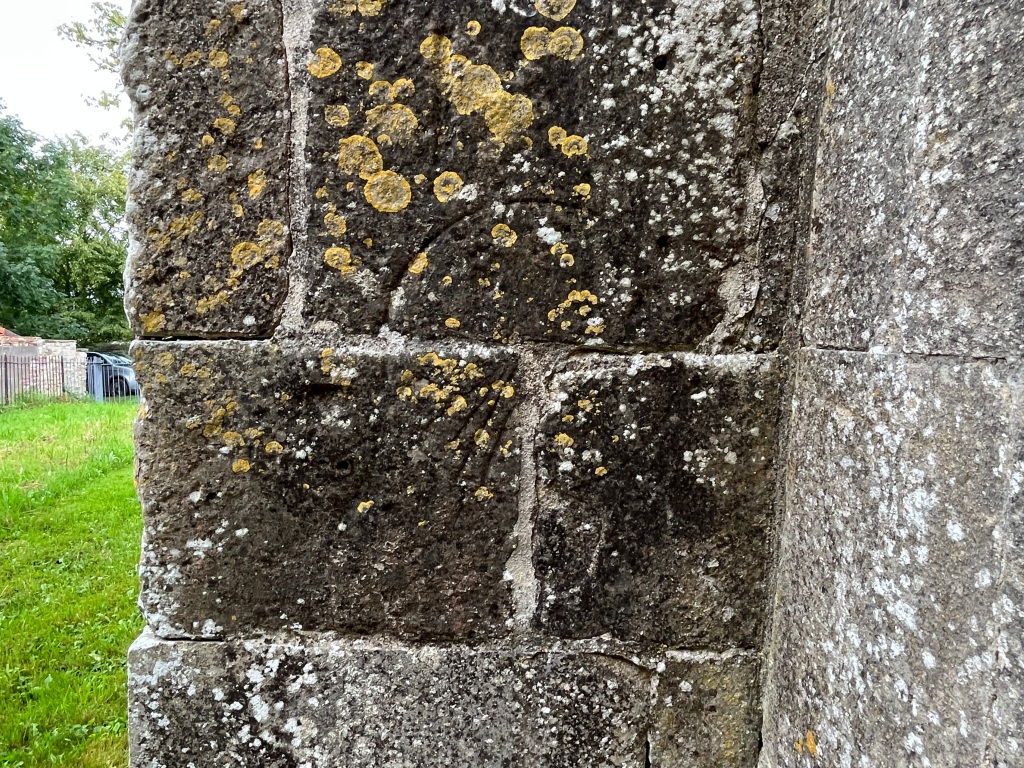
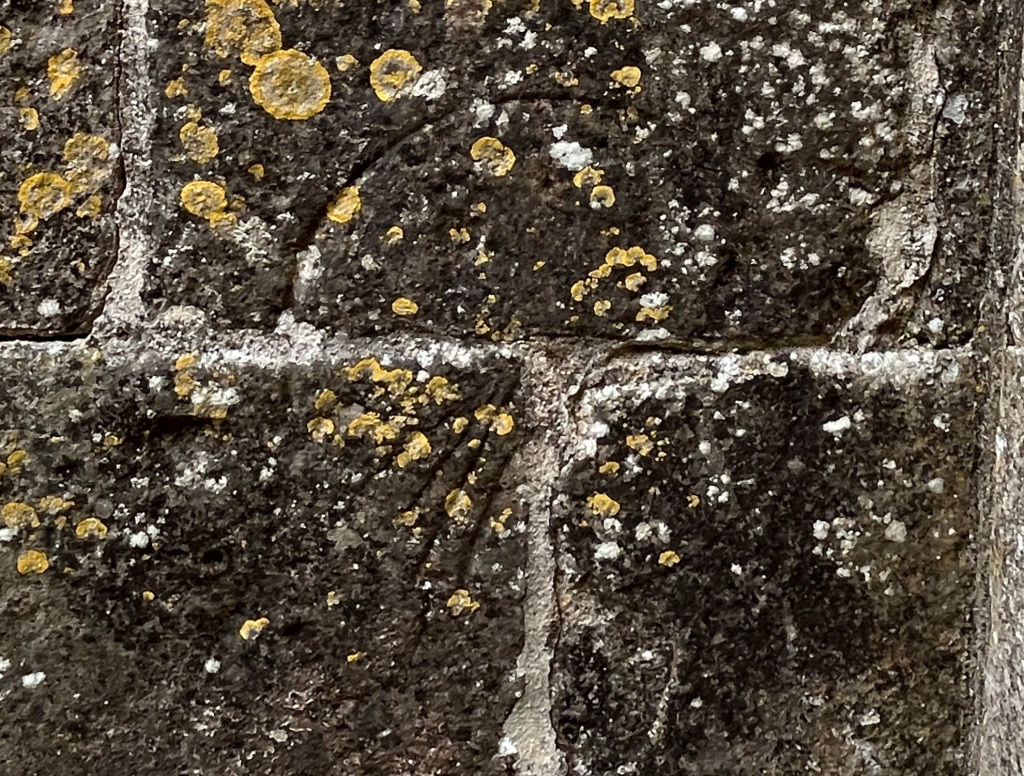
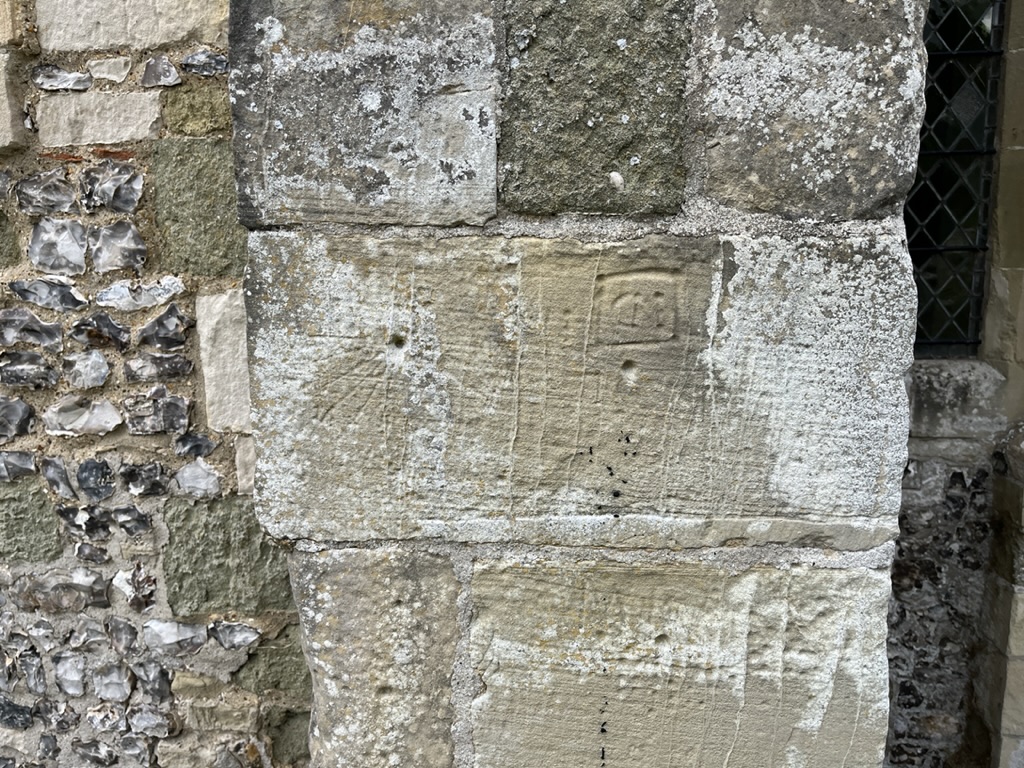
Dial 1 is semicircular, located on the E buttress of the nave, close to the Priest’s door. It is in pleasingly good condition. Almost all lines of this 6-to-6 dial are visible, though much eroded RHS. The incisions are somewhat haphazard, and it is slightly odd that the most significant cut – the noon line – is so random.
DIALS WITHIN THE SOUTH PORCH
On entering the porch, the splendid door into the church itself invites immediate exploration inside. However, the porch conceals 3 scratch dials that a handful of people might like to investigate. There is scant reference to the scratch dials either side of the doorway. A dial LHS is recorded by BSS; one RHS is vaguely hinted at; another dial RHS is not noted anywhere that I can find, perhaps a new (modern) discovery.
DIAL 2
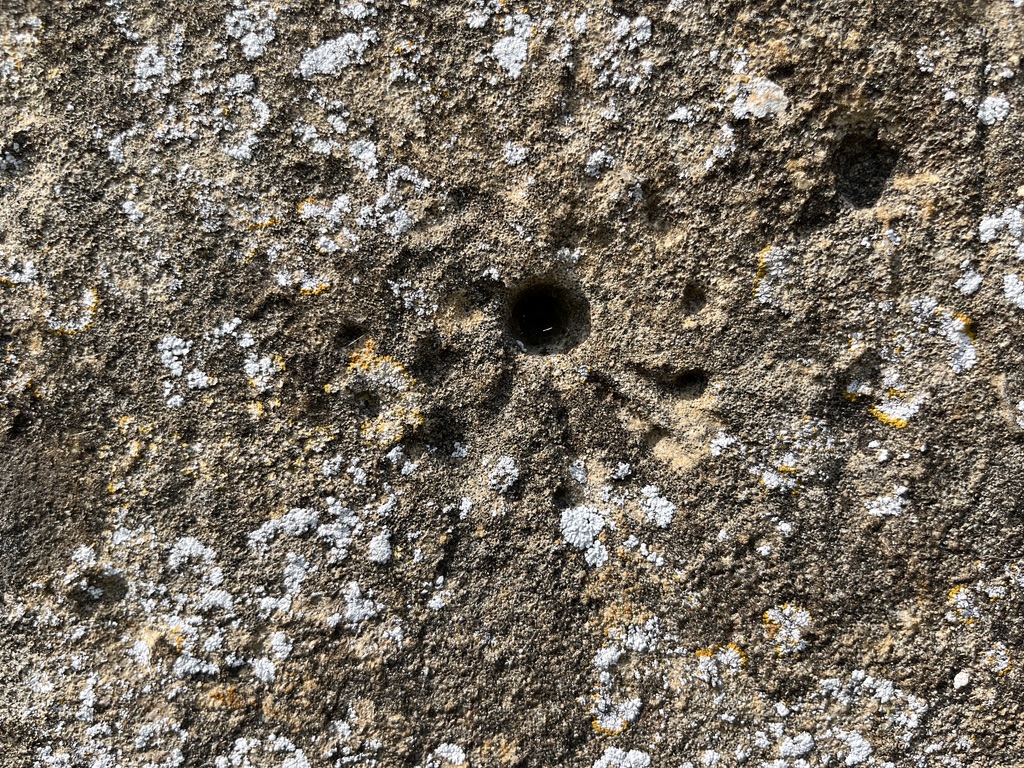
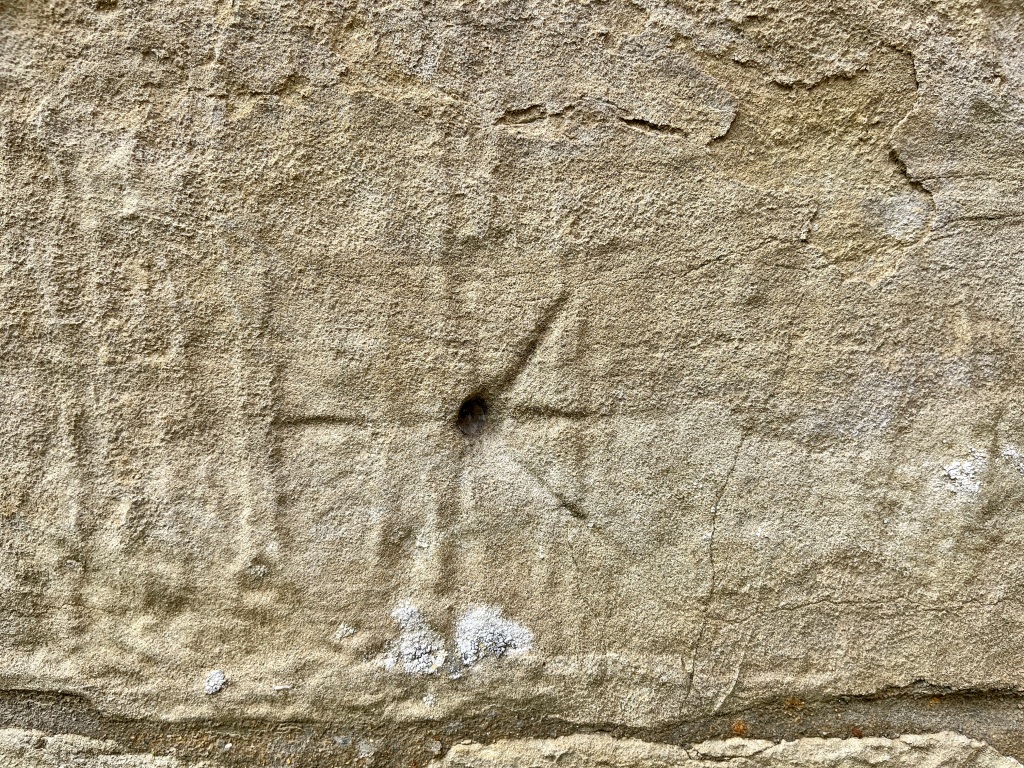
This dial is quite easy to find, half-concealed LHS but visible as one walks past. There are well defined lines, with the noon line probably the almost vertical one with a small pock at the end. I wondered if the straggly lines LRQ were later additions. Without them, the lines are all LLQ and (as with Dial 4 below) indicate mid-morning as the main part of the day for a service.
DIAL 3
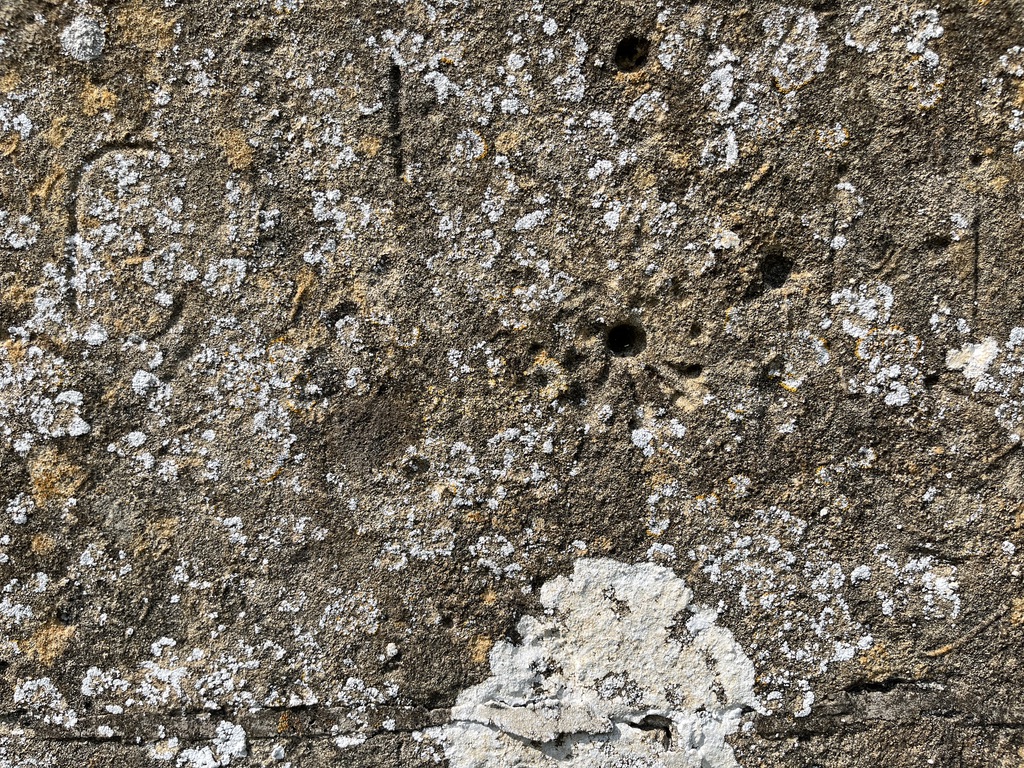
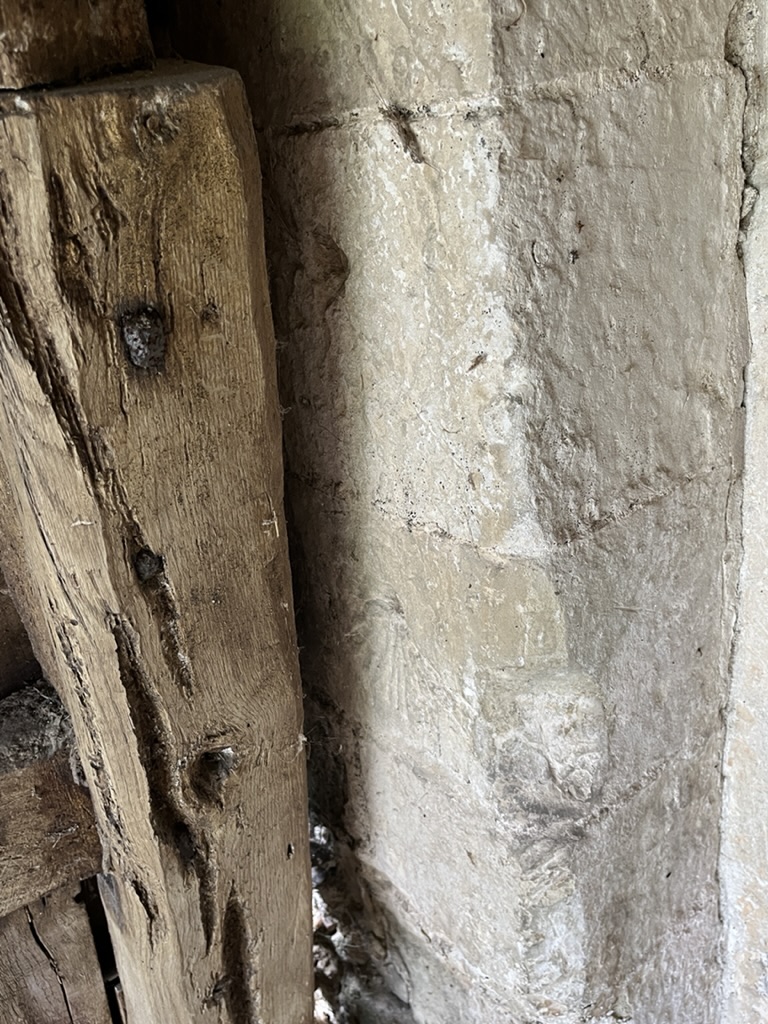
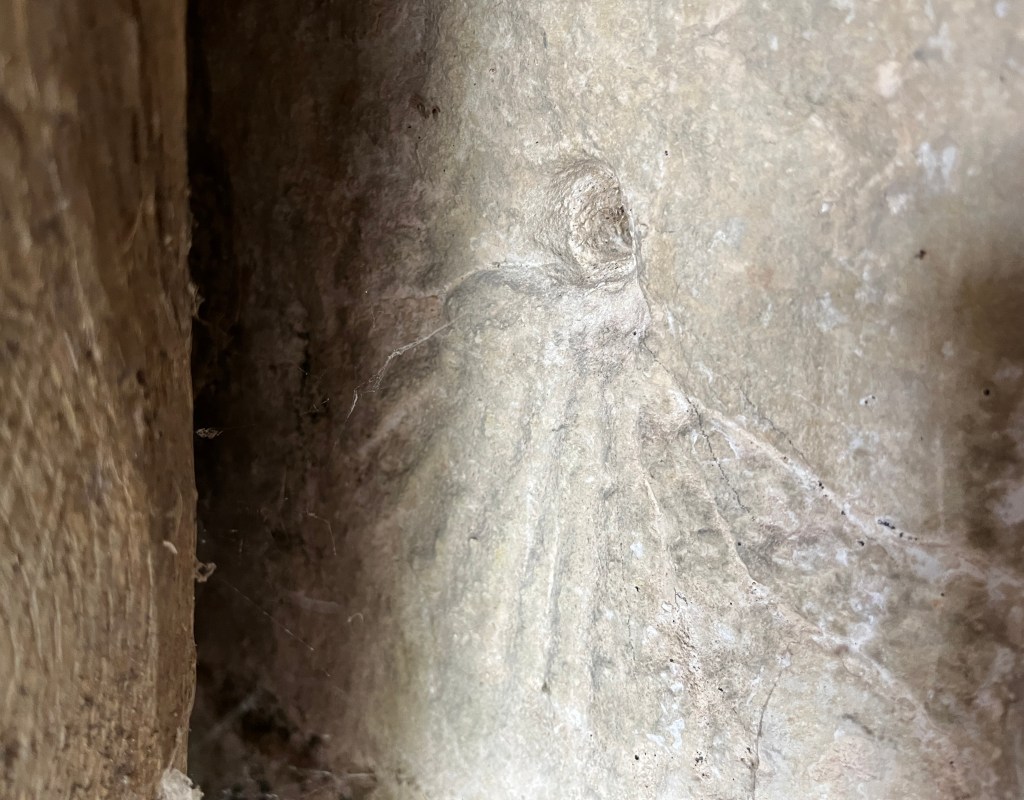
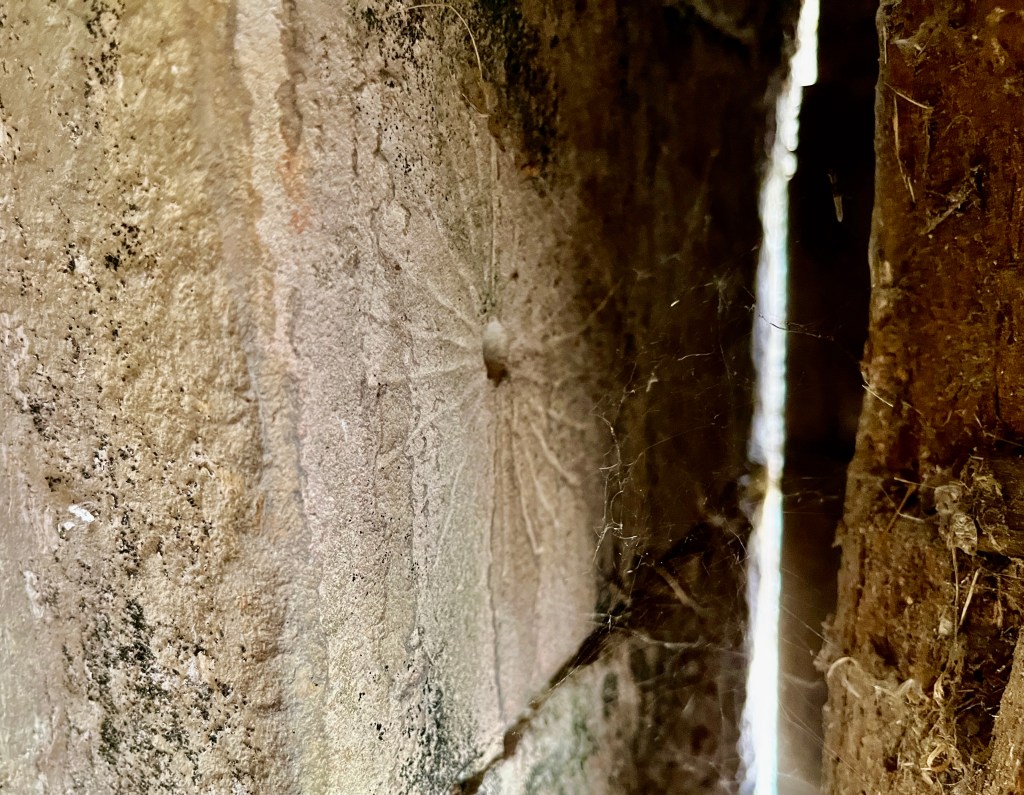
Dial 3 is hidden away RHS of the fine door, even less accessible than dial 2. It is a fascinating example of a ’24 hour’ dial, with a full complement of spidery lines of random length of which almost all are still visible.
DIAL 4
Also RHS and even less visible is a conventional ‘morning’ dial, with 4 lines (the upper one is faint) leading down to the slightly deeper cut noon line. This configuration again suggests that mid-morning began the important part of the day for observance before noon.
If you want to know more about this church, in particular the inside, there is a good article HERE
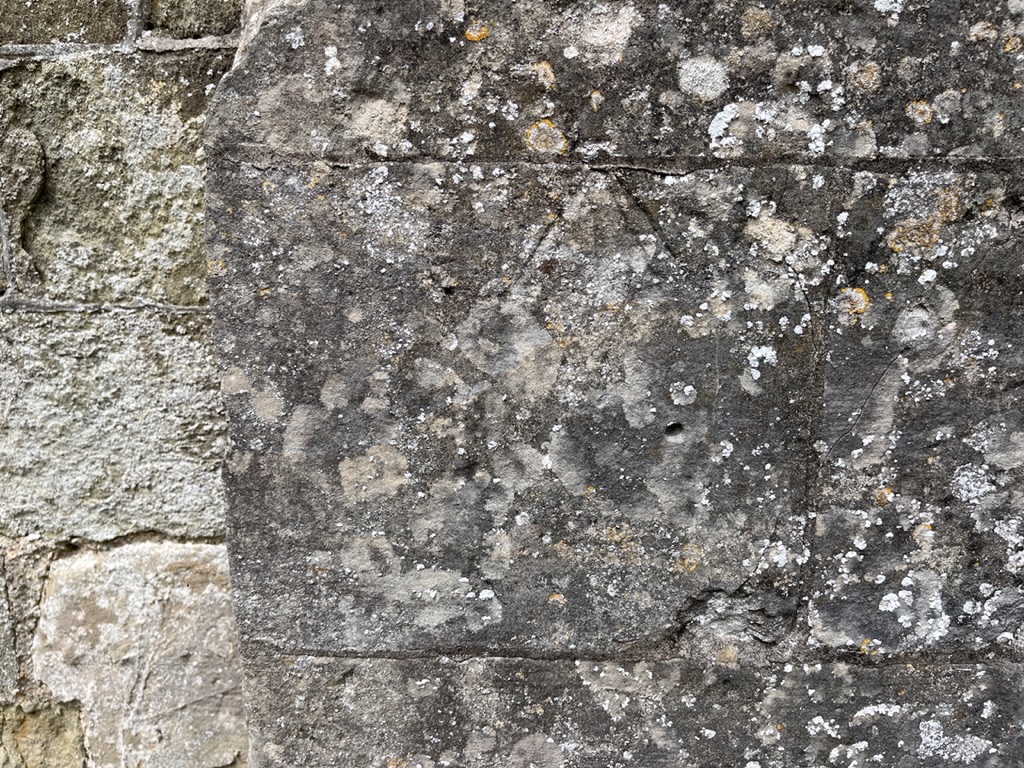
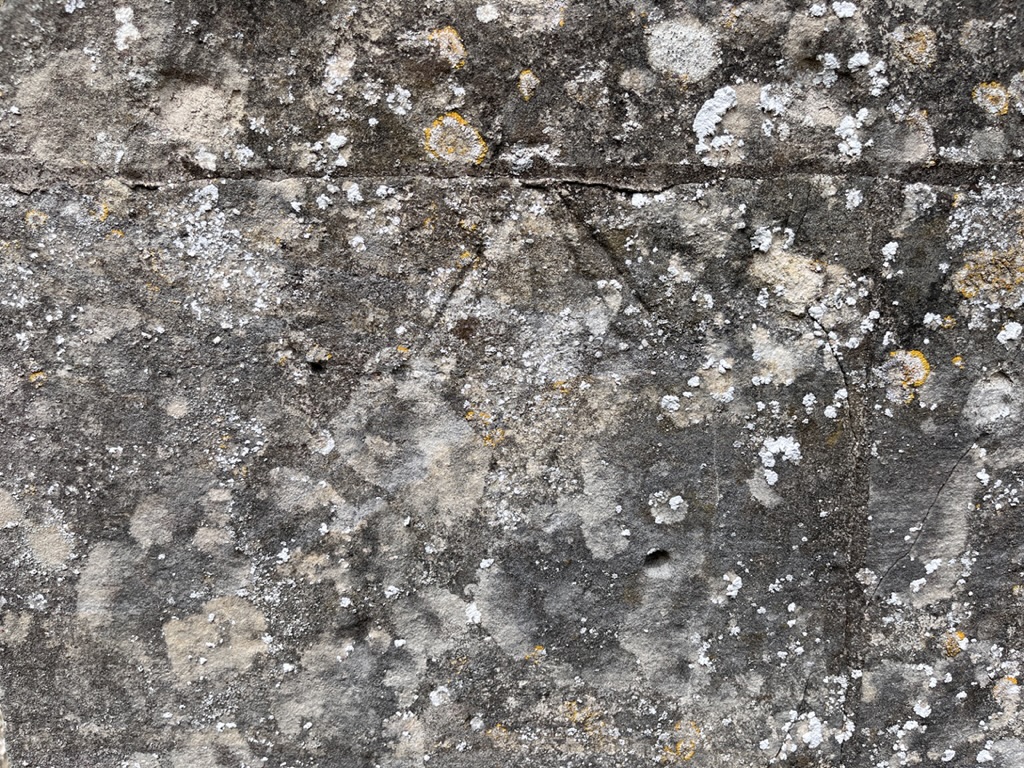
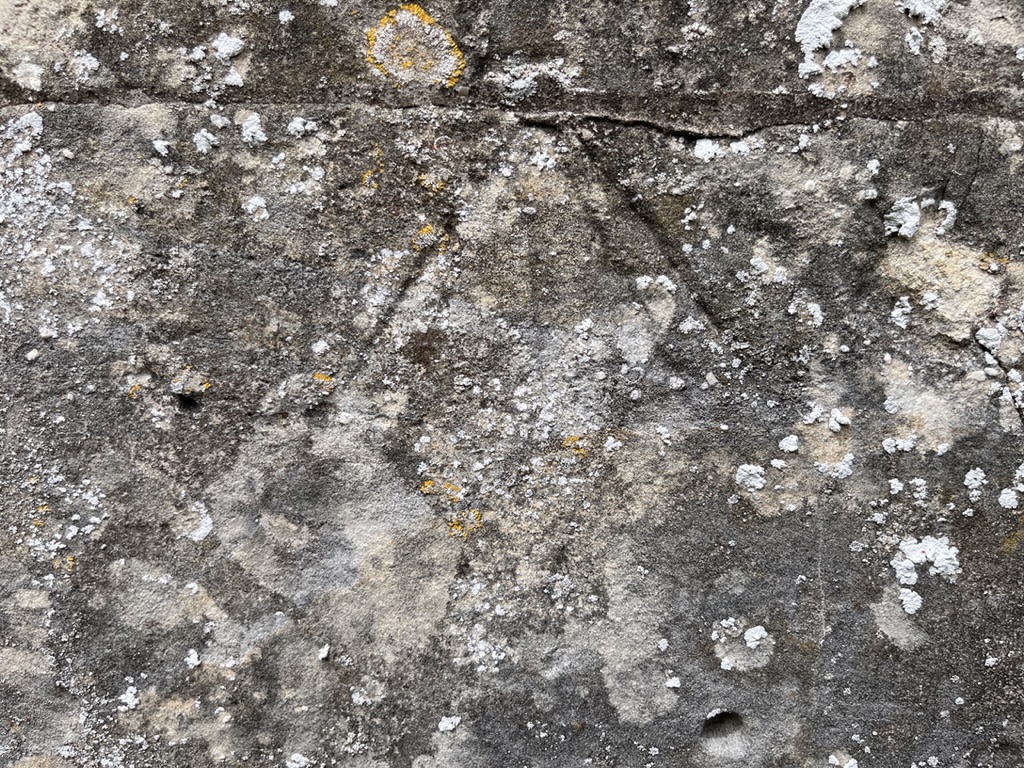
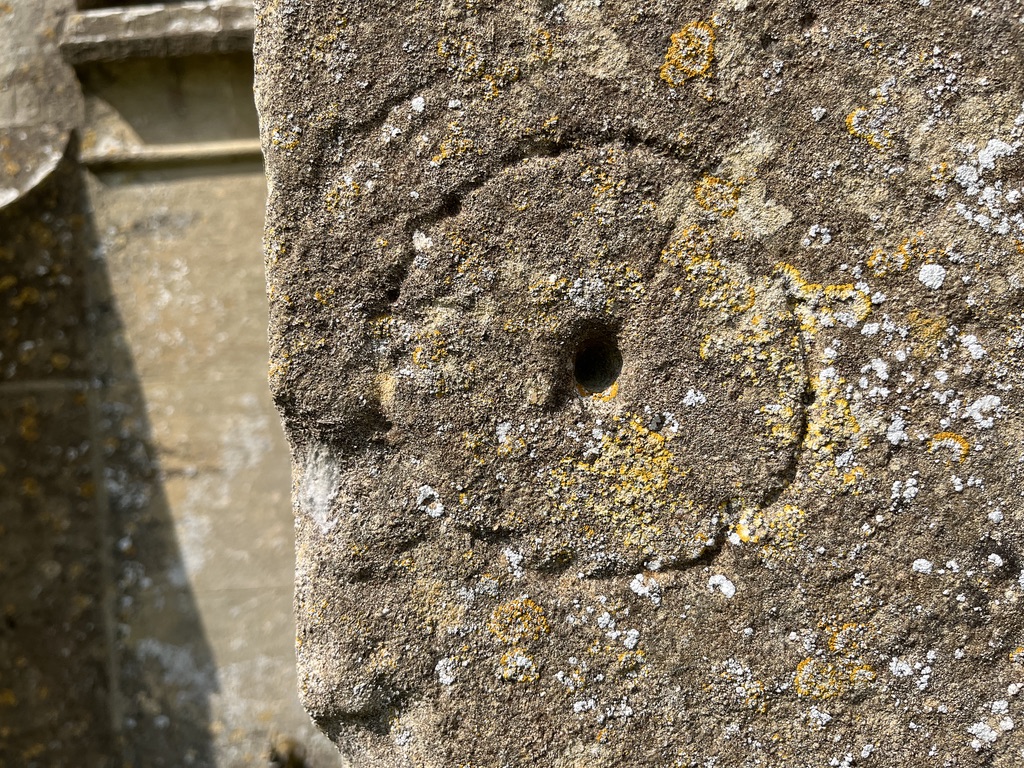
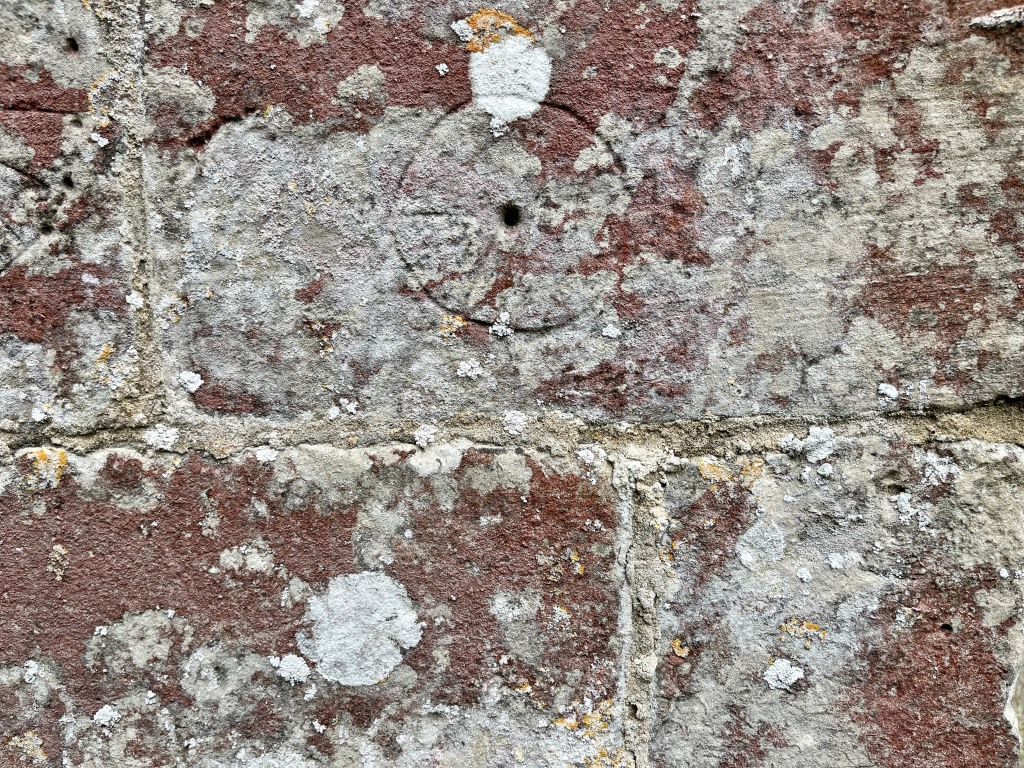
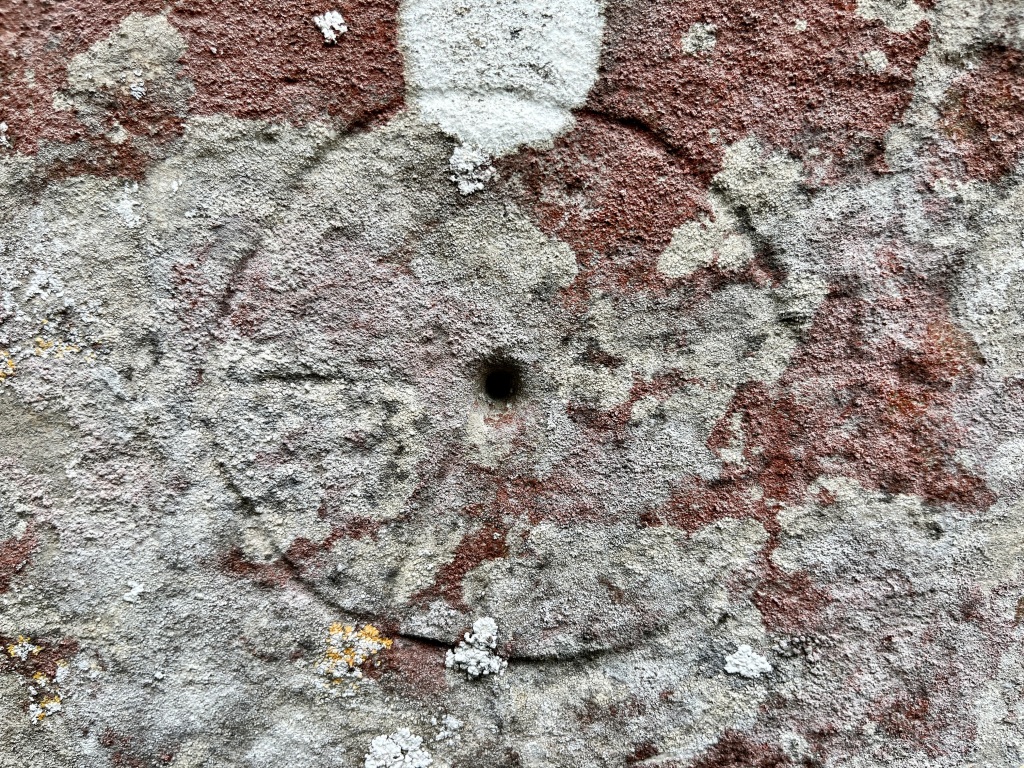
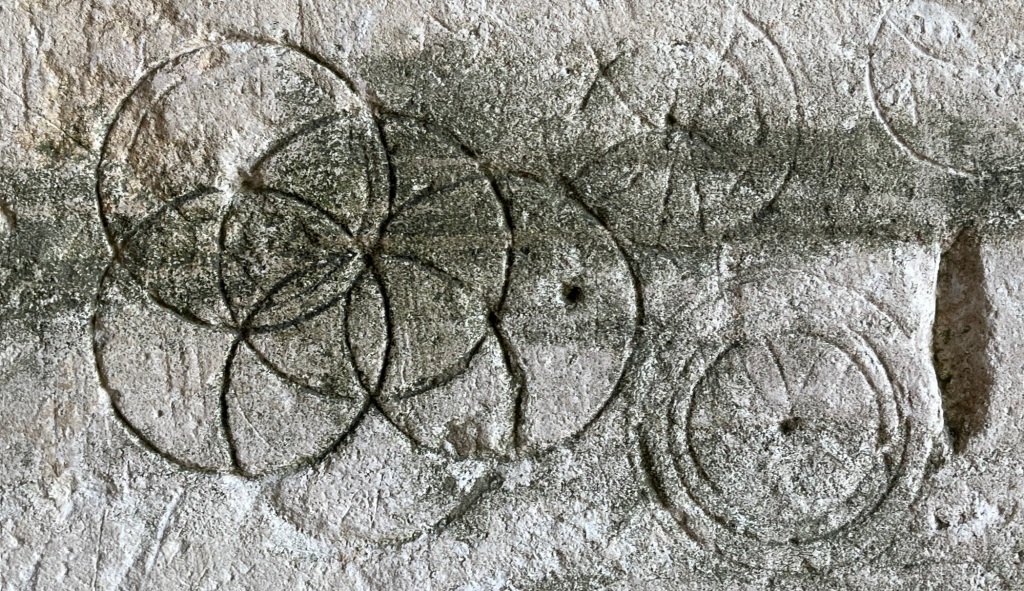
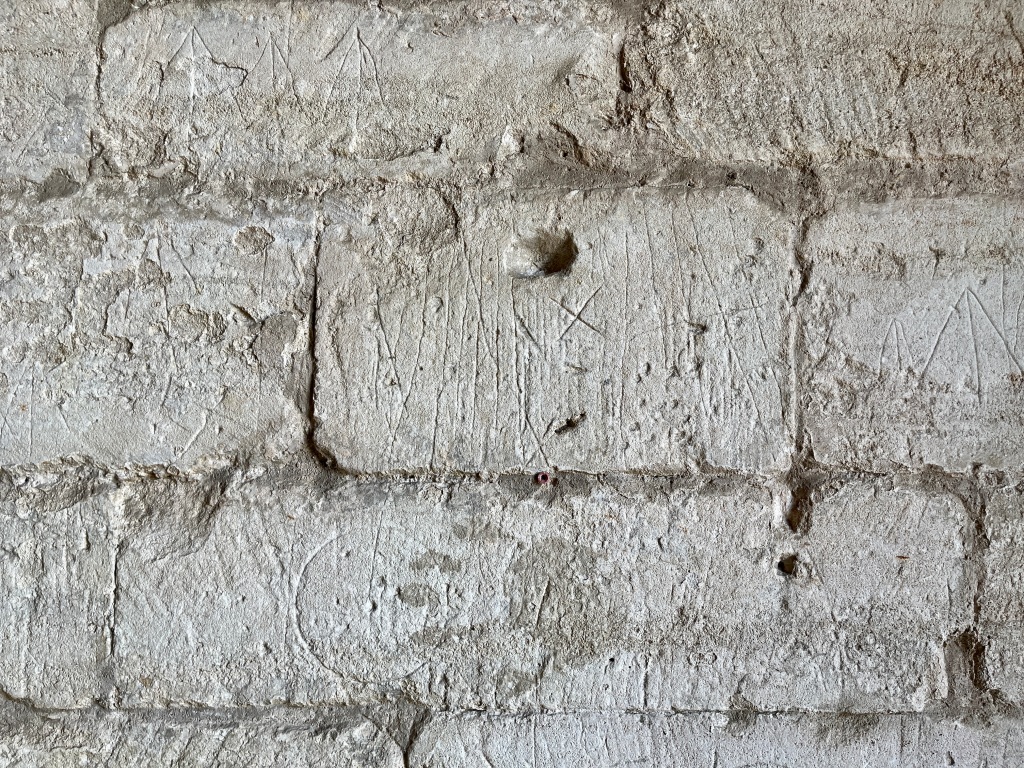
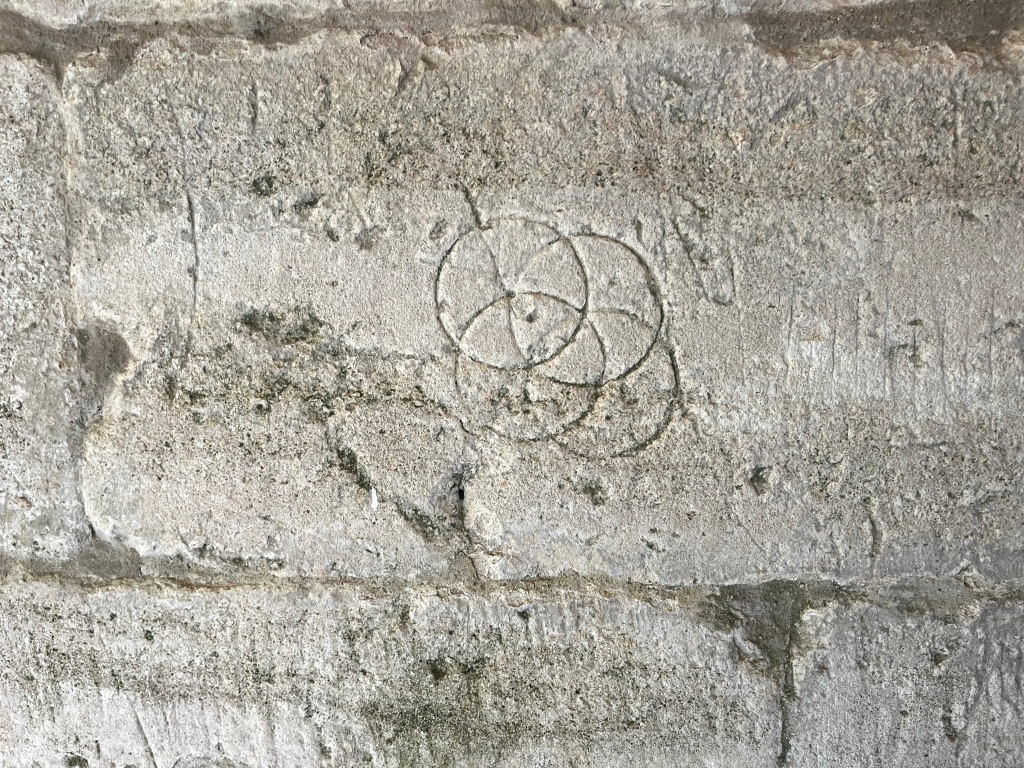
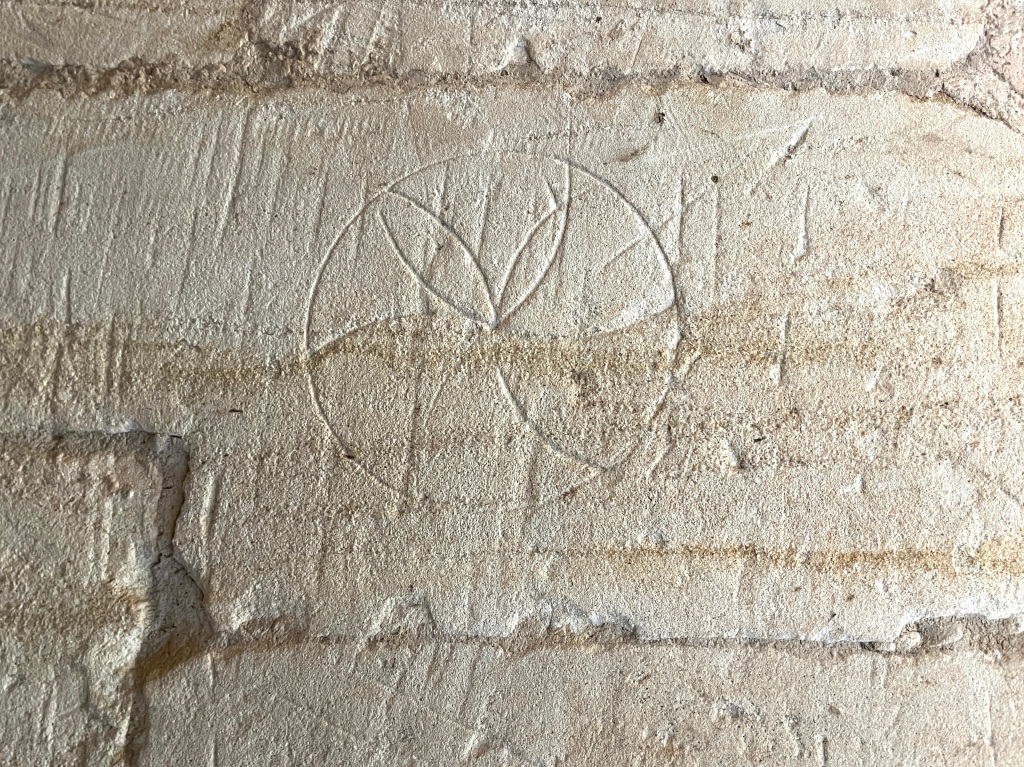
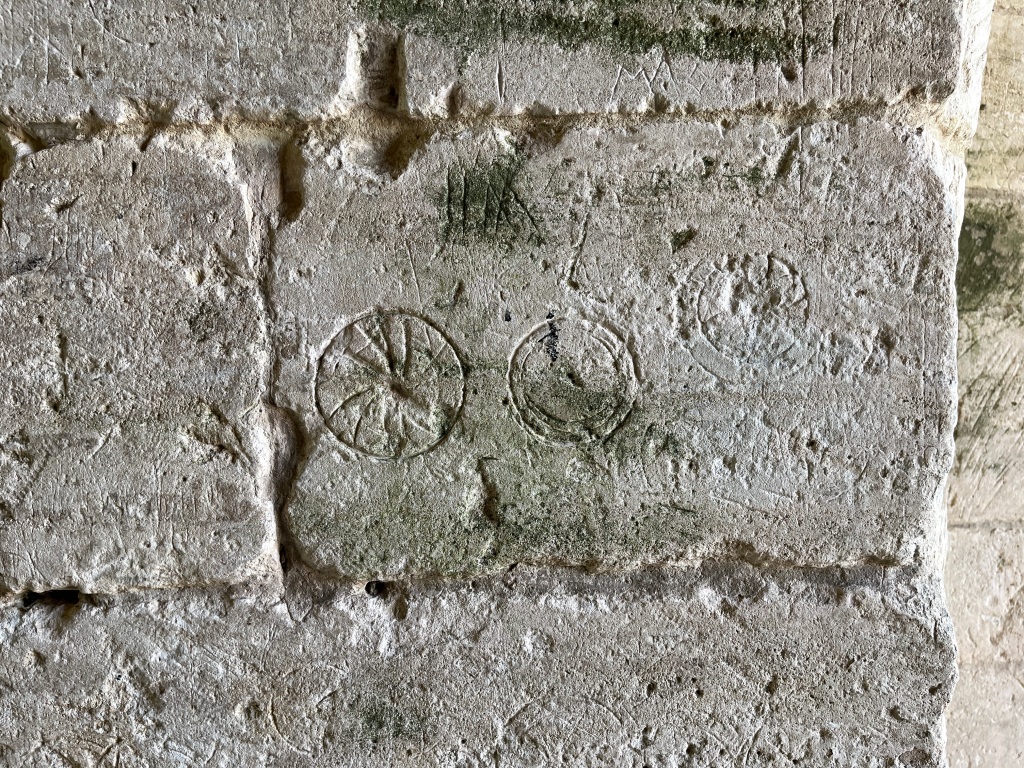
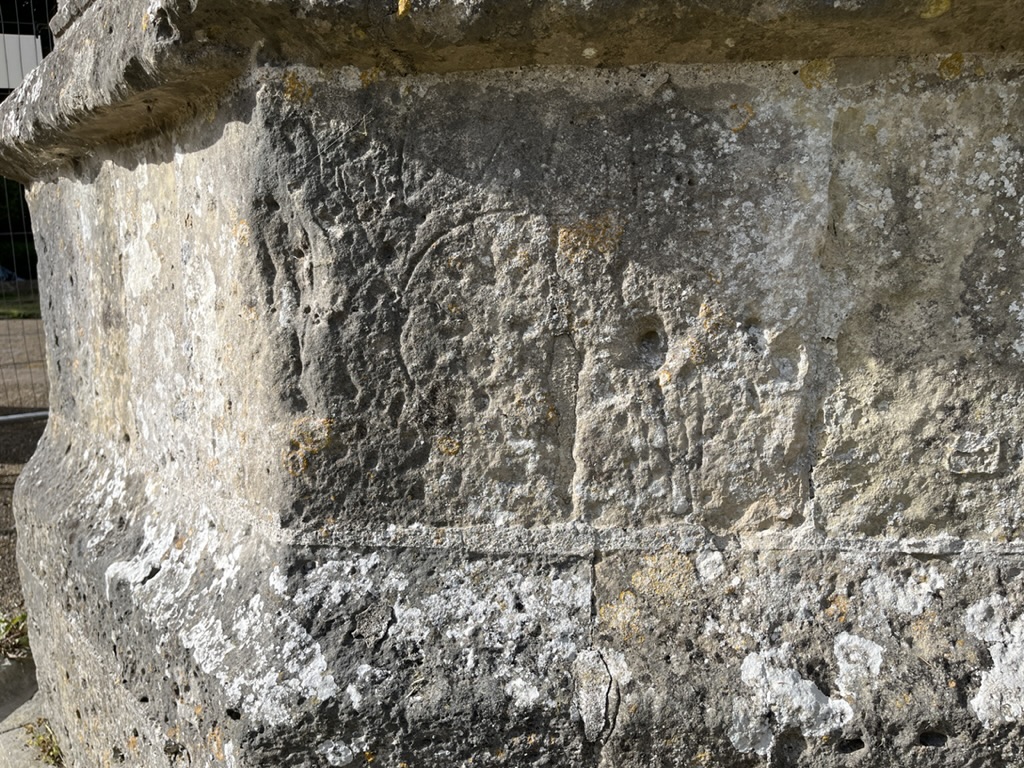
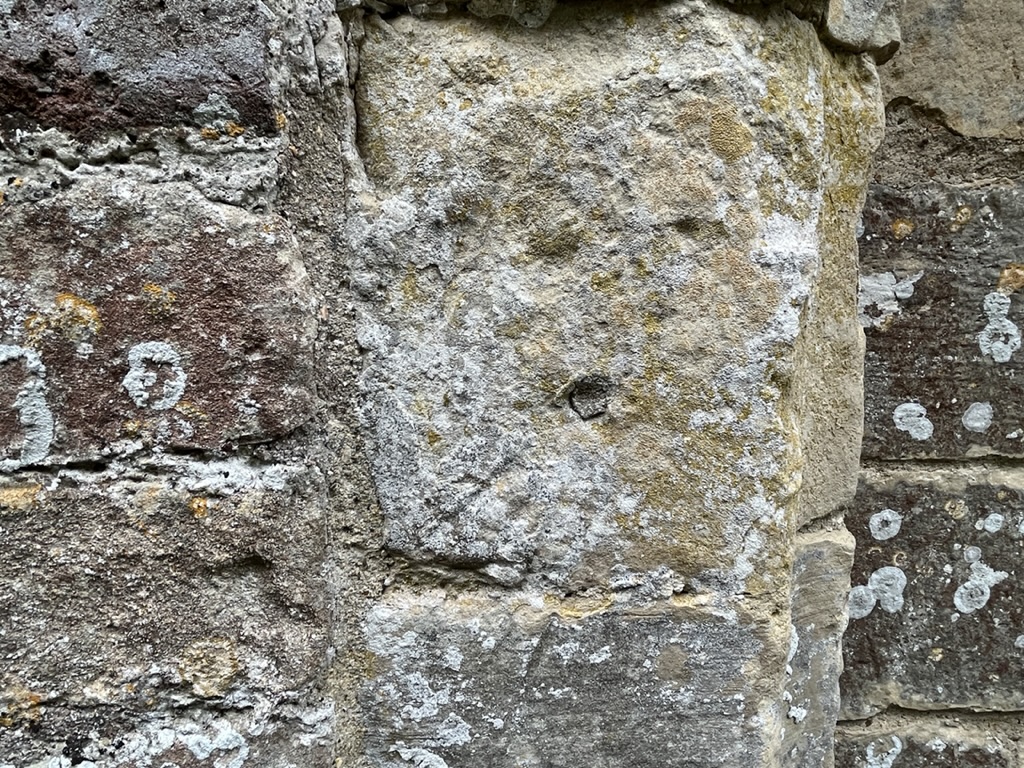
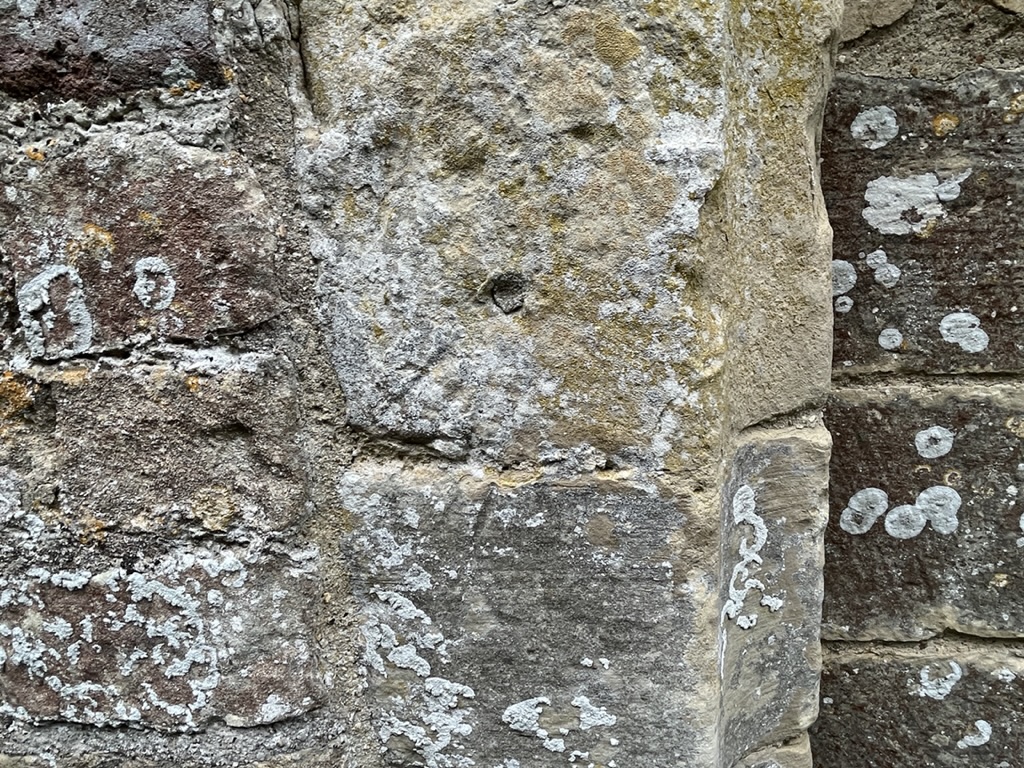
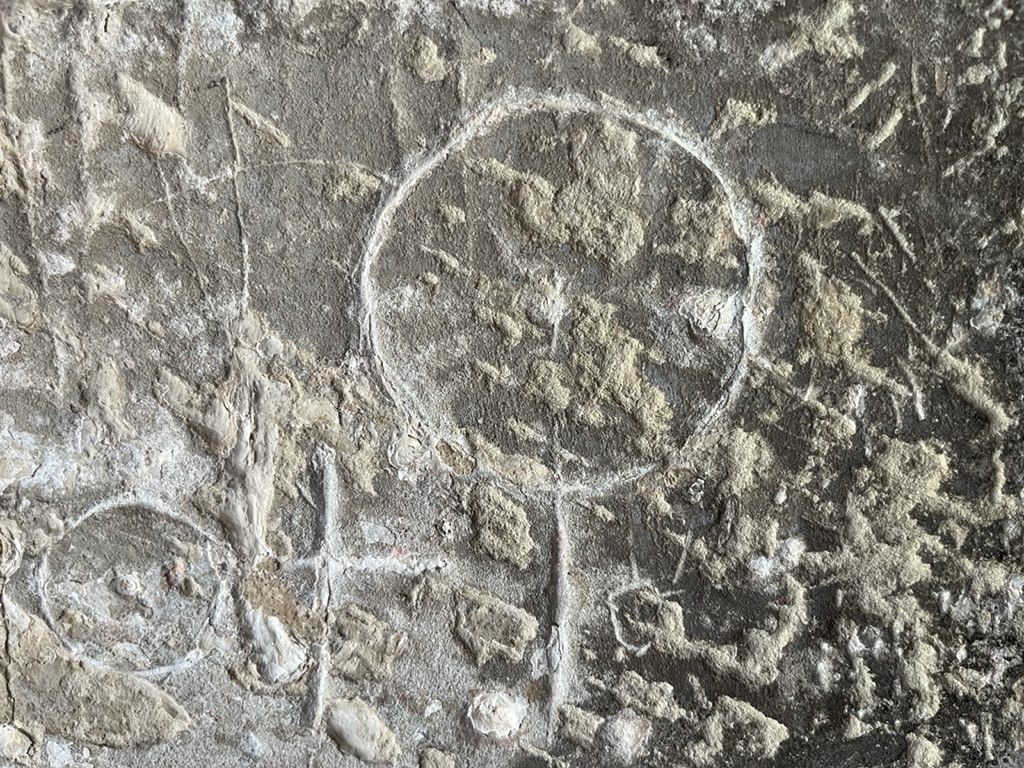
A selection of church marks in the porch. The 2 compass-drawn circles are not dials but [probably] ‘demon traps’. In superstitious medieval times it was believed that evil could be prevented from entering the holy building with protection marks. In this type, evil would become trapped within the never-ending circle. The VV and the M on the wooden door are Marian marks standing for the Virgin Mary, who bars entry to the church by evil.


















































































 GAUDIUM SUB SOLE . SUNDIALS . MEDIEVAL TO MODERN