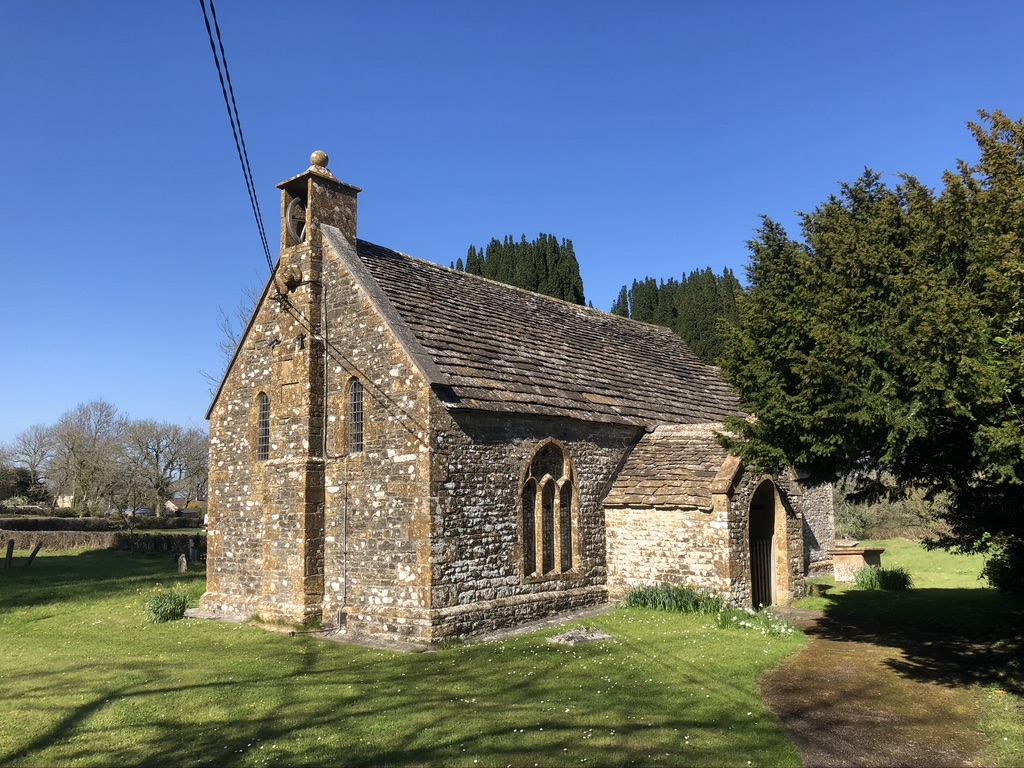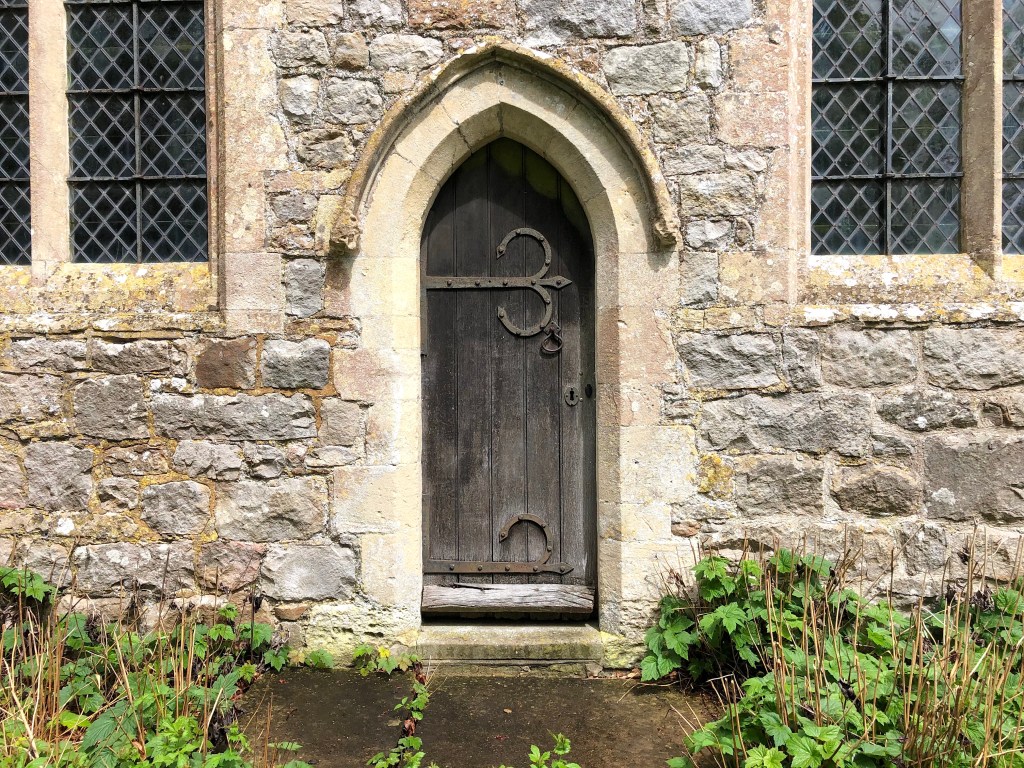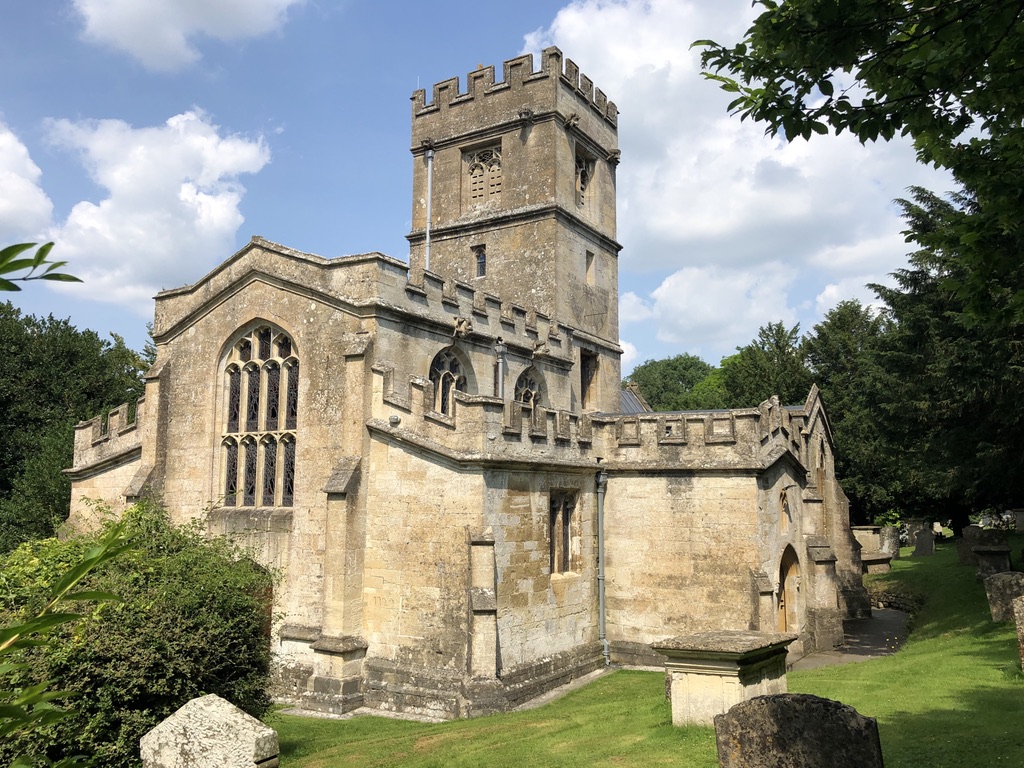
HOLWELL . DORSET – ST LAURENCE: 3 Scratch Dials

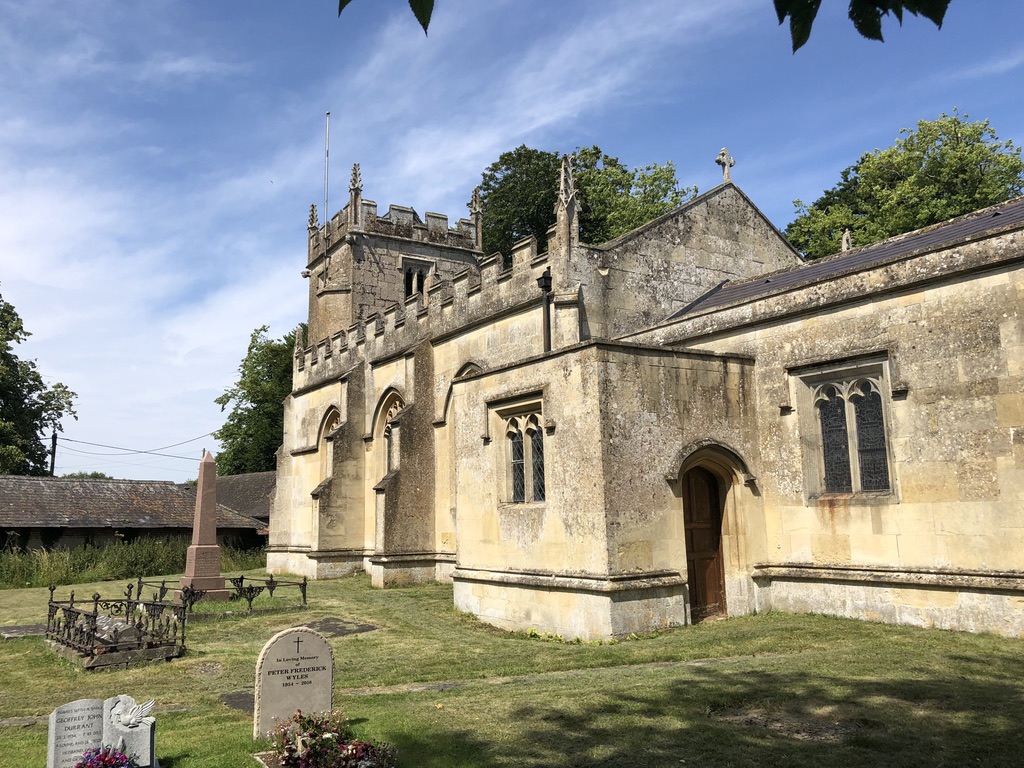
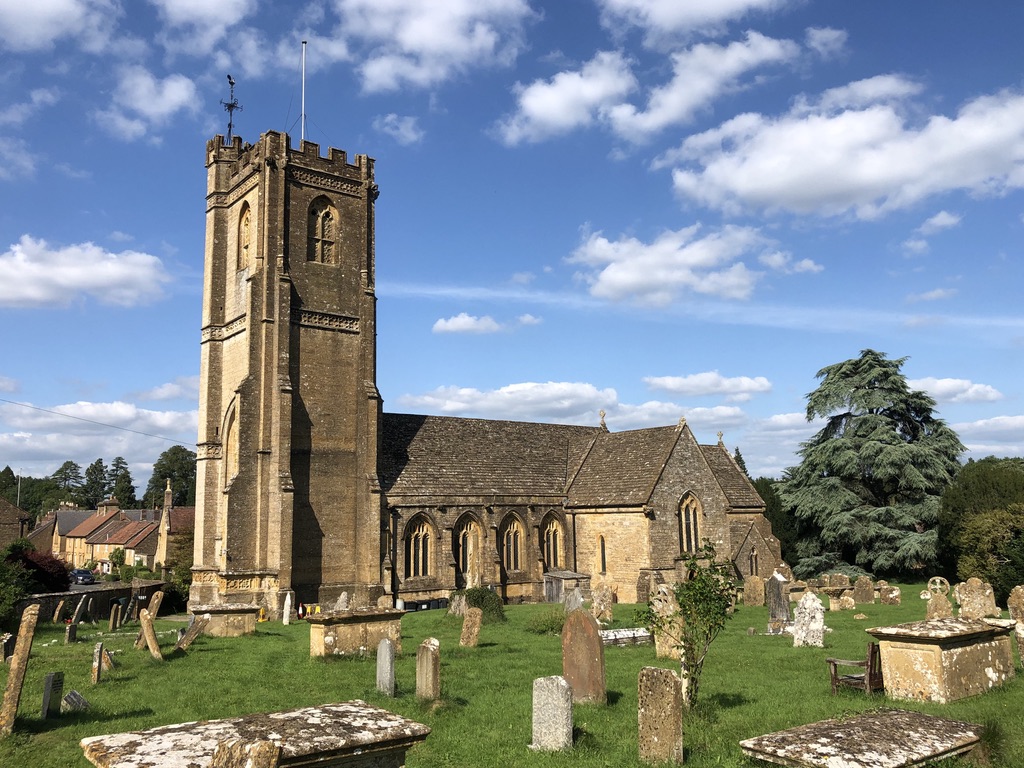
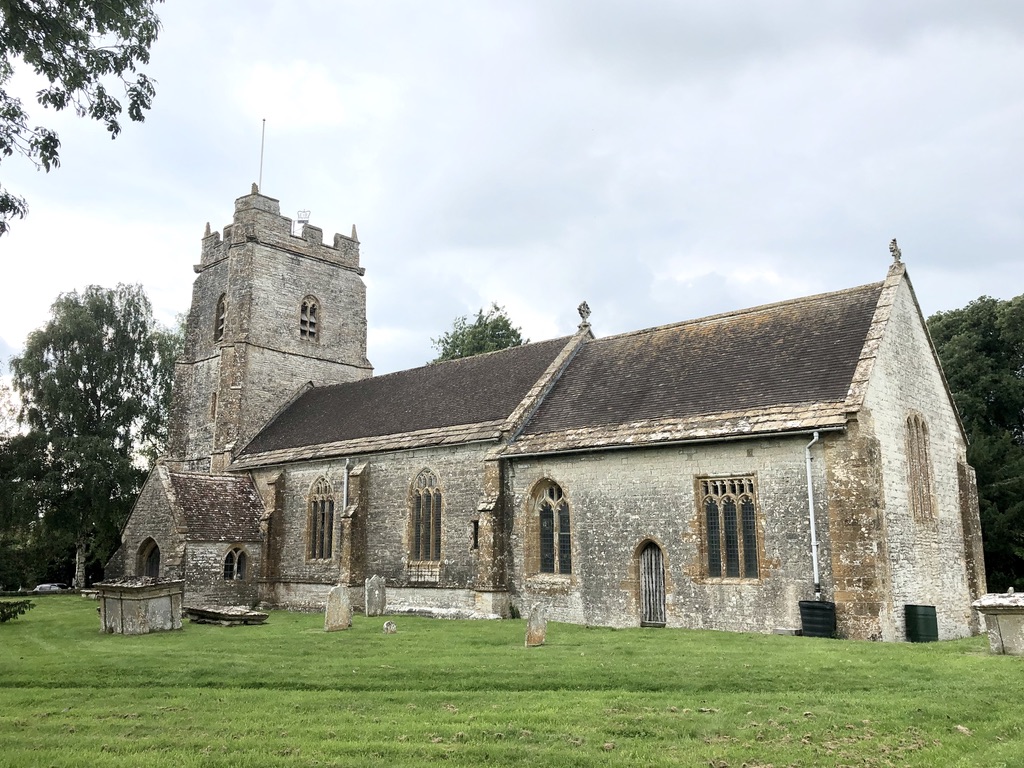
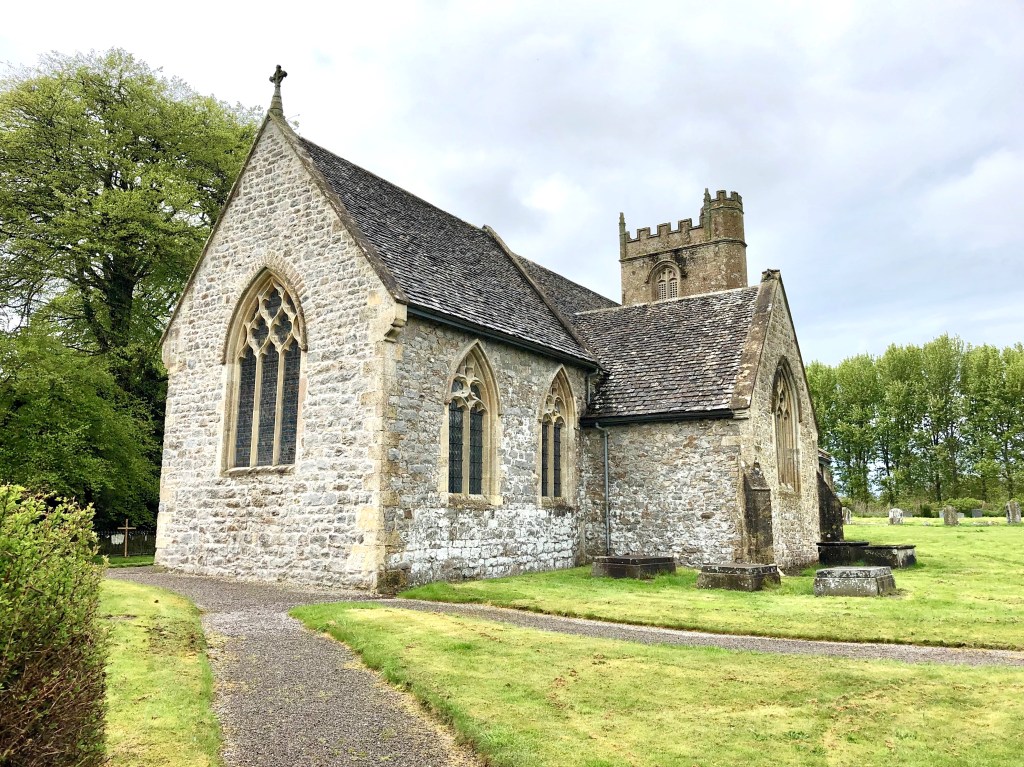
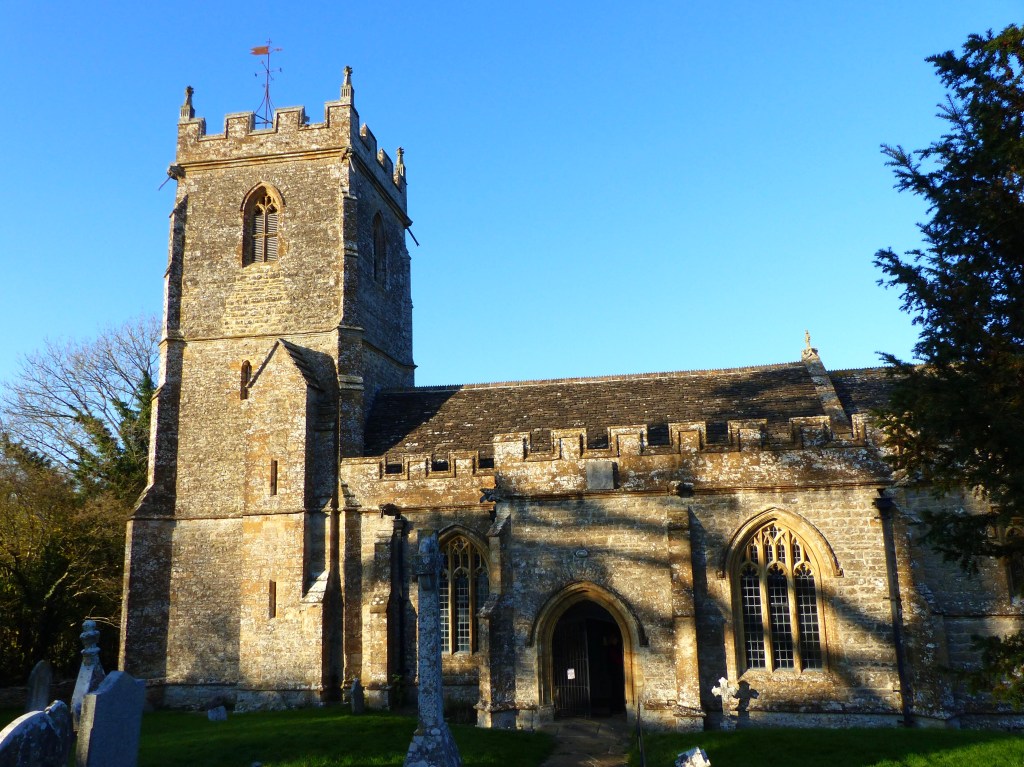
DEDICATION † St Laurence. Mainly C15, some rebuilding C18, with restoration and additions in 1885 by Crickmay, the notable Dorset architect. One of a number of local churches with stocks.

LISTING † Grade 1

LOCATION † Not actually in Holwell but 1m N. towards Bishop’s Caundle, in a hamlet known as The Borough. Just before you turn down the lane to reach the church, don’t miss the UK’s oldest letter box still in use. It is dated 1853, just one year after roadside boxes were introduced. 50.9064 / -2.4289 / ST699119

DIALS

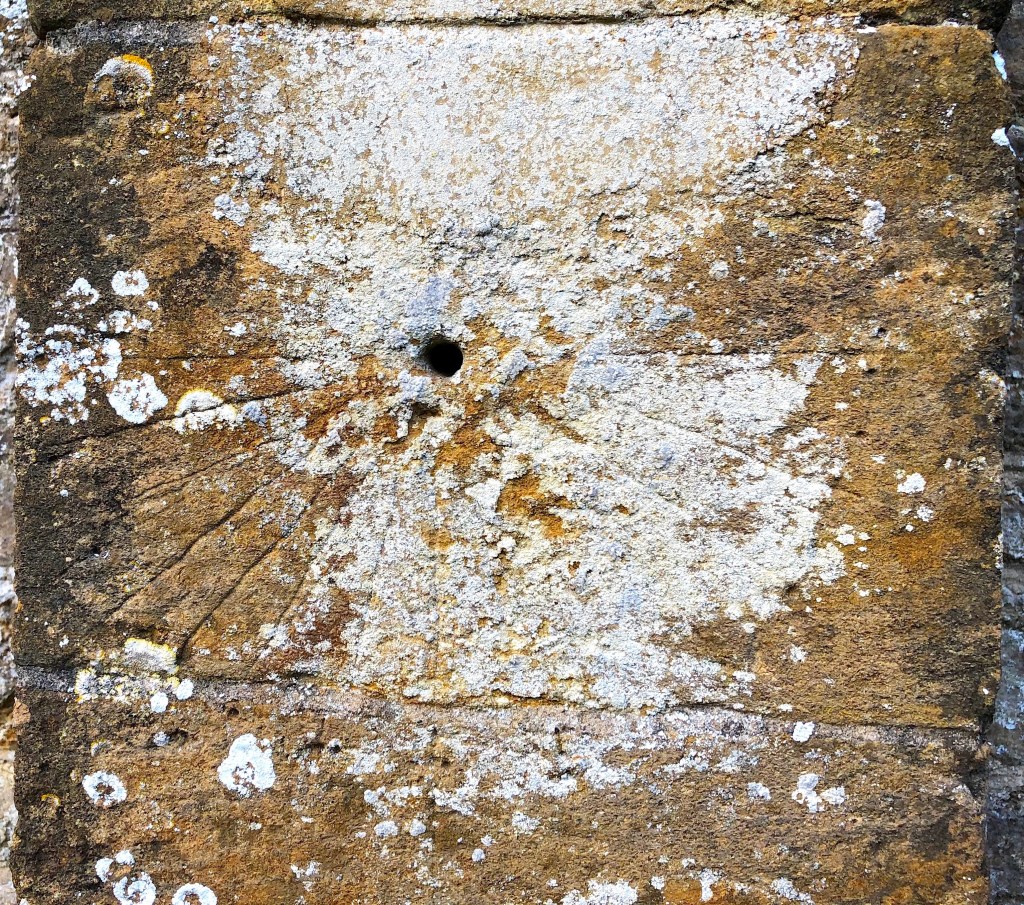
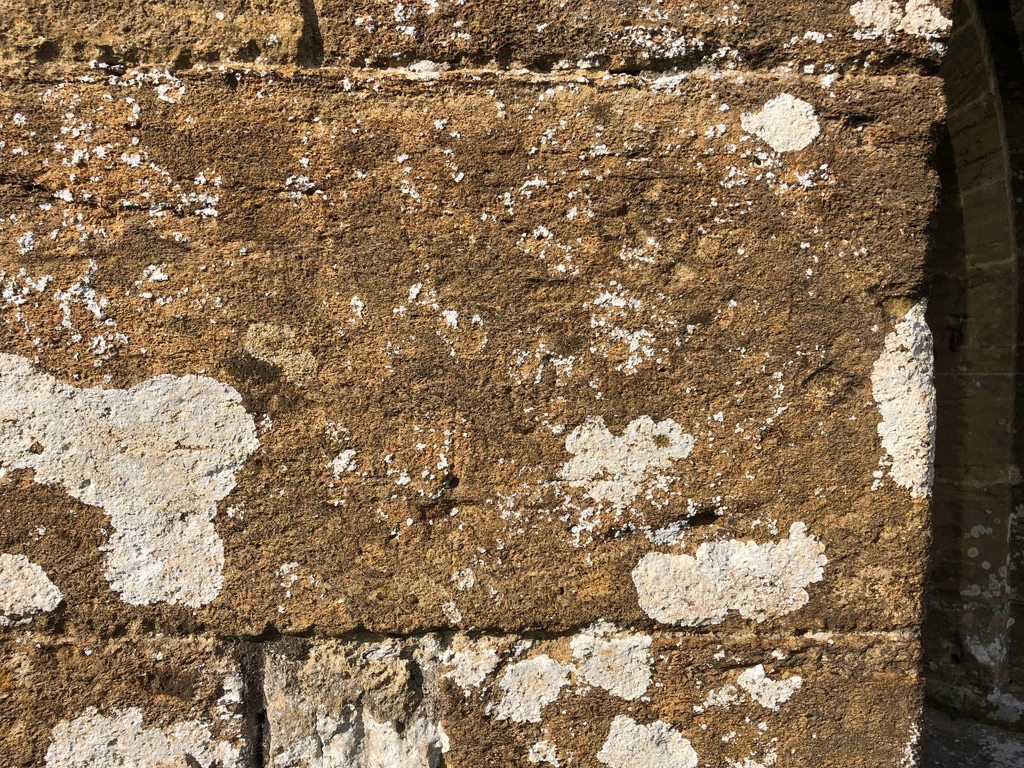
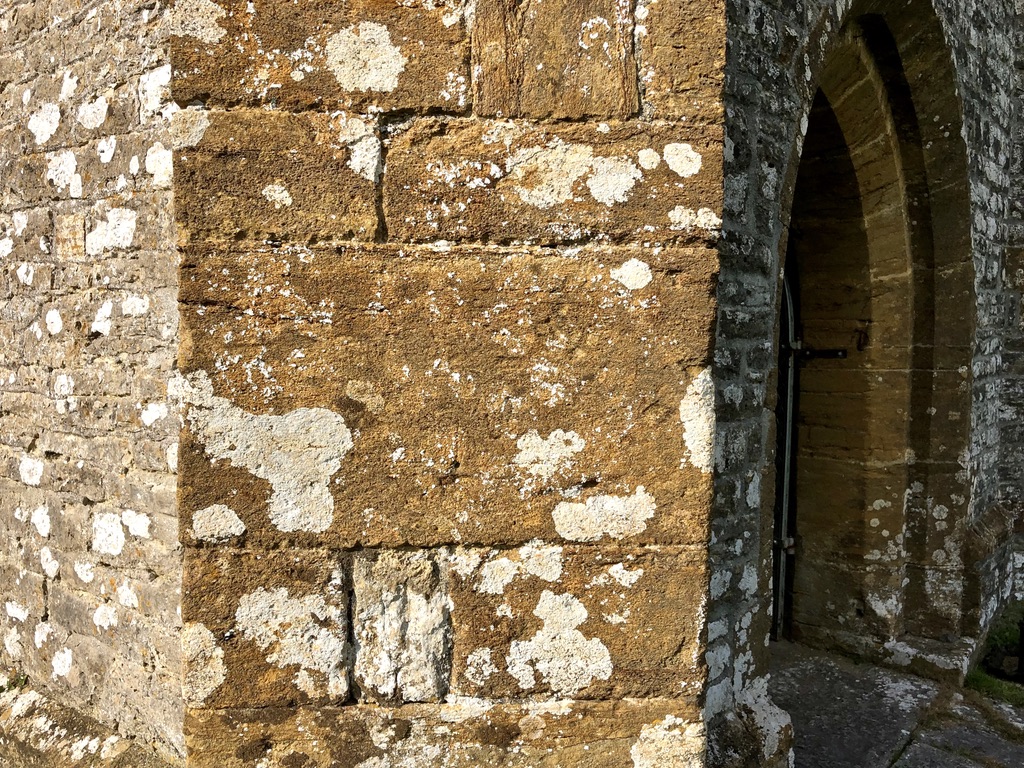
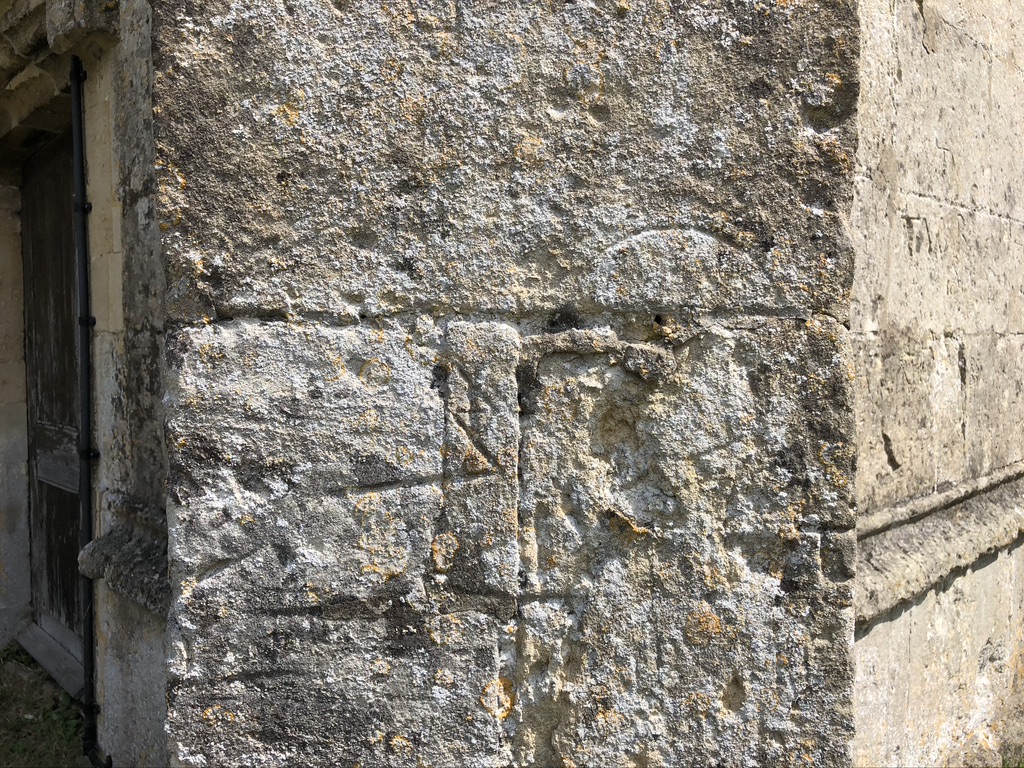
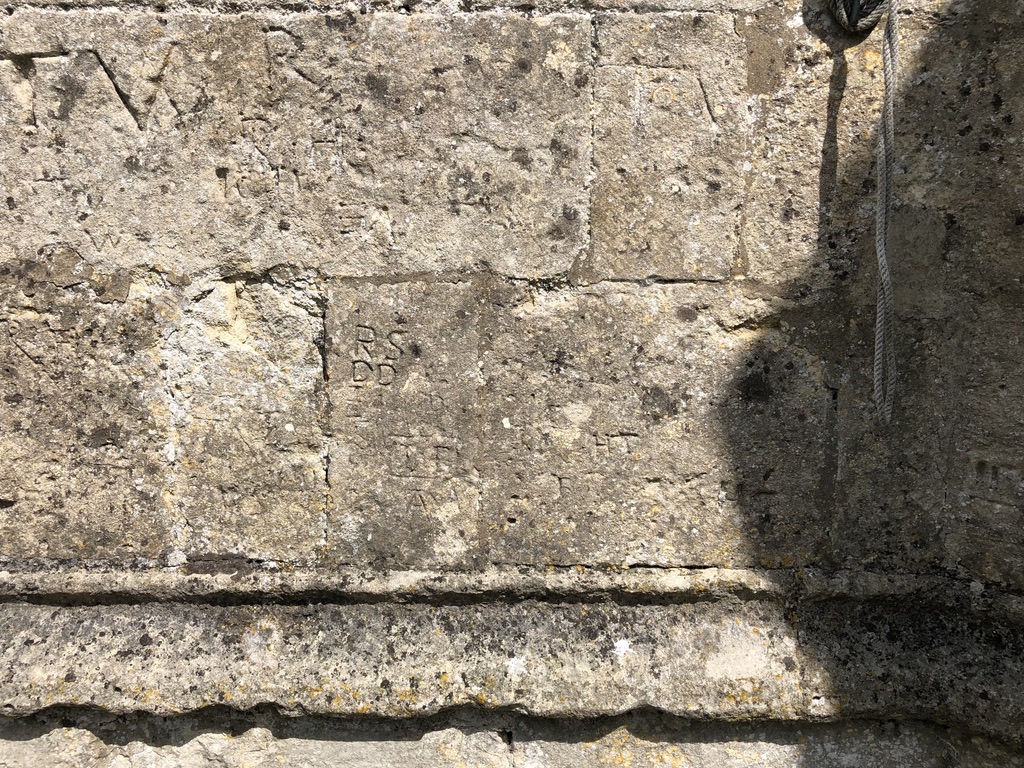
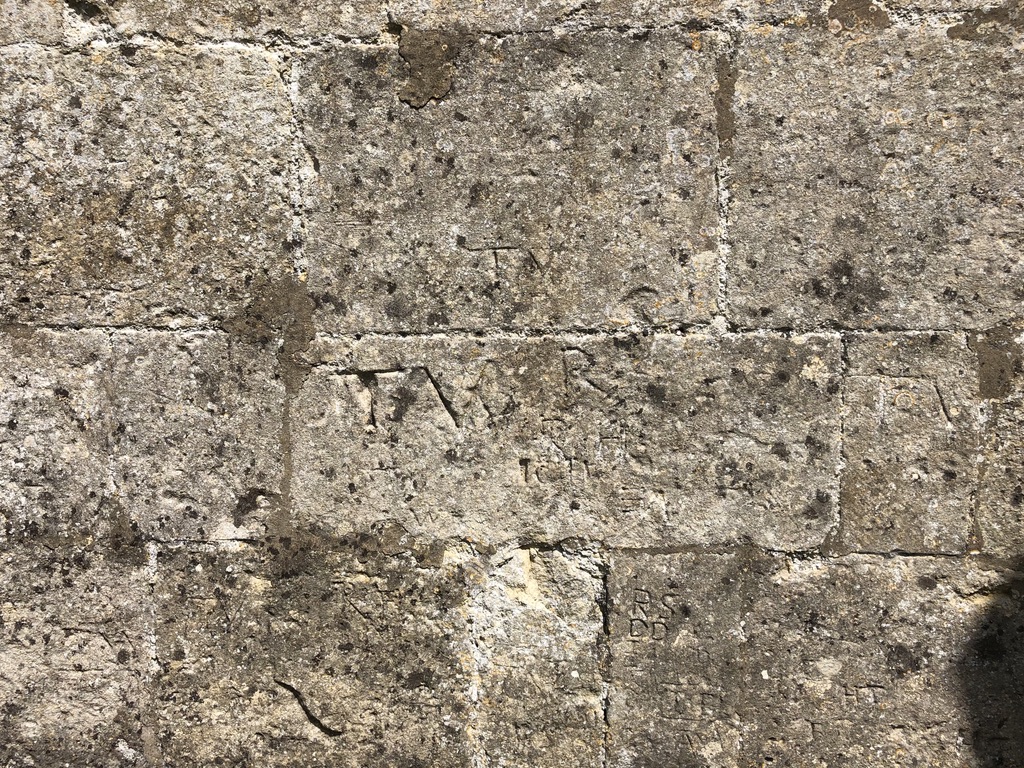
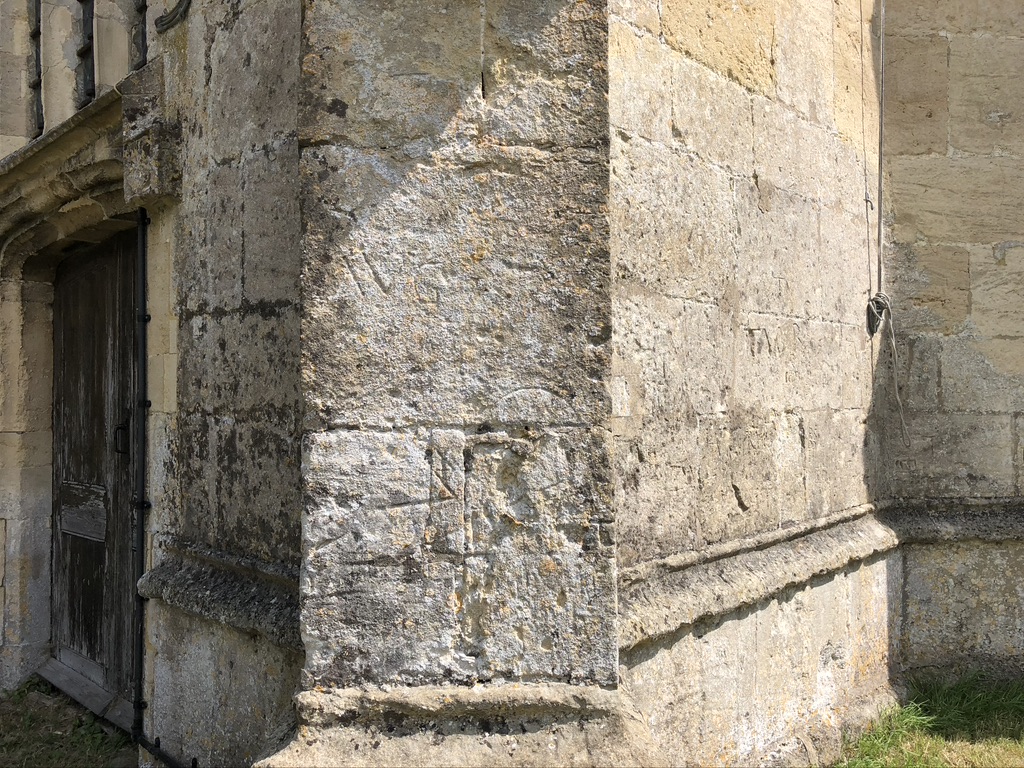
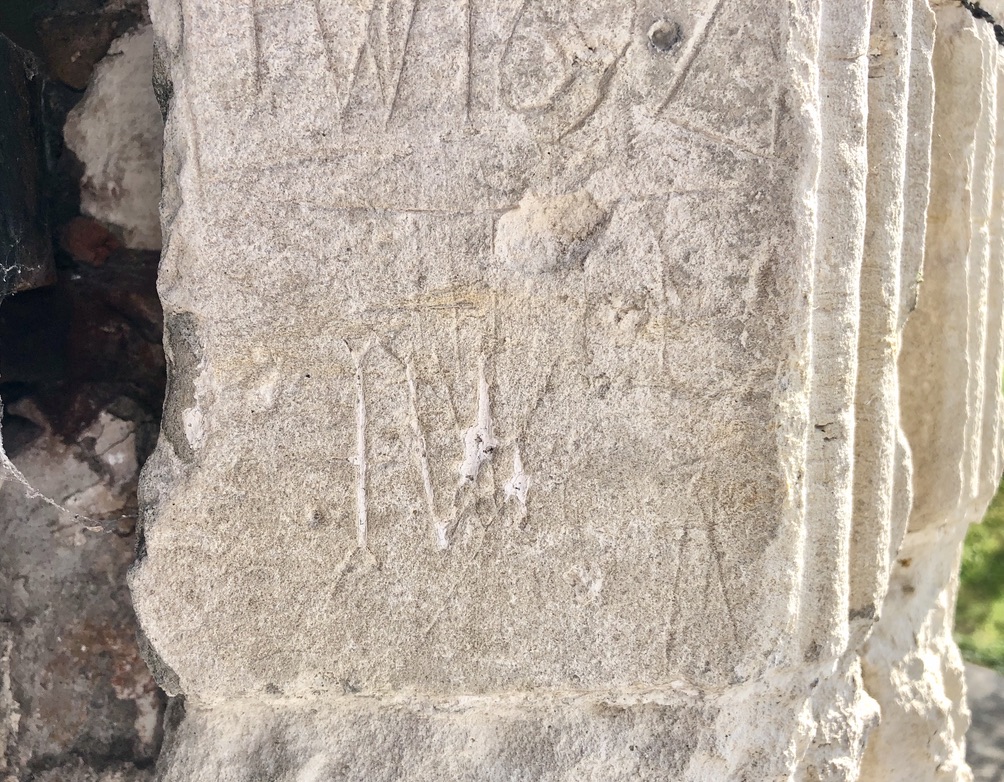
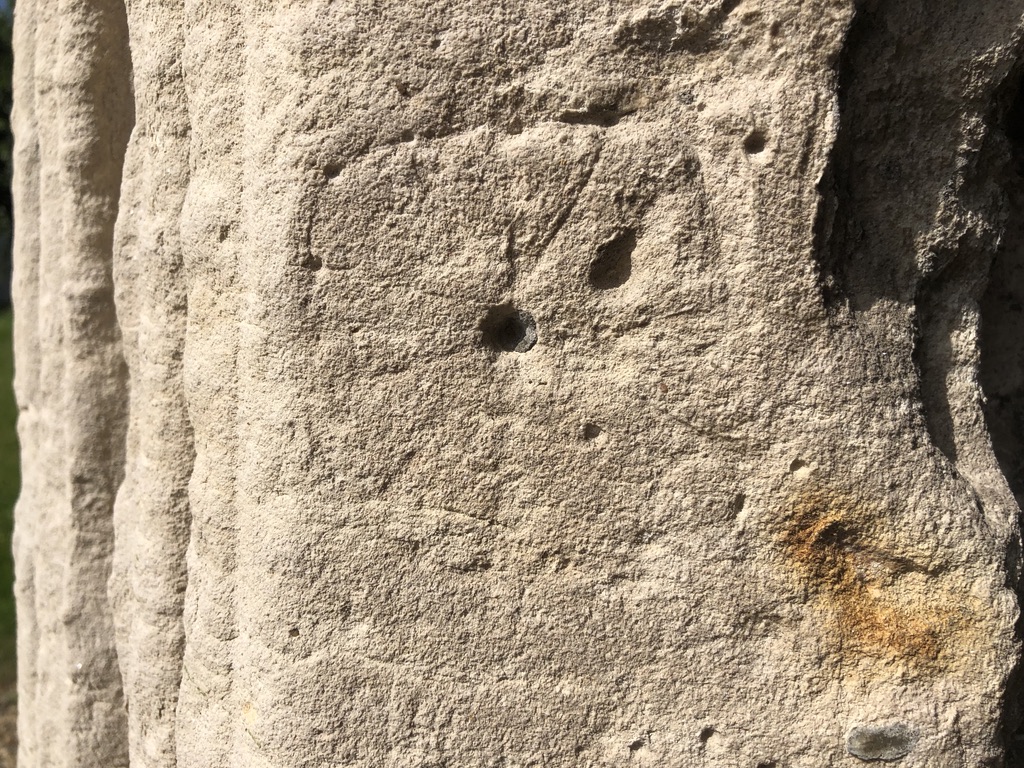
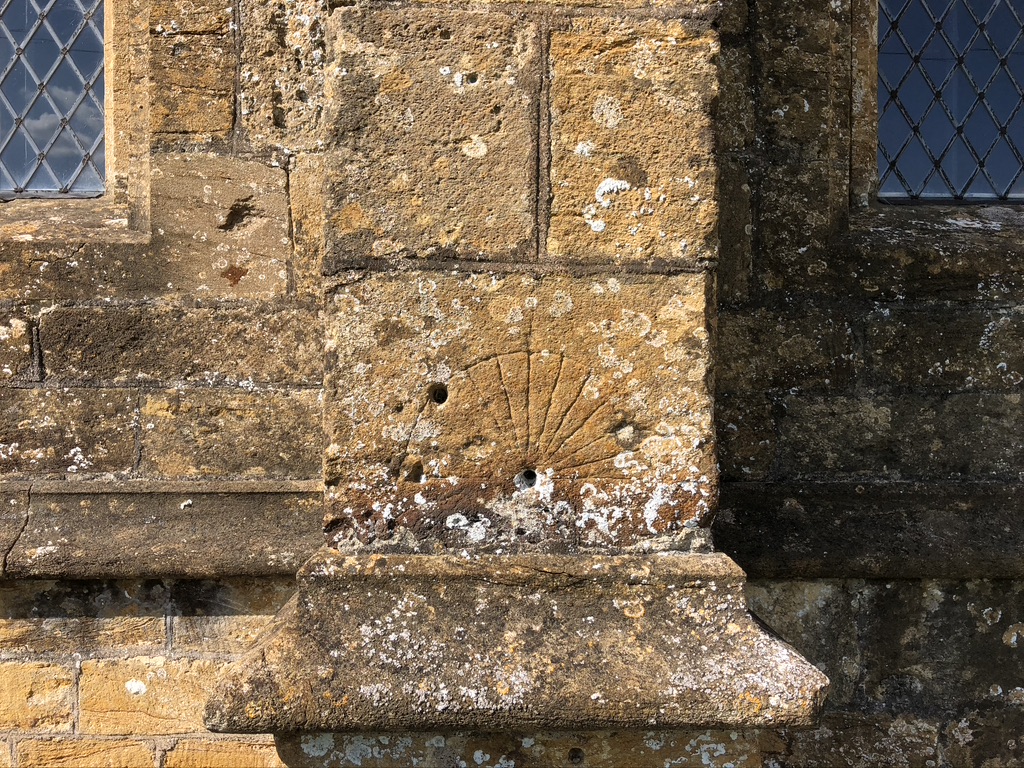
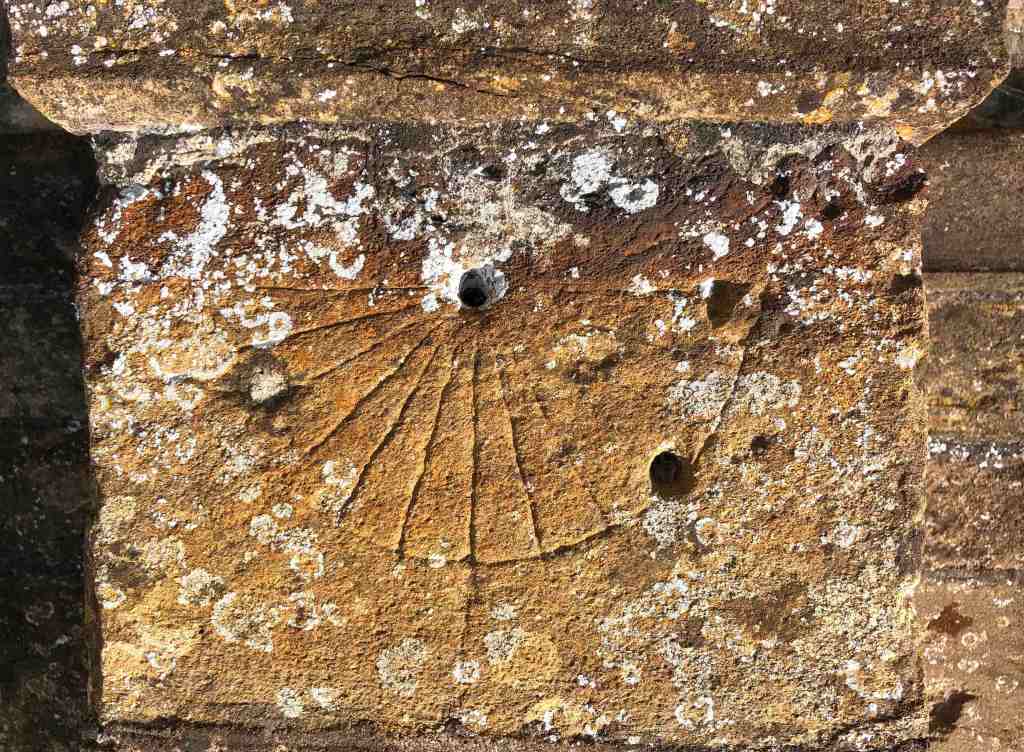
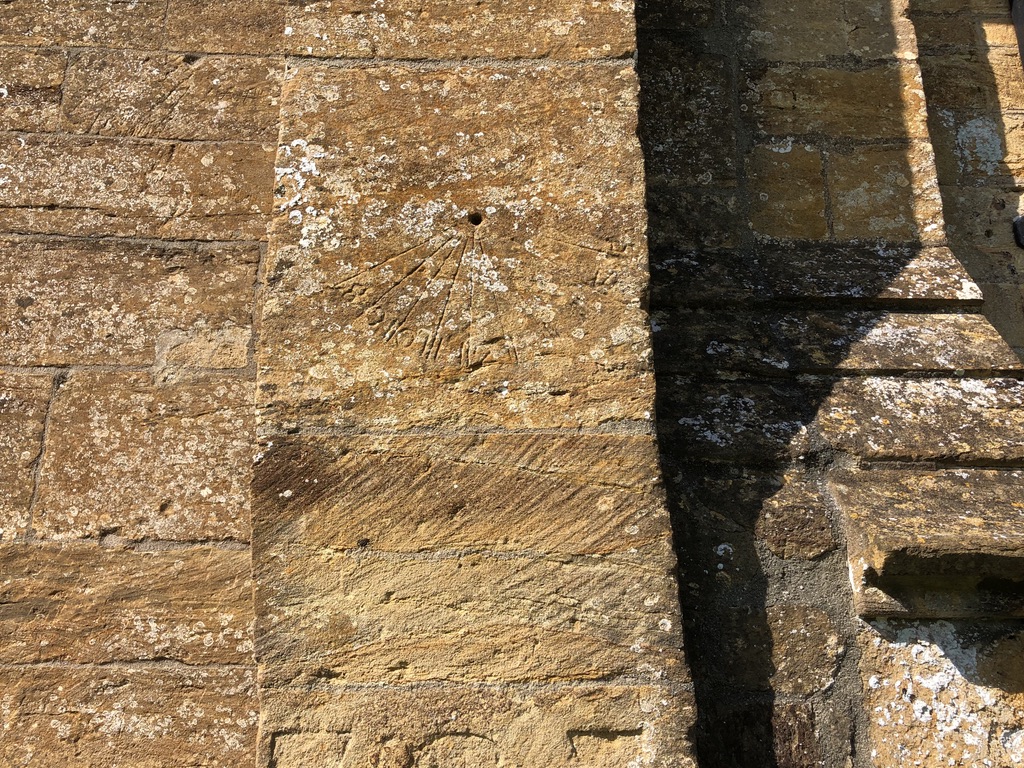
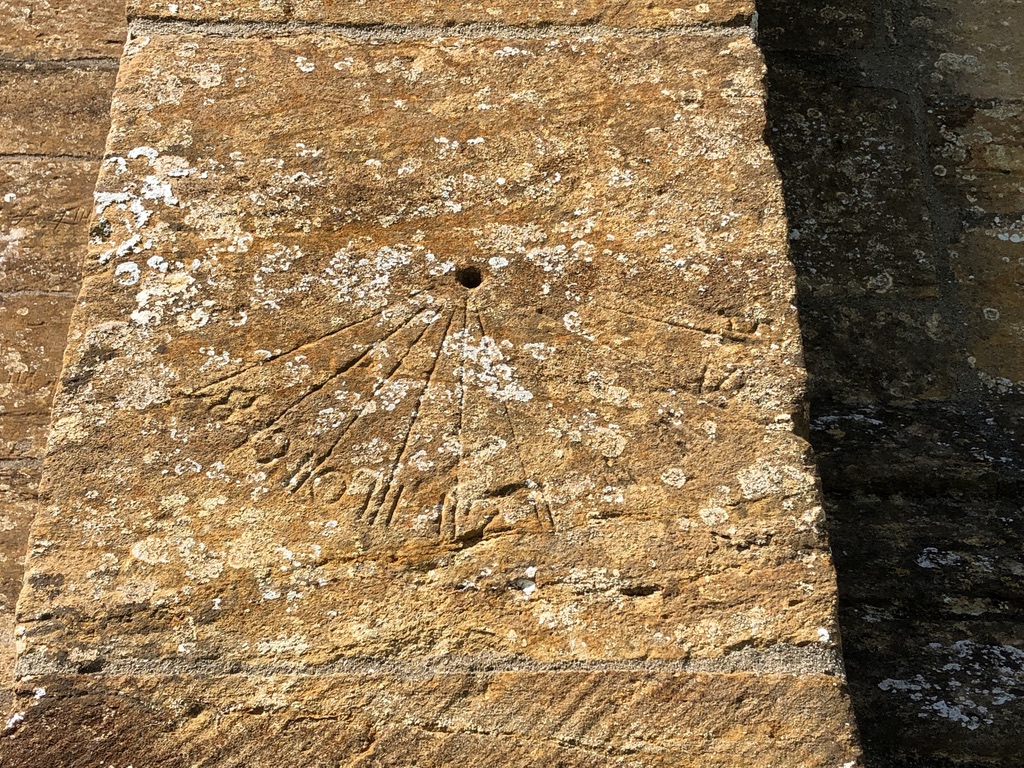
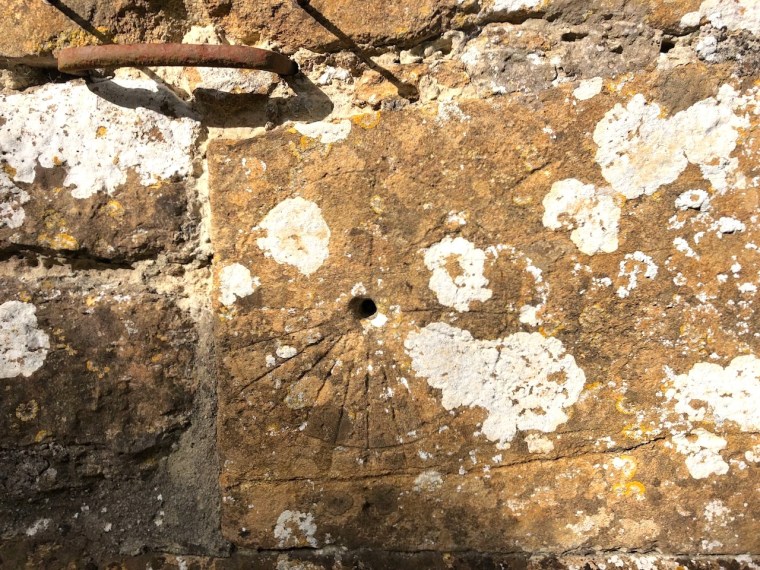
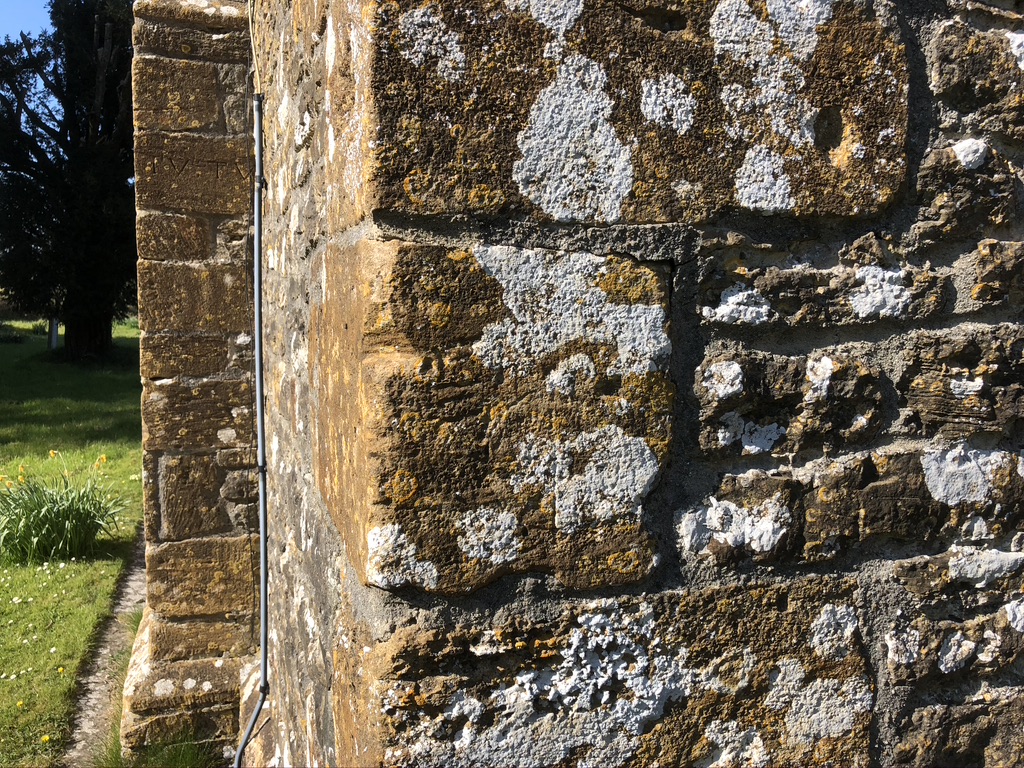
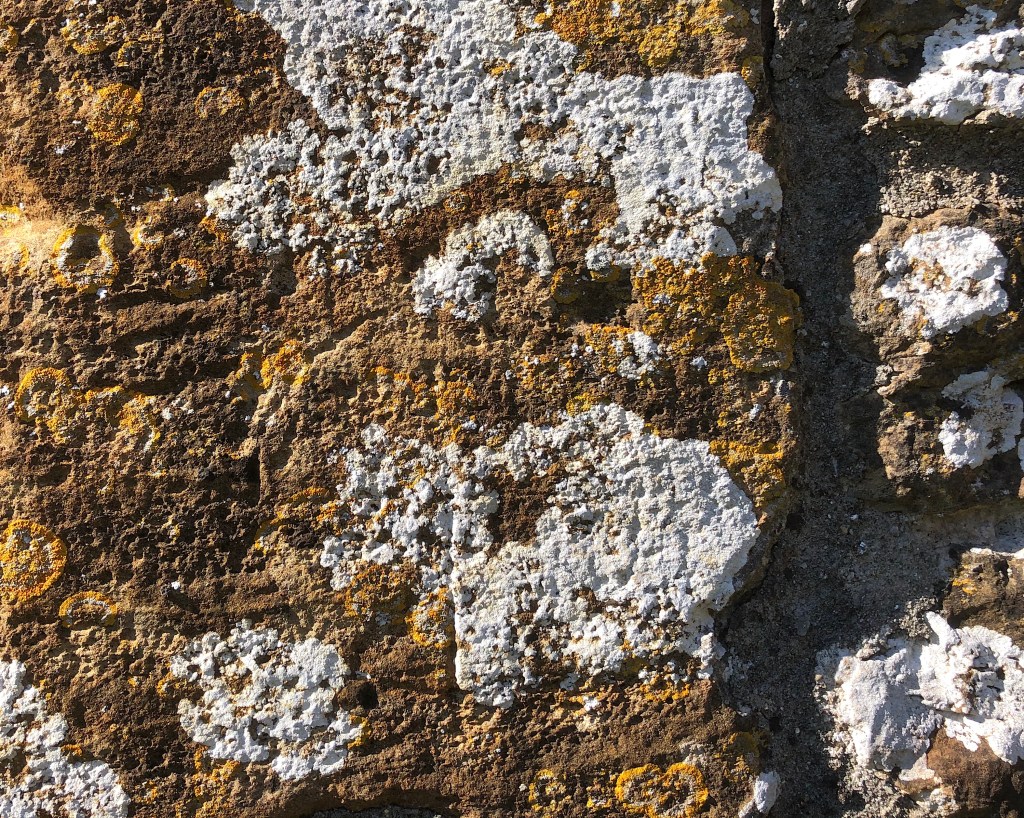
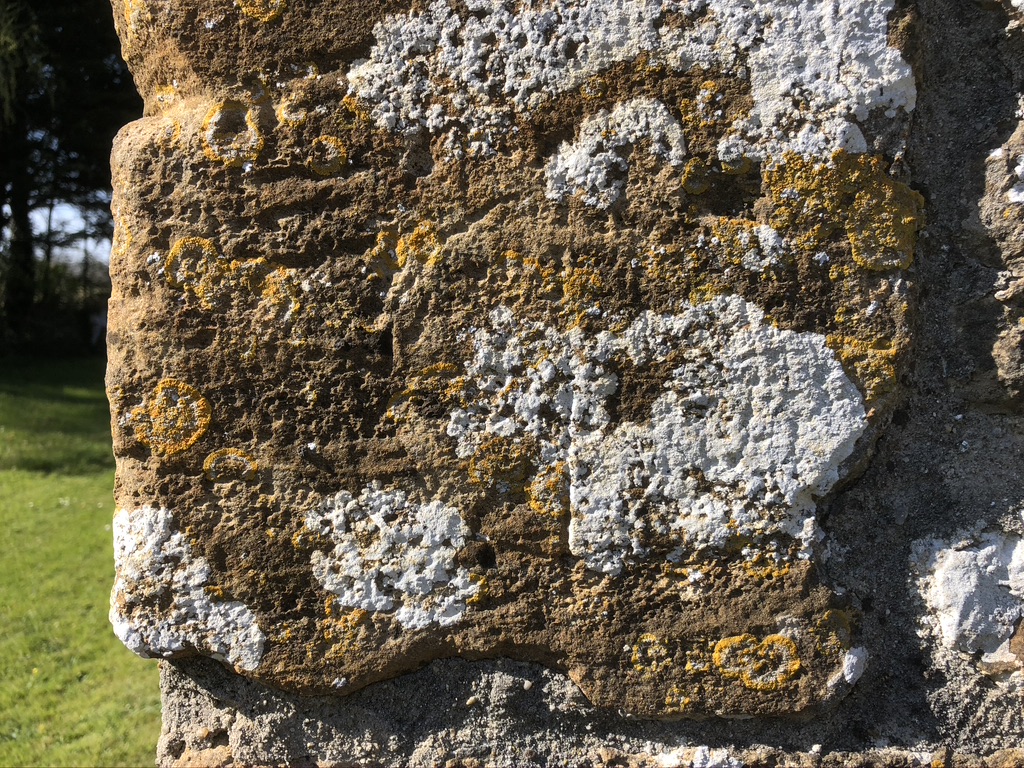
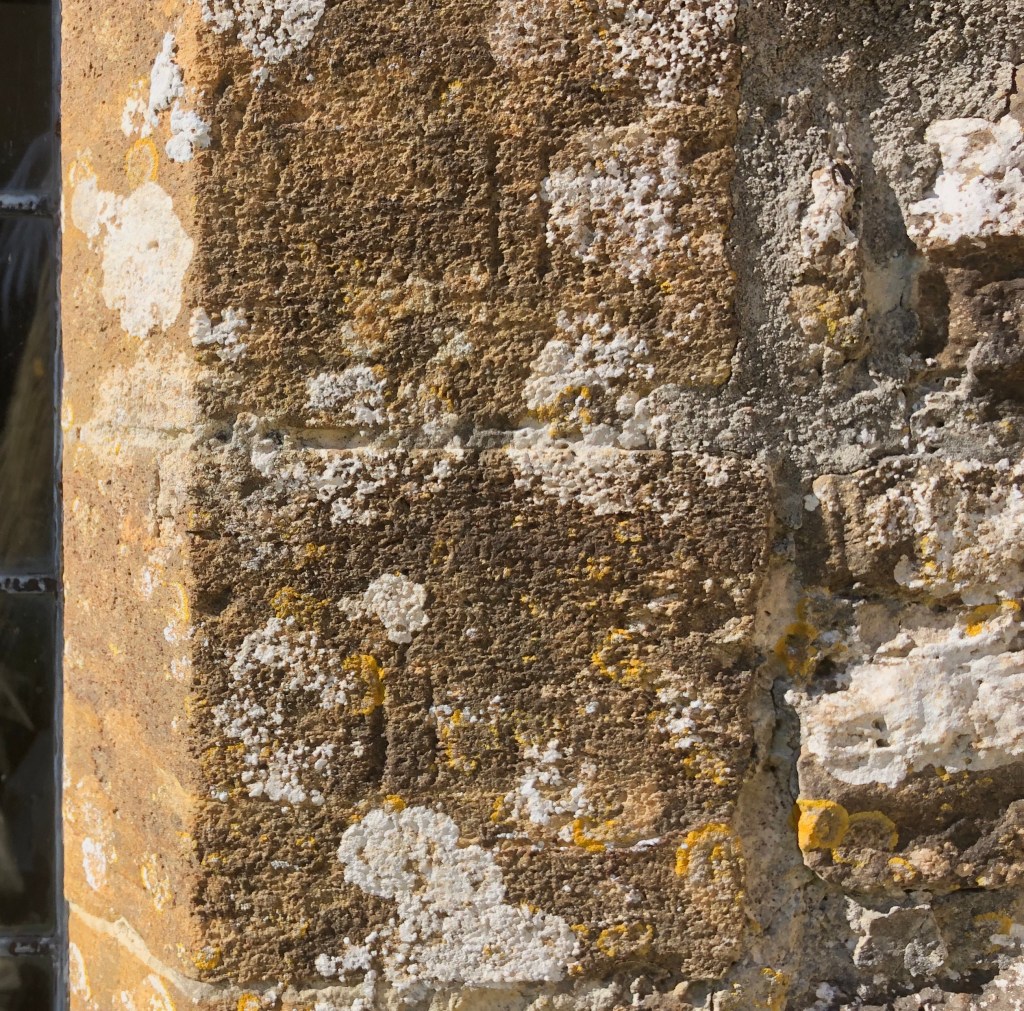
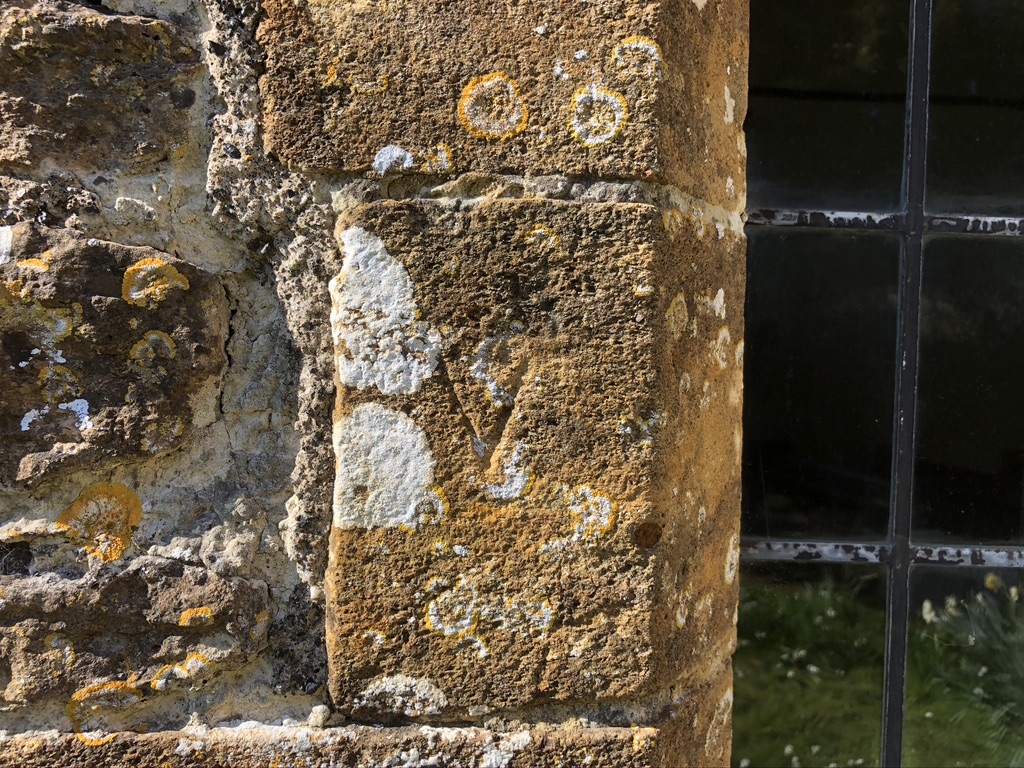
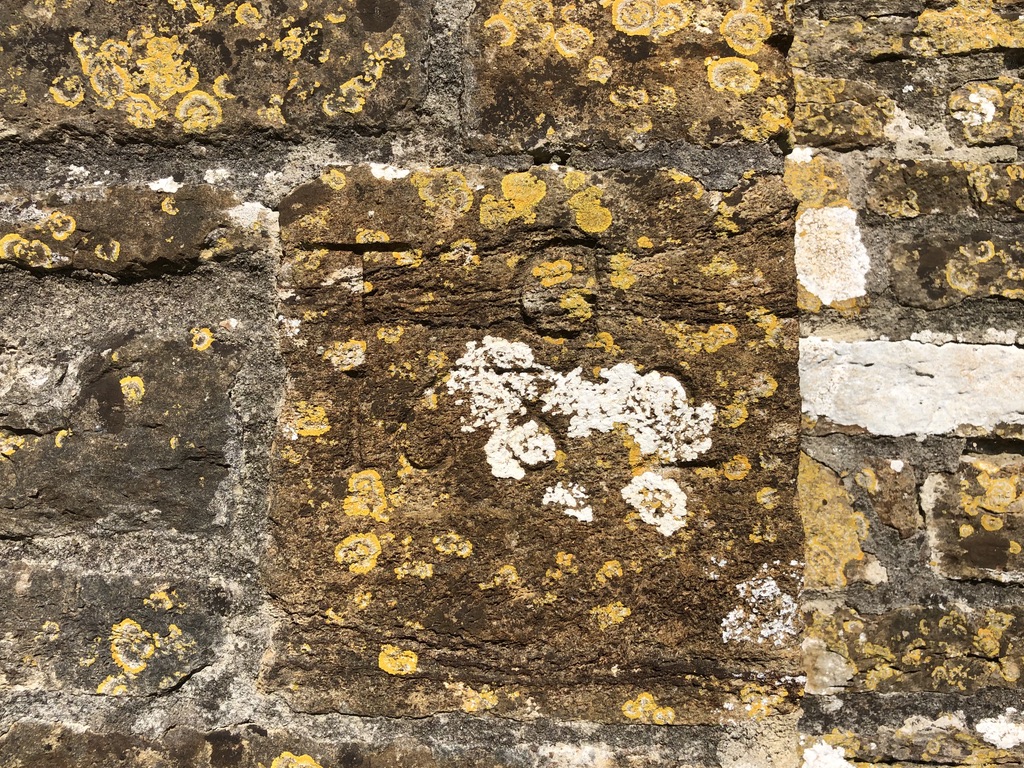
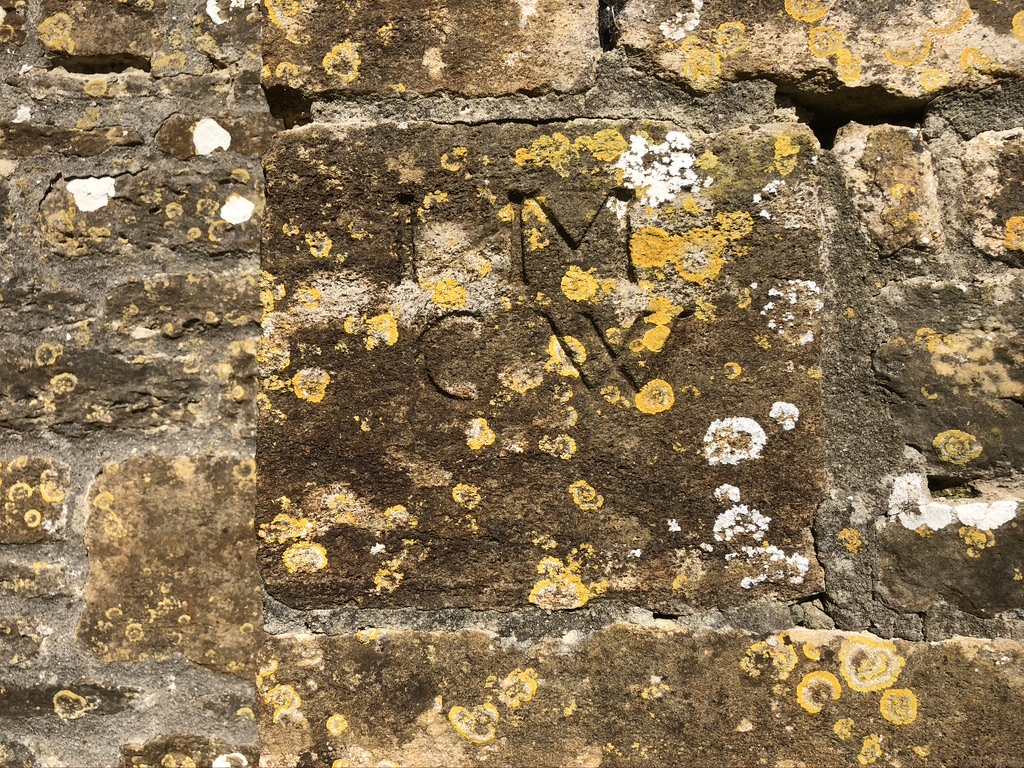
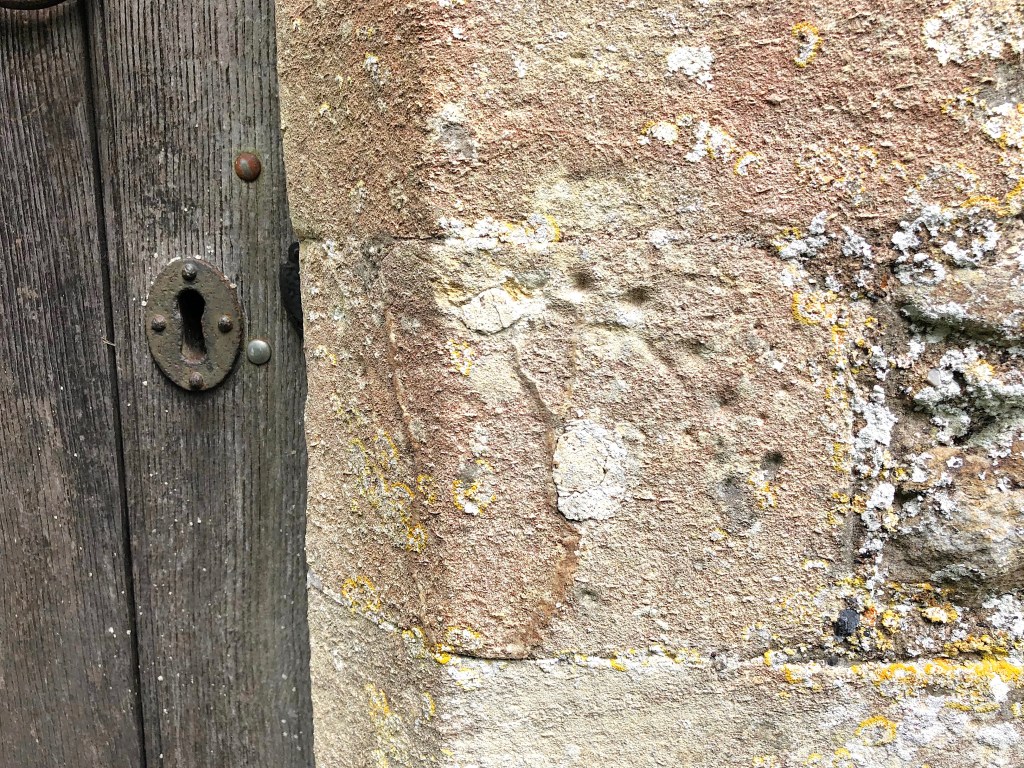
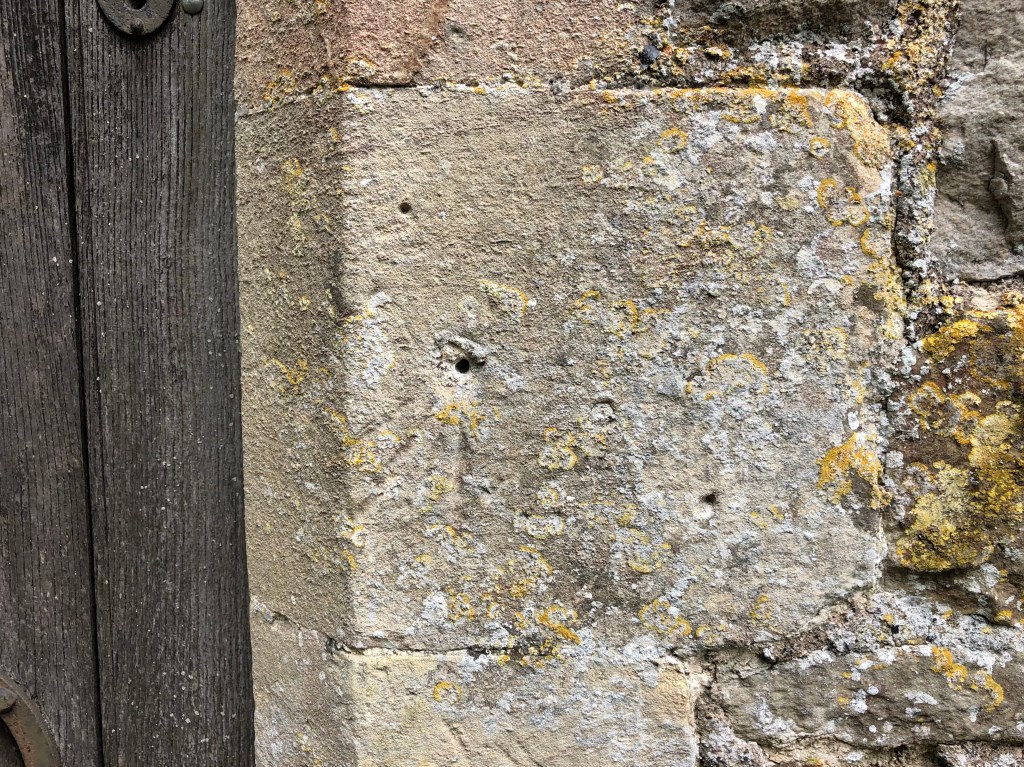
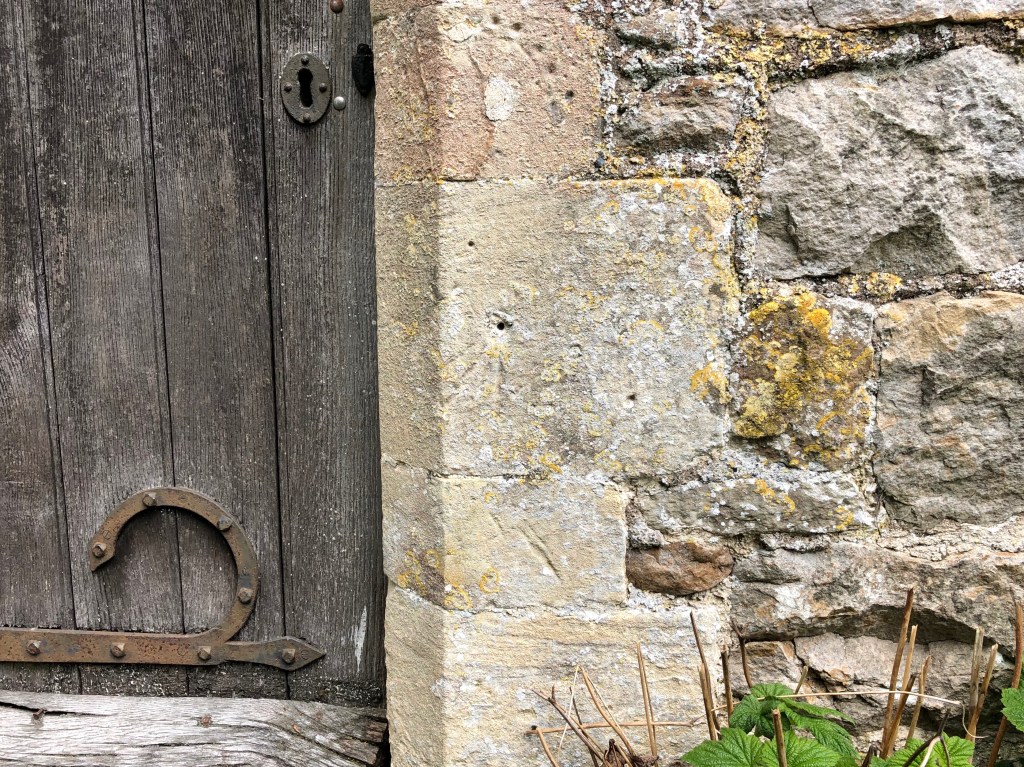
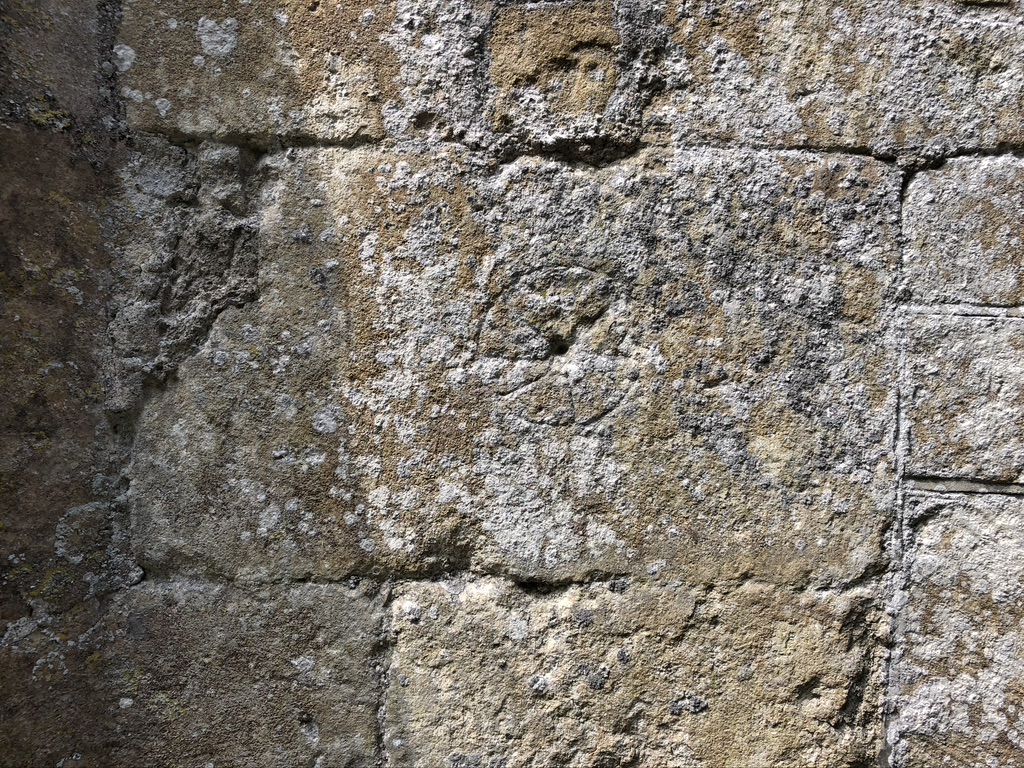
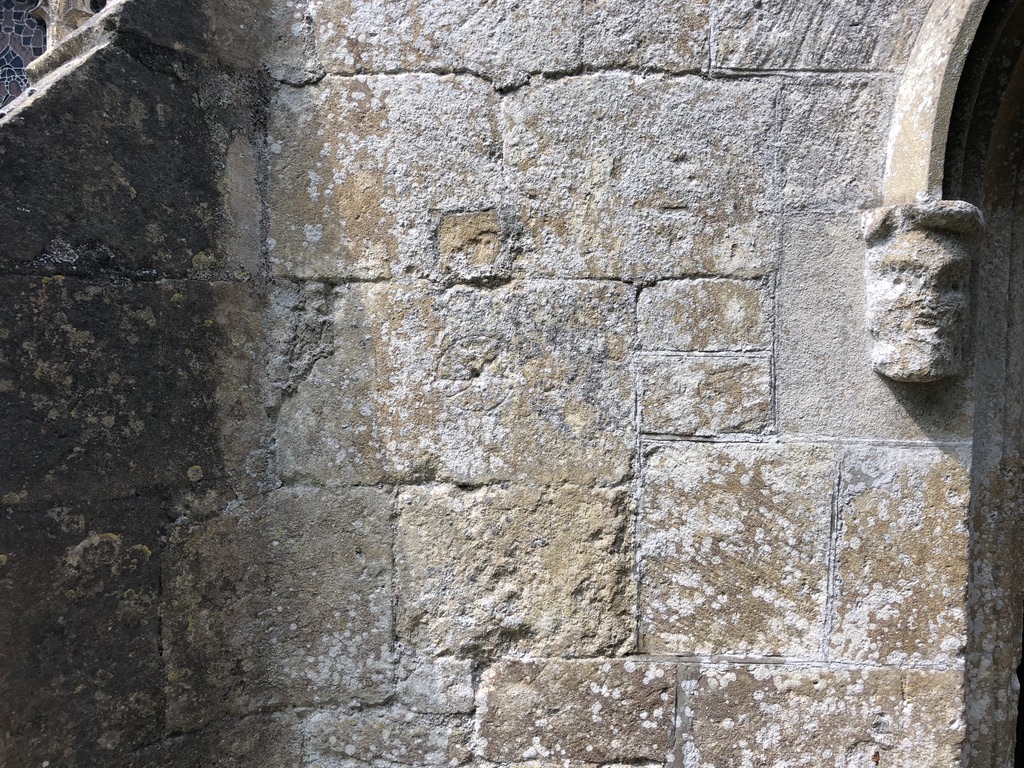
On the buttress E. of porch, 2 eroded scratch dials one above the other; a further small rough dial in the upper half of the lower dial. A possible dial, unrecorded, at the W. end quite high on the SW. face of a buttress. If a dial, it is inverted and presumably repositioned. The dials were photographed on different days in different lights from bright sunshine to overcast, hence the colour variations

GLP records that the 3 dials are ‘very important as 2 of them are cut across two adjoining stones. This means that they must be in situ’. He dates them to late C15.

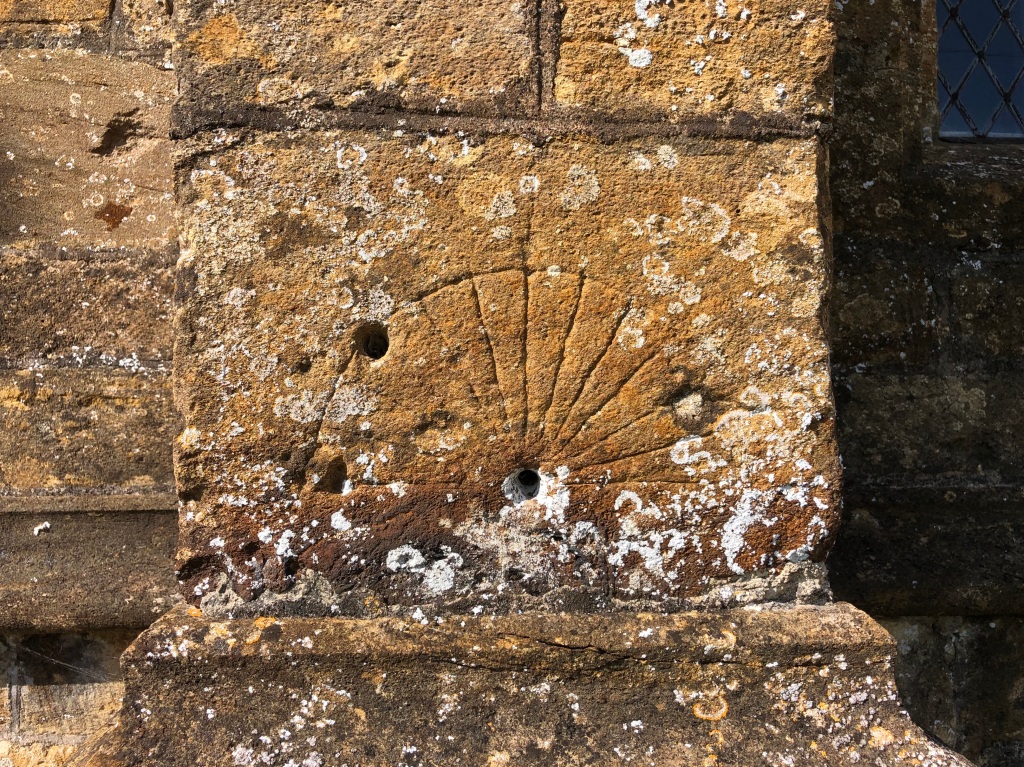
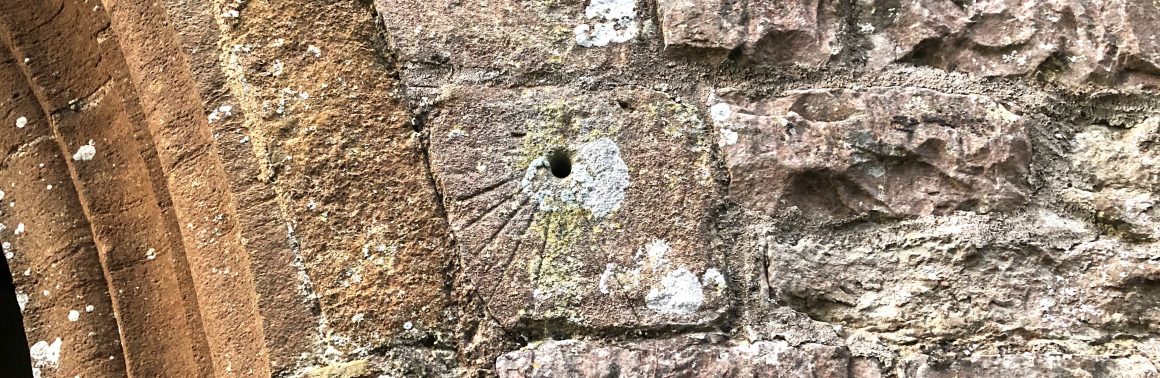
There is also a later dial, included below: On parapet above porch arch, square stone dial with incised degrees, perhaps 18th century BHO

THREE DIALS ON THE BUTTRESS

St Laurence . Holwell . Dorset – 3 dials on one buttress

DIAL 1 (upper)

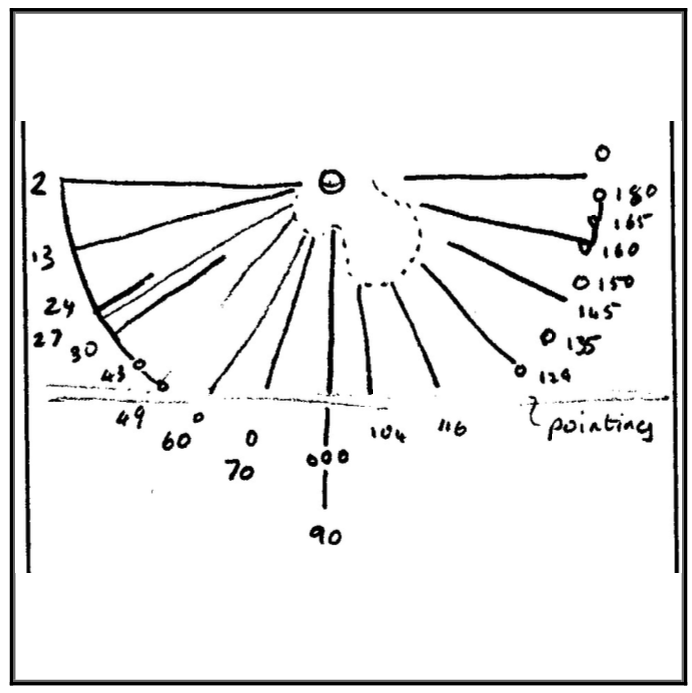
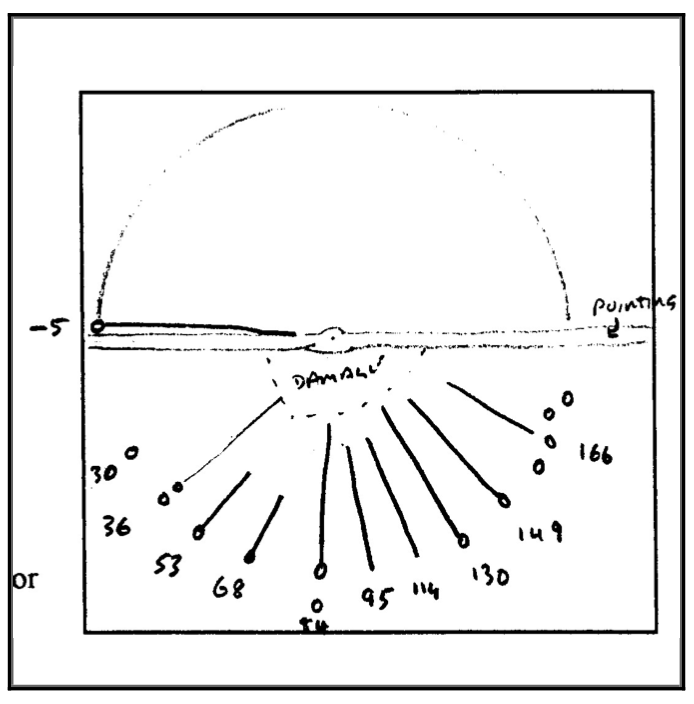
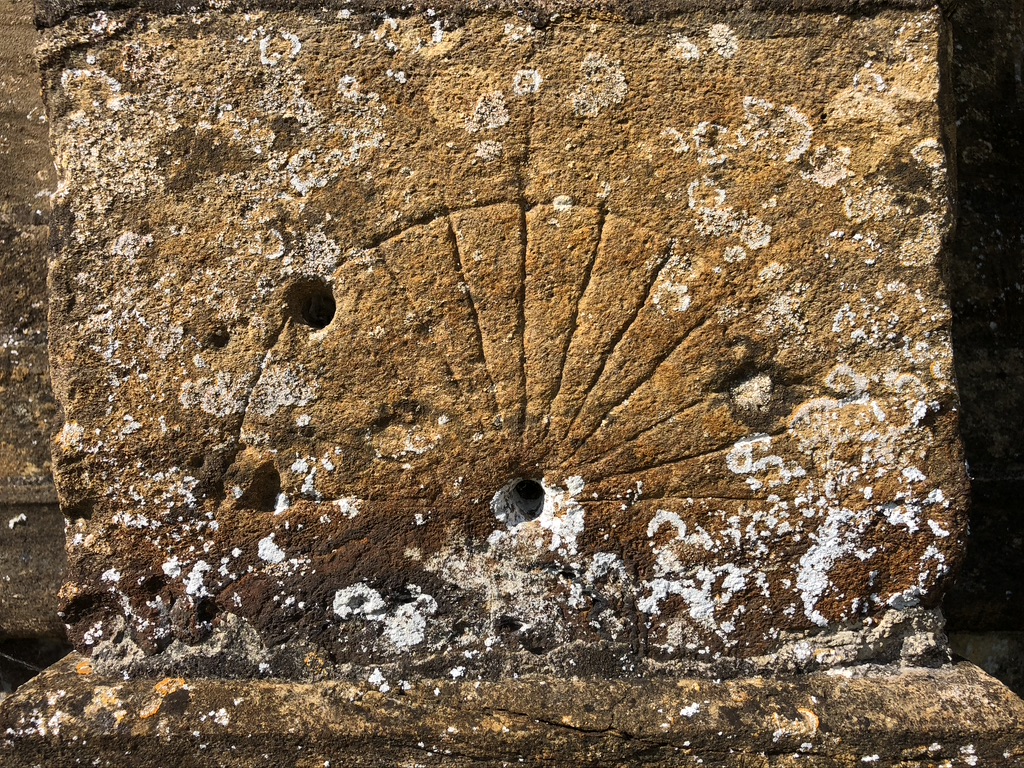
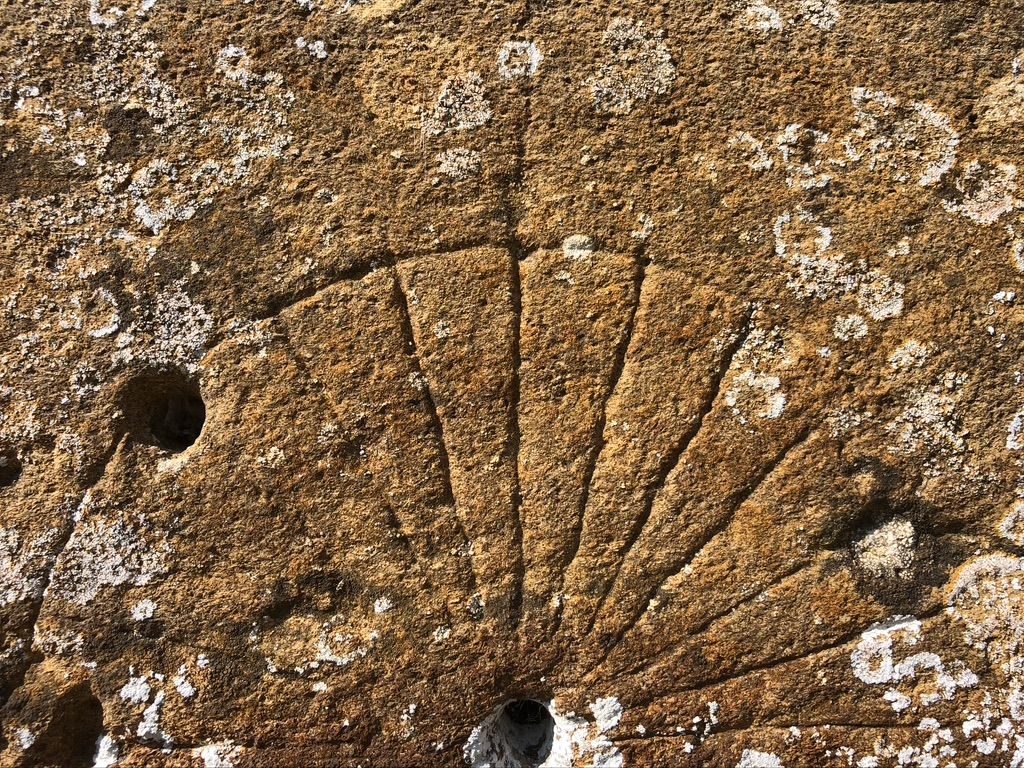
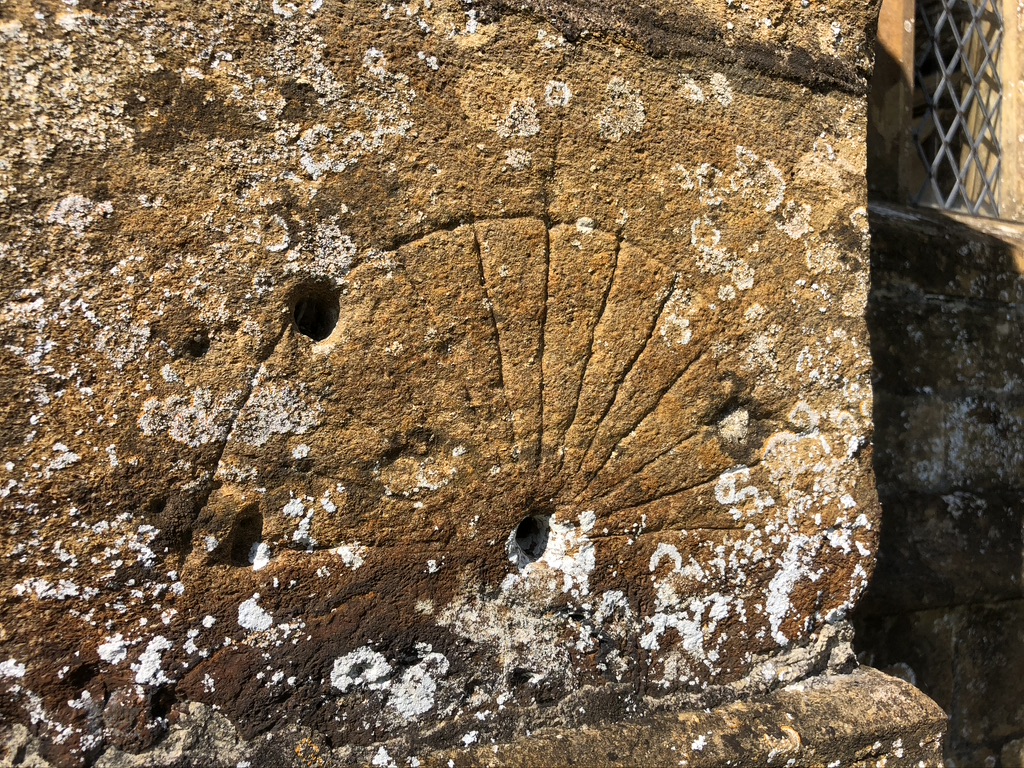
Semicircular with a full complement of 6-to-6 radials, eroded on R side. A disorganised pattern of lines for straightness and distancing, with many ending with pocks. Lines and pocks extend to the stone below, especially the noon line. GLP records 16 lines, 6 with pocks, further pocks including a cross formation at the end of the noon line (triple pock cross BSS). He notes some half-hour lines and comments that the dial is very accurately cut.
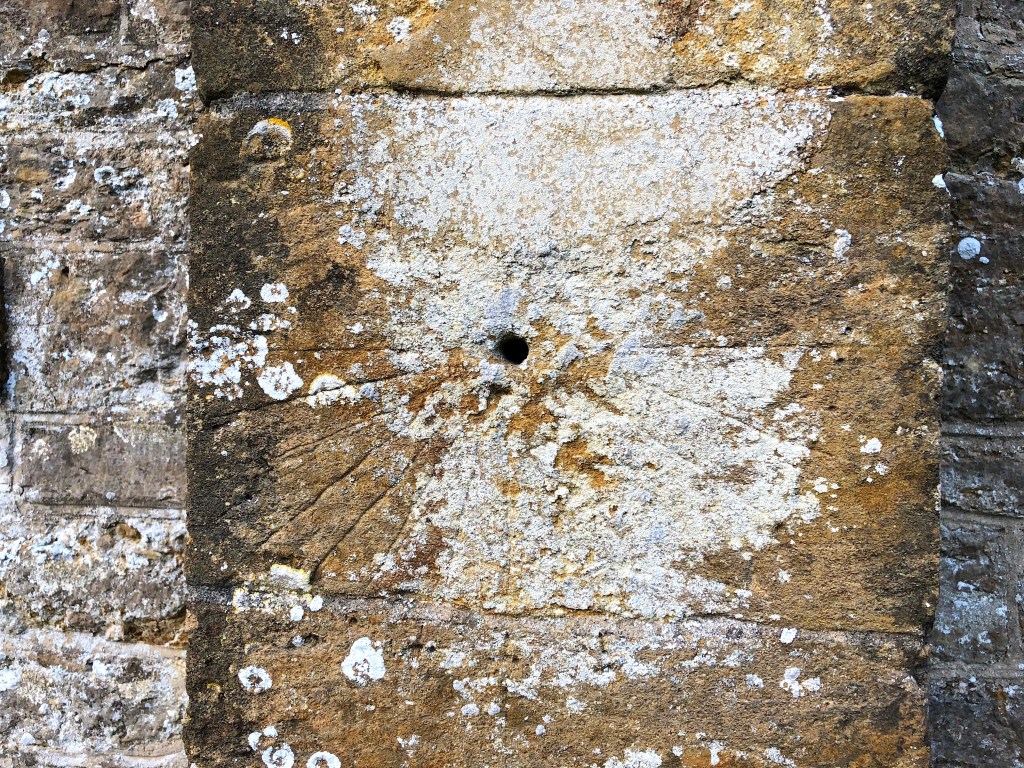
St Laurence . Holwell . Dorset – scratch dial 1 (upper)

BSS diagram

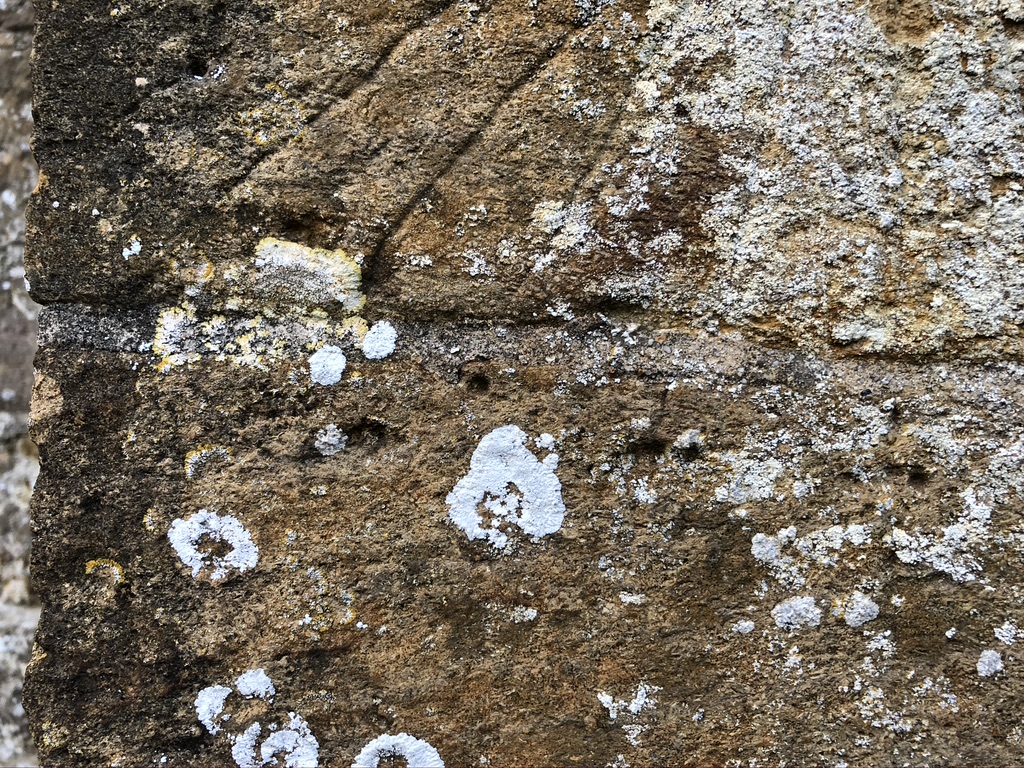
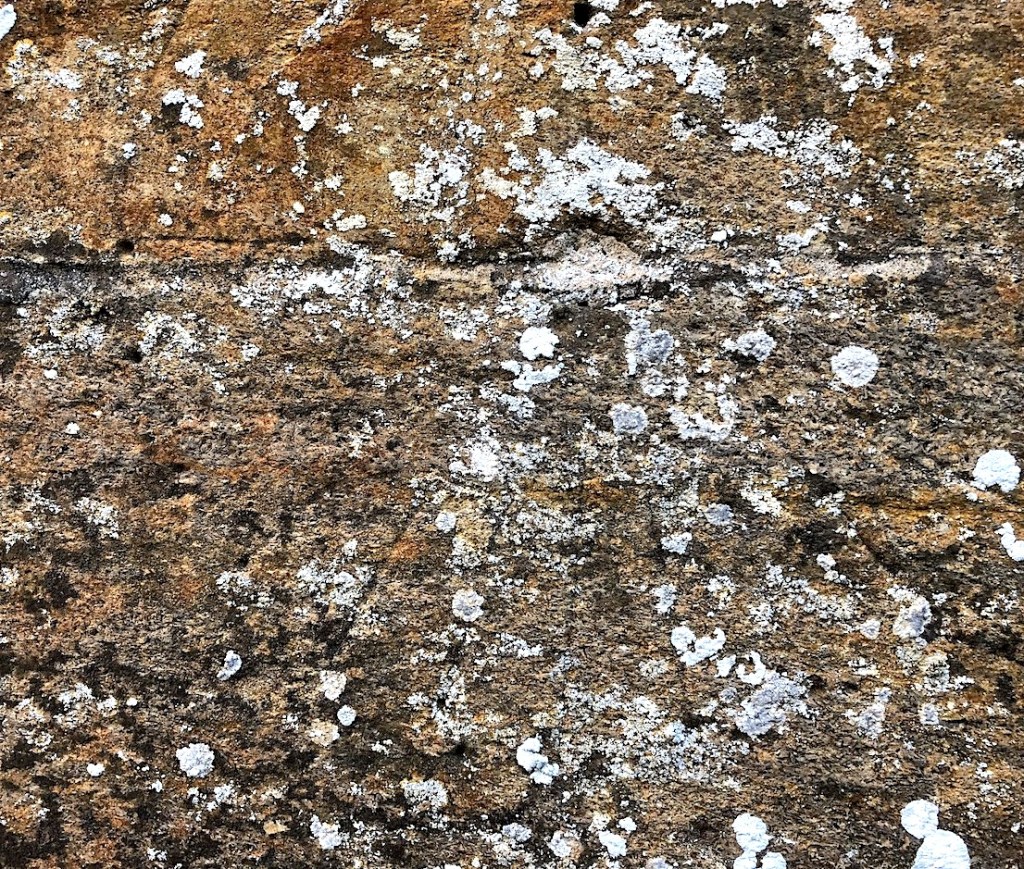
DIAL 2 (lower)

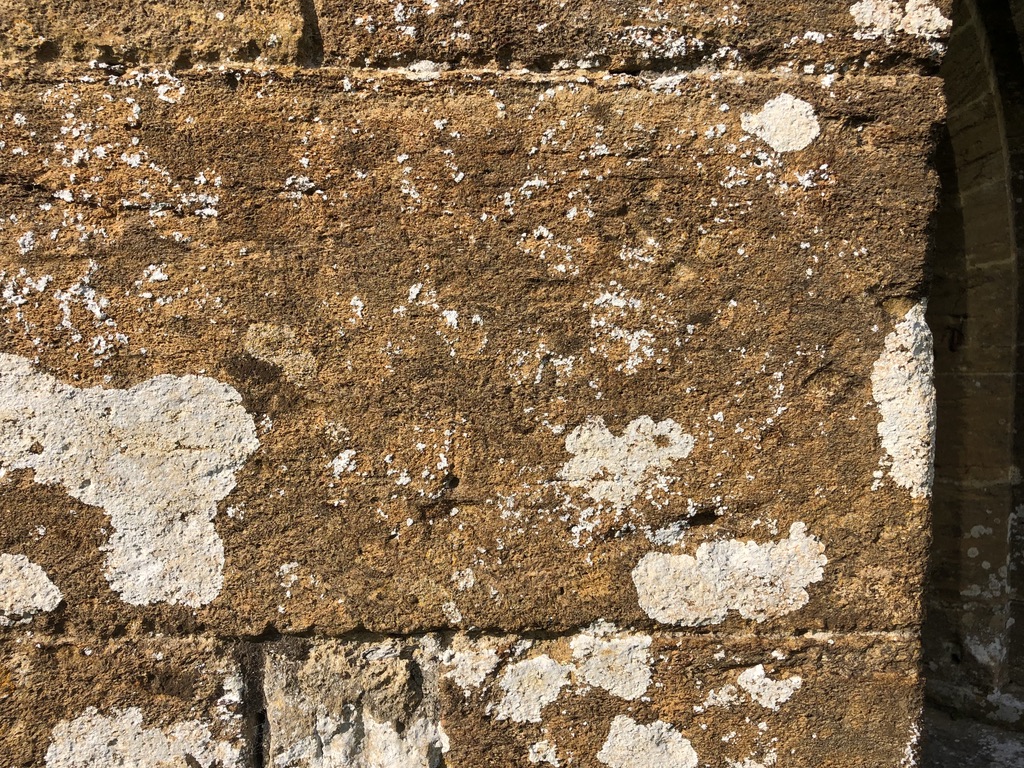
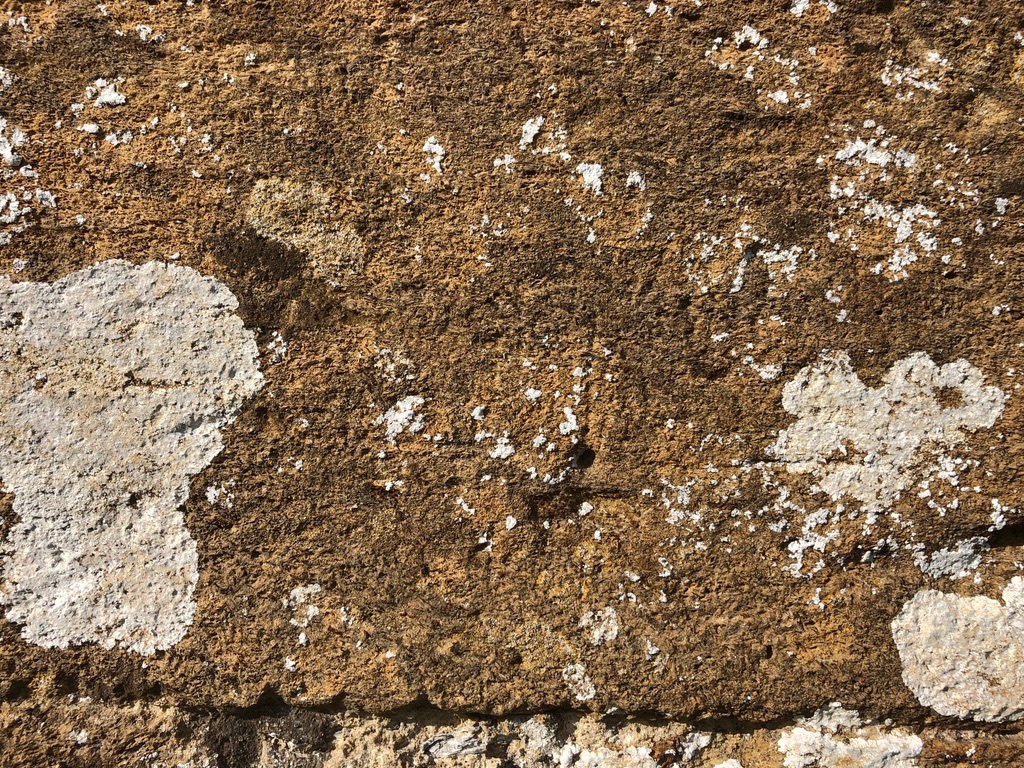
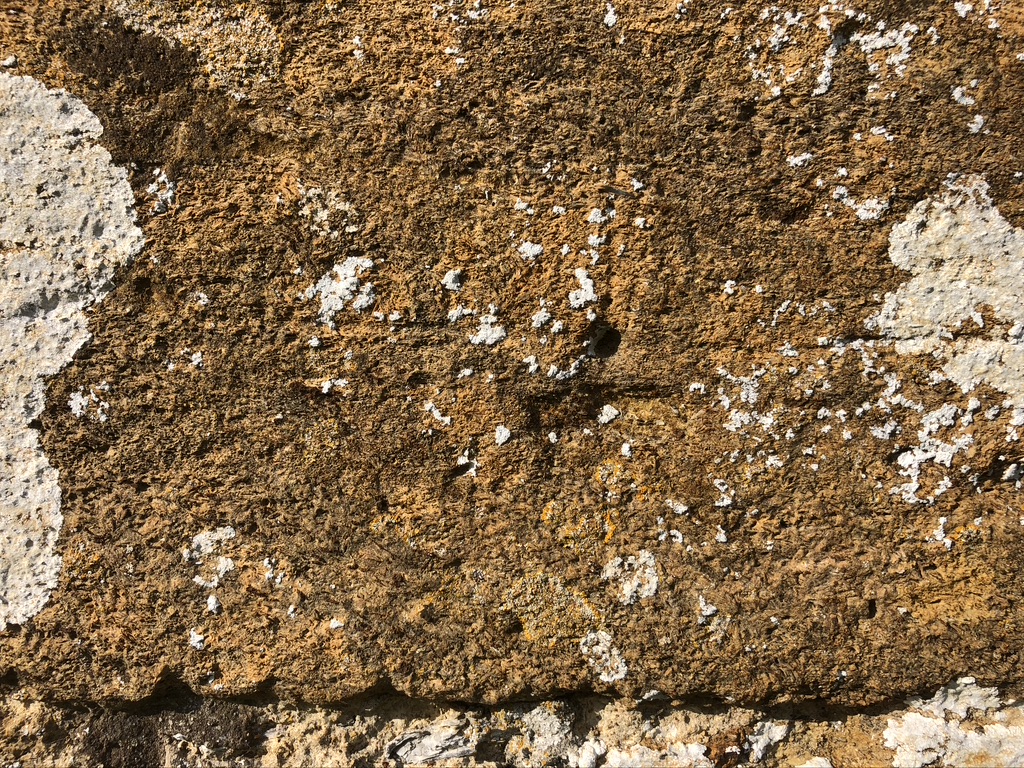
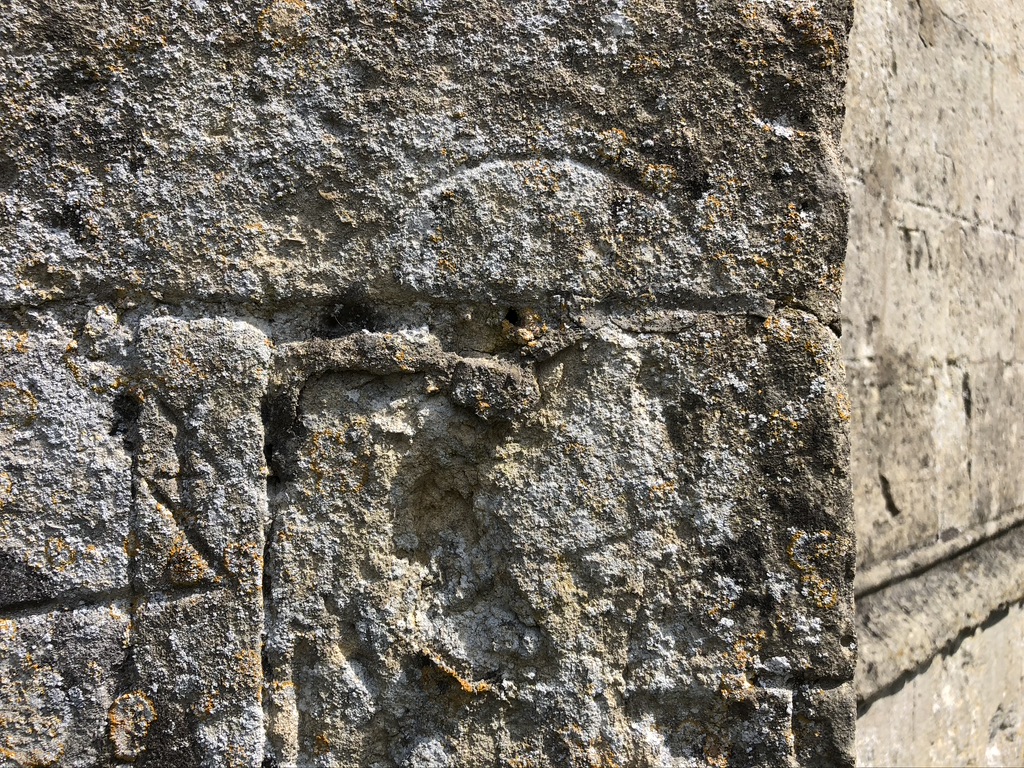
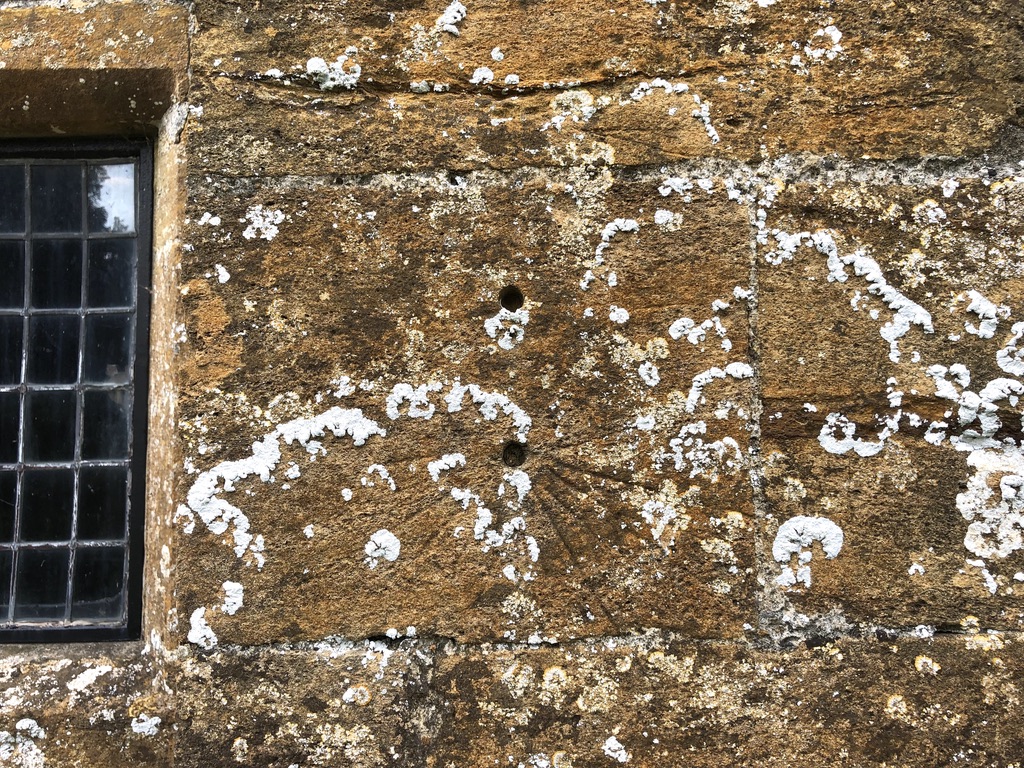
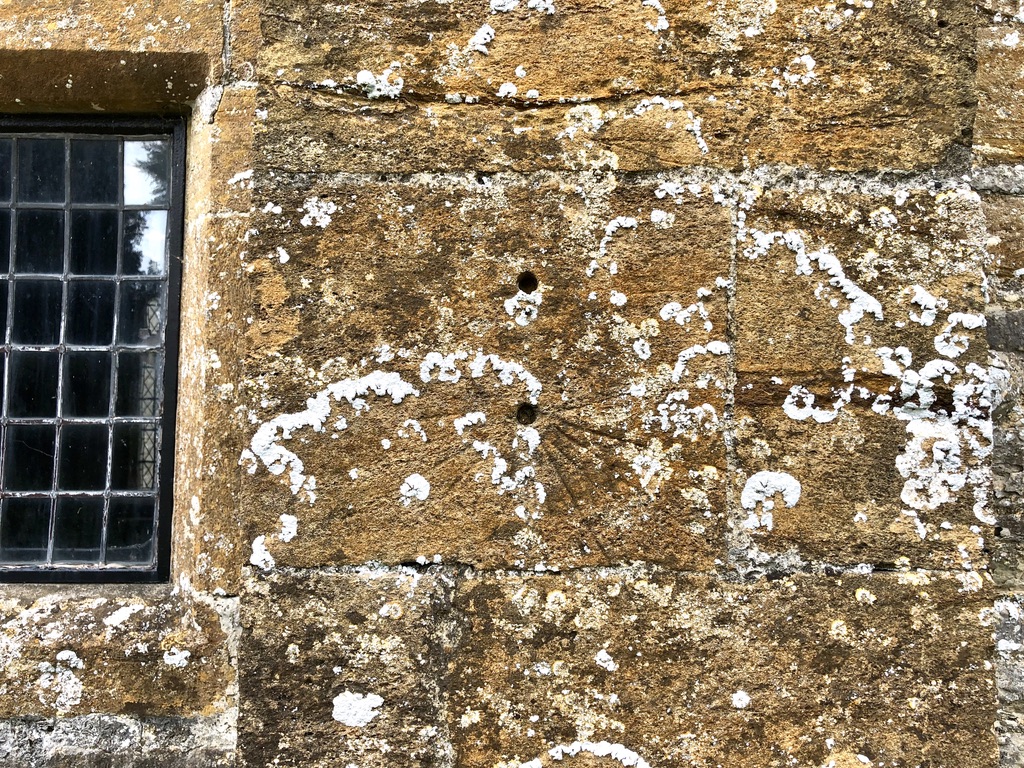
Dial 2 is encircled, most visibly the upper L quadrant, the R side being eroded. Compared with Dial 1, the details are indistinct. The photos below were taken in different lights to help with examination. The radials – many with terminal pocks – are within the lower half of the dial, with Dial 3 located in the upper half (see below).

GLP notes 11 lines with 6 ending in holes, plus the masonry joint as the horizontal, very inaccurately drawn with only one line in the correct position. GLP concludes that, though impressive, the dial was probably of very little use.
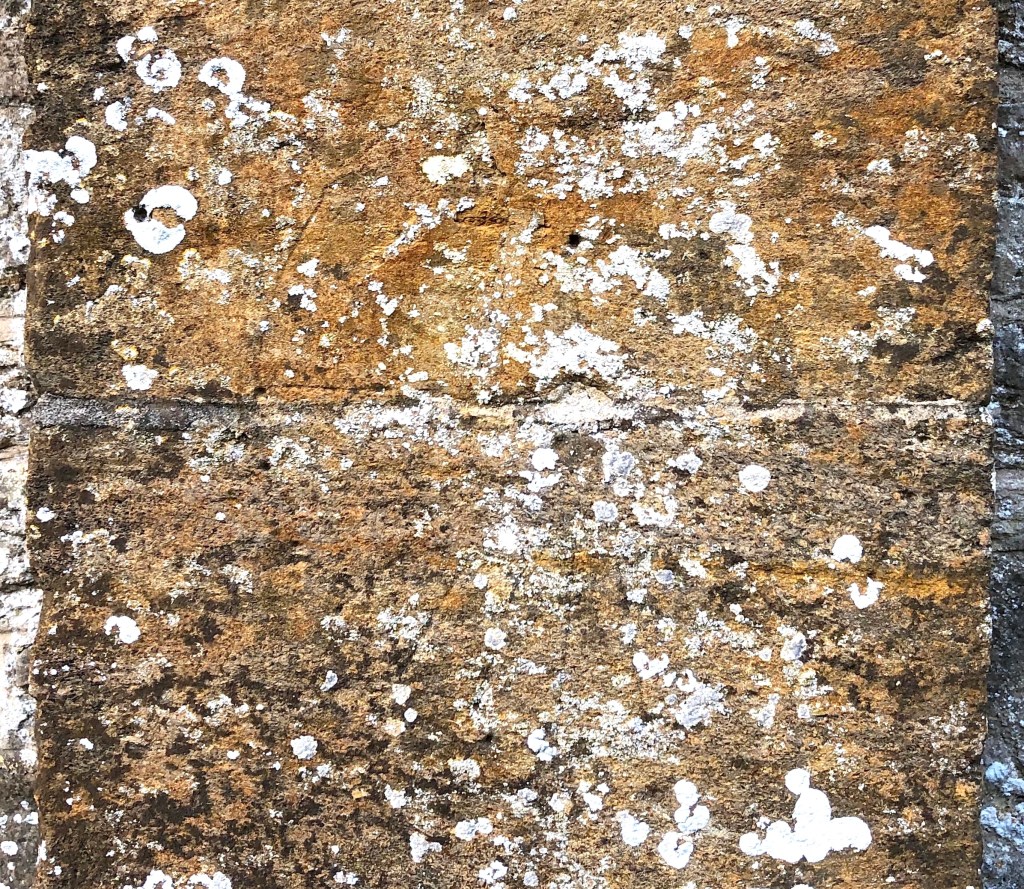
St Laurence . Holwell . Dorset – scratch dial 2 (lower)

St Laurence . Holwell . Dorset – scratch dial 2 (lower)
BSS diagram

DIAL 3 (inset in Dial 2)

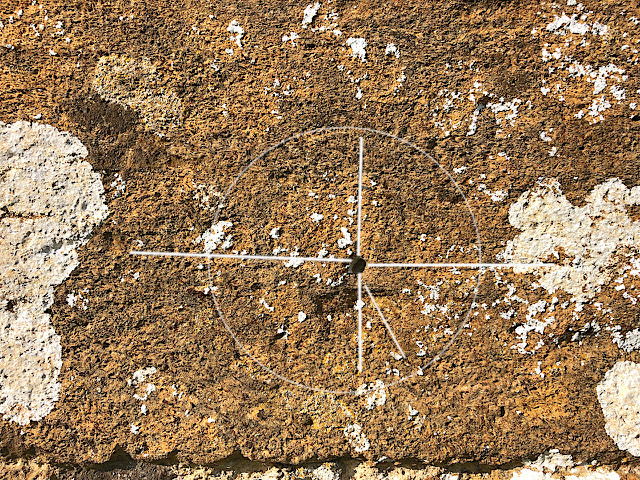
A small rustic dial embedded within the top half of Dial 2. Eroded stone and lichen make it hard to analyse the dial much more. The BSS diagram below is the most helpful guide. GLP mentions 3 lines and a very worn circumference line. He notes that this dial, as with Dial 2, would have been of very little use.
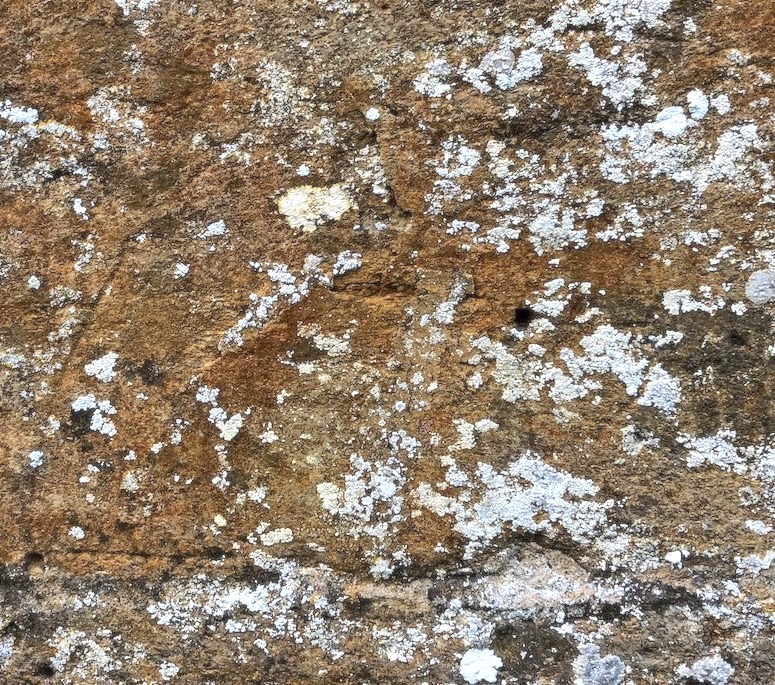
BSS diagram

DIAL ABOVE THE PORCH

Featured here for interest and completeness, and will be written up on the OLD DIALS page

The dial is above the S. porch. Hard to date, but relatively complex. There are no numerals, and the lines from 6am to 6pm mark the hours, half-hours and the quarter-hours, carefully graduated. Some lines (eg 8am) are emphasised. There is no gnomon though there must have been one. The presumed site seems to be slightly off-centre at the top, where there is an area of damage. The dial was renovated in 1998 by S&L Kellard of Street, and the decision must have been made not to add a modern gnomon.

DIAL 4 (unrecorded, plausible)

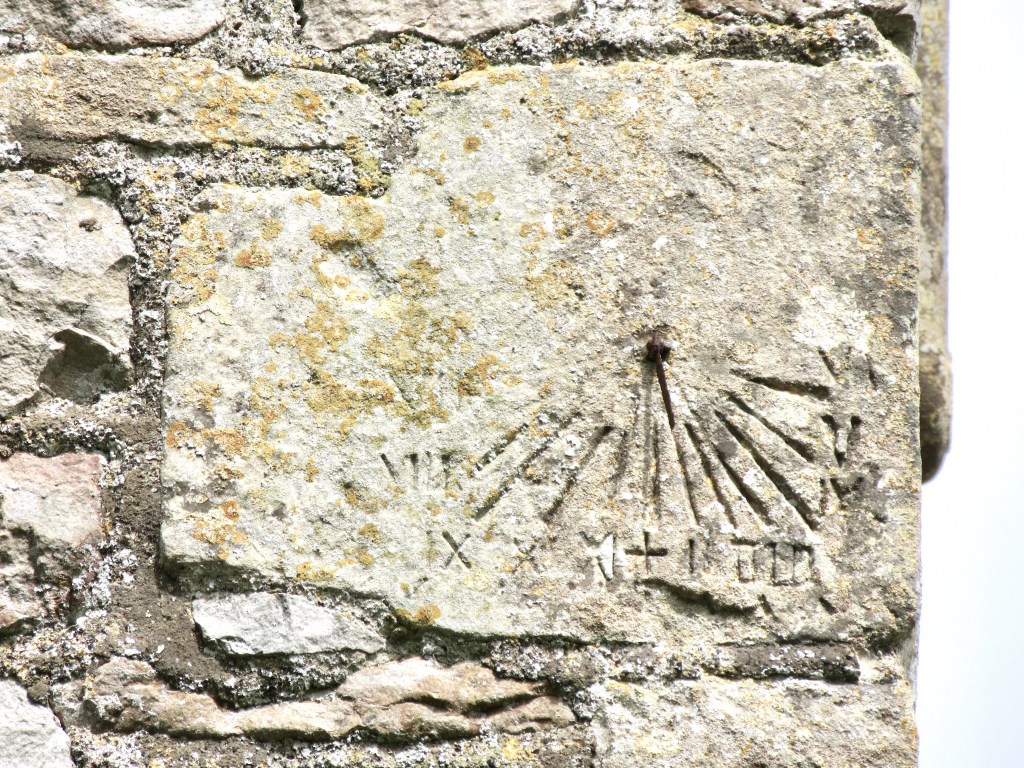
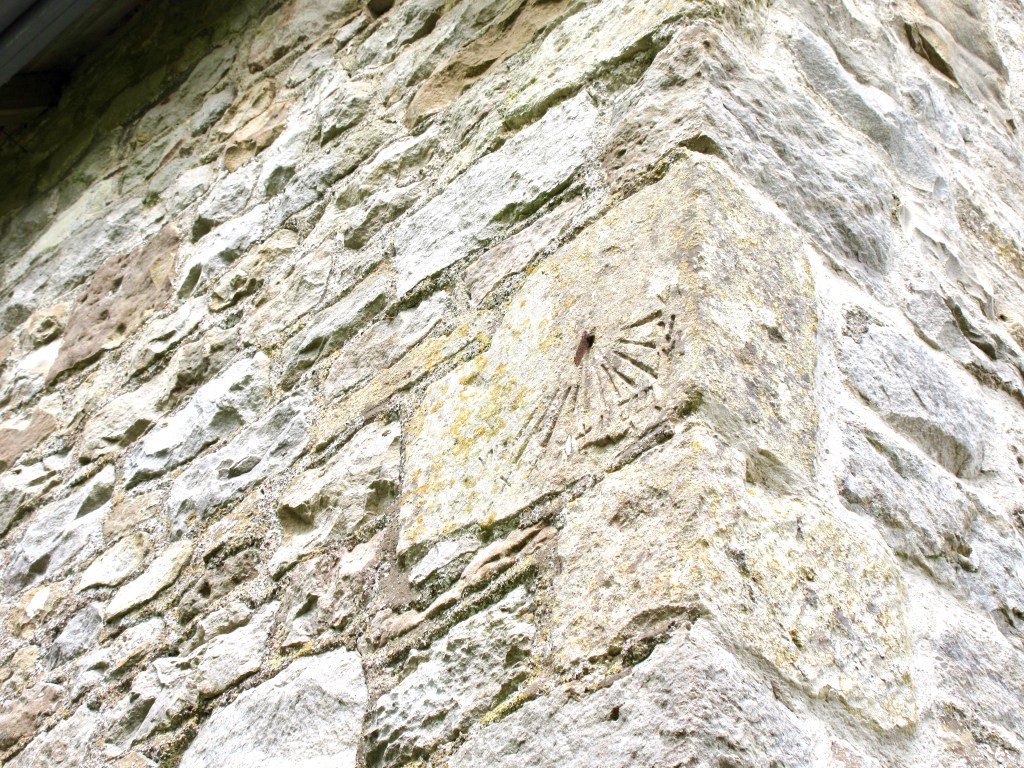
As mentioned above, there is a possible dial quite high on the SW. face of a buttress at the W end. If it is a dial, it must have been repositioned and inverted in the process (shown reverted below)

Addendum 12.22: reviewing this dial, it deserves an update from ‘plausible’ to ‘definite (re-sited)’

GSS Category: Scratch Dial

All photos: Keith Salvesen
MELBURY BUBB . DORSET . ST MARY – Scratch Dial

Melbury Bubb . Dorset . St Mary

MELBURY BUBB . DORSET . ST MARY THE VIRGIN

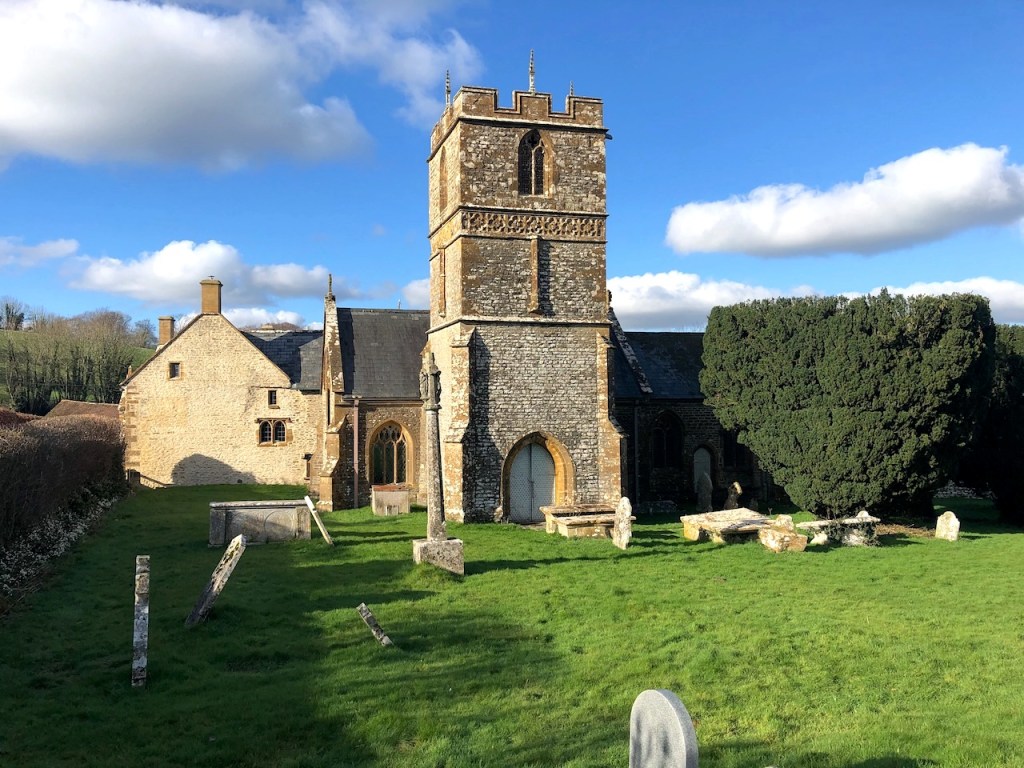
GRADE 1. Church origins obscure; existing building dates from C15 with substantial C19 rebuilding. Renowned font carved from the column of a C10 Saxon cross and inverted. Excellent chest tombs. Next to a fine C17 Manor. The hamlet – Hardy’s ‘Little Hintock’ – is a few miles SW. of Sherborne, nestled into a peaceful hillside with outstanding views over the Blackmore Vale, shielded from the roar of the lethal A37 Yeovil – Dorchester road. 50.8571°N / 2.5753°W / ST596065

DIAL

BSS register and GLP describe a ‘doubtful’ dial: On W. buttress of tower, late C15. A doubtful dial consisting of a single horizontal line leading to a shallow hole. This could be the remains of a painted dial, or a piece of graffiti.

BSS Diagram of the doubtful dial

This church is local to us. We can see it clearly from our house 3 miles away. Since I started this blog, I have checked the buttress two or three times and failed to find a mark similar to the diagram. There are some horizontal faults in the stone, but I haven’t seen anything as precise.

Recently I decided to try again, choosing early evening on a sunny day when the light would be shining directly onto the face of the buttress. Which it did. This is what was revealed, faintly visible in direct sunlight.

Melbury Bubb . Dorset . St Mary – Scratch Dial

There’s an element of wish fulfilment with amateur dial sleuthing – each hole a potential gnomon location; two or more proximate lines as radials; adjacent erosion faults and dots as dial pocks. However, close inspection here revealed a clear design conforming to dial norms.

Melbury Bubb . Dorset . St Mary – Scratch Dial

The central hole has horizontal and vertical lines leading from it that divide the enclosed area into quadrants. There is the trace of a circle, slightly off-centre from the style hole. The upper vertical extends close to the circumference; the lower vertical (noon-line) stops slightly short of it; the left horizontal extends beyond almost to the lichen; and the right horizontal extends into the lichen. There’s a trace of what could be a 1-line to the right of the noon-line.

Melbury Bubb . Dorset . St Mary – Scratch Dial annotated

Having examined the dial in situ, made some measurements, and checked my photos I am convinced that this is a simple scratch dial probably from C15 soon after the tower was built rather than later. In any event I have convinced myself.

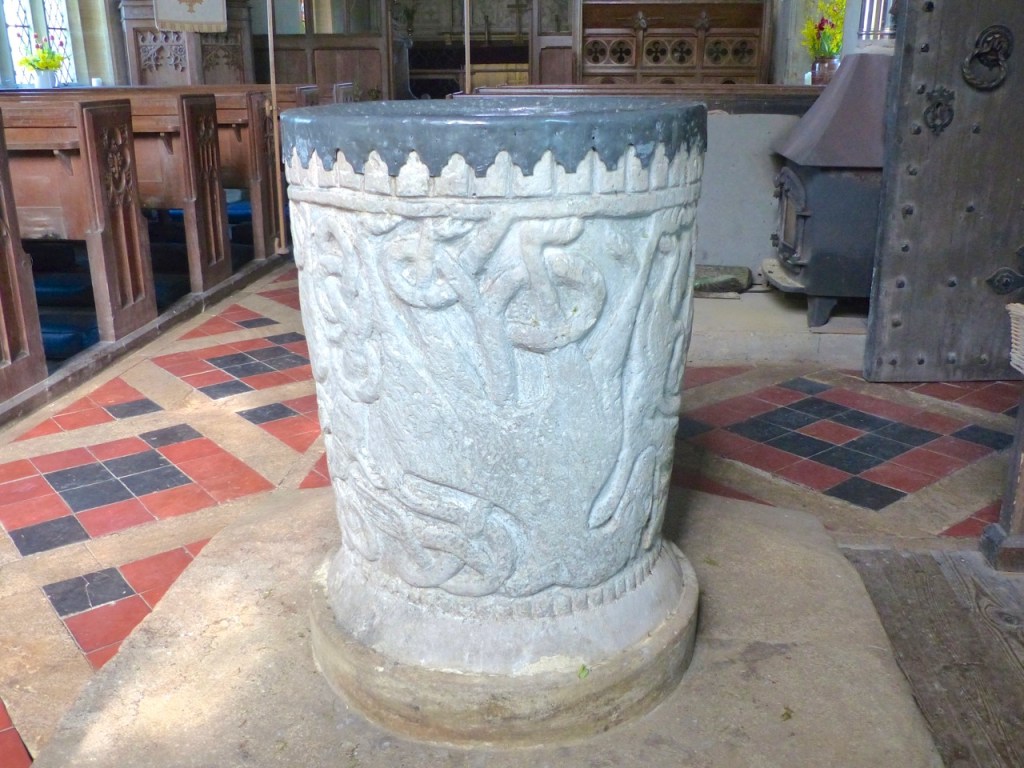
The remarkable font deserves inclusion. HE describes it as a cylindrical tapering stone bowl, reversed, formerly base of a shaft, carved with continuous design of beasts: stag, horse, wolf, and ?lion, and lesser beasts, and interlacement, C10. There is a helpful description and annotated diagram in the church.

I have seen St Mary described as a ‘one-treasure church’, but the whole interior, the churchyard with its early chest tombs, the lovely setting of the church and hamlet – and possibly a C15 mass dial – make it rather more than that.

Melbury Bubb . Dorset . St Mary – the C10 Saxon-origin font

GSS Category: Scratch Dial

All photos: Keith Salvesen
STANTON ST BERNARD . WILTS . ALL SAINTS – SCRATCH DIAL

Stanton St Bernard . Wilts . All Saints

STANTON ST BERNARD . WILTS . ALL SAINTS

Grade II. Mid C13, with a Norman font suggesting earlier origins. Tower C15. By early C19, dilapidated and demolished (apart from the tower) and rebuilt. The work was inferior and re-rebuilding was soon required. Close to the Kennet & Avon canal between Devizes and Pewsey. 51.3598 / -1.8703 / SU09162

DIAL

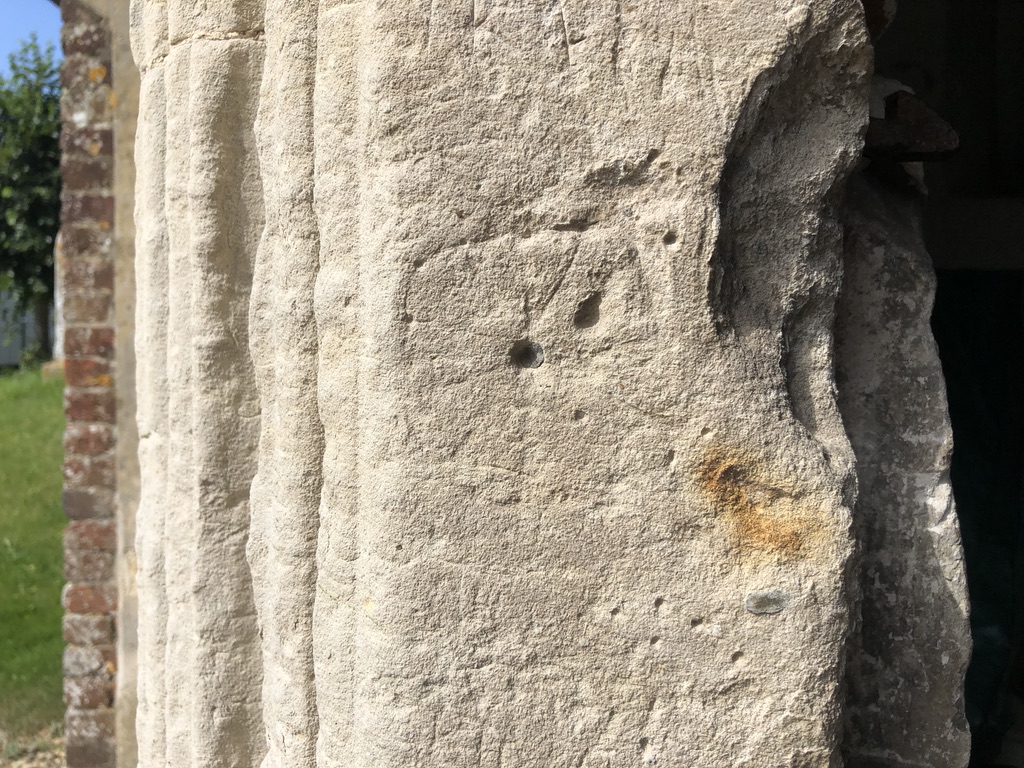
Badly eroded and degraded, the dial is located on the SW face of the buttress S of the W door. Apart from the semicircle at the top it is hard to discern how the dial might have looked. At first sight, this is a dial cut across 2 stones (there’s a hint of a circle on the lower stone), with the style hole presumably lost in the damaged area (the mortar line looks too high for one). Listed by TWC; not in the BSS register

Alternatively, possibly the combination of dilapidation, demolition and double rebuilding in C19 included rearranging some of the stonework of the tower that otherwise survived the chaos. Conceivably the present visible ‘semicircle stone’ was parted from a companion stone cut with the rest of the dial that was repurposed elsewhere.

Stanton St Bernard . Wilts . All Saints – Scratch Dial and Graffiti

Apart from the dial, there are quite a few witch marks and graffiti / initials. I take the double triangle mark beside the dial to be an emphatic ritual protection mark rather than, for example, a mason’s mark.

GSS Category: Scratch Dial; Witch Marks; Graffiti

All photos – Keith salvesen

STOCKBRIDGE OLD CHURCH . HANTS . ST PETER – Early Scratch Dial

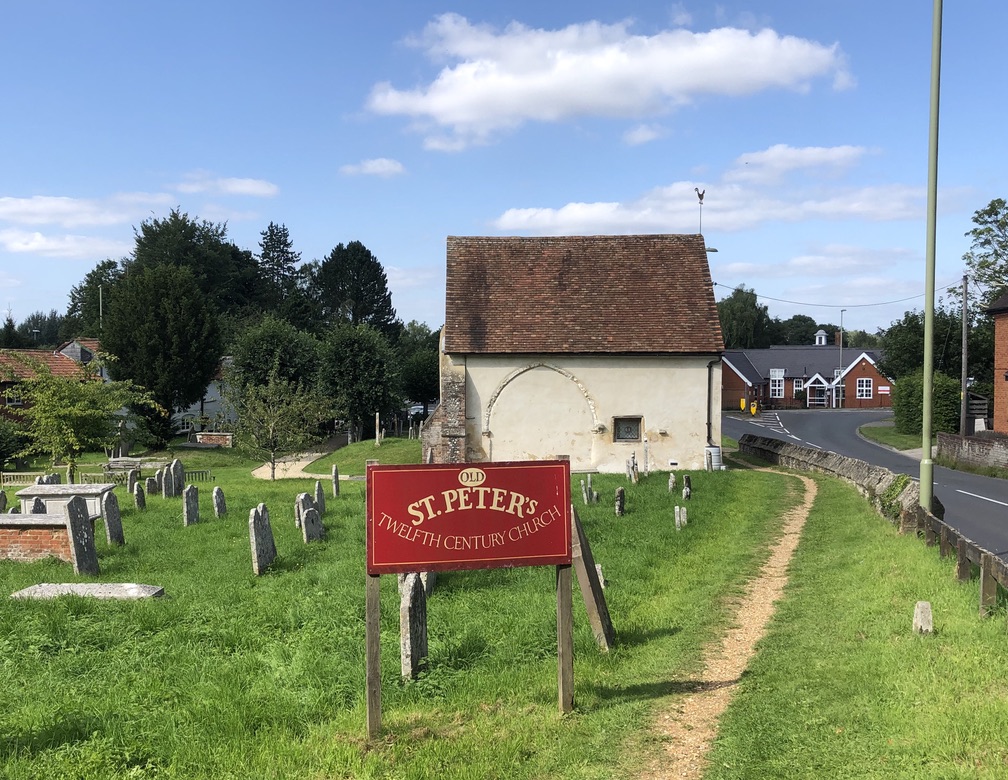
St Peter Old Church . Stockbridge . Hants

ST PETER OLD CHURCH . STOCKBRIDGE . HANTS

GRADE II* . C12, later expansion until decay by C19 rendered it ‘unfit for public worship‘. Radical action was taken and the church demolished leaving only the chancel. The ‘new church’ was built in contemporary style on the High Street. Much of the old church was transferred to the new one (including a dial stone, to be featured another time). The old church is still in use and much of interest remains including Elizabethan wall paintings, early bells, and a C13 (or C12?) font. Also a medieval oak door carbon-dated to 1354. 51.1131 / -1.4876 / SU359349

DIAL

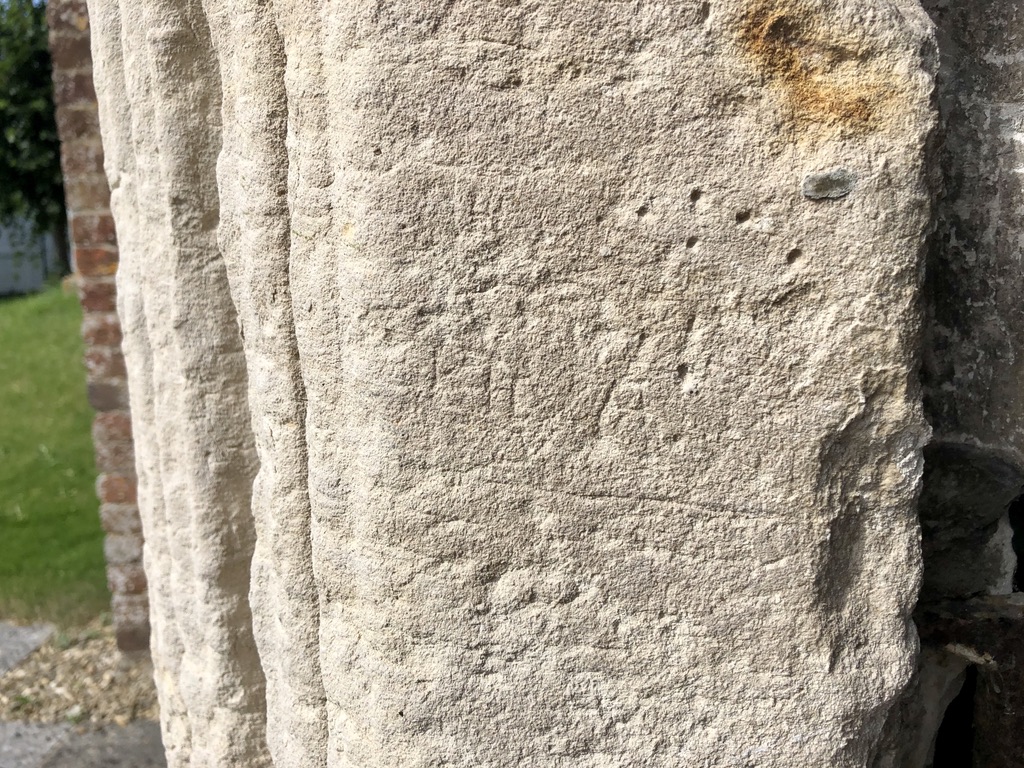
The church information leaflet notes ‘…a Mass Clock ca. 1214 on the door jamb of the west door’. However such a precise date is arrived at, this is a striking example of an early dial and a most unusual one in being set in an approximate rectangle rather than (if anything) a semi or complete circle. In Hants I know of one other, at Laverstoke.

St Peter Old Church . Stockbridge . Hants – Scratch Dial

The dial is set facing south among a selection of witch marks and graffiti scratched around the doorway. I counted 8 (possibly 9) lines rather haphazardly drawn and positioned ’round the clock’, with several pocks on the dial and its perimeter (also a dot pattern below). The noon line seems faintly to be extended. The style hole is filled. I wonder if it is unusual for such a very early dial to mark a full 24-hour cycle?

BSS gives the condition as fair and specifies 8 lines. Pocks are not noted. Comment: Repositioned?Irregular outline. Crudely cut or made. Cannot be classified. Unique shape.

Green ARG includes Stockbridge new church in his indispensable book of 1926 ‘Sundials – Incised Dials or Mass Clocks’. He visited in May 1922 and there is a detailed entry covering the dial stone removed from the old church and repositioned, inverted, high up at the W. end of the N. aisle. I will post about this dial in due course. However ARG makes no specific mention of visiting the old church, and there is no entry for it except in his concluding list of Hants dials.

NOTE: for a short summary of the Stockbridge churches & dials, see the entry on BRITAIN EXPRESS

GSS Category: Scratch Dial; Witch Mark; Church Graffiti

All photos – Keith Salvesen

MONTACUTE . SOMERSET . ST CATHERINE . 2 dials

St Catherine . Montacute . Somerset

MONTACUTE . SOMERSET . ST CATHERINE

GRADE II*. C12 origins on earlier pre-conquest site; extended in C13; tower C15; Victorian restoration. Outcompeted as an historic building by Montacute (the house) NT, worth a visit in its own right, obviously. 4 miles NW of Yeovil. 50.9498 / -2.7178 / ST496169

DIALS

DIAL 1

Repositioned and inverted on a S. buttress. An unusually large style hole, with other holes and pocks that may be markers, or perhaps irrelevant. The top left hole, on the circle, is the most likely to be related – perhaps a emphatic reminder for Mass. The afternoon lines are emphasised and the noon line elongated, though it looks a casual later addition. See below for image with the dial reverted

St Catherine . Montacute . Som – Scratch Dial 1

Father Horne DEH visited Montacute on 18 June 1914 and recorded it thus:

205. This dial is on the second buttress from the tower, at a height of 5 feet 7 inches above the ground. The noonline is 5 inches in length, the stylehole is 1 1/4 inches deep by 3/4 of an inch in diameter, and the aspect is s. by 12° e. Type 5b.

This is a rare example (and perhaps none exists now, a century later) of a possible style fragment found in situ. The record continues:

This dial is upside down, and hence has been moved from its original place. A fragment of the metal style was extracted about an inch in length, and which had rusted down to about 1/2 of an inch in diameter. It appears to be a piece of iron. June 18th, 1914.

DIAL 1 REVERTED

St Catherine . Montacute . Som – Scratch Dial 1 Reverted

DIAL 2

On the second (E.) tower buttress on the S. side, another dial, unrecorded by Father Horne presumably because it doesn’t strictly fall within the – or his – scratch dial definition. However, it is a fine dial in its own right and deserves to feature here even if not quite qualified for inclusion.

I haven’t yet found an analysis of this dial in the usual resources. The lines are unevenly spaced but not graduated. The hours are clearly marked from 8 to noon in Arabic numerals; then faintly (eroded?) from 1 to 5 in Roman numerals. The 3-line is barely visible.

This Arabic / Roman numbering mix is not something I have come across before. It may help to date the dial – late C16 perhaps? Any further information would be welcome.

Ref: Somerset Historic Environment Record: There are two engraved sundials on the south side of the church. The first is semicircular and reset upside down on the second buttress west from the steps down to the boiler house. There are three marker holes. The second is on the E buttress for the tower and the divisions are numbered in a combination of Roman and arabic numbers. 

GSS Category: Scratch Dial(s); Old Dial

All photos: Keith Salvesen
ODCOMBE . SOMERSET – ST PETER & ST PAUL: SCRATCH DIAL

St Peter and St Paul . Odcombe . Somerset

ST PETER AND ST PAUL . ODCOMBE . SOMERSET

GRADE II*. C13 origins, mainly C15, later restoration, transepts added 1874. 3 miles W. of Yeovil, close to Montacute. 50.9365 / -2.7031 / ST506154

DIAL

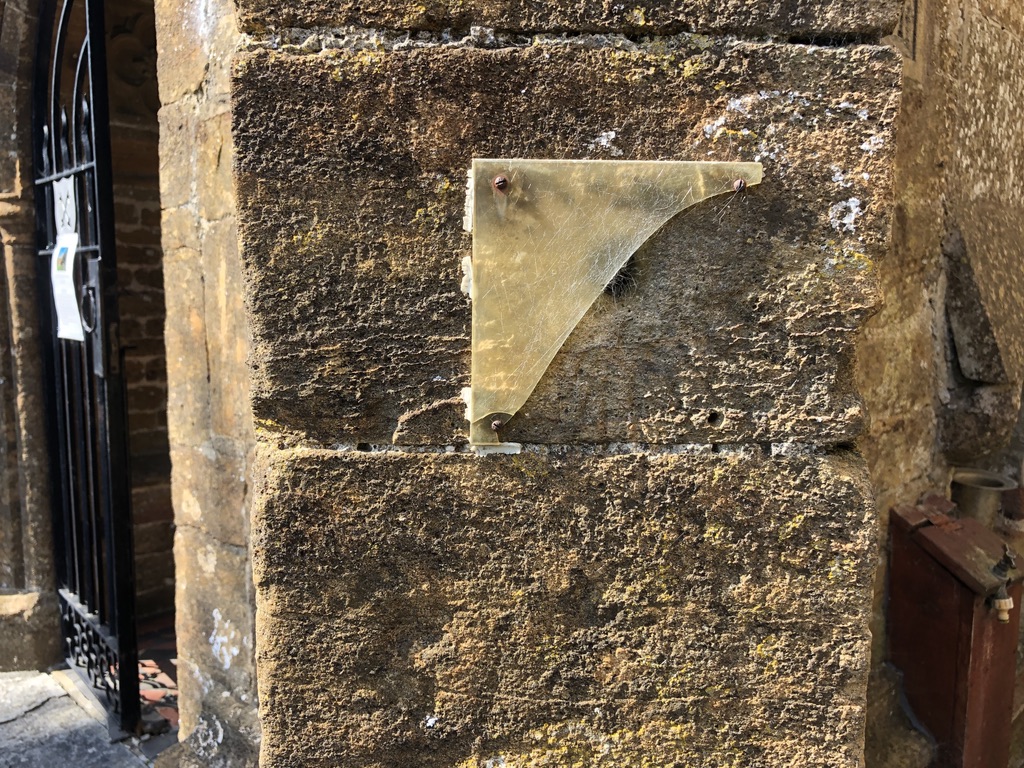
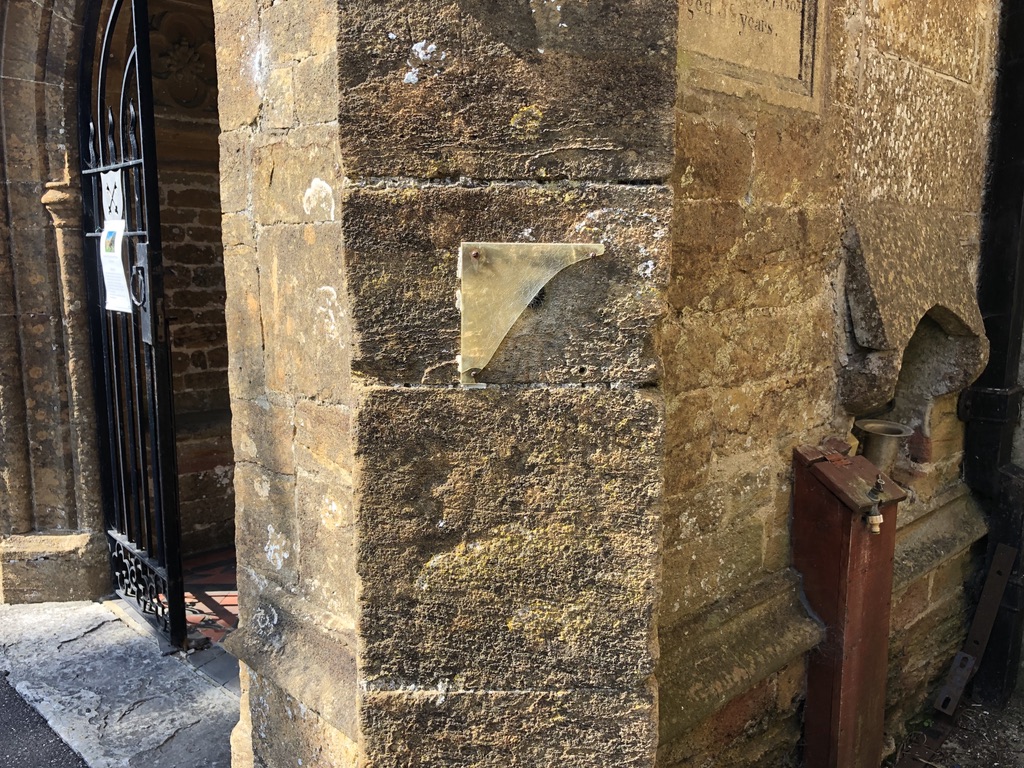
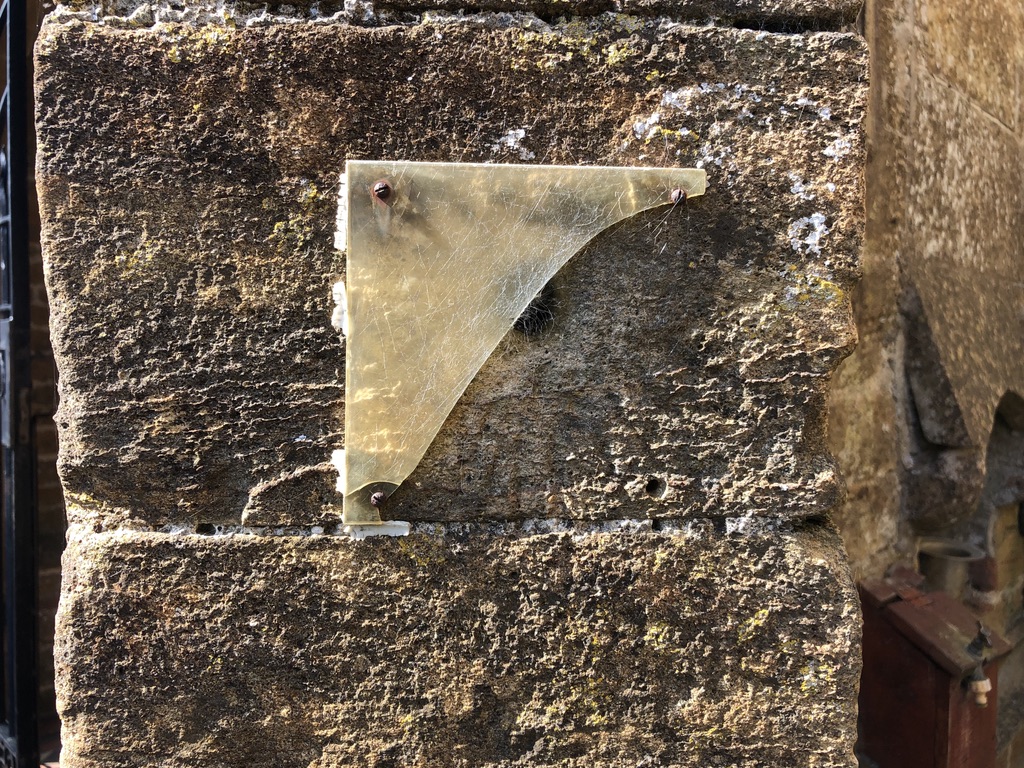
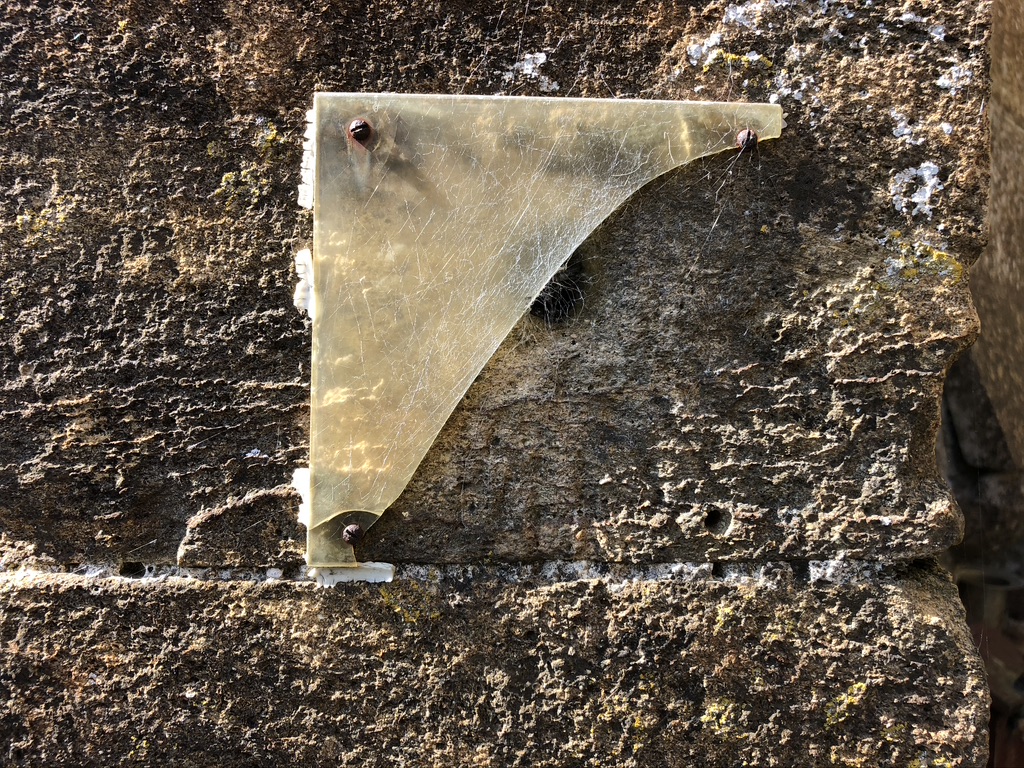
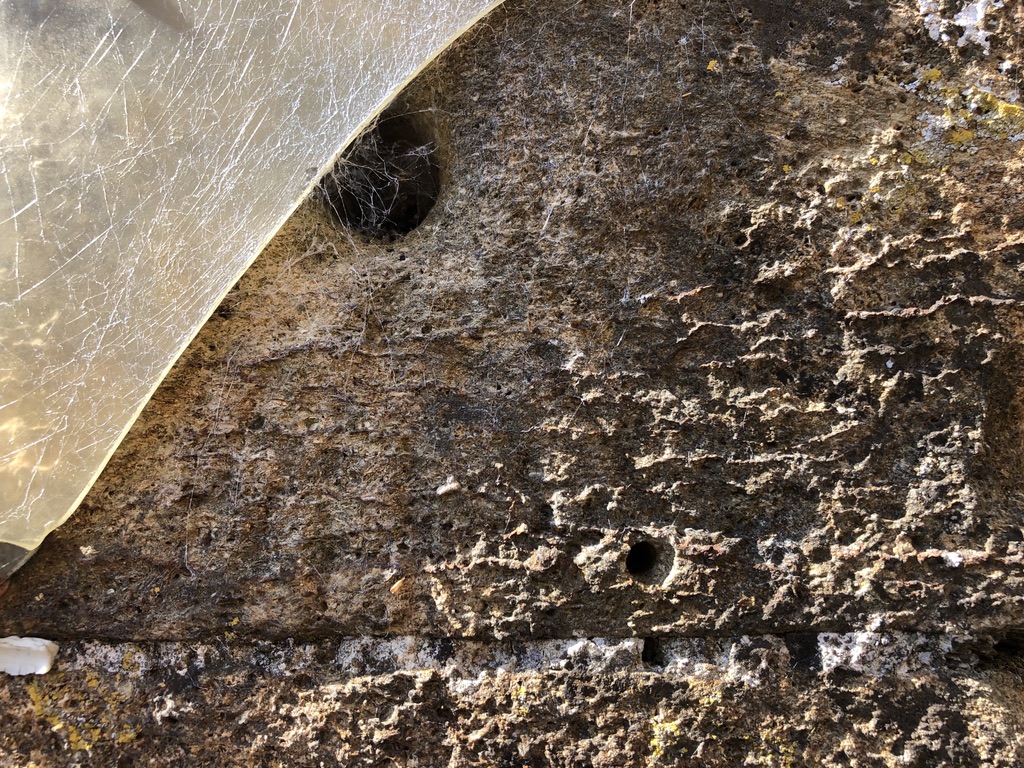
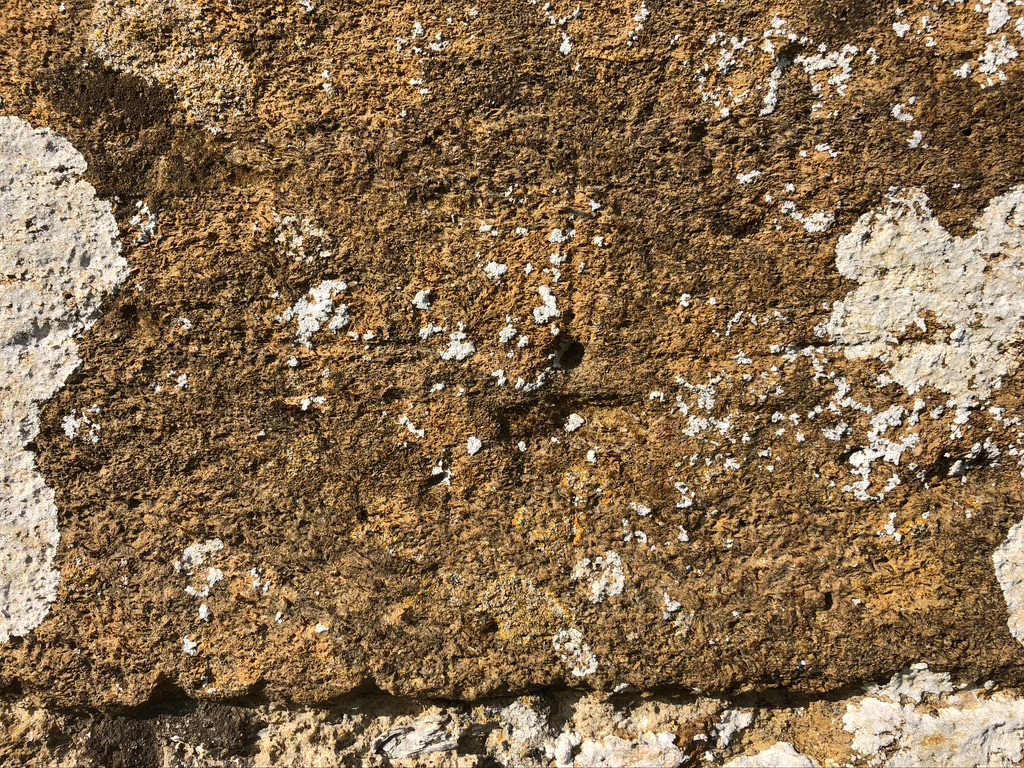
The dial, once located E. of the porch, is disappointingly half-concealed by a discoloured and broken perspex sheet screwed over it. It’s a well-intended method of protection, of course, but some say it is preferable to leave a dial to erode naturally over the centuries. Possibly a covering like this could actually cause deterioration.

A number of clear graduated lines are visible in the lower R quadrant. There is a large pock, with a couple of small holes in the mortar below. The large one – between the terminus of two afternoon lines – may well be part of the dial. It’s too large to be the location of the missing screw for the covering. Perhaps that was fixed in a smaller hole in the mortar.

St Peter and St Paul . Odcombe . Somerset – Scratch Dial

Dom Ethelbert Horne DEH visited Odcombe church on June 8th, 1915. He noted: this dial is on the s.e. face of the buttress, and hence may not be in its original position and his record states:

208. This dial is on the s.e. angle buttress of the s. porch. It is 4 feet 4 inches above the ground, the noonline is 3 inches in length, the stylehole is 4 1/4 inches deep by 1 inch in diameter, and the aspect is s.e. Type 3. June 8th, 1915.

GSS Category: Scratch Dial

All photographs – Keith Salvesen

HERMITAGE . DORSET . ST MARY (2) – Scatch Dial 2 (unrecorded)

Hermitage . Dorset . St Mary . C14

ST MARY . HERMITAGE . DORSET – Scratch Dial 2 (unrecorded)

DEDICATION † ST MARY C14; C17 restoration; further work c. 1800

LISTING † Grade II*

LOCATION † 4 miles N. of Cerne Abbas; S. of Sherborne 50.8611 / -2.4991 / ST649069

A very small, simple church (‘free chapel‘) tucked away under a hillside in a discreet corner of this hamlet. Approached along the edge of the drive of the former Rectory. Supposed hermetic origin. If you didn’t know it was there, you’d miss it – the bell-cote hardly shows above the trees.

DIAL 1 – LINK TO POST HERE

Hermitage . Dorset . St Mary . Scratch Dial

DIAL 2 (UNRECORDED)

Hermitage . Dorset . St Mary . Scratch Dial 2 (unrecorded)

A return to Hermitage to check for other church marks / graffiti produced an unexpected reward – a second dial, hitherto unnoticed and unrecorded, on a quoin stone at the W. corner of the S. side. In strong sunlight, it was clearly visible through a coating of lichen.

Hermitage . Dorset . St Mary . Scratch Dial 2 (unrecorded)

The dial is encircled, with a clear cut noon-line that extends vertically but less markedly to a diameter. There is a fainter full width 6-line, so that the visible lines form roughly equal quadrants. No other radials are definite, though the rough cut at 10 might be one and seems to emanate from the centre. There is a hint of (part of a) second circle on the right side. At the centre is a very small hole in the lichen, so assessing its actual size is not possible. The gallery below includes photos taken from 3 slightly different angles.

Hermitage . Dorset . St Mary . Witch marks and graffiti

GSS Category: Scratch Dial; witch marks and graffiti

All photos: Keith Salvesen

MARSTON MAGNA . SOM. ST MARY – SCRATCH DIAL

St Mary . Marston Magna . Som

ST MARY . MARSTON MAGNA . SOM .

GRADE I. Pre-conquest origins, largely rebuilt in c.1360 and reworked thereafter. Plenty to investigate and to test your building dating skills. BLB summary HERE. 5m NE of Yeovil, NW of Sherborne. 50.999 / -2.5807 / ST593223

DIAL

A single dial. St Mary was visited by DEH on May 18th 1915 and he recorded:

199. This dial is on the first buttress to the w. of the priest’s door. It is 7 feet 4 inches above the ground, the noon-line is 4 1/2 inches in length, the style hole is 1/2 an inch deep by 3/4 of an inch in diameter, and the aspect is s. by 10°e. Type 3. May 18th, 1915.

St Mary . Marston Magna . Som – Scratch Dial

The radials go beyond 180º, with quite a variation in spacing, depth, and length. There are notably longer and deeper afternoon lines with one extending to the stone below, which may signify a Mass time. Either that quadrant more deeply incised, or maybe recut at a later date. The extent of erosion in the lower left quadrant suggests the latter.

The style hole is large. DEH makes no comment on the equally large hole immediately above. I could see no other dial signs – lines or pocks – linked to it. I wondered if it was the original dial on this prominent buttress, of the most basic type – simply a hole with a stick in it (the shadow would still be an indicator of the passage of time). Rather than elaborate it, a new dial was added beneath.

GSS Category: Scratch Dial

Photos: Keith Salvesen
WINTERBOURNE BASSETT . WILTS . ST KATHERINE & ST PETER – 4 DIALS

Winterbourne Bassett . Wilts . St Katherine & St Peter

ST KATHERINE & ST PETER . WINTERBOURNE BASSETT . WILTS

GRADE 1. Records from C12. Mainly late C13 / C14, expanded C15, restored mid-C19. An architectural gem (Betjeman). Dedication has varied over time. 4m N. of Avebury. 51.4731 / -1.8554 / SU101749

DIALS

4 dials identified: 3 scratch dials and 1 ‘very early scientific dial’ (BBS)

DIAL 1

Priest’s Door R. Pock dial with 5 clear dots on pinkish stone (similar position and style to eg Maiden Newton Dorset).

Winterbourne Bassett . Wilts . St Katherine & St Peter – Scratch Dial 1

DIALS 2 & 3

Priest’s Door R, lower down. Dial 2 is a conventional dial with 4 lines in L. lower quadrant; noon line emphasised. Adjacent to less clear Dial 3 with filled style hole and 2 clear thin radials and (perhaps) a very faint noon line. There’s a possible additional dial on this stone, at best a style hole with eroded lines.

Winterbourne Bassett . Wilts . St Katherine & St Peter – Scratch Dials 2 & 3

DIALS 1, 2 & 3

Winterbourne Bassett . Wilts . St Katherine & St Peter – Scratch Dials 1 – 3
Winterbourne Bassett . Wilts . St Katherine & St Peter – Priest’s Door with 3 scratch dials

DIAL 4

High on quoin on S. side, a far more sophisticated gnomon dial. The BSS record from some years ago states: ‘Probably upright Roman numerals with cross for noon (not easy to see). Very early scientific dial. Gnomon may be a replacement’.

A photo taken last month removes the doubt. The incised lines – of variable width, some with a slight wedge shape, some quite deep (or less eroded) – have Roman numerals from VII round to VI. The IX to III horizontal line of numerals works well. The noon cross is very clear. I wonder if the stumpy little gnomon indicates that it is old (even if not original). Did gnomon design later develop to more elegant and longer markers?

Winterbourne Bassett . Wilts . St Katherine & St Peter – Scientific Dial with Roman Numerals

GSS Category: Scratch Dial; Scientific Dial

All photos – Keith Salvesen

BRATTON . WILTS . ST JAMES THE GREAT . SCRATCH DIAL; Painted dial 1801

CHURCH OF ST JAMES THE GREAT . BRATTON . WILTS

CHURCH OF ST JAMES THE GREAT . BRATTON . WILTS

GRADE ll*. Mainly C14 / C15, broadly Perp. Earlier origins. C19 work by G. Scott & T. Wyatt. Solitary in a combe behind the village and a real challenge to discover (ignore ‘Church Lane’). Well worth the effort to visit, as is Bratton Camp iron-age hill fort with its early white horse to W. 51.2665 / -2.1244 / ST914519

DIAL

CHURCH OF ST JAMES THE GREAT . BRATTON . WILTS – SCRATCH DIAL

A simple small dial, encircled, with several slightly curving radials. 3 or 4 pocks that may relate to it. Located W. of the S. porch, level with the head stop L. of the arch.

OLD DIAL

On S. face of the tower, a large painted dial dated 1801 ‘TEMPUS FUGIT’. The long spindly gnomon casts an impressively long shadow.

GSS Categories: Scratch Dail; Old Dial

All photos – Keith Salvesen