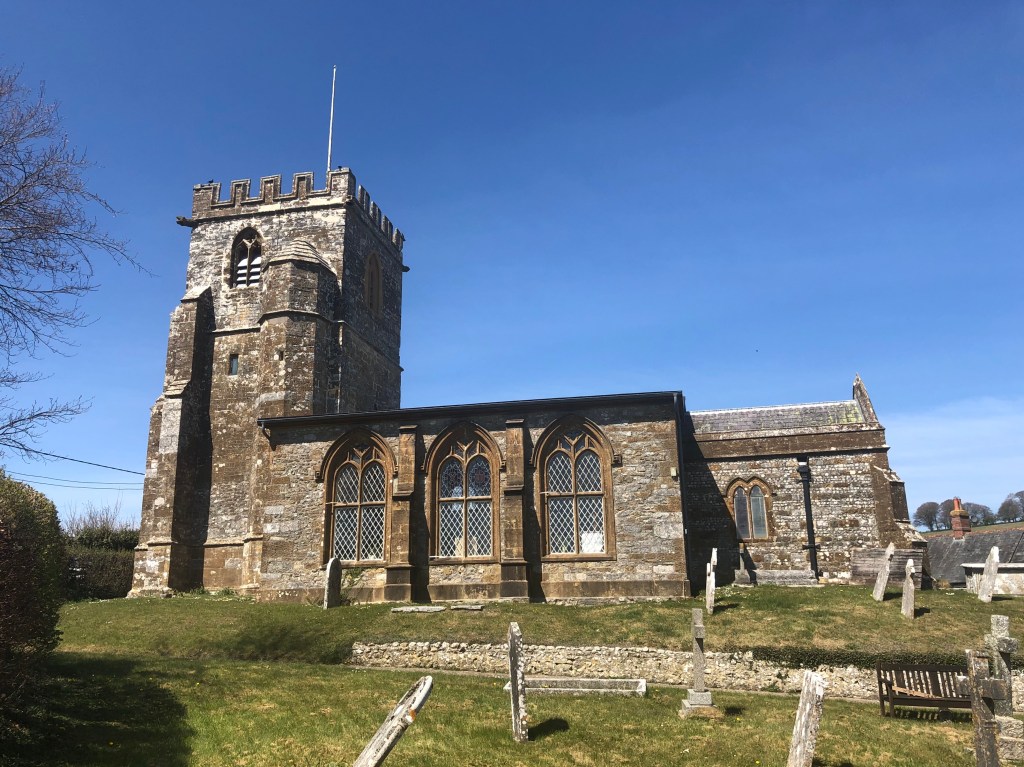
FEOCK . CORNWALL . CHURCH OF ST FEOCK . SCRATCH DIAL

Church of St Feock . Feock . Cornwall


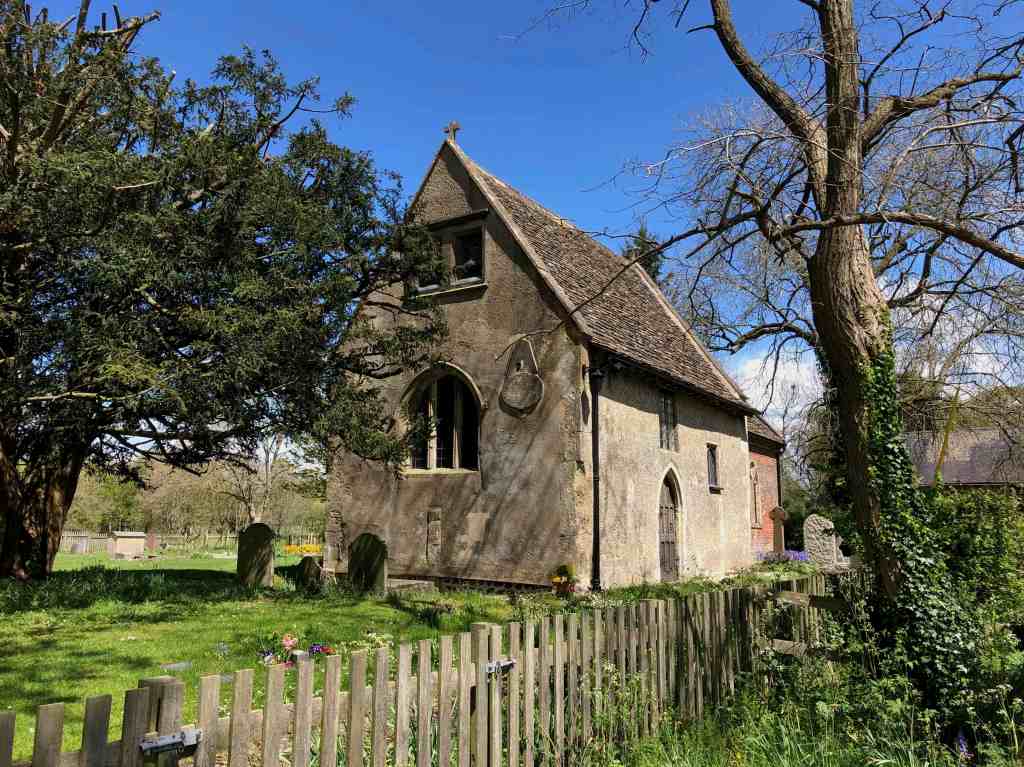
CHURCH OF ST FEOCK. FEOCK . CORNWALL

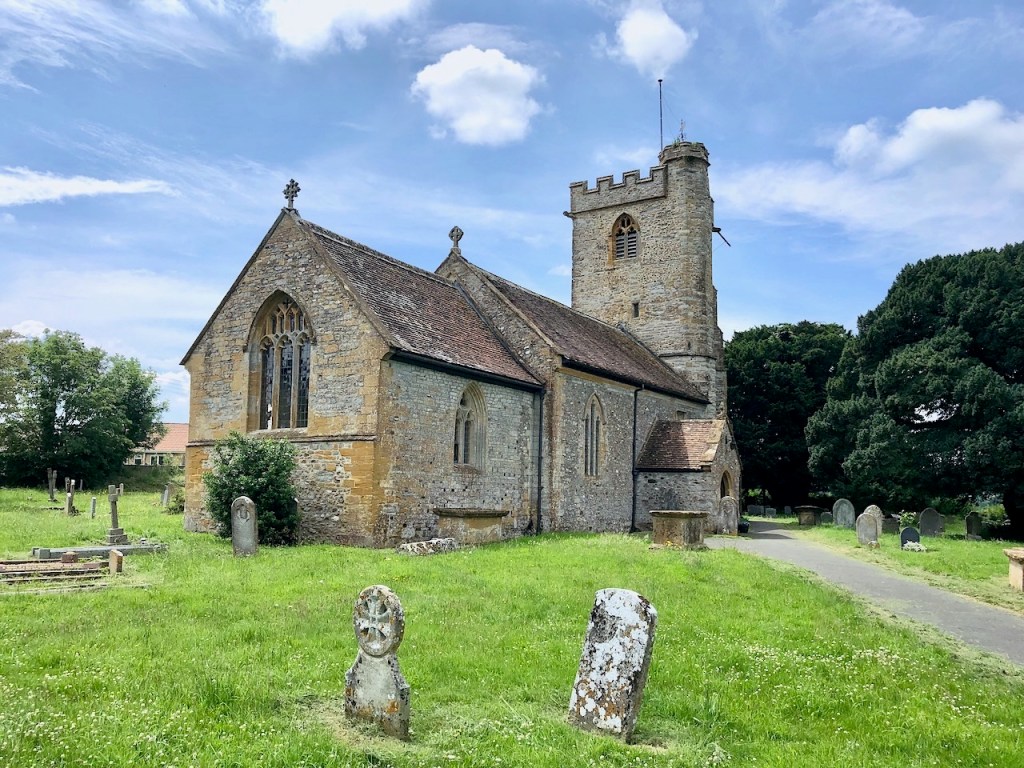
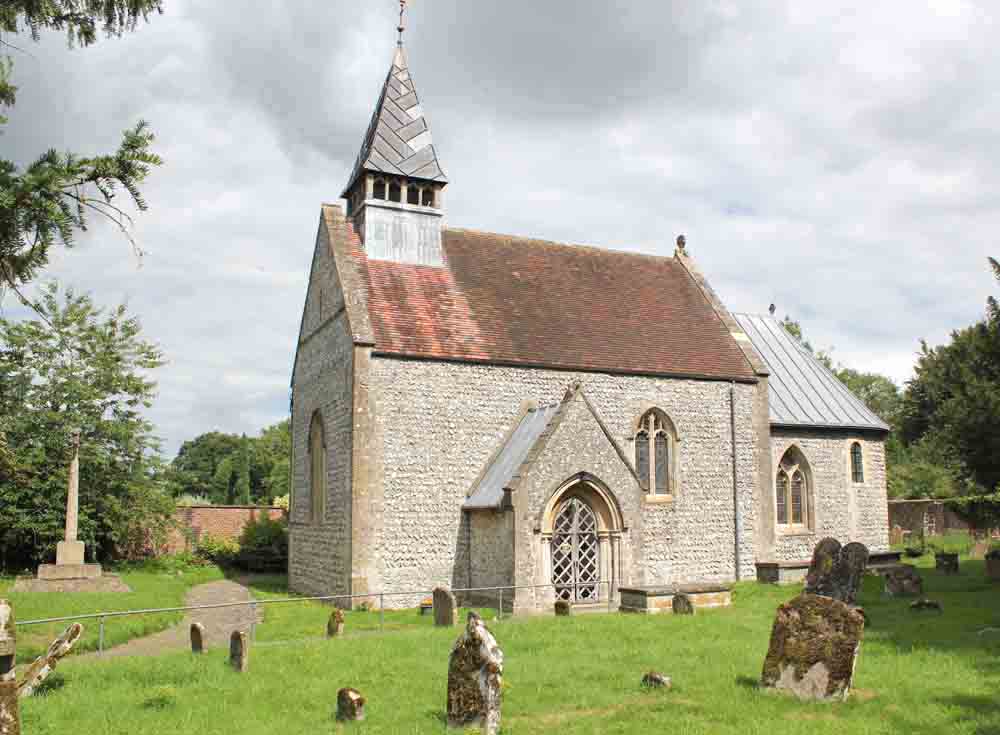
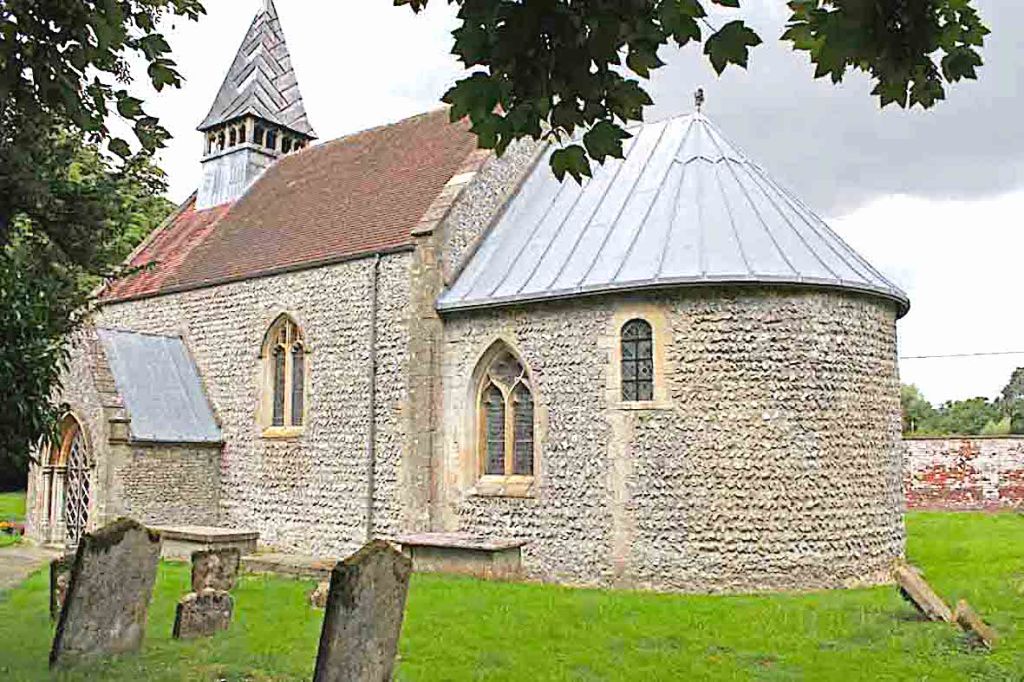
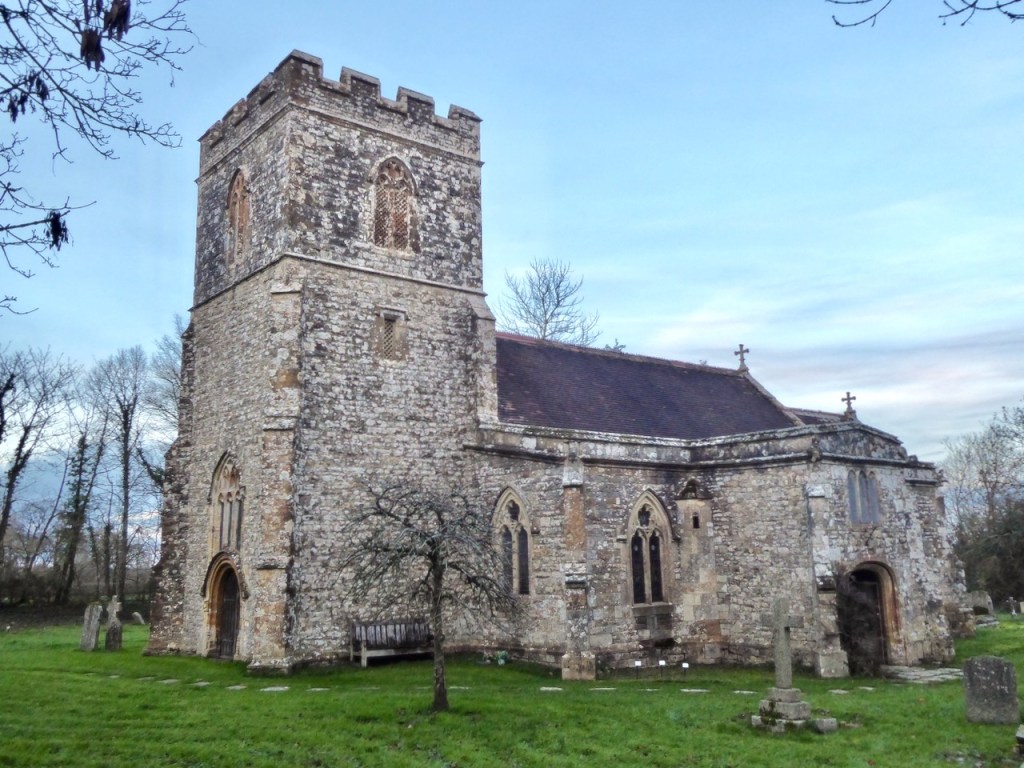
GRADE ll*. C15 with earlier origins. Complete rebuild in C18 ‘incorporating C15 windows, arcade and doorways’ HE. Separate C13 bell tower (cf Gunwalloe), listed G ll. 5m S. of Truro. 50.2057 / -5.0502 / SW824384

Only 4 scratch dials are recorded for Cornwall, this being one (see also Manaccan). I assume the main reason is that the local building materials – granites, serpentine, and other hard rock – are unrewarding to work with when cutting a dial

DIAL

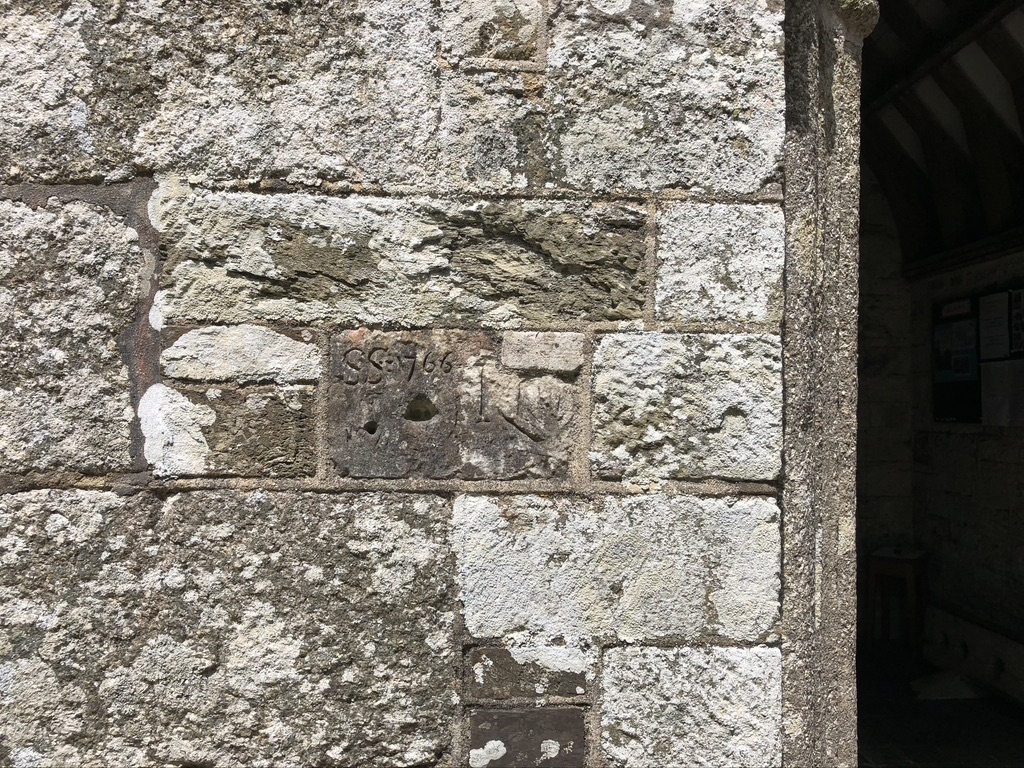
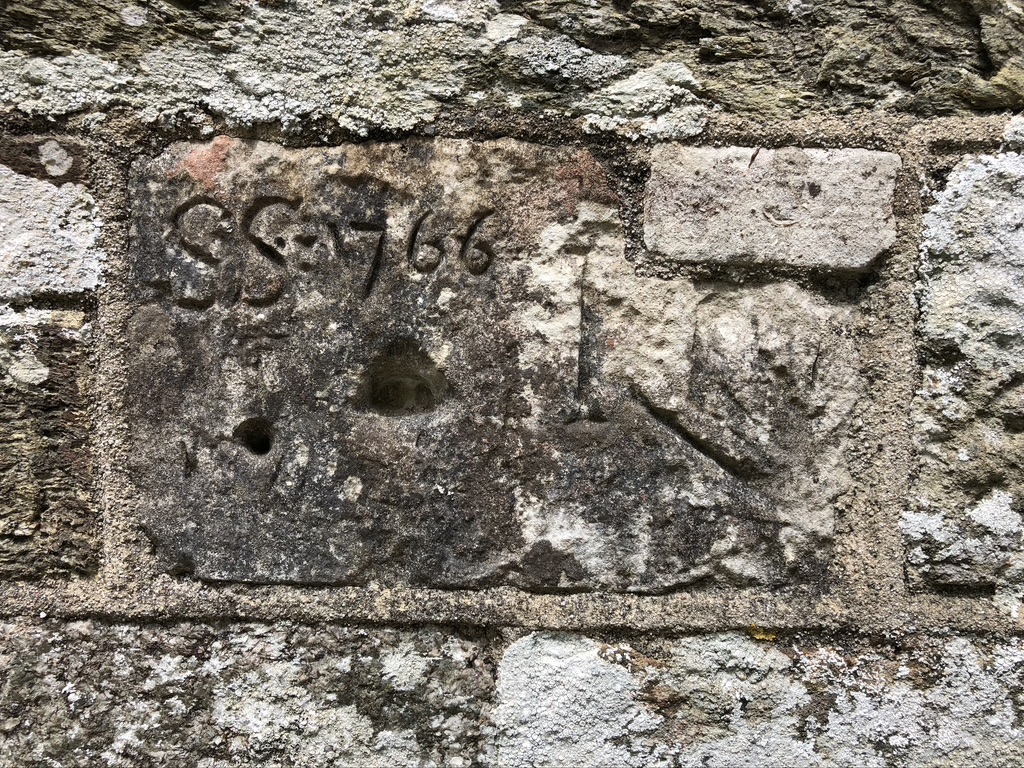
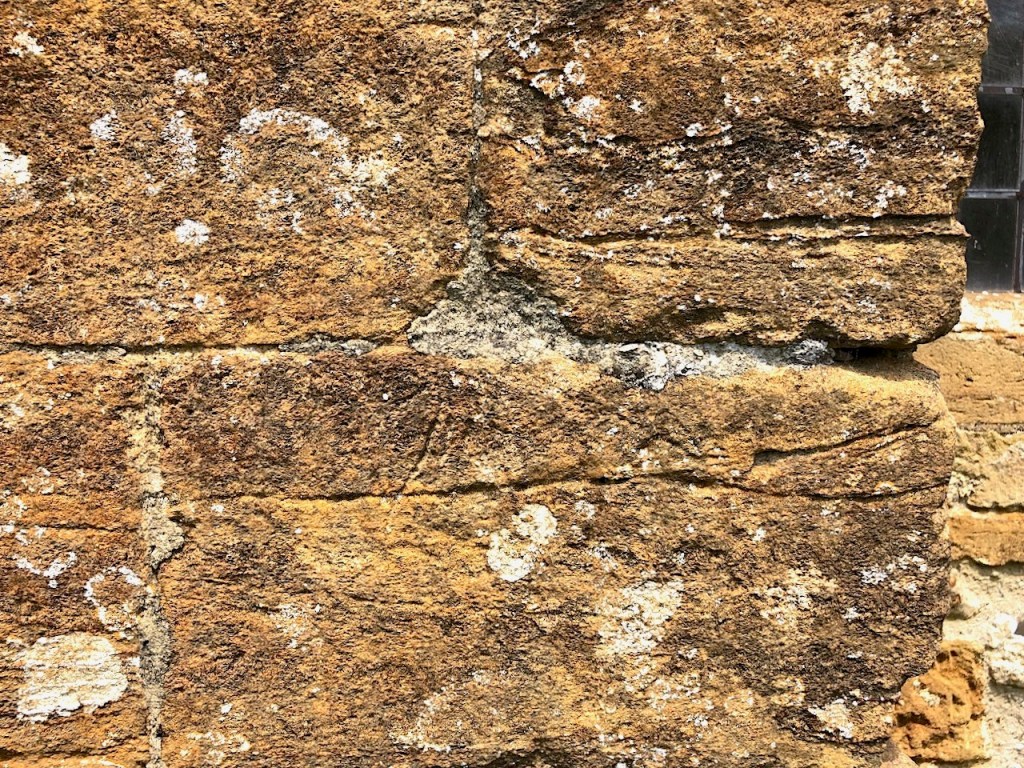
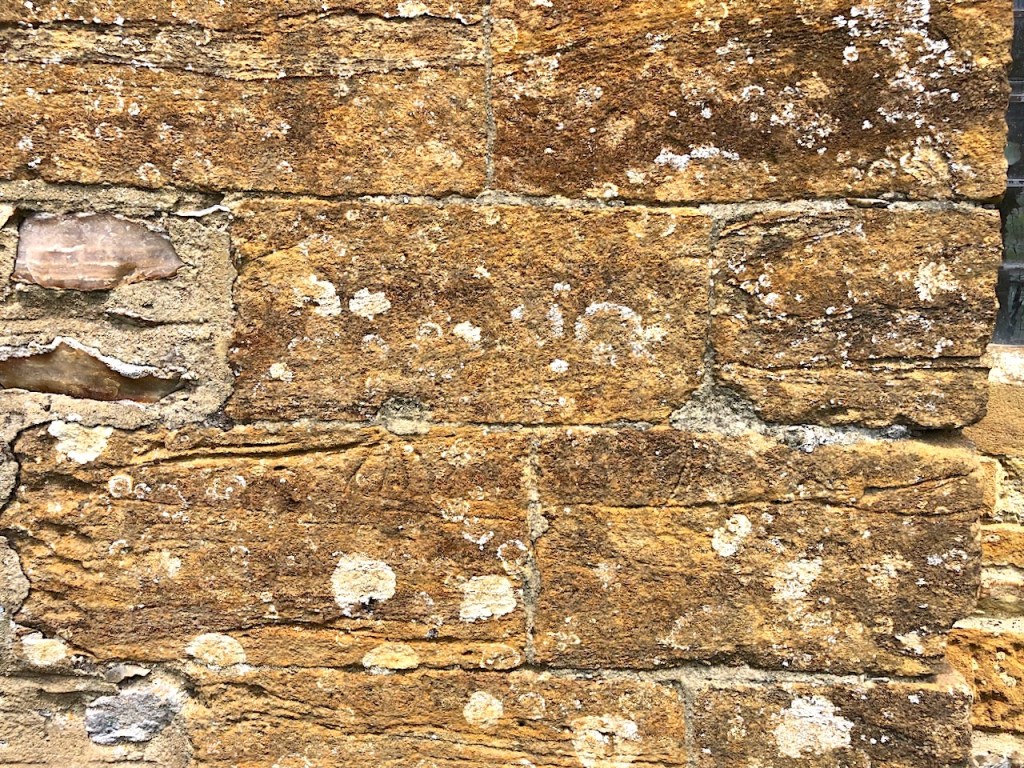
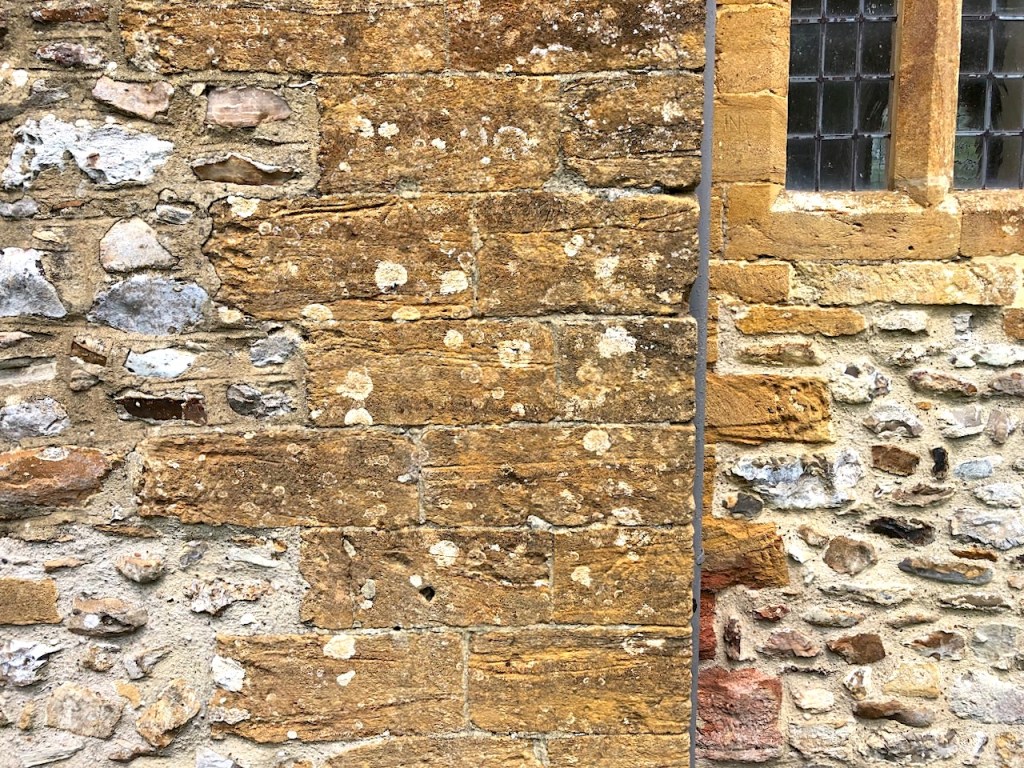
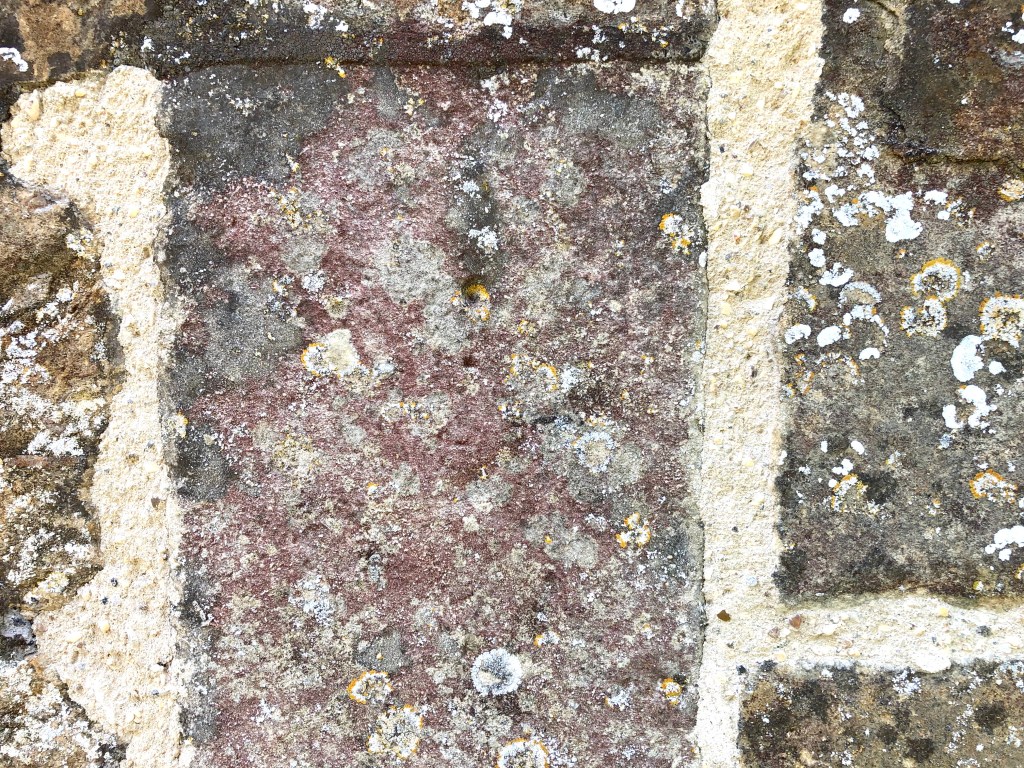
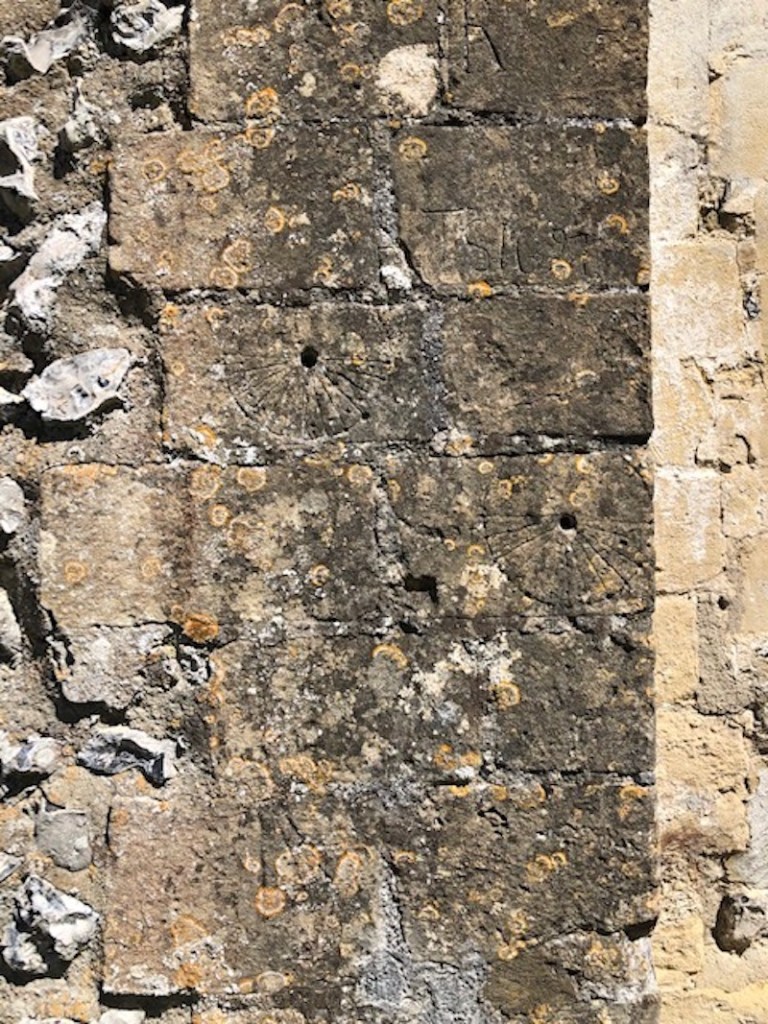
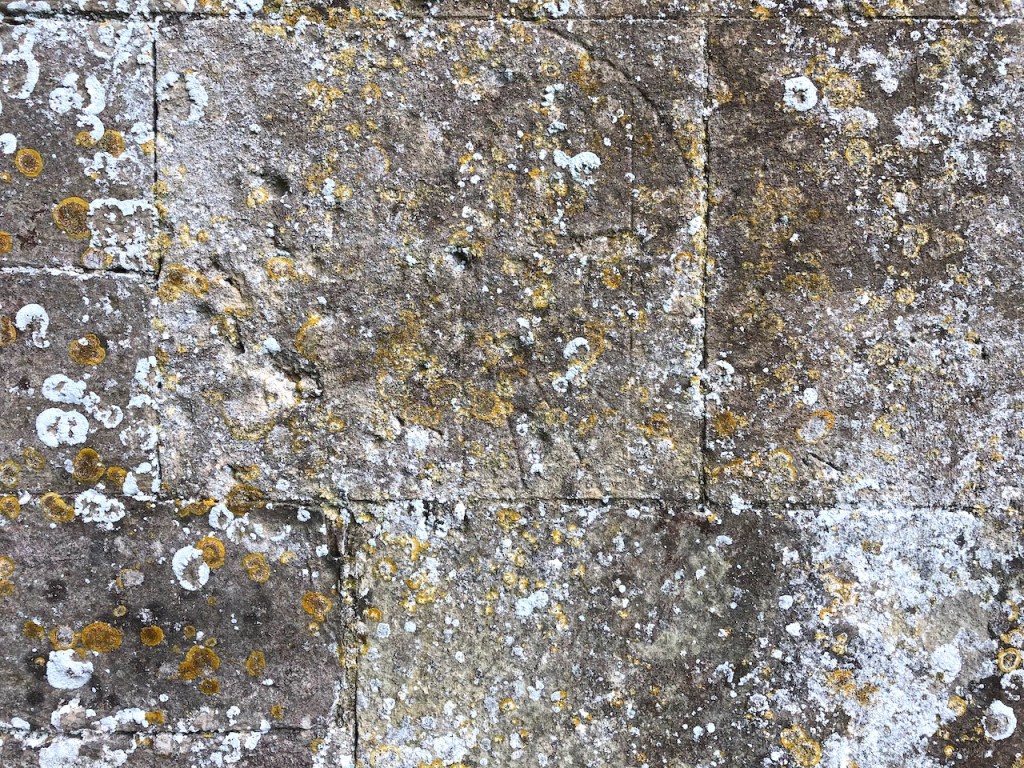
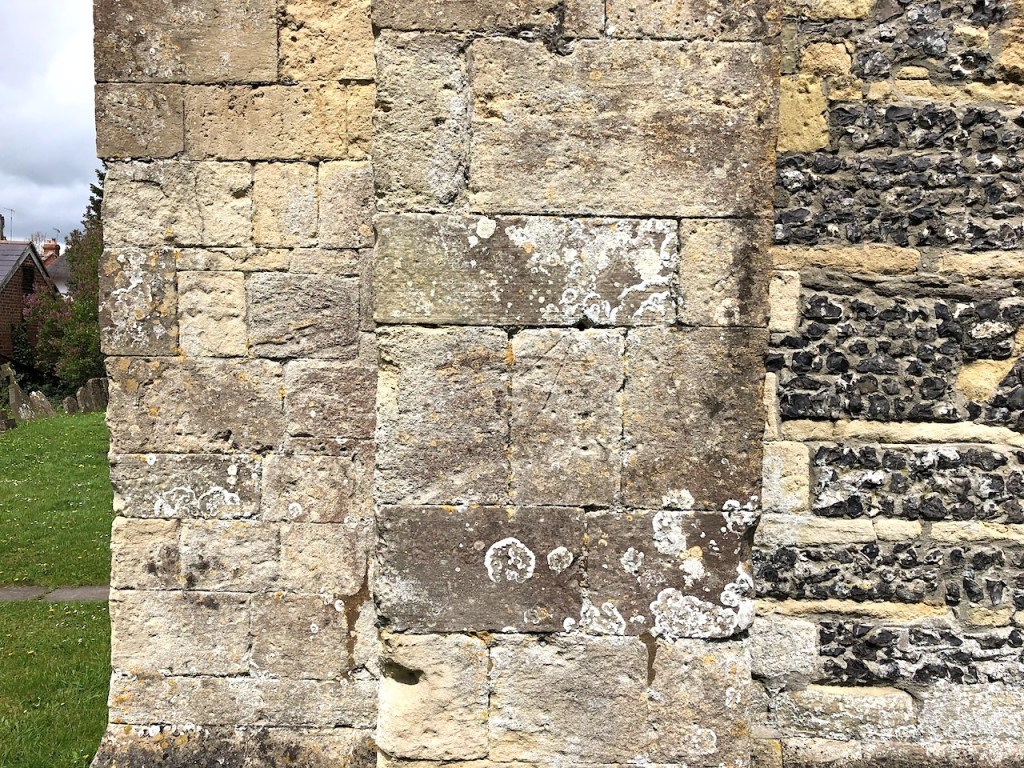
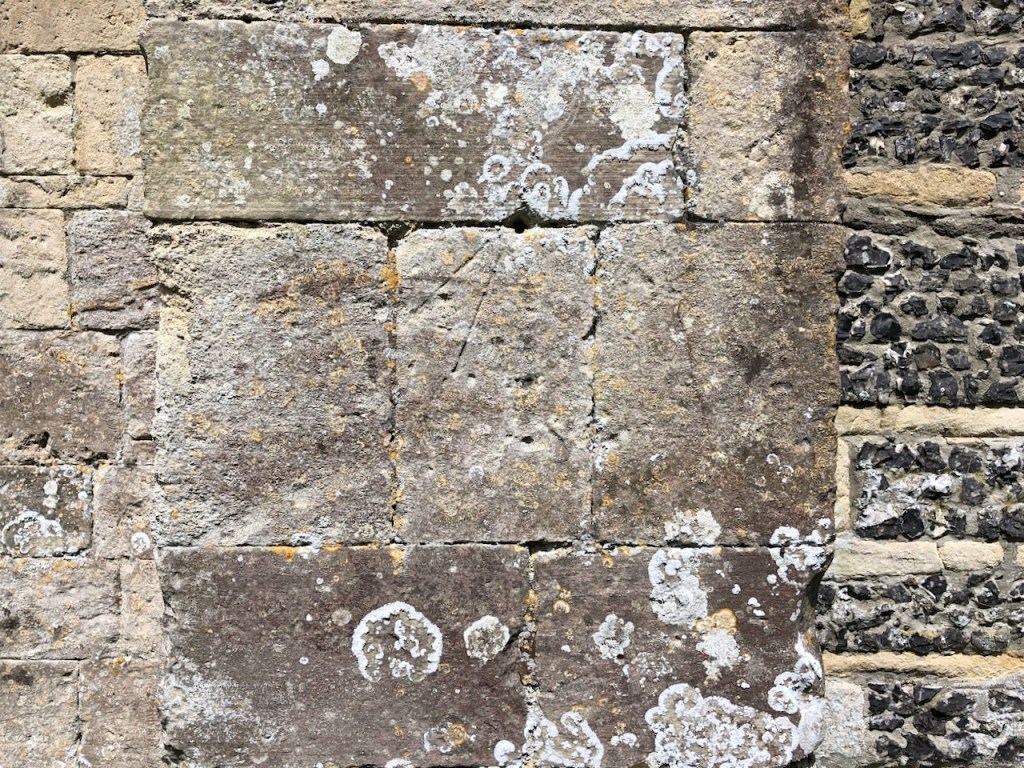
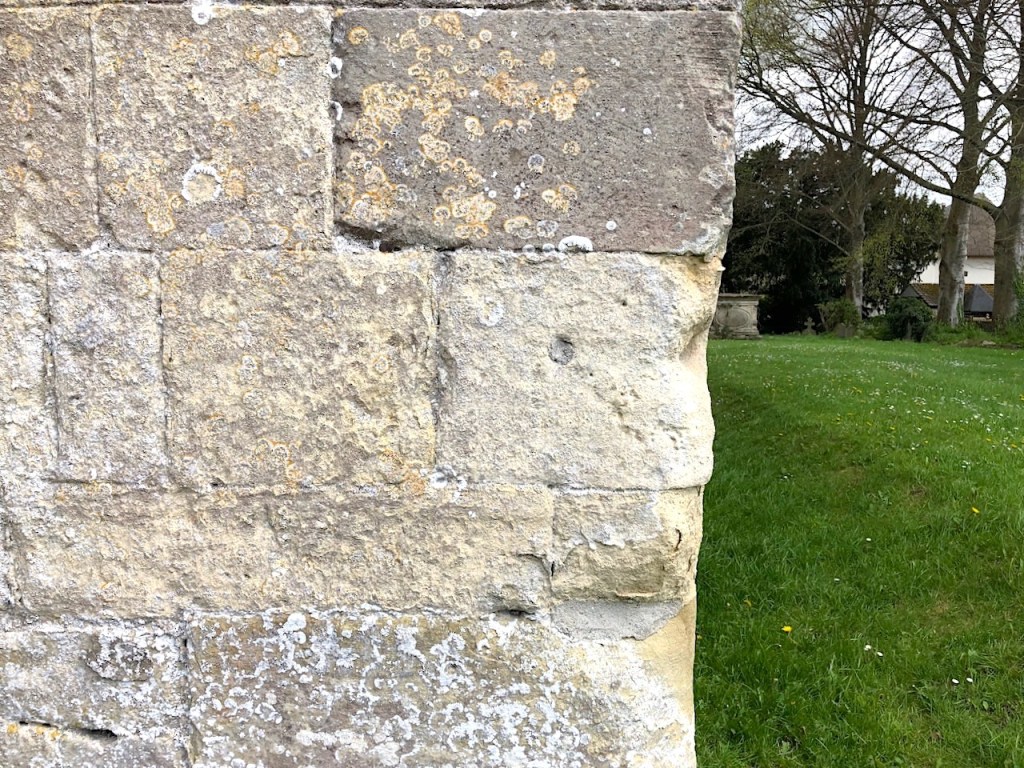
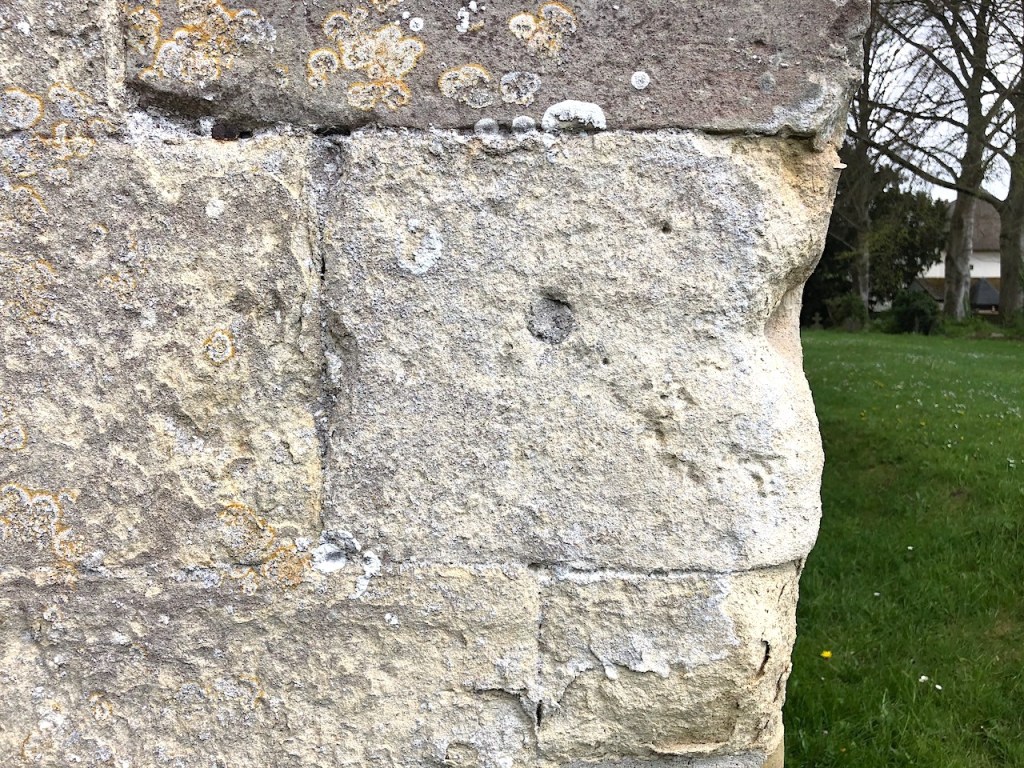
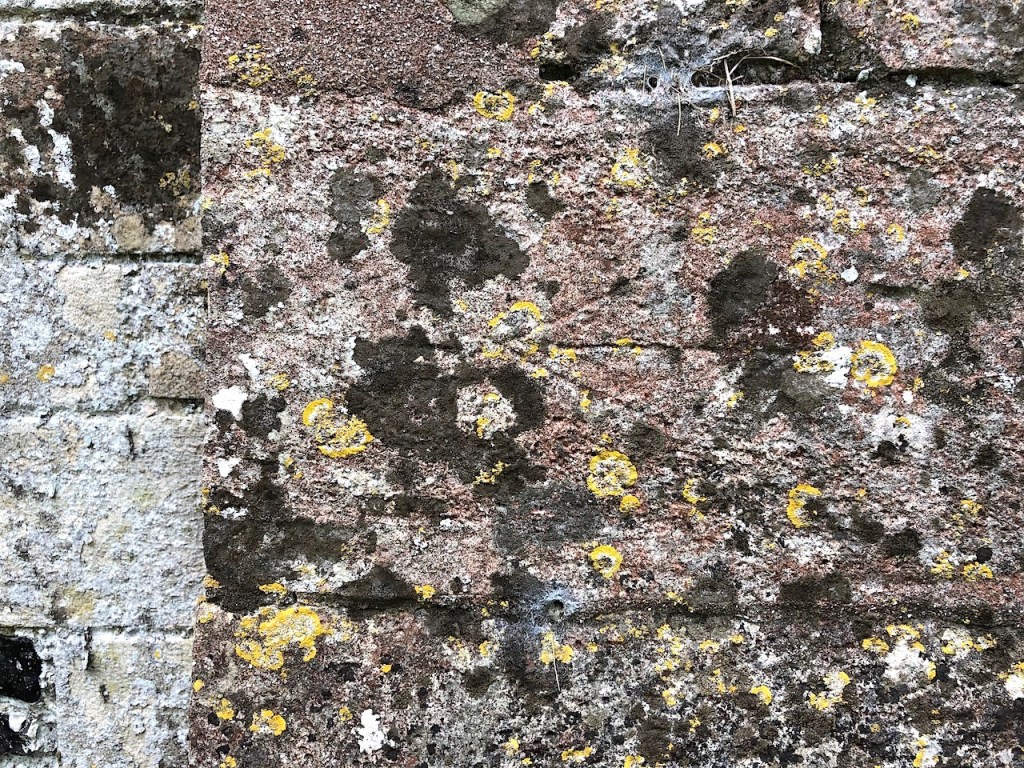
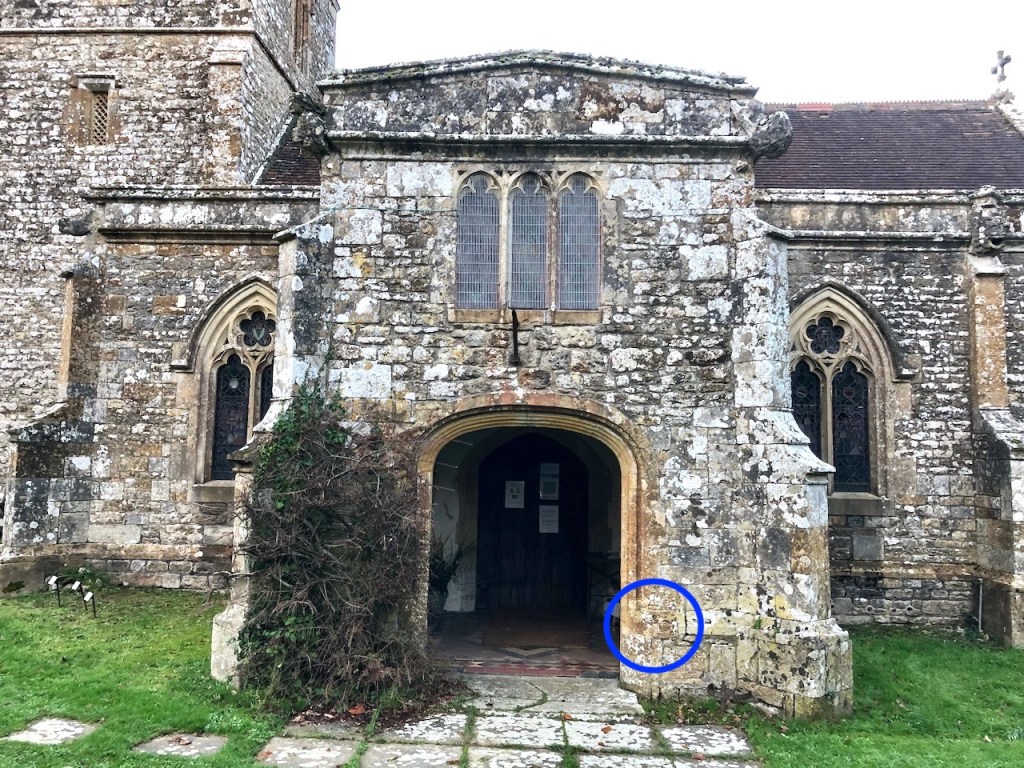
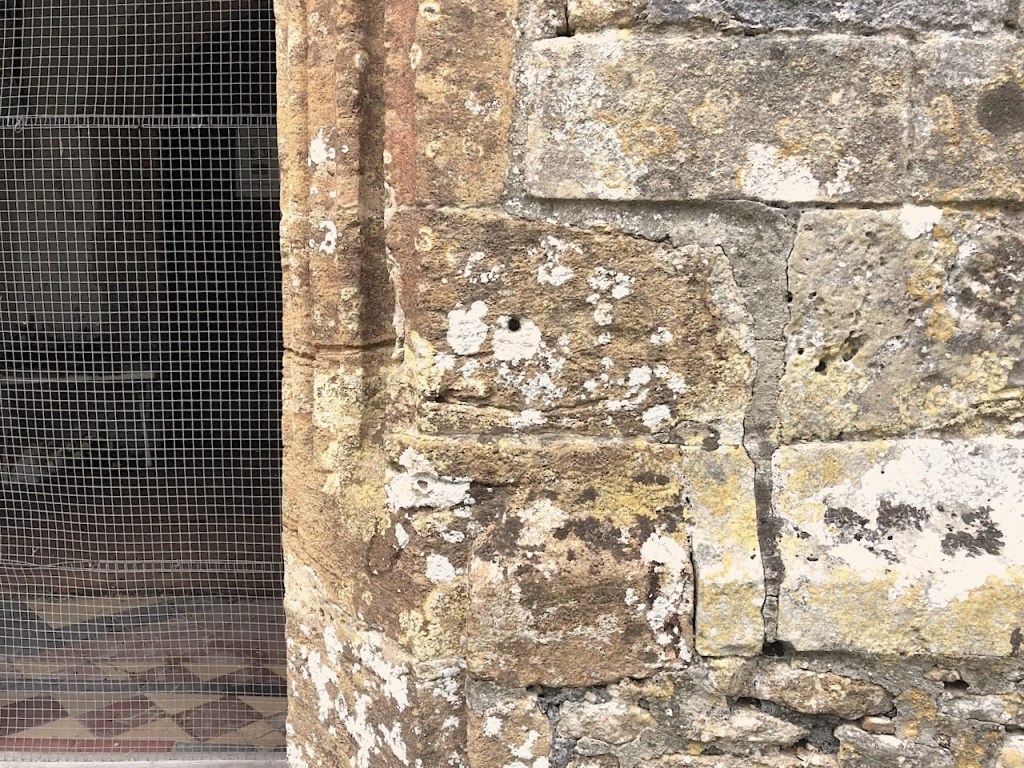
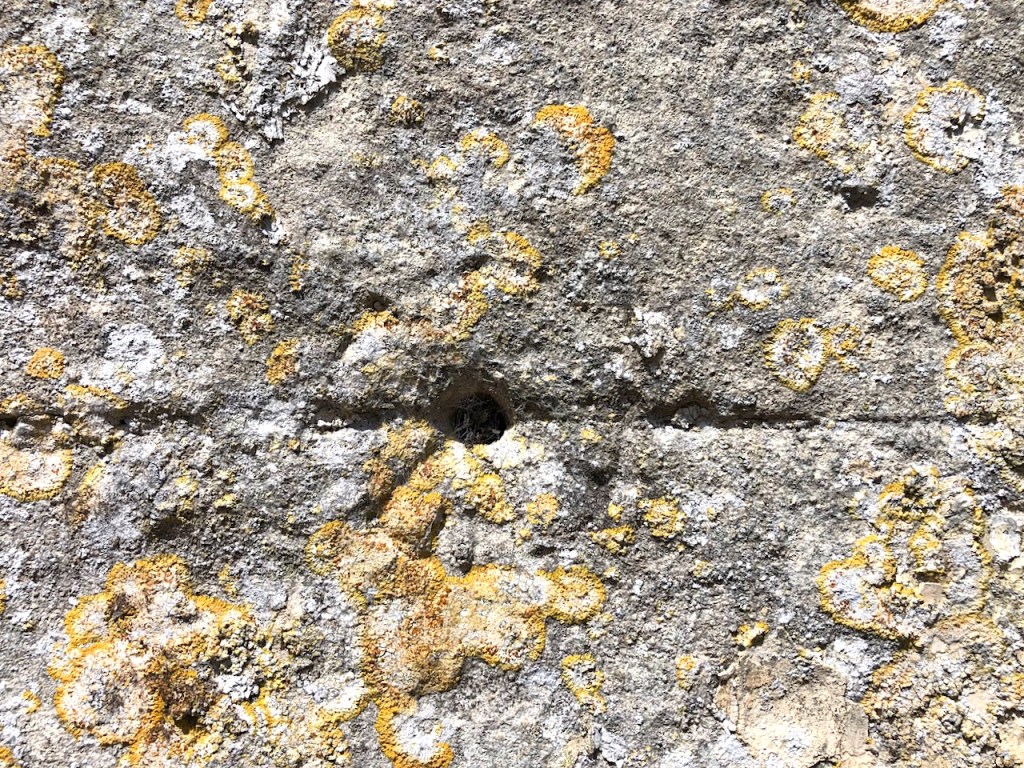
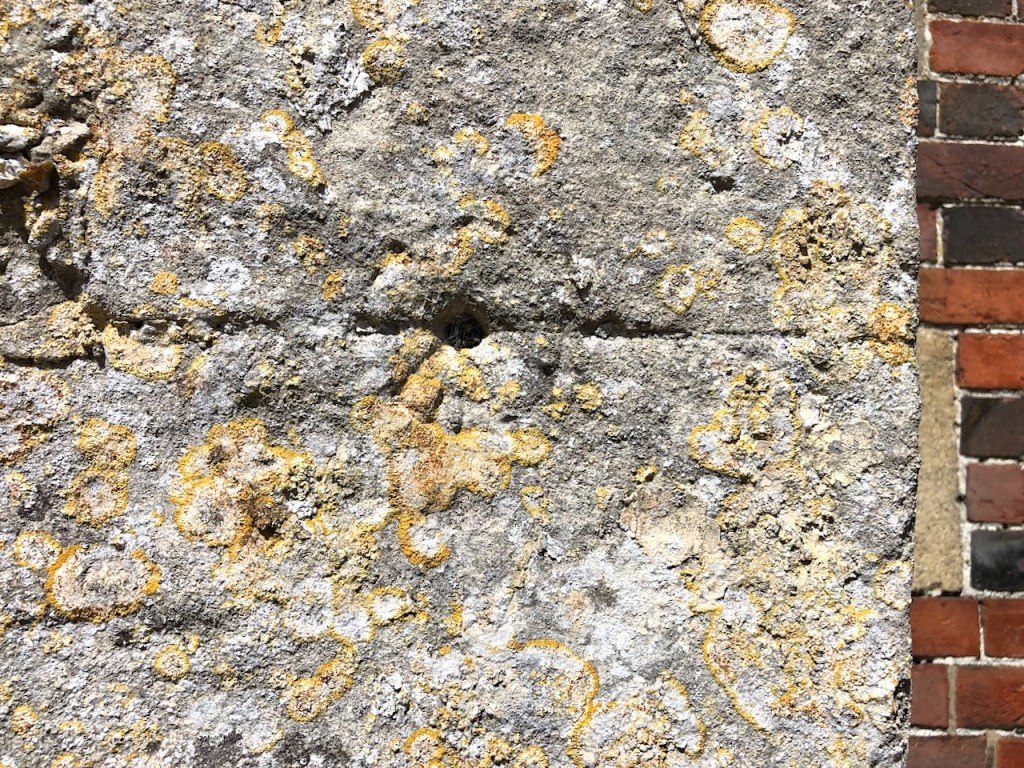
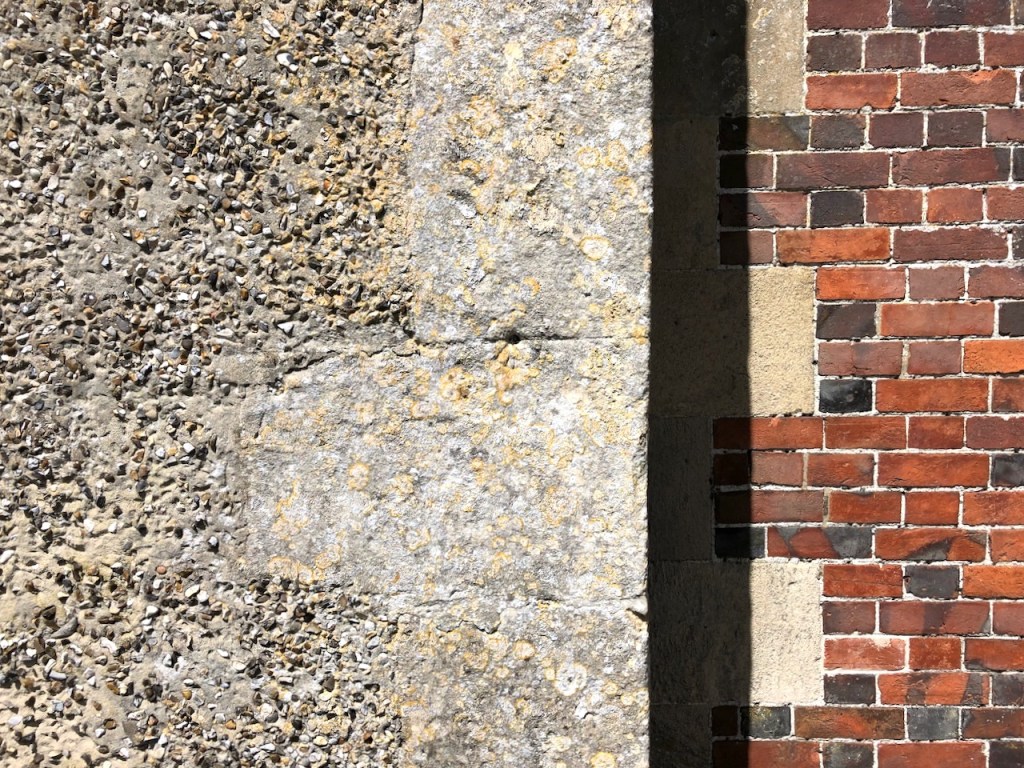
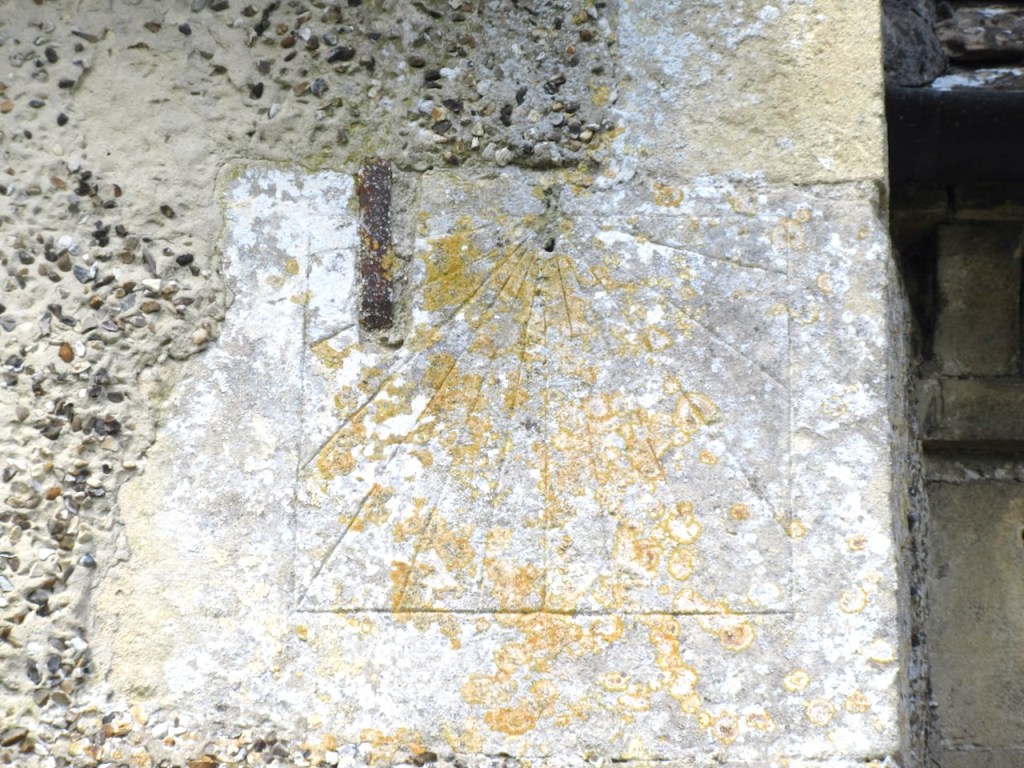
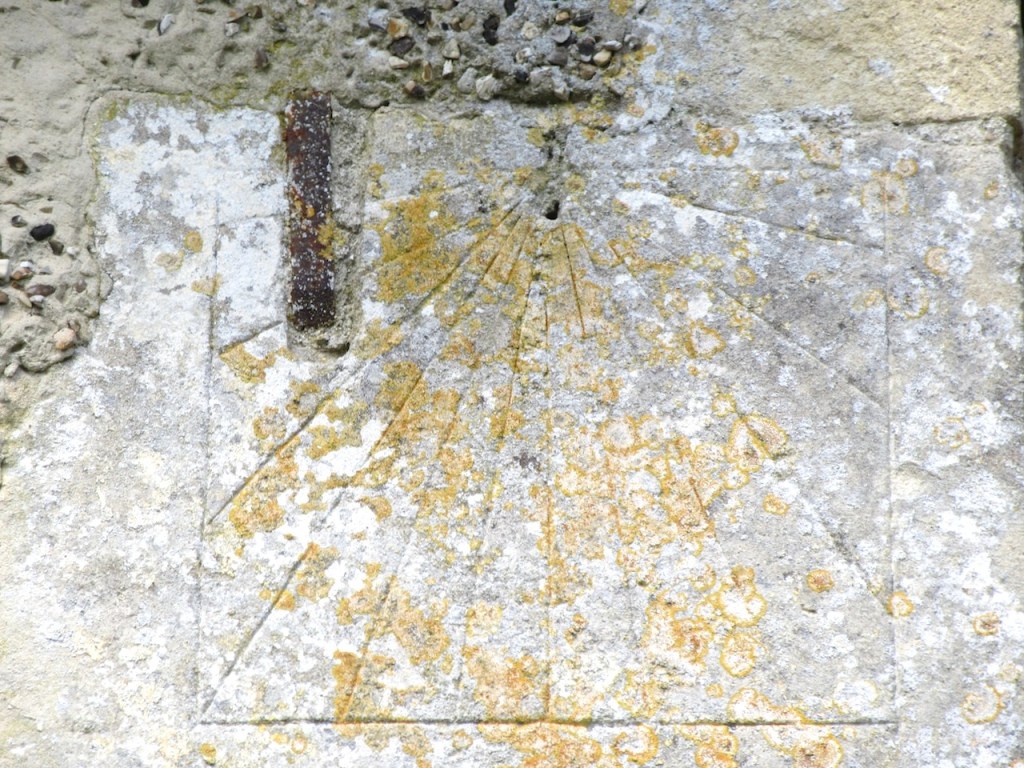
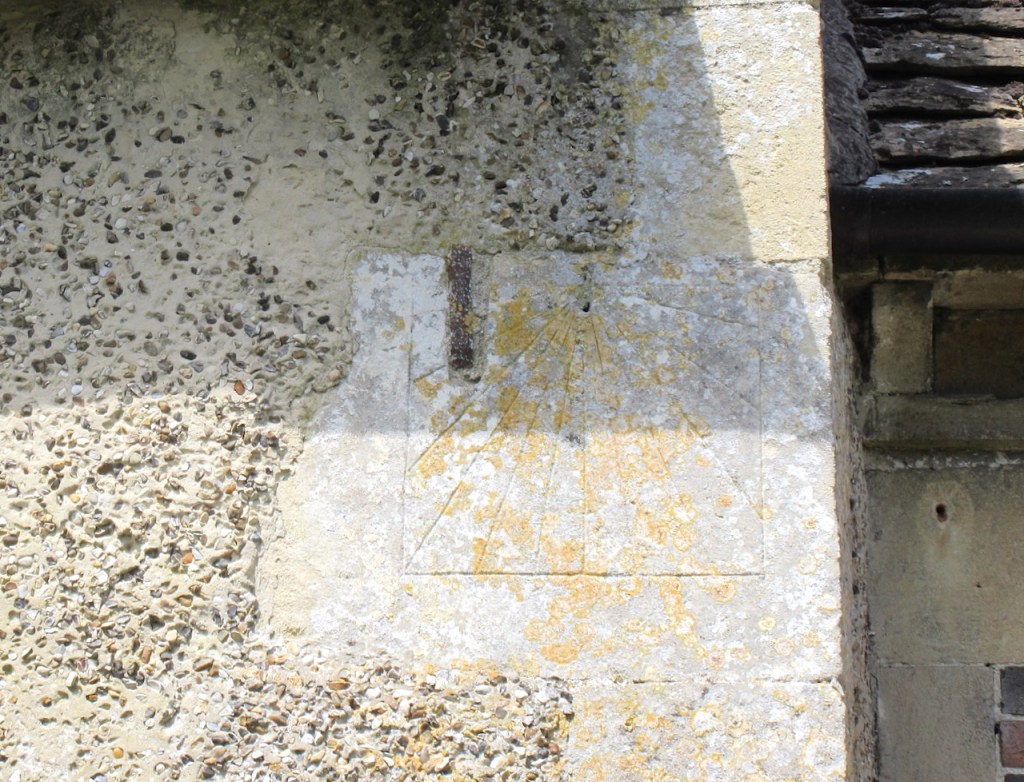
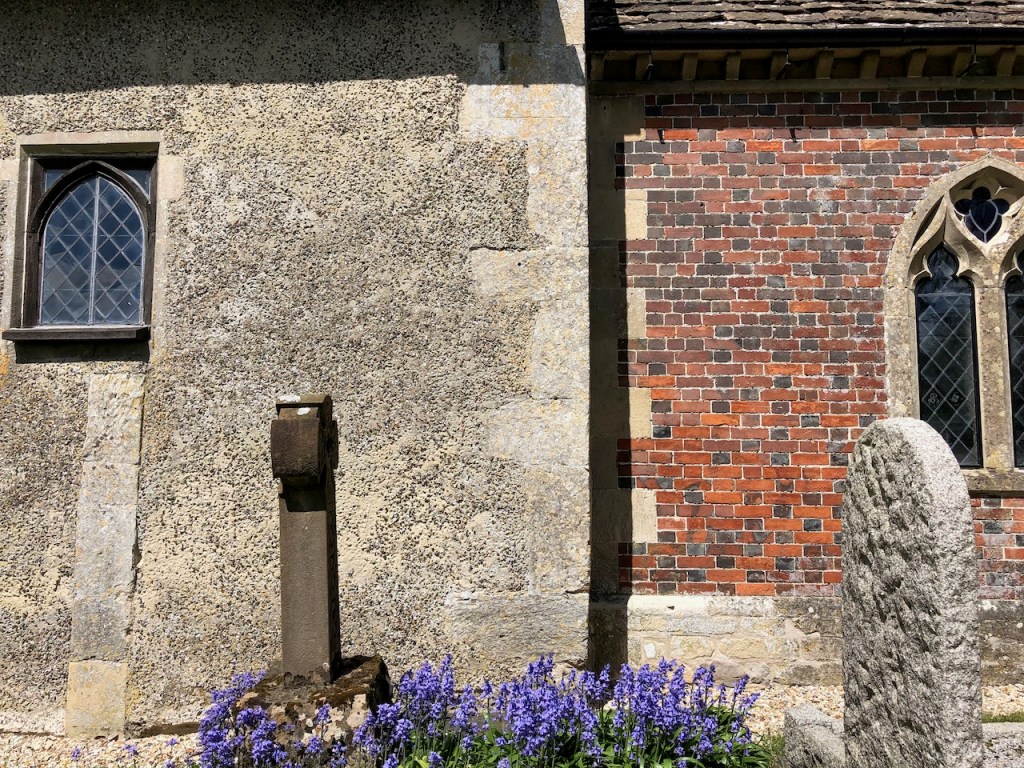
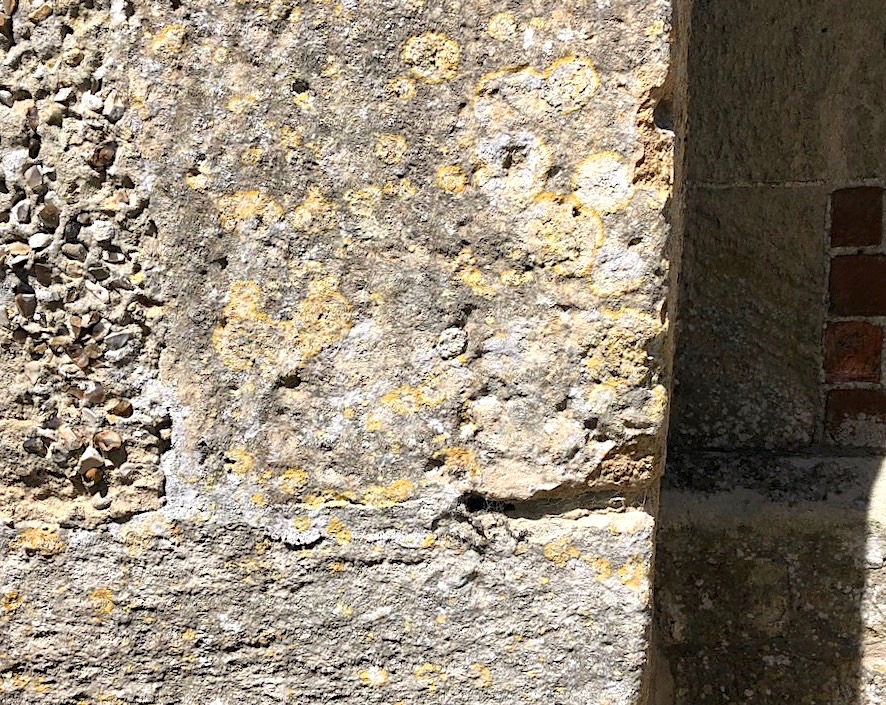
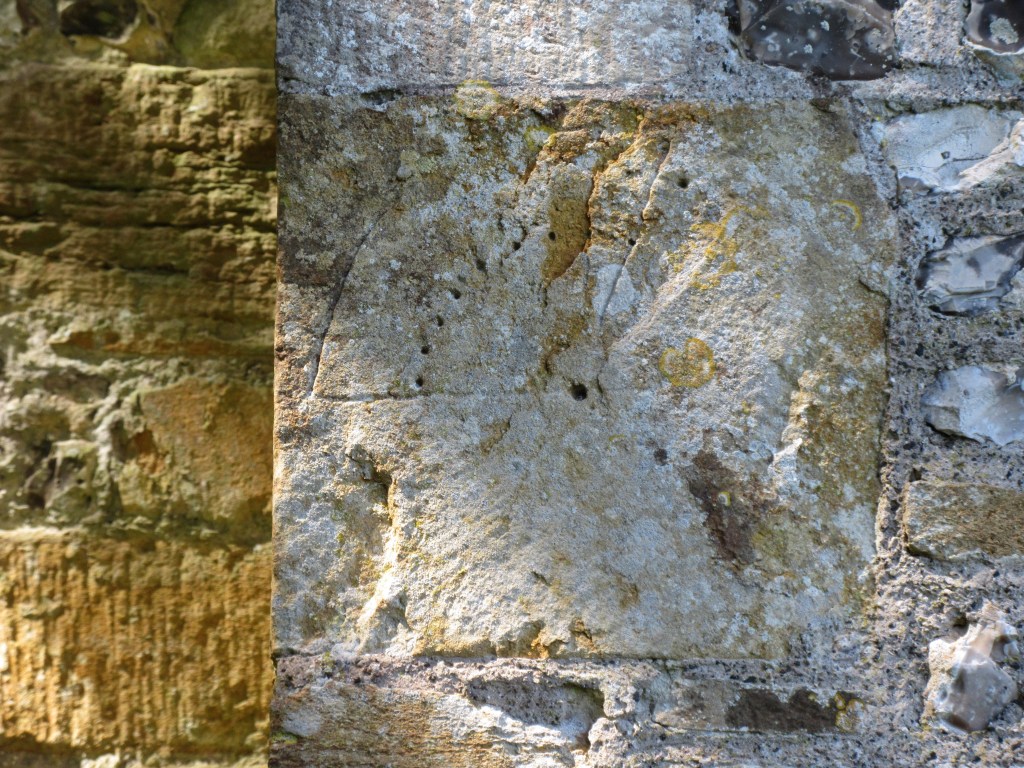
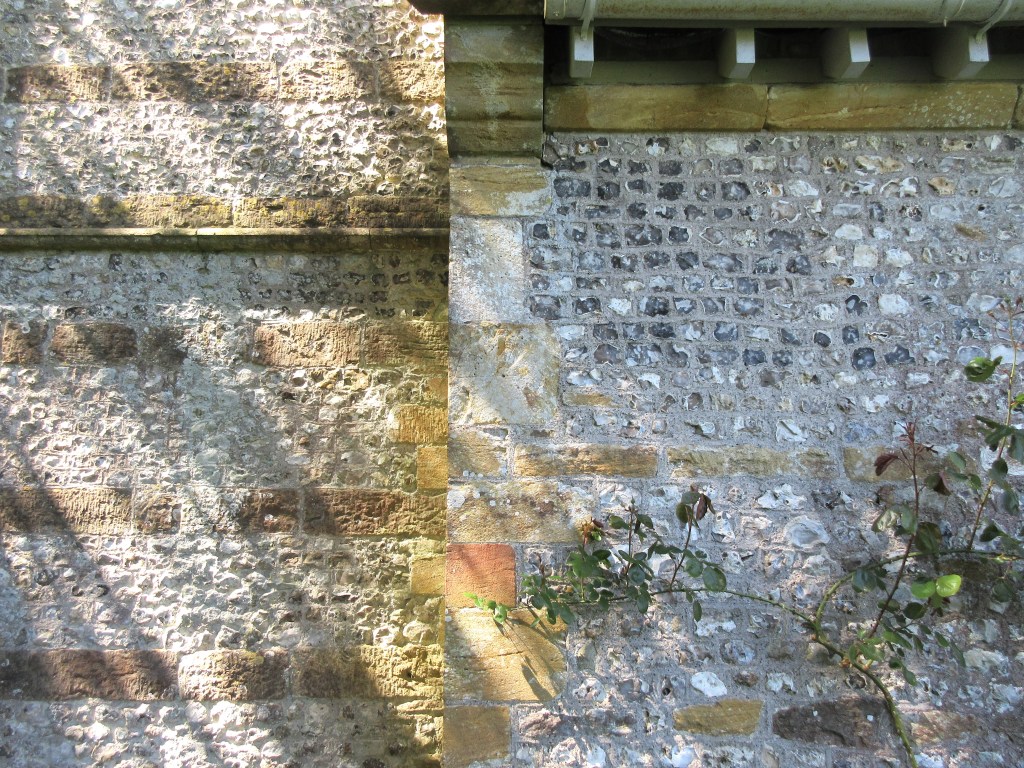
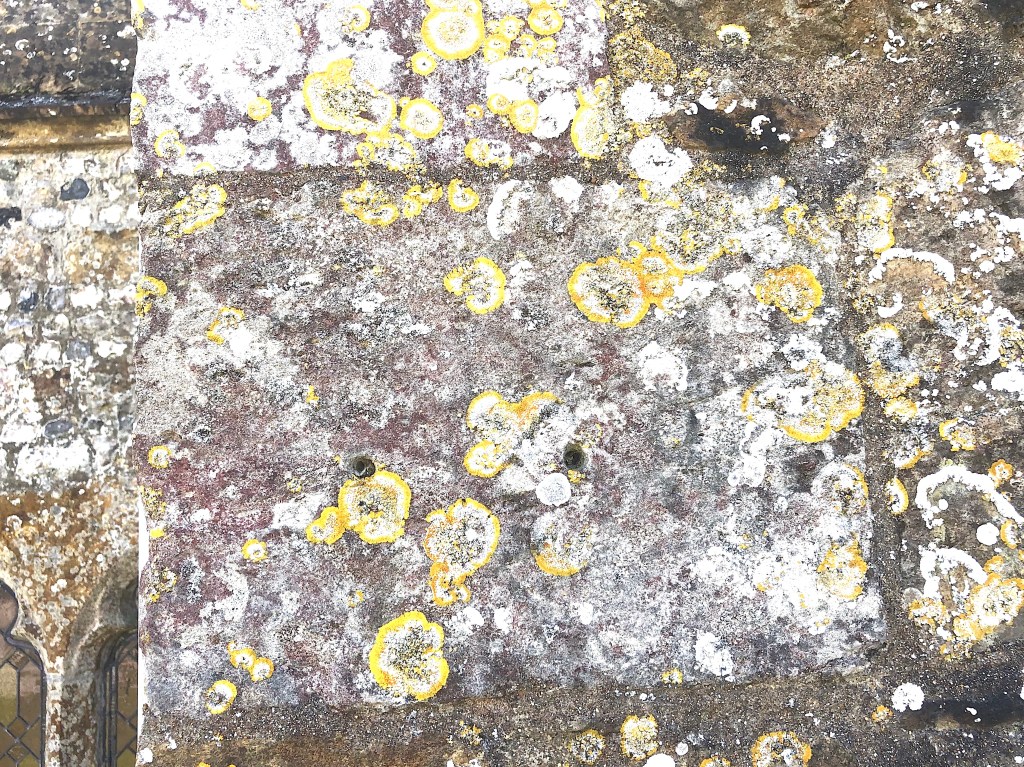
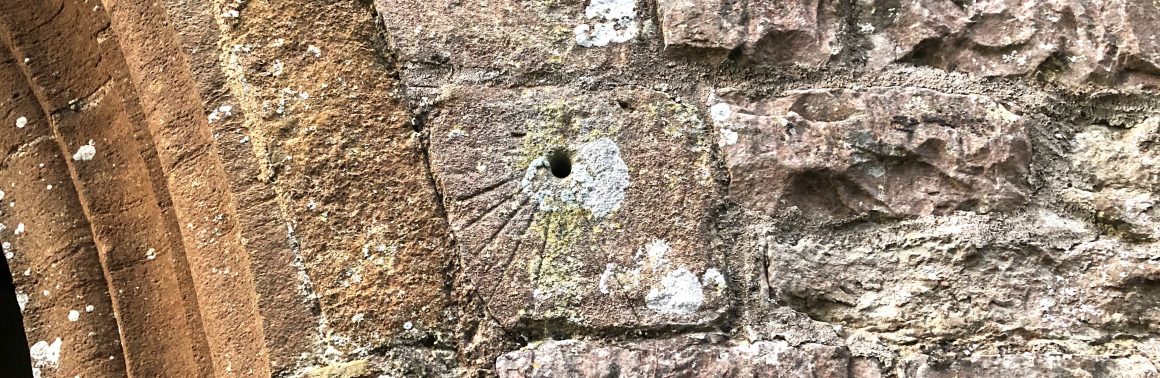
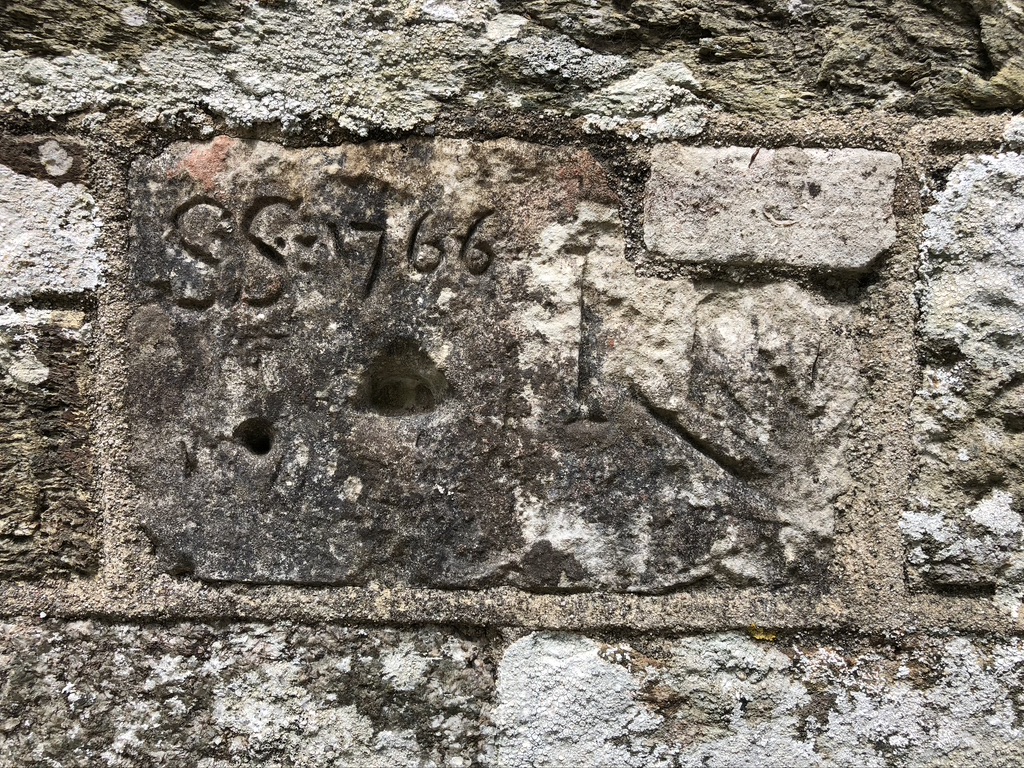
The dial is located prominently on the left side of the porch. Clearly the stone is different from and older than the surrounding stones (BSS dates the dial as C15), so it must have been rescued from the earlier building and reused in a typical dial position during the C18 reconstruction. The graffito SS 1766 makes a good case for being the date of relocation.

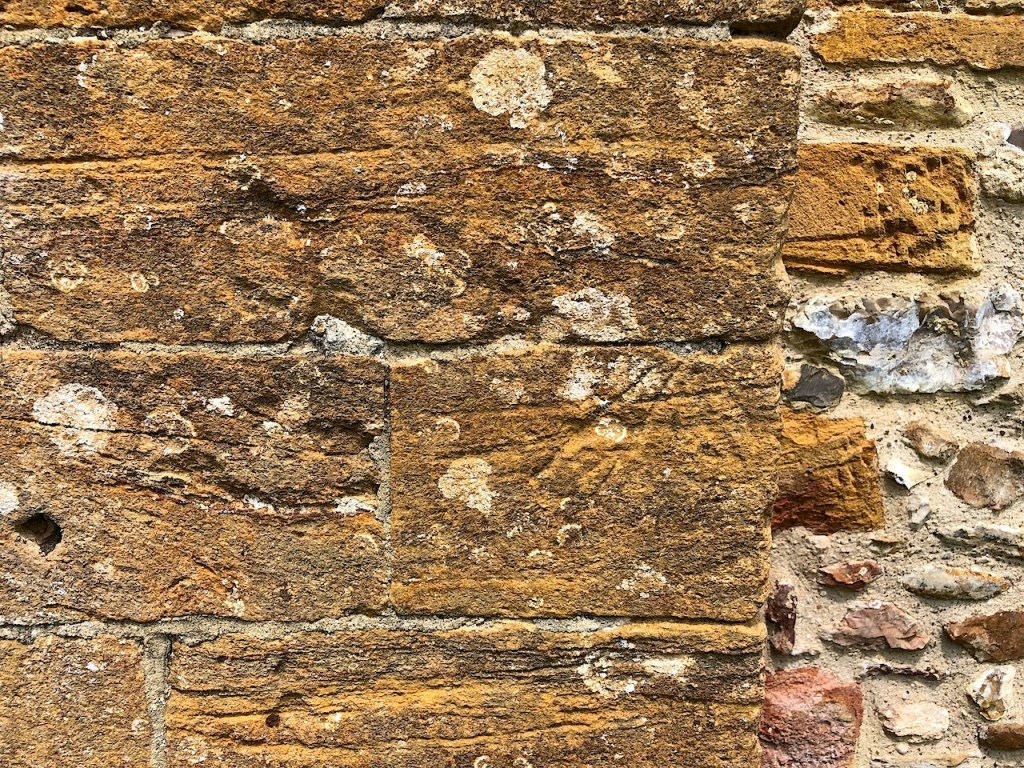
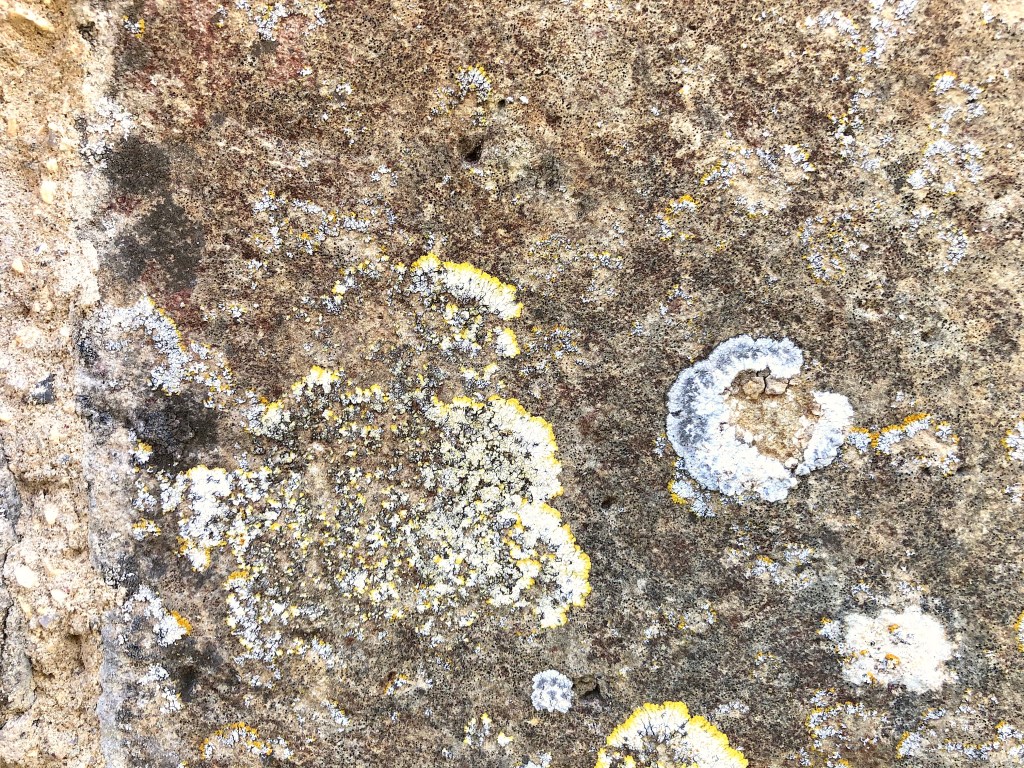
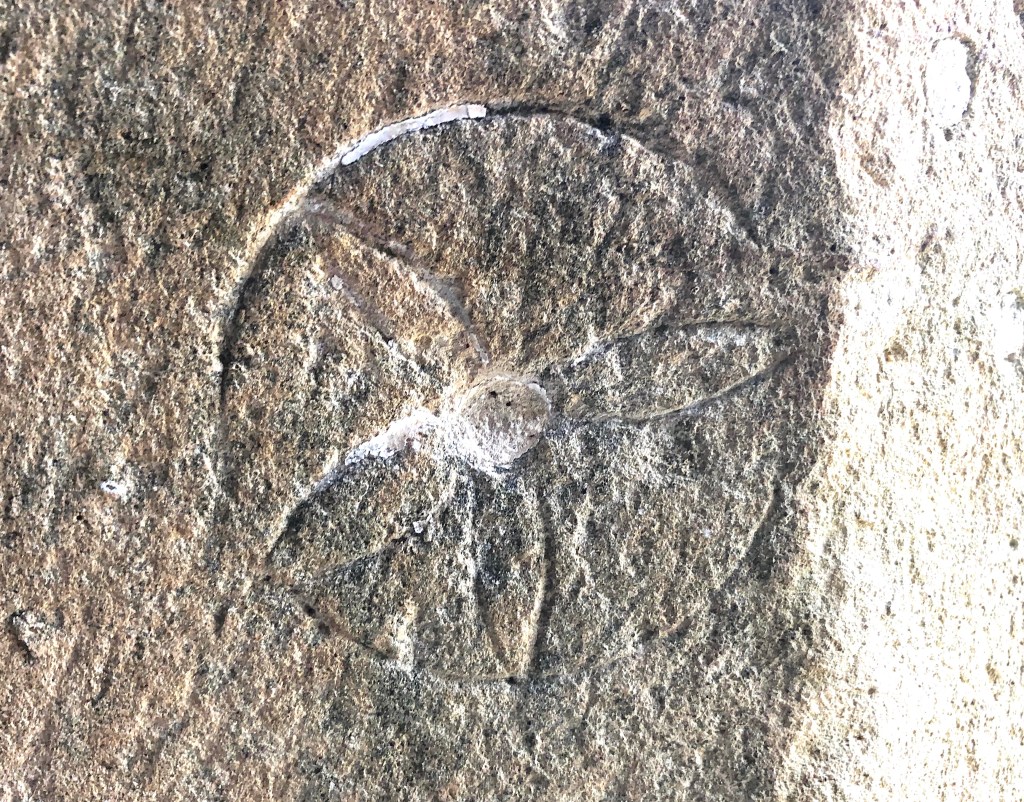
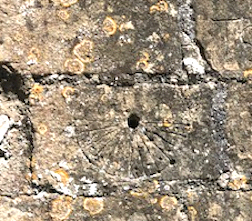
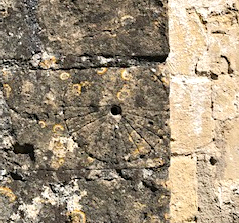
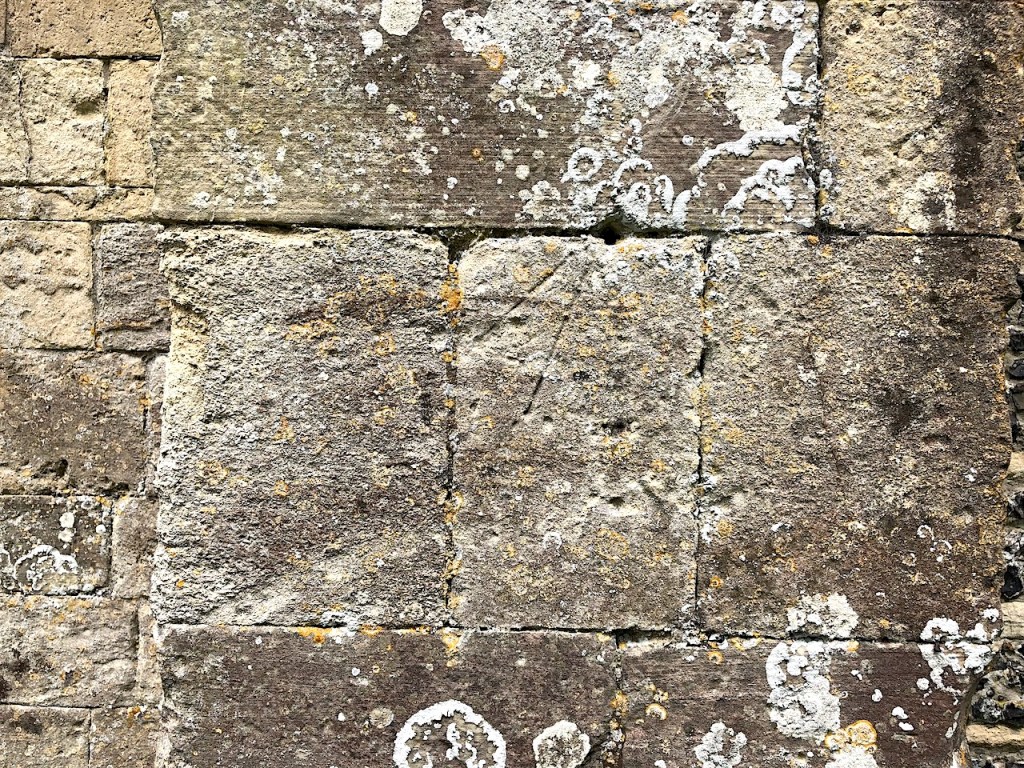
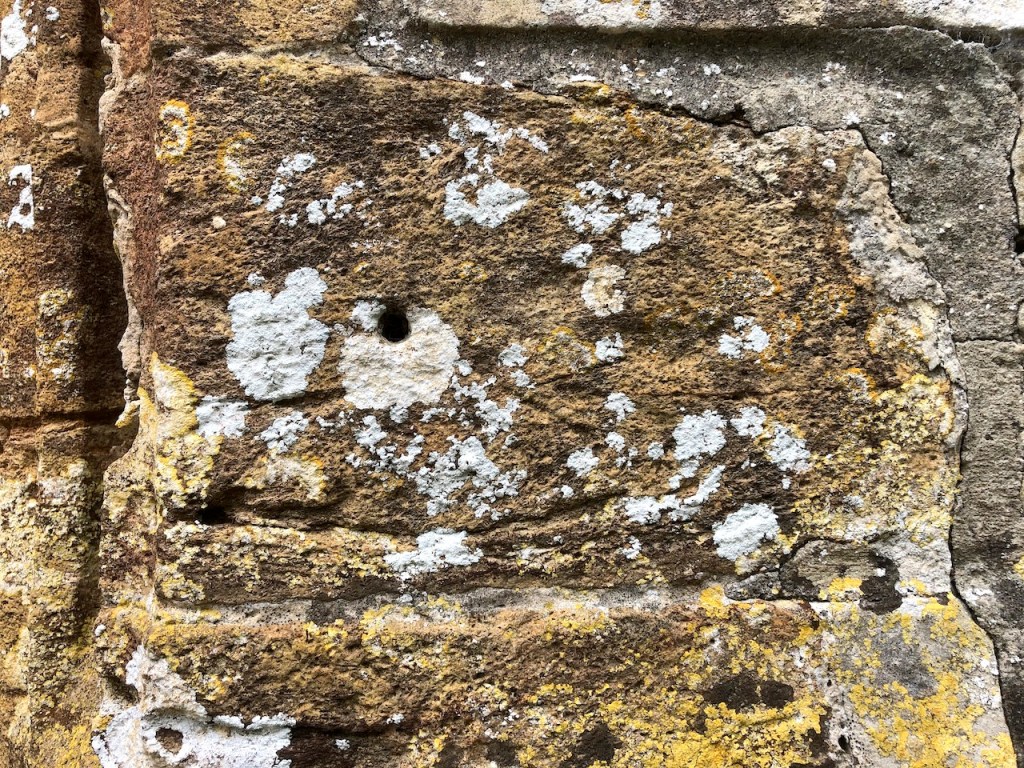
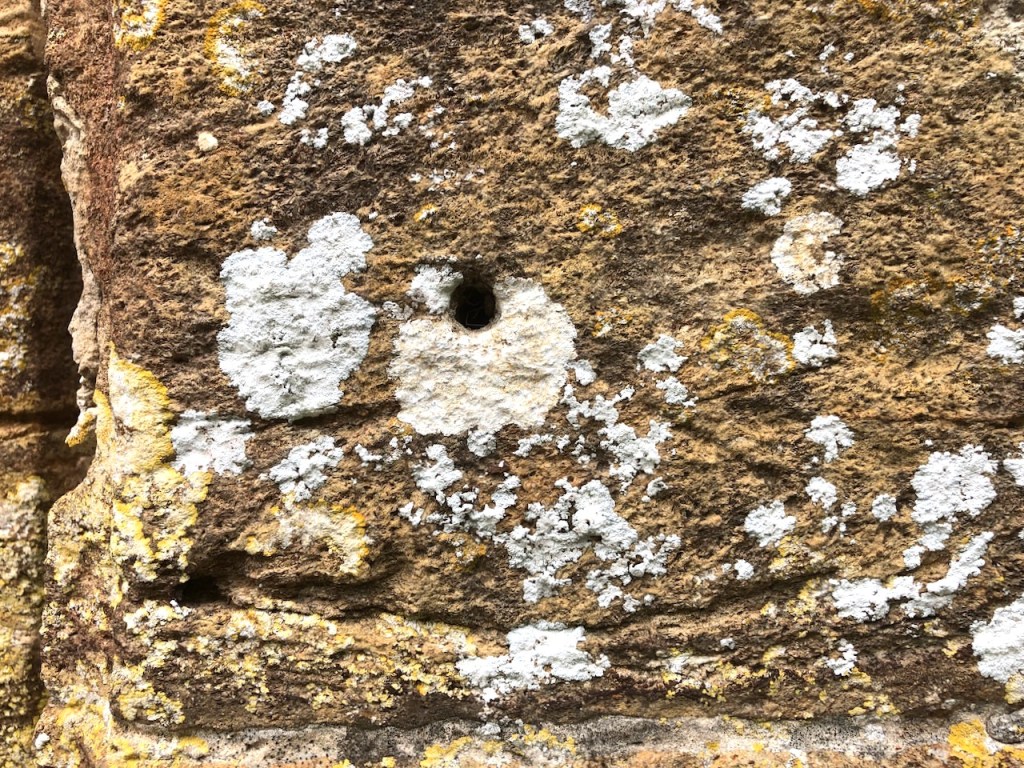
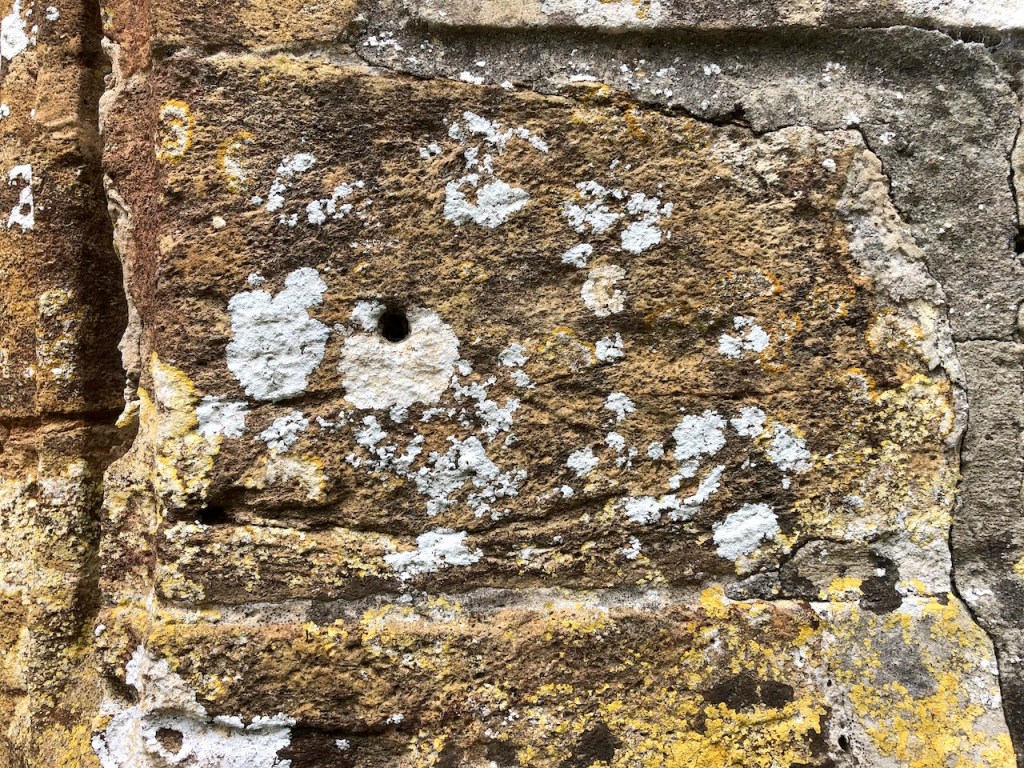
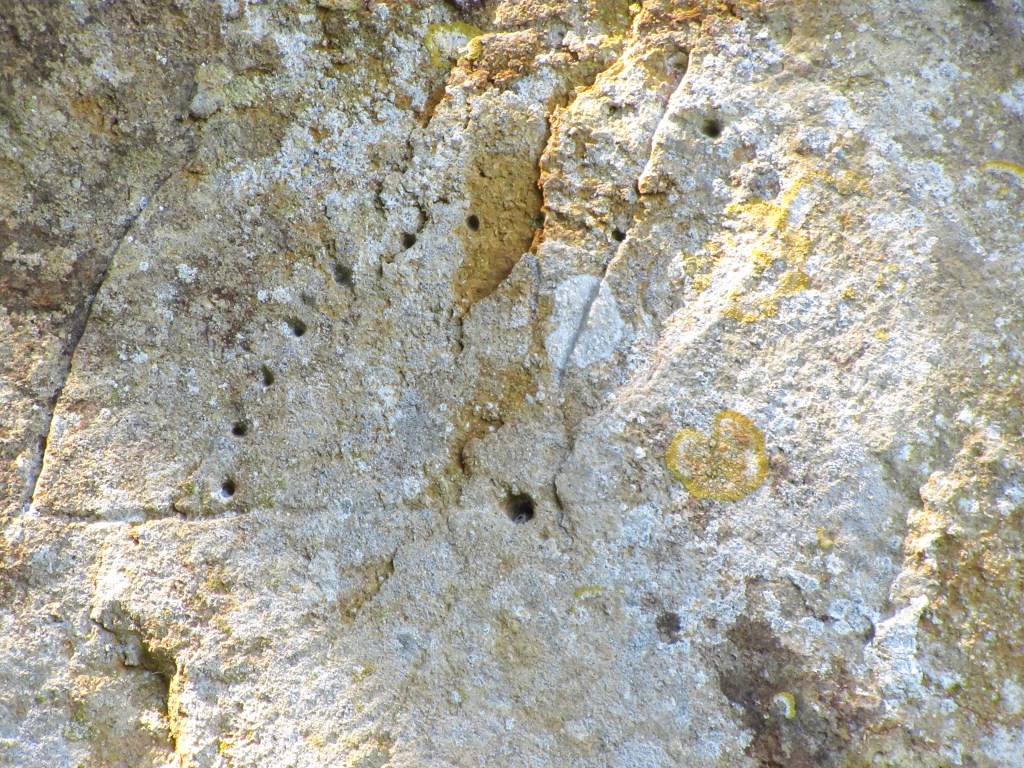
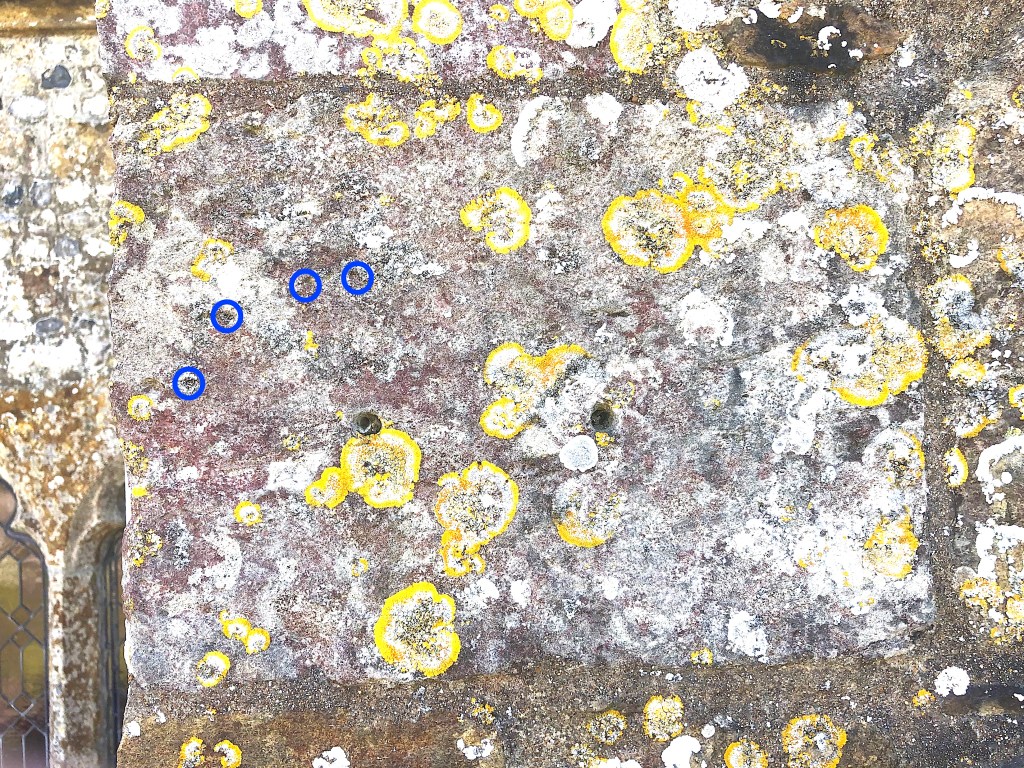
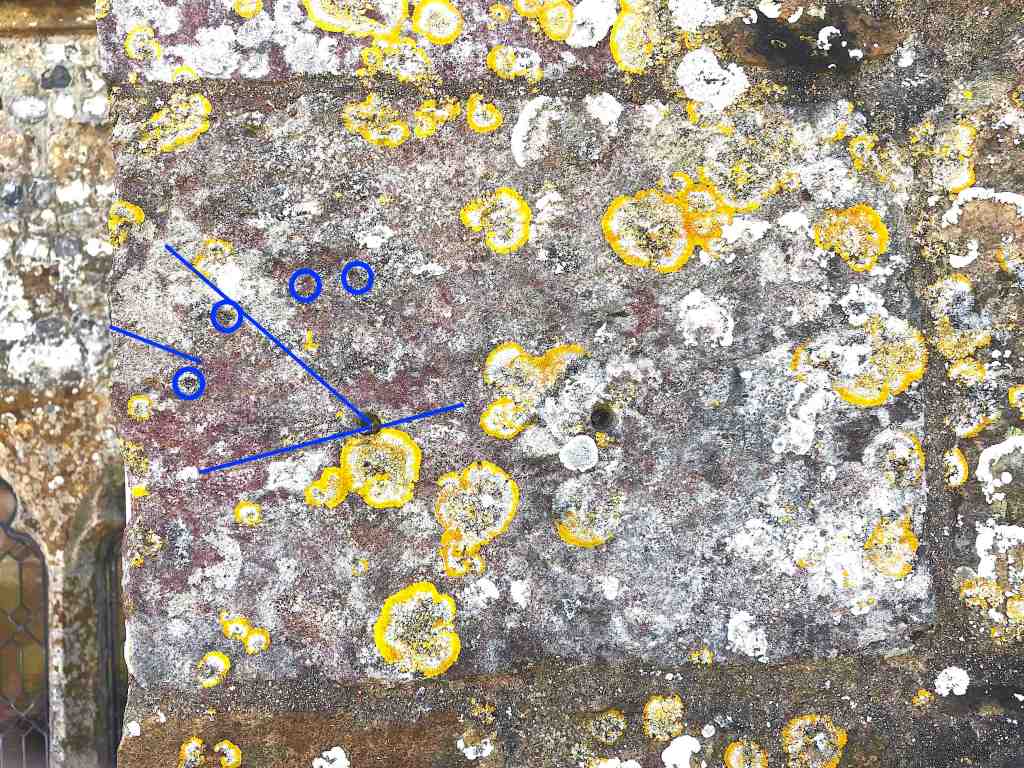
The recorded dial is under the date and has 3 or 4 adjacent indistinct short lines described (BSS) as ‘remote’. I take this to mean unlinked to the large style hole. To me they seem rather random and arguably not in the right place / at the right angle to be of much use. There’s the hint of an eroded circle. This basic dial’s main interest (apart from its extreme rarity in the county) arguably lies in the way it was incorporated and marked so appropriately during the rebuilding.
OTHER MARKS

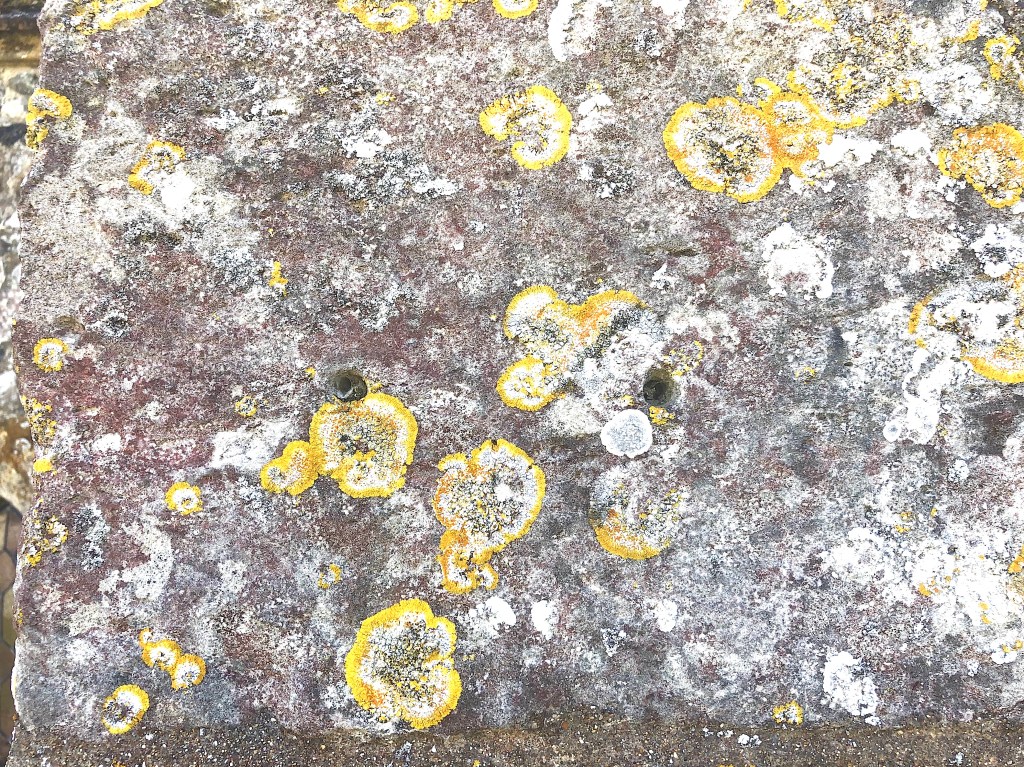
A. I assume SS to be the initials of the stonemason who reset the dial – rather boastfully larger than the incised date. Given the date, it seems unlikely to reference ‘Saints’. B. As for the triangular indented ‘nostrils’ with the trace of a partial circle, I have no idea – possibly the site of a later fixing? C. The vertical line to the right is another puzzle, with its carefully cut decorative ends (one eroded). I’d like it to be a cross, but there’s no indication of a horizontal.

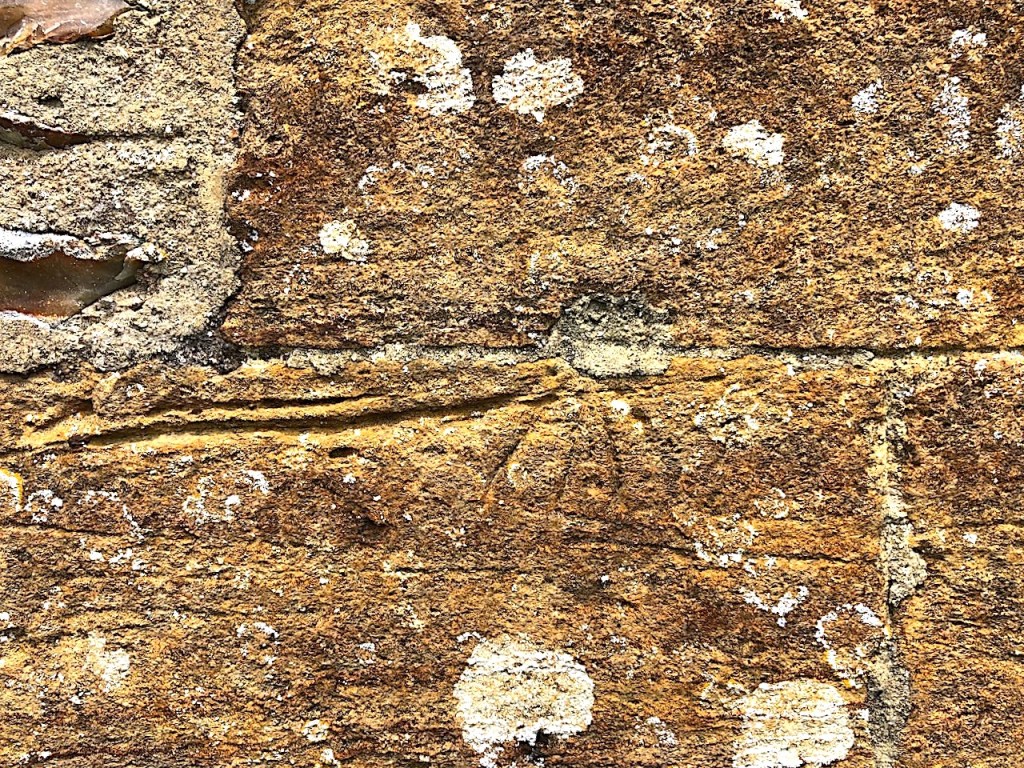
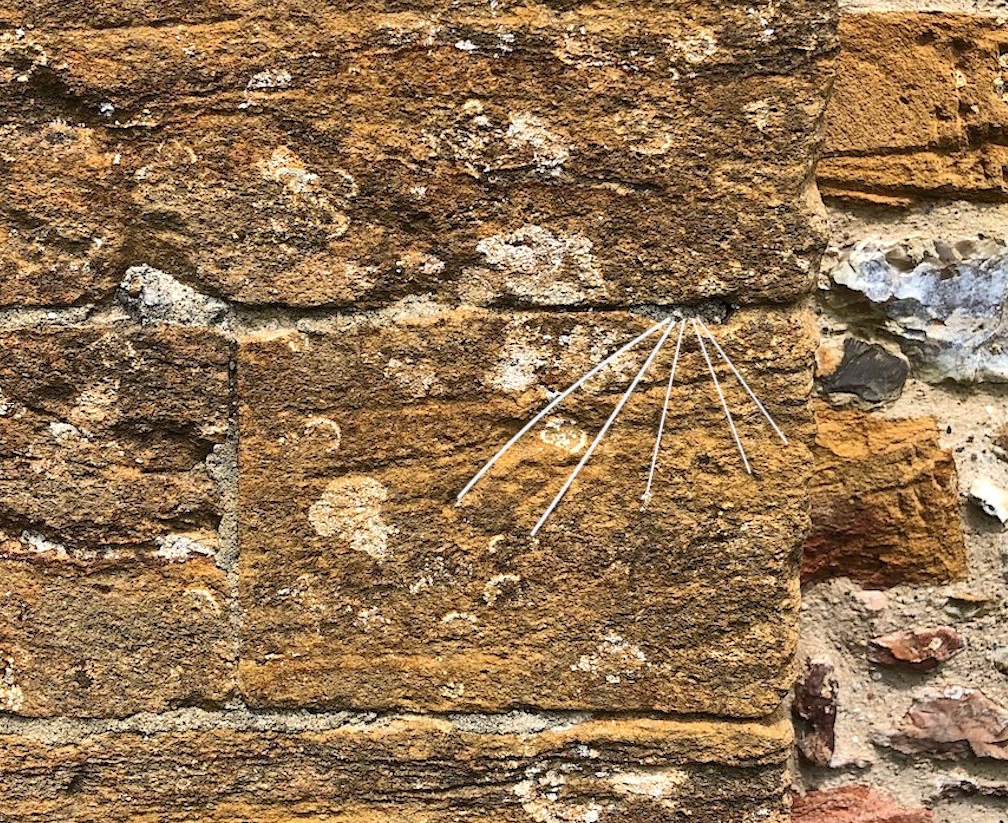
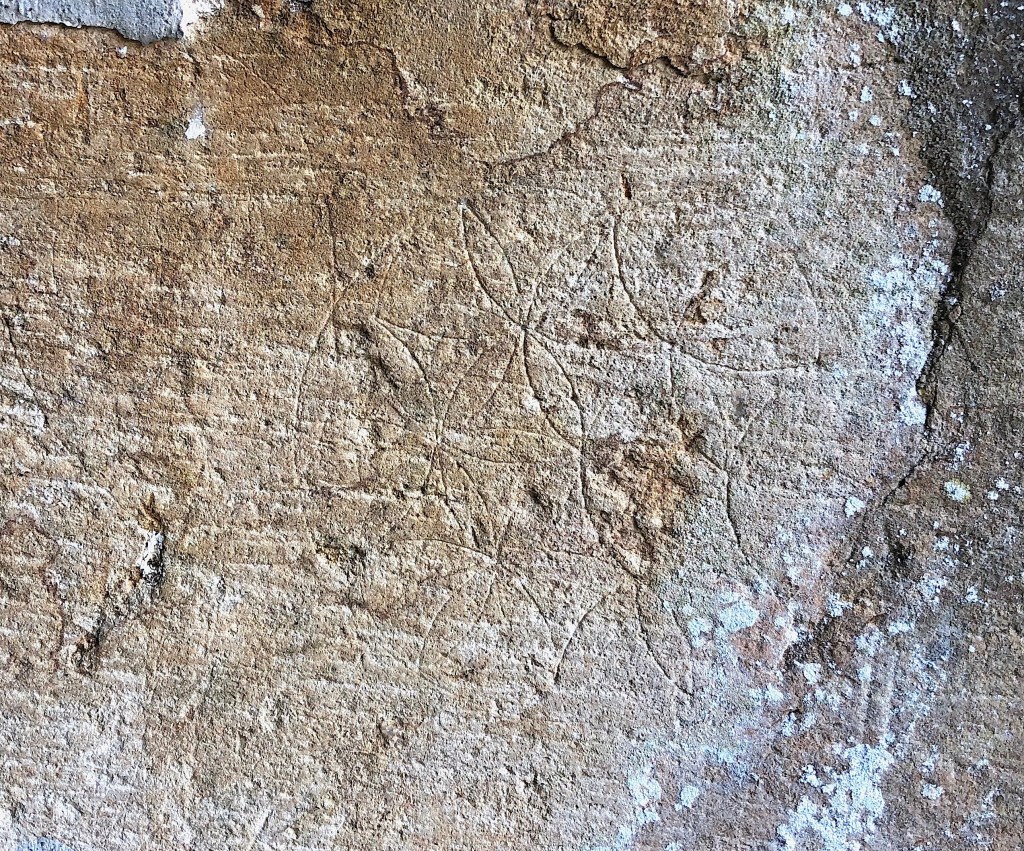
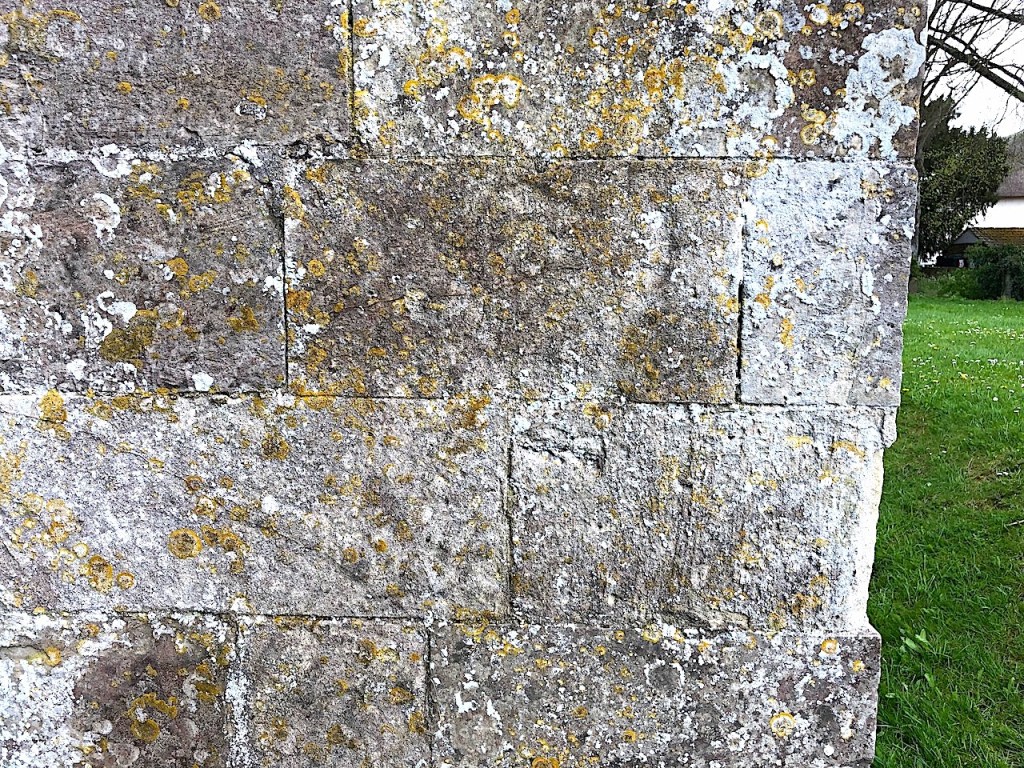
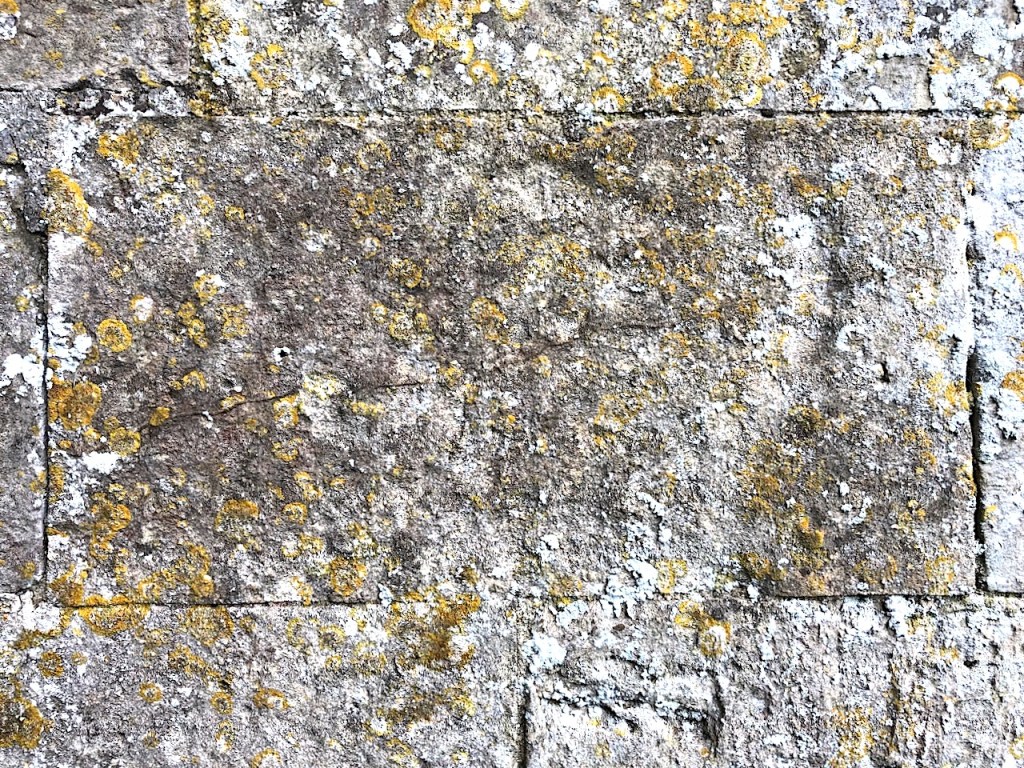
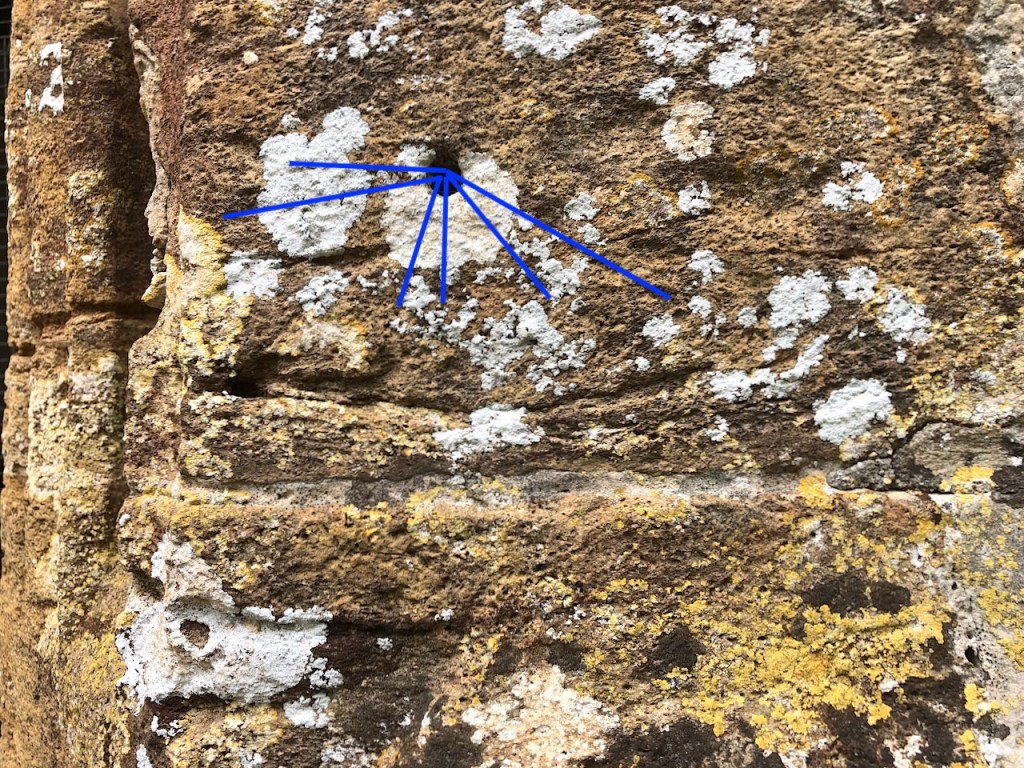
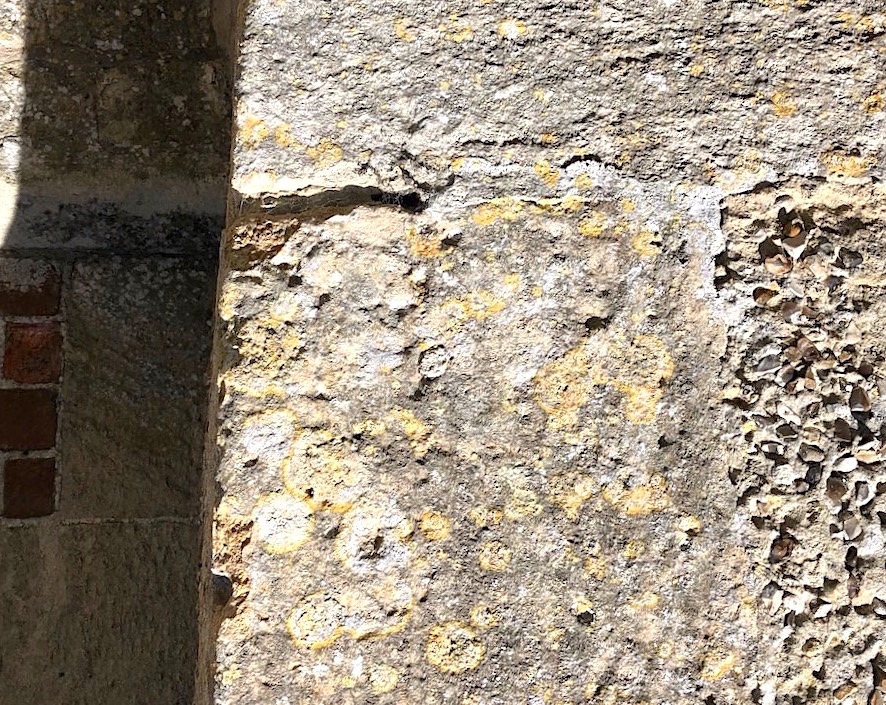
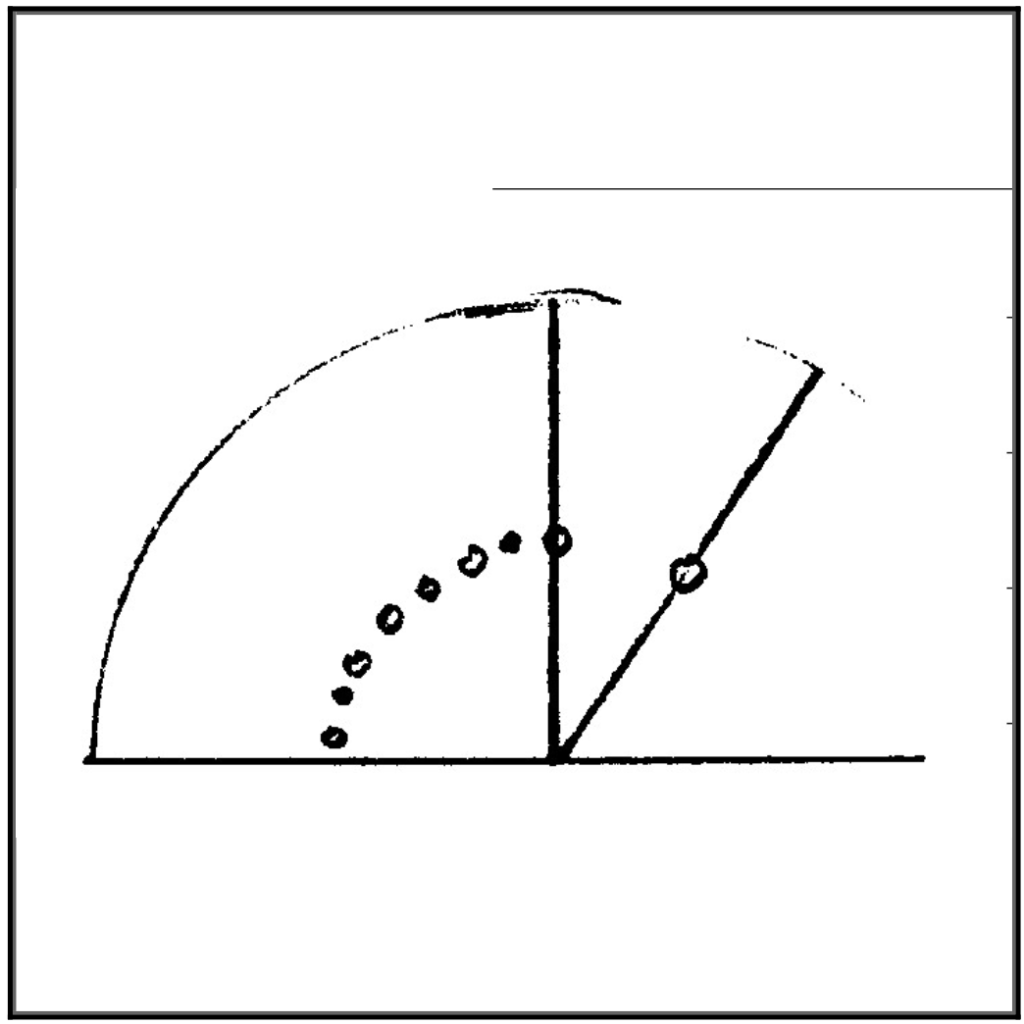
More interesting is the ‘pattern’ lower right. When I first looked at the stone, I presumed from the clearer lines radiating from a centre, the 3 or 4 apparent pocks, and the trace of a circle, that this was the recorded dial. The upwards direction of the lines suggested that the ‘dial’ had been upper left and that the stone was inverted when reused (as is often the case with dial stones), after which the initials and date were added.

Here’s how the stone might have looked. Perhaps there are actually 2 dials on it?

Church of St Feock . Feock . Cornwall – Scratch Dial
St Feock . Cornwall . Stocks

NOTE: see also the entry for MANACCAN for a second recorded Cornish dial; and St Martin for 1 or even 2 candidates as hitherto unrecorded dials.

GSS Category: Scratch Dial

All photos: Keith Salvesen

MANACCAN . CORNWALL . CHURCH OF ST MANACCUS . SCRATCH DIAL

St Manacca . Manaccan . Cornwall


CHURCH OF ST MANACCUS . MANACCAN . CORNWALL

GRADE 1. C12 and C15. Lizard Peninsula, S. of Helford River. Small village protected by a network of narrow roads from tourist hordes. 50.0832 / -5.127 / SW763250

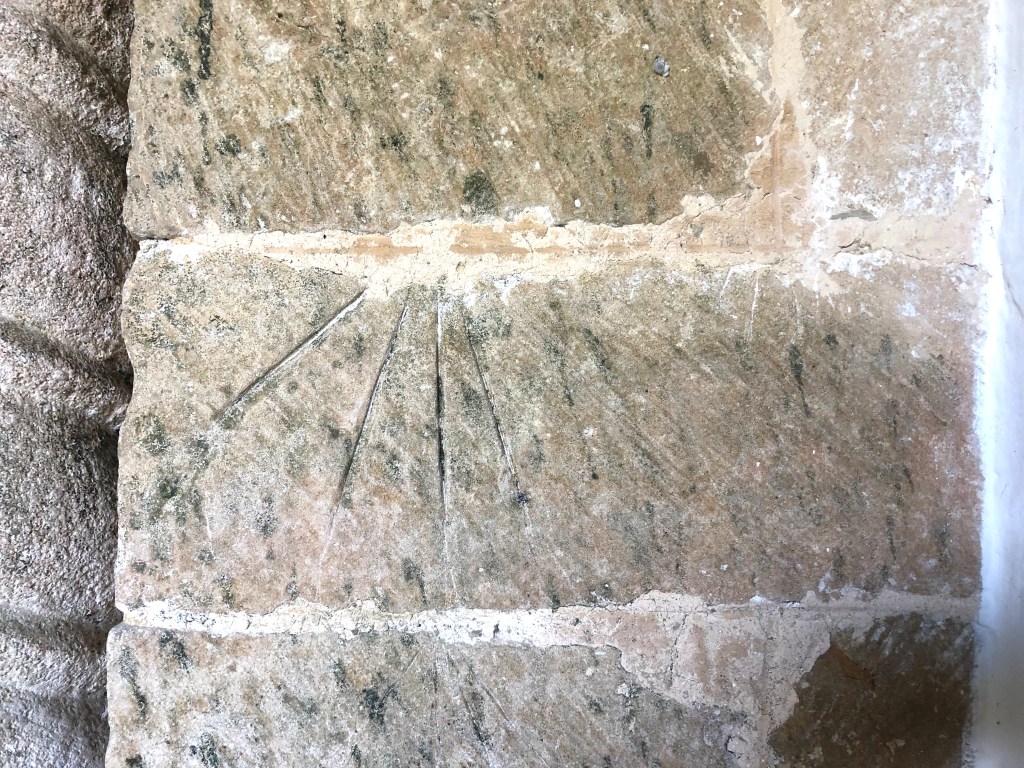
Only 4 scratch dials are recorded for Cornwall, this being one. I assume the main reason is that the local building materials – granites, serpentine, and other hard rock – are unrewarding to work with when cutting a dial

DIAL

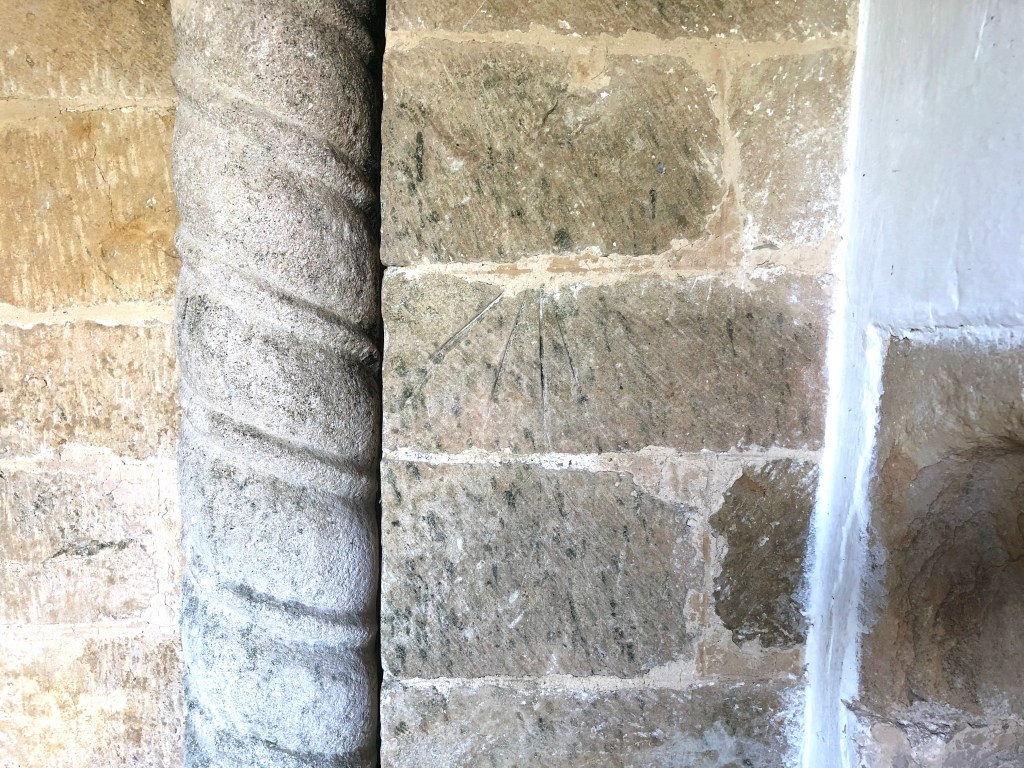
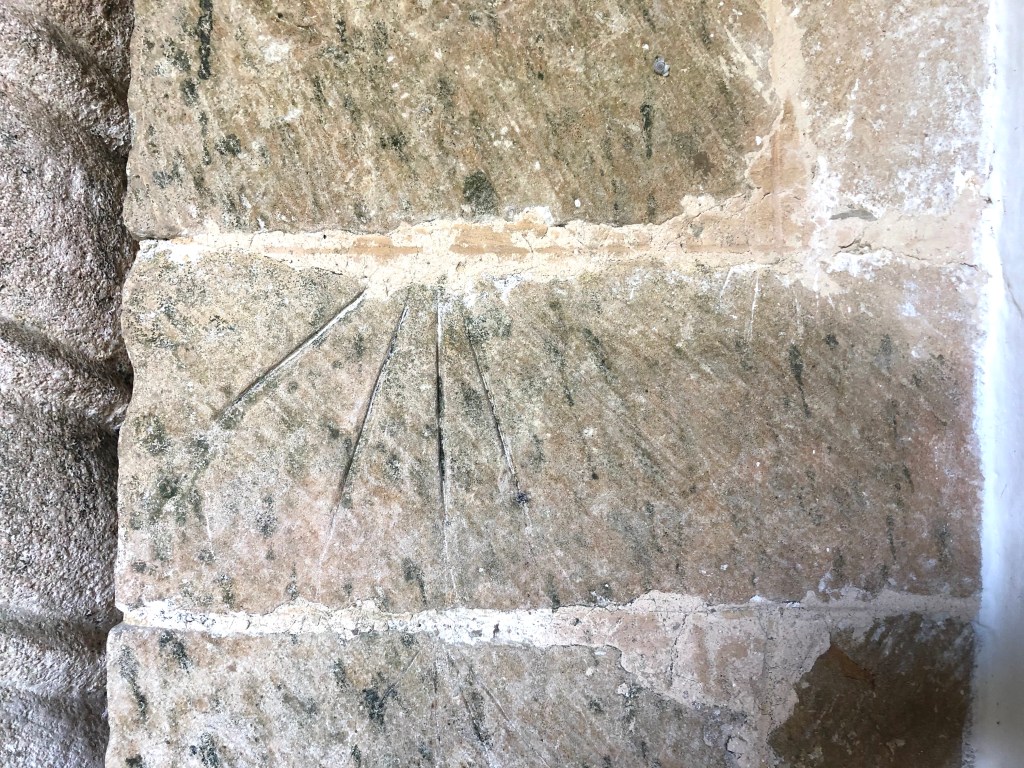
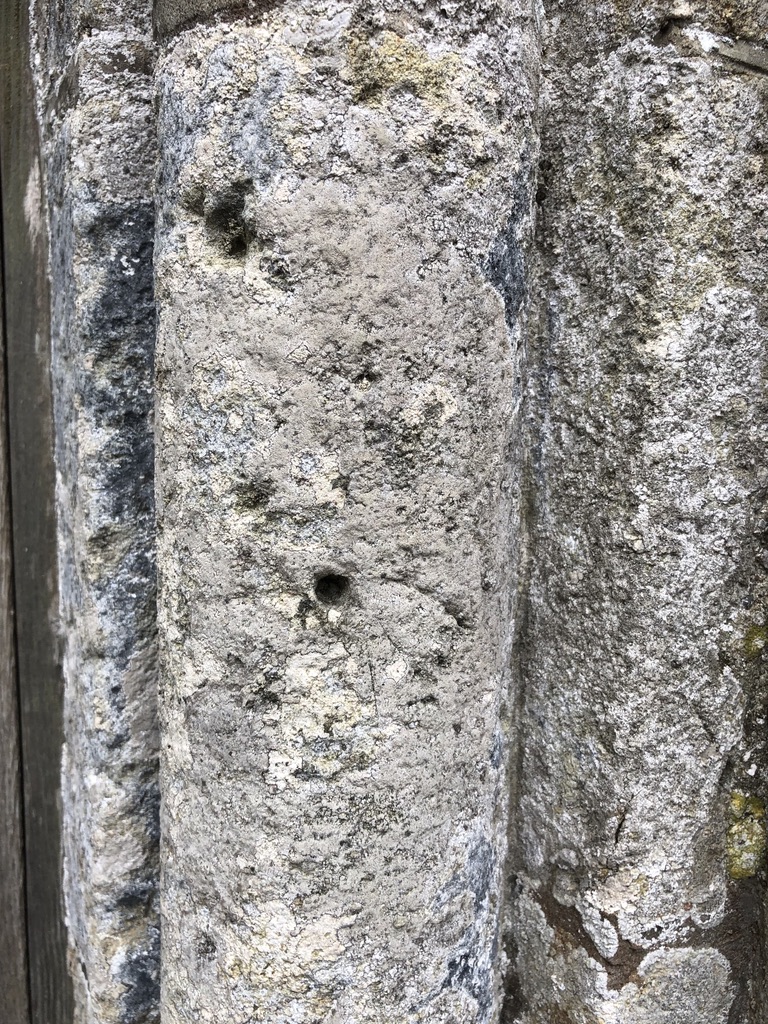
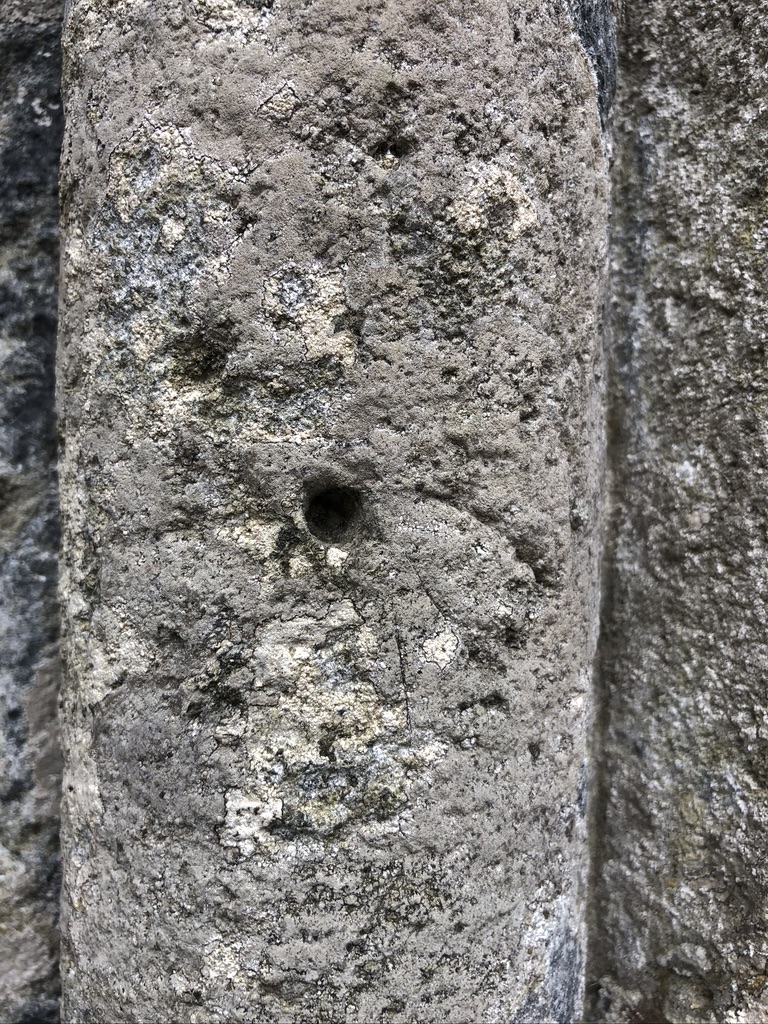
The small dial is cut to the right of the splendid Norman doorway, on a cylindrical pillar moulding. BSS suggests this may be a unique location. The lines curve away from the gnomon hole and there is the hint of a partial circle. The overall style is rustic and the condition is poor. It was noted in 2002 (L Burge) that there is a cross † ‘at Mass’ but on a dull day I could not make it out.

NOTE: see also the entry for FEOCK for a second recorded Cornish dial; and St Martin for 1 or even 2 candidates as hitherto unrecorded dials (link to be added).

GSS Category: Scratch Dial

All photos: Keith Salvesen

ASHILL . SOM . CHURCH OF THE BLESSED VIRGIN MARY – 3 SCRATCH DIALS

Church of the Blessed Virgin Mary . Ashill . Somerset

CHURCH OF THE BLESSED VIRGIN MARY . ASHILL . SOM.

GRADE II*. C12 / C13 on the site of an earlier church; later additions and alterations. Just off the A303 between Taunton (7m) and Ilminster (3m). 50.9508 / -2.9677 / ST321172

DIALS

Dom Ethelbert Horne DEH visited Ashill, during his Somerset dial-seeking perambulations, on 16 August 1915. He found 3 dials closely grouped on the SE corner of the nave. As I am finding, his descriptions from more than a century ago have been eroded by the passage of time and by work carried out in the intervening period, for example filled style holes.

DIAL 1

115. (1) This dial is on the s.e. corner of the nave. It is 6 feet above the ground, the noonline is 2 1/2 inches in length, the stylehole is 1 1/4 inches deep by 1 inch diameter, and the aspect is s. by 10° e. Type 2

Notes: the ‘6 feet’ is from the base of the nave wall, which is below the churchyard level; the style hole has been filled in the interim

Church of the Blessed Virgin Mary . Ashill . Somerset – Scratch Dial 1

DIAL 2

116. (2) About 10 inches to the e. of the above is another dial, which may be only a copy. The noonline is 2 1/2 inches in length, the stylehole, which is in a joint, is filled, and the aspect is as above. Type 2.

Notes: the lines are more spidery, less distinct, and more random than dial 1

Church of the Blessed Virgin Mary . Ashill . Somerset – Scratch Dial 2

DIAL 3

117. (3) Two feet below the last named is another, also probably a copy. The noonline is 4 1/2 inches in length, the stylehole, which is in a joint, is filled, and the aspect is as above. Type 2. August 16th 1915.

Church of the Blessed Virgin Mary . Ashill . Somerset – Scratch Dial 3
Church of the Blessed Virgin Mary . Ashill . Somerset – Scratch Dial 3 annotated

DIALS 1 & 2

Church of the Blessed Virgin Mary . Ashill . Somerset – Dials 1 & 2

DEH notes that ‘it is rather difficult to determine whether Nos. 2 and 3 are only copies of No. 1 or whether they are original’. Having seen and photographed (as he could not) the dials, I am wondering whether the rudimentary dial 2 was in fact the first, with ‘dial 1’ cut later, copying and improving on it.

Dial 3 is rather different to either of its companions. DEH categorises each dial as being in his ‘Type 2’ (of about 12); perhaps that is what he means by ‘copy’ – ie the general style, not the physical details

BLB LINK

GSS Category: Scratch Dial

All photos: Keith Salvesen

BLACKFORD . SOM . ST MICHAEL – 2 SCRATCH DIALS

Blackford . Som . St Michael

ST MICHAEL . BLACKFORD . SOM.

GRADE II*. C11 origins with Norman features inc. doorway inside the porch; enlarged in C14 (tower) and C15 (S. porch); C19 restoration. One of many attractive villages in the area. 4m W of Wincanton, with only the A303 to spoil the peace. 51.2261 /  -2.8478 / ST 65722673

DIALS

Dom Ethelbert Horne DEH visited Blackford on April 24th, 1914, during one of his tours around Somerset examining medieval churches and recording the details of the scratch dials he discovered. Blackford is one of a very small number of Somerset churches where he found a dial inside the porch. It must predate the added C14 S. porch to have had any practical use. Another example of an interior dial can be found at WAYFORD.

DIAL 1

DEH 165. (1) This dial is on the e. side of the inner door of the s. porch, at a height of 4 feet 6 inches above the floor. The noonline is 4 inches in length, the stylehole, which is in a joint, is filled, and the aspect is due s. Type 2

Blackford . Som . St Michael – Dial 1

There are 4 sharply incised lines with no discernible traces of others. The mortar line at the top acts as the horizontal ‘6-line’ and the style location. The spacing of the lines is somewhat unusual for such a well-cut, being neither the 15º equal segments of an old design nor the carefully graduated lines of a later scientific dial. Perhaps this indicates an even earlier origin, even possibly contemporary with the original doorway?

The stone immediately below the dial has a very small (apparent) dial descending in the same way from the mortar line. One could probably dismiss it as a later copy or doodle of the dial above. On the other hand, crude though it is, the radials are differently configured with more emphasis on the LR quadrant. Perhaps a practice dial?

Blackford . Som . St Michael – Dial 1a?

DIAL 2

DEH 166. (2) This dial is on the w. side of the priest’s door, which is blocked up. It is 2 feet 6 inches above the ground, the noonline is 2 1/2 inches in length, the stylehole is small and shallow, and the aspect is due s. Type 3. April 24th, 1914.

Blackford . Som . St Michael – Dial 2

This dial on W. side of the blocked Priest’s door would be easy to miss, though the newly mortared surround is not. DEH doesn’t note its state, but I wonder if has eroded significantly in the intervening century since his visit. There is the hint of a full circle. It’s hard to make out a noon line as such. Now only a single pock below the shallow style hole indicates the vertical.

ADDITIONAL DIALS?

Besides the small ‘dial’ in the porch mentioned above, there are 2 other candidates, both by the Priest’s door. The first one is faint, but there are 2 visible lines leading from a small hole in the stone. Each has a pock at or near the end. Other pocks in the vicinity may be relevant to the theory. The other candidate looked promising, but is less likely I think.

Blackford . Som . St Michael – possible Dial 4

NOTES

St Michael is worth visiting just for the splendid apotropaic marks (ritual protection / witch marks) in the porch, in particular a deeply incised flower-like hexafoil; and a delicate and complex multiple hexafoil design.

Useful general information can be found at CAMELOT PARISHES

GSS Category – Scratch Dial

All photos – Keith Salvesen

MANNINGFORD BRUCE . WILTS . ST PETER – DOUBLE SCRATCH DIAL

ST PETER . MANNINGFORD BRUCE . WILTS

GRADE 1 . On a Roman site. Late C11 or early C12 origin. Development C13 and C15, restoration 1882. Romanesque features. Between Amesbury and Marlborough, close to UPAVON. 51.3212 / -1.801 / SU139580

DIALS

E. quoin stones of transept. Two adjacent and remarkably similar encircled dials with complete semicircles of radials. Both have additional pocks in LR quadrant. Both edge into the mortar at the top; and Dial 2 is cut short by the quoin edge RHS. Possibly this evidences relocation of one or both dials.

DIAL 1 (upper)

Complete semicircle of lines, 5 pocks. Equal 15º radials. BSS notes ‘eroded, damaged, irregular dial with 15º lines in both quadrants’.

DIAL 2 (lower)

Also complete semicircle of lines, 5 pocks, 15º radials. BSS notes as ‘worn’ and with shorter radials.

It is almost as if two people competed to make the most complete or accurate dial to the same design

St Peter . Manningford Bruce . Wilts – Scratch Dials

NOTES

Dial 3? Near the bottom of the image above there are 3 radials spreading downwards from the mortar line. The farthest left is vertical, and (if a dial) is the noon line. The lines were clearly deliberately cut, and it is quite possible that there is a filled style hole above them, though it is hard to tell from the image.

St Peter . Manningford Bruce . Wilts – possible 3rd scratch dial

Graffiti: Initials, dates on quoin stones

GSS Category – Scratch Dial

Dial photographs: Jenny John, to whom many thanks. I recently failed to visit St Peter, having driven through the village en route from Upavon to Marlborough. Next time, I clearly need to check it…

Photographs of the Church: Wilts Council / History Centre; ‘Vale of Pewsey Churches’

UPAVON . WILTS . ST MARY THE VIRGIN – FOUR SCRATCH DIALS

Upavon . Wilts . St Mary the Virgin

GRADE 1. C11 origins connected to St Wandrille (Normandy). Early C13 and early C15, with C19 restorations. Midway between Amesbury and Marlborough; close to Kennet &Avon canal. 51.2943 / -1.8071 / SU135550

Upavon . Wilts . St Mary the Virgin. Scratch Dial 1

DIALS

BSS records 4 dials, all on quoin stones of the tower. Two are obvious (1 & 2). The other 2, described as eroded, are much less clear. Quite possibly my ID of at least one of these is incorrect – at the time I only knew of the 2 main dials and didn’t have locations / descriptions of the 2 degraded ones to go on. My photos of 4 don’t quite match up with the BSS record. Comments welcome.

DIAL 1

An eroded encircled dial that appears to have been relocated. The lower radials end abruptly, suggesting that one or more originally extended beyond the edge of the stone.

DIAL 2

A simple dial with 2 clear-cut radials, possible traces of a couple more. Several pocks in the area, probably not all related to the dial. Style hole in the mortar line.

Upavon . Wilts . St Mary the Virgin . Scratch Dial 2

DIAL 3

A dial with a filled style hole and a puzzling orientation. A single clear angled line on eroded soft stone; a less defined rough horizontal line from the centre to the quoin edge. This was perhaps the noon line on the stone, later relocated and rotated 90• anticlockwise.

DIAL 4 (?)

More contentious: if this is a 4th dial, it is in very poor condition. There is the hint of a style hole, with an apparent noon-line and other trace lines. Not totally convincing, I agree.

UNDIAL

Two sideways arrows, faint (L) and distinct (R) with other trace lines. Possibly apotropaic marks, or perhaps doodles… or helpful directions to the porch.

GSS CATEGORY: Scratch Dials

All photos: Keith Salvesen

PULHAM . DORSET . ST THOMAS À BECKET – SCRATCH DIAL

St Thomas à Becket . Pulham . Dorset

PULHAM . DORSET † ST THOMAS À BECKET

GRADE II*. Fragments indicate C12 origin, otherwise mainly C15 with later additions and rebuilding. The dial survived the C19 work. C16 gargoyles of note. Situated some way down a long lane on the NE. edge of the village, next to the sizeable rectory. 9m SE. of Sherborne. 50.8754 / -2.4111 / ST71108

St Thomas à Becket . Pulham . Dorset – Scratch Dial

DIAL

The dial is set low down on the E. side of the S. porch. Dated by GLP as early C16. Faint, rather randomly cut, and much eroded. 6 definite lines, as GLP recorded. As dials go, it is somewhat underwhelming. In fact I had missed it on an earlier visit, so I am glad I returned to check again.

GSS Category: Scratch Dial

All photos: Keith Salvesen
ALTON BARNES . WILTS . ST MARY – SCRATCH DIAL(S)

St Mary . Alton Barnes . Wilts

ST MARY . ALTON BARNES . WILTS

GRADE 1. Saxon church, C10-C11 origins with C14 reworking; later work, C19 alterations, subsequent restoration. ‘Awletone’ was first recorded in 825. Historically, at various times united with and detached from All Saints Alton Priors, which is situated just a couple of fields away. Midway between Pewsey and Devizes, close to K&A canal and Marlborough Downs. 51.3572 / -1.8467 / SU107620

St Mary . Alton Barnes . Wilts – Scratch Dial 1

DIAL 1

This unassuming little dial is on the N. side of the church, facing the Alton Barnes white horse carved in chalk on Milk Hill nearby. It does not seem to be the dial mentioned elsewhere, for which see Dial 2. I have seen no record of it.

The mortar line acts as the horizontal, and a full circle incorporates both radials and pocks. I sense that this is quite an early dial, perhaps dating from the C14 work on the church. I assume it was originally on the S. side of the church; it must have been relocated to the N. side at some later time. It may look somewhat crude, but fairly robust cutting may have helped to preserve it over the centuries.

DIAL 2

Scratch sundial on south-east quoins’ HE

St Mary . Alton Barnes . Wilts – Scratch Sundial 2

This is the dial that seems to be referred to elsewhere. I speculate C18 or possibly C17. It is high up under the eaves, so much so that it was half in shadow at noon (see gallery below). Perhaps that indicates a relocation at some time, but to a less useful position as a sundial. With a gnomon at the top and in the shade, the dial’s effectiveness would be notably diminished. Perhaps, by then, it was mainly decorative.

St Mary . Alton Barnes . Wilts – Scratch Sundial 2

UNDIAL

Quite often a possible dial suggests itself, though is probably (or on closer inspection, definitely) not one. Here, I liked the look of the filled style hole and the pocks in a plausible formation. I inverted the image to see if it looked any more likely. Not really (I’m happy to be corrected by an expert).

GSS Category: Scratch Dial

All photos: Keith Salvesen
UP CERNE . DORSET – SCRATCH DIAL

Up Cerne Church . Dorset . Scratch Dial

UP CERNE CHURCH / CHAPEL . UNKNOWN DEDICATION

GRADE II*. Former parish church, now a private chapel in the grounds of the Manor House*. Largely rebuilt in 1870. A few C15 fragments remain. A secluded hamlet with only 2 or 3 cottages besides the Manor and its extensive lake. Excellent walking country. Hidden in a valley midway between Sherborne and Dorchester. 50.8232 / -2.4865 / ST658027

Up Cerne Church . Dorset . ‘Dorset Churches’

DIAL

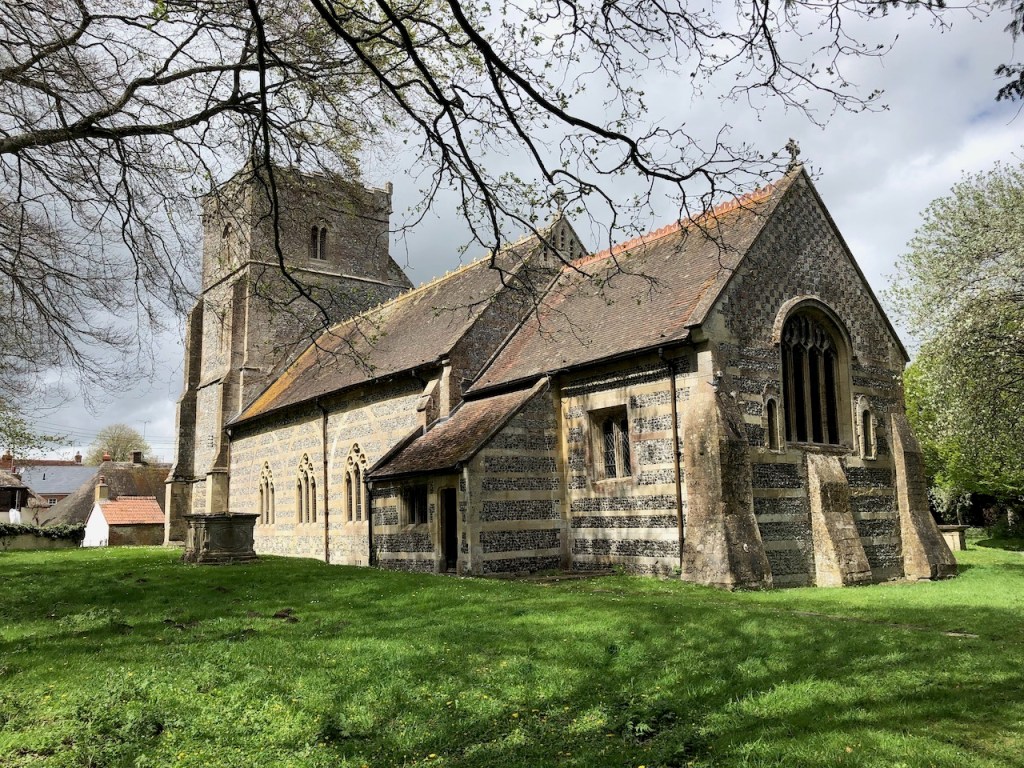
The dial is quite high on a square quoin stone on the S. Nave. It is inverted and was perhaps saved as an interesting feature – and moved – during the major C19 rebuild. The stone itself is not matched by others nearby and is clearly older, with significant damage.

Up Cerne Church . Dorset . Scratch Dial

The dial is roughly formed, with an endearingly wonky eroded semicircle containing a curve of rather haphazard pocks. The horizontal line is clear. If there was a noon line, damage to the stone has erased it, together with (presumably) other features of the dial. It’s hard to tell if the striations in the damaged quadrant evidence radials.

BSS Diagram – Up Cerne
Up Cerne Church . Dorset . Scratch Dial

*The Manor House and its grounds are private. There is no public access to the church, which is barely visible from the road. I was fortunate (being local) to be able to gain permission to visit. This is not a dial worth visiting on the off-chance

Up Cerne Church . Dorset . Scratch Dial

GSS Category: Scratch Dial

All photos Keith Salvesen except the church – Dorset Churches online
TOLLER PORCORUM . DORSET . ST ANDREW & ST PETER – TWO SCRATCH DIALS

St Andrew and St Peter . Toller Porcorum . Dorset

ST ANDREW and ST PETER † TOLLER PORCORUM . DORSET

GRADE II*. C14 chancel & nave; C15 W. tower, N. porch. Much of interest in the church of the village of swine (or possibly wild boar). Font, bells, gargoyles, ‘dropped’ chancel, and a fine stained glass millennial sundial. Midway between Dorchester (S.E.) and Crewkerne (N.W.) 50.7799 / -2.6224 / SY562979
St Andrew and St Peter . Toller Porcorum . Dorset – Scratch Dial(s)

DIALS

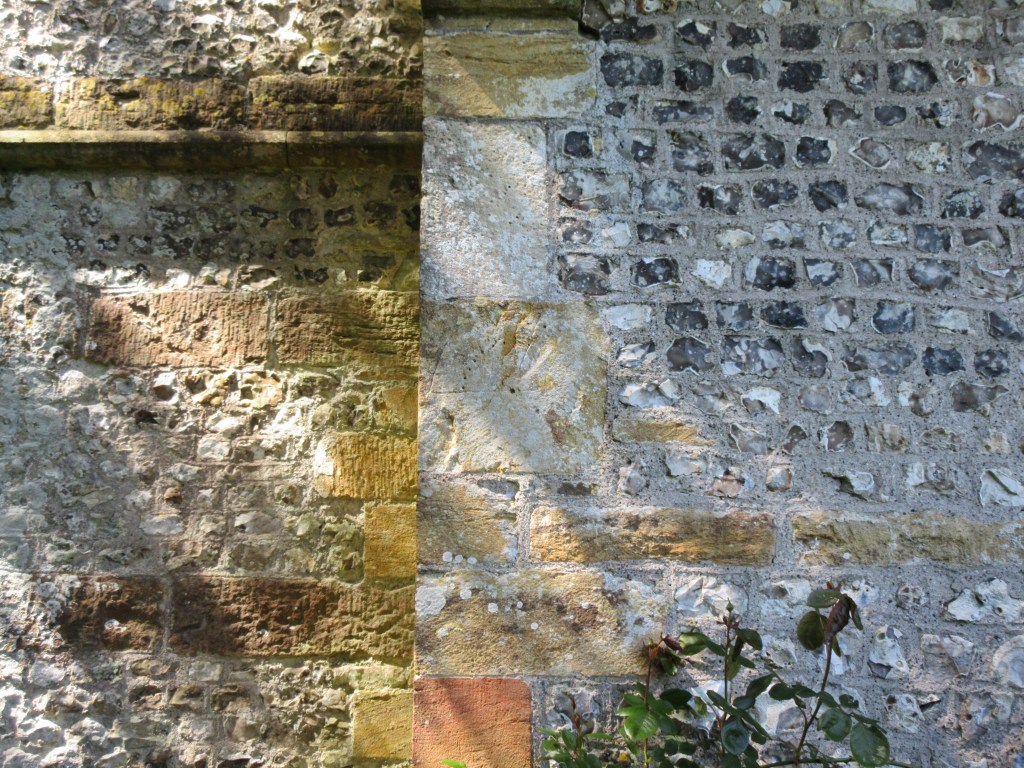
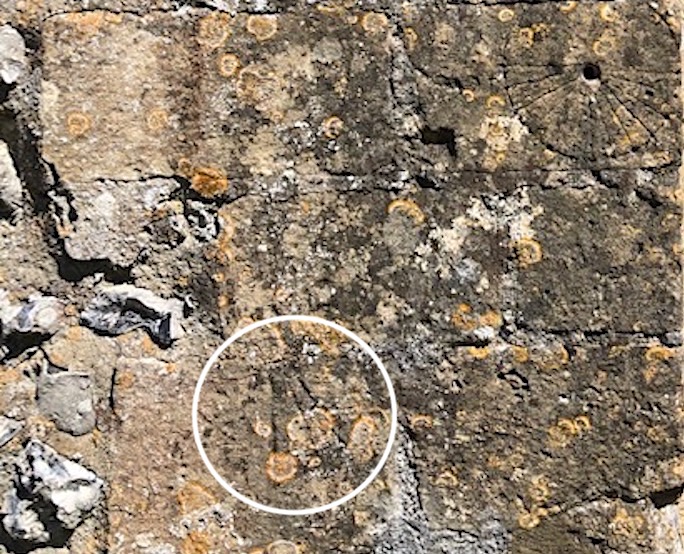
Two adjacent dials – one doubtful – high up on a quoin stone on the N. aisle. Dial 1 is definitely a dial, though hard to see for erosion, lichen and height. Dial 2 is a possible dial with a style hole, but no longer other visible dial attributes if there ever were any. The stone has plainly been relocated.
Toller Porcorum Drawing BSS
St Andrew and St Peter . Toller Porcorum . Dorset – Scratch Dial(s)

Besides being relocated, the orientation of the dial suggests it is inverted or possibly – as GLP suggests – rotated by 90º. He detected 4 pock marks in or close to the upper-left quadrant (see BSS diagram above). I did not notice them and they are only faintly visible in my photos (taken with my camera held above my head), highlighted in image 1 below. I did detect 4 faint lines / partial lines. The overall configuration (image 2) would make better sense if the stone were rotated 90º anticlockwise.

Dial with pocks highlighted; dial with lines added

As for possible Dial 2, GLP suggests it might have been a practice style hole or an earlier discontinued attempt at a dial. It’s hard to see why a such a very slightly different location was thought better, though. My amateur theory is that the stone was originally on the S. side, set at 90º anticlockwise, with the time-telling part of the true dial being (as often) in the lower left quadrant. The (then) upper hole might have been an earlier very basic time of day indicator – just a stick in a hole to cast a shadow without the need for refinements.

LINKS for information about the church, the village and its history:

BLB TOLLER PORCORUM

BRITAIN EXPRESS TOLLER PORCORUM

The charming stained glass millennial sundial is a striking addition to an already attractive building. It features on GSS in a different dial category, but it merits inclusion here. [Secretly, this is the dial I prefer]

St Andrew and St Peter . Toller Porcorum . Dorset – Stained Glass Millennial Sundial

GSS Category: Scratch Dial

All photos – Keith Salvesen